AB 1957: Social services: communications: computer-generated text messages.
- Session Year: 2017-2018
- House: Assembly
- Latest Version Date: 2018-09-14
Existing law provides for various public social services programs for purposes of providing on behalf of the general public, and within the limits of public resources, reasonable support and maintenance for needy and dependent families and persons, including, among others, the California Work Opportunity and Responsibility to Kids (CalWORKs) program, under which each county provides cash assistance and other benefits to qualified low-income families and individuals, CalFresh, under which supplemental nutrition assistance benefits allocated to the state by the federal government are distributed to eligible individuals by each county, and the Cash Assistance Program for Aged, Blind, and Disabled Legal Immigrants (CAPI), which provides cash benefits to aged, blind, and disabled legal immigrants who meet specified criteria.
This bill would authorize, if it is within its capacity, a county to communicate with applicants for, or recipients of, benefits under those programs via computer-generated text message. The bill would authorize a notice of action to be sent via computer-generated text message only using a link to a secure online portal, but would not require any other communications sent via computer-generated text message to be sent in this manner unless required by federal law or guidance. The bill would require all electronic technology used pursuant to these provisions to be in compliance with state information technology policy and related state and federal law.
The bill would require the State Department of Social Services to implement these provisions through an all-county letter or similar instruction no later than July 1, 2019, as specified.
Existing law provides for various public social services programs for purposes of providing on behalf of the general public, and within the limits of public resources, reasonable support and maintenance for needy and dependent families and persons, including, among others, the California Work Opportunity and Responsibility to Kids (CalWORKs) program, under which each county provides cash assistance and other benefits to qualified low-income families and individuals, CalFresh, under which supplemental nutrition assistance benefits allocated to the state by the federal government are distributed to eligible individuals by each county, the Medi-Cal program, under which qualified low-income individuals receive health care services, and the Cash Assistance Program for Aged, Blind, and Disabled Legal Immigrants (CAPI), which provides cash benefits to aged, blind, and disabled legal immigrants who meet specified criteria.
This bill, to extent permitted by federal law, guidance, or waiver, would authorize applicants for and recipients of benefits under CalWORKs, Medi-Cal, CalFresh, or CAPI to, at any time, permit communications and notices of action to be sent via the United States Postal Service only, or, within the capacity of the county, either electronically only or both electronically and via the United States Postal Service, as specified. The bill would require a record of each notice of action and communication sent electronically or otherwise to be maintained in the recipients case record. The bill would authorize an applicant or recipient to revoke his or her permission to receive electronic notices of action and communications, and would provide for the privacy and security of an applicants or recipients electronic information, as specified.This bill would prohibit a county from requiring an applicant for or recipient of CalWORKs or CalFresh benefits to provide verification of information to the county, unless verification is federally required and necessary to determine current eligibility for services or to compute the amount of aid, and the current information is not already available to the county eligibility worker. The bill would require a county human services agency to maximize the use of electronic means of verifying information required to be verified for any applicant or recipient, except as specified. The bill would provide, to the extent permitted by federal law, guidance, or waiver thereof, that information that is verified for CalWORKs or CalFresh shall be deemed to be verified for the other program. authorize, if it is within its capacity, a county to communicate with applicants for, or recipients of, benefits under those programs via computer-generated text message. The bill would authorize a notice of action to be sent via computer-generated text message only using a link to a secure online portal, but would not require any other communications sent via computer-generated text message to be sent in this manner unless required by federal law or guidance. The bill would require all electronic technology used pursuant to these provisions to be in compliance with state information technology policy and related state and federal law.
The bill would require the State Department of Social Services and the State Department of Health Care Services to implement these provisions through an all-county letter or similar instruction from the director of those departments no later than July 1, 2019, as specified. The bill would require counties to be in full compliance with the letter or instruction by January 1, 2020.
By increasing the duties of counties administering public social services programs, the bill would impose a state-mandated local program.Existing law continuously appropriates moneys from the General Fund to defray a portion of county costs under the CalWORKs program.This bill would provide that the continuous appropriation would not be made for purposes of implementing the bill.The California Constitution requires the state to reimburse local agencies and school districts for certain costs mandated by the state. Statutory provisions establish procedures for making that reimbursement.This bill would provide that, if the Commission on State Mandates determines that the bill contains costs mandated by the state, reimbursement for those costs shall be made pursuant to the statutory provisions noted above.Existing law provides for various public social services programs for purposes of providing on behalf of the general public, and within the limits of public resources, reasonable support and maintenance for needy and dependent families and persons, including, among others, the California Work Opportunity and Responsibility to Kids (CalWORKs) program, under which each county provides cash assistance and other benefits to qualified low-income families and individuals, CalFresh, under which supplemental nutrition assistance benefits allocated to the state by the federal government are distributed to eligible individuals by each county, the Medi-Cal program, under which qualified low-income individuals receive health care services, and the Cash Assistance Program for Aged, Blind, and Disabled Legal Immigrants (CAPI), which provides cash benefits to aged, blind, and disabled legal immigrants who meet specified criteria.
This bill, to extent permitted by federal law, guidance, or waiver, would authorize applicants for and recipients of benefits under CalWORKs, Medi-Cal, CalFresh, or CAPI to, at any time, permit communications and notices of action to be sent via the United States Postal Service only, or, within the capacity of the county, either electronically only or both electronically and via the United States Postal Service, as specified. The bill would require a record of each notice of action and communication sent electronically or otherwise to be maintained in the recipients case record. The bill would authorize an applicant or recipient to revoke his or her permission to receive electronic notices of action and communications, and would provide for the privacy and security of an applicants or recipients electronic information, as specified.
This bill would prohibit a county from requiring an applicant for or recipient of CalWORKs or CalFresh benefits to provide verification of information to the county, unless verification is federally required and necessary to determine current eligibility for services or to compute the amount of aid, and the current information is not already available to the county eligibility worker. The bill would require a county human services agency to maximize the use of electronic means of verifying information required to be verified for any applicant or recipient, except as specified. The bill would provide, to the extent permitted by federal law, guidance, or waiver thereof, that information that is verified for CalWORKs or CalFresh shall be deemed to be verified for all the other program.
The bill would require the State Department of Social Services and the State Department of Health Care Services to implement these provisions through an all-county letter or similar instruction from the director of those departments no later than July 1, 2019, as specified. The bill would require counties to be in full compliance with the letter or instruction by January 1, 2020.
By increasing the duties of counties administering public social services programs, the bill would impose a state-mandated local program.
Existing law continuously appropriates moneys from the General Fund to defray a portion of county costs under the CalWORKs program.
This bill would provide that the continuous appropriation would not be made for purposes of implementing the bill.
The California Constitution requires the state to reimburse local agencies and school districts for certain costs mandated by the state. Statutory provisions establish procedures for making that reimbursement.
This bill would provide that, if the Commission on State Mandates determines that the bill contains costs mandated by the state, reimbursement for those costs shall be made pursuant to the statutory provisions noted above.
Existing law provides for various public social services programs for purposes of providing on behalf of the general public, and within the limits of public resources, reasonable support and maintenance for needy and dependent families and persons, including, among others, the California Work Opportunity and Responsibility to Kids (CalWORKs) program, under which each county provides cash assistance and other benefits to qualified low-income families and individuals, CalFresh, under which supplemental nutrition assistance benefits allocated to the state by the federal government are distributed to eligible individuals by each county, the Medi-Cal program, under which qualified low-income individuals receive health care services, and the Cash Assistance Program for Aged, Blind, and Disabled Legal Immigrants (CAPI), which provides cash benefits to aged, blind, and disabled legal immigrants who meet specified criteria.
This bill, to extent permitted by federal law, guidance, or waiver, would authorize applicants for and recipients of benefits under CalWORKs, Medi-Cal, CalFresh, or CAPI to, at any time, permit communications and notices of action to be sent via the United States Postal Service only, or, within the capacity of the county, either electronically only or both electronically and via the United States Postal Service, as specified. The bill would require a record of each notice of action and communication sent electronically or otherwise to be maintained in the recipients case record. The bill would authorize an applicant or recipient to revoke his or her permission to receive electronic notices of action and communications, and would provide for the privacy and security of an applicants or recipients electronic information, as specified.
This bill would prohibit a county from requiring an applicant for or recipient of CalWORKs or CalFresh benefits to provide verification of information to the county, unless verification is federally required and necessary to determine current eligibility for services or to compute the amount of aid, and the current information is not already available to the county eligibility worker. The bill would require a county human services agency to maximize the use of electronic means of verifying information required to be verified for any applicant or recipient, except as specified. The bill provides, would provide, to the extent permitted by federal law, guidance, or waiver thereof, that information that is verified for CalWORKs or CalFresh shall be deemed to be verified for all the other program.
The bill would require the State Department of Social Services and the State Department of Health Care Services to implement these provisions through an all-county letter or similar instruction from the director of those departments no later than July 1, 2019, as specified. The bill would require counties to be in full compliance with the letter or instruction by January 1, 2020.
By increasing the duties of counties administering public social services programs, the bill would impose a state-mandated local program.
Existing law continuously appropriates moneys from the General Fund to defray a portion of county costs under the CalWORKs program.
This bill would provide that the continuous appropriation would not be made for purposes of implementing the bill.
The California Constitution requires the state to reimburse local agencies and school districts for certain costs mandated by the state. Statutory provisions establish procedures for making that reimbursement.
This bill would provide that, if the Commission on State Mandates determines that the bill contains costs mandated by the state, reimbursement for those costs shall be made pursuant to the statutory provisions noted above.
Existing law provides for various public social services programs for purposes of providing on behalf of the general public, and within the limits of public resources, reasonable support and maintenance for needy and dependent families and persons, including, among others, the California Work Opportunity and Responsibility to Kids (CalWORKs) program, under which each county provides cash assistance and other benefits to qualified low-income families and individuals, CalFresh, under which supplemental nutrition assistance benefits allocated to the state by the federal government are distributed to eligible individuals by each county, and the Medi-Cal program, under which qualified low-income individuals receive health care services. services, and the Cash Assistance Program for Aged, Blind, and Disabled Legal Immigrants (CAPI), which provides cash benefits to aged, blind, and disabled legal immigrants who meet specified criteria.
This bill, to extent permitted by federal law, guidance, or waiver, would authorize applicants for and recipients of public social services benefits under CalWORKs, Medi-Cal, CalFresh, or CAPI to, at any time, permit communications and notices of action to be sent via the United States Postal Service only, or, within the capacity of the county, either electronically only or both electronically and via the United States Postal Service, as specified. The bill would require a record of each notice of action and communication sent electronically or otherwise to be maintained in the recipients case record. The bill would authorize an applicant or recipient to revoke his or her permission to receive electronic notices of action and communications, and would provide for the privacy and security of an applicants or recipients electronic information, as specified.
This bill would prohibit a county from requiring an applicant for or recipient of public social services CalWORKs or CalFresh benefits to provide verification of information to the county, unless verification is federally required and necessary to determine current eligibility for services or to compute the amount of aid, and the current information is not already available to the county eligibility worker. The bill would require a county human services agency to maximize the use of electronic means of verifying information required to be verified for any applicant or recipient, except as specified. The bill provides, to the extent permitted by federal law, guidance, or waiver thereof, that information that is verified in any public social services program for CalWORKs or CalFresh shall be deemed to be verified for all public social services programs. all the other program.
The bill would require the State Department of Social Services and the State Department of Health Care Services to implement these provisions through an all-county letter or similar instruction from the director of those departments no later than July 1, 2019, as specified.
By increasing the duties of counties administering public social services programs, the bill would impose a state-mandated local program.
Existing law continuously appropriates moneys from the General Fund to defray a portion of county costs under the CalWORKs program.
This bill would provide that the continuous appropriation would not be made for purposes of implementing the bill.
The California Constitution requires the state to reimburse local agencies and school districts for certain costs mandated by the state. Statutory provisions establish procedures for making that reimbursement.
This bill would provide that, if the Commission on State Mandates determines that the bill contains costs mandated by the state, reimbursement for those costs shall be made pursuant to the statutory provisions noted above.
Existing law provides for various public social services programs for purposes of providing on behalf of the general public, and within the limits of public resources, reasonable support and maintenance for needy and dependent families and persons, including, among others, the California Work Opportunity and Responsibility to Kids (CalWORKs) program, under which each county provides cash assistance and other benefits to qualified low-income families and individuals, CalFresh, under which supplemental nutrition assistance benefits allocated to the state by the federal government are distributed to eligible individuals by each county, and the Medi-Cal program, under which qualified low-income individuals receive health care services.
This bill, to extent permitted by federal law, guidance, or waiver, would authorize applicants for and recipients of public social services to, at any time, permit communications and notices of action to be sent via the United States Postal Service only, or, within the capacity of the county, either electronically only or both electronically and via the United States Postal Service, as specified. The bill would require a record of each notice of action and communication sent electronically or otherwise to be maintained in the recipients case record. The bill would authorize an applicant or recipient to revoke his or her permission to receive electronic notices of action and communications, and would provide for the privacy and security of an applicants or recipients electronic information, as specified.
This bill would prohibit a county from requiring an applicant for or recipient of public social services to provide verification of information to the county, unless verification is federally required and necessary to determine current eligibility for services or to compute the amount of aid, and the current information is not already available to the county eligibility worker. The bill would require a county human services agency to maximize the use of electronic means of verifying information required to be verified for any applicant or recipient, except as specified. The bill provides, to the extent permitted by federal law, guidance, or waiver thereof, that information that is verified in any public social services program shall be deemed to be verified for all public social services programs.
The bill would require the State Department of Social Services and the State Department of Health Care Services to implement these provisions through an all-county letter or similar instruction from the director of those departments no later than July 1, 2019, as specified.
By increasing the duties of counties administering public social services programs, the bill would impose a state-mandated local program.
Existing law continuously appropriates moneys from the General Fund to defray a portion of county costs under the CalWORKs program.
This bill would provide that the continuous appropriation would not be made for purposes of implementing the bill.
The California Constitution requires the state to reimburse local agencies and school districts for certain costs mandated by the state. Statutory provisions establish procedures for making that reimbursement.
This bill would provide that, if the Commission on State Mandates determines that the bill contains costs mandated by the state, reimbursement for those costs shall be made pursuant to the statutory provisions noted above.
Existing law provides for various public social services programs for purposes of providing on behalf of the general public, and within the limits of public resources, reasonable support and maintenance for needy and dependent families and persons, including, among others, the California Work Opportunity and Responsibility to Kids (CalWORKs) program, under which each county provides cash assistance and other benefits to qualified low-income families and individuals, and CalFresh, under which supplemental nutrition assistance benefits allocated to the state by the federal government are distributed to eligible individuals by each county. county, and the Medi-Cal program, under which qualified low-income individuals receive health care services.
This bill, to extent permitted by federal law, guidance, or waiver, would authorize applicants for and recipients of public social services to, at any time, affirmatively choose to receive permit communications and notices of action either electronically only, to be sent via the United States Postal Service only, or or, within the capacity of the county, either electronically only or both electronically and via the United States Postal Service, as specified. The bill would require a record of this request, and of each notice of action and communication sent electronically or otherwise, otherwise to be maintained in the recipients case record. The bill would authorize applicants and recipients to opt out of receiving electronic notice, an applicant or recipient to revoke his or her permission to receive electronic notices of action and communications, and would provide for the privacy and security of an applicants or recipients electronic information, as specified.
This bill would prohibit a county from requiring an applicant for or recipient of public social services to provide verification of information provided to the county, unless verification is federally required and necessary to determine current eligibility for services or to compute the amount of aid, and the current information is not already available to the county eligibility worker. The bill would require a county human services agency to maximize the use of electronic means of verifying information required to be verified for any applicant or recipient, except as specified. The bill provides, to the extent permitted by federal law, guidance, or waiver thereof, that information that is verified in any public social services program shall be deemed to be verified for all public human social services programs.
The bill would require the department State Department of Social Services and the State Department of Health Care Services to implement these provisions through an all-county letter or similar instruction from the director of those departments no later than July 1, 2019, as specified.
By increasing the duties of counties administering public social services programs, the bill would impose a state-mandated local program.
Existing law continuously appropriates moneys from the General Fund to defray a portion of county costs under the CalWORKs program.
This bill would provide that the continuous appropriation would not be made for purposes of implementing the bill.
The California Constitution requires the state to reimburse local agencies and school districts for certain costs mandated by the state. Statutory provisions establish procedures for making that reimbursement.
This bill would provide that, if the Commission on State Mandates determines that the bill contains costs mandated by the state, reimbursement for those costs shall be made pursuant to the statutory provisions noted above.
Existing law provides for various public social services programs for purposes of providing on behalf of the general public, and within the limits of public resources, reasonable support and maintenance for needy and dependent families and persons, including, among others, the California Work Opportunity and Responsibility to Kids (CalWORKs) program, under which each county provides cash assistance and other benefits to qualified low-income families and individuals, and CalFresh, under which supplemental nutrition assistance benefits allocated to the state by the federal government are distributed to eligible individuals by each county.
This bill, to extent permitted by federal law, guidance, or waiver, would authorize applicants for and recipients of public social services to, at any time, affirmatively choose to receive communications and notices of action either electronically only, via United States Postal Service only, or both electronically and via the United States Postal Service, as specified. The bill would require a record of this request, and of each notice of action and communication sent electronically or otherwise, to be maintained in the recipients case record. The bill would authorize applicants and recipients to opt out of receiving electronic notice, and would provide for the privacy and security of an applicants or recipients electronic information, as specified.
This bill would prohibit a county from requiring an applicant for or recipient of public social services to provide verification of information provided to the county, unless verification is federally required and necessary to determine current eligibility for services or to compute the amount of aid, and the information is not already available to the county eligibility worker. The bill would require a county human services agency to maximize the use of electronic means of verifying information required to be verified for any applicant or recipient, except as specified. The bill provides, to the extent permitted by federal law, that information that is verified in any public social services program shall be deemed to be verified for all public human services programs.
The bill would require the department to implement these provisions through an all-county letter or similar instruction from the director no later than July 1, 2019, as specified.
By increasing the duties of counties administering public social services programs, the bill would impose a state-mandated local program.
Existing law continuously appropriates moneys from the General Fund to defray a portion of county costs under the CalWORKs program.
This bill would provide that the continuous appropriation would not be made for purposes of implementing the bill.
The California Constitution requires the state to reimburse local agencies and school districts for certain costs mandated by the state. Statutory provisions establish procedures for making that reimbursement.
This bill would provide that, if the Commission on State Mandates determines that the bill contains costs mandated by the state, reimbursement for those costs shall be made pursuant to the statutory provisions noted above.
It is the intent of the Legislature in enacting this act to support technology that has the capacity to improve the delivery of social safety net programs, maximize access to social safety net programs for individuals with limited Internet access, and ensure the rights of people with disabilities.
SEC. 2.Section 11023.7 is added to the Welfare and Institutions Code, to read:11023.7.(a)If it is within the capacity of the county, a county may communicate with an applicant for, or recipient of, benefits under CalWORKs (Chapter 2 (commencing with Section 11200)), CalFresh (Chapter 10 (commencing with Section 18900) of Part 6), or the Cash Assistance Program for Aged, Blind, and Disabled Legal Immigrants (Chapter 10.3 (commencing with Section 18937) of Part 6) via computer-generated text message. All communications and notices of actions sent via computer-generated text message shall comply with Section 227 of Title 47 of the United States Code.
(b)Communications sent via computer-generated text message shall not include case-identifying information, as that term is defined by the State Department of Social Services. Notices of action may only be sent via computer-generated text message pursuant to this section using a link to a secure online portal where the applicant or recipient can access the notice of action after securely logging in. All other communications sent via computer-generated text messages to an applicant or recipient are not required to be sent using a link to a secure online portal unless otherwise required by federal law or guidance.
(c)Only the first or last name, but not both, of an applicant or recipient may appear in a text message generated pursuant to this section.
(d)(1)All electronic technology used pursuant to this section shall be in compliance with state information technology policy, and related state and federal law, including, but not limited to, Sections 7405 and 11135 of the Government Code, Section 508 of the federal Rehabilitation Act of 1973 (29 U.S.C. Sec. 794d), as amended, and the regulations implementing that act, as set forth in Part 1194 (commencing with Section 1194.1) of Chapter XI of Title 36 of the Code of Federal Regulations and Appendices A, C, and D of that part, and the federal Americans with Disabilities Act of 1990 (42 U.S.C. Sec. 12101 et seq.), and the obligation under these laws to communicate with people with disabilities in a manner that is as effective as communications with people without disabilities.
(2)This subdivision is declarative of existing law.
SEC. 3.Notwithstanding the rulemaking provisions of the Administrative Procedure Act (Chapter 3.5 (commencing with Section 11340) of Part 1 of Division 3 of Title 2 of the Government Code), the State Department of Social Services shall implement this act through an all-county letter or similar instruction issued no later than July 1, 2019. This instruction shall be drafted in consultation with client advocates, representatives of county human services agencies, and representatives of county eligibility workers.
It is the intent of the Legislature in enacting this act to support technology that has the capacity to improve the delivery of social safety net programs, maximize access to social safety net programs for individuals with limited Internet access, and ensure the rights of people with disabilities.
SEC. 4.SEC. 2.Section 11023.7 is added to the Welfare and Institutions Code, to read:11023.7.(a)(1)If it is within the capacity of the county, a county may communicate with an applicant for, or recipient of, benefits under CalWORKs (Chapter 2 (commencing with Section 11200)), CalFresh (Chapter 10 (commencing with Section 18900) of Part 6), or the Cash Assistance Program for Aged, Blind, and Disabled Legal Immigrants (Chapter 10.3 (commencing with Section 18937) of Part 6) via computer-generated text message. All communications and notices of actions sent via computer-generated text message shall comply with Section 227 of Title 47 of the United States Code.
(2)(b)Communications sent via computer-generated text message shall not include case-identifying information nor both the first and last name of the applicant or recipient. Communications information, as that term is defined by the State Department of Social Services. Notices of action may only be sent via computer-generated text message pursuant to this section may only do so via using a link to a secure online portal where the applicant or recipient can access the notice of action after securely logging in. All other communications sent via computer-generated text messages to an applicant or recipient are not required to be sent using a link to a secure online portal unless otherwise required by federal law or guidance.
(3)The county shall notify the applicant or recipient that his or her(c)Only the first or last name, but not both, of an applicant or recipient may appear in the computer-generated text message. This notification shall take place at the time the applicant or recipient provides permission to receive computer-generated text messages regarding his or her case. a text message generated pursuant to this section.
(d)(1)All electronic technology used pursuant to this section shall be in compliance with state information technology policy, and related state and federal law, including, but not limited to, Sections 7405 and 11135 of the Government Code, Section 508 of the federal Rehabilitation Act of 1973 (29 U.S.C. Sec. 794d), as amended, and the regulations implementing that act, as set forth in Part 1194 (commencing with Section 1194.1) of Chapter XI of Title 36 of the Code of Federal Regulations and Appendices A, C, and D of that part, and the federal Americans with Disabilities Act of 1990 (42 U.S.C. Sec. 12101 et seq.), and the obligation under these laws to communicate with people with disabilities in a manner that is as effective as communications with people without disabilities.
(2)This subdivision is declarative of existing law.
SEC. 5.Section 11023.8 is added to the Welfare and Institutions Code, to read:11023.8.(a)Notwithstanding any other law, a county shall not require an applicant for or recipient of benefits under CalWORKs (Chapter 2 (commencing with Section 11200)) or CalFresh (Chapter 10 (commencing with Section 18900) of Part 6) to provide verification of information to the county, unless verification is federally required and necessary to determine current eligibility for services or to compute the amount of aid, and current information is not already available to the county eligibility worker.(b)A county human services agency shall maximize the use of electronic means of verifying information required to be verified for any applicant or recipient, except for information that federal law permits to be verified through self-attestation statement of the applicant or recipient. A county human services agency shall not request verification of information that is available electronically to the county human services agency and that is assessed by the county to be current and accurate.(c)To the extent permitted by federal law, guidance, or waiver thereof, information that is verified in CalWORKs or CalFresh shall be deemed to be verified for the other program.(d)An applicant or recipient whose information is electronically verified pursuant to this section shall be given an opportunity to review the information obtained electronically and to make corrections if that information has led to a denial of eligibility or a reduction in benefits.(e)(1)In order to ensure privacy and benefit program accuracy, privately maintained databases and services providing for electronic verification and eligibility determination purposes may be used for verification and eligibility determination purposes in CalWORKs and CalFresh if the use complies with relevant federal and state laws, including, but not limited to, the federal Fair Credit Reporting Act (15 U.S.C. Sec. 1681 et seq.) and Section 11023.(2)The requirements for the use of information contained in a consumer credit report for the determination of CalWORKs or CalFresh eligibility or benefit level is prescribed in Section 11023.(3)A consumer reporting agency that contracts with the State Department of Social Services for verification or eligibility determination purposes shall electronically submit to the department a copy of the security breach notification submitted to the Attorney General in the event of a security breach of its database that results in the issuance of a security breach notification to more than 500 California residents as a result of a single breach, as described in Section 1798.82 of the Civil Code.SEC. 6.SEC. 3.Notwithstanding the rulemaking provisions of the Administrative Procedure Act (Chapter 3.5 (commencing with Section 11340) of Part 1 of Division 3 of Title 2 of the Government Code), the State Department of Social Services and the State Department of Health Care Services shall implement this act through an all-county welfare directors letter or similar instruction from the director of each department issued no later than July 1, 2019. As part of the all-county welfare directors letter or similar instruction, the departments, This instruction shall be drafted in consultation with client and patient advocates, representatives of county human services agencies, and representatives of county eligibility workers, shall provide guidance to counties for electronic delivery of notices of actions and other communications to the applicant or recipient by computer-generated text message. Counties shall be in full compliance with the all-county welfare directors letter or similar instruction by January 1, 2020. workers.
SEC. 7.No appropriation pursuant to Section 15200 of the Welfare and Institutions Code shall be made for purposes of this act. SEC. 8.If the Commission on State Mandates determines that this act contains costs mandated by the state, reimbursement to local agencies and school districts for those costs shall be made pursuant to Part 7 (commencing with Section 17500) of Division 4 of Title 2 of the Government Code.This act shall be known, and may be cited, as the Social Services Modernization, Efficiency, and Due Process Protection Act of 2018.
SEC. 2.The Legislature finds and declares all of the following:
(a)CalFresh is our states most important defense against hunger, and CalWORKs is needed to prevent homelessness and basic needs deprivation among our states poorest families with children.
(b)While low-income consumers struggle to secure and maintain regular access to telephone and Internet service, especially in rural communities, making forms and notices for social safety net programs available electronically or telephonically can benefit a significant portion of applicants and recipients.
(c)The State Department of Social Services and county human services agencies in the state have been leaders in increasing access to applications, forms, and notices of actions electronically and telephonically, which has increased efficiency for county workers and improved outcomes for applicants and recipients.
(d)Modernization of state law is needed to reflect these recent changes in practice and to protect the due process and privacy of all applicants and recipients as the use of technology continues to advance in the delivery of social safety net services.
SEC. 3.Section 11023.6 is added to the Welfare and Institutions Code, to read:11023.6.(a)(1)Applicants for and recipients of benefits under CalWORKs (Chapter 2 (commencing with Section 11200)), Medi-Cal (Chapter 7 (commencing with Section 14000)), CalFresh (Chapter 10 (commencing with Section 18900) of Part 6), or Cash Assistance Program for Aged, Blind, and Disabled Legal Immigrants (Chapter 10.3 (commencing with Section 18937) of Part 6) may, at any time, permit communications and notices of action to be sent via the United States Postal Service only, or, within the capacity of the county, either electronically only or both electronically and via the United States Postal Service, as provided by this section. The application, semiannual reporting forms, and annual recertification forms for CalWORKs, Medi-Cal, CalFresh, and CAPI shall provide applicants and recipients with these options.
(2)For the purposes of this section, electronically means a communication made by email, interactive voice response, or via online server, but does not include computer-generated text messages, the regulation of which is as prescribed in Section 11023.7.
(3)The State Department of Social Services and State Department of Health Care Services shall ensure that applications, semiannual reporting forms, and annual recertification forms for CalWORKs, Medi-Cal, CalFresh, and CAPI shall notify the applicant or recipient of both of the following:
(A)An applicant or recipient providing a telephone number or email address implies permission to be contacted by telephone or email. A county is not precluded from seeking affirmative consent in order to contact an applicant or recipient by telephone or email.
(B)The applicant or recipient has a right to revoke the permission specified in subparagraph (A) and how to revoke the permission.
(4)A record of each notice of action and communication sent electronically or otherwise shall be maintained in the recipients case record.
(5)An applicant or recipient may revoke his or her permission to receive electronic notices of action and communications in any form of communication available, including, but not limited to, in writing, in person, by telephone, by electronic mail, or online. A request to revoke permission shall be processed as expeditiously as possible, but no later than three business days after the receipt of the request. A written receipt confirming the cancellation of electronic communication shall be mailed. If a county receives a request in person or by telephone to terminate electronic notices of action and communications from an applicant or recipient and the applicant or recipient states that this request is being made because of domestic abuse, the county shall immediately, within one business day, cease all electronic communication with the applicant or recipient until and unless the applicant or recipient requests to receive electronic notices of action and communications again.
(6)Notices of action that are sent electronically shall be sent via a secured server. A notice of action shall not be sent as an electronic mail attachment.
(7)Notwithstanding any other provision of this section, notices of action terminating benefits, sanctioning benefits, imposing financial penalties, or establishing an intentional program violation for any household member or for establishing or collecting an overpayment, underpayment, overissuance, or underissuance from recipients or former recipients shall also be sent via the United States Postal Service in addition to being sent electronically.
(8)A county human services agency employee shall not have any electronic communications communication with an applicant or recipient through the employees private email or telephone.
(9)Every effort shall be made to maintain the privacy and security of applicant or recipient information at all times.
(10)Notices of action and communications that are sent electronically and data storage shall comply with state security standards, which shall be posted on the departments Internet Web site and on all online applications.
(b)(1)Under no circumstances shall data that is available electronically and that identifies an applicant or recipient, the permanent or temporary internet protocol (IP) address assigned to an applicant or recipient, or the geographic location of the IP address or mobile device, their Internet activity, or any other information that is available through the Internet, or the Internet activity of the applicant or recipient be collected or used for any purpose other than transmitting information to the applicant or recipient recipient, as authorized by this section. section, or to analyze aggregate application information with the intent of improving the user experience.
(2)Under no circumstance shall the personally identifiable information of an applicant or recipient, whether provided by the applicant or recipient or available through the Internet, be collected or used for any purpose other than transmitting information to the applicant or recipient, as authorized by this section, or to ensure the seamless enrollment and participation of the applicant or recipient in the CalWORKs, Medi-Cal, CalFresh, or CAPI program.
(c)An applicant or recipient shall have the opportunity to review and make corrections to his or her contact information and communication preferences periodically in the semiannual report form or annual recertification form.
(d)All electronic technology used pursuant to this section shall be in compliance with state information technology policy, and related state and federal law, including, but not limited to, Sections 7405 and 11135 of the Government Code, Section 508 of the federal Rehabilitation Act of 1973 (29 U.S.C. Sec. 794d), as amended, and the regulations implementing that act, as set forth in Part 1194 (commencing with Section 1194.1) of Chapter XI of Title 36 of the Code of Federal Regulations and Appendices A, C, and D of that part, the federal Americans with Disabilities Act of 1990 (42 U.S.C. Sec. 12101 et seq.), and the Web Content Accessibility Guidelines 2.0, or a subsequent version, published by the Web Accessibility Initiative of the World Wide Web Consortium at a minimum Level AA success criteria.
(e)This section shall only apply to the extent permitted by federal law, guidance, or waiver thereof.
SEC. 4.Section 11023.7 is added to the Welfare and Institutions Code, to read:11023.7.(a)(1)If it is within the capacity of the county, a county may communicate with an applicant or recipient via computer-generated text message. All communications and notices of actions sent via computer-generated text message shall comply with Section 227 of Title 47 of the United States Code.
(2)Communications sent via computer-generated text message shall not include case-identifying information nor both the first and last name of the applicant or recipient. Communications sent via computer-generated text message pursuant to this section may only do so via a link to a secure online portal where the applicant or recipient can access the notice of action after securely logging in.
(3)The county shall notify the applicant or recipient that his or her first or last name, but not both, may appear in the computer-generated text message. This notification shall take place at the time the applicant or recipient provides permission to receive computer-generated text messages regarding his or her case.
SEC. 5.Section 11023.8 is added to the Welfare and Institutions Code, to read:11023.8.(a)Notwithstanding any other law, a county shall not require an applicant for or recipient of benefits under CalWORKs (Chapter 2 (commencing with Section 11200)) or CalFresh (Chapter 10 (commencing with Section 18900) of Part 6) to provide verification of information to the county, unless verification is federally required and necessary to determine current eligibility for services or to compute the amount of aid, and current information is not already available to the county eligibility worker.
(b)A county human services agency shall maximize the use of electronic means of verifying information required to be verified for any applicant or recipient, except for information that federal law permits to be verified through self-attestation statement of the applicant or recipient. A county human services agency shall not request verification of information that is available electronically to the county human services agency and that is assessed by the county to be current and accurate.
(c)To the extent permitted by federal law, guidance, or waiver thereof, information that is verified in CalWORKs or CalFresh shall be deemed to be verified for the other program.
(d)An applicant or recipient whose information is electronically verified pursuant to this section shall be given an opportunity to review the information obtained electronically and to make corrections if that information has led to a denial of eligibility or a reduction in benefits.
(e)(1)In order to ensure privacy and benefit program accuracy, privately maintained databases and services providing for electronic verification and eligibility determination purposes may be used for verification and eligibility determination purposes in CalWORKs and CalFresh if the use complies with relevant federal and state laws, including, but not limited to, the federal Fair Credit Reporting Act (15 U.S.C. Sec. 1681 et seq.) and Section 11023.
(2)The requirements for the use of information contained in a consumer credit report for the determination of CalWORKs or CalFresh eligibility or benefit level is prescribed in Section 11023.
(3)A consumer reporting agency that contracts with a county human services agency the State Department of Social Services for verification or eligibility determination purposes shall report to the department or the county human services agency when a security breach has impacted its database, and shall include in the report the date of the security breach and the number of individuals impacted by the security breach. electronically submit to the department a copy of the security breach notification submitted to the Attorney General in the event of a security breach of its database that results in the issuance of a security breach notification to more than 500 California residents as a result of a single breach, as described in Section 1798.82 of the Civil Code.
SEC. 6.Notwithstanding the rulemaking provisions of the Administrative Procedure Act (Chapter 3.5 (commencing with Section 11340) of Part 1 of Division 3 of Title 2 of the Government Code), the State Department of Social Services and the State Department of Health Care Services shall implement this act through an all-county welfare directors letter or similar instruction from the director of each department issued no later than July 1, 2019. As part of the all-county welfare directors letter or similar instruction, the departments, in consultation with client and patient advocates, representatives of county human services agencies, and representatives of county eligibility workers, shall provide guidance to counties for electronic delivery of notices of actions and other communications to the applicant or recipient by computer-generated text message. Counties shall be in full compliance with the all-county welfare directors letter or similar instruction by January 1, 2020.
SEC. 7.No appropriation pursuant to Section 15200 of the Welfare and Institutions Code shall be made for purposes of this act.
SEC. 8.If the Commission on State Mandates determines that this act contains costs mandated by the state, reimbursement to local agencies and school districts for those costs shall be made pursuant to Part 7 (commencing with Section 17500) of Division 4 of Title 2 of the Government Code.
This act shall be known, and may be cited, as the Social Services Modernization, Efficiency, and Due Process Protection Act of 2018.
SEC. 2.The Legislature finds and declares all of the following:
(a)CalFresh is our states most important defense against hunger, and CalWORKs is needed to prevent homelessness and basic needs deprivation among our states poorest families with children.
(b)While low-income consumers struggle to secure and maintain regular access to telephone and Internet service, especially in rural communities, making forms and notices for social safety net programs available electronically or telephonically can benefit a significant portion of applicants and recipients.
(c)The State Department of Social Services and county human services agencies in the state have been leaders in increasing access to applications, forms, and notices of actions electronically and telephonically, which has increased efficiency for county workers and improved outcomes for applicants and recipients.
(d)Modernization of state law is needed to reflect these recent changes in practice and to protect the due process and privacy of all applicants and recipients as the use of technology continues to advance in the delivery of social safety net services.
SEC. 3.Section 11023.6 is added to the Welfare and Institutions Code, to read:11023.6.(a)(1)Applicants for and recipients of benefits under CalWORKs (Chapter 2 (commencing with Section 11200)), Medi-Cal (Chapter 7 (commencing with Section 14000)), CalFresh (Chapter 10 (commencing with Section 18900) of Part 6), or Cash Assistance Program for Aged, Blind, and Disabled Legal Immigrants (Chapter 10.3 (commencing with Section 18937) of Part 6) may, at any time, permit communications and notices of action to be sent via the United States Postal Service only, or, within the capacity of the county, either electronically only or both electronically and via the United States Postal Service, as provided by this section. The application, semiannual reporting forms, and annual recertification forms for CalWORKs, Medi-Cal, CalFresh, and CAPI shall provide applicants and recipients with these options.
(2)For the purposes of this section, electronically means a communication made by email, interactive voice response, or via online server, but does not include computer-generated text messages, the regulation of which is as prescribed in Section 11023.7.
(3)The State Department of Social Services and State Department of Health Care Services shall ensure that applications, semiannual reporting forms, and annual recertification forms for CalWORKs, Medi-Cal, CalFresh, and CAPI shall notify the applicant or recipient of both of the following:
(A)An applicant or recipient providing a telephone number or email address implies permission to be contacted by telephone or email. A county is not precluded from seeking affirmative consent in order to contact an applicant or recipient by telephone or email.
(B)The applicant or recipient has a right to revoke the permission specified in subparagraph (A) and how to revoke the permission.
(4)A record of each notice of action and communication sent electronically or otherwise shall be maintained in the recipients case record.
(5)An applicant or recipient may revoke his or her permission to receive electronic notices of action and communications in any form of communication available, including, but not limited to, in writing, in person, by telephone, by electronic mail, or online. A request to revoke permission shall be processed as expeditiously as possible, but no later than three business days after the receipt of the request. A written receipt confirming the cancellation of electronic communication shall be mailed. If a county receives a request in person or by telephone to terminate electronic notices of action and communications from an applicant or recipient and the applicant or recipient states that this request is being made because of domestic abuse, the county shall immediately, within one business day, cease all electronic communication with the applicant or recipient until and unless the applicant or recipient requests to receive electronic notices of action and communications again.
(6)Notices of action that are sent electronically shall be sent via a secured server. A notice of action shall not be sent as an electronic mail attachment.
(7)Notwithstanding any other provision of this section, notices of action terminating benefits, sanctioning benefits, imposing financial penalties, or establishing an intentional program violation for any household member or for establishing or collecting an overpayment, underpayment, overissuance, or underissuance from recipients or former recipients shall also be sent via the United States Postal Service in addition to being sent electronically.
(8)A county human services agency employee shall not have any electronic communications with an applicant or recipient through the employees private email or telephone.
(9)Every effort shall be made to maintain the privacy and security of applicant or recipient information at all times.
(10)Notices of action and communications that are sent electronically and data storage shall comply with state security standards, which shall be posted on the departments Internet Web site and on all online applications.
(b)Under no circumstances shall data that is available electronically and that identifies an applicant or recipient, the permanent or temporary internet protocol (IP) address assigned to an applicant or recipient, or the geographic location of the IP address or mobile device, their Internet activity, or any other information that is available through the Internet, be collected or used for any purpose other than transmitting information to the applicant or recipient as authorized by this section.
(c)An applicant or recipient shall have the opportunity to review and make corrections to his or her contact information and communication preferences periodically in the semiannual report form or annual recertification form.
(d)All electronic technology used pursuant to this section shall be in compliance with state information technology policy, and related state and federal law, including, but not limited to, Sections 7405 and 11135 of the Government Code, Section 508 of the federal Rehabilitation Act of 1973 (29 U.S.C. Sec. 794d), as amended, and the regulations implementing that act, as set forth in Part 1194 (commencing with Section 1194.1) of Chapter XI of Title 36 of the Code of Federal Regulations and Appendices A, C, and D of that part, the federal Americans with Disabilities Act of 1990 (42 U.S.C. Sec. 12101 et seq.), and the Web Content Accessibility Guidelines 2.0, or a subsequent version, published by the Web Accessibility Initiative of the World Wide Web Consortium at a minimum Level AA success criteria.
(e)This section shall only apply to the extent permitted by federal law, guidance, or waiver thereof.
SEC. 4.Section 11023.7 is added to the Welfare and Institutions Code, to read:11023.7.(a)(1)If it is within the capacity of the county, a county may communicate with an applicant or recipient via computer-generated text message. All communications and notices of actions sent via computer-generated text message shall comply with Section 227 of Title 47 of the United States Code.
(2)Communications sent via computer-generated text message shall not include case-identifying information nor both the first and last name of the applicant or recipient. Communications sent via computer-generated text message pursuant to this section may only do so via a link to a secure online portal where the applicant or recipient can access the notice of action after securely logging in.
(3)The county shall notify the applicant or recipient that his or her first or last name, but not both, may appear in the computer-generated text message. This notification shall take place at the time the applicant or recipient provides permission to receive computer-generated text messages regarding his or her case.
SEC. 5.Section 11023.8 is added to the Welfare and Institutions Code, to read:11023.8.(a)Notwithstanding any other law, a county shall not require an applicant for or recipient of benefits under CalWORKs (Chapter 2 (commencing with Section 11200)) or CalFresh (Chapter 10 (commencing with Section 18900) of Part 6) to provide verification of information to the county, unless verification is federally required and necessary to determine current eligibility for services or to compute the amount of aid, and current information is not already available to the county eligibility worker.
(b)A county human services agency shall maximize the use of electronic means of verifying information required to be verified for any applicant or recipient, except for information that federal law permits to be verified through self-attestation statement of the applicant or recipient. A county human services agency shall not request verification of information that is available electronically to the county human services agency and that is assessed by the county to be current and accurate.
(c)To the extent permitted by federal law, guidance, or waiver thereof, information that is verified in CalWORKs or CalFresh shall be deemed to be verified for the other program.
(d)An applicant or recipient whose information is electronically verified pursuant to this section shall be given an opportunity to review the information obtained electronically and to make corrections if that information has led to a denial of eligibility or a reduction in benefits.
(e)(1)In order to ensure privacy and accuracy, privately maintained databases may be used for verification and eligibility determination purposes in CalWORKs and CalFresh if the use complies with relevant federal and state laws, including, but not limited to, the federal Fair Credit Reporting Act (15 U.S.C. Sec. 1681 et seq.) and Section 11023.
(2)The requirements for the use of information contained in a consumer credit report for the determination of CalWORKs or CalFresh eligibility or benefit level is prescribed in Section 11023.
(3)A consumer reporting agency that contracts with a county human services agency for verification or eligibility determination purposes shall report to the department or the county human services agency when a security breach has impacted its database, and shall include in the report the date of the security breach and the number of individuals impacted by the security breach.
SEC. 6.Notwithstanding the rulemaking provisions of the Administrative Procedure Act (Chapter 3.5 (commencing with Section 11340) of Part 1 of Division 3 of Title 2 of the Government Code), the State Department of Social Services and the State Department of Health Care Services shall implement this act through an all-county welfare directors letter or similar instruction from the director of each department issued no later than July 1, 2019. As part of the all-county welfare directors letter or similar instruction, the departments, in consultation with client and patient advocates, representatives of county human services agencies, and representatives of county eligibility workers, shall provide guidance to counties for electronic delivery of notices of actions and other communications to the applicant or recipient by computer-generated text message. Counties shall be in full compliance with the all-county welfare directors letter or similar instruction by January 1, 2020.
SEC. 7.No appropriation pursuant to Section 15200 of the Welfare and Institutions Code shall be made for purposes of this act.
SEC. 8.If the Commission on State Mandates determines that this act contains costs mandated by the state, reimbursement to local agencies and school districts for those costs shall be made pursuant to Part 7 (commencing with Section 17500) of Division 4 of Title 2 of the Government Code.
This act shall be known, and may be cited, as the Social Services Modernization, Efficiency, and Due Process Protection Act of 2018.
SEC. 2.The Legislature finds and declares all of the following:
(a)CalFresh is our states most important defense against hunger, and CalWORKs is needed to prevent homelessness and basic needs deprivation among our states poorest families with children.
(b)While low-income consumers struggle to secure and maintain regular access to telephone and Internet service, especially in rural communities, making forms and notices for social safety net programs available electronically or telephonically can benefit a significant portion of applicants and recipients.
(c)The State Department of Social Services and county human services agencies in the state have been leaders in increasing access to applications, forms, and notices of actions electronically and telephonically, which has increased efficiency for county workers and improved outcomes for applicants and recipients.
(d)Modernization of state law is needed to reflect these recent changes in practice and to protect the due process and privacy of all applicants and recipients as the use of technology continues to advance in the delivery of social safety net services.
SEC. 3.Section 11023.6 is added to the Welfare and Institutions Code, to read:11023.6.(a)(1)Applicants for and recipients of public social services provided under this division benefits under CalWORKs (Chapter 2 (commencing with Section 11200)), Medi-Cal (Chapter 7 (commencing with Section 14000)), CalFresh (Chapter 10 (commencing with Section 18900) of Part 6), or Cash Assistance Program for Aged, Blind, and Disabled Legal Immigrants (Chapter 10.3 (commencing with Section 18937) of Part 6) may, at any time, permit communications and notices of action to be sent via the United States Postal Service only, or, within the capacity of the county, either electronically only or both electronically and via the United States Postal Service, as provided by this section. The application for public social services, the application, semiannual reporting forms, and the annual recertification forms for CalWORKs, Medi-Cal, CalFresh, and CAPI shall provide applicants and recipients with these options.
(2)For the purposes of this section, electronically means a communication made by email, interactive voice response, or via online server, but does not include computer-generated text messages, the regulation of which is as prescribed in Section 11023.7.
(3)The State Department of Social Services and State Department of Health Care Services shall ensure that applications for public social services benefits, applications, semiannual reporting forms, and annual recertification forms for CalWORKs, Medi-Cal, CalFresh, and CAPI shall notify the applicant or recipient of both of the following:
(A)An applicant or recipient providing a phone telephone number or email address implies permission to be contacted by phone telephone or email. A county is not precluded from seeking affirmative consent in order to contact an applicant or recipient by telephone or email.
(B)The applicant or recipient has a right to revoke the permission specified in subparagraph (A) and how to revoke the permission.
(4)A record of each notice of action and communication sent electronically or otherwise shall be maintained in the recipients case record.
(5)An applicant or recipient may revoke his or her permission to receive electronic notices of action and communications in any form of communication available, including, but not limited to, in writing, in person, by telephone, by electronic mail, or online. A request to revoke permission shall be processed as expeditiously as possible, but no later than 72 hours three business days after the receipt of the request. A written receipt confirming the cancellation of electronic communication shall be mailed. If a county receives a request in person or by telephone to terminate electronic notices of action and communications from an applicant or recipient and the applicant or recipient states that this request is being made because of domestic abuse, the county shall immediately, within 24 hours, one business day, cease all electronic communication with the applicant or recipient until and unless the applicant or recipient requests to receive electronic notices of action and communications again.
(6)Notices of action that are sent electronically shall be sent via a secured server. A notice of action shall not be sent as an electronic mail attachment. For all notices of action sent, the county human services agency shall have the ability to be informed when the applicant or recipient has opened or downloaded the notice of action, and if the applicant or recipient has provided permission to receive electronic communication only, shall send the notice of action via the United States Postal Service if the applicant or recipient has not opened or downloaded the notice of action or there is no proof that a notice of action sent electronically was received and opened within seven days of having been sent.
(7)Notwithstanding any other provision of this section, notices of action terminating benefits, sanctioning benefits, imposing financial penalties, or establishing an intentional program violation for any household member or for establishing or collecting an overpayment, underpayment, overissuance, or underissuance from recipients or former recipients shall also be sent via the United States Postal Service in addition to being sent electronically.
(8)A county human services agency employee shall not have any electronic communications with an applicant or recipient through the employees private email or telephone.
(9)Every effort shall be made to maintain the privacy and security of applicant or recipient information at all times.
(10)Notices of action and communications that are sent electronically and data storage shall comply with state security standards, which shall be posted on the departments Internet Web site and on all online applications.
(b)Under no circumstances shall data that is available electronically and that identifies an applicant or recipient, the permanent or temporary internet protocol (IP) address assigned to an applicant or recipient, or the geographic location of the IP address or mobile device, their Internet activity, or any other information that is available through the Internet, be collected or used for any purpose other than transmitting information to the applicant or recipient as authorized by this section.
(c)An applicant or recipient shall have the opportunity to review and make corrections to his or her contact information and communication preferences periodically in the semiannual report form or annual recertification form.
(d)All electronic technology used pursuant to this section shall be in compliance with state information technology policy, and related state and federal law, including, but not limited to, Sections 7405 and 11135 of the Government Code, Section 508 of the federal Rehabilitation Act of 1973 (29 U.S.C. Sec. 794d), as amended, and the regulations implementing that act, as set forth in Part 1194 (commencing with Section 1194.1) of Chapter XI of Title 36 of the Code of Federal Regulations and Appendices A, C, and D of that part, the federal Americans with Disabilities Act of 1990 (42 U.S.C. Sec. 12101 et seq.), and the Web Content Accessibility Guidelines 2.0, or a subsequent version, published by the Web Accessibility Initiative of the World Wide Web Consortium at a minimum Level AA success criteria.
(d)(e)This section shall only apply to the extent permitted by federal law, guidance, or waiver thereof.
SEC. 4.Section 11023.7 is added to the Welfare and Institutions Code, to read:11023.7.(a)(1)If it is within the capacity of the county, a county may communicate with an applicant or recipient via computer-generated text message. All communications and notices of actions sent via computer-generated text message shall comply with Section 227 of Title 47 of the United States Code.
(2)Communications sent via computer-generated text message shall not include case-identifying information nor both the first and last name of the applicant or recipient. Communications sent via computer-generated text message pursuant to this section may only do so via a link to a secure online portal where the applicant or recipient can access the notice of action after securely logging in.
(3)The county shall notify the applicant or recipient that his or her first or last name, but not both, may appear in the computer-generated text message. This notification shall take place at the time the applicant or recipient provides permission to receive computer-generated text messages regarding his or her case.
SEC. 5.Section 11023.8 is added to the Welfare and Institutions Code, to read:11023.8.(a)Notwithstanding any other law, a county shall not require an applicant for or recipient of public social services provided under this division benefits under CalWORKs (Chapter 2 (commencing with Section 11200)) or CalFresh (Chapter 10 (commencing with Section 18900) of Part 6) to provide verification of information to the county, unless verification is federally required and necessary to determine current eligibility for services or to compute the amount of aid, and current information is not already available to the county eligibility worker.
(b)A county human services agency shall maximize the use of electronic means of verifying information required to be verified for any applicant or recipient, except for information that federal law permits to be verified through self-attestation statement of the applicant or recipient. A county human services agency shall not request verification of information that is available electronically to the county human services agency and that is assessed by the county to be current and accurate.
(c)To the extent permitted by federal law, guidance, or waiver thereof, information that is verified in any public social services program CalWORKs or CalFresh shall be deemed to be verified for all public social services programs. the other program.
(d)An applicant or recipient whose information is electronically verified pursuant to this section shall be given an opportunity to review the information obtained electronically and to make corrections if that information has led to a denial of eligibility or a reduction in benefits.
(e)(1)In order to ensure privacy and accuracy, unless explicitly permitted by federal or state law, privately maintained databases shall not may be used for verification and eligibility determination purposes in any public social services program under this division. CalWORKs and CalFresh if the use complies with relevant federal and state laws, including, but not limited to, the federal Fair Credit Reporting Act (15 U.S.C. Sec. 1681 et seq.) and Section 11023.
(2)The requirements for the use of information contained in a consumer credit report for the determination of CalFresh or CalWORKs or CalFresh eligibility or benefit level is prescribed in Section 11023.
(f)To ensure the accuracy of information used in public social services program eligibility decisions, the department, county human services agencies, and county consortia shall not contract with a consumer reporting agency or nongovernmental third party for any service related to verification or eligibility, unless the contract complies with the federal Fair Credit Reporting Act (15 U.S.C. Sec. 1681 et seq.) and Section 11023 and includes a provision that requires the consumer reporting agency or nongovernmental third party to report to the department, county human services agency, or county consortia when it experiences a security breach and provides the names and identifying information of the people impacted by the breach.(3)A consumer reporting agency that contracts with a county human services agency for verification or eligibility determination purposes shall report to the department or the county human services agency when a security breach has impacted its database, and shall include in the report the date of the security breach and the number of individuals impacted by the security breach.
SEC. 6.Notwithstanding the rulemaking provisions of the Administrative Procedure Act (Chapter 3.5 (commencing with Section 11340) of Part 1 of Division 3 of Title 2 of the Government Code), the State Department of Social Services and the State Department of Health Care Services shall implement this act through an all-county welfare directors letter or similar instruction from the director of each department issued no later than July 1, 2019. As part of the all-county welfare directors letter or similar instruction, the departments, in consultation with client and patient advocates, representatives of county human services agencies, and representatives of county eligibility workers, shall provide guidance to counties for electronic delivery of notices of actions and other communications to the applicant or recipient by computer-generated text message.
SEC. 7.No appropriation pursuant to Section 15200 of the Welfare and Institutions Code shall be made for purposes of this act.
SEC. 8.If the Commission on State Mandates determines that this act contains costs mandated by the state, reimbursement to local agencies and school districts for those costs shall be made pursuant to Part 7 (commencing with Section 17500) of Division 4 of Title 2 of the Government Code.
This act shall be known, and may be cited, as the Social Services Modernization, Efficiency, and Due Process Protection Act of 2018.
SEC. 2.The Legislature finds and declares all of the following:
(a)CalFresh is our states most important defense against hunger, and CalWORKs is needed to prevent homelessness and basic needs deprivation among our states poorest families with children.
(b)While low-income consumers struggle to secure and maintain regular access to telephone and Internet service, especially in rural communities, making forms and notices for social safety net programs available electronically or telephonically can benefit a significant portion of applicants and recipients.
(c)The State Department of Social Services and county human services agencies in the state have been leaders in increasing access to applications, forms, and notices of actions electronically and telephonically, which has increased efficiency for county workers and improved outcomes for applicants and recipients.
(d)Modernization of state law is needed to reflect these recent changes in practice and to protect the due process and privacy of all applicants and recipients as the use of technology continues to advance in the delivery of social safety net services.
SEC. 3.Section 11023.6 is added to the Welfare and Institutions Code, to read:11023.6.(a)(1)Applicants for and recipients of public social services provided under this division may, at any time, permit communications and notices of action to be sent via the United States Postal Service only, or, within the capacity of the county, either electronically only or both electronically and via the United States Postal Service, as provided by this section. The application for public social services, the semiannual reporting forms, and the annual recertification forms shall provide applicants and recipients with these options.
(2)For the purposes of this section, electronically means a communication made by email, interactive voice response, or via online server, but does not include computer-generated text messages, the regulation of which is as prescribed in Section 11023.7.
(3)The State Department of Social Services and State Department of Health Care Services shall ensure that applications for public social services benefits, semiannual reporting forms, and annual recertification forms shall notify the applicant or recipient of both of the following:
(A)An applicant or recipient providing a phone number or email address implies permission to be contacted by phone or email.
(B)The applicant or recipient has a right to revoke the permission specified in subparagraph (A) and how to revoke the permission.
(4)A record of each notice of action and communication sent electronically or otherwise shall be maintained in the recipients case record.
(5)An applicant or recipient may revoke his or her permission to receive electronic notices of action and communications in any form of communication available, including, but not limited to, in writing, in person, by telephone, by electronic mail, or online. A request to revoke permission shall be processed as expeditiously as possible, but no later than 72 hours after the receipt of the request. A written receipt confirming the cancellation of electronic communication shall be mailed. If a county receives a request to terminate electronic notices of action and communications from an applicant or recipient and the applicant or recipient states that this request is being made because of domestic abuse, the county shall immediately, within 24 hours, cease all electronic communication with the applicant or recipient until and unless the applicant or recipient requests to receive electronic notices of action and communications again.
(6)Notices of action that are sent electronically shall be sent via a secured server. A notice of action shall not be sent as an electronic mail attachment. For all notices of action sent, the county human services agency shall have the ability to be informed when the applicant or recipient has opened or downloaded the notice of action, and if the applicant or recipient has provided permission to receive electronic communication only, shall send the notice of action via the United States Postal Service if the applicant or recipient has not opened or downloaded the notice of action or there is no proof that a notice of action sent electronically was received and opened within seven days of having been sent.
(7)Notwithstanding any other provision of this section, notices of action terminating benefits, sanctioning benefits, or establishing an intentional program violation for any household member or for establishing or collecting an overpayment, underpayment, overissuance, or underissuance from recipients or former recipients shall also be sent via the United States Postal Service in addition to being sent electronically.
(8)A county human services agency employee shall not have any electronic communications with an applicant or recipient through the employees private email or telephone.
(8)(9)Every effort shall be made to maintain the privacy and security of applicant or recipient information at all times.
(9)(10)Notices of action and communications that are sent electronically and data storage shall comply with state security standards, which shall be posted on the departments Internet Web site and on all online applications.
(b)Under no circumstances shall data that is available electronically and that identifies an applicant or recipient, the permanent or temporary internet protocol (IP) address assigned to an applicant or recipient, or the geographic location of the IP address or mobile device, their Internet activity, or any other information that is available through the Internet, be collected or used for any purpose other than transmitting information to the applicant or recipient as authorized by this section.
(c)An applicant or recipient shall have the opportunity to review and make corrections to his or her contact information and communication preferences periodically in the semiannual report form or annual recertification form.
(d)This section shall only apply to the extent permitted by federal law, guidance, or waiver thereof.
SEC. 4.Section 11023.7 is added to the Welfare and Institutions Code, to read:11023.7.(a)(1)If it is within the capacity of the county, a county may communicate with an applicant or recipient via computer-generated text message. All communications and notices of actions sent via computer-generated text message shall comply with Section 227 of Title 47 of the United States Code.
(2)Communications sent via computer-generated text message shall not include case-identifying information nor both the first and last name of the applicant or recipient. Communications sent via computer-generated text message pursuant to this section may only do so via a link to a secure online portal where the applicant or recipient can access the notice of action after securely logging in.
(3)The county shall notify the applicant or recipient that his or her first or last name, but not both, may appear in the computer-generated text message. This notification shall take place at the time the applicant or recipient provides permission to receive computer-generated text messages regarding his or her case.
SEC. 5.Section 11023.8 is added to the Welfare and Institutions Code, to read:11023.8.(a)Notwithstanding any other law, a county shall not require an applicant for or recipient of public social services provided under this division to provide verification of information to the county, unless verification is federally required and necessary to determine current eligibility for services or to compute the amount of aid, and current information is not already available to the county eligibility worker.
(b)A county human services agency shall maximize the use of electronic means of verifying information required to be verified for any applicant or recipient, except for information that federal law permits to be verified through self-attestation statement of the applicant or recipient. A county human services agency shall not request verification of information that is available electronically to the county human services agency and that is assessed by the county to be current and accurate.
(c)To the extent permitted by federal law, guidance, or waiver thereof, information that is verified in any public social services program shall be deemed to be verified for all public social services programs.
(d)An applicant or recipient whose information is electronically verified pursuant to this section shall be given an opportunity to review the information obtained electronically and to make corrections if that information has led to a denial of eligibility or a reduction in benefits.
(e)(1)In order to ensure privacy and accuracy, unless explicitly permitted by federal or state law, privately maintained databases shall not be used for verification purposes in any public social services program under this division.
(2)The requirements for the use of information contained in a consumer credit report for the determination of CalFresh or CalWORKs eligibility or benefit level is prescribed in Section 11023.
(f)To ensure the accuracy of information used in public social services program eligibility decisions, the department, county human services agencies, and county consortia shall not contract with a consumer reporting agency or nongovernmental third party for any service related to verification or eligibility, unless the contract complies with the federal Fair Credit Reporting Act (15 U.S.C. Sec. 1681 et seq.) and Section 11023 and includes a provision that requires the consumer reporting agency or nongovernmental third party to report to the department, county human services agency, or county consortia when it experiences a security breach and provides the names and identifying information of the people impacted by the breach.
SEC. 6.Notwithstanding the rulemaking provisions of the Administrative Procedure Act (Chapter 3.5 (commencing with Section 11340) of Part 1 of Division 3 of Title 2 of the Government Code), the State Department of Social Services and the State Department of Health Care Services shall implement this act through an all-county welfare directors letter or similar instruction from the director of each department issued no later than July 1, 2019. As part of the all-county welfare directors letter or similar instruction, the departments, in consultation with client and patient advocates, representatives of county human services agencies, and representatives of county eligibility workers, shall provide guidance to counties for electronic delivery of notices of actions and other communications to the applicant or recipient by computer-generated text message.
SEC. 7.No appropriation pursuant to Section 15200 of the Welfare and Institutions Code shall be made for purposes of this act.
SEC. 8.If the Commission on State Mandates determines that this act contains costs mandated by the state, reimbursement to local agencies and school districts for those costs shall be made pursuant to Part 7 (commencing with Section 17500) of Division 4 of Title 2 of the Government Code.
This act shall be known, and may be cited, as the Social Services Modernization, Efficiency & Efficiency, and Due Process Protection Act of 2018.
SEC. 2.The Legislature finds and declares all of the following:
(a)CalFresh is our states most important defense against hunger, and CalWORKs is needed to prevent homelessness and basic needs deprivation among our states poorest families with children.
(b)While low-income consumers struggle to secure and maintain regular access to telephone and internet Internet service, especially in rural communities, making forms and notices for social safety net programs available electronically or telephonically can benefit a significant portion of applicants and recipients.
(c)The State Department of Social Services and county human services agencies in the state have been leaders in increasing access to applications, forms, and notices of actions electronically and telephonically, which has increased efficiency for county workers and improved outcomes for applicants and recipients.
(d)Modernization of state law is needed to reflect these recent changes in practice and to protect the due process and privacy of all applicants and recipients as the use of technology continues to advance in the delivery of social safety net services.
SEC. 3.Section 11023.6 is added to the Welfare and Institutions Code, to read:11023.6.(a)(1)Applicants for and recipients of public social services provided under this division may, at any time, affirmatively choose to receive permit communications and notices of action either electronically only, to be sent via the United States Postal Service only, or or, within the capacity of the county, either electronically only or both electronically and via the United States Postal Service, as provided by this section. The application for public social services, the semiannual reporting forms, and the annual recertification forms shall provide applicants and recipients with these options.
(2)For the purposes of this section, electronically means a communication made by email, interactive voice response, or via online server, but does not include computer-generated text messages, the regulation of which is as prescribed in Section 11023.7.
(3)The State Department of Social Services and State Department of Health Care Services shall ensure that applications for public social services benefits, semiannual reporting forms, and annual recertification forms shall notify the applicant or recipient of both of the following:
(A)An applicant or recipient providing a phone number or email address implies permission to be contacted by phone or email.
(B)The applicant or recipient has a right to revoke the permission specified in subparagraph (A) and how to revoke the permission.
(2)A notice of action or any other form of communication shall not be sent electronically unless that method of communicating has been affirmatively requested in writing by the applicant or recipient. A(4)A record of the request required by this paragraph, and of each notice of action and communication sent electronically or otherwise, otherwise shall be maintained in the recipients case record.
(3)An applicant or recipient may, in writing, in person, by telephone, by electronic mail, or online if there is an online option available, opt out of receiving electronic notices of action and communications. A request to opt out shall be processed within 24 hours of receipt. If a county is aware that an applicant or recipient is a victim of domestic abuse, and the county receives a request to terminate electronic notices of action and communications from the applicant or recipient, the county shall immediately, within one hour, cease all electronic communication with the applicant or recipient until and unless the applicant or recipient requests to receive electronic notices of action and communications again.(5)An applicant or recipient may revoke his or her permission to receive electronic notices of action and communications in any form of communication available, including, but not limited to, in writing, in person, by telephone, by electronic mail, or online. A request to revoke permission shall be processed as expeditiously as possible, but no later than 72 hours after the receipt of the request. A written receipt confirming the cancellation of electronic communication shall be mailed. If a county receives a request to terminate electronic notices of action and communications from an applicant or recipient and the applicant or recipient states that this request is being made because of domestic abuse, the county shall immediately, within 24 hours, cease all electronic communication with the applicant or recipient until and unless the applicant or recipient requests to receive electronic notices of action and communications again.
(4)(6)Notices of action that are sent electronically shall be sent via a secured server. A notice of action shall not be sent as an electronic mail attachment. For all notices of action sent, the county human services agency shall have the ability to be informed when the applicant or recipient has opened or downloaded the notice of action, and if the applicant or recipient has provided permission to receive electronic communication only, shall send notices the notice of action via the United States Postal Service if the applicant or recipient has not opened or downloaded the notice of action or there is no proof that a notice of action sent electronically was received and opened within seven days of having been sent.
(5)(7)Notwithstanding any other provision of this section, notices of action terminating benefits, sanctioning benefits, or establishing an intentional program violation for any household member or for establishing or collecting an overpayment, underpayment, overissuance, or underissuance from recipients or former recipients shall also be sent via the United States Postal Service in addition to being sent electronically.
(6)A county human services agency employee shall not have any electronic communications with an applicant or recipient through the employees private email or phone. (7)(8)Every effort shall be made to maintain the privacy and security of applicant or recipient information at all times.
(8)(9)Notices of action and communications that are sent electronically and data storage shall comply with state security standards, which shall be posted on the departments Internet Web site and on all online applications.
(b)Under no circumstances shall data that is available electronically which and that identifies an applicant or recipient, the permanent or temporary internet protocol (IP) address assigned to an applicant or recipient, or the geographic location of the IP address or mobile device, their Internet activity, or any other information that is available through the Internet, be collected or used for any purpose other than transmitting information to the applicant or recipient as authorized by this section.
(c)For the purposes of this section, electronically, refers to communication made by email, computer-generated text message, interactive voice response, or via online server.(c)An applicant or recipient shall have the opportunity to review and make corrections to his or her contact information and communication preferences periodically in the semiannual report form or annual recertification form.
(d)This section shall only apply to the extent permitted by federal law, guidance, or waiver thereof.
SEC. 4.Section 11023.7 is added to the Welfare and Institutions Code, to read:11023.7.(a)(1)If it is within the capacity of the county, a county may communicate with an applicant or recipient via computer-generated text message. All communications and notices of actions sent via computer-generated text message shall comply with Section 227 of Title 47 of the United States Code.
(2)Communications sent via computer-generated text message shall not include case-identifying information nor both the first and last name of the applicant or recipient. Communications sent via computer-generated text message pursuant to this section may only do so via a link to a secure online portal where the applicant or recipient can access the notice of action after securely logging in.
(3)The county shall notify the applicant or recipient that his or her first or last name, but not both, may appear in the computer-generated text message. This notification shall take place at the time the applicant or recipient provides permission to receive computer-generated text messages regarding his or her case.
SEC. 4.SEC. 5.Section 11023.7 11023.8 is added to the Welfare and Institutions Code, to read:11023.7.11023.8.(a)A Notwithstanding any other law, a county shall not require an applicant for or recipient of public social services provided under this division to provide verification of information provided to the county, unless verification is federally required and necessary to determine current eligibility for services or to compute the amount of aid, and the current information is not already available to the county eligibility worker.
(b)A county human services agency shall maximize the use of electronic means of verifying information required to be verified for any applicant or recipient, except for information that federal law permits to be verified through self-attestation statement of the applicant or recipient. A county human services agency shall not request verification that is available electronically to the county human services agency. agency and that is assessed by the county to be current and accurate.
(c)To the extent permitted by federal law, guidance, or waiver thereof, information that is verified in any public social services program shall be deemed to be verified for all public human social services programs.
(d)An applicant or recipient whose information is electronically verified pursuant to this section shall be given an opportunity to review the information obtained electronically and to make corrections, as necessary. corrections if that information has led to a denial of eligibility or a reduction in benefits.
(e)(1)In order to ensure privacy and accuracy, unless explicitly permitted by federal or state law, privately maintained databases shall not be used for verification purposes in any public social services program under this division.
(2)The requirements for the use of information contained in a consumer credit report for the determination of CalFresh or CalWORKs eligibility or benefit level is prescribed in Section 11023.
(f)To ensure the accuracy of information used in public social services program eligibility decisions, the department, county human services agencies, and county consortia shall not contract with a consumer reporting agency or nongovernmental third party for any service related to verification or eligibility, unless the contract complies with the federal Fair Credit Reporting Act (15 U.S.C. Sec. 1681 et seq.) and Section 11023 and includes a provision that requires the consumer reporting agency or nongovernmental third party to report to the department, county human services agency, or county consortia when it experiences a security breach and provides the names and identifying information of the people impacted by the breach.
SEC. 5.SEC. 6.Notwithstanding the rulemaking provisions of the Administrative Procedure Act (Chapter 3.5 (commencing with Section 11340) of Part 1 of Division 3 of Title 2 of the Government Code), the State Department of Social Services and the State Department of Health Care Services shall implement this act through an all-county letter all-county welfare directors letter or similar instruction from the director of each department issued no later than July 1, 2019. As part of the all-county letter all-county welfare directors letter or similar instruction, the department, departments, in consultation with client and patient advocates, representatives of county human services agencies, and representatives of county eligibility workers, shall provide guidance to counties for electronic delivery of notices of actions and other communications to the applicant or recipient by computer-generated text message.
SEC. 6.SEC. 7.No appropriation pursuant to Section 15200 of the Welfare and Institutions Code shall be made for purposes of this act.
SEC. 7.SEC. 8.If the Commission on State Mandates determines that this act contains costs mandated by the state, reimbursement to local agencies and school districts for those costs shall be made pursuant to Part 7 (commencing with Section 17500) of Division 4 of Title 2 of the Government Code.
This act shall be known, and may be cited, as the Social Services Modernization, Efficiency & Due Process Protection Act of 2018.
SEC. 2.The Legislature finds and declares all of the following:
(a)CalFresh is our states most important defense against hunger, and CalWORKs is needed to prevent homelessness and basic needs deprivation among our states poorest families with children.
(b)While low-income consumers struggle to secure and maintain regular access to telephone and internet service, especially in rural communities, making forms and notices for social safety net programs available electronically or telephonically can benefit a significant portion of applicants and recipients.
(c)The State Department of Social Services and county human services agencies in the state have been leaders in increasing access to applications, forms, and notices of actions electronically and telephonically, which has increased efficiency for county workers and improved outcomes for applicants and recipients.
(d)Modernization of state law is needed to reflect these recent changes in practice and to protect the due process and privacy of all applicants and recipients as the use of technology continues to advance in the delivery of social safety net services.
SEC. 3.Section 11023.6 is added to the Welfare and Institutions Code, to read:11023.6.(a)(1)Applicants for and recipients of public social services provided under this division may, at any time, affirmatively choose to receive communications and notices of action either electronically only, via United States Postal Service only, or both electronically and via the United States Postal Service, as provided by this section.
(2)A notice of action or any other form of communication shall not be sent electronically unless that method of communicating has been affirmatively requested in writing by the applicant or recipient. A record of the request required by this paragraph, and of each notice of action and communication sent electronically or otherwise, shall be maintained in the recipients case record.
(3)An applicant or recipient may, in writing, in person, by telephone, by electronic mail, or online if there is an online option available, opt out of receiving electronic notices of action and communications. A request to opt out shall be processed within 24 hours of receipt. If a county is aware that an applicant or recipient is a victim of domestic abuse, and the county receives a request to terminate electronic notices of action and communications from the applicant or recipient, the county shall immediately, within one hour, cease all electronic communication with the applicant or recipient until and unless the applicant or recipient requests to receive electronic notices of action and communications again.
(4)Notices of action that are sent electronically shall be sent via a secured server. A notice of action shall not be sent as an electronic mail attachment. For all notices of action sent, the county human services agency shall have the ability to be informed when the recipient has opened or downloaded the notice of action, and shall send notices via the United States Postal Service if the applicant recipient has not opened or downloaded the notice of action or there is no proof that a notice of action sent electronically was received and opened within seven days of having been sent.
(5)Notwithstanding any other provision of this section, notices of action terminating benefits, sanctioning benefits, or establishing an intentional program violation for any household member or for establishing or collecting an overpayment, underpayment, overissuance, or underissuance from recipients or former recipients shall also be sent via the United States Postal Service in addition to being sent electronically.
(6)A county human services agency employee shall not have any electronic communications with an applicant or recipient through the employees private email or phone.
(7)Every effort shall be made to maintain the privacy and security of applicant or recipient information at all times.
(8)Notices of action and communications that are sent electronically and data storage shall comply with state security standards, which shall be posted on the departments Internet Web site and on all online applications.
(b)Under no circumstances shall data that is available electronically which identifies an applicant or recipient, the permanent or temporary internet protocol (IP) address assigned to an applicant or recipient, or the geographic location of the IP address or mobile device, their Internet activity, or any other information that is available through the Internet, be collected or used for any purpose other than transmitting information to the applicant or recipient as authorized by this section.
(c)For the purposes of this section, electronically, refers to communication made by email, computer-generated text message, interactive voice response, or via online server.
(d)This section shall only apply to the extent permitted by federal law, guidance, or waiver thereof.
SEC. 4.Section 11023.7 is added to the Welfare and Institutions Code, to read:11023.7.(a)A county shall not require an applicant for or recipient of public social services provided under this division to provide verification of information provided to the county, unless verification is federally required and necessary to determine current eligibility for services or to compute the amount of aid, and the information is not already available to the county eligibility worker.
(b)A county human services agency shall maximize the use of electronic means of verifying information required to be verified for any applicant or recipient, except for information that federal law permits to be verified through self-attestation statement of the applicant or recipient. A county human services agency shall not request verification that is available electronically to the county human services agency.
(c)To the extent permitted by federal law, information that is verified in any public social services program shall be deemed to be verified for all public human services programs.
(d)An applicant or recipient whose information is electronically verified pursuant to this section shall be given an opportunity to review the information obtained electronically and to make corrections, as necessary.
(e)In order to ensure privacy and accuracy, unless explicitly permitted by federal or state law, privately maintained databases shall not be used for verification purposes in any public social services program under this division.
(f)To ensure the accuracy of information used in public social services program eligibility decisions, the department, county human services agencies, and county consortia shall not contract with a consumer reporting agency or nongovernmental third party for any service related to verification or eligibility, unless the contract includes a provision that requires the consumer reporting agency or nongovernmental third party to report to the department, county human services agency, or county consortia when it experiences a security breach and provides the names and identifying information of the people impacted by the breach.
SEC. 5.Notwithstanding the rulemaking provisions of the Administrative Procedure Act (Chapter 3.5 (commencing with Section 11340) of Part 1 of Division 3 of Title 2 of the Government Code), the State Department of Social Services shall implement this act through an all-county letter or similar instruction from the director issued no later than July 1, 2019. As part of the all-county letter or similar instruction, the department, in consultation with client and patient advocates, representatives of county human services agencies, and representatives of county eligibility workers, shall provide guidance to counties for electronic delivery of notices of actions and other communications to the applicant or recipient by computer-generated text message.
SEC. 6.No appropriation pursuant to Section 15200 of the Welfare and Institutions Code shall be made for purposes of this act.
SEC. 7.If the Commission on State Mandates determines that this act contains costs mandated by the state, reimbursement to local agencies and school districts for those costs shall be made pursuant to Part 7 (commencing with Section 17500) of Division 4 of Title 2 of the Government Code.
|
Date
|
Status
|
|---|---|
| Sep 14, 2018 | Chaptered by Secretary of State - Chapter 384, Statutes of 2018. |
| Sep 14, 2018 | Approved by the Governor. |
| Sep 4, 2018 | Enrolled and presented to the Governor at 3 p.m. |
| Aug 27, 2018 | Senate amendments concurred in. To Engrossing and Enrolling. |
| Aug 22, 2018 | In Assembly. Concurrence in Senate amendments pending. May be considered on or after August 24 pursuant to Assembly Rule 77. |
| Aug 21, 2018 | Read third time. Passed. Ordered to the Assembly. |
| Aug 20, 2018 | Read second time. Ordered to third reading. |
| Aug 17, 2018 | From committee: Amend, and do pass as amended. (Ayes 7. Noes 0.) (August 16). |
| Aug 6, 2018 | In committee: Referred to APPR. suspense file. |
| Jun 27, 2018 | From committee: Do pass and re-refer to Com. on APPR. with recommendation: To Consent Calendar. (Ayes 7. Noes 0.) (June 26). Re-referred to Com. on APPR. |
| Jun 18, 2018 | From committee chair, with author's amendments: Amend, and re-refer to committee. Read second time, amended, and re-referred to Com. on JUD. |
| Jun 13, 2018 | From committee: Do pass and re-refer to Com. on JUD. (Ayes 6. Noes 0.) (June 12). Re-referred to Com. on JUD. |
| Jun 7, 2018 | Referred to Coms. on HUMAN S. and JUD. |
| May 30, 2018 | In Senate. Read first time. To Com. on RLS. for assignment. |
| May 29, 2018 | Read third time. Passed. Ordered to the Senate. |
| May 25, 2018 | From committee: Do pass. (Ayes 16. Noes 0.) (May 25). |
| May 25, 2018 | Joint Rule 62(a), file notice suspended. |
| May 23, 2018 | In committee: Set, first hearing. Referred to APPR. suspense file. |
| Apr 23, 2018 | Re-referred to Com. on APPR. |
| Apr 19, 2018 | Read second time and amended. |
| Apr 18, 2018 | From committee: Amend, and do pass as amended and re-refer to Com. on APPR. with recommendation: To Consent Calendar. (Ayes 10. Noes 0.) (April 17). |
| Apr 10, 2018 | Re-referred to Com. on P. & C.P. |
| Apr 9, 2018 | From committee chair, with author's amendments: Amend, and re-refer to Com. on P. & C.P. Read second time and amended. |
| Apr 3, 2018 | Re-referred to Com. on P. & C.P. |
| Apr 2, 2018 | Read second time and amended. |
| Mar 23, 2018 | From committee: Amend, and do pass as amended and re-refer to Com. on P. & C.P. (Ayes 7. Noes 0.) (March 20). |
| Mar 15, 2018 | Re-referred to Com. on HUM. S. |
| Mar 14, 2018 | From committee chair, with author's amendments: Amend, and re-refer to Com. on HUM. S. Read second time and amended. |
| Mar 6, 2018 | In committee: Hearing postponed by committee. |
| Feb 8, 2018 | Referred to Coms. on HUM. S. and P. & C.P. |
| Jan 31, 2018 | From printer. May be heard in committee March 2. |
| Jan 30, 2018 | Read first time. To print. |
|
Date
|
Description
|
Location
|
Votes
|
|
|---|---|---|---|---|
| Aug 27, 2018 | AB 1957 BERMAN Concurrence in Senate Amendments | Assembly Floor |
Passed |
|
| Aug 21, 2018 | Assembly 3rd Reading AB1957 Berman By Wiener | Senate Floor |
Passed |
|
| Aug 16, 2018 | Do pass as amended | Senate Standing Committee on Appropriations |
Passed |
|
| Aug 6, 2018 | Placed on suspense file | Senate Standing Committee on Appropriations |
Passed |
|
| Jun 26, 2018 | Do pass, but first be re-referred to the Committee on [Appropriations] with the recommendation: To Consent Calendar | Senate Standing Committee on Judiciary |
Passed |
|
| Jun 12, 2018 | Do pass, but first be re-referred to the Committee on [Judiciary] | Senate Standing Committee on Human Services |
Passed |
|
| May 29, 2018 | AB 1957 BERMAN Assembly Third Reading | Assembly Floor |
Passed |
|
| May 25, 2018 | Do pass. | Assembly Standing Committee on Appropriations |
Passed |
|
| Apr 17, 2018 | Do pass as amended, and be re-referred to the Committee on [Appropriations] with recommendation: To Consent Calendar | Assembly Standing Committee on Privacy and Consumer Protection |
Passed |
|
| Mar 20, 2018 | Do pass as amended and be re-referred to the Committee on [Privacy and Consumer Protection] | Assembly Standing Committee on Human Services |
Passed |
This list shows positions taken on this bill by organizations on the date displayed, which is linked to the original source.
Positions by individuals are not included.
CONCURRENCE IN SENATE AMENDMENTS
CSA1 Bill Id:AB 1957
Author:(Berman)
As Amended Ver:August 17, 2018
Majority vote
ASSEMBLY: | 78-0 | (May 29, 2018) | SENATE: | 39-0 | (August 21, 2018) |
Original Committee Reference: HUM. S.
SUMMARY: Establishes the Social Services Modernization, Efficiency & Due Process Protection Act of 2018 which would allow applicants for and recipients of certain public benefits to elect to receive certain information and communication electronically, where available, and establishes the parameters of that communication while ensuring the data security and privacy rights of applicants and recipients.
Specifically, this bill:
- Makes Legislative findings and declarations related to the impact of the CalFresh program on the lives of low-income individuals and the role of technology in increasing access to communication for social safety net programs.
- Defines "electronically" as a communication made by email, interactive voice response, or via online server, but not including computer-generated text messages, as regulated by provisions of this bill.
- Allows applicants for and recipients of California Work Opportunity and Responsibility to Kids (CalWORKs), Medi-Cal, CalFresh, and Cash Assistance Program for Aged, Blind, and Disabled Immigrants (CAPI) to, at any time, permit communications and notices of action (NOAs) to be sent via the United States Postal Services (USPS) either electronically only or both electronically and via the USPS, if it is within the capacity of the county, and further requires the application, semiannual reporting forms, and the annual recertification forms for CalWORKs, Medi-Cal, CalFresh, and CAPI to provide these options, as specified.
- Requires the Department of Social Services (DSS) and the Department of Health Care Services (DHCS) to ensure applications, semiannual reporting forms, and annual recertification forms for CalWORKs, Medi-Cal, CalFresh, and CAPI notify the applicant or recipient that:
- Provision of a telephone number or email address by the applicant or recipient implies permission to be contacted by telephone or email;
- The applicant or recipient has the right to revoke the permission; and
- How to revoke that permission.
- Specifies that a county is not precluded from seeking affirmative consent in order to contact an applicant or recipient by telephone or email.
- Requires a record of each NOA and communication sent electronically or otherwise to be maintained in the recipient's case record.
- Allows an applicant or recipient to revoke his or her permission to receive electronic NOAs or communications in any available form of communication and further requires the request to be processed no later than three business days after the request was received and specifies that if a request to revoke permission is submitted, a written receipt confirming the cancellation must be mailed, as specified.
- Requires the county to cease all electronic communication within one business day if the county receives a request in person or by telephone to terminate electronic communication from an applicant or a recipient who states that the request is due to domestic abuse, as specified.
- Requires all electronically-sent NOAs to be sent via a secured server, and prohibits NOAs from being sent as an electronic mail attachment.
- Requires NOAs terminating or sanctioning benefits, establishing an intentional program violation for any household member, imposing financial penalties, or establishing or collecting an overpayment, underpayment, overissuance, or underissuance, as specified, to be sent via the USPS in addition to electronic delivery.
- Prohibits a county human services agency employee from having any electronic communication with an applicant or recipient through the employee's private email or telephone.
- Requires efforts be made to maintain the privacy and security of applicant or recipient information at all times, and further, requires NOAs and communication that are sent electronically and data storage to comply with state security standards, and requires state security standards be posted on the department's Internet Web site and on all online applications.
- Prohibits electronically available data and data that identifies an applicant or recipient, or his or her internet protocol (IP) address or geographic information, from being collected or used for any purposes other than transmitting information to the applicant or recipient, as specified.
- Provides an applicant or recipient with an opportunity to periodically review and make corrections to his or her contact information and communication preferences, as specified.
- Requires all electronic technology used to implement the provisions of this bill be in compliance with state information technology, and related state and federal law, as specified.
- Specifies that certain provisions of this bill related to electronic delivery of information to applicants and recipients shall only apply to the extent permitted by federal law, guidance, or waiver thereof.
- Enumerates standards for communication with applicants or recipients through computer-generated text messages, specifically:
- Requires all NOAs and communications sent through computer-generated text message to comply with federal law, as specified;
- Prohibits the inclusion of case-identifying information or inclusion of both the first and last name of the applicant or recipient, and specifies that text communications may only be sent via a link to a secure online portal that requires an applicant to securely log in; and
- Requires the county, when the applicant or recipient authorizes computer-generated text message, to notify the applicant or recipient that his or her first or last name, but not both, may appear in the computer-generated text message.
- Prohibits a county from requiring an applicant for or recipient of benefits under CalWORKs or CalFresh to provide verification, except when necessary and current information is not already available, as specified.
- Mandates a county human services agency to maximize the use of electronic means of verifying information, except for information that federal law requires to be verified through self-attestation, as specified.
- Prohibits a county human services agency from requesting verification of information that is already available electronically and is determined to be current and accurate and further, deems information that is verified in any public social services programs as verified for all public social services programs, as specified.
- Deems information verified in either CalWORKs or CalFresh as verified for the other program, to the extent permitted by federal law, guidance, or waiver thereof.
- Affords an applicant or recipient whose information is electronically verified, as specified, the opportunity to review the electronically obtained information and make corrections if that information resulted in a denial of eligibility or a reduction in benefits.
- Allows privately maintained databases to be used for verification and eligibility determination purposes in CalWORKs and CalFresh if the use complies with relevant federal and state laws, as specified.
- Requires a consumer reporting agency that contracts with a county human services agency for verification or eligibility determination purposes to report to DSS or the county human services agency when a security breach has impacted its database, and further, requires the report to include the date of the security breach and the number of individuals impacted.
- Requires DSS and the State Department of Health Care Services (DHCS), no later than July 1, 2019, to implement the provisions of this bill through an all-county welfare directors letter or similar instruction, in order to provide guidance regarding electronic delivery of NOAs and other communications, as specified.
- Requires counties, no later than January 1, 2020, to be in full compliance with the all-county welfare directors letter or similar instruction required by the provisions of this bill.
- States that no continuous appropriation is made for purposes of this act, as specified.
- Makes technical changes.
EXISTING LAW:
- Establishes under federal law the Supplemental Nutrition Assistance Program (SNAP) pursuant to the Food Stamp Act of 1964 and establishes, in California statute, the CalFresh program to administer the provision of federal SNAP benefits to families and individuals meeting certain criteria, as specified. (Welfare and Institutions Code Section (WIC) 18900 et seq.)
- Establishes under federal law the Temporary Assistance for Needy Families (TANF) program to provide aid and welfare-to-work services to eligible families and, in California, provides that TANF funds for welfare-to-work services are administered through the CalWORKs program. (42 United States Code Section (U.S.C.) 601 et seq., WIC 11200 et seq.)
- Establishes the Electronic Benefits Transfer (EBT) Act, and defines the EBT system as the program designed to provide benefits to those eligible to receive public assistance benefits such as CalWORKs and CalFresh. (WIC 10065 et seq.)
- Allows a state to issue client notices electronically, with the exception of the household notification of referral to the Treasury Offset Program (TOP), provided that certain conditions are met, including protection of confidential client information and a requirement that corresponding paper notices contain the same information as the electronic notice, among others. (7 Code of Federal Regulations Section (CFR) 273.16 (n)(2))
- Specifies federal regulations on communications via telephone equipment, as specified. (47 U.S.C. 227 et seq.)
FISCAL EFFECT: According to the Assembly Appropriations Committee on May 23, 2018, this bill may result in the following costs:
- Total costs to DSS of approximately $30 million (primarily General Fund [GF]). This includes $5 million onetime costs for necessary automation and approximately $25 million annually ongoing in administrative costs for the CalWORKs, the CalFresh, and the CAPI programs. The administrative costs assume 30 minutes per case per program;
- DHCS indicates preliminarily cost estimates (GF) likely in the high hundreds of thousands or low millions of dollars to automate and administer the changes for the Medi-Cal program; and
- State-mandated local costs to counties, potentially reimbursable by the state, to update applications, forms, and other items.
COMMENTS:
CalFresh: CalFresh benefits are funded entirely by the federal government through SNAP and the United States Department of Agriculture sets specific eligibility requirements for SNAP programs across the United States, including a gross and net income test, work requirements, and other documentation requirements. The maximum allowable gross income is 200% of the Federal Poverty Level (FPL). Households with elderly or disabled members are not subject to gross income criteria but must have a net monthly income at or below 100% of the FPL. Other households must meet both gross and net monthly income tests. CalFresh is administered locally by county human services agencies, and the federal, state, and county governments share in the cost of administration of the program.
Benefits are made available on a monthly basis for food purchase through an ATM-like electronic benefits transfer (EBT) card. However, unlike other types of benefits that may be accessed through an EBT card, CalFresh benefits cannot be withdrawn in cash at point-of-sale terminals or at ATM machines. CalFresh benefits can only be used to purchase food items to be prepared and consumed at home, as well as seeds and plants that can be grown at home and produce food. According to data provided by DSS, an average of 4.1 million Californians living in 2.0 million households received CalFresh benefits each month in federal fiscal year 2017. As of October 1, 2017, the maximum CalFresh benefit for a one-person household was $192, or $6.19 per day. On average, participants received $136 per month per person, or $4.39 per day.
CalWORKs: Created by the Personal Responsibility and Work Opportunity Reconciliation Act of 1996, the Temporary Assistance for Needy Families (TANF) grant provides monthly income assistance and services aimed at increasing employment recipients in order to move children out of poverty. California's TANF program, known as CalWORKs, receives federal funds and seeks to help families meet basic needs. The maximum monthly grant for a family of three living in a high cost county is $714, or $7.93 per family member, per day. A family of three receiving CalWORKs therefore has an annual household income of $8,568, which is 41% of the poverty level. Federal Poverty Guidelines for 2018 specify that the poverty threshold for a family of three is $20,780 per year. According to DSS, during 2016-17, there were 452,770 CalWORKs cases.
Electronic notice waivers: In Fiscal Year 2011, the federal Food and Nutrition Service (FNS) began approving electronic notice (e-notice) waivers in response to State agency requests to provide designated notices to households electronically. Prior to these waivers, FNS required that notices of adverse action be "mailed" to households and was based on the traditional paper mail process. Under these waivers, SNAP households that opted to receive notices electronically would receive an email prompting them to visit their online account whenever an e-notice was issued and available for viewing. State agencies, SNAP households, and advocacy groups reported that e-notices provided myriad benefits to administrating agencies as well as SNAP households, including reduced printing and mailing costs, fewer lost notices, quicker receipt of notices, and less returned mail for households that lack a fixed address. On November 3, 2017, the United State Department of Agriculture issued a letter stating that FNS no longer believes a waiver is necessary in order to provide client notices electronically, including text messaging, provided certain conditions are met.
Churn among CalFresh households: Many CalFresh households experience temporary loss of benefits while remaining eligible for reasons including re-applications for benefits which generates redundant paper work for both families and county human services agencies. This process, known as churn, occurs when recipients must complete a number of steps in order to maintain CalFresh benefits, including reporting changes, filing a semi-annual report, and completing an annual recertification. These steps often rely on outdated technology, such as requiring hard copies of documents rather than electronic copies, and communicating by United States Postal Service, rather than offering text, email, and telephone options. These outdated forms of communication increase churn and may unnecessarily expose households to hunger as a result of temporary loss of benefits.
Need for this bill: According to the author's office, "[This bill] updates state laws governing communication of safety net programs to reflect modern technology, which would reduce barriers to access and maximize program efficiency. But as technology changes, we must be vigilant in protecting the privacy of Californians, so [this bill] provides for proper data storage and security for individuals and families receiving public assistance benefits. This bill takes an important step in ensuring stability and security for the families who need it most, while safeguarding their privacy and due process rights."
Analysis Prepared by: Kelsy Castillo / HUM. S. / (916) 319-2089 FN: 0004611
Office of Senate Floor Analyses (916) 651-1520 Fax: (916) 327-4478 | AB 1957 |
THIRD READING
Bill No: AB 1957
Amended: 8/17/18 in Senate
SENATE HUMAN SERVICES COMMITTEE: 6-0, 6/12/18
AYES: Wiener, Glazer, Leyva, McGuire, Nguyen, Portantino
NO VOTE RECORDED: Berryhill
SENATE JUDICIARY COMMITTEE: 7-0, 6/26/18
AYES: Jackson, Moorlach, Anderson, Hertzberg, Monning, Stern, Wieckowski
SENATE APPROPRIATIONS COMMITTEE: 7-0, 8/16/18
AYES: Portantino, Bates, Beall, Bradford, Hill, Nielsen, Wiener
ASSEMBLY FLOOR: 78-0, 5/29/18 - See last page for vote
SUBJECT: Social services: communications: computer-generated text messages
SOURCE: California Association of Food Banks
Coalition of California Welfare Rights Organizations
Western Center on Law and Poverty
DIGEST:
This bill authorizes a county to communicate with applicants for, or recipients of, specified public benefits via computer-generated text message using a link to a secure online portal, as specified.
Existing law:
- Establishes under federal law the Temporary Assistance for Needy Families (TANF) program to provide aid and welfare-to-work (WTW) services to eligible families and, in California, provides that TANF funds for WTW services are administered through the CalWORKs program. (42 U.S.C. 601 et seq., WIC 11200 et seq.)
- Establishes under federal law the Supplemental Nutrition Assistance Program (SNAP) pursuant to the Food Stamp Act of 1964 and establishes, in California statute, the CalFresh program to administer the provision of federal SNAP benefits to families and individuals meeting certain criteria, as specified. (7 U.S.C. 2011 et seq. and WIC 18900 et seq.)
- Requires the California Department of Social Services (CDSS) to establish and supervise a county- or county consortia-administered program to provide cash assistance to aged, blind, and disabled legal immigrants who are not citizens and who successfully complete an application process, as specified. (WIC 18937)
- Allows a state to issue client notices electronically, with the exception of the household notification of referral to the Treasury Offset Program, provided that certain conditions are met, including protection of confidential client information and a requirement that corresponding paper notices contain the same information as the electronic notice, among others. (7 C.F.R. 273.16 (n)(2))
- Specifies federal regulations on communications via telephone equipment, as specified. (47 U.S.C. 227 et seq.)
This bill:
- Provides that it is the intent of the Legislature to support technology that has the capacity to improve the delivery of social safety net programs, maximize access to social safety net programs for individuals with limited Internet access, and ensure the rights of people with disabilities.
- Permits a county to communicate with an applicant for, or recipient of CalWORKs, CalFresh, or the Cash Assistance Program for Aged, Blind, and Disabled Legal Immigrants via computer-generated text message, if it is within the county’s capability. Further requires all such communication to be compliant with federal communications regulations.
- Prohibits communications sent via computer-generated text message to include case-identifying information, as that term is defined by CDSS.
- Requires that notices of action may only be sent via computer-generated text message using a link to a secure online portal where the applicant or recipient can access the notice of action after securely logging in.
- Provides that all other communications sent via computer-generated text messages to an applicant or recipient are not required to be sent using a link to a secure online portal unless otherwise required by federal law or guidance.
- Requires that only first or last name, but not both, of an applicant or recipient may appear in a text message.
- Requires that all electronic technology used pursuant to the bill shall be in compliance with the state information technology policy, and related state and federal law, as specified. Provides that provision of the bill is declarative of existing law.
- Requires CDSS to, no later than July 1, 2019, implement the provisions of this bill through an all-county letter or similar instruction, which shall be drafted in consultation with client advocates, representatives of county human services agencies, and representatives of county eligibility workers.
Comments
AB 1957 updates the laws governing communication by administrators of certain public assistance programs to permit use of computer-generated text messages, which would “reduce barriers to access and maximize program efficiency,” per the author. “This bill takes an important step in ensuring stability and security for the families who need it most, while safeguarding their privacy and due process rights," according to the author.
Public Assistance Programs
According to a Public Policy Institute of California study, one quarter of children in California live in poverty.[1] More than four million Californians—over half of whom are children—rely on CalFresh benefits for food, over one million Californians receive financial assistance from CalWORKs. These safety net programs are essential to mitigating hunger and poverty in California. However, only 63 percent of Californians eligible for CalFresh participate in the program and only 53 percent of low-income working families participate (according to a study by Western Center on Law and Poverty).[2] According to the Center on Budget and Policy Priorities, 65.5 percent of eligible families received CalWORKs. Advocates for low-income Californians argue that the low participation rates are at least partially because applications are difficult to submit and cumbersome for counties to process.
Use of Modern Technology
In 2011, the federal Food and Nutrition Service (FNS) began approving electronic notice (e-notice) waivers in response to state agency requests to provide designated notices to households electronically. Under these waivers, SNAP households that opted to receive notices electronically received an email prompting them to visit their online account whenever an e-notice is available for viewing. On November 3, 2017, it was reported that FNS no longer believes a waiver is necessary in order to provide client notices electronically, including text messaging, provided certain conditions are met.
CDSS, the Department of Health Care Services, and other program administrators have implemented new methods for communicating with clients by increasing access to applications, forms, and notices electronically. This includes the MyBenefits CalWIN Web site which offers California residents online access to centralized information about applications for medical, food, and cash assistance programs. MyBenefits CalWIN also provides ongoing access to secure and private benefit information.
Modern modes of communication provide the opportunity to administer public benefits programs in ways that are more efficient and user-friendly than traditional methods of communication. The Internet and the proliferation of mobile devices have facilitated online applications for benefits, text messaging, and electronic delivery of documents. All of these advances can assist program administrators with delivering services to needy Californians and many counties are already utilizing a variety of electronic communications and systems to administer their public benefits programs. However, according to the author, state laws governing communication for safety net programs have not kept up with changing technology. This bill formally authorizes the use of computer-generated text messaging for the administration of public benefits and sets parameters around that use in order to safeguard the privacy of the public benefit recipient’s personal information.
Given the sensitive and personal nature of the information needed to manage and distribute public benefits, the proliferation of electronic communications also presents privacy concerns. The use of electronic communication brings the possibility that personal information will be inadvertently exposed or intentionally exploited. In an effort to mitigate those dangers, AB 1957 mandates that all text messages must be computer-generated and all text messages would have to be sent in the form of a link to a secure website, thus requiring the recipient to log on in order to receive the message
CalFresh Churn
CalFresh households sometimes experience temporary loss of benefits because recipients fail to meet program requirements, including processing paper forms and relying on USPS. According to the author, this “churn” places a burden on families, who temporarily lose critical food benefits, and on county human services agencies, which must complete redundant re-application paperwork.
The Center on Budget and Policy Priorities identifies communication barriers that contribute to churn.[3] The report states that email notices and text messages can be more convenient than mail for some families. The author points to the experience of Santa Clara County, which reportedly reduced churn to .08 percent (compared with the statewide average of approximately 11.7 percent) and reduced wait times by 80 percent in lobbies and 90 percent on the phone after introducing the text messaging functionality discussed in this bill.
Related/Prior Legislation
AB 1970 (Skinner, 2012) would have allowed applicants and recipients of public social services to affirmatively choose to receive certain communications electronically, and would have provided protections for data privacy and ensure state security standards. It was held in the Senate Appropriations Committee.
AB 1296 (Bonilla, Chapter 641, Statutes of 2011) required that individuals be given the option to apply for public health coverage in person, by mail, online, and by telephone.
FISCAL EFFECT: Appropriation: No Fiscal Com.: Yes Local: No
According to the Senate Appropriations Committee:
- One-time, minor costs to CDSS to implement these provisions and release an all-county letter. (GF)
- Unknown, potentially significant costs to counties for administrative workload. Counties are not required to send communications via computer-generated texts; therefore, any costs incurred would not be reimbursable.
California Association of Food Banks (co-source)
Coalition of California Welfare Rights Organizations (co-source)
Western Center on Law and Poverty (co-source)
Adobe
Alameda County Community Food Banks
California Association of Food Banks
County Welfare Directors Association of California
Disability Rights California
Food Bank of Contra Costa and Solano
Food for the People, The Food Bank for Humboldt County
Orange County Food Access Coalition
Sacramento Food Bank and Family Services
SEIU California
The Children’s Defense Fund
UDW/AFSCME Local 3903
Women Organizing Resources, Knowledge and Services
OPPOSITION: (Verified 8/16/18)
Department of Finance
Department of Health Care Services
ARGUMENTS IN SUPPORT: As co-sponsor of this bill, the California Association of Food Banks writes, “CalFresh and CalWORKs are our first line of defense against hunger and basic needs deprivation among our state’s most vulnerable citizens and AB 1957 will ensure that while county human services agencies adapt to modern communication methods, the rights of applicants to and recipients of public social service programs are clearly defined.”
ARGUMENTS IN OPPOSITION: The Department of Finance opposes the June 18, 2018 version of this bill because it “will result in automation costs to SAWS of at least $500,000, potential increased benefit costs for CalWORKs, and increased costs to send notices of action.”
ASSEMBLY FLOOR: 78-0, 5/29/18
AYES: Acosta, Aguiar-Curry, Travis Allen, Arambula, Baker, Berman, Bigelow, Bloom, Bonta, Brough, Burke, Caballero, Calderon, Carrillo, Cervantes, Chau, Chávez, Chen, Chiu, Choi, Chu, Cooley, Cooper, Cunningham, Dahle, Daly, Eggman, Flora, Fong, Frazier, Friedman, Gallagher, Cristina Garcia, Eduardo Garcia, Gipson, Gloria, Gonzalez Fletcher, Gray, Grayson, Harper, Holden, Irwin, Jones-Sawyer, Kalra, Kamlager-Dove, Kiley, Lackey, Levine, Limón, Low, Maienschein, Mathis, Mayes, McCarty, Medina, Melendez, Mullin, Muratsuchi, Nazarian, Obernolte, O'Donnell, Patterson, Quirk, Quirk-Silva, Reyes, Rodriguez, Rubio, Salas, Santiago, Steinorth, Mark Stone, Thurmond, Ting, Voepel, Waldron, Weber, Wood, Rendon
Prepared by: Taryn Smith / HUMAN S. /
8/20/18 17:09:27
http://www.ppic.org/publication/child-poverty-and-the-social-safety-net-in-california/ ↑
http://wclp.org/wp-content/uploads/2016/09/ConnectingTheDotsToEndChildhoodHunger_WCLPSeptember2016_Final.pdf ↑
https://www.cbpp.org/research/lessons-churned-measuring-the-impact-of-churn-in-health-and-human-services-programs-on ↑
SENATE COMMITTEE ON APPROPRIATIONS
Senator Anthony Portantino, Chair
2017 - 2018 Regular Session
AB 1957 (Berman) - Social Services Modernization, Efficiency, and Due Process Protection Act of 2018
Version: June 18, 2018 | Policy Vote: HUMAN S. 6 - 0, JUD. 7 - 0 |
Urgency: No | Mandate: Yes |
Hearing Date: August 16, 2018 | Consultant: Debra Cooper |
Bill Summary:
AB 1957 would establish the Social Services Modernization, Efficiency & Due Process Protection Act of 2018 which would allow applicants for and recipients of certain public benefits to elect to receive specified information and communication electronically, where available, and establish the parameters of that communication while ensuring the data security and privacy rights of applicants and recipients.
*********** ANALYSIS ADDENDUM – SUSPENSE FILE ***********
The following information is revised to reflect amendments
adopted by the committee on August 16, 2018
Fiscal Impact:
- One-time, minor costs to the California Department of Social Services (CDSS) to implement these provisions and release an all-county letter. (GF)
- Unknown, potentially significant costs to counties for administrative workload. Counties are not required to send communications via computer-generated texts; therefore, any costs incurred would not be reimbursable.
Author Amendments:
Authorize a county to communicate with applicants and recipients of public benefits via a computer-generated text message and establish the parameters for the secure delivery of text messages.
-- END --
SENATE COMMITTEE ON
Senator Anthony Portantino, Chair
2017 - 2018 Regular Session
AB 1957 (Berman) - Social Services Modernization, Efficiency, and Due Process Protection Act of 2018
Version: | Policy Vote: |
Urgency: | Mandate: |
Hearing Date: | Consultant: |
This bill meets the criteria for referral to the Suspense File.
Bill Summary:
AB 1957 would establish the Social Services Modernization, Efficiency & Due Process Protection Act of 2018 which would allow applicants for and recipients of certain public benefits to elect to receive specified information and communication electronically, where available, and establish the parameters of that communication while ensuring the data security and privacy rights of applicants and recipients.
Fiscal Impact:
- One-time costs potentially in the millions of dollar for automation to update the CALHEERS and SAWS systems. (GF)
- Unknown, potentially significant cost to DHCS to update the MEDS system which is a legacy system with no current infrastructure to support consumer online accounts, electronic communication preferences, or storage of electronic communications for the Breast Cancer Cervical Treatment Program, Non-Modified Adjusted Gross Income State Medi-Cal Inmate Eligibility Program and the noticing for Craig v Bonta.
- Unknown, significant, potentially reimbursable costs to counties for administrative workload to update applications, forms, and other items. (GF)
- Unknown potential cost pressure for increased grants as this bill could potentially increase access and therefore increase the number of eligible participants.
Background:
According to a study by Western Center on Law and Poverty, only 63% of Californians eligible for CalFresh participate in the program. Only 65.5% of eligible families receive CalWORKs according to the Center on Budget and Policy Priorities. Advocates for low-income Californians argue that the low participation rates are at least partially due to applications that are difficult to submit and cumbersome for counties to process.
In 2011, the federal Food and Nutrition Service (FNS) began approving electronic notice (e-notice) waivers in response to state agency requests to provide designated notices to households electronically. In November 2017, it was reported that FNS no longer believes a waiver is necessary in order to provide client notices electronically, including text messaging, provided certain conditions are met.
CDSS, DHCS, and other program administrators have implemented new methods for communicating with clients by increasing access to applications, forms, and notices electronically. However, according to the author, state laws governing communication for safety net programs have not kept up with changing technology.
CalFresh households experience temporary loss of benefits because recipients must complete a number of steps – including processing paper forms and relying on USPS – in order to maintain CalFresh benefits. A report from the Center on Budget and Policy Priorities states that email notices and text messages can be more convenient than mail for some families. Santa Clara County substantially reduced the temporary loss of benefits and increased efficiency by implementing new technologies such as computer-generated text messaging, which has resulted in a 30-day temporary loss of benefits rate of 0.08% compared to 12% statewide, and reduced wait times by 80% in lobbies and 90% on the phone.
Proposed Law:
This bill would establish the Social Services Modernization, Efficiency & Due Process Protection Act of 2018. Specifically, this bill would:
- Make Legislative findings and declarations related to the impact of the CalFresh program on the lives of low-income individuals and the role of technology in increasing access to communication for social safety net programs;
- Allow applicants for and recipients of California Work Opportunity and Responsibility to Kids (CalWORKs), Medi-Cal, CalFresh, and Cash Assistance Program for Aged, Blind, and Disabled Immigrants (CAPI) to, at any time, permit communications and notices of action (NOAs) to be sent via the United States Postal Services (USPS) either electronically only or both electronically and via the USPS, if it is within the capacity of the county, and further requires the application, semiannual reporting forms, and the annual recertification forms for CalWORKs, Medi-Cal, CalFresh, and CAPI to provide these options, as specified;
- Require CDSS and the Department of Health Care Services (DHCS) to ensure applications, semiannual reporting forms, and annual recertification forms for CalWORKs, Medi-Cal, CalFresh, and CAPI notify the applicant or recipient that provision of a telephone number or email address by the applicant or recipient implies permission to be contacted by telephone or email, the applicant or recipient has the right to revoke the permission, and how to revoke that permission;
- Specify that a county is not precluded from seeking affirmative consent in order to contact an applicant or recipient by telephone or email;
- Require a record of each NOA and communication sent electronically or otherwise to be maintained in the recipient's case record;
- Allow an applicant or recipient to revoke his or her permission to receive electronic NOAs or communications in any available form of communication and further requires the request to be processed no later than three business days after the request was received and specifies that if a request to revoke permission is submitted, a written receipt confirming the cancellation must be mailed, as specified;
- Require the county to cease all electronic communication within one business day if the county receives a request in person or by telephone to terminate electronic communication from an applicant or a recipient who states that the request is due to domestic abuse, as specified;
- Require all electronically-sent NOAs to be sent via a secured server, and prohibits NOAs from being sent as an electronic mail attachment;
- Require NOAs terminating or sanctioning benefits, establishing an intentional program violation for any household member, imposing financial penalties, or establishing or collecting an overpayment, underpayment, overissuance, or underissuance, as specified, to be sent via the USPS in addition to electronic delivery;
- Prohibit a county human services agency employee from having any electronic communication with an applicant or recipient through the employee's private email or telephone;
- Require efforts be made to maintain the privacy and security of applicant or recipient information at all times, and further, requires NOAs and communication that are sent electronically and data storage to comply with state security standards, and requires state security standards be posted on the department's Internet Web site and on all online applications;
- Prohibit the permanent or temporary internet protocol (IP) address assigned to an applicant or recipient, the geographic location of the IP address or mobile device, or the Internet activity of the applicant or recipient be collected or used for any purpose other than transmitting information to the applicant or recipient, or to analyze aggregate application information with the intent of improving the user experience;
- Prohibit the personally identifiable information of an applicant or recipient be collected or used for any purpose other than transmitting information to the applicant or recipient or to ensure the seamless enrollment and participation of the applicant or recipient in the CalWORKs, Medi-Cal, CalFresh, or CAPI program;
- Provide an applicant or recipient with an opportunity to periodically review and make corrections to his or her contact information and communication preferences, as specified;
- Require all electronic technology used to implement the provisions of this bill be in compliance with state information technology, and related state and federal law, as specified;
- Specify that certain provisions of this bill related to electronic delivery of information to applicants and recipients shall only apply to the extent permitted by federal law, guidance, or waiver thereof;
- Enumerate standards for communication with applicants or recipients through computer-generated text messages;
- Prohibit a county from requiring an applicant for or recipient of benefits under CalWORKs or CalFresh to provide verification, except when necessary and current information is not already available, as specified;
- Mandate a county human services agency to maximize the use of electronic means of verifying information, except for information that federal law requires to be verified through self-attestation, as specified;
- Prohibit a county human services agency from requesting verification of information that is already available electronically and is determined to be current and accurate and further, deems information that is verified in any public social services programs as verified for all public social services programs, as specified;
- Deem information verified in either CalWORKs or CalFresh as verified for the other program, to the extent permitted by federal law, guidance, or waiver thereof;
- Afford an applicant or recipient whose information is electronically verified, as specified, the opportunity to review the electronically obtained information and make corrections if that information resulted in a denial of eligibility or a reduction in benefits;
- Allow privately maintained databases to be used for electronic verification and eligibility determination purposes in CalWORKs and CalFresh if the use complies with relevant federal and state laws, as specified;
- Require a consumer reporting agency that contracts with CDSS to electronically submit to the department a copy of the security breach notification submitted to the Attorney General in the event of a security breach of its database that results in the issuance of a security breach notification to more than 500 California residents as a result of a single breach;
- Require CDSS and the State Department of Health Care Services (DHCS), no later than July 1, 2019, to implement the provisions of this bill through an all-county welfare directors letter or similar instruction, in order to provide guidance regarding electronic delivery of NOAs and other communications, as specified;
- Require counties, no later than January 1, 2020, to be in full compliance with the all-county welfare directors letter or similar instruction required by the provisions of this bill;
- State that no appropriation be made for purposes of this act, as specified.
Related Legislation:
AB 1970 (Skinner, 2012) would have allowed applicants and recipients of public social services to affirmatively choose to receive certain communications electronically, and would have provided protections for data privacy and ensure state security standards. It was held in the Senate Appropriations Committee.
AB 1296 (Bonilla, Chapter 641, Statutes of 2011) required that individuals be given the option to apply for public health coverage in person, by mail, online, and by telephone.
-- END --
Senator Hannah-Beth Jackson, Chair
2017-2018 Regular Session
Bill No: AB 1957 (Author:Berman)
Version: June 18, 2018
Hearing Date: June 26, 2018
Fiscal: Yes
Urgency: No
Consultant: TSG
SUBJECT
Social Services Modernization, Efficiency, and Due Process Protection Act of 2018
DESCRIPTION
This bill would establish the Social Services Modernization, Efficiency, and Due Process Protection Act of 2018 authorizing counties to utilize electronic communications in administering specified public benefits programs, subject to protocols intended to ensure data security and protect privacy rights.
BACKGROUND
Modern modes of communication provide the opportunity for California to administer public benefits programs in ways that are more efficient and user-friendly. The internet and the proliferation of mobile devices have facilitated things like online applications for benefits, text messaging, and electronic delivery of documents. All of these advances assist counties to get information and services out to the Californians who need them.
At the same time, given the sensitive and personal nature of the much of what needs to be communicated about public benefits, the proliferation of electronic communications also presents privacy concerns.
Many California counties are already utilizing a variety of electronic communications and systems to administer their public benefits programs. This bill would both formally authorize the use of electronic systems for the administration of public benefits and set parameters around that use in order to safeguard the privacy of the public benefit recipient’s personal information.
This bill passed out of the Senate Committee on Human Services by a vote of 6-0.
CHANGES TO EXISTING LAW
Existing federal law establishes the Supplemental Nutrition Assistance Program (SNAP), to provide food-purchasing assistance for low- and no-income people living in the United States. (7 U.S.C. Sec. 2035.)
Existing state law establishes the CalFresh program to administer the provision of federal SNAP benefits to families and individuals meeting certain criteria, as specified. (Welf. & Inst. Code Sec. 18900 et seq.)
Existing federal law establishes the Temporary Assistance for Needy Families (TANF) program to provide aid and welfare-to-work services to eligible families. (42 U.S.C. Sec. 601 et seq.)
Existing state law provides that TANF funds for welfare-to-work services are administered through the CalWORKs program. (Welf. & Inst. Code Sec. 11200 et seq.)
Existing federal law, the Fair Consumer Reporting Act (FCRA), provides procedures for accuracy and fairness of credit reporting and mandates consumer notification prior to the taking of any adverse action based on information contained in a consumer credit report. (15 U.S.C. Sec. 1681 et seq.)
Existing federal law allows a state to issue client notices electronically, with the exception of the household notification of referral to the Treasury Offset Program (TOP), provided that certain conditions are met, including protection of confidential client information and a requirement that corresponding paper notices contain the same information as the electronic notice, among others. (7 C.F.R. Sec. 273.16(n)(2).)
Existing federal law regulates communications via telephone equipment, as specified. (47 U.S.C. Sec. 227 et seq.)
Existing state law establishes the Electronic Benefits Transfer (EBT) Act, and defines the EBT system as the program designed to provide benefits to those eligible to receive public assistance benefits such as CalWORKs and CalFresh. (Welf. & Inst. Code Sec. 10065 et seq.)
Existing state law requires that county human services agencies using information from a consumer credit report for the determination of CalFresh or CalWORKs eligibility or benefit level, must obtain written authorization from an applicant or recipient, as specified. (Welf. & Inst. Code Sec. 11023(a).)
Existing state law requires, when a county takes an adverse action against an applicant or recipient, based upon information contained in the consumer credit report, the county shall inform the applicant or recipient, in writing, that the determination was based on information in the consumer credit report. (Welf. & Inst. Code Sec. 11023(b).)
Existing state law prohibits a county that uses information contained in a consumer credit report from requiring the applicant or recipient to submit hard-copy documentation that is duplicative. (Welf. & Inst. Code Sec. 11023(c).)
This bill would makes Legislative findings and declarations related to the impact of the CalFresh and CalWorks programs on the lives of low-income individuals and the role of technology in increasing access to communication for social safety net programs.
This bill would define “electronically” as a communication made by email, interactive voice response, or via online server, but not including computer-generated text messages.
This bill would allow applicants for and recipients of California Work Opportunity and Responsibility to Kids (CalWORKs), Medi-Cal, CalFresh, and Cash Assistance Program for Aged, Blind, and Disabled Immigrants (CAPI) to, at any time, permit communications and notices of action (NOAs) to be sent via the United States Postal Services (USPS) either electronically only or both electronically and via the USPS, if it is within the capacity of the county, and further requires the application, semiannual reporting forms, and the annual recertification forms for CalWORKs, Medi-Cal, CalFresh, and CAPI to provide these options.
This bill would require the Department of Social Services (DSS) and the Department of Health Care Services (DHCS) to ensure applications, semiannual reporting forms, and annual recertification forms for CalWORKs, Medi-Cal, CalFresh, and CAPI notify the applicant or recipient:
- that provision of a telephone number or email address by the applicant or recipient implies permission to be contacted by telephone or email;
- that the applicant or recipient has the right to revoke the permission; and
- how to revoke that permission.
This bill would specify that a county is not precluded from seeking affirmative consent in order to contact an applicant or recipient by telephone or email.
This bill would require a record of each NOA and communication sent electronically or otherwise to be maintained in the recipient’s case record.
This bill would allow an applicant or recipient to revoke his or her permission to receive electronic NOAs or communications in any available form of communication and further requires the request to be processed no later than three business days after receipt and specifies that if a request to revoke permission is submitted, a written receipt confirming the cancellation must be mailed, as specified.
This bill would require the county to cease all electronic communication within one business day if the county receives a request in person or by telephone to terminate electronic communication from an applicant or a recipient who states that the request is due to domestic abuse, as specified.
This bill would require all electronically-sent NOAs to be sent via a secured server, and prohibits NOAs from being sent as an electronic mail attachment.
This bill would require NOAs terminating or sanctioning benefits, establishing an intentional program violation for any household member, imposing financial penalties, or establishing or collecting an overpayment, underpayment, overissuance, or underissuance, as specified, to be sent via the USPS in addition to electronic delivery.
This bill would prohibit a county human services agency employee from having any electronic communication with an applicant or recipient through the employee’s private email or telephone.
This bill would require efforts be made to maintain the privacy and security of applicant or recipient information at all times, and further, requires NOAs and communication that are sent electronically and data storage to comply with state security standards, and requires state security standards be posted on the department's Internet Web site and on all online applications.
This bill would prohibit electronically available data and data that identifies an applicant or recipient, or his or her internet protocol (IP) address or geographic information, from being collected or used for any purposes other than transmitting information to the applicant or recipient or analyzing aggregate application information.
This bill would provide an applicant or recipient with an opportunity to periodically review and make corrections to his or her contact information and communication preferences, as specified.
This bill would require all electronic technology used to implement the provisions of this bill be in compliance with state information technology, and related state and federal law, as specified.
This bill would enumerate standards for communication with applicants or recipients through computer-generated text messages, specifically:
- all NOAs and communications sent through computer-generated text message must comply with federal law, as specified;
- neither case-identifying information nor both the first and last name of the applicant or recipient may be included, and text communications may only be sent via a link to a secure online portal that requires an applicant to securely log in; and
- at the time that the applicant or recipient authorizes computer-generated text messages, the county must notify the applicant or recipient, that his or her first or last name, but not both, may appear in the computer-generated text message.
This bill would prohibit a county from requiring an applicant for or recipient of benefits under CalWORKs or CalFresh to provide verification, except when necessary and current information is not already available, as specified.
This bill would mandate a county human services agency to maximize the use of electronic means of verifying information, except for information that federal law requires to be verified through self-attestation, as specified.
This bill would prohibit a county human services agency from requesting verification of information that is already available electronically and is determined to be current and accurate and, further, deems information that is verified in any public social services programs as verified for all public social services programs, as specified.
This bill would deem information verified in either CalWORKs or CalFresh as verified for the other program, to the extent permitted by federal law, guidance, or waiver thereof.
This bill would afford an applicant or recipient whose information is electronically verified, as specified, the opportunity to review the electronically obtained information and make corrections if that information resulted in a denial of eligibility or a reduction in benefits.
This bill would allow privately maintained databases to be used for verification and eligibility determination purposes in CalWORKs and CalFresh if the use complies with relevant federal and state laws, as specified.
This bill would require a consumer reporting agency that contracts with a county human services agency for verification or eligibility determination purposes to report to DSS or the county human services agency when a security breach has impacted its database and, further, requires the report to include the date of the security breach and the number of individuals impacted.
This bill would require DSS and the State Department of Health Care Services (DHCS), no later than July 1, 2019, to implement the provisions of this bill through an all-county welfare directors’ letter or similar instruction, in order to provide guidance regarding electronic delivery of NOAs and other communications, as specified.
This bill would require counties, no later than January 1, 2020, to be in full compliance with the all-county welfare directors’ letter or similar instruction required by the provisions of this bill.
This bill would state that no continuous appropriation is made for purposes of this act, as specified.
COMMENT
1. Stated need for the bill
According to the author:
County human services agencies have taken advantage of new technologies to communicate with clients. However, state laws have not kept pace. AB 1957 updates state laws governing communication for safety net programs to reflect modern technology, which would reduce barriers to access and maximize efficiency for critical safety net programs. But as technology changes, we must be vigilant in protecting Californians’ privacy. AB 1957 provides for proper data storage and security for individuals and families in safety net programs. This bill takes an important step in ensuring stability and security for the families who need it most, while safeguarding their privacy and due process rights.
As co-sponsor of the bill, the California Association of Food Banks writes:
CalFresh and CalWorks are our first line of defense against hunger and basic needs deprivation among our state’s most vulnerable citizens and AB 1957 will ensure that while county human services agencies adapt to modern communication methods, the rights of applicants to and recipients of public social service programs are clearly defined.
In support of the bill, the County Welfare Directors Association of California writes:
Over the past two decades, county human services agencies have taken advantage of new technology to communicate in new ways with our customers. This includes online access to our programs, including submitting applications, uploading verification documents, and accessing program notifications, as well as communication with customers via text and mobile phone. Over time, however, state laws governing communication for public social services have not kept pace with the improvements counties have implemented. AB 1957 would help to modernize our state law, with the goal of elucidating the rights of applicants and recipients and ensuring those rights are protected.
2. Electronic communications key for reaching vulnerable and marginalized communities
Electronic communications offer the possibility of better serving individuals who might otherwise experience barriers to access. In its letter of support as a co-sponsor of the bill, the Western Center on Law and Poverty writes that: “new methods of communication could make these programs more accessible for low-income applicants and recipients.” Another co-sponsor of the bill, the Coalition of California Welfare Rights Organizations, Inc., adds that “[l]ow income families face significant communication barriers, but new methods such as text technology represent accessible, efficient, and commonplace options for low-income communities.” In a similar vein, Disability Rights California notes that “[t]he use of electronic communications can be particularly significant for persons with disabilities in accessing public benefits.”
In this way, this bill hopes to help address the problems of low participation in public benefits programs. According to the bill’s author, despite the critical impact that safety net services provide in mitigating hunger and poverty, only 63 percent of Californians eligible for CalFresh participate in the program; for low-income working families, only 53 percent participate (according to a study by Western Center on Law and Poverty). A survey by the Center on Budget and Policy Priorities determined that only 65.5 percent of eligible families received CalWORKs.
The author also believes that the bill may help to address the problem of public benefits “churn,” a term that refers to the situation in which families lose their benefits for administrative reasons and then must reapply. Churn, the author states, places a burden both on families, who temporarily lose critical food benefits, and on county human services agencies, which must complete redundant re-application paperwork. The author points to the experience of Santa Clara County. Santa Clara has apparently implemented many of the electronic communications systems that AB 1957 would authorize and encourage. As a result, churn in that county’s CalFresh program has gone down to .08 percent, compared with the statewide average of approximately 11.7 percent.
3. Protections for the privacy rights of public benefits applicants and recipients
Along with the potential for higher participation rates, reduction in “churn,”greater ease of use, and administrative efficiency, the use of electronic communication brings a less welcome prospect: the danger that personal information will be inadvertently exposed or intentionally exploited for nefarious purposes. To mitigate against those dangers as much as possible, AB 1957 mandates that counties follow a number of privacy protection protocols. Among other things, the bill requires all text messages be computer-generated, county employees would be prohibited from communicating directly with applicants or recipients through the county employee’s personal devices, and all text messages would have to be sent in the form of a link to a secure website, thus requiring the recipient to log on in order to receive the message. Finally, the bill provides a mechanism for applicants and recipients to opt out of receiving electronic communications at any time, including an expedited process for victims of domestic violence.
The bill also includes provisions governing the use of private third party databases services to verify applicant or recipient information. Counties would have express authorization to contract with such consumer credit reporting agencies under the bill. In the event of a data security breach involving the county data associated with the public benefits programs, the consumer credit agency would be obliged to notify the agency, reporting the date of the breach and the number of people impacted. Under existing law, the consumer credit reporting agency would also have a duty to contact the individuals potentially impacted by the breach. (Civ. Code Sec. 1798.82.)
Taken together, these protocols and requirements appear to build in reasonably robust protections for the privacy of public benefits applicants and recipients.
Support: Adobe; Alameda County Food Bank; Children’s Defense Fund – California; Coalition of California Welfare Rights Organizations, Inc.; County Welfare Directors Association of California; Disability Rights California; Food Bank of Contra Costa and Solano; Food for People: the Food Bank for Humboldt County; Jewish Family Services of Los Angeles; Orange County Food Access Coalition; Sacramento Food Bank & Family Services; Service Employees International Union; United Domestic Workers of America – AFSCME Local 3930/AFL-CIO; Women Organizing Resources, Knowledge and Services (WORKS)
Opposition: None known
HISTORY
Source: California Association of Food Banks; Coalition of California Welfare Rights Organizations; Western Center on Law and Poverty
Related Pending Legislation: None known
Prior Legislation:
SB 1232 (Leno, Ch. 308, Stats. 2016) required county human services agencies that use information contained in consumer credit reports to provide the applicant or recipient with notice indicating that the verification or eligibility determination was based upon information contained in the report, and further prohibited a county human services agency from requiring CalFresh or CalWORKs applicants or recipients to provide hard-copy documentation that is duplicative of the information obtained from the credit reporting agency.
AB 1970 (Skinner, 2012) would have allowed applicants and recipients of public social services to affirmatively choose to receive certain communications electronically, and would have provided protections for data privacy and ensure state security standards. AB 1970 died in the Senate Appropriations Committee.
AB 1296 (Bonilla, Ch. 641, Stats. 2011) required that individuals be given the option to apply for public health coverage in person, by mail, online, and by telephone.
Prior Vote:
Assembly Floor (Ayes 78, Noes 0)
Assembly Appropriations Committee (Ayes 16, Noes 0)
Assembly Privacy and Consumer Protection Committee (Ayes 10, Noes 0)
Assembly Human Services Committee (Ayes 7, Noes 0)
**************
SENATE COMMITTEE ON HUMAN SERVICES
Senator Wiener, Chair
2017 - 2018 Regular
Bill No: AB 1957
Author: | Berman | ||
Version: | April 19, 2018 | Hearing Date: | June 12, 2018 |
Urgency: | No | Fiscal: | Yes |
Consultant: | Taryn Smith | ||
Subject: Social Services Modernization, Efficiency, and Due Process Protection Act of 2018.
SUMMARY
This bill establishes the Social Services Modernization, Efficiency & Due Process Protection Act of 2018 which would allow applicants for and recipients of certain public benefits to elect to receive specified information and communication electronically, where available, and establishes the parameters of that communication while ensuring the data security and privacy rights of applicants and recipients.
ABSTRACT
Existing law:
- Establishes under federal law the Temporary Assistance for Needy Families (TANF) program to provide aid and welfare-to-work services to eligible families and, in California, provides that TANF funds for welfare-to-work services are administered through the CalWORKs program. (42 U.S.C. 601 et seq., WIC 11200 et seq.)
- Establishes the Medi-Cal program, administered by DHCS and under which qualified low-income persons receive health care benefits. (WIC 14000).
- Establishes under federal law the Supplemental Nutrition Assistance Program (SNAP) pursuant to the Food Stamp Act of 1964 and establishes, in California statute, the CalFresh program to administer the provision of federal SNAP benefits to families and individuals meeting certain criteria, as specified. (WIC 18900 et seq.)
- Requires CDSS to establish and supervise a county- or county consortia-administered program to provide cash assistance to aged, blind, and disabled legal immigrants who are not citizens and who successfully complete an application process, as specified. (WIC 18937)
- Allows a state to issue client notices electronically, with the exception of the household notification of referral to the Treasury Offset Program (TOP), provided that certain conditions are met, including protection of confidential client information and a requirement that corresponding paper notices contain the same information as the electronic notice, among others. (7 C.F.R. 273.16 (n)(2))
- Specifies federal regulations on communications via telephone equipment, as specified. (47 U.S.C. 227 et seq.)
This bill:
- Makes Legislative findings and declarations related to the impact of the CalFresh program on the lives of low-income individuals and the role of technology in increasing access to communication for social safety net programs.
- Defines "electronically" as a communication made by email, interactive voice response, or via online server, but not including computer-generated text messages, as regulated by provisions of this bill.
- Allows applicants for and recipients of California Work Opportunity and Responsibility to Kids (CalWORKs), Medi-Cal, CalFresh, and Cash Assistance Program for Aged, Blind, and Disabled Immigrants (CAPI) to, at any time, permit communications and notices of action (NOAs) to be sent via the United States Postal Services (USPS) either electronically only or both electronically and via the USPS, if it is within the capacity of the county, and further requires the application, semiannual reporting forms, and the annual recertification forms for CalWORKs, Medi-Cal, CalFresh, and CAPI to provide these options, as specified.
- Requires CDSS and the Department of Health Care Services (DHCS) to ensure applications, semiannual reporting forms, and annual recertification forms for CalWORKs, Medi-Cal, CalFresh, and CAPI notify the applicant or recipient that:
- Provision of a telephone number or email address by the applicant or recipient implies permission to be contacted by telephone or email;
- The applicant or recipient has the right to revoke the permission; and
- How to revoke that permission.
- Specifies that a county is not precluded from seeking affirmative consent in order to contact an applicant or recipient by telephone or email.
- Requires a record of each NOA and communication sent electronically or otherwise to be maintained in the recipient's case record.
- Allows an applicant or recipient to revoke his or her permission to receive electronic NOAs or communications in any available form of communication and further requires the request to be processed no later than three business days after the request was received and specifies that if a request to revoke permission is submitted, a written receipt confirming the cancellation must be mailed, as specified.
- Requires the county to cease all electronic communication within one business day if the county receives a request in person or by telephone to terminate electronic communication from an applicant or a recipient who states that the request is due to domestic abuse, as specified.
- Requires all electronically-sent NOAs to be sent via a secured server, and prohibits NOAs from being sent as an electronic mail attachment.
- Requires NOAs terminating or sanctioning benefits, establishing an intentional program violation for any household member, imposing financial penalties, or establishing or collecting an overpayment, underpayment, overissuance, or underissuance, as specified, to be sent via the USPS in addition to electronic delivery.
- Prohibits a county human services agency employee from having any electronic communication with an applicant or recipient through the employee's private email or telephone.
- Requires efforts be made to maintain the privacy and security of applicant or recipient information at all times, and further, requires NOAs and communication that are sent electronically and data storage to comply with state security standards, and requires state security standards be posted on the department's Internet Web site and on all online applications.
- Prohibits electronically available data and data that identifies an applicant or recipient, or his or her internet protocol (IP) address or geographic information, from being collected or used for any purposes other than transmitting information to the applicant or recipient, as specified.
- Provides an applicant or recipient with an opportunity to periodically review and make corrections to his or her contact information and communication preferences, as specified.
- Requires all electronic technology used to implement the provisions of this bill be in compliance with state information technology, and related state and federal law, as specified.
- Specifies that certain provisions of this bill related to electronic delivery of information to applicants and recipients shall only apply to the extent permitted by federal law, guidance, or waiver thereof.
- Enumerates standards for communication with applicants or recipients through computer-generated text messages, specifically:
- Requires all NOAs and communications sent through computer-generated text messages to comply with federal law, as specified;
- Prohibits the inclusion of case-identifying information or inclusion of both the first and last name of the applicant or recipient, and specifies that text communications may only be sent via a link to a secure online portal that requires an applicant to securely log in; and
- Requires the county, when the applicant or recipient authorizes computer-generated text message, to notify the applicant or recipient that his or her first or last name, but not both, may appear in the computer-generated text message.
- Prohibits a county from requiring an applicant for or recipient of benefits under CalWORKs or CalFresh to provide verification, except when necessary and current information is not already available, as specified.
- Mandates a county human services agency to maximize the use of electronic means of verifying information, except for information that federal law requires to be verified through self-attestation, as specified.
- Prohibits a county human services agency from requesting verification of information that is already available electronically and is determined to be current and accurate and further, deems information that is verified in any public social services programs as verified for all public social services programs, as specified.
- Deems information verified in either CalWORKs or CalFresh as verified for the other program, to the extent permitted by federal law, guidance, or waiver thereof.
- Affords an applicant or recipient whose information is electronically verified, as specified, the opportunity to review the electronically obtained information and make corrections if that information resulted in a denial of eligibility or a reduction in benefits.
- Allows privately maintained databases to be used for verification and eligibility determination purposes in CalWORKs and CalFresh if the use complies with relevant federal and state laws, as specified.
- Requires a consumer reporting agency that contracts with a county human services agency for verification or eligibility determination purposes to report to DSS or the county human services agency when a security breach has impacted its database, and further, requires the report to include the date of the security breach and the number of individuals impacted.
- Requires DSS and the State Department of Health Care Services (DHCS), no later than July 1, 2019, to implement the provisions of this bill through an all-county welfare directors letter or similar instruction, in order to provide guidance regarding electronic delivery of NOAs and other communications, as specified.
- Requires counties, no later than January 1, 2020, to be in full compliance with the all-county welfare directors letter or similar instruction required by the provisions of this bill.
- States that no continuous appropriation is made for purposes of this act, as specified.
- Makes technical changes.
FISCAL IMPACT
According to the Assembly Appropriations Committee on May 23, 2018, this bill may result in the following costs:
- Total costs to CDSS of approximately $30 million (primarily General Fund [GF]). This includes $5 million onetime costs for necessary automation and approximately $25 million annually ongoing in administrative costs for the CalWORKs, the CalFresh, and the CAPI programs. The administrative costs assume 30 minutes per case per program;
- DHCS indicates preliminarily cost estimates (GF) likely in the high hundreds of thousands or low millions of dollars to automate and administer the changes for the Medi-Cal program; and
- State-mandated local costs to counties, potentially reimbursable by the state, to update applications, forms, and other items.
BACKGROUND AND DISCUSSION
Purpose of the bill:
AB 1957 updates state laws governing communication by administrators of safety net programs to permit use of modern technology, which would “reduce barriers to access and maximize program efficiency,” per the author. With advances in technology, “we must be vigilant in protecting the privacy of Californians, so [this bill] provides for proper data storage and security for individuals and families receiving public assistance benefits. This bill takes an important step in ensuring stability and security for the families who need it most, while safeguarding their privacy and due process rights," according to the author.
Public Assistance Programs
According to a PPIC study, one quarter of children in California live in poverty.[1] More than four million Californians—over half of whom are children—rely on CalFresh benefits for food, and over one million Californians receive financial assistance from CalWORKs and over 13 million Californians depend on Medi-Cal for health care. These safety net programs are essential in mitigating hunger and poverty in California, only 63 percent of Californians eligible for CalFresh participate in the program; for low-income working families, 53 percent participate (according to a study by Western Center on Law and Poverty).[2] According to the Center on Budget and Policy Priorities, 65.5 percent of eligible families received CalWORKs. Advocates for low-income Californians argue that the low participation rates are at least partially because applications are difficult to submit and cumbersome for counties to process.
In 2011, the federal Food and Nutrition Service (FNS) began approving electronic notice (e-notice) waivers in response to state agency requests to provide designated notices to households electronically. Under these waivers, the SNAP households that opted to receive notices electronically received an email prompting them to visit their online account whenever an e-notice was issued and available for viewing. On November 3, 2017, it was reported that FNS no longer believes a waiver is necessary in order to provide client notices electronically, including text messaging, provided certain conditions are met.
CDSS, DHCS, and other program administrators have implemented new methods for communicating with clients by increasing access to applications, forms, and notices electronically. This includes the My Benefits CalWin website which offers California residents online access to centralized information about and applications for medical, food, and cash assistance programs. MyBenefits CalWIN also provides ongoing access to secure and private benefit information. However, according to the author, state laws governing communication for safety net programs have not kept up with changing technology.
CalFresh Churn
CalFresh households experience temporary loss of benefits because recipients must complete a number of steps – including processing paper forms and relying on USPS – in order to maintain CalFresh benefits. This “churn,” may expose households to hunger as a result of temporary loss of benefits. The Center on Budget and Policy Priorities identifies communication barriers that contribute to churn.[3] The report states that email notices and text messages can be more convenient than mail for some families. It also proposes several solutions that are addressed in this bill: more options for families, addressing frequent moves and returned mail, limit paperwork for verification, and quickly re-establish eligibility after a break.
Santa Clara County substantially reduced churn and increased efficiency by implementing new technologies such as computer-generated text messaging, which has resulted in a 30-day churn rate of .08 percent compared to 12 percent statewide, and reduced wait times by 80 percent in lobbies and 90 percent on the phone.
Related legislation:
AB 1970 (Skinner, 2012) would have allowed applicants and recipients of public social services to affirmatively choose to receive certain communications electronically, and would have provided protections for data privacy and ensure state security standards. It was held in the Senate Appropriations Committee.
AB 1296 (Bonilla, Chapter 641, Statutes of 2011) requires that individuals be given the option to apply for public health coverage in person, by mail, online, and by telephone.
COMMENTS
Double Referral: This bill has been double-referred. Should this bill pass out of this Committee, it will be referred to the Senate Committee on Judiciary.
This bill proposes to automate, streamline, and modernize many of the processes for applying, renewing, or verifying information with regard to specified public social services. This bill also includes a number of protections aimed at securing the personal information of applicants and recipients of public social services.
CDSS has a modernizing and streamlining effort underway as part of California Automated Consortium Eligibility System (CalACES) to be completed in August of 2020. As such, CDSS indicates that the requirements in this bill are not entirely compatible with that effort. In order to accommodate those efforts, reconcile with current practice, and clarify program requirements, the author has agreed to continue working on the following issues:
- Aligning implementation timelines and details with ongoing IT upgrades to the Statewide Automated Welfare System (SAWS) and current CalACES migration project
- Aligning form changes required in the bill with current CDSS forms providing client options for communication
- Clarifying which adverse NOAs should be sent via USPS in addition to electronically to prevent loss of benefits
- Clarifying state and federal verification requirements for CalFresh and CalWORKs to ensure data sharing does not affect eligibility
PRIOR VOTES
Assembly Floor: | 78 - 0 |
Assembly Appropriations Committee: | 16 - 0 |
Assembly Human Services Committee: | 7 - 0 |
POSITIONS
Support:
Adobe
Alameda County Community Food Banks
California Association of Food Banks
Coalition of California Welfare Rights Organizations
County Welfare Directors association of California
Disability Rights California
Food Bank of Contra Costa and Solano
Food for the People, The Food Bank for Humboldt County
Orange County Food Access Coalition
Sacramento Food Bank and Family Services
SEIU California
The Children’s Defense Fund
UDW/AFSCME Local 3903
Western Center on Law and Poverty
Women Organizing Resources, Knowledge and Services (WORK
Oppose:
None received
-- END --
http://www.ppic.org/publication/child-poverty-and-the-social-safety-net-in-california/ ↑
http://wclp.org/wp-content/uploads/2016/09/ConnectingTheDotsToEndChildhoodHunger_WCLPSeptember2016_Final.pdf ↑
https://www.cbpp.org/research/lessons-churned-measuring-the-impact-of-churn-in-health-and-human-services-programs-on ↑
ASSEMBLY THIRD READING
ATR Bill Id:AB 1957
Author:(Berman)
As Amended Ver:April 19, 2018
Majority vote
Committee | Votes | Ayes | Noes |
Human Services | 7-0 | Rubio, Choi, Arambula, Maienschein, Reyes, Mark Stone, Thurmond | |
Privacy | 10-0 | Chau, Kiley, Baker, Berman, Calderon, Irwin, Mullin, Obernolte, Reyes, Ting | |
Appropriations | 16-0 | Gonzalez Fletcher, Bigelow, Bloom, Bonta, Calderon, Carrillo, Chau, Eggman, Fong, Friedman, Gallagher, Eduardo Garcia, Nazarian, Obernolte, Quirk, Reyes |
|
SUMMARY: Establishes the Social Services Modernization, Efficiency & Due Process Protection Act of 2018 which would allow applicants for and recipients of certain public benefits to elect to receive certain information and communication electronically, where available, and establishes the parameters of that communication while ensuring the data security and privacy rights of applicants and recipients.
Specifically, this bill:
- Makes Legislative findings and declarations related to the impact of the CalFresh program on the lives of low-income individuals and the role of technology in increasing access to communication for social safety net programs.
- Defines "electronically" as a communication made by email, interactive voice response, or via online server, but not including computer-generated text messages, as regulated by provisions of this bill.
- Allows applicants for and recipients of California Work Opportunity and Responsibility to Kids (CalWORKs), Medi-Cal, CalFresh, and Cash Assistance Program for Aged, Blind, and Disabled Immigrants (CAPI) to, at any time, permit communications and notices of action (NOAs) to be sent via the United States Postal Services (USPS) either electronically only or both electronically and via the USPS, if it is within the capacity of the county, and further requires the application, semiannual reporting forms, and the annual recertification forms for CalWORKs, Medi-Cal, CalFresh, and CAPI to provide these options, as specified.
- Requires the Department of Social Services (DSS) and the Department of Health Care Services (DHCS) to ensure applications, semiannual reporting forms, and annual recertification forms for CalWORKs, Medi-Cal, CalFresh, and CAPI notify the applicant or recipient that:
- Provision of a telephone number or email address by the applicant or recipient implies permission to be contacted by telephone or email;
- The applicant or recipient has the right to revoke the permission; and
- How to revoke that permission.
- Specifies that a county is not precluded from seeking affirmative consent in order to contact an applicant or recipient by telephone or email.
- Requires a record of each NOA and communication sent electronically or otherwise to be maintained in the recipient's case record.
- Allows an applicant or recipient to revoke his or her permission to receive electronic NOAs or communications in any available form of communication and further requires the request to be processed no later than three business days after the request was received and specifies that if a request to revoke permission is submitted, a written receipt confirming the cancellation must be mailed, as specified.
- Requires the county to cease all electronic communication within one business day if the county receives a request in person or by telephone to terminate electronic communication from an applicant or a recipient who states that the request is due to domestic abuse, as specified.
- Requires all electronically-sent NOAs to be sent via a secured server, and prohibits NOAs from being sent as an electronic mail attachment.
- Requires NOAs terminating or sanctioning benefits, establishing an intentional program violation for any household member, imposing financial penalties, or establishing or collecting an overpayment, underpayment, overissuance, or underissuance, as specified, to be sent via the USPS in addition to electronic delivery.
- Prohibits a county human services agency employee from having any electronic communication with an applicant or recipient through the employee's private email or telephone.
- Requires efforts be made to maintain the privacy and security of applicant or recipient information at all times, and further, requires NOAs and communication that are sent electronically and data storage to comply with state security standards, and requires state security standards be posted on the department's Internet Web site and on all online applications.
- Prohibits electronically available data and data that identifies an applicant or recipient, or his or her internet protocol (IP) address or geographic information, from being collected or used for any purposes other than transmitting information to the applicant or recipient, as specified.
- Provides an applicant or recipient with an opportunity to periodically review and make corrections to his or her contact information and communication preferences, as specified.
- Requires all electronic technology used to implement the provisions of this bill be in compliance with state information technology, and related state and federal law, as specified.
- Specifies that certain provisions of this bill related to electronic delivery of information to applicants and recipients shall only apply to the extent permitted by federal law, guidance, or waiver thereof.
- Enumerates standards for communication with applicants or recipients through computer-generated text messages, specifically:
- Requires all NOAs and communications sent through computer-generated text message to comply with federal law, as specified;
- Prohibits the inclusion of case-identifying information or inclusion of both the first and last name of the applicant or recipient, and specifies that text communications may only be sent via a link to a secure online portal that requires an applicant to securely log in; and
- Requires the county, when the applicant or recipient authorizes computer-generated text message, to notify the applicant or recipient that his or her first or last name, but not both, may appear in the computer-generated text message.
- Prohibits a county from requiring an applicant for or recipient of benefits under CalWORKs or CalFresh to provide verification, except when necessary and current information is not already available, as specified.
- Mandates a county human services agency to maximize the use of electronic means of verifying information, except for information that federal law requires to be verified through self-attestation, as specified.
- Prohibits a county human services agency from requesting verification of information that is already available electronically and is determined to be current and accurate and further, deems information that is verified in any public social services programs as verified for all public social services programs, as specified.
- Deems information verified in either CalWORKs or CalFresh as verified for the other program, to the extent permitted by federal law, guidance, or waiver thereof.
- Affords an applicant or recipient whose information is electronically verified, as specified, the opportunity to review the electronically obtained information and make corrections if that information resulted in a denial of eligibility or a reduction in benefits.
- Allows privately maintained databases to be used for verification and eligibility determination purposes in CalWORKs and CalFresh if the use complies with relevant federal and state laws, as specified.
- Requires a consumer reporting agency that contracts with a county human services agency for verification or eligibility determination purposes to report to DSS or the county human services agency when a security breach has impacted its database, and further, requires the report to include the date of the security breach and the number of individuals impacted.
- Requires DSS and the State Department of Health Care Services (DHCS), no later than July 1, 2019, to implement the provisions of this bill through an all-county welfare directors letter or similar instruction, in order to provide guidance regarding electronic delivery of NOAs and other communications, as specified.
- Requires counties, no later than January 1, 2020, to be in full compliance with the all-county welfare directors letter or similar instruction required by the provisions of this bill.
- States that no continuous appropriation is made for purposes of this act, as specified.
- Makes technical changes.
EXISTING LAW:
- Establishes under federal law the Supplemental Nutrition Assistance Program (SNAP) pursuant to the Food Stamp Act of 1964 and establishes, in California statute, the CalFresh program to administer the provision of federal SNAP benefits to families and individuals meeting certain criteria, as specified. (Welfare and Institutions Code Section (WIC) 18900 et seq.)
- Establishes under federal law the Temporary Assistance for Needy Families (TANF) program to provide aid and welfare-to-work services to eligible families and, in California, provides that TANF funds for welfare-to-work services are administered through the CalWORKs program. (42 United States Code Section (U.S.C.) 601 et seq., WIC 11200 et seq.)
- Establishes the Electronic Benefits Transfer (EBT) Act, and defines the EBT system as the program designed to provide benefits to those eligible to receive public assistance benefits such as CalWORKs and CalFresh. (WIC 10065 et seq.)
- Allows a state to issue client notices electronically, with the exception of the household notification of referral to the Treasury Offset Program (TOP), provided that certain conditions are met, including protection of confidential client information and a requirement that corresponding paper notices contain the same information as the electronic notice, among others. (7 Code of Federal Regulations 273.16 (n)(2))
- Specifies federal regulations on communications via telephone equipment, as specified. (47 U.S.C. 227 et seq.)
FISCAL EFFECT: According to the Assembly Appropriations Committee on May 23, 2018, this bill may result in the following costs:
- Total costs to DSS of approximately $30 million (primarily General Fund [GF]). This includes $5 million onetime costs for necessary automation and approximately $25 million annually ongoing in administrative costs for the CalWORKs, the CalFresh, and the CAPI programs. The administrative costs assume 30 minutes per case per program;
- DHCS indicates preliminarily cost estimates (GF) likely in the high hundreds of thousands or low millions of dollars to automate and administer the changes for the Medi-Cal program; and
- State-mandated local costs to counties, potentially reimbursable by the state, to update applications, forms, and other items.
COMMENTS:
CalFresh: CalFresh benefits are funded entirely by the federal government through SNAP and the United States Department of Agriculture sets specific eligibility requirements for SNAP programs across the United States, including a gross and net income test, work requirements, and other documentation requirements. The maximum allowable gross income is 200% of the Federal Poverty Level (FPL). Households with elderly or disabled members are not subject to gross income criteria but must have a net monthly income at or below 100% of the FPL. Other households must meet both gross and net monthly income tests. CalFresh is administered locally by county human services agencies, and the federal, state, and county governments share in the cost of administration of the program.
Benefits are made available on a monthly basis for food purchase through an ATM-like electronic benefits transfer (EBT) card. However, unlike other types of benefits that may be accessed through an EBT card, CalFresh benefits cannot be withdrawn in cash at point-of-sale terminals or at ATM machines. CalFresh benefits can only be used to purchase food items to be prepared and consumed at home, as well as seeds and plants that can be grown at home and produce food. According to data provided by DSS, an average of 4.1 million Californians living in 2.0 million households received CalFresh benefits each month in federal fiscal year 2017. As of October 1, 2017, the maximum CalFresh benefit for a one-person household was $192, or $6.19 per day. On average, participants received $136 per month per person, or $4.39 per day.
CalWORKs: Created by the Personal Responsibility and Work Opportunity Reconciliation Act of 1996, the Temporary Assistance for Needy Families (TANF) grant provides monthly income assistance and services aimed at increasing employment recipients in order to move children out of poverty. California's TANF program, known as CalWORKs, receives federal funds and seeks to help families meet basic needs. The maximum monthly grant for a family of three living in a high cost county is $714, or $7.93 per family member, per day. A family of three receiving CalWORKs therefore has an annual household income of $8,568, which is 41% of the poverty level. Federal Poverty Guidelines for 2018 specify that the poverty threshold for a family of three is $20,780 per year. According to DSS, during 2016-17, there were 452,770 CalWORKs cases.
Electronic notice waivers: In Fiscal Year 2011, the federal Food and Nutrition Service (FNS) began approving electronic notice (e-notice) waivers in response to State agency requests to provide designated notices to households electronically. Prior to these waivers, FNS required that notices of adverse action be "mailed" to households and was based on the traditional paper mail process. Under these waivers, SNAP households that opted to receive notices electronically would receive an email prompting them to visit their online account whenever an e-notice was issued and available for viewing. State agencies, SNAP households, and advocacy groups reported that e-notices provided myriad benefits to administrating agencies as well as SNAP households, including reduced printing and mailing costs, fewer lost notices, quicker receipt of notices, and less returned mail for households that lack a fixed address. On November 3, 2017, the United State Department of Agriculture issued a letter stating that FNS no longer believes a waiver is necessary in order to provide client notices electronically, including text messaging, provided certain conditions are met.
Churn among CalFresh households: Many CalFresh households experience temporary loss of benefits while remaining eligible for reasons including re-applications for benefits which generates redundant paper work for both families and county human services agencies. This process, known as churn, occurs when recipients must complete a number of steps in order to maintain CalFresh benefits, including reporting changes, filing a semi-annual report, and completing an annual recertification. These steps often rely on outdated technology, such as requiring hard copies of documents rather than electronic copies, and communicating by United States Postal Service, rather than offering text, email, and telephone options. These outdated forms of communication increase churn and may unnecessarily expose households to hunger as a result of temporary loss of benefits.
Need for this bill: According to the author's office, "[This bill] updates state laws governing communication of safety net programs to reflect modern technology, which would reduce barriers to access and maximize program efficiency. But as technology changes, we must be vigilant in protecting the privacy of Californians, so [this bill] provides for proper data storage and security for individuals and families receiving public assistance benefits. This bill takes an important step in ensuring stability and security for the families who need it most, while safeguarding their privacy and due process rights."
Analysis Prepared by: Kelsy Castillo / HUM. S. / (916) 319-2089 FN: 0003195
Date of Hearing: May 23, 2018
ASSEMBLY COMMITTEE ON APPROPRIATIONS
Lorena Gonzalez Fletcher, Chair
ABPCA Bill Id:AB 1957
Author:(Berman) – As Amended Ver:April 19, 2018
Policy Committee: | Human Services | Vote: | 7 - 0 |
Privacy and Consumer Protection | 10 - 0 | ||
|
|
Urgency: No State Mandated Local Program: Yes Reimbursable: Yes
SUMMARY:
This bill establishes the Social Services Modernization, Efficiency and Due Process Protection Act of 2018, effective January 1, 2020, to allow applicants for and recipients of public benefits to elect to receive information and communication electronically, where available. The bill establishes parameters for communication to ensure data security and privacy rights of applicants and recipients.
FISCAL EFFECT:
- Total costs to the Department of Social Services (DSS) of approximately $30 million (primarily GF). This includes $5 million onetime costs for necessary automation and approximately $25 million annually ongoing in administrative costs for the California Work Opportunity and Responsibility to Kids (CalWORKs), the CalFresh, and the California Assistance Program for Aged, Blind, and Disabled Legal Immigrants (CAPI) programs. The administrative costs assume 30 minutes per case per program.
- The Department of Health Care Services (DHCS) indicates preliminarily cost estimates (GF) likely in the high hundreds of thousands or low millions of dollars to automate and administer the changes for the Medi-Cal program.
- State-mandated local costs to counties, potentially reimbursable by the state, to update applications, forms, and other items.
COMMENTS:
- Purpose. This bill seeks to improve access to public benefits and improve administrative efficiencies in the programs by allowing CalWORKs, Medi-Cal, CalFresh, and CAPI applicants and recipients to of receive communications and notices electronically. According to the author:
[This bill] updates state laws governing communication of safety net programs to reflect modern technology, which would reduce barriers to access and maximize program efficiency. This bill takes an important step in ensuring stability and security for the families who need it most, while safeguarding their privacy and due process rights.
- Background. It is well documented that many eligible Californians do not participate in CalFresh and CalWORKS. Advocates for low-income Californians argue this is due, at least in part, to applications being difficult for low-wage workers to submit and cumbersome for counties to process. In addition, many CalFresh households experience temporary loss of benefits because recipients must complete a number of steps in order to maintain CalFresh benefits and these steps often rely on outdated technology, such as hard copies of documents rather than electronic copies, and communicating by United States Postal Service rather than offering text, email, and telephone communication.
In 2011, the federal Food and Nutrition Service (FNS) began approving electronic notice (e-notice) waivers in response to state agency requests to provide designated notices to households electronically. Under these waivers, the Supplemental Nutrition Assistance Program (SNAP) households that opted to receive notices electronically received an email prompting them to visit their online account whenever an e-notice was issued and available for viewing. On November 3, 2017, the U.S. Department of Agriculture indicated that FNS no longer believes a waiver is necessary in order to provide client notices electronically, including text messaging, provided certain conditions are met.
Utilizing technology, this bill automates, streamlines, and modernizes many of the processes for applying, renewing, or verifying information with regard to specified public social services. This bill also includes a number of protections aimed at securing the personal information of applicants and recipients of public social services.
DSS has a modernizing and streamlining effort underway as part of the new California Automated Consortium Eligibility System (CalACES) to be completed in August of 2020. DSS indicates that the requirements in this bill are not entirely compatible with that effort.
- Prior Legislation.
AB 1970 (Skinner), of the 2011-12 Legislative Session, would have allowed applicants and recipients of public social services to affirmatively choose to receive certain communications electronically, and would have provided protections for data privacy and ensure state security standards. It was held on the Senate Appropriations Committee’s Suspense File.
AB 1296 (Bonilla), Chapter 641, Statutes of 2011, required that individuals be given the option to apply for public health coverage in person, by mail, online, and by telephone.
Analysis Prepared by: Jennifer Swenson / APPR. / (916) 319-2081
Date of Hearing: April 17, 2018
ASSEMBLY COMMITTEE ON PRIVACY AND CONSUMER PROTECTION
Ed Chau, Chair
ABPCA Bill Id:AB 1957 (
Author:Berman) – As Amended Ver:April 9, 2018
SUBJECT: Social Services Modernization, Efficiency, and Due Process Protection Act of 2018
SUMMARY: This bill would establish the Social Services Modernization, Efficiency, and Due Process Protection Act of 2018 to allow applicants for and recipients of specified public benefits to permit that certain information and communications be sent electronically, where available, and would establish parameters around that communication to ensure that the data security and privacy rights of applicants and recipients would be protected. Specifically, this bill would:
- Authorize applicants for and recipients of various public social services, including, among others, CalFresh, CalWORKS, and Medi-Cal to, at any time, permit communications and notices of action (NOA) to be sent via the United States Postal Services (USPS) only, or, either electronically or both electronically and via the USPS, if it is within the capacity of the county, as specified, and would require a record of each notice and communication sent electronically to be maintained in the recipient’s case record.
- Require the Department of Social Services (DSS) and the Department of Health Care Services (DHCS) to ensure that applications for specified public benefits, semiannual reporting forms, and annual recertification forms notify the applicant or recipient of the following: (1) that the provision of a phone number or email address by the applicant or recipient implies permission to be contacted by phone or email; (2) that the applicant or recipient has the right to revoke the permission; and (3) how to revoke that permission. This provision does not preclude a county from seeking affirmative consent from an applicant or recipient to contact him or her by telephone or email.
- Authorize an applicant or recipient to revoke his or her permission to receive electronic notices or communications in any available form of communication, and would require such a request to be processed within three business days, as specified.
- Require the county to cease all electronic communication within one business day if the county receives a request to terminate communication from an applicant or a recipient who states that the request is due to domestic abuse, as specified.
- Require all electronically sent notices to be sent via a secured server, and would prohibit electronically sent notices from being sent as an email attachment.
- Require notices terminating or sanctioning benefits, imposing financial penalties, establishing an intentional program violation for any household member, or for establishing or collecting an overpayment, underpayment, overissuance, or underissuance to be sent via USPS in addition to electronic delivery.
- Require efforts be made to maintain the privacy and security of applicant or recipient information at all times, and would require that notices and communication sent electronically comply with state security standards, and would require that the department’s security standards be posted on the department’s website and on all online applications.
- Prohibit electronically available data and data that identifies an applicant or recipient from being collected or used for any purposes other than transmitting information to the applicant or recipient, as specified, and would require that an applicant or recipient have an opportunity to periodically review and make corrections to his or her contact information and communication preferences, as specified.
- Specify that certain provisions of this bill related to electronic delivery of information apply only to the extent permitted by federal law, guidance, or waiver thereof, and require all electronic technology used to be in compliance with the state information technology policy and statutes, the Americans with Disabilities Act, the Web Content Accessibility Guidelines, among other provisions.
- Provide standards for communication with applicants or recipients through computer-generated text messages, including: (1) a requirement that all communications sent via computer-generated text message comply with federal law; (2) a prohibition on the inclusion of case-identifying information or both the first and last name of the applicant or recipient; (3) a requirement that communications only be sent via a link to a secure online portal that requires an applicant to securely log in; and (4) a requirement that the county human services agency notify the applicant or recipient that his or her first or last name, but not both, may appear in the computer-generated text message, as specified.
- Prohibit a county human services agency employee from having any electronic communications with an applicant or recipient through the employee’s private email or telephone.
- Prohibit a county human services agency from requiring an applicant for or recipient of public social services to provide verification, except when federally required or to compute the amount of aid, and current information is not already available, as specified.
- Require a county human services agency to maximize the use of electronic means of verifying information, except for information that federal law requires to be verified through self-attestation, as specified.
- Prohibit a county human services agency from requesting verification of information that is already available electronically and is determined to be current and accurate and would deem all information that is verified in any public social services programs as verified for all public social services programs, as specified.
- Afford an applicant or recipient whose information is electronically verified, as specified, the opportunity to review the electronically obtained information and make corrections if that information resulted in a denial of eligibility or a reduction in benefits.
- Authorize the use of privately maintained databases for verification purposes, and require compliance with relevant state and federal laws, as specified.
- Require a consumer credit reporting agency that contracts with a county for verification or eligibility determination purposes to report to the department or the county human services agency when a security breach has impacted its database, the date of the breach, and the number of individuals impacted.
- Require DSS and the DHCS, no later than July 1, 2019, to implement the provisions of this bill through an all-county welfare directors letter or similar instruction, in order to provide guidance regarding electronic delivery of NOAs and other communications, as specified.
- Define “electronically” to mean a communication made by email, interactive voice response, or via online service, but not by computer-generated text messages, which would be regulated by other provisions of this bill.
- Set forth Legislative findings and declarations related to the impact of the CalFresh and Cal WORKs programs on the lives of low-income individuals and the role of technology in increasing access to communication for social safety net programs.
EXISTING LAW:
- Establishes under federal law, the Supplemental Nutrition Assistance Program (SNAP), to provide food-purchasing assistance for low- and no-income people living in the United States. (7 U.S.C. Sec. 2035.)
- Establishes under state law, the CalFresh program to administer the provision of federal SNAP benefits to families and individuals meeting certain criteria, as specified. (Welf. & Inst. Code Sec. 18900 et seq.)
- Establishes under federal law the Temporary Assistance for Needy Families (TANF) program to provide aid and welfare-to-work services to eligible families and, as a matter of state law, provides that TANF funds for welfare-to-work services are administered through the CalWORKs program. (42 U.S.C. Sec. 601 et seq., Welf. & Inst. Code Sec. 11200 et seq.)
- Establishes under federal law the Fair Consumer Reporting Act (FCRA), which provides procedures for accuracy and fairness of credit reporting and mandates consumer notification prior to the taking of any adverse action based on information contained in a consumer credit report. (15 U.S.C. Sec. 1681 et seq.)
- Allows a state to issue client notices electronically, with the exception of the household notification of referral to the Treasury Offset Program (TOP), provided that certain conditions are met, including protection of confidential client information and a requirement that corresponding paper notices contain the same information as the electronic notice, among others. (7 CFR 273.16(n)(2).)
- Specifies federal regulations on communications via telephone equipment, as specified. (47 U.S.C. Sec. 227 et seq.)
- Establishes the Electronic Benefits Transfer (EBT) Act, and defines the EBT system as the program designed to provide benefits to those eligible to receive public assistance benefits such as CalWORKs and CalFresh. (Welf. & Inst. Code Sec. 10065 et seq.)
- Requires that county human services agencies using information from a consumer credit report for the determination of CalFresh or CalWORKs eligibility or benefit level, must obtain written authorization from an applicant or recipient, as specified. (Welf. & Inst. Code Sec. 11023(a).)
- Requires, when a county takes an adverse action against an applicant or recipient, based upon information contained in the consumer credit report, the county shall inform the applicant or recipient, in writing, that the determination was based on information in the consumer credit report. (Welf. & Inst. Code Sec. 11023(b).)
- Prohibits a county who uses information contained in a consumer credit report from requiring the applicant or recipient to submit hard-copy documentation that is duplicative. (Welf. & Inst. Code Sec. 11023(c).)
FISCAL EFFECT: Unknown
COMMENTS:
- Purpose of the bill: This bill would seek to modernize state laws governing communication
for public social services, by allowing applicants and recipients of public social services to permit electronic communications and would also require counties to maximize electronic means of verifying applicant and recipient information. This bill is co-sponsored by the California Association of Food Banks, the Coalition of California Welfare Rights Organizations, and the Western Center on Law and Poverty.
- Author’s statement: According to the author, “More than four million Californians—over half of whom are children—rely on CalFresh benefits for food, and over one million Californians receive financial assistance from CalWORKs for housing, toiletries, and other necessities. Additionally, over 13 million Californians depend on Medi-Cal for health care. These safety net programs are essential in mitigating hunger and poverty in California. As technology changes, the Department of Social Services (DSS), Department of Health Care Services (DHCS), the California Healthcare Exchange (CalHEERS), and county human services agencies have pioneered new communication methods for these safety net programs by increasing access to applications, forms, and notices electronically. This has improved efficiency for county workers and led to greater outcomes for applicants and recipients. However, state laws governing communication for safety net programs have not kept up with changing technology. Thus, applicant and recipient rights, including privacy and due process rights, are not clearly defined within the context of new technology.
Despite the critical impact that safety net services provide in mitigating hunger and poverty, substantial barriers to enrollment exist. […] Many families who need food and qualify for safety net programs such as CalFresh and CalWORKs may lose their benefits for administrative reasons and then must reapply—a process known as churn. Churn places a burden both on families, who temporarily lose critical food benefits, and on county human services agencies, which must complete redundant re-application paperwork. AB 1957 would address churn in all programs by providing applicants and recipients with timely and modern communication that reflects their preferences.”
- Background: According to research by the Public Policy Institute of California, the families of nearly 20 percent of children in California did not have enough resources to make ends meet in 2016. Two of the largest social safety net programs supporting these families are California’s food stamps program (CalFresh), and cash assistance for families with children (CalWORKs). In 2015, CalFresh and the combined earned income tax credits (both state and federal) lowered the child poverty rate by the largest amount, nearly 4.0 percentage points each. CalWORKs, the Child Tax Credit, housing subsidies, and school meals reduced child poverty by 1.5 to 2.3 points each. (Public Policy Institute of California, Just the Facts: Child Poverty in California, (2016) <http://www.ppic.org/main/publication_ show.asp?i=721> [as of 3/25/2018].)
However, despite the ability of CalFresh and CalWORKS to help reduce hunger and poverty among families with low incomes, many eligible Californians do not participate. Advocates for low income Californians argue that the participation rate is low because, at least in part, because applications are difficult for low-wage workers to submit, who generally do not get paid time off from work and may not have reliable transportation. Advocates also argue that these applications have traditionally been difficult for counties to process, resulting in counties turning to more modern practices and procedures to streamline and improve their application and verification processes. In addition, despite being eligible, many CalFresh households experience temporary loss of benefits because re-application for benefits generates redundant paper work for both families and county human services agencies. This process, known as churn, occurs when recipients must complete a number of steps in order to maintain CalFresh benefits, including reporting changes, filing a semi-annual report, and completing an annual recertification. These steps often rely on outdated technology, such as requiring hard copies of documents rather than electronic copies, and communicating by United States Postal Service, rather than offering text, email, and telephone options. These outdated forms of communication increase churn and may unnecessarily expose households to hunger as a result of temporary loss of benefits.
- Bill would streamline the application, verification, and re-application processes for low-
income families applying for benefits: Many counties have been improving outcomes for low income families within their boundaries by modernizing how individuals can apply, and how the county in turn processes those applications. To a large extent the provisions of this bill are based on best practices which have demonstrated how updated procedures can translate into improved numbers. The author writes, “Santa Clara County, which has implemented many of the practices that AB 1957 would codify, has reduced churn in the CalFresh program to .08 percent, against the statewide average of approximately 11.7 percent. By modernizing state laws and reducing communication barriers for safety net programs, AB 1957 would reduce churn, increase programmatic efficiency, and protect client rights.”
Specifically, this bill has a number of provisions which will in many ways automate the application, verification, and renewal process for applicants and recipients, thereby enabling them to receive uninterrupted benefits. For example, this bill would provide that the provision of a phone number or email address by an applicant or recipient implies permission to be contacted via phone or email. This provision is based on the assumption that most applicants and recipients are more likely to receive communication when it is sent electronically, than when it is sent via USPS. Understanding that this may not be the case for all individuals, this bill would also allow an applicant or recipient to revoke permission to receive communication electronically at any time.
In support, the California Association of Food Banks (co-sponsor) writes, “California’s Department of Social Services (DSS) and county human services agencies have been leaders in increasing access to applications, forms, and notices electronically, telephonically, and via computer–generated text message, which has improved efficiency for county workers and lead to greater outcomes for applicants and recipients. This bill would codify these existing practices by updating the Welfare and Institutions Code to establish communication procedures for CalFresh and CalWORKs that reflect modern technology. AB 1957 would allow public social services recipients and applicants to receive electronic communication, including emails and computer–generated text messages.”
This bill would also require county human services agencies to maximize the use of electronic means of verifying information, except for information that federal law requires to be verified through self-attestation, and would prohibit the counties from requiring an applicant for or recipient to provide verification of information, except when necessary. These provisions will ensure that applicants and recipients do not have to provide hard copies of information that can be verified through consumer reporting agencies, which should relieve hardship on applicants and recipients, and expedite the application/renewal process for both the applicant and the agency.
- Bill seeks to ensure that the privacy rights of applicants and recipients are protected: Utilizing technology, this bill would automate, streamline, and modernize many of the processes for applying, renewing, or verifying information with regard to specified public social services. Because the convenience of technology is often accompanied with increased risk that individuals’ privacy may be infringed upon, this bill includes a number of protections aimed at securing the personal information of applicants and recipients of public social services.
Among other provisions, this bill would require efforts be made to maintain the privacy and security of applicant or recipient information at all times, and further, requires NOAs and communications that are sent electronically to comply with state security standards. The bill would further require that all electronically sent NOAs be sent via a secured server, and never as an email attachment.
Notably, this bill would also enumerate standards for communication with applicants and recipients through text message. The bill would require that all text messages be computer-generated, and would prohibit a county employee from communicating via text message or email with an applicant or recipient through the employees private email account or telephone. The bill would also prohibit the inclusion of case-identifying information or inclusion of both the first and last name of the applicant or recipient in a text, and would specify that text communications may only be sent via a link to a secure online portal that requires an applicant to securely log in.
Regarding the verification of applicant or recipient information, this bill would expressly allow counties to contract with “privately maintained databases” (i.e., consumer credit reporting agencies). The bill would require that any consumer reporting agency that contracts with the county to notify the agency when a security breach has impacted a database used for verification or eligibility determination, and the number of persons impacted and the date of the breach. California’s Data Breach Notification Law would require a consumer reporting agency to notify any consumer whose information that was reasonably acquired by an unauthorized person in a breach. (Civ. Code Sec. 1798.82.) However, it is not clear that the consumer reporting agency would need to also notify the entity with whom it contracted in running those credit reports. Accordingly, this provision may help ensure that counties are able to make informed decisions when deciding whether to renew a contract with a consumer reporting agency.
The Coalition of California Welfare Rights Organizations writes in support, “CalFresh and CalWORKs are our first line of defense against hunger and basic needs deprivation among our state’s most vulnerable citizens and AB 1957 will ensure that while county human services agencies adapt to modern communication methods, the rights of applicants to and recipients of public social service programs are clearly defined.”
- Provisions should ensure applicants and recipients receive timely information and protections: In modernizing the application and renewal process for social services programs, this bill would include a number of provisions aimed at ensuring applicants and recipients can choose how they would like to receive communications, and opportunities to periodically review and make corrections to his or her contact information and communication preferences. The bill would also require that any NOA terminating or sanctioning benefits be sent via USPS, in addition to electronically, thereby increasing the possibility that the recipient or applicant actually receives the communication.
Disability Rights California further argues in support that “as electronic communications become a major mode of communication, it is essential that when it is used in the administration of public social services that the rights of applicants and recipients are protected, while at the same time providing them the opportunity to maximize electronic communication where appropriate. The use of electronic communications can be particularly significant for persons with disabilities in accessing public benefits.”
In an effort to further protect applicant and recipient privacy, this bill would also prohibit electronically available data and data that identifies an applicant or recipient from being collected or used for any purposes other than transmitting information to the applicant or recipient, as specified. The author contends that this provision is intended to ensure that the agencies do not collect “cookies”, or any other data on applicants and recipients that is not necessary the administration of public social services. A strict reading of the provision could limit the ability of different social service programs to share verified information with one another to ensure seamless enrollment. (See Sec. 5 of bill which provides, in part: “To the extent permitted by federal law, guidance, or waiver thereof, information that is verified in any public social services program shall be deemed to be verified for all public social services programs.”) Accordingly, moving forward the author may wish to amend this provision to ensure that electronic information that has been for verification purposes can be used for other public social services.
Finally, this bill would require DSS and the DHCS to implement its provisions through an all-county welfare directors letter or similar instruction by July 1, 2019. Although some counties are already be providing the services that this bill would require, other agencies may need instruction and adequate time to update applicable programming prior to being subject to the bill’s provisions. Delaying the implementation date by six months will arguably provide adequate time for agencies to ensure they can be in compliance with the provisions of the bill. Accordingly, the author agrees to the following amendment:
Author’s amendment:
With the exception of the issuing of all county letters, delay the implementation date until of this bill until January 1, 2020.
- Prior Legislation: SB 1232 (Leno, Ch. 308, Stats. 2016) required county human services
agencies that use information contained in consumer credit reports to provide the applicant or recipient with notice indicating that the verification or eligibility determination was based upon information contained in the report, and further prohibited a county human services agency from requiring CalFresh or CalWORKs applicants or recipients to provide hard-copy documentation that is duplicative of the information obtained from the credit reporting agency.
AB 1970 (Skinner, 2012) would have allowed applicants and recipients of public social services to affirmatively choose to receive certain communications electronically, and would have provided protections for data privacy and ensure state security standards. It died in the Senate Appropriations Committee.
AB 1296 (Bonilla, Ch. 641, Stats. 2011) required that individuals be given the option to apply for public health coverage in person, by mail, online, and by telephone.
- Double-referral: This bill was double-referred to the Assembly Human Services Committee where it was heard on March 20, 2018, and passed out on a 7-0 vote.
REGISTERED SUPPORT / OPPOSITION:
Support
California Association of Food Banks (co-sponsor)
Coalition of California Welfare Rights Organizations (co-sponsor)
Western Center on Law and Poverty (co-sponsor)
Adobe
Alameda County Food Bank
Coalition of California Welfare Rights Organizations, Inc.
Disability Rights California
Food Bank of Contra Costa and Solano
Food for People: the Food Bank for Humboldt County
Sacramento Food Bank & Family Services
United Domestic Workers of America – AFSCME Local 3930/AFL-CIO
Women Organizing Resources, Knowledge and Services (WORKS)
Opposition
None on file
Analysis Prepared by: Nichole Rapier / P. & C.P. / (916) 319-2200
Date of Hearing: March 6, 2018
ASSEMBLY COMMITTEE ON HUMAN SERVICES
Blanca Rubio, Chair
ABPCA Bill Id:AB 1957 (
Author:Berman) – As Amended Ver:March 14, 2018
SUBJECT: Social Services Modernization, Efficiency, and Due Process Protection Act of 2018
SUMMARY: Establishes the Social Services Modernization, Efficiency & Due Process Protection Act of 2018 which would allow applicants for and recipients of public benefits to elect to receive certain information and communication electronically, where available, and establishes the parameters of that communication while ensuring the data security and privacy rights of applicants and recipients.
Specifically, this bill:
- Makes Legislative findings and declarations related to the impact of the CalFresh program on the lives of low-income individuals and the role of technology in increasing access to communication for social safety net programs.
- Defines “electronically” as a communication made by email, interactive voice response, or via online service, but not including computer-generated text messages, as regulated by provisions of this bill.
- Allows applicants for and recipients of public social services to, at any time, permit communications and notices of action (NOAs) to be sent via the United States Postal Services (USPS) only, or, either electronically or both electronically and via the USPS, if it is within the capacity of the county, and further requires the application for public social services, semiannual reporting forms, and the annual recertification forms to provide these options.
- Requires the Department of Social Services (DSS) and the Department of Health Care Services (DHCS) to ensure applications for public benefits, semiannual reporting forms, and annual recertification forms notify the applicant or recipient that:
- provision of a phone number or email address by the applicant or recipient implies permission to be contacted by phone or email;
- the applicant or recipient has the right to revoke the permission; and
- how to revoke that permission.
- Requires a record of each NOA and communication sent electronically be maintained in the recipient’s case record.
- Allows an applicant or recipient to revoke his or her permission to receive electronic NOAs or communications in any available form of communication and further requires the request to be processed no later than 72 hours after the request was received and specifies that if a request to revoke permission is submitted in writing, a written receipt confirming the cancellation must be mailed, as specified.
- Requires the county to cease all electronic communication within 24 hours if the county receives a request to terminate communication from an applicant or a recipient who states that the request is due to domestic abuse, as specified.
- Requires all electronically sent NOAs to be sent via a secured server, and prohibits electronically sent NOAs from being sent as an electronic mail attachment.
- Requires the county human services agency to have the ability to know when an applicant or recipient has opened or downloaded an NOA, and requires an NOA to be sent via USPS when an applicant or recipient has requested to only receive NOAs electronically, but has not opened the NOA within seven days of it being sent, as specified.
- Requires NOAs terminating or sanctioning benefits, establishing an intentional program violation for any household member, or for establishing or collecting an overpayment, underpayment, overissuance, or underissuance to be sent via the USPS in addition to electronic delivery.
- Requires efforts be made to maintain the privacy and security of applicant or recipient information at all times, and further, requires NOAs and communication that are sent electronically to comply with state security standards, and requires certain information be posted on the department’s Internet Web site and on all online applications, as specified.
- Prohibits electronically available data and data that identifies an applicant or recipient from being collected or used for any purposes other than transmitting information to the applicant or recipient, as specified.
- Provides an applicant or recipient with an opportunity to periodically review and make corrections to his or her contact information and communication preferences, as specified.
- Specifies that certain provisions of this bill related to electronic delivery of information to applicants and recipients shall only apply to the extent permitted by federal law, guidance, or waiver thereof.
- Enumerates standards for communication with applicants or recipients through computer-generated text messages, specifically:
- requires all NOAs and communications sent through computer-generated text message to comply with federal law, as specified;
- prohibits the inclusion of case-identifying information or inclusion of both the first and last name of the applicant or recipient, and specifies that communications may only be sent via a link to a secure online portal that requires an applicant to securely log in; and
- requires the county, when the applicant or recipient authorizes computer-generated text message, to notify the applicant or recipient that his or her first or last name, but not both, may appear in the computer-generated text message.
- Prohibits a county from requiring an applicant for or recipient of public social services to provide verification, except when necessary and current information is not already available, as specified.
- Mandates a county human services agency to maximize the use of electronic means of verifying information, except for information that federal law requires to be verified through self-attestation, as specified.
- Prohibits a county human services agency from requesting verification of information that is already available electronically and is determined to be current and accurate and further, deems information that is verified in any public social services programs as verified for all public social services programs, as specified.
- Affords an applicant or recipient whose information is electronically verified, as specified, the opportunity to review the electronically obtained information and make corrections if that information resulted in a denial of eligibility or a reduction in benefits.
- Prohibits privately maintained databases from being used for verification purposes in any public social services program, as specified.
- Prohibits DSS, county human services agencies, and county consortia from contracting with a consumer reporting agency or nongovernmental third party for any service related to verification or eligibility, as specified.
- Requires DSS and the State Department of Health Care Services (DHCS), no later than July 1, 2019, to implement the provisions of this bill through an all-county welfare directors letter or similar instruction, in order to provide guidance regarding electronic delivery of NOAs and other communications, as specified.
- Specifies that no continuous appropriation is made for purposes of this act, as specified.
- Makes technical changes.
EXISTING LAW:
- Establishes under federal law the Supplemental Nutrition Assistance Program (SNAP) pursuant to the Food Stamp Act of 1964 and establishes, in California statute, the CalFresh program to administer the provision of federal SNAP benefits to families and individuals meeting certain criteria, as specified. (WIC 18900 et seq.)
- Establishes under federal law the Temporary Assistance for Needy Families (TANF) program to provide aid and welfare-to-work services to eligible families and, in California, provides that TANF funds for welfare-to-work services are administered through the CalWORKs program. (42 U.S.C. 601 et seq., WIC 11200 et seq.)
- Establishes the Electronic Benefits Transfer (EBT) Act, and defines the EBT system as the program designed to provide benefits to those eligible to receive public assistance benefits such as CalWORKs and CalFresh. (WIC 10065 et seq.)
- Allows a state to issue client notices electronically, with the exception of the household notification of referral to the Treasury Offset Program (TOP), provided that certain conditions are met, including protection of confidential client information and a requirement that corresponding paper notices contain the same information as the electronic notice, among others. (7 CFR 273.16 (n)(2))
- Specifies federal regulations on communications via telephone equipment, as specified. (47 U.S.C. 227 et seq.)
FISCAL EFFECT: Unknown.
COMMENTS:
CalFresh: CalFresh benefits are funded entirely by the federal government through SNAP and the United States Department of Agriculture sets specific eligibility requirements for SNAP programs across the United States, including a gross and net income test, work requirements, and other documentation requirements. The maximum allowable gross income is 200% of the Federal Poverty Level (FPL). Households with elderly or disabled members are not subject to gross income criteria but must have a net monthly income at or below 100% of the FPL. Other households must meet both gross and net monthly income tests. CalFresh is administered locally by county human services agencies, and the federal, state, and county governments share in the cost of administration of the program.
Benefits are made available on a monthly basis for food purchase through an ATM-like electronic benefits transfer (EBT) card. However, unlike other types of benefits that may be accessed through an EBT card, CalFresh benefits cannot be withdrawn in cash at point-of-sale terminals or at ATM machines. CalFresh benefits can only be used to purchase food items to be prepared and consumed at home, as well as seeds and plants that can be grown at home and produce food. According to data provided by DSS, an average of 4.1 million Californians living in 2.0 million households received CalFresh benefits each month in federal fiscal year 2017. As of October 1, 2017, the maximum CalFresh benefit for a one-person household was $192, or $6.19 per day. On average, participants received $136 per month per person, or $4.39 per day.
CalWORKs: Created by the Personal Responsibility and Work Opportunity Reconciliation Act of 1996, the Temporary Assistance for Needy Families (TANF) grant provides monthly income assistance and services aimed at increasing employment recipients in order to move children out of poverty. California’s TANF program, known as CalWORKs, receives federal funds and seeks to help families meet basic needs. The maximum monthly grant for a family of three living in a high cost county is $714, or $7.93 per family member, per day. A family of three receiving CalWORKs therefore has an annual household income of $8,568, which is 41% of the poverty level. Federal Poverty Guidelines for 2018 specify that the poverty threshold for a family of three is $20,780 per year. According to DSS, during 2016-17, there were 452,770 CalWORKs cases.
Electronic notice waivers: In Fiscal Year 2011, the federal Food and Nutrition Service (FNS) began approving electronic notice (e-notice) waivers in response to State agency requests to provide designated notices to households electronically. Prior to these waivers, FNS required that notices of adverse action be “mailed” to households and was based on the traditional paper mail process. Under these waivers, SNAP households that opted to receive notices electronically would receive an email prompting them to visit their online account whenever an e-notice was issued and available for viewing. State agencies, SNAP households, and advocacy groups reported that e-notices provided myriad benefits to administrating agencies as well as SNAP households, including reduced printing and mailing costs, fewer lost notices, quicker receipt of notices, and less returned mail for households that lack a fixed address. On November 3, 2017, the United State Department of Agriculture issued a letter stating that FNS no longer believes a waiver is necessary in order to provide client notices electronically, including text messaging, provided certain conditions are met.
Churn among CalFresh households: Many CalFresh households experience temporary loss of benefits while remaining eligible for reasons including re-applications for benefits which generates redundant paper work for both families and county human services agencies. This process, known as churn, occurs when recipients must complete a number of steps in order to maintain CalFresh benefits, including reporting changes, filing a semi-annual report, and completing an annual recertification. These steps often rely on outdated technology, such as requiring hard copies of documents rather than electronic copies, and communicating by United States Postal Service, rather than offering text, email, and telephone options. These outdated forms of communication increase churn and may unnecessarily expose households to hunger as a result of temporary loss of benefits.
Need for this bill: According to the author’s office, “[This bill] updates state laws governing communication of safety net programs to reflect modern technology, which would reduce barriers to access and maximize program efficiency. But as technology changes, we must be vigilant in protecting the privacy of Californians, so [this bill] provides for proper data storage and security for individuals and families receiving public assistance benefits. This bill takes an important step in ensuring stability and security for the families who need it most, while safeguarding their privacy and due process rights.”
Recommended committee amendments: In order to ensure the privacy of applicants and recipients as well as county human services agency employees and to ensure clarity, committee staff recommends the following amendments:
- Immediately following line 31 on page 5 of the bill, insert the following:
(8) A county human services agency employee shall not have any electronic communications with an applicant or recipient through the employee’s private email or phone.
2) On line 17, on page 7 of the bill, make the following amendment:
12
(b) A county human services agency shall maximize the use of
13
electronic means of verifying information required to be verified
14
for any applicant or recipient, except for information that federal
15
law permits to be verified through self-attestation statement of the
16
applicant or recipient. A county human services agency shall not
17
request verification of information that is available electronically to the county
18
human services agency. agency and that is assessed by the county
19
to be current and accurate.
PRIOR LEGISLATION:
AB 1970 (Skinner), 2012, would have allowed applicants and recipients of public social services to affirmatively choose to receive certain communications electronically, and would have provided protections for data privacy and ensure state security standards. It died in the Senate Appropriations Committee.
AB 1296 (Bonilla), Chapter 641, Statutes of 2011, required that individuals be given the option to apply for public health coverage in person, by mail, online, and by telephone.
DOUBLE REFERRAL. This bill has been double-referred. Should this bill pass out of this committee, it will be referred to the Assembly Privacy and Consumer Protection Committee.
REGISTERED SUPPORT / OPPOSITION:
Support
California Association of Food Banks
Coalition of California Welfare Rights Organizations (sponsor)
Disability Rights California
Food Bank of Contra Costa and Solano
Food for People, the Food Bank for Humboldt Co.
Western Center on Law and Poverty (sponsor)
WORKS
Opposition
None on file.
Analysis Prepared by: Kelsy Castillo / HUM. S. / (916) 319-2089
Discussed in Hearing
 56SEC
Assembly Floor
 2MIN
Senate Floor
 1H
Senate Standing Committee on Appropriations
 4MIN
Senate Standing Committee on Human Services
 4MIN
Senate Standing Committee on Human Services
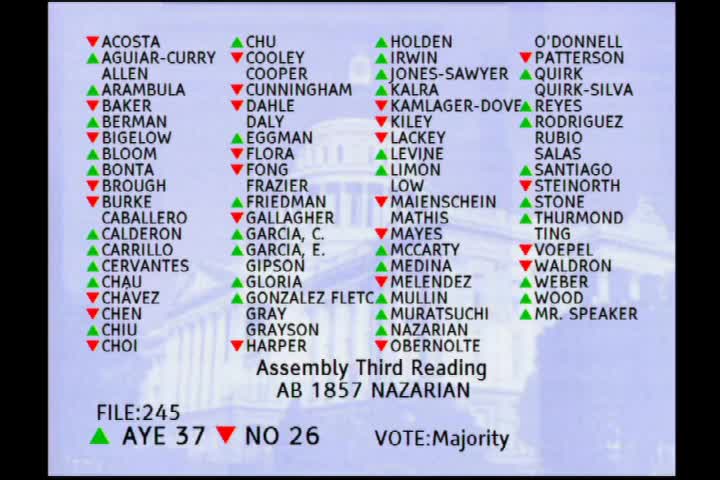 1MIN
Assembly Floor
 9MIN
Assembly Standing Committee on Human Services
Bill Author

Bill Co-Author(s):