AB 1971: Mental health services: involuntary detention: gravely disabled.
- Session Year: 2017-2018
- House: Assembly
- Latest Version Date: 2018-07-03
Existing law, the Lanterman-Petris-Short Act, authorizes the involuntary commitment and treatment of persons with specified mental health disorders for the protection of the persons so committed. Under the act, if a person, as a result of a mental health disorder, is a danger to others, or to himself or herself, or is gravely disabled, he or she may, upon probable cause, be taken into custody by a peace officer, a member of the attending staff of an evaluation facility, designated members of a mobile crisis team, or another designated professional person, and placed in a facility designated by the county and approved by the State Department of Social Services as a facility for 72-hour treatment and evaluation. For these purposes, existing law defines gravely disabled to mean either a condition in which a person, as a result of a mental health disorder or chronic alcoholism, is unable to provide for his or her basic personal needs for food, clothing, or shelter, or a condition in which a person has been found mentally incompetent, as specified. Existing law also provides immunity from civil and criminal liability for the detention by specified licensed general acute care hospitals, licensed acute psychiatric hospitals, licensed professional staff at those hospitals, or any physician and surgeon providing emergency medical services in any department of those hospitals if various conditions are met, including that the detained person cannot be safely released from the hospital because, in the opinion of treating staff, the person, as a result of a mental health disorder, presents a danger to himself or herself, or others, or is gravely disabled, as defined.
This bill would expand the definition of gravely disabled for these purposes to also include a condition in which a person, as a result of a mental health disorder or chronic alcoholism, as applicable, is unable to provide for his or her medical treatment, as specified. The bill would make conforming changes. The bill would make certain legislative findings and declarations related to mental health.Existing law prohibits a person from being tried or adjudged to punishment while that person is mentally incompetent. Existing law establishes a process by which a defendants mental competency is evaluated and by which the defendant is committed to a facility for treatment. If the defendant is gravely disabled, as defined above, upon his or her return to the committing court, existing law requires the court to order the conservatorship investigator of the county to initiate conservatorship proceedings on the basis that the indictment or information pending against the person charges a felony involving death, great bodily harm, or a serious threat to the physical well-being of another person.
This bill would, until January 1, 2024, expand the definition of gravely disabled for these purposes, as implemented in the County of Los Angeles, to also include a condition in which a person, as a result of a mental health disorder, is unable to provide for his or her basic personal needs for medical treatment, if the failure to receive medical treatment, as defined, results in a deteriorating physical condition that a medical professional, in his or her best medical judgment, attests in writing, will more likely than not, lead to death within 6 months, as specified.
The bill would, on or before January 1, 2023, require the County of Los Angeles to submit a report to the Legislature evaluating the impact of the countys implementation of the above-mentioned provisions of the Lanterman-Petris-Short Act between January 1, 2019, and June 30, 2022, inclusive, with the expanded definition of gravely disabled. The bill would also make certain legislative findings and declarations related to mental health.
By expanding the above definition of gravely disabled, gravely disabled in, and imposing new duties on, the County of Los Angeles, the bill would increase the duties on local agencies, and would therefore impose a state-mandated local program.
This bill would make legislative findings and declarations as to the necessity of a special statute for the County of Los Angeles.
The California Constitution requires the state to reimburse local agencies and school districts for certain costs mandated by the state. Statutory provisions establish procedures for making that reimbursement.
This bill would provide that, if the Commission on State Mandates determines that the bill contains costs mandated by the state, reimbursement for those costs shall be made pursuant to the statutory provisions noted above.
Existing law, the Lanterman-Petris-Short Act, authorizes the involuntary commitment and treatment of persons with specified mental health disorders for the protection of the persons so committed. Under the act, if a person, as a result of a mental health disorder, is a danger to others, or to himself or herself, or is gravely disabled, he or she may, upon probable cause, be taken into custody by a peace officer, a member of the attending staff of an evaluation facility, designated members of a mobile crisis team, or another designated professional person, and placed in a facility designated by the county and approved by the State Department of Social Services as a facility for 72-hour treatment and evaluation. For these purposes, existing law defines gravely disabled to mean either a condition in which a person, as a result of a mental health disorder or chronic alcoholism, is unable to provide for his or her basic personal needs for food, clothing, or shelter, or a condition in which a person has been found mentally incompetent, as specified. Existing law also provides immunity from civil and criminal liability for the detention by specified licensed general acute care hospitals, licensed acute psychiatric hospitals, licensed professional staff at those hospitals, or any physician and surgeon providing emergency medical services in any department of those hospitals if various conditions are met, including that the detained person cannot be safely released from the hospital because, in the opinion of treating staff, the person, as a result of a mental health disorder, presents a danger to himself or herself, or others, or is gravely disabled, as defined.
This bill would expand that the definition of gravely disabled for these purposes to also include a condition in which a person, as a result of a mental health disorder or chronic alcoholism, as applicable, is unable to provide for his or her medical treatment, as specified. The bill would make conforming changes. The bill would make certain legislative findings and declarations related to mental health.
Existing law prohibits a person from being tried or adjudged to punishment while that person is mentally incompetent. Existing law establishes a process by which a defendants mental competency is evaluated and by which the defendant is committed to a facility for treatment. If the defendant is gravely disabled, as defined above, upon his or her return to the committing court, existing law requires the court to order the conservatorship investigator of the county to initiate conservatorship proceedings on the basis that the indictment or information pending against the person charges a felony involving death, great bodily harm, or a serious threat to the physical well-being of another person.
By expanding the above definition of gravely disabled, the bill would increase the duties on local agencies, and would therefore impose a state-mandated local program.
The California Constitution requires the state to reimburse local agencies and school districts for certain costs mandated by the state. Statutory provisions establish procedures for making that reimbursement.
This bill would provide that, if the Commission on State Mandates determines that the bill contains costs mandated by the state, reimbursement for those costs shall be made pursuant to the statutory provisions noted above.
Existing law, the Lanterman-Petris-Short Act, authorizes the involuntary commitment and treatment of persons with specified mental health disorders for the protection of the persons so committed. Under the act, if a person, as a result of a mental health disorder, is a danger to others, or to himself or herself, or is gravely disabled, he or she may, upon probable cause, be taken into custody by a peace officer, a member of the attending staff of an evaluation facility, designated members of a mobile crisis team, or another designated professional person, and placed in a facility designated by the county and approved by the State Department of Social Services as a facility for 72-hour treatment and evaluation. For these purposes, existing law defines gravely disabled to mean either a condition in which a person, as a result of a mental health disorder or chronic alcoholism, is unable to provide for his or her basic personal needs for food, clothing, or shelter, or a condition in which a person has been found mentally incompetent, as specified. Existing law also provides immunity from civil and criminal liability for the detention by specified licensed general acute care hospitals, licensed acute psychiatric hospitals, licensed professional staff at those hospitals, or any physician and surgeon providing emergency medical services in any department of those hospitals if various conditions are met, including that the detained person cannot be safely released from the hospital because, in the opinion of treating staff, the person, as a result of a mental health disorder, presents a danger to himself or herself, or others, or is gravely disabled, as defined.
This bill would expand that definition of gravely disabled for these purposes to also include a condition in which a person, as a result of a mental health disorder or chronic alcoholism, as applicable, is unable to provide for his or her medical treatment, as specified. The bill would make conforming changes.
Existing law prohibits a person from being tried or adjudged to punishment while that person is mentally incompetent. Existing law establishes a process by which a defendants mental competency is evaluated and by which the defendant is committed to a facility for treatment. If the defendant is gravely disabled, as defined above, upon his or her return to the committing court, existing law requires the court to order the conservatorship investigator of the county to initiate conservatorship proceedings on the basis that the indictment or information pending against the person charges a felony involving death, great bodily harm, or a serious threat to the physical well-being of another person.
By expanding the above definition of gravely disabled, the bill would increase the duties on local agencies, and would therefore impose a state-mandated local program.
The California Constitution requires the state to reimburse local agencies and school districts for certain costs mandated by the state. Statutory provisions establish procedures for making that reimbursement.
This bill would provide that, if the Commission on State Mandates determines that the bill contains costs mandated by the state, reimbursement for those costs shall be made pursuant to the statutory provisions noted above.
Existing law requires the State Department of Health Care Services to perform various functions with regard to the statewide delivery of mental health services, including, but not limited to, implementation of related planning, research, evaluation, technical assistance, and quality assurance responsibilities.This bill would make a nonsubstantive change in those provisions.Existing law requires the State Department of Health Care Services to perform various functions with regard to the statewide delivery of mental health services, including, but not limited to, implementation of related planning, research, evaluation, technical assistance, and quality assurance responsibilities.
This bill would make a nonsubstantive change in those provisions.
The Legislature finds and declares all of the following:
(a)The large and growing number of persons with mental health disabilities living on the streets and revolving in and out of hospitals, jails, and prisons in the state is a problem of serious concern for California counties.
(b)Data from the State Department of Health Care Services for the 201516 fiscal year identified 94,133 individuals received outpatient mental health services in county jails and 2,356 individuals were admitted to jail-based psychiatric inpatient units. The Department of Corrections and Rehabilitation estimates that among the 129,000 inmates receiving prison-based mental health services, approximately 35,000 individuals have severe mental illness.
(c)Expert consensus identifies a number of factors contributing to the crises of homelessness and the criminalization of persons with severe mental illness, among which are insufficient community resources, including both psychiatric inpatient and outpatient treatment options, as well as appropriate affordable housing options.
(d)Among the population of homeless persons with a severe mental illness, there are increasing reports of untreated medical conditions that endanger the health and well-being of those individuals. In far too many cases, these conditions worsen into serious medical emergencies, a number of which tragically result in death.
(e)Data from the State Department of Health Care Services for the 201516 fiscal year also identifies the following involuntary detentions for persons with severe mental illness by category:
(1)72-hour adult holds for evaluation and treatment for 136,874 individuals.
(2)14-day intensive treatment holds for 55,870 individuals.
(3)30-day intensive treatment holds for 3,514 individuals.
(4)Temporary conservatorships for 1,955 individuals.
(5)Permanent conservatorships for 4,643 individuals.
(f)The criteria for grave disability, which is defined as an inability to provide for ones own basic personal needs for food, clothing, and shelter as a basis for detention and treatment under these holds, has been identified as a source of concern for several reasons.
(1)The grave disability criteria is subject to various interpretations statewide, resulting in unequal application of the law from county to county.
(2)Existing law does not recognize the inability of an individual to provide for his or her own basic personal needs for health as an element contributing to grave disability, resulting in many avoidable tragedies that directly stem from the neglect of medical conditions.
(g)It is therefore the intent of the Legislature to include a persons inability to provide for his or her basic personal needs for health as an additional element of the grave disability standard, consistent with the original aims of the Lanterman-Petris-Short Act, which seeks to:
(1)Provide prompt evaluation and treatment of persons with mental health disorders.
(2)Provide individualized treatment, supervision, and placement services by conservatorship for persons gravely disabled.
(3)Safeguard individual rights through judicial review.
(4)Provide services in the least restrictive setting appropriate to the needs of each person receiving services.
(h)The Legislature recognizes that application of this clarifying standard may provide earlier intervention than what is currently possible. It is the intent of the Legislature in applying this clarifying standard to prevent the further deterioration of a persons health and mental health condition, avoid the need for more intensive and costly interventions later on, avoid increased morbidity and mortality, reduce homelessness, and decrease the prevalence of severe mental illness in our jails and prisons. This standard will allow more efficient use of existing resources to treat more people at lower levels of care, effectively freeing up dollars formerly spent on higher levels of care for use in the mental health system generally.
(i)The Legislature also recognizes that this clarifying standard will allow some individuals who are now neglected because they do not fall under the current varying interpretations of the gravely disabled standard, to access substitute decisionmakers in the form of conservators appointed to assist them in stabilizing their illnesses and support them on their path of recovery.
(j)In order to provide more consistent interpretations of the definition of gravely disabled, the Legislature also declares that counties should consider, to the extent possible, the individuals ability to make informed decisions about providing for his or her own basic needs for food, clothing, shelter, or medical treatment.
SEC. 2.Section 1799.111 of the Health and Safety Code is amended to read:1799.111.(a)Subject to subdivision (b), a licensed general acute care hospital, as defined in subdivision (a) of Section 1250, that is not a county-designated facility pursuant to Section 5150 of the Welfare and Institutions Code, a licensed acute psychiatric hospital, as defined in subdivision (b) of Section 1250, that is not a county-designated facility pursuant to Section 5150 of the Welfare and Institutions Code, licensed professional staff of those hospitals, or any physician and surgeon, providing emergency medical services in any department of those hospitals to a person at the hospital is not civilly or criminally liable for detaining a person if all of the following conditions exist during the detention:
(1)The person cannot be safely released from the hospital because, in the opinion of the treating physician and surgeon, or a clinical psychologist with the medical staff privileges, clinical privileges, or professional responsibilities provided in Section 1316.5, the person, as a result of a mental health disorder, presents a danger to himself or herself, or others, or is gravely disabled. For purposes of this paragraph, gravely disabled has the same meaning as that term is defined in paragraph (1) of subdivision (h) of Section 5008 of the Welfare and Institutions Code. means either of the following:
(A)Except as provided in subparagraph (B), an inability to provide for his or her basic personal needs for food, clothing, or shelter.
(B)In the County of Los Angeles, a condition in which a person, as a result of a mental health disorder, is unable to provide for his or her basic personal needs for food, clothing, shelter, or medical treatment, if the failure to receive medical treatment results in a deteriorating physical condition that a medical professional, in his or her best medical judgment, attests in writing, will more likely than not, lead to death within six months. For purposes of this paragraph, medical treatment means the administration or application of remedies for a mental health condition, as identified by a licensed mental health professional, or a physical health condition, as identified by a licensed medical professional.
(2)The hospital staff, treating physician and surgeon, or appropriate licensed mental health professional, have made, and documented, repeated unsuccessful efforts to find appropriate mental health treatment for the person.
(A)Telephone calls or other contacts required pursuant to this paragraph shall commence at the earliest possible time when the treating physician and surgeon has determined the time at which the person will be medically stable for transfer.
(B)In no case shall the contacts required pursuant to this paragraph begin after the time when the person becomes medically stable for transfer.
(3)The person is not detained beyond 24 hours.
(4)There is probable cause for the detention.
(b)If the person is detained pursuant to subdivision (a) beyond eight hours, but less than 24 hours, both of the following additional conditions shall be met:
(1)A discharge or transfer for appropriate evaluation or treatment for the person has been delayed because of the need for continuous and ongoing care, observation, or treatment that the hospital is providing.
(2)In the opinion of the treating physician and surgeon, or a clinical psychologist with the medical staff privileges or professional responsibilities provided for in Section 1316.5, the person, as a result of a mental health disorder, is still a danger to himself or herself, or others, or is gravely disabled, as defined in paragraph (1) of subdivision (a).
(c)In addition to the immunities set forth in subdivision (a), a licensed general acute care hospital, as defined in subdivision (a) of Section 1250 that is not a county-designated facility pursuant to Section 5150 of the Welfare and Institutions Code, a licensed acute psychiatric hospital as defined by subdivision (b) of Section 1250 that is not a county-designated facility pursuant to Section 5150 of the Welfare and Institutions Code, licensed professional staff of those hospitals, or any physician and surgeon, providing emergency medical services in any department of those hospitals to a person at the hospital shall not be civilly or criminally liable for the actions of a person detained up to 24 hours in those hospitals who is subject to detention pursuant to subdivision (a) after that persons release from the detention at the hospital, if all of the following conditions exist during the detention:
(1)The person has not been admitted to a licensed general acute care hospital or a licensed acute psychiatric hospital for evaluation and treatment pursuant to Section 5150 of the Welfare and Institutions Code.
(2)The release from the licensed general acute care hospital or the licensed acute psychiatric hospital is authorized by a physician and surgeon or a clinical psychologist with the medical staff privileges or professional responsibilities provided for in Section 1316.5, who determines, based on a face-to-face examination of the person detained, that the person does not present a danger to himself or herself or others and is not gravely disabled, as defined in paragraph (1) of subdivision (a). In order for this paragraph to apply to a clinical psychologist, the clinical psychologist shall have a collaborative treatment relationship with the physician and surgeon. The clinical psychologist may authorize the release of the person from the detention, but only after he or she has consulted with the physician and surgeon. In the event of a clinical or professional disagreement regarding the release of a person subject to the detention, the detention shall be maintained unless the hospitals medical director overrules the decision of the physician and surgeon opposing the release. Both the physician and surgeon and the clinical psychologist shall enter their findings, concerns, or objections in the persons medical record.
(d) This section does not affect the responsibility of a general acute care hospital or an acute psychiatric hospital to comply with all state laws and regulations pertaining to the use of seclusion and restraint and psychiatric medications for psychiatric patients. Persons detained under this section shall retain their legal rights regarding consent for medical treatment.
(e)A person detained under this section shall be credited for the time detained, up to 24 hours, in the event he or she is placed on a subsequent 72-hour hold pursuant to Section 5150 of the Welfare and Institutions Code.
(f)The amendments to this section made by the act adding this subdivision shall not be construed to limit any existing duties for psychotherapists contained in Section 43.92 of the Civil Code.
(g) This section does not expand the scope of licensure of clinical psychologists.
(h)This section shall remain in effect only until January 1, 2024, and as of that date is repealed.
SEC. 3.Section 5008 of the Welfare and Institutions Code is amended to read:5008.Unless the context otherwise requires, the following definitions shall govern the construction of this part:(a)Evaluation consists of multidisciplinary professional analyses of a persons medical, psychological, educational, social, financial, and legal conditions as may appear to constitute a problem. Persons providing evaluation services shall be properly qualified professionals and may be full-time employees of an agency providing face-to-face, which includes telehealth, evaluation services or may be part-time employees or may be employed on a contractual basis.(b)Court-ordered evaluation means an evaluation ordered by a superior court pursuant to Article 2 (commencing with Section 5200) or by a superior court pursuant to Article 3 (commencing with Section 5225) of Chapter 2.(c)Intensive treatment consists of hospital and other services as may be indicated. Intensive treatment shall be provided by properly qualified professionals and carried out in facilities qualifying for reimbursement under the California Medical Assistance Program (Medi-Cal) set forth in Chapter 7 (commencing with Section 14000) of Part 3 of Division 9, or under Title XVIII of the federal Social Security Act and regulations thereunder. Intensive treatment may be provided in hospitals of the United States government by properly qualified professionals. This part does not prohibit an intensive treatment facility from also providing 72-hour evaluation and treatment.(d)Referral is referral of persons by each agency or facility providing assessment, evaluation, crisis intervention, or treatment services to other agencies or individuals. The purpose of referral shall be to provide for continuity of care, and may include, but need not be limited to, informing the person of available services, making appointments on the persons behalf, discussing the persons problem with the agency or individual to which the person has been referred, appraising the outcome of referrals, and arranging for personal escort and transportation when necessary. Referral shall be considered complete when the agency or individual to whom the person has been referred accepts responsibility for providing the necessary services. All persons shall be advised of available precare services that prevent initial recourse to hospital treatment or aftercare services that support adjustment to community living following hospital treatment. These services may be provided through county or city mental health departments, state hospitals under the jurisdiction of the State Department of State Hospitals, regional centers under contract with the State Department of Developmental Services, or other public or private entities.Each agency or facility providing evaluation services shall maintain a current and comprehensive file of all community services, both public and private. These files shall contain current agreements with agencies or individuals accepting referrals, as well as appraisals of the results of past referrals.(e)Crisis intervention consists of an interview or series of interviews within a brief period of time, conducted by qualified professionals, and designed to alleviate personal or family situations which present a serious and imminent threat to the health or stability of the person or the family. The interview or interviews may be conducted in the home of the person or family, or on an inpatient or outpatient basis with such therapy, or other services, as may be appropriate. The interview or interviews may include family members, significant support persons, providers, or other entities or individuals, as appropriate and as authorized by law. Crisis intervention may, as appropriate, include suicide prevention, psychiatric, welfare, psychological, legal, or other social services.(f)Prepetition screening is a screening of all petitions for court-ordered evaluation as provided in Article 2 (commencing with Section 5200) of Chapter 2, consisting of a professional review of all petitions; an interview with the petitioner and, whenever possible, the person alleged, as a result of a mental health disorder, to be a danger to others, or to himself or herself, or to be gravely disabled, to assess the problem and explain the petition; when indicated, efforts to persuade the person to receive, on a voluntary basis, comprehensive evaluation, crisis intervention, referral, and other services specified in this part.(g)Conservatorship investigation means investigation by an agency appointed or designated by the governing body of cases in which conservatorship is recommended pursuant to Chapter 3 (commencing with Section 5350).(h)(1)For purposes of Article 1 (commencing with Section 5150), Article 2 (commencing with Section 5200), and Article 4 (commencing with Section 5250) of Chapter 2, and for the purposes of Chapter 3 (commencing with Section 5350), gravely disabled means either of the following:(A)A condition in which a person, as a result of a mental health disorder, is unable to provide for his or her basic personal needs for food, clothing, shelter, or medical treatment, if the failure to receive medical treatment results in a deteriorating physical condition or death. For purposes of this subdivision, medical treatment means the administration or application of remedies for a mental health condition, as identified by a licensed mental health professional, or a physical health condition, as identified by a licensed medical professional.(B)A condition in which a person, has been found mentally incompetent under Section 1370 of the Penal Code and all of the following facts exist:(i)The complaint, indictment, or information pending against the person at the time of commitment charges a felony involving death, great bodily harm, or a serious threat to the physical well-being of another person.(ii)There has been a finding of probable cause on a complaint pursuant to paragraph (2) of subdivision (a) of Section 1368.1 of the Penal Code, a preliminary examination pursuant to Section 859b of the Penal Code, or a grand jury indictment, and the complaint, indictment, or information has not been dismissed.(iii)As a result of a mental health disorder, the person is unable to understand the nature and purpose of the proceedings taken against him or her and to assist counsel in the conduct of his or her defense in a rational manner.(iv)The person represents a substantial danger of physical harm to others by reason of a mental disease, defect, or disorder.(2)For purposes of Article 3 (commencing with Section 5225) and Article 4 (commencing with Section 5250), of Chapter 2, and for the purposes of Chapter 3 (commencing with Section 5350), gravely disabled means a condition in which a person, as a result of impairment by chronic alcoholism, is unable to provide for his or her basic personal needs for food, clothing, or shelter.(3)The term gravely disabled does not include persons with intellectual disabilities by reason of that disability alone.(i)Peace officer means a duly sworn peace officer as that term is defined in Chapter 4.5 (commencing with Section 830) of Title 3 of Part 2 of the Penal Code who has completed the basic training course established by the Commission on Peace Officer Standards and Training, or any parole officer or probation officer specified in Section 830.5 of the Penal Code when acting in relation to cases for which he or she has a legally mandated responsibility.(j)Postcertification treatment means an additional period of treatment pursuant to Article 6 (commencing with Section 5300) of Chapter 2.(k)Court, unless otherwise specified, means a court of record.(l)Antipsychotic medication means any medication customarily prescribed for the treatment of symptoms of psychoses and other severe mental and emotional disorders.(m)Emergency means a situation in which action to impose treatment over the persons objection is immediately necessary for the preservation of life or the prevention of serious bodily harm to the patient or others, and it is impracticable to first gain consent. It is not necessary for harm to take place or become unavoidable prior to treatment.(n)Designated facility or facility designated by the county for evaluation and treatment means a facility that is licensed or certified as a mental health treatment facility or a hospital, as defined in subdivision (a) or (b) of Section 1250 of the Health and Safety Code, by the State Department of Public Health, and may include, but is not limited to, a licensed psychiatric hospital, a licensed psychiatric health facility, and a certified crisis stabilization unit.SEC. 4.Section 5250 of the Welfare and Institutions Code is amended to read:5250.If a person is detained for 72 hours under the provisions of Article 1 (commencing with Section 5150), or under court order for evaluation pursuant to Article 2 (commencing with Section 5200) or Article 3 (commencing with Section 5225) and has received an evaluation, he or she may be certified for not more than 14 days of intensive treatment related to the mental health disorder or impairment by chronic alcoholism, under the following conditions:(a)The professional staff of the agency or facility providing evaluation services has analyzed the persons condition and has found the person is, as a result of a mental health disorder or impairment by chronic alcoholism, a danger to others, or to himself or herself, or gravely disabled.(b)The facility providing intensive treatment is designated by the county to provide intensive treatment, and agrees to admit the person. No facility shall be designated to provide intensive treatment unless it complies with the certification review hearing required by this article. The procedures shall be described in the county Short-Doyle plan as required by Section 5651.3.(c)The person has been advised of the need for, but has not been willing or able to accept, treatment on a voluntary basis.(d)(1)Notwithstanding paragraph (1) of subdivision (h) of Section 5008, a person is not gravely disabled if that person can survive safely without involuntary detention with the help of responsible family, friends, or others who are both willing and able to help provide for the persons basic personal needs for food, clothing, shelter, or medical treatment.(2)However, unless they specifically indicate in writing their willingness and ability to help, family, friends, or others shall not be considered willing or able to provide this help.(3)The purpose of this subdivision is to avoid the necessity for, and the harmful effects of, requiring family, friends, and others to publicly state, and requiring the certification review officer to publicly find, that no one is willing or able to assist a person with a mental health disorder in providing for the persons basic needs for food, clothing, shelter, or medical treatment.SEC. 5.Section 5350 of the Welfare and Institutions Code is amended to read:5350.A conservator of the person, of the estate, or of the person and the estate may be appointed for a person who is gravely disabled as a result of a mental health disorder or impairment by chronic alcoholism.The procedure for establishing, administering, and terminating a conservatorship under this chapter shall be the same as that provided in Division 4 (commencing with Section 1400) of the Probate Code, except as follows:(a)A conservator may be appointed for a gravely disabled minor.(b)(1)Appointment of a conservator under this part, including the appointment of a conservator for a person who is gravely disabled, as defined in subparagraph (A) of paragraph (1) of subdivision (h) of Section 5008, shall be subject to the list of priorities in Section 1812 of the Probate Code unless the officer providing conservatorship investigation recommends otherwise to the superior court.(2)In appointing a conservator, as defined in subparagraph (B) of paragraph (1) of subdivision (h) of Section 5008, the court shall consider the purposes of protection of the public and the treatment of the conservatee. Notwithstanding any other provision of this section, the court shall not appoint the proposed conservator if the court determines that appointment of the proposed conservator will not result in adequate protection of the public.(c)No conservatorship of the estate pursuant to this chapter shall be established if a conservatorship or guardianship of the estate exists under the Probate Code. When a gravely disabled person already has a guardian or conservator of the person appointed under the Probate Code, the proceedings under this chapter shall not terminate the prior proceedings but shall be concurrent with and superior thereto. The superior court may appoint the existing guardian or conservator of the person or another person as conservator of the person under this chapter.(d)(1)The person for whom conservatorship is sought shall have the right to demand a court or jury trial on the issue of whether he or she is gravely disabled. Demand for court or jury trial shall be made within five days following the hearing on the conservatorship petition. If the proposed conservatee demands a court or jury trial before the date of the hearing as provided for in Section 5365, the demand shall constitute a waiver of the hearing.(2)Court or jury trial shall commence within 10 days of the date of the demand, except that the court shall continue the trial date for a period not to exceed 15 days upon the request of counsel for the proposed conservatee.(3)This right shall also apply in subsequent proceedings to reestablish conservatorship.(e)(1)Notwithstanding subparagraph (A) of paragraph (1) of subdivision (h) of Section 5008, a person is not gravely disabled if that person can survive safely without involuntary detention with the help of responsible family, friends, or others who are both willing and able to help provide for the persons basic personal needs for food, clothing, shelter, or medical treatment.(2)However, unless they specifically indicate in writing their willingness and ability to help, family, friends, or others shall not be considered willing or able to provide this help.(3)The purpose of this subdivision is to avoid the necessity for, and the harmful effects of, requiring family, friends, and others to publicly state, and requiring the court to publicly find, that no one is willing or able to assist a person with a mental health disorder in providing for the persons basic needs for food, clothing, shelter, or medical treatment.(4)This subdivision does not apply to a person who is gravely disabled, as defined in subparagraph (B) of paragraph (1) of subdivision (h) of Section 5008.(f)Conservatorship investigation shall be conducted pursuant to this part and shall not be subject to Section 1826 or Chapter 2 (commencing with Section 1850) of Part 3 of Division 4 of the Probate Code.(g)Notice of proceedings under this chapter shall be given to a guardian or conservator of the person or estate of the proposed conservatee appointed under the Probate Code.(h)As otherwise provided in this chapter.SEC. 3.Section 1799.111 is added to the Health and Safety Code, to read:1799.111.(a)Subject to subdivision (b), a licensed general acute care hospital, as defined in subdivision (a) of Section 1250, that is not a county-designated facility pursuant to Section 5150 of the Welfare and Institutions Code, a licensed acute psychiatric hospital, as defined in subdivision (b) of Section 1250, that is not a county-designated facility pursuant to Section 5150 of the Welfare and Institutions Code, licensed professional staff of those hospitals, or any physician and surgeon, providing emergency medical services in any department of those hospitals to a person at the hospital is not civilly or criminally liable for detaining a person if all of the following conditions exist during the detention:
(1)The person cannot be safely released from the hospital because, in the opinion of the treating physician and surgeon, or a clinical psychologist with the medical staff privileges, clinical privileges, or professional responsibilities provided in Section 1316.5, the person, as a result of a mental health disorder, presents a danger to himself or herself, or others, or is gravely disabled. For purposes of this paragraph, gravely disabled means an inability to provide for his or her basic personal needs for food, clothing, or shelter.
(2)The hospital staff, treating physician and surgeon, or appropriate licensed mental health professional, have made, and documented, repeated unsuccessful efforts to find appropriate mental health treatment for the person.
(A)Telephone calls or other contacts required pursuant to this paragraph shall commence at the earliest possible time when the treating physician and surgeon has determined the time at which the person will be medically stable for transfer.
(B)In no case shall the contacts required pursuant to this paragraph begin after the time when the person becomes medically stable for transfer.
(3)The person is not detained beyond 24 hours.
(4)There is probable cause for the detention.
(b)If the person is detained pursuant to subdivision (a) beyond eight hours, but less than 24 hours, both of the following additional conditions shall be met:
(1)A discharge or transfer for appropriate evaluation or treatment for the person has been delayed because of the need for continuous and ongoing care, observation, or treatment that the hospital is providing.
(2)In the opinion of the treating physician and surgeon, or a clinical psychologist with the medical staff privileges or professional responsibilities provided for in Section 1316.5, the person, as a result of a mental health disorder, is still a danger to himself or herself, or others, or is gravely disabled, as defined in paragraph (1) of subdivision (a).
(c)In addition to the immunities set forth in subdivision (a), a licensed general acute care hospital, as defined in subdivision (a) of Section 1250 that is not a county-designated facility pursuant to Section 5150 of the Welfare and Institutions Code, a licensed acute psychiatric hospital as defined by subdivision (b) of Section 1250 that is not a county-designated facility pursuant to Section 5150 of the Welfare and Institutions Code, licensed professional staff of those hospitals, or any physician and surgeon, providing emergency medical services in any department of those hospitals to a person at the hospital shall not be civilly or criminally liable for the actions of a person detained up to 24 hours in those hospitals who is subject to detention pursuant to subdivision (a) after that persons release from the detention at the hospital, if all of the following conditions exist during the detention:
(1)The person has not been admitted to a licensed general acute care hospital or a licensed acute psychiatric hospital for evaluation and treatment pursuant to Section 5150 of the Welfare and Institutions Code.
(2)The release from the licensed general acute care hospital or the licensed acute psychiatric hospital is authorized by a physician and surgeon or a clinical psychologist with the medical staff privileges or professional responsibilities provided for in Section 1316.5, who determines, based on a face-to-face examination of the person detained, that the person does not present a danger to himself or herself or others and is not gravely disabled, as defined in paragraph (1) of subdivision (a). In order for this paragraph to apply to a clinical psychologist, the clinical psychologist shall have a collaborative treatment relationship with the physician and surgeon. The clinical psychologist may authorize the release of the person from the detention, but only after he or she has consulted with the physician and surgeon. In the event of a clinical or professional disagreement regarding the release of a person subject to the detention, the detention shall be maintained unless the hospitals medical director overrules the decision of the physician and surgeon opposing the release. Both the physician and surgeon and the clinical psychologist shall enter their findings, concerns, or objections in the persons medical record.
(d) This section does not affect the responsibility of a general acute care hospital or an acute psychiatric hospital to comply with all state laws and regulations pertaining to the use of seclusion and restraint and psychiatric medications for psychiatric patients. Persons detained under this section shall retain their legal rights regarding consent for medical treatment.
(e)A person detained under this section shall be credited for the time detained, up to 24 hours, in the event he or she is placed on a subsequent 72-hour hold pursuant to Section 5150 of the Welfare and Institutions Code.
(f)The amendments to this section made by the act adding this subdivision shall not be construed to limit any existing duties for psychotherapists contained in Section 43.92 of the Civil Code.
(g) This section does not expand the scope of licensure of clinical psychologists.
(h)This section becomes operative on January 1, 2024.
SEC. 4.Section 5011 is added to the Welfare and Institutions Code, to read:5011.(a)Notwithstanding subparagraph (A) of paragraph (1) of subdivision (h) of Section 5008, the definition of gravely disabled, for purposes of Article 1 (commencing with Section 5150), Article 2 (commencing with Section 5200), and Article 4 (commencing with Section 5250) of Chapter 2, and for the purposes of Chapter 3 (commencing with Section 5350), as implemented in the County of Los Angeles, shall include a condition in which a person, as a result of a mental health disorder, is unable to provide for his or her basic personal needs for medical treatment, if the failure to receive medical treatment results in a deteriorating physical condition that a medical professional, in his or her best medical judgment, attests in writing, will more likely than not, lead to death within six months. For purposes of this subdivision, medical treatment means the administration or application of remedies for a mental health condition, as identified by a licensed mental health professional, or a physical health condition, as identified by a licensed medical professional.
(b)The establishment of a conservatorship pursuant to Section 5350 for a person who is gravely disabled because he or she has a condition in which the person, as a result of a mental health disorder, is unable to provide for his or her basic personal needs for medical treatment, as specified in subdivision (a), is subject to a finding by the court that the behavioral health director of the county or the city and county has met both of the following criteria:
(1)The behavioral health director of the county or the city and county has offered and has made best efforts to provide the proposed conservatee with voluntary treatment for applicable mental health disorders, which must include, but not be limited to, an individual personal services plan for services, as described in Section 5348, and the proposed conservatee refused the voluntary treatment or the voluntary treatment failed to treat the persons mental illness.
(2)The behavioral health director of the county or the city and county has offered and has made best efforts to provide the proposed conservatee with proposed treatment for the physical health condition included in the proposed conservatees individual personal services plan, and the proposed conservatee refused that voluntary physical health treatment.
(c)(1)On or before January 1, 2023, the County of Los Angeles shall submit a report to the Legislature evaluating the impact of the countys implementation of Article 1 (commencing with Section 5150), Article 2 (commencing with Section 5200), and Article 4 (commencing with Section 5250) of Chapter 2, and Chapter 3 (commencing with Section 5350) between January 1, 2019, and June 30, 2022, inclusive, with the inclusion in the definition of gravely disabled, of a condition in which a person, as a result of a mental health disorder, is unable to provide for his or her basic personal needs for medical treatment, as specified in subdivision (a). The report shall include, but not be limited to, all of the following information:
(A)The number of individuals detained pursuant to Article 1 (commencing with Section 5150), Article 2 (commencing with Section 5200), and Article 4 (commencing with Section 5250) of Chapter 2 because they had a condition in which the individual, as a result of a mental health disorder, is unable to provide for his or her basic personal needs for medical treatment, as specified in subdivision (a).
(B)The number of conservatorships approved pursuant to Chapter 3 (commencing with Section 5350) for individuals with a condition in which the individual, as a result of a mental health disorder, is unable to provide for his or her basic personal needs for medical treatment, as specified in subdivision (a).
(C)Whether the county expanded assisted outpatient treatment services provided pursuant to Article 9 (commencing with Section 5345) of Chapter 2 between January 1, 2019, and June 30, 2022, inclusive.
(2)The report shall be submitted in compliance with Section 9795 of the Government Code.
(d)This section shall remain in effect only until January 1, 2024, and as of that date is repealed.
SEC. 5.The Legislature finds and declares that a special statute is necessary and that a general statute cannot be made applicable within the meaning of Section 16 of Article IV of the California Constitution because of the unique mental health disorder issues in the County of Los Angeles.
SEC. 6.If the Commission on State Mandates determines that this act contains costs mandated by the state, reimbursement to local agencies and school districts for those costs shall be made pursuant to Part 7 (commencing with Section 17500) of Division 4 of Title 2 of the Government Code.
The Legislature finds and declares all of the following:
(a)The large and growing number of persons with mental health disabilities living on the streets and revolving in and out of hospitals, jails, and prisons in the state is a problem of serious concern for California counties.
(b)Data from the State Department of Health Care Services for the 201516 fiscal year identified 94,133 individuals received outpatient mental health services in county jails and 2,356 individuals were admitted to jail-based psychiatric inpatient units. The Department of Corrections and Rehabilitation estimates that among the 129,000 inmates receiving prison-based mental health services, approximately 35,000 individuals have severe mental illness.
(c)Expert consensus identifies a number of factors contributing to the crises of homelessness and the criminalization of persons with severe mental illness, among which are insufficient community resources, including both psychiatric inpatient and outpatient treatment options, as well as appropriate affordable housing options.
(d)Among the population of homeless persons with a severe mental illness, there are increasing reports of untreated medical conditions that endanger the health and well-being of those individuals. In far too many cases, these conditions worsen into serious medical emergencies, a number of which tragically result in death.
(e)Data from the State Department of Health Care Services for the 201516 fiscal year also identifies the following involuntary detentions for persons with severe mental illness by category:
(1)72-hour adult holds for evaluation and treatment for 136,874 individuals.
(2)14-day intensive treatment holds for 55,870 individuals.
(3)30-day intensive treatment holds for 3,514 individuals.
(4)Temporary conservatorships for 1,955 individuals.
(5)Permanent conservatorships for 4,643 individuals.
(f)The criteria for grave disability, which is defined as an inability to provide for ones own basic personal needs for food, clothing, and shelter as a basis for detention and treatment under these holds, has been identified as a source of concern for several reasons.
(1)The grave disability criteria is subject to various interpretations statewide, resulting in unequal application of the law from county to county.
(2)Existing law does not recognize the inability of an individual to provide for his or her own basic personal needs for health as an element contributing to grave disability, resulting in many avoidable tragedies that directly stem from the neglect of medical conditions.
(g)It is therefore the intent of the Legislature to include a persons inability to provide for his or her basic personal needs for health as an additional element of the grave disability standard, consistent with the original aims of the Lanterman-Petris-Short Act, which seeks to:
(1)Provide prompt evaluation and treatment of persons with mental health disorders.
(2)Provide individualized treatment, supervision, and placement services by conservatorship for persons gravely disabled.
(3)Safeguard individual rights through judicial review.
(4)Provide services in the least restrictive setting appropriate to the needs of each person receiving services.
(h)The Legislature recognizes that application of this clarifying standard may provide earlier intervention than what is currently possible. It is the intent of the Legislature in applying this clarifying standard to prevent the further deterioration of a persons health and mental health condition, avoid the need for more intensive and costly interventions later on, avoid increased morbidity and mortality, reduce homelessness, and decrease the prevalence of severe mental illness in our jails and prisons. This standard will allow more efficient use of existing resources to treat more people at lower levels of care, effectively freeing up dollars formerly spent on higher levels of care for use in the mental health system generally.
(i)The Legislature also recognizes that this clarifying standard will allow some individuals who are now neglected because they do not fall under the current varying interpretations of the gravely disabled standard, to access substitute decisionmakers in the form of conservators appointed to assist them in stabilizing their illnesses and support them on their path of recovery.
(j)In order to provide more consistent interpretations of the definition of gravely disabled, the Legislature also declares that counties should consider, to the extent possible, the individuals ability to make informed decisions about providing for his or her own basic needs for food, clothing, shelter, or medical treatment.
SECTION 1.SEC. 2.Section 1799.111 of the Health and Safety Code is amended to read:1799.111.(a)Subject to subdivision (b), a licensed general acute care hospital, as defined in subdivision (a) of Section 1250, that is not a county-designated facility pursuant to Section 5150 of the Welfare and Institutions Code, a licensed acute psychiatric hospital, as defined in subdivision (b) of Section 1250, that is not a county-designated facility pursuant to Section 5150 of the Welfare and Institutions Code, licensed professional staff of those hospitals, or any physician and surgeon, providing emergency medical services in any department of those hospitals to a person at the hospital is not civilly or criminally liable for detaining a person if all of the following conditions exist during the detention:
(1)The person cannot be safely released from the hospital because, in the opinion of the treating physician and surgeon, or a clinical psychologist with the medical staff privileges, clinical privileges, or professional responsibilities provided in Section 1316.5, the person, as a result of a mental health disorder, presents a danger to himself or herself, or others, or is gravely disabled. For purposes of this paragraph, gravely disabled means an inability to provide for his or her basic personal needs for food, clothing, shelter, or medical treatment, if the lack of, or failure to receive, that treatment may result in substantial physical harm or death. has the same meaning as that term is defined in paragraph (1) of subdivision (h) of Section 5008 of the Welfare and Institutions Code.
(2)The hospital staff, treating physician and surgeon, or appropriate licensed mental health professional, have made, and documented, repeated unsuccessful efforts to find appropriate mental health treatment for the person.
(A)Telephone calls or other contacts required pursuant to this paragraph shall commence at the earliest possible time when the treating physician and surgeon has determined the time at which the person will be medically stable for transfer.
(B)In no case shall the contacts required pursuant to this paragraph begin after the time when the person becomes medically stable for transfer.
(3)The person is not detained beyond 24 hours.
(4)There is probable cause for the detention.
(b)If the person is detained pursuant to subdivision (a) beyond eight hours, but less than 24 hours, both of the following additional conditions shall be met:
(1)A discharge or transfer for appropriate evaluation or treatment for the person has been delayed because of the need for continuous and ongoing care, observation, or treatment that the hospital is providing.
(2)In the opinion of the treating physician and surgeon, or a clinical psychologist with the medical staff privileges or professional responsibilities provided for in Section 1316.5, the person, as a result of a mental health disorder, is still a danger to himself or herself, or others, or is gravely disabled, as defined in paragraph (1) of subdivision (a).
(c)In addition to the immunities set forth in subdivision (a), a licensed general acute care hospital, as defined in subdivision (a) of Section 1250 that is not a county-designated facility pursuant to Section 5150 of the Welfare and Institutions Code, a licensed acute psychiatric hospital as defined by subdivision (b) of Section 1250 that is not a county-designated facility pursuant to Section 5150 of the Welfare and Institutions Code, licensed professional staff of those hospitals, or any physician and surgeon, providing emergency medical services in any department of those hospitals to a person at the hospital shall not be civilly or criminally liable for the actions of a person detained up to 24 hours in those hospitals who is subject to detention pursuant to subdivision (a) after that persons release from the detention at the hospital, if all of the following conditions exist during the detention:
(1)The person has not been admitted to a licensed general acute care hospital or a licensed acute psychiatric hospital for evaluation and treatment pursuant to Section 5150 of the Welfare and Institutions Code.
(2)The release from the licensed general acute care hospital or the licensed acute psychiatric hospital is authorized by a physician and surgeon or a clinical psychologist with the medical staff privileges or professional responsibilities provided for in Section 1316.5, who determines, based on a face-to-face examination of the person detained, that the person does not present a danger to himself or herself or others and is not gravely disabled, as defined in paragraph (1) of subdivision (a). In order for this paragraph to apply to a clinical psychologist, the clinical psychologist shall have a collaborative treatment relationship with the physician and surgeon. The clinical psychologist may authorize the release of the person from the detention, but only after he or she has consulted with the physician and surgeon. In the event of a clinical or professional disagreement regarding the release of a person subject to the detention, the detention shall be maintained unless the hospitals medical director overrules the decision of the physician and surgeon opposing the release. Both the physician and surgeon and the clinical psychologist shall enter their findings, concerns, or objections in the persons medical record.
(d) This section does not affect the responsibility of a general acute care hospital or an acute psychiatric hospital to comply with all state laws and regulations pertaining to the use of seclusion and restraint and psychiatric medications for psychiatric patients. Persons detained under this section shall retain their legal rights regarding consent for medical treatment.
(e)A person detained under this section shall be credited for the time detained, up to 24 hours, in the event he or she is placed on a subsequent 72-hour hold pursuant to Section 5150 of the Welfare and Institutions Code.
(f)The amendments to this section made by the act adding this subdivision shall not be construed to limit any existing duties for psychotherapists contained in Section 43.92 of the Civil Code.
(g) This section does not expand the scope of licensure of clinical psychologists.
SEC. 2.SEC. 3.Section 5008 of the Welfare and Institutions Code is amended to read:5008.Unless the context otherwise requires, the following definitions shall govern the construction of this part:
(a)Evaluation consists of multidisciplinary professional analyses of a persons medical, psychological, educational, social, financial, and legal conditions as may appear to constitute a problem. Persons providing evaluation services shall be properly qualified professionals and may be full-time employees of an agency providing face-to-face, which includes telehealth, evaluation services or may be part-time employees or may be employed on a contractual basis.
(b)Court-ordered evaluation means an evaluation ordered by a superior court pursuant to Article 2 (commencing with Section 5200) or by a superior court pursuant to Article 3 (commencing with Section 5225) of Chapter 2.
(c)Intensive treatment consists of hospital and other services as may be indicated. Intensive treatment shall be provided by properly qualified professionals and carried out in facilities qualifying for reimbursement under the California Medical Assistance Program (Medi-Cal) set forth in Chapter 7 (commencing with Section 14000) of Part 3 of Division 9, or under Title XVIII of the federal Social Security Act and regulations thereunder. Intensive treatment may be provided in hospitals of the United States government by properly qualified professionals. This part does not prohibit an intensive treatment facility from also providing 72-hour evaluation and treatment.
(d)Referral is referral of persons by each agency or facility providing assessment, evaluation, crisis intervention, or treatment services to other agencies or individuals. The purpose of referral shall be to provide for continuity of care, and may include, but need not be limited to, informing the person of available services, making appointments on the persons behalf, discussing the persons problem with the agency or individual to which the person has been referred, appraising the outcome of referrals, and arranging for personal escort and transportation when necessary. Referral shall be considered complete when the agency or individual to whom the person has been referred accepts responsibility for providing the necessary services. All persons shall be advised of available precare services that prevent initial recourse to hospital treatment or aftercare services that support adjustment to community living following hospital treatment. These services may be provided through county or city mental health departments, state hospitals under the jurisdiction of the State Department of State Hospitals, regional centers under contract with the State Department of Developmental Services, or other public or private entities.
Each agency or facility providing evaluation services shall maintain a current and comprehensive file of all community services, both public and private. These files shall contain current agreements with agencies or individuals accepting referrals, as well as appraisals of the results of past referrals.
(e)Crisis intervention consists of an interview or series of interviews within a brief period of time, conducted by qualified professionals, and designed to alleviate personal or family situations which present a serious and imminent threat to the health or stability of the person or the family. The interview or interviews may be conducted in the home of the person or family, or on an inpatient or outpatient basis with such therapy, or other services, as may be appropriate. The interview or interviews may include family members, significant support persons, providers, or other entities or individuals, as appropriate and as authorized by law. Crisis intervention may, as appropriate, include suicide prevention, psychiatric, welfare, psychological, legal, or other social services.
(f)Prepetition screening is a screening of all petitions for court-ordered evaluation as provided in Article 2 (commencing with Section 5200) of Chapter 2, consisting of a professional review of all petitions; an interview with the petitioner and, whenever possible, the person alleged, as a result of a mental health disorder, to be a danger to others, or to himself or herself, or to be gravely disabled, to assess the problem and explain the petition; when indicated, efforts to persuade the person to receive, on a voluntary basis, comprehensive evaluation, crisis intervention, referral, and other services specified in this part.
(g)Conservatorship investigation means investigation by an agency appointed or designated by the governing body of cases in which conservatorship is recommended pursuant to Chapter 3 (commencing with Section 5350).
(h)(1)For purposes of Article 1 (commencing with Section 5150), Article 2 (commencing with Section 5200), and Article 4 (commencing with Section 5250) of Chapter 2, and for the purposes of Chapter 3 (commencing with Section 5350), gravely disabled means either of the following:
(A)A condition in which a person, as a result of a mental health disorder, is unable to provide for his or her basic personal needs for food, clothing, shelter, or medical treatment, if the lack of, or failure to receive, that treatment may result in substantial physical harm or death failure to receive medical treatment results in a deteriorating physical condition or death. For purposes of this subdivision, medical treatment means the administration or application of remedies for a mental health condition, as identified by a licensed mental health professional, or a physical health condition, as identified by a licensed medical professional.
(B)A condition in which a person, has been found mentally incompetent under Section 1370 of the Penal Code and all of the following facts exist:
(i)The complaint, indictment, or information pending against the person at the time of commitment charges a felony involving death, great bodily harm, or a serious threat to the physical well-being of another person.
(ii)There has been a finding of probable cause on a complaint pursuant to paragraph (2) of subdivision (a) of Section 1368.1 of the Penal Code, a preliminary examination pursuant to Section 859b of the Penal Code, or a grand jury indictment, and the complaint, indictment, or information has not been dismissed.
(iii)As a result of a mental health disorder, the person is unable to understand the nature and purpose of the proceedings taken against him or her and to assist counsel in the conduct of his or her defense in a rational manner.
(iv)The person represents a substantial danger of physical harm to others by reason of a mental disease, defect, or disorder.
(2)For purposes of Article 3 (commencing with Section 5225) and Article 4 (commencing with Section 5250), of Chapter 2, and for the purposes of Chapter 3 (commencing with Section 5350), gravely disabled means a condition in which a person, as a result of impairment by chronic alcoholism, is unable to provide for his or her basic personal needs for food, clothing, or shelter.
(3)The term gravely disabled does not include persons with intellectual disabilities by reason of that disability alone.
(i)Peace officer means a duly sworn peace officer as that term is defined in Chapter 4.5 (commencing with Section 830) of Title 3 of Part 2 of the Penal Code who has completed the basic training course established by the Commission on Peace Officer Standards and Training, or any parole officer or probation officer specified in Section 830.5 of the Penal Code when acting in relation to cases for which he or she has a legally mandated responsibility.
(j)Postcertification treatment means an additional period of treatment pursuant to Article 6 (commencing with Section 5300) of Chapter 2.
(k)Court, unless otherwise specified, means a court of record.
(l)Antipsychotic medication means any medication customarily prescribed for the treatment of symptoms of psychoses and other severe mental and emotional disorders.
(m)Emergency means a situation in which action to impose treatment over the persons objection is immediately necessary for the preservation of life or the prevention of serious bodily harm to the patient or others, and it is impracticable to first gain consent. It is not necessary for harm to take place or become unavoidable prior to treatment.
(n)Designated facility or facility designated by the county for evaluation and treatment means a facility that is licensed or certified as a mental health treatment facility or a hospital, as defined in subdivision (a) or (b) of Section 1250 of the Health and Safety Code, by the State Department of Public Health, and may include, but is not limited to, a licensed psychiatric hospital, a licensed psychiatric health facility, and a certified crisis stabilization unit.
SEC. 3.SEC. 4.Section 5250 of the Welfare and Institutions Code is amended to read:5250.If a person is detained for 72 hours under the provisions of Article 1 (commencing with Section 5150), or under court order for evaluation pursuant to Article 2 (commencing with Section 5200) or Article 3 (commencing with Section 5225) and has received an evaluation, he or she may be certified for not more than 14 days of intensive treatment related to the mental health disorder or impairment by chronic alcoholism, under the following conditions:
(a)The professional staff of the agency or facility providing evaluation services has analyzed the persons condition and has found the person is, as a result of a mental health disorder or impairment by chronic alcoholism, a danger to others, or to himself or herself, or gravely disabled.
(b)The facility providing intensive treatment is designated by the county to provide intensive treatment, and agrees to admit the person. No facility shall be designated to provide intensive treatment unless it complies with the certification review hearing required by this article. The procedures shall be described in the county Short-Doyle plan as required by Section 5651.3.
(c)The person has been advised of the need for, but has not been willing or able to accept, treatment on a voluntary basis.
(d)(1)Notwithstanding paragraph (1) of subdivision (h) of Section 5008, a person is not gravely disabled if that person can survive safely without involuntary detention with the help of responsible family, friends, or others who are both willing and able to help provide for the persons basic personal needs for food, clothing, or shelter, or medical treatment.
(2)However, unless they specifically indicate in writing their willingness and ability to help, family, friends, or others shall not be considered willing or able to provide this help.
(3)The purpose of this subdivision is to avoid the necessity for, and the harmful effects of, requiring family, friends, and others to publicly state, and requiring the certification review officer to publicly find, that no one is willing or able to assist a person with a mental health disorder in providing for the persons basic needs for food, clothing, or shelter, or medical treatment.
SEC. 4.SEC. 5.Section 5350 of the Welfare and Institutions Code is amended to read:5350.A conservator of the person, of the estate, or of the person and the estate may be appointed for a person who is gravely disabled as a result of a mental health disorder or impairment by chronic alcoholism.
The procedure for establishing, administering, and terminating a conservatorship under this chapter shall be the same as that provided in Division 4 (commencing with Section 1400) of the Probate Code, except as follows:
(a)A conservator may be appointed for a gravely disabled minor.
(b)(1)Appointment of a conservator under this part, including the appointment of a conservator for a person who is gravely disabled, as defined in subparagraph (A) of paragraph (1) of subdivision (h) of Section 5008, shall be subject to the list of priorities in Section 1812 of the Probate Code unless the officer providing conservatorship investigation recommends otherwise to the superior court.
(2)In appointing a conservator, as defined in subparagraph (B) of paragraph (1) of subdivision (h) of Section 5008, the court shall consider the purposes of protection of the public and the treatment of the conservatee. Notwithstanding any other provision of this section, the court shall not appoint the proposed conservator if the court determines that appointment of the proposed conservator will not result in adequate protection of the public.
(c)No conservatorship of the estate pursuant to this chapter shall be established if a conservatorship or guardianship of the estate exists under the Probate Code. When a gravely disabled person already has a guardian or conservator of the person appointed under the Probate Code, the proceedings under this chapter shall not terminate the prior proceedings but shall be concurrent with and superior thereto. The superior court may appoint the existing guardian or conservator of the person or another person as conservator of the person under this chapter.
(d)(1)The person for whom conservatorship is sought shall have the right to demand a court or jury trial on the issue of whether he or she is gravely disabled. Demand for court or jury trial shall be made within five days following the hearing on the conservatorship petition. If the proposed conservatee demands a court or jury trial before the date of the hearing as provided for in Section 5365, the demand shall constitute a waiver of the hearing.
(2)Court or jury trial shall commence within 10 days of the date of the demand, except that the court shall continue the trial date for a period not to exceed 15 days upon the request of counsel for the proposed conservatee.
(3)This right shall also apply in subsequent proceedings to reestablish conservatorship.
(e)(1)Notwithstanding subparagraph (A) of paragraph (1) of subdivision (h) of Section 5008, a person is not gravely disabled if that person can survive safely without involuntary detention with the help of responsible family, friends, or others who are both willing and able to help provide for the persons basic personal needs for food, clothing, or shelter, or medical treatment.
(2)However, unless they specifically indicate in writing their willingness and ability to help, family, friends, or others shall not be considered willing or able to provide this help.
(3)The purpose of this subdivision is to avoid the necessity for, and the harmful effects of, requiring family, friends, and others to publicly state, and requiring the court to publicly find, that no one is willing or able to assist a person with a mental health disorder in providing for the persons basic needs for food, clothing, or shelter, or medical treatment.
(4)This subdivision does not apply to a person who is gravely disabled, as defined in subparagraph (B) of paragraph (1) of subdivision (h) of Section 5008.
(f)Conservatorship investigation shall be conducted pursuant to this part and shall not be subject to Section 1826 or Chapter 2 (commencing with Section 1850) of Part 3 of Division 4 of the Probate Code.
(g)Notice of proceedings under this chapter shall be given to a guardian or conservator of the person or estate of the proposed conservatee appointed under the Probate Code.
(h)As otherwise provided in this chapter.
SEC. 5.SEC. 6.If the Commission on State Mandates determines that this act contains costs mandated by the state, reimbursement to local agencies and school districts for those costs shall be made pursuant to Part 7 (commencing with Section 17500) of Division 4 of Title 2 of the Government Code.
(a)Subject to subdivision (b), a licensed general acute care hospital, as defined in subdivision (a) of Section 1250, that is not a county-designated facility pursuant to Section 5150 of the Welfare and Institutions Code, a licensed acute psychiatric hospital, as defined in subdivision (b) of Section 1250, that is not a county-designated facility pursuant to Section 5150 of the Welfare and Institutions Code, licensed professional staff of those hospitals, or any physician and surgeon, providing emergency medical services in any department of those hospitals to a person at the hospital shall is not be civilly or criminally liable for detaining a person if all of the following conditions exist during the detention:
(1)The person cannot be safely released from the hospital because, in the opinion of the treating physician and surgeon, or a clinical psychologist with the medical staff privileges, clinical privileges, or professional responsibilities provided in Section 1316.5, the person, as a result of a mental health disorder, presents a danger to himself or herself, or others, or is gravely disabled. For purposes of this paragraph, gravely disabled means an inability to provide for his or her basic personal needs for food, clothing, or shelter. shelter, or medical treatment, if the lack of, or failure to receive, that treatment may result in substantial physical harm or death.
(2)The hospital staff, treating physician and surgeon, or appropriate licensed mental health professional, have made, and documented, repeated unsuccessful efforts to find appropriate mental health treatment for the person.
(A)Telephone calls or other contacts required pursuant to this paragraph shall commence at the earliest possible time when the treating physician and surgeon has determined the time at which the person will be medically stable for transfer.
(B)In no case shall the contacts required pursuant to this paragraph begin after the time when the person becomes medically stable for transfer.
(3)The person is not detained beyond 24 hours.
(4)There is probable cause for the detention.
(b)If the person is detained pursuant to subdivision (a) beyond eight hours, but less than 24 hours, both of the following additional conditions shall be met:
(1)A discharge or transfer for appropriate evaluation or treatment for the person has been delayed because of the need for continuous and ongoing care, observation, or treatment that the hospital is providing.
(2)In the opinion of the treating physician and surgeon, or a clinical psychologist with the medical staff privileges or professional responsibilities provided for in Section 1316.5, the person, as a result of a mental health disorder, is still a danger to himself or herself, or others, or is gravely disabled, as defined in paragraph (1) of subdivision (a).
(c)In addition to the immunities set forth in subdivision (a), a licensed general acute care hospital, as defined in subdivision (a) of Section 1250 that is not a county-designated facility pursuant to Section 5150 of the Welfare and Institutions Code, a licensed acute psychiatric hospital as defined by subdivision (b) of Section 1250 that is not a county-designated facility pursuant to Section 5150 of the Welfare and Institutions Code, licensed professional staff of those hospitals, or any physician and surgeon, providing emergency medical services in any department of those hospitals to a person at the hospital shall not be civilly or criminally liable for the actions of a person detained up to 24 hours in those hospitals who is subject to detention pursuant to subdivision (a) after that persons release from the detention at the hospital, if all of the following conditions exist during the detention:
(1)The person has not been admitted to a licensed general acute care hospital or a licensed acute psychiatric hospital for evaluation and treatment pursuant to Section 5150 of the Welfare and Institutions Code.
(2)The release from the licensed general acute care hospital or the licensed acute psychiatric hospital is authorized by a physician and surgeon or a clinical psychologist with the medical staff privileges or professional responsibilities provided for in Section 1316.5, who determines, based on a face-to-face examination of the person detained, that the person does not present a danger to himself or herself or others and is not gravely disabled, as defined in paragraph (1) of subdivision (a). In order for this paragraph to apply to a clinical psychologist, the clinical psychologist shall have a collaborative treatment relationship with the physician and surgeon. The clinical psychologist may authorize the release of the person from the detention, but only after he or she has consulted with the physician and surgeon. In the event of a clinical or professional disagreement regarding the release of a person subject to the detention, the detention shall be maintained unless the hospitals medical director overrules the decision of the physician and surgeon opposing the release. Both the physician and surgeon and the clinical psychologist shall enter their findings, concerns, or objections in the persons medical record.
(d)Nothing in this section shall This section does not affect the responsibility of a general acute care hospital or an acute psychiatric hospital to comply with all state laws and regulations pertaining to the use of seclusion and restraint and psychiatric medications for psychiatric patients. Persons detained under this section shall retain their legal rights regarding consent for medical treatment.
(e)A person detained under this section shall be credited for the time detained, up to 24 hours, in the event he or she is placed on a subsequent 72-hour hold pursuant to Section 5150 of the Welfare and Institutions Code.
(f)The amendments to this section made by the act adding this subdivision shall not be construed to limit any existing duties for psychotherapists contained in Section 43.92 of the Civil Code.
(g)Nothing in this section is intended to This section does not expand the scope of licensure of clinical psychologists.
SEC. 2.Section 5008 of the Welfare and Institutions Code is amended to read:5008.Unless the context otherwise requires, the following definitions shall govern the construction of this part:
(a)Evaluation consists of multidisciplinary professional analyses of a persons medical, psychological, educational, social, financial, and legal conditions as may appear to constitute a problem. Persons providing evaluation services shall be properly qualified professionals and may be full-time employees of an agency providing face-to-face, which includes telehealth, evaluation services or may be part-time employees or may be employed on a contractual basis.
(b)Court-ordered evaluation means an evaluation ordered by a superior court pursuant to Article 2 (commencing with Section 5200) or by a superior court pursuant to Article 3 (commencing with Section 5225) of Chapter 2.
(c)Intensive treatment consists of such hospital and other services as may be indicated. Intensive treatment shall be provided by properly qualified professionals and carried out in facilities qualifying for reimbursement under the California Medical Assistance Program (Medi-Cal) set forth in Chapter 7 (commencing with Section 14000) of Part 3 of Division 9, or under Title XVIII of the federal Social Security Act and regulations thereunder. Intensive treatment may be provided in hospitals of the United States government by properly qualified professionals. This part does not prohibit an intensive treatment facility from also providing 72-hour evaluation and treatment.
(d)Referral is referral of persons by each agency or facility providing assessment, evaluation, crisis intervention, or treatment services to other agencies or individuals. The purpose of referral shall be to provide for continuity of care, and may include, but need not be limited to, informing the person of available services, making appointments on the persons behalf, discussing the persons problem with the agency or individual to which the person has been referred, appraising the outcome of referrals, and arranging for personal escort and transportation when necessary. Referral shall be considered complete when the agency or individual to whom the person has been referred accepts responsibility for providing the necessary services. All persons shall be advised of available precare services that prevent initial recourse to hospital treatment or aftercare services that support adjustment to community living following hospital treatment. These services may be provided through county or city mental health departments, state hospitals under the jurisdiction of the State Department of State Hospitals, regional centers under contract with the State Department of Developmental Services, or other public or private entities.
Each agency or facility providing evaluation services shall maintain a current and comprehensive file of all community services, both public and private. These files shall contain current agreements with agencies or individuals accepting referrals, as well as appraisals of the results of past referrals.
(e)Crisis intervention consists of an interview or series of interviews within a brief period of time, conducted by qualified professionals, and designed to alleviate personal or family situations which present a serious and imminent threat to the health or stability of the person or the family. The interview or interviews may be conducted in the home of the person or family, or on an inpatient or outpatient basis with such therapy, or other services, as may be appropriate. The interview or interviews may include family members, significant support persons, providers, or other entities or individuals, as appropriate and as authorized by law. Crisis intervention may, as appropriate, include suicide prevention, psychiatric, welfare, psychological, legal, or other social services.
(f)Prepetition screening is a screening of all petitions for court-ordered evaluation as provided in Article 2 (commencing with Section 5200) of Chapter 2, consisting of a professional review of all petitions; an interview with the petitioner and, whenever possible, the person alleged, as a result of a mental health disorder, to be a danger to others, or to himself or herself, or to be gravely disabled, to assess the problem and explain the petition; when indicated, efforts to persuade the person to receive, on a voluntary basis, comprehensive evaluation, crisis intervention, referral, and other services specified in this part.
(g)Conservatorship investigation means investigation by an agency appointed or designated by the governing body of cases in which conservatorship is recommended pursuant to Chapter 3 (commencing with Section 5350).
(h)(1)For purposes of Article 1 (commencing with Section 5150), Article 2 (commencing with Section 5200), and Article 4 (commencing with Section 5250) of Chapter 2, and for the purposes of Chapter 3 (commencing with Section 5350), gravely disabled means either of the following:
(A)A condition in which a person, as a result of a mental health disorder, is unable to provide for his or her basic personal needs for food, clothing, or shelter. shelter, or medical treatment, if the lack of, or failure to receive, that treatment may result in substantial physical harm or death
(B)A condition in which a person, has been found mentally incompetent under Section 1370 of the Penal Code and all of the following facts exist:
(i)The complaint, indictment, or information pending against the person at the time of commitment charges a felony involving death, great bodily harm, or a serious threat to the physical well-being of another person.
(ii)There has been a finding of probable cause on a complaint pursuant to paragraph (2) of subdivision (a) of Section 1368.1 of the Penal Code, a preliminary examination pursuant to Section 859b of the Penal Code, or a grand jury indictment, and the complaint, indictment, or information has not been dismissed.
(iii)As a result of a mental health disorder, the person is unable to understand the nature and purpose of the proceedings taken against him or her and to assist counsel in the conduct of his or her defense in a rational manner.
(iv)The person represents a substantial danger of physical harm to others by reason of a mental disease, defect, or disorder.
(2)For purposes of Article 3 (commencing with Section 5225) and Article 4 (commencing with Section 5250), of Chapter 2, and for the purposes of Chapter 3 (commencing with Section 5350), gravely disabled means a condition in which a person, as a result of impairment by chronic alcoholism, is unable to provide for his or her basic personal needs for food, clothing, or shelter.
(3)The term gravely disabled does not include persons with intellectual disabilities by reason of that disability alone.
(i)Peace officer means a duly sworn peace officer as that term is defined in Chapter 4.5 (commencing with Section 830) of Title 3 of Part 2 of the Penal Code who has completed the basic training course established by the Commission on Peace Officer Standards and Training, or any parole officer or probation officer specified in Section 830.5 of the Penal Code when acting in relation to cases for which he or she has a legally mandated responsibility.
(j)Postcertification treatment means an additional period of treatment pursuant to Article 6 (commencing with Section 5300) of Chapter 2.
(k)Court, unless otherwise specified, means a court of record.
(l)Antipsychotic medication means any medication customarily prescribed for the treatment of symptoms of psychoses and other severe mental and emotional disorders.
(m)Emergency means a situation in which action to impose treatment over the persons objection is immediately necessary for the preservation of life or the prevention of serious bodily harm to the patient or others, and it is impracticable to first gain consent. It is not necessary for harm to take place or become unavoidable prior to treatment.
(n)Designated facility or facility designated by the county for evaluation and treatment means a facility that is licensed or certified as a mental health treatment facility or a hospital, as defined in subdivision (a) or (b) of Section 1250 of the Health and Safety Code, by the State Department of Public Health, and may include, but is not limited to, a licensed psychiatric hospital, a licensed psychiatric health facility, and a certified crisis stabilization unit.
SEC. 3.Section 5250 of the Welfare and Institutions Code is amended to read:5250.If a person is detained for 72 hours under the provisions of Article 1 (commencing with Section 5150), or under court order for evaluation pursuant to Article 2 (commencing with Section 5200) or Article 3 (commencing with Section 5225) and has received an evaluation, he or she may be certified for not more than 14 days of intensive treatment related to the mental health disorder or impairment by chronic alcoholism, under the following conditions:
(a)The professional staff of the agency or facility providing evaluation services has analyzed the persons condition and has found the person is, as a result of a mental health disorder or impairment by chronic alcoholism, a danger to others, or to himself or herself, or gravely disabled.
(b)The facility providing intensive treatment is designated by the county to provide intensive treatment, and agrees to admit the person. No facility shall be designated to provide intensive treatment unless it complies with the certification review hearing required by this article. The procedures shall be described in the county Short-Doyle plan as required by Section 5651.3.
(c)The person has been advised of the need for, but has not been willing or able to accept, treatment on a voluntary basis.
(d)(1)Notwithstanding paragraph (1) of subdivision (h) of Section 5008, a person is not gravely disabled if that person can survive safely without involuntary detention with the help of responsible family, friends, or others who are both willing and able to help provide for the persons basic personal needs for food, clothing, or shelter. shelter, or medical treatment.
(2)However, unless they specifically indicate in writing their willingness and ability to help, family, friends, or others shall not be considered willing or able to provide this help.
(3)The purpose of this subdivision is to avoid the necessity for, and the harmful effects of, requiring family, friends, and others to publicly state, and requiring the certification review officer to publicly find, that no one is willing or able to assist a person with a mental health disorder in providing for the persons basic needs for food, clothing, or shelter. shelter, or medical treatment.
SEC. 4.Section 5350 of the Welfare and Institutions Code is amended to read:5350.A conservator of the person, of the estate, or of the person and the estate may be appointed for a person who is gravely disabled as a result of a mental health disorder or impairment by chronic alcoholism.
The procedure for establishing, administering, and terminating a conservatorship under this chapter shall be the same as that provided in Division 4 (commencing with Section 1400) of the Probate Code, except as follows:
(a)A conservator may be appointed for a gravely disabled minor.
(b)(1)Appointment of a conservator under this part, including the appointment of a conservator for a person who is gravely disabled, as defined in subparagraph (A) of paragraph (1) of subdivision (h) of Section 5008, shall be subject to the list of priorities in Section 1812 of the Probate Code unless the officer providing conservatorship investigation recommends otherwise to the superior court.
(2)In appointing a conservator, as defined in subparagraph (B) of paragraph (1) of subdivision (h) of Section 5008, the court shall consider the purposes of protection of the public and the treatment of the conservatee. Notwithstanding any other provision of this section, the court shall not appoint the proposed conservator if the court determines that appointment of the proposed conservator will not result in adequate protection of the public.
(c)No conservatorship of the estate pursuant to this chapter shall be established if a conservatorship or guardianship of the estate exists under the Probate Code. When a gravely disabled person already has a guardian or conservator of the person appointed under the Probate Code, the proceedings under this chapter shall not terminate the prior proceedings but shall be concurrent with and superior thereto. The superior court may appoint the existing guardian or conservator of the person or another person as conservator of the person under this chapter.
(d)(1)The person for whom conservatorship is sought shall have the right to demand a court or jury trial on the issue of whether he or she is gravely disabled. Demand for court or jury trial shall be made within five days following the hearing on the conservatorship petition. If the proposed conservatee demands a court or jury trial before the date of the hearing as provided for in Section 5365, the demand shall constitute a waiver of the hearing.
(2)Court or jury trial shall commence within 10 days of the date of the demand, except that the court shall continue the trial date for a period not to exceed 15 days upon the request of counsel for the proposed conservatee.
(3)This right shall also apply in subsequent proceedings to reestablish conservatorship.
(e)(1)Notwithstanding subparagraph (A) of paragraph (1) of subdivision (h) of Section 5008, a person is not gravely disabled if that person can survive safely without involuntary detention with the help of responsible family, friends, or others who are both willing and able to help provide for the persons basic personal needs for food, clothing, or shelter. shelter, or medical treatment.
(2)However, unless they specifically indicate in writing their willingness and ability to help, family, friends, or others shall not be considered willing or able to provide this help.
(3)The purpose of this subdivision is to avoid the necessity for, and the harmful effects of, requiring family, friends, and others to publicly state, and requiring the court to publicly find, that no one is willing or able to assist a person with a mental health disorder in providing for the persons basic needs for food, clothing, or shelter. shelter, or medical treatment.
(4)This subdivision does not apply to a person who is gravely disabled, as defined in subparagraph (B) of paragraph (1) of subdivision (h) of Section 5008.
(f)Conservatorship investigation shall be conducted pursuant to this part and shall not be subject to Section 1826 or Chapter 2 (commencing with Section 1850) of Part 3 of Division 4 of the Probate Code.
(g)Notice of proceedings under this chapter shall be given to a guardian or conservator of the person or estate of the proposed conservatee appointed under the Probate Code.
(h)As otherwise provided in this chapter.
SEC. 5.If the Commission on State Mandates determines that this act contains costs mandated by the state, reimbursement to local agencies and school districts for those costs shall be made pursuant to Part 7 (commencing with Section 17500) of Division 4 of Title 2 of the Government Code.
SECTION 1.Section 4031 of the Welfare and Institutions Code is amended to read:4031.The State Department of Health Care Services shall, to the extent resources are available, do all of the following:(a)Conduct, sponsor, coordinate, and disseminate results of research and evaluation directed to the public policy issues entailed in the selection of resource utilization and service delivery in the state.(b)Make available technical assistance to local mental health programs incorporating the results of research, evaluation, and quality assurance to local mental health programs.(c)Implement a system of required performance reporting by local mental health programs.(d)Perform other activities useful to improving and maintaining the quality of community mental health programs.The State Department of Health Care Services shall, to the extent resources are available, do all of the following:
(a)Conduct, sponsor, coordinate, and disseminate results of research and evaluation directed to the public policy issues entailed in the selection of resource utilization and service delivery in the state.
(b)Make available technical assistance to local mental health programs incorporating the results of research, evaluation, and quality assurance to local mental health programs.
(c)Implement a system of required performance reporting by local mental health programs.
(d)Perform any other activities useful to improving and maintaining the quality of community mental health programs.
|
Date
|
Status
|
|---|---|
| Aug 31, 2018 | Ordered to inactive file at the request of Senator Stern. |
| Aug 17, 2018 | From committee: Do pass. (Ayes 5. Noes 1.) (August 16). |
| Aug 6, 2018 | In committee: Referred to APPR. suspense file. |
| Jul 3, 2018 | Read second time and amended. Re-referred to Com. on APPR. |
| Jul 2, 2018 | From committee: Amend, and do pass as amended and re-refer to Com. on APPR. (Ayes 5. Noes 1.) (June 26). |
| Jun 21, 2018 | From committee: Do pass and re-refer to Com. on JUD. (Ayes 7. Noes 2.) (June 20). Re-referred to Com. on JUD. |
| Jun 7, 2018 | Referred to Coms. on HEALTH and JUD. |
| May 31, 2018 | In Senate. Read first time. To Com. on RLS. for assignment. |
| May 30, 2018 | Read third time. Passed. Ordered to the Senate. |
| May 25, 2018 | From committee: Do pass. (Ayes 16. Noes 0.) (May 25). |
| May 16, 2018 | In committee: Set, first hearing. Referred to APPR. suspense file. |
| Apr 16, 2018 | Re-referred to Com. on APPR. |
| Apr 12, 2018 | Read second time and amended. |
| Apr 11, 2018 | From committee: Amend, and do pass as amended and re-refer to Com. on APPR. (Ayes 15. Noes 0.) (April 10). |
| Apr 3, 2018 | In committee: Set, first hearing. Hearing canceled at the request of author. |
| Mar 19, 2018 | Re-referred to Com. on HEALTH. |
| Mar 15, 2018 | Referred to Com. on HEALTH. |
| Feb 1, 2018 | From printer. May be heard in committee March 3. |
| Jan 31, 2018 | Read first time. To print. |
|
Date
|
Description
|
Location
|
Votes
|
|
|---|---|---|---|---|
| Aug 16, 2018 | Do pass | Senate Standing Committee on Appropriations |
Passed |
|
| Aug 6, 2018 | Placed on suspense file | Senate Standing Committee on Appropriations |
Passed |
|
| Jun 26, 2018 | Do pass as amended, but first amend, and re-refer to the Committee on [Appropriations] | Senate Standing Committee on Judiciary |
Passed |
|
| Jun 20, 2018 | Do pass, but first be re-referred to the Committee on [Judiciary] | Senate Standing Committee on Health |
Passed |
|
| May 30, 2018 | AB 1971 SANTIAGO Assembly Third Reading | Assembly Floor |
Passed |
|
| May 25, 2018 | Do pass. | Assembly Standing Committee on Appropriations |
Passed |
|
| Apr 10, 2018 | Do pass as amended and be re-referred to the Committee on [Appropriations] | Assembly Standing Committee on Health |
Passed |
This list shows positions taken on this bill by organizations on the date displayed, which is linked to the original source.
Positions by individuals are not included.
Office of Senate Floor Analyses (916) 651-1520 Fax: (916) 327-4478 | AB 1971 |
THIRD READING
Bill No: AB 1971
Author: Santiago (D), Chen (R) and Friedman (D), et al.
Amended: 7/3/18 in Senate
SENATE HEALTH COMMITTEE: 7-2, 6/20/18
AYES: Pan, Nguyen, Hernandez, Mitchell, Monning, Nielsen, Roth
NOES: Beall, Leyva
SENATE JUDICIARY COMMITTEE: 5-1, 6/26/18
AYES: Jackson, Moorlach, Hertzberg, Stern, Wieckowski
NOES: Anderson
NO VOTE RECORDED: Monning
SENATE APPROPRIATIONS COMMITTEE: 5-1, 8/16/18
AYES: Portantino, Bradford, Hill, Nielsen, Wiener
NOES: Beall
NO VOTE RECORDED: Bates
ASSEMBLY FLOOR: 75-0, 5/30/18 - See last page for vote
SUBJECT: Mental health services: involuntary detention: gravely disabled
SOURCE: California Psychiatric Association
Los Angeles County Board of Supervisors
Steinberg Institute
DIGEST:
This bill expands the definition of “gravely disabled” in existing law, as implemented in the County of Los Angeles, to include a person’s inability to provide for his or her basic personal needs for medical treatment, as specified, and contains specified reporting requirements. Sunsets the provisions in this bill on January 1, 2024.
Existing law:
- Establishes the Lanterman-Petris-Short (LPS) Act to end the inappropriate, indefinite, and involuntary commitment of persons with mental health disorders, developmental disabilities, and chronic alcoholism, as well as to safeguard a person’s rights, provide prompt evaluation and treatment, and provide services in the least restrictive setting appropriate to the needs of each person. [WIC §5000, et seq.]
- Defines “gravely disabled” as a condition in which a person, as a result of a mental disorder or chronic alcoholism, is unable to provide for his or her basic personal needs for food, clothing, or shelter, or a condition in which a person has been found mentally incompetent, as specified, for purposes of detaining the person for assessment, evaluation, and treatment; providing a court-ordered evaluation; certifying the person for intensive treatment; and, placing the person under conservatorship. [WIC §5008]
- Requires the phrase “a danger to himself or herself or others, or gravely disabled” throughout the LPS Act to refer also to the condition of being a danger to self or others, or gravely disabled, as a result of the use of controlled substances rather than by mental disorder. [WIC §5342]
- Prohibits licensed general acute care hospitals or a licensed acute psychiatric hospitals that are not county-designated facilities for purposes of involuntarily detaining a person; licensed professional staff of those hospitals; or, any physician providing emergency medical services in those hospitals from being civilly or criminally liable for involuntarily detaining a person for more than eight hours but less than 24 hours who is gravely disabled. [HSC §1799.111]
- Authorizes a person to be involuntarily detained for a period of up to 72 hours (“5150 hold”) by a peace officer or other authorized person for assessment, evaluation, and crisis intervention, when, as a result of a mental disorder, the person is a danger to self or others, or is gravely disabled. [WIC §5150]
- Permits a person to be certified for not more than 14 days of intensive treatment related to a mental health disorder or impairment by chronic alcoholism after being placed on a 5150 hold if professional staff of an agency or facility providing evaluation services has found the person to be a danger to self of others, or gravely disabled; the facility providing intensive treatment is designated by the county to provide intensive treatment, as specified, and agrees to admit the person; and, the person has been advised of the need for treatment but has not been willing or able to accept treatment voluntarily. [WIC §5250]
- Permits a conservator of a person, or the estate, or of the person and the estate to be appointed for a person who is gravely disabled as a result of a mental health disorder or impairment by chronic alcoholism. [WIC §5350]
- Deems a person not to be gravely disabled, for purposes of up to 14-day intensive treatment and appointing a conservator, if the person can survive safely without involuntary detention with the help of responsible family, friends, or others who are both willing and able to help provide the person’s basic personal needs for food, clothing, or shelter. [WIC §5250]
This bill:
- Expands the definition of “gravely disabled” for a person with a mental disorder in the County of Los Angeles to include a person’s inability to provide for his or her basic personal needs for “medical treatment,” as defined, if the failure to receive medical treatment results in a deteriorating physical condition that a medical professional attests in writing will more likely than not lead to death within six months. Defines “medical treatment” as the administration or application of remedies for a mental health condition, as identified by a licensed mental health professional, or a physical health condition, as identified by a licensed medical professional.
- Conforms the definition of “gravely disabled,” for purposes of providing emergency medical care; detaining a person for assessment, evaluation, and treatment; providing a court-ordered evaluation; certifying a person for intensive treatment; and, placing a person under conservatorship to the expanded definition proposed in this bill.
- Requires the establishment of a conservatorship based on a person’s inability to provide for his or her medical treatment to be subject to a finding by the court that the behavioral health director of the county has offered and made best efforts to provide the proposed conservatee with a) voluntary treatment, as specified, and the proposed conservatee refused or the voluntary treatment failed to treat the person’s mental illness, and b) proposed treatment for the physical health condition, as specified, and the proposed conservatee refused that voluntary physical health treatment.
- Requires, on or before January 1, 2023, the County of Los Angeles to submit a report to the Legislature evaluating the impact of the county’s implementation of the expanded definition of “gravely disabled” for purposes of detaining a person for assessment, evaluation, and treatment; providing a court-ordered evaluation; certifying a person for intensive treatment; and placing a person under conservatorship between January 1, 2019, and June 30, 2022, inclusive. Requires the report to include, but not be limited to, all of the following:
- The number of individuals detained for assessment, evaluation, and treatment; providing a court-ordered evaluation; and certifying a person for intensive treatment because they were unable to provide for their medical treatment;
- The number of conservatorships approved for individuals unable to provide for their medical treatment; and,
- Whether the county expanded assisted outpatient treatment services.
- Sunsets the provisions in this bill on January 1, 2024.
- Makes technical, nonsubstantive changes.
Comments
- Author’s statement. According to the author, more than 800 homeless individuals died on the streets of Los Angeles County in 2017. It is inhumane to be a bystander when we have the power to do something to save lives. Many of these deaths could have been prevented with suitable medical treatment. By changing the definition of “gravely disabled” to consider urgently needed medical treatment as a basic human need when assessing an individual’s need for conservatorship while maintaining all statutorily protected safeguards and civil liberties, we will be one step closer to providing proper medical treatment for homeless individuals with mental illness who are suffering on the streets with serious physical ailments.
- For a more detailed background, please see the Senate Health Committee analysis from June 18, 2018.
FISCAL EFFECT: Appropriation: No Fiscal Com.: Yes Local: Yes
According to the Senate Appropriations Committee:
- The Judicial Council estimates potential workload costs to the court in the County of Los Angeles ranging from approximately $600,000 to $1.9 million annually through the duration of the pilot program to preside over the new conservatorship process established by this bill. (General Fund/Trial Court Trust Fund)
- Unknown, non-reimbursable costs to the County of Los Angeles. By expanding the definition of gravely disabled, this bill would increase duties on county agencies. As the county is a sponsor of this measure, however, the mandated higher level of services do not require reimbursement by the state. (Local funds)
California Psychiatric Association (co-source)
Los Angeles County Board of Supervisors (co-source)
Steinberg Institute (co-source)
African Communities Public Health Coalition
Bay Area Council
California Academy of Child and Adolescent Psychiatry
Cause Communications
Church of the Blessed Sacrament
City of Los Angeles
City of Monrovia
City of Santa Monica
City of West Covina
Governing Board of the San Gabriel Valley Council of Governments
Los Angeles City Councilmember David E. Ryu
Los Angeles County Mental Health Commission
Los Angeles County Sheriff’s Department
National Alliance on Mental Illness Los Angeles County Council
National Alliance in Mental Illness Sacramento
Orange County Board of Supervisors
Solano County Supervisor Monica Brown
Special Service for Groups, Inc.
Valley Industry and Commerce Association
Four individuals
OPPOSITION: (Verified 8/17/18)
American Civil Liberties Union
Bazelon Center for Mental Health Law
California Advocates for Nursing Home Reform
California Alliance for Retired Americans
California Association of Mental Health Patients’ Rights Advocates
California Association of Mental Health Peer Run Organizations
California Association of Social Rehabilitation Agencies
California Behavioral Health Planning Council
California Hospital Association
California Pan-Ethnic Health Network
California State Association of Public Administrators, Public Guardians and Public Conservators
Coalition on Homelessness San Francisco
Disability Community Resource Center
Disability Rights Advocates
Disability Rights California
Disability Rights Education and Defense Fund
Law Foundation of Silicon Valley
National Health Law Program
Sacramento Regional Coalition to End Homelessness
SEIU California
Western Center on Law and Poverty
Western Regional Advocacy Project
ARGUMENTS IN SUPPORT: The Los Angeles County Board of Supervisors (LACBS), a cosponsor of this bill, states that current criteria for grave disability are subject to varying interpretations in jurisdictions statewide, and there is an unequal application of the law from county to county. LACBS argues that this bill maintains all statutorily protected safeguards and civil liberties under the LPS Act. LACBS states that the county continues to experience an overwhelming crisis with homelessness, exceeding 57,000 individuals of which 30% suffer from a serious mental illness. The Steinberg Institute, a cosponsor of this bill, states that tens of thousands of people are living on the streets because of untreated mental illness, and each year hundreds of them die because their mental illness rendered them incapable of seeking routine medical care for a treatable physical condition. The California Psychiatric Association states that psychiatrists are helpless because statute does not allow intervention on the basis of medical risks that a person is exposing themselves to. Other supporters of this bill echo the arguments of the cosponsors and cite the growing homeless populations throughout the state and the high number of deaths that occur because individuals are affected with serious mental health disorders and cannot seek out or accept the medical care they need.
ARGUMENTS IN OPPOSITION: A coalition (the Coalition) of opponents writes to oppose this bill and state that it needlessly expands the LPS Act to permit an undefined standard by which to impose involuntary care for individuals in a restrictive and confined environment; proposes a solution that does not meet the sponsors’ goals of addressing homelessness and medical care; is dangerously expansive at the expense of individual rights; and, does nothing to ensure that those proposed to be conserved under the expansion will be provided with adequate food, clothing, housing, or medical and behavioral health care. The Coalition argues that homeless individuals refusing available care for life threatening medical conditions already meet definitions in current law that allow for involuntary treatment, and are regularly conserved by courts when found necessary. The Coalition argues that in actuality health care is not usually available to someone who is homeless. The California Hospital Association (CHA) argues that this bill places unrealistic and ill-defined expectations on hospitals to render care to individuals without the concomitant authority to do so. CHA argues that this bill is likely to increase the number of 5150 holds in emergency departments that already experience significant delays in accessing professionals designated by county mental health plans to perform their mandated 5150 evaluations. The California Behavioral Health Planning Council argues that it does not believe expanding the definition of “gravely disabled” would assist in decreasing the numbers of individuals living on the streets and that any effort to institutionalize an individual involuntarily is counterproductive to the wellness and recovery model that California embraces, which allows individuals to choose when and where they are, or not, to receive services and treatment for mental health and/or substance use. The California State Association of Public Administrators, Public Guardians, and Public Conservators argue that they are unable to meet current demand for placements, and conserved individuals are often placed hundreds of miles away from the county in which they were conserved, and this bill will exacerbate this problem.
ASSEMBLY FLOOR: 75-0, 5/30/18
AYES: Acosta, Aguiar-Curry, Travis Allen, Arambula, Baker, Berman, Bigelow, Bloom, Bonta, Brough, Burke, Caballero, Calderon, Carrillo, Cervantes, Chau, Chávez, Chen, Chiu, Choi, Chu, Cooper, Cunningham, Dahle, Daly, Flora, Fong, Frazier, Friedman, Gallagher, Cristina Garcia, Eduardo Garcia, Gipson, Gloria, Gonzalez Fletcher, Gray, Grayson, Harper, Holden, Irwin, Jones-Sawyer, Kalra, Kiley, Lackey, Levine, Limón, Low, Maienschein, Mathis, Mayes, McCarty, Medina, Melendez, Mullin, Muratsuchi, Nazarian, Obernolte, O'Donnell, Patterson, Quirk, Quirk-Silva, Reyes, Rodriguez, Rubio, Salas, Santiago, Steinorth, Mark Stone, Thurmond, Ting, Voepel, Waldron, Weber, Wood, Rendon
NO VOTE RECORDED: Cooley, Eggman, Kamlager-Dove
8/18/18 14:18:55
**** END ****
SENATE COMMITTEE ON
Senator Anthony Portantino, Chair
2017 - 2018 Regular Session
AB 1971 (Santiago) - Mental health services: involuntary detention: gravely disabled
Version: | Policy Vote: |
Urgency: | Mandate: |
Hearing Date: | Consultant: |
This bill meets the criteria for referral to the Suspense File.
Bill Summary:
AB 1971 would expand the definition of “gravely disabled” for purposes of involuntarily committing and treating a person to include a condition in which a person, as a result of a mental health disorder, is unable to provide for his or her basic personal needs for medical treatment, as specified. It would provide that this change in standard would apply only in Los Angeles County and only through 2023.
Fiscal Impact:
- The Judicial Council estimates potential workload costs to the court in Los Angeles County ranging from approximately $600,000 to $1.9 million annually through the duration of the pilot program to preside over the new conservatorship process established by this bill. (General Fund*)
- Unknown, non-reimbursable costs to the County of Los Angeles. By expanding the definition of gravely disabled, this bill would increase duties on county agencies. As the county is a sponsor of this measure, however, these mandated higher level of services do not require reimbursement by the state. (Local funds)
*Trial Court Trust Fund
Background:
The Lanterman-Petris-Short Act (LPS) provides for the involuntary detention and treatment of persons with specified mental health disorders for the protection of the persons so committed. Under the act, when a person, as a result of a mental health disorder, is a danger to others, or to himself or herself, or gravely disabled, he or she may, upon probable cause, be taken into custody and placed in a facility designated by the county and approved by the State Department of Social Services for up to 72-hours for evaluation and treatment. Specified mental health professionals must assess a person to determine whether the person can be served properly without being detained, and if so, to provide evaluation, crisis intervention, or other inpatient or outpatient services on a voluntary basis. Currently, “gravely disabled” is defined as a condition in which a person, as a result of a mental health disorder, is unable to provide for his or her basic personal needs for food, clothing, or shelter.
Additionally, the Legislature enacted the Assisted Outpatient Treatment (AOT) Demonstration Project Act of 2002, which also is known as Laura’s Law. Laura’s Law allows counties to provide court-ordered outpatient treatment services for people with serious mental illnesses when a court finds that a person’s recent history of hospitalizations or violent behavior, coupled with noncompliance with voluntary treatment, indicate that the person is likely to become dangerous or gravely disabled without the court-ordered outpatient treatment. Laura’s Law follows the involuntary commitment procedures established by LPS but is aimed at providing outpatient treatment through community services. Currently, a county may participate in the Laura’s Law framework only if its board of supervisors has authorized its application and have made a finding that any additional costs incurred by the AOT program will not result in reductions in the county’s current voluntary mental health programs. Both San Francisco and Los Angeles counties participate in Laura’s Law.
Proposed Law:
This bill would expand, in Los Angeles County only, the definition of “gravely disabled” for purposes of involuntarily committing and providing treatment to a person to include a condition in which the person, as a result of a mental health disorder, is unable to provide for his or her basic personal needs for medical treatment, if the failure to receive medical treatment results in a deteriorating physical condition that a medical professional attests will more likely than not lead to death within six months. The change in standard proposed by AB 1971 would apply only until January 1, 2024.
Additionally, this measure would require Los Angeles County, on or before January 1, 2023, to submit a report to the Legislature evaluating the impact of the county’s implementation of the above-mentioned provisions of LPS between January 1, 2019, and June 30, 2022, inclusive, with the expanded definition of gravely disabled. Lastly, this bill would make certain legislative findings and declarations related to mental health.
Related Legislation:
AB 2156 (Chen, 2018) would change the definition of “gravely disabled” for LPS purposes to read, in part, a condition in which a person, as a result of a mental health disorder, is incapable of making informed decisions about, or providing for, his or her own basic personal needs for food, clothing, shelter, or medical care without significant supervision and assistance from another person and, as a result of being incapable of making these informed decisions, the person is at risk of substantial bodily harm, dangerous worsening of a concomitant serious physical illness, significant psychiatric deterioration, or mismanagement of his or her essential needs that could result in bodily harm. AB 2156 was never heard by the Assembly Committee on Health.
AB 2442 (Santiago, 2018) would require that, if a person is placed under a seventy-two-hour detention for evaluation and treatment and the person is experiencing homelessness but may be treated without being further detained, the person be provided with written information about local housing options, employment opportunities, and available public social services. AB 2442 was never heard in the Assembly Committee on Health.
SB 931 (Hertzberg, 2018) would prohibit the custody status of a person who is subject to a conservatorship investigation from being the sole reason for not scheduling an investigation by the conservatorship investigator. SB 931 is pending in the Assembly Committee on Appropriations.
SB 1045 (Wiener, 2018) would allow, until January 1, 2024, San Francisco and Los Angeles counties to place in conservatorship a person who is incapable of caring for his or her own health and well-being due to serious mental illness and substance use disorder, as specified. SB 1045 is pending in the Assembly Committee on Appropriations.
Staff Comments:
According to Judicial Council, the primary cost driver for this bill is that the expansion of the gravely disabled definition could lead to an increase in involuntary detention and conservatorship cases filed with the Los Angeles County Superior Court. Based on data of the number of involuntary detention and conservatorship cases in Los Angeles County in the fiscal year 2016-17, Judicial Council believes that it is reasonable to assume that this bill would lead to an increase of LPS involuntary detentions and conservatorships of between 5 percent and 15 percent above what the court currently processes, which would equate to about forty to 110 LPS conservatorship case filings that would carry a workload cost of approximately $93,000 on the low end to $465,000 on the high end. Additionally, the court anticipates an increase (in the same percentage range) in the number of LPS fourteen-day and thirty-day certification review hearings, leading to potential increased workload costs of approximately $424,000 on the low end to $1.3 million on the high end for fourteen-day certification reviews and approximately $43,000 to $130,000 for the thirty-day certification review.
-- END --
Senator Hannah-Beth Jackson, Chair
2017-2018 Regular Session
Bill No: AB 1971 (Author:Santiago)
Version: April 12, 2018
Hearing Date: June 26, 2018
Fiscal: Yes
Urgency: No
Consultant: MEC
SUBJECT
Mental health services: involuntary detention: gravely disabled
DESCRIPTION
This bill would expand the definition of “gravely disabled” for the Lanterman-Petris-Short Act to also include a condition in which a person, as a result of a mental health disorder or chronic alcoholism, is unable to provide for his or her medical treatment if the failure to receive medical treatment results in a deteriorating physical condition or death. For purpose of the bill, “medical treatment” would mean the administration or application of remedies for a mental health condition, as identified by a licensed mental health professional, or a physical health condition, as identified by a licensed medical professional.
BACKGROUND
The California Legislature has long sought to achieve the right balance between providing for the safety and well-being of those suffering from severe mental illness, those who are seen as gravely disabled or at risk of harming themselves or others, and recognizing their inherent due process and civil rights. In the 1960s, the Legislature enacted the Lanterman-Petris-Short (LPS) Act to develop a statutory process under which individuals could be involuntarily held and treated in a mental health facility in a manner that safeguarded their constitutional rights.
Under the LPS Act, a person is “gravely disabled” if he or she, as a result of a mental disorder, is unable to provide for his or her basic personal needs for food, clothing, or shelter. The LPS Act was intended to balance the goals of maintaining the constitutional right to personal liberty and choice in mental health treatment, with the goal of safety when an individual may be a danger to oneself or others. The LPS Act authorizes the superior court to appoint a conservator of a gravely disabled person, so that he or she may receive individualized treatment, supervision, and placement.
At the time of its enactment, the LPS Act was considered progressive because it afforded persons with mental illness more legal rights than most other states. Since its passage in 1967, the law in the field of mental health has continued to evolve toward even greater legal rights for those suffering from severe mental illness.
Within the realm of the LPS Act, existing law also provides that anyone who, as a result of a mental health disorder, is either a danger to self or to others or is gravely disabled, can be involuntarily hospitalized in a facility, as provided, for periods of 72 hours, 14 days, or 30 days, provided certain provisions are met. (Welf. & Inst. Code Secs. 5150, 5250, 5270.15.) If the person is seen as a danger to themselves or others, a peace officer, a professional person in charge of an evaluation facility, staff member, or other specified professional who has probable cause, may take the person into custody. If there is probable cause to believe the person is gravely disabled, any person may make the application to the responsible county agency or person. (Welf. & Inst. Code Sec. 5150.)
Additionally, to provide counties with tools beyond involuntary holds and LPS conservatorships, the Legislature enacted the Assisted Outpatient Treatment (AOT) Demonstration Project Act of 2002, also known as Laura’s Law. Laura’s Law permits counties to provide court-ordered outpatient treatment services for people with serious mental illnesses when a court finds that a person’s recent history of hospitalizations or violent behavior, coupled with noncompliance with voluntary treatment, indicate that the person is likely to become dangerous or gravely disabled without the court-ordered outpatient treatment. (AB 1421, Thomson, Ch. 1017, Stats. 2002; See Welf. & Inst. Code Sec. 5345 et seq.) Laura’s Law follows the involuntary commitment procedures established by LPS, but is aimed at providing out-patient treatment through community services. Currently, counties participate in the Laura’s Law framework only if the county’s board of supervisors have authorized its application, and have made a finding that any additional costs incurred by the AOT program will not result in reductions in the county’s current voluntary mental health programs. (Welf. & Inst. Code Sec. 5349.)
Under current law, gravely disabled means, “a condition in which a person, as a result of a mental health disorder, is unable to provide for his or her basic personal needs for food, clothing, or shelter.” This bill would provide that gravely disabled means a condition in which a person, as a result of a mental health disorder, is unable to provide for his or her basic personal needs for food, clothing, shelter, or medical treatment, if the failure to receive medical treatment results in a deteriorating physical condition or death. “Medical treatment” means the administration or application of remedies for a mental health condition, as identified by a licensed mental health professional, or a physical health condition, as identified by a licensed medical professional.
CHANGES TO EXISTING LAW
Existing law provides, among other things, that the Legislative intent of the LPS Act is to end inappropriate, indefinite, and involuntary commitment of mentally disordered persons, developmentally disabled persons, and persons impaired by chronic alcoholism. Existing law also establishes that the LPS Act is intended to eliminate legal disabilities and protect mentally disordered and developmentally disabled persons. (Welf. & Inst. Code Sec. 5001.)
Existing law defines, as a basis for involuntary commitment under the LPS Act, “grave disability” as a condition in which a person, as a result of a mental disorder, or impairment by chronic alcoholism, is unable to provide for his (or her) basic personal needs for food, clothing, or shelter. (Welf. & Inst. Code Sec. 5008(h)(1)(A),(2).)
Existing law provides that “gravely disabled” does not include persons with intellectual disabilities by reason of that disability alone. (Welf. & Inst. Code Sec. 5008(h)(3).)
Existing law provides that when applying the definition of mental disorder for the purposes of the LPS Act, the historical course of the person’s mental illness, as determined by available relevant information, shall be considered when it has a direct bearing on the determination of whether the person is a danger to others, or to themselves, or is gravely disabled. The relevant information shall include, but is not limited to, evidence presented by persons who have provided, or are providing, mental health or related support services to the patient, the patient’s medical records as presented to the court, including psychiatric records, or evidence voluntarily presented by family members, the patient, or any other person designated by the patient. (Welf. & Inst. Code Sec. 5008.2(a).)
Existing law provides that if a person is gravely disabled as a result of mental illness, or a danger to self or others, then a peace officer, staff of a designated treatment facility or crisis team, or other professional person designated by the county, may, upon probable cause, take that person into custody for a period of up to 72 hours for assessment, evaluation, crisis intervention, or placement in a designated treatment facility. (Welf. & Inst. Code Sec. 5150.)
Existing law provides that a finding of grave disability must be based on the person’s present conditions. (Conservatorship of Benevuto (1986) 180 Cal.App.3d 1030.)
Existing law provides that a person is not gravely disabled, as a basis for involuntary commitment under the LPS Act, if the person is capable of safely surviving in freedom with the help of willing and responsible family members, friends, or third parties, and there is credible evidence that such help is available. (Conservatorships of Early (1983) 35 Cal.App.3d 685.)
Existing law provides that the superintendent of the facility, the professional person in charge of the facility and their designee, or the peace officer responsible for the detainment of the person, under the LPS Act, shall not be civilly or criminally liable for any action by a person released at or before the end of the period for which the person was admitted. (Welf. & Inst. Code Sec. 5113.)
Existing law requires that a person who is taken into custody for a 72-hour treatment and evaluation be provided an oral advisement, in a language or modality accessible to the person, that informs the person of specified information. (Welf. & Inst. Code Sec. 5157.)
Existing law requires that a person who is admitted for a 72-hour evaluation and treatment be provided with specified information in writing. (Welf. & Inst. Code Sec. 5157.)
Existing law provides that a person who has been detained for 72 hours may be detained for up to 14 days of intensive treatment if the person continues to pose a danger to self or others, or to be gravely disabled, and the person has been unwilling or unable to accept voluntary treatment. Existing law further provides that a person who has been detained for 14 days of intensive treatment may be detained for up to 30 additional days of intensive treatment if the person remains gravely disabled and is unwilling or unable to voluntarily accept treatment. (Welf. & Inst. Code Secs. 5250, 5270.15.)
Existing law allows the professional person in charge of a facility providing 72-hour, 14-day, or 30-day treatment to recommend an LPS conservatorship to the county conservatorship investigator for a person who is gravely disabled and is unwilling or unable to voluntarily accept treatment, and requires the conservatorship investigator, if he or she concurs with the recommendation, to petition the superior court to establish an LPS conservatorship. (Welf. & Inst. Code Sec. 5350 et seq.)
Existing law provides that the person for whom the LPS conservatorship is sought shall have the right to demand a court or jury trial on the issue of whether he or she is gravely disabled. (Welf. & Inst. Code Sec. 5350(d).)
Existing law allows, under the LPS Act, a court to order an imminently dangerous person to be confined for further inpatient intensive health treatment for an additional 180 days, as provided. (Welf & Inst. Sec. 5300 et seq.)
Existing law gives the LPS conservator the right, if specified in the court order, to require the conservatee to receive treatment related specifically to remedying or preventing the recurrence of the conservatee’s being gravely disabled. (Welf. & Inst. Code Secs. 5358, 5258.2.)
Existing law permits any interested person to petition the court for the appointment of a “conservator of the person” for a person who is unable to provide properly for his or her personal needs for physical health, food, clothing, or shelter, and permits the appointment of a “conservator of the estate” for a person who is unable to manage his or her financial resources or resist fraud or undue influence. (Prob. Code Sec. 1801 (a)-(b).)
Existing law, under Laura’s Law, authorizes, in participating counties, a court to order a person age 18 or older into assisted outpatient treatment (AOT) if the court finds by clear and convincing evidence that all of the following criteria are met:
- The person is suffering from a serious mental illness, as defined in existing law, and is unlikely to survive safely in the community without supervision, based on a clinical determination;
- The person has a history of a lack of compliance with treatment for mental illness that has:
- At least twice within the last 36 months been a substantial factor in necessitating hospitalization, treatment in a mental health unit of a correctional facility, or incarceration (not including any hospitalization or incarceration immediately preceding the filing of the petition); or
- Resulted in one or more acts, attempts, or threats of serious violent behavior toward self or others, within the last 48 months (not including any hospitalization or incarceration immediately preceding the filing of the petition);
- The county mental health director or designee has offered the person an opportunity to participate in a treatment plan, the person continues to fail to engage in treatment and the person’s condition is substantially deteriorating;
- In view of the person’s treatment history and current behavior, the person is in need of AOT in order to prevent a relapse or deterioration which would be likely to result in grave disability or serious harm to the person or others; and
- AOT would be the least restrictive placement necessary to ensure the person’s recovery and stability, and the person is likely to benefit from the treatment. (Welf. & Inst. Code Sec. 5346(a).)
Existing law authorizes a request for the filing of a petition for an AOT order to be made to the county mental health department by: (1) an adult living with the person who is the subject of the petition; (2) the parent, spouse, sibling, or adult child of that person; or (3) specified mental health and law enforcement personnel. (Welf. & Inst. Code Sec. 5346(b)(1)-(2).)
Existing law requires the county mental health director or designee to investigate the request, including conducting an examination of the person who is the subject of the petition, and to file the petition only upon a determination that there is a reasonable likelihood that all the necessary elements to sustain the petition can be proved by clear and convincing evidence. (Welf. & Inst. Code Sec. 5346(b)(3).)
Existing law requires the petition to state why the subject of the petition meets the criteria for AOT services, and to include an affidavit by the licensed mental health provider who was directed to examine the person by the mental health director, stating why the provider believes the person meets the criteria, as provided. (Welf. & Inst. Code Sec. 5346(b)(4)-(5).)
Existing law provides that the person who is the subject of the petition shall have the right to be represented by counsel at all stages of an AOT proceeding. (Welf. & Inst. Code Sec. 5346(c).)
Existing law provides that the person who is the subject of an AOT petition has the rights to: (1) adequate notice of the hearing; (2) a copy of the court ordered evaluation; (3) legal representation at all stages of the proceedings (by the public defender, if the person has not retained counsel); and (4) at the hearing to be present, to call or cross examine witnesses, and to appeal decisions. (Welf. & Inst. Code Sec. 5346(d)(4).)
Existing law requires the court to dismiss the petition if the court finds that the person who is the subject of the petition does not meet the criteria for AOT. (Welf. & Inst. Code Sec. 5346(d)(5)(A).)
Existing law authorizes the court, if it finds that the person meets the AOT criteria, and there is no less restrictive alternative, to order the person to receive AOT services, set forth in a written treatment plan as specified, for an initial period not to exceed six months. (Welf. & Inst. Code Sec. 5346(d)(5)(B).)
Existing law provides that AOT services shall not be ordered unless the court finds, in consultation with the mental health director or designee, that the specified services are available in the county. (Welf. & Inst. Code Sec. 5346(e).)
Existing law provides that, if specified conditions are met, the provider may request the person ordered to receive AOT services be detained for up to 72 hours for evaluation by a licensed mental health provider to determine if the person is in need of involuntary treatment. (Welf. & Inst. Code Sec. 5346(f).)
Existing law provides that failure to comply with an AOT order alone shall not be grounds for involuntary civil commitment or a finding of contempt of court. (Welf. & Inst. Code Sec. 5346(f).)
Existing law provides that, at 60-day intervals during an AOT program, the director of the program shall file a declaration with the court confirming that the person continues to meet the AOT criteria and the person shall have a right to dispute the declaration at a hearing, with the burden of proof on the director, as provided. (Welf. & Inst. Code Sec. 5346(h)-(i).)
Existing law requires counties implementing the AOT procedure to provide specified services, which also would be available on a voluntary basis, and would require persons subject to AOT orders to be provided services by trained mobile mental health teams with no more than 10 clients per team member. (Welf. & Inst. Code Sec. 5348.)
Existing law only authorizes Laura’s Law in any county where the board of supervisors has authorized its application, and has made a finding that any additional costs incurred by the AOT program will not result in reductions in the county’s current voluntary mental health programs. (Welf. & Inst. Code Sec. 5349.)
Existing law requires implementing counties to work with other interested parties to develop a training and education program to improve delivery of services to mentally ill individuals, as specified, which shall include education as to the legal requirements for commitment, and methods to ensure effective treatment and to encourage individuals’ informed consent to assistance. (Welf. & Inst. Code Sec. 5349.1.)
Existing law required the State Department of Health Care Services to submit a report and evaluation of all counties implementing Laura’s Law to the Governor and to the Legislature by July 31, 2011. (Welf. & Inst. Code Sec. 5349.5.)
This bill would make various findings and declarations regarding the need for a change to the definition of “gravely disabled” for purposes of increasing the ability to involuntarily confine individuals.
This bill would provide that gravely disabled means, a condition in which a person, as a result of a mental health disorder, is unable to provide for his or her basic personal needs for food, clothing, shelter, or medical treatment, if the failure to receive medical treatment results in a deteriorating physical condition or death.
This bill would define“medical treatment” as the administration or application of remedies for a mental health condition, as identified by a licensed mental health professional, or a physical health condition, as identified by a licensed medical professional.
This bill would make conforming and nonsubstantive changes.
COMMENT
1. Stated need for the bill
According to the author:
More than 800 homeless individuals died on the streets of Los Angeles County in 2017. It is inhumane to be a bystander when we have the power to do something to save lives. Many of these deaths could have been prevented with suitable medical treatment. By changing the definition of “gravely disabled” to consider urgently needed medical treatment as a basic human need when assessing an individual’s need for conservatorship while maintaining all statutorily protected safeguards and civil liberties, we will be one step closer to providing proper medical treatment for homeless individuals with mental illness who are suffering on the streets with serious physical ailments.
Los Angeles County, like many other counties in California, continues to experience an overwhelming crisis with homelessness. The latest homeless count conducted by the Los Angeles Homeless Services Authority revealed that 57,000 individuals in Los Angeles County are homeless on any given night, which includes a growing number of those suffering from mental illness. According to the Los Angeles Homeless Services Authority, 30% of Los Angeles County’s homeless population (over 15,000 individuals) suffers from a serious mental illness. According to local data, there is an increased death rate among the homeless population in Los Angeles County. The Los Angeles County Medical Examiner-Coroner (MEC) reports that the number of deaths among the homeless population in the County continues to increase, with over 830 people dying on the streets in 2017. Although these numbers do not indicate whether or not the deceased homeless individuals suffered from mental illness that impaired their willingness to seek care, Los Angeles County has seen a 28 percent increase in homeless individuals suffering from a mental illness from 2015-2017. Homeless individuals with a co-occurring mental illness could disproportionately account for the increase in death rates among the homeless population. Currently, state law fails to address the needs of those with a mental illness that are unable to provide for their urgently needed medical treatment. Often times an individual’s mental illness acts as a barrier to them accepting such medical care. Unfortunately, these individuals are at the highest risk of dying on the streets. Leaving people on the streets that are mentally ill and in need of medical attention to become severely ill and less functional is inhumane. |
[ . . . ]
The inclusion of medical treatment to clarify the grave disability definition as a basic personal need alongside food, clothing, and shelter will promote humane care and pathways to recovery for those languishing with serious mental illness, especially within the homeless population where the risk of physical deterioration and death is significantly elevated, and frequent encounters with law enforcement due to an untreated mental health condition often lead to jail or prison time.
As explained by the Steinberg Institute, sponsor of the bill:
We understand and take to heart the need to proceed with sensitivity when it comes to legislation that affects the civil rights of people living with mental illness. Like so many others, we’re aware of the shameful and barbaric history that played out in the era of mass institutionalization in California, when asylums could feel like prisons and treatment often amounted to little more than restraints and chronic sedation.
[ . . . ]
Fifty-one years after its passage, this pivotal law [the Lanterman-Petris-Short Act] is in dire need of an update. As written, it allows authorities to take people into custody and compel treatment only within a very limited set of circumstances: if that person is judged a danger to himself or others; or is deemed “gravely disabled,” which the law defines as unable to provide for the basic human needs of food, clothing or shelter. It is a bar that has proven too high and subjective.
[ . . . ] Across California, tens of thousands of people are living on the streets because of untreated mental illness. And each year, hundreds of them die in pain and isolation because their brain illness rendered them incapable of seeking routine medical care for a treatable physical ailment.
[ . . .]
AB 1971 offers a targeted fix: It would expand the definition of “grave disability” to include people who are unable to seek urgently needed medical treatment because of their mental illness.
2. Los Angeles County
In support, the County of Los Angeles writes:
AB 1791 would include medical treatment within the definition of gravely disabled, but only under circumstances where the lack or failure to receive such treatment would result in substantial physical harm or death. It would recognize that urgent medical treatment is a basic need as necessary to wellbeing as food, shelter, or clothing. AB 1971 maintains an individual’s right to be heard in court when detained involuntarily, and gravely disabled would need to be determined beyond a reasonable doubt; thus, maintain all statutorily protected safeguards and civil liberties under the LPS Act.
[ . . . ]
Serious mental illness can often act as a major and persistent barrier to seeking or accepting necessary medical treatment, and thereby lead to unnecessary suffering or death. The inclusion of medical treatment to clarify the grave disability definition as a basic personal need alongside food, clothing, and shelter will promote humane care and pathways to recovery for those languishing with serious mental illness, especially within the homeless population where the risk of physical deterioration and death is significantly elevated.
Los Angeles County Supervisor Sheila Kuehl explained her opposition to the measure during the Los Angeles County Board of Supervisor’s meeting on January 30, 2018:
I think it’s been clear to people from the time that we started considering this that I’m very troubled by this personally. And, I do not support it. [ . . . ] But, I’d like to say why, because it separates, I think, this issue from the things that my colleagues who are righteously concerned about our homeless population, those with mental health issues and their families in terms of what this means, to sponsor legislation to amend Lanterman-Petris-Short so that being gravely disabled includes not seeking medical care imagines that there is somewhere to go and somewhere to stay. [ . . . ]
[T]here’s been a history, which we’re happily not engaged in, but, that makes me also concerned, when we use forced treatment – and it really is forced. I concur with my colleague, Supervisor Barger, that when we offer humane treatment, that’s a very good thing. Let me suggest this is not an offer of treatment. This is what you do when people say, “I don’t accept your offer of treatment,” or can’t get it together to do so. If they’re not a danger to themselves or they’re not a danger to other people, why do these things not a fall within that definition? If a person is so ill that they don’t seek treatment, why are they not a danger to themselves? Perhaps it’s an interpretive issue.
Historically, though, the medical establishment has made decisions for people, taking away their rights to make decisions for themselves in the past in some very egregious ways. We’re still coming to grips with the forced sterilizations that went on in our hospital. My community, young people in my community, were regularly put away in institutions because being gay was a mental illness. This is different, of course, and the families who say this is different, I respect them and I understand. But, I always worry, as the line goes in the “King and I,” might they not protect me out of everything I own?
So, I want to speak up for the people who are concerned about the loss of autonomy and the loss of civil rights, those people who don’t want to simply be removed from the street and put somewhere for treatment and then, honestly, perhaps returned to the street or perhaps medicated when they don’t want medication. And, we consider that a bad thing, because they’ve turned down medication. I’m worried about it. The L.A. Times opined rather well this morning that the proof’s in the pudding, that what we must do is have those safeguards in place. [ . . . ] I worry about these decisions and what’s going to happen to people when you say, “you’re not taking care of yourself. I’m going to take care of you.”
(available at hour 1:59 on video <http://lacounty.granicus.com/MediaPlayer.
php?view_id=&clip_id=4849&meta_id=232891> [as of 6/18/18].
3. Service gaps within the existing statutory scheme
Proponents assert that this bill is necessary because existing law allows for some individuals to fall through the cracks in terms of care and services. They believe the changes proposed by this legislation are needed to ensure that those who are homeless with a mental health disorder and unable to provide for their medical treatment should benefit from treatment through involuntary commitment. Existing law provides for both evaluation and treatment through involuntary commitment, for varying lengths of time given certain conditions are met, and court ordered outpatient therapy and services for those who are suffering from grave disability or other severe mental health needs.
- The LPS Act Framework
Under the LPS Act, existing law provides for involuntary commitment for varying lengths of time for the purpose of treatment and evaluation, provided certain requirements are met. Additionally, the LPS Act provides for LPS conservatorships, resulting in involuntary commitment for the purposes of treatment, if an individual is found to meet the “grave disability” standard. (Welf. & Inst. Code Sec. 5001 et seq.)
Typically one first interacts with the LPS Act through what is commonly referred to as a 5150 hold. This allows an approved facility to involuntarily commit a person for 72 hours for evaluation and treatment if they are determined to be, as a result of a mental health disorder, a threat to themselves or others, or is gravely disabled. (Welf. & Inst. Code Sec. 5150.) The peace officer, or other authorized person, who detains the individual must know of a state of facts that would lead a person of ordinary care and prudence to believe that the individual meets this standard. (People v. Triplett (1983) 144 Cal.App.3rd 283, pp. 287-288.) When making this determination, the peace officer, or other authorized person, may consider the individual’s past conduct, character, and reputation, so long as the case is decided on facts and circumstances presented to the detaining person at the time of detention. (Heater v. Southwood Psychiatric Center (1996) 42 Cal.App.4th 1068.)
Following a 72 hour hold, the individual may be held for an additional 14 days, without court review, if they are found to still be, as a result of a mental health disorder, a threat to themselves or others, or gravely disabled. (Welf. & Inst. Code Sec. 5250.) When determining whether the individual is eligible for an additional 14 day confinement, the professional staff of the agency or facility providing evaluation services must find that the individual has additionally been advised of the need for, but has not been willing or able to accept treatment on a voluntary basis. (Welf. & Inst. Code Sec. 5250(c).) Additionally, the individual cannot be found at this point to be gravely disabled if they can survive safely without involuntary detention with the help of responsible family, friends, or third parties who are both willing and able to help. (Welf. & Inst. Code Sec. 5250(d).)
If a person is still found to remain gravely disabled and unwilling or unable to accept voluntary treatment following their additional 14 days of intensive treatment, they may be certified for an additional period of not more than 30 days of intensive treatment. (Welf. & Inst. Code Sec. 5270.15.) This “temporary conservatorship” means that the individual may request judicial review of this involuntary detention, and if judicial review is not requested, the individual must be provided a certification review hearing. Additionally, the professional staff of the agency or facility providing the treatment, must analyze the person’s condition at intervals not to exceed 10 days, and determine whether the person continues to meet the criteria for continued confinement. If the person is found to no longer meet the requirements of the 30 day hold, then their certification should be terminated. (Welf. & Inst. Code Sec. 5270.15(b).)
Finally, the LPS Act provides for a conservator of the person, of the estate, or of both the person and the estate for a person who is gravely disabled as a result of a mental health disorder or impairment by chronic alcoholism. (Welf. & Inst. Code Sec. 5350.) The individual for whom such a conservatorship is sought has the right to demand a court or jury trial on the issue of whether they meet the gravely disabled requirement. The purpose of an LPS conservatorship is to provide individualized treatment, supervision, and placement for the gravely disabled individual. (Welf. & Inst. Code Sec. 5350.1.)
The common thread within the existing LPS framework is that the person must be found to have a “grave disability” that results in physical danger or harm to the person. Currently, a “grave disability” finding requires that the person presently be unable to provide for food, clothing, and shelter due to a mental disorder, or severe alcoholism, to the extent that this inability results in physical danger or harm to the person. In making this determination, the trier of fact must consider whether the person would be able to provide for these needs with a family member, friend, or other third party’s assistance if credible evidence of such assistance is produced at the LPS conservatorship hearing. (Welf. & Inst. Code Sec. 5008(h)(1)(A),(2); Conservatorship of Benevuto (1986) 180 Cal.App.3d 1030; Conservatorships of Early (1983) 35 Cal.App.3d 685; Conservatorship of Jesse G. (2016) 248 Cal.App.4th 453.) The courts have found that this definition of “gravely disabled” is not unconstitutionally vague or overbroad, but rather is sufficiently precise in that it excludes “unusual or nonconformist lifestyles” and turns on an inability or refusal on the part of the individual to care for their basic personal needs. (Conservatorship of Chambers (1977) 71 Cal.App.3d 277.)
Disability Rights California, on behalf of a coalition of organizations, writes in opposition:
We are opposed to AB 1971 because it: 1) needlessly expands LPS to permit an undefined standard by which to impose involuntary care for individuals in a restrictive and confined environment; 2) proposes a solution that does not meet the sponsors’ goals of addressing homelessness and medical care; 3) is dangerously expansive at the expense of individual rights; and, 4) does nothing to ensure that those proposed to be conserved under the expansion will be provided with adequate food, clothing, housing, or medical and behavioral health care. [ . . . ]
Additionally, current law already allows for involuntary treatment of individuals “unable to carry out transactions necessary for survival or to provide for basic needs.” Homeless individuals refusing available care for life threatening medical conditions meet this definition and are regularly conserved by courts when found necessary. There has been no showing of current barriers in existing law or practice that prevent counties from providing the care and services they propose in this bill. [ . . . ]
Additionally, AOT [Laura’s Law] already allows for the involuntary treatment of individuals “unable to carry out transactions necessary for survival or to provide for basic needs” if voluntary care has been rejected. Homeless individuals refusing available care for life threatening medical conditions meet this definition and are regularly conserved under LPS by courts when found necessary. There has not been any showing of current barriers in existing law or practice that prevent counties from providing the care and services they propose with this bill.
- Laura’s Law
Additionally, existing law provides for court ordered outpatient treatment through Laura’s Law, or the Assisted Outpatient Mental Health Treatment Program (AOT) Demonstration Project. In participating counties, the court may order a person into an AOT program if the court finds that the person either meets existing involuntary commitment requirements under the LPS Act or the person meets non-involuntary commitment requirements, including that the person has refused treatment, their mental health condition is substantially deteriorating, and AOT would be the least restrictive level of care necessary to ensure the person’s recovery and stability in the community. (Welf. & Inst. Code Sec. 5446 et seq.) The law is only operative in those counties in which the county board of supervisors, by resolution, authorizes its application and makes a finding that no voluntary mental health program serving adults, and no children’s mental health program, may be reduced in order to implement the law. (Welf. & Inst. Code Sec. 5349.)
The initial sunset provision provided for within Laura’s Law has now been extended three times, most recently by AB 59 (Waldron, Ch. 251, Stats. 2016) which extended the sunset until January 1, 2022. While AB 59 was moving through the legislative process, the Author’s office stated, “Laura’s Law provides family members with important tools for initiating outpatient treatment for severely mentally ill adults who are incapable of seeking help on their own. It helps to identify when a patient’s condition is significantly worsening and to intervene before the patient becomes too ill and is subject to involuntary civil confinement.”
Moreover, Nevada County, the first county to implement Laura’s Law, shared the following regarding their experience with AOT programs:
[I]n the seven years the county has implemented Laura's Law, 37 AOT commitments have been ordered by the court, and six individuals have failed to complete their orders due to hospitalization, incarceration, or death. Nevada County indicates that the number of hospitalization days for program participants has been cut in half, and no patient has encountered problems with law enforcement since their commitment. Nevada County reports that the AOT program has resulted “in a 45% net savings ($503,621) for Nevada County over the first 30 months of the program” and that “[e]very dollar spent on the Assisted Outpatient Treatment program has prevented acute psychiatric hospitalizations and jail days [and] saved $1.81 million.” (See AB 59 (Waldron, Ch. 251, Stats. 2016).)
Laura’s Law provides participating counties with additional, needed tools for early intervention. It allows for family members, relatives, cohabitants, treatment providers or their supervisors, or peace officers to initiate the AOT process with a petition. Then if the individual is found to meet the AOT eligibility requirements, an individual preliminary care plan is developed to meet that person’s needs. If this process results in the person voluntarily engaging with treatment, then the patient is deemed to no longer meet the criteria and the petition is no longer available. However, if the client declines their preliminary plan, then a public defender is assigned and the petition proceeds. Laura’s Law requires that the court must be notified within 10 days of the intervention, and a hearing must be set within five days of the filing of the petition. It is then up to the judge to either grant or reject the AOT petition. If an AOT petition is approved by the Court, treatment ordered is valid for up to 180 days. (Welf. & Inst. Code Sec. 5346.)
Arguably, this existing LPS Act, when combined with the court ordered outpatient services available through Laura’s law, already provides a robust system for mandating intensive inpatient and outpatient care for those who may not be able or willing to take those steps on their own.
4. Would expand who can be involuntarily confined
The Lanterman-Petris-Short Act (LPS), authorizes the involuntary commitment and treatment of persons with specified mental health disorders for the protection of the persons so committed. Under the act, if a person, as a result of a mental health disorder, is a danger to others, or to himself or herself, or is gravely disabled, he or she may, upon probable cause, be taken into custody by a peace officer, a member of the attending staff of an evaluation facility, designated members of a mobile crisis team, or another designated professional person, and placed in a facility designated by the county and approved by the State Department of Social Services as a facility for 72-hour treatment and evaluation. For these purposes, existing law defines “gravely disabled” to mean either a condition in which a person, as a result of a mental health disorder or chronic alcoholism, is unable to provide for his or her basic personal needs for food, clothing, or shelter, or a condition in which a person has been found mentally incompetent, as specified.
This bill would expand the definition of “gravely disabled” for these purposes to also include a condition in which a person, as a result of a mental health disorder or chronic alcoholism, is unable to provide for his or her medical treatment if the failure to receive medical treatment results in a deteriorating physical condition or death. For purpose of the bill, “medical treatment” means the administration or application of remedies for a mental health condition, as identified by a licensed mental health professional, or a physical health condition, as identified by a licensed medical professional.
Expanding the definition of “gravely disabled” would expand the universe of people who could have their freedom taken away from them. If this Committee should choose to approve an expansion based on a person being “unable to provide for his or her…medical treatment,” the Committee may wish to expand cautiously. Moreover, this bill includes terminology, upon which the deprivation of liberty is based, that is unclear and should be clarified.
As explained by the California Hospital Association, in opposition to this bill:
CHA opposes this bill’s provisions for several reasons. First, the standard of a “deteriorating physical condition” is very low and subjective. Many common occurrences – such as missing one dose of a blood pressure medication or insulin, or insisting on going home when the doctor thinks the patient should stay in the hospital an extra day – could conceivably result in a “deteriorating physical condition.” This standard would result in many patients with a mental health disorder being involuntarily detained in a hospital simply because they do not wish to follow their doctor’s recommended treatment.
There is no definition for “deteriorating physical condition” in the bill. Could this mean arthritis? Could it mean eczema or another common rash? What about worsening eye-sight?
What does the term “remedies” mean? Does this mean only what a physician would order? Does it mean allergy medication for allergies, or prednisone for asthma?
What does “mental health condition” mean? Would this track the Diagnostic and Statistical Manual of Mental Disorders (DSM-V) definition? Would it track the DSM-IV definition? Would it be dependent on what unknown future changes to the DSM will be? None of the above items are defined in the bill.
The provision in the bill currently reads as follows: “…unable to provide for his or her…medical treatment, if the failure to receive medical treatment results in a deteriorating physical condition or death.” This provision is exceptionally broad. It appears to encompass every medical condition, including a common cold or allergies. This is not the stated intent of the sponsor, the County of Los Angeles, whose letter of support states: “AB 1791 would include medical treatment within the definition of gravely disabled, but only under circumstances where the lack or failure to receive such treatment would result in substantial physical harm or death. It would recognize that urgent medical treatment is a basic need as necessary to wellbeing as food, shelter, or clothing.” [Emphasis added] In order to adequately address the stated goal of the County of Los Angeles without incurring unintended consequences, the language should be amended.
The Committee may wish to amend the language to read as follows: “…unable to provide for his or her…medical treatment, if the failure to receive medical treatment results in a deteriorating physical condition that a medical professional, in his or her best medical judgment, attests in writing, will more likely than not, lead to death within six months.”
Amendment 1
On page 10, line 6, strike out:
or death.
And, insert:
that a licensed medical professional, in his or her best medical judgment, attests in writing, will more likely than not, lead to death within six months.
Additionally, because the goal of this legislation is to provide care for high needs individuals, and link them to supportive housing and wrap around services, rather than subject them to institutionalization, the Committee may wish to consider requiring a minimum level of services available to the individual before a conservatorship is allowed to be established. This would ensure that individuals conserved under these provisions are not simply housed in motel rooms and provided limited access to services and treatment, but instead are properly connected to the treatment they need in the least restrictive means possible. The following services, at a minimum, would be needed for these provisions to be properly implemented:
- supportive housing, with beds available;
- public conservator’s training;
- out-patient mental health counseling;
- coordination and access to medications;
- psychiatric and psychological services;
- substance abuse services;
- vocational rehabilitation;
- veterans’ services; and
- family support and consultation services.
To ensure that the individuals who are going to be conserved under the provisions of this bill will, in fact, receive the wrap around services they need in the least restrictive manner, the Committee may wish to amend the bill to include the following provisions:
Amendment 2
The establishment of a conservatorship pursuant to this section is subject to a finding by the court that the behavioral health director of the county or the city and county has met both of the following criteria:
(i) The behavioral health director of the county or the city and county has offered and has made best efforts to provide the proposed conservatee with voluntary treatment for applicable mental health disorders, which must include, but not be limited to, an individual personal services plan for services as described in section 5348, and the proposed conservatee refused the voluntary treatment or the voluntary treatment failed to treat the person’s mental illness; and,
(ii) The behavioral health director of the county or the city and county has offered and has made best efforts to provide the proposed conservatee with proposed treatment for the physical health condition included in the proposed conservatee’s individual personal services plan, and the proposed conservatee refused that voluntary physical health treatment.
5. Limited Liability
Existing law provides that the superintendent of the facility, the professional person in charge of the facility and their designee, or the peace officer responsible for the detainment of the person, under the LPS Act, shall not be civilly or criminally liable for any action by a person released at or before the end of the period for which the person was admitted. (Welf. & Inst. Code Sec. 5113.)
As a matter of policy, the Legislature has generally been reluctant to further immunize the acts of public employees and public agencies, except in narrow circumstances. Immunity from liability disincentivizes careful planning and acting on the part of governmental actors. When an agency enjoys immunity from civil liability, it is relieved of the responsibility to act with due regard and an appropriate level of care in the conduct of its activities. Immunity provisions are also disfavored because they preclude parties from recovering when they are injured, and force injured parties to absorb losses for which they are not responsible.
Arguably, existing law provides for immunity to those responsible for the detainment of a person for that person’s behavior if released before the end of the period of time for which the person was admitted because, as a matter of public policy, we want to encourage individuals be treated in the least restrictive setting possible. The important public policy reason for providing immunity is to ensure they will not confine the person in treatment for the full length of the original confinement period, but for fear of liability for what the person does during early release if the person appears to no longer meet the gravely disabled standard.
6. The new standard should be tested out and studied before expanded statewide
As discussed above, this Committee may wish to move cautiously when expanding the definition of “gravely disabled” that leads to the involuntary commitments of people. To this end, the Committee may wish to limit application of the new standard to the County of Los Angeles. The pilot project should have a sunset date so that the Legislature can review the outcomes of the pilot. Accordingly, the Committee may wish to amend the bill to contain a 5-year sunset date. Such a pilot project could be utilized to further study the impact of changing the standard of “gravely disabled” and the potential implications of expanding the pilot to other counties. The Committee may wish to require the County of Los Angeles to submit a report on the impact of the change to the LPS. Questions that should arguably be answered in the report are: How many times has the new law been utilized? How many conservatorships have been approved through the new law? Did the county expand AOT services during the pilot?
Amendment 3
Amend bill to provide for a pilot project only in Los Angeles County with a 5- year sunset and a report to be submitted at year four regarding the impact of the change to the LPS.
7. Los Angeles Times Editorial Board – Well-meaning proposal falls short
In a recent editorial, the Los Angeles Times Editorial Board writes:
At the core of the homelessness crisis in Los Angeles and around California is the simple fact that thousands of people spend their nights beneath overpasses, beside freeways and on the street because they cannot afford other places to live.
There is a significant subset that is homeless because mental illness leaves them incapable of doing much of the day-to-day business of living beyond finding a place to sleep, something to wear and a little to eat; but for most of those street-dwellers as well, the problem is essentially the same: There is no other place for them to go. The community-based residential and outpatient treatment facilities that were supposed to go hand in hand with the closure of state psychiatric hospitals beginning in the 1960s never got the promised funding or political support.
Society broke its promise, and the solution — even 50 years later — is simple: Stop breaking it. Build and staff the residences and clinics.
So it’s odd that so much attention is devoted instead to making it easier for authorities to force mentally ill homeless people into involuntary treatment even if they are not an immediate danger to themselves or to others. Once we grab them — and remove them from whatever comfort or support structure they have managed to create — where do we put them? If we force them into hospitals for medical treatment they say they don’t want, then what? It won’t be long before we have to send them back out to the street, to the same conditions that contributed to their medical problems in the first place.
That’s the quandary surrounding two bills moving through the state Legislature. One is Assembly Bill 1971 — a proposal by Los Angeles County to amend the landmark Lanterman-Petris-Short Act to make it easier to involuntarily commit mentally ill people.
But California’s failure is on the service supply end. Current law already gives officials the ability to take into custody people who can’t see to their most basic care. But it doesn’t actually supply any of the care. Neither would the proposed change.
The move to amend the law arises from the best motivation — to help those who cannot help themselves. More than 800 people died on the streets of Los Angeles County last year, frustrating officials who believe they could have saved them with timely, if unwelcome, medical intervention.
But proper motives do not by themselves make workable policy. Under the bill, officials would be able to check people into hospitals against their will if the officials believe “a failure to receive medical treatment [would result] in a deteriorating physical condition or death.”
“Deteriorating physical condition” is almost certainly an unconstitutionally vague term that could apply to any person living on the street, with or without a mental illness. That raises the specter of homeless sweeps and re-institutionalization, an unwelcome prospect that some bill supporters — although not its authors — say they would like to see.
But the bill neither requires nor provides any housing or clinical care, either in the near term or on a continuing basis. Without them, changing the law to get more people off the street just makes the revolving door of street-to-hospital-to-street spin faster.
The bill wouldn’t apply just to the homeless, and could in theory be used to commit anyone suffering with a potentially deadly addiction, or even anorexics who are starving themselves. Proponents say they want only to reach seriously sick, mentally ill homeless people — but their bill is not similarly limited.
Hospitals oppose the bill because they know they could not legally release people who have no place to go, nor could they legally treat them in the first place against their will, absent an emergency or a time-consuming court hearing and judicial order.
[ . . . ]
As written, the bills express good intentions but would do more harm than good. They should be recrafted to ensure a workable plan for housing and healthcare for people forcibly removed from the street for medical treatment. They should be more narrowly tailored to cover only those who cannot be reached under existing law. They should better respect the right of people to make their own choices about their medical care.
And perhaps these bills should take a back seat to efforts to finally do what California committed to do more than 50 years ago: build enough community-based residential and outpatient clinics and supportive housing to meet the needs of people evicted from inadequate and often abusive state psychiatric institutions.
(Los Angeles Times, Well-meaning proposals to change California’s mental health law fall short, Editorial Board of the Los Angeles Times, (June 23, 2018) <http://www.latimes.com/opinion/editorials/la-ed-grave-disability-20180623-story.html> [as of 6/23/18].)
Support: African Communities Public Health Coalition; Bay Area Council; California Academy of Child and Adolescent Psychiatry; California Psychiatric Association; California Treatment Advocacy Coalition; Cause Communications; Church of the Blessed Sacrament; City of Los Angeles; City of Monrovia; City of Santa Monica; City of West Covina; David E. Ryu, City Councilmember of Los Angeles; Jim Farell, Director of the Orange County Conservator Assistance Group; Los Angeles County Mental Health Commission; Los Angeles County Sheriff’s Department; National Alliance on Mental Illness Los Angeles County Council; Marisa Brown; Public Conservators; Public Guardians; Solano County Supervisor District 2; Orange County Board of Supervisors; National Alliance on Mental Illness Sacramento; Roy W. Smith Charitable Foundation; San Gabriel Valley Council of Governments; Special Service for Groups, Inc.; State Association of Public Administrators; Valley Industry Commerce Association; West Covina City Council; 14 individuals
Opposition: American Civil Liberties Union; Bazelon Center for Mental Health Law; California Advocates for Nursing Home Reform; California Alliance for Retired Americans; California Association of Mental Health Patients’ Rights Advocates; California Association of Mental Health Peer Run Organizations; California Association of Social Rehabilitation Agencies; California Behavioral Health Planning Council; California Hospital Association; California Pan-Ethnic Health Network; Coalition on Homelessness San Francisco; Disability Community Resource Center; Disability Rights Advocates; Disability Rights California; Disability Rights Education and Defense Fund; Law Foundation of Silicon Valley; National Health Law Program; Sacramento Regional Coalition to End Homelessness; Western Center on Law on Poverty; Western Regional Advocacy Project
HISTORY
Source: California Psychiatric Association; Los Angeles County Board of Supervisors; Steinberg Institute
Related Pending Legislation:
SB 931 (Hertzberg, 2018) would provide a professional person in charge of providing mental health treatment at a county jail, or their designee, the ability to recommend a conservatorship for a person their facility is providing intensive treatment to for their grave disability. This would expand existing law, which provides that a professional person in charge of an agency providing comprehensive evaluation or in charge of a facility providing intensive treatment for a gravely disabled person, may recommend a conservatorship for that person without that person being in inpatient treatment in a facility providing comprehensive evaluation or intensive treatment, if specified conditions are met. This bill would expand that authority to a professional person in charge of providing mental health treatment at a county jail or his or her designee. This bill is scheduled to be heard in the Assembly Committee on Health on June 26, 2018.
SB 1045 (Wiener, 2018) allows, until January 1, 2024, San Francisco and Los Angeles counties to place in a conservatorship, as specified, a person who is chronically homeless and incapable of caring for his or her own health and well-being due to serious mental illness and substance use disorder. Requires, as amended in the Senate Appropriations Committee, to approve such a conservatorship, the court must find that the county first attempted to provide the person with assisted outpatient treatment (AOT), and that the AOT would not be sufficient to treat the person in the instant case. This bill is scheduled to be heard in the Assembly Health Committee on June 26, 2018.
AB 2156 (Chen, 2018) would change the definition of “gravely disabled” for LPS purposes to read, in part, a condition in which a person, as a result of a mental health disorder, is incapable of making informed decisions about, or providing for, his or her own basic personal needs for food, clothing, shelter, or medical care without significant supervision and assistance from another person and, as a result of being incapable of making these informed decisions, the person is at risk of substantial bodily harm, dangerous worsening of a concomitant serious physical illness, significant psychiatric deterioration, or mismanagement of his or her essential needs that could result in bodily harm. This bill is currently in the Assembly Health Committee.
AB 2442 (Santiago, 2018) would require that if a person is placed under a 72 hour detention for evaluation and treatment, and the person is experiencing homelessness but may be treated without being further detained, that the person must be provided with written information about local housing options, employment opportunities, and available public social services. This bill is in the Assembly Health Committee.
Prior Legislation:
AB 1539 (Chen, 2017) would have expanded the definition of “gravely disabled” similar to this bill. This bill died without a hearing in Assembly Health Committee.
AB 1300 (Ridley-Thomas, 2015) would have made changes to LPS involuntary detention process. The bill died in the Senate Rules Committee.
Prior Vote:
Assembly Floor (Ayes 75, Noes 0)
Assembly Appropriations Committee (Ayes 16, Noes 0)
Assembly Health Committee (Ayes 15, Noes 0)
**************
SENATE COMMITTEE ON HEALTH
Senator Dr. Richard Pan, Chair
BILL NO: AB 1971
AUTHOR: | Santiago, Chen, and Friedman | ||
VERSION: | April 12, 2018 | ||
HEARING DATE: | June 20, 2018 | ||
CONSULTANT: | Reyes Diaz | ||
SUBJECT: Mental health services: involuntary detention: gravely disabled.
SUMMARY:
Expands the definition of “gravely disabled” in existing law to include a person’s inability to provide for his or her personal needs for “medical treatment,” as defined, if the failure to receive medical treatment results in a deteriorating physical condition or death. Conforms the definition of gravely disabled for purposes of providing emergency medical care; detaining a person for assessment, evaluation, and treatment; providing a court-ordered evaluation; certifying a person for intensive treatment; and, placing a person under conservatorship to the expanded definition.
Existing law:
- Establishes the Lanterman-Petris-Short (LPS) Act to end the inappropriate, indefinite, and involuntary commitment of persons with mental health disorders, developmental disabilities, and chronic alcoholism, as well as to safeguard a person’s rights, provide prompt evaluation and treatment, and provide services in the least restrictive setting appropriate to the needs of each person. [WIC §5000, et seq.]
- Defines “gravely disabled” as a condition in which a person, as a result of a mental disorder or chronic alcoholism, is unable to provide for his or her basic personal needs for food, clothing, or shelter, or a condition in which a person has been found mentally incompetent, as specified, for purposes of detaining the person for assessment, evaluation, and treatment; providing a court-ordered evaluation; certifying the person for intensive treatment; and, placing the person under conservatorship. [WIC §5008]
- Requires the phrase “a danger to himself or herself or others, or gravely disabled” throughout the LPS Act to refer also to the condition of being a danger to self or others, or gravely disabled, as a result of the use of controlled substances rather than by mental disorder. [WIC §5342]
- Prohibits licensed general acute care hospitals or a licensed acute psychiatric hospitals that are not county-designated facilities for purposes of involuntarily detaining a person; licensed professional staff of those hospitals; or, any physician providing emergency medical services in those hospitals from being civilly or criminally liable for involuntarily detaining a person for more than eight hours but less than 24 hours who is gravely disabled. [HSC §1799.111]
- Authorizes a person to be involuntarily detained for a period of up to 72 hours (“5150 hold”) by a peace officer or other authorized person for assessment, evaluation, and crisis intervention, when, as a result of a mental disorder, the person is a danger to self or others, or is gravely disabled. [WIC §5150]
- Permits a person to be certified for not more than 14 days of intensive treatment related to a mental health disorder or impairment by chronic alcoholism after being placed on a 5150 hold if professional staff of an agency or facility providing evaluation services has found the person to be a danger to self of others, or gravely disabled; the facility providing intensive treatment is designated by the county to provide intensive treatment, as specified, and agrees to admit the person; and, the person has been advised of the need for treatment but has not been willing or able to accept treatment voluntarily. [WIC §5250]
- Permits a conservator of a person, or the estate, or of the person and the estate to be appointed for a person who is gravely disabled as a result of a mental health disorder or impairment by chronic alcoholism. [WIC §5350]
- Deems a person not to be gravely disabled, for purposes of up to 14-day intensive treatment and appointing a conservator, if the person can survive safely without involuntary detention with the help of responsible family, friends, or others who are both willing and able to help provide the person’s basic personal needs for food, clothing, or shelter. [WIC §5250]
- Permits a county Board of Supervisors to authorize Assisted Outpatient Treatment (AOT), also known as “Laura’s Law,” whereby a county behavioral health director can petition a court to order a person with a mental illness to receive AOT if the court finds the person meets specified criteria, including: a clinical determination that the person is unlikely to survive safely in the community without supervision; the person has a history of noncompliance with treatment for his or her mental illness; and, the person’s condition is substantially deteriorating and participation in AOT would be the least restrictive placement necessary to ensure the person’s recovery. [WIC §5345, et seq.]
- Requires counties that implement Laura’s Law to make a finding that no voluntary mental health program serving adults, and no children’s mental health program, may be reduced as a result of the implementation. Requires a county that provides court-ordered AOT services to also offer the same services on a voluntary basis. [WIC §5348, 5349]
- Defines a “designated facility” or “facility designated by the county for evaluation and treatment” as a facility that is licensed or certified as a mental health treatment facility or a hospital, as specified, by the Department of Public Health, and includes a licensed psychiatric hospital, a licensed psychiatric health facility, and a certified crisis stabilization unit. [WIC §5008]
This bill:
- Expands the definition of “gravely disabled” for a person with a mental disorder in existing law to include a person’s inability to provide for his or her personal needs for “medical treatment,” as defined, if the failure to receive medical treatment results in a deteriorating physical condition or death. Defines “medical treatment” as the administration or application of remedies for a mental health condition, as identified by a licensed mental health professional, or a physical health condition, as identified by a licensed medical professional.
- Conforms the definition of “gravely disabled,” for purposes of providing emergency medical care; detaining a person for assessment, evaluation, and treatment; providing a court-ordered evaluation; certifying a person for intensive treatment; and, placing a person under conservatorship to the expanded definition proposed in this bill.
- Makes technical, nonsubstantive changes.
- Makes findings and declarations regarding the large and growing number of persons with mental health disabilities living on the streets and revolving in and out of hospitals, jails, and prisons; reports of untreated medical conditions among the homeless population that endanger the health and well-being of those persons; the various interpretations statewide and county to county of grave disability criteria; and, the need for existing law to recognize the inability of a person to provide for his or her own basic personal needs for health as an element contributing to grave disability, which results in avoidable tragedies that stem from the neglect of medical conditions.
FISCAL EFFECT:
According to the Assembly Appropriations Committee:
- Unknown, potentially significant costs for some level of increased Medi-Cal enrollment and corresponding health care costs statewide, to the extent individuals currently not seeking medical care or not enrolled in Medi-Cal receive health care treatment as a result of this bill [General Fund (GF)/federal]. Given the bill is intended to encourage treatment for serious and deteriorating health conditions, medical care would likely be fairly intensive and high-cost for individuals affected by this bill, most of whom would likely be Medi-Cal eligible.
- Potential one-time administrative costs in the low hundreds of thousands of dollars to the Department of Health Care Services over two years, if regulations are necessary to interpret these changes (GF/federal). Any regulations on this topic are likely to elicit significant public engagement.
- Significant GF cost pressure on state trial courts, potentially in the low millions of dollars, associated with a higher number of case filings for 14-day holds, 30-day holds and conservatorships.
- Significant costs to counties, potentially in the millions of dollars statewide for additional conservatorship investigations and conservatorships, are not likely to be state-reimbursable. In 2014, the Commission on State Mandates denied a test claim submitted by Los Angeles County, finding a 2006 law imposing new duties on public guardians is not state-reimbursable since the duties are triggered by the counties’ decision to establish offices of public guardian. Because counties are not legally obligated to appoint public conservators, costs for a greater number of investigations are similarly not state-reimbursable. In addition, conservatorships themselves are established not by legislative mandate, but by the courts, and costs to comply with court mandates are not reimbursable.
PRIOR VOTES:
Assembly Floor: | 75 - 0 |
Assembly Appropriations Committee: | 16 - 0 |
Assembly Health Committee: | 15 - 0 |
COMMENTS:
- Author’s statement. According to the author, more than 800 homeless individuals died on the streets of Los Angeles County in 2017. It is inhumane to be a bystander when we have the power to do something to save lives. Many of these deaths could have been prevented with suitable medical treatment. By changing the definition of “gravely disabled” to consider urgently needed medical treatment as a basic human need when assessing an individual’s need for conservatorship while maintaining all statutorily protected safeguards and civil liberties, we will be one step closer to providing proper medical treatment for homeless individuals with mental illness who are suffering on the streets with serious physical ailments.
- LPS Act. The LPS Act provides for involuntary commitment for varying lengths of time for the purpose of treatment and evaluation, provided certain requirements are met. Additionally, the LPS Act provides for LPS conservatorships, resulting in involuntary commitment for the purposes of treatment if an individual is found to meet the grave disability criteria. Typically one first interacts with the LPS Act through a 5150 hold, which allows a designated facility to involuntarily commit a person for 72 hours for evaluation and treatment if they are determined to be, as a result of a mental health disorder, a threat to self or others, or gravely disabled. The peace officer or other authorized person who detains the individual must determine and document that the individual meets this standard. When making the determination, the peace officer or other authorized person may consider the individual’s historical course, which includes evidence presented by a person who has provided or is providing mental health or related support services to the person on the 5150 hold; evidence presented by one or more members of the family of the person on the 5150 hold; and, evidence presented by the person on the 5150 hold, or anyone designated by that person, if the historical course of the person’s mental disorder has a reasonable bearing on making a determination that the person requires a 5150 hold.
Following an initial 5150 hold, a person may be certified for intensive treatment, which initially permits a person to be held for an additional up to 14-days, without court review, if they are found to still be a danger to self or others, or gravely disabled. When determining whether the person is eligible for a 14-day detention, the professional staff of the agency or facility providing evaluation services must find that the person has been advised of the need for, but has not been willing or able to accept, treatment on a voluntary basis. A notice of certification is required for all persons certified for intensive treatment, and a copy of the notice for certification is required to be personally delivered to the person certified, the person’s attorney, or the attorney or advocate, as specified. If after the initial 14 days a person is still found to remain gravely disabled and unwilling or unable to accept voluntary treatment, the person may be certified for an additional period of not more than 30 days of intensive treatment. A person cannot be found at this point to be gravely disabled if he or she can survive safely without involuntary detention with the help of responsible family, friends, or others who are both willing and able to help.
The LPS Act provides for a conservator of the person, of the estate, or of both the person and the estate for a person who is gravely disabled as a result of a mental health disorder or impairment by chronic alcoholism. The person for whom such a conservatorship is sought has the right to demand a court or jury trial on the issue of whether they meet the gravely disabled requirement. The purpose of an LPS conservatorship is to provide individualized treatment, supervision, and placement for the gravely disabled person. Current law also deems a person as not being gravely disabled for purposes of a conservatorship if he or she can survive safely without involuntary detention with the help of responsible family, friends, or others who are willing and able to help.
- Laura’s Law. Enacted pursuant to AB 1421 (Thompson, Chapter 1017, Statutes of 2002), Laura’s Law established a new court-ordered AOT demonstration program aimed at individuals with mental illness who meet specified criteria but who do not meet the criteria (danger to self or others, or gravely disabled) for involuntary commitment to an inpatient facility. However, one criterion is that in view of the person’s treatment history and current behavior, the person is in need of AOT services in order to prevent a relapse or deterioration that would be likely to result in grave disability or serious harm to self or others as is defined in 5150 law. Laura’s Law is named in memory of Laura Wilcox, a 19-year-old college student who was killed by a severely mentally ill man who was not adhering to prescribed mental health treatment. AOT provides counties with the option to implement intensive programs for individuals who have difficulty maintaining their mental health stability in the community and have frequent hospitalizations and contact with law enforcement related to untreated or undertreated mental illness. Laura’s Law requires a county’s board of supervisors to authorize implementation by resolution and to make a finding that access to voluntary mental health programs serving adults and children would not be reduced as a result of implementing the program. The law initially did not provide for any state or local funding for the program’s implementation. The lack of funding has been perceived as one of the barriers to its implementation. SB 585 (Steinberg and Correa, Chapter 288, Statutes of 2013) clarified that Mental Health Services Act funds could be used for AOT services if the county implements the program. Since the passage of SB 585, the number of counties implementing AOT has increased. However, most counties are still in early implementation and have few or no clients that are court-ordered or court-settled, which means that the person received services through a court settlement rather than a hearing.
According to a July 2017 report by DHCS, between May 2015 and April 2016, 15 counties have approved and/or implemented AOT programs or pilots: Alameda, Contra Costa, El Dorado, Kern, Los Angeles, Mendocino, Nevada, Orange, Placer, San Diego, San Francisco, San Luis Obispo, San Mateo, Ventura, and Yolo. Six counties (Kern, Los Angeles, Nevada, Orange, Placer, and San Francisco) submitted reports to DHCS. Four of the counties (Nevada, Orange, Placer, and San Francisco) had data to report on AOT court-ordered or court-settled individuals. All the counties that provided data to DHCS reported positive impact on data items emphasized by the AOT program: homelessness, hospitalizations, and incarcerations. DHCS states that there are fewer individuals entering AOT programs as a result of court orders or settlements. Individuals referred for an AOT assessment must be offered voluntary services first before a court petition is considered, and the programs reported that the majority of AOT referrals responded to the initial invitation to voluntary services and did not require a court petition or process. Counties report that this is due to the initial engagement process, which is successful as most individuals referred for assessment accept the first offer for voluntary services. Generally, DHCS notes that for Fiscal Year 2015-16, the number of individuals who were homeless, were hospitalized, and had contact with law enforcement prior to participating in the program decreased; most individuals remained fully engaged with services; some individuals were able to secure employment; and the majority of clients with co-occuring diagnoses were able to reduce substance use.
- Other definitions. An August 2016 document by the Treatment Advocacy Center, “State Standards for Civil Commitment,” lists the definitions for every state that has inpatient commitment laws for people with mental health disorders and those states’ definitions for terms like “gravely disabled” and “danger to self.” Some examples include:
- Arizona: “Grave disability” means a condition evidenced by behavior in which a person is likely to come to serious physical harm or serious illness because the person is unable to provide for his or her own basic physical needs;
- Colorado: “Grave disability” means a condition in which a person is incapable of making informed decisions about or providing for his or her essential needs without significant supervision and assistance from other people, and is at risk of substantial bodily harm, dangerous worsening of any concomitant serious physical illness, significant psychiatric deterioration, or mismanagement of his or her essential needs that could result in substantial bodily harm;
- Hawaii: “Dangerous to self” means the person is unable, without supervision and assistance from others, to satisfy the need for nourishment, essential medical care, shelter, or self-protection, so that it is probable that death, substantial bodily injury, or serious physical debilitation or disease will result unless adequate treatment is afforded;
- Nevada: “Clear and present danger to self” means the person will be unable to satisfy his or her need for nourishment, personal or medical care, shelter, self-protection or safety, and if there exists a reasonable probability that the person’s death serious bodily injury or physical debilitation will occur within the nest following 30 days unless he or she is admitted to a mental health facility and adequate treatment is provided to the person;
- Washington: “Gravely disabled” means the failure to provide for one’s essential human needs of health or safety; and,
- Kentucky, Michigan, and Utah define “gravely disabled” or “danger to self” similar to California, as the inability to provide for one’s food, clothing, or shelter.
- Insufficient inpatient psychiatric beds. According to the California Hospital Association (CHA), since 1995 the state has lost 44 facilities, either through the elimination of psychiatric inpatient care, or complete hospital closure, representing a nearly 25% drop. CHA states that while there has been an increase in psychiatric beds since 2012, according to 2015 data, California has lost nearly 30% of the psychiatric beds it had in 1995, a drop of almost 2,800 beds, making the state’s psychiatric bed rate one bed for every 5,922 people, compared to a national average of one bed for every 5,006 people. CHA states that the recommended number of psychiatric beds is 50 per 100,000 individuals, which is contingent upon the availability of appropriate outpatient services in the community. As of 2015, California has 16.91 inpatient beds per 100,000 people. A County Behavioral Health Directors Association of California Governing Board Policy Brief from November 2015 cites specific challenges that contribute to the lack of crisis and inpatient care capacity, including:
- The federal Medicaid Institution for Mental Disease exclusion, which prohibits states from receiving federal matching funds for mental health inpatient services they provide to adult Medicaid enrollees aged 18-65 years in a hospital, nursing home, or other inpatient care setting with more than 16 beds;
- Stigma and discrimination, due to negative attitudes and myths about the dangerousness of people with mental illness. Counties and providers often face substantial community opposition when attempting to construct or repurpose a facility intended to be used for individuals in psychiatric crisis or in need of inpatient care; and,
- Divestment in acute psychiatric care and competing demands on hospitals, as, according to a report by the California HealthCare Foundation, hospitals have focused more in the last decade on general acute care services (both adult and newborn intensive care capacity) over skilled nursing and acute psychiatric services. According to the American Hospital Association, hospitals have been closing psychiatric units because of low payments from public and private payers, uncompensated care for uninsured patients, and a dearth of psychiatrists willing to work in hospitals.
- Double referral. This bill has been double referred. Should it pass out of this Committee, it will be referred to the Senate Judiciary Committee.
- Related legislation. SB 1045 (Weiner) permits, until January 1, 2024, San Francisco and Los Angeles counties to place in a conservatorship, as specified, a person who is chronically homeless and incapable of caring for his or her own health and well-being due to a serious mental illness and substance use disorder, as specified. SB 1045 is set for hearing on June 26, 2018 in the Assembly Health Committee.
AB 2099 (Gloria) requires a copy of the application required under existing law that states the circumstances under which a person’s condition was called to the attention of an authorized person to place a 5150 hold to be treated as the original. AB 2099 passed out of this Committee by a vote of 8-0 on June 13, 2018.
- Prior legislation. SB 565 (Portantino, Chapter 218, of 2017) requires a mental health facility to make reasonable attempts to notify family members or any other person designated by the patient at least 36 hours prior to a review hearing for certification to be held involuntarily for an extended 14 days or 30 days, after an initial 5150 hold, as specified.
AB 191 (Wood, Chapter 184, Statutes of 2017) adds licensed marriage and family therapists and licensed professional clinical counselors to the list of authorized health providers permitted to sign a notice of certification when a patient is certified as needing intensive treatment pursuant to a 5150 hold.
AB 1539 (Chen of 2017) would have expanded the definition of “gravely disabled” to include an individual who is unable to provide for his or her basic need for medical care as a result of a mental health disorder or chronic alcoholism. AB 1539 was not heard in the Assembly Health Committee.
AB 1194 (Eggman, Chapter 570, Statutes of 2015) requires, for purposes of determining whether a person is a danger to self or others, an individual making that determination to consider available relevant information about the historical course of the person’s mental disorder if the individual concludes that the information has a reasonable bearing on the determination, and that the individual shall not be limited to consideration of the danger of imminent harm.
SB 364 (Steinberg, Chapter 567, Statues of 2014) made several changes to the LPS Act regarding involuntary commitment that ensured clarity and consistency in the 5150 process to enable people with a mental health disorder or chronic alcoholism to obtain assessment, referral, and treatment as appropriate in the least restrictive setting as possible; broadened the types of facilities a county can designate for 5150 purposes; and encouraged counties to provide training of personnel authorized to write and release 5150 holds.
AB 1421 (Thompson, Chapter 1017, Statutes of 2002) Laura’s Law established a new court-ordered AOT demonstration program, as specified, aimed at individuals with mental illness who meet specified criteria.
AB 1800 (Thompson and Perata of 2000) would have, among other things, expanded the definition of “gravely disabled” to include when, as a result of a mental disorder, a person has an acute risk of physical or psychiatric harm to self in the absence of treatment. AB 1800 was held in the Senate Rules Committee, and the subject matter of the bill was referred to the Joint Committee on Mental Health Reform.
- Support. The Los Angeles County Board of Supervisors (LACBS), a cosponsor of this bill, states that current criteria for grave disability are subject to varying interpretations in jurisdictions statewide, and there is an unequal application of the law from county to county. LACBS argues that this bill maintains all statutorily protected safeguards and civil liberties under the LPS Act. LACBS states that the county continues to experience an overwhelming crisis with homelessness, exceeding 57,000 individuals of which 30% suffer from a serious mental illness. LACBS states that more than 830 people died on the streets in the county in 2017, many of which could have been helped had they received proper medical treatment.
The Steinberg Institute, a cosponsor of this bill, states that the LPS Act is in dire need of an update, as tens of thousands of people are living on the streets because of untreated mental illness, and each year hundreds of them die because their mental illness rendered them incapable of seeking routine medical care for a treatable physical condition. In 2017 in Orange County, 210 people died on the streets, and in Sacramento County, the number was 71. The Steinberg Institutes states that not all of those people were impaired by a serious mental illness, but a large percentage of them have a progressed brain illness that has clouded their ability to care for their basic medical needs.
The California Psychiatric Association (CPA), a cosponsor of this bill, states that psychiatrists often stand by helplessly watching physical harm overtake individuals so disabled by severe mental illness that they lack the capacity to appreciate health risks. CPA states that psychiatrists are helpless because statute does not allow intervention on the basis of medical risks that a person is exposing themselves to. CPA argues that the growing and significant crises of homelessness and criminalization of those with a mental illness are based on the shortcomings in our treatment laws, and after 20 years of failed efforts to eradicate the social ills associated with homelessness or incarcerated persons with mental illness, psychiatrists believe this bill offers a common-sense solution.
Other supporters of this bill, largely cities, local government representatives, and mental health advocates, echo the arguments of the cosponsors and cite the growing homeless populations throughout the state and the high number of deaths that occur because individuals are affected with serious mental health disorders and cannot seek out or accept the medical care they need.
- Opposition. A coalition (the Coalition) of opponents (the American Civil Liberties Union, Bazelon Center for Mental Health Law, California Advocates for Nursing Home Reform, California Alliance for Retired Americans, California Association of Mental Health Patients’ Rights Advocates, California Association of Mental Health Peer Run Organizations, California Association of Social Rehabilitation Agencies, California Pan-Ethnic Health Network, Coalition on Homelessness San Francisco, Disability Community Resource Center,Disability Rights Advocates, Disability Rights California, Disability Rights Education and Defense Fund, Law Foundation of Silicon Valley, National Health Law Program, Sacramento Regional Coalition to End Homelessness, Western Center on Law and Poverty, and Western Regional Advocacy Project) all write to oppose this bill and state that it needlessly expands the LPS Act to permit an undefined standard by which to impose involuntary care for individuals in a restrictive and confined environment; proposes a solution that does not meet the sponsors’ goals of addressing homelessness and medical care; is dangerously expansive at the expense of individual rights; and, does nothing to ensure that those proposed to be conserved under the expansion will be provided with adequate food, clothing, housing, or medical and behavioral health care. The Coalition argues that homeless individuals refusing available care for life threatening medical conditions already meet definitions in current law that allow for involuntary treatment, and are regularly conserved by courts when found necessary. The Coalition states there has been no showing of current barriers in existing law or practice that prevent counties from providing care and services proposed in this bill. The Coalition further argues that nothing in this bill expands housing or access to medical services for those who are homeless and have behavioral and medical health treatment needs, and that this bill suggests these persons are not accessing medical care because of an inability to accept care. The Coalition argues that in actuality, the most common reason is that health care is not usually available to someone who is homeless. The Coalition states that this bill puts the cart before the horse since the county is already unable to provide services and housing, and pretending that the only people who need services are the ones that do not want them is just not a solution. The Coalition asserts that there is no point to more aggressive intervention if there is no place to house and treat the people who need help.
CHA shares the Coalition’s concern that this bill does not address the insufficient treatment delivery system and argues that this bill places unrealistic and ill-defined expectations on hospitals to render care to individuals without the concomitant authority to do so. CHA argues that the standard of a “deteriorating physical condition” is very low and subjective and would result in many patients with a mental health disorder being involuntarily detained in a hospital simply because they do not wish to follow their doctor’s recommended treatment. CHA also argues that hospital emergency rooms and inpatient beds would be filled with patients who cannot legally be released but also cannot legally be treated because they refuse medical services. CHA further argues that this bill is likely to increase the number of 5150 holds in emergency departments that already experience significant delays in accessing professionals designated by county mental health plans to perform their mandated 5150 evaluations. The California Behavioral Health Planning Council argues that it does not believe expanding the definition of “gravely disabled” would assist in decreasing the numbers of individuals living on the streets and that any effort to institutionalize an individual involuntarily is counterproductive to the wellness and recovery model that California embraces, which allows individuals to choose when and where they are, or not, to receive services and treatment for mental health and/or substance use. The California State Association of Public Administrators, Public Guardians, and Public Conservators (the PA/PG/PC) echo the Coalition’s concerns about the lack of funding for needed resources, both for inpatient beds and for public conservators, who are funded solely by counties. The PA/PG/PC argue that they are unable to meet current demand for placements, and conserved individuals are often placed hundreds of miles away from the county in which they were conserved, and this bill will exacerbate this problem.
SUPPORT AND OPPOSITION:
Support: California Psychiatric Association (cosponsor)
Los Angeles County Board of Supervisors (cosponsor)
Steinberg Institute (cosponsor)
African Communities Public Health Coalition
Bay Area Council
California Academy of Child and Adolescent Psychiatry
Cause Communications
Church of the Blessed Sacrament
City of Los Angeles
City of Monrovia
City of Santa Monica
City of West Covina
Governing Board of the San Gabriel Valley Council of Governments
Los Angeles City Councilmember David E. Ryu
Los Angeles County Mental Health Commission
Los Angeles County Sheriff’s Department
National Alliance on Mental Illness Los Angeles County Council
National Alliance in Mental Illness Sacramento
Orange County Board of Supervisors
Solano County Supervisor Monica Brown
Special Service for Groups, Inc.
Valley Industry and Commerce Association
Four individuals
Oppose: American Civil Liberties Union
Bazelon Center for Mental Health Law
California Advocates for Nursing Home Reform
California Alliance for Retired Americans
California Association of Mental Health Patients’ Rights Advocates
California Association of Mental Health Peer Run Organizations
California Association of Social Rehabilitation Agencies
California Behavioral Health Planning Council
California Hospital Association
California Pan-Ethnic Health Network
California State Association of Public Administrators, Public Guardians and Public Conservators
Coalition on Homelessness San Francisco
Disability Community Resource Center
Disability Rights Advocates
Disability Rights California
Disability Rights Education and Defense Fund
Law Foundation of Silicon Valley
National Health Law Program
Sacramento Regional Coalition to End Homelessness
Western Center on Law and Poverty
Western Regional Advocacy Project
-- END --
ASSEMBLY THIRD READING
ATR Bill Id:AB 1971
Author:(Santiago, et al.)
As Amended Ver:
Majority vote
Committee | Votes | Ayes | Noes |
Health | 15-0 | Wood, Mayes, Aguiar-Curry, Bigelow, Bonta, Burke, Carrillo, Flora, Limón, McCarty, Nazarian, Rodriguez, Santiago, Thurmond, Waldron | |
Appropriations | 16-0 | Gonzalez Fletcher, Bigelow, Bloom, Bonta, Calderon, Carrillo, Chau, Eggman, Fong, Friedman, Gallagher, Eduardo Garcia, Nazarian, Obernolte, Quirk, Reyes |
|
SUMMARY: Expands, the definition of "gravely disabled" to mean a person's inability to provide for their basic personal needs for food, clothing, shelter, or medical treatment if the lack of, or failure to receive, that treatment may result in substantial physical harm or death for purposes of involuntary holds and detentions.
EXISTING LAW:
- Defines "gravely disabled" as a person's inability to provide for their basic personal needs for food, clothing, or shelter.
- Provides for the involuntary commitment and treatment of individuals with specified mental disorders and for the protection of committed individuals, with the declared goal of ending inappropriate, indefinite, and involuntary commitment of mentally disordered persons, developmentally disabled persons, and persons impaired by chronic alcoholism.
- Creates a series of processes for individuals to receive mental health treatment while being held involuntarily, known as a "5150 hold," including:
- A process for a person to be taken into custody, upon probable cause that they are a danger to self, a danger to others, or gravely disabled as a result of a mental health disorder, for a period of up to 72 hours, as specified;
- For a person who has been detained for 72 hours, a process for the person to be detained for up to14 days of intensive treatment if the person continues to pose a danger to self or others, or to be gravely disabled, and the person has been unwilling or unable to accept voluntary treatment;
- For a person who has been detained for 14 days of intensive treatment, a process for the person to be detained for up to 30 days of intensive treatment if the person remains gravely disabled and is unwilling or unable to accept treatment voluntarily, or up to 180 days if the person presents a demonstrated danger to others;
- A process for the appointment of a conservator, known as a Lanterman-Petris-Short (LPS/LPS Act) conservatorship, for a person who has been involuntarily detained and is gravely disabled as a result of a mental disorder or impairment by chronic alcoholism, to provide individualized treatment, supervision, and placement.
- Establishes "Laura's Law" which permits counties to provide Assisted Outpatient Treatment (AOT) services for people with serious mental illnesses when a court determines that a person’s recent history of hospitalizations or violent behavior, and noncompliance with voluntary treatment, indicates the person is likely to become dangerous or gravely disabled without the court-ordered outpatient treatment.
- Allows a court, after finding that an individual meets the criteria for AOT, and there is no appropriate and feasible less restrictive alternative, to order the individual to receive AOT for an initial period not to exceed six months. If the director of the assisted outpatient program determines that the individual requires further assisted outpatient services, requires that director, prior to expiration of the time period of the treatment, to apply to the court for an extension of the services, not to exceed 180 days.
FISCAL EFFECT: According to the Assembly Appropriations Committee:
- Unknown, potentially significant costs for some level of increased Medi-Cal enrollment and corresponding health care costs statewide, to the extent individuals currently not seeking medical care or not enrolled in Medi-Cal receive health care treatment as a result of this bill [General Fund (GF)/federal]. Given the bill is intended to encourage treatment for serious and deteriorating health conditions, medical care would likely be fairly intensive and high-cost for individuals affected by this bill, most of whom would likely be Medi-Cal eligible.
- Potential one-time administrative costs in the low hundreds of thousands of dollars to the Department of Health Care Services over two years, if regulations are necessary to interpret these changes (GF/federal). Any regulations on this topic are likely to elicit significant public engagement.
- Significant GF cost pressure on state trial courts, potentially in the low millions of dollars, associated with a higher number of case filings for 14-day holds, 30-day holds and conservatorships.
- Significant costs to counties, potentially in the millions of dollars statewide for additional conservatorship investigations and conservatorships, are not likely to be state-reimbursable. In 2014, the Commission on State Mandates denied a test claim submitted by Los Angeles (LA) County, finding a 2006 law imposing new duties on public guardians is not state-reimbursable since the duties are triggered by the counties' decision to establish offices of public guardian. Because counties are not legally obligated to appoint public conservators, costs for a greater number of investigations are similarly not state-reimbursable. In addition, conservatorships themselves are established not by legislative mandate, but by the courts, and costs to comply with court mandates are not reimbursable.
COMMENTS: According to the author, more than 800 homeless individuals died on the streets of LA County in 2017. It is inhumane to be a bystander when we have the power to do something to save lives. Many of these deaths could have been prevented with suitable medical treatment. The author argues that by changing the definition of "gravely disabled" to consider urgently needed medical treatment as a basic human need when assessing an individual's need for conservatorship while maintaining all statutorily protected safeguards and civil liberties, we will be one step closer to providing proper medical treatment for homeless individuals with mental illness who are suffering on the streets with serious physical ailments.
Section 5150 of the LPS Act allows peace officers, staff-members of county-designated evaluation facilities, or other county-designated professional persons, to take an individual into custody and place them in a facility for 72-hour treatment and evaluation if they believe that, due to a mental disorder, the individual is a danger to himself, herself, or others, or is gravely disabled – i.e., unable to provide for basic personal needs for food, clothing, or shelter due to a mental disability. The LPS Act, enacted in the 1960s, was intended to balance the goals of maintaining the constitutional right to personal liberty and choice in mental health treatment, with the goal of safety. At the time of its enactment, the LPS Act was considered progressive because it afforded the mentally disordered more legal rights than most other states. Since its passage in 1967, the law in the field of mental health has continued to evolve toward greater legal rights for mentally disordered persons.
- LPS conservatorship process. The LPS Act creates a series of processes for the involuntary treatment of individuals who are unwilling or unable to accept necessary mental health treatment, generally conditional upon the person being gravely disabled or posing a danger to self or others. An LPS conservatorship, which lasts for a year before it must be reinitiated and reapproved, is typically sought after an individual has received 72-hour evaluation and treatment and 14-day intensive treatment and continues to be gravely disabled. The process begins when the professional staff of the psychiatric facility, after having evaluated and treated the individual, makes a recommendation of conservatorship to the county conservatorship investigator (typically designated as an office in the county, such as the Public Guardian's Office or the Office of the Public Conservator). The county conservatorship investigator is then required to conduct a comprehensive investigation and file a petition for conservatorship only if, after considering all available alternatives to conservatorship, there are no suitable alternatives available.
- Other definitions. There is no commonly accepted term for individuals who are gravely disabled or incapacitated; definitions vary widely by state with varying degrees of subjectivity. The State of Oregon defines incapacitated, or incapable of making valid decisions, when an individual can no longer receive and evaluate information effectively or communicate their decisions. The State of Washington defines "gravely disabled" as a condition in which a person, as a result of a mental disorder: a) is in danger of serious physical harm resulting from a failure to provide for his or her essential human needs of health or safety; or, b) manifests severe deterioration in routine functioning evidenced by repeated and escalating loss of cognitive or volitional control over his or her actions and is not receiving or would not receive, if released, such care as is essential for his or her health or safety.
- Assisted Outpatient Treatment. The AOT Demonstration Project, or Laura's Law, allows courts in participating counties to order a person into an AOT program if the court finds that the individual either meets existing involuntary commitment requirements pursuant to Welfare and Institutions Code Section 5150 (is gravely disabled or is a danger to self or others), or the person meets non-5150 criteria including that the person has refused treatment, their mental health condition is substantially deteriorating, and AOT would be the least restrictive level of care necessary to ensure the person's recovery and stability in the community. The law is only operative in those counties in which the county board of supervisors, by resolution, authorizes its application and makes a finding that no voluntary mental health program serving adults, and no children's mental health program, was reduced in order to implement the law. Currently, Nevada, Orange, Yolo, and the City and County of San Francisco have approved full implementation of Laura's Law. LA County implemented the law on a limited basis in 2003 and expanded the program county-wide in 2015. Initiating the AOT process begins with a referral submitted by family members, relatives, cohabitants, treatment providers or their supervisors, or peace officers. If individuals meet AOT eligibility requirements, a preliminary care plan is developed. If the individual voluntarily engages with the treatment after initial contact, a petition is no longer necessary and the patient no longer meets the criteria for AOT referral. However if the client declines the preliminary care plan, the AOT team proceeds with a petition and a public defender is assigned to the client. The court must be notified within 10 days of the intervention, and a hearing must be set within five days of the filing of the petition and the judge either grants or rejects the AOT petition. If ordered, AOT is valid for up to 180 days.
According to information provided LA County, the County has received 1,365 referrals to the AOT program as of February of 2018. Of those, 873 met the criteria for AOT. Sixty-four percent of AOT referrals originated from a licensed treatment provider, 27% were petitioned by a parent, spouse, sibling, or child, and 9% originated from a peace officer.
The LA County Board of Supervisors, cosponsors of this bill, states that current law does not explicitly address those who, because of their mental health disorder, are unable to seek needed medical treatment. The sponsor argues that this bill would recognize that urgent medical treatment is a basic need as necessary to wellbeing as food, shelter, or clothing and that the bill maintains an individual's right to be heard in court when detained involuntarily and gravely disabled would need to be determined beyond a reasonable doubt thus, maintaining all statutorily protected safeguards and civil liberties under the LPS Act. The LA County Medical Examiner-Coroner (MEC) reports that the number of deaths among the homeless population in LA County continues to increase, with over 830 people dying on the streets in 2017. According to MEC data, many of these deaths could have been prevented had they received proper medical treatment. Homeless individuals with a co-occurring mental illness could disproportionately account for the increase in death rates among the homeless population.
The Steinberg Institute, cosponsor of this bill, states that according to local data, there is an increased death rate among the homeless population in LA County. A significant number of these deaths were due to preventable and/or treatable medical conditions such as cardiovascular disease, pneumonia, diabetes, cancer, cirrhosis, severe bacterial infection, and other treatable conditions. The Steinberg Institute notes that although these numbers do not indicate whether or not the deceased homeless individuals suffered from mental illness that impaired their willingness to seek care, LA County has seen a 28% increase in homeless individuals suffering from a mental illness from 2015 to 2017. The cosponsor concludes that by expanding the "gravely disabled" definition to include consideration of medical need where the lack or failure of such treatment may result in substantial physical harm or death, those involved hope to be able to provide care for more homeless individuals and save lives.
The California Psychiatric Association (CPA), cosponsors of this bill, states that this bill proposes to recognize that health is a basic human need like food, clothing, and shelter, and that failure or inability to be able to provide for ones health on the part of a person with a mental disorder is grounds to consider them gravely disabled – thus providing equity to, and the same rights and protections as, persons considered gravely disabled because they cannot provide for their basic human needs for food, clothing, or shelter. CPA states that psychiatrists often stand by helplessly watching physical harm overtake individuals so disabled by severe mental illness that they lack the capacity to appreciate health risks they are subject to and cannot or do not act in ways to preserve their health. Psychiatrists are helpless because current law does not allow an intervention on behalf of the welfare of a person severely disabled by a mental illness on the basis of medical risks to which the person is exposing themselves. CPA concludes that the current growing and significant crises of homelessness and criminalization of those with a mental illness are based in part on the very shortcomings in our treatment laws identified as early as 1995. The human costs associated with these shortcomings deserve solutions to reduce them and inaction to update our treatment laws to respond to them is unthinkable to psychiatrists.
The American Civil Liberties Union, the California Association of Mental Health Patients' Rights Advocates, the California Pan-Ethnic Health Network, the Coalition on Homelessness San Francisco, the Law Foundation of Silicon Valley, Disability Rights California, the Sacramento Regional Coalition to End Homelessness, and the Western Center on Law on Poverty all write together as a coalition (Coalition) opposed to the bill. The Coalition states in opposition that the bill: needlessly expands the LPS Act to permit an undefined standard by which to impose involuntary care for individuals in a restrictive and confined environment; proposes a solution that does not meet the sponsors' goals of addressing homelessness and medical care; is dangerously expansive at the expense of individual rights; and, does nothing to ensure that those proposed to be conserved under the expansion will be provided with adequate food, clothing, shelter, or medical and behavioral health care. The Coalition notes that current law already allows for involuntary treatment of individuals unable to carry out transactions necessary for survival or to provide basic needs. Homeless individuals refusing available care for life threatening medical conditions meet this definition and are regularly conserved by courts when found necessary. The Coalition notes that there has been no showing of current barriers in existing law or practice that prevents counties from providing the care and services they propose with this bill.
The Coalition also argues that nothing in this bill expands housing or access to medical services for individuals who are homeless and have behavioral and medical health treatment needs. Expanding voluntary services (e.g. full-service partnerships, permanent supported housing) and access to quality, integrated medical care more cost efficient, more effective, and more humane. Indeed, solutions that foster independence and self-direction are more successful than the forced and involuntary care proposed by this bill. Involuntary treatment means the county has the duty to treat and house the conservatees, which includes making physical and mental health services actually available. This bill puts the cart before the horse since the county is already unable to provide services and housing. The county cannot deliver these services; pretending that the only people who need services are the ones that do not want them is just not a solution.
Analysis Prepared by: Paula Villescaz / HEALTH / (916) 319-2097 FN: 0003265
Date of Hearing: April 10, 2018
ASSEMBLY COMMITTEE ON HEALTH
Jim Wood, Chair
ABPCA Bill Id:AB 1971
Author:(Santiago) – As Amended Ver:March 15, 2018
SUBJECT: Mental health services: involuntary detention: gravely disabled.
SUMMARY: Expands, the definition of “gravely disabled” to mean a person’s inability to provide for their basic personal needs for food, clothing, shelter, or medical treatment if the lack of, or failure to receive, that treatment may result in substantial physical harm or death for purposes of involuntary holds and detentions.
EXISTING LAW:
- Defines "gravely disabled" as a person’s inability to provide for their basic personal needs for food, clothing, or shelter.
- Provides for the involuntary commitment and treatment of individuals with specified mental disorders and for the protection of committed individuals, with the declared goal of ending inappropriate, indefinite, and involuntary commitment of mentally disordered persons, developmentally disabled persons, and persons impaired by chronic alcoholism.
- Creates a series of processes for individuals to receive mental health treatment while being held involuntarily, known as a "5150 hold," including:
- A process for a person to be taken into custody, upon probable cause that they are a danger to self, a danger to others, or gravely disabled as a result of a mental health disorder, for a period of up to 72 hours, as specified;
- For a person who has been detained for 72 hours, a process for the person to be detained for up to14 days of intensive treatment if the person continues to pose a danger to self or others, or to be gravely disabled, and the person has been unwilling or unable to accept voluntary treatment;
- For a person who has been detained for 14 days of intensive treatment, a process for the person to be detained for up to 30 days of intensive treatment if the person remains gravely disabled and is unwilling or unable to accept treatment voluntarily, or up to 180 days if the person presents a demonstrated danger to others;
- A process for the appointment of a conservator, known as a Lanterman-Petris-Short (LPS/LPS Act) conservatorship, for a person who has been involuntarily detained and is gravely disabled as a result of a mental disorder or impairment by chronic alcoholism, to provide individualized treatment, supervision, and placement. Specifies the following for purposes of an LPS conservatorship:
- Allows the professional person in charge of a facility providing 72-hour, 14-day, or 30-day treatment to recommend conservatorship to the conservatorship investigator for a person who is gravely disabled and is unwilling or unable to accept voluntary treatment;
- The conservatorship investigator, if he or she concurs with the recommendation, may petition the superior court to establish LPS conservatorship or temporary (up to 30 days) conservatorship;
- Requires the conservatorship investigator to investigate all available alternatives and recommend conservatorship only if no suitable alternatives are available. Requires the investigator to provide a report to the court that includes all relevant aspects of the person’s medical, psychological, financial, family, vocational and social condition, and information obtained from the person’s family members, close friends, and social worker or principal therapist;
- Allows the report provided for in iii) above to recommend for or against giving the conservatee the right to: obtain a driver’s license; enter into contracts; vote; refuse or consent to medical treatment; and, possess a firearm;
- Requires LPS conservatorships to terminate after one year, but allows the conservator, if he or she determines that conservatorship is still required, to petition the court for additional one-year periods;
- Allows the initiation of LPS conservatorship proceedings upon the recommendation of the medical director of a state hospital, a professional person in charge of a local mental health facility, a local mental health director, or the Chief Deputy Secretary for Juvenile Justice, to the conservatorship investigator, under specified circumstances;
- Requires counties to designate the agency or agencies to provide conservatorship investigation. Allows counties to designate that conservatorship services be provided by the public guardian or agency providing public guardian services;
- Permits the person for whom conservatorship is sought the right to demand a court or jury trial on the issue of whether he or she is gravely disabled;
- Provides that a person cannot be appointed an LPS conservator if the person can survive safely with the help of responsible family, friends, or others who indicate in writing that they are willing and able to help provide food, clothing, or shelter; and,
- Requires the facility treating a person for whom LPS conservatorship is sought to advise the person that he or she may request that information about the time and place of the conservatorship hearing not be given to family members, in those circumstances where the proposed conservator is not a family member.
- Establishes "Laura's Law" which permits counties to provide Assisted Outpatient Treatment (AOT) services for people with serious mental illnesses when a court determines that a person’s recent history of hospitalizations or violent behavior, and noncompliance with voluntary treatment, indicates the person is likely to become dangerous or gravely disabled without the court-ordered outpatient treatment.
- Allows a court, after finding that an individual meets the criteria for AOT, and there is no appropriate and feasible less restrictive alternative, to order the individual to receive AOT for an initial period not to exceed six months. If the director of the assisted outpatient program determines that the individual requires further assisted outpatient services, requires that director, prior to expiration of the time period of the treatment, to apply to the court for an extension of the services, not to exceed 180 days.
- Permits a petition for a court order authorizing AOT to be filed by the county mental health director, or his or her designee, in the superior court in the county where the person requiring treatment is present.
- Authorizes the following individuals to make a request to the county mental health department for the filing of a petition:
- An adult whom the person lives with;
- Family members that include adult children, parents, siblings or spouse;
- Law enforcement, parole, or probation officer;
- Director of a public or private agency providing mental health services to that person;
- Hospital director who is providing psychiatric care to that person; or,
- Licensed mental health provider who is treating or supervising the person.
- Grants any person subject to a petition for an order of AOT the right to legal counsel at all steps of the hearing process.
- Requires the Department of Health Care Services to submit a report and evaluation to the Governor and the Legislature of all counties implementing an AOT program by July 1, 2015.
FISCAL EFFECT: This bill has not yet been analyzed by a fiscal committee.
COMMENTS:
- PURPOSE OF THIS BILL. According to the author, more than 800 homeless individuals died on the streets of Los Angeles (LA) County in 2017. It is inhumane to be a bystander when we have the power to do something to save lives. Many of these deaths could have been prevented with suitable medical treatment. The author argues that by changing the definition of “gravely disabled” to consider urgently needed medical treatment as a basic human need when assessing an individual’s need for conservatorship while maintaining all statutorily protected safeguards and civil liberties, we will be one step closer to providing proper medical treatment for homeless individuals with mental illness who are suffering on the streets with serious physical ailments.
- BACKGROUND. Section 5150 of the LPS Act allows peace officers, staff-members of county-designated evaluation facilities, or other county-designated professional persons, to take an individual into custody and place them in a facility for 72-hour treatment and evaluation if they believe that, due to a mental disorder, the individual is a danger to himself, herself, or others, or is gravely disabled—i.e., unable to provide for basic personal needs for food, clothing, or shelter due to a mental disability. The LPS Act, enacted in the 1960s, was intended to balance the goals of maintaining the constitutional right to personal liberty and choice in mental health treatment, with the goal of safety. At the time of its enactment, the LPS Act was considered progressive because it afforded the mentally disordered more legal rights than most other states. Since its passage in 1967, the law in the field of mental health has continued to evolve toward greater legal rights for mentally disordered persons.
- LPS conservatorship process. The LPS Act creates a series of processes for the involuntary treatment of individuals who are unwilling or unable to accept necessary mental health treatment, generally conditional upon the person being gravely disabled or posing a danger to self or others. An LPS conservatorship, which lasts for a year before it must be reinitiated and reapproved, is typically sought after an individual has received 72-hour evaluation and treatment and 14-day intensive treatment and continues to be gravely disabled. The process begins when the professional staff of the psychiatric facility, after having evaluated and treated the individual, makes a recommendation of conservatorship to the county conservatorship investigator (typically designated as an office in the county, such as the Public Guardian’s Office or the Office of the Public Conservator). The county conservatorship investigator is then required to conduct a comprehensive investigation and file a petition for conservatorship only if, after considering all available alternatives to conservatorship, there are no suitable alternatives available.
- LPS Task Force. The LPS task force was created by the LA County Affiliates of the National Alliance for the Mentally Ill and the Southern California Psychiatric Society. The LPS task force convened in 1999 and 2012 to assess the adult mental health system under the LPS Act and publish recommendations on how to reform the law to better serve the community. The LPS task force recommended the definition of “gravely disabled” should be broadened to include whether an individual has the inability to provide for his or her medical care or personal safety. In both publications the LPS task force recommended the definition of “gravely disabled” should be modified to address the capacity of the person to make informed medical decisions.
- LA County Department of Mental Health (DMH) (2017). In collaboration with the LA County Counsel and other relevant departments, DMH analyzed existing mental health laws in California and provided recommendations for the humane treatment of people living with mental illness. DMH supports legislation which defines “grave disability” to include a person’s inability to provide medical care for him or herself due to a mental disorder. DMH recommends a consistent and accurate interpretation of the proper basis for finding probable cause for grave disability, danger to self, and danger to others.
- Other definitions. There is no commonly accepted term for individuals who are gravely disabled or incapacitated; definitions vary widely by state with varying degrees of subjectivity. The State of Oregon defines incapacitated, or incapable of making valid decisions, when an individual can no longer receive and evaluate information effectively or communicate their decisions. The State of Washington defines "gravely disabled" as a condition in which a person, as a result of a mental disorder: i) is in danger of serious physical harm resulting from a failure to provide for his or her essential human needs of health or safety; or, ii) manifests severe deterioration in routine functioning evidenced by repeated and escalating loss of cognitive or volitional control over his or her actions and is not receiving or would not receive, if released, such care as is essential for his or her health or safety.
- Assisted Outpatient Treatment. The AOT Demonstration Project, or Laura's Law, allows courts in participating counties to order a person into an AOT program if the court finds that the individual either meets existing involuntary commitment requirements pursuant to Welfare and Institutions Code Section 5150 (is gravely disabled or is a danger to self or others), or the person meets non-5150 criteria including that the person has refused treatment, their mental health condition is substantially deteriorating, and AOT would be the least restrictive level of care necessary to ensure the person's recovery and stability in the community. The law is only operative in those counties in which the county board of supervisors, by resolution, authorizes its application and makes a finding that no voluntary mental health program serving adults, and no children's mental health program, was reduced in order to implement the law.
- County Implementation. Currently, Nevada, Orange, Yolo, and the City and County of San Francisco have approved full implementation of Laura's Law. LA County implemented the law on a limited basis in 2003 and expanded the program county-wide in 2015. Initiating the AOT process begins with a referral submitted by family members, relatives, cohabitants, treatment providers or their supervisors, or peace officers. If individuals meet AOT eligibility requirements, a preliminary care plan is developed. If the individual voluntarily engages with the treatment after initial contact, a petition is no longer necessary and the patient no longer meets the criteria for AOT referral. However if the client declines the preliminary care plan, the AOT team proceeds with a petition and a public defender is assigned to the client. The court must be notified within 10 days of the intervention, and a hearing must be set within five days of the filing of the petition and the judge either grants or rejects the AOT petition. If ordered, AOT is valid for up to 180 days.
According to information provided LA County, the County has received 1,365 referrals to the AOT program as of February of 2018. Of those, 873 met the criteria for AOT. Sixty-four percent of AOT referrals originated from a licensed treatment provider, 27% were petitioned by a parent, spouse, sibling, or child, and 9% originated from a peace officer.
- County Implementation. Currently, Nevada, Orange, Yolo, and the City and County of San Francisco have approved full implementation of Laura's Law. LA County implemented the law on a limited basis in 2003 and expanded the program county-wide in 2015. Initiating the AOT process begins with a referral submitted by family members, relatives, cohabitants, treatment providers or their supervisors, or peace officers. If individuals meet AOT eligibility requirements, a preliminary care plan is developed. If the individual voluntarily engages with the treatment after initial contact, a petition is no longer necessary and the patient no longer meets the criteria for AOT referral. However if the client declines the preliminary care plan, the AOT team proceeds with a petition and a public defender is assigned to the client. The court must be notified within 10 days of the intervention, and a hearing must be set within five days of the filing of the petition and the judge either grants or rejects the AOT petition. If ordered, AOT is valid for up to 180 days.
- LPS conservatorship process. The LPS Act creates a series of processes for the involuntary treatment of individuals who are unwilling or unable to accept necessary mental health treatment, generally conditional upon the person being gravely disabled or posing a danger to self or others. An LPS conservatorship, which lasts for a year before it must be reinitiated and reapproved, is typically sought after an individual has received 72-hour evaluation and treatment and 14-day intensive treatment and continues to be gravely disabled. The process begins when the professional staff of the psychiatric facility, after having evaluated and treated the individual, makes a recommendation of conservatorship to the county conservatorship investigator (typically designated as an office in the county, such as the Public Guardian’s Office or the Office of the Public Conservator). The county conservatorship investigator is then required to conduct a comprehensive investigation and file a petition for conservatorship only if, after considering all available alternatives to conservatorship, there are no suitable alternatives available.
- SUPPORT. The LA County Board of Supervisors, cosponsors of this bill, states that current law does not explicitly address those who, because of their mental health disorder, are unable to seek needed medical treatment. The sponsor argues that this bill would recognize that urgent medical treatment is a basic need as necessary to wellbeing as food, shelter, or clothing and that the bill maintains an individual's right to be heard in court when detained involuntarily and gravely disabled would need to be determined beyond a reasonable doubt thus, maintaining all statutorily protected safeguards and civil liberties under the LPS Act. The LA County Medical Examiner-Coroner (MEC) reports that the number of deaths among the homeless population in LA County continues to increase, with over 830 people dying on the streets in 2017. According to MEC data, many of these deaths could have been prevented had they received proper medical treatment. Homeless individuals with a co-occurring mental illness could disproportionately account for the increase in death rates among the homeless population.
The Steinberg Institute, cosponsor of this bill, states that according to local data, there is an increased death rate among the homeless population in LA County. A significant number of these deaths were due to preventable and/or treatable medical conditions such as cardiovascular disease, pneumonia, diabetes, cancer, cirrhosis, severe bacterial infection, and other treatable conditions. The Steinberg Institute notes that although these numbers do not indicate whether or not the deceased homeless individuals suffered from mental illness that impaired their willingness to seek care, LA County has seen a 28% increase in homeless individuals suffering from a mental illness from 2015 to 2017. The cosponsor concludes that by expanding the “gravely disabled” definition to include consideration of medical need where the lack or failure of such treatment may result in substantial physical harm or death, those involved hope to be able to provide care for more homeless individuals and save lives.
The California Psychiatric Association (CPA), cosponsors of this bill, states that this bill proposes to recognize that health is a basic human need like food, clothing, and shelter, and that failure or inability to be able to provide for ones health on the part of a person with a mental disorder is grounds to consider them gravely disabled – thus providing equity to, and the same rights and protections as, persons considered gravely disabled because they cannot provide for their basic human needs for food, clothing, or shelter. CPA states that psychiatrists often stand by helplessly watching physical harm overtake individuals so disabled by severe mental illness that they lack the capacity to appreciate health risks they are subject to and cannot or do not act in ways to preserve their health. Psychiatrists are helpless because current law does not allow an intervention on behalf of the welfare of a person severely disabled by a mental illness on the basis of medical risks to which the person is exposing themselves. CPA concludes that the current growing and significant crises of homelessness and criminalization of those with a mental illness are based in part on the very shortcomings in our treatment laws identified as early as 1995. The human costs associated with these shortcomings deserve solutions to reduce them and inaction to update our treatment laws to respond to them is unthinkable to psychiatrists.
- OPPOSITION. The American Civil Liberties Union, the California Association of Mental Health Patients' Rights Advocates, the California Pan-Ethnic Health Network, the Coalition on Homelessness San Francisco, the Law Foundation of Silicon Valley, Disability Rights California, the Sacramento Regional Coalition to End Homelessness, and the Western Center on Law on Poverty all write together as a coalition (Coalition) opposed to the bill. The Coalition states in opposition that the bill: needlessly expands the LPS Act to permit an undefined standard by which to impose involuntary care for individuals in a restrictive and confined environment; proposes a solution that does not meet the sponsors' goals of addressing homelessness and medical care; is dangerously expansive at the expense of individual rights; and, does nothing to ensure that those proposed to be conserved under the expansion will be provided with adequate food, clothing, shelter, or medical and behavioral health care. The Coalition notes that current law already allows for involuntary treatment of individuals unable to carry out transactions necessary for survival or to provide basic needs. Homeless individuals refusing available care for life threatening medical conditions meet this definition and are regularly conserved by courts when found necessary. The Coalition notes that there has been no showing of current barriers in existing law or practice that prevents counties from providing the care and services they propose with this bill.
The Coalition also argues that nothing in this bill expands housing or access to medical services for individuals who are homeless and have behavioral and medical health treatment needs. Expanding voluntary services (e.g. full-service partnerships, permanent supported housing) and access to quality, integrated medical care more cost efficient, more effective, and more humane. Indeed, solutions that foster independence and self-direction are more successful than the forced and involuntary care proposed by this bill. Involuntary treatment means the county has the duty to treat and house the conservatees, which includes making physical and mental health services actually available. This bill puts the cart before the horse since the county is already unable to provide services and housing. The county cannot deliver these services; pretending that the only people who need services are the ones that do not want them is just not a solution.
- RELATED LEGISLATION.
- AB 1539 (Chen) expands the definition of “gravely disabled” under the LPS Act to include an individual who is unable to provide for his or her basic need for medical care as a result of a mental health disorder or chronic alcoholism. AB 1539 was held in the Assembly Health Committee.
- AB 2156 (Chen) expands the definition of "gravely disabled" to include a condition in which a person, as a result of a mental health disorder, is incapable of making informed decisions about, or providing for, his or her own basic personal needs for food, clothing, shelter, or medical care without significant supervision and assistance from another person and, as a result of being incapable of making these informed decisions, the person is at risk of substantial bodily harm, dangerous worsening of a concomitant serious physical illness, significant psychiatric deterioration, or mismanagement of his or her essential needs that could result in bodily harm. AB 2156 is pending in the Assembly Health Committee and scheduled to be heard on April 10, 2018.
- SB 1045 (Weiner) establishes a procedure for conservatorships for homeless individuals incapable of caring for the person’s own health and well-being due to acute and severe mental illness or a severe substance abuse disorder, as evidenced by high-frequency emergency department use, high-frequency jail detention due to behavior resulting from the person’s severe mental illness or substance abuse disorder, or frequent placement under a 72-hour involuntary hold because, based on probable cause, the person, as a result of a mental health disorder, is a danger to others, or to himself or herself, or is gravely disabled, for the purpose of providing appropriate placement in supportive housing that provides wraparound services. SB 1045 is pending in the Senate Judiciary Committee.
- PREVIOUS LEGISLATION.
- AB 191 (Wood), Chapter 184, Statutes of 2017, adds licensed marriage and family therapists and licensed professional clinical counselors to the list of authorized health providers permitted to sign a notice of certification when a patient is certified as needing intensive treatment.
- AB 1300 (Ridley-Thomas) of 2016 would have allowed an emergency physician or psychiatric professional who is not a county-designated professional person, as specified, to detain a person who is a danger to themselves, others, or is gravely disabled for up to 72 hours for evaluation and treatment. AB 1300 was re-referred to Senate Rules Committee.
- AB 1194 (Eggman), Chapter 570, Statutes of 2015, requires an individual’s past history of mental disorder to be taken into consideration regarding an involuntary 72 hour hold and specifies danger is not limited to danger of imminent harm.
- SB 364 (Steinburg), Chapter 567, Statutes of 2013, broadens the types of facilities that can be used for detainment under the 72 hours of treatment and evaluation under the LPS Act.
- POLICY COMMENTS. As noted above, LA County is one of a handful of counties to implement AOT, which allows courts in participating counties to order a person into court-ordered medication treatment if the court finds that the individual either meets existing involuntary commitment requirements or the person meets non-5150 criteria including that the person has refused treatment and their mental health condition is substantially deteriorating. Additionally, AOT would provide the least restrictive level of care necessary to ensure the person's recovery and stability in the community. The author states that this bill seeks to target homeless individuals who die as a result of a lack of access to medical treatment due to physical health conditions often exacerbated by mental health conditions. The population the author seeks to target, and the population intended for treatment through AOT, seem to be one and the same. While the program began in 2016 and is therefore in early stages, it is unclear what deficiencies currently exist in the AOT program that leave county officials unable to serve this population.
- AUTHORS AMENDMENTS. The author wishes to amend the bill to include findings and declarations related to gravely disabled individuals who require medical care but do not have appropriate access to such care.
- COMMITTEE AMENDMENTS.
- The bill currently expands the definition of "gravely disabled" to include individuals unable to provide for their own medical treatment if the lack of, or failure to receive, that treatment may result in substantial physical harm or death. This is extraordinarily broad and many health conditions "may" result in substantial physical harm. The Committee recommends narrowing the provisions of this bill to better capture critically ill individuals, and defining "medical treatment" as the administration or application of remedies for a mental health condition as identified by a licensed mental health professional, or a physical health condition as identified by a licensed medical professional.
- This bill is substantially similar to AB 2156 (Chen), currently pending in this committee. The Committee recommends combining authors on to one bill.
REGISTERED SUPPORT / OPPOSITION:
Support
California Psychiatric Association (sponsors)
County of Los Angeles (sponsors)
The Steinberg Institute (sponsors)
California Treatment Advocacy Coalition
Los Angeles City Councilmember David Ryu
National Alliance on Mental Illness Los Angeles County Council
National Alliance on Mental Illness Sacramento
The Roy W. Smith Charitable Foundation
Opposition
American Civil Liberties Union
California Association of Mental Health Patients' Rights Advocates
California Pan-Ethnic Health Network
Coalition on Homelessness San Francisco
Law Foundation of Silicon Valley
Disability Rights California
National Health Law Project
Sacramento Regional Coalition to End Homelessness
Western Center on Law on Poverty
Analysis Prepared by: Paula Villescaz / HEALTH / (916) 319-2097
Date of Hearing: May 16, 2018
ASSEMBLY COMMITTEE ON APPROPRIATIONS
Lorena Gonzalez Fletcher, Chair
ABPCA Bill Id:AB 1971
Author:(Santiago) – As Amended Ver:April 12, 2018
Policy Committee: | Health | Vote: | 15 - 0 |
Urgency: No State Mandated Local Program: Yes Reimbursable: No
SUMMARY:
This bill expands the definition of "gravely disabled"—which is employed when assessing whether a person suffering from a mental health disorder can be taken into custody—to include a person's inability to provide for their basic personal needs for medical treatment, if the failure to receive medical treatment results in a deteriorating physical condition or death.
FISCAL EFFECT:
- Unknown, potentially significant costs for some level of increased Medi-Cal enrollment and corresponding health care costs statewide, to the extent individuals currently not seeking medical care or not enrolled in Medi-Cal receive health care treatment as a result of this bill (GF/federal). Given the bill is intended to encourage treatment for serious and deteriorating health conditions, medical care would likely be fairly intensive and high-cost for individuals affected by this bill, most of whom would likely be Medi-Cal eligible.
- Potential one-time administrative costs in the low hundreds of thousands of dollars to the Department of Health Care Services (DHCS) over two years, if regulations are necessary to interpret these changes (GF/federal). Any regulations on this topic are likely to elicit significant public engagement.
- Significant GF cost pressure on state trial courts, potentially in the low millions of dollars, associated with a higher number of case filings for 14-day holds, 30-day holds and conservatorships.
- Significant costs to counties, potentially in the millions of dollars statewide for additional conservatorship investigations and conservatorships, are not likely to be state-reimbursable. In 2014, the Commission on State Mandates denied a test claim submitted by Los Angeles (LA) County, finding a 2006 law imposing new duties on public guardians is not state-reimbursable since the duties are triggered by the counties’ decision to establish offices of public guardian. Because counties are not legally obligated to appoint public conservators, costs for a greater number of investigations are similarly not state-reimbursable. In addition, conservatorships themselves are established not by legislative mandate, but by the courts, and costs to comply with court mandates are not reimbursable.
COMMENTS:
- Purpose. According to the author, many homeless individuals who are dying on the streets of LA County could be saved with suitable medical treatment. The author argues changing the definition of “gravely disabled” to consider urgent medical treatment will help California communities provide needed health care to these individuals.
- Background. An officer or clinician may involuntarily detain a person who, as the result of a mental disorder, is a danger to themselves or a danger to others, or is gravely disabled. Current law defines "gravely disabled" for these purposes as a condition in which a person, as a result of a mental health disorder, is unable to provide for their basic personal needs for food, clothing, or shelter. The law also creates a series of processes for individuals to receive mental health treatment while being held involuntarily through what is commonly known as a 72-hour "5150 hold."
A person may be released after the 72-hour hold or, depending upon the condition of the person and whether they pose a danger to themselves or others, they could be held for two additional 14-day holds, a 30-day hold, or a 180-day hold. The court can also compel a Lanterman-Petris-Short (LPS) conservatorship, whereby a conservator is appointed to make legal decisions for the person. This lasts for one year and is renewable.
These processes attempt to balance individual liberty with the need to protect both individuals themselves and the community from behaviors that may endanger life. This bill would expand the definition of gravely disabled so the inability to seek needed medical care could be the sole reason someone qualifies for a 5150 hold. By expanding this definition, this bill is likely to increase the number of 5150 holds, subsequent holds, and conservatorships. However, availability of both community-based mental health resources and more-intensive mental health services is constrained throughout the state. Conservators currently report difficulty placing conservatees in inpatient mental health facilities.
- Support. The Steinberg Institute, the LA County Board of Supervisors, and the California Psychiatric Association are co-sponsors of this bill. They cite the high death rate of homeless individuals and believe this bill will help those involved provide care for homeless individuals and save lives.
- Opposition. A large coalition of organizations oppose this bill, including the American Civil Liberties Union, the California Association of Mental Health Patients' Rights Advocates, the California Pan-Ethnic Health Network, the Coalition on Homelessness San Francisco, the Law Foundation of Silicon Valley, Disability Rights California, the Sacramento Regional Coalition to End Homelessness, and the Western Center on Law on Poverty. The coalition writes in opposition that the bill: needlessly expands the definition of gravely disabled to permit an undefined standard by which to impose involuntary care for individuals in a restrictive and confined environment; proposes a solution that does not meet the sponsors' goals of addressing homelessness and medical care; is dangerously expansive at the expense of individual rights; and does nothing to ensure those proposed to be conserved under the expansion will be provided with adequate food, clothing, shelter, or medical and behavioral health care.
- Related Legislation. AB 1539 (Chen) and AB 2156 (Chen), both of the current legislative session, expand the definition of “gravely disabled” similar to this bill. Both bills were referred to and did not pass from the Assembly Health Committee.
SB 1045 (Weiner), of the current Legislative Session and pending in the Senate Public Safety Committee, establishes a procedure for conservatorship for a homeless individual incapable of caring for the individual’s own health and well-being due to acute and severe mental illness or a severe substance abuse disorder.
- Prior Legislation. AB 1300 (Ridley-Thomas), of the 2015-16 Legislative Session, made numerous changes and specified numerous aspects of the LPS involuntary detention process. That bill was referred to the Senate Rules Committee upon passage from the Senate Health Committee, and no further action was taken.
SB 364 (Steinberg), Chapter 567, Statues of 2014, updated numerous aspects of the LPS involuntary detention process.
- Staff Comments. Though quantitative data are not available, public conservators appear overburdened by current workload at current resource levels prior to the expanded definition proposed in this bill. In addition, like many attempts to change the process of detaining and treating the seriously mentally ill, any hoped-for outcomes as a result of the new option established in this bill are still subject to resource and supply constraints for both community-based and inpatient treatment options, as well as the capacity of courts and public conservators. Finally, it appears the standard established by this bill, which states a failure to receive medical treatment must result in a "deteriorating physical condition" could apply to many situations beyond the urgent or emergency health conditions discussed in the author's statement.
Analysis Prepared by: Lisa Murawski / APPR. / (916) 319-2081
Discussed in Hearing
 1H
Senate Standing Committee on Appropriations
 37MIN
Senate Standing Committee on Judiciary
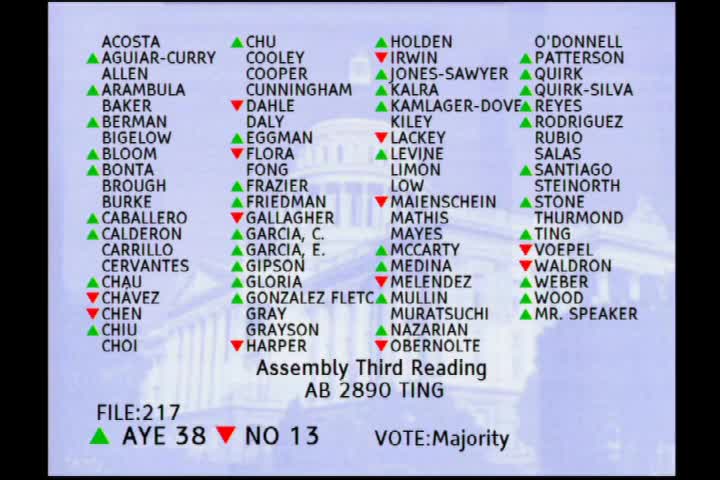 8MIN
Assembly Floor
 40MIN