AB 2015: Pupil instruction: information about completion of applications for student financial aid.
- Session Year: 2017-2018
- House: Assembly
- Latest Version Date: 2018-09-19
(1)Existing law establishes a system of public elementary and secondary schools pursuant to which local educational agencies, including school districts and charter schools throughout the state, provide instruction to pupils in kindergarten and grades 1 to 12, inclusive.
This bill would require, commencing with the 202021 school year, the governing board of a school district and the governing body of a charter school, as appropriate, to ensure that each of its pupils receives information on how to properly complete and submit the Free Application for Federal Student Aid (FAFSA) or the California Dream Act Application, as appropriate, at least once before the pupil enters grade 12. The bill would provide that the manner in which information is provided pursuant to the bill would be at the discretion of the governing board of the school district or the governing body of the charter school, as appropriate. The bill would specify several types of material that would be required to be provided under the bill. The bill would require the governing boards of school districts and the governing bodies of charter schools to ensure that a paper copy of the FAFSA or the California Dream Act Application is provided to a pupil upon the request of that pupil or upon request of a parent or guardian of that pupil. The bill would also require the governing boards of school districts and the governing bodies of charter schools to ensure that any information shared by parents, guardians, and pupils pursuant to the bill is handled according to applicable state and federal privacy laws and regulations.
Because the bill would impose new duties on school districts and charter schools, it would constitute a state-mandated local program.
(2)The California Constitution requires the state to reimburse local agencies and school districts for certain costs mandated by the state. Statutory provisions establish procedures for making that reimbursement.
This bill would provide that, if the Commission on State Mandates determines that the bill contains costs mandated by the state, reimbursement for those costs shall be made pursuant to the statutory provisions noted above.
(1)Existing law establishes a system of public elementary and secondary schools pursuant to which local educational agencies, including school districts and charter schools throughout the state, provide instruction to pupils in kindergarten and grades 1 to 12, inclusive.
This bill would require, commencing with the 202021 school year, the governing board of a school district and the governing body of a charter school, as appropriate, to ensure that each of its pupils receives information on how to properly complete and submit the Free Application for Federal Student Aid (FAFSA) or the California Dream Act Application, as appropriate, at least once before the pupil enters grade 12. The bill would provide that the manner in which information is provided pursuant to the bill would be at the discretion of the governing board of the school district or the governing body of the charter school, as appropriate. The bill would specify several types of material that would be required to be provided under the bill. The bill would require that a paper copy of the FAFSA or the California Dream Act Application be provided to a pupil upon the request of that pupil or upon request of a parent or guardian of that pupil. The bill would also require the governing boards of school districts and the governing bodies of charter schools to ensure that any information shared by parents, guardians, and pupils pursuant to the bill is handled according to applicable state and federal privacy laws and regulations.
Because the bill would impose new duties on school districts and charter schools, it would constitute a state-mandated local program.
(2)The California Constitution requires the state to reimburse local agencies and school districts for certain costs mandated by the state. Statutory provisions establish procedures for making that reimbursement.
This bill would provide that, if the Commission on State Mandates determines that the bill contains costs mandated by the state, reimbursement for those costs shall be made pursuant to the statutory provisions noted above.
(1)Existing law establishes a system of public elementary and secondary schools pursuant to which local educational agencies, including school districts and charter schools throughout the state, provide instruction to pupils in kindergarten and grades 1 to 12, inclusive.
This bill would require, commencing with the 201920 202021 school year, the governing board of a school district or and the governing body of a charter school that offers a course in economics that is limited to grade 12 pupils to include instruction, as part of that course, in the proper completion of student financial aid applications, including school, as appropriate, to ensure that each of its pupils receives information on how to properly complete and submit the Free Application for Federal Student Aid (FAFSA) and or the California Dream Act Application. The bill would require the State Department of Education, before the commencement of the 201920 school year, to provide guidance on how to implement these provisions, including, but not necessarily limited to, who may provide instruction. The bill would provide that individuals who are authorized to provide instruction pursuant to the bill include teachers, counselors, and any other person determined by the department to possess appropriate expertise relating to the FAFSA and the California Dream Act Application. Application, as appropriate, at least once before the pupil enters grade 12. The bill would provide that the manner in which information is provided pursuant to the bill would be at the discretion of the governing board of the school district or the governing body of the charter school, as appropriate. The bill would specify several types of material that would be required to be provided under the bill. The bill would require that a paper copy of the FAFSA or the California Dream Act Application be provided to a pupil upon the request of that pupil or upon request of a parent or guardian of that pupil. The bill would also require the governing boards of school districts and the governing bodies of charter schools to ensure that any information shared by parents, guardians, and pupils pursuant to the bill is handled according to applicable state and federal privacy laws and regulations.
The bill would provide that a local agency, entity of state or local government, or other public or private organization that sponsors, authorizes, supports, finances, or supervises, and a public employee who provides or facilitates, the instruction of pupils in the proper completion of student financial aid applications pursuant to the bill shall not be liable for any civil damages alleged to result from the acts or omissions of an individual who received such instruction, except as provided.Because the bill would impose new duties on school districts and charter schools, it would constitute a state-mandated local program.
(2)The California Constitution requires the state to reimburse local agencies and school districts for certain costs mandated by the state. Statutory provisions establish procedures for making that reimbursement.
This bill would provide that, if the Commission on State Mandates determines that the bill contains costs mandated by the state, reimbursement for those costs shall be made pursuant to the statutory provisions noted above.
Existing law requires each pupil completing grade 12 to satisfy certain requirements as a condition of receiving a diploma of graduation from high school. These requirements include the completion of designated coursework in grades 9 to 12, inclusive, including at least 3 courses in social studies, one of which is to be a one-semester course in economics. Existing law authorizes a governing board of a school district to adopt other coursework requirements.
This bill would require, commencing with the 201920 school year, the governing board of a school district or the governing body of a charter school that offers a course in economics that is limited to grade 12 pupils to include instruction, as part of that course, in the proper completion of student financial aid applications, including the Free Application for Federal Student Aid (FAFSA) and the California Dream Act Application. The bill would require the State Department of Education, before the commencement of the 201920 school year, to provide guidance on how to implement these provisions, including, but not necessarily limited to, who may provide instruction. The bill would provide that individuals who are authorized to provide instruction pursuant to the bill include teachers, counselors, and any other person determined by the department to possess appropriate expertise relating to the FAFSA and the California Dream Act Application.
The bill would provide that a local agency, entity of state or local government, or other public or private organization that sponsors, authorizes, supports, finances, or supervises, and a public employee who provides or facilitates, the instruction of pupils in the proper completion of student financial aid applications pursuant to the bill shall not be liable for any civil damages alleged to result from the acts or omissions of an individual who received such instruction, except as provided.
(a)Commencing with the 202021 school year, the governing board of a school district and the governing body of a charter school, as appropriate, shall ensure that each of its pupils receives information on how to properly complete and submit the Free Application for Federal Student Aid (FAFSA) or the California Dream Act Application, as appropriate, at least once before the pupil enters grade 12. The manner in which information is provided pursuant to this section shall be at the discretion of the governing board of the school district or the governing body of the charter school, as appropriate, and may include, but not necessarily be limited to, information dissemination through in-class instruction, an existing program, family information sessions, or group or individual sessions with school counselors. The information provided shall include, but not necessarily be limited to, material related to all of the following:
(1)The types of documentation and personal information that each student financial aid application requires, including, but not necessarily limited to, documents relating to income taxes, finances and income, college choices, academic status, and personal identification such as social security or taxpayer identification numbers.
(2)An explanation of definitions used for each application. These definitions may include, but are not necessarily limited to, definitions of legal guardianship, household size, parent, dependent, and taxable college grants and scholarships.
(3)Eligibility requirements for student financial aid that may be applied for using the FAFSA or the California Dream Act Application.
(4)Application timelines and submission deadlines.
(5)The importance of submitting applications early, especially when student financial aid is awarded on a first-come, first-served basis.
(b)The governing board of a school district and the governing body of a charter school shall ensure that a paper copy of the FAFSA or the California Dream Act Application is provided to each pupil, upon request by that pupil or upon request of a parent or guardian of that pupil.
(c)The governing board of a school district and the governing body of a charter school shall ensure that any information shared by parents, guardians, and pupils under this section is handled according to applicable state and federal privacy laws and regulations.
SEC. 2.If the Commission on State Mandates determines that this act contains costs mandated by the state, reimbursement to local agencies and school districts for those costs shall be made pursuant to Part 7 (commencing with Section 17500) of Division 4 of Title 2 of the Government Code.
(a)Commencing with the 202021 school year, the governing board of a school district and the governing body of a charter school, as appropriate, shall ensure that each of its pupils receives information on how to properly complete and submit the Free Application for Federal Student Aid (FAFSA) or the California Dream Act Application, as appropriate, at least once before the pupil enters grade 12. The manner in which information is provided pursuant to this section shall be at the discretion of the governing board of the school district or the governing body of the charter school, as appropriate, and may include, but not necessarily be limited to, information dissemination through in-class instruction, an existing program, family information sessions, or group or individual sessions with school counselors. The information provided shall include, but not necessarily be limited to, material related to all of the following:
(1)The types of documentation and personal information that each student financial aid application requires, including, but not necessarily limited to, documents relating to income taxes, finances and income, immigration status, college choices, academic status, and personal identification such as social security or taxpayer identification numbers.
(2)An explanation of definitions used for each application. These definitions may include, but are not necessarily limited to, definitions of legal guardianship, household size, parent, dependent, and taxable college grants and scholarships.
(3)Eligibility requirements for student financial aid that may be applied for using the FAFSA or the California Dream Act Application.
(4)Application timelines and submission deadlines.
(5)The importance of submitting applications early, especially when student financial aid is awarded on a first-come, first-served basis.
(b)The governing board of a school district and the governing body of a charter school shall ensure that a paper copy of the FAFSA or the California Dream Act Application is provided to each pupil, upon request by that pupil or upon request of a parent or guardian of that pupil.
(c)The governing board of a school district and the governing body of a charter school shall ensure that any information shared by parents, guardians, and pupils under this section is handled according to applicable state and federal privacy laws and regulations.
SEC. 2.If the Commission on State Mandates determines that this act contains costs mandated by the state, reimbursement to local agencies and school districts for those costs shall be made pursuant to Part 7 (commencing with Section 17500) of Division 4 of Title 2 of the Government Code.
SECTION 1.Section 51225.8 is added to the Education Code, to read:51225.8.(a)If the governing board of a school district or the governing body of a charter school offers a course in economics that is limited to grade 12 pupils, the governing board of the school district or the governing body of a charter school shall include, commencing with the 201920 school year, instruction, as part of that course, in the completion of student financial aid applications. This instruction shall include an instructional program about how to properly complete and submit a Free Application for Federal Student Aid (FAFSA) or a California Dream Act Application.(b)Before the commencement of the 201920 school year, the department shall provide guidance on how to implement this section, including, but not necessarily limited to, guidance about who may provide instruction pursuant to this section. Individuals who are authorized to provide instruction pursuant to this section include teachers, counselors, and any other person determined by the department to possess appropriate expertise relating to the FAFSA and the California Dream Act Application.(c)The governing board of a school district or the governing body of a charter school may adopt policies to implement this section.(d)The governing board of a school district or the governing body of a charter school providing instruction in the proper completion of student financial aid applications pursuant to this section is encouraged to use the most cost-effective means possible to implement that requirement.(e)(1)A local agency, entity of state or local government, or other public or private organization that sponsors, authorizes, supports, finances, or supervises the instruction of pupils in the proper completion of student financial aid applications pursuant to this section shall not be liable for any civil damages alleged to result from the acts or omissions of an individual who received this instruction.(2)A public employee who provides or facilitates the instruction of pupils in the proper completion of student financial aid applications pursuant to this section shall not be liable for any civil damages alleged to result from the acts or omissions of an individual who received this instruction.(3)This subdivision shall not be construed to grant immunity from civil damages to any person who provides or facilitates the instruction of pupils in the proper completion of student financial aid applications in a manner that constitutes gross negligence or willful or wanton misconduct.(a)If the governing board of a school district or the governing body of a charter school offers a course in economics that is limited to grade 12 pupils, the governing board of the school district or the governing body of a charter school shall include, commencing with the 201920 school year, instruction, as part of that course, in the completion of student financial aid applications. This instruction shall include an instructional program about how to properly complete and submit a Free Application for Federal Student Aid (FAFSA) or a California Dream Act Application.
(b)Before the commencement of the 201920 school year, the department shall provide guidance on how to implement this section, including, but not necessarily limited to, guidance about who may provide instruction pursuant to this section. Individuals who are authorized to provide instruction pursuant to this section include teachers, counselors, and any other person determined by the department to possess appropriate expertise relating to the FAFSA and the California Dream Act Application.
(c)The governing board of a school district or the governing body of a charter school may adopt policies to implement this section.
(d)The governing board of a school district or the governing body of a charter school providing instruction in the proper completion of student financial aid applications pursuant to this section is encouraged to use the most cost-effective means possible to implement that requirement.
(e)(1)A local agency, entity of state or local government, or other public or private organization that sponsors, authorizes, supports, finances, or supervises the instruction of pupils in the proper completion of student financial aid applications pursuant to this section shall not be liable for any civil damages alleged to result from the acts or omissions of an individual who received this instruction.
(2)A public employee who provides or facilitates the instruction of pupils in the proper completion of student financial aid applications pursuant to this section shall not be liable for any civil damages alleged to result from the acts or omissions of an individual who received this instruction.
(3)This subdivision shall not be construed to grant immunity from civil damages to any person who provides or facilitates the instruction of pupils in the proper completion of student financial aid applications in a manner that constitutes gross negligence or willful or wanton misconduct.
|
Date
|
Status
|
|---|---|
| Sep 19, 2018 | Chaptered by Secretary of State - Chapter 533, Statutes of 2018. |
| Sep 19, 2018 | Approved by the Governor. |
| Sep 10, 2018 | Enrolled and presented to the Governor at 3:30 p.m. |
| Aug 29, 2018 | Senate amendments concurred in. To Engrossing and Enrolling. |
| Aug 24, 2018 | In Assembly. Concurrence in Senate amendments pending. May be considered on or after August 26 pursuant to Assembly Rule 77. |
| Aug 24, 2018 | Read third time. Passed. Ordered to the Assembly. |
| Aug 17, 2018 | From committee: Do pass. (Ayes 5. Noes 2.) (August 16). |
| Aug 6, 2018 | In committee: Referred to APPR. suspense file. |
| Jun 27, 2018 | Read second time and amended. Re-referred to Com. on APPR. |
| Jun 26, 2018 | From committee: Amend, and do pass as amended and re-refer to Com. on APPR. (Ayes 7. Noes 0.) (June 20). |
| Jun 7, 2018 | Referred to Com. on ED. |
| May 30, 2018 | In Senate. Read first time. To Com. on RLS. for assignment. |
| May 29, 2018 | Read third time. Passed. Ordered to the Senate. |
| May 25, 2018 | From committee: Do pass. (Ayes 13. Noes 2.) (May 25). |
| May 9, 2018 | In committee: Set, first hearing. Referred to APPR. suspense file. |
| May 2, 2018 | Re-referred to Com. on APPR. |
| May 1, 2018 | Read second time and amended. |
| Apr 30, 2018 | From committee: Amend, and do pass as amended and re-refer to Com. on APPR. (Ayes 7. Noes 0.) (April 25). |
| Feb 12, 2018 | Referred to Com. on ED. |
| Feb 6, 2018 | From printer. May be heard in committee March 8. |
| Feb 5, 2018 | Read first time. To print. |
|
Date
|
Description
|
Location
|
Votes
|
|
|---|---|---|---|---|
| Aug 29, 2018 | AB 2015 REYES Concurrence in Senate Amendments | Assembly Floor |
Passed |
|
| Aug 24, 2018 | Assembly 3rd Reading AB2015 Reyes By Allen | Senate Floor |
Passed |
|
| Aug 16, 2018 | Do pass | Senate Standing Committee on Appropriations |
Passed |
|
| Aug 6, 2018 | Placed on suspense file | Senate Standing Committee on Appropriations |
Passed |
|
| Jun 20, 2018 | Do pass as amended, but first amend, and re-refer to the Committee on [Appropriations] | Senate Standing Committee on Education |
Passed |
|
| May 29, 2018 | AB 2015 REYES Assembly Third Reading | Assembly Floor |
Passed |
|
| May 25, 2018 | Do pass. | Assembly Standing Committee on Appropriations |
Passed |
|
| Apr 25, 2018 | Do pass as amended and be re-referred to the Committee on [Appropriations] | Assembly Standing Committee on Education |
Passed |
This list shows positions taken on this bill by organizations on the date displayed, which is linked to the original source.
Positions by individuals are not included.
CONCURRENCE IN SENATE AMENDMENTS
CSA1 Bill Id:AB 2015
Author:(Reyes)
As Amended Ver:June 27, 2018
Majority vote
ASSEMBLY: | 60-12 | (May 29, 2018) | SENATE: | 35-0 | (August 24, 2018) |
Original Committee Reference: ED.
SUMMARY: Requires the governing board of a school district or the governing body of a charter school to ensure that students receive information on how to properly complete and submit the Free Application for Federal Student Aid (FAFSA) or the California Dream Act Application (CADAA) at least once before pupils enter grade 12.
The Senate amendments eliminate the requirement that the governing board of a school district or the governing body of a charter school provide students with information on immigration status materials that may be required to complete financial aid applications.
FISCAL EFFECT: According to the Senate Appropriations Committee: "By requiring school districts to provide information on how to complete and submit the FAFSA or California Dream Act application, this bill could result in a reimbursable state mandate likely in the low hundreds of thousands of dollars each year. This estimate assumes that five to 10% of high school teachers in the state would spend one hour of staff time on these activities. To the extent the Commission on State Mandates determines the bill's requirements to be reimbursable, this could lead to pressure for the state to increase the K-12 Mandates Block Grant."
COMMENTS:
Need for the bill. The author's office states: "Currently there is no existing law that provides guidance regarding how to properly complete a FAFSA or CADAA. Failure to submit a FAFSA creates low college enrollment rates, as financial need is one of the top reasons students do not continue their education in college. Receiving proper instruction on how to submit a FAFSA is critical for all students to affordably attend college. AB 2015 requires that schools serving students in grades 9-12 offer instruction on how to properly complete and submit a FAFSA and CADAA."
Large numbers of high school graduates do not complete the FAFSA or CADAA. The California Student Aid Commission (CSAC) estimates that the graduating classes of 2017 and 2018 averaged a 54% completion rate for the FAFSA and CADAA.
In 2016, the Campaign for College Opportunity reported that the FAFSA was not completed by 24% of eligible students from high schools in which more than 75% of students were eligible for the Free and Reduced Meal Program. To help resolve this issue, CSAC funds Cash for College workshops, which are facilitated by locally-based partner organizations – including high schools, community colleges, universities, and community groups – to help low-income and first-generation college-goers complete the financial aid application process.
Analysis Prepared by: Naomi Ondrasek / ED. / (916) 319-2087 FN: 0004326
Office of Senate Floor Analyses (916) 651-1520 Fax: (916) 327-4478 | AB |
THIRD READING
Bill No: AB 2015
:
SENATE EDUCATION COMMITTEE: 7-0, 6/20/18
AYES: Allen, Wilk, Galgiani, Leyva, McGuire, Pan, Vidak
SENATE APPROPRIATIONS COMMITTEE: 5-2, 8/16/18
AYES: Portantino, Beall, Bradford, Hill, Wiener
NOES: Bates, Nielsen
ASSEMBLY FLOOR: 60-12, 5/29/18 - See last page for vote
DIGEST:
This bill requires, commencing with the 2020-21 school year, the governing boards of a school district and a charter school to ensure a student receive information for completion and submission of the Free Application for Federal Student Aid (FAFSA) or the California Dream Act application before that student enters grade 12.
Existing law:
- Establishes the California Student Aid Commission (CSAC) is the primary state agency for the administration of state-authorized student financial aid programs available to students attending all segments of postsecondary education. These programs include grant, work-study, and loan programs supported by the state and the federal government. (Education Code § 66010.6.(b))
- Provides for a variety of student financial aid programs including the Cal Grant programs. Existing law requires that eligibility for a Cal Grant and the determination of financial need be accomplished using the federal financial need methodology and application (the FAFSA), and that this application be used for all programs funded by the state or a public institution of post-secondary education as well as all federal programs administered by a postsecondary educational institution. (EC § 69432.9, § 69433)
- Establishes the California Dream Act, and provides that, beginning January 1, 2013, students eligible for the AB 540 nonresident tuition waiver are eligible to apply for, and participate in, any student financial aid program administered by the State of California to the full extent permitted by federal law. The Commission is required to establish procedures and forms (Dream Act application) that enable AB 540 students to apply for, and participate in, all student financial aid programs administered by the State of California to the full extent permitted by federal law. (EC § 69508.5)
- Authorizes CSAC as the administrators of one California Student Opportunity and Access Program, to apportion funds for the support of projects designed to increase the accessibility of postsecondary educational opportunities for elementary and secondary school pupils, as specified. (EC § 69561).
- Requires schools that offer educational counseling to provide information to students on academic planning for higher education programs, financial aid, career technical education, and admission and enrollment procedures.
- Requires schools offering grades 9-12 to annually provide the parent or guardian of each student enrolled in any of those grades with written notification that includes an explanation of the college admission requirements, information about higher education options, and information about how students may meet with counselors to meet admissions requirements.
This bill:
- Requires, commencing with the 2020-21 school year, the governing board of a school district and the governing body of a charter school, as appropriate to ensure that each of its students receives information on how to properly complete and submit the FAFSA or the California Dream Act application, as appropriate, at least once before the student enters grade 12.
- Specifies that the manner in which information is provided pursuant to the bill is at the discretion of the governing board of the school district or the governing body of the charter school, as appropriate.
- Requires information provided to include, but not necessarily be limited to, material related to all of the following:
- The types of documentation and personal information that each
financial aid application requires, including, but not necessarily limited to, documents relating to income taxes, finances and income, college choices, academic status, and personal identification such as social security or taxpayer identification numbers.
- An explanation of definitions used for each application, as specified.
- Eligibility requirements for student financial aid that may be applied
for using the FAFSA or the California Dream Act application.
- Application timelines and submission deadlines.
- The importance of submitting applications early, especially when student financial aid is awarded on a first-come, first-served basis.
- Requires, the governing board of a school district and governing body of a character school to ensure that any information shared by parents, guardians and students is handled according to applicable state and federal privacy laws and regulations.
- Establishes that if the Commission on State Mandates determines this act contains costs mandated by the state, the state shall reimburse the applicable entities.
Comments
- Need for the bill. According to the author, “Currently there is no existing law that provides guidance regarding how to properly complete a FAFSA or California Dream Act Application, however, actions at the federal level have created new barriers for students. Supplemental processes such as creation of an FSA ID and use of prior year tax information has made filing for FAFSA increasingly difficult for uninformed students and families. Failure to submit a FAFSA creates low college enrollment rates, as financial need is one of the top reasons students do not continue their education in college. Receiving proper instruction on how to submit a FAFSA is critical for all students to affordably attend college. AB 2015 requires that public schools serving students in grades 9-12 offer instruction on how to properly complete and submit a FAFSA and California Dream Act Application.”
This bill seeks to increase awareness of and completion for the two primary applications for student financial aid used to cover college costs.
- FAFSA. The FAFSA is the core document used to determine eligibility for all major federal and state financial aid programs, including Cal Grant, Pell Grant, institutional aid at the University of California and the California State University, work-study awards, scholarships, and federal student loans.
- Dream Act application. State law, established by AB 540 and expanded upon by other legislation, allows non-resident students who meet certain qualifications to pay in-state tuition. These students may include undocumented students, students who are U.S. citizens but who are not California residents, and dependent students whose parents are not California residents. AB 540 students are eligible to apply for, and participate in; any student financial aid programs administered by the state and by public postsecondary institutions. The Dream Act application is used to determine the eligibility of AB 540 students for California student financial aid.
- Education Trust-West Report. In 2013 the Education Trust-West issued its report The Cost of Opportunity which found that only 54 percent of California's 12th graders completed a FAFSA in 2012, a step necessary to apply for a Cal Grant by the March 2nd deadline. In 2014, a follow up Equity Alert entitled Doorways to College Aid: Boosting Access to Financial Aid in California found that in 2013 the rates of completion of the FAFSA and Cal Grant applications increased statewide by seven percent and eight percent respectively for a total of 25,000 additional FAFSA completions and more than 30,000 additional Cal Grant applications. However, 42 percent (170,000) of 12th graders from the class of 2013 still did not complete a Cal Grant application. In a 2015 press release, Education Trust-West announced completion rates of the FAFSA and Cal Grant remained relatively unchanged for the Class of 2014. The report notes the higher completion rates were the results of efforts at the local level which include an early focus on FAFSA completion and the electronic submission of GPAs for all students.
FISCAL EFFECT: Appropriation: Fiscal Com.: Local:
According to the Senate Appropriations Committee:
- By requiring school districts to provide information on how to complete and submit the FAFSA or California Dream Act application, this bill could result in a reimbursable state mandate likely in the low hundreds of thousands of dollars each year. This estimate assumes that five to ten percent of high school teachers in the state would spend one hour of staff time on these activities. To the extent the Commission on State Mandates determines the bill’s requirements to be reimbursable, this could lead to pressure for the state to increase the K-12 Mandates Block Grant.
BLU Education Foundation
California Immigrant Policy Center
California School Boards Association
Education Trust-West
Riverside County Superintendent of Schools
Western Association for College Admission Counseling
OPPOSITION: (Verified 8/16/18)
None received
ASSEMBLY FLOOR: 60-12, 5/29/18
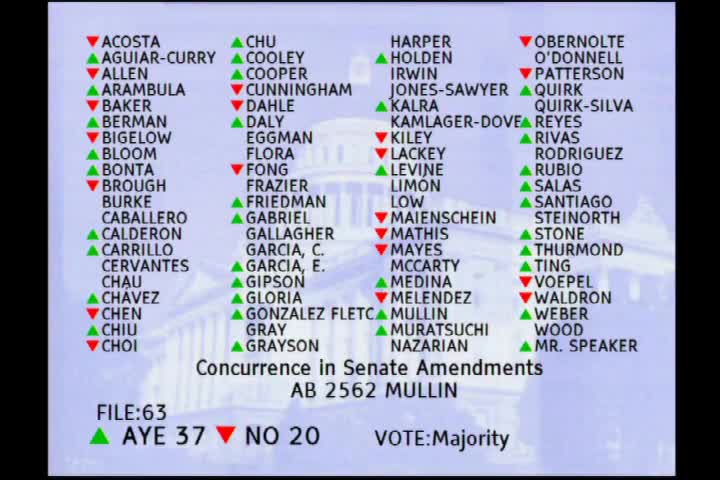
AYES: Aguiar-Curry, Arambula, Baker, Berman, Bloom, Bonta, Burke, Caballero, Calderon, Carrillo, Cervantes, Chau, Chiu, Chu, Cooley, Cooper, Cunningham, Daly, Eggman, Frazier, Friedman, Gallagher, Cristina Garcia, Eduardo Garcia, Gipson, Gloria, Gonzalez Fletcher, Gray, Grayson, Holden, Irwin, Jones-Sawyer, Kalra, Kamlager-Dove, Kiley, Lackey, Levine, Limón, Low, Maienschein, McCarty, Medina, Mullin, Muratsuchi, Nazarian, O'Donnell, Quirk, Quirk-Silva, Reyes, Rodriguez, Rubio, Salas, Santiago, Steinorth, Mark Stone, Thurmond, Ting, Weber, Wood, Rendon
NOES: Travis Allen, Bigelow, Brough, Chen, Choi, Dahle, Harper, Melendez, Obernolte, Patterson, Voepel, Waldron
NO VOTE RECORDED: Acosta, Chávez, Flora, Fong, Mathis, Mayes
8/18/18 13:47:29
SENATE COMMITTEE ON APPROPRIATIONS
Senator Anthony Portantino, Chair
2017 - 2018 Regular Session
AB 2015 (Reyes) - Pupil instruction: information about completion of applications for student financial aid
Version: June 27, 2018 | Policy Vote: ED. 7 - 0 |
Urgency: No | Mandate: Yes |
Hearing Date: August 6, 2018 | Consultant: Lenin Del Castillo |
This bill meets the criteria for referral to the Suspense File.
Bill Summary:
This bill requires, commencing with the 2020-21 school year, the governing boards of a school district and a charter school to ensure a student receive information for completion and submission of the Free Application for Federal Student Aid (FAFSA) or the California Dream Act application before that student enters grade 12.
Fiscal Impact:
By requiring school districts to provide information on how to complete and submit the FAFSA or California Dream Act application, this bill could result in a reimbursable state mandate likely in the low hundreds of thousands of dollars each year. This estimate assumes that five to ten percent of high school teachers in the state would spend one hour of staff time on these activities. To the extent the Commission on State Mandates determines the bill’s requirements to be reimbursable, this could lead to pressure for the state to increase the K-12 Mandates Block Grant.
Background:
Existing law establishes the California Student Aid Commission (CSAC) is the primary state agency for the administration of state-authorized student financial aid programs available to students attending all segments of postsecondary education. These programs include grant, work-study, and loan programs supported by the state and the federal government.
The FAFSA is the core document used to determine eligibility for all major federal and state financial aid programs, including Cal Grant, Pell Grant, institutional aid at the University of California (UC) and the California State University (CSU), work-study awards, scholarships, and federal student loans.
Existing law establishes the California Dream Act, and provides that, beginning January 1, 2013, students eligible for the AB 540 nonresident tuition waiver are eligible to apply for, and participate in, any student financial aid program administered by the State of California to the full extent permitted by federal law. These students may include undocumented students, students who are US citizens but who are not CA residents, and dependent students whose parents are not CA residents. The CSAC is required to establish procedures and forms (Dream Act application) that enable AB 540 students to apply for, and participate in, all student financial aid programs administered by the State of California to the full extent permitted by federal law.
Existing law authorizes CSAC as the administrators of one California Student Opportunity and Access Program, to apportion funds for the support of projects designed to increase the accessibility of postsecondary educational opportunities for elementary and secondary school pupils, as specified.
Existing law requires schools that offer educational counseling to provide information to students on academic planning for higher education programs, financial aid, career technical education, and admission and enrollment procedures, and also requires schools offering grades 9-12 to annually provide the parent or guardian of each student enrolled in any of those grades with written notification that includes an explanation of the college admission requirements, information about higher education options, and information about how students may meet with counselors to meet admissions requirements.
Proposed Law:
This bill requires, commencing with the 2020-21 school year, the governing board of a school district and the governing body of a charter school, as appropriate to ensure that each of its students receives information on how to properly complete and submit the FAFSA or the California Dream Act application, as appropriate, at least once before the student enters grade 12.
This bill specifies that the manner in which information is provided pursuant to the bill is at the discretion of the governing board of the school district or the governing body of the charter school, as appropriate.
This bill requires information provided to include but not necessarily be limited to, material related to all of the following:
- The types of documentation and personal information that each financial aid application requires, including, but not necessarily limited to, documents relating to income taxes, finances and income, college choices, academic status, and personal identification such as social security or taxpayer identification numbers.
- An explanation of definitions used for each application, as specified.
- Eligibility requirements for student financial aid that may be applied for using the FAFSA or the California Dream Act application.
- Application timelines and submission deadlines.
- The importance of submitting applications early, especially when student financial aid is awarded on a first-come, first-served basis.
This bill requires the governing board of a school district and governing body of a character school to ensure that any information shared by parents, guardians and students is handled according to applicable state and federal privacy laws and regulations.
-- END --
SENATE COMMITTEE ON EDUCATION
Senator Benjamin Allen, Chair
2017 - 2018 Regular
Bill No: AB 2015 Hearing Date: June 20, 2018
Author: | |||
Version: | May 1, 2018 | ||
Urgency: | No | Fiscal: | Yes |
Consultant: | Olgalilia Ramirez | ||
Subject: Pupil instruction: information about completion of applications for student financial aid.
SUMMARY
This bill requires, commencing with the 2020-21 school year, the governing boards of a school district and a charter school to ensure a student receive information for completion and submission of the Free Application for Federal Student Aid (FAFSA) or the California Dream Act application before that student enters grade 12.
BACKGROUND
Existing law:
- Establishes the California Student Aid Commission (CSAC) is the primary state agency for the administration of state-authorized student financial aid programs available to students attending all segments of postsecondary education. These programs include grant, work-study, and loan programs supported by the state and the federal government. (Education Code § 66010.6.(b))
- Provides for a variety of student financial aid programs including the Cal Grant programs. Current law requires that eligibility for a Cal Grant and the determination of financial need be accomplished using the federal financial need methodology and application (the Federal Application for Student Assistance, or FAFSA), and that this application be used for all programs funded by the state or a public institution of post-secondary education as well as all federal programs administered by a postsecondary educational institution. (EC § 69432.9, § 69433)
- Establishes the California Dream Act, and provides that, beginning January 1, 2013, students eligible for the AB 540 nonresident tuition waiver are eligible to apply for, and participate in, any student financial aid program administered by the State of California to the full extent permitted by federal law. The Commission is required to establish procedures and forms (Dream Act application) that enable AB 540 students to apply for, and participate in, all student financial aid programs administered by the State of California to the full extent permitted by federal law. (EC § 69508.5)
- Authorizes CSAC as the administrators of one California Student Opportunity and Access Program, to apportion funds for the support of projects designed to increase the accessibility of postsecondary educational opportunities for elementary and secondary school pupils, as specified. (EC § 69561).
- Requires schools that offer educational counseling to provide information to students on academic planning for higher education programs, financial aid, career technical education, and admission and enrollment procedures.
- Requires schools offering grades 9-12 to annually provide the parent or guardian of each student enrolled in any of those grades with written notification that includes an explanation of the college admission requirements, information about higher education options, and information about how students may meet with counselors to meet admissions requirements.
ANALYSIS
This bill:
- Requires, commencing with the 2020-21 school year, the governing board of a school district and the governing body of a charter school, as appropriate to ensure that each of its students receives information on how to properly complete and submit the Free Application for Federal Student Aid (FAFSA) or the California Dream Act application, as appropriate, at least once before the student enters grade 12.
- Specifies that the manner in which information is provided pursuant to the bill is at the discretion of the governing board of the school district or the governing body of the charter school, as appropriate.
- Requires information provided to include but not necessarily be limited to, material related to all of the following:
- The types of documentation and personal information that each financial
aid application requires, including, but not necessarily limited to, documents relating to income taxes, finances and income, immigration status, college choices, academic status, and personal identification such as social security or taxpayer identification numbers.
- An explanation of definitions used for each application, as specified.
- Eligibility requirements for student financial aid that may be applied for
using the FAFSA or the California Dream Act application.
- Application timelines and submission deadlines.
- The importance of submitting applications early, especially when student
financial aid is awarded on a first-come, first-served basis.
- Requires, the governing board of a school district and governing body of a character school to ensure that any information shared by parents, guardians and students is handled according to applicable state and federal privacy laws and regulations.
- Establishes if the Commission on State Mandates determines that this act contains costs mandated by the state, the state shall reimburse the applicable entities.
STAFF COMMENTS
- Need for the bill. According to the author, “Currently there is no existing law that provides guidance regarding how to properly complete a FAFSA or California Dream Act Application, however, actions at the federal level have created new barriers for students. Supplemental processes such as creation of an FSA ID and use of prior year tax information has made filing for FAFSA increasingly difficult for uninformed students and families. Failure to submit a FAFSA creates low college enrollment rates, as financial need is one of the top reasons students do not continue their education in college. Receiving proper instruction on how to submit a FAFSA is critical for all students to affordably attend college. AB 2015 requires that public schools serving students in grades 9-12 offer instruction on how to properly complete and submit a FAFSA and California Dream Act Application.”
This bill seeks to increase awareness of and completion for the two primary applications for student financial aid used to cover college costs.
- Free Application for Federal Student Aid (FAFSA). The FAFSA is the core document used to determine eligibility for all major federal and state financial aid programs, including Cal Grant, Pell Grant, institutional aid at the University of California (UC) and the California State University (CSU), work-study awards, scholarships, and federal student loans.
- Dream Act application. State law, established by AB 540 and expanded upon by other legislation, allows non-resident students who meet certain qualifications to pay in-state tuition. These students may include undocumented students, students who are US citizens but who are not CA residents, and dependent students whose parents are not CA residents. AB 540 students are eligible to apply for, and participate in; any student financial aid programs administered by the state and by public postsecondary institutions. The Dream Act application is used to determine the eligibility of AB 540 students for California student financial aid.
This bill requires the specified entities to inform students of the type of documentation and personal information needed for each financial aid application including immigration status, it is understood that documentation relative to immigration status is not required for purposes of completing the FAFSA or Dream Act application. Additionally, stating this information may serve as a deterrent for some Dream Act applicants. Staff recommends the bill be amended to delete, “immigration status,” as a required source of information, as specified.
- Education Trust-West Report. In 2013 the Education Trust-West issued its report The Cost of Opportunity which found that only 54 percent of California's 12th graders completed a 2) Free Application for Federal Student Aid (FAFSA) in 2012, a step necessary to apply for a Cal Grant by the March 2nd deadline. In 2014, a follow up Equity Alert entitled Doorways to College Aid: Boosting Access to Financial Aid in California found that in 2013 the rates of completion of the FAFSA and Cal Grant applications increased statewide by 7 percent and 8 percent respectively for a total of 25,000 additional FAFSA completions and more than 30,000 additional Cal Grant applications. However, 42 percent (170,000) of 12th graders from the class of 2013 still did not complete a Cal Grant application. In a 2015 press release Education Trust-West announced completion rates of the FAFSA and Cal Grant remained relatively unchanged for the Class of 2014.The report notes the higher completion rates were the results of efforts at the local level which include an early focus on FAFSA completion and the electronic submission of GPAs for all students.
SUPPORT
BLU Education Foundation
California Immigrant Policy Center
CSBA
Education Trust-West
Riverside County Superintendent of Schools
Western Association for College Admission Counseling
OPPOSITION
None received
-- END --
ASSEMBLY THIRD READING
ATR Bill Id:AB 2015
Author:(Reyes)
As Amended Ver:May 1, 2018
Majority vote
Committee | Votes | Ayes | Noes |
Education | 7-0 | O'Donnell, Kiley, Kalra, McCarty, Steinorth, Thurmond, Weber | |
Appropriations | 13-2 | Gonzalez Fletcher, Bloom, Bonta, Calderon, Carrillo, Chau, Eggman, Friedman, Gallagher, Eduardo Garcia, Nazarian, Quirk, Reyes | Bigelow, Obernolte |
SUMMARY: Requires the governing board of a school district or the governing body of a charter school to ensure that students receive information on how to properly complete and submit the Free Application for Federal Student Aid (FAFSA) or the California Dream Act Application (CADAA) at least once before pupils enter grade 12. Specifically, this bill:
- Requires, commencing with the 2020-21 school year, the governing board of a school district and the governing body of a charter school to:
- Ensure that each pupil receives information on how to properly complete and submit the FAFSA or the CADAA, as appropriate, at least once before the pupil enters grade 12.
- Handle any information shared by parents, guardians, and pupils under this section according to applicable federal and state privacy laws and regulations.
- Requires that the governing board of a school district and the governing body of a charter school have discretion over how it provides this instruction.
- Specifies that instruction may be provided through in-class instruction, existing programs, family information sessions, or group or individual sessions with school counselors.
- Requires instruction to include the following types of information:
- The types of documentation and personal information required by the FAFSA or CADAA, including, but not limited to, documents relating to income taxes, finances and income, immigration status, college choices, academic status, and personal identification, such as social security or taxpayer identification numbers.
- An explanation of definitions used for each application, such as "legal guardianship," "dependent," or "household size."
- The eligibility requirements for the FAFSA or CADAA.
- Application timelines and submission deadlines.
- The importance of submitting applications early, especially when financial aid is awarded on a first-come, first-served basis.
- Requires the governing board of a school district and the governing body of a charter school to ensure that a paper copy of the FAFSA or CADAA is provided to a pupil, if that pupil or the pupil’s parent or guardian requests a copy.
FISCAL EFFECT: According to the Assembly Appropriations Committee: "Ongoing Proposition 98 GF [General Fund] cost pressures, likely in the low hundreds of thousands of dollars annually, for school districts and charter schools to provide information on how to complete and submit the FAFSA or California Dream Act Application. If the Commission on State Mandates determines the bill’s requirements to be a reimbursable state mandate, the state would need to reimburse these costs to schools or provide funding through the K-12 Mandate Block Grant, described in more detail below."
COMMENTS:
Need for the bill. The author’s office states: "Currently there is no existing law that provides guidance regarding how to properly complete a FAFSA or CADAA. Failure to submit a FAFSA creates low college enrollment rates, as financial need is one of the top reasons students do not continue their education in college. Receiving proper instruction on how to submit a FAFSA is critical for all students to affordably attend college. AB 2015 requires that schools serving students in grades 9-12 offer instruction on how to properly complete and submit a FAFSA and CADAA."
Large numbers of high school graduates do not complete the FAFSA or CADAA. The California Student Aid Commission (CSAC) estimates that the graduating classes of 2017 and 2018 averaged a 54 percent completion rate for the FAFSA and CADAA.
In 2016, the Campaign for College Opportunity reported that the FAFSA was not completed by 24% of eligible students from high schools in which more than 75% of students were eligible for the Free and Reduced Meal Program. To help resolve this issue, CSAC funds Cash for College workshops, which are facilitated by locally-based partner organizations—including high schools, community colleges, universities, and community groups—to help low-income and first-generation college-goers complete the financial aid application process.
Analysis Prepared by: Naomi Ondrasek / ED. / (916) 319-2087 FN: 0003249
Date of Hearing: May 9, 2018
ASSEMBLY COMMITTEE ON APPROPRIATIONS
Lorena Gonzalez Fletcher, Chair
ABPCA Bill Id:AB 2015
Author:(Reyes) – As Amended Ver:May 1, 2018
Policy Committee: | Education | Vote: | 7 - 0 |
|
| ||
|
|
Urgency: No State Mandated Local Program: Yes Reimbursable: Yes
SUMMARY: This bill requires, beginning in the 2020-21 school year, school districts and charter schools to ensure each student receives specific information on how to complete and submit the Free Application for Federal Student Aid (FAFSA) or the California Dream Act Application, at least once before the student begins grade 12. The bill allows school districts and charter schools to determine how to deliver this information.
FISCAL EFFECT:
Ongoing Proposition 98 GF cost pressures, likely in the low hundreds of thousands of dollars annually, for school districts and charter schools to provide information on how to complete and submit the FAFSA or California Dream Act Application. If the Commission on State Mandates determines the bill’s requirements to be a reimbursable state mandate, the state would need to reimburse these costs to schools or provide funding through the K-12 Mandate Block Grant, described in more detail below.
COMMENTS:
- Purpose. According to the author’s office:
Currently there is no existing law that provides guidance regarding how to properly complete a FAFSA or California Dream Act Application…Failure to submit a FAFSA creates low college enrollment rates, as financial need is one of the top reasons students do not continue their education in college. Receiving proper instruction on how to submit a FAFSA is critical for all students to affordably attend college.
- Current Law. Current law requires schools that offer educational counseling to provide information to students on academic planning for higher education programs, financial aid, career technical education, and admission and enrollment procedures. Current law also requires schools offering grades 9-12 to annually provide the parent or guardian of each student enrolled in any of those grades with written notification that includes an explanation of the college admission requirements, information about higher education options, and information about how students may meet with counselors to meet admissions requirements.
- FAFSA and California Dream Act Application. Need-based financial aid programs at postsecondary institutions assess a student’s financial need using the federal FAFSA. The FAFSA asks students and families to provide various information, such as household income, certain available assets, and number of children in college. This information then feeds into a formula that determines an expected family contribution toward college costs. A student’s financial need is the total cost of attendance (tuition and living costs combined) at a particular campus less EFC. The California Dream Act Application is the state’s equivalent of the FAFSA and was developed for undocumented students because they cannot use the FAFSA.
- K-12 Mandate Block Grant. To address various concerns with the traditional mandate claims process, such as the disincentive for LEAs to perform mandated tasks efficiently, the state created the K-12 Mandate Block Grant in the 2012-13 budget. The amount of funding available in the block grant annually is tied to the number of mandates the CSM has found to be reimbursable and the mandate’s statewide cost. (Typically, when the CSM has determined a claim filed by an LEA to be reimbursable, it has developed a statewide cost estimate for performing the mandate and the state has added the estimated amount or a portion of the estimated amount to the block grant as part of its annual budget process.) School districts that choose to participate in the block grant program receive per-student funding to cover the cost of state-mandated activities in lieu of submitting ongoing mandate claims for reimbursement. Charter schools also may participate in the block grant, but they may not submit mandate claims or receive reimbursement for mandate costs.
School districts receive from the block grant a per-student funding rate for K-8 students of about $30, with about $60 provided for high school students. Charter schools receive half the K-8 per-student funding rate of school districts, because about half of K-8 mandates apply to them. Similarly, about half of high school mandates apply to charter schools, but their grades 9-12 rate is more than half the district rate, or about $40, because of the treatment of certain mandates.
- Related Legislation. AB 1763 (Chu), of this session, requires school districts and charter schools to ensure students receive information on college and career preparedness at least once in grades 9-12, beginning with the 2020-21 school year. Specifically, it requires information on the types of higher education available, including career technical education, and the general application processes, private financial assistance programs, and information on college and career options. The bill is pending a hearing in this committee.
Analysis Prepared by: Natasha Collins / APPR. / (916) 319-2081
Date of Hearing: April 25, 2018
ASSEMBLY COMMITTEE ON EDUCATION
Patrick O'Donnell, Chair
ABPCA Bill Id:AB 2015 (
Author:Reyes) – As Introduced Ver:February 5, 2018
SUBJECT: Pupil instruction: economics: completion of applications for student financial aid
SUMMARY: Requires the governing board of a school district or the governing body of a charter school that offers an economics course, which is limited to grade 12 pupils, to include, as part of that course, instruction on how to complete the Free Application for Federal Student Aid (FAFSA) and the California Dream Act Application (CADAA); requires the California Department of Education (CDE) to provide guidance on how to implement these provisions. Specifically, this bill:
- Requires, commencing with the 2019-20 school year, the governing board of a school district or the governing body of a charter school that offers an economics course limited to 12th grade students to include instruction, as part of that course, on the completion of student financial aid applications.
- Requires instruction on completing financial aid applications to include an instructional program on how to properly complete and submit the FAFSA and CADAA.
- Requires the CDE, before commencement of the 2019-20 school year, to provide guidance on how to implement these provisions, including, but not limited to, identification of persons who may provide this instruction.
- Authorizes the following individuals to provide instruction on how to complete the FAFSA and CADAA: teachers, counselors, and any other person identified by the CDE as having the appropriate expertise.
- Authorizes the governing board of a school district and the governing body of a charter school to adopt policies to implement the provisions in this bill.
- Encourages the governing board of a school district and the governing body of a charter school to use the most cost-effective means of providing instruction in the completion of student financial aid applications.
- Prohibits a local agency, entity of the state or local government, or other public or private organization that sponsors, authorizes, supports, finances, or supervises the instruction of pupils in the completion of student financial aid applications from being deemed liable for civil damage charges brought by individuals who received this instruction.
- Prohibits a public employee who provides or facilitates the instruction of pupils in the completion of student financial aid applications from being deemed liable for civil damage charges brought by individuals who received this instruction.
- Prohibits the provisions regarding civil liability from being construed to grant immunity from civil damages to any person who provides or facilitates instruction in the completion of student financial aid applications in a manner that constitutes gross negligence, or willful or wanton misconduct.
EXISTING LAW:
- Prohibits, in federal law, funds from being made available under any applicable program to any educational agency or institution that permits release of a student’s education records, or the personally identifiable information contained therein, other than directory information, without the written consent of their parents (20 U.S.C. § 1232(b)).
- States that it is the policy of the State of California to afford all persons in public schools, regardless of their immigration status, equal rights and opportunities in the educational institutions of the state (EC 200).
- Prohibits school officials and employees of a local educational agency from collecting information or documents regarding the citizenship or immigration status of pupils or their family members, except as required by state or federal law, or as required to administer a state or federally-supported educational program (EC 234.7).
- Requires the Attorney General, by April 1, 2018, to publish model policies limiting assistance with immigration enforcement at public schools, to the fullest extent possible consistent with federal and state law (EC 234.7).
- Establishes the California DREAM Loan Program and authorizes student eligibility for the program if a student satisfies several requirements, including submission of the CADAA (EC 70031, EC 70033).
- Authorizes the governing board of a school district to provide a comprehensive educational counseling program for all pupils enrolled in the district (EC 49600).
- Requires educational counseling to include academic counseling, in which pupils receive advice on the following (EC 49600):
- Development and implementation, with parental involvement, of the pupil’s immediate and long-range educational plans.
- Academic planning for access and success in higher education programs, including advisement on courses needed for admission to public colleges and universities, standardized tests, and financial aid.
- Career and vocational counseling, in which pupils are assisted in, among other things, understanding the variety of four-year colleges and universities and community college vocational and technical preparation programs, as well as admission criteria and enrollment procedures.
- Requires that information of a personal nature disclosed by a pupil who is 12 years of age or older, or by the parent or guardian of a pupil who is 12 years of age or older, to a school counselor during counseling be deemed confidential, except in specified circumstances, and prohibits such information from being included in a pupil’s record without the written consent of the person who disclosed the information (EC 49602).
- Requires a school counselor to disclose information deemed confidential to law enforcement agencies when ordered to do so by a court of law, to aid in the investigation of a crime, or when ordered to testify in an administrative or judicial proceeding (EC 49602).
- Requires a school to include, in its School Accountability Report Card, the availability of qualified personnel to provide counseling and other pupil support services, including the ratio of academic counselors per pupil (EC 33126).
FISCAL EFFECT: Unknown
COMMENTS:
Need for the bill. The author’s office states: “Currently there is no existing law that provides guidance regarding how to properly complete a FAFSA or California Dream Act Application, however, actions at the federal level have created new barriers for students. Supplemental processes such as creation of an FSA ID and use of prior year tax information has made filing for FAFSA increasingly difficult for uninformed students and families. Failure to submit a FAFSA creates low college enrollment rates, as financial need is one of the top reasons students do not continue their education in college. Receiving proper instruction on how to submit a FAFSA is critical for all students to affordably attend college. AB 2015 requires that public schools serving students in grades 9-12 offer instruction on how to properly complete and submit a FAFSA and California Dream Act Application.”
Large numbers of high school graduates do not complete the FAFSA and CADAA. The California Student Aid Commission (CSAC, the state agency that administers free financial aid to students pursuing higher education) estimates that the graduating classes of 2017 and 2018 averaged a 54 percent completion rate for the FAFSA and CADAA.
In 2016, the Campaign for College Opportunity—an advocacy organization that conducts research on higher education and promotes reforms aimed towards increasing the number of students who complete college—issued a report in which it states that $250 million in Pell Grants went unclaimed in 2014-15. The organization also found that among high schools in which more than 75 percent of students were eligible for the Free and Reduced Meal Program, 24 percent of eligible students did not complete the FAFSA.
CSAC oversees a statewide annual “Race to Submit” campaign, with the aim of increasing the number of high school seniors who complete the FAFSA and CADAA. As part of the campaign, CSAC provides weekly progress updates on several measures, including FAFSA/CADAA completion and submission rates, disaggregated by high school, school district, and county. The campaign is modeled after the 2017-18 FAFSA and CADAA Completion Initiative in Riverside County, which was associated with an increased completion rate from 52 to 70 percent for the class of 2017.
The California Dream Act Application helps non-residents access financial aid. According to CSAC, the CADAA is unaffiliated with the federal Deferred Action for Childhood Arrivals (DACA) program. Through the CADAA, CSAC provides access to state financial aid for non-resident students, including undocumented students, who are attending or want to attend California colleges and universities. In 2018, CSAC’s Executive Director issued a public letter to address fears regarding privacy and deportation that might discourage application submission by students in immigrant communities. The director stated, “If you are an undocumented high school senior or a college student weighing options for the future, I urge you to consider applying or reapplying to a California college and completing [the CADAA] to access your financial aid opportunities. A college or vocational education in California is still open to you, along with free state financial aid.”
Multiple news outlets—including the Washington Post, KQED, the Daily News, and San Francisco Chronicle—report that actions by the current presidential administration have increased fears of deportation among immigrants and discouraged both legal residents and undocumented immigrants from applying for or using federal sources of aid. The Washington Post also reported in March 2018 that federal immigration officers have begun arresting non-criminals in raids that have occurred at locations once considered safe, including schools and church shelters.
“Cash for College” workshops help students and parents complete financial aid applications. From October 1st through March 2nd, CSAC funds Cash for College workshops, facilitated by locally-based partner organizations, including high schools, community colleges, universities, and community groups. According to CSAC, the aim of these workshops is to help low-income and first-generation college-goers complete the financial aid application process. CSAC requires that partner organizations ensure parent participation by scheduling workshops primarily between 9 AM and 9 PM during the week, during non-holidays, and between the hours of 9 AM and 5 PM on Saturdays. In addition to funds, CSAC provides workshop facilitators with presentations, outreach materials, and website access to help manage workshops and student follow-up.
The Family Educational Rights and Privacy Act provides specified protections. The Family Educational Rights and Privacy Act (FERPA) is a federal law that applies to educational agencies and institutions that receive funding under any program administered by the U.S. Department of Education (DOE). In general, FERPA prohibits improper disclosure of personally identifiable information derived from a student’s educational records. However, according to DOE, information that an official obtained through personal knowledge or observation, or that was heard orally from others, is not protected under FERPA.
This bill would require schools to allocate class time to helping students fill out financial aid applications; if students bring sensitive documents to class (e.g., immigration, income tax, or personal identification documents) for the purpose of completing financial aid applications, it is unclear if their information would be protected from disclosure under state or federal law. The Committee may wish to consider if requiring schools to help students fill out financial aid in a classroom setting raises privacy concerns for students and their families, particularly if they are from immigrant communities.
California lags in providing pupils access to school counselors. According to the CDE, 29 percent of California school districts have no counseling programs at all. When counseling programs exist, counselors are often asked to add administrative duties such as testing, supervising, and class scheduling. The ratio of students per counselor in this state averages 945 to 1, compared to the national average of 477 to 1, ranking California last in the nation. Clearly, California lacks sufficient numbers of trained personnel in our schools to meet the social, emotional, and career development needs of over six million pupils. Because the Education Code (Section 49600) shows that the Legislature intended for school counselors to provide educational counseling—including advice on applying for colleges and financial aid—the Committee may wish to consider if the shortage in school counselors will make it difficult for schools to provide adequate advice to students applying for financial aid.
Opposing arguments. The California Council for the Social Studies states, “Both the timing and compact nature of curricular standards of the single semester Economics course do not lend themselves to the goals of AB 2015. Students desirous to pursue 4-year college following high school graduation must apply for admissions/financial aid well before they are able to take this grade 12 course. Additionally, filling out college forms in a classroom setting will hamper the ability of instructors to adequately cover the nearly two dozen state-mandated core content standards currently required to be taught in this tightly-packed course. We believe the responsibility of assisting students with filling out such college forms falls under the purview and pedagogical training of school counselors and other administrative staff.”
Committee amendments. Staff recommends the following amendments:
- Remove the following:
- Requirement that instruction on completing financial aid applications be included as part of a course.
- Requirement that CDE generate implementation guidance.
- Sections on civil liability.
- Redraft the bill to:
- Require school districts and charter schools to ensure that pupils receive information on how to properly complete and submit the FAFSA and CADAA at least once in grades 9-11, but provide school districts and charter schools with the flexibility to determine how to provide this information.
- Require the following types of information to be included:
- The types of documentation and personal information each application requires.
- An explanation of definitions used for each application.
- Eligibility requirements for financial aid that may be applied for using the FAFSA or CADAA.
- Application timelines and submission deadlines.
- The importance of submitting applications early, especially when financial aid is awarded on a first-come, first-served basis.
- Require school districts and charter schools to provide students with a paper copy of the FAFSA and CADAA, if requested by the pupil or his or her parent or guardian.
- Require school districts and charter schools to handle information shared by parents, guardians, and students according to state and federal privacy laws.
Related legislation. AB 1744 (McCarty) of this Session authorizes the Department of Health Care Services to consider after school programs in allocating funds generated from an excise tax on the retail sale of cannabis for youth education, prevention and treatment efforts. This bill is pending before this committee.
AB 2471 (Thurmond) of this Session requires the transfer of funds from the Youth, Education, Prevention, Early Intervention and Treatment Account established through the passage of the Control, Regulate and Tax Adult Use of Marijuana Act to the CDE to establish a grant program which would allow schools to provide in-school support services to pupils. This bill is pending before this committee.
AB 2022 (Chu) of this Session requires all schools, including charter schools, to have at least one mental health professional for each 600 pupils. This bill is pending before this committee.
AB 2498 (Eggman) of this Session establishes the School Social Worker Pilot Program to provide multiyear grants to school districts in specified counties to fund a social worker at each eligible school. This bill is pending before this committee.
Previous legislation. AB 699 (O’Donnell), Chapter 493, Statutes of 2017 prohibits discrimination against pupils based on immigrant status.
SB 1210 (Lara), Chapter 754, Statutes of 2014 established the California DREAM Loan Act to provide financial aid to students attending the California State University and the University of California systems.
REGISTERED SUPPORT / OPPOSITION:
Support
California Student Aid Commission (co-sponsor)
Congregations Organized for Prophetic Engagement (co-sponsor)
California Federation of Teachers
California Immigrant Policy Center
Education Trust-West
Opposition
California Council for the Social Studies
Analysis Prepared by: Naomi Ondrasek / ED. / (916) 319-2087
Discussed in Hearing
 1MIN
Assembly Floor
 3MIN
Senate Floor
 1H
Senate Standing Committee on Appropriations
 8MIN
Senate Standing Committee on Education
 4MIN
Assembly Floor
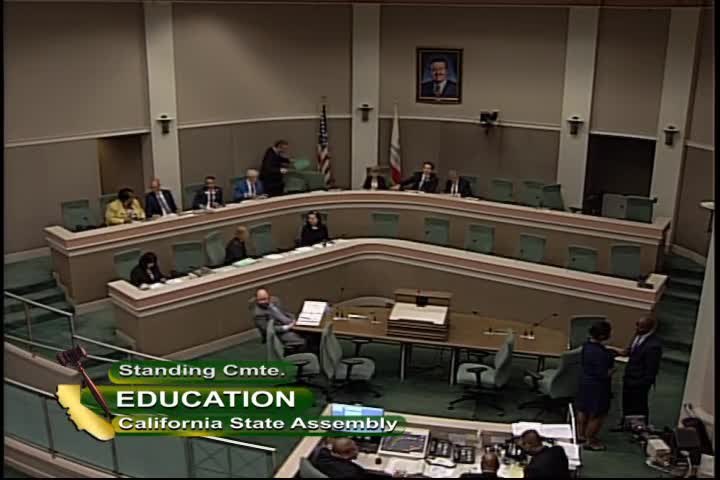 5MIN
Assembly Standing Committee on Education
Bill Author

Bill Co-Author(s):