AB 2041: University of California: Office of the Chief Investment Officer.
- Session Year: 2017-2018
- House: Assembly
- Latest Version Date: 2018-09-29
Existing law establishes the University of California, under the administration of the Regents of the University of California, as one of the segments of public postsecondary education in this state. Under existing law, the University of California provides instruction at 10 campuses, which are located in Berkeley, Davis, Irvine, Los Angeles, Merced, Riverside, San Diego, San Francisco, Santa Barbara, and Santa Cruz. The regents have established the Office of the Chief Investment Officer (OCIO) and have assigned to that office the task of responsibly investing various funds of the university, including, but not limited to, endowment and pension funds.
This bill would urge the regents to require the OCIO to use reasonable efforts to encourage diversity, to request partner firms to use reasonable efforts to encourage diversity, and to launch an emerging manager program. The bill would also require the OCIO to submit, on or before January 1, 2020, a report to the chairs of the appropriate policy committees of each house of the Legislature that includes specified information relating to any requirements the regents direct the OCIO to perform pursuant to the bill.
Existing law establishes the University of California, under the administration of the Regents of the University of California, as one of the segments of public postsecondary education in this state. Under existing law, the University of California provides instruction at 10 campuses, which are located in Berkeley, Davis, Irvine, Los Angeles, Merced, Riverside, San Diego, San Francisco, Santa Barbara, and Santa Cruz. The regents have established the Office of the Chief Investment Officer (OCIO) and have assigned to that office the task of responsibly investing various funds of the university, including, but not limited to, endowment and pension funds.
This bill would strongly urge the regents to require the OCIO to use best reasonable efforts to encourage diversity, to urge request partner firms to use best reasonable efforts to encourage diversity, and to launch an emerging manager programs. program. The bill would also require the OCIO to submit, on or before January 1, 2020, a report to the chairs of the appropriate policy committees of each house of the Legislature that includes specified information relating to the issues raised in this bill. any requirements the regents direct the OCIO to perform pursuant to the bill.
Existing law establishes the University of California, under the administration of the Regents of the University of California, as one of the segments of public postsecondary education in this state. Under existing law, the University of California provides instruction at 10 campuses, which are located in Berkeley, Davis, Irvine, Los Angeles, Merced, Riverside, San Diego, San Francisco, Santa Barbara, and Santa Cruz. The regents have established the Office of the Chief Investment Officer (OCIO) and have assigned to that office the task of responsibly investing various funds of the university, including, but not limited to, endowment and pension funds.
This bill would strongly urge the regents to require the OCIO to use best efforts to encourage diversity, including implementing a hiring strategy that requires that candidates from underrepresented groups be given full consideration whenever an OCIO position is to be filled, and require that the OCIOs partner firms implement similar efforts and hiring strategies. to urge partner firms to use best efforts to encourage diversity, and to launch emerging manager programs. The bill would also require the OCIO to submit, on or before January 1, 2020, a report to the chairs of the appropriate policy committees of each house of the Legislature that includes specified information relating to the issues raised in this bill.
Existing law establishes the University of California, under the administration of the Regents of the University of California, as one of the segments of public postsecondary education in this state. Under existing law, the University of California provides instruction at 10 campuses, which are located in Berkeley, Davis, Irvine, Los Angeles, Merced, Riverside, San Diego, San Francisco, Santa Barbara, and Santa Cruz. The regents have established the Office of the Chief Investment Officer (OCIO) and have assigned to that office the task of responsibly investing various funds of the university, including, but not limited to, endowment and pension funds.
This bill would strongly urge the regents to require the OCIO to adopt and implement a diversity pledge, as specified, and implement use best efforts to encourage diversity, including implementing a hiring strategy that requires that candidates from underrepresented groups be given full consideration whenever an OCIO position is to be filled, and require that the OCIOs partner firms implement a similar diversity pledge efforts and hiring strategy. strategies. The bill would also require the OCIO to submit, on or before January 1, 2020, a report to the chairs of the appropriate policy committees of both houses each house of the Legislature including that includes specified information relating to the issues raised in this bill.
Existing law establishes the University of California, under the administration of the Regents of the University of California, as one of the segments of public postsecondary education in this state. Under existing law, the University of California provides instruction at 10 campuses, which are located in Berkeley, Davis, Irvine, Los Angeles, Merced, Riverside, San Diego, San Francisco, Santa Barbara, and Santa Cruz. The regents have established the Office of the Chief Investment Officer (OCIO) and have assigned to that office the task of responsibly investing various funds of the university, including, but not limited to, endowment and pension funds.
This bill would strongly urge the regents to require the OCIO to adopt and implement a diversity pledge, as specified, and implement a hiring strategy that requires that candidates from underrepresented groups be given full consideration whenever an OCIO position is to be filled, and require that OCIOs partner firms implement a similar diversity pledge and hiring strategy. The bill would also require the OCIO to submit, on or before January 1, 2020, a report to the chairs of the appropriate policy committees of both houses of the Legislature including specified information relating to the issues raised in this bill.
(a)The Legislature finds and declares all of the following:
(1)Diversity is the key to the competitiveness of the venture capital industry in the United States.
(2)Despite the demonstrated importance of diversity, the industry has not kept pace in investing in people of diverse backgrounds.
(3)Women, ethnic minorities, members of the LGBTQ community, persons with disabilities, veterans, and immigrants, among other groups, are all underrepresented both in the venture capital industry and in the executive ranks of venture-backed companies.
(4)Members of the National Venture Capital Association have addressed these issues by announcing a pledge to take concrete measures to bring greater diversity to the industry.
(5)Venture capital firms that recognize the competitive value of investing in women and minority founders and bringing diverse talent into their investment teams will lead the way to industry success in the 21st century.
(6)The University of California, through its Office of the Chief Investment Officer (OCIO), is tasked with the responsible investment of over one hundred billion dollars in pension and endowment funds.
(b)Therefore, it is the intent of the Legislature to enact legislation to urge the OCIO to use best efforts to encourage diversity, including working towards diversity in its own hiring and in considering firms for investments. It is also the intent of the Legislature to enact legislation to require the OCIO to report to the public how it is addressing these issues in investing the funds that the people of California have placed under its stewardship.
SEC. 2.Article 1.3 (commencing with Section 92603) is added to Chapter 6 of Part 57 of Division 9 of Title 3 of the Education Code, to read:1.3.Office of the Chief Investment Officer92603.(a)The regents are urged to direct their Office of the Chief Investment Officer (OCIO) to do all of the following:
(1)Use reasonable efforts to encourage diversity, such as implementing a hiring strategy that requires that candidates from underrepresented groups be given full consideration whenever an OCIO position is to be filled.
(2)Request partner firms it invests in use reasonable efforts to encourage diversity, such as implementing a hiring strategy that requires that candidates from underrepresented groups be given full consideration whenever a position is filled.
(3)Launch an emerging manager program. The OCIO shall define the term emerging manager for the purpose of this section.
(4)Encourage startup firms to increase efforts to develop diverse executive teams and to recruit diverse managerial talent, as applicable.
(b)The OCIO shall submit a report to the chairs of the appropriate policy committees of each house of the Legislature, on or before January 1, 2020, describing its progress addressing the requirements of the regents set forth in subdivision (a). The report shall also include pertinent statistics setting forth the OCIOs internal diversity metrics. The report required by this section shall comply with Section 9795 of the Government Code.
(c)Nothing in this section shall require the regents or the OCIO to take action that is inconsistent with its fiduciary duties.
(a)The Legislature finds and declares all of the following:
(1)Diversity is the key to the competitiveness of the venture capital industry in the United States.
(2)Despite the demonstrated importance of diversity, the industry has not kept pace in investing in people of diverse backgrounds.
(3)Women, ethnic minorities, members of the LGBTQ community, persons with disabilities, veterans, and immigrants, among other groups, are all underrepresented both in the venture capital industry and in the executive ranks of venture-backed companies.
(4)Members of the National Venture Capital Association have addressed these issues by announcing a pledge to take concrete measures to bring greater diversity to the industry.
(5)Venture capital firms that recognize the competitive value of investing in women and minority founders and bringing diverse talent into their investment teams will lead the way to industry success in the 21st century.
(6)The University of California, through its Office of the Chief Investment Officer (OCIO), is tasked with the responsible investment of over one hundred billion dollars in pension and endowment funds.
(b)Therefore, it is the intent of the Legislature to enact legislation to urge the OCIO to use best efforts to encourage diversity, including working towards diversity in its own hiring and in considering firms for investments. It is also the intent of the Legislature to enact legislation to require the OCIO to report to the public how it is addressing these issues in investing the funds that the people of California have placed under its stewardship.
SEC. 2.Article 1.3 (commencing with Section 92603) is added to Chapter 6 of Part 57 of Division 9 of Title 3 of the Education Code, to read:1.3.Office of the Chief Investment Officer92603.(a)The regents are strongly urged to require the direct their Office of the Chief Investment Officer (OCIO) to do all of the following:
(1)Use best reasonable efforts to encourage diversity, including such as implementing a hiring strategy that requires that candidates from underrepresented groups be given full consideration whenever an OCIO position is to be filled.
(2)Urge Request partner firms to it invests in use best reasonable efforts to encourage diversity, including such as implementing a hiring strategy that requires that candidates from underrepresented groups be given full consideration whenever a position is filled.
(3)Launch an emerging manager programs. program. The OCIO shall define the term emerging manager for the purpose of this section.
(4)Encourage startup firms to increase efforts to develop diverse executive teams and to maximize efforts to recruit diverse managerial talent. talent, as applicable.
(5)Create an advisory committee to provide guidance on diversifying its investment strategy.(b)The OCIO shall submit a report to the chairs of the appropriate policy committees of each house of the Legislature, on or before January 1, 2020, describing its actions and plans for progress addressing the issues raised in requirements of the regents set forth in subdivision (a). The report shall also include pertinent statistics setting forth the OCIOs internal diversity metrics of the OCIOs current investments. metrics. The report required by this section shall comply with Section 9795 of the Government Code.
(c)Nothing in this section shall require the regents or the OCIO to take action that is inconsistent with its fiduciary duties.
(a)The Legislature finds and declares all of the following:
(1)Diversity is the key to the competitiveness of the venture capital industry in the United States.
(2)Despite the demonstrated importance of diversity, the industry has not kept pace in investing in people of diverse backgrounds.
(3)Women, ethnic minorities, members of the LGBTQ community, persons with disabilities, veterans, and immigrants, among other groups, are all underrepresented both in the venture capital industry and in the executive ranks of venture-backed companies.
(4)Members of the National Venture Capital Association have addressed these issues by announcing a pledge to take concrete measures to bring greater diversity to the industry.
(5)Venture capital firms that recognize the competitive value of investing in women and minority founders and bringing diverse talent into their investment teams will lead the way to industry success in the 21st century.
(6)The University of California, through its Office of the Chief Investment Officer (OCIO), is tasked with the responsible investment of over one hundred billion dollars in pension and endowment funds.
(b)Therefore, it is the intent of the Legislature to enact legislation to urge the OCIO to use best efforts to encourage diversity, including working towards diversity in its own hiring and in considering firms for investments. It is also the intent of the Legislature to enact legislation to require the OCIO to report to the public how it is addressing these issues in investing the funds that the people of California have placed under its stewardship.
SEC. 2.Article 1.3 (commencing with Section 92603) is added to Chapter 6 of Part 57 of Division 9 of Title 3 of the Education Code, to read:1.3.Office of the Chief Investment Officer92603.(a)The regents are strongly urged to require the Office of the Chief Investment Officer (OCIO) to do all of the following:
(1)(A)Use best efforts to encourage diversity, including implementing a hiring strategy that requires that candidates from underrepresented groups be given full consideration whenever an OCIO position is to be filled, and require that the OCIOs partner firms implement similar efforts and hiring strategies. filled.
(B)The efforts referred to in subparagraph (A) shall be substantially similar to the Stewardship Pledge for the Innovation Investor announced by the Kauffman Fellows Program in 2017.(2)Urge partner firms to use best efforts to encourage diversity, including implementing a hiring strategy that requires that candidates from underrepresented groups be given full consideration whenever a position is filled.
(3)Launch emerging manager programs.
(2)(4)Encourage startup firms to develop diverse executive teams and to maximize efforts to recruit diverse managerial talent.
(3)Send staff to the Kauffman Fellows Program at the Center for Venture Education in Palo Alto, as appropriate.(4)(5)Create an advisory committee to provide guidance on diversifying its investment strategy.
(b)The OCIO shall submit a report to the chairs of the appropriate policy committees of each house of the Legislature, on or before January 1, 2020, describing its actions and plans for addressing the issues raised in subdivision (a). The report shall also include pertinent statistics setting forth the diversity metrics of the OCIOs current investments and those of its partner firms. investments. The report required by this section shall comply with Section 9795 of the Government Code.
(a)The Legislature finds and declares all of the following:
(1)Diversity is the key to the competitiveness of the venture capital industry in the United States.
(2)Despite the demonstrated importance of diversity, the industry has not kept pace in investing in people of diverse backgrounds.
(3)Women, ethnic minorities, members of the LGBTQ community, persons with disabilities, veterans, and immigrants, among other groups, are all underrepresented both in the venture capital industry and in the executive ranks of venture-backed companies.
(4)Members of the National Venture Capital Association have addressed these issues by announcing a pledge to take concrete measures to bring greater diversity to the industry.
(5)Venture capital firms that recognize the competitive value of investing in women and minority founders and bringing diverse talent into their investment teams will lead the way to industry success in the 21st century.
(6)The University of California, through its Office of the Chief Investment Officer (OCIO), is tasked with the responsible investment of over one hundred billion dollars in pension and endowment funds.
(b)Therefore, it is the intent of the Legislature to enact legislation to urge the OCIO to adopt a diversity pledge, and work use best efforts to encourage diversity, including working towards diversity in its own hiring and in considering firms for investments. It is also the intent of the Legislature to enact legislation to require the OCIO to report to the public how it is addressing these issues in investing the funds that the people of California have placed under its stewardship.
SEC. 2.Article 1.3 (commencing with Section 92603) is added to Chapter 6 of Part 57 of Division 9 of Title 3 of the Education Code, to read:1.3.Office of the Chief Investment Officer92603.(a)The regents are strongly urged to require the Office of the Chief Investment Officer (OCIO) to do all of the following:
(1)(A)Adopt, and implement, a diversity pledge, Use best efforts to encourage diversity, including implementing a hiring strategy that requires that candidates from underrepresented groups be given full consideration whenever an OCIO position is to be filled, and require that the OCIOs partner firms implement a similar diversity pledge efforts and hiring strategy. strategies.
(B)The diversity pledge efforts referred to in subparagraph (A) shall be substantially similar to the Stewardship Pledge for the Innovation Investor announced by the Kauffman Foundation Fellows Program in 2015. 2017.
(2)Consider a broad range of managers for partnership mandates.(3)(2)Encourage startup firms to develop diverse executive teams and to maximize its efforts to recruit diverse managerial talent.
(4)(3)Send staff to the Kauffman Fellows Program at the Center for Venture Education in Palo Alto. Alto, as appropriate.
(5)(4)Create an advisory committee to provide guidance on diversifying its investment strategy.
(b)The OCIO shall submit a report to the chairs of the appropriate policy committees of both houses each house of the Legislature, on or before January 1, 2020, describing its actions and plans for addressing the issues raised in subdivision (a). The report shall also include pertinent statistics setting forth the diversity metrics of the OCIOs current investments and those of its partner firms. The report required by this section shall comply with Section 9795 of the Government Code.
(a)The Legislature finds and declares all of the following:
(1)Diversity is the key to the competitiveness of the venture capital industry in the United States.
(2)Despite the demonstrated importance of diversity, the industry has not kept pace in investing in people of diverse backgrounds.
(3)Women, ethnic minorities, members of the LGBTQ community, persons with disabilities, veterans, and immigrants, among other groups, are all underrepresented both in the venture capital industry and in the executive ranks of venture-backed companies.
(4)Members of the National Venture Capital Association have addressed these issues by announcing a pledge to take concrete measures to bring greater diversity to the industry.
(5)Venture capital firms that recognize the competitive value of investing in women and minority founders and bringing diverse talent into their investment teams will lead the way to industry success in the 21st century.
(6)The University of California, through its Office of the Chief Investment Officer (OCIO), is tasked with the responsible investment of over one hundred billion dollars in pension and endowment funds.
(b)Therefore, it is the intent of the Legislature to enact legislation to urge the OCIO to adopt a diversity pledge, and work towards diversity in its own hiring and in considering firms for investments. It is also the intent of the Legislature to enact legislation to require the OCIO to report to the public how it is addressing these issues in investing the funds that the people of California have placed under its stewardship.
SEC. 2.Article 1.3 (commencing with Section 92603) is added to Chapter 6 of Part 57 of Division 9 of Title 3 of the Education Code, to read:1.3.Office of the Chief Investment Officer92603.(a)The regents are strongly urged to require the Office of the Chief Investment Officer (OCIO) to do all of the following:
(1)(A)Adopt, and implement, a diversity pledge, including implementing a hiring strategy that requires that candidates from underrepresented groups be given full consideration whenever an OCIO position is to be filled, and require that OCIOs partner firms implement a similar diversity pledge and hiring strategy.
(B)The diversity pledge referred to in subparagraph (A) shall be substantially similar to the Stewardship Pledge for the Innovation Investor announced by the Kauffman Foundation in 2015.
(2)Consider a broad range of managers for partnership mandates.
(3)Encourage startup firms to develop diverse executive teams and to maximize its efforts to recruit diverse managerial talent.
(4)Send staff to the Kauffman Fellows Program at the Center for Venture Education in Palo Alto.
(5)Create an advisory committee to provide guidance on diversifying its investment strategy.
(b)The OCIO shall submit a report to the chairs of the appropriate policy committees of both houses of the Legislature, on or before January 1, 2020, describing its actions and plans for addressing the issues raised in subdivision (a). The report shall also include pertinent statistics setting forth the diversity metrics of the OCIOs current investments and those of its partner firms. The report required by this section shall comply with Section 9795 of the Government Code.
|
Date
|
Status
|
|---|---|
| Sep 29, 2018 | Chaptered by Secretary of State - Chapter 912, Statutes of 2018. |
| Sep 29, 2018 | Approved by the Governor. |
| Aug 24, 2018 | Enrolled and presented to the Governor at 4:30 p.m. |
| Aug 20, 2018 | Senate amendments concurred in. To Engrossing and Enrolling. |
| Aug 14, 2018 | In Assembly. Concurrence in Senate amendments pending. May be considered on or after August 16 pursuant to Assembly Rule 77. |
| Aug 13, 2018 | Read third time. Passed. Ordered to the Assembly. |
| Aug 7, 2018 | Read second time. Ordered to third reading. |
| Aug 6, 2018 | From committee: Be ordered to second reading pursuant to Senate Rule 28.8. |
| Jun 28, 2018 | From committee: Do pass and re-refer to Com. on APPR. (Ayes 6. Noes 1.) (June 27). Re-referred to Com. on APPR. |
| Jun 18, 2018 | From committee chair, with author's amendments: Amend, and re-refer to committee. Read second time, amended, and re-referred to Com. on ED. |
| Jun 7, 2018 | Referred to Com. on ED. |
| May 31, 2018 | In Senate. Read first time. To Com. on RLS. for assignment. |
| May 30, 2018 | Read third time. Passed. Ordered to the Senate. |
| May 29, 2018 | Read second time. Ordered to third reading. |
| May 25, 2018 | From committee: Amend, and do pass as amended. (Ayes 12. Noes 4.) (May 25). |
| Apr 18, 2018 | In committee: Set, first hearing. Referred to APPR. suspense file. |
| Apr 4, 2018 | From committee: Do pass and re-refer to Com. on APPR. (Ayes 9. Noes 4.) (April 3). Re-referred to Com. on APPR. |
| Apr 2, 2018 | Re-referred to Com. on HIGHER ED. |
| Mar 22, 2018 | From committee chair, with author's amendments: Amend, and re-refer to Com. on HIGHER ED. Read second time and amended. |
| Feb 16, 2018 | Referred to Com. on HIGHER ED. |
| Feb 7, 2018 | From printer. May be heard in committee March 9. |
| Feb 6, 2018 | Read first time. To print. |
|
Date
|
Description
|
Location
|
Votes
|
|
|---|---|---|---|---|
| Aug 20, 2018 | AB 2041 CABALLERO Concurrence in Senate Amendments | Assembly Floor |
Passed |
|
| Aug 13, 2018 | Assembly 3rd Reading AB2041 Caballero et al. By Mitchell | Senate Floor |
Passed |
|
| Jun 27, 2018 | Do pass, but first be re-referred to the Committee on [Appropriations] | Senate Standing Committee on Education |
Passed |
|
| May 30, 2018 | AB 2041 CABALLERO Assembly Third Reading | Assembly Floor |
Passed |
|
| May 25, 2018 | Do pass as amended. | Assembly Standing Committee on Appropriations |
Passed |
|
| Apr 3, 2018 | Do pass and be re-referred to the Committee on [Appropriations] | Assembly Standing Committee on Higher Education |
Passed |
This list shows positions taken on this bill by organizations on the date displayed, which is linked to the original source.
Positions by individuals are not included.
CONCURRENCE IN SENATE AMENDMENTS
CSA1 Bill Id:AB 2041
Author:(Caballero)
As Amended Ver:June 18, 2018
Majority vote
ASSEMBLY: | 53-23 | (May 30, 2018) | SENATE: | 27-8 | (August 13, 2018) |
Original Committee Reference: HIGHER ED.
SUMMARY: Urges the University of California (UC) Regents to direct their Office of the Chief Investment Officer (OCIO) to take specified steps to increase diversity within that office as well as in the venture capital industry; and, requires the OCIO to issue a report to the Legislature by January 2020 with information about progress the OCIO has made to improve diversity.
The Senate amendments:
- Specify that nothing in this measure shall require the UC Regents or the OCIO to take action that is inconsistent with its fiduciary duties.
- Require the OCIO to define the term "emerging manager" for the purpose of this measure.
- Make technical and clarifying changes.
EXISTING LAW:
- Establishes UC, to be administered by the Board of Regents, with full powers of organization and government, subject only to such legislative control as may be necessary to insure the security of its funds and compliance with the terms of the endowments of the university and such competitive bidding procedures as may be made applicable to the university by statute for the letting of construction contracts, sales of real property, and purchasing of materials, goods, and services (California Constitution Article IX, Section 9).
- Prohibits the State from discriminating against, or granting preferential treatment to, any individual or group on the basis of race, sex, color, ethnicity, or national origin in the operation of public employment, public education, or public contracting. This applies to the State itself, any city, county, city and county, public university system, including the UC, community college district, school district, special district, or any other political subdivision or governmental instrumentality of or within the State (California Constitution, Article 1, Section 31, as added by Proposition 209 (1996)).
- Requires each state agency to be responsible for an effective equal employment opportunity program, including statewide advocacy, coordination, enforcement, and monitoring (Government Code Section 19790, et seq.).
FISCAL EFFECT: According to the Senate Appropriations Committee, pursuant to Senate Rule 28.8, negligible state costs.
COMMENTS: Purpose. According to the author, "Diversity is important for investment performance, both for better financial outcomes and for ameliorating risks. The trend has been to encourage more diverse governance bodies, in investment managers or corporate boards, from early stage startups to public company boards." The author cites a 2015 report, "Diversity Matters," by the management consulting firm McKinsey and Company, which examined data for 366 public companies across a range of industries in Canada, Latin America, the United Kingdom, and the United States and found, in part, that:
- Companies in the top quartile for racial and ethnic diversity were 35% more likely to have financial returns above their respective national industry medians,
- Companies in the top quartile for gender diversity were 15% more likely to have financial returns above their respective national industry medians.
- In the United States, there is a linear relationship between racial and ethnic diversity and better financial performance: for every 10% increase in racial and ethnic diversity on the senior-executive team, earnings before interest and taxes rise 0.8%.
The venture capital (VC) industry, which includes many firms that partner with UC's investment office, has in recent years self-identified a profound lack of women and minorities in management/partner positions within these firms. Many in the industry are making efforts to improve this situation. In 2015, 48 VC firms (23 from California), with more than $100 billion in managed investments, publicly committed to take concrete steps to develop a more diverse and inclusive industry, including in leadership positions.
According to the author, UC's OCIO "has not yet adopted an investment strategy that embraces diversity, internally, nor works to encourage its investment partners to do so, either. This is markedly different from the investment strategy of UC's sister entities with decades of investment management experience, [the California Public Employees Retirement System] CalPERS and [the State Teachers' Retirement System] CalSTRS, which have been in the vanguard in sponsoring corporate diversity through their own hiring processes, and through their investment selection process."
This bill urges the Regents to require the OCIO to make and carry out a similar commitment to diversity, not only within the office itself, but with the investment firms with which it partners and the companies in which it directly invests.
OCIO. The OCIO manages UC's retirement, endowment, working capital, and cash assets under the policies, guidelines, and performance benchmarks established by the Regents. The mission of the Office is to implement those policies and guidelines by selecting, executing, and monitoring investment strategies designed to add value over the benchmarks within a risk-controlled framework. The Office currently manages a portfolio totaling approximately $100 billion.
CalPERS and CalSTRS. As mentioned by the author, the state's two other large pension funds have long made significant commitments to diversity, both in their internal investment staffs and their direct and indirect investments. CalSTRS states, "Diversity is built into the very fabric of CalSTRS' culture. It is explicitly set forth in our core values, which state that 'we ensure the strength of our system by embracing diversity of ideas and people.'"
In January 2007, both CalPERS and CalSTRS unveiled an online Emerging Managers and other Financial Service Provider (EMFSP) database of more than 700 emerging managers and financial service providers towards exposing public and private pension funds and other institutional investors to a new universe of emerging investment firms, and in an effort to boost investment returns by building investment portfolios that tap into the changing demographics and talent emerging in California and across the country. In 2011-12, both entities adopted five-year strategic plans to expand outreach to and participation of emerging managers.
To note, merging managers are generally defined as newly-formed or relatively small investment firms. Each CalPERS and CalSTRS asset class – global equity fund of funds, private equity funds, real estate partnerships, etc. - has emerging manager definitions based on assets under management and/or length of track record. For example, at CalPERS, an emerging manager global equity fund of funds would have less than $2 billion in assets under management. Proposition 209 prohibits state agencies from discriminating against or granting preferential treatment to any individual or group on the basis of race, sex, color, ethnicity or national origin in the operation of public contracting. Therefore, CalPERS and CalSTRS may not grant preferential treatment to emerging managers based on these characteristics. Data shows, however, that women and minority managers make up a higher proportion of emerging managers than of all external managers; therefore, emerging manager strategies can result in greater ethnic and gender diversity among CalPERS and CalSTRS external investment managers.
CalPERS and CalSTRS have also pushed for diversity on corporate boards. They, along with leading corporate governance experts have developed a digital resource to assist companies in finding diverse candidates for their boards. Since 2001, CalSTRS and 24 other institutional investors have also engaged 250 companies with the intent to have their board consist of at least 30% women. CalSTRS indicates that it is also partnering with the UC Regents on an initiative to engage 50 companies headquartered in California that have not women on their boards.
Prior Legislation. AB 856 (Levine) of 2017, which required the Trustees of the California State University (CSU) and the governing board of each community college district, and requested the UC Regents, when filling faculty or athletic coaching positions, to give consideration to candidates with socioeconomic backgrounds that are underrepresented among existing faculty or coaching staff on the campus where the position is to be filled, was held on Suspense in Assembly Appropriations.
SB 294 (Price), Chapter 701, Statutes of 2011, required the CalPERS and CalSTRS to provide a five-year strategic plan for emerging investment manager participation and to provide a progress report annually to the Legislature.
Analysis Prepared by: Jeanice Warden / HIGHER ED. / (916) 319-3960 FN: 0003869
Office of Senate Floor Analyses (916) 651-1520 Fax: (916) 327-4478 | AB |
THIRD READING
Bill No: AB 2041
:
SENATE EDUCATION COMMITTEE: 6-1, 6/27/18
AYES: Allen, Galgiani, Leyva, McGuire, Pan, Vidak
NOES: Wilk
SENATE APPROPRIATIONS COMMITTEE: Senate Rule 28.8
ASSEMBLY FLOOR: 53-23, 5/30/18 - See last page for vote
DIGEST:
This bill urges the Regents of the University of California (UC) to direct their Office of the Chief Investment Officer (OCIO) to take specified steps to increase diversity within that office as well as in the venture capital industry.
Existing law:
- Prohibits the State from discriminating against, or granting preferential treatment to, any individual or group on the basis of race, sex, color, ethnicity, or national origin in the operation of public employment, public education, or public contracting. This applies to the State itself, any city, county, city and county, public university system, including the UC, community college district, school district, special district, or any other political subdivision or governmental instrumentality of or within the State. (California Constitution, Article 1, § 31, as added by Proposition 209 (1996))
- Requires each state agency to be responsible for an effective equal employment opportunity program, including statewide advocacy, coordination, enforcement, and monitoring. (Government Code § 19790, et seq.)
This bill:
- Urges the Regents of the UC to direct their OCIO to do all of the following:
- Use reasonable efforts to encourage diversity, such as implementing a hiring strategy that requires that candidates from underrepresented groups be given full consideration whenever an OCIO position is to be filled.
- Request partner firms it invests in use reasonable efforts to encourage diversity, such as implementing a hiring strategy that requires that candidates from underrepresented groups be given full consideration whenever a position is filled.
- Launch an emerging manager program, and requires the OCIO to define the term “emerging manager” for this purpose.
- Encourage startup firms to increase efforts to develop diverse executive teams and to recruit diverse managerial talent, as applicable.
- Use reasonable efforts to encourage diversity, such as implementing a hiring strategy that requires that candidates from underrepresented groups be given full consideration whenever an OCIO position is to be filled.
- Requires the OCIO to submit a report to the Legislature, by January 1, 2020, describing its progress addressing the requirements of the Regents described in 1) above.
- Requires the report to also include pertinent statistics setting forth the OCIO’s internal diversity metrics.
- Provides that nothing in this bill is to require the Regents of the OCIO to take action that is inconsistent with its fiduciary duties.
- States legislative findings and declarations relative to the lack of diversity in the venture capital industry.
Background
OCIO. The OCIO manages UC's retirement, endowment, working capital, and cash assets under the policies, guidelines, and performance benchmarks established by the Regents. The mission of OCIO is to implement those policies and guidelines by selecting, executing, and monitoring investment strategies designed to add value over the benchmarks within a risk-controlled framework. The OCIO currently manages a portfolio totaling approximately $100 billion.
Emerging Managers. In January 2007, both the California Public Employees’ Retirement System (CalPERS) and California State Teachers’ Retirement System (CalSTRS) unveiled an online Emerging Managers and other Financial Service Provider database of more than 700 emerging managers and financial service providers towards exposing public and private pension funds and other institutional investors to a new universe of emerging investment firms, and in an effort to boost investment returns by building investment portfolios that tap into the changing demographics and talent emerging in California and across the country. In 2011-12, both entities adopted five-year strategic plans to expand outreach to emerging managers.
Comments
According to the Assembly Higher Education Committee analysis of this bill, emerging managers are generally defined as newly-formed or relatively small investment firms. Each CalPERS and CalSTRS asset class – global equity fund of funds, private equity funds, real estate partnerships, etc. - has emerging manager definitions based on assets under management and/or length of track record. For example, at CalPERS, an emerging manager global equity fund of funds would have less than $2 billion in assets under management. Proposition 209 prohibits state agencies from discriminating against or granting preferential treatment to any individual or group on the basis of race, sex, color, ethnicity or national origin in the operation of public contracting. Therefore, CalPERS and CalSTRS may not grant preferential treatment to emerging managers based on these characteristics. Data shows, however, that women and minority managers make up a higher proportion of emerging managers than of all external managers.
CalPERS and CalSTRS have also pushed for diversity on corporate boards. They, along with leading corporate governance experts have developed a digital resource to assist companies in finding diverse candidates for their boards. Since 2001, CalSTRS and 24 other institutional investors have also engaged 250 companies with the intent to have their board consist of at least 30 percent women. CalSTRS indicates that it is also partnering with the UC Regents on an initiative to engage 50 companies headquartered in California that have not women on their boards.
FISCAL EFFECT: Appropriation: Fiscal Com.: Local:
Fairview Capital Partners, Inc.
Numerous individuals
None received
ASSEMBLY FLOOR: 53-23, 5/30/18
AYES: Aguiar-Curry, Arambula, Berman, Bloom, Bonta, Burke, Caballero, Calderon, Carrillo, Cervantes, Chau, Chiu, Chu, Cooley, Cooper, Daly, Eggman, Frazier, Friedman, Cristina Garcia, Eduardo Garcia, Gipson, Gloria, Gonzalez Fletcher, Gray, Grayson, Holden, Irwin, Jones-Sawyer, Kalra, Kamlager-Dove, Levine, Limón, Low, McCarty, Medina, Mullin, Muratsuchi, Nazarian, O'Donnell, Quirk, Quirk-Silva, Reyes, Rodriguez, Rubio, Salas, Santiago, Mark Stone, Thurmond, Ting, Weber, Wood, Rendon
NOES: Acosta, Travis Allen, Baker, Bigelow, Brough, Chávez, Chen, Cunningham, Dahle, Fong, Gallagher, Harper, Kiley, Lackey, Maienschein, Mathis, Mayes, Melendez, Obernolte, Patterson, Steinorth, Voepel, Waldron
NO VOTE RECORDED: Choi, Flora
8/8/18 10:29:29
**** END ****
SENATE COMMITTEE ON EDUCATION
Senator Benjamin Allen, Chair
2017 - 2018 Regular
Bill No: AB 2041 Hearing Date: June 27, 2018
Author: | Caballero | ||
Version: | June 18, 2018 | ||
Urgency: | No | Fiscal: | Yes |
Consultant: | Lynn Lorber | ||
Subject: University of California: Office of the Chief Investment Officer.
SUMMARY
This bill urges the Regents of the University of California (UC) to direct their Office of the Chief Investment Officer (OCIO) to take specified steps to increase diversity within that office as well as in the venture capital industry.
BACKGROUND
Existing law:
- Prohibits the State from discriminating against, or granting preferential treatment to, any individual or group on the basis of race, sex, color, ethnicity, or national origin in the operation of public employment, public education, or public contracting. This applies to the State itself, any city, county, city and county, public university system, including the UC, community college district, school district, special district, or any other political subdivision or governmental instrumentality of or within the State. (California Constitution, Article 1, § 31, as added by Proposition 209 (1996))
- Requires each state agency to be responsible for an effective equal employment opportunity program, including statewide advocacy, coordination, enforcement, and monitoring. (Government Code § 19790, et seq.)
ANALYSIS
This bill urges the Regents of the UC to direct their OCIO to take specified steps to increase diversity within that office as well as in the venture capital industry. Specifically, this bill:
- Urges the Regents of the UC to direct their OCIO to do all of the following:
- Use reasonable efforts to encourage diversity, such as implementing a hiring strategy that requires that candidates from underrepresented groups be given full consideration whenever an OCIO position is to be filled.
- Request partner firms it invests in use reasonable efforts to encourage diversity, such as implementing a hiring strategy that requires that candidates from underrepresented groups be given full consideration whenever a position is filled.
- Launch an emerging manager program, and requires the Office of the Chief Investment Officer (OCIO) to define the term “emerging manager” for this purpose.
- Encourage startup firms to increase efforts to develop diverse executive teams and to recruit diverse managerial talent, as applicable.
- Use reasonable efforts to encourage diversity, such as implementing a hiring strategy that requires that candidates from underrepresented groups be given full consideration whenever an OCIO position is to be filled.
- Requires the OCIO to submit a report to the Legislature, by January 1, 2020, describing its progress addressing the requirements of the Regents described in # 1.
- Requires the report to also include pertinent statistics setting forth the OCIO’s internal diversity metrics.
- Provides that nothing in this bill is to require the Regents of the OCIO to take action that is inconsistent with its fiduciary duties.
- States legislative findings and declarations relative to the lack of diversity in the venture capital industry.
STAFF COMMENTS
- Need for the bill. According to the author, “University of California (UC) Investments has not yet adopted an investment strategy that embraces diversity, internally, nor works to encourage its investment partners to do so, either. This is markedly different from the investment strategy of UC’s sister entities with decades of investment management experience, CalPERS and Cal STRS, which have been in the vanguard in sponsoring corporate diversity through their own hiring processes, and through their investment selection process directly associated with their emerging managers programs.”
- Office of the Chief Investment Officer (OCIO). The OCIO manages UC's retirement, endowment, working capital, and cash assets under the policies, guidelines, and performance benchmarks established by the Regents. The mission of OCIO is to implement those policies and guidelines by selecting, executing, and monitoring investment strategies designed to add value over the benchmarks within a risk-controlled framework. The OCIO currently manages a portfolio totaling approximately $100 billion.
- Emerging Managers. In January 2007, both CalPERS and CalSTRS unveiled an online Emerging Managers and other Financial Service Provider database of more than 700 emerging managers and financial service providers towards exposing public and private pension funds and other institutional investors to a new universe of emerging investment firms, and in an effort to boost investment returns by building investment portfolios that tap into the changing demographics and talent emerging in California and across the country. In 2011-12, both entities adopted five-year strategic plans to expand outreach to emerging managers.
According to the Assembly Higher Education Committee analysis of this bill, emerging managers are generally defined as newly-formed or relatively small investment firms. Each CalPERS and CalSTRS asset class – global equity fund of funds, private equity funds, real estate partnerships, etc. - has emerging manager definitions based on assets under management and/or length of track record. For example, at CalPERS, an emerging manager global equity fund of funds would have less than $2 billion in assets under management. Proposition 209 prohibits state agencies from discriminating against or granting preferential treatment to any individual or group on the basis of race, sex, color, ethnicity or national origin in the operation of public contracting. Therefore, CalPERS and CalSTRS may not grant preferential treatment to emerging managers based on these characteristics. Data shows, however, that women and minority managers make up a higher proportion of emerging managers than of all external managers.
CalPERS and CalSTRS have also pushed for diversity on corporate boards. They, along with leading corporate governance experts have developed a digital resource to assist companies in finding diverse candidates for their boards. Since 2001, CalSTRS and 24 other institutional investors have also engaged 250 companies with the intent to have their board consist of at least 30 percent women. CalSTRS indicates that it is also partnering with the University of California (UC) Regents on an initiative to engage 50 companies headquartered in California that have not women on their boards.
- Fiscal impact. According to the Assembly Appropriations Committee, this bill would impose potential General Fund cost pressures to UC, likely in the low hundreds of thousands of dollars, to enhance diversity at the Office of the Chief Investment Officer, adopt investment strategies to include more diverse partners, and produce a report. Costs could be higher or lower depending on the actions UC takes to comply with this measure.
- Prior Legislation. AB 856 (Levine, 2017) required the Trustees of the California State University and the governing board of each community college district, and requested the UC Regents, when filling faculty or athletic coaching positions, to give consideration to candidates with socioeconomic backgrounds that are underrepresented among existing faculty or coaching staff on the campus where the position is to be filled. AB 856 was held in the Assembly Appropriations Committee.
SUPPORT
Fairview Capital Partners, Inc.
Numerous individuals
OPPOSITION
None received
-- END --
ASSEMBLY THIRD READING
ATR Bill Id:AB 2041
Author:(Caballero)
As Amended Ver:May 25, 2018
Majority vote
Committee | Votes | Ayes | Noes |
Higher Education | 9-4 | Medina, Arambula, Bloom, Irwin, Mark Stone, Low, Quirk-Silva, Santiago, Weber | Baker, Chávez, Kiley, Patterson |
Appropriations | 12-4 | Gonzalez Fletcher, Bloom, Bonta, Calderon, Carrillo, Chau, Eggman, Friedman, Eduardo Garcia, Nazarian, Quirk, Reyes | Bigelow, Fong, Gallagher, Obernolte |
SUMMARY: Urges the Regents of the University of California (UC) to require the Office of the Chief Investment Officer (OCIO) to use best efforts to encourage diversity, including implementing a hiring strategy that requires that candidates from underrepresented groups be given full consideration whenever an OCIO position is to be filled; urges OCIO partner firms to use best efforts to encourage diversity when hiring and to launch emerging manager programs; and, requests OICO to issue a report to the Legislature by January 2020 with information about progress the OCIO has made to improve diversity.
EXISTING LAW:
- Establishes UC, to be administered by the Board of Regents, with full powers of organization and government, subject only to such legislative control as may be necessary to insure the security of its funds and compliance with the terms of the endowments of the university and such competitive bidding procedures as may be made applicable to the university by statute for the letting of construction contracts, sales of real property, and purchasing of materials, goods, and services (California Constitution Article IX, Section 9).
- Prohibits the State from discriminating against, or granting preferential treatment to, any individual or group on the basis of race, sex, color, ethnicity, or national origin in the operation of public employment, public education, or public contracting. This applies to the State itself, any city, county, city and county, public university system, including the UC, community college district, school district, special district, or any other political subdivision or governmental instrumentality of or within the State (California Constitution, Article 1, Section 31, as added by Proposition 209 (1996)).
- Requires each state agency to be responsible for an effective equal employment opportunity program, including statewide advocacy, coordination, enforcement, and monitoring (Government Code Section 19790, et seq.).
FISCAL EFFECT: According to the Assembly Appropriations Committee, potential General Fund cost pressures to the UC, likely in the low hundreds of thousands of dollars, to enhance diversity at OCIO, adopt investment strategies to include more diverse partners, and produce a report. Costs could be higher or lower depending on the actions UC takes to comply with this measure.
COMMENTS: Purpose. According to the author, "Diversity is important for investment performance, both for better financial outcomes and for ameliorating risks. The trend has been to encourage more diverse governance bodies, in investment managers or corporate boards, from early stage startups to public company boards." The author cites a 2015 report, "Diversity Matters," by the management consulting firm McKinsey and Company, which examined data for 366 public companies across a range of industries in Canada, Latin America, the United Kingdom, and the United States and found, in part, that:
- Companies in the top quartile for racial and ethnic diversity were 35% more likely to have financial returns above their respective national industry medians,
- Companies in the top quartile for gender diversity were 15% more likely to have financial returns above their respective national industry medians.
- In the United States, there is a linear relationship between racial and ethnic diversity and better financial performance: for every 10% increase in racial and ethnic diversity on the senior-executive team, earnings before interest and taxes rise 0.8%.
The venture capital (VC) industry, which includes many firms that partner with UC's investment office, has in recent years self-identified a profound lack of women and minorities in management/partner positions within these firms. Many in the industry are making efforts to improve this situation. In 2015, 48 VC firms (23 from California), with more than $100 billion in managed investments, publicly committed to take concrete steps to develop a more diverse and inclusive industry, including in leadership positions.
According to the author, UC's OCIO "has not yet adopted an investment strategy that embraces diversity, internally, nor works to encourage its investment partners to do so, either. This is markedly different from the investment strategy of UC's sister entities with decades of investment management experience, [the California Public Employees Retirement System] CalPERS and [the State Teachers' Retirement System] CalSTRS, which have been in the vanguard in sponsoring corporate diversity through their own hiring processes, and through their investment selection process."
This bill urges the Regents to require the OCIO to make and carry out a similar commitment to diversity, not only within the office itself, but with the investment firms with which it partners and the companies in which it directly invests.
OCIO. The OCIO manages UC's retirement, endowment, working capital, and cash assets under the policies, guidelines, and performance benchmarks established by the Regents. The mission of the Office is to implement those policies and guidelines by selecting, executing, and monitoring investment strategies designed to add value over the benchmarks within a risk-controlled framework. The Office currently manages a portfolio totaling approximately $100 billion.
CalPERS and CalSTRS. As mentioned by the author, the state's two other large pension funds have long made significant commitments to diversity, both in their internal investment staffs and their direct and indirect investments. CalSTRS states, "Diversity is built into the very fabric of CalSTRS' culture. It is explicitly set forth in our core values, which state that 'we ensure the strength of our system by embracing diversity of ideas and people.'"
In January 2007, both CalPERS and CalSTRS unveiled an online Emerging Managers and other Financial Service Provider (EMFSP) database of more than 700 emerging managers and financial service providers towards exposing public and private pension funds and other institutional investors to a new universe of emerging investment firms, and in an effort to boost investment returns by building investment portfolios that tap into the changing demographics and talent emerging in California and across the country. In 2011-12, both entities adopted five-year strategic plans to expand outreach to and participation of emerging managers.
It should be noted that merging managers are generally defined as newly-formed or relatively small investment firms. Each CalPERS and CalSTRS asset class – global equity fund of funds, private equity funds, real estate partnerships, etc. - has emerging manager definitions based on assets under management and/or length of track record. For example, at CalPERS, an emerging manager global equity fund of funds would have less than $2 billion in assets under management. Proposition 209 prohibits state agencies from discriminating against or granting preferential treatment to any individual or group on the basis of race, sex, color, ethnicity or national origin in the operation of public contracting. Therefore, CalPERS and CalSTRS may not grant preferential treatment to emerging managers based on these characteristics. Data shows, however, that women and minority managers make up a higher proportion of emerging managers than of all external managers; therefore, emerging manager strategies can result in greater ethnic and gender diversity among CalPERS and CalSTRS external investment managers.
CalPERS and CalSTRS have also pushed for diversity on corporate boards. They, along with leading corporate governance experts have developed a digital resource to assist companies in finding diverse candidates for their boards. Since 2001, CalSTRS and 24 other institutional investors have also engaged 250 companies with the intent to have their board consist of at least 30% women. CalSTRS indicates that it is also partnering with the UC Regents on an initiative to engage 50 companies headquartered in California that have not women on their boards.
Prior Legislation. AB 856 (Levine) of 2017, which required the Trustees of the California State University (CSU) and the governing board of each community college district, and requested the UC Regents, when filling faculty or athletic coaching positions, to give consideration to candidates with socioeconomic backgrounds that are underrepresented among existing faculty or coaching staff on the campus where the position is to be filled, was held on Suspense in Assembly Appropriations.
SB 294 (Price), Chapter 701, Statutes of 2011, required the CalPERS and CalSTRS to provide a five-year strategic plan for emerging investment manager participation and to provide a progress report annually to the Legislature.
Analysis Prepared by: Jeanice Warden / HIGHER ED. / (916) 319-3960 FN: 0003323
Date of Hearing: April 18, 2018
ASSEMBLY COMMITTEE ON APPROPRIATIONS
Lorena Gonzalez Fletcher, Chair
ABPCA Bill Id:AB 2041
Author:(Caballero) – As Amended Ver:March 22, 2018
Policy Committee: | Higher Education | Vote: | 9 - 4 |
|
| ||
|
|
Urgency: No State Mandated Local Program: No Reimbursable: No
SUMMARY: This bill urges the Regents of the University of California (UC) to require the Office of the Chief Investment Officer (OCIO) to take specific actions to enhance diversity both within the office and among firms with which the office partners and invests, including the implementation of a hiring strategy to encourage diversity and the creation of an advisory committee. It also encourages UC to send staff to the Kauffman Fellows Program and requests a report to the Legislature by January 2020 with information about progress the OCIO has made to improve diversity.
FISCAL EFFECT:
Potential General Fund cost pressures to the UC, likely in the low hundreds of thousands of dollars, to enhance diversity at OCIO, adopt investment strategies to include more diverse partners, send staff to the Kaufmann Fellows Program, and produce a report. Costs could be higher or lower depending on the actions UC takes to comply with this measure. For example, costs would be higher or lower depending on the number of employees UC sends to the fellowship program, which costs $80,000 a year per attendee.
COMMENTS:
- Purpose. According to the author, UC's OCIO "has not yet adopted an investment strategy that embraces diversity, internally, nor works to encourage its investment partners to do so, either.” The author contrasts the OCIO with other, similar state entities such as the California Public Employees Retirement System (CalPERS) and the State Teachers' Retirement System (CalSTRS), which she indicates have hiring and investing practices that support diversity. These practices include the adoption of strategic plans to expand outreach to and participation of firms that represent underserved markets and have high percentages of employee ownership, known as “emerging investment managers.” These firms are typically smaller and tend to have more women and minority managers. In addition, CalPERS and CalSTRS have also pushed for diversity on corporate boards by developing a digital resource to assistance companies in finding diverse candidate for their boards.
CalSTRS indicates that it is also partnering with the UC Regents on an initiative to engage 50 companies headquartered in California that have no women on their boards.
The author also cites a 2015 report, "Diversity Matters," by the management consulting firm McKinsey and Company, which examined data for public companies across a range of industries and countries and found that companies in the top quartile for racial and ethnic diversity were significantly more likely to have financial returns above their respective national industry medians and that for firms in the United States, there is a positive relationship between racial and ethnic diversity and better financial performance.
- OCIO. The OCIO manages UC's retirement, endowment, working capital, and cash assets under the policies, guidelines, and performance benchmarks established by the Regents. The Office currently manages a portfolio of over $100 billion.
- Kauffman Fellows Program. The fellowship selects leaders in the venture capital industry for a two-year program where each individual receives a structured curriculum with an individual development plan, facilitated mentoring, peer learning, executive coaching, and networking. The fellowship focuses on furthering public good and on each fellow’s responsibility as an emerging leader in the industry. Fellows complete the program while they are employed at a firm.
- Related Legislation. SB 294 (Price), Chapter 701, Statutes of 2011, required the CalPERS and CalSTRS to provide a five-year strategic plan for emerging investment manager participation and to provide a progress report annually to the Legislature.
Analysis Prepared by: Natasha Collins / APPR. / (916) 319-2081
Date of Hearing: April 3, 2018
ASSEMBLY COMMITTEE ON HIGHER EDUCATION
Jose Medina, Chair
ABPCA Bill Id:AB 2041 (
Author:Caballero) – As Amended Ver:March 22, 2018
SUBJECT: University of California: Office of the Chief Investment Officer
SUMMARY: Urges the Regents of the University of California (UC) to require the Office of the Chief Investment Advisor (OCIO) to take specific actions to enhance diversity both within the office and among companies with which the office partners and invests. Specifically, this bill:
- Requires the OCIO, at the Regents urging, to:
- Encourage diversity and to implement a hiring strategy that requires candidates from underrepresented groups be given full consideration whenever an OCIO position is to be filled.
- Require the OCIO's partner firms to implement similar efforts and similar hiring strategies.
- Encompass, as a part of efforts made pursuant to (a) and (b), the Stewardship Pledge for the Innovation Investor announced by the Kauffman Fellows Program in 2017, or something similar.
- Encourage start-up firms to develop diverse executive teams and to maximize efforts to recruit diverse managerial talent.
- Send staff, as appropriate, to the Kauffman Fellows Program at the Center for Venture Education in Palo Alto.
- Create an advisory committee to provide guidance on diversifying the firms included in the OCIO's investment strategy.
- Requires the OCIO to report, by January 2020, to the chairs of the appropriate policy committees of the Assembly and Senate on the actions and plans for addressing the above, including pertinent statistics setting forth the diversity metrics of the OCIO's current investments and those of its partner firms.
EXISTING LAW:
- Establishes UC, to be administered by the Board of Regents, with full powers of organization and government, subject only to such legislative control as may be necessary to insure the security of its funds and compliance with the terms of the endowments of the university and such competitive bidding procedures as may be made applicable to the university by statute for the letting of construction contracts, sales of real property, and purchasing of materials, goods, and services. (California Constitution Article IX, Section 9)
- Prohibits the State from discriminating against, or granting preferential treatment to, any individual or group on the basis of race, sex, color, ethnicity, or national origin in the operation of public employment, public education, or public contracting. This applies to the State itself, any city, county, city and county, public university system, including the UC, community college district, school district, special district, or any other political subdivision or governmental instrumentality of or within the State. (California Constitution, Article 1, Section 31, as added by Proposition 209 (1996).)
- Requires each state agency to be responsible for an effective equal employment opportunity program, including statewide advocacy, coordination, enforcement, and monitoring. (Government Code Sect. 19790 et al.)
FISCAL EFFECT: Unknown
COMMENTS: Purpose. According to the author, "Diversity is important for investment performance, both for better financial outcomes and for ameliorating risks. The trend has been to encourage more diverse governance bodies, in investment managers or corporate boards, from early stage startups to public company boards." The author cites a 2015 report, "Diversity Matters," by the management consulting firm McKinsey and Company, which examined data for 366 public companies across a range of industries in Canada, Latin America, the United Kingdom, and the United States and found, in part, that:
- Companies in the top quartile for racial and ethnic diversity were 35% more likely to have financial returns above their respective national industry medians,
- Companies in the top quartile for gender diversity were 15% more likely to have financial returns above their respective national industry medians.
- In the United States, there is a linear relationship between racial and ethnic diversity and better financial performance: for every 10% increase in racial and ethnic diversity on the senior-executive team, earnings before interest and taxes rise 0.8 percent.
The venture capital (VC) industry, which includes many firms that partner with UC's investment office, has in recent years self-identified a profound lack of women and minorities in management/partner positions within these firms. Many in the industry are making efforts to improve this situation. In 2015, 48 VC firms (23 from California), with more than $100 billion in managed investments, publicly committed to take concrete steps to develop a more diverse and inclusive industry, including in leadership positions.
According to the author, UC's OCIO "has not yet adopted an investment strategy that embraces diversity, internally, nor works to encourage its investment partners to do so, either. This is markedly different from the investment strategy of UC's sister entities with decades of investment management experience, [the California Public Employees Retirement System] CalPERS and [the State Teachers' Retirement System] CalSTRS, which have been in the vanguard in sponsoring corporate diversity through their own hiring processes, and through their investment selection process."
AB 2041 urges the Regents to require the OCIO to make and carry out a similar commitment to diversity, not only within the office itself, but with the investment firms with which it partners and the companies in which it directly invests.
OCIO. The OCIO manages UC's retirement, endowment, working capital, and cash assets under the policies, guidelines, and performance benchmarks established by the Regents. The mission of the Office is to implement those policies and guidelines by selecting, executing, and monitoring investment strategies designed to add value over the benchmarks within a risk-controlled framework. The Office currently manages a portfolio totaling approximately $100 billion.
CalPERS and CalSTRS. As mentioned by the author, the state's two other large pension funds have long made significant commitments to diversity, both in their internal investment staffs and their direct and indirect investments. CalSTRS states,"Diversity is built into the very fabric of CalSTRS' culture. It is explicitly set forth in our core values, which state that 'we ensure the strength of our system by embracing diversity of ideas and people.'"
In January 2007, both CalPERS and CalSTRS unveiled an online Emerging Managers and other Financial Service Provider (EMFSP) database of more than 700 emerging managers and financial service providers towards exposing public and private pension funds and other institutional investors to a new universe of emerging investment firms, and in an effort to boost investment returns by building investment portfolios that tap into the changing demographics and talent emerging in California and across the country. In 2011-12, both entities adopted five-year strategic plans to expand outreach to and participation of emerging managers.
It should be noted that merging managers are generally defined as newly-formed or relatively small investment firms. Each CalPERS and CalSTRS asset class – global equity fund of funds, private equity funds, real estate partnerships, etc. - has emerging manager definitions based on assets under management and/or length of track record. For example, at CalPERS, an emerging manager global equity fund of funds would have less than $2 billion in assets under management. Proposition 209 prohibits state agencies from discriminating against or granting preferential treatment to any individual or group on the basis of race, sex, color, ethnicity or national origin in the operation of public contracting. Therefore, CalPERS and CalSTRS may not grant preferential treatment to emerging managers based on these characteristics. Data shows, however, that women and minority managers make up a higher proportion of emerging managers than of all external managers; therefore, emerging manager strategies can result in greater ethnic and gender diversity among CalPERS and CalSTRS external investment managers.
CalPERS and CalSTRS have also pushed for diversity on corporate boards. They, along with leading corporate governance experts have developed a digital resource to assist companies in finding diverse candidates for their boards. Since 2001, CalSTRS and 24 other institutional investors have also engaged 250 companies with the intent to have their board consist of at least 30% women. CalSTRS indicates that it is also partnering with the UC Regents on an initiative to engage 50 companies headquartered in California that have not women on their boards.
The Kauffman Fellows Program was created by the Kauffman Foundation in partnership with leaders in the venture capital industry. While working full-time at an investment organization, Fellows receive a structured curriculum with an individual development plan, facilitated mentoring, peer learning, executive coaching and networking—all with a focus on giving back and on each Fellow’s responsibility as an emerging leader in the industry. There are nine structured learning opportunities during the two-year program: seven modules and two international summits. Each constantly evolving module explores an essential theme of innovation investing, with a special emphasis on leadership and self-awareness.
Prior Legislation. AB 856 (Levine) of 2017, which required the Trustees of the California State University (CSU) and the governing board of each community college district, and requested the UC Regents, when filling faculty or athletic coaching positions, to give consideration to candidates with socioeconomic backgrounds that are underrepresented among existing faculty or coaching staff on the campus where the position is to be filled, was held on Suspense in Assembly Appropriations.
SB 294 (Price), Chapter 701, Statutes of 2011, required the CalPERS and CalSTRS to provide a five-year strategic plan for emerging investment manager participation and to provide a progress report annually to the Legislature.
REGISTERED SUPPORT / OPPOSITION:
Support
Fairview Capital
Opposition
None on file.
Analysis Prepared by: Chuck Nicol / HIGHER ED. / (916) 319-3960
Discussed in Hearing
 47SEC
Assembly Floor
 3MIN
Senate Floor
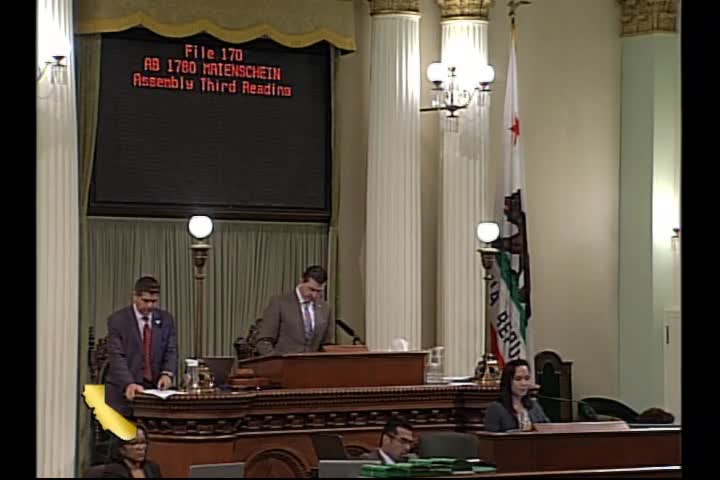 3MIN
Assembly Floor
 20MIN
Assembly Standing Committee on Higher Education
Bill Author


