AB 2043: Foster children and youth: family urgent response system.
- Session Year: 2017-2018
- House: Assembly
- Latest Version Date: 2018-08-29
Existing law, commonly known as Continuum of Care Reform (CCR), states the intent of the Legislature in adopting CCR to improve Californias child welfare system and its outcomes by using comprehensive initial child assessments, increasing the use of home-based family care and the provision of services and supports to home-based family care, reducing the use of congregate care placement settings, and creating faster paths to permanency resulting in shorter durations of involvement in the child welfare and juvenile justice systems. Existing law, as part of the CCR, requires the State Department of Social Services to implement a resource family approval process, which replaces the multiple processes for licensing foster family homes, certifying foster homes by foster family agencies, approving relatives and nonrelative extended family members as foster care providers, and approving guardians and adoptive families.
This bill would make legislative findings and declarations, stating the intent of the Legislature in adopting this bill to build upon the current CCR implementation effort. The bill would require the department to establish a statewide hotline, operational no later than January 1, 2020, as the entry point for a Family Urgent Response System, as defined, to respond to calls from caregivers or current or former foster children or youth when a crisis arises, as specified. The bill would require the hotline to include, among other things, referrals to the county, as specified, for further support and in-person response. The bill would require the department to ensure that deidentified, aggregated data are collected regarding individuals served through the hotline and to publish a report on the departments Internet Web site by January 1, 2021, and annually by January 1 thereafter, including specified information.
This bill would require, no later than January 1, 2020, county child welfare, probation, and behavioral health agencies, in each county or region of counties, as specified, to establish a joint county-based Family Urgent Response System that includes a mobile response and stabilization team to provide stabilization services for caregivers and current or former foster children or youth who are experiencing a crisis. The bill would require those agencies to submit a single, coordinated plan to the department, no later than November 1, 2019, describing how the system would meet specified requirements. The bill would authorize those agencies to implement these provisions on a per-county basis or by collaborating with other counties to establish regional, cross-county Family Urgent Response Systems, as specified. By creating new duties for county officials relating to foster care services, the bill would impose a state-mandated local program.
This bill would require the department, in collaboration with the State Department of Health Care Services, no later than March 1, 2019, to issue all necessary guidance for county-based Family Urgent Response Systems established pursuant to these provisions.
This bill would make the implementation of this act contingent upon the appropriation of funds for these purposes in the annual Budget Act or another statute.
The California Constitution requires the state to reimburse local agencies and school districts for certain costs mandated by the state. Statutory provisions establish procedures for making that reimbursement.
This bill would provide that no reimbursement is required by this act for a specified reason.
Existing law, commonly known as Continuum of Care Reform (CCR), states the intent of the Legislature in adopting CCR to improve Californias child welfare system and its outcomes by using comprehensive initial child assessments, increasing the use of home-based family care and the provision of services and supports to home-based family care, reducing the use of congregate care placement settings, and creating faster paths to permanency resulting in shorter durations of involvement in the child welfare and juvenile justice systems. Existing law, as part of the CCR, requires the State Department of Social Services to implement a resource family approval process, which replaces the multiple processes for licensing foster family homes, certifying foster homes by foster family agencies, approving relatives and nonrelative extended family members as foster care providers, and approving guardians and adoptive families.
This bill would make legislative findings and declarations, stating the intent of the Legislature in adopting this bill to build upon the current CCR implementation effort. The bill would require the department to establish a statewide hotline, operational no later than January 1, 2020, as the entry point for a Family Urgent Response System, as defined, to respond to calls from caregivers or current or former foster children or youth when a crisis arises, as specified. The bill would require the hotline to include, among other things, referrals to the county, as specified, for further support and in-person response. The bill would require the department to ensure that deidentified, aggregated data are collected regarding individuals served through the hotline and to publish a report on the departments Internet Web site by January 1, 2021, and annually by January 1 thereafter, including specified information.
This bill would require, no later than January 1, 2020, county child welfare, probation, and behavioral health agencies, in each county or region of counties, as specified, to establish a joint county-based Family Urgent Response System that includes a mobile response and stabilization team to provide stabilization services for caregivers and current or former foster children or youth who are experiencing a crisis. The bill would require those agencies to submit a single, coordinated plan to the department, no later than November 1, 2019, describing how the system would meet specified requirements. The bill would authorize those agencies to implement these provisions on a per-county basis or by collaborating with other counties to establish regional, cross-county Family Urgent Response Systems, as specified. By creating new duties for county officials relating to foster care services, the bill would impose a state-mandated local program.
This bill would require the department, in collaboration with the State Department of Health Care Services, no later than March 1, 2019, to issue all necessary guidance for county-based Family Urgent Response Systems established pursuant to these provisions.
This bill would make the implementation of this act contingent upon the appropriation of funds for these purposes in the annual Budget Act or another statute.
The California Constitution requires the state to reimburse local agencies and school districts for certain costs mandated by the state. Statutory provisions establish procedures for making that reimbursement.
This bill would provide that no reimbursement is required by this act for a specified reason.
Existing law, commonly known as Continuum of Care Reform (CCR), states the intent of the Legislature in adopting CCR to improve Californias child welfare system and its outcomes by using comprehensive initial child assessments, increasing the use of home-based family care and the provision of services and supports to home-based family care, reducing the use of congregate care placement settings, and creating faster paths to permanency resulting in shorter durations of involvement in the child welfare and juvenile justice systems. Existing law, as part of the CCR, requires the State Department of Social Services to implement a resource family approval process, which replaces the multiple processes for licensing foster family homes, certifying foster homes by foster family agencies, approving relatives and nonrelative extended family members as foster care providers, and approving guardians and adoptive families.
This bill would make legislative findings and declarations, stating the intent of the Legislature in adopting this bill to build upon the current CCR implementation effort. The bill would require the department to establish a statewide hotline, operational no later than January 1, 2020, as the entry point for a Family Urgent Response System, as defined, to respond to calls from caregivers or current or former foster children or youth when a crisis arises, as specified. The bill would require the hotline to include, among other things, referrals to the county, as specified, for further support and in-person response. The bill would require the department to ensure that deidentified, aggregated data are collected regarding individuals served through the hotline and to publish a report on the departments Internet Web site by January 1, 2021, and annually by January 1 thereafter, including specified information.
This bill would require, no later than January 1, 2020, county child welfare, probation, and behavioral health agencies, in each county or region of counties, as specified, to establish a joint county-based Family Urgent Response System that includes a mobile response and stabilization team to provide stabilization services for caregivers and current or former foster children or youth who are experiencing a crisis. The bill would require those agencies to submit a single, coordinated plan to the department, no later than November 1, 2019, describing how the system would meet specified requirements. The bill would authorize those agencies to implement these provisions on a per-county basis or by collaborating with other counties to establish regional, cross-county Family Urgent Response Systems, as specified. By creating new duties for county officials relating to foster care services, the bill would impose a state-mandated local program.
This bill would require the department, in collaboration with the State Department of Health Care Services, no later than March 1, 2019, to issue all necessary guidance for county-based Family Urgent Response Systems established pursuant to these provisions.
The California Constitution requires the state to reimburse local agencies and school districts for certain costs mandated by the state. Statutory provisions establish procedures for making that reimbursement.
This bill would provide that no reimbursement is required by this act for a specified reason.
Existing law, commonly known as Continuum of Care Reform (CCR), states the intent of the Legislature in adopting CCR to improve Californias child welfare system and its outcomes by using comprehensive initial child assessments, increasing the use of home-based family care and the provision of services and supports to home-based family care, reducing the use of congregate care placement settings, and creating faster paths to permanency resulting in shorter durations of involvement in the child welfare and juvenile justice systems. Existing law, as part of the CCR, requires the State Department of Social Services to implement a resource family approval process, which replaces the multiple processes for licensing foster family homes, certifying foster homes by foster family agencies, approving relatives and nonrelative extended family members as foster care providers, and approving guardians and adoptive families.
This bill would make legislative findings and declarations, stating the intent of the Legislature in adopting this bill to build upon the current CCR implementation effort. The bill would require the department to establish a statewide hotline, operational no later than July 1, 2019, January 1, 2020, as the entry point for a Family Urgent Response System, as defined, to respond to calls from caregivers or current or former foster children or youth when a crisis arises, as specified. The bill would require the hotline to include, among other things, referrals to the county, as specified, for further support and in-person response. The bill would require the department to ensure that data are collected regarding individuals served through the hotline and to publish a report on the departments Internet Web site by January 1, 2020, 2021, and annually by January 1 thereafter, including specified information.
This bill would require, no later than July 1, 2019, January 1, 2020, county child welfare, probation, and behavioral health agencies, in each county or region of counties, as specified, to establish a joint county-based Family Urgent Response System that includes a mobile response and stabilization team to provide stabilization services for caregivers and current or former foster children or youth who are experiencing a crisis. The bill would require those agencies to submit a single, coordinated plan to the department, no later than April November 1, 2019, describing how the system would meet specified requirements. The bill would authorize those agencies to implement these provisions on a per-county basis or by collaborating with other counties to establish regional, cross-county Family Urgent Response Systems, as specified. By creating new duties for county officials relating to foster care services, the bill would impose a state-mandated local program.
This bill would require the department, in collaboration with the State Department of Health Care Services, no later than October 1, 2018, March 1, 2019, to issue all necessary guidance for county-based Family Urgent Response Systems established pursuant to these provisions.
The California Constitution requires the state to reimburse local agencies and school districts for certain costs mandated by the state. Statutory provisions establish procedures for making that reimbursement.
This bill would provide that no reimbursement is required by this act for a specified reason.
Existing law, commonly known as Continuum of Care Reform (CCR), states the intent of the Legislature in adopting CCR to improve Californias child welfare system and its outcomes by using comprehensive initial child assessments, increasing the use of home-based family care and the provision of services and supports to home-based family care, reducing the use of congregate care placement settings, and creating faster paths to permanency resulting in shorter durations of involvement in the child welfare and juvenile justice systems. Existing law, as part of the CCR, requires the State Department of Social Services to implement a resource family approval process, which replaces the multiple processes for licensing foster family homes, certifying foster homes by foster family agencies, approving relatives and nonrelative extended family members as foster care providers, and approving guardians and adoptive families.
This bill would make legislative findings and declarations, stating the intent of the Legislature in adopting this bill to build upon the current CCR implementation effort. The bill would require the department to establish a statewide hotline, operational no later than January 1, 2020, July 1, 2019, as the entry point for a Family Urgent Response System, as defined, to respond to calls from caregivers or current or former foster children or youth when a crisis arises, as specified. The bill would require the hotline to include, among other things, referrals to the county, as specified, for further support and in-person response. The bill would require the department to ensure that data are collected regarding individuals served through the hotline and to publish a report on the departments Internet Web site by January 1, 2021, 2020, and annually by January 1 thereafter, including specified information.
This bill would require, no later than January 1, 2020, July 1, 2019, county child welfare, probation, and behavioral health agencies, in each county or region of counties, as specified, to establish a joint county-based Family Urgent Response System that includes a mobile response and stabilization team to provide stabilization services for caregivers and current or former foster children or youth who are experiencing a crisis. The bill would require those agencies to submit a single, coordinated plan to the department, no later than November April 1, 2019, describing how the system would meet specified requirements. The bill would authorize those agencies to implement these provisions on a per-county basis or by collaborating with other counties to establish regional, cross-county Family Urgent Response Systems, as specified. By creating new duties for county officials relating to foster care services, this the bill would impose a state-mandated local program.
This bill would require the department, in collaboration with the State Department of Health Care Services, no later than March 1, 2019 October 1, 2018, to issue all necessary guidance for county-based Family Urgent Response Systems established pursuant to these provisions.
The California Constitution requires the state to reimburse local agencies and school districts for certain costs mandated by the state. Statutory provisions establish procedures for making that reimbursement.
This bill would provide that no reimbursement is required by this act for a specified reason.
Existing law, commonly known as Continuum of Care Reform (CCR), states the intent of the Legislature in adopting CCR to improve Californias child welfare system and its outcomes by using comprehensive initial child assessments, increasing the use of home-based family care and the provision of services and supports to home-based family care, reducing the use of congregate care placement settings, and creating faster paths to permanency resulting in shorter durations of involvement in the child welfare and juvenile justice systems. Existing law, as part of the CCR, requires the State Department of Social Services to implement a resource family approval process, which replaces the multiple processes for licensing foster family homes, certifying foster homes by foster family agencies, approving relatives and nonrelative extended family members as foster care providers, and approving guardians and adoptive families.
This bill would make legislative findings and declarations, stating the intent of the Legislature in adopting this bill to build upon the current CCR implementation effort. The bill would require the department to establish a statewide hotline, operational no later than January 1, 2020, as the entry point for a state-based Family Urgent Response System, as defined, to respond to calls from caregivers or current or former foster youth when a crisis arises, as specified. The bill would require the hotline to include, among other things, referrals to the county, as specified, for further support and in-person response. The bill would require the department to ensure that data are collected regarding individuals served through the hotline and to publish a report on the departments Internet Web site on by January 1, 2021, and annually by January 1 thereafter, including specified information.
This bill would require, no later than January 1, 2020, county child welfare, probation, and behavioral health agencies, in each county, county or region of counties, as specified, to establish a joint county-based Family Urgent Response System that includes a mobile response and stabilization team to provide stabilization services for caregivers or and current or former foster youth who are experiencing a crisis. The bill would require those agencies to submit a single, coordinated plan to the department, no later than November 1, 2019, describing how the system would meet specified requirements. The bill would authorize those agencies to implement these provisions on a per-county basis or by collaborating with other counties to establish regional, cross-county Family Urgent Response Systems. Systems, as specified. By creating new duties for county officials relating to foster care services, this bill would impose a state-mandated local program.
This bill would require the department, in collaboration with the State Department of Health Care Services, no later than March 1, 2019, to issue all necessary guidance for county-based Family Urgent Response Systems established pursuant to this bill. these provisions.
The California Constitution requires the state to reimburse local agencies and school districts for certain costs mandated by the state. Statutory provisions establish procedures for making that reimbursement.
This bill would provide that no reimbursement is required by this act for a specified reason.
Existing law, commonly known as Continuum of Care Reform (CCR), states the intent of the Legislature in adopting CCR to improve Californias child welfare system and its outcomes by using comprehensive initial child assessments, increasing the use of home-based family care and the provision of services and supports to home-based family care, reducing the use of congregate care placement settings, and creating faster paths to permanency resulting in shorter durations of involvement in the child welfare and juvenile justice systems. Existing law, as part of CCR, requires the State Department of Social Services to implement a resource family approval process, which replaces the multiple processes for licensing foster family homes, certifying foster homes by foster family agencies, approving relatives and nonrelative extended family members as foster care providers, and approving guardians and adoptive families.
This bill would state the intent of the Legislature to enact legislation that would build upon the current CCR implementation effort by establishing a response system, as specified, for caregivers of current or former foster youth who are experiencing emotional, behavioral, or other needs that require immediate support. The bill would state the intent of the Legislature to include a statewide hotline in the response system to provide triage and, as appropriate, deploy a mobile and coordinated in-home response.This bill would make legislative findings and declarations, stating the intent of the Legislature in adopting this bill to build upon the current CCR implementation effort. The bill would require the department to establish a statewide hotline, operational no later than January 1, 2020, as the entry point for a state-based Family Urgent Response System, as defined, to respond to calls from caregivers or current or former foster youth when a crisis arises, as specified. The bill would require the hotline to include, among other things, referrals to the county, as specified, for further support and in-person response. The bill would require the department to ensure that data are collected regarding individuals served through the hotline and to publish a report on the departments Internet Web site on January 1, 2021, and annually thereafter, including specified information.
This bill would require, no later than January 1, 2020, county child welfare, probation, and behavioral health agencies, in each county, to establish a county-based Family Urgent Response System that includes a mobile response and stabilization team to provide stabilization services for caregivers or current or former foster youth who are experiencing a crisis. The bill would require those agencies to submit a single, coordinated plan to the department, no later than November 1, 2019, describing how the system would meet specified requirements. The bill would authorize those agencies to implement these provisions on a per-county basis or by collaborating with other counties to establish regional, cross-county Family Urgent Response Systems. By creating new duties for county officials relating to foster care services, this bill would impose a state-mandated local program.
This bill would require the department, in collaboration with the State Department of Health Care Services, no later than March 1, 2019, to issue all necessary guidance for county-based Family Urgent Response Systems established pursuant to this bill.
The California Constitution requires the state to reimburse local agencies and school districts for certain costs mandated by the state. Statutory provisions establish procedures for making that reimbursement.
This bill would provide that no reimbursement is required by this act for a specified reason.
Existing law, commonly known as Continuum of Care Reform (CCR), states the intent of the Legislature in adopting CCR to improve Californias child welfare system and its outcomes by using comprehensive initial child assessments, increasing the use of home-based family care and the provision of services and supports to home-based family care, reducing the use of congregate care placement settings, and creating faster paths to permanency resulting in shorter durations of involvement in the child welfare and juvenile justice systems. Existing law, as part of CCR, requires the State Department of Social Services to implement a resource family approval process, which replaces the multiple processes for licensing foster family homes, certifying foster homes by foster family agencies, approving relatives and nonrelative extended family members as foster care providers, and approving guardians and adoptive families.
This bill would state the intent of the Legislature to enact legislation that would build upon the current CCR implementation effort by establishing a response system, as specified, for caregivers of current or former foster youth who are experiencing emotional, behavioral, or other needs that require immediate support. The bill would state the intent of the Legislature to include a statewide hotline in the response system to provide triage and, as appropriate, deploy a mobile and coordinated in-home response.
The Legislature hereby finds and declares all of the following:
(a)Existing law establishes the Continuum of Care Reform (CCR) effort and states the intent of the Legislature to improve Californias child welfare system and its outcomes by using comprehensive initial child assessments, increasing the use of home-based family care and the provision of services and supports to home-based family care, reducing the use of congregate care placement settings, and creating faster paths to permanency resulting in shorter durations of involvement in the child welfare and juvenile justice systems.
(b)Existing law states the intent of the Legislature that CCR include the timely provision of an array of appropriate services that are coordinated, comprehensive, and community-based, and that children and youth in need of services are identified and assessed promptly and provided services regardless of placement setting, and that child welfare and mental health agencies work together in the provision of coordinated services to these children and youth.
(c)Existing law states the intent of the Legislature to reduce the frequency of law enforcement involvement and delinquency petitions arising from incidents at group homes and other facilities licensed to provide residential care to dependent children and youth.
(d)It is the intent of the Legislature in adopting this act to build upon the current CCR implementation effort to provide current and former foster children and youth and their caregivers with immediate and timely services at the moment of crisis. The Legislature expects that those services, provided by a trained and trauma-informed team of practitioners, will prevent placement disruption and separation of the children or youth from his or her caregiver, will reduce contacts with law enforcement and potential entry into the criminal justice system, and will prevent hospitalization and higher-level placement into congregate care.
(e)Establishing a 24-hour-a-day, seven-day-a-week response system at the state and local levels for caregivers and current or former foster children and youth who are experiencing emotional, behavioral, or other needs that require immediate support will lead to improved child and youth and family outcomes, will improve retention of current foster caregivers, will help to maintain children and youth in their current living situation, will improve the emotional disposition of the child or youth, will connect children and youth and caregivers to existing services in their communities, and will provide children and youth and caregivers with the tools that they need to heal from trauma and to thrive.
SEC. 2.Chapter 5.4 (commencing with Section 16526) is added to Part 4 of Division 9 of the Welfare and Institutions Code, to read:5.4.Family Urgent Response System for Caregivers and Children or Youth16526.For purposes of this chapter, the following definitions apply:
(a)Caregiver means an individual responsible for meeting the daily care and supervision needs of a current or former foster child or youth.
(b)Crisis means an event involving the caregiver and current or former foster child or youth that causes emotional, physical, or behavioral distress and that, without immediate supports, creates a risk of disruption to the current living situation.
(c)Current or former foster child or youth includes a child or youth adjudicated under Section 300, 601, or 602 and who is served by a county child welfare agency or probation department, and a child or youth who has exited foster care to reunification, guardianship, or adoption. A current or former foster child or youth shall be eligible for services under this chapter until he or she attains 21 years of age.
(d)Department means the State Department of Social Services.
(e)Family Urgent Response System means a coordinated statewide, regional, and county-level system designed to provide collaborative, timely, in-home, in-person mobile crisis response for purposes of stabilizing the living situation, mitigating the distress of the caregiver or child or youth, and connecting the caregiver and child or youth to the existing array of local services.
(f)In-home means where the child or youth and caregiver are located, preferably in the home, or at some other mutually agreeable location.
16527.(a)The department shall establish a statewide hotline as the entry point for the Family Urgent Response System, which shall be available 24 hours a day, seven days a week, to respond to calls from a caregiver or current or former foster child or youth when a crisis arises. Both of the following shall be available through this hotline:
(1)Hotline workers who are trained in techniques for deescalation and conflict resolution telephone response specifically for children or youth impacted by trauma.
(2)Referrals to a county-based Family Urgent Response System, established pursuant to Section 16529, for further support and in-person response. Referrals shall occur as follows:
(A)A warm hand-off whereby the hotline worker establishes direct and live connection through a three-way call that includes the caregiver, child, or youth and the county contact.
(B)If a direct communication cannot be established pursuant to subparagraph (A), a referral directly to the community- or county-based service and a followup call to ensure a connection to the caregiver, child, or youth occurs.
(C)The hotline worker shall contact the caregiver, child, or youth within 24 hours after the referral required under subparagraph (A) or (B) to offer additional support if needed.
(b)The statewide hotline shall maintain contact information for all county-based Family Urgent Response Systems, based on information provided by counties, for referrals to local services, including, but not limited to, county-based mobile response and stabilization teams.
(c)The department shall ensure that deidentified, aggregated data are collected regarding individuals served through the statewide hotline and shall publish a report on the departments Internet Web site by January 1, 2021, and annually by January 1 thereafter, in consultation with stakeholders, including, but not limited to, the County Welfare Directors Association of California and the County Behavioral Health Directors Association of California, to include all of the following information:
(1)The number of caregivers served through the hotline, separated by placement type and status as a current or former foster caregiver.
(2)The number of current and former foster children or youth served through the hotline, separated by county agency type, current or former foster care status, age, gender, race, and whether the call was made by the caregiver or the child or youth.
(3)The disposition of each call, including, but not limited to, whether mobile response and stabilization services were deployed or a referral was made to other services.
(4)Outcome data, including, but not limited to, placement stability, return into foster care, movement from child welfare to juvenile justice, and timeliness to permanency.
(d)The department may meet the requirements of this section through contract with an entity with demonstrated experience in working with populations of children or youth who have suffered trauma and with capacity to provide 24-hour-a-day, seven-day-a-week response.
(e)The department, in consultation with stakeholders, shall do all of the following:
(1)Develop methods and materials for informing the caregivers and current or former foster children or youth about the statewide hotline.
(2)Establish protocols for triage and response.
(3)Establish minimum education and training requirements for hotline workers.
(4)Consider expanding the statewide hotline to include communication through electronic means, including, but not limited to, text messaging or by email.
(f)The statewide hotline shall be operational no later than January 1, 2020.
16528.(a)No later than March 1, 2019, the department, in collaboration with the State Department of Health Care Services, and in consultation with the County Behavioral Health Directors Association of California, and the County Welfare Directors Association, child welfare advocates, providers, current or former foster children or youth, and caregivers, shall issue all necessary guidance for county-based Family Urgent Response Systems for purposes of this chapter, including, but not limited to, data tracking and claiming of federal funding.
(b)No later than March 1, 2019, the State Department of Health Care Services, in consultation with the department, the County Behavioral Health Directors Association of California, and the County Welfare Directors Association, shall submit any Medicaid state plan, if deemed necessary to maximize federal financial participation, based on research of other state systems with mobile response capacity.
16529.(a)County child welfare, probation, and behavioral health agencies, in each county or region of counties as specified in subdivision (d), shall establish a joint county-based Family Urgent Response System that includes a mobile response and stabilization team for the purpose of providing stabilization services for caregivers and current or former foster children or youth who are experiencing a crisis.
(b)In each county or region of counties as specified in subdivision (d), the county child welfare, probation, and behavioral health agencies shall submit a single, coordinated plan to the department no later than November 1, 2019, that describes how the county-based Family Urgent Response System shall meet the requirements described in subdivision (c). The plan shall also describe all of the following:
(1)How the county, or region of counties, will track and monitor calls.
(2)Data collection efforts, consistent with guidance provided by the department.
(3)Transitions from mobile response and stabilization services to ongoing services.
(4)Process for identifying if the child or youth has an existing child and family team, and for coordinating with the child and family team to address the crisis and for ongoing care.
(5)Process and criteria for determining response.
(6)Composition of the responders, including efforts to include peer partners and those with lived experience in the response team, whenever possible.
(7)Both existing and new services that will be used to support the mobile response and stabilization services.
(8)Protocols related to the response processes of the county-based Family Urgent Response System for the child or youth in family-based and other congregate care settings based on guidelines developed by the department with input from stakeholders pursuant to Section 16258.
(9)Process for identifying whether the child or youth has an existing crisis plan, and for coordinating response consistent with the plan.
(c)A county-based Family Urgent Response System shall include all of the following:
(1)Phone response at the county level that facilitates entry of the caregivers and current or former foster children or youth into mobile response services.
(2)A process for determining when a mobile response and stabilization team will be deployed, or when other services will be used, based on the urgent and critical needs of the caregiver, child, or youth.
(3)A mobile response and stabilization team available 24 hours a day, seven days a week.
(4)Ability to provide immediate, in-person, face-to-face response preferably within one hour, but not to exceed three hours in extenuating circumstances for urgent needs, or same-day response within 24 hours for nonurgent situations.
(5)Utilization of responders with specialized training in trauma of children or youth and the foster care system. Efforts should be made to include peer partners and those with lived experience in the response team, whenever possible.
(6)Provision of in-home crisis deescalation, stabilization, and support, including all of the following:
(A)Establishing in-person, face-to-face contact with the child or youth and caregiver.
(B)Identifying the underlying causes of, and precursors to, the behavior.
(C)Identifying the caregiver interventions attempted.
(D)Observing the child and caregiver interaction.
(E)Diffusing the immediate situation.
(F)Coaching and advising the caregiver in order to maintain the child or youth in the current living situation.
(G)Establishing connections to other county- or community-based supports and services to ensure continuity of care.
(H)Following up after the initial face-to-face response, for up to 72 hours, to determine if additional supports or services are needed.
(I)Identifying any additional support or ongoing stabilization needs for the family and making a plan for, or referral to, appropriate community services within the county.
(7)A process for communicating with the county of jurisdiction and the county mental health plan regarding the service needs of the child or youth and caregiver provided that the child or youth is currently under the jurisdiction of either the county child welfare or the probation system.
(d)(1)Each county shall establish a Family Urgent Response System no later than January 1, 2020.
(2)The county agencies described in subdivisions (a) and (b) may implement this section on a per-county basis or by collaborating with other counties to establish regional, cross-county Family Urgent Response Systems. For counties implementing this section pursuant to a regional approach, a single plan, as described in subdivision (b), signed by all agency representatives, shall be submitted to the department and a lead county shall be identified.
(3)Funds expended pursuant to this act shall be used to supplement, and not supplant, other existing funding for mobile response services.
(4)A county or region of counties may receive an extension, not to exceed six months, to implement a Family Urgent Response System beyond January 1, 2020, upon submission of a written request, in a manner to be prescribed by the department, that includes a demonstration of actions to implement and progress towards implementation.
(e)The creation and implementation of the Family Urgent Response System shall not infringe on entitlements or services provided pursuant to Title IV-E of the federal Social Security Act (Section 670 et seq. of Title 42 of the United States Code) or the federal Early and Periodic Screening, Diagnosis and Treatment services (Section 1396d(r) of Title 42 of the United States Code).
SEC. 3.Implementation of this act is contingent upon the appropriation of funds for these purposes in the annual Budget Act or another statute.
SEC. 4.To the extent that this act has an overall effect of increasing the costs already borne by a local agency for programs or levels of service mandated by the 2011 Realignment Legislation within the meaning of Section 36 of Article XIII of the California Constitution, it shall apply to local agencies only to the extent that the state provides annual funding for the cost increase. Any new program or higher level of service provided by a local agency pursuant to this act above the level for which funding has been provided shall not require a subvention of funds by the state or otherwise be subject to Section 6 of Article XIIIB of the California Constitution.
The Legislature hereby finds and declares all of the following:
(a)Existing law establishes the Continuum of Care Reform (CCR) effort and states the intent of the Legislature to improve Californias child welfare system and its outcomes by using comprehensive initial child assessments, increasing the use of home-based family care and the provision of services and supports to home-based family care, reducing the use of congregate care placement settings, and creating faster paths to permanency resulting in shorter durations of involvement in the child welfare and juvenile justice systems.
(b)Existing law states the intent of the Legislature that CCR include the timely provision of an array of appropriate services that are coordinated, comprehensive, and community-based, and that children and youth in need of services are identified and assessed promptly and provided services regardless of placement setting, and that child welfare and mental health agencies work together in the provision of coordinated services to these children and youth.
(c)Existing law states the intent of the Legislature to reduce the frequency of law enforcement involvement and delinquency petitions arising from incidents at group homes and other facilities licensed to provide residential care to dependent children and youth.
(d)It is the intent of the Legislature in adopting this act to build upon the current CCR implementation effort to provide current and former foster children and youth and their caregivers with immediate and timely services at the moment of crisis. The Legislature expects that those services, provided by a trained and trauma-informed team of practitioners, will prevent placement disruption and separation of the children or youth from his or her caregiver, will reduce contacts with law enforcement and potential entry into the criminal justice system, and will prevent hospitalization and higher-level placement into congregate care.
(e)Establishing a 24-hour-a-day, seven-day-a-week response system at the state and local levels for caregivers and current or former foster children and youth who are experiencing emotional, behavioral, or other needs that require immediate support will lead to improved child and youth and family outcomes, will improve retention of current foster caregivers, will help to maintain children and youth in their current living situation, will improve the emotional disposition of the child or youth, will connect children and youth and caregivers to existing services in their communities, and will provide children and youth and caregivers with the tools that they need to heal from trauma and to thrive.
SEC. 2.Chapter 5.4 (commencing with Section 16526) is added to Part 4 of Division 9 of the Welfare and Institutions Code, to read:5.4.Family Urgent Response System for Caregivers and Children or Youth16526.For purposes of this chapter, the following definitions apply:
(a)Caregiver means an individual responsible for meeting the daily care and supervision needs of a current or former foster child or youth.
(b)Crisis means an event involving the caregiver and current or former foster child or youth that causes emotional, physical, or behavioral distress and that, without immediate supports, creates a risk of disruption to the current living situation.
(c)Current or former foster child or youth includes a child or youth adjudicated under Section 300, 601, or 602 and who is served by a county child welfare agency or probation department, and a child or youth who has exited foster care to reunification, guardianship, or adoption. A current or former foster child or youth shall be eligible for services under this chapter until he or she attains 21 years of age.
(d)Department means the State Department of Social Services.
(e)Family Urgent Response System means a coordinated statewide, regional, and county-level system designed to provide collaborative, timely, in-home, in-person mobile crisis response for purposes of stabilizing the living situation, mitigating the distress of the caregiver or child or youth, and connecting the caregiver and child or youth to the existing array of local services.
(f)In-home means where the child or youth and caregiver are located, preferably in the home, or at some other mutually agreeable location.
16527.(a)The department shall establish a statewide hotline as the entry point for the Family Urgent Response System, which shall be available 24 hours a day, seven days a week, to respond to calls from a caregiver or current or former foster child or youth when a crisis arises. Both of the following shall be available through this hotline:
(1)Hotline workers who are trained in techniques for deescalation and conflict resolution telephone response specifically for children or youth impacted by trauma.
(2)Referrals to a county-based Family Urgent Response System, established pursuant to Section 16529, for further support and in-person response. Referrals shall occur as follows:
(A)A warm hand-off whereby the hotline worker establishes direct and live connection through a three-way call that includes the caregiver, child, or youth and the county contact.
(B)If a direct communication cannot be established pursuant to subparagraph (A), a referral directly to the community- or county-based service and a followup call to ensure a connection to the caregiver, child, or youth occurs.
(C)The hotline worker shall contact the caregiver, child, or youth within 24 hours after the referral required under subparagraph (A) or (B) to offer additional support if needed.
(b)The statewide hotline shall maintain contact information for all county-based Family Urgent Response Systems, based on information provided by counties, for referrals to local services, including, but not limited to, county-based mobile response and stabilization teams.
(c)The department shall ensure that deidentified, aggregated data are collected regarding individuals served through the statewide hotline and shall publish a report on the departments Internet Web site by January 1, 2021, and annually by January 1 thereafter, in consultation with stakeholders, including, but not limited to, the County Welfare Directors Association of California and the County Behavioral Health Directors Association of California, to include all of the following information:
(1)The number of caregivers served through the hotline, separated by placement type and status as a current or former foster caregiver.
(2)The number of current and former foster children or youth served through the hotline, separated by county agency type, current or former foster care status, age, gender, race, and whether the call was made by the caregiver or the child or youth.
(3)The disposition of each call, including, but not limited to, whether mobile response and stabilization services were deployed or a referral was made to other services.
(4)Outcome data, including, but not limited to, placement stability, return into foster care, movement from child welfare to juvenile justice, and timeliness to permanency.
(d)The department may meet the requirements of this section through contract with an entity with demonstrated experience in working with populations of children or youth who have suffered trauma and with capacity to provide 24-hour-a-day, seven-day-a-week response.
(e)The department, in consultation with stakeholders, shall do all of the following:
(1)Develop methods and materials for informing the caregivers and current or former foster children or youth about the statewide hotline.
(2)Establish protocols for triage and response.
(3)Establish minimum education and training requirements for hotline workers.
(4)Consider expanding the statewide hotline to include communication through electronic means, including, but not limited to, text messaging or by email.
(f)The statewide hotline shall be operational no later than January 1, 2020.
16528.(a)No later than March 1, 2019, the department, in collaboration with the State Department of Health Care Services, and in consultation with the County Behavioral Health Directors Association of California, and the County Welfare Directors Association, child welfare advocates, providers, current or former foster children or youth, and caregivers, shall issue all necessary guidance for county-based Family Urgent Response Systems for purposes of this chapter, including, but not limited to, data tracking and claiming of federal funding.
(b)No later than March 1, 2019, the State Department of Health Care Services, in consultation with the department, the County Behavioral Health Directors Association of California, and the County Welfare Directors Association, shall submit any Medicaid state plan, if deemed necessary to maximize federal financial participation, based on research of other state systems with mobile response capacity.
16529.(a)County child welfare, probation, and behavioral health agencies, in each county or region of counties as specified in subdivision (d), shall establish a joint county-based Family Urgent Response System that includes a mobile response and stabilization team for the purpose of providing stabilization services for caregivers and current or former foster children or youth who are experiencing a crisis.
(b)In each county or region of counties as specified in subdivision (d), the county child welfare, probation, and behavioral health agencies shall submit a single, coordinated plan to the department no later than November 1, 2019, that describes how the county-based Family Urgent Response System shall meet the requirements described in subdivision (c). The plan shall also describe all of the following:
(1)How the county, or region of counties, will track and monitor calls.
(2)Data collection efforts, consistent with guidance provided by the department.
(3)Transitions from mobile response and stabilization services to ongoing services.
(4)Process for identifying if the child or youth has an existing child and family team, and for coordinating with the child and family team to address the crisis and for ongoing care.
(5)Process and criteria for determining response.
(6)Composition of the responders, including efforts to include peer partners and those with lived experience in the response team, whenever possible.
(7)Both existing and new services that will be used to support the mobile response and stabilization services.
(8)Protocols related to the response processes of the county-based Family Urgent Response System for the child or youth in family-based and other congregate care settings based on guidelines developed by the department with input from stakeholders pursuant to Section 16258.
(9)Process for identifying whether the child or youth has an existing crisis plan, and for coordinating response consistent with the plan.
(c)A county-based Family Urgent Response System shall include all of the following:
(1)Phone response at the county level that facilitates entry of the caregivers and current or former foster children or youth into mobile response services.
(2)A process for determining when a mobile response and stabilization team will be deployed, or when other services will be used, based on the urgent and critical needs of the caregiver, child, or youth.
(3)A mobile response and stabilization team available 24 hours a day, seven days a week.
(4)Ability to provide immediate, in-person, face-to-face response preferably within one hour, but not to exceed three hours in extenuating circumstances for urgent needs, or same-day response within 24 hours for nonurgent situations.
(5)Utilization of responders with specialized training in trauma of children or youth and the foster care system. Efforts should be made to include peer partners and those with lived experience in the response team, whenever possible.
(6)Provision of in-home crisis deescalation, stabilization, and support, including all of the following:
(A)Establishing in-person, face-to-face contact with the child or youth and caregiver.
(B)Identifying the underlying causes of, and precursors to, the behavior.
(C)Identifying the caregiver interventions attempted.
(D)Observing the child and caregiver interaction.
(E)Diffusing the immediate situation.
(F)Coaching and advising the caregiver in order to maintain the child or youth in the current living situation.
(G)Establishing connections to other county- or community-based supports and services to ensure continuity of care.
(H)Following up after the initial face-to-face response, for up to 72 hours, to determine if additional supports or services are needed.
(I)Identifying any additional support or ongoing stabilization needs for the family and making a plan for, or referral to, appropriate community services within the county.
(7)A process for communicating with the county of jurisdiction and the county mental health plan regarding the service needs of the child or youth and caregiver provided that the child or youth is currently under the jurisdiction of either the county child welfare or the probation system.
(d)(1)Each county shall establish a Family Urgent Response System no later than January 1, 2020.
(2)The county agencies described in subdivisions (a) and (b) may implement this section on a per-county basis or by collaborating with other counties to establish regional, cross-county Family Urgent Response Systems. For counties implementing this section pursuant to a regional approach, a single plan, as described in subdivision (b), signed by all agency representatives, shall be submitted to the department and a lead county shall be identified.
(3)Funds expended pursuant to this act shall be used to supplement, and not supplant, other existing funding for mobile response services.
(4)A county or region of counties may receive an extension, not to exceed six months, to implement a Family Urgent Response System beyond January 1, 2020, upon submission of a written request, in a manner to be prescribed by the department, that includes a demonstration of actions to implement and progress towards implementation.
(e)The creation and implementation of the Family Urgent Response System shall not infringe on entitlements or services provided pursuant to Title IV-E of the federal Social Security Act (Section 670 et seq. of Title 42 of the United States Code) or the federal Early and Periodic Screening, Diagnosis and Treatment services (Section 1396d(r) of Title 42 of the United States Code).
SEC. 3.Implementation of this act is contingent upon the appropriation of funds for these purposes in the annual Budget Act or another statute.
SEC. 3.SEC. 4.To the extent that this act has an overall effect of increasing the costs already borne by a local agency for programs or levels of service mandated by the 2011 Realignment Legislation within the meaning of Section 36 of Article XIII of the California Constitution, it shall apply to local agencies only to the extent that the state provides annual funding for the cost increase. Any new program or higher level of service provided by a local agency pursuant to this act above the level for which funding has been provided shall not require a subvention of funds by the state or otherwise be subject to Section 6 of Article XIIIB of the California Constitution.
The Legislature hereby finds and declares all of the following:
(a)Existing law establishes the Continuum of Care Reform (CCR) effort and states the intent of the Legislature to improve Californias child welfare system and its outcomes by using comprehensive initial child assessments, increasing the use of home-based family care and the provision of services and supports to home-based family care, reducing the use of congregate care placement settings, and creating faster paths to permanency resulting in shorter durations of involvement in the child welfare and juvenile justice systems.
(b)Existing law states the intent of the Legislature that CCR include the timely provision of an array of appropriate services that are coordinated, comprehensive, and community-based, and that children and youth in need of services are identified and assessed promptly and provided services regardless of placement setting, and that child welfare and mental health agencies work together in the provision of coordinated services to these children and youth.
(c)Existing law states the intent of the Legislature to reduce the frequency of law enforcement involvement and delinquency petitions arising from incidents at group homes and other facilities licensed to provide residential care to dependent children and youth.
(d)It is the intent of the Legislature in adopting this act to build upon the current CCR implementation effort to provide current and former foster children and youth and their caregivers with immediate and timely services at the moment of crisis. The Legislature expects that those services, provided by a trained and trauma-informed team of practitioners, will prevent placement disruption and separation of the children or youth from his or her caregiver, will reduce contacts with law enforcement and potential entry into the criminal justice system, and will prevent hospitalization and higher-level placement into congregate care.
(e)Establishing a 24-hour-a-day, seven-day-a-week response system at the state and local levels for caregivers and current or former foster children and youth who are experiencing emotional, behavioral, or other needs that require immediate support will lead to improved child and youth and family outcomes, will improve retention of current foster caregivers, will help to maintain children and youth in their current living situation, will improve the emotional disposition of the child or youth, will connect children and youth and caregivers to existing services in their communities, and will provide children and youth and caregivers with the tools that they need to heal from trauma and to thrive.
SEC. 2.Chapter 5.4 (commencing with Section 16526) is added to Part 4 of Division 9 of the Welfare and Institutions Code, to read:5.4.Family Urgent Response System for Caregivers and Children or Youth16526.For purposes of this chapter, the following definitions apply:
(a)Caregiver means an individual responsible for meeting the daily care and supervision needs of a current or former foster child or youth.
(b)Crisis means an event involving the caregiver and current or former foster child or youth that causes emotional, physical, or behavioral distress and that, without immediate supports, creates a risk of disruption to the current living situation.
(c)Current or former foster child or youth includes a child or youth adjudicated under Section 300, 601, or 602 and who is served by a county child welfare agency or probation department, and a child or youth who has exited foster care to reunification, guardianship, or adoption. A current or former foster child or youth shall be eligible for services under this chapter until he or she attains 21 years of age.
(d)Department means the State Department of Social Services.
(e)Family Urgent Response System means a coordinated statewide, regional, and county-level system designed to provide collaborative, timely, in-home, in-person mobile crisis response for purposes of stabilizing the living situation, mitigating the distress of the caregiver or child or youth, and connecting the caregiver and child or youth to the existing array of local services.
(f)In-home means where the child or youth and caregiver are located, preferably in the home, or at some other mutually agreeable location.
16527.(a)The department shall establish a statewide hotline as the entry point for the Family Urgent Response System, which shall be available 24 hours a day, seven days a week, to respond to calls from a caregiver or current or former foster child or youth when a crisis arises. Both of the following shall be available through this hotline:
(1)Hotline workers who are trained in techniques for deescalation and conflict resolution telephone response specifically for children or youth impacted by trauma.
(2)Referrals to a county-based Family Urgent Response System, established pursuant to Section 16529, for further support and in-person response. Referrals shall occur as follows:
(A)A warm hand-off whereby the hotline worker establishes direct and live connection through a three-way call that includes the caregiver, child, or youth and the county contact.
(B)If a direct communication cannot be established pursuant to subparagraph (A), a referral directly to the community- or county-based service and a followup call to ensure a connection to the caregiver, child, or youth occurs.
(C)The hotline worker shall contact the caregiver, child, or youth within 24 hours after the referral required under subparagraph (A) or (B) to offer additional support if needed.
(b)The statewide hotline shall maintain contact information for all county-based Family Urgent Response Systems, based on information provided by counties, for referrals to local services, including, but not limited to, county-based mobile response and stabilization teams.
(c)The department shall ensure that deidentified, aggregated data are collected regarding individuals served through the statewide hotline and shall publish a report on the departments Internet Web site by January 1, 2021, and annually by January 1 thereafter, in consultation with stakeholders, including, but not limited to, the County Welfare Directors Association of California and the County Behavioral Health Directors Association of California, to include all of the following information:
(1)The number of caregivers served through the hotline, separated by placement type and status as a current or former foster caregiver.
(2)The number of current and former foster children or youth served through the hotline, separated by county agency type, current or former foster care status, age, gender, race, and whether the call was made by the caregiver or the child or youth.
(3)The disposition of each call, including, but not limited to, whether mobile response and stabilization services were deployed or a referral was made to other services.
(4)Deidentified, aggregated outcome Outcome data, including, but not limited to, placement stability, return into foster care, movement from child welfare to juvenile justice, and timeliness to permanency.
(d)The department may meet the requirements of this section through contract with an entity with demonstrated experience in working with populations of children or youth who have suffered trauma and with capacity to provide 24-hour-a-day, seven-day-a-week response.
(e)The department, in consultation with stakeholders, shall do all of the following:
(1)Develop methods and materials for informing the caregivers and current or former foster children or youth about the statewide hotline.
(2)Establish protocols for triage and response.
(3)Establish minimum education and training requirements for hotline workers.
(4)Consider expanding the statewide hotline to include communication through electronic means, including, but not limited to, text messaging or by email.
(f)The statewide hotline shall be operational no later than January 1, 2020.
16528.(a)No later than March 1, 2019, the department, in collaboration with the State Department of Health Care Services, and in consultation with the County Behavioral Health Directors Association of California, and the County Welfare Directors Association, child welfare advocates, providers, current or former foster children or youth, and caregivers, shall issue all necessary guidance for county-based Family Urgent Response Systems for purposes of this chapter, including, but not limited to, data tracking and claiming of federal funding.
(b)No later than March 1, 2019, the State Department of Health Care Services, in consultation with the department, the County Behavioral Health Directors Association of California, and the County Welfare Directors Association, shall submit any Medicaid state plan, if deemed necessary to maximize federal financial participation, based on research of other state systems with mobile response capacity.
16529.(a)County child welfare, probation, and behavioral health agencies, in each county or region of counties as specified in subdivision (d), shall establish a joint county-based Family Urgent Response System that includes a mobile response and stabilization team for the purpose of providing stabilization services for caregivers and current or former foster children or youth who are experiencing a crisis.
(b)In each county or region of counties as specified in subdivision (d), the county child welfare, probation, and behavioral health agencies shall submit a single, coordinated plan to the department no later than November 1, 2019, that describes how the county-based Family Urgent Response System shall meet the requirements described in subdivision (c). The plan shall also describe all of the following:
(1)How the county, or region of counties, will track and monitor calls.
(2)Data collection efforts, consistent with guidance provided by the department.
(3)Transitions from mobile response and stabilization services to ongoing services.
(4)Process for identifying if the child or youth has an existing child and family team, and for coordinating with the child and family team to address the crisis and for ongoing care.
(5)Process and criteria for determining response.
(6)Composition of the responders, including efforts to include peer partners and those with lived experience in the response team, whenever possible.
(7)Both existing and new services that will be used to support the mobile response and stabilization services.
(8)Protocols related to the response processes of the county-based Family Urgent Response System for the child or youth in family-based and other congregate care settings based on guidelines developed by the department with input from stakeholders pursuant to Section 16258.
(9)Process for identifying whether the child or youth has an existing crisis plan, and for coordinating response consistent with the plan.
(c)A county-based Family Urgent Response System shall include all of the following:
(1)Phone response at the county level that facilitates entry of the caregivers and current or former foster children or youth into mobile response services.
(2)A process for determining when a mobile response and stabilization team will be deployed, or when other services will be used, based on the urgent and critical needs of the caregiver, child, or youth.
(3)A mobile response and stabilization team available 24 hours a day, seven days a week.
(4)Ability to provide immediate, in-person, face-to-face response preferably within one hour, but not to exceed three hours in extenuating circumstances for urgent needs, or same-day response within 24 hours for nonurgent situations.
(5)Utilization of responders with specialized training in trauma of children or youth and the foster care system. Efforts should be made to include peer partners and those with lived experience in the response team, whenever possible.
(6)Provision of in-home crisis deescalation, stabilization, and support, including all of the following:
(A)Establishing in-person, face-to-face contact with the child or youth and caregiver.
(B)Identifying the underlying causes of, and precursors to, the behavior.
(C)Identifying the caregiver interventions attempted.
(D)Observing the child and caregiver interaction.
(E)Diffusing the immediate situation.
(F)Coaching and advising the caregiver in order to maintain the child or youth in the current living situation.
(G)Establishing connections to other county- or community-based supports and services to ensure continuity of care.
(H)Following up after the initial face-to-face response, for up to 72 hours, to determine if additional supports or services are needed.
(I)Identifying any additional support or ongoing stabilization needs for the family and making a plan for, or referral to, appropriate community services within the county.
(7)A process for communicating with the county of jurisdiction and the county mental health plan regarding the service needs of the child or youth and caregiver provided that the child or youth is currently under the jurisdiction of either the county child welfare or the probation system.
(d)(1)Each county shall establish a Family Urgent Response System no later than January 1, 2020.
(2)The county agencies described in subdivisions (a) and (b) may implement this section on a per-county basis or by collaborating with other counties to establish regional, cross-county Family Urgent Response Systems. For counties implementing this section pursuant to a regional approach, a single plan, as described in subdivision (b), signed by all agency representatives, shall be submitted to the department and a lead county shall be identified.
(3)Funds expended pursuant to this act shall be used to supplement, and not supplant, other existing funding for mobile response services.
(4)A county or region of counties may receive an extension, not to exceed six months, to implement a Family Urgent Response System beyond January 1, 2020, upon submission of a written request, in a manner to be prescribed by the department, that includes a demonstration of actions to implement and progress towards implementation.
(e)The creation and implementation of the Family Urgent Response System shall not infringe on entitlements or services provided pursuant to Title IV-E of the federal Social Security Act (Section 670 et seq. of Title 42 of the United States Code) or the federal Early and Periodic Screening, Diagnosis and Treatment services (Section 1396d(r) of Title 42 of the United States Code).
SEC. 3.To the extent that this act has an overall effect of increasing the costs already borne by a local agency for programs or levels of service mandated by the 2011 Realignment Legislation within the meaning of Section 36 of Article XIII of the California Constitution, it shall apply to local agencies only to the extent that the state provides annual funding for the cost increase. Any new program or higher level of service provided by a local agency pursuant to this act above the level for which funding has been provided shall not require a subvention of funds by the state or otherwise be subject to Section 6 of Article XIIIB of the California Constitution.
The Legislature hereby finds and declares all of the following:
(a)Existing law establishes the Continuum of Care Reform (CCR) effort and states the intent of the Legislature to improve Californias child welfare system and its outcomes by using comprehensive initial child assessments, increasing the use of home-based family care and the provision of services and supports to home-based family care, reducing the use of congregate care placement settings, and creating faster paths to permanency resulting in shorter durations of involvement in the child welfare and juvenile justice systems.
(b)Existing law states the intent of the Legislature that CCR include the timely provision of an array of appropriate services that are coordinated, comprehensive, and community-based, and that children and youth in need of services are identified and assessed promptly and provided services regardless of placement setting, and that child welfare and mental health agencies work together in the provision of coordinated services to these children and youth.
(c)Existing law states the intent of the Legislature to reduce the frequency of law enforcement involvement and delinquency petitions arising from incidents at group homes and other facilities licensed to provide residential care to dependent children and youth.
(d)It is the intent of the Legislature in adopting this act to build upon the current CCR implementation effort to provide current and former foster children and youth and their caregivers with immediate and timely services at the moment of crisis. The Legislature expects that those services, provided by a trained and trauma-informed team of practitioners, will prevent placement disruption and separation of the children or youth from his or her caregiver, will reduce contacts with law enforcement and potential entry into the criminal justice system, and will prevent hospitalization and higher-level placement into congregate care.
(e)Establishing a 24-hour-a-day, seven-day-a-week response system at the state and local levels for caregivers and current or former foster children and youth who are experiencing emotional, behavioral, or other needs that require immediate support will lead to improved child and youth and family outcomes, will improve retention of current foster caregivers, will help to maintain children and youth in their current living situation, will improve the emotional disposition of the child or youth, will connect children and youth and caregivers to existing services in their communities, and will provide children and youth and caregivers with the tools that they need to heal from trauma and to thrive.
SEC. 2.Chapter 5.4 (commencing with Section 16526) is added to Part 4 of Division 9 of the Welfare and Institutions Code, to read:5.4.Family Urgent Response System for Caregivers and Children or Youth16526.For purposes of this chapter, the following definitions apply:
(a)Caregiver means an individual responsible for meeting the daily care and supervision needs of a current or former foster child or youth.
(b)Crisis means an event involving the caregiver and current or former foster child or youth that causes emotional, physical, or behavioral distress and that, without immediate supports, creates a risk of disruption to the current living situation.
(c)Current or former foster child or youth includes a child or youth adjudicated under Section 300, 601, or 602 and who is served by a county child welfare agency or probation department, and a child or youth who has exited foster care to reunification, guardianship, or adoption. A current or former foster child or youth shall be eligible for services under this chapter until he or she attains 21 years of age.
(d)Department means the State Department of Social Services.
(e)Family Urgent Response System means a coordinated statewide, regional, and county-level system designed to provide collaborative, timely, in-home, in-person mobile crisis response for purposes of stabilizing the living situation, mitigating the distress of the caregiver or child or youth, and connecting the caregiver and child or youth to the existing array of local services.
(f)In-home means where the child or youth and caregiver are located, preferably in the home, or at some other mutually agreeable location.
16527.(a)The department shall establish a statewide hotline as the entry point for the Family Urgent Response System, which shall be available 24 hours a day, seven days a week, to respond to calls from a caregiver or current or former foster child or youth when a crisis arises. Both of the following shall be available through this hotline:
(1)Hotline workers who are trained in techniques for deescalation and conflict resolution telephone response specifically for children or youth impacted by trauma.
(2)Referrals to a county-based Family Urgent Response System, established pursuant to Section 16529, for further support and in-person response. Referrals shall occur as follows:
(A)A warm hand-off whereby the hotline worker establishes direct and live connection through a three-way call that includes the caregiver, child, or youth and the county contact.
(B)If a direct communication cannot be established pursuant to subparagraph (A), a referral directly to the community- or county-based service and a followup call to ensure a connection to the caregiver, child, or youth occurs.
(C)The hotline worker shall contact the caregiver, child, or youth within 24 hours after the referral required under subparagraph (A) or (B) to offer additional support if needed.
(b)The statewide hotline shall maintain contact information for all county-based Family Urgent Response Systems, based on information provided by counties, for referrals to local services, including, but not limited to, county-based mobile response and stabilization teams.
(c)The department shall ensure that data are collected regarding individuals served through the statewide hotline and shall publish a report on the departments Internet Web site by January 1, 2020, 2021, and annually by January 1 thereafter, in consultation with stakeholders, including, but not limited to, the County Welfare Directors Association of California and the County Behavioral Health Directors Association of California, to include all of the following information:
(1)The number of caregivers served through the hotline, separated by placement type and status as a current or former foster caregiver.
(2)The number of current and former foster children or youth served through the hotline, separated by county agency type, current or former foster care status, age, gender, race, and whether the call was made by the caregiver or the child or youth.
(3)The disposition of each call, including, but not limited to, whether mobile response and stabilization services were deployed or a referral was made to other services.
(4)Deidentified, aggregated outcome data, including, but not limited to, placement stability, return into foster care, movement from child welfare to juvenile justice, and timeliness to permanency.
(d)The department may meet the requirements of this section through contract with an entity with demonstrated experience in working with populations of children or youth who have suffered trauma and with capacity to provide 24-hour-a-day, seven-day-a-week response.
(e)The department, in consultation with stakeholders, shall do all of the following:
(1)Develop methods and materials for informing the caregivers and current or former foster children or youth about the statewide hotline.
(2)Establish protocols for triage and response.
(3)Establish minimum education and training requirements for hotline workers.
(4)Consider expanding the statewide hotline to include communication through electronic means, including, but not limited to, text messaging or by email.
(f)The statewide hotline shall be operational no later than July 1, 2019. January 1, 2020.
16528.(a)No later than October 1, 2018, March 1, 2019, the department, in collaboration with the State Department of Health Care Services, and in consultation with the County Behavioral Health Directors Association of California, and the County Welfare Directors Association, child welfare advocates, providers, current or former foster children or youth, and caregivers, shall issue all necessary guidance for county-based Family Urgent Response Systems for purposes of this chapter, including, but not limited to, data tracking and claiming of federal funding.
(b)No later than October 1, 2018, March 1, 2019, the State Department of Health Care Services, in consultation with the department, the County Behavioral Health Directors Association of California, and the County Welfare Directors Association, shall submit any Medicaid state plan, if deemed necessary to maximize federal financial participation, based on research of other state systems with mobile response capacity.
16529.(a)County child welfare, probation, and behavioral health agencies, in each county or region of counties as specified in subdivision (d), shall establish a joint county-based Family Urgent Response System that includes a mobile response and stabilization team for the purpose of providing stabilization services for caregivers and current or former foster children or youth who are experiencing a crisis.
(b)In each county or region of counties as specified in subdivision (d), the county child welfare, probation, and behavioral health agencies shall submit a single, coordinated plan to the department no later than April November 1, 2019, that describes how the county-based Family Urgent Response System shall meet the requirements described in subdivision (c). The plan shall also describe all of the following:
(1)How the county, or region of counties, will track and monitor calls.
(2)Data collection efforts, consistent with guidance provided by the department.
(3)Transitions from mobile response and stabilization services to ongoing services.
(4)Process for identifying if the child or youth has an existing child and family team, and for coordinating with the child and family team to address the crisis and for ongoing care.
(5)Process and criteria for determining response.
(6)Composition of the responders, including efforts to include peer partners and those with lived experience in the response team, whenever possible.
(7)Both existing and new services that will be used to support the mobile response and stabilization services.
(8)Response for protocols Protocols related to the response processes of the county-based Family Urgent Response System for the child or youth in family-based and other congregate care settings based on guidelines developed by the department with input from stakeholders pursuant to Section 16258.
(9)Process for identifying whether the child or youth has an existing crisis plan, and for coordinating response consistent with the plan.
(c)A county-based Family Urgent Response System shall include all of the following:
(1)Phone response at the county level that facilitates entry of the caregivers and current or former foster children or youth into mobile response services.
(2)A process for determining when a mobile response and stabilization team will be deployed, or when other services will be used, based on the urgent and critical needs of the caregiver, child, or youth.
(3)A mobile response and stabilization team available 24 hours a day, seven days a week.
(4)Ability to provide immediate, in-person, face-to-face response preferably within one hour, but not to exceed three hours in extenuating circumstances for urgent needs, or same-day response within 24 hours for nonurgent situations.
(5)Utilization of responders with specialized training in trauma of children or youth and the foster care system. Efforts should be made to include peer partners and those with lived experience in the response team, whenever possible.
(6)Provision of in-home crisis deescalation, stabilization, and support, including all of the following:
(A)Establishing in-person, face-to-face contact with the child or youth and caregiver.
(B)Identifying the underlying causes of, and precursors to, the behavior.
(C)Identifying the caregiver interventions attempted.
(D)Observing the child and caregiver interaction.
(E)Diffusing the immediate situation.
(F)Coaching and advising the caregiver in order to maintain the child or youth in the current living situation.
(G)Establishing connections to other county- or community-based supports and services to ensure continuity of care.
(H)Following up after the initial face-to-face response, for up to 72 hours, to determine if additional supports or services are needed.
(I)Identifying any additional support or ongoing stabilization needs for the family and making a plan for, or referral to, appropriate community services within the county.
(7)A process for communicating with the county of jurisdiction and the county mental health plan regarding the service needs of the child or youth and caregiver provided that the child or youth is currently under the jurisdiction of either the county child welfare or the probation system.
(d)(1)Each county shall establish a Family Urgent Response System no later than July 1, 2019. January 1, 2020.
(2)The county agencies described in subdivisions (a) and (b) may implement this section on a per-county basis or by collaborating with other counties to establish regional, cross-county Family Urgent Response Systems. For counties implementing this section pursuant to a regional approach, a single plan, as described in subdivision (b), signed by all agency representatives, shall be submitted to the department and a lead county shall be identified.
(3)Funds expended pursuant to this act shall be used to supplement, and not supplant, other existing funding for mobile response services.
(4)A county or region of counties may receive an extension, not to exceed six months, to implement a Family Urgent Response System beyond July 1, 2019, January 1, 2020, upon submission of a written request, in a manner to be prescribed by the department, that includes a demonstration of actions to implement and progress towards implementation.
(e)The creation and implementation of the Family Urgent Response System shall not infringe on entitlements or services provided pursuant to Title IV-E of the federal Social Security Act (Section 670 et seq. of Title 42 of the United States Code) or the federal Early and Periodic Screening, Diagnosis and Treatment services (Section 1396d(r) of Title 42 of the United States Code).
SEC. 3.To the extent that this act has an overall effect of increasing the costs already borne by a local agency for programs or levels of service mandated by the 2011 Realignment Legislation within the meaning of Section 36 of Article XIII of the California Constitution, it shall apply to local agencies only to the extent that the state provides annual funding for the cost increase. Any new program or higher level of service provided by a local agency pursuant to this act above the level for which funding has been provided shall not require a subvention of funds by the state or otherwise be subject to Section 6 of Article XIIIB of the California Constitution.
The Legislature hereby finds and declares all of the following:
(a)Existing law establishes the Continuum of Care Reform (CCR) effort and states the intent of the Legislature to improve Californias child welfare system and its outcomes by using comprehensive initial child assessments, increasing the use of home-based family care and the provision of services and supports to home-based family care, reducing the use of congregate care placement settings, and creating faster paths to permanency resulting in shorter durations of involvement in the child welfare and juvenile justice systems.
(b)Existing law states the intent of the Legislature that CCR include the timely provision of an array of appropriate services that are coordinated, comprehensive, and community-based, and that children and youth in need of services are identified and assessed promptly and provided services regardless of placement setting, and that child welfare and mental health agencies work together in the provision of coordinated services to these children and youth.
(c)Existing law states the intent of the Legislature to reduce the frequency of law enforcement involvement and delinquency petitions arising from incidents at group homes and other facilities licensed to provide residential care to dependent children. children and youth.
(d)It is the intent of the Legislature in adopting this act to build upon the current CCR implementation effort to provide current and former foster children and youth and their caregivers with immediate and timely services at the moment of crisis. The Legislature expects that those services, provided by a trained and trauma-informed team of practitioners, will prevent placement disruption and separation of the child children or youth from his or her caregiver, will reduce contacts with law enforcement and potential entry into the criminal justice system, and will prevent hospitalization and higher-level placement into congregate care.
(e)Establishing a 24-hour-a-day, seven-day-a-week response system at the state and local levels for caregivers and current or former foster children and youth who are experiencing emotional, behavioral, or other needs that require immediate support will lead to improved child and youth and family outcomes, will improve retention of current foster caregivers, will help to maintain children and youth in their current living situation, will improve youths the emotional disposition, disposition of the child or youth, will connect children and youth and caregivers to existing services in their communities, and will provide children and youth and caregivers with the tools that they need to heal from trauma and to thrive.
SEC. 2.Chapter 5.4 (commencing with Section 16526) is added to Part 4 of Division 9 of the Welfare and Institutions Code, to read:5.4.Family Urgent Response System for Caregivers and Children or Youth16526.For purposes of this chapter, the following definitions apply:
(a)Caregiver means an individual responsible for meeting the daily care and supervision needs of a current or former foster child or youth.
(b)Crisis means an event involving the caregiver and current or former foster child or youth that causes emotional, physical, or behavioral distress and that, without immediate supports, creates a risk of disruption to the current living situation.
(c)Current or former foster child or youth includes a child or youth adjudicated under Section 300, 601, or 602 and who is served by a county child welfare agency or probation department, and a child or youth who has exited foster care to reunification, guardianship, or adoption. A current or former foster child or youth shall be eligible for services under this chapter until he or she attains 21 years of age.
(d)Department means the State Department of Social Services.
(e)Family Urgent Response System means a coordinated statewide, regional, and county-level system designed to provide collaborative, timely, in-home, in-person mobile crisis response for purposes of stabilizing the living situation, mitigating the distress of the caregiver or child or youth, and supplying connecting the caregiver and child or youth with linkages to the existing array of local services.
(f)In-home means where the child or youth and caregiver are located, preferably in the home, or at some other mutually agreeable location.
16527.(a)The department shall establish a statewide hotline as the entry point for the Family Urgent Response System, which shall be available 24 hours a day, seven days a week, to respond to calls from caregivers a caregiver or current or former foster child or youth when a crisis arises. Both of the following shall be available through this hotline:
(1)State hotline Hotline workers who are trained in techniques for deescalation and conflict resolution telephone response specifically for children or youth impacted by trauma.
(2)Referrals to a county-based Family Urgent Response System, established pursuant to Section 16529, for further support and in-person response. Referrals shall occur as follows:
(A)A warm hand-off whereby the state hotline worker establishes direct and live connection through a three-way call that includes the caregiver caregiver, child, or youth and the county contact.
(B)If a direct communication cannot be established pursuant to subparagraph (A), a referral directly to the community- or county-based service and a followup call to ensure a connection to the caregiver caregiver, child, or youth occurs.
(C)The state hotline worker shall contact the caregiver caregiver, child, or youth within 24 hours after the referral required under subparagraph (A) or (B) to offer additional support if needed.
(b)The statewide hotline shall maintain contact information for all county-based Family Urgent Response Systems, based on information provided by counties, for referrals to local services, including, but not limited to, county-based mobile response and stabilization teams.
(c)The department shall ensure that data are collected regarding individuals served through the statewide hotline and shall publish a report on the departments Internet Web site by January 1, 2021, 2020, and annually by January 1 thereafter, in consultation with stakeholders, including, but not limited to, the County Welfare Directors Association of California and the County Behavioral Health Directors Association of California, to include all of the following information:
(1)The number of caregivers served through the hotline, separated by placement type and status as a current or former foster caregiver.
(2)The number of current and former foster children or youth served through the hotline, separated by county agency type, current or former foster care status, age, gender, race, and whether the call was made by the caregiver or the child or youth.
(3)The disposition of each call, including, but not limited to, whether mobile response and stabilization services were deployed or a referral was made to other services.
(4)Deidentified, aggregated outcome data, including, but not limited to, placement stability, return into foster care, movement from child welfare to juvenile justice, and timeliness to permanency.
(d)The department may meet the requirements of this section through contract with an entity with demonstrated experience in working with populations of children or youth who have suffered trauma and with capacity to provide 24-hour-a-day, seven-day-a-week response.
(e)The department, in consultation with stakeholders, shall do all of the following:
(1)Develop methods and materials for informing the caregivers and current or former foster children or youth about the statewide hotline.
(2)Establish protocols for triage and response.
(3)Establish minimum education and training requirements for state hotline workers.
(4)Consider expanding the statewide hotline to include communication through electronic means, including, but not limited to, text messaging or by email.
(f)The statewide hotline shall be operational no later than January 1, 2020. July 1, 2019.
16528.(a)No later than March 1, 2019, October 1, 2018, the department, in collaboration with the State Department of Health Care Services, and in consultation with the County Behavioral Health Directors Association of California California, and the County Welfare Directors Association, child welfare advocates, providers, current or former foster children or youth, and caregivers, shall issue all necessary guidance for county-based Family Urgent Response Systems for purposes of this chapter, including, but not limited to, data tracking and claiming of federal funding.
(b)No later than October 1, 2018, the State Department of Health Care Services, in consultation with the department, the County Behavioral Health Directors Association of California, and the County Welfare Directors Association, shall submit any Medicaid state plan, if deemed necessary to maximize federal financial participation, based on research of other state systems with mobile response capacity.
16529.(a)County child welfare, probation, and behavioral health agencies, in each county or region of counties as specified in subdivision (d), shall establish a joint county-based Family Urgent Response System that includes a mobile response and stabilization team for the purpose of providing stabilization services for caregivers and current or former foster children or youth who are experiencing a crisis.
(b)In each county or region of counties as specified in subdivision (d), the county child welfare, probation, and behavioral health agencies shall submit a single, coordinated plan to the department no later than November April 1, 2019, that describes how the county-based Family Urgent Response System shall meet the requirements described in subdivision (c). The plan shall also describe all of the following:
(1)How the county, or region of counties, will track and monitor calls.
(2)Data collection efforts, consistent with guidance provided by the department.
(3)Transitions from mobile response and stabilization services to ongoing services.
(4)Coordination Process for identifying if the child or youth has an existing child and family team, and for coordinating with the child and family team. team to address the crisis and for ongoing care.
(5)Process and criteria for determining response.
(6)Composition of the responders. responders, including efforts to include peer partners and those with lived experience in the response team, whenever possible.
(7)Both existing and new services that will be used to support the mobile response and stabilization services.
(8)Response for protocols for the child or youth in family-based and other congregate care settings based on guidelines developed by the department with input from stakeholders pursuant to Section 16258.
(9)Process for identifying whether the child or youth has an existing crisis plan, and for coordinating response consistent with the plan.
(c)A county-based Family Urgent Response System shall include all of the following:
(1)Phone response at the county level that facilitates entry of the caregivers and current or former foster children or youth into crisis mobile response services.
(2)A process for determining when a mobile response and stabilization team will be deployed, or when other services will be used, based on the urgent and critical needs of the caregiver caregiver, child, or youth.
(3)A mobile response and stabilization team available 24 hours a day, seven days a week.
(4)Ability to provide immediate, in-person, face-to-face response preferably within one hour, but not to exceed three hours in extenuating circumstances for urgent needs, or same-day response within 24 hours for nonurgent situations.
(5)Utilization of responders with specialized training in trauma of children children or youth and the foster care system. Efforts should be made to include peer partners and those with lived experience in the response team, whenever possible.
(6)Provision of in-home crisis deescalation, stabilization, and support, including all of the following:
(A)Establishing in-person, face-to-face contact with the child or youth and caregiver.
(B)Identifying the underlying causes of, and precursors to, the behavior.
(C)Identifying the caregiver interventions attempted.
(D)Observing the child and caregiver interaction.
(E)Diffusing the immediate situation.
(F)Coaching and advising the caregiver in order to maintain the child or youth in the current living situation.
(G)Establishing connections to other county- or community-based supports and services to ensure continuity of care.
(H)Following up after the initial face-to-face response, for up to 72 hours, to determine if additional supports or services are needed.
(I)Identifying any additional support or ongoing stabilization needs for the family and making a plan for, or referral to, appropriate community services within the county.
(7)A process for communicating with the county of jurisdiction and the county mental health plan regarding the service needs of the child or youth and caregiver provided that the child or youth is currently under the jurisdiction of either the county child welfare or the probation system.
(d)(1)Each county shall establish a Family Urgent Response System no later than January 1, 2020. July 1, 2019.
(2)The county agencies described in subdivisions (a) and (b) may implement this section on a per-county basis or by collaborating with other counties to establish regional, cross-county Family Urgent Response Systems. For counties implementing this section pursuant to a regional approach, a single plan, as described in subdivision (b), signed by all agency representatives, shall be submitted to the department and a lead county shall be identified.
(3)Funds expended pursuant to this act shall be used to supplement, and not supplant, other existing funding for mobile response services.
(4)A county or region of counties may receive an extension, not to exceed six months, to implement a Family Urgent Response System beyond July 1, 2019, upon submission of a written request, in a manner to be prescribed by the department, that includes a demonstration of actions to implement and progress towards implementation.
(e)The creation and implementation of the Family Urgent Response System shall not infringe on entitlements or services provided pursuant to Title IV-E of the federal Social Security Act (Section 670 et seq. of Title 42 of the United States Code) or the federal Early and Periodic Screening, Diagnosis and Treatment services (Section 1396d(r) of Title 42 of the United States Code).
SEC. 3.To the extent that this act has an overall effect of increasing the costs already borne by a local agency for programs or levels of service mandated by the 2011 Realignment Legislation within the meaning of Section 36 of Article XIII of the California Constitution, it shall apply to local agencies only to the extent that the state provides annual funding for the cost increase. Any new program or higher level of service provided by a local agency pursuant to this act above the level for which funding has been provided shall not require a subvention of funds by the state or otherwise be subject to Section 6 of Article XIIIB of the California Constitution.
The Legislature hereby finds and declares all of the following:
(a)Existing law establishes the Continuum of Care Reform (CCR) effort and states the intent of the Legislature to improve Californias child welfare system and its outcomes by using comprehensive initial child assessments, increasing the use of home-based family care and the provision of services and supports to home-based family care, reducing the use of congregate care placement settings, and creating faster paths to permanency resulting in shorter durations of involvement in the child welfare and juvenile justice systems.
(b)Existing law states the intent of the Legislature that CCR include the timely provision of an array of appropriate services that are coordinated, comprehensive, and community-based, and that children in need of services are identified and assessed promptly and provided services regardless of placement setting, and that child welfare and mental health agencies work together in the provision of coordinated services to these children and youth.
(c)Existing law states the intent of the Legislature to reduce the frequency of law enforcement involvement and delinquency petitions arising from incidents at group homes and other facilities licensed to provide residential care to dependent children.
(d)It is the intent of the Legislature in adopting this act to build upon the current CCR implementation effort to provide current and former foster youth and their caregivers with immediate and timely services at the moment of crisis. The Legislature expects that those services, provided by a trained and trauma-informed team of practitioners, will prevent placement disruption and separation of the child from his or her caregiver, will reduce contacts with law enforcement and potential entry into the criminal justice system, and will prevent hospitalization and higher-level placement into congregate care.
(e)Establishing a 24-hour-a-day, seven-day-a-week response system at the state and local levels for caregivers and current or former foster youth who are experiencing emotional, behavioral, or other needs that require immediate support will lead to improved child and family outcomes, will improve retention of current foster caregivers, will help to maintain children and youth in their current living situation, will improve youths emotional disposition, will connect youth and caregivers to existing services in their communities, and will provide youth and caregivers with the tools that they need to heal from trauma and to thrive.
SEC. 2.Chapter 5.4 (commencing with Section 16526) is added to Part 4 of Division 9 of the Welfare and Institutions Code, to read:5.4.Family Urgent Response System for Caregivers and Youth16526.For purposes of this chapter, the following definitions apply:
(a)Caregiver means an individual responsible for meeting the daily care and supervision needs of a current or former foster youth.
(b)Crisis means an event involving the caregiver and current or former foster youth that causes emotional, physical, or behavioral distress and that, without immediate supports, creates a risk of disruption to the current living situation.
(c)Current or former foster youth includes a youth adjudicated under Section 300, 601, or 602 and who is served by a county child welfare agency or probation department, and a youth who has exited foster care to reunification, guardianship, or adoption. A current or former foster youth shall be eligible for services under this chapter until he or she attains 21 years of age.
(d)Department means the State Department of Social Services.
(e)Family Urgent Response System means a coordinated statewide, regional, and county-level system designed to provide collaborative, timely, in-home, in-person mobile crisis response for purposes of stabilizing the living situation, mitigating the distress of the caregiver or youth, and providing supplying the caregiver and youth with linkages to the existing array of local services.
(f)In-home means where the youth and caregiver are located, preferably in the home, or at some other mutually agreeable location.
16527.(a)The department shall establish a statewide hotline as the entry point for a state-based the Family Urgent Response System, which shall be available 24 hours a day, seven days a week, to respond to calls from caregivers or current or former foster youth when a crisis arises. All Both of the following shall be available through this hotline:
(1)State hotline workers who are trained in techniques for deescalation and conflict resolution telephone response specifically for children impacted by trauma.
(2)Referrals to a county-based Family Urgent Response System, established pursuant to Section 16529, for further support and in-person response. Referrals shall occur by one of the following means: as follows:
(A)A warm hand-off whereby the state hotline worker establishes direct and live connection through a three-way call that includes the caregiver or youth and the county contact.
(B)If a direct communication cannot be established pursuant to subparagraph (A), a referral directly to the community- or county-based service and a followup call to ensure a connection to the caregiver or youth occurs.
(3)(C)The state hotline worker shall contact the caregiver or youth within 24 hours after the referral required under subparagraph (A) or (B) of paragraph (2) to offer additional support if needed.
(b)The statewide hotline shall maintain contact information for all county-based Family Urgent Response Systems, based on information provided by counties, for referrals to local services, including, but not limited to, county-based mobile response and stabilization teams.
(c)The department shall ensure that data are collected regarding individuals served through the statewide hotline and shall publish a report on the departments Internet Web site on by January 1, 2021, and annually by January 1 thereafter, in consultation with stakeholders, including, but not limited to, the County Welfare Directors Association of California and the County Behavioral Health Directors Association of California, to include all of the following information:
(1)The number of caregivers served through the hotline, separated by placement type and status as a current or former foster caregiver.
(2)The number of current and former foster youth served through the hotline, separated by county agency type, current or former foster care status, age, gender, race, and whether the call was made by the caregiver or the youth.
(3)The disposition of each call, including, but not limited to, whether mobile response and stabilization services were deployed or a referral was made to other services.
(4)Deidentified, aggregated outcome data, including, but not limited to, placement stability, return into foster care, movement from child welfare to juvenile justice, and timeliness to permanency.
(d)The department may meet the requirements of this section through contract with an entity with demonstrated experience in working with populations of children who have suffered trauma and with capacity to provide 24-hour-a-day, seven-day-a-week response.
(e)The department, in consultation with stakeholders, shall do all of the following:
(1)Develop methods and materials for informing the caregivers and current or former foster youth about the statewide hotline.
(2)Establish protocols for triage and response.
(3)Establish minimum education and training requirements for state hotline workers.
(f)The statewide hotline shall be operational no later than January 1, 2020.
16528.No later than March 1, 2019, the department, in collaboration with the State Department of Health Care Services, and in consultation with the County Behavioral Health Directors Association of California and the County Welfare Directors Association, shall issue all necessary guidance for county-based Family Urgent Response Systems for purposes of this chapter, including, but not limited to, data tracking and claiming of federal funding.
16529.(a)County child welfare, probation, and behavioral health agencies, in each county, county or region of counties as specified in subdivision (d), shall establish a joint county-based Family Urgent Response System that includes a mobile response and stabilization team for the purpose of providing stabilization services for caregivers or and current or former foster youth who are experiencing a crisis.
(b)In each county, county or region of counties as specified in subdivision (d), the county child welfare, probation, and behavioral health agencies shall submit a single, coordinated plan to the department no later than November 1, 2019, that describes how the county-based Family Urgent Response System shall meet the requirements described in subdivision (c). The plan shall also describe all of the following:
(1)How the county county, or region of counties, will track and monitor calls.
(2)Data collection efforts, consistent with guidance provided by the department.
(3)Transitions from mobile response and stabilization services to ongoing services.
(4)Coordination with the child and family team.
(5)Process and criteria for determining response.
(6)Composition of the responders.
(7)Both existing and new services that will be used to support the mobile response and stabilization services.
(c)A county-based Family Urgent Response System shall include all of the following:
(1)Phone response at the county level that facilitates entry of the caregivers and current or former foster youth to into crisis response services.
(2)A process for determining when a mobile response and stabilization team will be deployed, or when other services will be used, based on the urgent and critical needs of the caregiver or youth.
(3)A mobile response and stabilization team available 24 hours a day, seven days a week.
(4)Ability to provide immediate, in-person, face-to-face response preferably within one hour, but not to exceed three hours in extenuating circumstances for urgent needs, or same-day response within 24 hours for nonurgent situations.
(5)Utilization of responders with specialized training in trauma of children and the foster care system.
(6)Provision of in-home or in-community crisis deescalation, stabilization, and support, including all of the following:
(A)Establishing in-person, face-to-face contact with the youth and caregiver.
(B)Identifying the underlying causes of, and precursors to, the behavior.
(C)Identifying the caregiver interventions attempted.
(D)Observing the child and caregiver interaction.
(E)Diffusing the immediate situation.
(F)Coaching and advising the caregiver in order to maintain the child in the current living situation.
(G)Establishing connections to other county- or community-based supports and services to ensure continuity of care.
(H)Following up after the initial face-to-face response, for up to 72 hours, to determine if additional supports or services are needed.
(I)Identifying any additional support or ongoing stabilization needs for the family and making a plan for, or referral to, appropriate community services within the county.
(d)(1)Each county shall establish a Family Urgent Response System no later than January 1, 2020.
(2)The county agencies described in subdivisions (a) and (b) may implement this section on a per-county basis or by collaborating with other counties to establish regional, cross-county Family Urgent Response Systems. For counties implementing this section pursuant to a regional approach, a single plan, as described in subdivision (b), signed by all agency representatives, shall be submitted to the department and a lead county shall be identified.
SEC. 3.To the extent that this act has an overall effect of increasing the costs already borne by a local agency for programs or levels of service mandated by the 2011 Realignment Legislation within the meaning of Section 36 of Article XIII of the California Constitution, it shall apply to local agencies only to the extent that the state provides annual funding for the cost increase. Any new program or higher level of service provided by a local agency pursuant to this act above the level for which funding has been provided shall not require a subvention of funds by the state or otherwise be subject to Section 6 of Article XIIIB of the California Constitution.
The Legislature hereby finds and declares all of the following:
(a)Existing law establishes the Continuum of Care Reform (CCR) effort and states the intent of the Legislature to improve Californias child welfare system and its outcomes by using comprehensive initial child assessments, increasing the use of home-based family care and the provision of services and supports to home-based family care, reducing the use of congregate care placement settings, and creating faster paths to permanency resulting in shorter durations of involvement in the child welfare and juvenile justice systems.
(b)Existing law states the intent of the Legislature that CCR include the timely provision of an array of appropriate services that are coordinated, comprehensive, and community-based, and that children in need of services are identified and assessed promptly and provided services regardless of placement setting, and that child welfare and mental health agencies work together in the provision of coordinated services to these children and youth.
(c)Existing law states the intent of the Legislature to reduce the frequency of law enforcement involvement and delinquency petitions arising from incidents at group homes and other facilities licensed to provide residential care to dependent children.
(d)It is the intent of the Legislature in adopting this act to build upon the current CCR implementation effort to provide current and former foster youth and their caregivers with immediate and timely services at the moment of crisis. The Legislature expects that those services, provided by a trained and trauma-informed team of practitioners, will prevent placement disruption and separation of the child from his or her caregiver, will reduce contacts with law enforcement and potential entry into the criminal justice system, and will prevent hospitalization and higher-level placement into congregate care.
(e)Establishing a 24-hour-a-day, seven-day-a-week response system at the state and local levels for caregivers and current or former foster youth who are experiencing emotional, behavioral, or other needs that require immediate support will lead to improved child and family outcomes, will improve retention of current foster caregivers, will help to maintain children and youth in their current living situation, will improve youths emotional disposition, will connect youth and caregivers to existing services in their communities, and will provide youth and caregivers with the tools that they need to heal from trauma and to thrive.
SEC. 2.Chapter 5.4 (commencing with Section 16526) is added to Part 4 of Division 9 of the Welfare and Institutions Code, to read:5.4.Family Urgent Response System for Caregivers and Youth16526.For purposes of this chapter, the following definitions apply:
(a)Caregiver means an individual responsible for meeting the daily care and supervision needs of a current or former foster youth.
(b)Crisis means an event involving the caregiver and current or former foster youth that causes emotional, physical, or behavioral distress and that, without immediate supports, creates a risk of disruption to the current living situation.
(c)Current or former foster youth includes a youth adjudicated under Section 300, 601, or 602 and who is served by a county child welfare agency or probation department, and a youth who has exited foster care to reunification, guardianship, or adoption. A current or former foster youth shall be eligible for services under this chapter until he or she attains 21 years of age.
(d)Department means the State Department of Social Services.
(e)Family Urgent Response System means a collaborative, timely, in-home, in-person mobile crisis response for purposes of stabilizing the living situation, mitigating the distress of the caregiver or youth, and providing the caregiver and youth with linkages to the existing array of local services.
(f)In-home means where the youth and caregiver are located, preferably in the home, or at some other mutually agreeable location.
16527.(a)The department shall establish a statewide hotline as the entry point for a state-based Family Urgent Response System, which shall be available 24 hours a day, seven days a week, to respond to calls from caregivers or current or former foster youth when a crisis arises. All of the following shall be available through this hotline:
(1)State hotline workers who are trained for deescalation and conflict resolution telephone response specifically for children impacted by trauma.
(2)Referrals to a county-based Family Urgent Response System, established pursuant to Section 16529, for further support and in-person response. Referrals shall occur by one of the following means:
(A)A warm hand-off whereby the state hotline worker establishes direct and live connection through a three-way call that includes the caregiver or youth and the county contact.
(B)If a direct communication cannot be established pursuant to subparagraph (A), a referral directly to the community- or county-based service and a followup call to ensure a connection to the caregiver or youth occurs.
(3)The state hotline worker shall contact the caregiver or youth within 24 hours after the referral required under subparagraph (A) or (B) of paragraph (2) to offer additional support if needed.
(b)The statewide hotline shall maintain contact information for county-based Family Urgent Response Systems, based on information provided by counties, for referrals to local services, including, but not limited to, county-based mobile response and stabilization teams.
(c)The department shall ensure that data are collected regarding individuals served through the statewide hotline and shall publish a report on the departments Internet Web site on January 1, 2021, and annually thereafter, in consultation with stakeholders, including, but not limited to, the County Welfare Directors Association of California and the County Behavioral Health Directors Association of California, to include all of the following information:
(1)The number of caregivers served through the hotline, separated by placement type and status as a current or former foster caregiver.
(2)The number of current and former foster youth served through the hotline, separated by county agency type, current or former foster care status, age, gender, race, and whether the call was made by the caregiver or the youth.
(3)The disposition of each call, including, but not limited to, whether mobile response and stabilization services were deployed or a referral was made to other services.
(4)Deidentified, aggregated outcome data, including, but not limited to, placement stability, return into foster care, movement from child welfare to juvenile justice, and timeliness to permanency.
(d)The department may meet the requirements of this section through contract with an entity with demonstrated experience in working with populations of children who have suffered trauma and with capacity to provide 24-hour-a-day, seven-day-a-week response.
(e)The department, in consultation with stakeholders, shall do all of the following:
(1)Develop methods and materials for informing the caregivers and current or former foster youth about the statewide hotline.
(2)Establish protocols for triage and response.
(3)Establish minimum education and training requirements for state hotline workers.
(f)The statewide hotline shall be operational no later than January 1, 2020.
16528.No later than March 1, 2019, the department, in collaboration with the State Department of Health Care Services, and in consultation with the County Behavioral Health Directors Association of California and the County Welfare Directors Association, shall issue all necessary guidance for county-based Family Urgent Response Systems for purposes of this chapter, including, but not limited to, data tracking and claiming of federal funding.
16529.(a)County child welfare, probation, and behavioral health agencies, in each county, shall establish a county-based Family Urgent Response System that includes a mobile response and stabilization team for the purpose of providing stabilization services for caregivers or current or former foster youth who are experiencing a crisis.
(b)In each county, the county child welfare, probation, and behavioral health agencies shall submit a single, coordinated plan to the department no later than November 1, 2019, that describes how the county-based Family Urgent Response System shall meet the requirements described in subdivision (c). The plan shall also describe all of the following:
(1)How the county will track and monitor calls.
(2)Data collection efforts, consistent with guidance provided by the department.
(3)Transitions from mobile response and stabilization services to ongoing services.
(4)Coordination with the child and family team.
(5)Process and criteria for determining response.
(6)Composition of the responders.
(7)Both existing and new services that will be used to support the mobile response and stabilization services.
(c)A county-based Family Urgent Response System shall include all of the following:
(1)Phone response at the county level that facilitates entry of the caregivers and current or former foster youth to crisis response services.
(2)A process for determining when a mobile response and stabilization team will be deployed, or when other services will be used, based on the urgent and critical needs of the caregiver or youth.
(3)A mobile response and stabilization team available 24 hours a day, seven days a week.
(4)Ability to provide immediate, in-person, face-to-face response preferably within one hour, but not to exceed three hours in extenuating circumstances for urgent needs, or same-day response within 24 hours for nonurgent situations.
(5)Utilization of responders with specialized training in trauma of children and the foster care system.
(6)Provision of in-home or in-community crisis deescalation, stabilization, and support, including all of the following:
(A)Establishing in-person, face-to-face contact with the youth and caregiver.
(B)Identifying the underlying causes of, and precursors to, the behavior.
(C)Identifying the caregiver interventions attempted.
(D)Observing the child and caregiver interaction.
(E)Diffusing the immediate situation.
(F)Coaching and advising the caregiver to maintain the child in the current living situation.
(G)Establishing connections to other county- or community-based supports and services to ensure continuity of care.
(H)Following up after the initial face-to-face response, for up to 72 hours, to determine if additional supports or services are needed.
(I)Identifying any additional support or ongoing stabilization needs for the family and making a plan for, or referral to, appropriate community services within the county.
(d)(1)Each county shall establish a Family Urgent Response System no later than January 1, 2020.
(2)The county agencies described in subdivisions (a) and (b) may implement this section on a per-county basis or by collaborating with other counties to establish regional, cross-county Family Urgent Response Systems.
SEC. 3.To the extent that this act has an overall effect of increasing the costs already borne by a local agency for programs or levels of service mandated by the 2011 Realignment Legislation within the meaning of Section 36 of Article XIII of the California Constitution, it shall apply to local agencies only to the extent that the state provides annual funding for the cost increase. Any new program or higher level of service provided by a local agency pursuant to this act above the level for which funding has been provided shall not require a subvention of funds by the state or otherwise be subject to Section 6 of Article XIIIB of the California Constitution.
SECTION 1.It is the intent of the Legislature to enact legislation that would build upon the current Continuum of Care Reform implementation effort through the following actions:(a)Establish a 24-hour, seven-day-a-week response system at the state and local levels for caregivers of current or former foster youth who are experiencing emotional, behavioral, or other needs that require immediate support.(b)Include a statewide hotline in the response system to provide triage and, as appropriate, deploy a mobile and coordinated in-home response that includes face-to-face intervention and support to the youth and caregiver.(c)Ensure the response system increases coordination between state and local child welfare and behavioral health systems to stabilize a foster care placement, prevent placement disruptions that often lead to worse outcomes, reduce law enforcement contacts with foster youth, and connect the foster youth and caregiver to existing services in their communities.It is the intent of the Legislature to enact legislation that would build upon the current Continuum of Care Reform implementation effort through the following actions:
(a)Establish a 24-hour, seven-day-a-week response system at the state and local levels for caregivers of current or former foster youth who are experiencing emotional, behavioral, or other needs that require immediate support.
(b)Include a statewide hotline in the response system to provide triage and, as appropriate, deploy a mobile and coordinated in-home response that includes face-to-face intervention and support to the youth and caregiver.
(c)Ensure the response system increases coordination between state and local child welfare and behavioral health systems to stabilize a foster care placement, prevent placement disruptions that often lead to worse outcomes, reduce law enforcement contacts with foster youth, and connect the foster youth and caregiver to existing services in their communities.
|
Date
|
Status
|
|---|---|
| Sep 27, 2018 | Vetoed by Governor. |
| Sep 6, 2018 | Enrolled and presented to the Governor at 3 p.m. |
| Aug 28, 2018 | Senate amendments concurred in. To Engrossing and Enrolling. |
| Aug 22, 2018 | In Assembly. Concurrence in Senate amendments pending. May be considered on or after August 24 pursuant to Assembly Rule 77. |
| Aug 21, 2018 | Read third time. Passed. Ordered to the Assembly. |
| Aug 20, 2018 | Read second time. Ordered to third reading. |
| Aug 17, 2018 | From committee: Amend, and do pass as amended. (Ayes 7. Noes 0.) (August 16). |
| Aug 6, 2018 | In committee: Referred to APPR. suspense file. |
| Jun 28, 2018 | Read second time and amended. Re-referred to Com. on APPR. |
| Jun 27, 2018 | From committee: Amend, and do pass as amended and re-refer to Com. on APPR. (Ayes 6. Noes 0.) (June 26). |
| Jun 20, 2018 | From committee chair, with author's amendments: Amend, and re-refer to committee. Read second time, amended, and re-referred to Com. on HUMAN S. |
| Jun 7, 2018 | Referred to Com. on HUMAN S. |
| May 31, 2018 | In Senate. Read first time. To Com. on RLS. for assignment. |
| May 30, 2018 | Read third time. Passed. Ordered to the Senate. |
| May 29, 2018 | Read second time. Ordered to third reading. |
| May 25, 2018 | From committee: Amend, and do pass as amended. (Ayes 16. Noes 0.) (May 25). |
| May 9, 2018 | In committee: Set, first hearing. Referred to APPR. suspense file. |
| Apr 16, 2018 | Re-referred to Com. on APPR. |
| Apr 12, 2018 | Read second time and amended. |
| Apr 11, 2018 | From committee: Amend, and do pass as amended and re-refer to Com. on APPR. with recommendation: To Consent Calendar. (Ayes 7. Noes 0.) (April 10). |
| Mar 20, 2018 | Re-referred to Com. on HUM. S. |
| Mar 19, 2018 | From committee chair, with author's amendments: Amend, and re-refer to Com. on HUM. S. Read second time and amended. |
| Mar 15, 2018 | Referred to Com. on HUM. S. |
| Feb 7, 2018 | From printer. May be heard in committee March 9. |
| Feb 6, 2018 | Read first time. To print. |
|
Date
|
Description
|
Location
|
Votes
|
|
|---|---|---|---|---|
| Aug 28, 2018 | AB 2043 ARAMBULA Concurrence in Senate Amendments | Assembly Floor |
Passed |
|
| Aug 21, 2018 | Assembly 3rd Reading AB2043 Arambula et al. By Wiener | Senate Floor |
Passed |
|
| Aug 16, 2018 | Do pass as amended | Senate Standing Committee on Appropriations |
Passed |
|
| Aug 6, 2018 | Placed on suspense file | Senate Standing Committee on Appropriations |
Passed |
|
| Jun 26, 2018 | Do pass as amended, but first amend, and re-refer to the Committee on [Appropriations] | Senate Standing Committee on Human Services |
Passed |
|
| May 30, 2018 | AB 2043 ARAMBULA Assembly Third Reading | Assembly Floor |
Passed |
|
| May 25, 2018 | Do pass as amended. | Assembly Standing Committee on Appropriations |
Passed |
|
| Apr 10, 2018 | Do pass as amended, and be re-referred to the Committee on [Appropriations] with recommendation: To Consent Calendar | Assembly Standing Committee on Human Services |
Passed |
This list shows positions taken on this bill by organizations on the date displayed, which is linked to the original source.
Positions by individuals are not included.
GOVERNOR'S VETO
GV Bill Id:AB 2043
Author:(Arambula)
As Enrolled Ver:September 6, 2018
2/3 vote
ASSEMBLY: | 78-0 | (May 30, 2018) | SENATE: | 39-0 | (August 21, 2018) |
ASSEMBLY: | 80-0 | (August 28, 2018) |
|
|
SUMMARY: Requires, by January 1, 2020, and subject to appropriation, county child welfare, probation, and behavioral health agencies to establish county-based Family Urgent Response Systems for the provision of mobile crisis-response services to current or former foster youth and their caregivers, and, by that same date and subject to appropriation, requires the Department of Social Services (DSS) to establish a statewide hotline, to be available 24 hours per day, seven days per week to respond to caregiver or youth calls when a crisis arises.
Specifically, this bill:
- States Legislative findings and declarations related to the Continuum of Care Reform (CCR) and efforts to improve the state's child welfare system and its outcomes through, among other things, utilization of comprehensive child assessments and increasing the prompt and appropriate provision of services and supports, including mental health services, to home-based family care and further, states Legislative findings and declarations that establishing a 24-hour-per-day, seven-day-per-week state and local response system for caregivers and current or former foster youth who need immediate support related to emotional, behavioral, or other issues will lead to improved outcomes, as specified.
- States Legislative intent that the adoption of the provisions of this bill builds upon current CCR efforts to provide caregivers and current and former foster children and youth immediate services at the moment of crisis, with the expectation that these services will improve a variety of outcomes, as specified.
- Defines, for purposes of the provisions of this bill, the following terms, as specified:
- "Caregiver" to mean a person who is responsible for meeting the daily care and supervision needs of a current or former foster child or youth;
- "Current or former foster child or youth" to include:
- A child or youth adjudicated a dependent or ward of the court and who is served by a county welfare agency or probation department; and
- A child or youth who has exited foster care to reunification, guardianship, or adoption.
- "Crisis" to mean an event that involves the caregiver and current or former foster child or youth, that causes distress, and that poses a risk of disruption of the current living situation if left unaddressed;
- "Department" to mean DSS;
- "In-Home" to mean the location of a child or youth and caregiver, preferably at home, or in another mutually agreeable location; and
- "Family Urgent Response System" to mean a coordinated statewide, regional, and county-level system designed to provide in-home, in-person mobile crisis response that is collaborative and timely and used to stabilize a living situation, mitigate distress, and link caregivers and children or youth to existing services.
- Stipulates that a current or former foster child or youth is eligible for services under the provisions of this bill until that foster youth reaches 21 years of age.
- Requires, in each county or region of counties, county child welfare, probation, and behavioral health agencies to establish, by January 1, 2020, either solely or as part of a cross-county regional effort, a county-based Family Urgent Response System, to include a mobile response and stabilization team to provide stabilization services for caregivers or current or former foster children or youth experiencing a crisis, and requires the Family Urgent Response System to include all of the following, as specified:
- County-level phone response that facilitates entry of caregivers and current or former foster children or youth into mobile response services;
- A process for determining, based on the urgent and critical needs of the caregiver, child, or youth, when to deploy a mobile response and stabilization team versus when to use other services;
- A mobile response and stabilization team that is available 24 hours per day, seven days per week;
- The ability to provide immediate, in-person, face-to-face response on certain timelines, depending on need;
- The utilization of responders that have specialized training in trauma of children or youth and the foster care system, with efforts made to include peer partners and those with lived experience in the response team, whenever possible;
- The provision of in-home or in-community de-escalation, stabilization, and support to including, among other things, observing child- or youth-caregiver interaction and coaching and advising the caregiver to maintain the child or youth in the current living situation; and
- A process for communicating with the county of jurisdiction and the county mental health plan regarding the service needs of the child or youth and caregiver.
- Requires, in each county or region of counties and by November 1, 2019, the county child welfare, probation, and behavioral health agencies to submit a single, coordinated plan to DSS describing how its Family Urgent Response System shall meet the requirements put forth by the provisions of this bill, as well as a number of other factors including, among other things, how the county will track and monitor calls, data collection efforts, and coordination with the child and family team, as specified.
- Requires counties establishing a Family Urgent Response System using a multi-county regional approach to identify a lead county and to submit a single plan, as specified, to DSS that is signed by all agency representatives.
- Requires DSS to establish a statewide hotline, to be operational by January 1, 2020, as the entry point for the Family Urgent Response System, to be available 24 hours a day, seven days a week to respond to caregiver or child or youth calls when a crisis arises and further, requires both of the following to be available through this hotline, as specified:
- Hotline workers who are trained in techniques for de-escalation and conflict resolution telephone response specific to children or youth impacted by trauma; and
- Referrals to a county-based Family Urgent Response System for further support and in-person response, to occur as follows:
- A warm hand-off whereby the hotline worker establishes direct and live connection through a three-way call that includes the caregiver, child, or youth, and the county contact;
- If a warm hand-off cannot be established, a referral directly to the community- or county-based service and a follow-up call to ensure a connection to the caregiver, child, or youth occurs;
- The hotline worker shall contact the caregiver, child, or youth within 24 hours after the referral to offer additional support if needed.
- Requires the statewide hotline to maintain contact information for all county Family Urgent Response Systems for referral to local services, as specified.
- Requires DSS to ensure that de-identified, aggregated data are collected on the individuals served through the statewide hotline and to publish a report on the DSS Internet Web site by January 1, 2021, and each year thereafter by January 1, in consultation with specified stakeholders and including the following information, as specified: the number of caregivers served, the number of children and youth served, the disposition of each call, and outcome data.
- Permits DSS to contract with an entity experienced in working with children or youth who have suffered trauma and with the capacity to provide 24-hour-per-day, seven-day-per-week response for the operation of the statewide hotline, as specified.
- Requires DSS to, in consultation with stakeholders, to: develop methods and materials for information caregivers and children or youth about the statewide hotline; establish protocols for triage and response; establish minimum education and training requirements for hotline workers; and consider expanding the statewide hotline to include communication through electronic means, as specified.
- Requires DSS, by March 1, 2019, in collaboration with the Department of Health Care Services (DHCS) and in consultation with the County Behavioral Health Directors Association of California (CBHDA), the County Welfare Directors Association (CWDA), child welfare advocates, providers, current or former foster children or youth, and caregivers, to issue all necessary guidance for county-based Family Urgent Response Systems, as specified.
- Requires DHCS to, by March 1, 2019, in consultation with DSS, CBHDA, and CWDA, submit any Medicaid state plan, if deemed necessary to maximize federal financial participation, based on research of other state systems with mobile response capacity.
- Requires funds expended pursuant to the provisions of this bill to be used to supplement, and not supplant, other existing funding for mobile response services.
- Permits a county or region of counties to receive an extension of up to six months to implement a Family Urgent Response System beyond January 1, 2020, upon submission of a written request, as specified.
- Prohibits the creation and implementation of the Family Urgent Response System from infringing on the entitlements or services provided pursuant to federal law governing foster care and Early and Periodic Screening, Diagnosis and Treatment services, as specified.
- Stipulates that the provisions of this bill are contingent upon the appropriation of funds for these purposes in the annual Budget Act or another statute.
The Senate amendments:
- Extend by six months, from July 1, 2019, to January 1, 2020, the date by which DSS must establish the statewide hotline and the date by which county-based Family Urgent Response Systems must be established.
- Extend by one year, from January 1, 2020, to January 1, 2021, the date by which DSS must publish a report on its Internet Web site containing data related to the hotline.
- Extend by five months, from October 1, 2018, to March 1, 2019, the date by which DSS, in collaboration with stakeholders, must issue guidance for county-based Family Urgent Response Systems and by which DHCS must submit any Medicaid state plan, as specified.
- Extend by seven months, from April 1, 2019, to November 1, 2019, the date by which county Family Urgent Response System coordinated plans must be submitted to DSS, as specified.
- Add language stipulating that the provisions of this bill are contingent upon the appropriation of funds for these purposes in the annual Budget Act or another statute.
- Make technical changes.
EXISTING LAW:
- States that the purpose of foster care law is to provide maximum safety and protection for children who are being physically, sexually or emotionally abused, neglected, or exploited and to ensure the safety, protection, and physical and emotional well-being of children at risk of such harm. (Welfare and Institutions Code Section (WIC) 300.2)
- Declares the intent of the Legislature to, whenever possible: preserve and strengthen a child's family ties, reunify a foster child with his or her relatives, or when family reunification is not possible or likely, to develop a permanent alternative. Further states the intent of the Legislature to reaffirm its commitment to children who are in out-of-home placement to live in the least restrictive family setting promoting normal childhood experiences that is suited to meet the child's or youth's needs and is as close to the child's family as possible, as specified. Further declares Legislative intent that all children live with a committed, permanent, and nurturing family and that services and supports should be tailored to meet the needs of the individual child and family being served, as specified. (WIC 16000)
- Requires placement of a child in foster care to be based upon selection of a safe setting that is the least restrictive family setting that promotes normal childhood experiences and the most appropriate setting that meets the child's individual needs and is available, in proximity to the parent's home, the child's school, and best suited to meet the child's special needs and best interests. Further requires the selection of placement to consider, in order of priority, placement with relatives, nonrelated extended family members, and tribal members; foster family homes, resource families, and approved or certified homes of foster family agencies; followed by intensive services for foster homes; or multidimensional treatment foster care homes or therapeutic foster care homes; group care placements in the order of short-term residential therapeutic programs (STRTPs), group homes, community treatment facilities, and out-of-state residential treatment, as specified. (WIC 16501.1(d)(1))
- Defines "child and family team" to mean a group of individuals convened by a placing agency who are engaged through team-based processes to identify the strengths and needs of a child or youth and his or her family, and to help achieve positive outcomes for safety, permanency, and well-being, as specified. (WIC 16501(a)(3))
- Specifies that, if placement in an STRTP is selected for a child, the case plan must justify this placement based on the child's needs and must indicate the plan and timeline for transitioning the child to a less restrictive setting. Stipulates that this section of the case plan be reviewed and updated at least semiannually. Further, requires a child and family team meeting, as specified, to be convened by the county placing agency for the purpose of identifying the supports and services needed to achieve permanency and enable the child or youth to be placed in the least restrictive family setting that promotes normal childhood experiences. (WIC 16501.1(d)(2))
- Requires the Department of Social Services (DSS), in consultation with county child welfare agencies and other identified stakeholders, to implement a unified, family friendly, and child-centered resource family approval process to replace the existing multiple processes for licensing foster family homes, certifying foster homes by licensed foster family agencies (FFAs), approving relatives and nonrelative extended family members as foster care providers, and approving guardians and adoptive families. Defines resource family as an individual or family that has successfully met both the home environment assessment standards and permanency assessment criteria, as specified, necessary for providing care for a child placed by a public or private child placement agency by court order, or voluntarily placed by a parent or legal guardian. Requires a resource family to demonstrate an understanding of the needs of the child and role of the resource family, financial stability, and an ability and willingness to provide a family setting that promotes normal childhood experiences that serves the needs of the child, as specified. (WIC 16519.5)
- States the intent of the Legislature that foster parents, and potential foster parents, receive training in order to assist them in being effective caregivers and to enhance the safety and growth of children placed with them. Further states the need to develop a basic curriculum, a program for continuing education, and specialized training for parents caring for children with unique needs. (Health and Safety Code 1529.1)
FISCAL EFFECT: According to the Senate Appropriations Committee on August 16, 2018, this bill may result in the following costs:
- One-time costs of approximately $5 million to DSS to establish the statewide hotline and implement mobile response services. DSS will likely have to contract with a third party to establish the hotline; costs associated would be for contracting with a third party. (General Fund);
- Ongoing costs in the tens of millions of dollars to DSS to maintain the system. These costs would include staffing and administering the hotline, and for county mobile response teams. The total cost estimate assumes, once the system is established, at least 80% of county response services would be eligible for matching funds under the federal Medicaid program. (General Fund); and
- One-time costs of up to $159,000 in Fiscal Year 2018-19 to the DHCS for two additional personnel to collaborate with CDSS to issue necessary guidance and to submit any necessary Medicaid state plan by March 2019. (General Fund/federal)
COMMENTS:
The need for crisis response and management: By virtue of being in the child welfare services system as a result of abuse and/or neglect, current and former foster youth have very likely experienced trauma related to that maltreatment and, when removal has taken place, to being removed from their home and placed with caregivers.
Experiences of trauma can manifest in behavioral issues and can create challenges for youth and caregivers. A 2015 report by the American Academy of Pediatrics, Helping Foster and Adoptive Families Cope with Trauma, observes that, "children who have experienced maltreatment often have developed different ways of perceiving and reacting to their world, ways that often prove maladaptive in a more normal environment. Foster and adoptive parents who do not understand these differences risk frustration and may feel resentment as they struggle to understand and raise their children. The resulting stress can disrupt placement and eventually lead to unfavorable outcomes for the children."
To help families manage during particularly difficult times, crisis response can play an important role in assisting both caregiver and child, and also in avoiding escalation, such as involvement of law enforcement and/or removal of the youth from the caregiver's home. A 2016 report from the state Mental Health Services Oversight and Accountability Commission (MHSOAC) entitled Improving Services for California Youth and Children in Crisis, which looked at crisis care for all children and not just those in foster care, stated that "getting crisis care 'right' is critical to health outcomes overall and to the individual's and families' recovery and continued or future engagement with mental health services. For many children and families accessing crisis services may be their first introduction to mental health resources. Although not ideal, children and families also tend to be more open to external supports or interventions during a time of crisis." Crisis response and management can facilitate foster youth and caregiver access of mental health and other supportive services, and can help keep resource families intact.
Some states and local jurisdictions have implemented mobile response systems similar to those proposed by this bill. For example, the state of New Jersey has Mobile Response and Stabilization Services available 24 hours a day, seven days a week to assist children and youth who are experiencing behavioral or emotional crises; these services are aimed at diffusing the crisis, ensuring the safety of children and their families, and maintaining children in their own home or current living situation (including foster home or group home). When there is a call to the system, Mobile Response will be provided at a family's home within one hour or within 24 hours, depending on the circumstances. Intervention services may then be delivered over the next 72 hours, and a plan will be developed that identifies behaviors to be addressed and strategies for addressing them. Stabilization management services, including intensive in-community services and/or behavioral assistance services, may then be made available for up to eight weeks. Children and youth up to age 21 are eligible for services; additionally, a recently launched project allows all children placed through the state's child welfare system to receive services through Mobile Response and Stabilization Services at the time of placement. The state of Connecticut and city of Milwaukee, Wisconsin, also provide mobile response services for children in crisis.
Need for this bill: According to the author, "Foster children and youth enter the foster care system with traumatic experiences and are in need of loving families to help them to heal and thrive. Too often, these caregivers feel overwhelmed by foster youth's emotional or behavioral episodes resulting from their unresolved trauma. Yet, these caregivers feel they have no place to turn for immediate support. The Continuum of Care Reform (CCR) effort as passed by AB 403 ((Mark Stone), Chapter 773, Statutes of 2015) requires trauma-informed care that is accessible to foster youth and their caregivers in home-based settings. Unfortunately, CCR did not establish a mechanism to ensure that foster youth and caregivers receive timely, appropriate, in-person and in-home response when an emotional or behavioral 'crisis' arises. Without these services, a caregiver may feel their only choice is to request that the youth be moved to another home or into a congregate care setting, or to contact law enforcement. This can have the effect of further traumatizing the foster youth. The current mental health and foster care systems are not currently equipped with the tools or resources necessary to provide immediate, trauma-informed support and services in the home or other community-based settings. A state- and local-level, coordinated response system for foster youth and caregivers is needed to stabilize and support these families and promote healing for foster youth. These services would prevent a placement disruption, placement into congregate care, and calls to law enforcement, and more importantly, these services would improve outcomes for foster youth and help to meet the goals envisioned by CCR."
I am returning the following five bills without my signature:
AB 2043
AB 2342
AB 2593
SB 1125
SB 1148
Each of these bills require significant, ongoing general fund commitments. As such, I believe they should be considered as part of the budget process.
Analysis Prepared by: Daphne Hunt / HUM. S. / (916) 319-2089 FN: 0005323
CONCURRENCE IN SENATE AMENDMENTS
CSA1 Bill Id:AB 2043
Author:(Arambula)
As Amended Ver:August 17, 2018
Majority vote
ASSEMBLY: | 78-0 | (May 30, 2018) | SENATE: | 39-0 | (August 21, 2018) |
Original Committee Reference: HUM. S.
SUMMARY: Requires, by January 1, 2020, and subject to appropriation, county child welfare, probation, and behavioral health agencies to establish county-based Family Urgent Response Systems for the provision of mobile crisis-response services to current or former foster youth and their caregivers, and, by that same date and subject to appropriation, requires the Department of Social Services (DSS) to establish a statewide hotline, to be available 24 hours per day, seven days per week to respond to caregiver or youth calls when a crisis arises.
Specifically, this bill:
- States Legislative findings and declarations related to the Continuum of Care Reform (CCR) and efforts to improve the state's child welfare system and its outcomes through, among other things, utilization of comprehensive child assessments and increasing the prompt and appropriate provision of services and supports, including mental health services, to home-based family care and further, states Legislative findings and declarations that establishing a 24-hour-per-day, seven-day-per-week state and local response system for caregivers and current or former foster youth who need immediate support related to emotional, behavioral, or other issues will lead to improved outcomes, as specified.
- States Legislative intent that the adoption of the provisions of this bill builds upon current CCR efforts to provide caregivers and current and former foster children and youth immediate services at the moment of crisis, with the expectation that these services will improve a variety of outcomes, as specified.
- Defines, for purposes of the provisions of this bill, the following terms, as specified:
- "Caregiver" to mean a person who is responsible for meeting the daily care and supervision needs of a current or former foster child or youth;
- "Current or former foster child or youth" to include:
- A child or youth adjudicated a dependent or ward of the court and who is served by a county welfare agency or probation department; and
- A child or youth who has exited foster care to reunification, guardianship, or adoption.
- "Crisis" to mean an event that involves the caregiver and current or former foster child or youth, that causes distress, and that poses a risk of disruption of the current living situation if left unaddressed;
- "Department" to mean DSS;
- "In-Home" to mean the location of a child or youth and caregiver, preferably at home, or in another mutually agreeable location; and
- "Family Urgent Response System" to mean a coordinated statewide, regional, and county-level system designed to provide in-home, in-person mobile crisis response that is collaborative and timely and used to stabilize a living situation, mitigate distress, and link caregivers and children or youth to existing services.
- Stipulates that a current or former foster child or youth is eligible for services under the provisions of this bill until that foster youth reaches 21 years of age.
- Requires, in each county or region of counties, county child welfare, probation, and behavioral health agencies to establish, by January 1, 2020, either solely or as part of a cross-county regional effort, a county-based Family Urgent Response System, to include a mobile response and stabilization team to provide stabilization services for caregivers or current or former foster children or youth experiencing a crisis, and requires the Family Urgent Response System to include all of the following, as specified:
- County-level phone response that facilitates entry of caregivers and current or former foster children or youth into mobile response services;
- A process for determining, based on the urgent and critical needs of the caregiver, child, or youth, when to deploy a mobile response and stabilization team versus when to use other services;
- A mobile response and stabilization team that is available 24 hours per day, seven days per week;
- The ability to provide immediate, in-person, face-to-face response on certain timelines, depending on need;
- The utilization of responders that have specialized training in trauma of children or youth and the foster care system, with efforts made to include peer partners and those with lived experience in the response team, whenever possible;
- The provision of in-home or in-community de-escalation, stabilization, and support to including, among other things, observing child- or youth-caregiver interaction and coaching and advising the caregiver to maintain the child or youth in the current living situation; and
- A process for communicating with the county of jurisdiction and the county mental health plan regarding the service needs of the child or youth and caregiver.
- Requires, in each county or region of counties and by November 1, 2019, the county child welfare, probation, and behavioral health agencies to submit a single, coordinated plan to DSS describing how its Family Urgent Response System shall meet the requirements put forth by the provisions of this bill, as well as a number of other factors including, among other things, how the county will track and monitor calls, data collection efforts, and coordination with the child and family team, as specified.
- Requires counties establishing a Family Urgent Response System using a multi-county regional approach to identify a lead county and to submit a single plan, as specified, to DSS that is signed by all agency representatives.
- Requires DSS to establish a statewide hotline, to be operational by January 1, 2020, as the entry point for the Family Urgent Response System, to be available 24 hours a day, seven days a week to respond to caregiver or child or youth calls when a crisis arises and further, requires both of the following to be available through this hotline, as specified:
- Hotline workers who are trained in techniques for de-escalation and conflict resolution telephone response specific to children or youth impacted by trauma; and
- Referrals to a county-based Family Urgent Response System for further support and in-person response, to occur as follows:
- A warm hand-off whereby the hotline worker establishes direct and live connection through a three-way call that includes the caregiver, child, or youth, and the county contact;
- If a warm hand-off cannot be established, a referral directly to the community- or county-based service and a follow-up call to ensure a connection to the caregiver, child, or youth occurs;
- The hotline worker shall contact the caregiver, child, or youth within 24 hours after the referral to offer additional support if needed.
- Requires the statewide hotline to maintain contact information for all county Family Urgent Response Systems for referral to local services, as specified.
- Requires DSS to ensure that de-identified, aggregated data are collected on the individuals served through the statewide hotline and to publish a report on the DSS Internet Web site by January 1, 2021, and each year thereafter by January 1, in consultation with specified stakeholders and including the following information, as specified: the number of caregivers served, the number of children and youth served, the disposition of each call, and outcome data.
- Permits DSS to contract with an entity experienced in working with children or youth who have suffered trauma and with the capacity to provide 24-hour-per-day, seven-day-per-week response for the operation of the statewide hotline, as specified.
- Requires DSS to, in consultation with stakeholders, to: develop methods and materials for information caregivers and children or youth about the statewide hotline; establish protocols for triage and response; establish minimum education and training requirements for hotline workers; and consider expanding the statewide hotline to include communication through electronic means, as specified.
- Requires DSS, by March 1, 2019, in collaboration with the Department of Health Care Services (DHCS) and in consultation with the County Behavioral Health Directors Association of California (CBHDA), the County Welfare Directors Association (CWDA), child welfare advocates, providers, current or former foster children or youth, and caregivers, to issue all necessary guidance for county-based Family Urgent Response Systems, as specified.
- Requires DHCS to, by March 1, 2019, in consultation with DSS, CBHDA, and CWDA, submit any Medicaid state plan, if deemed necessary to maximize federal financial participation, based on research of other state systems with mobile response capacity.
- Requires funds expended pursuant to the provisions of this bill to be used to supplement, and not supplant, other existing funding for mobile response services.
- Permits a county or region of counties to receive an extension of up to six months to implement a Family Urgent Response System beyond January 1, 2020, upon submission of a written request, as specified.
- Prohibits the creation and implementation of the Family Urgent Response System from infringing on the entitlements or services provided pursuant to federal law governing foster care and Early and Periodic Screening, Diagnosis and Treatment services, as specified.
- Stipulates that the provisions of this bill are contingent upon the appropriation of funds for these purposes in the annual Budget Act or another statute.
The Senate amendments:
- Extend by six months, from July 1, 2019, to January 1, 2020, the date by which DSS must establish the statewide hotline and the date by which county-based Family Urgent Response Systems must be established.
- Extend by one year, from January 1, 2020, to January 1, 2021, the date by which DSS must publish a report on its Internet Web site containing data related to the hotline.
- Extend by five months, from October 1, 2018, to March 1, 2019, the date by which DSS, in collaboration with stakeholders, must issue guidance for county-based Family Urgent Response Systems and by which DHCS must submit any Medicaid state plan, as specified.
- Extend by seven months, from April 1, 2019, to November 1, 2019, the date by which county Family Urgent Response System coordinated plans must be submitted to DSS, as specified.
- Add language stipulating that the provisions of this bill are contingent upon the appropriation of funds for these purposes in the annual Budget Act or another statute.
- Make technical changes.
EXISTING LAW:
- States that the purpose of foster care law is to provide maximum safety and protection for children who are being physically, sexually or emotionally abused, neglected, or exploited and to ensure the safety, protection, and physical and emotional well-being of children at risk of such harm. (Welfare and Institutions Code Section (WIC) 300.2)
- Declares the intent of the Legislature to, whenever possible: preserve and strengthen a child's family ties, reunify a foster child with his or her relatives, or when family reunification is not possible or likely, to develop a permanent alternative. Further states the intent of the Legislature to reaffirm its commitment to children who are in out-of-home placement to live in the least restrictive family setting promoting normal childhood experiences that is suited to meet the child's or youth's needs and is as close to the child's family as possible, as specified. Further declares Legislative intent that all children live with a committed, permanent, and nurturing family and that services and supports should be tailored to meet the needs of the individual child and family being served, as specified. (WIC 16000)
- Requires placement of a child in foster care to be based upon selection of a safe setting that is the least restrictive family setting that promotes normal childhood experiences and the most appropriate setting that meets the child's individual needs and is available, in proximity to the parent's home, the child's school, and best suited to meet the child's special needs and best interests. Further requires the selection of placement to consider, in order of priority, placement with relatives, nonrelated extended family members, and tribal members; foster family homes, resource families, and approved or certified homes of foster family agencies; followed by intensive services for foster homes; or multidimensional treatment foster care homes or therapeutic foster care homes; group care placements in the order of short-term residential therapeutic programs (STRTPs), group homes, community treatment facilities, and out-of-state residential treatment, as specified. (WIC 16501.1(d)(1))
- Defines "child and family team" to mean a group of individuals convened by a placing agency who are engaged through team-based processes to identify the strengths and needs of a child or youth and his or her family, and to help achieve positive outcomes for safety, permanency, and well-being, as specified. (WIC 16501(a)(3))
- Specifies that, if placement in an STRTP is selected for a child, the case plan must justify this placement based on the child's needs and must indicate the plan and timeline for transitioning the child to a less restrictive setting. Stipulates that this section of the case plan be reviewed and updated at least semiannually. Further, requires a child and family team meeting, as specified, to be convened by the county placing agency for the purpose of identifying the supports and services needed to achieve permanency and enable the child or youth to be placed in the least restrictive family setting that promotes normal childhood experiences. (WIC 16501.1(d)(2))
- Requires the Department of Social Services (DSS), in consultation with county child welfare agencies and other identified stakeholders, to implement a unified, family friendly, and child-centered resource family approval process to replace the existing multiple processes for licensing foster family homes, certifying foster homes by licensed foster family agencies (FFAs), approving relatives and nonrelative extended family members as foster care providers, and approving guardians and adoptive families. Defines resource family as an individual or family that has successfully met both the home environment assessment standards and permanency assessment criteria, as specified, necessary for providing care for a child placed by a public or private child placement agency by court order, or voluntarily placed by a parent or legal guardian. Requires a resource family to demonstrate an understanding of the needs of the child and role of the resource family, financial stability, and an ability and willingness to provide a family setting that promotes normal childhood experiences that serves the needs of the child, as specified. (WIC 16519.5)
- States the intent of the Legislature that foster parents, and potential foster parents, receive training in order to assist them in being effective caregivers and to enhance the safety and growth of children placed with them. Further states the need to develop a basic curriculum, a program for continuing education, and specialized training for parents caring for children with unique needs. (Health and Safety Code 1529.1)
FISCAL EFFECT: According to the Senate Appropriations Committee on August 16, 2018, this bill may result in the following costs:
- One-time costs of approximately $5 million to DSS to establish the statewide hotline and implement mobile response services. DSS will likely have to contract with a third party to establish the hotline; costs associated would be for contracting with a third party. (General Fund);
- Ongoing costs in the tens of millions of dollars to DSS to maintain the system. These costs would include staffing and administering the hotline, and for county mobile response teams. The total cost estimate assumes, once the system is established, at least 80% of county response services would be eligible for matching funds under the federal Medicaid program. (General Fund); and
- One-time costs of up to $159,000 in Fiscal Year 2018-19 to the DHCS for two additional personnel to collaborate with CDSS to issue necessary guidance and to submit any necessary Medicaid state plan by March 2019. (General Fund/federal)
COMMENTS:
The need for crisis response and management: By virtue of being in the child welfare services system as a result of abuse and/or neglect, current and former foster youth have very likely experienced trauma related to that maltreatment and, when removal has taken place, to being removed from their home and placed with caregivers.
Experiences of trauma can manifest in behavioral issues and can create challenges for youth and caregivers. A 2015 report by the American Academy of Pediatrics, Helping Foster and Adoptive Families Cope with Trauma, observes that, "children who have experienced maltreatment often have developed different ways of perceiving and reacting to their world, ways that often prove maladaptive in a more normal environment. Foster and adoptive parents who do not understand these differences risk frustration and may feel resentment as they struggle to understand and raise their children. The resulting stress can disrupt placement and eventually lead to unfavorable outcomes for the children."
To help families manage during particularly difficult times, crisis response can play an important role in assisting both caregiver and child, and also in avoiding escalation, such as involvement of law enforcement and/or removal of the youth from the caregiver's home. A 2016 report from the state Mental Health Services Oversight and Accountability Commission (MHSOAC) entitled Improving Services for California Youth and Children in Crisis, which looked at crisis care for all children and not just those in foster care, stated that "getting crisis care 'right' is critical to health outcomes overall and to the individual's and families' recovery and continued or future engagement with mental health services. For many children and families accessing crisis services may be their first introduction to mental health resources. Although not ideal, children and families also tend to be more open to external supports or interventions during a time of crisis." Crisis response and management can facilitate foster youth and caregiver access of mental health and other supportive services, and can help keep resource families intact.
Some states and local jurisdictions have implemented mobile response systems similar to those proposed by this bill. For example, the state of New Jersey has Mobile Response and Stabilization Services available 24 hours a day, seven days a week to assist children and youth who are experiencing behavioral or emotional crises; these services are aimed at diffusing the crisis, ensuring the safety of children and their families, and maintaining children in their own home or current living situation (including foster home or group home). When there is a call to the system, Mobile Response will be provided at a family's home within one hour or within 24 hours, depending on the circumstances. Intervention services may then be delivered over the next 72 hours, and a plan will be developed that identifies behaviors to be addressed and strategies for addressing them. Stabilization management services, including intensive in-community services and/or behavioral assistance services, may then be made available for up to eight weeks. Children and youth up to age 21 are eligible for services; additionally, a recently launched project allows all children placed through the state's child welfare system to receive services through Mobile Response and Stabilization Services at the time of placement. The state of Connecticut and city of Milwaukee, Wisconsin, also provide mobile response services for children in crisis.
Need for this bill: According to the author, "Foster children and youth enter the foster care system with traumatic experiences and are in need of loving families to help them to heal and thrive. Too often, these caregivers feel overwhelmed by foster youth's emotional or behavioral episodes resulting from their unresolved trauma. Yet, these caregivers feel they have no place to turn for immediate support. The Continuum of Care Reform (CCR) effort as passed by AB 403 ((Mark Stone), Chapter 773, Statutes of 2015) requires trauma-informed care that is accessible to foster youth and their caregivers in home-based settings. Unfortunately, CCR did not establish a mechanism to ensure that foster youth and caregivers receive timely, appropriate, in-person and in-home response when an emotional or behavioral 'crisis' arises. Without these services, a caregiver may feel their only choice is to request that the youth be moved to another home or into a congregate care setting, or to contact law enforcement. This can have the effect of further traumatizing the foster youth. The current mental health and foster care systems are not currently equipped with the tools or resources necessary to provide immediate, trauma-informed support and services in the home or other community-based settings. A state- and local-level, coordinated response system for foster youth and caregivers is needed to stabilize and support these families and promote healing for foster youth. These services would prevent a placement disruption, placement into congregate care, and calls to law enforcement, and more importantly, these services would improve outcomes for foster youth and help to meet the goals envisioned by CCR."
Analysis Prepared by: Daphne Hunt / HUM. S. / (916) 319-2089: FN: 0004548 0004548
Office of Senate Floor Analyses (916) 651-1520 Fax: (916) 327-4478 | AB |
THIRD READING
Bill No: AB 2043
Amended: 8/17/18 in Senate
SENATE HUMAN SERVICES COMMITTEE: 6-0, 6/26/18
AYES: Wiener, Glazer, Leyva, McGuire, Nguyen, Portantino
NO VOTE RECORDED: Berryhill
SENATE APPROPRIATIONS COMMITTEE: 7-0, 8/16/18
AYES: Portantino, Bates, Beall, Bradford, Hill, Nielsen, Wiener
ASSEMBLY FLOOR: 78-0, 5/30/18 - See last page for vote
County Behavioral Health Directors Association
County Welfare Directors Association
DIGEST:
This bill requires, by January 1, 2020, county child welfare, probation, and behavioral health agencies to establish county-based Family Urgent Response Systems for the provision of mobile crisis-response services to current or former foster youth and their caregivers, and, by that same date, requires the California Department of Social Services (CDSS) to establish a statewide crisis hotline. Provides that implementation of these provisions is contingent upon the appropriation of funds for these purposes in the annual Budget Act or another statute.
Existing law:
- Establishes a system of juvenile dependency for children who are, or are at risk of, being physically, sexually, or emotionally abused, being neglected or being exploited, to ensure their safety, protection, and physical and emotional well-being, as specified. (WIC 300 et seq.)
- States that the purpose of foster care law is to provide maximum safety and protection for children who are currently being physically, sexually, or emotionally abused, neglected or exploited, and to ensure the safety, protection, and physical and emotional well-being of children who are at risk of harm. (WIC 300.2)
- Provides for extended foster care funding for youth until age 21, as well as adopts other changes to conform to the federal Fostering Connections to Success Act. (WIC 241.1, 303, 366.3, 388, 391, 450, 11400, 11402, 11403)
- Defines “child and family team” as meaning a group of individuals convened by a placing agency who are engaged through team-based processes to identify the strengths and needs of a child or youth and his or her family, and to help achieve positive outcomes for safety, permanency, and well-being, as specified. (WIC 16501(a)(3))
- Requires out-of-home placement of a child in foster care to be based upon selection of a safe setting that is the least restrictive family setting that promotes normal childhood experiences and the most appropriate setting that meets the child’s individual needs, as specified. (WIC 16501.1(d)(1))
- Specifies that, if placement in a short term residential therapeutic program is selected for a child, the case plan, which must be reviewed and updated annually, must justify this placement based on the child’s needs and must indicate the plan and timeline for transitioning the child to a less restrictive setting. (WIC 16501.1(d)(2))
- Requires each local mental health plan to establish a procedure to ensure access to outpatient specialty mental health services, as required by the child health component of Medicaid program standards, for any child in foster care who has been placed outside his or her county of adjudication. (WIC 14716)
- Establishes, under specified terms of federal Medicaid law and regulation, a managed care program providing Medi-Cal specialty mental health services for eligible low-income persons administered through local county mental health plans under contract with the California Department of Health Care Services (DHCS). (WIC 14021.4(b))
- Provides for intensive services foster care, which provides specialized programs to serve children with specific needs, including but not limited to intensive services and behavioral health needs, or specialized health care needs, as provided. (WIC 18360.05 et seq.)
- Establishes the Child Welfare Training Program with the purpose of developing and implementing statewide coordinated training programs designed to meet the needs of foster youth, as specified. (WIC 16206 et seq.)
This bill:
- States legislative findings and declarations related to the Continuum of Care Reform (CCR) and efforts to improve the state’s child welfare system and its outcomes through a variety of practice that will lead to improved outcomes, as specified.
- States legislative intent that the adoption of the provisions of this bill builds upon current CCR efforts to provide caregivers and current and former foster youth immediate services at the moment of crisis, with the expectation that these services will improve a variety of outcomes, as specified.
- Defines for the purposes of the provisions of this bill, certain terms, as specified.
- Stipulates that a current or former foster youth is eligible for services under the provisions of this bill until that foster youth reaches 21 years of age.
- Requires CDSS to establish a statewide hotline, by July 1, 2020, to serve as the entry point for the Family Urgent Response System, which shall be available 24 hours a day, seven days a week to respond to calls from a caregiver or current or former foster child when a crisis arises.
- Requires the crisis hotline provide workers trained in techniques for de-escalation and conflict resolution telephone response specifically for children and youth and referrals to a county-based Family Urgent Response System.
- Establishes requirements for referrals to a Family Urgent Response System to occur, as provided.
- Requires the statewide hotline to maintain contact information for all county-based Family Urgent Response Systems, based on information provided by counties, for referrals to local services, including, but not limited to, county-based mobile response and stabilization teams.
- Requires CDSS to collect and report on individuals served by the crisis hotline, as provided.
- Requires CDSS, in consultation with stakeholders, to develop methods and materials for informing caregivers and current or former foster children about the hotline, establish protocols for triage and response, establish minimum education and training requirements for hotline workers, and consider expanding the hotline to include communication through electronic means.
- Requires, by March 1, 2019, CDSS to issue all necessary guidance for county-based Family Urgent Response Systems, including, but not limited to, data tracking and claiming of federal funding.
- Requires DHCS, in consultation with stakeholders as provided, to submit any Medicaid state plan, if deemed necessary to maximize federal financial participation, based on research of other state systems with mobile response capacity.
- Requires the county child welfare, probation, and behavioral health agencies in each county, either solely or as part of a regional effort as specified, to establish a Family Urgent Response System, no later than January 1, 2020, that includes a mobile response and stabilization team for the purpose of providing stabilization services for caregivers and current or former foster children or youth who are experiencing a crisis.
- Requires each county, or group of counties if utilizing the regional effort model, to submit a coordinated plan to CDSS, no later than November 1, 2019, that describes their implementation plan, as specified.
- Provides that counties may receive an extension, not to exceed six months, beyond January 1, 2020, for the implementation of their Family Urgent Response System, if they submit a written request to CDSS, as specified.
- Provides that implementation of this act is contingent upon appropriation of funds for these purposes in the Annual Budget Act or another statute.
Background
According to the author, “foster children and youth enter the foster care system with traumatic experiences and are in need of loving families to help them heal and thrive. Too often, caregivers feel overwhelmed by foster youth’s emotional or behavioral episodes resulting from their unresolved trauma. This bill provides foster youth and their caregivers with immediate support that is currently not available in the foster care or mental health systems—to stabilize the situation and preserve the family unit.”
Mental Health Services for Foster Youth. A principal point of access for mental health services for foster youth is through specialty Medi-Cal mental health services, provided by county-operated mental health plans. County mental health plans may provide mental health services directly, or by contracting with local providers. Foster youth, like all children enrolled in Medi-Cal, are eligible for the Early and Periodic Screening, Diagnostic and Treatment (EPSDT) benefit. This uncapped entitlement provides for periodic screenings to determine a child’s medical needs and, based upon the identified health care need, treatment services are to be provided. EPSDT mental health services provide Medi-Cal enrolled children access to a continuum of mental health services including, but not limited to, mental health assessment, crisis intervention, intensive care coordination, therapeutic behavior services, and targeted case management.
EPSDT provides children with a benefit at an exceptionally high standard of care. According to the U.S. Department of Health and Human Services, EPSDT is not supposed to merely treat an already-existing illness or injury but also provide care to prevent the development or worsening of conditions, illnesses, and disabilities. This stems from EPSDT’s purpose being to prevent the onset or worsening of disability and illness in children.
According to the Senate Committee on the Budget and Fiscal Review, Subcommittee Three on Health and Human Services, DHCS and CDSS have been working together to track and report on the provision of specialty mental health services (SMHS). Additionally, both departments are conducting regional county convening’s in 2018 to support counties in their implementation efforts and initiatives related to SMHS for children and youth.
NOTE: For more information on the county mental health system and the services available to foster youth, please see the August 11, 2015 background paper for the Senate Human Services Committee Psychotropic Medication and Mental Health Services for Foster Youth Oversight Hearing.
Related/Prior Legislation
AB 2083 (Cooley, 2018) requires each county to develop a memorandum of understanding (MOU) to describe the roles and responsibilities certain entities that serve youth in foster care who have experienced severe trauma, and instructs the Secretary of California Health and Human Services Agency, and the Superintendent of Public Instruction to implement and review aspects of the MOUs.
FISCAL EFFECT: Appropriation: Fiscal Com.: Local:
According to the Senate Appropriations Committee:
- One-time costs of approximately $5 million to CDSS to establish the statewide hotline and implement mobile response services. CDSS will likely have to contract with a third party to establish the hotline; costs associated would be for contracting with a third party. (General Fund [GF])
- Ongoing costs in the tens of millions of dollars to CDSS to maintain the system. These costs would include staffing and administering the hotline, and for county mobile response teams. The total cost estimate assumes, once the system is established, at least 80% of county response services would be eligible for matching funds under the federal Medicaid program. (GF)
- One-time costs of up to $159,000 in FY 2018-19 to DHCS for two additional personnel to collaborate with CDSS to issue necessary guidance and to submit any necessary Medicaid state plan by March 2019. (GF/federal)
Children Now (co-source)
County Behavioral Health Directors Association (co-source)
County Welfare Directors Association (co-source)
Advokids
Alliance for Children’s Rights
American Academy of Pediatrics, California
Berkeley Organizing Congregations for Action
Butte County Department of Employment
California Alliance of Caregivers
California Alliance of Child and Family Services
California Coalition for Youth
California Council of Community Behavioral Health Agencies
California State Association of Counties
California State PTA
Californians for Safety and Justice
CASA California
CASA of Sacramento County
CASA of Santa Cruz County
Child Care Law Center
Child’s Best Interest
Children’s Law Center
City and County of San Francisco Human Services Agency
Coleman Advocates for Children & Youth
County of Santa Cruz
Disability Rights California
East Bay Children’s Law Offices
Fight Crime: Invest in Kids
First Place for Youth
Foster Care Counts
Fresno County on Child Abuse Prevention
Grandparents As Parents
Hathaway Sycamores
Hillsides
Imperial Valley Regional Occupational Program
John Burton Advocates for Youth
Junior League of Fresno
Juvenile Justice Commission
League of Women Voters of California
Legal Services for Children
Los Angeles Dependency Lawyers, Inc.
Marin County Board of Supervisors
Marin Foster Care Association
Mental Health America of California
Monterey County Department of Social Services
National Association of Social workers
National Health Law Program
Public Counsel
Public Health Advocates
Riverside County Board of Supervisors
Safe Place for Youth
SEIU California
Seneca Family of Agencies
Sequoia Healthcare District
Sonoma County Department of Human Services
Steinberg Institute
United Ways of California
Ventura County Board of Supervisors
Voices for Children
Women’s Foundation of California
Yolo County Board of Supervisors
Young Minds Advocacy
Youth Law Center
Youth Safety Partners
OPPOSITION: (Verified 8/17/18)
Department of Finance
ARGUMENTS IN SUPPORT: In support, the County Welfare Directors Association, the County Behavioral Health Directors Association, and Children Now, co-sponsors, write:
This bill establishes a Family Urgent Response System to include a statewide hotline and mobile response services for foster youth and their caregivers when facing a crisis that may result in the loss of the youth’s stable living situation. This is a deliberate and proactive measure that follows on the major reforms of AB 403 (Stone), Chapter 773, Statutes of 2015, which enacted Continuum of Care Reform (CCR). CCR curtails the use of foster group homes in favor of family-based settings. Unfortunately, some foster families face challenging situations full of crisis and uncertainty at times that threaten the family stability. This bill is intended to remedy that situation by matching specialized, responsive services to unmet need.
The Family Urgent Response System will provide children and families with the support they need to be successful and increase placement stability for children and youth in foster care. Access to immediate intervention services, through telephone support and in-person mobile response, will help children and their caregivers develop strong and healthy relationships, even in challenging situations. This approach will also decrease calls to law enforcement and ensure fewer contacts between youth and the criminal justice system. The Family Urgent Response System for Foster Youth and Caregivers will help to ensure foster families receive the immediate support they need and allow foster children to heal and thrive in homes and not institutions.
The Alliance for Children’s Rights writes, “The Family Urgent Response System for foster youth and caregivers will help address traumatic experiences for foster youth, reduce law enforcement calls and needless criminalization of youth, and prevent placement disruption. By stabilizing placements, this bill will promote healing and bonding for foster youth and their caregivers and support the permanency goals envisioned by CCR.”
ARGUMENTS IN OPPOSITION: The Department of Finance is opposed to the June 28, 2018 version of this bill for the following reasons:
- This bill creates General Fund costs of approximately $35 million but potentially up to $50 million annually, which increases the risk to the state budget in future years when revenues decline.
- According to DHCS, there is a substantial risk that a federal waiver will not be secured, resulting in General Fund costs of $50 million annually. Additionally, even if a waiver is secured, the level of federal financial participation under the EPSDT program is currently unknown, as there is significant uncertainty with respect to the nature of services that would qualify.
- The provisions of this bill were considered during the budget process and were ultimately not included in the 2018 Budget Act.
- Because the additional funding needs associated with this bill were not included in the 2018 Budget Act, and this bill does not include an appropriation, counties would not be able to begin implementation efforts until 2019-20, assuming local assistance funding is included in the 2019 Budget Act.
- The state has already made substantial new investments in the area of child welfare services to improve child and family outcomes, reduce congregate care placements, increase home-and family-based placements, and improve access to necessary services and supports. For Continuum of Care Reform alone, the 2018 Budget Act included over $248 million General Fund.
ASSEMBLY FLOOR: 78-0, 5/30/18
AYES: Acosta, Aguiar-Curry, Travis Allen, Arambula, Baker, Berman, Bigelow, Bloom, Bonta, Brough, Burke, Caballero, Calderon, Carrillo, Cervantes, Chau, Chávez, Chen, Chiu, Choi, Chu, Cooley, Cooper, Cunningham, Dahle, Daly, Eggman, Flora, Fong, Frazier, Friedman, Gallagher, Cristina Garcia, Eduardo Garcia, Gipson, Gloria, Gonzalez Fletcher, Gray, Grayson, Harper, Holden, Irwin, Jones-Sawyer, Kalra, Kamlager-Dove, Kiley, Lackey, Levine, Limón, Low, Maienschein, Mathis, Mayes, McCarty, Medina, Melendez, Mullin, Muratsuchi, Nazarian, Obernolte, O'Donnell, Patterson, Quirk, Quirk-Silva, Reyes, Rodriguez, Rubio, Salas, Santiago, Steinorth, Mark Stone, Thurmond, Ting, Voepel, Waldron, Weber, Wood, Rendon
8/20/18 10:01:12
SENATE COMMITTEE ON APPROPRIATIONS
Senator Anthony Portantino, Chair
2017 - 2018 Regular Session
AB 2043 (Arambula) - Foster children and youth: family urgent response system
Version: June 28, 2018 | Policy Vote: HUMAN S. 6 - 0 |
Urgency: No | Mandate: Yes |
Hearing Date: August 16, 2018 | Consultant: Debra Cooper |
Bill Summary:
AB 2043 would require, by January 1, 2020, county child welfare, probation, and behavioral health agencies to establish county-based Family Urgent Response Systems for the provision of mobile crisis-response services to current or former foster youth and their caregivers, and, by that same date, require the California Department of Social Services (CDSS) to establish a statewide hotline, to be available 24 hours per day, seven days a week to respond to caregiver or youth calls when a crisis arises.
*********** ANALYSIS ADDENDUM – SUSPENSE FILE ***********
The following information is revised to reflect amendments
adopted by the committee on August 16, 2018
Fiscal Impact:
- One-time costs of approximately $5 million to CDSS to establish the statewide hotline and implement mobile response services. CDSS will likely have to contract with a third party to establish the hotline; costs associated would be for contracting with a third party. (GF)
- Ongoing costs in the tens of millions of dollars to CDSS to maintain the system. These costs would include staffing and administering the hotline, and for county mobile response teams. The total cost estimate assumes, once the system is established, at least 80% of county response services would be eligible for matching funds under the federal Medicaid program. (GF)
- One-time costs of up to $159,000 in FY 2018-19 to the Department of Health Care Services (DHCS) for two additional personnel to collaborate with CDSS to issue necessary guidance and to submit any necessary Medicaid state plan by March 2019. (GF/federal)
Author Amendments:
Make implementation contingent upon an appropriation.
-- END --
SENATE COMMITTEE ON
Senator Anthony Portantino, Chair
2017 - 2018 Regular Session
AB 2043 (Arambula) - Foster children and youth: family urgent response system
Version: | Policy Vote: |
Urgency: | Mandate: |
Hearing Date: | Consultant: |
This bill meets the criteria for referral to the Suspense File.
Bill Summary:
AB 2043 would require, by January 1, 2020, county child welfare, probation, and behavioral health agencies to establish county-based Family Urgent Response Systems for the provision of mobile crisis-response services to current or former foster youth and their caregivers, and, by that same date, require the California Department of Social Services (CDSS) to establish a statewide hotline, to be available 24 hours per day, seven days a week to respond to caregiver or youth calls when a crisis arises.
Fiscal Impact:
- One-time costs of approximately $5 million to CDSS to establish the statewide hotline and implement mobile response services. CDSS will likely have to contract with a third party to establish the hotline; costs associated would be for contracting with a third party. (GF)
- Ongoing costs in the tens of millions of dollars to CDSS to maintain the system. These costs would include staffing and administering the hotline, and for county mobile response teams. The total cost estimate assumes, once the system is established, at least 80% of county response services would be eligible for matching funds under the federal Medicaid program. (GF)
- One-time costs of up to $159,000 in FY 2018-19 to the Department of Health Care Services (DHCS) for two additional personnel to collaborate with CDSS to issue necessary guidance and to submit any necessary Medicaid state plan by March 2019. (GF/federal)
Background:
California’s child welfare services (CWS) system is an essential component of the state’s safety net. Social workers in each county receive reports of abuse or neglect, and investigate and resolve those reports. Abused and neglected children who have been removed from their homes fall under the jurisdiction of the county’s juvenile dependency court. The CWS system provides multiple opportunities for the custody of the child, or the child’s placement outside of the home, to be evaluated, reviewed, and determined by the judicial system, in consultation with the child’s social worker, to help provide the best possible services to the child. It is the state’s goal to reunify a foster child or youth with their biological family whenever possible. In instances where reunification is not possible, it is the state’s goal to provide a permanent placement alternative, such as adoption or guardianship.
Continuum of Care Reform (CCR) intends to reduce the numbers of foster children placed in congregate settings by improving assessments of children and families, emphasizing home-based family placements of foster children, and changing the goals of congregate care placements. In 2015, the Legislature passed the first of three CDSS-sponsored bills enacting the CCR, AB 403 (Mark Stone, Chapter 773, Statutes of 2015).
A principal point of access for mental health services for foster youth is through specialty Medi-Cal mental health services, provided by county-operated mental health plans. County mental health plans may provide mental health services directly, or by contracting with local providers. Foster youth, like all children enrolled in Medi-Cal, are eligible for the Early and Periodic Screening, Diagnostic and Treatment (EPSDT) benefit. This uncapped entitlement provides for periodic screenings to determine a child’s medical needs, and based upon the identified health care need, treatment services are to be provided. EPSDT provides children with a benefit at an exceptionally high standard of care, and is not supposed to merely treat an already-existing illness or injury but also provide care to prevent the development or worsening of conditions, illnesses, and disabilities.
Foster Parent Recruitment Retention and Support (FPPRS) was developed to help meet the goals of CCR. FPRRS funds are used to recruit, retain, and support caregivers, as well as reduce county reliance on group homes as long-term placements for children.
A Child and Family Teams (CFT) is a group of individuals who are convened by a placing agency and engaged through a variety of team-based processes to help identify the strengths and needs of a child or youth and their family. The goal of a CFT is to have the members help achieve positive outcomes for the child or youth’s safety, permanency, and well-being, instead of relying on a single social worker to assess, plan, and coordinate care.
Proposed Law:
This bill would:
- Make various Legislative findings and declarations related to the Continuum of Care Reform and efforts to improve the state’s child welfare system and its outcomes;
- Require CDSS, by July 1, 2020, to establish a statewide hotline as the entry point for the Family Urgent Response System that is available 24 hours a day, seven days a week, to respond to calls from a caregiver or current or former foster child or youth when a crisis arises. The hotline would be required to have hotline workers who are trained in techniques for deescalation and conflict resolution telephone response specifically for children or youth impacted by trauma and referrals to a county-based Family Urgent Response System, as specified;
- Require CDSS to ensure that deidentified, aggregated data are collected regarding individuals served through the statewide hotline and to publish a report, in consultation with stakeholders, on the department’s Internet Web site by January 1, 2021, and annually by January 1 thereafter, as specified;
- Provide that CDSS may provide required hotline services through contract with an entity, as specified;
- Require CDSS, in consultation with stakeholders, to develop methods and materials for informing the caregivers and current or former foster children or youth about the statewide hotline, establish protocols for triage and response, establish minimum education and training requirements for hotline workers, and consider expanding the statewide hotline to include communication through electronic means;
- Require CDSS, by March 1, 2019, on collaboration with the California Department of Health Care Services (DHCS), and in consultation with specified stakeholders, to issue all necessary guidance for county-based Family Urgent Response Systems;
- Require DHCS, in consultation with CDSS, County Behavioral Health Directors Association of California, and the County Welfare Directors Association to submit any Medicaid state plan, if deemed necessary to maximize federal financial participation, based on research of other state systems with mobile response capacity;
- Require county child welfare, probation, and behavioral health agencies, in each county or region of counties to establish a joint county-based Family Urgent Response System by January 1, 2020, that includes a mobile response and stabilization team, as specified and require each county or region of counties, the county child welfare, probation, and behavioral health agencies to submit a single, coordinated plan to CDSS no later than November 1, 2019, that describes how the county-based Family Urgent Response System shall meet their requirements;
- Specify the requirements of a Family Urgent Response System;
- Authorize the county agencies to implement the Family Urgent Response System on a per-county basis or by collaborating with other counties to establish regional, cross-county Family Urgent Response Systems. For counties implementing this System on a regional approach, a single plan, signed by all agency representatives, shall be submitted to CDSS and a lead county shall be identified;
- Require that funds expended be used to supplement, and not supplant, other existing funding for mobile response services;
- Provide that a county or region of counties may receive an extension, not to exceed six months beyond January 1, 2020, to implement a Family Urgent Response System upon submission of a written request to CDSS, as specified.
Related Legislation:
AB 2083 (Cooley, 2018) would require each county to develop a memorandum of understanding (MOU) to describe the roles and responsibilities of certain entities that serve youth in foster care who have experienced severe trauma, and instruct the Secretary of California Health and Human Services Agency and the Superintendent of Public Instruction to implement and review aspects of the MOUs. It is pending in the Senate Appropriations Committee.
AB 1006 (Maienschein, Chapter 714, Statutes of 2017) required the provision of information about mental health treatment information to prospective adoptive families or guardians of foster youth, and required specialized permanency services be provided to certain youth.
AB 403 (Stone, Chapter 773, Statutes of 2015) began implementation of CCR by sunsetting existing licensure, rate setting and other provisions for group homes and creating new models of care. It also required implementation of child and family teams for every child in foster care statewide. AB 1997 (Stone, Chapter 612, Statutes of 2016), AB 404 (Stone, Chapter 732, Statutes of 2017), and AB 1930 (Stone, 2018) further CCR efforts made by AB 403.
Staff Comments:
Staff notes that a budget request for a $15 million appropriation as an initial state investment in the Family Urgent Response System was submitted by the author; however, this appropriation was not included in the state budget.
-- END --
SENATE COMMITTEE ON HUMAN SERVICES
Senator Wiener, Chair
2017 - 2018 Regular
Bill No: AB 2043
Author: | Arambula | ||
Version: | June 20, 2018 | Hearing Date: | June 26, 2018 |
Urgency: | No | Fiscal: | Yes |
Consultant: | Marisa Shea | ||
Subject: Foster children and youth: family urgent response system
SUMMARY
This bill requires, by January 1, 2020, county child welfare, probation, and behavioral health agencies to establish county-based Family Urgent Response Systems for the provision of mobile crisis-response services to current or former foster youth and their caregivers, and, by that same date, requires the California Department of Social Services (CDSS) to establish a statewide hotline, to be available 24 hours per day, seven days per a week to respond to caregiver or youth calls when a crisis arises.
ABSTRACT
Existing law:
- Establishes a system of juvenile dependency for children who are, or are at risk of, being physically, sexually, or emotionally abused, being neglected or being exploited, to ensure their safety, protection, and physical and emotional well-being, as specified. (WIC 300 et seq.)
- States that the purpose of foster care law is to provide maximum safety and protection for children who are currently being physically, sexually, or emotionally abused, neglected or exploited, and to ensure the safety, protection, and physical and emotional well-being of children who are at risk of harm. (WIC 300.2)
- Provides for extended foster care funding for youth until age 21, as well as adopts other changes to conform to the federal Fostering Connections to Success Act. (WIC 241.1, 303, 366.3, 388, 391, 450, 11400, 11402, 11403)
- Declares the intent of the Legislature, to whenever possible, preserve and strengthen a child’s family ties and, when a child must be removed from the physical custody of his or her parents, to give preferential consideration to placement with relatives. States the intent of the Legislature to reaffirm its commitment to children who are in out-of-home placements to live in the least restrictive family settings and as close to their family as possible, as specified. Further states the intent of the Legislature that all children live with a committed, permanent, nurturing family and states that services and supports should be tailored to meet the specific needs of the individual child and family being served, as specified. (WIC 16000)
- Defines “child and family team” as meaning a group of individuals convened by a placing agency who are engaged through team-based processes to identify the strengths and needs of a child or youth and his or her family, and to help achieve positive outcomes for safety, permanency, and well-being, as specified. (WIC 16501(a)(3))
- Requires out-of-home placement of a child in foster care to be based upon selection of a safe setting that is the least restrictive family setting that promotes normal childhood experiences and the most appropriate setting that meets the child’s individual needs, as specified. Further requires the selection of placement to consider, in order of priority, placement with: relatives, nonrelated extended family members, and tribal members; foster family homes, resource families, and nontreatment certified homes of foster family agencies; followed by treatment and intensive treatment certified homes of foster family agencies or multidimensional treatment foster care homes or therapeutic foster care homes; group care placements in the order of short-term residential therapeutic programs (STRTPs), group homes, community treatment facilities, and out-of-state residential treatment, as specified. (WIC 16501.1(d)(1))
- Specifies that, if placement in an STRTP is selected for a child, the case plan must justify this placement based on the child’s needs and must indicate the plan and timeline for transitioning the child to a less restrictive setting, as well as stipulates that this section of case plan be reviewed and updated at least semiannually. Further requires a child and family team meeting, as specified, be convened by the county placing agency for the purpose of identifying the supports and services needed to achieve permanency and enable the child or youth to be placed in the least restrictive family setting that promotes normal childhood experiences. (WIC 16501.1(d)(2))
- Requires CDSS, in consultation with county child welfare agencies and other identified stakeholder, to implement a unified, family friendly, and child-centered resource family approval (RFA) process to replace the existing multiple processes for licensing foster family home, certifying foster homes by licensed foster family agencies (FFAs), and approving guardians and adoptive families. Defines resource family as an individual or family that has successfully met both the home environment assessment standards and permanency assessment criteria, as specified, necessary for providing care for a child placed by a public or private child placement agency by court order, or voluntarily placed by a parent or legal guardian. Requires a resource family to demonstrate an understanding of the needs of the child and role of the resource family, financial stability, and an ability and willingness to provide a family setting that promotes normal childhood experiences that serves the needs of the child, as specified. (WIC 16519.5)
- Requires each local mental health plan to establish a procedure to ensure access to outpatient specialty mental health services, as required by the child health component of Medicaid program standards, for any child in foster care who has been placed outside his or her county of adjudication. (WIC 14716)
- Establishes, under specified terms of federal Medicaid law and regulation, a managed care program providing Medi-Cal specialty mental health services for eligible low-income persons administered through local county mental health plans under contract with the California Department of Health Care Services. (WIC 14021.4(b))
- Provides for intensive services foster care, which provides specialized programs to serve children with specific needs, including but not limited to intensive services and behavioral health needs, or specialized health care needs, as provided. (WIC 18360.05 et seq.)
- Establishes the Child Welfare Training Program with the purpose of developing and implementing statewide coordinated training programs designed to meet the needs of foster youth, as specified. (WIC 16206 et seq.)
This bill:
- States Legislative findings and declarations related to the Continuum of Care Reform (CCR) and efforts to improve the state’s child welfare system and its outcomes through, among other things, utilization of comprehensive child assessments and increasing the prompt and appropriate provision of services and supports, including mental health services, to home based family care and further, states Legislative findings and declarations that establishing a 24 hours a day, seven days a week state and local response system for caregivers and current or former foster youth who need immediate support related to emotional, behavioral, or other issues will lead to improved outcomes, as specified.
- States legislative intent that the adoption of the provisions of this bill builds upon current CCR efforts to provide caregivers and current and former foster youth immediate services at the moment of crisis, with the expectation that these services will improve a variety of outcomes, as specified.
- Defines for the purposes of the provisions of this bill, the following terms, as specified:
- “Caregiver” to mean an individual who is responsible for meeting the daily care and supervision needs of a current or former foster child or youth;
- “Current or former foster youth” to include:
- A youth adjudicated a dependent or ward of the court who is served by a county welfare agency or probation department; and
- A youth who has exited foster care to reunification, guardianship, or adoption.
- “Crisis” to mean an event that involves the caregiver and current or former foster youth, that involves the caregiver and current or former foster youth, that causes distress, and that poses a risk of disruption of the current living situation if left unaddressed;
- “Department” to mean CDSS;
- “In-Home” to mean the location of a youth and caregiver, preferably at home, or in another mutually agreeable location; and
- “Family Urgent Response System” to mean an in-home, in-person mobile crisis response that is collaborative and timely and used to stabilize a living situation, mitigate distress, and link caregivers and youth to existing services.
- Stipulates that a current or former foster youth is eligible for services under the provisions of this bill until that foster youth reaches 21 years of age.
- Requires CDSS to establish a statewide hotline, by July 1, 2020, to serve as the entry point for the Family Urgent Response System, which shall be available 24 hours a day, seven days a week to respond to calls from a caregiver or current or former foster child when a crisis arises.
- Requires the following to be available through the crisis hotline:
- Hotline workers who are trained in techniques for de-escalation and conflict resolution telephone response specifically for children or youth impacted by trauma;
- Referrals to a county-based Family Urgent Response System, as specified, for further support and in-person response.
- Requires referrals to a Family Urgent Response System to occur as follows:
- A warm hand-off whereby the hotline worker establishes direct and live connection through a three-way call that includes the caregiver, child, or youth and the county contact;
- If direct communication cannot be established, a referral directly to the community-based or county-based service and a follow up call to ensure a connection occurs;
- Follow up contact within 24 hours after the referral to offer additional support if needed.
- Requires the statewide hotline to maintain contact information for all county-based Family Urgent Response Systems, based on information provided by counties, for referrals to local services, including, but not limited to, county-based mobile response and stabilization teams.
- Requires CDSS to ensure collection of data regarding individuals served through the statewide hotline and further requires CDSS publish a report on its Internet Web site by January 1, 2021, and annually by January 1 thereafter, in consultation with stakeholders, as specified.
- Provides that CDSS may provide required hotline services through contract with an entity with a demonstrated experience in working with populations of children or youth who have suffered trauma and with capacity to provide 24 hours a day, seven days a week response.
- Requires CDSS, in consultation with stakeholders, to develop methods and materials for informing caregivers and current or former foster children about the hotline, establish protocols for triage and response, establish minimum education and training requirements for hotline workers, and consider expanding the hotline to include communication through electronic means.
- Requires, by March 1, 2019, CDSS, in collaboration with California Department of Health Care Services (DHCS), and in consultation with stakeholders, as specified, issue all necessary guidance for county-based Family Urgent Response Systems, including, but not limited to, data tracking and claiming of federal funding.
- Requires DHCS, in consultation with CDSS, the County Behavioral Health Directors Association of California, and the County Welfare Directors Association, submit any Medicaid state plan, if deemed necessary to maximize federal financial participation, based on research of other state systems with mobile response capacity.
- Requires the county child welfare, probation, and behavioral health agencies in each county, either solely or as part of a regional effort as specified, to establish a Family Urgent Response System, no later than January 1, 2020, that includes a mobile response and stabilization team for the purpose of providing stabilization services for caregivers and current or former foster children or youth who are experiencing a crisis.
- Requires each county, or group of counties if utilizing the regional effort model, submit a coordinated plan to CDSS, no later than November 1, 2019, that describes the following:
- How the county, or region of counties, will track and monitor calls;
- Data collection efforts, consistent with guidance provided by the department;
- Transitions from mobile response and stabilization services to ongoing services;
- Process for identifying if the child or youth has an existing CFT, and for coordinating with the CFT to address the crisis and for ongoing care;
- Process and criteria for determining response;
- Composition of the responders, including efforts to include peer partners and those with lived experience in the response team, whenever possible;
- Both existing and new services that will be used to support the mobile response and stabilization services;
- Response for protocols for the child or youth in family based and other congregate care settings based on guidelines developed by the department, with input from stakeholders, as provided; and
- Process for identifying whether the child or youth has an existing crisis plan, and for coordinating response consistent with the plan.
- Requires a Family Urgent Response System include all of the following:
- Phone response at the county level that facilitates entry of the caregivers and current or former foster children or youth into mobile response services;
- A process for determining when a mobile response and stabilization team will be deployed, or when other services will be used, based on the urgent and critical needs of the caregiver, child, or youth;
- A mobile response and stabilization team available 24 hours a day, seven days per a week;
- Ability to provide immediate, in-person, face-to-face response preferably within one hour, but not to exceed three hours in extenuating circumstances for urgent needs, or same-day response within 24 hours for non-urgent situations;
- Utilization of responders with specialized training in trauma of children or youth and the foster care system. Efforts should be made to include peer partners and those with lived experience in the response team, whenever possible;
- A process for communicating with the county of jurisdiction and the county mental health plan regarding the service needs of the child or youth and caregiver provided that the child or youth is currently under the jurisdiction of either the county child welfare or probation system; and
- Provision of in-home crisis de-escalation, stabilization, and support, as provided.
- Provides that funds expended pursuant to this act shall be used to supplement, not supplant, other existing funding for mobile response services.
- Provides that counties may receive an extension, not to exceed six months, beyond January 1, 2020 for the implementation of their Family Urgent Response System, if they submit a written request to CDSS, as specified.
FISCAL IMPACT
According to the Assembly Committee on Appropriations on May 25, 2018, this bill may result in the following costs:
- Estimated first-year costs of $15 million (General Fund (GF)) to CDSS to establish the statewide hotline and implement mobile response services;
- Estimated ongoing annual total costs of $28 million (GF) to CDSS to maintain the county mobile response teams. The total cost estimate assumes, once the system is established, at least 80 percent of county response services would be eligible for matching funds under the federal Medicaid program; and
- Costs of $159,000 (GF/federal funds) in Fiscal Year (FY) 2018-19 and $225,000 (GF/federal funds) in FY 2019-20 and ongoing to the DHCS for two additional positions.
BACKGROUND AND DISCUSSION
Purpose of the bill:
According to the author, “foster children and youth enter the foster care system with traumatic experiences and are in need of loving families to help them heal and thrive. Too often, caregivers feel overwhelmed by foster youth’s emotional or behavioral episodes resulting from their unresolved trauma. Without any immediate and in-person support, these caregivers can feel like their only option is to contact law enforcement for assistance or request removal of the foster child, both of which result in further trauma to the youth. This bill provides foster youth and their caregivers with immediate support that is currently not available in the foster care or mental health systems—to stabilize the situation and preserve the family unit.”
Child Welfare Services (CWS)
California’s CWS system is an essential component of the state’s safety net. Social workers in each county receive reports of abuse or neglect, investigate and resolve those reports. Abused and neglected children who have been removed from their homes fall under the jurisdiction of the County’s juvenile dependency court. The dependency court holds legal jurisdiction over the child, while the child is served by the CWS system social worker. This system seeks to ensure the safety and protection of these children, and where possible, preserve and strengthen families through visitation and family reunification. The CWS system provides multiple opportunities for the custody of the child, or the child’s placement outside of the home, to be evaluated, reviewed and determined by the judicial system, in consultation with the child’s social worker to help provide the best possible services to the child. It is the state’s goal to reunify a foster child or youth with their biological family whenever possible. In instances where reunification is not possible, it is the state’s goal to provide a permanent placement alternative, such as adoption or guardianship, with the second highest placement priority of the CWS system being to unite children with other relatives or nonrelative extended family members.
As of October 1, 2017, there were 60,354 children in California’s child welfare system
The Continuum of Care Reform (CCR) Effort
For more than a decade, researchers have documented poor outcomes for foster children, especially for those who are placed in group care. CCR intends to reduce the numbers of foster children placed in congregate settings by improving assessments of children and families, emphasizing home-based family placements of foster children, and changing the goals of congregate care placements.
“Children should live in their communities in home-based family care settings,” according to a 2015 report by CDSS entitled “California’s Child Welfare Continuum of Care Reform,” which forms the basis of the CCR. In 2015, the Legislature passed the first of three CDSS-sponsored bills enacting the CCR, AB 403 (Mark Stone, Chapter 773, Statutes of 2015). Among the essential components of the CCR is the establishment a child and family team for each child in foster care, as well as the elimination of the group home category, and its replacement with STRTPs.
Mental Health Services for Foster Youth
A principal point of access for mental health services for foster youth is through specialty Medi-Cal mental health services, provided by county-operated mental health plans. County mental health plans may provide mental health services directly, or by contracting with local providers. Foster youth, like all children enrolled in Medi-Cal, are eligible for the Early and Periodic Screening, Diagnostic and Treatment (EPSDT) benefit. This uncapped entitlement provides for periodic screenings to determine a child’s medical needs and, based upon the identified health care need, treatment services are to be provided. EPSDT mental health services provide Medi-Cal enrolled children access to a continuum of mental health services including:
- Mental health assessment
- Crisis intervention/stabilization
- Day rehabilitation/day treatment intensive
- Intensive care coordination
- Medication support services
- Targeted case management
- Therapeutic behavioral services
EPSDT provides children with a benefit at an exceptionally high standard of care. According to the U.S. Department of Health and Human Services, EPSDT is not supposed to merely treat an already-existing illness or injury but also provide care to prevent the development or worsening of conditions, illnesses, and disabilities. This stems from EPSDT’s purpose being to prevent the onset or worsening of disability and illness in children.
According to the Senate Committee on the Budget and Fiscal Review, Subcommittee Three on Health and Human Services, DHCS and CDSS have been working together to track and report on the provision of specialty mental health services (SMHS). Additionally, both departments are conducting regional county convening’s in 2018 to support counties in their implementation efforts and initiatives related to SMHS for children and youth.
The Katie A. Settlement Agreement
In 2011, the state settled the Katie A. v. Bonta case, a class action lawsuit filed on behalf of children in California who are in foster care or at imminent risk of foster care placement, have a documented mental health need, and who need certain individualized mental health services to treat or ameliorate their illness or condition. The lawsuit centered on a finding that certain foster youth who meet the medical necessity criteria for Specialty Mental Health Services or EPSDT, the child health component of Medicaid, were not receiving the mental health benefits for which they are eligible.
In response, the state agreed to establish three new Medi-Cal specialized mental health services aimed at meeting the needs of youth who are covered under the settlement.[1] In fulfilling the obligations of the settlement, DHCS and CDSS have drafted a Core Practice Model to provide guidance and establish a standard of care for county child welfare and mental health agencies, and other service providers, as specified. These services were targeted at youth exhibiting significant mental health challenges, and were not intended to address the lack of trauma-informed mental health services aimed at serving youth who exhibited indicators of trauma, but who have yet to develop severe symptoms. Some components of the CCR effort, including the child and family teams discussed below, are an effort to expand the ability of mental health services beyond those who qualified under the Katie A. Settlement, in an effort to address this lack of consistent trauma-informed mental health services available to all youth in foster care.
Foster Parent Recruitment Retention and Support (FPPRS)
FPRRS was developed to help meet the goals of CCR. FPRRS funds are used to recruit, retain, and support caregivers, as well as reduce county reliance on group homes as long-term placements for children. The program was implemented on July 1, 2015, and has been essential to many counties implementing CCR, affording those counties the necessary means to support caregivers immediately.
Examples of FPPRS activities include: providing respite care for caregivers; subsidizing required caregiver health screenings; providing initial placement supports to buy items such as diapers; and, counseling. Many counties also provided direct financial support for “normalizing experiences” for foster youth such as recreational class fees or sports equipment, or furnished items for caregivers such as car seats and gas cards.
From January 1, 2016 to June 30, 2016, the department notes that 2,295 new non-relative foster caregivers were contacted and engaged, 7,195 potential relative/non-relative extended family members were identified by counties, approximately 3,177 children were affected by FPPRS activities and assisted in placing children in less-restrictive settings, and/or stepping down children from group homes to family-like placements, and approximately 1,487 children were assisted in achieving permanency by FPPRS activities.
Child and Family Teams (CFTs)
A CFT is a group of individuals who are convened by a placing agency and engaged through a variety of team-based processes to help identify the strengths and needs of a child or youth and their family. The goal of a CFT is to have the members help achieve positive outcomes for the child or youth’s safety, permanency, and well-being, instead of relying on a single social worker to assess, plan and coordinate care. Team members include the youth, the youth’s family and extended family members, current caregiver, placing agency social worker and other individuals who are identified by the family as being important. Composition of the team is driven by the family and youth’s preferences. This may include coaches, teachers, tribal members, behavioral health staff and others who have relationships with the child and can help with case planning, and placement decisions that are made to best support the family’s success.
Related legislation:
AB 2083 (Cooley, 2018) requires each county to develop a memorandum of understanding (MOU) to describe the roles and responsibilities certain entities that serve youth in foster care who have experienced severe trauma, and instructs the Secretary of California Health and Human Services Agency, and the Superintendent of Public Instruction to implement and review aspects of the MOUs. This bill is set to be heard in the Senate Committee on Judiciary on June 26, 2018.
AB 1930 (Mark Stone, 2018) furthers CCR efforts made by AB 403, AB 1997, and AB 404. It is currently scheduled to be heard in the Senate Committee on Judiciary on June 26, 2018.
AB 404 (Stone, Chapter 732, Statutes of 2017) made changes to the CCR effort, including requiring development of intensive services foster care.
AB 1006 (Maienschein, Chapter 714, Statutes of 2017) requires the provision of information about mental health treatment information to prospective adoptive families or guardians of foster youth, and requires specialized permanency services be provided to certain youth.
AB 1997 (Stone, Chapter 612, Statutes of 2016) clarifies requirements for STRTPs to obtain county mental health certifications, made changes to the rates paid to foster families, and other changes to the CCR.
AB 403 (Stone, Chapter 773, Statutes of 2015) established the CCR by sunsetting existing licensure, rate setting and other provisions for group homes and creating new models of care. It required implementation of child and family teams for every child in foster care statewide.
COMMENTS
As of January 1, 2018, the California Child Welfare Indicators Project (CCWIP), a collaborative venture between the University of California at Berkley and CDSS that engages in ongoing research projects and initiatives utilizing state child welfare administrative data, reported that the majority of California’s foster youth are placed with home-based, family caregivers. CCWIP reports that approximately 20,000, or 33 percent, of foster youth in California are placed with a relative or non-related extended family member. While 7,500 foster youth reside with non-familial, resource families, and an additional 14,000 are under the care of Foster Family Agencies. This suggests that the vast majority of California’s foster children and youth are residing in home-based, family like settings.
Through the CCR effort, CDSS, DHCS, county agencies, service providers, and stakeholders have worked to increase the availability of trauma-informed services to all foster youth. While many of CCR’s core reforms have focused on ensuring children remain in the least restrictive, family like placement available through ensuring needed supports are available, there appears to be continuing need for immediate access to mental health services for those youth who may not meet the Katie A. Settlement criteria or who many not have a diagnosed or ongoing mental health need. This need appears particularly great during instances of mental health crisis. The services provided by this bill help mitigate gaps by ensuring youth, and their caregivers, have access to an immediate, mental health services should crisis strike or help navigating a complex system be needed.
To ensure sensitive, confidential information is protected, the Committee suggests the following amendments:
On page 5, line 36, make the following changes:
(c) The department shall ensure that deidenfitied, aggregated data are collected regarding individuals served through the statewide hotline and shall publish a report on the department’s Internet Web site by January 1, 2021, and annually by January 1 thereafter, in consultation with stakeholders, including, but not limited to, the County Welfare Directors Association of California and the County Behavioral health Directors Association of California, to include all of the following information:
On page 6, line 14, make the following changes:
(4) Deidentified, aggregated outcome data, including, but not limited to, placement stability, return to foster care, movement from child welfare to juvenile justice, and timeliness to permanency.
PRIOR VOTES
Assembly Floor: | 78 - 0 |
Assembly Appropriations Committee: | 16 - 0 |
Assembly Human Services Committee: | 7 - 0 |
POSITIONS
Support:
County Welfare Directors Association/Children Now/County Behavioral Health Directors Association (Co-Sponsors)
Alliance for Children’s Rights
California Coalition for Youth
California Council of Community Behavioral Health Agencies
Disability Rights California
National Health Law Program
Riverside County Board of Supervisors
Seneca Family of Agencies
The California Alliance of Child and Family Services
The California State Association of Counties
Ventura County Board of Supervisors
Oppose:
None received
-- END --
“Medi-Cal Manual for Intensive Care Coordination (ICC), Intensive Home Based Services (IHBS) and Therapeutic Foster Care (TFC) for Katie A. Subclass Members.” DHCS and CDSS. 2013. ↑
ASSEMBLY THIRD READING
ATR Bill Id:AB 2043
Author:(Arambula)
As Amended Ver:May 25, 2018
Majority vote
Committee | Votes | Ayes | Noes |
Human Services | 7-0 | Rubio, Choi, Arambula, Maienschein, Reyes, Mark Stone, Thurmond | |
Appropriations | 16-0 | Gonzalez Fletcher, Bigelow, Bloom, Bonta, Calderon, Carrillo, Chau, Eggman, Fong, Friedman, Gallagher, Eduardo Garcia, Nazarian, Obernolte, Quirk, Reyes |
|
SUMMARY: Requires, by July 1, 2019, county child welfare, probation, and behavioral health agencies to establish county-based Family Urgent Response Systems for the provision of mobile crisis-response services to current or former foster youth and their caregivers, and, by that same date, requires the Department of Social Services (DSS) to establish a statewide hotline, to be available 24 hours per day, seven days per week to respond to caregiver or youth calls when a crisis arises.
Specifically, this bill:
- States Legislative findings and declarations related to the Continuum of Care Reform (CCR) and efforts to improve the state's child welfare system and its outcomes through, among other things, utilization of comprehensive child assessments and increasing the prompt and appropriate provision of services and supports, including mental health services, to home-based family care and further, states Legislative findings and declarations that establishing a 24-hour-per-day, seven-day-per-week state and local response system for caregivers and current or former foster youth who need immediate support related to emotional, behavioral, or other issues will lead to improved outcomes, as specified.
- States Legislative intent that the adoption of the provisions of this bill builds upon current CCR efforts to provide caregivers and current and former foster children and youth immediate services at the moment of crisis, with the expectation that these services will improve a variety of outcomes, as specified.
- Defines, for purposes of the provisions of this bill, the following terms, as specified:
- "Caregiver" to mean a person who is responsible for meeting the daily care and supervision needs of a current or former foster child or youth;
- "Current or former foster child or youth" to include:
- A child or youth adjudicated a dependent or ward of the court and who is served by a county welfare agency or probation department; and
- A child or youth who has exited foster care to reunification, guardianship, or adoption.
- "Crisis" to mean an event that involves the caregiver and current or former foster child or youth, that causes distress, and that poses a risk of disruption of the current living situation if left unaddressed;
- "Department" to mean DSS;
- "In-Home" to mean the location of a child or youth and caregiver, preferably at home, or in another mutually agreeable location; and
- "Family Urgent Response System" to mean a coordinated statewide, regional, and county-level system designed to provide in-home, in-person mobile crisis response that is collaborative and timely and used to stabilize a living situation, mitigate distress, and link caregivers and children or youth to existing services.
- Stipulates that a current or former foster child or youth is eligible for services under the provisions of this bill until that foster youth reaches 21 years of age.
- Requires, in each county or region of counties, county child welfare, probation, and behavioral health agencies to establish, by July 1, 2019, either solely or as part of a cross-county regional effort, a county-based Family Urgent Response System, to include a mobile response and stabilization team to provide stabilization services for caregivers or current or former foster children or youth experiencing a crisis, and requires the Family Urgent Response System to include all of the following, as specified:
- County-level phone response that facilitates entry of caregivers and current or former foster children or youth into mobile response services;
- A process for determining, based on the urgent and critical needs of the caregiver, child, or youth, when to deploy a mobile response and stabilization team versus when to use other services;
- A mobile response and stabilization team that is available 24 hours per day, seven days per week;
- The ability to provide immediate, in-person, face-to-face response on certain timelines, depending on need;
- The utilization of responders that have specialized training in trauma of children or youth and the foster care system, with efforts made to include peer partners and those with lived experience in the response team, whenever possible;
- The provision of in-home or in-community de-escalation, stabilization, and support to including, among other things, observing child- or youth-caregiver interaction and coaching and advising the caregiver to maintain the child or youth in the current living situation; and
- A process for communicating with the county of jurisdiction and the county mental health plan regarding the service needs of the child or youth and caregiver.
- Requires, in each county or region of counties and by April 1, 2019, the county child welfare, probation, and behavioral health agencies to submit a single, coordinated plan to DSS describing how its Family Urgent Response System shall meet the requirements put forth by the provisions of this bill, as well as a number of other factors including, among other things, how the county will track and monitor calls, data collection efforts, and coordination with the child and family team, as specified.
- Requires counties establishing a Family Urgent Response System using a multi-county regional approach to identify a lead county and to submit a single plan, as specified, to DSS that is signed by all agency representatives.
- Requires DSS to establish a statewide hotline, to be operational by July 1, 2019, as the entry point for the Family Urgent Response System, to be available 24 hours a day, seven days a week to respond to caregiver or child or youth calls when a crisis arises and further, requires both of the following to be available through this hotline, as specified:
- Hotline workers who are trained in techniques for de-escalation and conflict resolution telephone response specific to children or youth impacted by trauma; and
- Referrals to a county-based Family Urgent Response System for further support and in-person response, to occur as follows:
- A warm hand-off whereby the hotline worker establishes direct and live connection through a three-way call that includes the caregiver, child, or youth, and the county contact;
- If a warm hand-off cannot be established, a referral directly to the community- or county-based service and a follow-up call to ensure a connection to the caregiver, child, or youth occurs;
- The hotline worker shall contact the caregiver, child, or youth within 24 hours after the referral to offer additional support if needed.
- Requires the statewide hotline to maintain contact information for all county Family Urgent Response Systems for referral to local services, as specified.
- Requires DSS to ensure that data are collected on the individuals served through the statewide hotline and to publish a report on the DSS Internet Web site by January 1, 2020, and each year thereafter by January 1, in consultation with specified stakeholders and including the following information, as specified: the number of caregivers served, the number of children and youth served, the disposition of each call, and outcome data.
- Permits DSS to contract with an entity experienced in working with children or youth who have suffered trauma and with the capacity to provide 24-hour-per-day, seven-day-per-week response for the operation of the statewide hotline, as specified.
- Requires DSS to, in consultation with stakeholders, to: develop methods and materials for information caregivers and children or youth about the statewide hotline; establish protocols for triage and response; establish minimum education and training requirements for hotline workers; and consider expanding the statewide hotline to include communication through electronic means, as specified.
- Requires DSS, by October 1, 2018, in collaboration with the Department of Health Care Services (DHCS) and in consultation with the County Behavioral Health Directors Association of California (CBHDA), the County Welfare Directors Association (CWDA), child welfare advocates, providers, current or former foster children or youth, and caregivers, to issue all necessary guidance for county-based Family Urgent Response Systems, as specified.
- Requires DHCS to, by October 1, 2018, in consultation with DSS, CBHDA, and CWDA, submit any Medicaid state plan, if deemed necessary to maximize federal financial participation, based on research of other state systems with mobile response capacity.
- Requires funds expended pursuant to the provisions of this bill to be used to supplement, and not supplant, other existing funding for mobile response services.
- Permits a county or region of counties to receive an extension of up to six months to implement a Family Urgent Response System beyond July 1, 2019, upon submission of a written request, as specified.
- Prohibits the creation and implementation of the Family Urgent Response System from infringing on the entitlements or services provided pursuant to federal law governing foster care and Early and Periodic Screening, Diagnosis and Treatment services, as specified.
EXISTING LAW:
- States that the purpose of foster care law is to provide maximum safety and protection for children who are being physically, sexually or emotionally abused, neglected, or exploited and to ensure the safety, protection, and physical and emotional well-being of children at risk of such harm. (Welfare and Institutions Code Section (WIC) 300.2)
- Declares the intent of the Legislature to, whenever possible: preserve and strengthen a child's family ties, reunify a foster child with his or her relatives, or when family reunification is not possible or likely, to develop a permanent alternative. Further states the intent of the Legislature to reaffirm its commitment to children who are in out-of-home placement to live in the least restrictive family setting promoting normal childhood experiences that is suited to meet the child's or youth's needs and is as close to the child's family as possible, as specified. Further declares Legislative intent that all children live with a committed, permanent, and nurturing family and that services and supports should be tailored to meet the needs of the individual child and family being served, as specified. (WIC 16000)
- Requires placement of a child in foster care to be based upon selection of a safe setting that is the least restrictive family setting that promotes normal childhood experiences and the most appropriate setting that meets the child's individual needs and is available, in proximity to the parent's home, the child's school, and best suited to meet the child's special needs and best interests. Further requires the selection of placement to consider, in order of priority, placement with relatives, nonrelated extended family members, and tribal members; foster family homes, resource families, and approved or certified homes of foster family agencies; followed by intensive services for foster homes; or multidimensional treatment foster care homes or therapeutic foster care homes; group care placements in the order of short-term residential therapeutic programs (STRTPs), group homes, community treatment facilities, and out-of-state residential treatment, as specified. (WIC 16501.1(d)(1))
- Defines "child and family team" to mean a group of individuals convened by a placing agency who are engaged through team-based processes to identify the strengths and needs of a child or youth and his or her family, and to help achieve positive outcomes for safety, permanency, and well-being, as specified. (WIC 16501 (a)(3))
- Specifies that, if placement in an STRTP is selected for a child, the case plan must justify this placement based on the child's needs and must indicate the plan and timeline for transitioning the child to a less restrictive setting. Stipulates that this section of the case plan be reviewed and updated at least semiannually. Further, requires a child and family team meeting, as specified, to be convened by the county placing agency for the purpose of identifying the supports and services needed to achieve permanency and enable the child or youth to be placed in the least restrictive family setting that promotes normal childhood experiences. (WIC 16501.1(d)(2))
- Requires the Department of Social Services (DSS), in consultation with county child welfare agencies and other identified stakeholders, to implement a unified, family friendly, and child-centered resource family approval process to replace the existing multiple processes for licensing foster family homes, certifying foster homes by licensed foster family agencies (FFAs), approving relatives and nonrelative extended family members as foster care providers, and approving guardians and adoptive families. Defines resource family as an individual or family that has successfully met both the home environment assessment standards and permanency assessment criteria, as specified, necessary for providing care for a child placed by a public or private child placement agency by court order, or voluntarily placed by a parent or legal guardian. Requires a resource family to demonstrate an understanding of the needs of the child and role of the resource family, financial stability, and an ability and willingness to provide a family setting that promotes normal childhood experiences that serves the needs of the child, as specified. (WIC 16519.5)
- States the intent of the Legislature that foster parents, and potential foster parents, receive training in order to assist them in being effective caregivers and to enhance the safety and growth of children placed with them. Further states the need to develop a basic curriculum, a program for continuing education, and specialized training for parents caring for children with unique needs. (Health and Safety Code 1529.1)
FISCAL EFFECT: According to the Assembly Appropriations Committee on May 25, 2018, this bill may result in the following costs:
- Estimated first-year costs of $15 million (General Fund (GF)) to DSS to establish the statewide hotline and implement mobile response services;
- Estimated ongoing annual total costs of $28 million (GF) to DSS to maintain the county mobile response teams. The total cost estimate assumes, once the system is established, at least 80% of county response services would be eligible for matching funds under the federal Medicaid program; and
- Costs of $159,000 (GF/federal funds) in fiscal year (FY) 2018-19 and $225,000 (GF/federal funds) in FY 2019-20 and ongoing to the Department of Health Care Services (DHCS) for two additional positions.
COMMENTS:
The need for crisis response and management: By virtue of being in the child welfare services system as a result of abuse and/or neglect, current and former foster youth have very likely experienced trauma related to that maltreatment and, when removal has taken place, to being removed from their home and placed with caregivers.
Experiences of trauma can manifest in behavioral issues and can create challenges for youth and caregivers. A 2015 report by the American Academy of Pediatrics, Helping Foster and Adoptive Families Cope with Trauma, observes that, "children who have experienced maltreatment often have developed different ways of perceiving and reacting to their world, ways that often prove maladaptive in a more normal environment. Foster and adoptive parents who do not understand these differences risk frustration and may feel resentment as they struggle to understand and raise their children. The resulting stress can disrupt placement and eventually lead to unfavorable outcomes for the children."
To help families manage during particularly difficult times, crisis response can play an important role in assisting both caregiver and child, and also in avoiding escalation, such as involvement of law enforcement and/or removal of the youth from the caregiver's home. A 2016 report from the state Mental Health Services Oversight and Accountability Commission (MHSOAC) entitled Improving Services for California Youth and Children in Crisis, which looked at crisis care for all children and not just those in foster care, stated that "getting crisis care 'right' is critical to health outcomes overall and to the individual's and families' recovery and continued or future engagement with mental health services. For many children and families accessing crisis services may be their first introduction to mental health resources. Although not ideal, children and families also tend to be more open to external supports or interventions during a time of crisis." Crisis response and management can facilitate foster youth and caregiver access of mental health and other supportive services, and can help keep resource families intact.
Some states and local jurisdictions have implemented mobile response systems similar to those proposed by this bill. For example, the state of New Jersey has Mobile Response and Stabilization Services available 24 hours a day, seven days a week to assist children and youth who are experiencing behavioral or emotional crises; these services are aimed at diffusing the crisis, ensuring the safety of children and their families, and maintaining children in their own home or current living situation (including foster home or group home). When there is a call to the system, Mobile Response will be provided at a family's home within one hour or within 24 hours, depending on the circumstances. Intervention services may then be delivered over the next 72 hours, and a plan will be developed that identifies behaviors to be addressed and strategies for addressing them. Stabilization management services, including intensive in-community services and/or behavioral assistance services, may then be made available for up to eight weeks. Children and youth up to age 21 are eligible for services; additionally, a recently launched project allows all children placed through the state's child welfare system to receive services through Mobile Response and Stabilization Services at the time of placement. The state of Connecticut and city of Milwaukee, Wisconsin, also provide mobile response services for children in crisis.
Need for this bill: According to the author, "Foster children and youth enter the foster care system with traumatic experiences and are in need of loving families to help them to heal and thrive. Too often, these caregivers feel overwhelmed by foster youth's emotional or behavioral episodes resulting from their unresolved trauma. Yet, these caregivers feel they have no place to turn for immediate support. The Continuum of Care Reform (CCR) effort as passed by AB 403 (Statutes of 2015) requires trauma-informed care that is accessible to foster youth and their caregivers in home-based settings. Unfortunately, CCR did not establish a mechanism to ensure that foster youth and caregivers receive timely, appropriate, in-person and in-home response when an emotional or behavioral 'crisis' arises. Without these services, a caregiver may feel their only choice is to request that the youth be moved to another home or into a congregate care setting, or to contact law enforcement. This can have the effect of further traumatizing the foster youth. The current mental health and foster care systems are not currently equipped with the tools or resources necessary to provide immediate, trauma-informed support and services in the home or other community-based settings. A state- and local-level, coordinated response system for foster youth and caregivers is needed to stabilize and support these families and promote healing for foster youth. These services would prevent a placement disruption, placement into congregate care, and calls to law enforcement, and more importantly, these services would improve outcomes for foster youth and help to meet the goals envisioned by CCR."
Analysis Prepared by: Daphne Hunt / HUM. S. / (916) 319-2089 FN: 0003398
Date of Hearing: May 9, 2018
ASSEMBLY COMMITTEE ON APPROPRIATIONS
Lorena Gonzalez Fletcher, Chair
ABPCA Bill Id:AB 2043
Author:(Arambula) – As Amended Ver:April 12, 2018
Policy Committee: | Human Services | Vote: | 7 - 0 |
Urgency: No State Mandated Local Program: Yes Reimbursable: No
SUMMARY:
This bill requires, by January 1, 2020, county child welfare, probation, and behavioral health agencies to establish county-based Family Urgent Response Systems for the provision of mobile crisis-response services to current or former foster youth and their caregivers, and, by that same date, requires the Department of Social Services (DSS) to establish a statewide hotline, to be available 24 hours per day, seven days per week to respond to caregiver or youth calls when a crisis arises.
FISCAL EFFECT:
- Estimated first-year costs of $15 million (GF) to DSS to establish the statewide hotline and implement mobile response services.
- Estimated ongoing annual total costs of $30 million (GF) to DSS to maintain the system -- approximately $2.3 million to staff and administer the hotline, and $27.7 million for county mobile response teams. The total cost estimate assumes, once the system is established, at least 80% of county response services would be eligible for matching funds under the federal Medicaid program.
- Costs of $159,000 (GF/federal funds) in FY 2018-19 and $225,000 (GF/federal funds) in FY 2019-20 and ongoing to the Department of Health Care Services (DHCS) for two additional positions.
(The bill’s author submitted a budget request for a $15 million appropriation as an initial state investment in the Family Urgent Response System described in this bill.)
COMMENTS:
- Purpose. This bill intends to provide children and families with the support they need to be successful and increase placement stability for children and youth in foster care. According to the author:
The current mental health and foster care systems are not currently equipped with the tools or resources necessary to provide immediate, trauma-informed support and services in the home or other community-based settings. A state- and local-level, coordinated response system for foster youth and caregivers is needed to stabilize and support these families and promote healing for foster youth. These services would prevent a placement disruption, placement into congregate care, and calls to law enforcement, and more importantly, these services would improve outcomes for foster youth and help to meet the goals envisioned by CCR.
- Background. The Continuum of Care Reform (CCR), adopted by AB 403 (Stone), Chapter 773, Statutes of 2015, and furthered and refined by AB 404 (Stone), Chapter 732, Statutes of 2017, and AB 1997 (Stone), Chapter 612, Statutes of 2016, is an ongoing and evolving effort. CCR was developed by the Legislature and DSS, with significant input from a broad range of stakeholders, including foster children, foster families, care providers and child welfare agencies to improve outcomes for children in foster care. CCR seeks to advance California’s long-standing goal to move away from the use of long-term group home care by increasing youth placement in family settings and by transforming existing group home care into places where youth who are not ready to live with families can receive short term, intensive treatment.
The CCR requires trauma-informed care to be accessible to foster youth and their caregivers in home-based settings. However, CCR has not yet established a mechanism to ensure that foster youth and caregivers receive timely, appropriate, in-person and in-home response when an emotional or behavioral ‘crisis’ arises. Without these services, a caregiver may feel their only choice is to request the youth be moved to another home or into a congregate care setting, or to contact law enforcement. Crisis response can assist both caregivers and children manage during particularly difficult times and avoid escalation, such as involvement of law enforcement or removal of the youth from the caregiver’s home.
Some states and local jurisdictions have implemented mobile response systems similar to those proposed by this bill. For example, New Jersey has mobile response and stabilization services available 24 hours a day, seven days a week to assist children and youth who are experiencing behavioral or emotional crises. The state of Connecticut and City of Milwaukee, Wisconsin also provide mobile response services for children in crisis.
- Related Legislation.
AB 2083 (Cooley), of this legislative session, requires each county to develop a memorandum of understanding (MOU) to describe the roles and responsibilities of certain entities that serve youth in foster care who have experienced severe trauma, and instructs the Secretary of California Health and Human Services and the Superintendent of Public Instruction to establish a joint interagency resolution team to implement and review aspects of the MOU. That bill is before this committee today.
AB 1930 (Stone), of this legislative session, furthers CCR efforts. That bill is before this committee today.
Analysis Prepared by: Jennifer Swenson / APPR. / (916) 319-2081
Date of Hearing: April 10, 2018
ASSEMBLY COMMITTEE ON HUMAN SERVICES
Blanca Rubio, Chair
ABPCA Bill Id:AB 2043 (
Author:Arambula) – As Amended Ver:March 19, 2018
SUBJECT: Foster youth: family urgent response system
SUMMARY: Requires, by January 1, 2020, county child welfare, probation, and behavioral health agencies to establish county-based Family Urgent Response Systems for the provision of mobile crisis-response services to current or former foster youth and their caregivers, and, by that same date, requires the Department of Social Services (DSS) to establish a statewide hotline, to be available 24 hours per day, seven days per week to respond to caregiver or youth calls when a crisis arises.
Specifically, this bill:
- States Legislative findings and declarations related to the Continuum of Care Reform (CCR) and efforts to improve the state’s child welfare system and its outcomes through, among other things, utilization of comprehensive child assessments and increasing the prompt and appropriate provision of services and supports, including mental health services, to home-based family care and further, states Legislative findings and declarations that establishing a 24-hour-per-day, seven-day-per-week state and local response system for caregivers and current or former foster youth who need immediate support related to emotional, behavioral, or other issues will lead to improved outcomes, as specified.
- States Legislative intent that the adoption of the provisions of this bill builds upon current CCR efforts to provide caregivers and current and former foster youth immediate services at the moment of crisis, with the expectation that these services will improve a variety of outcomes, as specified.
- Defines, for purposes of the provisions of this bill, the following terms, as specified:
- “Caregiver” to mean a person who is responsible for meeting the daily care and supervision needs of a current or former foster youth;
- “Current or former foster youth” to include:
- A youth adjudicated a dependent or ward of the court and who is served by a county welfare agency or probation department; and
- A youth who has exited foster care to reunification, guardianship, or adoption.
- “Crisis” to mean an event that involves the caregiver and current or former foster youth, that causes distress, and that poses a risk of disruption of the current living situation if left unaddressed;
- “Department” to mean DSS;
- “In-Home” to mean the location of a youth and caregiver, preferably at home, or in another mutually agreeable location; and
- “Family Urgent Response System” to mean an in-home, in-person mobile crisis response that is collaborative and timely and used to stabilize a living situation, mitigate distress, and link caregivers and youth to existing services.
- Stipulates that a current or former foster youth is eligible for services under the provisions of this bill until that foster youth reaches 21 years of age.
- Requires, in each county, county child welfare, probation, and behavioral health agencies to establish, by January 1, 2020, either solely or as part of a cross-county regional effort, a county-based Family Urgent Response System, to include a mobile response and stabilization team to provide stabilization services for caregivers or current or former foster youth experiencing a crisis, and requires the Family Urgent Response System to include all of the following, as specified:
- County-level phone response that facilitates entry of caregivers and current or former foster youth into crisis response services;
- A process for determining, based on the urgent and critical needs of the caregiver or youth, when to deploy a mobile response and stabilization team versus when to use other services;
- A mobile response and stabilization team that is available 24 hours per day, seven days per week;
- The ability to provide immediate, in-person, face-to-face response;
- The utilization of responders that have specialized training in trauma of children and the foster care system; and
- The provision of in-home or in-community de-escalation, stabilization, and support to including, among other things, observing youth-caregiver interaction and coaching and advising the caregiver to maintain the child in the current living situation.
- Requires, in each county and by November 1, 2019, the county child welfare, probation, and behavioral health agencies to submit a single, coordinated plan to DSS describing how its Family Urgent Response System shall meet the requirements put forth by the provisions of this bill, as well as a number of other factors including, among other things, how the county will track and monitor calls, data collection efforts, and coordination with the child and family team, as specified.
- Requires DSS to establish a statewide hotline, to be operational by January 1, 2020, as the entry point for a state-based Family Urgent Response System, to be available 24 hours a day, seven days a week to respond to caregiver or youth calls when a crisis arises and further, requires all of the following to be available through this hotline, as specified:
- State hotline workers who are trained for de-escalation and conflict resolution telephone response specific to children impacted by trauma; and
- Referrals to a county-based Family Urgent Response System for further support and in-person response, to include either a warm hand-off or direct referral, and follow-up, as specified.
- Requires the statewide hotline to maintain contact information for county Family Urgent Response Systems for referral to local services, as specified.
- Requires DSS to ensure that data are collected on the individuals served through the statewide hotline and to publish a report on the DSS Internet Web site on January 1, 2021, and each year thereafter, in consultation with specified stakeholders and including the following information, as specified: the number of caregivers served, the number of youth served, the disposition of each call, and outcome data.
- Permits DSS to contract with an entity experienced in working with children who have suffered trauma and with the capacity to provide 24-hour-per-day, seven-day-per-week response for the operation of the statewide hotline, as specified.
- Requires DSS to, in consultation with stakeholders, to: develop methods and materials for information caregivers and youth about the statewide hotline; establish protocols for triage and response; and establish minimum education and training requirements for state hotline workers.
- Requires DSS, by March 1, 2019, in collaboration with the Department of Health Care Services and in consultation with the County Behavioral Health Directors Association of California (CBHDA) and the County Welfare Directors Association (CWDA), to issue all necessary guidance for county-based Family Urgent Response Systems, as specified.
EXISTING LAW:
- States that the purpose of foster care law is to provide maximum safety and protection for children who are being physically, sexually or emotionally abused, neglected, or exploited and to ensure the safety, protection, and physical and emotional well-being of children at risk of such harm. (Welfare and Institutions Code (WIC) 300.2)
- Declares the intent of the Legislature to, whenever possible: preserve and strengthen a child's family ties, reunify a foster child with his or her relatives, or when family reunification is not possible or likely, to develop a permanent alternative. Further states the intent of the Legislature to reaffirm its commitment to children who are in out-of-home placement to live in the least restrictive family setting promoting normal childhood experiences that is suited to meet the child's or youth's needs and is as close to the child's family as possible, as specified. Further declares Legislative intent that all children live with a committed, permanent, and nurturing family and that services and supports should be tailored to meet the needs of the individual child and family being served, as specified. (WIC 16000)
- Requires placement of a child in foster care to be based upon selection of a safe setting that is the least restrictive family setting that promotes normal childhood experiences and the most appropriate setting that meets the child's individual needs and is available, in proximity to the parent's home, the child's school, and best suited to meet the child's special needs and best interests. Further requires the selection of placement to consider, in order of priority, placement with relatives, nonrelated extended family members, and tribal members; foster family homes, resource families, and approved or certified homes of foster family agencies; followed by intensive services for foster homes; or multidimensional treatment foster care homes or therapeutic foster care homes; group care placements in the order of short-term residential therapeutic programs (STRTPs), group homes, community treatment facilities, and out-of-state residential treatment, as specified. (WIC 16501.1(d)(1))
- Defines “child and family team” to mean a group of individuals convened by a placing agency who are engaged through team-based processes to identify the strengths and needs of a child or youth and his or her family, and to help achieve positive outcomes for safety, permanency, and well-being, as specified. (WIC 16501 (a)(3))
- Specifies that, if placement in an STRTP is selected for a child, the case plan must justify this placement based on the child's needs and must indicate the plan and timeline for transitioning the child to a less restrictive setting. Stipulates that this section of the case plan be reviewed and updated at least semiannually. Further, requires a child and family team meeting, as specified, to be convened by the county placing agency for the purpose of identifying the supports and services needed to achieve permanency and enable the child or youth to be placed in the least restrictive family setting that promotes normal childhood experiences. (WIC 16501.1(d)(2))
- Requires the Department of Social Services (DSS), in consultation with county child welfare agencies and other identified stakeholders, to implement a unified, family friendly, and child-centered resource family approval process to replace the existing multiple processes for licensing foster family homes, certifying foster homes by licensed foster family agencies (FFAs), approving relatives and nonrelative extended family members as foster care providers, and approving guardians and adoptive families. Defines resource family as an individual or family that has successfully met both the home environment assessment standards and permanency assessment criteria, as specified, necessary for providing care for a child placed by a public or private child placement agency by court order, or voluntarily placed by a parent or legal guardian. Requires a resource family to demonstrate an understanding of the needs of the child and role of the resource family, financial stability, and an ability and willingness to provide a family setting that promotes normal childhood experiences that serves the needs of the child, as specified. (WIC 16519.5)
- States the intent of the Legislature that foster parents, and potential foster parents, receive training in order to assist them in being effective caregivers and to enhance the safety and growth of children placed with them. Further states the need to develop a basic curriculum, a program for continuing education, and specialized training for parents caring for children with unique needs. (Health and Safety Code 1529.1)
FISCAL EFFECT: Unknown.
COMMENTS:
Child Welfare Services: California's Child Welfare Services (CWS) system exists for the protection of children from abuse and neglect and is designed to provide for their health and safety. County juvenile courts can hold legal jurisdiction over children determined to be at risk of abuse, neglect, or abandonment. These children are served by the CWS system through the appointment of a social worker. There are multiple opportunities for the custody of the child, or his or her placement outside of the home, to be evaluated, reviewed and determined by the judicial system, in consultation with the child's social worker, to help provide the best possible services to the child. Often, the goal of the CWS system is to help children who have been removed from their homes reunify with their parents or guardians, whenever appropriate. When this is not appropriate, the second highest placement priority of the CWS system is to unite children with other relatives or nonrelative extended family members. As of October 1, 2017, there were 60,354 children in California’s child welfare system.
Continuum of Care Reform: Child welfare services were realigned to counties with the passage of SB 1013 (Budget and Fiscal Review Committee), Chapter 35, Statutes of 2012. This bill also, among other things, called on DSS to convene a working group to examine the use of group homes in California and to report recommendations to the Legislature. This report was submitted in January 2015 and contained a number of recommendations aimed at reforming the foster care system and reducing California's reliance on group homes as a tenable placement for foster youth. Initially named "Congregate Care Reform," the resulting efforts were later renamed "Continuum of Care Reform" (CCR) to better reflect the need for a strong system of home-based care and supports to complement and support the decreased reliance on group homes. AB 403 (Stone), Chapter 773, Statutes of 2015, AB 1997 (Stone), Chapter 612, Statutes of 2016, and AB 404 (Stone), Chapter 732, Statutes of 2017, adopted many of the CCR report recommendations into law, including enacting a sunset for existing licensure, rate-setting, and other provisions for group homes and providing for a new licensure category of Short-Term Residential Therapeutic Programs (STRTPs) to offer temporary housing and intensive up-front services for youth prior to placing them with a family.
An important part of CCR was the formalization and clarification of the role of the “child and family team,” which includes a child or youth, family members, and other identified members of the child or youth’s informal and formal support network who are brought together by the placing agency to identify the strengths and needs of the child or youth and family and to help them achieve positive outcomes related to the safety, permanency, and well-being of the child or youth. Child and family teams are intended to identify and address a family’s individualized care needs and to facilitate collaboration on assessment, case planning, and placement decisions to best support the child or youth.
The Resource Family Approval (RFA) program is a child-centered approval process for all families seeking to care for a foster youth, regardless of whether or not the youth is related to the family. The RFA process replaces foster parent licensing and certification, relative approval, guardianship approval, and adoption. Per the RFA program, which went statewide as a part of CCR, all caregivers of children and youth will be approved to be "resource families" who can be an emergency, temporary, and/or permanent family for a youth. A key component of CCR is the recruitment and retention of a sufficient number of resource families capable of providing care and support for youth in the child welfare services system as the state moves away from use of group homes.
The need for crisis response and management: By virtue of being in the child welfare services system as a result of abuse and/or neglect, current and former foster youth have very likely experienced trauma related to that maltreatment and, when removal has taken place, to being removed from their home and placed with caregivers.
Experiences of trauma can manifest in behavioral issues and can create challenges for youth and caregivers. A 2015 report by the American Academy of Pediatrics, Helping Foster and Adoptive Families Cope with Trauma, observes that, “children who have experienced maltreatment often have developed different ways of perceiving and reacting to their world, ways that often prove maladaptive in a more normal environment. Foster and adoptive parents who do not understand these differences risk frustration and may feel resentment as they struggle to understand and raise their children. The resulting stress can disrupt placement and eventually lead to unfavorable outcomes for the children.”
To help families manage during particularly difficult times, crisis response can play an important role in assisting both caregiver and child, and also in avoiding escalation, such as involvement of law enforcement and/or removal of the youth from the caregiver’s home. A 2016 report from the state Mental Health Services Oversight and Accountability Commission (MHSOAC) entitled Improving Services for California Youth and Children in Crisis, which looked at crisis care for all children and not just those in foster care, stated that “getting crisis care ‘right’ is critical to health outcomes overall and to the individual’s and families’ recovery and continued or future engagement with mental health services. For many children and families accessing crisis services may be their first introduction to mental health resources. Although not ideal, children and families also tend to be more open to external supports or interventions during a time of crisis.” Crisis response and management can facilitate foster youth and caregiver access of mental health and other supportive services, and can help keep resource families intact.
Some states and local jurisdictions have implemented mobile response systems similar to those proposed by this bill. For example, the state of New Jersey has Mobile Response and Stabilization Services available 24 hours a day, seven days a week to assist children and youth who are experiencing behavioral or emotional crises; these services are aimed at diffusing the crisis, ensuring the safety of children and their families, and maintaining children in their own home or current living situation (including foster home or group home). When there is a call to the system, Mobile Response will be provided at a family’s home within one hour or within 24 hours, depending on the circumstances. Intervention services may then be delivered over the next 72 hours, and a plan will be developed that identifies behaviors to be addressed and strategies for addressing them. Stabilization management services, including intensive in-community services and/or behavioral assistance services, may then be made available for up to eight weeks. Children and youth up to age 21 are eligible for services; additionally, a recently launched project allows all children placed through the state’s child welfare system to receive services through Mobile Response and Stabilization Services at the time of placement. The state of Connecticut and city of Milwaukee, Wisconsin, also provide mobile response services for children in crisis.
Need for this bill: According to the author, “Foster children and youth enter the foster care system with traumatic experiences and are in need of loving families to help them to heal and thrive. Too often, these caregivers feel overwhelmed by foster youth’s emotional or behavioral episodes resulting from their unresolved trauma. Yet, these caregivers feel they have no place to turn for immediate support. The Continuum of Care Reform (CCR) effort as passed by AB 403 (Statutes of 2015) requires trauma-informed care that is accessible to foster youth and their caregivers in home-based settings. Unfortunately, CCR did not establish a mechanism to ensure that foster youth and caregivers receive timely, appropriate, in-person and in-home response when an emotional or behavioral ‘crisis’ arises. Without these services, a caregiver may feel their only choice is to request that the youth be moved to another home or into a congregate care setting, or to contact law enforcement. This can have the effect of further traumatizing the foster youth. The current mental health and foster care systems are not currently equipped with the tools or resources necessary to provide immediate, trauma-informed support and services in the home or other community-based settings. A state- and local-level, coordinated response system for foster youth and caregivers is needed to stabilize and support these families and promote healing for foster youth. These services would prevent a placement disruption, placement into congregate care, and calls to law enforcement, and more importantly, these services would improve outcomes for foster youth and help to meet the goals envisioned by CCR.”
Recommended amendments: In order to make clear that the Family Urgent Response System proposed by this bill is both a state- and county-level system, and to provide technical clarity in other provisions of the bill, committee staff recommends the following amendments:
- Beginning on line 35 of page 4 of the bill:
35
(e) “Family Urgent Response System” means a coordinated statewide, regional, and county-level system designed to provide collaborative,
36
timely, in-home, in-person mobile crisis response for purposes of
37
stabilizing the living situation, mitigating the distress of the
38
caregiver or youth, and providing supplying the caregiver and youth with
39
linkages to the existing array of local services.
- Beginning on line 5 of page 5 of the bill:
4
16527. (a) The department shall establish a statewide hotline
5
as the entry point for a state-based the Family Urgent Response
6
System, which shall be available 24 hours a day, seven days a
7
week, to respond to calls from caregivers or current or former
8
foster youth when a crisis arises. All Both of the following shall be
9
available through this hotline:
10
(1) State hotline workers who are trained in techniques for deescalation and
11
conflict resolution telephone response specifically for children
12
impacted by trauma.
13
(2) Referrals to a county-based Family Urgent Response System,
14
established pursuant to Section 16529, for further support and
15
in-person response. Referrals shall occur by one of the following
16
means as follows:
17
(A) A warm hand-off whereby the state hotline worker
18
establishes direct and live connection through a three-way call
19
that includes the caregiver or youth and the county contact.
20
(B) If a direct communication cannot be established pursuant
21
to subparagraph (A), a referral directly to the community- or
22
county-based service and a followup call to ensure a connection
23
to the caregiver or youth occurs.
24
(3) (C) The state hotline worker shall contact the caregiver or youth
25
within 24 hours after the referral required under subparagraph
26
(A) or (B) of paragraph (2) to offer additional support if needed.
27
(b) The statewide hotline shall maintain contact information
28
for all county-based Family Urgent Response Systems, based on
29
information provided by counties, for referrals to local services,
30
including, but not limited to, county-based mobile response and
31
stabilization teams.
32
(c) The department shall ensure that data are collected
33
regarding individuals served through the statewide hotline and
34
shall publish a report on the department’s Internet Web site on by
35
January 1, 2021, and annually by January 1 thereafter, in consultation with
36
stakeholders, including, but not limited to, the County Welfare
37
Directors Association of California and the County Behavioral
38
Health Directors Association of California, to include all of the
39
following information:
- Beginning on line 38 of page 6 of the bill:
37
16529. (a) County child welfare, probation, and behavioral
38
health agencies, in each county or region of counties as specified in subdivision (d), shall establish a joint county-based
39
Family Urgent Response System that includes a mobile response
40
and stabilization team for the purpose of providing stabilization
P7 1
services for caregivers or and current or former foster youth who are
2
experiencing a crisis.
3
(b) In each county or region of counties as specified in subdivision (d), the county child welfare, probation, and
4
behavioral health agencies shall submit a single, coordinated plan
5
to the department no later than November 1, 2019, that describes
6
how the county-based Family Urgent Response System shall meet
7
the requirements described in subdivision (c). The plan shall also
8
describe all of the following:
9
(1) How the county, or region of counties, will track and monitor calls.
10
(2) Data collection efforts, consistent with guidance provided
11
by the department.
12
(3) Transitions from mobile response and stabilization services
13
to ongoing services.
14
(4) Coordination with the child and family team.
15
(5) Process and criteria for determining response.
16
(6) Composition of the responders.
17
(7) Both existing and new services that will be used to support
18
the mobile response and stabilization services.
19
(c) A county-based Family Urgent Response System shall include
20
all of the following:
21
(1) Phone response at the county level that facilitates entry of
22
the caregivers and current or former foster youth into crisis response
23
services.
24
(2) A process for determining when a mobile response and
25
stabilization team will be deployed, or when other services will
26
be used, based on the urgent and critical needs of the caregiver
27
or youth.
28
(3) A mobile response and stabilization team available 24 hours
29
a day, seven days a week.
30
(4) Ability to provide immediate, in-person, face-to-face
31
response preferably within one hour, but not to exceed three hours
32
in extenuating circumstances for urgent needs, or same-day
33
response within 24 hours for nonurgent situations.
34
(5) Utilization of responders with specialized training in trauma
35
of children and the foster care system.
36
(6) Provision of in-home or in-community crisis deescalation,
37
stabilization, and support, including all of the following:
38
(A) Establishing in-person, face-to-face contact with the youth
39
and caregiver.
P8 1
(B) Identifying the underlying causes of, and precursors to, the
2
behavior.
3
(C) Identifying the caregiver interventions attempted.
4
(D) Observing the child and caregiver interaction.
5
(E) Diffusing the immediate situation.
6
(F) Coaching and advising the caregiver in order to maintain the child
7
in the current living situation.
8
(G) Establishing connections to other county- or
9
community-based supports and services to ensure continuity of
10
care.
11
(H) Following up after the initial face-to-face response, for up
12
to 72 hours, to determine if additional supports or services are
13
needed.
14
(I) Identifying any additional support or ongoing stabilization
15
needs for the family and making a plan for, or referral to,
16
appropriate community services within the county.
17
(d) (1) Each county shall establish a Family Urgent Response
18
System no later than January 1, 2020.
19
(2) The county agencies described in subdivisions (a) and (b)
20
may implement this section on a per-county basis or by
21
collaborating with other counties to establish regional,
22
cross-county Family Urgent Response Systems. For counties implementing this section in a regional approach, a single plan, as described in subdivision (b), signed by all agency representatives, shall be submitted and a lead county shall be identified.
RELATED AND PRIOR LEGISLATION:
AB 2083 (Cooley), 2018, would require each county to develop a memorandum of understanding (MOU) to describe the roles and responsibilities of certain entities that serve youth in foster care who have experienced severe trauma, and would instruct the Secretary of California Health and Human Services and the Superintendent of Public Instruction to establish a joint interagency resolution team to implement and review aspects of the MOU. It is currently scheduled to be heard in the Assembly Human Services Committee on April 10.
AB 1930 (Stone), 2018, furthers CCR efforts. It is currently scheduled to be heard in the Assembly Human Services Committee on April 24.
AB 404 (Stone), Chapter 732, Statutes of 2017, adopted changes to further facilitate implementation of CCR recommendations.
AB 1006 (Maienschein), Chapter 714, Statutes of 2017, required the provision of information about mental health treatment information to a prospective adoptive family or the guardian or guardians of foster youth, and required specialized permanency services be provided to certain youth.
AB 1997 (Stone), Chapter 612, Statutes of 2016, adopted changes to further facilitate implementation of CCR recommendations including, but not limited to: modifications of the RFA process; required payment of the basic rate to all families regardless of approval process; and altered requirements for mental health certification of STRTPs.
AB 403 (Stone), Chapter 773, Statutes of 2015, implemented Continuum of Care Reform (CCR) recommendations to better serve children and youth in California's child welfare services system.
SB 1013 (Senate Budget and Fiscal Review) Chapter 35, Statutes of 2012, realigned the child welfare services system to counties and required the Department of Social Services to convene a workgroup to discuss and recommend changes to the continuum of care within child welfare services and how to reform the use of congregate care.
REGISTERED SUPPORT / OPPOSITION:
Support
Advokids
Alliance for Children’s Rights
Atwater Elementary School District Preschool Center
Berkeley Organizing Congregations for Action
Butte County Department of Employment and Social Services
California Alliance of Caregivers
California Council of Community Behavioral Health Agencies
California State Association of Counties
Californians for Safety and Justice
Child Care Law Center
Children Now - co-sponsor
Children’s Defense Fund
Coleman Advocates for Children and Youth
Community Health Councils
County Behavioral Health Directors Association, co-sponsor
County of Yolo Board of Supervisors
County Welfare Directors Association - co-sponsor
Court Appointed Special Advocates of Sacramento County
Court Appointed Special Advocates of Santa Cruz County
Disability Rights California
East Bay Children’s Law Offices
Fight Crime: Invest in Kids
First Place for Youth
Foster Care Counts
Fresno Council on Child Abuse Prevention
Grandparents As Parents
Hillsides
Imperial Valley Regional Occupational Program
John Burton Advocates for Youth
Juvenile Justice Commission County of Santa Clara
Legal Advocates for Children and Youth
Legal Services for Children
Marin County Board of Supervisors
National Association of Social Workers, CA Chapter
Public Counsel
Safe Place for Youth
Sequoia Healthcare District
Sonoma County Human Services Department
The Steinberg Institute
The UCSF/SFGH Multidisciplinary Assessment Clinic
The Women’s Foundation of California
Ventura County Board of Supervisors
Voice for Children
Youth Safety Partners
Opposition
None on file.
Analysis Prepared by: Daphne Hunt / HUM. S. / (916) 319-2089
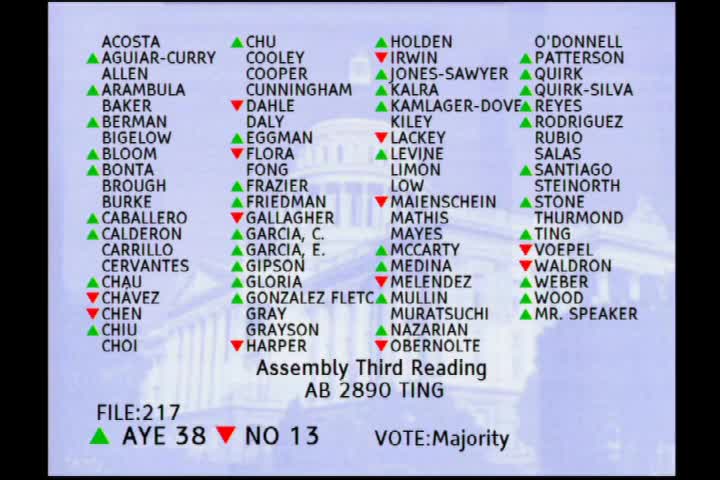
Bill Author