AB 2054: State parks.
- Session Year: 2017-2018
- House: Assembly
- Latest Version Date: 2018-09-05
(1)Under existing law, the Department of Parks and Recreation controls the state park system, which is made up of units. Existing law requires the department to administer, protect, develop, and interpret the property under its jurisdiction for the use and enjoyment of the public.
Under this bill, a person or entity that engages in any for-profit activity in connection with the reservation of any overnight accommodation in any unit of the state park system, including sales activity to reserve an overnight accommodation on behalf of a 3rd party, without permission of the department or the operator of that state park system unit, would be guilty of a misdemeanor or an infraction, punishable as specified. The bill would establish a state-mandated local program by creating a new crime. The bill would express the intent of the Legislature that the department consult with experts in the public and private sectors, as specified, on the effective implementation of this provision, and provide an annual update to the Legislature on the implementation of this provision.
(2)The California Constitution requires the state to reimburse local agencies and school districts for certain costs mandated by the state. Statutory provisions establish procedures for making that reimbursement.
This bill would provide that no reimbursement is required by this act for a specified reason.
(3)This bill would declare that it is to take effect immediately as an urgency statute.
(1)Under existing law, the Department of Parks and Recreation controls the state park system, which is made up of units. Existing law requires the department to administer, protect, develop, and interpret the property under its jurisdiction for the use and enjoyment of the public.
This bill would prohibitUnder this bill, a person or entity from engaging that engages in any for-profit activity in connection with the reservation of any overnight accommodation in any unit of the state park system, including any sales activity to reserve an overnight accommodation on behalf of a 3rd party, without receiving prior approval from the department. Under the bill, a person or entity who violates the prohibition permission of the department or the operator of that state park system unit, would be guilty of a misdemeanor or an infraction, punishable as specified. The bill would establish a state-mandated local program by creating a new crime. The bill would require the department to post notice of the prohibition on its Internet Web site and would authorize the prohibition to be enforced only after this notice has been posted on the departments Internet Web site. The bill would express the intent of the Legislature that the department consult with experts in the public and private sectors, as specified, on the effective implementation of this provision, and annually provide an annual update to the State Park and Recreation Commission Legislature on the implementation of this provision.
(2)The California Constitution requires the state to reimburse local agencies and school districts for certain costs mandated by the state. Statutory provisions establish procedures for making that reimbursement.
This bill would provide that no reimbursement is required by this act for a specified reason.
(3)This bill would declare that it is to take effect immediately as an urgency statute.
(1)Under existing law, the Department of Parks and Recreation controls the state park system, which is made up of units. Existing law requires the department to administer, protect, develop, and interpret the property under its jurisdiction for the use and enjoyment of the public.
This bill would prohibit a person or entity from engaging in any for-profit activity in connection with the use reservation of any overnight accommodation in any unit of the state park system system, including any sales activity to reserve an overnight accommodation on behalf of a 3rd party, without receiving prior approval of from the department or the governing body of the unit. The bill would make department. Under the bill, a violation of person or entity who violates the prohibition an infraction would be guilty of a misdemeanor or an infraction, punishable by a fine of not less than treble the amount of profit made directly from the violation. as specified. The bill would establish a state-mandated local program by creating a new infraction. crime. The bill would require the department to post notice of the prohibition on its Internet Web site and would authorize the prohibition to be enforced only after this notice has been posted on the departments Internet Web site. The bill would express the intent of the Legislature that the department consult with experts in the public and private sectors, as specified, on the effective implementation of this provision, and annually update the State Park and Recreation Commission on the implementation of this provision.
(2)The California Constitution requires the state to reimburse local agencies and school districts for certain costs mandated by the state. Statutory provisions establish procedures for making that reimbursement.
This bill would provide that no reimbursement is required by this act for a specified reason.
(3)This bill would declare that it is to take effect immediately as an urgency statute.
(1)Under existing law, the Department of Parks and Recreation controls the state park system, which is made up of units. Existing law requires the department to administer, protect, develop, and interpret the property under its jurisdiction for the use and enjoyment of the public.
This bill would prohibit a person from engaging in any for-profit activity in connection with the use of any unit of the state park system without receiving prior approval of the department or the governing body of the unit. The bill would make a violation of the prohibition an infraction punishable by a fine of not less than treble the amount of profit made directly from the violation. The bill would establish a state-mandated local program by creating a new infraction. The bill would require the department to post notice of the prohibition on its Internet Web site and would authorize the prohibition to be enforced only after this notice has been posted on the departments Internet Web site.
The(2)The California Constitution requires the state to reimburse local agencies and school districts for certain costs mandated by the state. Statutory provisions establish procedures for making that reimbursement.
This bill would provide that no reimbursement is required by this act for a specified reason.
(3)This bill would declare that it is to take effect immediately as an urgency statute.
Under existing law, the Department of Parks and Recreation controls the state park system, which is made up of units. Existing law requires the department to administer, protect, develop, and interpret the property under its jurisdiction for the use and enjoyment of the public.
This bill would prohibit a person from engaging in any for-profit activity in connection with the use of any unit of the state park system without receiving prior approval of the department or the governing body of the unit. The bill would make a violation of the prohibition an infraction punishable by a fine of not less than treble the amount of profit made directly from the violation. The bill would establish a state-mandated local program by creating a new infraction. The bill would require the department to post notice of the prohibition on its Internet Web site and would authorize the prohibition to be enforced only after this notice has been posted on the departments Internet Web site.
The California Constitution requires the state to reimburse local agencies and school districts for certain costs mandated by the state. Statutory provisions establish procedures for making that reimbursement.
This bill would provide that no reimbursement is required by this act for a specified reason.
Existing law requires the Department of Food and Agriculture to implement and administer various programs to control and eradicate agricultural pests in the state.This bill would require the Invasive Species Council of California and the California Invasive Species Advisory Committee to coordinate with state and local public agencies, as specified, and stakeholder groups to develop a plan for the cure or suppression of diseases associated with the spread of invasive shot hole borers, including, but not limited to, Polyphagous and Kuroshio shot hole borers. The bill would authorize the department, upon completion of the plan, and subject to the availability of appropriations, to support efforts of state and local agencies, California Native American tribes, and nonprofit organizations to cure or suppress those diseases by means including, but not limited to, grants to support research, as specified, or suppression or cure efforts. The bill would prohibit state funds from being awarded to a local agency, California Native American tribe, or nonprofit organization pursuant to these provisions unless the local agency, California Native American tribe, or nonprofit organization contributes matching funds, except as provided.Existing law requires the Department of Food and Agriculture to implement and administer various programs to control and eradicate agricultural pests in the state.
This bill would require the Invasive Species Council of California and the California Invasive Species Advisory Committee to coordinate with state and local public agencies, as specified, and stakeholder groups to develop a plan for the cure or suppression of diseases associated with the spread of the invasive shot hole borers, including, but not limited to, Polyphagous and Kuroshio shot hole borers. The bill would authorize the department, upon completion of the plan, and subject to the availability of appropriations, to support efforts of state and local efforts agencies, California Native American tribes, and nonprofit organizations to cure or suppress those diseases by means including, but not limited to, research and grants. grants to support research, as specified, or suppression or cure efforts. The bill would prohibit state funds from being awarded to a local agency agency, California Native American tribe, or nonprofit organization pursuant to these provisions unless the local agency agency, California Native American tribe, or nonprofit organization contributes matching funds. funds, except as provided.
Existing law requires the Department of Food and Agriculture to implement and administer various programs to control and eradicate agricultural pests in the state.
This bill would require the Invasive Species Council of California and the California Invasive Species Advisory Committee to coordinate with state and local public agencies agencies, as specified, and stakeholder groups to develop a plan for the cure or suppression of diseases associated with the spread of the Polyphagous and Kuroshio shot hole borers. The bill would authorize the department, upon completion of the plan, and subject to the availability of appropriations, to support state and local efforts to cure or suppress those diseases by means including, but not limited to, research and grants. The bill would prohibit state funds from being awarded to a local agency pursuant to these provisions unless the local agency contributes matching funds.
Existing law requires the Department of Food and Agriculture to implement and administer various programs to control and eradicate agricultural pests in the state.
This bill would require the Invasive Species Council of California and the California Invasive Species Advisory Committee to coordinate with state and local public agencies and stakeholder groups to develop a plan for the cure or suppression of diseases associated with the spread of the Polyphagous and Kuroshio shot hole borers. The bill would authorize the department, upon completion of the plan, and subject to the availability of appropriations, to support state and local efforts to cure or suppress those diseases by means including, but not limited to, research and grants. The bill would prohibit state funds from being awarded to a local agency pursuant to these provisions unless the local agency contributes matching funds.
(a)All fees, rents, and other returns for the use of any state park system area are the property of the state or the public agency operating a state park system area pursuant to an agreement entered into pursuant to Article 2 (commencing with Section 5080.30) of Chapter 1.2. However, whenever significant savings can be achieved by the department or the operating public agency, the department or the public agency may enter into a contract with a concessionaire, lessee, or other natural person, corporation, partnership, or association for the collection of fees, rents, or other returns on behalf of the state or the public agency. The contract may provide for the retention of a portion of any fee, rent, or other return as reimbursement for the cost of collection.
(b)Whenever significant savings can be achieved, the department may enter into a contract with any natural person, corporation, partnership, or association for the operation of a reservation system for the state park system and for the collection of state park fees in connection therewith. The contract may provide for the retention of a portion of every fee or the imposition of a surcharge as reimbursement for the cost of providing that service.
(c)(1)Any person or entity that engages in any for-profit activity in connection with the reservation of any overnight accommodation in any unit of the state park system, including sales activity to reserve an overnight accommodation on behalf of a third party, without permission of the department or the operator of that state park system unit, is guilty of either a misdemeanor or an infraction, punishable as follows:
(A)For a misdemeanor, by imprisonment in the county jail not exceeding 90 days, or by a fine not exceeding one thousand dollars ($1,000), or by both that fine and imprisonment, for each violation.
(B)For an infraction, by a fine not exceeding one thousand dollars ($1,000) for each violation.
(2)It is the intent of the Legislature that the department consult with all appropriate experts in the public and private sectors, including experts on information technology, to determine how to effectively identify violations of this subdivision and enforce this subdivision.
(3)It is the intent of the Legislature that the department provide an annual update on the implementation of this subdivision to the Legislature.
(4)This subdivision does not prohibit a person or entity from transferring or reselling, at purchase price, or receiving a refund for, a reservation made by that person or entity in good faith, pursuant to applicable departmental guidelines.
SEC. 2.No reimbursement is required by this act pursuant to Section 6 of Article XIIIB of the California Constitution because the only costs that may be incurred by a local agency or school district will be incurred because this act creates a new crime or infraction, eliminates a crime or infraction, or changes the penalty for a crime or infraction, within the meaning of Section 17556 of the Government Code, or changes the definition of a crime within the meaning of Section 6 of Article XIIIB of the California Constitution.
SEC. 3.This act is an urgency statute necessary for the immediate preservation of the public peace, health, or safety within the meaning of Article IV of the California Constitution and shall go into immediate effect. The facts constituting the necessity are:
In order to protect units of the state park system from disruptive uses as soon as possible, it is necessary for this act to take immediate effect.
(a)No person or entity shall engage in any for-profit activity in connection with the use reservation of any overnight accommodation in any unit of the state park system without receiving prior approval from the department or the governing body of the unit. department. This prohibition includes, but is not limited to, any includes sales activity that uses facilities or property of a unit of the state park system to complete the terms of sale or to provide a service as a result of the sale. to reserve an overnight accommodation on behalf of a third party.
(b)A person who or entity that violates this section is guilty of an infraction punishable by a fine of not less than treble the amount of profit made directly from the violation. as provided in subdivision (d) of Section 5008 for each violation. It is the intent of the Legislature that the department consult with all appropriate experts in the public and private sectors, including experts on information technology, to determine how to effectively identify violations and enforce this section.
(c)The department shall post notice of the prohibition set forth in subdivision (a) on its Internet Web site to provide notice to the public. Subdivision (a) shall be enforced only after notice of the prohibition has been posted on the departments Internet Web site.
(d)It is the intent of the Legislature that the department provide to the State Park and Recreation Commission an annual update on the implementation of this section.
(e)This section does not prohibit a person or entity from transferring or reselling, at purchase price, or receiving a refund for, a reservation made by that person or entity in good faith, pursuant to applicable departmental guidelines.
SEC. 2.No reimbursement is required by this act pursuant to Section 6 of Article XIIIB of the California Constitution because the only costs that may be incurred by a local agency or school district will be incurred because this act creates a new crime or infraction, eliminates a crime or infraction, or changes the penalty for a crime or infraction, within the meaning of Section 17556 of the Government Code, or changes the definition of a crime within the meaning of Section 6 of Article XIIIB of the California Constitution.
SEC. 3.This act is an urgency statute necessary for the immediate preservation of the public peace, health, or safety within the meaning of Article IV of the California Constitution and shall go into immediate effect. The facts constituting the necessity are:
In order to protect units of the state park system from disruptive uses as soon as possible, it is necessary for this act to take immediate effect.
(a)No person shall engage in any for-profit activity in connection with the use of any unit of the state park system without receiving prior approval from the department or the governing body of the unit. This prohibition includes, but is not limited to, any sales activity that uses facilities or property of a unit of the state park system to complete the terms of sale or to provide a service as a result of the sale.
(b)A person who violates this section is guilty of an infraction punishable by a fine of not less than treble the amount of profit made directly from the violation.
(c)The department shall post notice of the prohibition set forth in subdivision (a) on its Internet Web site to provide notice to the public. Subdivision (a) shall be enforced only after notice of the prohibition has been posted on the departments Internet Web site.
SEC. 2.No reimbursement is required by this act pursuant to Section 6 of Article XIIIB of the California Constitution because the only costs that may be incurred by a local agency or school district will be incurred because this act creates a new crime or infraction, eliminates a crime or infraction, or changes the penalty for a crime or infraction, within the meaning of Section 17556 of the Government Code, or changes the definition of a crime within the meaning of Section 6 of Article XIIIB of the California Constitution.
SEC. 3.This act is an urgency statute necessary for the immediate preservation of the public peace, health, or safety within the meaning of Article IV of the California Constitution and shall go into immediate effect. The facts constituting the necessity are:
In order to protect units of the state park system from disruptive uses as soon as possible, it is necessary for this act to take immediate effect.
(a)No person shall engage in any for-profit activity in connection with the use of any unit of the state park system without receiving prior approval from the department or the governing body of the unit. This prohibition includes, but is not limited to, any sales activity that uses property or facilities or property of a unit of the state park system to complete the terms of sale or to provide a service as a result of the sale.
(b)A person who violates this section is guilty of an infraction punishable by a fine of not less than treble the amount of profit made directly from the violation.
(c)The department shall post notice of the prohibition set forth in subdivision (a) on its Internet Web site to provide notice to the public. Subdivision (a) shall be enforced only after notice of the prohibition has been posted on the departments Internet Web site.
SEC. 2.No reimbursement is required by this act pursuant to Section 6 of Article XIIIB of the California Constitution because the only costs that may be incurred by a local agency or school district will be incurred because this act creates a new crime or infraction, eliminates a crime or infraction, or changes the penalty for a crime or infraction, within the meaning of Section 17556 of the Government Code, or changes the definition of a crime within the meaning of Section 6 of Article XIIIB of the California Constitution.
(a)No person shall engage in any for-profit activity in connection with the use of any unit of the state park system without receiving prior approval from the department or the governing body of the unit. This prohibition includes, but is not limited to, any sales activity that uses property or facilities of a unit of the state park system to complete the terms of sale or to provide a service as a result of the sale.
(b)A person who violates this section is guilty of an infraction punishable by a fine of not less than treble the amount of profit made directly from the violation.
(c)The department shall post notice of the prohibition set forth in subdivision (a) on its Internet Web site to provide notice to the public. Subdivision (a) shall be enforced only after the prohibition has been posted on the departments Internet Web site.
SEC. 2.No reimbursement is required by this act pursuant to Section 6 of Article XIIIB of the California Constitution because the only costs that may be incurred by a local agency or school district will be incurred because this act creates a new crime or infraction, eliminates a crime or infraction, or changes the penalty for a crime or infraction, within the meaning of Section 17556 of the Government Code, or changes the definition of a crime within the meaning of Section 6 of Article XIIIB of the California Constitution.
SECTION 1.Article 10 (commencing with Section 6050) is added to Chapter 9 of Part 1 of Division 4 of the Food and Agricultural Code, to read:10.Invasive Shot Hole Borers6050.(a)The Invasive Species Council of California and the California Invasive Species Advisory Committee shall coordinate with state and local public agencies, including, but not limited to, the Department of Fish and Wildlife, the Department of Food and Agriculture, and the Department of Forestry and Fire Protection, and stakeholder groups to develop a plan for the cure or suppression of diseases associated with the spread of invasive shot hole borers, including, but not limited to, Polyphagous and Kuroshio shot hole borers.(b)(1)Upon completion of the plan as required pursuant to subdivision (a), the Department of Food and Agriculture shall, subject to the availability of appropriations, support efforts of state and local agencies, California Native American tribes, and nonprofit organizations to cure or suppress the diseases affiliated with invasive shot hole borer infestation as provided in paragraph (2).(2)Support provided by the Department of Food and Agriculture pursuant to this section may include, but is not limited to, grants to state or local agencies, California Native American tribes, or nonprofit organizations to support the following:(A)Research related to the identification of infected trees and methods to prevent further infestation.(B)Suppression or cure efforts.(c)(1) Except as provided in paragraph (2), no state funds shall be awarded to a local agency, California Native American tribe, or nonprofit organization pursuant to subdivision (b) unless the local agency, California Native American tribe, or nonprofit organization has contributed matching funds in a dollar amount that is equal to the dollar amount of state funds to be awarded.(2)This subdivision shall not apply to a disadvantaged community identified pursuant to Section 39711 of the Health and Safety Code.(a)The Invasive Species Council of California and the California Invasive Species Advisory Committee shall coordinate with state and local public agencies, including, but not limited to, the Department of Fish and Wildlife, the Department of Food and Agriculture, and the Department of Forestry and Fire Protection (CAL-FIRE) Protection, and stakeholder groups to develop a plan for the cure or suppression of diseases associated with the spread of the invasive shot hole borers, including, but not limited to, Polyphagous and Kuroshio shot hole borers.
(b)(1)Upon completion of the plan as required pursuant to subdivision (a), the Department of Food and Agriculture shall, subject to the availability of appropriations, support efforts of state and local efforts agencies, California Native American tribes, and nonprofit organizations to cure or suppress the diseases affiliated with the Polyphagous and Kuroshio invasive shot hole borer infestation as provided in paragraph (2).
(2)Support provided by the department Department of Food and Agriculture pursuant to this section may include, but is not limited to, the following: grants to state or local agencies, California Native American tribes, or nonprofit organizations to support the following:
(A)Research related to the identification of infected trees and methods to prevent further infestation.
(B)Grants to local agencies to support suppression Suppression or cure efforts.
(c)No (1) Except as provided in paragraph (2), no state funds shall be awarded to a local agency a local agency, California Native American tribe, or nonprofit organization pursuant to subdivision (b) unless the local agency local agency, California Native American tribe, or nonprofit organization has contributed from local resources matching funds in a dollar amount that is equal to the dollar amount of state funds to be awarded.
(2)This subdivision shall not apply to a disadvantaged community identified pursuant to Section 39711 of the Health and Safety Code.
(a)The Invasive Species Council of California and the California Invasive Species Advisory Committee shall coordinate with state and local public agencies agencies, including, but not limited to, the Department of Fish and Wildlife, the Department of Food and Agriculture, and the Department of Forestry and Fire Protection (CAL-FIRE) and stakeholder groups to develop a plan for the cure or suppression of diseases associated with the spread of the Polyphagous and Kuroshio shot hole borers.
(b)(1)Upon completion of the plan as required pursuant to subdivision (a), the department Department of Food and Agriculture shall, subject to the availability of appropriations, support state and local efforts to cure or suppress the diseases affiliated with the Polyphagous and Kuroshio shot hole borer infestation as provided in paragraph (2).
(2)Support provided by the department pursuant to this section may include, but is not limited to, the following:
(A)Research related to the identification of infected trees and methods to prevent further infestation.
(B)Grants to local agencies to support suppression or cure efforts.
(c)No state funds shall be awarded to a local agency pursuant to subdivision (b) unless the local agency has contributed from local resources a dollar amount that is equal to the dollar amount of state funds to be awarded.
(a)The Invasive Species Council of California and the California Invasive Species Advisory Committee shall coordinate with state and local public agencies and stakeholder groups to develop a plan for the cure or suppression of diseases associated with the spread of the Polyphagous and Kuroshio shot hole borers.
(b)(1)Upon completion of the plan as required pursuant to subdivision (a), the department shall, subject to the availability of appropriations, support state and local efforts to cure or suppress the diseases affiliated with the Polyphagous and Kuroshio shot hole borer infestation as provided in paragraph (2).
(2)Support provided by the department pursuant to this section may include, but is not limited to, the following:
(A)Research related to the identification of infected trees and methods to prevent further infestation.
(B)Grants to local agencies to support suppression or cure efforts.
(c)No state funds shall be awarded to a local agency pursuant to subdivision (b) unless the local agency has contributed from local resources a dollar amount that is equal to the dollar amount of state funds to be awarded.
|
Date
|
Status
|
|---|---|
| Sep 29, 2018 | Vetoed by Governor. |
| Sep 12, 2018 | Enrolled and presented to the Governor at 12 p.m. |
| Aug 31, 2018 | In Assembly. Concurrence in Senate amendments pending. |
| Aug 31, 2018 | Read third time. Urgency clause adopted. Passed. Ordered to the Assembly. |
| Aug 27, 2018 | Read second time. Ordered to third reading. |
| Aug 24, 2018 | Read third time and amended. Ordered to second reading. |
| Aug 22, 2018 | Ordered to third reading. |
| Aug 21, 2018 | Ordered to special consent calendar. |
| Aug 17, 2018 | From committee: Do pass. (Ayes 7. Noes 0.) (August 16). |
| Aug 16, 2018 | In committee: Referred to APPR. suspense file. |
| Aug 15, 2018 | Read second time and amended. Re-referred to Com. on APPR. |
| Aug 14, 2018 | From committee: Amend, and do pass as amended and re-refer to Com. on APPR. (Ayes 9. Noes 0.) (August 14). |
| Aug 8, 2018 | Re-referred to Com. on N.R. & W. |
| Aug 6, 2018 | From committee chair, with author's amendments: Amend, and re-refer to committee. Read second time, amended, and re-referred to Com. on RLS. |
| Jul 5, 2018 | From committee chair, with author's amendments: Amend, and re-refer to committee. Read second time, amended, and re-referred to Com. on RLS. |
| Jul 2, 2018 | Withdrawn from committee. |
| Jun 28, 2018 | In committee: Set, first hearing. Hearing canceled at the request of author. |
| Jun 28, 2018 | From committee chair, with author's amendments: Amend, and re-refer to committee. Read second time, amended, and re-referred to Com. on APPR. |
| Jun 19, 2018 | From committee: Do pass and re-refer to Com. on APPR. (Ayes 4. Noes 0.) (June 19). Re-referred to Com. on APPR. |
| Jun 11, 2018 | From committee chair, with author's amendments: Amend, and re-refer to committee. Read second time, amended, and re-referred to Com. on AGRI. |
| Jun 7, 2018 | Referred to Com. on AGRI. |
| May 30, 2018 | In Senate. Read first time. To Com. on RLS. for assignment. |
| May 29, 2018 | Read third time. Passed. Ordered to the Senate. |
| May 25, 2018 | From committee: Do pass. (Ayes 16. Noes 0.) (May 25). |
| Apr 25, 2018 | In committee: Set, first hearing. Referred to APPR. suspense file. |
| Apr 12, 2018 | From committee: Do pass and re-refer to Com. on APPR. with recommendation: To Consent Calendar. (Ayes 10. Noes 0.) (April 11). Re-referred to Com. on APPR. |
| Mar 19, 2018 | In committee: Hearing postponed by committee. |
| Mar 7, 2018 | Re-referred to Com. on AGRI. |
| Mar 6, 2018 | From committee chair, with author's amendments: Amend, and re-refer to Com. on AGRI. Read second time and amended. |
| Feb 16, 2018 | Referred to Com. on AGRI. |
| Feb 7, 2018 | From printer. May be heard in committee March 9. |
| Feb 6, 2018 | Read first time. To print. |
|
Date
|
Description
|
Location
|
Votes
|
|
|---|---|---|---|---|
| Aug 31, 2018 | AB 2054 Gonzalez Fletcher Concurrence - Urgency Added | Assembly Floor |
Passed |
|
| Aug 31, 2018 | Assembly 3rd Reading AB2054 Gonzalez Fletcher et al. By McGuire Urgency Clause | Senate Floor |
Passed |
|
| Aug 31, 2018 | With recommendation: That Senate amendments be concurred in. | Assembly Standing Committee on Water, Parks, and Wildlife |
Passed |
|
| Aug 16, 2018 | Do pass | Senate Standing Committee on Appropriations |
Passed |
|
| Aug 16, 2018 | Placed on suspense file | Senate Standing Committee on Appropriations |
Passed |
|
| Aug 14, 2018 | Do pass as amended, but first amend, and re-refer to the Committee on [Appropriations] | Senate Standing Committee on Natural Resources and Water |
Passed |
|
| Jun 19, 2018 | Do pass, but first be re-referred to the Committee on [Appropriations] | Senate Standing Committee on Agriculture |
Passed |
|
| May 29, 2018 | AB 2054 GONZALEZ FLETCHER Assembly Third Reading | Assembly Floor |
Passed |
|
| May 25, 2018 | Do pass. | Assembly Standing Committee on Appropriations |
Passed |
|
| Apr 11, 2018 | Do pass and be re-referred to the Committee on [Appropriations] with recommendation: To Consent Calendar | Assembly Standing Committee on Agriculture |
Passed |
This list shows positions taken on this bill by organizations on the date displayed, which is linked to the original source.
Positions by individuals are not included.
GOVERNOR'S VETO
GV Bill Id:AB 2054
Author:(Gonzalez Fletcher)
As Enrolled Ver:September 12, 2018
2/3 vote
ASSEMBLY: |
| (May 29, 2018) | SENATE: | 38-0 | (August 31, 2018) |
(vote not relevant)
COMMITTEE VOTE: | 11-0 | (August 31, 2018) | RECOMMENDATION: | concur |
(W., P., & W.)
ASSEMBLY: | 77-0 | (August 31, 2018) |
|
|
|
Original Committee Reference: AGRI.
SUMMARY: This bill would prohibit any person or entity from using the state park reservation system for any for-profit activity without receiving prior approval from the Department of Parks and Recreation (DPR). Specifically, this bill would:
- Prohibit any person or entity from engaging in any for-profit activity in connection with the reservation of any overnight accommodation in the state park system without permission of the DPR. Violators may be charged with a misdemeanor or an infraction per each violation with a maximum penalty of $1000 per violation.
- Declare legislative intent that the DPR shall consult with appropriate experts regarding the most effective way to identify violators and enforce this section.
- Declare legislative intent that the DPR shall report to the California Parks and Recreation Commission annually regarding the implementation of this section.
- Provide that this section does not prohibit the transfer or reselling or obtaining a refund by a person or entity acting in good faith if they follow applicable department guidelines.
The Senate amendments remove the original contents of the bill entirely and replace with the current version of the bill relating to the DPR reservation system.
EXISTING LAW:
- Establishes the DPR which provides reservation services to the public for campsites and other facilities throughout the system of nearly 280 state parks. The DPR manages 14,270 campsites serving 6.5 million visitors per year.
- Allows the DPR to contract with an outside vendor to provide for a comprehensive reservation system for campsites and facilities.
- Title 14 of the California Code of Regulations 4331 states that campsites cannot be sold or resold in any unit, except as permitted by the DPR.
FISCAL EFFECT: According to the Senate Appropriations Committee:
- Unknown costs, likely in the low hundreds of thousand dollars (General Fund or the State Parks and Recreation Fund), for the DPR to consult with all appropriate experts in the public and private sectors, including experts on information technology, to determine how to identify violations and enforce this section.
- Unknown potential costs, possibly up to the low hundreds of thousands of dollars, for the DPR to implement any recommended changes to its reservation system.
- Unknown penalty revenue from violations of this section.
COMMENTS: The Department of Parks and Recreation (State Parks) provides reservation services to the public for campsites and other facilities throughout the system of nearly 280 state parks, which includes roughly 14,270 campsites and serves about 6.5 million visitors per year.
Campsites at State Parks can be difficult to come by, especially in high-demand areas like the coast. In response, the after-market resale of campsite reservations—when the original buyer sells them to a third party for a marked up price—has increased over the years. This problem has been exacerbated by the rise of "bots"—automated computer programs that can scrape websites for open reservations and purchase all of them in less than a matter of seconds. Scalpers will often use bots to gain several reservations as soon as they are opened to the public, which means some campsites are unavailable to ordinary users almost immediately, and then turn around and resell the reservations at a much higher price.
State Parks has recently switched vendors for its online reservation system, which some stakeholders believe has vulnerabilities that have allowed bots to purchase large quantities of reservations and made it difficult for the public to access state parks.
Is Using a Bot to Reserve a Campsite Illegal? New language on the campsite reservation website states reservations are for personal use only and can be canceled if State Parks suspects resale or transfer. State Parks is also limiting the number of times people can modify their reservations, and expects to have guidelines in place by the end of the summer. Specifically, Title 14 of the California Code of Regulations 4331 states that campsites cannot be sold or resold in any unit, except as permitted by State Parks. This includes sale activities which encroach on the sales rights of a vendor authorized to sell such products, or services pursuant to a concession agreement with the department. However, this regulation does not include consequences for actions. One might ask, what about travel agents? Travel agents may reserve multiple websites for third-party clients as part of a tour package. The difference is that these are allowed with prior permission from State Parks who monitors their activities directly.
How Do State Parks and Others Catch Bots? Most websites clearly state whether or not the use of bots is allowed. In many cases, the systems require users to certify they are not a bot by selecting among pictures in a program—using a CAPTCHA (Completely Automated Public Turing Test to tell Computers and Humans Apart) —a program or system intended to distinguish human from machine input, typically as a way of thwarting spam and automated extraction of data from websites. For example, a user might be shown a series of pictures and have to identify whether or not a specific image (say a house) is in the images. Other models are used for otherwise impaired visitors. Some companies monitor websites and when a specific reservation is made (say for a popular website) faster than is possible by a human, they flag the IP (Internet Protocol) address for investigation.
Currently, a reservation may be subject to cancellation by State Parks if one uses a bot to make a reservation. This bill would go further, and allow State Parks to impose a fine on violators, which could compliment the actions already taken.
This bill would make it unlawful for any person to use the state park reservation system to buy reservations and resell them without approval from the Department of Parks and Recreation.
When the Department first launched its online reservation system, it did not anticipate that internet bots would buy reservations in bulk and resell them at higher prices. Since the launch, the Department has added software to prevent internet bots from accessing reservations and staff continually monitors the site for unusual activity. I do not believe a new crime is needed for a problem that has been solved.
Analysis Prepared by: Catherine Freeman / W., P., & W. / (916) 319-2096 FN: 0005339
CONCURRENCE IN SENATE AMENDMENTS
CSA2 Bill Id:AB 2054
Author:(Gonzalez Fletcher)
As Amended Ver:August 24, 2018
2/3 vote. Urgency
ASSEMBLY: |
| (May 29, 2018) | SENATE: | 38-0 | (August 31, 2018) |
(vote not relevant)
COMMITTEE VOTE: | 11-0 | (August 31, 2018) | RECOMMENDATION: | concur |
(W., P., & W.)
Original Committee Reference: AGRI.
SUMMARY: This bill would prohibit any person or entity from using the state park reservation system for any for-profit activity without receiving prior approval from the Department of Parks and Recreation (DPR). Specifically, this bill would:
- Prohibit any person or entity from engaging in any for-profit activity in connection with the reservation of any overnight accommodation in the state park system without permission of the DPR. Violators may be charged with a misdemeanor or an infraction per each violation with a maximum penalty of $1000 per violation.
- Declare legislative intent that the DPR shall consult with appropriate experts regarding the most effective way to identify violators and enforce this section.
- Declare legislative intent that the DPR shall report to the California Parks and Recreation Commission annually regarding the implementation of this section.
- Provide that this section does not prohibit the transfer or reselling or obtaining a refund by a person or entity acting in good faith if they follow applicable department guidelines.
The Senate amendments remove the original contents of the bill entirely and replace with the current version of the bill relating to the DPR reservation system.
EXISTING LAW:
- Establishes the DPR which provides reservation services to the public for campsites and other facilities throughout the system of nearly 280 state parks. The DPR manages 14,270 campsites serving 6.5 million visitors per year.
- Allows the DPR to contract with an outside vendor to provide for a comprehensive reservation system for campsites and facilities.
- Title 14 of the California Code of Regulations 4331 states that campsites cannot be sold or resold in any unit, except as permitted by the DPR.
FISCAL EFFECT: According to the Senate Appropriations Committee:
- Unknown costs, likely in the low hundreds of thousand dollars (General Fund or the State Parks and Recreation Fund), for the DPR to consult with all appropriate experts in the public and private sectors, including experts on information technology, to determine how to identify violations and enforce this section.
- Unknown potential costs, possibly up to the low hundreds of thousands of dollars, for the DPR to implement any recommended changes to its reservation system.
- Unknown penalty revenue from violations of this section.
COMMENTS: The Department of Parks and Recreation (State Parks) provides reservation services to the public for campsites and other facilities throughout the system of nearly 280 state parks, which includes roughly 14,270 campsites and serves about 6.5 million visitors per year.
Campsites at State Parks can be difficult to come by, especially in high-demand areas like the coast. In response, the after-market resale of campsite reservations—when the original buyer sells them to a third party for a marked up price—has increased over the years. This problem has been exacerbated by the rise of "bots"—automated computer programs that can scrape websites for open reservations and purchase all of them in less than a matter of seconds. Scalpers will often use bots to gain several reservations as soon as they are opened to the public, which means some campsites are unavailable to ordinary users almost immediately, and then turn around and resell the reservations at a much higher price.
State Parks has recently switched vendors for its online reservation system, which some stakeholders believe has vulnerabilities that have allowed bots to purchase large quantities of reservations and made it difficult for the public to access state parks.
Is Using a Bot to Reserve a Campsite Illegal? New language on the campsite reservation website states reservations are for personal use only and can be canceled if State Parks suspects resale or transfer. State Parks is also limiting the number of times people can modify their reservations, and expects to have guidelines in place by the end of the summer. Specifically, Title 14 of the California Code of Regulations Section4331 states that campsites cannot be sold or resold in any unit, except as permitted by State Parks. This includes sale activities which encroach on the sales rights of a vendor authorized to sell such products, or services pursuant to a concession agreement with the department. However, this regulation does not include consequences for actions. One might ask, what about travel agents? Travel agents may reserve multiple websites for third-party clients as part of a tour package. The difference is that these are allowed with prior permission from State Parks who monitors their activities directly.
How Do State Parks and Others Catch Bots? Most websites clearly state whether or not the use of bots is allowed. In many cases, the systems require users to certify they are not a bot by selecting among pictures in a program—using a CAPTCHA (Completely Automated Public Turing Test to tell Computers and Humans Apart) —a program or system intended to distinguish human from machine input, typically as a way of thwarting spam and automated extraction of data from websites. For example, a user might be shown a series of pictures and have to identify whether or not a specific image (say a house) is in the images. Other models are used for otherwise impaired visitors. Some companies monitor websites and when a specific reservation is made (say for a popular website) faster than is possible by a human, they flag the IP (Internet Protocol) address for investigation.
Currently, a reservation may be subject to cancellation by State Parks if one uses a bot to make a reservation. This bill would go further, and allow State Parks to impose a fine on violators, which could compliment the actions already taken.
Analysis Prepared by: Catherine Freeman / W., P., & W. / (916) 319-2096 FN: 0005224
Office of Senate Floor Analyses (916) 651-1520 Fax: (916) 327-4478 | AB |
THIRD READING
Bill No: AB 2054
Amended: 8/24/18 in Senate
PRIOR VOTES NOT RELEVANT
SENATE NATURAL RES. & WATER COMMITTEE: 9-0, 8/14/18
AYES: Hertzberg, Stone, Allen, Hueso, Jackson, McGuire, Monning, Stern, Vidak
SENATE APPROPRIATIONS COMMITTEE: 7-0, 8/16/18
AYES: Portantino, Bates, Beall, Bradford, Hill, Nielsen, Wiener
DIGEST:
This bill prohibits any person or entity from using the state park reservation system for any for-profit activity without receiving approval from the Department of Parks and Recreation (DPR).
Senate Floor Amendments of 8/24/18 move the bill into another section of the Public Resources Code dealing with authorized financial transactions involving the DPR.
ANALYSIS: Existing law establishes DPR which provides reservation services to the public for campsites and other facilities throughout the system of nearly 280 state parks. DPR manages 14,270 campsites serving 6.5 million visitors per year.
This bill:
- Prohibits any person or entity from engaging in any for-profit activity in connection with the reservation of any overnight accommodation in the state park system without the approval of DPR.
- Provides possible penalties of a misdemeanor or an infraction per each violation with a maximum penalty of $1,000 per violation.
- Declares legislative intent that DPR shall consult with appropriate experts regarding the most effective way to identify violators and enforce this bill.
- Requires DPR to post notice of this prohibition on its Web site.
- Requires that notice to be posted before this section is enforced.
- Declares legislative intent that DPR shall report to the California Parks and Recreation Commission annually regarding the implementation of this bill.
- Provides that this bill does not prohibit the transfer or reselling or obtaining a refund by a person or entity acting in good faith who is following applicable department guidelines.
Background
DPR has recently switched vendors of the reservation system. Some unscrupulous sales efforts from cyberspace have made it difficult for bona fide purchasers from the public to obtain reservations because all reservations have been purchased by invisible third party “bots.” In addition, these bots charge more for the re-sold reservations than does DPR, thereby frustrating the intent of making reservations easier to get and affordable for the public.
DPR has already taken some steps to address bots and try to ensure that reservations are made for personal use. For example, after complaints from visitors, DPR recently revised some of its rules.
Its online reservation system now uses CAPTCHA system to detect third-party software trying to snap up open spots. New language on the Web site states reservations are for personal use only and can be canceled if DPR suspects resale or transfer. DPR is also limiting the number of times people can modify their reservations, and expects to have guidelines in place by the end of the summer.
However, this bill goes further, and allows DPR to impose penalties on violators, which could complement the actions already taken by DPR.
FISCAL EFFECT: Appropriation: Fiscal Com.: Local:
According to Senate Appropriations Committee:
- Unknown costs, likely in the low hundreds of thousand dollars (General Fund or the State Parks and Recreation Fund), for DPR to consult with all appropriate experts in the public and private sectors, including experts on information technology, to determine how to identify violations and enforce this bill.
- Unknown potential costs, possibly up to the low hundreds of thousands of dollars, for DPR to implement any recommended changes to its reservation system.
- Unknown penalty revenue from violations of this bill.
Audubon California
Azul
California State Parks Foundation
Latino Outdoors
OPPOSITION: (Verified 8/25/18)
None received
ARGUMENTS IN SUPPORT: According to the author, the bots operate without authority from the department, frustrate the goal of making campsites affordable to the public, and give an unfair advantage to people willing to pay a steeper price. The author acknowledges that enforcement can be difficult because the bots use multiple accounts and identities. Companies/bots do not face any real penalties for these violations.
8/27/18 19:32:30
**** END ****
Office of Senate Floor Analyses (916) 651-1520 Fax: (916) 327-4478 | AB |
THIRD READING
Bill No: AB 2054
:
PRIOR VOTES NOT RELEVANT
SENATE NATURAL RES. & WATER COMMITTEE: 9-0, 8/14/18
AYES: Hertzberg, Stone, Allen, Hueso, Jackson, McGuire, Monning, Stern, Vidak
SENATE APPROPRIATIONS COMMITTEE: 7-0, 8/16/18
AYES: Portantino, Bates, Beall, Bradford, Hill, Nielsen, Wiener
DIGEST:
This bill prohibits any person or entity from using the state park reservation system for any for-profit activity without receiving approval from the Department of Parks and Recreation (DPR).
ANALYSIS: Existing law establishes DPR which provides reservation services to the public for campsites and other facilities throughout the system of nearly 280 state parks. DPR manages 14,270 campsites serving 6.5 million visitors per year.
This bill:
- Prohibits any person or entity from engaging in any for-profit activity in connection with the reservation of any overnight accommodation in the state park system without the approval of DPR.
- Provides possible penalties of a misdemeanor or an infraction per each violation with a maximum penalty of $1,000 per violation.
- Declares legislative intent that DPR shall consult with appropriate experts regarding the most effective way to identify violators and enforce this bill.
- Requires DPR to post notice of this prohibition on its Web site.
- Requires that notice to be posted before this section is enforced.
- Declares legislative intent that DPR shall report to the California Parks and Recreation Commission annually regarding the implementation of this section.
- Provides that this bill does not prohibit the transfer or reselling or obtaining a refund by a person or entity acting in good faith who is following applicable department guidelines.
Background
DPR has recently switched vendors of the reservation system. Some unscrupulous sales efforts from cyberspace have made it difficult for bona fide purchasers from the public to obtain reservations because all reservations have been purchased by invisible third party “bots.” In addition, these bots charge more for the re-sold reservations than does DPR, thereby frustrating the intent of making reservations easier to get and affordable for the public
DPR has already taken some steps to address bots and try to ensure that reservations are made for personal use. For example, after complaints from visitors, DPR recently revised some of its rules.
Its online reservation system now uses CAPTCHA system to detect third-party software trying to snap up open spots. New language on the Web site states reservations are for personal use only and can be canceled if DPR suspects resale or transfer. DPR is also limiting the number of times people can modify their reservations, and expects to have guidelines in place by the end of the summer.
However, this bill goes further, and allows DPR to impose a fine on violators, which could complement the actions already taken by DPR.
FISCAL EFFECT: Appropriation: Fiscal Com.: Local:
According to Senate Appropriations Committee:
- Unknown costs, likely in the low hundreds of thousand dollars (General Fund or the State Parks and Recreation Fund), for DPR to consult with all appropriate experts in the public and private sectors, including experts on information technology, to determine how to identify violations and enforce this bill.
- Unknown potential costs, possibly up to the low hundreds of thousands of dollars, for DPR to implement any recommended changes to its reservation system.
- Unknown penalty revenue from violations of this bill.
Audubon California
Azul
California State Parks Foundation
Latino Outdoors
OPPOSITION: (Verified 8/16/18)
None received
ARGUMENTS IN SUPPORT: According to the author, the bots operate without authority from the department, frustrate the goal of making campsites affordable to the public, and give an unfair advantage to people willing to pay a steeper price. The author acknowledges that enforcement can be difficult because the bots use multiple accounts and identities. Companies/bots do not face any real penalties for these violations.
8/18/18 17:09:10
**** END ****
SENATE COMMITTEE ON
Senator Anthony Portantino, Chair
2017 - 2018 Regular Session
AB 2054 (Gonzalez Fletcher) - State parks
Version: | Policy Vote: |
Urgency: | Mandate: |
Hearing Date: | Consultant: |
This bill meets the criteria for referral to the Suspense File.
Bill Summary:
This bill would prohibit any person or entity from using the state park reservation system for any for-profit activity without receiving approval from the Department of Parks and Recreation (DPR).
Fiscal Impact:
- Unknown costs, likely in the low hundreds of thousand dollars (General Fund or the State Parks and Recreation Fund), for DPR to consult with all appropriate experts in the public and private sectors, including experts on information technology, to determine how to identify violations and enforce this section.
- Unknown potential costs, possibly up to the low hundreds of thousands of dollars, for DPR to implement any recommended changes to its reservation system.
- Unknown penalty revenue from violations of this section.
Background:
DPR provides reservation services to the public for campsites and other facilities throughout the system of nearly 280 state parks, which includes roughly 14,270 campsites and serves about 6.5 million visitors per year.
Campsites at California State Parks can be difficult to come by, especially in high-demand areas like the coast. In response, the “scalping” of campsite reservations—when the original buyer sells them to a third party for a marked up price—has increased over the years. This problem has been exacerbated by the rise of “bots”—automated computer programs that can scrape websites for open reservations and purchase all of them in less than a matter of seconds. Scalpers will often use bots to gain several reservations as soon as they are opened to the public, which means some campsites are unavailable to ordinary users almost immediately, and then turn around and resell the reservations at a much higher price.
DPR has recently switched vendors for its online reservation system, which some stakeholders believe has vulnerabilities that have allowed bots to purchase large quantities of reservations and made it difficult for the public to access state parks.
Proposed Law:
This bill would:
- Prohibit any person or entity from engaging in any for-profit activity in connection with the reservation of any overnight accommodation in the state park system without the approval of DPR.
- Violators may be charged with a misdemeanor or an infraction per each violation with a maximum penalty of $1,000 per violation.
- Declare legislative intent that DPR shall consult with appropriate experts regarding the most effective way to identify violators and enforce this section.
- Require DPR to post notice of this prohibition on its web site.
- Require that notice to be posted before this section is enforced.
- Declare legislative intent that DPR shall report to the California Parks and Recreation Commission annually regarding the implementation of this section.
- Provide that this section does not prohibit the transfer or reselling or obtaining a refund by a person or entity acting in good faith who is following applicable department guidelines.
Staff Comments:
DPR has already taken some steps to address bots and try to ensure that reservations are made for personal use. For example, after complaints from visitors, DPR recently revised some of its rules.
It’s online reservation system now uses CAPTCHA system to detect third-party software trying to snap up open spots. New language on the website states reservations are for personal use only and can be canceled if DPR suspects resale or transfer. DPR is also limiting the number of times people can modify their reservations, and expects to have guidelines in place by the end of the summer.
However, this bill would go further, and allow DPR to impose a fine on violators, which could compliment the actions already taken by DPR.
-- END --
SENATE COMMITTEE ON NATURAL RESOURCES AND WATER
Senator Robert Hertzberg, Chair
2017 - 2018 Regular
Bill No: AB 2054 Hearing Date: August 14, 2018
Author: | |||
Version: |
| ||
Urgency: | Fiscal: | ||
Consultant: | |||
Subject: State parks
BACKGROUND AND EXISTING LAW
- Existing law establishes the Department of Parks and Recreation (DPR) which provides reservation services to the public for campsites and other facilities throughout the system of nearly 280 state parks. DPR manages 14,270 campsites serving 6.5 million visitors per year.
- DPR has recently switched vendors of the reservation system. Some unscrupulous sales efforts from cyberspace have apparently made it difficult for bona fide purchasers from the public to obtain reservations because all reservations have been purchased by invisible third party “bot.” In addition, these bots charge more for the re-sold reservations than does DPR, thereby frustrating the intent of making reservations easier to get for the public.
PROPOSED LAW—AS PROPOSED TO BE AMENDED
This bill would:
- Prohibit any person or entity from engaging in any for-profit activity in connection with the reservation of any overnight accommodation in the state park system without the approval of DPR.
- Violators may be charged with a misdemeanor or an infraction per each violation with a maximum penalty of $1000 per violation.
- Declare legislative intent that DPR shall consult with appropriate experts regarding the most effective way to identify violators and enforce this section.
- Require DPR to post notice of this prohibition on its web site.
- Require that notice to be posted before this section is enforced.
- Declare legislative intent that DPR shall report to the California Parks and Recreation Commission annually regarding the implementation of this section.
- Provide that this section does not prohibit the transfer or reselling or obtaining a refund by a person or entity acting in good faith who is following applicable department guidelines.
ARGUMENTS IN SUPPORT
According to the author, the bots operate without authority from the department, frustrate the goal of making campsites affordable to the public, and give an unfair advantage to people willing to pay a steeper price. The author acknowledges that enforcement can be difficult because the bots use multiple accounts and identities. Companies/bots do not face any real penalties for these violations.
ARGUMENTS IN OPPOSITION
None received.
SUPPORT
Audubon California
Azul
California State Parks Foundation
Latino Outdoors
OPPOSITION
None Received
-- END --
SENATE COMMITTEE ON AGRICULTURE
Senator Cathleen Galgiani, Chair
2017 - 2018 Regular
Bill No: AB 2054 Hearing Date: 6/19/18
Author: | Gonzalez Fletcher | ||
Version: | 6/11/18 Amended | ||
Urgency: | No | Fiscal: | Yes |
Consultant: | Reichel Everhart | ||
Subject: Agricultural pests: shot hole borer beetles
SUMMARY
:
This bill establishes a framework for local and state agencies and other stakeholders to coordinate efforts to suppress and eradicate diseases associated with the spread of invasive shot hole borers, including, but not limited to, Polyphagous (PSHB) and Kuroshio (KSHB) shot hole borers.
BACKGROUND AND EXISTING LAW
:
- The Invasive Species Council of California: Chaired by the secretary of the California Department of Food and Agriculture (CDFA) and vice-chaired by the Secretary of the California Natural Resources Agency. Its members also include Secretaries from the following agencies:
- California Environmental Protection Agency
- California State Transportation Agency
- California Health and Human Services Agency
- Office of Emergency Services
The secretaries of each department or agency are the official council members. However, each secretary will designate a technical representative who carries out the day-to-day work of the council. The official council generally meets two times a year.
- The California Invasive Species Advisory Committee: The California Invasive Species Advisory Committee (CISAC) advises the Invasive Species Council of California (ISCC) on a broad array of issues related to the prevention, suppression, and eradication of invasive species, as well as minimizing the economic, ecological, and human health impacts that invasive species cause.
PROPOSED LAW
:
This bill:
- Requires the Invasive Species Council of California and the California Invasive Species Advisory Committee to coordinate with local and state agencies and stakeholder groups to limit or cure plant diseases spread by the invasive shot hole borers, PSHB and KSHB.
- Requires CDFA, upon completion of a plan of action as stated above, to support state and local agencies, California Native American tribes, and nonprofit organizations’ efforts to limit or cure plant diseases related to invasive shot hole borers, if funding is made available.
- Defines CDFA support for limiting or curing plant diseases related to invasive shot hole borers to include research related to the identification of infected trees and methods to prevent further infestation, and providing grants to local agencies to support suppression or cure efforts.
- Requires state funds awarded to local agencies to be matched by the local agency dollar for dollar.
ARGUMENTS IN SUPPORT: According to the author, boring beetles are currently prevalent in Southern California. As of 2016, Orange County Department of Parks and Recreation staff estimated the beetles had already caused $175 million in tree inventory loss. This bill would help protect California’s important native, urban, and agricultural trees from the shot hole borer beetles by beginning the process for a statewide coordinated effort of suppression and eradication.
According to Doug Johnson, Executive Director of the California Invasive Plant Council, the beetles are difficult to stop because they have no natural predators in California and pesticides and fungicides are temporary.
ARGUMENTS IN OPPOSITION: None received
COMMENTS
:
The PSHB and the KSHB are boring beetles from the group of beetles known as ambrosia beetles. They drill into trees and deposit a pathogenic fungus (Fusarium euwallacea). These beetles bore through the trees bark, creating galleries to spread the fungus throughout the tree. The female borer beetle lays her eggs in the galleries and when the eggs hatch, they eat the fungus. When the male and female borer beetle larvae develop into adults, they mate within the galleries. The females then pick up some of the fungus in their mouths and leave that tree in search of another tree, and the process begins again.
According to United States Forest Service, in December 2017 approximately 129 million trees had been killed statewide due to the PSHB and KSHB beetles.
RELATED LEGISLATION
:
AB 2470 (Grayson) of 2018, to be heard in this committee today, would establish the Invasive Species Council of California (ISCC) to help coordinate a comprehensive effort to exclude invasive species already established in the state.
PRIOR ACTIONS
:
Assembly Floor: | 78 - 0 |
Assembly Appropriations Committee: | 16 - 0 |
Assembly Agriculture Committee: | 10 - 0 |
SUPPORT
:
Audubon Starr Ranch
Big Sur Land Trust (BSLT)
Bolsa Chica Land Trust
California Association of Resource Conservation Districts (CARCD)
California Forest Pest Control (CFPC)
California Invasive Species Plant Council (CALIPC)
California ReLeaf
California Urban Forests Council (CAUFC)
California Wool Growers Association (CWGA)
County of Santa Clara
Eastern Kern County Resource Conservation District (EKCRCD)
Fire Safe Council of San Diego County
Resource Conservation District of the Santa Monica Mountains (RCDSMM)
San Diego County Farm Bureau
Sonoma County Agricultural Preservation and Open Space District
The Nature Conservancy (TNC)
The Wildlands Conservancy (TWC)
Tree San Diego
TreePeople
Willis Linn Jepson Chapter of the California Native Plant Society (CNPS)
OPPOSITION
:
None received
-- END --
ASSEMBLY THIRD READING
ATR Bill Id:AB 2054
Author:(Gonzalez Fletcher)
As Amended Ver:March 6, 2018
Majority vote
Committee | Votes | Ayes | Noes |
Agriculture | 10-0 | Caballero, Mathis, Aguiar-Curry, Flora, Gallagher, Gray, Eggman, Jones-Sawyer, Levine, Salas | |
Appropriations | 16-0 | Gonzalez Fletcher, Bigelow, Bloom, Bonta, Calderon, Carrillo, Chau, Eggman, Fong, Friedman, Gallagher, Eduardo Garcia, Nazarian, Obernolte, Quirk, Reyes |
|
SUMMARY: Requires the California Department of Food and Agriculture (CDFA), upon receiving a plan as specified and receiving funding, to support state and local efforts to limit or cure plant diseases related to Polyphagous and Kuroshio shot hole borers (PSHB). Specifically, this bill:
- Requires the Invasive Species Council of California (ISCC) and the California Invasive Species Advisory Committee (CISAC) to coordinate with state agencies, as specified, and stake holder groups to limit or cure plant diseases spread by PSHB.
- Requires CDFA, upon completion of the PSHB plan stated above, to support state and local efforts to limit or cure plant diseases related to PSHB, if funding is made available.
- Defines CDFA support in limiting or curing plant diseases related to PSHB to mean, but not be limited to, research related to the identification of infected trees and methods to prevent further infestation, and/or, grants to local agencies to support suppression or cure efforts.
- Requires state funds to local agencies to be matched by the local agency dollar for dollar.
FISCAL EFFECT: According to the Assembly Appropriations Committee, there are significant costs, likely in excess of $10 million from the General Fund (GF), for CDFA to support PSHB-related activities, and a modest one-time cost to ISCC, CISAC, and several departments from GF and special funds.
COMMENTS: PSHB is an invasive beetle that carries three fungi. PSHB tunnels into a wide variety of host trees, where it lays its eggs and grows the fungi. The fungi cause the Fusarium Dieback (FD) disease, which interrupts the transport of water and nutrients in over 35 tree species that are suitable for beetle reproduction. Once the beetle/fungal complex has killed the host tree, PSHB fly in search of a new host.
PSHB attacks a wide range of native, ornamental, and horticultural trees, and has caused severe damage in avocado groves in Israel. As of fall 2014, it’s been found to attack over 200 species of trees in the Los Angeles area. 33 tree species have been confirmed as reproductive hosts including the following native riparian species: Coast Live Oak, California Sycamore, Fremont Cottonwood, Red Willow, White Alder, and 52 species, about 57% of the most common street trees in southern California, including Box Elder, Liquid Amber, and Japanese Wisteria.
Botanists in recent years have documented insect and disease infestations as they've hop-scotched about the region, devastating Griffith Park's sycamores and destroying over 100,000 willows in San Diego County's Tijuana River Valley Regional Park, for example.
A recent survey by the United States Forest Service (USFS) found that PSHB could kill as many as 27 million trees in Los Angeles, Orange, Riverside and San Bernardino counties, including parts of the desert. This is roughly 38% of the 71 million trees in the 4,244 square mile urban region with a population of about 20 million people.
State and federal officials have been slow to respond with organized campaigns to PSHB that are ravaging the trees because CDFA, the United States Department of Agriculture (USDA), and USFS do not have direct oversight of urban forests or specified funding to combat urban pests. For example, CDFA is helping in efforts to combat Huanglongbing (HLB) and its vector, Asian citrus psyllid (ACP). HLB and ACP have devastated the citrus industry in Florida and countries outside of the United States. Currently the citrus industry is spending up to $25 million annually, in conjunction with $10 million of federal funds and around $5 million from the state.
According to the author, this bill will help protect California's important native, urban, and agricultural trees from the PHSB by beginning the process for a statewide coordinated effort. It will archive these goals by instructing ISCC and CISAC to coordinate with state and local agencies and stakeholder groups in developing a plan to cure or suppress the diseases associated with the spread of PHSB. Furthermore, this bill will set up a matching grant program to help combat the spread of PHSB and its fungal diseases.
Supporters point out that PSHB has also impacted a wide variety of tree species in urban areas, where infected trees pose public safety risks because they may fall across roads and sidewalks. In both urban and rural areas, as more trees die from the disease spread by PSHB, they become primed to easily ignite, increasing the threat of serious wildfires. Furthermore, due to the high susceptibility of avocado trees to this fungus, the uncontrolled spread of this beetle will become a significant problem for avocado farmers.
RELATED LEGISLATION:
AB 2470 (Grayson) of the current legislative session would establish the Invasive Species Council of California (ISCC) to help coordinate a comprehensive effort to exclude invasive species already established in the state.
Analysis Prepared by: Victor Francovich / AGRI. / (916) 319-2084 FN: 0003049
Date of Hearing: April 25, 2018
ASSEMBLY COMMITTEE ON APPROPRIATIONS
Lorena Gonzalez Fletcher, Chair
ABPCA Bill Id:AB 2054
Author:(Gonzalez Fletcher) – As Amended Ver:March 6, 2018
Policy Committee: | Agriculture | Vote: | 10 - 0 |
Urgency: No State Mandated Local Program: No Reimbursable: No
SUMMARY:
This bill requires the California Department of Food and Agriculture (CDFA), upon an appropriation and upon receiving a plan from the Invasive Species Council of California (ISCC) and the California Invasive Species Advisory Committee (CISAC), to support state and local efforts to limit or cure plant diseases related to the Polyphagous and Kuroshio shot hole borers (PSHB). Support efforts may include a dollar-for-dollar matching grant for local agency costs related to support or cure efforts.
FISCAL EFFECT:
- One-time modest costs for ISCC and CISAC to initiate the planning process with other state and local agencies. ISCC and CISAC currently operate through existing resources made available by CDFA and the Natural Resources Agency, and the initial planning process is not expected to generate significant new workload.
- One-time modest special fund and General Fund (GF) costs across state agencies working with ISCC and CISAC on the coordinated plan, including the Department of Fish and Wildlife and the Department of Forestry and Fire Protection (CAL FIRE).
- Significant costs, likely in excess of $10 million GF, for CDFA to support PSHB-related activities. Though the appropriate funding level will be guided by the coordinated plan developed by CISAC and ISCC, the types of fundable activities, such as research and education or matching grants to local agencies, are likely to be costly. For example:
- Adequately researching methods to prevent further PSHB infestation may require contracting with a university or college to conduct that research, which would result in significant costs in excess of $150,000.
- Orange County Parks has already spent nearly $1 million on tree survey work, training and consultation, and education and outreach. Given the extent of the PSHB’s infestation, it can be expected that other local agencies will face similar costs in future years.
COMMENTS:
- Background. The PSHB is an invasive beetle that carries fungi that cause the Fusarium Dieback disease. This disease interrupts the transport of water and nutrients in over 35 tree species. A recent survey by the United States Forest Service found that PSHB could kill as many as 27 million trees in Los Angeles, Orange, Riverside, and San Bernardino counties, and more than 100,000 willows in San Diego County’s Tijuana River Valley Regional Park have been destroyed.
- State response. As the Assembly Committee on Agriculture’s analysis notes, state and federal officials have been slow to respond with an organized campaign to PSHB because CDFA, the United States Department of Agriculture, and the United States Forest Service do not have direct oversight of urban forests or specified funding to combat urban pests.
- Purpose. According to the author, AB 2054 will help protect California’s native, urban, and agricultural trees from PSHB by beginning the process for a statewide coordinated effort. Supporters of the bill note that because PSHB has affected a wide variety of trees in urban areas, and this poses a public safety risk because trees may fall across roads and sidewalks.
- Retroactivity. As drafted, AB 2054 could result in matching funds to local agencies for money already spent. In order to support and encourage future local agency efforts to address PSHB-related issues, AB 2054 should be amended to clarify that matching funds will not apply retroactively.
Analysis Prepared by: Luke Reidenbach / APPR. / (916) 319-2081
Date of Hearing: April 11, 2018
ASSEMBLY COMMITTEE ON AGRICULTURE
Anna Caballero, Chair
ABPCA Bill Id:AB 2054
Author:(Gonzalez Fletcher) – As Amended Ver:March 6, 2018
SUBJECT: Agricultural pests: shot hole borer beetles.
SUMMARY: Requires the California Department of Food and Agriculture (CDFA), upon receiving a plan as specified and receiving funding, to support state and local efforts to limit or cure plant diseases related to Polyphagous and Kuroshio shot hole borers (PSHB). Specifically, this bill:
- Requires the Invasive Species Council of California (ISCC) and the California Invasive Species Advisory Committee (CISAC) to coordinate with state agencies, as specified, and stake holder groups to limit or cure plant diseases spread by PSHB.
- Requires CDFA, upon completion of the PSHB plan stated above, to support state and local efforts to limit or cure plant diseases related to PSHB, if funding is made available.
- Defines CDFA support in limiting or curing plant diseases related to PSHB to mean, but not be limited to, research related to the identification of infected trees and methods to prevent further infestation, and/or, grants to local agencies to support suppression or cure efforts.
- Requires state funds to local agencies to be matched by the local agency dollar for dollar.
EXISTING LAW: Requires CDFA to implement and administer various programs to control and eradicate agricultural pests in the state.
FISCAL EFFECT: Unknown
COMMENTS: PSHB is an invasive beetle that carries three fungi. PSHB tunnels galleries into a wide variety of host trees, where it lays its eggs and grows the fungi. The fungi cause the Fusarium Dieback (FD) disease, which interrupts the transport of water and nutrients in over 35 tree species that are suitable for beetle reproduction. Once the beetle/fungal complex has killed the host tree, PSHB fly in search of a new host.
PSHB seems to have originated in South East Asia. At first, researchers identified it as the Tea Shot Hole Borer, which it very closely resembles, but DNA evidence points to it being a new, as yet unnamed species, in the same genus. The symbiotic fungus may also be a new unnamed species. The PSHB was first found at Whittier Narrows in Los Angeles County in 2003. From 2003-2010 PSHB was found on a few ornamental trees, then in 2010 it was the presumptive cause of the death of a large number of Box Elder street trees in Long Beach. In 2012 PSHB was collected from a backyard avocado tree in South Gate, and from several tree species at local botanical gardens. PSHB now appears to be established in Los Angeles, Orange, and Riverside Counties, and is expanding its range in San Diego County. A single PSHB was caught in Santa Cruz County in 2014.
PSHB attacks a wide range of native, ornamental, and horticultural trees, and has caused severe damage in avocado groves in Israel. As of fall 2014, it’s been found to attack over 200 species of trees in the LA area. Thirty-three tree species have been confirmed as reproductive hosts including the following native riparian species: Coast Live Oak, California Sycamore, Fremont Cottonwood, Red Willow, White Alder, and 52 species, about 57% of the most common street trees in southern California, including Box Elder, Liquid Amber, and Japanese Wisteria.
Botanists in recent years have documented insect and disease infestations as they've hop-scotched about the region, devastating Griffith Park's sycamores and destroying over 100,000 willows in San Diego County's Tijuana River Valley Regional Park, for example.
A recent survey by the United States Forest Service (USFS) found that PSHB could kill as many as 27 million trees in Los Angeles, Orange, Riverside and San Bernardino counties, including parts of the desert. This is roughly 38% of the 71 million trees in the 4,244 square mile urban region with a population of about 20 million people.
State and federal officials have been slow to respond with organized campaigns to PSHB that are ravaging the trees because CDFA, the United States Department of Agriculture (USDA), and USFS do not have direct oversight of urban forests or specified funding to combat urban pests. For example, CDFA is helping in efforts to combat Huanglongbing (HLB) and its vector, Asian citrus psyllid (ACP). HLB and ACP have devastated the citrus industry in Florida and countries outside of the United States. Currently the citrus industry is spending up to $25 million annually, in conjunction with $10 million of federal funds and around $5 million from the state.
According to the author, AB 2054 will help protect California’s important native, urban, and agricultural trees from the PHSB by beginning the process for a statewide coordinated effort. It will archive these goals by instructing ISCC and CISAC to coordinate with state and local agencies and stakeholder groups in developing a plan to cure or suppress the diseases associated with the spread of PHSB. Furthermore, AB 2054 set up a matching grant program to help combat the spread of PHSB and its fungal diseases.
Supporters point out that PSHB has also impacted a wide variety of tree species in urban areas, where infected trees pose public safety risks because they may fall across roads and sidewalks. In both urban and rural areas, as more trees die from the disease spread by PSHB, they become primed to easily ignite, increasing the threat of serious wildfires. Furthermore, due to the high susceptibility of avocado trees to this fungus, the uncontrolled spread of this beetle will become a significant problem for avocado farmers.
RELATED LEGISLATION:
AB 2470 (Grayson) would establish the Invasive Species Council of California (ISCC) to help coordinate a comprehensive effort to exclude invasive species already established in the state.
REGISTERED SUPPORT / OPPOSITION:
Support
California Association of Resource Conservation Districts (co-sponsor)
California Urban Forests Council (co-sponsor)
Audubon, California
Bolsa Chica Land Trust
California Forest Pest Council
California Invasive Plant Council
California Native Plant Society, Willis Linn Jepson Chapter
California Wool Growers Association
County of Santa Clara
Eastern Kern County Resource Conservation District
Farm Bureau, San Diego County
Fire Safe Council of San Diego County
Mountains Recreation & Conservation Authority
ReLeaf
The Nature Conservancy
Tree San Diego
TreePeople
Opposition
None on file
Analysis Prepared by: Victor Francovich / AGRI. / (916) 319-2084
Discussed in Hearing
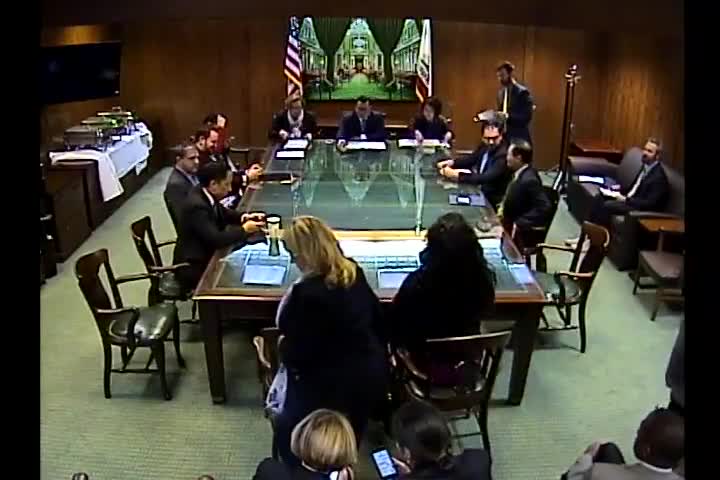 2MIN
Assembly Standing Committee on Water, Parks, and Wildlife
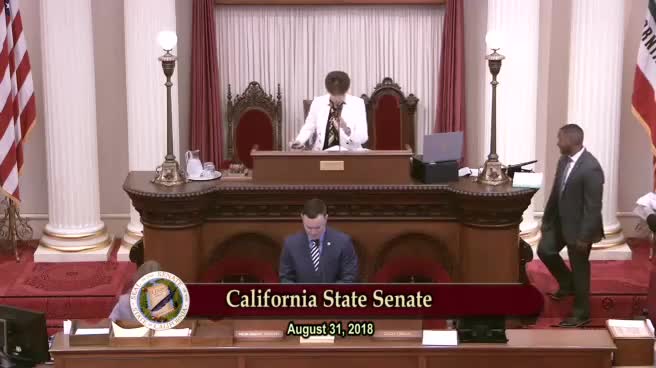 4MIN
Senate Floor
 1MIN
Assembly Floor
 1H
Senate Standing Committee on Appropriations
 16MIN
Senate Standing Committee on Natural Resources and Water
 5MIN
Senate Standing Committee on Agriculture
 1MIN
Assembly Floor
Bill Author