AB 2057: California Environmental Quality Act: biogas pipelines: exemption.
- Session Year: 2017-2018
- House: Assembly
- Latest Version Date: 2018-04-16
(1)The California Environmental Quality Act (CEQA) requires a lead agency to prepare, or cause to be prepared, and certify the completion of, an environmental impact report on a project, as defined, that it proposes to carry out or approve that may have a significant effect on the environment, as defined, or to adopt a negative declaration if it finds that the project will not have that effect. CEQA provides some exemptions from its requirements for specified projects, including for a project that consists of the inspection, maintenance, repair, restoration, reconditioning, relocation, replacement, or removal of an existing pipeline, as defined, if specified conditions are met. If a local agency determines that a project is exempt from CEQA and approves or determines to carry out the project, CEQA authorizes a local agency to file a notice of determination with the county clerk in which the project will be located.
This bill would would, until January 1, 2022, provide that, for purposes of that exemption, pipeline also means a pipeline located in the County of Fresno, Kern, Kings, or Tulare, that is used to transport biogas, as the bill would define that term, and that meets the existing requirements for the exemption and all local, state, and federal laws. The bill would require a local agency, if it determines that a project related to a pipeline located in those counties and used to transport biogas is exempt from CEQA and approves or determines to carry out the project, to file a notice of determination with the Office of Planning and Research and with the county clerk of the county in which the project will be located. Because additional duties would be imposed on a lead agency would be required to determine the applicability of the exemption, agency, the bill would impose a state-mandated local program.
(2)This bill would make legislative findings and declarations as to the necessity of a special statute for the Counties of Fresno, Kern, Kings, and Tulare.
(3)The California Constitution requires the state to reimburse local agencies and school districts for certain costs mandated by the state. Statutory provisions establish procedures for making that reimbursement.
This bill would provide that no reimbursement is required by this act for a specified reason.
(1)The California Environmental Quality Act (CEQA) requires a lead agency to prepare, or cause to be prepared, and certify the completion of, an environmental impact report on a project, as defined, that it proposes to carry out or approve that may have a significant effect on the environment, as defined, or to adopt a negative declaration if it finds that the project will not have that effect. CEQA provides some exemptions from its requirements for specified projects, including for a project that consists of the inspection, maintenance, repair, restoration, reconditioning, relocation, replacement, or removal of an existing pipeline, as defined, if specified conditions are met.
This bill would provide that, for purposes of that exemption, pipeline also means a pipeline located in the County of Fresno, Kern, Kings, or Tulare, that is used to transport biogas, as the bill would define that term, and that meets the existing requirements for the exemption and all local, state, and federal laws. Because a lead agency would be required to determine the applicability of the exemption, the bill would impose a state-mandated local program.
(2)This bill would make legislative findings and declarations as to the necessity of a special statute for the Counties of Fresno, Kern, Kings, and Tulare.
(3)The California Constitution requires the state to reimburse local agencies and school districts for certain costs mandated by the state. Statutory provisions establish procedures for making that reimbursement.
This bill would provide that no reimbursement is required by this act for a specified reason.
Existing law requires the Division of Oil, Gas, and Geothermal Resources to regulate the drilling and operation of wells used for the purpose of producing oil and gas. Existing law defines various terms for those purposes, including additive.This bill would make nonsubstantive changes to that definition.Existing law requires the Division of Oil, Gas, and Geothermal Resources to regulate the drilling and operation of wells used for the purpose of producing oil and gas. Existing law defines various terms for those purposes, including additive.
This bill would make nonsubstantive changes to that definition.
(a)For purposes of Section 21080.23, pipeline also means a pipeline located in the County of Fresno, Kern, Kings, or Tulare, that is used to transport biogas, and meeting the requirements of Section 21080.23 and all local, state, and federal laws.
(b)For purposes of this section, biogas means natural gas that meets the requirements of Section 2292.5 of Title 13 of the California Code of Regulations and is derived from anaerobic digestion of dairy animal waste.
(c)If a local agency determines that a project is not subject to this division pursuant to this section and Section 21080.23 and approves or determines to carry out the project, the local agency shall file a notice of determination with the Office of Planning and Research and with the county clerk in the county in which the project will be located in the manner specified in subdivisions (b) and (c) of Section 21152.
(d)This section shall remain in effect only until January 1, 2022, and as of that date is repealed.
SEC. 2.The Legislature finds and declares that a special statute is necessary and that a general statute cannot be made applicable within the meaning of Section 16 of Article IV of the California Constitution because of the unique circumstances concerning the delivery of biogas in the Counties of Fresno, Kern, Kings, and Tulare.
No reimbursement is required by this act pursuant to Section 6 of Article XIIIB of the California Constitution because a local agency or school district has the authority to levy service charges, fees, or assessments sufficient to pay for the program or level of service mandated by this act, within the meaning of Section 17556 of the Government Code.
SEC. 3.No reimbursement is required by this act pursuant to Section 6 of Article XIIIB of the California Constitution because a local agency or school district has the authority to levy service charges, fees, or assessments sufficient to pay for the program or level of service mandated by this act, within the meaning of Section 17556 of the Government Code.
(a)For purposes of Section 21080.23, pipeline also means a pipeline located in the County of Fresno, Kern, Kings, or Tulare, that is used to transport biogas, and meeting the requirements of Section 21080.23 and all local, state, and federal laws.
(b)For purposes of this section, biogas means natural gas that meets the requirements of Section 2292.5 of Title 13 of the California Code of Regulations and is derived from anaerobic digestion of dairy animal waste.
SEC. 2.The Legislature finds and declares that a special statute is necessary and that a general statute cannot be made applicable within the meaning of Section 16 of Article IV of the California Constitution because of the unique circumstances concerning the delivery of biogas in the Counties of Fresno, Kern, Kings, and Tulare.
No reimbursement is required by this act pursuant to Section 6 of Article XIIIB of the California Constitution because a local agency or school district has the authority to levy service charges, fees, or assessments sufficient to pay for the program or level of service mandated by this act, within the meaning of Section 17556 of the Government Code.
SECTION 1.Section 3150 of the Public Resources Code is amended to read:3150.Additive means a substance or combination of substances added to a base fluid for purposes of preparing well stimulation treatment fluid that includes, but is not necessarily limited to, an acid stimulation treatment fluid or a hydraulic fracturing fluid. An additive may, but is not required to, serve additional purposes beyond the transmission of hydraulic pressure to the geologic formation. An additive may be of any phase and includes proppants.Additive means a substance or combination of substances added to a base fluid for purposes of preparing well stimulation treatment fluid which that includes, but is not necessarily limited to, an acid stimulation treatment fluid or a hydraulic fracturing fluid. An additive may, but is not required to, serve additional purposes beyond the transmission of hydraulic pressure to the geologic formation. An additive may be of any phase and includes proppants.
|
Date
|
Status
|
|---|---|
| Jun 20, 2018 | In committee: Set, second hearing. Hearing canceled at the request of author. |
| Jun 6, 2018 | In committee: Set, first hearing. Hearing canceled at the request of author. |
| May 17, 2018 | Referred to Com. on EQ. |
| May 3, 2018 | In Senate. Read first time. To Com. on RLS. for assignment. |
| May 3, 2018 | Read third time. Passed. Ordered to the Senate. |
| Apr 26, 2018 | Read second time. Ordered to third reading. |
| Apr 25, 2018 | From committee: Do pass. (Ayes 14. Noes 0.) (April 25). |
| Apr 17, 2018 | Re-referred to Com. on APPR. |
| Apr 16, 2018 | Read second time and amended. |
| Apr 12, 2018 | From committee: Amend, and do pass as amended and re-refer to Com. on APPR. (Ayes 6. Noes 1.) (April 9). |
| Mar 19, 2018 | Re-referred to Com. on NAT. RES. |
| Mar 15, 2018 | Referred to Com. on NAT. RES. |
| Feb 7, 2018 | From printer. May be heard in committee March 9. |
| Feb 6, 2018 | Read first time. To print. |
|
Date
|
Description
|
Location
|
Votes
|
|
|---|---|---|---|---|
| May 3, 2018 | AB 2057 SALAS Assembly Third Reading | Assembly Floor |
Passed |
|
| Apr 25, 2018 | Do pass. | Assembly Standing Committee on Appropriations |
Passed |
|
| Apr 9, 2018 | Do pass as amended and be re-referred to the Committee on [Appropriations] | Assembly Standing Committee on Natural Resources |
Passed |
This list shows positions taken on this bill by organizations on the date displayed, which is linked to the original source.
Positions by individuals are not included.
SENATE COMMITTEE ON ENVIRONMENTAL QUALITY
Senator Wieckowski, Chair
2017 - 2018 Regular
Bill No: AB 2057
Author: | Salas | ||
Version: | 4/16/2018 | Hearing Date: | 6/20/2018 |
Urgency: | No | Fiscal: | Yes |
Consultant: | David Ernest García | ||
SUBJECT: California Environmental Quality Act: biogas pipelines: exemption
ANALYSIS:
Existing law:
Under the California Environmental Quality Act (CEQA):
- Requires lead agencies with the principal responsibility for carrying out or approving a proposed project to prepare a negative declaration, mitigated declaration, or environmental impact report (EIR) for this action, unless the project is exempt from CEQA (CEQA includes various statutory exemptions, as well as categorical exemptions in the CEQA guidelines). (Public Resources Code (PRC) §21000 et seq.).
Exemptions relating to pipelines include:- A project of less than one mile in length within a public street or highway, or another public right-of-way for the installation of a new pipeline or maintenance, repair, restoration, reconditioning, relocation, replacement, removal, or demolition of an existing pipeline. “Pipeline” includes “subsurface facilities but does not include any surface facility related to the operation of the underground facility.” (PRC §21080.21).
- The inspection, repair, restoration, reconditioning, relocation, replacement, or removal of an existing pipeline less than eight miles in length, or any valve, flange, meter, or other equipment directly attached to the pipeline if certain conditions are met, project is not less than eight miles from any section of pipeline that has been subject to this exemption in the past 12 months, certain notice is provided, project is located within an existing right-of-way and restored to its condition prior to the project, notice requirements). (PRC §21080.23).
- Operation, repair, maintenance, or minor altercation of existing private or public structures involving negligible or no expansion, including existing facilities of both investor and publicly owned utilities used to provide electric power, natural gas, sewage, or other public utility services. (CEQA Guidelines §15301(b)).
- Replacement or reconstruction of existing structures and facilities where the new structure will be located on the same site as the structure replaced and will have substantially the same purpose and capacity, including replacement or reconstruction of existing utility systems or facilities involving negligible or no expansion of capacity. (CEQA Guidelines §15302(b)).
- A project of less than one mile in length within a public street or highway, or another public right-of-way for the installation of a new pipeline or maintenance, repair, restoration, reconditioning, relocation, replacement, removal, or demolition of an existing pipeline. “Pipeline” includes “subsurface facilities but does not include any surface facility related to the operation of the underground facility.” (PRC §21080.21).
This bill:
Reinstates, through January 1, 2022, a statutory CEQA exemption that had sunset for a pipeline located in Fresno, Kern, Kings, or Tulare County, that is used to transport biogas derived from the anaerobic digestion of dairy animal waste and meets compressed natural gas specifications adopted by the Air Resources Board (ARB). The bill accomplishes this by expanding a current statutory CEQA exemption for a project that consists of the inspection, maintenance, repair, restoration, reconditioning, relocation, replacement, or removal of an existing pipeline (PRC §21080.23) to include the aforementioned biogas pipelines.
Background
- Overview of CEQA Process. CEQA provides a process for evaluating the environmental effects of a project, and includes statutory exemptions, as well as categorical exemptions in the CEQA guidelines. If a project is not exempt from CEQA, an initial study is prepared to determine whether a project may have a significant effect on the environment. If the initial study shows that there would not be a significant effect on the environment, the lead agency must prepare a negative declaration. If the initial study shows that the project may have a significant effect on the environment, the lead agency must prepare an Environmental Impact Report (EIR).
Generally, an EIR must accurately describe the proposed project, identify and analyze each significant environmental impact expected to result from the proposed project, identify mitigation measures to reduce those impacts to the extent feasible, and evaluate a range of reasonable alternatives to the proposed project. Prior to approving any project that has received environmental review, an agency must make certain findings. If mitigation measures are required or incorporated into a project, the agency must adopt a reporting or monitoring program to ensure compliance with those measures.
If a mitigation measure would cause one or more significant effects in addition to those that would be caused by the proposed project, the effects of the mitigation measure must be discussed but in less detail than the significant effects of the proposed project. - What is analyzed in an environmental review? Pursuant to CEQA, an environmental review analyzing the significant direct and indirect environmental impacts of a proposed project, may include water quality, surface and subsurface hydrology, land use and agricultural resources, transportation and circulation, air quality and greenhouse gas emissions, terrestrial and aquatic biological resources, aesthetics, geology and soils, recreation, public services and utilities such as water supply and wastewater disposal, and cultural resources. The analysis must also evaluate the cumulative impacts of any past, present, and reasonably foreseeable projects/activities within study areas that are applicable to the resources being evaluated. A study area for a proposed project must not be limited to the footprint of the project because many environmental impacts of a development extend beyond the identified project boundary. Also, CEQA stipulates that the environmental impacts must be measured against existing physical conditions within the project area, not future, allowable conditions.
- Anaerobic digestion of dairy waste to biogas. According to the California Environmental Protection Agency (CalEPA), biogas recovery systems are sometimes known as anaerobic digesters or “biodigesters” because they use a process called anaerobic digestion. During anaerobic digestion, bacteria break down waste in an oxygen-free environment. One of the natural products of anaerobic digestion is biogas, which typically contains between 60-70% methane, 30-40% carbon dioxide, and trace amounts of other gases. Biogas can be used to generate electricity, as a boiler fuel for space or water heating, upgraded to natural gas pipeline quality, called “biomethane” (which requires the removal of residual carbon dioxide and has the same properties as natural gas), or for a variety of other uses.
In order to recover biogas, a system is needed to collect manure and transport it to a digester. Existing liquid/slurry manure management systems can readily be adapted to deliver manure to an anaerobic digester. Anaerobic digesters, commonly in the form of covered lagoons or tanks, are designed to stabilize manure and optimize the production of methane. Biogas is collected, treated, and piped to a gas use device. Flares are also installed to destroy extra gas and as a back-up mechanism for the primary gas use device. A facility to store digester effluent is required; the effluent of the anaerobic digestion can be used for purposes including livestock bedding, potting soil, land application, and fertilizer. - What is lost with a CEQA exemption? It is not unusual for certain interests to assert that CEQA impedes a project or that a particular exemption will expedite construction of a particular type of project and reduce costs. This, however, is not borne out by data. Many studies—including one by the Rose Foundation in 2016, the California State Senate Environmental Quality Committee in 2017, and the California State Senate Office of Research in 2018—have found that, for the types of projects analyzed, CEQA is not a barrier to project implementation, only 1-4% of projects require a full EIR, and less than 1% of all projects requiring a full EIR are litigated.
Additionally, focusing on the exceptionally rare cases where projects are litigated overlooks the benefits of environmental review: to inform decision-makers and the public about project impacts, identify ways to avoid or significantly reduce environmental damage, prevent environmental damage by requiring feasible alternatives or mitigation measures, disclose to the public reasons why an agency approved a project if significant environmental effects are involved, involve public agencies in the process, and increase public participation in the environmental review and the planning processes.
If a project is exempt from CEQA, certain issues may not get addressed. For example:- How can decision-makers and the public be aware of impacts, mitigation measures, and alternatives of an exempt pipeline?
- Is it appropriate for the public to live with the consequences of exempt projects where impacts are not mitigated and alternatives are not considered regarding certain matters, such as air quality, water quality, noise, cumulative impacts, and growth inducing impacts?
- Because adverse project impacts do not disappear when they are not identified and mitigated with an exemption, does the exemption result in a direct transfer of responsibility for mitigating impacts from the project applicant/developer to the public (i.e., taxpayers) if impacts are ultimately addressed after completion of the project?
- If taxpayers, rather than a developer, are ultimately responsible for mitigating impacts of an exempt project after project completion, what assessments or taxes will be increased to fund mitigation or pay for alternatives at a later date?
- Do the projects adequately control for safety concerns associated with anaerobic digesters and biogas, including the potential for explosion, fire, burns, electrical shock, drowning, and exposure to loud noise?
- How can decision-makers and the public be aware of impacts, mitigation measures, and alternatives of an exempt pipeline?
Comments
- Purpose of Bill. According to the author, “California is home to the nation’s largest dairy industry, which includes approximately 1,600 dairies that house some 1.8 million cows. These dairies produce substantial quantities of dairy manure that can be processed by anaerobic digesters to produce biogas. Once biomethane is cleaned, it can be used in electricity-producing facilities, natural gas vehicles and home appliances. This bill seeks to encourage the development of dairy digesters in the Central Valley to produce clean energy and improve the air quality in the Central Valley, which has been designated as one of the most polluted nationwide.”
- Unhelpful, harmful, and unnecessary. As noted in the background, it is not unusual for certain interests to assert that CEQA impedes a project or that a particular exemption will expedite construction of a particular type of project and reduce costs. This, however, is not borne out by data. Many studies—including one by the Rose Foundation in 2016, the California State Senate Environmental Quality Committee in 2017, and the California State Senate Office of Research in 2018—have found that CEQA is not a barrier to project implementation, only 1-4% of projects require a full EIR, and less than 1% of all projects requiring a full EIR are litigated. The objective conclusion of these studies is that CEQA is not a barrier to project implementation and, therefore, that CEQA exemptions do not encourage projects.
While projects relating to the anaerobic digestion of dairy waste to biogas are beneficial, there may be significant impacts that would not be addressed with CEQA exemption. For example, such a pipeline exemption may adversely affect roads and may cause conflicts with entrances to nearby homes and businesses. There may also be adverse public health and safety, noise and air quality impacts for area residents, or sensitive uses such as schools, senior centers, and hospitals. Under CEQA, the impacts such as the ones mentioned above must be accounted for, avoided, and/or mitigated. With a CEQA exemption, as provided by this bill, there would be no consideration of these and other impacts under the Act.
Anaerobic digestion provides a good opportunity to address farm-related environmental concerns such as reducing dairy emissions of methane, which is one of the leading contributors to greenhouse gas emissions, generate renewable energy, and diversify farm products. California has recognized the benefits of anaerobic digestion prompting agencies to develop specific programs. Additionally, the state has provided millions of dollars in funding for such projects. Regardless of the merits of any project, short-term, long-term, and/or permanent consequences of a project should be known by the decision-makers, the project applicant, and the public before a project is approved, and the impacts should be mitigated, or avoided if possible, before a project commences. CEQA specifically provides for that informed decision-making. Biogas systems, including pipelines, pose challenges and safety risks that should be assessed and subject to environmental review.
Perhaps most importantly, the exemption enacted by SB 605 and extended by AB 1104 (and proposed to be reinstated by AB 2057) was in effect from 2010 through 2017, but, according to the author’s office, has not been used. Of the 22 operating dairy digesters in the state, not a single one of them used the CEQA exemption while it was in statute.
According to the author’s office, this is likely because the exemption was limited to existing pipelines of no more than 8 miles total. Additionally, even if the existing pipelines are exempt from CEQA, the digesters and gas clean up facilities will still be subject to CEQA, which means the CEQA exemption for pipelines will provide no real benefit to the cost or timelines of a dairy digester project.
Given that AB 2057 is unhelpful, harmful, and unnecessary, the Committee should hold this bill.
Related/Prior Legislation
SB 605 (Ashburn, Chapter 599, Statutes of 2009) expanded, through January 1, 2013, an existing CEQA exemption for a project that consists of the inspection, maintenance, repair, restoration, reconditioning, relocation, replacement, or removal of an existing pipeline to include a pipeline located in Fresno, Kern, Kings, or Tulare County, that is used to transport biogas derived from the anaerobic digestion of dairy animal waste.
AB 1104 (Salas, Chapter 534, Statutes of 2014) extended the sunset of the CEQA exemption put in place by SB 605 (Ashburn, Chapter 599, Statutes of 2009) until January 1, 2018.
SOURCE:
Author
SUPPORT:
Bioenergy Association of California
County of Kern Board of Supervisors
Rural County Representatives of California
OPPOSITION:
Center on Race, Poverty & the Environment
Central California Asthma Collaborative
Leadership Counsel for Justice & Accountability
Sierra Club California
ARGUMENTS IN SUPPORT: According to the Bioenergy Association of California:
AB 2057 will help California to meet its Short-Lived Climate Pollutant, low carbon fuel and renewable energy goals, and will also help to reduce air and water pollution in those counties. Although few if any dairy projects have used the current exemption, several BAC members are poised to use it in the next few years as they are looking to pipeline injection as the best end use of their biogas …
AB 2057 will help California to reduce methane emissions from dairies, the greatest concentration of which is in the four counties at issue in this legislation. Instead of releasing methane into the atmosphere, dairy waste can be converted to the lowest carbon transportation fuels and produce - two to five times lower carbon emissions than electric or fuel cell vehicles - or 550 megawatts of flexible generation, renewable electricity. AB 2507 will reduce permitting barriers and costs for dairy digester projects and, in doing so, help to meet California’s Short- Lived Climate Pollutant, low carbon fuel and renewable electricity goals.
ARGUMENTS IN OPPOSITION: According to Center on Race, Poverty & the Environment, Central California Asthma Collaborative, Leadership Counsel for Justice & Accountability, and Sierra Club California:
We oppose AB 2057, which creates a new exemption under the California Environmental Quality Act (CEQA) for biogas pipelines within Fresno, Kern, Kings, and Tulare Counties. These pipelines could have environmental impacts, and should receive public scrutiny to ensure they are safe before being placed in communities.
CEQA provides for public disclosure of environmental impacts of a project, as well as mitigation of those impacts so that polluters clean up their pollution. It helps promote informed decision making and a better environment for all. This includes elements designed to maximize public safety, and preventing exposure to hazardous materials and gases.
Biogas pipelines could have many issues should they fail. Leaks can release methane, hydrogen sulfide, and carbon dioxide, which can cause asphyxiation, fires, explosions, as well as climate impacts. It is critical that they not be sited near potential sources of fire, or communities who can be harmed by leaks. Regular testing of pipelines should be required to mitigate any impacts.
Exempting these pipelines from CEQA could invite disastrous harm into communities, and missed opportunities if proper mitigation measures are not imposed. Gas leaks from ignored facilities have caused significant problems in California, including 2010 in San Bruno, 2014 in Arvin, and Aliso Canyon in 2015.
More should be done to protect Californians from gas transmission, not less.
-- END --
SENATE COMMITTEE ON ENVIRONMENTAL QUALITY
Senator Wieckowski, Chair
2017 - 2018 Regular
Bill No: AB 2057
Author: | Salas | ||
Version: | 4/16/2018 | Hearing Date: | 6/6/2018 |
Urgency: | No | Fiscal: | Yes |
Consultant: | David Ernest García | ||
SUBJECT: California Environmental Quality Act: biogas pipelines: exemption
ANALYSIS:
Existing law:
Under the California Environmental Quality Act (CEQA):
- Requires lead agencies with the principal responsibility for carrying out or approving a proposed project to prepare a negative declaration, mitigated declaration, or environmental impact report (EIR) for this action, unless the project is exempt from CEQA (CEQA includes various statutory exemptions, as well as categorical exemptions in the CEQA guidelines). (Public Resources Code (PRC) §21000 et seq.).
Exemptions relating to pipelines include:- A project of less than one mile in length within a public street or highway, or another public right-of-way for the installation of a new pipeline or maintenance, repair, restoration, reconditioning, relocation, replacement, removal, or demolition of an existing pipeline. “Pipeline” includes “subsurface facilities but does not include any surface facility related to the operation of the underground facility.” (PRC §21080.21).
- The inspection, repair, restoration, reconditioning, relocation, replacement, or removal of an existing pipeline less than eight miles in length, or any valve, flange, meter, or other equipment directly attached to the pipeline if certain conditions are met, project is not less than eight miles from any section of pipeline that has been subject to this exemption in the past 12 months, certain notice is provided, project is located within an existing right-of-way and restored to its condition prior to the project, notice requirements). (PRC §21080.23).
- Operation, repair, maintenance, or minor altercation of existing private or public structures involving negligible or no expansion, including existing facilities of both investor and publicly owned utilities used to provide electric power, natural gas, sewage, or other public utility services. (CEQA Guidelines §15301(b)).
- Replacement or reconstruction of existing structures and facilities where the new structure will be located on the same site as the structure replaced and will have substantially the same purpose and capacity, including replacement or reconstruction of existing utility systems or facilities involving negligible or no expansion of capacity. (CEQA Guidelines §15302(b)).
- A project of less than one mile in length within a public street or highway, or another public right-of-way for the installation of a new pipeline or maintenance, repair, restoration, reconditioning, relocation, replacement, removal, or demolition of an existing pipeline. “Pipeline” includes “subsurface facilities but does not include any surface facility related to the operation of the underground facility.” (PRC §21080.21).
This bill:
Reinstates, through January 1, 2022, a statutory CEQA exemption that had sunset for a pipeline located in Fresno, Kern, Kings, or Tulare County, that is used to transport biogas derived from the anaerobic digestion of dairy animal waste and meets compressed natural gas specifications adopted by the Air Resources Board (ARB). The bill accomplishes this by expanding a current statutory CEQA exemption for a project that consists of the inspection, maintenance, repair, restoration, reconditioning, relocation, replacement, or removal of an existing pipeline (PRC §21080.23) to include the aforementioned biogas pipelines.
Background
- Overview of CEQA Process. CEQA provides a process for evaluating the environmental effects of a project, and includes statutory exemptions, as well as categorical exemptions in the CEQA guidelines. If a project is not exempt from CEQA, an initial study is prepared to determine whether a project may have a significant effect on the environment. If the initial study shows that there would not be a significant effect on the environment, the lead agency must prepare a negative declaration. If the initial study shows that the project may have a significant effect on the environment, the lead agency must prepare an Environmental Impact Report (EIR).
Generally, an EIR must accurately describe the proposed project, identify and analyze each significant environmental impact expected to result from the proposed project, identify mitigation measures to reduce those impacts to the extent feasible, and evaluate a range of reasonable alternatives to the proposed project. Prior to approving any project that has received environmental review, an agency must make certain findings. If mitigation measures are required or incorporated into a project, the agency must adopt a reporting or monitoring program to ensure compliance with those measures.
If a mitigation measure would cause one or more significant effects in addition to those that would be caused by the proposed project, the effects of the mitigation measure must be discussed but in less detail than the significant effects of the proposed project. - What is analyzed in an environmental review? Pursuant to CEQA, an environmental review analyzing the significant direct and indirect environmental impacts of a proposed project, may include water quality, surface and subsurface hydrology, land use and agricultural resources, transportation and circulation, air quality and greenhouse gas emissions, terrestrial and aquatic biological resources, aesthetics, geology and soils, recreation, public services and utilities such as water supply and wastewater disposal, and cultural resources. The analysis must also evaluate the cumulative impacts of any past, present, and reasonably foreseeable projects/activities within study areas that are applicable to the resources being evaluated. A study area for a proposed project must not be limited to the footprint of the project because many environmental impacts of a development extend beyond the identified project boundary. Also, CEQA stipulates that the environmental impacts must be measured against existing physical conditions within the project area, not future, allowable conditions.
- Anaerobic digestion of dairy waste to biogas. According to the California Environmental Protection Agency (CalEPA), biogas recovery systems are sometimes known as anaerobic digesters or “biodigesters” because they use a process called anaerobic digestion. During anaerobic digestion, bacteria break down waste in an oxygen-free environment. One of the natural products of anaerobic digestion is biogas, which typically contains between 60-70% methane, 30-40% carbon dioxide, and trace amounts of other gases. Biogas can be used to generate electricity, as a boiler fuel for space or water heating, upgraded to natural gas pipeline quality, called “biomethane” (which requires the removal of residual carbon dioxide and has the same properties as natural gas), or for a variety of other uses.
In order to recover biogas, a system is needed to collect manure and transport it to a digester. Existing liquid/slurry manure management systems can readily be adapted to deliver manure to an anaerobic digester. Anaerobic digesters, commonly in the form of covered lagoons or tanks, are designed to stabilize manure and optimize the production of methane. Biogas is collected, treated, and piped to a gas use device. Flares are also installed to destroy extra gas and as a back-up mechanism for the primary gas use device. A facility to store digester effluent is required; the effluent of the anaerobic digestion can be used for purposes including livestock bedding, potting soil, land application, and fertilizer. - What is lost with a CEQA exemption? It is not unusual for certain interests to assert that CEQA impedes a project or that a particular exemption will expedite construction of a particular type of project and reduce costs. This, however, is not borne out by data. Many studies—including one by the Rose Foundation in 2016, the California State Senate Environmental Quality Committee in 2017, and the California State Senate Office of Research in 2018—have found that, for the types of projects analyzed, CEQA is not a barrier to project implementation, only 1-4% of projects require a full EIR, and less than 1% of all projects requiring a full EIR are litigated.
Additionally, focusing on the exceptionally rare cases where projects are litigated overlooks the benefits of environmental review: to inform decision-makers and the public about project impacts, identify ways to avoid or significantly reduce environmental damage, prevent environmental damage by requiring feasible alternatives or mitigation measures, disclose to the public reasons why an agency approved a project if significant environmental effects are involved, involve public agencies in the process, and increase public participation in the environmental review and the planning processes.
If a project is exempt from CEQA, certain issues may not get addressed. For example:- How can decision-makers and the public be aware of impacts, mitigation measures, and alternatives of an exempt pipeline?
- Is it appropriate for the public to live with the consequences of exempt projects where impacts are not mitigated and alternatives are not considered regarding certain matters, such as air quality, water quality, noise, cumulative impacts, and growth inducing impacts?
- Because adverse project impacts do not disappear when they are not identified and mitigated with an exemption, does the exemption result in a direct transfer of responsibility for mitigating impacts from the project applicant/developer to the public (i.e., taxpayers) if impacts are ultimately addressed after completion of the project?
- If taxpayers, rather than a developer, are ultimately responsible for mitigating impacts of an exempt project after project completion, what assessments or taxes will be increased to fund mitigation or pay for alternatives at a later date?
- Do the projects adequately control for safety concerns associated with anaerobic digesters and biogas, including the potential for explosion, fire, burns, electrical shock, drowning, and exposure to loud noise?
- How can decision-makers and the public be aware of impacts, mitigation measures, and alternatives of an exempt pipeline?
Comments
- Purpose of Bill. According to the author, “California is home to the nation’s largest dairy industry, which includes approximately 1,600 dairies that house some 1.8 million cows. These dairies produce substantial quantities of dairy manure that can be processed by anaerobic digesters to produce biogas. Once biomethane is cleaned, it can be used in electricity-producing facilities, natural gas vehicles and home appliances. This bill seeks to encourage the development of dairy digesters in the Central Valley to produce clean energy and improve the air quality in the Central Valley, which has been designated as one of the most polluted nationwide.”
- Unhelpful, harmful, and unnecessary. As noted in the background, it is not unusual for certain interests to assert that CEQA impedes a project or that a particular exemption will expedite construction of a particular type of project and reduce costs. This, however, is not borne out by data. Many studies—including one by the Rose Foundation in 2016, the California State Senate Environmental Quality Committee in 2017, and the California State Senate Office of Research in 2018—have found that CEQA is not a barrier to project implementation, only 1-4% of projects require a full EIR, and less than 1% of all projects requiring a full EIR are litigated. The objective conclusion of these studies is that CEQA is not a barrier to project implementation and, therefore, that CEQA exemptions do not encourage projects.
While projects relating to the anaerobic digestion of dairy waste to biogas are beneficial, there may be significant impacts that would not be addressed with CEQA exemption. For example, such a pipeline exemption may adversely affect roads and may cause conflicts with entrances to nearby homes and businesses. There may also be adverse public health and safety, noise and air quality impacts for area residents, or sensitive uses such as schools, senior centers, and hospitals. Under CEQA, the impacts such as the ones mentioned above must be accounted for, avoided, and/or mitigated. With a CEQA exemption, as provided by this bill, there would be no consideration of these and other impacts under the Act.
Anaerobic digestion provides a good opportunity to address farm-related environmental concerns such as reducing dairy emissions of methane, which is one of the leading contributors to greenhouse gas emissions, generate renewable energy, and diversify farm products. California has recognized the benefits of anaerobic digestion prompting agencies to develop specific programs. Additionally, the state has provided millions of dollars in funding for such projects. Regardless of the merits of any project, short-term, long-term, and/or permanent consequences of a project should be known by the decision-makers, the project applicant, and the public before a project is approved, and the impacts should be mitigated, or avoided if possible, before a project commences. CEQA specifically provides for that informed decision-making. Biogas systems, including pipelines, pose challenges and safety risks that should be assessed and subject to environmental review.
Perhaps most importantly, the exemption enacted by SB 605 and extended by AB 1104 (and proposed to be reinstated by AB 2057) was in effect from 2010 through 2017, but, according to the author’s office, has not been used. Of the 22 operating dairy digesters in the state, not a single one of them used the CEQA exemption while it was in statute.
According to the author’s office, this is likely because the exemption was limited to existing pipelines of no more than 8 miles total. Additionally, even if the existing pipelines are exempt from CEQA, the digesters and gas clean up facilities will still be subject to CEQA, which means the CEQA exemption for pipelines will provide no real benefit to the cost or timelines of a dairy digester project.
Given that AB 2057 is unhelpful, harmful, and unnecessary, the Committee should hold this bill.
Related/Prior Legislation
SB 605 (Ashburn, Chapter 599, Statutes of 2009) expanded, through January 1, 2013, an existing CEQA exemption for a project that consists of the inspection, maintenance, repair, restoration, reconditioning, relocation, replacement, or removal of an existing pipeline to include a pipeline located in Fresno, Kern, Kings, or Tulare County, that is used to transport biogas derived from the anaerobic digestion of dairy animal waste.
AB 1104 (Salas, Chapter 534, Statutes of 2014) extended the sunset of the CEQA exemption put in place by SB 605 (Ashburn, Chapter 599, Statutes of 2009) until January 1, 2018.
SOURCE:
Author
SUPPORT:
Bioenergy Association of California
Rural County Representatives of California
OPPOSITION:
Center on Race, Poverty & the Environment
Central California Asthma Collaborative
Leadership Counsel for Justice & Accountability
Sierra Club California
ARGUMENTS IN SUPPORT: According to the Bioenergy Association of California:
AB 2057 will help California to meet its Short-Lived Climate Pollutant, low carbon fuel and renewable energy goals, and will also help to reduce air and water pollution in those counties. Although few if any dairy projects have used the current exemption, several BAC members are poised to use it in the next few years as they are looking to pipeline injection as the best end use of their biogas …
AB 2057 will help California to reduce methane emissions from dairies, the greatest concentration of which is in the four counties at issue in this legislation. Instead of releasing methane into the atmosphere, dairy waste can be converted to the lowest carbon transportation fuels and produce - two to five times lower carbon emissions than electric or fuel cell vehicles - or 550 megawatts of flexible generation, renewable electricity. AB 2507 will reduce permitting barriers and costs for dairy digester projects and, in doing so, help to meet California’s Short- Lived Climate Pollutant, low carbon fuel and renewable electricity goals.
ARGUMENTS IN OPPOSITION: According to Center on Race, Poverty & the Environment, Central California Asthma Collaborative, Leadership Counsel for Justice & Accountability, and Sierra Club California:
We oppose AB 2057, which creates a new exemption under the California Environmental Quality Act (CEQA) for biogas pipelines within Fresno, Kern, Kings, and Tulare Counties. These pipelines could have environmental impacts, and should receive public scrutiny to ensure they are safe before being placed in communities.
CEQA provides for public disclosure of environmental impacts of a project, as well as mitigation of those impacts so that polluters clean up their pollution. It helps promote informed decision making and a better environment for all. This includes elements designed to maximize public safety, and preventing exposure to hazardous materials and gases.
Biogas pipelines could have many issues should they fail. Leaks can release methane, hydrogen sulfide, and carbon dioxide, which can cause asphyxiation, fires, explosions, as well as climate impacts. It is critical that they not be sited near potential sources of fire, or communities who can be harmed by leaks. Regular testing of pipelines should be required to mitigate any impacts.
Exempting these pipelines from CEQA could invite disastrous harm into communities, and missed opportunities if proper mitigation measures are not imposed. Gas leaks from ignored facilities have caused significant problems in California, including 2010 in San Bruno, 2014 in Arvin, and Aliso Canyon in 2015.
More should be done to protect Californians from gas transmission, not less.
-- END --
ASSEMBLY THIRD READING
ATR Bill Id:AB 2057
Author:(Salas)
As Amended Ver:April 16, 2018
Majority vote
Committee | Votes | Ayes | Noes |
Natural Resources | 6-1 | Muratsuchi, Acosta, Chau, Eggman, Flora, Melendez | Mark Stone |
Appropriations | 14-0 | Bigelow, Bonta, Brough, Calderon, Carrillo, Chau, Eggman, Fong, Gallagher, Eduardo Garcia, Nazarian, Obernolte, Quirk, Reyes |
SUMMARY: Expands an existing California Environmental Quality Act (CEQA) exemption applicable to liquid pipelines to include pipelines used to transport dairy biogas in four counties. Specifically, this bill:
- Expands the existing eight mile exemption for petroleum pipelines to include a pipeline located in Fresno, Kern, Kings, or Tulare County that is used to transport biogas that is derived from anaerobic digestion of dairy animal waste and meets compressed natural gas specifications adopted by the Air Resources Board (ARB). This bill reenacts a prior statute which was repealed by its own terms on January 1, 2018.
- Requires a local agency to file a notice with the Office of Planning and Research, and with the county clerk in the county in which the project will be located, whenever the local agency approves a project using the exemption.
- Sunsets January 1, 2022.
EXISTING LAW:
- Requires lead agencies with the principal responsibility for carrying out or approving a proposed project to prepare a negative declaration, mitigated negative declaration, or environmental impact report for this action, unless the project is exempt from CEQA (CEQA includes various statutory exemptions, as well as categorical exemptions in the CEQA Guidelines).
- Provides that CEQA does not apply to a pipeline project less than one mile in length within a public street or highway or any other public right-of-way for the installation of a new pipeline or the maintenance, repair, restoration, reconditioning, relocation, replacement, removal, or demolition of an existing pipeline.
- Provides that CEQA does not apply to a pipeline project less than eight miles in length consisting of inspection, maintenance, repair, restoration, reconditioning, relocation, replacement, or removal of an existing intrastate liquid pipeline subject to the Pipeline Safety Act (e.g. petroleum pipelines), subject to specified conditions, including:
- Construction and excavation activities are not undertaken over more than one half mile at a time.
- The section of pipeline is not less than eight miles from any section that has received an exemption in the past 12 months.
- Project activities are undertaken within an existing right-of-way and the right-of-way is restored to its pre-project condition.
- The diameter of the pipeline is not increased.
- Requires the CEQA Guidelines to include a list of classes of projects that have been determined by the Secretary of the Natural Resources Agency to not have a significant effect on the environment and that shall be exempt from CEQA. Included in this list of "categorical exemptions" are:
- Repair and maintenance of existing public or private facilities, involving negligible or no expansion of use, including existing facilities of both investor and publicly owned utilities used to provide electric power, natural gas, sewerage, or other public utility services. (CEQA Guidelines Section 15301)
- Replacement or reconstruction of existing facilities on the same site with the same purpose and capacity, including existing utility systems and/or facilities involving negligible or no expansion of capacity. (CEQA Guidelines Section 15302)
FISCAL EFFECT: According to the Assembly Appropriations Committee, negligible state costs.
COMMENTS: CEQA includes limited exemptions for relatively small-scale pipeline maintenance and installation projects. A general exemption is available for projects under one mile in length, including new pipelines. A more specific exemption is available for projects up to eight miles in length involving maintenance and replacement, but not expansion, of existing petroleum pipelines.
Collection of biogas produced at dairy operations is an emerging method that can reduce dairy emissions of methane, one of the leading contributors to greenhouse gas emissions. The biogas can be transported via pipelines to commercial natural gas transmission pipelines.
The justification for this bill's four-county limit and application based on source and composition of the gas is unclear, however the bill does not represent a significant expansion of the existing exemption for existing petroleum pipelines and is consistent with SB 605 (Ashburn), Chapter 599, Statutes of 2009, and AB 1104 (Salas), Chapter 534, Statutes of 2014.
The exemption enacted by SB 605 and extended by AB 1104 was in effect from 2010 through 2017, but it appears that is has not been used. It may be that the exemption does not fit the circumstances of the dairy digester projects. One reason is that the exemption does not apply to construction of new pipelines, which may be necessary to link dairy projects to the natural gas pipeline system. Another reason is that the gas must meet ARB specifications and at least some of the proposed dairy digester projects contemplate delivering raw biogas in low-pressure pipes to be conditioned prior to injection into the natural gas pipeline system.
While an exemption that applied to new pipelines may be more suitable for the dairy digester projects, it is likely to be controversial. At the very least, it would invite consideration of conditions that should apply to ensure eligible projects do not have a significant effect on the environment. These may include limiting the length of the project, limiting projects to developed rights of way, and assuring construction impacts, such as traffic, are avoided or mitigated. Likewise, an exemption that applied to transportation of unconditioned gas in privately operated pipes requires consideration of how to ensure the integrity of the pipes and their operation to avoid public safety hazards and greenhouse gas emissions associated with leaks.
Analysis Prepared by: Lawrence Lingbloom / NAT. RES. / (916) 319-2092 FN: 0002741
Date of Hearing: April 25, 2018
ASSEMBLY COMMITTEE ON APPROPRIATIONS
Lorena Gonzalez Fletcher, Chair
ABPCA Bill Id:AB 2057
Author:(Salas) – As Amended Ver:April 16, 2018
Policy Committee: | Natural Resources | Vote: | 6 - 1 |
|
| ||
|
|
Urgency: No State Mandated Local Program: Yes Reimbursable: No
SUMMARY:
This bill expands an existing California Environmental Quality Act (CEQA) exemption for liquid pipelines to include pipelines used to transport dairy biogas in Fresno, Kern, Kings, or Tulare counties. Additionally, this bill:
- Requires a local agency that approves a proposed project with this CEQA exemption to file a notice of determination with the Office of Planning and Research and with the county clerk in the county in which the proposed project is located.
- Sunsets January 1, 2022.
FISCAL EFFECT:
Negligible state costs.
COMMENTS:
- Background and Purpose. CEQA requires the principal public agency with responsibility for carrying out or approving a proposed project, known as the lead agency, to prepare a negative declaration, mitigated negative declaration, or environmental impact report for the action, unless the project is exempt from CEQA.
Existing law provides a CEQA exemption for pipeline projects consisting of inspection, maintenance, repair, restoration, reconditioning, relocation, replacement, or removal of an existing intrastate liquid pipeline subject to the Pipeline Safety Act, subject to specified conditions:
- The project is less than eight miles in length.
- Construction and excavation activities are not undertaken over more than one half mile at a time.
- The section of pipeline is not less than eight miles from any section that has received an exemption in the past 12 months.
- Project activities are undertaken within an existing right-of-way and the right-of-way is restored to its pre-project condition.
- The diameter of the pipeline is not increased.
- The project is less than eight miles in length.
This bill expands the existing eight mile exemption for petroleum pipelines to include a pipeline located in Fresno, Kern, Kings, or Tulare County that is used to transport biogas that is derived from anaerobic digestion of dairy animal waste and meets compressed natural gas specifications adopted by the Air Resources Board (ARB).
This bill reinstates a similar exemption that was provided in SB 605 (Ashburn) Chapter 599, Statutes of 2009, that was in effect from 2010 to 2012 and was later re-enacted by AB 1104 (Salas), Chapter 534, Statutes of 2014, that was in effect from 2015 to 2017. There are no known examples of this exemption ever being used.
Analysis Prepared by: Jennifer Galehouse / APPR. / (916) 319-2081
Date of Hearing: April 9, 2018
ASSEMBLY COMMITTEE ON NATURAL RESOURCES
Al Muratsuchi, Acting Chair
ABPCA Bill Id:AB 2057 (
Author:Salas) – As Amended Ver:March 15, 2018
SUBJECT: California Environmental Quality Act: biogas pipelines: exemption
SUMMARY: Expands an existing California Environmental Quality Act (CEQA) exemption applicable to liquid pipelines to include pipelines used to transport dairy biogas in four counties.
EXISTING LAW:
- Requires lead agencies with the principal responsibility for carrying out or approving a proposed project to prepare a negative declaration, mitigated negative declaration, or environmental impact report for this action, unless the project is exempt from CEQA (CEQA includes various statutory exemptions, as well as categorical exemptions in the CEQA Guidelines).
- Provides that CEQA does not apply to a pipeline project less than one mile in length within a public street or highway or any other public right-of-way for the installation of a new pipeline or the maintenance, repair, restoration, reconditioning, relocation, replacement, removal, or demolition of an existing pipeline.
- Provides that CEQA does not apply to a pipeline project less than eight miles in length consisting of inspection, maintenance, repair, restoration, reconditioning, relocation, replacement, or removal of an existing intrastate liquid pipeline subject to the Pipeline Safety Act (e.g. petroleum pipelines), subject to specified conditions, including:
- Construction and excavation activities are not undertaken over more than one half mile at a time.
- The section of pipeline is not less than eight miles from any section that has received an exemption in the past 12 months.
- Project activities are undertaken within an existing right-of-way and the right-of-way is restored to its pre-project condition.
- The diameter of the pipeline is not increased.
- Construction and excavation activities are not undertaken over more than one half mile at a time.
- Requires the CEQA Guidelines to include a list of classes of projects that have been determined by the Secretary of the Natural Resources Agency to not have a significant effect on the environment and that shall be exempt from CEQA. Included in this list of "categorical exemptions" are:
- Repair and maintenance of existing public or private facilities, involving negligible or no expansion of use, including existing facilities of both investor and publicly owned utilities used to provide electric power, natural gas, sewerage, or other public utility services. (Guidelines Section 15301)
- Replacement or reconstruction of existing facilities on the same site with the same purpose and capacity, including existing utility systems and/or facilities involving negligible or no expansion of capacity. (Guidelines Section 15302)
THIS BILL expands the existing eight mile exemption for petroleum pipelines to include a pipeline located in Fresno, Kern, Kings, or Tulare County that is used to transport biogas that is derived from anaerobic digestion of dairy animal waste and meets compressed natural gas specifications adopted by the Air Resources Board (ARB). The bill reenacts a prior statute which was repealed by its own terms on January 1, 2018.
FISCAL EFFECT: Unknown
COMMENTS:
- Background. CEQA includes limited exemptions for relatively small-scale pipeline maintenance and installation projects. A general exemption is available for projects under one mile in length, including new pipelines. A more specific exemption is available for projects up to eight miles in length involving maintenance and replacement, but not expansion, of existing petroleum pipelines.
Collection of biogas produced at dairy operations is an emerging method that can reduce dairy emissions of methane, one of the leading contributors to greenhouse gas emissions. The biogas can be transported via pipelines to commercial natural gas transmission pipelines.
The justification for this bill's four-county limit and application based on source and composition of the gas is unclear, however the bill does not represent a significant expansion of the existing exemption for existing petroleum pipelines and is consistent with SB 605, approved by this committee in 2009, and AB 1104, approved by this committee in 2014.
- Would this exemption be useful? The exemption enacted by SB 605 and extended by AB 1104 was in effect from 2010 through 2017, but the committee has been unable to find any record of it being used. It may be that the exemption does not fit the circumstances of the dairy digester projects. One reason is that the exemption does not apply to construction of new pipelines, which may be necessary to link dairy projects to the natural gas pipeline system. Another reason is that the gas must meet ARB specifications and at least some of the proposed dairy digester projects contemplate delivering raw biogas in low-pressure pipes to be conditioned prior to injection into the natural gas pipeline system.
While an exemption that applied to new pipelines may be more suitable for the dairy digester projects, it is likely to be controversial. At the very least, it would invite consideration of conditions that should apply to ensure eligible projects do not have a significant effect on the environment. These may include limiting the length of the project, limiting projects to developed rights of way, and assuring construction impacts, such as traffic, are avoided or mitigated. Likewise, an exemption that applied to transportation of unconditioned gas in privately operated pipes requires consideration of how to ensure the integrity of the pipes and their operation to avoid public safety hazards and greenhouse gas emissions associated with leaks.
- Suggested amendments. The author and the committee may wish to consider adding the following amendments to allow the Legislature to review the use of the exemption in the future:
On page 2, between lines 11 and 12, insert:
(c) Whenever a local agency determines that a project is not subject to this division pursuant to this section, and it approves or determines to carry out that project, the local agency shall file a notice with the Office of Planning and Research, and with the county clerk in the county in which the project will be located in the manner specified in subdivisions (b) and (c) of Section 21152.
(d) This section shall remain in effect only until January 1, 2022, and as of that date is repealed, unless a later enacted statute, that is enacted before January 1, 2022, deletes or extends that date.
REGISTERED SUPPORT / OPPOSITION:
Support
None on file
Opposition
None on file
Analysis Prepared by: Lawrence Lingbloom / NAT. RES. /
Discussed in Hearing
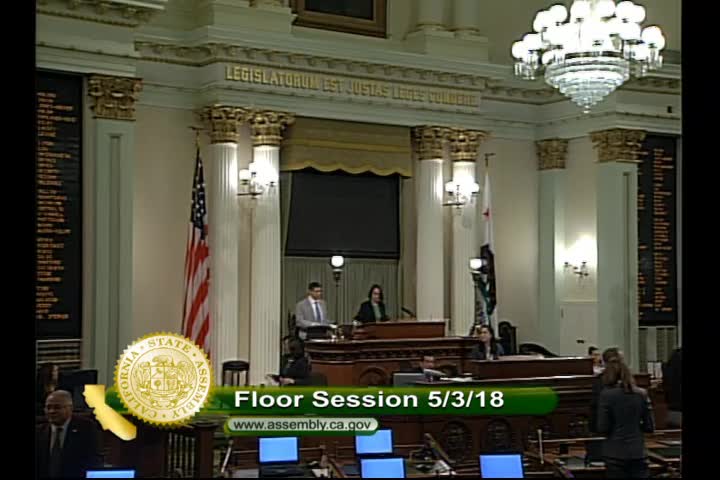 1MIN
Assembly Floor
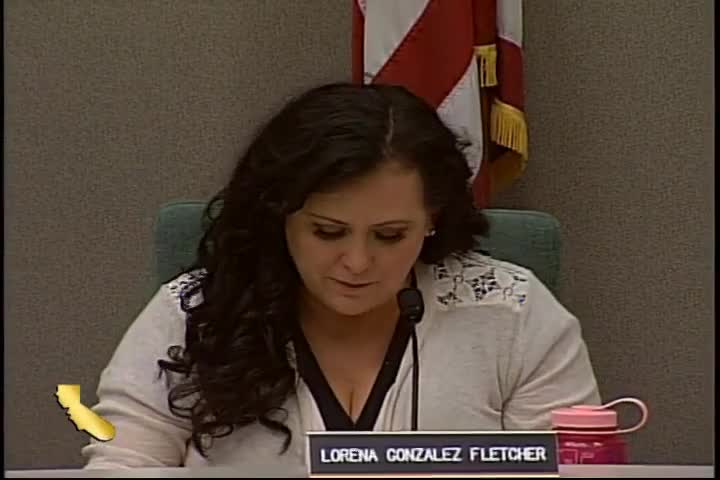 58SEC
Assembly Standing Committee on Appropriations
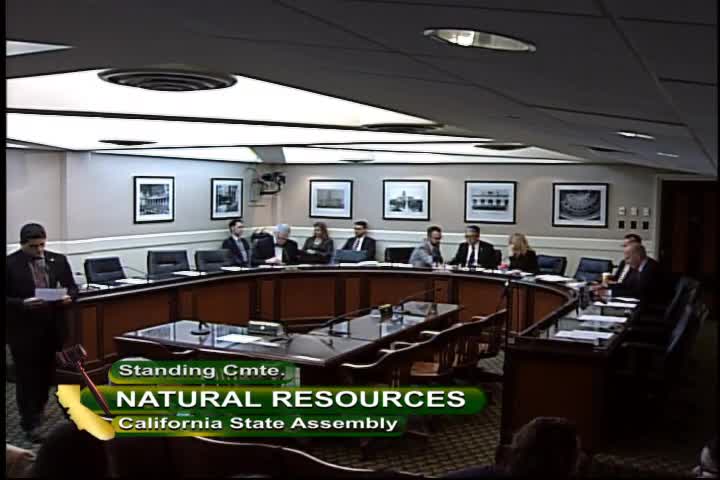 5MIN
Assembly Standing Committee on Natural Resources
Bill Author

Bill Co-Author(s):