AB 2069: Medicinal cannabis: employment discrimination.
- Session Year: 2017-2018
- House: Assembly
- Latest Version Date: 2018-04-16
Existing law, the California Fair Employment and Housing Act, protects and safeguards the right and opportunity of all persons to seek, obtain, and hold employment without discrimination, abridgment, or harassment on account of race, religious creed, color, national origin, ancestry, physical disability, mental disability, medical condition, genetic information, marital status, sex, gender, gender identity, gender expression, age, sexual orientation, or military and veteran status. The act prohibits various forms of employment discrimination, including discharging or refusing to hire or to select for training programs on a prohibited basis.
Existing law, the Compassionate Use Act of 1996, provides that a patient or a patients primary caregiver who possesses or cultivates marijuana for personal medical purposes of the patient upon the written or oral recommendation or approval of a physician is not subject to conviction for offenses relating to possession and cultivation of marijuana. Existing law also requires the State Department of Public Health to establish a voluntary program for the issuance of identification cards to qualified patients who are entitled to the protections of the act.
This bill would prohibit an employer from engaging in employment discrimination against a person on the basis of his or her status as, or positive drug test for cannabis by, provide that, when used to treat a known physical or mental disability or known medical condition, the medical use of cannabis by a qualified patient or person with an identification card. card is subject to reasonable accommodation. The bill would provide that it does not prohibit an employer from refusing to hire an individual or discharging an employee who is a qualified or person with an identification card, if hiring or failing to discharge an employee would cause the employer to lose a monetary or licensing-related benefit under federal law. The bill would also provide that it does not prohibit an employer from terminating the employment of, or taking corrective action against, an employee who is impaired on the property or premises of the place of employment or during the hours of employment because of the use of cannabis.
Existing law, the California Fair Employment and Housing Act, protects and safeguards the right and opportunity of all persons to seek, obtain, and hold employment without discrimination, abridgment, or harassment on account of race, religious creed, color, national origin, ancestry, physical disability, mental disability, medical condition, genetic information, marital status, sex, gender, gender identity, gender expression, age, sexual orientation, or military and veteran status. The act prohibits various forms of employment discrimination, including discharging or refusing to hire or to select for training programs on a prohibited basis.
Existing law, the Compassionate Use Act of 1996, provides that a patient or a patients primary caregiver who possesses or cultivates marijuana for personal medical purposes of the patient upon the written or oral recommendation or approval of a physician is not subject to conviction for offenses relating to possession and cultivation of marijuana. Existing law also requires the State Department of Public Health to establish a voluntary program for the issuance of identification cards to qualified patients who are entitled to the protections of the act.
This bill would prohibit an employer from engaging in employment discrimination against a person on the basis of his or her status as, or positive drug test for cannabis by, a qualified patient or person with an identification card. The bill would provide that it does not prohibit an employer from refusing to hire an individual or discharging an employee who is a qualified or person with an identification card, if hiring or failing to discharge an employee would cause the employer to lose a monetary or licensing-related benefit under federal law. The bill would also provide that it does not prohibit an employer from terminating the employment of, or taking corrective action against, an employee who is impaired on the property or premises of the place of employment or during the hours of employment because of the use of cannabis.
(a)The Legislature finds and declares all of the following:
(1)The Compassionate Use Act of 1996 authorizes seriously ill Californians to obtain and use marijuana for medical purposes when recommended by a physician.
(2)The Adult Use of Marijuana Act, approved by California voters on November 8, 2016, further permits all adults 21 or over to use, possess, and obtain cannabis.
(3)Many workers and their physicians find medical cannabis beneficial for relieving painful or disabling conditions that could otherwise impede their performance. Studies funded by the State of California and elsewhere have found cannabis to be effective in the treatment of chronic pain and other conditions. Studies have also found that access to medical cannabis can reduce opioid dependence, abuse, and overdose deaths.
(4)Many employers nonetheless prohibit workers from using medical cannabis but allow them to use other, more dangerous and addictive drugs such as opiates when prescribed by their physicians.
(5)Eleven states (Arizona, Arkansas, Connecticut, Delaware, Illinois, Maine, Minnesota, Nevada, New York, Pennsylvania, and Rhode Island) have laws protecting medical cannabis patients against employment discrimination.
(6)No scientific evidence exists that medical cannabis users are substandard employees.
(7)Workplace drug tests have never been demonstrated safe or effective by the United States Food and Drug Administration in improving workplace safety.
(8)Current workplace drug testing technology discriminates against medical cannabis use that has occurred days or weeks previously.
(b)The intent of the Legislature in enacting this act is to make it unlawful for an employer to discriminate against a person in hiring, termination, or any term or condition of employment or otherwise penalize a person if the discrimination is based upon the persons status as a qualified patient or person with an identification card entitled to the protections of the Compassionate Use Act of 1996 or a positive drug test for cannabis by a qualified patient or person with an identification card. or the use of cannabis by those persons for medical purposes. It is not the intent of the Legislature to prohibit an employer from terminating the employment of, or taking other corrective action against, an employee who is impaired on the property or premises of the place of employment or during the hours of employment because of the medical use of medical cannabis.
SEC. 2.Section 12940 of the Government Code is amended to read:12940.It is an unlawful employment practice, unless based upon a bona fide occupational qualification, or, except where based upon applicable security regulations established by the United States or the State of California:
(a)For an employer, because of the race, religious creed, color, national origin, ancestry, physical disability, mental disability, medical condition, status as, or positive drug test for cannabis by, a qualified patient or person with an identification card, as those terms are defined in Section 11362.7 of the Health and Safety Code, genetic information, marital status, sex, gender, gender identity, gender expression, age, sexual orientation, or military and veteran status of any person, to refuse to hire or employ the person or to refuse to select the person for a training program leading to employment, or to bar or to discharge the person from employment or from a training program leading to employment, or to discriminate against the person in compensation or in terms, conditions, or privileges of employment.
(1)This part does not prohibit an employer from refusing to hire or discharging an employee with a physical or mental disability, or subject an employer to any legal liability resulting from the refusal to employ or the discharge of an employee with a physical or mental disability, if the employee, because of a physical or mental disability, is unable to perform the employees essential duties even with reasonable accommodations, or cannot perform those duties in a manner that would not endanger the employees health or safety or the health or safety of others even with reasonable accommodations.
(2)This part does not prohibit an employer from refusing to hire or discharging an employee who, because of the employees medical condition, is unable to perform the employees essential duties even with reasonable accommodations, or cannot perform those duties in a manner that would not endanger the employees health or safety or the health or safety of others even with reasonable accommodations. Nothing in this part shall subject an employer to any legal liability resulting from the refusal to employ or the discharge of an employee who, because of the employees medical condition, is unable to perform the employees essential duties, or cannot perform those duties in a manner that would not endanger the employees health or safety or the health or safety of others even with reasonable accommodations.
(3)Nothing in this part relating to discrimination on account of marital status shall do either of the following:
(A)Affect the right of an employer to reasonably regulate, for reasons of supervision, safety, security, or morale, the working of spouses in the same department, division, or facility, consistent with the rules and regulations adopted by the commission.
(B)Prohibit bona fide health plans from providing additional or greater benefits to employees with dependents than to those employees without or with fewer dependents.
(4)Nothing in this part relating to discrimination on account of sex shall affect the right of an employer to use veteran status as a factor in employee selection or to give special consideration to Vietnam-era veterans.
(5)(A)This part does not prohibit an employer from refusing to employ an individual because of the individuals age if the law compels or provides for that refusal. Promotions within the existing staff, hiring or promotion on the basis of experience and training, rehiring on the basis of seniority and prior service with the employer, or hiring under an established recruiting program from high schools, colleges, universities, or trade schools do not, in and of themselves, constitute unlawful employment practices.
(B)The provisions of this part relating to discrimination on the basis of age do not prohibit an employer from providing health benefits or health care reimbursement plans to retired persons that are altered, reduced, or eliminated when the person becomes eligible for Medicare health benefits. This subparagraph applies to all retiree health benefit plans and contractual provisions or practices concerning retiree health benefits and health care reimbursement plans in effect on or after January 1, 2011.
(6)(A)When used to treat a known physical or mental disability or known medical condition, the medical use of cannabis by a qualified patient or person with an identification card, as those terms are defined in Section 11362.7 of the Health and Safety Code, shall be subject to reasonable accommodation, including the use of the interactive process.
(6)(A)This(B)This part does not prohibit an employer from refusing to hire an individual or discharging an employee who is a qualified patient or person with an identification card, as those terms are defined in Section 11362.7 of the Health and Safety Code, if hiring the individual or failing to discharge the employee would cause the employer to lose a monetary or licensing-related benefit under federal law or regulations.
(B)(C)This part does not prohibit an employer from terminating the employment of, or taking other corrective action against, an employee who is impaired on the property or premises of the place of employment or during the hours of employment because of the use of cannabis.
(b)For a labor organization, because of the race, religious creed, color, national origin, ancestry, physical disability, mental disability, medical condition, genetic information, marital status, sex, gender, gender identity, gender expression, age, sexual orientation, or military and veteran status of any person, to exclude, expel, or restrict from its membership the person, or to provide only second-class or segregated membership or to discriminate against any person because of the race, religious creed, color, national origin, ancestry, physical disability, mental disability, medical condition, genetic information, marital status, sex, gender, gender identity, gender expression, age, sexual orientation, or military and veteran status of the person in the election of officers of the labor organization or in the selection of the labor organizations staff or to discriminate in any way against any of its members or against any employer or against any person employed by an employer.
(c)For any person to discriminate against any person in the selection, termination, training, or other terms or treatment of that person in any apprenticeship training program, any other training program leading to employment, an unpaid internship, or another limited duration program to provide unpaid work experience for that person because of the race, religious creed, color, national origin, ancestry, physical disability, mental disability, medical condition, genetic information, marital status, sex, gender, gender identity, gender expression, age, sexual orientation, or military and veteran status of the person discriminated against.
(d)For any employer or employment agency to print or circulate or cause to be printed or circulated any publication, or to make any nonjob-related inquiry of an employee or applicant, either verbal or through use of an application form, that expresses, directly or indirectly, any limitation, specification, or discrimination as to race, religious creed, color, national origin, ancestry, physical disability, mental disability, medical condition, genetic information, marital status, sex, gender, gender identity, gender expression, age, sexual orientation, or military and veteran status, or any intent to make any such limitation, specification, or discrimination. This part does not prohibit an employer or employment agency from inquiring into the age of an applicant, or from specifying age limitations, if the law compels or provides for that action.
(e)(1)Except as provided in paragraph (2) or (3), for any employer or employment agency to require any medical or psychological examination of an applicant, to make any medical or psychological inquiry of an applicant, to make any inquiry whether an applicant has a mental disability or physical disability or medical condition, or to make any inquiry regarding the nature or severity of a physical disability, mental disability, or medical condition.
(2)Notwithstanding paragraph (1), an employer or employment agency may inquire into the ability of an applicant to perform job-related functions and may respond to an applicants request for reasonable accommodation.
(3)Notwithstanding paragraph (1), an employer or employment agency may require a medical or psychological examination or make a medical or psychological inquiry of a job applicant after an employment offer has been made but prior to the commencement of employment duties, provided that the examination or inquiry is job related and consistent with business necessity and that all entering employees in the same job classification are subject to the same examination or inquiry.
(f)(1)Except as provided in paragraph (2), for any employer or employment agency to require any medical or psychological examination of an employee, to make any medical or psychological inquiry of an employee, to make any inquiry whether an employee has a mental disability, physical disability, or medical condition, or to make any inquiry regarding the nature or severity of a physical disability, mental disability, or medical condition.
(2)Notwithstanding paragraph (1), an employer or employment agency may require any examinations or inquiries that it can show to be job related and consistent with business necessity. An employer or employment agency may conduct voluntary medical examinations, including voluntary medical histories, which are part of an employee health program available to employees at that worksite.
(g)For any employer, labor organization, or employment agency to harass, discharge, expel, or otherwise discriminate against any person because the person has made a report pursuant to Section 11161.8 of the Penal Code that prohibits retaliation against hospital employees who report suspected patient abuse by health facilities or community care facilities.
(h)For any employer, labor organization, employment agency, or person to discharge, expel, or otherwise discriminate against any person because the person has opposed any practices forbidden under this part or because the person has filed a complaint, testified, or assisted in any proceeding under this part.
(i)For any person to aid, abet, incite, compel, or coerce the doing of any of the acts forbidden under this part, or to attempt to do so.
(j)(1)For an employer, labor organization, employment agency, apprenticeship training program or any training program leading to employment, or any other person, because of race, religious creed, color, national origin, ancestry, physical disability, mental disability, medical condition, genetic information, marital status, sex, gender, gender identity, gender expression, age, sexual orientation, or military and veteran status, to harass an employee, an applicant, an unpaid intern or volunteer, or a person providing services pursuant to a contract. Harassment of an employee, an applicant, an unpaid intern or volunteer, or a person providing services pursuant to a contract by an employee, other than an agent or supervisor, shall be unlawful if the entity, or its agents or supervisors, knows or should have known of this conduct and fails to take immediate and appropriate corrective action. An employer may also be responsible for the acts of nonemployees, with respect to sexual harassment of employees, applicants, unpaid interns or volunteers, or persons providing services pursuant to a contract in the workplace, if the employer, or its agents or supervisors, knows or should have known of the conduct and fails to take immediate and appropriate corrective action. In reviewing cases involving the acts of nonemployees, the extent of the employers control and any other legal responsibility that the employer may have with respect to the conduct of those nonemployees shall be considered. An entity shall take all reasonable steps to prevent harassment from occurring. Loss of tangible job benefits shall not be necessary in order to establish harassment.
(2)The provisions of this subdivision are declaratory of existing law, except for the new duties imposed on employers with regard to harassment.
(3)An employee of an entity subject to this subdivision is personally liable for any harassment prohibited by this section that is perpetrated by the employee, regardless of whether the employer or covered entity knows or should have known of the conduct and fails to take immediate and appropriate corrective action.
(4)(A)For purposes of this subdivision only, employer means any person regularly employing one or more persons or regularly receiving the services of one or more persons providing services pursuant to a contract, or any person acting as an agent of an employer, directly or indirectly, the state, or any political or civil subdivision of the state, and cities. The definition of employer in subdivision (d) of Section 12926 applies to all provisions of this section other than this subdivision.
(B)Notwithstanding subparagraph (A), for purposes of this subdivision, employer does not include a religious association or corporation not organized for private profit, except as provided in Section 12926.2.
(C)For purposes of this subdivision, harassment because of sex includes sexual harassment, gender harassment, and harassment based on pregnancy, childbirth, or related medical conditions. Sexually harassing conduct need not be motivated by sexual desire.
(5)For purposes of this subdivision, a person providing services pursuant to a contract means a person who meets all of the following criteria:
(A)The person has the right to control the performance of the contract for services and discretion as to the manner of performance.
(B)The person is customarily engaged in an independently established business.
(C)The person has control over the time and place the work is performed, supplies the tools and instruments used in the work, and performs work that requires a particular skill not ordinarily used in the course of the employers work.
(k)For an employer, labor organization, employment agency, apprenticeship training program, or any training program leading to employment, to fail to take all reasonable steps necessary to prevent discrimination and harassment from occurring.
(l)(1)For an employer or other entity covered by this part to refuse to hire or employ a person or to refuse to select a person for a training program leading to employment or to bar or to discharge a person from employment or from a training program leading to employment, or to discriminate against a person in compensation or in terms, conditions, or privileges of employment because of a conflict between the persons religious belief or observance and any employment requirement, unless the employer or other entity covered by this part demonstrates that it has explored any available reasonable alternative means of accommodating the religious belief or observance, including the possibilities of excusing the person from those duties that conflict with the persons religious belief or observance or permitting those duties to be performed at another time or by another person, but is unable to reasonably accommodate the religious belief or observance without undue hardship, as defined in subdivision (u) of Section 12926, on the conduct of the business of the employer or other entity covered by this part. Religious belief or observance, as used in this section, includes, but is not limited to, observance of a Sabbath or other religious holy day or days, reasonable time necessary for travel prior and subsequent to a religious observance, and religious dress practice and religious grooming practice as described in subdivision (q) of Section 12926. This subdivision shall also apply to an apprenticeship training program, an unpaid internship, and any other program to provide unpaid experience for a person in the workplace or industry.
(2)An accommodation of an individuals religious dress practice or religious grooming practice is not reasonable if the accommodation requires segregation of the individual from other employees or the public.
(3)An accommodation is not required under this subdivision if it would result in a violation of this part or any other law prohibiting discrimination or protecting civil rights, including subdivision (b) of Section 51 of the Civil Code and Section 11135 of this code.
(4)For an employer or other entity covered by this part to, in addition to the employee protections provided pursuant to subdivision (h), retaliate or otherwise discriminate against a person for requesting accommodation under this subdivision, regardless of whether the request was granted.
(m)(1)For an employer or other entity covered by this part to fail to make reasonable accommodation for the known physical or mental disability of an applicant or employee. Nothing in this subdivision or in paragraph (1) or (2) of subdivision (a) shall be construed to require an accommodation that is demonstrated by the employer or other covered entity to produce undue hardship, as defined in subdivision (u) of Section 12926, to its operation.
(2)For an employer or other entity covered by this part to, in addition to the employee protections provided pursuant to subdivision (h), retaliate or otherwise discriminate against a person for requesting accommodation under this subdivision, regardless of whether the request was granted.
(n)For an employer or other entity covered by this part to fail to engage in a timely, good faith, interactive process with the employee or applicant to determine effective reasonable accommodations, if any, in response to a request for reasonable accommodation by an employee or applicant with a known physical or mental disability or known medical condition.
(o)For an employer or other entity covered by this part, to subject, directly or indirectly, any employee, applicant, or other person to a test for the presence of a genetic characteristic.
(p)Nothing in this section shall be interpreted as preventing the ability of employers to identify members of the military or veterans for purposes of awarding a veterans preference as permitted by law.
(a)The Legislature finds and declares all of the following:
(1)The Compassionate Use Act of 1996 authorizes seriously ill Californians to obtain and use marijuana for medical purposes when recommended by a physician.
(2)The Adult Use of Marijuana Act, approved by California voters on November 8, 2016, further permits all adults 21 or over to use, possess, and obtain cannabis.
(3)Many workers and their physicians find medical cannabis beneficial for relieving painful or disabling conditions that could otherwise impede their performance.
(4)Many employers nonetheless prohibit workers from using medical cannabis but allow them to use other, more dangerous and addictive drugs such as opiates when prescribed by their physicians.
(5)Eleven states (Arizona, Arkansas, Connecticut, Delaware, Illinois, Maine, Minnesota, Nevada, New York, Pennsylvania, and Rhode Island) have laws protecting medical cannabis patients against employment discrimination.
(6)No scientific evidence exists that medical cannabis users are substandard employees.
(7)Workplace drug tests have never been demonstrated safe or effective by the United States Food and Drug Administration in improving workplace safety.
(8)Current workplace drug testing technology discriminates against medical cannabis use that has occurred days or weeks previously.
(b)The intent of the Legislature in enacting this act is to make it unlawful for an employer to discriminate against a person in hiring, termination, or any term or condition of employment or otherwise penalize a person if the discrimination is based upon the persons status as a qualified patient or person with an identification card entitled to the protections of the Compassionate Use Act of 1996 or a positive drug test for cannabis by a qualified patient or person with an identification card. It is not the intent of the Legislature to prohibit an employer from terminating the employment of, or taking other corrective action against, an employee who is impaired on the property or premises of the place of employment or during the hours of employment because of the medical use of medical cannabis.
SEC. 2.Section 12940 of the Government Code is amended to read:12940.It is an unlawful employment practice, unless based upon a bona fide occupational qualification, or, except where based upon applicable security regulations established by the United States or the State of California:
(a)For an employer, because of the race, religious creed, color, national origin, ancestry, physical disability, mental disability, medical condition, status as, or positive drug test for cannabis by, a qualified patient or person with an identification card, as those terms are defined in Section 11362.7 of the Health and Safety Code, genetic information, marital status, sex, gender, gender identity, gender expression, age, sexual orientation, or military and veteran status of any person, to refuse to hire or employ the person or to refuse to select the person for a training program leading to employment, or to bar or to discharge the person from employment or from a training program leading to employment, or to discriminate against the person in compensation or in terms, conditions, or privileges of employment.
(1)This part does not prohibit an employer from refusing to hire or discharging an employee with a physical or mental disability, or subject an employer to any legal liability resulting from the refusal to employ or the discharge of an employee with a physical or mental disability, if the employee, because of a physical or mental disability, is unable to perform the employees essential duties even with reasonable accommodations, or cannot perform those duties in a manner that would not endanger the employees health or safety or the health or safety of others even with reasonable accommodations.
(2)This part does not prohibit an employer from refusing to hire or discharging an employee who, because of the employees medical condition, is unable to perform the employees essential duties even with reasonable accommodations, or cannot perform those duties in a manner that would not endanger the employees health or safety or the health or safety of others even with reasonable accommodations. Nothing in this part shall subject an employer to any legal liability resulting from the refusal to employ or the discharge of an employee who, because of the employees medical condition, is unable to perform the employees essential duties, or cannot perform those duties in a manner that would not endanger the employees health or safety or the health or safety of others even with reasonable accommodations.
(3)Nothing in this part relating to discrimination on account of marital status shall do either of the following:
(A)Affect the right of an employer to reasonably regulate, for reasons of supervision, safety, security, or morale, the working of spouses in the same department, division, or facility, consistent with the rules and regulations adopted by the commission.
(B)Prohibit bona fide health plans from providing additional or greater benefits to employees with dependents than to those employees without or with fewer dependents.
(4)Nothing in this part relating to discrimination on account of sex shall affect the right of an employer to use veteran status as a factor in employee selection or to give special consideration to Vietnam-era veterans.
(5)(A)This part does not prohibit an employer from refusing to employ an individual because of the individuals age if the law compels or provides for that refusal. Promotions within the existing staff, hiring or promotion on the basis of experience and training, rehiring on the basis of seniority and prior service with the employer, or hiring under an established recruiting program from high schools, colleges, universities, or trade schools do not, in and of themselves, constitute unlawful employment practices.
(B)The provisions of this part relating to discrimination on the basis of age do not prohibit an employer from providing health benefits or health care reimbursement plans to retired persons that are altered, reduced, or eliminated when the person becomes eligible for Medicare health benefits. This subparagraph applies to all retiree health benefit plans and contractual provisions or practices concerning retiree health benefits and health care reimbursement plans in effect on or after January 1, 2011.
(6)(A)This part does not prohibit an employer from refusing to hire an individual or discharging an employee who is a qualified patient or person with an identification card, as those terms are defined in Section 11362.7 of the Health and Safety Code, if hiring the individual or failing to discharge the employee would cause the employer to lose a monetary or licensing-related benefit under federal law or regulations.
(B)This part does not prohibit an employer from terminating the employment of, or taking other corrective action against, an employee who is impaired on the property or premises of the place of employment or during the hours of employment because of the use of cannabis.
(b)For a labor organization, because of the race, religious creed, color, national origin, ancestry, physical disability, mental disability, medical condition, genetic information, marital status, sex, gender, gender identity, gender expression, age, sexual orientation, or military and veteran status of any person, to exclude, expel, or restrict from its membership the person, or to provide only second-class or segregated membership or to discriminate against any person because of the race, religious creed, color, national origin, ancestry, physical disability, mental disability, medical condition, genetic information, marital status, sex, gender, gender identity, gender expression, age, sexual orientation, or military and veteran status of the person in the election of officers of the labor organization or in the selection of the labor organizations staff or to discriminate in any way against any of its members or against any employer or against any person employed by an employer.
(c)For any person to discriminate against any person in the selection, termination, training, or other terms or treatment of that person in any apprenticeship training program, any other training program leading to employment, an unpaid internship, or another limited duration program to provide unpaid work experience for that person because of the race, religious creed, color, national origin, ancestry, physical disability, mental disability, medical condition, genetic information, marital status, sex, gender, gender identity, gender expression, age, sexual orientation, or military and veteran status of the person discriminated against.
(d)For any employer or employment agency to print or circulate or cause to be printed or circulated any publication, or to make any nonjob-related inquiry of an employee or applicant, either verbal or through use of an application form, that expresses, directly or indirectly, any limitation, specification, or discrimination as to race, religious creed, color, national origin, ancestry, physical disability, mental disability, medical condition, genetic information, marital status, sex, gender, gender identity, gender expression, age, sexual orientation, or military and veteran status, or any intent to make any such limitation, specification, or discrimination. This part does not prohibit an employer or employment agency from inquiring into the age of an applicant, or from specifying age limitations, if the law compels or provides for that action.
(e)(1)Except as provided in paragraph (2) or (3), for any employer or employment agency to require any medical or psychological examination of an applicant, to make any medical or psychological inquiry of an applicant, to make any inquiry whether an applicant has a mental disability or physical disability or medical condition, or to make any inquiry regarding the nature or severity of a physical disability, mental disability, or medical condition.
(2)Notwithstanding paragraph (1), an employer or employment agency may inquire into the ability of an applicant to perform job-related functions and may respond to an applicants request for reasonable accommodation.
(3)Notwithstanding paragraph (1), an employer or employment agency may require a medical or psychological examination or make a medical or psychological inquiry of a job applicant after an employment offer has been made but prior to the commencement of employment duties, provided that the examination or inquiry is job related and consistent with business necessity and that all entering employees in the same job classification are subject to the same examination or inquiry.
(f)(1)Except as provided in paragraph (2), for any employer or employment agency to require any medical or psychological examination of an employee, to make any medical or psychological inquiry of an employee, to make any inquiry whether an employee has a mental disability, physical disability, or medical condition, or to make any inquiry regarding the nature or severity of a physical disability, mental disability, or medical condition.
(2)Notwithstanding paragraph (1), an employer or employment agency may require any examinations or inquiries that it can show to be job related and consistent with business necessity. An employer or employment agency may conduct voluntary medical examinations, including voluntary medical histories, which are part of an employee health program available to employees at that worksite.
(g)For any employer, labor organization, or employment agency to harass, discharge, expel, or otherwise discriminate against any person because the person has made a report pursuant to Section 11161.8 of the Penal Code that prohibits retaliation against hospital employees who report suspected patient abuse by health facilities or community care facilities.
(h)For any employer, labor organization, employment agency, or person to discharge, expel, or otherwise discriminate against any person because the person has opposed any practices forbidden under this part or because the person has filed a complaint, testified, or assisted in any proceeding under this part.
(i)For any person to aid, abet, incite, compel, or coerce the doing of any of the acts forbidden under this part, or to attempt to do so.
(j)(1)For an employer, labor organization, employment agency, apprenticeship training program or any training program leading to employment, or any other person, because of race, religious creed, color, national origin, ancestry, physical disability, mental disability, medical condition, genetic information, marital status, sex, gender, gender identity, gender expression, age, sexual orientation, or military and veteran status, to harass an employee, an applicant, an unpaid intern or volunteer, or a person providing services pursuant to a contract. Harassment of an employee, an applicant, an unpaid intern or volunteer, or a person providing services pursuant to a contract by an employee, other than an agent or supervisor, shall be unlawful if the entity, or its agents or supervisors, knows or should have known of this conduct and fails to take immediate and appropriate corrective action. An employer may also be responsible for the acts of nonemployees, with respect to sexual harassment of employees, applicants, unpaid interns or volunteers, or persons providing services pursuant to a contract in the workplace, if the employer, or its agents or supervisors, knows or should have known of the conduct and fails to take immediate and appropriate corrective action. In reviewing cases involving the acts of nonemployees, the extent of the employers control and any other legal responsibility that the employer may have with respect to the conduct of those nonemployees shall be considered. An entity shall take all reasonable steps to prevent harassment from occurring. Loss of tangible job benefits shall not be necessary in order to establish harassment.
(2)The provisions of this subdivision are declaratory of existing law, except for the new duties imposed on employers with regard to harassment.
(3)An employee of an entity subject to this subdivision is personally liable for any harassment prohibited by this section that is perpetrated by the employee, regardless of whether the employer or covered entity knows or should have known of the conduct and fails to take immediate and appropriate corrective action.
(4)(A)For purposes of this subdivision only, employer means any person regularly employing one or more persons or regularly receiving the services of one or more persons providing services pursuant to a contract, or any person acting as an agent of an employer, directly or indirectly, the state, or any political or civil subdivision of the state, and cities. The definition of employer in subdivision (d) of Section 12926 applies to all provisions of this section other than this subdivision.
(B)Notwithstanding subparagraph (A), for purposes of this subdivision, employer does not include a religious association or corporation not organized for private profit, except as provided in Section 12926.2.
(C)For purposes of this subdivision, harassment because of sex includes sexual harassment, gender harassment, and harassment based on pregnancy, childbirth, or related medical conditions. Sexually harassing conduct need not be motivated by sexual desire.
(5)For purposes of this subdivision, a person providing services pursuant to a contract means a person who meets all of the following criteria:
(A)The person has the right to control the performance of the contract for services and discretion as to the manner of performance.
(B)The person is customarily engaged in an independently established business.
(C)The person has control over the time and place the work is performed, supplies the tools and instruments used in the work, and performs work that requires a particular skill not ordinarily used in the course of the employers work.
(k)For an employer, labor organization, employment agency, apprenticeship training program, or any training program leading to employment, to fail to take all reasonable steps necessary to prevent discrimination and harassment from occurring.
(l)(1)For an employer or other entity covered by this part to refuse to hire or employ a person or to refuse to select a person for a training program leading to employment or to bar or to discharge a person from employment or from a training program leading to employment, or to discriminate against a person in compensation or in terms, conditions, or privileges of employment because of a conflict between the persons religious belief or observance and any employment requirement, unless the employer or other entity covered by this part demonstrates that it has explored any available reasonable alternative means of accommodating the religious belief or observance, including the possibilities of excusing the person from those duties that conflict with the persons religious belief or observance or permitting those duties to be performed at another time or by another person, but is unable to reasonably accommodate the religious belief or observance without undue hardship, as defined in subdivision (u) of Section 12926, on the conduct of the business of the employer or other entity covered by this part. Religious belief or observance, as used in this section, includes, but is not limited to, observance of a Sabbath or other religious holy day or days, reasonable time necessary for travel prior and subsequent to a religious observance, and religious dress practice and religious grooming practice as described in subdivision (q) of Section 12926. This subdivision shall also apply to an apprenticeship training program, an unpaid internship, and any other program to provide unpaid experience for a person in the workplace or industry.
(2)An accommodation of an individuals religious dress practice or religious grooming practice is not reasonable if the accommodation requires segregation of the individual from other employees or the public.
(3)An accommodation is not required under this subdivision if it would result in a violation of this part or any other law prohibiting discrimination or protecting civil rights, including subdivision (b) of Section 51 of the Civil Code and Section 11135 of this code.
(4)For an employer or other entity covered by this part to, in addition to the employee protections provided pursuant to subdivision (h), retaliate or otherwise discriminate against a person for requesting accommodation under this subdivision, regardless of whether the request was granted.
(m)(1)For an employer or other entity covered by this part to fail to make reasonable accommodation for the known physical or mental disability of an applicant or employee. Nothing in this subdivision or in paragraph (1) or (2) of subdivision (a) shall be construed to require an accommodation that is demonstrated by the employer or other covered entity to produce undue hardship, as defined in subdivision (u) of Section 12926, to its operation.
(2)For an employer or other entity covered by this part to, in addition to the employee protections provided pursuant to subdivision (h), retaliate or otherwise discriminate against a person for requesting accommodation under this subdivision, regardless of whether the request was granted.
(n)For an employer or other entity covered by this part to fail to engage in a timely, good faith, interactive process with the employee or applicant to determine effective reasonable accommodations, if any, in response to a request for reasonable accommodation by an employee or applicant with a known physical or mental disability or known medical condition.
(o)For an employer or other entity covered by this part, to subject, directly or indirectly, any employee, applicant, or other person to a test for the presence of a genetic characteristic.
(p)Nothing in this section shall be interpreted as preventing the ability of employers to identify members of the military or veterans for purposes of awarding a veterans preference as permitted by law.
|
Date
|
Status
|
|---|---|
| May 25, 2018 | In committee: Held under submission. |
| May 16, 2018 | In committee: Set, first hearing. Referred to APPR. suspense file. |
| May 9, 2018 | In committee: Hearing postponed by committee. |
| Apr 26, 2018 | From committee: Do pass and re-refer to Com. on APPR. (Ayes 5. Noes 1.) (April 25). Re-referred to Com. on APPR. |
| Apr 17, 2018 | Re-referred to Com. on L. & E. |
| Apr 16, 2018 | From committee chair, with author's amendments: Amend, and re-refer to Com. on L. & E. Read second time and amended. |
| Mar 22, 2018 | Referred to Com. on L. & E. |
| Feb 8, 2018 | From printer. May be heard in committee March 10. |
| Feb 7, 2018 | Read first time. To print. |
|
Date
|
Description
|
Location
|
Votes
|
|
|---|---|---|---|---|
| Apr 25, 2018 | Do pass and be re-referred to the Committee on [Appropriations] | Assembly Standing Committee on Labor and Employment |
Passed |
This list shows positions taken on this bill by organizations on the date displayed, which is linked to the original source.
Positions by individuals are not included.
Date of Hearing: May 16, 2018
ASSEMBLY COMMITTEE ON APPROPRIATIONS
Lorena Gonzalez Fletcher, Chair
ABPCA Bill Id:AB 2069
Author:(Bonta) – As Amended Ver:April 16, 2018
Policy Committee: | Labor and Employment | Vote: | 5 - 1 |
|
| ||
|
|
Urgency: No State Mandated Local Program: No Reimbursable: No
SUMMARY:
This bill provides that the medical use of cannabis by a qualified patient or person with an identification card to treat a known physical mental disability or medical condition is subject to reasonable accommodation by an employer.
FISCAL EFFECT:
- Likely minor costs related to a possible increase in claims for Department of Fair Employment and Housing (DFEH).
- Potentially significant costs, possibly in excess of $300,000, across state agencies for them to develop new procedures to implement AB 2069. While the bill’s proposed reasonable accommodation standard is straightforward, it is likely to require some considerable upfront work for state employers to ensure compliance. For example, employers will need to determine if an employee is impaired on the premises before taking corrective action for cannabis use, but determinations of impairment from cannabis use is difficult and there is no accepted standard practice.
COMMENTS:
- Background. Under the Fair Employment and Housing Act (FEHA), employers may refuse to hire or may discharge an employee with disability or medical condition if the employee cannot perform the essential duties of the job, even with reasonable accommodation. An employer, therefore, has an affirmative duty to reasonably accommodate an employee with a covered disability or condition if the accommodation enables the employee to perform the essential functions of the job.
Generally, FEHA considers the duty of an employer to reasonably accommodate a process and not a singular decision. Employers must engage in a timely, good faith, interactive process with the employee or employee’s representative, and both parties are expected to exchange essential information to further that process.
- Purpose. According to the author, there is a disconnect between the legal use of cannabis to successfully manage medical conditions and how it is regarded in the employment context. Under AB 2069, an employer must engage in the reasonable accommodation process with an employee who is treating a known condition with medical cannabis.
Analysis Prepared by: Luke Reidenbach / APPR. / (916) 319-2081
Date of Hearing: April 25, 2018
ASSEMBLY COMMITTEE ON LABOR AND EMPLOYMENT
Tony Thurmond, Chair
ABPCA Bill Id:AB 2069 (
Author:Bonta) – As Amended Ver:April 16, 2018
SUBJECT: Medicinal cannabis: employment discrimination
SUMMARY: Provides that the medical use of cannabis by a qualified patient or person with an identification card to treat a known physical or mental disability or medical condition is subject to reasonable accommodation by an employer. Specifically, this bill:
- Makes findings and declarations regarding the use of cannabis to relieve painful and debilitating conditions and the trend in a number of states to pass legislation protecting medical cannabis patients from employment discrimination.
- Provides that, when used to treat a known physical or mental disability or known medical condition, the medical use of cannabis by a qualified patient or person with an identification card is subject to reasonable accommodation by an employer.
- Provides that an employer is not prohibited from refusing to hire an individual or discharging an employee who is a qualified or person with an identification card, if hiring or failing to discharge an employee would cause the employer to lose a monetary or licensing-related benefit under federal law.
- Provides that an employer is not prohibited from terminating the employment of, or taking corrective action against, an employee who is impaired on the property or premises of the place of employment or during the hours of employment because of the use of cannabis.
EXISTING LAW:
- Establishes the Fair Employment and Housing Act (FEHA), which protects the right and opportunity of all persons to seek, obtain, and hold employment without discrimination, abridgment, or harassment on account of race, religious creed, color, national origin, ancestry, physical disability, mental disability, medical condition, genetic information, marital status, sex, gender, gender identity, gender expression, age, sexual orientation, or military and veteran status.
- Prohibits, under the provisions of FEHA, various forms of employment discrimination, including discharging or refusing to hire or to select for training programs any person based on his or her protected status.
- Provides, under the Compassionate Use Act of 1996, that a patient or a patient’s primary caregiver who possesses or cultivates marijuana for personal medical purposes of the patient upon the recommendation or approval of a physician is not subject to criminal prosecution for offenses relating to possession and cultivation of marijuana and requires the State Department of Public Health to establish a voluntary program for the issuance of identification cards to qualified patients.
FISCAL EFFECT: Unknown
COMMENTS: According to the author, there is a disconnect between the legal use of cannabis to successfully manage medical conditions and how it is regarded in the employment context. The author contends that “workers and their physicians often find medical cannabis beneficial for relieving painful or disabling conditions that could otherwise impede their workplace performance. Many employers nonetheless prohibit workers from using medical cannabis but allow them to use other, more dangerous and addictive drugs such as opioids when prescribed by their physicians.”
What constitutes a disability or medical condition under FEHA?
FEHA provides that employers may not discriminate against employees on a number of protected bases, including an employee’s mental or physical disability or medical condition. California Code of Regulations (CCR) Section 11065 provides that the term disability is “to be broadly construed.” In addition, it defines “mental disability” as including, but not limited to, any mental or psychological disorder or condition that limits a major life activity.
CCR Section 11065 further defines “physical disability” as including, but not limited to, any anatomical loss, cosmetic disfigurement, physiological disease, disorder or condition that both affects a specified body system and limits a major life activity. “Medical condition” is defined as either a cancer related physical or mental health impairment or a genetic characteristic that is scientifically and medically identifiable and is known to cause a disease or disorder in a person or the person’s offspring.
What is a reasonable accommodation?
Under FEHA, an employer may refuse to hire or may discharge an employee with a physical or mental disability or a medical condition if the employee, due to his or her disability or condition, cannot perform the essential duties of the job even with reasonable accommodations. An employer, therefore, has an affirmative duty to reasonably accommodate an employee with a covered disability or condition if the accommodation enables the employee to perform the essential functions of the job and does not impose an undue hardship on the employer. See 2 CCR Section 11068.
A reasonable accommodation may be construed as imposing an undue hardship on an employer if it requires significant difficulty or expense when considered in light of a number of factors such as the overall financial resources of an employer and the nature and net cost of the accommodation. See 2 CCR Section 11065.
FEHA considers the duty of an employer to reasonably accommodate a process and not a singular decision. In identifying a reasonable accommodation for an employee, the employer is expected to engage in a “timely, good faith, interactive process” with an employee or the employee’s representative, with a known physical or mental disability or medical condition. See 2 CCR Section 11069. Both parties are expected to exchange essential information to further the process. In the case of the employee, this may mean furnishing medical documentation of the disability or the condition and the need for reasonable accommodation.
Under this bill, an employer must engage in the reasonable accommodation process with an employee who is treating a known physical or mental disability or medical condition with medical cannabis and is as a qualified patient or person with an identification card. The application of the duty to reasonably accommodate an employee’s medical cannabis use was rejected in Ross v. Raging Wire Telecoms, Inc., 174 P.3d 200, (2008), which held, among other things, that California’s Compassionate Use Act did not put the company on notice that employers would be required under FEHA to accommodate the use of cannabis. This bill seems to address that concern. Some state legislatures have also favored requiring employers to accommodate the medical use of cannabis under human rights statutes. New York, Arizona, Minnesota, and Illinois, have enacted laws that specifically require an employer to provide medical cannabis accommodations. “Employers in these ‘accommodation states’ may accommodate by giving the employee medicinal breaks or modifying his or her work schedule.”[1]
Arguments in Support
California NORML, a cosponsor of the bill, argues that “there is no reason to think that medical cannabis cannot be safely accommodated in the same way as legal prescriptions drugs. Eleven other states currently have laws protecting employment rights for legal medical cannabis users. Recent court decisions in Massachusetts, Connecticut, and Rhode Island have confirmed these rights.”
Arguments in Opposition
In opposition, a number of employer organizations, including the California Chamber of Commerce, argue that the bill goes too far and encroaches on an employer’s right to effectively manage the workplace. The Chamber states, “Under current law established through case law, as well as in AB 266 (Bonta) as part of the medical cannabis regulation legislation in 2015, an employer has the right to maintain a drug-free workplace, within certain parameters. The legislative language in AB 266 was adopted to address significant employer concerns regarding the ability to maintain a drug-free workplace. This assurance also addresses voter's apparent concern with Proposition 19 (The Regulate, Control and Tax Cannabis Act of 2010).”
Prior Legislation
AB 266 (Bonta) Chapter 689, Statutes of 2015 enacted the Medical Marijuana Regulation and Safety Act for the licensure and regulation of medical marijuana and established within the Department of Consumer Affairs the Bureau of Medical Marijuana Regulation, under the supervision and control of the Director of Consumer Affairs.
AB 2279 (Leno) of 2008 would have prohibited an employer from discriminating against a person in hiring, termination, or any term or condition of employment or otherwise penalize a person, if the discrimination is based upon the person’s status as a qualified patient or a positive drug test for marijuana and would authorize a person who has suffered discrimination in violation of the bill to bring a civil cause of action. The bill was vetoed by Governor Schwarzenegger.
REGISTERED SUPPORT / OPPOSITION:
Support
Americans for Safe Access
Bay Area Lawyer's for Individual Freedom
California NORML (cosponsor)
CMG/Caliva
Conference of California Bar Association
Engineers and Scientists of California, Local 20
SEIU California
Supernova Women
United Food and Commercial Workers (cosponsor)
Opposition
Agricultural Council of California
Allied Safety and Health, LLC
Associated Builders and Contractors, Inc.
Associated General Contractors
Brea Chamber of Commerce
California Ambulance Association
California Association for Health Services at Home
California Association of Joint Powers Authorities
California Association of Licensed Security Agencies, Guards & Associates
California Association of Winegrape Growers
California Attractions and Parks Association
California Beer and Beverage Distributors
California Building Industry Association
California Business Properties Association
California Chamber of Commerce
California Farm Bureau Federation
California Forestry Association
California Framing Contractors Association
California Grocers Association
California Hotel & Lodging Association
California Independent Petroleum Association
California Landscape Contractors Association
California Lodging Industry Association
California Manufacturers & Technology Association
California New Car Dealers Association
California Professional Association of Specialty Contractors
California Restaurant Association
California Retailers Association
California Special Districts Association
California State Association of Counties
California Travel Association
Civil Justice Association of California
CSAC Excess Insurance Authority
Family Business Association
Family Winemakers of California
Garden Grove Chamber of Commerce
Greater Conejo Valley Chamber of Commerce
Greater Riverside Chambers of Commerce
National Association of Mutual Insurance Companies
National Federation of Independent Business
North Orange County Chamber of Commerce
Oakdale Chamber of Commerce
Official Police Garages of Los Angeles
Personal Insurance Federation of California
Property Casualty Insurers Association of America
Quest Diagnostics
Redondo Beach Chamber of Commerce
Rural County Representatives of California
San Gabriel Valley Economic Partnership
Santa Maria Valley Chamber of Commerce
South Bay Association of Chambers of Commerce
Southwest California Legislative Council
Staffing Alternative & Specialized Services
Tulare Chamber of Commerce
Urban Counties of California
Walter & Prince LLP
Western Growers Association
Wine Institute
Analysis Prepared by: Megan Lane / L. & E. /
Gregory A. Hearing and Michael A. Balducci, “Medical Marijuana’s Effect on Employment Law: The Highs, The Lows, and The Unanswered Questions,” 91 Fla. Bar. J. 22, 2017. ↑
Discussed in Hearing
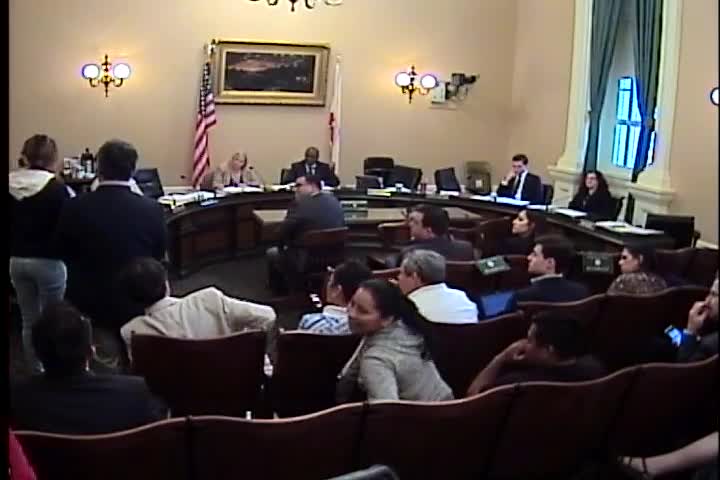 57MIN
Assembly Standing Committee on Labor and Employment
Bill Author

Bill Co-Author(s):
