AB 2084: Shorthand reporters.
- Session Year: 2017-2018
- House: Assembly
- Latest Version Date: 2018-09-21
Existing law requires, upon court order or, in certain cases, upon request of a party to the action, an official court reporter or reporter pro tempore to take down in shorthand all testimony, objections made, rulings of the court, exceptions taken, arraignments, pleas, sentences, arguments of the attorneys to the jury, and statements and remarks made and oral instructions given by the judge or other judicial officer. Existing law requires shorthand reporters to be licensed and regulated by the Court Reporters Board of California, which is within the Department of Consumer Affairs. Existing law prohibits a person from being appointed to the position of official reporter of any court unless the person has first obtained a license to practice as a certified shorthand reporter from the board. Existing law requires applicants and licensees to pay a fee that is deposited into the Court Reporters Fund, which is a continuously appropriated fund, except fine and penalty money in the fund is not continuously appropriated. Existing law makes a violation of these provisions a misdemeanor.
This bill would prohibit an individual or entity that engages in any act that constitutes shorthand reporting, or that employs or contracts with another party to perform shorthand reporting, as specified, from engaging in specified business practices. Because a violation of these provisions would be a crime, the bill would impose a state-mandated local program. The bill would also authorize the Attorney General, a district attorney, a city attorney, or the board to bring a civil action for a violation of these provisions and would subject an individual or entity that violates these provisions to a civil fine not exceeding $10,000 per violation, as specified.
The California Constitution requires the state to reimburse local agencies and school districts for certain costs mandated by the state. Statutory provisions establish procedures for making that reimbursement.
This bill would provide that no reimbursement is required by this act for a specified reason.
Existing law requires, upon court order or, in certain cases, upon request of a party to the action, an official court reporter or reporter pro tempore to take down in shorthand all testimony, objections made, rulings of the court, exceptions taken, arraignments, pleas, sentences, arguments of the attorneys to the jury, and statements and remarks made and oral instructions given by the judge or other judicial officer. Existing law requires shorthand reporters to be licensed and regulated by the Court Reporters Board of California, which is within the Department of Consumer Affairs. Existing law prohibits a person from being appointed to the position of official reporter of any court unless the person has first obtained a license to practice as a certified shorthand reporter from the Court Reporters Board of California. board. Existing law requires applicants and licensees to pay a fee that is deposited into the Court Reporters Fund, which is a continuously appropriated. appropriated fund, except fine and penalty money in the fund is not continuously appropriated. Existing law makes a violation of these provisions a misdemeanor.
This bill, on and after January 1, 2020, would authorize an individual or entity to engage in the business of providing or arranging for certified shorthand reporters for the transcription of court proceedings if specified conditions are met, including that an individual be a certified shorthand reporter, that an entity be a shorthand reporting corporation, or that the individual or entity is registered as a court reporter provider, as defined. The bill would require an individual or entity that registers with the board as a court reporter provider to adhere to the same statutes and regulations that are applicable to the conduct of certified shorthand reporters, and to pay a fee, as specified, that would be deposited into the Court Reporters Fund. By requiring a court reporter provider to pay a fee that is deposited into a continuously appropriated fund, the bill would make an appropriation. The bill would require the board to adopt regulations prescribing the process and procedure for registration as a court reporter provider. The bill would require the board to create and make available on its Internet Web site a directory of registered court reporter providers. bill would prohibit an individual or entity that engages in any act that constitutes shorthand reporting, or that employs or contracts with another party to perform shorthand reporting, as specified, from engaging in specified business practices. Because a violation of these provisions would be a crime, the bill would impose a state-mandated local program. The bill would also authorize the Attorney General, a district attorney, a city attorney, or the board to bring a civil action for a violation of these provisions and would subject an individual or entity that violates these provisions to a civil fine not exceeding $10,000 per violation, as specified.
The California Constitution requires the state to reimburse local agencies and school districts for certain costs mandated by the state. Statutory provisions establish procedures for making that reimbursement.
This bill would provide that no reimbursement is required by this act for a specified reason.
Existing law requires, upon court order or, in certain cases, upon request of a party to the action, an official court reporter or reporter pro tempore to take down in shorthand all testimony, objections made, rulings of the court, exceptions taken, arraignments, pleas, sentences, arguments of the attorneys to the jury, and statements and remarks made and oral instructions given by the judge or other judicial officer. Existing law requires shorthand reporters to be licensed and regulated by the Court Reporters Board of California, which is within the Department of Consumer Affairs. Existing law prohibits a person from being appointed to the position of official reporter of any court unless the person has first obtained a license to practice as a certified shorthand reporter from the Court Reporters Board of California. Existing law requires applicants and licensees to pay a fee that is deposited into the Court Reporters Fund, which is continuously appropriated. Existing law makes a violation of these provisions a misdemeanor.
This bill, on and after January 1, 2020, would authorize an individual or entity to engage in the business of providing or arranging for certified shorthand reporters for the transcription of court proceedings if specified conditions are met, including that an individual be a certified shorthand reporter, that an entity be a shorthand reporting corporation, or that the individual or entity is registered as a court reporter provider, as defined. The bill would require an individual or entity that registers with the board as a court reporter provider to adhere to the same statutes and regulations that are applicable to the conduct of certified shorthand reporters, and to pay a fee, as specified, that would be deposited into the Court Reporters Fund. By requiring a court reporter provider to pay a fee that is deposited into a continuously appropriated fund, the bill would make an appropriation. The bill would require the board to adopt regulations prescribing the process and procedure for registration as a court reporter provider. The bill would require the board to create and make available on its Internet Web site a directory of registered court reporter providers. Because a violation of these provisions would be a crime, the bill would impose a state-mandated local program.
The California Constitution requires the state to reimburse local agencies and school districts for certain costs mandated by the state. Statutory provisions establish procedures for making that reimbursement.
This bill would provide that no reimbursement is required by this act for a specified reason.
(a)It is the intent of the Legislature to enhance the regulation of licensed shorthand reporters and shorthand reporting corporations pursuant to this section, by imposing specific penalties in addition to other remedies permitted by this chapter that seek to discourage practices that are inconsistent with the integrity and impartiality required of officers of the court and to promote competition based upon the quality and price of shorthand reporting services.
(b)This section shall apply to an individual or entity that does any of the following:
(1)Any act that constitutes shorthand reporting that occurs wholly or partly in this state.
(2)Employs, independently contracts with, or recruits a licensed shorthand reporter to report or transcribe deposition testimony in a court proceeding or in a deposition.
(3)Contracts with a resident of this state by mail or otherwise that requires either party to perform licensed shorthand reporting wholly or partly in this state.
(4)Independently contracts with or is employed by an entity that does any of the acts described in paragraphs (1) to (3), inclusive.
(c)(1)This section does not apply to an individual, whether acting as an individual or as an officer, director, or shareholder of a shorthand reporting corporation, as defined in Section 8040, who possesses a valid license, issued pursuant to Section 8018, that may be revoked or suspended by the board, or to a shorthand reporting corporation that is in compliance with Section 8044.
(2)This section does not apply to a court, a party to litigation, an attorney of the party, or a full-time employee of the party or the attorney of the party, who provides or contracts for certified shorthand reporting for purposes related to the litigation.
(d)An individual or entity described in subdivision (b) shall not do any of the following:
(1)Seek compensation for a transcript that is in violation of the minimum transcript format standards set forth in Section 2473 of Article 8 of Division 24 of Title 16 of the California Code of Regulations.
(2)Seek compensation for a certified court transcript applying fees other than those set out in Section 69950 of the Government Code.
(3)Make a transcript available to one party in advance of other parties, as described in subdivision (d) of Section 2025.510 of the Code of Civil Procedure, or offer or provide a service to only one party as described in subdivision (b) of Section 2025.320 of the Code of Civil Procedure.
(4)Fail to promptly notify a party of a request for preparation of all or any part of a transcript, excerpts, or expedites for one party without the other parties knowledge, as described in paragraph (5) of subdivision (b) of Section 2475 of Article 8 of Division 24 of Title 16 of the California Code of Regulations.
(e)Nothing in this section shall be construed to prohibit a licensed shorthand reporter, shorthand reporting corporation, or an individual or entity described in subdivision (b), from offering or providing long-term or multicase volume discounts or services ancillary to reporting and transcribing a deposition, arbitration, or judicial proceeding in contracts that are subject to laws related to shorthand reporting.
(f)An individual or entity that violates this section shall be subject to a civil fine not exceeding ten thousand dollars ($10,000) per violation.
(g)The Attorney General, a district attorney, a city attorney, or the board may bring a civil action for a violation of this section, including an action for injunctive relief and any other appropriate relief, and shall be entitled if he or she is the prevailing party, to recover reasonable attorneys fees.
SEC. 2.No reimbursement is required by this act pursuant to Section 6 of Article XIIIB of the California Constitution because the only costs that may be incurred by a local agency or school district will be incurred because this act creates a new crime or infraction, eliminates a crime or infraction, or changes the penalty for a crime or infraction, within the meaning of Section 17556 of the Government Code, or changes the definition of a crime within the meaning of Section 6 of Article XIIIB of the California Constitution.
(a)It is the intent of the Legislature to enhance the regulation of licensed shorthand reporters and shorthand reporting corporations pursuant to this section, by imposing specific penalties in addition to other remedies permitted by this chapter that seek to discourage practices that are inconsistent with the integrity and impartiality required of officers of the court and to promote competition based upon the quality and price of shorthand reporting services.
(b)This section shall apply to an individual or entity that does any of the following:
(A)(1)Any act that constitutes shorthand reporting that occurs wholly or partly in this state.
(B)Recruits a resident of this state to provide shorthand reporting in this state.(2)Employs, independently contracts with, or recruits a licensed shorthand reporter to report or transcribe deposition testimony in a court proceeding or in a deposition.
(C)(3)Contracts with a resident of this state by mail or otherwise that requires either party to perform certified licensed shorthand reporting wholly or partly in this state.
(4)Independently contracts with or is employed by an entity that does any of the acts described in paragraphs (1) to (3), inclusive.
(c)(1)This section does not apply to an individual, whether acting as an individual or as an officer, director, or shareholder of a shorthand reporting corporation, as defined in Section 8040, who possesses a valid license, issued pursuant to Section 8018, that may be revoked or suspended by the board, or to a shorthand reporting corporation that is in compliance with Section 8044.
(2)Court reporter provider does not mean(2)This section does not apply to a court, a party to litigation, an attorney of the party, or a full-time employee of the party or the attorney of the party, who provides or contracts for certified shorthand reporting for purposes related to the litigation.
(b)Registration means the procedures and requirements pursuant to this article with which an individual or entity shall comply in order to conduct business as a court reporter provider.8051.(a)On and after January 1, 2020, an individual or entity may engage in the business of providing or arranging for certified shorthand reporters for the transcription of court proceedings pursuant to Section 8017 if one of the following requirements are met: (1)The individual is a certified shorthand reporter pursuant to Section 8018. (2)The entity is a shorthand reporting corporation as described in Section 8040. (3)The individual or entity is registered with the board as a court reporter provider. (b)(1)An individual or entity registered as a court reporter provider described in paragraph (3) of subdivision (a) shall be subject to the same statutes and regulations that are applicable to the conduct of certified shorthand reporters. (2)The board may charge a fee for the registration of individuals or entities described in paragraph (3) of subdivision (a) that shall not exceed an amount sufficient to cover the reasonable regulatory cost to carry out the registration requirements of this article. (c)An individual or entity described in paragraph (1) or (2) of subdivision (a) shall not engage in the practice of shorthand reporting on behalf of an individual or entity that the individual or entity knows or should know is not registered with the board as a court reporter provider and shall verify whether an individual or entity is registered with the board as a court reporter provider before engaging in the practice of shorthand reporting on behalf of that individual or entity. (d)Nothing in this section shall be construed to prohibit a certified shorthand reporter, shorthand reporting corporation, or registered court reporter provider from providing long-term or multicase volume discounts or services ancillary to reporting and transcribing a deposition, arbitration, or judicial proceeding in contracts that are subject to laws related to shorthand reporting. (e)Nothing in this section shall be construed to require an owner of a registered court reporter provider to be a certified shorthand reporter unless the owner practices shorthand reporting, as defined in Section 8017.8052.(a)The board shall adopt regulations prescribing the process and procedure for registration as a court reporter provider. Applications for a certificate of registration shall include, at a minimum, all of the following: (1)The name of the individual or entity seeking registration. (2)The business address and telephone number of the individual or entity seeking registration. (3)The name, address, and contact information for any individual designated by the registrant as a point of contact. (b)A certificate of registration shall be valid for a period of one year unless that period is extended by the board. (c)A registrant shall notify the board within 30 days, on a form developed by the board, of any additions, deletions, or changes in the names, addresses, and contact information for each of the individuals or entities listed on its application.8053.The board shall create and make available on its Internet Web site a directory of registered court reporter providers.(d)An individual or entity described in subdivision (b) shall not do any of the following:
(1)Seek compensation for a transcript that is in violation of the minimum transcript format standards set forth in Section 2473 of Article 8 of Division 24 of Title 16 of the California Code of Regulations.
(2)Seek compensation for a certified court transcript applying fees other than those set out in Section 69950 of the Government Code.
(3)Make a transcript available to one party in advance of other parties, as described in subdivision (d) of Section 2025.510 of the Code of Civil Procedure, or offer or provide a service to only one party as described in subdivision (b) of Section 2025.320 of the Code of Civil Procedure.
(4)Fail to promptly notify a party of a request for preparation of all or any part of a transcript, excerpts, or expedites for one party without the other parties knowledge, as described in paragraph (5) of subdivision (b) of Section 2475 of Article 8 of Division 24 of Title 16 of the California Code of Regulations.
(e)Nothing in this section shall be construed to prohibit a licensed shorthand reporter, shorthand reporting corporation, or an individual or entity described in subdivision (b), from offering or providing long-term or multicase volume discounts or services ancillary to reporting and transcribing a deposition, arbitration, or judicial proceeding in contracts that are subject to laws related to shorthand reporting.
(f)An individual or entity that violates this section shall be subject to a civil fine not exceeding ten thousand dollars ($10,000) per violation.
(g)The Attorney General, a district attorney, a city attorney, or the board may bring a civil action for a violation of this section, including an action for injunctive relief and any other appropriate relief, and shall be entitled if he or she is the prevailing party, to recover reasonable attorneys fees.
SEC. 2.No reimbursement is required by this act pursuant to Section 6 of Article XIIIB of the California Constitution because the only costs that may be incurred by a local agency or school district will be incurred because this act creates a new crime or infraction, eliminates a crime or infraction, or changes the penalty for a crime or infraction, within the meaning of Section 17556 of the Government Code, or changes the definition of a crime within the meaning of Section 6 of Article XIIIB of the California Constitution.
For purposes of this article, the following terms have the following meanings:
(a)(1)Court reporter provider means an individual or entity that does any of the following:
(A)Any act that constitutes shorthand reporting that occurs wholly or partly in this state.
(B)Recruits a resident of this state to provide shorthand reporting in this state.
(C)Contracts with a resident of this state by mail or otherwise that requires either party to perform certified shorthand reporting wholly or partly in this state.
(2)Court reporter provider does not mean a court, a party to litigation, an attorney of the party, or a full-time employee of the party or the attorney of the party, who provides or contracts for certified shorthand reporting for purposes related to the litigation.
(b)Registration means the procedures and requirements pursuant to this article with which an individual or entity shall comply in order to conduct business as a court reporter provider.
8051.(a)On and after January 1, 2020, an individual or entity may engage in the business of providing or arranging for certified shorthand reporters for the transcription of court proceedings pursuant to Section 8017 if one of the following requirements are met:
(1)The individual is a certified shorthand reporter pursuant to Section 8018.
(2)The entity is a shorthand reporting corporation as described in Section 8040.
(3)The individual or entity is registered with the board as a court reporter provider.
(b)(1)An individual or entity registered as a court reporter provider described in paragraph (3) of subdivision (a) shall be subject to the same statutes and regulations that are applicable to the conduct of certified shorthand reporters.
(2)The board may charge a fee for the registration of individuals or entities described in paragraph (3) of subdivision (a) that shall not exceed an amount sufficient to cover the reasonable regulatory cost to carry out the registration requirements of this article.
(c)An individual or entity described in paragraph (1) or (2) of subdivision (a) shall not engage in the practice of shorthand reporting on behalf of an individual or entity that the individual or entity knows or should know is not registered with the board as a court reporter provider and shall verify whether an individual or entity is registered with the board as a court reporter provider before engaging in the practice of shorthand reporting on behalf of that individual or entity.
(d)Nothing in this section shall be construed to prohibit a certified shorthand reporter, shorthand reporting corporation, or registered court reporter provider from providing long-term or multicase volume discounts or services ancillary to reporting and transcribing a deposition, arbitration, or judicial proceeding in contracts that are subject to laws related to shorthand reporting.
(e)Nothing in this section shall be construed to require an owner of a registered court reporter provider to be a certified shorthand reporter unless the owner practices shorthand reporting, as defined in Section 8017.
8052.(a)The board shall adopt regulations prescribing the process and procedure for registration as a court reporter provider. Applications for a certificate of registration shall include, at a minimum, all of the following:
(1)The name of the individual or entity seeking registration.
(2)The business address and telephone number of the individual or entity seeking registration.
(3)The name, address, and contact information for any individual designated by the registrant as a point of contact.
(b)A certificate of registration shall be valid for a period of one year unless that period is extended by the board.
(c)A registrant shall notify the board within 30 days, on a form developed by the board, of any additions, deletions, or changes in the names, addresses, and contact information for each of the individuals or entities listed on its application.
8053.The board shall create and make available on its Internet Web site a directory of registered court reporter providers.
SEC. 2.No reimbursement is required by this act pursuant to Section 6 of Article XIIIB of the California Constitution because the only costs that may be incurred by a local agency or school district will be incurred because this act creates a new crime or infraction, eliminates a crime or infraction, or changes the penalty for a crime or infraction, within the meaning of Section 17556 of the Government Code, or changes the definition of a crime within the meaning of Section 6 of Article XIIIB of the California Constitution.
|
Date
|
Status
|
|---|---|
| Sep 21, 2018 | Chaptered by Secretary of State - Chapter 648, Statutes of 2018. |
| Sep 21, 2018 | Approved by the Governor. |
| Sep 12, 2018 | Enrolled and presented to the Governor at 12 p.m. |
| Aug 31, 2018 | Senate amendments concurred in. To Engrossing and Enrolling. |
| Aug 30, 2018 | In Assembly. Concurrence in Senate amendments pending. |
| Aug 30, 2018 | Read third time. Passed. Ordered to the Assembly. |
| Aug 29, 2018 | From committee: That the measure be returned to Senate Floor for consideration. (Ayes 7. Noes 2.) (August 29) |
| Aug 27, 2018 | Read second time. Ordered to third reading. |
| Aug 24, 2018 | Read third time and amended. Ordered to second reading. |
| Aug 7, 2018 | Read second time. Ordered to third reading. |
| Aug 6, 2018 | From committee: Be ordered to second reading pursuant to Senate Rule 28.8. |
| Jun 28, 2018 | In committee: Hearing postponed by committee. |
| Jun 19, 2018 | From committee: Do pass and re-refer to Com. on APPR. (Ayes 7. Noes 2.) (June 18). Re-referred to Com. on APPR. |
| Jun 6, 2018 | In committee: Set, first hearing. Hearing canceled at the request of author. |
| May 24, 2018 | Referred to Com. on B., P. & E.D. |
| May 10, 2018 | In Senate. Read first time. To Com. on RLS. for assignment. |
| May 10, 2018 | Read third time. Passed. Ordered to the Senate. |
| May 3, 2018 | Read second time. Ordered to third reading. |
| May 2, 2018 | From committee: Do pass. (Ayes 13. Noes 4.) (May 2). |
| Apr 17, 2018 | From committee: Do pass and re-refer to Com. on APPR. (Ayes 10. Noes 5.) (April 17). Re-referred to Com. on APPR. |
| Mar 1, 2018 | Referred to Com. on B. & P. |
| Feb 8, 2018 | From printer. May be heard in committee March 10. |
| Feb 7, 2018 | Read first time. To print. |
|
Date
|
Description
|
Location
|
Votes
|
|
|---|---|---|---|---|
| Aug 31, 2018 | AB 2084 KALRA Concurrence in Senate Amendments | Assembly Floor |
Passed |
|
| Aug 30, 2018 | Assembly 3rd Reading AB2084 Kalra By Hill | Senate Floor |
Passed |
|
| Aug 29, 2018 | That the measure be returned to Senate Floor for consideration. Ordered to third reading. | Senate Standing Committee on Business, Professions and Economic Development |
Passed |
|
| Jun 18, 2018 | Do pass, but first be re-referred to the Committee on [Appropriations] | Senate Standing Committee on Business, Professions and Economic Development |
Passed |
|
| May 10, 2018 | AB 2084 KALRA Assembly Third Reading | Assembly Floor |
Passed |
|
| May 2, 2018 | Do pass. | Assembly Standing Committee on Appropriations |
Passed |
|
| Apr 17, 2018 | Do pass and be re-referred to the Committee on [Appropriations] | Assembly Standing Committee on Business and Professions |
Passed |
This list shows positions taken on this bill by organizations on the date displayed, which is linked to the original source.
Positions by individuals are not included.
CONCURRENCE IN SENATE AMENDMENTS
CSA1 Bill Id:AB 2084
Author:(Kalra)
As Amended Ver:August 24, 2018
Majority vote
ASSEMBLY: | 46-23 | (May 10, 2018) | SENATE: | 27-11 | (August 30, 2018) |
Original Committee Reference: B. & P.
SUMMARY: Authorizes the Attorney General, a city attorney, a district attorney or the Court Reporters Board (Board) to bring a $10,000 civil action against any person or entity who engages in four specified business practices over the course of providing, or contracting to provide, shorthand reporting services.
The Senate amendments strike the bill's prior language that would have established a registration program for court reporter providers with the language now contained in the bill.
EXISTING LAW:
- Establishes the CRB under the jurisdiction of the Department of Consumer Affairs (DCA) for the licensure and regulation of certified shorthand reporters. (Business and Professions Code (BPC) Sections 8000 et seq.)
- Prohibits a person or entity from engaging in the practice of shorthand reporting, as defined, unless that person holds a certificate issued by the CRB and is not a salaried, full-time employee of any department or agency of the state who is employed as a hearing reporter. (BPC Section 8016)
- Defines the "practice of shorthand reporting" as the making, by means of written symbols or abbreviations in shorthand or machine shorthand writing, of a verbatim record or any oral court proceeding, deposition, court ordered hearing or arbitration, or proceeding before any grand jury, referee, or court commissioner and the accurate transcription thereof. (BPC Section 8017)
- Defines a "shorthand reporting corporation" as a corporation that is authorized to render professional services, as defined, as long as that corporation and all of its shareholders, officers, directors, and employees rendering professional services who are certified shorthand reporters are in compliance with the Moscone-Knox Professional Corporations Act, as specified. (BPC Section 8040)
- States that a shorthand reporting service provider corporation cannot do or fail to do any act, the doing of which or the failure to do which would constitute unprofessional conduct under any California statute, rule or regulation now or hereafter in effect which pertains to shorthand reporters or shorthand reporting, and in conducting its practice it must observe and be bound by such statutes, rules, and regulations to the same extent as a person holding a license. (BPC Section 8046)
FISCAL EFFECT: According to the Senate Appropriations Committee, pursuant to Senate Rule 28.8, negligible state costs.
COMMENTS:
Purpose. This bill is sponsored by the Court Reporters Board of California. According to the author:
By requiring firm registration from entities engaging in court reporting services, [this bill] ensures existing laws and regulation of the [CRB] are adhered to which will protect the sanctity and impartiality of depositions and other court reporting documents. The bill in return provides these non-licensee-owned firms a legal pathway to do business in this state and is similar to requirements in other states, including Arizona, Georgia, Nevada, and Texas. In order to uphold the integrity of the judicial process and fair oversight, [this bill] protects consumers of court reporting services from unfair practices and levels the playing field for all parties by requiring them to adhere to the same standards. Doing so, the court reporting industry will be able to engage in fair market competition the will ultimately be a benefit to the consumers of court reporting services.
Background.
Court Reporters Board. The CRB is responsible for licensing and disciplining certified shorthand reporters. Certified shorthand reporters are responsible for reporting depositions in legal cases as well as court proceedings. Since 1972, the CRB has permitted the certification of individuals and at one time, the registration of shorthand reporting corporations. Currently, the CRB oversees approximately 7,000 certified shorthand reporters. In addition to the licensing and discipline functions, the CRB specifies the professional standards of practice (California Code of Regulations (CCR), Title 16, Section 2475) for professionals, which include: 1) acting without bias toward, or prejudice against, any parties and/or their attorneys; 2) not entering into, arranging, or participating in a relationship that compromises the impartiality of the certified shorthand reporter, including but not limited to a relationship in which compensation for reporting services is based upon the outcome of the proceeding; and 3) maintaining confidentiality of information, among others.
Shorthand Reporters. The CRB establishes the educational requirements for certification including authorizing the minimal educational standards and approving schools. In order to qualify for licensure as a certified shorthand reporter, an individual must have a high school education, twelve months (or 1,400 hours) of full-time work experience related to making records of hearings, obtain a passing score on the California State Hearing Reporters Examination, and complete a course from an approved court-reporting school. Currently, certified shorthand reporters in California work in two separate capacities: 1) as an "official reporter" who works as a court reporter employed by a state court or 2) as a "freelance reporter" who is hired privately by court reporting businesses, firms, or attorneys to report depositions. Both official and freelance reporters are required to meet the same educational and examination qualifications.
Laws governing all certified shorthand reporters are found in the Shorthand Reporters Act (Act) and all licensed shorthand reporters are required to abide by the laws specified in the Act and other applicable statues and regulations. In addition, Codes governing deposition/freelance reporter practices can be found in the Code of Civil Procedure (CCP) Section 2025 et seq. The CRB is charged with enforcing the provisions of the Act and the regulations established by the CRB.
Shorthand Reporting Corporations. BPC Section 8044 specifies that each director, shareholder, and officer of a shorthand reporting corporation must be a licensed shorthand reporter. Business models for shorthand reporting corporations and other service providers vary throughout the state and country. While there are a number of licensee-owned corporations in California, there are a number of businesses that provide litigation services but are not currently under the jurisdiction of the CRB. The CRB does not register or certify corporations in California. BPC Section 8044 and 8046 provide the CRB with authority over licensee-owned shorthand reporting corporations incorporated in California. However, the CRB currently does not have direct jurisdiction over corporations which have no license to discipline. Therefore, the CRB may have difficulty pursuing non-licensee owned corporations that it suspects may be offering or arranging for court reporting services through employment or independent contractors yet violating ethical codes of conduct that shorthand reporting corporations would have to follow. In addition, this bill would explicitly prohibit a licensee from providing shorthand reporting services for a person or entity that has not registered with the CRB.
The issue of shorthand reporting corporations was raised during the CRB's 2015 sunset review. At that time, it was noted in the Committee's staff background paper that, from the CRB's perspective, there are two frequent types of unlicensed activity: licensees allowing their license to lapse and corporations who arrange for court reporting services in violation of the Act. In the first situation, there are court reporters who neglect to renew their licenses on time but continue to report, which is unlicensed activity from the standpoint that they are working without a current license. The CRB issues citations and fines for this violation.
The second type of unlicensed activity relates to foreign corporations who are offering court reporting services in California without authorization. In response to complaints about unethical gift-giving (violation of 16 CCR Section 2475(a)(8)) and violations of the minimum transcript format standards (violation of 16 CCR Section 2473), a task force was appointed by the CRB in 2007, to study the issue of firm oversight. The members of the task force included small, medium, and large-firm owners.
Ultimately, the task force determined that a legislative fix was necessary to address this issue, which was included in AB 1461 (Ruskin) of 2009. That bill sought to clarify that in addition to corporations, a firm, partnership, sole proprietorship, or other business entity providing or arranging for shorthand reporting services (any entity offering or providing the services of a shorthand reporter) was barred from doing or failing to do any act that constitutes unprofessional conduct under any statute, rule or regulation pertaining to shorthand reporters or shorthand reporting. That bill died in the Assembly Appropriations Committee.
Litigation History. In 2010, the CRB received a complaint that U.S. Legal, a Texas-based corporation, was violating gift-giving provisions under 16 CCR Section 22475(b)(8). After investigation, the CRB issued a citation and fine, but U.S. Legal denied the CRB's jurisdiction to issue it the citation. In April of 2011, the CRB brought suit against U.S. Legal for declaratory relief (Court Reporters Board v. U.S. Legal). After a hearing, the Court ruled in an unpublished opinion that, even if U.S. Legal was rendering court reporting services in California and was in violation of gift-giving regulations, the CRB is not authorized to impose citations or fines against U.S. Legal because U.S. Legal was not a "professional corporation" but instead a "foreign professional corporation," as defined under the Corporations Code. Corporations Code Section 13401(c) provides that, "'Foreign professional corporation' means a corporation organized under the laws of a state of the United States other than this state that is engaged in a profession of a type for which there is authorization in the BPC for the performance of professional services by a foreign professional corporation."
In his veto of another bill by the author effectively identical to an earlier version of this one, Governor Brown alluded to "matters that are currently under review by an appellate court" and stated a preference for waiting for the outcome of litigation prior to deciding on the bill. This message is understood to be in reference to Moose v. U.S. Legal, a case similar to the CRB's litigation involving a private attorney general suit brought under California's Unfair Competition Law. This bill's supporters point out that while the Moose case lingers on appeal, it can be presumed that any all potential outcomes from a final ruling would nevertheless result in the need for either clarifying or corrective changes in statute.
The Senate Amendments to this bill seek to resolve any issues contributing to the Governor's veto by instituting an alternative approach to establishing regulation of out-of-state court reporters. Instead of implementing a new registration program, the bill would create new civil causes of action through which the State of California or a local jurisdiction may hold shorthand reporting service providers accountable. In doing so, the author and sponsor believe that the Governor's prior veto no longer applies to the provisions of the bill.
Analysis Prepared by: Robert Sumner / B. & P. / (916) 319-3301 FN: 0005205
Office of Senate Floor Analyses (916) 651-1520 Fax: (916) 327-4478 | AB |
THIRD READING
Bill No: AB 2084
:
PRIOR VOTES NOT RELEVANT
SENATE BUS., PROF. & ECON. DEV. COMMITTEE: 7-2, 8/29/18 (Pursuant to Senate Rule 29.10)
AYES: Hill, Allen, Dodd, Galgiani, Glazer, Hernandez, Pan
NOES: Fuller, Wilk
SOURCE: Court Reporters Board of California
DIGEST:
This bill prohibits specified individuals or entities who provide, or contract to provide, shorthand reporting services from engaging in four specified business practices; authorizes the Attorney General (AG), a city attorney, district attorney or the Court Reporters Board (Board) to bring a civil action for a violation and permits a civil fine up to $10,000 for a violation; and adds intent language related to the regulation of licensed shorthand reporters and shorthand reporting corporations.
Existing law:
- Establishes the Board under the jurisdiction of the Department of Consumer Affairs to license and regulated certified shorthand reporters. (Business and Professions Code (BPC) § 8000 et seq.)
- Defines the “practice of shorthand reporting” as the making, by means of written symbols or abbreviations in shorthand or machine shorthand writing, of a verbatim of any oral court proceeding, deposition, court ordered hearing or arbitration or proceeding before any grand jury, referee, or court commissioner and the accurate transcription, thereof. (BPC § 8017)
- Prohibits a person from engaging in the practice of shorthand reporting, as defined, unless that person holds a certificate issued by the Board and is not a salaried, full-time employee of any department or agency of the state who is employed as a hearing reporter. (BPC § 8016)
- Defines a “shorthand reporting corporation” as a corporation which is authorized to render professional services, as defined in the Corporations Code, as long as the corporation and all of its shareholders, officers, directors, and employees rendering professional services who are certified shorthand reporters are in compliance with the Moscone-Knox Professional Corporations Act, as specified. (BPC § 8040)
- States that a shorthand reporting corporation cannot do or fail to do any act which would constitute unprofessional conduct under any statute, rule or regulation now or hereafter in effect which pertains to shorthand reporters or shorthand reporting, and in conducting its practice it must observe and be bound by such statutes, rules, and regulations to the same extent as a person holding a license. (BPC § 8046)
- Requires a deposition officer who receives a request for an original or copy of a deposition, as specified, to make that copy of the full or partial deposition transcript available to all parties at the same time. (Code of Civil Procedure (CCP) § 2025.510(d))
- Requires the services and products offered or provided by the deposition officer or the entity providing the services of the deposition officer to any party or to any party’s attorney or third party who is financing all or part of the action, offer to all parties or their attorneys attending the deposition, as specified. (CCP § 2025.320(b))
- Establishes the fees for a certified court transcript, as specified. (Government Code § 69950).
This bill:
- Specifies that the provisions of this bill apply to an individual or entity that does any of the following:
- Any act that constitutes shorthand reporting that occurs wholly or partly in this state;
- Employs, independently contracts with, or recruits a licensed shorthand reporter to report or transcribe deposition testimony in a court proceeding or in a deposition;
- Contracts with a resident of this state by mail or otherwise that requires either party to perform licensed shorthand reporting wholly or partly in this state; or
- Independently contracts with or is employed by an entity that does any of items a-c, above.
- Prohibits an individual or entity in 1) above from doing any of the following:
- Seeking compensation for a transcript that is in violation of the minimum transcript format standards, as specified in regulations;
- Seeking compensation for a certified court transcript applying fees other than those specified in Government Code Section 69950;
- Making a transcript available to one party in advance of other parties, as specified, or offer or provide service to only one party; or
- Failing to properly notify a party of a request for preparation of all or any part of a transcript, excerpts, or expedites for one party without the other parties’ knowledge as specified in regulation.
- Authorizes the AG, a district attorney, a city attorney or the Board to bring a civil action for a violation of the provisions in 2) above, as specified, and states that an individual or entity that violates the above provisions may be subject to a civil fine, not exceeding $10,000 per violation.
- States that nothing in this bill shall be construed to prohibit a licensed shorthand reporter, shorthand reporting corporation, or entities that contract with shorthand reporters, as specified, from offering or providing long-term or multicase volume discounts or services ancillary to reporting and transcribing a deposition, arbitration, or judicial proceeding in contracts that are subject to laws related to shorthand reporting.
- States the provisions of this bill do not apply to an individual, whether acting as an individual or as an officer, director, or shareholder of a shorthand reporting corporation, as defined, who possesses a valid license, which may be revoked or suspended by the Board. States that the provisions of this bill do not apply to a court, a party to litigation, an attorney of the party, or a full-time employee of the party or the attorney of the party, who provides or contracts for certified shorthand reporting for purposes related to litigation.
- States that it is the intent of the Legislature to enhance the regulation of licensed shorthand reporters and shorthand reporting corporations, by imposing specific penalties in addition to other remedies permitted under the shorthand reporters act, that seek to discourage practices that are inconsistent with the integrity and impartiality required of officers of the court and to promote competition based upon the quality and price of shorthand reporting services.
Background
The Board is responsible for licensing and disciplining certified shorthand reporters and enforcing the professional standards of practice (16 CCR § 2475). Since 1972, the Board has permitted the certification of individuals and at one time, the registration of shorthand reporting corporations. Laws governing all certified shorthand reporters are found in the Shorthand Reporters Act (Act) (BPC § 8000 et seq.) and all licensed shorthand reporters are required to abide by the laws specified in the Act and other applicable statues and regulations. In addition, codes governing deposition/freelance reporter practices can be found in the CCP Section 2025 et seq.
The Board does not register or certify corporations in California because BPC Section 8044 specifies that each director, shareholder, and officer of a shorthand reporting corporation must be a licensed shorthand reporter. Business models for shorthand reporting corporations and other service providers vary. While there are licensee-owned corporations in California, there are a number of businesses that provide litigation services and contract with California-licensed certified shorthand reporters, but are not under the jurisdiction of the Board as they are not licensee-owned. BPC Sections 8044 and 8046 provide the Board with authority over licensee-owned shorthand reporting corporations incorporated in California. However, the Board currently does not have direct jurisdiction over corporations which have no license to discipline.
Recent amendments. This bill was amended on August 24, 2018. Previously, this bill required entities which engage in the business of providing or arranging for court reporting services in California, and contract with a California licensee to perform shorthand reporting, to register with the Board.
Instead of a registration program that would have subjected registered “court reporter providers” to all of the rules and regulations current licensees must follow, this bill is now more narrowly focused on four specific prohibitions on entities employing or contracting with a California-licensee. Specifically, this bill prohibits an individual or entity who contracts with or employs a licensed shorthand reporter in California from seeking compensation for a transcript that is in violation of the minimum transcript format standards set forth in the California Code of Regulations. This bill also prohibits seeking compensation for a certified court transcript which applies fees, other than those set out in 69950 of the Government Code, making a transcript available to one party in advance of other parties, as described in the CCP. This bill also prohibits entities from offering or providing a service to only one party and failing to promptly notify a party of a request for preparation of all or any part of a transcript, excerpts, or if an entity expedites transcript preparation for one party without the other parties’ knowledge, as described the California Code of Regulations.
Entities are not required to register with the Board under this bill, but if they violate any of the prohibitions outlined above, the Board, the AG, a district attorney or a city attorney may bring a civil action for violation, the fine for which may not exceed $10,000 per violation. This bill specifically exempts current licensees and clarifies that offering long-term or multi-case discounts, or providing services ancillary to reporting and transcribing, are not prohibited.
FISCAL EFFECT: Appropriation: Fiscal Com.: Local:
Unknown.
Court Reporters Board of California (source)
California Court Reporters Association
Deposition Reporters Association of California, Inc.
OPPOSITION: (Verified 8/28/18)
Esquire Deposition Services, LLC
U.S. Legal Support, Inc.
Veritext Corp
ARGUMENTS IN SUPPORT: The Court Reporters Board of California writes in support, “After extensive review and brainstorming, we approve and support the amendments to the bill as an equitable solution that goes directly to the complaints we have been receiving.”
The California Court Reporters Association writes in support, “AB 2084 ensures that consumers are protected from unethical behavior and the measure preserves the integrity of the deposition process.”
The Deposition Reporters Association of California, Inc. writes in support, “The most common way for the Legislature to addresses corporate behavior it does not like is simply by outlawing the behavior directly and by imposing enforcement-motivating civil penalties and this is how your amended bill approaches the problem.”
ARGUMENTS IN OPPOSITION: Esquire Deposition Services, LLC; U.S. Legal Support, Inc.; and Veritext Corp write in opposition and note “As amended, AB 2084 represents an entirely new approach to court reporter regulation, an approach which has never been heard in any Senate or Assembly committee. We commend the author for moving away from the prior approach of creating an unnecessary registration requirement on our members, and stand ready to work with him and other stakeholders to refine this new approach, but as drafted, the bill raises more questions than it answers.”
8/29/18 23:30:48
**** END ****
SENATE COMMITTEE ON
BUSINESS, PROFESSIONS AND ECONOMIC DEVELOPMENT
Senator Jerry Hill, Chair
2017 - 2018 Regular
Bill No: AB 2084 Hearing Date: August 29, 2018
Author: | Kalra | ||
Version: |
| ||
Urgency: | Fiscal: | ||
Consultant: | |||
Subject: Shorthand reporters.
SUMMARY:
Prohibits specified individuals or entities who provide, or contract to provide, shorthand reporting services from engaging in four specified business practices; authorizes the Attorney General, a city attorney, district attorney or the Court Reporters Board (Board) to bring a civil action for a violation and permits a civil fine up to $10,000 for a violation; and adds intent language related to the regulation of licensed shorthand reporters and shorthand reporting corporations.
NOTE: The August 24, 2018 Senate Floor amendments to this measure rewrite the bill as defined in Senate Rule 29.10 (e), in that it: “makes a change of . . . policy significance that may be appropriate for review by a standing committee.” Therefore, the bill has been referred to this Committee pursuant to Senate Rule 29.10 (b) for consideration. The Committee may by a vote of the majority of the membership do any of the following: 1) hold the bill or 2) return the bill to the Senate floor for consideration or 3) refer the bill to fiscal committee pursuant to Joint Rule 10.5.
Existing law:
- Establishes the Board under the jurisdiction of the Department of Consumer Affairs to license and regulated certified shorthand reporters. (Business and Professions Code (BPC) § 8000 et seq.)
- Defines the “practice of shorthand reporting” as the making, by means of written symbols or abbreviations in shorthand or machine shorthand writing, of a verbatim of any oral court proceeding, deposition, court ordered hearing or arbitration or proceeding before any grand jury, referee, or court commissioner and the accurate transcription, thereof. (BPC § 8017)
- Specifies that any person holding a valid certificate as a shorthand reporter, is known as a “certified shorthand reporter” and, unless specified as a shorthand reporting corporation, no other person, firm, or corporation may use the title “certified shorthand reporter”, “C.S.R.”, or use any other words or symbols indicating or tending to indicate the he or she is certified. (BPC § 8018)
- Prohibits a person from engaging in the practice of shorthand reporting, as defined, unless that person holds a certificate issued by the Board and is not a salaried, full-time employee of any department or agency of the state who is employed as a hearing reporter. (BPC § 8016)
- Defines a “shorthand reporting corporation” as a corporation which is authorized to render professional services, as defined in the Corporations Code (CORP), as long as the corporation and all of its shareholders, officers, directors, and employees rendering professional services who are certified shorthand reporters are in compliance with the Moscone-Knox Professional Corporations Act (Moscone-Knox), as specified. (BPC § 8040)
- States that a violation of the shorthand reporter act or the Moscone-Knox by a licensee constitutes unprofessional conduct. (BPC § 8047)
- States that a shorthand reporting corporation cannot do or fail to do any act which would constitute unprofessional conduct under any statute, rule or regulation now or hereafter in effect which pertains to shorthand reporters or shorthand reporting, and in conducting its practice it must observe and be bound by such statutes, rules, and regulations to the same extent as a person holding a license. (BPC § 8046)
- Defines "professional services" to mean any type of professional service that may be lawfully rendered only pursuant to a license, certification, or registration authorized by the BPC, the Chiropractic Act, or the Osteopathic Act.
(Corporations (CORP) § 13401(a)) - Defines "foreign professional corporation" to mean a corporation organized under the laws of a state of the United States other than California that is engaged in a profession of a type for which there is authorization in the BPC for the performance of professional services by a foreign professional corporation. (CORP §13401(c))
- Requires every person under the jurisdiction of the Board who holds a license or certificate, or temporary license or certificate, or business that renders professional services, namely shorthand reporting services, within the meaning of CORP Section 13401, to comply with professional standards of practice, as specified. (California Code of Regulations Title 16 (16 CCR) Section 2475)
- Requires a deposition officer who receives a request for an original or copy of a deposition, as specified, to make that copy of the full or partial deposition transcript available to all parties at the same time. (Code of Civil Procedure (CCP) § 2025.510(d))
- Requires the Services and products offered or provided by the deposition officer or the entity providing the services of the deposition officer to any party or to any party’s attorney or third party who is financing all or part of the action, offer to all parties or their attorneys attending the deposition, as specified. (CCP § 2025.320(b))
- Establishes the fees for a certified court transcript, as specified. (Government Code § 69950).
This bill:
- Specifies that the provisions of this bill apply to an individual or entity that does any of the following:
- Any act that constitutes shorthand reporting that occurs wholly or partly in this state;
- Employs, independently contracts with, or recruits a licensed shorthand reporter to report or transcribe deposition testimony in a court proceeding or in a deposition;
- Contracts with a resident of this state by mail or otherwise that requires either party to perform licensed shorthand reporting wholly or partly in this state; or
- Independently contracts with or is employed by an entity that does any of items
a-c, above.
- Any act that constitutes shorthand reporting that occurs wholly or partly in this state;
- Prohibits an individual or entity in item #1) above from doing any of the following:
- Seeking compensation for a transcript that is in violation of the minimum transcript format standards, as specified in regulations;
- Seeking compensation for a certified court transcript applying fees other than those specified in Government Code § 69950;
- Making a transcript available to one party in advance of other parties, as specified, or offer or provide service to only one party; or
- Failing to properly notify a party of a request for preparation of all or any part of a transcript, excerpts, or expedites for one party without the other parties’ knowledge as specified in regulation.
- Seeking compensation for a transcript that is in violation of the minimum transcript format standards, as specified in regulations;
- Authorizes a the Attorney General, a district attorney, a city attorney or the Board to bring a civil action for a violation of the provisions in Item #2) above, as specified, and states that an individual or entity that violates the above provisions may be subject to a civil fine, not exceeding $10,000 per violation.
- States that nothing in this bill shall be construed to prohibit a licensed shorthand reporter, shorthand reporting corporation, or entities that contract with shorthand reporters, as specified, from offering or providing long-term or multicase volume discounts or services ancillary to reporting and transcribing a deposition, arbitration, or judicial proceeding in contracts that are subject to laws related to shorthand reporting.
- States the provisions of this bill do not apply to an individual, whether acting as an individual or as an officer, director, or shareholder of a shorthand reporting corporation, as defined, who possesses a valid license, which may be revoked or suspended by the Board.
- States that the provisions of this bill do not apply to a court, a party to litigation, an attorney of the party, or a full-time employee of the party or the attorney of the party, who provides or contracts for certified shorthand reporting for purposes related to litigation.
- States that it is the intent of the Legislature to enhance the regulation of licensed shorthand reporters and shorthand reporting corporations, by imposing specific penalties in addition to other remedies permitted under the shorthand reporters act, that seek to discourage practices that are inconsistent with the integrity and impartiality required of officers of the court and to promote competition based upon the quality and price of shorthand reporting services.
FISCAL EFFECT:
Unknown. This bill is keyed fiscal by Legislative Counsel.
COMMENTS:
- Purpose. This bill is sponsored by the Court Reporters Board of California. According to the Author, “AB 2084 will protect consumers of court reporting services by discouraging non-licensee owned court reporting firms from violating four specific laws and regulations applicable to securing the integrity of court and deposition transcripts. By calling out these otherwise prohibited acts by licensed entities, we are able to take a positive step to ensure the entire court reporting industry is protecting the impartiality of the court record in a manner that does not advantage one party over another. As amended, AB 2084 is much narrower in scope and would not subject these entities to regulatory oversight by the Court Reporters Board through registration. It should be noted that the four specific practices prohibited under AB 2084 would have been applicable and prohibited under the prior version of the bill through registration with the Board and licensed court reporting entities already have to comply with those practices as they are existing law.”
- Background.
Court Reporters Board. The Board is responsible for licensing and disciplining certified shorthand reporters. The Board determines the educational requirements for licensure standards and approves schools. Since 1972, the Board has permitted the certification of individuals and at one time, the registration of shorthand reporting corporations. Currently, the Board oversees approximately 7,000 certified shorthand reporters. In addition to licensing and disciplinary functions, the Board enforces the professional standards of practice (16 CCR § 2475) for certified shorthand professionals, which include: 1) acting without bias toward, or prejudice against, any parties and/or their attorneys; 2) not entering into, arranging, or participating in a relationship that compromises the impartiality of the certified shorthand reporter, including but not limited to a relationship in which compensation for reporting services is based upon the outcome of the proceeding; and, 3) maintaining confidentiality of information, among others.
Shorthand Reporters. Certified shorthand reporters are responsible for reporting depositions in legal cases as well as court proceedings. In order to qualify for licensure as a certified shorthand reporter, an individual must have a high school education and complete one of the following: twelve months (or 1,400 hours) of full-time work experience related to making records of hearings; obtain a passing score on the California State Hearing Reporters Examination; complete a course from an approved court-reporting school; or, have a certificate from the National Court Reporting Association. Currently, certified shorthand reporters in California work in two separate capacities: 1) as an "official reporter" who works as a court reporter employed by a state court or 2) as a "freelance reporter" who is hired privately by court reporting businesses, firms, or attorneys to report depositions. Both official and freelance reporters are required to meet the same educational and examination qualifications.
Laws governing all certified shorthand reporters are found in the Shorthand Reporters Act (Act) (BPC § 8000 et seq.) and all licensed shorthand reporters are required to abide by the laws specified in the Act and other applicable statues and regulations. In addition, Codes governing deposition/freelance reporter practices can be found in the Code of Civil Procedure § 2025 et seq. The Board is charged with enforcing the provisions of the Act and the regulations established by the Board.
Corporations and Court Case. The Board does not register or certify corporations in California because BPC § 8044 specifies that each director, shareholder, and officer of a shorthand reporting corporation must be a licensed shorthand reporter. Business models for shorthand reporting corporations and other service providers vary throughout the state and country. While there are licensee-owned corporations in California, there are a number of businesses that provide litigation services and contract with California-licensed certified shorthand reporters, but are not currently under the jurisdiction of the Board as they are not licensee-owned. BPC §§ 8044 and 8046 provide the Board with authority over licensee-owned shorthand reporting corporations incorporated in California. However, the Board currently does not have direct jurisdiction over corporations which have no license to discipline. As a result, the Board is challenged when pursuing non-licensee owned corporations that it suspects may be offering or arranging for court reporting services through employment or independent contractors and potentially violating ethical codes of conduct or other statutes of law which other licensee-owned shorthand reporting corporations have to follow.
Recent Amendments. This bill was amended on August 24, 2018. Previously, the bill required entities which engage in the business of providing or arranging for court reporting services in California, and contract with a California licensee to perform shorthand reporting, to register with the Board.
Instead of a registration program that would have subjected registered “court reporter providers” to all of the rules and regulations current licensees must follow, the measure is now more narrowly focused on four specific prohibitions on entities employing or contracting with a California-licensee. Specifically, this bill would prohibit an individual or entity who contracts with or employs a licensed shorthand reporter in California from seeking compensation for a transcript that is in violation of the minimum transcript format standards set forth in the California Code of Regulations. The bill would also prohibit seeking compensation for a certified court transcript which applies fees, other than those set out in 69950 of the Government Code, making a transcript available to one party in advance of other parties, as described in the Code of Civil Procedure. The bill also prohibits entities from offering or providing a service to only one party and failing to promptly notify a party of a request for preparation of all or any part of a transcript, excerpts, or if an entity expedites transcript preparation for one party without the other parties’ knowledge, as described the California Code of Regulations.
Entities are not required to register with the Board under this bill, but if they violate any of the prohibitions outlined above, the Board, the Attorney General, a district attorney or a city attorney may bring a civil action for violation, the fine for which may not exceed $10,000 per violation.
This bill specifically exempts current licensees and clarifies that offering long-term or multi-case discounts, or providing services ancillary to reporting and transcribing, are not prohibited. The previous version of this bill would have prohibited a licensed shorthand reporter from contracting with or doing business with an entity if the provider was not registered with the Board. The version being considered by the Committee does not place any restrictions on who a licensee may contract with to provide shorthand reporting services.
As noted by the Author, this bill is intended to alleviate the Board’s inability to address enforcement-related issues pertaining to out-of-state court reporting firms which have been accused of violating existing California court reporting statutes and regulations. The issue of non-licensee owned corporations that provide shorthand reporting services in California was raised during the Board’s 2015 sunset review and through previous legislative efforts. During the 2015 sunset review of the Board, it was noted in the background paper prepared by Committee staff that from the Board’s perspective, there are two frequent types of unlicensed activity: licensees allowing their license to lapse and corporations who arrange for court reporting services in violation of the Act. In the first situation, there are court reporters who neglect to renew their licenses on time but continue to report, which is unlicensed activity from the standpoint that they are working without a current license. The Board issues citations and fines for this violation.
The second type of unlicensed activity relates to foreign corporations who are offering court reporting services in California without authorization. In response to complaints about unethical gift giving (violation of 16 CCR § 2475(a)(8)) and violations of the minimum transcript format standards (violation of 16 CCR § 2473), a task force was appointed by the Board in 2007, to study the issue of firm oversight. The members of the task force included small, medium and large-firm owners. Ultimately, the task force determined that a legislative fix was necessary to address this issue, which was included in AB 1461 (Ruskin of 2009). That bill sought to clarify that in addition to corporations, a firm, partnership, sole proprietorship, or other business entity providing or arranging for shorthand reporting services (any entity offering or providing the services of a shorthand reporter) was barred from doing or failing to do any act that constitutes unprofessional conduct under any statute, rule or regulation pertaining to shorthand reporters or shorthand reporting. That bill was held under submission in the Assembly Committee on Appropriations.
In 2010, the Board received a complaint that U.S. Legal, a Texas-based corporation, was violating gift-giving provisions under 16 CCR § 22475(b)(8). After investigation, the Board issued a citation and fine, but U.S. Legal denied the CRB's jurisdiction to issue it the citation. In April of 2011, the Board brought suit against U.S. Legal for declaratory relief (Court Reporters Board v. U.S. Legal). After a hearing, the Court ruled in an unpublished opinion that, even if U.S. Legal was rendering court reporting services in California and was in violation of gift-giving regulations, the Board is not authorized to impose citations or fines against U.S. Legal because U.S. Legal was not a "professional corporation" but instead a "foreign professional corporation," as defined under the Corporations Code. Corporations Code § 13401(c) provides that, "'Foreign professional corporation' means a corporation organized under the laws of a state of the United States other than this state that is engaged in a profession of a type for which there is authorization in the BPC for the performance of professional services by a foreign professional corporation.”
Currently, the Board is subject to the sunset review process which provides a formal mechanism for the DCA, the Legislature, the regulatory boards, bureaus and committees, interested parties, and stakeholders to make recommendations for improvements to the authority of consumer protection boards and bureaus. Because the changes proposed by this bill will be under the jurisdiction of the Board, these new provisions will be part of any future sunset review of the Board.
Legislative Attempts and the Governor’s Veto. To remedy issues related to the Board’s authority in regulating certain out-of-state corporations and to address the issue of non-licensee owned corporations rendering professional services, SB 270 (Mendoza) of 2015, was introduced and subsequently held in the Assembly Committee on Business and Professions. That bill faced opposition from foreign court reporting corporations, among others. While that bill initially sought to clarify the Board's authority over foreign professional corporations and increase penalties for violations of law, the Author proposed amendments that would have instead required those corporations to register with the Board; and later required certain corporations to abide by only specified professional standards of practice.
In 2017, the Legislature passed AB 1660 (Kalra), a measure substantially similar to this bill, which was ultimately vetoed by the Governor. In the Governor’s veto message, it was noted that “This bill affects matters that are currently under review by an appellate court. I would prefer to await the outcome of that case before deciding on the issues raised by this bill.” While the Governor’s veto message does not specify a current court case, it is presumed that the Governor is referring to a current case on appeal: Moose v. U.S. Legal, a case involving a private attorney general suit brought under California’s Unfair Competition Law. However, as noted by supporters of this bill, while the case lingers on appeal, it can be presumed that any all potential outcomes from a final ruling would nevertheless result in the need for either clarifying or corrective changes in statute.
- Current Related Legislation. AB 2531 (Gallagher) authorizes the Board, by January 1, 2020, to identify a certification process for operators of computer-aided transcription systems that is conducted by a state or national association. This bill, on or before January 1, 2022, upon appropriation by the Legislature, requires the board to adopt standards for certifying operators of computer-aided transcription systems, and would authorize the board to satisfy this requirement by approving a state or national association to certify operators of computer-aided transcription systems. This bill, by January 1, 2026, requires the board to report to the Legislature on the number of operators that have successfully achieved certification between January 1, 2022 and July 1, 2025. Additionally, this bill requires the Judicial Council to maintain data on the utilization rates connected with operators of computer-aided transcription systems. (Status: This bill is currently pending on the Senate Floor.)
- Prior Related Legislation. AB 1660 (Kalra) of 2017, would have authorized, beginning January 1, 2019, an individual or entity to engage in the business of providing or arranging for shorthand reporting services if specified conditions are met, including if an individual or entity is registered with the Court Reporters Board (CRB); provides a definition of a “court reporter provider”, as specified; and, places certain prohibitions on engaging in the practice of shorthand reporting with an individual or entity that is not registered with the CRB. (Status: This bill was vetoed by the Governor.)
SB 484 (Roth) of 2017, would have made it unlawful for a person who is employed by or who independently contracts with an entity that arranges for deposition officers to give or receive any gift, incentive, reward, or anything of value as inducement or compensation in connection with the provision of services by a deposition officer. Although these practices are already prohibited under California regulatory law for covered persons and entities, the bill would have empowered the Attorney General, a district attorney, or a city attorney to enforce this professional standard of conduct against all specified persons engaging in this conduct. (Status: This bill was held in the Assembly Committee on Judiciary).
SB 270 (Mendoza) of 2015, would have would have provided the CRB with broad powers of enforcement, as specified, over foreign or domestic corporations that offer or arrange for shorthand reporting services, as specified, in California, and clarified that the provisions of the bill do not regulate the setting of negotiated transcript fees and reasonable fees for non-contracting parties. (Status: This bill was held in the Assembly Committee on Business and Professions.)
AB 1461 (Ruskin) of 2009, would have prohibited a firm, partnership, sole proprietorship, or other business entity providing or arranging for shorthand reporting services, from doing or failing to do any act that constitutes unprofessional conduct under any statute, rule or regulation pertaining to shorthand reporters or shorthand reporting. (Status: This bill was held in the Assembly Committee on Appropriations.)
- Arguments in Support. The Court Reporters Board of California writes in support, “After extensive review and brainstorming, we approve and support the amendments to the bill as an equitable solution that goes directly to the complaints we have been receiving. While firm registration is a good solution adopted by other states, the bill as amended is another optimal solution for the future of consumer protection. It will enable us to ensure the integrity, neutrality and fairness of the judicial process, where all litigants are assured that transcripts provided by court reporting services are honestly and accurately prepared and distributed. This is a hallmark of this industry that must not be compromised. Without holding all entities to the same laws and regulations, it creates inequities within the provision of court reporting services and can undermine the integrity of the judicial system.”
The California Court Reporters Association writes in support, “AB 2084 ensures that consumers are protected from unethical behavior and the measure preserves the integrity of the deposition process. This bill does not single out any type of business, but levels the playing field, providing equal application of key ethical obligations. California enjoys robust ethical rules and statutes governing the transcription deposition proceedings and delivery of deposition transcripts. As you know, depositions are out of court judicial proceedings; occurring outside the presence of a judge. A licensed court reporter is required to attend and transcribe the proceedings, and serve as the only officer of the court present. The official transcript produced by the reporter is often used in a future court hearing and is an integral component of the legal proceedings. Consequently, California has rightfully adopted strict rules and statutes to ensure the impartiality of the deposition officer, as well as, to preserve the integrity of the official deposition record.”
The Deposition Reporters Association of California, Inc. writes in support, “AB 2084 previously proposed to address the enforcement problem just as Texas and Georgia have by bringing these corporations under the jurisdiction of the Board for all purposes through a requirement they register with the Board. Registration is a bit like a license “lite.” It can be impaired and revoked like a license and it makes the registrant subject to all relevant laws. But over-arching regulation of a corporation is not the only way to end consumer-hostile practices. The most common way for the Legislature to addresses corporate behavior it does not like is simply by outlawing the behavior directly and by imposing enforcement-motivating civil penalties and this is how your amended bill approaches the problem.”
- Arguments in Opposition. Esquire Deposition Services, LLC; U.S. Legal Support, Inc.; and Veritext Corp write in opposition and note “As amended, AB 2084 represents an entirely new approach to court reporter regulation, an approach which has never been heard in any Senate or Assembly committee. We commend the author for moving away from the prior approach of creating an unnecessary registration requirement on our members, and stand ready to work with him and other stakeholders to refine this new approach, but as drafted, the bill raises more questions than it answers.”
SUPPORT AND OPPOSITION:
Support:
California Court Reporters Board (Sponsor)
California Court Reporters Association
Deposition Reporters Association of California, Inc.
Opposition:
Esquire Deposition Services, LLC;
U.S. Legal Support, Inc.
Veritext Corp
-- END --
Office of Senate Floor Analyses (916) 651-1520 Fax: (916) 327-4478 | AB |
THIRD READING
Bill No: AB 2084
:
SENATE BUS., PROF. & ECON. DEV. COMMITTEE: 7-2, 6/18/18
AYES: Hill, Allen, Dodd, Galgiani, Glazer, Hernandez, Pan
NOES: Fuller, Wilk
SENATE APPROPRIATIONS COMMITTEE: Senate Rule 28.8
ASSEMBLY FLOOR: 46-23, 5/10/18 - See last page for vote
SOURCE: Court Reporters Board of California
DIGEST:
This bill authorizes an entity to engage in the business of providing or arranging for court reporting services if specified conditions are met including if an individual or entity is registered with the Court Reporters Board (Board) beginning January 1, 2020, and places certain prohibitions on engaging in the practice of court reporting with an individual or entity that is not registered with the Board.
Existing law:
- Establishes the Board under the jurisdiction of the Department of Consumer Affairs to license and regulates certified shorthand reporters. (Business and Professions Code (BPC) § 8000 et seq.)
- Defines the “practice of shorthand reporting” as the making, by means of written symbols or abbreviations in shorthand or machine shorthand writing, of a verbatim of any oral court proceeding, deposition, court ordered hearing or arbitration or proceeding before any grand jury, referee, or court commissioner and the accurate transcription, thereof. (BPC § 8017)
- Defines a “shorthand reporting corporation” as a corporation which is authorized to render professional services, as defined in the Corporations Code, as long as the corporation and all of its shareholders, officers, directors, and employees rendering professional services who are certified shorthand reporters are in compliance with the Moscone-Knox Professional Corporations Act, as specified. (BPC § 8040)
- States that a shorthand reporting corporation cannot do or fail to do any act which would constitute unprofessional conduct under any statute, rule or regulation now or hereafter in effect which pertains to shorthand reporters or shorthand reporting, and in conducting its practice it must observe and be bound by such statutes, rules, and regulations to the same extent as a person holding a license. (BPC § 8046)
This bill:
- Defines “court reporter provider” to mean an individual or entity that does any of the following: a) any act that constitutes shorthand reporting that occurs wholly or partly in this state; b) recruits a resident of this state to provide shorthand reporting services; or c) contracts with a resident of this state, by mail or otherwise that requires either party to perform certified shorthand reporting wholly or partly in this state. Specifies that “court reporter provider” does not mean a court, a party to litigation, an attorney of the party, or a full-time employee of the party or the attorney of the party, who provides or contracts for certified shorthand reporting for purposes related to the litigation.
- Defines “registration” to mean the requirements which an individual or entity must comply with to conduct business as a court reporter provider.
- Authorizes an individual or entity to engage in the business of providing or arranging for shorthand reporters for the transcription of court proceedings, by January 1, 2020, if one of the following are met: a) The individual is a certified shorthand reporter; b) the entity is a shorthand reporting corporation; or, c) the individual or entity is registered with the Board as a court reporter provider.
- Subjects an individual or entity registered as a court reporter provider to the same statutes and regulations that are applicable to the conduct of shorthand reporting.
- Prohibits an individual or entity from engaging in the practice of shorthand reporting on behalf of an individual or entity that the individual or entity knows or should know is not registered with the Board as a court reporter provider and requires the individual or entity to verify whether an individual or entity is registered with the Board prior to engaging in the practice of shorthand reporting.
- Specifies that this bill does not prohibit a certified shorthand reporter, shorthand reporting corporation, or registered court reporter provider from providing long-term or multicase volume discounts or services ancillary to reporting and transcribing a deposition, arbitration, or judicial proceeding in contracts that are subject to laws related to shorthand reporting.
- Specifies that nothing in this bill requires an owner of a registered court reporter provider to be a certified shorthand reporter unless the owner practices shorthand reporting, as defined.
- Requires the Board to adopt regulations prescribing the process and procedure for registration as a “court reporter provider.”
- Requires applications for a certificate of registration as a court reporter provider to include, at a minimum, the name of the individual or entity seeking registration, the name, address, and contact information for any individual designated by the registrant as a point of contact; and, the business address and telephone number of the individual or entity seeking registration.
- Specifies that a certificate of registration is valid for one year unless extended by the Board.
- Requires a registrant to notify the Board within 30 days, on a form developed by the Board, of any additions, deletions, or changes in the names, addresses, and contact information for each of the individuals or entities listed on its application.
- Requires the Board to create and make available a directory of registered court reporter providers on its Web site.
Background
The Board is responsible for licensing and disciplining certified shorthand reporters and enforcing the professional standards of practice (16 CCR § 2475). Since 1972, the Board has permitted the certification of individuals and at one time, the registration of shorthand reporting corporations. Laws governing all certified shorthand reporters are found in the Shorthand Reporters Act (Act) (BPC § 8000 et seq.) and all licensed shorthand reporters are required to abide by the laws specified in the Act and other applicable statues and regulations. In addition, codes governing deposition/freelance reporter practices can be found in the Code of Civil Procedure Section 2025 et seq.
The Board does not register or certify corporations in California because BPC Section 8044 specifies that each director, shareholder, and officer of a shorthand reporting corporation must be a licensed shorthand reporter. Business models for shorthand reporting corporations and other service providers vary. While there are licensee-owned corporations in California, there are a number of businesses that provide litigation services and contract with California-licensed certified shorthand reporters, but are not under the jurisdiction of the Board as they are not licensee-owned. BPC Sections 8044 and 8046 provide the Board with authority over licensee-owned shorthand reporting corporations incorporated in California. However, the Board currently does not have direct jurisdiction over corporations which have no license to discipline.
This bill authorizes an entity to engage in the business of providing or arranging for court reporter services if that entity is registered with the Board. As currently drafted, this bill requires the Board to adopt regulations pertaining to the registration process for a court reporter provider. This bill explicitly prohibits a licensee from providing shorthand reporting services for a person or entity that has not registered with the Board. Additionally, this bill requires the Board to create a registry of registered court reporter providers which would allow an individual or entity to review to ensure they are contracting with or using an entity registered or licensed by the Board.
The issue of non-licensee owned corporations which provide shorthand reporting services in California was raised during the Board’s 2015 sunset review and through previous legislative efforts. During the 2015 sunset review of the Board, it was noted that from the Board’s perspective, there are two frequent types of unlicensed activity: licensees allowing their license to lapse and corporations who arrange for court reporting services in violation of the Act.
In 2017, the Legislature passed AB 1660 (Kalra), a measure substantially similar to this bill, which was ultimately vetoed by the Governor. In the Governor’s veto message, it was noted that “This bill affects matters that are currently under review by an appellate court. I would prefer to await the outcome of that case before deciding on the issues raised by this bill.” While the Governor’s veto message does not specify a current court case, it is presumed that the Governor is referring to a current case on appeal: Moose v. U.S. Legal, a case involving a private attorney general suit brought under California’s Unfair Competition Law.
Comments
According to the author, the need for the current version of this bill is in response to the Board's inability to take the appropriate disciplinary actions against a foreign corporation who was accused of operating in violation of the Board's professional standards of practice; specifically, 16 California Code of Regulations Section 2475(b)(8) which prohibits any person or business under the jurisdiction of the Board from either directly or indirectly giving or receiving any gift, incentive, reward, or anything of value to or from any person or entity associated with a proceeding being reported that is more than $100.
FISCAL EFFECT: Appropriation: Fiscal Com.: Local:
Court Reporters Board of California (source)
California Court Reporters Association
Deposition Reporters Association of California, Inc.
SEIU California
United Public Employees
Esquire Deposition Services, LLC
U.S. Legal Support, Inc.
Veritext Corp.
ARGUMENTS IN SUPPORT: The Court Reporters Board of California writes in support, “[This bill] is an uncomplicated, smart solution for all businesses that are providing court reporting services as firm registration is a vetted standard used by many other large states. Firm registration expressly affirms without double or confusion, that the Board regulates all providers of court reporting services will be held to the same laws and regulations as intended by the Legislature.”
SEIU California writes in support, “Everyone who is providing the vital services of creating a verbatim record of a court proceeding should adhere to the same rules no matter who they are or where they are located. These rules are designed to protect consumers, as well as ensure fairness in our justice system.”
The California Court Reporters Association and the United Public Employees write in support, “[This bill] ensures that consumers are protected from unethical behavior and the measure preserves the integrity of the deposition process. This bill does not single out any type of business, but levels the playing field, providing equal application of all ethical obligations.”
The Deposition Reporters Association of California, Inc., writes in support, “Please vote yes on [this bill], a modest bill that will aid the Board in ensuring a level playing field between people and corporations that provide identical services to legal consumers by providing a regulation less encompassing than the regulation imposed by Georgia and Texas, among other states.”
ARGUMENTS IN OPPOSITION: Esquire Deposition Services, LLC, U.S. Legal Support, Inc., and Veritext Corp. write in opposition, “We have asked repeatedly for empirical information on complaints against court reporter providers, and have received nothing except anecdotes. There is no call for additional regulation from the real consumers of deposition services, which are lawyers engaging deposition services firms. We believe that AB 2084 is really about competition, not consumer protection.”
ASSEMBLY FLOOR: 46-23, 5/10/18
AYES: Arambula, Berman, Bloom, Bonta, Burke, Caballero, Calderon, Carrillo, Cervantes, Chau, Chiu, Chu, Cooper, Daly, Frazier, Gallagher, Eduardo Garcia, Gipson, Gloria, Gonzalez Fletcher, Gray, Holden, Irwin, Jones-Sawyer, Kalra, Kamlager-Dove, Levine, Limón, Low, McCarty, Medina, Mullin, Muratsuchi, Nazarian, O'Donnell, Quirk, Quirk-Silva, Reyes, Rodriguez, Santiago, Mark Stone, Thurmond, Ting, Weber, Wood, Rendon
NOES: Acosta, Baker, Bigelow, Brough, Chávez, Chen, Choi, Cunningham, Dahle, Flora, Fong, Harper, Kiley, Lackey, Maienschein, Mathis, Mayes, Melendez, Patterson, Salas, Steinorth, Voepel, Waldron
NO VOTE RECORDED: Aguiar-Curry, Travis Allen, Cooley, Eggman, Friedman, Cristina Garcia, Grayson, Obernolte, Rubio
8/8/18 12:45:35
**** END ****
SENATE COMMITTEE ON
BUSINESS, PROFESSIONS AND ECONOMIC DEVELOPMENT
Senator Jerry Hill, Chair
2017 - 2018 Regular
Bill No: Hearing Date: June 18, 2018
Author: | |||
Version: | February 7, 2018 | ||
Urgency: | No | Fiscal: | Yes |
Consultant: | Elissa Silva | ||
Subject:
SUMMARY:
Authorizes an entity to engage in the business of providing or arranging for court reporting services if specified conditions are met including if an individual or entity is registered with the Court Reporters Board (Board) beginning January 1, 2020. Places certain prohibitions on engaging in the practice of court reporting with an individual or entity that is not registered with the Board.
Existing law:
- Establishes the Board under the jurisdiction of the Department of Consumer Affairs to license and regulated certified shorthand reporters. (Business and Professions Code (BPC) § 8000 et seq.)
- Defines the “practice of shorthand reporting” as the making, by means of written symbols or abbreviations in shorthand or machine shorthand writing, of a verbatim of any oral court proceeding, deposition, court ordered hearing or arbitration or proceeding before any grand jury, referee, or court commissioner and the accurate transcription, thereof. (BPC § 8017)
- Specifies that any person holding a valid certificate as a shorthand reporter, is known as a “certified shorthand reporter” and, unless specified as a shorthand reporting corporation, no other person, firm, or corporation may use the title “certified shorthand reporter”, “C.S.R.”, or use any other words or symbols indicating or tending to indicate the he or she is certified. (BPC § 8018)
- Prohibits a person from engaging in the practice of shorthand reporting, as defined, unless that person holds a certificate issued by the Board and is not a salaried, full-time employee of any department or agency of the state who is employed as a hearing reporter. (BPC § 8016)
- Defines a “shorthand reporting corporation” as a corporation which is authorized to render professional services, as defined in the Corporations Code (CORP), as long as the corporation and all of its shareholders, officers, directors, and employees rendering professional services who are certified shorthand reporters are in compliance with the Moscone-Knox Professional Corporations Act (Moscone-Knox), as specified. (BPC § 8040)
- States that a violation of the shorthand reporter act or the Moscone-Knox by a licensee constitutes unprofessional conduct. (BPC § 8047)
- States that a shorthand reporting corporation cannot do or fail to do any act which would constitute unprofessional conduct under any statute, rule or regulation now or hereafter in effect which pertains to shorthand reporters or shorthand reporting, and in conducting its practice it must observe and be bound by such statutes, rules, and regulations to the same extent as a person holding a license. (BPC § 8046)
- Defines "professional services" to mean any type of professional service that may be lawfully rendered only pursuant to a license, certification, or registration authorized by the BPC, the Chiropractic Act, or the Osteopathic Act.
(CORP Section 13401(a)) - Defines "foreign professional corporation" to mean a corporation organized under the laws of a state of the United States other than this state that is engaged in a profession of a type for which there is authorization in the BPC for the performance of professional services by a foreign professional corporation.
(CORP Section 13401(c)) - Requires every person under the jurisdiction of the Board who holds a license or certificate, or temporary license or certificate, or business that renders professional services, namely shorthand reporting services, within the meaning of CORP Section 13401, to comply with professional standards of practice, as specified. (California Code of Regulations Title 16 (16 CCR) Section 2475)
This bill:
- Defines “court reporter provided” to mean and individual or entity that does any of the following:
- Any act that constitutes shorthand reporting that occurs wholly or partly in this state;
- Recruits a resident of this state to provide shorthand reporting services; or
- Contracts with a resident of this state, by mail or otherwise that requires either party to perform certified shorthand reporting wholly or partly in this state.
- Specifies that “court reporter provider” does not mean a court, a party to litigation, an attorney of the party, or a full-time employee of the party or the attorney of the party, who provides or contracts for certified shorthand reporting for purposes related to the litigation.
- Defines “registration” to mean the procedures and requirements which an individual or entity must comply with in order to conduct business as a court reporter provider.
- Authorizes an individual or entity to engage in the business of providing or arranging for shorthand reporters for the transcription of court proceedings, by January 1, 2020, if one of the following are met:
- The individual is a certified shorthand reporter;
- The entity is a shorthand reporting corporation; or,
- The individual or entity is registered with the Board as a court reporter provider.
- Subjects an individual or entity registered as a court reporter provider to the same statutes and regulations that are applicable to the conduct of shorthand reporting.
- Permits the Board to charge a fee for the registration of court reporter provides that does not exceed the reasonable regulatory costs.
- Prohibits an individual or entity from engaging in the practice of shorthand reporting on behalf of an individual or entity that the individual or entity knows or should know is not registered with the Board as a court reporter provider and requires the individual or entity to verify whether an individual or entity is registered with the Board prior to engaging in the practice of shorthand reporting.
- Specifies that this bill does not prohibit a certified shorthand reporter, shorthand reporting corporation, or registered court reporter provider from providing long-term or multicase volume discounts or services ancillary to reporting and transcribing a deposition, arbitration, or judicial proceeding in contracts that are subject to laws related to shorthand reporting.
- Specifies that nothing in this bill requires an owner of a registered court reporter provider to be a certified shorthand reporter unless the owner practices shorthand reporting, as defined.
- Requires the Board to adopt regulations prescribing the process and procedure for registration as a “court reporter provider.”
- Requires applications for a certificate of registration as a court reporter provider to include, at a minimum, all of the following:
- The name of the individual or entity seeking registration;
- The name, address, and contact information for any individual designated by the registrant as a point of contact; and,
- The business address and telephone number of the individual or entity seeking registration.
- Specifies that a certificate of registration is valid for one year unless extended by the Board.
- Requires a registrant to notify the Board within 30 days, on a form developed by the Board, of any additions, deletions, or changes in the names, addresses, and contact information for each of the individuals or entities listed on its application.
- Requires the Board to create and make available a directory of registered court reporter providers on its website.
FISCAL EFFECT:
This bill is keyed fiscal by Legislative Counsel. According to the Assembly Appropriations Committee analysis dated May 2, 2018, this bill will result in minor costs to the Board, covered by fees pursuant to the bill and one-time costs of approximately $45,000 in 2019-20 for IT changes, for which the Board indicates it will redirect existing resources.
COMMENTS:
- Purpose. This bill is sponsored by the Court Reporters Board of California. According to the Author, “In this evolving free market and lucrative court reporting market, out-of-state court reporting firms have been violating existing statutes and regulations as it relates to court reporting in California. The Court Reporters Board of California (Board) issued a citation against one such corporation, who alleged the Board did not have jurisdiction over it. The Board petitioned the Superior Court for declaratory relief. While the Court found that said corporation was offering court reporting services and did violate the Professional Standards of Practice, it ultimately ruled that the court reporters’ practice act does not give explicit authority to impose a fine on out-of-state corporations. Thus, California firms owned by licensees (often small business owners and minority owned) are at a disadvantage and are more heavily regulated than out-of-state firms by virtue of in-state firms respecting and following all laws mandated by this legislature.”
- Background.
Court Reporters Board. The Board is responsible for licensing and disciplining certified shorthand reporters. The Board determines the educational requirements for licensure standards and approves schools. Since 1972, the Board has permitted the certification of individuals and at one time, the registration of shorthand reporting corporations. Currently, the Board oversees approximately 7,000 certified shorthand reporters. In addition to licensing and disciplinary functions, the Board enforces the professional standards of practice (16 CCR § 2475) for certified shorthand professionals, which include: 1) acting without bias toward, or prejudice against, any parties and/or their attorneys; 2) not entering into, arranging, or participating in a relationship that compromises the impartiality of the certified shorthand reporter, including but not limited to a relationship in which compensation for reporting services is based upon the outcome of the proceeding; and,
3) maintaining confidentiality of information, among others.
Currently, the Board is subject to a sunset review process which provides a formal mechanism for the DCA, the Legislature, the regulatory boards, bureaus and committees, interested parties, and stakeholders to make recommendations for improvements to the authority of consumer protection boards and bureaus. The
registration program proposed by this bill will be included in any future sunset review of the Board.
Shorthand Reporters. Certified shorthand reporters are responsible for reporting depositions in legal cases as well as court proceedings. In order to qualify for licensure as a certified shorthand reporter, an individual must have a high school education and complete one of the following: twelve months (or 1,400 hours) of full-time work experience related to making records of hearings; obtain a passing score on the California State Hearing Reporters Examination; complete a course from an approved court-reporting school; or, have a certificate from the National Court Reporting Association. Currently, certified shorthand reporters in California work in two separate capacities: 1) as an "official reporter" who works as a court reporter employed by a state court or 2) as a "freelance reporter" who is hired privately by court reporting businesses, firms, or attorneys to report depositions. Both official and freelance reporters are required to meet the same educational and examination qualifications.
Laws governing all certified shorthand reporters are found in the Shorthand Reporters Act (Act) (BPC § 8000 et seq.) and all licensed shorthand reporters are required to abide by the laws specified in the Act and other applicable statues and regulations. In addition, Codes governing deposition/freelance reporter practices can be found in the Code of Civil Procedure § 2025 et seq. The Board is charged with enforcing the provisions of the Act and the regulations established by the Board.
Corporations and Court Case. The Board does not register or certify corporations in California because BPC § 8044 specifies that each director, shareholder, and officer of a shorthand reporting corporation must be a licensed shorthand reporter. Business models for shorthand reporting corporations and other service providers vary throughout the state and country. While there are licensee-owned corporations in California, there are a number of businesses that provide litigation services and contract with California-licensed certified shorthand reporters, but are not currently under the jurisdiction of the Board as they are not licensee-owned. BPC §§ 8044 and 8046 provide the Board with authority over licensee-owned shorthand reporting corporations incorporated in California. However, the Board currently does not have direct jurisdiction over corporations which have no license to discipline. As a result, the Board is challenged when pursuing non-licensee owned corporations that it suspects may be offering or arranging for court reporting services through employment or independent contractors and potentially violating ethical codes of conduct that other licensee-owned shorthand reporting corporations would have to follow.
This bill would authorize an entity to engage in the business of providing or arranging for court reporter services if that entity is registered with the Board. As currently drafted, this bill would require the Board to adopt regulations pertaining to the registration process for a court reporter provider. This bill specifically requires that applications for a court reporter provider include, at a minimum name, address and business information. Registration is valid for one year, meaning registrations will be renewed on an annual basis. This bill would explicitly prohibit a licensee from providing shorthand reporting services for a person or entity that has not registered with the Board. Additionally, this bill requires the Board to create a registry of registered court reporter providers which would allow an individual or entity to review to ensure they are contracting with or using an entity registered or licensed by the Board.
As noted by the Author, this bill is intended to alleviate the Board’s inability to address enforcement-related issues pertaining to out-of-state court reporting firms which have been accused of violating existing statutes and regulations as it relates to court reporting in California. The issue of non-licensee owned corporations which provide shorthand reporting services in California was raised during the Board’s 2015 sunset review and through previous legislative efforts. During the 2015 sunset review of the Board, it was noted in the background paper prepared by Committee staff that from the Board’s perspective, there are two frequent types of unlicensed activity: licensees allowing their license to lapse and corporations who arrange for court reporting services in violation of the Act. In the first situation, there are court reporters who neglect to renew their licenses on time but continue to report, which is unlicensed activity from the standpoint that they are working without a current license. The Board issues citations and fines for this violation.
The second type of unlicensed activity relates to foreign corporations who are offering court reporting services in California without authorization. In response to complaints about unethical gift giving (violation of 16 CCR § 2475(a)(8)) and violations of the minimum transcript format standards (violation of 16 CCR § 2473), a task force was appointed by the Board in 2007, to study the issue of firm oversight. The members of the task force included small, medium and large-firm owners. Ultimately, the task force determined that a legislative fix was necessary to address this issue, which was included in AB 1461 (Ruskin of 2009). That bill sought to clarify that in addition to corporations, a firm, partnership, sole proprietorship, or other business entity providing or arranging for shorthand reporting services (any entity offering or providing the services of a shorthand reporter) was barred from doing or failing to do any act that constitutes unprofessional conduct under any statute, rule or regulation pertaining to shorthand reporters or shorthand reporting. That bill died in the Assembly Committee on Appropriations.
In 2010, the Board received a complaint that U.S. Legal, a Texas-based corporation, was violating gift-giving provisions under 16 CCR § 22475(b)(8). After investigation, the Board issued a citation and fine, but U.S. Legal denied the CRB's jurisdiction to issue it the citation. In April of 2011, the Board brought suit against U.S. Legal for declaratory relief (Court Reporters Board v. U.S. Legal). After a hearing, the Court ruled in an unpublished opinion that, even if U.S. Legal was rendering court reporting services in California and was in violation of gift-giving regulations, the Board is not authorized to impose citations or fines against U.S. Legal because U.S. Legal was not a "professional corporation" but instead a "foreign professional corporation," as defined under the Corporations Code. Corporations Code § 13401(c) provides that, "'Foreign professional corporation' means a corporation organized under the laws of a state of the United States other than this state that is engaged in a profession of a type for which there is authorization in the BPC for the performance of professional services by a foreign professional corporation.”
As currently drafted, this bill specifies that an individual or entity registered with the Board as a court reporter provider is subject to the same laws and regulations that are applicable to the conduct of certified shorthand reporters. This bill is not intended to permit a court reporter provider to engage of the practice of shorthand reporting as defined in BPC § 8017 or to use the title “certified shorthand reporter”.
A registration program for court reporter providers would not be unique to California. Other states require some form of registration for corporations engaged in providing or arranging for court reporting services including Arizona, Nevada, Texas, Georgia, Michigan, and New Mexico.
Legislative Attempts and the Governor’s Veto. To remedy issues related to the Board’s authority in regulating certain out-of-state corporations and to address the issue of non-licensee owned corporations rendering professional services, SB 270 (Mendoza) of 2015, was introduced and subsequently held in the Assembly Committee on Business and Professions. That bill faced opposition from foreign court reporting corporations, among others. While that bill initially sought to clarify the Board's authority over foreign professional corporations and increase penalties for violations of law, the Author proposed amendments that would have instead required those corporations to register with the Board; and later required certain corporations to abide by only specified professional standards of practice.
In 2017, the Legislature passed AB 1660 (Kalra), a measure substantially similar to this bill, which was ultimately vetoed by the Governor. In the Governor’s veto message, it was noted that “This bill affects matters that are currently under review by an appellate court. I would prefer to await the outcome of that case before deciding on the issues raised by this bill.” While the Governor’s veto message does not specify a current court case, it is presumed that the Governor is referring to a current case on appeal: Moose v. U.S. Legal, a case involving a private attorney general suit brought under California’s Unfair Competition Law. However, as noted by supporters of this bill, while the case lingers on appeal, it can be presumed that any all potential outcomes from a final ruling would nevertheless result in the need for either clarifying or corrective changes in statute.
According to the Author, the need for the current version of this bill is in response to the Board's inability to take the appropriate disciplinary actions against a foreign corporation who was accused of operating in violation of the Board's professional standards of practice; specifically, 16 CCR Section 2475(b)(8) which prohibits any person or business under the jurisdiction of the CRB from either directly or indirectly giving or receiving any gift, incentive, reward, or anything of value to or from any person or entity associated with a proceeding being reported that is more than $100.
- Current Related Legislation. AB 2531 (Gallagher) would require the CRB to adopt standards and certifications for the operators of computer-aided transcription systems that provide transcripts to those deaf or hard of hearing who interact with
the court system. (Status: This bill is currently pending in the Senate Committee on Judiciary.) - Prior Related Legislation. AB 1660 (Kalra) of 2017, would have authorized, beginning January 1, 2019, an individual or entity to engage in the business of providing or arranging for shorthand reporting services if specified conditions are met, including if an individual or entity is registered with the Court Reporters Board (CRB); provides a definition of a “court reporter provider”, as specified; and, places certain prohibitions on engaging in the practice of shorthand reporting with an individual or entity that is not registered with the CRB. (Status: This bill was vetoed by the Governor.)
SB 270 (Mendoza) of 2015, would have would have provided the CRB with broad powers of enforcement, as specified, over foreign or domestic corporations that offer or arrange for shorthand reporting services, as specified, in California, and clarified that the provisions of the bill do not regulate the setting of negotiated transcript fees and reasonable fees for non-contracting parties. (Status: This bill was held in the Assembly Committee on Business and Professions.)
AB 1461 (Ruskin) of 2009, would have prohibited a firm, partnership, sole proprietorship, or other business entity providing or arranging for shorthand reporting services, from doing or failing to do any act that constitutes unprofessional conduct under any statute, rule or regulation pertaining to shorthand reporters or shorthand reporting. (Status: This bill was held in the Assembly Committee on Appropriations.)
- Arguments in Support. The Court Reporters Board writes in support, “[This bill] is an uncomplicated, smart solution for all businesses that are providing court reporting services as firm registration is a vetted standard used by many other large states. Firm registration expressly affirms without double or confusion, that the Board regulates all providers of court reporting services will be held to the same laws and regulations as intended by the Legislature.”
SEIU California writes in support, “Everyone who is providing the vital services of creating a verbatim record of a court proceeding should adhere to the same rules no matter who they are or where they are located. These rules are designed to protect consumers, as well as ensure fairness in our justice system.”
The California Court Reporters Association and the United Public Employees write in support, “[This bill] ensures that consumers are protected from unethical behavior and the measure preserves the integrity of the deposition process. This bill does not single out any type of business, but levels the playing field, providing equal application of all ethical obligations.”
The Deposition Reporters Association of California, Inc., writes in support, “Please vote yes on [this bill], a modest bill that will aid the Board in ensuring a level playing field between people and corporations that provide identical services to legal consumers by providing a regulation less encompassing than the regulation imposed by Georgia and Texas, among other states. - Arguments in Opposition. Esquire Deposition Services, LLC; U.S. Legal Support, Inc.; and Veritext Corp write in opposition, “We have asked repeatedly for empirical information on complaints against court reporter providers, and have received nothing except anecdotes. There is no call for additional regulation from the real consumers of deposition services, which are lawyers engaging deposition services firms. We believe that AB 2084 is really about competition, not consumer protection.”
SUPPORT AND OPPOSITION:
Support:
California Court Reporters Board (sponsor)
California Court Reporters Association
Deposition Reporters Association of California, Inc.
SEIU California
United Public Employees
Opposition:
Esquire Deposition Services, LLC
U.S. Legal Support, Inc.
Veritext Corp.
-- END --
ASSEMBLY THIRD READING
ATR Bill Id:AB 2084
Author:(Kalra)
As Introduced Ver:February 7, 2018
Majority vote
Committee | Votes | Ayes | Noes |
Business & Professions | 10-5 | Low, Arambula, Bloom, Chiu, Eggman, Gipson, Holden, Irwin, Mullin, Ting | Brough, Baker, Chen, Cunningham, Fong |
Appropriations | 13-4 | Gonzalez Fletcher, Bloom, Bonta, Calderon, Carrillo, Chau, Eggman, Friedman, Gallagher, Eduardo Garcia, Nazarian, Quirk, Reyes | Bigelow, Brough, Fong, Obernolte |
SUMMARY: Authorizes, beginning January 1, 2020, an individual or entity to engage in the business of providing or arranging for court reporting services if specified conditions are met, including if an individual or entity is registered with the Court Reporters Board of California (CRB), as specified, and places certain prohibitions on engaging in the practice of court reporting with an individual or entity that is not registered with the CRB. Specifically, this bill:
- Authorizes an individual or entity to engage in the business of providing or arranging court reporters for the transcription of court proceedings if one of the following requirements are met:
- The individual is a certified shorthand reporter;
- The entity is a licensee-owned shorthand reporting corporation; or
- The individual or entity is registered with the CRB as a court reporter provider.
- Specifies that an individual or entity registered with the CRB is subject to the same laws and regulations that are applicable to the conduct of certified shorthand reporters.
- Authorizes the CRB to charge a fee for registration, as specified.
- Requires the CRB to create and make available on its Internet Web site a directory of registered court reporter providers.
- Prohibits a certified shorthand reporter from engaging in the practice of court reporting on behalf of an individual or entity that is not registered with the CRB as a court reporter provider and requires the certified shorthand reporter to verify whether a person or entity is registered with the Board as a court reporter provider before engaging in the practice of court reporting on behalf of that person or entity.
FISCAL EFFECT: According to the Assembly Appropriations Committee, minor costs to the CRB, covered by fees pursuant to this bill, and one-time costs of approximately $45,000 in 2019-20 for IT (information technology) changes.
COMMENTS:
Purpose. This bill is sponsored by the CRB. According to the author:
By requiring firm registration from entities engaging in court reporting services, [this bill] ensures existing laws and regulation of the [CRB] are adhered to which will protect the sanctity and impartiality of depositions and other court reporting documents. The bill in return provides these non-licensee-owned firms a legal pathway to do business in this state and is similar to requirements in other states, including Arizona, Georgia, Nevada, and Texas. In order to uphold the integrity of the judicial process and fair oversight, [this bill] protects consumers of court reporting services from unfair practices and levels the playing field for all parties by requiring them to adhere to the same standards. Doing so, the court reporting industry will be able to engage in fair market competition the will ultimately be a benefit to the consumers of court reporting services.
Background.
Court Reporters Board. The CRB is responsible for licensing and disciplining certified shorthand reporters. Certified shorthand reporters are responsible for reporting depositions in legal cases as well as court proceedings. Since 1972, the CRB has permitted the certification of individuals and at one time, the registration of shorthand reporting corporations. Currently, the CRB oversees approximately 7,000 certified shorthand reporters. In addition to the licensing and discipline functions, the CRB specifies the professional standards of practice (California Code of Regulations (CCR), Title 16, Section 2475) for professionals, which include: 1) acting without bias toward, or prejudice against, any parties and/or their attorneys; 2) not entering into, arranging, or participating in a relationship that compromises the impartiality of the certified shorthand reporter, including but not limited to a relationship in which compensation for reporting services is based upon the outcome of the proceeding; and 3) maintaining confidentiality of information, among others.
Shorthand Reporters. The CRB establishes the educational requirements for certification including authorizing the minimal educational standards and approving schools. In order to qualify for licensure as a certified shorthand reporter, an individual must have a high school education, twelve months (or 1,400 hours) of full-time work experience related to making records of hearings, obtain a passing score on the California State Hearing Reporters Examination, and complete a course from an approved court-reporting school. Currently, certified shorthand reporters in California work in two separate capacities: 1) as an "official reporter" who works as a court reporter employed by a state court or 2) as a "freelance reporter" who is hired privately by court reporting businesses, firms, or attorneys to report depositions. Both official and freelance reporters are required to meet the same educational and examination qualifications.
Laws governing all certified shorthand reporters are found in the Shorthand Reporters Act (Act) and all licensed shorthand reporters are required to abide by the laws specified in the Act and other applicable statues and regulations. In addition, Codes governing deposition/freelance reporter practices can be found in the Code of Civil Procedure (CCP) Section 2025 et seq. The CRB is charged with enforcing the provisions of the Act and the regulations established by the CRB.
Shorthand Reporting Corporations. Business and Professions Code Section (BPC) 8044 specifies that each director, shareholder, and officer of a shorthand reporting corporation must be a licensed shorthand reporter. Business models for shorthand reporting corporations and other service providers vary throughout the state and country. While there are a number of licensee-owned corporations in California, there are a number of businesses that provide litigation services but are not currently under the jurisdiction of the CRB. The CRB does not register or certify corporations in California. BPC 8044 and 8046 provide the CRB with authority over licensee-owned shorthand reporting corporations incorporated in California. However, the CRB currently does not have direct jurisdiction over corporations which have no license to discipline. Therefore, the CRB may have difficulty pursuing non-licensee owned corporations that it suspects may be offering or arranging for court reporting services through employment or independent contractors yet violating ethical codes of conduct that shorthand reporting corporations would have to follow. In addition, this bill would explicitly prohibit a licensee from providing shorthand reporting services for a person or entity that has not registered with the CRB.
The issue of shorthand reporting corporations was raised during the CRB's 2015 sunset review. At that time, it was noted in the Committee's staff background paper that, from the CRB's perspective, there are two frequent types of unlicensed activity: licensees allowing their license to lapse and corporations who arrange for court reporting services in violation of the Act. In the first situation, there are court reporters who neglect to renew their licenses on time but continue to report, which is unlicensed activity from the standpoint that they are working without a current license. The CRB issues citations and fines for this violation.
The second type of unlicensed activity relates to foreign corporations who are offering court reporting services in California without authorization. In response to complaints about unethical gift-giving (violation of 16 CCR Section 2475(a)(8)) and violations of the minimum transcript format standards (violation of 16 CCR Section 2473), a task force was appointed by the CRB in 2007, to study the issue of firm oversight. The members of the task force included small, medium, and large-firm owners.
Ultimately, the task force determined that a legislative fix was necessary to address this issue, which was included in AB 1461 (Ruskin) of 2009. That bill sought to clarify that in addition to corporations, a firm, partnership, sole proprietorship, or other business entity providing or arranging for shorthand reporting services (any entity offering or providing the services of a shorthand reporter) was barred from doing or failing to do any act that constitutes unprofessional conduct under any statute, rule or regulation pertaining to shorthand reporters or shorthand reporting. That bill was held in the Assembly Appropriations Committee.
Litigation History. In 2010, the CRB received a complaint that U.S. Legal, a Texas-based corporation, was violating gift-giving provisions under Title16 California Code of Regulations (CCR) Section 22475(b)(8). After investigation, the CRB issued a citation and fine, but U.S. Legal denied the CRB's jurisdiction to issue it the citation. In April of 2011, the CRB brought suit against U.S. Legal for declaratory relief (Court Reporters Board v. U.S. Legal). After a hearing, the Court ruled in an unpublished opinion that, even if U.S. Legal was rendering court reporting services in California and was in violation of gift-giving regulations, the CRB is not authorized to impose citations or fines against U.S. Legal because U.S. Legal was not a "professional corporation" but instead a "foreign professional corporation," as defined under the Corporations Code. Corporations Code Section 13401(c) provides that, "'Foreign professional corporation' means a corporation organized under the laws of a state of the United States other than this state that is engaged in a profession of a type for which there is authorization in the BPC for the performance of professional services by a foreign professional corporation."
In his veto of another bill by the author effectively identical to this one last year, Governor Brown alluded to "matters that are currently under review by an appellate court" and stated a preference for waiting for the outcome of litigation prior to deciding on the bill. This message is understood to be in reference to Moose v. U.S. Legal, a case similar to the CRB's litigation involving a private attorney general suit brought under California's Unfair Competition Law. This bill's supporters point out that while the Moose case lingers on appeal, it can be presumed that any all potential outcomes from a final ruling would nevertheless result in the need for either clarifying or corrective changes in statute. The supporters intend to work closely with the Governor's office to move these discussions in the event this bill returns for signature.
ARGUMENTS IN SUPPORT:
The CRB states that it is sponsoring this measure "to ensure the consumers of court reporting services in California are protected whether they secure those services through a licensee-owned firm, a non-licensee-owned firm, in-state owner or out-of-state owner." The CRB argues that "While out-of-state firms have operated successfully in California for a number of years, it has only been within the last ten years or so that a growing number have boldly asserted that they are not subject to the Board's enforcement of California laws and regulations that govern the court reporting industry." The CRB explains that it has received a number of consumer complaints about these out-of-state or non-licensee-owned court reporting companies, "including allegations of violations of the gift-giving regulations." The CRB believes that "firm registration is an uncomplicated, smart solution for all businesses that are providing court reporting services, as firm registration is a vetted standard used by many other large states." This bill, states the CRB, is necessary "to ensure the integrity, neutrality, and fairness of the judicial process."
The California Court Reporters Association (CCRA), representing itself as "the largest statewide association of court reporters in the nation," supports this bill. CCRA argues that "AB 2084 ensures that consumers are protected from unethical behavior and the measure preserves the integrity of the deposition process." CCRA points out that California's laws regarding the taking of depositions extent to "the production and distribution of the record itself and all matters related to the purchase of the transcript by parties." CCRA believes that non-Californian deposition firms inappropriately circumvent state laws and ethical rules that are vitally applicable to them. CCRA specifically cites allegations of these companies "giving impermissible kick-backs, withholding transcripts from one party while providing it to the other, as well as altering the required format of a transcript to charge an increased price to consumers." CCRA calls the bill "good for consumers and good for business."
The Deposition Reporters Association of California (CalDRA), consisting of "approximately 1,000 freelance court reporting members," also support this bill, which they call a "much-needed measure." CalDRA specifically states that "the bill is needed because out-of-state companies that are closely regulated in their home states like Texas and Georgia as providers of court reporting services insist here in California that they do not provide court reporting services." CalDRA describes this argument as disingenuous. CalDRA states that because the CRB "does not have the resources under current law to litigate again and again the factual question of whether these companies are rendering court reporting services," a statutory change is critical. CalDRA names "U.S. Legal, Esquire, Magna, and Veritext" as examples of these businesses.
ARGUMENTS IN OPPOSITION:
A firm representing "a coalition of deposition services companies … including Esquire Deposition Services, LLC; U.S. Legal Support, Inc.; and Veritext Corp." opposes this bill as well as its predecessors. The coalition of out-of-state deposition services companies believe the Governor's previous veto was appropriate and that "the Legislature should honor the long tradition of not acting in the face of pending litigation." The coalition further states that while the bill technically provides for mere registration, this is effectively "licensing by another name" and should be dealt with in the normal "sunrise" process used for the creation of new licensing schemes. Finally, the coalition argues that there has been no demonstration of true need for this bill, and that "AB 2084 is really about competition, not consumer protection."
Analysis Prepared by: Robert Sumner / B. & P. / (916) 319-3301 FN: 0002786
Date of Hearing: May 2, 2018
ASSEMBLY COMMITTEE ON APPROPRIATIONS
Lorena Gonzalez Fletcher, Chair
ABPCA Bill Id:AB 2084
Author:(Kalra) – As Introduced Ver:February 7, 2018
Policy Committee: | Business and Professions | Vote: | 10 - 5 |
|
| ||
|
|
Urgency: No State Mandated Local Program: Yes Reimbursable: No
SUMMARY:
This bill authorizes, beginning January 1, 2020, an individual or entity to engage in the business of providing or arranging for court reporting services if specified conditions are met, including being registered with the Court Reporters Board of California (Board). The bill specifies that an individual or entity registered with the CRB is subject to the same laws and regulations that are applicable to certified shorthand reporters and places prohibitions on engaging in the practice of court reporting with an individual or entity that is not registered with the Board.
The bill also authorizes the Board to charge a fee for registration, not to exceed reasonable administrative costs, and requires the Board to create a directory of registered court reporter providers and make it available on the Board’s website.
FISCAL EFFECT:
- Minor costs to the Board, covered by fees pursuant to the bill (Court Reporters Fund).
- One-time cost of approximately $45,000 in 2019-20 for IT changes. The Board indicates it will redirect existing resources for this purpose.
COMMENTS:
- Purpose. This bill is sponsored by the Board to ensure non-licensee-owned firms are subject to oversight. The Board asserts out-of-state firms have operated successfully in California for a number of years, but that a growing number have boldly asserted they are not subject to the laws and regulations that govern the court reporting industry. This bill intends to provide the Board oversight of these out-of-state entities through registration. According to the author:
In order to uphold the integrity of the judicial process and fair oversight, [this bill] protects consumers of court reporting services from unfair practices and levels the playing field for all parties by requiring them to adhere to the same standards. Doing so, the court reporting industry will be able to engage in fair market competition that will ultimately be a benefit to the consumers of court reporting services.
- Background. The Board is responsible for licensing and disciplining certified shorthand reporters, approximately 7,000 in California. Existing law also provides the Board with authority over licensee-owned shorthand reporting corporations incorporated in California. However, there are a number of out-of-state businesses that provide litigation services in California but are not under the Board’s jurisdiction. In recent years, the Board has attempted to assert jurisdiction over out-of-state providers who are not licensees, who were accused of operating in violation of the Board's professional standards of practice. Because the Board's jurisdiction is limited to licensees, however, enforcement actions were unsuccessful. This bill effectively requires all out-of-state shorthand reporting corporations to be registered with the Board and explicitly prohibits a licensee from providing shorthand reporting services for a person or entity that is not registered with the Board.
- Arguments in Support. This bill is sponsored by the Board and supported by the California Court Reporters Association and the Deposition Reporters Association. The Board argues:
While out-of-state firms have operated successfully in California for a number of years, it has only been within the last ten years or so that a growing number have boldly asserted that they are not subject to the Board’s enforcement of California laws and regulations that govern the court reporting industry.
The Board explains that it has received a number of consumer complaints about out-of-state or non-licensee-owned court reporting companies, “including allegations of violations of the gift-giving regulations.” The Board believes that “firm registration is an uncomplicated, smart solution for all businesses that are providing court reporting services, as firm registration is a vetted standard used by many other large states.” The Board believes that AB 2084 is necessary “to ensure the integrity, neutrality, and fairness of the judicial process.”
- Arguments in Opposition. . This bill is opposed by out-of-state organizations that, under the bill, would be required to register in order to provide services. The coalition of out-of-state deposition services companies states that while the bill technically provides for mere registration, this is effectively “licensing by another name” and should be dealt with in the normal “sunrise” process used for the creation of new licensing schemes. The coalition also argues that there has been no demonstration of true need for this bill, and that “AB 2084 is really about competition, not consumer protection.”
- Current Legislation.
AB 2354 (Rubio), of this Legislative Session, would require court reporters be provided in child custody and domestic violence proceedings. AB 2354 is pending on this committee’s Suspense File.
AB 2531 (Gallagher), of this Legislative Session, would require the Board to adopt standards and certifications for the operators of computer-aided transcription systems that provide transcripts to those deaf or hard of hearing who interact with the court system. AB 2531 is before this committee today.
- Prior Legislation.
AB 1660 (Kalra), of the 2017-18 Legislative Session, is nearly identical to this bill. AB 1660 was vetoed by the Governor.
SB 270 (Mendoza), of the 2015-16 Legislative Session, would have provided the Board with broad powers of enforcement over foreign or domestic corporations that offer or arrange for shorthand reporting services in California. SB 270 was held in the Assembly Committee on Business and Professions.
Analysis Prepared by: Jennifer Swenson / APPR. / (916) 319-2081
Date of Hearing: April 17, 2018
ASSEMBLY COMMITTEE ON BUSINESS AND PROFESSIONS
Evan Low, Chair
ABPCA Bill Id:AB 2084
Author:(Kalra) – As Introduced Ver:February 7, 2018
SUBJECT: Court reporter providers.
SUMMARY: Authorizes, beginning January 1, 2020, an individual or entity to engage in the business of providing or arranging for court reporting services if specified conditions are met, including if an individual or entity is registered with the Court Reporters Board of California (CRB), as specified, and places certain prohibitions on engaging in the practice of court reporting with an individual or entity that is not registered with the CRB.
EXISTING LAW:
- Establishes the CRB under the jurisdiction of the Department of Consumer Affairs (DCA) for the licensure and regulation of certified shorthand reporters. (Business and Professions Code (BPC) §§ 8000 et seq.)
- Prohibits a person from engaging in the practice of shorthand reporting, as defined, unless that person holds a certificate issued by the CRB and is not a salaried, full-time employee of any department or agency of the state who is employed as a hearing reporter. (BPC § 8016)
- Defines the “practice of shorthand reporting” as the making, by means of written symbols or abbreviations in shorthand or machine shorthand writing, of a verbatim record or any oral court proceeding, deposition, court ordered hearing or arbitration, or proceeding before any grand jury, referee, or court commissioner and the accurate transcription thereof. (BPC § 8017)
- Defines a “shorthand reporting corporation” as a corporation that is authorized to render professional services, as defined, as long as that corporation and all of its shareholders, officers, directors, and employees rendering professional services who are certified shorthand reporters are in compliance with the Moscone-Knox Professional Corporations Act, as specified. (BPC § 8040)
- States that a shorthand reporting corporation cannot do or fail to do any act the doing of which or the failure to do which would constitute unprofessional conduct under any statute, rule or regulation now or hereafter in effect which pertains to shorthand reporters or shorthand reporting, and in conducting its practice it must observe and be bound by such statutes, rules, and regulations to the same extent as a person holding a license. (BPC § 8046)
THIS BILL:
- Authorizes an individual or entity to engage in the business of providing or arranging court reporters for the transcription of court proceedings if one of the following requirements are met:
- The individual is a certified shorthand reporter;
- The entity is a licensee-owned shorthand reporting corporation; or
- The individual or entity is registered with the CRB as a court reporter provider.
- Specifies that an individual or entity registered with the CRB is subject to the same laws and regulations that are applicable to the conduct of certified shorthand reporters.
- Authorizes the CRB to charge a fee for registration, as specified.
- Requires the CRB to create and make available on its Internet Web site a directory of registered court reporter providers.
- Prohibits a certified shorthand reporter from engaging in the practice of court reporting on behalf of an individual or entity that is not registered with the CRB as a court reporter provider and requires the certified shorthand reporter to verify whether a person or entity is registered with the Board as a court reporter provider before engaging in the practice of court reporting on behalf of that person or entity.
FISCAL EFFECT: Unknown; this bill is keyed fiscal by the Legislative Counsel.
COMMENTS:
Purpose. This bill is sponsored by the Court Reporters Board of California. According to the author:
By requiring firm registration from entities engaging in court reporting services, [this bill] ensures existing laws and regulation of the [CRB] are adhered to which will protect the sanctity and impartiality of depositions and other court reporting documents. The bill in return provides these non-licensee-owned firms a legal pathway to do business in this state and is similar to requirements in other states, including Arizona, Georgia, Nevada, and Texas. In order to uphold the integrity of the judicial process and fair oversight, [this bill] protects consumers of court reporting services from unfair practices and levels the playing field for all parties by requiring them to adhere to the same standards. Doing so, the court reporting industry will be able to engage in fair market competition the will ultimately be a benefit to the consumers of court reporting services.
Background.
Court Reporters Board. The CRB is responsible for licensing and disciplining certified shorthand reporters. Certified shorthand reporters are responsible for reporting depositions in legal cases as well as court proceedings. Since 1972, the CRB has permitted the certification of individuals and at one time, the registration of shorthand reporting corporations. Currently, the CRB oversees approximately 7,000 certified shorthand reporters. In addition to the licensing and discipline functions, the CRB specifies the professional standards of practice (California Code of Regulations (CCR), Title 16, Section 2475) for professionals, which include: 1) acting without bias toward, or prejudice against, any parties and/or their attorneys; 2) not entering into, arranging, or participating in a relationship that compromises the impartiality of the certified shorthand reporter, including but not limited to a relationship in which compensation for reporting services is based upon the outcome of the proceeding; and 3) maintaining confidentiality of information, among others.
Shorthand Reporters. The CRB establishes the educational requirements for certification including authorizing the minimal educational standards and approving schools. In order to qualify for licensure as a certified shorthand reporter, an individual must have a high school education, twelve months (or 1,400 hours) of full-time work experience related to making records of hearings, obtain a passing score on the California State Hearing Reporters Examination, and complete a course from an approved court-reporting school. Currently, certified shorthand reporters in California work in two separate capacities: 1) as an “official reporter” who works as a court reporter employed by a state court or 2) as a “freelance reporter” who is hired privately by court reporting businesses, firms, or attorneys to report depositions. Both official and freelance reporters are required to meet the same educational and examination qualifications.
Laws governing all certified shorthand reporters are found in the Shorthand Reporters Act (Act) and all licensed shorthand reporters are required to abide by the laws specified in the Act and other applicable statues and regulations. In addition, Codes governing deposition/freelance reporter practices can be found in the Code of Civil Procedure (CCP) Section 2025 et seq. The CRB is charged with enforcing the provisions of the Act and the regulations established by the CRB.
Shorthand Reporting Corporations. BPC § 8044 specifies that each director, shareholder, and officer of a shorthand reporting corporation must be a licensed shorthand reporter. Business models for shorthand reporting corporations and other service providers vary throughout the state and country. While there are a number of licensee-owned corporations in California, there are a number of businesses that provide litigation services but are not currently under the jurisdiction of the CRB. The CRB does not register or certify corporations in California. BPC § 8044 and 8046 provide the CRB with authority over licensee-owned shorthand reporting corporations incorporated in California. However, the CRB currently does not have direct jurisdiction over corporations which have no license to discipline. Therefore, the CRB may have difficulty pursuing non-licensee owned corporations that it suspects may be offering or arranging for court reporting services through employment or independent contractors yet violating ethical codes of conduct that shorthand reporting corporations would have to follow. In addition, this bill would explicitly prohibit a licensee from providing shorthand reporting services for a person or entity that has not registered with the CRB.
The issue of shorthand reporting corporations was raised during the CRB’s 2015 sunset review. At that time, it was noted in the Committee’s staff background paper that, from the CRB’s perspective, there are two frequent types of unlicensed activity: licensees allowing their license to lapse and corporations who arrange for court reporting services in violation of the Act. In the first situation, there are court reporters who neglect to renew their licenses on time but continue to report, which is unlicensed activity from the standpoint that they are working without a current license. The CRB issues citations and fines for this violation.
The second type of unlicensed activity relates to foreign corporations who are offering court reporting services in California without authorization. In response to complaints about unethical gift-giving (violation of 16 CCR Section 2475(a)(8)) and violations of the minimum transcript format standards (violation of 16 CCR Section 2473), a task force was appointed by the CRB in 2007, to study the issue of firm oversight. The members of the task force included small, medium, and large-firm owners.
Ultimately, the task force determined that a legislative fix was necessary to address this issue, which was included in AB 1461 (Ruskin) of 2009. That bill sought to clarify that in addition to corporations, a firm, partnership, sole proprietorship, or other business entity providing or arranging for shorthand reporting services (any entity offering or providing the services of a shorthand reporter) was barred from doing or failing to do any act that constitutes unprofessional conduct under any statute, rule or regulation pertaining to shorthand reporters or shorthand reporting. That bill died in the Assembly Appropriations Committee.
Litigation History. In 2010, the CRB received a complaint that U.S. Legal, a Texas-based corporation, was violating gift-giving provisions under 16 CCR § 22475(b)(8). After investigation, the CRB issued a citation and fine, but U.S. Legal denied the CRB’s jurisdiction to issue it the citation. In April of 2011, the CRB brought suit against U.S. Legal for declaratory relief (Court Reporters Board v. U.S. Legal). After a hearing, the Court ruled in an unpublished opinion that, even if U.S. Legal was rendering court reporting services in California and was in violation of gift-giving regulations, the CRB is not authorized to impose citations or fines against U.S. Legal because U.S. Legal was not a “professional corporation” but instead a “foreign professional corporation,” as defined under the Corporations Code. Corporations Code § 13401(c) provides that, “‘Foreign professional corporation’ means a corporation organized under the laws of a state of the United States other than this state that is engaged in a profession of a type for which there is authorization in the BPC for the performance of professional services by a foreign professional corporation.”
In his veto of another bill by the author effectively identical to this one last year, Governor Brown alluded to “matters that are currently under review by an appellate court” and stated a preference for waiting for the outcome of litigation prior to deciding on the bill. This message is understood to be in reference to Moose v. U.S. Legal, a case similar to the CRB’s litigation involving a private attorney general suit brought under California’s Unfair Competition Law.This bill's supporters point out that while the Moose case lingers on appeal, it can be presumed that any all potential outcomes from a final ruling would nevertheless result in the need for either clarifying or corrective changes in statute. The supporters intend to work closely with the Governor’s office to move these discussions in the event the bill returns for signature.
Current Related Legislation. AB 2354 (Rubio) would require that court reporters be provided in child custody and domestic violence proceedings under the Family Code.
AB 2531 (Gallagher) would require the CRB to adopt standards and certifications for the operators of computer-aided transcription systems that provide transcripts to those deaf or hard of hearing who interact with the court system.
Prior Related Legislation. AB 1660 (Kalra) of 2017 was substantially similar to this bill. This bill was vetoed by the Governor.
SB 270 (Mendoza) of 2015 would have provided the CRB with broad powers of enforcement, as specified, over foreign or domestic corporations that offer or arrange for shorthand reporting services, as specified, in California, and clarified that the provisions of the bill do not regulate the setting of negotiated transcript fees and reasonable fees for non-contracting parties. This bill was held in the Assembly Committee on Business and Professions.
ARGUMENTS IN SUPPORT:
The Court Reporters Board of California (CRB) states that it is sponsoring this measure “to ensure the consumers of court reporting services in California are protected whether they secure those services through a licensee-owned firm, a non-licensee-owned firm, in-state owner or out-of-state owner.” The CRB argues that “While out-of-state firms have operated successfully in California for a number of years, it has only been within the last ten years or so that a growing number have boldly asserted that they are not subject to the Board’s enforcement of California laws and regulations that govern the court reporting industry.” The CRB explains that it has received a number of consumer complaints about these out-of-state or non-licensee-owned court reporting companies, “including allegations of violations of the gift-giving regulations.” The CRB believes that “firm registration is an uncomplicated, smart solution for all businesses that are providing court reporting services, as firm registration is a vetted standard used by many other large states.” AB 2084, states the CRB, is necessary “to ensure the integrity, neutrality, and fairness of the judicial process.”
The California Court Reporters Association (CCRA), representing itself as “the largest statewide association of court reporters in the nation,” supports this bill. CCRA argues that “AB 2084 ensures that consumers are protected from unethical behavior and the measure preserves the integrity of the deposition process.” CCRA points out that California’s laws regarding the taking of depositions extent to “the production and distribution of the record itself and all matters related to the purchase of the transcript by parties.” CCRA believes that non-Californian deposition firms inappropriately circumvent state laws and ethical rules that are vitally applicable to them. CCRA specifically cites allegations of these companies “giving impermissible kick-backs, withholding transcripts from one party while providing it to the other, as well as altering the required format of a transcript to charge an increased price to consumers.” CCRA calls the bill “good for consumers and good for business.”
The Deposition Reporters Association of California (CalDRA), consisting of “approximately 1,000 freelance court reporting members,” also support this bill, which they call a “much-needed measure.” CalDRA specifically states that “the bill is needed because out-of-state companies that are closely regulated in their home states like Texas and Georgia as providers of court reporting services insist here in California that they do not provide court reporting services.” CalDRA describes this argument as disingenuous. CalDRA states that because the CRB “does not have the resources under current law to litigate again and again the factual question of whether these companies are rendering court reporting services,” a statutory change is critical. CalDRA names “U.S. Legal, Esquire, Magna, and Veritext” as examples of these businesses.
ARGUMENTS IN OPPOSITION:
A firm representing “a coalition of deposition services companies … including Esquire Deposition Services, LLC; U.S. Legal Support, Inc.; and Veritext Corp.” opposes this bill as well as its predecessors. The coalition of out-of-state deposition services companies believe the Governor’s previous veto was appropriate and that “the Legislature should honor the long tradition of not acting in the face of pending litigation.” The coalition further states that while the bill technically provides for mere registration, this is effectively “licensing by another name” and should be dealt with in the normal “sunrise” process used for the creation of new licensing schemes. Finally, the coalition argues that there has been no demonstration of true need for this bill, and that “AB 2084 is really about competition, not consumer protection.”
REGISTERED SUPPORT:
Court Reporters Board of California (Sponsor)
California Court Reporters Association
Deposition Reporters Association of California
REGISTERED OPPOSITION:
Esquire Deposition Services, LLC
U.S. Legal Support
Veritext Corp.
Analysis Prepared by: Robert Sumner / B. & P. / (916) 319-3301
Discussed in Hearing
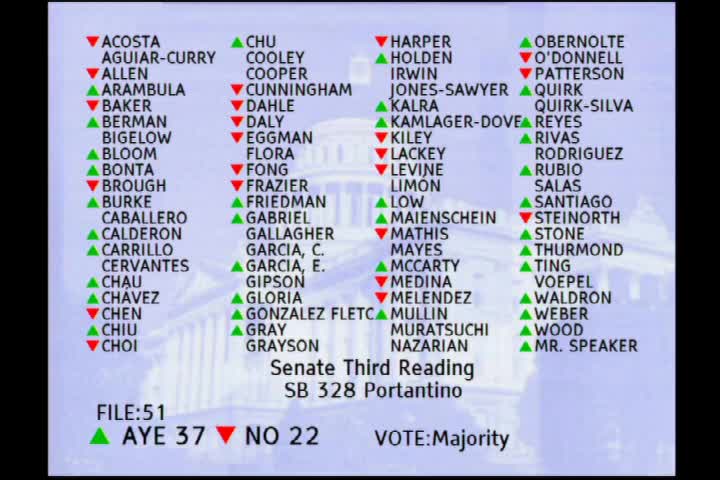 1MIN
Assembly Floor
 2MIN
Senate Floor
 27MIN
Senate Standing Committee on Business, Professions and Economic Development
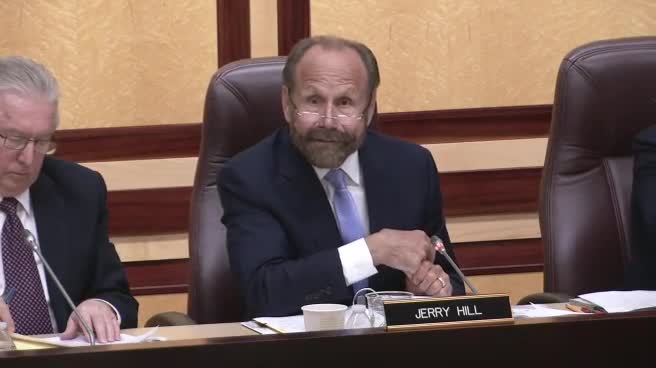 13MIN
Senate Standing Committee on Business, Professions and Economic Development
 5MIN
Assembly Floor
 2MIN
Assembly Standing Committee on Appropriations
 8MIN
Assembly Standing Committee on Business and Professions
Bill Author

Bill Co-Author(s):