AB 2097: Carpet recycling: annual reports.
- Session Year: 2017-2018
- House: Assembly
- Latest Version Date: 2018-09-11
Existing law requires a manufacturer of carpet sold in this state to submit, either individually or through a carpet stewardship organization, a carpet stewardship plan that meets specified requirements to the Department of Resources Recycling and Recovery. Existing law requires a carpet stewardship organization, on or before July 1 of each year, to demonstrate to the department that it has achieved the amount and rates of recycling, and a reduction in disposal, of postconsumer carpet subject to its stewardship plan and in meeting the other specified goals included in the organizations plan. Existing law requires a manufacturer of carpet sold in this state to submit to the department, either individually or through a carpet stewardship organization, on or before July 1 of each year, a report describing its activities to achieve the purposes of the carpet stewardship laws.
This bill would change the date by which the annual demonstration and the annual report are required to be completed from July 1 of each year to September 1 of each year.
(a)In order to achieve compliance with this chapter, a carpet stewardship organization shall, on or before September 1 of each year, demonstrate to the department that it has achieved the amount and rates of recycling and a reduction in disposal of postconsumer carpet subject to its stewardship plan and the other goals included in the organizations plan pursuant to paragraph (2) of subdivision (a) of Section 42972. In determining compliance, the department shall consider all of the following:
(1)The baseline rate of compliance against which the demonstrated improvement is compared, including progress in achieving the goals outlined in subparagraphs (A) to (E), inclusive, of paragraph (2) of subdivision (a) of Section 42972.
(2)The quantifiable five-year goals and annual goals included in the carpet stewardship plan pursuant to paragraph (2) of subdivision (a) of Section 42972.
(3)Information provided in the organizations report to the department pursuant to Section 42976.
(b)If more than one organization submits a carpet stewardship plan pursuant to this chapter, the department shall use information submitted by the organization in its annual report pursuant to Section 42976 to determine to what extent the recycling rates, the reductions in disposal rates, and the achievement of the other goals included in the plan are attributable to each organization and shall determine compliance with this chapter accordingly.
SEC. 2.Section 42976 of the Public Resources Code is amended to read:42976.On or before September 1 of each year, a manufacturer of carpet sold in the state shall, individually or through a carpet stewardship organization, submit to the department a report describing its activities to achieve the purposes of this chapter, as described in Section 42970, and to comply with Section 42975. At a minimum, the report shall include all of the following:
(a)The amount of carpet sold by square yards and weight, in the state during the reporting period. A carpet stewardship organization with more than one manufacturer may use average weight.
(b)The amount of postconsumer carpet recycled, by weight, during the reporting period.
(c)The amount of postconsumer carpet recovered but not recycled, by weight, and its ultimate disposition.
(d)The total cost of implementing the carpet stewardship plan.
(e)An evaluation of the effectiveness of the carpet stewardship plan, and anticipated steps, if needed, to improve performance.
(f)Examples of educational materials that were provided to consumers during the reporting period.
(a)In order to achieve compliance with this chapter, a carpet stewardship organization shall, on or before July 1, 2013, and annually thereafter, September 1 of each year, demonstrate to the department that it has achieved the amount and rates of recycling and a reduction in disposal of postconsumer carpet subject to its stewardship plan and the other goals included in the organizations plan pursuant to paragraph (2) of subdivision (a) of Section 42972. In determining compliance, the department shall consider all of the following:
(1)The baseline rate of compliance against which the demonstrated improvement is compared, including progress in achieving the goals outlined in subparagraphs (A) to (E), inclusive, of paragraph (2) of subdivision (a) of Section 42972.
(2)The quantifiable five-year goals and annual goals included in the carpet stewardship plan pursuant to paragraph (2) of subdivision (a) of Section 42972.
(3)Information provided in the organizations report to the department pursuant to Section 42976.
(b)If more than one organization submits a carpet stewardship plan pursuant to this chapter, the department shall use information submitted by the organization in its annual report pursuant to Section 42976 to determine to what extent the recycling rates, the reductions in disposal rates, and the achievement of the other goals included in the plan are attributable to each organization and shall determine compliance with this chapter accordingly.
SEC. 2.Section 42976 of the Public Resources Code is amended to read:42976.On or before July 1, 2013, and each year thereafter, September 1 of each year, a manufacturer of carpet sold in the state shall, individually or through a carpet stewardship organization, submit to the department a report describing its activities to achieve the purposes of this chapter, as described in Section 42970, and to comply with Section 42975. At a minimum, the report shall include all of the following:
(a)The amount of carpet sold by square yards and weight, in the state during the reporting period. A carpet stewardship organization with more than one manufacturer may use average weight.
(b)The amount of postconsumer carpet recycled, by weight, during the reporting period.
(c)The amount of postconsumer carpet recovered but not recycled, by weight, and its ultimate disposition.
(d)The total cost of implementing the carpet stewardship plan.
(e)An evaluation of the effectiveness of the carpet stewardship plan, and anticipated steps, if needed, to improve performance.
(f)Examples of educational materials that were provided to consumers during the reporting period.
|
Date
|
Status
|
|---|---|
| Sep 11, 2018 | Chaptered by Secretary of State - Chapter 340, Statutes of 2018. |
| Sep 11, 2018 | Approved by the Governor. |
| Sep 5, 2018 | Enrolled and presented to the Governor at 3 p.m. |
| Aug 27, 2018 | In Assembly. Ordered to Engrossing and Enrolling. |
| Aug 27, 2018 | Read third time. Passed. Ordered to the Assembly. |
| Jul 3, 2018 | Read second time. Ordered to third reading. |
| Jul 2, 2018 | From committee: Be ordered to second reading pursuant to Senate Rule 28.8. |
| Jun 6, 2018 | From committee: Do pass and re-refer to Com. on APPR. (Ayes 5. Noes 0.) (June 6). Re-referred to Com. on APPR. |
| May 3, 2018 | Referred to Com. on EQ. |
| Apr 23, 2018 | In Senate. Read first time. To Com. on RLS. for assignment. |
| Apr 23, 2018 | Read third time. Passed. Ordered to the Senate. |
| Apr 19, 2018 | Read second time. Ordered to third reading. |
| Apr 18, 2018 | From committee: Do pass. (Ayes 14. Noes 0.) (April 18). |
| Apr 10, 2018 | From committee: Do pass and re-refer to Com. on APPR. with recommendation: To Consent Calendar. (Ayes 7. Noes 0.) (April 9). Re-referred to Com. on APPR. |
| Feb 22, 2018 | Referred to Com. on NAT. RES. |
| Feb 9, 2018 | From printer. May be heard in committee March 11. |
| Feb 8, 2018 | Read first time. To print. |
|
Date
|
Description
|
Location
|
Votes
|
|
|---|---|---|---|---|
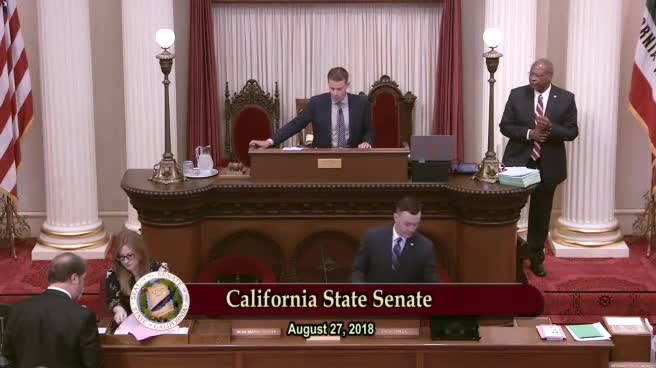
| Aug 27, 2018 | Assembly 3rd Reading AB2097 Acosta By Stone | Senate Floor |
Passed |
|
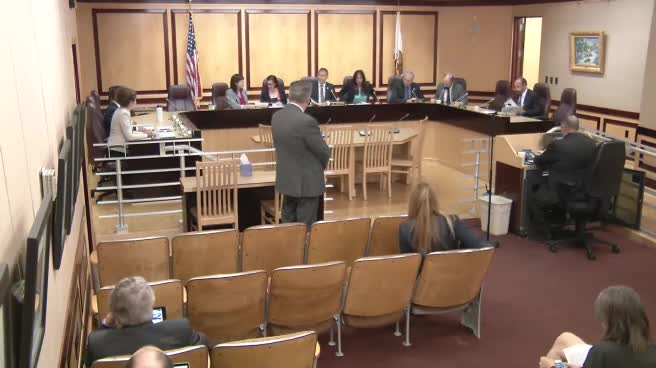
| Jun 6, 2018 | Do pass, but first be re-referred to the Committee on [Appropriations] | Senate Standing Committee on Environmental Quality |
Passed |
|
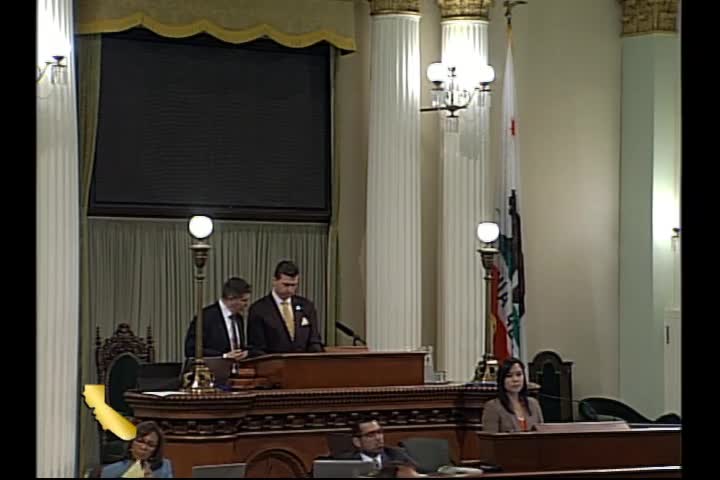
| Apr 23, 2018 | AB 2097 ACOSTA Assembly Third Reading | Assembly Floor |
Passed |
|
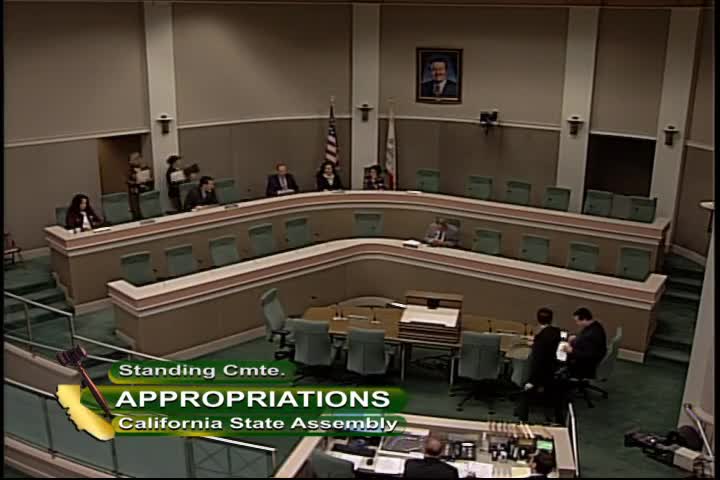
| Apr 18, 2018 | Do pass. | Assembly Standing Committee on Appropriations |
Passed |
|
| Apr 9, 2018 | Do pass and be re-referred to the Committee on [Appropriations] with recommendation: To Consent Calendar | Assembly Standing Committee on Natural Resources |
Passed |
This list shows positions taken on this bill by organizations on the date displayed, which is linked to the original source.
Positions by individuals are not included.
Office of Senate Floor Analyses (916) 651-1520 Fax: (916) 327-4478 | AB |
THIRD READING
Bill No: AB 2097
:
SENATE ENVIRONMENTAL QUALITY COMMITTEE: 5-0, 6/6/18
AYES: Wieckowski, Stone, Gaines, Hill, Skinner
NO VOTE RECORDED: Lara, Stern
SENATE APPROPRIATIONS COMMITTEE: Senate Rule 28.8
ASSEMBLY FLOOR: 72-2, 4/23/18 - See last page for vote
SOURCE: Carpet & Rug Institute
DIGEST:
This bill extends the date by which carpet manufacturers must submit their annual report to the Department of Resources Recycling and Recovery (CalRecycle) from July 1 to September 1 of each year.
Existing law, the Product Stewardship for Carpets Program:
- Requires manufacturers of carpets sold in the state, individually or through a carpet stewardship organization, to submit a carpet stewardship plan to CalRecycle that includes specified elements relating to the recycling of postconsumer carpet (PRC § 42972).
- Creates an advisory committee and requires the advisory committee to make recommendations on carpet stewardship plans (PRC § 42972.1).
- Requires the manufacturer or carpet stewardship organization to provide a copy of the carpet stewardship plan or amendments to the plan to the advisory committee at least 30 days before submitting the plan or amendments to CalRecycle.
- Requires the advisory committee to provide comments and recommendations and requires the carpet stewardship organization, to the extent feasible, to incorporate the recommendations into the plan or amendments to the plan.
- Requires the manufacturer or carpet stewardship organization to provide a copy of the carpet stewardship plan or amendments to the plan to the advisory committee at least 30 days before submitting the plan or amendments to CalRecycle.
- Requires CalRecycle, within 60 days after receiving a plan, to review and determine whether the plan complies with the law’s requirements and notify the submitter of its decision (PRC § 42973).
- Requires the carpet stewardship organization to annually demonstrate, on or before July 1, to CalRecycle that it has achieved continuous meaningful improvement in the rates of recycling and diversion and other specified goals in order to be in compliance with the program (PRC §42975).
- Provides for a carpet stewardship assessment per unit of carpet sold in the state in an amount that cumulatively will adequately fund the plan and be consistent with the purposes of the chapter. Requires the amount of the assessment be sufficient to meet, but not exceed, the anticipated cost of carrying out the plan (PRC § 42972).
- Requires manufacturers of carpet sold in the state, individually or through a carpet stewardship organization, to annually submit to CalRecycle, on or before July 1, a report describing its activities to comply with the carpet stewardship program and its approved stewardship plan (PRC § 42975).
- Requires the carpet stewardship organization or manufacturer to provide a copy of the annual report to the advisory committee at least 30 days before submitting the report to CalRecycle and requires the advisory committee to provide comments to the carpet stewardship organization or manufacturer and to CalRecycle (PRC § 42972.1).
- Requires the carpet stewardship organization or manufacturer to incorporate the advisory committee’s recommendations into the annual report before submitting the report to CalRecycle (PRC § 42972.1).
- Requires the carpet stewardship organization or manufacturer to provide a copy of the annual report to the advisory committee at least 30 days before submitting the report to CalRecycle and requires the advisory committee to provide comments to the carpet stewardship organization or manufacturer and to CalRecycle (PRC § 42972.1).
- Requires CalRecycle to post a notice on its Internet Web site listing manufacturers that are in compliance with the carpet stewardship program and requires wholesalers and retailers that distribute or sell carpet to monitor the Internet Web site to verify that the sale of the manufacturer’s carpet is in compliance (PRC § 42974).
- Authorizes CalRecycle to administratively impose a civil penalty on any person who is in violation of the carpet stewardship provisions (PRC § 42978).
This bill changes the annual date by which a carpet stewardship organization is required to demonstrate that it has achieved continuous meaningful improvement in recycling and diversion rates and the annual date by which a manufacturer of carpet is required to submit its report from July 1 to September 1.
Background
- Extended Producer Responsibility (EPR) Programs. According to CalRecycle, EPR is a strategy that places shared responsibility for end-of-life product management on the producers, and all entities involved in the product chain, instead of on the general public and local governments, with oversight and enforcement provided by a governmental agency. This approach provides flexibility for manufacturers, based on their expertise in designing products and the systems that bring these products to market, to design systems to capture those products at the end-of-life to meet statutory goals. Currently there are three statewide EPR programs: paint, carpet, and mattresses.
- Recycling Carpet. Discarded carpet is one of the 10 most prevalent waste materials in California landfills, comprising about 3.2% of waste by volume disposed of in California in 2008. Most carpet is made from nylon and other polymers derived from virgin fossil fuel. Carpet is difficult to recover plastics from due to the multiple materials bound together and is designed for durability and longevity. Numerous products can be manufactured from recycled carpet, including carpet backing and backing components, carpet fiber, carpet underlayment, plastics and engineered materials, and erosion control products.
- California’s carpet recycling program. California’s carpet stewardship program was created by AB 2398 (Perez, Chapter 681, Statutes of 2010). As an EPR program, manufacturers (either individually or through their stewardship organization) are required to design and implement their own stewardship program. This means there is a stewardship organization that prepares and implements a plan to reach certain goals, finances and distributes funds to support the stewardship program, and reports to CalRecycle on their progress. CalRecycle’s role in the carpet stewardship program is to review and approve plans, check progress, and support industry by providing oversight and enforcement to ensure a level playing field among carpet manufacturers.
In 2017, AB 1158 (Chu, Chapter 794), among other things, established an advisory committee to provide recommendations to manufacturers or stewardship organizations and to the CalRecycle on carpet stewardship plans, plan amendments, and annual reports. AB 1158 requires a manufacturer or stewardship organization to submit the plans, amendments, and annual reports to the advisory committee at least 30 days before submitting the plan, amendments, or annual report to CalRecycle.
- Carpet America Recovery Effort (CARE). CARE is a third-party nonprofit carpet stewardship organization based in Georgia. AB 2398 established CARE as the sole carpet stewardship organization until April 1, 2015. After that date, CalRecycle for approval. Currently, CARE is the only carpet stewardship organization in California.
- Carpet Stewardship Plans
- California Carpet Stewardship Plan 2011-2016. Consistent with AB 2398, CARE is directed to collect an assessment that is sufficient to meet, but not exceed, the anticipated cost of implementing the stewardship plan. In the approved California Carpet Stewardship Plan 2011-2016 (2011-2016 Plan), the initial ($0.05) per square yard assessment was approved through 2016. In 2015 and 2016, the 2011-2016 Plan was revised through three separate addenda in order to support continuous meaningful progress in line with the goals of AB 2398 and in response to market conditions. The first addenda provided justification for additional program incentives and enhancements to help CARE achieve compliance and increased the assessment from $0.05/square yard of carpet sold in California to $0.10/square yard effective April 1, 2015. The second addenda authorized a one-year grant and loan pilot program. The third addenda, approved in 2016, increased the assessment from $0.10/square yard of carpet sold in California to $0.20/square yard effective April 1, 2016. The 2011-2016 Plan was set to expire December 1, 2016.
- California Carpet Stewardship Plan 2017-2021. In October 2016, CARE submitted a new California Carpet Stewardship Plan 2017-2021 (2017-2021 Plan), which included an increase of the assessment to $0.25/square yard. CalRecycle disapproved the plan on December 20, 2016, and gave CARE 60 days to resubmit a revised 2017-2021 Plan for consideration. The disapproval required CARE to continue operating under the 2011-2016 Plan until a new plan was approved by CalRecycle, but for no more than 120 days.
- California Carpet Stewardship Plan 2011-2016. Consistent with AB 2398, CARE is directed to collect an assessment that is sufficient to meet, but not exceed, the anticipated cost of implementing the stewardship plan. In the approved California Carpet Stewardship Plan 2011-2016 (2011-2016 Plan), the initial ($0.05) per square yard assessment was approved through 2016. In 2015 and 2016, the 2011-2016 Plan was revised through three separate addenda in order to support continuous meaningful progress in line with the goals of AB 2398 and in response to market conditions. The first addenda provided justification for additional program incentives and enhancements to help CARE achieve compliance and increased the assessment from $0.05/square yard of carpet sold in California to $0.10/square yard effective April 1, 2015. The second addenda authorized a one-year grant and loan pilot program. The third addenda, approved in 2016, increased the assessment from $0.10/square yard of carpet sold in California to $0.20/square yard effective April 1, 2016. The 2011-2016 Plan was set to expire December 1, 2016.
CalRecycle found that the new proposed plan, “taken as a whole, does not ensure continuous meaningful improvement in carpet recycling and diversion in 2017 and beyond.” According to CalRecycle, the plan focuses on existing subsidies that have not demonstrated increased recycling rates; moreover, CARE intends to “scale back” subsidy guarantees going forward. The plan does not address the possibility of providing subsidies to points in the supply chain that may result in significant increases in recycling, such as installer subsidies to increase diversion and recycling, funding for discounted drop-off fees, or subsidies for secondary manufacturers to use post-consumer nylon. Most of the activities described in the 2017-2021 Plan, according to CalRecycle, continue existing initiatives at much the same level as the 2011-2016 Plan that expired in 2016, at a time when CalRecycle already found that the Program lacked continuous meaningful improvement three years in a row.
AB 2398 established administrative civil penalties of $1,000 per day ($10,000 for intentional, knowing, or negligent violations). In its disapproval of CARE’s 2017-2021 plan, the director directed staff to delay enforcement action against carpet manufacturers, wholesalers, and retailers for 120 days, “provided the regulatory entity is participating in good faith in continuing to carry out the requirements of the law and CARE’s existing plan.”
On February 20, 2017, CARE submitted a revised 2017-2021 Plan, which specified that with the $0.25/square yard assessment, it expects to collect $23.7 million in 2017. The plan identifies $1.7 million in reuse subsidy payments; $7.1 million in recycling processor payments; $11.1 million in manufacturer payments; just under $1 million in specified grants; and, $6.2 million in “program expenses,” which includes $764,142 for CARE salaries and staffing. On April 21, 2017, CalRecycle disapproved the revised 2017-2021 Plan based upon a finding that the plan did not comply with statutory requirements. In its disapproval, CalRecycle noted that without an approved plan in place, all manufacturers that sell carpet in California are subject to penalties until they are covered by an approved plan. Additionally, wholesalers and retailers would be subject to penalties for selling carpet from non-compliant manufacturers. In order to preserve the recycling infrastructure and avoid market disruptions, CalRecycle authorized manufacturers, wholesalers, and retailers to continue to operate without penalties for 60 days.
The Director of CalRecycle directed staff to develop a draft plan to help CARE comply with state requirements. At the June 2017 public meeting, CalRecycle presented its Final Carpet Stewardship Program Enforcement Plan, which was later updated and presented at the October 2017 public meeting. Because the 2011-2016 Plan had ended on December 31, 2016, the Director allowed CARE to continue to operate under the 2011-2016 Plan under conditions specified in the updated enforcement plan, including a requirement that CARE submit a carpet stewardship plan to CalRecycle by March 16, 2018, that would incorporate the provisions of AB 1158.
- California Carpet Stewardship Plan 2018-2022. On March 16, 2018, CARE submitted a new Carpet Stewardship Plan 2018-2022 (2018-2022 Plan). The plan was disapproved on May 15, 2018, after reviewing staff found that the plan did not meet statutory requirements.
- California Carpet Stewardship Plan 2018-2022. On March 16, 2018, CARE submitted a new Carpet Stewardship Plan 2018-2022 (2018-2022 Plan). The plan was disapproved on May 15, 2018, after reviewing staff found that the plan did not meet statutory requirements.
- Enforcement actions against CARE. On March 10, 2017, separate from its consideration of the proposed 2017-2021 stewardship plan, CalRecycle began an enforcement proceeding against CARE for failing to meet the requirement that the carpet stewardship organization is required to achieve “continuous and meaningful improvement in the rates of recycling and diversion of postconsumer carpet subject to its stewardship plan and in meeting the other goals included in the organization’s plan.” In spite of the significant amount of money collected by CARE from California consumers, CalRecycle found that CARE did not meet these requirements in 2013, 2014, or 2015. After each finding, CalRecycle provided CARE with recommendations on adjustments to the plan that would result in meaningful improvement; however, CARE has not incorporated CalRecycle’s suggestions in any subsequent plans. CalRecycle is seeking a total of $3.285 million in penalties: $182,500 for 2013; $1.46 million for 2014; and, $1.64 million for 2015.
Following a hearing on September 26, 2017, the Office of Administrative Hearings issued a proposed decision on February 13, 2018, that concluded that there is cause to impose a civil penalty against CARE but reduced the total penalties to $1,003,750. CalRecycle had until May 23, 2018 to accept, reject, or modify the decision. On April 26, 2018, CalRecyle accepted the proposed decision, with modifications which included reducing the penalty amount to be consistent with penalties specified in statute.
Comments
- Purpose of Bill. According to the author, “AB 2097 changes the date of the submission of the annual report from carpet stewardship organization from July 1st to September 1st in order to provide adequate time to gather data, draft the report, and provide it to the advisory committee for feedback prior to submitting to CalRecycle.”
- 2017 annual update. Under existing law, CARE is required to submit its 2017 annual update for the period of January 1, 2017, to December 1, 2017, no later than July 1, 2018. At the May 15, 2018, public hearing CalRecycle approved a request from CARE to postpone the submission of the 2017 annual update to September 1, 2018. This extension, according to the sponsor, was needed to provide time for the advisory committee to review and comment on the draft of the annual report. AB 2097 codifies similar timelines for future annual reports.
- Annual reports of other EPR programs. In addition to the Carpet Stewardship Program, CalRecycle administers two other statewide EPR programs: the Used Mattress Recovery and Recycling Act and the Architectural Paint Recovery Program. Under the Architectural Paint Recovery Program, the paint stewardship organization, PaintCare, has four months from the end of its reporting year to submit its annual report to CalRecycle. Under the Used Mattress Recovery and Recycling Act, the stewardship organization, Mattress Recycling Council, has six months. Under the existing carpet stewardship program, CARE has seven months to submit its annual report – three months more than PaintCare and one month longer than Mattress Recycling Council. It is of note, however, that both organizations are not required to submit plans, amendments, or annual reports to an advisory committee before submitting those documents to CalRecycle. Under AB 2097, CARE would have nine months to submit its annual report.
- CARE’s compliance issues. As discussed above, CalRecycle has found that CARE has failed to achieve meaningful continuous improvement in the recycling of carpet for 2013, 2014, and 2015. According to CalRecycle’s review of CARE, the stewardship organization has failed to meet program requirements and has been unable to meet the goals contained in its approved plan. How does, if at all, providing an extension for demonstrating continuous meaningful improvements in recycling and diversion rates and for submitting the annual report help CARE comply with requirements of the stewardship program?
FISCAL EFFECT: Appropriation: Fiscal Com.: Local:
Carpet & Rug Institute (source)
Republic Services, Inc.
None received
ASSEMBLY FLOOR: 72-2, 4/23/18
AYES: Acosta, Aguiar-Curry, Travis Allen, Arambula, Baker, Berman, Bigelow, Bloom, Bonta, Brough, Burke, Caballero, Calderon, Carrillo, Cervantes, Chau, Chávez, Chen, Choi, Cooley, Cooper, Cunningham, Dahle, Daly, Eggman, Flora, Fong, Frazier, Friedman, Gallagher, Gipson, Gloria, Gonzalez Fletcher, Gray, Grayson, Harper, Holden, Irwin, Jones-Sawyer, Kalra, Kamlager-Dove, Kiley, Lackey, Levine, Limón, Low, Maienschein, Mathis, Mayes, McCarty, Medina, Melendez, Mullin, Muratsuchi, Nazarian, Obernolte, O’Donnell, Patterson, Quirk-Silva, Reyes, Rodriguez, Rubio, Salas, Santiago, Steinorth, Mark Stone, Thurmond, Voepel, Waldron, Weber, Wood, Rendon
NOES: Chu, Ting
NO VOTE RECORDED: Chiu, Cristina Garcia, Eduardo Garcia, Quirk
7/3/18 15:56:08
SENATE COMMITTEE ON ENVIRONMENTAL QUALITY
Senator Wieckowski, Chair
2017 - 2018 Regular
Bill No: AB 2097
Author: | Acosta | ||
Version: | 2/8/2018 | Hearing Date: | 6/6/2018 |
Urgency: | No | Fiscal: | Yes |
Consultant: | Genevieve Wong | ||
SUBJECT: Carpet recycling: annual reports
ANALYSIS:
Existing law, the Product Stewardship for Carpets Program:
- Requires manufacturers of carpets sold in the state, individually or through a carpet stewardship organization, to submit a carpet stewardship plan to CalRecycle that includes specified elements relating to the recycling of postconsumer carpet (PRC § 42972).
- Creates an advisory committee and requires the advisory committee to make recommendations on carpet stewardship plans (PRC § 42972.1).
- Requires the manufacturer or carpet stewardship organization to provide a copy of the carpet stewardship plan or amendments to the plan to the advisory committee at least 30 days before submitting the plan or amendments to CalRecycle.
- Requires the advisory committee to provide comments and recommendations and requires the carpet stewardship organization, to the extent feasible, to incorporate the recommendations into the plan or amendments to the plan.
- Requires the manufacturer or carpet stewardship organization to provide a copy of the carpet stewardship plan or amendments to the plan to the advisory committee at least 30 days before submitting the plan or amendments to CalRecycle.
- Requires CalRecycle, within 60 days after receiving a plan, to review and determine whether the plan complies with the law’s requirements and notify the submitter of its decision (PRC § 42973).
- Requires the carpet stewardship organization to annually demonstrate, on or before July 1, to CalRecycle that it has achieved continuous meaningful improvement in the rates of recycling and diversion and other specified goals in order to be in compliance with the program (PRC §42975).
- Provides for a carpet stewardship assessment per unit of carpet sold in the state in an amount that cumulatively will adequately fund the plan and be consistent with the purposes of the chapter. Requires the amount of the assessment be sufficient to meet, but not exceed, the anticipated cost of carrying out the plan (PRC § 42972).
- Requires manufacturers of carpet sold in the state, individually or through a carpet stewardship organization, to annually submit to CalRecycle, on or before July 1, a report describing its activities to comply with the carpet stewardship program and its approved stewardship plan (PRC § 42975).
- Requires the carpet stewardship organization or manufacturer to provide a copy of the annual report to the advisory committee at least 30 days before submitting the report to CalRecycle and requires the advisory committee to provide comments to the carpet stewardship organization or manufacturer and to CalRecycle (PRC § 42972.1).
- Requires the carpet stewardship organization or manufacturer to incorporate the advisory committee’s recommendations into the annual report before submitting the report to CalRecycle (PRC § 42972.1).
- Requires the carpet stewardship organization or manufacturer to provide a copy of the annual report to the advisory committee at least 30 days before submitting the report to CalRecycle and requires the advisory committee to provide comments to the carpet stewardship organization or manufacturer and to CalRecycle (PRC § 42972.1).
- Requires CalRecycle to post a notice on its Internet Web site listing manufacturers that are in compliance with the carpet stewardship program and requires wholesalers and retailers that distribute or sell carpet to monitor the Internet Web site to verify that the sale of the manufacturer’s carpet is in compliance (PRC § 42974).
- Authorizes CalRecycle to administratively impose a civil penalty on any person who is in violation of the carpet stewardship provisions (PRC § 42978).
This bill changes the annual date by which a carpet stewardship organization is required to demonstrate that it has achieved continuous meaningful improvement in recycling and diversion rates and the annual date by which a manufacturer of carpet is required to submit its report from July 1 to September 1.
Background
- Extended Producer Responsibility (EPR) Programs. According to CalRecycle, EPR is a strategy that places shared responsibility for end-of-life product management on the producers, and all entities involved in the product chain, instead of on the general public and local governments, with oversight and enforcement provided by a governmental agency. This approach provides flexibility for manufacturers, based on their expertise in designing products and the systems that bring these products to market, to design systems to capture those products at the end-of-life to meet statutory goals. Currently there are 3 statewide EPR programs: paint, carpet, and mattresses.
- Recycling Carpet. Discarded carpet is one of the 10 most prevalent waste materials in California landfills, comprising about 3.2% of waste by volume disposed of in California in 2008. Most carpet is made from nylon and other polymers derived from virgin fossil fuel. Carpet is difficult to recover plastics from due to the multiple materials bound together and is designed for durability and longevity. Numerous products can be manufactured from recycled carpet, including carpet backing and backing components, carpet fiber, carpet underlayment, plastics and engineered materials, and erosion control products.
- California’s carpet recycling program. California's carpet stewardship program was created by AB 2398 (Perez), Chapter 681, Statutes of 2010. As an EPR program, manufacturers (either individually or through their stewardship organization) are required to design and implement their own stewardship program. This means there is a stewardship organization that prepares and implements a plan to reach certain goals, finances and distributes funds to support the stewardship program, and reports to CalRecycle on their progress. CalRecycle's role in the carpet stewardship program is to review and approve plans, check progress, and support industry by providing oversight and enforcement to ensure a level playing field among carpet manufacturers.
In 2017, AB 1158 (Chu), among other things (see related/prior legislation below), established an advisory committee to provide recommendations to manufacturers or stewardship organizations and to the CalRecycle on carpet stewardship plans, plan amendments, and annual reports. AB 1158 requires a manufacturer or stewardship organization to submit the plans, amendments, and annual reports to the advisory committee at least 30 days before submitting the plan, amendments, or annual report to CalRecycle.
- Carpet America Recovery Effort (CARE). CARE is a third-party nonprofit carpet stewardship organization based in Georgia. AB 2398 established CARE as the sole carpet stewardship organization until April 1, 2015. After that date, CalRecycle for approval. Currently, CARE is the only carpet stewardship organization in California.
- Carpet stewardship plans.
- California Carpet Stewardship Plan 2011-2016. Consistent with AB 2398, CARE is directed to collect an assessment that is sufficient to meet, but not exceed, the anticipated cost of implementing the stewardship plan. In the approved California Carpet Stewardship Plan 2011-2016 (2011-2016 Plan), the initial ($0.05) per square yard assessment was approved through 2016. In 2015 and 2016, the 2011-2016 Plan was revised through three separate addenda in order to support continuous meaningful progress in line with the goals of AB 2398 and in response to market conditions. The first addenda provided justification for additional program incentives and enhancements to help CARE achieve compliance and increased the assessment from $0.05/square yard of carpet sold in California to $0.10/square yard effective April 1, 2015. The second addenda authorized a one-year grant and loan pilot program. The third addenda, approved in 2016, increased the assessment from $0.10/square yard of carpet sold in California to $0.20/square yard effective April 1, 2016. The 2011-2016 Plan was set to expire December 1, 2016.
- California Carpet Stewardship Plan 2017-2021. In October 2016, CARE submitted a new California Carpet Stewardship Plan 2017-2021 (2017-2021 Plan), which included an increase of the assessment to $0.25/square yard. CalRecycle disapproved the plan on December 20, 2016, and gave CARE 60 days to resubmit a revised 2017-2021 Plan for consideration. The disapproval required CARE to continue operating under the 2011-2016 Plan until a new plan was approved by CalRecycle, but for no more than 120 days.
- California Carpet Stewardship Plan 2011-2016. Consistent with AB 2398, CARE is directed to collect an assessment that is sufficient to meet, but not exceed, the anticipated cost of implementing the stewardship plan. In the approved California Carpet Stewardship Plan 2011-2016 (2011-2016 Plan), the initial ($0.05) per square yard assessment was approved through 2016. In 2015 and 2016, the 2011-2016 Plan was revised through three separate addenda in order to support continuous meaningful progress in line with the goals of AB 2398 and in response to market conditions. The first addenda provided justification for additional program incentives and enhancements to help CARE achieve compliance and increased the assessment from $0.05/square yard of carpet sold in California to $0.10/square yard effective April 1, 2015. The second addenda authorized a one-year grant and loan pilot program. The third addenda, approved in 2016, increased the assessment from $0.10/square yard of carpet sold in California to $0.20/square yard effective April 1, 2016. The 2011-2016 Plan was set to expire December 1, 2016.
CalRecycle found that the new proposed plan, "taken as a whole, does not ensure continuous meaningful improvement in carpet recycling and diversion in 2017 and beyond." According to CalRecycle, the plan focuses on existing subsidies that have not demonstrated increased recycling rates; moreover, CARE intends to "scale back" subsidy guarantees going forward. The plan does not address the possibility of providing subsidies to points in the supply chain that may result in significant increases in recycling, such as installer subsidies to increase diversion and recycling, funding for discounted drop-off fees, or subsidies for secondary manufacturers to use post-consumer nylon. Most of the activities described in the 2017-2021 Plan, according to CalRecycle, continue existing initiatives at much the same level as the 2011-2016 Plan that expired in 2016, at a time when CalRecycle already found that the Program lacked continuous meaningful improvement three years in a row.
AB 2398 established administrative civil penalties of $1,000 per day ($10,000 for intentional, knowing, or negligent violations). In its disapproval of CARE's 2017-2021 plan, the director directed staff to delay enforcement action against carpet manufacturers, wholesalers, and retailers for 120 days, "provided the regulatory entity is participating in good faith in continuing to carry out the requirements of the law and CARE's existing plan."
On February 20, 2017, CARE submitted a revised 2017-2021 Plan, which specified that with the $0.25/square yard assessment, it expects to collect $23.7 million in 2017. The plan identifies $1.7 million in reuse subsidy payments; $7.1 million in recycling processor payments; $11.1 million in manufacturer payments; just under $1 million in specified grants; and, $6.2 million in "program expenses," which includes $764,142 for CARE salaries and staffing. On April 21, 2017 CalRecycle disapproved the revised 2017-2021 Plan based upon a finding that the plan did not comply with statutory requirements. In its disapproval, CalRecycle noted that without an approved plan in place, all manufacturers that sell carpet in California are subject to penalties until they are covered by an approved plan. Additionally, wholesalers and retailers would be subject to penalties for selling carpet from non-compliant manufacturers. In order to preserve the recycling infrastructure and avoid market disruptions, CalRecycle authorized manufacturers, wholesalers, and retailers to continue to operate without penalties for 60 days.
The Director of CalRecycle directed staff to develop a draft plan to help CARE comply with state requirements. At the June 2017 public meeting, CalRecycle presented its Final Carpet Stewardship Program Enforcement Plan, which was later updated and presented at the October 2017 public meeting. Because the 2011-2016 Plan had ended on December 31, 2016, the Director allowed CARE to continue to operate under the 2011-2016 Plan under conditions specified in the updated enforcement plan, including a requirement that CARE submit a carpet stewardship plan to CalRecycle by March 16, 2018, that would incorporate the provisions of AB 1158.
- California Carpet Stewardship Plan 2018-2022. On March 16, 2018, CARE submitted a new Carpet Stewardship Plan 2018-2022 (2018-2022 Plan). The plan was disapproved on May 15, 2018, after reviewing staff found that the plan did not meet statutory requirements.
- California Carpet Stewardship Plan 2018-2022. On March 16, 2018, CARE submitted a new Carpet Stewardship Plan 2018-2022 (2018-2022 Plan). The plan was disapproved on May 15, 2018, after reviewing staff found that the plan did not meet statutory requirements.
- Enforcement actions against CARE. On March 10, 2017, separate from its consideration of the proposed 2017-2021 stewardship plan, CalRecycle began an enforcement proceeding against CARE for failing to meet the requirement that the carpet stewardship organization is required to achieve "continuous and meaningful improvement in the rates of recycling and diversion of postconsumer carpet subject to its stewardship plan and in meeting the other goals included in the organization's plan." In spite of the significant amount of money collected by CARE from California consumers, CalRecycle found that CARE did not meet these requirements in 2013, 2014, or 2015. After each finding, CalRecycle provided CARE with recommendations on adjustments to the plan that would result in meaningful improvement; however, CARE has not incorporated CalRecycle's suggestions in any subsequent plans. CalRecycle is seeking a total of $3.285 million in penalties: $182,500 for 2013; $1.46 million for 2014; and, $1.64 million for 2015.
Following a hearing on September 26, 2017, the Office of Administrative Hearings issued a proposed decision on February 13, 2018, that concluded that there is cause to impose a civil penalty against CARE but reduced the total penalties to $1,003,750. CalRecycle had until May 23, 2018 to accept, reject, or modify the decision. On April 26, 2018, CalRecyle accepted the proposed decision, with modifications which included reducing the penalty amount to be consistent with penalties specified in statute.
Comments
- Purpose of Bill. According to the author, “AB 2097 changes the date of the submission of the annual report from carpet stewardship organization from July 1st to September 1st in order to provide adequate time to gather data, draft the report, and provide it to the advisory committee for feedback prior to submitting to CalRecycle.”
- 2017 annual update. Under existing law, CARE is required to submit its 2017 annual update for the period of January 1, 2017, to December 1, 2017, no later than July 1, 2018. At the May 15, 2018, public hearing CalRecycle approved a request from CARE to postpone the submission of the 2017 annual update to September 1, 2018. This extension, according to the sponsor, was needed to provide time for the advisory committee to review and comment on the draft of the annual report. AB 2097 would codify similar timelines for future annual reports.
- Annual reports of other EPR programs. In addition to the Carpet Stewardship Program, CalRecycle administers two other statewide EPR programs: the Used Mattress Recovery and Recycling Act and the Architectural Paint Recovery Program. Under the Architectural Paint Recovery Program, the paint stewardship organization, PaintCare, has four months from the end of its reporting year to submit its annual report to CalRecycle. Under the Used Mattress Recovery and Recycling Act, the stewardship organization, Mattress Recycling Council, has six months. Under the existing carpet stewardship program, CARE has seven months to submit its annual report – three months more than PaintCare and one month longer than Mattress Recycling Council. It is of note, however, that both organizations are not required to submit plans, amendments, or annual reports to an advisory committee before submitting those documents to CalRecycle. Under AB 2097, CARE would have nine months to submit its annual report.
- CARE’s compliance issues. As discussed above, CalRecycle has found that CARE has failed to achieve meaningful continuous improvement in the recycling of carpet for 2013, 2014, and 2015. According to CalRecycle’s review of CARE, the stewardship organization has failed to meet program requirements and has been unable to meet the goals contained in its approved plan. How does, if at all, providing an extension for demonstrating continuous meaningful improvements in recycling and diversion rates and for submitting the annual report help CARE comply with requirements of the stewardship program?
Related/Prior Legislation
AB 1158 (Chu, Chapter 794, Statutes 2017), among other things, requires a carpet stewardship plan to achieve a 24% recycling rate for postconsumer carpet by January 1, 2020, revises the criteria a carpet stewardship organization is required to meet to achieve compliance with carpet stewardship laws, and creates an advisory committee to provide comments and recommendations on carpet stewardship plans, amendments to plans, and annual reports.
SOURCE:
Carpet & Rug Institute
SUPPORT:
Carpet & Rug Institute
OPPOSITION:
None on file
-- END --
ASSEMBLY THIRD READING
ATR Bill Id:AB 2097
Author:(Acosta)
As Introduced Ver:February 8, 2018
Majority vote
Committee | Votes | Ayes | Noes |
Natural Resources | 7-0 | Muratsuchi, Acosta, Chau, Eggman, Flora, Melendez, Mark Stone | |
Appropriations | 14-0 | Gonzalez Fletcher, Bigelow, Bonta, Brough, Calderon, Carrillo, Chau, McCarty, Fong, Friedman, Gallagher, Nazarian, Obernolte, Reyes |
SUMMARY: Changes the date by which carpet manufacturers must submit their annual report to the Department of Resources Recycling and Recovery (CalRecycle) from July 1 to September 1 of each year.
EXISTING LAW establishes the Product Stewardship for Carpets Program, which:
- Requires manufacturers of carpets sold in this state, individually or through a carpet stewardship organization, to submit a carpet stewardship plan to CalRecycle that includes specified elements, which must be approved by CalRecycle.
- Establishes a minimum carpet recycling rate of 24% by 2020. Requires CalRecycle to establish a minimum percentage beginning January 1, 2023.
- Requires CalRecycle to post a notice on its website listing manufacturers that are in compliance. Requires a wholesaler or retailer that distributes or sells carpets to monitor the website to determine if the sale of a manufacturer’s carpet is in compliance.
- Requires the carpet stewardship organization to submit an annual report to CalRecycle by July 1 of each year that describes its activities to comply with the program and its approved plan.
- Establishes an advisory committee to make recommendations on carpet stewardship plans.
- Provides for the imposition of administrative civil penalties for violations and provides that the manufacturer or carpet stewardship organization whose plan is not approved by CalRecycle by March 31, 2012, is subject to those penalties until the plan is approved.
FISCAL EFFECT: According to the Assembly Appropriations Committee, this bill has no additional state costs.
COMMENTS:
Carpet recycling. California's carpet stewardship program was created by AB 2398 (Perez), Chapter 681, Statutes of 2010. As an extended producer responsibility (EPR) program, manufacturers (either individually or through their stewardship organization) are required to design and implement their own stewardship program. This means there is a stewardship organization that prepares and implements a plan to reach certain goals, finances and distributes funds to support the stewardship program, and reports to CalRecycle on their progress. CalRecycle's role in the carpet stewardship program is to review and approve plans, check progress, and support industry by providing oversight and enforcement to ensure a level playing field among carpet manufacturers. Other service providers participate in the management system as negotiated with the stewardship organization.
The stewardship plan is a critical part of the program; it defines a compliant program and communicates a course of action to stakeholders and the public. Stewardship organizations (or individual manufacturers that are not represented by a stewardship organization) are responsible for submitting the plans to CalRecycle for approval. Approved plans are posted on CalRecycle's website.
Enforcement actions. The Carpet America Recovery Effort (CARE), based in Georgia, is the carpet industry's stewardship organization. In keeping with AB 2398, CARE is directed to collect an assessment that is sufficient to meet, but not exceed, the anticipated cost of implementing the stewardship plan. In the approved California Carpet Stewardship Plan, the initial ($0.05) per square yard assessment was approved through 2016. On December 28, 2014, CARE submitted and CalRecycle approved an addendum to its approved plan. This addendum provided justification for additional program incentives and enhancements to help CARE achieve compliance. CARE also requested an increase in the assessment from $0.05/square yard of carpet sold in California to $0.10/square yard effective April 1, 2015. On November 30, 2015, CARE submitted an additional addendum to increase the assessment from $0.10/square yard of carpet sold in California to $0.20/square yard effective April 1, 2016. In October 2016, CARE submitted a revised plan to CalRecycle that included an increase in the assessment to $0.25/square yard. CalRecycle disapproved that plan on December 23, 2016. The disapproval required CARE to continue operating under the previous plan until a new plan was approved by CalRecycle. On January 16, 2017, CalRecycle conditionally approved Addendum #3 of the plan, with specified modifications. The conditional approval includes increasing the assessment to $0.25/square yard.
CalRecycle found that the plan, "taken as a whole, does not ensure continuous meaningful improvement in carpet recycling and diversion in 2017 and beyond." According to CalRecycle, the plan focuses on existing subsidies that have not demonstrated increased recycling rates; moreover, CARE intends to "scale back" subsidy guarantees going forward. The plan does not address the possibility of providing subsidies to points in the supply chain that may result in significant increases in recycling, such as installer subsidies to increase diversion and recycling, funding for discounted drop-off fees, or subsidies for secondary manufacturers to use post-consumer nylon.
AB 2398 established administrative civil penalties of $1,000 per day ($10,000 for intentional, knowing, or negligent violations). In its disapproval of CARE's October 2016 plan, the director directed staff to delay enforcement action against carpet manufacturers, wholesalers, and retailers for 120 days, "provided the regulatory entity is participating in good faith in continuing to carry out the requirements of the law and CARE's existing plan."
CARE submitted a revised plan to CalRecycle on February 20, 2017, which was considered at CalRecycle's public meeting on April 18, 2017. The plan specifies that with the $0.25/square yard assessment, it expects to collect $23.7 million in 2017. The plan identifies $1.7 million in reuse subsidy payments; $7.1 million in recycling processor payments; $11.1 million in manufacturer payments; just under $1 million in specified grants; and, $6.2 million in "program expenses," which includes $764,142 for CARE salaries and staffing. On April 21, 2017 CalRecycle disapproved CARE's plan based upon a finding that the plan does not comply with statutory requirements. Without an approved plan in place, all manufacturers that sell carpet in California are subject to penalties until they are covered by an approved plan. Additionally, wholesalers and retailers are subject to penalties for selling carpet from non-compliant manufacturers. In order to preserve the recycling infrastructure and avoid market disruptions, CalRecycle authorized manufacturers, wholesalers, and retailers to continue to operate without penalties for 60 days. The director of CalRecycle directed staff to develop a draft plan to help CARE comply with state requirements; the draft plan was discussed at CalRecycle's public meeting on May 16, 2017.
On March 10, 2017, CalRecycle began an enforcement proceeding against CARE for failing to meet the requirement that the carpet stewardship organization is required to achieve "continuous and meaningful improvement in the rates of recycling and diversion of postconsumer carpet subject to its stewardship plan and in meeting the other goals included in the organization's plan." In spite of the significant amount of money collected by CARE from California consumers, CalRecycle found that CARE did not meet these requirements in 2013, 2014, or 2015. After each finding, CalRecycle provided CARE with recommendations on adjustments to the plan that would result in meaningful improvement; however, CARE has not incorporated CalRecycle's suggestions in any subsequent plans. CalRecycle is seeking a total of $3.285 million in penalties: $182,500 for 2013; $1.46 million for 2014; and, $1.64 million for 2015.
Following a hearing on September 26, 2017, the Office of Administrative Hearings issued a proposed decision on February 13, 2018 that concluded that there is cause to impose a civil penalty against CARE but reduced the total penalties to $1,003,750. CalRecycle has until May 23, 2018 to accept, reject, or modify the decision.
In response to the ongoing enforcement activities regarding the program, the Legislature enacted AB 1158 (Chu), Chapter 794, Statutes of 2017, which established a minimum carpet recycling rate of 24% by 2020 and requires CalRecycle to establish a minimum percentage beginning January 1, 2023. AB 1158 also codified an advisory committee to make recommendations on carpet stewardship plans and prohibits CARE from using carpet assessment funds to pay penalties or legal costs. This bill is intended to give CARE additional time to receive and respond to the recommendations of the advisory committee.
Analysis Prepared by: Elizabeth MacMillan / NAT. RES. / (916) 319-2092 FN: 0002723
Date of Hearing: April 18, 2018
ASSEMBLY COMMITTEE ON APPROPRIATIONS
Lorena Gonzalez Fletcher, Chair
ABPCA Bill Id:AB 2097
Author:(Acosta) – As Introduced Ver:February 8, 2018
Policy Committee: | Natural Resources | Vote: | 7 - 0 |
Urgency: No State Mandated Local Program: No Reimbursable: No
SUMMARY:
This bill changes the date by which carpet manufacturers must submit their annual report to the Department of Resources Recycling and Recovery (CalRecycle) from July 1 to September 1 of each year.
FISCAL EFFECT:
No additional state costs.
COMMENTS:
- Purpose. According to the carpet stewardship organization CARE, “Receiving comments and recommendations from the advisory committee and making adjustments to the annual report would be difficult to complete by July 1st of every year.” This bill seeks an extension until September 1st of each year.
- Background. California's carpet stewardship program was created by AB 2396 (Perez), Chapter 681, Statutes of 2010. As an extended producer responsibility (EPR) program, the carpet stewardship program requires manufacturers to design and implement their own stewardship program. This means there is a stewardship organization that prepares and implements a stewardship plan, finances and distributes funds to support the stewardship program, and reports to CalRecycle on their progress.
CalRecyle’s role in the carpet stewardship program is to review and approve plans, check progress, and support industry by providing oversight and enforcement to ensure a level playing field among carpet manufacturers. Other service providers participate in the management system as negotiated with the stewardship organization.
The stewardship plan is a critical part of the program; it defines a compliant program and communicates a course of action to stakeholders and the public. Stewardship organizations (or individual manufacturers that are not represented by a stewardship organization) are responsible for submitting the plans to CalRecycle for approval. Approved plans are posted on CalRecycle's website.
- Enforcement actions. The Carpet America Recovery Effort (CARE), based in Georgia, is the carpet industry's stewardship organization. In keeping with AB 2398, CARE is directed to collect an assessment that is sufficient to meet, but not exceed, the anticipated cost of implementing the stewardship plan.
On March 10, 2017, CalRecycle began an enforcement proceeding against CARE for failing to meet the requirement that the carpet stewardship organization is required to achieve "continuous and meaningful improvement in the rates of recycling and diversion of postconsumer carpet subject to its stewardship plan and in meeting the other goals included in the organization's plan." In spite of the significant amount of money collected by CARE from California consumers, CalRecycle found CARE did not meet these requirements in 2013, 2014, or 2015. After each finding, CalRecycle provided CARE with recommendations on adjustments to the plan that would result in meaningful improvement. However, CARE has not incorporated CalRecycle's suggestions in any subsequent plans. CalRecycle is seeking a total of $3.285 million in penalties: $182,500 for 2013; $1.46 million for 2014; and, $1.64 million for 2015.
Following a hearing on September 26, 2017, the Office of Administrative Hearings issued a proposed decision on February 13, 2018, that concluded there is cause to impose a civil penalty against CARE but reduced the total penalties to $1,003,750. CalRecycle has until May 23, 2018, to accept, reject, or modify the decision.
- Previous legislation. In response to the ongoing enforcement activities regarding the program, the Legislature enacted AB 1158 (Chu), Chapter 794, Statutes of 2017, which establishes a minimum carpet recycling rate of 24% by 2020 and requires CalRecycle to establish a minimum percentage beginning January 1, 2023. AB 1158 also codified an advisory committee to make recommendations on carpet stewardship plans and prohibits CARE from using carpet assessment funds to pay penalties or legal costs.
Analysis Prepared by: Jennifer Galehouse / APPR. / (916) 319-2081
Date of Hearing: April 9, 2018
ASSEMBLY COMMITTEE ON NATURAL RESOURCES
Al Muratsuchi, Acting Chair
ABPCA Bill Id:AB 2097 (
Author:Acosta) – As Introduced Ver:February 8, 2018
SUBJECT: Carpet recycling: annual reports
SUMMARY: Changes the date by which carpet manufacturers must submit their annual report to the Department of Resources Recycling and Recovery (CalRecycle) from July 1 to September 1 of each year.
EXISTING LAW establishes the Product Stewardship for Carpets Program, which:
- Requires manufacturers of carpets sold in this state, individually or through a carpet stewardship organization, to submit a carpet stewardship plan to CalRecycle that includes specified elements.
- Requires CalRecycle, within 60 days after receiving a plan, to review and determine whether the plan complies with the law's requirements and notify the submitter of its decision. Specifies that any plan not approved by March 31, 2012, is out of compliance until determined to be complete by CalRecycle.
- Establishes a minimum carpet recycling rate of 24% by 2020. Requires CalRecycle to establish a minimum percentage beginning January 1, 2023.
- Requires CalRecycle to post a notice on its website listing manufacturers that are in compliance. Requires a wholesaler or retailer that distributes or sells carpets to monitor the website to determine if the sale of a manufacturer’s carpet is in compliance.
- Requires the carpet stewardship organization to demonstrate to CalRecycle that it has achieved continuous meaningful improvement in the rates of recycling and diversion and other specified goals in order to be in compliance.
- Requires the carpet stewardship organization to submit an annual report to CalRecycle by July 1 of each year that describes its activities to comply with the program and its approved plan.
- Establishes an advisory committee to make recommendations on carpet stewardship plans.
- Provides for the imposition of administrative civil penalties for violations and provides that the manufacturer or carpet stewardship organization whose plan is not approved by CalRecycle by March 31, 2012, is subject to those penalties until the plan is approved.
FISCAL EFFECT: Unknown
COMMENTS:
- Author's statement:
Current law requires the submission of the annual report for the CARE program to be submitted by July 1st [and] requires a draft of the report to be provided to the advisory committee at least 30 days prior to the submission of the report to CalRecycle. Moreover, under the law, "the advisory committee shall provide comments and recommendations to the carpet stewardship organization or manufacturer and to the department based on their review of the materials."
According to the carpet stewardship organization, CARE, receiving comments and recommendations from the advisory committee and making adjustments to the annual report would be difficult to complete by July 1st. Therefore, an extension until September 1st is being sought by this bill.
- Carpet recycling. California's carpet stewardship program was created by AB 2398 (Perez), Chapter 681, Statutes of 2010. As an extended producer responsibility (EPR) program, manufacturers (either individually or through their stewardship organization) are required to design and implement their own stewardship program. This means there is a stewardship organization that prepares and implements a plan to reach certain goals, finances and distributes funds to support the stewardship program, and reports to CalRecycle on their progress. CalRecycle's role in the carpet stewardship program is to review and approve plans, check progress, and support industry by providing oversight and enforcement to ensure a level playing field among carpet manufacturers. Other service providers participate in the management system as negotiated with the stewardship organization.
The stewardship plan is a critical part of the program; it defines a compliant program and communicates a course of action to stakeholders and the public. Stewardship organizations (or individual manufacturers that are not represented by a stewardship organization) are responsible for submitting the plans to CalRecycle for approval. Approved plans are posted on CalRecycle's website.
- Enforcement actions. The Carpet America Recovery Effort (CARE), based in Georgia, is the carpet industry's stewardship organization. In keeping with AB 2398, CARE is directed to collect an assessment that is sufficient to meet, but not exceed, the anticipated cost of implementing the stewardship plan. In the approved California Carpet Stewardship Plan, the initial ($0.05) per square yard assessment was approved through 2016. On December 28, 2014, CARE submitted and CalRecycle approved an addendum to its approved plan. This addendum provided justification for additional program incentives and enhancements to help CARE achieve compliance. CARE also requested an increase in the assessment from $0.05/square yard of carpet sold in California to $0.10/square yard effective April 1, 2015. On November 30, 2015, CARE submitted an additional addendum to increase the assessment from $0.10/square yard of carpet sold in California to $0.20/square yard effective April 1, 2016. In October 2016, CARE submitted a revised plan to CalRecycle that included an increase in the assessment to $0.25/square yard. CalRecycle disapproved that plan on December 23, 2016. The disapproval required CARE to continue operating under the previous plan until a new plan was approved by CalRecycle. On January 16, 2017, CalRecycle conditionally approved Addendum #3 of the plan, with specified modifications. The conditional approval includes increasing the assessment to $0.25/square yard.
CalRecycle found that the plan, "taken as a whole, does not ensure continuous meaningful improvement in carpet recycling and diversion in 2017 and beyond." According to CalRecycle, the plan focuses on existing subsidies that have not demonstrated increased recycling rates; moreover, CARE intends to "scale back" subsidy guarantees going forward. The plan does not address the possibility of providing subsidies to points in the supply chain that may result in significant increases in recycling, such as installer subsidies to increase diversion and recycling, funding for discounted drop-off fees, or subsidies for secondary manufacturers to use post-consumer nylon.
AB 2398 established administrative civil penalties of $1,000 per day ($10,000 for intentional, knowing, or negligent violations). In its disapproval of CARE's October 2016 plan, the director directed staff to delay enforcement action against carpet manufacturers, wholesalers, and retailers for 120 days, "provided the regulatory entity is participating in good faith in continuing to carry out the requirements of the law and CARE's existing plan."
CARE submitted a revised plan to CalRecycle on February 20, 2017, which was considered at CalRecycle's public meeting on April 18, 2017. The plan specifies that with the $0.25/square yard assessment, it expects to collect $23.7 million in 2017. The plan identifies $1.7 million in reuse subsidy payments; $7.1 million in recycling processor payments; $11.1 million in manufacturer payments; just under $1 million in specified grants; and, $6.2 million in "program expenses," which includes $764,142 for CARE salaries and staffing. On April 21, 2017 CalRecycle disapproved CARE's plan based upon a finding that the plan does not comply with statutory requirements. Without an approved plan in place, all manufacturers that sell carpet in California are subject to penalties until they are covered by an approved plan. Additionally, wholesalers and retailers are subject to penalties for selling carpet from non-compliant manufacturers. In order to preserve the recycling infrastructure and avoid market disruptions, CalRecycle authorized manufacturers, wholesalers, and retailers to continue to operate without penalties for 60 days. The director of CalRecycle directed staff to develop a draft plan to help CARE comply with state requirements; the draft plan was discussed at CalRecycle's public meeting on May 16, 2017.
On March 10, 2017, CalRecycle began an enforcement proceeding against CARE for failing to meet the requirement that the carpet stewardship organization is required to achieve "continuous and meaningful improvement in the rates of recycling and diversion of postconsumer carpet subject to its stewardship plan and in meeting the other goals included in the organization's plan." In spite of the significant amount of money collected by CARE from California consumers, CalRecycle found that CARE did not meet these requirements in 2013, 2014, or 2015. After each finding, CalRecycle provided CARE with recommendations on adjustments to the plan that would result in meaningful improvement; however, CARE has not incorporated CalRecycle's suggestions in any subsequent plans. CalRecycle is seeking a total of $3.285 million in penalties: $182,500 for 2013; $1.46 million for 2014; and, $1.64 million for 2015.
Following a hearing on September 26, 2017, the Office of Administrative Hearings issued a proposed decision on February 13, 2018 that concluded that there is cause to impose a civil penalty against CARE but reduced the total penalties to $1,003,750. CalRecycle has until May 23, 2018 to accept, reject, or modify the decision.
- Previous legislation. In response to the ongoing enforcement activities regarding the program, the Legislature enacted AB 1158 (Chu), Chapter 794, Statutes of 2017, which established a minimum carpet recycling rate of 24% by 2020 and requires CalRecycle to establish a minimum percentage beginning January 1, 2023. AB 1158 also codified an advisory committee to make recommendations on carpet stewardship plans and prohibits CARE from using carpet assessment funds to pay penalties or legal costs.
REGISTERED SUPPORT / OPPOSITION:
Support
Carpet & Rug Institute
Opposition
None on file
Analysis Prepared by: Elizabeth MacMillan / NAT. RES. /
Discussed in Hearing
 1MIN
Senate Floor
 2MIN
Senate Standing Committee on Environmental Quality
 1MIN
Assembly Floor
 1MIN
Assembly Standing Committee on Appropriations
Bill Author

Bill Co-Author(s):