AB 210: Homeless multidisciplinary personnel team.
- Session Year: 2017-2018
- House: Assembly
- Latest Version Date: 2017-10-07
Existing law authorizes counties to establish a child abuse multidisciplinary personnel team, as defined, to allow provider agencies to share confidential information in order to investigate reports of suspected child abuse or neglect or for the purpose of child welfare agencies making detention determinations, as specified.
This bill would authorize counties to also establish a homeless adult and family multidisciplinary personnel team, as defined, with the goal of facilitating the expedited identification, assessment, and linkage of homeless individuals to housing and supportive services within that county and to allow provider agencies to share confidential information, as specified, for the purpose of coordinating housing and supportive services to ensure continuity of care. The bill would require the sharing of information permitted under these provisions to be governed by protocols developed in each county, as specified, and would require each county to provide a copy of its protocols to the State Department of Social Services.
This bill would authorize the homeless adult and family multidisciplinary personnel team to designate qualified persons to be a member of the team for a particular case and would require every member who receives information or records regarding adults and families in his or her capacity as a member of the team to be under the same privacy and confidentiality obligations and subject to the same confidentiality penalties as the person disclosing or providing the information or records. The bill would also require the information or records to be maintained in a manner that ensures the maximum protection of privacy and confidentiality rights.
Existing law authorizes counties to establish a child abuse multidisciplinary personnel team, as defined, to allow provider agencies to share confidential information in order to investigate reports of suspected child abuse or neglect or for the purpose of child welfare agencies making detention determinations, as specified.
This bill would authorize counties to also establish a homeless adult and family multidisciplinary personnel team, as defined, with the goal of facilitating the expedited identification, assessment, and linkage of homeless individuals to housing and supportive services within that county and to allow provider agencies to share confidential information, as specified, for the purpose of coordinating housing and supportive services to ensure continuity of care. The bill would require the sharing of information permitted under these provisions to be governed by protocols developed in each county, as specified. specified, and would require each county to provide a copy of its protocols to the State Department of Social Services.
This bill would authorize the homeless adult and family multidisciplinary personnel team to designate qualified persons to be a member of the team for a particular case and would require every member who receives information or records regarding adults and families in his or her capacity as a member of the team to be under the same privacy and confidentiality obligations and subject to the same confidentiality penalties as the person disclosing or providing the information or records. The bill would also require the information or records to be maintained in a manner that ensures the maximum protection of privacy and confidentiality rights.
Existing law authorizes counties to establish a child abuse multidisciplinary personnel team, as defined, to allow provider agencies to share confidential information in order to investigate reports of suspected child abuse or neglect or for the purpose of child welfare agencies making detention determinations, as specified.
This bill would authorize counties to also establish a homeless adult, child, adult and family multidisciplinary personnel team, as defined, with the goal of facilitating the expedited identification, assessment, and linkage of homeless individuals to housing and supportive services within that county and to allow provider agencies to share confidential information, as specified, for the purpose of coordinating housing and supportive services to ensure continuity of care. The bill would require the sharing of information permitted under these provisions to be governed by protocols developed in each county, as specified, and would require each county to provide a copy of its protocols to the State Department of Social Services. specified.
This bill would authorize the homeless adult, child, adult and family multidisciplinary personnel team to designate qualified persons to be a member of the team for a particular case and would require every member who receives information or records regarding children adults and families in his or her capacity as a member of the team to be under the same privacy and confidentiality obligations and subject to the same confidentiality penalties as the person disclosing or providing the information or records. The bill would also require the information or records to be maintained in a manner that ensures the maximum protection of privacy and confidentiality rights.
Existing law authorizes counties to establish a child abuse multidisciplinary personnel team, as defined, to allow provider agencies to share confidential information in order to investigate reports of suspected child abuse or neglect or for the purpose of child welfare agencies making detention determinations, as specified.
This bill would authorize counties to also establish a homeless adult, child, and family multidisciplinary personnel team, as defined, with the goal of facilitating the expedited identification, assessment, and linkage of homeless individuals to housing and supportive services within that county to allow provider agencies to share confidential information, as specified, for the purpose of coordinating housing and supportive services to ensure continuity of care. The The bill would require the sharing of information permitted under these provisions to be governed by protocols developed in each county, as specified, and would require each county to provide a copy of its protocols to the State Department of Social Services.
This bill would authorize the homeless adult, child, and family multidisciplinary personnel team to designate qualified persons to be a member of the team for a particular case and would require every member who receives information or records regarding children and families in his or her capacity as a member of the team to be under the same privacy and confidentiality obligations and subject to the same confidentiality penalties as the person disclosing or providing the information or records. The bill would also require the information or records to be maintained in a manner that ensures the maximum protection of privacy and confidentiality rights.
Existing law authorizes counties to establish a child abuse multidisciplinary personnel team, as defined, to allow provider agencies to share confidential information in order to investigate reports of suspected child abuse or neglect or for the purpose of child welfare agencies making detention determinations, as specified.
This bill would authorize counties to also establish a homeless adult, child, and family multidisciplinary personnel team, as defined, with the goal of facilitating the expedited identification, assessment, and linkage of homeless individuals to housing and supportive services within that county to allow provider agencies to share confidential information, as specified, for the purpose of coordinating housing and supportive services to ensure continuity of care. The bill would authorize the homeless adult, child, and family multidisciplinary personnel team to designate qualified persons to be a member of the team for a particular case and would require every member who receives information or records regarding children and families in his or her capacity as a member of the team to be under the same privacy and confidentiality obligations and subject to the same confidentiality penalties as the person disclosing or providing the information or records. The bill would also require the information or records to be maintained in a manner that ensures the maximum protection of privacy and confidentiality rights.
Existing law authorizes counties to establish a child abuse multidisciplinary personnel team, as defined, to allow provider agencies to share confidential information in order to investigate reports of suspected child abuse or neglect or for the purpose of child welfare agencies making detention determinations, as specified.
This bill would authorize counties to also establish a homeless adult, child, and family multidisciplinary personnel team, as defined, with the goal of facilitating the expedited identification, assessment, and linkage of homeless individuals to housing and supportive services within that county to allow provider agencies to share confidential information, as specified, for the purpose of coordinating housing and supportive services to ensure continuity of care. The bill would authorize the homeless adult, child, and family multidisciplinary personnel team to designate qualified persons to be a member of the team and would require every member who receives information or records regarding children and families in his or her capacity as a member of the team to be under the same privacy and confidentiality obligations and subject to the same confidentiality penalties as the person disclosing or providing the information or records. The bill would also require the information or records to be maintained in a manner that ensures the maximum protection of privacy and confidentiality rights.
(a)Notwithstanding any other law, a county may establish a homeless adult and family multidisciplinary personnel team with the goal of facilitating the expedited identification, assessment, and linkage of homeless individuals to housing and supportive services within that county and to allow provider agencies to share confidential information for the purpose of coordinating housing and supportive services to ensure continuity of care.
(b)For the purposes of this section, the following terms have the following meanings:
(1)Homeless means any recorded instance of an adult or family self-identifying as homeless within the most recent 12 months, or any element contained in service utilization records indicating that an adult or family experienced homelessness within the most recent 12 months.
(2)Homeless adult and family multidisciplinary personnel team means any team of two or more persons who are trained in the identification and treatment of homeless adults and families, and who are qualified to provide a broad range of services related to homelessness. The team may include, but shall not be limited to, the following:
(A)Mental health and substance abuse services personnel and practitioners or other trained counseling personnel.
(B)Police officers, probation officers, or other law enforcement agents.
(C)Legal counsel for the adult or family representing them in a criminal matter.
(D)Medical personnel with sufficient training to provide health services.
(E)Social services workers with experience or training in the provision of services to homeless adults or families or funding and eligibility for services.
(F)Veterans services providers and counselors.
(G)Domestic violence victim service organizations, as defined in subdivision (b) of Section 1037.1 of the Evidence Code.
(H)Any public or private school teacher, administrative officer, or certified pupil personnel employee.
(I)Housing or homeless services provider agencies and designated personnel.
(3)Homeless services provider agency means any governmental or other agency that has as one of its purposes the identification, assessment, and linkage of housing or supportive services to homeless adults or families. The homeless services provider agencies serving adults or families that may share information under this section include, but are not limited to, the following entities or service agencies:
(A)Social services.
(B)Health services.
(C)Mental health services.
(D)Substance abuse services.
(E)Probation.
(F)Law enforcement.
(G)Legal counsel for the adult or family representing them in a criminal matter.
(H)Veterans services and counseling.
(I)Domestic violence victim service organizations, as defined in subdivision (b) of Section 1037.1 of the Evidence Code.
(J)Schools.
(K)Homeless services.
(L)Housing.
(c)(1)Members of a homeless adult and family multidisciplinary personnel team engaged in the identification, assessment, and linkage of housing and supportive services to homeless adults or families may disclose to, and exchange with, one another information and writings that relate to any information that may be designated as confidential under state law if the member of the team having that information or writing reasonably believes it is generally relevant to the identification, reduction, or elimination of homelessness or the provision of services. Any discussion relative to the disclosure or exchange of the information or writings during a team meeting is confidential and, notwithstanding any other law, testimony concerning that discussion is not admissible in any criminal, civil, or juvenile court proceeding.
(2)Disclosure and exchange of information pursuant to this section may occur telephonically and electronically if there is adequate verification of the identity of the homeless adult and family multidisciplinary personnel who are involved in that disclosure or exchange of information.
(3)Disclosure and exchange of information pursuant to this section shall not be made to anyone other than members of the homeless adult and family multidisciplinary personnel team, and those qualified to receive information as set forth in subdivision (d).
(4)Representatives of domestic violence victim service organizations, as defined in subdivision (b) of Section 1037.1 of the Evidence Code, shall obtain an individuals informed consent, in accordance with all applicable state and federal confidentiality laws, before disclosing confidential information about that individual to another team member as specified in this section.
(d)The homeless adult and family multidisciplinary personnel team may designate persons qualified pursuant to paragraph (2) of subdivision (b) to be a member of the team for a particular case. A person designated as a team member pursuant to this subdivision may receive and disclose relevant information and records, subject to the confidentiality provisions of subdivision (f).
(e)(1)The sharing of information permitted under subdivision (c) shall be governed by protocols developed in each county describing how and what information may be shared by the homeless adult and family multidisciplinary personnel team to ensure that confidential information gathered by the team is not disclosed in violation of state or federal law. A copy of the protocols shall be distributed to each participating agency and to persons in those agencies who participate in the homeless adult and family multidisciplinary personnel team, and shall be posted on the countys Internet Web site on the homepage of the countys office of homelessness, social services department, or human services agency within 30 days of adoption. Each county shall provide a copy of its protocols to the State Department of Social Services. This subdivision shall not be construed to require the department to review or approve any homeless multidisciplinary personnel team county protocols that it receives.
(2)A protocol developed in a county pursuant to paragraph (1) shall include, but not be limited to, all of the following:
(A)The items of information or data elements that will be shared.
(B)The participating agencies.
(C)A description of how the information shared pursuant to this section will be used by the homeless adult and family multidisciplinary personnel team only for the intended purposes specified in subdivision (a).
(D)The information retention schedule that participating agencies shall follow.
(E)A requirement that no confidential information or writings be disclosed to persons who are not members of the homeless adult and family multidisciplinary personnel team, except to the extent required or permitted under applicable law.
(F)A requirement that participating agencies develop uniform written policies and procedures that include security and privacy awareness training for employees who will have access to information pursuant to this protocol.
(G)A requirement that all persons who have access to information shared by participating agencies sign a confidentiality statement that includes, at a minimum, general use, security safeguards, acceptable use, and enforcement policies.
(H)A requirement that participating agencies employ security controls that meet applicable federal and state standards, including reasonable administrative, technical, and physical safeguards to ensure data confidentiality, integrity, and availability and to prevent unauthorized or inappropriate access, use, or disclosure.
(I)A requirement that participating agencies take reasonable steps to ensure information is complete, accurate, and up to date to the extent necessary for the agencys intended purposes and that the information has not been altered or destroyed in an unauthorized manner.
(f)Every member of the homeless adult and family multidisciplinary personnel team who receives information or records regarding adults and families in his or her capacity as a member of the team shall be under the same privacy and confidentiality obligations and subject to the same confidentiality penalties as the person disclosing or providing the information or records. The information or records obtained shall be maintained in a manner that ensures the maximum protection of privacy and confidentiality rights.
(g)This section shall not be construed to restrict guarantees of confidentiality provided under state or federal law.
(h)Information and records communicated or provided to the team members by all providers and agencies shall be deemed private and confidential and shall be protected from discovery and disclosure by all applicable statutory and common law protections. Existing civil and criminal penalties shall apply to the inappropriate disclosure of information held by the team members.
(a)Notwithstanding any other law, a county may establish a homeless adult, child, adult and family multidisciplinary personnel team with the goal of facilitating the expedited identification, assessment, and linkage of homeless individuals to housing and supportive services within that county and to allow provider agencies to share confidential information for the purpose of coordinating housing and supportive services to ensure continuity of care.
(b)For the purposes of this section, the following terms have the following meanings:
(1)Homeless means any recorded instance of an adult, child, adult or family self-identifying as homeless within the most recent 12 months, or any element contained in service utilization records indicating that an adult, child, adult or family experienced homelessness within the most recent 12 months.
(2)Homeless adult, child, adult and family multidisciplinary personnel team means any team of two or more persons who are trained in the identification and treatment of homeless adults, children, adults and families, and who are qualified to provide a broad range of services related to homelessness. The team may include, but shall not be limited to, the following:
(A)Mental health and substance abuse services personnel and practitioners, child protective services personnel and social workers, practitioners or other trained counseling personnel.
(B)Police officers, probation officers, or other law enforcement agents.
(C)Legal counsel for the adult, child, adult or family representing them in a criminal matter.
(D)Medical personnel with sufficient training to provide health services.
(E)Social services workers with experience or training in the provision of services to homeless adults, children, adults or families or funding and eligibility for services.
(F)Veterans services providers and counselors.
(G)Domestic violence services providers and counselors. victim service organizations, as defined in subdivision (b) of Section 1037.1 of the Evidence Code.
(H)Any public or private school teacher, administrative officer, or certified pupil personnel employee.
(I)Housing or homeless services provider agencies and designated personnel.
(3)Homeless services provider agency means any governmental or other agency that has as one of its purposes the identification, assessment, and linkage of housing or supportive services to homeless adults, children, adults or families. The homeless services provider agencies serving adults, children, adults or families that may share information under this section include, but are not limited to, the following entities or service agencies:
(A)Social services.
(B)Child welfare services.(C)(B)Health services.
(D)(C)Mental health services.
(E)(D)Substance abuse services.
(F)(E)Probation.
(G)(F)Law enforcement.
(H)(G)Legal counsel for the adult, child, adult or family representing them in a criminal matter.
(I)(H)Veterans services and counseling.
(J)(I)Domestic violence services and counseling. victim service organizations, as defined in subdivision (b) of Section 1037.1 of the Evidence Code.
(K)(J)Schools.
(L)(K)Homeless services.
(M)(L)Housing.
(c)(1)Members of a homeless adult, child, adult and family multidisciplinary personnel team engaged in the identification, assessment, and linkage of housing and supportive services to homeless adults, children, adults or families may disclose to, and exchange with, one another information and writings that relate to any information that may be designated as confidential under state law if the member of the team having that information or writing reasonably believes it is generally relevant to the identification, reduction, or elimination of homelessness or the provision of services. Any discussion relative to the disclosure or exchange of the information or writings during a team meeting is confidential and, notwithstanding any other law, testimony concerning that discussion is not admissible in any criminal, civil, or juvenile court proceeding.
(2)Disclosure and exchange of information pursuant to this section may occur telephonically and electronically if there is adequate verification of the identity of the homeless adult, child, adult and family multidisciplinary personnel who are involved in that disclosure or exchange of information.
(3)Disclosure and exchange of information pursuant to this section shall not be made to anyone other than members of the homeless adult, child, adult and family multidisciplinary personnel team, and those qualified to receive information as set forth in subdivision (d).
(4)Representatives of domestic violence victim service organizations, as defined in subdivision (b) of Section 1037.1 of the Evidence Code, shall obtain an individuals informed consent, in accordance with all applicable state and federal confidentiality laws, before disclosing confidential information about that individual to another team member as specified in this section.
(d)The homeless adult, child, adult and family multidisciplinary personnel team may designate persons qualified pursuant to paragraph (2) of subdivision (b) to be a member of the team for a particular case. A person designated as a team member pursuant to this subdivision may receive and disclose relevant information and records, subject to the confidentiality provisions of subdivision (f).
(e)(1)The sharing of information permitted under subdivision (c) shall be governed by protocols developed in each county describing how and what information may be shared by the homeless adult, child, adult and family multidisciplinary personnel team to ensure that confidential information gathered by the team is not disclosed in violation of state or federal law. A copy of the protocols shall be distributed to each participating agency and to persons in those agencies who participate in the homeless adult, child, adult and family multidisciplinary personnel team, and shall be posted on the countys Internet Web site on the homepage of the countys office of homelessness, social services department, or human services agency within 30 days of adoption. Each county shall provide a copy of its protocols to the State Department of Social Services.
(2)A protocol developed in a county pursuant to paragraph (1) shall include, but not be limited to, all of the following:
(A)The items of information or data elements that will be shared.
(B)The participating agencies.
(C)A description of how the information shared pursuant to this section will be used by the homeless adult, child, adult and family multidisciplinary personnel team only for the intended purposes specified in subdivision (a).
(D)The information retention schedule that participating agencies shall follow.
(E)A requirement that no confidential information or writings be disclosed to persons who are not members of the homeless adult, child, adult and family multidisciplinary personnel team, except to the extent required or permitted under applicable law.
(F)A requirement that participating agencies develop uniform written policies and procedures that include security and privacy awareness training for employees who will have access to information pursuant to this protocol.
(G)A requirement that all persons who have access to information shared by participating agencies sign a confidentiality statement that includes, at a minimum, general use, security safeguards, acceptable use, and enforcement policies.
(H)A requirement that participating agencies employ security controls that meet applicable federal and state standards, including reasonable administrative, technical, and physical safeguards to ensure data confidentiality, integrity, and availability and to prevent unauthorized or inappropriate access, use, or disclosure.
(I)A requirement that participating agencies take reasonable steps to ensure information is complete, accurate, and up to date to the extent necessary for the agencys intended purposes and that the information has not been altered or destroyed in an unauthorized manner.
(f)Every member of the homeless adult, child, adult and family multidisciplinary personnel team who receives information or records regarding children adults and families in his or her capacity as a member of the team shall be under the same privacy and confidentiality obligations and subject to the same confidentiality penalties as the person disclosing or providing the information or records. The information or records obtained shall be maintained in a manner that ensures the maximum protection of privacy and confidentiality rights.
(g)Notwithstanding Section 827 or any other law, members of a homeless adult, child, and family multidisciplinary personnel team engaged in the identification, assessment, and linkage of housing and supportive services to homeless adults, children, or families may disclose to, and exchange with, one another information and writings that relate to any substantiated incident of child abuse or neglect that may also be designated as confidential under state law if the team member having that information or writing reasonably believes it is generally relevant to the provision of services.(h)(g)This section shall not be construed to restrict guarantees of confidentiality provided under state or federal law.
(i)(h)Information and records communicated or provided to the team members by all providers and agencies shall be deemed private and confidential and shall be protected from discovery and disclosure by all applicable statutory and common law protections. Existing civil and criminal penalties shall apply to the inappropriate disclosure of information held by the team members.
(a)Notwithstanding any other law, a county may establish a homeless adult, child, and family multidisciplinary personnel team with the goal of facilitating the expedited identification, assessment, and linkage of homeless individuals to housing and supportive services within that county to allow provider agencies to share confidential information for the purpose of coordinating housing and supportive services to ensure continuity of care.
(b)For the purposes of this section, the following terms have the following meanings:
(1)Homeless means any recorded instance of an adult, child, or family self-identifying as homeless within the most recent 12 months, or any element contained in service utilization records indicating that an adult, child, or family experienced homelessness within the most recent 12 months.
(2)Homeless adult, child, and family multidisciplinary personnel team means any team of two or more persons who are trained in the identification and treatment of homeless adults, children, and families, and who are qualified to provide a broad range of services related to homelessness. The team may include, but shall not be limited to, the following:
(A)Mental health and substance abuse services personnel and practitioners, child protective services personnel and social workers, or other trained counseling personnel.
(B)Police officers, probation officers, or other law enforcement agents.
(C)Legal counsel for the adult, child, or family representing them in a criminal matter.
(D)Medical personnel with sufficient training to provide health services.
(E)Social services workers with experience or training in the provision of services to homeless adults, children, or families or funding and eligibility for services.
(F)Veterans services providers and counselors.
(G)Domestic violence services providers and counselors.
(H)Any public or private school teacher, administrative officer, or certified pupil personnel employee.
(I)Housing or homeless services provider agencies and designated personnel.
(3)Homeless services provider agency means any governmental or other agency that has as one of its purposes the identification, assessment, and linkage of housing or supportive services to homeless adults, children, or families. The homeless services provider agencies serving adults, children, or families that may share information under this section include, but are not limited to, the following entities or service agencies:
(A)Social services.
(B)Child welfare services.
(C)Health services.
(D)Mental health services.
(E)Substance abuse services.
(F)Probation.
(G)Law enforcement.
(H)Legal counsel for the adult, child, or family representing them in a criminal matter.
(I)Veterans services and counseling.
(J)Domestic violence services and counseling.
(K)Schools.
(L)Homeless services.
(M)Housing.
(c)(1)Members of a homeless adult, child, and family multidisciplinary personnel team engaged in the identification, assessment, and linkage of housing and supportive services to homeless adults, children, or families may disclose to, and exchange with, one another information and writings that relate to any information that may be designated as confidential under state law if the member of the team having that information or writing reasonably believes it is generally relevant to the identification, reduction, or elimination of homelessness or the provision of services. Any discussion relative to the disclosure or exchange of the information or writings during a team meeting is confidential and, notwithstanding any other law, testimony concerning that discussion is not admissible in any criminal, civil, or juvenile court proceeding.
(2)Disclosure and exchange of information pursuant to this section may occur telephonically and electronically if there is adequate verification of the identity of the homeless adult, child, and family multidisciplinary personnel who are involved in that disclosure or exchange of information.
(3)Disclosure and exchange of information pursuant to this section shall not be made to anyone other than members of the homeless adult, child, and family multidisciplinary personnel team, and those qualified to receive information as set forth in subdivision (d).
(d)The homeless adult, child, and family multidisciplinary personnel team may designate persons qualified pursuant to paragraph (2) of subdivision (b) to be a member of the team for a particular case. A person designated as a team member pursuant to this subdivision may receive and disclose relevant information and records, subject to the confidentiality provisions of subdivision (f).
(e)(1)The sharing of information permitted under subdivision (c) shall be governed by protocols developed in each county describing how and what information may be shared by the homeless adult, child, and family multidisciplinary personnel team to ensure that confidential information gathered by the team is not disclosed in violation of state or federal law. A copy of the protocols shall be distributed to each participating agency and to persons in those agencies who participate in the homeless adult, child, and family multidisciplinary personnel team. team, and shall be posted on the countys Internet Web site on the homepage of the countys office of homelessness, social services department, or human services agency within 30 days of adoption. Each county shall provide a copy of its protocols to the State Department of Social Services.
(2)A protocol developed in a county pursuant to paragraph (1) shall include, but not be limited to, all of the following:
(A)The items of information or data elements that will be shared.
(B)The participating agencies.
(C)The acceptable purposes for the sharing of information.(C)A description of how the information shared pursuant to this section will be used by the homeless adult, child, and family multidisciplinary personnel team only for the intended purposes specified in subdivision (a).
(D)The information retention schedule that participating agencies shall follow.
(E)A requirement that no confidential information or writings be disclosed to persons who are not members of the homeless adult, child, and family multidisciplinary personnel team, except to the extent required or permitted under applicable law.
(F)A requirement that participating agencies develop uniform written policies and procedures that include security and privacy awareness training for employees who will have access to information pursuant to this protocol.
(G)A requirement that all persons who have access to information shared by participating agencies sign a confidentiality statement that includes, at a minimum, general use, security safeguards, acceptable use, and enforcement policies.
(H)A requirement that participating agencies employ security controls that meet applicable federal and state standards, including reasonable administrative, technical, and physical safeguards to ensure data confidentiality, integrity, and availability and to prevent unauthorized or inappropriate access, use, or disclosure.
(I)A requirement that participating agencies take reasonable steps to ensure information is complete, accurate, and up to date to the extent necessary for the agencys intended purposes and that the information has not been altered or destroyed in an unauthorized manner.
(f)Every member of the homeless adult, child, and family multidisciplinary personnel team who receives information or records regarding children and families in his or her capacity as a member of the team shall be under the same privacy and confidentiality obligations and subject to the same confidentiality penalties as the person disclosing or providing the information or records. The information or records obtained shall be maintained in a manner that ensures the maximum protection of privacy and confidentiality rights.
(g)Notwithstanding Section 827 or any other law, members of a homeless adult, child, and family multidisciplinary personnel team engaged in the identification, assessment, and linkage of housing and supportive services to homeless adults, children, or families may disclose to, and exchange with, one another information and writings that relate to any substantiated incident of child abuse or neglect that may also be designated as confidential under state law if the team member having that information or writing reasonably believes it is generally relevant to the provision of services.
(h)This section shall not be construed to restrict guarantees of confidentiality provided under state or federal law.
(i)Information and records communicated or provided to the team members by all providers and agencies shall be deemed private and confidential and shall be protected from discovery and disclosure by all applicable statutory and common law protections. Existing civil and criminal penalties shall apply to the inappropriate disclosure of information held by the team members.
(a)Notwithstanding any other law, a county may establish a homeless adult, child, and family multidisciplinary personnel team with the goal of facilitating the expedited identification, assessment, and linkage of homeless individuals to housing and supportive services within that county to allow provider agencies to share confidential information for the purpose of coordinating housing and supportive services to ensure continuity of care.
(b)For the purposes of this section, the following terms have the following meanings:
(1)Homeless means any recorded instance of an adult, child, or family self-identifying as homeless within the most recent 12 months, or any element contained in service utilization records indicating that an adult, child, or family experienced homelessness within the most recent 12 months.
(2)Homeless adult, child, and family multidisciplinary personnel team means any team of two or more persons who are trained in the identification and treatment of homeless adults, children, and families, and who are qualified to provide a broad range of services related to homelessness. The team may include, but shall not be limited to: to, the following:
(A)Mental health and substance abuse services personnel and practitioners, child protective services personnel and social workers, or other trained counseling personnel.
(B)Police officers, probation officers, or other law enforcement agents.
(C)Legal counsel for the adult, child, or family representing them in a criminal matter.
(D)Medical personnel with sufficient training to provide health services.
(E)Social services workers with experience or training in the provision of services to homeless adults, children, or families or funding and eligibility for services.
(F)Veterans services providers and counselors.
(G)Domestic violence services providers and counselors.
(H)Any public or private school teacher, administrative officer, or certified pupil personnel employee.
(I)Housing or homeless services provider agencies and designated personnel.
(3)Homeless services provider agency means any governmental or other agency that has as one of its purposes the identification, assessment, and linkage of housing or supportive services to homeless adults, children, or families. The homeless services provider agencies serving adults, children, or families that may share information under this section include, but are not limited to, the following entities or service agencies:
(A)Social services.
(B)Child welfare services.
(C)Health services.
(D)Mental health services.
(E)Substance abuse services.
(F)Probation.
(G)Law enforcement.
(H)Legal counsel for the adult, child, or family representing them in a criminal matter.
(I)Veterans services and counseling.
(J)Domestic violence services and counseling.
(K)Schools.
(L)Homeless services.
(M)Housing.
(c)(1)Members of a homeless adult, child, and family multidisciplinary personnel team engaged in the identification, assessment, and linkage of housing and supportive services to homeless adults, families, or children may disclose to and exchange with children, or families may disclose to, and exchange with, one another information and writings that relate to any information that may be designated as confidential under state law if the member of the team having that information or writing reasonably believes it is generally relevant to the identification, reduction, or elimination of homelessness or the provision of services. Any discussion relative to the disclosure or exchange of the information or writings during a team meeting is confidential and, notwithstanding any other law, testimony concerning that discussion is not admissible in any criminal, civil, or juvenile court proceeding.
(2)Disclosure and exchange of information pursuant to this section may occur telephonically and electronically if there is adequate verification of the identity of the homeless adult, child, and family multidisciplinary personnel who are involved in that disclosure or exchange of information.
(3)Disclosure and exchange of information pursuant to this section shall not be made to anyone other than members of the homeless adult, child, and family multidisciplinary personnel team, and those qualified to receive information as set forth in subdivision (d).
(d)The homeless adult, child, and family multidisciplinary personnel team may designate persons qualified pursuant to paragraph (2) of subdivision (b) to be a member of the team for a particular case. A person designated as a team member pursuant to this subdivision may receive and disclose relevant information and records, subject to the confidentiality provisions of subdivision (f).
(e)(1)The sharing of information permitted under subdivision (c) shall be governed by protocols developed in each county describing how and what information may be shared by the homeless adult, child, and family multidisciplinary personnel team to ensure that confidential information gathered by the team is not disclosed in violation of state or federal law. A copy of the protocols shall be distributed to each participating agency and to persons in those agencies who participate in the homeless adult, child, and family multidisciplinary personnel team.
(2)A protocol developed in a county pursuant to paragraph (1) shall include, but not be limited to, all of the following:
(A)The items of information or data elements that will be shared.
(B)The participating agencies.
(C)The acceptable purposes for the sharing of information.
(D)The information retention schedule that participating agencies shall follow.
(E)A requirement that no confidential information or writings be disclosed to persons who are not members of the homeless adult, child, and family multidisciplinary personnel team, except to the extent required or permitted under applicable law.
(F)A requirement that participating agencies develop uniform written policies and procedures that include security and privacy awareness training for employees who will have access to information pursuant to this protocol.
(G)A requirement that all persons who have access to information shared by participating agencies sign a confidentiality statement that includes, at a minimum, general use, security safeguards, acceptable use, and enforcement policies.
(H)A requirement that participating agencies employ security controls that meet applicable federal and state standards, including reasonable administrative, technical, and physical safeguards to ensure data confidentiality, integrity, and availability and to prevent unauthorized or inappropriate access, use, or disclosure.
(I)A requirement that participating agencies take reasonable steps to ensure information is complete, accurate, and up to date to the extent necessary for the agencys intended purposes and that the information has not been altered or destroyed in an unauthorized manner.
(f)Every member of the homeless adult, child, and family multidisciplinary personnel team who receives information or records regarding children and families in his or her capacity as a member of the team shall be under the same privacy and confidentiality obligations and subject to the same confidentiality penalties as the person disclosing or providing the information or records. The information or records obtained shall be maintained in a manner that ensures the maximum protection of privacy and confidentiality rights.
(g)Notwithstanding Section 827 or any other law, members of a homeless adult, child, and family multidisciplinary personnel team engaged in the identification, assessment, and linkage of housing and supportive services to homeless adults, families, and children may disclose to and exchange with children, or families may disclose to, and exchange with, one another information and writings that relate to any substantiated incident of child abuse or neglect that may also be designated as confidential under state law if the team member having that information or writing reasonably believes it is generally relevant to the provision of services.
(h)This section shall not be construed to restrict guarantees of confidentiality provided under state or federal law.
(i)Information and records communicated or provided to the team members by all providers and agencies shall be deemed private and confidential and shall be protected from discovery and disclosure by all applicable statutory and common law protections. Existing civil and criminal penalties shall apply to the inappropriate disclosure of information held by the team members.
(a)Notwithstanding any other law, a county may establish a homeless adult, child, and family multidisciplinary personnel team with the goal of facilitating the expedited identification, assessment, and linkage of homeless individuals to housing and supportive services within that county to allow provider agencies to share confidential information for the purpose of coordinating housing and supportive services to ensure continuity of care.
(b)For the purposes of this section, the following terms have the following meanings:
(1)Homeless means any recorded instance of an adult, child, or family self-identifying as homeless within the most recent 12 months, or any element contained in service utilization records indicating that an adult, child, or family experienced homelessness within the most recent 12 months.
(2)Homeless adult, child, and family multidisciplinary personnel team means any team of two or more persons who are trained in the identification and treatment of homeless adults, children, and families, and who are qualified to provide a broad range of services related to homelessness. The team may include, but shall not be limited to:
(A)Mental health and substance abuse services personnel and practitioners, child protective services personnel and social workers, or other trained counseling personnel.
(B)Police officers, probation officers, or other law enforcement agents.
(C)Legal counsel for the adult, child, or family representing them in a criminal matter.
(D)Medical personnel with sufficient training to provide health services.
(E)Social services workers with experience or training in the provision of services to homeless adults, children, or families or funding and eligibility for services.
(F)Veterans services providers and counselors.
(G)Domestic violence services providers and counselors.
(H)Any public or private school teacher, administrative officer, or certified pupil personnel employee.
(I)Housing or homeless services provider agencies and designated personnel.
(3)Homeless services provider agency means any governmental or other agency that has as one of its purposes the identification, assessment, and linkage of housing or supportive services to homeless adults, children, and or families. The homeless services provider agencies serving adults, children, and or families that may share information under this section include, but are not limited to, the following entities or service agencies:
(A)Social services.
(B)Child welfare services.
(C)Health services.
(D)Mental health services.
(E)Substance abuse services.
(F)Probation.
(G)Law enforcement.
(H)Legal counsel for the adult, child, or family representing them in a criminal matter.
(I)Veterans services and counseling.
(J)Domestic violence services and counseling.
(K)Schools.
(L)Homeless services.
(M)Housing.
(c)(1)Members of a homeless adult, child, and family multidisciplinary personnel team engaged in the identification, assessment, and linkage of housing and supportive services to homeless adults, families, or children may disclose to and exchange with one another information and writings that relate to any information that may be designated as confidential under state law if the member of the team having that information or writing reasonably believes it is generally relevant to the identification, reduction, or elimination of homelessness or the provision of services. Any discussion relative to the disclosure or exchange of the information or writings during a team meeting is confidential and, notwithstanding any other law, testimony concerning that discussion is not admissible in any criminal, civil, or juvenile court proceeding.
(2)Disclosure and exchange of information pursuant to this section may occur telephonically and electronically if there is adequate verification of the identity of the homeless adult, child, and family multidisciplinary personnel who are involved in that disclosure or exchange of information.
(3)Disclosure and exchange of information pursuant to this section shall not be made to anyone other than members of the homeless adult, child, and family multidisciplinary personnel team, and those qualified to receive information as set forth in subdivision (d).
(d)The homeless adult, child, and family multidisciplinary personnel team may designate persons qualified pursuant to paragraph (2) of subdivision (b) to be a member of the team. team for a particular case. A person designated as a team member pursuant to this subdivision may receive and disclose relevant information and records, subject to the confidentiality provisions of subdivision (f).
(e)The sharing of information permitted under subdivision (c) shall be governed by protocols developed in each county describing how and what information may be shared by the homeless adult, child, and family multidisciplinary personnel team to ensure that confidential information gathered by the team is not disclosed in violation of state or federal law. A copy of the protocols shall be distributed to each participating agency and to persons in those agencies who participate in the homeless adult, child, and family multidisciplinary personnel team.
(f)Every member of the homeless adult, child, and family multidisciplinary personnel team who receives information or records regarding children and families in his or her capacity as a member of the team shall be under the same privacy and confidentiality obligations and subject to the same confidentiality penalties as the person disclosing or providing the information or records. The information or records obtained shall be maintained in a manner that ensures the maximum protection of privacy and confidentiality rights.
(g)Notwithstanding Section 827 or any other law, members of a homeless adult, child, and family multidisciplinary personnel team engaged in the identification, assessment, and linkage of housing and supportive services to homeless adults, families, and children may disclose to and exchange with one another information and writings that relate to any substantiated incident of child abuse or neglect that may also be designated as confidential under state law if the team member having that information or writing reasonably believes it is generally relevant to the provision of services.
(h)This section shall not be construed to restrict guarantees of confidentiality provided under state or federal law.
(i)Information and records communicated or provided to the team members by all providers and agencies shall be deemed private and confidential and shall be protected from discovery and disclosure by all applicable statutory and common law protections. Existing civil and criminal penalties shall apply to the inappropriate disclosure of information held by the team members.
(a)Notwithstanding any other law, a county may establish a homeless adult, child, and family multidisciplinary personnel team with the goal of facilitating the expedited identification, assessment, and linkage of homeless individuals to housing and supportive services within that county to allow provider agencies to share confidential information for the purpose of coordinating housing and supportive services to ensure continuity of care.
(b)For the purposes of this section, the following terms have the following meanings:
(1)Homeless means any recorded instance of an adult, child, or family self-identifying as homeless within the most recent 12 months, or any element contained in service utilization records indicating that an adult, child, or family experienced homelessness within the most recent 12 months.
(2)Homeless adult, child, and family multidisciplinary personnel team means any team of two or more persons who are trained in the identification and treatment of homeless adults, children, and families, and who are qualified to provide a broad range of services related to homelessness. The team may include, but shall not be limited to:
(A)Mental health and substance abuse services personnel and practitioners, child protective services personnel and social workers, or other trained counseling personnel.
(B)Police officers, probation officers, or other law enforcement agents.
(C)Legal counsel for the adult, child, or family representing them in a criminal matter.
(D)Medical personnel with sufficient training to provide health services.
(E)Social services workers with experience or training in the provision of services to homeless adults, children, or families or funding and eligibility for services.
(F)Veterans services providers and counselors.
(G)Domestic violence services providers and counselors.
(H)Any public or private school teacher, administrative officer, or certified pupil personnel employee.
(I)Housing or homeless services provider agencies and designated personnel.
(3)Homeless services provider agency means any governmental or other agency that has as one of its purposes the identification, assessment, and linkage of housing or supportive services to homeless adults, children, and families. The homeless services provider agencies serving adults, children, and families that may share information under this section include, but are not limited to, the following entities or service agencies:
(A)Social services.
(B)Child welfare services.
(C)Health services.
(D)Mental health services.
(E)Substance abuse services.
(F)Probation.
(G)Law enforcement.
(H)Legal counsel for the adult, child, or family representing them in a criminal matter.
(I)Veterans services and counseling.
(J)Domestic violence services and counseling.
(K)Schools.
(L)Homeless services.
(M)Housing.
(c)(1)Members of a homeless adult, child, and family multidisciplinary personnel team engaged in the identification, assessment, and linkage of housing and supportive services to homeless adults, families, or children may disclose to and exchange with one another information and writings that relate to any information that may be designated as confidential under state law if the member of the team having that information or writing reasonably believes it is generally relevant to the identification, reduction, or elimination of homelessness or the provision of services. Any discussion relative to the disclosure or exchange of the information or writings during a team meeting is confidential and, notwithstanding any other law, testimony concerning that discussion is not admissible in any criminal, civil, or juvenile court proceeding.
(2)Disclosure and exchange of information pursuant to this section may occur telephonically and electronically if there is adequate verification of the identity of the homeless adult, child, and family multidisciplinary personnel who are involved in that disclosure or exchange of information.
(3)Disclosure and exchange of information pursuant to this section shall not be made to anyone other than members of the homeless adult, child, and family multidisciplinary personnel team, and those qualified to receive information as set forth in subdivision (d).
(d)The homeless adult, child, and family multidisciplinary personnel team may designate persons qualified pursuant to paragraph (2) of subdivision (b) to be a member of the team. A person designated as a team member pursuant to this subdivision may receive and disclose relevant information and records, subject to the confidentiality provisions of subdivision (f).
(e)The sharing of information permitted under subdivision (c) shall be governed by protocols developed in each county describing how and what information may be shared by the homeless adult, child, and family multidisciplinary personnel team to ensure that confidential information gathered by the team is not disclosed in violation of state or federal law. A copy of the protocols shall be distributed to each participating agency and to persons in those agencies who participate in the homeless adult, child, and family multidisciplinary personnel team.
(f)Every member of the homeless adult, child, and family multidisciplinary personnel team who receives information or records regarding children and families in his or her capacity as a member of the team shall be under the same privacy and confidentiality obligations and subject to the same confidentiality penalties as the person disclosing or providing the information or records. The information or records obtained shall be maintained in a manner that ensures the maximum protection of privacy and confidentiality rights.
(g)Notwithstanding Section 827 or any other law, members of a homeless adult, child, and family multidisciplinary personnel team engaged in the identification, assessment, and linkage of housing and supportive services to homeless adults, families, and children may disclose to and exchange with one another information and writings that relate to any incident of child abuse or neglect that may also be designated as confidential under state law if the team member having that information or writing reasonably believes it is generally relevant to the provision of services.
(h)This section shall not be construed to restrict guarantees of confidentiality provided under state or federal law.
(i)Information and records communicated or provided to the team members by all providers and agencies shall be deemed private and confidential and shall be protected from discovery and disclosure by all applicable statutory and common law protections. Existing civil and criminal penalties shall apply to the inappropriate disclosure of information held by the team members.
|
Date
|
Status
|
|---|---|
| Oct 7, 2017 | Chaptered by Secretary of State - Chapter 544, Statutes of 2017. |
| Oct 7, 2017 | Approved by the Governor. |
| Sep 20, 2017 | Enrolled and presented to the Governor at 4:30 p.m. |
| Sep 13, 2017 | Assembly Rule 77(a) suspended. |
| Sep 12, 2017 | In Assembly. Concurrence in Senate amendments pending. May be considered on or after September 14 pursuant to Assembly Rule 77. |
| Sep 11, 2017 | Read third time. Passed. Ordered to the Assembly. |
| Aug 29, 2017 | Read second time. Ordered to third reading. |
| Aug 28, 2017 | From committee: Be ordered to second reading pursuant to Senate Rule 28.8. |
| Aug 23, 2017 | From committee chair, with author's amendments: Amend, and re-refer to committee. Read second time, amended, and re-referred to Com. on APPR. |
| Aug 22, 2017 | In committee: Hearing postponed by committee. |
| Aug 21, 2017 | In committee: Hearing postponed by committee. |
| Aug 21, 2017 | From committee chair, with author's amendments: Amend, and re-refer to committee. Read second time, amended, and re-referred to Com. on APPR. |
| Jul 12, 2017 | From committee: Do pass and re-refer to Com. on APPR. (Ayes 7. Noes 0.) (July 11). Re-referred to Com. on APPR. |
| Jul 3, 2017 | Read second time and amended. Re-referred to Com. on JUD. |
| Jun 29, 2017 | From committee: Amend, and do pass as amended and re-refer to Com. on JUD. (Ayes 5. Noes 0.) (June 27). |
| Jun 8, 2017 | Referred to Coms. on HUMAN S. and JUD. |
| May 26, 2017 | In Senate. Read first time. To Com. on RLS. for assignment. |
| May 26, 2017 | Read third time. Passed. Ordered to the Senate. (Ayes 76. Noes 0. Page 1720.) |
| May 18, 2017 | Read second time. Ordered to Consent Calendar. |
| May 17, 2017 | From committee: Do pass. To Consent Calendar. (Ayes 17. Noes 0.) (May 17). |
| May 3, 2017 | Re-referred to Com. on APPR. |
| May 2, 2017 | Read second time and amended. |
| May 1, 2017 | From committee: Amend, and do pass as amended and re-refer to Com. on APPR. (Ayes 9. Noes 0.) (April 25). |
| Apr 19, 2017 | Re-referred to Com. on P. & C.P. |
| Apr 18, 2017 | Read second time and amended. |
| Apr 17, 2017 | From committee: Amend, and do pass as amended and re-refer to Com. on P. & C.P. (Ayes 7. Noes 0.) (April 4). |
| Mar 21, 2017 | In committee: Hearing postponed by committee. |
| Mar 7, 2017 | In committee: Set, first hearing. Hearing canceled at the request of author. |
| Feb 6, 2017 | Referred to Coms. on HUM. S. and P. & C.P. |
| Jan 24, 2017 | From printer. May be heard in committee February 23. |
| Jan 23, 2017 | Read first time. To print. |
|
Date
|
Description
|
Location
|
Votes
|
|
|---|---|---|---|---|
| Sep 13, 2017 | AB 210 SANTIAGO Concurrence in Senate Amendments | Assembly Floor |
Passed |
|
| Sep 11, 2017 | Assembly 3rd Reading AB210 Santiago et al. By Mitchell | Senate Floor |
Passed |
|
| Jul 11, 2017 | Do pass, but first be re-referred to the Committee on [Appropriations] | Senate Standing Committee on Judiciary |
Passed |
|
| Jun 27, 2017 | Do pass as amended, but first amend, and re-refer to the Committee on [Judiciary] | Senate Standing Committee on Human Services |
Passed |
|
| May 26, 2017 | AB 210 SANTIAGO Consent Calendar Second Day | Assembly Floor |
Passed |
|
| May 17, 2017 | Do pass. To Consent Calendar. | Assembly Standing Committee on Appropriations |
Passed |
|
| Apr 25, 2017 | Do pass as amended and be re-referred to the Committee on [Appropriations] | Assembly Standing Committee on Privacy and Consumer Protection |
Passed |
|
| Apr 4, 2017 | Do pass as amended and be re-referred to the Committee on [Privacy and Consumer Protection] | Assembly Standing Committee on Human Services |
Passed |
This list shows positions taken on this bill by organizations on the date displayed, which is linked to the original source.
Positions by individuals are not included.
CONCURRENCE IN SENATE AMENDMENTS
CSA1 Bill Id:AB 210
Author:(Santiago)
As Amended Ver:August 23, 2017
Majority vote
ASSEMBLY: | 76-0 | (May 26, 2017) | SENATE: | 40-0 | (September 11, 2017) |
Original Committee Reference: HUM. S.
SUMMARY: Allows counties to develop a homeless adult and family multidisciplinary team (MDT) in order to facilitate identification and assessment of homeless individuals, and link homeless individuals to housing and supportive services, and to allow service providers to share confidential information to ensure continuity of care.
Specifically, this bill:
- Allows a county to establish a homeless adult and family MDT in order to facilitate identification, assessment, and linkage of homeless individuals to housing and supportive services and to enable service providers to share confidential information for purposes of ensuring continuity of care for homeless individuals, as specified.
- Defines "homeless" as any recorded instance of an adult or family self-identifying as homeless within the last 12 months, or any item detailed in service utilization records that indicates that an adult or family experienced homelessness within the last 12 months.
- Defines "homeless adult and family multidisciplinary team" as any team of two or more individuals trained in the identification and treatment of homeless individuals who are qualified to provide a variety of homelessness-related services.
- Identifies certain individuals who may be included in a MDT, including, but not limited to: mental health and substance abuse personnel and practitioners, police officers, legal counsel for the adult or family representing them in a criminal matter, and medical personnel, among others.
- Defines "homeless services provider agency" as any governmental agency, or any other agency for which homelessness identification, assessment, and provision of supports is one of its purposes.
- Includes among the homeless services provider agencies that may share information under the provisions of this bill: social services, substance abuse services, and probation entities or service agencies, among others.
- Permits members of the MDT to disclose to and exchange with one another information and writings that are designated as confidential under state law if the team member in possession of that information determines that the sharing of that information is relevant to the identification, reduction, or elimination of homelessness, or the provision of services.
- Stipulates that any discussion pertaining to the disclosure or exchange of information during a team meeting is confidential, and any testimony concerning that discussion is not admissible in any criminal, civil, or juvenile court proceeding.
- Allows disclosure and exchange of information to occur telephonically and electronically if the identities of the MDT members involved in the disclosure are adequately verified.
- Prohibits disclosure and exchange of information from being made to anyone other than members of the MDT and those qualified and designated to receive information, as specified.
- Requires representatives of domestic violence victim services organizations, as defined in current law, to obtain an individual's informed consent, in accordance with all applicable state and federal confidentiality laws, before disclosing confidential information about that individual to another team member, as specified.
- Permits the MDT to designate qualified individuals to be a member of the team, for a particular case, who may receive and disclose relevant information and records, as specified.
- Subjects all members of the MDT who receive information or records to the same privacy and confidentiality obligations and confidentiality penalties as the MDT member who discloses or provides the information or records.
- Requires the sharing of information be dictated by protocols developed by each county that describe how and what information may be shared by the MDT for the purpose of ensuring that the confidential information gathered by the team is not disclosed in violation of state or federal law.
- Directs counties to distribute protocols to each agency and each individual in those agencies who participates in the MDT.
- Requires a copy of the protocols be posted on the count's Internet Web site on the homepage of the county's office of homelessness, social services department, or human services agency within 30 days of adoption and further, requires the county to provide a copy of its protocols to the Department of Social Services (DSS), as specified.
- Requires a protocol developed in a county include, but not be limited to, all of the following:
- The items of information or data elements that will be shared;
- The participating agencies;
- A description of how the information shared will be used by the MDT only for the intended purposes specified by provisions of this bill;
- The information retention schedule that participating agencies shall follow;
- A requirement that no confidential information or writings be disclosed to persons who are not members of the MDT, except to the extent require or permitted under applicable law;
- A requirement that participating agencies develop uniform written policies and procedures that include security and privacy awareness training for employees who will have access to information, as specified;
- A requirement that all persons who have access to information shared by participating agencies sign a confidentiality statement that includes, at a minimum, general use, security safeguards, acceptable use, and enforcement policies;
- A requirement that participating agencies employ security controls that meet applicable federal and state standards, as specified, to ensure data confidentiality, integrity, and availability and to prevent unauthorized or inappropriate access, use, or disclosure; and
- A requirement that participating agencies take reasonable steps to ensure information is complete, accurate, and up to date to the extent necessary for the agency's intended purposes and that the information has not been altered or destroyed in an unauthorized manner.
- Subjects all members of the MDT to privacy and confidentiality obligations, as specified.
- Requires information or records obtained to be maintained in a manner that ensures the maximum protection of privacy and confidentiality rights.
- Prohibits the provisions of this bill from restricting guarantees of confidentiality provided under state or federal law.
- Deems all information and records communicated or provided to team members to be private and confidential, as specified, and applies all civil and criminal penalties to the inappropriate disclosure of information possessed by team members.
The Senate amendments:
- Delete language including children among the definition of homeless for purposes of this bill, thereby limiting the bill to adult and family homeless populations.
- Delete language that includes child protective services personnel and social workers among the individuals who may be included on a homeless adult and family MDT and among the entities that may be included as a type of homeless services provider agency.
- Clarify which domestic violence representatives may serve on a county's MDT and may be included as a type of homeless services provider agency.
- Add language that requires representatives of domestic violence victim service organizations, as defined in current law, to obtain an individual's informed consent, in accordance with all applicable state and federal confidentiality laws, prior to disclosing confidential information about that individual to another MDT team member, as specified.
- Add language that requires a copy of the developed county protocols, within 30 days of adoption, be posted on the county's Internet Web site on the homepage of the county’s office of homelessness, social services department, or human services agency.
- Add language that requires each county to provide a copy of its protocols to DSS and specifies that the provisions of this bill may not be construed to require DSS to review or approve any homeless MDT county protocols it receives.
- Delete language requiring a county protocol to include the acceptable purposes for the sharing of information and instead, add language that requires county protocols to include a description of how shared information will be used by an MDT only for the intended purposes described by the provisions of this bill.
- Delete the ability of MDT members to disclose to, and exchange with, one another information and writings related to any substantiated incident of child abuse or neglect that may be designated as confidential, as specified, if the team member with the information or writing reasonably believes it is generally relevant to the provision of services.
- Make technical changes.
EXISTING LAW:
- Defines "multidisciplinary personnel" as any team of three or more persons who are trained in the prevention, identification, management, or treatment of child abuse or neglect cases, and who are qualified to provide a broad range of services related to child abuse or neglect, and may include but not be limited to psychiatrists, police officers, medical personnel, and social workers, among others. (Welfare and Institutions Code (WIC) 18951 (d))
- Defines "integrated children's services programs" as a coordinated children's service system, operating as a program that is part of a department or State Department of Health Care Services (DHCS) initiative, that offers a full range of integrated behavioral social, health, and mental health services, including applicable educational services to certain youth, as specified. (WIC 18986.40 (a))
- Defines "children's multidisciplinary services team" as a team of two or more persons trained and qualified to provide certain services, including, but not limited to: health care, substance abuse prevention and treatment, and nutrition services, who are responsible in the program for identifying the educational, health, or social service needs of a child and his or her family, and for developing a plan to address those needs. (WIC 18986.40(b))
- Requires, when a child enters a integrated children's services program that utilizes a children's multidisciplinary services team, a parent, guardian, judicial office with jurisdiction over the minor, or a minor with legal power to consent, or nonminor dependent be asked to sign a single authorization that gives knowing and informed consent, in writing, and that complies with all other applicable provisions of state law governing release of medical, mental health, social service, and educational records, in order to permit the release of records to the program. (WIC 18986.46 (e))
- Defines "child abuse multidisciplinary personnel team" as any team of two or more people trained in the prevention, identification, and treatment of child abuse and neglect cases and who are qualified to provide a broad range of child abuse-related services, and may include, but not be limited to, psychiatrists, police officers or other law enforcement agents, and medical personnel, among others. (WIC 18961(b)(1))
- Allows members of a child abuse MDT to disclose to and exchange with one another information and writings that relate to any incident of child abuse that may also be designated as confidential under state law if the member of the team having that information or writing reasonably believes it is generally relevant to the prevention, identification, or treatment of child abuse. Further limits the disclosure of this information to a 30-day period, or longer if documented good cause exists, following a report of suspected child abuse or neglect. (WIC 18961.7 (c)(1))
- Allows, notwithstanding any provision of law governing the disclosure of information and records, any person trained and qualified to serve on an MDT be deemed a part of the team as necessary, for the purposes of a particular case, provided the reasons for deeming the person a member of the team are specified in writing. (WIC 18964)
FISCAL EFFECT: Unknown.
COMMENTS:
Homelessness in California: The federal McKinney-Vento Homeless Assistance Act of 2001 defines homeless children and youths as individuals who "lack a fixed, regular, and adequate nighttime residence," and includes children and youths who: share housing with others due to loss of housing or economic hardship; are living in motels, hotels, trailer parks, or camp grounds because they lack other accommodations; are living in emergency or transitional shelters; are awaiting foster placement; or have a primary nighttime residence that is not designed as a regular sleeping accommodation for human beings.
According to the U.S. Department of Housing and Urban Development's (HUD) 2016 Annual Homeless Assessment Report to Congress, on a single night in January 2016, 549,928 people in the United States were experiencing homelessness. Most (68% or 373,571) were staying in emergency shelters, transitional housing programs, or safe havens; however, 32% were staying in unsheltered locations. Over one-fifth (22% or 120,819) of people experiencing homelessness were children, 69% were over the age of 24, and 9% were between the ages of 18 and 24. Point-in-time data released by HUD in November 2016 reported that California had estimated 118,142 individuals (22% of the nation’s total) experiencing homelessness. In California, 78,390 individuals experiencing homelessness were staying in unsheltered locations. According to HUD’s annual report to Congress in January 2016, three major cities, all of which were in California, reported 80% of homeless individuals were unsheltered and included Fresno (84%), San Jose (82%), and Los Angeles (82%).
Measure H: Los Angeles County Sales Tax for Homeless Services and Prevention: On March 7, 2017, voters in Los Angeles County passed Measure H; with 69.34% of voters voting in support, the measure narrowly received the two-thirds vote required for approval. Measure H authorized the County of Los Angeles to impose a one-quarter percent (0.25%) special transactions tax on the gross receipts of any retailer from the sale of all personal property. Proceeds from the tax will be used to generate an estimated $355 million a year for 10 years with the purpose of funding mental health, addiction treatment, health care, job training, affordable housing, and other programs and services for the homeless.
One specific purpose of Measure H was to sustain and implement the Los Angeles County's Homeless Initiative's recommended strategies detailed in a February 2016 report entitled "Approved Strategies to Combat Homelessness," adopted by the Board of Supervisors on February 9, 2016. Recommended strategies include providing direction to the Chief Executive Officer of the Los Angeles Homeless Services Authority (LAHSA) to develop and implement a plan to enhance data sharing and tracking across key County departments. Specifically, the Homeless Initiative recommends identifying the costs for implementing homeless data collection on a monthly basis in various county agencies, developing data elements to "flag" homelessness in departmental data (if no such data elements exist), and exploring the use of passive consent, to the extent allowable by law, as it pertains to the use of data at an individual level rather than at an aggregate level.
Other authorized multidisciplinary teams: Multidisciplinary teams have been authorized in California to allow for a coordinated interagency response to elder and child abuse cases since the passage of AB 1049 (Bader), Chapter 353, Statutes of 1987. Until then, MDTs were a relatively new concept and had primarily existed as pilot projects in individual counties. Specifically, child abuse MDTs formed and operated at the county level are afforded the ability to share confidential information among team members for the purpose of preventing, identifying, or treating child abuse. MDTs also operate, not just to investigate possible child abuse and neglect, but to facilitate coordination among the different agencies and entities participating on the team so that decisions can be made through team decision-making.
Need for this bill: According to the author's office, "[This bill] is needed in order to optimize efficiency and effectiveness of County and community based agencies serving homeless families and individuals; data sharing is critical to achieve this goal. Current state law does not authorize the sharing of data on homeless youth, families, or single adults between county departments and homeless service providers that serve as the safety net for the homeless population. Thus, public agencies and other homeless service providers are constrained in the type of information which they may share, thus compromising multi-agency coordination and collaboration to achieve efficiency and deliver optimal service outcomes. For example, service need, service receipt, and duration of services provided to a homeless client cannot be freely shared among county departments and homeless service providers who are often delivering services to the same homeless clients. This results in service duplication and/or fragmentation. [This bill] will allow county departments and agencies within a county to share confidential information as needed through an established homeless multi-disciplinary team to reduce duplication and/or fragmentation of services. By facilitating communication and coordination among county agencies and service providers, this bill will improve government efficiency, achieve cost-savings, and enhance continuity of care for homeless individuals and families."
PRIOR LEGISLATION:
AB 2229 (Brownley) Chapter 464, Statutes of 2010, established time-limited authority for counties to create two-person multidisciplinary teams engaged in the investigation of suspected child abuse or neglect.
AB 2322 (Feuer and Bass), Chapter 551, Statutes of 2010, broadened the scope of information that may be included in a county MDT computerized database to include information regarding nonrelatives living in the home of a child.
AB 1518 (Soto), Chapter 919, Statutes of 1999, established a three-year, three county pilot in Alameda, San Bernardino, and Ventura counties to create an integrated coordinated case management system using MDTs for CalWORKs families with multiple barriers to employment.
AB 1049 (Bader), Chapter 353, Statutes of 1987, authorized the use of MDTs for both child and elder abuse.
Analysis Prepared by: Kelsy Castillo / HUM. S. / (916) 319-2089 FN: 0001560
Office of Senate Floor Analyses (916) 651-1520 Fax: (916) 327-4478 | AB |
THIRD READING
Bill No: AB 210
:
SENATE HUMAN SERVICES COMMITTEE: 5-0, 6/27/17
AYES: Wiener, Berryhill, Glazer, Newman, Nguyen
SENATE JUDICIARY COMMITTEE: 7-0, 7/11/17
AYES: Jackson, Moorlach, Anderson, Hertzberg, Monning, Stern, Wieckowski
SENATE APPROPRIATIONS COMMITTEE: Senate Rule 28.8
ASSEMBLY FLOOR: 76-0, 5/26/17 (Consent) - See last page for vote
DIGEST:
This bill permits a county to establish a homeless adult, child, and family multidisciplinary personnel team (MDT), to expedite the identification, assessment, and linkage of homeless individuals to housing and supportive services within that county. States that the MDT will enable provider agencies to share confidential information, as specified, in order to coordinate housing and supportive services to ensure continuity of care. This bill includes various privacy protections to maintain the confidentiality of personal information.
Existing law:
- Defines, in federal statute, the word “homeless” for the purpose of housing assistance, to mean an individual or family who lacks a fixed, regular, and adequate nighttime residence, as specified. (42 CFR 91.5)
- States legislative findings and declarations about homelessness, the housing shortfall and other related issues. (HSC 50003.3)
- Defines “multidisciplinary personnel” as any team of three or more persons who are trained in the prevention, identification, management, or treatment of child abuse or neglect cases, and who are qualified to provide a broad range of services related to child abuse or neglect, and may include, but not be limited to, psychiatrists, police officers, medical personnel, and social workers, among others. (WIC 18951 (d))
- Defines a “child abuse multidisciplinary personnel team” to mean any team of two or more persons who are trained in the prevention, identification, or treatment of child abuse and neglect cases and who are qualified to provide a broad range of services related to child abuse. (WIC 18961.7)
- Allows members of a child abuse MDT to disclose to and exchange with one another information and writings that relate to any incident of child abuse, as specified. (WIC 18961.7 (c)(1))
- Requires, when a child enters an integrated children’s services program that utilizes a children’s MDT, a parent, guardian, judicial office with jurisdiction over the minor, or a minor with legal power to consent, or nonminor dependent be asked to sign a single authorization of consent, that complies with all other applicable provisions of state law governing release of medical, mental health, social service, and educational records, as specified. (WIC 18986.46 (e))
This bill:
- Permits a county to establish a homeless adult, and family multidisciplinary personnel team with the goal of facilitating the expedited identification, assessment, and linkage of homeless individuals to housing and supportive services within that county and to allow provider agencies to share confidential information for the purpose of coordinating housing and supportive services to ensure continuity of care.
- Defines homeless to mean any recorded instance of an adult or family self-identifying as homeless within the most recent 12 months, or any element contained in service utilization records indicating that an adult or family experienced homelessness within the most recent 12 months.
- Defines the homeless adult and family MDT to mean any team of two or more persons who are trained in the identification and treatment of homeless adults and families, and who are qualified to provide a broad range of services related to homelessness. The MDT may include, but is not be limited to:
- Mental health and substance abuse services personnel and practitioners, or other trained counseling personnel.
- Police officers, probation officers, or other law enforcement agents.
- Legal counsel for the adult or family representing them in a criminal matter.
- Medical personnel with sufficient training to provide health services.
- Social services workers with experience or training in the provision of services to homeless adults or families or funding and eligibility for services.
- Veterans services providers and counselors.
- Domestic violence victim service organizations, as defined in subdivision (b) of Section 1037.1 of the Evidence Code.
- Any public or private school teacher, administrative officer, or certified pupil personnel employee.
- Housing or homeless services provider agencies and designated personnel.
- Defines a “homeless services provider agency” to mean any governmental or other agency that has as one of its purposes the identification, assessment, and linkage of housing or supportive services to homeless adults or families.
- Identifies the homeless service provider agencies that may share information to include, but not be limited to, social services, health and mental health services, substance abuse services, probation and law enforcement, legal counsel for the adult or family representing them in a criminal matter, veterans’ services and counseling, domestic violence victim service organizations, as defined, schools, homeless services and housing.
- Permits members of the homeless adult and family MDT engaged in the identification, assessment, and linkage of housing and supportive services to homeless adults or families to disclose to, and exchange with, one another information and writings that relate to any information that may be designated as confidential under state law if the member of the team having that information or writing reasonably believes it is generally relevant to the identification, reduction, or elimination of homelessness or the provision of services. Establishes that any discussion about the disclosure or exchange of the information or writings during an MDT meeting is confidential and testimony concerning that discussion is not admissible in any criminal, civil, or juvenile court proceeding, as specified.
- Permits disclosure and exchange of information under the MDT to occur telephonically and electronically if there is adequate verification of the identity of MDT personnel who are involved in that disclosure or exchange of information.
- Prohibits disclosure and exchange of information from being made to anyone other than members of the homeless adult and family MDT, as specified.
- Permits the MDT to designate qualified persons, as specified, to be members of the team for a particular case, and permits those persons to disclose and receive information, as specified.
- Requires representatives of domestic violence victim service organizations, as defined, to obtain an individual’s informed consent before disclosing confidential information about that person to another team member, as specified.
- Requires information sharing to be governed by protocols developed in each county describing how and what information may be shared by the homeless adult and family MDT to ensure that confidential information gathered by the team is not disclosed in violation of state or federal law.
- Requires that a copy of the protocols be distributed to each participating agency and to persons in those agencies who participate in the MDT, and to be posted on the county’s Internet Web site on the homepage of the county’s office of homelessness, social services department, or human services agency within 30 days of adoption. Requires each county to provide a copy of its protocols to the California Department of Social Services (CDSS). Clarifies that CDSS is not required to review or approve any homeless MDT county protocols it receives.
- Requires that a county’s protocol for an MDT include, but not be limited to, all of the following:
- The items of information or data elements that will be shared.
- The participating agencies.
- A description of how the information shared pursuant to this section will be used by the homeless adult and family multidisciplinary personnel team only for the intended purposes, as specified.
- The information retention schedule that participating agencies shall follow.
- A requirement that no confidential information or writings be disclosed to persons who are not members of the homeless adult and family MDT, except to the extent required or permitted under applicable law.
- A requirement that participating agencies develop uniform written policies and procedures that include security and privacy awareness training for employees who will have access to information pursuant to this protocol.
- A requirement that all persons who have access to information shared by participating agencies sign a confidentiality statement that includes, at a minimum, general use, security safeguards, acceptable use, and enforcement policies.
- A requirement that participating agencies employ security controls that meet applicable federal and state standards, including reasonable administrative, technical, and physical safeguards to ensure data confidentiality, integrity, and availability and to prevent unauthorized or inappropriate access, use, or disclosure.
- A requirement that participating agencies take reasonable steps to ensure information is complete, accurate, and up to date to the extent necessary for the agency’s intended purposes and that the information has not been altered or destroyed in an unauthorized manner.
- Requires that every member of the MDT who receives information or records regarding adults and families to be under the same privacy and confidentiality obligations and subject to the same confidentiality penalties as the person disclosing or providing the information or records. Requires that information or records obtained be maintained in a manner that ensures the maximum protection of privacy and confidentiality rights.
- Requires that establishment of an MDT shall not be construed to restrict guarantees of confidentiality provided under state or federal law.
- Requires that information and records communicated or provided to the team members by all providers and agencies be deemed private and confidential and be protected from discovery and disclosure by all applicable statutory and common law protections. Establishes that existing civil and criminal penalties shall apply to the inappropriate disclosure of information held by team members.
Background
According to the U.S. Department of Housing and Urban Development’s (HUD) 2016 annual point-in-time homeless count, 549,928 people were homeless on a single night in the United States.[1] While 68 percent were staying in emergency shelters, transitional housing programs or safe havens, nearly one-third – 32 percent – were in unsheltered locations. California’s homeless population was the nation’s largest by a substantial margin. Comprising 22 percent of the nation’s total, California had 118,142 homeless people.
Similarly, unsheltered families were disproportionately located in California. Nearly half of California’s homeless population – 78,390 people – were unsheltered, or 44 percent of all unsheltered people in the country in 2016. The top five highest rates of unsheltered homeless people in the country’s largest cities all were in California, and the state similarly had high numbers of rural homelessness.
Homelessness in Los Angeles. About one in 12 homeless people in the country lived in Los Angeles, according to 2016 US HUD data, or 43,854 people. Officials in Los Angeles have been focused on reducing the unsheltered population for years. In February 2016, the Los Angeles county Board of Supervisors adopted the strategies recommended in a 130-page “Approved Strategies to Combat Homelessness” report prepared specifically for the county. The report identified a lead county agency for each of nearly 50 distinct strategies, as well as collaborating agencies. Eight identified collaborating agencies ranged from the public library to the Department of Mental Health.
Recommended strategies include providing direction to the Chief Executive Officer of the Los Angeles Homeless Services Authority to develop and implement a plan to enhance data sharing and tracking across key County departments. Currently, data sharing exists through the Coordinated Entry System for single adults, however the strategy suggests, and this bill permits, data sharing across multiple departments and agencies for children, youth and adults.
The Homeless Initiative recommends identifying the costs for implementing homeless data collection on a monthly basis in various county agencies, and developing data elements to “flag” homelessness in departmental data if no such data elements exist. The county’s plan also recommends exploring the use of “passive consent,” to the extent allowable by law, as it pertains to the use of individual data for vulnerable homeless populations. This would allow the county to track an individual, without their formal approval, across systems of care in order to help facilitate solutions to their homelessness. This bill enables MDTs to use passive consent in order to coordinate services.
Measure H. On March 7, 2017, voters in Los Angeles County passed Measure H, which authorized a one-quarter percent special transactions tax on the gross receipts of any retailer from the sale of all personal property to fund services for the homeless. Proceeds from the tax are expected to generate $355 million a year for 10 years to fund mental health, addiction treatment, health care, job training, affordable housing, and other programs and services for the county’s homeless individuals. One specific purpose of Measure H was to sustain and implement the Los Angeles County’s Homeless Initiative’s recommended strategies detailed in the February 2016 report.
Multidisciplinary teams. Child abuse MDTs have been formed and operated at the county level for nearly three decades. Members of the team are able to share confidential information for the purpose of preventing, identifying, or treating child abuse. MDTs represent a variety of disciplines that interact and coordinate their efforts to diagnose, treat, and plan for children and families receiving child welfare services – for example a team might include a county social worker, school counselor, probation officer, mental health provider and regional center caseworker.
Some teams have been formed solely for investigatory purposes – team members coordinate in interviewing and prosecuting child abuse cases. Other MDTs are formed to allow coordination among the different agencies and entities participating on the team so that decisions can be made through team decision-making. Each county establishes its own data-sharing protocol.
Related/Prior Legislation
SB 1380 (Mitchell, Chapter 847, Statutes of 2016) mandated that a California agency or department that funds, implements, or administers a state program that provides housing or housing-related services to people experiencing or at risk of homelessness, except as specified, to adopt guidelines and regulations to include Housing First policies.
AB 1049 (Bader, Chapter 353, Statutes of 1987) authorized the use of MDTs for both child and elder abuse.
FISCAL EFFECT: Appropriation: Fiscal Com.: Local:
Los Angeles County (source)
211 LA County
American Academy of Pediatrics
Archdiocese of Los Angeles
Association of Community Human Services Agencies
Bell Gardens Police Department
California Access Coalition
California Apartment Association
California Catholic Conference
California Chapter of the American College of Emergency Physicians
California Coalition for Youth
California Council of Community Behavioral Health Agencies
California District Attorneys Association
California Health Advocates
California Probation, Parole, and Correctional Association
California Psychological Association
California State Association of Counties
California State PTA
CaliforniaHealth+ Advocates
Central City Association
Chief Probation Officers of California
Chrysalis
Cities of Beverly Hills, Carson, Commerce, Compton, Gardena, Glendale, Huntington Park, Long Beach, San Diego, Santa Monica, Signal Hill, Torrance, and West Hollywood
Community Build, Inc.
Community Development Commission of Los Angeles County
Corporation for Supportive Housing
County Health Executives Association of California
Counties of Los Angeles, San Bernardino, and San Diego
County Welfare Directors Association of California
Gateway Cities Council of Governments
Good Seed CDC
Hillsides
Kingdom Causes Bellflower
Leading Age California
Los Angeles Christian Health Centers
Los Angeles County Department of Children and Family Services
Los Angeles County Department of Regional Planning
Los Angeles County Sheriff’s Department
Los Angeles Mission
LTSC Community Development Corporation
My Friends Place
National Association of Social Workers, California
Operation HOPE-Vista
Peace Officers Research Association of California
Providence Health & Services
Providence St. Joseph Health
Sacramento Steps Forward
Santa Clara County Board of Supervisors
Service Employees International Union
Shelter Partnerships, Inc.
Skid Row Housing Trust
South Los Angeles Homeless TAY & Foster Care Collaborative
SPA 6 Homeless Coalition
United Way of Greater Los Angeles
Valley Oasis
Village Family Services, Inc.
Weingart Center Association
Westside Cities Council of Governments
Three individuals
OPPOSITION: (Verified 8/28/17)
None received
ARGUMENTS IN SUPPORT: Los Angeles County, the bill’s sponsor, writes that addressing homelessness is one of its top priorities. It seeks statutory authority to share information between county departments and homeless service providers to “help to facilitate the identification, assessment and linkage of homeless youth, families and individuals to the most appropriate housing and supportive services.”
ASSEMBLY FLOOR: 76-0, 5/26/17
AYES: Acosta, Aguiar-Curry, Travis Allen, Arambula, Baker, Berman, Bigelow, Bloom, Bocanegra, Bonta, Brough, Burke, Caballero, Calderon, Cervantes, Chávez, Chen, Chiu, Choi, Chu, Cooley, Cooper, Cunningham, Dababneh, Dahle, Daly, Flora, Fong, Frazier, Friedman, Gallagher, Cristina Garcia, Eduardo Garcia, Gipson, Gloria, Gomez, Gonzalez Fletcher, Gray, Grayson, Harper, Holden, Irwin, Jones-Sawyer, Kalra, Kiley, Lackey, Levine, Limón, Low, Maienschein, Mathis, Mayes, McCarty, Medina, Melendez, Mullin, Muratsuchi, Nazarian, Obernolte, O'Donnell, Patterson, Quirk, Quirk-Silva, Reyes, Ridley-Thomas, Rodriguez, Rubio, Salas, Santiago, Mark Stone, Thurmond, Ting, Voepel, Weber, Wood, Rendon
NO VOTE RECORDED: Chau, Eggman, Steinorth, Waldron
8/29/17 10:57:25
US Department of Housing and Urban Development, “The 2016 Annual Homeless assessment Report to Congress,” November 2016 ↑
Senator Hannah-Beth Jackson, Chair
2017-2018 Regular Session
Bill No: AB 210 (Author:Santiago)
Version: July 3, 2017
Hearing Date: July 11, 2017
Fiscal: Yes
Urgency: No
Consultant: MS
SUBJECT
Homeless multidisciplinary personnel team
DESCRIPTION
This bill provides that a county may establish a homeless adult, child, and family multidisciplinary personnel team (MDT), to expedite the identification, assessment, and linkage of homeless individuals to housing and supportive services within that county.
BACKGROUND
Existing California law provides for the creation of computerized databases within counties, enabling provider agencies, including child welfare agencies, social services, law enforcement, probation, and others, to share identifying information regarding families receiving child welfare services and children at risk of abuse or neglect. The information contained in these databases is available to members of multidisciplinary personnel teams (MDT) in order to prevent, identify, manage and treat child abuse and neglect within their counties. (Welf. & Inst. Code Sec. 18961.5.) MDTs are operated and organized at the county level in every one of California’s 58 counties.
In 2010, AB 2322 (Feuer, Ch. 551, Stats. 2010) broadened the scope of information that could be included in these databases. At that time, Los Angeles County was the only county utilizing computerized databases for its MDTs. This system authorized users to see if another participating provider agency was in contact with the family. Thus, employees of different county agencies could know when and what services were provided to families they were also working with. This sharing of information enables county agencies to better work together in terms of services provided to children and families, allows MDTs to strategize the best system for provision of services, and has the overall goal of improving outcomes for these children and families.
This bill would expand the use of MDTs from child abuse prevention to counties’ efforts to fight homelessness. According to the Annual Homeless Assessment Report (AHAR) produced by the US Department of Housing and Urban Development (HUD), on a single night in January 2016, there were 118,142 homeless people in California, 78,390 of whom were unsheltered. According to this report, California accounted for nearly half of all unsheltered people in the country. (Henry, Watte, Rosenthal, and Shivji, The 2016 Annual Homeless Assessment Report (AHAR) to Congress (November 2016)
<https://www.hudexchange.info/resources/documents/2016-AHAR-Part-1.pdf> [as of June 30, 2017].)
The health, personal, and economic challenges that chronically homeless individuals and families face and the lack of effective, coordinated services to address these problems often lead to a vicious cycle of housing instability and health deterioration. Health conditions of those experiencing long-term homelessness often prevent housing stability, while persistent homelessness impedes access to needed health and employment services. Consequently, people who are chronically homeless cycle through costly emergency-driven public systems – emergency shelters, emergency rooms, detoxification centers, criminal justice facilities – without getting the ongoing care they need to address severe mental illness, substance abuse disorders, or chronic health conditions. People who experience multiple episodes of homelessness, who are chronically homeless, or who frequently use avoidable crisis services use a disproportionate share of public resources. (Id.)
In 2016, SB 1380 (Mitchell, Ch. 847, Stats. 2016) mandated that a California agency or department that funds, implements, or administers a state program that provides housing or housing-related services to people experiencing or at risk of homelessness, except as specified, to adopt guidelines and regulations to include Housing First policies. This bill will continue to aid California’s efforts to reduce its homeless population, and those at risk of homelessness, by allowing participating county service providers to better share information and collaborate in the provision of services.
This bill was voted out of Senate Human Services Committee with a 5 to 0 vote.
CHANGES TO EXISTING LAW
Existing law defines the word “homeless” for the purpose of housing assistance, to mean an individual or family who lacks a fixed, regular, and adequate nighttime residence, as specified. (42 C.F.R. 91.5.)
Existing law states legislative findings and declarations about homelessness, the housing shortfall, and other related issues. (Health & Saf. Code Sec. 50003.3.)
Existing law permits each county to establish a computerized database system within that county to allow provider agencies to share certain identifying information about families at risk for child abuse or neglect for the following purposes:
- forming a multidisciplinary personnel team;
- the prevention, identification, management, or treatment of child abuse or neglect; or
- the provision of child welfare services to a child or child’s family. (Welf. & Inst. Code Sec. 18961.5)
Existing law provides that a “multidisciplinary personnel” is any team of three or more persons who are trained in the prevention, identification, management or treatment of child abuse or neglect cases, and who are qualified to provide a broad range of services related to child abuse or neglect, and may include but not be limited to psychiatrists, police officers, medical personnel, and social workers, among others. (Welf. & Inst. Code Sec. 18951(d).)
Existing law provides that members of a child abuse MDT may disclose and exchange with one another information and writings that relate to an incident of child abuse that may also be designated as confidential under state law if the member of the team having that information or writing reasonably believes it is generally relevant to the prevention, identification, or treatment of child abuse. Existing law further limits the disclosure of this information to a 30 day period, or longer if documented good cause exists, following a report of suspected child abuse or neglect. (Welf. & Inst. Code Sec. 18961.7(c)(1).)
Existing law requires, when a child enters into an integrated children’s services program that utilizes a children’s multidisciplinary services team, a parent, guardian, judicial officer with jurisdiction over the minor, or a minor with legal power to consent, or nonminor dependent be asked to sign a single authorization that gives knowing and informed consent, in writing and that complies with all other applicable provisions of state law governing release of medical, mental health, social services, and education records, in order to permit the release of records to the program. (Welf & Inst. Code Sec. 18986.46(e).)
This bill would provide that notwithstanding any other law, a county may establish a homeless adult, child, and family multidisciplinary personnel team with the goal of facilitating the expedited identification, assessment, and linkage of homeless individuals to housing and supportive services within that county to allow provider agencies to share confidential information for the purpose of coordinating housing and supportive services, to ensure continuity of care.
This bill would define the following terms for the purpose of homeless adult, child, and family MDTs, as specified.
This bill would provide that “homeless services provider agency” means any governmental or other agency that has as one of its purposes the identification, assessment, and linkage of housing or supportive services to homeless adults, children, or families. Such services providers include, but are not limited to, the following: social services; child welfare services; health services; mental health services; substance abuse services; probation; law enforcement; legal counsel for the adult, child, or family representing them in a criminal matter; veterans services and counseling; schools; homeless services; and housing.
This bill would provide that members of a homeless adult, child, and family multidisciplinary personnel team engaged in the identification, assessment, and linkage of housing and supportive services to homeless adults, children or families may disclose to, and exchange with, one another information and writings that relate to any information that may be designated as confidential under state law if the member of the team having that information or writing reasonably believes it is generally relevant to the identification, reduction, or elimination of homelessness or the provision of services.
This bill would provide that any discussion relative to the disclosure or exchange of the information or writings during a homeless adult, child, and family multidisciplinary personnel team is confidential and testimony concerning that discussion is not admissible in any criminal, civil, or juvenile court proceeding.
This bill would provide that sharing information related to a homeless adult, child, and family multidisciplinary personnel team may be done telephonically and electronically if there is adequate verification of the identity of the homeless adult, child, and family multidisciplinary personnel who are involved in that disclosure or exchange of information.
This bill would provide that disclosure and exchange of information pursuant to this section shall not be made to anyone other than members of the team, as provided.
This bill would provide that a homeless adult, child, and family multidisciplinary personnel team may designate persons qualified to be a member of the team for a particular case, who may receive and disclose relevant information and records, subject to confidentiality provisions, as provided.
This bill would provide that the sharing of information permitted, as provided, shall be governed by protocols developed in each county describing how and what information may be shared by the homeless adult, child, and family multidisciplinary personnel team to ensure that confidential information gathered by the team is not disclosed in violation of state or federal law.
This bill would provide that a copy of protocols shall be distributed to each participating agency and to persons in those agencies who participate in the homeless adult, child, and family multidisciplinary personnel team and posted on the county’s Internet Web site on the home page of its Office of Homelessness, Social Services Department, or Human Services Agency within 30 days of adoption.
This bill would provide that each county must provide a copy of its homeless adult, child, and family multidisciplinary personnel team protocols to the Department of Social Services.
This bill would provide that the protocol developed in a county pursuant to a homeless adult, child, and family multidisciplinary personnel team, shall include, but not be limited to all of the following:
- the items of information or data elements that will be shared;
- the participating agencies;
- a description of how the information shared pursuant to this section will be used by the team only for the intended purposes, as specified;
- the information retention schedule that participating agencies shall follow;
- a requirement that no confidential information or writings to be disclosed to persons who are not members of the homeless adult, child, and family multidisciplinary personnel team, except to the extent required or permitted under applicable law;
- a requirement that participating agencies develop uniform written policies and procedures that include security and privacy awareness training for employees who will have access to information pursuant to this protocol;
- a requirement that no confidential information or writings be disclosed to persons who are not members of the homeless adult, child, and family multidisciplinary personnel team, except to the extent required or permitted under applicable law;
- a requirement that participating agencies develop uniform written policies and procedures that include security and privacy awareness training for employees who will have access to information pursuant to this protocol;
- a requirement that all persons who have access to information shared by participating agencies sign a confidentiality statement that includes at a minimum, general use, security safeguards, acceptable use, and enforcement policies;
- a requirement that participating agencies employ security controls that meet applicable federal and state standards, including reasonable administrative, technical, and physical safeguards to ensure data confidentiality, integrity, and availability and to prevent unauthorized or inappropriate access, use, or disclosure;
- a requirement that participating agencies take reasonable steps to ensure information is complete, accurate, and up to date to the extent necessary for the agency’s intended purposes and that the information has not been altered or destroyed in an unauthorized manner.
This bill would provide that every member of a homeless adult, child, and family multidisciplinary personnel team who receives information or records regarding children and families in his or her capacity as a member of the team shall be under the same privacy and confidentiality obligations and subject to the same confidentiality penalties as the person disclosing or providing the information or records.
This bill would provide that the information or records obtained shall be maintained in a manner that ensures the maximum protection of privacy and confidentiality rights.
This bill would provide that members of a homeless adult, child, and family multidisciplinary personnel team engaged in the identification, assessment, and linkage of housing and supportive services to homeless adults, children, or families may disclose to, and exchange with, one another information and writings that relate to any substantiated incident of child abuse or neglect that may also be designated as confidential under state law if the team member having that information or writing reasonably believes it is generally relevant to the provision of services.
This bill would provide that information and records communicated or provided to the team members by all providers and agencies shall be deemed private and confidential and shall be protected from discovery and disclosure by all applicable statutory and common law protections.
This bill would provide that existing civil and criminal penalties shall apply to the inappropriate disclosure of information held by team members.
COMMENT
1. Stated need for this bill
According to the Author:
Current State law does not authorize the sharing of data on homeless youth, families, or single adults between county departments and homeless service providers that serve as the safety net for the homeless population. Public agencies and other homeless service providers are constrained in the type of information which they may share, thus compromising multi-agency coordination and collaboration to achieve efficiency and deliver optimal service outcomes.
AB 210 will allow County departments and agencies within a county to share necessary information through an established homeless multi-disciplinary personnel team to reduce duplication and/or fragmentation of services. By facilitating communication and coordination among county agencies and service providers, this bill will improve government efficiency, achieve cost-savings, and enhance continuity of care for homeless individuals and families.
2. Importance of Multi-Disciplinary Personnel Teams
MDTs have been formed and utilized by counties to address child abuse for the past thirty years. The teams represent a variety of disciplines that interact and coordinate their efforts to diagnose, treat, and plan for children and families receiving child welfare services. These teams have allowed county services providers to work together and share case information so that they may better serve children and families impacted by the child welfare system. This bill would utilize this successful model to improve how counties deliver services to California’s homeless adults, children, and families, as well as those at risk for homelessness.
When analyzing SB 1380 (Mitchell, Ch. 847, Stats. 2016), the Senate Human Services Committee wrote:
The health, personal, and economic challenges that chronically homeless individuals and families face and the lack of effective, coordinated services to address these problems often lead to a vicious cycle of housing instability and health deterioration. Health conditions of those experiencing long-term homelessness often prevent housing stability, while persistent homelessness impedes access to needed health and employment services. Consequently, people who are chronically homeless cycle through costly emergency-driven public systems – emergency shelters, emergency rooms, detoxification centers, criminal justice facilities – without getting the ongoing care they need to address severe mental illness, substance abuse disorders, or chronic health conditions. (SB 1380 (Mitchell, Ch. 847, Stats. 2016), Health and Human Services Committee Analysis (Apr. 12, 2016).)
Under existing law there is no statutory authority for county departments and homeless services providers to share information regarding the services they are providing California’s homeless youth, families, or single adults. South Los Angeles Homeless TAY & Foster Care Collaborative, writing in support, states that “the ability to share information would help facilitate the identification, assessment, and linkage of homeless youth, families and individuals to the most appropriate housing and supportive services. It also would enable county departments and agencies to know what services homeless persons are currently receiving or have received in the past.”
Los Angeles County, the sponsor of this bill, writes:
Addressing homelessness remains one of Los Angeles County’s top priorities. On February 9, 2016, the Los Angeles County Board of Supervisors approved 47 coordinated Homeless Initiative strategies, developed through an unprecedented, inclusive, collaborative planning process. In January 2016, the County released a study on service to homeless single adults, which found that 40 percent of the total expenditures were incurred on behalf of just five percent of the single adults known to have been homeless during Fiscal Year 2014/2015. Based on this study, the Board directed County staff to target rental subsidies and related services to this heavy-user population. In response, the County developed a process where a heavy services user list is made available to relevant County departments. However, because of current legal constraints, the information for the list of heavy users of services is limited to identifying information, such as name and date of birth, and does not include any information on current or past county services.
AB 210 would achieve better coordination of services and strengthen continuity of care for the homeless population.
This bill would arguably provide for better delivery of services to this extremely vulnerable population. When a county chooses to utilize the MDT model, allowing their service providers to share information regarding provided services that both service providers are treating, they can better ensure a homeless adult, child or family is receiving the care and services needed.
3. Protection of personal information
Under this bill, personal information would only be able to be shared with fellow service providers. The bill does not provide for sharing the information with third parties or for the purposes of research. Moreover, the bill requires counties utilizing MDTs for homeless adults, children, and families to develop protocols describing how and what information may be shared among MDT members. As amended in the Senate Human Services Committee, personal information possessed by the MDT or a member of the MDT may only be shared if doing so is needed to facilitate the expedited identification, assessment, and linkage of homeless individuals to housing and supportive services within that county for the purpose of coordinating housing and supportive services to ensure the continuity of care.
These service providers already regularly deal with personal identifying information that they must keep confidential. This bill simply allows them to modify their protocols for the purpose of sharing such information with other services providers who are part of the MDT connecting that homeless adult, youth, or family with the aid they need.
Writing in support, the County Welfare Directors Association of California (CWDA) states:
AB 210 will allow county departments and agencies to share confidential information to reduce duplication and/or fragmentation of services. The bill requires confidential information to be maintained by an established MDT in a manner that ensures maximum protection of privacy and confidentiality rights and will adequately apply existing civil and criminal penalties to any inappropriate disclosure of information by a team member.
Facilitating communication and coordination among county agencies and service providers improve government efficiency, achieves cost-savings, and enhances continuity of care for homeless individuals and families.
Support: 211 LA County; American Academy of Pediatrics; Association of Community Human Services Agencies; Bell Gardens Police Department; California Access Coalition; California Apartment Association; California Catholic Conference; California Chapter of the American College of Emergency Physicians; California Coalition for Youth;
California Council of Community Behavioral Health Agencies; California District Attorneys Association; California Health Advocates; California Probation, Parole, and Correctional Association; California Psychological Association; California State Association of Counties; California State PTA; CaliforniaHealth+ Advocates; Central City Association; Chief Probation Officers of California; Chrysalis; City of Beverly Hills; City of Carson; City of Commerce; City of Compton; City of Gardena; City of Glendale; City of Huntington Park; City of Long Beach; City of San Diego; City of Santa Monica; City of Signal Hill; City of Torrance; City of West Hollywood; Community Build, Inc.; Community Development Commission of Los Angeles County; Corporation for Supportive Housing; County Health Executives Association of California; County of Los Angles; County of San Bernardino; County of San Diego; County Welfare Directors Association of California; Gateway Cities Council of Governments; Good Seed CDC; Hillsides; Kingdom Causes Bellflower; Leading Age California; Los Angeles Christian Health Centers; Los Angeles County Department of Children and Family Services; Los Angeles County Department of Regional Planning; Los Angeles County Sheriff’s Department; Los Angles Mission; LTSC Community Development Corporation; My Friends Place; National Association of Social Workers, California; Operation HOPE-Vista; Peace Officers Research Association of California; Providence Health & Services; Providence St. Joseph Health; Sacramento Steps Forward; Santa Clara County Board of Supervisors; Service Employees International Union; Shelter Partnerships, Inc.; Skid Row Housing Trust; South Los Angeles Homeless TAY & Foster Care Collaborative; SPA 6 Homeless Coalition; United Way of Greater Los Angeles; University Synagogue; Urban Counties of California; Valley Oasis; Village Family Services, Inc.; Weingart Center Association; Westside Cities Council of Governments
Opposition: None Known
HISTORY
Source: Los Angeles County
Related Pending Legislation: AB 597 (Mark Stone, 2017) would permit the counties of Santa Clara, Santa Cruz, and San Mateo to jointly establish a computerized database to be used by those counties, provider agencies, and local education agencies to share specified identifying information about families at risk for child abuse or neglect. The bill would require protocols for the protection of any personally identifiable data. This bill is on the Senate Floor.
Prior Legislation:
SB 1380 (Mitchell, Ch. 847, Stats. 2016) mandated that a California agency or department that funds, implements, or administers a state program that provides housing or housing-related services to people experiencing or at risk of homelessness, except as specified, to adopt guidelines and regulations to include Housing First policies.
AB 2322 (Feuer, Ch. 551, Stats. 2010) broadened the scope of information that can be included in county multidisciplinary personnel team databases and authorized case managers from the CalWORKs program to participate on child abuse multidisciplinary teams.
Prior Vote:
Senate Human Services Committee (Ayes 5, Noes 0)
Assembly Floor (Ayes 76, Noes 0)
Assembly Appropriations Committee (Ayes 17, Noes 0)
Assembly Privacy and Consumer Protection Committee (Ayes 9, Noes 0)
Assembly Human Services Committee (Ayes 7, Noes 0)
**************
SENATE COMMITTEE ON HUMAN SERVICES
Senator Wiener, Chair
2017 - 2018 Regular
Bill No: AB 210
Author: | Santiago | ||
Version: | May 2, 2017 | Hearing Date: | June 27, 2017 |
Urgency: | No | Fiscal: | Yes |
Consultant: | Mareva Brown | ||
Subject: Homeless multidisciplinary personnel team
SUMMARY
This bill permits a county to establish a homeless adult, child, and family multidisciplinary personnel team (MDT), to expedite the identification, assessment, and linkage of homeless individuals to housing and supportive services within that county. The MDT will enable provider agencies to share confidential information, as specified, in order to coordinate housing and supportive services to ensure continuity of care. It includes various privacy protections to maintain the confidentiality of personal information.
ABSTRACT
Existing law:
- Defines, in federal statute, the word “homeless” for the purpose of housing assistance, to mean an individual or family who lacks a fixed, regular, and adequate nighttime residence, as specified. (42 CFR 91.5)
- States Legislative findings and declarations about homelessness, the housing shortfall and other related issues. (HSC 50003.3)
- Defines “multidisciplinary personnel” as any team of three or more persons who are trained in the prevention, identification, management, or treatment of child abuse or neglect cases, and who are qualified to provide a broad range of services related to child abuse or neglect, and may include but not be limited to psychiatrists, police officers, medical personnel, and social workers, among others. (WIC 18951 (d))
- Defines a “child abuse multidisciplinary personnel team” to mean any team of two or more persons who are trained in the prevention, identification, or treatment of child abuse and neglect cases and who are qualified to provide a broad range of services related to child abuse. (WIC 18961.7)
- Allows members of a child abuse MDT to disclose to and exchange with one another information and writings that relate to any incident of child abuse that may also be designated as confidential under state law if the member of the team having that information or writing reasonably believes it is generally relevant to the prevention, identification, or treatment of child abuse. Further limits the disclosure of this information to a 30-day period, or longer if documented good cause exists, following a report of suspected child abuse or neglect. (WIC 18961.7 (c)(1))
- Requires, when a child enters an integrated children’s services program that utilizes a children’s multidisciplinary services team, a parent, guardian, judicial office with jurisdiction over the minor, or a minor with legal power to consent, or nonminor dependent be asked to sign a single authorization that gives knowing and informed consent, in writing, and that complies with all other applicable provisions of state law governing release of medical, mental health, social service, and educational records, in order to permit the release of records to the program. (WIC 18986.46 (e))
This bill:
- Permits a county to establish a homeless adult, child, and family multidisciplinary personnel team with the goal of facilitating the expedited identification, assessment, and linkage of homeless individuals to housing and supportive services within that county to allow provider agencies to share confidential information for the purpose of coordinating housing and supportive services to ensure continuity of care.
- Defines homeless to mean any recorded instance of an adult, child, or family self-identifying as homeless within the most recent 12 months, or any element contained in service utilization records indicating that an adult, child, or family experienced homelessness within the most recent 12 months.
- Defines the homeless adult, child, and family MDT to mean any team of two or more persons who are trained in the identification and treatment of homeless adults, children, and families, and who are qualified to provide a broad range of services related to homelessness. The MDT may include, but is not be limited to:
- Mental health and substance abuse services personnel and practitioners, child protective services personnel and social workers, or other trained counseling personnel.
- Police officers, probation officers, or other law enforcement agents.
- Legal counsel for the adult, child, or family representing them in a criminal matter.
- Medical personnel with sufficient training to provide health services.
- Social services workers with experience or training in the provision of services to homeless adults, children, or families or funding and eligibility for services.
- Veterans services providers and counselors.
- Domestic violence services providers and counselors.
- Any public or private school teacher, administrative officer, or certified pupil personnel employee.
- Housing or homeless services provider agencies and designated personnel.
- Defines a “Homeless services provider agency” to mean any governmental or other agency that has as one of its purposes the identification, assessment, and linkage of housing or supportive services to homeless adults, children, or families.
- Identifies the homeless service provider agencies that may share information to include, but not be limited to:
- Social services.
- Child welfare services.
- Health services.
- Mental health services.
- Substance abuse services.
- Probation.
- Law enforcement.
- Legal counsel for the adult, child, or family representing them in a criminal matter.
- Veterans’ services and counseling.
- Domestic violence services and counseling.
- Schools.
- Homeless services.
- Housing.
- Permits members of the homeless adult, child, and family MDT engaged in the identification, assessment, and linkage of housing and supportive services to homeless adults, children, or families to disclose to, and exchange with, one another information and writings that relate to any information that may be designated as confidential under state law if the member of the team having that information or writing reasonably believes it is generally relevant to the identification, reduction, or elimination of homelessness or the provision of services.
- Establishes that any discussion about the disclosure or exchange of the information or writings during an MDT meeting is confidential and testimony concerning that discussion is not admissible in any criminal, civil, or juvenile court proceeding, as specified.
- Permits disclosure and exchange of information under the MDT to occur telephonically and electronically if there is adequate verification of the identity of MDT personnel who are involved in that disclosure or exchange of information.
- Prohibits disclosure and exchange of information from being made to anyone other than members of the homeless adult, child, and family MDT, and those qualified to receive information, as specified.
- Permits the MDT to designate qualified persons, as specified, to be members of the team for a particular case and permits those persons to disclose and receive information, as specified.
- Requires information sharing to be governed by protocols developed in each county describing how and what information may be shared by the homeless adult, child, and family MDT to ensure that confidential information gathered by the team is not disclosed in violation of state or federal law. Requires that a copy of the protocols be distributed to each participating agency and to persons in those agencies who participate in the MDT.
- Requires that a county’s protocol for an MDT include, but not be limited to, all of the following:
- The items of information or data elements that will be shared.
- The participating agencies.
- The acceptable purposes for the sharing of information.
- The information retention schedule that participating agencies shall follow.
- A requirement that no confidential information or writings be disclosed to persons who are not members of the homeless adult, child, and family multidisciplinary personnel team, except to the extent required or permitted under applicable law.
- A requirement that participating agencies develop uniform written policies and procedures that include security and privacy awareness training for employees who will have access to information pursuant to this protocol.
- A requirement that all persons who have access to information shared by participating agencies sign a confidentiality statement that includes, at a minimum, general use, security safeguards, acceptable use, and enforcement policies.
- A requirement that participating agencies employ security controls that meet applicable federal and state standards, including reasonable administrative, technical, and physical safeguards to ensure data confidentiality, integrity, and availability and to prevent unauthorized or inappropriate access, use, or disclosure.
- A requirement that participating agencies take reasonable steps to ensure information is complete, accurate, and up to date to the extent necessary for the agency’s intended purposes and that the information has not been altered or destroyed in an unauthorized manner.
- Establishes that every member of the MDT who receives information or records regarding children and families in his or her capacity as a member of the team shall be under the same privacy and confidentiality obligations and subject to the same confidentiality penalties as the person disclosing or providing the information or records. Requires that the information or records obtained be maintained in a manner that ensures the maximum protection of privacy and confidentiality rights.
- Permits members of a homeless adult, child, and family MDT who are engaged in the identification, assessment, and linkage of housing and supportive services to homeless adults, children, or families to disclose and exchange information and writings that relate to any substantiated incident of child abuse or neglect that may also be designated as confidential under state law, if the team member having that information or writing reasonably believes it is generally relevant to the provision of services, as specified.
- Requires that establishment of an MDT shall not be construed to restrict guarantees of confidentiality provided under state or federal law.
- Requires that information and records communicated or provided to the team members by all providers and agencies be deemed private and confidential and shall be protected from discovery and disclosure by all applicable statutory and common law protections. Establishes that existing civil and criminal penalties shall apply to the inappropriate disclosure of information held by the team members.
FISCAL IMPACT
According to an analysis by the Assembly Appropriations Committee, costs for this bill would be borne by the county to create and administer a multidisciplinary team. This is an optional activity for counties and is therefore not reimbursable by the state.
BACKGROUND AND DISCUSSION
Purpose of the bill:
According to the author, current law does not permit information sharing among agencies and service providers about homeless youth, families or single adults. Public agencies and homeless service providers are constrained in the type of information they may share. “Service need, service receipt and duration of services provided to a homeless client cannot be freely shared among county departments and homeless service providers who are often delivering services to the same homeless clients,” the author states. “By facilitating communication and coordination among county agencies and service providers, this bill will improve government efficiency, achieve cost-savings and enhance continuity of care for homeless individuals and families.”
Background
According to the US Department of Housing and Urban Development’s (HUD) 2016 annual point-in-time homeless count, 549,928 people were homeless on a single night in the United States.[1] While 68 percent were staying in emergency shelters, transitional housing programs or safe havens, nearly one-third – 32 percent – were in unsheltered locations. California’s homeless population was the nation’s largest by a substantial margin. Comprising 22 percent of the nation’s total, California had 118,142 homeless people.
Similarly, unsheltered families were disproportionately located in California. Nearly half of California’s homeless population – 78,390 people – were unsheltered, or 44 percent of all unsheltered people in the country in 2016. Among smaller municipalities, the highest three rates of unsheltered homelessness were in California’s rural northern areas. The top five highest rates of unsheltered homeless people in the country’s largest cities all were in California:
Large Cities | Unsheltered Population | Percent unsheltered |
Fresno / Madera County | 1,684 | 83.6 |
Los Angeles City and County | 37,726 | 82.0 |
San Jose / Santa Clara | 5,585 | 81.7 |
Long Beach | 1,908 | 71.3 |
San Francisco | 6,309 | 68.6 |
Homelessness in Los Angeles
About one in 12 homeless people in the country lived in Los Angeles, according to 2016 US HUD data, or 43,854 people. Officials in Los Angeles have been focused on reducing the unsheltered population for years, yet a story in the Los Angeles Times in January 2017 describes a sprawling unsheltered homeless population stretching from Malibu to San Pedro.
In February 2016, the Los Angeles county Board of Supervisors adopted the strategies recommended in a 130-page “Approved Strategies to Combat Homelessness” report prepared specifically for the county. The report identified a lead county agency for each of nearly 50 distinct strategies, as well as collaborating agencies. For example, the departments of Children and Family Services and Probation were lead agencies to reduce the discharges of youth from foster care or probation to homelessness. Eight identified collaborating agencies ranged from the public library to the department of Mental Health.
Recommended strategies include providing direction to the Chief Executive Officer of the Los Angeles Homeless Services Authority to develop and implement a plan to enhance data sharing and tracking across key County departments. Currently, data sharing exists through the Coordinated Entry System for single adults, however the strategy suggests, and this bill would permit, data sharing across multiple departments and agencies for children, youth and adults.
Specifically, the Homeless Initiative recommends identifying the costs for implementing homeless data collection on a monthly basis in various county agencies, and developing data elements to “flag” homelessness in departmental data if no such data elements exist. The county’s plan also recommends exploring the use of passive consent, to the extent allowable by law, as it pertains to the use of individual data for vulnerable homeless populations.[2] This would allow the county to track an individual, without their formal approval, across systems of care in order to help facilitate solutions to their homelessness. This bill would enable MDTs to use passive consent in order to coordinate services.
Measure H
On March 7, 2017, voters in Los Angeles County passed Measure H, which authorized a one-quarter percent special transactions tax on the gross receipts of any retailer from the sale of all personal property to fund services for the homeless. Proceeds from the tax are expected to generate $355 million a year for 10 years to fund mental health, addiction treatment, health care, job training, affordable housing, and other programs and services for the county’s homeless individuals. One specific purpose of Measure H was to sustain and implement the Los Angeles County’s Homeless Initiative’s recommended strategies detailed in the February 2016 report.
Multidisciplinary teams
Child abuse MDTs have been formed and operated at the county level for nearly three decades. Members of the team are able to share confidential information for the purpose of preventing, identifying, or treating child abuse. Multidisciplinary teams represent a variety of disciplines that interact and coordinate their efforts to diagnose, treat, and plan for children and families receiving child welfare services – for example a team might include a county social worker, school counselor, probation officer, mental health provider and regional center caseworker.
Some teams have been formed solely for investigatory purposes – team members coordinate in interviewing and prosecuting child abuse cases. Other MDTs are formed to allow coordination among the different agencies and entities participating on the team so that decisions can be made through team decision-making. Each county establishes its own data sharing protocol.
Related legislation:
AB 597 (Stone, 2017) authorizes the counties of Santa Clara, Santa Cruz, and San Mateo to jointly establish a computerized database system to be used by those counties, provider agencies and local education agencies to share specified identifying information regarding families at risk for child abuse or neglect.
SB 1380 (Mitchell, Chapter 847, Statutes of 2016) mandated that a California agency or department that funds, implements, or administers a state program that provides housing or housing-related services to people experiencing or at risk of homelessness, except as specified, to adopt guidelines and regulations to include Housing First policies.
AB 2229 (Brownley, Chapter 464, Statutes of 2010) established time-limited authority for counties to create two-person MTDs engaged in the investigation of suspected child abuse or neglect.
AB 1518 (Soto, Chapter 919, Statutes of 1999) established a three-year, three county pilot in Alameda, San Bernardino, and Ventura counties to create an integrated coordinated case management system using MDTs for CalWORKs families with multiple barriers to employment.
AB 1049 (Bader, Chapter 353, Statutes of 1987) authorized the use of MDTs for both child and elder abuse.
COMMENTS
Double Referral: This bill has been double-referred. Should this bill pass out of this committee, it will be referred to the Senate Judiciary Committee.
This bill expands on the successes of county child welfare multi-disciplinary teams and homeless outreach teams to create an option for counties to form and share information across agencies in order to assist homeless families and adults. The bill is sponsored by Los Angeles County, which has been focused on addressing its growing homeless population for years, and this year passed Measure H to fund additional supports for its homeless population.
The purpose of the bill is to create a locally directed team with flexibility to address needs of identified homeless individual in hopes of providing support and housing, without requiring permission be given to collaborate at each step. This information sharing may be between health professionals, law enforcement, alcohol and drug or mental health counselors, social services workers, and others. Staff recommends clarifying that the information sharing is only for purposes of aiding homeless individuals, and that the county-established protocols be provided to the state and made public on the county’s website.
Staff recommends the following amendments:
WIC 18999.8 (e) (1) The sharing of information permitted under subdivision (c) shall be governed by protocols developed in each county describing how and what information may be shared by the homeless adult, child, and family multidisciplinary personnel team to ensure that confidential information gathered by the team is not disclosed in violation of state or federal law. A copy of the protocols shall be distributed to each participating agency and to persons in those agencies who participate in the homeless adult, child, and family multidisciplinary personnel team, and posted on the county’s Internet Web Site on the home page of its Office of Homelessness, Social Services Department, or Human Services Agency within 30 days of adoption. Each county shall provide a copy of its protocols to the Department of Social Services.
(2) A protocol developed in a county pursuant to paragraph (1) shall include, but not be limited to, all of the following:
(A) The items of information or data elements that will be shared.
(B) The participating agencies.
C) The acceptable purposes for the sharing of information A description of how the information shared pursuant to this section will be used by the team only for the intended purposes specified in subsection (a).
PRIOR VOTES
Assembly Floor: | 76 - 0 |
Assembly Appropriations Committee: | 17 - 0 |
Assembly Human Services Committee: | 7 - 0 |
POSITIONS
Support:
Los Angeles County (Sponsor)
211 LA County
American Academy of Pediatrics
Association of Community Human Services Agencies
Bell Gardens Police Department
California Access Coalition
California Apartment Association
California Catholic Conference
California Chapter of the American College of Emergency Physicians
California Coalition for Youth
California Council of Community Behavioral Health Agencies
California District Attorneys Association
California Health Advocates
California Probation, Parole, and Correctional Association
California Psychological Association
California State Association of Counties
California State PTA
CaliforniaHealth+ Advocates
Central City Association
Chief Probation Officers of California
Chrysalis
City of Beverly Hills
City of Carson
City of Commerce
City of Compton
City of Gardena
City of Glendale
City of Huntington Park
City of Long Beach
City of San Diego
City of Santa Monica
City of Signal Hill
City of Torrance
City of West Hollywood
Community Build, Inc.
Community Development Commission of Los Angeles County
Corporation for Supportive Housing
County Health Executives Association of California
County of Los Angeles
County of San Bernardino
County of San Diego
County Welfare Directors Association of California
Gateway Cities Council of Governments
Good Seed CDC
Hillsides
Kingdom Causes Bellflower
Leading Age California
Los Angeles Christian Health Centers
Los Angeles County Department of Children and Family Services
Los Angeles County Department of Regional Planning
Los Angeles County Sheriff’s Department
Los Angeles Mission
LTSC Community Development Corporation
My Friends Place
National Association of Social Workers, California
Operation HOPE-Vista
Peace Officers Research Association of California
Providence Health & Services
Providence St. Joseph Health
Sacramento Steps Forward
Santa Clara County Board of Supervisors
Service Employees International Union
Shelter Partnerships, Inc.
Skid Row Housing Trust
South Los Angeles Homeless TAY & Foster Care Collaborative
SPA 6 Homeless Coalition
United Way of Greater Los Angeles
University Synagogue
Valley Oasis
Village Family Services, Inc.
Weingart Center Association
Westside Cities Council of Governments
3 Individuals
Oppose:
None received.
-- END –
Date of Hearing: May 17, 2017
ASSEMBLY COMMITTEE ON APPROPRIATIONS
Lorena Gonzalez Fletcher, Chair
ABPCA Bill Id:AB 210
Author:(Santiago) – As Amended Ver:May 2, 2017
Policy Committee: | Human Services | Vote: | 7 - 0 |
Privacy and Consumer Protection | 9 - 0 | ||
|
|
Urgency: No State Mandated Local Program: No Reimbursable: No
SUMMARY:
This bill allows a county to develop a homeless adult, child, and family multidisciplinary team (MDT) in order to facilitate identification and assessment of homeless individuals, link homeless individuals to housing and supportive services, and allow service providers to share confidential information to ensure continuity of care. The bill contains privacy protections to maintain the confidentiality of sensitive personal information.
FISCAL EFFECT:
County costs to create and administer a multidisciplinary team. This is an optional activity for counties and is therefore not reimbursable by the state.
COMMENTS:
- Purpose. . By facilitating communication and coordination among county agencies and service providers, this bill is intended to improve government efficiency, achieve cost-savings, and enhance continuity of care for homeless individuals and families.
According to the author's office, “State law does not authorize the sharing of data on homeless youth, families, or single adults between county departments and homeless service providers that serve as the safety net for the homeless population. Thus, public agencies and other homeless service providers are constrained in the type of information which they may share, thus compromising multi-agency coordination and collaboration to achieve efficiency and deliver optimal service outcomes. AB 210 will allow County departments and agencies within a county to share necessary information through an established homeless multi-disciplinary personnel team to reduce duplication and/or fragmentation of services. By facilitating communication and coordination among county agencies and service providers, this bill will improve government efficiency, achieve cost-savings, and enhance continuity of care for homeless individuals and families.”
- Background. Data released by the U.S. Department of Housing and Urban Development’s (HUD) in November 2016, reported that California had an estimated 118,142 individuals (22% of the nation’s total) experiencing homelessness. Of those, 78,390 individuals were staying in unsheltered locations. According to HUD’s annual report to Congress in January 2016, three major cities, all of which were in California, reported that more than 80% of homeless individuals were unsheltered: Fresno (84%), San Jose (82%), and Los Angeles (82%).
In 1987, the Legislature authorized the use of MDTs for coordinated interagency responses to elder and child abuse cases. Until then, MDTs had primarily existed as pilot projects in individual counties. Specifically, child abuse MDTs formed and operated at the county level are afforded the ability to share confidential information among team members for the purpose of preventing, identifying, or treating child abuse. MDTs also operate, not just to investigate possible child abuse and neglect, but to facilitate coordination among the different agencies and entities participating on the team so that decisions can be made through team decision-making.
This bill allows counties to take a similar team approach for assisting homeless individuals.
- Prior Legislation: SB 1380 (Mitchell), Chapter 847, Statutes of 2016, established the Homeless Coordinating and Financing Council to identify resources, benefits, and services to prevent and end homelessness in California. The bill authorized a statewide data system or warehouse that collects local data through Homeless Management Information Systems, with the ultimate goal of matching data on homelessness to programs impacting homeless recipients of state programs, such as Medi-Cal and CalWorks.
AB 2229 (Brownley) Chapter 464, Statutes of 2010, established time-limited authority for counties to create two-person MTDs engaged in the investigation of suspected child abuse or neglect.
AB 2322 (Feuer & Bass), Chapter 551, Statutes of 2010, broadened the scope of information that may be included in a county MDT computerized database to include information regarding nonrelatives living in the home of a child.
AB 1518 (Soto), Chapter 919, Statutes of 1999, established a three-year, three county pilot in Alameda, San Bernardino, and Ventura counties to create an integrated coordinated case management system using MDTs for CalWORKs families with multiple barriers to employment.
AB 1049 (Bader), Chapter 353, Statutes of 1987, authorized the use of MDTs for both child and elder abuse.
Analysis Prepared by: Jennifer Swenson / APPR. / (916) 319-2081
Date of Hearing: April 25, 2017
ASSEMBLY COMMITTEE ON PRIVACY AND CONSUMER PROTECTION
Ed Chau, Chair
ABPCA Bill Id:AB 210 (
Author:Santiago) – As Amended Ver:April 18, 2017
SUBJECT: Homeless multidisciplinary personnel team
SUMMARY: Allows counties to develop a homeless adult, child, and family multidisciplinary team (MDT) in order to facilitate identification and assessment of homeless individuals, link homeless individuals to housing and supportive services, and allow service providers to share confidential information to ensure continuity of care. Specifically, this bill:
- Allows a county to establish a homeless adult, child, and family MDT in order to facilitate identification, assessment, and linkage of homeless individuals to housing and supportive services so as to enable service providers to share confidential information for purposes of ensuring continuity of care for homeless individuals, as specified.
- Defines “homeless” as any recorded instance of an adult, child, or family self-identifying as homeless within the last 12 months, or any item detailed in service utilization records that indicates that an adult, child, or family experienced homelessness within the last 12 months.
- Defines “homeless adult, child, and family multidisciplinary team” as any team of two or more individuals trained in the identification and treatment of homeless individuals who are qualified to provide a variety of homelessness-related services.
- Identifies certain individuals who may be included in a MDT, including, but not limited to: mental health and substance abuse personnel and practitioners, police officers, legal counsel for the adult, child, or family representing them in a criminal matter, and medical personnel.
- Defines “homeless services provider agency” as any governmental or other agency that has as one of its purposes the identification, assessment, and linkage of housing or supportive services to homeless adults, children or families.
- Includes among the homeless services provider agencies that may share information under the provisions of this bill: social services, child welfare services, substance abuse services, and probation entities or service agencies, among others.
- Permits members of the MDT to disclose to and exchange with one another information and writings that are designated as confidential under state law if the team member in possession of that information determines that the sharing of that information is relevant to the identification, reduction, or elimination of homelessness, or the provision of services.
- Stipulates that any discussion pertaining to the disclosure or exchange of information during a team meeting is confidential, and any testimony concerning that discussion is not admissible in any criminal, civil, or juvenile court proceeding.
- Allows disclosure and exchange of information to occur telephonically and electronically if the identities of the MDT members involved in the disclosure are adequately verified.
- Prohibits disclosure and exchange of information from being made to anyone other than members of the MDT and those qualified and designated to receive information, as specified.
- Permits the MDT to designate certain qualified individuals to be a member of the team for a particular case and who may then receive and disclose relevant information and records, as specified.
- Requires the sharing of information be dictated by protocols developed by each county that describe how and what information may be shared by the MDT for the purpose of ensuring that the confidential information gathered by the team is not disclosed in violation of state or federal law.
- Directs counties to distribute protocols to each agency and each individual in those agencies who participates in the MDT.
- Subjects all members of the MDT to privacy and confidentiality obligations, as specified.
- Subjects all members of the MDT who receive information or records to the same privacy and confidentiality obligations and confidentiality penalties as the MDT member who discloses or provides the information or records.
- Requires information or records obtained to be maintained in a manner that ensures the maximum protection of privacy and confidentiality rights.
- Permits members of the MDT to share with other members of the team information and writings that pertain to any substantiated incident of child abuse or neglect that may be designated as confidential under state law if the team member in possession of that information or writing reasonably believes it is generally relevant to the provision of services, as specified.
- Prohibits the provisions of this bill from restricting guarantees of confidentiality provided under state or federal law.
- Deems all information and records communicated or provided to team members to be private and confidential, as specified, and applies all civil and criminal penalties to the inappropriate disclosure of information possessed by team members.
EXISTING LAW:
- Defines “multidisciplinary personnel” as any team of three or more persons who are trained in the prevention, identification, management, or treatment of child abuse or neglect cases, and who are qualified to provide a broad range of services related to child abuse or neglect, and may include but not be limited to psychiatrists, police officers, medical personnel, and social workers, among others. (Welfare and Institutions Code (WIC) Section 18951 (d))
- Defines “integrated children’s services programs” as a coordinated children’s service system, operating as a program that is part of a department or California Department of Health Care Services (DHCS) initiative, that offers a full range of integrated behavioral social, health, and mental health services, including applicable educational services to certain youth, as specified. (WIC 18986.40 (a))
- Defines “children’s multidisciplinary services team” as a team of two or more persons trained and qualified to provide certain services, including, but not limited to: health care, substance abuse prevention and treatment, and nutrition services, who are responsible in the program for identifying the educational, health, or social service needs of a child and his or her family, and for developing a plan to address those needs. (WIC 18986.40(b))
- Requires, when a child enters a integrated children’s services program that utilizes a children’s multidisciplinary services team, a parent, guardian, judicial office with jurisdiction over the minor, or a minor with legal power to consent, or nonminor dependent be asked to sign a single authorization that gives knowing and informed consent, in writing, and that complies with all other applicable provisions of state law governing release of medical, mental health, social service, and educational records, in order to permit the release of records to the program. (WIC 18986.46 (e))
- Defines “child abuse multidisciplinary personnel team” as any team of two or more people trained in the prevention, identification, and treatment of child abuse and neglect cases and who are qualified to provide a broad range of child abuse-related services, and may include, but not be limited to, psychiatrists, police officers or other law enforcement agents, and medical personnel, among others. (WIC 18961(b)(1))
- Allows members of a child abuse MDT to disclose to and exchange with one another information and writings that relate to any incident of child abuse that may also be designated as confidential under state law if the member of the team who has that information or writing reasonably believes it is generally relevant to the prevention, identification, or treatment of child abuse. Further limits the disclosure of this information to a 30-day period, or longer if documented good cause exists, following a report of suspected child abuse or neglect. (WIC 18961.7 (c)(1))
- Allows, notwithstanding any provision of law governing the disclosure of information and records, any person trained and qualified to serve on an MDT be deemed a part of the team as necessary, for the purposes of a particular case, provided the reasons for deeming the person a member of the team are specified in writing. (WIC 18964)
FISCAL EFFECT: Unknown
COMMENTS:
- Purpose of this bill: This bill is designed to optimize efficiency and effectiveness in the services that counties – and community-based organizations (CBOs) under contract with counties – provide to homeless families and individuals by allowing counties and their CBOs to share information with each other on the homeless people they serve and the services they provide. This measure is sponsored by the Los Angeles County Board of Supervisors.
- Author’s statement: According to the author's office, “[c]urrent State law does not authorize the sharing of data on homeless youth, families, or single adults between county departments and homeless service providers that serve as the safety net for the homeless population. Thus, public agencies and other homeless service providers are constrained in the type of information which they may share, thus compromising multi-agency coordination and collaboration to achieve efficiency and deliver optimal service outcomes. AB 210 will allow County departments and agencies within a county to share necessary information through an established homeless multi-disciplinary personnel team to reduce duplication and/or fragmentation of services. By facilitating communication and coordination among county agencies and service providers, this bill will improve government efficiency, achieve cost-savings, and enhance continuity of care for homeless individuals and families.”
- Homelessness in California: The federal McKinney-Vento Homeless Assistance Act of 2001 defines homeless children and youths as individuals who “lack a fixed, regular, and adequate nighttime residence,” and includes children and youths who: share housing with others due to loss of housing or economic hardship; are living in motels, hotels, trailer parks, or camp grounds because they lack other accommodations; are living in emergency or transitional shelters; are awaiting foster placement; or have a primary nighttime residence that is not designed as a regular sleeping accommodation for human beings.
According to the U.S. Department of Housing and Urban Development’s (HUD) 2016 Annual Homeless Assessment Report to Congress, on a single night in January 2016, 549,928 people in the United States were experiencing homelessness. Most (68% or 373,571) were staying in emergency shelters, transitional housing programs, or safe havens; however, 32% were staying in unsheltered locations. Over one-fifth (22% or 120,819) of people experiencing homelessness were children, 9% were between the ages of 18 and 24, and 69% were over the age of 24.
Point-in-time data released by HUD in November 2016 reported that California had estimated 118,142 individuals (22% of the nation’s total) experiencing homelessness. Of those, 78,390 individuals experiencing homelessness were staying in unsheltered locations. According to HUD’s annual report to Congress in January 2016, three major cities, all of which were in California, reported that more than 80% of homeless individuals were unsheltered: Fresno (84%), San Jose (82%), and Los Angeles (82%).
- Measure H: Los Angeles County Sales Tax for Homeless Services and Prevention: On March 7, 2017, voters in Los Angeles County passed Measure H with 69.34% of voters voting in support. Measure H authorized the County of Los Angeles to impose a one-quarter percent (0.25%) special transactions tax on the gross receipts of any retailer from the sale of all personal property. Proceeds from the tax will be used to generate an estimated $355 million a year for 10 years with the purpose of funding mental health, addiction treatment, health care, job training, affordable housing, and other programs and services for the homeless.
One specific purpose of Measure H was to sustain and implement the Los Angeles County’s Homeless Initiative’s recommended strategies detailed in a February 2016 report entitled “Approved Strategies to Combat Homelessness,” adopted by the Board of Supervisors on February 9, 2016. Recommended strategies include providing direction to the Chief Executive Officer of the Los Angeles Homeless Services Authority) to develop and implement a plan to enhance data sharing and tracking across key County departments. Specifically, the Homeless Initiative recommends identifying the costs for implementing homeless data collection on a monthly basis in various county agencies, developing data elements to “flag” homelessness in departmental data (if no such data elements exist), and exploring the use of passive consent, to the extent allowable by law, as it pertains to the use of data at an individual level rather than at an aggregate level.
- MDTs already permitted for elder and child abuse cases: In 1987, the Legislature passed AB 1049 (Bader), Chapter 353, Statutes of 1987, to authorize the use of MDTs to allow for coordinated interagency responses to elder and child abuse cases. Until then, MDTs were a relatively new concept and had primarily existed as pilot projects in individual counties. Specifically, child abuse MDTs formed and operated at the county level are afforded the ability to share confidential information among team members for the purpose of preventing, identifying, or treating child abuse. MDTs also operate, not just to investigate possible child abuse and neglect, but to facilitate coordination among the different agencies and entities participating on the team so that decisions can be made through team decision-making.
- Privacy questions: While current law authorizes the creation of MDTs for a variety of purposes, those MDTs provide additional safeguards for the protection of privacy and confidentiality and require consent to be given prior to sharing information. Specifically, WIC 18986.46 authorizes an integrated children’s services program to utilize a children’s MTD in order to offer a full range of integrated behavioral social, health, and mental health services, including applicable educational services. A children’s MDT may consist of two or more individuals; however, prior to the sharing of any information, a parent, guardian, judicial office with jurisdiction over the minor, a minor with legal power to consent, or a nonminor dependent must sign a single authorization that gives knowing and informed consent, in writing, and that complies with all other applicable provisions of state law governing the release of medical, mental health, social service, and educational records in order to permit multiple service providers to release records to the program.
This bill does not require written informed consent by a homeless person whose data will be shared among county agencies and CBOs. According to the author and the sponsor of the bill, it would be difficult if not impossible to obtain prior consent from each homeless person to be served before using the MDT approach proposed in this bill. The author and the sponsor argue that homeless youth and adults are not only transient, i.e., difficult to find, but also often severely drug-addicted and/or mentally ill, making it difficult to obtain prior authorization for the information-sharing needed to properly serve the individual. Furthermore, homeless individuals often do not have a guardian or conservator, and they are often not under the court’s jurisdiction, arguably making it difficult to identify someone who could sign an authorization form on behalf of the homeless individual.
Current law governing MDTs in child abuse cases provides for a limited time during which data can be shared. When a child abuse MDT is established, the law only allows data sharing between agencies during a 30-day period, or longer if documented cause exists, following a report of a suspected child abuse or neglect incident. This bill does not contain a time limit on data sharing; however, the author and the sponsor contend that because the program is not geared toward incident response but rather toward helping people who are chronically homeless over the long term, so that they can settle into more stable lives with permanent housing and a social service network to support them.
- Intra-county data sharing for services to homeless youth, families and adults: Since current law generally does not authorize the sharing of data among county agencies and service providers without consent of the person whose data is being shared, county agencies and homeless service providers in Los Angeles County are constrained in the type of information which they may share, which has caused these agencies and organizations to, in effect, work in silos as they provide services, rather than coordinate and collaborate to serve their local homeless populations. According to Los Angeles County, this results in service duplication, fragmentation, and waste of taxpayer dollars.
This bill would allow county departments and CBOs under contract with the county to provide services to the homeless to share confidential information as needed with each other through an established homeless MTD. By facilitating communication and coordination among county agencies and service providers, this bill is intended to improve government efficiency, achieve cost-savings, and enhance continuity of care for homeless individuals and families.
- Author’s amendments: While there is certainly a balance to be struck between maintaining confidentiality of sensitive personal information and providing the right services to people who are homeless, the author has agreed to add additional privacy protections to this bill. The below amendments are modeled on the Los Angeles County multidisciplinary personnel team protocol in place for investigation of child abuse.
On page 4, after line 40, insert:
The protocol developed in each county shall include, but not be limited to, the following:
- The items of information or data elements that will be shared;
- The participating agencies;
- The acceptable purposes for the information sharing;
- The information retention schedule participating agencies must follow;
- A requirement that no confidential information or writings shall be disclosed to persons who are not members of the multidisciplinary personnel team, except to the extent required or permitted under applicable law;
- A requirement that participating agencies shall develop uniform written policies and procedures that include security and privacy awareness training; for employees who will have access to information pursuant to this protocol;
- A requirement that all persons who have access to information shared by participating agencies must sign a confidentiality statement that includes, at a minimum, general use, security safeguards, acceptable use, and enforcement policies;
- A requirement that participating agencies employ security controls that meet applicable federal and state standards, including reasonable administrative, technical, and physical safeguards to ensure data confidentiality, integrity, and availability and to prevent unauthorized or inappropriate access, use, or disclosure; and
- A requirement that participating agencies take reasonable steps to ensure information is complete, accurate, and up-to-date to the extent necessary for the agency’s intended purposes and has not been altered or destroyed in an unauthorized manner.
- Arguments in support: According to the bill’s sponsor, Los Angeles County, “Currently, there is no statutory authority for county departments and homeless service providers to share data on homeless youth, families, or single adults. The ability to share information would help to facilitate the identification, assessment, and linkage of homeless youth, families and individuals to the most appropriate housing and supportive services. It also would enable county departments and agencies to know what services homeless persons are currently receiving or have received in the past.”
- Prior Legislation: SB 1380 (Mitchell), Chapter 847, Statutes of 2016, established the Homeless Coordinating and Financing Council to identify resources, benefits, and services that can be accessed to prevent and end homelessness in California. The bill authorized a statewide data system or warehouse that collects local data through Homeless Management Information Systems, with the ultimate goal of matching data on homelessness to programs impacting homeless recipients of state programs, such as Medi-Cal and CalWorks.
AB 2229 (Brownley) Chapter 464, Statutes of 2010, established time-limited authority for counties to create two-person MTDs engaged in the investigation of suspected child abuse or neglect.
AB 2322 (Feuer & Bass), Chapter 551, Statutes of 2010, broadened the scope of information that may be included in a county MDT computerized database to include information regarding nonrelatives living in the home of a child.
AB 1518 (Soto), Chapter 919, Statutes of 1999, established a three-year, three county pilot in Alameda, San Bernardino, and Ventura counties to create an integrated coordinated case management system using MDTs for CalWORKs families with multiple barriers to employment.
AB 1049 (Bader), Chapter 353, Statutes of 1987, authorized the use of MDTs for both child and elder abuse.
- Double Referral: This bill was heard in the Assembly Human Services Committee on April 4, 2017, and passed on a 7-0 vote.
REGISTERED SUPPORT / OPPOSITION:
Support
Los Angeles County (sponsor)
American Academy of Pediatrics
Association of Community Human Services Agencies
California Access Coalition
California Apartment Association
California Catholic Conference
California Chapter of American College Emergency Physicians
California Council of Community Behavioral Health Agencies
California County Welfare Directors Association
California Psychological Association
California State Association of Counties
Central City Association
Chrysalis
City of Beverly Hills
City of Carson
City of Commerce
City of Compton
City of Gardena
City of Glendale
City of Huntington Park
City of Long Beach
City of Los Angeles
City of Santa Monica
City of Signal Hill
City of Torrance
City of West Hollywood
Community Build, Inc.
Community Development Commission of the County of Los Angeles
Corporation for Supportive Housing
County Health Executives Association of California
County Welfare Directors Association of California
Gateway Cities Council of Governments
Good Seed CDC
Hillsides
Kingdom Causes Bellflower
LeadingAge California
Los Angeles Christian Health Centers
Los Angeles County Department of Regional Planning
Los Angeles Mission
LTSC Community Development Corporation
My Friends Place
Operation HOPE-Vista
Peace Officers Research Association of California
Providence Health & Services
Sacramento Steps Forward
Santa Clara County Board of Supervisors
Service Employees International Union
Shelter Partnerships, Inc.
Skid Row Housing Trust
South Los Angeles Homeless TAY & Foster Care Collaborative
SPA 6 Homeless Coalition
United Way of Greater Los Angeles
University Synagogue
Valley Oasis
Village Family Services, Inc.
Weingart Center Association
Westside Cities Council of Governments
211 LA County
3 Individuals
Opposition
None on file.
Analysis Prepared by: Jennie Bretschneider / P. & C.P. / (916) 319-2200
Date of Hearing: April 4, 2017
ASSEMBLY COMMITTEE ON HUMAN SERVICES
Blanca Rubio, Chair
ABPCA Bill Id:AB 210 (
Author:Santiago) – As Introduced Ver:January 23, 2017
SUBJECT: Homeless multidisciplinary personnel team
SUMMARY: Allows counties to develop a homeless adult, child, and family multidisciplinary team (MDT) in order to facilitate identification and assessment of homeless individuals, and link homeless individuals to housing and supportive services, and to allow service providers to share confidential information to ensure continuity of care.
Specifically, this bill:
- Allows a county to establish a homeless adult, child, and family MDT in order to facilitate identification, assessment, and linkage of homeless individuals to housing and supportive services so as to enable service providers to share confidential information for purposes of ensuring continuity of care for homeless individuals, as specified.
- Defines “homeless” as any recorded instance of an adult, child, or family self-identifying as homeless within the last 12 months, or any item detailed in service utilization records that indicates that an adult, child, or family experienced homelessness within the last 12 months.
- Defines “homeless adult, child, and family multidisciplinary team” as any team of two or more individuals trained in the identification and treatment of homeless individuals who are qualified to provide a variety of homelessness-related services.
- Identifies certain individuals who may be included in a MDT, including, but not limited to: mental health and substance abuse personnel and practitioners, police officers, legal counsel for the adult, child, or family representing them in a criminal matter, and medical personnel, among others.
- Defines “homeless services provider agency” as any governmental agency, or any other agency for which homelessness identification, assessment, and provision of supports is one of its purposes.
- Includes among the homeless services provider agencies that may share information under the provisions of this bill: social services, child welfare services, substance abuse services, and probation entities or service agencies, among others.
- Permits members of the MDT to disclose to and exchange with one another information and writings that are designated as confidential under state law if the team member in possession of that information determines that the sharing of that information is relevant to the identification, reduction, or elimination of homelessness, or the provision of services.
- Stipulates that any discussion pertaining to the disclosure or exchange of information during a team meeting is confidential, and any testimony concerning that discussion is not admissible in any criminal, civil, or juvenile court proceeding.
- Allows disclosure and exchange of information to occur telephonically and electronically if the identities of the MDT members involved in the disclosure are adequately verified.
- Prohibits disclosure and exchange of information from being made to anyone other than members of the MDT and those qualified and designated to receive information, as specified.
- Permits the MDT to designate certain qualified individuals to be a member of the team who may receive and disclose relevant information and records, as specified.
- Requires the sharing of information be dictated by protocols developed by each county that describe how and what information may be shared by the MDT for the purpose of ensuring that the confidential information gathered by the team is not disclosed in violation of state or federal law.
- Directs counties to distribute protocols to each agency and each individual in those agencies who participates in the MDT.
- Subjects all members of the MDT to privacy and confidentiality obligations, as specified.
- Subjects all members of the MDT who receive information or records to the same privacy and confidentiality obligations and confidentiality penalties as the MDT member who discloses or provides the information or records.
- Requires information or records obtained to be maintained in a manner that ensures the maximum protection of privacy and confidentiality rights.
- Permits members of the MDT to share with other members of the team information and writings that pertain to any incident of child abuse or neglect that may be designated as confidential under state law if the team member in possession of that information or writing reasonable believes it is generally relevant to the provision of services, as specified.
- Prohibits the provisions of this bill from restricting guarantees of confidentiality provided under state or federal law.
- Deems all information and records communicated or provided to team members to be private and confidential, as specified, and applies all civil and criminal penalties to the inappropriate disclosure of information possessed by team members.
EXISTING LAW:
- Defines “multidisciplinary personnel” as any team of three or more persons who are trained in the prevention, identification, management, or treatment of child abuse or neglect cases, and who are qualified to provide a broad range of services related to child abuse or neglect, and may include but not be limited to psychiatrists, police officers, medical personnel, and social workers, among others. (WIC 18951 (d))
- Defines “integrated children’s services programs” as a coordinated children’s service system, operating as a program that is part of a department or State Department of Health Care Services (DHCS) initiative, that offers a full range of integrated behavioral social, health, and mental health services, including applicable educational services to certain youth, as specified. (WIC 18986.40 (a))
- Defines “children’s multidisciplinary services team” as a team of two or more persons trained and qualified to provide certain services, including, but not limited to: health care, substance abuse prevention and treatment, and nutrition services, who are responsible in the program for identifying the educational, health, or social service needs of a child and his or her family, and for developing a plan to address those needs. (WIC 18986.40(b))
- Requires, when a child enters a integrated children’s services program that utilizes a children’s multidisciplinary services team, a parent, guardian, judicial office with jurisdiction over the minor, or a minor with legal power to consent, or nonminor dependent be asked to sign a single authorization that gives knowing and informed consent, in writing, and that complies with all other applicable provisions of state law governing release of medical, mental health, social service, and educational records, in order to permit the release of records to the program. (WIC 18986.46 (e))
- Defines “child abuse multidisciplinary personnel team” as any team of two or more people trained in the prevention, identification, and treatment of child abuse and neglect cases and who are qualified to provide a broad range of child abuse-related services, and may include, but not be limited to, psychiatrists, police officers or other law enforcement agents, and medical personnel, among others. (WIC 18961(b)(1))
- Allows members of a child abuse MDT to disclose to and exchange with one another information and writings that relate to any incident of child abuse that may also be designated as confidential under state law if the member of the team having that information or writing reasonably believes it is generally relevant to the prevention, identification, or treatment of child abuse. Further limits the disclosure of this information to a 30-day period, or longer if documented good cause exists, following a report of suspected child abuse or neglect. (WIC 18961.7 (c)(1))
- Allows, notwithstanding any provision of law governing the disclosure of information and records, any person trained and qualified to serve on an MDT be deemed a part of the team as necessary, for the purposes of a particular case, provided the reasons for deeming the person a member of the team are specified in writing. (WIC 18964)
FISCAL EFFECT: Unknown.
COMMENTS:
Homelessness in California: The federal McKinney-Vento Homeless Assistance Act of 2001 defines homeless children and youths as individuals who “lack a fixed, regular, and adequate nighttime residence,” and includes children and youths who: share housing with others due to loss of housing or economic hardship; are living in motels, hotels, trailer parks, or camp grounds because they lack other accommodations; are living in emergency or transitional shelters; are awaiting foster placement; or have a primary nighttime residence that is not designed as a regular sleeping accommodation for human beings.
According to the U.S. Department of Housing and Urban Development’s (HUD) 2016 Annual Homeless Assessment Report to Congress, on a single night in January 2016, 549,928 people in the United States were experiencing homelessness. Most (68% or 373,571) were staying in emergency shelters, transitional housing programs, or safe havens; however, 32% were staying in unsheltered locations. Over one-fifth (22% or 120,819) of people experiencing homelessness were children, 69% were over the age of 24, and 9% were between the ages of 18 and 24. Point-in-time data released by HUD in November 2016 reported that California had estimated 118,142 individuals (22% of the nation’s total) experiencing homelessness. In California, 78,390 individuals experiencing homelessness were staying in unsheltered locations. According to HUD’s annual report to Congress in January 2016, three major cities, all of which were in California, reported 80% of homeless individuals were unsheltered and included Fresno (84%), San Jose (82%), and Los Angeles (82%).
Measure H: Los Angeles County Sales Tax for Homeless Services and Prevention: On March 7, 2017, voters in Los Angeles County passed Measure H; with 69.34% of voters voting in support, the measure narrowly received the two-thirds vote required for approval. Measure H authorized the County of Los Angeles to impose a one-quarter percent (0.25%) special transactions tax on the gross receipts of any retailer from the sale of all personal property. Proceeds from the tax will be used to generate an estimated $355 million a year for 10 years with the purpose of funding mental health, addiction treatment, health care, job training, affordable housing, and other programs and services for the homeless.
One specific purpose of Measure H was to sustain and implement the Los Angeles County’s Homeless Initiative’s recommended strategies detailed in a February 2016 report entitled “Approved Strategies to Combat Homelessness,” adopted by the Board of Supervisors on February 9, 2016. Recommended strategies include providing direction to the Chief Executive Officer of the Los Angeles Homeless Services Authority (LAHSA) to develop and implement a plan to enhance data sharing and tracking across key County departments. Specifically, the Homeless Initiative recommends identifying the costs for implementing homeless data collection on a monthly basis in various county agencies, developing data elements to “flag” homelessness in departmental data (if no such data elements exist), and exploring the use of passive consent, to the extent allowable by law, as it pertains to the use of data at an individual level rather than at an aggregate level.
Other authorized multidisciplinary teams: Multidisciplinary teams have been authorized in California to allow for a coordinated interagency response to elder and child abuse cases since the passage of AB 1049 (Bader), Chapter 353, Statutes of 1987. Until then, MDTs were a relatively new concept and had primarily existed as pilot projects in individual counties. Specifically, child abuse MDTs formed and operated at the county level are afforded the ability to share confidential information among team members for the purpose of preventing, identifying, or treating child abuse. MDTs also operate, not just to investigate possible child abuse and neglect, but to facilitate coordination among the different agencies and entities participating on the team so that decisions can be made through team decision-making.
Need for this bill: According to the author’s office, “[This bill] is needed in order to optimize efficiency and effectiveness of County and community based agencies serving homeless families and individuals; data sharing is critical to achieve this goal. Current state law does not authorize the sharing of data on homeless youth, families, or single adults between county departments and homeless service providers that serve as the safety net for the homeless population. Thus, public agencies and other homeless service providers are constrained in the type of information which they may share, thus compromising multi-agency coordination and collaboration to achieve efficiency and deliver optimal service outcomes. For example, service need, service receipt, and duration of services provided to a homeless client cannot be freely shared among county departments and homeless service providers who are often delivering services to the same homeless clients. This results in service duplication and/or fragmentation. [This bill] will allow county departments and agencies within a county to share confidential information as needed through an established homeless multi-disciplinary team to reduce duplication and/or fragmentation of services. By facilitating communication and coordination among county agencies and service providers, this bill will improve government efficiency, achieve cost-savings, and enhance continuity of care for homeless individuals and families.”
Staff comments: While current law authorizes the creation of MDTs for a variety of purposes, those MDTs provide additional safeguards for the protection of privacy and confidentiality and require consent be given prior to sharing information. Specifically, WIC 18986.46 authorizes an integrated children’s services program to utilize a children’s multidisciplinary team in order to offer a full range of integrated behavioral social, health, and mental health services, including applicable educational services. A children’s MDT may consist of two or more individuals; however, prior to the sharing of any information, a parent, guardian, judicial office with jurisdiction over the minor, a minor with legal power to consent, or a nonminor dependent must sign a single authorization that gives knowing and informed consent, in writing, and that complies with all other applicable provisions of state law governing the release of medical, mental health, social service, and educational records in order to permit multiple service providers to release records to the program.
In addition to children’s MDTs, WIC 18961.7 authorizes the creation of child abuse MDTs in order for provider agencies to investigate reports of suspected child abuse. According to Los Angeles county, the sponsor of this bill, the framework for the homeless adult, child, and family MDT created by this bill is based upon the child abuse MDT. However, the child abuse MDT provides additional safeguards to protect the private and confidential information of individuals that this bill does not provide. Specifically, the child abuse MDT only allows an MDT to disclose to and exchange with one another information and writings during a 30-day period, or longer if documented cause exists, following a report of suspected child abuse or neglect. While statute also authorizes a two-person MDT for the prevention, identification, management, or treatment of abuse of elderly or dependent adults, those specific MDTs are not authorized to share private and confidential information about the individuals to whom they provide services.
Finally, while this bill seeks to address the homelessness crisis experienced in Los Angeles County and throughout the State of California, the impact that this bill could have on individuals and their rights must also be taken into consideration. As it is currently written, this bill allows, notwithstanding any other law, individuals who are a part of a homeless adult, child, and family MDT to share confidential information about individuals who fall within the purview of the MDT’s purpose. However, nothing in this bill requires or even allows an individual experiencing homelessness to give consent authorizing his or her information to be shared and discussed. It is important that homeless individuals have access to necessary supports and services; however it is equally important that an individual’s right to privacy and ability to make informed decisions for him or herself be maintained. Should this bill move forward, the author may wish to consider revising the provisions of the bill to either define a homeless adult, child, and family MDT as consisting of at least 3 individuals, or require counties to include additional oversight and protections in their developed protocols surrounding the creation of an MDT. Further, the author may wish to consider the balance between maintaining the confidentiality of information and protecting the privacy rights of individuals experiencing homelessness, and providing services and supports to those individuals; including provisions that allow for consent, or at least provide the opportunity for individuals to opt-out of having their information shared, may help to better strike this balance.
Proposed amendments: In order to ensure the protection of a homeless individual’s privacy and to prevent the unnecessary sharing of information and to make technical changes, committee staff recommends the following amendments:
- On page 3 of the bill, make the following changes:
14
(3) “Homeless services provider agency” means any
15
governmental or other agency that has as one of its purposes the
16
identification, assessment, and linkage of housing or supportive
17
services to homeless adults, children, and or families. The homeless
18
services provider agencies serving adults, children, and or families
19
that may share information under this section include, but are not
20
limited to, the following entities or service agencies:
- On page 4 of the bill, make the following changes:
19
(d) The homeless adult, child, and family multidisciplinary
20
personnel team may designate persons qualified pursuant to
21
paragraph (2) of subdivision (b) to be a member of the team for a particular case. A
22
person designated as a team member pursuant to this subdivision
23
may receive and disclose relevant information and records, subject
24
to the confidentiality provisions of subdivision (f).
- On page 5 of the bill, make the following changes:
3
(g) Notwithstanding Section 827 or any other law, members of
4
a homeless adult, child, and family multidisciplinary personnel
5
team engaged in the identification, assessment, and linkage of
6
housing and supportive services to homeless adults, families, and
7
children may disclose to and exchange with one another
8
information and writings that relate to any substantiated incident of child abuse
9
or neglect that may also be designated as confidential under state
10
law if the team member having that information or writing
PRIOR LEGISLATION:
AB 2229 (Brownley) Chapter 464, Statutes of 2010, established time-limited authority for counties to create two-person multidisciplinary teams engaged in the investigation of suspected child abuse or neglect.
AB 2322 (Feuer & Bass), Chapter 551, Statutes of 2010, broadened the scope of information that may be included in a county MDT computerized database to include information regarding nonrelatives living in the home of a child.
AB 1518 (Soto), Chapter 919, Statutes of 1999, established a three-year, three county pilot in Alameda, San Bernardino, and Ventura counties to create an integrated coordinated case management system using MDTs for CalWORKs families with multiple barriers to employment.
AB 1049 (Bader), Chapter 353, Statutes of 1987, authorized the use of MDTs for both child and
elder abuse.
DOUBLE REFERRAL. This bill has been double-referred. Should this bill pass out of this committee, it will be referred to the Assembly Committee on Privacy and Consumer Protection.
REGISTERED SUPPORT / OPPOSITION:
Support
Los Angeles County Board of Supervisors (Sponsor)
211 LA County
American Academy of Pediatrics
Association of Community Human Services Agencies
California Access Coalition
California Apartment Association
California Catholic Conference
California Probation, Parole and Correctional Association
California Psychological Association
California State Association of Counties
Central City Association
Chrysalis
City of Carson
City of Commerce
City of Compton
City of Gardena
City of Glendale
City of Huntington Park
City of Long Beach
City of Santa Monica
City of Signal Hill
City of Torrance
City of West Hollywood
Coalition of California Welfare Rights Organizations
Community Build, Inc.
Community Development Commission of the Los Angeles County
Corporation for Supportive Housing
County Health Executives Association of CA
County Welfare Directors Association of California (CWDA)
Department of Beaches and Harbors
Gateway Cities Council of Governments
Good Seed CDC
Hillsides
Kingdom Causes Bellflower
Los Angeles Christian Health Centers
Los Angeles County (Sponsor)
Los Angeles County Department of Regional Planning
Los Angeles Mission
LTSC Community Development Corporation
My Friends Place
Operation HOPE-Vista
Peach Officers Research Association of CA (PORAC)
Providence Health & Services
Sacramento Steps Forward
Santa Clara County Board of Supervisors
Shelter Partnership, Inc.
Skid Row Housing Trust
South Los Angeles Homeless TAY & Foster Care Collaborative
SPA 6 Homeless Coalition
United Way of Greater Los Angeles
Valley Oasis
Village Family Services, Inc.
Weingart Center Association
Westside Cities Council of Governments
3 Individuals
Opposition
None on file.
Analysis Prepared by: Kelsy Castillo / HUM. S. / (916) 319-2089
Discussed in Hearing
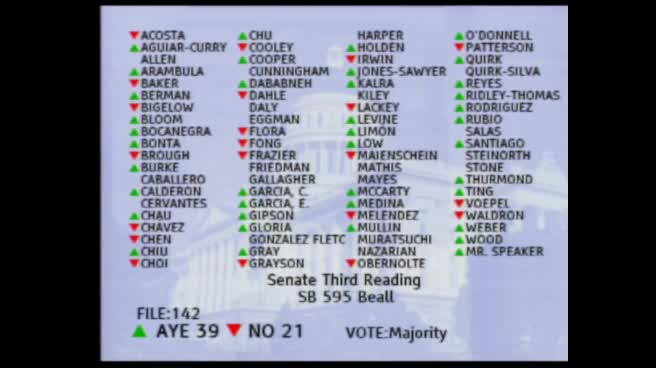 55SEC
Assembly Floor
 4MIN
Senate Floor
 3MIN
Senate Standing Committee on Judiciary
 16MIN
Assembly Standing Committee on Privacy and Consumer Protection
 7MIN
Assembly Standing Committee on Human Services
Bill Author