AB 2106: Institutional purchasers: sale of California produce.
- Session Year: 2017-2018
- House: Assembly
- Latest Version Date: 2018-05-25
Under existing law, price, fitness, and quality being equal, any body, officer, or other person charged with the purchase, or permitted or authorized to purchase supplies for the use of the state, or of any of its institutions or offices, or for the use of any county or city, is required to always prefer supplies that are grown, manufactured, manufactured or produced in the state, and is required to next prefer supplies partially manufactured, grown, manufactured or produced in the state. Existing law requires all California state-owned or state-run institutions, except public universities and colleges and school districts, to purchase agricultural products grown in California when the bid or price of the California-grown agricultural product does not exceed by more than 5% the lowest bid or price for an agricultural product produced outside the state and the quality of the produce is products are comparable. Existing law also requires the institutions, when they solicit or intend to accept a bid or price for agricultural products grown outside the state, to accept the bid or price from a vendor that packs or processes these agricultural products in the state before accepting a bid or price from a vendor that packs or processes these agricultural products outside of the state when specified conditions are met, including that the bid or price of the agricultural product grown outside the state and packed or processed in the state does not exceed by more than 5% the lowest bid or price for the agricultural product packed or processed outside the state.
This bill would would, beginning January 1, 2021, increase the maximum percentage a bid or price of the California-grown agricultural product can exceed the lowest bid or price for an agricultural product produced outside of the state, and increase the maximum percentage a bid or price of the agricultural product grown outside the state and packed or processed in state can exceed the lowest bid or price for the agricultural product packed and processed outside the state, from 5% to 10%.
Under existing law, price, fitness, and quality being equal, any body, officer, or other person charged with the purchase, or permitted or authorized to purchase supplies for the use of the state, or of any of its institutions or offices, or for the use of any county or city, is required to always prefer supplies that are grown, manufactured, or produced in the state, and is required to next prefer supplies partially manufactured, grown, or produced in the state. Existing law requires all California state-owned or state-run institutions, except public universities and colleges and school districts, to purchase agricultural products grown in California when the bid or price of the California-grown agricultural product does not exceed by more than 5% the lowest bid or price for an agricultural product produced outside the state and the quality of the produce is comparable. Existing law also requires the institutions, when they solicit or intend to accept a bid or price for agricultural products grown outside the state, to accept the bid or price from a vendor that packs or processes these agricultural products in the state before accepting a bid or price from a vendor that packs or processes these agricultural products outside of the state when specified conditions are met, including that the bid or price of the agricultural product grown outside the state and packed or processed in the state does not exceed by more than 5% the lowest bid or price for the agricultural product packed or processed outside the state.
This bill would increase the maximum percentage a bid or price of the California-grown agricultural product can exceed the lowest bid or price for an agricultural product produced outside of the state, and increase the maximum percentage a bid or price of the agricultural product grown outside the state and packed or processed in state can exceed the lowest bid or price for the agricultural product packed and processed outside the state, from 5% to 10%.
(a)All California state-owned or state-run institutions, except public universities and colleges and school districts, that solicit bids for the purchase of an agricultural product shall accept a bid or price for that agricultural product when it is grown in California before accepting a bid or price for an agricultural product that is grown outside the state, when both of the following are met:
(1)The bid or price of the California-grown agricultural product does not exceed by more than 5 percent the lowest bid or price for an agricultural product produced outside the state.
(2)The quality of the California-grown agricultural product is comparable to that agricultural produce produced outside the state.
(b)All California state-owned or state-run institutions, except public universities and colleges and school districts, that intend to accept a bid or price for agricultural products grown outside the state shall accept the bid or price from a vendor that packs or processes these agricultural products in the state before accepting a bid or price from a vendor that packs or processes these agricultural products outside of the state, when both of the following are met:
(1)The bid or price of the agricultural product grown outside the state and packed or processed in the state does not exceed by more than 5 percent the lowest bid or price for the agricultural product packed or processed outside the state.
(2)The quality of the agricultural product packed or processed in the state is comparable to those packed or processed outside the state.
(c)A school district that solicits bids for the purchase of an agricultural product shall accept a bid or price for that agricultural product when it is grown in California before accepting a bid or price for an agricultural product that is grown outside the state, when both of the following are met:
(1)The bid or price of the California-grown agricultural product does not exceed the lowest bid or price for an agricultural product produced outside the state.
(2)The quality of the California-grown agricultural product is comparable to that agricultural produce produced outside the state.
(d)This section shall only apply to a contract to purchase agricultural products for a value that is less than the value of the threshold for supplies and services for which California has obligated itself under the Agreement on Government Procurement of the World Trade Organization.
(e)This section shall remain in effect only until January 1, 2021, and as of that date is repealed.
SEC. 2.Section 58595 is added to the Food and Agricultural Code, to read:58595.(a)All California state-owned or state-run institutions, except public universities and colleges and school districts, that solicit bids for the purchase of an agricultural product shall accept a bid or price for that agricultural product when it is grown in California before accepting a bid or price for an agricultural product that is grown outside the state, when both of the following are met:
(1)The bid or price of the California-grown agricultural product does not exceed by more than 10 percent the lowest bid or price for an agricultural product produced outside the state.
(2)The quality of the California-grown agricultural product is comparable to that agricultural produce produced outside the state.
(b)All California state-owned or state-run institutions, except public universities and colleges and school districts, that intend to accept a bid or price for agricultural products grown outside the state shall accept the bid or price from a vendor that packs or processes these agricultural products in the state before accepting a bid or price from a vendor that packs or processes these agricultural products outside of the state, when both of the following are met:
(1)The bid or price of the agricultural product grown outside the state and packed or processed in the state does not exceed by more than 10 percent the lowest bid or price for the agricultural product packed or processed outside the state.
(2)The quality of the agricultural product packed or processed in the state is comparable to those packed or processed outside the state.
(c)A school district that solicits bids for the purchase of an agricultural product shall accept a bid or price for that agricultural product when it is grown in California before accepting a bid or price for an agricultural product that is grown outside the state, when both of the following are met:
(1)The bid or price of the California-grown agricultural product does not exceed the lowest bid or price for an agricultural product produced outside the state.
(2)The quality of the California-grown agricultural product is comparable to that agricultural produce produced outside the state.
(d)This section shall only apply to a contract to purchase agricultural products for a value that is less than the value of the threshold for supplies and services for which California has obligated itself under the Agreement on Government Procurement of the World Trade Organization.
(e)This section shall become operative on January 1, 2021.
SECTION 1.Section 58595 of the Food and Agricultural Code is amended to read:58595.(a)All California state-owned or state-run institutions, except public universities and colleges and school districts, that solicit bids for the purchase of an agricultural product shall accept a bid or price for that agricultural product when it is grown in California before accepting a bid or price for an agricultural product that is grown outside the state, when both of the following are met:(1)The bid or price of the California-grown agricultural product does not exceed by more than 10 percent the lowest bid or price for an agricultural product produced outside the state.(2)The quality of the California-grown agricultural product is comparable to that agricultural produce produced outside the state.(b)All California state-owned or state-run institutions, except public universities and colleges and school districts, that intend to accept a bid or price for agricultural products grown outside the state shall accept the bid or price from a vendor that packs or processes these agricultural products in the state before accepting a bid or price from a vendor that packs or processes these agricultural products outside of the state, when both of the following are met:(1)The bid or price of the agricultural product grown outside the state and packed or processed in the state does not exceed by more than 10 percent the lowest bid or price for the agricultural product packed or processed outside the state.(2)The quality of the agricultural product packed or processed in the state is comparable to those packed or processed outside the state.(c)A school district that solicits bids for the purchase of an agricultural product shall accept a bid or price for that agricultural product when it is grown in California before accepting a bid or price for an agricultural product that is grown outside the state, when both of the following are met:(1)The bid or price of the California-grown agricultural product does not exceed the lowest bid or price for an agricultural product produced outside the state.(2)The quality of the California-grown agricultural product is comparable to that agricultural produce produced outside the state.(d)This section shall only apply to a contract to purchase agricultural products for a value that is less than the value of the threshold for supplies and services for which California has obligated itself under the Agreement on Government Procurement of the World Trade Organization.(a)All California state-owned or state-run institutions, except public universities and colleges and school districts, that solicit bids for the purchase of an agricultural product shall accept a bid or price for that agricultural product when it is grown in California before accepting a bid or price for an agricultural product that is grown outside the state, when both of the following are met:
(1)The bid or price of the California-grown agricultural product does not exceed by more than 5 10 percent the lowest bid or price for an agricultural product produced outside the state.
(2)The quality of the California-grown agricultural product is comparable to that agricultural produce produced outside the state.
(b)All California state-owned or state-run institutions, except public universities and colleges and school districts, that intend to accept a bid or price for agricultural products grown outside the state shall accept the bid or price from a vendor that packs or processes these agricultural products in the state before accepting a bid or price from a vendor that packs or processes these agricultural products outside of the state, when both of the following are met:
(1)The bid or price of the agricultural product grown outside the state and packed or processed in the state does not exceed by more than 5 10 percent the lowest bid or price for the agricultural product packed or processed outside the state.
(2)The quality of the agricultural product packed or processed in the state is comparable to those packed or processed outside the state.
(c)A school district that solicits bids for the purchase of an agricultural product shall accept a bid or price for that agricultural product when it is grown in California before accepting a bid or price for an agricultural product that is grown outside the state, when both of the following are met:
(1)The bid or price of the California-grown agricultural product does not exceed the lowest bid or price for an agricultural product produced outside the state.
(2)The quality of the California-grown agricultural product is comparable to that agricultural produce produced outside the state.
(d)This section shall only apply to a contract to purchase agricultural products for a value that is less than the value of the threshold for supplies and services for which California has obligated itself under the Agreement on Government Procurement of the World Trade Organization.
|
Date
|
Status
|
|---|---|
| Aug 16, 2018 | In committee: Held under submission. |
| Aug 6, 2018 | In committee: Referred to APPR. suspense file. |
| Jun 26, 2018 | From committee: Do pass and re-refer to Com. on APPR. (Ayes 13. Noes 0.) (June 26). Re-referred to Com. on APPR. |
| Jun 19, 2018 | From committee: Do pass and re-refer to Com. on G.O. (Ayes 4. Noes 0.) (June 19). Re-referred to Com. on G.O. |
| Jun 13, 2018 | Referred to Coms. on AGRI. and G.O. |
| Jun 4, 2018 | In Senate. Read first time. To Com. on RLS. for assignment. |
| May 31, 2018 | Read third time. Passed. Ordered to the Senate. |
| May 29, 2018 | Read second time. Ordered to third reading. |
| May 25, 2018 | From committee: Amend, and do pass as amended. (Ayes 13. Noes 2.) (May 25). |
| May 9, 2018 | In committee: Set, first hearing. Referred to APPR. suspense file. |
| Apr 26, 2018 | From committee: Do pass and re-refer to Com. on APPR. (Ayes 8. Noes 0.) (April 25). Re-referred to Com. on APPR. |
| Mar 21, 2018 | From committee: Do pass and re-refer to Com. on AGRI. (Ayes 6. Noes 0.) (March 21). Re-referred to Com. on AGRI. |
| Feb 22, 2018 | Referred to Coms. on A. & A.R. and AGRI. |
| Feb 9, 2018 | From printer. May be heard in committee March 11. |
| Feb 8, 2018 | Read first time. To print. |
|
Date
|
Description
|
Location
|
Votes
|
|
|---|---|---|---|---|
| Aug 6, 2018 | Placed on suspense file | Senate Standing Committee on Appropriations |
Passed |
|
| Jun 26, 2018 | Do pass, but first be re-referred to the Committee on [Appropriations] | Senate Standing Committee on Governmental Organization |
Passed |
|
| Jun 19, 2018 | Do pass, but first be re-referred to the Committee on [Governmental Organization] | Senate Standing Committee on Agriculture |
Passed |
|
| May 31, 2018 | AB 2106 GARCIA, E. Assembly Third Reading | Assembly Floor |
Passed |
|
| May 25, 2018 | Do pass as amended. | Assembly Standing Committee on Appropriations |
Passed |
|
| Apr 25, 2018 | Do pass and be re-referred to the Committee on [Appropriations] | Assembly Standing Committee on Agriculture |
Passed |
|
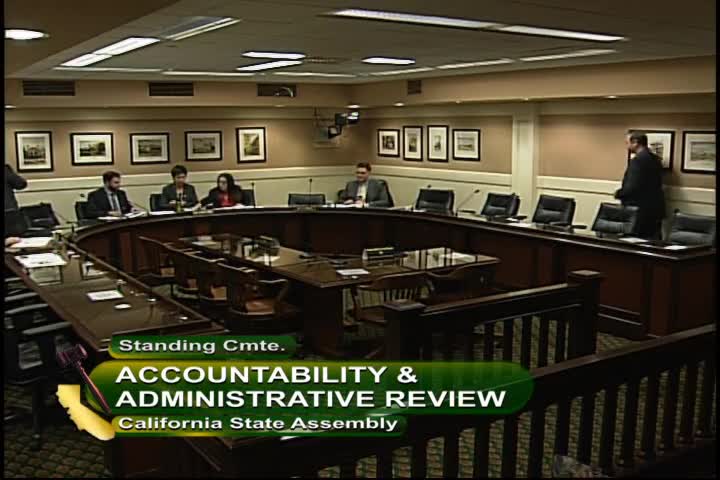
| Mar 21, 2018 | Do pass and be re-referred to the Committee on [Agriculture] | Assembly Standing Committee on Accountability and Administrative Review |
Passed |
This list shows positions taken on this bill by organizations on the date displayed, which is linked to the original source.
Positions by individuals are not included.
SENATE COMMITTEE ON APPROPRIATIONS
Senator Anthony Portantino, Chair
2017 - 2018 Regular Session
AB 2106 (Eduardo Garcia) - Institutional purchasers: sale of California produce
Version: May 25, 2018 | Policy Vote: AGRI. 4 - 0, G.O. 13 - 0 |
Urgency: No | Mandate: No |
Hearing Date: August 6, 2018 | Consultant: Debra Cooper |
This bill meets the criteria for referral to the Suspense File.
Bill Summary:
AB 2106 would increase the bid preference from 5% to 10% for state purchases for California-grown or California-packed or processed agricultural products over those produced out of state.
Fiscal Impact:
Significant, ongoing costs to the state of $1.5 million to $2.0 million per year for increases in food costs for state-owned and state-run institutions, at potentially hundreds of thousands of dollars more each year per institution. The Department of General Services (DGS) anticipates an increase of over $700,000 per year. An increase in the high hundreds of thousands would likely also occur for the Department of Corrections and Rehabilitation – the largest food purchaser.
Background:
Each year, the state contracts billions of dollars for goods and services. Existing law provides a purchasing preference to California products over out-of-state products if other factors like price and quality are the same. DGS manages over 50 food commodity contracts utilized by state-owned and state-run institutions.
California is the country’s largest agriculture producer and exporter. In 2015, 77,500 farms operated in California, and in 2013, the California agriculture industry employed an estimated 350,000 workers.
AB 822 (Caballero, Chapter 785, Statutes of 2017) gave a 5% bid preference for California-grown agricultural products. According to DGS, no contracts with the 5% preference been signed as yet.
Proposed Law:
This bill would, beginning on January 1, 2021, increase from 5% to 10% the maximum percentage that a bid or price of the California-grown agricultural product can exceed the lowest bid or price for an agricultural product produced outside of the state and the maximum percentage that a bid or price of an agricultural product grown outside the state and packed or processed in California can exceed the lowest bid or price for the agricultural product pack and processed outside the state.
Related Legislation:
AB 822 (Caballero, Chapter 785, statutes of 2017) required all California state-owned or state-run institutions, except public universities and colleges and school districts, to purchase agricultural products grown in California when the bid or price of the California-grown agricultural produce does not exceed, by more than 5%, the lowest bid price for an agricultural product produced outside the state and the quality of the produce is comparable.
AB 199 (Holden, 2013) would have created the Choose California Act to give preference for California grown agricultural products. This bill was vetoed by Governor Brown with the following veto message: “This bill would require the state to implement a preference for agricultural products grown in California and offered by a California company. This preference would be difficult to comply with and quite onerous. Every purchase, even a single bag of apples, would be affected. I strongly support California's agricultural industry and encourage all state-run institutions to support local farmers and businesses. In fact, state growers and processors have no trouble competing for - and winning - the state's business. Today, approximately half of all food the Department of General Services purchases for state institutions comes from California, without a preference or a mandate.”
AB 1960 (Ma, 2010) would have encouraged state agencies to purchase California produced, or produced and processed, fruit, nuts, and vegetables if the price is equal to or less than, imported fruits, nuts, and vegetables. This bill was held in the Senate Rules Committee.
AB 801 (Salinas, 2001) would have required California state-owned or state-run institutions to purchase agricultural products grown in California before those that are grown out-of-state, provided the prices for California grown products do not exceed the lowest price of products grown outside California by more than 5%. It also included California public schools, but only when price and quality were equal to products grown outside of California. This bill was vetoed by Governor Davis.
SB 1893 (Perata, 2000) would have required state agencies and school districts to purchase agricultural products produced in California if the cost and quality are equal or superior to those produced outside California. If California products were not found to be equal, preference was to be given to products produced in other states over foreign products, if the cost and quality are equal. This bill was held in the Senate Appropriations Committee.
Staff Comments:
According to the author, because of higher costs of production in California, numerous farmers believe the 5% bid preference is not enough to allow them to sell to local institutions. As AB 822 was enacted at the beginning of this year, there has not been sufficient time to observe how the initial bid preference of 5% is functioning. This bill would delay implementation until January 1, 2021, presumably to provide sufficient time to make such observations. Additionally, staff notes that there is the potential for this bill to have a negative economic impact on California growers if other states implement a retaliatory preference program that subjects out-of-state businesses to the preference laws of their own state.
-- END --
SENATE COMMITTEE ON GOVERNMENTAL ORGANIZATION
Senator Bill Dodd
Chair
2017 - 2018 Regular
Bill No: 2106 Hearing Date: 6/26/2018
Author: | |||
Version: | Amended | ||
Urgency: | No | Fiscal: | Yes |
Consultant: | Felipe Lopez | ||
SUBJECT: Institutional purchasers: sale of California produce
DIGEST: This bill increases, beginning on January 1, 2021, the existing bid preference from 5% to 10% for state purchases, as specified, for California-grown, or California-packed or processed agricultural products over those produced out of state.
ANALYSIS:
Existing law:
- Requires California state-owned and state-run institutions, except for public universities and colleges and school districts, that solicit bids for agricultural products to accept the bid for the product grown in California instead of outside of the state if the price of the California product does not exceed the price of the out-of-state product by more than 5%, and if the quality of the California product is comparable to the out-of-state one.
- Requires California state-owned and state-run institutions, except for public universities and colleges and school districts, that intends to purchase agricultural products from outside of the state to purchase products that were packed or processed in California instead of those packed or processed out of state as long as the price for the in-state product does not exceed the out-of-state one by more than 5% and the quality is comparable.
- Requires school districts that solicit bids for agricultural products to purchase California-grown products over out-of-state products if the cost of the California products do not exceed the price of the out-of-state products, and if the quality is comparable.
- Specifies that the above provisions shall only apply to a contract to purchase agricultural products for a value that is less than the value of the threshold for supplies and services for which California has obligated itself under the Agreement on Government Procurement of the World Trade Organization.
- Requires that when price, fitness, or quality is equal, the state shall purchase supplies grown, manufactured, or produced in-state instead of out-of-state. However, this section has been inoperative since the 1970s in response to a court ruling.
- Grants, through the Small Business Procurement and Contract Act, preference for small businesses and microbusiness in the award of a contract for goods, services, or information technology to the state and in the construction of state facilities.
- Permits a state agency and the California State University to award specified types of contracts with a value of between $5,000 and $250,000 to a certified small business, including a microbusiness and a disabled veteran business enterprise (DVBE), without complying with certain competitive bidding requirements, provided the agency obtains price quotations from at least two small businesses, including microbusinesses, or two disabled veteran business enterprises, as defined.
This bill:
- Increases, beginning on January 1, 2021, the maximum percentage a bid or price of the California-grown agricultural product can exceed the lowest bid or price for an agricultural produce, produced outside of the state.
- Increases, the maximum percentage a bid or price of the agricultural product grown outside the state and packed or processed in state can exceed the lowest bid or price for the agricultural product packed and processed outside the state, from 5% to 10%.
Background
Purpose of the bill. According to the author’s office, “due to higher costs of production here in California, we have heard from numerous farmers in our constituency that the 5% difference is still not enough to allow them to sell to local institutions. This is why we propose raising the difference from 5% to 10%. This change in difference will give local farmers a fair chance to sell their products within the state, and give a boost to the California farming economy. Increasing the preference from 5% to 10% will help California farmers.”
Current preference. Just last year, the Legislature passed, and the Governor signed AB 822 (Caballero, Chapter 785, Statutes of 2017) which gave a 5% bid preference for California-grown agricultural products. According to the Department of General Services (DGS), no contracts with the 5% preference have yet to be signed.
DGS is working to resolve issues relating to how the preference applies and how to verify a product is California-grown or California-packed or processed and thus the implementation of the preference has yet to occur. According to DGS, contracts for commodities like food are often bundled to include many products and DGS is determining how to implement the preference when certain agricultural products meet the in-state requirements and others do not. Additionally, the department is working to ensure those claiming a preference are actually providing California-grown or California-packed and processed products. DGS expects to resolve these issues by the end of the year so it can implement the preference in state contracting.
California’s agriculture. California is the country’s largest agricultural producer and exporter. California’s agricultural industry is also a major player in the State and the nation as a whole. According to the California Department of Food and Agriculture, over a third of the country’s vegetables and two-thirds of the country’s fruits and nuts are grown in California. In 2015, 77,500 farms operated in California and received $47.1 billion for their output.
In 2013, the California agriculture industry employed an estimated 350,000 workers. According to data compiled by the Assembly Committee on Jobs, Economic Development and the Economy, the agriculture value chain, accounts for nearly 3 million jobs in California. In 2011, agriculture support was the largest component of the value chain with 1.4 million jobs. This includes activities related to agriculture including farming, veterinary services, implement manufacturing, irrigation, and technical consulting.
Staff comments. This bill seeks to increase the preference from 5% to 10% just six months after the initial preference was established in law and before a single contract with the 5% preference is signed. In addition, while it is obvious why a 10% preference is good for California agricultural businesses, it should be noted that these types of preferences can have a significant cost to the state.
Furthermore, the bill does not take effect until January 1, 2021, arguably to allow DGS sufficient time to implement the program. As such, it is unclear why the increase is happening before the Legislature has the opportunity to observe how the initial preference is functioning. Without implementation, it is difficult to determine if the preference is sufficient and why an increase is warranted.
Prior/Related Legislation
AB 822 (Caballero, Chapter 785, Statutes of 2017) required all California state-owned or state-run institutions, except public universities and colleges and school districts, to purchase agricultural products grown in California when the bid or price of the California-grown agricultural product does not exceed, by more than 5%, the lowest bid or price for an agricultural product produced outside the state and the quality of the produce is comparable.
AB 1080 (Gonzalez Fletcher, 2017) would have required a state agency awarding specified contracts to provide a 5% bid preference to a bidder or subcontractor that provides credible health care coverage, as defined. (Held on the Senate Inactive file)
SB 1176 (Galgiani, 2016) would have revised the definition of “small business” and “microbusiness” for purposes of the Act by increasing the dollar amount threshold for a small business to $15 million and for a microbusiness to $5 million and requires those dollar amounts to be adjusted to reflect changes in the CPI. In addition, this bill would have revised the definition of small business by specifying that, for the purposes of public works contracts, a small business means a business with 200 or fewer employees and average annual gross receipts of $25 million or less over the previous three years. (Vetoed by Governor Brown)
SB 1219 (Hancock, 2016) would have included “employment social enterprise,” which are businesses that provide jobs for individuals who have experienced significant barriers to employment, within the Act for the purpose of allowing them to participate in state contracting bid preferences provided to certified small business enterprises. (Vetoed by Governor Brown)
SB 599 (Mendoza, 2015) would have applied an existing 10% bid preference to transit contracts for the State of California when a contractor voluntarily decides to retain the employees of the previous contractor. (Vetoed by Governor Brown)
SB 297 (Roth, 2014) would have increased the annual statewide participation goal for DVBE state contracts from 3% to 5%. (Held in Assembly Jobs, Economic Development and the Economy Committee)
AB 199 (Holden, 2013) would have created the Choose California Act to give preference for California grown agricultural products. (Vetoed by Governor Brown)
AB 963 (Levine, 2013) would have provided a 3% bid preference on certain state contracts for bidders having a record of “environmentally preferable purchasing” as currently defined in state law. (Held in the Assembly Appropriations Suspense File)
AB 1960 (Ma, 2010) would have encouraged state agencies to purchase California produced, or produced and processed, fruit, nuts, and vegetables if the price is equal to or less than, imported fruits, nuts, and vegetables. (Held in Senate Rules Committee)
AB 2994 (Frommer, 2004) would have required state agencies to give preference to the purchase of lumber and certain solid wood products harvested from forests in California when price, fitness, and quality are equal. (Vetoed by Governor Schwarzenegger)
AB 801 (Salinas, 2001) would have required California state-owned or state-run institutions to purchase agricultural products grown in California before those that are grown out-of-state provided the prices for California grown products do not exceed the lowest price of products grown outside California by more than 5%. It also included California public schools, but only when price and quality were equal to products grown outside of California. (Vetoed by Governor Davis)
SB 1893 (Perata, 2000) would have required state agencies and school districts to purchase agricultural products produced in California if the cost and quality are equal or superior to those produced outside California. If California products were not found to be equal, preference was to be given to products produced in other states over foreign products, if the cost and quality are equal. (Held on Senate Appropriations Suspense File)
FISCAL EFFECT: Appropriation: Fiscal Com.: Local:
SUPPORT:
California Farm Bureau Federation
OPPOSITION:
None received
ARGUMENTS IN SUPPORT: According to the California Farm Bureau Federation, “California has the highest farm workplace protections in the nation including paid rest periods, workers compensation insurance coverage, overtime, paid sick leave, collective bargaining rights and more. The costs of these programs are in addition to the costs farmers face to meet California’s stringent environmental regulations. The State recognized the investment farmers and ranchers make with the passage of AB 822 (Caballero) last year and should continue to support California farmers and their employees by prioritizing the purchase of California –grown products.”
DUAL REFERRAL: Senate Agriculture Committee (4-0)
SENATE COMMITTEE ON AGRICULTURE
Senator Cathleen Galgiani, Chair
2017 - 2018 Regular
Bill No: AB 2106 Hearing Date: 6/19/18
Author: | Eduardo Garcia | ||
Version: | 5/25/18 | ||
Urgency: | No | Fiscal: | Yes |
Consultant: | Reichel Everhart | ||
Subject: Institutional purchasers: sale of California produce
SUMMARY
:
This bill increases the existing bid preference from 5% to 10% for state purchases, as specified, for California-grown or California-packed or processed agricultural products over those produced out of state.
BACKGROUND AND EXISTING LAW
:
- Requires California state-owned and state-run institutions, except for public universities and colleges and school districts, that solicit bids for agricultural products to accept the bid for the product grown in California instead of outside of the state if the price of the California product does not exceed the price of the out-of-state product by more than 5%, and if the quality of the California product is comparable to that of the out-of-state product.
- Requires California state-owned and state-run institutions, except for public universities and colleges and school districts, that intend to purchase agricultural products from outside of the state to purchase products that were packed or processed in California instead of those packed or processed out of state as long as the price for the in-state product does not exceed the out-of-state product by more than 5% and the quality is comparable.
- Requires school districts that solicit bids for agricultural products to purchase California-grown products over out-of-state products if the cost of the California products does not exceed the price of the out-of-state products, and if the quality is comparable.
PROPOSED LAW
:
This bill would, beginning January 1, 2021, increase the maximum percentage a bid or price a California-grown agricultural product can exceed the lowest bid or price for an agricultural product produced outside of the state. Additionally, this bill would increase the maximum percentage of a bid or price of an agricultural product grown outside the state and packed or processed in state can exceed the lowest bid or price for the agricultural product packed and processed outside the state from 5% to 10%.
ARGUMENTS IN SUPPORT:
According to the author, “Due to higher costs of production here in California, we have heard from numerous farmers in our constituency that the 5% difference is still not enough to allow them to sell to local institutions. This is why we propose raising this difference from 5% to 10%. This change in difference will give local farmers a fair chance to sell their products within the state, and give a boost to the California farming economy. Increasing the preference from 5% to 10% will help California farmers. “
The California Farm Bureau (CFB) states the increase in the purchase preference of California-grown agricultural products will help to offset increased costs to farmers for policies the state has implemented. CFB provides the example of the state committing to purchasing up to 50% electric vehicles when replacing light duty vehicles in the state’s vehicle fleet. The difference in cost between the two types of vehicles is more than $16,000 per vehicle.
ARGUMENTS IN OPPOSITION:
None received.
COMMENTS
:
Existing law, which became effective January 1, 2018, establishes the 5% bid preference, and the California Department of General Services (DGS) is still working on implementing this bid preference. To date, no contracts with the 5% preference have been signed. DGS is working on issues relating to the verification process and how to determine if an agricultural product is California-grown or California-packed or processed.
The Senate Rules Committee has double referred this bill to the Senate Governmental Organization Committee as the second committee of referral. Therefore, if this measure is approved by this committee, the motion should include an action to re-refer the bill to the Senate Committee on Governmental Organization.
RELATED LEGISLATION
:
AB 822 (Caballero, Chapter 785, Statutes of 2017), establishes the 5% state purchasing preference for California-grown or California-packed or processed agriculture.
AB 199 (Holden, Vetoed by Governor Brown, of 2013), would have provided a 5% preference for state purchases of California-grown agricultural products in the early versions of that bill. However, the final version of the bill removed the 5% preference. It would have required that state-owned and state-run institutions purchase California-grown products instead of those grown out of state if the price was equal to or less than the out-of-state product, and if the availability and delivery schedule of the agricultural product was acceptable.
AB 1960 (Ma, Held in Senate Rules Committee, of 2010), would have encouraged the State of California and its agencies to purchase California grown, or grown and processed, fruit, nuts and vegetables if the price is equal to or less than, imported fruits, nuts and vegetables.
AB 2994 (Frommer, Vetoed by Governor Schwarzenegger, of 2004), proposed requiring state agencies to give preference to the purchase of lumber and certain solid wood products harvested from forests in California when price, fitness and quality are equal.
PRIOR ACTIONS
:
Assembly Floor: | 68 - 5 |
Assembly Appropriations Committee: | 13 - 2 |
Assembly Accountability and Administrative Review Committee: | 6 - 0 |
SUPPORT
:
California Farm Bureau
OPPOSITION
:
None received
-- END --
ASSEMBLY THIRD READING
ATR Bill Id:AB 2106
Author:(Eduardo Garcia)
As Amended Ver:May 25, 2018
Majority vote
Committee | Votes | Ayes | Noes |
Accountability | 6-0 | Eggman, Patterson, Cervantes, Lackey, Medina, Quirk-Silva | |
Agriculture | 8-0 | Caballero, Aguiar-Curry, Gallagher, Gray, Irwin, Jones-Sawyer, Levine, Salas | |
Appropriations | 13-2 | Gonzalez Fletcher, Bloom, Bonta, Calderon, Carrillo, Chau, Eggman, Friedman, Gallagher, Eduardo Garcia, Nazarian, Quirk, Reyes | Bigelow, Obernolte |
SUMMARY: Increases the existing bid preference from 5% to 10% for state purchases, as specified, for California-grown, or California-packed or processed agricultural products over those produced out of state.
EXISTING LAW:
- Requires California state-owned and state-run institutions, except for public universities and colleges and school districts, that solicit bids for agricultural products to accept the bid for the product grown in California instead of outside of the state if the price of the California product does not exceed the price of the out-of-state product by more than 5%, and if the quality of the California product is comparable to the out-of-state one.
- Requires California state-owned and state-run institutions, except for public universities and colleges and school districts, that intend to purchase agricultural products from outside of the state to purchase products that were packed or processed in California instead of those packed or processed out of state as long as the price for the in-state product does not exceed the out-of-state one by more than 5% and the quality is comparable.
- Requires school districts that solicit bids for agricultural products to purchase California-grown products over out-of-state products if the cost of the California products does not exceed the price of the out-of-state product, and if the quality is comparable.
FISCAL EFFECT: According to the Assembly Appropriations Committee:
- Increases in food costs for state-owned and state-run institutions, likely in the low millions of dollars annually. Affected agencies include The Department of General Services (DGS), Department of State Hospitals (DSH), California Department of Veteran Affairs (CalVet), California Highway Patrol (CHP), California Department of Transportation (CalTrans), the Department of Forestry and Fire Protection (CAL FIRE), and CDCR.
Last year's AB 822 (Caballero), Chapter 785, Statutes of 2017, established the 5% state purchasing preference for California-grown or California-packed or processed agriculture. DGS estimated the 5% increase could result in an additional $700,000 cost to the state for food commodity contracts. New costs under this bill would be similar and in addition to those generated by AB 822.
In addition, state-owned and state-run institutions have authority to contract for food commodities not covered by DGS-managed contracts. The largest food purchaser using non-DGS-managed contracts, the Department of Corrections and Rehabilitation (CDCR), estimated a $500,000 increase in food costs under AB 822. Again, additional costs for this bill would be similar.
- Onetime administrative costs to DGS, likely minor, to update policies it is still in the process of implementing.
COMMENTS: This bill increases the preference for the state's purchase of California-grown or California-packed or processed agriculture if the cost of the products are as much as 10% more expensive than those grown or packed or processed out of state. The preference would apply to state-owned and state-run institutions, but would not include public universities and colleges, or school districts. In order to qualify for the preference, the quality of the California agricultural product would have to be comparable to that of the out-of-state product.
Recent amendments taken in the Appropriations Committee delayed implementation of the 10% preference to January 1, 2021.
Existing law, which became effective January 1, 2018, establishes this bid preference at 5%. According to (DGS), no contracts with the 5% preference have been signed as DGS is still implementing it.
DGS is working to resolve issues relating to how the preference applies and how to verify a product is California-grown or California-packed or processed. According to DGS, contracts for commodities like food are often bundled to include many products and DGS is determining how to implement the preference when certain agricultural products meet the in-state requirements and others do not. Additionally, the department is working to ensure those claiming a preference are actually providing California-grown or California-packed and processed products. DGS expects to resolve these issues by the end of the year so it can implement the preference in state contracting.
According to the author, increasing the preference from 5% to 10% will help California farmers. The author states that "due to higher costs of production here in California, we have heard from numerous farmers in our constituency that the 5% difference is still not enough to allow them to sell to local institutions. This is why we propose raising this difference from 5% to 10%. This change in difference will give local farmers a fair chance to sell their products within the state, and give a boost to the California farming economy."
Agriculture is a major state industry. According to the California Department of Agriculture, the state's farms and ranches received approximately $45 billion for their outputs in 2016. More than a third of the country's vegetables and two-thirds of the country's fruits and nuts are grown in California.
PRIOR LEGISLATION: AB 822 (Caballero), Chapter 785, Statutes of 2017, establishes the 5% state purchasing preference for California-grown or California-packed or processed agriculture.
Analysis Prepared by: Scott Herbstman / A. & A.R. / (916) 319-3600 FN: 0003025
Date of Hearing: May 9, 2018
ASSEMBLY COMMITTEE ON APPROPRIATIONS
Lorena Gonzalez Fletcher, Chair
ABPCA Bill Id:AB 2106
Author:(Eduardo Garcia) – As Introduced Ver:February 8, 2018
Policy Committee: | Accountability and Administrative Review | Vote: | 6 - 0 |
Agriculture | 8 - 0 | ||
|
|
Urgency: No State Mandated Local Program: No Reimbursable: No
SUMMARY:
This bill increases the existing bid preference from 5% to 10% for state purchases of California-grown, or California-packed or processed agricultural products. The existing bid preference applies to state-owned or state-run institutions, but does not apply to public universities, colleges, or school districts.
FISCAL EFFECT:
- Increases in food costs for state-owned and state-run institutions, likely in the low millions of dollars annually. Affected agencies include DGS, Department of State Hospitals (DSH), California Department of Veteran Affairs (CalVet), California Highway Patrol (CHP), California Department of Transportation (CalTrans), the Department of Forestry and Fire Protection (CAL FIRE), and CDCR.
Last year’s AB 822 (Caballero), Chapter 785, Statutes of 2017, established the 5% state purchasing preference for California-grown or California-packed or processed agriculture. The Department of General Services (DGS) estimated the 5% increase could result in an additional $700,000 cos to the state for food commodity contracts. New costs under this bill would be similar and in addition to those generated by AB 822.
In addition, state-owned and state-run institutions have authority to contract for food commodities not covered by DGS-managed contracts. The largest food purchaser using non-DGS-managed contracts, the Department of Corrections and Rehabilitation (CDCR), estimated a $500,000 increase in food costs under AB 822. Again, additional costs for this bill would be similar.
- Onetime administrative costs to DGS, likely minor, to update policies it is still in the process of implementing.
COMMENTS:
- Purpose. According to the author, increasing the preference from 5% to 10% will help California farmers. The author states:
Due to higher costs of production here in California, we have heard from numerous farmers that the 5% difference is still not enough to allow them to sell to local institutions. This is why we propose raising this difference from 5% to 10%. This change in difference will give local farmers a fair chance to sell their products within the state, and give a boost to the California farming economy.
- Background. Existing law, effective January 1, 2018, establishes a bid preference at 5%. The preference applies to state-owned and state-run institutions, but does not include public universities and colleges or school districts. In order to qualify for the preference, the quality of the California agricultural product has to be comparable to that of the out-of-state product.
According to DGS, it is continuing to resolve issues affecting the implementation of AB 822. Therefore, DGS has yet to sign any contracts with the 5% preference. DGS expects to resolve these issues by the end of the year.
- Prior Legislation.
AB 822 (Caballero), Chapter 785, Statutes of 2017, established the 5% state purchasing preference for California-grown or California-packed or processed agriculture.
AB 199 (Holden), of the 2013-14 Legislative Session, would have required state-owned and state-run institutions purchase California-grown products instead of those grown out of state if the price was equal to or less than the out-of-state product, and if the availability and delivery schedule of the agricultural product was acceptable. The original version contained a 5% bid preference, but it was stricken in the final version. That bill was vetoed by Governor Brown.
AB 1960 (Ma), of the 2009-10 Legislative Session, would have encouraged the state and its agencies to purchase California-grown, or California-grown and processed, fruit, nuts, and vegetables if the price is equal to or less than imported fruits, nuts, and vegetables. That bill was held in the Senate Rules Committee.
Analysis Prepared by: Jennifer Swenson / APPR. / (916) 319-2081
Date of Hearing: April 25, 2018
ASSEMBLY COMMITTEE ON AGRICULTURE
Anna Caballero, Chair
ABPCA Bill Id:AB 2106
Author:(Eduardo Garcia) – As Introduced Ver:February 8, 2018
SUBJECT: Institutional purchasers: sale of California produce.
SUMMARY: Increases the existing bid preference from 5% to 10% for state purchases, as specified, for California-grown, or California-packed or processed agricultural products over those produced out of state.
EXISTING LAW:
- Requires California state-owned and state-run institutions, except for public universities and colleges and school districts, that solicit bids for agricultural products to accept the bid for the product grown in California instead of outside of the state if the price of the California product does not exceed the price of the out-of-state product by more than 5%, and if the quality of the California product is comparable to the out-of-state one.
- Requires California state-owned and state-run institutions, except for public universities and colleges and school districts, that intend to purchase agricultural products from outside of the state to purchase products that were packed or processed in California instead of those packed or processed out of state as long as the price for the in-state product does not exceed the out-of-state one by more than 5% and the quality is comparable.
- Requires school districts that solicit bids for agricultural products to purchase California-grown products over out-of-state products if the cost of the California products does not exceed the price of the out-of-state product, and if the quality is comparable.
FISCAL EFFECT: Unknown
COMMENTS: This bill increases the preference for the state's purchase of California-grown or California-packed or processed agriculture if the cost of the products are as much as 10% more expensive than those grown or packed or processed out of state. The preference would apply to state-owned and state-run institutions, but would not include public universities and colleges, or school districts. In order to qualify for the preference, the quality of the California agricultural product would have to be comparable to that of the out-of-state product.
The current law became effective January 1, 2018, establishing this bid preference at 5%. According to the Department of General Services (DGS), no contracts with the 5% preference have been signed as DGS is still implementing it. DGS is working to resolve issues relating to how the preference applies and how to verify a product is California-grown or California-packed or processed. According to DGS, contracts for commodities like food are often bundled to include many products and DGS is determining how to implement the preference when certain agricultural products meet the in-state requirements and others do not. Additionally, DGS is working to ensure those claiming a preference are actually providing California-grown or California-packed and processed products. DGS expects to resolve these issues by the end of the year so it can implement the preference in state contracting.
According to the author, increasing the preference from 5% to 10% will help California farmers. The author states that "due to higher costs of production here in California, we have heard from numerous farmers that the 5% difference is still not enough to allow them to sell to local institutions. This is why we propose raising this difference from 5% to 10%. This change in difference will give local farmers a fair chance to sell their products within the state, and give a boost to the California farming economy."
PREVIOUS LEGISLATION:
AB 822 (Caballero), Chapter 785, Statutes of 2017, provides bid preferences for the state's purchases of California-grown or California-packed or processed agricultural products, as specified.
AB 199 (Holden), of 2013, would have provided a 5% preference for state purchases of California-grown agricultural products in the early versions of that bill. However, the final version of the bill removed the 5% preference. It would have required that state-owned and state-run institutions purchase California-grown products instead of those grown out of state if the price was equal to or less than the out-of-state product, and if the availability and delivery schedule of the agricultural product was acceptable. This bill was vetoed by Governor Brown.
AB 1960 (Ma) of 2010, would have encouraged the State of California and its agencies to purchase California grown, or grown and processed, fruit, nuts and vegetables if the price is equal to or less than, imported fruits, nuts and vegetables. This bill was held in the Senate Rules Committee.
AB 2994 (Frommer) of 2004, proposed requiring state agencies to give preference to the purchase of lumber and certain solid wood products harvested from forests in California when price, fitness and quality are equal. This bill was vetoed by Governor Schwarzenegger.
AB 801 (Salinas) of 2001, proposed requiring California state-owned or state-run institutions to purchase agricultural products grown in California before those that are grown outside this state, provided the prices for California grown products do not exceed the lowest price of products grown outside California by more than 5%. It also included California public schools, but only when price and quality were equal to products grown outside California. This bill was vetoed by Governor Davis.
SB 1893 (Perata) of 2000, proposed requiring state agencies and school districts to purchase agricultural products produced in California if the cost and quality are equal or superior to those produced outside California. If California products were not found to be equal, preference was to be given to products produced in other states over foreign products, if the cost and quality are equal. This bill was held on the Senate Appropriations suspense file.
AB 214 (Wiggins) of 1999, proposed establishing preferences for the purchase of United States and California manufactured materials, with respect to public works contracts entered into by public entities. This bill was vetoed by Governor Davis.
REGISTERED SUPPORT / OPPOSITION:
Support
California Farm Bureau Federation
Opposition
None on file
Analysis Prepared by: Victor Francovich / AGRI. / (916) 319-2084
Date of Hearing: March 21, 2018
ASSEMBLY COMMITTEE ON ACCOUNTABILITY AND ADMINISTRATIVE REVIEW
Susan Talamantes Eggman, Chair
ABPCA Bill Id:AB 2106 (
Author:Eduardo Garcia) – As Introduced Ver:February 8, 2018
SUBJECT: Institutional purchasers: sale of California produce
SUMMARY: Increases the existing bid preference from 5% to 10% for state purchases, as specified, for California-grown, or California-packed or processed agricultural products over those produced out of state.
EXISTING LAW:
- Requires California state-owned and state-run institutions, except for public universities and colleges and school districts, that solicit bids for agricultural products to accept the bid for the product grown in California instead of outside of the state if the price of the California product does not exceed the price of the out-of-state product by more than 5%, and if the quality of the California product is comparable to the out-of-state one.
- Requires California state-owned and state-run institutions, except for public universities and colleges and school districts, that intend to purchase agricultural products from outside of the state to purchase products that were packed or processed in California instead of those packed or processed out of state as long as the price for the in-state product does not exceed the out-of-state one by more than 5% and the quality is comparable.
- Requires school districts that solicit bids for agricultural products to purchase California-grown products over out-of-state products if the cost of the California products does not exceed the price of the out-of-state product, and if the quality is comparable.
FISCAL EFFECT: Unknown
COMMENTS: This bill increases the preference for the state's purchase of California-grown or California-packed or processed agriculture if the cost of the products are as much as 10% more expensive than those grown or packed or processed out of state. The preference would apply to state-owned and state-run institutions, but would not include public universities and colleges, or school districts. In order to qualify for the preference, the quality of the California agricultural product would have to be comparable to that of the out-of-state product.
Existing law, which became effective January 1, 2018, establishes this bid preference at 5%. According to the Department of General Services (DGS), no contracts with the 5% preference have been signed as DGS is still implementing it.
DGS is working to resolve issues relating to how the preference applies and how to verify a product is California-grown or California-packed or processed. According to DGS, contracts for commodities like food are often bundled to include many products and DGS is determining how to implement the preference when certain agricultural products meet the in-state requirements and others do not. Additionally, the department is working to ensure those claiming a preference are actually providing California-grown or California-packed and processed products. DGS expects to resolve these issues by the end of the year so it can implement the preference in state contracting.
According to the author, increasing the preference from 5% to 10% will help California farmers. The author states that "due to higher costs of production here in California, we have heard from numerous farmers in our constituency that the 5% difference is still not enough to allow them to sell to local institutions. This is why we propose raising this difference from 5% to 10%. This change in difference will give local farmers a fair chance to sell their products within the state, and give a boost to the California farming economy."
Agriculture is a major state industry. According to the California Department of Agriculture, the state's farms and ranches received approximately $45 billion for their outputs in 2016. More than a third of the country's vegetables and two-thirds of the country's fruits and nuts are grown in California.
PRIOR LEGISLATION: AB 822 (Caballero), Chapter 785, Statutes of 2017, establishes the 5% state purchasing preference for California-grown or California-packed or processed agriculture.
DOUBLE REFERRAL: Should this bill pass this committee, it will be re-referred to the Assembly Agriculture Committee.
REGISTERED SUPPORT / OPPOSITION:
Support
None on file
Opposition
None on file
Analysis Prepared by: Scott Herbstman / A. & A.R. / (916) 319-3600
Discussed in Hearing
 1H
Senate Standing Committee on Appropriations
 4MIN
Senate Standing Committee on Agriculture
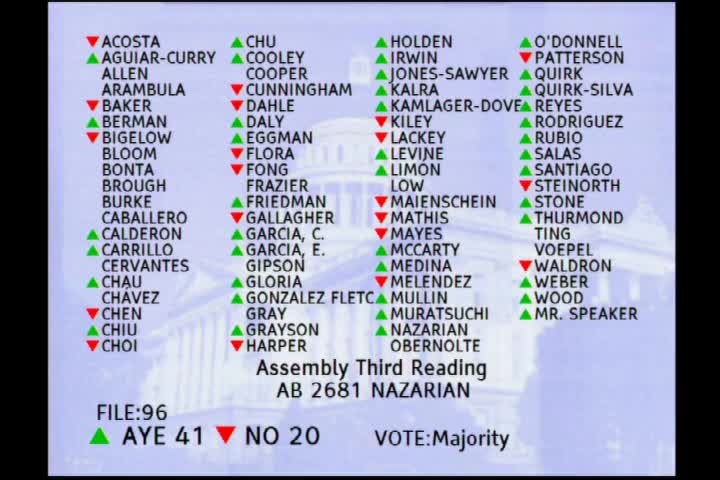 1MIN
Assembly Floor
 3MIN
Assembly Standing Committee on Agriculture
 7MIN
Assembly Standing Committee on Accountability and Administrative Review
Bill Author

Bill Co-Author(s):