AB 2107: New Motor Vehicle Board.
- Session Year: 2017-2018
- House: Assembly
- Latest Version Date: 2018-09-04
Existing law establishes the New Motor Vehicle Board in the Department of Motor Vehicles, and requires the board to hear and decide certain protests presented by a motor vehicle franchisee in regard to a dispute with the vehicle manufacturer. Existing law, until January 1, 2019, authorizes the board to hear protests by an association challenging the legality of an export or sale-for-resale prohibition policy of a manufacturer, manufacturer branch, distributor, or distributor branch and establishes procedures for hearing those protests, as specified.
This bill would extend the operation of the provisions authorizing the board to hear these protests and establishing the hearing procedures until January 1, 2024.
Existing law requires the board to hear an appeal filed by a new motor vehicle dealer, manufacturer, manufacturer branch, distributor, or distributor branch licensee or applicant of a decision by the department.
This bill would remove this requirement for the board to hear those appeals, and would repeal applicable provisions.
Existing law authorizes the board, under specified circumstances, to mediate, arbitrate, or otherwise resolve certain disputes between a member of the public and a new motor vehicle dealer, manufacturer, manufacturer branch, distributor, distributor branch, or representative.
This bill would authorize the board to hear those disputes only if they are brought by the member of the public or the member of the public consents to the jurisdiction of the board.
Existing law requires a franchisor to fairly compensate for labor and parts used to fulfill warranty obligations.
This bill would instead require a franchisor to reimburse a franchisee according to a retail labor rate and retail parts rate established by each franchisee. The bill would prescribe the method by which a franchisee may establish or alter those reimbursement rates and would require the board to resolve any disputes regarding the calculation of those rates. The bill would prohibit specified actions by a franchisor related to the establishment of those reimbursement rates.
Existing law prohibits a licensed manufacturer, manufacturer branch, distributor, distributor branch, or affiliate from engaging in specified proscribed business practices. A violation of these provisions is a misdemeanor.
This bill would prohibit additional acts, including making it unlawful for these entities to restrict dealers from selecting certain vendors of their choice, as specified. Because a violation of these new provisions would be punishable as a crime, the bill would impose a state-mandated local program.
The bill includes legislative findings and declarations and would make other conforming changes.
The California Constitution requires the state to reimburse local agencies and school districts for certain costs mandated by the state. Statutory provisions establish procedures for making that reimbursement.
This bill would provide that no reimbursement is required by this act for a specified reason.
Existing law establishes the New Motor Vehicle Board in the Department of Motor Vehicles, and requires the board to hear and decide certain protests presented by a motor vehicle franchisee in regard to a dispute with the vehicle manufacturer. Existing law, until January 1, 2019, authorizes the board to hear protests by an association challenging the legality of an export or sale-for-resale prohibition policy of a manufacturer, manufacturer branch, distributor, or distributor branch and establishes procedures for hearing those protests, as specified.
This bill would extend the operation of the provisions authorizing the board to hear these protests and establishing the hearing procedures indefinitely. until January 1, 2024.
Existing law requires the board to hear an appeal filed by a new motor vehicle dealer, manufacturer, manufacturer branch, distributor, or distributor branch licensee or applicant of a decision by the department.
This bill would remove this requirement for the board to hear those appeals. appeals, and would repeal applicable provisions.
Existing law authorizes the board, under specified circumstances, to mediate, arbitrate, or otherwise resolve certain disputes between a member of the public and a new motor vehicle dealer, manufacturer, manufacturer branch, distributor, distributor branch, or representative.
This bill would authorize the board to hear those disputes only if they are brought by the member of the public. public or the member of the public consents to the jurisdiction of the board.
Existing law requires a franchisor to fairly compensate for labor and parts used to fulfill warranty obligations.
This bill would instead require a franchisor to reimburse a franchisee according to a retail labor rate and retail parts rate established by each franchisee. The bill would prescribe the method by which a franchisee may establish or alter those reimbursement rates and would require the board to resolve any disputes regarding the calculation of those rates. The bill would prohibit specified actions by a franchisor related to the establishment of those reimbursement rates.
Existing law prohibits a licensed manufacturer, manufacturer branch, distributor, distributor branch, or affiliate from engaging in specified proscribed business practices. A violation of these provisions is a misdemeanor.
This bill would prohibit additional acts, including making it unlawful for these entities to restrict dealers from selecting certain vendors of their choice, as specified. Because a violation of these new provisions would be punishable as a crime, the bill would impose a state-mandated local program.
The bill includes legislative findings and declarations and would make other conforming changes.
The California Constitution requires the state to reimburse local agencies and school districts for certain costs mandated by the state. Statutory provisions establish procedures for making that reimbursement.
This bill would provide that no reimbursement is required by this act for a specified reason.
Existing law establishes the New Motor Vehicle Board in the Department of Motor Vehicles, and requires the board to hear and decide certain protests presented by a motor vehicle franchisee in regard to a dispute with the vehicle manufacturer. Existing law, until January 1, 2019, authorizes the board to hear protests by an association challenging the legality of an export or sale-for-resale prohibition policy of a manufacturer, manufacturer branch, distributor, or distributor branch and establishes procedures for hearing those protests, as specified.
This bill would extend the operation of the provisions authorizing the board to hear these protests and establishing the hearing procedures indefinitely.
Existing law requires the board to hear an appeal filed by a new motor vehicle dealer, manufacturer, manufacturer branch, distributor, or distributor branch licensee or applicant of a decision by the department.
This bill would remove this requirement for the board to hear those appeals.
Existing law authorizes the board, under specified circumstances, to mediate, arbitrate, or otherwise resolve certain disputes between a member of the public and a new motor vehicle dealer, manufacturer, manufacturer branch, distributor, distributor branch, or representative.
This bill would authorize the board to hear those disputes if they are brought by the member of the public.
Existing law requires a franchisor to fairly compensate for labor and parts used to fulfill warranty obligations.
This bill would instead require a franchisor to reimburse a franchisee according to a retail labor rate and retail parts rate established by each franchisee. The bill would prescribe the method by which a franchisee may establish or alter those reimbursement rates and would require the board to resolve any disputes regarding the calculation of those rates. The bill would prohibit specified actions by a franchisor related to the establishment of those reimbursement rates.
Existing law prohibits a licensed manufacturer, manufacturer branch, distributor, distributor branch, or affiliate from engaging in specified proscribed business practices. A violation of these provisions is a misdemeanor.
This bill would prohibit additional acts, including making it unlawful for these entities to restrict dealers from selecting certain vendors of their choice, as specified. Because a violation of these new provisions would be punishable as a crime, the bill would impose a state-mandated local program.
The bill includes legislative findings and declarations and would make other conforming changes.
The California Constitution requires the state to reimburse local agencies and school districts for certain costs mandated by the state. Statutory provisions establish procedures for making that reimbursement.
This bill would provide that no reimbursement is required by this act for a specified reason.
Existing law establishes the New Motor Vehicle Board in the Department of Motor Vehicles, and requires the board to hear and decide certain protests presented by a motor vehicle franchisee in regard to a dispute with the vehicle manufacturer. Existing law, until January 1, 2019, authorizes the board to hear protests by an association challenging the legality of an export or sale-for-resale prohibition policy of a manufacturer, manufacturer branch, distributor, or distributor branch and establishes procedures for hearing those protests, as specified.
This bill would extend the operation of the provisions authorizing the board to hear these protests and establishing the hearing procedures indefinitely. The bill would authorize the board to consider and make nonbinding findings regarding specified unlawful acts by a manufacturer or dealer that are relevant to a protest before the board.
Existing law requires a franchisor to fairly compensate for labor and parts used to fulfill warranty obligations.
This bill would instead require a franchisor to reimburse a franchisee according to a retail labor rate and retail parts rate established by each franchisee. The bill would prescribe the method by which a franchisee may establish or alter those reimbursement rates and would require the board to resolve any disputes regarding the calculation of those rates. The bill would prohibit specified actions by a franchisor related to the establishment of those reimbursement rates.
Existing law prohibits a licensed manufacturer, manufacturer branch, distributor, distributor branch, or affiliate from engaging in specified proscribed business practices. A violation of these provisions is a misdemeanor.
This bill would prohibit additional acts, including making it unlawful for these entities to restrict dealers from selecting certain vendors of their choice, as specified. Because a violation of these new provisions would be punishable as a crime, the bill would impose a state-mandated local program.
The bill includes legislative findings and declarations and would make other conforming changes.
The California Constitution requires the state to reimburse local agencies and school districts for certain costs mandated by the state. Statutory provisions establish procedures for making that reimbursement.
This bill would provide that no reimbursement is required by this act for a specified reason.
Existing law establishes the New Motor Vehicle Board in the Department of Motor Vehicles, and requires the board to hear and decide certain protests presented by a motor vehicle franchisee in regard to a dispute with the vehicle manufacturer. Existing law, until January 1, 2019, authorizes the board to hear protests by an association challenging the legality of an export or sale-for-resale prohibition policy of a manufacturer, manufacturer branch, distributor, or distributor branch and establishes procedures for hearing those protests, as specified.
This bill would extend the operation of the provisions authorizing the board to hear these protests and establishing the hearing procedures indefinitely. The bill would authorize the board to consider and make nonbinding findings regarding specified unlawful acts by a manufacturer or dealer that are relevant to a protest before the board. The bill would also require a party that has a matter before the board or plans to bring a matter before the board to wait until that matter is resolved before filing a related matter in court. The bill would toll any applicable statutes of limitation during resolution by the board and would require any related claim to be brought in a court in California and to be governed under California law.
Existing law requires a franchisor to fairly compensate for labor and parts used to fulfill warranty obligations.
This bill would instead require a franchisor to reimburse a franchisee according to a retail labor rate and retail parts rate established by each franchisee. The bill would prescribe the method by which a franchisee may establish or alter those reimbursement rates and would require the board to resolve any disputes regarding the calculation of those rates. The bill would prohibit specified actions by a franchisor related to the establishment of those reimbursement rates.
Existing law prohibits a licensed manufacturer, manufacturer branch, distributor, distributor branch, or affiliate from engaging in specified proscribed business practices. A violation of these provisions is a misdemeanor.
This bill would prohibit additional acts, including making it unlawful for these entities to restrict dealers from selecting certain vendors of their choice, as specified. Because a violation of these new provisions would be punishable as a crime, the bill would impose a state-mandated local program.
The bill makes includes legislative findings and declarations and makes would make other conforming changes.
The California Constitution requires the state to reimburse local agencies and school districts for certain costs mandated by the state. Statutory provisions establish procedures for making that reimbursement.
This bill would provide that no reimbursement is required by this act for a specified reason.
Existing law establishes the New Motor Vehicle Board in the Department of Motor Vehicles, and requires the board to hear and decide certain protests presented by a motor vehicle franchisee in regard to a dispute with the vehicle manufacturer. Existing law, until January 1, 2019, authorizes the board to hear protests by an association challenging the legality of an export or sale-for-resale prohibition policy of a manufacturer, manufacturer branch, distributor, or distributor branch and establishes procedures for hearing those protests, as specified.
This bill would extend the operation of the provisions authorizing the board to hear these protests and establishing the hearing procedures indefinitely. The bill would authorize the board to consider and make nonbinding findings regarding specified unlawful acts by a manufacturer or dealer that are relevant to a protest before the board. The bill would also require a party that has a matter before the board or plans to bring a matter before the board to wait until that matter is resolved before filing a related matter in court. The bill would toll any applicable statutes of limitation during resolution by the board and would require any related claim to be brought in a court in California and to be governed under California law.
Existing law requires a franchisor to fairly compensate for labor and parts used to fulfill warranty obligations.
This bill would instead require a franchisor to reimburse a franchisee according to a retail labor rate and retail parts rate established by each franchisee. The bill would prescribe the method by which a franchisee may establish or alter those reimbursement rates and would require the board to resolve any disputes regarding the calculation of those rates. The bill would prohibit specified actions by a franchisor related to the establishment of those reimbursement rates and would authorize the board, in resolving disputes, to order the franchisor to reimburse the franchisee 3 times the amount due in cases where the franchisor willfully violated those provisions. rates.
The bill makes legislative findings and declarations and makes other conforming changes.
Existing law establishes the New Motor Vehicle Board in the Department of Motor Vehicles, and requires the board to hear and decide certain protests presented by a motor vehicle franchisee in regard to a dispute with the vehicle manufacturer. Existing law, until January 1, 2019, authorizes the board to hear protests by an association challenging the legality of an export or sale-for-resale prohibition policy of a manufacturer, manufacturer branch, distributor, or distributor branch and establishes procedures for hearing those protests, as specified.
This bill would extend the operation of the provisions authorizing the board to hear these protests by an association and establishing the hearing procedures indefinitely. The bill would authorize the board to consider and make nonbinding findings regarding specified unlawful acts by a manufacturer or dealer that are relevant to a protest before the board. The bill would also require a party that has a matter before the board or plans to bring a matter before the board to wait until that matter is resolved before filing a related matter in court. The bill would toll any applicable statutes of limitation during resolution by the board and would require any related claim to be brought in a court in California and to be governed under California law.
Existing law requires a franchisor to fairly compensate for labor and parts used to fulfill warranty obligations.
This bill would instead require a franchisor to reimburse a franchisee according to a retail labor rate and retail parts rate established by each franchisee. The bill would prescribe the method by which a franchisee may establish or alter those reimbursement rates and would require the board to resolve any disputes regarding the calculation of those rates. The bill would prohibit specified actions by a franchisor related to the establishment of those reimbursement rates and would authorize the board, in resolving disputes, to order the franchisor to reimburse the franchisee 3 times the amount due in cases where the franchisor willfully violated those provisions.
The bill makes legislative findings and declarations and makes other conforming changes.
Existing law establishes the New Motor Vehicle Board in the Department of Motor Vehicles, and requires the board to hear and decide certain protests presented by a motor vehicle franchisee in regard to a dispute with the vehicle manufacturer. Existing law, until January 1, 2019, authorizes the board to hear protests by an association challenging the legality of an export or sale-for-resale prohibition policy of a manufacturer, manufacturer branch, distributor, or distributor branch and establishes procedures for hearing those protests, as specified.
This bill would extend the operation of the provisions authorizing the board to hear these protests by an association and establishing the hearing procedures indefinitely.
The Legislature finds and declares all of the following:
(a)The distribution, sale, and service of new motor vehicles in California vitally affects the general economy of this state and the public welfare.
(b)The new motor vehicle franchise system, which operates within a strictly defined and highly regulated statutory scheme, assures the consuming public of a well-organized distribution system for the availability and sale of new motor vehicles throughout the state, provides a network of quality warranty, recall, and repair facilities to maintain those vehicles, and creates a cost-effective method for the state to police those systems through the licensing and regulation of private sector franchisors and franchisees.
(c)California franchise laws require manufacturers to provide reasonable reimbursement to dealers for warranty work, but fail to establish a clear procedure to determine whether a reimbursement is reasonable. Unlike many states that have addressed this issue, California does not require franchisees to be reimbursed for warranty work at a retail rate.
(d)California prohibits manufacturers from imposing chargebacks and other adverse actions on dealers when the dealer did not have knowledge of, or reason to know of, an intended exportation or resale of a vehicle. To combat these violations, California has authorized associations to file protests with the New Motor Vehicle Board to enforce California law on export policies. This authority is set to expire on January 1, 2019.
(e)Franchisors sometimes establish facility models that require dealers to update their facilities every few years. The Legislature intends to establish necessary parameters on facility upgrades.
(f)Additional authority is needed at the New Motor Vehicle Board to ensure a fair and equitable motor vehicle franchise system.
(g)Some manufacturers require dealers to indemnify manufacturers when implementing manufacturer policies.
(h)The New Motor Vehicle Board provides an effective means to resolve disputes between manufacturers and dealers because it provides staff and judges with subject matter expertise and a successful alternative dispute resolution program, which reduces a significant burden on the superior courts. Additional authority is needed at the New Motor Vehicle Board to address issues of performance standards.
(i)It is the intent of this act to ensure that new motor vehicle dealers are treated fairly by their franchisors, that dealers are reasonably compensated for performing warranty repairs on behalf of their franchisors, that manufacturers are discouraged from adopting and enforcing policies contrary to California law and regulation, that dealers are adequately protected from excessive facility upgrade requirements, and that dealers can seek to address illegal manufacturer acts by filing protests at the New Motor Vehicle Board.
SEC. 2.Section 3010 of the Vehicle Code is amended to read:3010.Five members of the board shall constitute a quorum for the transaction of business, for the performance of any duty or the exercise of any power or authority of the board, except that three members of the board, who are not new motor vehicle dealers, shall constitute a quorum for the purposes of Article 4 (commencing with Section 3060) and the consideration of a petition pursuant to subdivision (b) of Section 3050 that involves a dispute between a franchisee and franchisor.
SEC. 3.Section 3050 of the Vehicle Code, as amended by Section 2 of Chapter 526 of the Statutes of 2015, is amended to read:3050.The board shall do all of the following:
(a)Adopt rules and regulations in accordance with Chapter 3.5 (commencing with Section 11340) of Part 1 of Division 3 of Title 2 of the Government Code governing those matters that are specifically committed to its jurisdiction.
(b)Consider any matter concerning the activities or practices of any person applying for or holding a license as a new motor vehicle dealer, manufacturer, manufacturer branch, distributor, distributor branch, or representative pursuant to Chapter 4 (commencing with Section 11700) of Division 5 submitted by any person. A member of the board who is a new motor vehicle dealer may not participate in, hear, comment, advise other members upon, or decide, any matter considered by the board pursuant to this subdivision that involves a dispute between a franchisee and franchisor. After that consideration, the board may do any one or any combination of the following:
(1)Direct the department to conduct investigation of matters that the board deems reasonable, and make a written report on the results of the investigation to the board within the time specified by the board.
(2)(A)Undertake to mediate, arbitrate, or otherwise resolve any honest difference of opinion or viewpoint existing between any member of the public and any new motor vehicle dealer, manufacturer, manufacturer branch, distributor, distributor branch, or representative.
(B)The board shall not have any jurisdiction over a dispute pursuant to this paragraph involving any member of the public, including a consumer or other person that is not applying for or holding a license as a new motor vehicle dealer, manufacturer, manufacturer branch, distributor, distributor branch, or representative pursuant to Chapter 4 (commencing with Section 11700) of Division 5, unless that person has filed the dispute with the board or consents to jurisdiction by the board.
(3)Order the department to exercise any and all authority or power that the department may have with respect to the issuance, renewal, refusal to renew, suspension, or revocation of the license of any new motor vehicle dealer, manufacturer, manufacturer branch, distributor, distributor branch, or representative as that license is required under Chapter 4 (commencing with Section 11700) of Division 5.
(c)Hear and decide, within the limitations and in accordance with the procedure provided, a protest presented by a franchisee pursuant to Section 3060, 3062, 3064, 3065, 3065.1, 3065.2, 3065.3, 3070, 3072, 3074, 3075, or 3076. A member of the board who is a new motor vehicle dealer may not participate in, hear, comment, advise other members upon, or decide, any matter involving a protest filed pursuant to Article 4 (commencing with Section 3060), unless all parties to the protest stipulate otherwise.
(d)Hear and decide, within the limitations and in accordance with the procedure provided, a protest presented by an association challenging a policy of a manufacturer, manufacturer branch, distributor or distributor branch pursuant to Section 3085. A member of the board who is a new motor vehicle dealer may not participate in, hear, comment, advise other members upon, or decide, any matter involving a protest filed pursuant to Article 6 (commencing with Section 3085), unless all participants to the protest stipulate otherwise.
(e)Notwithstanding subdivisions (b), (c), and (d), the courts have jurisdiction over all common law and statutory claims originally cognizable in the courts. For those claims, a party may initiate an action directly in any court of competent jurisdiction.
(f)This section shall remain in effect only until January 1, 2024, and as of that date is repealed.
SEC. 4.Section 3050 of the Vehicle Code, as added by Section 3 of Chapter 526 of the Statutes of 2015, is amended to read:3050.The board shall do all of the following:
(a)Adopt rules and regulations in accordance with Chapter 3.5 (commencing with Section 11340) of Part 1 of Division 3 of Title 2 of the Government Code governing those matters that are specifically committed to its jurisdiction.
(b)Consider any matter concerning the activities or practices of any person applying for or holding a license as a new motor vehicle dealer, manufacturer, manufacturer branch, distributor, distributor branch, or representative pursuant to Chapter 4 (commencing with Section 11700) of Division 5 submitted by any person. A member of the board who is a new motor vehicle dealer may not participate in, hear, comment, advise other members upon, or decide any matter considered by the board pursuant to this subdivision that involves a dispute between a franchisee and franchisor. After that consideration, the board may do any one or any combination of the following:
(1)Direct the department to conduct investigation of matters that the board deems reasonable, and make a written report on the results of the investigation to the board within the time specified by the board.
(2)(A)Undertake to mediate, arbitrate, or otherwise resolve any honest difference of opinion or viewpoint existing between any member of the public and any new motor vehicle dealer, manufacturer, manufacturer branch, distributor, distributor branch, or representative.
(B)The board shall not have any jurisdiction over a dispute pursuant to this paragraph involving any member of the public, including a consumer, or other person that is not applying for or holding a license as a new motor vehicle dealer, manufacturer, manufacturer branch, distributor, distributor branch, or representative pursuant to Chapter 4 (commencing with Section 11700) of Division 5, unless that person has filed the dispute with the board or consents to jurisdiction by the board.
(3)Order the department to exercise any and all authority or power that the department may have with respect to the issuance, renewal, refusal to renew, suspension, or revocation of the license of any new motor vehicle dealer, manufacturer, manufacturer branch, distributor, distributor branch, or representative as that license is required under Chapter 4 (commencing with Section 11700) of Division 5.
(c)Hear and decide, within the limitations and in accordance with the procedure provided, a protest presented by a franchisee pursuant to Section 3060, 3062, 3064, 3065, 3065.1, 3065.2, 3070, 3072, 3074, 3075, or 3076. A member of the board who is a new motor vehicle dealer may not participate in, hear, comment, advise other members upon, or decide, any matter involving a protest filed pursuant to Article 4 (commencing with Section 3060), unless all parties to the protest stipulate otherwise.
(d)Notwithstanding subdivisions (b) and (c), the courts have jurisdiction over all common law and statutory claims originally cognizable in the courts. For those claims, a party may initiate an action directly in any court of competent jurisdiction.
(e)This section shall become operative on January 1, 2024.
SEC. 5.Section 3050.1 of the Vehicle Code, as amended by Section 4 of Chapter 526 of the Statutes of 2015, is amended to read:3050.1.(a)In a proceeding, hearing, or in the discharge of duties imposed under this chapter, the board, its executive director, or an administrative law judge designated by the board may administer oaths, take depositions, certify to official acts, and issue subpoenas to compel attendance of witnesses and the production of books, records, papers, and other documents in any part of the state.
(b)For purposes of discovery, the board or its executive director may, if deemed appropriate and proper under the circumstances, authorize the parties to engage in the civil action discovery procedures in Title 4 (commencing with Section 2016.010) of Part 4 of the Code of Civil Procedure, excepting the provisions of Chapter 13 (commencing with Section 2030.010) of that title. Discovery shall be completed no later than 15 days prior to the commencement of the proceeding or hearing before the board. This subdivision shall apply only to those proceedings or hearings involving a petition filed pursuant to subdivision (b), or protest filed pursuant to subdivision (c) or (d), of Section 3050. The board, its executive director, or an administrative law judge designated by the board may issue subpoenas to compel attendance at depositions of persons having knowledge of the acts, omissions, or events that are the basis for the proceedings, as well as the production of books, records, papers, and other documents.
(c)This section shall remain in effect only until January 1, 2024, and as of that date is repealed.
SEC. 6.Section 3050.1 of the Vehicle Code, as added by Section 5 of Chapter 526 of the Statutes of 2015, is amended to read:3050.1.(a)In a proceeding, hearing, or in the discharge of duties imposed under this chapter, the board, its executive director, or an administrative law judge designated by the board may administer oaths, take depositions, certify to official acts, and issue subpoenas to compel attendance of witnesses and the production of books, records, papers, and other documents in any part of the state.
(b)For purposes of discovery, the board or its executive director may, if deemed appropriate and proper under the circumstances, authorize the parties to engage in the civil action discovery procedures in Title 4 (commencing with Section 2016.010) of Part 4 of the Code of Civil Procedure, excepting the provisions of Chapter 13 (commencing with Section 2030.010) of that title. Discovery shall be completed no later than 15 days prior to the commencement of the proceeding or hearing before the board. This subdivision shall apply only to those proceedings or hearings involving a petition filed pursuant to subdivision (b), or protest filed pursuant to subdivision (c) of Section 3050. The board, its executive director, or an administrative law judge designated by the board may issue subpoenas to compel attendance at depositions of persons having knowledge of the acts, omissions, or events that are the basis for the proceedings, as well as the production of books, records, papers, and other documents.
(c)This section shall become operative on January 1, 2024.
SEC. 7.Section 3050.5 of the Vehicle Code is amended to read:3050.5.Pursuant to Section 3016, the board shall establish a fee for the initial filing by any party in regard to any protest or petition filed pursuant to this chapter.
SEC. 8.Section 3050.7 of the Vehicle Code, as amended by Section 6.1 of Chapter 526 of the Statutes of 2015, is amended to read:3050.7.(a)The board may adopt stipulated decisions and orders, without a hearing pursuant to Section 3066, 3080, or 3085.2, to resolve one or more issues raised by a protest or petition filed with the board. Whenever the parties to a protest or petition submit a proposed stipulated decision and order of the board, a copy of the proposed stipulated decision and order shall be transmitted by the executive director of the board to each member of the board. The proposed stipulated decision and order shall be deemed to be adopted by the board unless a member of the board notifies the executive director of the board of an objection thereto within 10 days after that board member has received a copy of the proposed stipulated decision and order.
(b)If the board adopts a stipulated decision and order to resolve a protest filed pursuant to Section 3060 or 3070 in which the parties stipulate that good cause exists for the termination of the franchise of the protestant, and the order provides for a conditional or unconditional termination of the franchise of the protestant, paragraph (2) of subdivision (a) of Section 3060 and paragraph (2) of subdivision (a) of Section 3070, which require a hearing to determine whether good cause exists for termination of the franchise, is inapplicable to the proceedings. If the stipulated decision and order provides for an unconditional termination of the franchise, the franchise may be terminated without further proceedings by the board. If the stipulated decision and order provides for the termination of the franchise, conditioned upon the failure of a party to comply with specified conditions, the franchise may be terminated upon a determination, according to the terms of the stipulated decision and order, that the conditions have not been met. If the stipulated decision and order provides for the termination of the franchise conditioned upon the occurrence of specified conditions, the franchise may be terminated upon a determination, according to the terms of the stipulated decision and order, that the stipulated conditions have occurred.
(c)This section shall remain in effect only until January 1, 2024, and as of that date is repealed.
SEC. 9.Section 3050.7 of the Vehicle Code, as added by Section 7.1 of Chapter 526 of the Statutes of 2015, is amended to read:3050.7.(a)The board may adopt stipulated decisions and orders, without a hearing pursuant to Section 3066 or 3080, to resolve one or more issues raised by a protest or petition filed with the board. Whenever the parties to a protest or petition submit a proposed stipulated decision and order of the board, a copy of the proposed stipulated decision and order shall be transmitted by the executive director of the board to each member of the board. The proposed stipulated decision and order shall be deemed to be adopted by the board unless a member of the board notifies the executive director of the board of an objection thereto within 10 days after that board member has received a copy of the proposed stipulated decision and order.
(b)If the board adopts a stipulated decision and order to resolve a protest filed pursuant to Section 3060 or 3070 in which the parties stipulate that good cause exists for the termination of the franchise of the protestant, and the order provides for a conditional or unconditional termination of the franchise of the protestant, paragraph (2) of subdivision (a) of Section 3060 and paragraph (2) of subdivision (a) of Section 3070, which require a hearing to determine whether good cause exists for termination of the franchise, is inapplicable to the proceedings. If the stipulated decision and order provides for an unconditional termination of the franchise, the franchise may be terminated without further proceedings by the board. If the stipulated decision and order provides for the termination of the franchise, conditioned upon the failure of a party to comply with specified conditions, the franchise may be terminated upon a determination, according to the terms of the stipulated decision and order, that the conditions have not been met. If the stipulated decision and order provides for the termination of the franchise conditioned upon the occurrence of specified conditions, the franchise may be terminated upon a determination, according to the terms of the stipulated decision and order, that the stipulated conditions have occurred.
(c)This section shall become operative on January 1, 2024.
SEC. 10.Article 3 (commencing with Section 3052) of Chapter 6 of Division 2 of the Vehicle Code is repealed.SEC. 11.Section 3065 of the Vehicle Code is amended to read:3065.(a)Every franchisor shall properly fulfill every warranty agreement made by it and adequately and fairly compensate each of its franchisees for labor and parts used to satisfy the warranty obligations of the franchisor, including, but not limited to, diagnostics, repair, and servicing and shall file a copy of its warranty reimbursement schedule with the board. The warranty reimbursement schedule shall be reasonable with respect to the time and compensation allowed to the franchisee for the warranty diagnostics, repair, servicing, and all other conditions of the obligation, including costs directly associated with the disposal of hazardous materials that are associated with a warranty repair. The franchisor shall use time allowances for the diagnosis and performance of work and service that are reasonable and adequate for a qualified technician to perform the work or services. A franchisor shall not replace, modify, or supplement the warranty reimbursement schedule to impose a fixed percentage or other reduction in the time or compensation allowed to the franchisee for warranty repairs not attributable to a specific repair. A franchisor may reduce the allowed time or compensation applicable to a specific warranty repair only upon 15 days prior written notice to the franchisee. Any protest challenging a reduction in time or compensation applicable to specific parts or labor operations shall be filed within six months following the franchisees receipt of notice of the reduction, and the franchisor shall have the burden of establishing the reasonableness of the reduction and adequacy and fairness of the resulting reduction in time or compensation.
(b)In determining what constitutes a reasonable warranty reimbursement schedule under this section, a franchisor shall compensate each of its franchisees for parts and labor at rates not less than the franchisees retail labor rate and retail parts rate, as established pursuant to Section 3065.2. Nothing in this subdivision prohibits a franchisee and a franchisor from entering into a voluntary written agreement signed by both parties that compensates for labor and parts used to satisfy the warranty obligations of the franchisor provided that the warranty reimbursement schedule adequately and fairly compensates the franchisee.
(c)If any franchisor disallows a franchisees claim for a defective part, alleging that the part, in fact, is not defective, the franchisor shall return the part alleged not to be defective to the franchisee at the expense of the franchisor, or the franchisee shall be reimbursed for the franchisees cost of the part, at the franchisors option.
(d)(1)All claims made by franchisees pursuant to this section shall be either approved or disapproved within 30 days after their receipt by the franchisor. Any claim not specifically disapproved in writing within 30 days from receipt by the franchisor shall be deemed approved on the 30th day. All claims made by franchisees under this section and Section 3064 for labor and parts shall be paid within 30 days after approval.
(2)A franchisor shall not disapprove a claim unless the claim is false or fraudulent, repairs were not properly made, repairs were inappropriate to correct a nonconformity with the written warranty due to an improper act or omission of the franchisee, or for material noncompliance with reasonable and nondiscriminatory documentation and administrative claims submission requirements.
(3)When any claim is disapproved, the franchisee who submits it shall be notified in writing of its disapproval within the required period, and each notice shall state the specific grounds upon which the disapproval is based. The franchisor shall provide for a reasonable appeal process allowing the franchisee at least 30 days after receipt of the written disapproval notice to provide additional supporting documentation or information rebutting the disapproval. If disapproval is based upon noncompliance with documentation or administrative claims submission requirements, the franchisor shall allow the franchisee at least 30 days from the date of receipt of the notice to cure any material noncompliance. If the disapproval is rebutted, and material noncompliance is cured before the applicable deadline, the franchisor shall approve the claim.
(4)If the franchisee provides additional supporting documentation or information purporting to rebut the disapproval, attempts to cure noncompliance relating to the claim, or otherwise appeals denial of the claim and the franchisor continues to deny the claim, the franchisor shall provide the franchisee with a written notification of the final denial within 30 days of completion of the appeal process, which shall conspicuously state Final Denial on the first page.
(5)Failure to approve or pay within the above specified time limits, in individual instances for reasons beyond the reasonable control of the franchisor, shall not constitute a violation of this article.
(6)Within six months after either receipt of the written notice described in paragraph (3) or (4), whichever is later, a franchisee may file a protest with the board for determination of whether the franchisor complied with the requirements of this subdivision. In any protest pursuant to this subdivision, the franchisor shall have the burden of proof.
(e)(1)Audits of franchisee warranty records may be conducted by the franchisor on a reasonable basis for a period of nine months after a claim is paid or credit issued. A franchisor shall not select a franchisee for an audit, or perform an audit, in a punitive, retaliatory, or unfairly discriminatory manner. A franchisor may conduct no more than one random audit of a franchisee in a nine-month period. The franchisors notification to the franchisee of any additional audit within a nine-month period shall be accompanied by written disclosure of the basis for that additional audit.
(2)Previously approved claims shall not be disapproved or charged back to the franchisee unless the claim is false or fraudulent, repairs were not properly made, repairs were inappropriate to correct a nonconformity with the written warranty due to an improper act or omission of the franchisee, or for material noncompliance with reasonable and nondiscriminatory documentation and administrative claims submission requirements. A franchisor shall not disapprove or chargeback a claim based upon an extrapolation from a sample of claims, unless the sample of claims is selected randomly and the extrapolation is performed in a reasonable and statistically valid manner.
(3)If the franchisor disapproves of a previously approved claim following an audit, the franchisor shall provide to the franchisee, within 30 days after the audit, a written disapproval notice stating the specific grounds upon which the claim is disapproved. The franchisor shall provide a reasonable appeal process allowing the franchisee a reasonable period of not less than 30 days after receipt of the written disapproval notice to respond to any disapproval with additional supporting documentation or information rebutting the disapproval and to cure noncompliance, with the period to be commensurate with the volume of claims under consideration. If the franchisee rebuts any disapproval and cures any material noncompliance relating to a claim before the applicable deadline, the franchisor shall not chargeback the franchisee for that claim.
(4)If the franchisee provides additional supporting documentation or information purporting to rebut the disapproval, attempts to cure noncompliance relating to the claim, or otherwise appeals denial of the claim and the franchisor continues to deny the claim, the franchisor shall provide the franchisee with a written notification of the final denial within 30 days of completion of the appeal process, which shall conspicuously state Final Denial on the first page.
(5)The franchisor shall not chargeback the franchisee until 45 days after receipt of the written notice described in paragraph (3) or paragraph (4), whichever is later. Any chargeback to a franchisee for warranty parts or service compensation shall be made within 90 days of receipt of that written notice. If the franchisee files a protest pursuant to this subdivision prior to the franchisors chargeback for denied claims, the franchisor shall not offset or otherwise undertake to collect the chargeback until the board issues a final order on the protest. If the board sustains the chargeback or the protest is dismissed, the franchisor shall have 90 days following issuance of the final order or the dismissal to make the chargeback, unless otherwise provided in a settlement agreement.
(6)Within six months after either receipt of the written disapproval notice or completion of the franchisors appeal process, whichever is later, a franchisee may file a protest with the board for determination of whether the franchisor complied with this subdivision. In any protest pursuant to this subdivision, the franchisor shall have the burden of proof.
(f)If a false claim was submitted by a franchisee with the intent to defraud the franchisor, a longer period for audit and any resulting chargeback may be permitted if the franchisor obtains an order from the board.
SEC. 12.Section 3065.2 is added to the Vehicle Code, to read:3065.2.(a)A franchisee seeking to establish or modify its retail labor rate, retail parts rate, or both, to determine a reasonable warranty reimbursement schedule shall, no more frequently than once per calendar year, complete the following requirements:
(1)The franchisee shall submit in writing to the franchisor whichever of the following is fewer in number:
(A)Any 100 consecutive qualified repair orders completed, including any nonqualified repair orders completed in the same period.
(B)All repair orders completed in any 90 consecutive-day period.
(2)(A)The franchisee shall calculate its retail labor rate by determining the total charges for labor from the qualified repair orders submitted and dividing that amount by the total number of hours allowed pursuant to the franchisors time allowances that would be used to compensate the franchisee for the same work, had it been performed under warranty.
(B)A franchisees retail labor rate, calculated pursuant to subparagraph (A), shall not exceed a 10 percent increase over the franchisees baseline warranty labor rate.
(C)For purposes of this paragraph, a baseline warranty labor rate is the warranty labor rate that is in effect immediately prior to the franchisees most current submission to establish or modify its warranty reimbursement schedule.
(3)The franchisee shall calculate its retail parts rate by determining the total charges for parts from the qualified repair orders submitted, dividing that amount by the franchisees total cost of the purchase of those parts, subtracting one, and multiplying by 100 to produce a percentage.
(4)The franchisee shall provide notice to the franchisor of its retail labor rate and retail parts rate calculated in accordance with this subdivision.
(b)For purposes of subdivision (a), qualified repair orders submitted under this subdivision shall be from a period occurring not more than 180 days before the submission. Repair orders submitted pursuant to this section may be transmitted electronically. A franchisee may submit any of the following:
(1)A single set of qualified repair orders for purposes of calculating both its retail labor rate and its retail parts rate.
(2)A set of qualified repair orders for purposes of calculating only its retail labor rate or only its retail parts rate.
(c)Charges included in a repair order arising from any of the following shall be omitted in calculating the retail labor rate and retail parts rate under this section:
(1)Manufacturer, manufacturer branch, distributor, or distributor branch special events, specials, or promotional discounts for retail customer repairs.
(2)Parts sold, or repairs performed, at wholesale.
(3)Routine maintenance, including, but not limited to, the replacement of bulbs, fluids, filters, batteries, and belts that are not provided in the course of, and related to, a repair.
(4)Items that do not have individual part numbers including, but not limited to, nuts, bolts, and fasteners.
(5)Vehicle reconditioning.
(6)Accessories.
(7)Repairs of conditions caused by a collision, a road hazard, the force of the elements, vandalism, theft, or owner, operational, or third-party negligence or deliberate act.
(8)Parts sold or repairs performed for insurance carriers.
(9)Vehicle emission inspections required by law.
(10)Manufacturer approved goodwill or policy repairs or replacements.
(11)Repairs for government agencies or service contract providers.
(12)Repairs with aftermarket parts, when calculating the retail parts rate, but not the retail labor rate.
(13)Repairs on aftermarket parts.
(14)Replacement of or work on tires, including front-end alignments and wheel or tire rotations.
(15)Repairs of motor vehicles owned by the franchisee or an employee thereof at the time of the repair.
(d)(1)A franchisor may contest to the franchisee the material accuracy of the retail labor rate or retail parts rate that was calculated by the franchisee under this section within 30 days after receiving notice from the franchisee. If the franchisor seeks to contest the retail labor rate, retail parts rate, or both, the franchisor shall submit no more than one notification to the franchisee. The notification shall be limited to an assertion that the rate is materially inaccurate or fraudulent, and provide a full explanation of any and all reasons for the allegation, evidence substantiating the franchisors position, a copy of all calculations used by the franchisor in determining the franchisors position, and a proposed adjusted retail labor rate or retail parts rate, as applicable, on the basis of the repair orders submitted by the franchisee. After submitting the notification, the franchisor shall not add to, expand, supplement, or otherwise modify any element of that notification, including, but not limited to, its grounds for contesting the retail labor rate, retail parts rate, or both, without justification. A franchisor shall not deny the franchisees submission for the retail labor rate, retail parts rate, or both.
(2)If the franchisee agrees with the conclusions of the franchisor and any corresponding adjustment to the retail labor rate or retail parts rate, no further action shall be required. The new adjusted rate shall be deemed effective as of the 30th calendar day after the franchisors receipt of the notice submitted pursuant to subdivision (a).
(3)In the event the franchisor provides all of the information required by paragraph (1) to the franchisee, and the franchisee does not agree with the adjusted rate proposed by the franchisor, the franchisor shall pay the franchisee at the franchisors proposed adjusted retail labor rate or retail parts rate until a decision is rendered upon any board protest filed pursuant to subdivision (j), or until any mutual resolution between the franchisor and the franchisee. The franchisors proposed adjusted rate shall be deemed to be effective as of the 30th day after the franchisors receipt of the notice submitted pursuant to subdivision (a).
(e)If the franchisor does not contest the retail labor rate or retail parts rate that was calculated by the franchisee, or if the franchisor fails to contest the rate pursuant to subdivision (d), within 30 days after receiving the notice submitted by the franchisee pursuant to subdivision (a), the uncontested retail labor rate or retail parts rate shall take effect on the 30th day after the franchisors receipt of the notice and the franchisor shall use the new retail labor rate or retail parts rate, or both, if applicable, to determine compensation to fulfill warranty obligations to the franchisee pursuant to this section.
(f)When calculating the retail parts rate and retail labor rate, all of the following shall apply:
(1)Promotional reward program cash-equivalent pay methods shall not be considered discounts.
(2)(A)The franchisor is prohibited from establishing or implementing a special part or component number for parts used in warranty work, if the result of the special part or component lowers compensation to the franchisee below that amount calculated pursuant to this section.
(B) This paragraph does not apply to parts or components that are subject to a recall and are issued a new special part or component number. This paragraph does not prohibit a franchisor from changing prices of parts in the ordinary course of business.
(g)When the franchisor is compensating the franchisee for the retail parts rate, all of the following shall apply:
(1)If the franchisor furnishes a part to a franchisee at no cost for use in performing warranty obligations, the franchisor shall compensate the franchisee the amount resulting from multiplying the wholesale value of the part by the franchisees retail parts rate determined pursuant to this section.
(2)If the franchisor furnishes a part to a franchisee at a reduced cost for use in performing warranty obligations, the franchisor shall compensate the franchisee the amount resulting from multiplying the wholesale value of the part by the franchisees retail parts rate determined pursuant to this section, plus the franchisees cost of the part.
(3)The wholesale value of the part, for purposes of this subdivision, shall be the greater of:
(A)The amount the franchisee paid for the part or a substantially identical part if already owned by the franchisee.
(B)The cost of the part shown in a current franchisors established price schedule.
(C)The cost of a substantially identical part shown in a current franchisors established price schedule.
(h)When a franchisee submits for the establishment or modification of a retail labor rate, retail parts rate, or both, pursuant to this section, a franchisees retail labor rate or retail parts rate shall be calculated only using the method prescribed in this section. When a franchisee submits for the establishment or modification of a retail labor rate, retail parts rate, or both, pursuant to this section, a franchisor shall not use or require a franchisee to use any other method, including, but not limited to, any of the following:
(1)Substituting any other purported repair sample for that submitted by a franchisee.
(2)Imposing any method related to the establishment of a retail labor rate or retail parts rate that is unreasonable or time consuming, or require the use of information that is unreasonable or time consuming to obtain, including part-by-part or transaction-by-transaction calculations or utilization of the franchisees financial statement.
(3)Unilaterally calculating a retail labor rate or retail parts rate for a franchisee, except as provided in subdivision (e).
(4)Using a franchisees sample, submitted for establishing or increasing its retail part rate, to establish or reduce the franchisees retail labor rate or using a franchisees sample, submitted for establishing or increasing its retail labor rate, to establish or reduce the franchisees retail parts rate.
(i)A franchisor shall not do any of the following:
(1)Attempt to influence a franchisee to implement or change the prices for which the franchisee sells parts or labor in retail repairs because the franchisee is seeking compensation or exercising any right pursuant to this section.
(2)Directly or indirectly, take or threaten to take any adverse action against a franchisee for seeking compensation or exercising any right pursuant to this section, by any action including, but not limited to, the following:
(A)Assessing penalties, surcharges, or similar costs to a franchisee.
(B)Transferring or shifting any costs to a franchisee.
(C)Limiting allocation of vehicles or parts to a franchisee.
(D)Failing to act other than in good faith.
(E)Hindering, delaying, or rejecting the proper and timely payment of compensation due under this section to a franchisee.
(F)Establishing, implementing, enforcing, or applying any discriminatory policy, standard, rule, program, or incentive regarding compensation due under this section.
(G)Conducting or threatening to conduct nonroutine or nonrandom warranty, nonwarranty repair, or other service-related audits in response to a franchisee seeking compensation or exercising any right pursuant to this section.
(3)This subdivision does not prohibit a franchisor from increasing prices of vehicles or parts in the ordinary course of business.
(j)(1)If a franchisor fails to comply with this section or if a franchisee disputes the franchisors proposed adjusted retail labor rate or retail parts rate, the franchisee may file a protest with the board for a declaration of the franchisees retail labor rate or retail parts rate. In any protest under this section, the franchisor shall have the burden of proof that it complied with this section and that the franchisees determination of the retail labor rate or retail parts rate is materially inaccurate or fraudulent.
(2)Upon a decision by the board pursuant to paragraph (1), the board may determine the difference between the amount the franchisee has actually received from the franchisor for fulfilled warranty obligations and the amount that the franchisee would have received if the franchisor had compensated the franchisee at the retail labor rate and retail parts rate as determined in accordance with this section for a period beginning 30 days after receipt of the franchisees initial submission under subdivision (a). The franchisee may submit a request to the franchisor to calculate the unpaid warranty reimbursement compensation and the franchisor shall provide this calculation to the franchisee within 30 days after receipt of the request. The request for the calculation will also be deemed a request for payment of the unpaid warranty reimbursement compensation.
(3)If the franchisor fails to make full payment within 30 days after the franchisee submits a request for payment, the franchisee may file an action in superior court for injunctive and other appropriate relief to enforce the determination or order of the board. The franchisee may also recover in superior court, its actual reasonable expenses in bringing and maintaining an enforcement action in superior court.
(4)Either the franchisor or the franchisee may seek judicial review of the boards determination pursuant to Section 3068.
(k)As used in this section, a qualified repair order is a repair order, closed at the time of submission, for work that was performed outside of the period of the manufacturers warranty and paid for by the customer, but that would have been covered by a manufacturers warranty if the work had been required and performed during the period of warranty.
SEC. 13.Section 3065.25 is added to the Vehicle Code, immediately following Section 3065.2, to read:3065.25.As used in Sections 3065 and 3065.2, the following terms shall have the following meanings:
(a)Parts includes, but is not limited to, engine, transmission, and other part assemblies.
(b)Warranty includes a new vehicle warranty, a certified preowned warranty, a repair pursuant to a technical service bulletin on a vehicle covered under the period of warranty, a repair pursuant to a customer service campaign on a vehicle covered under the period of warranty, and a recall conducted pursuant to Sections 30118 to 30120, inclusive, of Title 49 of the United States Code.
SEC. 14.Section 3065.3 is added to the Vehicle Code, to read:3065.3.(a)No franchisor shall establish or maintain a performance standard, sales objective, or program for measuring a dealers sales, service, or customer service performance that is inconsistent with the standards set forth in subdivision (g) of Section 11713.13.
(b)A franchisee may file a protest with the board for determination of whether a franchisor has complied with this section and in that proceeding the franchisor shall have the burden of proof.
(c)This section shall remain in effect only until January 1, 2024, and as of that date is repealed.
SEC. 15.Section 3066 of the Vehicle Code is amended to read:3066.(a)Upon receiving a protest pursuant to Section 3060, 3062, 3064, 3065, 3065.1, 3065.2, or 3065.3, the board shall fix a time within 60 days of the order, and place of hearing, and shall send by certified mail a copy of the order to the franchisor, the protesting franchisee, and all individuals and groups that have requested notification by the board of protests and decisions of the board. Except in a case involving a franchisee who deals exclusively in motorcycles, the board or its executive director may, upon a showing of good cause, accelerate or postpone the date initially established for a hearing, but the hearing shall not be rescheduled more than 90 days after the boards initial order. For the purpose of accelerating or postponing a hearing date, good cause includes, but is not limited to, the effects upon, and any irreparable harm to, the parties or interested persons or groups if the request for a change in hearing date is not granted. The board or an administrative law judge designated by the board shall hear and consider the oral and documented evidence introduced by the parties and other interested individuals and groups, and the board shall make its decision solely on the record so made. Chapter 4.5 (commencing with Section 11400) of Part 1 of Division 3 of Title 2 of the Government Code and Sections 11507.3, 11507.6, 11507.7, 11511, 11511.5, 11513, 11514, 11515, and 11517 of the Government Code apply to these proceedings.
(b)In a hearing on a protest filed pursuant to Section 3060 or 3062 the franchisor shall have the burden of proof to establish that there is good cause to modify, replace, terminate, or refuse to continue a franchise. The franchisee shall have the burden of proof to establish that there is good cause not to enter into a franchise establishing an additional motor vehicle dealership or relocating an existing motor vehicle dealership.
(c)Except as otherwise provided in this chapter, in a hearing on a protest alleging a violation of, or filed pursuant to, Section 3064, 3065, or 3065.1, the franchisee shall have the burden of proof, but the franchisor has the burden of proof to establish that a franchisee acted with intent to defraud the franchisor when that issue is material to a protest filed pursuant to Section 3065 or 3065.1.
(d)A member of the board who is a new motor vehicle dealer may not participate in, hear, comment, or advise other members upon, or decide, a matter involving a protest filed pursuant to this article unless all parties to the protest stipulate otherwise.
(e)This section shall remain in effect only until January 1, 2024, and as of that date is repealed.
SEC. 16.Section 3066 is added to the Vehicle Code, to read:3066.(a)Upon receiving a protest pursuant to Section 3060, 3062, 3064, 3065, 3065.1, or 3065.2, the board shall fix a time within 60 days of the order, and place of hearing, and shall send by certified mail a copy of the order to the franchisor, the protesting franchisee, and all individuals and groups that have requested notification by the board of protests and decisions of the board. Except in a case involving a franchisee who deals exclusively in motorcycles, the board or its executive director may, upon a showing of good cause, accelerate or postpone the date initially established for a hearing, but the hearing shall not be rescheduled more than 90 days after the boards initial order. For the purpose of accelerating or postponing a hearing date, good cause includes, but is not limited to, the effects upon, and any irreparable harm to, the parties or interested persons or groups if the request for a change in hearing date is not granted. The board or an administrative law judge designated by the board shall hear and consider the oral and documented evidence introduced by the parties and other interested individuals and groups, and the board shall make its decision solely on the record so made. Chapter 4.5 (commencing with Section 11400) of Part 1 of Division 3 of Title 2 of the Government Code and Sections 11507.3, 11507.6, 11507.7, 11511, 11511.5, 11513, 11514, 11515, and 11517 of the Government Code apply to these proceedings.
(b)In a hearing on a protest filed pursuant to Section 3060 or 3062, the franchisor shall have the burden of proof to establish that there is good cause to modify, replace, terminate, or refuse to continue a franchise. The franchisee shall have the burden of proof to establish that there is good cause not to enter into a franchise establishing an additional motor vehicle dealership or relocating an existing motor vehicle dealership.
(c)Except as otherwise provided in this chapter, in a hearing on a protest alleging a violation of, or filed pursuant to, Section 3064, 3065, or 3065.1, the franchisee shall have the burden of proof, but the franchisor has the burden of proof to establish that a franchisee acted with intent to defraud the franchisor when that issue is material to a protest filed pursuant to Section 3065 or 3065.1.
(d)A member of the board who is a new motor vehicle dealer may not participate in, hear, comment, or advise other members upon, or decide, a matter involving a protest filed pursuant to this article unless all parties to the protest stipulate otherwise.
(e)This section shall become operative on January 1, 2024.
SEC. 17.Section 3085.10 of the Vehicle Code is amended to read:3085.10.This article shall remain in effect only until January 1, 2024, and as of that date is repealed, unless a later enacted statute, that is enacted before January 1, 2024, deletes or extends that date.
SEC. 18.Section 11713.3 of the Vehicle Code is amended to read:11713.3.It is unlawful and a violation of this code for a manufacturer, manufacturer branch, distributor, or distributor branch licensed pursuant to this code to do, directly or indirectly through an affiliate, any of the following:
(a)To refuse or fail to deliver in reasonable quantities and within a reasonable time after receipt of an order from a dealer having a franchise for the retail sale of a new vehicle sold or distributed by the manufacturer or distributor, a new vehicle or parts or accessories to new vehicles that are of a model offered by the manufacturer or distributor to other franchisees in this state of the same line-make, if the vehicle, parts, or accessories are publicly advertised as being available for delivery or actually being delivered in this state. This subdivision is not violated, however, if the failure is caused by acts or causes beyond the control of the manufacturer, manufacturer branch, distributor, or distributor branch.
(b)To prevent or require, or attempt to prevent or require, by contract or otherwise, a change in the capital structure of a dealership or the means by or through which the dealer finances the operation of the dealership, if the dealer at all times meets reasonable capital standards agreed to by the dealer and the manufacturer or distributor, and if a change in capital structure does not cause a change in the principal management or have the effect of a sale of the franchise without the consent of the manufacturer or distributor.
(c)To prevent or require, or attempt to prevent or require, a dealer to change the executive management of a dealership, other than the principal dealership operator or operators, if the franchise was granted to the dealer in reliance upon the personal qualifications of that person.
(d)(1)Except as provided in subdivision (t), to prevent or require, or attempt to prevent or require, by contract or otherwise, a dealer, or an officer, partner, or stockholder of a dealership, the sale or transfer of a part of the interest of any of them to another person. A dealer, officer, partner, or stockholder shall not, however, have the right to sell, transfer, or assign the franchise, or a right thereunder, without the consent of the manufacturer or distributor except that the consent shall not be unreasonably withheld.
(2)(A)For the transferring franchisee to fail, prior to the sale, transfer, or assignment of a franchisee or the sale, assignment, or transfer of all, or substantially all, of the assets of the franchised business or a controlling interest in the franchised business to another person, to notify the manufacturer or distributor of the franchisees decision to sell, transfer, or assign the franchise. The notice shall be in writing and shall include all of the following:
(i)The proposed transferees name and address.
(ii)A copy of all of the agreements relating to the sale, assignment, or transfer of the franchised business or its assets.
(iii)The proposed transferees application for approval to become the successor franchisee. The application shall include forms and related information generally utilized by the manufacturer or distributor in reviewing prospective franchisees, if those forms are readily made available to existing franchisees. As soon as practicable after receipt of the proposed transferees application, the manufacturer or distributor shall notify the franchisee and the proposed transferee of information needed to make the application complete.
(B)For the manufacturer or distributor, to fail, on or before 60 days after the receipt of all of the information required pursuant to subparagraph (A), or as extended by a written agreement between the manufacturer or distributor and the franchisee, to notify the franchisee of the approval or the disapproval of the sale, transfer, or assignment of the franchise. The notice shall be in writing and shall be personally served or sent by certified mail, return receipt requested, or by guaranteed overnight delivery service that provides verification of delivery and shall be directed to the franchisee. A proposed sale, assignment, or transfer shall be deemed approved, unless disapproved by the franchisor in the manner provided by this subdivision. If the proposed sale, assignment, or transfer is disapproved, the franchisor shall include in the notice of disapproval a statement setting forth the reasons for the disapproval.
(3)In an action in which the manufacturers or distributors withholding of consent under this subdivision or subdivision (e) is an issue, whether the withholding of consent was unreasonable is a question of fact requiring consideration of all the existing circumstances.
(e)To prevent, or attempt to prevent, a dealer from receiving fair and reasonable compensation for the value of the franchised business. There shall not be a transfer or assignment of the dealers franchise without the consent of the manufacturer or distributor. The manufacturer or distributor shall not unreasonably withhold consent or condition consent upon the release, assignment, novation, waiver, estoppel, or modification of a claim or defense by the dealer.
(f)To obtain money, goods, services, or another benefit from a person with whom the dealer does business, on account of, or in relation to, the transaction between the dealer and that other person, other than for compensation for services rendered, unless the benefit is promptly accounted for, and transmitted to, the dealer.
(g)(1)Except as provided in paragraph (3), to obtain from a dealer or enforce against a dealer an agreement, provision, release, assignment, novation, waiver, or estoppel that does any of the following:
(A)Modifies or disclaims a duty or obligation of a manufacturer, manufacturer branch, distributor, distributor branch, or representative, or a right or privilege of a dealer, pursuant to Chapter 4 (commencing with Section 11700) of Division 5 or Chapter 6 (commencing with Section 3000) of Division 2.
(B)Limits or constrains the right of a dealer to file, pursue, or submit evidence in connection with a protest before the board.
(C)Requires a dealer to terminate a franchise.
(D)Requires a controversy between a manufacturer, manufacturer branch, distributor, distributor branch, or representative and a dealer to be referred to a person for a binding determination. However, this subparagraph does not prohibit arbitration before an independent arbitrator, provided that whenever a motor vehicle franchise contract provides for the use of arbitration to resolve a controversy arising out of, or relating to, that contract, arbitration may be used to settle the controversy only if, after the controversy arises, all parties to the controversy consent in writing to use arbitration to settle the controversy. For the purpose of this subparagraph, the terms motor vehicle and motor vehicle franchise contract shall have the same meaning as defined in Section 1226 of Title 15 of the United States Code. If arbitration is elected to settle a dispute under a motor vehicle franchise contract, the arbitrator shall provide the parties to the arbitration with a written explanation of the factual and legal basis for the award.
(2)An agreement, provision, release, assignment, novation, waiver, or estoppel prohibited by this subdivision shall be unenforceable and void.
(3)This subdivision does not do any of the following:
(A)Limit or restrict the terms upon which parties to a protest before the board, civil action, or other proceeding can settle or resolve, or stipulate to evidentiary or procedural matters during the course of, a protest, civil action, or other proceeding.
(B)Affect the enforceability of any stipulated order or other order entered by the board.
(C)Affect the enforceability of any provision in a contract if the provision is not prohibited under this subdivision or any other law.
(D)Affect the enforceability of a provision in any contract entered into on or before December 31, 2011.
(E)Prohibit a dealer from waiving its right to file a protest pursuant to Section 3065.1 if the waiver agreement is entered into after a franchisor incentive program claim has been disapproved by the franchisor and the waiver is voluntarily given as part of an agreement to settle that claim.
(F)Prohibit a voluntary agreement supported by valuable consideration, other than granting or renewing a franchise, that does both of the following:
(i)Provides that a dealer establish or maintain exclusive facilities, personnel, or display space or provides that a dealer make a material alteration, expansion, or addition to a dealership facility.
(ii)Contains no waiver or other provision prohibited by subparagraph (A), (B), (C), or (D) of paragraph (1).
(G)Prohibit an agreement separate from the franchise agreement that implements a dealers election to terminate the franchise if the agreement is conditioned only on a specified time for termination or payment of consideration to the dealer.
(H)(i)Prohibit a voluntary waiver agreement, supported by valuable consideration, other than the consideration of renewing a franchise, to waive the right of a dealer to file a protest under Section 3062 for the proposed establishment or relocation of a specific proposed dealership, if the waiver agreement provides all of the following:
(I)The approximate address at which the proposed dealership will be located.
(II)The planning potential used to establish the proposed dealerships facility, personnel, and capital requirements.
(III)An approximation of projected vehicle and parts sales, and number of vehicles to be serviced at the proposed dealership.
(IV)Whether the franchisor or affiliate will hold an ownership interest in the proposed dealership or real property of the proposed dealership, and the approximate percentage of any franchisor or affiliate ownership interest in the proposed dealership.
(V)The line-makes to be operated at the proposed dealership.
(VI)If known at the time the waiver agreement is executed, the identity of the dealer who will operate the proposed dealership.
(VII)The date the waiver agreement is to expire, which may not be more than 30 months after the date of execution of the waiver agreement.
(ii)Notwithstanding the provisions of a waiver agreement entered into pursuant to the provisions of this subparagraph, a dealer may file a protest under Section 3062 if any of the information provided pursuant to clause (i) has become materially inaccurate since the waiver agreement was executed. Any determination of the enforceability of a waiver agreement shall be determined by the board and the franchisor shall have the burden of proof.
(h)To increase prices of motor vehicles that the dealer had ordered for private retail consumers prior to the dealers receipt of the written official price increase notification. A sales contract signed by a private retail consumer is evidence of the order. In the event of manufacturer price reductions, the amount of the reduction received by a dealer shall be passed on to the private retail consumer by the dealer if the retail price was negotiated on the basis of the previous higher price to the dealer. Price reductions apply to all vehicles in the dealers inventory that were subject to the price reduction. Price differences applicable to new model or series motor vehicles at the time of the introduction of new models or series shall not be considered a price increase or price decrease. This subdivision does not apply to price changes caused by either of the following:
(1)The addition to a motor vehicle of required or optional equipment pursuant to state or federal law.
(2)Revaluation of the United States dollar in the case of a foreign-make vehicle.
(i)To fail to pay to a dealer, within a reasonable time following receipt of a valid claim by a dealer thereof, a payment agreed to be made by the manufacturer or distributor to the dealer by reason of the fact that a new vehicle of a prior year model is in the dealers inventory at the time of introduction of new model vehicles.
(j)To deny the widow, widower, or heirs designated by a deceased owner of a dealership the opportunity to participate in the ownership of the dealership or successor dealership under a valid franchise for a reasonable time after the death of the owner.
(k)To offer refunds or other types of inducements to a person for the purchase of new motor vehicles of a certain line-make to be sold to the state or a political subdivision of the state without making the same offer to all other dealers in the same line-make within the relevant market area.
(l)To modify, replace, enter into, relocate, terminate, or refuse to renew a franchise in violation of Article 4 (commencing with Section 3060) or Article 5 (commencing with Section 3070) of Chapter 6 of Division 2.
(m)To employ a person as a representative who has not been licensed pursuant to Article 3 (commencing with Section 11900) of Chapter 4 of Division 5.
(n)To deny a dealer the right of free association with another dealer for a lawful purpose.
(o)(1)To compete with a dealer in the same line-make operating under an agreement or franchise from a manufacturer or distributor in the relevant market area.
(2)A manufacturer, branch, or distributor, or an entity that controls or is controlled by a manufacturer, branch, or distributor, shall not, however, be deemed to be competing in the following limited circumstances:
(A)Owning or operating a dealership for a temporary period, not to exceed one year at the location of a former dealership of the same line-make that has been out of operation for less than six months. However, after a showing of good cause by a manufacturer, branch, or distributor that it needs additional time to operate a dealership in preparation for sale to a successor independent franchisee, the board may extend the time period.
(B)Owning an interest in a dealer as part of a bona fide dealer development program that satisfies all of the following requirements:
(i)The sole purpose of the program is to make franchises available to persons lacking capital, training, business experience, or other qualities ordinarily required of prospective franchisees and the dealer development candidate is an individual who is unable to acquire the franchise without assistance of the program.
(ii)The dealer development candidate has made a significant investment subject to loss in the franchised business of the dealer.
(iii)The program requires the dealer development candidate to manage the day-to-day operations and business affairs of the dealer and to acquire, within a reasonable time and on reasonable terms and conditions, beneficial ownership and control of a majority interest in the dealer and disassociation of any direct or indirect ownership or control by the manufacturer, branch, or distributor.
(C)Owning a wholly owned subsidiary corporation of a distributor that sells motor vehicles at retail, if, for at least three years prior to January 1, 1973, the subsidiary corporation has been a wholly owned subsidiary of the distributor and engaged in the sale of vehicles at retail.
(3)(A)A manufacturer, branch, and distributor that owns or operates a dealership in the manner described in subparagraph (A) of paragraph (2) shall give written notice to the board, within 10 days, each time it commences or terminates operation of a dealership and each time it acquires, changes, or divests itself of an ownership interest.
(B)A manufacturer, branch, and distributor that owns an interest in a dealer in the manner described in subparagraph (B) of paragraph (2) shall give written notice to the board, annually, of the name and location of each dealer in which it has an ownership interest, the name of the bona fide dealer development owner or owners, and the ownership interests of each owner expressed as a percentage.
(p)(1)To unfairly discriminate among its franchisees with respect to warranty reimbursement or authority granted to its franchisees to make warranty adjustments with retail customers.
(2)(A)To require a franchisee to perform service repair or warranty work on any vehicle model that is not currently available to the franchisee for sale or lease as a new vehicle.
(B)This subdivision shall not apply to any vehicle model that is not currently commercially available as a new vehicle. Nothing in this subdivision prohibits a franchisee and a manufacturer, manufacturer branch, distributor, distributor branch or affiliate from entering into a voluntary written agreement, signed by both parties, to perform service repair or warranty work on any vehicle model provided that the warranty work is reimbursed at the retail labor rate and retail parts rate as established pursuant to Section 3065.2.
(3)As used in this subdivision, warranty shall have the same meaning as defined in Section 3065.25.
(q)To sell vehicles to a person not licensed pursuant to this chapter for resale.
(r)To fail to affix an identification number to a park trailer, as described in Section 18009.3 of the Health and Safety Code, that is manufactured on or after January 1, 1987, and that does not clearly identify the unit as a park trailer to the department. The configuration of the identification number shall be approved by the department.
(s)To dishonor a warranty, rebate, or other incentive offered to the public or a dealer in connection with the retail sale of a new motor vehicle, based solely upon the fact that an autobroker arranged or negotiated the sale. This subdivision shall not prohibit the disallowance of that rebate or incentive if the purchaser or dealer is ineligible to receive the rebate or incentive pursuant to any other term or condition of a rebate or incentive program.
(t)To exercise a right of first refusal or other right requiring a franchisee or an owner of the franchise to sell, transfer, or assign to the franchisor, or to a nominee of the franchisor, all or a material part of the franchised business or of the assets of the franchised business unless all of the following requirements are met:
(1)The franchise authorizes the franchisor to exercise a right of first refusal to acquire the franchised business or assets of the franchised business in the event of a proposed sale, transfer, or assignment.
(2)The franchisor gives written notice of its exercise of the right of first refusal no later than 45 days after the franchisor receives all of the information required pursuant to subparagraph (A) of paragraph (2) of subdivision (d).
(3)The sale, transfer, or assignment being proposed relates to not less than all or substantially all of the assets of the franchised business or to a controlling interest in the franchised business.
(4)The proposed transferee is neither a family member of an owner of the franchised business, nor a managerial employee of the franchisee owning 15 percent or more of the franchised business, nor a corporation, partnership, or other legal entity owned by the existing owners of the franchised business. For purposes of this paragraph, a family member means the spouse of an owner of the franchised business, the child, grandchild, brother, sister, or parent of an owner, or a spouse of one of those family members. This paragraph does not limit the rights of the franchisor to disapprove a proposed transferee as provided in subdivision (d).
(5)Upon the franchisors exercise of the right of first refusal, the consideration paid by the franchisor to the franchisee and owners of the franchised business shall equal or exceed all consideration that each of them were to have received under the terms of, or in connection with, the proposed sale, assignment, or transfer, and the franchisor shall comply with all the terms and conditions of the agreement or agreements to sell, transfer, or assign the franchised business.
(6)The franchisor shall reimburse the proposed transferee for expenses paid or incurred by the proposed transferee in evaluating, investigating, and negotiating the proposed transfer to the extent those expenses do not exceed the usual, customary, and reasonable fees charged for similar work done in the area in which the franchised business is located. These expenses include, but are not limited to, legal and accounting expenses, and expenses incurred for title reports and environmental or other investigations of real property on which the franchisees operations are conducted. The proposed transferee shall provide the franchisor a written itemization of those expenses, and a copy of all nonprivileged reports and studies for which expenses were incurred, if any, within 30 days of the proposed transferees receipt of a written request from the franchisor for that accounting. The franchisor shall make payment within 30 days of exercising the right of first refusal.
(u)(1)To unfairly discriminate in favor of a dealership owned or controlled, in whole or in part, by a manufacturer or distributor or an entity that controls or is controlled by the manufacturer or distributor. Unfair discrimination includes, but is not limited to, the following:
(A)The furnishing to a franchisee or dealer that is owned or controlled, in whole or in part, by a manufacturer, branch, or distributor of any of the following:
(i)A vehicle that is not made available to each franchisee pursuant to a reasonable allocation formula that is applied uniformly, and a part or accessory that is not made available to all franchisees on an equal basis when there is no reasonable allocation formula that is applied uniformly.
(ii)A vehicle, part, or accessory that is not made available to each franchisee on comparable delivery terms, including the time of delivery after the placement of an order. Differences in delivery terms due to geographic distances or other factors beyond the control of the manufacturer, branch, or distributor shall not constitute unfair competition.
(iii)Information obtained from a franchisee by the manufacturer, branch, or distributor concerning the business affairs or operations of a franchisee in which the manufacturer, branch, or distributor does not have an ownership interest. The information includes, but is not limited to, information contained in financial statements and operating reports, the name, address, or other personal information or buying, leasing, or service behavior of a dealer customer, and other information that, if provided to a franchisee or dealer owned or controlled by a manufacturer or distributor, would give that franchisee or dealer a competitive advantage. This clause does not apply if the information is provided pursuant to a subpoena or court order, or to aggregated information made available to all franchisees.
(iv)Sales or service incentives, discounts, or promotional programs that are not made available to all California franchises of the same line-make on an equal basis.
(B)Referring a prospective purchaser or lessee to a dealer in which a manufacturer, branch, or distributor has an ownership interest, unless the prospective purchaser or lessee resides in the area of responsibility assigned to that dealer or the prospective purchaser or lessee requests to be referred to that dealer.
(2)This subdivision does not prohibit a franchisor from granting a franchise to prospective franchisees or assisting those franchisees during the course of the franchise relationship as part of a program or programs to make franchises available to persons lacking capital, training, business experience, or other qualifications ordinarily required of prospective franchisees.
(v)(1)To access, modify, or extract information from a confidential dealer computer record, as defined in Section 11713.25, without obtaining the prior written consent of the dealer and without maintaining administrative, technical, and physical safeguards to protect the security, confidentiality, and integrity of the information.
(2)Paragraph (1) does not limit a duty that a dealer may have to safeguard the security and privacy of records maintained by the dealer.
(w)(1)To use electronic, contractual, or other means to prevent or interfere with any of the following:
(A)The lawful efforts of a dealer to comply with federal and state data security and privacy laws.
(B)The ability of a dealer to do either of the following:
(i)Ensure that specific data accessed from the dealers computer system is within the scope of consent specified in subdivision (v).
(ii)Monitor specific data accessed from or written to the dealers computer system.
(2)Paragraph (1) does not limit a duty that a dealer may have to safeguard the security and privacy of records maintained by the dealer.
(x)(1)To unfairly discriminate against a franchisee selling a service contract, debt cancellation agreement, maintenance agreement, or similar product not approved, endorsed, sponsored, or offered by the manufacturer, manufacturer branch, distributor, or distributor branch or affiliate. For purposes of this subdivision, unfair discrimination includes, but is not limited to, any of the following:
(A)Express or implied statements that the dealer is under an obligation to exclusively sell or offer to sell service contracts, debt cancellation agreements, maintenance agreements, or similar products approved, endorsed, sponsored, or offered by the manufacturer, manufacturer branch, distributor, or distributor branch or affiliate.
(B)Express or implied statements that selling or offering to sell service contracts, debt cancellation agreements, maintenance agreements, or similar products not approved, endorsed, sponsored, or offered by the manufacturer, manufacturer branch, distributor, or distributor branch or affiliate, or the failure to sell or offer to sell service contracts, debt cancellation agreements, maintenance agreements, or similar products approved, endorsed, sponsored, or offered by the manufacturer, manufacturer branch, distributor, or distributor branch or affiliate will have any negative consequences for the dealer.
(C)Measuring a dealers performance under a franchise agreement based upon the sale of service contracts, debt cancellation agreements, maintenance agreements, or similar products approved, endorsed, sponsored, or offered by the manufacturer, manufacturer branch, distributor, or distributor branch or affiliate.
(D)Requiring a dealer to actively promote the sale of service contracts, debt cancellation agreements, maintenance agreements, or similar products approved, endorsed, sponsored, or offered by the manufacturer, manufacturer branch, distributor, or distributor branch or affiliate.
(E)Conditioning access to vehicles, parts, or vehicle sales or service incentives upon the sale of service contracts, debt cancellation agreements, maintenance agreements, or similar products approved, endorsed, sponsored, or offered by the manufacturer, manufacturer branch, distributor, or distributor branch or affiliate.
(F)Conditioning access to financing upon the sale of service contracts, debt cancellation agreements, maintenance agreements, or similar products endorsed, sponsored, or offered by the manufacturer, manufacturer branch, distributor, or distributor branch or affiliate, provided that this paragraph shall not limit the ability of a manufacturer, manufacturer branch, distributor, distributor branch or affiliate to deny access to financing for service contracts, debt cancellation agreements, maintenance agreements, or similar products that do not comply with applicable state and federal laws or that do not meet the manufacturer, manufacturer branch, distributor, distributor branch or affiliates minimum, uniformly applied standards.
(G)Requiring a dealer to provide a disclosure or notice different from the notice set forth in paragraph (4) of this subdivision for the sale of the service contracts.
(2)Unfair discrimination does not include, and nothing shall prohibit a manufacturer from, offering an incentive program to vehicle dealers who voluntarily sell or offer to sell service contracts, debt cancellation agreements, or similar products approved, endorsed, sponsored, or offered by the manufacturer, manufacturer branch, distributor, or distributor branch or affiliate, if the program does not provide vehicle sales or service incentives.
(3)This subdivision does not prohibit a manufacturer, manufacturer branch, distributor, or distributor branch from requiring a franchisee that sells a used vehicle as certified under a certified used vehicle program established by the manufacturer, manufacturer branch, distributor, or distributor branch to provide a service contract approved, endorsed, sponsored, or offered by the manufacturer, manufacturer branch, distributor, or distributor branch.
(4)Unfair discrimination does not include, and nothing shall prohibit a franchisor
from requiring a franchisee to provide, the following notice prior to the sale of the service contract if the service contract is not provided or backed by the franchisor and the vehicle is of the franchised line-make:
Service Contract Disclosure
The service contract you are purchasing is not provided or backed by the manufacturer of the vehicle you are purchasing. The manufacturer of the vehicle is not responsible for claims or repairs under this service contract.
_____________________
Signature of Purchaser
(y)(1)To take or threaten to take any adverse action against a dealer pursuant to an export or sale-for-resale prohibition because the dealer sold or leased a vehicle to a customer who either exported the vehicle to a foreign country or resold the vehicle in violation of the prohibition, unless the export or sale-for-resale prohibition policy was provided to the dealer in writing at least 48 hours before the sale or lease of the vehicle, and the dealer knew or reasonably should have known of the customers intent to export or resell the vehicle in violation of the prohibition. If the dealer causes the vehicle to be registered in this or any other state, and collects or causes to be collected any applicable sales or use tax due to this state, a rebuttable presumption is established that the dealer did not have reason to know of the customers intent to export or resell the vehicle. In a proceeding in which a challenge to an adverse action is at issue, the manufacturer, manufacturer branch, distributor, or distributor branch shall have the burden of proof by a preponderance of the evidence to show that the vehicle was exported or resold in violation of an export or sale-for-resale prohibition policy, that the prohibition policy was provided to the dealer in writing at least 48 hours prior to the sale or lease, and that the dealer knew or reasonably should have known of the customers intent to export the vehicle to a foreign country at the time of the sale or lease.
(2)An export or sale-for-resale prohibition policy shall not include a provision that expressly or implicitly requires a dealer to make further inquiries into a customers intent, identity, or financial ability to purchase or lease a vehicle based on any of the customers characteristics listed or defined in Section 51 of the Civil Code. A policy that is in violation of this paragraph is void and unenforceable.
(3)An export or sale-for-resale prohibition policy shall expressly include a provision stating the dealers rebuttable presumption if the dealer causes the vehicle to be registered in this or any other state and collects or causes to be collected any applicable sales or use tax. A policy that is in violation of this paragraph is void and unenforceable.
(4)For purposes of this subdivision, adverse action means any activity that imposes, either expressly or implicitly, a burden, responsibility, or penalty on a dealer, including, but not limited to, nonroutine or nonrandom audits, withholding of incentives, or monetary chargebacks, imposed by the manufacturer, manufacturer branch, distributor, distributor branch or through an affiliate.
(z)As used in this section, the following terms have the following meanings:
(1)Affiliate means a person who directly or indirectly through one or more intermediaries, controls, is controlled by, or is under the common direction and control with, another person. Control means the possession, direct or indirect, of the power to direct or cause the direction of the management and policies of any person.
(2)Area of responsibility means a geographic area specified in a franchise that is used by the franchisor for the purpose of evaluating the franchisees performance of its sales and service obligations.
SEC. 19.Section 11713.13 of the Vehicle Code is amended to read:11713.13.It is unlawful and a violation of this code for any manufacturer, manufacturer branch, distributor, or distributor branch licensed under this code to do, directly or indirectly through an affiliate, any of the following:
(a)Prevent, or attempt to prevent, by contract or otherwise, a dealer from acquiring, adding, or maintaining a sales or service operation for another line-make of motor vehicles at the same or expanded facility at which the dealer currently operates a dealership if the dealer complies with any reasonable facilities and capital requirements of the manufacturer or distributor.
(b)Require a dealer to establish or maintain exclusive facilities, personnel, or display space if the imposition of the requirement would be unreasonable in light of all existing circumstances, including economic conditions. In any proceeding in which the reasonableness of a facility or capital requirement is an issue, the manufacturer or distributor shall have the burden of proof.
(c)Require, by contract or otherwise, a dealer to make a material alteration, expansion, or addition to any dealership facility, unless the required alteration, expansion, or addition is reasonable in light of all existing circumstances, including economic conditions and advancements in vehicular technology. This subdivision does not limit the obligation of a dealer to comply with any applicable health or safety laws.
(1)A required facility alteration, expansion, or addition shall not be deemed reasonable if it requires that the dealer purchase goods or services from a specific vendor when goods or services of substantially similar kind, quality, and general design concept are available from another vendor. Notwithstanding the prohibitions in this paragraph, a manufacturer, manufacturer branch, distributor, distributor branch, or affiliate may require the dealer to request approval for the use of alternative goods or services in writing. Approval for these requests shall not be unreasonably withheld, and the request shall be deemed approved if not specifically denied in writing within 20 business days of receipt of the dealers written request. This paragraph does not authorize a dealer to impair or eliminate the intellectual property or trademark rights of the manufacturer, manufacturer branch, distributor, distributor branch, or affiliate, or to permit a dealer to erect or maintain signs that do not conform to the intellectual property usage guidelines of the manufacturer, manufacturer branch, distributor, distributor branch, or affiliate. This paragraph shall not apply to a specific good or service if the manufacturer, manufacturer branch, distributor, distributor branch, or affiliate provides the dealer with a lump-sum payment or series of payments toward a substantial portion of the cost of that good or service, if the payment is intended solely to reimburse the dealer for the purchase of the specified good or service.
(2)In any proceeding in which a required facility alteration, expansion, or addition is an issue, the manufacturer, manufacturer branch, distributor, distributor branch, or affiliate shall have the burden of proof.
(3)(A)A required facility alteration, expansion, or addition shall not be deemed reasonable if the facility has been modified within the last 10 years at a cost of more than two hundred fifty thousand dollars ($250,000), and the modification was required, or was made for the purposes of complying with a franchisors brand image program, and was approved by the manufacturer, manufacturer branch, distributor, distributor branch, or affiliate.
(B)This paragraph does not apply to a specific facility alteration, expansion, or addition that is necessary to enable the sale or service of zero-emission or near-zero-emission vehicles, as defined in Section 44258 of the Health and Safety Code.
(C)This paragraph does not apply to a specific facility alteration, expansion, or addition involving the exercise of the franchisors trademark rights that is necessary to erect or maintain signs or to the use of any trademark.
(D)This paragraph does not apply to a specific facility alteration, expansion, or addition that is necessary to comply with any applicable health or safety laws.
(E)This paragraph does not apply to the installation of specialized equipment that is necessary to service a vehicle offered by a franchisor and available for sale by the franchisee.
(F)This paragraph does not apply to voluntary written agreements signed by both parties between a franchisee and a manufacturer, manufacturer branch, distributor or distributor branch.
(d)(1)Fail to pay to a dealer, within 90 days of termination, cancellation, or nonrenewal of a franchise, all of the following:
(A)The dealer cost, plus any charges made by the manufacturer or distributor for vehicle distribution or delivery and the cost of any dealer-installed original equipment accessories, less any amount invoiced to the vehicle and paid by the manufacturer or distributor to the dealer, for all new and undamaged vehicles with less than 500 miles in the dealers inventory that were acquired by the dealer from the manufacturer, distributor, or another new motor vehicle dealer franchised to sell vehicles of the same line-make, in the ordinary course of business, within 18 months of termination, cancellation, or nonrenewal of the franchise.
(B)The dealer cost for all unused and undamaged supplies, parts, and accessories listed in the manufacturers current parts catalog and in their original packaging, except that sheet metal may be packaged in a comparable substitute for the original package.
(C)The fair market value of each undamaged sign owned by the motor vehicle dealer and bearing a common name, trade name, or trademark of the manufacturer or distributor if acquisition of the sign was required or made a condition of participation in an incentive program by the manufacturer or distributor.
(D)The fair market value of all special tools, computer systems, and equipment that were required or made a condition of participation in an incentive program by the manufacturer or distributor that are in usable condition, excluding normal wear and tear.
(E)The dealer costs of handling, packing, loading, and transporting any items or inventory for repurchase by the manufacturer or distributor.
(2)This subdivision does not apply to a franchisor of a dealer of new recreational vehicles, as defined in subdivision (a) of Section 18010 of the Health and Safety Code.
(3)This subdivision does not apply to a termination that is implemented as a result of the sale of substantially all of the inventory and fixed assets or stock of a franchised dealership if the dealership continues to operate as a franchisee of the same line-make.
(e)(1)(A)Fail to pay to a dealer of new recreational vehicles, as defined in subdivision (a) of Section 18010 of the Health and Safety Code, within 90 days of termination, cancellation, or nonrenewal of a franchise for a recreational vehicle line-make, as defined in Section 3072.5, the dealer cost, plus any charges made by the manufacturer or distributor for vehicle distribution or delivery and the cost of any dealer-installed original equipment accessories, less any amount invoiced to the vehicle and paid by the manufacturer or distributor to the dealer, for a new recreational vehicle when the termination, cancellation, or nonrenewal is initiated by a recreational vehicle manufacturer. This paragraph only applies to new and unused recreational vehicles that do not currently have or have had in the past, material damage, as defined in Section 9990, and that the dealer acquired from the manufacturer, distributor, or another new motor vehicle dealer franchised to sell recreational vehicles of the same line-make in the ordinary course of business within 12 months of the termination, cancellation, or nonrenewal of the franchise.
(B)For those recreational vehicles with odometers, paragraph (1) shall apply to only those vehicles that have no more than 1,500 miles on the odometer, in addition to the number of miles incurred while delivering the vehicle from the manufacturers facility that produced the vehicle for delivery to the dealers retail location.
(C)Damaged recreational vehicles shall be repurchased by the manufacturer provided there is an offset in value for damages, except recreational vehicles that have or had material damage, as defined in Section 9990, may be repurchased at the manufacturers option provided there is an offset in value for damages.
(2)Fail to pay to a dealer of new recreational vehicles, as defined in subdivision (a) of Section 18010 of the Health and Safety Code, within 90 days of termination, cancellation, or nonrenewal of a franchise, all of the following:
(A)The dealer cost for all unused and undamaged supplies, parts, and accessories listed in the manufacturers current parts catalog and in their original packaging, except that sheet metal may be packaged in a comparable substitute for the original package.
(B)The fair market value of each undamaged sign owned by the motor vehicle dealer and bearing a common name, trade name, or trademark of the manufacturer or distributor if acquisition of the sign was required or made a condition of participation in an incentive program by the manufacturer or distributor.
(C)The fair market value of all special tools, computer systems, and equipment that were required or made a condition of participation in an incentive program by the manufacturer or distributor that are in usable condition, excluding normal wear and tear.
(D)The dealer costs of handling, packing, loading, and transporting any items or inventory for repurchase by the manufacturer or distributor.
(f)(1)Fail, upon demand, to indemnify any existing or former franchisee and the franchisees successors and assigns from any and all damages sustained and attorneys fees and other expenses reasonably incurred by the franchisee that result from or relate to any claim made or asserted by a third party against the franchisee to the extent the claim results from any of the following:
(A)The condition, characteristics, manufacture, assembly, or design of any vehicle, parts, accessories, tools, or equipment, or the selection or combination of parts or components manufactured or distributed by the manufacturer or distributor.
(B)Service systems, procedures, or methods the franchisor required or recommended the franchisee to use if the franchisee properly uses the system, procedure, or method.
(C)Improper use or disclosure by a manufacturer or distributor of nonpublic personal information obtained from a franchisee concerning any consumer, customer, or employee of the franchisee.
(D)Any act or omission of the manufacturer or distributor for which the franchisee would have a claim for contribution or indemnity under applicable law or under the franchise, irrespective of and without regard to any prior termination or expiration of the franchise.
(2)Require a franchisee to indemnify its franchisor, or any third party, for the actions of the franchisee that were properly made in compliance with a franchisors policy, program, or requirement.
(3)This subdivision does not limit, in any way, the existing rights, remedies, or recourses available to any person who purchases or leases vehicles at retail.
(g)(1)Establish or maintain a performance standard, sales objective, or program for measuring a dealers sales, service, or customer service performance that may materially affect the dealer, including, but not limited to, the dealers right to payment under any incentive or reimbursement program or establishment of working capital requirements, unless both of the following requirements are satisfied:
(A)The performance standard, sales objective, or program for measuring dealership sales, service, or customer service performance is reasonable in light of all existing circumstances, including, but not limited to, the following:
(i)Demographics in the dealers area of responsibility.
(ii)Geographical and market characteristics in the dealers area of responsibility.
(iii)The availability and allocation of vehicles and parts inventory.
(iv) Local and statewide economic circumstances.
(v)Historical sales, service, and customer service performance of the line-make within the dealers area of responsibility, including vehicle brand preferences of consumers in the dealers area of responsibility.
(B)Within 30 days after a request by the dealer, the manufacturer, manufacturer branch, distributor, distributor branch, or affiliate provides a written summary of the methodology and data used in establishing the performance standard, sales objective, or program for measuring dealership sales or service performance. The summary shall be in detail sufficient to permit the dealer to determine how the standard was established and applied to the dealer.
(2)In any proceeding in which the reasonableness of a performance standard, sales objective, or program for measuring dealership sales, service, or customer service performance is an issue, the manufacturer, manufacturer branch, distributor, distributor branch, or affiliate shall have the burden of proof.
(3)As used in this subdivision, area of responsibility shall have the same meaning as defined in subdivision (z) of Section 11713.3.
(h)Restrict the ability of a dealer to select a digital service of a dealers choice that is offered by a vendor of the dealers choice, provided that the service offered by the vendor is approved by the manufacturer, manufacturer branch, distributor, distributor branch, or affiliate. Approval for services selected by dealers shall not be unreasonably withheld. For purposes of this subdivision, digital service includes, but is not limited to, Internet Web site and data management services, but does not include warranty repair processes for a vehicle.
(i)Restrict, limit, or discourage a franchisee from checking or verifying the applicability of a technical service bulletin or customer service campaign to any vehicle.
(j)As used in this section, the following terms have the following meanings:
(1)Affiliate means a person who directly or indirectly through one or more intermediaries, controls, is controlled by, or is under the common direction and control with, another person. Control means the possession, direct or indirect, of the power to direct or cause the direction of the management and policies of any person.
(2)Facility or facilities includes, but is not limited to, premises, places, buildings, or structures.
SEC. 20.Section 11726 of the Vehicle Code is amended to read:11726.Any licensee suffering pecuniary loss because of any willful failure by any other licensee to comply with any provision of Article 1 (commencing with Section 11700) or 3 (commencing with Section 11900) of Chapter 4 of Division 5 or with any regulation adopted by the department or any rule adopted or decision rendered by the board under authority vested in them may recover damages and reasonable attorney fees therefor in any court of competent jurisdiction. Any such licensee may also have appropriate injunctive relief in any such court.
SEC. 21.No reimbursement is required by this act pursuant to Section 6 of Article XIIIB of the California Constitution because the only costs that may be incurred by a local agency or school district will be incurred because this act creates a new crime or infraction, eliminates a crime or infraction, or changes the penalty for a crime or infraction, within the meaning of Section 17556 of the Government Code, or changes the definition of a crime within the meaning of Section 6 of Article XIIIB of the California Constitution.
The Legislature finds and declares all of the following:
(a)The distribution, sale, and service of new motor vehicles in California vitally affects the general economy of this state and the public welfare.
(b)The new motor vehicle franchise system, which operates within a strictly defined and highly regulated statutory scheme, assures the consuming public of a well-organized distribution system for the availability and sale of new motor vehicles throughout the state, provides a network of quality warranty, recall, and repair facilities to maintain those vehicles, and creates a cost-effective method for the state to police those systems through the licensing and regulation of private sector franchisors and franchisees.
(c)California franchise laws require manufacturers to provide reasonable reimbursement to dealers for warranty work, but fail to establish a clear procedure to determine whether a reimbursement is reasonable. Unlike many states that have addressed this issue, California does not require franchisees to be reimbursed for warranty work at a retail rate.
(d)California prohibits manufacturers from imposing chargebacks and other adverse actions on dealers when the dealer did not have knowledge of, or reason to know of, an intended exportation or resale of a vehicle. To combat these violations, California has authorized associations to file protests with the New Motor Vehicle Board to enforce California law on export policies. This authority has proved to be an effective method to promote manufacturer compliance with California law but this authority is set to expire on January 1, 2019.
(e)Franchisors sometimes establish facility models that require dealers to update their facilities every few years. California franchise laws are undermined by manufacturer incentive policies that condition critical operating funding on brand image compliance requirements. The Legislature intends to establish necessary parameters on facility upgrades.
(f)California franchise laws prohibit franchisors from unlawfully competing with their franchisees. However, some manufacturers are engaging in behaviors that destabilize the motor vehicle franchise system. Additional authority is needed at the New Motor Vehicle Board to ensure a fair and equitable motor vehicle franchise system.
(g)Many manufacturers adopt and enforce policies affecting dealers that create substantial cost and expose dealers to potential liability, and some Some manufacturers require dealers to indemnify manufacturers when implementing illegal manufacturer policies.
(h)The New Motor Vehicle Board provides an effective means to resolve disputes between manufacturers and dealers because it provides staff and judges with subject matter expertise and a successful alternative dispute resolution program, which reduces a significant burden on the superior courts. Additional authority is needed at the New Motor Vehicle Board to address issues of performance standards and franchisor competition with franchisees. standards.
(i)It is the intent of this act to ensure that new motor vehicle dealers are treated fairly by their franchisors, that dealers are reasonably compensated for performing warranty repairs on behalf of their franchisors, that manufacturers are discouraged from adopting and enforcing policies contrary to California law and regulation, that franchisors do not improperly compete against their dealers, that dealers are adequately protected from excessive facility upgrade requirements, and that dealers can seek to address illegal manufacturer acts by filing protests at the New Motor Vehicle Board.
SEC. 2.Section 3010 of the Vehicle Code is amended to read:3010.Five members of the board shall constitute a quorum for the transaction of business, for the performance of any duty or the exercise of any power or authority of the board, except that three members of the board, who are not new motor vehicle dealers, shall constitute a quorum for the purposes of Article 4 (commencing with Section 3060) and the consideration of a petition pursuant to subdivision (b) of Section 3050 that involves a dispute between a franchisee and franchisor.
SEC. 3.Section 3050 of the Vehicle Code, as amended by Section 2 of Chapter 526 of the Statutes of 2015, is amended to read:3050.The board shall do all of the following:
(a)Adopt rules and regulations in accordance with Chapter 3.5 (commencing with Section 11340) of Part 1 of Division 3 of Title 2 of the Government Code governing those matters that are specifically committed to its jurisdiction.
(b)Consider any matter concerning the activities or practices of any person applying for or holding a license as a new motor vehicle dealer, manufacturer, manufacturer branch, distributor, distributor branch, or representative pursuant to Chapter 4 (commencing with Section 11700) of Division 5 submitted by any person. A member of the board who is a new motor vehicle dealer may not participate in, hear, comment, advise other members upon, or decide, any matter considered by the board pursuant to this subdivision that involves a dispute between a franchisee and franchisor. After that consideration, the board may do any one or any combination of the following:
(1)Direct the department to conduct investigation of matters that the board deems reasonable, and make a written report on the results of the investigation to the board within the time specified by the board.
(2)(A)Undertake to mediate, arbitrate, or otherwise resolve any honest difference of opinion or viewpoint existing between any member of the public and any new motor vehicle dealer, manufacturer, manufacturer branch, distributor, distributor branch, or representative.
(B)The board shall not have any jurisdiction over a dispute pursuant to this paragraph involving any member of the public, including a consumer or other person that is not applying for or holding a license as a new motor vehicle dealer, manufacturer, manufacturer branch, distributor, distributor branch, or representative pursuant to Chapter 4 (commencing with Section 11700) of Division 5, unless that person has filed the dispute with the board or consents to jurisdiction by the board.
(3)Order the department to exercise any and all authority or power that the department may have with respect to the issuance, renewal, refusal to renew, suspension, or revocation of the license of any new motor vehicle dealer, manufacturer, manufacturer branch, distributor, distributor branch, or representative as that license is required under Chapter 4 (commencing with Section 11700) of Division 5.
(c)Hear and decide, within the limitations and in accordance with the procedure provided, a protest presented by a franchisee pursuant to Section 3060, 3062, 3064, 3065, 3065.1, 3065.2, 3065.3, 3070, 3072, 3074, 3075, or 3076. A member of the board who is a new motor vehicle dealer may not participate in, hear, comment, advise other members upon, or decide, any matter involving a protest filed pursuant to Article 4 (commencing with Section 3060), unless all parties to the protest stipulate otherwise.
(d)Hear and decide, within the limitations and in accordance with the procedure provided, a protest presented by an association challenging a policy of a manufacturer, manufacturer branch, distributor or distributor branch pursuant to Section 3085. A member of the board who is a new motor vehicle dealer may not participate in, hear, comment, advise other members upon, or decide, any matter involving a protest filed pursuant to Article 6 (commencing with Section 3085), unless all participants to the protest stipulate otherwise.
(e)Notwithstanding subdivisions (b), (c), and (d), the courts have jurisdiction over all common law and statutory claims originally cognizable in the courts. For those claims, a party may initiate an action directly in any court of competent jurisdiction.
(f)This section shall remain in effect only until January 1, 2024, and as of that date is repealed.
SEC. 4.Section 3050 of the Vehicle Code, as added by Section 3 of Chapter 526 of the Statutes of 2015, is repealed.SEC. 4.Section 3050 of the Vehicle Code, as added by Section 3 of Chapter 526 of the Statutes of 2015, is amended to read:3050.The board shall do all of the following:
(a)Adopt rules and regulations in accordance with Chapter 3.5 (commencing with Section 11340) of Part 1 of Division 3 of Title 2 of the Government Code governing those matters that are specifically committed to its jurisdiction.
(b)Hear and determine, within the limitations and in accordance with the procedure provided, an appeal presented by an applicant for, or holder of, a license as a new motor vehicle dealer, manufacturer, manufacturer branch, distributor, distributor branch, or representative when the applicant or licensee submits an appeal provided for in this chapter from a decision arising out of the department.(c)(b)Consider any matter concerning the activities or practices of any person applying for or holding a license as a new motor vehicle dealer, manufacturer, manufacturer branch, distributor, distributor branch, or representative pursuant to Chapter 4 (commencing with Section 11700) of Division 5 submitted by any person. A member of the board who is a new motor vehicle dealer may not participate in, hear, comment, advise other members upon, or decide any matter considered by the board pursuant to this subdivision that involves a dispute between a franchisee and franchisor. After that consideration, the board may do any one or any combination of the following:
(1)Direct the department to conduct investigation of matters that the board deems reasonable, and make a written report on the results of the investigation to the board within the time specified by the board.
(2)(A)Undertake to mediate, arbitrate, or otherwise resolve any honest difference of opinion or viewpoint existing between any member of the public and any new motor vehicle dealer, manufacturer, manufacturer branch, distributor, distributor branch, or representative.
(B)The board shall not have any jurisdiction over a dispute pursuant to this paragraph involving any member of the public, including a consumer, or other person that is not applying for or holding a license as a new motor vehicle dealer, manufacturer, manufacturer branch, distributor, distributor branch, or representative pursuant to Chapter 4 (commencing with Section 11700) of Division 5, unless that person has filed the dispute with the board or consents to jurisdiction by the board.
(3)Order the department to exercise any and all authority or power that the department may have with respect to the issuance, renewal, refusal to renew, suspension, or revocation of the license of any new motor vehicle dealer, manufacturer, manufacturer branch, distributor, distributor branch, or representative as that license is required under Chapter 4 (commencing with Section 11700) of Division 5.
(d)(c)Hear and decide, within the limitations and in accordance with the procedure provided, a protest presented by a franchisee pursuant to Section 3060, 3062, 3064, 3065, 3065.1, 3065.2, 3070, 3072, 3074, 3075, or 3076. A member of the board who is a new motor vehicle dealer may not participate in, hear, comment, advise other members upon, or decide, any matter involving a protest filed pursuant to Article 4 (commencing with Section 3060), unless all parties to the protest stipulate otherwise.
(e)(d)Notwithstanding subdivisions (c) and (d), (b) and (c), the courts have jurisdiction over all common law and statutory claims originally cognizable in the courts. For those claims, a party may initiate an action directly in any court of competent jurisdiction.
(f)(e)This section shall become operative on January 1, 2019. 2024.
SEC. 5.Section 3050.1 of the Vehicle Code, as amended by Section 4 of Chapter 526 of the Statutes of 2015, is amended to read:3050.1.(a)In a proceeding, hearing, or in the discharge of duties imposed under this chapter, the board, its executive director, or an administrative law judge designated by the board may administer oaths, take depositions, certify to official acts, and issue subpoenas to compel attendance of witnesses and the production of books, records, papers, and other documents in any part of the state.
(b)For purposes of discovery, the board or its executive director may, if deemed appropriate and proper under the circumstances, authorize the parties to engage in the civil action discovery procedures in Title 4 (commencing with Section 2016.010) of Part 4 of the Code of Civil Procedure, excepting the provisions of Chapter 13 (commencing with Section 2030.010) of that title. Discovery shall be completed no later than 15 days prior to the commencement of the proceeding or hearing before the board. This subdivision shall apply only to those proceedings or hearings involving a petition filed pursuant to subdivision (b), or protest filed pursuant to subdivision (c) or (d), of Section 3050. The board, its executive director, or an administrative law judge designated by the board may issue subpoenas to compel attendance at depositions of persons having knowledge of the acts, omissions, or events that are the basis for the proceedings, as well as the production of books, records, papers, and other documents.
(c)This section shall remain in effect only until January 1, 2024, and as of that date is repealed.
SEC. 6.Section 3050.1 of the Vehicle Code, as added by Section 5 of Chapter 526 of the Statutes of 2015, is repealed.SEC. 6.Section 3050.1 of the Vehicle Code, as added by Section 5 of Chapter 526 of the Statutes of 2015, is amended to read:3050.1.(a)In a proceeding, hearing, or in the discharge of duties imposed under this chapter, the board, its executive director, or an administrative law judge designated by the board may administer oaths, take depositions, certify to official acts, and issue subpoenas to compel attendance of witnesses and the production of books, records, papers, and other documents in any part of the state.
(b)For purposes of discovery, the board or its executive director may, if deemed appropriate and proper under the circumstances, authorize the parties to engage in the civil action discovery procedures in Title 4 (commencing with Section 2016.010) of Part 4 of the Code of Civil Procedure, excepting the provisions of Chapter 13 (commencing with Section 2030.010) of that title. Discovery shall be completed no later than 15 days prior to the commencement of the proceeding or hearing before the board. This subdivision shall apply only to those proceedings or hearings involving a petition filed pursuant to subdivision (b), or protest filed pursuant to subdivision (c) or (d) of Section 3050. The board, its executive director, or an administrative law judge designated by the board may issue subpoenas to compel attendance at depositions of persons having knowledge of the acts, omissions, or events that are the basis for the proceedings, as well as the production of books, records, papers, and other documents.
(c)This section shall become operative on January 1, 2019. 2024.
SEC. 7.Section 3050.5 of the Vehicle Code is amended to read:3050.5.Pursuant to Section 3016, the board shall establish a fee for the initial filing by any party in regard to any appeal, protest, protest or petition filed pursuant to this chapter.
SEC. 7.SEC. 8.Section 3050.7 of the Vehicle Code, as amended by Section 6.1 of Chapter 526 of the Statutes of 2015, is amended to read:3050.7.(a)The board may adopt stipulated decisions and orders, without a hearing pursuant to Section 3066, 3080, or 3085.2, to resolve one or more issues raised by a protest or petition filed with the board. Whenever the parties to a protest or petition submit a proposed stipulated decision and order of the board, a copy of the proposed stipulated decision and order shall be transmitted by the executive director of the board to each member of the board. The proposed stipulated decision and order shall be deemed to be adopted by the board unless a member of the board notifies the executive director of the board of an objection thereto within 10 days after that board member has received a copy of the proposed stipulated decision and order.
(b)If the board adopts a stipulated decision and order to resolve a protest filed pursuant to Section 3060 or 3070 in which the parties stipulate that good cause exists for the termination of the franchise of the protestant, and the order provides for a conditional or unconditional termination of the franchise of the protestant, paragraph (2) of subdivision (a) of Section 3060 and paragraph (2) of subdivision (a) of Section 3070, which require a hearing to determine whether good cause exists for termination of the franchise, is inapplicable to the proceedings. If the stipulated decision and order provides for an unconditional termination of the franchise, the franchise may be terminated without further proceedings by the board. If the stipulated decision and order provides for the termination of the franchise, conditioned upon the failure of a party to comply with specified conditions, the franchise may be terminated upon a determination, according to the terms of the stipulated decision and order, that the conditions have not been met. If the stipulated decision and order provides for the termination of the franchise conditioned upon the occurrence of specified conditions, the franchise may be terminated upon a determination, according to the terms of the stipulated decision and order, that the stipulated conditions have occurred.
(c)This section shall remain in effect only until January 1, 2024, and as of that date is repealed.
SEC. 8.Section 3050.7 of the Vehicle Code, as added by Section 7.1 of Chapter 526 of the Statutes of 2015, is repealed.SEC. 9.Section 3050.7 of the Vehicle Code, as added by Section 7.1 of Chapter 526 of the Statutes of 2015, is amended to read:3050.7.(a)The board may adopt stipulated decisions and orders, without a hearing pursuant to Section 3066 or 3080, to resolve one or more issues raised by a protest or petition filed with the board. Whenever the parties to a protest or petition submit a proposed stipulated decision and order of the board, a copy of the proposed stipulated decision and order shall be transmitted by the executive director of the board to each member of the board. The proposed stipulated decision and order shall be deemed to be adopted by the board unless a member of the board notifies the executive director of the board of an objection thereto within 10 days after that board member has received a copy of the proposed stipulated decision and order.
(b)If the board adopts a stipulated decision and order to resolve a protest filed pursuant to Section 3060 or 3070 in which the parties stipulate that good cause exists for the termination of the franchise of the protestant, and the order provides for a conditional or unconditional termination of the franchise of the protestant, paragraph (2) of subdivision (a) of Section 3060 and paragraph (2) of subdivision (a) of Section 3070, which require a hearing to determine whether good cause exists for termination of the franchise, is inapplicable to the proceedings. If the stipulated decision and order provides for an unconditional termination of the franchise, the franchise may be terminated without further proceedings by the board. If the stipulated decision and order provides for the termination of the franchise, conditioned upon the failure of a party to comply with specified conditions, the franchise may be terminated upon a determination, according to the terms of the stipulated decision and order, that the conditions have not been met. If the stipulated decision and order provides for the termination of the franchise conditioned upon the occurrence of specified conditions, the franchise may be terminated upon a determination, according to the terms of the stipulated decision and order, that the stipulated conditions have occurred.
(c)This section shall become operative on January 1, 2019. 2024.
SEC. 10.Article 3 (commencing with Section 3052) of Chapter 6 of Division 2 of the Vehicle Code is repealed.SEC. 9.SEC. 11.Section 3065 of the Vehicle Code is amended to read:3065.(a)Every franchisor shall properly fulfill every warranty agreement made by it and adequately and fairly compensate each of its franchisees for labor and parts used to satisfy the warranty obligations of the franchisor, including, but not limited to, diagnostics, repair, and servicing and shall file a copy of its warranty reimbursement schedule with the board. The warranty reimbursement schedule shall be reasonable with respect to the time and compensation allowed to the franchisee for the warranty diagnostics, repair, servicing, and all other conditions of the obligation, including costs directly associated with the disposal of hazardous materials. A warranty reimbursement schedule is not reasonable unless it compensates a franchisee pursuant to subdivision (b). materials that are associated with a warranty repair. The franchisor shall use time allowances for the diagnosis and performance of work and service that are reasonable and adequate for a qualified technician to perform the work or services. A franchisor shall not replace, modify, or supplement the warranty reimbursement schedule to impose a fixed percentage or other reduction in the time or compensation allowed to the franchisee for warranty repairs not attributable to a specific repair. A franchisor may reduce the allowed time or compensation applicable to a specific warranty repair only upon 15 days prior written notice to the franchisee. Any protest challenging a reduction in time or compensation applicable to specific parts or labor operations shall be filed within six months following the franchisees receipt of notice of the reduction, and the franchisor shall have the burden of establishing the reasonableness of the reduction and adequacy and fairness of the resulting reduction in time. time or compensation.
(b)In determining what constitutes a reasonable warranty reimbursement schedule under this section, a franchisor shall compensate each of its franchisees for parts and labor at rates not less than the franchisees retail labor rate and retail parts rate, as established pursuant to Section 3065.2. Nothing in this subdivision prohibits a franchisee and a franchisor from entering into a voluntary written agreement signed by both parties that compensates for labor and parts used to satisfy the warranty obligations of the franchisor provided that the warranty reimbursement schedule adequately and fairly compensates the franchisee.
(c)If any franchisor disallows a franchisees claim for a defective part, alleging that the part, in fact, is not defective, the franchisor shall return the part alleged not to be defective to the franchisee at the expense of the franchisor, or the franchisee shall be reimbursed for the franchisees cost of the part, at the franchisors option.
(d)(1)All claims made by franchisees pursuant to this section shall be either approved or disapproved within 30 days after their receipt by the franchisor. Any claim not specifically disapproved in writing within 30 days from receipt by the franchisor shall be deemed approved on the 30th day. All claims made by franchisees under this section and Section 3064 for labor and parts shall be paid within 30 days after approval.
(2)A franchisor shall not disapprove a claim unless the claim is false or fraudulent, repairs were not properly made, repairs were inappropriate to correct a nonconformity with the written warranty due to an improper act or omission of the franchisee, or for material noncompliance with reasonable and nondiscriminatory documentation and administrative claims submission requirements.
(3)When any claim is disapproved, the franchisee who submits it shall be notified in writing of its disapproval within the required period, and each notice shall state the specific grounds upon which the disapproval is based. The franchisor shall provide for a reasonable appeal process allowing the franchisee at least 30 days after receipt of the written disapproval notice to provide additional supporting documentation or information rebutting the disapproval. If disapproval is based upon noncompliance with documentation or administrative claims submission requirements, the franchisor shall allow the franchisee at least 30 days from the date of receipt of the notice to cure any material noncompliance. If the disapproval is rebutted, and material noncompliance is cured before the applicable deadline, the franchisor shall approve the claim.
(4)If the franchisee provides additional supporting documentation or information purporting to rebut the disapproval, attempts to cure noncompliance relating to the claim, or otherwise appeals denial of the claim and the franchisor continues to deny the claim, the franchisor shall provide the franchisee with a written notification of the final denial within 30 days of completion of the appeal process, which shall conspicuously state Final Denial on the first page.
(5)Failure to approve or pay within the above specified time limits, in individual instances for reasons beyond the reasonable control of the franchisor, shall not constitute a violation of this article.
(6)Within six months after either receipt of the written notice described in paragraph (3) or (4), whichever is later, a franchisee may file a protest with the board for determination of whether the franchisor complied with the requirements of this subdivision. In any protest pursuant to this subdivision, the franchisor shall have the burden of proof.
(e)(1)Audits of franchisee warranty records may be conducted by the franchisor on a reasonable basis for a period of nine months after a claim is paid or credit issued. A franchisor shall not select a franchisee for an audit, or perform an audit, in a punitive, retaliatory, or unfairly discriminatory manner. A franchisor may conduct no more than one random audit of a franchisee in a nine-month period. The franchisors notification to the franchisee of any additional audit within a nine-month period shall be accompanied by written disclosure of the basis for that additional audit.
(2)Previously approved claims shall not be disapproved or charged back to the franchisee unless the claim is false or fraudulent, repairs were not properly made, repairs were inappropriate to correct a nonconformity with the written warranty due to an improper act or omission of the franchisee, or for material noncompliance with reasonable and nondiscriminatory documentation and administrative claims submission requirements. A franchisor shall not disapprove or chargeback a claim based upon an extrapolation from a sample of claims, unless the sample of claims is selected randomly and the extrapolation is performed in a reasonable and statistically valid manner.
(3)If the franchisor disapproves of a previously approved claim following an audit, the franchisor shall provide to the franchisee, within 30 days after the audit, a written disapproval notice stating the specific grounds upon which the claim is disapproved. The franchisor shall provide a reasonable appeal process allowing the franchisee a reasonable period of not less than 30 days after receipt of the written disapproval notice to respond to any disapproval with additional supporting documentation or information rebutting the disapproval and to cure noncompliance, with the period to be commensurate with the volume of claims under consideration. If the franchisee rebuts any disapproval and cures any material noncompliance relating to a claim before the applicable deadline, the franchisor shall not chargeback the franchisee for that claim.
(4)If the franchisee provides additional supporting documentation or information purporting to rebut the disapproval, attempts to cure noncompliance relating to the claim, or otherwise appeals denial of the claim and the franchisor continues to deny the claim, the franchisor shall provide the franchisee with a written notification of the final denial within 30 days of completion of the appeal process, which shall conspicuously state Final Denial on the first page.
(5)The franchisor shall not chargeback the franchisee until 45 days after receipt of the written notice described in paragraph (3) or paragraph (4), whichever is later. Any chargeback to a franchisee for warranty parts or service compensation shall be made within 90 days of receipt of that written notice. If the franchisee files a protest pursuant to this subdivision prior to the franchisors chargeback for denied claims, the franchisor shall not offset or otherwise undertake to collect the chargeback until the board issues a final order on the protest. If the board sustains the chargeback or the protest is dismissed, the franchisor shall have 90 days following issuance of the final order or the dismissal to make the chargeback, unless otherwise provided in a settlement agreement.
(6)Within six months after either receipt of the written disapproval notice or completion of the franchisors appeal process, whichever is later, a franchisee may file a protest with the board for determination of whether the franchisor complied with this subdivision. In any protest pursuant to this subdivision, the franchisor shall have the burden of proof.
(f)If a false claim was submitted by a franchisee with the intent to defraud the franchisor, a longer period for audit and any resulting chargeback may be permitted if the franchisor obtains an order from the board.
SEC. 10.SEC. 12.Section 3065.2 is added to the Vehicle Code, to read:3065.2.(a)A franchisee seeking to establish or modify its retail labor rate or retail parts rate rate, retail parts rate, or both, to determine a reasonable warranty reimbursement schedule shall, no more frequently than once per calendar year, do so by completing complete the following requirements:
(1)The franchisee shall submit in writing to the franchisor whichever of the following is fewer in number:
(A)One hundred sequential qualified repair orders. Any 100 consecutive qualified repair orders completed, including any nonqualified repair orders completed in the same period.
(B)All qualified repair orders completed during any period of in any 90 consecutive days prior to the date of submission. consecutive-day period.
(2)(A)The franchisee shall calculate its retail labor rate by determining the total charges for labor from the qualified repair orders submitted and dividing that amount by the total number of hours allowed pursuant to the franchisors time allowances that would be used to compensate the franchisee for the same work, had it been performed under warranty.
(B)A franchisees retail labor rate, calculated pursuant to subparagraph (A), shall not exceed a 10 percent increase over the franchisees baseline warranty labor rate.
(C)For purposes of this paragraph, a baseline warranty labor rate is the warranty labor rate that is in effect immediately prior to the franchisees most current submission to establish or modify its warranty reimbursement schedule.
(3)The franchisee shall calculate its retail parts rate by determining the total charges for parts from the qualified repair orders submitted, dividing that amount by the franchisees total cost of the purchase of those parts, subtracting one, and multiplying by 100 to produce a percentage.
(4)The franchisee shall provide notice to the franchisor of its retail labor rate and retail parts rate calculated in accordance with this subdivision.
(b)As used in subdivision (a), a qualified repair order is a repair order, closed at the time of submission, for work that was performed outside of the period of the manufacturers warranty and paid for by the customer, but that would have been covered by the warranty if the work had been required and performed during the period of warranty.(c)(b)For purposes of subdivision (a), qualified repair orders submitted under this subdivision shall be from a period occurring not more than 180 days before the submission. Repair orders submitted pursuant to this section may be transmitted electronically. A franchisee may submit any of the following:
(1)A single set of qualified repair orders for purposes of calculating both its retail labor rate and its retail parts rate.
(2)Separate sets of qualified repair orders at the same time for purposes of calculating its retail labor rate and its retail parts rate.(3)(2)A set of qualified repair orders for purposes of calculating only its retail labor rate or only its retail parts rate.
(d)In calculating the retail labor rate and retail parts rate under this section, the franchisee shall omit any charges included in a repair order from the calculation that do not reflect the franchisees retail customer-pay labor and parts rates, including, but not limited to, any of the following:(c)Charges included in a repair order arising from any of the following shall be omitted in calculating the retail labor rate and retail parts rate under this section:
(1)Manufacturer, manufacturer branch, distributor, or distributor branch special events, specials, or promotional discounts for retail customer repairs.
(2)Parts sold, or repairs performed, at wholesale.
(3)Routine maintenance, including, but not limited to, the replacement of bulbs, fluids, filters, batteries, and belts that are not provided in the course of, and related to, a repair.
(4)Items that do not have individual part numbers including, but not limited to, nuts, bolts, and fasteners.
(5)Vehicle reconditioning.
(6)Accessories.
(7)Repairs of conditions caused by a collision, a road hazard, the force of the elements, vandalism, theft, or owner, operational, or third-party negligence or deliberate act.
(8)Parts sold or repairs performed for insurance carriers.
(9)Vehicle emission inspections required by law.
(10)Goodwill Manufacturer approved goodwill or policy repairs or replacements.
(11)Repairs for government agencies, insurance carriers, fleet owners or operators, or other third party payors. agencies or service contract providers.
(12)Repairs performed on vehicles of a line-make other than that for which the franchisee is franchised by the franchisor.(13)Repairs with, or on, aftermarket parts.(12)Repairs with aftermarket parts, when calculating the retail parts rate, but not the retail labor rate.
(13)Repairs on aftermarket parts.
(14)Replacement of or work on tires or related elements, including, but not limited to, tires, including front-end alignments and wheel or tire rotations.
(15)Repairs of motor vehicles owned by the franchisee or an employee thereof at the time of the repair.
(16)Sublet repairs.(e)(d)(1)A franchisor may contest to the franchisee the material accuracy of the retail labor rate or retail parts rate that was calculated by the franchisee under this section within 30 days after receiving notice from the franchisee. If the franchisor seeks to contest the retail labor rate or retail parts rate, retail parts rate, or both, the franchisor shall submit no more than one notification to the franchisee. The notification shall be limited to an assertion that the rate is materially inaccurate or fraudulent, and provide a full explanation of any and all reasons for the allegation, evidence substantiating the franchisors position, a copy of all calculations used by the franchisor in determining the franchisors position, and a proposed adjusted retail labor rate or retail parts rate, as applicable, on the basis of the qualified repair orders submitted by the franchisee. After submitting the notification, the franchisor shall not add to, expand, supplement, or otherwise modify any element of that notification, including, but not limited to, its grounds for contesting the retail labor rate or retail parts rate. rate, retail parts rate, or both, without justification. A franchisor shall not deny the franchisees submission for the retail labor rate, retail parts rate, or both.
(2)If the franchisee agrees with the conclusions of the franchisor and any corresponding adjustment to the retail labor rate or retail parts rate, no further action shall be required. The new adjusted rate shall be deemed effective as of the 30th calendar day after the franchisors receipt of the notice submitted pursuant to subdivision (a).
(3)In the event the franchisor provides all of the information required by paragraph (1) to the franchisee, and the franchisee does not agree with the adjusted rate proposed by the franchisor, the franchisor shall pay the franchisee at the franchisors proposed adjusted retail labor rate or retail parts rate until a decision is rendered upon any board protest filed pursuant to subdivision (k), (j), or until any mutual resolution between the franchisor and the franchisee. The franchisors proposed adjusted rate shall be deemed to be effective as of the 30th day after the franchisors receipt of the notice submitted pursuant to subdivision (a).
(f)(e)If the franchisor does not contest the retail labor rate or retail parts rate that was calculated by the franchisee, or if the franchisor fails to contest the rate pursuant to subdivision (e), (d), within 30 days after receiving the notice submitted by the franchisee pursuant to subdivision (a), the uncontested retail labor rate or retail parts rate shall take effect on the 30th day after the franchisors receipt of the notice and the franchisor shall use the new retail labor rate or retail parts rate, or both, if applicable, to determine compensation to fulfill warranty obligations by the franchisee until the rate for parts or labor is modified by the franchisee pursuant to this section. to the franchisee pursuant to this section.
(g)(f)When calculating the retail parts rate and retail labor rate, all of the following shall apply:
(1)The franchisor shall use time allowances for the diagnosis and performance of work and service that are reasonable and adequate for a qualified technician to perform the work or services.(2)Any discounts not allocated on the face of a qualified repair order between parts and labor shall be allocated on a pro rata basis. Promotional(1)Promotional reward program cash-equivalent pay methods shall not be considered discounts. The franchisor is prohibited from establishing
(2)(A)The franchisor is prohibited from establishing or implementing a special part or component number for parts used in warranty work, if the result of the special part or component lowers compensation to the franchisee below that amount calculated pursuant to this section.
(3)If a qualified repair order is submitted with no charged labor rate, that repair order shall not be used in calculating the retail labor rate and the franchisor shall not attempt to unilaterally calculate or apply a labor rate for that repair order.(B) This paragraph does not apply to parts or components that are subject to a recall and are issued a new special part or component number. This paragraph does not prohibit a franchisor from changing prices of parts in the ordinary course of business.
(h)(g)When the franchisor is compensating the franchisee for the retail parts rate, all of the following shall apply:
(1)If the franchisor furnishes a part to a franchisee at no cost for use in performing warranty obligations, the franchisor shall compensate the franchisee the amount resulting from multiplying the wholesale value of the part multiplied by the franchisees retail parts rate determined pursuant to this section.
(2)If the franchisor furnishes a part to a franchisee at a reduced cost for use in performing warranty obligations, the franchisor shall compensate the franchisee the amount resulting from multiplying the wholesale value of the part multiplied by the franchisees retail parts rate determined pursuant to this section, plus the franchisees cost of the part.
(3)The wholesale value of the part, for purposes of this subdivision, shall be the greater of:
(A)The amount the franchisee paid for the part or a substantially identical part if already owned by the franchisee.
(B)The cost of the part shown in a current or prior franchisors established price schedule.
(C)The cost of a substantially identical part shown in a current or prior franchisors established price schedule.
(i)A(h)When a franchisee submits for the establishment or modification of a retail labor rate, retail parts rate, or both, pursuant to this section, a franchisees retail labor rate or retail parts rate shall be calculated only using the method prescribed in this section. A When a franchisee submits for the establishment or modification of a retail labor rate, retail parts rate, or both, pursuant to this section, a franchisor shall not use or require a franchisee to use any other method method, including, but not limited to, any of the following:
(1)Substituting any other purported repair sample for that submitted or submittable by a franchisee.
(2)Imposing any method related to the establishment of a retail labor rate or retail parts rate that is unreasonable or time consuming, or require the use of information that is unreasonable or time consuming to obtain, including part-by-part or transaction-by-transaction calculations or utilization of the franchisees financial statement.
(3)Unilaterally calculating a retail labor rate or retail parts rate for a franchisee. franchisee, except as provided in subdivision (e).
(4)Using a franchisees sample, submitted for establishing or increasing its retail part rate, to establish or reduce the franchisees retail labor rate or using a franchisees sample, submitted for establishing or increasing its retail labor rate, to establish or reduce the franchisees retail parts rate.
(j)(i)A franchisor shall not do any of the following:
(1)Attempt to influence a franchisee to implement or change the prices for which the franchisee sells parts or labor in retail repairs. repairs because the franchisee is seeking compensation or exercising any right pursuant to this section.
(2)Directly or indirectly, take or threaten to take any adverse action against a franchisee for, or dissuade or discourage any franchisee from, for seeking compensation or exercising any right pursuant to this section, by any action including, but not limited to, the following:
(A)Assessing penalties, surcharges, or similar costs to a franchisee.
(B)Transferring or shifting any costs to a franchisee.
(C)Limiting allocation of vehicles or parts to a franchisee.
(D)Acting or failing to act, Failing to act other than in good faith.
(E)Hindering, delaying, or rejecting the proper and timely payment of compensation due under this section to a franchisee.
(F)Establishing, implementing, enforcing, or applying any discriminatory policy, standard, rule, program, or incentive regarding compensation due under this section.
(G)Conducting or threatening to conduct any nonroutine or nonrandom warranty, nonwarranty repair, or other service-related audit audits in response to a franchisee seeking compensation or exercising any right pursuant to this section.
(3)Implement or continue a policy, procedure, or program to any of the franchisors franchisees for compensation that is inconsistent with this section. This subdivision does not prohibit a franchisor from increasing prices of vehicles or parts in the ordinary course of business.
(k)(j)(1)If a franchisor fails to comply with this section or if a franchisee disputes the franchisors proposed adjusted retail labor rate or retail parts rate, the franchisee may file a protest with the board for a declaration of the franchisees retail labor rate or retail parts rate. In any protest under this section, the franchisor shall have the burden of proof that it complied with this section, that its determination of the retail labor rate or retail parts rate is materially accurate, section and that the franchisees determination of the retail labor rate or retail parts rate is materially inaccurate or fraudulent.
(2)Upon a decision by the board pursuant to paragraph (1), the board may order the franchisor to reimburse the franchisee for determine the difference between the amount the franchisee has actually received from the franchisor for fulfilled warranty obligations and the amount that the franchisee would have received if the franchisor had compensated the franchisee at the retail labor rate and retail parts rate as determined in accordance with this section. section for a period beginning 30 days after receipt of the franchisees initial submission under subdivision (a). The franchisee may submit a request to the franchisor to calculate the unpaid warranty reimbursement compensation and the franchisor shall provide this calculation to the franchisee within 30 days after receipt of the request. The request for the calculation will also be deemed a request for payment of the unpaid warranty reimbursement compensation.
(3)If the franchisor fails to make full payment within 30 days after the franchisee submits a request for payment, the franchisee may file an action in superior court for injunctive and other appropriate relief to enforce the determination or order of the board. The franchisee may also recover in superior court, its actual reasonable expenses in bringing and maintaining an enforcement action. action in superior court.
(4)Either the franchisor or the franchisee may seek judicial review of the boards determination pursuant to Section 3068.
(k)As used in this section, a qualified repair order is a repair order, closed at the time of submission, for work that was performed outside of the period of the manufacturers warranty and paid for by the customer, but that would have been covered by a manufacturers warranty if the work had been required and performed during the period of warranty.
SEC. 11.SEC. 13.Section 3065.25 is added to the Vehicle Code, immediately following Section 3065.2, to read:3065.25.As used in Sections 3065 and 3065.2, the following terms shall have the following meanings:
(a)Parts includes, but is not limited to, engine, transmission, and other part assemblies.
(b)Warranty includes a new vehicle warranty, a certified preowned warranty, a technical service bulletin, a customer service campaign, a repair pursuant to a technical service bulletin on a vehicle covered under the period of warranty, a repair pursuant to a customer service campaign on a vehicle covered under the period of warranty, and a recall conducted pursuant to Sections 30118 to 30120, inclusive, of Title 49 of the United States Code.
SEC. 12.SEC. 14.Section 3065.3 is added to the Vehicle Code, to read:3065.3.(a)No franchisor shall establish or maintain a performance standard, sales objective, or program for measuring a dealers sales, service, or customer service performance that is inconsistent with the standards set forth in subdivision (g) of Section 11713.13.
(b)No franchisor shall compete against a franchisee in violation of subdivision (o) of Section 11713.3.(c)No franchisor shall discriminate among its franchisees, restrict a franchisees ability to service, or require a franchisee to perform service in violation of subdivision (p) of Section 11713.3.(d)(b)A franchisee may file a protest with the board for determination of whether a franchisor has complied with subdivision (a), (b), or (c) this section and in that proceeding the franchisor shall have the burden of proof.
(c)This section shall remain in effect only until January 1, 2024, and as of that date is repealed.
SEC. 13.SEC. 15.Section 3066 of the Vehicle Code is amended to read:3066.(a)Upon receiving a protest pursuant to Section 3060, 3062, 3064, 3065, 3065.1, 3065.2, or 3065.3, the board shall fix a time within 60 days of the order, and place of hearing, and shall send by certified mail a copy of the order to the franchisor, the protesting franchisee, and all individuals and groups that have requested notification by the board of protests and decisions of the board. Except in a case involving a franchisee who deals exclusively in motorcycles, the board or its executive director may, upon a showing of good cause, accelerate or postpone the date initially established for a hearing, but the hearing shall not be rescheduled more than 90 days after the boards initial order. For the purpose of accelerating or postponing a hearing date, good cause includes, but is not limited to, the effects upon, and any irreparable harm to, the parties or interested persons or groups if the request for a change in hearing date is not granted. The board or an administrative law judge designated by the board shall hear and consider the oral and documented evidence introduced by the parties and other interested individuals and groups, and the board shall make its decision solely on the record so made. Chapter 4.5 (commencing with Section 11400) of Part 1 of Division 3 of Title 2 of the Government Code and Sections 11507.3, 11507.6, 11507.7, 11511, 11511.5, 11513, 11514, 11515, and 11517 of the Government Code apply to these proceedings.
(b)In a hearing on a protest filed pursuant to Section 3060 or 3062 the franchisor shall have the burden of proof to establish that there is good cause to modify, replace, terminate, or refuse to continue a franchise. The franchisee shall have the burden of proof to establish that there is good cause not to enter into a franchise establishing an additional motor vehicle dealership or relocating an existing motor vehicle dealership.
(c)Except as otherwise provided in this chapter, in a hearing on a protest alleging a violation of, or filed pursuant to, Section 3064, 3065, or 3065.1, the franchisee shall have the burden of proof, but the franchisor has the burden of proof to establish that a franchisee acted with intent to defraud the franchisor when that issue is material to a protest filed pursuant to Section 3065 or 3065.1.
(d)A member of the board who is a new motor vehicle dealer may not participate in, hear, comment, or advise other members upon, or decide, a matter involving a protest filed pursuant to this article unless all parties to the protest stipulate otherwise.
(e)This section shall remain in effect only until January 1, 2024, and as of that date is repealed.
SEC. 14.Section 3085.10 of the Vehicle Code is repealed.SEC. 16.Section 3066 is added to the Vehicle Code, to read:3066.(a)Upon receiving a protest pursuant to Section 3060, 3062, 3064, 3065, 3065.1, or 3065.2, the board shall fix a time within 60 days of the order, and place of hearing, and shall send by certified mail a copy of the order to the franchisor, the protesting franchisee, and all individuals and groups that have requested notification by the board of protests and decisions of the board. Except in a case involving a franchisee who deals exclusively in motorcycles, the board or its executive director may, upon a showing of good cause, accelerate or postpone the date initially established for a hearing, but the hearing shall not be rescheduled more than 90 days after the boards initial order. For the purpose of accelerating or postponing a hearing date, good cause includes, but is not limited to, the effects upon, and any irreparable harm to, the parties or interested persons or groups if the request for a change in hearing date is not granted. The board or an administrative law judge designated by the board shall hear and consider the oral and documented evidence introduced by the parties and other interested individuals and groups, and the board shall make its decision solely on the record so made. Chapter 4.5 (commencing with Section 11400) of Part 1 of Division 3 of Title 2 of the Government Code and Sections 11507.3, 11507.6, 11507.7, 11511, 11511.5, 11513, 11514, 11515, and 11517 of the Government Code apply to these proceedings.
(b)In a hearing on a protest filed pursuant to Section 3060 or 3062, the franchisor shall have the burden of proof to establish that there is good cause to modify, replace, terminate, or refuse to continue a franchise. The franchisee shall have the burden of proof to establish that there is good cause not to enter into a franchise establishing an additional motor vehicle dealership or relocating an existing motor vehicle dealership.
(c)Except as otherwise provided in this chapter, in a hearing on a protest alleging a violation of, or filed pursuant to, Section 3064, 3065, or 3065.1, the franchisee shall have the burden of proof, but the franchisor has the burden of proof to establish that a franchisee acted with intent to defraud the franchisor when that issue is material to a protest filed pursuant to Section 3065 or 3065.1.
(d)A member of the board who is a new motor vehicle dealer may not participate in, hear, comment, or advise other members upon, or decide, a matter involving a protest filed pursuant to this article unless all parties to the protest stipulate otherwise.
(e)This section shall become operative on January 1, 2024.
SEC. 17.Section 3085.10 of the Vehicle Code is amended to read:3085.10.This article shall remain in effect only until January 1, 2019, 2024, and as of that date is repealed, unless a later enacted statute, that is enacted before January 1, 2019, 2024, deletes or extends that date.
SEC. 15.SEC. 18.Section 11713.3 of the Vehicle Code is amended to read:11713.3.It is unlawful and a violation of this code for a manufacturer, manufacturer branch, distributor, or distributor branch licensed pursuant to this code to do, directly or indirectly through an affiliate, any of the following:
(a)To refuse or fail to deliver in reasonable quantities and within a reasonable time after receipt of an order from a dealer having a franchise for the retail sale of a new vehicle sold or distributed by the manufacturer or distributor, a new vehicle or parts or accessories to new vehicles that are of a make or model offered by the manufacturer or distributor to other franchisees in this state of the same line-make, if the vehicle, parts, or accessories are publicly advertised as being available for delivery or actually being delivered. delivered in this state. This subdivision is not violated, however, if the failure is caused by acts or causes beyond the control of the manufacturer, manufacturer branch, distributor, or distributor branch.
(b)To prevent or require, or attempt to prevent or require, by contract or otherwise, a change in the capital structure of a dealership or the means by or through which the dealer finances the operation of the dealership, if the dealer at all times meets reasonable capital standards agreed to by the dealer and the manufacturer or distributor, and if a change in capital structure does not cause a change in the principal management or have the effect of a sale of the franchise without the consent of the manufacturer or distributor.
(c)To prevent or require, or attempt to prevent or require, a dealer to change the executive management of a dealership, other than the principal dealership operator or operators, if the franchise was granted to the dealer in reliance upon the personal qualifications of that person.
(d)(1)Except as provided in subdivision (t), to prevent or require, or attempt to prevent or require, by contract or otherwise, a dealer, or an officer, partner, or stockholder of a dealership, the sale or transfer of a part of the interest of any of them to another person. A dealer, officer, partner, or stockholder shall not, however, have the right to sell, transfer, or assign the franchise, or a right thereunder, without the consent of the manufacturer or distributor except that the consent shall not be unreasonably withheld.
(2)(A)For the transferring franchisee to fail, prior to the sale, transfer, or assignment of a franchisee or the sale, assignment, or transfer of all, or substantially all, of the assets of the franchised business or a controlling interest in the franchised business to another person, to notify the manufacturer or distributor of the franchisees decision to sell, transfer, or assign the franchise. The notice shall be in writing and shall include all of the following:
(i)The proposed transferees name and address.
(ii)A copy of all of the agreements relating to the sale, assignment, or transfer of the franchised business or its assets.
(iii)The proposed transferees application for approval to become the successor franchisee. The application shall include forms and related information generally utilized by the manufacturer or distributor in reviewing prospective franchisees, if those forms are readily made available to existing franchisees. As soon as practicable after receipt of the proposed transferees application, the manufacturer or distributor shall notify the franchisee and the proposed transferee of information needed to make the application complete.
(B)For the manufacturer or distributor, to fail, on or before 60 days after the receipt of all of the information required pursuant to subparagraph (A), or as extended by a written agreement between the manufacturer or distributor and the franchisee, to notify the franchisee of the approval or the disapproval of the sale, transfer, or assignment of the franchise. The notice shall be in writing and shall be personally served or sent by certified mail, return receipt requested, or by guaranteed overnight delivery service that provides verification of delivery and shall be directed to the franchisee. A proposed sale, assignment, or transfer shall be deemed approved, unless disapproved by the franchisor in the manner provided by this subdivision. If the proposed sale, assignment, or transfer is disapproved, the franchisor shall include in the notice of disapproval a statement setting forth the reasons for the disapproval.
(3)In an action in which the manufacturers or distributors withholding of consent under this subdivision or subdivision (e) is an issue, whether the withholding of consent was unreasonable is a question of fact requiring consideration of all the existing circumstances.
(e)To prevent, or attempt to prevent, a dealer from receiving fair and reasonable compensation for the value of the franchised business. There shall not be a transfer or assignment of the dealers franchise without the consent of the manufacturer or distributor. The manufacturer or distributor shall not unreasonably withhold consent or condition consent upon the release, assignment, novation, waiver, estoppel, or modification of a claim or defense by the dealer.
(f)To obtain money, goods, services, or another benefit from a person with whom the dealer does business, on account of, or in relation to, the transaction between the dealer and that other person, other than for compensation for services rendered, unless the benefit is promptly accounted for, and transmitted to, the dealer.
(g)(1)Except as provided in paragraph (3), to obtain from a dealer or enforce against a dealer an agreement, provision, release, assignment, novation, waiver, or estoppel that does any of the following:
(A)Modifies or disclaims a duty or obligation of a manufacturer, manufacturer branch, distributor, distributor branch, or representative, or a right or privilege of a dealer, pursuant to Chapter 4 (commencing with Section 11700) of Division 5 or Chapter 6 (commencing with Section 3000) of Division 2.
(B)Limits or constrains the right of a dealer to file, pursue, or submit evidence in connection with a protest before the board.
(C)Requires a dealer to terminate a franchise.
(D)Requires a controversy between a manufacturer, manufacturer branch, distributor, distributor branch, or representative and a dealer to be referred to a person for a binding determination. However, this subparagraph does not prohibit arbitration before an independent arbitrator, provided that whenever a motor vehicle franchise contract provides for the use of arbitration to resolve a controversy arising out of, or relating to, that contract, arbitration may be used to settle the controversy only if, after the controversy arises, all parties to the controversy consent in writing to use arbitration to settle the controversy. For the purpose of this subparagraph, the terms motor vehicle and motor vehicle franchise contract shall have the same meaning as defined in Section 1226 of Title 15 of the United States Code. If arbitration is elected to settle a dispute under a motor vehicle franchise contract, the arbitrator shall provide the parties to the arbitration with a written explanation of the factual and legal basis for the award.
(2)An agreement, provision, release, assignment, novation, waiver, or estoppel prohibited by this subdivision shall be unenforceable and void.
(3)This subdivision does not do any of the following:
(A)Limit or restrict the terms upon which parties to a protest before the board, civil action, or other proceeding can settle or resolve, or stipulate to evidentiary or procedural matters during the course of, a protest, civil action, or other proceeding.
(B)Affect the enforceability of any stipulated order or other order entered by the board.
(C)Affect the enforceability of any provision in a contract if the provision is not prohibited under this subdivision or any other law.
(D)Affect the enforceability of a provision in any contract entered into on or before December 31, 2011.
(E)Prohibit a dealer from waiving its right to file a protest pursuant to Section 3065.1 if the waiver agreement is entered into after a franchisor incentive program claim has been disapproved by the franchisor and the waiver is voluntarily given as part of an agreement to settle that claim.
(F)Prohibit a voluntary agreement supported by valuable consideration, other than granting or renewing a franchise, that does both of the following:
(i)Provides that a dealer establish or maintain exclusive facilities, personnel, or display space or provides that a dealer make a material alteration, expansion, or addition to a dealership facility.
(ii)Contains no waiver or other provision prohibited by subparagraph (A), (B), (C), or (D) of paragraph (1).
(G)Prohibit an agreement separate from the franchise agreement that implements a dealers election to terminate the franchise if the agreement is conditioned only on a specified time for termination or payment of consideration to the dealer.
(H)(i)Prohibit a voluntary waiver agreement, supported by valuable consideration, other than the consideration of renewing a franchise, to waive the right of a dealer to file a protest under Section 3062 for the proposed establishment or relocation of a specific proposed dealership, if the waiver agreement provides all of the following:
(I)The approximate address at which the proposed dealership will be located.
(II)The planning potential used to establish the proposed dealerships facility, personnel, and capital requirements.
(III)An approximation of projected vehicle and parts sales, and number of vehicles to be serviced at the proposed dealership.
(IV)Whether the franchisor or affiliate will hold an ownership interest in the proposed dealership or real property of the proposed dealership, and the approximate percentage of any franchisor or affiliate ownership interest in the proposed dealership.
(V)The line-makes to be operated at the proposed dealership.
(VI)If known at the time the waiver agreement is executed, the identity of the dealer who will operate the proposed dealership.
(VII)The date the waiver agreement is to expire, which may not be more than 30 months after the date of execution of the waiver agreement.
(ii)Notwithstanding the provisions of a waiver agreement entered into pursuant to the provisions of this subparagraph, a dealer may file a protest under Section 3062 if any of the information provided pursuant to clause (i) has become materially inaccurate since the waiver agreement was executed. Any determination of the enforceability of a waiver agreement shall be determined by the board and the franchisor shall have the burden of proof.
(h)To increase prices of motor vehicles that the dealer had ordered for private retail consumers prior to the dealers receipt of the written official price increase notification. A sales contract signed by a private retail consumer is evidence of the order. In the event of manufacturer price reductions, the amount of the reduction received by a dealer shall be passed on to the private retail consumer by the dealer if the retail price was negotiated on the basis of the previous higher price to the dealer. Price reductions apply to all vehicles in the dealers inventory that were subject to the price reduction. Price differences applicable to new model or series motor vehicles at the time of the introduction of new models or series shall not be considered a price increase or price decrease. This subdivision does not apply to price changes caused by either of the following:
(1)The addition to a motor vehicle of required or optional equipment pursuant to state or federal law.
(2)Revaluation of the United States dollar in the case of a foreign-make vehicle.
(i)To fail to pay to a dealer, within a reasonable time following receipt of a valid claim by a dealer thereof, a payment agreed to be made by the manufacturer or distributor to the dealer by reason of the fact that a new vehicle of a prior year model is in the dealers inventory at the time of introduction of new model vehicles.
(j)To deny the widow, widower, or heirs designated by a deceased owner of a dealership the opportunity to participate in the ownership of the dealership or successor dealership under a valid franchise for a reasonable time after the death of the owner.
(k)To offer refunds or other types of inducements to a person for the purchase of new motor vehicles of a certain line-make to be sold to the state or a political subdivision of the state without making the same offer to all other dealers in the same line-make within the relevant market area.
(l)To modify, replace, enter into, relocate, terminate, or refuse to renew a franchise in violation of Article 4 (commencing with Section 3060) or Article 5 (commencing with Section 3070) of Chapter 6 of Division 2.
(m)To employ a person as a representative who has not been licensed pursuant to Article 3 (commencing with Section 11900) of Chapter 4 of Division 5.
(n)To deny a dealer the right of free association with another dealer for a lawful purpose.
(o)(1)To compete with a dealer in the same line-make operating under an agreement or franchise from a manufacturer or distributor in the relevant market area.
(2)A manufacturer, branch, or distributor, or an entity that controls or is controlled by a manufacturer, branch, or distributor, shall not, however, be deemed to be competing in the following limited circumstances:
(A)Owning or operating a dealership for a temporary period, not to exceed one year at the location of a former dealership of the same line-make that has been out of operation for less than six months. However, after a showing of good cause by a manufacturer, branch, or distributor that it needs additional time to operate a dealership in preparation for sale to a successor independent franchisee, the board may extend the time period.
(B)Owning an interest in a dealer as part of a bona fide dealer development program that satisfies all of the following requirements:
(i)The sole purpose of the program is to make franchises available to persons lacking capital, training, business experience, or other qualities ordinarily required of prospective franchisees and the dealer development candidate is an individual who is unable to acquire the franchise without assistance of the program.
(ii)The dealer development candidate has made a significant investment subject to loss in the franchised business of the dealer.
(iii)The program requires the dealer development candidate to manage the day-to-day operations and business affairs of the dealer and to acquire, within a reasonable time and on reasonable terms and conditions, beneficial ownership and control of a majority interest in the dealer and disassociation of any direct or indirect ownership or control by the manufacturer, branch, or distributor.
(C)Owning a wholly owned subsidiary corporation of a distributor that sells motor vehicles at retail, if, for at least three years prior to January 1, 1973, the subsidiary corporation has been a wholly owned subsidiary of the distributor and engaged in the sale of vehicles at retail.
(3)(A)A manufacturer, branch, and distributor that owns or operates a dealership in the manner described in subparagraph (A) of paragraph (2) shall give written notice to the board, within 10 days, each time it commences or terminates operation of a dealership and each time it acquires, changes, or divests itself of an ownership interest.
(B)A manufacturer, branch, and distributor that owns an interest in a dealer in the manner described in subparagraph (B) of paragraph (2) shall give written notice to the board, annually, of the name and location of each dealer in which it has an ownership interest, the name of the bona fide dealer development owner or owners, and the ownership interests of each owner expressed as a percentage.
(p)(1)To unfairly discriminate among its franchisees with respect to warranty reimbursement or authority granted to its franchisees to make warranty adjustments with retail customers.
(2)(A)To require a franchisee to perform service repair or warranty work on any vehicle model that is not currently or previously available to the franchisee for sale or lease as a new vehicle.
(B)This subdivision shall not apply to any vehicle model that is not currently commercially available as a new vehicle. Nothing in this subdivision prohibits a franchisee and a manufacturer, manufacturer branch, distributor, distributor branch or affiliate from entering into a voluntary written agreement, signed by both parties, to perform service repair or warranty work on any vehicle model provided that the warranty work is reimbursed at the retail labor rate and retail parts rate as established pursuant to Section 3065.2.
(3)As used in this subdivision, warranty shall have the same meaning as defined in Section 3065.25.
(q)To sell vehicles to a person not licensed pursuant to this chapter for resale.
(r)To fail to affix an identification number to a park trailer, as described in Section 18009.3 of the Health and Safety Code, that is manufactured on or after January 1, 1987, and that does not clearly identify the unit as a park trailer to the department. The configuration of the identification number shall be approved by the department.
(s)To dishonor a warranty, rebate, or other incentive offered to the public or a dealer in connection with the retail sale of a new motor vehicle, based solely upon the fact that an autobroker arranged or negotiated the sale. This subdivision shall not prohibit the disallowance of that rebate or incentive if the purchaser or dealer is ineligible to receive the rebate or incentive pursuant to any other term or condition of a rebate or incentive program.
(t)To exercise a right of first refusal or other right requiring a franchisee or an owner of the franchise to sell, transfer, or assign to the franchisor, or to a nominee of the franchisor, all or a material part of the franchised business or of the assets of the franchised business unless all of the following requirements are met:
(1)The franchise authorizes the franchisor to exercise a right of first refusal to acquire the franchised business or assets of the franchised business in the event of a proposed sale, transfer, or assignment.
(2)The franchisor gives written notice of its exercise of the right of first refusal no later than 45 days after the franchisor receives all of the information required pursuant to subparagraph (A) of paragraph (2) of subdivision (d).
(3)The sale, transfer, or assignment being proposed relates to not less than all or substantially all of the assets of the franchised business or to a controlling interest in the franchised business.
(4)The proposed transferee is neither a family member of an owner of the franchised business, nor a managerial employee of the franchisee owning 15 percent or more of the franchised business, nor a corporation, partnership, or other legal entity owned by the existing owners of the franchised business. For purposes of this paragraph, a family member means the spouse of an owner of the franchised business, the child, grandchild, brother, sister, or parent of an owner, or a spouse of one of those family members. This paragraph does not limit the rights of the franchisor to disapprove a proposed transferee as provided in subdivision (d).
(5)Upon the franchisors exercise of the right of first refusal, the consideration paid by the franchisor to the franchisee and owners of the franchised business shall equal or exceed all consideration that each of them were to have received under the terms of, or in connection with, the proposed sale, assignment, or transfer, and the franchisor shall comply with all the terms and conditions of the agreement or agreements to sell, transfer, or assign the franchised business.
(6)The franchisor shall reimburse the proposed transferee for expenses paid or incurred by the proposed transferee in evaluating, investigating, and negotiating the proposed transfer to the extent those expenses do not exceed the usual, customary, and reasonable fees charged for similar work done in the area in which the franchised business is located. These expenses include, but are not limited to, legal and accounting expenses, and expenses incurred for title reports and environmental or other investigations of real property on which the franchisees operations are conducted. The proposed transferee shall provide the franchisor a written itemization of those expenses, and a copy of all nonprivileged reports and studies for which expenses were incurred, if any, within 30 days of the proposed transferees receipt of a written request from the franchisor for that accounting. The franchisor shall make payment within 30 days of exercising the right of first refusal.
(u)(1)To unfairly discriminate in favor of a dealership owned or controlled, in whole or in part, by a manufacturer or distributor or an entity that controls or is controlled by the manufacturer or distributor. Unfair discrimination includes, but is not limited to, the following:
(A)The furnishing to a franchisee or dealer that is owned or controlled, in whole or in part, by a manufacturer, branch, or distributor of any of the following:
(i)A vehicle that is not made available to each franchisee pursuant to a reasonable allocation formula that is applied uniformly, and a part or accessory that is not made available to all franchisees on an equal basis when there is no reasonable allocation formula that is applied uniformly.
(ii)A vehicle, part, or accessory that is not made available to each franchisee on comparable delivery terms, including the time of delivery after the placement of an order. Differences in delivery terms due to geographic distances or other factors beyond the control of the manufacturer, branch, or distributor shall not constitute unfair competition.
(iii)Information obtained from a franchisee by the manufacturer, branch, or distributor concerning the business affairs or operations of a franchisee in which the manufacturer, branch, or distributor does not have an ownership interest. The information includes, but is not limited to, information contained in financial statements and operating reports, the name, address, or other personal information or buying, leasing, or service behavior of a dealer customer, and other information that, if provided to a franchisee or dealer owned or controlled by a manufacturer or distributor, would give that franchisee or dealer a competitive advantage. This clause does not apply if the information is provided pursuant to a subpoena or court order, or to aggregated information made available to all franchisees.
(iv)Sales or service incentives, discounts, or promotional programs that are not made available to all California franchises of the same line-make on an equal basis.
(B)Referring a prospective purchaser or lessee to a dealer in which a manufacturer, branch, or distributor has an ownership interest, unless the prospective purchaser or lessee resides in the area of responsibility assigned to that dealer or the prospective purchaser or lessee requests to be referred to that dealer.
(2)This subdivision does not prohibit a franchisor from granting a franchise to prospective franchisees or assisting those franchisees during the course of the franchise relationship as part of a program or programs to make franchises available to persons lacking capital, training, business experience, or other qualifications ordinarily required of prospective franchisees.
(v)(1)To access, modify, or extract information from a confidential dealer computer record, as defined in Section 11713.25, without obtaining the prior written consent of the dealer and without maintaining administrative, technical, and physical safeguards to protect the security, confidentiality, and integrity of the information.
(2)Paragraph (1) does not limit a duty that a dealer may have to safeguard the security and privacy of records maintained by the dealer.
(w)(1)To use electronic, contractual, or other means to prevent or interfere with any of the following:
(A)The lawful efforts of a dealer to comply with federal and state data security and privacy laws.
(B)The ability of a dealer to do either of the following:
(i)Ensure that specific data accessed from the dealers computer system is within the scope of consent specified in subdivision (v).
(ii)Monitor specific data accessed from or written to the dealers computer system.
(2)Paragraph (1) does not limit a duty that a dealer may have to safeguard the security and privacy of records maintained by the dealer.
(x)(1)To unfairly discriminate against a franchisee selling a service contract, debt cancellation agreement, maintenance agreement, or similar product not approved, endorsed, sponsored, or offered by the manufacturer, manufacturer branch, distributor, or distributor branch or affiliate. For purposes of this subdivision, unfair discrimination includes, but is not limited to, any of the following:
(A)Express or implied statements that the dealer is under an obligation to exclusively sell or offer to sell service contracts, debt cancellation agreements, maintenance agreements, or similar products approved, endorsed, sponsored, or offered by the manufacturer, manufacturer branch, distributor, or distributor branch or affiliate.
(B)Express or implied statements that selling or offering to sell service contracts, debt cancellation agreements, maintenance agreements, or similar products not approved, endorsed, sponsored, or offered by the manufacturer, manufacturer branch, distributor, or distributor branch or affiliate, or the failure to sell or offer to sell service contracts, debt cancellation agreements, maintenance agreements, or similar products approved, endorsed, sponsored, or offered by the manufacturer, manufacturer branch, distributor, or distributor branch or affiliate will have any negative consequences for the dealer.
(C)Measuring a dealers performance under a franchise agreement based upon the sale of service contracts, debt cancellation agreements, maintenance agreements, or similar products approved, endorsed, sponsored, or offered by the manufacturer, manufacturer branch, distributor, or distributor branch or affiliate.
(D)Requiring a dealer to actively promote the sale of service contracts, debt cancellation agreements, maintenance agreements, or similar products approved, endorsed, sponsored, or offered by the manufacturer, manufacturer branch, distributor, or distributor branch or affiliate.
(E)Conditioning access to vehicles, parts, or vehicle sales or service incentives upon the sale of service contracts, debt cancellation agreements, maintenance agreements, or similar products approved, endorsed, sponsored, or offered by the manufacturer, manufacturer branch, distributor, or distributor branch or affiliate.
(F)Conditioning access to financing, or the amount of funds advanced, financing upon the sale of service contracts, debt cancellation agreements, maintenance agreements, or similar products endorsed, sponsored, or offered by the manufacturer, manufacturer branch, distributor, or distributor branch or affiliate. affiliate, provided that this paragraph shall not limit the ability of a manufacturer, manufacturer branch, distributor, distributor branch or affiliate to deny access to financing for service contracts, debt cancellation agreements, maintenance agreements, or similar products that do not comply with applicable state and federal laws or that do not meet the manufacturer, manufacturer branch, distributor, distributor branch or affiliates minimum, uniformly applied standards.
(G)Requiring a dealer to provide a disclosure or notice different from the notice set forth in paragraph (4) of this subdivision. subdivision for the sale of the service contracts.
(2)Unfair discrimination does not include, and nothing shall prohibit a manufacturer from, offering an incentive program to vehicle dealers who voluntarily sell or offer to sell service contracts, debt cancellation agreements, or similar products approved, endorsed, sponsored, or offered by the manufacturer, manufacturer branch, distributor, or distributor branch or affiliate, if the program does not provide vehicle sales or service incentives.
(3)This subdivision does not prohibit a manufacturer, manufacturer branch, distributor, or distributor branch from requiring a franchisee that sells a used vehicle as certified under a certified used vehicle program established by the manufacturer, manufacturer branch, distributor, or distributor branch to provide a service contract approved, endorsed, sponsored, or offered by the manufacturer, manufacturer branch, distributor, or distributor branch.
(4)Unfair discrimination does not include, and nothing shall prohibit a franchisor
from requiring a franchisee to provide, the following notice prior to the sale of the service contract if the service contract is not provided or backed by the franchisor and the vehicle is of the franchised line-make:
Service Contract Disclosure
The service contract you are purchasing is not provided or backed by the manufacturer of the vehicle you are purchasing. The manufacturer of the vehicle is not responsible for claims or repairs under this service contract.
_____________________
Signature of Purchaser
(y)(1)To take or threaten to take any adverse action against a dealer pursuant to an export or sale-for-resale prohibition because the dealer sold or leased a vehicle to a customer who either exported the vehicle to a foreign country or resold the vehicle in violation of the prohibition, unless the export or sale-for-resale prohibition policy was provided to the dealer in writing at least 48 hours before the sale or lease of the vehicle, and the dealer knew or reasonably should have known of the customers intent to export or resell the vehicle in violation of the prohibition. If the dealer causes the vehicle to be registered in this or any other state, and collects or causes to be collected any applicable sales or use tax due to this state, a rebuttable presumption is established that the dealer did not have reason to know of the customers intent to export or resell the vehicle. In a proceeding in which a challenge to an adverse action is at issue, the manufacturer, manufacturer branch, distributor, or distributor branch shall have the burden of proof by a preponderance of the evidence to show that the vehicle was exported or resold in violation of an export or sale-for-resale prohibition policy, that the prohibition policy was provided to the dealer in writing at least 48 hours prior to the sale or lease, and that the dealer knew or reasonably should have known of the customers intent to export the vehicle to a foreign country at the time of the sale or lease.
(2)An export or sale-for-resale prohibition policy shall not include a provision that expressly or implicitly requires a dealer to make further inquiries into a customers intent, identity, or financial ability to purchase or lease a vehicle based on any of the customers characteristics listed or defined in Section 51 of the Civil Code. A policy that is in violation of this paragraph is void and unenforceable.
(3)An export or sale-for-resale prohibition policy shall expressly include a provision stating the dealers rebuttable presumption if the dealer causes the vehicle to be registered in this or any other state and collects or causes to be collected any applicable sales or use tax. A policy that is in violation of this paragraph is void and unenforceable.
(4)For purposes of this subdivision, adverse action means any activity that imposes, either expressly or implicitly, a burden, responsibility, or penalty on a dealer, including, but not limited to, any nonroutine or nonrandom audits, withholding of incentives, or monetary chargebacks, imposed by the manufacturer, manufacturer branch, distributor, distributor branch or through an affiliate.
(z)As used in this section, the following terms have the following meanings:
(1)Affiliate means a person who directly or indirectly through one or more intermediaries, controls, is controlled by, or is under the common direction and control with, another person. Control means the possession, direct or indirect, of the power to direct or cause the direction of the management and policies of any person.
(2)Area of responsibility means a geographic area specified in a franchise that is used by the franchisor for the purpose of evaluating the franchisees performance of its sales and service obligations.
SEC. 16.SEC. 19.Section 11713.13 of the Vehicle Code is amended to read:11713.13.It is unlawful and a violation of this code for any manufacturer, manufacturer branch, distributor, or distributor branch licensed under this code to do, directly or indirectly through an affiliate, any of the following:
(a)Prevent, or attempt to prevent, by contract or otherwise, a dealer from acquiring, adding, or maintaining a sales or service operation for another line-make of motor vehicles at the same or expanded facility at which the dealer currently operates a dealership if the dealer complies with any reasonable facilities and capital requirements of the manufacturer or distributor.
(b)Require a dealer to establish or maintain exclusive facilities, personnel, or display space if the imposition of the requirement would be unreasonable in light of all existing circumstances, including economic conditions. In any proceeding in which the reasonableness of a facility or capital requirement is an issue, the manufacturer or distributor shall have the burden of proof.
(c)Require, by contract or otherwise, a dealer to make a material alteration, expansion, or addition to any dealership facility, unless the required alteration, expansion, or addition is reasonable in light of all existing circumstances, including economic conditions and advancements in vehicular technology. This subdivision does not limit the obligation of a dealer to comply with any applicable health or safety laws.
(1)A required facility alteration, expansion, or addition shall not be deemed reasonable if it requires that the dealer purchase goods or services from a specific vendor when goods or services of substantially similar kind, quality, and general design concept are available from another vendor. Notwithstanding the prohibitions in this paragraph, a manufacturer, manufacturer branch, distributor, distributor branch, or affiliate may require the dealer to request approval for the use of alternative goods or services in writing. Approval for these requests shall not be unreasonably withheld, and the request shall be deemed approved if not specifically denied in writing within 20 business days of receipt of the dealers written request. This paragraph does not authorize a dealer to impair or eliminate the intellectual property or trademark rights of the manufacturer, manufacturer branch, distributor, distributor branch, or affiliate, or to permit a dealer to erect or maintain signs that do not conform to the intellectual property usage guidelines of the manufacturer, manufacturer branch, distributor, distributor branch, or affiliate. This paragraph shall not apply to a specific good or service if the manufacturer, manufacturer branch, distributor, distributor branch, or affiliate provides the dealer with a lump-sum payment or series of payments toward a substantial portion of the cost of that good or service, if the payment is intended solely to reimburse the dealer for the purchase of the specified good or service.
(2)In any proceeding in which a required facility alteration, expansion, or addition is an issue, the manufacturer, manufacturer branch, distributor, distributor branch, or affiliate shall have the burden of proof.
(3)(A)A required facility alteration, expansion, or addition shall not be deemed reasonable if the facility has been modified within the last 10 years at a cost of more than ____ two hundred fifty thousand dollars ($____), ($250,000), and the modification was required, or was made for the purposes of complying with a franchisors brand image program, and was approved by the manufacturer, manufacturer branch, distributor, distributor branch, or affiliate. This paragraph does not apply to a facility alteration, expansion, or addition that is necessary to enable the sale or service of zero-emission or near-zero-emission vehicles, as defined in Section 44258 of the Health and Safety Code.
(B)This paragraph does not apply to a specific facility alteration, expansion, or addition that is necessary to enable the sale or service of zero-emission or near-zero-emission vehicles, as defined in Section 44258 of the Health and Safety Code.
(C)This paragraph does not apply to a specific facility alteration, expansion, or addition involving the exercise of the franchisors trademark rights that is necessary to erect or maintain signs or to the use of any trademark.
(D)This paragraph does not apply to a specific facility alteration, expansion, or addition that is necessary to comply with any applicable health or safety laws.
(E)This paragraph does not apply to the installation of specialized equipment that is necessary to service a vehicle offered by a franchisor and available for sale by the franchisee.
(F)This paragraph does not apply to voluntary written agreements signed by both parties between a franchisee and a manufacturer, manufacturer branch, distributor or distributor branch.
(d)(1)Fail to pay to a dealer, within 90 days of termination, cancellation, or nonrenewal of a franchise, all of the following:
(A)The dealer cost, plus any charges made by the manufacturer or distributor for vehicle distribution or delivery and the cost of any dealer-installed original equipment accessories, less any amount invoiced to the vehicle and paid by the manufacturer or distributor to the dealer, for all new and undamaged vehicles with less than 500 miles in the dealers inventory that were acquired by the dealer from the manufacturer, distributor, or another new motor vehicle dealer franchised to sell vehicles of the same line-make, in the ordinary course of business, within 18 months of termination, cancellation, or nonrenewal of the franchise.
(B)The dealer cost for all unused and undamaged supplies, parts, and accessories listed in the manufacturers current parts catalog and in their original packaging, except that sheet metal may be packaged in a comparable substitute for the original package.
(C)The fair market value of each undamaged sign owned by the motor vehicle dealer and bearing a common name, trade name, or trademark of the manufacturer or distributor if acquisition of the sign was required or made a condition of participation in an incentive program by the manufacturer or distributor.
(D)The fair market value of all special tools, computer systems, and equipment that were required or made a condition of participation in an incentive program by the manufacturer or distributor that are in usable condition, excluding normal wear and tear.
(E)The dealer costs of handling, packing, loading, and transporting any items or inventory for repurchase by the manufacturer or distributor.
(2)This subdivision does not apply to a franchisor of a dealer of new recreational vehicles, as defined in subdivision (a) of Section 18010 of the Health and Safety Code.
(3)This subdivision does not apply to a termination that is implemented as a result of the sale of substantially all of the inventory and fixed assets or stock of a franchised dealership if the dealership continues to operate as a franchisee of the same line-make.
(e)(1)(A)Fail to pay to a dealer of new recreational vehicles, as defined in subdivision (a) of Section 18010 of the Health and Safety Code, within 90 days of termination, cancellation, or nonrenewal of a franchise for a recreational vehicle line-make, as defined in Section 3072.5, the dealer cost, plus any charges made by the manufacturer or distributor for vehicle distribution or delivery and the cost of any dealer-installed original equipment accessories, less any amount invoiced to the vehicle and paid by the manufacturer or distributor to the dealer, for a new recreational vehicle when the termination, cancellation, or nonrenewal is initiated by a recreational vehicle manufacturer. This paragraph only applies to new and unused recreational vehicles that do not currently have or have had in the past, material damage, as defined in Section 9990, and that the dealer acquired from the manufacturer, distributor, or another new motor vehicle dealer franchised to sell recreational vehicles of the same line-make in the ordinary course of business within 12 months of the termination, cancellation, or nonrenewal of the franchise.
(B)For those recreational vehicles with odometers, paragraph (1) shall apply to only those vehicles that have no more than 1,500 miles on the odometer, in addition to the number of miles incurred while delivering the vehicle from the manufacturers facility that produced the vehicle for delivery to the dealers retail location.
(C)Damaged recreational vehicles shall be repurchased by the manufacturer provided there is an offset in value for damages, except recreational vehicles that have or had material damage, as defined in Section 9990, may be repurchased at the manufacturers option provided there is an offset in value for damages.
(2)Fail to pay to a dealer of new recreational vehicles, as defined in subdivision (a) of Section 18010 of the Health and Safety Code, within 90 days of termination, cancellation, or nonrenewal of a franchise, all of the following:
(A)The dealer cost for all unused and undamaged supplies, parts, and accessories listed in the manufacturers current parts catalog and in their original packaging, except that sheet metal may be packaged in a comparable substitute for the original package.
(B)The fair market value of each undamaged sign owned by the motor vehicle dealer and bearing a common name, trade name, or trademark of the manufacturer or distributor if acquisition of the sign was required or made a condition of participation in an incentive program by the manufacturer or distributor.
(C)The fair market value of all special tools, computer systems, and equipment that were required or made a condition of participation in an incentive program by the manufacturer or distributor that are in usable condition, excluding normal wear and tear.
(D)The dealer costs of handling, packing, loading, and transporting any items or inventory for repurchase by the manufacturer or distributor.
(f)(1)Fail, upon demand, to indemnify any existing or former franchisee and the franchisees successors and assigns from any and all damages sustained and attorneys fees and other expenses reasonably incurred by the franchisee that result from or relate to any claim made or asserted by a third party against the franchisee to the extent the claim results from any of the following:
(A)The condition, characteristics, manufacture, assembly, or design of any vehicle, parts, accessories, tools, or equipment, or the selection or combination of parts or components manufactured or distributed by the manufacturer or distributor.
(B)Service systems, procedures, or methods the franchisor required or recommended the franchisee to use if the franchisee properly uses the system, procedure, or method.
(C)Improper use or disclosure by a manufacturer or distributor of nonpublic personal information obtained from a franchisee concerning any consumer, customer, or employee of the franchisee.
(D)Any act or omission of the manufacturer or distributor for which the franchisee would have a claim for contribution or indemnity under applicable law or under the franchise, irrespective of and without regard to any prior termination or expiration of the franchise.
(E)Any act of the franchisee that was properly made pursuant to a requirement imposed on the franchisee by the manufacturer or distributor, or affiliate thereof, or by the terms of the franchise or any related agreement or policy.(2)Require a franchisee to indemnify its franchisor, or any third party, for the actions of the franchisee that were properly made in furtherance of compliance with a franchisors policy, program, or requirement.
(3)This subdivision does not limit, in any way, the existing rights, remedies, or recourses available to any person who purchases or leases vehicles at retail.
(g)(1)Establish or maintain a performance standard, sales objective, or program for measuring a dealers sales, service, or customer service performance that may materially affect the dealer, including, but not limited to, the dealers right to payment under any incentive or reimbursement program or establishment of working capital requirements, unless both of the following requirements are satisfied:
(A)The performance standard, sales objective, or program for measuring dealership sales, service, or customer service performance is reasonable in light of all existing circumstances, including, but not limited to, the following:
(i)Demographics in the dealers area of responsibility.
(ii)Geographical and market characteristics in the dealers area of responsibility.
(iii)The availability and allocation of vehicles and parts inventory.
(iv) Local and statewide economic circumstances.
(v)Historical sales, service, and customer service performance of the line-make within the dealers area of responsibility, including vehicle brand preferences of consumers in the dealers area of responsibility.
(B)Within 30 days after a request by the dealer, the manufacturer, manufacturer branch, distributor, distributor branch, or affiliate provides a written summary of the methodology and data used in establishing the performance standard, sales objective, or program for measuring dealership sales or service performance. The summary shall be in detail sufficient to permit the dealer to determine how the standard was established and applied to the dealer.
(2)In any proceeding in which the reasonableness of a performance standard, sales objective, or program for measuring dealership sales, service, or customer service performance is an issue, the manufacturer, manufacturer branch, distributor, distributor branch, or affiliate shall have the burden of proof.
(3)As used in this subdivision, area of responsibility shall have the same meaning as defined in subdivision (z) of Section 11713.3.
(h)Restrict the ability of a dealer to select a vendor of the dealers choice for digital services with approval digital service of a dealers choice that is offered by a vendor of the dealers choice, provided that the service offered by the vendor is approved by the manufacturer, manufacturer branch, distributor, distributor branch, or affiliate. Approval for services selected by dealers shall not be unreasonably withheld. For purposes of this subdivision, digital services service includes, but is not limited to, Internet Web site and data management services. services, but does not include warranty repair processes for a vehicle.
(i)Restrict, limit, or discourage a franchisee from checking or verifying the applicability of a service bulletin or campaign technical service bulletin or customer service campaign to any vehicle.
(j)As used in this section, the following terms have the following meanings:
(1)Affiliate means a person who directly or indirectly through one or more intermediaries, controls, is controlled by, or is under the common direction and control with, another person. Control means the possession, direct or indirect, of the power to direct or cause the direction of the management and policies of any person.
(2)Facility or facilities includes, but is not limited to, premises, places, buildings, or structures.
SEC. 20.Section 11726 of the Vehicle Code is amended to read:11726.Any licensee suffering pecuniary loss because of any willful failure by any other licensee to comply with any provision of Article 1 (commencing with Section 11700) or 3 (commencing with Section 11900) of Chapter 4 of Division 5 or Article 3 (commencing with Section 3052) of Chapter 6 of Division 2 or with any regulation adopted by the department or any rule adopted or decision rendered by the board under authority vested in them may recover damages and reasonable attorney fees therefor in any court of competent jurisdiction. Any such licensee may also have appropriate injunctive relief in any such court.
SEC. 17.SEC. 21.No reimbursement is required by this act pursuant to Section 6 of Article XIIIB of the California Constitution because the only costs that may be incurred by a local agency or school district will be incurred because this act creates a new crime or infraction, eliminates a crime or infraction, or changes the penalty for a crime or infraction, within the meaning of Section 17556 of the Government Code, or changes the definition of a crime within the meaning of Section 6 of Article XIIIB of the California Constitution.
The Legislature finds and declares all of the following:
(a)The distribution, sale, and service of new motor vehicles in California vitally affects the general economy of this state and the public welfare.
(b)The new motor vehicle franchise system, which operates within a strictly defined and highly regulated statutory scheme, assures the consuming public of a well-organized distribution system for the availability and sale of new motor vehicles throughout the state, provides a network of quality warranty, recall, and repair facilities to maintain those vehicles, and creates a cost-effective method for the state to police those systems through the licensing and regulation of private sector franchisors and franchisees.
(c)California franchise laws require manufacturers to provide reasonable reimbursement to dealers for warranty work, but fail to establish a clear procedure to determine whether a reimbursement is reasonable. Unlike many states that have addressed this issue, California does not require franchisees to be reimbursed for warranty work at a retail rate.
(d)California prohibits manufacturers from imposing chargebacks and other adverse actions on dealers when the dealer did not have knowledge of, or reason to know of, an intended exportation or resale of a vehicle. To combat these violations, California has authorized associations to file protests with the New Motor Vehicle Board to enforce California law on export policies. This authority has proved to be an effective method to promote manufacturer compliance with California law but this authority is set to expire on January 1, 2019.
(e)Franchisors sometimes establish facility models that require dealers to update their facilities every few years. California franchise laws are undermined by manufacturer incentive policies that condition critical operating funding on brand image compliance requirements.
(f)California franchise laws prohibit franchisors from unlawfully competing with their franchisees. However, some manufacturers are engaging in behaviors that destabilize the motor vehicle franchise system. Additional authority is needed at the New Motor Vehicle Board to ensure a fair and equitable motor vehicle franchise system.
(g)Many manufacturers adopt and enforce policies affecting dealers that create substantial cost and expose dealers to potential liability, and some manufacturers require dealers to indemnify manufacturers when implementing illegal manufacturer policies.
(h)The New Motor Vehicle Board provides an effective means to resolve disputes between manufacturers and dealers because it provides staff and judges with subject matter expertise and a successful alternative dispute resolution program, which reduces a significant burden on the superior courts. Additional authority is needed at the New Motor Vehicle Board to address issues of performance standards and franchisor competition with franchisees.
(i)It is the intent of this act to ensure that new motor vehicle dealers are treated fairly by their franchisors, that dealers are reasonably compensated for performing warranty repairs on behalf of their franchisors, that manufacturers are discouraged from adopting and enforcing policies contrary to California law and regulation, that franchisors do not improperly compete against their dealers, that dealers are adequately protected from excessive facility upgrade requirements, and that dealers can seek to address illegal manufacturer acts by filing protests at the New Motor Vehicle Board.
SEC. 2.Section 3010 of the Vehicle Code is amended to read:3010.Five members of the board shall constitute a quorum for the transaction of business, for the performance of any duty or the exercise of any power or authority of the board, except that three members of the board, who are not new motor vehicle dealers, shall constitute a quorum for the purposes of Article 4 (commencing with Section 3060) and the consideration of a petition pursuant to subdivision (c) (b) of Section 3050 that involves a dispute between a franchisee and franchisor.
SEC. 2.SEC. 3.Section 3050 of the Vehicle Code, as amended by Section 2 of Chapter 526 of the Statutes of 2015, is amended to read:3050.The board shall do all of the following:
(a)Adopt rules and regulations in accordance with Chapter 3.5 (commencing with Section 11340) of Part 1 of Division 3 of Title 2 of the Government Code governing those matters that are specifically committed to its jurisdiction.
(b)Hear and determine, within the limitations and in accordance with the procedure provided, an appeal presented by an applicant for, or holder of, a license as a new motor vehicle dealer, manufacturer, manufacturer branch, distributor, distributor branch, or representative when the applicant or licensee submits an appeal provided for in this chapter from a decision arising out of the department.(c)(b)Consider any matter concerning the activities or practices of any person applying for or holding a license as a new motor vehicle dealer, manufacturer, manufacturer branch, distributor, distributor branch, or representative pursuant to Chapter 4 (commencing with Section 11700) of Division 5 submitted by any person. A member of the board who is a new motor vehicle dealer may not participate in, hear, comment, advise other members upon, or decide, any matter considered by the board pursuant to this subdivision that involves a dispute between a franchisee and franchisor. After that consideration, the board may do any one or any combination of the following:
(1)Direct the department to conduct investigation of matters that the board deems reasonable, and make a written report on the results of the investigation to the board within the time specified by the board.
(2)(A)Undertake to mediate, arbitrate, or otherwise resolve any honest difference of opinion or viewpoint existing between any member of the public and any new motor vehicle dealer, manufacturer, manufacturer branch, distributor, distributor branch, or representative.
(B)The board shall not have any jurisdiction over a dispute pursuant to this paragraph involving a consumer or other person that is not applying for or holding a license as a new motor vehicle dealer, manufacturer, manufacturer branch, distributor, distributor branch, or representative pursuant to Chapter 4 (commencing with Section 11700) of Division 5, unless that person has filed the dispute with the board or consents to jurisdiction by the board.
(3)Order the department to exercise any and all authority or power that the department may have with respect to the issuance, renewal, refusal to renew, suspension, or revocation of the license of any new motor vehicle dealer, manufacturer, manufacturer branch, distributor, distributor branch, or representative as that license is required under Chapter 4 (commencing with Section 11700) of Division 5.
(d)(c)Hear and decide, within the limitations and in accordance with the procedure provided, a protest presented by a franchisee pursuant to Section 3060, 3062, 3064, 3065, 3065.1, 3065.2, 3065.3, 3070, 3072, 3074, 3075, or 3076. A member of the board who is a new motor vehicle dealer may not participate in, hear, comment, advise other members upon, or decide, any matter involving a protest filed pursuant to Article 4 (commencing with Section 3060), unless all parties to the protest stipulate otherwise.
(e)(d)Hear and decide, within the limitations and in accordance with the procedure provided, a protest presented by an association challenging a policy of a manufacturer, manufacturer branch, distributor or distributor branch pursuant to Section 3085. A member of the board who is a new motor vehicle dealer may not participate in, hear, comment, advise other members upon, or decide, any matter involving a protest filed pursuant to Article 6 (commencing with Section 3085), unless all participants to the protest stipulate otherwise.
(f)(e)Notwithstanding subdivisions (b), (c), (d), and (e), (d), the courts have jurisdiction over all common law and statutory claims originally cognizable in the courts. For those claims, a party may initiate an action directly in any court of competent jurisdiction.
SEC. 3.SEC. 4.Section 3050 of the Vehicle Code, as added by Section 3 of Chapter 526 of the Statutes of 2015, is repealed.SEC. 4.SEC. 5.Section 3050.1 of the Vehicle Code, as amended by Section 4 of Chapter 526 of the Statutes of 2015, is amended to read:3050.1.(a)In a proceeding, hearing, or in the discharge of duties imposed under this chapter, the board, its executive director, or an administrative law judge designated by the board may administer oaths, take depositions, certify to official acts, and issue subpoenas to compel attendance of witnesses and the production of books, records, papers, and other documents in any part of the state.
(b)For purposes of discovery, the board or its executive director may, if deemed appropriate and proper under the circumstances, authorize the parties to engage in the civil action discovery procedures in Title 4 (commencing with Section 2016.010) of Part 4 of the Code of Civil Procedure, excepting the provisions of Chapter 13 (commencing with Section 2030.010) of that title. Discovery shall be completed no later than 15 days prior to the commencement of the proceeding or hearing before the board. This subdivision shall apply only to those proceedings or hearings involving a petition filed pursuant to subdivision (c), (b), or protest filed pursuant to subdivision (d) or (e) (c) or (d), of Section 3050. The board, its executive director, or an administrative law judge designated by the board may issue subpoenas to compel attendance at depositions of persons having knowledge of the acts, omissions, or events that are the basis for the proceedings, as well as the production of books, records, papers, and other documents.
SEC. 5.SEC. 6.Section 3050.1 of the Vehicle Code, as added by Section 5 of Chapter 526 of the Statutes of 2015, is repealed.SEC. 6.SEC. 7.Section 3050.7 of the Vehicle Code, as amended by Section 6.1 of Chapter 526 of the Statutes of 2015, is amended to read:3050.7.(a)The board may adopt stipulated decisions and orders, without a hearing pursuant to Section 3066, 3080, or 3085.2, to resolve one or more issues raised by a protest or petition filed with the board. Whenever the parties to a protest or petition submit a proposed stipulated decision and order of the board, a copy of the proposed stipulated decision and order shall be transmitted by the executive director of the board to each member of the board. The proposed stipulated decision and order shall be deemed to be adopted by the board unless a member of the board notifies the executive director of the board of an objection thereto within 10 days after that board member has received a copy of the proposed stipulated decision and order.
(b)If the board adopts a stipulated decision and order to resolve a protest filed pursuant to Section 3060 or 3070 in which the parties stipulate that good cause exists for the termination of the franchise of the protestant, and the order provides for a conditional or unconditional termination of the franchise of the protestant, paragraph (2) of subdivision (a) of Section 3060 and paragraph (2) of subdivision (a) of Section 3070, which require a hearing to determine whether good cause exists for termination of the franchise, is inapplicable to the proceedings. If the stipulated decision and order provides for an unconditional termination of the franchise, the franchise may be terminated without further proceedings by the board. If the stipulated decision and order provides for the termination of the franchise, conditioned upon the failure of a party to comply with specified conditions, the franchise may be terminated upon a determination, according to the terms of the stipulated decision and order, that the conditions have not been met. If the stipulated decision and order provides for the termination of the franchise conditioned upon the occurrence of specified conditions, the franchise may be terminated upon a determination, according to the terms of the stipulated decision and order, that the stipulated conditions have occurred.
SEC. 7.SEC. 8.Section 3050.7 of the Vehicle Code, as added by Section 7.1 of Chapter 526 of the Statutes of 2015, is repealed.SEC. 8.SEC. 9.Section 3065 of the Vehicle Code is amended to read:3065.(a)Every franchisor shall properly fulfill every warranty agreement made by it and adequately and fairly compensate each of its franchisees for labor and parts used to satisfy the warranty obligations of the franchisor, including, but not limited to, diagnostics, repair, and servicing and shall file a copy of its warranty reimbursement schedule with the board. The warranty reimbursement schedule shall be reasonable with respect to the time and compensation allowed to the franchisee for the warranty diagnostics, repair, servicing, and all other conditions of the obligation, including costs directly associated with the disposal of hazardous materials. A warranty reimbursement schedule is not reasonable unless it compensates a franchisee pursuant to subdivision (b). A franchisor shall not replace, modify, or supplement the warranty reimbursement schedule to impose a fixed percentage or other reduction in the time allowed to the franchisee for warranty repairs not attributable to a specific repair. A franchisor may reduce the allowed time applicable to a specific warranty repair only upon 15 days prior written notice to the franchisee. Any protest challenging a reduction in time applicable to specific parts or labor operations shall be filed within six months following the franchisees receipt of notice of the reduction, and the franchisor shall have the burden of establishing the reasonableness of the reduction and adequacy and fairness of the resulting reduction in time.
(b)In determining what constitutes a reasonable warranty reimbursement schedule under this section, a franchisor shall compensate each of its franchisees for parts and labor at rates not less than the franchisees retail labor rate and retail parts rate, as established pursuant to Section 3065.2.
(c)If any franchisor disallows a franchisees claim for a defective part, alleging that the part, in fact, is not defective, the franchisor shall return the part alleged not to be defective to the franchisee at the expense of the franchisor, or the franchisee shall be reimbursed for the franchisees cost of the part, at the franchisors option.
(d)(1)All claims made by franchisees pursuant to this section shall be either approved or disapproved within 30 days after their receipt by the franchisor. Any claim not specifically disapproved in writing within 30 days from receipt by the franchisor shall be deemed approved on the 30th day. All claims made by franchisees under this section and Section 3064 for labor and parts shall be paid within 30 days after approval.
(2)A franchisor shall not disapprove a claim unless the claim is false or fraudulent, repairs were not properly made, repairs were inappropriate to correct a nonconformity with the written warranty due to an improper act or omission of the franchisee, or for material noncompliance with reasonable and nondiscriminatory documentation and administrative claims submission requirements.
(3)When any claim is disapproved, the franchisee who submits it shall be notified in writing of its disapproval within the required period, and each notice shall state the specific grounds upon which the disapproval is based. The franchisor shall provide for a reasonable appeal process allowing the franchisee at least 30 days after receipt of the written disapproval notice to provide additional supporting documentation or information rebutting the disapproval. If disapproval is based upon noncompliance with documentation or administrative claims submission requirements, the franchisor shall allow the franchisee at least 30 days from the date of receipt of the notice to cure any material noncompliance. If the disapproval is rebutted, and material noncompliance is cured before the applicable deadline, the franchisor shall approve the claim.
(4)If the franchisee provides additional supporting documentation or information purporting to rebut the disapproval, attempts to cure noncompliance relating to the claim, or otherwise appeals denial of the claim and the franchisor continues to deny the claim, the franchisor shall provide the franchisee with a written notification of the final denial within 30 days of completion of the appeal process, which shall conspicuously state Final Denial on the first page.
(5)Failure to approve or pay within the above specified time limits, in individual instances for reasons beyond the reasonable control of the franchisor, shall not constitute a violation of this article.
(6)Within six months after either receipt of the written notice described in paragraph (3) or (4), whichever is later, a franchisee may file a protest with the board for determination of whether the franchisor complied with the requirements of this subdivision. In any protest pursuant to this subdivision, the franchisor shall have the burden of proof.
(e)(1)Audits of franchisee warranty records may be conducted by the franchisor on a reasonable basis for a period of nine months after a claim is paid or credit issued. A franchisor shall not select a franchisee for an audit, or perform an audit, in a punitive, retaliatory, or unfairly discriminatory manner. A franchisor may conduct no more than one random audit of a franchisee in a nine-month period. The franchisors notification to the franchisee of any additional audit within a nine-month period shall be accompanied by written disclosure of the basis for that additional audit.
(2)Previously approved claims shall not be disapproved or charged back to the franchisee unless the claim is false or fraudulent, repairs were not properly made, repairs were inappropriate to correct a nonconformity with the written warranty due to an improper act or omission of the franchisee, or for material noncompliance with reasonable and nondiscriminatory documentation and administrative claims submission requirements. A franchisor shall not disapprove or chargeback a claim based upon an extrapolation from a sample of claims, unless the sample of claims is selected randomly and the extrapolation is performed in a reasonable and statistically valid manner.
(3)If the franchisor disapproves of a previously approved claim following an audit, the franchisor shall provide to the franchisee, within 30 days after the audit, a written disapproval notice stating the specific grounds upon which the claim is disapproved. The franchisor shall provide a reasonable appeal process allowing the franchisee a reasonable period of not less than 30 days after receipt of the written disapproval notice to respond to any disapproval with additional supporting documentation or information rebutting the disapproval and to cure noncompliance, with the period to be commensurate with the volume of claims under consideration. If the franchisee rebuts any disapproval and cures any material noncompliance relating to a claim before the applicable deadline, the franchisor shall not chargeback the franchisee for that claim.
(4)If the franchisee provides additional supporting documentation or information purporting to rebut the disapproval, attempts to cure noncompliance relating to the claim, or otherwise appeals denial of the claim and the franchisor continues to deny the claim, the franchisor shall provide the franchisee with a written notification of the final denial within 30 days of completion of the appeal process, which shall conspicuously state Final Denial on the first page.
(5)The franchisor shall not chargeback the franchisee until 45 days after receipt of the written notice described in paragraph (3) or paragraph (4), whichever is later. Any chargeback to a franchisee for warranty parts or service compensation shall be made within 90 days of receipt of that written notice. If the franchisee files a protest pursuant to this subdivision prior to the franchisors chargeback for denied claims, the franchisor shall not offset or otherwise undertake to collect the chargeback until the board issues a final order on the protest. If the board sustains the chargeback or the protest is dismissed, the franchisor shall have 90 days following issuance of the final order or the dismissal to make the chargeback, unless otherwise provided in a settlement agreement.
(6)Within six months after either receipt of the written disapproval notice or completion of the franchisors appeal process, whichever is later, a franchisee may file a protest with the board for determination of whether the franchisor complied with this subdivision. In any protest pursuant to this subdivision, the franchisor shall have the burden of proof.
(f)If a false claim was submitted by a franchisee with the intent to defraud the franchisor, a longer period for audit and any resulting chargeback may be permitted if the franchisor obtains an order from the board.
SEC. 9.SEC. 10.Section 3065.2 is added to the Vehicle Code, to read:3065.2.(a)A franchisee seeking to establish or modify its retail labor rate or retail parts rate shall, no more frequently than once per calendar year, do so by completing the following requirements:
(1)The franchisee shall submit in writing to the franchisor whichever of the following is fewer in number:
(A)One hundred sequential qualified repair orders.
(B)All qualified repair orders completed during any period of 90 consecutive days prior to the date of submission.
(2)The franchisee shall calculate its retail labor rate by determining the total charges for labor from the qualified repair orders submitted and dividing that amount by the total number of hours allowed pursuant to the franchisors time allowances that would be used to compensate the franchisee for the same work, had it been performed under warranty.
(3)The franchisee shall calculate its retail parts rate by determining the total charges for parts from the qualified repair orders submitted, dividing that amount by the franchisees total cost of the purchase of those parts, subtracting one, and multiplying by 100 to produce a percentage.
(4)The franchisee shall provide notice to the franchisor of its retail labor rate and retail parts rate calculated in accordance with this subdivision.
(b)As used in subdivision (a), a qualified repair order is a repair order, closed at the time of submission, for work that was performed outside of the period of the manufacturers warranty and paid for by the customer, but that would have been covered by the warranty if the work had been required and performed during the period of warranty.
(c)For purposes of subdivision (a), qualified repair orders submitted under this subdivision shall be from a period occurring not more than 180 days before the submission. Repair orders submitted pursuant to this section may be transmitted electronically. A franchisee may submit any of the following:
(1)A single set of qualified repair orders for purposes of calculating both its retail labor rate and its retail parts rate.
(2)Separate sets of qualified repair orders at the same time for purposes of calculating its retail labor rate and its retail parts rate.
(3)A set of qualified repair orders for purposes of calculating only its retail labor rate or only its retail parts rate.
(d)In calculating the retail labor rate and retail parts rate under this section, the franchisee shall omit any charges included in a repair order from the calculation that do not reflect the franchisees retail customer-pay labor and parts rates, including, but not limited to, any of the following:
(1)Manufacturer, manufacturer branch, distributor, or distributor branch special events, specials, or promotional discounts for retail customer repairs.
(2)Parts sold, or repairs performed, at wholesale.
(3)Routine maintenance, including, but not limited to, the replacement of bulbs, fluids, filters, batteries, and belts that are not provided in the course of, and related to, a repair.
(4)Items that do not have individual part numbers including, but not limited to, nuts, bolts, and fasteners.
(5)Vehicle reconditioning.
(6)Accessories.
(7)Repairs of conditions caused by a collision, a road hazard, the force of the elements, vandalism, theft, or owner, operational, or third-party negligence or deliberate act.
(8)Parts sold or repairs performed for insurance carriers.
(9)Vehicle emission inspections required by law.
(10)Goodwill or policy repairs or replacements.
(11)Repairs for government agencies, insurance carriers, fleet owners or operators, or other third party payors.
(12)Repairs performed on vehicles of a line-make other than that for which the franchisee is franchised by the franchisor.
(13)Repairs with, or on, aftermarket parts.
(14)Replacement of or work on tires or related elements, including, but not limited to, front-end alignments and wheel or tire rotations.
(15)Repairs of motor vehicles owned by the franchisee or an employee thereof at the time of the repair.
(16)Sublet repairs.
(e)(1)A franchisor may contest to the franchisee the material accuracy of the retail labor rate or retail parts rate that was calculated by the franchisee under this section within 30 days after receiving notice from the franchisee. If the franchisor seeks to contest the retail labor rate or retail parts rate, the franchisor shall submit no more than one notification to the franchisee. The notification shall be limited to an assertion that the rate is materially inaccurate or fraudulent, and provide a full explanation of any and all reasons for the allegation, evidence substantiating the franchisors position, a copy of all calculations used by the franchisor in determining the franchisors position, and a proposed adjusted retail labor rate or retail parts rate, as applicable, on the basis of the qualified repair orders submitted by the franchisee. After submitting the notification, the franchisor shall not add to, expand, supplement, or otherwise modify any element of that notification, including, but not limited to, its grounds for contesting the retail labor rate or retail parts rate.
(2)If the franchisee agrees with the conclusions of the franchisor and any corresponding adjustment to the retail labor rate or retail parts rate, no further action shall be required. The new adjusted rate shall be deemed effective as of the 30th calendar day after the franchisors receipt of the notice submitted pursuant to subdivision (a).
(3)In the event the franchisor provides all of the information required by paragraph (1) to the franchisee, and the franchisee does not agree with the adjusted rate proposed by the franchisor, the franchisor shall pay the franchisee at the franchisors proposed adjusted retail labor rate or retail parts rate until a decision is rendered upon any board protest filed pursuant to subdivision (k), or until any mutual resolution between the franchisor and the franchisee. The franchisors proposed adjusted rate shall be deemed to be effective as of the 30th day after the franchisors receipt of the notice submitted pursuant to subdivision (a).
(f)If the franchisor does not contest the retail labor rate or retail parts rate that was calculated by the franchisee, or if the franchisor fails to contest the rate pursuant to subdivision (e), within 30 days after receiving the notice submitted by the franchisee pursuant to subdivision (a), the uncontested retail labor rate or retail parts rate shall take effect on the 30th day after the franchisors receipt of the notice and the franchisor shall use the new retail labor rate or retail parts rate, or both, if applicable, to determine compensation to fulfill warranty obligations by the franchisee until the rate for parts or labor is modified by the franchisee pursuant to this section.
(g)When calculating the retail parts rate and retail labor rate, all of the following shall apply:
(1)The franchisor shall use time allowances for the diagnosis and performance of work and service that are reasonable and adequate for a qualified technician to perform the work or services.
(2)Any discounts not allocated on the face of a qualified repair order between parts and labor shall be allocated on a pro rata basis. Promotional reward program cash-equivalent pay methods shall not be considered discounts. The franchisor is prohibited from establishing or implementing a special part or component number for parts used in warranty work, if the result of the special part or component lowers compensation to the franchisee below that amount calculated pursuant to this section.
(3)If a qualified repair order is submitted with no charged labor rate, that repair order shall not be used in calculating the retail labor rate and the franchisor shall not attempt to unilaterally calculate or apply a labor rate for that repair order.
(h)When the franchisor is compensating the franchisee for the retail parts rate, all of the following shall apply:
(1)If the franchisor furnishes a part to a franchisee at no cost for use in performing warranty obligations, the franchisor shall compensate the franchisee the wholesale value of the part multiplied by the franchisees retail parts rate determined pursuant to this section.
(2)If the franchisor furnishes a part to a franchisee at a reduced cost for use in performing warranty obligations, the franchisor shall compensate the franchisee the wholesale value of the part multiplied by the franchisees retail parts rate determined pursuant to this section, plus the franchisees cost of the part.
(3)The wholesale value of the part, for purposes of this subdivision, shall be the greater of:
(A)The amount the franchisee paid for the part or a substantially identical part if already owned by the franchisee.
(B)The cost of the part shown in a current or prior franchisors established price schedule.
(C)The cost of a substantially identical part shown in a current or prior franchisors established price schedule.
(i)A franchisees retail labor rate or retail parts rate shall be calculated only using the method prescribed in this section. A franchisor shall not use or require a franchisee to use any other method including, but not limited to, any of the following:
(1)Substituting any other purported repair sample for that submitted or submittable by a franchisee.
(2)Imposing any method related to the establishment of a retail labor rate or retail parts rate that is unreasonable or time consuming, or require the use of information that is unreasonable or time consuming to obtain, including part-by-part or transaction-by-transaction calculations or utilization of the franchisees financial statement.
(3)Unilaterally calculating a retail labor rate or retail parts rate for a franchisee.
(4)Using a franchisees sample, submitted for establishing or increasing its retail part rate, to establish or reduce the franchisees retail labor rate or using a franchisees sample, submitted for establishing or increasing its retail labor rate, to establish or reduce the franchisees retail parts rate.
(j)A franchisor shall not do any of the following:
(1)Attempt to influence a franchisee to implement or change the prices for which the franchisee sells parts or labor in retail repairs.
(2)Directly or indirectly, take or threaten to take any adverse action against a franchisee for, or dissuade or discourage any franchisee from, seeking compensation or exercising any right pursuant to this section, by any action including, but not limited to, the following:
(A)Assessing penalties, surcharges, or similar costs to a franchisee.
(B)Transferring or shifting any costs to a franchisee.
(C)Limiting allocation of vehicles or parts to a franchisee.
(D)Acting or failing to act, other than in good faith.
(E)Hindering, delaying, or rejecting the proper and timely payment of compensation due under this section to a franchisee.
(F)Establishing, implementing, enforcing, or applying any discriminatory policy, standard, rule, program, or incentive regarding compensation due under this section.
(G)Conducting or threatening to conduct any warranty, nonwarranty repair, or other service-related audit in response to seeking compensation or exercising any right pursuant to this section.
(3)Implement or continue a policy, procedure, or program to any of the franchisors franchisees for compensation that is inconsistent with this section.
(k)(1)If a franchisor fails to comply with this section or if a franchisee disputes the franchisors proposed adjusted retail labor rate or retail parts rate, the franchisee may file a protest with the board for a declaration of the franchisees retail labor rate or retail parts rate. In any protest under this section, the franchisor shall have the burden of proof that it complied with this section, that its determination of the retail labor rate or retail parts rate is materially accurate, and that the franchisees determination of the retail labor rate or retail parts rate is materially inaccurate or fraudulent.
(2)Upon a decision by the board pursuant to paragraph (1), the board may order the franchisor to reimburse the franchisee for the difference between the amount the franchisee has actually received from the franchisor for fulfilled warranty obligations and the amount that the franchisee would have received if the franchisor had compensated the franchisee at the retail labor rate and retail parts rate as determined in accordance with this section. The franchisee may submit a request to the franchisor to calculate the unpaid warranty reimbursement compensation and the franchisor shall provide this calculation to the franchisee within 30 days after receipt of the request. The request for the calculation will also be deemed a request for payment of the unpaid warranty reimbursement compensation.
(3)Any amount not paid within 30 days of a request for payment shall constitute a valid and enforceable civil judgment. If the franchisor fails to make full payment within 30 days after the franchisee submits a request for payment, the franchisee may file an action in superior court for injunctive and other appropriate relief to enforce the determination or order of the board. The franchisee may also recover in superior court, its actual expenses in bringing and maintaining an enforcement action.
(4)Either the franchisor or the franchisee may seek judicial review of the boards determination pursuant to Section 3068.
SEC. 10.SEC. 11.Section 3065.25 is added to the Vehicle Code, immediately following Section 3065.2, to read:3065.25.As used in Sections 3065 and 3065.2, the following terms shall have the following meanings:
(a)Parts includes, but is not limited to, engine, transmission, and other part assemblies.
(b)Warranty includes a new vehicle warranty, a certified preowned warranty, a technical service bulletin, a customer service campaign, and a recall conducted pursuant to Sections 30118 to 30120, inclusive, of Title 49 of the United States Code.
SEC. 11.SEC. 12.Section 3065.3 is added to the Vehicle Code, to read:3065.3.(a)No franchisor shall establish or maintain a performance standard, sales objective, or program for measuring a dealers sales, service, or customer service performance that is inconsistent with the standards set forth in subdivision (g) of Section 11713.13.
(b)No franchisor shall compete against a franchisee in violation of subdivision (o) of Section 11713.3.
(c)No franchisor shall discriminate among its franchisees, restrict a franchisees ability to service, or require a franchisee to perform service in violation of subdivision (p) of Section 11713.3.
(d)A franchisee may file a protest with the board for determination of whether a franchisor has complied with subdivision (a), (b), or (c) and in that proceeding the franchisor shall have the burden of proof.
SEC. 12.SEC. 13.Section 3066 of the Vehicle Code is amended to read:3066.(a)Upon receiving a protest pursuant to Section 3060, 3062, 3064, 3065, 3065.1, 3065.2, or 3065.3, the board shall fix a time within 60 days of the order, and place of hearing, and shall send by certified mail a copy of the order to the franchisor, the protesting franchisee, and all individuals and groups that have requested notification by the board of protests and decisions of the board. Except in a case involving a franchisee who deals exclusively in motorcycles, the board or its executive director may, upon a showing of good cause, accelerate or postpone the date initially established for a hearing, but the hearing shall not be rescheduled more than 90 days after the boards initial order. For the purpose of accelerating or postponing a hearing date, good cause includes, but is not limited to, the effects upon, and any irreparable harm to, the parties or interested persons or groups if the request for a change in hearing date is not granted. The board or an administrative law judge designated by the board shall hear and consider the oral and documented evidence introduced by the parties and other interested individuals and groups, and the board shall make its decision solely on the record so made. Chapter 4.5 (commencing with Section 11400) of Part 1 of Division 3 of Title 2 of the Government Code and Sections 11507.3, 11507.6, 11507.7, 11511, 11511.5, 11513, 11514, 11515, and 11517 of the Government Code apply to these proceedings.
(b)In a hearing on a protest filed pursuant to Section 3060 or 3062 the franchisor shall have the burden of proof to establish that there is good cause to modify, replace, terminate, or refuse to continue a franchise. The franchisee shall have the burden of proof to establish that there is good cause not to enter into a franchise establishing an additional motor vehicle dealership or relocating an existing motor vehicle dealership.
(c)Except as otherwise provided in this chapter, in a hearing on a protest alleging a violation of, or filed pursuant to, Section 3064, 3065, or 3065.1, the franchisee shall have the burden of proof, but the franchisor has the burden of proof to establish that a franchisee acted with intent to defraud the franchisor when that issue is material to a protest filed pursuant to Section 3065 or 3065.1.
(d)A member of the board who is a new motor vehicle dealer may not participate in, hear, comment, or advise other members upon, or decide, a matter involving a protest filed pursuant to this article unless all parties to the protest stipulate otherwise.
SEC. 13.SEC. 14.Section 3085.10 of the Vehicle Code is repealed.SEC. 14.SEC. 15.Section 11713.3 of the Vehicle Code is amended to read:11713.3.It is unlawful and a violation of this code for a manufacturer, manufacturer branch, distributor, or distributor branch licensed pursuant to this code to do, directly or indirectly through an affiliate, any of the following:
(a)To refuse or fail to deliver in reasonable quantities and within a reasonable time after receipt of an order from a dealer having a franchise for the retail sale of a new vehicle sold or distributed by the manufacturer or distributor, a new vehicle or parts or accessories to new vehicles that are of a make or model offered by the manufacturer or distributor to other franchisees in this state of the same line-make, if the vehicle, parts, or accessories are publicly advertised as being available for delivery or actually being delivered. This subdivision is not violated, however, if the failure is caused by acts or causes beyond the control of the manufacturer, manufacturer branch, distributor, or distributor branch.
(b)To prevent or require, or attempt to prevent or require, by contract or otherwise, a change in the capital structure of a dealership or the means by or through which the dealer finances the operation of the dealership, if the dealer at all times meets reasonable capital standards agreed to by the dealer and the manufacturer or distributor, and if a change in capital structure does not cause a change in the principal management or have the effect of a sale of the franchise without the consent of the manufacturer or distributor.
(c)To prevent or require, or attempt to prevent or require, a dealer to change the executive management of a dealership, other than the principal dealership operator or operators, if the franchise was granted to the dealer in reliance upon the personal qualifications of that person.
(d)(1)Except as provided in subdivision (t), to prevent or require, or attempt to prevent or require, by contract or otherwise, a dealer, or an officer, partner, or stockholder of a dealership, the sale or transfer of a part of the interest of any of them to another person. A dealer, officer, partner, or stockholder shall not, however, have the right to sell, transfer, or assign the franchise, or a right thereunder, without the consent of the manufacturer or distributor except that the consent shall not be unreasonably withheld.
(2)(A)For the transferring franchisee to fail, prior to the sale, transfer, or assignment of a franchisee or the sale, assignment, or transfer of all, or substantially all, of the assets of the franchised business or a controlling interest in the franchised business to another person, to notify the manufacturer or distributor of the franchisees decision to sell, transfer, or assign the franchise. The notice shall be in writing and shall include all of the following:
(i)The proposed transferees name and address.
(ii)A copy of all of the agreements relating to the sale, assignment, or transfer of the franchised business or its assets.
(iii)The proposed transferees application for approval to become the successor franchisee. The application shall include forms and related information generally utilized by the manufacturer or distributor in reviewing prospective franchisees, if those forms are readily made available to existing franchisees. As soon as practicable after receipt of the proposed transferees application, the manufacturer or distributor shall notify the franchisee and the proposed transferee of information needed to make the application complete.
(B)For the manufacturer or distributor, to fail, on or before 60 days after the receipt of all of the information required pursuant to subparagraph (A), or as extended by a written agreement between the manufacturer or distributor and the franchisee, to notify the franchisee of the approval or the disapproval of the sale, transfer, or assignment of the franchise. The notice shall be in writing and shall be personally served or sent by certified mail, return receipt requested, or by guaranteed overnight delivery service that provides verification of delivery and shall be directed to the franchisee. A proposed sale, assignment, or transfer shall be deemed approved, unless disapproved by the franchisor in the manner provided by this subdivision. If the proposed sale, assignment, or transfer is disapproved, the franchisor shall include in the notice of disapproval a statement setting forth the reasons for the disapproval.
(3)In an action in which the manufacturers or distributors withholding of consent under this subdivision or subdivision (e) is an issue, whether the withholding of consent was unreasonable is a question of fact requiring consideration of all the existing circumstances.
(e)To prevent, or attempt to prevent, a dealer from receiving fair and reasonable compensation for the value of the franchised business. There shall not be a transfer or assignment of the dealers franchise without the consent of the manufacturer or distributor. The manufacturer or distributor shall not unreasonably withhold consent or condition consent upon the release, assignment, novation, waiver, estoppel, or modification of a claim or defense by the dealer.
(f)To obtain money, goods, services, or another benefit from a person with whom the dealer does business, on account of, or in relation to, the transaction between the dealer and that other person, other than for compensation for services rendered, unless the benefit is promptly accounted for, and transmitted to, the dealer.
(g)(1)Except as provided in paragraph (3), to obtain from a dealer or enforce against a dealer an agreement, provision, release, assignment, novation, waiver, or estoppel that does any of the following:
(A)Modifies or disclaims a duty or obligation of a manufacturer, manufacturer branch, distributor, distributor branch, or representative, or a right or privilege of a dealer, pursuant to Chapter 4 (commencing with Section 11700) of Division 5 or Chapter 6 (commencing with Section 3000) of Division 2.
(B)Limits or constrains the right of a dealer to file, pursue, or submit evidence in connection with a protest before the board.
(C)Requires a dealer to terminate a franchise.
(D)Requires a controversy between a manufacturer, manufacturer branch, distributor, distributor branch, or representative and a dealer to be referred to a person for a binding determination. However, this subparagraph does not prohibit arbitration before an independent arbitrator, provided that whenever a motor vehicle franchise contract provides for the use of arbitration to resolve a controversy arising out of, or relating to, that contract, arbitration may be used to settle the controversy only if, after the controversy arises, all parties to the controversy consent in writing to use arbitration to settle the controversy. For the purpose of this subparagraph, the terms motor vehicle and motor vehicle franchise contract shall have the same meaning as defined in Section 1226 of Title 15 of the United States Code. If arbitration is elected to settle a dispute under a motor vehicle franchise contract, the arbitrator shall provide the parties to the arbitration with a written explanation of the factual and legal basis for the award.
(2)An agreement, provision, release, assignment, novation, waiver, or estoppel prohibited by this subdivision shall be unenforceable and void.
(3)This subdivision does not do any of the following:
(A)Limit or restrict the terms upon which parties to a protest before the board, civil action, or other proceeding can settle or resolve, or stipulate to evidentiary or procedural matters during the course of, a protest, civil action, or other proceeding.
(B)Affect the enforceability of any stipulated order or other order entered by the board.
(C)Affect the enforceability of any provision in a contract if the provision is not prohibited under this subdivision or any other law.
(D)Affect the enforceability of a provision in any contract entered into on or before December 31, 2011.
(E)Prohibit a dealer from waiving its right to file a protest pursuant to Section 3065.1 if the waiver agreement is entered into after a franchisor incentive program claim has been disapproved by the franchisor and the waiver is voluntarily given as part of an agreement to settle that claim.
(F)Prohibit a voluntary agreement supported by valuable consideration, other than granting or renewing a franchise, that does both of the following:
(i)Provides that a dealer establish or maintain exclusive facilities, personnel, or display space or provides that a dealer make a material alteration, expansion, or addition to a dealership facility.
(ii)Contains no waiver or other provision prohibited by subparagraph (A), (B), (C), or (D) of paragraph (1).
(G)Prohibit an agreement separate from the franchise agreement that implements a dealers election to terminate the franchise if the agreement is conditioned only on a specified time for termination or payment of consideration to the dealer.
(H)(i)Prohibit a voluntary waiver agreement, supported by valuable consideration, other than the consideration of renewing a franchise, to waive the right of a dealer to file a protest under Section 3062 for the proposed establishment or relocation of a specific proposed dealership, if the waiver agreement provides all of the following:
(I)The approximate address at which the proposed dealership will be located.
(II)The planning potential used to establish the proposed dealerships facility, personnel, and capital requirements.
(III)An approximation of projected vehicle and parts sales, and number of vehicles to be serviced at the proposed dealership.
(IV)Whether the franchisor or affiliate will hold an ownership interest in the proposed dealership or real property of the proposed dealership, and the approximate percentage of any franchisor or affiliate ownership interest in the proposed dealership.
(V)The line-makes to be operated at the proposed dealership.
(VI)If known at the time the waiver agreement is executed, the identity of the dealer who will operate the proposed dealership.
(VII)The date the waiver agreement is to expire, which may not be more than 30 months after the date of execution of the waiver agreement.
(ii)Notwithstanding the provisions of a waiver agreement entered into pursuant to the provisions of this subparagraph, a dealer may file a protest under Section 3062 if any of the information provided pursuant to clause (i) has become materially inaccurate since the waiver agreement was executed. Any determination of the enforceability of a waiver agreement shall be determined by the board and the franchisor shall have the burden of proof.
(h)To increase prices of motor vehicles that the dealer had ordered for private retail consumers prior to the dealers receipt of the written official price increase notification. A sales contract signed by a private retail consumer is evidence of the order. In the event of manufacturer price reductions, the amount of the reduction received by a dealer shall be passed on to the private retail consumer by the dealer if the retail price was negotiated on the basis of the previous higher price to the dealer. Price reductions apply to all vehicles in the dealers inventory that were subject to the price reduction. Price differences applicable to new model or series motor vehicles at the time of the introduction of new models or series shall not be considered a price increase or price decrease. This subdivision does not apply to price changes caused by either of the following:
(1)The addition to a motor vehicle of required or optional equipment pursuant to state or federal law.
(2)Revaluation of the United States dollar in the case of a foreign-make vehicle.
(i)To fail to pay to a dealer, within a reasonable time following receipt of a valid claim by a dealer thereof, a payment agreed to be made by the manufacturer or distributor to the dealer by reason of the fact that a new vehicle of a prior year model is in the dealers inventory at the time of introduction of new model vehicles.
(j)To deny the widow, widower, or heirs designated by a deceased owner of a dealership the opportunity to participate in the ownership of the dealership or successor dealership under a valid franchise for a reasonable time after the death of the owner.
(k)To offer refunds or other types of inducements to a person for the purchase of new motor vehicles of a certain line-make to be sold to the state or a political subdivision of the state without making the same offer to all other dealers in the same line-make within the relevant market area.
(l)To modify, replace, enter into, relocate, terminate, or refuse to renew a franchise in violation of Article 4 (commencing with Section 3060) or Article 5 (commencing with Section 3070) of Chapter 6 of Division 2.
(m)To employ a person as a representative who has not been licensed pursuant to Article 3 (commencing with Section 11900) of Chapter 4 of Division 5.
(n)To deny a dealer the right of free association with another dealer for a lawful purpose.
(o)(1)To compete with a dealer in the same line-make operating under an agreement or franchise from a manufacturer or distributor in the state. relevant market area.
(2)A manufacturer, branch, or distributor, or an entity that controls or is controlled by a manufacturer, branch, or distributor, shall not, however, be deemed to be competing in the following limited circumstances:
(A)Owning or operating a dealership for a temporary period, not to exceed one year at the location of a former dealership of the same line-make that has been out of operation for less than six months. However, after a showing of good cause by a manufacturer, branch, or distributor that it needs additional time to operate a dealership in preparation for sale to a successor independent franchisee, the board may extend the time period.
(B)Owning an interest in a dealer as part of a bona fide dealer development program that satisfies all of the following requirements:
(i)The sole purpose of the program is to make franchises available to persons lacking capital, training, business experience, or other qualities ordinarily required of prospective franchisees and the dealer development candidate is an individual who is unable to acquire the franchise without assistance of the program.
(ii)The dealer development candidate has made a significant investment subject to loss in the franchised business of the dealer.
(iii)The program requires the dealer development candidate to manage the day-to-day operations and business affairs of the dealer and to acquire, within a reasonable time and on reasonable terms and conditions, beneficial ownership and control of a majority interest in the dealer and disassociation of any direct or indirect ownership or control by the manufacturer, branch, or distributor.
(C)Owning a wholly owned subsidiary corporation of a distributor that sells motor vehicles at retail, if, for at least three years prior to January 1, 1973, the subsidiary corporation has been a wholly owned subsidiary of the distributor and engaged in the sale of vehicles at retail.
(3)(A)A manufacturer, branch, and distributor that owns or operates a dealership in the manner described in subparagraph (A) of paragraph (2) shall give written notice to the board, within 10 days, each time it commences or terminates operation of a dealership and each time it acquires, changes, or divests itself of an ownership interest.
(B)A manufacturer, branch, and distributor that owns an interest in a dealer in the manner described in subparagraph (B) of paragraph (2) shall give written notice to the board, annually, of the name and location of each dealer in which it has an ownership interest, the name of the bona fide dealer development owner or owners, and the ownership interests of each owner expressed as a percentage.
(4)(A)If the manufacturer, manufacturer branch, distributor, or distributor branch is also a franchisor, or an affiliate of a franchisor, it may not compete with any franchisee by directly or indirectly offering vehicles for sale, lease, or subscription, unless these vehicles are offered exclusively by franchisees. This paragraph shall not apply to vehicle rentals regulated pursuant to Chapter 1.5 (commencing with Section 1939.01) of Title 5 of Part 4 of Division 3 of the Civil Code.(B)This paragraph does not prohibit a manufacturer, manufacturer branch, distributor, or distributor branch that is also a franchisor, or an affiliate of a franchisor, from establishing or partnering directly or indirectly with a personal vehicle sharing program, as defined in Section 11580.24 of Insurance Code.(C)For purposes of this paragraph, subscription means a contract or arrangement whereby a person, for a reoccurring fee, secures the exclusive use of a specific vehicle of the same line-make for a term exceeding four months, and the person may cancel the contract or arrangement without penalty.(p)(1)To unfairly discriminate among its franchisees with respect to warranty reimbursement or authority granted to its franchisees to make warranty adjustments with retail customers.
(2)To require a franchisee to perform service repair or warranty work on any vehicle model that is not currently or previously available to the franchisee for sale or lease as a new vehicle.
(3)As used in this subdivision, warranty shall have the same meaning as defined in Section 3065.25.
(q)To sell vehicles to a person not licensed pursuant to this chapter for resale.
(r)To fail to affix an identification number to a park trailer, as described in Section 18009.3 of the Health and Safety Code, that is manufactured on or after January 1, 1987, and that does not clearly identify the unit as a park trailer to the department. The configuration of the identification number shall be approved by the department.
(s)To dishonor a warranty, rebate, or other incentive offered to the public or a dealer in connection with the retail sale of a new motor vehicle, based solely upon the fact that an autobroker arranged or negotiated the sale. This subdivision shall not prohibit the disallowance of that rebate or incentive if the purchaser or dealer is ineligible to receive the rebate or incentive pursuant to any other term or condition of a rebate or incentive program.
(t)To exercise a right of first refusal or other right requiring a franchisee or an owner of the franchise to sell, transfer, or assign to the franchisor, or to a nominee of the franchisor, all or a material part of the franchised business or of the assets of the franchised business unless all of the following requirements are met:
(1)The franchise authorizes the franchisor to exercise a right of first refusal to acquire the franchised business or assets of the franchised business in the event of a proposed sale, transfer, or assignment.
(2)The franchisor gives written notice of its exercise of the right of first refusal no later than 45 days after the franchisor receives all of the information required pursuant to subparagraph (A) of paragraph (2) of subdivision (d).
(3)The sale, transfer, or assignment being proposed relates to not less than all or substantially all of the assets of the franchised business or to a controlling interest in the franchised business.
(4)The proposed transferee is neither a family member of an owner of the franchised business, nor a managerial employee of the franchisee owning 15 percent or more of the franchised business, nor a corporation, partnership, or other legal entity owned by the existing owners of the franchised business. For purposes of this paragraph, a family member means the spouse of an owner of the franchised business, the child, grandchild, brother, sister, or parent of an owner, or a spouse of one of those family members. This paragraph does not limit the rights of the franchisor to disapprove a proposed transferee as provided in subdivision (d).
(5)Upon the franchisors exercise of the right of first refusal, the consideration paid by the franchisor to the franchisee and owners of the franchised business shall equal or exceed all consideration that each of them were to have received under the terms of, or in connection with, the proposed sale, assignment, or transfer, and the franchisor shall comply with all the terms and conditions of the agreement or agreements to sell, transfer, or assign the franchised business.
(6)The franchisor shall reimburse the proposed transferee for expenses paid or incurred by the proposed transferee in evaluating, investigating, and negotiating the proposed transfer to the extent those expenses do not exceed the usual, customary, and reasonable fees charged for similar work done in the area in which the franchised business is located. These expenses include, but are not limited to, legal and accounting expenses, and expenses incurred for title reports and environmental or other investigations of real property on which the franchisees operations are conducted. The proposed transferee shall provide the franchisor a written itemization of those expenses, and a copy of all nonprivileged reports and studies for which expenses were incurred, if any, within 30 days of the proposed transferees receipt of a written request from the franchisor for that accounting. The franchisor shall make payment within 30 days of exercising the right of first refusal.
(u)(1)To unfairly discriminate in favor of a dealership owned or controlled, in whole or in part, by a manufacturer or distributor or an entity that controls or is controlled by the manufacturer or distributor. Unfair discrimination includes, but is not limited to, the following:
(A)The furnishing to a franchisee or dealer that is owned or controlled, in whole or in part, by a manufacturer, branch, or distributor of any of the following:
(i)A vehicle that is not made available to each franchisee pursuant to a reasonable allocation formula that is applied uniformly, and a part or accessory that is not made available to all franchisees on an equal basis when there is no reasonable allocation formula that is applied uniformly.
(ii)A vehicle, part, or accessory that is not made available to each franchisee on comparable delivery terms, including the time of delivery after the placement of an order. Differences in delivery terms due to geographic distances or other factors beyond the control of the manufacturer, branch, or distributor shall not constitute unfair competition.
(iii)Information obtained from a franchisee by the manufacturer, branch, or distributor concerning the business affairs or operations of a franchisee in which the manufacturer, branch, or distributor does not have an ownership interest. The information includes, but is not limited to, information contained in financial statements and operating reports, the name, address, or other personal information or buying, leasing, or service behavior of a dealer customer, and other information that, if provided to a franchisee or dealer owned or controlled by a manufacturer or distributor, would give that franchisee or dealer a competitive advantage. This clause does not apply if the information is provided pursuant to a subpoena or court order, or to aggregated information made available to all franchisees.
(iv)Sales or service incentives, discounts, or promotional programs that are not made available to all California franchises of the same line-make on an equal basis.
(B)Referring a prospective purchaser or lessee to a dealer in which a manufacturer, branch, or distributor has an ownership interest, unless the prospective purchaser or lessee resides in the area of responsibility assigned to that dealer or the prospective purchaser or lessee requests to be referred to that dealer.
(2)This subdivision does not prohibit a franchisor from granting a franchise to prospective franchisees or assisting those franchisees during the course of the franchise relationship as part of a program or programs to make franchises available to persons lacking capital, training, business experience, or other qualifications ordinarily required of prospective franchisees.
(v)(1)To access, modify, or extract information from a confidential dealer computer record, as defined in Section 11713.25, without obtaining the prior written consent of the dealer and without maintaining administrative, technical, and physical safeguards to protect the security, confidentiality, and integrity of the information.
(2)Paragraph (1) does not limit a duty that a dealer may have to safeguard the security and privacy of records maintained by the dealer.
(w)(1)To use electronic, contractual, or other means to prevent or interfere with any of the following:
(A)The lawful efforts of a dealer to comply with federal and state data security and privacy laws.
(B)The ability of a dealer to do either of the following:
(i)Ensure that specific data accessed from the dealers computer system is within the scope of consent specified in subdivision (v).
(ii)Monitor specific data accessed from or written to the dealers computer system.
(2)Paragraph (1) does not limit a duty that a dealer may have to safeguard the security and privacy of records maintained by the dealer.
(x)(1)To unfairly discriminate against a franchisee selling a service contract, debt cancellation agreement, maintenance agreement, or similar product not approved, endorsed, sponsored, or offered by the manufacturer, manufacturer branch, distributor, or distributor branch or affiliate. For purposes of this subdivision, unfair discrimination includes, but is not limited to, any of the following:
(A)Express or implied statements that the dealer is under an obligation to exclusively sell or offer to sell service contracts, debt cancellation agreements, maintenance agreements, or similar products approved, endorsed, sponsored, or offered by the manufacturer, manufacturer branch, distributor, or distributor branch or affiliate.
(B)Express or implied statements that selling or offering to sell service contracts, debt cancellation agreements, maintenance agreements, or similar products not approved, endorsed, sponsored, or offered by the manufacturer, manufacturer branch, distributor, or distributor branch or affiliate, or the failure to sell or offer to sell service contracts, debt cancellation agreements, maintenance agreements, or similar products approved, endorsed, sponsored, or offered by the manufacturer, manufacturer branch, distributor, or distributor branch or affiliate will have any negative consequences for the dealer.
(C)Measuring a dealers performance under a franchise agreement based upon the sale of service contracts, debt cancellation agreements, maintenance agreements, or similar products approved, endorsed, sponsored, or offered by the manufacturer, manufacturer branch, distributor, or distributor branch or affiliate.
(D)Requiring a dealer to actively promote the sale of service contracts, debt cancellation agreements, maintenance agreements, or similar products approved, endorsed, sponsored, or offered by the manufacturer, manufacturer branch, distributor, or distributor branch or affiliate.
(E)Conditioning access to vehicles, parts, or vehicle sales or service incentives upon the sale of service contracts, debt cancellation agreements, maintenance agreements, or similar products approved, endorsed, sponsored, or offered by the manufacturer, manufacturer branch, distributor, or distributor branch or affiliate.
(F)Conditioning access to financing, or the amount of funds advanced, upon the sale of service contracts, debt cancellation agreements, maintenance agreements, or similar products endorsed, sponsored, or offered by the manufacturer, manufacturer branch, distributor, or distributor branch or affiliate.
(G)Requiring a dealer to provide a disclosure or notice different from the notice set forth in paragraph (4) of this subdivision.
(2)Unfair discrimination does not include, and nothing shall prohibit a manufacturer from, offering an incentive program to vehicle dealers who voluntarily sell or offer to sell service contracts, debt cancellation agreements, or similar products approved, endorsed, sponsored, or offered by the manufacturer, manufacturer branch, distributor, or distributor branch or affiliate, if the program does not provide vehicle sales or service incentives.
(3)This subdivision does not prohibit a manufacturer, manufacturer branch, distributor, or distributor branch from requiring a franchisee that sells a used vehicle as certified under a certified used vehicle program established by the manufacturer, manufacturer branch, distributor, or distributor branch to provide a service contract approved, endorsed, sponsored, or offered by the manufacturer, manufacturer branch, distributor, or distributor branch.
(4)Unfair discrimination does not include, and nothing shall prohibit a franchisor from requiring a franchisee to provide, the following notice prior to the sale of the service
contract if the service contract is not provided or backed by the franchisor and the vehicle is of the franchised line-make:
Service Contract Disclosure
The service contract you are purchasing is not provided or backed by the manufacturer of the vehicle you are purchasing. The manufacturer of the vehicle is not responsible for claims or repairs under this service contract.
_____________________
Signature of Purchaser
(y)(1)To take or threaten to take any adverse action against a dealer pursuant to an export or sale-for-resale prohibition because the dealer sold or leased a vehicle to a customer who either exported the vehicle to a foreign country or resold the vehicle in violation of the prohibition, unless the export or sale-for-resale prohibition policy was provided to the dealer in writing at least 48 hours before the sale or lease of the vehicle, and the dealer knew or reasonably should have known of the customers intent to export or resell the vehicle in violation of the prohibition. If the dealer causes the vehicle to be registered in this or any other state, and collects or causes to be collected any applicable sales or use tax due to this state, a rebuttable presumption is established that the dealer did not have reason to know of the customers intent to export or resell the vehicle. In a proceeding in which a challenge to an adverse action is at issue, the manufacturer, manufacturer branch, distributor, or distributor branch shall have the burden of proof by a preponderance of the evidence to show that the vehicle was exported or resold in violation of an export or sale-for-resale prohibition policy, that the prohibition policy was provided to the dealer in writing at least 48 hours prior to the sale or lease, and that the dealer knew or reasonably should have known of the customers intent to export the vehicle to a foreign country at the time of the sale or lease.
(2)An export or sale-for-resale prohibition policy shall not include a provision that expressly or implicitly requires a dealer to make further inquiries into a customers intent, identity, or financial ability to purchase or lease a vehicle based on any of the customers characteristics listed or defined in Section 51 of the Civil Code. A policy that is in violation of this paragraph is void and unenforceable.
(3)An export or sale-for-resale prohibition policy shall expressly include a provision stating the dealers rebuttable presumption if the dealer causes the vehicle to be registered in this or any other state and collects or causes to be collected any applicable sales or use tax. A policy that is in violation of this paragraph is void and unenforceable.
(4)For purposes of this subdivision, adverse action means any activity that imposes, either expressly or implicitly, a burden, responsibility, or penalty on a dealer, including, but not limited to, any audits, withholding of incentives, or monetary chargebacks, imposed by the manufacturer, manufacturer branch, distributor, distributor branch or through an affiliate.
(z)As used in this section, the following terms have the following meanings:
(1)Affiliate means a person who directly or indirectly through one or more intermediaries, controls, is controlled by, or is under the common direction and control with, another person. Control means the possession, direct or indirect, of the power to direct or cause the direction of the management and policies of any person.
(2)Area of responsibility means a geographic area specified in a franchise that is used by the franchisor for the purpose of evaluating the franchisees performance of its sales and service obligations.
SEC. 15.SEC. 16.Section 11713.13 of the Vehicle Code is amended to read:11713.13.It is unlawful and a violation of this code for any manufacturer, manufacturer branch, distributor, or distributor branch licensed under this code to do, directly or indirectly through an affiliate, any of the following:
(a)Prevent, or attempt to prevent, by contract or otherwise, a dealer from acquiring, adding, or maintaining a sales or service operation for another line-make of motor vehicles at the same or expanded facility at which the dealer currently operates a dealership if the dealer complies with any reasonable facilities and capital requirements of the manufacturer or distributor.
(b)Require a dealer to establish or maintain exclusive facilities, personnel, or display space if the imposition of the requirement would be unreasonable in light of all existing circumstances, including economic conditions. In any proceeding in which the reasonableness of a facility or capital requirement is an issue, the manufacturer or distributor shall have the burden of proof.
(c)Require, by contract or otherwise, a dealer to make a material alteration, expansion, or addition to any dealership facility, unless the required alteration, expansion, or addition is reasonable in light of all existing circumstances, including economic conditions and advancements in vehicular technology. This subdivision does not limit the obligation of a dealer to comply with any applicable health or safety laws.
(1)A required facility alteration, expansion, or addition shall not be deemed reasonable if it requires that the dealer purchase goods or services from a specific vendor when goods or services of substantially similar kind, quality, and general design concept are available from another vendor. Notwithstanding the prohibitions in this paragraph, a manufacturer, manufacturer branch, distributor, distributor branch, or affiliate may require the dealer to request approval for the use of alternative goods or services in writing. Approval for these requests shall not be unreasonably withheld, and the request shall be deemed approved if not specifically denied in writing within 20 business days of receipt of the dealers written request. This paragraph does not authorize a dealer to impair or eliminate the intellectual property or trademark rights of the manufacturer, manufacturer branch, distributor, distributor branch, or affiliate, or to permit a dealer to erect or maintain signs that do not conform to the intellectual property usage guidelines of the manufacturer, manufacturer branch, distributor, distributor branch, or affiliate. This paragraph shall not apply to a specific good or service if the manufacturer, manufacturer branch, distributor, distributor branch, or affiliate provides the dealer with a lump-sum payment or series of payments toward a substantial portion of the cost of that good or service, if the payment is intended solely to reimburse the dealer for the purchase of the specified good or service.
(2)In any proceeding in which a required facility alteration, expansion, or addition is an issue, the manufacturer, manufacturer branch, distributor, distributor branch, or affiliate shall have the burden of proof.
(3)A required facility alteration, expansion, or addition shall not be deemed reasonable if the facility has been modified within the last 10 years at a cost of more than ____ dollars ($____), and the modification was required, or was made for the purposes of complying with a franchisors brand image program, and was approved by the manufacturer, manufacturer branch, distributor, distributor branch, or affiliate. This paragraph does not apply to a facility alteration, expansion, or addition that is necessary to enable the sale or service of zero-emission or near-zero-emission vehicles, as defined in Section 44258 of the Health and Safety Code.
(d)(1)Fail to pay to a dealer, within 90 days of termination, cancellation, or nonrenewal of a franchise, all of the following:
(A)The dealer cost, plus any charges made by the manufacturer or distributor for vehicle distribution or delivery and the cost of any dealer-installed original equipment accessories, less any amount invoiced to the vehicle and paid by the manufacturer or distributor to the dealer, for all new and undamaged vehicles with less than 500 miles in the dealers inventory that were acquired by the dealer from the manufacturer, distributor, or another new motor vehicle dealer franchised to sell vehicles of the same line-make, in the ordinary course of business, within 18 months of termination, cancellation, or nonrenewal of the franchise.
(B)The dealer cost for all unused and undamaged supplies, parts, and accessories listed in the manufacturers current parts catalog and in their original packaging, except that sheet metal may be packaged in a comparable substitute for the original package.
(C)The fair market value of each undamaged sign owned by the motor vehicle dealer and bearing a common name, trade name, or trademark of the manufacturer or distributor if acquisition of the sign was required or made a condition of participation in an incentive program by the manufacturer or distributor.
(D)The fair market value of all special tools, computer systems, and equipment that were required or made a condition of participation in an incentive program by the manufacturer or distributor that are in usable condition, excluding normal wear and tear.
(E)The dealer costs of handling, packing, loading, and transporting any items or inventory for repurchase by the manufacturer or distributor.
(2)This subdivision does not apply to a franchisor of a dealer of new recreational vehicles, as defined in subdivision (a) of Section 18010 of the Health and Safety Code.
(3)This subdivision does not apply to a termination that is implemented as a result of the sale of substantially all of the inventory and fixed assets or stock of a franchised dealership if the dealership continues to operate as a franchisee of the same line-make.
(e)(1)(A)Fail to pay to a dealer of new recreational vehicles, as defined in subdivision (a) of Section 18010 of the Health and Safety Code, within 90 days of termination, cancellation, or nonrenewal of a franchise for a recreational vehicle line-make, as defined in Section 3072.5, the dealer cost, plus any charges made by the manufacturer or distributor for vehicle distribution or delivery and the cost of any dealer-installed original equipment accessories, less any amount invoiced to the vehicle and paid by the manufacturer or distributor to the dealer, for a new recreational vehicle when the termination, cancellation, or nonrenewal is initiated by a recreational vehicle manufacturer. This paragraph only applies to new and unused recreational vehicles that do not currently have or have had in the past, material damage, as defined in Section 9990, and that the dealer acquired from the manufacturer, distributor, or another new motor vehicle dealer franchised to sell recreational vehicles of the same line-make in the ordinary course of business within 12 months of the termination, cancellation, or nonrenewal of the franchise.
(B)For those recreational vehicles with odometers, paragraph (1) shall apply to only those vehicles that have no more than 1,500 miles on the odometer, in addition to the number of miles incurred while delivering the vehicle from the manufacturers facility that produced the vehicle for delivery to the dealers retail location.
(C)Damaged recreational vehicles shall be repurchased by the manufacturer provided there is an offset in value for damages, except recreational vehicles that have or had material damage, as defined in Section 9990, may be repurchased at the manufacturers option provided there is an offset in value for damages.
(2)Fail to pay to a dealer of new recreational vehicles, as defined in subdivision (a) of Section 18010 of the Health and Safety Code, within 90 days of termination, cancellation, or nonrenewal of a franchise, all of the following:
(A)The dealer cost for all unused and undamaged supplies, parts, and accessories listed in the manufacturers current parts catalog and in their original packaging, except that sheet metal may be packaged in a comparable substitute for the original package.
(B)The fair market value of each undamaged sign owned by the motor vehicle dealer and bearing a common name, trade name, or trademark of the manufacturer or distributor if acquisition of the sign was required or made a condition of participation in an incentive program by the manufacturer or distributor.
(C)The fair market value of all special tools, computer systems, and equipment that were required or made a condition of participation in an incentive program by the manufacturer or distributor that are in usable condition, excluding normal wear and tear.
(D)The dealer costs of handling, packing, loading, and transporting any items or inventory for repurchase by the manufacturer or distributor.
(f)(1)Fail, upon demand, to indemnify any existing or former franchisee and the franchisees successors and assigns from any and all damages sustained and attorneys fees and other expenses reasonably incurred by the franchisee that result from or relate to any claim made or asserted by a third party against the franchisee to the extent the claim results from any of the following:
(A)The condition, characteristics, manufacture, assembly, or design of any vehicle, parts, accessories, tools, or equipment, or the selection or combination of parts or components manufactured or distributed by the manufacturer or distributor.
(B)Service systems, procedures, or methods the franchisor required or recommended the franchisee to use if the franchisee properly uses the system, procedure, or method.
(C)Improper use or disclosure by a manufacturer or distributor of nonpublic personal information obtained from a franchisee concerning any consumer, customer, or employee of the franchisee.
(D)Any act or omission of the manufacturer or distributor for which the franchisee would have a claim for contribution or indemnity under applicable law or under the franchise, irrespective of and without regard to any prior termination or expiration of the franchise.
(E)Any act of the franchisee that was properly made pursuant to a requirement imposed on the franchisee by the manufacturer or distributor, or affiliate thereof, or by the terms of the franchise or any related agreement or policy.
(2)Require a franchisee to indemnify its franchisor, or any third party, for the actions of the franchisee that were made in furtherance of a franchisors policy, program, or requirement.
(3)This subdivision does not limit, in any way, the existing rights, remedies, or recourses available to any person who purchases or leases vehicles at retail.
(g)(1)Establish or maintain a performance standard, sales objective, or program for measuring a dealers sales, service, or customer service performance that may materially affect the dealer, including, but not limited to, the dealers right to payment under any incentive or reimbursement program or establishment of working capital requirements, unless both of the following requirements are satisfied:
(A)The performance standard, sales objective, or program for measuring dealership sales, service, or customer service performance is reasonable in light of all existing circumstances, including, but not limited to, the following:
(i)Demographics in the dealers area of responsibility.
(ii)Geographical and market characteristics in the dealers area of responsibility.
(iii)The availability and allocation of vehicles and parts inventory.
(iv) Local and statewide economic circumstances.
(v)Historical sales, service, and customer service performance of the line-make within the dealers area of responsibility, including vehicle brand preferences of consumers in the dealers area of responsibility.
(B)Within 30 days after a request by the dealer, the manufacturer, manufacturer branch, distributor, distributor branch, or affiliate provides a written summary of the methodology and data used in establishing the performance standard, sales objective, or program for measuring dealership sales or service performance. The summary shall be in detail sufficient to permit the dealer to determine how the standard was established and applied to the dealer.
(2)In any proceeding in which the reasonableness of a performance standard, sales objective, or program for measuring dealership sales, service, or customer service performance is an issue, the manufacturer, manufacturer branch, distributor, distributor branch, or affiliate shall have the burden of proof.
(3)As used in this subdivision, area of responsibility shall have the same meaning as defined in subdivision (z) of Section 11713.3.
(h)Restrict the ability of a dealer to select a vendor of the dealers choice for digital services with approval by the manufacturer, manufacturer branch, distributor, distributor branch, or affiliate. For purposes of this subdivision, digital services includes, but is not limited to, Web site and data management services.
(i)Restrict, limit, or discourage a franchisee from checking or verifying the applicability of a service bulletin or campaign to any vehicle.
(j)As used in this section, the following terms have the following meanings:
(1)Affiliate means a person who directly or indirectly through one or more intermediaries, controls, is controlled by, or is under the common direction and control with, another person. Control means the possession, direct or indirect, of the power to direct or cause the direction of the management and policies of any person.
(2)Facility or facilities includes, but is not limited to, premises, places, buildings, or structures.
SEC. 16.SEC. 17.No reimbursement is required by this act pursuant to Section 6 of Article XIIIB of the California Constitution because the only costs that may be incurred by a local agency or school district will be incurred because this act creates a new crime or infraction, eliminates a crime or infraction, or changes the penalty for a crime or infraction, within the meaning of Section 17556 of the Government Code, or changes the definition of a crime within the meaning of Section 6 of Article XIIIB of the California Constitution.
The Legislature finds and declares all of the following:
(a)The distribution, sale, and service of new motor vehicles in California vitally affects the general economy of this state and the public welfare.
(b)The new motor vehicle franchise system, which operates within a strictly defined and highly regulated statutory scheme, assures the consuming public of a well-organized distribution system for the availability and sale of new motor vehicles throughout the state, provides a network of quality warranty, recall, and repair facilities to maintain those vehicles, and creates a cost-effective method for the state to police those systems through the licensing and regulation of private sector franchisors and franchisees.
(c)California franchise laws require manufacturers to provide reasonable reimbursement to dealers for warranty work, but fail to establish a clear procedure to determine whether a reimbursement is reasonable. Unlike many states that have addressed this issue, California does not require franchisees to be reimbursed for warranty work at a retail rate.
(d)California prohibits manufacturers from imposing chargebacks and other adverse actions on dealers when the dealer did not have knowledge of, or reason to know of, an intended exportation or resale of a vehicle. To combat these violations, California has authorized associations to file protests with the New Motor Vehicle Board to enforce California law on export policies. This authority has proved to be an effective method to promote manufacturer compliance with California law but this authority is set to expire on January 1, 2019.
(e)Franchisors sometimes establish facility models that require dealers to update their facilities every few years. California franchise laws are undermined by manufacturer incentive policies that condition critical operating funding on brand image compliance requirements.
(f)California franchise laws prohibit franchisors from unlawfully competing with their franchisees. However, some manufacturers are engaging in behaviors that destabilize the motor vehicle franchise system. Additional authority is needed at the New Motor Vehicle Board to ensure a fair and equitable motor vehicle franchise system.
(g)Many manufacturers adopt and enforce policies affecting dealers that create substantial cost and expose dealers to potential liability, and some manufacturers require dealers to indemnify manufacturers when implementing illegal manufacturer policies.
(h)The New Motor Vehicle Board provides an effective means to resolve disputes between manufacturers and dealers because it provides staff and judges with subject matter expertise and a successful alternative dispute resolution program, which reduces a significant burden on the superior courts. Additional authority is needed at the New Motor Vehicle Board to address issues of performance standards and franchisor competition with franchisees.
(i)It is the intent of this act to ensure that new motor vehicle dealers are treated fairly by their franchisors, that dealers are reasonably compensated for performing warranty repairs on behalf of their franchisors, that manufacturers are discouraged from adopting and enforcing policies contrary to California law and regulation, that franchisors do not improperly compete against their dealers, that dealers are adequately protected from excessive facility upgrade requirements, and that dealers can seek to address illegal manufacturer acts by filing protests at the New Motor Vehicle Board.
SEC. 2.Section 3050 of the Vehicle Code, as amended by Section 2 of Chapter 526 of the Statutes of 2015, is amended to read:3050.The board shall do all of the following:
(a)Adopt rules and regulations in accordance with Chapter 3.5 (commencing with Section 11340) of Part 1 of Division 3 of Title 2 of the Government Code governing those matters that are specifically committed to its jurisdiction.
(b)Hear and determine, within the limitations and in accordance with the procedure provided, an appeal presented by an applicant for, or holder of, a license as a new motor vehicle dealer, manufacturer, manufacturer branch, distributor, distributor branch, or representative when the applicant or licensee submits an appeal provided for in this chapter from a decision arising out of the department.
(c)Consider any matter concerning the activities or practices of any person applying for or holding a license as a new motor vehicle dealer, manufacturer, manufacturer branch, distributor, distributor branch, or representative pursuant to Chapter 4 (commencing with Section 11700) of Division 5 submitted by any person. A member of the board who is a new motor vehicle dealer may not participate in, hear, comment, advise other members upon, or decide, any matter considered by the board pursuant to this subdivision that involves a dispute between a franchisee and franchisor. After that consideration, the board may do any one or any combination of the following:
(1)Direct the department to conduct investigation of matters that the board deems reasonable, and make a written report on the results of the investigation to the board within the time specified by the board.
(2)Undertake to mediate, arbitrate, or otherwise resolve any honest difference of opinion or viewpoint existing between any member of the public and any new motor vehicle dealer, manufacturer, manufacturer branch, distributor, distributor branch, or representative.
(3)Order the department to exercise any and all authority or power that the department may have with respect to the issuance, renewal, refusal to renew, suspension, or revocation of the license of any new motor vehicle dealer, manufacturer, manufacturer branch, distributor, distributor branch, or representative as that license is required under Chapter 4 (commencing with Section 11700) of Division 5.
(d)Hear and decide, within the limitations and in accordance with the procedure provided, a protest presented by a franchisee pursuant to Section 3060, 3062, 3064, 3065, 3065.1, 3065.2, 3065.3, 3070, 3072, 3074, 3075, or 3076. A member of the board who is a new motor vehicle dealer may not participate in, hear, comment, advise other members upon, or decide, any matter involving a protest filed pursuant to Article 4 (commencing with Section 3060), unless all parties to the protest stipulate otherwise.
(e)Hear and decide, within the limitations and in accordance with the procedure provided, a protest presented by an association challenging a policy of a manufacturer, manufacturer branch, distributor or distributor branch pursuant to Section 3085. A member of the board who is a new motor vehicle dealer may not participate in, hear, comment, advise other members upon, or decide, any matter involving a protest filed pursuant to Article 6 (commencing with Section 3085), unless all participants to the protest stipulate otherwise.
(f)In any hearing on a protest pursuant to this section, the board may consider any violation of Section 11713.2, 11713.3, or 11713.13 that is relevant to the protest before the board and that has been alleged by a party to the hearing, and may consider any relevant evidence, introduced by either party, showing that such a violation did or did not occur in reaching its decision on the protest. Any findings made by the board regarding a violation of Section 11713.2, 11713.3, or 11713.13 shall be limited to the purposes of the matter before the board and shall not be binding on any other tribunal.(g)(f)Notwithstanding subdivisions (c), (d), and (e), the courts have jurisdiction over all common law and statutory claims originally cognizable in the courts. For those claims, a party may initiate an action directly in any court of competent jurisdiction.
SEC. 3.Section 3050 of the Vehicle Code, as added by Section 3 of Chapter 526 of the Statutes of 2015, is repealed.SEC. 4.Section 3050.1 of the Vehicle Code, as amended by Section 4 of Chapter 526 of the Statutes of 2015, is amended to read:3050.1.(a)In a proceeding, hearing, or in the discharge of duties imposed under this chapter, the board, its executive director, or an administrative law judge designated by the board may administer oaths, take depositions, certify to official acts, and issue subpoenas to compel attendance of witnesses and the production of books, records, papers, and other documents in any part of the state.
(b)For purposes of discovery, the board or its executive director may, if deemed appropriate and proper under the circumstances, authorize the parties to engage in the civil action discovery procedures in Title 4 (commencing with Section 2016.010) of Part 4 of the Code of Civil Procedure, excepting the provisions of Chapter 13 (commencing with Section 2030.010) of that title. Discovery shall be completed no later than 15 days prior to the commencement of the proceeding or hearing before the board. This subdivision shall apply only to those proceedings or hearings involving a petition filed pursuant to subdivision (c), or protest filed pursuant to subdivision (d) or (e) of Section 3050. The board, its executive director, or an administrative law judge designated by the board may issue subpoenas to compel attendance at depositions of persons having knowledge of the acts, omissions, or events that are the basis for the proceedings, as well as the production of books, records, papers, and other documents.
SEC. 5.Section 3050.1 of the Vehicle Code, as added by Section 5 of Chapter 526 of the Statutes of 2015, is repealed.SEC. 6.Section 3050.7 of the Vehicle Code, as amended by Section 6.1 of Chapter 526 of the Statutes of 2015, is amended to read:3050.7.(a)The board may adopt stipulated decisions and orders, without a hearing pursuant to Section 3066, 3080, or 3085.2, to resolve one or more issues raised by a protest or petition filed with the board. Whenever the parties to a protest or petition submit a proposed stipulated decision and order of the board, a copy of the proposed stipulated decision and order shall be transmitted by the executive director of the board to each member of the board. The proposed stipulated decision and order shall be deemed to be adopted by the board unless a member of the board notifies the executive director of the board of an objection thereto within 10 days after that board member has received a copy of the proposed stipulated decision and order.
(b)If the board adopts a stipulated decision and order to resolve a protest filed pursuant to Section 3060 or 3070 in which the parties stipulate that good cause exists for the termination of the franchise of the protestant, and the order provides for a conditional or unconditional termination of the franchise of the protestant, paragraph (2) of subdivision (a) of Section 3060 and paragraph (2) of subdivision (a) of Section 3070, which require a hearing to determine whether good cause exists for termination of the franchise, is inapplicable to the proceedings. If the stipulated decision and order provides for an unconditional termination of the franchise, the franchise may be terminated without further proceedings by the board. If the stipulated decision and order provides for the termination of the franchise, conditioned upon the failure of a party to comply with specified conditions, the franchise may be terminated upon a determination, according to the terms of the stipulated decision and order, that the conditions have not been met. If the stipulated decision and order provides for the termination of the franchise conditioned upon the occurrence of specified conditions, the franchise may be terminated upon a determination, according to the terms of the stipulated decision and order, that the stipulated conditions have occurred.
SEC. 7.Section 3050.7 of the Vehicle Code, as added by Section 7.1 of Chapter 526 of the Statutes of 2015, is repealed.SEC. 8.Section 3065 of the Vehicle Code is amended to read:3065.(a)Every franchisor shall properly fulfill every warranty agreement made by it and adequately and fairly compensate each of its franchisees for labor and parts used to satisfy the warranty obligations of the franchisor, including, but not limited to, diagnostics, repair, and servicing and shall file a copy of its warranty reimbursement schedule with the board. The warranty reimbursement schedule shall be reasonable with respect to the time and compensation allowed to the franchisee for the warranty diagnostics, repair, servicing, and all other conditions of the obligation, including costs directly associated with the disposal of hazardous materials. A warranty reimbursement schedule is not reasonable unless it compensates a franchisee pursuant to subdivision (b). A franchisor shall not replace, modify, or supplement the warranty reimbursement schedule to impose a fixed percentage or other reduction in the time allowed to the franchisee for warranty repairs not attributable to a specific repair. A franchisor may reduce the allowed time applicable to a specific warranty repair only upon 15 days prior written notice to the franchisee. Any protest challenging a reduction in time applicable to specific parts or labor operations shall be filed within six months following the franchisees receipt of notice of the reduction, and the franchisor shall have the burden of establishing the reasonableness of the reduction and adequacy and fairness of the resulting reduction in time.
(b)In determining what constitutes a reasonable warranty reimbursement schedule under this section, a franchisor shall compensate each of its franchisees for parts and labor at rates not less than the franchisees retail labor rate and retail parts rate, as established pursuant to Section 3065.2.
(c)If any franchisor disallows a franchisees claim for a defective part, alleging that the part, in fact, is not defective, the franchisor shall return the part alleged not to be defective to the franchisee at the expense of the franchisor, or the franchisee shall be reimbursed for the franchisees cost of the part, at the franchisors option.
(d)(1)All claims made by franchisees pursuant to this section shall be either approved or disapproved within 30 days after their receipt by the franchisor. Any claim not specifically disapproved in writing within 30 days from receipt by the franchisor shall be deemed approved on the 30th day. All claims made by franchisees under this section and Section 3064 for labor and parts shall be paid within 30 days after approval.
(2)A franchisor shall not disapprove a claim unless the claim is false or fraudulent, repairs were not properly made, repairs were inappropriate to correct a nonconformity with the written warranty due to an improper act or omission of the franchisee, or for material noncompliance with reasonable and nondiscriminatory documentation and administrative claims submission requirements.
(3)When any claim is disapproved, the franchisee who submits it shall be notified in writing of its disapproval within the required period, and each notice shall state the specific grounds upon which the disapproval is based. The franchisor shall provide for a reasonable appeal process allowing the franchisee at least 30 days after receipt of the written disapproval notice to provide additional supporting documentation or information rebutting the disapproval. If disapproval is based upon noncompliance with documentation or administrative claims submission requirements, the franchisor shall allow the franchisee at least 30 days from the date of receipt of the notice to cure any material noncompliance. If the disapproval is rebutted, and material noncompliance is cured before the applicable deadline, the franchisor shall approve the claim.
(4)If the franchisee provides additional supporting documentation or information purporting to rebut the disapproval, attempts to cure noncompliance relating to the claim, or otherwise appeals denial of the claim and the franchisor continues to deny the claim, the franchisor shall provide the franchisee with a written notification of the final denial within 30 days of completion of the appeal process, which shall conspicuously state Final Denial on the first page.
(5)Failure to approve or pay within the above specified time limits, in individual instances for reasons beyond the reasonable control of the franchisor, shall not constitute a violation of this article.
(6)Within six months after either receipt of the written notice described in paragraph (3) or (4), whichever is later, a franchisee may file a protest with the board for determination of whether the franchisor complied with the requirements of this subdivision. In any protest pursuant to this subdivision, the franchisor shall have the burden of proof.
(e)(1)Audits of franchisee warranty records may be conducted by the franchisor on a reasonable basis for a period of nine months after a claim is paid or credit issued. A franchisor shall not select a franchisee for an audit, or perform an audit, in a punitive, retaliatory, or unfairly discriminatory manner. A franchisor may conduct no more than one random audit of a franchisee in a nine-month period. The franchisors notification to the franchisee of any additional audit within a nine-month period shall be accompanied by written disclosure of the basis for that additional audit.
(2)Previously approved claims shall not be disapproved or charged back to the franchisee unless the claim is false or fraudulent, repairs were not properly made, repairs were inappropriate to correct a nonconformity with the written warranty due to an improper act or omission of the franchisee, or for material noncompliance with reasonable and nondiscriminatory documentation and administrative claims submission requirements. A franchisor shall not disapprove or chargeback a claim based upon an extrapolation from a sample of claims, unless the sample of claims is selected randomly and the extrapolation is performed in a reasonable and statistically valid manner.
(3)If the franchisor disapproves of a previously approved claim following an audit, the franchisor shall provide to the franchisee, within 30 days after the audit, a written disapproval notice stating the specific grounds upon which the claim is disapproved. The franchisor shall provide a reasonable appeal process allowing the franchisee a reasonable period of not less than 30 days after receipt of the written disapproval notice to respond to any disapproval with additional supporting documentation or information rebutting the disapproval and to cure noncompliance, with the period to be commensurate with the volume of claims under consideration. If the franchisee rebuts any disapproval and cures any material noncompliance relating to a claim before the applicable deadline, the franchisor shall not chargeback the franchisee for that claim.
(4)If the franchisee provides additional supporting documentation or information purporting to rebut the disapproval, attempts to cure noncompliance relating to the claim, or otherwise appeals denial of the claim and the franchisor continues to deny the claim, the franchisor shall provide the franchisee with a written notification of the final denial within 30 days of completion of the appeal process, which shall conspicuously state Final Denial on the first page.
(5)The franchisor shall not chargeback the franchisee until 45 days after receipt of the written notice described in paragraph (3) or paragraph (4), whichever is later. Any chargeback to a franchisee for warranty parts or service compensation shall be made within 90 days of receipt of that written notice. If the franchisee files a protest pursuant to this subdivision prior to the franchisors chargeback for denied claims, the franchisor shall not offset or otherwise undertake to collect the chargeback until the board issues a final order on the protest. If the board sustains the chargeback or the protest is dismissed, the franchisor shall have 90 days following issuance of the final order or the dismissal to make the chargeback, unless otherwise provided in a settlement agreement.
(6)Within six months after either receipt of the written disapproval notice or completion of the franchisors appeal process, whichever is later, a franchisee may file a protest with the board for determination of whether the franchisor complied with this subdivision. In any protest pursuant to this subdivision, the franchisor shall have the burden of proof.
(f)If a false claim was submitted by a franchisee with the intent to defraud the franchisor, a longer period for audit and any resulting chargeback may be permitted if the franchisor obtains an order from the board.
SEC. 9.Section 3065.2 is added to the Vehicle Code, to read:3065.2.(a)A franchisee seeking to establish or modify its retail labor rate or retail parts rate shall, no more frequently than once per calendar year, do so by completing the following requirements:
(1)The franchisee shall submit in writing to the franchisor whichever of the following is fewer in number:
(A)One hundred sequential qualified repair orders.
(B)All qualified repair orders completed during any period of 90 consecutive days prior to the date of submission.
(2)The franchisee shall calculate its retail labor rate by determining the total charges for labor from the qualified repair orders submitted and dividing that amount by the total number of hours allowed pursuant to the franchisors time allowances that would be used to compensate the franchisee for the same work, had it been performed under warranty.
(3)The franchisee shall calculate its retail parts rate by determining the total charges for parts from the qualified repair orders submitted, dividing that amount by the franchisees total cost of the purchase of those parts, subtracting one, and multiplying by 100 to produce a percentage.
(4)The franchisee shall provide notice to the franchisor of its retail labor rate and retail parts rate calculated in accordance with this subdivision.
(b)As used in subdivision (a), a qualified repair order is a repair order, closed at the time of submission, for work that was performed outside of the period of the manufacturers warranty and paid for by the customer, but that would have been covered by the warranty if the work had been required and performed during the period of warranty.
(c)For purposes of subdivision (a), qualified repair orders submitted under this subdivision shall be from a period occurring not more than 180 days before the submission. Repair orders submitted pursuant to this section may be transmitted electronically. A franchisee may submit any of the following:
(1)A single set of qualified repair orders for purposes of calculating both its retail labor rate and its retail parts rate.
(2)Separate sets of qualified repair orders at the same time for purposes of calculating its retail labor rate and its retail parts rate.
(3)A set of qualified repair orders for purposes of calculating only its retail labor rate or only its retail parts rate.
(d)In calculating the retail labor rate and retail parts rate under this section, the franchisee shall omit any charges included in a repair order from the calculation that do not reflect the franchisees retail customer-pay labor and parts rates, including, but not limited to, any of the following:
(1)Manufacturer, manufacturer branch, distributor, or distributor branch special events, specials, or promotional discounts for retail customer repairs.
(2)Parts sold, or repairs performed, at wholesale.
(3)Routine maintenance, including, but not limited to, the replacement of bulbs, fluids, filters, batteries, and belts that are not provided in the course of, and related to, a repair.
(4)Items that do not have individual part numbers including, but not limited to, nuts, bolts, and fasteners.
(5)Vehicle reconditioning.
(6)Accessories.
(7)Repairs of conditions caused by a collision, a road hazard, the force of the elements, vandalism, theft, or owner, operational, or third-party negligence or deliberate act.
(8)Parts sold or repairs performed for insurance carriers.
(9)Vehicle emission inspections required by law.
(10)Goodwill or policy repairs or replacements.
(11)Repairs for government agencies, insurance carriers, fleet owners or operators, or other third party payors.
(12)Repairs performed on vehicles of a line-make other than that for which the franchisee is franchised by the franchisor.
(13)Repairs with, or on, aftermarket parts.
(14)Replacement of or work on tires or related elements, including, but not limited to, front-end alignments and wheel or tire rotations.
(15)Repairs of motor vehicles owned by the franchisee or an employee thereof at the time of the repair.
(16)Sublet repairs.
(e)(1)A franchisor may contest to the franchisee the material accuracy of the retail labor rate or retail parts rate that was calculated by the franchisee under this section within 30 days after receiving notice from the franchisee. If the franchisor seeks to contest the retail labor rate or retail parts rate, the franchisor shall submit no more than one notification to the franchisee. The notification shall be limited to an assertion that the rate is materially inaccurate or fraudulent, and provide a full explanation of any and all reasons for the allegation, evidence substantiating the franchisors position, a copy of all calculations used by the franchisor in determining the franchisors position, and a proposed adjusted retail labor rate or retail parts rate, as applicable, on the basis of the qualified repair orders submitted by the franchisee. After submitting the notification, the franchisor shall not add to, expand, supplement, or otherwise modify any element of that notification, including, but not limited to, its grounds for contesting the retail parts rate or retail labor rate. rate or retail parts rate.
(2)If the franchisee agrees with the conclusions of the franchisor and any corresponding adjustment to the retail parts rate or retail labor rate, rate or retail parts rate, no further action shall be required. The new adjusted rate shall be deemed effective as of the 30th calendar day after the franchisors receipt of the request notice submitted pursuant to subdivision (a).
(3)In the event the franchisor provides all of the information required by paragraph (1) to the franchisee, and the franchisee does not agree with the adjusted rate proposed by the franchisor, the franchisor shall pay the franchisee at the franchisors proposed adjusted retail parts rate or retail labor rate or retail parts rate until a decision is rendered upon any board protest filed pursuant to subdivision (k), or until any mutual resolution between the franchisor and the franchisee. The franchisors proposed adjusted rate shall be deemed to be effective as of the 30th day after the franchisors receipt of the request notice submitted pursuant to subdivision (a).
(f)If the franchisor does not contest the retail parts rate or retail labor rate or retail parts rate that was calculated by the franchisee, or if the franchisor fails to contest the rate pursuant to subdivision (e), within 30 days after receiving the request notice submitted by the franchisee pursuant to subdivision (a), the uncontested retail labor rate or retail parts rate shall take effect on the 30th day after the franchisors receipt of the request notice and the franchisor shall use the new retail labor rate or retail parts rate, or both, if applicable, to determine compensation to fulfill warranty obligations by the franchisee until the rate for parts or labor is modified by the franchisee pursuant to this section.
(g)When calculating the retail parts rate and retail labor rate, all of the following shall apply:
(1)The franchisor shall use time allowances for the diagnosis and performance of work and service that are reasonable and adequate for a qualified technician to perform the work or services.
(2)Any discounts not allocated on the face of a qualified repair order between parts and labor shall be allocated on a pro rata basis. Promotional reward program cash-equivalent pay methods shall not be considered discounts. The franchisor is prohibited from establishing or implementing a special part or component number for parts used in warranty work, if the result of the special part or component lowers compensation to the franchisee below that amount calculated pursuant to this section.
(3)If a qualified repair order is submitted with no charged labor rate, that repair order shall not be used in calculating the retail labor rate and the franchisor shall not attempt to unilaterally calculate or apply a labor rate for that repair order.
(h)When the franchisor is compensating the franchisee for the retail parts rate, all of the following shall apply:
(1)If the franchisor furnishes a part to a franchisee at no cost for use in performing warranty obligations, the franchisor shall compensate the franchisee the wholesale value of the part multiplied by the franchisees retail parts rate determined pursuant to this section.
(2)If the franchisor furnishes a part to a franchisee at a reduced cost for use in performing warranty obligations, the franchisor shall compensate the franchisee the wholesale value of the part multiplied by the franchisees retail parts rate determined pursuant to this section, plus the franchisees cost of the part.
(3)The wholesale value of the part, for purposes of this subdivision, shall be the greater of:
(A)The amount the franchisee paid for the part or a substantially identical part if already owned by the franchisee.
(B)The cost of the part shown in a current or prior franchisors established price schedule.
(C)The cost of a substantially identical part shown in a current or prior franchisors established price schedule.
(i)A franchisees retail labor rate or retail parts rate shall be calculated only using the method prescribed in this section. A franchisor shall not use or require a franchisee to use any other method including, but not limited to, any of the following:
(1)Substituting any other purported repair sample for that submitted or submittable by a franchisee.
(2)Imposing any method related to the establishment of a retail labor rate or retail parts rate that is unreasonable or time consuming, or require the use of information that is unreasonable or time consuming to obtain, including part-by-part or transaction-by-transaction calculations or utilization of the franchisees financial statement.
(3)Unilaterally calculating a retail labor rate or retail parts rate for a franchisee.
(4)Using a franchisees sample, submitted for establishing or increasing its retail part rate, to establish or reduce the franchisees retail labor rate or using a franchisees sample, submitted for establishing or increasing its retail labor rate, to establish or reduce the franchisees retail parts rate.
(j)A franchisor shall not do any of the following:
(1)Attempt to influence a franchisee to implement or change the prices for which the franchisee sells parts or labor in retail repairs.
(2)Directly or indirectly, take or threaten to take any adverse action against a franchisee for, or dissuade or discourage any franchisee from, seeking compensation or exercising any right pursuant to this section, by any action including, but not limited to, the following:
(A)Assessing penalties, surcharges, or similar costs to a franchisee.
(B)Transferring or shifting any costs to a franchisee.
(C)Limiting allocation of vehicles or parts to a franchisee.
(D)Acting or failing to act, other than in good faith.
(E)Hindering, delaying, or rejecting the proper and timely payment of compensation due under this section to a franchisee.
(F)Establishing, implementing, enforcing, or applying any discriminatory policy, standard, rule, program, or incentive regarding compensation due under this section.
(G)Conducting or threatening to conduct any warranty, nonwarranty repair, or other service-related audit in response to seeking compensation or exercising any right pursuant to this section.
(3)Implement or continue a policy, procedure, or program to any of the franchisors franchisees for compensation that is inconsistent with this section.
(k)(1)If a franchisor fails to comply with this section or if a franchisee disputes the franchisors proposed adjusted retail labor rate or retail parts rate, the franchisee may file a protest with the board for a declaration of the franchisees retail labor rate or retail parts rate. In any protest under this section, the franchisor shall have the burden of proof that it complied with this section, that its determination of the retail labor rate or retail parts rate is materially accurate, and that the franchisees determination of the retail labor rate or retail parts rate is materially inaccurate or fraudulent.
(2)Upon a decision by the board pursuant to paragraph (1), the board shall may order the franchisor to reimburse the franchisee for the difference between the amount the franchisee has actually received from the franchisor for fulfilled warranty obligations and the amount that the franchisee would have received if the franchisor had compensated the franchisee at the retail labor rate and retail parts rate as determined in accordance with this section. The franchisee may submit a request to the franchisor to calculate the unpaid warranty reimbursement compensation and the franchisor shall provide this calculation to the franchisee within 30 days after receipt of the request. The request for the calculation will also be deemed a request for payment of the unpaid warranty reimbursement compensation.
(3)Any amount not paid within 30 days of a request for payment shall constitute a valid and enforceable civil judgment. The franchisee may also recover in superior court, its actual expenses in bringing and maintaining an enforcement action.
(4)Either the franchisor or the franchisee may seek judicial review of the boards determination pursuant to Section 3068.
SEC. 10.Section 3065.25 is added to the Vehicle Code, immediately following Section 3065.2, to read:3065.25.As used in Sections 3065 and 3065.2, the following terms shall have the following meanings:
(a)Parts includes, but is not limited to, engine, transmission, and other part assemblies.
(b)Warranty includes a new vehicle warranty, a certified preowned warranty, a technical service bulletin, a customer service campaign, and a recall conducted pursuant to Sections 30118 to 30120, inclusive, of Title 49 of the United States Code.
SEC. 11.Section 3065.3 is added to the Vehicle Code, to read:3065.3.(a)No franchisor shall establish or maintain a performance standard, sales objective, or program for measuring a dealers sales, service, or customer service performance that is inconsistent with the standards set forth in subdivision (g) of Section 11713.13.
(b)No franchisor shall compete against a franchisee in violation of subdivision (o) of Section 11713.3.
(c)No franchisor shall discriminate among its franchisees, restrict a franchisees ability to service, or require a franchisee to perform service in violation of subdivision (p) of Section 11713.3.
(d)A franchisee may file a protest with the board for determination of whether a franchisor has complied with subdivision (a), (b), or (c) and in that proceeding the franchisor shall have the burden of proof.
SEC. 12.Section 3066 of the Vehicle Code is amended to read:3066.(a)Upon receiving a protest pursuant to Section 3060, 3062, 3064, 3065, 3065.1, 3065.2, or 3065.3, the board shall fix a time within 60 days of the order, and place of hearing, and shall send by certified mail a copy of the order to the franchisor, the protesting franchisee, and all individuals and groups that have requested notification by the board of protests and decisions of the board. Except in a case involving a franchisee who deals exclusively in motorcycles, the board or its executive director may, upon a showing of good cause, accelerate or postpone the date initially established for a hearing, but the hearing shall not be rescheduled more than 90 days after the boards initial order. For the purpose of accelerating or postponing a hearing date, good cause includes, but is not limited to, the effects upon, and any irreparable harm to, the parties or interested persons or groups if the request for a change in hearing date is not granted. The board or an administrative law judge designated by the board shall hear and consider the oral and documented evidence introduced by the parties and other interested individuals and groups, and the board shall make its decision solely on the record so made. Chapter 4.5 (commencing with Section 11400) of Part 1 of Division 3 of Title 2 of the Government Code and Sections 11507.3, 11507.6, 11507.7, 11511, 11511.5, 11513, 11514, 11515, and 11517 of the Government Code apply to these proceedings.
(b)In a hearing on a protest filed pursuant to Section 3060 or 3062 the franchisor shall have the burden of proof to establish that there is good cause to modify, replace, terminate, or refuse to continue a franchise. The franchisee shall have the burden of proof to establish that there is good cause not to enter into a franchise establishing an additional motor vehicle dealership or relocating an existing motor vehicle dealership.
(c)Except as otherwise provided in this chapter, in a hearing on a protest alleging a violation of, or filed pursuant to, Section 3064, 3065, or 3065.1, the franchisee shall have the burden of proof, but the franchisor has the burden of proof to establish that a franchisee acted with intent to defraud the franchisor when that issue is material to a protest filed pursuant to Section 3065 or 3065.1.
(d)A member of the board who is a new motor vehicle dealer may not participate in, hear, comment, or advise other members upon, or decide, a matter involving a protest filed pursuant to this article unless all parties to the protest stipulate otherwise.
SEC. 13.Section 3085.10 of the Vehicle Code is repealed.SEC. 14.Section 11713.3 of the Vehicle Code is amended to read:11713.3.It is unlawful and a violation of this code for a manufacturer, manufacturer branch, distributor, or distributor branch licensed pursuant to this code to do, directly or indirectly through an affiliate, any of the following:
(a)To refuse or fail to deliver in reasonable quantities and within a reasonable time after receipt of an order from a dealer having a franchise for the retail sale of a new vehicle sold or distributed by the manufacturer or distributor, a new vehicle or parts or accessories to new vehicles that are of a make or model offered by the manufacturer or distributor to other franchisees in this state of the same line-make, if the vehicle, parts, or accessories are publicly advertised as being available for delivery or actually being delivered. This subdivision is not violated, however, if the failure is caused by acts or causes beyond the control of the manufacturer, manufacturer branch, distributor, or distributor branch.
(b)To prevent or require, or attempt to prevent or require, by contract or otherwise, a change in the capital structure of a dealership or the means by or through which the dealer finances the operation of the dealership, if the dealer at all times meets reasonable capital standards agreed to by the dealer and the manufacturer or distributor, and if a change in capital structure does not cause a change in the principal management or have the effect of a sale of the franchise without the consent of the manufacturer or distributor.
(c)To prevent or require, or attempt to prevent or require, a dealer to change the executive management of a dealership, other than the principal dealership operator or operators, if the franchise was granted to the dealer in reliance upon the personal qualifications of that person.
(d)(1)Except as provided in subdivision (t), to prevent or require, or attempt to prevent or require, by contract or otherwise, a dealer, or an officer, partner, or stockholder of a dealership, the sale or transfer of a part of the interest of any of them to another person. A dealer, officer, partner, or stockholder shall not, however, have the right to sell, transfer, or assign the franchise, or a right thereunder, without the consent of the manufacturer or distributor except that the consent shall not be unreasonably withheld.
(2)(A)For the transferring franchisee to fail, prior to the sale, transfer, or assignment of a franchisee or the sale, assignment, or transfer of all, or substantially all, of the assets of the franchised business or a controlling interest in the franchised business to another person, to notify the manufacturer or distributor of the franchisees decision to sell, transfer, or assign the franchise. The notice shall be in writing and shall include all of the following:
(i)The proposed transferees name and address.
(ii)A copy of all of the agreements relating to the sale, assignment, or transfer of the franchised business or its assets.
(iii)The proposed transferees application for approval to become the successor franchisee. The application shall include forms and related information generally utilized by the manufacturer or distributor in reviewing prospective franchisees, if those forms are readily made available to existing franchisees. As soon as practicable after receipt of the proposed transferees application, the manufacturer or distributor shall notify the franchisee and the proposed transferee of information needed to make the application complete.
(B)For the manufacturer or distributor, to fail, on or before 60 days after the receipt of all of the information required pursuant to subparagraph (A), or as extended by a written agreement between the manufacturer or distributor and the franchisee, to notify the franchisee of the approval or the disapproval of the sale, transfer, or assignment of the franchise. The notice shall be in writing and shall be personally served or sent by certified mail, return receipt requested, or by guaranteed overnight delivery service that provides verification of delivery and shall be directed to the franchisee. A proposed sale, assignment, or transfer shall be deemed approved, unless disapproved by the franchisor in the manner provided by this subdivision. If the proposed sale, assignment, or transfer is disapproved, the franchisor shall include in the notice of disapproval a statement setting forth the reasons for the disapproval.
(3)In an action in which the manufacturers or distributors withholding of consent under this subdivision or subdivision (e) is an issue, whether the withholding of consent was unreasonable is a question of fact requiring consideration of all the existing circumstances.
(e)To prevent, or attempt to prevent, a dealer from receiving fair and reasonable compensation for the value of the franchised business. There shall not be a transfer or assignment of the dealers franchise without the consent of the manufacturer or distributor. The manufacturer or distributor shall not unreasonably withhold consent or condition consent upon the release, assignment, novation, waiver, estoppel, or modification of a claim or defense by the dealer.
(f)To obtain money, goods, services, or another benefit from a person with whom the dealer does business, on account of, or in relation to, the transaction between the dealer and that other person, other than for compensation for services rendered, unless the benefit is promptly accounted for, and transmitted to, the dealer.
(g)(1)Except as provided in paragraph (3), to obtain from a dealer or enforce against a dealer an agreement, provision, release, assignment, novation, waiver, or estoppel that does any of the following:
(A)Modifies or disclaims a duty or obligation of a manufacturer, manufacturer branch, distributor, distributor branch, or representative, or a right or privilege of a dealer, pursuant to Chapter 4 (commencing with Section 11700) of Division 5 or Chapter 6 (commencing with Section 3000) of Division 2.
(B)Limits or constrains the right of a dealer to file, pursue, or submit evidence in connection with a protest before the board.
(C)Requires a dealer to terminate a franchise.
(D)Requires a controversy between a manufacturer, manufacturer branch, distributor, distributor branch, or representative and a dealer to be referred to a person for a binding determination. However, this subparagraph does not prohibit arbitration before an independent arbitrator, provided that whenever a motor vehicle franchise contract provides for the use of arbitration to resolve a controversy arising out of, or relating to, that contract, arbitration may be used to settle the controversy only if, after the controversy arises, all parties to the controversy consent in writing to use arbitration to settle the controversy. For the purpose of this subparagraph, the terms motor vehicle and motor vehicle franchise contract shall have the same meaning as defined in Section 1226 of Title 15 of the United States Code. If arbitration is elected to settle a dispute under a motor vehicle franchise contract, the arbitrator shall provide the parties to the arbitration with a written explanation of the factual and legal basis for the award.
(2)An agreement, provision, release, assignment, novation, waiver, or estoppel prohibited by this subdivision shall be unenforceable and void.
(3)This subdivision does not do any of the following:
(A)Limit or restrict the terms upon which parties to a protest before the board, civil action, or other proceeding can settle or resolve, or stipulate to evidentiary or procedural matters during the course of, a protest, civil action, or other proceeding.
(B)Affect the enforceability of any stipulated order or other order entered by the board.
(C)Affect the enforceability of any provision in a contract if the provision is not prohibited under this subdivision or any other law.
(D)Affect the enforceability of a provision in any contract entered into on or before December 31, 2011.
(E)Prohibit a dealer from waiving its right to file a protest pursuant to Section 3065.1 if the waiver agreement is entered into after a franchisor incentive program claim has been disapproved by the franchisor and the waiver is voluntarily given as part of an agreement to settle that claim.
(F)Prohibit a voluntary agreement supported by valuable consideration, other than granting or renewing a franchise, that does both of the following:
(i)Provides that a dealer establish or maintain exclusive facilities, personnel, or display space or provides that a dealer make a material alteration, expansion, or addition to a dealership facility.
(ii)Contains no waiver or other provision prohibited by subparagraph (A), (B), (C), or (D) of paragraph (1).
(G)Prohibit an agreement separate from the franchise agreement that implements a dealers election to terminate the franchise if the agreement is conditioned only on a specified time for termination or payment of consideration to the dealer.
(H)(i)Prohibit a voluntary waiver agreement, supported by valuable consideration, other than the consideration of renewing a franchise, to waive the right of a dealer to file a protest under Section 3062 for the proposed establishment or relocation of a specific proposed dealership, if the waiver agreement provides all of the following:
(I)The approximate address at which the proposed dealership will be located.
(II)The planning potential used to establish the proposed dealerships facility, personnel, and capital requirements.
(III)An approximation of projected vehicle and parts sales, and number of vehicles to be serviced at the proposed dealership.
(IV)Whether the franchisor or affiliate will hold an ownership interest in the proposed dealership or real property of the proposed dealership, and the approximate percentage of any franchisor or affiliate ownership interest in the proposed dealership.
(V)The line-makes to be operated at the proposed dealership.
(VI)If known at the time the waiver agreement is executed, the identity of the dealer who will operate the proposed dealership.
(VII)The date the waiver agreement is to expire, which may not be more than 30 months after the date of execution of the waiver agreement.
(ii)Notwithstanding the provisions of a waiver agreement entered into pursuant to the provisions of this subparagraph, a dealer may file a protest under Section 3062 if any of the information provided pursuant to clause (i) has become materially inaccurate since the waiver agreement was executed. Any determination of the enforceability of a waiver agreement shall be determined by the board and the franchisor shall have the burden of proof.
(h)To increase prices of motor vehicles that the dealer had ordered for private retail consumers prior to the dealers receipt of the written official price increase notification. A sales contract signed by a private retail consumer is evidence of the order. In the event of manufacturer price reductions, the amount of the reduction received by a dealer shall be passed on to the private retail consumer by the dealer if the retail price was negotiated on the basis of the previous higher price to the dealer. Price reductions apply to all vehicles in the dealers inventory that were subject to the price reduction. Price differences applicable to new model or series motor vehicles at the time of the introduction of new models or series shall not be considered a price increase or price decrease. This subdivision does not apply to price changes caused by either of the following:
(1)The addition to a motor vehicle of required or optional equipment pursuant to state or federal law.
(2)Revaluation of the United States dollar in the case of a foreign-make vehicle.
(i)To fail to pay to a dealer, within a reasonable time following receipt of a valid claim by a dealer thereof, a payment agreed to be made by the manufacturer or distributor to the dealer by reason of the fact that a new vehicle of a prior year model is in the dealers inventory at the time of introduction of new model vehicles.
(j)To deny the widow, widower, or heirs designated by a deceased owner of a dealership the opportunity to participate in the ownership of the dealership or successor dealership under a valid franchise for a reasonable time after the death of the owner.
(k)To offer refunds or other types of inducements to a person for the purchase of new motor vehicles of a certain line-make to be sold to the state or a political subdivision of the state without making the same offer to all other dealers in the same line-make within the relevant market area.
(l)To modify, replace, enter into, relocate, terminate, or refuse to renew a franchise in violation of Article 4 (commencing with Section 3060) or Article 5 (commencing with Section 3070) of Chapter 6 of Division 2.
(m)To employ a person as a representative who has not been licensed pursuant to Article 3 (commencing with Section 11900) of Chapter 4 of Division 5.
(n)To deny a dealer the right of free association with another dealer for a lawful purpose.
(o)(1)To compete with a dealer in the same line-make operating under an agreement or franchise from a manufacturer or distributor in the state.
(2)A manufacturer, branch, or distributor, or an entity that controls or is controlled by a manufacturer, branch, or distributor, shall not, however, be deemed to be competing in the following limited circumstances:
(A)Owning or operating a dealership for a temporary period, not to exceed one year at the location of a former dealership of the same line-make that has been out of operation for less than six months. However, after a showing of good cause by a manufacturer, branch, or distributor that it needs additional time to operate a dealership in preparation for sale to a successor independent franchisee, the board may extend the time period.
(B)Owning an interest in a dealer as part of a bona fide dealer development program that satisfies all of the following requirements:
(i)The sole purpose of the program is to make franchises available to persons lacking capital, training, business experience, or other qualities ordinarily required of prospective franchisees and the dealer development candidate is an individual who is unable to acquire the franchise without assistance of the program.
(ii)The dealer development candidate has made a significant investment subject to loss in the franchised business of the dealer.
(iii)The program requires the dealer development candidate to manage the day-to-day operations and business affairs of the dealer and to acquire, within a reasonable time and on reasonable terms and conditions, beneficial ownership and control of a majority interest in the dealer and disassociation of any direct or indirect ownership or control by the manufacturer, branch, or distributor.
(C)Owning a wholly owned subsidiary corporation of a distributor that sells motor vehicles at retail, if, for at least three years prior to January 1, 1973, the subsidiary corporation has been a wholly owned subsidiary of the distributor and engaged in the sale of vehicles at retail.
(3)(A)A manufacturer, branch, and distributor that owns or operates a dealership in the manner described in subparagraph (A) of paragraph (2) shall give written notice to the board, within 10 days, each time it commences or terminates operation of a dealership and each time it acquires, changes, or divests itself of an ownership interest.
(B)A manufacturer, branch, and distributor that owns an interest in a dealer in the manner described in subparagraph (B) of paragraph (2) shall give written notice to the board, annually, of the name and location of each dealer in which it has an ownership interest, the name of the bona fide dealer development owner or owners, and the ownership interests of each owner expressed as a percentage.
(4)(A)If the manufacturer, manufacturer branch, distributor, or distributor branch is also a franchisor, or an affiliate of a franchisor, it may not compete with any franchisee by directly or indirectly offering vehicles for sale, lease, or subscription, unless these vehicles are offered exclusively by franchisees. This paragraph shall not apply to vehicle rentals regulated pursuant to Chapter 1.5 (commencing with Section 1939.01) of Title 5 of Part 4 of Division 3 of the Civil Code.
(B)This paragraph does not prohibit a manufacturer, manufacturer branch, distributor, or distributor branch that is also a franchisor, or an affiliate of a franchisor, from establishing or partnering directly or indirectly with a personal vehicle sharing program, as defined in Section 11580.24 of Insurance Code.
(C)For purposes of this paragraph, subscription means a contract or arrangement whereby a person, for a reoccurring fee, secures the exclusive use of a specific vehicle of the same line-make for a term exceeding four months, and the person may cancel the contract or arrangement without penalty.
(p)(1)To unfairly discriminate among its franchisees with respect to warranty reimbursement or authority granted to its franchisees to make warranty adjustments with retail customers.
(2)To require a franchisee to perform service repair or warranty work on any vehicle model that is not currently or previously available to the franchisee for sale or lease as a new vehicle.
(3)As used in this subdivision, warranty shall have the same meaning as defined in Section 3065.25.
(q)To sell vehicles to a person not licensed pursuant to this chapter for resale.
(r)To fail to affix an identification number to a park trailer, as described in Section 18009.3 of the Health and Safety Code, that is manufactured on or after January 1, 1987, and that does not clearly identify the unit as a park trailer to the department. The configuration of the identification number shall be approved by the department.
(s)To dishonor a warranty, rebate, or other incentive offered to the public or a dealer in connection with the retail sale of a new motor vehicle, based solely upon the fact that an autobroker arranged or negotiated the sale. This subdivision shall not prohibit the disallowance of that rebate or incentive if the purchaser or dealer is ineligible to receive the rebate or incentive pursuant to any other term or condition of a rebate or incentive program.
(t)To exercise a right of first refusal or other right requiring a franchisee or an owner of the franchise to sell, transfer, or assign to the franchisor, or to a nominee of the franchisor, all or a material part of the franchised business or of the assets of the franchised business unless all of the following requirements are met:
(1)The franchise authorizes the franchisor to exercise a right of first refusal to acquire the franchised business or assets of the franchised business in the event of a proposed sale, transfer, or assignment.
(2)The franchisor gives written notice of its exercise of the right of first refusal no later than 45 days after the franchisor receives all of the information required pursuant to subparagraph (A) of paragraph (2) of subdivision (d).
(3)The sale, transfer, or assignment being proposed relates to not less than all or substantially all of the assets of the franchised business or to a controlling interest in the franchised business.
(4)The proposed transferee is neither a family member of an owner of the franchised business, nor a managerial employee of the franchisee owning 15 percent or more of the franchised business, nor a corporation, partnership, or other legal entity owned by the existing owners of the franchised business. For purposes of this paragraph, a family member means the spouse of an owner of the franchised business, the child, grandchild, brother, sister, or parent of an owner, or a spouse of one of those family members. This paragraph does not limit the rights of the franchisor to disapprove a proposed transferee as provided in subdivision (d).
(5)Upon the franchisors exercise of the right of first refusal, the consideration paid by the franchisor to the franchisee and owners of the franchised business shall equal or exceed all consideration that each of them were to have received under the terms of, or in connection with, the proposed sale, assignment, or transfer, and the franchisor shall comply with all the terms and conditions of the agreement or agreements to sell, transfer, or assign the franchised business.
(6)The franchisor shall reimburse the proposed transferee for expenses paid or incurred by the proposed transferee in evaluating, investigating, and negotiating the proposed transfer to the extent those expenses do not exceed the usual, customary, and reasonable fees charged for similar work done in the area in which the franchised business is located. These expenses include, but are not limited to, legal and accounting expenses, and expenses incurred for title reports and environmental or other investigations of real property on which the franchisees operations are conducted. The proposed transferee shall provide the franchisor a written itemization of those expenses, and a copy of all nonprivileged reports and studies for which expenses were incurred, if any, within 30 days of the proposed transferees receipt of a written request from the franchisor for that accounting. The franchisor shall make payment within 30 days of exercising the right of first refusal.
(u)(1)To unfairly discriminate in favor of a dealership owned or controlled, in whole or in part, by a manufacturer or distributor or an entity that controls or is controlled by the manufacturer or distributor. Unfair discrimination includes, but is not limited to, the following:
(A)The furnishing to a franchisee or dealer that is owned or controlled, in whole or in part, by a manufacturer, branch, or distributor of any of the following:
(i)A vehicle that is not made available to each franchisee pursuant to a reasonable allocation formula that is applied uniformly, and a part or accessory that is not made available to all franchisees on an equal basis when there is no reasonable allocation formula that is applied uniformly.
(ii)A vehicle, part, or accessory that is not made available to each franchisee on comparable delivery terms, including the time of delivery after the placement of an order. Differences in delivery terms due to geographic distances or other factors beyond the control of the manufacturer, branch, or distributor shall not constitute unfair competition.
(iii)Information obtained from a franchisee by the manufacturer, branch, or distributor concerning the business affairs or operations of a franchisee in which the manufacturer, branch, or distributor does not have an ownership interest. The information includes, but is not limited to, information contained in financial statements and operating reports, the name, address, or other personal information or buying, leasing, or service behavior of a dealer customer, and other information that, if provided to a franchisee or dealer owned or controlled by a manufacturer or distributor, would give that franchisee or dealer a competitive advantage. This clause does not apply if the information is provided pursuant to a subpoena or court order, or to aggregated information made available to all franchisees.
(iv)Sales or service incentives, discounts, or promotional programs that are not made available to all California franchises of the same line-make on an equal basis.
(B)Referring a prospective purchaser or lessee to a dealer in which a manufacturer, branch, or distributor has an ownership interest, unless the prospective purchaser or lessee resides in the area of responsibility assigned to that dealer or the prospective purchaser or lessee requests to be referred to that dealer.
(2)This subdivision does not prohibit a franchisor from granting a franchise to prospective franchisees or assisting those franchisees during the course of the franchise relationship as part of a program or programs to make franchises available to persons lacking capital, training, business experience, or other qualifications ordinarily required of prospective franchisees.
(v)(1)To access, modify, or extract information from a confidential dealer computer record, as defined in Section 11713.25, without obtaining the prior written consent of the dealer and without maintaining administrative, technical, and physical safeguards to protect the security, confidentiality, and integrity of the information.
(2)Paragraph (1) does not limit a duty that a dealer may have to safeguard the security and privacy of records maintained by the dealer.
(w)(1)To use electronic, contractual, or other means to prevent or interfere with any of the following:
(A)The lawful efforts of a dealer to comply with federal and state data security and privacy laws.
(B)The ability of a dealer to do either of the following:
(i)Ensure that specific data accessed from the dealers computer system is within the scope of consent specified in subdivision (v).
(ii)Monitor specific data accessed from or written to the dealers computer system.
(2)Paragraph (1) does not limit a duty that a dealer may have to safeguard the security and privacy of records maintained by the dealer.
(x)(1)To unfairly discriminate against a franchisee selling a service contract, debt cancellation agreement, maintenance agreement, or similar product not approved, endorsed, sponsored, or offered by the manufacturer, manufacturer branch, distributor, or distributor branch or affiliate. For purposes of this subdivision, unfair discrimination includes, but is not limited to, any of the following:
(A)Express or implied statements that the dealer is under an obligation to exclusively sell or offer to sell service contracts, debt cancellation agreements, maintenance agreements, or similar products approved, endorsed, sponsored, or offered by the manufacturer, manufacturer branch, distributor, or distributor branch or affiliate.
(B)Express or implied statements that selling or offering to sell service contracts, debt cancellation agreements, maintenance agreements, or similar products not approved, endorsed, sponsored, or offered by the manufacturer, manufacturer branch, distributor, or distributor branch or affiliate, or the failure to sell or offer to sell service contracts, debt cancellation agreements, maintenance agreements, or similar products approved, endorsed, sponsored, or offered by the manufacturer, manufacturer branch, distributor, or distributor branch or affiliate will have any negative consequences for the dealer.
(C)Measuring a dealers performance under a franchise agreement based upon the sale of service contracts, debt cancellation agreements, maintenance agreements, or similar products approved, endorsed, sponsored, or offered by the manufacturer, manufacturer branch, distributor, or distributor branch or affiliate.
(D)Requiring a dealer to actively promote the sale of service contracts, debt cancellation agreements, maintenance agreements, or similar products approved, endorsed, sponsored, or offered by the manufacturer, manufacturer branch, distributor, or distributor branch or affiliate.
(E)Conditioning access to vehicles, parts, or vehicle sales or service incentives upon the sale of service contracts, debt cancellation agreements, maintenance agreements, or similar products approved, endorsed, sponsored, or offered by the manufacturer, manufacturer branch, distributor, or distributor branch or affiliate.
(F)Conditioning access to financing, or the amount of funds advanced, upon the sale of service contracts, debt cancellation agreements, maintenance agreements, or similar products endorsed, sponsored, or offered by the manufacturer, manufacturer branch, distributor, or distributor branch or affiliate.
(G)Requiring a dealer to provide a disclosure or notice different from the notice set forth in paragraph (4) of this subdivision.
(2)Unfair discrimination does not include, and nothing shall prohibit a manufacturer from, offering an incentive program to vehicle dealers who voluntarily sell or offer to sell service contracts, debt cancellation agreements, or similar products approved, endorsed, sponsored, or offered by the manufacturer, manufacturer branch, distributor, or distributor branch or affiliate, if the program does not provide vehicle sales or service incentives.
(3)This subdivision does not prohibit a manufacturer, manufacturer branch, distributor, or distributor branch from requiring a franchisee that sells a used vehicle as certified under a certified used vehicle program established by the manufacturer, manufacturer branch, distributor, or distributor branch to provide a service contract approved, endorsed, sponsored, or offered by the manufacturer, manufacturer branch, distributor, or distributor branch.
(4)Unfair discrimination does not include, and nothing shall prohibit a franchisor from requiring a franchisee to provide, the following notice prior to the sale of the service
contract if the service contract is not provided or backed by the franchisor and the vehicle is of the franchised line-make:
Service Contract Disclosure
The service contract you are purchasing is not provided or backed by the manufacturer of the vehicle you are purchasing. The manufacturer of the vehicle is not responsible for claims or repairs under this service contract.
_____________________
Signature of Purchaser
(y)(1)To take or threaten to take any adverse action against a dealer pursuant to an export or sale-for-resale prohibition because the dealer sold or leased a vehicle to a customer who either exported the vehicle to a foreign country or resold the vehicle in violation of the prohibition, unless the export or sale-for-resale prohibition policy was provided to the dealer in writing at least 48 hours before the sale or lease of the vehicle, and the dealer knew or reasonably should have known of the customers intent to export or resell the vehicle in violation of the prohibition. If the dealer causes the vehicle to be registered in this or any other state, and collects or causes to be collected any applicable sales or use tax due to this state, a rebuttable presumption is established that the dealer did not have reason to know of the customers intent to export or resell the vehicle. In a proceeding in which a challenge to an adverse action is at issue, the manufacturer, manufacturer branch, distributor, or distributor branch shall have the burden of proof by a preponderance of the evidence to show that the vehicle was exported or resold in violation of an export or sale-for-resale prohibition policy, that the prohibition policy was provided to the dealer in writing at least 48 hours prior to the sale or lease, and that the dealer knew or reasonably should have known of the customers intent to export the vehicle to a foreign country at the time of the sale or lease.
(2)An export or sale-for-resale prohibition policy shall not include a provision that expressly or implicitly requires a dealer to make further inquiries into a customers intent, identity, or financial ability to purchase or lease a vehicle based on any of the customers characteristics listed or defined in Section 51 of the Civil Code. A policy that is in violation of this paragraph is void and unenforceable.
(3)An export or sale-for-resale prohibition policy shall expressly include a provision stating the dealers rebuttable presumption if the dealer causes the vehicle to be registered in this or any other state and collects or causes to be collected any applicable sales or use tax. A policy that is in violation of this paragraph is void and unenforceable.
(4)For purposes of this subdivision, adverse action means any activity that imposes, either expressly or implicitly, a burden, responsibility, or penalty on a dealer, including, but not limited to, any audits, withholding of incentives, or monetary chargebacks, imposed by the manufacturer, manufacturer branch, distributor, distributor branch or through an affiliate.
(z)As used in this section, the following terms have the following meanings:
(1)Affiliate means a person who directly or indirectly through one or more intermediaries, controls, is controlled by, or is under the common direction and control with, another person. Control means the possession, direct or indirect, of the power to direct or cause the direction of the management and policies of any person.
(2)Area of responsibility means a geographic area specified in a franchise that is used by the franchisor for the purpose of evaluating the franchisees performance of its sales and service obligations.
SEC. 15.Section 11713.13 of the Vehicle Code is amended to read:11713.13.It is unlawful and a violation of this code for any manufacturer, manufacturer branch, distributor, or distributor branch licensed under this code to do, directly or indirectly through an affiliate, any of the following:
(a)Prevent, or attempt to prevent, by contract or otherwise, a dealer from acquiring, adding, or maintaining a sales or service operation for another line-make of motor vehicles at the same or expanded facility at which the dealer currently operates a dealership if the dealer complies with any reasonable facilities and capital requirements of the manufacturer or distributor.
(b)Require a dealer to establish or maintain exclusive facilities, personnel, or display space if the imposition of the requirement would be unreasonable in light of all existing circumstances, including economic conditions. In any proceeding in which the reasonableness of a facility or capital requirement is an issue, the manufacturer or distributor shall have the burden of proof.
(c)Require, by contract or otherwise, a dealer to make a material alteration, expansion, or addition to any dealership facility, unless the required alteration, expansion, or addition is reasonable in light of all existing circumstances, including economic conditions and advancements in vehicular technology. This subdivision does not limit the obligation of a dealer to comply with any applicable health or safety laws.
(1)A required facility alteration, expansion, or addition shall not be deemed reasonable if it requires that the dealer purchase goods or services from a specific vendor when goods or services of substantially similar kind, quality, and general design concept are available from another vendor. Notwithstanding the prohibitions in this paragraph, a manufacturer, manufacturer branch, distributor, distributor branch, or affiliate may require the dealer to request approval for the use of alternative goods or services in writing. Approval for these requests shall not be unreasonably withheld, and the request shall be deemed approved if not specifically denied in writing within 20 business days of receipt of the dealers written request. This paragraph does not authorize a dealer to impair or eliminate the intellectual property or trademark rights of the manufacturer, manufacturer branch, distributor, distributor branch, or affiliate, or to permit a dealer to erect or maintain signs that do not conform to the intellectual property usage guidelines of the manufacturer, manufacturer branch, distributor, distributor branch, or affiliate. This paragraph shall not apply to a specific good or service if the manufacturer, manufacturer branch, distributor, distributor branch, or affiliate provides the dealer with a lump-sum payment or series of payments toward a substantial portion of the cost of that good or service, if the payment is intended solely to reimburse the dealer for the purchase of the specified good or service.
(2)In any proceeding in which a required facility alteration, expansion, or addition is an issue, the manufacturer, manufacturer branch, distributor, distributor branch, or affiliate shall have the burden of proof.
(3)A required facility alteration, expansion, or addition shall not be deemed reasonable if the facility has been modified within the last 10 years at a cost of more than ____ dollars ($____), and the modification was required, or was made for the purposes of complying with a franchisors brand image program, and was approved by the manufacturer, manufacturer branch, distributor, distributor branch, or affiliate. This paragraph does not apply to a facility alteration, expansion, or addition that is necessary to enable the sale or service of zero-emission or near-zero-emission vehicles, as defined in Section 44258 of the Health and Safety Code.
(d)(1)Fail to pay to a dealer, within 90 days of termination, cancellation, or nonrenewal of a franchise, all of the following:
(A)The dealer cost, plus any charges made by the manufacturer or distributor for vehicle distribution or delivery and the cost of any dealer-installed original equipment accessories, less any amount invoiced to the vehicle and paid by the manufacturer or distributor to the dealer, for all new and undamaged vehicles with less than 500 miles in the dealers inventory that were acquired by the dealer from the manufacturer, distributor, or another new motor vehicle dealer franchised to sell vehicles of the same line-make, in the ordinary course of business, within 18 months of termination, cancellation, or nonrenewal of the franchise.
(B)The dealer cost for all unused and undamaged supplies, parts, and accessories listed in the manufacturers current parts catalog and in their original packaging, except that sheet metal may be packaged in a comparable substitute for the original package.
(C)The fair market value of each undamaged sign owned by the motor vehicle dealer and bearing a common name, trade name, or trademark of the manufacturer or distributor if acquisition of the sign was required or made a condition of participation in an incentive program by the manufacturer or distributor.
(D)The fair market value of all special tools, computer systems, and equipment that were required or made a condition of participation in an incentive program by the manufacturer or distributor that are in usable condition, excluding normal wear and tear.
(E)The dealer costs of handling, packing, loading, and transporting any items or inventory for repurchase by the manufacturer or distributor.
(2)This subdivision does not apply to a franchisor of a dealer of new recreational vehicles, as defined in subdivision (a) of Section 18010 of the Health and Safety Code.
(3)This subdivision does not apply to a termination that is implemented as a result of the sale of substantially all of the inventory and fixed assets or stock of a franchised dealership if the dealership continues to operate as a franchisee of the same line-make.
(e)(1)(A)Fail to pay to a dealer of new recreational vehicles, as defined in subdivision (a) of Section 18010 of the Health and Safety Code, within 90 days of termination, cancellation, or nonrenewal of a franchise for a recreational vehicle line-make, as defined in Section 3072.5, the dealer cost, plus any charges made by the manufacturer or distributor for vehicle distribution or delivery and the cost of any dealer-installed original equipment accessories, less any amount invoiced to the vehicle and paid by the manufacturer or distributor to the dealer, for a new recreational vehicle when the termination, cancellation, or nonrenewal is initiated by a recreational vehicle manufacturer. This paragraph only applies to new and unused recreational vehicles that do not currently have or have had in the past, material damage, as defined in Section 9990, and that the dealer acquired from the manufacturer, distributor, or another new motor vehicle dealer franchised to sell recreational vehicles of the same line-make in the ordinary course of business within 12 months of the termination, cancellation, or nonrenewal of the franchise.
(B)For those recreational vehicles with odometers, paragraph (1) shall apply to only those vehicles that have no more than 1,500 miles on the odometer, in addition to the number of miles incurred while delivering the vehicle from the manufacturers facility that produced the vehicle for delivery to the dealers retail location.
(C)Damaged recreational vehicles shall be repurchased by the manufacturer provided there is an offset in value for damages, except recreational vehicles that have or had material damage, as defined in Section 9990, may be repurchased at the manufacturers option provided there is an offset in value for damages.
(2)Fail to pay to a dealer of new recreational vehicles, as defined in subdivision (a) of Section 18010 of the Health and Safety Code, within 90 days of termination, cancellation, or nonrenewal of a franchise, all of the following:
(A)The dealer cost for all unused and undamaged supplies, parts, and accessories listed in the manufacturers current parts catalog and in their original packaging, except that sheet metal may be packaged in a comparable substitute for the original package.
(B)The fair market value of each undamaged sign owned by the motor vehicle dealer and bearing a common name, trade name, or trademark of the manufacturer or distributor if acquisition of the sign was required or made a condition of participation in an incentive program by the manufacturer or distributor.
(C)The fair market value of all special tools, computer systems, and equipment that were required or made a condition of participation in an incentive program by the manufacturer or distributor that are in usable condition, excluding normal wear and tear.
(D)The dealer costs of handling, packing, loading, and transporting any items or inventory for repurchase by the manufacturer or distributor.
(f)(1)Fail, upon demand, to indemnify any existing or former franchisee and the franchisees successors and assigns from any and all damages sustained and attorneys fees and other expenses reasonably incurred by the franchisee that result from or relate to any claim made or asserted by a third party against the franchisee to the extent the claim results from any of the following:
(A)The condition, characteristics, manufacture, assembly, or design of any vehicle, parts, accessories, tools, or equipment, or the selection or combination of parts or components manufactured or distributed by the manufacturer or distributor.
(B)Service systems, procedures, or methods the franchisor required or recommended the franchisee to use if the franchisee properly uses the system, procedure, or method.
(C)Improper use or disclosure by a manufacturer or distributor of nonpublic personal information obtained from a franchisee concerning any consumer, customer, or employee of the franchisee.
(D)Any act or omission of the manufacturer or distributor for which the franchisee would have a claim for contribution or indemnity under applicable law or under the franchise, irrespective of and without regard to any prior termination or expiration of the franchise.
(E)Any act of the franchisee that was properly made pursuant to a requirement imposed on the franchisee by the manufacturer or distributor, or affiliate thereof, or by the terms of the franchise or any related agreement or policy.
(2)Require a franchisee to indemnify its franchisor, or any third party, for the actions of the franchisee that were made in furtherance of a franchisors policy, program, or requirement.
(3)This subdivision does not limit, in any way, the existing rights, remedies, or recourses available to any person who purchases or leases vehicles at retail.
(g)(1)Establish or maintain a performance standard, sales objective, or program for measuring a dealers sales, service, or customer service performance that may materially affect the dealer, including, but not limited to, the dealers right to payment under any incentive or reimbursement program or establishment of working capital requirements, unless both of the following requirements are satisfied:
(A)The performance standard, sales objective, or program for measuring dealership sales, service, or customer service performance is reasonable in light of all existing circumstances, including, but not limited to, the following:
(i)Demographics in the dealers area of responsibility.
(ii)Geographical and market characteristics in the dealers area of responsibility.
(iii)The availability and allocation of vehicles and parts inventory.
(iv) Local and statewide economic circumstances.
(v)Historical sales, service, and customer service performance of the line-make within the dealers area of responsibility, including vehicle brand preferences of consumers in the dealers area of responsibility.
(B)Within 30 days after a request by the dealer, the manufacturer, manufacturer branch, distributor, distributor branch, or affiliate provides a written summary of the methodology and data used in establishing the performance standard, sales objective, or program for measuring dealership sales or service performance. The summary shall be in detail sufficient to permit the dealer to determine how the standard was established and applied to the dealer.
(2)In any proceeding in which the reasonableness of a performance standard, sales objective, or program for measuring dealership sales, service, or customer service performance is an issue, the manufacturer, manufacturer branch, distributor, distributor branch, or affiliate shall have the burden of proof.
(3)As used in this subdivision, area of responsibility shall have the same meaning as defined in subdivision (z) of Section 11713.3.
(h)Restrict the ability of a dealer to select a vendor of the dealers choice for digital services with approval by the manufacturer, manufacturer branch, distributor, distributor branch, or affiliate. For purposes of this subdivision, digital services includes, but is not limited to, Web site and data management services.
(i)Restrict, limit, or discourage a franchisee from checking or verifying the applicability of a service bulletin or campaign to any vehicle.
(j)As used in this section, the following terms have the following meanings:
(1)Affiliate means a person who directly or indirectly through one or more intermediaries, controls, is controlled by, or is under the common direction and control with, another person. Control means the possession, direct or indirect, of the power to direct or cause the direction of the management and policies of any person.
(2)Facility or facilities includes, but is not limited to, premises, places, buildings, or structures.
SEC. 16.No reimbursement is required by this act pursuant to Section 6 of Article XIIIB of the California Constitution because the only costs that may be incurred by a local agency or school district will be incurred because this act creates a new crime or infraction, eliminates a crime or infraction, or changes the penalty for a crime or infraction, within the meaning of Section 17556 of the Government Code, or changes the definition of a crime within the meaning of Section 6 of Article XIIIB of the California Constitution.
The Legislature finds and declares all of the following:
(a)The distribution, sale, and service of new motor vehicles in California vitally affects the general economy of this state and the public welfare.
(b)The new motor vehicle franchise system, which operates within a strictly defined and highly regulated statutory scheme, assures the consuming public of a well-organized distribution system for the availability and sale of new motor vehicles throughout the state, provides a network of quality warranty, recall, and repair facilities to maintain those vehicles, and creates a cost-effective method for the state to police those systems through the licensing and regulation of private sector franchisors and franchisees.
(c)California franchise laws require manufacturers to provide reasonable reimbursement to dealers for warranty work, but fail to establish a clear procedure to determine whether a reimbursement is reasonable. Unlike many states that have addressed this issue, California does not require franchisees to be reimbursed for warranty work at a retail rate.
(d)California prohibits manufacturers from imposing chargebacks and other adverse actions on dealers when the dealer did not have knowledge of, or reason to know of, an intended exportation or resale of a vehicle. Despite this prohibition, some dealers continue to face adverse actions. To combat these violations, California has authorized associations to file protests with the New Motor Vehicle Board to enforce California law on export policies. This authority has proved to be an effective method to promote manufacturer compliance with California law but this authority is set to expire on January 1, 2019.
(e)Franchisors sometimes establish facility models that require dealers to update their facilities every few years. California franchise laws were established to protect dealers from onerous franchisor facility upgrade requirements. However, these laws are undermined by manufacturer incentive policies that condition critical operating funding on burdensome and anticompetitive brand image compliance requirements.
(f)California franchise laws prohibit franchisors from unlawfully competing with their franchisees. However, some manufacturers are spinning off specific vehicle models sold and serviced by existing franchisees into newly created separate brand franchises, and engaging in other behaviors that destabilize the motor vehicle franchise system. Additional authority is needed at the New Motor Vehicle Board to ensure a fair and equitable motor vehicle franchise system.
(g)Many manufacturers adopt and enforce policies affecting dealers that create substantial cost and expose dealers to potential liability, and some manufacturers require dealers to indemnify manufacturers when implementing illegal manufacturer policies. The integrity of California law is undermined by those policies.
(h)The New Motor Vehicle Board provides an effective means to resolve disputes between manufacturers and dealers because it provides staff and judges with subject matter expertise and a successful alternative dispute resolution program, which reduces a significant burden on the superior courts. However, some manufacturers are trying to circumvent the New Motor Vehicle Board authority by filing lawsuits against California franchisees in trial courts in other states. Additional authority is needed at the New Motor Vehicle Board to address issues of performance standards and franchisor competition with franchisees.
(i)It is the intent of this act to ensure that new motor vehicle dealers are treated fairly by their franchisors, that dealers are reasonably compensated for performing warranty repairs on behalf of their franchisors, that manufacturers are discouraged from adopting and enforcing policies contrary to California law and regulation, that franchisors do not improperly compete against their dealers, that dealers are adequately protected from excessive facility upgrade requirements, and that dealers can seek to address illegal manufacturer acts by filing protests at the New Motor Vehicle Board, and that manufacturers do not circumvent California laws and the New Motor Vehicle Boards authority. Board.
SEC. 2.Section 3050 of the Vehicle Code, as amended by Section 2 of Chapter 526 of the Statutes of 2015, is amended to read:3050.The board shall do all of the following:
(a)Adopt rules and regulations in accordance with Chapter 3.5 (commencing with Section 11340) of Part 1 of Division 3 of Title 2 of the Government Code governing those matters that are specifically committed to its jurisdiction.
(b)Hear and determine, within the limitations and in accordance with the procedure provided, an appeal presented by an applicant for, or holder of, a license as a new motor vehicle dealer, manufacturer, manufacturer branch, distributor, distributor branch, or representative when the applicant or licensee submits an appeal provided for in this chapter from a decision arising out of the department.
(c)Consider any matter concerning the activities or practices of any person applying for or holding a license as a new motor vehicle dealer, manufacturer, manufacturer branch, distributor, distributor branch, or representative pursuant to Chapter 4 (commencing with Section 11700) of Division 5 submitted by any person. A member of the board who is a new motor vehicle dealer may not participate in, hear, comment, advise other members upon, or decide, any matter considered by the board pursuant to this subdivision that involves a dispute between a franchisee and franchisor. After that consideration, the board may do any one or any combination of the following:
(1)Direct the department to conduct investigation of matters that the board deems reasonable, and make a written report on the results of the investigation to the board within the time specified by the board.
(2)Undertake to mediate, arbitrate, or otherwise resolve any honest difference of opinion or viewpoint existing between any member of the public and any new motor vehicle dealer, manufacturer, manufacturer branch, distributor, distributor branch, or representative.
(3)Order the department to exercise any and all authority or power that the department may have with respect to the issuance, renewal, refusal to renew, suspension, or revocation of the license of any new motor vehicle dealer, manufacturer, manufacturer branch, distributor, distributor branch, or representative as that license is required under Chapter 4 (commencing with Section 11700) of Division 5.
(d)Hear and decide, within the limitations and in accordance with the procedure provided, a protest presented by a franchisee pursuant to Section 3060, 3062, 3064, 3065, 3065.1, 3065.2, 3065.3, 3070, 3072, 3074, 3075, or 3076. A member of the board who is a new motor vehicle dealer may not participate in, hear, comment, advise other members upon, or decide, any matter involving a protest filed pursuant to Article 4 (commencing with Section 3060), unless all parties to the protest stipulate otherwise.
(e)Hear and decide, within the limitations and in accordance with the procedure provided, a protest presented by an association challenging a policy of a manufacturer, manufacturer branch, distributor or distributor branch pursuant to Section 3085. A member of the board who is a new motor vehicle dealer may not participate in, hear, comment, advise other members upon, or decide, any matter involving a protest filed pursuant to Article 6 (commencing with Section 3085), unless all participants to the protest stipulate otherwise.
(f)In any hearing on a protest pursuant to this section, the board may consider any violation of Section 11713.2, 11713.3, or 11713.13 that is relevant to the protest before the board and that has been alleged by a party to the hearing hearing, and may consider any relevant evidence evidence, introduced by either party, showing that such a violation did or did not occur in reaching its decision on the protest. Any findings made by the board regarding a violation of Section 11713.2, 11713.3, or 11713.13 shall be limited to the purposes of the matter before the board and shall not be binding on any other tribunal.
(g)Notwithstanding subdivisions (c), (d), and (e), the courts have jurisdiction over all common law and statutory claims originally cognizable in the courts. For those claims, a party may initiate an action directly in any court of competent jurisdiction.
SEC. 3.Section 3050 of the Vehicle Code, as added by Section 3 of Chapter 526 of the Statutes of 2015, is repealed.SEC. 4.Section 3050.1 of the Vehicle Code, as amended by Section 4 of Chapter 526 of the Statutes of 2015, is amended to read:3050.1.(a)In a proceeding, hearing, or in the discharge of duties imposed under this chapter, the board, its executive director, or an administrative law judge designated by the board may administer oaths, take depositions, certify to official acts, and issue subpoenas to compel attendance of witnesses and the production of books, records, papers, and other documents in any part of the state.
(b)For purposes of discovery, the board or its executive director may, if deemed appropriate and proper under the circumstances, authorize the parties to engage in the civil action discovery procedures in Title 4 (commencing with Section 2016.010) of Part 4 of the Code of Civil Procedure, excepting the provisions of Chapter 13 (commencing with Section 2030.010) of that title. Discovery shall be completed no later than 15 days prior to the commencement of the proceeding or hearing before the board. This subdivision shall apply only to those proceedings or hearings involving a petition filed pursuant to subdivision (c), or protest filed pursuant to subdivision (d) or (e) of Section 3050. The board, its executive director, or an administrative law judge designated by the board may issue subpoenas to compel attendance at depositions of persons having knowledge of the acts, omissions, or events that are the basis for the proceedings, as well as the production of books, records, papers, and other documents.
SEC. 5.Section 3050.1 of the Vehicle Code, as added by Section 5 of Chapter 526 of the Statutes of 2015, is repealed.SEC. 6.Section 3050.7 of the Vehicle Code, as amended by Section 6.1 of Chapter 526 of the Statutes of 2015, is amended to read:3050.7.(a)The board may adopt stipulated decisions and orders, without a hearing pursuant to Section 3066, 3080, or 3085.2, to resolve one or more issues raised by a protest or petition filed with the board. Whenever the parties to a protest or petition submit a proposed stipulated decision and order of the board, a copy of the proposed stipulated decision and order shall be transmitted by the executive director of the board to each member of the board. The proposed stipulated decision and order shall be deemed to be adopted by the board unless a member of the board notifies the executive director of the board of an objection thereto within 10 days after that board member has received a copy of the proposed stipulated decision and order.
(b)If the board adopts a stipulated decision and order to resolve a protest filed pursuant to Section 3060 or 3070 in which the parties stipulate that good cause exists for the termination of the franchise of the protestant, and the order provides for a conditional or unconditional termination of the franchise of the protestant, paragraph (2) of subdivision (a) of Section 3060 and paragraph (2) of subdivision (a) of Section 3070, which require a hearing to determine whether good cause exists for termination of the franchise, is inapplicable to the proceedings. If the stipulated decision and order provides for an unconditional termination of the franchise, the franchise may be terminated without further proceedings by the board. If the stipulated decision and order provides for the termination of the franchise, conditioned upon the failure of a party to comply with specified conditions, the franchise may be terminated upon a determination, according to the terms of the stipulated decision and order, that the conditions have not been met. If the stipulated decision and order provides for the termination of the franchise conditioned upon the occurrence of specified conditions, the franchise may be terminated upon a determination, according to the terms of the stipulated decision and order, that the stipulated conditions have occurred.
SEC. 7.Section 3050.7 of the Vehicle Code, as added by Section 7.1 of Chapter 526 of the Statutes of 2015, is repealed.SEC. 8.Section 3065 of the Vehicle Code is amended to read:3065.(a)Every franchisor shall properly fulfill every warranty agreement made by it and adequately and fairly compensate each of its franchisees for labor and parts used to satisfy the warranty obligations of the franchisor, including, but not limited to, diagnostics, repair, and servicing and shall file a copy of its warranty reimbursement schedule with the board. The warranty reimbursement schedule shall be reasonable with respect to the time and compensation allowed to the franchisee for the warranty diagnostics, repair, servicing, and all other conditions of the obligation, including costs directly associated with the disposal of hazardous materials. A warranty reimbursement schedule is not reasonable unless it compensates a franchisee pursuant to subdivision (b). A franchisor shall not replace, modify, or supplement the warranty reimbursement schedule to impose a fixed percentage or other reduction in the time allowed to the franchisee for warranty repairs not attributable to a specific repair. A franchisor may reduce the allowed time applicable to a specific warranty repair only upon 15 days prior written notice to the franchisee. Any protest challenging a reduction in time applicable to specific parts or labor operations shall be filed within six months following the franchisees receipt of notice of the reduction, and the franchisor shall have the burden of establishing the reasonableness of the reduction and adequacy and fairness of the resulting reduction in time.
(b)In determining what constitutes a reasonable warranty reimbursement schedule under this section, a franchisor shall compensate each of its franchisees for parts and labor at rates not less than the franchisees retail labor rate and retail parts rate, as established pursuant to Section 3065.2.
(c)If any franchisor disallows a franchisees claim for a defective part, alleging that the part, in fact, is not defective, the franchisor shall return the part alleged not to be defective to the franchisee at the expense of the franchisor, or the franchisee shall be reimbursed for the franchisees cost of the part, at the franchisors option.
(d)(1)All claims made by franchisees pursuant to this section shall be either approved or disapproved within 30 days after their receipt by the franchisor. Any claim not specifically disapproved in writing within 30 days from receipt by the franchisor shall be deemed approved on the 30th day. All claims made by franchisees under this section and Section 3064 for labor and parts shall be paid within 30 days after approval.
(2)A franchisor shall not disapprove a claim unless the claim is false or fraudulent, repairs were not properly made, repairs were inappropriate to correct a nonconformity with the written warranty due to an improper act or omission of the franchisee, or for material noncompliance with reasonable and nondiscriminatory documentation and administrative claims submission requirements.
(3)When any claim is disapproved, the franchisee who submits it shall be notified in writing of its disapproval within the required period, and each notice shall state the specific grounds upon which the disapproval is based. The franchisor shall provide for a reasonable appeal process allowing the franchisee at least 30 days after receipt of the written disapproval notice to provide additional supporting documentation or information rebutting the disapproval. If disapproval is based upon noncompliance with documentation or administrative claims submission requirements, the franchisor shall allow the franchisee at least 30 days from the date of receipt of the notice to cure any material noncompliance. If the disapproval is rebutted, and material noncompliance is cured before the applicable deadline, the franchisor shall approve the claim.
(4)If the franchisee provides additional supporting documentation or information purporting to rebut the disapproval, attempts to cure noncompliance relating to the claim, or otherwise appeals denial of the claim and the franchisor continues to deny the claim, the franchisor shall provide the franchisee with a written notification of the final denial within 30 days of completion of the appeal process, which shall conspicuously state Final Denial on the first page.
(5)Failure to approve or pay within the above specified time limits, in individual instances for reasons beyond the reasonable control of the franchisor, shall not constitute a violation of this article.
(6)Within six months after either receipt of the written notice described in paragraph (3) or (4), whichever is later, a franchisee may file a protest with the board for determination of whether the franchisor complied with the requirements of this subdivision. In any protest pursuant to this subdivision, the franchisor shall have the burden of proof.
(e)(1)Audits of franchisee warranty records may be conducted by the franchisor on a reasonable basis for a period of nine months after a claim is paid or credit issued. A franchisor shall not select a franchisee for an audit, or perform an audit, in a punitive, retaliatory, or unfairly discriminatory manner. A franchisor may conduct no more than one random audit of a franchisee in a nine-month period. The franchisors notification to the franchisee of any additional audit within a nine-month period shall be accompanied by written disclosure of the basis for that additional audit.
(2)Previously approved claims shall not be disapproved or charged back to the franchisee unless the claim is false or fraudulent, repairs were not properly made, repairs were inappropriate to correct a nonconformity with the written warranty due to an improper act or omission of the franchisee, or for material noncompliance with reasonable and nondiscriminatory documentation and administrative claims submission requirements. A franchisor shall not disapprove or chargeback a claim based upon an extrapolation from a sample of claims, unless the sample of claims is selected randomly and the extrapolation is performed in a reasonable and statistically valid manner.
(3)If the franchisor disapproves of a previously approved claim following an audit, the franchisor shall provide to the franchisee, within 30 days after the audit, a written disapproval notice stating the specific grounds upon which the claim is disapproved. The franchisor shall provide a reasonable appeal process allowing the franchisee a reasonable period of not less than 30 days after receipt of the written disapproval notice to respond to any disapproval with additional supporting documentation or information rebutting the disapproval and to cure noncompliance, with the period to be commensurate with the volume of claims under consideration. If the franchisee rebuts any disapproval and cures any material noncompliance relating to a claim before the applicable deadline, the franchisor shall not chargeback the franchisee for that claim.
(4)If the franchisee provides additional supporting documentation or information purporting to rebut the disapproval, attempts to cure noncompliance relating to the claim, or otherwise appeals denial of the claim and the franchisor continues to deny the claim, the franchisor shall provide the franchisee with a written notification of the final denial within 30 days of completion of the appeal process, which shall conspicuously state Final Denial on the first page.
(5)The franchisor shall not chargeback the franchisee until 45 days after receipt of the written notice described in paragraph (3) or paragraph (4), whichever is later. Any chargeback to a franchisee for warranty parts or service compensation shall be made within 90 days of receipt of that written notice. If the franchisee files a protest pursuant to this subdivision prior to the franchisors chargeback for denied claims, the franchisor shall not offset or otherwise undertake to collect the chargeback until the board issues a final order on the protest. If the board sustains the chargeback or the protest is dismissed, the franchisor shall have 90 days following issuance of the final order or the dismissal to make the chargeback, unless otherwise provided in a settlement agreement.
(6)Within six months after either receipt of the written disapproval notice or completion of the franchisors appeal process, whichever is later, a franchisee may file a protest with the board for determination of whether the franchisor complied with this subdivision. In any protest pursuant to this subdivision, the franchisor shall have the burden of proof.
(f)If a false claim was submitted by a franchisee with the intent to defraud the franchisor, a longer period for audit and any resulting chargeback may be permitted if the franchisor obtains an order from the board.
SEC. 9.Section 3065.2 is added to the Vehicle Code, to read:3065.2.(a)A franchisee seeking to establish or modify its retail labor rate or retail parts rate shall, no more frequently than once per calendar year, do so by completing the following requirements:
(1)The franchisee shall submit in writing to the franchisor whichever of the following is fewer in number:
(A)One hundred sequential qualified repair orders.
(B)All qualified repair orders completed during any period of 90 consecutive days prior to the date of submission.
(2)The franchisee shall calculate its retail labor rate by determining the total charges for labor from the qualified repair orders submitted and dividing that amount by the total number of hours allowed pursuant to the franchisors time allowances that would be used to compensate the franchisee for the same work, had it been performed under warranty.
(3)The franchisee shall calculate its retail parts rate by determining the total charges for parts from the qualified repair orders submitted and submitted, dividing that amount by the franchisees total cost of the purchase of those parts. parts, subtracting one, and multiplying by 100 to produce a percentage.
(4)The franchisee shall provide notice to the franchisor of its retail labor rate and retail parts rate calculated in accordance with this subdivision.
(b)As used in subdivision (a), a qualified repair order is a repair order, closed at the time of submission, for work that was performed outside of the period of the manufacturers warranty and paid for by the customer, but that would have been covered by the warranty if the work had been required and performed during the period of warranty.
(c)For purposes of subdivision (a), qualified repair orders submitted under this subdivision shall be from a period occurring not more than 180 days before the submission. Repair orders submitted pursuant to this section may be transmitted electronically. A franchisee may submit any of the following:
(1)A single set of qualified repair orders for purposes of calculating both its retail labor rate and its retail parts rate.
(2)Separate sets of qualified repair orders at the same time for purposes of calculating its retail labor rate and its retail parts rate.
(3)A set of qualified repair orders for purposes of calculating only its retail labor rate or only its retail parts rate.
(d)In calculating the retail labor rate and retail parts rate under this section, the franchisee shall omit any charges included in a repair order from the calculation that do not reflect the franchisees retail customer-pay labor and parts rates, including, but not limited to, any of the following:
(1)Manufacturer, manufacturer branch, distributor, or distributor branch special events, specials, or promotional discounts for retail customer repairs.
(2)Parts sold, or repairs performed, at wholesale.
(3)Routine maintenance, including, but not limited to, the replacement of bulbs, fluids, filters, batteries, and belts that are not provided in the course of, and related to, a repair.
(4)Items that do not have individual part numbers including, but not limited to, nuts, bolts, and fasteners.
(5)Vehicle reconditioning.
(6)Accessories.
(7)Repairs of conditions caused by a collision, a road hazard, the force of the elements, vandalism, theft, or owner, operational, or third-party negligence or deliberate act.
(8)Parts sold or repairs performed for insurance carriers.
(9)Vehicle emission inspections required by law.
(10)Goodwill or policy repairs or replacements.
(11)Repairs for government agencies, insurance carriers, fleet owners or operators, or other third party payors.
(12)Repairs performed on vehicles of a line-make other than that for which the franchisee is franchised by the franchisor.
(13)Repairs with, or on, aftermarket parts.
(14)Replacement of or work on tires or related elements, including, but not limited to, front-end alignments and wheel or tire rotations.
(15)Repairs of motor vehicles owned by the franchisee or an employee thereof at the time of the repair.
(16)Sublet repairs.
(e)(1)A franchisor may contest to the franchisee the material accuracy of the retail labor rate or retail parts rate that was calculated by the franchisee under this section within 30 days after receiving notice from the franchisee. If the franchisor seeks to contest the retail labor rate or retail parts rate, the franchisor shall submit no more than one notification to the franchisee. The notification shall be limited to an assertion that the rate is materially inaccurate, inaccurate or fraudulent, and provide a full explanation of any and all reasons for the allegation, evidence substantiating the franchisors position, a copy of all calculations used by the franchisor in determining the franchisors position, and a proposed adjusted retail labor rate or retail parts rate, as applicable, on the basis of the qualified repair orders submitted by the franchisee. After submitting the notification, the franchisor shall not add to, expand, supplement, or otherwise modify any element of that notification, including, but not limited to, its grounds for contesting the retail parts rate or retail labor rate.
(2)If the franchisee agrees with the conclusions of the franchisor and any corresponding adjustment to the retail parts rate or retail labor rate, the franchisee may do so in writing and shall not be required to resubmit any repair orders. no further action shall be required. The new adjusted rate will shall be deemed effective as of the date of 30th calendar day after the franchisors receipt of the request submitted pursuant to subdivision (a).
(3)In the event the franchisor provides all of the information required by paragraph (1) to the franchisee, and the franchisee does not agree with the adjusted rate proposed by the franchisor, the franchisor shall pay the franchisee at the franchisors proposed adjusted retail parts rate or retail labor rate until a decision is rendered upon any board protest filed pursuant to subdivision (k), or until any mutual resolution between the franchisor and the franchisee. The franchisors proposed adjusted rate shall be deemed to be effective as of the 30th day after the franchisors receipt of the request submitted pursuant to subdivision (a).
(f)If the franchisor does not contest the retail parts rate or retail labor rate that was calculated by the franchisee, or if the franchisor fails to contest the rate pursuant to subdivision (e), within 30 days after receiving the request submitted by the franchisee pursuant to subdivision (a), the uncontested retail labor rate or retail parts rate shall take effect on the 30th day after the franchisors receipt of the request and the franchisor shall use the new retail labor rate or retail parts rate, or both, if applicable, to determine compensation to fulfill warranty obligations by the franchisee until the rate for parts or labor is modified by the franchisee pursuant to this section.
(g)When calculating the retail parts rate and retail labor rate, all of the following shall apply:
(1)The franchisor shall use time allowances for the diagnosis and performance of work and service that are reasonable and adequate for a qualified technician to perform the work or services.
(2)Any discounts not allocated on the face of a qualified repair order between parts and labor shall be allocated on a pro rata basis. Promotional reward program cash-equivalent pay methods shall not be considered discounts. The franchisor is prohibited from establishing or implementing a special part or component number for parts used in warranty work, if the result of the special part or component lowers compensation to the franchisee below that amount calculated pursuant to this section.
(3)If a qualified repair order is submitted with no charged labor rate, that repair order shall not be used in calculating the retail labor rate and the franchisor shall not attempt to unilaterally calculate or apply a labor rate for that repair order.
(h)When the franchisor is compensating the franchisee for the retail parts rate, all of the following shall apply:
(1)If the franchisor furnishes a part to a franchisee at no cost for use in performing warranty obligations, the franchisor shall compensate the franchisee the wholesale value of the part multiplied by the franchisees retail parts rate determined pursuant to this section.
(2)If the franchisor furnishes a part to a franchisee at a reduced cost for use in performing warranty obligations, the franchisor shall compensate the franchisee the wholesale value of the part multiplied by the franchisees retail parts rate determined pursuant to this section, plus the franchisees cost of the part.
(3)The wholesale value of the part, for purposes of this subdivision, shall be the greater of:
(A)The amount the franchisee paid for the part or a substantially identical part if already owned by the franchisee.
(B)The cost of the part shown in a current or prior franchisors established price schedule.
(C)The cost of a substantially identical part shown in a current or prior franchisors established price schedule.
(i)A franchisees retail labor rate or retail parts rate shall be calculated only using the method prescribed in this section. A franchisor shall not use or require a franchisee to use any other method including, but not limited to, any of the following:
(1)Substituting any other purported repair sample for that submitted or submittable by a franchisee.
(2)Imposing any method related to the establishment of a retail labor rate or retail parts rate that is unreasonable or time consuming, or require the use of information that is unreasonable or time consuming to obtain, including part-by-part or transaction-by-transaction calculations or utilization of the franchisees financial statement.
(3)Unilaterally calculating a retail labor rate or retail parts rate for a franchisee.
(4)Using a franchisees sample, submitted for establishing or increasing its retail part rate, to establish or reduce the franchisees retail labor rate or using a franchisees sample, submitted for establishing or increasing its retail labor rate, to establish or reduce the franchisees retail parts rate.
(j)A franchisor shall not do any of the following:
(1)Attempt to influence a franchisee to implement or change the prices for which the franchisee sells parts or labor in retail repairs.
(2)Directly or indirectly, take or threaten to take any adverse action against a franchisee for, or dissuade or discourage any franchisee from, seeking compensation or exercising any right pursuant to this section, by any action including, but not limited to, the following:
(A)Assessing penalties, surcharges, or similar costs to a franchisee.
(B)Transferring or shifting any costs to a franchisee.
(C)Limiting allocation of vehicles or parts to a franchisee.
(D)Acting or failing to act, other than in good faith.
(E)Hindering, delaying, or rejecting the proper and timely payment of compensation due under this section to a franchisee.
(F)Establishing, implementing, enforcing, or applying any discriminatory policy, standard, rule, program, or incentive regarding compensation due under this section.
(G)Conducting or threatening to conduct any warranty, nonwarranty repair, or other service-related audit. audit in response to seeking compensation or exercising any right pursuant to this section.
(3)Implement or continue a policy, procedure, or program to any of the franchisors franchisees for compensation which that is inconsistent with this section.
(k)(1)If a franchisor fails to comply with this section or if a franchisee disputes the franchisors proposed adjusted retail labor rate or retail parts rate, the franchisee may file a protest with the board for a declaration of the franchisees retail labor rate or retail parts rate. In any protest under this section, the franchisor shall have the burden of proof that it complied with this section, that its determination of the retail labor rate or retail parts rate is materially accurate, and that the franchisees determination of the retail labor rate or retail parts rate is materially inaccurate. inaccurate or fraudulent.
(2)Upon a decision by the board pursuant to paragraph (1), the board shall order the franchisor to reimburse the franchisee for the difference between the amount the franchisee has actually received from the franchisor for fulfilled warranty obligations and the amount that the franchisee would have received if the franchisor had compensated the franchisee at the retail labor rate and retail parts rate as determined in accordance with this section. The franchisee may submit a request to the franchisor to calculate the unpaid warranty reimbursement compensation and the franchisor shall provide this calculation to the franchisee within 30 days after receipt of the request. The request for the calculation will also be deemed a request for payment of the unpaid warranty reimbursement compensation.
(3)Any amount not paid within 30 days of a request for payment shall constitute a valid and enforceable civil judgment. The franchisee may also recover in superior court, its actual expenses in bringing and maintaining an enforcement action, including its reasonable attorney fees. action.
(4)Either the franchisor or the franchisee may seek judicial review of the boards determination pursuant to Section 3068.
SEC. 10.Section 3065.25 is added to the Vehicle Code, immediately following Section 3065.2, to read:3065.25.As used in Sections 3065 and 3065.2, the following terms shall have the following meanings:
(a)Parts includes, but is not limited to, engine, transmission, and other part assemblies.
(b)Warranty includes a new vehicle warranty, a certified preowned warranty, a technical service bulletin, a customer service campaign, and a recall conducted pursuant to Sections 30118 to 30120, inclusive, of Title 49 of the United States Code.
SEC. 11.Section 3065.3 is added to the Vehicle Code, to read:3065.3.(a)No franchisor shall establish or maintain a performance standard, sales objective, or program for measuring a dealers sales, service, or customer service performance that is inconsistent with the standards set forth in subdivision (g) of Section 11713.13.
(b)No franchisor shall compete against a franchisee in violation of subdivision (o) of Section 11713.3.
(c)No franchisor shall discriminate among its franchisees, restrict a franchisees ability to service, or require a franchisee to perform service in violation of subdivision (p) of Section 11713.3.
(d)A franchisee may file a protest with the board for determination of whether a franchisor has complied with subdivision (a), (b), or (c) and in that proceeding the franchisor shall have the burden of proof.
SEC. 12.Section 3066 of the Vehicle Code is amended to read:3066.(a)Upon receiving a protest pursuant to Section 3060, 3062, 3064, 3065, 3065.1, 3065.2, or 3065.3, the board shall fix a time within 60 days of the order, and place of hearing, and shall send by certified mail a copy of the order to the franchisor, the protesting franchisee, and all individuals and groups that have requested notification by the board of protests and decisions of the board. Except in a case involving a franchisee who deals exclusively in motorcycles, the board or its executive director may, upon a showing of good cause, accelerate or postpone the date initially established for a hearing, but the hearing shall not be rescheduled more than 90 days after the boards initial order. For the purpose of accelerating or postponing a hearing date, good cause includes, but is not limited to, the effects upon, and any irreparable harm to, the parties or interested persons or groups if the request for a change in hearing date is not granted. The board or an administrative law judge designated by the board shall hear and consider the oral and documented evidence introduced by the parties and other interested individuals and groups, and the board shall make its decision solely on the record so made. Chapter 4.5 (commencing with Section 11400) of Part 1 of Division 3 of Title 2 of the Government Code and Sections 11507.3, 11507.6, 11507.7, 11511, 11511.5, 11513, 11514, 11515, and 11517 of the Government Code apply to these proceedings.
(b)In a hearing on a protest filed pursuant to Section 3060 or 3062 the franchisor shall have the burden of proof to establish that there is good cause to modify, replace, terminate, or refuse to continue a franchise. The franchisee shall have the burden of proof to establish that there is good cause not to enter into a franchise establishing an additional motor vehicle dealership or relocating an existing motor vehicle dealership.
(c)Except as otherwise provided in this chapter, in a hearing on a protest alleging a violation of, or filed pursuant to, Section 3064, 3065, or 3065.1, the franchisee shall have the burden of proof, but the franchisor has the burden of proof to establish that a franchisee acted with intent to defraud the franchisor when that issue is material to a protest filed pursuant to Section 3065 or 3065.1.
(d)A member of the board who is a new motor vehicle dealer may not participate in, hear, comment, or advise other members upon, or decide, a matter involving a protest filed pursuant to this article unless all parties to the protest stipulate otherwise.
SEC. 13.Section 3085.10 of the Vehicle Code is repealed.SEC. 14.Section 11713.3 of the Vehicle Code is amended to read:11713.3.It is unlawful and a violation of this code for a manufacturer, manufacturer branch, distributor, or distributor branch licensed pursuant to this code to do, directly or indirectly through an affiliate, any of the following:
(a)To refuse or fail to deliver in reasonable quantities and within a reasonable time after receipt of an order from a dealer having a franchise for the retail sale of a new vehicle sold or distributed by the manufacturer or distributor, a new vehicle or parts or accessories to new vehicles that are of a make or model offered by the manufacturer or distributor to other franchisees in this state of the same line-make, if the vehicle, parts, or accessories are publicly advertised as being available for delivery or actually being delivered. This subdivision is not violated, however, if the failure is caused by acts or causes beyond the control of the manufacturer, manufacturer branch, distributor, or distributor branch.
(b)To prevent or require, or attempt to prevent or require, by contract or otherwise, a change in the capital structure of a dealership or the means by or through which the dealer finances the operation of the dealership, if the dealer at all times meets reasonable capital standards agreed to by the dealer and the manufacturer or distributor, and if a change in capital structure does not cause a change in the principal management or have the effect of a sale of the franchise without the consent of the manufacturer or distributor.
(c)To prevent or require, or attempt to prevent or require, a dealer to change the executive management of a dealership, other than the principal dealership operator or operators, if the franchise was granted to the dealer in reliance upon the personal qualifications of that person.
(d)(1)Except as provided in subdivision (t), to prevent or require, or attempt to prevent or require, by contract or otherwise, a dealer, or an officer, partner, or stockholder of a dealership, the sale or transfer of a part of the interest of any of them to another person. A dealer, officer, partner, or stockholder shall not, however, have the right to sell, transfer, or assign the franchise, or a right thereunder, without the consent of the manufacturer or distributor except that the consent shall not be unreasonably withheld.
(2)(A)For the transferring franchisee to fail, prior to the sale, transfer, or assignment of a franchisee or the sale, assignment, or transfer of all, or substantially all, of the assets of the franchised business or a controlling interest in the franchised business to another person, to notify the manufacturer or distributor of the franchisees decision to sell, transfer, or assign the franchise. The notice shall be in writing and shall include all of the following:
(i)The proposed transferees name and address.
(ii)A copy of all of the agreements relating to the sale, assignment, or transfer of the franchised business or its assets.
(iii)The proposed transferees application for approval to become the successor franchisee. The application shall include forms and related information generally utilized by the manufacturer or distributor in reviewing prospective franchisees, if those forms are readily made available to existing franchisees. As soon as practicable after receipt of the proposed transferees application, the manufacturer or distributor shall notify the franchisee and the proposed transferee of information needed to make the application complete.
(B)For the manufacturer or distributor, to fail, on or before 60 days after the receipt of all of the information required pursuant to subparagraph (A), or as extended by a written agreement between the manufacturer or distributor and the franchisee, to notify the franchisee of the approval or the disapproval of the sale, transfer, or assignment of the franchise. The notice shall be in writing and shall be personally served or sent by certified mail, return receipt requested, or by guaranteed overnight delivery service that provides verification of delivery and shall be directed to the franchisee. A proposed sale, assignment, or transfer shall be deemed approved, unless disapproved by the franchisor in the manner provided by this subdivision. If the proposed sale, assignment, or transfer is disapproved, the franchisor shall include in the notice of disapproval a statement setting forth the reasons for the disapproval.
(3)In an action in which the manufacturers or distributors withholding of consent under this subdivision or subdivision (e) is an issue, whether the withholding of consent was unreasonable is a question of fact requiring consideration of all the existing circumstances.
(e)To prevent, or attempt to prevent, a dealer from receiving fair and reasonable compensation for the value of the franchised business. There shall not be a transfer or assignment of the dealers franchise without the consent of the manufacturer or distributor. The manufacturer or distributor shall not unreasonably withhold consent or condition consent upon the release, assignment, novation, waiver, estoppel, or modification of a claim or defense by the dealer.
(f)To obtain money, goods, services, or another benefit from a person with whom the dealer does business, on account of, or in relation to, the transaction between the dealer and that other person, other than for compensation for services rendered, unless the benefit is promptly accounted for, and transmitted to, the dealer.
(g)(1)Except as provided in paragraph (3), to obtain from a dealer or enforce against a dealer an agreement, provision, release, assignment, novation, waiver, or estoppel that does any of the following:
(A)Modifies or disclaims a duty or obligation of a manufacturer, manufacturer branch, distributor, distributor branch, or representative, or a right or privilege of a dealer, pursuant to Chapter 4 (commencing with Section 11700) of Division 5 or Chapter 6 (commencing with Section 3000) of Division 2.
(B)Limits or constrains the right of a dealer to file, pursue, or submit evidence in connection with a protest before the board.
(C)Requires a dealer to terminate a franchise.
(D)Requires a controversy between a manufacturer, manufacturer branch, distributor, distributor branch, or representative and a dealer to be referred to a person for a binding determination. However, this subparagraph does not prohibit arbitration before an independent arbitrator, provided that whenever a motor vehicle franchise contract provides for the use of arbitration to resolve a controversy arising out of, or relating to, that contract, arbitration may be used to settle the controversy only if, after the controversy arises, all parties to the controversy consent in writing to use arbitration to settle the controversy. For the purpose of this subparagraph, the terms motor vehicle and motor vehicle franchise contract shall have the same meaning as defined in Section 1226 of Title 15 of the United States Code. If arbitration is elected to settle a dispute under a motor vehicle franchise contract, the arbitrator shall provide the parties to the arbitration with a written explanation of the factual and legal basis for the award.
(2)An agreement, provision, release, assignment, novation, waiver, or estoppel prohibited by this subdivision shall be unenforceable and void.
(3)This subdivision does not do any of the following:
(A)Limit or restrict the terms upon which parties to a protest before the board, civil action, or other proceeding can settle or resolve, or stipulate to evidentiary or procedural matters during the course of, a protest, civil action, or other proceeding.
(B)Affect the enforceability of any stipulated order or other order entered by the board.
(C)Affect the enforceability of any provision in a contract if the provision is not prohibited under this subdivision or any other law.
(D)Affect the enforceability of a provision in any contract entered into on or before December 31, 2011.
(E)Prohibit a dealer from waiving its right to file a protest pursuant to Section 3065.1 if the waiver agreement is entered into after a franchisor incentive program claim has been disapproved by the franchisor and the waiver is voluntarily given as part of an agreement to settle that claim.
(F)Prohibit a voluntary agreement supported by valuable consideration, other than granting or renewing a franchise, that does both of the following:
(i)Provides that a dealer establish or maintain exclusive facilities, personnel, or display space or provides that a dealer make a material alteration, expansion, or addition to a dealership facility.
(ii)Contains no waiver or other provision prohibited by subparagraph (A), (B), (C), or (D) of paragraph (1).
(G)Prohibit an agreement separate from the franchise agreement that implements a dealers election to terminate the franchise if the agreement is conditioned only on a specified time for termination or payment of consideration to the dealer.
(H)(i)Prohibit a voluntary waiver agreement, supported by valuable consideration, other than the consideration of renewing a franchise, to waive the right of a dealer to file a protest under Section 3062 for the proposed establishment or relocation of a specific proposed dealership, if the waiver agreement provides all of the following:
(I)The approximate address at which the proposed dealership will be located.
(II)The planning potential used to establish the proposed dealerships facility, personnel, and capital requirements.
(III)An approximation of projected vehicle and parts sales, and number of vehicles to be serviced at the proposed dealership.
(IV)Whether the franchisor or affiliate will hold an ownership interest in the proposed dealership or real property of the proposed dealership, and the approximate percentage of any franchisor or affiliate ownership interest in the proposed dealership.
(V)The line-makes to be operated at the proposed dealership.
(VI)If known at the time the waiver agreement is executed, the identity of the dealer who will operate the proposed dealership.
(VII)The date the waiver agreement is to expire, which may not be more than 30 months after the date of execution of the waiver agreement.
(ii)Notwithstanding the provisions of a waiver agreement entered into pursuant to the provisions of this subparagraph, a dealer may file a protest under Section 3062 if any of the information provided pursuant to clause (i) has become materially inaccurate since the waiver agreement was executed. Any determination of the enforceability of a waiver agreement shall be determined by the board and the franchisor shall have the burden of proof.
(h)To increase prices of motor vehicles that the dealer had ordered for private retail consumers prior to the dealers receipt of the written official price increase notification. A sales contract signed by a private retail consumer is evidence of the order. In the event of manufacturer price reductions, the amount of the reduction received by a dealer shall be passed on to the private retail consumer by the dealer if the retail price was negotiated on the basis of the previous higher price to the dealer. Price reductions apply to all vehicles in the dealers inventory that were subject to the price reduction. Price differences applicable to new model or series motor vehicles at the time of the introduction of new models or series shall not be considered a price increase or price decrease. This subdivision does not apply to price changes caused by either of the following:
(1)The addition to a motor vehicle of required or optional equipment pursuant to state or federal law.
(2)Revaluation of the United States dollar in the case of a foreign-make vehicle.
(i)To fail to pay to a dealer, within a reasonable time following receipt of a valid claim by a dealer thereof, a payment agreed to be made by the manufacturer or distributor to the dealer by reason of the fact that a new vehicle of a prior year model is in the dealers inventory at the time of introduction of new model vehicles.
(j)To deny the widow, widower, or heirs designated by a deceased owner of a dealership the opportunity to participate in the ownership of the dealership or successor dealership under a valid franchise for a reasonable time after the death of the owner.
(k)To offer refunds or other types of inducements to a person for the purchase of new motor vehicles of a certain line-make to be sold to the state or a political subdivision of the state without making the same offer to all other dealers in the same line-make within the relevant market area.
(l)To modify, replace, enter into, relocate, terminate, or refuse to renew a franchise in violation of Article 4 (commencing with Section 3060) or Article 5 (commencing with Section 3070) of Chapter 6 of Division 2.
(m)To employ a person as a representative who has not been licensed pursuant to Article 3 (commencing with Section 11900) of Chapter 4 of Division 5.
(n)To deny a dealer the right of free association with another dealer for a lawful purpose.
(o)(1)To compete with a dealer in the same line-make operating under an agreement or franchise from a manufacturer or distributor in the state.
(2)A manufacturer, branch, or distributor, or an entity that controls or is controlled by a manufacturer, branch, or distributor, shall not, however, be deemed to be competing in the following limited circumstances:
(A)Owning or operating a dealership for a temporary period, not to exceed one year at the location of a former dealership of the same line-make that has been out of operation for less than six months. However, after a showing of good cause by a manufacturer, branch, or distributor that it needs additional time to operate a dealership in preparation for sale to a successor independent franchisee, the board may extend the time period.
(B)Owning an interest in a dealer as part of a bona fide dealer development program that satisfies all of the following requirements:
(i)The sole purpose of the program is to make franchises available to persons lacking capital, training, business experience, or other qualities ordinarily required of prospective franchisees and the dealer development candidate is an individual who is unable to acquire the franchise without assistance of the program.
(ii)The dealer development candidate has made a significant investment subject to loss in the franchised business of the dealer.
(iii)The program requires the dealer development candidate to manage the day-to-day operations and business affairs of the dealer and to acquire, within a reasonable time and on reasonable terms and conditions, beneficial ownership and control of a majority interest in the dealer and disassociation of any direct or indirect ownership or control by the manufacturer, branch, or distributor.
(C)Owning a wholly owned subsidiary corporation of a distributor that sells motor vehicles at retail, if, for at least three years prior to January 1, 1973, the subsidiary corporation has been a wholly owned subsidiary of the distributor and engaged in the sale of vehicles at retail.
(3)(A)A manufacturer, branch, and distributor that owns or operates a dealership in the manner described in subparagraph (A) of paragraph (2) shall give written notice to the board, within 10 days, each time it commences or terminates operation of a dealership and each time it acquires, changes, or divests itself of an ownership interest.
(B)A manufacturer, branch, and distributor that owns an interest in a dealer in the manner described in subparagraph (B) of paragraph (2) shall give written notice to the board, annually, of the name and location of each dealer in which it has an ownership interest, the name of the bona fide dealer development owner or owners, and the ownership interests of each owner expressed as a percentage.
(4)(A)If the manufacturer, manufacturer branch, distributor, or distributor branch is also a franchisor, or an affiliate of a franchisor, it may not compete with any franchisee by directly or indirectly offering vehicles for sale, lease, or subscription, or offering branded parts of the same line-make for sale, unless these vehicles or branded parts are offered exclusively by franchisees. This paragraph shall not apply to vehicle rentals regulated pursuant to Chapter 1.5 (commencing with Section 1939.01) of Title 5 of Part 4 of Division 3 of the Civil Code.
(B)This paragraph does not prohibit a manufacturer, manufacturer branch, distributor, or distributor branch that is also a franchisor, or an affiliate of a franchisor, from establishing or partnering directly or indirectly with a personal vehicle sharing program, as defined in Section 11580.24 of Insurance Code.
(C)For purposes of this paragraph, subscription means a contract or arrangement whereby a person, for a reoccurring fee, secures the exclusive use of a specific vehicle of the same line-make for a term exceeding four months, and the person may cancel the contract or arrangement without penalty.
(p)(1)To unfairly discriminate among its franchisees with respect to warranty reimbursement or authority granted to its franchisees to make warranty adjustments with retail customers.
(2)To require a franchisee to perform service repair or warranty work on any vehicle model that is not currently or previously available to the franchisee for sale or lease as a new vehicle.
(3)As used in this subdivision, warranty shall have the same meaning as defined in Section 3065.25.
(q)To sell vehicles to a person not licensed pursuant to this chapter for resale.
(r)To fail to affix an identification number to a park trailer, as described in Section 18009.3 of the Health and Safety Code, that is manufactured on or after January 1, 1987, and that does not clearly identify the unit as a park trailer to the department. The configuration of the identification number shall be approved by the department.
(s)To dishonor a warranty, rebate, or other incentive offered to the public or a dealer in connection with the retail sale of a new motor vehicle, based solely upon the fact that an autobroker arranged or negotiated the sale. This subdivision shall not prohibit the disallowance of that rebate or incentive if the purchaser or dealer is ineligible to receive the rebate or incentive pursuant to any other term or condition of a rebate or incentive program.
(t)To exercise a right of first refusal or other right requiring a franchisee or an owner of the franchise to sell, transfer, or assign to the franchisor, or to a nominee of the franchisor, all or a material part of the franchised business or of the assets of the franchised business unless all of the following requirements are met:
(1)The franchise authorizes the franchisor to exercise a right of first refusal to acquire the franchised business or assets of the franchised business in the event of a proposed sale, transfer, or assignment.
(2)The franchisor gives written notice of its exercise of the right of first refusal no later than 45 days after the franchisor receives all of the information required pursuant to subparagraph (A) of paragraph (2) of subdivision (d).
(3)The sale, transfer, or assignment being proposed relates to not less than all or substantially all of the assets of the franchised business or to a controlling interest in the franchised business.
(4)The proposed transferee is neither a family member of an owner of the franchised business, nor a managerial employee of the franchisee owning 15 percent or more of the franchised business, nor a corporation, partnership, or other legal entity owned by the existing owners of the franchised business. For purposes of this paragraph, a family member means the spouse of an owner of the franchised business, the child, grandchild, brother, sister, or parent of an owner, or a spouse of one of those family members. This paragraph does not limit the rights of the franchisor to disapprove a proposed transferee as provided in subdivision (d).
(5)Upon the franchisors exercise of the right of first refusal, the consideration paid by the franchisor to the franchisee and owners of the franchised business shall equal or exceed all consideration that each of them were to have received under the terms of, or in connection with, the proposed sale, assignment, or transfer, and the franchisor shall comply with all the terms and conditions of the agreement or agreements to sell, transfer, or assign the franchised business.
(6)The franchisor shall reimburse the proposed transferee for expenses paid or incurred by the proposed transferee in evaluating, investigating, and negotiating the proposed transfer to the extent those expenses do not exceed the usual, customary, and reasonable fees charged for similar work done in the area in which the franchised business is located. These expenses include, but are not limited to, legal and accounting expenses, and expenses incurred for title reports and environmental or other investigations of real property on which the franchisees operations are conducted. The proposed transferee shall provide the franchisor a written itemization of those expenses, and a copy of all nonprivileged reports and studies for which expenses were incurred, if any, within 30 days of the proposed transferees receipt of a written request from the franchisor for that accounting. The franchisor shall make payment within 30 days of exercising the right of first refusal.
(u)(1)To unfairly discriminate in favor of a dealership owned or controlled, in whole or in part, by a manufacturer or distributor or an entity that controls or is controlled by the manufacturer or distributor. Unfair discrimination includes, but is not limited to, the following:
(A)The furnishing to a franchisee or dealer that is owned or controlled, in whole or in part, by a manufacturer, branch, or distributor of any of the following:
(i)A vehicle that is not made available to each franchisee pursuant to a reasonable allocation formula that is applied uniformly, and a part or accessory that is not made available to all franchisees on an equal basis when there is no reasonable allocation formula that is applied uniformly.
(ii)A vehicle, part, or accessory that is not made available to each franchisee on comparable delivery terms, including the time of delivery after the placement of an order. Differences in delivery terms due to geographic distances or other factors beyond the control of the manufacturer, branch, or distributor shall not constitute unfair competition.
(iii)Information obtained from a franchisee by the manufacturer, branch, or distributor concerning the business affairs or operations of a franchisee in which the manufacturer, branch, or distributor does not have an ownership interest. The information includes, but is not limited to, information contained in financial statements and operating reports, the name, address, or other personal information or buying, leasing, or service behavior of a dealer customer, and other information that, if provided to a franchisee or dealer owned or controlled by a manufacturer or distributor, would give that franchisee or dealer a competitive advantage. This clause does not apply if the information is provided pursuant to a subpoena or court order, or to aggregated information made available to all franchisees.
(iv)Sales or service incentives, discounts, or promotional programs that are not made available to all California franchises of the same line-make on an equal basis.
(B)Referring a prospective purchaser or lessee to a dealer in which a manufacturer, branch, or distributor has an ownership interest, unless the prospective purchaser or lessee resides in the area of responsibility assigned to that dealer or the prospective purchaser or lessee requests to be referred to that dealer.
(2)This subdivision does not prohibit a franchisor from granting a franchise to prospective franchisees or assisting those franchisees during the course of the franchise relationship as part of a program or programs to make franchises available to persons lacking capital, training, business experience, or other qualifications ordinarily required of prospective franchisees.
(v)(1)To access, modify, or extract information from a confidential dealer computer record, as defined in Section 11713.25, without obtaining the prior written consent of the dealer and without maintaining administrative, technical, and physical safeguards to protect the security, confidentiality, and integrity of the information.
(2)Paragraph (1) does not limit a duty that a dealer may have to safeguard the security and privacy of records maintained by the dealer.
(w)(1)To use electronic, contractual, or other means to prevent or interfere with any of the following:
(A)The lawful efforts of a dealer to comply with federal and state data security and privacy laws.
(B)The ability of a dealer to do either of the following:
(i)Ensure that specific data accessed from the dealers computer system is within the scope of consent specified in subdivision (v).
(ii)Monitor specific data accessed from or written to the dealers computer system.
(2)Paragraph (1) does not limit a duty that a dealer may have to safeguard the security and privacy of records maintained by the dealer.
(x)(1)To unfairly discriminate against a franchisee selling a service contract, debt cancellation agreement, maintenance agreement, or similar product not approved, endorsed, sponsored, or offered by the manufacturer, manufacturer branch, distributor, or distributor branch or affiliate. For purposes of this subdivision, unfair discrimination includes, but is not limited to, any of the following:
(A)Express or implied statements that the dealer is under an obligation to exclusively sell or offer to sell service contracts, debt cancellation agreements, maintenance agreements, or similar products approved, endorsed, sponsored, or offered by the manufacturer, manufacturer branch, distributor, or distributor branch or affiliate.
(B)Express or implied statements that selling or offering to sell service contracts, debt cancellation agreements, maintenance agreements, or similar products not approved, endorsed, sponsored, or offered by the manufacturer, manufacturer branch, distributor, or distributor branch or affiliate, or the failure to sell or offer to sell service contracts, debt cancellation agreements, maintenance agreements, or similar products approved, endorsed, sponsored, or offered by the manufacturer, manufacturer branch, distributor, or distributor branch or affiliate will have any negative consequences for the dealer.
(C)Measuring a dealers performance under a franchise agreement based upon the sale of service contracts, debt cancellation agreements, maintenance agreements, or similar products approved, endorsed, sponsored, or offered by the manufacturer, manufacturer branch, distributor, or distributor branch or affiliate.
(D)Requiring a dealer to actively promote the sale of service contracts, debt cancellation agreements, maintenance agreements, or similar products approved, endorsed, sponsored, or offered by the manufacturer, manufacturer branch, distributor, or distributor branch or affiliate.
(E)Conditioning access to vehicles, parts, or vehicle sales or service incentives upon the sale of service contracts, debt cancellation agreements, maintenance agreements, or similar products approved, endorsed, sponsored, or offered by the manufacturer, manufacturer branch, distributor, or distributor branch or affiliate.
(F)Conditioning access to financing, or the amount of funds advanced, upon the sale of service contracts, debt cancellation agreements, maintenance agreements, or similar products endorsed, sponsored, or offered by the manufacturer, manufacturer branch, distributor, or distributor branch or affiliate.
(G)Requiring a dealer to provide a disclosure or notice different from the notice set forth in paragraph (4) of this subdivision.
(2)Unfair discrimination does not include, and nothing shall prohibit a manufacturer from, offering an incentive program to vehicle dealers who voluntarily sell or offer to sell service contracts, debt cancellation agreements, or similar products approved, endorsed, sponsored, or offered by the manufacturer, manufacturer branch, distributor, or distributor branch or affiliate, if the program does not provide vehicle sales or service incentives.
(3)This subdivision does not prohibit a manufacturer, manufacturer branch, distributor, or distributor branch from requiring a franchisee that sells a used vehicle as certified under a certified used vehicle program established by the manufacturer, manufacturer branch, distributor, or distributor branch to provide a service contract approved, endorsed, sponsored, or offered by the manufacturer, manufacturer branch, distributor, or distributor branch.
(4)Unfair discrimination does not include, and nothing shall prohibit a franchisor from requiring a franchisee to provide, the following notice prior to the sale of the service contract if the service contract is not provided or backed by the franchisor and the vehicle is of the franchised line-make:
Service Contract Disclosure
The service contract you are purchasing is not provided or backed by the manufacturer of the vehicle you are purchasing. The manufacturer of the vehicle is not responsible for claims or repairs under this service contract.
_____________________
Signature of Purchaser
(y)(1)To take or threaten to take any adverse action against a dealer pursuant to an export or sale-for-resale prohibition because the dealer sold or leased a vehicle to a customer who either exported the vehicle to a foreign country or resold the vehicle in violation of the prohibition, unless the export or sale-for-resale prohibition policy was provided to the dealer in writing at least 48 hours before the sale or lease of the vehicle, and the dealer knew or reasonably should have known of the customers intent to export or resell the vehicle in violation of the prohibition. If the dealer causes the vehicle to be registered in this or any other state, and collects or causes to be collected any applicable sales or use tax due to this state, a rebuttable presumption is established that the dealer did not have reason to know of the customers intent to export or resell the vehicle. In a proceeding in which a challenge to an adverse action is at issue, the manufacturer, manufacturer branch, distributor, or distributor branch shall have the burden of proof by a preponderance of the evidence to show that the vehicle was exported or resold in violation of an export or sale-for-resale prohibition policy, that the prohibition policy was provided to the dealer in writing at least 48 hours prior to the sale or lease, and that the dealer knew or reasonably should have known of the customers intent to export the vehicle to a foreign country at the time of the sale or lease.
(2)An export or sale-for-resale prohibition policy shall not include a provision that expressly or implicitly requires a dealer to make further inquiries into a customers intent, identity, or financial ability to purchase or lease a vehicle based on any of the customers characteristics listed or defined in Section 51 of the Civil Code. A policy that is in violation of this paragraph is void and unenforceable.
(3)An export or sale-for-resale prohibition policy shall expressly include a provision stating the dealers rebuttable presumption if the dealer causes the vehicle to be registered in this or any other state and collects or causes to be collected any applicable sales or use tax. A policy that is in violation of this paragraph is void and unenforceable.
(4)For purposes of this subdivision, adverse action means any activity that imposes, either expressly or implicitly, a burden, responsibility, or penalty on a dealer, including, but not limited to, any audits, withholding of incentives, or monetary chargebacks, imposed by the manufacturer, manufacturer branch, distributor, distributor branch or through an affiliate.
(z)As used in this section, the following terms have the following meanings:
(1)Affiliate means a person who directly or indirectly through one or more intermediaries, controls, is controlled by, or is under the common direction and control with, another person. Control means the possession, direct or indirect, of the power to direct or cause the direction of the management and policies of any person.
(2)Area of responsibility means a geographic area specified in a franchise that is used by the franchisor for the purpose of evaluating the franchisees performance of its sales and service obligations.
SEC. 15.Section 11713.13 of the Vehicle Code is amended to read:11713.13.It is unlawful and a violation of this code for any manufacturer, manufacturer branch, distributor, or distributor branch licensed under this code to do, directly or indirectly through an affiliate, any of the following:
(a)Prevent, or attempt to prevent, by contract or otherwise, a dealer from acquiring, adding, or maintaining a sales or service operation for another line-make of motor vehicles at the same or expanded facility at which the dealer currently operates a dealership if the dealer complies with any reasonable facilities and capital requirements of the manufacturer or distributor.
(b)Require a dealer to establish or maintain exclusive facilities, personnel, or display space if the imposition of the requirement would be unreasonable in light of all existing circumstances, including economic conditions. In any proceeding in which the reasonableness of a facility or capital requirement is an issue, the manufacturer or distributor shall have the burden of proof.
(c)Require, by contract or otherwise, a dealer to make a material alteration, expansion, or addition to any dealership facility, unless the required alteration, expansion, or addition is reasonable in light of all existing circumstances, including economic conditions and advancements in vehicular technology. This subdivision does not limit the obligation of a dealer to comply with any applicable health or safety laws.
(1)A required facility alteration, expansion, or addition shall not be deemed reasonable if it requires that the dealer purchase goods or services from a specific vendor when goods or services of substantially similar kind, quality, and general design concept are available from another vendor. Notwithstanding the prohibitions in this paragraph, a manufacturer, manufacturer branch, distributor, distributor branch, or affiliate may require the dealer to request approval for the use of alternative goods or services in writing. Approval for these requests shall not be unreasonably withheld, and the request shall be deemed approved if not specifically denied in writing within 20 business days of receipt of the dealers written request. This paragraph does not authorize a dealer to impair or eliminate the intellectual property or trademark rights of the manufacturer, manufacturer branch, distributor, distributor branch, or affiliate, or to permit a dealer to erect or maintain signs that do not conform to the intellectual property usage guidelines of the manufacturer, manufacturer branch, distributor, distributor branch, or affiliate. This paragraph shall not apply to a specific good or service if the manufacturer, manufacturer branch, distributor, distributor branch, or affiliate provides the dealer with a lump-sum payment or series of payments toward a substantial portion of the cost of that good or service, if the payment is intended solely to reimburse the dealer for the purchase of the specified good or service.
(2)In any proceeding in which a required facility alteration, expansion, or addition is an issue, the manufacturer, manufacturer branch, distributor, distributor branch, or affiliate shall have the burden of proof.
(3)A required facility alteration, expansion, or addition shall not be deemed reasonable if the facility has been modified within the last 10 years at a cost of more than ____ dollars ($____), and the modification was required, or was made for the purposes of complying with a franchisors brand image program, and was approved by the manufacturer, manufacturer branch, distributor, distributor branch, or affiliate. This paragraph does not apply to a facility alteration, expansion, or addition that is necessary to enable the sale or service of zero-emission or near-zero-emission vehicles, as defined in Section 44258 of the Health and Safety Code.
(d)(1)Fail to pay to a dealer, within 90 days of termination, cancellation, or nonrenewal of a franchise, all of the following:
(A)The dealer cost, plus any charges made by the manufacturer or distributor for vehicle distribution or delivery and the cost of any dealer-installed original equipment accessories, less any amount invoiced to the vehicle and paid by the manufacturer or distributor to the dealer, for all new and undamaged vehicles with less than 500 miles in the dealers inventory that were acquired by the dealer from the manufacturer, distributor, or another new motor vehicle dealer franchised to sell vehicles of the same line-make, in the ordinary course of business, within 18 months of termination, cancellation, or nonrenewal of the franchise.
(B)The dealer cost for all unused and undamaged supplies, parts, and accessories listed in the manufacturers current parts catalog and in their original packaging, except that sheet metal may be packaged in a comparable substitute for the original package.
(C)The fair market value of each undamaged sign owned by the motor vehicle dealer and bearing a common name, trade name, or trademark of the manufacturer or distributor if acquisition of the sign was required or made a condition of participation in an incentive program by the manufacturer or distributor.
(D)The fair market value of all special tools, computer systems, and equipment that were required or made a condition of participation in an incentive program by the manufacturer or distributor that are in usable condition, excluding normal wear and tear.
(E)The dealer costs of handling, packing, loading, and transporting any items or inventory for repurchase by the manufacturer or distributor.
(2)This subdivision does not apply to a franchisor of a dealer of new recreational vehicles, as defined in subdivision (a) of Section 18010 of the Health and Safety Code.
(3)This subdivision does not apply to a termination that is implemented as a result of the sale of substantially all of the inventory and fixed assets or stock of a franchised dealership if the dealership continues to operate as a franchisee of the same line-make.
(e)(1)(A)Fail to pay to a dealer of new recreational vehicles, as defined in subdivision (a) of Section 18010 of the Health and Safety Code, within 90 days of termination, cancellation, or nonrenewal of a franchise for a recreational vehicle line-make, as defined in Section 3072.5, the dealer cost, plus any charges made by the manufacturer or distributor for vehicle distribution or delivery and the cost of any dealer-installed original equipment accessories, less any amount invoiced to the vehicle and paid by the manufacturer or distributor to the dealer, for a new recreational vehicle when the termination, cancellation, or nonrenewal is initiated by a recreational vehicle manufacturer. This paragraph only applies to new and unused recreational vehicles that do not currently have or have had in the past, material damage, as defined in Section 9990, and that the dealer acquired from the manufacturer, distributor, or another new motor vehicle dealer franchised to sell recreational vehicles of the same line-make in the ordinary course of business within 12 months of the termination, cancellation, or nonrenewal of the franchise.
(B)For those recreational vehicles with odometers, paragraph (1) shall apply to only those vehicles that have no more than 1,500 miles on the odometer, in addition to the number of miles incurred while delivering the vehicle from the manufacturers facility that produced the vehicle for delivery to the dealers retail location.
(C)Damaged recreational vehicles shall be repurchased by the manufacturer provided there is an offset in value for damages, except recreational vehicles that have or had material damage, as defined in Section 9990, may be repurchased at the manufacturers option provided there is an offset in value for damages.
(2)Fail to pay to a dealer of new recreational vehicles, as defined in subdivision (a) of Section 18010 of the Health and Safety Code, within 90 days of termination, cancellation, or nonrenewal of a franchise, all of the following:
(A)The dealer cost for all unused and undamaged supplies, parts, and accessories listed in the manufacturers current parts catalog and in their original packaging, except that sheet metal may be packaged in a comparable substitute for the original package.
(B)The fair market value of each undamaged sign owned by the motor vehicle dealer and bearing a common name, trade name, or trademark of the manufacturer or distributor if acquisition of the sign was required or made a condition of participation in an incentive program by the manufacturer or distributor.
(C)The fair market value of all special tools, computer systems, and equipment that were required or made a condition of participation in an incentive program by the manufacturer or distributor that are in usable condition, excluding normal wear and tear.
(D)The dealer costs of handling, packing, loading, and transporting any items or inventory for repurchase by the manufacturer or distributor.
(f)(1)Fail, upon demand, to indemnify any existing or former franchisee and the franchisees successors and assigns from any and all damages sustained and attorneys fees and other expenses reasonably incurred by the franchisee that result from or relate to any claim made or asserted by a third party against the franchisee to the extent the claim results from any of the following:
(A)The condition, characteristics, manufacture, assembly, or design of any vehicle, parts, accessories, tools, or equipment, or the selection or combination of parts or components manufactured or distributed by the manufacturer or distributor.
(B)Service systems, procedures, or methods the franchisor required or recommended the franchisee to use if the franchisee properly uses the system, procedure, or method.
(C)Improper use or disclosure by a manufacturer or distributor of nonpublic personal information obtained from a franchisee concerning any consumer, customer, or employee of the franchisee.
(D)Any act or omission of the manufacturer or distributor for which the franchisee would have a claim for contribution or indemnity under applicable law or under the franchise, irrespective of and without regard to any prior termination or expiration of the franchise.
(E)Any act of the franchisee that was properly made pursuant to a requirement imposed on the franchisee by the manufacturer or distributor, or affiliate thereof, or by the terms of the franchise or any related agreement or policy.
(2)Require a franchisee to indemnify its franchisor, or any third party, for the actions of the franchisee that were made in furtherance of a franchisors policy, program, or requirement.
(3)This subdivision does not limit, in any way, the existing rights, remedies, or recourses available to any person who purchases or leases vehicles at retail.
(g)(1)Establish or maintain a performance standard, sales objective, or program for measuring a dealers sales, service, or customer service performance that may materially affect the dealer, including, but not limited to, the dealers right to payment under any incentive or reimbursement program or establishment of working capital requirements, unless both of the following requirements are satisfied:
(A)The performance standard, sales objective, or program for measuring dealership sales, service, or customer service performance is reasonable in light of all existing circumstances, including, but not limited to, the following:
(i)Demographics in the dealers area of responsibility.
(ii)Geographical and market characteristics in the dealers area of responsibility.
(iii)The availability and allocation of vehicles and parts inventory.
(iv) Local and statewide economic circumstances.
(v)Historical sales, service, and customer service performance of the line-make within the dealers area of responsibility, including vehicle brand preferences of consumers in the dealers area of responsibility.
(B)Within 30 days after a request by the dealer, the manufacturer, manufacturer branch, distributor, distributor branch, or affiliate provides a written summary of the methodology and data used in establishing the performance standard, sales objective, or program for measuring dealership sales or service performance. The summary shall be in detail sufficient to permit the dealer to determine how the standard was established and applied to the dealer.
(2)In any proceeding in which the reasonableness of a performance standard, sales objective, or program for measuring dealership sales, service, or customer service performance is an issue, the manufacturer, manufacturer branch, distributor, distributor branch, or affiliate shall have the burden of proof.
(3)As used in this subdivision, area of responsibility shall have the same meaning as defined in subdivision (z) of Section 11713.3.
(h)Restrict the ability of a dealer to select a vendor of the dealers choice for digital services with approval by the manufacturer, manufacturer branch, distributor, distributor branch, or affiliate. For purposes of this subdivision, digital services includes, but is not limited to, Web site and data management services.
(i)Restrict, limit, or discourage a franchisee from checking or verifying the applicability of a service bulletin or campaign to any vehicle.
(j)As used in this section, the following terms have the following meanings:
(1)Affiliate means a person who directly or indirectly through one or more intermediaries, controls, is controlled by, or is under the common direction and control with, another person. Control means the possession, direct or indirect, of the power to direct or cause the direction of the management and policies of any person.
(2)Facility or facilities includes, but is not limited to, premises, places, buildings, or structures.
SEC. 16.No reimbursement is required by this act pursuant to Section 6 of Article XIIIB of the California Constitution because the only costs that may be incurred by a local agency or school district will be incurred because this act creates a new crime or infraction, eliminates a crime or infraction, or changes the penalty for a crime or infraction, within the meaning of Section 17556 of the Government Code, or changes the definition of a crime within the meaning of Section 6 of Article XIIIB of the California Constitution.
The Legislature finds and declares all of the following:
(a)The distribution, sale, and service of new motor vehicles in California vitally affects the general economy of this state and the public welfare.
(b)The new motor vehicle franchise system, which operates within a strictly defined and highly regulated statutory scheme, assures the consuming public of a well-organized distribution system for the availability and sale of new motor vehicles throughout the state, provides a network of quality warranty, recall, and repair facilities to maintain those vehicles, and creates a cost-effective method for the state to police those systems through the licensing and regulation of private sector franchisors and franchisees.
(c)California franchise laws require manufacturers to provide reasonable reimbursement to dealers for warranty work, but fail to establish a clear procedure to determine whether a reimbursement is reasonable. Unlike many states that have addressed this issue, California does not require franchisees to be reimbursed for warranty work at a retail rate.
(d)California prohibits manufacturers from imposing chargebacks and other adverse actions on dealers when the dealer did not have knowledge of, or reason to know of, an intended exportation or resale of a vehicle. Despite this prohibition, some dealers continue to face adverse actions. To combat these violations, California has authorized associations to file protests with the New Motor Vehicle Board to enforce California law on export policies. This authority has proved to be an effective method to promote manufacturer compliance with California law but this authority is set to expire on January 1, 2019.
(e)California franchise laws were established to protect dealers from onerous franchisor facility upgrade requirements. However, these laws are undermined by manufacturer incentive policies that condition critical operating funding on burdensome and anticompetitive brand image compliance requirements.
(f)California franchise laws prohibit franchisors from unlawfully competing with their franchisees. However, some manufacturers are spinning-off spinning off specific vehicle models sold and serviced by existing franchisees into newly created separate brand franchises, and engaging in other behaviors that destabilize the motor vehicle franchise system. Additional authority is needed at the New Motor Vehicle Board to ensure a fair and equitable motor vehicle franchise system.
(g)Many manufacturers adopt and enforce policies affecting dealers that create substantial cost and expose dealers to potential liability, and some manufacturers require dealers to indemnify manufacturers when implementing illegal manufacturer policies. The integrity of California law is undermined by those polices. policies.
(h)The New Motor Vehicle Board provides an effective means to resolve disputes between manufacturers and dealers because it provides staff and judges with subject matter expertise and a successful alternative dispute resolution program, which reduces a significant burden on the Superior Courts. superior courts. However, some manufacturers are trying to circumvent the New Motor Vehicle Board authority by filing lawsuits against California franchisees in trial courts in other states.
(i)It is the intent of this act to ensure that new motor vehicle dealers are treated fairly by their franchisors, that dealers are reasonably compensated for performing warranty repairs on behalf of their franchisors, that manufacturers are discouraged from adopting and enforcing policies contrary to California law and regulation, that franchisors do not improperly compete against their dealers, that dealers are adequately protected from excessive facility upgrade requirements, that dealers can seek to address illegal manufacturer acts by filing protests at the New Motor Vehicle Board, and that manufacturers do not circumvent California laws and the New Motor Vehicle Boards authority.
SEC. 2.Section 3050 of the Vehicle Code, as amended by Section 2 of Chapter 526 of the Statutes of 2015, is amended to read:3050.The board shall do all of the following:
(a)Adopt rules and regulations in accordance with Chapter 3.5 (commencing with Section 11340) of Part 1 of Division 3 of Title 2 of the Government Code governing those matters that are specifically committed to its jurisdiction.
(b)Hear and determine, within the limitations and in accordance with the procedure provided, an appeal presented by an applicant for, or holder of, a license as a new motor vehicle dealer, manufacturer, manufacturer branch, distributor, distributor branch, or representative when the applicant or licensee submits an appeal provided for in this chapter from a decision arising out of the department.
(c)Consider any matter concerning the activities or practices of any person applying for or holding a license as a new motor vehicle dealer, manufacturer, manufacturer branch, distributor, distributor branch, or representative pursuant to Chapter 4 (commencing with Section 11700) of Division 5 submitted by any person. A member of the board who is a new motor vehicle dealer may not participate in, hear, comment, advise other members upon, or decide, any matter considered by the board pursuant to this subdivision that involves a dispute between a franchisee and franchisor. After that consideration, the board may do any one or any combination of the following:
(1)Direct the department to conduct investigation of matters that the board deems reasonable, and make a written report on the results of the investigation to the board within the time specified by the board.
(2)Undertake to mediate, arbitrate, or otherwise resolve any honest difference of opinion or viewpoint existing between any member of the public and any new motor vehicle dealer, manufacturer, manufacturer branch, distributor, distributor branch, or representative.
(3)Order the department to exercise any and all authority or power that the department may have with respect to the issuance, renewal, refusal to renew, suspension, or revocation of the license of any new motor vehicle dealer, manufacturer, manufacturer branch, distributor, distributor branch, or representative as that license is required under Chapter 4 (commencing with Section 11700) of Division 5.
(d)Hear and decide, within the limitations and in accordance with the procedure provided, a protest presented by a franchisee pursuant to Section 3060, 3062, 3064, 3065, 3065.1, 3065.2, 3065.3, 3070, 3072, 3074, 3075, or 3076. A member of the board who is a new motor vehicle dealer may not participate in, hear, comment, advise other members upon, or decide, any matter involving a protest filed pursuant to Article 4 (commencing with Section 3060), unless all parties to the protest stipulate otherwise.
(e)Hear and decide, within the limitations and in accordance with the procedure provided, a protest presented by an association challenging a policy of a manufacturer, manufacturer branch, distributor or distributor branch pursuant to Section 3085. A member of the board who is a new motor vehicle dealer may not participate in, hear, comment, advise other members upon, or decide, any matter involving a protest filed pursuant to Article 6 (commencing with Section 3085), unless all participants to the protest stipulate otherwise.
(f)In any hearing on a protest pursuant to this section, the board may consider any violation of Section 11713.2, 11713.3, or 11713.13 that has been alleged by a party to the hearing and may consider any relevant evidence showing that such a violation did or did not occur in reaching its decision on the protest. Any findings made by the board regarding a violation of Section 11713.2, 11713.3, or 11713.13 shall be limited to the purposes of the matter before the board and shall not be binding on any other tribunal.
(g)(1)Notwithstanding subdivisions (c), (d), and (e), the courts have jurisdiction over all common law and statutory claims originally cognizable in the courts. For those claims, a party may initiate an action directly in any court of competent jurisdiction.
(2)Any claim brought pursuant to this section shall be commenced in California in a court of competent jurisdiction and the laws of the State of California shall govern that claim.(3)On or after January 1, 2019, a party shall not file a claim pursuant to paragraph (1) if a protest arising from the same transaction or occurrence is pending before the board, and a party intending to file a protest with the board shall do so before filing a claim in court.(4)All applicable limitation periods shall be tolled or extended upon the filing of a protest pursuant to this section and shall remain tolled or extended as to all parties to the protest until the 10th day following the decision of the board.(5)Paragraphs (2), (3), and (4) do not apply to any claim brought in federal court under the subject matter jurisdiction of the federal courts.SEC. 3.Section 3050 of the Vehicle Code, as added by Section 3 of Chapter 526 of the Statutes of 2015, is repealed.SEC. 4.Section 3050.1 of the Vehicle Code, as amended by Section 4 of Chapter 526 of the Statutes of 2015, is amended to read:3050.1.(a)In a proceeding, hearing, or in the discharge of duties imposed under this chapter, the board, its executive director, or an administrative law judge designated by the board may administer oaths, take depositions, certify to official acts, and issue subpoenas to compel attendance of witnesses and the production of books, records, papers, and other documents in any part of the state.
(b)For purposes of discovery, the board or its executive director may, if deemed appropriate and proper under the circumstances, authorize the parties to engage in the civil action discovery procedures in Title 4 (commencing with Section 2016.010) of Part 4 of the Code of Civil Procedure, excepting the provisions of Chapter 13 (commencing with Section 2030.010) of that title. Discovery shall be completed no later than 15 days prior to the commencement of the proceeding or hearing before the board. This subdivision shall apply only to those proceedings or hearings involving a petition filed pursuant to subdivision (c), or protest filed pursuant to subdivision (d) or (e) of Section 3050. The board, its executive director, or an administrative law judge designated by the board may issue subpoenas to compel attendance at depositions of persons having knowledge of the acts, omissions, or events that are the basis for the proceedings, as well as the production of books, records, papers, and other documents.
SEC. 5.Section 3050.1 of the Vehicle Code, as added by Section 5 of Chapter 526 of the Statutes of 2015, is repealed.SEC. 6.Section 3050.7 of the Vehicle Code, as amended by Section 6.1 of Chapter 526 of the Statutes of 2015, is amended to read:3050.7.(a)The board may adopt stipulated decisions and orders, without a hearing pursuant to Section 3066, 3080, or 3085.2, to resolve one or more issues raised by a protest or petition filed with the board. Whenever the parties to a protest or petition submit a proposed stipulated decision and order of the board, a copy of the proposed stipulated decision and order shall be transmitted by the executive director of the board to each member of the board. The proposed stipulated decision and order shall be deemed to be adopted by the board unless a member of the board notifies the executive director of the board of an objection thereto within 10 days after that board member has received a copy of the proposed stipulated decision and order.
(b)If the board adopts a stipulated decision and order to resolve a protest filed pursuant to Section 3060 or 3070 in which the parties stipulate that good cause exists for the termination of the franchise of the protestant, and the order provides for a conditional or unconditional termination of the franchise of the protestant, paragraph (2) of subdivision (a) of Section 3060 and paragraph (2) of subdivision (a) of Section 3070, which require a hearing to determine whether good cause exists for termination of the franchise, is inapplicable to the proceedings. If the stipulated decision and order provides for an unconditional termination of the franchise, the franchise may be terminated without further proceedings by the board. If the stipulated decision and order provides for the termination of the franchise, conditioned upon the failure of a party to comply with specified conditions, the franchise may be terminated upon a determination, according to the terms of the stipulated decision and order, that the conditions have not been met. If the stipulated decision and order provides for the termination of the franchise conditioned upon the occurrence of specified conditions, the franchise may be terminated upon a determination, according to the terms of the stipulated decision and order, that the stipulated conditions have occurred.
SEC. 7.Section 3050.7 of the Vehicle Code, as added by Section 7.1 of Chapter 526 of the Statutes of 2015, is repealed.SEC. 8.Section 3065 of the Vehicle Code is amended to read:3065.(a)Every franchisor shall properly fulfill every warranty agreement made by it and adequately and fairly compensate each of its franchisees for labor and parts used to satisfy the warranty obligations of the franchisor, including, but not limited to, diagnostics, repair, and servicing and shall file a copy of its warranty reimbursement schedule with the board. The warranty reimbursement schedule shall be reasonable with respect to the time and compensation allowed to the franchisee for the warranty diagnostics, repair, servicing, and all other conditions of the obligation, including costs directly associated with the disposal of hazardous materials. A warranty reimbursement schedule is not reasonable unless it compensates a franchisee pursuant to subdivision (b). A franchisor shall not replace, modify, or supplement the warranty reimbursement schedule to impose a fixed percentage or other reduction in the time allowed to the franchisee for warranty repairs not attributable to a specific repair. A franchisor may reduce the allowed time applicable to a specific warranty repair only upon 15 days prior written notice to the franchisee. Any protest challenging a reduction in time applicable to specific parts or labor operations shall be filed within six months following the franchisees receipt of notice of the reduction, and the franchisor shall have the burden of establishing the reasonableness of the reduction and adequacy and fairness of the resulting reduction in time.
(b)In determining what constitutes a reasonable warranty reimbursement schedule under this section, a franchisor shall compensate each of its franchisees for parts and labor at rates not less than the franchisees retail labor rate and retail parts rate, as established pursuant to Section 3065.2.
(c)If any franchisor disallows a franchisees claim for a defective part, alleging that the part, in fact, is not defective, the franchisor shall return the part alleged not to be defective to the franchisee at the expense of the franchisor, or the franchisee shall be reimbursed for the franchisees cost of the part, at the franchisors option.
(d)(1)All claims made by franchisees pursuant to this section shall be either approved or disapproved within 30 days after their receipt by the franchisor. Any claim not specifically disapproved in writing within 30 days from receipt by the franchisor shall be deemed approved on the 30th day. All claims made by franchisees under this section and Section 3064 for labor and parts shall be paid within 30 days after approval.
(2)A franchisor shall not disapprove a claim unless the claim is false or fraudulent, repairs were not properly made, repairs were inappropriate to correct a nonconformity with the written warranty due to an improper act or omission of the franchisee, or for material noncompliance with reasonable and nondiscriminatory documentation and administrative claims submission requirements.
(3)When any claim is disapproved, the franchisee who submits it shall be notified in writing of its disapproval within the required period, and each notice shall state the specific grounds upon which the disapproval is based. The franchisor shall provide for a reasonable appeal process allowing the franchisee at least 30 days after receipt of the written disapproval notice to provide additional supporting documentation or information rebutting the disapproval. If disapproval is based upon noncompliance with documentation or administrative claims submission requirements, the franchisor shall allow the franchisee at least 30 days from the date of receipt of the notice to cure any material noncompliance. If the disapproval is rebutted, and material noncompliance is cured before the applicable deadline, the franchisor shall approve the claim.
(4)If the franchisee provides additional supporting documentation or information purporting to rebut the disapproval, attempts to cure noncompliance relating to the claim, or otherwise appeals denial of the claim and the franchisor continues to deny the claim, the franchisor shall provide the franchisee with a written notification of the final denial within 30 days of completion of the appeal process, which shall conspicuously state Final Denial on the first page.
(5)Failure to approve or pay within the above specified time limits, in individual instances for reasons beyond the reasonable control of the franchisor, shall not constitute a violation of this article.
(6)Within six months after either receipt of the written notice described in paragraph (3) or (4), whichever is later, a franchisee may file a protest with the board for determination of whether the franchisor complied with the requirements of this subdivision. In any protest pursuant to this subdivision, the franchisor shall have the burden of proof.
(e)(1)Audits of franchisee warranty records may be conducted by the franchisor on a reasonable basis for a period of nine months after a claim is paid or credit issued. A franchisor shall not select a franchisee for an audit, or perform an audit, in a punitive, retaliatory, or unfairly discriminatory manner. A franchisor may conduct no more than one random audit of a franchisee in a nine-month period. The franchisors notification to the franchisee of any additional audit within a nine-month period shall be accompanied by written disclosure of the basis for that additional audit.
(2)Previously approved claims shall not be disapproved or charged back to the franchisee unless the claim is false or fraudulent, repairs were not properly made, repairs were inappropriate to correct a nonconformity with the written warranty due to an improper act or omission of the franchisee, or for material noncompliance with reasonable and nondiscriminatory documentation and administrative claims submission requirements. A franchisor shall not disapprove or chargeback a claim based upon an extrapolation from a sample of claims, unless the sample of claims is selected randomly and the extrapolation is performed in a reasonable and statistically valid manner.
(3)If the franchisor disapproves of a previously approved claim following an audit, the franchisor shall provide to the franchisee, within 30 days after the audit, a written disapproval notice stating the specific grounds upon which the claim is disapproved. The franchisor shall provide a reasonable appeal process allowing the franchisee a reasonable period of not less than 30 days after receipt of the written disapproval notice to respond to any disapproval with additional supporting documentation or information rebutting the disapproval and to cure noncompliance, with the period to be commensurate with the volume of claims under consideration. If the franchisee rebuts any disapproval and cures any material noncompliance relating to a claim before the applicable deadline, the franchisor shall not chargeback the franchisee for that claim.
(4)If the franchisee provides additional supporting documentation or information purporting to rebut the disapproval, attempts to cure noncompliance relating to the claim, or otherwise appeals denial of the claim and the franchisor continues to deny the claim, the franchisor shall provide the franchisee with a written notification of the final denial within 30 days of completion of the appeal process, which shall conspicuously state Final Denial on the first page.
(5)The franchisor shall not chargeback the franchisee until 45 days after receipt of the written notice described in paragraph (3) or paragraph (4), whichever is later. Any chargeback to a franchisee for warranty parts or service compensation shall be made within 90 days of receipt of that written notice. If the franchisee files a protest pursuant to this subdivision prior to the franchisors chargeback for denied claims, the franchisor shall not offset or otherwise undertake to collect the chargeback until the board issues a final order on the protest. If the board sustains the chargeback or the protest is dismissed, the franchisor shall have 90 days following issuance of the final order or the dismissal to make the chargeback, unless otherwise provided in a settlement agreement.
(6)Within six months after either receipt of the written disapproval notice or completion of the franchisors appeal process, whichever is later, a franchisee may file a protest with the board for determination of whether the franchisor complied with this subdivision. In any protest pursuant to this subdivision, the franchisor shall have the burden of proof.
(f)If a false claim was submitted by a franchisee with the intent to defraud the franchisor, a longer period for audit and any resulting chargeback may be permitted if the franchisor obtains an order from the board.
SEC. 9.Section 3065.2 is added to the Vehicle Code, to read:3065.2.(a)A franchisee seeking to establish or modify its retail labor rate or retail parts rate shall, no more frequently than once per calendar year, do so by completing the following requirements:
(1)The franchisee shall submit in writing to the franchisor whichever of the following is fewer in number:
(A)One hundred sequential qualified repair orders.
(B)All qualified repair orders completed during any period of 90 consecutive days prior to the date of submission.
(2)The franchisee shall calculate its retail labor rate by determining the total charges for labor from the qualified repair orders submitted and dividing that amount by the total number of hours allowed pursuant to the franchisors time allowances that would be used to compensate the franchisee for the same work, had it been performed under warranty.
(3)The franchisee shall calculate its retail parts rate by determining the total charges for parts from the qualified repair orders submitted and dividing that amount by the franchisees total cost of the purchase of those parts.
(4)The franchisee shall provide notice to the franchisor of its retail labor rate and retail parts rate calculated in accordance with this subdivision.
(b)As used in subdivision (a), a qualified repair order is a repair order, closed at the time of submission, for work that was performed outside of the period of the manufacturers warranty and paid for by the customer, but that would have been covered by the warranty if the work had been required and performed during the period of warranty.
(c)For purposes of subdivision (a), qualified repair orders submitted under this subdivision shall be from a period occurring not more than 180 days before the submission. Repair orders submitted pursuant to this section may be transmitted electronically. A franchisee may submit any of the following:
(1)A single set of qualified repair orders for purposes of calculating both its retail labor rate and its retail parts rate.
(2)Separate sets of qualified repair orders at the same time for purposes of calculating its retail labor rate and its retail parts rate.
(3)A set of qualified repair orders for purposes of calculating only its retail labor rate or only its retail parts rate.
(d)In calculating the retail labor rate and retail parts rate under this section, the franchisee shall omit any charges included in a repair order from the calculation that do not reflect the franchisees retail customer-pay labor and parts rates, including, but not limited to, any of the following:
(1)Manufacturer, manufacturer branch, distributor, or distributor branch special events, specials, or promotional discounts for retail customer repairs.
(2)Parts sold, or repairs performed, at wholesale.
(3)Routine maintenance, including, but not limited to, the replacement of bulbs, fluids, filters, batteries, and belts that are not provided in the course of, and related to, a repair.
(4)Items that do not have individual part numbers including, but not limited to, nuts, bolts, and fasteners.
(5)Vehicle reconditioning.
(6)Accessories.
(7)Repairs of conditions caused by a collision, a road hazard, the force of the elements, vandalism, theft, or owner, operational, or third-party negligence or deliberate act.
(8)Parts sold or repairs performed for insurance carriers.
(9)Vehicle emission inspections required by law.
(10)Goodwill or policy repairs or replacements.
(11)Repairs for government agencies, insurance carriers, fleet owners or operators, or other third party payors.
(12)Repairs performed on vehicles of a line-make other than that for which the franchisee is franchised by the franchisor.
(13)Repairs with, or on, aftermarket parts.
(14)Replacement of or work on tires or related elements, including, but not limited to, front-end alignments and wheel or tire rotations.
(15)Repairs of motor vehicles owned by the franchisee or an employee thereof at the time of the repair.
(16)Sublet repairs.
(e)(1)A franchisor may contest to the franchisee the material accuracy of the retail labor rate or retail parts rate that was calculated by the franchisee under this section within 30 days after receiving notice from the franchisee. If the franchisor seeks to contest the retail labor rate or retail parts rate, the franchisor shall submit no more than one notification to the franchisee. The notification shall be limited to an assertion that the rate is materially inaccurate, and provide a full explanation of any and all reasons for the allegation, evidence substantiating the franchisors position, a copy of all calculations used by the franchisor in determining the franchisors position, and a proposed adjusted retail labor rate or retail parts rate, as applicable, on the basis of the qualified repair orders submitted by the franchisee. After submitting the notification, the franchisor shall not add to, expand, supplement, or otherwise modify any element of that notification, including, but not limited to, its grounds for contesting the retail parts rate or retail labor rate.
(2)If the franchisee agrees with the conclusions of the franchisor and any corresponding adjustment to the retail parts rate or retail labor rate, the franchisee may do so in writing and shall not be required to resubmit any repair orders. The new adjusted rate will be deemed effective as of the date of the franchisors receipt of the request submitted pursuant to subdivision (a).
(3)In the event the franchisor provides all of the information required by paragraph (1) to the franchisee, and the franchisee does not agree with the adjusted rate proposed by the franchisor, the franchisor shall pay the franchisee at the franchisors proposed adjusted retail parts rate or retail labor rate until a decision is rendered upon any board protest filed pursuant to subdivision (k), or until any mutual resolution between the franchisor and the franchisee. The franchisors proposed adjusted rate shall be deemed to be effective as of the 30th day after the franchisors receipt of the request submitted pursuant to subdivision (a).
(f)If the franchisor does not contest the retail parts rate or retail labor rate that was calculated by the franchisee, or if the franchisor fails to contest the rate pursuant to subdivision (e), within 30 days after receiving the request submitted by the franchisee pursuant to subdivision (a), the uncontested retail labor rate or retail parts rate shall take effect on the 30th day after the franchisors receipt of the request and the franchisor shall use the new retail labor rate or retail parts rate, or both, if applicable, to determine compensation to fulfill warranty obligations by the franchisee until the rate for parts or labor is modified by the franchisee pursuant to this section.
(g)When calculating the retail parts rate and retail labor rate, all of the following shall apply:
(1)The franchisor shall use time allowances for the diagnosis and performance of work and service that are reasonable and adequate for a qualified technician to perform the work or services.
(2)Any discounts not allocated on the face of a qualified repair order between parts and labor shall be allocated on a pro rata basis. Promotional reward program cash-equivalent pay methods shall not be considered discounts. The franchisor is prohibited from establishing or implementing a special part or component number for parts used in warranty work, if the result of the special part or component lowers compensation to the franchisee below that amount calculated pursuant to this section.
(3)If a qualified repair order is submitted with no charged labor rate, that repair order shall not be used in calculating the retail labor rate and the franchisor shall not attempt to unilaterally calculate or apply a labor rate for that repair order.
(h)When the franchisor is compensating the franchisee for the retail parts rate, all of the following shall apply:
(1)If the franchisor furnishes a part to a franchisee at no cost for use in performing warranty obligations, the franchisor shall compensate the franchisee the wholesale value of the part multiplied by the franchisees retail parts rate determined pursuant to this section.
(2)If the franchisor furnishes a part to a franchisee at a reduced cost for use in performing warranty obligations, the franchisor shall compensate the franchisee the wholesale value of the part multiplied by the franchisees retail parts rate determined pursuant to this section, plus the franchisees cost of the part.
(3)The wholesale value of the part, for purposes of this subdivision, shall be the greater of:
(A)The amount the franchisee paid for the part or a substantially identical part if already owned by the franchisee.
(B)The cost of the part shown in a current or prior franchisors established price schedule.
(C)The cost of a substantially identical part shown in a current or prior franchisors established price schedule.
(i)A franchisees retail labor rate or retail parts rate shall be calculated only using the method prescribed in this section. A franchisor shall not use or require a franchisee to use any other method including, but not limited to, any of the following:
(1)Substituting any other purported repair sample for that submitted or submittable by a franchisee.
(2)Imposing any method related to the establishment of a retail labor rate or retail parts rate that is unreasonable or time consuming, or require the use of information that is unreasonable or time consuming to obtain, including part-by-part or transaction-by-transaction calculations or utilization of the franchisees financial statement.
(3)Unilaterally calculating a retail labor rate or retail parts rate for a franchisee.
(4)Using a franchisees sample, submitted for establishing or increasing its retail part rate, to establish or reduce the franchisees retail labor rate or using a franchisees sample, submitted for establishing or increasing its retail labor rate, to establish or reduce the franchisees retail parts rate.
(j)A franchisor shall not do any of the following:
(1)Attempt to influence a franchisee to implement or change the prices for which the franchisee sells parts or labor in retail repairs.
(2)Directly or indirectly, take or threaten to take any adverse action against a franchisee for, or dissuade or discourage any franchisee from, seeking compensation or exercising any right pursuant to this section, by any action including, but not limited to, the following:
(A)Assessing penalties, surcharges, or similar costs to a franchisee.
(B)Transferring or shifting any costs to a franchisee.
(C)Limiting allocation of vehicles or parts to a franchisee.
(D)Acting or failing to act, other than in good faith.
(E)Hindering, delaying, or rejecting the proper and timely payment of compensation due under this section to a franchisee.
(F)Establishing, implementing, enforcing, or applying any discriminatory policy, standard, rule, program, or incentive regarding compensation due under this section.
(G)Conducting or threatening to conduct any warranty, nonwarranty repair, or other service-related audit.
(3)Implement or continue a policy, procedure, or program to any of the franchisors franchisees for compensation which is inconsistent with this section.
(k)(1)If a franchisor fails to comply with this section or if a franchisee disputes the franchisors proposed adjusted retail labor rate or retail parts rate, the franchisee may file a protest with the board for a declaration of the franchisees retail labor rate or retail parts rate. In any protest under this section, the franchisor shall have the burden of proof that it complied with this section, that its determination of the retail labor rate or retail parts rate is materially accurate, and that the franchisees determination of the retail labor rate or retail parts rate is materially inaccurate.
(2)Upon a decision by the board pursuant to paragraph (1), the board shall order the franchisor to reimburse the franchisee for the difference between the amount the franchisee has actually received from the franchisor for fulfilled warranty obligations and the amount that the franchisee would have received if the franchisor had compensated the franchisee at the retail labor rate and retail parts rate as determined in accordance with this section. The franchisee may submit a request to the franchisor to calculate the unpaid warranty reimbursement compensation and the franchisor shall provide this calculation to the franchisee within 30 days after receipt of the request. The request for the calculation will also be deemed a request for payment of the unpaid warranty reimbursement compensation.
(3)Any amount not paid within 30 days of a request for payment shall constitute a valid and enforceable civil judgment. The franchisee may also recover its actual expenses in bringing and maintaining an enforcement action, including its reasonable attorney fees.
(4)Either the franchisor or the franchisee may seek judicial review of the boards determination pursuant to Section 3068.
SEC. 10.Section 3065.25 is added to the Vehicle Code, immediately following Section 3065.2, to read:3065.25.As used in Sections 3065 and 3065.2, the following terms shall have the following meanings:
(a)Parts includes, but is not limited to, engine, transmission, and other part assemblies.
(b)Warranty includes a certified preowned warranty, a technical service bulletin, a customer service campaign, and a recall conducted pursuant to Sections 30118 to 30120, inclusive, of Title 49 of the United States Code.
SEC. 11.Section 3065.3 is added to the Vehicle Code, to read:3065.3.(a)No franchisor shall establish or maintain a performance standard, sales objective, or program for measuring a dealers sales, service, or customer service performance that is inconsistent with the standards set forth in subdivision (g) of Section 11713.13.
(b)No franchisor shall compete against a franchisee in violation of subdivision (o) of Section 11713.3.
(c)No franchisor shall discriminate among its franchisees, restrict a franchisees ability to service, or require a franchisee to perform service in violation of subdivision (p) of Section 11713.3.
(d)A franchisee may file a protest with the board for determination of whether a franchisor has complied with subdivision (a), (b), or (c) and in that proceeding the franchisor shall have the burden of proof.
SEC. 12.Section 3066 of the Vehicle Code is amended to read:3066.(a)Upon receiving a protest pursuant to Section 3060, 3062, 3064, 3065, 3065.1, 3065.2, or 3065.3, the board shall fix a time within 60 days of the order, and place of hearing, and shall send by certified mail a copy of the order to the franchisor, the protesting franchisee, and all individuals and groups that have requested notification by the board of protests and decisions of the board. Except in a case involving a franchisee who deals exclusively in motorcycles, the board or its executive director may, upon a showing of good cause, accelerate or postpone the date initially established for a hearing, but the hearing shall not be rescheduled more than 90 days after the boards initial order. For the purpose of accelerating or postponing a hearing date, good cause includes, but is not limited to, the effects upon, and any irreparable harm to, the parties or interested persons or groups if the request for a change in hearing date is not granted. The board or an administrative law judge designated by the board shall hear and consider the oral and documented evidence introduced by the parties and other interested individuals and groups, and the board shall make its decision solely on the record so made. Chapter 4.5 (commencing with Section 11400) of Part 1 of Division 3 of Title 2 of the Government Code and Sections 11507.3, 11507.6, 11507.7, 11511, 11511.5, 11513, 11514, 11515, and 11517 of the Government Code apply to these proceedings.
(b)In a hearing on a protest filed pursuant to Section 3060 or 3062 the franchisor shall have the burden of proof to establish that there is good cause to modify, replace, terminate, or refuse to continue a franchise. The franchisee shall have the burden of proof to establish that there is good cause not to enter into a franchise establishing an additional motor vehicle dealership or relocating an existing motor vehicle dealership.
(c)Except as otherwise provided in this chapter, in a hearing on a protest alleging a violation of, or filed pursuant to, Section 3064, 3065, or 3065.1, the franchisee shall have the burden of proof, but the franchisor has the burden of proof to establish that a franchisee acted with intent to defraud the franchisor when that issue is material to a protest filed pursuant to Section 3065 or 3065.1.
(d)A member of the board who is a new motor vehicle dealer may not participate in, hear, comment, or advise other members upon, or decide, a matter involving a protest filed pursuant to this article unless all parties to the protest stipulate otherwise.
SEC. 13.Section 3085.10 of the Vehicle Code is repealed.SEC. 14.Section 11713.3 of the Vehicle Code is amended to read:11713.3.It is unlawful and a violation of this code for a manufacturer, manufacturer branch, distributor, or distributor branch licensed pursuant to this code to do, directly or indirectly through an affiliate, any of the following:
(a)To refuse or fail to deliver in reasonable quantities and within a reasonable time after receipt of an order from a dealer having a franchise for the retail sale of a new vehicle sold or distributed by the manufacturer or distributor, a new vehicle or parts or accessories to new vehicles that are of a make or model offered by the manufacturer or distributor to other franchisees in this state of the same line-make, if the vehicle, parts, or accessories are publicly advertised as being available for delivery or actually being delivered. This subdivision is not violated, however, if the failure is caused by acts or causes beyond the control of the manufacturer, manufacturer branch, distributor, or distributor branch.
(b)To prevent or require, or attempt to prevent or require, by contract or otherwise, a change in the capital structure of a dealership or the means by or through which the dealer finances the operation of the dealership, if the dealer at all times meets reasonable capital standards agreed to by the dealer and the manufacturer or distributor, and if a change in capital structure does not cause a change in the principal management or have the effect of a sale of the franchise without the consent of the manufacturer or distributor.
(c)To prevent or require, or attempt to prevent or require, a dealer to change the executive management of a dealership, other than the principal dealership operator or operators, if the franchise was granted to the dealer in reliance upon the personal qualifications of that person.
(d)(1)Except as provided in subdivision (t), to prevent or require, or attempt to prevent or require, by contract or otherwise, a dealer, or an officer, partner, or stockholder of a dealership, the sale or transfer of a part of the interest of any of them to another person. A dealer, officer, partner, or stockholder shall not, however, have the right to sell, transfer, or assign the franchise, or a right thereunder, without the consent of the manufacturer or distributor except that the consent shall not be unreasonably withheld.
(2)(A)For the transferring franchisee to fail, prior to the sale, transfer, or assignment of a franchisee or the sale, assignment, or transfer of all, or substantially all, of the assets of the franchised business or a controlling interest in the franchised business to another person, to notify the manufacturer or distributor of the franchisees decision to sell, transfer, or assign the franchise. The notice shall be in writing and shall include all of the following:
(i)The proposed transferees name and address.
(ii)A copy of all of the agreements relating to the sale, assignment, or transfer of the franchised business or its assets.
(iii)The proposed transferees application for approval to become the successor franchisee. The application shall include forms and related information generally utilized by the manufacturer or distributor in reviewing prospective franchisees, if those forms are readily made available to existing franchisees. As soon as practicable after receipt of the proposed transferees application, the manufacturer or distributor shall notify the franchisee and the proposed transferee of information needed to make the application complete.
(B)For the manufacturer or distributor, to fail, on or before 60 days after the receipt of all of the information required pursuant to subparagraph (A), or as extended by a written agreement between the manufacturer or distributor and the franchisee, to notify the franchisee of the approval or the disapproval of the sale, transfer, or assignment of the franchise. The notice shall be in writing and shall be personally served or sent by certified mail, return receipt requested, or by guaranteed overnight delivery service that provides verification of delivery and shall be directed to the franchisee. A proposed sale, assignment, or transfer shall be deemed approved, unless disapproved by the franchisor in the manner provided by this subdivision. If the proposed sale, assignment, or transfer is disapproved, the franchisor shall include in the notice of disapproval a statement setting forth the reasons for the disapproval.
(3)In an action in which the manufacturers or distributors withholding of consent under this subdivision or subdivision (e) is an issue, whether the withholding of consent was unreasonable is a question of fact requiring consideration of all the existing circumstances.
(e)To prevent, or attempt to prevent, a dealer from receiving fair and reasonable compensation for the value of the franchised business. There shall not be a transfer or assignment of the dealers franchise without the consent of the manufacturer or distributor. The manufacturer or distributor shall not unreasonably withhold consent or condition consent upon the release, assignment, novation, waiver, estoppel, or modification of a claim or defense by the dealer.
(f)To obtain money, goods, services, or another benefit from a person with whom the dealer does business, on account of, or in relation to, the transaction between the dealer and that other person, other than for compensation for services rendered, unless the benefit is promptly accounted for, and transmitted to, the dealer.
(g)(1)Except as provided in paragraph (3), to obtain from a dealer or enforce against a dealer an agreement, provision, release, assignment, novation, waiver, or estoppel that does any of the following:
(A)Modifies or disclaims a duty or obligation of a manufacturer, manufacturer branch, distributor, distributor branch, or representative, or a right or privilege of a dealer, pursuant to Chapter 4 (commencing with Section 11700) of Division 5 or Chapter 6 (commencing with Section 3000) of Division 2.
(B)Limits or constrains the right of a dealer to file, pursue, or submit evidence in connection with a protest before the board.
(C)Requires a dealer to terminate a franchise.
(D)Requires a controversy between a manufacturer, manufacturer branch, distributor, distributor branch, or representative and a dealer to be referred to a person for a binding determination. However, this subparagraph does not prohibit arbitration before an independent arbitrator, provided that whenever a motor vehicle franchise contract provides for the use of arbitration to resolve a controversy arising out of, or relating to, that contract, arbitration may be used to settle the controversy only if, after the controversy arises, all parties to the controversy consent in writing to use arbitration to settle the controversy. For the purpose of this subparagraph, the terms motor vehicle and motor vehicle franchise contract shall have the same meaning as defined in Section 1226 of Title 15 of the United States Code. If arbitration is elected to settle a dispute under a motor vehicle franchise contract, the arbitrator shall provide the parties to the arbitration with a written explanation of the factual and legal basis for the award.
(2)An agreement, provision, release, assignment, novation, waiver, or estoppel prohibited by this subdivision shall be unenforceable and void.
(3)This subdivision does not do any of the following:
(A)Limit or restrict the terms upon which parties to a protest before the board, civil action, or other proceeding can settle or resolve, or stipulate to evidentiary or procedural matters during the course of, a protest, civil action, or other proceeding.
(B)Affect the enforceability of any stipulated order or other order entered by the board.
(C)Affect the enforceability of any provision in a contract if the provision is not prohibited under this subdivision or any other law.
(D)Affect the enforceability of a provision in any contract entered into on or before December 31, 2011.
(E)Prohibit a dealer from waiving its right to file a protest pursuant to Section 3065.1 if the waiver agreement is entered into after a franchisor incentive program claim has been disapproved by the franchisor and the waiver is voluntarily given as part of an agreement to settle that claim.
(F)Prohibit a voluntary agreement supported by valuable consideration, other than granting or renewing a franchise, that does both of the following:
(i)Provides that a dealer establish or maintain exclusive facilities, personnel, or display space or provides that a dealer make a material alteration, expansion, or addition to a dealership facility.
(ii)Contains no waiver or other provision prohibited by subparagraph (A), (B), (C), or (D) of paragraph (1).
(G)Prohibit an agreement separate from the franchise agreement that implements a dealers election to terminate the franchise if the agreement is conditioned only on a specified time for termination or payment of consideration to the dealer.
(H)(i)Prohibit a voluntary waiver agreement, supported by valuable consideration, other than the consideration of renewing a franchise, to waive the right of a dealer to file a protest under Section 3062 for the proposed establishment or relocation of a specific proposed dealership, if the waiver agreement provides all of the following:
(I)The approximate address at which the proposed dealership will be located.
(II)The planning potential used to establish the proposed dealerships facility, personnel, and capital requirements.
(III)An approximation of projected vehicle and parts sales, and number of vehicles to be serviced at the proposed dealership.
(IV)Whether the franchisor or affiliate will hold an ownership interest in the proposed dealership or real property of the proposed dealership, and the approximate percentage of any franchisor or affiliate ownership interest in the proposed dealership.
(V)The line-makes to be operated at the proposed dealership.
(VI)If known at the time the waiver agreement is executed, the identity of the dealer who will operate the proposed dealership.
(VII)The date the waiver agreement is to expire, which may not be more than 30 months after the date of execution of the waiver agreement.
(ii)Notwithstanding the provisions of a waiver agreement entered into pursuant to the provisions of this subparagraph, a dealer may file a protest under Section 3062 if any of the information provided pursuant to clause (i) has become materially inaccurate since the waiver agreement was executed. Any determination of the enforceability of a waiver agreement shall be determined by the board and the franchisor shall have the burden of proof.
(h)To increase prices of motor vehicles that the dealer had ordered for private retail consumers prior to the dealers receipt of the written official price increase notification. A sales contract signed by a private retail consumer is evidence of the order. In the event of manufacturer price reductions, the amount of the reduction received by a dealer shall be passed on to the private retail consumer by the dealer if the retail price was negotiated on the basis of the previous higher price to the dealer. Price reductions apply to all vehicles in the dealers inventory that were subject to the price reduction. Price differences applicable to new model or series motor vehicles at the time of the introduction of new models or series shall not be considered a price increase or price decrease. This subdivision does not apply to price changes caused by either of the following:
(1)The addition to a motor vehicle of required or optional equipment pursuant to state or federal law.
(2)Revaluation of the United States dollar in the case of a foreign-make vehicle.
(i)To fail to pay to a dealer, within a reasonable time following receipt of a valid claim by a dealer thereof, a payment agreed to be made by the manufacturer or distributor to the dealer by reason of the fact that a new vehicle of a prior year model is in the dealers inventory at the time of introduction of new model vehicles.
(j)To deny the widow, widower, or heirs designated by a deceased owner of a dealership the opportunity to participate in the ownership of the dealership or successor dealership under a valid franchise for a reasonable time after the death of the owner.
(k)To offer refunds or other types of inducements to a person for the purchase of new motor vehicles of a certain line-make to be sold to the state or a political subdivision of the state without making the same offer to all other dealers in the same line-make within the relevant market area.
(l)To modify, replace, enter into, relocate, terminate, or refuse to renew a franchise in violation of Article 4 (commencing with Section 3060) or Article 5 (commencing with Section 3070) of Chapter 6 of Division 2.
(m)To employ a person as a representative who has not been licensed pursuant to Article 3 (commencing with Section 11900) of Chapter 4 of Division 5.
(n)To deny a dealer the right of free association with another dealer for a lawful purpose.
(o)(1)To compete with a dealer in the same line-make operating under an agreement or franchise from a manufacturer or distributor in the state.
(2)A manufacturer, branch, or distributor, or an entity that controls or is controlled by a manufacturer, branch, or distributor, shall not, however, be deemed to be competing in the following limited circumstances:
(A)Owning or operating a dealership for a temporary period, not to exceed one year at the location of a former dealership of the same line-make that has been out of operation for less than six months. However, after a showing of good cause by a manufacturer, branch, or distributor that it needs additional time to operate a dealership in preparation for sale to a successor independent franchisee, the board may extend the time period.
(B)Owning an interest in a dealer as part of a bona fide dealer development program that satisfies all of the following requirements:
(i)The sole purpose of the program is to make franchises available to persons lacking capital, training, business experience, or other qualities ordinarily required of prospective franchisees and the dealer development candidate is an individual who is unable to acquire the franchise without assistance of the program.
(ii)The dealer development candidate has made a significant investment subject to loss in the franchised business of the dealer.
(iii)The program requires the dealer development candidate to manage the day-to-day operations and business affairs of the dealer and to acquire, within a reasonable time and on reasonable terms and conditions, beneficial ownership and control of a majority interest in the dealer and disassociation of any direct or indirect ownership or control by the manufacturer, branch, or distributor.
(C)Owning a wholly owned subsidiary corporation of a distributor that sells motor vehicles at retail, if, for at least three years prior to January 1, 1973, the subsidiary corporation has been a wholly owned subsidiary of the distributor and engaged in the sale of vehicles at retail.
(3)(A)A manufacturer, branch, and distributor that owns or operates a dealership in the manner described in subparagraph (A) of paragraph (2) shall give written notice to the board, within 10 days, each time it commences or terminates operation of a dealership and each time it acquires, changes, or divests itself of an ownership interest.
(B)A manufacturer, branch, and distributor that owns an interest in a dealer in the manner described in subparagraph (B) of paragraph (2) shall give written notice to the board, annually, of the name and location of each dealer in which it has an ownership interest, the name of the bona fide dealer development owner or owners, and the ownership interests of each owner expressed as a percentage.
(4)If the manufacturer, manufacturer branch, distributor, or distributor branch is also a franchisor, or an affiliate of a franchisor, it may not compete with any franchisee by directly or indirectly offering vehicles for sale, lease, or subscription, or offering branded parts of the same line-make for sale, unless these vehicles or branded parts are offered exclusively by franchisees. This paragraph shall not apply to vehicle rentals regulated pursuant to Chapter 1.5 (commencing with Section 1939.01) of Title 5 of Part 4 of Division 3 of the Civil Code.
(p)(1)To unfairly discriminate among its franchisees with respect to warranty reimbursement or authority granted to its franchisees to make warranty adjustments with retail customers.
(2)To restrict a franchisees ability to service any vehicle that was sold or leased by the franchisee as a new vehicle offered by the franchisor at the time the vehicle was sold or leased. For purposes of this subdivision, restrict shall include, but is not limited to, denying reimbursement for warranty work, performing work pursuant to a service contract branded by the franchisor or its affiliates, and limiting the franchisees ability to acquire parts or accessories for the vehicle.(3)(2)To require a franchisee to perform service repair or warranty work on any vehicle model that is not currently or previously available to the franchisee for sale or lease as a new vehicle.
(4)(3)As used in this subdivision, warranty shall have the same meaning as defined in Section 3065.25.
(q)To sell vehicles to a person not licensed pursuant to this chapter for resale.
(r)To fail to affix an identification number to a park trailer, as described in Section 18009.3 of the Health and Safety Code, that is manufactured on or after January 1, 1987, and that does not clearly identify the unit as a park trailer to the department. The configuration of the identification number shall be approved by the department.
(s)To dishonor a warranty, rebate, or other incentive offered to the public or a dealer in connection with the retail sale of a new motor vehicle, based solely upon the fact that an autobroker arranged or negotiated the sale. This subdivision shall not prohibit the disallowance of that rebate or incentive if the purchaser or dealer is ineligible to receive the rebate or incentive pursuant to any other term or condition of a rebate or incentive program.
(t)To exercise a right of first refusal or other right requiring a franchisee or an owner of the franchise to sell, transfer, or assign to the franchisor, or to a nominee of the franchisor, all or a material part of the franchised business or of the assets of the franchised business unless all of the following requirements are met:
(1)The franchise authorizes the franchisor to exercise a right of first refusal to acquire the franchised business or assets of the franchised business in the event of a proposed sale, transfer, or assignment.
(2)The franchisor gives written notice of its exercise of the right of first refusal no later than 45 days after the franchisor receives all of the information required pursuant to subparagraph (A) of paragraph (2) of subdivision (d).
(3)The sale, transfer, or assignment being proposed relates to not less than all or substantially all of the assets of the franchised business or to a controlling interest in the franchised business.
(4)The proposed transferee is neither a family member of an owner of the franchised business, nor a managerial employee of the franchisee owning 15 percent or more of the franchised business, nor a corporation, partnership, or other legal entity owned by the existing owners of the franchised business. For purposes of this paragraph, a family member means the spouse of an owner of the franchised business, the child, grandchild, brother, sister, or parent of an owner, or a spouse of one of those family members. This paragraph does not limit the rights of the franchisor to disapprove a proposed transferee as provided in subdivision (d).
(5)Upon the franchisors exercise of the right of first refusal, the consideration paid by the franchisor to the franchisee and owners of the franchised business shall equal or exceed all consideration that each of them were to have received under the terms of, or in connection with, the proposed sale, assignment, or transfer, and the franchisor shall comply with all the terms and conditions of the agreement or agreements to sell, transfer, or assign the franchised business.
(6)The franchisor shall reimburse the proposed transferee for expenses paid or incurred by the proposed transferee in evaluating, investigating, and negotiating the proposed transfer to the extent those expenses do not exceed the usual, customary, and reasonable fees charged for similar work done in the area in which the franchised business is located. These expenses include, but are not limited to, legal and accounting expenses, and expenses incurred for title reports and environmental or other investigations of real property on which the franchisees operations are conducted. The proposed transferee shall provide the franchisor a written itemization of those expenses, and a copy of all nonprivileged reports and studies for which expenses were incurred, if any, within 30 days of the proposed transferees receipt of a written request from the franchisor for that accounting. The franchisor shall make payment within 30 days of exercising the right of first refusal.
(u)(1)To unfairly discriminate in favor of a dealership owned or controlled, in whole or in part, by a manufacturer or distributor or an entity that controls or is controlled by the manufacturer or distributor. Unfair discrimination includes, but is not limited to, the following:
(A)The furnishing to a franchisee or dealer that is owned or controlled, in whole or in part, by a manufacturer, branch, or distributor of any of the following:
(i)A vehicle that is not made available to each franchisee pursuant to a reasonable allocation formula that is applied uniformly, and a part or accessory that is not made available to all franchisees on an equal basis when there is no reasonable allocation formula that is applied uniformly.
(ii)A vehicle, part, or accessory that is not made available to each franchisee on comparable delivery terms, including the time of delivery after the placement of an order. Differences in delivery terms due to geographic distances or other factors beyond the control of the manufacturer, branch, or distributor shall not constitute unfair competition.
(iii)Information obtained from a franchisee by the manufacturer, branch, or distributor concerning the business affairs or operations of a franchisee in which the manufacturer, branch, or distributor does not have an ownership interest. The information includes, but is not limited to, information contained in financial statements and operating reports, the name, address, or other personal information or buying, leasing, or service behavior of a dealer customer, and other information that, if provided to a franchisee or dealer owned or controlled by a manufacturer or distributor, would give that franchisee or dealer a competitive advantage. This clause does not apply if the information is provided pursuant to a subpoena or court order, or to aggregated information made available to all franchisees.
(iv)Sales or service incentives, discounts, or promotional programs that are not made available to all California franchises of the same line-make on an equal basis.
(B)Referring a prospective purchaser or lessee to a dealer in which a manufacturer, branch, or distributor has an ownership interest, unless the prospective purchaser or lessee resides in the area of responsibility assigned to that dealer or the prospective purchaser or lessee requests to be referred to that dealer.
(2)This subdivision does not prohibit a franchisor from granting a franchise to prospective franchisees or assisting those franchisees during the course of the franchise relationship as part of a program or programs to make franchises available to persons lacking capital, training, business experience, or other qualifications ordinarily required of prospective franchisees.
(v)(1)To access, modify, or extract information from a confidential dealer computer record, as defined in Section 11713.25, without obtaining the prior written consent of the dealer and without maintaining administrative, technical, and physical safeguards to protect the security, confidentiality, and integrity of the information.
(2)Paragraph (1) does not limit a duty that a dealer may have to safeguard the security and privacy of records maintained by the dealer.
(w)(1)To use electronic, contractual, or other means to prevent or interfere with any of the following:
(A)The lawful efforts of a dealer to comply with federal and state data security and privacy laws.
(B)The ability of a dealer to do either of the following:
(i)Ensure that specific data accessed from the dealers computer system is within the scope of consent specified in subdivision (v).
(ii)Monitor specific data accessed from or written to the dealers computer system.
(2)Paragraph (1) does not limit a duty that a dealer may have to safeguard the security and privacy of records maintained by the dealer.
(x)(1)To unfairly discriminate against a franchisee selling a service contract, debt cancellation agreement, maintenance agreement, or similar product not approved, endorsed, sponsored, or offered by the manufacturer, manufacturer branch, distributor, or distributor branch or affiliate. For purposes of this subdivision, unfair discrimination includes, but is not limited to, any of the following:
(A)Express or implied statements that the dealer is under an obligation to exclusively sell or offer to sell service contracts, debt cancellation agreements, maintenance agreements, or similar products approved, endorsed, sponsored, or offered by the manufacturer, manufacturer branch, distributor, or distributor branch or affiliate.
(B)Express or implied statements that selling or offering to sell service contracts, debt cancellation agreements, maintenance agreements, or similar products not approved, endorsed, sponsored, or offered by the manufacturer, manufacturer branch, distributor, or distributor branch or affiliate, or the failure to sell or offer to sell service contracts, debt cancellation agreements, maintenance agreements, or similar products approved, endorsed, sponsored, or offered by the manufacturer, manufacturer branch, distributor, or distributor branch or affiliate will have any negative consequences for the dealer.
(C)Measuring a dealers performance under a franchise agreement based upon the sale of service contracts, debt cancellation agreements, maintenance agreements, or similar products approved, endorsed, sponsored, or offered by the manufacturer, manufacturer branch, distributor, or distributor branch or affiliate.
(D)Requiring a dealer to actively promote the sale of service contracts, debt cancellation agreements, maintenance agreements, or similar products approved, endorsed, sponsored, or offered by the manufacturer, manufacturer branch, distributor, or distributor branch or affiliate.
(E)Conditioning access to vehicles or vehicles, parts, or vehicle sales or service incentives, financing, or advancing of funds incentives upon the sale of service contracts, debt cancellation agreements, maintenance agreements, or similar products approved, endorsed, sponsored, or offered by the manufacturer, manufacturer branch, distributor, or distributor branch or affiliate.
(F)Conditioning access to financing, or the amount of funds advanced, upon the sale of service contracts, debt cancellation agreements, maintenance agreements, or similar products endorsed, sponsored, or offered by the manufacturer, manufacturer branch, distributor, or distributor branch or affiliate.
(F)(G)Requiring a dealer to provide a disclosure or notice different from the notice set forth in paragraph (4) of this subdivision.
(2)Unfair discrimination does not include, and nothing shall prohibit a manufacturer from, offering an incentive program to vehicle dealers who voluntarily sell or offer to sell service contracts, debt cancellation agreements, or similar products approved, endorsed, sponsored, or offered by the manufacturer, manufacturer branch, distributor, or distributor branch or affiliate, if the program does not provide vehicle sales or service incentives.
(3)This subdivision does not prohibit a manufacturer, manufacturer branch, distributor, or distributor branch from requiring a franchisee that sells a used vehicle as certified under a certified used vehicle program established by the manufacturer, manufacturer branch, distributor, or distributor branch to provide a service contract approved, endorsed, sponsored, or offered by the manufacturer, manufacturer branch, distributor, or distributor branch.
(4)Unfair discrimination does not include, and nothing shall prohibit a franchisor from requiring a franchisee to provide, the following notice prior to the sale of the service contract if the service contract is not provided or backed by the franchisor and the vehicle is of the franchised line-make:
Service Contract Disclosure
The service contract you are purchasing is not provided or backed by the manufacturer of the
vehicle you are purchasing. The manufacturer of the vehicle is not responsible for claims or repairs under this service contract.
_____________________
Signature of Purchaser
(y)(1)To take or threaten to take any adverse action against a dealer pursuant to an export or sale-for-resale prohibition because the dealer sold or leased a vehicle to a customer who either exported the vehicle to a foreign country or resold the vehicle in violation of the prohibition, unless the export or sale-for-resale prohibition policy was provided to the dealer in writing at least 48 hours before the sale or lease of the vehicle, and the dealer knew or reasonably should have known of the customers intent to export or resell the vehicle in violation of the prohibition. If the dealer causes the vehicle to be registered in this or any other state, and collects or causes to be collected any applicable sales or use tax due to this state, a rebuttable presumption is established that the dealer did not have reason to know of the customers intent to export or resell the vehicle. In a proceeding in which a challenge to an adverse action is at issue, the manufacturer, manufacturer branch, distributor, or distributor branch shall have the burden of proof by a preponderance of the evidence to show that the vehicle was exported or resold in violation of an export or sale-for-resale prohibition policy, that the prohibition policy was provided to the dealer in writing at least 48 hours prior to the sale or lease, and that the dealer knew or reasonably should have known of the customers intent to export the vehicle to a foreign country at the time of the sale or lease.
(2)An export or sale-for-resale prohibition policy shall not include a provision that expressly or implicitly requires a dealer to make further inquiries into a customers intent, identity, or financial ability to purchase or lease a vehicle based on any of the customers characteristics listed or defined in Section 51 of the Civil Code. A policy that is in violation of this paragraph is void and unenforceable.
(3)An export or sale-for-resale prohibition policy shall expressly include a provision stating the dealers rebuttable presumption if the dealer causes the vehicle to be registered in this or any other state and collects or causes to be collected any applicable sales or use tax. A policy that is in violation of this paragraph is void and unenforceable.
(4)For purposes of this subdivision, adverse action means any activity that imposes, either expressly or implicitly, a burden, responsibility, or penalty on a dealer, including, but not limited to, any audits, withholding of incentives, or monetary chargebacks, imposed by the manufacturer, manufacturer branch, distributor, distributor branch or through an affiliate.
(z)As used in this section, the following terms have the following meanings:
(1)Affiliate means a person who directly or indirectly through one or more intermediaries, controls, is controlled by, or is under the common direction and control with, another person. Control means the possession, direct or indirect, of the power to direct or cause the direction of the management and policies of any person.
(2)Area of responsibility means a geographic area specified in a franchise that is used by the franchisor for the purpose of evaluating the franchisees performance of its sales and service obligations.
SEC. 15.Section 11713.13 of the Vehicle Code is amended to read:11713.13.It is unlawful and a violation of this code for any manufacturer, manufacturer branch, distributor, or distributor branch licensed under this code to do, directly or indirectly through an affiliate, any of the following:
(a)Prevent, or attempt to prevent, by contract or otherwise, a dealer from acquiring, adding, or maintaining a sales or service operation for another line-make of motor vehicles at the same or expanded facility at which the dealer currently operates a dealership if the dealer complies with any reasonable facilities and capital requirements of the manufacturer or distributor.
(b)Require a dealer to establish or maintain exclusive facilities, personnel, or display space if the imposition of the requirement would be unreasonable in light of all existing circumstances, including economic conditions. In any proceeding in which the reasonableness of a facility or capital requirement is an issue, the manufacturer or distributor shall have the burden of proof.
(c)Require, by contract or otherwise, a dealer to make a material alteration, expansion, or addition to any dealership facility, unless the required alteration, expansion, or addition is reasonable in light of all existing circumstances, including economic conditions and advancements in vehicular technology. This subdivision does not limit the obligation of a dealer to comply with any applicable health or safety laws.
(1)A required facility alteration, expansion, or addition shall not be deemed reasonable if it requires that the dealer purchase goods or services from a specific vendor when goods or services of substantially similar kind, quality, and general design concept are available from another vendor. Notwithstanding the prohibitions in this paragraph, a manufacturer, manufacturer branch, distributor, distributor branch, or affiliate may require the dealer to request approval for the use of alternative goods or services in writing. Approval for these requests shall not be unreasonably withheld, and the request shall be deemed approved if not specifically denied in writing within 20 business days of receipt of the dealers written request. This paragraph does not authorize a dealer to impair or eliminate the intellectual property or trademark rights of the manufacturer, manufacturer branch, distributor, distributor branch, or affiliate, or to permit a dealer to erect or maintain signs that do not conform to the intellectual property usage guidelines of the manufacturer, manufacturer branch, distributor, distributor branch, or affiliate. This paragraph shall not apply to a specific good or service if the manufacturer, manufacturer branch, distributor, distributor branch. branch, or affiliate provides the dealer with a lump-sum payment or series of payments toward a substantial portion of the cost of that good or service, if the payment is intended solely to reimburse the dealer for the purchase of the specified good or service.
(2)In any proceeding in which a required facility alteration, expansion, or addition is an issue, the manufacturer, manufacturer branch, distributor, distributor branch, or affiliate shall have the burden of proof.
(3)A required facility alteration, expansion, or addition shall not be deemed reasonable if the facility has been modified within the last 10 years and the modification was required, or was made for the purposes of complying with a franchisors brand image program, and was approved by the manufacturer, manufacturer branch, distributor, distributor branch, or affiliate. This paragraph does not apply to a facility alteration, expansion, or addition that is necessary to enable the sale or service of zero-emission or near-zero-emission vehicles, as defined in Section 44258 of the Health and Safety Code.
(d)(1)Fail to pay to a dealer, within 90 days of termination, cancellation, or nonrenewal of a franchise, all of the following:
(A)The dealer cost, plus any charges made by the manufacturer or distributor for vehicle distribution or delivery and the cost of any dealer-installed original equipment accessories, less any amount invoiced to the vehicle and paid by the manufacturer or distributor to the dealer, for all new and undamaged vehicles with less than 500 miles in the dealers inventory that were acquired by the dealer from the manufacturer, distributor, or another new motor vehicle dealer franchised to sell vehicles of the same line-make, in the ordinary course of business, within 18 months of termination, cancellation, or nonrenewal of the franchise.
(B)The dealer cost for all unused and undamaged supplies, parts, and accessories listed in the manufacturers current parts catalog and in their original packaging, except that sheet metal may be packaged in a comparable substitute for the original package.
(C)The fair market value of each undamaged sign owned by the motor vehicle dealer and bearing a common name, trade name, or trademark of the manufacturer or distributor if acquisition of the sign was required or made a condition of participation in an incentive program by the manufacturer or distributor.
(D)The fair market value of all special tools, computer systems, and equipment that were required or made a condition of participation in an incentive program by the manufacturer or distributor that are in usable condition, excluding normal wear and tear.
(E)The dealer costs of handling, packing, loading, and transporting any items or inventory for repurchase by the manufacturer or distributor.
(2)This subdivision does not apply to a franchisor of a dealer of new recreational vehicles, as defined in subdivision (a) of Section 18010 of the Health and Safety Code.
(3)This subdivision does not apply to a termination that is implemented as a result of the sale of substantially all of the inventory and fixed assets or stock of a franchised dealership if the dealership continues to operate as a franchisee of the same line-make.
(e)(1)(A)Fail to pay to a dealer of new recreational vehicles, as defined in subdivision (a) of Section 18010 of the Health and Safety Code, within 90 days of termination, cancellation, or nonrenewal of a franchise for a recreational vehicle line-make, as defined in Section 3072.5, the dealer cost, plus any charges made by the manufacturer or distributor for vehicle distribution or delivery and the cost of any dealer-installed original equipment accessories, less any amount invoiced to the vehicle and paid by the manufacturer or distributor to the dealer, for a new recreational vehicle when the termination, cancellation, or nonrenewal is initiated by a recreational vehicle manufacturer. This paragraph only applies to new and unused recreational vehicles that do not currently have or have had in the past, material damage, as defined in Section 9990, and that the dealer acquired from the manufacturer, distributor, or another new motor vehicle dealer franchised to sell recreational vehicles of the same line-make in the ordinary course of business within 12 months of the termination, cancellation, or nonrenewal of the franchise.
(B)For those recreational vehicles with odometers, paragraph (1) shall apply to only those vehicles that have no more than 1,500 miles on the odometer, in addition to the number of miles incurred while delivering the vehicle from the manufacturers facility that produced the vehicle for delivery to the dealers retail location.
(C)Damaged recreational vehicles shall be repurchased by the manufacturer provided there is an offset in value for damages, except recreational vehicles that have or had material damage, as defined in Section 9990, may be repurchased at the manufacturers option provided there is an offset in value for damages.
(2)Fail to pay to a dealer of new recreational vehicles, as defined in subdivision (a) of Section 18010 of the Health and Safety Code, within 90 days of termination, cancellation, or nonrenewal of a franchise, all of the following:
(A)The dealer cost for all unused and undamaged supplies, parts, and accessories listed in the manufacturers current parts catalog and in their original packaging, except that sheet metal may be packaged in a comparable substitute for the original package.
(B)The fair market value of each undamaged sign owned by the motor vehicle dealer and bearing a common name, trade name, or trademark of the manufacturer or distributor if acquisition of the sign was required or made a condition of participation in an incentive program by the manufacturer or distributor.
(C)The fair market value of all special tools, computer systems, and equipment that were required or made a condition of participation in an incentive program by the manufacturer or distributor that are in usable condition, excluding normal wear and tear.
(D)The dealer costs of handling, packing, loading, and transporting any items or inventory for repurchase by the manufacturer or distributor.
(f)(1)Fail, upon demand, to indemnify any existing or former franchisee and the franchisees successors and assigns from any and all damages sustained and attorneys fees and other expenses reasonably incurred by the franchisee that result from or relate to any claim made or asserted by a third party against the franchisee to the extent the claim results from any of the following:
(A)The condition, characteristics, manufacture, assembly, or design of any vehicle, parts, accessories, tools, or equipment, or the selection or combination of parts or components manufactured or distributed by the manufacturer or distributor.
(B)Service systems, procedures, or methods the franchisor required or recommended the franchisee to use if the franchisee properly uses the system, procedure, or method.
(C)Improper use or disclosure by a manufacturer or distributor of nonpublic personal information obtained from a franchisee concerning any consumer, customer, or employee of the franchisee.
(D)Any act or omission of the manufacturer or distributor for which the franchisee would have a claim for contribution or indemnity under applicable law or under the franchise, irrespective of and without regard to any prior termination or expiration of the franchise.
(E)Any act of the franchisee that was made pursuant to a requirement imposed on the franchisee by the manufacturer or distributor, or affiliate thereof, or by the terms of the franchise or any related agreement or policy.
(2)Require a franchisee to indemnify its franchisor, or any third party, for the actions of the franchisee that were made in furtherance of a franchisors policy, program, or requirement.
(3)This subdivision does not limit, in any way, the existing rights, remedies, or recourses available to any person who purchases or leases vehicles at retail.
(g)(1)Establish or maintain a performance standard, sales objective, or program for measuring a dealers sales, service, or customer service performance that may materially affect the dealer, including, but not limited to, the dealers right to payment under any incentive or reimbursement program or establishment of working capital requirements, unless both of the following requirements are satisfied:
(A)The performance standard, sales objective, or program for measuring dealership sales, service, or customer service performance is reasonable in light of all existing circumstances, including, but not limited to, the following:
(i)Demographics in the dealers area of responsibility.
(ii)Geographical and market characteristics in the dealers area of responsibility.
(iii)The availability and allocation of vehicles and parts inventory.
(iv) Local and statewide economic circumstances.
(v)Historical sales, service, and customer service performance of the line-make within the dealers area of responsibility, including vehicle brand preferences of consumers in the dealers area of responsibility.
(B)Within 30 days after a request by the dealer, the manufacturer, manufacturer branch, distributor, distributor branch, or affiliate provides a written summary of the methodology and data used in establishing the performance standard, sales objective, or program for measuring dealership sales or service performance. The summary shall be in detail sufficient to permit the dealer to determine how the standard was established and applied to the dealer.
(2)In any proceeding in which the reasonableness of a performance standard, sales objective, or program for measuring dealership sales, service, or customer service performance is an issue, the manufacturer, manufacturer branch, distributor, distributor branch, or affiliate shall have the burden of proof.
(3)As used in this subdivision, area of responsibility shall have the same meaning as defined in subdivision (z) of Section 11713.3.
(h)Restrict the ability of a dealer to select a vendor of the dealers choice for digital services with approval by the manufacturer, manufacturer branch, distributor, distributor branch, or affiliate. For purposes of this subdivision, digital services includes, but is not limited to, Web site and data management services.
(i)Restrict, limit, or discourage a franchisee from checking or verifying the applicability of a service bulletin or campaign to any vehicle.
(j)As used in this section, the following terms have the following meanings:
(1)Affiliate means a person who directly or indirectly through one or more intermediaries, controls, is controlled by, or is under the common direction and control with, another person. Control means the possession, direct or indirect, of the power to direct or cause the direction of the management and policies of any person.
(2)Facility or facilities includes, but is not limited to, premises, places, buildings, or structures.
SEC. 16.No reimbursement is required by this act pursuant to Section 6 of Article XIIIB of the California Constitution because the only costs that may be incurred by a local agency or school district will be incurred because this act creates a new crime or infraction, eliminates a crime or infraction, or changes the penalty for a crime or infraction, within the meaning of Section 17556 of the Government Code, or changes the definition of a crime within the meaning of Section 6 of Article XIIIB of the California Constitution.
The Legislature finds and declares all of the following:
(a)The distribution, sale, and service of new motor vehicles in California vitally affects the general economy of this state and the public welfare.
(b)The new motor vehicle franchise system, which operates within a strictly defined and highly regulated statutory scheme, assures the consuming public of a well-organized distribution system for the availability and sale of new motor vehicles throughout the state, provides a network of quality warranty, recall, and repair facilities to maintain those vehicles, and creates a cost-effective method for the state to police those systems through the licensing and regulation of private sector franchisors and franchisees.
(c)California franchise laws require manufacturers to provide reasonable reimbursement to dealers for warranty work, but fail to establish a clear procedure to determine whether a reimbursement is reasonable. Unlike many states that have addressed this issue, California does not require franchisees to be reimbursed for warranty work at a retail rate.
(d)California prohibits manufacturers from imposing chargebacks and other adverse actions on dealers when the dealer did not have knowledge of, or reason to know of, an intended exportation or resale of a vehicle. Despite this prohibition, some dealers continue to face adverse actions. To combat these violations, California has authorized associations to file protests with the New Motor Vehicle Board to enforce California law on export policies. This authority has proved to be an effective method to promote manufacturer compliance with California law but this authority is set to expire on January 1, 2019.
(e)California franchise laws were established to protect dealers from onerous franchisor facility upgrade requirements. However, these laws are undermined by manufacturer incentive policies that condition critical operating funding on burdensome and anticompetitive brand image compliance requirements.
(f)California franchise laws prohibit franchisors from unlawfully competing with their franchisees. However, some manufacturers are spinning-off specific vehicle models sold and serviced by existing franchisees into newly created separate brand franchises, and engaging in other behaviors that destabilize the motor vehicle franchise system. Additional authority is needed at the New Motor Vehicle Board to ensure a fair and equitable motor vehicle franchise system.
(g)Many manufacturers adopt and enforce policies affecting dealers that create substantial cost and expose dealers to potential liability, and some manufacturers require dealers to indemnify manufacturers when implementing illegal manufacturer policies. The integrity of California law is undermined by those polices.
(h)The New Motor Vehicle Board provides an effective means to resolve disputes between manufacturers and dealers because it provides staff and judges with subject matter expertise and a successful alternative dispute resolution program, which reduces a significant burden on the Superior Courts. However, some manufacturers are trying to circumvent the New Motor Vehicle Board authority by filing lawsuits against California franchisees in trial courts in other states.
(i)It is the intent of this act to ensure that new motor vehicle dealers are treated fairly by their franchisors, that dealers are reasonably compensated for performing warranty repairs on behalf of their franchisors, that manufacturers are discouraged from adopting and enforcing policies contrary to California law and regulation, that franchisors do not improperly compete against their dealers, that dealers are adequately protected from excessive facility upgrade requirements, that dealers can seek to address illegal manufacturer acts by filing protests at the New Motor Vehicle Board, and that manufacturers do not circumvent California laws and the New Motor Vehicle Boards authority.
SEC. 2.Section 3050 of the Vehicle Code, as amended by Section 2 of Chapter 526 of the Statutes of 2015, is amended to read:3050.The board shall do all of the following:
(a)Adopt rules and regulations in accordance with Chapter 3.5 (commencing with Section 11340) of Part 1 of Division 3 of Title 2 of the Government Code governing those matters that are specifically committed to its jurisdiction.
(b)Hear and determine, within the limitations and in accordance with the procedure provided, an appeal presented by an applicant for, or holder of, a license as a new motor vehicle dealer, manufacturer, manufacturer branch, distributor, distributor branch, or representative when the applicant or licensee submits an appeal provided for in this chapter from a decision arising out of the department.
(c)Consider any matter concerning the activities or practices of any person applying for or holding a license as a new motor vehicle dealer, manufacturer, manufacturer branch, distributor, distributor branch, or representative pursuant to Chapter 4 (commencing with Section 11700) of Division 5 submitted by any person. A member of the board who is a new motor vehicle dealer may not participate in, hear, comment, advise other members upon, or decide, any matter considered by the board pursuant to this subdivision that involves a dispute between a franchisee and franchisor. After that consideration, the board may do any one or any combination of the following:
(1)Direct the department to conduct investigation of matters that the board deems reasonable, and make a written report on the results of the investigation to the board within the time specified by the board.
(2)Undertake to mediate, arbitrate, or otherwise resolve any honest difference of opinion or viewpoint existing between any member of the public and any new motor vehicle dealer, manufacturer, manufacturer branch, distributor, distributor branch, or representative.
(3)Order the department to exercise any and all authority or power that the department may have with respect to the issuance, renewal, refusal to renew, suspension, or revocation of the license of any new motor vehicle dealer, manufacturer, manufacturer branch, distributor, distributor branch, or representative as that license is required under Chapter 4 (commencing with Section 11700) of Division 5.
(d)Hear and decide, within the limitations and in accordance with the procedure provided, a protest presented by a franchisee pursuant to Section 3060, 3062, 3064, 3065, 3065.1, 3065.2, 3065.3, 3070, 3072, 3074, 3075, or 3076. A member of the board who is a new motor vehicle dealer may not participate in, hear, comment, advise other members upon, or decide, any matter involving a protest filed pursuant to Article 4 (commencing with Section 3060), unless all parties to the protest stipulate otherwise.
(e)Hear and decide, within the limitations and in accordance with the procedure provided, a protest presented by an association challenging a policy of a manufacturer, manufacturer branch, distributor or distributor branch pursuant to Section 3085. A member of the board who is a new motor vehicle dealer may not participate in, hear, comment, advise other members upon, or decide, any matter involving a protest filed pursuant to Article 6 (commencing with Section 3085), unless all participants to the protest stipulate otherwise.
(f)In any hearing on a protest pursuant to this section, the board may consider any violation of Section 11713.2, 11713.3, or 11713.13 that has been alleged by a party to the hearing and may consider any relevant evidence showing that such a violation did or did not occur in reaching its decision on the protest. Any findings made by the board regarding a violation of Section 11713.2, 11713.3, or 11713.13 shall be limited to the purposes of the matter before the board and shall not be binding on any other tribunal.
(g)(1)Notwithstanding subdivisions (c), (d), and (e), the courts have jurisdiction over all common law and statutory claims originally cognizable in the courts. For those claims, a party may initiate an action directly in any court of competent jurisdiction.
(2)Any claim brought pursuant to this section shall be commenced in California in a court of competent jurisdiction and the laws of the State of California shall govern that claim.
(3)On or after January 1, 2019, a party shall not file a claim pursuant to paragraph (1) if a protest arising from the same transaction or occurrence is pending before the board, and a party intending to file a protest with the board shall do so before filing a claim in court.
(4)All applicable limitation periods shall be tolled or extended upon the filing of a protest pursuant to this section and shall remain tolled or extended as to all parties to the protest until the 10th day following the decision of the board.
(5)Paragraphs (2), (3), and (4) do not apply to any claim brought in federal court under the subject matter jurisdiction of the federal courts.
SEC. 3.Section 3050 of the Vehicle Code, as added by Section 3 of Chapter 526 of the Statutes of 2015, is repealed.SEC. 4.Section 3050.1 of the Vehicle Code, as amended by Section 4 of Chapter 526 of the Statutes of 2015, is amended to read:3050.1.(a)In a proceeding, hearing, or in the discharge of duties imposed under this chapter, the board, its executive director, or an administrative law judge designated by the board may administer oaths, take depositions, certify to official acts, and issue subpoenas to compel attendance of witnesses and the production of books, records, papers, and other documents in any part of the state.
(b)For purposes of discovery, the board or its executive director may, if deemed appropriate and proper under the circumstances, authorize the parties to engage in the civil action discovery procedures in Title 4 (commencing with Section 2016.010) of Part 4 of the Code of Civil Procedure, excepting the provisions of Chapter 13 (commencing with Section 2030.010) of that title. Discovery shall be completed no later than 15 days prior to the commencement of the proceeding or hearing before the board. This subdivision shall apply only to those proceedings or hearings involving a petition filed pursuant to subdivision (c), or protest filed pursuant to subdivision (d) or (e) of Section 3050. The board, its executive director, or an administrative law judge designated by the board may issue subpoenas to compel attendance at depositions of persons having knowledge of the acts, omissions, or events that are the basis for the proceedings, as well as the production of books, records, papers, and other documents.
SEC. 5.Section 3050.1 of the Vehicle Code, as added by Section 5 of Chapter 526 of the Statutes of 2015, is repealed.SEC. 6.Section 3050.7 of the Vehicle Code, as amended by Section 6.1 of Chapter 526 of the Statutes of 2015, is amended to read:3050.7.(a)The board may adopt stipulated decisions and orders, without a hearing pursuant to Section 3066, 3080, or 3085.2, to resolve one or more issues raised by a protest or petition filed with the board. Whenever the parties to a protest or petition submit a proposed stipulated decision and order of the board, a copy of the proposed stipulated decision and order shall be transmitted by the executive director of the board to each member of the board. The proposed stipulated decision and order shall be deemed to be adopted by the board unless a member of the board notifies the executive director of the board of an objection thereto within 10 days after that board member has received a copy of the proposed stipulated decision and order.
(b)If the board adopts a stipulated decision and order to resolve a protest filed pursuant to Section 3060 or 3070 in which the parties stipulate that good cause exists for the termination of the franchise of the protestant, and the order provides for a conditional or unconditional termination of the franchise of the protestant, paragraph (2) of subdivision (a) of Section 3060 and paragraph (2) of subdivision (a) of Section 3070, which require a hearing to determine whether good cause exists for termination of the franchise, is inapplicable to the proceedings. If the stipulated decision and order provides for an unconditional termination of the franchise, the franchise may be terminated without further proceedings by the board. If the stipulated decision and order provides for the termination of the franchise, conditioned upon the failure of a party to comply with specified conditions, the franchise may be terminated upon a determination, according to the terms of the stipulated decision and order, that the conditions have not been met. If the stipulated decision and order provides for the termination of the franchise conditioned upon the occurrence of specified conditions, the franchise may be terminated upon a determination, according to the terms of the stipulated decision and order, that the stipulated conditions have occurred.
SEC. 7.Section 3050.7 of the Vehicle Code, as added by Section 7.1 of Chapter 526 of the Statutes of 2015, is repealed.SEC. 8.Section 3065 of the Vehicle Code is amended to read:3065.(a)Every franchisor shall properly fulfill every warranty agreement made by it and adequately and fairly compensate each of its franchisees for labor and parts used to satisfy the warranty obligations of the franchisor, including, but not limited to, diagnostics, repair, and servicing and shall file a copy of its warranty reimbursement schedule with the board. The warranty reimbursement schedule shall be reasonable with respect to the time and compensation allowed to the franchisee for the warranty diagnostics, repair, servicing, and all other conditions of the obligation, including costs directly associated with the disposal of hazardous materials. A warranty reimbursement schedule is not reasonable unless it compensates a franchisee pursuant to subdivision (b). A franchisor shall not replace, modify, or supplement the warranty reimbursement schedule to impose a fixed percentage or other reduction in the time allowed to the franchisee for warranty repairs not attributable to a specific repair. A franchisor may reduce the allowed time applicable to a specific warranty repair only upon 15 days prior written notice to the franchisee. Any protest challenging a reduction in time applicable to specific parts or labor operations shall be filed within six months following the franchisees receipt of notice of the reduction, and the franchisor shall have the burden of establishing the reasonableness of the reduction and adequacy and fairness of the resulting reduction in time.
(b)In determining what constitutes a reasonable warranty reimbursement schedule under this section, a franchisor shall compensate each of its franchisees for parts and labor at rates not less than the franchisees retail labor rate and retail parts rate, as established pursuant to Section 3065.2.
(c)If any franchisor disallows a franchisees claim for a defective part, alleging that the part, in fact, is not defective, the franchisor shall return the part alleged not to be defective to the franchisee at the expense of the franchisor, or the franchisee shall be reimbursed for the franchisees cost of the part, at the franchisors option.
(d)(1)All claims made by franchisees pursuant to this section shall be either approved or disapproved within 30 days after their receipt by the franchisor. Any claim not specifically disapproved in writing within 30 days from receipt by the franchisor shall be deemed approved on the 30th day. All claims made by franchisees under this section and Section 3064 for labor and parts shall be paid within 30 days after approval.
(2)A franchisor shall not disapprove a claim unless the claim is false or fraudulent, repairs were not properly made, repairs were inappropriate to correct a nonconformity with the written warranty due to an improper act or omission of the franchisee, or for material noncompliance with reasonable and nondiscriminatory documentation and administrative claims submission requirements.
(3)When any claim is disapproved, the franchisee who submits it shall be notified in writing of its disapproval within the required period, and each notice shall state the specific grounds upon which the disapproval is based. The franchisor shall provide for a reasonable appeal process allowing the franchisee at least 30 days after receipt of the written disapproval notice to provide additional supporting documentation or information rebutting the disapproval. If disapproval is based upon noncompliance with documentation or administrative claims submission requirements, the franchisor shall allow the franchisee at least 30 days from the date of receipt of the notice to cure any material noncompliance. If the disapproval is rebutted, and material noncompliance is cured before the applicable deadline, the franchisor shall approve the claim.
(4)If the franchisee provides additional supporting documentation or information purporting to rebut the disapproval, attempts to cure noncompliance relating to the claim, or otherwise appeals denial of the claim and the franchisor continues to deny the claim, the franchisor shall provide the franchisee with a written notification of the final denial within 30 days of completion of the appeal process, which shall conspicuously state Final Denial on the first page.
(5)Failure to approve or pay within the above specified time limits, in individual instances for reasons beyond the reasonable control of the franchisor, shall not constitute a violation of this article.
(6)Within six months after either receipt of the written notice described in paragraph (3) or (4), whichever is later, a franchisee may file a protest with the board for determination of whether the franchisor complied with the requirements of this subdivision. In any protest pursuant to this subdivision, the franchisor shall have the burden of proof.
(e)(1)Audits of franchisee warranty records may be conducted by the franchisor on a reasonable basis for a period of nine months after a claim is paid or credit issued. A franchisor shall not select a franchisee for an audit, or perform an audit, in a punitive, retaliatory, or unfairly discriminatory manner. A franchisor may conduct no more than one random audit of a franchisee in a nine-month period. The franchisors notification to the franchisee of any additional audit within a nine-month period shall be accompanied by written disclosure of the basis for that additional audit.
(2)Previously approved claims shall not be disapproved or charged back to the franchisee unless the claim is false or fraudulent, repairs were not properly made, repairs were inappropriate to correct a nonconformity with the written warranty due to an improper act or omission of the franchisee, or for material noncompliance with reasonable and nondiscriminatory documentation and administrative claims submission requirements. A franchisor shall not disapprove or chargeback a claim based upon an extrapolation from a sample of claims, unless the sample of claims is selected randomly and the extrapolation is performed in a reasonable and statistically valid manner.
(3)If the franchisor disapproves of a previously approved claim following an audit, the franchisor shall provide to the franchisee, within 30 days after the audit, a written disapproval notice stating the specific grounds upon which the claim is disapproved. The franchisor shall provide a reasonable appeal process allowing the franchisee a reasonable period of not less than 30 days after receipt of the written disapproval notice to respond to any disapproval with additional supporting documentation or information rebutting the disapproval and to cure noncompliance, with the period to be commensurate with the volume of claims under consideration. If the franchisee rebuts any disapproval and cures any material noncompliance relating to a claim before the applicable deadline, the franchisor shall not chargeback the franchisee for that claim.
(4)If the franchisee provides additional supporting documentation or information purporting to rebut the disapproval, attempts to cure noncompliance relating to the claim, or otherwise appeals denial of the claim and the franchisor continues to deny the claim, the franchisor shall provide the franchisee with a written notification of the final denial within 30 days of completion of the appeal process, which shall conspicuously state Final Denial on the first page.
(5)The franchisor shall not chargeback the franchisee until 45 days after receipt of the written notice described in paragraph (3) or paragraph (4), whichever is later. Any chargeback to a franchisee for warranty parts or service compensation shall be made within 90 days of receipt of that written notice. If the franchisee files a protest pursuant to this subdivision prior to the franchisors chargeback for denied claims, the franchisor shall not offset or otherwise undertake to collect the chargeback until the board issues a final order on the protest. If the board sustains the chargeback or the protest is dismissed, the franchisor shall have 90 days following issuance of the final order or the dismissal to make the chargeback, unless otherwise provided in a settlement agreement.
(6)Within six months after either receipt of the written disapproval notice or completion of the franchisors appeal process, whichever is later, a franchisee may file a protest with the board for determination of whether the franchisor complied with this subdivision. In any protest pursuant to this subdivision, the franchisor shall have the burden of proof.
(f)If a false claim was submitted by a franchisee with the intent to defraud the franchisor, a longer period for audit and any resulting chargeback may be permitted if the franchisor obtains an order from the board.
SEC. 9.Section 3065.2 is added to the Vehicle Code, to read:3065.2.(a)A franchisee seeking to establish or modify its retail labor rate or retail parts rate shall, no more frequently than once per calendar year, do so by completing the following requirements:
(1)The franchisee shall submit in writing to the franchisor whichever of the following is fewer in number:
(A)One hundred sequential qualified repair orders.
(B)All qualified repair orders completed during any period of 90 consecutive days prior to the date of submission.
(2)The franchisee shall calculate its retail labor rate by determining the total charges for labor from the qualified repair orders submitted and dividing that amount by the total number of hours allowed pursuant to the franchisors time allowances that would be used to compensate the franchisee for the same work, had it been performed under warranty.
(3)The franchisee shall calculate its retail parts rate by determining the total charges for parts from the qualified repair orders submitted and dividing that amount by the franchisees total cost of the purchase of those parts.
(4)The franchisee shall provide notice to the franchisor of its retail labor rate and retail parts rate calculated in accordance with this subdivision.
(b)As used in subdivision (a), a qualified repair order is a repair order, closed at the time of submission, for work that was performed outside of the period of the manufacturers warranty and paid for by the customer, but that would have been covered by the warranty if the work had been required and performed during the period of warranty.
(c)For purposes of subdivision (a), qualified repair orders submitted under this subdivision shall be from a period occurring not more than 180 days before the submission. Repair orders submitted pursuant to this section may be transmitted electronically. A franchisee may submit any of the following:
(1)A single set of qualified repair orders for purposes of calculating both its retail labor rate and its retail parts rate.
(2)Separate sets of qualified repair orders at the same time for purposes of calculating its retail labor rate and its retail parts rate.
(3)A set of qualified repair orders for purposes of calculating only its retail labor rate or only its retail parts rate.
(d)In calculating the retail labor rate and retail parts rate under this section, the franchisee shall omit any charges included in a repair order from the calculation that do not reflect the franchisees retail customer-pay labor and parts rates, including, but not limited to, any of the following:
(1)Manufacturer, manufacturer branch, distributor, or distributor branch special events, specials, or promotional discounts for retail customer repairs.
(2)Parts sold, or repairs performed, at wholesale.
(3)Routine maintenance, including, but not limited to, the replacement of bulbs, fluids, filters, batteries, and belts that are not provided in the course of, and related to, a repair.
(4)Items that do not have individual part numbers including, but not limited to, nuts, bolts, and fasteners.
(5)Vehicle reconditioning.
(6)Accessories.
(7)Repairs of conditions caused by a collision, a road hazard, the force of the elements, vandalism, theft, or owner, operational, or third-party negligence or deliberate act.
(8)Parts sold or repairs performed for insurance carriers.
(9)Vehicle emission inspections required by law.
(10)Goodwill or policy repairs or replacements.
(11)Repairs for government agencies, insurance carriers, fleet owners or operators, or other third party payors.
(12)Repairs performed on vehicles of a line-make other than that for which the franchisee is franchised by the franchisor.
(13)Repairs with, or on, aftermarket parts.
(14)Replacement of or work on tires or related elements, including, but not limited to, front-end alignments and wheel or tire rotations.
(15)Repairs of motor vehicles owned by the franchisee or an employee thereof at the time of the repair.
(16)Sublet repairs.
(e)(1)A franchisor may contest to the franchisee the material accuracy of the retail labor rate or retail parts rate that was calculated by the franchisee under this section within 30 days after receiving notice from the franchisee. If the franchisor seeks to contest the retail labor rate or retail parts rate, the franchisor shall submit no more than one notification to the franchisee. The notification shall be limited to an assertion that the rate is materially inaccurate, and provide a full explanation of any and all reasons for the allegation, evidence substantiating the franchisors position, a copy of all calculations used by the franchisor in determining the franchisors position, and a proposed adjusted retail labor rate or retail parts rate, as applicable, on the basis of the qualified repair orders submitted by the franchisee. After submitting the notification, the franchisor shall not add to, expand, supplement, or otherwise modify any element of that notification, including, but not limited to, its grounds for contesting the retail parts rate or retail labor rate.
(2)If the franchisee agrees with the conclusions of the franchisor and any corresponding adjustment to the retail parts rate or retail labor rate, the franchisee may do so in writing and shall not be required to resubmit any repair orders. The new adjusted rate will be deemed effective as of the date of the franchisors receipt of the request submitted pursuant to subdivision (a).
(3)In the event the franchisor provides all of the information required by paragraph (1) to the franchisee, and the franchisee does not agree with the adjusted rate proposed by the franchisor, the franchisor shall pay the franchisee at the franchisors proposed adjusted retail parts rate or retail labor rate until a decision is rendered upon any board protest filed pursuant to subdivision (k), or until any mutual resolution between the franchisor and the franchisee. The franchisors proposed adjusted rate shall be deemed to be effective as of the 30th day after the franchisors receipt of the request submitted pursuant to subdivision (a).
(f)If the franchisor does not contest the retail parts rate or retail labor rate that was calculated by the franchisee, or if the franchisor fails to contest the rate pursuant to subdivision (e), within 30 days after receiving the request submitted by the franchisee pursuant to subdivision (a), the uncontested retail labor rate or retail parts rate shall take effect on the 30th day after the franchisors receipt of the request and the franchisor shall use the new retail labor rate or retail parts rate, or both, if applicable, to determine compensation to fulfill warranty obligations by the franchisee until the rate for parts or labor is modified by the franchisee pursuant to this section.
(g)When calculating the retail parts rate and retail labor rate, all of the following shall apply:
(1)The franchisor shall use time allowances for the diagnosis and performance of work and service that are reasonable and adequate for a qualified technician to perform the work or services.
(2)Any discounts not allocated on the face of a qualified repair order between parts and labor shall be allocated on a pro rata basis. Promotional reward program cash-equivalent pay methods shall not be considered discounts. The franchisor is prohibited from establishing or implementing a special part or component number for parts used in warranty work, if the result of the special part or component lowers compensation to the franchisee below that amount calculated pursuant to this section.
(3)If a qualified repair order is submitted with no charged labor rate, that repair order shall not be used in calculating the retail labor rate and the franchisor shall not attempt to unilaterally calculate or apply a labor rate for that repair order.
(h)When the franchisor is compensating the franchisee for the retail parts rate, all of the following shall apply:
(1)If the franchisor furnishes a part to a franchisee at no cost for use in performing warranty obligations, the franchisor shall compensate the franchisee the wholesale value of the part multiplied by the franchisees retail parts rate determined pursuant to this section.
(2)If the franchisor furnishes a part to a franchisee at a reduced cost for use in performing warranty obligations, the franchisor shall compensate the franchisee the wholesale value of the part multiplied by the franchisees retail parts rate determined pursuant to this section, plus the franchisees cost of the part.
(3)The wholesale value of the part, for purposes of this subdivision, shall be the greater of:
(A)The amount the franchisee paid for the part or a substantially identical part if already owned by the franchisee.
(B)The cost of the part shown in a current or prior franchisors established price schedule.
(C)The cost of a substantially identical part shown in a current or prior franchisors established price schedule.
(i)A franchisees retail labor rate or retail parts rate shall be calculated only using the method prescribed in this section. A franchisor shall not use or require a franchisee to use any other method including, but not limited to, any of the following:
(1)Substituting any other purported repair sample for that submitted or submittable by a franchisee.
(2)Imposing any method related to the establishment of a retail labor rate or retail parts rate that is unreasonable or time consuming, or require the use of information that is unreasonable or time consuming to obtain, including part-by-part or transaction-by-transaction calculations or utilization of the franchisees financial statement.
(3)Unilaterally calculating a retail labor rate or retail parts rate for a franchisee.
(4)Using a franchisees sample, submitted for establishing or increasing its retail part rate, to establish or reduce the franchisees retail labor rate or using a franchisees sample, submitted for establishing or increasing its retail labor rate, to establish or reduce the franchisees retail parts rate.
(j)A franchisor shall not do any of the following:
(1)Attempt to influence a franchisee to implement or change the prices for which the franchisee sells parts or labor in retail repairs.
(2)Directly or indirectly, take or threaten to take any adverse action against a franchisee for, or dissuade or discourage any franchisee from, seeking compensation or exercising any right pursuant to this section, by any action including, but not limited to, the following:
(A)Assessing penalties, surcharges, or similar costs to a franchisee.
(B)Transferring or shifting any costs to a franchisee.
(C)Limiting allocation of vehicles or parts to a franchisee.
(D)Acting or failing to act, other than in good faith.
(E)Hindering, delaying, or rejecting the proper and timely payment of compensation due under this section to a franchisee.
(F)Establishing, implementing, enforcing, or applying any discriminatory policy, standard, rule, program, or incentive regarding compensation due under this section.
(G)Conducting or threatening to conduct any warranty, nonwarranty repair, or other service-related audit.
(3)Implement or continue a policy, procedure, or program to any of the franchisors franchisees for compensation which is inconsistent with this section.
(k)(1)If a franchisor fails to comply with this section or if a franchisee disputes the franchisors proposed adjusted retail labor rate or retail parts rate, the franchisee may file a protest with the board for a declaration of the franchisees retail labor rate or retail parts rate. In any protest under this section, the franchisor shall have the burden of proof that it complied with this section, that its determination of the retail labor rate or retail parts rate is materially accurate, and that the franchisees determination of the retail labor rate or retail parts rate is materially inaccurate.
(2)Upon a decision by the board pursuant to paragraph (1), the board shall order the franchisor to reimburse the franchisee for the difference between the amount the franchisee has actually received from the franchisor for fulfilled warranty obligations and the amount that the franchisee would have received if the franchisor had compensated the franchisee at the retail labor rate and retail parts rate as determined in accordance with this section. The franchisee may submit a request to the franchisor to calculate the unpaid warranty reimbursement compensation and the franchisor shall provide this calculation to the franchisee within 30 days after receipt of the request. The request for the calculation will also be deemed a request for payment of the unpaid warranty reimbursement compensation.
(3)Any amount not paid within 30 days of a request for payment shall constitute a valid and enforceable civil judgment. The franchisee may also recover its actual expenses in bringing and maintaining an enforcement action, including its reasonable attorney fees.
(4)Either the franchisor or the franchisee may seek judicial review of the boards determination pursuant to Section 3068.
SEC. 10.Section 3065.25 is added to the Vehicle Code, immediately following Section 3065.2, to read:3065.25.As used in Sections 3065 and 3065.2, the following terms shall have the following meanings:
(a)Parts includes, but is not limited to, engine, transmission, and other part assemblies.
(b)Warranty includes a certified preowned warranty, a technical service bulletin, a customer service campaign, and a recall conducted pursuant to Sections 30118 to 30120, inclusive, of Title 49 of the United States Code.
SEC. 11.Section 3065.3 is added to the Vehicle Code, to read:3065.3.(a)No franchisor shall establish or maintain a performance standard, sales objective, or program for measuring a dealers sales, service, or customer service performance that is inconsistent with the standards set forth in subdivision (g) of Section 11713.13.
(b)No franchisor shall compete against a franchisee in violation of subdivision (o) of Section 11713.3.
(c)No franchisor shall discriminate among its franchisees, restrict a franchisees ability to service, or require a franchisee to perform service in violation of subdivision (p) of Section 11713.3.
(d)A franchisee may file a protest with the board for determination of whether a franchisor has complied with subdivision (a), (b), or (c) and in that proceeding the franchisor shall have the burden of proof.
SEC. 12.Section 3066 of the Vehicle Code is amended to read:3066.(a)Upon receiving a protest pursuant to Section 3060, 3062, 3064, 3065, 3065.1, 3065.2, or 3065.3, the board shall fix a time within 60 days of the order, and place of hearing, and shall send by certified mail a copy of the order to the franchisor, the protesting franchisee, and all individuals and groups that have requested notification by the board of protests and decisions of the board. Except in a case involving a franchisee who deals exclusively in motorcycles, the board or its executive director may, upon a showing of good cause, accelerate or postpone the date initially established for a hearing, but the hearing shall not be rescheduled more than 90 days after the boards initial order. For the purpose of accelerating or postponing a hearing date, good cause includes, but is not limited to, the effects upon, and any irreparable harm to, the parties or interested persons or groups if the request for a change in hearing date is not granted. The board or an administrative law judge designated by the board shall hear and consider the oral and documented evidence introduced by the parties and other interested individuals and groups, and the board shall make its decision solely on the record so made. Chapter 4.5 (commencing with Section 11400) of Part 1 of Division 3 of Title 2 of the Government Code and Sections 11507.3, 11507.6, 11507.7, 11511, 11511.5, 11513, 11514, 11515, and 11517 of the Government Code apply to these proceedings.
(b)In a hearing on a protest filed pursuant to Section 3060 or 3062 the franchisor shall have the burden of proof to establish that there is good cause to modify, replace, terminate, or refuse to continue a franchise. The franchisee shall have the burden of proof to establish that there is good cause not to enter into a franchise establishing an additional motor vehicle dealership or relocating an existing motor vehicle dealership.
(c)Except as otherwise provided in this chapter, in a hearing on a protest alleging a violation of, or filed pursuant to, Section 3064, 3065, or 3065.1, the franchisee shall have the burden of proof, but the franchisor has the burden of proof to establish that a franchisee acted with intent to defraud the franchisor when that issue is material to a protest filed pursuant to Section 3065 or 3065.1.
(d)A member of the board who is a new motor vehicle dealer may not participate in, hear, comment, or advise other members upon, or decide, a matter involving a protest filed pursuant to this article unless all parties to the protest stipulate otherwise.
SEC. 13.Section 3085.10 of the Vehicle Code is repealed.SEC. 14.Section 11713.3 of the Vehicle Code is amended to read:11713.3.It is unlawful and a violation of this code for a manufacturer, manufacturer branch, distributor, or distributor branch licensed pursuant to this code to do, directly or indirectly through an affiliate, any of the following:
(a)To refuse or fail to deliver in reasonable quantities and within a reasonable time after receipt of an order from a dealer having a franchise for the retail sale of a new vehicle sold or distributed by the manufacturer or distributor, a new vehicle or parts or accessories to new vehicles that are of a make or model offered by the manufacturer or distributor to other franchisees in this state of the same line-make, if the vehicle, parts, or accessories are publicly advertised as being available for delivery or actually being delivered. This subdivision is not violated, however, if the failure is caused by acts or causes beyond the control of the manufacturer, manufacturer branch, distributor, or distributor branch.
(b)To prevent or require, or attempt to prevent or require, by contract or otherwise, a change in the capital structure of a dealership or the means by or through which the dealer finances the operation of the dealership, if the dealer at all times meets reasonable capital standards agreed to by the dealer and the manufacturer or distributor, and if a change in capital structure does not cause a change in the principal management or have the effect of a sale of the franchise without the consent of the manufacturer or distributor.
(c)To prevent or require, or attempt to prevent or require, a dealer to change the executive management of a dealership, other than the principal dealership operator or operators, if the franchise was granted to the dealer in reliance upon the personal qualifications of that person.
(d)(1)Except as provided in subdivision (t), to prevent or require, or attempt to prevent or require, by contract or otherwise, a dealer, or an officer, partner, or stockholder of a dealership, the sale or transfer of a part of the interest of any of them to another person. A dealer, officer, partner, or stockholder shall not, however, have the right to sell, transfer, or assign the franchise, or a right thereunder, without the consent of the manufacturer or distributor except that the consent shall not be unreasonably withheld.
(2)(A)For the transferring franchisee to fail, prior to the sale, transfer, or assignment of a franchisee or the sale, assignment, or transfer of all, or substantially all, of the assets of the franchised business or a controlling interest in the franchised business to another person, to notify the manufacturer or distributor of the franchisees decision to sell, transfer, or assign the franchise. The notice shall be in writing and shall include all of the following:
(i)The proposed transferees name and address.
(ii)A copy of all of the agreements relating to the sale, assignment, or transfer of the franchised business or its assets.
(iii)The proposed transferees application for approval to become the successor franchisee. The application shall include forms and related information generally utilized by the manufacturer or distributor in reviewing prospective franchisees, if those forms are readily made available to existing franchisees. As soon as practicable after receipt of the proposed transferees application, the manufacturer or distributor shall notify the franchisee and the proposed transferee of information needed to make the application complete.
(B)For the manufacturer or distributor, to fail, on or before 60 days after the receipt of all of the information required pursuant to subparagraph (A), or as extended by a written agreement between the manufacturer or distributor and the franchisee, to notify the franchisee of the approval or the disapproval of the sale, transfer, or assignment of the franchise. The notice shall be in writing and shall be personally served or sent by certified mail, return receipt requested, or by guaranteed overnight delivery service that provides verification of delivery and shall be directed to the franchisee. A proposed sale, assignment, or transfer shall be deemed approved, unless disapproved by the franchisor in the manner provided by this subdivision. If the proposed sale, assignment, or transfer is disapproved, the franchisor shall include in the notice of disapproval a statement setting forth the reasons for the disapproval.
(3)In an action in which the manufacturers or distributors withholding of consent under this subdivision or subdivision (e) is an issue, whether the withholding of consent was unreasonable is a question of fact requiring consideration of all the existing circumstances.
(e)To prevent, or attempt to prevent, a dealer from receiving fair and reasonable compensation for the value of the franchised business. There shall not be a transfer or assignment of the dealers franchise without the consent of the manufacturer or distributor. The manufacturer or distributor shall not unreasonably withhold consent or condition consent upon the release, assignment, novation, waiver, estoppel, or modification of a claim or defense by the dealer.
(f)To obtain money, goods, services, or another benefit from a person with whom the dealer does business, on account of, or in relation to, the transaction between the dealer and that other person, other than for compensation for services rendered, unless the benefit is promptly accounted for, and transmitted to, the dealer.
(g)(1)Except as provided in paragraph (3), to obtain from a dealer or enforce against a dealer an agreement, provision, release, assignment, novation, waiver, or estoppel that does any of the following:
(A)Modifies or disclaims a duty or obligation of a manufacturer, manufacturer branch, distributor, distributor branch, or representative, or a right or privilege of a dealer, pursuant to Chapter 4 (commencing with Section 11700) of Division 5 or Chapter 6 (commencing with Section 3000) of Division 2.
(B)Limits or constrains the right of a dealer to file, pursue, or submit evidence in connection with a protest before the board.
(C)Requires a dealer to terminate a franchise.
(D)Requires a controversy between a manufacturer, manufacturer branch, distributor, distributor branch, or representative and a dealer to be referred to a person for a binding determination. However, this subparagraph does not prohibit arbitration before an independent arbitrator, provided that whenever a motor vehicle franchise contract provides for the use of arbitration to resolve a controversy arising out of, or relating to, that contract, arbitration may be used to settle the controversy only if, after the controversy arises, all parties to the controversy consent in writing to use arbitration to settle the controversy. For the purpose of this subparagraph, the terms motor vehicle and motor vehicle franchise contract shall have the same meaning as defined in Section 1226 of Title 15 of the United States Code. If arbitration is elected to settle a dispute under a motor vehicle franchise contract, the arbitrator shall provide the parties to the arbitration with a written explanation of the factual and legal basis for the award.
(2)An agreement, provision, release, assignment, novation, waiver, or estoppel prohibited by this subdivision shall be unenforceable and void.
(3)This subdivision does not do any of the following:
(A)Limit or restrict the terms upon which parties to a protest before the board, civil action, or other proceeding can settle or resolve, or stipulate to evidentiary or procedural matters during the course of, a protest, civil action, or other proceeding.
(B)Affect the enforceability of any stipulated order or other order entered by the board.
(C)Affect the enforceability of any provision in a contract if the provision is not prohibited under this subdivision or any other law.
(D)Affect the enforceability of a provision in any contract entered into on or before December 31, 2011.
(E)Prohibit a dealer from waiving its right to file a protest pursuant to Section 3065.1 if the waiver agreement is entered into after a franchisor incentive program claim has been disapproved by the franchisor and the waiver is voluntarily given as part of an agreement to settle that claim.
(F)Prohibit a voluntary agreement supported by valuable consideration, other than granting or renewing a franchise, that does both of the following:
(i)Provides that a dealer establish or maintain exclusive facilities, personnel, or display space or provides that a dealer make a material alteration, expansion, or addition to a dealership facility.
(ii)Contains no waiver or other provision prohibited by subparagraph (A), (B), (C), or (D) of paragraph (1).
(G)Prohibit an agreement separate from the franchise agreement that implements a dealers election to terminate the franchise if the agreement is conditioned only on a specified time for termination or payment of consideration to the dealer.
(H)(i)Prohibit a voluntary waiver agreement, supported by valuable consideration, other than the consideration of renewing a franchise, to waive the right of a dealer to file a protest under Section 3062 for the proposed establishment or relocation of a specific proposed dealership, if the waiver agreement provides all of the following:
(I)The approximate address at which the proposed dealership will be located.
(II)The planning potential used to establish the proposed dealerships facility, personnel, and capital requirements.
(III)An approximation of projected vehicle and parts sales, and number of vehicles to be serviced at the proposed dealership.
(IV)Whether the franchisor or affiliate will hold an ownership interest in the proposed dealership or real property of the proposed dealership, and the approximate percentage of any franchisor or affiliate ownership interest in the proposed dealership.
(V)The line-makes to be operated at the proposed dealership.
(VI)If known at the time the waiver agreement is executed, the identity of the dealer who will operate the proposed dealership.
(VII)The date the waiver agreement is to expire, which may not be more than 30 months after the date of execution of the waiver agreement.
(ii)Notwithstanding the provisions of a waiver agreement entered into pursuant to the provisions of this subparagraph, a dealer may file a protest under Section 3062 if any of the information provided pursuant to clause (i) has become materially inaccurate since the waiver agreement was executed. Any determination of the enforceability of a waiver agreement shall be determined by the board and the franchisor shall have the burden of proof.
(h)To increase prices of motor vehicles that the dealer had ordered for private retail consumers prior to the dealers receipt of the written official price increase notification. A sales contract signed by a private retail consumer is evidence of the order. In the event of manufacturer price reductions, the amount of the reduction received by a dealer shall be passed on to the private retail consumer by the dealer if the retail price was negotiated on the basis of the previous higher price to the dealer. Price reductions apply to all vehicles in the dealers inventory that were subject to the price reduction. Price differences applicable to new model or series motor vehicles at the time of the introduction of new models or series shall not be considered a price increase or price decrease. This subdivision does not apply to price changes caused by either of the following:
(1)The addition to a motor vehicle of required or optional equipment pursuant to state or federal law.
(2)Revaluation of the United States dollar in the case of a foreign-make vehicle.
(i)To fail to pay to a dealer, within a reasonable time following receipt of a valid claim by a dealer thereof, a payment agreed to be made by the manufacturer or distributor to the dealer by reason of the fact that a new vehicle of a prior year model is in the dealers inventory at the time of introduction of new model vehicles.
(j)To deny the widow, widower, or heirs designated by a deceased owner of a dealership the opportunity to participate in the ownership of the dealership or successor dealership under a valid franchise for a reasonable time after the death of the owner.
(k)To offer refunds or other types of inducements to a person for the purchase of new motor vehicles of a certain line-make to be sold to the state or a political subdivision of the state without making the same offer to all other dealers in the same line-make within the relevant market area.
(l)To modify, replace, enter into, relocate, terminate, or refuse to renew a franchise in violation of Article 4 (commencing with Section 3060) or Article 5 (commencing with Section 3070) of Chapter 6 of Division 2.
(m)To employ a person as a representative who has not been licensed pursuant to Article 3 (commencing with Section 11900) of Chapter 4 of Division 5.
(n)To deny a dealer the right of free association with another dealer for a lawful purpose.
(o)(1)To compete with a dealer in the same line-make operating under an agreement or franchise from a manufacturer or distributor in the state.
(2)A manufacturer, branch, or distributor, or an entity that controls or is controlled by a manufacturer, branch, or distributor, shall not, however, be deemed to be competing in the following limited circumstances:
(A)Owning or operating a dealership for a temporary period, not to exceed one year at the location of a former dealership of the same line-make that has been out of operation for less than six months. However, after a showing of good cause by a manufacturer, branch, or distributor that it needs additional time to operate a dealership in preparation for sale to a successor independent franchisee, the board may extend the time period.
(B)Owning an interest in a dealer as part of a bona fide dealer development program that satisfies all of the following requirements:
(i)The sole purpose of the program is to make franchises available to persons lacking capital, training, business experience, or other qualities ordinarily required of prospective franchisees and the dealer development candidate is an individual who is unable to acquire the franchise without assistance of the program.
(ii)The dealer development candidate has made a significant investment subject to loss in the franchised business of the dealer.
(iii)The program requires the dealer development candidate to manage the day-to-day operations and business affairs of the dealer and to acquire, within a reasonable time and on reasonable terms and conditions, beneficial ownership and control of a majority interest in the dealer and disassociation of any direct or indirect ownership or control by the manufacturer, branch, or distributor.
(C)Owning a wholly owned subsidiary corporation of a distributor that sells motor vehicles at retail, if, for at least three years prior to January 1, 1973, the subsidiary corporation has been a wholly owned subsidiary of the distributor and engaged in the sale of vehicles at retail.
(3)(A)A manufacturer, branch, and distributor that owns or operates a dealership in the manner described in subparagraph (A) of paragraph (2) shall give written notice to the board, within 10 days, each time it commences or terminates operation of a dealership and each time it acquires, changes, or divests itself of an ownership interest.
(B)A manufacturer, branch, and distributor that owns an interest in a dealer in the manner described in subparagraph (B) of paragraph (2) shall give written notice to the board, annually, of the name and location of each dealer in which it has an ownership interest, the name of the bona fide dealer development owner or owners, and the ownership interests of each owner expressed as a percentage.
(4)If the manufacturer, manufacturer branch, distributor, or distributor branch is also a franchisor, or an affiliate of a franchisor, it may not compete with any franchisee by directly or indirectly offering vehicles for sale, lease, or subscription, or offering branded parts of the same line-make for sale, unless these vehicles or branded parts are offered exclusively by franchisees. This paragraph shall not apply to vehicle rentals regulated pursuant to Chapter 1.5 (commencing with Section 1939.01) of Title 5 of Part 4 of Division 3 of the Civil Code.
(p)(1)To unfairly discriminate among its franchisees with respect to warranty reimbursement or authority granted to its franchisees to make warranty adjustments with retail customers.
(2)To restrict a franchisees ability to service any vehicle that was sold or leased by the franchisee as a new vehicle offered by the franchisor at the time the vehicle was sold or leased. For purposes of this subdivision, restrict shall include, but is not limited to, denying reimbursement for warranty work, performing work pursuant to a service contract branded by the franchisor or its affiliates, and limiting the franchisees ability to acquire parts or accessories for the vehicle.
(3)To require a franchisee to perform service repair or warranty work on any vehicle model that is not currently or previously available to the franchisee for sale or lease as a new vehicle.
(4)As used in this subdivision, warranty shall have the same meaning as defined in Section 3065.25.
(q)To sell vehicles to a person not licensed pursuant to this chapter for resale.
(r)To fail to affix an identification number to a park trailer, as described in Section 18009.3 of the Health and Safety Code, that is manufactured on or after January 1, 1987, and that does not clearly identify the unit as a park trailer to the department. The configuration of the identification number shall be approved by the department.
(s)To dishonor a warranty, rebate, or other incentive offered to the public or a dealer in connection with the retail sale of a new motor vehicle, based solely upon the fact that an autobroker arranged or negotiated the sale. This subdivision shall not prohibit the disallowance of that rebate or incentive if the purchaser or dealer is ineligible to receive the rebate or incentive pursuant to any other term or condition of a rebate or incentive program.
(t)(1)To enforce a right of first refusal or option to purchase the franchisees business.(2)To directly or indirectly condition the awarding of a franchise to a prospective new dealer, on the addition of a line-make or franchise to an existing dealer, the renewal of a franchise of an existing dealer, the approval of the relocation of an existing motor vehicle dealership, the termination of the franchise, or the approval of the sale or transfer of the ownership of a franchise on the willingness of a dealer, proposed new dealer, or owner of an interest in the dealership premises to enter into a site control or exclusive use agreement.(3)Notwithstanding any other provision of law, a prospective licensee may enforce this subdivision in the same manner as any licensee.(4)Any provision contained in any agreement that is inconsistent with this subdivision shall be voidable at the election of the affected dealer, prospective dealer, or owner of an interest in the dealership premises.(5)As used in this subdivision, site control agreement and exclusive use agreement includes, but is not limited to, an agreement that results in any of the following:(A)Requires the dealer to establish or maintain exclusive dealership facilities. Facilities includes, but is not limited to, premises, places, buildings, or structures.(B)Restricts the ability of the dealer or the ability of the dealers lessor, in the event the dealership premises are being leased, to transfer, sell, lease, or change the use of the dealership premises, whether by sublease, lease, collateral pledge of lease, right of first refusal to purchase or lease, option to purchase, option to lease, or other similar agreement, regardless of the parties to the agreement.(t)To exercise a right of first refusal or other right requiring a franchisee or an owner of the franchise to sell, transfer, or assign to the franchisor, or to a nominee of the franchisor, all or a material part of the franchised business or of the assets of the franchised business unless all of the following requirements are met:
(1)The franchise authorizes the franchisor to exercise a right of first refusal to acquire the franchised business or assets of the franchised business in the event of a proposed sale, transfer, or assignment.
(2)The franchisor gives written notice of its exercise of the right of first refusal no later than 45 days after the franchisor receives all of the information required pursuant to subparagraph (A) of paragraph (2) of subdivision (d).
(3)The sale, transfer, or assignment being proposed relates to not less than all or substantially all of the assets of the franchised business or to a controlling interest in the franchised business.
(4)The proposed transferee is neither a family member of an owner of the franchised business, nor a managerial employee of the franchisee owning 15 percent or more of the franchised business, nor a corporation, partnership, or other legal entity owned by the existing owners of the franchised business. For purposes of this paragraph, a family member means the spouse of an owner of the franchised business, the child, grandchild, brother, sister, or parent of an owner, or a spouse of one of those family members. This paragraph does not limit the rights of the franchisor to disapprove a proposed transferee as provided in subdivision (d).
(5)Upon the franchisors exercise of the right of first refusal, the consideration paid by the franchisor to the franchisee and owners of the franchised business shall equal or exceed all consideration that each of them were to have received under the terms of, or in connection with, the proposed sale, assignment, or transfer, and the franchisor shall comply with all the terms and conditions of the agreement or agreements to sell, transfer, or assign the franchised business.
(6)The franchisor shall reimburse the proposed transferee for expenses paid or incurred by the proposed transferee in evaluating, investigating, and negotiating the proposed transfer to the extent those expenses do not exceed the usual, customary, and reasonable fees charged for similar work done in the area in which the franchised business is located. These expenses include, but are not limited to, legal and accounting expenses, and expenses incurred for title reports and environmental or other investigations of real property on which the franchisees operations are conducted. The proposed transferee shall provide the franchisor a written itemization of those expenses, and a copy of all nonprivileged reports and studies for which expenses were incurred, if any, within 30 days of the proposed transferees receipt of a written request from the franchisor for that accounting. The franchisor shall make payment within 30 days of exercising the right of first refusal.
(u)(1)To unfairly discriminate in favor of a dealership owned or controlled, in whole or in part, by a manufacturer or distributor or an entity that controls or is controlled by the manufacturer or distributor. Unfair discrimination includes, but is not limited to, the following:
(A)The furnishing to a franchisee or dealer that is owned or controlled, in whole or in part, by a manufacturer, branch, or distributor of any of the following:
(i)A vehicle that is not made available to each franchisee pursuant to a reasonable allocation formula that is applied uniformly, and a part or accessory that is not made available to all franchisees on an equal basis when there is no reasonable allocation formula that is applied uniformly.
(ii)A vehicle, part, or accessory that is not made available to each franchisee on comparable delivery terms, including the time of delivery after the placement of an order. Differences in delivery terms due to geographic distances or other factors beyond the control of the manufacturer, branch, or distributor shall not constitute unfair competition.
(iii)Information obtained from a franchisee by the manufacturer, branch, or distributor concerning the business affairs or operations of a franchisee in which the manufacturer, branch, or distributor does not have an ownership interest. The information includes, but is not limited to, information contained in financial statements and operating reports, the name, address, or other personal information or buying, leasing, or service behavior of a dealer customer, and other information that, if provided to a franchisee or dealer owned or controlled by a manufacturer or distributor, would give that franchisee or dealer a competitive advantage. This clause does not apply if the information is provided pursuant to a subpoena or court order, or to aggregated information made available to all franchisees.
(iv)Sales or service incentives, discounts, or promotional programs that are not made available to all California franchises of the same line-make on an equal basis.
(B)Referring a prospective purchaser or lessee to a dealer in which a manufacturer, branch, or distributor has an ownership interest, unless the prospective purchaser or lessee resides in the area of responsibility assigned to that dealer or the prospective purchaser or lessee requests to be referred to that dealer.
(2)This subdivision does not prohibit a franchisor from granting a franchise to prospective franchisees or assisting those franchisees during the course of the franchise relationship as part of a program or programs to make franchises available to persons lacking capital, training, business experience, or other qualifications ordinarily required of prospective franchisees.
(v)(1)To access, modify, or extract information from a confidential dealer computer record, as defined in Section 11713.25, without obtaining the prior written consent of the dealer and without maintaining administrative, technical, and physical safeguards to protect the security, confidentiality, and integrity of the information.
(2)Paragraph (1) does not limit a duty that a dealer may have to safeguard the security and privacy of records maintained by the dealer.
(w)(1)To use electronic, contractual, or other means to prevent or interfere with any of the following:
(A)The lawful efforts of a dealer to comply with federal and state data security and privacy laws.
(B)The ability of a dealer to do either of the following:
(i)Ensure that specific data accessed from the dealers computer system is within the scope of consent specified in subdivision (v).
(ii)Monitor specific data accessed from or written to the dealers computer system.
(2)Paragraph (1) does not limit a duty that a dealer may have to safeguard the security and privacy of records maintained by the dealer.
(x)(1)To unfairly discriminate against a franchisee selling a service contract, debt cancellation agreement, maintenance agreement, or similar product not approved, endorsed, sponsored, or offered by the manufacturer, manufacturer branch, distributor, or distributor branch or affiliate. For purposes of this subdivision, unfair discrimination includes, but is not limited to, any of the following:
(A)Express or implied statements that the dealer is under an obligation to exclusively sell or offer to sell service contracts, debt cancellation agreements, maintenance agreements, or similar products approved, endorsed, sponsored, or offered by the manufacturer, manufacturer branch, distributor, or distributor branch or affiliate.
(B)Express or implied statements that selling or offering to sell service contracts, debt cancellation agreements, maintenance agreements, or similar products not approved, endorsed, sponsored, or offered by the manufacturer, manufacturer branch, distributor, or distributor branch or affiliate, or the failure to sell or offer to sell service contracts, debt cancellation agreements, maintenance agreements, or similar products approved, endorsed, sponsored, or offered by the manufacturer, manufacturer branch, distributor, or distributor branch or affiliate will have any negative consequences for the dealer.
(C)Measuring a dealers performance under a franchise agreement based upon the sale of service contracts, debt cancellation agreements, maintenance agreements, or similar products approved, endorsed, sponsored, or offered by the manufacturer, manufacturer branch, distributor, or distributor branch or affiliate.
(D)Requiring a dealer to actively promote the sale of service contracts, debt cancellation agreements, maintenance agreements, or similar products approved, endorsed, sponsored, or offered by the manufacturer, manufacturer branch, distributor, or distributor branch or affiliate.
(E)Conditioning access to vehicles or parts, vehicle sales or service incentives, financing, or advancing of funds upon the sale of service contracts, debt cancellation agreements, maintenance agreements, or similar products approved, endorsed, sponsored, or offered by the manufacturer, manufacturer branch, distributor, or distributor branch or affiliate.
(F)Requiring a dealer to provide a disclosure or notice different from the notice set forth in paragraph (4) of this subdivision.
(2)Unfair discrimination does not include, and nothing shall prohibit a manufacturer from, offering an incentive program to vehicle dealers who voluntarily sell or offer to sell service contracts, debt cancellation agreements, or similar products approved, endorsed, sponsored, or offered by the manufacturer, manufacturer branch, distributor, or distributor branch or affiliate, if the program does not provide vehicle sales or service incentives.
(3)This subdivision does not prohibit a manufacturer, manufacturer branch, distributor, or distributor branch from requiring a franchisee that sells a used vehicle as certified under a certified used vehicle program established by the manufacturer, manufacturer branch, distributor, or distributor branch to provide a service contract approved, endorsed, sponsored, or offered by the manufacturer, manufacturer branch, distributor, or distributor branch.
(4)Unfair discrimination does not include, and nothing
shall prohibit a franchisor from requiring a franchisee to provide, the following notice prior to the sale of the service contract if the service contract is not provided or backed by the franchisor and the vehicle is of the franchised line-make:
Service Contract Disclosure
The service contract you are purchasing is not provided or backed by the manufacturer of the vehicle you are purchasing. The manufacturer of the vehicle is not responsible for claims or repairs under this service contract.
_____________________
Signature of Purchaser
(y)(1)To take or threaten to take any adverse action against a dealer pursuant to an export or sale-for-resale prohibition because the dealer sold or leased a vehicle to a customer who either exported the vehicle to a foreign country or resold the vehicle in violation of the prohibition, unless the export or sale-for-resale prohibition policy was provided to the dealer in writing at least 48 hours before the sale or lease of the vehicle, and the dealer knew or reasonably should have known of the customers intent to export or resell the vehicle in violation of the prohibition. If the dealer causes the vehicle to be registered in this or any other state, and collects or causes to be collected any applicable sales or use tax due to this state, a rebuttable presumption is established that the dealer did not have reason to know of the customers intent to export or resell the vehicle. In a proceeding in which a challenge to an adverse action is at issue, the manufacturer, manufacturer branch, distributor, or distributor branch shall have the burden of proof by a preponderance of the evidence to show that the vehicle was exported or resold in violation of an export or sale-for-resale prohibition policy, that the prohibition policy was provided to the dealer in writing at least 48 hours prior to the sale or lease, and that the dealer knew or reasonably should have known of the customers intent to export the vehicle to a foreign country at the time of the sale or lease.
(2)An export or sale-for-resale prohibition policy shall not include a provision that expressly or implicitly requires a dealer to make further inquiries into a customers intent, identity, or financial ability to purchase or lease a vehicle based on any of the customers characteristics listed or defined in Section 51 of the Civil Code. A policy that is in violation of this paragraph is void and unenforceable.
(3)An export or sale-for-resale prohibition policy shall expressly include a provision stating the dealers rebuttable presumption if the dealer causes the vehicle to be registered in this or any other state and collects or causes to be collected any applicable sales or use tax. A policy that is in violation of this paragraph is void and unenforceable.
(4)For purposes of this subdivision, adverse action means any activity that imposes, either expressly or implicitly, a burden, responsibility, or penalty on a dealer, including, but not limited to, any audits, withholding of incentives, or monetary chargebacks, imposed by the manufacturer, manufacturer branch, distributor, distributor branch or through an affiliate.
(z)As used in this section, the following terms have the following meanings:
(1)Affiliate means a person who directly or indirectly through one or more intermediaries, controls, is controlled by, or is under the common direction and control with, another person. Control means the possession, direct or indirect, of the power to direct or cause the direction of the management and policies of any person.
(2)Area of responsibility means a geographic area specified in a franchise that is used by the franchisor for the purpose of evaluating the franchisees performance of its sales and service obligations.
SEC. 15.Section 11713.13 of the Vehicle Code is amended to read:11713.13.It is unlawful and a violation of this code for any manufacturer, manufacturer branch, distributor, or distributor branch licensed under this code to do, directly or indirectly through an affiliate, any of the following:
(a)Prevent, or attempt to prevent, by contract or otherwise, a dealer from acquiring, adding, or maintaining a sales or service operation for another line-make of motor vehicles at the same or expanded facility at which the dealer currently operates a dealership if the dealer complies with any reasonable facilities and capital requirements of the manufacturer or distributor.
(b)Require a dealer to establish or maintain exclusive facilities, personnel, or display space if the imposition of the requirement would be unreasonable in light of all existing circumstances, including economic conditions. In any proceeding in which the reasonableness of a facility or capital requirement is an issue, the manufacturer or distributor shall have the burden of proof.
(c)Require, by contract or otherwise, a dealer to make a material alteration, expansion, or addition to any dealership facility, unless the required alteration, expansion, or addition is reasonable in light of all existing circumstances, including economic conditions and advancements in vehicular technology. This subdivision does not limit the obligation of a dealer to comply with any applicable health or safety laws.
(1)A required facility alteration, expansion, or addition shall not be deemed reasonable if it requires that the dealer purchase goods or services from a specific vendor when goods or services of substantially similar kind, quality, and general design concept are available from another vendor. Notwithstanding the prohibitions in this paragraph, a manufacturer, manufacturer branch, distributor, distributor branch, or affiliate may require the dealer to request approval for the use of alternative goods or services in writing. Approval for these requests shall not be unreasonably withheld, and the request shall be deemed approved if not specifically denied in writing within 20 business days of receipt of the dealers written request. This paragraph does not authorize a dealer to impair or eliminate the intellectual property or trademark rights of the manufacturer, manufacturer branch, distributor, distributor branch, or affiliate, or to permit a dealer to erect or maintain signs that do not conform to the intellectual property usage guidelines of the manufacturer, manufacturer branch, distributor, distributor branch, or affiliate. Notwithstanding the foregoing, a manufacturer, manufacturer branch, distributor, distributor branch, or affiliate may not restrict the ability of a dealer to acquire signage at actual cost or restrict the ability of a dealer to erect or maintain signs by requiring the use of any specific vendor. This paragraph shall not apply to a specific good or service if the manufacturer, manufacturer branch, distributor, distributor branch. or affiliate provides the dealer with a lump-sum payment or series of payments toward a substantial portion of the cost of that good or service, if the payment is intended solely to reimburse the dealer for the purchase of the specified good or service.
(2)In any proceeding in which a required facility alteration, expansion, or addition is an issue, the manufacturer, manufacturer branch, distributor, distributor branch, or affiliate shall have the burden of proof.
(3)A required facility alteration, expansion, or addition shall not be deemed reasonable if the facility has been modified within the last 10 years and the modification was required, or was made for the purposes of complying with a franchisors brand image program, and was approved by the manufacturer, manufacturer branch, distributor, distributor branch, or affiliate. This paragraph does not apply to a facility alteration, expansion, or addition that is necessary to enable the sale or service of zero-emission or near-zero-emission vehicles, as defined in Section 44258 of the Health and Safety Code.
(d)(1)Fail to pay to a dealer, within 90 days of termination, cancellation, or nonrenewal of a franchise, all of the following:
(A)The dealer cost, plus any charges made by the manufacturer or distributor for vehicle distribution or delivery and the cost of any dealer-installed original equipment accessories, less any amount invoiced to the vehicle and paid by the manufacturer or distributor to the dealer, for all new and undamaged vehicles with less than 500 miles in the dealers inventory that were acquired by the dealer from the manufacturer, distributor, or another new motor vehicle dealer franchised to sell vehicles of the same line-make, in the ordinary course of business, within 18 months of termination, cancellation, or nonrenewal of the franchise.
(B)The dealer cost for all unused and undamaged supplies, parts, and accessories listed in the manufacturers current parts catalog and in their original packaging, except that sheet metal may be packaged in a comparable substitute for the original package.
(C)The fair market value of each undamaged sign owned by the motor vehicle dealer and bearing a common name, trade name, or trademark of the manufacturer or distributor if acquisition of the sign was required or made a condition of participation in an incentive program by the manufacturer or distributor.
(D)The fair market value of all special tools, computer systems, and equipment that were required or made a condition of participation in an incentive program by the manufacturer or distributor that are in usable condition, excluding normal wear and tear.
(E)The dealer costs of handling, packing, loading, and transporting any items or inventory for repurchase by the manufacturer or distributor.
(2)This subdivision does not apply to a franchisor of a dealer of new recreational vehicles, as defined in subdivision (a) of Section 18010 of the Health and Safety Code.
(3)This subdivision does not apply to a termination that is implemented as a result of the sale of substantially all of the inventory and fixed assets or stock of a franchised dealership if the dealership continues to operate as a franchisee of the same line-make.
(e)(1)(A)Fail to pay to a dealer of new recreational vehicles, as defined in subdivision (a) of Section 18010 of the Health and Safety Code, within 90 days of termination, cancellation, or nonrenewal of a franchise for a recreational vehicle line-make, as defined in Section 3072.5, the dealer cost, plus any charges made by the manufacturer or distributor for vehicle distribution or delivery and the cost of any dealer-installed original equipment accessories, less any amount invoiced to the vehicle and paid by the manufacturer or distributor to the dealer, for a new recreational vehicle when the termination, cancellation, or nonrenewal is initiated by a recreational vehicle manufacturer. This paragraph only applies to new and unused recreational vehicles that do not currently have or have had in the past, material damage, as defined in Section 9990, and that the dealer acquired from the manufacturer, distributor, or another new motor vehicle dealer franchised to sell recreational vehicles of the same line-make in the ordinary course of business within 12 months of the termination, cancellation, or nonrenewal of the franchise.
(B)For those recreational vehicles with odometers, paragraph (1) shall apply to only those vehicles that have no more than 1,500 miles on the odometer, in addition to the number of miles incurred while delivering the vehicle from the manufacturers facility that produced the vehicle for delivery to the dealers retail location.
(C)Damaged recreational vehicles shall be repurchased by the manufacturer provided there is an offset in value for damages, except recreational vehicles that have or had material damage, as defined in Section 9990, may be repurchased at the manufacturers option provided there is an offset in value for damages.
(2)Fail to pay to a dealer of new recreational vehicles, as defined in subdivision (a) of Section 18010 of the Health and Safety Code, within 90 days of termination, cancellation, or nonrenewal of a franchise, all of the following:
(A)The dealer cost for all unused and undamaged supplies, parts, and accessories listed in the manufacturers current parts catalog and in their original packaging, except that sheet metal may be packaged in a comparable substitute for the original package.
(B)The fair market value of each undamaged sign owned by the motor vehicle dealer and bearing a common name, trade name, or trademark of the manufacturer or distributor if acquisition of the sign was required or made a condition of participation in an incentive program by the manufacturer or distributor.
(C)The fair market value of all special tools, computer systems, and equipment that were required or made a condition of participation in an incentive program by the manufacturer or distributor that are in usable condition, excluding normal wear and tear.
(D)The dealer costs of handling, packing, loading, and transporting any items or inventory for repurchase by the manufacturer or distributor.
(f)(1)Fail, upon demand, to indemnify any existing or former franchisee and the franchisees successors and assigns from any and all damages sustained and attorneys fees and other expenses reasonably incurred by the franchisee that result from or relate to any claim made or asserted by a third party against the franchisee to the extent the claim results from any of the following:
(A)The condition, characteristics, manufacture, assembly, or design of any vehicle, parts, accessories, tools, or equipment, or the selection or combination of parts or components manufactured or distributed by the manufacturer or distributor.
(B)Service systems, procedures, or methods the franchisor required or recommended the franchisee to use if the franchisee properly uses the system, procedure, or method.
(C)Improper use or disclosure by a manufacturer or distributor of nonpublic personal information obtained from a franchisee concerning any consumer, customer, or employee of the franchisee.
(D)Any act or omission of the manufacturer or distributor for which the franchisee would have a claim for contribution or indemnity under applicable law or under the franchise, irrespective of and without regard to any prior termination or expiration of the franchise.
(E)Any act of the franchisee that was made pursuant to a requirement imposed on the franchisee by the manufacturer or distributor, or affiliate thereof, or by the terms of the franchise or any related agreement or policy.
(2)Require a franchisee to indemnify its franchisor, or any third party, for the actions of the franchisee that were made in furtherance of a franchisors policy, program, or requirement.
(3)This subdivision does not limit, in any way, the existing rights, remedies, or recourses available to any person who purchases or leases vehicles at retail.
(g)(1)Establish or maintain a performance standard, sales objective, or program for measuring a dealers sales, service, or customer service performance that may materially affect the dealer, including, but not limited to, the dealers right to payment under any incentive or reimbursement program or establishment of working capital requirements, unless all both of the following requirements are satisfied:
(A)The performance standard, sales objective, or program for measuring dealership sales, service, or customer service performance is reasonable in light of all existing circumstances, including, but not limited to, the following:
(i)Demographics in the dealers area of responsibility.
(ii)Geographical and market characteristics in the dealers area of responsibility.
(iii)The availability and allocation of vehicles and parts inventory.
(iv) Local and statewide economic circumstances.
(v)Historical sales, service, and customer service performance of the line-make within the dealers area of responsibility, including vehicle brand preferences of consumers in the dealers area of responsibility.
(B)The performance standard, sales objective, or program for measuring dealership sales, service, or customer service performance is not based, in whole or in part, on the number, amount, or value of retail customer repair orders in a franchisees service department.(C)The performance standard, sales objective, or program for measuring dealership sales, service, or customer service performance is not based, in whole or in part, on the brand or type of parts used in retail customer repair orders.(D)The performance standard, sales objective, or program for measuring dealership sales, service, or customer service performance does not require a franchisee to advance moneys, pay more than the wholesale price for vehicles or parts, or provide moneys to the franchisor as a condition of or for participation in any incentive or reimbursement program.(E)(B)Within 30 days after a request by the dealer, the manufacturer, manufacturer branch, distributor, distributor branch, or affiliate provides a written summary of the methodology and data used in establishing the performance standard, sales objective, or program for measuring dealership sales or service performance. The summary shall be in detail sufficient to permit the dealer to determine how the standard was established and applied to the dealer.
(2)In any proceeding in which the reasonableness of a performance standard, sales objective, or program for measuring dealership sales, service, or customer service performance is an issue, the manufacturer, manufacturer branch, distributor, distributor branch, or affiliate shall have the burden of proof.
(3)As used in this subdivision, area of responsibility shall have the same meaning as defined in subdivision (z) of Section 11713.3.
(h)Restrict the ability of a franchisee to select specific vendors for providing digital services, including, but not limited to, Web site and data management services.(h)Restrict the ability of a dealer to select a vendor of the dealers choice for digital services with approval by the manufacturer, manufacturer branch, distributor, distributor branch, or affiliate. For purposes of this subdivision, digital services includes, but is not limited to, Web site and data management services.
(i)Restrict, limit, or discourage a franchisee from checking or verifying the applicability of a service bulletin or campaign to any vehicle.
(j)As used in this section, the following terms have the following meanings:
(1)Affiliate means a person who directly or indirectly through one or more intermediaries, controls, is controlled by, or is under the common direction and control with, another person. Control means the possession, direct or indirect, of the power to direct or cause the direction of the management and policies of any person.
(2)Facility or facilities includes, but is not limited to, premises, places, buildings, or structures.
SEC. 16.No reimbursement is required by this act pursuant to Section 6 of Article XIIIB of the California Constitution because the only costs that may be incurred by a local agency or school district will be incurred because this act creates a new crime or infraction, eliminates a crime or infraction, or changes the penalty for a crime or infraction, within the meaning of Section 17556 of the Government Code, or changes the definition of a crime within the meaning of Section 6 of Article XIIIB of the California Constitution.
The Legislature finds and declares all of the following:
(a)The distribution, sale, and service of new motor vehicles in California vitally affects the general economy of this state and the public welfare.
(b)The new motor vehicle franchise system, which operates within a strictly defined and highly regulated statutory scheme, assures the consuming public of a well-organized distribution system for the availability and sale of new motor vehicles throughout the state, provides a network of quality warranty, recall, and repair facilities to maintain those vehicles, and creates a cost-effective method for the state to police those systems through the licensing and regulation of private sector franchisors and franchisees.
(c)California franchise laws require manufacturers to provide reasonable reimbursement to dealers for warranty work, but fail to establish a clear procedure to determine whether a reimbursement is reasonable. Unlike many states that have addressed this issue, California does not require franchisees to be reimbursed for warranty work at a retail rate.
(d)California prohibits manufacturers from imposing chargebacks and other adverse actions on dealers when the dealer did not have knowledge of, or reason to know of, an intended exportation or resale of a vehicle. Despite this prohibition, some dealers continue to face adverse actions. To combat these violations, California has authorized associations to file protests with the New Motor Vehicle Board to enforce California law on export policies. This authority has proved to be an effective method to promote manufacturer compliance with California law but this authority is set to expire on January 1, 2019.
(e)California franchise laws were established to protect dealers from onerous franchisor facility upgrade requirements. However, these laws are undermined by manufacturer incentive policies that condition critical operating funding on burdensome and anticompetitive brand image compliance requirements.
(f)California franchise laws prohibit franchisors from unlawfully competing with their franchisees. However, some manufacturers are spinning-off specific vehicle models sold and serviced by existing franchisees into newly created separate brand franchises, and engaging in other behaviors that destabilize the motor vehicle franchise system. Additional authority is needed at the New Motor Vehicle Board to ensure a fair and equitable motor vehicle franchise system.
(g)Many manufacturers adopt and enforce policies affecting dealers that create substantial cost and expose dealers to potential liability, and some manufacturers require dealers to indemnify manufacturers when implementing illegal manufacturer policies. The integrity of California law is undermined by those polices.
(h)The New Motor Vehicle Board provides an effective means to resolve disputes between manufacturers and dealers because it provides staff and judges with subject matter expertise and a successful alternative dispute resolution program, which reduces a significant burden on the Superior Courts. However, some manufacturers are trying to circumvent the New Motor Vehicle Board authority by filing lawsuits against California franchisees in trial courts in other states.
(i)It is the intent of this act to ensure that new motor vehicle dealers are treated fairly by their franchisors, that dealers are reasonably compensated for performing warranty repairs on behalf of their franchisors, that manufacturers are discouraged from adopting and enforcing policies contrary to California law and regulation, that franchisors do not improperly compete against their dealers, that dealers are adequately protected from excessive facility upgrade requirements, that dealers can seek to address illegal manufacturer acts by filing protests at the New Motor Vehicle Board, and that manufacturers do not circumvent California laws and the New Motor Vehicle Boards authority.
SEC. 2.Section 3050 of the Vehicle Code, as amended by Section 2 of Chapter 526 of the Statutes of 2015, is amended to read:3050.The board shall do all of the following:
(a)Adopt rules and regulations in accordance with Chapter 3.5 (commencing with Section 11340) of Part 1 of Division 3 of Title 2 of the Government Code governing those matters that are specifically committed to its jurisdiction.
(b)Hear and determine, within the limitations and in accordance with the procedure provided, an appeal presented by an applicant for, or holder of, a license as a new motor vehicle dealer, manufacturer, manufacturer branch, distributor, distributor branch, or representative when the applicant or licensee submits an appeal provided for in this chapter from a decision arising out of the department.
(c)Consider any matter concerning the activities or practices of any person applying for or holding a license as a new motor vehicle dealer, manufacturer, manufacturer branch, distributor, distributor branch, or representative pursuant to Chapter 4 (commencing with Section 11700) of Division 5 submitted by any person. A member of the board who is a new motor vehicle dealer may not participate in, hear, comment, advise other members upon, or decide, any matter considered by the board pursuant to this subdivision that involves a dispute between a franchisee and franchisor. After that consideration, the board may do any one or any combination of the following:
(1)Direct the department to conduct investigation of matters that the board deems reasonable, and make a written report on the results of the investigation to the board within the time specified by the board.
(2)Undertake to mediate, arbitrate, or otherwise resolve any honest difference of opinion or viewpoint existing between any member of the public and any new motor vehicle dealer, manufacturer, manufacturer branch, distributor, distributor branch, or representative.
(3)Order the department to exercise any and all authority or power that the department may have with respect to the issuance, renewal, refusal to renew, suspension, or revocation of the license of any new motor vehicle dealer, manufacturer, manufacturer branch, distributor, distributor branch, or representative as that license is required under Chapter 4 (commencing with Section 11700) of Division 5.
(d)Hear and decide, within the limitations and in accordance with the procedure provided, a protest presented by a franchisee pursuant to Section 3060, 3062, 3064, 3065, 3065.1, 3065.2, 3065.3, 3070, 3072, 3074, 3075, or 3076. A member of the board who is a new motor vehicle dealer may not participate in, hear, comment, advise other members upon, or decide, any matter involving a protest filed pursuant to Article 4 (commencing with Section 3060), unless all parties to the protest stipulate otherwise.
(e)Hear and decide, within the limitations and in accordance with the procedure provided, a protest presented by an association challenging a policy of a manufacturer, manufacturer branch, distributor or distributor branch pursuant to Section 3085. A member of the board who is a new motor vehicle dealer may not participate in, hear, comment, advise other members upon, or decide, any matter involving a protest filed pursuant to Article 6 (commencing with Section 3085), unless all participants to the protest stipulate otherwise.
(f)In any hearing on a protest pursuant to this section, the board may consider any violation of Section 11713.2, 11713.3, or 11713.13 that has been alleged by a party to the hearing and may consider any relevant evidence showing that such a violation did or did not occur in reaching its decision on the protest. Any findings made by the board regarding a violation of Section 11713.2, 11713.3, or 11713.13 shall be limited to the purposes of the matter before the board and shall not be binding on any other tribunal.
(g)(1)Notwithstanding subdivisions (c), (d), and (e), the courts have jurisdiction over all common law and statutory claims originally cognizable in the courts. For those claims, a party may initiate an action directly in any court of competent jurisdiction.
(2)Any claim brought pursuant to this section shall be commenced in California in a court of competent jurisdiction and the laws of the State of California shall govern that claim.
(3)On or after January 1, 2019, a party shall not file a claim pursuant to paragraph (1) if a protest arising from the same transaction or occurrence is pending before the board, and a party intending to file a protest with the board shall do so before filing a claim in court.
(4)All applicable limitation periods shall be tolled or extended upon the filing of a protest pursuant to this section and shall remain tolled or extended as to all parties to the protest until the 10th day following the decision of the board.
(5)Paragraphs (2), (3), and (4) do not apply to any claim brought in federal court under the subject matter jurisdiction of the federal courts.
SEC. 3.Section 3050 of the Vehicle Code, as added by Section 3 of Chapter 526 of the Statutes of 2015, is repealed.SEC. 4.Section 3050.1 of the Vehicle Code, as amended by Section 4 of Chapter 526 of the Statutes of 2015, is amended to read:3050.1.(a)In a proceeding, hearing, or in the discharge of duties imposed under this chapter, the board, its executive director, or an administrative law judge designated by the board may administer oaths, take depositions, certify to official acts, and issue subpoenas to compel attendance of witnesses and the production of books, records, papers, and other documents in any part of the state.
(b)For purposes of discovery, the board or its executive director may, if deemed appropriate and proper under the circumstances, authorize the parties to engage in the civil action discovery procedures in Title 4 (commencing with Section 2016.010) of Part 4 of the Code of Civil Procedure, excepting the provisions of Chapter 13 (commencing with Section 2030.010) of that title. Discovery shall be completed no later than 15 days prior to the commencement of the proceeding or hearing before the board. This subdivision shall apply only to those proceedings or hearings involving a petition filed pursuant to subdivision (c), or protest filed pursuant to subdivision (d) or (e) of Section 3050. The board, its executive director, or an administrative law judge designated by the board may issue subpoenas to compel attendance at depositions of persons having knowledge of the acts, omissions, or events that are the basis for the proceedings, as well as the production of books, records, papers, and other documents.
SEC. 5.Section 3050.1 of the Vehicle Code, as added by Section 5 of Chapter 526 of the Statutes of 2015, is repealed.SEC. 6.Section 3050.7 of the Vehicle Code, as amended by Section 6.1 of Chapter 526 of the Statutes of 2015, is amended to read:3050.7.(a)The board may adopt stipulated decisions and orders, without a hearing pursuant to Section 3066, 3080, or 3085.2, to resolve one or more issues raised by a protest or petition filed with the board. Whenever the parties to a protest or petition submit a proposed stipulated decision and order of the board, a copy of the proposed stipulated decision and order shall be transmitted by the executive director of the board to each member of the board. The proposed stipulated decision and order shall be deemed to be adopted by the board unless a member of the board notifies the executive director of the board of an objection thereto within 10 days after that board member has received a copy of the proposed stipulated decision and order.
(b)If the board adopts a stipulated decision and order to resolve a protest filed pursuant to Section 3060 or 3070 in which the parties stipulate that good cause exists for the termination of the franchise of the protestant, and the order provides for a conditional or unconditional termination of the franchise of the protestant, paragraph (2) of subdivision (a) of Section 3060 and paragraph (2) of subdivision (a) of Section 3070, which require a hearing to determine whether good cause exists for termination of the franchise, is inapplicable to the proceedings. If the stipulated decision and order provides for an unconditional termination of the franchise, the franchise may be terminated without further proceedings by the board. If the stipulated decision and order provides for the termination of the franchise, conditioned upon the failure of a party to comply with specified conditions, the franchise may be terminated upon a determination, according to the terms of the stipulated decision and order, that the conditions have not been met. If the stipulated decision and order provides for the termination of the franchise conditioned upon the occurrence of specified conditions, the franchise may be terminated upon a determination, according to the terms of the stipulated decision and order, that the stipulated conditions have occurred.
SEC. 7.Section 3050.7 of the Vehicle Code, as added by Section 7.1 of Chapter 526 of the Statutes of 2015, is repealed.SEC. 8.Section 3065 of the Vehicle Code is amended to read:3065.(a)Every franchisor shall properly fulfill every warranty agreement made by it and adequately and fairly compensate each of its franchisees for labor and parts used to satisfy the warranty obligations of the franchisor, including, but not limited to, diagnostics, repair, and servicing and shall file a copy of its warranty reimbursement schedule or formula with the board. The warranty reimbursement schedule or formula shall be reasonable with respect to the time and compensation allowed to the franchisee for the warranty diagnostics, repair, servicing, and all other conditions of the obligation, including costs directly associated with the disposal of hazardous materials. A warranty reimbursement schedule is not reasonable unless it compensates a franchisee pursuant to subdivision (b). A franchisor shall not replace, modify, or supplement the warranty reimbursement schedule to impose a fixed percentage or other reduction in the time allowed to the franchisee for warranty repairs not attributable to a specific repair. A franchisor may reduce the allowed time applicable to a specific warranty repair only upon 15 days prior written notice to the franchisee. Any protest challenging a reduction in time applicable to specific parts or labor operations shall be filed within six months following the franchisees receipt of notice of the reduction, and the franchisor shall have the burden of establishing the reasonableness of the reduction and adequacy and fairness of the resulting reduction in time.
(b)A In determining what constitutes a reasonable warranty reimbursement schedule under this section, a franchisor shall compensate each of its franchisees for parts and labor at rates not less than the franchisees retail labor rate and retail parts rate, as established pursuant to Section 3065.2.
(c)If any franchisor disallows a franchisees claim for a defective part, alleging that the part, in fact, is not defective, the franchisor shall return the part alleged not to be defective to the franchisee at the expense of the franchisor, or the franchisee shall be reimbursed for the franchisees cost of the part, at the franchisors option.
(d)(1)All claims made by franchisees pursuant to this section shall be either approved or disapproved within 30 days after their receipt by the franchisor. Any claim not specifically disapproved in writing within 30 days from receipt by the franchisor shall be deemed approved on the 30th day. All claims made by franchisees under this section and Section 3064 for labor and parts shall be paid within 30 days after approval.
(2)A franchisor shall not disapprove a claim unless the claim is false or fraudulent, repairs were not properly made, repairs were inappropriate to correct a nonconformity with the written warranty due to an improper act or omission of the franchisee, or for material noncompliance with reasonable and nondiscriminatory documentation and administrative claims submission requirements.
(3)When any claim is disapproved, the franchisee who submits it shall be notified in writing of its disapproval within the required period, and each notice shall state the specific grounds upon which the disapproval is based. The franchisor shall provide for a reasonable appeal process allowing the franchisee at least 30 days after receipt of the written disapproval notice to provide additional supporting documentation or information rebutting the disapproval. If disapproval is based upon noncompliance with documentation or administrative claims submission requirements, the franchisor shall allow the franchisee at least 30 days from the date of receipt of the notice to cure any material noncompliance. If the disapproval is rebutted, and material noncompliance is cured before the applicable deadline, the franchisor shall approve the claim.
(4)If the franchisee provides additional supporting documentation or information purporting to rebut the disapproval, attempts to cure noncompliance relating to the claim, or otherwise appeals denial of the claim and the franchisor continues to deny the claim, the franchisor shall provide the franchisee with a written notification of the final denial within 30 days of completion of the appeal process, which shall conspicuously state Final Denial on the first page.
(5)Failure to approve or pay within the above specified time limits, in individual instances for reasons beyond the reasonable control of the franchisor, shall not constitute a violation of this article.
(6)Within six months after either receipt of the written notice described in paragraph (3) or (4), whichever is later, a franchisee may file a protest with the board for determination of whether the franchisor complied with the requirements of this subdivision. In any protest pursuant to this subdivision, the franchisor shall have the burden of proof.
(e)(1)Audits of franchisee warranty records may be conducted by the franchisor on a reasonable basis for a period of nine months after a claim is paid or credit issued. A franchisor shall not select a franchisee for an audit, or perform an audit, in a punitive, retaliatory, or unfairly discriminatory manner. A franchisor may conduct no more than one random audit of a franchisee in a nine-month period. The franchisors notification to the franchisee of any additional audit within a nine-month period shall be accompanied by written disclosure of the basis for that additional audit.
(2)Previously approved claims shall not be disapproved or charged back to the franchisee unless the claim is false or fraudulent, repairs were not properly made, repairs were inappropriate to correct a nonconformity with the written warranty due to an improper act or omission of the franchisee, or for material noncompliance with reasonable and nondiscriminatory documentation and administrative claims submission requirements. A franchisor shall not disapprove or chargeback a claim based upon an extrapolation from a sample of claims, unless the sample of claims is selected randomly and the extrapolation is performed in a reasonable and statistically valid manner.
(3)If the franchisor disapproves of a previously approved claim following an audit, the franchisor shall provide to the franchisee, within 30 days after the audit, a written disapproval notice stating the specific grounds upon which the claim is disapproved. The franchisor shall provide a reasonable appeal process allowing the franchisee a reasonable period of not less than 30 days after receipt of the written disapproval notice to respond to any disapproval with additional supporting documentation or information rebutting the disapproval and to cure noncompliance, with the period to be commensurate with the volume of claims under consideration. If the franchisee rebuts any disapproval and cures any material noncompliance relating to a claim before the applicable deadline, the franchisor shall not chargeback the franchisee for that claim.
(4)If the franchisee provides additional supporting documentation or information purporting to rebut the disapproval, attempts to cure noncompliance relating to the claim, or otherwise appeals denial of the claim and the franchisor continues to deny the claim, the franchisor shall provide the franchisee with a written notification of the final denial within 30 days of completion of the appeal process, which shall conspicuously state Final Denial on the first page.
(5)The franchisor shall not chargeback the franchisee until 45 days after receipt of the written notice described in paragraph (3) or paragraph (4), whichever is later. Any chargeback to a franchisee for warranty parts or service compensation shall be made within 90 days of receipt of that written notice. If the franchisee files a protest pursuant to this subdivision prior to the franchisors chargeback for denied claims, the franchisor shall not offset or otherwise undertake to collect the chargeback until the board issues a final order on the protest. If the board sustains the chargeback or the protest is dismissed, the franchisor shall have 90 days following issuance of the final order or the dismissal to make the chargeback, unless otherwise provided in a settlement agreement.
(6)Within six months after either receipt of the written disapproval notice or completion of the franchisors appeal process, whichever is later, a franchisee may file a protest with the board for determination of whether the franchisor complied with this subdivision. In any protest pursuant to this subdivision, the franchisor shall have the burden of proof.
(f)If a false claim was submitted by a franchisee with the intent to defraud the franchisor, a longer period for audit and any resulting chargeback may be permitted if the franchisor obtains an order from the board.
SEC. 9.Section 3065.2 is added to the Vehicle Code, to read:3065.2.(a)A franchisee seeking to establish or modify its retail labor rate or retail parts rate shall, no more frequently than once per calendar year, do so by completing the following requirements:
(1)The franchisee shall submit in writing to the franchisor whichever of the following is fewer in number:
(A)One hundred sequential qualified repair orders.
(B)All qualified repair orders completed during any period of 90 consecutive days prior to the date of submission.
(2)The franchisee shall calculate its retail labor rate by determining the total charges for labor from the qualified repair orders submitted and dividing that amount by the total number of hours allowed pursuant to the franchisors time allowances that would be used to compensate the franchisee for the same work, had it been performed under warranty.
(3)The franchisee shall calculate its retail parts rate by determining the total charges for parts from the qualified repair orders submitted and dividing that amount by the franchisees total cost of the purchase of those parts.
(4)The franchisee shall provide notice to the franchisor of its retail labor rate and retail parts rate calculated in accordance with this subdivision.
(b)As used in subdivision (a), a qualified repair order is a repair order, closed at the time of submission, for work that was performed outside of the period of the manufacturers warranty and paid for by the customer, but that would have been covered by the warranty if the work had been required and performed during the period of warranty.
(c)For purposes of subdivision (a), qualified repair orders submitted under this subdivision shall be from a period occurring not more than 180 days before the submission. Repair orders submitted pursuant to this section may be transmitted electronically. A franchisee may submit any of the following:
(1)A single set of qualified repair orders for purposes of calculating both its retail labor rate and its retail parts rate.
(2)Separate sets of qualified repair orders at the same time for purposes of calculating its retail labor rate and its retail parts rate.
(3)A set of qualified repair orders for purposes of calculating only its retail labor rate or only its retail parts rate.
(d)In calculating the retail labor rate and retail parts rate under this section, the franchisee shall omit any charges included in a repair order from the calculation that do not reflect the franchisees retail customer-pay labor and parts rates, including, but not limited to, any of the following:
(1)Manufacturer, manufacturer branch, distributor, or distributor branch special events, specials, or promotional discounts for retail customer repairs.
(2)Parts sold, or repairs performed, at wholesale.
(3)Routine maintenance, including, but not limited to, the replacement of bulbs, fluids, filters, batteries, and belts that are not provided in the course of, and related to, a repair.
(4)Items that do not have individual part numbers including, but not limited to, nuts, bolts, and fasteners.
(5)Vehicle reconditioning.
(6)Accessories.
(7)Repairs of conditions caused by a collision, a road hazard, the force of the elements, vandalism, theft, or owner, operational, or third-party negligence or deliberate act.
(8)Parts sold or repairs performed for insurance carriers.
(9)Vehicle emission inspections required by law.
(10)Goodwill or policy repairs or replacements.
(11)Repairs for government agencies, insurance carriers, fleet owners or operators, or other third party payors.
(12)Repairs performed on vehicles of a line-make other than that for which the franchisee is franchised by the franchisor.
(13)Repairs with, or on, aftermarket parts.
(14)Replacement of or work on tires or related elements, including, but not limited to, front-end alignments and wheel or tire rotations.
(15)Repairs of motor vehicles owned by the franchisee or an employee thereof at the time of the repair.
(16)Sublet repairs.
(e)(1)A franchisor may contest to the franchisee the material accuracy of the retail labor rate or retail parts rate that was calculated by the franchisee under this section within 30 days after receiving notice from the franchisee. If the franchisor seeks to contest the retail labor rate or retail parts rate, the franchisor shall submit no more than one notification to the franchisee. The notification shall be limited to an assertion that the rate is materially inaccurate, and provide a full explanation of any and all reasons for the allegation, evidence substantiating the franchisors position, a copy of all calculations used by the franchisor in determining the franchisors position, and a proposed adjusted retail labor rate or retail parts rate, as applicable, on the basis of the qualified repair orders submitted by the franchisee. After submitting the notification, the franchisor shall not add to, expand, supplement, or otherwise modify any element of that notification, including, but not limited to, its grounds for contesting the retail parts rate or retail labor rate.
(2)If the franchisee agrees with the conclusions of the franchisor and any corresponding adjustment to the retail parts rate or retail labor rate, the franchisee may do so in writing and shall not be required to resubmit any repair orders. The new adjusted rate will be deemed effective as of the date of the franchisors receipt of the request submitted pursuant to subdivision (a).
(3)In the event the franchisor provides all of the information required by paragraph (1) to the franchisee, and the franchisee does not agree with the adjusted rate proposed by the franchisor, the franchisor shall pay the franchisee at the franchisors proposed adjusted retail parts rate or retail labor rate until a decision is rendered upon any board protest filed pursuant to subdivision (k), or until any mutual resolution between the franchisor and the franchisee. The franchisors proposed adjusted rate shall be deemed to be effective as of the 30th day after the franchisors receipt of the request submitted pursuant to subdivision (a).
(f)If the franchisor does not contest the retail parts rate or retail labor rate that was calculated by the franchisee, or if the franchisor fails to contest the rate pursuant to subdivision (e), within 30 days after receiving the request submitted by the franchisee pursuant to subdivision (a), the uncontested retail labor rate or retail parts rate shall take effect on the 30th day after the franchisors receipt of the request and the franchisor shall use the new retail labor rate or retail parts rate, or both, if applicable, to determine compensation to fulfill warranty obligations by the franchisee until the rate for parts or labor is modified by the franchisee pursuant to this section.
(g)When calculating the retail parts rate and retail labor rate, all of the following shall apply:
(1)The franchisor shall use time allowances for the diagnosis and performance of work and service that are reasonable and adequate for a qualified technician to perform the work or services.
(2)Any discounts not allocated on the face of a qualified repair order between parts and labor shall be allocated on a pro rata basis. Promotional reward program cash-equivalent pay methods shall not be considered discounts. The franchisor is prohibited from establishing or implementing a special part or component number for parts used in warranty work, if the result of the special part or component lowers compensation to the franchisee below that amount calculated pursuant to this section.
(3)If a qualified repair order is submitted with no charged labor rate, that repair order shall not be used in calculating the retail labor rate and the franchisor shall not attempt to unilaterally calculate or apply a labor rate for that repair order.
(h)When the franchisor is compensating the franchisee for the retail parts rate, all of the following shall apply:
(1)If the franchisor furnishes a part to a franchisee at no cost for use in performing warranty obligations, the franchisor shall compensate the franchisee the wholesale value of the part multiplied by the franchisees retail parts rate determined pursuant to this section.
(2)If the franchisor furnishes a part to a franchisee at a reduced cost for use in performing warranty obligations, the franchisor shall compensate the franchisee the wholesale value of the part multiplied by the franchisees retail parts rate determined pursuant to this section, plus the franchisees cost of the part.
(3)The wholesale value of the part, for purposes of this subdivision, shall be the greater of:
(A)The amount the franchisee paid for the part or a substantially identical part if already owned by the franchisee.
(B)The cost of the part shown in a current or prior franchisors established price schedule.
(C)The cost of a substantially identical part shown in a current or prior franchisors established price schedule.
(i)A franchisees retail labor rate or retail parts rate shall be calculated only using the method prescribed in this section. A franchisor shall not use or require a franchisee to use any other method including, but not limited to, any of the following:
(1)Substituting any other purported repair sample for that submitted or submittable by a franchisee.
(2)Imposing any method related to the establishment of a retail labor rate or retail parts rate that is unreasonable or time consuming, or require the use of information that is unreasonable or time consuming to obtain, including part-by-part or transaction-by-transaction calculations or utilization of the franchisee's financial statement.
(3)Unilaterally calculating a retail labor rate or retail parts rate for a franchisee.
(4)Using a franchisees sample, submitted for establishing or increasing its retail part rate, to establish or reduce the franchisees retail labor rate or using a franchisees sample, submitted for establishing or increasing its retail labor rate, to establish or reduce the franchisees retail parts rate.
(j)A franchisor shall not do any of the following:
(1)Attempt to influence a franchisee to implement or change the prices for which the franchisee sells parts or labor in retail repairs.
(2)Directly or indirectly, take or threaten to take any adverse action against a franchisee for, or dissuade or discourage any franchisee from, seeking compensation or exercising any right pursuant to this section, by any action including, but not limited to, the following:
(A)Assessing penalties, surcharges, or similar costs to a franchisee.
(B)Transfering Transferring or shifting any costs to a franchisee.
(C)Limiting allocation of vehicles or parts to a franchisee.
(D)Acting or failing to act, other than in good faith.
(E)Hindering, delaying, or rejecting the proper and timely payment of compensation due under this section to a franchisee.
(F)Establishing, implementing, enforcing, or applying any discriminatory policy, standard, rule, program, or incentive regarding compensation due under this section.
(G)Conducting or threatening to conduct any warranty, nonwarranty repair, or other service-related audit.
(3)Implement or continue a policy, procedure, or program to any of the franchisors franchisees for compensation which is inconsistent with this section.
(k)(1)If a franchisor fails to comply with this section or if a franchisee disputes the franchisors proposed adjusted retail labor rate or retail parts rate, the franchisee may file a protest with the board for a declaration of the franchisees retail labor rate or retail parts rate. The board may also declare that the franchisor willfully failed to comply with this section or did not have a substantial basis for its determination of the retail labor rate or retail parts rate under this section. In any protest under this section, the franchisor shall have the burden of proof that it complied with this section, that its determination of the retail labor rate or retail parts rate is materially accurate, and that the franchisees determination of the retail labor rate or retail parts rate is materially inaccurate.
(2)Upon a decision by the board pursuant to paragraph (1), the board shall order the franchisor to reimburse the franchisee for the difference between the amount the franchisee has actually received from the franchisor for fulfilled warranty obligations and the amount that the franchisee would have received if the franchisor had compensated the franchisee at the retail labor rate and retail parts rate as determined in accordance with this section. The franchisee may submit a request to the franchisor to calculate the unpaid warranty reimbursement compensation and the franchisor shall provide this calculation to the franchisee within 30 days after receipt of the request. The request for the calculation will also be deemed a request for payment of the unpaid warranty reimbursement compensation.
(3)If the boards decision states that the franchisor willfully failed to comply with this section or did not have substantial basis for its determination, the board shall award three times the unpaid warranty reimbursement compensation amount. (4)(3)Any amount not paid within 30 days of a request for payment shall constitute a valid and enforceable civil judgment. The franchisee may also recover its actual expenses in bringing and maintaining an enforcement action, including its reasonable attorney fees.
(5)(4)Either the franchisor or the franchisee may seek judicial review of the boards determination pursuant to Section 3068.
SEC. 10.Section 3065.25 is added to the Vehicle Code, immediately following Section 3065.2, to read:3065.25.As used in Sections 3065 and 3065.2, the following terms shall have the following meanings:
(a)Parts includes, but is not limited to, engine, transmission, and other part assemblies.
(b)Warranty includes a certified preowned warranty, a technical service bulletin, a customer service campaign, and a recall conducted pursuant to Sections 30118 to 30120, inclusive, of Title 49 of the United States Code.
SEC. 11.Section 3065.3 is added to the Vehicle Code, to read:3065.3.(a)No franchisor shall establish or maintain a performance standard, sales objective, or program for measuring a dealers sales, service, or customer service performance that is inconsistent with the standards set forth in subdivision (g) of Section 11713.13.
(b)No franchisor shall compete against a franchisee in violation of subdivision (o) of Section 11713.3.
(c)No franchisor shall discriminate among its franchisees, restrict a franchisees ability to service, or require a franchisee to perform service in violation of subdivision (p) of Section 11713.3.
(d)A franchisee may file a protest with the board for determination of whether a franchisor has complied with subdivision (a), (b), or (c) and in that proceeding the franchisor shall have the burden of proof.
SEC. 12.Section 3066 of the Vehicle Code is amended to read:3066.(a)Upon receiving a protest pursuant to Section 3060, 3062, 3064, 3065, 3065.1, 3065.2, or 3065.3, the board shall fix a time within 60 days of the order, and place of hearing, and shall send by certified mail a copy of the order to the franchisor, the protesting franchisee, and all individuals and groups that have requested notification by the board of protests and decisions of the board. Except in a case involving a franchisee who deals exclusively in motorcycles, the board or its executive director may, upon a showing of good cause, accelerate or postpone the date initially established for a hearing, but the hearing shall not be rescheduled more than 90 days after the boards initial order. For the purpose of accelerating or postponing a hearing date, good cause includes, but is not limited to, the effects upon, and any irreparable harm to, the parties or interested persons or groups if the request for a change in hearing date is not granted. The board or an administrative law judge designated by the board shall hear and consider the oral and documented evidence introduced by the parties and other interested individuals and groups, and the board shall make its decision solely on the record so made. Chapter 4.5 (commencing with Section 11400) of Part 1 of Division 3 of Title 2 of the Government Code and Sections 11507.3, 11507.6, 11507.7, 11511, 11511.5, 11513, 11514, 11515, and 11517 of the Government Code apply to these proceedings.
(b)In a hearing on a protest filed pursuant to Section 3060 or 3062 the franchisor shall have the burden of proof to establish that there is good cause to modify, replace, terminate, or refuse to continue a franchise. The franchisee shall have the burden of proof to establish that there is good cause not to enter into a franchise establishing an additional motor vehicle dealership or relocating an existing motor vehicle dealership.
(c)Except as otherwise provided in this chapter, in a hearing on a protest alleging a violation of, or filed pursuant to, Section 3064, 3065, or 3065.1, the franchisee shall have the burden of proof, but the franchisor has the burden of proof to establish that a franchisee acted with intent to defraud the franchisor when that issue is material to a protest filed pursuant to Section 3065 or 3065.1.
(d)A member of the board who is a new motor vehicle dealer may not participate in, hear, comment, or advise other members upon, or decide, a matter involving a protest filed pursuant to this article unless all parties to the protest stipulate otherwise.
SEC. 13.Section 3085.10 of the Vehicle Code is repealed.SEC. 14.Section 11713.3 of the Vehicle Code is amended to read:11713.3.It is unlawful and a violation of this code for a manufacturer, manufacturer branch, distributor, or distributor branch licensed pursuant to this code to do, directly or indirectly through an affiliate, any of the following:
(a)To refuse or fail to deliver in reasonable quantities and within a reasonable time after receipt of an order from a dealer having a franchise for the retail sale of a new vehicle sold or distributed by the manufacturer or distributor, a new vehicle or parts or accessories to new vehicles that are of a make or model offered by the manufacturer or distributor to other franchisees in this state of the same line-make, if the vehicle, parts, or accessories are publicly advertised as being available for delivery or actually being delivered. This subdivision is not violated, however, if the failure is caused by acts or causes beyond the control of the manufacturer, manufacturer branch, distributor, or distributor branch.
(b)To prevent or require, or attempt to prevent or require, by contract or otherwise, a change in the capital structure of a dealership or the means by or through which the dealer finances the operation of the dealership, if the dealer at all times meets reasonable capital standards agreed to by the dealer and the manufacturer or distributor, and if a change in capital structure does not cause a change in the principal management or have the effect of a sale of the franchise without the consent of the manufacturer or distributor.
(c)To prevent or require, or attempt to prevent or require, a dealer to change the executive management of a dealership, other than the principal dealership operator or operators, if the franchise was granted to the dealer in reliance upon the personal qualifications of that person.
(d)(1)Except as provided in subdivision (t), to prevent or require, or attempt to prevent or require, by contract or otherwise, a dealer, or an officer, partner, or stockholder of a dealership, the sale or transfer of a part of the interest of any of them to another person. A dealer, officer, partner, or stockholder shall not, however, have the right to sell, transfer, or assign the franchise, or a right thereunder, without the consent of the manufacturer or distributor except that the consent shall not be unreasonably withheld.
(2)(A)For the transferring franchisee to fail, prior to the sale, transfer, or assignment of a franchisee or the sale, assignment, or transfer of all, or substantially all, of the assets of the franchised business or a controlling interest in the franchised business to another person, to notify the manufacturer or distributor of the franchisees decision to sell, transfer, or assign the franchise. The notice shall be in writing and shall include all of the following:
(i)The proposed transferees name and address.
(ii)A copy of all of the agreements relating to the sale, assignment, or transfer of the franchised business or its assets.
(iii)The proposed transferees application for approval to become the successor franchisee. The application shall include forms and related information generally utilized by the manufacturer or distributor in reviewing prospective franchisees, if those forms are readily made available to existing franchisees. As soon as practicable after receipt of the proposed transferees application, the manufacturer or distributor shall notify the franchisee and the proposed transferee of information needed to make the application complete.
(B)For the manufacturer or distributor, to fail, on or before 60 days after the receipt of all of the information required pursuant to subparagraph (A), or as extended by a written agreement between the manufacturer or distributor and the franchisee, to notify the franchisee of the approval or the disapproval of the sale, transfer, or assignment of the franchise. The notice shall be in writing and shall be personally served or sent by certified mail, return receipt requested, or by guaranteed overnight delivery service that provides verification of delivery and shall be directed to the franchisee. A proposed sale, assignment, or transfer shall be deemed approved, unless disapproved by the franchisor in the manner provided by this subdivision. If the proposed sale, assignment, or transfer is disapproved, the franchisor shall include in the notice of disapproval a statement setting forth the reasons for the disapproval.
(3)In an action in which the manufacturers or distributors withholding of consent under this subdivision or subdivision (e) is an issue, whether the withholding of consent was unreasonable is a question of fact requiring consideration of all the existing circumstances.
(e)To prevent, or attempt to prevent, a dealer from receiving fair and reasonable compensation for the value of the franchised business. There shall not be a transfer or assignment of the dealers franchise without the consent of the manufacturer or distributor. The manufacturer or distributor shall not unreasonably withhold consent or condition consent upon the release, assignment, novation, waiver, estoppel, or modification of a claim or defense by the dealer.
(f)To obtain money, goods, services, or another benefit from a person with whom the dealer does business, on account of, or in relation to, the transaction between the dealer and that other person, other than for compensation for services rendered, unless the benefit is promptly accounted for, and transmitted to, the dealer.
(g)(1)Except as provided in paragraph (3), to obtain from a dealer or enforce against a dealer an agreement, provision, release, assignment, novation, waiver, or estoppel that does any of the following:
(A)Modifies or disclaims a duty or obligation of a manufacturer, manufacturer branch, distributor, distributor branch, or representative, or a right or privilege of a dealer, pursuant to Chapter 4 (commencing with Section 11700) of Division 5 or Chapter 6 (commencing with Section 3000) of Division 2.
(B)Limits or constrains the right of a dealer to file, pursue, or submit evidence in connection with a protest before the board.
(C)Requires a dealer to terminate a franchise.
(D)Requires a controversy between a manufacturer, manufacturer branch, distributor, distributor branch, or representative and a dealer to be referred to a person for a binding determination. However, this subparagraph does not prohibit arbitration before an independent arbitrator, provided that whenever a motor vehicle franchise contract provides for the use of arbitration to resolve a controversy arising out of, or relating to, that contract, arbitration may be used to settle the controversy only if, after the controversy arises, all parties to the controversy consent in writing to use arbitration to settle the controversy. For the purpose of this subparagraph, the terms motor vehicle and motor vehicle franchise contract shall have the same meaning as defined in Section 1226 of Title 15 of the United States Code. If arbitration is elected to settle a dispute under a motor vehicle franchise contract, the arbitrator shall provide the parties to the arbitration with a written explanation of the factual and legal basis for the award.
(2)An agreement, provision, release, assignment, novation, waiver, or estoppel prohibited by this subdivision shall be unenforceable and void.
(3)This subdivision does not do any of the following:
(A)Limit or restrict the terms upon which parties to a protest before the board, civil action, or other proceeding can settle or resolve, or stipulate to evidentiary or procedural matters during the course of, a protest, civil action, or other proceeding.
(B)Affect the enforceability of any stipulated order or other order entered by the board.
(C)Affect the enforceability of any provision in a contract if the provision is not prohibited under this subdivision or any other law.
(D)Affect the enforceability of a provision in any contract entered into on or before December 31, 2011.
(E)Prohibit a dealer from waiving its right to file a protest pursuant to Section 3065.1 if the waiver agreement is entered into after a franchisor incentive program claim has been disapproved by the franchisor and the waiver is voluntarily given as part of an agreement to settle that claim.
(F)Prohibit a voluntary agreement supported by valuable consideration, other than granting or renewing a franchise, that does both of the following:
(i)Provides that a dealer establish or maintain exclusive facilities, personnel, or display space or provides that a dealer make a material alteration, expansion, or addition to a dealership facility.
(ii)Contains no waiver or other provision prohibited by subparagraph (A), (B), (C), or (D) of paragraph (1).
(G)Prohibit an agreement separate from the franchise agreement that implements a dealers election to terminate the franchise if the agreement is conditioned only on a specified time for termination or payment of consideration to the dealer.
(H)(i)Prohibit a voluntary waiver agreement, supported by valuable consideration, other than the consideration of renewing a franchise, to waive the right of a dealer to file a protest under Section 3062 for the proposed establishment or relocation of a specific proposed dealership, if the waiver agreement provides all of the following:
(I)The approximate address at which the proposed dealership will be located.
(II)The planning potential used to establish the proposed dealerships facility, personnel, and capital requirements.
(III)An approximation of projected vehicle and parts sales, and number of vehicles to be serviced at the proposed dealership.
(IV)Whether the franchisor or affiliate will hold an ownership interest in the proposed dealership or real property of the proposed dealership, and the approximate percentage of any franchisor or affiliate ownership interest in the proposed dealership.
(V)The line-makes to be operated at the proposed dealership.
(VI)If known at the time the waiver agreement is executed, the identity of the dealer who will operate the proposed dealership.
(VII)The date the waiver agreement is to expire, which may not be more than 30 months after the date of execution of the waiver agreement.
(ii)Notwithstanding the provisions of a waiver agreement entered into pursuant to the provisions of this subparagraph, a dealer may file a protest under Section 3062 if any of the information provided pursuant to clause (i) has become materially inaccurate since the waiver agreement was executed. Any determination of the enforceability of a waiver agreement shall be determined by the board and the franchisor shall have the burden of proof.
(h)To increase prices of motor vehicles that the dealer had ordered for private retail consumers prior to the dealers receipt of the written official price increase notification. A sales contract signed by a private retail consumer is evidence of the order. In the event of manufacturer price reductions, the amount of the reduction received by a dealer shall be passed on to the private retail consumer by the dealer if the retail price was negotiated on the basis of the previous higher price to the dealer. Price reductions apply to all vehicles in the dealers inventory that were subject to the price reduction. Price differences applicable to new model or series motor vehicles at the time of the introduction of new models or series shall not be considered a price increase or price decrease. This subdivision does not apply to price changes caused by either of the following:
(1)The addition to a motor vehicle of required or optional equipment pursuant to state or federal law.
(2)Revaluation of the United States dollar in the case of a foreign-make vehicle.
(i)To fail to pay to a dealer, within a reasonable time following receipt of a valid claim by a dealer thereof, a payment agreed to be made by the manufacturer or distributor to the dealer by reason of the fact that a new vehicle of a prior year model is in the dealers inventory at the time of introduction of new model vehicles.
(j)To deny the widow, widower, or heirs designated by a deceased owner of a dealership the opportunity to participate in the ownership of the dealership or successor dealership under a valid franchise for a reasonable time after the death of the owner.
(k)To offer refunds or other types of inducements to a person for the purchase of new motor vehicles of a certain line-make to be sold to the state or a political subdivision of the state without making the same offer to all other dealers in the same line-make within the relevant market area.
(l)To modify, replace, enter into, relocate, terminate, or refuse to renew a franchise in violation of Article 4 (commencing with Section 3060) or Article 5 (commencing with Section 3070) of Chapter 6 of Division 2.
(m)To employ a person as a representative who has not been licensed pursuant to Article 3 (commencing with Section 11900) of Chapter 4 of Division 5.
(n)To deny a dealer the right of free association with another dealer for a lawful purpose.
(o)(1)To compete with a dealer in the same line-make operating under an agreement or franchise from a manufacturer or distributor in the state.
(2)A manufacturer, branch, or distributor, or an entity that controls or is controlled by a manufacturer, branch, or distributor, shall not, however, be deemed to be competing in the following limited circumstances:
(A)Owning or operating a dealership for a temporary period, not to exceed one year at the location of a former dealership of the same line-make that has been out of operation for less than six months. However, after a showing of good cause by a manufacturer, branch, or distributor that it needs additional time to operate a dealership in preparation for sale to a successor independent franchisee, the board may extend the time period.
(B)Owning an interest in a dealer as part of a bona fide dealer development program that satisfies all of the following requirements:
(i)The sole purpose of the program is to make franchises available to persons lacking capital, training, business experience, or other qualities ordinarily required of prospective franchisees and the dealer development candidate is an individual who is unable to acquire the franchise without assistance of the program.
(ii)The dealer development candidate has made a significant investment subject to loss in the franchised business of the dealer.
(iii)The program requires the dealer development candidate to manage the day-to-day operations and business affairs of the dealer and to acquire, within a reasonable time and on reasonable terms and conditions, beneficial ownership and control of a majority interest in the dealer and disassociation of any direct or indirect ownership or control by the manufacturer, branch, or distributor.
(C)Owning a wholly owned subsidiary corporation of a distributor that sells motor vehicles at retail, if, for at least three years prior to January 1, 1973, the subsidiary corporation has been a wholly owned subsidiary of the distributor and engaged in the sale of vehicles at retail.
(3)(A)A manufacturer, branch, and distributor that owns or operates a dealership in the manner described in subparagraph (A) of paragraph (2) shall give written notice to the board, within 10 days, each time it commences or terminates operation of a dealership and each time it acquires, changes, or divests itself of an ownership interest.
(B)A manufacturer, branch, and distributor that owns an interest in a dealer in the manner described in subparagraph (B) of paragraph (2) shall give written notice to the board, annually, of the name and location of each dealer in which it has an ownership interest, the name of the bona fide dealer development owner or owners, and the ownership interests of each owner expressed as a percentage.
(4)If the manufacturer, manufacturer branch, distributor, or distributor branch is also a franchisor, or an affiliate of a franchisor, it may not compete with any franchisee by directly or indirectly offering vehicles for sale, lease, or subscription, or offering branded parts of the same line-make for sale, unless these vehicles or branded parts are offered exclusively by franchisees. This paragraph shall not apply to vehicle rentals regulated pursuant to Chapter 1.5 (commencing with Section 1939.01) of Title 5 of Part 4 of Division 3 of the Civil Code.
(p)(1)To unfairly discriminate among its franchisees with respect to warranty reimbursement or authority granted to its franchisees to make warranty adjustments with retail customers.
(2)To restrict a franchisees ability to service any vehicle that was sold or leased by the franchisee as a new vehicle offered by the franchisor at the time the vehicle was sold or leased. For purposes of this subdivision, restrict shall include, but is not limited to, denying reimbursement for warranty work, performing work pursuant to a service contract branded by the franchisor or its affiliates, and limiting the franchisees ability to acquire parts or accessories for the vehicle.
(3)To require a franchisee to perform service repair or warranty work on any vehicle model that is not currently or previously available to the franchisee for sale or lease as a new vehicle.
(4)As used in this subdivision, warranty shall have the same meaning as defined in Section 3065.25.
(q)To sell vehicles to a person not licensed pursuant to this chapter for resale.
(r)To fail to affix an identification number to a park trailer, as described in Section 18009.3 of the Health and Safety Code, that is manufactured on or after January 1, 1987, and that does not clearly identify the unit as a park trailer to the department. The configuration of the identification number shall be approved by the department.
(s)To dishonor a warranty, rebate, or other incentive offered to the public or a dealer in connection with the retail sale of a new motor vehicle, based solely upon the fact that an autobroker arranged or negotiated the sale. This subdivision shall not prohibit the disallowance of that rebate or incentive if the purchaser or dealer is ineligible to receive the rebate or incentive pursuant to any other term or condition of a rebate or incentive program.
(t)(1)To enforce a right of first refusal or option to purchase the franchisees business.
(2)To directly or indirectly condition the awarding of a franchise to a prospective new dealer, on the addition of a line-make or franchise to an existing dealer, the renewal of a franchise of an existing dealer, the approval of the relocation of an existing motor vehicle dealership, the termination of the franchise, or the approval of the sale or transfer of the ownership of a franchise on the willingness of a dealer, proposed new dealer, or owner of an interest in the dealership premises to enter into a site control or exclusive use agreement.
(3)Notwithstanding any other provision of law, a prospective licensee may enforce this subdivision in the same manner as any licensee.
(4)Any provision contained in any agreement that is inconsistent with this subdivision shall be voidable at the election of the affected dealer, prospective dealer, or owner of an interest in the dealership premises.
(5)As used in this subdivision, site control agreement and exclusive use agreement includes, but is not limited to, an agreement that results in any of the following:
(A)Requires the dealer to establish or maintain exclusive dealership facilities. Facilities includes, but is not limited to, premises, places, buildings, or structures.
(B)Restricts the ability of the dealer or the ability of the dealers lessor, in the event the dealership premises are being leased, to transfer, sell, lease, or change the use of the dealership premises, whether by sublease, lease, collateral pledge of lease, right of first refusal to purchase or lease, option to purchase, option to lease, or other similar agreement, regardless of the parties to the agreement.
(u)(1)To unfairly discriminate in favor of a dealership owned or controlled, in whole or in part, by a manufacturer or distributor or an entity that controls or is controlled by the manufacturer or distributor. Unfair discrimination includes, but is not limited to, the following:
(A)The furnishing to a franchisee or dealer that is owned or controlled, in whole or in part, by a manufacturer, branch, or distributor of any of the following:
(i)A vehicle that is not made available to each franchisee pursuant to a reasonable allocation formula that is applied uniformly, and a part or accessory that is not made available to all franchisees on an equal basis when there is no reasonable allocation formula that is applied uniformly.
(ii)A vehicle, part, or accessory that is not made available to each franchisee on comparable delivery terms, including the time of delivery after the placement of an order. Differences in delivery terms due to geographic distances or other factors beyond the control of the manufacturer, branch, or distributor shall not constitute unfair competition.
(iii)Information obtained from a franchisee by the manufacturer, branch, or distributor concerning the business affairs or operations of a franchisee in which the manufacturer, branch, or distributor does not have an ownership interest. The information includes, but is not limited to, information contained in financial statements and operating reports, the name, address, or other personal information or buying, leasing, or service behavior of a dealer customer, and other information that, if provided to a franchisee or dealer owned or controlled by a manufacturer or distributor, would give that franchisee or dealer a competitive advantage. This clause does not apply if the information is provided pursuant to a subpoena or court order, or to aggregated information made available to all franchisees.
(iv)Sales or service incentives, discounts, or promotional programs that are not made available to all California franchises of the same line-make on an equal basis.
(B)Referring a prospective purchaser or lessee to a dealer in which a manufacturer, branch, or distributor has an ownership interest, unless the prospective purchaser or lessee resides in the area of responsibility assigned to that dealer or the prospective purchaser or lessee requests to be referred to that dealer.
(2)This subdivision does not prohibit a franchisor from granting a franchise to prospective franchisees or assisting those franchisees during the course of the franchise relationship as part of a program or programs to make franchises available to persons lacking capital, training, business experience, or other qualifications ordinarily required of prospective franchisees.
(v)(1)To access, modify, or extract information from a confidential dealer computer record, as defined in Section 11713.25, without obtaining the prior written consent of the dealer and without maintaining administrative, technical, and physical safeguards to protect the security, confidentiality, and integrity of the information.
(2)Paragraph (1) does not limit a duty that a dealer may have to safeguard the security and privacy of records maintained by the dealer.
(w)(1)To use electronic, contractual, or other means to prevent or interfere with any of the following:
(A)The lawful efforts of a dealer to comply with federal and state data security and privacy laws.
(B)The ability of a dealer to do either of the following:
(i)Ensure that specific data accessed from the dealers computer system is within the scope of consent specified in subdivision (v).
(ii)Monitor specific data accessed from or written to the dealers computer system.
(2)Paragraph (1) does not limit a duty that a dealer may have to safeguard the security and privacy of records maintained by the dealer.
(x)(1)To unfairly discriminate against a franchisee selling a service contract, debt cancellation agreement, maintenance agreement, or similar product not approved, endorsed, sponsored, or offered by the manufacturer, manufacturer branch, distributor, or distributor branch or affiliate. For purposes of this subdivision, unfair discrimination includes, but is not limited to, any of the following:
(A)Express or implied statements that the dealer is under an obligation to exclusively sell or offer to sell service contracts, debt cancellation agreements, maintenance agreements, or similar products approved, endorsed, sponsored, or offered by the manufacturer, manufacturer branch, distributor, or distributor branch or affiliate.
(B)Express or implied statements that selling or offering to sell service contracts, debt cancellation agreements, maintenance agreements, or similar products not approved, endorsed, sponsored, or offered by the manufacturer, manufacturer branch, distributor, or distributor branch or affiliate, or the failure to sell or offer to sell service contracts, debt cancellation agreements, maintenance agreements, or similar products approved, endorsed, sponsored, or offered by the manufacturer, manufacturer branch, distributor, or distributor branch or affiliate will have any negative consequences for the dealer.
(C)Measuring a dealers performance under a franchise agreement based upon the sale of service contracts, debt cancellation agreements, maintenance agreements, or similar products approved, endorsed, sponsored, or offered by the manufacturer, manufacturer branch, distributor, or distributor branch or affiliate.
(D)Requiring a dealer to actively promote the sale of service contracts, debt cancellation agreements, maintenance agreements, or similar products approved, endorsed, sponsored, or offered by the manufacturer, manufacturer branch, distributor, or distributor branch or affiliate.
(E)Conditioning access to vehicles or parts, vehicle sales or service incentives, financing, or advancing of funds upon the sale of service contracts, debt cancellation agreements, maintenance agreements, or similar products approved, endorsed, sponsored, or offered by the manufacturer, manufacturer branch, distributor, or distributor branch or affiliate.
(F)Requiring a dealer to provide a disclosure or notice different from the notice set forth in paragraph (4) of this subdivision.
(2)Unfair discrimination does not include, and nothing shall prohibit a manufacturer from, offering an incentive program to vehicle dealers who voluntarily sell or offer to sell service contracts, debt cancellation agreements, or similar products approved, endorsed, sponsored, or offered by the manufacturer, manufacturer branch, distributor, or distributor branch or affiliate, if the program does not provide vehicle sales or service incentives.
(3)This subdivision does not prohibit a manufacturer, manufacturer branch, distributor, or distributor branch from requiring a franchisee that sells a used vehicle as certified under a certified used vehicle program established by the manufacturer, manufacturer branch, distributor, or distributor branch to provide a service contract approved, endorsed, sponsored, or offered by the manufacturer, manufacturer branch, distributor, or distributor branch.
(4)Unfair discrimination does not include, and nothing shall prohibit a franchisor from requiring a franchisee to provide, the following notice prior to the sale of the service contract if the service contract is not provided or backed by the franchisor and the vehicle is of the franchised line-make:
Service Contract Disclosure
The service contract you are purchasing is not provided or backed by the manufacturer of the vehicle you are purchasing. The manufacturer
of the vehicle is not responsible for claims or repairs under this service contract.
_____________________
Signature of Purchaser
(y)(1)To take or threaten to take any adverse action against a dealer pursuant to an export or sale-for-resale prohibition because the dealer sold or leased a vehicle to a customer who either exported the vehicle to a foreign country or resold the vehicle in violation of the prohibition, unless the export or sale-for-resale prohibition policy was provided to the dealer in writing at least 48 hours before the sale or lease of the vehicle, and the dealer knew or reasonably should have known of the customers intent to export or resell the vehicle in violation of the prohibition. If the dealer causes the vehicle to be registered in this or any other state, and collects or causes to be collected any applicable sales or use tax due to this state, a rebuttable presumption is established that the dealer did not have reason to know of the customers intent to export or resell the vehicle. In a proceeding in which a challenge to an adverse action is at issue, the manufacturer, manufacturer branch, distributor, or distributor branch shall have the burden of proof by a preponderance of the evidence to show that the vehicle was exported or resold in violation of an export or sale-for-resale prohibition policy, that the prohibition policy was provided to the dealer in writing at least 48 hours prior to the sale or lease, and that the dealer knew or reasonably should have known of the customers intent to export the vehicle to a foreign country at the time of the sale or lease.
(2)An export or sale-for-resale prohibition policy shall not include a provision that expressly or implicitly requires a dealer to make further inquiries into a customers intent, identity, or financial ability to purchase or lease a vehicle based on any of the customers characteristics listed or defined in Section 51 of the Civil Code. A policy that is in violation of this paragraph is void and unenforceable.
(3)An export or sale-for-resale prohibition policy shall expressly include a provision stating the dealers rebuttable presumption if the dealer causes the vehicle to be registered in this or any other state and collects or causes to be collected any applicable sales or use tax. A policy that is in violation of this paragraph is void and unenforceable.
(4)For purposes of this subdivision, adverse action means any activity that imposes, either expressly or implicitly, a burden, responsibility, or penalty on a dealer, including, but not limited to, any audits, withholding of incentives, or monetary chargebacks, imposed by the manufacturer, manufacturer branch, distributor, distributor branch or through an affiliate.
(z)As used in this section, the following terms have the following meanings:
(1)Affiliate means a person who directly or indirectly through one or more intermediaries, controls, is controlled by, or is under the common direction and control with, another person. Control means the possession, direct or indirect, of the power to direct or cause the direction of the management and policies of any person.
(2)Area of responsibility means a geographic area specified in a franchise that is used by the franchisor for the purpose of evaluating the franchisees performance of its sales and service obligations.
SEC. 15.Section 11713.13 of the Vehicle Code is amended to read:11713.13.It is unlawful and a violation of this code for any manufacturer, manufacturer branch, distributor, or distributor branch licensed under this code to do, directly or indirectly through an affiliate, any of the following:
(a)Prevent, or attempt to prevent, by contract or otherwise, a dealer from acquiring, adding, or maintaining a sales or service operation for another line-make of motor vehicles at the same or expanded facility at which the dealer currently operates a dealership if the dealer complies with any reasonable facilities and capital requirements of the manufacturer or distributor.
(b)Require a dealer to establish or maintain exclusive facilities, personnel, or display space if the imposition of the requirement would be unreasonable in light of all existing circumstances, including economic conditions. In any proceeding in which the reasonableness of a facility or capital requirement is an issue, the manufacturer or distributor shall have the burden of proof.
(c)Require, by contract or otherwise, a dealer to make a material alteration, expansion, or addition to any dealership facility, unless the required alteration, expansion, or addition is reasonable in light of all existing circumstances, including economic conditions and advancements in vehicular technology. This subdivision does not limit the obligation of a dealer to comply with any applicable health or safety laws.
(1)A required facility alteration, expansion, or addition shall not be deemed reasonable if it requires that the dealer purchase goods or services from a specific vendor when goods or services of substantially similar kind, quality, and general design concept are available from another vendor. Notwithstanding the prohibitions in this paragraph, a manufacturer, manufacturer branch, distributor, distributor branch, or affiliate may require the dealer to request approval for the use of alternative goods or services in writing. Approval for these requests shall not be unreasonably withheld, and the request shall be deemed approved if not specifically denied in writing within 20 business days of receipt of the dealers written request. This paragraph does not authorize a dealer to impair or eliminate the intellectual property or trademark rights of the manufacturer, manufacturer branch, distributor, distributor branch, or affiliate, or to permit a dealer to erect or maintain signs that do not conform to the intellectual property usage guidelines of the manufacturer, manufacturer branch, distributor, distributor branch, or affiliate. Notwithstanding the foregoing, a manufacturer, manufacturer branch, distributor, distributor branch, or affiliate may not restrict the ability of a dealer to acquire signage at actual cost or restrict the ability of a dealer to erect or maintain signs by requiring the use of any specific vendor. This paragraph shall not apply to a specific good or service if the manufacturer, manufacturer branch, distributor, distributor branch. or affiliate provides the dealer with a lump-sum payment or series of payments toward a substantial portion of the cost of that good or service, if the payment is intended solely to reimburse the dealer for the purchase of the specified good or service.
(2)In any proceeding in which a required facility alteration, expansion, or addition is an issue, the manufacturer, manufacturer branch, distributor, distributor branch, or affiliate shall have the burden of proof.
(3)A required facility alteration, expansion, or addition shall not be deemed reasonable if the facility has been modified within the last 15 years at a cost of more than one hundred thousand dollars ($100,000) 10 years and the modification was required, or was made for the purposes of complying with a franchisors brand image program, and was approved by the manufacturer, manufacturer branch, distributor, distributor branch, or affiliate. This paragraph does not apply to a facility alteration, expansion, or addition that is necessary to enable the sale or service of zero-emission or near-zero-emission vehicles, as defined in Section 44258 of the Health and Safety Code.
(d)(1)Fail to pay to a dealer, within 90 days of termination, cancellation, or nonrenewal of a franchise, all of the following:
(A)The dealer cost, plus any charges made by the manufacturer or distributor for vehicle distribution or delivery and the cost of any dealer-installed original equipment accessories, less any amount invoiced to the vehicle and paid by the manufacturer or distributor to the dealer, for all new and undamaged vehicles with less than 500 miles in the dealers inventory that were acquired by the dealer from the manufacturer, distributor, or another new motor vehicle dealer franchised to sell vehicles of the same line-make, in the ordinary course of business, within 18 months of termination, cancellation, or nonrenewal of the franchise.
(B)The dealer cost for all unused and undamaged supplies, parts, and accessories listed in the manufacturers current parts catalog and in their original packaging, except that sheet metal may be packaged in a comparable substitute for the original package.
(C)The fair market value of each undamaged sign owned by the motor vehicle dealer and bearing a common name, trade name, or trademark of the manufacturer or distributor if acquisition of the sign was required or made a condition of participation in an incentive program by the manufacturer or distributor.
(D)The fair market value of all special tools, computer systems, and equipment that were required or made a condition of participation in an incentive program by the manufacturer or distributor that are in usable condition, excluding normal wear and tear.
(E)The dealer costs of handling, packing, loading, and transporting any items or inventory for repurchase by the manufacturer or distributor.
(2)This subdivision does not apply to a franchisor of a dealer of new recreational vehicles, as defined in subdivision (a) of Section 18010 of the Health and Safety Code.
(3)This subdivision does not apply to a termination that is implemented as a result of the sale of substantially all of the inventory and fixed assets or stock of a franchised dealership if the dealership continues to operate as a franchisee of the same line-make.
(e)(1)(A)Fail to pay to a dealer of new recreational vehicles, as defined in subdivision (a) of Section 18010 of the Health and Safety Code, within 90 days of termination, cancellation, or nonrenewal of a franchise for a recreational vehicle line-make, as defined in Section 3072.5, the dealer cost, plus any charges made by the manufacturer or distributor for vehicle distribution or delivery and the cost of any dealer-installed original equipment accessories, less any amount invoiced to the vehicle and paid by the manufacturer or distributor to the dealer, for a new recreational vehicle when the termination, cancellation, or nonrenewal is initiated by a recreational vehicle manufacturer. This paragraph only applies to new and unused recreational vehicles that do not currently have or have had in the past, material damage, as defined in Section 9990, and that the dealer acquired from the manufacturer, distributor, or another new motor vehicle dealer franchised to sell recreational vehicles of the same line-make in the ordinary course of business within 12 months of the termination, cancellation, or nonrenewal of the franchise.
(B)For those recreational vehicles with odometers, paragraph (1) shall apply to only those vehicles that have no more than 1,500 miles on the odometer, in addition to the number of miles incurred while delivering the vehicle from the manufacturers facility that produced the vehicle for delivery to the dealers retail location.
(C)Damaged recreational vehicles shall be repurchased by the manufacturer provided there is an offset in value for damages, except recreational vehicles that have or had material damage, as defined in Section 9990, may be repurchased at the manufacturers option provided there is an offset in value for damages.
(2)Fail to pay to a dealer of new recreational vehicles, as defined in subdivision (a) of Section 18010 of the Health and Safety Code, within 90 days of termination, cancellation, or nonrenewal of a franchise, all of the following:
(A)The dealer cost for all unused and undamaged supplies, parts, and accessories listed in the manufacturers current parts catalog and in their original packaging, except that sheet metal may be packaged in a comparable substitute for the original package.
(B)The fair market value of each undamaged sign owned by the motor vehicle dealer and bearing a common name, trade name, or trademark of the manufacturer or distributor if acquisition of the sign was required or made a condition of participation in an incentive program by the manufacturer or distributor.
(C)The fair market value of all special tools, computer systems, and equipment that were required or made a condition of participation in an incentive program by the manufacturer or distributor that are in usable condition, excluding normal wear and tear.
(D)The dealer costs of handling, packing, loading, and transporting any items or inventory for repurchase by the manufacturer or distributor.
(f)(1)Fail, upon demand, to indemnify any existing or former franchisee and the franchisees successors and assigns from any and all damages sustained and attorneys fees and other expenses reasonably incurred by the franchisee that result from or relate to any claim made or asserted by a third party against the franchisee to the extent the claim results from any of the following:
(A)The condition, characteristics, manufacture, assembly, or design of any vehicle, parts, accessories, tools, or equipment, or the selection or combination of parts or components manufactured or distributed by the manufacturer or distributor.
(B)Service systems, procedures, or methods the franchisor required or recommended the franchisee to use if the franchisee properly uses the system, procedure, or method.
(C)Improper use or disclosure by a manufacturer or distributor of nonpublic personal information obtained from a franchisee concerning any consumer, customer, or employee of the franchisee.
(D)Any act or omission of the manufacturer or distributor for which the franchisee would have a claim for contribution or indemnity under applicable law or under the franchise, irrespective of and without regard to any prior termination or expiration of the franchise.
(E)Any act of the franchisee that was made pursuant to a requirement imposed on the franchisee by the manufacturer or distributor, or affiliate thereof, or by the terms of the franchise or any related agreement or policy.
(2)Require a franchisee to indemnify its franchisor, or any third party, for the actions of the franchisee that were made in furtherance of a franchisors policy, program, or requirement.
(3)This subdivision does not limit, in any way, the existing rights, remedies, or recourses available to any person who purchases or leases vehicles at retail.
(g)(1)Establish or maintain a performance standard, sales objective, or program for measuring a dealers sales, service, or customer service performance that may materially affect the dealer, including, but not limited to, the dealers right to payment under any incentive or reimbursement program or establishment of working capital requirements, unless all of the following requirements are satisfied:
(A)The performance standard, sales objective, or program for measuring dealership sales, service, or customer service performance is reasonable in light of all existing circumstances, including, but not limited to, the following:
(i)Demographics in the dealers area of responsibility.
(ii)Geographical and market characteristics in the dealers area of responsibility.
(iii)The availability and allocation of vehicles and parts inventory.
(iv) Local and statewide economic circumstances.
(v)Historical sales, service, and customer service performance of the line-make within the dealers area of responsibility, including vehicle brand preferences of consumers in the dealers area of responsibility.
(B)The performance standard, sales objective, or program for measuring dealership sales, service, or customer service performance is not based, in whole or in part, on the number, amount, or value of retail customer repair orders in a franchisees service department.
(C)The performance standard, sales objective, or program for measuring dealership sales, service, or customer service performance is not based, in whole or in part, on the brand or type of parts used in retail customer repair orders.
(D)The performance standard, sales objective, or program for measuring dealership sales, service, or customer service performance does not require a franchisee to advance moneys, pay more than the wholesale price for vehicles or parts, or provide moneys to the franchisor as a condition of or for participation in any incentive or reimbursement program.
(E)Within 30 days after a request by the dealer, the manufacturer, manufacturer branch, distributor, distributor branch, or affiliate provides a written summary of the methodology and data used in establishing the performance standard, sales objective, or program for measuring dealership sales or service performance. The summary shall be in detail sufficient to permit the dealer to determine how the standard was established and applied to the dealer.
(2)In any proceeding in which the reasonableness of a performance standard, sales objective, or program for measuring dealership sales, service, or customer service performance is an issue, the manufacturer, manufacturer branch, distributor, distributor branch, or affiliate shall have the burden of proof.
(3)As used in this subdivision, area of responsibility shall have the same meaning as defined in subdivision (z) of Section 11713.3.
(h)Restrict the ability of a franchisee to select specific vendors for providing digital services, including, but not limited to, Web site and data management services.
(i)Restrict, limit, or discourage a franchisee from checking or verifying the applicability of a service bulletin or campaign to any vehicle.
(j)As used in this section, the following terms have the following meanings:
(1)Affiliate means a person who directly or indirectly through one or more intermediaries, controls, is controlled by, or is under the common direction and control with, another person. Control means the possession, direct or indirect, of the power to direct or cause the direction of the management and policies of any person.
(2)Facility or facilities includes, but is not limited to, premises, places, buildings, or structures.
The Legislature finds and declares all of the following:
(a)The distribution, sale, and service of new motor vehicles in California vitally affects the general economy of this state and the public welfare.
(b)The new motor vehicle franchise system, which operates within a strictly defined and highly regulated statutory scheme, assures the consuming public of a well-organized distribution system for the availability and sale of new motor vehicles throughout the state, provides a network of quality warranty, recall, and repair facilities to maintain those vehicles, and creates a cost-effective method for the state to police those systems through the licensing and regulation of private sector franchisors and franchisees.
(c)California franchise laws require manufacturers to provide reasonable reimbursement to dealers for warranty work, but fail to establish a clear procedure to determine whether a reimbursement is reasonable. Unlike many states that have addressed this issue, California does not require franchisees to be reimbursed for warranty work at a retail rate.
(d)California prohibits manufacturers from imposing chargebacks and other adverse actions on dealers when the dealer did not have knowledge of, or reason to know of, an intended exportation or resale of a vehicle. Despite this prohibition, some dealers continue to face adverse actions. To combat these violations, California has authorized associations to file protests with the New Motor Vehicle Board to enforce California law on export policies. This authority has proved to be an effective method to promote manufacturer compliance with California law but this authority is set to expire on January 1, 2019.
(e)California franchise laws were established to protect dealers from onerous franchisor facility upgrade requirements. However, these laws are undermined by manufacturer incentive policies that condition critical operating funding on burdensome and anticompetitive brand image compliance requirements.
(f)California franchise laws prohibit franchisors from unlawfully competing with their franchisees. However, some manufacturers are spinning-off specific vehicle models sold and serviced by existing franchisees into newly created separate brand franchises, and engaging in other behaviors that destabilize the motor vehicle franchise system. Additional authority is needed at the New Motor Vehicle Board to ensure a fair and equitable motor vehicle franchise system.
(g)Many manufacturers adopt and enforce policies affecting dealers that create substantial cost and expose dealers to potential liability, and some manufacturers require dealers to indemnify manufacturers when implementing illegal manufacturer policies. The integrity of California law is undermined by those polices.
(h)The New Motor Vehicle Board provides an effective means to resolve disputes between manufacturers and dealers because it provides staff and judges with subject matter expertise and a successful alternative dispute resolution program, which reduces a significant burden on the Superior Courts. However, some manufacturers are trying to circumvent the New Motor Vehicle Board authority by filing lawsuits against California franchisees in trial courts in other states.
(i)It is the intent of this act to ensure that new motor vehicle dealers are treated fairly by their franchisors, that dealers are reasonably compensated for performing warranty repairs on behalf of their franchisors, that manufacturers are discouraged from adopting and enforcing policies contrary to California law and regulation, that franchisors do not improperly compete against their dealers, that dealers are adequately protected from excessive facility upgrade requirements, that dealers can seek to address illegal manufacturer acts by filing protests at the New Motor Vehicle Board, and that manufacturers do not circumvent California laws and the New Motor Vehicle Boards authority.
SECTION 1.SEC. 2.Section 3050 of the Vehicle Code, as amended by Section 2 of Chapter 526 of the Statutes of 2015, is amended to read:3050.The board shall do all of the following:
(a)Adopt rules and regulations in accordance with Chapter 3.5 (commencing with Section 11340) of Part 1 of Division 3 of Title 2 of the Government Code governing those matters that are specifically committed to its jurisdiction.
(b)Hear and determine, within the limitations and in accordance with the procedure provided, an appeal presented by an applicant for, or holder of, a license as a new motor vehicle dealer, manufacturer, manufacturer branch, distributor, distributor branch, or representative when the applicant or licensee submits an appeal provided for in this chapter from a decision arising out of the department.
(c)Consider any matter concerning the activities or practices of any person applying for or holding a license as a new motor vehicle dealer, manufacturer, manufacturer branch, distributor, distributor branch, or representative pursuant to Chapter 4 (commencing with Section 11700) of Division 5 submitted by any person. A member of the board who is a new motor vehicle dealer may not participate in, hear, comment, advise other members upon, or decide, any matter considered by the board pursuant to this subdivision that involves a dispute between a franchisee and franchisor. After that consideration, the board may do any one or any combination of the following:
(1)Direct the department to conduct investigation of matters that the board deems reasonable, and make a written report on the results of the investigation to the board within the time specified by the board.
(2)Undertake to mediate, arbitrate, or otherwise resolve any honest difference of opinion or viewpoint existing between any member of the public and any new motor vehicle dealer, manufacturer, manufacturer branch, distributor, distributor branch, or representative.
(3)Order the department to exercise any and all authority or power that the department may have with respect to the issuance, renewal, refusal to renew, suspension, or revocation of the license of any new motor vehicle dealer, manufacturer, manufacturer branch, distributor, distributor branch, or representative as that license is required under Chapter 4 (commencing with Section 11700) of Division 5.
(d)Hear and decide, within the limitations and in accordance with the procedure provided, a protest presented by a franchisee pursuant to Section 3060, 3062, 3064, 3065, 3065.1, 3065.2, 3065.3, 3070, 3072, 3074, 3075, or 3076. A member of the board who is a new motor vehicle dealer may not participate in, hear, comment, advise other members upon, or decide, any matter involving a protest filed pursuant to Article 4 (commencing with Section 3060), unless all parties to the protest stipulate otherwise.
(e)Hear and decide, within the limitations and in accordance with the procedure provided, a protest presented by an association challenging a policy of a manufacturer, manufacturer branch, distributor or distributor branch pursuant to Section 3085. A member of the board who is a new motor vehicle dealer may not participate in, hear, comment, advise other members upon, or decide, any matter involving a protest filed pursuant to Article 6 (commencing with Section 3085), unless all participants to the protest stipulate otherwise.
(f)In any hearing on a protest pursuant to this section, the board may consider any violation of Section 11713.2, 11713.3, or 11713.13 that has been alleged by a party to the hearing and may consider any evidence showing that such a violation did or did not occur in reaching its decision on the protest. Any findings made by the board regarding a violation of Section 11713.2, 11713.3, or 11713.13 shall be limited to the purposes of the matter before the board and shall not be binding on any other tribunal.
(f)(g)(1)Notwithstanding subdivisions (c), (d), and (e), the courts have jurisdiction over all common law and statutory claims originally cognizable in the courts. For those claims, a party may initiate an action directly in any court of competent jurisdiction.
(2)Any claim brought pursuant to this section shall be commenced in California in a court of competent jurisdiction and the laws of the State of California shall govern that claim.
(3)On or after January 1, 2019, a party shall not file a claim pursuant to paragraph (1) if a protest arising from the same transaction or occurrence is pending before the board, and a party intending to file a protest with the board shall do so before filing a claim in court.
(4)All applicable limitation periods shall be tolled or extended upon the filing of a protest pursuant to this section and shall remain tolled or extended as to all parties to the protest until the 10th day following the decision of the board.
(5)Paragraphs (2), (3), and (4) do not apply to any claim brought in federal court under the subject matter jurisdiction of the federal courts.
SEC. 2.SEC. 3.Section 3050 of the Vehicle Code, as added by Section 3 of Chapter 526 of the Statutes of 2015, is repealed.SEC. 3.SEC. 4.Section 3050.1 of the Vehicle Code, as amended by Section 4 of Chapter 526 of the Statutes of 2015, is amended to read:3050.1.(a)In a proceeding, hearing, or in the discharge of duties imposed under this chapter, the board, its executive director, or an administrative law judge designated by the board may administer oaths, take depositions, certify to official acts, and issue subpoenas to compel attendance of witnesses and the production of books, records, papers, and other documents in any part of the state.
(b)For purposes of discovery, the board or its executive director may, if deemed appropriate and proper under the circumstances, authorize the parties to engage in the civil action discovery procedures in Title 4 (commencing with Section 2016.010) of Part 4 of the Code of Civil Procedure, excepting the provisions of Chapter 13 (commencing with Section 2030.010) of that title. Discovery shall be completed no later than 15 days prior to the commencement of the proceeding or hearing before the board. This subdivision shall apply only to those proceedings or hearings involving a petition filed pursuant to subdivision (c), or protest filed pursuant to subdivision (d) or (e) of Section 3050. The board, its executive director, or an administrative law judge designated by the board may issue subpoenas to compel attendance at depositions of persons having knowledge of the acts, omissions, or events that are the basis for the proceedings, as well as the production of books, records, papers, and other documents.
SEC. 4.SEC. 5.Section 3050.1 of the Vehicle Code, as added by Section 5 of Chapter 526 of the Statutes of 2015, is repealed.SEC. 5.SEC. 6.Section 3050.7 of the Vehicle Code, as amended by Section 6.1 of Chapter 526 of the Statutes of 2015, is amended to read:3050.7.(a)The board may adopt stipulated decisions and orders, without a hearing pursuant to Section 3066, 3080, or 3085.2, to resolve one or more issues raised by a protest or petition filed with the board. Whenever the parties to a protest or petition submit a proposed stipulated decision and order of the board, a copy of the proposed stipulated decision and order shall be transmitted by the executive director of the board to each member of the board. The proposed stipulated decision and order shall be deemed to be adopted by the board unless a member of the board notifies the executive director of the board of an objection thereto within 10 days after that board member has received a copy of the proposed stipulated decision and order.
(b)If the board adopts a stipulated decision and order to resolve a protest filed pursuant to Section 3060 or 3070 in which the parties stipulate that good cause exists for the termination of the franchise of the protestant, and the order provides for a conditional or unconditional termination of the franchise of the protestant, paragraph (2) of subdivision (a) of Section 3060 and paragraph (2) of subdivision (a) of Section 3070, which require a hearing to determine whether good cause exists for termination of the franchise, is inapplicable to the proceedings. If the stipulated decision and order provides for an unconditional termination of the franchise, the franchise may be terminated without further proceedings by the board. If the stipulated decision and order provides for the termination of the franchise, conditioned upon the failure of a party to comply with specified conditions, the franchise may be terminated upon a determination, according to the terms of the stipulated decision and order, that the conditions have not been met. If the stipulated decision and order provides for the termination of the franchise conditioned upon the occurrence of specified conditions, the franchise may be terminated upon a determination, according to the terms of the stipulated decision and order, that the stipulated conditions have occurred.
SEC. 6.SEC. 7.Section 3050.7 of the Vehicle Code, as added by Section 7.1 of Chapter 526 of the Statutes of 2015, is repealed.SEC. 8.Section 3065 of the Vehicle Code is amended to read:3065.(a)Every franchisor shall properly fulfill every warranty agreement made by it and adequately and fairly compensate each of its franchisees for labor and parts used to fulfill that warranty when the franchisee has fulfilled satisfy the warranty obligations of the franchisor, including, but not limited to, diagnostics, repair, and servicing and shall file a copy of its warranty reimbursement schedule or formula with the board. The warranty reimbursement schedule or formula shall be reasonable with respect to the time and compensation allowed to the franchisee for the warranty diagnostics, repair, servicing, and all other conditions of the obligation, including costs directly associated with the disposal of hazardous materials that are associated with a recall repair. The reasonableness of the warranty reimbursement schedule or formula shall be determined by the board if a franchisee files a protest with the board. materials. A warranty reimbursement schedule is not reasonable unless it compensates a franchisee pursuant to subdivision (b). A franchisor shall not replace, modify, or supplement the warranty reimbursement schedule to impose a fixed percentage or other reduction in the time and compensation allowed to the franchisee for warranty repairs not attributable to a specific repair. A franchisor may reduce the allowed time and compensation applicable to a specific warranty repair only upon 15 days prior written notice to the franchisee. Any protest challenging a reduction in time and compensation applicable to specific parts or labor operations shall be filed within six months following the franchisees receipt of notice of the reduction, and the franchisor shall have the burden of establishing the reasonableness of the reduction and adequacy and fairness of the resulting compensation. reduction in time.
(b)In determining the adequacy and fairness of the compensation, the franchisees effective labor rate charged to its various retail customers may be considered together with other relevant criteria. If in a protest permitted by this section filed by any franchisee the board determines that the warranty reimbursement schedule or formula fails to provide adequate and fair compensation or fails to conform with the other requirements of this section, within 30 days after receipt of the boards order, the franchisor shall correct the failure by amending or replacing the warranty reimbursement schedule or formula and implementing the correction as to all franchisees of the franchisor that are located in this state.(b)A franchisor shall compensate each of its franchisees for parts and labor at rates not less than the franchisees retail labor rate and retail parts rate, as established pursuant to Section 3065.2.
(c)If any franchisor disallows a franchisees claim for a defective part, alleging that the part, in fact, is not defective, the franchisor shall return the part alleged not to be defective to the franchisee at the expense of the franchisor, or the franchisee shall be reimbursed for the franchisees cost of the part, at the franchisors option.
(d)(1)All claims made by franchisees pursuant to this section shall be either approved or disapproved within 30 days after their receipt by the franchisor. Any claim not specifically disapproved in writing within 30 days from receipt by the franchisor shall be deemed approved on the 30th day. All claims made by franchisees under this section and Section 3064 for labor and parts shall be paid within 30 days after approval.
(2)A franchisor shall not disapprove a claim unless the claim is false or fraudulent, repairs were not properly made, repairs were inappropriate to correct a nonconformity with the written warranty due to an improper act or omission of the franchisee, or for material noncompliance with reasonable and nondiscriminatory documentation and administrative claims submission requirements.
(3)When any claim is disapproved, the franchisee who submits it shall be notified in writing of its disapproval within the required period, and each notice shall state the specific grounds upon which the disapproval is based. The franchisor shall provide for a reasonable appeal process allowing the franchisee at least 30 days after receipt of the written disapproval notice to provide additional supporting documentation or information rebutting the disapproval. If disapproval is based upon noncompliance with documentation or administrative claims submission requirements, the franchisor shall allow the franchisee at least 30 days from the date of receipt of the notice to cure any material noncompliance. If the disapproval is rebutted, and material noncompliance is cured before the applicable deadline, the franchisor shall approve the claim.
(4)If the franchisee provides additional supporting documentation or information purporting to rebut the disapproval, attempts to cure noncompliance relating to the claim, or otherwise appeals denial of the claim and the franchisor continues to deny the claim, the franchisor shall provide the franchisee with a written notification of the final denial within 30 days of completion of the appeal process, which shall conspicuously state Final Denial on the first page.
(5)Failure to approve or pay within the above specified time limits, in individual instances for reasons beyond the reasonable control of the franchisor, shall not constitute a violation of this article.
(6)Within six months after either receipt of the written notice described in paragraph (3) or (4), whichever is later, a franchisee may file a protest with the board for determination of whether the franchisor complied with the requirements of this subdivision. In any protest pursuant to this subdivision, the franchisor shall have the burden of proof.
(e)(1)Audits of franchisee warranty records may be conducted by the franchisor on a reasonable basis for a period of nine months after a claim is paid or credit issued. A franchisor shall not select a franchisee for an audit, or perform an audit, in a punitive, retaliatory, or unfairly discriminatory manner. A franchisor may conduct no more than one random audit of a franchisee in a nine-month period. The franchisors notification to the franchisee of any additional audit within a nine-month period shall be accompanied by written disclosure of the basis for that additional audit.
(2)Previously approved claims shall not be disapproved or charged back to the franchisee unless the claim is false or fraudulent, repairs were not properly made, repairs were inappropriate to correct a nonconformity with the written warranty due to an improper act or omission of the franchisee, or for material noncompliance with reasonable and nondiscriminatory documentation and administrative claims submission requirements. A franchisor shall not disapprove or chargeback a claim based upon an extrapolation from a sample of claims, unless the sample of claims is selected randomly and the extrapolation is performed in a reasonable and statistically valid manner.
(3)If the franchisor disapproves of a previously approved claim following an audit, the franchisor shall provide to the franchisee, within 30 days after the audit, a written disapproval notice stating the specific grounds upon which the claim is disapproved. The franchisor shall provide a reasonable appeal process allowing the franchisee a reasonable period of not less than 30 days after receipt of the written disapproval notice to respond to any disapproval with additional supporting documentation or information rebutting the disapproval and to cure noncompliance, with the period to be commensurate with the volume of claims under consideration. If the franchisee rebuts any disapproval and cures any material noncompliance relating to a claim before the applicable deadline, the franchisor shall not chargeback the franchisee for that claim.
(4)If the franchisee provides additional supporting documentation or information purporting to rebut the disapproval, attempts to cure noncompliance relating to the claim, or otherwise appeals denial of the claim and the franchisor continues to deny the claim, the franchisor shall provide the franchisee with a written notification of the final denial within 30 days of completion of the appeal process, which shall conspicuously state Final Denial on the first page.
(5)The franchisor shall not chargeback the franchisee until 45 days after receipt of the written notice described in paragraph (3) or paragraph (4), whichever is later. Any chargeback to a franchisee for warranty parts or service compensation shall be made within 90 days of receipt of that written notice. If the franchisee files a protest pursuant to this subdivision prior to the franchisors chargeback for denied claims, the franchisor shall not offset or otherwise undertake to collect the chargeback until the board issues a final order on the protest. If the board sustains the chargeback or the protest is dismissed, the franchisor shall have 90 days following issuance of the final order or the dismissal to make the chargeback, unless otherwise provided in a settlement agreement.
(6)Within six months after either receipt of the written disapproval notice or completion of the franchisors appeal process, whichever is later, a franchisee may file a protest with the board for determination of whether the franchisor complied with this subdivision. In any protest pursuant to this subdivision, the franchisor shall have the burden of proof.
(f)If a false claim was submitted by a franchisee with the intent to defraud the franchisor, a longer period for audit and any resulting chargeback may be permitted if the franchisor obtains an order from the board.
(g)For purposes of this section, warranty includes a recall conducted pursuant to Sections 30118 to 30120, inclusive, of Title 49 of the United States Code. This subdivision is declaratory and not amendatory of existing law.SEC. 9.Section 3065.2 is added to the Vehicle Code, to read:3065.2.(a)A franchisee seeking to establish or modify its retail labor rate or retail parts rate shall, no more frequently than once per calendar year, do so by completing the following requirements:
(1)The franchisee shall submit in writing to the franchisor whichever of the following is fewer in number:
(A)One hundred sequential qualified repair orders.
(B)All qualified repair orders completed during any period of 90 consecutive days prior to the date of submission.
(2)The franchisee shall calculate its retail labor rate by determining the total charges for labor from the qualified repair orders submitted and dividing that amount by the total number of hours allowed pursuant to the franchisors time allowances that would be used to compensate the franchisee for the same work, had it been performed under warranty.
(3)The franchisee shall calculate its retail parts rate by determining the total charges for parts from the qualified repair orders submitted and dividing that amount by the franchisees total cost of the purchase of those parts.
(4)The franchisee shall provide notice to the franchisor of its retail labor rate and retail parts rate calculated in accordance with this subdivision.
(b)As used in subdivision (a), a qualified repair order is a repair order, closed at the time of submission, for work that was performed outside of the period of the manufacturers warranty and paid for by the customer, but that would have been covered by the warranty if the work had been required and performed during the period of warranty.
(c)For purposes of subdivision (a), qualified repair orders submitted under this subdivision shall be from a period occurring not more than 180 days before the submission. Repair orders submitted pursuant to this section may be transmitted electronically. A franchisee may submit any of the following:
(1)A single set of qualified repair orders for purposes of calculating both its retail labor rate and its retail parts rate.
(2)Separate sets of qualified repair orders at the same time for purposes of calculating its retail labor rate and its retail parts rate.
(3)A set of qualified repair orders for purposes of calculating only its retail labor rate or only its retail parts rate.
(d)In calculating the retail labor rate and retail parts rate under this section, the franchisee shall omit any charges included in a repair order from the calculation that do not reflect the franchisees retail customer-pay labor and parts rates, including, but not limited to, any of the following:
(1)Manufacturer, manufacturer branch, distributor, or distributor branch special events, specials, or promotional discounts for retail customer repairs.
(2)Parts sold, or repairs performed, at wholesale.
(3)Routine maintenance, including, but not limited to, the replacement of bulbs, fluids, filters, batteries, and belts that are not provided in the course of, and related to, a repair.
(4)Items that do not have individual part numbers including, but not limited to, nuts, bolts, and fasteners.
(5)Vehicle reconditioning.
(6)Accessories.
(7)Repairs of conditions caused by a collision, a road hazard, the force of the elements, vandalism, theft, or owner, operational, or third-party negligence or deliberate act.
(8)Parts sold or repairs performed for insurance carriers.
(9)Vehicle emission inspections required by law.
(10)Goodwill or policy repairs or replacements.
(11)Repairs for government agencies, insurance carriers, fleet owners or operators, or other third party payors.
(12)Repairs performed on vehicles of a line-make other than that for which the franchisee is franchised by the franchisor.
(13)Repairs with, or on, aftermarket parts.
(14)Replacement of or work on tires or related elements, including, but not limited to, front-end alignments and wheel or tire rotations.
(15)Repairs of motor vehicles owned by the franchisee or an employee thereof at the time of the repair.
(16)Sublet repairs.
(e)(1)A franchisor may contest to the franchisee the material accuracy of the retail labor rate or retail parts rate that was calculated by the franchisee under this section within 30 days after receiving notice from the franchisee. If the franchisor seeks to contest the retail labor rate or retail parts rate, the franchisor shall submit no more than one notification to the franchisee. The notification shall be limited to an assertion that the rate is materially inaccurate, and provide a full explanation of any and all reasons for the allegation, evidence substantiating the franchisors position, a copy of all calculations used by the franchisor in determining the franchisors position, and a proposed adjusted retail labor rate or retail parts rate, as applicable, on the basis of the qualified repair orders submitted by the franchisee. After submitting the notification, the franchisor shall not add to, expand, supplement, or otherwise modify any element of that notification, including, but not limited to, its grounds for contesting the retail parts rate or retail labor rate.
(2)If the franchisee agrees with the conclusions of the franchisor and any corresponding adjustment to the retail parts rate or retail labor rate, the franchisee may do so in writing and shall not be required to resubmit any repair orders. The new adjusted rate will be deemed effective as of the date of the franchisors receipt of the request submitted pursuant to subdivision (a).
(3)In the event the franchisor provides all of the information required by paragraph (1) to the franchisee, and the franchisee does not agree with the adjusted rate proposed by the franchisor, the franchisor shall pay the franchisee at the franchisors proposed adjusted retail parts rate or retail labor rate until a decision is rendered upon any board protest filed pursuant to subdivision (k), or until any mutual resolution between the franchisor and the franchisee. The franchisors proposed adjusted rate shall be deemed to be effective as of the 30th day after the franchisors receipt of the request submitted pursuant to subdivision (a).
(f)If the franchisor does not contest the retail parts rate or retail labor rate that was calculated by the franchisee, or if the franchisor fails to contest the rate pursuant to subdivision (e), within 30 days after receiving the request submitted by the franchisee pursuant to subdivision (a), the uncontested retail labor rate or retail parts rate shall take effect on the 30th day after the franchisors receipt of the request and the franchisor shall use the new retail labor rate or retail parts rate, or both, if applicable, to determine compensation to fulfill warranty obligations by the franchisee until the rate for parts or labor is modified by the franchisee pursuant to this section.
(g)When calculating the retail parts rate and retail labor rate, all of the following shall apply:
(1)The franchisor shall use time allowances for the diagnosis and performance of work and service that are reasonable and adequate for a qualified technician to perform the work or services.
(2)Any discounts not allocated on the face of a qualified repair order between parts and labor shall be allocated on a pro rata basis. Promotional reward program cash-equivalent pay methods shall not be considered discounts. The franchisor is prohibited from establishing or implementing a special part or component number for parts used in warranty work, if the result of the special part or component lowers compensation to the franchisee below that amount calculated pursuant to this section.
(3)If a qualified repair order is submitted with no charged labor rate, that repair order shall not be used in calculating the retail labor rate and the franchisor shall not attempt to unilaterally calculate or apply a labor rate for that repair order.
(h)When the franchisor is compensating the franchisee for the retail parts rate, all of the following shall apply:
(1)If the franchisor furnishes a part to a franchisee at no cost for use in performing warranty obligations, the franchisor shall compensate the franchisee the wholesale value of the part multiplied by the franchisees retail parts rate determined pursuant to this section.
(2)If the franchisor furnishes a part to a franchisee at a reduced cost for use in performing warranty obligations, the franchisor shall compensate the franchisee the wholesale value of the part multiplied by the franchisees retail parts rate determined pursuant to this section, plus the franchisees cost of the part.
(3)The wholesale value of the part, for purposes of this subdivision, shall be the greater of:
(A)The amount the franchisee paid for the part or a substantially identical part if already owned by the franchisee.
(B)The cost of the part shown in a current or prior franchisors established price schedule.
(C)The cost of a substantially identical part shown in a current or prior franchisors established price schedule.
(i)A franchisees retail labor rate or retail parts rate shall be calculated only using the method prescribed in this section. A franchisor shall not use or require a franchisee to use any other method including, but not limited to, any of the following:
(1)Substituting any other purported repair sample for that submitted or submittable by a franchisee.
(2)Imposing any method related to the establishment of a retail labor rate or retail parts rate that is unreasonable or time consuming, or require the use of information that is unreasonable or time consuming to obtain, including part-by-part or transaction-by-transaction calculations or utilization of the franchisee's financial statement.
(3)Unilaterally calculating a retail labor rate or retail parts rate for a franchisee.
(4)Using a franchisees sample, submitted for establishing or increasing its retail part rate, to establish or reduce the franchisees retail labor rate or using a franchisees sample, submitted for establishing or increasing its retail labor rate, to establish or reduce the franchisees retail parts rate.
(j)A franchisor shall not do any of the following:
(1)Attempt to influence a franchisee to implement or change the prices for which the franchisee sells parts or labor in retail repairs.
(2)Directly or indirectly, take or threaten to take any adverse action against a franchisee for, or dissuade or discourage any franchisee from, seeking compensation or exercising any right pursuant to this section, by any action including, but not limited to, the following:
(A)Assessing penalties, surcharges, or similar costs to a franchisee.
(B)Transfering or shifting any costs to a franchisee.
(C)Limiting allocation of vehicles or parts to a franchisee.
(D)Acting or failing to act, other than in good faith.
(E)Hindering, delaying, or rejecting the proper and timely payment of compensation due under this section to a franchisee.
(F)Establishing, implementing, enforcing, or applying any discriminatory policy, standard, rule, program, or incentive regarding compensation due under this section.
(G)Conducting or threatening to conduct any warranty, nonwarranty repair, or other service-related audit.
(3)Implement or continue a policy, procedure, or program to any of the franchisors franchisees for compensation which is inconsistent with this section.
(k)(1)If a franchisor fails to comply with this section or if a franchisee disputes the franchisors proposed adjusted retail labor rate or retail parts rate, the franchisee may file a protest with the board for a declaration of the franchisees retail labor rate or retail parts rate. The board may also declare that the franchisor willfully failed to comply with this section or did not have a substantial basis for its determination of the retail labor rate or retail parts rate under this section. In any protest under this section, the franchisor shall have the burden of proof that it complied with this section, that its determination of the retail labor rate or retail parts rate is materially accurate, and that the franchisees determination of the retail labor rate or retail parts rate is materially inaccurate.
(2)Upon a decision by the board pursuant to paragraph (1), the board shall order the franchisor to reimburse the franchisee for the difference between the amount the franchisee has actually received from the franchisor for fulfilled warranty obligations and the amount that the franchisee would have received if the franchisor had compensated the franchisee at the retail labor rate and retail parts rate as determined in accordance with this section. The franchisee may submit a request to the franchisor to calculate the unpaid warranty reimbursement compensation and the franchisor shall provide this calculation to the franchisee within 30 days after receipt of the request. The request for the calculation will also be deemed a request for payment of the unpaid warranty reimbursement compensation.
(3)If the boards decision states that the franchisor willfully failed to comply with this section or did not have substantial basis for its determination, the board shall award three times the unpaid warranty reimbursement compensation amount.
(4)Any amount not paid within 30 days of a request for payment shall constitute a valid and enforceable civil judgment. The franchisee may also recover its actual expenses in bringing and maintaining an enforcement action, including its reasonable attorney fees.
(5)Either the franchisor or the franchisee may seek judicial review of the boards determination pursuant to Section 3068.
SEC. 10.Section 3065.25 is added to the Vehicle Code, immediately following Section 3065.2, to read:3065.25.As used in Sections 3065 and 3065.2, the following terms shall have the following meanings:
(a)Parts includes, but is not limited to, engine, transmission, and other part assemblies.
(b)Warranty includes a certified preowned warranty, a technical service bulletin, a customer service campaign, and a recall conducted pursuant to Sections 30118 to 30120, inclusive, of Title 49 of the United States Code.
SEC. 11.Section 3065.3 is added to the Vehicle Code, to read:3065.3.(a)No franchisor shall establish or maintain a performance standard, sales objective, or program for measuring a dealers sales, service, or customer service performance that is inconsistent with the standards set forth in subdivision (g) of Section 11713.13.
(b)No franchisor shall compete against a franchisee in violation of subdivision (o) of Section 11713.3.
(c)No franchisor shall discriminate among its franchisees, restrict a franchisees ability to service, or require a franchisee to perform service in violation of subdivision (p) of Section 11713.3.
(d)A franchisee may file a protest with the board for determination of whether a franchisor has complied with subdivision (a), (b), or (c) and in that proceeding the franchisor shall have the burden of proof.
SEC. 12.Section 3066 of the Vehicle Code is amended to read:3066.(a)Upon receiving a protest pursuant to Section 3060, 3062, 3064, 3065, or 3065.1, 3065.2, or 3065.3, the board shall fix a time within 60 days of the order, and place of hearing, and shall send by certified mail a copy of the order to the franchisor, the protesting franchisee, and all individuals and groups that have requested notification by the board of protests and decisions of the board. Except in a case involving a franchisee who deals exclusively in motorcycles, the board or its executive director may, upon a showing of good cause, accelerate or postpone the date initially established for a hearing, but the hearing shall not be rescheduled more than 90 days after the boards initial order. For the purpose of accelerating or postponing a hearing date, good cause includes, but is not limited to, the effects upon, and any irreparable harm to, the parties or interested persons or groups if the request for a change in hearing date is not granted. The board or an administrative law judge designated by the board shall hear and consider the oral and documented evidence introduced by the parties and other interested individuals and groups, and the board shall make its decision solely on the record so made. Chapter 4.5 (commencing with Section 11400) of Part 1 of Division 3 of Title 2 of the Government Code and Sections 11507.3, 11507.6, 11507.7, 11511, 11511.5, 11513, 11514, 11515, and 11517 of the Government Code apply to these proceedings.
(b)In a hearing on a protest filed pursuant to Section 3060 or 3062 the franchisor shall have the burden of proof to establish that there is good cause to modify, replace, terminate, or refuse to continue a franchise. The franchisee shall have the burden of proof to establish that there is good cause not to enter into a franchise establishing an additional motor vehicle dealership or relocating an existing motor vehicle dealership.
(c)Except as otherwise provided in this chapter, in a hearing on a protest alleging a violation of, or filed pursuant to, Section 3064, 3065, or 3065.1, the franchisee shall have the burden of proof, but the franchisor has the burden of proof to establish that a franchisee acted with intent to defraud the franchisor when that issue is material to a protest filed pursuant to Section 3065 or 3065.1.
(d)A member of the board who is a new motor vehicle dealer may not participate in, hear, comment, or advise other members upon, or decide, a matter involving a protest filed pursuant to this article unless all parties to the protest stipulate otherwise.
SEC. 7.SEC. 13.Section 3085.10 of the Vehicle Code is repealed.SEC. 14.Section 11713.3 of the Vehicle Code is amended to read:11713.3.It is unlawful and a violation of this code for a manufacturer, manufacturer branch, distributor, or distributor branch licensed pursuant to this code to do, directly or indirectly through an affiliate, any of the following:
(a)To refuse or fail to deliver in reasonable quantities and within a reasonable time after receipt of an order from a dealer having a franchise for the retail sale of a new vehicle sold or distributed by the manufacturer or distributor, a new vehicle or parts or accessories to new vehicles as are covered by the franchise, that are of a make or model offered by the manufacturer or distributor to other franchisees in this state of the same line-make, if the vehicle, parts, or accessories are publicly advertised as being available for delivery or actually being delivered. This subdivision is not violated, however, if the failure is caused by acts or causes beyond the control of the manufacturer, manufacturer branch, distributor, or distributor branch.
(b)To prevent or require, or attempt to prevent or require, by contract or otherwise, a change in the capital structure of a dealership or the means by or through which the dealer finances the operation of the dealership, if the dealer at all times meets reasonable capital standards agreed to by the dealer and the manufacturer or distributor, and if a change in capital structure does not cause a change in the principal management or have the effect of a sale of the franchise without the consent of the manufacturer or distributor.
(c)To prevent or require, or attempt to prevent or require, a dealer to change the executive management of a dealership, other than the principal dealership operator or operators, if the franchise was granted to the dealer in reliance upon the personal qualifications of that person.
(d)(1)Except as provided in subdivision (t), to prevent or require, or attempt to prevent or require, by contract or otherwise, a dealer, or an officer, partner, or stockholder of a dealership, the sale or transfer of a part of the interest of any of them to another person. A dealer, officer, partner, or stockholder shall not, however, have the right to sell, transfer, or assign the franchise, or a right thereunder, without the consent of the manufacturer or distributor except that the consent shall not be unreasonably withheld.
(2)(A)For the transferring franchisee to fail, prior to the sale, transfer, or assignment of a franchisee or the sale, assignment, or transfer of all, or substantially all, of the assets of the franchised business or a controlling interest in the franchised business to another person, to notify the manufacturer or distributor of the franchisees decision to sell, transfer, or assign the franchise. The notice shall be in writing and shall include all of the following:
(i)The proposed transferees name and address.
(ii)A copy of all of the agreements relating to the sale, assignment, or transfer of the franchised business or its assets.
(iii)The proposed transferees application for approval to become the successor franchisee. The application shall include forms and related information generally utilized by the manufacturer or distributor in reviewing prospective franchisees, if those forms are readily made available to existing franchisees. As soon as practicable after receipt of the proposed transferees application, the manufacturer or distributor shall notify the franchisee and the proposed transferee of information needed to make the application complete.
(B)For the manufacturer or distributor, to fail, on or before 60 days after the receipt of all of the information required pursuant to subparagraph (A), or as extended by a written agreement between the manufacturer or distributor and the franchisee, to notify the franchisee of the approval or the disapproval of the sale, transfer, or assignment of the franchise. The notice shall be in writing and shall be personally served or sent by certified mail, return receipt requested, or by guaranteed overnight delivery service that provides verification of delivery and shall be directed to the franchisee. A proposed sale, assignment, or transfer shall be deemed approved, unless disapproved by the franchisor in the manner provided by this subdivision. If the proposed sale, assignment, or transfer is disapproved, the franchisor shall include in the notice of disapproval a statement setting forth the reasons for the disapproval.
(3)In an action in which the manufacturers or distributors withholding of consent under this subdivision or subdivision (e) is an issue, whether the withholding of consent was unreasonable is a question of fact requiring consideration of all the existing circumstances.
(e)To prevent, or attempt to prevent, a dealer from receiving fair and reasonable compensation for the value of the franchised business. There shall not be a transfer or assignment of the dealers franchise without the consent of the manufacturer or distributor. The manufacturer or distributor shall not unreasonably withhold consent or condition consent upon the release, assignment, novation, waiver, estoppel, or modification of a claim or defense by the dealer.
(f)To obtain money, goods, services, or another benefit from a person with whom the dealer does business, on account of, or in relation to, the transaction between the dealer and that other person, other than for compensation for services rendered, unless the benefit is promptly accounted for, and transmitted to, the dealer.
(g)(1)Except as provided in paragraph (3), to obtain from a dealer or enforce against a dealer an agreement, provision, release, assignment, novation, waiver, or estoppel that does any of the following:
(A)Modifies or disclaims a duty or obligation of a manufacturer, manufacturer branch, distributor, distributor branch, or representative, or a right or privilege of a dealer, pursuant to Chapter 4 (commencing with Section 11700) of Division 5 or Chapter 6 (commencing with Section 3000) of Division 2.
(B)Limits or constrains the right of a dealer to file, pursue, or submit evidence in connection with a protest before the board.
(C)Requires a dealer to terminate a franchise.
(D)Requires a controversy between a manufacturer, manufacturer branch, distributor, distributor branch, or representative and a dealer to be referred to a person for a binding determination. However, this subparagraph does not prohibit arbitration before an independent arbitrator, provided that whenever a motor vehicle franchise contract provides for the use of arbitration to resolve a controversy arising out of, or relating to, that contract, arbitration may be used to settle the controversy only if, after the controversy arises, all parties to the controversy consent in writing to use arbitration to settle the controversy. For the purpose of this subparagraph, the terms motor vehicle and motor vehicle franchise contract shall have the same meaning as defined in Section 1226 of Title 15 of the United States Code. If arbitration is elected to settle a dispute under a motor vehicle franchise contract, the arbitrator shall provide the parties to the arbitration with a written explanation of the factual and legal basis for the award.
(2)An agreement, provision, release, assignment, novation, waiver, or estoppel prohibited by this subdivision shall be unenforceable and void.
(3)This subdivision does not do any of the following:
(A)Limit or restrict the terms upon which parties to a protest before the board, civil action, or other proceeding can settle or resolve, or stipulate to evidentiary or procedural matters during the course of, a protest, civil action, or other proceeding.
(B)Affect the enforceability of any stipulated order or other order entered by the board.
(C)Affect the enforceability of any provision in a contract if the provision is not prohibited under this subdivision or any other law.
(D)Affect the enforceability of a provision in any contract entered into on or before December 31, 2011.
(E)Prohibit a dealer from waiving its right to file a protest pursuant to Section 3065.1 if the waiver agreement is entered into after a franchisor incentive program claim has been disapproved by the franchisor and the waiver is voluntarily given as part of an agreement to settle that claim.
(F)Prohibit a voluntary agreement supported by valuable consideration, other than granting or renewing a franchise, that does both of the following:
(i)Provides that a dealer establish or maintain exclusive facilities, personnel, or display space or provides that a dealer make a material alteration, expansion, or addition to a dealership facility.
(ii)Contains no waiver or other provision prohibited by subparagraph (A), (B), (C), or (D) of paragraph (1).
(G)Prohibit an agreement separate from the franchise agreement that implements a dealers election to terminate the franchise if the agreement is conditioned only on a specified time for termination or payment of consideration to the dealer.
(H)(i)Prohibit a voluntary waiver agreement, supported by valuable consideration, other than the consideration of renewing a franchise, to waive the right of a dealer to file a protest under Section 3062 for the proposed establishment or relocation of a specific proposed dealership, if the waiver agreement provides all of the following:
(I)The approximate address at which the proposed dealership will be located.
(II)The planning potential used to establish the proposed dealerships facility, personnel, and capital requirements.
(III)An approximation of projected vehicle and parts sales, and number of vehicles to be serviced at the proposed dealership.
(IV)Whether the franchisor or affiliate will hold an ownership interest in the proposed dealership or real property of the proposed dealership, and the approximate percentage of any franchisor or affiliate ownership interest in the proposed dealership.
(V)The line-makes to be operated at the proposed dealership.
(VI)If known at the time the waiver agreement is executed, the identity of the dealer who will operate the proposed dealership.
(VII)The date the waiver agreement is to expire, which may not be more than 30 months after the date of execution of the waiver agreement.
(ii)Notwithstanding the provisions of a waiver agreement entered into pursuant to the provisions of this subparagraph, a dealer may file a protest under Section 3062 if any of the information provided pursuant to clause (i) has become materially inaccurate since the waiver agreement was executed. Any determination of the enforceability of a waiver agreement shall be determined by the board and the franchisor shall have the burden of proof.
(h)To increase prices of motor vehicles that the dealer had ordered for private retail consumers prior to the dealers receipt of the written official price increase notification. A sales contract signed by a private retail consumer is evidence of the order. In the event of manufacturer price reductions, the amount of the reduction received by a dealer shall be passed on to the private retail consumer by the dealer if the retail price was negotiated on the basis of the previous higher price to the dealer. Price reductions apply to all vehicles in the dealers inventory that were subject to the price reduction. Price differences applicable to new model or series motor vehicles at the time of the introduction of new models or series shall not be considered a price increase or price decrease. This subdivision does not apply to price changes caused by either of the following:
(1)The addition to a motor vehicle of required or optional equipment pursuant to state or federal law.
(2)Revaluation of the United States dollar in the case of a foreign-make vehicle.
(i)To fail to pay to a dealer, within a reasonable time following receipt of a valid claim by a dealer thereof, a payment agreed to be made by the manufacturer or distributor to the dealer by reason of the fact that a new vehicle of a prior year model is in the dealers inventory at the time of introduction of new model vehicles.
(j)To deny the widow, widower, or heirs designated by a deceased owner of a dealership the opportunity to participate in the ownership of the dealership or successor dealership under a valid franchise for a reasonable time after the death of the owner.
(k)To offer refunds or other types of inducements to a person for the purchase of new motor vehicles of a certain line-make to be sold to the state or a political subdivision of the state without making the same offer to all other dealers in the same line-make within the relevant market area.
(l)To modify, replace, enter into, relocate, terminate, or refuse to renew a franchise in violation of Article 4 (commencing with Section 3060) or Article 5 (commencing with Section 3070) of Chapter 6 of Division 2.
(m)To employ a person as a representative who has not been licensed pursuant to Article 3 (commencing with Section 11900) of Chapter 4 of Division 5.
(n)To deny a dealer the right of free association with another dealer for a lawful purpose.
(o)(1)To compete with a dealer in the same line-make operating under an agreement or franchise from a manufacturer or distributor in the relevant market area. state.
(2)A manufacturer, branch, or distributor, or an entity that controls or is controlled by a manufacturer, branch, or distributor, shall not, however, be deemed to be competing in the following limited circumstances:
(A)Owning or operating a dealership for a temporary period, not to exceed one year at the location of a former dealership of the same line-make that has been out of operation for less than six months. However, after a showing of good cause by a manufacturer, branch, or distributor that it needs additional time to operate a dealership in preparation for sale to a successor independent franchisee, the board may extend the time period.
(B)Owning an interest in a dealer as part of a bona fide dealer development program that satisfies all of the following requirements:
(i)The sole purpose of the program is to make franchises available to persons lacking capital, training, business experience, or other qualities ordinarily required of prospective franchisees and the dealer development candidate is an individual who is unable to acquire the franchise without assistance of the program.
(ii)The dealer development candidate has made a significant investment subject to loss in the franchised business of the dealer.
(iii)The program requires the dealer development candidate to manage the day-to-day operations and business affairs of the dealer and to acquire, within a reasonable time and on reasonable terms and conditions, beneficial ownership and control of a majority interest in the dealer and disassociation of any direct or indirect ownership or control by the manufacturer, branch, or distributor.
(C)Owning a wholly owned subsidiary corporation of a distributor that sells motor vehicles at retail, if, for at least three years prior to January 1, 1973, the subsidiary corporation has been a wholly owned subsidiary of the distributor and engaged in the sale of vehicles at retail.
(3)(A)A manufacturer, branch, and distributor that owns or operates a dealership in the manner described in subparagraph (A) of paragraph (2) shall give written notice to the board, within 10 days, each time it commences or terminates operation of a dealership and each time it acquires, changes, or divests itself of an ownership interest.
(B)A manufacturer, branch, and distributor that owns an interest in a dealer in the manner described in subparagraph (B) of paragraph (2) shall give written notice to the board, annually, of the name and location of each dealer in which it has an ownership interest, the name of the bona fide dealer development owner or owners, and the ownership interests of each owner expressed as a percentage.
(4)If the manufacturer, manufacturer branch, distributor, or distributor branch is also a franchisor, or an affiliate of a franchisor, it may not compete with any franchisee by directly or indirectly offering vehicles for sale, lease, or subscription, or offering branded parts of the same line-make for sale, unless these vehicles or branded parts are offered exclusively by franchisees. This paragraph shall not apply to vehicle rentals regulated pursuant to Chapter 1.5 (commencing with Section 1939.01) of Title 5 of Part 4 of Division 3 of the Civil Code.
(p)(1)To unfairly discriminate among its franchisees with respect to warranty reimbursement or authority granted to its franchisees to make warranty adjustments with retail customers.
(2)To restrict a franchisees ability to service any vehicle that was sold or leased by the franchisee as a new vehicle offered by the franchisor at the time the vehicle was sold or leased. For purposes of this subdivision, restrict shall include, but is not limited to, denying reimbursement for warranty work, performing work pursuant to a service contract branded by the franchisor or its affiliates, and limiting the franchisees ability to acquire parts or accessories for the vehicle.
(3)To require a franchisee to perform service repair or warranty work on any vehicle model that is not currently or previously available to the franchisee for sale or lease as a new vehicle.
(4)As used in this subdivision, warranty shall have the same meaning as defined in Section 3065.25.
(q)To sell vehicles to a person not licensed pursuant to this chapter for resale.
(r)To fail to affix an identification number to a park trailer, as described in Section 18009.3 of the Health and Safety Code, that is manufactured on or after January 1, 1987, and that does not clearly identify the unit as a park trailer to the department. The configuration of the identification number shall be approved by the department.
(s)To dishonor a warranty, rebate, or other incentive offered to the public or a dealer in connection with the retail sale of a new motor vehicle, based solely upon the fact that an autobroker arranged or negotiated the sale. This subdivision shall not prohibit the disallowance of that rebate or incentive if the purchaser or dealer is ineligible to receive the rebate or incentive pursuant to any other term or condition of a rebate or incentive program.
(t)To exercise a right of first refusal or other right requiring a franchisee or an owner of the franchise to sell, transfer, or assign to the franchisor, or to a nominee of the franchisor, all or a material part of the franchised business or of the assets of the franchised business unless all of the following requirements are met:(1)The franchise authorizes the franchisor to exercise a right of first refusal to acquire the franchised business or assets of the franchised business in the event of a proposed sale, transfer, or assignment.(2)The franchisor gives written notice of its exercise of the right of first refusal no later than 45 days after the franchisor receives all of the information required pursuant to subparagraph (A) of paragraph (2) of subdivision (d).(3)The sale, transfer, or assignment being proposed relates to not less than all or substantially all of the assets of the franchised business or to a controlling interest in the franchised business.(4)The proposed transferee is neither a family member of an owner of the franchised business, nor a managerial employee of the franchisee owning 15 percent or more of the franchised business, nor a corporation, partnership, or other legal entity owned by the existing owners of the franchised business. For purposes of this paragraph, a family member means the spouse of an owner of the franchised business, the child, grandchild, brother, sister, or parent of an owner, or a spouse of one of those family members. This paragraph does not limit the rights of the franchisor to disapprove a proposed transferee as provided in subdivision (d).(5)Upon the franchisors exercise of the right of first refusal, the consideration paid by the franchisor to the franchisee and owners of the franchised business shall equal or exceed all consideration that each of them were to have received under the terms of, or in connection with, the proposed sale, assignment, or transfer, and the franchisor shall comply with all the terms and conditions of the agreement or agreements to sell, transfer, or assign the franchised business.(6)The franchisor shall reimburse the proposed transferee for expenses paid or incurred by the proposed transferee in evaluating, investigating, and negotiating the proposed transfer to the extent those expenses do not exceed the usual, customary, and reasonable fees charged for similar work done in the area in which the franchised business is located. These expenses include, but are not limited to, legal and accounting expenses, and expenses incurred for title reports and environmental or other investigations of real property on which the franchisees operations are conducted. The proposed transferee shall provide the franchisor a written itemization of those expenses, and a copy of all nonprivileged reports and studies for which expenses were incurred, if any, within 30 days of the proposed transferees receipt of a written request from the franchisor for that accounting. The franchisor shall make payment within 30 days of exercising the right of first refusal.(t)(1)To enforce a right of first refusal or option to purchase the franchisees business.
(2)To directly or indirectly condition the awarding of a franchise to a prospective new dealer, on the addition of a line-make or franchise to an existing dealer, the renewal of a franchise of an existing dealer, the approval of the relocation of an existing motor vehicle dealership, the termination of the franchise, or the approval of the sale or transfer of the ownership of a franchise on the willingness of a dealer, proposed new dealer, or owner of an interest in the dealership premises to enter into a site control or exclusive use agreement.
(3)Notwithstanding any other provision of law, a prospective licensee may enforce this subdivision in the same manner as any licensee.
(4)Any provision contained in any agreement that is inconsistent with this subdivision shall be voidable at the election of the affected dealer, prospective dealer, or owner of an interest in the dealership premises.
(5)As used in this subdivision, site control agreement and exclusive use agreement includes, but is not limited to, an agreement that results in any of the following:
(A)Requires the dealer to establish or maintain exclusive dealership facilities. Facilities includes, but is not limited to, premises, places, buildings, or structures.
(B)Restricts the ability of the dealer or the ability of the dealers lessor, in the event the dealership premises are being leased, to transfer, sell, lease, or change the use of the dealership premises, whether by sublease, lease, collateral pledge of lease, right of first refusal to purchase or lease, option to purchase, option to lease, or other similar agreement, regardless of the parties to the agreement.
(u)(1)To unfairly discriminate in favor of a dealership owned or controlled, in whole or in part, by a manufacturer or distributor or an entity that controls or is controlled by the manufacturer or distributor. Unfair discrimination includes, but is not limited to, the following:
(A)The furnishing to a franchisee or dealer that is owned or controlled, in whole or in part, by a manufacturer, branch, or distributor of any of the following:
(i)A vehicle that is not made available to each franchisee pursuant to a reasonable allocation formula that is applied uniformly, and a part or accessory that is not made available to all franchisees on an equal basis when there is no reasonable allocation formula that is applied uniformly.
(ii)A vehicle, part, or accessory that is not made available to each franchisee on comparable delivery terms, including the time of delivery after the placement of an order. Differences in delivery terms due to geographic distances or other factors beyond the control of the manufacturer, branch, or distributor shall not constitute unfair competition.
(iii)Information obtained from a franchisee by the manufacturer, branch, or distributor concerning the business affairs or operations of a franchisee in which the manufacturer, branch, or distributor does not have an ownership interest. The information includes, but is not limited to, information contained in financial statements and operating reports, the name, address, or other personal information or buying, leasing, or service behavior of a dealer customer, and other information that, if provided to a franchisee or dealer owned or controlled by a manufacturer or distributor, would give that franchisee or dealer a competitive advantage. This clause does not apply if the information is provided pursuant to a subpoena or court order, or to aggregated information made available to all franchisees.
(iv)Sales or service incentives, discounts, or promotional programs that are not made available to all California franchises of the same line-make on an equal basis.
(B)Referring a prospective purchaser or lessee to a dealer in which a manufacturer, branch, or distributor has an ownership interest, unless the prospective purchaser or lessee resides in the area of responsibility assigned to that dealer or the prospective purchaser or lessee requests to be referred to that dealer.
(2)This subdivision does not prohibit a franchisor from granting a franchise to prospective franchisees or assisting those franchisees during the course of the franchise relationship as part of a program or programs to make franchises available to persons lacking capital, training, business experience, or other qualifications ordinarily required of prospective franchisees.
(v)(1)To access, modify, or extract information from a confidential dealer computer record, as defined in Section 11713.25, without obtaining the prior written consent of the dealer and without maintaining administrative, technical, and physical safeguards to protect the security, confidentiality, and integrity of the information.
(2)Paragraph (1) does not limit a duty that a dealer may have to safeguard the security and privacy of records maintained by the dealer.
(w)(1)To use electronic, contractual, or other means to prevent or interfere with any of the following:
(A)The lawful efforts of a dealer to comply with federal and state data security and privacy laws.
(B)The ability of a dealer to do either of the following:
(i)Ensure that specific data accessed from the dealers computer system is within the scope of consent specified in subdivision (v).
(ii)Monitor specific data accessed from or written to the dealers computer system.
(2)Paragraph (1) does not limit a duty that a dealer may have to safeguard the security and privacy of records maintained by the dealer.
(x)(1)To unfairly discriminate against a franchisee selling a service contract, debt cancellation agreement, maintenance agreement, or similar product not approved, endorsed, sponsored, or offered by the manufacturer, manufacturer branch, distributor, or distributor branch or affiliate. For purposes of this subdivision, unfair discrimination includes, but is not limited to, any of the following:
(A)Express or implied statements that the dealer is under an obligation to exclusively sell or offer to sell service contracts, debt cancellation agreements, maintenance agreements, or similar products approved, endorsed, sponsored, or offered by the manufacturer, manufacturer branch, distributor, or distributor branch or affiliate.
(B)Express or implied statements that selling or offering to sell service contracts, debt cancellation agreements, maintenance agreements, or similar products not approved, endorsed, sponsored, or offered by the manufacturer, manufacturer branch, distributor, or distributor branch or affiliate, or the failure to sell or offer to sell service contracts, debt cancellation agreements, maintenance agreements, or similar products approved, endorsed, sponsored, or offered by the manufacturer, manufacturer branch, distributor, or distributor branch or affiliate will have any negative consequences for the dealer.
(C)Measuring a dealers performance under a franchise agreement based upon the sale of service contracts, debt cancellation agreements, maintenance agreements, or similar products approved, endorsed, sponsored, or offered by the manufacturer, manufacturer branch, distributor, or distributor branch or affiliate.
(D)Requiring a dealer to actively promote the sale of service contracts, debt cancellation agreements, maintenance agreements, or similar products approved, endorsed, sponsored, or offered by the manufacturer, manufacturer branch, distributor, or distributor branch or affiliate.
(E)Conditioning access to vehicles or parts, or vehicle sales or service incentives incentives, financing, or advancing of funds upon the sale of service contracts, debt cancellation agreements, maintenance agreements, or similar products approved, endorsed, sponsored, or offered by the manufacturer, manufacturer branch, distributor, or distributor branch or affiliate.
(F)Requiring a dealer to provide a disclosure or notice different from the notice set forth in paragraph (4) of this subdivision.
(2)Unfair discrimination does not include, and nothing shall prohibit a manufacturer from, offering an incentive program to vehicle dealers who voluntarily sell or offer to sell service contracts, debt cancellation agreements, or similar products approved, endorsed, sponsored, or offered by the manufacturer, manufacturer branch, distributor, or distributor branch or affiliate, if the program does not provide vehicle sales or service incentives.
(3)This subdivision does not prohibit a manufacturer, manufacturer branch, distributor, or distributor branch from requiring a franchisee that sells a used vehicle as certified under a certified used vehicle program established by the manufacturer, manufacturer branch, distributor, or distributor branch to provide a service contract approved, endorsed, sponsored, or offered by the manufacturer, manufacturer branch, distributor, or distributor branch.
(4)Unfair discrimination does not include, and nothing shall prohibit a franchisor from requiring a franchisee to provide, the following notice prior to the sale of the service contract if the service contract is not provided or backed by the franchisor and the vehicle is of the franchised line-make:
Service Contract Disclosure
The service contract you are purchasing is not provided or backed by the manufacturer of the vehicle you are purchasing. The manufacturer of the vehicle is not responsible for claims or repairs under this service contract.
_____________________
Signature of
Purchaser
(y)(1)To take or threaten to take any adverse action against a dealer pursuant to an export or sale-for-resale prohibition because the dealer sold or leased a vehicle to a customer who either exported the vehicle to a foreign country or resold the vehicle in violation of the prohibition, unless the export or sale-for-resale prohibition policy was provided to the dealer in writing at least 48 hours before the sale or lease of the vehicle, and the dealer knew or reasonably should have known of the customers intent to export or resell the vehicle in violation of the prohibition. If the dealer causes the vehicle to be registered in this or any other state, and collects or causes to be collected any applicable sales or use tax due to this state, a rebuttable presumption is established that the dealer did not have reason to know of the customers intent to export or resell the vehicle. In a proceeding in which a challenge to an adverse action is at issue, the manufacturer, manufacturer branch, distributor, or distributor branch shall have the burden of proof by a preponderance of the evidence to show that the vehicle was exported or resold in violation of an export or sale-for-resale prohibition policy, that the prohibition policy was provided to the dealer in writing at least 48 hours prior to the sale or lease, and that the dealer knew or reasonably should have known of the customers intent to export the vehicle to a foreign country at the time of the sale or lease.
(2)An export or sale-for-resale prohibition policy shall not include a provision that expressly or implicitly requires a dealer to make further inquiries into a customers intent, identity, or financial ability to purchase or lease a vehicle based on any of the customers characteristics listed or defined in Section 51 of the Civil Code. A policy that is in violation of this paragraph is void and unenforceable.
(3)An export or sale-for-resale prohibition policy shall expressly include a provision stating the dealers rebuttable presumption if the dealer causes the vehicle to be registered in this or any other state and collects or causes to be collected any applicable sales or use tax. A policy that is in violation of this paragraph is void and unenforceable.
(4)For purposes of this subdivision, adverse action means any activity that imposes, either expressly or implicitly, a burden, responsibility, or penalty on a dealer, including, but not limited to, any audits, withholding of incentives, or monetary chargebacks, imposed by the manufacturer, manufacturer branch, distributor, distributor branch or through an affiliate.
(z)As used in this section, area the following terms have the following meanings:
(1)Affiliate means a person who directly or indirectly through one or more intermediaries, controls, is controlled by, or is under the common direction and control with, another person. Control means the possession, direct or indirect, of the power to direct or cause the direction of the management and policies of any person.
(2)Area of responsibility means a geographic area specified in a franchise that is used by the franchisor for the purpose of evaluating the franchisees performance of its sales and service obligations.
SEC. 15.Section 11713.13 of the Vehicle Code is amended to read:11713.13.It is unlawful and a violation of this code for any manufacturer, manufacturer branch, distributor, or distributor branch licensed under this code to do, directly or indirectly through an affiliate, any of the following:
(a)Prevent, or attempt to prevent, by contract or otherwise, a dealer from acquiring, adding, or maintaining a sales or service operation for another line-make of motor vehicles at the same or expanded facility at which the dealer currently operates a dealership if the dealer complies with any reasonable facilities and capital requirements of the manufacturer or distributor.
(b)Require a dealer to establish or maintain exclusive facilities, personnel, or display space if the imposition of the requirement would be unreasonable in light of all existing circumstances, including economic conditions. In any proceeding in which the reasonableness of a facility or capital requirement is an issue, the manufacturer or distributor shall have the burden of proof.
(c)Require, by contract or otherwise, a dealer to make a material alteration, expansion, or addition to any dealership facility, unless the required alteration, expansion, or addition is reasonable in light of all existing circumstances, including economic conditions and advancements in vehicular technology. This subdivision does not limit the obligation of a dealer to comply with any applicable health or safety laws.
(1)A required facility alteration, expansion, or addition shall not be deemed reasonable if it requires that the dealer purchase goods or services from a specific vendor when goods or services of substantially similar kind, quality, and general design concept are available from another vendor. Notwithstanding the prohibitions in this paragraph, a manufacturer, manufacturer branch, distributor, or distributor branch branch, or affiliate may require the dealer to request approval for the use of alternative goods or services in writing. Approval for these requests shall not be unreasonably withheld, and the request shall be deemed approved if not specifically denied in writing within 20 business days of receipt of the dealers written request. This paragraph does not authorize a dealer to impair or eliminate the intellectual property or trademark rights of the manufacturer, manufacturer branch, distributor, or distributor branch, or affiliate, or to permit a dealer to erect or maintain signs that do not conform to the intellectual property usage guidelines of the manufacturer, manufacturer branch, distributor, or distributor branch. branch, or affiliate. Notwithstanding the foregoing, a manufacturer, manufacturer branch, distributor, distributor branch, or affiliate may not restrict the ability of a dealer to acquire signage at actual cost or restrict the ability of a dealer to erect or maintain signs by requiring the use of any specific vendor. This paragraph shall not apply to a specific good or service if the manufacturer, manufacturer branch, distributor, or distributor branch distributor branch. or affiliate provides the dealer with a lump-sum payment or series of payments of toward a substantial portion of the cost of that good or service, if the payment is intended solely to reimburse the dealer for the purchase of the specified good or service.
(2)In any proceeding in which a required facility alteration, expansion, or addition is an issue, the manufacturer, manufacturer branch, distributor, distributor branch, or affiliate shall have the burden of proof.
(3)A required facility alteration, expansion, or addition shall not be deemed reasonable if the facility has been modified within the last 15 years at a cost of more than one hundred thousand dollars ($100,000) and the modification was required, or was made for the purposes of complying with a franchisors brand image program, and was approved by the manufacturer, manufacturer branch, distributor, distributor branch, or affiliate.
(d)(1)Fail to pay to a dealer, within 90 days of termination, cancellation, or nonrenewal of a franchise, all of the following:
(A)The dealer cost, plus any charges made by the manufacturer or distributor for vehicle distribution or delivery and the cost of any dealer-installed original equipment accessories, less any amount invoiced to the vehicle and paid by the manufacturer or distributor to the dealer, for all new and undamaged vehicles with less than 500 miles in the dealers inventory that were acquired by the dealer from the manufacturer, distributor, or another new motor vehicle dealer franchised to sell vehicles of the same line-make, in the ordinary course of business, within 18 months of termination, cancellation, or nonrenewal of the franchise.
(B)The dealer cost for all unused and undamaged supplies, parts, and accessories listed in the manufacturers current parts catalog and in their original packaging, except that sheet metal may be packaged in a comparable substitute for the original package.
(C)The fair market value of each undamaged sign owned by the motor vehicle dealer and bearing a common name, trade name, or trademark of the manufacturer or distributor if acquisition of the sign was required or made a condition of participation in an incentive program by the manufacturer or distributor.
(D)The fair market value of all special tools, computer systems, and equipment that were required or made a condition of participation in an incentive program by the manufacturer or distributor that are in usable condition, excluding normal wear and tear.
(E)The dealer costs of handling, packing, loading, and transporting any items or inventory for repurchase by the manufacturer or distributor.
(2)This subdivision does not apply to a franchisor of a dealer of new recreational vehicles, as defined in subdivision (a) of Section 18010 of the Health and Safety Code.
(3)This subdivision does not apply to a termination that is implemented as a result of the sale of substantially all of the inventory and fixed assets or stock of a franchised dealership if the dealership continues to operate as a franchisee of the same line-make.
(e)(1)(A)Fail to pay to a dealer of new recreational vehicles, as defined in subdivision (a) of Section 18010 of the Health and Safety Code, within 90 days of termination, cancellation, or nonrenewal of a franchise for a recreational vehicle line-make, as defined in Section 3072.5, the dealer cost, plus any charges made by the manufacturer or distributor for vehicle distribution or delivery and the cost of any dealer-installed original equipment accessories, less any amount invoiced to the vehicle and paid by the manufacturer or distributor to the dealer, for a new recreational vehicle when the termination, cancellation, or nonrenewal is initiated by a recreational vehicle manufacturer. This paragraph only applies to new and unused recreational vehicles that do not currently have or have had in the past, material damage, as defined in Section 9990, and that the dealer acquired from the manufacturer, distributor, or another new motor vehicle dealer franchised to sell recreational vehicles of the same line-make in the ordinary course of business within 12 months of the termination, cancellation, or nonrenewal of the franchise.
(B)For those recreational vehicles with odometers, paragraph (1) shall apply to only those vehicles that have no more than 1,500 miles on the odometer, in addition to the number of miles incurred while delivering the vehicle from the manufacturers facility that produced the vehicle for delivery to the dealers retail location.
(C)Damaged recreational vehicles shall be repurchased by the manufacturer provided there is an offset in value for damages, except recreational vehicles that have or had material damage, as defined in Section 9990, may be repurchased at the manufacturers option provided there is an offset in value for damages.
(2)Fail to pay to a dealer of new recreational vehicles, as defined in subdivision (a) of Section 18010 of the Health and Safety Code, within 90 days of termination, cancellation, or nonrenewal of a franchise, all of the following:
(A)The dealer cost for all unused and undamaged supplies, parts, and accessories listed in the manufacturers current parts catalog and in their original packaging, except that sheet metal may be packaged in a comparable substitute for the original package.
(B)The fair market value of each undamaged sign owned by the motor vehicle dealer and bearing a common name, trade name, or trademark of the manufacturer or distributor if acquisition of the sign was required or made a condition of participation in an incentive program by the manufacturer or distributor.
(C)The fair market value of all special tools, computer systems, and equipment that were required or made a condition of participation in an incentive program by the manufacturer or distributor that are in usable condition, excluding normal wear and tear.
(D)The dealer costs of handling, packing, loading, and transporting any items or inventory for repurchase by the manufacturer or distributor.
(f)(1)Fail, upon demand, to indemnify any existing or former franchisee and the franchisees successors and assigns from any and all damages sustained and attorneys fees and other expenses reasonably incurred by the franchisee that result from or relate to any claim made or asserted by a third party against the franchisee to the extent the claim results from any of the following:
(A)The condition, characteristics, manufacture, assembly, or design of any vehicle, parts, accessories, tools, or equipment, or the selection or combination of parts or components manufactured or distributed by the manufacturer or distributor.
(B)Service systems, procedures, or methods the franchisor required or recommended the franchisee to use if the franchisee properly uses the system, procedure, or method.
(C)Improper use or disclosure by a manufacturer or distributor of nonpublic personal information obtained from a franchisee concerning any consumer, customer, or employee of the franchisee.
(D)Any act or omission of the manufacturer or distributor for which the franchisee would have a claim for contribution or indemnity under applicable law or under the franchise, irrespective of and without regard to any prior termination or expiration of the franchise.
(E)Any act of the franchisee that was made pursuant to a requirement imposed on the franchisee by the manufacturer or distributor, or affiliate thereof, or by the terms of the franchise or any related agreement or policy.
(2)Require a franchisee to indemnify its franchisor, or any third party, for the actions of the franchisee that were made in furtherance of a franchisors policy, program, or requirement.
(2)(3)This subdivision does not limit, in any way, the existing rights, remedies, or recourses available to any person who purchases or leases vehicles at retail.
(g)(1)Establish or maintain a performance standard, sales objective, or program for measuring a dealers sales, service, or customer service performance that may materially affect the dealer, including, but not limited to, the dealers right to payment under any incentive or reimbursement program or establishment of working capital requirements, unless both all of the following requirements are satisfied:
(A)The performance standard, sales objective, or program for measuring dealership sales, service, or customer service performance is reasonable in light of all existing circumstances, including, but not limited to, the following:
(i)Demographics in the dealers area of responsibility.
(ii)Geographical and market characteristics in the dealers area of responsibility.
(iii)The availability and allocation of vehicles and parts inventory.
(iv) Local and statewide economic circumstances.
(v)Historical sales, service, and customer service performance of the line-make within the dealers area of responsibility, including vehicle brand preferences of consumers in the dealers area of responsibility.
(B)The performance standard, sales objective, or program for measuring dealership sales, service, or customer service performance is not based, in whole or in part, on the number, amount, or value of retail customer repair orders in a franchisees service department.
(C)The performance standard, sales objective, or program for measuring dealership sales, service, or customer service performance is not based, in whole or in part, on the brand or type of parts used in retail customer repair orders.
(D)The performance standard, sales objective, or program for measuring dealership sales, service, or customer service performance does not require a franchisee to advance moneys, pay more than the wholesale price for vehicles or parts, or provide moneys to the franchisor as a condition of or for participation in any incentive or reimbursement program.
(B)(E)Within 30 days after a request by the dealer, the manufacturer, manufacturer branch, distributor, distributor branch, or affiliate provides a written summary of the methodology and data used in establishing the performance standard, sales objective, or program for measuring dealership sales or service performance. The summary shall be in detail sufficient to permit the dealer to determine how the standard was established and applied to the dealer.
(2)In any proceeding in which the reasonableness of a performance standard, sales objective, or program for measuring dealership sales, service, or customer service performance is an issue, the manufacturer, manufacturer branch, distributor, distributor branch, or affiliate shall have the burden of proof.
(3)As used in this subdivision, area of responsibility shall have the same meaning as defined in subdivision (z) of Section 11713.3.
(h)Restrict the ability of a franchisee to select specific vendors for providing digital services, including, but not limited to, Web site and data management services.
(i)Restrict, limit, or discourage a franchisee from checking or verifying the applicability of a service bulletin or campaign to any vehicle.
(j)As used in this section, the following terms have the following meanings:
(1)Affiliate means a person who directly or indirectly through one or more intermediaries, controls, is controlled by, or is under the common direction and control with, another person. Control means the possession, direct or indirect, of the power to direct or cause the direction of the management and policies of any person.
(2)Facility or facilities includes, but is not limited to, premises, places, buildings, or structures.
The board shall do all of the following:
(a)Adopt rules and regulations in accordance with Chapter 3.5 (commencing with Section 11340) of Part 1 of Division 3 of Title 2 of the Government Code governing those matters that are specifically committed to its jurisdiction.
(b)Hear and determine, within the limitations and in accordance with the procedure provided, an appeal presented by an applicant for, or holder of, a license as a new motor vehicle dealer, manufacturer, manufacturer branch, distributor, distributor branch, or representative when the applicant or licensee submits an appeal provided for in this chapter from a decision arising out of the department.
(c)Consider any matter concerning the activities or practices of any person applying for or holding a license as a new motor vehicle dealer, manufacturer, manufacturer branch, distributor, distributor branch, or representative pursuant to Chapter 4 (commencing with Section 11700) of Division 5 submitted by any person. A member of the board who is a new motor vehicle dealer may not participate in, hear, comment, advise other members upon, or decide, any matter considered by the board pursuant to this subdivision that involves a dispute between a franchisee and franchisor. After that consideration, the board may do any one or any combination of the following:
(1)Direct the department to conduct investigation of matters that the board deems reasonable, and make a written report on the results of the investigation to the board within the time specified by the board.
(2)Undertake to mediate, arbitrate, or otherwise resolve any honest difference of opinion or viewpoint existing between any member of the public and any new motor vehicle dealer, manufacturer, manufacturer branch, distributor, distributor branch, or representative.
(3)Order the department to exercise any and all authority or power that the department may have with respect to the issuance, renewal, refusal to renew, suspension, or revocation of the license of any new motor vehicle dealer, manufacturer, manufacturer branch, distributor, distributor branch, or representative as that license is required under Chapter 4 (commencing with Section 11700) of Division 5.
(d)Hear and decide, within the limitations and in accordance with the procedure provided, a protest presented by a franchisee pursuant to Section 3060, 3062, 3064, 3065, 3065.1, 3070, 3072, 3074, 3075, or 3076. A member of the board who is a new motor vehicle dealer may not participate in, hear, comment, advise other members upon, or decide, any matter involving a protest filed pursuant to Article 4 (commencing with Section 3060), unless all parties to the protest stipulate otherwise.
(e)Hear and decide, within the limitations and in accordance with the procedure provided, a protest presented by an association challenging a policy of a manufacturer, manufacturer branch, distributor or distributor branch pursuant to Section 3085. A member of the board who is a new motor vehicle dealer may not participate in, hear, comment, advise other members upon, or decide, any matter involving a protest filed pursuant to Article 6 (commencing with Section 3085), unless all participants to the protest stipulate otherwise.
(f)Notwithstanding subdivisions (c), (d), and (e), the courts have jurisdiction over all common law and statutory claims originally cognizable in the courts. For those claims, a party may initiate an action directly in any court of competent jurisdiction.
(g)This section shall remain in effect only until January 1, 2019, and as of that date is repealed, unless a later enacted statute, that is enacted before January 1, 2019, deletes or extends that date.SEC. 2.Section 3050 of the Vehicle Code, as added by Section 3 of Chapter 526 of the Statutes of 2015, is repealed.3050.The board shall do all of the following:(a)Adopt rules and regulations in accordance with Chapter 3.5 (commencing with Section 11340) of Part 1 of Division 3 of Title 2 of the Government Code governing those matters that are specifically committed to its jurisdiction.(b)Hear and determine, within the limitations and in accordance with the procedure provided, an appeal presented by an applicant for, or holder of, a license as a new motor vehicle dealer, manufacturer, manufacturer branch, distributor, distributor branch, or representative when the applicant or licensee submits an appeal provided for in this chapter from a decision arising out of the department.(c)Consider any matter concerning the activities or practices of any person applying for or holding a license as a new motor vehicle dealer, manufacturer, manufacturer branch, distributor, distributor branch, or representative pursuant to Chapter 4 (commencing with Section 11700) of Division 5 submitted by any person. A member of the board who is a new motor vehicle dealer may not participate in, hear, comment, advise other members upon, or decide any matter considered by the board pursuant to this subdivision that involves a dispute between a franchisee and franchisor. After that consideration, the board may do any one or any combination of the following:(1)Direct the department to conduct investigation of matters that the board deems reasonable, and make a written report on the results of the investigation to the board within the time specified by the board.(2)Undertake to mediate, arbitrate, or otherwise resolve any honest difference of opinion or viewpoint existing between any member of the public and any new motor vehicle dealer, manufacturer, manufacturer branch, distributor, distributor branch, or representative.(3)Order the department to exercise any and all authority or power that the department may have with respect to the issuance, renewal, refusal to renew, suspension, or revocation of the license of any new motor vehicle dealer, manufacturer, manufacturer branch, distributor, distributor branch, or representative as that license is required under Chapter 4 (commencing with Section 11700) of Division 5.(d)Hear and decide, within the limitations and in accordance with the procedure provided, a protest presented by a franchisee pursuant to Section 3060, 3062, 3064, 3065, 3065.1, 3070, 3072, 3074, 3075, or 3076. A member of the board who is a new motor vehicle dealer may not participate in, hear, comment, advise other members upon, or decide, any matter involving a protest filed pursuant to Article 4 (commencing with Section 3060), unless all parties to the protest stipulate otherwise.(e)Notwithstanding subdivisions (c) and (d), the courts have jurisdiction over all common law and statutory claims originally cognizable in the courts. For those claims, a party may initiate an action directly in any court of competent jurisdiction.(f)This section shall become operative on January 1, 2019.SEC. 3.Section 3050.1 of the Vehicle Code, as amended by Section 4 of Chapter 526 of the Statutes of 2015, is amended to read:3050.1.(a)In a proceeding, hearing, or in the discharge of duties imposed under this chapter, the board, its executive director, or an administrative law judge designated by the board may administer oaths, take depositions, certify to official acts, and issue subpoenas to compel attendance of witnesses and the production of books, records, papers, and other documents in any part of the state.
(b)For purposes of discovery, the board or its executive director may, if deemed appropriate and proper under the circumstances, authorize the parties to engage in the civil action discovery procedures in Title 4 (commencing with Section 2016.010) of Part 4 of the Code of Civil Procedure, excepting the provisions of Chapter 13 (commencing with Section 2030.010) of that title. Discovery shall be completed no later than 15 days prior to the commencement of the proceeding or hearing before the board. This subdivision shall apply only to those proceedings or hearings involving a petition filed pursuant to subdivision (c), or protest filed pursuant to subdivision (d) or (e) of Section 3050. The board, its executive director, or an administrative law judge designated by the board may issue subpoenas to compel attendance at depositions of persons having knowledge of the acts, omissions, or events that are the basis for the proceedings, as well as the production of books, records, papers, and other documents.
(c)This section shall remain in effect only until January 1, 2019, and as of that date is repealed, unless a later enacted statute, that is enacted before January 1, 2019, deletes or extends that date.SEC. 4.Section 3050.1 of the Vehicle Code, as added by Section 5 of Chapter 526 of the Statutes of 2015, is repealed.3050.1.(a)In a proceeding, hearing, or in the discharge of duties imposed under this chapter, the board, its executive director, or an administrative law judge designated by the board may administer oaths, take depositions, certify to official acts, and issue subpoenas to compel attendance of witnesses and the production of books, records, papers, and other documents in any part of the state.(b)For purposes of discovery, the board or its executive director may, if deemed appropriate and proper under the circumstances, authorize the parties to engage in the civil action discovery procedures in Title 4 (commencing with Section 2016.010) of Part 4 of the Code of Civil Procedure, excepting the provisions of Chapter 13 (commencing with Section 2030.010) of that title. Discovery shall be completed no later than 15 days prior to the commencement of the proceeding or hearing before the board. This subdivision shall apply only to those proceedings or hearings involving a petition or protest filed pursuant to subdivision (c) or (d) of Section 3050. The board, its executive director, or an administrative law judge designated by the board may issue subpoenas to compel attendance at depositions of persons having knowledge of the acts, omissions, or events that are the basis for the proceedings, as well as the production of books, records, papers, and other documents.(c)This section shall become operative on January 1, 2019.SEC. 5.Section 3050.7 of the Vehicle Code, as amended by Section 6.1 of Chapter 526 of the Statutes of 2015, is amended to read:3050.7.(a)The board may adopt stipulated decisions and orders, without a hearing pursuant to Section 3066, 3080, or 3085.2, to resolve one or more issues raised by a protest or petition filed with the board. Whenever the parties to a protest or petition submit a proposed stipulated decision and order of the board, a copy of the proposed stipulated decision and order shall be transmitted by the executive director of the board to each member of the board. The proposed stipulated decision and order shall be deemed to be adopted by the board unless a member of the board notifies the executive director of the board of an objection thereto within 10 days after that board member has received a copy of the proposed stipulated decision and order.
(b)If the board adopts a stipulated decision and order to resolve a protest filed pursuant to Section 3060 or 3070 in which the parties stipulate that good cause exists for the termination of the franchise of the protestant, and the order provides for a conditional or unconditional termination of the franchise of the protestant, paragraph (2) of subdivision (a) of Section 3060 and paragraph (2) of subdivision (a) of Section 3070, which require a hearing to determine whether good cause exists for termination of the franchise, is inapplicable to the proceedings. If the stipulated decision and order provides for an unconditional termination of the franchise, the franchise may be terminated without further proceedings by the board. If the stipulated decision and order provides for the termination of the franchise, conditioned upon the failure of a party to comply with specified conditions, the franchise may be terminated upon a determination, according to the terms of the stipulated decision and order, that the conditions have not been met. If the stipulated decision and order provides for the termination of the franchise conditioned upon the occurrence of specified conditions, the franchise may be terminated upon a determination, according to the terms of the stipulated decision and order, that the stipulated conditions have occurred.
(c)This section shall remain in effect only until January 1, 2019, and as of that date is repealed, unless a later enacted statute, that is enacted before January 1, 2019, deletes or extends that date.SEC. 6.Section 3050.7 of the Vehicle Code, as added by Section 7.1 of Chapter 526 of the Statutes of 2015, is repealed.3050.7.(a)The board may adopt stipulated decisions and orders, without a hearing pursuant to Section 3066 or 3080, to resolve one or more issues raised by a protest or petition filed with the board. Whenever the parties to a protest or petition submit a proposed stipulated decision and order of the board, a copy of the proposed stipulated decision and order shall be transmitted by the executive director of the board to each member of the board. The proposed stipulated decision and order shall be deemed to be adopted by the board unless a member of the board notifies the executive director of the board of an objection thereto within 10 days after that board member has received a copy of the proposed stipulated decision and order.(b)If the board adopts a stipulated decision and order to resolve a protest filed pursuant to Section 3060 or 3070 in which the parties stipulate that good cause exists for the termination of the franchise of the protestant, and the order provides for a conditional or unconditional termination of the franchise of the protestant, paragraph (2) of subdivision (a) of Section 3060 and paragraph (2) of subdivision (a) of Section 3070, which require a hearing to determine whether good cause exists for termination of the franchise, is inapplicable to the proceedings. If the stipulated decision and order provides for an unconditional termination of the franchise, the franchise may be terminated without further proceedings by the board. If the stipulated decision and order provides for the termination of the franchise, conditioned upon the failure of a party to comply with specified conditions, the franchise may be terminated upon a determination, according to the terms of the stipulated decision and order, that the conditions have not been met. If the stipulated decision and order provides for the termination of the franchise conditioned upon the occurrence of specified conditions, the franchise may be terminated upon a determination, according to the terms of the stipulated decision and order, that the stipulated conditions have occurred.(c)This section shall become operative on January 1, 2019.SEC. 7.Section 3085.10 of the Vehicle Code is repealed.3085.10.This article shall remain in effect only until January 1, 2019, and as of that date is repealed, unless a later enacted statute, that is enacted before January 1, 2019, deletes or extends that date.|
Date
|
Status
|
|---|---|
| Sep 30, 2018 | Vetoed by Governor. |
| Sep 10, 2018 | Enrolled and presented to the Governor at 3:30 p.m. |
| Aug 30, 2018 | Senate amendments concurred in. To Engrossing and Enrolling. |
| Aug 29, 2018 | In Assembly. Concurrence in Senate amendments pending. |
| Aug 29, 2018 | Read third time. Passed. Ordered to the Assembly. |
| Aug 27, 2018 | Read second time. Ordered to third reading. |
| Aug 24, 2018 | Read third time and amended. Ordered to second reading. |
| Aug 7, 2018 | Read second time. Ordered to third reading. |
| Aug 6, 2018 | From committee: Be ordered to second reading pursuant to Senate Rule 28.8. |
| Jul 3, 2018 | Read second time and amended. Re-referred to Com. on APPR. |
| Jul 2, 2018 | From committee: Amend, and do pass as amended and re-refer to Com. on APPR. (Ayes 7. Noes 0.) (June 26). |
| Jun 21, 2018 | Read second time and amended. Re-referred to Com. on JUD. |
| Jun 20, 2018 | From committee: Amend, and do pass as amended and re-refer to Com. on JUD. (Ayes 12. Noes 0.) (June 19). |
| Jun 7, 2018 | Referred to Coms. on T. & H. and JUD. |
| May 30, 2018 | In Senate. Read first time. To Com. on RLS. for assignment. |
| May 29, 2018 | Read third time. Passed. Ordered to the Senate. |
| May 25, 2018 | Read third time and amended. Ordered to third reading. |
| May 17, 2018 | Read second time. Ordered to third reading. |
| May 16, 2018 | From committee: Do pass. (Ayes 15. Noes 0.) (May 16). |
| May 10, 2018 | Re-referred to Com. on APPR. |
| May 9, 2018 | From committee chair, with author's amendments: Amend, and re-refer to Com. on APPR. Read second time and amended. |
| Apr 26, 2018 | Re-referred to Com. on APPR. |
| Apr 25, 2018 | Read second time and amended. |
| Apr 24, 2018 | From committee: Amend, and do pass as amended and re-refer to Com. on APPR. (Ayes 12. Noes 0.) (April 23). |
| Apr 17, 2018 | Re-referred to Com. on TRANS. |
| Apr 16, 2018 | From committee chair, with author's amendments: Amend, and re-refer to Com. on TRANS. Read second time and amended. |
| Apr 4, 2018 | Re-referred to Com. on TRANS. |
| Apr 3, 2018 | From committee chair, with author's amendments: Amend, and re-refer to Com. on TRANS. Read second time and amended. |
| Feb 22, 2018 | Referred to Com. on TRANS. |
| Feb 9, 2018 | From printer. May be heard in committee March 11. |
| Feb 8, 2018 | Read first time. To print. |
|
Date
|
Description
|
Location
|
Votes
|
|
|---|---|---|---|---|
| Aug 30, 2018 | AB 2107 REYES Concurrence in Senate Amendments | Assembly Floor |
Passed |
|
| Aug 29, 2018 | Assembly 3rd Reading AB2107 Reyes By Stern | Senate Floor |
Passed |
|
| Jun 26, 2018 | Do pass as amended, but first amend, and re-refer to the Committee on [Appropriations] | Senate Standing Committee on Judiciary |
Passed |
|
| Jun 19, 2018 | Do pass as amended, but first amend, and re-refer to the Committee on [Judiciary] | Senate Standing Committee on Transportation and Housing |
Passed |
|
| May 29, 2018 | AB 2107 REYES Assembly Third Reading | Assembly Floor |
Passed |
|
| May 16, 2018 | Do pass. | Assembly Standing Committee on Appropriations |
Passed |
|
| Apr 23, 2018 | Do pass as amended and be re-referred to the Committee on [Appropriations] | Assembly Standing Committee on Transportation |
Passed |
This list shows positions taken on this bill by organizations on the date displayed, which is linked to the original source.
Positions by individuals are not included.
GOVERNOR'S VETO
GV Bill Id:AB 2107
Author:(Reyes)
As Enrolled Ver:September 10, 2018
2/3 vote
ASSEMBLY: | 75-0 | (May 29, 2018) | SENATE: | 39-0 | (August 29, 2018) |
ASSEMBLY: | 77-0 | (August 30, 2018) |
|
|
Original Committee Reference: TRANS.
SUMMARY: Extends the sunset clause on a provision granting the New Motor Vehicle Board (NMVB) the authority to hear protests by an association challenging the legality of an export policy of a manufacturer and recasts the relationship in existing law between new motor vehicle franchisors and franchisees.
The Senate amendments:
- Remove the NMVB authority to hear and make a determination on an appeal of a decision made by the Department of Motor Vehicles (DMV) involving a new motor vehicle dealer, manufacturer, manufacturer branch, distributor, distributor branch and removes their jurisdiction to mediate, arbitrate or otherwise resolve certain disputes between a member of the public and a new motor vehicle dealer unless the individual consents to NMVB having jurisdiction.
- Clarify that a franchisee may file an action in superior court for injunctive and other appropriate relief to enforce a parts and labor reimbursement rate if the franchisor fails to make a full payment within 30 days after the franchisee submits a request for payment.
- Remove the provision of this bill prohibiting a manufacturer from competing with a dealer in the same line-make within the state and restores the provision to existing law.
- Remove the prohibition against a manufacturer from competing with a dealer by offering a subscription service.
- Remove the provision in this bill that allowed NMVB to consider past franchisor violations when hearing a protest by a dealer.
- Extend the sunset clause on a provision granting the NMVB the authority to hear protests by an association challenging the legality of an export policy of a manufacturer to 2024 instead of removing the sunset clause.
- Permit a franchisee and a franchisor to enter into a voluntary written agreement signed by both parties that compensates for labor and parts used to satisfy the warranty obligations of the franchisor.
- Require dealers seeking to establish or modify its retail labor rate to submit both qualified and non-qualified repair orders instead of just qualified repair orders.
- Place a 10% cap on the annual increase in the retail labor rate.
- Clarify that a manufacturer may increase prices of vehicles or parts in the ordinary course of business.
- Modify the provision prohibiting a manufacturer from requiring a facility alteration to instead prohibit a facility alteration after $250,000 worth of requested alterations have been made, while specifying certain alterations are not prohibited regardless of how much has been spent.
- Make technical and clarifying changes and revise the intent language.
AS PASSED BY THE ASSEMBLY, this bill:
- Allowed NMVB to consider past franchisor (manufacturers), but not past franchisee (dealers), violations when hearing a protest by a dealer.
- Required manufacturers to pay the retail labor and parts rates for warranty reimbursements, as specified.
- Clarified that it is unlawful for a manufacturer to refuse or fail to deliver in reasonable quantities and within a reasonable time a new vehicle sold or distributed by the manufacturer, a new vehicle or parts or accessories to new vehicles that are of a make or model offered by the manufacturer or distributor to other franchisees in the state of the same line-make.
- Prohibited a manufacturer from competing with a dealer in the same state.
- Prohibited a manufacturer that is also operating as a franchisor, or an affiliate of a franchisor, from competing with any dealer by directly or indirectly offering vehicles for sale, lease, or subscription, unless they are acting as vehicle rentals regulated under the civil code.
- Prohibited a manufacturer from requiring a facility alteration, expansion or addition if the facility has been modified within the last 10 years and the modification was required, or was made for the purposes of complying with a franchisor's brand image program.
FISCAL EFFECT: According to the Senate Appropriations Committee, pursuant to Senate Rule 28.8, negligible state costs.
COMMENTS: This bill recasts franchise agreements between dealers and manufacturers in several different ways. The biggest changes to the state's franchise law include requiring warranty reimbursement rates to be based on the retail value of providing parts and labor. The other changes in this bill are aimed toward protecting car dealerships from what they believe are unnecessary costs, including requirements to upgrade their facilities beyond $250,000 in a 10-year time period.
The most substantive change this bill brings is creating a statutory scheme for how dealers should be reimbursed for labor and parts of warranty work and granting authority to the NMVB to enforce these provisions. Currently, parts and labor rates for warranty reimbursements are generally set by manufacturers, and disputes about reimbursement rates are generally handled in state courts. Existing law requires every manufacturer to fulfill every warranty agreement and adequately and fairly compensate each franchisee dealer for labor and parts used to fulfill the warranty. The sponsors of this measure assert that they are unaware of any manufacturer actually adjusting their schedules to reflect the true retail rate.
This bill reverses the existing power dynamic between dealers and manufacturers by allowing dealers to set the labor and parts rates through an established formula outlined in this bill. Rates would be calculated by looking at either 100 sequential repair orders, or all repair orders completed during any period of 90 consecutive days prior to the date of submission. Dealers are granted permission to omit certain charges that they believe would artificially lower the retail labor and parts reimbursement because manufacturers would include non-warranty repairs in the calculation.
In 2015, the Legislature passed and Governor Brown signed AB 1178 (Achadjian), Chapter 526, Statutes of 2015, which prevented manufacturers from taking adverse actions against a dealer relative to an export or sale for resale prohibition if the dealer registers the vehicle in the state and collects or causes to be collected any applicable sale or use tax due the state. This provision is set to sunset in 2019. This bill removes the sunset, and based on some interpretation issues with the NMVB, more clearly defines an adverse action.
Please see the policy committee analysis for full discussion of this bill.
This bill modifies the statutory framework governing the relationship between new car dealers and manufacturers, including establishing a complex formula to determine the rate manufacturers will be reimburse dealers for warranty and recall repairs.
Under current law, manufacturers are required to reimburse dealers for warranty and recall repairs at a "reasonable" rate negotiated between the two parties. This framework appears to be working reasonably well and I see no reason to adopt the rather complicated formula authorized in this bill – with perhaps unintended consequences.
Analysis Prepared by: David Sforza / TRANS. / (916) 319-2093 FN: 0005308
CONCURRENCE IN SENATE AMENDMENTS
CSA1 Bill Id:AB 2107
Author:(Reyes)
As Amended Ver:August 24, 2018
Majority vote
ASSEMBLY: | 75-0 | (May 29, 2018) | SENATE: | 39-0 | (August 29, 2018) |
Original Committee Reference: TRANS.
SUMMARY: Extends the sunset clause on a provision granting the New Motor Vehicle Board (NMVB) the authority to hear protests by an association challenging the legality of an export policy of a manufacturer and recasts the relationship in existing law between new motor vehicle franchisors and franchisees.
The Senate amendments:
- Remove the NMVB authority to hear and make a determination on an appeal of a decision made by the Department of Motor Vehicles (DMV) involving a new motor vehicle dealer, manufacturer, manufacturer branch, distributor, distributor branch and removes their jurisdiction to mediate, arbitrate or otherwise resolve certain disputes between a member of the public and a new motor vehicle dealer unless the individual consents to NMVB having jurisdiction.
- Clarify that a franchisee may file an action in superior court for injunctive and other appropriate relief to enforce a parts and labor reimbursement rate if the franchisor fails to make a full payment within 30 days after the franchisee submits a request for payment.
- Remove the provision of the bill prohibiting a manufacturer from competing with a dealer in the same line-make within the state and restores the provision to existing law.
- Remove the prohibition against a manufacturer from competing with a dealer by offering a subscription service.
- Remove the provision in the bill that allowed NMVB to consider past franchisor violations when hearing a protest by a dealer.
- Extend the sunset clause on a provision granting the NMVB the authority to hear protests by an association challenging the legality of an export policy of a manufacturer to 2024 instead of removing the sunset clause.
- Permit a franchisee and a franchisor to enter into a voluntary written agreement signed by both parties that compensates for labor and parts used to satisfy the warranty obligations of the franchisor.
- Require dealers seeking to establish or modify its retail labor rate to submit both qualified and non-qualified repair orders instead of just qualified repair orders.
- Place a 10% cap on the annual increase in the retail labor rate.
- Clarify that a manufacturer may increase prices of vehicles or parts in the ordinary course of business.
- Modify the provision prohibiting a manufacturer from requiring a facility alteration to instead prohibit a facility alteration after $250,000 worth of requested alterations have been made, while specifying certain alterations are not prohibited regardless of how much has been spent.
- Make technical and clarifying changes and revise the intent language.
AS PASSED BY THE ASSEMBLY, this bill:
- Allowed NMVB to consider past franchisor (manufacturers), but not past franchisee (dealers), violations when hearing a protest by a dealer.
- Required manufacturers to pay the retail labor and parts rates for warranty reimbursements, as specified.
- Clarified that it is unlawful for a manufacturer to refuse or fail to deliver in reasonable quantities and within a reasonable time a new vehicle sold or distributed by the manufacturer, a new vehicle or parts or accessories to new vehicles that are of a make or model offered by the manufacturer or distributor to other franchisees in the state of the same line-make.
- Prohibited a manufacturer from competing with a dealer in the same state.
- Prohibited a manufacturer that is also operating as a franchisor, or an affiliate of a franchisor, from competing with any dealer by directly or indirectly offering vehicles for sale, lease, or subscription, unless they are acting as vehicle rentals regulated under the civil code.
- Prohibited a manufacturer from requiring a facility alteration, expansion or addition if the facility has been modified within the last 10 years and the modification was required, or was made for the purposes of complying with a franchisor's brand image program.
FISCAL EFFECT: According to the Senate Appropriations Committee, pursuant to Senate Rule 28.8, negligible state costs.
COMMENTS: This bill recasts franchise agreements between dealers and manufacturers in several different ways. The biggest changes to the state's franchise law include requiring warranty reimbursement rates to be based on the retail value of providing parts and labor. The other changes in this bill are aimed toward protecting car dealerships from what they believe are unnecessary costs, including requirements to upgrade their facilities beyond $250,000 in a 10 year time period.
The most substantive change this bill brings is creating a statutory scheme for how dealers should be reimbursed for labor and parts of warranty work and granting authority to the NMVB to enforce these provisions. Currently, parts and labor rates for warranty reimbursements are generally set by manufacturers, and disputes about reimbursement rates are generally handled in state courts. Existing law requires every manufacturer to fulfill every warranty agreement and adequately and fairly compensate each franchisee dealer for labor and parts used to fulfill the warranty. The sponsors of this measure assert that they are unaware of any manufacturer actually adjusting their schedules to reflect the true retail rate.
This bill reverses the existing power dynamic between dealers and manufacturers by allowing dealers to set the labor and parts rates through an established formula outlined in this bill. Rates would be calculated by looking at either 100 sequential repair orders, or all repair orders completed during any period of 90 consecutive days prior to the date of submission. Dealers are granted permission to omit certain charges that they believe would artificially lower the retail labor and parts reimbursement because manufacturers would include non-warranty repairs in the calculation.
In 2015, the Legislature passed and Governor Brown signed AB 1178 (Achadjian), Chapter 526, Statutes of 2015, which prevented manufacturers from taking adverse actions against a dealer relative to an export or sale for resale prohibition if the dealer registers the vehicle in the state and collects or causes to be collected any applicable sale or use tax due the state. This provision is set to sunset in 2019. This bill removes the sunset, and based on some interpretation issues with the NMVB, more clearly defines an adverse action.
Please see the policy committee analysis for full discussion of this bill.
Analysis Prepared by: David Sforza / TRANS. / (916) 319-2093 FN: 0004918
Office of Senate Floor Analyses (916) 651-1520 Fax: (916) 327-4478 | AB |
THIRD READING
Bill No: AB 2107
: 8/24/18
SENATE TRANS. & HOUSING COMMITTEE: 12-0, 6/19/18
AYES: Beall, Allen, Dodd, Gaines, Galgiani, McGuire, Morrell, Roth, Skinner, Vidak, Wieckowski, Wiener
NO VOTE RECORDED: Cannella
SENATE JUDICIARY COMMITTEE: 7-0, 6/26/18
AYES: Jackson, Moorlach, Anderson, Hertzberg, Monning, Stern, Wieckowski
SENATE APPROPRIATIONS COMMITTEE: Senate Rule 28.8
ASSEMBLY FLOOR: 75-0, 5/29/18 - See last page for vote
SOURCE: California New Car Dealers Association
DIGEST:
This bill revamps numerous statutory provisions regarding the relationship between vehicle manufacturers (franchisors), vehicle dealers (franchisees), and the New Motor Vehicle Board (NMVB).
Senate Floor Amendments of 8/24/18 reflect further negotiations between the parties.
Existing law:
- Charges the California Department of Motor Vehicles (DMV) with licensing and regulating dealers, manufacturers, and distributors of motor vehicles who conduct business in California.
- Establishes the NMVB within DMV and requires it to hear and decide certain protests presented by a motor vehicle franchisee.
- Allows the NMVB, when determining whether there is good cause for a manufacturer to terminate a franchise, to consider whether the dealer conducted unfair business practices, is injurious to the public welfare, failed to provide for the needs of the consumers for motor vehicles, or failed to comply with the terms of the franchise.
- Prescribes procedures to be followed by franchisors, franchisees, and NMVB regarding claims for warranty reimbursement or incentive compensation.
- Requires every manufacturer to fulfill every warranty agreement and adequately and fairly compensate each franchised dealer for labor and parts used to fulfill the warranty. A copy of the warranty reimbursement schedule or formula must be filed with NMVB, and the schedule or formula is required to be reasonable with respect to time and compensation.
- Allows the NMVB to consider the dealer’s effective labor rate charged to its retail customers along with other relevant data in determining the adequacy and fairness of warranty and incentive compensation.
- Makes it unlawful for a manufacturer or distributor to require, by contract or otherwise, a dealer to make a material alteration, expansion, or addition to any dealership facility, unless the required alteration, expansion, or addition is reasonable in light of all existing circumstances. In any proceeding in which a required facility alteration, expansion, or addition is an issue, the manufacturer or distributor has the burden of proving the reasonableness of the requirement.
This bill:
- Makes extensive findings and declarations, including the Legislature’s intent that new motor vehicle dealers be treated fairly by their franchisors, that dealers be reasonably compensated for performing warranty repairs on behalf of their franchisors, that manufacturers be discouraged from adopting and enforcing policies contrary to California law and regulation, that franchisors do not improperly compete against their dealers, that dealers be adequately protected from excessive facility upgrade requirements, and that dealers be allowed to seek to address illegal manufacturer acts by filing protests at the NMVB.
- Provides that a manufacturer’s compensation to a dealer for labor and parts for warranty work is not reasonable unless it is at least equivalent to the franchisee’s retail labor rate and retail parts rate as calculated by a dealer through a detailed process established by this bill.
- Provides a process for manufacturers to contest before the NMVB the material accuracy of the retail rate calculated by the franchisee and to propose an adjusted rate. These issues would be adjudicated by the NMVB.
- Clarifies that it is unlawful for a manufacturer to refuse or fail to deliver in reasonable quantities and within a reasonable time a new vehicle sold or distributed by the manufacturer, or a new vehicle or parts or accessories to new vehicles that are of a make or model offered by the manufacturer or distributor to other franchisees in the state of the same line-make.
- Prohibits a manufacturer from requiring a franchisee to perform service repair or warranty work on any vehicle model that is not currently or previously available to the franchisee for sale or lease as a new vehicle.
- Prohibits a manufacturer from requiring a facility alteration, expansion or addition if the facility has been modified within the last 10 years at a cost of $250,000 or more and the modification was required, or was made, for the purposes of complying with a franchisor's brand image program.
- Prohibits a manufacturer from restricting the ability of a dealer to select a vendor of the dealer’s choice for digital services with approval by the manufacturer.
- Prohibits a manufacturer from restricting, limiting, or discouraging a franchisee from checking or verifying the applicability of a service bulletin or campaign to any vehicle.
- Extends the January 1, 2019 sunset date that applies to several statues within this body of law to January 1, 2024.
Comments
- Author’s statement. “The sale and service of motor vehicles is important to California's economy. California motor vehicle franchises employ over 140,000 people and in 2017, motor vehicle sales and services resulted in over $121.1 billion in direct economic activity. California motor vehicle franchises make up 13 percent of the total Statewide Sales Tax revenue collected. To ensure the orderly sales and service of new vehicles, California, like every other state, has enacted motor vehicle franchise laws.
“In addition to preserving a well-organized and cost-effective distribution system of motor vehicles, franchise laws seek to address the disparity in bargaining power between multi-national auto manufacturers and California's local motor vehicle franchises that are primarily owned and operated as family businesses.
“By helping to ensure the fair and equitable treatment by auto manufacturers when interacting with their franchised dealers, AB 2107 seeks to addresses some of the most inappropriate treatment of dealers by manufacturers and finally provides parity for California dealers with regard to warranty reimbursement.”
- Controversial bill. This bill recasts franchise agreements between dealers and manufacturers as well as their relationship to the NMVB in several ways. The parties have been negotiating amendments for the entire year but controversy remains. The most controversial provisions include the establishment of a comprehensive formula to determine warranty reimbursement rates and a limitation on manufacturer mandates for dealer upgrades of their facilities.
- Warranty reimbursement. This bill creates a very specific statutory scheme for dealers to calculate reimbursement rates for the labor and parts they provide on the warranty work they do on behalf of manufacturers; existing law establishes a standard of adequate and fair compensation. This bill also grants NMVB the authority to enforce these provisions. Currently, parts and labor rates for warranty reimbursements are set by manufacturers, and disputes about reimbursement rates are handled in state courts. The sponsors of this bill assert that parts reimbursement rates are artificially capped by manufacturers below their customary markup for parts and that their labor reimbursement schedules do not fully reflect the amount of time required to perform certain jobs. They contend that the failure to receive retail labor rates makes it difficult to retain the services of highly qualified technicians.
Under this bill dealers would set rates through a detailed formula prescribed in this bill which is based on their historical repair orders and is roughly modeled on a methodology used in 26 other states. Manufacturers argue that the current requirement to adequately and fairly compensate their franchisees for services performed under warranty is sufficient. They contend that the bill’s current language is vague and may artificially inflate a dealer’s warranty labor rate. It could, they argue, incentivize dealers to raise the rates they charge for non-warranty repairs. For reimbursements on warranty parts, they believe the calculation is incorrect and needs to be redrafted. Without experience in the auto repair business, it is difficult to judge the fairness of the specific formulae and appeals process in this bill.
- Facility upgrades. Dealers complain of frequent demands to update their facilities for brand imaging. This bill limits these requirements by deeming facility alterations, expansions, or additions as unreasonable if the facility has been modified in the last 10 years for the purposes of complying with a manufacturer’s brand image program and the cost of those upgrades was at least $250,000.
Opponents contend that brand is important and facility upgrades are required in order to properly advertise their brand.
- NMVB authority. The NMVB is a board within the DMV. It was created in 1967 as the New Car Dealers Policy and Appeals Board, with functions limited to hearing appeals from final DMV decisions which were adverse to the occupational license of a new motor vehicle dealer, manufacturer, distributor or representative. The 1973 Automobile Franchise Act gave the NMVB its current name and the quasi-judicial capacity to resolve disputes between franchised dealers and manufacturers of new motor vehicles. The board consists of nine members, four of whom are required to be dealers. This bill expands NMVB authority by allowing it to hear more types of protests. Manufacturers and consumer advocates are reluctant to see more powers granted to an entity they perceive as overly protective of dealer interests.
- More regulation. In a market economy, it is unclear why the state has historically involved itself in the contractual relationship between auto dealers and manufacturers. Unlike transactions between individual consumers and corporate entities, where market power and access to information are concentrated with one party to the transaction, thereby justifying regulation, automobile franchise agreements are undertaken between two sophisticated and knowledgeable entities, albeit with the franchisor (e.g. auto manufacturers) holding a size advantage (though this is the case in all franchise agreements). Dealers are free to hold out for better terms or to walk away entirely if they find proposed franchise agreements to be unsatisfactory. Current law recognizes the power imbalance and provides substantial regulation of the relationship between automobile dealers and the manufacturers who supply them. The question raised by this bill is whether additional, more detailed regulation is justified.
- Recent amendments. The recent floor amendments reflect further negotiations between the parties, though, as noted above, substantial disagreements remain.
FISCAL EFFECT: Appropriation: Fiscal Com.: Local:
California New Car Dealers Association (source)
OPPOSITION: (Verified 8/27/18)
Alliance of Automobile Manufacturers
California Manufacturers & Technology Association
Civil Justice Association of California
Global Automakers
ASSEMBLY FLOOR: 75-0, 5/29/18
AYES: Acosta, Aguiar-Curry, Travis Allen, Arambula, Baker, Berman, Bigelow, Bonta, Brough, Burke, Caballero, Calderon, Carrillo, Cervantes, Chau, Chávez, Chen, Chiu, Choi, Chu, Cooley, Cooper, Cunningham, Dahle, Daly, Eggman, Flora, Fong, Frazier, Friedman, Gallagher, Cristina Garcia, Eduardo Garcia, Gipson, Gloria, Gonzalez Fletcher, Gray, Grayson, Harper, Holden, Irwin, Jones-Sawyer, Kalra, Kamlager-Dove, Kiley, Lackey, Levine, Limón, Low, Maienschein, Mayes, McCarty, Medina, Melendez, Mullin, Muratsuchi, Nazarian, Obernolte, O'Donnell, Patterson, Quirk-Silva, Reyes, Rodriguez, Rubio, Salas, Santiago, Steinorth, Mark Stone, Thurmond, Ting, Voepel, Waldron, Weber, Wood, Rendon
NO VOTE RECORDED: Bloom, Mathis, Quirk
8/27/18 19:26:55
**** END ****
Office of Senate Floor Analyses (916) 651-1520 Fax: (916) 327-4478 | AB |
THIRD READING
Bill No: AB 2107
:
SENATE TRANS. & HOUSING COMMITTEE: 12-0, 6/19/18
AYES: Beall, Allen, Dodd, Gaines, Galgiani, McGuire, Morrell, Roth, Skinner, Vidak, Wieckowski, Wiener
NO VOTE RECORDED: Cannella
SENATE JUDICIARY COMMITTEE: 7-0, 6/26/18
AYES: Jackson, Moorlach, Anderson, Hertzberg, Monning, Stern, Wieckowski
SENATE APPROPRIATIONS COMMITTEE: Senate Rule 28.8
ASSEMBLY FLOOR: 75-0, 5/29/18 - See last page for vote
SOURCE: California New Car Dealers Association
DIGEST:
This bill revamps numerous statutory provisions regarding the relationship between vehicle manufacturers (franchisors), vehicle dealers (franchisees), and the New Motor Vehicle Board (NMVB).
Existing law:
- Charges the California Department of Motor Vehicles (DMV) with licensing and regulating dealers, manufacturers, and distributors of motor vehicles who conduct business in California.
- Establishes the NMVB within DMV and requires it to hear and decide certain protests presented by a motor vehicle franchisee.
- Allows the NMVB, when determining whether there is good cause for a manufacturer to terminate a franchise, to consider whether the dealer conducted unfair business practices, is injurious to the public welfare, failed to provide for the needs of the consumers for motor vehicles, or failed to comply with the terms of the franchise.
- Prescribes procedures to be followed by franchisors, franchisees, and NMVB regarding claims for warranty reimbursement or incentive compensation.
- Requires every manufacturer to fulfill every warranty agreement and adequately and fairly compensate each franchised dealer for labor and parts used to fulfill the warranty. A copy of the warranty reimbursement schedule or formula must be filed with NMVB, and the schedule or formula is required to be reasonable with respect to time and compensation.
- Allows the NMVB to consider the dealer’s effective labor rate charged to its retail customers along with other relevant data in determining the adequacy and fairness of warranty and incentive compensation.
- Makes it unlawful for a manufacturer or distributor to require, by contract or otherwise, a dealer to make a material alteration, expansion, or addition to any dealership facility, unless the required alteration, expansion, or addition is reasonable in light of all existing circumstances. In any proceeding in which a required facility alteration, expansion, or addition is an issue, the manufacturer or distributor has the burden of proving the reasonableness of the requirement.
This bill:
- Makes extensive findings and declarations, including the Legislature’s intent that new motor vehicle dealers be treated fairly by their franchisors, that dealers be reasonably compensated for performing warranty repairs on behalf of their franchisors, that manufacturers be discouraged from adopting and enforcing policies contrary to California law and regulation, that franchisors do not improperly compete against their dealers, that dealers be adequately protected from excessive facility upgrade requirements, and that dealers be allowed to seek to address illegal manufacturer acts by filing protests at the NMVB.
- Provides that a manufacturer’s compensation to a dealer for labor and parts for warranty work is not reasonable unless it is at least equivalent to the franchisee’s retail labor rate and retail parts rate as calculated by a dealer through a detailed process established by the bill.
- Provides a process for manufacturers to contest before the NMVB the material accuracy of the retail rate calculated by the franchisee and to propose an adjusted rate. These issues would be adjudicated by the NMVB.
- Clarifies that it is unlawful for a manufacturer to refuse or fail to deliver in reasonable quantities and within a reasonable time a new vehicle sold or distributed by the manufacturer, or a new vehicle or parts or accessories to new vehicles that are of a make or model offered by the manufacturer or distributor to other franchisees in the state of the same line-make.
- Prohibits a manufacturer from requiring a franchisee to perform service repair or warranty work on any vehicle model that is not currently or previously available to the franchisee for sale or lease as a new vehicle.
- Prohibits a manufacturer from requiring a facility alteration, expansion or addition if the facility has been modified within the last 10 years (at a cost unspecified in the bill) and the modification was required, or was made, for the purposes of complying with a franchisor's brand image program.
- Prohibits a manufacturer from restricting the ability of a dealer to select a vendor of the dealer’s choice for digital services with approval by the manufacturer.
- Prohibits a manufacturer from restricting, limiting, or discouraging a franchisee from checking or verifying the applicability of a service bulletin or campaign to any vehicle.
- Eliminates the January 1, 2019 sunset date that applies to several statues within this body of law.
Comments
- Author’s statement. “The sale and service of motor vehicles is important to California's economy. California motor vehicle franchises employ over 140,000 people and in 2017, motor vehicle sales and services resulted in over $121.1 billion in direct economic activity. California motor vehicle franchises make up 13 percent of the total Statewide Sales Tax revenue collected. To ensure the orderly sales and service of new vehicles, California, like every other state, has enacted motor vehicle franchise laws.
“In addition to preserving a well-organized and cost-effective distribution system of motor vehicles, franchise laws seek to address the disparity in bargaining power between multi-national auto manufacturers and California's local motor vehicle franchises that are primarily owned and operated as family businesses.
“By helping to ensure the fair and equitable treatment by auto manufacturers when interacting with their franchised dealers, AB 2107 seeks to addresses some of the most inappropriate treatment of dealers by manufacturers and finally provides parity for California dealers with regard to warranty reimbursement.”
This bill recasts franchise agreements between dealers and manufacturers as well as their relationship to the NMVB in several ways. The most significant changes include the establishment of a comprehensive formula to determine warranty reimbursement rates and a limitation on manufacturer mandates for dealer upgrades of their facilities.
- More Work To Do. This bill remains controversial with auto manufacturers continuing to negotiate with auto dealers. Warranty reimbursement rates and terms are the most contentious issue. Further amendments are expected.
- Warranty reimbursement. The bill creates a statutory scheme for dealers to calculate reimbursement rates for the labor and parts they provide on the warranty work they do on behalf of manufacturers. It also grants NMVB the authority to enforce these provisions. Currently, parts and labor rates for warranty reimbursements are set by manufacturers, and disputes about reimbursement rates are handled in state courts. Existing law requires every manufacturer to adequately and fairly compensate each franchisee dealer for labor and parts used to fulfill manufacturers’ warranties. The sponsors of this measure assert that parts reimbursement rates are artificially capped by manufacturers below their customary markup for parts and that their labor reimbursement schedules do not fully reflect the amount of time required to perform certain jobs. They contend that the failure to receive retail labor rates makes it difficult to retain the services of highly qualified technicians.
Dealers would set rates through a detailed formula outlined in the bill which is based on their historical repair orders and is roughly modeled on a methodology used in 26 other states. Manufacturers argue that the current requirement to adequately and fairly compensate their franchisees for services performed under warranty is sufficient, but they appear amenable to enacting a formula. However, they contend that the bill’s current language is vague and may artificially inflate a dealer’s warranty labor rate. It could, they argue, incentivize dealers to raise the rates they charge for non-warranty repairs. For reimbursements on warranty parts, they believe the calculation is incorrect and needs to be redrafted. Also, they point out that the bill’s specific retail labor rate calculation is unique to Wisconsin. It is fair to question whether such details are appropriate to include in California statutes.
- Facility upgrades. Dealers complain of frequent demands to update their facilities for brand imaging. This bill limits these requirements by deeming facility alterations, expansions, or additions as unreasonable if the facility has been modified in the last 10 years for the purposes of complying with a manufacturer’s brand image program.
Opponents contend that brand is important and facility upgrades are required in order to properly advertise their brand. It should be noted here that the bill currently has a blank dollar figure for the cost of new modifications that would be considered reasonable within a 10-year period.
- NMVB authority. The NMVB is a board within the DMV. It was created in 1967 as the New Car Dealers Policy and Appeals Board, with functions limited to hearing appeals from final DMV decisions which were adverse to the occupational license of a new motor vehicle dealer, manufacturer, distributor or representative. The 1973 Automobile Franchise Act gave the NMVB its current name and the quasi-judicial capacity to resolve disputes between franchised dealers and manufacturers of new motor vehicles. The board consists of nine members, four of whom are required to be dealers. This bill expands NMVB authority by allowing it to hear more types of protests. Manufacturers and consumer advocates are reluctant to see more powers granted to an entity they perceive as overly protective of dealer interests.
- Philosophical question. In a free market economy, it is unclear why the State has historically involved itself in the contractual relationship between auto dealers and manufacturers. Unlike transactions between individual consumers and corporate entities, where market power and access to information are concentrated on one side of the equation and thereby justify statutory regulation, franchise agreements are undertaken between two sophisticated and knowledgeable entities, albeit with the manufacturers holding an obvious advantage. Dealers are free to hold out for better terms or to walk away entirely if they find proposed franchise agreements to be unsatisfactory. Having the State dictate the terms of these contracts might be viewed as an inappropriate governmental intervention into the marketplace. While proponents note that there is already a body of law in the Corporations Code that governs franchise agreements in general, those statutes are far less comprehensive and infinitely less detailed than existing Vehicle Code provisions regarding motor vehicle franchises, let alone the provisions proposed by this bill.
FISCAL EFFECT: Appropriation: Fiscal Com.: Local:
California New Car Dealers Association (source)
Alliance of Automobile Manufacturers
California Manufacturers & Technology Association
Civil Justice Association of California
Consumers for Auto Safety and Reliability
Global Automakers
ASSEMBLY FLOOR: 75-0, 5/29/18
AYES: Acosta, Aguiar-Curry, Travis Allen, Arambula, Baker, Berman, Bigelow, Bonta, Brough, Burke, Caballero, Calderon, Carrillo, Cervantes, Chau, Chávez, Chen, Chiu, Choi, Chu, Cooley, Cooper, Cunningham, Dahle, Daly, Eggman, Flora, Fong, Frazier, Friedman, Gallagher, Cristina Garcia, Eduardo Garcia, Gipson, Gloria, Gonzalez Fletcher, Gray, Grayson, Harper, Holden, Irwin, Jones-Sawyer, Kalra, Kamlager-Dove, Kiley, Lackey, Levine, Limón, Low, Maienschein, Mayes, McCarty, Medina, Melendez, Mullin, Muratsuchi, Nazarian, Obernolte, O'Donnell, Patterson, Quirk-Silva, Reyes, Rodriguez, Rubio, Salas, Santiago, Steinorth, Mark Stone, Thurmond, Ting, Voepel, Waldron, Weber, Wood, Rendon
NO VOTE RECORDED: Bloom, Mathis, Quirk
8/8/18 15:33:33
**** END ****
Senator Hannah-Beth Jackson, Chair
2017-2018 Regular Session
Bill No: AB 2107 (Author:Reyes)
Version: June 21, 2018
Hearing Date: June 26, 2018
Fiscal: Yes
Urgency: No
Consultant: CK
SUBJECT
New Motor Vehicle Board
DESCRIPTION
This bill would modify the statutory scheme governing the relationship between vehicle dealers and manufacturers, including the role and jurisdiction of the New Motor Vehicle Board.
BACKGROUND
The Department of Motor Vehicles (DMV), under the leadership of the Director of Motor Vehicles, is charged with administering and enforcing provisions of the Vehicle Code and is authorized to adopt and enforce rules and regulations as may be necessary. (Veh. Code Sec. 1500 et seq.) Included within these powers is the authority to license and regulate dealers, manufacturers, and distributors of motor vehicles who conduct business in California.
The New Motor Vehicle Board (NMVB) exists within the DMV and operates in a quasi-judicial capacity to resolve disputes between franchise dealers and manufacturers and distributors of new motor vehicles and specified motorsports vehicles, and to a certain extent, consumers. Under existing law, the NMVB may hear and determine specified protests and appeals from decisions made by the DMV, as well as consider matters concerning dealers, manufacturers, and distributors submitted by any person. (Veh. Code Sec. 3050.)
This bill, sponsored by the California New Car Dealers Association, seeks to modify the relationship between dealers and manufacturers by, among other things, making changes regarding warranty reimbursement, franchise agreements, performance standards, subscription services, facility upgrades, protest rights, prohibited practices of manufacturers, and the jurisdiction and procedures of the NMVB.
This bill passed out of the Senate Transportation and Housing Committee on a 12 to 0 vote.
CHANGES TO EXISTING LAW
Existing law establishes the Department of Motor Vehicles (DMV) under the leadership of the Director of Motor Vehicles who is charged with administering and enforcing the provisions of the Vehicle Code relating to the DMV and is authorized to adopt and enforce rules and regulations as may be necessary. Included within these powers is the licensing and regulating of dealers, manufacturers, and distributors of motor vehicles who conduct business in California. (Veh. Code Sec. 1500 et seq.)
Existing law establishes within the DMV the New Motor Vehicle Board (NMVB) and authorizes it to carry out certain responsibilities. The NMVB is authorized to:
- adopt rules and regulations governing those matters that are specifically committed to its jurisdiction;
- hear and determine an appeal presented by an applicant for, or holder of, a license as a new motor vehicle dealer, manufacturer, manufacturer branch, distributor, distributor branch, or representative when the applicant or licensee submits an appeal from a decision arising out of the DMV;
- hear and decide protests of franchisees, as provided, or protests of associations challenging a policy of a licensee; and
- consider any matter concerning the activities or practices of any person applying for or holding a license as a new motor vehicle dealer, manufacturer, manufacturer branch, distributor, distributor branch, or representative pursuant to Chapter 4 (commencing with Section 11700) of Division 5 submitted by any person. (Veh. Code Sec. 3050.)
Existing law authorizes the NMVB, after considering various matters before it, to direct the DMV to carry out investigations and provide written reports; mediate, arbitrate, or otherwise resolve differences between any member of the public and any new motor vehicle dealer, manufacturer, manufacturer branch, distributor, distributor branch, or representative; or order the DMV to exercise any and all authority or power that the DMV may have with respect to the issuance, renewal, refusal to renew, suspension, or revocation of the license of any new motor vehicle dealer, manufacturer, manufacturer branch, distributor, distributor branch, or representative as that license is required under Chapter 4 (commencing with Section 11700) of Division 5. (Veh. Code Sec. 3050(c).)
Existing law provides that a member of the board who is a new motor vehicle dealer may not participate in, hear, comment, advise other members upon, or decide, certain matters, unless all participants stipulate otherwise. (Veh. Code Sec. 3050.)
Existing law provides that the courts have jurisdiction over all common law and statutory claims originally cognizable in the courts. For those claims, a party may initiate an action directly in any court of competent jurisdiction. (Veh. Code Sec. 3050(f).)
Existing law requires every franchisor (manufacturer) to fulfill every warranty agreement and adequately and fairly compensate each franchisee (dealer) for labor and parts used to fulfill the warranty. A copy of the warranty reimbursement schedule or formula must be filed with the NMVB, and, the schedule or formula is required to be reasonable with respect to the time and compensation. The reasonableness of the warranty reimbursement schedule or formula shall be determined by NMVB if a franchisee files a notice of protest with NMVB. (Veh. Code Sec. 3065(a).)
Existing law provides that in determining the adequacy and fairness of the warranty compensation, the franchisee’s effective labor rate charged to its various retail customers may be considered together with other relevant criteria. If the NMVB determines that the warranty reimbursement schedule or formula fails to provide adequate and fair compensation or fails to conform with other requirements, within 30 days after receipt of the board’s order, the franchisor shall correct the failure by amending or replacing the warranty reimbursement schedule or formula and implementing the correction as to all franchisees of the franchisor that are located in this state. (Veh. Code Sec. 3065(b).)
Existing law requires all claims made by franchisees to be either approved or disapproved within 30 days after receipt by the franchisor. A franchisor shall not disapprove a claim unless the claim is false or fraudulent, repairs were not properly made, repairs were inappropriate to correct a nonconformity with the written warranty due to an improper act or omission of the franchisee, or for material noncompliance with reasonable and nondiscriminatory documentation and administrative claims submission requirements. When any claim is disapproved, the franchisee who submits it shall be notified in writing, and, each notice shall state the specific grounds upon which the disapproval is based. (Veh. Code Sec. 3065(d).)
Existing law allows for the audit of franchisee warranty records to be conducted by the franchisor on a reasonable basis for a period of nine months after a claim is paid or credit issued. (Veh. Code Sec. 3065(e).)
Existing law makes it unlawful for a vehicle manufacturer or distributor to take specified actions against a dealer. (Veh. Code Secs. 11713.2, 11713.3, 11713.13.)
Existing law makes it unlawful for a manufacturer or distributor to require, by contract or otherwise, a dealer to make a material alteration, expansion, or addition to any dealership facility, unless the required alteration, expansion, or addition is reasonable in light of all existing circumstances. In any proceeding in which a required facility alteration, expansion, or addition is an issue, the manufacturer or distributor would have the burden of proving the reasonableness of the requirement. (Veh. Code Sec. 11713.13 (c).)
This bill would remove the sunset and reversion statutes for various provisions within this section of the law.
This bill would modify provisions governing warranty reimbursement rates, providing new methodologies and procedures for appeals. It would only allow a manufacturer to contest the retail labor and parts rates based on material inaccuracy.
This bill would extend to the entire state the area within which a manufacturer is prohibited from competing with a dealer in the same line-make operating under an agreement or franchise from a manufacturer or distributor.
This bill would prohibit a franchisor from establishing or maintaining a performance standard, sales objective, or program for measuring a dealer’s sales, service, or customer service performance that is inconsistent with the standards set forth in subdivision (g) of Section 11713.13 of the Vehicle Code. It would also provide that no franchisor shall compete against a franchisee in violation of subdivision (o) of Section 11713.3. It would also prohibit a franchisor from discriminating among its franchisees, restricting a franchisee’s ability to service, or requiring a franchisee to perform service in violation of subdivision (p) of Section 11713.3. A dealer would be authorized to file a protest with the NMVB to determine whether a manufacturer has complied with these provisions. In a hearing on such a protest, it would be the manufacturer that has the burden of proof.
This bill would provide that if the manufacturer, manufacturer branch, distributor, or distributor branch is also a franchisor, or an affiliate of a franchisor, it may not compete with any franchisee by directly or indirectly offering vehicles for sale, lease, or subscription, unless these vehicles are offered exclusively by franchisees.
This bill would prohibit a manufacturer from requiring a dealer to perform repairs or warranty work on a vehicle model that is not currently or previously available to the dealer for sale or lease as a new vehicle.
This bill would place limitations on when a manufacturer can require a dealer to alter, expand, or add facilities.
This bill would prohibit a manufacturer from requiring a dealer to indemnify the manufacturer for actions taken by the dealer in furtherance of the manufacturer’s policy, program, or requirement. It would also prohibit a manufacturer from restricting the ability of a dealer to select a vendor of the dealer’s choice for digital services, including Web site and data management services, with approval by the manufacturer, manufacturer branch, distributor, distributor branch, or affiliate. A manufacturer would also be prohibited from restricting, limiting, or discouraging a dealer from checking or verifying the applicability of a service bulletin or campaign to any vehicle.
This bill would add to the definition of unfair discrimination requiring a dealer to provide certain disclosures or notices and conditioning access to financing, or the amount of funds advanced, upon the sale of service contracts, debt cancellation agreements, maintenance agreements, or similar products endorsed, sponsored, or offered by the manufacturer, manufacturer branch, distributor, or distributor branch or affiliate.
COMMENT
1. Stated need for the bill
According to the author:
Every few years the Legislature addresses issues between automobile manufacturers/distributors and their franchised dealers to ensure the well-organized distribution system of new motor vehicles for sale and a quality network of warranty, recall, and repair facilities to maintain those vehicles. AB 2107 is the latest attempt to address recent issues and balance the inequities between multi-national auto manufacturers and local independently-owned franchised dealers.
The sale and service of motor vehicles is important to California's economy. California motor vehicle franchises employ over 140,000 people and in 2017, motor vehicle sales and services resulted in over $121.1 billion in direct economic activity. California motor vehicle franchises make up 13 percent of the total Statewide Sales Tax revenue collected. To ensure the orderly sales and service of new vehicles, California, like every other state, has enacted motor vehicle franchise laws.
In addition to preserving a well-organized and cost-effective distribution system of motor vehicles, franchise laws seek to address the disparity in bargaining power between multi-national auto manufacturers and California's local motor vehicle franchises that are primarily owned and operated as family businesses.
By helping to ensure the fair and equitable treatment by auto manufacturers when interacting with their franchised dealers, AB 2107 seeks to addresses [sic] some of the most inappropriate treatment of dealers by manufacturers and finally provides parity for California dealers with regard to warranty reimbursement.
2. Amending the automotive franchise laws
This bill primarily deals with the relationship between manufacturers and dealers of vehicles in California and the mechanisms for negotiations and conflict resolutions, including the role of the New Motor Vehicle Board (NMVB).
- Amendments to subdivision (o)
One contentious component of the bill is the section making amendments to subdivision (o) of Section 11713.3 of the Vehicle Code. Current law prohibits a manufacturer from competing with a dealer in the same line-make operating under an agreement or franchise from a manufacturer or distributor in the relevant market area. The amendments would extend this non-compete area to the entire state. In addition, this section of the bill would add the following provision:
If the manufacturer, manufacturer branch, distributor, or distributor branch is also a franchisor, or an affiliate of a franchisor, it may not compete with any franchisee by directly or indirectly offering vehicles for sale, lease, or subscription, unless these vehicles are offered exclusively by franchisees.
This amendment deals with the relatively new business model of offering subscription services that allow customers to pay a monthly rate for access to vehicles. The provision would restrict a manufacturer from competing with dealers, essentially locking manufacturers out from engaging in these increasingly popular offerings.
After negotiations between the various stakeholders, the author agreed to remove these amendments to subdivision (o) in the Senate Transportation and Housing Committee hearing. This amendment will be taken in this Committee.
Amendment
Eliminate all amendments to Vehicle Code Section 11713.3(o)
- Warranty reimbursement
This bill would detail procedures for a dealer to establish or amend its retail labor rate or retail parts rate. This section of the bill would also limit the basis for a manufacturer to challenge a dealer’s warranty reimbursement request. The manufacturers argue that they should be able to challenge such requests on additional grounds, including the unreasonableness of the amount requested.
Global Automakers writes in opposition that these provisions are vague and ambiguous and contend that they “may artificially inflate a dealer’s warranty labor rate, to the detriment of consumers.”
The Alliance of Automobile Manufacturers writes:
AB 2107 encourages car dealers to increase consumer retail repair rates and prices to inflate compensation on warranty work from automobile manufacturers. By creating a financial incentive to raise prices for consumers, this bill represents the most egregious warranty reimbursement provision in the country. It artificially inflates rates, is mathematically incorrect, and restricts the ability of manufacturers to verify the costs.
From a consumer perspective, the insulation of the charges a dealer can make for repairs could drive up the costs of buying and maintaining their vehicles. One example of possibly inflated reimbursement rates is the provision that would allow dealers to be compensated for parts based on out of date price schedules.
In response to the opposition to these provisions, the author states:
Auto manufacturers are currently paying retail reimbursement in 40 states and the manufacturers are still making plenty of profits. Why is it fair for dealers in those 40 states to earn retail reimbursement while California’s dealers cannot? Why should California’s dealers subsidize the auto manufacturers for the repairs we are doing on their behalf? AB 2107 provides fairness to California’s dealers for warranty reimbursement.
The author and sponsor have committed to working with stakeholders to discuss concerns regarding these changes.
- Other changes
This bill would provide that a dealer may file a protest with the NMVB for determination of whether a franchisor has complied with new provisions added by this bill concerning competition against and discrimination among dealers. In the proceeding dealing with such a protest, it would be the manufacturer who would have the burden of proof. By placing the burden on the non-complainant, this provision essentially allows a dealer to make claims that a manufacturer would have to disprove, which is arguably a problematic approach to adjudicating conflicts between these parties.
Another provision of the bill would provide that a decision by the NMVB as to proper reimbursement amounts constitutes a valid and enforceable civil judgment on its own. It is unclear how such a provision would work without involvement of the court. To address this point the Committee suggests an amendment to this provision that aligns with other procedures for enforcement of administrative decisions:
Committee Amendment:
On page 17, on lines 11-12, delete “Any amount not paid within 30 days of a request for payment shall constitute a valid and enforceable civil judgment.” and insert:
“If the franchisor fails to make full payment within 30 days after the franchisee submits a request for payment, the franchisee may file an action in superior court for injunctive and other appropriate relief to enforce the determination or order of the board.”
3. Reevaluating the role of the NMVB in reviewing consumer protection issues
The NMVB is made up of nine members. Four of the members must be new motor vehicle dealers appointed by the Governor. The other five members must be non-licensees, three of which are also appointed by the Governor, one appointed by the Senate Committee on Rules, and one by the Speaker of the Assembly. The Department of Motor Vehicles regulates the new car sales industry and the NMVB settles disputes between new car dealers and manufacturers, or between new car dealers and consumers.
In general, it appears the NMVB serves its main purpose in mediating disputes between the dealers and manufacturers. The historical imbalance in power between the manufacturers and dealers justified the regulatory scheme governing automotive franchises and the NMVB’s role therein. However, there are concerns that the NMVB may be an obstacle for ensuring proper enforcement of consumer protection laws as they relate to vehicles.
For example, Vehicle Code Section 11700 et seq. provides statutory guidelines for the licensing and regulating of dealers, manufacturers, and distributors. These provisions include strong consumer protections such as prohibitions on certain dealer practices, including, but not limited to, the following:
- false or misleading advertising;
- engaging in a business for which the licensee does not have the required bond;
- improperly including costs for licensing or transfer of title in the selling price of a vehicle;
- delivering a vehicle that does not meet all equipment requirements;
- violating the laws governing odometers;
- advertising the total price of a vehicle without including all costs to the purchaser at time of sale, as provided;
- misrepresenting the authority of a salesperson, representative, or agent to negotiate the final terms of a transaction; and
- failing to disclose, in a clear and conspicuous manner on the face of a contract for the retail sale of a new motor vehicle, whether the transaction is subject to an autobroker fee.
These consumer protections, among others, can be enforced by the DMV and its Director. However, existing law allows any determinations of the DMV to be appealed by dealers to the NMVB. The NMVB can reverse or amend these decisions and reverse or amend any penalties imposed.
This bill would give even more power and authority to the NMVB. And while the NMVB may serve a very important and appropriate purpose as a forum for resolving conflicts between dealers and manufacturers, it is arguably problematic to have such a board vested with the power to overturn the enforcement of consumer protection laws. The NMVB and its dealer members may not be the appropriate tribunal to “resolve any honest difference of opinion or viewpoint existing between any member of the public and any new motor vehicle dealer.” (Veh. Code Sec. 3050(c).)
Concerns about the power of the NMVB in this context have been and continue to be raised. A recent editorial claims that this bill represents an attempt by the new car dealers to push a “self-serving bill that hurts consumers.” The piece, co-written by a consumer advocate and a representative of the manufacturers states:
Already, the Department of Motor Vehicles regulates the new car sales industry and the New Motor Vehicle Board settles disputes between new car dealers and consumers, or between new car dealers and manufacturers.
The car dealers association is trying to expand the power and influence of the motor vehicle board because nearly half of its members are dealers. The board possesses the authority to overturn DMV efforts designed to protect consumers, a clear conflict of interest.
AB 2107 would heavily favor new car dealers at board hearings by manipulating how evidence is presented and creating an unfair process for determining disputes.
Ultimately, this would tip the scales away from car buyers.
(Curt Augustine and Rosemary Shahan, California new car dealers push a self-serving bill that hurts consumers (May 22, 2018) Sacramento Bee <http://www.sacbee.com/opinion /op-ed/soapbox/article211615524.html> [as of June 16, 2018].)
In response to concerns about the NMVB’s impact on consumer protection, the author states: “In recent years, the Board has created the Consumer Mediation Services Program as an informal mediation to resolve disputes between consumers and new motor vehicle dealers/auto manufacturers. We believe the Board serves the public interest and is fair and balanced.”
However, these concerns are not new. An article from 2005 discusses the “extraordinary authority” of the NMVB and its troubling power to “overrule any disciplinary action taken by the Department of Motor Vehicles against dealers of new cars.” Former DMV Director Steven Gourley told the Legislature at the time that “[e]very time the DMV brought or even mentioned an action for fraud against a new-car dealer, the dealer threatened to tie up the agency before the board.” (Michael Hiltzik, Obscure Board Is Behind the Wheel (January 20, 2005) Los Angeles Times <http://articles.latimes.com/2005/jan/20/ business/fi-golden20> [as of June 16, 2018].)
To address these concerns, the following Committee amendments are suggested to limit the scope of the NMVB’s jurisdiction as it relates to decisions of the DMV and disputes involving consumers:
Committee Amendment:
Delete Section 3050(b)
Amend Section 3050(c)(2) to ensure that the NMVB’s involvement is only at the discretion of the member of the public
Support: California Conference of Machinists
Opposition: Alliance of Automobile Manufacturers; Civil Justice Association of California; Consumers for Auto Reliability and Safety; Global Automakers
HISTORY
Source: California New Car Dealers Association
Related Pending Legislation: None Known
Prior Legislation:
AB 1178 (Achadjian, Ch. 526, Stats. 2015) authorized the NMVB to hear protests by an association challenging the legality of an export policy of a manufacturer. It also provided that an automobile manufacturer may take an adverse action against a dealer pursuant to export prohibitions only if the manufacturer has provided the dealer with the export policy in writing at least 48 hours before the vehicle is sold, and the dealer knew or should have known of the customer’s intent to export.
SB 155 (Padilla, Ch. 512, Stats. 2013) modified the relationship between motor vehicle dealers and manufacturers by, among other things, making changes regarding the use of flat-rate time schedules for warranty reimbursement, warranty and incentive claims, audits, protest rights, export policies, performance standards, and facility improvements.
SB 642 (Padilla, Ch. 342, Stats. 2011) modified and expanded the existing statutory framework regulating the relationship between vehicle manufacturers and their franchised dealers.
SB 424 (Padilla, Ch. 12, Stats. 2009) regulates actions that vehicle manufacturers may take with regard to their franchised dealers, and allows franchisees that have contracts terminated because of a manufacturer’s or distributor’s bankruptcy to continue to sell new cars in their inventory for up to six months.
Prior Vote:
Senate Transportation and Housing Committee (Ayes 12, Noes 0)
Assembly Floor (Ayes 75, Noes 0)
Assembly Appropriations Committee (Ayes 15, Noes 0)
Assembly Transportation Committee (Ayes 12, Noes 0)
**************
SENATE COMMITTEE ON TRANSPORTATION AND HOUSING
Senator Jim Beall, Chair
2017 - 2018 Regular
Bill No: Hearing Date: 6/19/2018
Author: | Reyes | ||
Version: | 5/25/2018 | ||
Urgency: | No | Fiscal: | Yes |
Consultant: | Howard Posner | ||
SUBJECT:
DIGEST: Revamps numerous statutory provisions regarding the relationship between vehicle manufacturers (franchisors), vehicle dealers (franchisees), and the New Motor Vehicle Board (NMVB).
ANALYSIS:
Existing law:
- Charges the California Department of Motor Vehicles (DMV) with licensing and regulating dealers, manufacturers, and distributors of motor vehicles who conduct business in California.
- Establishes the NMVB within DMV and requires it to hear and decide certain protests presented by a motor vehicle franchisee.
- Allows the NMVB, when determining whether there is good cause for a manufacturer to terminate a franchise, to consider whether the dealer conducted unfair business practices, is injurious to the public welfare, failed to provide for the needs of the consumers for motor vehicles, or failed to comply with the terms of the franchise.
- Prescribes procedures to be followed by franchisors, franchisees, and NMVB regarding claims for warranty reimbursement or incentive compensation.
- Requires every manufacturer to fulfill every warranty agreement and adequately and fairly compensate each franchised dealer for labor and parts used to fulfill the warranty. A copy of the warranty reimbursement schedule or formula must be filed with NMVB, and the schedule or formula is required to be reasonable with respect to time and compensation.
- Allows the NMVB to consider the dealer’s effective labor rate charged to its retail customers along with other relevant data in determining the adequacy and fairness of warranty and incentive compensation.
- Makes it unlawful for a manufacturer or distributor to require, by contract or otherwise, a dealer to make a material alteration, expansion, or addition to any dealership facility, unless the required alteration, expansion, or addition is reasonable in light of all existing circumstances. In any proceeding in which a required facility alteration, expansion, or addition is an issue, the manufacturer or distributor has the burden of proving the reasonableness of the requirement.
- Prohibits a manufacturer from competing with a dealer in the same line-make operating under an agreement or franchise from a manufacturer or distributor in the relevant market area in a 10-mile radius.
This bill:
- Makes extensive findings and declarations, including the Legislature’s intent that new motor vehicle dealers be treated fairly by their franchisors, that dealers be reasonably compensated for performing warranty repairs on behalf of their franchisors, that manufacturers be discouraged from adopting and enforcing policies contrary to California law and regulation, that franchisors do not improperly compete against their dealers, that dealers be adequately protected from excessive facility upgrade requirements, and that dealers be allowed to seek to address illegal manufacturer acts by filing protests at the NMVB.
- Allows the NMVB to hear and decide franchisee protests against franchisors regarding retails labor rates.
- Allows the NMVB to consider various unlawful acts listed in statute alleged to have been committed by a manufacturer when hearing a protest by a dealer and any relevant evidence that these violations did or did not occur.
- Provides that a manufacturer’s compensation to a dealer for labor and parts for warranty work is not reasonable unless it is at least equivalent to the franchisee’s retail labor rate and retail parts rate as calculated by a dealer through a detailed process established by the bill.
- Provides a process for manufacturers to contest before the NMVB the material accuracy of the retail rate calculated by the franchisee and to propose an adjusted rate. These issues would be adjudicated by the NMVD.
- Clarifies that it is unlawful for a manufacturer to refuse or fail to deliver in reasonable quantities and within a reasonable time a new vehicle sold or distributed by the manufacturer, or a new vehicle or parts or accessories to new vehicles that are of a make or model offered by the manufacturer or distributor to other franchisees in the state of the same line-make.
- Prohibits a manufacturer from competing with a dealer in the same line-make operating under an agreement or franchise from a manufacturer or distributor in the state. (This current prohibition applies only within a franchisee’s relevant market area.)
- Prohibits a manufacturer that is also operating as a franchisor, or an affiliate of a franchisor, from competing with any dealer by directly or indirectly offering vehicles for sale, lease, or subscription of the same line-make for sale, unless these vehicles are offered exclusively by dealers. This prohibition does not apply, however, to passenger vehicle rentals undertaken by rental companies or manufacturers participating in personal vehicle sharing programs. A manufacturer also could partner with a personal vehicle sharing program. (A subscription is defined for these purposes as a contract or arrangement whereby a person, for a reoccurring fee, secures the exclusive use of a specific vehicle of the same line-make for a term exceeding four months, and the person may cancel the contract or arrangement without penalty.)
- Prohibits a manufacturer from requiring a franchisee to perform service repair or warranty work on any vehicle model that is not currently or previously available to the franchisee for sale or lease as a new vehicle.
- Prohibits a manufacturer from requiring a facility alteration, expansion or addition if the facility has been modified within the last 10 years (at a cost currently unspecified in the bill) and the modification was required, or was made, for the purposes of complying with a franchisor's brand image program.
- Prohibits a manufacturer from restricting the ability of a dealer to select a vendor of the dealer’s choice for digital services with approval by the manufacturer.
- Prohibits a manufacturer from restricting, limiting, or discouraging a franchisee from checking or verifying the applicability of a service bulletin or campaign to any vehicle.
- Eliminates the January 1, 2019 sunset date that applies to several statues within this body of law.
COMMENTS
- Author’s statement. “The sale and service of motor vehicles is important to California's economy. California motor vehicle franchises employ over 140,000 people and in 2017, motor vehicle sales and services resulted in over $121.1 billion in direct economic activity. California motor vehicle franchises make up 13 percent of the total Statewide Sales Tax revenue collected. To ensure the orderly sales and service of new vehicles, California, like every other state, has enacted motor vehicle franchise laws.
“In addition to preserving a well-organized and cost-effective distribution system of motor vehicles, franchise laws seek to address the disparity in bargaining power between multi-national auto manufacturers and California's local motor vehicle franchises that are primarily owned and operated as family businesses.
“By helping to ensure the fair and equitable treatment by auto manufacturers when interacting with their franchised dealers, AB 2107 seeks to addresses some of the most inappropriate treatment of dealers by manufacturers and finally provides parity for California dealers with regard to warranty reimbursement.”
This bill recasts franchise agreements between dealers and manufacturers as well as their relationship to the NMVB in several ways. The most significant changes include the establishment of a comprehensive formula to determine warranty reimbursement rates; an attempt to restrict the ability of manufacturers to offer vehicle subscription services outside of their dealership networks; and a limitation on manufacturer mandates for dealer upgrades of their facilities.
- Warranty reimbursement. The bill creates a statutory scheme for dealers to calculate reimbursement rates for the labor and parts they provide on the warranty work they do on behalf of manufacturers. It also grants NMVB the authority to enforce these provisions. Currently, parts and labor rates for warranty reimbursements are set by manufacturers, and disputes about reimbursement rates are handled in state courts. Existing law requires every manufacturer to adequately and fairly compensate each franchisee dealer for labor and parts used to fulfill manufacturers’ warranties. The sponsors of this measure assert that parts reimbursement rates are artificially capped by manufacturers below their customary markup for parts and that their labor reimbursement schedules do not fully reflect the amount of time required to perform certain jobs. They contend that the failure to receive retail labor rates makes it difficult to retain the services of highly qualified technicians.
Dealers would set rates through a detailed formula outlined in the bill which is based on their historical repair orders and is roughly modeled on a methodology used in 26 other states. Manufacturers argue that the current requirement to adequately and fairly compensate their franchisees for services performed under warranty is sufficient, but they appear amenable to enacting a formula. However, they contend that the bill’s current language is vague and may artificially inflate a dealer’s warranty labor rate. It could, they argue, incentivize dealers to raise the rates they charge for non-warranty repairs. For reimbursements on warranty parts, they believe the calculation is incorrect and needs to be redrafted. Also, they point out that the bill’s specific retail labor rate calculation is unique to Wisconsin.
One might question, of course, the qualifications of this Committee, or of the Legislature as a whole, to judge between the competing claims of the dealers and the manufacturers as to what constitutes adequate and fair compensation.
- Competition from manufacturers. The bill also seeks to curtail developments that dealers see as circumvention of their franchises by manufacturers. Current law prohibits a manufacturer from competing with a dealer in the same line-make operating under an agreement or franchise from a manufacturer or distributor in the relevant market area. This bill expands that provision to cover the entire state. Additionally, it restricts manufacturers from directly or indirectly offering vehicles for sale, lease, or subscription, unless such vehicles are offered exclusively by franchisees.
In particular, dealers are concerned about the growth of so-called vehicle subscription services. These services provide an alternative to a lease or car ownership, whereby a driver pays a monthly fee to a manufacturer for access to several vehicle models in its lineup. The fee covers the cost of insurance, maintenance and roadside assistance. This bill would require subscription services to be offered only through dealerships. Opponents contend this requirement could foreclose any number of potential business models that may change the way consumers use cars. They argue that it will stifle innovation and interfere with the ability of manufacturers to develop innovative new mobility products and services in a changing marketplace.
Additionally, while the dealers believe the current 10-mile radius prohibition against manufacturer competition is antiquated, manufacturers interpret the statewide application of these provisions as precluding manufacturers from selling parts online or to auto parts stores. This particular provision is expected to be deleted from the bill by the author.
- Facility upgrades. Dealers complain of frequent demands to update their facilities for brand imaging. This bill limits these requirements by deeming facility alterations, expansions, or additions as unreasonable if the facility has been modified in the last 10 years for the purposes of complying with a manufacturer’s brand image program.
Opponents contend that brand is important and facility upgrades are required in order to properly advertise their brand. (It should be noted here that the bill currently has an unspecified dollar figure for the cost of new modifications that would be considered reasonable within a 10-year period. Without a cost threshold, the bill could be interpreted to essentially make any request for modification unreasonable if another request had already been fulfilled within the prior 10 years. A $250,000 threshold has been used in other states and may serve as a good starting point for discussions.)
- NMVB authority. The NMVB is a board within the DMV. It was created in 1967 as the New Car Dealers Policy and Appeals Board, with functions limited to hearing appeals from final DMV decisions which were adverse to the occupational license of a new motor vehicle dealer, manufacturer, distributor or representative. The 1973 Automobile Franchise Act gave the NMVB its current name and the quasi-judicial capacity to resolve disputes between franchised dealers and manufacturers of new motor vehicles. The board consists of 9 members, four of whom are required to be dealers. This bill expands NMVB authority by allowing it to hear more types of protests. Manufacturers and consumer advocates are reluctant to see more powers granted to an entity they perceive as overly protective of dealer interests.
- Brand spin-offs. Several of the provisions of this bill stem from a dispute between dealers and a new line of car, Genesis, formerly Hyundai Genesis. Hyundai decided to spin off its Genesis car into a new brand and told dealers that sold Hyundai Genesis cars that they can no longer service the cars they sold for warranty reimbursements. Hyundai is also preventing dealers that sold Hyundai Genesis cars from selling the new Genesis brand. Other dealerships are being told that even though they cannot sell the Genesis, they may still be required to service them for warranty reimbursements. In response, this bill makes it unlawful for a manufacturer to refuse to deliver any new vehicles that are of a make or model offered by the manufacturer to other dealers in the state of the same line make. Further, it would prohibit manufacturers from restricting a dealer from servicing any vehicle they sold or leased. Opponents state that they believe this section of this bill is overly broad and vague.
- Philosophical question: In a free market economy, it is unclear why the State has historically involved itself in the contractual relationship between auto dealers and manufacturers. Unlike transactions between individual consumers and corporate entities, where market power and access to information are concentrated on one side of the equation and thereby justify statutory regulation, franchise agreements are undertaken between two sophisticated and knowledgeable entities, albeit with the manufacturers holding an obvious advantage. Dealers are free to hold out for better terms or to walk away entirely if they find proposed franchise agreements to be unsatisfactory. Having the State dictate the terms of these contracts might be viewed as an inappropriate governmental intervention into the marketplace. While proponents note that there is already a body of law in the Corporations Code that governs franchise agreements in general, those statutes are far less comprehensive and infinitely less detailed than existing Vehicle Code provisions regarding motor vehicle franchises, let alone the provisions proposed by this bill.
- Suggested Committee amendment. On page 6, lines 5 through 14, the bill adds subdivision (f) to Vehicle Code section 3050 to allow the NMVB to consider specified manufacturer code violations when hearing dealer protests brought to the board. This proposed subdivision does not, however, grant parallel authority for the NMVB to consider similar dealer violations. In the interest of equity, the Committee may wish to consider whether this subdivision is best removed from the bill.
- Author’s amendments. The author is offering technical clarifying amendments.
- Double referral. This bill is also referred to the Senate Judiciary Committee.
Related Legislation:
AB 1178 (Achadjian, Chapter 526, Statutes of 2015) — provided that a vehicle manufacturer, manufacturer branch, distributor, or distributor branch cannot take any adverse action against a dealer relative to an export or sale-for-resale prohibition if the dealer causes the vehicle to be registered in a state and collects or causes to be collected any applicable sale or use tax due to the state, as specified.
SB 155 (Padilla, Chapter 512, Statutes of 2013) — modified the relationship between motor vehicle dealers and manufacturers by, among other things, making changes regarding the use of flat-rate time schedules for warranty reimbursement, warranty and incentive claims, audits, protest rights, export policies, performance standards, and facility improvements.
SB 642 (Padilla, Chapter 342, Statutes of 2011) — modified and expanded the existing statutory framework regulating the relationship between vehicle manufacturers and their franchised dealers.
SB 424 (Padilla, Chapter 12, Statutes of 2009) — regulated actions that vehicle manufacturers may take with regard to their franchised dealers and allows franchisees that have contracts terminated because of a manufacturer’s or distributor’s bankruptcy to continue to sell new cars in their inventory for up to six months.
ASSEMBLY VOTES:
Floor: 75-0
Transportation: 12-0
FISCAL EFFECT: Appropriation: No Fiscal Com.: Yes Local: Yes
POSITIONS: (Communicated to the committee before noon on Wednesday,
June 13, 2018.)
SUPPORT:
California New Car Dealers Association (Sponsor)
California Conference of Machinists
California Motorcycle Dealers Association
OPPOSITION:
Alliance of Automobile Manufacturers
Civil Justice Association of California
Consumers for Auto Safety and Reliability
Global Automakers
-- END --
ASSEMBLY THIRD READING
ATR Bill Id:AB 2107
Author:(Reyes)
As Amended Ver:May 25, 2018
Majority vote
Committee | Votes | Ayes | Noes |
Transportation | 12-0 | Frazier, Fong, Baker, Berman, Chu, Daly, Friedman, Gipson, Harper, Medina, Nazarian, O'Donnell |
|
Appropriations | 15-0 | Gonzalez Fletcher, Bigelow, Bonta, Brough, Carrillo, Chau, Eggman, Fong, Friedman, Gallagher, Eduardo Garcia, Nazarian, Obernolte, Quirk, Reyes |
|
SUMMARY: Removes the sunset clause on a provision granting the New Motor Vehicle Board (NMVB) the authority to hear protests by an association challenging the legality of an export policy of a manufacturer and recasts the relationship in existing law between new motor vehicle franchisors and franchisees. Specifically, this bill:
- Allows NMVB to consider past franchisor (manufacturers), but not past franchisee (dealers), violations when hearing a protest by a dealer.
- Requires manufacturers to pay the retail labor and parts rates for warranty reimbursements, as specified.
- Clarifies that it is unlawful for a manufacturer to refuse or fail to deliver in reasonable quantities and within a reasonable time a new vehicle sold or distributed by the manufacturer, a new vehicle or parts or accessories to new vehicles that are of a make or model offered by the manufacturer or distributor to other franchisees in the state of the same line-make.
- Prohibits a manufacturer from competing with a dealer in the same state
- Prohibits a manufacturer that is also operating as a franchisor, or an affiliate of a franchisor, from competing with any dealer by directly or indirectly offering vehicles for sale, lease, or subscription, unless they are acting as vehicle rentals regulated under the civil code.
- Prohibits a manufacturer from requiring a facility alteration, expansion or addition if the facility has been modified within the last 10 years and the modification was required, or was made for the purposes of complying with a franchisor's brand image program.
FISCAL EFFECT: According to the Assembly Appropriations Committee, minor costs (New Motor Vehicle Board Account), likely in the tens of thousands of dollars annually, for NMVB to handle an increased number of hearings and the costs associated with protests that go to a hearing. NMVB reports that additional staff positions are not needed to handle the expected increase in protests.
COMMENTS:
This bill recasts franchise agreements between dealers and manufacturers in several different ways. The two biggest changes to the state's franchise law include requiring warranty reimbursement rates to be based on the retail value of providing parts and labor and an anti-competition measure to ensure manufacturers cannot shift to a different business model that may undermine car dealerships. The other changes in this bill are aimed toward protecting car dealerships from what they believe are unnecessary costs, including requirements to upgrade their facilities for image purposes.
The most substantive change this bill brings is creating a statutory scheme for how dealers should be reimbursed for labor and parts of warranty work and granting authority to the NMVB to enforce these provisions. Currently, parts and labor rates for warranty reimbursements are generally set by manufacturers, and disputes about reimbursement rates are generally handled in state courts. Existing law requires every manufacturer to fulfill every warranty agreement and adequately and fairly compensate each franchisee dealer for labor and parts used to fulfill the warranty. The sponsors of this measure assert that they are unaware of any manufacturer actually adjusting their schedules to reflect the true retail rate.
This bill reverses the existing power dynamic between dealers and manufacturers by allowing dealers to set the labor and parts rates through an established formula outlined in this bill. Rates would be calculated by looking at either 100 sequential qualified repair orders, or all qualified repair orders completed during any period of 90 consecutive days prior to the date of submission. Dealers are granted permission to omit certain charges that they believe would artificially lower the retail labor and parts reimbursement because manufacturers would include non-warranty repairs in the calculation.
Dealers are concerned about a new business model being rolled out by some manufacturers called vehicle subscription services. These services provide an alternative to a lease or car ownership. Instead of having any sort of ownership stake in a car, you pay a monthly fee to a manufacturer for access to several vehicle models in its lineup. The fee covers the cost of insurance, maintenance and roadside assistance. Users can order interchangeable vehicles through an app. This bill would require subscription services to be offered through dealerships.
In 2015, the Legislature passed and Governor Brown signed AB 1178 (Achadjian), Chapter 526, Statutes of 2015, which prevented manufacturers from taking adverse actions against a dealer relative to an export or sale for resale prohibition if the dealer registers the vehicle in the state and collects or causes to be collected any applicable sale or use tax due the state. This provision is set to sunset in 2019. This bill removes the sunset, and based on some interpretation issues with the NMVB, more clearly defines an adverse action.
Please see the policy committee analysis for full discussion of this bill.
Analysis Prepared by: David Sforza / TRANS. / (916) 319-2093 FN: 0003264
ASSEMBLY THIRD READING
ATR Bill Id:AB 2107
Author:(Reyes)
As Amended Ver:May 9, 2018
Majority vote
Committee | Votes | Ayes | Noes |
Transportation | 12-0 | Frazier, Fong, Baker, Berman, Chu, Daly, Friedman, Gipson, Harper, Medina, Nazarian, O'Donnell | |
Appropriations | 15-0 | Gonzalez Fletcher, Bigelow, Bonta, Brough, Carrillo, Chau, Eggman, Fong, Friedman, Gallagher, Eduardo Garcia, Nazarian, Obernolte, Quirk, Reyes |
|
SUMMARY: Removes the sunset clause on a provision granting the New Motor Vehicle Board (NMVB) the authority to hear protests by an association challenging the legality of an export policy of a manufacturer and recasts the relationship in existing law between new motor vehicle franchisors and franchisees. Specifically, this bill:
- Allows NMVB to consider past franchisor (manufacturers), but not past franchisee (dealers), violations when hearing a protest by a dealer.
- Requires manufacturers to pay the retail labor and parts rates for warranty reimbursements, as specified.
- Clarifies that it is unlawful for a manufacturer to refuse or fail to deliver in reasonable quantities and within a reasonable time a new vehicle sold or distributed by the manufacturer, a new vehicle or parts or accessories to new vehicles that are of a make or model offered by the manufacturer or distributor to other franchisees in the state of the same line-make.
- Prohibits a manufacturer from competing with a dealer in the same line-make operating under an agreement or franchise from a manufacturer or distributor in the state.
- Prohibits a manufacturer that is also operating as a franchisor, or an affiliate of a franchisor, from competing with any dealer by directly or indirectly offering vehicles for sale, lease, or subscription, or offering branded parts of the same line-make for sale, unless these vehicles or branded parts are offered exclusively by dealers, or unless they are acting as vehicle rentals regulated under the civil code.
- Prohibits a manufacturer from requiring a facility alteration, expansion or addition if the facility has been modified within the last 10 years and the modification was required, or was made for the purposes of complying with a franchisor's brand image program.
FISCAL EFFECT: According to the Assembly Appropriations Committee, minor costs (New Motor Vehicle Board Account), likely in the tens of thousands of dollars annually, for NMVB to handle an increased number of hearings and the costs associated with protests that go to a hearing. NMVB reports that additional staff positions are not needed to handle the expected increase in protests.
COMMENTS:
This bill recasts franchise agreements between dealers and manufacturers in several different ways. The two biggest changes to the state's franchise law include requiring warranty reimbursement rates to be based on the retail value of providing parts and labor and an anti-competition measure to ensure manufacturers cannot shift to a different business model that may undermine car dealerships. The other changes in this bill are aimed toward protecting car dealerships from what they believe are unnecessary costs, including requirements to upgrade their facilities for image purposes.
The most substantive change this bill brings is creating a statutory scheme for how dealers should be reimbursed for labor and parts of warranty work and granting authority to the NMVB to enforce these provisions. Currently, parts and labor rates for warranty reimbursements are generally set by manufacturers, and disputes about reimbursement rates are generally handled in state courts. Existing law requires every manufacturer to fulfill every warranty agreement and adequately and fairly compensate each franchisee dealer for labor and parts used to fulfill the warranty. The sponsors of this measure assert that they are unaware of any manufacturer actually adjusting their schedules to reflect the true retail rate.
This bill reverses the existing power dynamic between dealers and manufacturers by allowing dealers to set the labor and parts rates through an established formula outlined in this bill. Rates would be calculated by looking at either 100 sequential qualified repair orders, or all qualified repair orders completed during any period of 90 consecutive days prior to the date of submission. Dealers are granted permission to omit certain charges that they believe would artificially lower the retail labor and parts reimbursement because manufacturers would include non-warranty repairs in the calculation.
Dealers are concerned about a new business model being rolled out by some manufacturers called vehicle subscription services. These services provide an alternative to a lease or car ownership. Instead of having any sort of ownership stake in a car, you pay a monthly fee to a manufacturer for access to several vehicle models in its lineup. The fee covers the cost of insurance, maintenance and roadside assistance. Users can order the vehicles through an app, and can swap vehicles out if they want to use a different type of vehicle. This bill would require subscription services to be offered only through dealerships.
In 2015, the Legislature passed and Governor Brown signed AB 1178 (Achadjian), Chapter 526, Statutes of 2015, which prevented manufacturers from taking adverse actions against a dealer relative to an export or sale for resale prohibition if the dealer registers the vehicle in the state and collects or causes to be collected any applicable sale or use tax due the state. The legislature passed AB 1178 because of actions being taken against dealers who were being punished by manufacturers for individuals buying their cars and then trying to sell them on the international market. This provision is set to sunset in 2019. This bill removes the sunset, and based on some interpretation issues with the NMVB, more clearly defines an adverse action.
Please see the policy committee analysis for full discussion of this bill.
Analysis Prepared by: David Sforza / TRANS. / (916) 319-2093 FN: 0002950
Date of Hearing: May 16, 2018
ASSEMBLY COMMITTEE ON APPROPRIATIONS
Lorena Gonzalez Fletcher, Chair
ABPCA Bill Id:AB 2107
Author:(Reyes) – As Amended Ver:May 9, 2018
Policy Committee: | Transportation | Vote: | 12 - 0 |
|
| ||
|
|
Urgency: No State Mandated Local Program: Yes Reimbursable: No
SUMMARY:
This bill makes numerous changes to the terms under which the New Motor Vehicle Board (NMVB) may hear claims or protests related to disputes between new motor vehicle dealers and vehicle manufacturers. In addition, this bill establishes rules for manufacturers to compensate dealers for the fulfillment of warranty obligations, prohibits manufacturers from competing with a dealer, and makes numerous other changes.
FISCAL EFFECT:
Minor costs (New Motor Vehicle Board Account), likely in the tens of thousands of dollars annually, for NMVB to handle an increased number of hearings and the costs associated with protests that go to a hearing. NMVB reports that additional staff positions are not needed to handle the expected increase in protests.
COMMENTS:
- Background. NMVB is a board within the DMV. It was created in 1967 as the New Car Dealers Policy and Appeals Board to hear appeals of decisions that were adverse to the occupational license of a new motor vehicle dealer, manufacturer, distributor, or representative. After the passage of the Automobile Franchise Act in 1973, NMVB was given its current name and quasi-judicial capacity to resolve disputes between franchised dealers and manufacturers of new motor vehicles. The board consists of nine members, four of whom are required to be dealers.
- Purpose. This bill recasts franchise agreements between dealers and manufacturers in several ways. The other changes in this bill are aimed toward protecting car dealerships from what car dealers believe are unnecessary costs, such as requirements to upgrade their facilities for image purposes. According to the author:
By helping to ensure the fair and equitable treatment by auto manufacturers when interacting with their franchised dealers, AB 2107 seeks to address some of the most inappropriate treatment of dealers by manufacturers and finally provides parity for California dealers with regard to warranty reimbursement.
Analysis Prepared by: Jessica Peters / APPR. / (916) 319-2081
Date of Hearing: April 23, 2018
ASSEMBLY COMMITTEE ON TRANSPORTATION
Jim Frazier, Chair
ABPCA Bill Id:AB 2107 (
Author:Reyes) – As Amended Ver:April 16, 2018
SUBJECT: New Motor Vehicle Board
SUMMARY: Removes the sunset clause on a provision granting the New Motor Vehicle Board (NMVB) the authority to hear protests by an association challenging the legality of an export policy of a manufacturer and recasts the relationship in existing law between new motor vehicle franchisors and franchisees. Specifically, this bill:
- Allows NMVB to consider past franchisor (manufacturers), but not past franchisee (dealers), violations when hearing a protest by a dealer.
- Restricts any claims made pursuant to a violation of the existing law regarding franchisor-franchisee relations to be commenced in California, with California law governing the claim, unless the claim is being brought in federal court.
- Prohibits a claim from being brought in state court if a claim has already been commenced with the NMVB, unless the claim is being brought in federal court.
- Establishes the following rules for manufacturers to compensate dealers for fulfilling warranty obligations:
- Requires manufacturers to set the parts and labor rates by accepting a rate calculated by the dealers by determining the total charges from qualified repair orders submitted and dividing that amount by the dealers total costs of the purchase of those parts.
- Requires dealers to submit to manufacturers either one hundred sequential qualified repair orders, or all qualified repair orders completed during any period of 90 consecutive days prior to the date of submission, whichever is fewer.
- Defines a “qualified repair order” as a repair order, closed at the time of submission, for work that was performed outside of the period of the manufacturer’s warranty and paid for by the customer, but that would have been covered by the warranty if the work had been required and performed during the period of the warranty.
- Requires dealers to omit certain charges included in a repair orders, including: manufacturer, manufacturer branch, distributor, or distributor branch special events, specials or promotional discounts for retail customer repairs; parts sold, or repairs performed, at wholesale, among other things.
- Permits a manufacturer to contest the material accuracy of the dealer’s retail labor rate or retail parts rate that was calculated by the dealer within 30 days after receiving notice from the dealer.
- Requires a manufacturer, if the dealer disagrees with the manufacturers contested rate, to pay the dealers rate until a decision is rendered by the NMVB, or a mutual resolution is made.
- Requires the retail labor rate and parts rate to take effect 30 days after the manufacturer receives the rate.
- Prohibits the manufacturer from taking any retaliatory or adverse actions because of the rates.
- Allows a dealer to petition NMVB for failing to accept the rates, and places the burden of proof on the manufacturer to show they did not violate the rate provisions.
- Allows NMVB to order the manufacturer to reimburse the franchisee for the difference between the amount the dealer actually received and the amount that the dealer would have received if the manufacturer compensated the dealer at the retail labor rate and retail parts.
- Defines “parts” to include, but not be limited to, engine, transmission and other part assemblies.
- Defines “warranty” to include certified preowned warranty, a technical service bulletin, a customer service campaign, and a federal recall.
- Places the following restrictions on manufacturers:
- Clarifies that it is unlawful for a manufacturer to refuse or fail to deliver in reasonable quantities and within a reasonable time a new vehicle sold or distributed by the manufacturer, a new vehicle or parts or accessories to new vehicles that are of a make or model offered by the manufacturer or distributor to other franchisees in the state of the same line-make.
- Prohibits a manufacturer from competing with a dealer in the same line-make operating under an agreement or franchise from a manufacturer or distributor in the state.
- Prohibits a manufacturer that is also operating as a franchisor, or an affiliate of a franchisor, from competing with any dealer by directly or indirectly offering vehicles for sale, lease, or subscription, or offering branded parts of the same line-make for sale, unless these vehicles or branded parts are offered exclusively by dealers, or unless they are acting as vehicle rentals regulated under the civil code.
- Prohibits a manufacturer from restricting a dealer to service any vehicle that was sold or leased by the franchisee as a new vehicle offered by the franchisor at the time the vehicle was sold or leased.
- Prohibits a manufacturer from requiring a dealer to perform service repair or warranty work on any vehicle model that is not currently or previously available to the franchisee for sale or lease as a new vehicle.
- Removes a manufacturer’s right of first refusal for a transfer of a dealership and places the following restrictions on future franchise agreements:
- Removes the authority of a manufacturer to enforce a right of first refusal or option to purchase the dealer’s business.
- Removes the authority of a manufacturer to directly or indirectly condition the awarding of a franchise to a prospective new dealer, on the addition of a line-make or franchise to an existing dealer, the renewal of an existing dealer, the approval of the relocation of an existing motor vehicle dealership, the termination of the franchise, or the approval of the sale or transfer of the ownership of a franchise on the willingness of a dealer, proposed new dealer, or owner of an interest in the dealership premises to enter into a site control or exclusive use agreement.
- Defines “site control agreement” and “exclusive use agreement” to include an agreement that:
- Requires the dealer to establish or maintain exclusive dealership facilities.
- Requires a “right of first refusal” clause.
- Defines “adverse action” to any activity that imposes, either expressly or implicitly, a burden, responsibility, or penalty on a dealer, including, but not limited to, any audits, withholding of incentives, or monetary chargebacks related to provisions protecting dealers from punitive measures taken to enforce a provision of existing law providing protections to dealers on exports; and removes the sunset clause for this provision.
- Prohibits a manufacturer from requiring a dealer to purchase signage at actual cost or restrict the dealer from erecting or maintaining signs from a specific vendor.
- Prohibits a manufacturer from requiring a facility alteration, expansion or addition if the facility has been modified within the last 10 years and the modification was required, or was made for the purposes of complying with a franchisor’s brand image program.
- Prohibits performance standards on the basis of the number of customer repair orders or ones that fail to take into account the brand or type of parts used in retail customer repair orders.
- Restricts manufacturers from requiring the advancement of money to participate in incentive programs.
EXISTING LAW:
- Charges the California Department of Motor Vehicles (DMV) with licensing and regulating dealers, manufacturers, and distributors of motor vehicles who conduct business in California.
- Establishes the NMVB within DMV, and requires it to hear and decide certain protests presented by a motor vehicle franchisee.
- Prescribes procedures to be followed by franchisors, franchisees, and NMVB regarding claims for warranty reimbursement or incentive compensation. Requires every manufacturer to fulfill every warranty agreement and adequately and fairly compensate each franchisee dealer for labor and parts used to fulfill the warranty. A copy of the warranty reimbursement schedule or formula must be filed with NMVB, and the schedule or formula is required to be reasonable with respect to the time and compensation. Requires all claims made by franchisees to be either approved or disapproved within 30 days after receipt by the franchiser. When any claim is disapproved, the franchisee who submits it shall be notified in writing, and, each notice shall state the specific grounds upon which the disapproval is based.
- Makes it unlawful for a manufacturer or distributor to require, by contract or otherwise, a dealer to make a material alteration, expansion, or addition to any dealership facility, unless the required alteration, expansion, or addition is reasonable in light of all existing circumstances. In any proceeding in which a required facility alteration, expansion, or addition is an issue, the manufacturer or distributor would have the burden of proving the reasonableness of the requirement.
- Prohibits a manufacturer from competing with a dealer in the same line-make operating under an agreement or franchise from a manufacturer or distributor in the relevant market area
- Establishes that manufacturers have a right of first refusal for the sale of a dealership if certain conditions are met.
- Provides that a vehicle manufacturer, manufacturer branch, distributor, or distributor branch cannot take any adverse action against a dealer relative to an export or sale-for-resale prohibition if the dealer causes the vehicle to be registered in a state and collects or causes to be collected any applicable sales or use tax due to the state. These provisions are set to expire on January 1, 2019.
- Prohibits a manufacturer from establishing or maintaining a performance standard, sales objective or program for measuring a dealer’s sales, service or customer service performance that may materially affect the dealer, unless the manufacturer has laid out a standard that is reasonable in light of the market characteristics, availability and allocation of vehicles and parts inventory, economic circumstances, and historical sales.
FISCAL EFFECT: Unknown
COMMENTS:
Author’s Statement: According to the author, “The sale and service of motor vehicles is important to California's economy. California motor vehicle franchises employ over 140,000 people and in 2017, motor vehicle sales and services resulted in over $121.1 billion in direct economic activity. California motor vehicle franchises make up 13 percent of the total statewide sales tax revenue collected. To ensure the orderly sales and service of new vehicles, California, like every other state, has enacted motor vehicle franchise laws.
In addition to preserving a well-organized and cost-effective distribution system of motor vehicles, franchise laws seek to address the disparity in bargaining power between multi-national auto manufacturers and California's local motor vehicle franchises that are primarily owned and operated as family businesses.
By helping to ensure the fair and equitable treatment by auto manufacturers when interacting with their franchised dealers, AB 2107 seeks to address some of the most inappropriate treatment of dealers by manufacturers and finally provides parity for California dealers with regard to warranty reimbursement.”
Primary Goals: This bill recasts franchise agreements between dealers and manufacturers in several different ways. The two biggest changes to the state’s franchise law include requiring warranty reimbursement rates to be based on the retail value of providing parts and labor and an anti-competition measure to ensure manufacturers cannot shift to a different business model that may undermine car dealerships. The other changes in this bill are aimed toward protecting car dealerships from what they believe are unnecessary costs, including requirements to upgrade their facilities for image purposes. Other provisions stem from how certain auto manufacturers have handled the creation of new brands. Many of the provisions in this bill expand the authority of NMVB, and may very well result in significantly more protests being brought to the board.
Some manufacturers have expressed an interest to continue to work with the dealers to address various issues in this bill, and have been able to work out many of these issues in other state’s franchise laws. Other manufacturers have expressed to the committee an unwillingness to negotiate, and that this bill is far more expansive than any other franchise-related bill in recent memory and undoes previous negotiations. This is the fifth bill since 2009 addressing the Automotive Franchise Law, and previous efforts have all generally ended with compromise.
As a show of willingness to negotiate, the author took amendments on April 16, 2018, addressing several concerns of some of the opposition. These amendments included the removal of a provision allowing NMVB to award triple damages in a protest brought for warranty reimbursements. Further amendments are discussed below.
Enhancing The Power Of NMVB: NMVB is a board within the DMV with oversight provided by the California State Transportation Agency. It was created in 1967 as the New Car Dealers Policy and Appeals Board, with functions limited to hearing appeals from final decisions which were adverse to the occupational license of a new motor vehicle dealer, manufacturer, distributor or representative. After the passage of the Automobile Franchise Act in 1973, NMVB was given its current name and given quasi-judicial capacity to resolve disputes between franchised dealers and manufacturers of new motor vehicles. The board consists of 9 members, four of which are required to be dealers.
Right now the board has jurisdiction over franchise termination, new dealership locations, vehicle allocation, warranty reimbursement and incentive reimbursement. This bill expands the power of NMVB in several ways. The bill grants NMVB the authority to hear relevant alleged violations by a manufacturer of specific franchise laws. The bill also grants NMVB the authority to hear protests over performance standards, manufacturer competition against dealers, and manufacturer discrimination amongst franchisees. NMVB will be granted the ability to award damages in warranty, parts and labor rates disputes. If a protest is made to NMVB, manufacturers will be restricted from filing claims in state court. They can still appeal board decisions to the superior court.
The bill further requires any claim brought to originate in California. This change stems from a case currently being litigated in Tennessee by Nissan against three dealerships in West Covina. In that case the West Covina dealers asserted that NMVB had an exclusive right to handle franchisor-franchisee disputes. The Tennessee court asserted California law granted them the authority to hear the case, as it grants a party the right to file a lawsuit in a court for common law and statutory claims.
Further, unlike a claim brought in state court, many of the provisions in this bill reverse the ordinary jurisprudence of who has the burden of proof. While in civil court a dealer bringing a claim against a manufacturer would have to prove the manufacturer violated the franchise agreement, a case brought before NMVB would place the burden on the manufacturers to show they did not violate the franchise agreement.
CMTA contends this bill denies auto manufacturers due process by improperly favoring dealers and gives too much authority to a board that is mandated to have four of its nine members be dealers.
Nickeled and Dimed: The most substantive change this bill brings is creating a statutory scheme for how dealers should be reimbursed for labor and parts of warranty work and granting authority to the NMVB to enforce these provisions. Currently, parts and labor rates for warranty reimbursements are generally set by manufacturers, and disputes about reimbursement rates are generally handled in state courts. Existing law requires every manufacturer to fulfill every warranty agreement and adequately and fairly compensate each franchisee dealer for labor and parts used to fulfill the warranty. The sponsors of this measure assert that they are unaware of any manufacturer actually adjusting their schedules to reflect the true retail rate.
This bill reverses the existing power dynamic between dealers and manufacturers by allowing dealers to set the labor and parts rates through an established formula outlined in this bill. Rates would be calculated by looking at either 100 sequential qualified repair orders, or all qualified repair orders completed during any period of 90 consecutive days prior to the date of submission. Dealers are granted permission to omit certain charges that they believe would artificially lower the retail labor and parts reimbursement because manufacturers would include non-warranty repairs in the calculation. The Global Automakers, writing in opposition, contend that these omissions would result in higher warranty labor and parts reimbursements rates to the detriment of manufacturers and California consumers.
The Global Automakers, while arguing that California’s current law requiring that manufacturers adequately and fairly compensate each of its franchisees for labor and parts used to fulfill warranty agreements is sufficient, they also recognize that if the legislature wants to specify how these rates are calculated they should be redrafted. They contend that the section of the bill allowing omissions is vague and may artificially inflate a dealer’s warranty labor rate. For reimbursements on warranty parts, they believe the calculation is incorrect and needs to be redrafted.
The California Manufacturers and Technology Association (CMTA) are less nuanced. They argue that this bill, if enacted, “would prohibit manufacturers from validating that a dealer’s rates charged to consumers are fair and reasonable. It encourages dealers to increase consumer retail repair rates and prices to inflate compensation on warranty work from manufacturers. Additionally, AB 2107 utilizes fabricated and erroneous formulas and processes to calculate warranty reimbursement rates, allowing dealers to manipulate data and significantly exaggerate rates.”
The other major issue in this bill involving rates stems from how it would be enforced. Manufacturers are required to begin paying the labor and parts rate as calculated under this bill within 30 days. Manufacturers are allowed to challenge this rate with NMVB, but the only challenge they can bring is for material accuracy. Opponents contend they should be able to challenge the rates on other grounds as well.
Until the issue is settled by the NMVB, manufacturers are required to pay the rate they are contesting. If the manufacturer fails to do so, the dealer can protest the lack of payment with NMVB. NMVB is then granted the authority to force the manufacturers to reimburse dealers for the difference between the amount the dealer received and the amount the dealer would have received if the manufacturer compensated them at the requested rate.
While dealers can be awarded damages under this bill, there are no reverse provisions for manufacturers to be reimbursed if they have to pay rates NMVB later deems to be materially inaccurate. The opponents contend that damages should be determined by a civil court, not NMVB.
Stay Out Of My Lane: Dealers have contended that manufacturers have taken several steps to circumvent their franchises and are directly competing for the same customers. In order to reduce this competition, they have proposed several changes to restore the franchise relationship between dealers and automobile manufacturers.
Current law prohibits a manufacturer from competing with a dealer in the same line-make operating under an agreement or franchise from a manufacturer or distributor in the relevant market area. This bill expands that provision to cover the entire state, and then restricts manufacturers from directly or indirectly offering vehicles or parts for sale, lease, or subscription, unless such vehicles are offered exclusively by franchisees.
In particular, dealers are concerned about a new business model being rolled out by some manufacturers called vehicle subscription services. These services provide an alternative to a lease or car ownership. Instead of having any sort of ownership stake in a car, you pay a monthly fee to a manufacturer for access to several vehicle models in its lineup. The fee covers the cost of insurance, maintenance and roadside assistance. Users can order the vehicles through an app, and can swap vehicles out if they want to use a different type of vehicle.
This bill would require subscription services to be offered only through dealerships. Opponents contend that the section is overly broad, as it fails to define what was a subscription service is, and is concerned the bill could foreclose any number of potential business models that may change the way consumers use cars. CMTA believes that these provisions will stifle innovation and interfere with the ability of manufacturers by developing innovative new mobility products and services to adapt and evolve with a changing marketplace.
The Genesis Of This Proposition: Several of the provisions of this bill stem from a dispute between dealers and a new line of car, Genesis, formerly Hyundai Genesis. Hyundai, seeking to break into the luxury car market, decided to spin off its Genesis car into a new brand of automobiles. Manufacturers have told dealers that sold Hyundai Genesis cars that they can no longer service the cars they sold for warranty reimbursements. Manufacturers are also preventing dealers that sold Hyundai Genesis cars from selling the new Genesis brand. Other dealerships are being told that even though they cannot sell the Genesis, they may still be required to service them for warranty reimbursements. In response, this bill makes it unlawful for a manufacturer to refuse to deliver any new vehicles that are of a make or model offered by the manufacturer to other dealers in the state of the same line make. Further, it would prohibit manufacturers from restricting a dealer from servicing any vehicle they sold or leased.
Opponents state that they believe this section of this bill is overly broad and vague.
That Special Shade Of Green-Gold Color: Dealers contend that manufacturers too often require dealers to perform facility improvements on dealerships and require the purchase and use of goods or services from a specific vender for dealership signs. They have contended that they are required to even lease these signs instead of purchasing them, increasing their own costs. To address this issue, this bill restricts manufacturers from requiring a dealer to acquire signage at actual cost or restrict the ability of a dealer to erect or maintain signs from a specific vendor.
Another requirement dealers have found unfair include requirements to update their facilities for brand imaging. For example, manufacturers may come in and require hardwood floors for certain cars to highlight how luxurious they are. This bill seeks to limit these requirements by deeming facility alterations, expansions, or additions as unreasonable if the facility has been modified in the last 10 years and the modifications were required or made for the purposes of complying with a manufacturers brand image program.
Opponents contend that brand is important, and such signage restrictions and facility adjustments are established to make sure dealerships are properly advertising their brand. After all, companies go to great lengths to protect their brand and trademarks, and every line and color in a logo is important to them. Even a shade of color can be important, as evidenced in Qualitex Co. v. Jacobson Products Co., 514 U.S. 159 when the Supreme Court recognized Qualitex ability to trademark its special shade of green-gold color.
One of the amendments taken on April 16, 2018, was to reduce the time limit for the modifications from 15 years to 10 years and to eliminate a dollar amount on the amount of modifications that would be considered reasonable. It is unclear, however, what effect eliminating the dollar amount would have, as the bill could be interpreted to essentially make any request for modification unreasonable if one request had already been made. The Author has also clarified that modifications made for the purposes of enabling the sale or service of zero emission and near zero emission vehicles are not included in this provision.
Location, Location, Location: This bill prohibits manufacturers from making a site control agreement as a condition for purchasing or renewing a franchise. In essence, this prohibits a manufacturer from having input on the location of where their product is sold. Dealers have contended that these provisions have been used to stop dealers from relocating their businesses or making multi-dealership sales. Manufacturers contend this prohibition limits their ability to control their brand.
The Right To Refuse: Current law allows manufacturers the right of first refusal in the purchase of their dealerships in limited circumstances. They are allowed to block the sale of a dealership by purchasing the dealership for the offering price, and reimbursing the dealer for any expenses paid or incurred by the dealer in evaluating, investigating and negotiating the proposed transfer. They cannot exercise this right if the proposed transferee is a family member of the owner of the dealership, nor a managerial employee owning 15% or more of the franchise.
Dealers have contended that manufacturers have used this right to leverage both the selling dealer and the buying dealer, delaying the sale of the dealership, splitting dual dealerships, and eliminating a multi-dealership deal. They argue some manufacturers force them to sign agreements restricting the dealer’s property such as the ability to relocate the dealership.
To deal with these issues, dealers are proposing to eliminate a manufacturer’s ability to exercise the right of first refusal altogether, while still keeping intact the requirement that they give consent to the new dealer as a franchisee.
Opponents contend the right of first refusal is extremely important market development right that allows manufacturers to select dealers who will provide the highest quality of service to California customers and who will promote the manufacturer’s brand, reputation, and image.
Up To Standard: Dealers are contending that manufacturer’s current performance and incentive programs are unfair. Existing law makes it a violation for a manufacturer to establish or maintain a performance standard, sales objective or program for measuring a dealer’s sales, or service or customer service performance standard that may materially affect the dealer, unless the manufacturer has laid out a standard that is reasonable in light of the market characteristics, availability and allocation of vehicles and parts inventory, economic circumstances, and historical sales.
Dealers contend these standards fail to take into account crucial differences in local market conditions and can lead to several negative consequences ranging from disqualification for incentives to franchise termination. To address these issues, this bill would also prohibit performance standards on the basis of the number of customer repair orders or ones that fail to take into account the brand or type of parts used in retail customer repair orders. It further restricts manufacturers from requiring the advancement of money to participate in incentive programs.
Manufacturers contend that they must be able to review and consider a dealer’s repair orders to calculate any type of service performance standard, and that the proposed language is too vague and ambiguous.
Off Into The Sunset: In 2015, the Legislature passed and Governor Brown signed AB 1178 (Achadjian), Chapter 526, Statutes of 2015, which prevented manufacturers from taking adverse actions against a dealer relative to an export or sale for resale prohibition if the dealer registers the vehicle in the state and collects or causes to be collected any applicable sale or use tax due the state. The legislature passed AB 1178 because of actions being taken against dealers who were being punished by manufacturers for individuals buying their cars and then trying to sell them on the international market. This provision is set to sunset in 2019. This bill removes the sunset, and based on some interpretation issues with the NMVB, more clearly defines an adverse action.
Committee Amendments: In light of the fact that some parties are still negotiating this bill, the committee recognizes that many of the provisions will change over the course of the legislative process. However, there are several provisions in this bill that focus on areas that have been previously negotiated in past bills recasting the Automotive Franchise Law, while other provisions restrict the manufacturer from controlling their own trademark. As such, the committee recommends the following amendments:
- Remove the provision that takes away an auto manufacturer’s right of refusal and require future franchise agreements to not include provisions that give them a right of first refusal. [These amendments would restore the original Vehicle Code Section 11713.3(t) and strike the new 11713.3(t)]
- Strike amendments made to 11713.13(c)1 that restricts a manufacturer from requiring a specific vendor for their signs. Specifically, remove the following language: Notwithstanding the foregoing, a manufacturer, manufacturer branch, distributor, distributor branch, or affiliate may not restrict the ability of a dealer to acquire signage at actual cost or restrict the ability of a dealer to erect or maintain signs by requiring the use of any specific vendor.
- Strike the additional language placing restrictions on performance standards as outlined in 11713(g)1(B)(C)(D), as the existing law on performance standards was negotiated in past legislation.
The Global Automakers contend that data security is important and want a say in what vendor is used, but recognizes that the dealers should have a say. The committee recommends striking 11713.13(h) and replacing it with “Restrict the ability for a dealer to select a vendor of the dealer’s choice for digital services with approval by the manufacturer, manufacturer branch, distributor, distributor branch, or affiliate. For purposes of this subdivision, digital services includes, but is not limited to, Web site and data management services.”
- Previous Legislation: AB 1178 (Achadjian), Chapter 526, Statutes of 2015, provided that a vehicle manufacturer, manufacturer branch, distributor, or distributor branch cannot take any adverse action against a dealer relative to an export or sale-for-resale prohibition if the dealer causes the vehicle to be registered in a state and collects or causes to be collected any applicable sale or use tax due to the state, as specified.
SB 155 (Padilla), Chapter 512, Statutes of 2013, modified the relationship between motor vehicle dealers and manufacturers by, among other things, making changes regarding the use of flat-rate time schedules for warranty reimbursement, warranty and incentive claims, audits, protest rights, export policies, performance standards, and facility improvements.
SB 642 (Padilla), Chapter 342, Statutes of 2011, modified and expanded the existing statutory framework regulating the relationship between vehicle manufacturers and their franchised dealers.
SB 424 (Padilla), Chapter 12, Statutes of 2009, regulates actions that vehicle manufacturers may take with regard to their franchised dealers, and allows franchisees that have contracts terminated because of a manufacturer’s or distributor’s bankruptcy to continue to sell new cars in their inventory for up to six months.
REGISTERED SUPPORT / OPPOSITION:
Support
California New Car Dealers Association (Sponsor)
Opposition
Alliance of Automobile Manufacturers
California Manufacturers and Technology Association
Global Automakers
Technet
Analysis Prepared by: David Sforza / TRANS. / (916) 319-2093
Discussed in Hearing
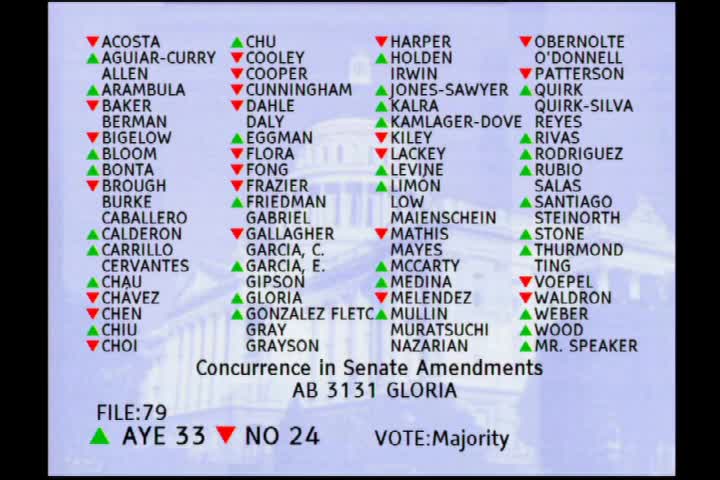 1MIN
Assembly Floor
 8MIN
Senate Floor
 14MIN
Senate Standing Committee on Transportation and Housing
 2MIN
Assembly Floor
 1MIN
Assembly Floor
 16MIN
Assembly Standing Committee on Appropriations
 32MIN
Assembly Standing Committee on Transportation
Bill Author

Bill Co-Author(s):