AB 2138: Licensing boards: denial of application: revocation or suspension of licensure: criminal conviction.
- Session Year: 2017-2018
- House: Assembly
- Latest Version Date: 2018-09-30
Existing law provides for the licensure and regulation of various professions and vocations by boards within the Department of Consumer Affairs. Existing law authorizes a board to deny, suspend, or revoke a license or take disciplinary action against a licensee on the grounds that the applicant or licensee has, among other things, been convicted of a crime, as specified. Existing law provides that a person shall not be denied a license solely on the basis that the person has been convicted of a felony if he or she has obtained a certificate of rehabilitation or that the person has been convicted of a misdemeanor if he or she has met applicable requirements of rehabilitation developed by the board, as specified. Existing law also prohibits a person from being denied a license solely on the basis of a conviction that has been dismissed, as specified. Existing law requires a board to develop criteria to aid it when considering the denial, suspension, or revocation of a license to determine whether a crime is substantially related to the qualifications, functions, or duties of the business or profession the board regulates and requires a board to develop criteria to evaluate the rehabilitation of a person when considering the denial, suspension, or revocation of a license.
This bill would revise and recast those provisions to instead authorize a board to, among other things, deny, revoke, or suspend a license on the grounds that the applicant or licensee has been subject to formal discipline, as specified, or convicted of a crime only if the applicant or licensee has been convicted of a crime within the preceding 7 years from the date of application that is substantially related to the qualifications, functions, or duties of the business or profession for which the application is made, regardless of whether the applicant was incarcerated for that crime, or if the applicant has been convicted of a crime that is substantially related to the qualifications, functions, or duties of the business or profession for which the application is made and for which the applicant is presently incarcerated or for which the applicant was released from incarceration within the preceding 7 years, except as specified. The bill would prohibit a board from denying a person a license based on the conviction of a crime, or on the basis of acts underlying a conviction, as defined, for a crime, if the conviction has been dismissed or expunged, if the person has provided evidence of rehabilitation, if the person has been granted clemency or a pardon, or if an arrest resulted in a disposition other than a conviction.
The bill would require the board to develop criteria for determining whether a crime is substantially related to the qualifications, functions, or duties of the business or profession. The bill would require a board to consider whether a person has made a showing of rehabilitation if certain conditions are met. The bill would require a board to follow certain procedures when requesting or acting on an applicants or licensees criminal history information. The bill would also require a board to annually submit a report to the Legislature and post the report on its Internet Web site containing specified deidentified information regarding actions taken by a board based on an applicant or licensees criminal history information.
Existing law authorizes a board to deny a license on the grounds that an applicant knowingly made a false statement of fact that is required to be revealed in the application for licensure.
This bill would prohibit a board from denying a license based solely on an applicants failure to disclose a fact that would not have been cause for denial of the license had the fact been disclosed.
Existing law authorizes a board, after a specified hearing requested by an applicant for licensure to take various actions in relation to denying or granting the applicant the license.
This bill would revise and recast those provisions to eliminate some of the more specific options that the board may take in these circumstances.
This bill would clarify that the existing above-described provisions continue to apply to the State Athletic Commission, the Bureau for Private Postsecondary Education, and the California Horse Racing Board.
This bill would also make necessary conforming changes.
This bill would make these provisions operative on July 1, 2020.
Existing law provides for the licensure and regulation of various professions and vocations by boards within the Department of Consumer Affairs. Existing law authorizes a board to deny, suspend, or revoke a license or take disciplinary action against a licensee on the grounds that the applicant or licensee has, among other things, been convicted of a crime, as specified. Existing law provides that a person shall not be denied a license solely on the basis that the person has been convicted of a felony if he or she has obtained a certificate of rehabilitation or that the person has been convicted of a misdemeanor if he or she has met applicable requirements of rehabilitation developed by the board, as specified. Existing law also prohibits a person from being denied a license solely on the basis of a conviction that has been dismissed, as specified. Existing law requires a board to develop criteria to aid it when considering the denial, suspension, or revocation of a license to determine whether a crime is substantially related to the qualifications, functions, or duties of the business or profession the board regulates and requires a board to develop criteria to evaluate the rehabilitation of a person when considering the denial, suspension, or revocation of a license.
This bill would revise and recast those provisions to instead authorize a board to, among other things, deny, revoke, or suspend a license on the grounds that the applicant or licensee has been subject to formal discipline, as specified, or convicted of a crime only if the applicant or licensee is presently incarcerated has been convicted of a crime within the preceding 7 years from the date of application that is substantially related to the qualifications, functions, or duties of the business or profession for which the application is made, regardless of whether the applicant was incarcerated for that crime, or if the conviction, as defined, occurred applicant has been convicted of a crime that is substantially related to the qualifications, functions, or duties of the business or profession for which the application is made and for which the applicant is presently incarcerated or for which the applicant was released from incarceration within the preceding 7 years, except for serious felonies, and would require the crime to be substantially related to the qualifications, functions, or duties of the business or profession. as specified. The bill would prohibit a board from denying a person a license based on the conviction of a crime, or on the basis of acts underlying a conviction conviction, as defined, for a crime, if the conviction has been dismissed or expunged, if the person has provided evidence of rehabilitation, if the person has been granted clemency or a pardon, or if an arrest resulted in a disposition other than a conviction.
The bill would require the board to develop criteria for determining whether a crime is substantially related to the qualifications, functions, or duties of the business or profession. The bill would require a board to find that consider whether a person has made a showing of rehabilitation if certain conditions are met. The bill would require a board to follow certain procedures when requesting or acting on an applicants or licensees criminal history information. The bill would also require a board to annually submit a report to the Legislature and post the report on its Internet Web site containing specified deidentified information regarding actions taken by a board based on an applicant or licensees criminal history information.
Existing law authorizes a board to deny a license on the grounds that an applicant knowingly made a false statement of fact that is required to be revealed in the application for licensure.
This bill would prohibit a board from denying a license based solely on an applicants failure to disclose a fact that would not have been cause for denial of the license had the fact been disclosed.
Existing law authorizes a board, after a specified hearing requested by an applicant for licensure to take various actions in relation to denying or granting the applicant the license.
This bill would revise and recast those provisions to eliminate some of the more specific options that the board may take in these circumstances.
This bill would clarify that the existing above-described provisions continue to apply to the State Athletic Commission, the Bureau for Private Postsecondary Education, and the California Horse Racing Board.
This bill would also make necessary conforming changes.
This bill would make these provisions operative on July 1, 2020.
Existing law provides for the licensure and regulation of various professions and vocations by boards within the Department of Consumer Affairs. Existing law authorizes a board to deny, suspend, or revoke a license or take disciplinary action against a licensee on the grounds that the applicant or licensee has, among other things, been convicted of a crime, as specified. Existing law provides that a person shall not be denied a license solely on the basis that the person has been convicted of a felony if he or she has obtained a certificate of rehabilitation or that the person has been convicted of a misdemeanor if he or she has met applicable requirements of rehabilitation developed by the board, as specified. Existing law also prohibits a person from being denied a license solely on the basis of a conviction that has been dismissed, as specified. Existing law requires a board to develop criteria to aid it when considering the denial, suspension, or revocation of a license to determine whether a crime is substantially related to the qualifications, functions, or duties of the business or profession the board regulates and requires a board to develop criteria to evaluate the rehabilitation of a person when considering the denial, suspension, or revocation of a license.
This bill would revise and recast those provisions to instead authorize a board to, among other things, deny, revoke, or suspend a license on the grounds that the applicant or licensee has been convicted of a crime only if the applicant or licensee is presently incarcerated or if the conviction, as defined, occurred within the preceding 5 7 years, except for violent serious felonies, and would require the crime to be directly and adversely substantially related to the qualifications, functions, or duties of the business or profession. The bill would prohibit a board from denying a person a license based on the conviction of a crime, or on the basis of acts underlying a conviction for a crime, if the conviction has been dismissed or expunged, if the person has made a showing provided evidence of rehabilitation, if the person has been granted clemency or a pardon, or if an arrest resulted in a disposition other than a conviction. The bill would provide that these provisions relating to denial, revocation, or suspension of a license would supersede contradictory provisions in specified existing law.
The bill would require the board to develop criteria for determining whether a crime is directly and adversely substantially related to the qualifications, functions, or duties of the business or profession. The bill would require a board to find that a person has made a showing of rehabilitation if certain conditions are met. The bill would require a board to follow certain procedures when requesting or acting on an applicants or licensees criminal history information. The bill would also require a board to annually submit a report to the Legislature and post the report on its Internet Web site containing specified deidentified information regarding actions taken by a board based on an applicant or licensees criminal history information.
Existing law authorizes a board to deny a license on the grounds that an applicant knowingly made a false statement of fact that is required to be revealed in the application for licensure.
This bill would prohibit a board from denying a license based solely on an applicants failure to disclose a fact that would not have been cause for denial of the license had the fact been disclosed.
Existing law authorizes specified agencies to take disciplinary action against a licensee or deny a license for professional misconduct if the licensee has successfully completed certain diversion programs or alcohol and drug problem assessment programs.This bill would instead prohibit a board from taking disciplinary action against a licensee or denying a license for professional misconduct if the licensee has successfully completed certain diversion programs or alcohol and drug problem assessment programs or deferred entry of judgment.Existing law authorizes a board board, after a specified hearing requested by an applicant for licensure to take various actions, including imposing probationary conditions on the license. actions in relation to denying or granting the applicant the license.
This bill would additionally authorize a board to grant the license and immediately issue a public reproval. The bill would limit probationary terms or restrictions placed on a license by a board to 2 years or less and would authorize additional conditions to be imposed only if the board determines that there is clear and convincing evidence that additional conditions are necessary to address a risk shown by clear and convincing evidence. The bill would require a board to develop criteria to aid it in considering the imposition of probationary conditions and to determine what conditions may be imposed. The bill would authorize a licensee or registrant whose license or registration has been placed on probation to petition the board for a change to that probation one year from the effective date of the boards decision, would require the board to issue a decision on the petition within 90 days, and would deem the petition granted if the board does not file a decision denying the petition within 90 days. revise and recast those provisions to eliminate some of the more specific options that the board may take in these circumstances.
This bill would also make necessary conforming changes.
Existing law provides for the licensure and regulation of various professions and vocations by boards within the Department of Consumer Affairs. Existing law authorizes a board to deny, suspend, or revoke a license or take disciplinary action against a licensee on the grounds that the applicant or licensee has, among other things, been convicted of a crime, as specified. Existing law provides that a person shall not be denied a license solely on the basis that the person has been convicted of a felony if he or she has obtained a certificate of rehabilitation or that the person has been convicted of a misdemeanor if he or she has met applicable requirements of rehabilitation developed by the board, as specified. Existing law also prohibits a person from being denied a license solely on the basis of a conviction that has been dismissed, as specified. Existing law requires a board to develop criteria to aid it when considering the denial, suspension, or revocation of a license to determine whether a crime is substantially related to the qualifications, functions, or duties of the business or profession the board regulates and requires a board to develop criteria to evaluate the rehabilitation of a person when considering the denial, suspension, or revocation of a license.
This bill would revise and recast those provisions to instead authorize a board to, among other things, deny, revoke, or suspend a license on the grounds that the applicant or licensee has been convicted of a crime only if the applicant or licensee is presently incarcerated or if the conviction, as defined, occurred within the preceding 5 years, except for violent felonies, and would require the crime to be directly and adversely related to the qualifications, functions, or duties of the business or profession. The bill would prohibit a board from denying a person a license based on the conviction of a crime, or on the basis of acts underlying a conviction for a crime, if the conviction has been dismissed or expunged, if the person has made a showing of rehabilitation, if the person has been granted clemency or a pardon, or if an arrest resulted in a disposition other than a conviction. The bill would provide that these provisions relating to denial, revocation, or suspension of a license would supersede contradictory provisions in specified existing law.
The bill would require the board to develop criteria for determining whether a crime is directly and adversely related to the qualifications, functions, or duties of the business or profession. The bill would require a board to find that a person has made a showing of rehabilitation if certain conditions are met. The bill would require a board to follow certain procedures when requesting or acting on an applicants or licensees criminal history information. The bill would also require a board to annually submit a report to the Legislature and post the report on its Internet Web site containing specified deidentified information regarding actions taken by a board based on an applicant or licensees criminal history information.
Existing law authorizes a board to deny a license on the grounds that an applicant knowingly made a false statement of fact that is required to be revealed in the application for licensure.
This bill would prohibit a board from denying a license based solely on an applicants failure to disclose a fact that would not have been cause for denial of the license had the fact been disclosed.
Existing law authorizes a board to suspend a license if a licensee is not in compliance with a child support order or judgment.This bill would repeal that authorization.Existing law authorizes specified agencies to take disciplinary action against a licensee or deny a license for professional misconduct if the licensee has successfully completed certain diversion programs or alcohol and drug problem assessment programs.
This bill would instead prohibit a board from taking disciplinary action against a licensee or denying a license for professional misconduct if the licensee has successfully completed certain diversion programs or alcohol and drug problem assessment programs or deferred entry of judgment.
Existing law authorizes a board after a specified hearing requested by an applicant for licensure to take various actions, including imposing probationary conditions on the license.
This bill would additionally authorize a board to grant the license and immediately issue a public reproval. The bill would limit probationary terms or restrictions placed on a license by a board to 2 years or less and would authorize additional conditions to be imposed only if the board determines that there is clear and convincing evidence that additional conditions are necessary to address a risk shown by clear and convincing evidence. The bill would require a board to develop criteria to aid it in considering the imposition of probationary conditions and to determine what conditions may be imposed. The bill would authorize a licensee or registrant whose license or registration has been placed on probation to petition the board for a change to that probation one year from the effective date of the boards decision, would require the board to issue a decision on the petition within 90 days, and would deem the petition granted if the board does not file a decision denying the petition within 90 days.
This bill would also make necessary conforming changes.
Existing law provides for the licensure and regulation of various professions and vocations by boards within the Department of Consumer Affairs and Affairs. Existing law authorizes a board to deny deny, suspend, or revoke a license or take disciplinary action against a licensee on the grounds that the applicant or licensee has, among other things, been convicted of a crime, as specified. Existing law provides that a person shall not be denied a license solely on the basis that the person has been convicted of a felony if he or she has obtained a certificate of rehabilitation or that the person has been convicted of a misdemeanor if he or she has met applicable requirements of rehabilitation developed by the board, as specified. Existing law also prohibits a person from being denied a license solely on the basis of a conviction that has been dismissed, as specified. Existing law requires a board to develop criteria to aid it when considering the denial, suspension, or revocation of a license to determine whether a crime is substantially related to the qualifications, functions, or duties of the business or profession the board regulates and requires a board to develop criteria to evaluate the rehabilitation of a person when considering the denial, suspension, or revocation of a license.
This bill would instead prohibit a person from being denied a license solely on the basis that he or she has been convicted of a nonviolent crime and would make conforming changes. revise and recast those provisions to instead authorize a board to, among other things, deny, revoke, or suspend a license on the grounds that the applicant or licensee has been convicted of a crime only if the applicant or licensee is presently incarcerated or if the conviction, as defined, occurred within the preceding 5 years, except for violent felonies, and would require the crime to be directly and adversely related to the qualifications, functions, or duties of the business or profession. The bill would prohibit a board from denying a person a license based on the conviction of a crime, or on the basis of acts underlying a conviction for a crime, if the conviction has been dismissed or expunged, if the person has made a showing of rehabilitation, if the person has been granted clemency or a pardon, or if an arrest resulted in a disposition other than a conviction. The bill would provide that these provisions relating to denial, revocation, or suspension of a license would supersede contradictory provisions in specified existing law.
The bill would require the board to develop criteria for determining whether a crime is directly and adversely related to the qualifications, functions, or duties of the business or profession. The bill would require a board to find that a person has made a showing of rehabilitation if certain conditions are met. The bill would require a board to follow certain procedures when requesting or acting on an applicants or licensees criminal history information. The bill would also require a board to annually submit a report to the Legislature and post the report on its Internet Web site containing specified deidentified information regarding actions taken by a board based on an applicant or licensees criminal history information.
Existing law authorizes a board to deny a license on the grounds that an applicant knowingly made a false statement of fact that is required to be revealed in the application for licensure.
This bill would prohibit a board from denying a license based solely on an applicants failure to disclose a fact that would not have been cause for denial of the license had the fact been disclosed.
Existing law authorizes a board to suspend a license if a licensee is not in compliance with a child support order or judgment.
This bill would repeal that authorization.
Existing law authorizes specified agencies to take disciplinary action against a licensee or deny a license for professional misconduct if the licensee has successfully completed certain diversion programs or alcohol and drug problem assessment programs.
This bill would instead prohibit a board from taking disciplinary action against a licensee or denying a license for professional misconduct if the licensee has successfully completed certain diversion programs or alcohol and drug problem assessment programs or deferred entry of judgment.
Existing law authorizes a board after a specified hearing requested by an applicant for licensure to take various actions, including imposing probationary conditions on the license.
This bill would additionally authorize a board to grant the license and immediately issue a public reproval. The bill would limit probationary terms or restrictions placed on a license by a board to 2 years or less and would authorize additional conditions to be imposed only if the board determines that there is clear and convincing evidence that additional conditions are necessary to address a risk shown by clear and convincing evidence. The bill would require a board to develop criteria to aid it in considering the imposition of probationary conditions and to determine what conditions may be imposed. The bill would authorize a licensee or registrant whose license or registration has been placed on probation to petition the board for a change to that probation one year from the effective date of the boards decision, would require the board to issue a decision on the petition within 90 days, and would deem the petition granted if the board does not file a decision denying the petition within 90 days.
This bill would also make necessary conforming changes.
Existing law provides for the licensure and regulation of various professions and vocations by boards within the Department of Consumer Affairs and authorizes a board to deny a license on the grounds that the applicant has, among other things, been convicted of a crime, as specified. Existing law provides that a person shall not be denied a license solely on the basis that the person has been convicted of a felony if he or she has obtained a certificate of rehabilitation or that the person has been convicted of a misdemeanor if he or she has met applicable requirements of rehabilitation developed by the board, as specified. Existing law also prohibits a person from being denied a license solely on the basis of a conviction that has been dismissed, as specified.
This bill would instead prohibit a person from being denied a license solely on the basis that he or she has been convicted of a nonviolent crime and would make conforming changes.
(a)A conviction within the meaning of this code means a plea or verdict of guilty or a conviction following a plea of nolo contendere. Any action which a board is permitted to take following the establishment of a conviction may be taken when the time for appeal has elapsed, or the judgment of conviction has been affirmed on appeal or when an order granting probation is made suspending the imposition of sentence, irrespective of a subsequent order under the provisions of Section 1203.4 of the Penal Code. However, a board may not deny a license to an applicant who is otherwise qualified pursuant to subdivision (b) of Section 480.
Nothing in this section shall apply to the licensure of persons pursuant to Chapter 4 (commencing with Section 6000) of Division 3.
(b)This section shall become inoperative on July 1, 2020, and, as of January 1, 2021, is repealed.
SEC. 2.Section 7.5 is added to the Business and Professions Code, to read:7.5.(a)A conviction within the meaning of this code means a judgment following a plea or verdict of guilty or a plea of nolo contendere or finding of guilt. Any action which a board is permitted to take following the establishment of a conviction may be taken when the time for appeal has elapsed, or the judgment of conviction has been affirmed on appeal or when an order granting probation is made suspending the imposition of sentence. However, a board may not deny a license to an applicant who is otherwise qualified pursuant to subdivision (b) or (c) of Section 480.
(b)(1)Nothing in this section shall apply to the licensure of persons pursuant to Chapter 4 (commencing with Section 6000) of Division 3.
(2)This section does not in any way modify or otherwise affect the existing authority of the following entities in regard to licensure:
(A)The State Athletic Commission.
(B)The Bureau for Private Postsecondary Education.
(C)The California Horse Racing Board.
(c)Except as provided in subdivision (b), this section controls over and supersedes the definition of conviction contained within individual practice acts under this code.
(d)This section shall become operative on July 1, 2020.
SEC. 3.Section 480 of the Business and Professions Code is amended to read:480.(a)A board may deny a license regulated by this code on the grounds that the applicant has one of the following:
(1)Been convicted of a crime. A conviction within the meaning of this section means a plea or verdict of guilty or a conviction following a plea of nolo contendere. Any action that a board is permitted to take following the establishment of a conviction may be taken when the time for appeal has elapsed, or the judgment of conviction has been affirmed on appeal, or when an order granting probation is made suspending the imposition of sentence, irrespective of a subsequent order under the provisions of Section 1203.4, 1203.4a, or 1203.41 of the Penal Code.
(2)Done any act involving dishonesty, fraud, or deceit with the intent to substantially benefit himself or herself or another, or substantially injure another.
(3)(A)Done any act that if done by a licentiate of the business or profession in question, would be grounds for suspension or revocation of license.
(B)The board may deny a license pursuant to this subdivision only if the crime or act is substantially related to the qualifications, functions, or duties of the business or profession for which application is made.
(b)Notwithstanding any other provision of this code, a person shall not be denied a license solely on the basis that he or she has been convicted of a felony if he or she has obtained a certificate of rehabilitation under Chapter 3.5 (commencing with Section 4852.01) of Title 6 of Part 3 of the Penal Code or that he or she has been convicted of a misdemeanor if he or she has met all applicable requirements of the criteria of rehabilitation developed by the board to evaluate the rehabilitation of a person when considering the denial of a license under subdivision (a) of Section 482.
(c)Notwithstanding any other provisions of this code, a person shall not be denied a license solely on the basis of a conviction that has been dismissed pursuant to Section 1203.4, 1203.4a, or 1203.41 of the Penal Code. An applicant who has a conviction that has been dismissed pursuant to Section 1203.4, 1203.4a, or 1203.41 of the Penal Code shall provide proof of the dismissal.
(d)A board may deny a license regulated by this code on the ground that the applicant knowingly made a false statement of fact that is required to be revealed in the application for the license.
(e)This section shall become inoperative on July 1, 2020, and, as of January 1, 2021, is repealed.
SEC. 4.Section 480 is added to the Business and Professions Code, to read:480.(a)Notwithstanding any other provision of this code, a board may deny a license regulated by this code on the grounds that the applicant has been convicted of a crime or has been subject to formal discipline only if either of the following conditions are met:
(1)The applicant has been convicted of a crime within the preceding seven years from the date of application that is substantially related to the qualifications, functions, or duties of the business or profession for which the application is made, regardless of whether the applicant was incarcerated for that crime, or the applicant has been convicted of a crime that is substantially related to the qualifications, functions, or duties of the business or profession for which the application is made and for which the applicant is presently incarcerated or for which the applicant was released from incarceration within the preceding seven years from the date of application. However, the preceding seven-year limitation shall not apply in either of the following situations:
(A)The applicant was convicted of a serious felony, as defined in Section 1192.7 of the Penal Code or a crime for which registration is required pursuant to paragraph (2) or (3) of subdivision (d) of Section 290 of the Penal Code.
(B)The applicant was convicted of a financial crime currently classified as a felony that is directly and adversely related to the fiduciary qualifications, functions, or duties of the business or profession for which the application is made, pursuant to regulations adopted by the board, and for which the applicant is seeking licensure under any of the following:
(i)Chapter 1 (commencing with Section 5000) of Division 3.
(ii)Chapter 6 (commencing with Section 6500) of Division 3.
(iii)Chapter 9 (commencing with Section 7000) of Division 3.
(iv)Chapter 11.3 (commencing with Section 7512) of Division 3.
(v)Licensure as a funeral director or cemetery manager under Chapter 12 (commencing with Section 7600) of Division 3.
(vi)Division 4 (commencing with Section 10000).
(2)The applicant has been subjected to formal discipline by a licensing board in or outside California within the preceding seven years from the date of application based on professional misconduct that would have been cause for discipline before the board for which the present application is made and that is substantially related to the qualifications, functions, or duties of the business or profession for which the present application is made. However, prior disciplinary action by a licensing board within the preceding seven years shall not be the basis for denial of a license if the basis for that disciplinary action was a conviction that has been dismissed pursuant to Section 1203.4, 1203.4a, 1203.41, or 1203.42 of the Penal Code or a comparable dismissal or expungement.
(b)Notwithstanding any other provision of this code, a person shall not be denied a license on the basis that he or she has been convicted of a crime, or on the basis of acts underlying a conviction for a crime, if he or she has obtained a certificate of rehabilitation under Chapter 3.5 (commencing with Section 4852.01) of Title 6 of Part 3 of the Penal Code, has been granted clemency or a pardon by a state or federal executive, or has made a showing of rehabilitation pursuant to Section 482.
(c)Notwithstanding any other provision of this code, a person shall not be denied a license on the basis of any conviction, or on the basis of the acts underlying the conviction, that has been dismissed pursuant to Section 1203.4, 1203.4a, 1203.41, or 1203.42 of the Penal Code, or a comparable dismissal or expungement. An applicant who has a conviction that has been dismissed pursuant to Section 1203.4, 1203.4a, 1203.41, or 1203.42 of the Penal Code shall provide proof of the dismissal if it is not reflected on the report furnished by the Department of Justice.
(d)Notwithstanding any other provision of this code, a board shall not deny a license on the basis of an arrest that resulted in a disposition other than a conviction, including an arrest that resulted in an infraction, citation, or a juvenile adjudication.
(e)A board may deny a license regulated by this code on the ground that the applicant knowingly made a false statement of fact that is required to be revealed in the application for the license. A board shall not deny a license based solely on an applicants failure to disclose a fact that would not have been cause for denial of the license had it been disclosed.
(f)A board shall follow the following procedures in requesting or acting on an applicants criminal history information:
(1)A board issuing a license pursuant to Chapter 3 (commencing with Section 5500), Chapter 3.5 (commencing with Section 5615), Chapter 10 (commencing with Section 7301), Chapter 20 (commencing with Section 9800), or Chapter 20.3 (commencing with Section 9880), of Division 3, or Chapter 3 (commencing with Section 19000) or Chapter 3.1 (commencing with Section 19225) of Division 8 may require applicants for licensure under those chapters to disclose criminal conviction history on an application for licensure.
(2)Except as provided in paragraph (1), a board shall not require an applicant for licensure to disclose any information or documentation regarding the applicants criminal history. However, a board may request mitigating information from an applicant regarding the applicants criminal history for purposes of determining substantial relation or demonstrating evidence of rehabilitation, provided that the applicant is informed that disclosure is voluntary and that the applicants decision not to disclose any information shall not be a factor in a boards decision to grant or deny an application for licensure.
(3)If a board decides to deny an application for licensure based solely or in part on the applicants conviction history, the board shall notify the applicant in writing of all of the following:
(A)The denial or disqualification of licensure.
(B)Any existing procedure the board has for the applicant to challenge the decision or to request reconsideration.
(C)That the applicant has the right to appeal the boards decision.
(D)The processes for the applicant to request a copy of his or her complete conviction history and question the accuracy or completeness of the record pursuant to Sections 11122 to 11127 of the Penal Code.
(g)(1)For a minimum of three years, each board under this code shall retain application forms and other documents submitted by an applicant, any notice provided to an applicant, all other communications received from and provided to an applicant, and criminal history reports of an applicant.
(2)Each board under this code shall retain the number of applications received for each license and the number of applications requiring inquiries regarding criminal history. In addition, each licensing authority shall retain all of the following information:
(A)The number of applicants with a criminal record who received notice of denial or disqualification of licensure.
(B)The number of applicants with a criminal record who provided evidence of mitigation or rehabilitation.
(C)The number of applicants with a criminal record who appealed any denial or disqualification of licensure.
(D)The final disposition and demographic information, consisting of voluntarily provided information on race or gender, of any applicant described in subparagraph (A), (B), or (C).
(3)(A)Each board under this code shall annually make available to the public through the boards Internet Web site and through a report submitted to the appropriate policy committees of the Legislature deidentified information collected pursuant to this subdivision. Each board shall ensure confidentiality of the individual applicants.
(B)A report pursuant to subparagraph (A) shall be submitted in compliance with Section 9795 of the Government Code.
(h)Conviction as used in this section shall have the same meaning as defined in Section 7.5.
(i)This section does not in any way modify or otherwise affect the existing authority of the following entities in regard to licensure:
(1)The State Athletic Commission.
(2)The Bureau for Private Postsecondary Education.
(3)The California Horse Racing Board.
(j)This section shall become operative on July 1, 2020.
SEC. 5.Section 480.2 is added to the Business and Professions Code, to read:480.2.(a)The Bureau for Private Postsecondary Education, the State Athletic Commission, and the California Horse Racing Board may deny a license regulated by it on the grounds that the applicant has one of the following:
(1)Been convicted of a crime.
(2)Done any act involving dishonesty, fraud, or deceit with the intent to substantially benefit himself or herself or another, or substantially injure another.
(3)(A)Done any act that if done by a licentiate of the business or profession in question, would be grounds for suspension or revocation of license.
(B)The Bureau for Private Postsecondary Education, the State Athletic Commission, and the California Horse Racing Board may deny a license pursuant to this subdivision only if the crime or act is substantially related to the qualifications, functions, or duties of the business or profession for which application is made.
(b)Notwithstanding any other provision of this code, a person shall not be denied a license solely on the basis that he or she has been convicted of a felony if he or she has obtained a certificate of rehabilitation under Chapter 3.5 (commencing with Section 4852.01) of Title 6 of Part 3 of the Penal Code or that he or she has been convicted of a misdemeanor if he or she has met all applicable requirements of the criteria of rehabilitation developed by the Bureau for Private Postsecondary Education, the State Athletic Commission, and the California Horse Racing Board to evaluate the rehabilitation of a person when considering the denial of a license under paragraph (1) of subdivision (f).
(c)Notwithstanding any other provisions of this code, a person shall not be denied a license by the Bureau for Private Postsecondary Education, the State Athletic Commission, or the California Horse Racing Board solely on the basis of a conviction that has been dismissed pursuant to Section 1203.4, 1203.4a, or 1203.41 of the Penal Code. An applicant who has a conviction that has been dismissed pursuant to Section 1203.4, 1203.4a, or 1203.41 of the Penal Code shall provide proof of the dismissal.
(d)The Bureau for Private Postsecondary Education, the State Athletic Commission, and the California Horse Racing Board may deny a license regulated by it on the ground that the applicant knowingly made a false statement of fact that is required to be revealed in the application for the license.
(e)The Bureau for Private Postsecondary Education, the State Athletic Commission, and the California Horse Racing Board shall develop criteria to aid it, when considering the denial, suspension or revocation of a license, to determine whether a crime or act is substantially related to the qualifications, functions, or duties of the business or profession it regulates.
(f)(1)The Bureau for Private Postsecondary Education, the State Athletic Commission, and the California Horse Racing Board shall develop criteria to evaluate the rehabilitation of a person either when:
(A)Considering the denial of a license under this section.
(B)Considering suspension or revocation of a license under Section 490.
(2)The Bureau for Private Postsecondary Education, the State Athletic Commission, and the California Horse Racing Board shall take into account all competent evidence of rehabilitation furnished by the applicant or licensee.
(g)Except as otherwise provided by law, following a hearing requested by an applicant pursuant to subdivision (b) of Section 485, the Bureau for Private Postsecondary Education, the State Athletic Commission, and the California Horse Racing Board may take any of the following actions:
(1)Grant the license effective upon completion of all licensing requirements by the applicant.
(2)Grant the license effective upon completion of all licensing requirements by the applicant, immediately revoke the license, stay the revocation, and impose probationary conditions on the license, which may include suspension.
(3)Deny the license.
(4)Take other action in relation to denying or granting the license as the Bureau for Private Postsecondary Education, the State Athletic Commission, or the California Horse Racing Board, in its discretion, may deem proper.
(h)Notwithstanding any other law, in a proceeding conducted by the Bureau for Private Postsecondary Education, the State Athletic Commission, or the California Horse Racing Board to deny an application for a license or to suspend or revoke a license or otherwise take disciplinary action against a person who holds a license, upon the ground that the applicant or the licensee has been convicted of a crime substantially related to the qualifications, functions, and duties of the licensee in question, the record of conviction of the crime shall be conclusive evidence of the fact that the conviction occurred, but only of that fact, and the Bureau for Private Postsecondary Education, the State Athletic Commission, and the California Horse Racing Board may inquire into the circumstances surrounding the commission of the crime in order to fix the degree of discipline or to determine if the conviction is substantially related to the qualifications, functions, and duties of the licensee in question.
(i)Notwithstanding Section 7.5, a conviction within the meaning of this section means a plea or verdict of guilty or a conviction following a plea of nolo contendere. Any action that the Bureau for Private Postsecondary Education, the State Athletic Commission, or the California Horse Racing Board is permitted to take following the establishment of a conviction may be taken when the time for appeal has elapsed, the judgment of conviction has been affirmed on appeal, or when an order granting probation is made suspending the imposition of sentence, irrespective of a subsequent order under the provisions of Section 1203.4, 1203.4a, or 1203.41 of the Penal Code.
(j)This section shall become operative on July 1, 2020.
SEC. 6.Section 481 of the Business and Professions Code is amended to read:481.(a)Each board under the provisions of this code shall develop criteria to aid it, when considering the denial, suspension or revocation of a license, to determine whether a crime or act is substantially related to the qualifications, functions, or duties of the business or profession it regulates.
(b)This section shall become inoperative on July 1, 2020, and, as of January 1, 2021, is repealed.
SEC. 7.Section 481 is added to the Business and Professions Code, to read:481.(a)Each board under this code shall develop criteria to aid it, when considering the denial, suspension, or revocation of a license, to determine whether a crime is substantially related to the qualifications, functions, or duties of the business or profession it regulates.
(b)Criteria for determining whether a crime is substantially related to the qualifications, functions, or duties of the business or profession a board regulates shall include all of the following:
(1)The nature and gravity of the offense.
(2)The number of years elapsed since the date of the offense.
(3)The nature and duties of the profession in which the applicant seeks licensure or in which the licensee is licensed.
(c)A board shall not deny a license based in whole or in part on a conviction without considering evidence of rehabilitation submitted by an applicant pursuant to any process established in the practice act or regulations of the particular board and as directed by Section 482.
(d)Each board shall post on its Internet Web site a summary of the criteria used to consider whether a crime is considered to be substantially related to the qualifications, functions, or duties of the business or profession it regulates consistent with this section.
(e)This section does not in any way modify or otherwise affect the existing authority of the following entities in regard to licensure:
(1)The State Athletic Commission.
(2)The Bureau for Private Postsecondary Education.
(3)The California Horse Racing Board.
(f)This section shall become operative on July 1, 2020.
SEC. 8.Section 482 of the Business and Professions Code is amended to read:482.(a)Each board under the provisions of this code shall develop criteria to evaluate the rehabilitation of a person when:
(1)Considering the denial of a license by the board under Section 480; or
(2)Considering suspension or revocation of a license under Section 490.
(b)Each board shall take into account all competent evidence of rehabilitation furnished by the applicant or licensee.
(c)This section shall become inoperative on July 1, 2020, and, as of January 1, 2021, is repealed.
SEC. 9.Section 482 is added to the Business and Professions Code, to read:482.(a)Each board under this code shall develop criteria to evaluate the rehabilitation of a person when doing either of the following:
(1)Considering the denial of a license by the board under Section 480.
(2)Considering suspension or revocation of a license under Section 490.
(b)Each board shall consider whether an applicant or licensee has made a showing of rehabilitation if either of the following are met:
(1)The applicant or licensee has completed the criminal sentence at issue without a violation of parole or probation.
(2)The board, applying its criteria for rehabilitation, finds that the applicant is rehabilitated.
(c)This section does not in any way modify or otherwise affect the existing authority of the following entities in regard to licensure:
(1)The State Athletic Commission.
(2)The Bureau for Private Postsecondary Education.
(3)The California Horse Racing Board.
(d)This section shall become operative on July 1, 2020.
SEC. 10.Section 488 of the Business and Professions Code is amended to read:488.(a)Except as otherwise provided by law, following a hearing requested by an applicant pursuant to subdivision (b) of Section 485, the board may take any of the following actions:
(1)Grant the license effective upon completion of all licensing requirements by the applicant.
(2)Grant the license effective upon completion of all licensing requirements by the applicant, immediately revoke the license, stay the revocation, and impose probationary conditions on the license, which may include suspension.
(3)Deny the license.
(4)Take other action in relation to denying or granting the license as the board in its discretion may deem proper.
(b)This section shall become inoperative on July 1, 2020, and, as of January 1, 2021, is repealed.
SEC. 11.Section 488 is added to the Business and Professions Code, to read:488.(a)Except as otherwise provided by law, following a hearing requested by an applicant pursuant to subdivision (b) of Section 485, the board may take any of the following actions:
(1)Grant the license effective upon completion of all licensing requirements by the applicant.
(2)Grant the license effective upon completion of all licensing requirements by the applicant, immediately revoke the license, stay the revocation, and impose probationary conditions on the license, which may include suspension.
(3)Deny the license.
(4)Take other action in relation to denying or granting the license as the board in its discretion may deem proper.
(b)This section does not in any way modify or otherwise affect the existing authority of the following entities in regard to licensure:
(1)The State Athletic Commission.
(2)The Bureau for Private Postsecondary Education.
(3)The California Horse Racing Board.
(c)This section shall become operative on July 1, 2020.
SEC. 12.Section 493 of the Business and Professions Code is amended to read:493.(a)Notwithstanding any other provision of law, in a proceeding conducted by a board within the department pursuant to law to deny an application for a license or to suspend or revoke a license or otherwise take disciplinary action against a person who holds a license, upon the ground that the applicant or the licensee has been convicted of a crime substantially related to the qualifications, functions, and duties of the licensee in question, the record of conviction of the crime shall be conclusive evidence of the fact that the conviction occurred, but only of that fact, and the board may inquire into the circumstances surrounding the commission of the crime in order to fix the degree of discipline or to determine if the conviction is substantially related to the qualifications, functions, and duties of the licensee in question.
(b)As used in this section, license includes certificate, permit, authority, and registration.
(c)This section shall become inoperative on July 1, 2020, and, as of January 1, 2021, is repealed.
SEC. 13.Section 493 is added to the Business and Professions Code, to read:493.(a)Notwithstanding any other law, in a proceeding conducted by a board within the department pursuant to law to deny an application for a license or to suspend or revoke a license or otherwise take disciplinary action against a person who holds a license, upon the ground that the applicant or the licensee has been convicted of a crime substantially related to the qualifications, functions, and duties of the licensee in question, the record of conviction of the crime shall be conclusive evidence of the fact that the conviction occurred, but only of that fact.
(b)(1)Criteria for determining whether a crime is substantially related to the qualifications, functions, or duties of the business or profession the board regulates shall include all of the following:
(A)The nature and gravity of the offense.
(B)The number of years elapsed since the date of the offense.
(C)The nature and duties of the profession.
(2)A board shall not categorically bar an applicant based solely on the type of conviction without considering evidence of rehabilitation.
(c)As used in this section, license includes certificate, permit, authority, and registration.
(d)This section does not in any way modify or otherwise affect the existing authority of the following entities in regard to licensure:
(1)The State Athletic Commission.
(2)The Bureau for Private Postsecondary Education.
(3)The California Horse Racing Board.
(e)This section shall become operative on July 1, 2020.
SEC. 14.Section 11345.2 of the Business and Professions Code is amended to read:11345.2.(a)An individual shall not act as a controlling person for a registrant if any of the following apply:
(1)The individual has entered a plea of guilty or no contest to, or been convicted of, a felony. Notwithstanding subdivision (c) of Section 480, if the individuals felony conviction has been dismissed pursuant to Section 1203.4, 1203.4a, or 1203.41 of the Penal Code, the bureau may allow the individual to act as a controlling person.
(2)The individual has had a license or certificate to act as an appraiser or to engage in activities related to the transfer of real property refused, denied, canceled, or revoked in this state or any other state.
(b)Any individual who acts as a controlling person of an appraisal management company and who enters a plea of guilty or no contest to, or is convicted of, a felony, or who has a license or certificate as an appraiser refused, denied, canceled, or revoked in any other state shall report that fact or cause that fact to be reported to the office, in writing, within 10 days of the date he or she has knowledge of that fact.
(c)This section shall become inoperative on July 1, 2020, and, as of January 1, 2021, is repealed.
SEC. 15.Section 11345.2 is added to the Business and Professions Code, to read:11345.2.(a)An individual shall not act as a controlling person for a registrant if any of the following apply:
(1)The individual has entered a plea of guilty or no contest to, or been convicted of, a felony. If the individuals felony conviction has been dismissed pursuant to Section 1203.4, 1203.4a, 1203.41, or 1203.42 of the Penal Code, the bureau may allow the individual to act as a controlling person.
(2)The individual has had a license or certificate to act as an appraiser or to engage in activities related to the transfer of real property refused, denied, canceled, or revoked in this state or any other state.
(b)Any individual who acts as a controlling person of an appraisal management company and who enters a plea of guilty or no contest to, or is convicted of, a felony, or who has a license or certificate as an appraiser refused, denied, canceled, or revoked in any other state shall report that fact or cause that fact to be reported to the office, in writing, within 10 days of the date he or she has knowledge of that fact.
(c)This section shall become operative on July 1, 2020.
(a)A conviction within the meaning of this code means a plea or verdict of guilty or a conviction following a plea of nolo contendere. Any action which a board is permitted to take following the establishment of a conviction may be taken when the time for appeal has elapsed, or the judgment of conviction has been affirmed on appeal or when an order granting probation is made suspending the imposition of sentence, irrespective of a subsequent order under the provisions of Section 1203.4 of the Penal Code. However, a board may not deny a license to an applicant who is otherwise qualified pursuant to subdivision (b) of Section 480.
Nothing in this section shall apply to the licensure of persons pursuant to Chapter 4 (commencing with Section 6000) of Division 3.
(b)This section shall become inoperative on July 1, 2020, and, as of January 1, 2021, is repealed.
SEC. 2.Section 7.5 is added to the Business and Professions Code, to read:7.5.(a)A conviction within the meaning of this code means a judgment following a plea or verdict of guilty or a plea of nolo contendere or finding of guilt. Any action which a board is permitted to take following the establishment of a conviction may be taken when the time for appeal has elapsed, or the judgment of conviction has been affirmed on appeal or when an order granting probation is made suspending the imposition of sentence. However, a board may not deny a license to an applicant who is otherwise qualified pursuant to subdivision (b) or (c) of Section 480.
(b)(1)Nothing in this section shall apply to the licensure of persons pursuant to Chapter 4 (commencing with Section 6000) of Division 3.
(2)This section does not in any way modify or otherwise affect the existing authority of the following entities in regard to licensure:
(A)The State Athletic Commission.
(B)The Bureau for Private Postsecondary Education.
(C)The California Horse Racing Board.
(c)Except as provided in subdivision (b), this section controls over and supersedes the definition of conviction contained within individual practice acts under this code.
(d)This section shall become operative on July 1, 2020.
SEC. 3.Section 480 of the Business and Professions Code is amended to read:480.(a)A board may deny a license regulated by this code on the grounds that the applicant has one of the following:
(1)Been convicted of a crime. A conviction within the meaning of this section means a plea or verdict of guilty or a conviction following a plea of nolo contendere. Any action that a board is permitted to take following the establishment of a conviction may be taken when the time for appeal has elapsed, or the judgment of conviction has been affirmed on appeal, or when an order granting probation is made suspending the imposition of sentence, irrespective of a subsequent order under the provisions of Section 1203.4, 1203.4a, or 1203.41 of the Penal Code.
(2)Done any act involving dishonesty, fraud, or deceit with the intent to substantially benefit himself or herself or another, or substantially injure another.
(3)(A)Done any act that if done by a licentiate of the business or profession in question, would be grounds for suspension or revocation of license.
(B)The board may deny a license pursuant to this subdivision only if the crime or act is substantially related to the qualifications, functions, or duties of the business or profession for which application is made.
(b)Notwithstanding any other provision of this code, a person shall not be denied a license solely on the basis that he or she has been convicted of a felony if he or she has obtained a certificate of rehabilitation under Chapter 3.5 (commencing with Section 4852.01) of Title 6 of Part 3 of the Penal Code or that he or she has been convicted of a misdemeanor if he or she has met all applicable requirements of the criteria of rehabilitation developed by the board to evaluate the rehabilitation of a person when considering the denial of a license under subdivision (a) of Section 482.
(c)Notwithstanding any other provisions of this code, a person shall not be denied a license solely on the basis of a conviction that has been dismissed pursuant to Section 1203.4, 1203.4a, or 1203.41 of the Penal Code. An applicant who has a conviction that has been dismissed pursuant to Section 1203.4, 1203.4a, or 1203.41 of the Penal Code shall provide proof of the dismissal.
(d)A board may deny a license regulated by this code on the ground that the applicant knowingly made a false statement of fact that is required to be revealed in the application for the license.
(e)This section shall become inoperative on July 1, 2020, and, as of January 1, 2021, is repealed.
SEC. 4.Section 480 is added to the Business and Professions Code, to read:480.(a)Notwithstanding any other provision of this code, a board may deny a license regulated by this code on the grounds that the applicant has been convicted of a crime or has been subject to formal discipline only if either of the following conditions are met:
(1)The applicant has been convicted of a crime within the preceding seven years from the date of application that is substantially related to the qualifications, functions, or duties of the business or profession for which the application is made, regardless of whether the applicant was incarcerated for that crime, or the applicant has been convicted of a crime that is substantially related to the qualifications, functions, or duties of the business or profession for which the application is made and for which the applicant is presently incarcerated or for which the applicant was released from incarceration within the preceding seven years from the date of application. However, the preceding seven-year limitation shall not apply in either of the following situations:
(A)The applicant was convicted of a serious felony, as defined in Section 1192.7 of the Penal Code or a crime for which registration is required pursuant to paragraph (2) or (3) of subdivision (d) of Section 290 of the Penal Code.
(B)The applicant was convicted of a financial crime currently classified as a felony that is directly and adversely related to the fiduciary qualifications, functions, or duties of the business or profession for which the application is made, pursuant to regulations adopted by the board, and for which the applicant is seeking licensure under any of the following:
(i)Chapter 1 (commencing with Section 5000) of Division 3.
(ii)Chapter 6 (commencing with Section 6500) of Division 3.
(iii)Chapter 9 (commencing with Section 7000) of Division 3.
(iv)Chapter 11.3 (commencing with Section 7512) of Division 3.
(v)Licensure as a funeral director or cemetery manager under Chapter 12 (commencing with Section 7600) of Division 3.
(vi)Division 4 (commencing with Section 10000).
(2)The applicant has been subjected to formal discipline by a licensing board in or outside California within the preceding seven years from the date of application based on professional misconduct that would have been cause for discipline before the board for which the present application is made and that is substantially related to the qualifications, functions, or duties of the business or profession for which the present application is made. However, prior disciplinary action by a licensing board within the preceding seven years shall not be the basis for denial of a license if the basis for that disciplinary action was a conviction that has been dismissed pursuant to Section 1203.4, 1203.4a, 1203.41, or 1203.42 of the Penal Code or a comparable dismissal or expungement.
(b)Notwithstanding any other provision of this code, a person shall not be denied a license on the basis that he or she has been convicted of a crime, or on the basis of acts underlying a conviction for a crime, if he or she has obtained a certificate of rehabilitation under Chapter 3.5 (commencing with Section 4852.01) of Title 6 of Part 3 of the Penal Code, has been granted clemency or a pardon by a state or federal executive, or has made a showing of rehabilitation pursuant to Section 482.
(c)Notwithstanding any other provision of this code, a person shall not be denied a license on the basis of any conviction, or on the basis of the acts underlying the conviction, that has been dismissed pursuant to Section 1203.4, 1203.4a, 1203.41, or 1203.42 of the Penal Code, or a comparable dismissal or expungement. An applicant who has a conviction that has been dismissed pursuant to Section 1203.4, 1203.4a, 1203.41, or 1203.42 of the Penal Code shall provide proof of the dismissal if it is not reflected on the report furnished by the Department of Justice.
(d)Notwithstanding any other provision of this code, a board shall not deny a license on the basis of an arrest that resulted in a disposition other than a conviction, including an arrest that resulted in an infraction, citation, or a juvenile adjudication.
(e)A board may deny a license regulated by this code on the ground that the applicant knowingly made a false statement of fact that is required to be revealed in the application for the license. A board shall not deny a license based solely on an applicants failure to disclose a fact that would not have been cause for denial of the license had it been disclosed.
(f)A board shall follow the following procedures in requesting or acting on an applicants criminal history information:
(1)A board issuing a license pursuant to Chapter 3 (commencing with Section 5500), Chapter 3.5 (commencing with Section 5615), Chapter 10 (commencing with Section 7301), Chapter 20 (commencing with Section 9800), or Chapter 20.3 (commencing with Section 9880), of Division 3, or Chapter 3 (commencing with Section 19000) or Chapter 3.1 (commencing with Section 19225) of Division 8 may require applicants for licensure under those chapters to disclose criminal conviction history on an application for licensure.
(2)Except as provided in paragraph (1), a board shall not require an applicant for licensure to disclose any information or documentation regarding the applicants criminal history. However, a board may request mitigating information from an applicant regarding the applicants criminal history for purposes of determining substantial relation or demonstrating evidence of rehabilitation, provided that the applicant is informed that disclosure is voluntary and that the applicants decision not to disclose any information shall not be a factor in a boards decision to grant or deny an application for licensure.
(3)If a board decides to deny an application for licensure based solely or in part on the applicants conviction history, the board shall notify the applicant in writing of all of the following:
(A)The denial or disqualification of licensure.
(B)Any existing procedure the board has for the applicant to challenge the decision or to request reconsideration.
(C)That the applicant has the right to appeal the boards decision.
(D)The processes for the applicant to request a copy of his or her complete conviction history and question the accuracy or completeness of the record pursuant to Sections 11122 to 11127 of the Penal Code.
(g)(1)For a minimum of three years, each board under this code shall retain application forms and other documents submitted by an applicant, any notice provided to an applicant, all other communications received from and provided to an applicant, and criminal history reports of an applicant.
(2)Each board under this code shall retain the number of applications received for each license and the number of applications requiring inquiries regarding criminal history. In addition, each licensing authority shall retain all of the following information:
(A)The number of applicants with a criminal record who received notice of denial or disqualification of licensure.
(B)The number of applicants with a criminal record who provided evidence of mitigation or rehabilitation.
(C)The number of applicants with a criminal record who appealed any denial or disqualification of licensure.
(D)The final disposition and demographic information, consisting of voluntarily provided information on race or gender, of any applicant described in subparagraph (A), (B), or (C).
(3)(A)Each board under this code shall annually make available to the public through the boards Internet Web site and through a report submitted to the appropriate policy committees of the Legislature deidentified information collected pursuant to this subdivision. Each board shall ensure confidentiality of the individual applicants.
(B)A report pursuant to subparagraph (A) shall be submitted in compliance with Section 9795 of the Government Code.
(h)Conviction as used in this section shall have the same meaning as defined in Section 7.5.
(i)This section does not in any way modify or otherwise affect the existing authority of the following entities in regard to licensure:
(1)The State Athletic Commission.
(2)The Bureau for Private Postsecondary Education.
(3)The California Horse Racing Board.
(j)This section shall become operative on July 1, 2020.
SEC. 5.Section 480.2 is added to the Business and Professions Code, to read:480.2.(a)The Bureau for Private Postsecondary Education, the State Athletic Commission, and the California Horse Racing Board may deny a license regulated by it on the grounds that the applicant has one of the following:
(1)Been convicted of a crime.
(2)Done any act involving dishonesty, fraud, or deceit with the intent to substantially benefit himself or herself or another, or substantially injure another.
(3)(A)Done any act that if done by a licentiate of the business or profession in question, would be grounds for suspension or revocation of license.
(B)The Bureau for Private Postsecondary Education, the State Athletic Commission, and the California Horse Racing Board may deny a license pursuant to this subdivision only if the crime or act is substantially related to the qualifications, functions, or duties of the business or profession for which application is made.
(b)Notwithstanding any other provision of this code, a person shall not be denied a license solely on the basis that he or she has been convicted of a felony if he or she has obtained a certificate of rehabilitation under Chapter 3.5 (commencing with Section 4852.01) of Title 6 of Part 3 of the Penal Code or that he or she has been convicted of a misdemeanor if he or she has met all applicable requirements of the criteria of rehabilitation developed by the Bureau for Private Postsecondary Education, the State Athletic Commission, and the California Horse Racing Board to evaluate the rehabilitation of a person when considering the denial of a license under paragraph (1) of subdivision (f).
(c)Notwithstanding any other provisions of this code, a person shall not be denied a license by the Bureau for Private Postsecondary Education, the State Athletic Commission, or the California Horse Racing Board solely on the basis of a conviction that has been dismissed pursuant to Section 1203.4, 1203.4a, or 1203.41 of the Penal Code. An applicant who has a conviction that has been dismissed pursuant to Section 1203.4, 1203.4a, or 1203.41 of the Penal Code shall provide proof of the dismissal.
(d)The Bureau for Private Postsecondary Education, the State Athletic Commission, and the California Horse Racing Board may deny a license regulated by it on the ground that the applicant knowingly made a false statement of fact that is required to be revealed in the application for the license.
(e)The Bureau for Private Postsecondary Education, the State Athletic Commission, and the California Horse Racing Board shall develop criteria to aid it, when considering the denial, suspension or revocation of a license, to determine whether a crime or act is substantially related to the qualifications, functions, or duties of the business or profession it regulates.
(f)(1)The Bureau for Private Postsecondary Education, the State Athletic Commission, and the California Horse Racing Board shall develop criteria to evaluate the rehabilitation of a person either when:
(A)Considering the denial of a license under this section.
(B)Considering suspension or revocation of a license under Section 490.
(2)The Bureau for Private Postsecondary Education, the State Athletic Commission, and the California Horse Racing Board shall take into account all competent evidence of rehabilitation furnished by the applicant or licensee.
(g)Except as otherwise provided by law, following a hearing requested by an applicant pursuant to subdivision (b) of Section 485, the Bureau for Private Postsecondary Education, the State Athletic Commission, and the California Horse Racing Board may take any of the following actions:
(1)Grant the license effective upon completion of all licensing requirements by the applicant.
(2)Grant the license effective upon completion of all licensing requirements by the applicant, immediately revoke the license, stay the revocation, and impose probationary conditions on the license, which may include suspension.
(3)Deny the license.
(4)Take other action in relation to denying or granting the license as the Bureau for Private Postsecondary Education, the State Athletic Commission, or the California Horse Racing Board, in its discretion, may deem proper.
(h)Notwithstanding any other law, in a proceeding conducted by the Bureau for Private Postsecondary Education, the State Athletic Commission, or the California Horse Racing Board to deny an application for a license or to suspend or revoke a license or otherwise take disciplinary action against a person who holds a license, upon the ground that the applicant or the licensee has been convicted of a crime substantially related to the qualifications, functions, and duties of the licensee in question, the record of conviction of the crime shall be conclusive evidence of the fact that the conviction occurred, but only of that fact, and the Bureau for Private Postsecondary Education, the State Athletic Commission, and the California Horse Racing Board may inquire into the circumstances surrounding the commission of the crime in order to fix the degree of discipline or to determine if the conviction is substantially related to the qualifications, functions, and duties of the licensee in question.
(i)Notwithstanding Section 7.5, a conviction within the meaning of this section means a plea or verdict of guilty or a conviction following a plea of nolo contendere. Any action that the Bureau for Private Postsecondary Education, the State Athletic Commission, or the California Horse Racing Board is permitted to take following the establishment of a conviction may be taken when the time for appeal has elapsed, the judgment of conviction has been affirmed on appeal, or when an order granting probation is made suspending the imposition of sentence, irrespective of a subsequent order under the provisions of Section 1203.4, 1203.4a, or 1203.41 of the Penal Code.
(j)This section shall become operative on July 1, 2020.
SEC. 6.Section 481 of the Business and Professions Code is amended to read:481.(a)Each board under the provisions of this code shall develop criteria to aid it, when considering the denial, suspension or revocation of a license, to determine whether a crime or act is substantially related to the qualifications, functions, or duties of the business or profession it regulates.
(b)This section shall become inoperative on July 1, 2020, and, as of January 1, 2021, is repealed.
SEC. 7.Section 481 is added to the Business and Professions Code, to read:481.(a)Each board under this code shall develop criteria to aid it, when considering the denial, suspension, or revocation of a license, to determine whether a crime is substantially related to the qualifications, functions, or duties of the business or profession it regulates.
(b)Criteria for determining whether a crime is substantially related to the qualifications, functions, or duties of the business or profession a board regulates shall include all of the following:
(1)The nature and gravity of the offense.
(2)The number of years elapsed since the date of the offense.
(3)The nature and duties of the profession in which the applicant seeks licensure or in which the licensee is licensed.
(c)A board shall not deny a license based in whole or in part on a conviction without considering evidence of rehabilitation submitted by an applicant pursuant to any process established in the practice act or regulations of the particular board and as directed by Section 482.
(d)Each board shall post on its Internet Web site a summary of the criteria used to consider whether a crime is considered to be substantially related to the qualifications, functions, or duties of the business or profession it regulates consistent with this section.
(e)This section does not in any way modify or otherwise affect the existing authority of the following entities in regard to licensure:
(1)The State Athletic Commission.
(2)The Bureau for Private Postsecondary Education.
(3)The California Horse Racing Board.
(f)This section shall become operative on July 1, 2020.
SEC. 8.Section 482 of the Business and Professions Code is amended to read:482.(a)Each board under the provisions of this code shall develop criteria to evaluate the rehabilitation of a person when:
(a)(1)Considering the denial of a license by the board under Section 480; or
(b)(2)Considering suspension or revocation of a license under Section 490.
Each(b)Each board shall take into account all competent evidence of rehabilitation furnished by the applicant or licensee.
(c)This section shall become inoperative on July 1, 2020, and, as of January 1, 2021, is repealed.
SEC. 9.Section 482 is added to the Business and Professions Code, to read:482.(a)Each board under this code shall develop criteria to evaluate the rehabilitation of a person when doing either of the following:
(1)Considering the denial of a license by the board under Section 480.
(2)Considering suspension or revocation of a license under Section 490.
(b)Each board shall consider whether an applicant or licensee has made a showing of rehabilitation if either of the following are met:
(1)The applicant or licensee has completed the criminal sentence at issue without a violation of parole or probation.
(2)The board, applying its criteria for rehabilitation, finds that the applicant is rehabilitated.
(c)This section does not in any way modify or otherwise affect the existing authority of the following entities in regard to licensure:
(1)The State Athletic Commission.
(2)The Bureau for Private Postsecondary Education.
(3)The California Horse Racing Board.
(d)This section shall become operative on July 1, 2020.
SEC. 10.Section 488 of the Business and Professions Code is amended to read:488.(a)Except as otherwise provided by law, following a hearing requested by an applicant pursuant to subdivision (b) of Section 485, the board may take any of the following actions:
(a)(1)Grant the license effective upon completion of all licensing requirements by the applicant.
(b)(2)Grant the license effective upon completion of all licensing requirements by the applicant, immediately revoke the license, stay the revocation, and impose probationary conditions on the license, which may include suspension.
(c)(3)Deny the license.
(d)(4)Take other action in relation to denying or granting the license as the board in its discretion may deem proper.
(b)This section shall become inoperative on July 1, 2020, and, as of January 1, 2021, is repealed.
SEC. 11.Section 488 is added to the Business and Professions Code, to read:488.(a)Except as otherwise provided by law, following a hearing requested by an applicant pursuant to subdivision (b) of Section 485, the board may take any of the following actions:
(1)Grant the license effective upon completion of all licensing requirements by the applicant.
(2)Grant the license effective upon completion of all licensing requirements by the applicant, immediately revoke the license, stay the revocation, and impose probationary conditions on the license, which may include suspension.
(3)Deny the license.
(4)Take other action in relation to denying or granting the license as the board in its discretion may deem proper.
(b)This section does not in any way modify or otherwise affect the existing authority of the following entities in regard to licensure:
(1)The State Athletic Commission.
(2)The Bureau for Private Postsecondary Education.
(3)The California Horse Racing Board.
(c)This section shall become operative on July 1, 2020.
SEC. 12.Section 493 of the Business and Professions Code is amended to read:493.(a)Notwithstanding any other provision of law, in a proceeding conducted by a board within the department pursuant to law to deny an application for a license or to suspend or revoke a license or otherwise take disciplinary action against a person who holds a license, upon the ground that the applicant or the licensee has been convicted of a crime substantially related to the qualifications, functions, and duties of the licensee in question, the record of conviction of the crime shall be conclusive evidence of the fact that the conviction occurred, but only of that fact, and the board may inquire into the circumstances surrounding the commission of the crime in order to fix the degree of discipline or to determine if the conviction is substantially related to the qualifications, functions, and duties of the licensee in question.
As(b)As used in this section, license includes certificate, permit, authority, and registration.
(c)This section shall become inoperative on July 1, 2020, and, as of January 1, 2021, is repealed.
SEC. 13.Section 493 is added to the Business and Professions Code, to read:493.(a)Notwithstanding any other law, in a proceeding conducted by a board within the department pursuant to law to deny an application for a license or to suspend or revoke a license or otherwise take disciplinary action against a person who holds a license, upon the ground that the applicant or the licensee has been convicted of a crime substantially related to the qualifications, functions, and duties of the licensee in question, the record of conviction of the crime shall be conclusive evidence of the fact that the conviction occurred, but only of that fact.
(b)(1)Criteria for determining whether a crime is substantially related to the qualifications, functions, or duties of the business or profession the board regulates shall include all of the following:
(A)The nature and gravity of the offense.
(B)The number of years elapsed since the date of the offense.
(C)The nature and duties of the profession.
(2)A board shall not categorically bar an applicant based solely on the type of conviction without considering evidence of rehabilitation.
(c)As used in this section, license includes certificate, permit, authority, and registration.
(d)This section does not in any way modify or otherwise affect the existing authority of the following entities in regard to licensure:
(1)The State Athletic Commission.
(2)The Bureau for Private Postsecondary Education.
(3)The California Horse Racing Board.
(e)This section shall become operative on July 1, 2020.
SEC. 14.Section 11345.2 of the Business and Professions Code is amended to read:11345.2.(a)An individual shall not act as a controlling person for a registrant if any of the following apply:
(1)The individual has entered a plea of guilty or no contest to, or been convicted of, a felony. Notwithstanding subdivision (c) of Section 480, if the individuals felony conviction has been dismissed pursuant to Section 1203.4, 1203.4a, or 1203.41 of the Penal Code, the bureau may allow the individual to act as a controlling person.
(2)The individual has had a license or certificate to act as an appraiser or to engage in activities related to the transfer of real property refused, denied, canceled, or revoked in this state or any other state.
(b)Any individual who acts as a controlling person of an appraisal management company and who enters a plea of guilty or no contest to, or is convicted of, a felony, or who has a license or certificate as an appraiser refused, denied, canceled, or revoked in any other state shall report that fact or cause that fact to be reported to the office, in writing, within 10 days of the date he or she has knowledge of that fact.
(c)This section shall become inoperative on July 1, 2020, and, as of January 1, 2021, is repealed.
SEC. 15.Section 11345.2 is added to the Business and Professions Code, to read:11345.2.(a)An individual shall not act as a controlling person for a registrant if any of the following apply:
(1)The individual has entered a plea of guilty or no contest to, or been convicted of, a felony. If the individuals felony conviction has been dismissed pursuant to Section 1203.4, 1203.4a, 1203.41, or 1203.42 of the Penal Code, the bureau may allow the individual to act as a controlling person.
(2)The individual has had a license or certificate to act as an appraiser or to engage in activities related to the transfer of real property refused, denied, canceled, or revoked in this state or any other state.
(b)Any individual who acts as a controlling person of an appraisal management company and who enters a plea of guilty or no contest to, or is convicted of, a felony, or who has a license or certificate as an appraiser refused, denied, canceled, or revoked in any other state shall report that fact or cause that fact to be reported to the office, in writing, within 10 days of the date he or she has knowledge of that fact.
(c)This section shall become operative on July 1, 2020.
SECTION 1.Section 7.5 of the Business and Professions Code is amended to read:7.5.(a)A conviction within the meaning of this code means a judgment following a plea or verdict of guilty or a plea of nolo contendere or finding of guilt. Any action which a board is permitted to take following the establishment of a conviction may be taken when the time for appeal has elapsed, or the judgment of conviction has been affirmed on appeal or when an order granting probation is made suspending the imposition of sentence. However, a board may not deny a license to an applicant who is otherwise qualified pursuant to subdivision (b) or (c) of Section 480.(b)(1)Nothing in this section shall apply to the licensure of persons pursuant to Chapter 4 (commencing with Section 6000) of Division 3.(2)The changes made to this section by the act adding this paragraph do not in any way modify or otherwise affect the existing authority of the following entities in regard to licensure:(A)The State Athletic Commission.(B)The Bureau for Private Postsecondary Education.(c)Except as provided in subdivision (b), this section controls over and supersedes the definition of conviction contained within individual practice acts under this code.SEC. 2.Section 480 of the Business and Professions Code is amended to read:480.(a)Notwithstanding any other provision of this code, a board may deny a license regulated by this code on the grounds that the applicant has been convicted of a crime or has been subject to formal discipline only if either of the following conditions are met:(1)The applicant has been convicted of a crime for which the applicant is presently incarcerated or for which the conviction occurred within the preceding seven years. However, the preceding seven-year limitation shall not apply to a conviction for a serious felony, as defined in the Penal Code.The board may deny a license pursuant to this subparagraph only if the crime is substantially related to the qualifications, functions, or duties of the business or profession for which application is made.(2)The applicant has been subjected to formal discipline by a licensing board within the preceding five years based on professional misconduct that would have been cause for discipline before the board for which the present application is made and that is substantially related to the qualifications, functions, or duties of the business or profession for which the present application is made. However, prior disciplinary action by a licensing board within the preceding seven years shall not be the basis for denial of a license if the basis for that disciplinary action was a conviction that has been dismissed pursuant to Section 1203.4, 1203.4a, or 1203.41 of the Penal Code or a comparable dismissal or expungement.(b)Notwithstanding any other provision of this code, a person shall not be denied a license on the basis that he or she has been convicted of a crime, or on the basis of acts underlying a conviction for a crime, if he or she has obtained a certificate of rehabilitation under Chapter 3.5 (commencing with Section 4852.01) of Title 6 of Part 3 of the Penal Code, has been granted clemency or a pardon by a state or federal executive, or has provided evidence of rehabilitation pursuant to Section 482.(c)Notwithstanding any other provision of this code, a person shall not be denied a license on the basis of any conviction, or on the basis of the acts underlying the conviction, that has been dismissed pursuant to Section 1203.4, 1203.4a, or 1203.41 of the Penal Code, or a comparable dismissal or expungement. An applicant who has a conviction that has been dismissed pursuant to Section 1203.4, 1203.4a, 1203.41, or 1203.42 of the Penal Code shall provide proof of the dismissal if it is not reflected on the report furnished by the Department of Justice.(d)Notwithstanding any other provision of this code, a board shall not deny a license on the basis of an arrest that resulted in a disposition other than a conviction, including an arrest that resulted in an infraction, citation, or a juvenile adjudication.(e)A board may deny a license regulated by this code on the ground that the applicant knowingly made a false statement of fact that is required to be revealed in the application for the license. A board shall not deny a license based solely on an applicants failure to disclose a fact that would not have been cause for denial of the license had it been disclosed.(f)A board shall follow the following procedures in requesting or acting on an applicants criminal history information:(1)A board shall not require an applicant for licensure to disclose any information or documentation regarding the applicants criminal history.(2)If a board decides to deny an application based solely or in part on the applicants conviction history, the board shall notify the applicant in writing of all of the following:(A)The denial or disqualification of licensure.(B)Any existing procedure the board has for the applicant to challenge the decision or to request reconsideration.(C)That the applicant has the right to appeal the boards decision.(D)The processes for the applicant to request a copy of his or her complete conviction history and question the accuracy or completeness of the record pursuant to Sections 11122 to 11127 of the Penal Code.(g)(1)For a minimum of three years, each board under this code shall retain application forms and other documents submitted by an applicant, any notice provided to an applicant, all other communications received from and provided to an applicant, and criminal history reports of an applicant.(2)Each board under this code shall retain the number of applications received for each license and the number of applications requiring inquiries regarding criminal history. In addition, each licensing authority shall retain all of the following information:(A)The number of applicants with a criminal record who received notice of denial or disqualification of licensure.(B)The number of applicants with a criminal record who provided evidence of mitigation or rehabilitation.(C)The number of applicants with a criminal record who appealed any denial or disqualification of licensure.(D)The final disposition and demographic information, including, but not limited to, voluntarily provided information on race or gender, of any applicant described in subparagraph (A), (B), or (C).(3)(A)Each board under this code shall annually make available to the public through the boards Internet Web site and through a report submitted to the appropriate policy committees of the Legislature deidentified information collected pursuant to this subdivision. Each board shall ensure confidentiality of the individual applicants.(B)A report pursuant to subparagraph (A) shall be submitted in compliance with Section 9795 of the Government Code.(h)Conviction as used in this section shall have the same meaning as defined in Section 7.5.(i)The changes made to this section by the act adding this subdivision do not in any way modify or otherwise affect the existing authority of the following entities in regard to licensure:(1)The State Athletic Commission.(2)The Bureau for Private Postsecondary Education.SEC. 3.Section 481 of the Business and Professions Code is amended to read:481.(a)Each board under this code shall develop criteria to aid it, when considering the denial, suspension, or revocation of a license, to determine whether a crime is substantially related to the qualifications, functions, or duties of the business or profession it regulates.(b)Criteria for determining whether a crime is substantially related to the qualifications, functions, or duties of the business or profession a board regulates shall include all of the following:(1)The nature and gravity of the offense.(2)The number of years elapsed since the date of the offense.(3)The nature and duties of the profession in which the applicant seeks licensure or in which the licensee is licensed.(c)A board shall not deny a license based in whole or in part on a conviction without considering evidence of rehabilitation.(d)Each board shall post on its Internet Web site a summary of the criteria used to consider whether a crime is considered to be substantially related to the qualifications, functions, or duties of the business or profession it regulates consistent with this section.(e)The changes made to this section by the act adding this subdivision do not in any way modify or otherwise affect the existing authority of the following entities in regard to licensure:(1)The State Athletic Commission.(2)The Bureau for Private Postsecondary Education.SEC. 4.Section 482 of the Business and Professions Code is amended to read:482.(a)Each board under this code shall develop criteria to evaluate the rehabilitation of a person when doing either of the following:(1)Considering the denial of a license by the board under Section 480.(2)Considering suspension or revocation of a license under Section 490.(b)Each board shall consider that an applicant or licensee has made a showing of rehabilitation if either of the following are met:(1)The applicant or licensee has completed the criminal sentence at issue without a violation of parole or probation.(2)The applicant or licensee has satisfied criteria for rehabilitation developed by the board. (c)The changes made to this section by the act adding this subdivision do not in any way modify or otherwise affect the existing authority of the following entities in regard to licensure:(1)The State Athletic Commission.(2)The Bureau for Private Postsecondary Education.SEC. 5.Section 488 of the Business and Professions Code is amended to read:488.Except as otherwise provided by law, following a hearing requested by an applicant pursuant to subdivision (b) of Section 485, the board may take any of the following actions:(a)Grant the license effective upon completion of all licensing requirements by the applicant.(b)Deny the license.(c)Take other action in relation to denying or granting the license as the board in its discretion may deem proper.(d)The changes made to this section by the act adding this subdivision do not in any way modify or otherwise affect the existing authority of the following entities in regard to licensure:(1)The State Athletic Commission.(2)The Bureau for Private Postsecondary Education.SEC. 6.Section 493 of the Business and Professions Code is amended to read:493.(a)Notwithstanding any other provision of law, in a proceeding conducted by a board within the department pursuant to law to deny an application for a license or to suspend or revoke a license or otherwise take disciplinary action against a person who holds a license, upon the ground that the applicant or the licensee has been convicted of a crime substantially related to the qualifications, functions, and duties of the licensee in question, the record of conviction of the crime shall be conclusive evidence of the fact that the conviction occurred, but only of that fact.(b)(1)Criteria for determining whether a crime is substantially related to the qualifications, functions, or duties of the business or profession the board regulates shall include all of the following:(A)The nature and gravity of the offense.(B)The number of years elapsed since the date of the offense.(C)The nature and duties of the profession.(2)A board shall not categorically bar an applicant based solely on the type of conviction without considering evidence of rehabilitation.(c)As used in this section, license includes certificate, permit, authority, and registration.(d)The changes made to this section by the act adding this subdivision do not in any way modify or otherwise affect the existing authority of the following entities in regard to licensure:(1)The State Athletic Commission.(2)The Bureau for Private Postsecondary Education.SEC. 7.Section 11345.2 of the Business and Professions Code is amended to read:11345.2.(a)An individual shall not act as a controlling person for a registrant if any of the following apply:(1)The individual has entered a plea of guilty or no contest to, or been convicted of, a felony. If the individuals felony conviction has been dismissed pursuant to Section 1203.4, 1203.4a, or 1203.41 of the Penal Code, the bureau may allow the individual to act as a controlling person.(2)The individual has had a license or certificate to act as an appraiser or to engage in activities related to the transfer of real property refused, denied, canceled, or revoked in this state or any other state.(b)Any individual who acts as a controlling person of an appraisal management company and who enters a plea of guilty or no contest to, or is convicted of, a felony, or who has a license or certificate as an appraiser refused, denied, canceled, or revoked in any other state shall report that fact or cause that fact to be reported to the office, in writing, within 10 days of the date he or she has knowledge of that fact.(a)A conviction within the meaning of this code means a judgment following a plea or verdict of guilty or a plea of nolo contendere or finding of guilt. Any action which a board is permitted to take following the establishment of a conviction may be taken when the time for appeal has elapsed, or the judgment of conviction has been affirmed on appeal or when an order granting probation is made suspending the imposition of sentence. However, a board may not deny a license to an applicant who is otherwise qualified pursuant to subdivision (b) or (c) of Section 480.
(b)(1)Nothing in this section shall apply to the licensure of persons pursuant to Chapter 4 (commencing with Section 6000) of Division 3.
(2)The changes made to this section by the act adding this paragraph do not in any way modify or otherwise affect the existing authority of the following entities in regard to licensure:
(A)The State Athletic Commission.
(B)The Bureau for Private Postsecondary Education.
(c)Except as provided in subdivision (b), this section controls over and supersedes the definition of conviction contained within individual practice acts under this code.
SEC. 2.Section 480 of the Business and Professions Code is amended to read:480.(a)(1)Notwithstanding any other provision of this code, a board may deny a license regulated by this code on the grounds that the applicant has been convicted of a crime or has been subject to formal discipline only if either of the following conditions are met:
(A)(1)The applicant has been convicted of a crime for which the applicant is presently incarcerated or for which the conviction occurred within the preceding five seven years. However, the preceding five year seven-year limitation shall not apply to a conviction for a violent serious felony, as defined in Section 667.5 of the Penal Code.
The board may deny a license pursuant to this subparagraph only if the crime is directly and adversely substantially related to the qualifications, functions, or duties of the business or profession for which application is made.
(B)(2)The applicant has been subjected to formal discipline by a licensing board within the preceding five years based on professional misconduct that would have been cause for discipline before the board for which the present application is made and that is directly and adversely substantially related to the qualifications, functions, or duties of the business or profession for which the present application is made. However, prior disciplinary action by a licensing board within the preceding five seven years shall not be the basis for denial of a license if the basis for that disciplinary action was a conviction that has been dismissed pursuant to Section 1203.4, 1203.4a, or 1203.41 of the Penal Code or a comparable dismissal or expungement.
(2)Denial of a license includes denial of an unrestricted license by issuance of a restricted or probationary license.(b)Notwithstanding any other provision of this code, a person shall not be denied a license on the basis that he or she has been convicted of a crime, or on the basis of acts underlying a conviction for a crime, if he or she has obtained a certificate of rehabilitation under Chapter 3.5 (commencing with Section 4852.01) of Title 6 of Part 3 of the Penal Code, has been granted clemency or a pardon by a state or federal executive, or has made a showing provided evidence of rehabilitation pursuant to Section 482.
(c)Notwithstanding any other provision of this code, a person shall not be denied a license on the basis of any conviction, or on the basis of the acts underlying the conviction, that has been dismissed pursuant to Section 1203.4, 1203.4a, or 1203.41 of the Penal Code, or a comparable dismissal or expungement. An applicant who has a conviction that has been dismissed pursuant to Section 1203.4, 1203.4a, 1203.41, or 1203.42 of the Penal Code shall provide proof of the dismissal if it is not reflected on the report furnished by the Department of Justice.
(d)Notwithstanding any other provision of this code, a board shall not deny a license on the basis of an arrest that resulted in a disposition other than a conviction, including an arrest that resulted in an infraction, citation, or a juvenile adjudication.
(e)A board may deny a license regulated by this code on the ground that the applicant knowingly made a false statement of fact that is required to be revealed in the application for the license. A board shall not deny a license based solely on an applicants failure to disclose a fact that would not have been cause for denial of the license had it been disclosed.
(f)A board shall follow the following procedures in requesting or acting on an applicants criminal history information:
(1)A board shall not require an applicant for licensure to disclose any information or documentation regarding the applicants criminal history.
(2)If a board decides to deny an application based solely or in part on the applicants conviction history, the board shall notify the applicant in writing of all of the following:
(A)The denial or disqualification of licensure.
(B)Any existing procedure the board has for the applicant to challenge the decision or to request reconsideration.
(C)That the applicant has the right to appeal the boards decision.
(D)The processes for the applicant to request a copy of his or her complete conviction history and question the accuracy or completeness of the record pursuant to Sections 11122 to 11127 of the Penal Code.
(g)(1)For a minimum of three years, each board under this code shall retain application forms and other documents submitted by an applicant, any notice provided to an applicant, all other communications received from and provided to an applicant, and criminal history reports of an applicant.
(2)Each board under this code shall retain the number of applications received for each license and the number of applications requiring inquiries regarding criminal history. In addition, each licensing authority shall retain all of the following information:
(A)The number of applicants with a criminal record who received notice of denial or disqualification of licensure.
(B)The number of applicants with a criminal record who provided evidence of mitigation or rehabilitation.
(C)The number of applicants with a criminal record who appealed any denial or disqualification of licensure.
(D)The final disposition and demographic information, including, but not limited to, voluntarily provided information on race or gender, of any applicant described in subparagraph (A), (B), or (C).
(3)(A)Each board under this code shall annually make available to the public through the boards Internet Web site and through a report submitted to the appropriate policy committees of the Legislature deidentified information collected pursuant to this subdivision. Each board shall ensure confidentiality of the individual applicants.
(B)A report pursuant to subparagraph (A) shall be submitted in compliance with Section 9795 of the Government Code.
(h)Conviction as used in this section shall have the same meaning as defined in Section 7.5.
(i)This section supersedes any contradictory provision in a licensing act under this code or initiative act referred to in Division 2 (commencing with Section 500) that authorizes license denial based on a criminal conviction, arrest, or the acts underlying an arrest or conviction.(i)The changes made to this section by the act adding this subdivision do not in any way modify or otherwise affect the existing authority of the following entities in regard to licensure:
(1)The State Athletic Commission.
(2)The Bureau for Private Postsecondary Education.
SEC. 3.Section 481 of the Business and Professions Code is amended to read:481.(a)Each board under this code shall develop criteria to aid it, when considering the denial, suspension, or revocation of a license, to determine whether a crime is directly and adversely substantially related to the qualifications, functions, or duties of the business or profession it regulates.
(b)Criteria for determining whether a crime is directly and adversely substantially related to the qualifications, functions, or duties of the business or profession a board regulates shall include all of the following:
(1)The nature and gravity of the offense.
(2)The number of years elapsed since the date of the offense.
(3)The nature and duties of the profession in which the applicant seeks licensure or in which the licensee is licensed.
(c)A board shall not deny a license based in whole or in part on a conviction without considering evidence of rehabilitation.
(d)Each board shall post on its Internet Web site a summary of the criteria used to consider whether a crime is considered to be directly and adversely substantially related to the qualifications, functions, or duties of the business or profession it regulates consistent with this section.
(e)The changes made to this section by the act adding this subdivision do not in any way modify or otherwise affect the existing authority of the following entities in regard to licensure:
(1)The State Athletic Commission.
(2)The Bureau for Private Postsecondary Education.
SEC. 4.Section 481.5 is added to the Business and Professions Code, to read:481.5.(a)Probationary terms or restrictions placed on a license by a board shall be limited to two years or less. Any additional conditions may be imposed only if the board determines that there is clear and convincing evidence that additional conditions are necessary to address a risk shown by clear and convincing evidence.(b)Each board under this code shall develop criteria to aid it when considering the imposition of probationary conditions or restrictions to determine what conditions may be imposed to address a risk shown by clear and convincing evidence.(c)(1)A licensee or registrant whose license or registration has been placed on probation may petition the board for a change to the probation, including modification or termination of probation, one year from the effective date of the decision. The board shall issue its decision on the petition within 90 days of submission of the petition. The petition shall be deemed granted by operation of law if the board does not file a decision denying the petition within 90 days of submission of the petition.(2)The one-year time period to petition for modification or termination of penalty shall control over longer time periods under a licensing act under this code or initiative act referred to in Division 2 (commencing with Section 500).SEC. 5.SEC. 4.Section 482 of the Business and Professions Code is amended to read:482.(a)Each board under this code shall develop criteria to evaluate the rehabilitation of a person when doing either of the following:
(1)Considering the denial of a license by the board under Section 480.
(2)Considering suspension or revocation of a license under Section 490.
(b)Each board shall find consider that an applicant or licensee has made a showing of rehabilitation if any either of the following are met:
(1)The applicant or licensee has completed the criminal sentence at issue without a violation of parole or probation.
(2)(A)The applicant or licensee documents that he or she has worked in a related field continuously for at least one year prior to licensure or successfully completed a course of training in a related field, unless the board finds a public record of an official finding that the applicant committed professional misconduct in the course of that work.(B)Work in a related field may include, but is not limited to, work performed without compensation and work performed while incarcerated.(C)Related field, for purposes of this paragraph, means a field of employment whose duties are substantially similar to the field regulated by the board.(3)(2)The applicant or licensee has satisfied criteria for rehabilitation developed by the board.
(c)The changes made to this section by the act adding this subdivision do not in any way modify or otherwise affect the existing authority of the following entities in regard to licensure:
(1)The State Athletic Commission.
(2)The Bureau for Private Postsecondary Education.
SEC. 6.SEC. 5.Section 488 of the Business and Professions Code is amended to read:488.Except as otherwise provided by law, following a hearing requested by an applicant pursuant to subdivision (b) of Section 485, the board may take any of the following actions:
(a)Grant the license effective upon completion of all licensing requirements by the applicant.
(b)Grant the license effective upon completion of all licensing requirements by the applicant, grant the license and immediately issue a public reproval pursuant to Section 495, immediately revoke the license, stay the revocation, and impose probationary conditions on the license, which may include suspension.(c)(b)Deny the license.
(d)(c)Take other action in relation to denying or granting the license as the board in its discretion may deem proper.
(d)The changes made to this section by the act adding this subdivision do not in any way modify or otherwise affect the existing authority of the following entities in regard to licensure:
(1)The State Athletic Commission.
(2)The Bureau for Private Postsecondary Education.
SEC. 7.Section 490 of the Business and Professions Code is amended to read:490.(a)(1)In addition to any other action that a board is permitted to take against a licensee, a board may suspend or revoke a license on the ground that the licensee has been convicted of a crime for which the applicant is presently incarcerated or for which the conviction occurred within the preceding five years. However, the preceding five year limitation shall not apply to a conviction for a violent felony, as defined in Section 667.5 of the Penal Code.(2)The board may suspend or revoke a license pursuant to this subdivision only if the crime is directly and adversely related to the qualifications, functions, or duties of the business or profession for which application is made.(b)Notwithstanding any other provision of law, a board may exercise any authority to discipline a licensee for conviction of a crime that is independent of the authority granted under subdivision (a) only if both of the following are met:(1)The crime is directly and adversely related to the qualifications, functions, or duties of the business or profession for which the licensees license was issued.(2)The licensee was convicted of the crime within the preceding five years or is presently incarcerated for the crime. However, the preceding five year limitation shall not apply to a conviction for a violent felony, as defined in Section 667.5 of the Penal Code.(c)Notwithstanding any other provision of this code, a board shall not suspend or revoke a license on the basis of a conviction, or of the acts underlying a conviction, where that conviction has been dismissed pursuant to Section 1203.4, 1203.4a, 1203.41, or 1203.42 of the Penal Code or a comparable dismissal or expungement.(d)Notwithstanding any other provision of this code, a board shall not suspend or revoke a license on the basis of an arrest that resulted in a disposition other than a conviction, including an arrest that resulted in an infraction, citation, or juvenile adjudication.(e)The board shall use the following procedures in requesting or acting on a licensees criminal history information:(1)A board shall not require a licensee to disclose any information or documentation regarding the licensees criminal history.(2)If a board chooses to file an accusation against a licensee based solely or in part on the licensees conviction history, the board shall notify the licensee in writing of the processes for the licensee to request a copy of the licensees complete conviction history and question the accuracy or completeness of his or her criminal record pursuant to Sections 11122 to 11127, inclusive, of the Penal Code.(f)(1)For a minimum of three years, each board under this code shall retain all documents submitted by a licensee, notices provided to a licensee, all other communications received from or provided to a licensee, and criminal history reports of a licensee.(2)Each board under this code shall retain all of the following information:(A)The number of licensees with a criminal record who received notice of potential revocation or suspension of their license or who had their license suspended or revoked.(B)The number of licensees with a criminal record who provided evidence of mitigation or rehabilitation.(C)The number of licensees with a criminal record who appealed any suspension or revocation of a license.(D)The final disposition and demographic information, including, but not limited to, voluntarily provided information on race or gender, of any applicant described in subparagraph (A), (B), or (C).(3)(A)Each board under this code shall annually make available to the public through the boards Internet Web site and through a report submitted to the appropriate policy committees of the Legislature deidentified information collected pursuant to this subdivision. Each board shall ensure the confidentiality of the individual licensees.(B)A report pursuant to subparagraph (A) shall be submitted in compliance with Section 9795 of the Government Code.(g)(1)This section supersedes any contradictory provision in a licensing act under this code or initiative act referred to in Division 2 (commencing with Section 500) that authorizes action based on a criminal conviction, arrest, or the acts underlying an arrest or conviction.(2)This section shall not prohibit any agency from taking disciplinary action against a licensee for professional misconduct in the course and scope of the licensees profession that is based on evidence that is independent of an arrest.SEC. 8.Section 492 of the Business and Professions Code is amended to read:492.(a)Notwithstanding any other provision of law, successful completion of any diversion program under the Penal Code, successful completion by a licensee or applicant of any nonstatutory diversion program, deferred entry of judgment, or successful completion of an alcohol and drug problem assessment program under Article 5 (commencing with Section 23249.50) of Chapter 12 of Division 11 of the Vehicle Code, shall prohibit any board from taking disciplinary action against a licensee or from denying a license for professional misconduct.(b)This section shall not prohibit any agency established under Division 2 (commencing with Section 500) of this code, or any initiative act referred to in that division, from taking disciplinary action against a licensee for professional misconduct in the course and scope of the profession, which is based on evidence that is independent of an arrest.SEC. 9.SEC. 6.Section 493 of the Business and Professions Code is amended to read:493.(a)Notwithstanding any other provision of law, in a proceeding conducted by a board within the department pursuant to law to deny an application for a license or to suspend or revoke a license or otherwise take disciplinary action against a person who holds a license, upon the ground that the applicant or the licensee has been convicted of a crime directly and adversely substantially related to the qualifications, functions, and duties of the licensee in question, the record of conviction of the crime shall be conclusive evidence of the fact that the conviction occurred, but only of that fact.
(b)(1)Criteria for determining whether a crime is directly and adversely substantially related to the qualifications, functions, or duties of the business or profession the board regulates shall include all of the following:
(A)The nature and gravity of the offense.
(B)The number of years elapsed since the date of the offense.
(C)The nature and duties of the profession.
(2)A board shall not categorically bar an applicant based solely on the type of conviction without considering evidence of rehabilitation.
(c)As used in this section, license includes certificate, permit, authority, and registration.
(d)The changes made to this section by the act adding this subdivision do not in any way modify or otherwise affect the existing authority of the following entities in regard to licensure:
(1)The State Athletic Commission.
(2)The Bureau for Private Postsecondary Education.
SEC. 10.SEC. 7.Section 11345.2 of the Business and Professions Code is amended to read:11345.2.(a)An individual shall not act as a controlling person for a registrant if any of the following apply:
(1)The individual has entered a plea of guilty or no contest to, or been convicted of, a felony. If the individuals felony conviction has been dismissed pursuant to Section 1203.4, 1203.4a, or 1203.41 of the Penal Code, the bureau may allow the individual to act as a controlling person.
(2)The individual has had a license or certificate to act as an appraiser or to engage in activities related to the transfer of real property refused, denied, canceled, or revoked in this state or any other state.
(b)Any individual who acts as a controlling person of an appraisal management company and who enters a plea of guilty or no contest to, or is convicted of, a felony, or who has a license or certificate as an appraiser refused, denied, canceled, or revoked in any other state shall report that fact or cause that fact to be reported to the office, in writing, within 10 days of the date he or she has knowledge of that fact.
(a)A conviction within the meaning of this code means a judgment following a plea or verdict of guilty or a plea of nolo contendere or finding of guilt. Any action which a board is permitted to take following the establishment of a conviction may be taken when the time for appeal has elapsed, or the judgment of conviction has been affirmed on appeal or when an order granting probation is made suspending the imposition of sentence. However, a board may not deny a license to an applicant who is otherwise qualified pursuant to subdivision (b) or (c) of Section 480.
(b)Nothing in this section shall apply to the licensure of persons pursuant to Chapter 4 (commencing with Section 6000) of Division 3.
(c)Except as provided in subdivision (b), this section controls over and supersedes the definition of conviction contained within individual practice acts under this code.
SEC. 2.Section 480 of the Business and Professions Code is amended to read:480.(a)(1)Notwithstanding any other provision of this code, a board may deny a license regulated by this code on the grounds that the applicant has been convicted of a crime or has been subject to formal discipline only if either of the following conditions are met:
(A)The applicant has been convicted of a crime for which the applicant is presently incarcerated or for which the conviction occurred within the preceding five years. However, the preceding five year limitation shall not apply to a conviction for a violent felony, as defined in Section 667.5 of the Penal Code.
The board may deny a license pursuant to this subparagraph only if the crime is directly and adversely related to the qualifications, functions, or duties of the business or profession for which application is made.
(B)The applicant has been subjected to formal discipline by a licensing board within the preceding five years based on professional misconduct that would have been cause for discipline before the board for which the present application is made and that is directly and adversely related to the qualifications, functions, or duties of the business or profession for which the present application is made. However, prior disciplinary action by a licensing board within the preceding five years shall not be the basis for denial of a license if the basis for that disciplinary action was a conviction that has been dismissed pursuant to Section 1203.4, 1203.4a, or 1203.41 of the Penal Code or a comparable dismissal or expungement.
(2)Denial of a license includes denial of an unrestricted license by issuance of a restricted or probationary license.
(b)Notwithstanding any other provision of this code, a person shall not be denied a license on the basis that he or she has been convicted of a crime, or on the basis of acts underlying a conviction for a crime, if he or she has obtained a certificate of rehabilitation under Chapter 3.5 (commencing with Section 4852.01) of Title 6 of Part 3 of the Penal Code, has been granted clemency or a pardon by a state or federal executive, or has made a showing of rehabilitation pursuant to Section 482.
(c)Notwithstanding any other provision of this code, a person shall not be denied a license on the basis of any conviction, or on the basis of the acts underlying the conviction, that has been dismissed pursuant to Section 1203.4, 1203.4a, or 1203.41 of the Penal Code, or a comparable dismissal or expungement. An applicant who has a conviction that has been dismissed pursuant to Section 1203.4, 1203.4a, 1203.41, or 1203.42 of the Penal Code shall provide proof of the dismissal if it is not reflected on the report furnished by the Department of Justice.
(d)Notwithstanding any other provision of this code, a board shall not deny a license on the basis of an arrest that resulted in a disposition other than a conviction, including an arrest that resulted in an infraction, citation, or a juvenile adjudication.
(e)A board may deny a license regulated by this code on the ground that the applicant knowingly made a false statement of fact that is required to be revealed in the application for the license. A board shall not deny a license based solely on an applicants failure to disclose a fact that would not have been cause for denial of the license had it been disclosed.
(f)A board shall follow the following procedures in requesting or acting on an applicants criminal history information:
(1)A board shall not require an applicant for licensure to disclose any information or documentation regarding the applicants criminal history.
(2)If a board decides to deny an application based solely or in part on the applicants conviction history, the board shall notify the applicant in writing of all of the following:
(A)The denial or disqualification of licensure.
(B)Any existing procedure the board has for the applicant to challenge the decision or to request reconsideration.
(C)That the applicant has the right to appeal the boards decision.
(D)The processes for the applicant to request a copy of his or her complete conviction history and question the accuracy or completeness of the record pursuant to Sections 11122 to 11127 of the Penal Code.
(g)(1)For a minimum of three years, each board under this code shall retain application forms and other documents submitted by an applicant, any notice provided to an applicant, all other communications received from and provided to an applicant, and criminal history reports of an applicant.
(2)Each board under this code shall retain the number of applications received for each license and the number of applications requiring inquiries regarding criminal history. In addition, each licensing authority shall retain all of the following information:
(A)The number of applicants with a criminal record who received notice of denial or disqualification of licensure.
(B)The number of applicants with a criminal record who provided evidence of mitigation or rehabilitation.
(C)The number of applicants with a criminal record who appealed any denial or disqualification of licensure.
(D)The final disposition and demographic information, including, but not limited to, voluntarily provided information on race or gender, of any applicant described in subparagraph (A), (B), or (C).
(3)(A)Each board under this code shall annually make available to the public through the boards Internet Web site and through a report submitted to the appropriate policy committees of the Legislature deidentified information collected pursuant to this subdivision. Each board shall ensure confidentiality of the individual applicants.
(B)A report pursuant to subparagraph (A) shall be submitted in compliance with Section 9795 of the Government Code.
(h)Conviction as used in this section shall have the same meaning as defined in Section 7.5.
(i)This section supersedes any contradictory provision in a licensing act under this code or initiative act referred to in Division 2 (commencing with Section 500) that authorizes license denial based on a criminal conviction, arrest, or the acts underlying an arrest or conviction.
SEC. 3.Section 481 of the Business and Professions Code is amended to read:481.(a)Each board under this code shall develop criteria to aid it, when considering the denial, suspension, or revocation of a license, to determine whether a crime is directly and adversely related to the qualifications, functions, or duties of the business or profession it regulates.
(b)Criteria for determining whether a crime is directly and adversely related to the qualifications, functions, or duties of the business or profession a board regulates shall include all of the following:
(1)The nature and gravity of the offense.
(2)The number of years elapsed since the date of the offense.
(3)The nature and duties of the profession in which the applicant seeks licensure or in which the licensee is licensed.
(c)A board shall not deny a license based in whole or in part on a conviction without considering evidence of rehabilitation.
(d)Each board shall post on its Internet Web site a summary of the criteria used to consider whether a crime is considered to be directly and adversely related to the qualifications, functions, or duties of the business or profession it regulates consistent with this section.
SEC. 4.Section 481.5 is added to the Business and Professions Code, to read:481.5.(a)Probationary terms or restrictions placed on a license by a board shall be limited to two years or less. Any additional conditions may be imposed only if the board determines that there is clear and convincing evidence that additional conditions are necessary to address a risk shown by clear and convincing evidence.
(b)Each board under this code shall develop criteria to aid it when considering the imposition of probationary conditions or restrictions to determine what conditions may be imposed to address a risk shown by clear and convincing evidence.
(c)(1)A licensee or registrant whose license or registration has been placed on probation may petition the board for a change to the probation, including modification or termination of probation, one year from the effective date of the decision. The board shall issue its decision on the petition within 90 days of submission of the petition. The petition shall be deemed granted by operation of law if the board does not file a decision denying the petition within 90 days of submission of the petition.
(2)The one-year time period to petition for modification or termination of penalty shall control over longer time periods under a licensing act under this code or initiative act referred to in Division 2 (commencing with Section 500).
SEC. 5.Section 482 of the Business and Professions Code is amended to read:482.(a)Each board under this code shall develop criteria to evaluate the rehabilitation of a person when doing either of the following:
(1)Considering the denial of a license by the board under Section 480.
(2)Considering suspension or revocation of a license under Section 490.
(b)Each board shall find that an applicant or licensee has made a showing of rehabilitation if any of the following are met:
(1)The applicant or licensee has completed the criminal sentence at issue without a violation of parole or probation.
(2)(A)The applicant or licensee documents that he or she has worked in a related field continuously for at least one year prior to licensure or successfully completed a course of training in a related field, unless the board finds a public record of an official finding that the applicant committed professional misconduct in the course of that work.
(B)Work in a related field may include, but is not limited to, work performed without compensation and work performed while incarcerated.
(C)Related field, for purposes of this paragraph, means a field of employment whose duties are substantially similar to the field regulated by the board.
(3)The applicant or licensee has satisfied criteria for rehabilitation developed by the board.
SEC. 6.Section 488 of the Business and Professions Code is amended to read:488.Except as otherwise provided by law, following a hearing requested by an applicant pursuant to subdivision (b) of Section 485, the board may take any of the following actions:
(a)Grant the license effective upon completion of all licensing requirements by the applicant.
(b)Grant the license effective upon completion of all licensing requirements by the applicant, grant the license and immediately issue a public reproval pursuant to Section 495, immediately revoke the license, stay the revocation, and impose probationary conditions on the license, which may include suspension.
(c)Deny the license.
(d)Take other action in relation to denying or granting the license as the board in its discretion may deem proper.
SEC. 7.Section 490 of the Business and Professions Code is amended to read:490.(a)(1)In addition to any other action that a board is permitted to take against a licensee, a board may suspend or revoke a license on the ground that the licensee has been convicted of a crime for which the applicant is presently incarcerated or for which the conviction occurred within the preceding five years. However, the preceding five year limitation shall not apply to a conviction for a violent felony, as defined in Section 667.5 of the Penal Code.
(2)The board may suspend or revoke a license pursuant to this subdivision only if the crime is directly and adversely related to the qualifications, functions, or duties of the business or profession for which application is made.
(b)Notwithstanding any other provision of law, a board may exercise any authority to discipline a licensee for conviction of a crime that is independent of the authority granted under subdivision (a) only if both of the following are met:
(1)The crime is directly and adversely related to the qualifications, functions, or duties of the business or profession for which the licensees license was issued.
(2)The licensee was convicted of the crime within the preceding five years or is presently incarcerated for the crime. However, the preceding five year limitation shall not apply to a conviction for a violent felony, as defined in Section 667.5 of the Penal Code.
(c)Notwithstanding any other provision of this code, a board shall not suspend or revoke a license on the basis of a conviction, or of the acts underlying a conviction, where that conviction has been dismissed pursuant to Section 1203.4, 1203.4a, 1203.41, or 1203.42 of the Penal Code or a comparable dismissal or expungement.
(d)Notwithstanding any other provision of this code, a board shall not suspend or revoke a license on the basis of an arrest that resulted in a disposition other than a conviction, including an arrest that resulted in an infraction, citation, or juvenile adjudication.
(e)The board shall use the following procedures in requesting or acting on a licensees criminal history information:
(1)A board shall not require a licensee to disclose any information or documentation regarding the licensees criminal history.
(2)If a board chooses to file an accusation against a licensee based solely or in part on the licensees conviction history, the board shall notify the licensee in writing of the processes for the licensee to request a copy of the licensees complete conviction history and question the accuracy or completeness of his or her criminal record pursuant to Sections 11122 to 11127, inclusive, of the Penal Code.
(f)(1)For a minimum of three years, each board under this code shall retain all documents submitted by a licensee, notices provided to a licensee, all other communications received from or provided to a licensee, and criminal history reports of a licensee.
(2)Each board under this code shall retain all of the following information:
(A)The number of licensees with a criminal record who received notice of potential revocation or suspension of their license or who had their license suspended or revoked.
(B)The number of licensees with a criminal record who provided evidence of mitigation or rehabilitation.
(C)The number of licensees with a criminal record who appealed any suspension or revocation of a license.
(D)The final disposition and demographic information, including, but not limited to, voluntarily provided information on race or gender, of any applicant described in subparagraph (A), (B), or (C).
(3)(A)Each board under this code shall annually make available to the public through the boards Internet Web site and through a report submitted to the appropriate policy committees of the Legislature deidentified information collected pursuant to this subdivision. Each board shall ensure the confidentiality of the individual licensees.
(B)A report pursuant to subparagraph (A) shall be submitted in compliance with Section 9795 of the Government Code.
(g)(1)This section supersedes any contradictory provision in a licensing act under this code or initiative act referred to in Division 2 (commencing with Section 500) that authorizes action based on a criminal conviction, arrest, or the acts underlying an arrest or conviction.
(2)This section shall not prohibit any agency from taking disciplinary action against a licensee for professional misconduct in the course and scope of the licensees profession that is based on evidence that is independent of an arrest.
SEC. 8.Section 490.5 of the Business and Professions Code is repealed.SEC. 9.SEC. 8.Section 492 of the Business and Professions Code is amended to read:492.(a)Notwithstanding any other provision of law, successful completion of any diversion program under the Penal Code, successful completion by a licensee or applicant of any nonstatutory diversion program, deferred entry of judgment, or successful completion of an alcohol and drug problem assessment program under Article 5 (commencing with Section 23249.50) of Chapter 12 of Division 11 of the Vehicle Code, shall prohibit any board from taking disciplinary action against a licensee or from denying a license for professional misconduct.
(b)This section shall not prohibit any agency established under Division 2 (commencing with Section 500) of this code, or any initiative act referred to in that division, from taking disciplinary action against a licensee for professional misconduct in the course and scope of the profession, which is based on evidence that is independent of an arrest.
SEC. 10.SEC. 9.Section 493 of the Business and Professions Code is amended to read:493.(a)Notwithstanding any other provision of law, in a proceeding conducted by a board within the department pursuant to law to deny an application for a license or to suspend or revoke a license or otherwise take disciplinary action against a person who holds a license, upon the ground that the applicant or the licensee has been convicted of a crime directly and adversely related to the qualifications, functions, and duties of the licensee in question, the record of conviction of the crime shall be conclusive evidence of the fact that the conviction occurred, but only of that fact.
(b)(1)Criteria for determining whether a crime is directly and adversely related to the qualifications, functions, or duties of the business or profession the board regulates shall include all of the following:
(A)The nature and gravity of the offense.
(B)The number of years elapsed since the date of the offense.
(C)The nature and duties of the profession.
(2)A board shall not categorically bar an applicant based solely on the type of conviction without considering evidence of rehabilitation.
(c)As used in this section, license includes certificate, permit, authority, and registration.
SEC. 11.Section 1005 of the Business and Professions Code is amended to read:1005.The provisions of Sections 12.5, 23.9, 29.5, 30, 31, 35, 104, 114, 115, 119, 121, 121.5, 125, 125.6, 136, 137, 140, 141, 143, 163.5, 461, 462, 475, 480, 484, 485, 487, 489, 490, 491, 494, 495, 496, 498, 499, 510, 511, 512, 701, 702, 703, 704, 710, 716, 730.5, 731, and 851 are applicable to persons licensed by the State Board of Chiropractic Examiners under the Chiropractic Act.SEC. 12.SEC. 10.Section 11345.2 of the Business and Professions Code is amended to read:11345.2.(a)An individual shall not act as a controlling person for a registrant if any of the following apply:
(1)The individual has entered a plea of guilty or no contest to, or been convicted of, a felony. If the individuals felony conviction has been dismissed pursuant to Section 1203.4, 1203.4a, or 1203.41 of the Penal Code, the bureau may allow the individual to act as a controlling person.
(2)The individual has had a license or certificate to act as an appraiser or to engage in activities related to the transfer of real property refused, denied, canceled, or revoked in this state or any other state.
(b)Any individual who acts as a controlling person of an appraisal management company and who enters a plea of guilty or no contest to, or is convicted of, a felony, or who has a license or certificate as an appraiser refused, denied, canceled, or revoked in any other state shall report that fact or cause that fact to be reported to the office, in writing, within 10 days of the date he or she has knowledge of that fact.
(a)A conviction within the meaning of this code means a judgment following a plea or verdict of guilty or a conviction following a plea of nolo contendere. contendere or finding of guilt. Any action which a board is permitted to take following the establishment of a conviction may be taken when the time for appeal has elapsed, or the judgment of conviction has been affirmed on appeal or when an order granting probation is made suspending the imposition of sentence, irrespective of a subsequent order under the provisions of Section 1203.4 of the Penal Code. sentence. However, a board may not deny a license to an applicant who is otherwise qualified pursuant to subdivision (b) or (c) of Section 480.
Nothing(b)Nothing in this section shall apply to the licensure of persons pursuant to Chapter 4 (commencing with Section 6000) of Division 3.
(c)Except as provided in subdivision (b), this section controls over and supersedes the definition of conviction contained within individual practice acts under this code.
SECTION 1.SEC. 2.Section 480 of the Business and Professions Code is amended to read:480.(a)A (1)Notwithstanding any other provision of this code, a board may deny a license regulated by this code on the grounds that the applicant has one of the following: been convicted of a crime or has been subject to formal discipline only if either of the following conditions are met:
(1)Been convicted of a crime. A conviction within the meaning of this section means a plea or verdict of guilty or a conviction following a plea of nolo contendere. Any action that a board is permitted to take following the establishment of a conviction may be taken when the time for appeal has elapsed, or the judgment of conviction has been affirmed on appeal, or when an order granting probation is made suspending the imposition of sentence, irrespective of a subsequent order under the provisions of Section 1203.4, 1203.4a, or 1203.41 of the Penal Code.(2)Done any act involving dishonesty, fraud, or deceit with the intent to substantially benefit himself or herself or another, or substantially injure another.(3)(A)Done any act that if done by a licentiate of the business or profession in question, would be grounds for suspension or revocation of license.(B)The board may deny a license pursuant to this subdivision only if the crime or act is substantially related to the qualifications, functions, or duties of the business or profession for which application is made.(A)The applicant has been convicted of a crime for which the applicant is presently incarcerated or for which the conviction occurred within the preceding five years. However, the preceding five year limitation shall not apply to a conviction for a violent felony, as defined in Section 667.5 of the Penal Code.
The board may deny a license pursuant to this subparagraph only if the crime is directly and adversely related to the qualifications, functions, or duties of the business or profession for which application is made.
(B)The applicant has been subjected to formal discipline by a licensing board within the preceding five years based on professional misconduct that would have been cause for discipline before the board for which the present application is made and that is directly and adversely related to the qualifications, functions, or duties of the business or profession for which the present application is made. However, prior disciplinary action by a licensing board within the preceding five years shall not be the basis for denial of a license if the basis for that disciplinary action was a conviction that has been dismissed pursuant to Section 1203.4, 1203.4a, or 1203.41 of the Penal Code or a comparable dismissal or expungement.
(2)Denial of a license includes denial of an unrestricted license by issuance of a restricted or probationary license.
(b)Notwithstanding any other provision of this code, a person shall not be denied a license solely on the basis that he or she has been convicted of a nonviolent crime. crime, or on the basis of acts underlying a conviction for a crime, if he or she has obtained a certificate of rehabilitation under Chapter 3.5 (commencing with Section 4852.01) of Title 6 of Part 3 of the Penal Code, has been granted clemency or a pardon by a state or federal executive, or has made a showing of rehabilitation pursuant to Section 482.
(c)Notwithstanding any other provision of this code, a person shall not be denied a license on the basis of any conviction, or on the basis of the acts underlying the conviction, that has been dismissed pursuant to Section 1203.4, 1203.4a, or 1203.41 of the Penal Code, or a comparable dismissal or expungement. An applicant who has a conviction that has been dismissed pursuant to Section 1203.4, 1203.4a, 1203.41, or 1203.42 of the Penal Code shall provide proof of the dismissal if it is not reflected on the report furnished by the Department of Justice.
(d)Notwithstanding any other provision of this code, a board shall not deny a license on the basis of an arrest that resulted in a disposition other than a conviction, including an arrest that resulted in an infraction, citation, or a juvenile adjudication.
(c)(e)A board may deny a license regulated by this code on the ground that the applicant knowingly made a false statement of fact that is required to be revealed in the application for the license. A board shall not deny a license based solely on an applicants failure to disclose a fact that would not have been cause for denial of the license had it been disclosed.
(f)A board shall follow the following procedures in requesting or acting on an applicants criminal history information:
(1)A board shall not require an applicant for licensure to disclose any information or documentation regarding the applicants criminal history.
(2)If a board decides to deny an application based solely or in part on the applicants conviction history, the board shall notify the applicant in writing of all of the following:
(A)The denial or disqualification of licensure.
(B)Any existing procedure the board has for the applicant to challenge the decision or to request reconsideration.
(C)That the applicant has the right to appeal the boards decision.
(D)The processes for the applicant to request a copy of his or her complete conviction history and question the accuracy or completeness of the record pursuant to Sections 11122 to 11127 of the Penal Code.
(g)(1)For a minimum of three years, each board under this code shall retain application forms and other documents submitted by an applicant, any notice provided to an applicant, all other communications received from and provided to an applicant, and criminal history reports of an applicant.
(2)Each board under this code shall retain the number of applications received for each license and the number of applications requiring inquiries regarding criminal history. In addition, each licensing authority shall retain all of the following information:
(A)The number of applicants with a criminal record who received notice of denial or disqualification of licensure.
(B)The number of applicants with a criminal record who provided evidence of mitigation or rehabilitation.
(C)The number of applicants with a criminal record who appealed any denial or disqualification of licensure.
(D)The final disposition and demographic information, including, but not limited to, voluntarily provided information on race or gender, of any applicant described in subparagraph (A), (B), or (C).
(3)(A)Each board under this code shall annually make available to the public through the boards Internet Web site and through a report submitted to the appropriate policy committees of the Legislature deidentified information collected pursuant to this subdivision. Each board shall ensure confidentiality of the individual applicants.
(B)A report pursuant to subparagraph (A) shall be submitted in compliance with Section 9795 of the Government Code.
(h)Conviction as used in this section shall have the same meaning as defined in Section 7.5.
(i)This section supersedes any contradictory provision in a licensing act under this code or initiative act referred to in Division 2 (commencing with Section 500) that authorizes license denial based on a criminal conviction, arrest, or the acts underlying an arrest or conviction.
SEC. 3.Section 481 of the Business and Professions Code is amended to read:481.(a)Each board under the provisions of this code shall develop criteria to aid it, when considering the denial, suspension suspension, or revocation of a license, to determine whether a crime or act is substantially is directly and adversely related to the qualifications, functions, or duties of the business or profession it regulates.
(b)Criteria for determining whether a crime is directly and adversely related to the qualifications, functions, or duties of the business or profession a board regulates shall include all of the following:
(1)The nature and gravity of the offense.
(2)The number of years elapsed since the date of the offense.
(3)The nature and duties of the profession in which the applicant seeks licensure or in which the licensee is licensed.
(c)A board shall not deny a license based in whole or in part on a conviction without considering evidence of rehabilitation.
(d)Each board shall post on its Internet Web site a summary of the criteria used to consider whether a crime is considered to be directly and adversely related to the qualifications, functions, or duties of the business or profession it regulates consistent with this section.
SEC. 4.Section 481.5 is added to the Business and Professions Code, to read:481.5.(a)Probationary terms or restrictions placed on a license by a board shall be limited to two years or less. Any additional conditions may be imposed only if the board determines that there is clear and convincing evidence that additional conditions are necessary to address a risk shown by clear and convincing evidence.
(b)Each board under this code shall develop criteria to aid it when considering the imposition of probationary conditions or restrictions to determine what conditions may be imposed to address a risk shown by clear and convincing evidence.
(c)(1)A licensee or registrant whose license or registration has been placed on probation may petition the board for a change to the probation, including modification or termination of probation, one year from the effective date of the decision. The board shall issue its decision on the petition within 90 days of submission of the petition. The petition shall be deemed granted by operation of law if the board does not file a decision denying the petition within 90 days of submission of the petition.
(2)The one-year time period to petition for modification or termination of penalty shall control over longer time periods under a licensing act under this code or initiative act referred to in Division 2 (commencing with Section 500).
SEC. 5.Section 482 of the Business and Professions Code is amended to read:482.(a)Each board under the provisions of this code shall develop criteria to evaluate the rehabilitation of a person when: when doing either of the following:
(a)(1)Considering the denial of a license by the board under Section 480; or 480.
(b)(2)Considering suspension or revocation of a license under Section 490.
Each(b)Each board shall take into account all competent evidence of rehabilitation furnished by the applicant or licensee. find that an applicant or licensee has made a showing of rehabilitation if any of the following are met:
(1)The applicant or licensee has completed the criminal sentence at issue without a violation of parole or probation.
(2)(A)The applicant or licensee documents that he or she has worked in a related field continuously for at least one year prior to licensure or successfully completed a course of training in a related field, unless the board finds a public record of an official finding that the applicant committed professional misconduct in the course of that work.
(B)Work in a related field may include, but is not limited to, work performed without compensation and work performed while incarcerated.
(C)Related field, for purposes of this paragraph, means a field of employment whose duties are substantially similar to the field regulated by the board.
(3)The applicant or licensee has satisfied criteria for rehabilitation developed by the board.
SEC. 6.Section 488 of the Business and Professions Code is amended to read:488.Except as otherwise provided by law, following a hearing requested by an applicant pursuant to subdivision (b) of Section 485, the board may take any of the following actions:
(a)Grant the license effective upon completion of all licensing requirements by the applicant.
(b)Grant the license effective upon completion of all licensing requirements by the applicant, grant the license and immediately issue a public reproval pursuant to Section 495, immediately revoke the license, stay the revocation, and impose probationary conditions on the license, which may include suspension.
(c)Deny the license.
(d)Take other action in relation to denying or granting the license as the board in its discretion may deem proper.
SEC. 7.Section 490 of the Business and Professions Code is amended to read:490.(a)(1)In addition to any other action that a board is permitted to take against a licensee, a board may suspend or revoke a license on the ground that the licensee has been convicted of a crime, if the crime is substantially related to the qualifications, functions, or duties of the business or profession for which the license was issued. crime for which the applicant is presently incarcerated or for which the conviction occurred within the preceding five years. However, the preceding five year limitation shall not apply to a conviction for a violent felony, as defined in Section 667.5 of the Penal Code.
(2)The board may suspend or revoke a license pursuant to this subdivision only if the crime is directly and adversely related to the qualifications, functions, or duties of the business or profession for which application is made.
(b)Notwithstanding any other provision of law, a board may exercise any authority to discipline a licensee for conviction of a crime that is independent of the authority granted under subdivision (a) only if the both of the following are met:
(1)The crime is substantially directly and adversely related to the qualifications, functions, or duties of the business or profession for which the licensees license was issued.
(2)The licensee was convicted of the crime within the preceding five years or is presently incarcerated for the crime. However, the preceding five year limitation shall not apply to a conviction for a violent felony, as defined in Section 667.5 of the Penal Code.
(c)A conviction within the meaning of this section means a plea or verdict of guilty or a conviction following a plea of nolo contendere. An action that a board is permitted to take following the establishment of a conviction may be taken when the time for appeal has elapsed, or the judgment of conviction has been affirmed on appeal, or when an order granting probation is made suspending the imposition of sentence, irrespective of a subsequent order under Section 1203.4 of the Penal Code.(d)The Legislature hereby finds and declares that the application of this section has been made unclear by the holding in Petropoulos v. Department of Real Estate (2006) 142 Cal.App.4th 554, and that the holding in that case has placed a significant number of statutes and regulations in question, resulting in potential harm to the consumers of California from licensees who have been convicted of crimes. Therefore, the Legislature finds and declares that this section establishes an independent basis for a board to impose discipline upon a licensee, and that the amendments to this section made by Chapter 33 of the Statutes of 2008 do not constitute a change to, but rather are declaratory of, existing law.(c)Notwithstanding any other provision of this code, a board shall not suspend or revoke a license on the basis of a conviction, or of the acts underlying a conviction, where that conviction has been dismissed pursuant to Section 1203.4, 1203.4a, 1203.41, or 1203.42 of the Penal Code or a comparable dismissal or expungement.
(d)Notwithstanding any other provision of this code, a board shall not suspend or revoke a license on the basis of an arrest that resulted in a disposition other than a conviction, including an arrest that resulted in an infraction, citation, or juvenile adjudication.
(e)The board shall use the following procedures in requesting or acting on a licensees criminal history information:
(1)A board shall not require a licensee to disclose any information or documentation regarding the licensees criminal history.
(2)If a board chooses to file an accusation against a licensee based solely or in part on the licensees conviction history, the board shall notify the licensee in writing of the processes for the licensee to request a copy of the licensees complete conviction history and question the accuracy or completeness of his or her criminal record pursuant to Sections 11122 to 11127, inclusive, of the Penal Code.
(f)(1)For a minimum of three years, each board under this code shall retain all documents submitted by a licensee, notices provided to a licensee, all other communications received from or provided to a licensee, and criminal history reports of a licensee.
(2)Each board under this code shall retain all of the following information:
(A)The number of licensees with a criminal record who received notice of potential revocation or suspension of their license or who had their license suspended or revoked.
(B)The number of licensees with a criminal record who provided evidence of mitigation or rehabilitation.
(C)The number of licensees with a criminal record who appealed any suspension or revocation of a license.
(D)The final disposition and demographic information, including, but not limited to, voluntarily provided information on race or gender, of any applicant described in subparagraph (A), (B), or (C).
(3)(A)Each board under this code shall annually make available to the public through the boards Internet Web site and through a report submitted to the appropriate policy committees of the Legislature deidentified information collected pursuant to this subdivision. Each board shall ensure the confidentiality of the individual licensees.
(B)A report pursuant to subparagraph (A) shall be submitted in compliance with Section 9795 of the Government Code.
(g)(1)This section supersedes any contradictory provision in a licensing act under this code or initiative act referred to in Division 2 (commencing with Section 500) that authorizes action based on a criminal conviction, arrest, or the acts underlying an arrest or conviction.
(2)This section shall not prohibit any agency from taking disciplinary action against a licensee for professional misconduct in the course and scope of the licensees profession that is based on evidence that is independent of an arrest.
SEC. 8.Section 490.5 of the Business and Professions Code is repealed.490.5.A board may suspend a license pursuant to Section 17520 of the Family Code if a licensee is not in compliance with a child support order or judgment.SEC. 9.Section 492 of the Business and Professions Code is amended to read:492.(a)Notwithstanding any other provision of law, successful completion of any diversion program under the Penal Code, successful completion by a licensee or applicant of any nonstatutory diversion program, deferred entry of judgment, or successful completion of an alcohol and drug problem assessment program under Article 5 (commencing with Section 23249.50) of Chapter 12 of Division 11 of the Vehicle Code, shall not prohibit any agency established under Division 2 (commencing with Section 500) of this code, or any initiative act referred to in that division, board from taking disciplinary action against a licensee or from denying a license for professional misconduct, notwithstanding that evidence of that misconduct may be recorded in a record pertaining to an arrest. misconduct.
This section shall not be construed to apply to any drug diversion program operated by any agency established under Division 2 (commencing with Section 500) of this code, or any initiative act referred to in that division.(b)This section shall not prohibit any agency established under Division 2 (commencing with Section 500) of this code, or any initiative act referred to in that division, from taking disciplinary action against a licensee for professional misconduct in the course and scope of the profession, which is based on evidence that is independent of an arrest.
SEC. 10.Section 493 of the Business and Professions Code is amended to read:493.(a)Notwithstanding any other provision of law, in a proceeding conducted by a board within the department pursuant to law to deny an application for a license or to suspend or revoke a license or otherwise take disciplinary action against a person who holds a license, upon the ground that the applicant or the licensee has been convicted of a crime substantially directly and adversely related to the qualifications, functions, and duties of the licensee in question, the record of conviction of the crime shall be conclusive evidence of the fact that the conviction occurred, but only of that fact, and the board may inquire into the circumstances surrounding the commission of the crime in order to fix the degree of discipline or to determine if the conviction is substantially related to the qualifications, functions, and duties of the licensee in question. fact.
(b)(1)Criteria for determining whether a crime is directly and adversely related to the qualifications, functions, or duties of the business or profession the board regulates shall include all of the following:
(A)The nature and gravity of the offense.
(B)The number of years elapsed since the date of the offense.
(C)The nature and duties of the profession.
(2)A board shall not categorically bar an applicant based solely on the type of conviction without considering evidence of rehabilitation.
As(c)As used in this section, license includes certificate, permit, authority, and registration.
SEC. 11.Section 1005 of the Business and Professions Code is amended to read:1005.The provisions of Sections 12.5, 23.9, 29.5, 30, 31, 35, 104, 114, 115, 119, 121, 121.5, 125, 125.6, 136, 137, 140, 141, 143, 163.5, 461, 462, 475, 480, 484, 485, 487, 489, 490, 490.5, 491, 494, 495, 496, 498, 499, 510, 511, 512, 701, 702, 703, 704, 710, 716, 730.5, 731, and 851 are applicable to persons licensed by the State Board of Chiropractic Examiners under the Chiropractic Act.
SEC. 2.SEC. 12.Section 11345.2 of the Business and Professions Code is amended to read:11345.2.(a)An individual shall not act as a controlling person for a registrant if any of the following apply:
(1)The individual has entered a plea of guilty or no contest to, or been convicted of, a felony. If the individuals felony conviction has been dismissed pursuant to Section 1203.4, 1203.4a, or 1203.41 of the Penal Code, the bureau may allow the individual to act as a controlling person.
(2)The individual has had a license or certificate to act as an appraiser or to engage in activities related to the transfer of real property refused, denied, canceled, or revoked in this state or any other state.
(b)Any individual who acts as a controlling person of an appraisal management company and who enters a plea of guilty or no contest to, or is convicted of, a felony, or who has a license or certificate as an appraiser refused, denied, canceled, or revoked in any other state shall report that fact or cause that fact to be reported to the office, in writing, within 10 days of the date he or she has knowledge of that fact.
(a)A board may deny a license regulated by this code on the grounds that the applicant has one of the following:
(1)Been convicted of a crime. A conviction within the meaning of this section means a plea or verdict of guilty or a conviction following a plea of nolo contendere. Any action that a board is permitted to take following the establishment of a conviction may be taken when the time for appeal has elapsed, or the judgment of conviction has been affirmed on appeal, or when an order granting probation is made suspending the imposition of sentence, irrespective of a subsequent order under the provisions of Section 1203.4, 1203.4a, or 1203.41 of the Penal Code.
(2)Done any act involving dishonesty, fraud, or deceit with the intent to substantially benefit himself or herself or another, or substantially injure another.
(3)(A)Done any act that if done by a licentiate of the business or profession in question, would be grounds for suspension or revocation of license.
(B)The board may deny a license pursuant to this subdivision only if the crime or act is substantially related to the qualifications, functions, or duties of the business or profession for which application is made.
(b)Notwithstanding any other provision of this code, a person shall not be denied a license solely on the basis that he or she has been convicted of a felony if he or she has obtained a certificate of rehabilitation under Chapter 3.5 (commencing with Section 4852.01) of Title 6 of Part 3 of the Penal Code or that he or she has been convicted of a misdemeanor if he or she has met all applicable requirements of the criteria of rehabilitation developed by the board to evaluate the rehabilitation of a person when considering the denial of a license under subdivision (a) of Section 482. nonviolent crime.
(c)Notwithstanding any other provisions of this code, a person shall not be denied a license solely on the basis of a conviction that has been dismissed pursuant to Section 1203.4, 1203.4a, or 1203.41 of the Penal Code. An applicant who has a conviction that has been dismissed pursuant to Section 1203.4, 1203.4a, or 1203.41 of the Penal Code shall provide proof of the dismissal.(d)(c)A board may deny a license regulated by this code on the ground that the applicant knowingly made a false statement of fact that is required to be revealed in the application for the license.
SEC. 2.Section 11345.2 of the Business and Professions Code is amended to read:11345.2.(a)An individual shall not act as a controlling person for a registrant if any of the following apply:
(1)The individual has entered a plea of guilty or no contest to, or been convicted of, a felony. Notwithstanding subdivision (c) of Section 480, if If the individuals felony conviction has been dismissed pursuant to Section 1203.4, 1203.4a, or 1203.41 of the Penal Code, the bureau may allow the individual to act as a controlling person.
(2)The individual has had a license or certificate to act as an appraiser or to engage in activities related to the transfer of real property refused, denied, canceled, or revoked in this state or any other state.
(b)Any individual who acts as a controlling person of an appraisal management company and who enters a plea of guilty or no contest to, or is convicted of, a felony, or who has a license or certificate as an appraiser refused, denied, canceled, or revoked in any other state shall report that fact or cause that fact to be reported to the office, in writing, within 10 days of the date he or she has knowledge of that fact.
|
Date
|
Status
|
|---|---|
| Sep 30, 2018 | Chaptered by Secretary of State - Chapter 995, Statutes of 2018. |
| Sep 30, 2018 | Approved by the Governor. |
| Sep 11, 2018 | Enrolled and presented to the Governor at 4:30 p.m. |
| Aug 30, 2018 | Senate amendments concurred in. To Engrossing and Enrolling. |
| Aug 29, 2018 | Assembly Rule 77 suspended. |
| Aug 28, 2018 | In Assembly. Concurrence in Senate amendments pending. May be considered on or after August 30 pursuant to Assembly Rule 77. |
| Aug 28, 2018 | Read third time. Passed. Ordered to the Assembly. |
| Aug 27, 2018 | Read second time. Ordered to third reading. |
| Aug 24, 2018 | Read third time and amended. Ordered to second reading. |
| Aug 17, 2018 | From committee: Do pass. (Ayes 5. Noes 2.) (August 16). |
| Aug 6, 2018 | In committee: Referred to APPR. suspense file. |
| Jun 26, 2018 | From committee: Do pass and re-refer to Com. on APPR. (Ayes 4. Noes 2.) (June 26). Re-referred to Com. on APPR. |
| Jun 20, 2018 | From committee chair, with author's amendments: Amend, and re-refer to committee. Read second time, amended, and re-referred to Com. on PUB. S. |
| Jun 19, 2018 | From committee: Do pass and re-refer to Com. on PUB. S. (Ayes 6. Noes 3.) (June 18). Re-referred to Com. on PUB. S. |
| Jun 13, 2018 | Referred to Coms. on B., P. & E.D. and PUB. S. |
| Jun 4, 2018 | In Senate. Read first time. To Com. on RLS. for assignment. |
| May 31, 2018 | Read third time. Passed. Ordered to the Senate. |
| May 29, 2018 | Read second time. Ordered to third reading. |
| May 25, 2018 | From committee: Amend, and do pass as amended. (Ayes 12. Noes 4.) (May 25). |
| May 25, 2018 | Joint Rule 62(a), file notice suspended. |
| May 23, 2018 | In committee: Set, first hearing. Referred to APPR. suspense file. |
| Apr 24, 2018 | From committee: Do pass and re-refer to Com. on APPR. (Ayes 11. Noes 5.) (April 24). Re-referred to Com. on APPR. |
| Apr 3, 2018 | Re-referred to Com. on B. & P. |
| Apr 2, 2018 | From committee chair, with author's amendments: Amend, and re-refer to Com. on B. & P. Read second time and amended. |
| Feb 26, 2018 | Referred to Com. on B. & P. |
| Feb 13, 2018 | From printer. May be heard in committee March 15. |
| Feb 12, 2018 | Read first time. To print. |
|
Date
|
Description
|
Location
|
Votes
|
|
|---|---|---|---|---|
| Aug 30, 2018 | AB 2138 CHIU Concurrence in Senate Amendments | Assembly Floor |
Passed |
|
| Aug 28, 2018 | Assembly 3rd Reading AB2138 Chiu et al. By Skinner | Senate Floor |
Passed |
|
| Aug 16, 2018 | Do pass | Senate Standing Committee on Appropriations |
Passed |
|
| Aug 6, 2018 | Placed on suspense file | Senate Standing Committee on Appropriations |
Passed |
|
| Jun 26, 2018 | Do pass, but first be re-referred to the Committee on [Appropriations] | Senate Standing Committee on Public Safety |
Passed |
|
| Jun 18, 2018 | Do pass, but first be re-referred to the Committee on [Public Safety] | Senate Standing Committee on Business, Professions and Economic Development |
Passed |
|
| May 31, 2018 | AB 2138 CHIU Assembly Third Reading | Assembly Floor |
Passed |
|
| May 25, 2018 | Do pass as amended. | Assembly Standing Committee on Appropriations |
Passed |
|
| Apr 24, 2018 | Do pass and be re-referred to the Committee on [Appropriations] | Assembly Standing Committee on Business and Professions |
Passed |
This list shows positions taken on this bill by organizations on the date displayed, which is linked to the original source.
Positions by individuals are not included.
CONCURRENCE IN SENATE AMENDMENTS
CSA1 Bill Id:AB 2138
Author:(Chiu and Low)
As Amended Ver:August 24, 2018
Majority vote
ASSEMBLY: | 45-29 | (May 31, 2018) | SENATE: | 24-13 | (August 28, 2018) |
Original Committee Reference: B. & P.
SUMMARY: Reduces barriers to licensure for individuals with prior criminal convictions by limiting a regulatory board's discretion to deny a new license application to cases where the applicant was formally convicted of a substantially related crime or subjected to formal discipline by a licensing board, with offenses older than seven years no longer eligible for license denial, with several enumerated exemptions.
The Senate amendments significantly narrowed the bill's applicability and scope through changes to the bill that do the following:
- Extend the timeframe during which all substantially related criminal convictions may be considered from five years to seven years.
- Replace the exemption from the seven-year washout period for "violent felony" convictions with a broader exemption for "serious felony" convictions.
- Exempt convictions for crimes requiring registration as a Tier 1 or Tier 2 sex offender.
- Exempt, for applicants seeking licenses that regularly involve a financially sensitive relationship with members of the public, financial crimes determined by the relevant board through rulemaking to be directly and adversely related to the licensed profession.
- Restore current law allowing boards to deny an application for licensure where an applicant has a prior criminal conviction that is "substantially related" to the licensed profession.
- Clarify that the seven-year washout period is tolled from date that the applicant was released from incarceration, when applicable.
- Expressly authorize a board to deny an applicant for licensure who has been subject to discipline by a board either within or outside of California.
- Strike all provisions in the bill modifying the authority of a board to suspend a license, revoke a license, or place a new or current license on probation.
- Restore the ability of a board that does not conduct a fingerprint background check of its license applicants to require applicants to self-disclose their criminal histories.
- Permit all other boards to request an applicant voluntarily provide details about his or her criminal history, provided that the applicant is informed that the applicant's decision not to disclose any information is not be a factor in a board's decision to grant the application.
- Strike all provisions of the bill requiring boards to respond to petitions for changes to probation within 90 days.
- Revise portions of the bill related to applicants who make a showing of rehabilitation to a board to simply require that a board consider that an applicant is rehabilitated if he or she has completed a criminal sentence without a violation of parole or probation, or has satisfied criteria for rehabilitation developed by the board.
- Exempt from all changes made by the bill the State Athletic Commission, the Bureau for Private Postsecondary Education, and the Horse Racing Board.
- Delay implementation of the entire bill until July 1, 2020.
EXISTING LAW:
- Establishes the Department of Consumer Affairs (DCA) within the Business, Consumer Services, and Housing Agency. (Business and Professions Code (BPC) 100)
- Enumerates various regulatory boards, bureaus, committees, and commissions under the DCA's jurisdiction. (BPC 101)
- Authorizes a board to deny a professional license issued under its jurisdiction if the applicant has any of the following:
- Been convicted of a crime.
- Done any act involving dishonesty, fraud, or deceit with the intent to substantially benefit himself or herself or another, or substantially injure another.
- Done any act that if done by a licentiate of the business or profession in question, would be grounds for suspension or revocation of license. (BPC 480)
- Limits a board's authority to deny a license to instances where the applicant's crime or act is substantially related to the qualifications, functions, or duties of the profession for which application is made. (Id.)
- States that a person shall not be denied a license solely on the basis that he or she has been convicted of a felony if he or she has obtained a certificate of rehabilitation. (Id.)
- Permits a board to deny an application for a license on the ground that the applicant knowingly made a false statement of fact that is required to be revealed in the application for the license. (Id.)
- Prohibits a board from denying an application for a license solely based on a criminal conviction that has been dismissed. (Id.)
- States that a person shall not be denied a license solely based on prior convictions for a misdemeanor if he or she has met all applicable requirements of the criteria of rehabilitation developed by the board to evaluate the rehabilitation of a person when considering the denial of a license. (Id.)
- Requires each board to develop criteria to aid it, when considering the denial, suspension or revocation of a license, to determine whether a crime or act is substantially related to the qualifications, functions, or duties of the business or profession it regulates. (BPC Section 481)
- Requires each board to develop criteria to evaluate the rehabilitation of a person for purposes of considering the denial of a license application or considering suspension or revocation of a current license. (BPC 482)
- States that successful completion of any diversion program or successful completion of an alcohol and drug problem assessment program shall not prohibit a board from denying a license for professional misconduct, notwithstanding that evidence of that misconduct may be recorded in a record pertaining to an arrest. (BPC 492)
- Establishes that the record of conviction of a crime shall be conclusive evidence of the fact that the conviction occurred for purposes of a board's decision to deny an application for a license or suspend or revoke a current license, except a board may inquire into the circumstances surrounding the commission of the crime in order to fix the degree of discipline or to determine if the conviction is substantially related to the qualifications, functions, and duties of the licensee in question. (BPC 493)
FISCAL EFFECT: According to the Senate Committee on Appropriations, varying fiscal impacts for each board under the DCA ranging from minor and absorbable to significant.
COMMENTS:
Purpose. This bill is sponsored by a coalition of criminal justice advocacy groups including the East Bay Community Law Center, Anti-Recidivism Coalition, Legal Services for Prisoners with Children, and Root & Rebound. According to the author:
California has among the highest recidivism rates in the nation, with many low-level criminal offenders committing new crimes within a year of release. These factors play a significant role in the prison and jail overcrowding crisis that the Legislature has spent the past decade attempting to address. One of the root causes of high recidivism rates is the inability of prior offenders to secure gainful employment upon reentry. Nearly 30% of California jobs require licensure, certification, or clearance by an oversight board or agency for approximately 1,773 different occupations. All too often, qualified people are denied occupational licenses or have licenses revoked or suspended on the basis of prior arrests or convictions, many of which are old, unrelated to the job, or have been judicially dismissed. Alleviating barriers to occupational licensing is just one way California can reduce recidivism and provide economic opportunity to all its residents.
Background. Board Discretion to Deny Applications for Licensure. Due to the unique nature of each individual profession licensed and regulated by entities under the DCA, the various professional practice acts contain their own standards and enforcement criteria for individuals applying for or in receipt of special occupational privileges from the state. There are some umbrella statutes that govern the discretion of these regulatory bodies generally. For example, BPC 480 governs the authority of regulatory boards to deny applicants for licensure.
Under BPC 480, a board may deny a license within the purview of the DCA on the grounds that the applicant has one of the following:
- Been convicted of a crime; boards may disqualify based on criminal history if the time for appeal has elapsed, or the judgment of conviction has been affirmed on appeal, or when an order granting probation is made suspending the imposition of sentence.
- Done any act involving dishonesty, fraud, or deceit with the intent to substantially benefit himself or herself or another, or substantially injure another.
- Done any act that if done by a licentiate of the business or profession in question, would be grounds for suspension or revocation of license.
BPC 480 specifies that a license may only be denied for prior misconduct if the disqualifying crime or act is substantially related to the qualifications, functions, or duties of the business or profession for which application is made. The statute also states that a person may not be denied a license solely based on a conviction if he or she possesses a certificate of rehabilitation. Statute further clarifies that a dismissed conviction may not be grounds for disqualification for licensure.
These provisions are echoed in BPC 490, which deals with the discretion of a board to take disciplinary action against a current licensee for subsequent criminal activity. This code section makes specific reference to Petropoulos v. Department of Real Estate (2006) 142 Cal.App.4th 554, a court decision dealing with licensees convicted of criminal misconduct. The Legislature has found and declared the holding in that case has "placed a significant number of statutes and regulations in question, resulting in potential harm to the consumers of California from licensees who have been convicted of crimes." The Legislature therefore further found and declared that "this section establishes an independent basis for a board to impose discipline upon a licensee."
Criticism has been made over statute's allowance for boards and bureaus to deny a license to an individual who has "done any act involving honesty, fraud, or deceit" for self-benefit or harm to others. This broad discretion goes beyond criminal convictions, as well as non-criminal activity that is nevertheless afforded an element of due process, such as regulatory discipline. This authority has opened the door for many licensure applications to be denied based purely on alleged misconduct that has not been determined to have occurred through standard due process.
The discretion for boards and bureaus to deny licensure to applicants with criminal histories has also been criticized, despite the guarantee of due process afforded to these applicants prior to a crime being reflected on their record. In its report Unlicensed & Untapped: Removing Barriers to State Occupational Licenses for People with Records, the National Employment Law Project (NELP) discusses the arguably draconian nature of barriers to occupational entry based on criminal history. NELP's report refers to "a lack of transparency and predictability in the licensure decision-making process and confusion caused by a labyrinth of different restrictions" in regulatory schemes across the country.
California is specifically graded as "Needs Improvement," with recommendations including:
- Expand blanket ban prohibition to all occupations with one overarching law.
- Expand occupation-relatedness requirement to all.
- Require consideration of the time elapsed since conviction.
- Prohibit consideration of certain record information (arrests, lesser offenses, older offenses).
- Require consideration of the applicant's rehabilitation.
In 2017, the Assembly Business and Professions Committee discussed barriers to licensure generally in its sunset background paper for the DCA. Specifically, the committee considered how criminal convictions eligible for license disqualification in California are limited in the sense that they must be "substantially related" to the profession into which the license allows entry. Concern was expressed that there is a "serious lack of clarity for applicants as to what 'substantially related' means and this determination is often left to the discretion of individual boards." The committee staff recommendation was for the DCA to take steps to improve transparency and consistency in the use of applicants' criminal histories by boards and bureaus.
Recidivism Reduction Policies. California has among the highest recidivism rates in the country. At the height of the state's prison overcrowding crisis, the percentage of incarcerated individuals becoming convicted of new crimes and returned to prison was close to 70%. This troubling statistic and its detrimental effects on society, the economy, and public safety – in addition to a court decision in Brown v. Plata regarding the inhumanity of overcrowded prisons – led to a variety of anti-recidivism policies in localities and statewide. Many of these policies focused on expanding economic opportunity for those with criminal conviction histories, seeking to "close the revolving door" of prisons.
In 2012, the White House under President Obama called for expanded policies encouraging successful reentry through postrelease employment. This included "ban the box" policies, referring to the deferment of disclosure of criminal history on initial applications for employment. These policies allow an applicant to proceed through a hiring process up until the final offer stage without their prior conviction being disclosed. The intent of this and other post-conviction reentry policies is to provide those convicted of crimes with economic opportunity following release, which in turn reduces criminal recidivism, improves public safety, and curbs over-incarceration. In 2013, AB 218 (Dickinson), Chapter 699 was signed into law as California's first "ban the box" legislation. The bill prohibited a state or local agency from asking an applicant to disclose information regarding a criminal conviction until the agency has determined the applicant meets the minimum employment qualifications for the position. This legislation was followed in 2017 by AB 1008 (McCarty), which extended the law to include private employers.
This bill would similarly improve economic opportunity for those with criminal convictions by increasing access to professional licensure. This bill does not broaden the state's "ban the box" laws to professional licensure, and it does not replicate those laws enacted for employment by a public or private entity. Applicants for licensure are not competitively evaluated and chosen based on professional strengths. Applicants are presumed eligible if they meet certain qualifications and if there is nothing to disqualify them. An applicant's criminal history is disclosed at the time of the application and this bill would not exclude or delay its consideration.
However, because current law enables boards to disqualify based on crimes that are "substantially related" to the profession, applicants are often unaware of what misconduct will render them ineligible for licensure. Further, many applications for licensure require self-disclosure of prior misconduct from applicants; in instances where applicants underestimate the inclusivity of what crimes or acts will disqualify them, they may fail to voluntarily disclose that information. This lack of disclosure is in and of itself grounds to deny the application for licensure. The practice of requiring self-disclosure by applicants and then denying an application based on an applicant's inadequate self-incrimination is frequently regarded as the "candor trap."
Criminal Offenses Eligible for Consideration. This bill does not change the authority of an individual board to determine what crimes may be considered when denying a licensure application. The bill currently retains the discretion for each board to establish its own criteria to decide whether a crime is substantially related. The bill does mandate data collection and public reporting in regards to how criminal convictions are used to deny licenses. This information will guide policymakers in the event that more prescriptive reforms to what crimes are eligible for consideration are contemplated.
The bill institutes a seven-year "washout period" for convictions. Under these provisions, crimes older than seven years may no longer be considered for purposes of denying a licensure application. However, this washout period does not apply to serious felonies or crimes requiring registration as a Tier 1 or Tier 2 sex offender. The bill also allows the following licenses under the following boards whose licensees are frequently placed in a financially sensitive relationship with the public to add additional financial crimes to the washout period exemption through rulemaking:
- Board of Accountancy
- Fiduciaries Bureau
- Department of Real Estate
- Bureau of Security and Investigative Services
- Contractors State License Board
- Board of Real Estate Appraisers
- Cemetery and Funeral Bureau
The bill's current seven-year washout period aligns with the standard for private employment, where background checks only go back seven years. It also roughly aligns with the point at which research suggests a nonviolent prior offender is no more likely to reoffend. Individuals convicted of crimes longer than seven years ago that are nonserious, nonviolent, nonsexual, and—for applicable boards—non-financial may still be placed on probation upon licensure, and may be subject to restrictions on practice included in conditions for probation or parole. Finally, the bill clarifies that the seven-year clock does not start until after an incarcerated inmate has been released from jail or prison.
Analysis Prepared by: Robert Sumner / B. & P. / (916) 319-3301 FN: 0005105
Office of Senate Floor Analyses (916) 651-1520 Fax: (916) 327-4478 | AB 2138 |
THIRD READING
Bill No: AB 2138
Amended: 8/24/18 in Senate
SENATE BUS., PROF. & ECON. DEV. COMMITTEE: 6-3, 6/18/18
AYES: Hill, Allen, Dodd, Glazer, Hernandez, Pan
NOES: Fuller, Galgiani, Wilk
SENATE PUBLIC SAFETY COMMITTEE: 4-2, 6/26/18
AYES: Skinner, Bradford, Mitchell, Wiener
NOES: Anderson, Stone
NO VOTE RECORDED: Jackson
SENATE APPROPRIATIONS COMMITTEE: 5-2, 8/16/18
AYES: Portantino, Beall, Bradford, Hill, Wiener
NOES: Bates, Nielsen
ASSEMBLY FLOOR: 45-29, 5/31/18 - See last page for vote
SUBJECT: Licensing boards: denial of application: revocation or suspension of licensure: criminal conviction
SOURCE: Alliance for Boys and Men of Color
Anti-Recidivism Coalition
East Bay Community Law Center
Legal Services for Prisoners with Children
Root & Rebound
DIGEST:
This bill limits the current discretion provided to regulatory entities within the Department of Consumer Affairs (DCA) to apply criminal history background, as it relates to denial of an application for licensure.
Senate Floor Amendments of 8/24/18 delay implementation of the bill until 2020; make clarifying changes continue the current ability of the California State Athletic Commission, Bureau for Private Postsecondary Education and California Horse Racing Board to consider applicants’ criminal history background as they do under current law; authorize a number of boards to promulgate regulations to add certain financial crimes to the types of crimes that can serve as the basis for licensure denial beyond the seven-year limitation for consideration outlined in the bill; and allow boards without current authority to require fingerprints to require applicants to disclose criminal background history.
Existing law:
- Provides that all boards within the DCA are established for the purpose of ensuring that those private businesses and professions deemed to engage in activities which have potential impact upon the public health, safety, and welfare are adequately regulated in order to protect the people of California. (BPC § 101.6)
- Authorizes a board to deny a professional license issued under its jurisdiction if the applicant has been convicted of a crime; done any act involving dishonesty, fraud, or deceit with the intent to substantially benefit himself or herself or another, or substantially injure another or; done any act that if done by a licentiate of the business or profession in question, would be grounds for suspension or revocation of license. (BPC § 480)
- Limits a board’s authority to deny a license to instances where the applicant’s crime or act is substantially related to the qualifications, functions, or duties of the profession for which application is made. States that a person shall not be denied a license solely on the basis that he or she has been convicted of a felony if he or she has obtained a certificate of rehabilitation. Permits a board to deny an application for a license on the ground that the applicant knowingly made a false statement of fact that is required to be revealed in the application for the license. Prohibits a board from denying an application for a license solely based on a criminal conviction that has been dismissed. States that a person shall not be denied a license solely based on prior conviction of a misdemeanor if he or she has met all applicable requirements of the criteria of rehabilitation developed by the board to evaluate the rehabilitation of a person when considering the denial of a license. (Id.)
- Requires each board to develop criteria to aid it, when considering the denial, suspension or revocation of a license, to determine whether a crime or act is substantially related to the qualifications, functions, or duties of the business or profession it regulates. (BPC § 481)
This bill:
- Specifies that “conviction” for purposes of board actions means a judgment following a plea or verdict of guilty or a plea of nolo contendere or finding of guilt.
- Amends existing criteria for when a board may deny a license. Authorizes a board to deny a professional license if:
- The applicant has been convicted of a crime; limits denials based on a criminal conviction to convictions for which the applicant is presently incarcerated or that occurred within the preceding seven years, except for convictions of a serious felony, as defined, and for certain boards (Board of Accountancy, Professional Fiduciaries Bureau, Contractors State License Board, Cemetery and Funeral Bureau, Bureau of Real Estate, Real Estate Appraisers and Bureau of Security and Investigative Services for certain licensees) financial crimes.
- The applicant has been subjected to formal discipline by a licensing board within the preceding seven years based on professional misconduct that would have been cause for discipline before the board for which the present application is made.
- Removes the authority for a board to deny an application for licensure based on acts for which there has been no due process in a criminal or disciplinary proceeding. Specifies that a person shall not be denied a license on the basis of any conviction, or on the basis of the acts underlying the conviction, that has been dismissed. Prohibits a board from denying a license on the basis of an arrest that resulted in a disposition other than a conviction.
- Allows boards without current authority to require fingerprints to require applicants to disclose criminal background history.
- States that a board shall not deny a license based solely on an applicant’s failure to disclose a fact that would not have been cause for denial of the license had it been disclosed.
- Requires each board to annually make available to the public through the board’s Web site, and through a report submitted to the Legislature, deidentified information, ensuring the confidentiality of the individual licensees, about the number of applicants with criminal history who were denied licensure and other related data.
Background
DCA entities are semiautonomous regulatory bodies with the authority to set their own priorities and policies and take disciplinary action on their licensees. Due to the unique nature of each individual profession licensed and regulated by entities under the DCA, the various professional practice acts contain their own standards and enforcement criteria for individuals applying for, or in receipt of, licensure. Boards adhere to general BPC provisions outlining discretion in determining how prior criminal history may be grounds for licensure denial.
Criticism has been made over the statutory authority for boards and bureaus to deny a license to an individual who has "done any act involving honesty, fraud, or deceit" for self-benefit or harm to others. Some believe that this broad discretion goes beyond criminal convictions, as well as non-criminal activity that is nevertheless afforded an element of due process, such as regulatory discipline. Interested parties have argued that this authority has opened the door for many licensure applications to be denied based purely on alleged misconduct that has not been determined to have occurred through standard due process. The discretion for boards and bureaus to deny licensure to applicants with criminal histories has also been criticized, despite the guarantee of due process afforded to these applicants prior to a crime being reflected on their record. The National Employment Law Project report Unlicensed & Untapped: Removing Barriers to State Occupational Licenses for People with Records highlights “a lack of transparency and predictability in the licensure decision-making process and confusion caused by a labyrinth of different restrictions” in regulatory schemes across the country.
Recent additional studies and reports have focused on the impacts of licensing requirements for employment and on individuals seeking to become employed. According to a July 2015 report on occupational licensing released by the White House, strict licensing creates barriers to mobility for licensed workers, citing several groups of people particularly vulnerable to occupational licensing laws, including former offenders, military spouses, veterans and immigrants.
In October 2016, the Little Hoover Commission released a report entitled Jobs for Californians: Strategies to Ease Occupational Licensing Barriers which noted that many of the goals to professionalize occupations, standardize services, guarantee quality and limit competition among practitioners, while well intended, have had a larger impact of preventing Californians from working, particularly harder-to-employ groups such as former offenders and those trained or educated outside of California, including veterans, military spouses and foreign-trained workers. During the 2016-2017 sunset review oversight of the DCA, DCA was asked what steps it was taking to respond to the report and how the DCA was advising entities on best practices to assist in the licensure process. The DCA stated that it had been assessing the criteria used by boards and bureaus to determine if a past conviction is substantially related, as well as how they consider rehabilitation.
The DCA reported that clarifying criteria through regulations, through FAQs, or some combination of both could assist applicants and potentially encourage more individuals with prior convictions to apply and stated that it "intends to work with the various boards and bureaus to achieve more clarity and remove unnecessary barriers to licensure. Some of the avenues the Department is exploring include: providing clear descriptions of licensing criteria on each program's Web site, potentially re-drafting some regulations to create some consistency and additional clarity, and providing more hands-on guidance to licensees that inquire about these processes."
Comments
The author and bill sponsors, in expressing need for the bill, state that “One of the reasons for high rates of recidivism is an inability of prior offenders to secure gainful employment upon reentry. Like all Californians, access to secure employment is critical for these 8 million individuals with a prior conviction to support their families and communities…there continue to be barriers to employment for Californians with prior convictions…Nearly 30 percent of California jobs require licensing, certification or clearance by an oversight board or agency for approximately 1,773 different occupations. All too often, qualified people can be denied licensure or have licenses revoked or suspended on the basis of prior arrests or convictions, many of which are old, unrelated to the job, or have been judicially dismissed. Even people who receive job-specific training while incarcerated are kept out of these occupations by licensing barriers.”
FISCAL EFFECT: Appropriation: No Fiscal Com.: Yes Local: No
According to the Senate Appropriations Committee, DCA estimates fiscal year 2019-20 costs of $5.2 million, $4.5 million in 2020-21, and $4.4 million ongoing, as well as 45.4 positions. DCA notes varying fiscal impact by board, ranging from minor and absorbable to significant.
Alliance for Boys and Men of Color (co-source)
Anti-Recidivism Coalition (co-source)
East Bay Community Law Center (co-source)
Legal Services for Prisoners with Children (co-source)
Root & Rebound (co-source)
ACLU
AFSCME
Alameda County Public Defender
All of Us or None
Anchor of Hope Ministries
Bay Area Legal Aid
Bayview Hunters Point Foundation
Because Black is Still Beautiful
California Chiropractic Association
California Immigrant Policy Center
California Labor Federation
California Landscape Contractors Association
Californians for Prop 57
Californians for Safety and Justice
Center for Employment Opportunities
Center for Living and Learning
Center on Juvenile and Criminal Justice
Checkr
City and County of San Francisco
Courage Campaign
Ella Baker Center for Human Rights
Homeboy Industries
Hunters Point Family
Kitchens for Good
Lawyer’s Committee for Civil Rights
Leadership for Urban Renewal Network
Los Angeles Regional Reentry Partnership
National Association of Social Workers - California Chapter
National Employment Law Project
New Door Ventures
Oakland Private Industry Council
Planting Justice
PolicyLink
Prisoner Reentry Network
Project Rebound: Expanded
REDF (Roberts Enterprise Development Fund)
Rise Together Bay Area
Rubicon Programs
San Francisco Adult Probation Department
San Francisco Conservation Corps
San Francisco Public Defender Jeff Adachi
San Jose State University Record Clearance Project
The Rock Found
The Young Women's Freedom Center
OPPOSITION: (Verified 8/24/18)
Board for Professional Engineers, Land Surveyors and Geologists
Board of Barbering and Cosmetology
Board of Behavioral Sciences
Board of Pharmacy
Board of Psychology
Board of Registered Nursing
Board of Vocational Nursing and Psychiatric Technicians
California Acupuncture Board
California Board of Accountancy
Contractors State License Board
Court Reporters Board of California
Dental Hygiene Committee of California
Medical Board of California
Osteopathic Medical Board of California
Pacific Advocacy Group
Physical Therapy Board of California
Physician Assistant Board
Plumbing-Heating-Cooling Contractors Association of California
Respiratory Care Board of California
San Diego, Southern and Central California Chapters of Associated Builders and Contractors
Structural Pest Control Board of California
Western Electrical Contractors Association
ARGUMENTS IN SUPPORT: Supporters believe that DCA has overly restrictive policies that deny qualified people occupational licenses and allow for revocation or suspension of licenses for arrests or convictions not directly related to the job. Supporters note that many individuals are denied occupational licenses on the basis of judicially dismissed convictions, even applicants who gained job-specific training while incarcerated, are still barred from working in their occupational field due to barriers. According to supporters, nearly 30 percent of California jobs require licensure, certification, or clearance. However, qualified people, including individuals who receive job-specific training while incarcerated are either denied occupational licenses or even have licenses suspended on the basis of prior arrests or convictions, many of which are old or unrelated to the job. Supporters believe this bill will reduce barriers to licensure for individuals with prior convictions.
ARGUMENTS IN OPPOSITION: A number of licensing boards within DCA oppose this bill. They believe it will have the opposite effect of the goals of occupational licensure by greatly increasing the time and resources needed to process applications for licensure. Boards are concerned about the bill’s narrowing of their authority take disciplinary action for criminal convictions and actions by other states into account. Many boards state that the bill decreases their ability to meet their legislative mandate of consumer protection.
The Plumbing-Heating-Cooling Contractors Association of California; the Western Electrical Contractors Association; and the San Diego, Southern and Central California Chapters of Associated Builders and Contractors are opposed unless amended and note that “the number of applicants denied licensure at CSLB because of a criminal conviction is very low” and the request the CSLB to be exempt from the provisions of this bill
ASSEMBLY FLOOR: 45-29, 5/31/18
AYES: Aguiar-Curry, Arambula, Berman, Bloom, Bonta, Burke, Caballero, Carrillo, Cervantes, Chau, Chiu, Chu, Cooley, Eggman, Frazier, Friedman, Cristina Garcia, Eduardo Garcia, Gipson, Gloria, Gonzalez Fletcher, Grayson, Holden, Irwin, Jones-Sawyer, Kalra, Kamlager-Dove, Levine, Limón, Low, McCarty, Medina, Mullin, Nazarian, O'Donnell, Quirk, Reyes, Rubio, Santiago, Mark Stone, Thurmond, Ting, Weber, Wood, Rendon
NOES: Acosta, Travis Allen, Baker, Bigelow, Brough, Chávez, Chen, Choi, Cooper, Cunningham, Dahle, Flora, Fong, Gallagher, Gray, Harper, Kiley, Lackey, Maienschein, Mathis, Mayes, Melendez, Muratsuchi, Obernolte, Patterson, Salas, Steinorth, Voepel, Waldron
NO VOTE RECORDED: Calderon, Daly, Quirk-Silva, Rodriguez
Prepared by: Sarah Mason / B., P. & E.D. /
8/27/18 19:45:58
**** END ****
Office of Senate Floor Analyses (916) 651-1520 Fax: (916) 327-4478 | AB |
THIRD READING
Bill No: AB 2138
:
SENATE BUS., PROF. & ECON. DEV. COMMITTEE: 6-3, 6/18/18
AYES: Hill, Allen, Dodd, Glazer, Hernandez, Pan
NOES: Fuller, Galgiani, Wilk
SENATE PUBLIC SAFETY COMMITTEE: 4-2, 6/26/18
AYES: Skinner, Bradford, Mitchell, Wiener
NOES: Anderson, Stone
NO VOTE RECORDED: Jackson
SENATE APPROPRIATIONS COMMITTEE: 5-2, 8/16/18
AYES: Portantino, Beall, Bradford, Hill, Wiener
NOES: Bates, Nielsen
ASSEMBLY FLOOR: 45-29, 5/31/18 - See last page for vote
SOURCE: Alliance for Boys and Men of Color
Anti-Recidivism Coalition
East Bay Community Law Center
Legal Services for Prisoners with Children
Root & Rebound
DIGEST:
This bill limits the current discretion provided to regulatory entities within the Department of Consumer Affairs (DCA) to apply criminal history background, as it relates to denial of an application for licensure.
Existing law:
- Provides that all boards within the DCA are established for the purpose of ensuring that those private businesses and professions deemed to engage in activities which have potential impact upon the public health, safety, and welfare are adequately regulated in order to protect the people of California. (BPC § 101.6)
- Authorizes a board to deny a professional license issued under its jurisdiction if the applicant has been convicted of a crime; done any act involving dishonesty, fraud, or deceit with the intent to substantially benefit himself or herself or another, or substantially injure another or; done any act that if done by a licentiate of the business or profession in question, would be grounds for suspension or revocation of license. (BPC § 480)
- Limits a board’s authority to deny a license to instances where the applicant’s crime or act is substantially related to the qualifications, functions, or duties of the profession for which application is made. States that a person shall not be denied a license solely on the basis that he or she has been convicted of a felony if he or she has obtained a certificate of rehabilitation. Permits a board to deny an application for a license on the ground that the applicant knowingly made a false statement of fact that is required to be revealed in the application for the license. Prohibits a board from denying an application for a license solely based on a criminal conviction that has been dismissed. States that a person shall not be denied a license solely based on prior conviction of a misdemeanor if he or she has met all applicable requirements of the criteria of rehabilitation developed by the board to evaluate the rehabilitation of a person when considering the denial of a license. (Id.)
- Requires each board to develop criteria to aid it, when considering the denial, suspension or revocation of a license, to determine whether a crime or act is substantially related to the qualifications, functions, or duties of the business or profession it regulates. (BPC § 481)
This bill:
- Specifies that “conviction” for purposes of board actions means a judgment following a plea or verdict of guilty or a plea of nolo contendere or finding of guilt.
- Amends existing criteria for when a board may deny a license. Authorizes a board to deny a professional license if:
- The applicant has been convicted of a crime; limits denials based on a criminal conviction to convictions for which the applicant is presently incarcerated or that occurred within the preceding seven years, except for convictions of a serious felony, as defined.
- The applicant has been subjected to formal discipline by a licensing board within the preceding seven years based on professional misconduct that would have been cause for discipline before the board for which the present application is made.
- Removes the authority for a board to deny an application for licensure based on acts for which there has been no due process in a criminal or disciplinary proceeding. Specifies that a person shall not be denied a license on the basis of any conviction, or on the basis of the acts underlying the conviction, that has been dismissed. Prohibits a board from denying a license on the basis of an arrest that resulted in a disposition other than a conviction.
- States that a board shall not deny a license based solely on an applicant’s failure to disclose a fact that would not have been cause for denial of the license had it been disclosed.
- Requires each board to annually make available to the public through the board’s Web site and through a report submitted to the Legislature deidentified information, ensuring the confidentiality of the individual licensees, about the number of applicants with criminal history who were denied licensure and other related data.
Background
DCA entities are semiautonomous regulatory bodies with the authority to set their own priorities and policies and take disciplinary action on their licensees. Due to the unique nature of each individual profession licensed and regulated by entities under the DCA, the various professional practice acts contain their own standards and enforcement criteria for individuals applying for, or in receipt of, licensure. Boards adhere to general BPC provisions outlining discretion in determining how prior criminal history may be grounds for licensure denial.
Criticism has been made over the statutory authority for boards and bureaus to deny a license to an individual who has "done any act involving honesty, fraud, or deceit" for self-benefit or harm to others. Some believe that this broad discretion goes beyond criminal convictions, as well as non-criminal activity that is nevertheless afforded an element of due process, such as regulatory discipline. Interested parties have argued that this authority has opened the door for many licensure applications to be denied based purely on alleged misconduct that has not been determined to have occurred through standard due process. The discretion for boards and bureaus to deny licensure to applicants with criminal histories has also been criticized, despite the guarantee of due process afforded to these applicants prior to a crime being reflected on their record. The National Employment Law Project report Unlicensed & Untapped: Removing Barriers to State Occupational Licenses for People with Records highlights “a lack of transparency and predictability in the licensure decision-making process and confusion caused by a labyrinth of different restrictions” in regulatory schemes across the country.
Recent additional studies and reports have focused on the impacts of licensing requirements for employment and on individuals seeking to become employed. According to a July 2015 report on occupational licensing released by the White House, strict licensing creates barriers to mobility for licensed workers, citing several groups of people particularly vulnerable to occupational licensing laws, including former offenders, military spouses, veterans and immigrants.
In October 2016, the Little Hoover Commission released a report entitled Jobs for Californians: Strategies to Ease Occupational Licensing Barriers which noted that many of the goals to professionalize occupations, standardize services, guarantee quality and limit competition among practitioners, while well intended, have had a larger impact of preventing Californians from working, particularly harder-to-employ groups such as former offenders and those trained or educated outside of California, including veterans, military spouses and foreign-trained workers. During the 2016-2017 sunset review oversight of the DCA, DCA was asked what steps it was taking to respond to the report and how the DCA was advising entities on best practices to assist in the licensure process. The DCA stated that it had been assessing the criteria used by boards and bureaus to determine if a past conviction is substantially related, as well as how they consider rehabilitation.
The DCA reported that clarifying criteria through regulations, through FAQs, or some combination of both could assist applicants and potentially encourage more individuals with prior convictions to apply and stated that it "intends to work with the various boards and bureaus to achieve more clarity and remove unnecessary barriers to licensure. Some of the avenues the Department is exploring include: providing clear descriptions of licensing criteria on each program's Web site, potentially re-drafting some regulations to create some consistency and additional clarity, and providing more hands-on guidance to licensees that inquire about these processes."
Comments
The author and bill sponsors, in expressing need for the bill, state that “One of the reasons for high rates of recidivism is an inability of prior offenders to secure gainful employment upon reentry. Like all Californians, access to secure employment is critical for these 8 million individuals with a prior conviction to support their families and communities…there continue to be barriers to employment for Californians with prior convictions…Nearly 30 percent of California jobs require licensing, certification or clearance by an oversight board or agency for approximately 1,773 different occupations. All too often, qualified people can be denied licensure or have licenses revoked or suspended on the basis of prior arrests or convictions, many of which are old, unrelated to the job, or have been judicially dismissed. Even people who receive job-specific training while incarcerated are kept out of these occupations by licensing barriers.”
FISCAL EFFECT: Appropriation: Fiscal Com.: Local:
According to the Senate Appropriations Committee, DCA estimates fiscal year 2019-20 costs of $5.2 million, $4.5 million in 2020-21, and $4.4 million ongoing, as well as 45.4 positions. DCA notes varying fiscal impact by board, ranging from minor and absorbable to significant.
Alliance for Boys and Men of Color (co-source)
Anti-Recidivism Coalition (co-source)
East Bay Community Law Center (co-source)
Legal Services for Prisoners with Children (co-source)
Root & Rebound (co-source)
ACLU
AFSCME
Alameda County Public Defender
All of Us or None
Anchor of Hope Ministries
Bay Area Legal Aid
Bayview Hunters Point Foundation
Because Black is Still Beautiful
California Chiropractic Association
California Immigrant Policy Center
California Labor Federation
California Landscape Contractors Association
Californians for Prop 57
Californians for Safety and Justice
Center for Employment Opportunities
Center for Living and Learning
Center on Juvenile and Criminal Justice
Checkr
City and County of San Francisco
Courage Campaign
Ella Baker Center for Human Rights
Homeboy Industries
Hunters Point Family
Kitchens for Good
Lawyer’s Committee for Civil Rights
Leadership for Urban Renewal Network
Los Angeles Regional Reentry Partnership
National Association of Social Workers - California Chapter
National Employment Law Project
New Door Ventures
Oakland Private Industry Council
Planting Justice
PolicyLink
Prisoner Reentry Network
Project Rebound: Expanded
REDF (Roberts Enterprise Development Fund)
Rise Together Bay Area
Rubicon Programs
San Francisco Adult Probation Department
San Francisco Conservation Corps
San Francisco Public Defender Jeff Adachi
San Jose State University Record Clearance Project
The Rock Found
The Young Women's Freedom Center
OPPOSITION: (Verified 8/17/18)
Board for Professional Engineers, Land Surveyors and Geologists
Board of Barbering and Cosmetology
Board of Behavioral Sciences
Board of Pharmacy
Board of Psychology
Board of Registered Nursing
Board of Vocational Nursing and Psychiatric Technicians
California Acupuncture Board
California Board of Accountancy
Contractors State License Board
Court Reporters Board of California
Dental Hygiene Committee of California
Medical Board of California
Osteopathic Medical Board of California
Pacific Advocacy Group
Physical Therapy Board of California
Physician Assistant Board
Plumbing-Heating-Cooling Contractors Association of California
Respiratory Care Board of California
San Diego, Southern and Central California Chapters of Associated Builders and Contractors
Structural Pest Control Board of California
Western Electrical Contractors Association
ARGUMENTS IN SUPPORT: Supporters believe that DCA has overly restrictive policies that deny qualified people occupational licenses and allow for revocation or suspension of licenses for arrests or convictions not directly related to the job. Supporters note that many individuals are denied occupational licenses on the basis of judicially dismissed convictions, even applicants who gained job-specific training while incarcerated, are still barred from working in their occupational field due to barriers. According to supporters, nearly 30 percent of California jobs require licensure, certification, or clearance. However, qualified people, including individuals who receive job-specific training while incarcerated are either denied occupational licenses or even have licenses suspended on the basis of prior arrests or convictions, many of which are old or unrelated to the job. Supporters believe this bill will reduce barriers to licensure for individuals with prior convictions.
ARGUMENTS IN OPPOSITION: A number of licensing boards within DCA oppose this bill. They believe it will have the opposite effect of the goals of occupational licensure by greatly increasing the time and resources needed to process applications for licensure. Boards are concerned about the bill’s narrowing of their authority take disciplinary action for criminal convictions and actions by other states into account. Many boards state that the bill decreases their ability to meet their legislative mandate of consumer protection.
The Plumbing-Heating-Cooling Contractors Association of California; the Western Electrical Contractors Association; and the San Diego, Southern and Central California Chapters of Associated Builders and Contractors are opposed unless amended and note that “the number of applicants denied licensure at CSLB because of a criminal conviction is very low” and the request the CSLB to be exempt from the provisions of this bill
ASSEMBLY FLOOR: 45-29, 5/31/18
AYES: Aguiar-Curry, Arambula, Berman, Bloom, Bonta, Burke, Caballero, Carrillo, Cervantes, Chau, Chiu, Chu, Cooley, Eggman, Frazier, Friedman, Cristina Garcia, Eduardo Garcia, Gipson, Gloria, Gonzalez Fletcher, Grayson, Holden, Irwin, Jones-Sawyer, Kalra, Kamlager-Dove, Levine, Limón, Low, McCarty, Medina, Mullin, Nazarian, O'Donnell, Quirk, Reyes, Rubio, Santiago, Mark Stone, Thurmond, Ting, Weber, Wood, Rendon
NOES: Acosta, Travis Allen, Baker, Bigelow, Brough, Chávez, Chen, Choi, Cooper, Cunningham, Dahle, Flora, Fong, Gallagher, Gray, Harper, Kiley, Lackey, Maienschein, Mathis, Mayes, Melendez, Muratsuchi, Obernolte, Patterson, Salas, Steinorth, Voepel, Waldron
NO VOTE RECORDED: Calderon, Daly, Quirk-Silva, Rodriguez
8/18/18 13:52:19
**** END ****
SENATE COMMITTEE ON
Senator Anthony Portantino, Chair
2017 - 2018 Regular Session
AB 2138 (Chiu) - Licensing boards: denial of application: revocation or suspension of licensure: criminal conviction
Version: June 20, 2018 | Policy Vote: B., P. & E.D. 6 - 3, PUB. S. 4 - 2 |
Urgency: No | Mandate: No |
Hearing Date: August 6, 2018 | Consultant: Samantha Lui |
This bill meets the criteria for referral to the Suspense File.
Bill Summary:
Specifies how a Board should consider an applicant for licensure who has been convicted of a crime or has been subject to formal discipline, and requires a Board to define criteria for determining whether the crime is related to the duties of a licensing board. Narrows a board’s discretion to deny licensure to convictions for which the applicant is present incarcerated or that occurred within the preceding five years, expect for violent felony convictions.
Fiscal Impact:
The DCA estimates fiscal year 2019-20 costs of $5.2 million (special fund), $4.5 million (special fund) in 2020-21, and $4.4 million (special fund) ongoing, as well as 45.4 positions. DCA notes varying fiscal impact by board, ranging from minor and absorbable to significant. Some boards, such as the Speech-Language Pathology and Audiology and Hearing Aid Dispensers Board, California Architects Board, California Board of Podiatric Medicine, and the Professional Fiduciaries Bureau, were unable to provide a fiscal estimate at this time, though similar workload and costs are expected based on current and projected licensee populations. Specifically:
- Minor and absorbable workload for the Respiratory Care Board of California, Bureau of Real Estate Appraisers, and Board of Chiropractic Examiners indicate because: the Board does not deny many applicants based on arrests or convictions history; the licensee population is small and less complex compared to other boards; and the Board has existing organizational structure and processes to absorb any anticipated workload.
- Limited-term and permanent workload and costs are related to reviewing and amending documentation, forms, guidelines, and regulations; creating and maintaining reporting requirements; processing, collecting, and tracking information, reports, and other data; updating information technology (IT) and data systems; enforcement-related activities; attorney General (AG), Office of Administrative Hearings (OAH), and court document costs; and facility costs.
No fiscal impact anticipated for the DOJ. For more specific detail by Board, please see Staff Comments.
Background:
Today, DCA issues almost 3 million licenses, certificates, and approvals to individuals and businesses in over 250 categories. This involves setting the qualifications and levels of competency for the professionals regulated by the Department’s boards and bureaus which license, register, or certify practitioners; investigate complaints; and discipline violators.
Within the DCA are 38 entities, including 26 boards, eight bureaus, two committees, one program, and one commission. Collectively, these boards regulate more than 100 types of businesses and 200 different industries and professions. As regulators, these boards perform two primary functions: Licensing—which entails ensuring only those who meet minimum standards are issued a license to practice, and Enforcement—which entails investigation of alleged violations of laws and/or regulations and taking disciplinary action, when appropriate. Due to the unique nature of each individual profession licensed and regulated by entities under the DCA, the various professional practice acts contain their own standards and enforcement criteria for individuals applying for, or in receipt of, licensure. Boards adhere to general Business and Professions Code provisions in determining how prior criminal history may be grounds for licensure denial.
In October 2016, the Little Hoover Commission released, Jobs for Californians: Strategies to Ease Occupational Licensing Barriers. The report noted that one out of every five Californians must receive permission from the government to work, and for millions of Californians that means contending with the hurdles of becoming licensed. The study found that occupational licensing hurts those at the bottom of the economic ladder twice: first, by imposing significant costs on them should they try to enter a licensed occupation and second, by pricing the services provided by licensed professionals out of reach. During the 2016-2017 sunset review oversight of the DCA, DCA stated it had been assessing the criteria used by boards and bureaus to determine if a past conviction is substantially related, as well as how they consider rehabilitation.
Proposed Law:
Assembly Bill 2138 includes the following provisions, among others:
- Specifies that “conviction” for purposes of board actions means a judgment following a plea or verdict of guilty or a plea of nolo contendere or finding of guilt.
- Amends existing criteria for when a board may deny a license. Authorizes a board to deny a professional license to the following cases:
- The applicant has been convicted of a crime; limits denials based on a criminal conviction to convictions for which the applicant is presently incarcerated or that occurred within the preceding seven years, except for convictions of a serious felony, as defined.
- The applicant has been subjected to formal discipline by a licensing board within the preceding seven years based on professional misconduct that would have been cause for discipline before the board for which the present application is made.
- Requires that any criminal conviction or formal discipline be substantially related to the qualifications, functions, or duties of the business or profession for which the present application is made in order to be the cause for denial of an application.
- Removes the authority for a board to deny an application for licensure based on “acts” for which there has been no due process in a criminal or disciplinary proceeding.
- Specifies that a person shall not be denied a license on the basis of any conviction, or on the basis of the acts underlying the conviction, that has been dismissed.
- Prohibits a board from denying a license on the basis of an arrest that resulted in a disposition other than a conviction.
- States that a board shall not deny a license based solely on an applicant’s failure to disclose a fact that would not have been cause for denial of the license had it been disclosed.
- Requires that a board follow the following procedures in requesting or acting on an applicant’s criminal history information:
- A board shall not require an applicant for licensure to disclose any information or documentation regarding the applicant’s criminal history.
- If a board decides to deny an application based solely or in part on the applicant’s conviction history, the board shall notify the applicant in writing of the denial of the application as well as the applicant’s right to challenge or appeal the board’s decision, as well as the process by which the applicant may secure a copy of their own rap sheet.
- Requires boards to retain application forms and other documents submitted by an applicant, any notice provided to an applicant, all other communications received from and provided to an applicant, and criminal history reports of an applicant for a minimum of three years.
- Requires boards to retain the following statistical information:
- The number of applicants with a criminal record who received notice of denial or disqualification of licensure.
- The number of applicants with a criminal record who provided evidence of mitigation or rehabilitation.
- The number of applicants with a criminal record who appealed any denial or disqualification of licensure.
- The final disposition and demographic information, including, but not limited to, voluntarily provided information on race or gender, of any applicant.
- Requires boards to annually make available to the public through the board’s website and through a report submitted to the Legislature deidentified information collected that ensures confidentiality of the individual applicants.
- Requires each board to develop criteria for determining whether a crime is directly and adversely related to the qualifications, functions, or duties of the business or profession a board regulates, including the following:
- The nature and gravity of the offense.
- The number of years elapsed since the date of the offense.
- The nature and duties of the profession in which the applicant seeks licensure or in which the licensee is licensed.
- Requires each board to post on its website a summary of the criteria used to consider whether a crime is considered to be substantially related to the qualifications, functions, or duties of the business or profession it regulates.
- Requires a board to consider that an applicant or licensee has made a showing of rehabilitation if any of the following are met:
- The applicant or licensee has completed the criminal sentence at issue without a violation of parole or probation.
- The applicant or licensee documents that he or she has worked in a related field continuously for at least one year prior to licensure or successfully completed a course of training in a related field, unless the board finds a public record of an official finding that the applicant committed professional misconduct in the course of that work, including work performed without compensation and work performed while incarcerated.
- The applicant or licensee has satisfied criteria for rehabilitation developed by the board.
Related Legislation: Assembly Bill 1008 (McCarty, Chapter 789, Statutes of 2017) prohibits employers, with at least five employees to, include on any application for employment any question that seeks the disclosure of an applicant’s criminal history; inquire into or consider the conviction history of an applicant unti l that applicant has received a conditional offer; consider, distribute, or disseminate specified information about any of the following while conducting a conviction history background check in connection with any application for employment; or require an employer who intends to deny any applicant a position of employment solely or in part because of the applicant’s prior conviction.
Staff Comments:
The DCA provided the following estimated fiscal cost, by board:

-- END --
SENATE COMMITTEE ON PUBLIC SAFETY
Senator Nancy Skinner, Chair
2017 - 2018 Regular
Bill No: AB 2138 Hearing Date: June 26, 2018
Author: | Chiu | ||
Version: | June 20, 2018 | ||
Urgency: | No | Fiscal: | Yes |
Consultant: | MK | ||
Subject: Licensing Boards: Denial of Application: Revocation or Suspension of Licensure: Criminal Conviction
HISTORY
Source: Alliance for Boys and Men of Color; East Bay Community Law Center; Root & Rebound
Prior Legislation: None
Support: A New Way of Life Reentry Project; Alameda County Public Defender’s Office; All of us or None; American Civil Liberties Union of California; Anchor of Hope; Anti Recidivism Coalition; Bay Area Legal Aid; Bayview Hunters Point Foundation for Community Improvement, Inc.; California Immigrant Policy Center; California Labor Federation; California Landscape Contractors Association; California Landscape Contractors Association; California Pan-Ethnic Health Network; California Public Defenders Association; Center for Employment Opportunities; Center on Juvenile and Criminal Justice; City and County of San Francisco; Checkr, Inc.; Courage Campaign; Downtown Women’s Center; Ella Baker Center for Human Rights; Hunters Point Family; Lawyers’ Committee for Civil Rights of San Francisco Bay Area; Leadership for Urban Renewal Network; Los Angeles Regional Reenrty Partnership; National Association of Social Workers, California Chapter; National Employment Law Project; Oakland Private Industry Council, Inc.; Planting Justice; PolicyLink; REDF; Rise Together; Roots Community Health Center; Rubicon; San Francisco Conservation Corps; San Francisco Public Defender’s Office; Young Women’s Freedom Center
Opposition: Board for Professional Engineers, Land Surveyors and Geologists; Board of Behavioral Sciences; California Board of Accountancy; California Board of Psychology; California State Board of Pharmacy; Contractors State License Board; Medical Board of California; Physician Assistant Board
Assembly Floor Vote: 45 - 29
PURPOSE
This bill limits the current discretion provided to regulatory entities within the Department of Consumer Affairs (DCA) to apply criminal history background, as it relates to denial of an application for licensure and suspension or revocation of an existing license, by specifying that these actions can be taken if the applicant or licensee was formally convicted of a crime substantially related to the qualifications, functions or duties for which the individual is seeking licensure or is licensed.
Existing law establishes the Department of Consumer Affairs (DCA) within the Business, Consumer Services, and Housing Agency with various regulatory boards, bureaus, committees, and commissions under the DCA’s jurisdiction. (Business and Professions Code (BPC) §§ 100-101)
Existing law specifies that “board” as used in BPC also includes “bureau,” “commission,” “committee,” “department,” “division,” “examining committee,” “program,” and “agency.” (BPC § 22)
Existing law provides that all boards within the DCA are established for the purpose of ensuring that those private businesses and professions deemed to engage in activities which have potential impact upon the public health, safety, and welfare are adequately regulated in order to protect the people of California. (BPC § 101.6)
Existing law authorizes a board to deny a professional license issued under its jurisdiction if the applicant has any of the following:
- Been convicted of a crime.
- Done any act involving dishonesty, fraud, or deceit with the intent to substantially benefit himself or herself or another, or substantially injure another.
- Done any act that if done by a licentiate of the business or profession in question, would be grounds for suspension or revocation of license. (BPC § 480)
Existing law limits a board’s authority to deny a license to instances where the applicant’s crime or act is substantially related to the qualifications, functions, or duties of the profession for which application is made. (Id.)
Existing law states that a person shall not be denied a license solely on the basis that he or she has been convicted of a felony if he or she has obtained a certificate of rehabilitation. (Id.)
Existing law permits a board to deny an application for a license on the ground that the applicant knowingly made a false statement of fact that is required to be revealed in the application for the license. (Id.)
Existing law prohibits a board from denying an application for a license solely based on a criminal conviction that has been dismissed. (Id.)
Existing law states that a person shall not be denied a license solely based on prior conviction of a misdemeanor if he or she has met all applicable requirements of the criteria of rehabilitation developed by the board to evaluate the rehabilitation of a person when considering the denial of a license. (Id.)
Existing law requires each board to develop criteria to aid it, when considering the denial, suspension or revocation of a license, to determine whether a crime or act is substantially related to the qualifications, functions, or duties of the business or profession it regulates. (BPC § 481)
Existing law requires each board to develop criteria to evaluate the rehabilitation of a person for purposes of considering the denial of a license application or considering suspension or revocation of a current license. (BPC § 482)
Existing law authorizes a board to revoke or suspend a current license on the ground that the licensee has been convicted of a crime, if the crime is substantially related to the qualifications, functions, or duties of the business or profession for which the license was issued. (BPC § 490)
Existing law permits a board to suspend a license in the event that an applicant is not in compliance with a child support order or judgment. (BPC § 490.5)
Existing law states that successful completion of any diversion program or successful completion of an alcohol and drug problem assessment program shall not prohibit a board from denying a license for professional misconduct, notwithstanding that evidence of that misconduct may be recorded in a record pertaining to an arrest. (BPC § 492)
Existing law establishes that the record of conviction of a crime shall be conclusive evidence of the fact that the conviction occurred for purposes of a board’s decision to deny an application for a license or suspend or revoke a current license, except a board may inquire into the circumstances surrounding the commission of the crime in order to fix the degree of discipline or to determine if the conviction is substantially related to the qualifications, functions, and duties of the licensee in question. (BPC § 493)
This bill specifies that “conviction” for purposes of board actions means a judgment following a plea or verdict of guilty or a plea of nolo contendere or finding of guilt.
This bill narrows a board’s discretion to deny a professional license to the following cases:
- The applicant has been convicted of a crime; limits denials based on a criminal conviction to convictions for which the applicant is presently incarcerated or that occurred within the preceding seven years, except for convictions of a serious felony.
- The applicant has been subjected to formal discipline by a licensing board within the preceding seven years based on professional misconduct that would have been cause for discipline before the board for which the present application is made.
This bill requires that any criminal conviction or formal discipline be substantially related to the qualifications, functions, or duties of the business or profession for which the present application is made in order to be the cause for denial of an application.
This bill removes the authority for a board to deny an application for licensure based on “acts” for which there has been no due process in a criminal or disciplinary proceeding.
This bill specifies that a person shall not be denied a license on the basis of any conviction, or on the basis of the acts underlying the conviction, that has been dismissed.
This bill prohibits a board from denying a license on the basis of an arrest that resulted in a disposition other than a conviction.
This bill states that a board shall not deny a license based solely on an applicant’s failure to disclose a fact that would not have been cause for denial of the license had it been disclosed.
This bill requires that a board follow the following procedures in requesting or acting on an applicant’s criminal history information:
- A board shall not require an applicant for licensure to disclose any information or documentation regarding the applicant’s criminal history.
- If a board decides to deny an application based solely or in part on the applicant’s conviction history, the board shall notify the applicant in writing of the denial of the application as well as the applicant’s right to challenge or appeal the board’s decision, as well as the process by which the applicant may secure a copy of their own rap sheet.
This bill requires boards to retain application forms and other documents submitted by an applicant, any notice provided to an applicant, all other communications received from and provided to an applicant, and criminal history reports of an applicant for a minimum of three years.
This bill requires boards to retain the following statistical information:
- The number of applicants with a criminal record who received notice of denial or disqualification of licensure.
- The number of applicants with a criminal record who provided evidence of mitigation or rehabilitation.
- The number of applicants with a criminal record who appealed any denial or disqualification of licensure.
- The final disposition and demographic information, including, but not limited to, voluntarily provided information on race or gender, of any applicant.
This bill requires boards to annually make available to the public through the board’s website and through a report submitted to the Legislature deidentified information collected that ensures confidentiality of the individual applicants.
This bill requires each board to develop criteria for determining whether a crime is directly and adversely related to the qualifications, functions, or duties of the business or profession a board regulates, including the following:
- The nature and gravity of the offense.
- The number of years elapsed since the date of the offense.
- The nature and duties of the profession in which the applicant seeks licensure or in which the licensee is licensed.
This bill requires each board to post on its website a summary of the criteria used to consider whether a crime is considered to be substantially related to the qualifications, functions, or duties of the business or profession it regulates.
This bill requires a board to consider that an applicant or licensee has made a showing of rehabilitation if any of the following are met:
- The applicant or licensee has completed the criminal sentence at issue without a violation of parole or probation.
- The applicant or licensee documents that he or she has worked in a related field continuously for at least one year prior to licensure or successfully completed a course of training in a related field, unless the board finds a public record of an official finding that the applicant committed professional misconduct in the course of that work, including work performed without compensation and work performed while incarcerated.
- The applicant or licensee has satisfied criteria for rehabilitation developed by the board.
COMMENTS
1. Need for This Bill
According to the author:
In California, nearly 8 million people – approximately 1 in 3 adults – have arrest or conviction records. California has the highest recidivism rates in the nation, with many low-level criminal offenders committing new crimes within a year of release. These factors play a huge role in the prison and jail overcrowding crisis that the Legislature spent the past decade attempting to address.
One of the reasons for high rates of recidivism is an inability of prior offenders to secure gainful employment upon reentry. Like all Californians, access to secure employment is critical for these 8 million individuals with a prior conviction to support their families and communities.
California has already adopted robust policies that break down barriers for previously incarcerated individuals to access jobs in the private sector, including “ban the box” policies. Nevertheless, there continue to be barriers to employment for Californians with prior convictions.
Nearly 30 percent of California jobs require licensing, certification or clearance by an oversight board or agency for approximately 1,773 different occupations.
All too often, qualified people can be denied licensure or have licenses revoked or suspended on the basis of prior arrests or convictions, many of which are old, unrelated to the job, or have been judicially dismissed.
Even ex-offenders who received job-specific training while incarcerated can be kept out of those very occupations by licensing barriers. For example, the CA Dept of Corrections offers over 20 career & technical education programs to prisoners, but ironically, most of these programs relate to professions that require a license - like construction, cosmetology or automotive repair.
Currently, a licensing board may deny a license based on prior misconduct and each board individually determines what offenses are “substantially related” to the license sought. Many reports on California’s occupational regulation have pointed out that this licensing process lacks transparency, consistency, and due process for applicants.
Additionally, AB 2138’s sponsors have seen a chilling effect with prior nonviolent offenders who do not apply for licenses because there is a presumption they will be denied. This bill codifies a policy that we’ve seen in other criminal justice reforms in California that nonviolent offenders who have not reoffended within a number of years should be considered rehabilitated.
AB 2138 proposes to establish a transparent licensing process that gives these Californians a fair chance, as is the case in a number of other states, by prohibiting the denial of a license on the basis of a non-violent conviction older than 7 years (or a dismissed conviction or a non-conviction act) unless it is substantially related to the duties of the profession for which the application is made - for all licenses under the Department of Consumer Affairs, which regulates over 40 major professions.
It is in the interest of public safety to assist in the rehabilitation of criminal offenders by removing impediments and restrictions upon their ability to obtain employment.
2. DCA Entities and Licensure
The DCA notes in its Who We Are and What We Do booklet that California’s commitment to protecting consumers began with the passage of the Medical Practice Act of 1876, which was designed to regulate the state’s medical professionals who had operated virtually unchecked. Additional professions and vocations were brought under state authority over the following
30 years so that by the late 1920s, the Department of Vocational and Professional Standards was responsible for licensing or certifying accountants, architects, barbers, cosmetologists, dentists, embalmers, optometrists, pharmacists, physicians, and veterinarians. The Consumer Affairs Act was passed in 1970, giving the DCA its current name. Today, DCA issues almost 3 million licenses, certificates, and approvals to individuals and businesses in over 250 categories. This involves setting the qualifications and levels of competency for the professionals regulated by the Department’s boards and bureaus which license, register, or certify practitioners; investigate complaints; and discipline violators.
Within the DCA are 38 entities, including 26 boards, eight bureaus, two committees, one program, and one commission (hereafter “boards” unless otherwise noted). Collectively, these boards regulate more than 100 types of businesses and 200 different industries and professions. As regulators, these boards perform two primary functions: Licensing—which entails ensuring only those who meet minimum standards are issued a license to practice, and Enforcement—which entails investigation of alleged violations of laws and/or regulations and taking disciplinary action, when appropriate.
DCA entities are semiautonomous regulatory bodies with the authority to set their own priorities and policies and take disciplinary action on their licensees. Due to the unique nature of each individual profession licensed and regulated by entities under the DCA, the various professional practice acts contain their own standards and enforcement criteria for individuals applying for, or in receipt of, licensure. Boards adhere to general BPC provisions outlining discretion in determining how prior criminal history may be grounds for licensure denial. For example, BPC § 480 governs the authority of regulatory boards to deny applicants for licensure. Under BPC § 480, a board may deny a license within the purview of the DCA on the grounds that the applicant has one of the following:
- Been convicted of a crime; boards may disqualify based on criminal history if the time for appeal has elapsed, or the judgment of conviction has been affirmed on appeal, or when an order granting probation is made suspending the imposition of sentence.
- Done any act involving dishonesty, fraud, or deceit with the intent to substantially benefit himself or herself or another, or substantially injure another.
- Done any act that if done by a licentiate of the business or profession in question, would be grounds for suspension or revocation of license.
This section of law also specifies that a license may only be denied for prior misconduct if the disqualifying crime or act is substantially related to the qualifications, functions, or duties of the business or profession for which application is made. The statute also states that a person may not be denied a license solely based on a conviction if he or she possesses a certificate of rehabilitation. Statute further clarifies that a dismissed conviction may not be grounds for disqualification for licensure.
These provisions are echoed in BPC § 490, which deals with the discretion of a board to take disciplinary action against a current licensee for subsequent criminal activity. This code section makes specific reference to Petropoulos v. Department of Real Estate (2006) 142 Cal.App.4th 554, a court decision dealing with licensees convicted of criminal misconduct. The Legislature has found and declared the holding in that case has “placed a significant number of statutes and regulations in question, resulting in potential harm to the consumers of California from licensees who have been convicted of crimes." The Legislature therefore further found and declared that "this section establishes an independent basis for a board to impose discipline upon a licensee."
3. Limits on Denial of License for Convictions
This bill would limit the authority of a Board to deny, suspend or revoke a license on the grounds that an applicant is currently incarcerated or has been convicted of an offense within the last seven years, except for serious felonies. The bill would require that the crime be substantially related to the qualifications, functions or duties of the job.
Seven years since conviction could mean that the person was incarcerated for a significant period of that time. Is that what it is intended? If not, the Committee may wish to consider whether the requirement should instead read seven years from conviction, incarceration or release from probation or parole.
The seven year limit will not apply to crimes that are serious felonies. Are there other offenses that a person licensed by a Board under the Department of Consumer Affairs should be considered beyond the seven years? For example should the Board of Accountancy be permitted to consider a conviction for embezzlement that is over 7 years old? Should the Board of Pharmacy be permitted to look at a drug conviction or insurance fraud conviction that is over 7 years old? Are there other convictions that are unique to specific boards that should they should be able to consider beyond the 7 year deadline?
4. Prohibits a Board from Requesting Information Regarding a Criminal History
This bill prohibits a board from requesting information from the applicant regarding his or her criminal history. If the Board is going to grant a license even with a criminal conviction, wouldn’t the Board need information on the conviction? Wouldn’t it be better for the applicant to submit the court information with an explanation about any of the circumstances instead of having the Board get the information itself? Would failure to have easy access to this information result in more denials of licenses based on the criminal conviction without further research?
5. Argument in Support
The Alliance for Boys and Men of Color support the bill stating:
The Alliance for Boys and Men of Color is a coalition of youth, community, public system leaders, and policy researchers and advocates that are working to ensure our most vulnerable youth and young adults get the tools and supports needed to develop into healthy, successful adults who can contribute to California’s social and economic vitality. Working at the state and local level, the Alliance is actively pursuing reforms that will increase access to health services, improve academic success, support neighborhood safety, reduce justice system involvement, and support employment opportunities for this vulnerable population.
California has nearly 8 million people who have been impacted by the justice system and have had previous convictions, many of whom, are disproportionately young men of color. Most formerly incarcerated people struggle to find permanent and stable employment after contact with the justice system. Data has shown that employment is the single most important factor to reducing recidivism. Across the nation, almost 30 percent of jobs require occupational licensing. In California, applicants who seek an occupational license that is governed under the umbrella of the Department of Consumer Affairs must be cleared by an oversight board.
Currently, the Department of Consumer Affairs has overly restrictive policies that deny qualified people occupational licenses and allow for revocation or suspension of licenses because of prior arrests or convictions that are not directly and adversely related to the job. Further, many individuals are denied occupational licenses on the bases of judicially dismissed convictions. Even applicants who gained job-specific training while incarcerated are still barred from working in their occupational field due to licensing barriers.
6. Argument in Opposition
According to the Board for Professional, Engineers, Land Surveyors, and Geologists opposes this bill stating:
The Board [Board for Profession Engineers, Land Surveyors and Geologists] is mandated by Business and Professions Code Sections … to give the highest priority in all decisions to the protection of the public; these laws state “…whenever protection of the public is inconsistent with other interests sought to be promoted, the protection of the public shall be paramount.” The provisions of AB 2138 that would prohibit the Board from considering all criminal convictions of applicants and licensees in determining whether to deny the issuance of a license or to seek disciplinary action against a licensee and from inquiring of the applicants and licensees directly regarding any convictions places the interests of the applicants and licensees ahead of those to the public, in direct contradiction to the clear intent of the Legislature when it enacted these sections. Furthermore, the removal of the Board’s ability to consider acts by applicants that do not lead to convictions also places the interests of the individual applicants above the protection of the public as a whole.
Prohibiting the Board from requiring that the applicant provide information, such as court documents, regarding the conviction, would cause the Board to have to expend additional resources, including court fees and staff time, to obtain the documents directly. In addition to increasing the Board’s workload and costs, it would also delay the processing of applications and the issuing of licenses. Additionally, prohibiting the Board from considering convictions relating to non-violent crimes that are over five years old would exclude many crimes that are not only substantially related but also “directly and adversely” related, to professions the Board regulates such as fraud, embezzlement, diversion of public funds and submittal of false or forged documents to public agencies.
-- END –
SENATE COMMITTEE ON
BUSINESS, PROFESSIONS AND ECONOMIC DEVELOPMENT
Senator Jerry Hill, Chair
2017 - 2018 Regular
Bill No: AB 2138 Hearing Date: June 18, 2018
Author: | Chiu | ||
Version: | May 25, 2018 | ||
Urgency: | No | Fiscal: | Yes |
Consultant: | Sarah Mason | ||
Subject: Licensing boards: denial of application: revocation or suspension of licensure: criminal conviction
SUMMARY: Limits the current discretion provided to regulatory entities within the Department of Consumer Affairs (DCA) to apply criminal history background, as it relates to denial of an application for licensure and suspension or revocation of an existing license, by specifying that these actions can be taken if the applicant or licensee was formally convicted of a crime directly and adversely related to the qualifications, functions or duties for which the individual is seeking licensure or is licensed.
Existing law:
- Establishes the Department of Consumer Affairs (DCA) within the Business, Consumer Services, and Housing Agency with various regulatory boards, bureaus, committees, and commissions under the DCA’s jurisdiction. (Business and Professions Code (BPC) §§ 100-101)
- Specifies that “board” as used in BPC also includes “bureau,” “commission,” “committee,” “department,” “division,” “examining committee,” “program,” and “agency.” (BPC § 22)
- Provides that all boards within the DCA are established for the purpose of ensuring that those private businesses and professions deemed to engage in activities which have potential impact upon the public health, safety, and welfare are adequately regulated in order to protect the people of California. (BPC § 101.6)
- Authorizes a board to deny a professional license issued under its jurisdiction if the applicant has any of the following:
- Been convicted of a crime.
- Done any act involving dishonesty, fraud, or deceit with the intent to substantially benefit himself or herself or another, or substantially injure another.
- Done any act that if done by a licentiate of the business or profession in question, would be grounds for suspension or revocation of license. (BPC § 480)
- Limits a board’s authority to deny a license to instances where the applicant’s crime or act is substantially related to the qualifications, functions, or duties of the profession for which application is made. (Id.)
- States that a person shall not be denied a license solely on the basis that he or she has been convicted of a felony if he or she has obtained a certificate of rehabilitation. (Id.)
- Permits a board to deny an application for a license on the ground that the applicant knowingly made a false statement of fact that is required to be revealed in the application for the license. (Id.)
- Prohibits a board from denying an application for a license solely based on a criminal conviction that has been dismissed. (Id.)
- States that a person shall not be denied a license solely based on prior conviction of a misdemeanor if he or she has met all applicable requirements of the criteria of rehabilitation developed by the board to evaluate the rehabilitation of a person when considering the denial of a license. (Id.)
- Requires each board to develop criteria to aid it, when considering the denial, suspension or revocation of a license, to determine whether a crime or act is substantially related to the qualifications, functions, or duties of the business or profession it regulates. (BPC § 481)
- Requires each board to develop criteria to evaluate the rehabilitation of a person for purposes of considering the denial of a license application or considering suspension or revocation of a current license. (BPC § 482)
- Authorizes a board to revoke or suspend a current license on the ground that the licensee has been convicted of a crime, if the crime is substantially related to the qualifications, functions, or duties of the business or profession for which the license was issued. (BPC § 490)
- Permits a board to suspend a license in the event that an applicant is not in compliance with a child support order or judgment. (BPC § 490.5)
- States that successful completion of any diversion program or successful completion of an alcohol and drug problem assessment program shall not prohibit a board from denying a license for professional misconduct, notwithstanding that evidence of that misconduct may be recorded in a record pertaining to an arrest. (BPC § 492)
- Establishes that the record of conviction of a crime shall be conclusive evidence of the fact that the conviction occurred for purposes of a board’s decision to deny an application for a license or suspend or revoke a current license, except a board may inquire into the circumstances surrounding the commission of the crime in order to fix the degree of discipline or to determine if the conviction is substantially related to the qualifications, functions, and duties of the licensee in question. (BPC § 493)
This bill:
- Specifies that “conviction” for purposes of board actions means a judgment following a plea or verdict of guilty or a plea of nolo contendere or finding of guilt.
- Narrows a board’s discretion to deny a professional license to the following cases:
- The applicant has been convicted of a crime; limits denials based on a criminal conviction to convictions for which the applicant is presently incarcerated or that occurred within the preceding five years, except for convictions of a violent felony.
- The applicant has been subjected to formal discipline by a licensing board within the preceding five years based on professional misconduct that would have been cause for discipline before the board for which the present application is made.
- Requires that any criminal conviction or formal discipline be directly and adversely related to the qualifications, functions, or duties of the business or profession for which the present application is made in order to be the cause for denial of an application.
- Removes the authority for a board to deny an application for licensure based on “acts” for which there has been no due process in a criminal or disciplinary proceeding.
- Specifies that a person shall not be denied a license on the basis of any conviction, or on the basis of the acts underlying the conviction, that has been dismissed.
- Prohibits a board from denying a license on the basis of an arrest that resulted in a disposition other than a conviction.
- States that a board shall not deny a license based solely on an applicant’s failure to disclose a fact that would not have been cause for denial of the license had it been disclosed.
- Requires that a board follow the following procedures in requesting or acting on an applicant’s criminal history information:
- A board shall not require an applicant for licensure to disclose any information or documentation regarding the applicant’s criminal history.
- If a board decides to deny an application based solely or in part on the applicant’s conviction history, the board shall notify the applicant in writing of the denial of the application as well as the applicant’s right to challenge or appeal the board’s decision, as well as the process by which the applicant may secure a copy of their own rap sheet.
- Requires boards to retain application forms and other documents submitted by an applicant, any notice provided to an applicant, all other communications received from and provided to an applicant, and criminal history reports of an applicant for a minimum of three years.
- Requires boards to retain the following statistical information:
- The number of applicants with a criminal record who received notice of denial or disqualification of licensure.
- The number of applicants with a criminal record who provided evidence of mitigation or rehabilitation.
- The number of applicants with a criminal record who appealed any denial or disqualification of licensure.
- The final disposition and demographic information, including, but not limited to, voluntarily provided information on race or gender, of any applicant.
- Requires boards to annually make available to the public through the board’s website and through a report submitted to the Legislature deidentified information collected that ensures confidentiality of the individual applicants.
- Expressly supersedes any contradictory provision in a licensing act that authorizes license denial based on a criminal conviction, arrest, or underlying acts.
- Requires each board to develop criteria for determining whether a crime is directly and adversely related to the qualifications, functions, or duties of the business or profession a board regulates, including the following:
- The nature and gravity of the offense.
- The number of years elapsed since the date of the offense.
- The nature and duties of the profession in which the applicant seeks licensure or in which the licensee is licensed.
- Requires each board to post on its website a summary of the criteria used to consider whether a crime is considered to be directly and adversely related to the qualifications, functions, or duties of the business or profession it regulates.
- Requires a board to consider evidence of rehabilitation prior to denying or suspending or revoking a license based in whole or in part on a conviction.
- Limits probationary terms or restrictions placed on a license by a board to two years or less unless the board determines that there is clear and convincing evidence that additional conditions are necessary to address a risk shown by clear and convincing evidence, per criteria developed by each board.
- Requires a board to find that an applicant or licensee has made a showing of rehabilitation if any of the following are met:
- The applicant or licensee has completed the criminal sentence at issue without a violation of parole or probation.
- The applicant or licensee documents that he or she has worked in a related field continuously for at least one year prior to licensure or successfully completed a course of training in a related field, unless the board finds a public record of an official finding that the applicant committed professional misconduct in the course of that work, including work performed without compensation and work performed while incarcerated.
- The applicant or licensee has satisfied criteria for rehabilitation developed by the board.
- In addition to other causes for discipline, narrows a board’s discretion to revoke or suspend a professional license for criminal misconduct to cases where the licensee is presently incarcerated or the conviction occurred within the preceding five years, except for convictions of a violent felony, and the crime committed was directly and adversely related to the qualifications, functions, or duties of the business or profession.
- Requires that any criminal conviction or formal discipline be directly and adversely related to the qualifications, functions, or duties of the business or profession for which the present application is made in order to be the cause for suspension or revocation of a license.
- Specifies that a person shall not have his or her license suspended or revoked on the basis of any conviction, or on the basis of the acts underlying the conviction, that has been dismissed.
- Requires that a board follow the following procedures in requesting or taking disciplinary action based on an applicant’s criminal history information:
- A board shall not require a licensee to disclose any information or documentation regarding the licensee’s criminal history.
- If a board decides to revoke or suspend a professional license solely or in part on the licensee’s conviction history, the board shall notify the licensee in writing of the processes for the licensee to request a copy of the licensee’s complete conviction history and question the accuracy or completeness of his or her criminal record.
- Requires boards to retain all documents submitted by a licensee, notices provided to a licensee, all other communications received from or provided to a licensee, and criminal history reports of a licensee for a minimum of three years.
- Requires boards to retain all of the following information:
- The number of licensees with a criminal record who received notice of potential revocation or suspension of their license or who had their license suspended or revoked.
- The number of licensees with a criminal record who provided evidence of mitigation or rehabilitation.
- The number of licensees with a criminal record who appealed any suspension or revocation of a license.
- The final disposition and demographic information, including, but not limited to, voluntarily provided information on race or gender, of any applicant.
- Requires each board to annually make available to the public through the board’s website and through a report submitted to the Legislature deidentified information, ensuring the confidentiality of the individual licensees.
- Expressly supersedes any contradictory provision in a licensing act that authorizes license suspension or revocation based on a criminal conviction, arrest, or underlying acts.
- States that limitations on suspending or revoking a license based on criminal convictions shall not prohibit a board from taking disciplinary action against a licensee for professional misconduct in the course and scope of the licensee’s profession that is based on evidence that is independent of an arrest.
FISCAL EFFECT: This bill is keyed fiscal by Legislative Counsel. According to the Assembly Committee on Appropriations analysis dated May 23, 2018, this bill will result in annual special fund costs for pre-licensure and enforcement-related costs ranging from minor and absorbable to significant, to various boards of the DCA. For example, ongoing annual costs to the Contractors’ State License Board of $917,000, Medical Board of California of $814,000, Board of Professional Engineers and Land Surveyors and Geologists of $332,000, Board of Psychology of $242,000, Board of Behavioral Sciences of $203,000 and Veterinary Medical Board of $88,000. The analysis also notes minor and absorbable costs to the Acupuncture Board, California Board of Occupational Therapy, and the Structural Pest Control Board. According to the analysis, this bill will result in annual costs to Office of the Attorney General of approximately $200,000 in Fiscal Year 2018-19 and $350,000 Fiscal Year 2019-20 ongoing, offset by direct billings to the client agency, for two positions to process an increased number of petitions filed by licensees for reinstatement or penalty relief within the 90-day timeframe.
COMMENTS:
- Purpose. This bill is sponsored by the East Bay Community Law Center, Anti-Recidivism Coalition, Legal Services for Prisoners with Children, Root & Rebound and the Alliance for Boys and Men of Color. According to the Author, “In California, an estimated 7,955,500 people – approximately 1 in 3 adults – have arrest or conviction records. California has the highest recidivism rates in the nation, with many low-level criminal offenders committing new crimes within a year of release. These factors play a huge role in the prison and jail overcrowding crisis that the Legislature spent the past decade attempting to address.
“One of the reasons for high rates of recidivism is an inability of prior offenders to secure gainful employment upon reentry. Like all Californians, access to secure employment is critical for these 8 million individuals with a prior conviction to support their families and communities.”
“California has already adopted robust policies that break down barriers for previously incarcerated individuals to access jobs in the private sector, including “ban the box” policies. Nevertheless, there continue to be barriers to employment for Californians with prior convictions.”
“Nearly 30 percent of California jobs require licensing, certification or clearance by an oversight board or agency for approximately 1,773 different occupations.
All too often, qualified people can be denied licensure or have licenses revoked or suspended on the basis of prior arrests or convictions, many of which are old, unrelated to the job, or have been judicially dismissed.
Even people who receive job-specific training while incarcerated are kept out of these occupations by licensing barriers.”
“It is in the interest of public safety to assist in the rehabilitation of criminal offenders by removing impediments and restrictions upon their ability to obtain employment.”
- DCA Entities and Licensure. The DCA notes in its Who We Are and What We Do booklet that California’s commitment to protecting consumers began with the passage of the Medical Practice Act of 1876, which was designed to regulate the state’s medical professionals who had operated virtually unchecked. Additional professions and vocations were brought under state authority over the following
30 years so that by the late 1920s, the Department of Vocational and Professional Standards was responsible for licensing or certifying accountants, architects, barbers, cosmetologists, dentists, embalmers, optometrists, pharmacists, physicians, and veterinarians. The Consumer Affairs Act was passed in 1970, giving the DCA its current name. Today, DCA issues almost 3 million licenses, certificates, and approvals to individuals and businesses in over 250 categories. This involves setting the qualifications and levels of competency for the professionals regulated by the Department’s boards and bureaus which license, register, or certify practitioners; investigate complaints; and discipline violators.
Within the DCA are 38 entities, including 26 boards, eight bureaus, two committees, one program, and one commission (hereafter “boards” unless otherwise noted). Collectively, these boards regulate more than 100 types of businesses and
200 different industries and professions. As regulators, these boards perform two primary functions: Licensing—which entails ensuring only those who meet minimum standards are issued a license to practice, and Enforcement—which entails investigation of alleged violations of laws and/or regulations and taking disciplinary action, when appropriate.
DCA entities are semiautonomous regulatory bodies with the authority to set their own priorities and policies and take disciplinary action on their licensees. Due to the unique nature of each individual profession licensed and regulated by entities under the DCA, the various professional practice acts contain their own standards and enforcement criteria for individuals applying for, or in receipt of, licensure. Boards adhere to general BPC provisions outlining discretion in determining how prior criminal history may be grounds for licensure denial. For example, BPC § 480 governs the authority of regulatory boards to deny applicants for licensure. Under BPC § 480, a board may deny a license within the purview of the DCA on the grounds that the applicant has one of the following:
- Been convicted of a crime; boards may disqualify based on criminal history if the time for appeal has elapsed, or the judgment of conviction has been affirmed on appeal, or when an order granting probation is made suspending the imposition of sentence.
- Done any act involving dishonesty, fraud, or deceit with the intent to substantially benefit himself or herself or another, or substantially injure another.
- Done any act that if done by a licentiate of the business or profession in question, would be grounds for suspension or revocation of license.
This section of law also specifies that a license may only be denied for prior misconduct if the disqualifying crime or act is substantially related to the qualifications, functions, or duties of the business or profession for which application is made. The statute also states that a person may not be denied a license solely based on a conviction if he or she possesses a certificate of rehabilitation. Statute further clarifies that a dismissed conviction may not be grounds for disqualification for licensure.
These provisions are echoed in BPC § 490, which deals with the discretion of a board to take disciplinary action against a current licensee for subsequent criminal activity. This code section makes specific reference to Petropoulos v. Department of Real Estate (2006) 142 Cal.App.4th 554, a court decision dealing with licensees convicted of criminal misconduct. The Legislature has found and declared the holding in that case has “placed a significant number of statutes and regulations in question, resulting in potential harm to the consumers of California from licensees who have been convicted of crimes." The Legislature therefore further found and declared that "this section establishes an independent basis for a board to impose discipline upon a licensee."
- Criticism of the Board’s Discretion To Deny Licensure and Studies on Occupational Licensing. According to information provided by the Author, criticism has been made over the statutory authority for boards and bureaus to deny a license to an individual who has "done any act involving honesty, fraud, or deceit" for self-benefit or harm to others. Some believe that this broad discretion goes beyond criminal convictions, as well as non-criminal activity that is nevertheless afforded an element of due process, such as regulatory discipline. Interested parties have argued that this authority has opened the door for many licensure applications to be denied based purely on alleged misconduct that has not been determined to have occurred through standard due process.
The discretion for boards and bureaus to deny licensure to applicants with criminal histories has also been criticized, despite the guarantee of due process afforded to these applicants prior to a crime being reflected on their record. The National Employment Law Project (NELP) report Unlicensed & Untapped: Removing Barriers to State Occupational Licenses for People with Records highlights “a lack of transparency and predictability in the licensure decision-making process and confusion caused by a labyrinth of different restrictions” in regulatory schemes across the country. California is specifically graded as “Needs Improvement,” with recommendations including:
- Expand blanket ban prohibition to all occupations with one overarching law.
- Expand occupation-relatedness requirement to all.
- Require consideration of the time elapsed since conviction.
- Prohibit consideration of certain record information (e.g., arrests, lesser offenses, older offenses).
- Require consideration of the applicant’s rehabilitation.
Recent additional studies and reports have focused on the impacts of licensing requirements for employment and on individuals seeking to become employed. According to a July 2015 report on occupational licensing released by the White House, strict licensing creates barriers to mobility for licensed workers, citing several groups of people particularly vulnerable to occupational licensing laws, including former offenders, military spouses, veterans and immigrants.
In October 2016, the Little Hoover Commission released a report entitled Jobs for Californians: Strategies to Ease Occupational Licensing Barriers. The report noted that one out of every five Californians must receive permission from the government to work, and for millions of Californians that means contending with the hurdles of becoming licensed. The report noted that many of the goals to professionalize occupations, standardize services, guarantee quality and limit competition among practitioners, while well intended, have had a larger impact of preventing Californians from working, particularly harder-to-employ groups such as former offenders and those trained or educated outside of California, including veterans, military spouses and foreign-trained workers. The study found that occupational licensing hurts those at the bottom of the economic ladder twice: first by imposing significant costs on them should they try to enter a licensed occupation and second by pricing the services provided by licensed professionals out of reach.
The report found that California compares poorly to the rest of the nation in the amount of licensing it requires for occupations traditionally entered into by people of modest means. According to the report, researchers from the Institute for Justice selected 102 lower-income occupations, defined by the Bureau of Labor Statistics as making less than the national average income, ranging from manicurist to pest control applicator. Of the 102 occupations selected, California required licensure for 62, or 61 percent of them. According to the report, California ranked third most restrictive among 50 states and the District of Columbia, following only Louisiana and Arizona. California ranked seventh of 51 when measuring the burden imposed on entrants into these lower- and moderate-income occupations: on average, California applicants must pay $300 in licensing fees, spend 549 days in education and/or training and pass one exam. The report specifically noted improvements that could be made in the information licensing entities provide applicants to ensure a smoother licensing process.
During the 2016-2017 sunset review oversight of the DCA, this Committee asked what steps DCA was taking to respond to the report and how the DCA is advising entities within the DCA on best practices to assist in the licensure process. The DCA responded that it has been working with the Business, Consumer Services, and Housing Agency to identify areas where unnecessary barriers to licensure can be reduced and noted that one key area of this work has been on the examination of possible barriers to licensure for individuals reentering the workforce after incarceration. The DCA stated that it had been assessing the criteria used by boards and bureaus to determine if a past conviction is substantially related, as well as how they consider rehabilitation. The DCA reported that clarifying criteria through regulations, through FAQs, or some combination of both could assist applicants and potentially encourage more individuals with prior convictions to apply and stated that it "intends to work with the various boards and bureaus to achieve more clarity and remove unnecessary barriers to licensure. Some of the avenues the Department is exploring include: providing clear descriptions of licensing criteria on each program's website, potentially re-drafting some regulations to create some consistency and additional clarity, and providing more hands-on guidance to licensees that inquire about these processes."
- Arguments in Support. Supporters believe that the Department of Consumer Affairs has overly restrictive policies that deny qualified people occupational licenses and allow for revocation or suspension of licenses for arrests or convictions not directly related to the job. Supporters note that many individuals are denied occupational licenses on the basis of judicially dismissed convictions, even applicants who gained job-specific training while incarcerated, are still barred from working in their occupational field due to barriers. According to supporters, nearly 30 percent of California jobs require licensure, certification, or clearance. However, qualified people, including individuals who receive job-specific training while incarcerated are either denied occupational licenses or even have licenses suspended on the basis of prior arrests or convictions, many of which are old or unrelated to the job. Supporters believe this bill will reduce barriers to licensure for individuals with prior convictions.
- Arguments in Opposition. A number of licensing boards within DCA oppose this bill. They believe it will have the opposite effect of the goals of occupational licensure by greatly increasing the time and resources needed to process applications for licensure. Boards are concerned about the bill’s narrowing of their authority take disciplinary action for criminal convictions and actions by other states into account. Many boards state that the bill decreases their ability to meet their legislative mandate of consumer protection.
The Plumbing-Heating-Cooling Contractors Association of California; the Western Electrical Contractors Association; and the San Diego, Southern and Central California Chapters of Associated Builders and Contractors are opposed unless amended and note that “the number of applicants denied licensure at CSLB because of a criminal conviction is very low” and the request the CSLB to be exempt from the provisions of this bill
- Policy Considerations and Suggested Amendments (as also outlined in mockup language beginning on page 15 below).
- Should this bill apply to all entities within the DCA? While many of the entities within DCA license individuals who will ultimately engage in certain occupations, two standout as having a very different mission and focus. The California State Athletic Commission (Commission) is responsible for protecting the health and safety of its licensees; boxers, kickboxers and martial arts athletes. Established by initiative in 1924, stemming from concerns for athletes’ injuries and deaths, the Commission provides direction, management, control of and jurisdiction over professional and amateur boxing, professional and amateur kickboxing, all forms and combinations of full contact martial arts contests, including mixed martial arts (MMA) and matches or exhibitions conducted, held or given in California. The Commission’s licensure and enforcement decisions are intended to protect its licensees, not protect the public from its licensees as is the case with virtually every other entity within DCA. As such, the bill should not apply to the Commission.
Similarly, the Bureau for Private Postsecondary Education (BPPE) licenses education and training programs in order to protect consumers and students against fraud, misrepresentation, or other business practices at private postsecondary institutions that may lead to loss of students’ tuition and related educational funds. BPPE licensees are not individuals attempting to meet the requirements to work in a specific occupation but rather operate schools. As such, the bill should not apply to BPPE.
- Initial Licensure vs. Board Discipline Against a Licensee. This bill applies the same standards for board discretion to decisions about initial licensure as decisions about discipline imposed on licensees. While much of the language in the bill to create clearer standards as to how boards will determine the relationship between an applicant’s criminal history and his or her ability to safely be a licensed professional interacting with the public makes sense, the Legislature has taken deliberate steps to ensure timely disciplinary action for licensees who are convicted of crimes. Conviction of a crime when licensed should remain grounds for boards to consider discipline, including potential suspension and/or revocation. As such, the bill should be amended so that is only applies to initial licensure considerations and strike reference to suspension and revocation determinations.
- Limitation on Time Elapsed For Consideration of a Crime. This bill narrows a board's discretion to deny licensure to applicants convicted of a crime and limits denials based on a criminal conviction to convictions for which the applicant is presently incarcerated or that occurred within the preceding five years, except for convictions of a violent felony. The bill also narrows discretion for boards to consider formal discipline by another licensing board within the preceding five years. To maintain conformity with the ability for employers to take criminal history into consideration which we understand to be at least seven years, as well as the statute of limitation requirements which generally don’t run shorter than seven years, this bill should be amended to only allow boards to consider an applicant’s convictions for the preceding seven years.
- Violent Felonies versus Serious Felonies. This measure also requires that the board only consider convictions of “violent felonies,” as defined in the Penal Code, after the preceding five years has lapsed. This is a very restrictive list of felonies and is generally used for enhancement of prison terms for new offenses and has not be used to restrict consideration of what me be considered as more serious felony convictions. As such, the bill should be amended so that serious felonies as defined in the Penal Code may be considered which is more consistent with determinations made in the sentencing of a person for prior convictions.
- Probationary Terms. This bill limits probationary terms for initial probationary licenses as well as disciplinary terms against a licensee to two years. Boards currently issue probationary licenses for longer than two years for offenses like unprofessional conduct, not to mention the significant consumer and patient safety impacts that may arise if boards are limited to probationary terms of two years for licensees. As such, language narrowing probationary terms should be removed from the bill.
- Substantially Related vs. Directly and Adversely Related. Under current law, boards consider crimes that are “substantially related to the qualifications, functions, or duties of the profession for which application is made”. This bill would establish a new standard for consideration, crimes that are “directly and adversely” related to the qualifications, functions, or duties of the profession for which application is made. The Sponsors of this bill argue that this standard provides no limit and that the conviction must be job related. Sponsors note that under the bill, employers and applicants can follow one standard for both private employment and public licensing. However, case law exists that guides boards on the substantially related consideration and it is appropriate for licensure by the state to meet a higher standard than employment. As such, the bill should be amended to revert to existing law by requiring that a crime be substantially related.
NOTE:
Double-referral to Senate Committee on Public Safety, second.
SUPPORT AND OPPOSITION:
Support:
Anti-Recidivism Coalition (Sponsor)
East Bay Community Law Center (Sponsor)
Alliance for Boys and Men of Color (Sponsor)
American Federation of State, County and Municipal Employees (AFSCME)
Alameda County Public Defender
All of Us or None
American Civil Liberties Union
Anchor of Hope Ministries
Because Black is Still Beautiful
Bay Area Legal Aid
Bayview Hunters Point Foundation
California Immigrant Policy Center
California Labor Federatio
California Landscape Contractors Association
California Pan-Ethnic Health Network
Californians for Prop 57
Californians for Safety and Justice
California Workforce Organization
Center for Employment Opportunities
Center for Living and Learning
Center on Juvenile and Criminal Justice
Checkr
City and County of San Francisco
Courage Campaign
Downtown Women’s Center
Ella Baker Center for Human Rights
Five Keys School and Programs
Hillview Mental Health Center
Homeboy Industries
Hunters Point Family
Lawyer’s Committee for Civil Rights
Leadership for Urban Renewal Network
Legal Services for Prisoners with Children
Legal Services of Northern California
Los Angeles Regional Reentry Partnership
National Association of Social Workers - California Chapter
National Employment Law Project
New Door Ventures
Oakland Private Industry Council
Planting Justice
PolicyLink
Prisoner Reentry Network
Project Rebound: Expanded
REDF (Roberts Enterprise Development Fund)
Rise Together Bay Area
Root & Rebound
Rubicon Programs
San Francisco Adult Probation Department
San Francisco Conservation Corps
San Francisco Public Defender Jeff Adachi
San Francisco State University Project Rebound
San Jose State University Record Clearance Project
The Rock Found
The Young Women's Freedom Center
Opposition:
Board for Professional Engineers, Land Surveyors and Geologists
Board of Barbering and Cosmetology
Board of Behavioral Sciences
Board of Psychology
Board of Registered Nursing
Board of Vocational Nursing and Psychiatric Technicians
California Board of Accountancy
Contractors State License Board
Medical Board of California
Osteopathic Medical Board of California
Pacific Advocacy Group
Physician Assistant Board
Plumbing-Heating-Cooling Contractors Association of California
San Diego, Southern and Central California Chapters of Associated Builders and Contractors
Western Electrical Contractors Association
-- END –
Mockup of AB 2138 as suggested to be amended
The people of the State of California do enact as follows:
P3 1
SECTION 1. Section 7.5 of the Business and Professions Code
2
is amended to read:
3
7.5. (a) A conviction within the meaning of this code means
4
a judgment following a plea or verdict of guilty or a plea of nolo
5
contendere or finding of guilt. Any action which a board is
6
permitted to take following the establishment of a conviction may
7
be taken when the time for appeal has elapsed, or the judgment of
P4 1
conviction has been affirmed on appeal or when an order granting
2
probation is made suspending the imposition of sentence. However,
3
a board may not deny a license to an applicant who is otherwise
4
qualified pursuant to subdivision (b) or (c) of Section 480.
5
(b) Nothing in this section shall apply to the licensure of persons
6
pursuant to Chapter 4 (commencing with Section 6000) of Division
7
3.
8
(c) Except as provided in subdivision (b), this section controls
9
over and supersedes the definition of conviction contained within
10
individual practice acts under this code.
11
SEC. 2. Section 480 of the Business and Professions Code is
12
amended to read:
13
480. (a) (1) Notwithstanding any other provision of this code,
14
a board may deny a license regulated by this code on the grounds
15
that the applicant has been convicted of a crime or has been subject
16
to formal discipline only if either of the following conditions are
17
met:
18
(A) The applicant has been convicted of a crime for which the
19
applicant is presently incarcerated or for which the conviction
20
occurred within the preceding five seven years. However, the preceding
21
five seven year limitation shall not apply to a conviction for a violent
22
felony, as defined in Section 667.5 of the Penal Code. serious felony as defined in the Penal Code.
23
The board may deny a license pursuant to this subparagraph only
24
if the crime is directly and adversely substantially related to the qualifications,
25
functions, or duties of the business or profession for which
26
application is made.
27
(B) The applicant has been subjected to formal discipline by a
28
licensing board within the preceding five seven years based on
29
professional misconduct that would have been cause for discipline
30
before the board for which the present application is made and that
31
is directly and adversely substantially related to the qualifications, functions,
32
or duties of the business or profession for which the present
33
application is made. However, prior disciplinary action by a
34
licensing board within the preceding five seven years shall not be the
35
basis for denial of a license if the basis for that disciplinary action
36
was a conviction that has been dismissed pursuant to Section
37
1203.4, 1203.4a, or 1203.41 of the Penal Code or a comparable
38
dismissal or expungement.
39
(2) Denial of a license includes denial of an unrestricted license
40
by issuance of a restricted or probationary license.
P5 1
(b) Notwithstanding any other provision of this code, a person
2
shall not be denied a license on the basis that he or she has been
3
convicted of a crime, or on the basis of acts underlying a conviction
4
for a crime, if he or she has obtained a certificate of rehabilitation
5
under Chapter 3.5 (commencing with Section 4852.01) of Title 6
6
of Part 3 of the Penal Code, has been granted clemency or a pardon
7
by a state or federal executive, or has made a showing of provided evidence of
8
rehabilitation pursuant to Section 482.
9
(c) Notwithstanding any other provision of this code, a person
10
shall not be denied a license on the basis of any conviction, or on
11
the basis of the acts underlying the conviction, that has been
12
dismissed pursuant to Section 1203.4, 1203.4a, or 1203.41 of the
13
Penal Code, or a comparable dismissal or expungement. An
14
applicant who has a conviction that has been dismissed pursuant
15
to Section 1203.4, 1203.4a, 1203.41, or 1203.42 of the Penal Code
16
shall provide proof of the dismissal if it is not reflected on the
17
report furnished by the Department of Justice.
18
(d) Notwithstanding any other provision of this code, a board
19
shall not deny a license on the basis of an arrest that resulted in a
20
disposition other than a conviction, including an arrest that resulted
21
in an infraction, citation, or a juvenile adjudication.
22
(e) A board may deny a license regulated by this code on the
23
ground that the applicant knowingly made a false statement of fact
24
that is required to be revealed in the application for the license. A
25
board shall not deny a license based solely on an applicant’s failure
26
to disclose a fact that would not have been cause for denial of the
27
license had it been disclosed.
28
(f) A board shall follow the following procedures in requesting
29
or acting on an applicant’s criminal history information:
30
(1) A board shall not require an applicant for licensure to
31
disclose any information or documentation regarding the
32
applicant’s criminal history.
33
(2) If a board decides to deny an application based solely or in
34
part on the applicant’s conviction history, the board shall notify
35
the applicant in writing of all of the following:
36
(A) The denial or disqualification of licensure.
37
(B) Any existing procedure the board has for the applicant to
38
challenge the decision or to request reconsideration.
39
(C) That the applicant has the right to appeal the board’s
40
decision.
P6 1
(D) The processes for the applicant to request a copy of his or
2
her complete conviction history and question the accuracy or
3
completeness of the record pursuant to Sections 11122 to 11127
4
of the Penal Code.
5
(g) (1) For a minimum of three years, each board under this
6
code shall retain application forms and other documents submitted
7
by an applicant, any notice provided to an applicant, all other
8
communications received from and provided to an applicant, and
9
criminal history reports of an applicant.
10
(2) Each board under this code shall retain the number of
11
applications received for each license and the number of
12
applications requiring inquiries regarding criminal history. In
13
addition, each licensing authority shall retain all of the following
14
information:
15
(A) The number of applicants with a criminal record who
16
received notice of denial or disqualification of licensure.
17
(B) The number of applicants with a criminal record who
18
provided evidence of mitigation or rehabilitation.
19
(C) The number of applicants with a criminal record who
20
appealed any denial or disqualification of licensure.
21
(D) The final disposition and demographic information,
22
including, but not limited to, voluntarily provided information on
23
race or gender, of any applicant described in subparagraph (A),
24
(B), or (C).
25
(3) (A) Each board under this code shall annually make
26
available to the public through the board’s Internet Web site and
27
through a report submitted to the appropriate policy committees
28
of the Legislature deidentified information collected pursuant to
29
this subdivision. Each board shall ensure confidentiality of the
30
individual applicants.
31
(B) A report pursuant to subparagraph (A) shall be submitted
32
in compliance with Section 9795 of the Government Code.
33
(h) “Conviction” as used in this section shall have the same
34
meaning as defined in Section 7.5.
35
(i) This section supersedes any contradictory provision in a
36
licensing act under this code or initiative act referred to in Division
37
2 (commencing with Section 500) that authorizes license denial
38
based on a criminal conviction, arrest, or the acts underlying an
39
arrest or conviction.
P7 1
SEC. 3. Section 481 of the Business and Professions Code is
2
amended to read:
3
481. (a) Each board under this code shall develop criteria to
4
aid it, when considering the denial, suspension, or revocation of
5
a license, to determine whether a crime is directly and adversely substantially
6
related to the qualifications, functions, or duties of the business or
7
profession it regulates.
8
(b) Criteria for determining whether a crime is directly and adversely substantially
related to the qualifications, functions, or duties of the
10
business or profession a board regulates shall include all of the
11
following:
12
(1) The nature and gravity of the offense.
13
(2) The number of years elapsed since the date of the offense.
14
(3) The nature and duties of the profession in which the applicant
15
seeks licensure or in which the licensee is licensed.
16
(c) A board shall not deny a license based in whole or in part
17
on a conviction without considering evidence of rehabilitation.
18
(d) Each board shall post on its Internet Web site a summary of
19
the criteria used to consider whether a crime is considered to be
20
directly and adversely substantially related to the qualifications, functions, or
21
duties of the business or profession it regulates consistent with this
22
section.
23
SEC. 4. Section 481.5 is added to the Business and Professions
24
Code, to read:
25
481.5. (a) Probationary terms or restrictions placed on a license
26
by a board shall be limited to two years or less. Any additional
27
conditions may be imposed only if the board determines that there
28
is clear and convincing evidence that additional conditions are
29
necessary to address a risk shown by clear and convincing
30
evidence.
31
(b) Each board under this code shall develop criteria to aid it
32
when considering the imposition of probationary conditions or
33
restrictions to determine what conditions may be imposed to
34
address a risk shown by clear and convincing evidence.
35
(c) (1) A licensee or registrant whose license or registration
36
has been placed on probation may petition the board for a change
37
to the probation, including modification or termination of
38
probation, one year from the effective date of the decision. The
39
board shall issue its decision on the petition within 90 days of
40
submission of the petition. The petition shall be deemed granted
P8 1
by operation of law if the board does not file a decision denying
2
the petition within 90 days of submission of the petition.
3
(2) The one-year time period to petition for modification or
4
termination of penalty shall control over longer time periods under
5
a licensing act under this code or initiative act referred to in
6
Division 2 (commencing with Section 500).
7
SEC. 5 4. Section 482 of the Business and Professions Code is
8
amended to read:
9
482. (a) Each board under this code shall develop criteria to
10
evaluate the rehabilitation of a person when doing either of the
11
following:
12
(1) Considering the denial of a license by the board under
13
Section 480.
14
(2) Considering suspension or revocation of a license under
15
Section 490.
16
(b) Each board shall find consider that an applicant or licensee has made
17
a showing of rehabilitation if any of the following are met:
18
(1) The applicant or licensee has completed the criminal
19
sentence at issue without a violation of parole or probation.
20
(2) (A) The applicant or licensee documents that he or she has
21
worked in a related field continuously for at least one year prior
22
to licensure or successfully completed a course of training in a
23
related field, unless the board finds a public record of an official
24
finding that the applicant committed professional misconduct in
25
the course of that work.
26
(B) Work in a related field may include, but is not limited to,
27
work performed without compensation and work performed while
28
incarcerated.
29
(C) “Related field,” for purposes of this paragraph, means a
30
field of employment whose duties are substantially similar to the
31
field regulated by the board.
32
(3) The applicant or licensee has satisfied criteria for
33
rehabilitation developed by the board.
34
SEC. 6 5. Section 488 of the Business and Professions Code is
35
amended to read:
36
488. Except as otherwise provided by law, following a hearing
37
requested by an applicant pursuant to subdivision (b) of Section
38
485, the board may take any of the following actions:
39
(a) Grant the license effective upon completion of all licensing
40
requirements by the applicant.
P9 1
(b) Grant the license effective upon completion of all licensing
2
requirements by the applicant, grant the license and immediately
3
issue a public reproval pursuant to Section 495, immediately revoke
4
the license, stay the revocation, and impose probationary conditions
5
on the license, which may include suspension.
6
(c) Deny the license.
7
(d) Take other action in relation to denying or granting the
8
license as the board in its discretion may deem proper.
9
SEC. 7 Section 490 of the Business and Professions Code is
10
amended to read:
11
490. (a) (1) In addition to any other action that a board is
12
permitted to take against a licensee, a board may suspend or revoke
13
a license on the ground that the licensee has been convicted of a
14
crime for which the applicant is presently incarcerated or for which
15
the conviction occurred within the preceding five years. However,
16
the preceding five year limitation shall not apply to a conviction
17
for a violent felony, as defined in Section 667.5 of the Penal Code.
18
(2) The board may suspend or revoke a license pursuant to this
19
subdivision only if the crime is directly and adversely related to
20
the qualifications, functions, or duties of the business or profession
21
for which application is made.
22
(b) Notwithstanding any other provision of law, a board may
23
exercise any authority to discipline a licensee for conviction of a
24
crime that is independent of the authority granted under subdivision
25
(a) only if both of the following are met:
26
(1) The crime is directly and adversely related to the
27
qualifications, functions, or duties of the business or profession
28
for which the licensee’s license was issued.
29
(2) The licensee was convicted of the crime within the preceding
30
five years or is presently incarcerated for the crime. However, the
31
preceding five year limitation shall not apply to a conviction for
32
a violent felony, as defined in Section 667.5 of the Penal Code.
33
(c) Notwithstanding any other provision of this code, a board
34
shall not suspend or revoke a license on the basis of a conviction,
35
or of the acts underlying a conviction, where that conviction has
36
been dismissed pursuant to Section 1203.4, 1203.4a, 1203.41, or
37
1203.42 of the Penal Code or a comparable dismissal or
38
expungement.
39
(d) Notwithstanding any other provision of this code, a board
40
shall not suspend or revoke a license on the basis of an arrest that
P10 1
resulted in a disposition other than a conviction, including an arrest
2
that resulted in an infraction, citation, or juvenile adjudication.
3
(e) The board shall use the following procedures in requesting
4
or acting on a licensee’s criminal history information:
5
(1) A board shall not require a licensee to disclose any
6
information or documentation regarding the licensee’s criminal
7
history.
8
(2) If a board chooses to file an accusation against a licensee
9
based solely or in part on the licensee’s conviction history, the
10
board shall notify the licensee in writing of the processes for the
11
licensee to request a copy of the licensee’s complete conviction
12
history and question the accuracy or completeness of his or her
13
criminal record pursuant to Sections 11122 to 11127, inclusive,
14
of the Penal Code.
15
(f) (1) For a minimum of three years, each board under this
16
code shall retain all documents submitted by a licensee, notices
17
provided to a licensee, all other communications received from or
18
provided to a licensee, and criminal history reports of a licensee.
19
(2) Each board under this code shall retain all of the following
20
information:
21
(A) The number of licensees with a criminal record who received
22
notice of potential revocation or suspension of their license or who
23
had their license suspended or revoked.
24
(B) The number of licensees with a criminal record who
25
provided evidence of mitigation or rehabilitation.
26
(C) The number of licensees with a criminal record who
27
appealed any suspension or revocation of a license.
28
(D) The final disposition and demographic information,
29
including, but not limited to, voluntarily provided information on
30
race or gender, of any applicant described in subparagraph (A),
31
(B), or (C).
32
(3) (A) Each board under this code shall annually make
33
available to the public through the board’s Internet Web site and
34
through a report submitted to the appropriate policy committees
35
of the Legislature deidentified information collected pursuant to
36
this subdivision. Each board shall ensure the confidentiality of the
37
individual licensees.
38
(B) A report pursuant to subparagraph (A) shall be submitted
39
in compliance with Section 9795 of the Government Code.
P11 1
(g) (1) This section supersedes any contradictory provision in
2
a licensing act under this code or initiative act referred to in
3
Division 2 (commencing with Section 500) that authorizes action
4
based on a criminal conviction, arrest, or the acts underlying an
5
arrest or conviction.
6
(2) This section shall not prohibit any agency from taking
7
disciplinary action against a licensee for professional misconduct
8
in the course and scope of the licensee’s profession that is based
9
on evidence that is independent of an arrest.
10
SEC. 8. Section 490.5 of the Business and Professions Code
11
is repealed.
12
SEC. 9.
13
SEC. 8. Section 492 of the Business and Professions Code is
14
amended to read:
15
492. (a) Notwithstanding any other provision of law, successful
16
completion of any diversion program under the Penal Code,
17
successful completion by a licensee or applicant of any
18
nonstatutory diversion program, deferred entry of judgment, or
19
successful completion of an alcohol and drug problem assessment
20
program under Article 5 (commencing with Section 23249.50) of
21
Chapter 12 of Division 11 of the Vehicle Code, shall prohibit any
22
board from taking disciplinary action against a licensee or from
23
denying a license for professional misconduct.
24
(b) This section shall not prohibit any agency established under
25
Division 2 (commencing with Section 500) of this code, or any
26
initiative act referred to in that division, from taking disciplinary
27
action against a licensee for professional misconduct in the course
28
and scope of the profession, which is based on evidence that is
29
independent of an arrest.
30
SEC. 10.
31
SEC. 9 6. Section 493 of the Business and Professions Code is
32
amended to read:
33
493. (a) Notwithstanding any other provision of law, in a
34
proceeding conducted by a board within the department pursuant
35
to law to deny an application for a license or to suspend or revoke
36
a license or otherwise take disciplinary action against a person
37
who holds a license, upon the ground that the applicant or the
38
licensee has been convicted of a crime directly and adversely substantially
39
related to the qualifications, functions, and duties of the licensee
40
in question, the record of conviction of the crime shall be
P12 1
conclusive evidence of the fact that the conviction occurred, but
2
only of that fact.
3
(b) (1) Criteria for determining whether a crime is directly and adversely substantially
related to the qualifications, functions, or duties of the
5
business or profession the board regulates shall include all of the
6
following:
7
(A) The nature and gravity of the offense.
8
(B) The number of years elapsed since the date of the offense.
9
(C) The nature and duties of the profession.
10
(2) A board shall not categorically bar an applicant based solely
11
on the type of conviction without considering evidence of
12
rehabilitation.
13
(c) As used in this section, “license” includes “certificate,”
14
“permit,” “authority,” and “registration.”
15
SEC. 11. Section 1005 of the Business and Professions Code
16
is amended to read:
17
1005. The provisions of Sections 12.5, 23.9, 29.5, 30, 31, 35,
18
104, 114, 115, 119, 121, 121.5, 125, 125.6, 136, 137, 140, 141,
19
143, 163.5, 461, 462, 475, 480, 484, 485, 487, 489, 490, 491, 494,
20
495, 496, 498, 499, 510, 511, 512, 701, 702, 703, 704, 710, 716,
21
730.5, 731, and 851 are applicable to persons licensed by the State
22
Board of Chiropractic Examiners under the Chiropractic Act.
23
SEC. 12.
24
SEC. 10 7. Section 11345.2 of the Business and Professions Code
25
is amended to read:
26
11345.2. (a) An individual shall not act as a controlling person
27
for a registrant if any of the following apply:
28
(1) The individual has entered a plea of guilty or no contest to,
29
or been convicted of, a felony. If the individual’s felony conviction
30
has been dismissed pursuant to Section 1203.4, 1203.4a, or 1203.41
31
of the Penal Code, the bureau may allow the individual to act as
32
a controlling person.
33
(2) The individual has had a license or certificate to act as an
34
appraiser or to engage in activities related to the transfer of real
35
property refused, denied, canceled, or revoked in this state or any
36
other state.
37
(b) Any individual who acts as a controlling person of an
38
appraisal management company and who enters a plea of guilty
39
or no contest to, or is convicted of, a felony, or who has a license
40
or certificate as an appraiser refused, denied, canceled, or revoked
P13 1
in any other state shall report that fact or cause that fact to be
2
reported to the office, in writing, within 10 days of the date he or
3
she has knowledge of that fact.
O
ASSEMBLY THIRD READING
ATR Bill Id:AB 2138
Author:(Chiu and Low)
As Amended Ver:
Majority vote
Committee | Votes | Ayes | Noes |
Business & Professions | 11-5 | Low, Arambula, Bloom, Chiu, Eggman, Gipson, Grayson, Holden, Irwin, Mullin, Ting | Brough, Baker, Chen, Cunningham, Fong |
Appropriations | 12-4 | Gonzalez Fletcher, Bloom, Bonta, Calderon, Carrillo, Chau, Eggman, Friedman, Eduardo Garcia, Nazarian, Quirk, Reyes | Bigelow, Fong, Gallagher, Obernolte |
SUMMARY: Reduces barriers to licensure for individuals with prior criminal convictions by limiting a regulatory board's discretion to deny a new license application, or suspend or revoke an existing license, to cases where the applicant or licensee was formally convicted of a substantially related crime or subjected to formal discipline by a licensing board, with offenses older than five years no longer eligible for license denial or suspension or revocation with the exception of violent felonies, as currently established in statute. Specifically, this bill:
- Specifies that "conviction" for purposes of board actions means a judgment following a plea or verdict of guilty or a plea of nolo contendere or finding of guilt.
- Narrows a board's discretion to deny or suspend or revoke a license to the following cases:
- The individual has been convicted of a crime; limits denials based on a criminal conviction to convictions for which the applicant is presently incarcerated or that occurred within the preceding five years, except for convictions of a violent felony.
- The individual has been subjected to formal discipline by a licensing board within the preceding five years based on professional misconduct that would have been cause for discipline before the board for which the present application is made.
- Requires that any criminal conviction or formal discipline be directly and adversely related to the qualifications, functions, or duties of the business or profession for which the present application is made in order to be the cause for denial or revocation of a license.
- Removes the authority for a board to deny or suspend or revoke a license based on "acts" for which there has been no due process in a criminal or disciplinary proceeding.
- Specifies that a license shall not be denied or suspend or revoked on the basis of any conviction, or on the basis of the acts underlying the conviction, that has been dismissed.
- States that a board shall not deny a license based solely on an applicant's failure to disclose a fact that would not have been cause for denial of the license had it been disclosed and prohibits a board from requiring an applicant for licensure to disclose any information or documentation regarding the applicant's criminal history.
- Provides that if a board decides to deny or suspend or revoke a license based solely or in part on the applicant's conviction history, the board shall notify the individual in writing of the along with the applicant's right to challenge or appeal the board's decision, as well as the process by which the individual may secure a copy of their own rap sheet.
- Requires boards to retain application forms and other documents for at least three years, along with statistical information relating to the applicant, and to report information annually.
- Requires each board to develop criteria for determining whether a crime is directly and adversely related to a license, including the nature and gravity of the offense, the number of years elapsed since the date of the offense, and the nature and duties of the profession in which the applicant seeks licensure or in which the licensee is licensed.
- Requires each board to post on its website a summary of the criteria used to consider whether a crime is considered to be directly and adversely related to the license being sought.
- Limits probationary terms or restrictions placed on a license by a board to two years or less unless the board determines additional conditions are necessary to address a risk.
- Requires a board to consider evidence of rehabilitation prior to denying or suspending or revoking a license based in whole or in part on a conviction, and requires a board to find that an applicant or licensee has made a showing of rehabilitation if the applicant or licensee has completed the criminal sentence at issue without a violation of parole or probation, has worked in a related field continuously for at least one year prior to licensure, or has satisfied criteria for rehabilitation developed by the board.
FISCAL EFFECT: According to the Assembly Committee on Appropriations, annual special fund costs for pre-licensure and enforcement-related costs ranging from minor and absorbable to significant, to various boards within the Department of Consumer Affairs (DCA).
COMMENTS:
Purpose. This bill is sponsored by a coalition of criminal justice advocacy groups including the East Bay Community Law Center, Anti-Recidivism Coalition, Legal Services for Prisoners with Children, and Root & Rebound. According to the author:
California has among the highest recidivism rates in the nation, with many low-level criminal offenders committing new crimes within a year of release. These factors play a significant role in the prison and jail overcrowding crisis that the Legislature has spent the past decade attempting to address. One of the root causes of high recidivism rates is the inability of prior offenders to secure gainful employment upon reentry. Nearly 30% of California jobs require licensure, certification, or clearance by an oversight board or agency for approximately 1,773 different occupations. All too often, qualified people are denied occupational licenses or have licenses revoked or suspended on the basis of prior arrests or convictions, many of which are old, unrelated to the job, or have been judicially dismissed. Alleviating barriers to occupational licensing is just one way California can reduce recidivism and provide economic opportunity to all its residents.
Background. Board Discretion to Deny Applications for Licensure. Due to the unique nature of each individual profession licensed and regulated by entities under the DCA, the various professional practice acts contain their own standards and enforcement criteria for individuals applying for or in receipt of special occupational privileges from the state. There are some umbrella statutes that govern the discretion of these regulatory bodies generally. For example, Business and Professions Code (BPC) Section 480 governs the authority of regulatory boards to deny applicants for licensure.
Under BPC Section 480, a board may deny a license within the purview of the DCA on the grounds that the applicant has one of the following:
- Been convicted of a crime; boards may disqualify based on criminal history if the time for appeal has elapsed, or the judgment of conviction has been affirmed on appeal, or when an order granting probation is made suspending the imposition of sentence.
- Done any act involving dishonesty, fraud, or deceit with the intent to substantially benefit himself or herself or another, or substantially injure another.
- Done any act that if done by a licentiate of the business or profession in question, would be grounds for suspension or revocation of license.
Criticism has been made over statute's allowance for boards and bureaus to deny a license to an individual who has "done any act involving honesty, fraud, or deceit" for self-benefit or harm to others. This broad discretion goes beyond criminal convictions, as well as non-criminal activity that is nevertheless afforded an element of due process, such as regulatory discipline. This authority has opened the door for many licensure applications to be denied based purely on alleged misconduct that has not been determined to have occurred through standard due process.
The discretion for boards and bureaus to deny licensure to applicants with criminal histories has also been criticized, despite the guarantee of due process afforded to these applicants prior to a crime being reflected on their record. In its report Unlicensed & Untapped: Removing Barriers to State Occupational Licenses for People with Records, the National Employment Law Project (NELP) discusses the arguably draconian nature of barriers to occupational entry based on criminal history. NELP's report refers to "a lack of transparency and predictability in the licensure decision-making process and confusion caused by a labyrinth of different restrictions" in regulatory schemes across the country. California is specifically graded as "Needs Improvement," with recommendations that include provisions contained within this bill.
Recidivism Reduction Policies. California has among the highest recidivism rates in the country. As part of the effort to promote reentry and reduce recidivism, the Legislature has passed a number of measures aimed at increasing access to employment for those with criminal histories. This bill would similarly improve economic opportunity for those with criminal convictions by increasing access to professional licensure. This bill does not broaden the state's "ban the box" laws to professional licensure, and it does not replicate those laws enacted for employment by a public or private entity. Applicants for licensure are not competitively evaluated and chosen based on professional strengths. Applicants are presumed eligible if they meet certain qualifications and if there is nothing to disqualify them. An applicant's criminal history is disclosed at the time of the application and this bill would not exclude or delay its consideration.
However, because current law enables boards to disqualify based on crimes that are "substantially related" to the profession, applicants are often unaware of what misconduct will render them ineligible for licensure. Further, many applications for licensure require self-disclosure of prior misconduct from applicants; in instances where applicants underestimate the inclusivity of what crimes or acts will disqualify them, they may fail to voluntarily disclose that information. This lack of disclosure is in and of itself grounds to deny the application for licensure. The practice of requiring self-disclosure by applicants and then denying an application based on an applicant's inadequate self-incrimination is frequently regarded as the "candor trap."
Revocation or Suspension of Licenses. Each regulatory board under the DCA has broad authority to take disciplinary action against its licensees based on the provisions of its specific practice act and the standard of conduct for its licensee population. In addition to these board-by-board causes for discipline, BPC Section 490 allows a board to suspend or revoke a license on the ground that a licensee has been convicted of a crime that is substantially related to the qualifications, functions, or duties of the business or profession for which the license was issued. While a number of disciplinary actions against licensees have been so-called "conviction cases" resulting directly from the result of parallel criminal proceedings, many stakeholders have been concerned that such cases are overly punitive and can frequently be cause for a licensee to be unable to practice his or her profession long after the criminal misconduct has occurred. This bill intends to make modest reforms to this process in addition to amendments to provisions governing the issuance of initial licensure applications.
Criminal Offenses Eligible for Consideration. This bill does not substantially change the authority of an individual board to determine what crimes may be considered when denying a licensure application or suspending or revoking a license. The bill does change the term "substantially related" to "directly and adversely related," clarifying that the relation should imply a greater proclivity for the individual to engage in misconduct while exercising their professional privileges. However, each board would still be authorized to develop its own specified standards for these purposes. The bill does mandate data collection and public reporting in regards to how criminal convictions are used to deny or revoke or suspend licenses. This information will guide policymakers in the event that more prescriptive reforms to what crimes are eligible for consideration are contemplated.
The bill institutes a five-year "washout period" for convictions. Under these provisions, crimes older than five years may no longer be considered for purposes of denying a licensure application or revoking or suspending a current license. However, this washout period does not apply to violent felonies, which are already codified under Penal Code Section 667.5. The lengthy list of serious offenses listed under this section is cited as a way of ensuring that certain exceptions are made when generally downgrading the significance of an individual's conviction history.
Analysis Prepared by: Robert Sumner / B. & P. / (916) 319-3301 FN: 0003416
Date of Hearing: May 23, 2018
ASSEMBLY COMMITTEE ON APPROPRIATIONS
Lorena Gonzalez Fletcher, Chair
ABPCA Bill Id:AB 2138
Author:(Chiu) – As Amended Ver:April 2, 2018
Policy Committee: | Business and Professions | Vote: | 11 - 5 |
|
| ||
|
|
Urgency: No State Mandated Local Program: No Reimbursable: No
SUMMARY:
This bill reduces barriers to professional licensure for individuals with prior criminal convictions by limiting a regulatory board’s discretion to deny a new license application or to suspend or to revoke an existing license. This bill limits a board’s discretion to cases where the applicant or licensee was formally convicted of a related crime or subjected to formal discipline by a licensing board, and prohibits license denial or suspension or revocation for offenses older than five years with the exception of violent felonies, as currently established in statute.
FISCAL EFFECT:
- Annual special fund costs for pre-licensure and enforcement-related costs ranging from minor and absorbable to significant, to various boards within the Department of Consumer Affairs (DCA). For example, ongoing annual costs to the:
- Contractors’ State License Board of $917,000.
- Medical Board of California of 814,000.
- Board of Professional Engineers and Land Surveyors and Geologists of $332,000.
- Board of Psychology of $242,000.
- Board of Behavioral Sciences of $203,000.
- Veterinary Medical Board of $88,000.
Minor and absorbable costs to the Acupuncture Board, California Board of Occupational Therapy, and the Structural Pest Control Board.
- Annual costs to the attorney general’s (AG) office of approximately $200,000 (Legal Services Revolving Fund (LSRF)) in FY 2018-19 and $350,000 (LSRF) in FY 21019-20 ongoing, offset by direct billings to the client agency, for two positions to process an increased number of petitions filed by licensees for reinstatement or penalty relief within the 90-day timeframe.
COMMENTS:
- Purpose. This bill seeks to improve economic opportunity for those with criminal convictions by increasing access to professional licensure. According to the author:
One of the root causes of high recidivism rates is the inability of prior offenders to secure gainful employment upon reentry. Nearly 30 percent of California jobs require licensure, certification, or clearance by an oversight board or agency for approximately 1,773 different occupations. All too often, qualified people are denied occupational licenses or have licenses revoked or suspended on the basis of prior arrests or convictions, many of which are old, unrelated to the job, or have been judicially dismissed. Alleviating barriers to occupational licensing is just one way California can reduce recidivism and provide economic opportunity to all its residents.
- Background. The DCA oversees 38 boards, bureaus, and other regulatory bodies. Due to the unique nature of each individual profession licensed and regulated under the DCA, each professional practice act contains its own standards and enforcement criteria for individuals applying for or in receipt of licensure.
Existing law grants regulatory bodies, generally, the authority to deny a license if the applicant has been convicted of a crime, done any act involving dishonesty, fraud, or deceit with the intent to substantially benefit the applicant or another, or substantially injure another, and done any act that if done by a licensee of the business or profession in question, would be grounds for suspension or revocation of license. However, a license may be denied for prior misconduct only if the disqualifying crime or act is substantially related to the qualifications, functions, or duties of the business or profession for which application is made. Existing law also states that a person may not be denied a license solely based on a conviction if they possess a certificate of rehabilitation and clarifies that a dismissed conviction may not be grounds for disqualification for licensure.
In 2017, the Assembly Business and Professions Committee discussed barriers to licensure generally in its sunset background paper for the DCA. The committee considered how criminal convictions must be “substantially related” to the profession into which the license allows entry in order to result in license disqualification. There was concern over a “serious lack of clarity for applicants as to what ‘substantially related’ means and that this determination is often left to the discretion of individual boards.” Committee staff recommended DCA take steps to improve transparency and consistency in the use of applicants’ criminal histories by boards and bureaus.
The bill institutes a five-year “washout period” for convictions. Under these provisions, crimes older than five years are no longer considered for purposes of denying a licensure application or revoking or suspending a current license. This washout period does not apply to violent felonies codified under Penal Code § 667.5.
This bill does not substantially change the authority of an individual board to determine what crimes may be considered when denying a licensure application or suspending or revoking a license. The bill does change the term “substantially related” to “directly and adversely related,” clarifying that the relation should imply a greater proclivity for the individual to engage in misconduct while exercising their professional privileges. However, each board is still authorized to develop its own specified standards for these purposes.
- Related Legislation. AB 3039 (Holden), of this legislative session, makes reforms to the use of criminal history for licenses granted by the state Department of Social Services. That bill is before this committee today.
- Prior Legislation. AB 1008 (McCarty), Chapter 789, Statutes of 2017, prohibited an employer from inquiring into or considering the conviction history of an applicant until that applicant has received a conditional offer, and, when conducting a conviction history background check, to consider, distribute, or disseminate information related to their rap sheet.
Analysis Prepared by: Jennifer Swenson / APPR. / (916) 319-2081
Date of Hearing: April 24, 2018
ASSEMBLY COMMITTEE ON BUSINESS AND PROFESSIONS
Evan Low, Chair
ABPCA Bill Id:AB 2138
Author:(Chiu) – As Amended Ver:April 2, 2018
SUBJECT: Licensing boards: denial of application: revocation or suspension of licensure: criminal conviction.
SUMMARY: Reduces barriers to professional licensure for individuals with prior criminal convictions by limiting a regulatory board’s discretion to deny a new license application, or suspend or revoke an existing license, to cases where the applicant or licensee was formally convicted of a substantially related crime or subjected to formal discipline by a licensing board, with offenses older than five years no longer eligible for license denial or suspension or revocation with the exception of violent felonies, as currently established in statute.
EXISTING LAW:
- Establishes the Department of Consumer Affairs (DCA) within the Business, Consumer Services, and Housing Agency. (Business and Professions Code (BPC) § 100)
- Enumerates various regulatory boards, bureaus, committees, and commissions under the DCA’s jurisdiction. (BPC § 101)
- Defines “board” as also inclusive of “bureau,” “commission,” “committee,” “department,” “division,” “examining committee,” “program,” and “agency.” (BPC § 22)
- Provides that all boards within the DCA are established for the purpose of ensuring that those private businesses and professions deemed to engage in activities which have potential impact upon the public health, safety, and welfare are adequately regulated in order to protect the people of California. (BPC § 101.6)
- Authorizes a board to deny a professional license issued under its jurisdiction if the applicant has any of the following:
- Been convicted of a crime.
- Done any act involving dishonesty, fraud, or deceit with the intent to substantially benefit himself or herself or another, or substantially injure another.
- Done any act that if done by a licentiate of the business or profession in question, would be grounds for suspension or revocation of license.
(BPC § 480)
- Limits a board’s authority to deny a license to instances where the applicant’s crime or act is substantially related to the qualifications, functions, or duties of the profession for which application is made. (Id.)
- States that a person shall not be denied a license solely on the basis that he or she has been convicted of a felony if he or she has obtained a certificate of rehabilitation. (Id.)
- Permits a board to deny an application for a license on the ground that the applicant knowingly made a false statement of fact that is required to be revealed in the application for the license. (Id.)
- Prohibits a board from denying an application for a license solely based on a criminal conviction that has been dismissed. (Id.)
- States that a person shall not be denied a license solely based on prior conviction of a misdemeanor if he or she has met all applicable requirements of the criteria of rehabilitation developed by the board to evaluate the rehabilitation of a person when considering the denial of a license. (Id.)
- Requires each board to develop criteria to aid it, when considering the denial, suspension or revocation of a license, to determine whether a crime or act is substantially related to the qualifications, functions, or duties of the business or profession it regulates. (BPC § 481)
- Requires each board to develop criteria to evaluate the rehabilitation of a person for purposes of considering the denial of a license application or considering suspension or revocation of a current license. (BPC § 482)
- Authorizes a board to revoke or suspend a current license on the ground that the licensee has been convicted of a crime, if the crime is substantially related to the qualifications, functions, or duties of the business or profession for which the license was issued. (BPC § 490)
- Permits a board to suspend a license in the event that an applicant is not in compliance with a child support order or judgment. (BPC § 490.5)
- States that successful completion of any diversion program or successful completion of an alcohol and drug problem assessment program shall not prohibit a board from denying a license for professional misconduct, notwithstanding that evidence of that misconduct may be recorded in a record pertaining to an arrest. (BPC § 492)
- Establishes that the record of conviction of a crime shall be conclusive evidence of the fact that the conviction occurred for purposes of a board’s decision to deny an application for a license or suspend or revoke a current license, except a board may inquire into the circumstances surrounding the commission of the crime in order to fix the degree of discipline or to determine if the conviction is substantially related to the qualifications, functions, and duties of the licensee in question. (BPC § 493)
THIS BILL:
- Specifies that “conviction” for purposes of board actions means a judgment following a plea or verdict of guilty or a plea of nolo contendere or finding of guilt.
- Narrows a board’s discretion to deny a professional license to the following cases:
- The applicant has been convicted of a crime; limits denials based on a criminal conviction to convictions for which the applicant is presently incarcerated or that occurred within the preceding five years, except for convictions of a violent felony.
- The applicant has been subjected to formal discipline by a licensing board within the preceding five years based on professional misconduct that would have been cause for discipline before the board for which the present application is made.
- Requires that any criminal conviction or formal discipline be directly and adversely related to the qualifications, functions, or duties of the business or profession for which the present application is made in order to be the cause for denial of an application.
- Removes the authority for a board to deny an application for licensure based on “acts” for which there has been no due process in a criminal or disciplinary proceeding.
- Specifies that a person shall not be denied a license on the basis of any conviction, or on the basis of the acts underlying the conviction, that has been dismissed.
- Prohibits a board from denying a license on the basis of an arrest that resulted in a disposition other than a conviction.
- States that a board shall not deny a license based solely on an applicant’s failure to disclose a fact that would not have been cause for denial of the license had it been disclosed.
- Requires that a board follow the following procedures in requesting or acting on an applicant’s criminal history information:
- A board shall not require an applicant for licensure to disclose any information or documentation regarding the applicant’s criminal history.
- If a board decides to deny an application based solely or in part on the applicant’s conviction history, the board shall notify the applicant in writing of the denial of the application as well as the applicant’s right to challenge or appeal the board’s decision, as well as the process by which the applicant may secure a copy of their own rap sheet.
- Requires boards to retain application forms and other documents submitted by an applicant, any notice provided to an applicant, all other communications received from and provided to an applicant, and criminal history reports of an applicant for a minimum of three years.
- Requires boards to retain the following statistical information:
- The number of applicants with a criminal record who received notice of denial or disqualification of licensure.
- The number of applicants with a criminal record who provided evidence of mitigation or rehabilitation.
- The number of applicants with a criminal record who appealed any denial or disqualification of licensure.
- The final disposition and demographic information, including, but not limited to, voluntarily provided information on race or gender, of any applicant.
- Requires boards to annually make available to the public through the board’s website and through a report submitted to the Legislature deidentified information collected that ensures confidentiality of the individual applicants.
- Expressly supersedes any contradictory provision in a licensing act that authorizes license denial based on a criminal conviction, arrest, or underlying acts.
- Requires each board to develop criteria for determining whether a crime is directly and adversely related to the qualifications, functions, or duties of the business or profession a board regulates, including the following:
- The nature and gravity of the offense.
- The number of years elapsed since the date of the offense.
- The nature and duties of the profession in which the applicant seeks licensure or in which the licensee is licensed.
- Requires each board to post on its website a summary of the criteria used to consider whether a crime is considered to be directly and adversely related to the qualifications, functions, or duties of the business or profession it regulates.
- Requires a board to consider evidence of rehabilitation prior to denying or suspending or revoking a license based in whole or in part on a conviction.
- Limits probationary terms or restrictions placed on a license by a board to two years or less unless the board determines that there is clear and convincing evidence that additional conditions are necessary to address a risk shown by clear and convincing evidence, per criteria developed by each board.
- Requires a board to find that an applicant or licensee has made a showing of rehabilitation if any of the following are met:
- The applicant or licensee has completed the criminal sentence at issue without a violation of parole or probation.
- The applicant or licensee documents that he or she has worked in a related field continuously for at least one year prior to licensure or successfully completed a course of training in a related field, unless the board finds a public record of an official finding that the applicant committed professional misconduct in the course of that work, including work performed without compensation and work performed while incarcerated.
- The applicant or licensee has satisfied criteria for rehabilitation developed by the board.
- In addition to other causes for discipline, narrows a board’s discretion to revoke or suspend a professional license for criminal misconduct to cases where the licensee is presently incarcerated or the conviction occurred within the preceding five years, except for convictions of a violent felony, and the crime committed was directly and adversely related to the qualifications, functions, or duties of the business or profession.
- Requires that any criminal conviction or formal discipline be directly and adversely related to the qualifications, functions, or duties of the business or profession for which the present application is made in order to be the cause for suspension or revocation of a license.
- Specifies that a person shall not have his or her license suspended or revoked on the basis of any conviction, or on the basis of the acts underlying the conviction, that has been dismissed.
- Requires that a board follow the following procedures in requesting or taking disciplinary action based on an applicant’s criminal history information:
- A board shall not require a licensee to disclose any information or documentation regarding the licensee’s criminal history.
- If a board decides to revoke or suspend a professional license solely or in part on the licensee’s conviction history, the board shall notify the licensee in writing of the processes for the licensee to request a copy of the licensee’s complete conviction history and question the accuracy or completeness of his or her criminal record.
- Requires boards to retain all documents submitted by a licensee, notices provided to a licensee, all other communications received from or provided to a licensee, and criminal history reports of a licensee for a minimum of three years.
- Requires boards to retain all of the following information:
- The number of licensees with a criminal record who received notice of potential revocation or suspension of their license or who had their license suspended or revoked.
- The number of licensees with a criminal record who provided evidence of mitigation or rehabilitation.
- The number of licensees with a criminal record who appealed any suspension or revocation of a license.
- The final disposition and demographic information, including, but not limited to, voluntarily provided information on race or gender, of any applicant.
- Requires each board to annually make available to the public through the board’s website and through a report submitted to the Legislature deidentified information, ensuring the confidentiality of the individual licensees.
- Expressly supersedes any contradictory provision in a licensing act that authorizes license suspension or revocation based on a criminal conviction, arrest, or underlying acts.
- States that limitations on suspending or revoking a license based on criminal convictions shall not prohibit a board from taking disciplinary action against a licensee for professional misconduct in the course and scope of the licensee’s profession that is based on evidence that is independent of an arrest.
- Repeals the authority of a board to suspend a license if a licensee is not in compliance with a child support order or judgment.
FISCAL EFFECT: Unknown; this bill is keyed fiscal by the Legislative Counsel.
COMMENTS:
Purpose. This bill is sponsored by a coalition of criminal justice advocacy groups including the East Bay Community Law Center, Anti-Recidivism Coalition, Legal Services for Prisoners with Children, and Root & Rebound. According to the author:
California has among the highest recidivism rates in the nation, with many low-level criminal offenders committing new crimes within a year of release. These factors play a significant role in the prison and jail overcrowding crisis that the Legislature has spent the past decade attempting to address. One of the root causes of high recidivism rates is the inability of prior offenders to secure gainful employment upon reentry. Nearly 30 percent of California jobs require licensure, certification, or clearance by an oversight board or agency for approximately 1,773 different occupations. All too often, qualified people are denied occupational licenses or have licenses revoked or suspended on the basis of prior arrests or convictions, many of which are old, unrelated to the job, or have been judicially dismissed. Alleviating barriers to occupational licensing is just one way California can reduce recidivism and provide economic opportunity to all its residents.
Background.
Overview of Licensure in California. California has provided for the licensure of regulated professionals since the early days of statehood. In 1876, the Legislature enacted the original Medical Practice Act, which was revised two years later to delegate licensing authority to the first three regulatory boards: the Medical Board, Eclectic Board, and Homeopathic Board. By the end of the 1920s, seven additional boards had been established to regulate pharmacists, dentists, optometrists, veterinarians, barbers, accountants, and embalmers. These boards were placed under the oversight of a Department of Vocational and Professional Standards, which would become the Department of Consumer Affairs in 1965. Today, the DCA oversees 38 boards, bureaus, and other regulatory bodies.
As a department within an agency of the state government, the DCA is led by a director appointed by the Governor. While the regulatory boards under the DCA’s oversight are considered semi-autonomous, the Director of Consumer Affairs does wield considerable influence over board policymaking. For example, the director has the power to review and disapprove formal rulemaking, may conduct audits and reviews of board activities, and approves budget change proposals prior to their submission to the Department of Finance. The powers of the director are then further subject to the authority of the Secretary of the Business, Consumer Services, and Housing Agency and, ultimately, the Governor.
The practice act for each profession licensed by a regulatory board under the DCA typically includes sunset provisions providing for regular review by the Legislature. At staggered intervals averaging four years, the Senate and Assembly Business and Professions Committees prepare a comprehensive background paper for each entity, hold public hearings, recalculate the balance of consumer protection and regulatory burden, and make recommendations to enact any necessary reforms. In rare instances, entities are abolished, reduced, or consolidated when inefficiencies are identified or when public benefit is deemed insufficient to justify regulation. For example, in 2017 the Legislature allowed the State Board of Guide Dogs for the Blind to sunset, replacing its licensing program with less intrusive title protections.
Board Discretion to Deny Applications for Licensure. Due to the unique nature of each individual profession licensed and regulated by entities under the DCA, the various professional practice acts contain their own standards and enforcement criteria for individuals applying for or in receipt of special occupational privileges from the state. There are some umbrella statutes that govern the discretion of these regulatory bodies generally. For example, BPC § 480 governs the authority of regulatory boards to deny applicants for licensure.
Under BPC § 480, a board may deny a license within the purview of the DCA on the grounds that the applicant has one of the following:
- Been convicted of a crime; boards may disqualify based on criminal history if the time for appeal has elapsed, or the judgment of conviction has been affirmed on appeal, or when an order granting probation is made suspending the imposition of sentence.
- Done any act involving dishonesty, fraud, or deceit with the intent to substantially benefit himself or herself or another, or substantially injure another.
- Done any act that if done by a licentiate of the business or profession in question, would be grounds for suspension or revocation of license.
§ 480 specifies that a license may only be denied for prior misconduct if the disqualifying crime or act is substantially related to the qualifications, functions, or duties of the business or profession for which application is made. The statute also states that a person may not be denied a license solely based on a conviction if he or she possesses a certificate of rehabilitation. Statute further clarifies that a dismissed conviction may not be grounds for disqualification for licensure.
These provisions are echoed in BPC § 490, which deals with the discretion of a board to take disciplinary action against a current licensee for subsequent criminal activity. This code section makes specific reference to Petropoulos v. Department of Real Estate (2006) 142 Cal.App.4th 554, a court decision dealing with licensees convicted of criminal misconduct. The Legislature has found and declared the holding in that case has “placed a significant number of statutes and regulations in question, resulting in potential harm to the consumers of California from licensees who have been convicted of crimes.” The Legislature therefore further found and declared that “this section establishes an independent basis for a board to impose discipline upon a licensee.”
Criticism has been made over statute’s allowance for boards and bureaus to deny a license to an individual who has “done any act involving honesty, fraud, or deceit” for self-benefit or harm to others. This broad discretion goes beyond criminal convictions, as well as non-criminal activity that is nevertheless afforded an element of due process, such as regulatory discipline. This authority has opened the door for many licensure applications to be denied based purely on alleged misconduct that has not been determined to have occurred through standard due process.
The discretion for boards and bureaus to deny licensure to applicants with criminal histories has also been criticized, despite the guarantee of due process afforded to these applicants prior to a crime being reflected on their record. In its report Unlicensed & Untapped: Removing Barriers to State Occupational Licenses for People with Records, the National Employment Law Project (NELP) discusses the arguably draconian nature of barriers to occupational entry based on criminal history. NELP’s report refers to “a lack of transparency and predictability in the licensure decision-making process and confusion caused by a labyrinth of different restrictions” in regulatory schemes across the country.
California is specifically graded as “Needs Improvement,” with recommendations including:
- Expand blanket ban prohibition to all occupations with one overarching law.
- Expand occupation-relatedness requirement to all.
- Require consideration of the time elapsed since conviction.
- Prohibit consideration of certain record information (e.g., arrests, lesser offenses, older offenses).
- Require consideration of the applicant’s rehabilitation.
In 2017, the Assembly Business and Professions Committee discussed barriers to licensure generally in its sunset background paper for the DCA. Specifically, the committee considered how criminal convictions eligible for license disqualification in California are limited in the sense that they must be “substantially related” to the profession into which the license allows entry. Concern was expressed that there is a “serious lack of clarity for applicants as to what ‘substantially related’ means and this determination is often left to the discretion of individual boards.” The committee staff recommendation was for the DCA to take steps to improve transparency and consistency in the use of applicants’ criminal histories by boards and bureaus.
Recidivism Reduction Policies. California has among the highest recidivism rates in the country. At the height of the state’s prison overcrowding crisis, the percentage of incarcerated individuals becoming convicted of new crimes and returned to prison was close to 70 percent. This troubling statistic and its detrimental effects on society, the economy, and public safety – in addition to a court decision in Brown v. Plata regarding the inhumanity of overcrowded prisons – led to a variety of anti-recidivism policies in localities and statewide. Many of these policies focused on expanding economic opportunity for those with criminal conviction histories, seeking to “close the revolving door” of prisons.
In 2012, the White House under President Barack Obama called for expanded policies encouraging successful reentry through post-incarceration employment. This included “ban the box” policies, referring to the deferment of disclosure of criminal history on initial applications for employment. These policies allow an applicant to proceed through a hiring process up until the final offer stage without their prior conviction being disclosed. The intent of this and other post-conviction reentry policies is to provide those convicted of crimes with economic opportunity following release, which in turn reduces criminal recidivism, improves public safety, and curbs over-incarceration. In 2013, AB 218 (Dickinson) was signed into law as California’s first significant “ban the box” legislation. The bill prohibited a state or local agency from asking an applicant to disclose information regarding a criminal conviction until the agency has determined the applicant meets the minimum employment qualifications for the position. This legislation was followed in 2017 by AB 1008 (McCarty), which extended the law to include private employers.
This bill would similarly improve economic opportunity for those with criminal convictions by increasing access to professional licensure. The bill does not broaden the state’s “ban the box” laws to professional licensure, and it does not replicate those laws enacted for employment by a public or private entity. Applicants for licensure are not competitively evaluated and chosen based on professional strengths. Applicants are presumed eligible if they meet certain qualifications and if there is nothing to disqualify them. An applicant’s criminal history is disclosed at the time of the application and this bill would not exclude or delay its consideration.
However, because current law enables boards to disqualify based on crimes that are “substantially related” to the profession, applicants are often unaware of what misconduct will render them ineligible for licensure. Further, many applications for licensure require self-disclosure of prior misconduct from applicants; in instances where applicants underestimate the inclusivity of what crimes or acts will disqualify them, they may fail to voluntarily disclose that information. This lack of disclosure is in and of itself grounds to deny the application for licensure. The practice of requiring self-disclosure by applicants and then denying an application based on an applicant’s inadequate self-incrimination is frequently regarded as the “candor trap.”
Revocation or Suspension of Licenses. Each regulatory board under the DCA has broad authority to take disciplinary action against its licensees based on the provisions of its specific practice act and the standard of conduct for its licensee population. In addition to these board-by-board causes for discipline, BPC § 490 allows a board to suspend or revoke a license on the ground that a licensee has been convicted of a crime that is substantially related to the qualifications, functions, or duties of the business or profession for which the license was issued. While a number of disciplinary actions against licensees have been so-called “conviction cases” resulting directly from the result of parallel criminal proceedings, many stakeholders have been concerned that such cases are overly punitive and can frequently be cause for a licensee to be unable to practice his or her profession long after the criminal misconduct has occurred. This bill intends to make modest reforms to this process in addition to amendments to provisions governing the issuance of initial licensure applications.
Criminal Offenses Eligible for Consideration. This bill does not substantially change the authority of an individual board to determine what crimes may be considered when denying a licensure application or suspending or revoking a license. The bill does change the term “substantially related” to “directly and adversely related,” clarifying that the relation should imply a greater proclivity for the individual to engage in misconduct while exercising their professional privileges. However, each board would still be authorized to develop its own specified standards for these purposes. The bill does mandate data collection and public reporting in regards to how criminal convictions are used to deny or revoke or suspend licenses. This information will guide policymakers in the event that more prescriptive reforms to what crimes are eligible for consideration are contemplated.
The bill institutes a five-year “washout period” for convictions. Under these provisions, crimes older than five years may no longer be considered for purposes of denying a licensure application or revoking or suspending a current license. However, this washout period does not apply to violent felonies, which are already codified under Penal Code § 667.5. The lengthy list of serious offenses listed under this section is cited as a way of ensuring that certain exceptions are made when generally downgrading the significance of an individual’s conviction history.
Current Related Legislation. AB 3039 (Holden) would make similar reforms to the use of criminal history for licenses granted by the State Department of Social Services.
Prior Related Legislation. AB 1008 (McCarty, Chapter 789, Statutes of 2017) prohibited an employer from inquiring into or considering the conviction history of an applicant until that applicant has received a conditional offer, and, when conducting a conviction history background check, to consider, distribute, or disseminate information related to their rap sheet.
AB 2396 (Bonta, Chapter 737, Statutes of 2014) prohibited a board within the DCA from denying a license based solely on a conviction that has been dismissed.
AB 218 (Dickinson, Chapter 699, Statutes of 2013) prohibited from asking an applicant to disclose information regarding a criminal conviction until the agency has determined the applicant meets the minimum employment qualifications for the position.
ARGUMENTS IN SUPPORT:
An extensive coalition of criminal justice reform advocacy organizations supports the bill, along with labor organizations.
The East Bay Community Law Center (EBCLC), a co-sponsor of the bill, writes that “many formerly incarcerated people struggle to find permanent and stable employment after contact with the criminal justice system. Data has shown that employment is the single most important factor to reducing recidivism. Across the nation, almost 30 percent of jobs require occupational licensing.” EBCLC states that “the increased ability to gain employment will reduce recidivism rates and will make our communities safer and more productive.”
Another co-sponsor of the bill, the Anti-Recidivism Coalition (ARC), writes that it is “incumbent on the state of California to develop stronger and fairer pathways into licensed professions for formerly incarcerated people and people with arrest and conviction records, as it will reduce recidivism, improve public safety, and increase economic security for millions of Californians with criminal records, as well as the children and families they support.” ARC states that “the increased ability to gain living wage employment will reduce recidivism rates and will make our communities safer and more prosperous.”
San Francisco Public Defender Jeff Adachi writes in support. P.D. Adachi writes that “nearly 30 percent of California jobs require licensure, certification, or clearance for approximately 1,773 different occupations. However, qualified people, including individuals who receive job-specific training while incarcerated, are either denied occupational licenses or even have licenses suspended on the basis of prior arrests or convictions, many of which are old, unrelated to the job, or have been judicially dismissed.” P.D. Adachi states that “alleviating barriers to occupational licensing is just one way California can reduce recidivism, increase public safety, and provide economic opportunity to all its residents.”
The Ella Baker Center for Human Rights (EBCHR) is in support of the bill. ECHBR writes that “a 2015 report by the Ella Baker Center for Human Rights, Forward Together, and Research Action Design Who Pays, The True Cost of Incarceration on Families details how incarceration destabilizes entire families and communities. Many people who return from incarceration face extreme barriers to finding jobs and reintegrating into society. Research has shown that upwards of 60% of formerly incarcerated individuals cannot find employment one year after release.”
ARGUMENTS IN OPPOSITION:
Pacific Advocacy Group, representing the Plumbing-Heating-Cooling Contractors Association of California; the Western Electrical Contractors Association; and the San Diego, Southern and Central California Chapters of Associated Builders and Contractors opposes the bill. These groups are all “merit shop employer associations” (or trade associations that deliberately do not participate in labor unions) that represent licensees under the Contractors State Licensing Board (CSLB). The groups have taken an “oppose unless amended” position, arguing that “the number of applicants denied licensure at CSLB because of a criminal conviction is very low.” The groups state that CSLB should be “exempt from the changes in AB 2138.”
POLICY ISSUE(S) FOR CONSIDERATION:
This bill currently institutes a five-year washout period for consideration of crimes other than violent felonies. Many other laws regarding the use of criminal history in licensure or employment contexts currently feature a washout period of seven years. To make the provisions of this bill consistent with other areas of law, it may be advisable to extend the bill’s washout period to seven years.
REGISTERED SUPPORT:
Anti-Recidivism Coalition (Sponsor)
East Bay Community Law Center (Sponsor)
Legal Services for Prisoners with Children (Sponsor)
Root & Rebound (Sponsor)
American Civil Liberties Union (ACLU)
American Federation of State, County and Municipal Employees (AFSCME)
Alameda County Public Defender
All of Us or None
Alliance for Boys and Men of Color
Anchor of Hope Ministries
Bay Area Legal Aid
Bayview Hunters Point Foundation
Because Black is Still Beautiful
California Immigrant Policy Center
Californians for Prop 57
Californians for Safety and Justice
California Workforce Organization
Center for Employment Opportunities
Center on Juvenile and Criminal Justice
Center for Living and Learning
Checkr
Courage Campaign
Downtown Women’s Center
Ella Baker Center for Human Rights
Hillview Mental Health Center
Homeboy Industries
Hunters Point Family
Lawyer’s Committee for Civil Rights
Leadership for Urban Renewal Network
Legal Services of Northern California
Leonard Carter
Los Angeles Regional Reentry Partnership (LARRP)
National Association of Social Workers - California Chapter
National Employment Law Project
New Door Ventures
Oakland Private Industry Council
Planting Justice
Prisoner Reentry Network
Project Rebound: Expanded
REDF (Roberts Enterprise Development Fund)
Rise Together Bay Area
Rubicon Programs
San Francisco Adult Probation Department
San Francisco Conservation Corps
San Francisco Public Defender Jeff Adachi
San Francisco State University Project Rebound
San Jose State University Record Clearance Project
The Rock Found
The Young Women's Freedom Center
Three Individuals
REGISTERED OPPOSITION:
Plumbing-Heating-Cooling Contractors Association of California
Western Electrical Contractors Association
San Diego, Southern and Central California Chapters of Associated Builders and Contractors
Analysis Prepared by: Robert Sumner / B. & P. / (916) 319-3301
Discussed in Hearing
 3MIN
Assembly Floor
 27SEC
Assembly Floor
 3MIN
Senate Floor
 1H
Senate Standing Committee on Appropriations
 17MIN
Senate Standing Committee on Public Safety
 16MIN
Senate Standing Committee on Business, Professions and Economic Development
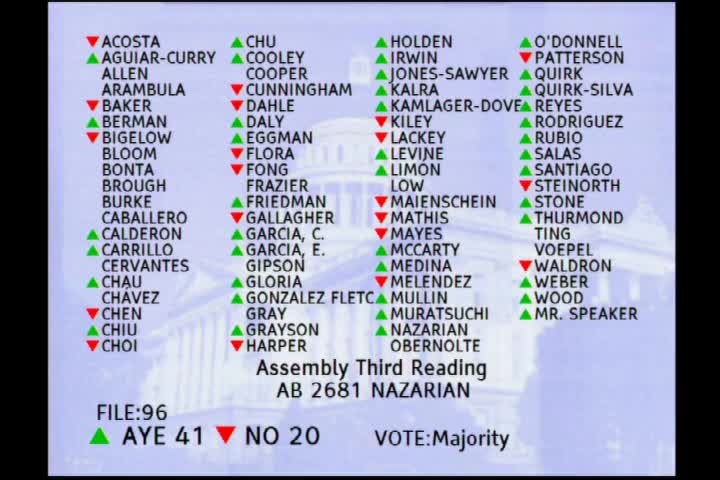 3MIN
Assembly Floor


Bill Co-Author(s):