AB 214: Postsecondary education: student hunger.
- Session Year: 2017-2018
- House: Assembly
- Latest Version Date: 2017-07-24
(1)Existing law establishes the California State University, under the administration of the Trustees of the California State University; the University of California, under the administration of the Regents of the University of California; the California Community Colleges, under the administration of the Board of Governors of the California Community Colleges; and independent institutions of higher education as the 4 segments of postsecondary education in this state.
This bill would express the intent of the Legislature to enact legislation to reduce the incidence of hunger and homelessness among college students in California.
(2)Existing law requires each public and private postsecondary educational institution that is located in a county that participates in the Restaurant Meals Program to apply to become an approved food vendor for the program, if the institution operates any qualifying food facilities on campus, or to provide contracting on-campus food vendors with specified information about the program.
This bill would provide definitions of on-campus food vendors and qualifying food facility for purposes of this provision.
(3)Existing federal law provides for the Supplemental Nutrition Assistance Program (SNAP), known in California as CalFresh, formerly the Food Stamp Program, under which supplemental nutrition assistance benefits allocated to the state by the federal government are distributed to eligible individuals by each county. Under existing law, households are eligible to receive CalFresh benefits to the extent permitted by federal law. Existing federal law provides that students who are enrolled in college or other institutions of higher education at least half time are not eligible for SNAP benefits unless they meet one of several specified exemptions, including participating in specified employment training programs.
Existing state law provides that, for the purposes of determining eligibility, certain educational programs, as determined by the State Department of Social Services, shall be considered employment training programs, thereby qualifying a student participating in one of those programs for an exemption, unless prohibited by federal law. Existing law also requires the State Department of Social Services, in consultation with representatives from other specified organizations, to establish a protocol to identify and verify all potential exemptions and to identify and verify participation in educational programs, including self-initiated placements, that would qualify a student for an exemption.
This bill would express legislative intent to clarify educational policies for purposes of improving access for low-income students to the CalFresh program. For purposes of the federal regulation, the bill would specify the definition of half-time college enrollment. The bill would also require the Student Aid Commission to provide written notice to recipients of Cal Grant awards who qualify for participation in the CalFresh program under the federal regulation.
This bill would require the Department of Social Services to maintain and regularly update a list of programs identified pursuant to existing law because they meet the employment training exemption set in the federal regulation. The bill would also require the department to issue and maintain instructions for county human services agencies to verify exemptions to the CalFresh student eligibility rules for students who participate in these programs, as specified. To the extent that this provision would impose new duties on county human services agencies, it would constitute a state-mandated local program.
(4)Existing law requires the Department of Social Services to implement the provisions described in (3) above by all-county letters or similar instructions beginning no later than October 1, 2015, until regulations are adopted, and further requires the department to adopt regulations on or before October 1, 2017. Existing law also requires the department to seek and obtain federal approval, as specified, prior to publishing that guidance or regulation, if the United States Department of Agriculture requires federal approval.
This bill would adjust the dates for the implementation and adoption of regulations. The bill would delete the provision relating to federal approval.
(5)The California Constitution requires the state to reimburse local agencies and school districts for certain costs mandated by the state. Statutory provisions establish procedures for making that reimbursement.
This bill would provide that, if the Commission on State Mandates determines that the bill contains costs mandated by the state, reimbursement for those costs shall be made pursuant to the statutory provisions noted above.
(1)Existing law establishes the California State University, under the administration of the Trustees of the California State University; the University of California, under the administration of the Regents of the University of California; the California Community Colleges, under the administration of the Board of Governors of the California Community Colleges; and independent institutions of higher education as the 4 segments of postsecondary education in this state.
This bill would express the intent of the Legislature to enact legislation to reduce the incidence of hunger and homelessness among college students in California.
(2)Existing law requires each public and private postsecondary educational institution that is located in a county that participates in the Restaurant Meals Program to apply to become an approved food vendor for the program, if the institution operates any qualifying food facilities on campus, or to provide contracting on-campus food vendors with specified information about the program.
This bill would provide definitions of on-campus food vendors and qualifying food facility for purposes of this provision.
(3)Existing federal law provides for the Supplemental Nutrition Assistance Program (SNAP), known in California as CalFresh, formerly the Food Stamp Program, under which supplemental nutrition assistance benefits allocated to the state by the federal government are distributed to eligible individuals by each county. Under existing law, households are eligible to receive CalFresh benefits to the extent permitted by federal law. Existing federal law provides that students who are enrolled in college or other institutions of higher education at least half time are not eligible for SNAP benefits unless they meet one of several specified exemptions, including participating in specified employment training programs.
Existing state law provides that, for the purposes of determining eligibility, certain educational programs, as determined by the State Department of Social Services, shall be considered employment training programs, thereby qualifying a student participating in one of those programs for an exemption, unless prohibited by federal law. Existing law also requires the State Department of Social Services, in consultation with representatives from other specified organizations, to establish a protocol to identify and verify all potential exemptions and to identify and verify participation in educational programs, including self-initiated placements, that would qualify a student for an exemption.
This bill would express legislative intent to clarify educational policies for purposes of improving access for low-income students to the CalFresh program. For purposes of the federal regulation, the bill would specify the definition of half-time college enrollment. The bill would also require the Student Aid Commission to provide written notice to recipients of Cal Grant awards who qualify for participation in the CalFresh program under the federal regulation.
This bill would require the Department of Social Services to maintain and regularly update a list of programs identified pursuant to existing law because they meet the employment training exemption set in the federal regulation. The bill would require the list to include, but not necessarily be limited to, specified programs. The bill would also require the department to issue and maintain instructions for county human services agencies to verify exemptions to the CalFresh student eligibility rules for students who participate in these programs, as specified. To the extent that this provision would impose new duties on county human services agencies, it would constitute a state-mandated local program.
(4)Existing law requires the Department of Social Services to implement the provisions described in (3) above by all-county letters or similar instructions beginning no later than October 1, 2015, until regulations are adopted, and further requires the department to adopt regulations on or before October 1, 2017. Existing law also requires the department to seek and obtain federal approval, as specified, prior to publishing that guidance or regulation, if the United States Department of Agriculture requires federal approval.
This bill would adjust the dates for the implementation and adoption of regulations. The bill would delete the provision relating to federal approval.
(5)The California Constitution requires the state to reimburse local agencies and school districts for certain costs mandated by the state. Statutory provisions establish procedures for making that reimbursement.
This bill would provide that, if the Commission on State Mandates determines that the bill contains costs mandated by the state, reimbursement for those costs shall be made pursuant to the statutory provisions noted above.
(1)Existing law establishes the California State University, under the administration of the Trustees of the California State University; the University of California, under the administration of the Regents of the University of California; the California Community Colleges, under the administration of the Board of Governors of the California Community Colleges; and independent institutions of higher education as the 4 segments of postsecondary education in this state.
This bill would express the intent of the Legislature to enact legislation to reduce the incidence of hunger and homelessness among college students in California.
(2)Existing law requires each public and private postsecondary educational institution that is located in a county that participates in the Restaurant Meals Program to apply to become an approved food vendor for the program, if the institution operates any qualifying food facilities on campus, or to provide contracting on-campus food vendors with specified information about the program.
This bill would provide definitions of on-campus food vendors and qualifying food facility for purposes of this provision.
(3)Existing federal law provides for the Supplemental Nutrition Assistance Program (SNAP), known in California as CalFresh, formerly the Food Stamp Program, under which supplemental nutrition assistance benefits allocated to the state by the federal government are distributed to eligible individuals by each county. Under existing law, households are eligible to receive CalFresh benefits to the extent permitted by federal law. Existing federal law provides that students who are enrolled in college or other institutions of higher education at least half time are not eligible for SNAP benefits unless they meet one of several specified exemptions, including participating in specified employment training programs.
Existing state law provides that, for the purposes of determining eligibility, certain educational programs, as determined by the State Department of Social Services, shall be considered employment training programs, thereby qualifying a student participating in one of those programs for an exemption, unless prohibited by federal law. Existing law also requires the State Department of Social Services, in consultation with representatives from other specified organizations, to establish a protocol to identify and verify all potential exemptions and to identify and verify participation in educational programs, including self-initiated placements, that would qualify a student for an exemption.
This bill would express legislative intent to clarify educational policies for purposes of improving access for low-income students to the CalFresh program. For purposes of the federal regulation, the bill would specify the definition of half-time college enrollment. The bill would also require the Student Aid Commission to provide written notice to recipients of Cal Grant awards who qualify for participation in the CalFresh program under the federal regulation.
This bill would require the Department of Social Services to maintain a list of programs identified pursuant to existing law because they meet the employment training exemption set in the federal regulation. The bill would require the list to include, but not necessarily be limited to, specified programs. The bill would also require the department to issue and maintain instructions for county human services agencies to verify exemptions to the CalFresh student eligibility rules for students who participate in these programs, as specified. To the extent that this provision would impose new duties on county human services agencies, it would constitute a state-mandated local program.
(4)Existing law requires the Department of Social Services to implement the provisions described in (3) above by all-county letters or similar instructions beginning no later than October 1, 2015, until regulations are adopted, and further requires the department to adopt regulations on or before October 1, 2017. Existing law also requires the department to seek and obtain federal approval, as specified, prior to publishing that guidance or regulation, if the United States Department of Agriculture requires federal approval.
This bill would adjust the dates for the implementation and adoption of regulations. The bill would delete the provision relating to federal approval.
(5)The California Constitution requires the state to reimburse local agencies and school districts for certain costs mandated by the state. Statutory provisions establish procedures for making that reimbursement.
This bill would provide that, if the Commission on State Mandates determines that the bill contains costs mandated by the state, reimbursement for those costs shall be made pursuant to the statutory provisions noted above.
(a)The Legislature finds and declares all of the following:
(1)According to the California State University (CSU), one in five CSU students experiences chronic hunger and one in 10 experiences homelessness.
(2)In a survey recently conducted by the Regents of the University of California (UC), it was found that one in 10 UC students do not have access to adequate food or nutrition.
(3)Nationwide, one-half of all community college students are struggling with housing or food insecurity.
(b)It is the intent of the Legislature to enact legislation to reduce the incidence of hunger and homelessness among college students in California.
SEC. 2.Section 66025.93 of the Education Code is amended to read:66025.93.(a)Each public or private postsecondary educational institution that is located in a county that participates in the Restaurant Meals Program established pursuant to Section 2020 of Title 7 of the United States Code shall do all of the following:
(1)Apply to become an approved food vendor for the Restaurant Meals Program, if the institution operates any qualifying food facility on campus.
(2)Annually provide all on-campus food vendors not operated by the institution with information regarding the Restaurant Meals Program and the manner in which to apply.
(3)If an on-campus food vendor has been approved to participate in the Restaurant Meals Program, annually inform students about the program using information provided by the State Department of Social Services.
(b)This section does not require an institution to create, operate, or maintain an EBT system on behalf of on-campus food vendors.
(c)An approved food vendor participating in the Restaurant Meals Program pursuant to this section, and a county in which the program is operated, shall meet the requirements of the Restaurant Meals Program.
(d)For purposes of this section:
(1)On-campus food vendors does not include any vendor that does not sell prepared food for onsite consumption or that sells food from a mobile food facility, as defined in Section 113831 of the Health and Safety Code.
(2)Qualifying food facility is a facility that sells prepared food for onsite consumption.
SEC. 3.Section 69519.3 is added to the Education Code, to read:69519.3.(a)It is the intent of the Legislature to clarify educational policies for purposes of improving access for low-income students to the CalFresh program established pursuant to Chapter 10 (commencing with Section 18900) of Part 6 of Division 9 of the Welfare and Institutions Code.
(b)For purposes of Section 273.5(a) of Title 7 of the Code of Federal Regulations, a student shall be determined to be attending at least half-time any semester or term in which he or she enrolls in at least half of the number of credits needed each semester or term to graduate within four years of enrollment as a first-time freshman, or within two years of enrollment as a transfer student, unless prohibited by federal law.
(c)The commission shall notify, in writing, any recipient of a Cal Grant award whose grant includes any amount of funding that has been derived from the Temporary Aid to Needy Families (TANF) block grant or state match in order for the student to verify that he or she qualifies for the exemption from the CalFresh program student eligibility rules provided for in Section 273.5(b) of Title 7 of the Code of Federal Regulations.
SEC. 4.Section 18901.11 of the Welfare and Institutions Code is amended to read:18901.11.(a)For purposes of Section 273.5(b)(11)(ii) of Title 7 of the Code of Federal Regulations, an educational program that could be a component of a CalFresh E&T program described in Section 18926.5, as identified by the department, shall be considered an employment and training program under Section 273.7 of Title 7 of the Code of Federal Regulations, unless prohibited by federal law.
(b)The department shall, in consultation with representatives of the office of the Chancellor of the California Community Colleges, offices of the Chancellor of the California State University, University of California Chancellors offices, the California Workforce Investment Board, county human services agencies, and advocates for students and clients, establish a protocol to identify and verify all potential exemptions to the eligibility rule described in Section 273.5(a) of Title 7 of the Code of Federal Regulations, and to identify and verify participation in educational programs, including, but not necessarily limited to, self-initiated placements, that would exempt a student from the eligibility rule described in Section 273.5(a) of Title 7 of the Code of Federal Regulations. To the extent possible, this consultation shall take place through existing workgroups convened by the department.
(c)The department shall maintain and regularly update the list of programs identified by the workgroup established pursuant to subdivision (b) because they meet the standard set in Section 273.5(b)(11) of Title 7 of the Code of Federal Regulations, which provides that a student is eligible for an exemption from the CalFresh programs eligibility rules if the students attendance can be described as part of a program to increase the students employability.
(d)(1)The department shall issue and maintain instructions for county human services agencies to verify exemptions to the CalFresh student eligibility rules for students who participate in the programs identified pursuant to subdivision (c), students who are approved and anticipate participating in state or federal workstudy, or students who meet one of the qualifications for exemptions set forth in Section 69519.3 of the Education Code.
(2)For purposes of this subdivision, and to the extent allowed by federal law, a student shall be considered to be anticipating participation in workstudy if he or she can reasonably expect or foresee being assigned a workstudy job, and a student shall be deemed to be anticipating participation in workstudy until he or she receives notice from the institution of higher education that he or she has been denied participation in workstudy.
(e)(1)This section does not require a county human services agency to offer a particular component, support services, or workers compensation to a student found eligible for an exemption pursuant to this section.
(2)This section does not restrict or require the use of federal funds for the financing of CalFresh E&T programs.
(3)This section does not require a college or university to provide a student with information necessary to verify eligibility for CalFresh.
SEC. 5.Notwithstanding the rulemaking provisions of the Administrative Procedure Act (Chapter 3.5 (commencing with Section 11340) of Part 1 of Division 3 of Title 2 of the Government Code), the Department of Social Services shall implement Sections 3 and 4 of this act by all-county letters or similar instructions beginning no later than October 1, 2018, until regulations are adopted. The Department of Social Services shall adopt regulations implementing this section on or before October 1, 2020.
SEC. 6.If the Commission on State Mandates determines that this act contains costs mandated by the state, reimbursement to local agencies and school districts for those costs shall be made pursuant to Part 7 (commencing with Section 17500) of Division 4 of Title 2 of the Government Code.
(a)The Legislature finds and declares all of the following:
(1)According to the California State University (CSU), one in five CSU students experiences chronic hunger and one in 10 experiences homelessness.
(2)In a survey recently conducted by the Regents of the University of California (UC), it was found that one in 10 UC students do not have access to adequate food or nutrition.
(3)Nationwide, one-half of all community college students are struggling with housing or food insecurity.
(b)It is the intent of the Legislature to enact legislation to reduce the incidence of hunger and homelessness among college students in California.
SEC. 2.Section 66025.93 of the Education Code is amended to read:66025.93.(a)Each public or private postsecondary educational institution that is located in a county that participates in the Restaurant Meals Program established pursuant to Section 2020 of Title 7 of the United States Code shall do all of the following:
(1)Apply to become an approved food vendor for the Restaurant Meals Program, if the institution operates any qualifying food facility on campus.
(2)Annually provide all on-campus food vendors not operated by the institution with information regarding the Restaurant Meals Program and the manner in which to apply.
(3)If an on-campus food vendor has been approved to participate in the Restaurant Meals Program, annually inform students about the program using information provided by the State Department of Social Services.
(b)This section does not require an institution to create, operate, or maintain an EBT system on behalf of on-campus food vendors.
(c)An approved food vendor participating in the Restaurant Meals Program pursuant to this section, and a county in which the program is operated, shall meet the requirements of the Restaurant Meals Program.
(d)For purposes of this section:
(1)On-campus food vendors does not include any vendor that does not sell prepared food for onsite consumption or that sells food from a mobile food facility, as defined in Section 113831 of the Health and Safety Code.
(2)Qualifying food facility is a facility that sells prepared food for onsite consumption.
SEC. 3.Section 69519.3 is added to the Education Code, to read:69519.3.(a)It is the intent of the Legislature to clarify educational policies for purposes of improving access for low-income students to the CalFresh program established pursuant to Chapter 10 (commencing with Section 18900) of Part 6 of Division 9 of the Welfare and Institutions Code.
(b)For purposes of Section 273.5(a) of Title 7 of the Code of Federal Regulations, a student shall be determined to be attending at least half-time any semester or term in which he or she enrolls in at least half of the number of credits needed each semester or term to graduate within four years of enrollment as a first-time freshman, or within two years of enrollment as a transfer student, unless prohibited by federal law.
(c)The commission shall notify, in writing, any recipient of a Cal Grant award whose grant includes any amount of funding that has been derived from the Temporary Aid to Needy Families (TANF) block grant or state match in order for the student to verify that he or she qualifies for the exemption from the CalFresh program student eligibility rules provided for in Section 273.5(b) of Title 7 of the Code of Federal Regulations.
SEC. 4.Section 18901.11 of the Welfare and Institutions Code is amended to read:18901.11.(a)For purposes of Section 273.5(b)(11)(ii) of Title 7 of the Code of Federal Regulations, an educational program that could be a component of a CalFresh E&T program described in Section 18926.5, as identified by the department, shall be considered an employment and training program under Section 273.7 of Title 7 of the Code of Federal Regulations, unless prohibited by federal law.
(b)The department shall, in consultation with representatives of the office of the Chancellor of the California Community Colleges, offices of the Chancellor of the California State University, University of California Chancellors offices, the California Workforce Investment Board, county human services agencies, and advocates for students and clients, establish a protocol to identify and verify all potential exemptions to the eligibility rule described in Section 273.5(a) of Title 7 of the Code of Federal Regulations, and to identify and verify participation in educational programs, including, but not necessarily limited to, self-initiated placements, that would exempt a student from the eligibility rule described in Section 273.5(a) of Title 7 of the Code of Federal Regulations. To the extent possible, this consultation shall take place through existing workgroups convened by the department.
(c)The department shall maintain and regularly update the list of programs identified by the workgroup established pursuant to subdivision (b) because they meet the standard set in Section 273.5(b)(11) of Title 7 of the Code of Federal Regulations, which provides that a student is eligible for an exemption from the CalFresh programs eligibility rules if the students attendance can be described as part of a program to increase the students employability. These programs shall include, but not necessarily be limited to, all of the following:
(1)The Educational Opportunity Program (EOP).(2)College Disabled Students Programs and Services (DSPS).(3)Cooperative Agencies Resources for Education (CARE).(4)The McNair Scholars programs.(5)The Puente Project of the Chancellors Office of the California Community Colleges and the University of California.(6)The Mathematics, Engineering, Science Achievement (MESA) programs of the California Community Colleges.(7)The Guardian Scholar programs of the University of California, the California State University, and the California Community Colleges.(8)The Foster Youth Success Initiative (FYSI) of the Chancellors Office of the California Community Colleges.(9)The Cooperating Agencies Foster Youth Educational Support (CAFYES) Program established by Section 79220 of the Education Code.(10)The Chafee Education and Training Voucher Program of the Student Aid Commission.(11)Any program or curriculum supported by the California Fostering Connections to Success Act enacted by Chapter 559 of the Statutes of 2010.(d)(1)The department shall issue and maintain instructions for county human services agencies to verify exemptions to the CalFresh student eligibility rules for students who participate in the programs identified pursuant to subdivision (c), students who are approved and anticipate participating in state or federal workstudy, or students who meet one of the qualifications for exemptions set forth in Section 69519.3 of the Education Code.
(2)For purposes of this subdivision, and to the extent allowed by federal law, a student shall be considered to be anticipating participation in workstudy if he or she can reasonably expect or foresee being assigned a workstudy job, and a student shall be deemed to be anticipating participation in workstudy until he or she receives notice from the institution of higher education that he or she has been denied participation in workstudy.
(e)(1)This section does not require a county human services agency to offer a particular component, support services, or workers compensation to a student found eligible for an exemption pursuant to this section.
(2)This section does not restrict or require the use of federal funds for the financing of CalFresh E&T programs.
(3)This section does not require a college or university to provide a student with information necessary to verify eligibility for CalFresh.
SEC. 5.Notwithstanding the rulemaking provisions of the Administrative Procedure Act (Chapter 3.5 (commencing with Section 11340) of Part 1 of Division 3 of Title 2 of the Government Code), the Department of Social Services shall implement Sections 3 and 4 of this act by all-county letters or similar instructions beginning no later than October 1, 2018, until regulations are adopted. The Department of Social Services shall adopt regulations implementing this section on or before October 1, 2020.
SEC. 6.If the Commission on State Mandates determines that this act contains costs mandated by the state, reimbursement to local agencies and school districts for those costs shall be made pursuant to Part 7 (commencing with Section 17500) of Division 4 of Title 2 of the Government Code.
(a)The Legislature finds and declares all of the following:
(1)According to the California State University (CSU), one in five CSU students experiences chronic hunger and one in 10 experiences homelessness.
(2)In a survey recently conducted by the Regents of the University of California (UC), it was found that one in 10 UC students do not have access to adequate food or nutrition.
(3)Nationwide, one-half of all community college students are struggling with housing or food insecurity.
(b)It is the intent of the Legislature to enact legislation to reduce the incidence of hunger and homelessness among college students in California.
SEC. 2.Section 66025.93 of the Education Code is amended to read:66025.93.(a)Each public or private postsecondary educational institution that is located in a county that participates in the Restaurant Meals Program established pursuant to Section 2020 of Title 7 of the United States Code shall do all of the following:
(1)Apply to become an approved food vendor for the Restaurant Meals Program, if the institution operates any qualifying food facility on campus.
(2)Annually provide all on-campus food vendors not operated by the institution with information regarding the Restaurant Meals Program and the manner in which to apply.
(3)If an on-campus food vendor has been approved to participate in the Restaurant Meals Program, annually inform students about the program using information provided by the State Department of Social Services.
(b)This section does not require an institution to create, operate, or maintain an EBT system on behalf of on-campus food vendors.
(c)An approved food vendor participating in the Restaurant Meals Program pursuant to this section, and a county in which the program is operated, shall meet the requirements of the Restaurant Meals Program.
(d)For purposes of this section:
(1)On-campus food vendors does not include any vendor that does not sell prepared food for onsite consumption or that sells food from a mobile food facility, as defined in Section 113831 of the Health and Safety Code.
(2)Qualifying food facility is a facility that sells prepared food for onsite consumption.
SEC. 3.Section 69519.3 is added to the Education Code, to read:69519.3.(a)It is the intent of the Legislature to clarify educational policies for purposes of improving access for low-income students to the CalFresh program established pursuant to Chapter 10 (commencing with Section 18900) of Part 6 of Division 9 of the Welfare and Institutions Code.
(b)For purposes of Section 273.5(a) of Title 7 of the Code of Federal Regulations, a student shall be determined to be attending at least half-time any semester or term in which he or she enrolls in at least half of the number of credits needed each semester or term to graduate within four years of enrollment as a first-time freshman, or within two years of enrollment as a transfer student, unless prohibited by federal law.
(c)The commission shall notify, in writing, any recipient of a Cal Grant award whose grant includes any amount of funding that has been derived from the Temporary Aid to Needy Families (TANF) block grant or state match in order for the student to verify that he or she qualifies for the exemption from the CalFresh program student eligibility rules provided for in Section 273.5(b) of Title 7 of the Code of Federal Regulations.
SEC. 4.Section 18901.11 of the Welfare and Institutions Code is amended to read:18901.11.(a)For purposes of Section 273.5(b)(11)(ii) of Title 7 of the Code of Federal Regulations, an educational program that could be a component of a CalFresh E&T program described in Section 18926.5, as identified by the department, shall be considered an employment and training program under Section 273.7 of Title 7 of the Code of Federal Regulations, unless prohibited by federal law.
(b)The department shall, in consultation with representatives of the office of the Chancellor of the California Community Colleges, offices of the Chancellor of the California State University, University of California Chancellors offices, the California Workforce Investment Board, county human services agencies, and advocates for students and clients, establish a protocol to identify and verify all potential exemptions to the eligibility rule described in Section 273.5(a) of Title 7 of the Code of Federal Regulations, and to identify and verify participation in educational programs, including, but not necessarily limited to, self-initiated placements, that would exempt a student from the eligibility rule described in Section 273.5(a) of Title 7 of the Code of Federal Regulations. To the extent possible, this consultation shall take place through existing workgroups convened by the department.
(c)The department shall maintain the list of programs identified by the workgroup established pursuant to subdivision (b) because they meet the standard set in Section 273.5(b)(11) of Title 7 of the Code of Federal Regulations, which provides that a student is eligible for an exemption from the CalFresh programs eligibility rules if the students attendance can be described as part of a program to increase the students employability. These programs shall include, but not necessarily be limited to, all of the following:
(1)The Educational Opportunity Program (EOP).
(2)College Disabled Students Programs and Services (DSPS).
(3)Cooperative Agencies Resources for Education (CARE).
(4)The McNair Scholars programs of the University of California. programs.
(5)The Puente Project of the Chancellors Office of the California Community Colleges and the University of California.
(6)The Mathematics, Engineering, Science Achievement (MESA) programs of the California Community Colleges.
(7)The Guardian Scholar programs of the University of California, the California State University, and the California Community Colleges.
(8)The Foster Youth Success Initiative (FYSI) of the Chancellors Office of the California Community Colleges.
(9)The Cooperating Agencies Foster Youth Educational Support (CAFYES) Program established by Section 79220 of the Education Code.
(10)The Chafee Education and Training Voucher Program of the Student Aid Commission.
(11)Any program or curriculum supported by the California Fostering Connections to Success Act enacted by Chapter 559 of the Statutes of 2010.
(d)(1)The department shall issue and maintain instructions for county human services agencies to verify exemptions to the CalFresh student eligibility rules for students who participate in the programs identified pursuant to subdivision (c), students who are approved and anticipate participating in state or federal work-study, workstudy, or students who meet one of the qualifications for exemptions set forth in Section 69519.3 of the Education Code.
(2)For purposes of this subdivision, and to the extent allowed by federal law, a student shall be considered to be anticipating participation in workstudy if he or she can reasonably expect or foresee being assigned a workstudy job, and a student shall be deemed to be anticipating participation in workstudy until he or she receives notice from the institution of higher education that he or she has been denied participation in workstudy.
(e)(1)This section does not require a county human services agency to offer a particular component, support services, or workers compensation to a student found eligible for an exemption pursuant to this section.
(2)This section does not restrict or require the use of federal funds for the financing of CalFresh E&T programs.
(3)This section does not require a college or university to provide a student with information necessary to verify eligibility for CalFresh.
SEC. 5.Notwithstanding the rulemaking provisions of the Administrative Procedure Act (Chapter 3.5 (commencing with Section 11340) of Part 1 of Division 3 of Title 2 of the Government Code), the Department of Social Services shall implement Sections 3 and 4 of this act by all-county letters or similar instructions beginning no later than October 1, 2018, until regulations are adopted. The Department of Social Services shall adopt regulations implementing this section on or before October 1, 2020.
SEC. 6.If the Commission on State Mandates determines that this act contains costs mandated by the state, reimbursement to local agencies and school districts for those costs shall be made pursuant to Part 7 (commencing with Section 17500) of Division 4 of Title 2 of the Government Code.
(a)The Legislature finds and declares all of the following:
(1)According to the California State University (CSU), one in five CSU students experiences chronic hunger and one in 10 experiences homelessness.
(2)In a survey recently conducted by the Regents of the University of California (UC), it was found that one in 10 UC students do not have access to adequate food or nutrition.
(3)Nationwide, one-half of all community college students are struggling with housing or food insecurity.
(b)It is the intent of the Legislature to enact legislation to reduce the incidence of hunger and homelessness among college students in California.
SEC. 2.Section 66025.93 of the Education Code is amended to read:66025.93.(a)Each public or private postsecondary educational institution that is located in a county that participates in the Restaurant Meals Program established pursuant to Section 2020 of Title 7 of the United States Code shall do all of the following:
(1)Apply to become an approved food vendor for the Restaurant Meals Program, if the institution operates any qualifying food facility on campus.
(2)Annually provide all on-campus food vendors not operated by the institution with information regarding the Restaurant Meals Program and the manner in which to apply.
(3)If an on-campus food vendor has been approved to participate in the Restaurant Meals Program, annually inform students about the program using information provided by the State Department of Social Services.
(b)This section does not require an institution to create, operate, or maintain an EBT system on behalf of on-campus food vendors.
(c)An approved food vendor participating in the Restaurant Meals Program pursuant to this section, and a county in which the program is operated, shall meet the requirements of the Restaurant Meals Program.
(d)For purposes of this section:
(1)On-campus food vendors does not include any vendor that does not sell prepared food for onsite consumption or that sells food from a mobile food facility, as defined in Section 113831 of the Health and Safety Code.
(2)Qualifying food facility is a facility that sells prepared food for onsite consumption.
SEC. 3.Section 69519.3 is added to the Education Code, to read:69519.3.(a)It is the intent of the Legislature to clarify educational policies for purposes of improving access for low-income students to the CalFresh program established pursuant to Chapter 10 (commencing with Section 18900) of Part 6 of Division 9 of the Welfare and Institutions Code.
(b)For purposes of Section 273.5(a) of Title 7 of the Code of Federal Regulations, a student shall be determined to be attending at least half-time any semester or term in which he or she enrolls in at least half of the number of credits needed each semester or term to graduate within four years of enrollment as a first-time freshman, or within two years of enrollment as a transfer student, unless prohibited by federal law.
(c)The commission shall notify, in writing, any recipient of a Cal Grant award whose grant includes any amount of funding that has been derived from the Temporary Aid to Needy Families (TANF) block grant or state match in order for the student to verify that he or she qualifies for the exemption from the CalFresh program student eligibility rules provided for in Section 273.5(b) of Title 7 of the Code of Federal Regulations.
SEC. 4.Section 18901.11 of the Welfare and Institutions Code is amended to read:18901.11.(a)For the purposes of Section 273.5(b)(11)(ii) of Title 7 of the Code of Federal Regulations, an educational program that could be a component of a CalFresh E&T program described in Section 18926.5, as identified by the department, shall be considered an employment and training program under Section 273.7 of Title 7 of the Code of Federal Regulations, unless prohibited by federal law.
(b)The department shall, in consultation with representatives of the office of the Chancellor of the California Community Colleges, offices of the Chancellor of the California State University, University of California Chancellors offices, the California Workforce Investment Board, county human services agencies, and advocates for students and clients, establish a protocol to identify and verify all potential exemptions to the eligibility rule described in Section 273.5(a) of Title 7 of the Code of Federal Regulations, and to identify and verify participation in educational programs, including, but not necessarily limited to, self-initiated placements, that would exempt a student from the eligibility rule described in Section 273.5(a) of Title 7 of the Code of Federal Regulations. To the extent possible, this consultation shall take place through existing workgroups convened by the department.
(c)If the United States Department of Agriculture requires federal approval of the exemption designation established pursuant to subdivision (a) and the protocol established pursuant to subdivision (b), the department shall seek and obtain that approval before publishing the guidance or regulation required by subdivision (e).(c)The department shall maintain the list of programs identified by the workgroup established pursuant to subdivision (b) because they meet the standard set in Section 273.5(b)(11) of Title 7 of the Code of Federal Regulations, which provides that a student is eligible for an exemption from the CalFresh programs eligibility rules if the students attendance can be described as part of a program to increase the students employability. These programs shall include, but not necessarily be limited to, all of the following:
(1)The Educational Opportunity Program (EOP).
(2)College Disabled Students Programs and Services (DSPS).
(3)Cooperative Agencies Resources for Education (CARE).
(4)The McNair Scholars programs of the University of California.
(5)The Puente Project of the Chancellors Office of the California Community Colleges and the University of California.
(6)The Mathematics, Engineering, Science Achievement (MESA) programs of the California Community Colleges.
(7)The Guardian Scholar programs of the University of California, the California State University, and the California Community Colleges.
(8)The Foster Youth Success Initiative (FYSI) of the Chancellors Office of the California Community Colleges.
(9)The Cooperating Agencies Foster Youth Educational Support (CAFYES) Program established by Section 79220 of the Education Code.
(10)The Chafee Education and Training Voucher Program of the Student Aid Commission.
(11)Any program or curriculum supported by the California Fostering Connections to Success Act enacted by Chapter 559 of the Statutes of 2010.
(d)(1)The department shall issue and maintain instructions for county human services agencies to verify exemptions to the CalFresh student eligibility rules for students who participate in the programs identified pursuant to subdivision (c), students who are approved and anticipate participating in state or federal work-study, or students who meet one of the qualifications for exemptions set forth in Section 69519.3 of the Education Code.
(2)For purposes of this subdivision, and to the extent allowed by federal law, a student shall be considered to be anticipating participation in workstudy if he or she can reasonably expect or foresee being assigned a workstudy job, and a student shall be deemed to be anticipating participation in workstudy until he or she receives notice from the institution of higher education that he or she has been denied participation in workstudy.
(d)(e)(1)This section does not require a county human services agency to offer a particular component, support services, or workers compensation to a student found eligible for an exemption pursuant to this section.
(2)This section does not restrict or require the use of federal funds for the financing of CalFresh E&T programs.
(3)This section does not require a college or university to provide a student with information necessary to verify eligibility for CalFresh.
(e)Notwithstanding the rulemaking provisions of the Administrative Procedure Act (Chapter 3.5 (commencing with Section 11340) of Part 1 of Division 3 of Title 2 of the Government Code), the department shall implement this section by all-county letters or similar instructions beginning no later than October 1, 2015, until regulations are adopted. The department shall adopt regulations implementing this section on or before October 1, 2017.SEC. 5.Notwithstanding the rulemaking provisions of the Administrative Procedure Act (Chapter 3.5 (commencing with Section 11340) of Part 1 of Division 3 of Title 2 of the Government Code), the Department of Social Services shall implement Sections 3 and 4 of this act by all-county letters or similar instructions beginning no later than October 1, 2018, until regulations are adopted. The Department of Social Services shall adopt regulations implementing this section on or before October 1, 2020.
SEC. 6.If the Commission on State Mandates determines that this act contains costs mandated by the state, reimbursement to local agencies and school districts for those costs shall be made pursuant to Part 7 (commencing with Section 17500) of Division 4 of Title 2 of the Government Code.
REVISIONS: HeadingLine 3.|
Date
|
Status
|
|---|---|
| Jul 24, 2017 | Chaptered by Secretary of State - Chapter 134, Statutes of 2017. |
| Jul 24, 2017 | Approved by the Governor. |
| Jul 13, 2017 | Enrolled and presented to the Governor at 3 p.m. |
| Jul 10, 2017 | Senate amendments concurred in. To Engrossing and Enrolling. (Ayes 76. Noes 0. Page 2495.). |
| Jul 3, 2017 | In Assembly. Concurrence in Senate amendments pending. May be considered on or after July 5 pursuant to Assembly Rule 77. |
| Jul 3, 2017 | Read third time. Passed. Ordered to the Assembly. |
| Jun 27, 2017 | Read second time. Ordered to Consent Calendar. |
| Jun 26, 2017 | From committee: Be placed on second reading file pursuant to Senate Rule 28.8 and ordered to consent calendar. |
| Jun 15, 2017 | Read second time and amended. Re-referred to Com. on APPR. |
| Jun 14, 2017 | From committee: Amend, and do pass as amended and re-refer to Com. on APPR. with recommendation: To Consent Calendar. (Ayes 4. Noes 0.) (June 13). |
| Jun 7, 2017 | From committee: Do pass and re-refer to Com. on HUMAN S. (Ayes 7. Noes 0.) (June 7). Re-referred to Com. on HUMAN S. |
| May 18, 2017 | Referred to Coms. on ED. and HUMAN S. |
| May 4, 2017 | In Senate. Read first time. To Com. on RLS. for assignment. |
| May 4, 2017 | Read third time. Passed. Ordered to the Senate. (Ayes 73. Noes 0. Page 1373.) |
| May 1, 2017 | Read third time and amended. Ordered to third reading. (Page 1300.) |
| Apr 6, 2017 | Read second time. Ordered to third reading. |
| Apr 5, 2017 | Coauthors revised. |
| Mar 22, 2017 | From committee: Do pass and re-refer to Com. on APPR. (Ayes 7. Noes 0.) (March 21). Re-referred to Com. on APPR. |
| Mar 15, 2017 | Coauthors revised. |
| Mar 7, 2017 | Coauthors revised. |
| Feb 6, 2017 | Referred to Coms. on HIGHER ED. and HUM. S. |
| Jan 25, 2017 | From printer. May be heard in committee February 24. |
| Jan 24, 2017 | Read first time. To print. |
|
Date
|
Description
|
Location
|
Votes
|
|
|---|---|---|---|---|
| Jul 10, 2017 | AB 214 WEBER Concurrence in Senate Amendments | Assembly Floor |
Passed |
|
| Jul 3, 2017 | Consent Calendar 2nd AB214 | Senate Floor |
Passed |
|
| Jun 13, 2017 | Do pass as amended, but first amend, and re-refer to the Committee on [Appropriations] with the recommendation: To Consent Calendar | Senate Standing Committee on Human Services |
Passed |
|
| Jun 7, 2017 | Do pass, but first be re-referred to the Committee on [Human Services] | Senate Standing Committee on Education |
Passed |
|
| May 4, 2017 | AB 214 WEBER Assembly Third Reading | Assembly Floor |
Passed |
|
| Apr 5, 2017 | Do pass. | Assembly Standing Committee on Appropriations |
Passed |
|
| Mar 21, 2017 | Do pass and be re-referred to the Committee on [Appropriations] | Assembly Standing Committee on Human Services |
Passed |
|
| Mar 14, 2017 | Do pass and be re-referred to the Committee on [Human Services] | Assembly Standing Committee on Higher Education |
Passed |
This list shows positions taken on this bill by organizations on the date displayed, which is linked to the original source.
Positions by individuals are not included.
CONCURRENCE IN SENATE AMENDMENTS
CSA1 Bill Id:AB 214
Author:(Weber)
As Amended Ver:June 15, 2017
Majority vote
ASSEMBLY: | 73-0 | (May 4, 2017) | SENATE: | 33-0 | (July 3, 2017) |
Original Committee Reference: HIGHER ED.
SUMMARY: Requires the California Student Aid Commission (CSAC) to notify Cal Grant recipients who qualify for participation in the CalFresh program; provides clarity to existing policies and definitions in order to simplify CalFresh administration for college students; and, requires the California Department of Social Services (CDSS) to maintain a list of programs that provide a student potential eligibility for a CalFresh exemption if certain requirements are met.
The Senate amendments:
- Require the CDSS to regularly update the list of programs identified by the workgroup established in this measure.
- Delete the reference to specified programs that the workgroup should include in the list that CDSS is required to maintain.
EXISTING LAW:
- Stipulates that each public or private postsecondary educational institution that is located in a county that participates in the Restaurant Meals Program established pursuant to United States Code (U.S.C) Title 7, Section 2020 shall do all of the following: a) apply to become an approved food vendor for the Restaurant Meals Program, if the institution operates any qualifying food facility on campus; b) annually provide all on-campus food vendors not operated by the institution with information regarding the Restaurant Meals Program and the manner in which to apply; and, c) if an on-campus food vendor has been approved to participate in the Restaurant Meals Program, annually inform students about the program using information provided by the State Department of Social Services. Specifies that an institution is not required to create, operate, or maintain an electronic benefit transfer (EBT) system on behalf of on-campus food vendors; and, that an approved food vendor participating in the Restaurant Meals Program as specified, and a county in which the program is operated, shall meet the requirements of the Restaurant Meals Program (Education Code (EC) Section 66025.93).
- Authorizes the Cal Grant Program, administered by the CSAC, to provide grants to financially needy students to attend college. The Cal Grant programs include both the entitlement and the competitive Cal Grant awards. The Program consists of the Cal Grant A, Cal Grant B, and Cal Grant C programs; eligibility is based upon financial need, grade point average, residency, and other eligibility criteria, as specified (EC Section 69430, et seq.).
- Requires institutions to meet specified criteria in order to participate in the Cal Grant Program, as specified (EC Section 69432.7).
- Establishes the Emergency Food Assistance Program within the State Treasury (EFAP) within the State Treasury; and, authorizes the Controller to transfer from the Personal Income Tax Fund to the EFAP Fund not in excess of the sum of the amounts designated by individuals, as specified (Revenue and Taxation Code Section 18852).
- Establishes the EBT Act, and defines the EBT system as the program designed to provide benefits to those eligible to receive public assistance benefits such as CalWORKs and CalFresh (Welfare and Institutions Code (WIC) Section 10065, et seq.).
- Establishes that an EBT recipient may be charged a fee for cash withdrawal transactions that exceed four per month, as specified, by state and federal law and customarily charged to other customers (WIC Section 10072).
- Establishes under federal law the Supplemental Nutrition Assistance Program (SNAP) pursuant to the Food Stamp Act of 1964; and, establishes in California statute, the CalFresh program to administer the provision of federal SNAP benefits to families and individuals meeting certain criteria, as specified (WIC Section 18900, et seq.).
- Establishes the Restaurant Meals Program under SNAP to allow eligible homeless, disabled, or elderly recipients to purchase hot, prepared food from participating restaurants (7 U.S.C. Section 2020).
FISCAL EFFECT: According to the Senate Appropriations Committee, pursuant to Senate Rule 28.8, negligible state costs.
COMMENTS: Background. A growing number of college students are enrolled in SNAP, but few students who receive SNAP benefits can purchase food on college campuses. According to a December 2015 report, by Wisconsin Hope Lab, entitled, "Hungry to Learn: Addressing Food and Housing Insecurity Among Undergraduates," of a survey of more than 4,000 undergraduates at 10 community colleges across the nation, half of all of the respondents reported that they struggle with food and/or housing insecurity. The report also found that 20% of the student respondents indicated that they are hungry.
Additionally, according to the 2016 California State University (CSU) study, "Serving Displaced and Food Insecure Students in the CSU", 24% of CSU students experience hunger and 12% experience homelessness. Further, the 2016 University of California Student Association study, "A Plate at the Table," found that per a survey conducted by the University of California (UC) Regents, nearly one in five UC students do not have access to adequate food or nutrition. Lastly, according to the Community College Equity Assessment Lab's 2017 report, "Struggling to Survive – Striving to Succeed – Food and Housing Insecurities in the Community College," data derived from a subsample of 3,647 students from various California Community College (CCC) campuses, found that 12.2% of students experienced food insecurity and 32.8% housing insecurity.
Purpose of this measure. According to the author, "As more and more students continue to pursue a post-secondary education, hunger and homelessness among college students is also on the rise. This obstacle often hinders a student's success in college while increasing the likelihood of an incomplete post-secondary education." With all that California has invested in higher education, students continue to face challenges to attend or continuing to attend California's colleges and universities. This bill will further improve access to federal anti-hunger benefits for California's low-income college students by clarifying policies and definitions to simplify the administration of CalFresh for college students. This bill will bring attention to this growing issue and provide solutions to help alleviate hunger for college students throughout California."
Existing efforts on public postsecondary campuses. The UC has made tackling the issue of student hunger a priority. The UC launched the Global Food Initiative, and in March 2015, the UC President allocated $75,000 per campus to support the effort; looking inward, ensuring that its own students have food security, as it takes on the bigger issue of hunger around the world. Systemwide, UC campuses have surveyed students in order to assess the scope of food security issues and have begun implementing short-term relief where needed as campuses explore long-term solutions that address student nutrition. Many UC campuses have food pantries and partner with local food banks.
The CSU Chancellor commissioned in February 2015, a study to shed light on how CSU campuses were meeting the needs of displaced and food insecure students and to offer recommendations to ensure success and graduation for these students. Many CSU campuses have programs for food insecure students, ranging from small food pantries to large programs and services.
Committee staff understands that the CCC does not have a systemwide plan to help combat student food insecurities issues; however, some CCC campuses have varying plans in place to help address the hunger needs of the students.
Previous legislation. AB 1747 (Weber), Chapter 290, Statutes of 2016, which, among others, required a public or private postsecondary education institution located in a county that participates in the Restaurant Meals Program to increase access to and provide information about the program, as specified; and, required CDSS to act as the state entity for receipt of federal reimbursement on behalf of an organization, institution, or agency that secures funds for CalFresh outreach activities, as specified.
AB 1930 (Skinner), Chapter 729, Statutes of 2014, which, among others, tasked CDSS to conduct a workgroup in order to seek ways to reduce barriers to students applying for CalFresh.
AB 832 (Weber) of 2013, which was held in the Assembly Human Services Committee, would have required all convenience stores and bookstores at UC, CSU and the CCC to accept the use of EBT cards.
AB 756 (Mitchell) of 2011, which died in the Assembly Human Services Committee, would have prohibited surcharges on ATM withdrawals and point-of-sale transactions for CalWORKs recipients when using their state-issued EBT cards.
Analysis Prepared by: Jeanice Warden / HIGHER ED. / (916) 319-3960 FN: 0001038
Office of Senate Floor Analyses (916) 651-1520 Fax: (916) 327-4478 | AB |
CONSENT
Bill No: AB 214
:
SENATE EDUCATION COMMITTEE: 7-0, 6/7/17
AYES: Allen, Wilk, Galgiani, Leyva, Mendoza, Pan, Vidak
SENATE HUMAN SERVICES COMMITTEE: 4-0, 6/13/17
AYES: Wiener, Glazer, Newman, Nguyen
NO VOTE RECORDED: Berryhill
SENATE APPROPRIATIONS COMMITTEE: Senate Rule 28.8
ASSEMBLY FLOOR: 73-0, 5/4/17 - See last page for vote
SOURCE: California State Student Association
Coalition of California Welfare Rights Organizations
MAZON A Jewish Response to Hunger
Student Senate for California Community Colleges
University of California Student Association
Western Center on Law and Poverty
Young Invincibles, West Coast
This bill requires the California Student Aid Commission (CSAC) to notify specified Cal Grant recipients of those students’ eligibility for the exemption from the CalFresh program student eligibility rules. This bill also requires the Department of Social Services (DSS) to maintain and regularly update a list of programs in which student participation makes the student eligible for the exemption from the CalFresh student eligibility rules.
Existing federal law:
- Establishes the Supplemental Nutrition Assistance Program (SNAP) for the purpose of promoting the general welfare and to safeguard the health and well-being of the nation’s population by raising the levels of nutrition among low-income households. (Code of Federal Regulations, Title 7, § 271.1)
- Establishes eligibility requirements, including maximum allowable resources, and income that is at or below 130 percent of the federal poverty level and is determined to be a substantial limiting factor in permitting a recipient to obtain a more nutritious diet, as specified. (Code of Federal Regulations, Title 7, § 273.9)
- Prohibits an individual who is enrolled at least half-time in an institution of higher education from eligibility in the federal Food Stamp Program, unless the student qualifies for one of the following exemptions:
- Be younger than age 17 or older than 50.
- Be physically or mentally unfit.
- Be receiving Temporary Assistance for Need Families (TANF) (or CalWORKs) benefits.
- Be enrolled in school as a result of participation in the Job Opportunities and Basic Skills program, as specified.
- Be employed for a minimum of 20 hours per week and be paid or, if self-employed, be employed for a minimum of 20 hours per week and receiving weekly earnings at least equal to the Federal minimum wage multiplied by 20 hours.
- Be participating in a State or federally financed work study program during the regular school year, as specified.
- Be participating in an on-the-job training program, as specified.
- Be responsible for the care of a dependent household member under the age of 6.
- Be responsible for the care of a dependent household member who has reached the age of 6 but is under age 12 when the state agency (California Department of Social Services) has determined that adequate child care is not available to enable the student to attend class and comply with the work requirements of items (e) or (f), above.
- Be a single parent enrolled in an institution of higher education on a full-time basis (as determined by the institution) and be responsible for the care of a dependent child under age 12, as specified.
- Be assigned to or placed in an institution of higher education through a federally identified programs, as specified. (Code of Federal Regulations, Title 7, § 273.5)
- Be younger than age 17 or older than 50.
Existing state law:
- Establishes the CalFresh program to administer the provision of federal SNAP benefits to families and individuals meeting the eligibility criteria. (Welfare and Institutions Code § 18900-18927)
- Requires each public and private postsecondary education institution that is located in a county that participates in the Restaurant Meals Program to apply to become an approved food vendor for participation in this program. (Education Code § 66025.93)
This bill:
- Requires the CSAC to notify, in writing, any recipient of a Cal Grant award whose grant includes any amount of funding that has been derived from the Temporary Aid to Needy Families block grant or state match in order for the student to verify that he or she qualifies for the exemption from the CalFresh program student eligibility rules.
- Requires the DSS to maintain and regularly update the list of programs identified by an existing workgroup (see Comment #3) which meet standards in federal regulations which provides that a student is eligible for an exemption from the CalFresh program’s eligibility rules if the student’s attendance can be described as part of a program to increase the student’s employability.
- Requires the DSS to issue and maintain instructions for county human services agencies to verify exemptions to the CalFresh student eligibility rules for students who participate in the programs above, students who are approved and anticipate participating in state or federal workstudy, or students who meet one of the qualifications for exemption from the eligibility rules.
- Provides, to the extent allowed by federal law, that a student is considered to be “anticipating participation” in workstudy if he or she can reasonably expect or foresee being assigned a workstudy job, and that a student be deemed to be “anticipating participation” in workstudy until he or she receives notice from the institution of higher education that he or she has been denied participation in workstudy.
- Requires the DSS to implement the requirements of this bill by all-county letters or similar instructions beginning by October 1, 2018, until regulations are adopted. This bill requires DSS to adopt regulations implementing this bill by October 1, 2020.
- Deems, for purposes of the exemption for student eligibility rules for CalFresh, that a student is determined to be attending at least half-time any semester or term in which he or she enrolls in at least half of the number of credits needed each semester or term to graduate within four years of enrollment as a first-time freshman, or within two years of enrollment as a transfer student, unless prohibited by federal law.
- Provides, relative to the existing Restaurant Meals Program, that “on-campus food vendors” does not include any vendor that does not sell prepared food for onsite consumption or that sells food from a mobile food facility and “qualifying food facility” is a facility that sells prepared food for onsite consumption.
Comments
- CalFresh benefits. The CalFresh program, California's implementation of the federal SNAP, issues monthly electronic benefits to eligible participants that can be used to buy most food at markets and grocery stores. Federal law establishes eligibility requirements including maximum allowable resources, and a total gross monthly income at or below 200 percent of the federal poverty level (a monthly gross income of $4,050 for a family of four in California). A family of four may be eligible for up to $640 per month of CalFresh benefits ($5.40 per person, per day).
- Student eligibility for CalFresh. Federal law prohibits students enrolled at least half-time in institutions of higher education from eligibility in the federal Food Stamp Program (CalFresh in California), unless the student qualifies for an exemption. Examples include students who are enrolled in certain job training programs, are caring for young children, are older than 50, or receiving CalWORKs benefits (see #3 in existing federal law above). This bill does not modify eligibility requirements; it requires certain students to be notified that they are eligible for CalFresh benefits, as they may be unaware that they qualify.
- Related workgroup. AB 1930 (Skinner, Chapter 729, Statutes of 2014) required the DSS, in consultation with representatives of the California Community Colleges (CCC), California State University (CSU), University of California (UC), California Workforce Investment Board, county human services agencies, advocates and other stakeholders, to establish a protocol to identify and verify all potential exemptions to the federal work rule for nutrition assistance and to identify and verify participation in educational programs that would exempt a student from the work rule. As a result of that workgroup, the DSS issued an All County Letter on February 14, 2017, to provide county welfare departments with clarification on current CalFresh student eligibility rules, key definitions, and an expanded list of programs that qualify a student for an exemption from the student eligibility rule. This All County Letter also describes verification procedures and provides a sample checklist to identify potential exemptions.
This bill codifies programs identified by the workgroup that qualify a student for an exemption from the student eligibility rule, and defines a “half-time” student rather than leaving it up to institutions. Eligibility for an exemption is verified by county human services agencies. This bill requires DSS to maintain the list of eligible programs but does not require the list of programs to be disseminated to campuses or to students. - Role of the Student Aid Commission. The CSAC administers the Cal Grant program and has the information to know which Cal Grant recipients receive financial aid funds associated with the TANF. Federal regulations provide that a student is eligible for an exemption from the CalFresh program’s eligibility rules if the student receives TANF (or CalWORKs) benefits. This bill requires CSAC to notify students whose financial aid at least in part derives from TANF funds of the student’s eligibility for CalFresh.
- Existing efforts on public campuses. The UC launched the Global Food Initiative, and in March 2015, the President of the UC allocated $75,000 per campus to support the effort. As part of the first phase, UC Global Food Initiative working groups are developing best practices, and the toolkits to implement them, that, once successfully deployed systemwide at UC, can be offered to schools and communities nationwide. Many UC campuses have food pantries and partner with local food banks.
The Chancellor of the CSU commissioned a study to shed light on how CSU campuses were meeting the needs of displaced and food insecure students and to offer recommendations to ensure success and graduation for these students. The study found, among others, that student survey results showed 24 percent of students expressing they had food insecurities; 11 campuses had programs for food insecure students, ranging from small food pantries to large programs and services; five campuses incorporate students' needs as part of student success directives and the university mission; and, students who experienced food and/or housing instability reported high levels of stress and the need for single points of contact. [http://www.calstate.edu/acadaff/documents/servingdisplacedandfoodinsecurestudetnsinthecsujanuary20163.8.16.pdf]
It appears there is no systemwide coordinated effort to help combat student food insecurities issues at the CCC; however, some CCC campuses have various activities in place to address the needs of the students.
FISCAL EFFECT: Appropriation: Fiscal Com.: Local:
California State Student Association (co-source)
Coalition of California Welfare Rights Organizations (co-source)
MAZON A Jewish Response to Hunger (co-source)
Student Senate for California Community Colleges (co-source)
University of California Student Association (co-source)
Western Center on Law and Poverty (co-source)
Young Invincibles, West Coast (co-source)
Lieutenant Governor Gavin Newsom
Alameda County Community Food Bank
Association for Los Angeles Deputy Sheriffs
California Association of Code Enforcement Officers
California Association of Food Banks
California Catholic Conference
California College and University Police Chiefs Association
California Community Colleges Chancellor’s Office
California Federation of Teachers
California Food Policy Advocates
California Immigrant Policy Center
California Narcotic Officers Association
California State University
California Student Aid Commission
California Youth Empowerment Network
Children Now
Courage Campaign
Faculty Association of California Community Colleges
Feeding San Diego
Food Bank of Contra Costa & Solano County
Los Angeles County Professional Peace Officers Association
Los Angeles Police Protective League
National Association of Social Workers, California Chapter
Orange County Food Access Coalition
Riverside Sheriffs’ Association
San Jose Evergreen Community College District
Yolo Food Bank
An individual
OPPOSITION: (Verified 6/26/17)
ASSEMBLY FLOOR: 73-0, 5/4/17
AYES: Acosta, Aguiar-Curry, Arambula, Baker, Berman, Bloom, Bocanegra, Bonta, Brough, Burke, Caballero, Calderon, Cervantes, Chau, Chávez, Chiu, Choi, Chu, Cooley, Cooper, Cunningham, Dababneh, Dahle, Daly, Eggman, Flora, Fong, Frazier, Friedman, Gallagher, Eduardo Garcia, Gipson, Gloria, Gomez, Gonzalez Fletcher, Gray, Grayson, Holden, Irwin, Jones-Sawyer, Kalra, Kiley, Lackey, Levine, Limón, Low, Maienschein, Mathis, Mayes, McCarty, Medina, Melendez, Mullin, Muratsuchi, Nazarian, Obernolte, O'Donnell, Quirk, Quirk-Silva, Reyes, Rodriguez, Rubio, Salas, Santiago, Steinorth, Mark Stone, Thurmond, Ting, Voepel, Waldron, Weber, Wood, Rendon
NO VOTE RECORDED: Travis Allen, Bigelow, Chen, Cristina Garcia, Harper, Patterson, Ridley-Thomas
6/28/17 17:11:55
**** END ****
SENATE COMMITTEE ON HUMAN SERVICES
Senator Wiener, Chair
2017 - 2018 Regular
Bill No: AB 214
Author: | Weber | ||
Version: | May 1, 2017 | Hearing Date: | June 13, 2017 |
Urgency: | No | Fiscal: | Yes |
Consultant: | Taryn Smith | ||
Subject: Postsecondary education: student hunger
SUMMARY
Requires the California Student Aid Commission to notify Cal Grant recipients who qualify for participation in the CalFresh program, provides clarity to existing policies and definitions in order to simplify CalFresh administration for college students, and requires the California Department of Social Services (CDSS) to maintain a list of programs that provide a student potential eligibility for a CalFresh exemption if certain requirements are met, as specified.
ABSTRACT
Existing law:
- Establishes in federal law the Supplemental Nutrition Assistance Program (SNAP) within the US Department of Agriculture (USDA) to promote the general welfare and to safeguard the health and wellbeing of the nation’s population by raising the levels of nutrition among low-income households. It establishes SNAP eligibility requirements, including income that is at or below 130 percent of the federal poverty level and is determined to be a substantial limiting factor in permitting a recipient to obtain a more nutritious diet (7 CFR 271.1; 7 CFR 273.9)
- Prohibits an individual who is enrolled at least half-time in an institution of higher education from eligibility for SNAP benefits, unless the student qualifies for an exemption, as specified. (7 CFR, 273.5)
- Defines approved activities under the SNAP Employment and Training (E&T) program including specified educational activities, participation in a Workforce Investment Act program, and others. (7 U.S.C. Sec. 2015(e)(3)(B))
- Establishes the Restaurant Meals Program under SNAP to allow eligible homeless, disabled, or elderly recipients to purchase hot, prepared food from participating restaurants. (7 U.S.C. Section 2020)
- Establishes in the Electronic Benefits Transfer (EBT) Act a system for the distribution and use of public assistance benefits, such as CalFresh, and requires EBT access to be provided through automated teller machines (ATMs), point-of-sale devices and other devices that accept EBT transactions. (WIC 10065 et seq.)
- Establishes in California statute the CalFresh program to administer the provisions of federal SNAP benefits to low-income families and individuals meeting specified criteria. (WIC 18900 et seq.)
- Establishes the CalFresh E&T program to assist members of CalFresh households in gaining skills, training, work, or experience that will increase their ability to obtain regular employment. (WIC 18926.5)
- Requires that each public or private postsecondary educational institution that is located in a county that participates in the Restaurant Meals Program shall: 1) apply to become an approved food vendor for the Restaurant Meals Program, if the institution operates any qualifying food facility on campus; 2) annually provide all on-campus food vendors not operated by the institution with information regarding the Restaurant Meals Program and the manner in which to apply; and, 3) if an on-campus food vendor has been approved to participate in the Restaurant Meals Program, annually inform students about the program using information provided by CDSS. (EDC 66025.93)
- Specifies that an institution is not required to create, operate, or maintain an EBT system on behalf of on-campus food vendors; and, that an approved food vendor participating in the Restaurant Meals Program as specified, and a county in which the program is operated, shall meet the requirements of the Restaurant Meals Program. (EDC 66025.93)
- Authorizes the Cal Grant Program, under the administration of the Student Aid Commission, to provide grants to financially needy students to attend college. The Cal Grant Program, which includes both the entitlement and the competitive Cal Grant awards, consists of the Cal Grant A, Cal Grant B, and Cal Grant C programs. Eligibility is based upon financial need, grade point average, residency, and other eligibility criteria, as specified. (EDC 69430, et seq.)
- Defines “mobile food facility” as any vehicle used in conjunction with a commissary or other permanent food facility upon which food is sold or distributed at retail, and specifies that “mobile food facility” does not include a “transporter” used to transport packaged food from a food facility, or other approved source, to the consumer. (HSC 113831)
This bill:
- Makes a number of Legislative findings and declarations related to student hunger and food insecurity on college campuses.
- Excludes from the definition of “on-campus food vendors” any vendor that does not sell prepared food for onsite consumption or who sells food from a mobile facility, as specified.
- Defines “qualifying food facility” as a facility that sells prepared food for onsite consumption.
- States Legislative intent to clarify educational policies in order to improve access for low-income students to the CalFresh program.
- States that a student, for purposes of federal regulations regarding the SNAP student eligibility, shall be determined to be attending at least half-time during any semester or term in which he or she enrolls in school at least half of the required number of credits needed each semester or term in order to graduate within four years of enrollment as a first-time freshmen, or within two years of enrollment as a transfer student, unless prohibited by federal law.
- Requires the Student Aid Commission to notify, in writing, any Cal Grant award recipient whose grant includes any funding derived from the Temporary Aid to Needy Families (TANF) block grant or state match, in order to allow the student to verify that he or she qualifies for exemption from CalFresh student eligibility rules, as specified.
- Requires CDSS to maintain a list of programs, the attendance of which can be described as part of a program to increase the student’s employability for purposes of qualifying a student for an exemption from CalFresh eligibility rules, as specified. Further, specifies that these programs shall include, but not necessarily be limited to, the Educational Opportunity Program, College Disabled Students Program and Services and the Cooperative Agencies resources for Education, among others, as specified.
- Requires CDSS to issue and maintain instructions for county welfare agencies to verify CalFresh student eligibility exemptions for students who participate in the programs specified in the provisions of this bill, who are approved and anticipate participating in state or federal work-study, or students who meet certain exemption qualifications, as specified.
- Defines “anticipating participation” in work-study to mean instances when a student can reasonably expect or foresee being assigned a work-study job and deems a student to be “anticipating participation” in work-study until he or she receives notice from the institution of higher education that he or she has been denied work-study participation.
- Requires CDSS to implement certain provisions of this bill by all-county letters or similar instructions no later than October 1, 2018, until regulations are adopted.
- Makes technical changes, including removing outdated language.
FISCAL IMPACT
According to an analysis prepared by the Assembly Appropriations Committee, the bill would generate the following fiscal impact:
- Minor and absorbable costs to the Student Aid Commission to provide notification to students that they qualify for the CalFresh program. According to the Student Aid Commission, this workload can be automated and added to the existing notification letter sent to students.
- Minor and absorbable costs to CDSS. According to CDSS, they already “issued all county letters (ACL) and all county information notices (ACIN) to county welfare departments with direction and clarification on students participating in restaurant meals programs” and they could do the same within existing resources.
- Potentially reimbursable minor costs to county human services agencies, should the Commission on State Mandates find this workload to be a reimbursable claim. According to the County Welfare Directors Association, this bill does not present significant workload to county human services agencies. County agencies will need to rely on the ACL and ACIN process outlined by CDSS to accurately assess student eligibility.
BACKGROUND AND DISCUSSION
Purpose of the bill:
According to the author, “hunger and homelessness among college students is on the rise. This obstacle often hinders a student’s success in college while increasing the likelihood of an incomplete post-secondary education. With all that California has invested in higher education, students continue to face challenges to attend or continue to attend California’s colleges and universities. AB 214 would build upon previous legislation to address the growing crisis of hunger on California’s college campuses.”
AB 214 will further improve access to federal anti-hunger benefits for California’s low-income college students by clarifying policies and definitions to simplify the administration of CalFresh for college students, per the author. The bill also requires the California Student Aid Commission to provide students with information that could help students verify their eligibility for CalFresh. According to the author, “In the end, this bill will bring attention to this growing issue and provide solutions to help alleviate hunger for college students throughout California.”
Food Insecurity and Student Hunger
Food-insecure households are those in which the children or adults, or both, report limited access to food resulting in reduced quality or variety of diet (low food security), reduced food intake or disrupted eating patterns (very low food security). According to a report issued by the USDA, 14 percent of American households were food insecure at least some time during 2014, including 5.6 percent with very low food security.[1] Another USDA report indicates that children living in a food-insecure household face higher risks of health, psychosocial, and developmental problems compared to children in food-secure households.[2]
There is growing evidence of the negative impact hunger has on student participation and student wellbeing, making students less likely to perform well in college and potentially forcing them to drop out.
- A February 2015 study commissioned by California State University (CSU) found that between 12 and 24 percent of students on CSU campuses were food insecure. The study found that barriers to food services include a lack of knowledge about available services, lack of a method for identifying food insecure students, and a lack of knowledge on behalf of the staff and/or faculty about food-insecure students. A study released in 2014 by CSU found that more than half of students (59 percent) were food insecure at some point during the previous year. The study also found that good academic performance was inversely associated with food insecurity.[3]
- In a recent survey of University of California (UC) students, 19 percent indicated they had “very low” food security. An additional 23 percent were characterized as having “low” food security. Nearly one-third of food-insecure students said they had difficulty studying because of hunger. About one-fourth said they had to choose between paying for food or educational and housing expenses. Students without consistent access to quality food reported lower GPAs. [4]
- In 2015, the Wisconsin Hope Lab issued a report, “Hungry to Learn: Addressing Food & Housing Insecurity Among Undergraduates” which found that half of all community college students are struggling with food and/or housing insecurity. Fully 20 percent are hungry and 13 percent are homeless. “These numbers are startling and indicate the need for a multi-pronged, comprehensive set of institutional, state, and local policies to alleviate the barriers presented by poverty, so as to improve educational success,”[5] according to the report. “The most prevalent challenge facing community college students appears to be their ability to eat balanced meals, which research suggests may affect their cognitive functioning.” The data shows a strong relationship between food insecurity and mental health problems. More than half (55 percent) of respondents indicating very low levels of food security also report symptoms of probable clinical depression, 52 percent report severe levels of anxiety, 16 percent report symptoms of a probable eating disorder, and 20 percent report serious thoughts of suicide in the past year.
In response to growing awareness of student hunger, UC has approved $3.3 million in new funding over the next two years to help students regularly access nutritious food on and off campus. UC also has developed an action plan tailored to the needs of individual campuses while maximizing coordination among them. The plan includes “Increasing collaboration with state and county offices to register students for CalFresh.”
While California Community Colleges (CCC) do not have a system-wide plan to help combat student food insecurity, some CCC campuses have varying plans in place to help address the hunger needs of the students.
At least one national hunger relief organization, the College and University Food Bank Alliance, focuses its efforts exclusively on student food needs. The College and University Food Bank Alliance is a professional organization consisting of campus-based programs focused on alleviating food insecurity, hunger, and poverty among college and university students in the United States. The alliance provides support, training, and resources for campus food banks and pantries that primarily serve students. As of May 2017, there are more than 490 campus members of the College and University Food Bank Alliance, with more than 50 in California.
CalFresh
CalFresh provides qualified low-income households with EBT cards which are used to purchase food and seeds or plants that grow food for human consumption. CalFresh is California’s version of the federal SNAP program. It is administered by CDSS at the state level. California’s 58 counties are responsible for administering the program at the local level. CalFresh benefits are 100 percent federally funded and national eligibility standards and benefit levels are established by the federal government. The program is administered by CDSS at the state level. California’s 58 counties are responsible for administering the program at the local level.
To participate in CalFresh, households must meet defined income-eligibility standards. Depending on the households’ circumstances, the maximum gross income limit ranges between 100 and 200 percent of the federal poverty level (FPL). For most households, monthly gross income must be at or below 200 percent of FPL, which is $3,360 for a family of three. CalFresh benefit levels are based on the household size and income after certain deductions. The average monthly CalFresh benefit in FY 2016-17 is projected at $293 per household and $140 per person.
Students may qualify for CalFresh if they meet certain criteria and fall within both of the following parameters of the federal definition of student: Individuals must be between the ages 18 and 49 and physically and mentally “fit” for employment. (Individuals who are unable to work because of a disability are exempt from the student requirements). Students must be enrolled at least half-time in regular curriculum at an “institution of higher education” in which the regular curriculum meets the standard requirements for graduation or certification in a particular field of study.
Individuals classified as students become eligible for CalFresh if they meet one of the following requirements:
- Employed 20 hours a week, on average
- Participate in federal or state work study
- Full-time student with a child under age 12
- Part-time student with a child under age six
- Part-time student with a child between ages six and 12 for whom adequate care is not available
- Receive CalWORKs
- Enrolled in a CalFresh employment and training program, or other state or local job training programs that USDA will accept 7 C.F.R. § 273.5(b)(11)
- Do not intend to register for the next normal school term 7 C.F.R. § 273.5(c). (Note: no state regulation implements this federal requirement.)
Exemption from Student Eligibility Rules for some Cal Grant Recipients
Federal regulations provide that a student is eligible for an exemption from the CalFresh student eligibility rule when the student is receiving cash assistance from a program funded via the federal Temporary Assistance for Needy Families (TANF) funding, or if the student is in receipt of a TANF-funded non-cash benefit.
TANF funds are used for the Cal Grant program, which is administered by the California Student Aid Commission and provides grants to financially needy students to attend a college or university. Each year, CDSS allocates TANF funds to Student Aid Commission for the purpose of issuing Cal Grants to low-income college students that meet TANF eligibility requirements including being unmarried, aged 25 or younger and with a parent and/or student income of less than $50,000 a year.
The Cal Grant programs include both entitlement and competitive Cal Grant awards. The program guarantees financial aid awards to recent high school graduates and community college transfer students who meet financial, academic, and other eligibility requirements. The state also provides a relatively small number of competitive Cal Grants to students who do not qualify for entitlement awards. Cal Grant offers four different types of grants: Cal Grant A, Cal Grant B, Cal Grant B Access and Cal Grant C, only some of which receive TANF funds.
For a student to be determined to be receiving a TANF-funded benefit and therefore eligible for an exemption from the CalFresh student eligibility rule, the student must meet one of the following criteria:
- The student is attending a community college are receiving a Cal Grant A and meets the TANF requirements, or
- The student is attending a CSU or UC are receiving a Cal Grant A or Cal Grant B and meet the TANF requirements.[6]
AB 1930 (Skinner, Chapter 729, Statutes of 2014) required CDSS, in consultation with representatives of the CCC, CSU, UC, the California Workforce Investment Board, county human services agencies, advocates and other stakeholders, to establish a protocol to identify and verify all potential exemptions to the federal work rule for nutrition assistance. The bill also requires CDSS to identify and verify participation in educational programs that would exempt a student from the work rule. As a result of that workgroup, the CDSS issued an All-County Letter (ACL) on February 14, 2017, to provide county welfare departments with clarification on current CalFresh student eligibility rules, key definitions, and an expanded list of programs that qualify a student for an exemption from the student eligibility rule. This ACL also describes verification procedures and provides a sample checklist to identify potential exemptions.
This bill defines a “half-time” student and codifies programs identified by the workgroup that qualify a student for an exemption from the student eligibility rule. Eligibility for an exemption is verified by county human services agencies. This bill requires CDSS to maintain the list of eligible programs but does not require the list of programs to be disseminated to campuses or to students.
Related legislation:
AB 453 (Limon, 2017) requires the, CCC, and encourages the UC, to designate a "hunger free campus" at each of its respective campuses. AB 453 is pending assignment in Senate Rules committee.
AB 1747 (Weber, Chapter 290, Statutes of 2016) addressed growing hunger among low-income college students in California by providing the state with several new tools to draw down federal resources. The bill also improved coordination between anti-hunger efforts on college campuses and anti-hunger efforts in the surrounding communities.
SB 999 (Liu, 2014) required the CCC and the CDSS to identify categories of students who may meet specified exemptions that may enable those students to qualify for CalFresh benefits, and required community colleges to provide information about CalFresh eligibility to those students. SB 999 was held in the Senate Appropriations Committee.
AB 1930 (Skinner, Chapter 729, Statutes of 2014) created a workgroup under CDSS which sought to ensure students who actively participate in the education plans and meet all other eligibility requirements for CalFresh are adequately screened for exemptions from federal work requirements for SNAP benefits.
AB 832 (Weber, 2013) required all convenience stores and bookstores located on campuses of the CSU, UC, and the CCCs to accept the use of electronic benefits transfer cards. AB 832 was never heard.
COMMENTS
The author recommends and committee staff supports the following amendments in order to provide more flexibility in expanding or reducing the list of qualified programs.
18901.11. (c) The department shall maintain and regularly update the list of programs identified by the workgroup established pursuant to subdivision (b) because they meet the standard set in Section 273.5(b)(11) of Title 7 of the Code of Federal Regulations, which provides that a student is eligible for an exemption from the CalFresh program’s eligibility rules if the student’s attendance can be described as part of a program to increase the student’s employability. These programs shall include, but not necessarily be limited to, all of the following:
(1) The Educational Opportunity Program (EOP).
(2) College Disabled Students Programs and Services (DSPS).
(3) Cooperative Agencies Resources for Education (CARE).
(4) The McNair Scholars programs.
(5) The Puente Project of the Chancellor’s Office of the California Community Colleges and the University of California.
(6) The Mathematics, Engineering, Science Achievement (MESA) programs of the California Community Colleges.
(7) The Guardian Scholar programs of the University of California, the California State University, and the California Community Colleges.
(8) The Foster Youth Success Initiative (FYSI) of the Chancellor’s Office of the California Community Colleges.
(9) The Cooperating Agencies Foster Youth Educational Support (CAFYES) Program established by Section 79220 of the Education Code.
(10) The Chafee Education and Training Voucher Program of the Student Aid Commission.
(11) Any program or curriculum supported by the California Fostering Connections to Success Act enacted by Chapter 559 of the Statutes of 2010.
PRIOR VOTES
Assembly Floor: | 73 - 0 |
Assembly Appropriations Committee: | 17 - 0 |
Assembly Higher Education Committee: | 12 - 0 |
POSITIONS
Support:
Western Center on Law and Poverty/MAZON/CSSA/Student Senate for California Community Colleges/Young Invincibles /University of California Student Association CCWRO (Co-Sponsors)
Alameda County Community Food Bank
Black American Political Association of California
California Association of Food Banks
California Catholic Conference
California Community Colleges Chancellors Office
California Federation of Teachers
California Food Policy Advocates
California State University
California Student Aid Commission
California Youth Empowerment Network
Children Now
Courage Campaign
Feeding San Diego
Food Bank of Contra Costa and Solano
National Association of Social Workers, California Chapter
Orange County Food Access Coalition
San Jose Evergreen Community College District
The Association of California Food Banks
The Faculty Association of California Community Colleges
The Lieutenant Governor of the State of California
The Women’s Foundation of California
Yolo Food Bank
Association for Los Angeles Deputy Sheriffs/California Association of Code Enforcement Officers/California College and University Police Chief Association/California Narcotic Officers Association/Los Angeles County Professional Peace Officers Association/Los Angeles Police Protective League /Riverside Sheriffs Association
2 individuals
Oppose:
None received.
-- END --
http://www.ers.usda.gov/media/1896841/err194.pdf ↑
http://www.ers.usda.gov/media/155368/eib56_1_.pdf ↑
http://ir.library.oregonstate.edu/xmlui/handle/1957/45177 ↑
http://www.ucop.edu/global-food-initiative/best-practices/food-access-security/student-food-access-and-security-study.pdf ↑
http://wihopelab.com/publications/Wisconsin_HOPE_Lab_Hungry_To_Learn.pdf ↑
http://www.cdss.ca.gov/Portals/9/ACL/2017/17-05.pdf?ver=2017-02-15-111331-970 ↑
SENATE COMMITTEE ON EDUCATION
Senator Benjamin Allen, Chair
2017 - 2018 Regular
Bill No: AB 214 Hearing Date: June 7, 2017
Author: | |||
Version: | May 1, 2017 | ||
Urgency: | No | Fiscal: | Yes |
Consultant: | Lynn Lorber | ||
Subject: Postsecondary education: student hunger
NOTE: This bill has been referred to the Committees on Education and Human Services. A "do pass" motion should include referral to the Committee on Human Services.
SUMMARY
This bill requires the California Student Aid Commission to notify specified Cal Grant recipients of those students’ eligibility for the exemption from the CalFresh program student eligibility rules. This bill also requires the Department of Social Services to maintain a list of programs in which student participation makes the student eligible for the exemption from the CalFresh student eligibility rules.
BACKGROUND
Federal law:
- Establishes the Supplemental Nutrition Assistance Program (SNAP) for the purpose of promoting the general welfare and to safeguard the health and well-being of the nation’s population by raising the levels of nutrition among low-income households. (Code of Federal Regulations, Title 7, § 271.1)
- Establishes eligibility requirements, including maximum allowable resources, and income that is at or below 130 percent of the federal poverty level and is determined to be a substantial limiting factor in permitting a recipient to obtain a more nutritious diet, as specified. (Code of Federal Regulations, Title 7, § 273.9)
- Prohibits an individual who is enrolled at least half-time in an institution of higher education from eligibility in the federal Food Stamp Program, unless the student qualifies for one of the following exemptions:
- Be younger than age 17 or older than 50.
- Be physically or mentally unfit.
- Be receiving Temporary Assistance for Need Families (TANF) (or CalWORKs) benefits.
- Be enrolled in school as a result of participation in the Job Opportunities and Basic Skills program, as specified.
- Be employed for a minimum of 20 hours per week and be paid or, if self-employed, be employed for a minimum of 20 hours per week and receiving weekly earnings at least equal to the Federal minimum wage multiplied by 20 hours.
- Be participating in a State or federally financed work study program during the regular school year, as specified.
- Be participating in an on-the-job training program, as specified.
- Be responsible for the care of a dependent household member under the age of 6.
- Be responsible for the care of a dependent household member who has reached the age of 6 but is under age 12 when the state agency (California Department of Social Services) has determined that adequate child care is not available to enable the student to attend class and comply with the work requirements of items (e) or (f), above.
- Be a single parent enrolled in an institution of higher education on a full-time basis (as determined by the institution) and be responsible for the care of a dependent child under age 12, as specified.
- Be assigned to or placed in an institution of higher education through a federally identified programs, as specified.
(Code of Federal Regulations, Title 7, § 273.5)
Existing state law:
- Establishes the CalFresh program to administer the provision of federal Supplemental Nutrition Assistance Program (SNAP) benefits to families and individuals meeting the eligibility criteria. (Welfare and Institutions Code § 18900-18927)
- Requires each public and private postsecondary education institution that is located in a county that participates in the Restaurant Meals Program to apply to become an approved food vendor for participation in this program. (Education Code § 66025.93)
ANALYSIS
This bill requires the California Student Aid Commission (CSAC) to notify specified Cal Grant recipients of those students’ eligibility for the exemption from the CalFresh program student eligibility rules. This bill also requires the Department of Social Services to maintain a list of programs in which student participation makes the student eligible for the exemption from the CalFresh student eligibility rules. Specifically, this bill:
- Requires the CSAC to notify, in writing, any recipient of a Cal Grant award whose grant includes any amount of funding that has been derived from the Temporary Aid to Needy Families block grant or state match in order for the student to verify that he or she qualifies for the exemption from the CalFresh program student eligibility rules.
- Requires the Department of Social Services (DSS) to maintain the list of programs identified by an existing workgroup (see Comment #4) which meet standards in federal regulations which provides that a student is eligible for an exemption from the CalFresh program’s eligibility rules if the student’s attendance can be described as part of a program to increase the student’s employability. These programs include but are not limited to all of the following:
- The Educational Opportunity Program.
- College Disabled Students Programs and Services.
- Cooperative Agencies Resources for Education.
- The McNair Scholars programs.
- The Puente Project of the Chancellor’s Office of the California Community Colleges (CCC) and the University of California (UC).
- The Mathematics, Engineering, Science Achievement programs of the CCC.
- The Guardian Scholar programs of the UC, the California State University, and the CCC.
- The Foster Youth Success Initiative of the Chancellor’s Office of the CCC.
- The Cooperating Agencies Foster Youth Educational Support Program.
- The Chafee Education and Training Voucher Program of the Student Aid Commission.
- Any program or curriculum supported by the California Fostering Connections to Success Act.
- The Educational Opportunity Program.
- Requires the DSS to issue and maintain instructions for county human services agencies to verify exemptions to the CalFresh student eligibility rules for students who participate in the programs above, students who are approved and anticipate participating in state or federal workstudy, or students who meet one of the qualifications for exemption from the eligibility rules.
- Provides, to the extent allowed by federal law, that a student is considered to be “anticipating participation” in workstudy if he or she can reasonably expect or foresee being assigned a workstudy job, and that a student be deemed to be “anticipating participation” in workstudy until he or she receives notice from the institution of higher education that he or she has been denied participation in workstudy.
- Requires the DSS to implement the requirements of this bill by all-county letters or similar instructions beginning by October 1, 2018, until regulations are adopted. This bill requires DSS to adopt regulations implementing this bill by October 1, 2020.
- For purposes of the exemption for student eligibility rules for CalFresh, deems that a student is determined to be attending at least half-time any semester or term in which he or she enrolls in at least half of the number of credits needed each semester or term to graduate within four years of enrollment as a first-time freshman, or within two years of enrollment as a transfer student, unless prohibited by federal law.
- Relative to the existing Restaurant Meals Program, provides that “on-campus food vendors” does not include any vendor that does not sell prepared food for onsite consumption or that sells food from a mobile food facility and “qualifying food facility” is a facility that sells prepared food for onsite consumption.
STAFF COMMENTS
- Need for the bill. According to the author, “Students facing food insecurity at California’s postsecondary education institutions is nothing new. However, additional research has determined that it is a larger problem than previously realized. Current federal regulation and law has special rules for students who participate in school half-time, as defined by the institution. This Supplemental Nutrition Assistance Program (SNAP) Student Rule has several exemptions to the rule. California’s Department of Social Services has recently wrapped up a 2-year workgroup in order to establish a list of programs that would qualify one for an exemption to the Student Rule and instruct counties about how to verify those exemptions. AB 214 would codify some of the exemptions established by the workgroup and would define ‘half-time,’ which would serve as a trigger for when the Student Rule is applied and when it is not. Current practices is to use ‘part-time’ as a proxy.”
- CalFresh benefits. The CalFresh program, California's implementation of the federal SNAP, issues monthly electronic benefits to eligible participants that can be used to buy most food at markets and grocery stores. Federal law establishes eligibility requirements including maximum allowable resources, and a total gross monthly income at or below 200 percent of the federal poverty level (a monthly gross income of $4,050 for a family of four in California). A family of four may be eligible for up to $640 per month of CalFresh benefits ($5.40 per person, per day).
- Student eligibility for CalFresh. Federal law prohibits students enrolled at least half-time in institutions of higher education from eligibility in the federal Food Stamp Program (CalFresh in California), unless the student qualifies for an exemption. Examples include students who are enrolled in certain job training programs, are caring for young children, are older than 50, or receiving CalWORKs benefits (see #3 in Background). This bill does not modify eligibility requirements; it requires certain students to be notified that they are eligible for CalFresh benefits, as they may be unaware that they qualify.
- Related workgroup. AB 1930 (Skinner, Chapter 729, 2014) required the Department of Social Services (DSS), in consultation with representatives of the California Community Colleges (CCC), California State University (CSU), University of California (UC), California Workforce Investment Board, county human services agencies, advocates and other stakeholders, to establish a protocol to identify and verify all potential exemptions to the federal work rule for nutrition assistance and to identify and verify participation in educational programs that would exempt a student from the work rule. As a result of that workgroup, the DSS issued an All County Letter on February 14, 2017, to provide county welfare departments with clarification on current CalFresh student eligibility rules, key definitions, and an expanded list of programs that qualify a student for an exemption from the student eligibility rule. This All County Letter also describes verification procedures and provides a sample checklist to identify potential exemptions.
This bill codifies programs identified by the workgroup that qualify a student for an exemption from the student eligibility rule, and defines a “half-time” student rather than leaving it up to institutions. Eligibility for an exemption is verified by county human services agencies. This bill requires DSS to maintain the list of eligible programs but does not require the list of programs to be disseminated to campuses or to students. - Role of the Student Aid Commission. The California Student Aid Commission (CSAC) administers the Cal Grant program and has the information to know which Cal Grant recipients receive financial aid funds associated with the Temporary Aid to Needy Families (TANF). Federal regulations provide that a student is eligible for an exemption from the CalFresh program’s eligibility rules if the student receives TANF (or CalWORKs) benefits. This bill requires CSAC to notify students whose financial aid at least in part derives from TANF funds of the student’s eligibility for CalFresh.
- Existing efforts on public campuses. The UC launched the Global Food Initiative, and in March 2015, the President of the UC allocated $75,000 per campus to support the effort. As part of the first phase, UC Global Food Initiative working groups are developing best practices, and the toolkits to implement them, that, once successfully deployed systemwide at UC, can be offered to schools and communities nationwide. Many UC campuses have food pantries and partner with local food banks.
The Chancellor of the CSU commissioned a study to shed light on how CSU campuses were meeting the needs of displaced and food insecure students and to offer recommendations to ensure success and graduation for these students. The study found, among others, that student survey results showed 24 percent of students expressing they had food insecurities; 11 campuses had programs for food insecure students, ranging from small food pantries to large programs and services; five campuses incorporate students' needs as part of student success directives and the university mission; and, students who experienced food and/or housing instability reported high levels of stress and the need for single points of contact. [http://www.calstate.edu/acadaff/documents/servingdisplacedandfoodinsecurestudetnsinthecsujanuary20163.8.16.pdf]
It appears there is no systemwide coordinated effort to help combat student food insecurities issues at the California Community Colleges (CCC); however, some CCC campuses have various activities in place to address the needs of the students. - Fiscal impact. According to the Assembly Appropriations Committee analysis, this bill would impose:
- Minor and absorbable costs to California Student Aid Commission (CSAC) to provide notification to students that they qualify for the CalFresh program. According to CSAC, this workload can be automated and added to the existing notification letter sent to students.
- Minor and absorbable costs to the California Department of Social Services (CDSS). According to CDSS, they already "issued all county letters (ACL) and all county information notices (ACIN) to county welfare departments with direction and clarification on students participating in restaurant meals programs" and they could do the same within existing resources.
- Potentially reimbursable minor costs to county human services agencies, should the Commission on State Mandates find this workload to be a reimbursable claim. According to the County Welfare Directors Association, this bill does not present significant workload to county human services agencies. County agencies will need to rely on the ACL and ACIN process outlined by CDSS to accurately assess student eligibility.
- Minor and absorbable costs to California Student Aid Commission (CSAC) to provide notification to students that they qualify for the CalFresh program. According to CSAC, this workload can be automated and added to the existing notification letter sent to students.
- Related legislation. AB 453 (Limón) requires the California State University (CSU), CCC, and encourages the University of California (UC), to designate a "hunger free campus" at each of its respective campuses. AB 453 is pending on the Assembly Floor.
- Prior legislation. SB 999 (Liu, 2014) required the CCC and the Department of Social Services to identify categories of students who may meet specified exemptions that may enable those students to qualify for CalFresh benefits, and required community colleges to provide information about CalFresh eligibility to those students. SB 999 was held in the Senate Appropriations Committee.
AB 832 (Weber, 2013) required all convenience stores and bookstores located on campuses of the CSU, UC, and the CCCs to accept the use of electronic benefits transfer cards. AB 832 was never heard.
SUPPORT
California State Student Association (co-sponsor)
Coalition of California Welfare Rights Organizations (co-sponsor)
MAZON A Jewish Response to Hunger (co-sponsor)
Student Senate for California Community Colleges (co-sponsor)
University of California Student Association (co-sponsor)
Western Center on Law and Poverty (co-sponsor)
Young Invincibles, West Coast (co-sponsor)
Alameda County Community Food Bank
Association for Los Angeles Deputy Sheriffs
California Association of Code Enforcement Officers
California Association of Food Banks
California Catholic Conference
California College and University Police Chiefs Association
California Community Colleges Chancellor’s Office
California Federation of Teachers
California Food Policy Advocates
California Immigrant Policy Center
California Narcotic Officers Association
California State University
California Youth Empowerment Network
Children Now
Courage Campaign
Faculty Association of California Community Colleges
Feeding San Diego
Food Bank of Contra Costa & Solano County
Lieutenant Governor Gavin Newsom
Los Angeles County Professional Peace Officers Association
Los Angeles Police Protective League
National Association of Social Workers, California Chapter
Orange County Food Access Coalition
Riverside Sheriffs’ Association
San Jose Evergreen Community College District
Yolo Food Bank
An individual
OPPOSITION
None received
-- END --
ASSEMBLY THIRD READING
ATR Bill Id:AB 214
Author:(Weber)
As Amended Ver:May 1, 2017
Majority vote
Committee | Votes | Ayes | Noes |
Higher Education | 12-0 | Medina, Baker, Arambula, Bloom, Chávez, Irwin, Kiley, Levine, Low, Quirk-Silva, Santiago, Weber | |
Human Services | 7-0 | Rubio, Choi, Arambula, Gonzalez Fletcher, Maienschein, Mark Stone, Thurmond | |
Appropriations | 17-0 | Gonzalez Fletcher, Bigelow, Bloom, Bocanegra, Bonta, Brough, Calderon, Chau, Eggman, Fong, Friedman, Gallagher, Eduardo Garcia, Gray, Muratsuchi, Obernolte, Reyes |
SUMMARY: Requires the California Student Aid Commission (CSAC) to provide written notice to recipients of Cal Grant awards who qualify for participation in the CalFresh program; and, provides clarity to existing policies and definitions in order to simplify the administration of CalFresh for college students.
EXISTING LAW:
- Stipulates that each public or private postsecondary educational institution that is located in a county that participates in the Restaurant Meals Program established pursuant to United States Code (U.S.C) Title 7, Section 2020 shall do all of the following: a) apply to become an approved food vendor for the Restaurant Meals Program, if the institution operates any qualifying food facility on campus; b) annually provide all on-campus food vendors not operated by the institution with information regarding the Restaurant Meals Program and the manner in which to apply; and, c) if an on-campus food vendor has been approved to participate in the Restaurant Meals Program, annually inform students about the program using information provided by the State Department of Social Services. Specifies that an institution is not required to create, operate, or maintain an electronic benefit transfer (EBT) system on behalf of on-campus food vendors; and, that an approved food vendor participating in the Restaurant Meals Program as specified, and a county in which the program is operated, shall meet the requirements of the Restaurant Meals Program (Education Code (EC) Section 66025.93).
- Authorizes the Cal Grant Program, administered by the CSAC, to provide grants to financially needy students to attend college. The Cal Grant programs include both the entitlement and the competitive Cal Grant awards. The Program consists of the Cal Grant A, Cal Grant B, and Cal Grant C programs; eligibility is based upon financial need, grade point average, residency, and other eligibility criteria, as specified (EC Section 69430, et seq.).
- Requires institutions to meet specified criteria in order to participate in the Cal Grant Program, as specified (EC Section 69432.7).
- Establishes the Emergency Food Assistance Program within the State Treasury (EFAP) within the State Treasury; and, authorizes the Controller to transfer from the Personal Income Tax Fund to the EFAP Fund not in excess of the sum of the amounts designated by individuals, as specified (Revenue and Taxation Code Section 18852).
- Establishes the EBT Act, and defines the EBT system as the program designed to provide benefits to those eligible to receive public assistance benefits such as CalWORKs and CalFresh (Welfare and Institutions Code (WIC) Section 10065, et seq.).
- Establishes that an EBT recipient may be charged a fee for cash withdrawal transactions that exceed four per month, as specified, by state and federal law and customarily charged to other customers (WIC Section 10072).
- Establishes under federal law the Supplemental Nutrition Assistance Program (SNAP) pursuant to the Food Stamp Act of 1964; and, establishes in California statute, the CalFresh program to administer the provision of federal SNAP benefits to families and individuals meeting certain criteria, as specified (WIC Section 18900, et seq.).
- Establishes the Restaurant Meals Program under SNAP to allow eligible homeless, disabled, or elderly recipients to purchase hot, prepared food from participating restaurants (7 U.S.C. Section 2020).
FISCAL EFFECT: According to the Assembly Appropriations Committee:
- Minor and absorbable costs to CSAC to provide notification to students that they qualify for the CalFresh program. According to CSAC, this workload can be automated and added to the existing notification letter sent to students.
- Minor and absorbable costs to the California Department of Social Services (CDSS). According to CDSS, they already "issued all county letters (ACL) and all county information notices (ACIN) to county welfare departments with direction and clarification on students participating in restaurant meals programs" and they could do the same within existing resources.
- Potentially reimbursable minor costs to county human services agencies, should the Commission on State Mandates find this workload to be a reimbursable claim. According to the County Welfare Directors Association, this bill does not present significant workload to county human services agencies. County agencies will need to rely on the ACL and ACIN process outlined by CDSS to accurately assess student eligibility.
COMMENTS: Background. A growing number of college students are enrolled in SNAP, but few students who receive SNAP benefits can purchase food on college campuses. According to a December 2015 report, by Wisconsin Hope Lab, entitled, "Hungry to Learn: Addressing Food and Housing Insecurity Among Undergraduates," of a survey of more than 4,000 undergraduates at 10 community colleges across the nation, half of all of the respondents reported that they struggle with food and/or housing insecurity. The report also found that 20% of the student respondents indicated that they are hungry.
Additionally, according to the 2016 California State University (CSU) study, "Serving Displaced and Food Insecure Students in the CSU", 24% of CSU students experience hunger and 12% experience homelessness. Further, the 2016 University of California Student Association study, "A Plate at the Table," found that per a survey conducted by the University of California (UC) Regents, nearly one in five UC students do not have access to adequate food or nutrition. Lastly, according to the Community College Equity Assessment Lab's 2017 report, "Struggling to Survive – Striving to Succeed – Food and Housing Insecurities in the Community College," data derived from a subsample of 3,647 students from various California Community College (CCC) campuses, found that 12.2% of students experienced food insecurity and 32.8% housing insecurity.
Purpose of this measure. According to the author, "As more and more students continue to pursue a post-secondary education, hunger and homelessness among college students is also on the rise. This obstacle often hinders a student's success in college while increasing the likelihood of an incomplete post-secondary education." With all that California has invested in higher education, students continue to face challenges to attend or continuing to attend California's colleges and universities. This bill will further improve access to federal anti-hunger benefits for California's low-income college students by clarifying policies and definitions to simplify the administration of CalFresh for college students. This bill will bring attention to this growing issue and provide solutions to help alleviate hunger for college students throughout California."
Existing efforts on public postsecondary campuses. The UC has made tackling the issue of student hunger a priority. The UC launched the Global Food Initiative, and in March 2015, the UC President allocated $75,000 per campus to support the effort; looking inward, ensuring that its own students have food security, as it takes on the bigger issue of hunger around the world. Systemwide, UC campuses have surveyed students in order to assess the scope of food security issues and have begun implementing short-term relief where needed as campuses explore long-term solutions that address student nutrition. Many UC campuses have food pantries and partner with local food banks.
The CSU Chancellor commissioned in February 2015, a study to shed light on how CSU campuses were meeting the needs of displaced and food insecure students and to offer recommendations to ensure success and graduation for these students. Many CSU campuses have programs for food insecure students, ranging from small food pantries to large programs and services.
Committee staff understands that the CCC does not have a systemwide plan to help combat student food insecurities issues; however, some CCC campuses have varying plans in place to help address the hunger needs of the students.
Previous legislation. AB 1747 (Weber), Chapter 290, Statutes of 2016, which, among others, required a public or private postsecondary education institution located in a county that participates in the Restaurant Meals Program to increase access to and provide information about the program, as specified; and, required CDSS to act as the state entity for receipt of federal reimbursement on behalf of an organization, institution, or agency that secures funds for CalFresh outreach activities, as specified.
AB 1930 (Skinner), Chapter 729, Statutes of 2014, which, among others, tasked CDSS to conduct a workgroup in order to seek ways to reduce barriers to students applying for CalFresh.
AB 832 (Weber) of 2013, which was held in the Assembly Human Services Committee, would have required all convenience stores and bookstores at UC, CSU and the CCC to accept the use of EBT cards.
AB 756 (Mitchell) of 2011, which died in the Assembly Human Services Committee, would have prohibited surcharges on ATM withdrawals and point-of-sale transactions for CalWORKs recipients when using their state-issued EBT cards.
Analysis Prepared by: Jeanice Warden / HIGHER ED. / (916) 319-3960 FN: 0000201
ASSEMBLY THIRD READING
ATR Bill Id:AB 214
Author:(Weber)
As Introduced Ver:January 24, 2017
Majority vote
Committee | Votes | Ayes | Noes |
Higher Education | 12-0 | Medina, Baker, Arambula, Bloom, Chávez, Irwin, Kiley, Levine, Low, Quirk-Silva, Santiago, Weber | |
Human Services | 7-0 | Rubio, Choi, Arambula, Gonzalez Fletcher, Maienschein, Mark Stone, Thurmond | |
Appropriations | 17-0 | Gonzalez Fletcher, Bigelow, Bloom, Bocanegra, Bonta, Brough, Calderon, Chau, Eggman, Fong, Friedman, Gallagher, Eduardo Garcia, Gray, Muratsuchi, Obernolte, Reyes |
SUMMARY: Requires the California Student Aid Commission (CSAC) to provide written notice to recipients of Cal Grant awards who qualify for participation in the CalFresh program; and, provides clarity to existing policies and definitions in order to simplify the administration of CalFresh for college students.
EXISTING LAW:
- Stipulates that each public or private postsecondary educational institution that is located in a county that participates in the Restaurant Meals Program established pursuant to United States Code (U.S.C) Title 7, Section 2020 shall do all of the following: a) apply to become an approved food vendor for the Restaurant Meals Program, if the institution operates any qualifying food facility on campus; b) annually provide all on-campus food vendors not operated by the institution with information regarding the Restaurant Meals Program and the manner in which to apply; and, c) if an on-campus food vendor has been approved to participate in the Restaurant Meals Program, annually inform students about the program using information provided by the State Department of Social Services. Specifies that an institution is not required to create, operate, or maintain an electronic benefit transfer (EBT) system on behalf of on-campus food vendors; and, that an approved food vendor participating in the Restaurant Meals Program as specified, and a county in which the program is operated, shall meet the requirements of the Restaurant Meals Program (Education Code (EC) Section 66025.93).
- Authorizes the Cal Grant Program, administered by the CSAC, to provide grants to financially needy students to attend college. The Cal Grant programs include both the entitlement and the competitive Cal Grant awards. The Program consists of the Cal Grant A, Cal Grant B, and Cal Grant C programs; eligibility is based upon financial need, grade point average, residency, and other eligibility criteria, as specified (EC Section 69430, et seq.).
- Requires institutions to meet specified criteria in order to participate in the Cal Grant Program, as specified (EC Section 69432.7).
- Establishes the Emergency Food Assistance Program within the State Treasury (EFAP) within the State Treasury; and, authorizes the Controller to transfer from the Personal Income Tax Fund to the EFAP Fund not in excess of the sum of the amounts designated by individuals, as specified (Revenue and Taxation Code Section 18852).
- Establishes the EBT Act, and defines the EBT system as the program designed to provide benefits to those eligible to receive public assistance benefits such as CalWORKs and CalFresh (Welfare and Institutions Code (WIC) Section 10065, et seq.).
- Establishes that an EBT recipient may be charged a fee for cash withdrawal transactions that exceed four per month, as specified, by state and federal law and customarily charged to other customers (WIC Section 10072).
- Establishes under federal law the Supplemental Nutrition Assistance Program (SNAP) pursuant to the Food Stamp Act of 1964; and, establishes in California statute, the CalFresh program to administer the provision of federal SNAP benefits to families and individuals meeting certain criteria, as specified (WIC Section 18900, et seq.).
- Establishes the Restaurant Meals Program under SNAP to allow eligible homeless, disabled, or elderly recipients to purchase hot, prepared food from participating restaurants (7 U.S.C. Section 2020).
FISCAL EFFECT: According to the Assembly Appropriations Committee:
- Minor and absorbable costs to CSAC to provide notification to students that they qualify for the CalFresh program. According to CSAC, this workload can be automated and added to the existing notification letter sent to students.
- Minor and absorbable costs to the California Department of Social Services (CDSS). According to CDSS, they already "issued all county letters (ACL) and all county information notices (ACIN) to county welfare departments with direction and clarification on students participating in restaurant meals programs" and they could do the same within existing resources.
- Potentially reimbursable minor costs to county human services agencies, should the Commission on State Mandates find this workload to be a reimbursable claim. According to the County Welfare Directors Association, this bill does not present significant workload to county human services agencies. County agencies will need to rely on the ACL and ACIN process outlined by CDSS to accurately assess student eligibility.
COMMENTS: Background. A growing number of college students are enrolled in SNAP, but few students who receive SNAP benefits can purchase food on college campuses. According to a December 2015 report, by Wisconsin Hope Lab, entitled, "Hungry to Learn: Addressing Food and Housing Insecurity Among Undergraduates," of a survey of more than 4,000 undergraduates at 10 community colleges across the nation, half of all of the respondents reported that they struggle with food and/or housing insecurity. The report also found that 20% of the student respondents indicated that they are hungry.
Additionally, according to the 2016 California State University (CSU) study, "Serving Displaced and Food Insecure Students in the CSU", 24% of CSU students experience hunger and 12% experience homelessness. Further, the 2016 University of California Student Association study, "A Plate at the Table," found that per a survey conducted by the University of California (UC) Regents, nearly one in five UC students do not have access to adequate food or nutrition. Lastly, according to the Community College Equity Assessment Lab's 2017 report, "Struggling to Survive – Striving to Succeed – Food and Housing Insecurities in the Community College," data derived from a subsample of 3,647 students from various California Community College (CCC) campuses, found that 12.2% of students experienced food insecurity and 32.8% housing insecurity.
Purpose of this measure. According to the author, "As more and more students continue to pursue a post-secondary education, hunger and homelessness among college students is also on the rise. This obstacle often hinders a student's success in college while increasing the likelihood of an incomplete post-secondary education." With all that California has invested in higher education, students continue to face challenges to attend or continuing to attend California's colleges and universities. This bill will further improve access to federal anti-hunger benefits for California's low-income college students by clarifying policies and definitions to simplify the administration of CalFresh for college students. This bill will bring attention to this growing issue and provide solutions to help alleviate hunger for college students throughout California."
Existing efforts on public postsecondary campuses. The UC has made tackling the issue of student hunger a priority. The UC launched the Global Food Initiative, and in March 2015, the UC President allocated $75,000 per campus to support the effort; looking inward, ensuring that its own students have food security, as it takes on the bigger issue of hunger around the world. Systemwide, UC campuses have surveyed students in order to assess the scope of food security issues and have begun implementing short-term relief where needed as campuses explore long-term solutions that address student nutrition. Many UC campuses have food pantries and partner with local food banks.
The CSU Chancellor commissioned in February 2015, a study to shed light on how CSU campuses were meeting the needs of displaced and food insecure students and to offer recommendations to ensure success and graduation for these students. Many CSU campuses have programs for food insecure students, ranging from small food pantries to large programs and services.
Committee staff understands that the CCC does not have a systemwide plan to help combat student food insecurities issues; however, some CCC campuses have varying plans in place to help address the hunger needs of the students.
Previous legislation. AB 1747 (Weber), Chapter 290, Statutes of 2016, which, among others, required a public or private postsecondary education institution located in a county that participates in the Restaurant Meals Program to increase access to and provide information about the program, as specified; and, required CDSS to act as the state entity for receipt of federal reimbursement on behalf of an organization, institution, or agency that secures funds for CalFresh outreach activities, as specified.
AB 1930 (Skinner), Chapter 729, Statutes of 2014, which, among others, tasked CDSS to conduct a workgroup in order to seek ways to reduce barriers to students applying for CalFresh.
AB 832 (Weber) of 2013, which was held in the Assembly Human Services Committee, would have required all convenience stores and bookstores at UC, CSU and the CCC to accept the use of EBT cards.
AB 756 (Mitchell) of 2011, which died in the Assembly Human Services Committee, would have prohibited surcharges on ATM withdrawals and point-of-sale transactions for CalWORKs recipients when using their state-issued EBT cards.
Analysis Prepared by: Jeanice Warden / HIGHER ED. / (916) 319-3960 FN: 0000101
Date of Hearing: April 5, 2017
ASSEMBLY COMMITTEE ON APPROPRIATIONS
Lorena Gonzalez Fletcher, Chair
ABPCA Bill Id:AB 214
Author:(Weber) – As Introduced Ver:January 24, 2017
Policy Committee: | Higher Education | Vote: | 12 - 0 |
Human Services | 7 - 0 |
Urgency: No State Mandated Local Program: Yes Reimbursable: Yes
SUMMARY:
This bill requires the California Student Aid Commission (CSAC) to provide written notice to recipients of Cal Grant awards who qualify for participation in the CalFresh program; and, provides clarity to existing policies and definitions in order to simplify the administration of CalFresh for college students. Specifically, this bill:
- Requires CSAC to notify, in writing, any recipient of a Cal Grant award whose grant includes funding Temporary Aid to Needy Families (TANF) block grant or state match that he or she qualifies for the exemption from the CalFresh program student eligibility rules, as specified.
- Requires the Department of Social Services (DSS) to maintain an identified list of programs, including the Educational Opportunity Program, College Disabled Students Program and Services, and the Cooperative Agencies resources for Education Program, the attendance of which can be described as part of a program to increase the student’s employability for purposes of qualifying a student for an exemption from CalFresh eligibility rules per federal regulations, as specified.
- Requires DSS to issue and maintain instructions for county human services agencies to verify exemptions to the CalFresh student eligibility rules for students who participate in the programs.
FISCAL EFFECT:
- Minor and absorbable costs to CSAC to provide notification to students that they qualify for the CalFresh program. According to CSAC, this workload can be automated and added to the existing notification letter sent to students.
- Minor and absorbable costs to DSS. According to DSS, they already “issued all county letters (ACL) and all county information notices (ACIN) to county welfare departments with direction and clarification on students participating in restaurant meals programs” and they could do the same within existing resources.
- Potentially reimbursable minor costs to county human services agencies, should the Commission on State Mandates find this workload to be a reimbursable claim. According to the County Welfare Directors Association, this bill does not present significant workload to county human services agencies. County agencies will need to rely on the ACL and ACIN process outlined by DSS to accurately assess student eligibility.
COMMENTS:
- Purpose. According to the author’s office, “As more and more students continue to pursue a post-secondary education, hunger and homelessness among college students is also on the rise. This obstacle often hinders a student’s success in college while increasing the likelihood of an incomplete post-secondary education.”
- Background. CalFresh benefits are funded entirely by the federal government through the Supplemental Nutrition Assistance Program (SNAP), and the United States Department of Agriculture (USDA) sets specific eligibility requirements for SNAP programs across the United States, including a gross and net income test, work requirements, and other documentation requirements. Typically, the maximum allowable gross income is 200% of the Federal Poverty Level (FPL). Households with elderly or disabled members are not subject to gross income criteria but must have a net monthly income at or below 100% of the FPL. Other households must meet both gross and net monthly income tests. CalFresh is administered locally by county human services agencies, and the federal, state, and county governments share in the cost of administration of the program. The average monthly benefit for a CalFresh recipient is $149.05 per month, or about $4.96 per person per day.
Analysis Prepared by: Daisy Gonzales / APPR. / (916) 319-2081
Date of Hearing: March 21, 2017
ASSEMBLY COMMITTEE ON HUMAN SERVICES
Blanca Rubio, Chair
ABPCA Bill Id:AB 214 (
Author:Weber) – As Introduced Ver:January 24, 2017
SUBJECT: Postsecondary education: student hunger
SUMMARY: Requires the California Student Aid Commission (CSAC) to provide written notice to recipients of Cal Grant awards who qualify for participation in the CalFresh program, provides clarity to existing policies and definitions in order to simplify CalFresh administration for college students, and requires the Department of Social Services (DSS) to maintain a list of programs that provide a student potential eligibility for a CalFresh exemption if certain requirements are met, as specified.
Specifically, this bill:
- Makes a number of Legislative findings and declarations related to student hunger and food insecurity on college campuses.
- Excludes from the definition of “on-campus food vendors” any vendor that does not sell prepared food for onsite consumption or who sells food from a mobile facility, as specified.
- Defines “qualifying food facility” as a facility that sells prepared food for onsite consumption.
- States Legislative intent to clarify educational policies in order to improve access for low-income students to the CalFresh program.
- States that a student, for purposes of federal regulations regarding the Supplemental Nutrition Assistance Program (SNAP) student eligibility, is determined to be attending at least half-time during any semester or term in which he or she enrolls in school at least half of the required number of credits needed each semester or term in order to graduate within four years of enrollment as a first-time freshmen, or within two years of enrollment as a transfer student.
- Requires CSAC to notify, in writing, any Cal Grant award recipient whose grant includes any funding derived from the Temporary Aid to Needy Families (TANF) block grant or state match, in order to allow the student to verify that he or she qualifies for exemption from CalFresh student eligibility rules, as specified.
- Requires DSS to maintain an identified list of programs, the attendance of which can be described as part of a program to increase the student’s employability for purposes of qualifying a student for an exemption from CalFresh eligibility rules per federal regulations, as specified. Further, specifies that these programs shall include, but not necessarily be limited to, the Educational Opportunity Program, College Disabled Students Program and Services and the Cooperative Agencies resources for Education, among others, as specified.
- Instructs DSS to issue and maintain instructions for county welfare agencies to verify CalFresh student eligibility exemptions for students who: participate in the programs specified in the provisions of this bill, are approved and anticipate participating in state or federal work-study, or students who meet certain exemption qualifications, as specified.
- Defines “anticipating participation” in work-study to mean instances when a student can reasonably expect or foresee being assigned a work-study job and deems a student to be “anticipating participation” in work-study until he or she receives notice from the institution of higher education that he or she has been denied work-study participation.
- Requires DSS to implement certain provisions of this bill by all-county letters or similar instructions no later than October 1, 2018 until regulations are adopted.
- Makes technical changes, including removing outdated language.
EXISTING LAW:
- Establishes under federal law the Supplemental Nutrition Assistance Program (SNAP) pursuant to the Food Stamp Act of 1964 and establishes, in California statute, the CalFresh program to administer the provision of federal SNAP benefits to families and individuals meeting certain criteria, as specified. (WIC 18900 et seq.)
- Establishes the Electronic Benefits Transfer (EBT) Act, and defines the EBT system as the program designed to provide benefits to those eligible to receive public assistance benefits such as CalWORKs and CalFresh. (WIC 10065 et seq.)
- Establishes the Restaurant Meals Program under SNAP to allow eligible homeless, disabled, or elderly recipients to purchase hot, prepared food from participating restaurants. (7 U.S.C. Section 2020)
- Stipulates that each public or private postsecondary educational institution that is located in a county that participates in the Restaurant Meals Program shall: 1) apply to become an approved food vendor for the Restaurant Meals Program, if the institution operates any qualifying food facility on campus; 2) annually provide all on-campus food vendors not operated by the institution with information regarding the Restaurant Meals Program and the manner in which to apply; and, 3) if an on-campus food vendor has been approved to participate in the Restaurant Meals Program, annually inform students about the program using information provided by DSS. (EDC Section 66025.93)
- Specifies that an institution is not required to create, operate, or maintain an electronic benefit transfer (EBT) system on behalf of on-campus food vendors; and, that an approved food vendor participating in the Restaurant Meals Program as specified, and a county in which the program is operated, shall meet the requirements of the Restaurant Meals Program. (EDC Section 66025.93)
- Authorizes the Cal Grant Program, under the administration of CSAC, to provide grants to financially needy students to attend college. The Cal Grant Program, which includes both the entitlement and the competitive Cal Grant awards, consists of the Cal Grant A, Cal Grant B, and Cal Grant C programs. Eligibility is based upon financial need, grade point average, residency, and other eligibility criteria, as specified. (EDC 69430, et seq.)
- Defines in federal statute approved activities under the SNAP Employment and Training (E&T) program including education, as specified, participation in a Workforce Investment Act program, and other activities. (7 U.S.C. Sec. 2015(e)(3)(B))
- Establishes within CalFresh the federal E&T program to assist members of CalFresh households in gaining skills, training, work, or experience that will increase their ability to obtain regular employment. (7 CFR 273.7, WIC 18926.5)
- Specifies eligibility requirements and exemptions for students under the CalFresh program. (7 CFR 273.5 et seq.)
- Requires DSS to consult with relevant stakeholders to establish protocols to identify and verify potential exemptions to the federal eligibility rule for CalFresh and participation in educational programs that would exempt a student from the eligibility rule for CalFresh, as specified. (WIC 18901.11 (b))
- Defines “mobile food facility” as any vehicle used in conjunction with a commissary or other permanent food facility upon which food is sold or distributed at retail, and specifies that “mobile food facility” does not include a “transporter” used to transport packaged food from a food facility, or other approved source, to the consumer. (HSC 113831)
FISCAL EFFECT: Unknown.
COMMENTS:
CalFresh: CalFresh benefits are funded entirely by the federal government through the Supplemental Nutrition Assistance Program (SNAP), and the United States Department of Agriculture (USDA) sets specific eligibility requirements for SNAP programs across the United States, including a gross and net income test, work requirements, and other documentation requirements. Typically, the maximum allowable gross income is 200% of the Federal Poverty Level (FPL). Households with elderly or disabled members are not subject to gross income criteria but must have a net monthly income at or below 100% of the FPL. Other households must meet both gross and net monthly income tests. CalFresh is administered locally by county human services agencies, and the federal, state, and county governments share in the cost of administration of the program.
Benefits are made available on a monthly basis for food purchase through an ATM-like electronic benefits transfer (EBT) card. However, unlike other types of benefits that may be accessed through an EBT card, CalFresh benefits cannot be withdrawn in cash at point-of-sale terminals or at ATM machines. CalFresh benefits can only be used to purchase food items to be prepared and consumed at home, as well as seeds and plants that can be grown at home and produce food. The average monthly benefit for a CalFresh recipient is $149.05 per month, or about $4.96 per person per day.
Students may only qualify for CalFresh if they meet certain criteria and fall within the parameters of the federal definition of “student.” Currently, the definition of student includes those individuals who are:
- Between the ages 18 and 49 and are physically and mentally “fit” for employment. If an individual has a disability, they are not considered a student for purposes of CalFresh eligibility determination (individuals who are unable to work because of a disability are exempt from the student exclusion) and
- Enrolled at least half-time in regular curriculum at an “institution of higher education” in which the regular curriculum meets the standard requirements for graduation or certification in a particular field of study.
Half-time is defined by the specific institutions at which an individual is enrolled, and an institution of higher education is defined as a business, trade, technical or vocational school that usually requires a high school diploma or a certificate of general educational development (GED); or as a junior, community, two-year or four-year college or university, or graduate school. If an individual is considered a student, he or she is eligible for CalFresh benefits if he or she: works at least 20 hours per week, on average; is approved for state or federal work-study money and anticipates working during the term; is a full-time student with a child under age 12; or is a part-time student with a child under 6; is a part-time student with a child age 6 to 11 without adequate child care; is receiving CalWORKs; is enrolled in a CalFresh Employment and Training or another job program accepted by CalFresh; or does not plan to register for the next school term. Individuals are not considered a student for purposes of CalFresh eligibility if they are: age 17 and under, or are age 50 and older; are physically and mentally “unfit” for employment; are in high school; are enrolled less than half-time; are enrolled in programs or classes that do not require a high school diploma or GED; or are enrolled in schools that are not considered institutions of higher education.
Cal Grant Program: The Cal Grant Entitlement Program guarantees financial aid awards to recent high school graduates and community college transfer students who meet financial, academic, and other eligibility requirements. The state also provides a relatively small number of competitive Cal Grants to students who do not qualify for entitlement awards; these awards are capped at $22,500, half of which are set aside for community college students. Cal Grants cover full system-wide tuition at the public universities for up to four years and partly contribute to tuition costs at nonpublic institutions.
Food insecurity: Student hunger contributes to lower participation rates among low income students, and as such, students who are unable to meet their basic needs are less likely to perform as well in college or may be forced to drop out before graduating. In July 2016, University of California (UC) President Janet Napolitano approved $3.3 million in new funding as a result of the findings of an in-depth survey related to food access on and off campuses. The funding provides $151,000 for each of the UC’s 10 campuses, in addition to the $75,000 per campus that was allocated in 2015, in order to address the immediate challenges of ensuring that students have ready access to nutritious food. According to the survey, 19% of participating students indicated they had “very low” food security, which the USDA defines as experiencing reduced food intake at times due to limited resources. An additional 23% of participants indicated they experienced “low” food security which is characterized by reduced quality, variety or desirability of diet, with little or no indication of reduced food intake. A February 2015 study commissioned by California State University (CSU) Chancellor Timothy White found that between 12% and 24% of students on CSU campuses were food insecure. The study found that there existed certain barriers to students accessing services to prevent food insecurity, including a lack of knowledge about available services, lack of a method for identifying food insecure students, and a lack of knowledge on behalf of the staff and/or faculty about food insecure students. While the California Community Colleges (CCC) does not have a system-wide plan to help combat student food insecurity issues, some CCC campuses have varying plans in place to help address the hunger needs of the students.
Need for this bill: According to the author’s office, “As more and more students continue to pursue a post-secondary education, hunger and homelessness among college students is also on the rise. This obstacle often hinders a student’s success in college while increasing the likelihood of an incomplete post-secondary education. With all that California has invested in higher education, students continue to face challenges to attend or continuing to attend California’s colleges and universities. [This bill] would build upon previous legislation to address the growing crisis of hunger on California’s college campuses. [This bill] is the next step and will further improve access to federal anti-hunger benefits for California’s low-income college students by clarifying policies and definitions to simplify the administration of CalFresh for college students. This bill also codifies policies identified in the workgroup pursuant to Section 18901.11 of the Welfare and Institutions Code and requires the California Student Aid Commission to inform students of information that could help students verify their eligibility for CalFresh. In the end, this bill will bring attention to this growing issue and provide solutions to help alleviate hunger for college students throughout California.”
PRIOR LEGISLATION
AB 1747 Weber, Chapter 290, Statutes of 2016, addressed growing hunger among low-income college students in California by providing the state with several new tools to draw down federal resources. The bill also improved coordination between anti-hunger efforts on college campuses and anti-hunger efforts in the surrounding communities.
AB 1930 (Skinner), Chapter 729, Statutes of 2014, created a workgroup under DSS which sought to ensure students who actively participate in the education plans and meet all other eligibility requirements for CalFresh are adequately screened for exemptions from federal work requirements for SNAP benefits.
SECOND COMMITTEE OF REFERENCE. This bill was previously heard in the Assembly Higher Education Committee on March 14, 2017 and was approved on a 12-0 vote.
REGISTERED SUPPORT / OPPOSITION:
Support
California State Student Association (Co-sponsor)
Coalition of California Welfare Rights Organizations (Co-sponsor)
MAZON, A Jewish Response to Hunger (Co-sponsor)
Student Senate for California Community Colleges (Co-sponsor)
Western Center on Law and Poverty (Co-sponsor)
UC Student Association (Co-sponsor)
Young Invincibles, West Coast (Co-sponsor)
Alameda County Community Food Bank
Association for Los Angeles Deputy Sheriffs
California Association of Code Enforcement Officers
California Association of Food Banks
California College and University Police Chiefs Association
California Federation of Teachers
California Narcotic Officers Association
Children Now
Courage Campaign
Faculty Association of California Community Colleges
Feeding San Diego
Food Bank of Contra Costa & Solano County
Los Angeles County Professional Peace Officers Association
Los Angeles Police Protective League
Orange County Food Access Coalition
Riverside Sheriffs’ Association
Yolo Food Bank
1 individual
Opposition
None on file.
Analysis Prepared by: Kelsy Castillo / HUM. S. / (916) 319-2089
Date of Hearing: March 14, 2017
ASSEMBLY COMMITTEE ON HIGHER EDUCATION
Jose Medina, Chair
ABPCA Bill Id:AB 214 (
Author:Weber) – As Introduced Ver:January 24, 2017
[Note: This bill is doubled referred to the Assembly Human Services Committee and will be heard as it relates to issues under its jurisdiction.]
SUBJECT: Postsecondary education: student hunger.
SUMMARY: Requires the California Student Aid Commission (CSAC) to provide written notice to recipients of Cal Grant awards who qualify for participation in the CalFresh program; and, provides clarity to existing policies and definitions in order to simplify the administration of CalFresh for college students. Specifically, this bill:
- Finds and declares all of the following:
- According to the California State University (CSU), one in five CSU students experiences chronic hunger and one in 10 experiences homelessness;
- In a survey recently conducted by the University of California (UC) Regents, it was found that one in 10 UC students do not have access to adequate food or nutrition;
- Nationwide, one-half of all community college students are struggling with housing or food insecurity;
- It is the intent of the Legislature to enact legislation to reduce the incidence of hunger and homelessness among college students in California; and,
- It is the intent of the Legislature to clarify educational policies for purposes of improving access for low-income students to the CalFresh program established pursuant to Chapter 10 (commencing with Section 18900) of Part 6 of Division 9 of the Welfare and Institutions Code.
- Specifies that a student shall be determined to be attending at least half-time any semester or term in which he or she enrolls in at least half of the number of credits needed each semester or term to graduate within four years of enrollment as a first-time freshman, or within two years of enrollment as a transfer student, unless prohibited by federal law.
- Requires CSAC to notify, in writing, any recipient of a Cal Grant award whose grant includes any amount of funding that has been derived from the Temporary Aid to Needy Families (TANF) block grant or state match in order for the student to verify that he or she qualifies for the exemption from the CalFresh program student eligibility rules, as specified.
- Specifies that "on-campus food vendors" does not include any vendor that does not sell prepared food for onsite consumption or that sells food from a mobile food facility, as defined in Section 113831 of the Health and Safety Code.
- Defines “qualifying food facility” as a facility that sells prepared food for onsite consumption.
- Requires the California Department of Social Services (CDSS) to maintain the list of programs identified by the workgroup established, as specified, because they meet the standard set in Section 273.5(b)(11) of Title 7 of the Code of Federal Regulations, which provides that a student is eligible for an exemption from the CalFresh program’s eligibility rules if the student’s attendance can be described as part of a program to increase the student’s employability. Specifies that these programs shall include, but not necessarily be limited to, all of the following:
- The Educational Opportunity Program (EOP);
- College Disabled Students Programs and Services (DSPS);
- Cooperative Agencies Resources for Education (CARE);
- The McNair Scholars programs of the UC;
- The Puente Project of the California Community Colleges (CCC) Chancellor’s Office and the UC;
- The Mathematics, Engineering, Science Achievement (MESA) programs of the CCC;
- The Guardian Scholar programs of the UC, the CSU, and the CCC;
- The Foster Youth Success Initiative (FYSI) of the CCC Chancellor’s Office;
- The Cooperating Agencies Foster Youth Educational Support (CAFYES) Program established by Section 79220 of the Education Code;
- The Chafee Education and Training Voucher Program of CSAC; and,
- Any program or curriculum supported by the California Fostering Connections to Success Act.
- Requires CDSS to issue and maintain instructions for county human services agencies to verify exemptions to the CalFresh student eligibility rules for students who participate in the programs identified, as specified, students who are approved and anticipate participating in state or federal work-study, or students who meet one of the qualifications for exemptions as enumerated in two and three above.
- Specifies that to the extent allowed by federal law, a student shall be considered to be “anticipating participation” in workstudy if he or she can reasonably expect or foresee being assigned a workstudy job, and a student shall be deemed to be “anticipating participation” in workstudy until he or she receives notice from the institution of higher education that he or she has been denied participation in workstudy.
EXISTING LAW:
- Stipulates that each public or private postsecondary educational institution that is located in a county that participates in the Restaurant Meals Program established pursuant to Section 2020 of Title 7 of the United States Code (U.S.C.) shall do all of the following: 1) apply to become an approved food vendor for the Restaurant Meals Program, if the institution operates any qualifying food facility on campus; 2) annually provide all on-campus food vendors not operated by the institution with information regarding the Restaurant Meals Program and the manner in which to apply; and, 3) if an on-campus food vendor has been approved to participate in the Restaurant Meals Program, annually inform students about the program using information provided by the State Department of Social Services. Specifies that an institution is not required to create, operate, or maintain an electronic benefit transfer (EBT) system on behalf of on-campus food vendors; and, that an approved food vendor participating in the Restaurant Meals Program as specified, and a county in which the program is operated, shall meet the requirements of the Restaurant Meals Program (Education Code (EC) Section 66025.93).
- Authorizes the Cal Grant Program, administered by the CSAC, to provide grants to financially needy students to attend college. The Cal Grant programs include both the entitlement and the competitive Cal Grant awards. The Program consists of the Cal Grant A, Cal Grant B, and Cal Grant C programs; eligibility is based upon financial need, grade point average, residency, and other eligibility criteria, as specified (Education Code (EC) Section 69430, et seq.).
- Requires institutions to meet specified criteria in order to participate in the Cal Grant Program, as specified (EC Section 69432.7).
- Establishes the Emergency Food Assistance Program within the State Treasury (EFAP) within the State Treasury; and, authorizes the Controller to transfer from the Personal Income Tax Fund to the EFAP Fund not in excess of the sum of the amounts designated by individuals, as specified (Revenue and Taxation Code Section 18852).
- Establishes the EBT Act, and defines the EBT system as the program designed to provide benefits to those eligible to receive public assistance benefits such as CalWORKs and CalFresh (Welfare and Institutions Code (WIC) Section 10065, et seq.).
- Establishes that an EBT recipient may be charged a fee for cash withdrawal transactions that exceed four per month, as specified, by state and federal law and customarily charged to other customers (WIC Section 10072).
- Establishes under federal law the Supplemental Nutrition Assistance Program (SNAP) pursuant to the Food Stamp Act of 1964; and, establishes in California statute, the CalFresh program to administer the provision of federal SNAP benefits to families and individuals meeting certain criteria, as specified (WIC Section 18900, et seq.).
- Establishes the Restaurant Meals Program under SNAP to allow eligible homeless, disabled, or elderly recipients to purchase hot, prepared food from participating restaurants (7 U.S.C. Section 2020).
FISCAL EFFECT: Unknown.
COMMENTS: Background. A growing number of college students are enrolled in SNAP, but few students who receive SNAP benefits can purchase food on college campuses. According to a December 2015 report, by Wisconsin Hope Lab, entitled, "Hungry to Learn: Addressing Food and Housing Insecurity Among Undergraduates," of a survey of more than 4,000 undergraduates at 10 community colleges across the nation, half of all of the respondents reported that they struggle with food and/or housing insecurity. The report also found that 20 percent of the student respondents indicated that they are hungry.
Additionally, according to the 2016 CSU study, "Serving Displaced and Food Insecure Students in the CSU", 24 percent of CSU students experience hunger and 12 percent experience homelessness. Further, the 2016 University of California Student Association study, "A Plate at the Table," found that per a survey conducted by the UC Regents, nearly one in five UC students do not have access to adequate food or nutrition. Lastly, according to the Community College Equity Assessment Lab's 2017 report, "Struggling to Survive – Striving to Succeed – Food and Housing Insecurities in the Community College," data derived from a subsample of 3,647 students from various CCC campuses, found that 12.2 percent of students experienced food insecurity and 32.8 percent housing insecurity.
Purpose of this measure. According to the author, "As more and more students continue to pursue a post-secondary education, hunger and homelessness among college students is also on the rise. This obstacle often hinders a student’s success in college while increasing the likelihood of an incomplete post-secondary education. With all that California has invested in higher education, students continue to face challenges to attend or continuing to attend California’s colleges and universities. AB 214 would build upon previous legislation to address the growing crisis of hunger on California’s college campuses."
The author contends that, "AB 214 is the next step and will further improve access to federal anti-hunger benefits for California’s low-income college students by clarifying policies and definitions to simplify the administration of CalFresh for college students. This bill will bring attention to this growing issue and provide solutions to help alleviate hunger for college students throughout California."
Existing efforts on public postsecondary campuses. The UC has made tackling the issue of student hunger a priority. The UC launched the Global Food Initiative, and in March 2015, the UC President allocated $75,000 per campus to support the effort; looking inward, ensuring that its own students have food security, as it takes on the bigger issue of hunger around the world. Systemwide, UC campuses have surveyed students in order to assess the scope of food security issues and have begun implementing short-term relief where needed as campuses explore long-term solutions that address student nutrition. Many UC campuses have food pantries and partner with local food banks.
The CSU Chancellor commissioned in February 2015, a study to shed light on how CSU campuses were meeting the needs of displaced and food insecure students and to offer recommendations to ensure success and graduation for these students. Many CSU campuses have programs for food insecure students, ranging from small food pantries to large programs and services.
Committee staff understands that the CCC does not have a systemwide plan to help combat student food insecurities issues; however, some CCC campuses have varying plans in place to help address the hunger needs of the students.
Previous legislation. AB 1747 (Weber), Chapter 290, Statutes of 2016, which, among others, required a public or private postsecondary education institution located in a county that participates in the Restaurant Meals Program to increase access to and provide information about the program, as specified; and, required CDSS to act as the state entity for receipt of federal reimbursement on behalf of an organization, institution, or agency that secures funds for CalFresh outreach activities, as specified.
AB 1930 (Skinner), Chapter 729, Statutes of 2014, which, among others, tasked DSS to conduct a workgroup in order to seek ways to reduce barriers to students applying for CalFresh.
AB 832 (Weber) of 2013, which was held in the Assembly Human Services Committee, would have required all convenience stores and bookstores at UC, CSU and the CCC to accept the use of EBT cards.
AB 756 (Mitchell) of 2011, which died in the Assembly Human Services Committee, would have prohibited surcharges on ATM withdrawals and point-of-sale transactions for CalWORKs recipients when using their state-issued EBT cards.
REGISTERED SUPPORT / OPPOSITION:
Support
Association for Los Angeles Deputy Sheriffs
California Association of Code Enforcement Officers
California Association of Food Banks
California College and University Police Chiefs Association
California Federation of Teachers
California Narcotic Officers Association
California State Student Association (co-sponsor)
Children Now
Coalition of California Welfare Rights Organizations (co-sponsor)
Courage Campaign
Faculty Association of California Community Colleges
Feeding San Diego
Food Bank of Contra Costa & Solano County
Los Angeles County Professional Peace Officers Association
Los Angeles Police Protective League
Orange County Food Access Coalition
Riverside Sheriffs' Association
Student Senate for California Community Colleges (co-sponsor)
Western Center on Law and Poverty (co-sponsor)
Yolo Food Bank
Young Invincibles, West Coast (co-sponsor)
An individual
Opposition
None on file
Analysis Prepared by: Jeanice Warden / HIGHER ED. / (916) 319-3960
Discussed in Hearing
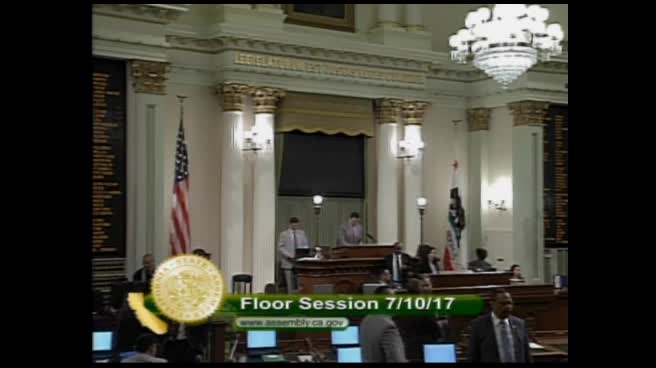 1MIN
Assembly Floor
 11MIN
Senate Standing Committee on Education
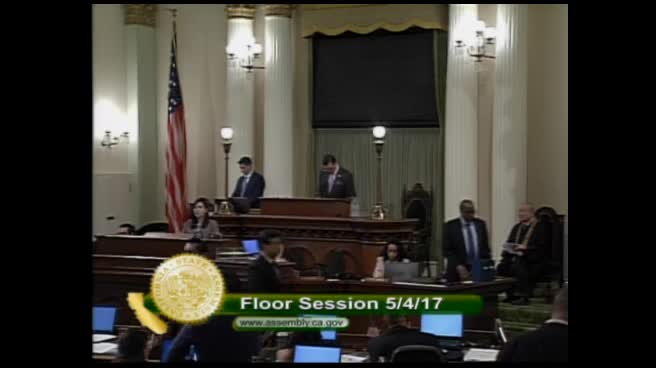 3MIN
Assembly Floor
 48SEC
Assembly Floor
 3MIN
Assembly Standing Committee on Appropriations
 12MIN
Assembly Standing Committee on Human Services
 14MIN