AB 2202: University of California: school of medicine: San Joaquin Valley Regional Medical Education Endowment Fund.
- Session Year: 2017-2018
- House: Assembly
- Latest Version Date: 2018-09-26
The California Constitution provides that the University of California constitutes a public trust administered by the Regents of the University of California, a corporation in the form of a board, with full powers of organization and government, subject to legislative control only for specified purposes.
This bill would create the University of California San Francisco San Joaquin Valley Regional Medical Education Endowment Fund for the purpose of supporting the annual operating costs for the development, operation, and maintenance of a branch campus of the University of California, San Francisco, School of Medicine in the San Joaquin Valley, as specified. The bill also provides that moneys in the fund shall not be expended on the development, operation, or maintenance of the branch campus until the Controller determines a sufficient balance of $500 million is achieved and maintained in the fund. Upon appropriation by the Legislature, earnings on the investment of the principal of the fund would be used to cover the annual costs for the development, operation, and maintenance of a branch campus supporting 50 students per class in the San Joaquin Valley over the 10 years following the accrual of the funds, as well as the estimated costs of obtaining approval and accreditation from the Liaison Committee on Medical Education, among other expenses. The bill would require the University of California to seek approval and accreditation from the Liaison Committee on Medical Education for an expanded branch campus, upon the above determination by the Controller of sufficient funds in the endowment fund.
The California Constitution provides that the University of California constitutes a public trust administered by the Regents of the University of California, a corporation in the form of a board, with full powers of organization and government, subject to legislative control only for specified purposes.
This bill would appropriate an unspecified sum of moneys from the General Fund to the Regents of the University of California for the creation, construction, and establishment of a branch campus of the University of California, San Francisco, School of Medicine in partnership with the University of California, Merced, and the University of California, San Francisco, Fresno Medical Education Program. create the University of California San Francisco San Joaquin Valley Regional Medical Education Endowment Fund for the purpose of supporting the annual operating costs for the development, operation, and maintenance of a branch campus of the University of California, San Francisco, School of Medicine in the San Joaquin Valley, as specified. The bill also provides that moneys in the fund shall not be expended on the development, operation, or maintenance of the branch campus until the Controller determines a sufficient balance of $500 million is achieved and maintained in the fund. Upon appropriation by the Legislature, earnings on the investment of the principal of the fund would be used to cover the annual costs for the development, operation, and maintenance of a branch campus supporting 50 students per class in the San Joaquin Valley over the 10 years following the accrual of the funds, as well as the estimated costs of obtaining approval and accreditation from the Liaison Committee on Medical Education, among other expenses. The bill would require the University of California to seek approval and accreditation from the Liaison Committee on Medical Education for an expanded branch campus, upon the above determination by the Controller of sufficient funds in the endowment fund.
The California Constitution provides that the University of California constitutes a public trust administered by the Regents of the University of California, a corporation in the form of a board, with full powers of organization and government, subject to legislative control only for specified purposes.
This bill would appropriate an unspecified sum of moneys from the General Fund to the Regents of the University of California each fiscal year, commencing with the 201819 fiscal year, for the creation, construction, and establishment of the University of California, Merced School of Medicine. a branch campus of the University of California, San Francisco, School of Medicine in partnership with the University of California, Merced, and the University of California, San Francisco, Fresno Medical Education Program.
The California Constitution provides that the University of California constitutes a public trust administered by the Regents of the University of California, a corporation in the form of a board, with full powers of organization and government, subject to legislative control only for specified purposes.
This bill would appropriate an unspecified sum of moneys from the General Fund to the Regents of the University of California each fiscal year, commencing with the 201819 fiscal year, for the creation, construction, and establishment of the University of California, Merced School of Medicine.
The Legislature finds and declares all of the following:
(a)In 2008, the Regents of the University of California endorsed continued planning efforts leading to the development of a proposed new school of medicine at the University of California, Merced, campus.
(b)The Budget Act of 2015 provided that the University of California shall continue planning for a school of medicine at the Merced campus and allocated $1 million for this purpose.
(c)The University of California completed and issued a report in 2018 entitled Improving Health Care Access in the San Joaquin Valley. The study provides findings and recommendations related to workforce planning, healthcare delivery, and health professions education and training in the region. It also describes the resource requirements for the establishment of a branch campus of the University of California, San Francisco, School of Medicine, which provides a future pathway to establishing an independent medical school in the region.
(d)In 2014, the University of California, Merced, launched the undergraduate public health major, which began with 19 students and quickly grew to encompass approximately 300 majors and 50 minors.
(e)The University of California, Merced, has also launched a new stand-alone doctor of philosophy degree program in public health, further establishing the universitys commitment to the education of the next generation of scholars who are addressing the unique health concerns in the San Joaquin Valley.
(f)The University of California, San Francisco (UCSF), and the UCSF Fresno partners are committed to working with the University of California, Merced, to enhance learning opportunities and educational experiences for the medical students in the San Joaquin Valley Program in Medical Education (PRIME).
(g)The UCSF and University of California, Merced, collaboration could lead to research opportunities for the San Joaquin Valley PRIME students, particularly in areas such as community health and health disparities, thus exposing learners to research that addresses health disparities in the region.
(h)The UCSF Fresno and University of California, Merced, collaboration has already begun to foster faculty exchange in medical education. Currently, the University of California, Merced, faculty provide lectures in foundational sciences for UCSF students rotating at the UCSF Fresno, and their role in supporting foundational science and public health instruction can expand.
SEC. 2.Article 6.5 (commencing with Section 92162) is added to Chapter 2 of Part 57 of Division 9 of Title 3 of the Education Code, to read:6.5.The University of California, San Francisco, San Joaquin Valley Regional Campus Medical Education Endowment Fund92162.(a)The University of California, San Francisco, San Joaquin Valley Regional Campus Medical Education Endowment Fund is hereby established in the State Treasury. Funds received by the University of California or the Controller, for the purposes set forth in subdivision (b) shall be deposited into the University of California, San Francisco, San Joaquin Valley Regional Campus Medical Education Endowment Fund. For purposes of this article, endowment fund means the University of California, San Francisco, San Joaquin Valley Regional Campus Medical Education Endowment Fund.
(b)Moneys in the endowment fund shall be allocated to the University of California, upon appropriation by the Legislature, to support the annual operating costs for the development, operation, and maintenance of a branch campus of the University of California, San Francisco, School of Medicine in the San Joaquin Valley, and to generate funding through investment earnings for the support of medical education in the San Joaquin Valley.
(c)(1)Moneys in the endowment fund shall initially be invested with the goal of achieving capital appreciation to create a balance sufficient to generate ongoing earnings to cover the estimated annual operating costs associated with the development, operation, and maintenance of a branch campus of the University of California, San Francisco, School of Medicine in the San Joaquin Valley. The balance of the endowment fund shall not be deemed sufficient until a balance of five hundred million dollars ($500,000,000) is achieved and maintained in the endowment fund.
(2)Upon the determination of the Controller, in consultation with the University of California, that the endowment fund balance has attained the goal established in paragraph (1), moneys in the endowment fund shall be invested to generate earnings to fund annual operating costs associated with the development, operation, and maintenance of a branch campus of the University of California, San Francisco, School of Medicine in the San Joaquin Valley. Moneys shall be invested in a manner that best meets the goals of the endowment fund.
(d)The endowment fund may receive donations and contributions from public and private entities, partnerships between public and private entities, fees, cash advances, and transfers from the General Fund as may be specified by law.
(e)Earnings generated by the endowment fund shall be retained by the endowment fund.
(f)Moneys deposited in the endowment fund are exempt from the requirements of Sections 11270 to 11275, inclusive, of the Government Code.
92164.(a)(1)Upon the determination of the Controller, in consultation with the University of California, that the endowment fund has adequate principal to annually yield sufficient investment earnings, from the date of determination, to cover the annual costs for the development, operation, and maintenance of a branch campus of the University of California, San Francisco, School of Medicine, supporting 50 students per class, or 200 students total, in the San Joaquin Valley over the next 10 years and to fund the estimated costs of obtaining approval and accreditation from the Liaison Committee on Medical Education, the University of California shall seek approval and accreditation from the Liaison Committee on Medical Education for an expanded branch campus of the University of California, San Francisco, School of Medicine in the San Joaquin Valley.
(2)The Controller, upon appropriation by the Legislature, shall transfer moneys from the endowment fund to the University of California, in an amount equal to the estimated costs of applying for and obtaining approval and accreditation from the Liaison Committee on Medical Education for a branch campus of the University of California, San Francisco, School of Medicine in the San Joaquin Valley.
(b)Any funds, public or private, allocated from the endowment fund, shall supplement, not supplant, the University of California budget allocations for any fiscal year.
92166.Nothing in this article shall require the University of California to take any action towards developing a branch campus of the University of California, San Francisco, School of Medicine in the San Joaquin Valley region unless the endowment fund has a balance of five hundred million dollars ($500,000,000) and the Controller, after consultation with the University of California, has determined that the funds to be allocated are sufficient to support annual operating expenses for a San Joaquin Valley branch campus of the University of California, San Francisco, School of Medicine supporting 50 students per class.
The Legislature finds and declares all of the following:
(a)In 2008, the Regents of the University of California endorsed continued planning efforts leading to the development of a proposed new school of medicine at the University of California, Merced, campus.
(b)The Budget Act of 2015 provided that the University of California shall continue planning for a school of medicine at the Merced campus and allocated $1 million for this purpose.
(c)The University of California completed and issued a report in 2018 entitled Improving Health Care Access in the San Joaquin Valley. The study provides findings and recommendations related to workforce planning, healthcare delivery, and health professions education and training in the region. It also describes the resource requirements for the establishment of a branch campus of the University of California, San Francisco, School of Medicine, which provides a future pathway to establishing an independent medical school in the region.
(d)In 2014, the University of California, Merced, launched the undergraduate public health major, which began with 19 students and quickly grew to encompass approximately 300 majors and 50 minors.
(e)The University of California, Merced, has also launched a new stand-alone doctor of philosophy degree program in public health, further establishing the universitys commitment to the education of the next generation of scholars who are addressing the unique health concerns in the San Joaquin Valley.
(f)The University of California, San Francisco (UCSF), and the UCSF Fresno partners are committed to working with the University of California, Merced, to enhance learning opportunities and educational experiences for the medical students in the San Joaquin Valley Program in Medical Education (PRIME).
(g)The UCSF and University of California, Merced, collaboration could lead to research opportunities for the San Joaquin Valley PRIME students, particularly in areas such as community health and health disparities, thus exposing learners to research that addresses health disparities in the region.
(h)The UCSF Fresno and University of California, Merced, collaboration has already begun to foster faculty exchange in medical education. Currently, the University of California, Merced, faculty provide lectures in foundational sciences for UCSF students rotating at the UCSF Fresno, and their role in supporting foundational science and public health instruction can expand.
SEC. 2.The sum of ____ dollars ($____) is hereby appropriated from the General Fund to the Regents of the University of California for the creation, construction, and establishment of a branch campus of the University of California, San Francisco, School of Medicine in partnership with the University of California, Merced, and the University of California, San Francisco, Fresno Medical Education Program.SEC. 2.Article 6.5 (commencing with Section 92162) is added to Chapter 2 of Part 57 of Division 9 of Title 3 of the Education Code, to read:6.5.The University of California, San Francisco, San Joaquin Valley Regional Campus Medical Education Endowment Fund92162.(a)The University of California, San Francisco, San Joaquin Valley Regional Campus Medical Education Endowment Fund is hereby established in the State Treasury. Funds received by the University of California or the Controller, for the purposes set forth in subdivision (b) shall be deposited into the University of California, San Francisco, San Joaquin Valley Regional Campus Medical Education Endowment Fund. For purposes of this article, endowment fund means the University of California, San Francisco, San Joaquin Valley Regional Campus Medical Education Endowment Fund.
(b)Moneys in the endowment fund shall be allocated to the University of California, upon appropriation by the Legislature, to support the annual operating costs for the development, operation, and maintenance of a branch campus of the University of California, San Francisco, School of Medicine in the San Joaquin Valley, and to generate funding through investment earnings for the support of medical education in the San Joaquin Valley.
(c)(1)Moneys in the endowment fund shall initially be invested with the goal of achieving capital appreciation to create a balance sufficient to generate ongoing earnings to cover the estimated annual operating costs associated with the development, operation, and maintenance of a branch campus of the University of California, San Francisco, School of Medicine in the San Joaquin Valley. The balance of the endowment fund shall not be deemed sufficient until a balance of five hundred million dollars ($500,000,000) is achieved and maintained in the endowment fund.
(2)Upon the determination of the Controller, in consultation with the University of California, that the endowment fund balance has attained the goal established in paragraph (1), moneys in the endowment fund shall be invested to generate earnings to fund annual operating costs associated with the development, operation, and maintenance of a branch campus of the University of California, San Francisco, School of Medicine in the San Joaquin Valley. Moneys shall be invested in a manner that best meets the goals of the endowment fund.
(d)The endowment fund may receive donations and contributions from public and private entities, partnerships between public and private entities, fees, cash advances, and transfers from the General Fund as may be specified by law.
(e)Earnings generated by the endowment fund shall be retained by the endowment fund.
(f)Moneys deposited in the endowment fund are exempt from the requirements of Sections 11270 to 11275, inclusive, of the Government Code.
92164.(a)(1)Upon the determination of the Controller, in consultation with the University of California, that the endowment fund has adequate principal to annually yield sufficient investment earnings, from the date of determination, to cover the annual costs for the development, operation, and maintenance of a branch campus of the University of California, San Francisco, School of Medicine, supporting 50 students per class, or 200 students total, in the San Joaquin Valley over the next 10 years and to fund the estimated costs of obtaining approval and accreditation from the Liaison Committee on Medical Education, the University of California shall seek approval and accreditation from the Liaison Committee on Medical Education for an expanded branch campus of the University of California, San Francisco, School of Medicine in the San Joaquin Valley.
(2)The Controller, upon appropriation by the Legislature, shall transfer moneys from the endowment fund to the University of California, in an amount equal to the estimated costs of applying for and obtaining approval and accreditation from the Liaison Committee on Medical Education for a branch campus of the University of California, San Francisco, School of Medicine in the San Joaquin Valley.
(b)Any funds, public or private, allocated from the endowment fund, shall supplement, not supplant, the University of California budget allocations for any fiscal year.
92166.Nothing in this article shall require the University of California to take any action towards developing a branch campus of the University of California, San Francisco, School of Medicine in the San Joaquin Valley region unless the endowment fund has a balance of five hundred million dollars ($500,000,000) and the Controller, after consultation with the University of California, has determined that the funds to be allocated are sufficient to support annual operating expenses for a San Joaquin Valley branch campus of the University of California, San Francisco, School of Medicine supporting 50 students per class.
The Legislature finds and declares all of the following:
(a)In 2008, the Regents of the University of California endorsed continued planning efforts leading to the development of a proposed new school of medicine at the University of California, Merced, campus.
(b)The Budget Act of 2015 provided that the University of California shall continue planning for a school of medicine at the Merced campus and allocated $1 million for this purpose.
(c)The University of California completed and issued a report in 2018 entitled Improving Health Care Access in the San Joaquin Valley. The study provides findings and recommendations related to workforce planning, healthcare delivery, and health professions education and training in the region. It also describes the resource requirements for the establishment of a branch campus of the University of California, San Francisco, School of Medicine, which provides a future pathway to establishing an independent medical school in the region.
SEC. 2.The sum of ____ dollars ($____) is hereby appropriated from the General Fund to the Regents of the University of California for the creation, construction, and establishment of a branch campus of the University of California, San Francisco, School of Medicine in partnership with the University of California, Merced, and the University of California, San Francisco, Fresno Medical Education Program.
SECTION 1.Article 6.5 (commencing with Section 92162) is added to Chapter 2 of Part 57 of Division 9 of Title 3 of the Education Code, to read:6.5.Construction of the University of California, Merced School of Medicine92162.The sum of ____ dollars ($____) is hereby appropriated from the General Fund to the Regents of the University of California each fiscal year, commencing with the 201819 fiscal year, for the creation, construction, and establishment of the University of California, Merced School of Medicine.The sum of ____ dollars ($____) is hereby appropriated from the General Fund to the Regents of the University of California each fiscal year, commencing with the 201819 fiscal year, for the creation, construction, and establishment of the University of California, Merced School of Medicine.
|
Date
|
Status
|
|---|---|
| Sep 26, 2018 | Chaptered by Secretary of State - Chapter 756, Statutes of 2018. |
| Sep 26, 2018 | Approved by the Governor. |
| Sep 5, 2018 | Enrolled and presented to the Governor at 3 p.m. |
| Aug 27, 2018 | Senate amendments concurred in. To Engrossing and Enrolling. |
| Aug 22, 2018 | In Assembly. Concurrence in Senate amendments pending. May be considered on or after August 24 pursuant to Assembly Rule 77. |
| Aug 21, 2018 | Read third time. Passed. Ordered to the Assembly. |
| Aug 20, 2018 | Read second time. Ordered to third reading. |
| Aug 17, 2018 | From committee: Amend, and do pass as amended. (Ayes 7. Noes 0.) (August 16). |
| Aug 6, 2018 | In committee: Referred to APPR. suspense file. |
| Jun 28, 2018 | From committee: Do pass and re-refer to Com. on APPR. (Ayes 7. Noes 0.) (June 27). Re-referred to Com. on APPR. |
| Jun 7, 2018 | Referred to Com. on ED. |
| May 31, 2018 | In Senate. Read first time. To Com. on RLS. for assignment. |
| May 30, 2018 | Read third time. Passed. Ordered to the Senate. |
| May 25, 2018 | From committee: Do pass. (Ayes 13. Noes 3.) (May 25). |
| May 9, 2018 | In committee: Set, first hearing. Referred to APPR. suspense file. |
| Apr 25, 2018 | From committee: Do pass and re-refer to Com. on APPR. (Ayes 11. Noes 0.) (April 24). Re-referred to Com. on APPR. |
| Apr 17, 2018 | Re-referred to Com. on HIGHER ED. |
| Apr 16, 2018 | From committee chair, with author's amendments: Amend, and re-refer to Com. on HIGHER ED. Read second time and amended. |
| Apr 3, 2018 | In committee: Set, first hearing. Hearing canceled at the request of author. |
| Mar 1, 2018 | Referred to Com. on HIGHER ED. |
| Feb 13, 2018 | From printer. May be heard in committee March 15. |
| Feb 12, 2018 | Read first time. To print. |
|
Date
|
Description
|
Location
|
Votes
|
|
|---|---|---|---|---|
| Aug 27, 2018 | AB 2202 GRAY Concurrence in Senate Amendments | Assembly Floor |
Passed |
|
| Aug 21, 2018 | Assembly 3rd Reading AB2202 Gray By Cannella | Senate Floor |
Passed |
|
| Aug 16, 2018 | Do pass as amended | Senate Standing Committee on Appropriations |
Passed |
|
| Aug 6, 2018 | Placed on suspense file | Senate Standing Committee on Appropriations |
Passed |
|
| Jun 27, 2018 | Do pass, but first be re-referred to the Committee on [Appropriations] | Senate Standing Committee on Education |
Passed |
|
| May 30, 2018 | AB 2202 GRAY Assembly Third Reading | Assembly Floor |
Passed |
|
| May 25, 2018 | Do pass. | Assembly Standing Committee on Appropriations |
Passed |
|
| Apr 24, 2018 | Do pass and be re-referred to the Committee on [Appropriations] | Assembly Standing Committee on Higher Education |
Passed |
This list shows positions taken on this bill by organizations on the date displayed, which is linked to the original source.
Positions by individuals are not included.
CONCURRENCE IN SENATE AMENDMENTS
CSA1 Bill Id:AB 2202
Author:(Gray)
As Amended Ver:August 17, 2018
Majority vote
ASSEMBLY: | 67-5 | (May 30, 2018) | SENATE: | 39-0 | (August 21, 2018) |
Original Committee Reference: HIGHER ED.
SUMMARY: Establishes the University of California (UC), San Francisco (UCSF), San Joaquin Valley Regional Campus Medical Education Endowment Fund (Endowment Fund) to support the annual operating costs of a branch campus of UCSF School of Medicine in the San Joaquin Valley (SJV).
The Senate amendments delete the Assembly version of this bill, and instead:
- Establish the UCSF, San Joaquin Valley Regional Campus Medical Education Endowment Fund in the State Treasury.
- Require the moneys received in the Endowment Fund be allocated to the UC, upon appropriation by the Legislature, to support annual operating costs for the development, operation and maintenance of a branch campus of UCSF, School of Medicine in the SJV.
- Require the moneys in the Endowment Fund be initially invested to create a balance of $500 million. Upon achievement of this goal, the moneys are required to be invested to generate earnings to fund annual operating costs of the UCSF Medical School branch campus in the SJV.
- Require earnings generated by the Endowment Fund to be retained by the fund.
- Permit the Endowment Fund to receive donations and contributions from public and private entities, partnerships between public and private entities, fees, cash advances, and transfers from the General Fund.
- Exempt moneys deposited in the Endowment Fund from administrative costs, as specified.
- Require the UC to seek approval and accreditation from the Liaison Committee on Medical Education for a UCSF Medical School branch campus in the SJV, if the State Controller has determined that the Endowment Fund has adequate principle to support a medical school branch campus with 50 students per class over the next 10 years and the costs of obtaining approval and accreditation from the Liaison Committee.
- Require the Controller, upon appropriation by the Legislature, to transfer moneys from the Endowment Fund to the UC to cover the cost of applying for and obtaining approval and accreditation for a medical school branch campus.
- Require that the Endowment Funds supplements, not supplants, the UC budget allocations for any fiscal year.
- Specify that the UC is not required to take any action outlined towards developing a medical school branch campus in the SJV unless the Endowment Fund has reached $500 million and the Controller has determined that the funds are sufficient to support annual operating costs of the branch campus.
EXISTING LAW: Establishes UC, to be administered by the Board of Regents, with full powers of organization and government, subject only to such legislative control as may be necessary to insure the security of its funds and compliance with the terms of the endowments of the university and such competitive bidding procedures as may be made applicable to the university by statute for the letting of construction contracts, sales of real property, and purchasing of materials, goods, and services (California Constitution Article IX, Section 9).
FISCAL EFFECT: According to the Senate Appropriations Committee, to the extent that the endowment is insufficient to fund the costs necessary for the development and ongoing operational costs of the new campus, there could be unknown but potentially significant General Fund cost pressure. The startup costs could be between $160 and $170 million over the first ten years, including capital expenses, with ongoing operational costs of up to $40 million annually. Of this amount, tuition revenues could provide about $12 million leaving a funding gap of $28 million.
COMMENTS: Background. According to a recently-released UC report, "Improving Health Care Access in the San Joaquin Valley [SJV]," the SJV is one of the fastest growing, poorest, and least healthy regions of California. (The SJV includes eight counties – Fresno, Kern, Kings, Madera, Merced, San Joaquin, Stanislaus, and Tulare.) More than four million people live in this region, with about 40% covered by Medi-Cal. Among the state's 58 counties, Fresno, Kern, Madera, and Tulare rank 52nd, 53rd, 49th, and 50th respectively for health outcomes.
A recent workforce assessment conducted by UCSF indicates that the SJV has a significantly lower supply of health care providers compared to the state as a whole. For example, in 2015, the SJV had 138 active physicians per 100,000 residents, which was far below the statewide average of 237 physicians per 100,000 residents. Relative to the rest of the state, the SJV is currently facing a shortage of 4,100 physicians.
Purpose. The author indicates that, "Since the inception of the newest UC campus at Merced, proponents and community leaders have proposed the establishment of the first public medical school in the San Joaquin Valley. In 2008, the UC Board of Regents approved continued planning toward the establishment of an independent, accredited medical school at UC Merced (UCM). In fact, the Regents initially contemplated a start date for the medical school as early at 2012."
The author notes the impact of the Great Recession and the delay in starting the new UC Riverside School of Medicine as delaying progress at UCM. Yet, despite these challenges, the UCM 2020 project has the campus on track to have the necessary infrastructure and faculty to enroll 10,000 undergraduate students by 2020. The author argues that, with the recession over and undergraduate expansion issues resolved, "The state is in an ideal position to re-engage on the UCM School of Medicine planning efforts."
Previous Planning Study. In 2008, UCM engaged the Washington Advisory Group (WAG) to assist in scoping the planning effort for the new medical school, on the premise that, even with the economic uncertainty brought on by the recession, the question regarding a medical school was not "if" but "when". The WAG report envisioned a three-stage process in developing a fully independent medical school:
- Establish a "pre-baccalaureate Biomedical Education track specifically designed to attract undergraduates of exceptional promise to pursue a BS degree emphasizing the health needs of the SJV and that prepares students for advanced study in all of the health sciences.
- Establish a branch campus to an existing medical school. This model has been used successfully at other medical schools. For example, the medical school at UC Riverside was a branch of the University of California, Los Angeles medical school prior to becoming independent.
- Obtain licensure as a fully-independent medical school.
UC Report. The UC report mentioned above provides background information, key findings and recommendations regarding a variety of strategies to help improve access to health care for SJV residents. As discussed above, the SJV has an obvious shortage of physicians, as well as other health care professionals. The UC report notes that the two strongest predictors of where physicians will practice are a) where the physician finishes their residency training and b) where the individual was raised. The report cites studies showing that medical students are far more likely to practice in communities similar to where they were raised. One study found that a rural background increased the odds of practice in a rural area by 2.4 times.
The report, in part, concludes that increasing the number of residency slots in the SJV will be one of the most effective strategies for addressing the physician shortage. Another proposed strategy is to establish and fund programs to successfully prepare more undergraduate students from the SJV to be competitive in gaining admission to health professional schools.
UC Medical Education in the SJV. UCSF Fresno has a 40-year history in the region and operates the largest graduate medical education program in the area (with approximately 300 residents and fellows training). Nearly 50% of physicians completing residency training at UCSF Fresno have remained in the region to practice. The UC report notes, however, that the most significant barrier to expanding UC-sponsored residency positions in the SJV is obtaining additional funding from the state and/or from hospital resources, to cover residency salaries and benefits in addition to the costs of faculty and related infrastructure needs.
As a way for UCM to begin to build partnerships with existing UC medical schools and facilitate its involvement with academic medicine, UCM partnered with the UC Davis (UCD) School of Medicine to help develop a new medical education program focusing on the health needs of the region. The SJV Program in Medical Education (PRIME) was launched in 2011 by UCD, in partnership with UCSF Fresno and UCM, to recruit and prepare students for future careers in medicine in the SJV. SJV PRIME students complete their basic sciences/pre-clinical education at UCD, then complete most of their required third-year core clerkships at UCSF Fresno, with options for selecting the amount of time spent in the fourth year at UCSF Fresno or UCD. In 2018-19, management and oversight of the SJV PRIME program will transition from UCD to UCSF.
When SJV PRIME enrolled its first class of five students in 2011, state funding for enrollment had not yet been provided to support the program. In March 2016, however, AB 133 (Committee on Budget) Chapter 2, Statutes of 2016, a bill that amended the Budget Act of 2015, provided $1.9 million to expand total enrollment in the SJV PRIME program to 48 students (12 students per year across the four-year curriculum).
In addition to the PRIME, UCM established the Health Sciences Research Institute (HRSI) in 2012 to promote multidisciplinary research by UCM faculty aimed at improving the health of SJV residents. The following year, the HSRI launched a consortium focused on Valley Fever. In 2014, UCM began offering an undergraduate degree in public health, and in 2017, the university received approval to start a public health PhD program.
Recent Budget Activity. The 2015 Budget Act directed UC to spend up to $1 million from its General Fund appropriation, or from other available funds, to "continue planning for a School of Medicine at the Merced campus in accordance with the action approved by the Regents of the University of California on May 14, 2008." UC indicates that it has since spent about $750,000, both in-house and for contracts related to the workforce assessment and access to health care reports reference earlier and for an estimate of costs for a possible future branch campus.
UC Merced School of Medicine? The UC report provides a scenario (though not a recommendation) for the eventual establishment of an independent medical school at UCM that is similar to the conclusions of the WAG report, i.e. starting as a branch campus of UCSF. According to the report, partnering with UCSF offers strategic advantages regarding curriculum, program quality, accreditation, cost-savings, timing, and the core education, and the research and public service missions of UC.
The report envisions strengthening the basic sciences infrastructure at UCM, to serve as the foundation upon which to build from, by identifying and recruiting biomedical sciences faculty that could deliver the UCSF curriculum at UCM to first and second-year medical students, who would then complete their clinical training in years three and four at UCSF-Fresno and other clinical settings throughout the region. Transitioning to an independent UCM medical school would be contingent upon: 1) leadership agreement by UCSF and UCM; 2) sufficient, ongoing resources to support the operating needs of an independent medical school at UCM; and 3) approval and successful accreditation.
In terms of cost, based upon recent experiences with development of the UC Riverside School of Medicine, consultation with other U.S. medical schools, and the work undertaken over the past year with an experienced consulting group, the report estimates that the start-up costs for the first ten years of a branch campus, inclusive of capital expenses, is approximately $157 to $167 million. Beyond the first ten years, an annual operating budget supporting 50 students per class, located in or near Fresno but with the curriculum taught at UCM, as discussed above, would be approximately $36 to $40 million annually. Tuition revenues would support roughly $12 million of this annual budget, leaving a funding gap of $22 to $28 million to be filled through another stable and sustainable revenue source. The report suggests that one option to meet this revenue goal would be establishing an endowment of $400 to $450 million.
What Next? The UC report provides several findings and recommendations related to improving health care access in the SJV. The report does not, however, explicitly endorse the establishment of an independent medical school, or even a branch campus, at Merced. The report seems to imply that any branch campus would be established in or near Fresno, with academic support from UCM.
This bill simply appropriates an unspecified amount from the General Fund to establish and construct a branch campus of UCSF, in partnership with UCM and UCSF Fresno, thereby leaving open the location of the branch campus. Regardless, the fiscal matter in this bill is outside the scope of this committee's purview and is more appropriately considered within the budget process, through which the Legislature's fiscal priorities are determined. Given the 2016 budget appropriation to fund the continued planning of a UCM School of Medicine, consistent with the Regents' action in 2008, the committee could affirm its accord with the branch campus concept, while leaving the resource question to a larger budget discussion.
Prior Legislation. AB 2232 (Gray) of 2014, AB 174 (Gray) of 2015, SB 841 (Cannella) of 2014, and SB 131 (Cannella) of 2015, all of which appropriated funds for the SJV PRIME Program, were held on Suspense in Senate Appropriations.
In 2017, AB 207 (Arambula), which authorized the California State University, Fresno to award doctor of medicine degrees, was never heard in committee.
Analysis Prepared by: Jeanice Warden / HIGHER ED. / (916) 319-3960 FN: 0004556
Office of Senate Floor Analyses (916) 651-1520 Fax: (916) 327-4478 | AB |
THIRD READING
Bill No: AB 2202
Amended: 8/17/18 in Senate
SENATE EDUCATION COMMITTEE: 7-0, 6/27/18
AYES: Allen, Wilk, Galgiani, Leyva, McGuire, Pan, Vidak
SENATE APPROPRIATIONS COMMITTEE: 7-0, 8/16/18
AYES: Portantino, Bates, Beall, Bradford, Hill, Nielsen, Wiener
ASSEMBLY FLOOR: 67-5, 5/30/18 - See last page for vote
SUBJECT: University of California: school of medicine: San Joaquin Valley Regional Medical Education Endowment Fund
DIGEST:
This bill establishes the University of California, San Francisco (UCSF), San Joaquin Valley Regional Campus Medical Education Endowment Fund (Endowment Fund) to support the annual operating costs of a branch campus of UCSF School of Medicine in the San Joaquin Valley (SJV).
ANALYSIS: Existing law establishes the University of California (UC), a public trust to be administered by the Regents of the UC and grants the Regents full powers of organization and government, subject only to such legislative control as may be necessary to insure security of its funds, compliance with the terms of its endowments, statutory requirements around competitive bidding and contracts, sales of property and the purchase of materials, goods and services (California Constitution Article IX, Section 9(a)).
This bill:
- Establishes the UCSF, San Joaquin Valley Regional Campus Medical Education Endowment Fund in the State Treasury.
- Requires the moneys received in the Endowment Fund be allocated to the UC, upon appropriation by the Legislature, to support annual operating costs for the development, operation and maintenance of a branch campus of UCSF, School of Medicine in the SJV.
- Requires the moneys in the Endowment Fund be initially invested to create a balance of $500 million. Upon achievement of this goal, the moneys are required to be invested to generate earnings to fund annual operating costs of the UCSF Medical School branch campus in the SJV.
- Requires earnings generated by the Endowment Fund to be retained by the fund.
- Permits the Endowment Fund to receive donations and contributions from public and private entities, partnerships between public and private entities, fees, cash advances, and transfers from the General Fund.
- Exempts moneys deposited in the Endowment Fund from administrative costs, as specified.
- Requires the UC to seek approval and accreditation from the Liaison Committee on Medical Education for a UCSF Medical School branch campus in the SJV, if the State Controller has determined that the Endowment Fund has adequate principle to support a medical school branch campus with 50 students per class over the next 10 years and the costs of obtaining approval and accreditation from the Liaison Committee.
- Requires the Controller, upon appropriation by the Legislature, to transfer moneys from the Endowment Fund to the UC to cover the cost of applying for and obtaining approval and accreditation for a medical school branch campus.
- Requires that the Endowment Funds supplements, not supplants, the UC budget allocations for any fiscal year.
- Specifies that the UC is not required to take any action outlined towards developing a medical school branch campus in the SJV unless the Endowment Fund has reached $500 million and the Controller has determined that the funds are sufficient to support annual operating costs of the branch campus.
Comments
Health care access in the SJV. According to a recently-released UC report, "Improving Health Care Access in the SJV," the SJV is one of the fastest growing, poorest, and least healthy regions of California. (The SJV includes eight counties – Fresno, Kern, Kings, Madera, Merced, San Joaquin, Stanislaus, and Tulare.) More than four million people live in this region, with about 40 percent covered by Medi-Cal. Among the state's 58 counties, Fresno, Kern, Madera, and Tulare rank 52nd, 53rd, 49th, and 50th respectively for health outcomes. The UC report notes that the two strongest predictors of where physicians will practice are (a) where the physician finishes their residency training and (b) where the individual was raised. The report cites studies showing that medical students are far more likely to practice in communities similar to where they were raised.
A recent workforce assessment conducted by UCSF indicates that the SJV has a significantly lower supply of health care providers compared to the state as a whole. For example, in 2015, the SJV had 138 active physicians per 100,000 residents, which was far below the statewide average of 237 physicians per 100,000 residents. Relative to the rest of the state, the SJV is currently facing a shortage of 4,100 physicians.
UCSF Fresno has a 40-year history in the region and operates the largest graduate medical education program in the area (with approximately 300 residents and fellows training). Nearly 50 percent of physicians completing residency training at UCSF Fresno have remained in the region to practice. The UC report notes, however, that the most significant barrier to expanding UC-sponsored residency positions in the SJV is obtaining additional funding from the state and/or from hospital resources, to cover residency salaries and benefits in addition to the costs of faculty and related infrastructure needs.
Economic feasibility of a medical school at UC Merced. According to the UC report, the most substantial barrier to this project is assuring sufficient, ongoing resources can support the operating budget of a high-quality UC medical education program. In terms of cost, based upon recent experiences with development of the UC Riverside School of Medicine, consultation with other U.S. medical schools, and the work undertaken over the past year with an experienced consulting group, the report estimates that the start-up costs for the first 10 years of a branch campus, inclusive of capital expenses, is approximately $157 to $167 million. Beyond the first ten years, an annual operating budget supporting 50 students per class, located in or near Fresno but with the curriculum taught at UCM, as discussed above, would be approximately $36 to $40 million annually. Tuition revenues would support roughly $12 million of this annual budget, leaving a funding gap of $22 to $28 million to be filled through another stable and sustainable revenue source. The report suggests that one option to meet this revenue goal would be establishing an endowment of $400 to $450 million.
Planning for a medical school in the SJV. This bill was recently significantly amended to align with the recommendation of the report described above, to establish an endowment of $500 million prior to the establishment of a medical branch campus in the SJV. The UC would not be required to take any actions towards establishing a medical branch campus until the Endowment Fund has reached $500 million and has been approved by the Controller. The bill requires that the Controller determine if the endowment has sufficient funds to cover the annual costs for the development, operation and maintenance of a branch campus that would support 50 medical students per class over the next 10 years. According to the author, this fund is a first step toward the creation of a fully independent medical branch campus in the San Joaquin Valley and is vital to improving access to care in some of the most underserved communities in the state.
FISCAL EFFECT: Appropriation: No Fiscal Com.: Local:
According to the Senate Appropriations Committee, to the extent that the endowment is insufficient to fund the costs necessary for the development and ongoing operational costs of the new campus, there could be unknown but potentially significant General Fund cost pressure. The startup costs could be between $160 and $170 million over the first 10 years, including capital expenses, with ongoing operational costs of up to $40 million annually. Of this amount, tuition revenues could provide about $12 million leaving a funding gap of $28 million.
California Academy of Family Physicians
California Chapter of the American College of Emergency Physicians
California Medical Association
Merced County Board of Supervisors
University of California
OPPOSITION: (Verified 8/17/18)
None received
ASSEMBLY FLOOR: 67-5, 5/30/18
AYES: Aguiar-Curry, Travis Allen, Arambula, Baker, Berman, Bloom, Bonta, Burke, Caballero, Calderon, Carrillo, Cervantes, Chau, Chávez, Chiu, Choi, Chu, Cooley, Cooper, Cunningham, Daly, Eggman, Flora, Fong, Friedman, Cristina Garcia, Eduardo Garcia, Gipson, Gloria, Gonzalez Fletcher, Gray, Grayson, Holden, Irwin, Jones-Sawyer, Kalra, Kamlager-Dove, Lackey, Levine, Limón, Low, Maienschein, Mathis, Mayes, McCarty, Medina, Mullin, Muratsuchi, Nazarian, O'Donnell, Patterson, Quirk, Quirk-Silva, Reyes, Rodriguez, Rubio, Salas, Santiago, Steinorth, Mark Stone, Thurmond, Ting, Voepel, Waldron, Weber, Wood, Rendon
NOES: Bigelow, Brough, Dahle, Harper, Obernolte
NO VOTE RECORDED: Acosta, Chen, Frazier, Gallagher, Kiley, Melendez
8/20/18 10:06:34
**** END ****
SENATE COMMITTEE ON
Senator Anthony Portantino, Chair
2017 - 2018 Regular Session
AB 2202 (Gray) - University of California: school of medicine
Version: | Policy Vote: |
Urgency: | Mandate: |
Hearing Date: | Consultant: |
Bill Summary:
This bill appropriates an unspecified amount from the General Fund to establish and construct a branch campus of the University of California San Francisco (UCSF) School of Medicine, in partnership with UC Merced and the UCSF Fresno Medical Education Program.
*********** ANALYSIS ADDENDUM – SUSPENSE FILE ***********
The following information is revised to reflect amendments
adopted by the committee on August 16, 2018
Fiscal Impact:
To the extent that the endowment is insufficient to fund the costs necessary for the development and ongoing operational costs of the new campus, there could be unknown but potentially significant General Fund cost pressure. The startup costs could be between $160 and $170 million over the first ten years, including capital expenses, with ongoing operational costs of up to $40 million annually. Of this amount, tuition revenues could provide about $12 million leaving a funding gap of $28 million.
Author Amendments:
Establish the University of California, San Francisco, San Joaquin Valley Regional Campus Medical Education Endowment Fund to support the annual operating costs of the campus.
-- END --
SENATE COMMITTEE ON EDUCATION
Senator Benjamin Allen, Chair
2017 - 2018 Regular
Bill No: AB 2202 Hearing Date: June 27, 2018
Author: | |||
Version: | April 16, 2018 | ||
Urgency: | No | Fiscal: | Yes |
Consultant: | Jennifer Chase | ||
Subject: University of California: school of medicine.
SUMMARY
This bill appropriates an unspecified amount from the General Fund (GF) to establish and construct a branch campus of the University of California (UC) San Francisco (UCSF) School of Medicine, in partnership with the University of California, Merced (UCM) and UCSF Fresno Medical Education Program.
BACKGROUND
Existing law establishes the UC, a public trust to be administered by the Regents of the UC and grants the Regents full powers of organization and government, subject only to such legislative control as may be necessary to insure security of its funds, compliance with the terms of its endowments, statutory requirements around competitive bidding and contracts, sales of property and the purchase of materials, goods and services (California Constitution Article IX, Section 9(a)).
ANALYSIS
This bill appropriates an unspecified sum from the GF to the UC Regents for the creation, construction and establishment of a branch campus of UCSF School of Medicine in partnership with UCM and UCSF, Fresno Medical Education Program.
STAFF COMMENTS
- Need for the bill. According to the author, "Since the inception of the newest UC campus at Merced, proponents and community leaders have proposed the establishment of the first public medical school in the San Joaquin Valley. In 2008, the UC Board of Regents approved continued planning toward the establishment of an independent, accredited medical school at UC Merced (UCM). In fact, the Regents initially contemplated a start date for the medical school as early at 2012."
The author notes the impact of the Great Recession and the delay in starting the new UC Riverside School of Medicine as delaying progress at UCM. Yet, despite these challenges, the UCM 2020 project has the campus on track to have the necessary infrastructure and faculty to enroll 10,000 undergraduate students by 2020. The author argues that, with the recession over and undergraduate expansion issues resolved, "the state is in an ideal position to re-engage on the UC Merced School of Medicine planning efforts."
- Health care access in the San Joaquin Valley. According to a recently-released University of California (UC) report, "Improving Health Care Access in the San Joaquin Valley (SJV)," the SJV is one of the fastest growing, poorest, and least healthy regions of California. (The SJV includes eight counties – Fresno, Kern, Kings, Madera, Merced, San Joaquin, Stanislaus, and Tulare.) More than four million people live in this region, with about 40 percent covered by Medi-Cal. Among the state's 58 counties, Fresno, Kern, Madera, and Tulare rank 52nd, 53rd, 49th, and 50th respectively for health outcomes. The UC report notes that the two strongest predictors of where physicians will practice are (a) where the physician finishes their residency training and (b) where the individual was raised. The report cites studies showing that medical students are far more likely to practice in communities similar to where they were raised.
A recent workforce assessment conducted by University of California San Francisco (UCSF) indicates that the SJV has a significantly lower supply of health care providers compared to the state as a whole. For example, in 2015, the SJV had 138 active physicians per 100,000 residents, which was far below the statewide average of 237 physicians per 100,000 residents. Relative to the rest of the state, the SJV is currently facing a shortage of 4,100 physicians.
- UC Medical Education in the San Joaquin Valley. UCSF Fresno has a 40-year history in the region and operates the largest graduate medical education program in the area (with approximately 300 residents and fellows training). Nearly 50 percent of physicians completing residency training at UCSF Fresno have remained in the region to practice. The UC report notes, however, that the most significant barrier to expanding UC-sponsored residency positions in the SJV is obtaining additional funding from the state and/or from hospital resources, to cover residency salaries and benefits in addition to the costs of faculty and related infrastructure needs.
As a way for University of California Merced (UCM) to begin to build partnerships with existing UC medical schools and facilitate its involvement with academic medicine, UCM partnered with the UC Davis (UCD) School of Medicine to help develop a new medical education program focusing on the health needs of the region. The SJV Program in Medical Education (PRIME) was launched in 2011 by UCD, in partnership with UCSF Fresno and UC Merced, to recruit and prepare students for future careers in medicine in the SJV. SJV PRIME students complete their basic sciences/pre-clinical education at UCD, then complete most of their required third-year core clerkships at UCSF Fresno, with options for selecting the amount of time spent in the fourth year at UCSF Fresno or UCD. In 2018-19, management and oversight of the SJV PRIME program will transition from UCD to UCSF.
- Planning for health education at UC Merced. In 2008, UCM engaged the Washington Advisory Group (WAG) to assist in scoping the planning effort for the new medical school, on the premise that, even with the economic uncertainty brought on by the recession, the question regarding a medical school was not "if" but "when". The WAG report envisioned a three-stage process in developing a fully independent medical school:
Establish a pre-baccalaureate Biomedical Education track specifically designed to attract undergraduates of exceptional promise to pursue a BS degree emphasizing the health needs of the San Joaquin Valley (SJV) and that prepares students for advanced study in all of the health sciences.
Establish a branch campus to an existing medical school. This model has been used successfully at other medical schools. For example, the medical school at the University of California (UC) Riverside was a branch of the University of California Los Angeles (UCLA) medical school prior to becoming independent.
Obtain licensure as a fully-independent medical school.
Progress has been made including the establishment of the Health Sciences Research Institute, the development of an undergraduate minor and major in Public Health, and the development of an accredited PhD program in Public Health. However, the recently released UC report indicates that step one of the WAG report is still a work in progress. The UC report envisions strengthening the basic sciences infrastructure at UCM, to serve as the foundation upon which to build from, by identifying and recruiting biomedical sciences faculty that could deliver the University of California San Francisco (UCSF) curriculum at the University of California Merced (UCM) to first and second-year medical students, who would then complete their clinical training in years three and four at UCSF-Fresno and other clinical settings throughout the region. The author may wish to consider whether expanding the basic sciences infrastructure at UCM is a more appropriate step towards establishing an independent medical school. Establishing a strong basics science and biomedical program would create an efficient pipeline for an eventual medical school.
The UC report concluded that transitioning to an independent UCM medical school would be contingent upon: 1) leadership agreement by UCSF and UCM; 2) sufficient, ongoing resources to support the operating needs of an independent medical school at UCM; and 3) approval and successful accreditation.
5) Economic feasibility of a medical school at UC Merced. According to the UC report, the most substantial barrier to this project is assuring sufficient, ongoing resources can support the operating budget of a high-quality UC medical education program. In terms of cost, based upon recent experiences with development of the UC Riverside School of Medicine, consultation with other U.S. medical schools, and the work undertaken over the past year with an experienced consulting group, the report estimates that the start-up costs for the first ten years of a branch campus, inclusive of capital expenses, is approximately $157 to $167 million. Beyond the first ten years, an annual operating budget supporting 50 students per class, located in or near Fresno but with the curriculum taught at UCM, as discussed above, would be approximately $36 to $40 million annually. Tuition revenues would support roughly $12 million of this annual budget, leaving a funding gap of $22 to $28 million to be filled through another stable and sustainable revenue source. The report suggests that one option to meet this revenue goal would be establishing an endowment of $400 to $450 million. Notably this bill has a blank appropriation, so a robust discussion in the fiscal committee will be required to determine if the state has sufficient resources to support a new medical branch campus.
6) Next steps? Notably, the University of California (UC) report does not explicitly endorse the establishment of an independent medical school, or even a branch campus, at Merced. The report outlines a more feasible short-term approach that begins with an expanded class of medical students that begin their education at the California San Francisco (UCSF) main campus in the first phase of their curriculum and then transition to UCSF Fresno campus for the last two phases. According to the report, partnering with UCSF offers strategic advantages regarding curriculum, program quality, accreditation, cost-savings, timing, and the core education, and the research and public service missions of UC. The author may wish to consider whether the next step of this development is the construction of a branch campus or whether funds are better used to develop a program between UCSF and UCSF, Fresno. Notably the report seems to imply that any branch campus would be established in or near Fresno, with academic support from University of California Merced (UCM), not at Merced itself. The author may wish to clarify the actual location of the new branch campus.
7) Fiscal impact. According to the Assembly Appropriations Committee, about $160 million General Fund over the initial ten years and net annual operating costs of at least around $20 million thereafter.
Prior legislation. AB 207 (Arambula), which authorized the California State University, Fresno to award the doctor of medicine degrees, was never heard in committee.
AB 133 (Assembly Committee on Budget, Chapter 2, Statutes of 2016) amended the Budget Act of 2015, to provide $1.9 million to expand total enrollment in the SJV PRIME program to 48 students (12 students per year across the four-year curriculum).
AB 2232 (Gray, 2013-14), AB 174 (Gray, 2015-16), SB 841 (Cannella, 2013-14), and SB 131 (Cannella, 2015-16), all of which appropriated funds for the SJV PRIME Program, were held on Suspense in Senate Appropriations.
SUPPORT
California Academy of Family Physicians
California Chapter of the American College of Emergency Physicians
California Medical Association
Merced County Board of Supervisors
OPPOSITION
None received
-- END --
SENATE COMMITTEE ON APPROPRIATIONS
Senator Anthony Portantino, Chair
2017 - 2018 Regular Session
AB 2202 (Gray) - University of California: school of medicine
Version: April 16, 2018 | Policy Vote: ED. 7 - 0 |
Urgency: No | Mandate: No |
Hearing Date: August 6, 2018 | Consultant: Lenin Del Castillo |
This bill meets the criteria for referral to the Suspense File.
Bill Summary:
This bill appropriates an unspecified amount from the General Fund to establish and construct a branch campus of the University of California San Francisco (UCSF) School of Medicine, in partnership with UC Merced and the UCSF Fresno Medical Education Program.
Fiscal Impact:
The startup costs for a new UC medical school could be between $160 and $170 million (General Fund) over the first ten years, including capital expenses, with ongoing operational costs of up to $40 million annually. Of this amount, tuition revenues could provide about $12 million leaving a funding gap of $28 million.
Background:
Existing law establishes the UC, a public trust to be administered by the Regents of the UC. Existing law grants the Regents full powers of organization and government, subject only to such legislative control that may be necessary to ensure security of its funds, compliance with the terms of its endowments, statutory requirements around competitive bidding and contracts, sales of property, and the purchase of materials, goods and services.
UCSF Fresno currently operates the largest graduate medical education program in the San Joaquin Valley with approximately 300 residents and fellows. Nearly 50 percent of physicians completing residency training at UCSF Fresno have remained in the region to practice.
UC Programs in Medical Education (PRIME) is a medical education program focused on meeting the needs of California’s underserved populations in both rural communities and urban areas by combining specialized coursework, structured clinical experiences, advanced independent study, and mentoring. Each new program has an area of focus that is selected based upon faculty expertise, the populations served by each school and its medical center, and other local considerations. Each PRIME program is designed to educate and train future physician leaders, researchers, and advocates for the communities they will serve. For example, PRIME in San Joaquin Valley emphasizes improving the health of people in the Central Valley region.
San Joaquin Valley PRIME was established in 2010 as a partnership between UC Merced, UC Davis School of Medicine, and UCSF Fresno to train medical students in the region. The first class of students entered the program in the fall of 2011.
Proposed Law:
This bill appropriates an unspecified amount from the General Fund to the UC Regents for the creation, construction, and establishment of a branch campus of UCSF School of Medicine in partnership with UC Merced and the UCSF Fresno Medical Education Program.
Related Legislation:
AB 174 (Gray, 2015) would have appropriated $1.255 million to the UC to support the expansion of UC Merced’s San Joaquin Valley PRIME.
-- END --
ASSEMBLY THIRD READING
ATR Bill Id:
Author:(Gray)
As Amended Ver:April 16, 2018
2/3 vote
Committee | Votes | Ayes | Noes |
Higher Education | 11-0 | Medina, Baker, Arambula, Bloom, Irwin, Levine, Low, Patterson, Quirk-Silva, Santiago, Weber | |
Appropriations | 13-3 | Gonzalez Fletcher, Bloom, Bonta, Calderon, Carrillo, Chau, Eggman, Fong, Friedman, Eduardo Garcia, Nazarian, Quirk, Reyes | Bigelow, Gallagher, Obernolte |
SUMMARY: Appropriates an unspecified amount from the General Fund (GF) to establish and construct a branch campus of the University of California San Francisco (UCSF) School of Medicine, in partnership with the University of California, Merced (UCM) and UCSF Fresno Medical Education Program.
EXISTING LAW: Establishes UC, to be administered by the Board of Regents, with full powers of organization and government, subject only to such legislative control as may be necessary to insure the security of its funds and compliance with the terms of the endowments of the university and such competitive bidding procedures as may be made applicable to the university by statute for the letting of construction contracts, sales of real property, and purchasing of materials, goods, and services (California Constitution Article IX, Section 9).
FISCAL EFFECT: According to the Assembly Appropriations Committee, about $160 million GF over the initial ten years and net annual operating costs of at least around $20 million thereafter.
COMMENTS: Background. According to a recently-released UC report, "Improving Health Care Access in the San Joaquin Valley [SJV]," the SJV is one of the fastest growing, poorest, and least healthy regions of California. (The SJV includes eight counties – Fresno, Kern, Kings, Madera, Merced, San Joaquin, Stanislaus, and Tulare.) More than four million people live in this region, with about 40% covered by Medi-Cal. Among the state's 58 counties, Fresno, Kern, Madera, and Tulare rank 52nd, 53rd, 49th, and 50th respectively for health outcomes.
A recent workforce assessment conducted by UCSF indicates that the SJV has a significantly lower supply of health care providers compared to the state as a whole. For example, in 2015, the SJV had 138 active physicians per 100,000 residents, which was far below the statewide average of 237 physicians per 100,000 residents. Relative to the rest of the state, the SJV is currently facing a shortage of 4,100 physicians.
Purpose. The author indicates that, "Since the inception of the newest UC campus at Merced, proponents and community leaders have proposed the establishment of the first public medical school in the San Joaquin Valley. In 2008, the UC Board of Regents approved continued planning toward the establishment of an independent, accredited medical school at UC Merced. In fact, the Regents initially contemplated a start date for the medical school as early at 2012."
The author notes the impact of the Great Recession and the delay in starting the new UC Riverside School of Medicine as delaying progress at UCM. Yet, despite these challenges, the UCM 2020 project has the campus on track to have the necessary infrastructure and faculty to enroll 10,000 undergraduate students by 2020. The author argues that, with the recession over and undergraduate expansion issues resolved, "the state is in an ideal position to re-engage on the UC Merced School of Medicine planning efforts."
Previous Planning Study. In 2008, UCM engaged the Washington Advisory Group (WAG) to assist in scoping the planning effort for the new medical school, on the premise that, even with the economic uncertainty brought on by the recession, the question regarding a medical school was not "if" but "when". The WAG report envisioned a three-stage process in developing a fully independent medical school:
- Establish a "pre-baccalaureate Biomedical Education track specifically designed to attract undergraduates of exceptional promise to pursue a BS degree emphasizing the health needs of the SJV and that prepares students for advanced study in all of the health sciences.
- Establish a branch campus to an existing medical school. This model has been used successfully at other medical schools. For example, the medical school at UC Riverside was a branch of the University of California, Los Angeles medical school prior to becoming independent.
- Obtain licensure as a fully-independent medical school.
UC Report. The UC report mentioned above provides background information, key findings and recommendations regarding a variety of strategies to help improve access to health care for SJV residents. As discussed above, the SJV has an obvious shortage of physicians, as well as other health care professionals. The UC report notes that the two strongest predictors of where physicians will practice are (a) where the physician finishes their residency training and (b) where the individual was raised. The report cites studies showing that medical students are far more likely to practice in communities similar to where they were raised. One study found that a rural background increased the odds of practice in a rural area by 2.4 times.
The report, in part, concludes that increasing the number of residency slots in the SJV will be one of the most effective strategies for addressing the physician shortage. Another proposed strategy is to establish and fund programs to successfully prepare more undergraduate students from the SJV to be competitive in gaining admission to health professional schools.
UC Medical Education in the SJV. UCSF Fresno has a 40-year history in the region and operates the largest graduate medical education program in the area (with approximately 300 residents and fellows training). Nearly 50% of physicians completing residency training at UCSF Fresno have remained in the region to practice. The UC report notes, however, that the most significant barrier to expanding UC-sponsored residency positions in the SJV is obtaining additional funding from the state and/or from hospital resources, to cover residency salaries and benefits in addition to the costs of faculty and related infrastructure needs.
As a way for UCM to begin to build partnerships with existing UC medical schools and facilitate its involvement with academic medicine, UCM partnered with the UC Davis (UCD) School of Medicine to help develop a new medical education program focusing on the health needs of the region. The SJV Program in Medical Education (PRIME) was launched in 2011 by UCD, in partnership with UCSF Fresno and UC Merced, to recruit and prepare students for future careers in medicine in the SJV. SJV PRIME students complete their basic sciences/pre-clinical education at UCD, then complete most of their required third-year core clerkships at UCSF Fresno, with options for selecting the amount of time spent in the fourth year at UCSF Fresno or UCD. In 2018-19, management and oversight of the SJV PRIME program will transition from UCD to UCSF.
When SJV PRIME enrolled its first class of five students in 2011, state funding for enrollment had not yet been provided to support the program. In March 2016, however, AB 133 (Chapter 2, Statutes of 2016), a bill that amended the Budget Act of 2015, provided $1.9 million to expand total enrollment in the SJV PRIME program to 48 students (12 students per year across the four-year curriculum).
In addition to the PRIME, UCM established the Health Sciences Research Institute (HRSI) in 2012 to promote multidisciplinary research by UCM faculty aimed at improving the health of SJV residents. The following year, the HSRI launched a consortium focused on Valley Fever. In 2014, UCM began offering an undergraduate degree in public health, and in 2017, the university received approval to start a public health PhD program.
Recent Budget Activity. The 2015 Budget Act directed UC to spend up to $1 million from its General Fund appropriation, or from other available funds, to "continue planning for a School of Medicine at the Merced campus in accordance with the action approved by the Regents of the University of California on May 14, 2008." UC indicates that it has since spent about $750,000, both in-house and for contracts related to the workforce assessment and access to health care reports reference earlier and for an estimate of costs for a possible future branch campus.
UC Merced School of Medicine? The UC report provides a scenario (though not a recommendation) for the eventual establishment of an independent medical school at UC Merced that is similar to the conclusions of the WAG report, i.e starting as a branch campus of UCSF. According to the report, partnering with UCSF offers strategic advantages regarding curriculum, program quality, accreditation, cost-savings, timing, and the core education, and the research and public service missions of UC.
The report envisions strengthening the basic sciences infrastructure at UCM, to serve as the foundation upon which to build from, by identifying and recruiting biomedical sciences faculty that could deliver the UCSF curriculum at UCM to first and second-year medical students, who would then complete their clinical training in years three and four at UCSF-Fresno and other clinical settings throughout the region. Transitioning to an independent UCM medical school would be contingent upon: 1) leadership agreement by UCSF and UCM; 2) sufficient, ongoing resources to support the operating needs of an independent medical school at UCM; and 3) approval and successful accreditation.
In terms of cost, based upon recent experiences with development of the UC Riverside School of Medicine, consultation with other U.S. medical schools, and the work undertaken over the past year with an experienced consulting group, the report estimates that the start-up costs for the first ten years of a branch campus, inclusive of capital expenses, is approximately $157 to $167 million. Beyond the first ten years, an annual operating budget supporting 50 students per class, located in or near Fresno but with the curriculum taught at UCM, as discussed above, would be approximately $36 to $40 million annually. Tuition revenues would support roughly $12 million of this annual budget, leaving a funding gap of $22 to $28 million to be filled through another stable and sustainable revenue source. The report suggests that one option to meet this revenue goal would be establishing an endowment of $400 to $450 million.
What Next? The UC report provides several findings and recommendations related to improving health care access in the SJV. The report does not, however, explicitly endorse the establishment of an independent medical school, or even a branch campus, at Merced. The report seems to imply that any branch campus would be established in or near Fresno, with academic support from UCM.
This bill simply appropriates an unspecified amount from the General Fund to establish and construct a branch campus of UCSF, in partnership with UCM and UCSF Fresno, thereby leaving open the location of the branch campus. Regardless, the fiscal matter in this bill is outside the scope of this committee's purview and is more appropriately considered within the budget process, through which the Legislature's fiscal priorities are determined. Given the 2016 budget appropriation to fund the continued planning of a UCM School of Medicine, consistent with the Regents' action in 2008, the committee could affirm its accord with the branch campus concept, while leaving the resource question to a larger budget discussion.
Prior Legislation. AB 2232 (Gray) of 2014, AB 174 (Gray) of 2015, SB 841 (Cannella) of 2014, and SB 131 (Cannella) of 2015, all of which appropriated funds for the SJV PRIME Program, were held on Suspense in Senate Appropriations.
In 2017, AB 207 (Arambula), which authorized the California State University, Fresno to award doctor of medicine degrees, was never heard in committee.
Analysis Prepared by: Jeanice Warden / HIGHER ED. / (916) 319-3960 FN: 0003180
Date of Hearing: May 9, 2018
ASSEMBLY COMMITTEE ON APPROPRIATIONS
Lorena Gonzalez Fletcher, Chair
ABPCA Bill Id:AB 2202
Author:(Gray) – As Amended Ver:April 16, 2018
Policy Committee: | Higher Education | Vote: | 11 - 0 |
Urgency: No State Mandated Local Program: No Reimbursable: No
SUMMARY: This bill appropriates an unspecified amount from the General Fund to establish and construct a branch campus of the University of California San Francisco (UCSF) School of Medicine, in partnership with the University of California, Merced (UCM) and UCSF Fresno Medical Education Program.
FISCAL EFFECT:
About $160 million General Fund over the initial ten years and net annual operating costs of at least around $20 million thereafter, as described in more detail below.
COMMENTS:
- Background. Research indicates the San Joaquin Valley (SJV) has a significantly lower supply of health care providers compared to the state as a whole, despite its population’s far worse-than-average health outcomes.
- UC Report. A recently-released UC report provides recommendations regarding a variety of strategies to help improve access to health care for SJV residents. The report notes that the two strongest predictors of where physicians will practice are (a) where the physician finishes their residency training and (b) where the individual was raised.
The report suggests increasing the number of medical residency slots in the SJV could be an effective strategy for addressing the low supply of health care providers. Another suggested strategy is to establish and fund programs to successfully prepare more undergraduate students from the SJV to be competitive in gaining admission to health professional schools.
To pursue these strategies, the report provides a scenario for the eventual establishment of an independent medical school at UCM, which would start as a branch campus of UCSF. According to the report, a partnership with UCSF could offer advantages regarding curriculum, program quality, accreditation, and cost. The report suggests building infrastructure at UCM to serve first and second-year medical students, who would then complete their clinical training in years three and four at UCSF-Fresno and other clinical settings throughout the region.
The report provides a cost estimate of between $157 and $167 million for the start-up costs of the campus over the first ten years, inclusive of capital expenses. It estimates ongoing costs of between $36 and $40 million annually. Tuition revenues would support roughly $12 million of this annual budget, leaving a funding gap of $22 to $28 million. (The report bases these estimates on the development of the UC Riverside School of Medicine, consultations with other medical schools, and work with a consulting group.)
- Related Legislation. AB 2597 (Arambula), of this legislative session, provides $9.4 million GF to the University of California (UC) Regents for allocation to the UC to support Programs in Medical Education. The bill currently is pending before this committee.
AB 2232 (Gray) of 2014, AB 174 (Gray) of 2015, SB 841 (Cannella) of 2014, and SB 131 (Cannella ) of 2015, all of which appropriated funds for the SJV Program in Medical Education, were held on Suspense in Senate Appropriations.
Analysis Prepared by: Natasha Collins / APPR. / (916) 319-2081
Date of Hearing: April 24, 2018
ASSEMBLY COMMITTEE ON HIGHER EDUCATION
Jose Medina, Chair
ABPCA Bill Id:AB 2202 (
Author:Gray) – As Amended Ver:April 16, 2018
SUBJECT: University of California, Merced: school of medicine
SUMMARY: Appropriates an unspecified amount from the General Fund to establish and construct a branch campus of the University of California San Francisco (UCSF) School of Medicine, in partnership with the University of California, Merced (UCM) and UCSF Fresno Medical Education Program.
EXISTING LAW: Establishes UC, to be administered by the Board of Regents, with full powers of organization and government, subject only to such legislative control as may be necessary to insure the security of its funds and compliance with the terms of the endowments of the university and such competitive bidding procedures as may be made applicable to the university by statute for the letting of construction contracts, sales of real property, and purchasing of materials, goods, and services. (California Constitution Article IX, Section 9)
FISCAL EFFECT: Estimated start-up and capital costs in the range of $160 million over the initial ten years and net annual operating costs of at least around $20 million thereafter.
COMMENTS: Background. According to a recently-released UC report, "Improving Health Care Access in the San Joaquin Valley [SJV]," the SJV is one of the fastest growing, poorest, and least healthy regions of California. (The SJV includes eight counties – Fresno, Kern, Kings, Madera, Merced, San Joaquin, Stanislaus, and Tulare.) More than four million people live in this region, with about 40% covered by Medi-Cal. Among the state's 58 counties, Fresno, Kern, Madera, and Tulare rank 52nd, 53rd, 49th, and 50th respectively for health outcomes.
A recent workforce assessment conducted by UCSF indicates that the SJV has a significantly lower supply of health care providers compared to the state as a whole. For example, in 2015, the SJV had 138 active physicians per 100,000 residents, which was far below the statewide average of 237 physicians per 100,000 residents. Relative to the rest of the state, the SJV is currently facing a shortage of 4,100 physicians.
Purpose. The author indicates that, "Since the inception of the newest UC campus at Merced, proponents and community leaders have proposed the establishment of the first public medical school in the San Joaquin Valley. In 2008, the UC Board of Regents approved continued planning toward the establishment of an independent, accredited medical school at UC Merced. In fact, the Regents initially contemplated a start date for the medical school as early at 2012."
The author notes the impact of the Great Recession and the delay in starting the new UC Riverside School of Medicine as delaying progress at UCM. Yet, despite these challenges, the UCM 2020 project has the campus on track to have the necessary infrastructure and faculty to enroll 10,000 undergraduate students by 2020. The author argues that, with the recession over and undergraduate expansion issues resolved, "the state is in an ideal position to re-engage on the UC Merced School of Medicine planning efforts."
Previous Planning Study. In 2008, UCM engaged the Washington Advisory Group (WAG) to assist in scoping the planning effort for the new medical school, on the premise that, even with the economic uncertainty brought on by the recession, the question regarding a medical school was not "if" but "when". The WAG report envisioned a three-stage process in developing a fully independent medical school:
- Establish a “pre-baccalaureate Biomedical Education track specifically designed to attract undergraduates of exceptional promise to pursue a BS degree emphasizing the health needs of the SJV and that prepares students for advanced study in all of the health sciences.
- Establish a branch campus to an existing medical school. This model has been used successfully at other medical schools. For example, the medical school at UC Riverside was a branch of the UCLA medical school prior to becoming independent.
- Obtain licensure as a fully-independent medical school.
UC Report. The UC report mentioned above provides background information, key findings and recommendations regarding a variety of strategies to help improve access to health care for SJV residents. As discussed above, the SJV has an obvious shortage of physicians, as well as other health care professionals. The UC report notes that the two strongest predictors of where physicians will practice are (a) where the physician finishes their residency training and (b) where the individual was raised. The report cites studies showing that medical students are far more likely to practice in communities similar to where they were raised. One study found that a rural background increased the odds of practice in a rural area by 2.4 times.
The report, in part, concludes that increasing the number of residency slots in the SJV will be one of the most effective strategies for addressing the physician shortage. Another proposed strategy is to establish and fund programs to successfully prepare more undergraduate students from the SJV to be competitive in gaining admission to health professional schools.
UC Medical Education in the SJV. UCSF Fresno has a 40-year history in the region and operates the largest graduate medical education program in the area (with approximately 300 residents and fellows training). Nearly 50% of physicians completing residency training at UCSF Fresno have remained in the region to practice. The UC report notes, however, that the most significant barrier to expanding UC-sponsored residency positions in the SJV is obtaining additional funding from the state and/or from hospital resources, to cover residency salaries and benefits in addition to the costs of faculty and related infrastructure needs.
As a way for UCM to begin to build partnerships with existing UC medical schools and facilitate its involvement with academic medicine, UCM partnered with the UC Davis (UCD) School of Medicine to help develop a new medical education program focusing on the health needs of the region. The SJV Program in Medical Education (PRIME) was launched in 2011 by UCD, in partnership with UCSF Fresno and UC Merced, to recruit and prepare students for future careers in medicine in the SJV. SJV PRIME students complete their basic sciences/pre-clinical education at UCD, then complete most of their required third-year core clerkships at UCSF Fresno, with options for selecting the amount of time spent in the fourth year at UCSF Fresno or UCD. In 2018-19, management and oversight of the SJV PRIME program will transition from UCD to UCSF.
When SJV PRIME enrolled its first class of five students in 2011, state funding for enrollment had not yet been provided to support the program. In March 2016, however, AB 133 (Chapter 2, Statutes of 2016), a bill that amended the Budget Act of 2015, provided $1.9 million to expand total enrollment in the SJV PRIME program to 48 students (12 students per year across the four-year curriculum).
In addition to the PRIME, UCM established the Health Sciences Research Institute (HRSI) in 2012 to promote multidisciplinary research by UCM faculty aimed at improving the health of SJV residents. The following year, the HSRI launched a consortium focused on Valley Fever. In 2014, UCM began offering an undergraduate degree in public health, and in 2017, the university received approval to start a public health PhD program.
Recent Budget Activity. The 2015 Budget Act directed UC to spend up to $1 million from its General Fund appropriation, or from other available funds, to "continue planning for a School of Medicine at the Merced campus in accordance with the action approved by the Regents of the University of California on May 14, 2008." UC indicates that it has since spent about $750,000, both in-house and for contracts related to the workforce assessment and access to health care reports reference earlier and for an estimate of costs for a possible future branch campus.
UC Merced School of Medicine? The UC report provides a scenario (though not a recommendation) for the eventual establishment of an independent medical school at UC Merced that is similar to the conclusions of the WAG report, i.e starting as a branch campus of UCSF. According to the report, partnering with UCSF offers strategic advantages regarding curriculum, program quality, accreditation, cost-savings, timing, and the core education, and the research and public service missions of UC.
The report envisions strengthening the basic sciences infrastructure at UCM, to serve as the foundation upon which to build from, by identifying and recruiting biomedical sciences faculty that could deliver the UCSF curriculum at UCM to first and second-year medical students, who would then complete their clinical training in years three and four at UCSF-Fresno and other clinical settings throughout the region. Transitioning to an independent UCM medical school would be contingent upon: 1) leadership agreement by UCSF and UCM; 2) sufficient, ongoing resources to support the operating needs of an independent medical school at UCM; and 3) approval and successful accreditation.
In terms of cost, based upon recent experiences with development of the UC Riverside School of Medicine, consultation with other U.S. medical schools, and the work undertaken over the past year with an experienced consulting group, the report estimates that the start-up costs for the first ten years of a branch campus, inclusive of capital expenses, is approximately $157 to $167 million. Beyond the first ten years, an annual operating budget supporting 50 students per class, located in or near Fresno but with the curriculum taught at UCM, as discussed above, would be approximately $36 to $40 million annually. Tuition revenues would support roughly $12 million of this annual budget, leaving a funding gap of $22 to $28 million to be filled through another stable and sustainable revenue source. The report suggests that one option to meet this revenue goal would be establishing an endowment of $400 to $450 million.
What Next? The UC report provides several findings and recommendations related to improving health care access in the SJV. The report does not, however, explicitly endorse the establishment of an independent medical school, or even a branch campus, at Merced. The report seems to imply that any branch campus would be established in or near Fresno, with academic support from UCM.
AB 2202 simply appropriates an unspecified amount from the General Fund to establish and construct a branch campus of UCSF, in partnership with UCM and UCSF Fresno, thereby leaving open the location of the branch campus. Regardless, the fiscal matter in AB 2202 is outside the scope of this committee's purview and is more appropriately considered within the budget process, through which the Legislature's fiscal priorities are determined. Given the 2016 budget appropriation to fund the continued planning of a UCM School of Medicine, consistent with the Regents' action in 2008, the committee could affirm its accord with the branch campus concept, while leaving the resource question to a larger budget discussion.
Prior Legislation. AB 2232 (Gray) of 2014, AB 174 (Gray) of 2015, SB 841 (Cannella) of 2014, and SB 131 (Cannella ) of 2015, all of which appropriated funds for the SJV PRIME Program, were held on Suspense in Senate Appropriations.
In 2017, AB 207 (Arambula), which authorized the California State University, Fresno to award doctor of medicine degrees, was never heard in committee.
REGISTERED SUPPORT / OPPOSITION:
Support
California Medical Association
Opposition
None on file.
Analysis Prepared by: Chuck Nicol / HIGHER ED. / (916) 319-3960



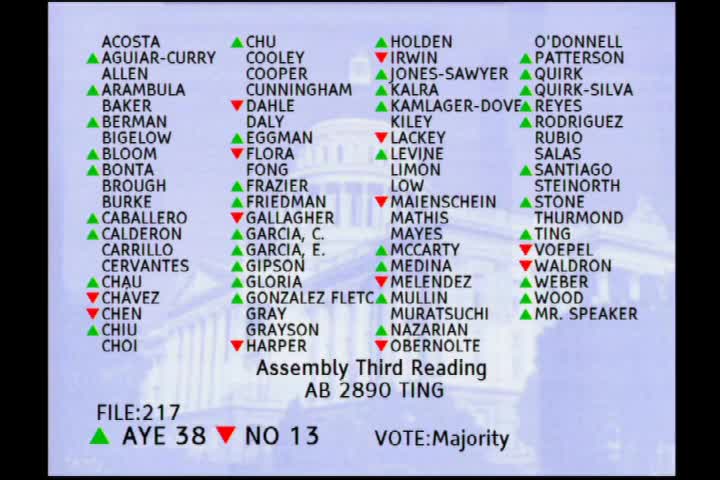
Bill Author

Bill Co-Author(s):