AB 2234: School districts: employees: dismissal or suspension administrative proceedings: testimony of minor witnesses: pupil contact information.
- Session Year: 2017-2018
- House: Assembly
- Latest Version Date: 2018-09-30
(1)Existing law establishes a system of public elementary and secondary education in this state. Under this system, school districts throughout the state provide instruction in kindergarten and grades 1 to 12, inclusive, at schoolsites. Existing law establishes school districts throughout the state, and authorizes them to employ certificated personnel to provide instruction and classified personnel to provide other services. Existing law establishes procedures to be followed in the event that a school proposes to dismiss or suspend a certificated employee. Existing law also authorizes hearings and investigations of the conduct of classified personnel to be conducted by personnel commissions in school districts that have adopted a merit system.
This bill would enact a comprehensive set of requirements for the presentation of testimony by minor witnesses at certain dismissal or suspension administrative proceedings relating to certificated employees and in hearings relating to classified employees conducted by school district governing boards in school districts that have not adopted a merit system or by personnel commissions in school districts that have adopted a merit system.
To the extent that this bill would create new duties for school districts, it would constitute a state-mandated local program.
(2)Existing law requires that information concerning a pupil be furnished in compliance with a court order or lawfully issued subpoena, and further requires a school district to make a reasonable effort to notify the pupil and his or her parent or legal guardian in advance of compliance with a lawfully issued subpoena.
This bill would require that, once a court order or lawfully issued subpoena is issued to obtain a pupils contact information, a school district make every reasonable effort to enter into an agreement with the entity that obtained the court order or subpoena to keep the pupil contact information confidential. The bill would further require that, notwithstanding the content or existence of any agreement with a school district, a party that obtains pupil contact information pursuant to this provision would be prohibited from using or disseminating that information for any purpose except as authorized by the court order or subpoena.
(3)The California Constitution requires the state to reimburse local agencies and school districts for certain costs mandated by the state. Statutory provisions establish procedures for making that reimbursement.
This bill would provide that, if the Commission on State Mandates determines that the bill contains costs mandated by the state, reimbursement for those costs shall be made pursuant to the statutory provisions noted above.
(1)Existing law establishes a system of public elementary and secondary education in this state. Under this system, school districts throughout the state provide instruction in kindergarten and grades 1 to 12, inclusive, at schoolsites. Existing law establishes school districts throughout the state, and authorizes them to employ certificated personnel to provide instruction and classified personnel to provide other services. Existing law establishes procedures to be followed in the event that a school proposes to dismiss or suspend a certificated employee. Existing law also authorizes hearings and investigations of the conduct of classified personnel to be conducted by personnel commissions in school districts that have adopted a merit system.
This bill would enact a comprehensive set of requirements for the presentation of testimony by child minor witnesses at certain dismissal or suspension administrative proceedings relating to certificated employees and in hearings relating to classified employees conducted by school district governing boards in school districts that have not adopted a merit system or by personnel commissions in school districts that have adopted a merit system.
To the extent that this bill would create new duties for school districts, it would constitute a state-mandated local program.
(2)Existing law requires that information concerning a pupil be furnished in compliance with a court order or lawfully issued subpoena, and further requires a school district to make a reasonable effort to notify the pupil and his or her parent or legal guardian in advance of compliance with a lawfully issued subpoena.
This bill would require that, once a court order or lawfully issued subpoena is issued to obtain a pupils contact information, a school district make every reasonable effort to enter into an agreement with the entity that obtained the court order or subpoena to keep the pupil contact information confidential. The bill would further require that, notwithstanding the content or existence of any agreement with a school district, a party that obtains pupil contact information pursuant to this provision would be prohibited from using or disseminating that information for any purpose except as authorized by the court order or subpoena.
(3)The California Constitution requires the state to reimburse local agencies and school districts for certain costs mandated by the state. Statutory provisions establish procedures for making that reimbursement.
This bill would provide that, if the Commission on State Mandates determines that the bill contains costs mandated by the state, reimbursement for those costs shall be made pursuant to the statutory provisions noted above.
(1)Existing law establishes a system of public elementary and secondary education in this state. Under this system, school districts throughout the state provide instruction in kindergarten and grades 1 to 12, inclusive, at schoolsites. Existing law establishes school districts throughout the state, and authorizes them to employ certificated personnel to provide instruction and classified personnel to provide other services. Existing law establishes procedures to be followed in the event that a school proposes to dismiss or suspend a certificated employee. Existing law also authorizes hearings and investigations of the conduct of classified personnel to be conducted by personnel commissions in school districts that have adopted a merit system.
This bill would enact a comprehensive set of requirements for the presentation of testimony by child witnesses at certain dismissal or suspension proceedings relating to certificated employees and in hearings relating to classified employees conducted by school district governing boards in school districts that have not adopted a merit system or by personnel commissions in school districts that have adopted a merit system.
To the extent that this bill would create new duties for school districts, it would constitute a state-mandated local program.
(2)Existing law requires that information concerning a pupil be furnished in compliance with a court order or lawfully issued subpoena, and further requires a school district to make a reasonable effort to notify the pupil and his or her parent or legal guardian in advance of compliance with a lawfully issued subpoena.
This bill would require that, once a court order or lawfully issued subpoena is issued to obtain a pupils contact information, a school district make every reasonable effort to enter into an agreement with the entity that obtained the court order or subpoena to keep the pupil contact information confidential.
(3)The California Constitution requires the state to reimburse local agencies and school districts for certain costs mandated by the state. Statutory provisions establish procedures for making that reimbursement.
This bill would provide that, if the Commission on State Mandates determines that the bill contains costs mandated by the state, reimbursement for those costs shall be made pursuant to the statutory provisions noted above.
(1)Existing law establishes a system of public elementary and secondary education in this state. Under this system, school districts throughout the state provide instruction in kindergarten and grades 1 to 12, inclusive, at schoolsites. Existing law establishes school districts throughout the state, and authorizes them to employ certificated personnel to provide instruction and classified personnel to provide other services. Existing law also establishes procedures to be followed in the event that a school proposes to dismiss or suspend a certificated employee. Existing law also authorizes hearings and investigations of the conduct of classified personnel to be conducted by personnel commissions in school districts that have adopted a merit system.
This bill would enact a comprehensive set of requirements for the presentation of testimony by child witnesses at dismissal or suspension proceedings relating to certificated employees. employees and in hearings relating to classified employees conducted by personnel commissions in school districts that have adopted a merit system.
To the extent that this bill would create new duties for school districts, it would constitute a state-mandated local program.
(2)Existing law requires that information concerning a pupil be furnished in compliance with a court order or lawfully issued subpoena, and further requires a school district to make a reasonable effort to notify the pupil and his or her parent or legal guardian in advance of compliance with a lawfully issued subpoena.
This bill would require that, once a court order or lawfully issued subpoena is issued to obtain a pupils contact information, a school district make every reasonable effort to enter into an agreement with the entity that obtained the court order or subpoena to keep the pupil contact information confidential.
(3)The California Constitution requires the state to reimburse local agencies and school districts for certain costs mandated by the state. Statutory provisions establish procedures for making that reimbursement.
This bill would provide that, if the Commission on State Mandates determines that the bill contains costs mandated by the state, reimbursement for those costs shall be made pursuant to the statutory provisions noted above.
(1)Existing law establishes a system of public elementary and secondary education in this state. Under this system, school districts throughout the state provide instruction in kindergarten and grades 1 to 12, inclusive, at schoolsites. Existing law establishes school districts throughout the state, and authorizes them to employ certificated personnel to provide instruction. Existing law also establishes procedures to be followed in the event that a school proposes to dismiss or suspend a certificated employee.
This bill would enact a comprehensive set of requirements for the presentation of testimony by child witnesses at dismissal or suspension proceedings relating to certificated employees.
To the extent that this bill would create new duties for school districts, it would constitute a state-mandated local program.
(2)Existing law requires that information concerning a pupil be furnished in compliance with a court order or lawfully issued subpoena, and further requires a school district to make a reasonable effort to notify the pupil and his or her parent or legal guardian in advance of compliance with a lawfully issued subpoena.
This bill would require that, once a court order or lawfully issued subpoena is issued to obtain a pupils contact information, a school district make every reasonable effort to enter into an agreement with the entity that obtained the court order or subpoena to keep the pupil contact information confidential.
(3)The California Constitution requires the state to reimburse local agencies and school districts for certain costs mandated by the state. Statutory provisions establish procedures for making that reimbursement.
This bill would provide that, if the Commission on State Mandates determines that the bill contains costs mandated by the state, reimbursement for those costs shall be made pursuant to the statutory provisions noted above.
(a)It is the intent of the Legislature in enacting this article to provide an administrative law judge with discretion to employ alternative hearing procedures to protect the rights of a minor witness, the rights of the respondent, and the integrity of the judicial process. In exercising its discretion, the administrative law judge necessarily shall be required to balance the rights of the respondent against the need to protect a minor witness and to preserve the integrity of the truth-finding function. This discretion is intended to be used selectively when the facts and circumstances in an individual case present compelling evidence of the need to use these alternative procedures.
(b)As used in this article, the following definitions apply:
(1)Judge means the administrative law judge presiding over the dismissal or suspension hearing.
(2)Minor means any person under 18 years of age.
(3)Representative of the respondent means either counsel for, or an exclusive labor representative of, the respondent.
(4)Respondent means the party against whom a petition has been filed.
(5)Support person means an adult attendant, victim advocate, or other witness who is able, because of education, experience, or familiarity with the minor, to ensure that the minors mental health, welfare, and well-being are protected.
(c)In accordance with Section 44994, this article shall apply only to proceedings brought pursuant to Section 44934.1.
44991.(a)(1)In an administrative proceeding held pursuant to Section 44934.1 involving an alleged offense involving a minor that meets the definition of egregious misconduct under paragraph (1) of subdivision (a) of Section 44932, counsel for a school district may apply for an order that the minors testimony be taken in a room outside the hearing room and be televised by two-way closed-circuit television and bears the burden of proving that such an order is justified. The person seeking such an order shall apply for the order at least seven days before the hearing date, unless the judge finds on the record that the need for such an order was not reasonably foreseeable.
(2)The judge may order that the testimony of the minor be taken by closed-circuit television as provided in paragraph (1) if the judge finds that the minor is unable to testify in the hearing room in the presence of the respondent for any of the following reasons:
(A)The minor is unable to testify because of emotional distress, established by a written statement of the minor, the minors parent or guardian, the minors support person, or a mental health professional who has evaluated the minor.
(B)There is a substantial likelihood, established by expert testimony, that the minor would suffer emotional distress from testifying.
(C)According to expert testimony, the minor suffers from a medical condition, mental condition, or other infirmity.
(D)The judge finds that conduct of the respondent or his or her representative causes the minor to be unable to continue testifying.
(3)The judge shall rule on the application, and support a ruling on the minors inability to testify with findings on the record. In determining whether the impact on an individual minor of one or more of the factors described in paragraph (2) is so substantial as to justify an order under paragraph (1), the judge may question the minor in his or her office, or at some comfortable place other than the hearing room, on the record for a reasonable period of time in the presence of the minors parent or guardian, the minors support person, counsel for the school district, and a representative of the respondent.
(4)If the judge orders the taking of testimony by television, counsel for the school district and a representative of the respondent, not including a respondent represented pro se, shall be present in a room outside the hearing room with the minor, and the minor shall be subjected to direct and cross-examination. The following are the only other persons who may be permitted in the room with the minor during the minors testimony:
(A)Any persons necessary to operate the closed-circuit television equipment.
(B)The parent or guardian of the minor.
(C)Any other persons whose presence is determined by the judge to be necessary to the welfare and well-being of the minor, including, but not necessarily limited to, a judicial officer or support person.
(5)In making the determination required by this subdivision, the judge shall consider the age, maturity, and cognitive ability of the minor, compared with other minors of the same age, the relationship between the minor and the respondent, any handicap or disability of the minor, and the nature of the acts alleged to have been committed by the respondent. The minors testimony shall be under oath and transmitted by closed-circuit television into the hearing room for viewing and hearing by the respondent, the judge, and any members of the public in attendance. The respondent shall be provided with the means of private, contemporaneous communication with his or her representative during the testimony. The closed-circuit television transmission shall relay into the room in which the minor is testifying the respondents image, and the voice of the judge.
(b)(1)In an administrative proceeding held pursuant to Section 44934.1 involving an alleged offense involving a minor that meets the definition of egregious misconduct under paragraph (1) of subdivision (a) of Section 44932, counsel for the school district may apply for an order that a deposition be taken of the minors testimony and that the deposition be recorded and preserved on videotape based upon the same criteria that would allow a minors testimony to be taken in a room outside the hearing room and be televised by two-way closed-circuit television, as set forth in paragraph (2) of subdivision (a) of this section. Counsel for the school district shall bear the burden of proving that an order applied for under this paragraph is justified in order to be consistent with subdivision (a) of this section.
(2)Upon timely receipt of an application described in paragraph (1), the judge shall make a preliminary finding regarding whether the minor is likely to be unable to testify in the hearing room in the physical presence of the respondent, the judge, and the public for any of the reasons set forth in paragraph (2) of subdivision (a).
(3)If the judge finds that the minor is likely to be unable to testify in open hearing for any of the reasons set forth in paragraph (2) of subdivision (a), the judge shall order that the minors deposition be taken and preserved by videotape.
(4)The judge shall preside at the videotaped deposition of a minor, and shall rule on all questions as if at the hearing. The following are the only other persons who shall be permitted to be present at the videotaped deposition:
(A)Counsel for the school district.
(B)Representative of the respondent.
(C)Any persons necessary to operate the videotape equipment.
(D)The respondent, unless the judge excludes the respondent from the hearing room pursuant to paragraph (6).
(E)The parent or guardian of the minor.
(F)Any support person appointed pursuant to Section 44993 to protect the mental health, welfare, and well-being of the minor.
(5)The respondent shall be afforded the rights applicable to respondents during trials, including the right to be confronted with the witness against the respondent and the right to cross-examine the minor.
(6)If the preliminary finding of inability under paragraph (2) is based on evidence that the minor is unable to testify in the physical presence of the respondent, the judge may order that the respondent, including a respondent represented pro se, be excluded from the room in which the deposition is conducted. If the judge orders that the respondent be excluded from the deposition room, the judge shall order that two-way closed-circuit television equipment relay the respondents image into the room in which the minor is testifying, and the minors testimony into the room in which the respondent is viewing the proceeding, and that the respondent be provided with a means of private, contemporaneous communication with his or her representative during the deposition.
(7)The complete record of the examination of the minor, including the image and voices of all persons who in any way participate in the examination, shall be made and preserved on videotape in addition to being stenographically recorded. The videotape shall be transmitted to the judges office, and shall be made available for viewing by counsel for the school district, representative of the respondent, and the respondent during ordinary business hours.
(8)If at the time of the hearing, the judge finds that the minor is unavailable or unable to testify in open hearing for a reason described in paragraph (2) of subdivision (a), the judge may admit into evidence the minors videotaped deposition in lieu of the minors testifying at the hearing. The judge shall support any ruling made pursuant to this paragraph with findings on the record.
(9)Upon timely receipt of notice that new evidence has been discovered after the original videotaping and before or during the hearing, the judge, for good cause shown, may order an additional videotaped deposition. The testimony of the minor shall be restricted to the matters specified by the judge as the basis for granting the order.
(10)In connection with the taking of a videotaped deposition under this subdivision, the judge may enter a protective order for the purpose of protecting the privacy of the minor.
44992.(a)With a witness under 18 years of age, or a dependent person with a substantial cognitive impairment, the judge shall take special care to protect the witness from undue harassment or embarrassment, and to restrict the unnecessary repetition of questions. The judge shall also take special care to ensure that questions are stated in a form that is appropriate to the age, maturity, or cognitive level of the witness. The judge may, in the interests of justice, on objection by a party, forbid the asking of a question that is in a form that is not reasonably likely to be understood by a person of the age, maturity, or cognitive level of the witness.
(b)When a minor testifies, the judge may order the exclusion from the hearing room of all persons, including members of the press, who do not have a direct interest in the case. This order may be made if the judge determines, on the record, that requiring the minor to testify in the open hearing room would cause substantial psychological harm to the minor or would result in the minors inability to effectively communicate. Such an order shall be narrowly tailored to serve the specific compelling interest of the school district.
44993.(a)(1)A support person selected by the minor witness shall be appointed for the minor witness at the onset of the hearing, unless that person does not have the education, experience, and familiarity with the minor witness to protect the minors mental health, welfare, and well-being. A parent or guardian of the minor witness shall be presumed to be qualified to serve as the support person for the minor.
(2)If the minor witness does not make a selection, or does not select a person who is able, because of education, experience, or familiarity with the minor, to ensure that the minors mental health, welfare, and well-being are protected, or the judge determines that the minors parent or guardian is not qualified to serve as the support person for the minor witness, the judge shall select and appoint a support person for the minor. The support person shall be present during all stages of the hearing to provide support to the minor.
(b)If the respondent wants to contact the minor witness, the respondent shall contact the support person to coordinate any legal contact, including, but not necessarily limited to, an interview, deposition, or other hearing preparation task.
(c)The respondent may not use a private investigator or similar professional to make contact with the minor.
(d)The judge, at his or her discretion, may allow the support person to remain in close physical proximity to or in contact with the minor while the minor testifies. A support person shall not provide the minor with an answer to any question directed to the minor during the course of the minors testimony or otherwise prompt the minor.
(e)A support person appointed by the judge shall assist the minor to express the minors views concerning the personal consequences of the minors victimization, at a level and in a form of communication commensurate with the minors age, maturity, and cognitive ability.
(f)Notwithstanding subdivision (a), a support person may, but need not, be assigned to a minor witness if that minor witness was not a direct victim of the alleged egregious misconduct.
44994.This article shall apply to a hearing conducted by an administrative law judge in any dismissal or suspension hearing held pursuant to Section 44934.1 involving an alleged offense involving a minor that meets the definition of egregious misconduct pursuant to paragraph (1) of subdivision (a) of Section 44932.
SEC. 2.Section 45113 of the Education Code is amended to read:45113.(a)The governing board of a school district shall prescribe written rules and regulations, governing the personnel management of the classified service, which shall be printed and made available to employees in the classified service, the public, and those concerned with the administration of this section, whereby these employees are designated as permanent employees of the school district after serving a prescribed period of probation that shall not exceed one year. A permanent employee who accepts a promotion and fails to complete the probationary period for that promotional position, shall be employed in the classification from which he or she was promoted.
(b)Any employee designated as a permanent employee shall be subject to disciplinary action only for cause as prescribed by rule or regulation of the governing board of the school district, but the governing boards determination of the sufficiency of the cause for disciplinary action shall be conclusive.
(c)The governing board of a school district shall adopt rules of procedure for disciplinary proceedings that shall contain a provision for informing the employee by written notice of the specific charges against him or her, a statement of the employees right to a hearing on those charges, and the time within which the hearing may be requested that shall be not less than five days after service of the notice to the employee, and a card or paper, the signing and filing of which shall constitute a demand for hearing, and a denial of all charges. The burden of proof shall remain with the governing board of the school district, and any rule or regulation to the contrary shall be void.
(d)No disciplinary action shall be taken for any cause that arose before the employees becoming permanent, nor for any cause that arose more than two years preceding the date of the filing of the notice of cause unless the cause was concealed or not disclosed by the employee when it could be reasonably assumed that the employee should have disclosed the facts to the employing school district.
(e)Nothing in this section shall be construed to prohibit the governing board of a school district, pursuant to the terms of an agreement with an employee organization under Chapter 10.7 (commencing with Section 3540) of Division 4 of Title 1 of the Government Code, from delegating its authority to determine whether sufficient cause exists for disciplinary action against classified employees, excluding peace officers as defined in Section 830.32 of the Penal Code, to an impartial third party hearing officer. However, the governing board of the school district shall retain authority to review the determination under the standards set forth in Section 1286.2 of the Code of Civil Procedure.
(f)(1)A governing board of a school district shall delegate its authority to a judge, as defined in Section 44990, to determine whether sufficient cause exists for disciplinary actions against classified employees involving allegations of egregious misconduct, as defined in Section 44932, and involving a minor, as defined in Section 44990. The judges ruling shall be binding upon all parties.
(2)A judge authorized under this subdivision to conduct a hearing involving allegations as described in Section 44010 or 44011 of this code, or as described in Sections 11165.2 to 11165.6, inclusive, of the Penal Code, shall conduct that hearing in accordance with Article 3.3 (commencing with Section 44990) of Chapter 4 and Section 49077 of this code.
(3)The term representative of the respondent, within the meaning of Article 3.3 (commencing with Section 44990) of Chapter 4, shall include, but not necessarily be limited to, an exclusive labor representative.
(g)This section shall apply only to school districts not incorporating the merit system as outlined in Article 6 (commencing with Section 45240).
SEC. 3.Section 45312 of the Education Code is amended to read:45312.(a)(1)The commission may authorize a hearing officer or other representative to conduct any hearing or investigation that the commission itself is authorized by this article to conduct. Any such authorized person conducting the hearing or investigation may administer oaths, subpoena and require the attendance of witnesses and the production of books or papers, and cause the depositions of witnesses to be taken in the manner prescribed by law for similar depositions in civil cases in the superior court of this state under Title 4 (commencing with Section 2016.010) of Part 4 of the Code of Civil Procedure. The commission may instruct the authorized representative to present findings or recommendations. The commission may accept, reject, or amend any of the findings or recommendations of the authorized representative. Any rejection or amendment of findings or recommendations shall be based either on a review of the transcript of the hearing or investigation or upon the results of the supplementary hearing or investigation as the commission may order.
(2)For disciplinary cases against classified employees involving allegations of egregious misconduct, as defined in Section 44932, and involving a minor, as defined in Section 44990, the commission shall hire a judge, as defined in Section 44990, to conduct any hearing or investigation that the commission itself is authorized by this article to conduct. The judges ruling shall be binding upon all parties.
(3)A judge authorized under this subdivision to conduct a hearing involving allegations as described in Section 44010 or 44011 of this code, or as described in Sections 11165.2 to 11165.6, inclusive, of the Penal Code, shall conduct that hearing in accordance with Article 3.3 (commencing with Section 44990) of Chapter 4 and Section 49077 of this code.
(4)The term representative of the respondent, within the meaning of Article 3.3 (commencing with Section 44990) of Chapter 4, shall include, but not necessarily be limited to, an exclusive labor representative.
(b)The commission may employ hearing officers or other representatives by contract, or as professional experts or otherwise, and may adopt and amend rules and procedures as necessary to effectuate this section.
SEC. 4.Section 49077 of the Education Code is amended to read:49077.(a)Information concerning a pupil shall be furnished in compliance with a court order or a lawfully issued subpoena. The school district shall make a reasonable effort to notify the pupils parent or legal guardian and the pupil in advance of compliance with a lawfully issued subpoena and, in the case of compliance with a court order, if lawfully possible within the requirements of the order.
(b)Once a court order or lawfully issued subpoena is issued to obtain pupil contact information, the school district shall make a reasonable effort to enter into an agreement with the entity that obtained the court order or subpoena requiring that the pupil contact information be maintained in a confidential manner.
(c)Notwithstanding the content or existence of any agreement with a school district, a party that obtains pupil contact information pursuant to this section shall not use or disseminate that information for any purpose except as authorized by the court order or subpoena.
SEC. 5.If the Commission on State Mandates determines that this act contains costs mandated by the state, reimbursement to local agencies and school districts for those costs shall be made pursuant to Part 7 (commencing with Section 17500) of Division 4 of Title 2 of the Government Code.
(a)It is the intent of the Legislature in enacting this article to provide an administrative law judge with discretion to employ alternative hearing procedures to protect the rights of a minor witness, the rights of the respondent, and the integrity of the judicial process. In exercising its discretion, the administrative law judge necessarily shall be required to balance the rights of the respondent against the need to protect a minor witness and to preserve the integrity of the truth-finding function. This discretion is intended to be used selectively when the facts and circumstances in an individual case present compelling evidence of the need to use these alternative procedures.
(b)As used in this article, the following definitions apply:
(1)Judge means the administrative law judge presiding over the dismissal or suspension hearing.
(2)Minor means any person under 18 years of age.
(3)Representative of the respondent means either counsel for, or an exclusive labor representative of, the respondent.
(4)Respondent means the party against whom a petition has been filed.
(5)Support person means an adult attendant, victim advocate, or other witness who is able, because of education, experience, or familiarity with the minor, to ensure that the minors mental health, welfare, and well-being are protected.
(c)In accordance with Section 44994, this article shall apply only to proceedings brought pursuant to Section 44934.1.
44991.(a)(1)In an administrative proceeding held pursuant to Section 44934.1 and involving an alleged offense involving a minor that meets the definition of egregious misconduct under paragraph (1) of subdivision (a) of Section 44932, counsel for a school district may apply for an order that the minors testimony be taken in a room outside the hearing room and be televised by two-way closed-circuit television and bears the burden of proving that such an order is justified. The person seeking such an order shall apply for the order at least seven days before the hearing date, unless the judge finds on the record that the need for such an order was not reasonably foreseeable.
(2)The judge may order that the testimony of the minor be taken by closed-circuit television as provided in paragraph (1) if the judge finds that the minor is unable to testify in the hearing room in the presence of the respondent for any of the following reasons:
(A)The minor is unable to testify because of emotional distress, established by a written statement of the minor, the minors parent or guardian, the minors support person, or a mental health professional who has evaluated the minor.
(B)There is a substantial likelihood, established by expert testimony, that the minor would suffer emotional distress from testifying.
(C)According to expert testimony, the minor suffers from a medical condition, mental condition, or other infirmity.
(D)The judge finds that conduct of the respondent or his or her representative causes the minor to be unable to continue testifying.
(3)The judge shall rule on the application, and support a ruling on the minors inability to testify with findings on the record. In determining whether the impact on an individual minor of one or more of the factors described in paragraph (2) is so substantial as to justify an order under paragraph (1), the judge may question the minor in his or her office, or at some comfortable place other than the hearing room, on the record for a reasonable period of time in the presence of the minors parent or guardian, the minors support person, counsel for the school district, and a representative of the respondent.
(4)If the judge orders the taking of testimony by television, counsel for the school district and representative of the respondent, not including a respondent represented pro se, shall be present in a room outside the hearing room with the minor, and the minor shall be subjected to direct and cross-examination. The following are the only other persons who may be permitted in the room with the minor during the minors testimony:
(A)Any persons necessary to operate the closed-circuit television equipment.
(B)The parent or guardian of the minor.
(C)Any other persons whose presence is determined by the judge to be necessary to the welfare and well-being of the minor, including, but not necessarily limited to, a judicial officer or support person.
(5)In making the determination required by this subdivision, the judge shall consider the age, maturity, and cognitive ability of the minor, compared with other minors of the same age, the relationship between the minor and the respondent, any handicap or disability of the minor, and the nature of the acts alleged to have been committed by the respondent. The minors testimony shall be under oath and transmitted by closed-circuit television into the hearing room for viewing and hearing by the respondent, the judge, and any members of the public in attendance. The respondent shall be provided with the means of private, contemporaneous communication with his or her representative during the testimony. The closed-circuit television transmission shall relay into the room in which the minor is testifying the respondents image, and the voice of the judge.
(b)(1)In an administrative proceeding held pursuant to Section 44934.1 involving an alleged offense involving a minor that meets the definition of egregious misconduct under paragraph (1) of subdivision (a) of Section 44932, counsel for the school district may apply for an order that a deposition be taken of the minors testimony and that the deposition be recorded and preserved on videotape based upon the same criteria that would allow a minors testimony to be taken in a room outside the hearing room and be televised by two-way closed-circuit television, as set forth in paragraph (2) of subdivision (a) of this section. Counsel for the school district shall bear the burden of proving that an order applied for under this paragraph is justified in order to be consistent with subdivision (a) of this section.
(2)Upon timely receipt of an application described in paragraph (1), the judge shall make a preliminary finding regarding whether at the time of deposition the minor is likely to be unable to testify in the hearing room in the physical presence of the respondent, the judge, and the public for any of the reasons set forth in paragraph (2) of subdivision (a).
(3)If the judge finds that the minor is likely to be unable to testify in open hearing for any of the reasons set forth in paragraph (2) of subdivision (a), the judge shall order that the minors deposition be taken and preserved by videotape.
(4)The judge shall preside at the videotaped deposition of a minor, and shall rule on all questions as if at the hearing. The following are the only other persons who shall be permitted to be present at the videotaped deposition:
(A)Counsel for the school district.
(B)Representative of the respondent.
(C)Any persons necessary to operate the videotape equipment.
(D)The respondent, unless the judge excludes the respondent from the hearing room pursuant to paragraph (6).
(E)The parent or guardian of the minor.
(F)Any support person appointed pursuant to Section 44993 to protect the mental health, welfare, and well-being of the minor.
(5)The respondent shall be afforded the rights applicable to respondents during trials, including the right to be confronted with the witness against the respondent and the right to cross-examine the minor.
(6)If the preliminary finding of inability under paragraph (2) is based on evidence that the minor is unable to testify in the physical presence of the respondent, the judge may order that the respondent, including a respondent represented pro se, be excluded from the room in which the deposition is conducted. If the judge orders that the respondent be excluded from the deposition room, the judge shall order that two-way closed-circuit television equipment relay the respondents image into the room in which the minor is testifying, and the minors testimony into the room in which the respondent is viewing the proceeding, and that the respondent be provided with a means of private, contemporaneous communication with his or her representative during the deposition.
(7)The complete record of the examination of the minor, including the image and voices of all persons who in any way participate in the examination, shall be made and preserved on videotape in addition to being stenographically recorded. The videotape shall be transmitted to the judges office, and shall be made available for viewing by counsel for the school district, representative of the respondent, and the respondent during ordinary business hours.
(8)If at the time of the hearing, the judge finds that the minor is unavailable or unable to testify in open hearing for a reason described in paragraph (2) of subdivision (a), the judge may admit into evidence the minors videotaped deposition in lieu of the minors testifying at the hearing. The judge shall support any ruling made pursuant to this paragraph with findings on the record.
(9)Upon timely receipt of notice that new evidence has been discovered after the original videotaping and before or during the hearing, the judge, for good cause shown, may order an additional videotaped deposition. The testimony of the minor shall be restricted to the matters specified by the judge as the basis for granting the order.
(10)In connection with the taking of a videotaped deposition under this subdivision, the judge may enter a protective order for the purpose of protecting the privacy of the minor.
44992.(a)With a witness under 18 years of age, or a dependent person with a substantial cognitive impairment, the judge shall take special care to protect the witness from undue harassment or embarrassment, and to restrict the unnecessary repetition of questions. The judge shall also take special care to ensure that questions are stated in a form that is appropriate to the age, maturity, or cognitive level of the witness. The judge may, in the interests of justice, on objection by a party, forbid the asking of a question that is in a form that is not reasonably likely to be understood by a person of the age, maturity, or cognitive level of the witness.
(b)When a minor testifies, the judge may order the exclusion from the hearing room of all persons, including members of the press, who do not have a direct interest in the case. This order may be made if the judge determines, on the record, that requiring the minor to testify in the open hearing room would cause substantial psychological harm to the minor or would result in the minors inability to effectively communicate. Such an order shall be narrowly tailored to serve the specific compelling interest of the school district.
44993.(a)(1)A support person selected by the minor witness shall be appointed for the minor witness at the onset of the hearing, unless that person does not have the education, experience, and familiarity with the minor witness to protect the minors mental health, welfare, and well-being. A parent or guardian of the minor witness shall be presumed to be qualified to serve as the support person for the minor.
(2)If the minor witness does not make a selection, or does not select a person who is able, because of education, experience, or familiarity with the minor, to ensure that the minors mental health, welfare, and well-being are protected, or the judge determines that the minors parent or guardian is not qualified to serve as the support person for the minor witness, the judge shall select and appoint a support person for the minor. The support person shall be present during all stages of the hearing to provide support to the minor.
(b)If the respondent wants to contact the minor witness, the respondent shall contact the support person to coordinate any legal contact, including, but not necessarily limited to, an interview, deposition, or other hearing preparation task.
(c)The respondent may not use a private investigator or similar professional to make contact with the minor.
(d)The judge, at his or her discretion, may allow the support person to remain in close physical proximity to or in contact with the minor while the minor testifies. A support person shall not provide the minor with an answer to any question directed to the minor during the course of the minors testimony or otherwise prompt the minor.
(e)A support person appointed by the judge shall assist the minor to express the minors views concerning the personal consequences of the minors victimization, at a level and in a form of communication commensurate with the minors age, maturity, and cognitive ability.
44994.This article shall apply to a hearing conducted by an administrative law judge in any dismissal or suspension hearing held pursuant to Section 44934.1 involving an alleged offense involving a minor that meets the definition of egregious misconduct pursuant to paragraph (1) of subdivision (a) of Section 44932.
SEC. 2.Section 45113 of the Education Code is amended to read:45113.(a)The governing board of a school district shall prescribe written rules and regulations, governing the personnel management of the classified service, which shall be printed and made available to employees in the classified service, the public, and those concerned with the administration of this section, whereby these employees are designated as permanent employees of the school district after serving a prescribed period of probation that shall not exceed one year. A permanent employee who accepts a promotion and fails to complete the probationary period for that promotional position, shall be employed in the classification from which he or she was promoted.
(b)Any employee designated as a permanent employee shall be subject to disciplinary action only for cause as prescribed by rule or regulation of the governing board of the school district, but the governing boards determination of the sufficiency of the cause for disciplinary action shall be conclusive.
(c)The governing board of a school district shall adopt rules of procedure for disciplinary proceedings that shall contain a provision for informing the employee by written notice of the specific charges against him or her, a statement of the employees right to a hearing on those charges, and the time within which the hearing may be requested that shall be not less than five days after service of the notice to the employee, and a card or paper, the signing and filing of which shall constitute a demand for hearing, and a denial of all charges. The burden of proof shall remain with the governing board of the school district, and any rule or regulation to the contrary shall be void.
(d)No disciplinary action shall be taken for any cause that arose before the employees becoming permanent, nor for any cause that arose more than two years preceding the date of the filing of the notice of cause unless the cause was concealed or not disclosed by the employee when it could be reasonably assumed that the employee should have disclosed the facts to the employing school district.
(e)Nothing in this section shall be construed to prohibit the governing board of a school district, pursuant to the terms of an agreement with an employee organization under Chapter 10.7 (commencing with Section 3540) of Division 4 of Title 1 of the Government Code, from delegating its authority to determine whether sufficient cause exists for disciplinary action against classified employees, excluding peace officers as defined in Section 830.32 of the Penal Code, to an impartial third party hearing officer. However, the governing board of the school district shall retain authority to review the determination under the standards set forth in Section 1286.2 of the Code of Civil Procedure.
(f)(1)A governing board of a school district shall delegate its authority to a judge, as defined in Section 44990, to determine whether sufficient cause exists for disciplinary actions against classified employees involving allegations of egregious misconduct, as defined in Section 44932, and involving a minor, as defined in Section 44990. The judges ruling shall be binding among upon all parties.
(2)A judge authorized under this subdivision to conduct a hearing involving allegations as described in Section 44010 or 44011 of this code, or as described in Sections 11165.2 to 11165.6, inclusive, of the Penal Code, shall conduct that hearing in accordance with Article 3.3 (commencing with Section 44990) of Chapter 4 and Section 49077 of this code.
(3)The term representative of the respondent, within the meaning of Article 3.3 (commencing with Section 44990) of Chapter 4, shall include, but not necessarily be limited to, an exclusive labor representative.
(g)This section shall apply only to school districts not incorporating the merit system as outlined in Article 6 (commencing with Section 45240).
SEC. 3.Section 45312 of the Education Code is amended to read:45312.(a)(1)The commission may authorize a hearing officer or other representative to conduct any hearing or investigation that the commission itself is authorized by this article to conduct. Any such authorized person conducting the hearing or investigation may administer oaths, subpoena and require the attendance of witnesses and the production of books or papers, and cause the depositions of witnesses to be taken in the manner prescribed by law for similar depositions in civil cases in the superior court of this state under Title 4 (commencing with Section 2016.010) of Part 4 of the Code of Civil Procedure. The commission may instruct the authorized representative to present findings or recommendations. The commission may accept, reject, or amend any of the findings or recommendations of the authorized representative. Any rejection or amendment of findings or recommendations shall be based either on a review of the transcript of the hearing or investigation or upon the results of the supplementary hearing or investigation as the commission may order.
(2)For disciplinary cases against classified employees involving allegations of egregious misconduct, as defined in Section 44932, and involving a minor, as defined in Section 44990, the commission shall hire a judge, as defined in Section 44990, to conduct any hearing or investigation that the commission itself is authorized by this article to conduct. The judges ruling shall be binding among upon all parties.
(3)A judge authorized under this subdivision to conduct a hearing involving allegations as described in Section 44010 or 44011 of this code, or as described in Sections 11165.2 to 11165.6, inclusive, of the Penal Code, shall conduct that hearing in accordance with Article 3.3 (commencing with Section 44990) of Chapter 4 and Section 49077 of this code.
(4)The term representative of the respondent, within the meaning of Article 3.3 (commencing with Section 44990) of Chapter 4, shall include, but not necessarily be limited to, an exclusive labor representative.
(b)The commission may employ hearing officers or other representatives by contract, or as professional experts or otherwise, and may adopt and amend rules and procedures as necessary to effectuate this section.
SEC. 4.Section 49077 of the Education Code is amended to read:49077.(a)Information concerning a pupil shall be furnished in compliance with a court order or a lawfully issued subpoena. The school district shall make a reasonable effort to notify the pupils parent or legal guardian and the pupil in advance of compliance with a lawfully issued subpoena and, in the case of compliance with a court order, if lawfully possible within the requirements of the order.
(b)Once a court order or lawfully issued subpoena is issued to obtain pupil contact information, the school district shall make a reasonable effort to enter into an agreement with the entity that obtained the court order or subpoena requiring that the pupil contact information be maintained in a confidential manner.
(c)Notwithstanding the content or existence of any agreement with a school district, a party that obtains pupil contact information pursuant to this section shall not use or disseminate that information for any purpose except as authorized by the court order or subpoena.
SEC. 5.If the Commission on State Mandates determines that this act contains costs mandated by the state, reimbursement to local agencies and school districts for those costs shall be made pursuant to Part 7 (commencing with Section 17500) of Division 4 of Title 2 of the Government Code.
(a)It is the intent of the Legislature in enacting this article to provide an administrative law judge with discretion to employ alternative hearing procedures to protect the rights of a minor witness, the rights of the respondent, and the integrity of the judicial process. In exercising its discretion, the administrative law judge necessarily shall be required to balance the rights of the respondent against the need to protect a minor witness and to preserve the integrity of the truth-finding function. This discretion is intended to be used selectively when the facts and circumstances in an individual case present compelling evidence of the need to use these alternative procedures.
(b)As used in this article, the following definitions apply:
(1)Judge means the administrative law judge presiding over the dismissal or suspension hearing.
(2)Minor means any person under 18 years of age.
(3)Representative of the respondent means either counsel for, or an exclusive labor representative of, the respondent.
(4)Respondent means the party against whom a petition has been filed.
(5)Support person means an adult attendant, victim advocate, or other witness who is able, because of education, experience, or familiarity with the minor, to ensure that the minors mental health and legal rights health, welfare, and well-being are protected.
44991.(a)(1)In an administrative proceeding held pursuant to Section 44934.1 and involving an alleged offense involving a minor that meets the definition of egregious misconduct under paragraph (1) of subdivision (a) of Section 44932, counsel for a school district may apply for an order that the minors testimony be taken in a room outside the hearing room and be televised by two-way closed circuit closed-circuit television and bears the burden of proving that such an order is justified. The person seeking such an order shall apply for the order at least seven days before the hearing date, unless the judge finds on the record that the need for such an order was not reasonably foreseeable.
(2)The judge may order that the testimony of the minor be taken by closed-circuit television as provided in paragraph (1) if the judge finds that the minor is unable to testify in the hearing room in the presence of the respondent for any of the following reasons:
(A)The minor is unable to testify because of emotional distress, established by a written statement of the minor, the minors parent or guardian, the minors support person, or a mental health professional who has evaluated the minor.
(B)There is a substantial likelihood, established by expert testimony, that the minor would suffer emotional distress from testifying.
(C)According to expert testimony, the minor suffers from a medical condition, mental condition, or other infirmity.
(D)The judge finds that conduct of the respondent or his or her representative causes the minor to be unable to continue testifying.
(3)The judge shall rule on the application, and support a ruling on the minors inability to testify with findings on the record. In determining whether the impact on an individual minor of one or more of the factors described in paragraph (2) is so substantial as to justify an order under paragraph (1), the judge may question the minor in his or her office, or at some comfortable place other than the hearing room, on the record for a reasonable period of time in the presence of the minors parent or guardian, support person, counsel for the school district, and representative of the respondent.
(4)If the judge orders the taking of testimony by television, counsel for the school district and representative of the respondent, not including a respondent represented pro se, shall be present in a room outside the hearing room with the minor, and the minor shall be subjected to direct and cross-examination. The following are the only other persons who may be permitted in the room with the minor during the minors testimony:
(A)Any persons necessary to operate the closed-circuit television equipment.
(B)The parent or guardian of the minor.
(C)Any other persons whose presence is determined by the judge to be necessary to the welfare and well-being of the minor, including, but not necessarily limited to, a judicial officer or support person.
(5)In making the determination required by this subdivision, the judge shall consider the age, maturity, and cognitive ability of the minor, compared with other minors of the same age, the relationship between the minor and the respondent, any handicap or disability of the minor, and the nature of the acts alleged to have been committed by the respondent. The minors testimony shall be under oath and transmitted by closed-circuit television into the hearing room for viewing and hearing by the respondent, the judge, and any members of the public in attendance. The respondent shall be provided with the means of private, contemporaneous communication with his or her representative during the testimony. The closed-circuit television transmission shall relay into the room in which the minor is testifying the respondents image, and the voice of the judge.
(b)(1)In an administrative proceeding held pursuant to Section 44934.1 involving an alleged offense involving a minor that meets the definition of egregious misconduct under paragraph (1) of subdivision (a) of Section 44932, counsel for the school district may apply for an order that a deposition be taken of the minors testimony and that the deposition be recorded and preserved on videotape based upon the same criteria that would allow a minors testimony to be taken in a room outside the hearing room and be televised by two-way closed circuit closed-circuit television, as set forth in paragraph (2) of subdivision (a) of this section.
(2)Upon timely receipt of an application described in paragraph (1), the judge shall make a preliminary finding regarding whether at the time of deposition the minor is likely to be unable to testify in the hearing room in the physical presence of the respondent, the judge, and the public for any of the reasons set forth in paragraph (2) of subdivision (a).
(3)If the judge finds that the minor is likely to be unable to testify in open hearing for any of the reasons stated set forth in paragraph (2), (2) of subdivision (a), the judge shall order that the minors deposition be taken and preserved by videotape.
(4)The judge shall preside at the videotaped deposition of a minor, and shall rule on all questions as if at the hearing. The following are the only other persons who shall be permitted to be present at the videotaped deposition:
(A)Counsel for the school district.
(B)Representative of the respondent.
(C)Any persons necessary to operate the videotape equipment.
(D)The respondent, unless the judge excludes the respondent from the hearing room pursuant to paragraph (6).
(E)The parent or guardian of the minor.
(F)Any support person whose presence is determined by the judge to be necessary to the welfare appointed pursuant to Section 44993 to protect the mental health, welfare, and well-being of the minor.
(5)The respondent shall be afforded the rights applicable to respondents during trials, including the right to be confronted with the witness against the respondent and the right to cross-examine the minor.
(6)If the preliminary finding of inability under paragraph (2) is based on evidence that the minor is unable to testify in the physical presence of the respondent, the judge may order that the respondent, including a respondent represented pro se, be excluded from the room in which the deposition is conducted. If the judge orders that the respondent be excluded from the deposition room, the judge shall order that two-way closed-circuit television equipment relay the respondents image into the room in which the minor is testifying, and the minors testimony into the room in which the respondent is viewing the proceeding, and that the respondent be provided with a means of private, contemporaneous communication with his or her representative during the deposition.
(7)The complete record of the examination of the minor, including the image and voices of all persons who in any way participate in the examination, shall be made and preserved on videotape in addition to being stenographically recorded. The videotape shall be transmitted to the judges office, and shall be made available for viewing by counsel for the school district, representative of the respondent, and the respondent during ordinary business hours.
(8)If at the time of the hearing, the judge finds that the minor is unavailable or unable to testify in open hearing for a reason described in paragraph (2) of subdivision (a), the judge may admit into evidence the minors videotaped deposition in lieu of the minors testifying at the hearing. The judge shall support any ruling made pursuant to this paragraph with findings on the record.
(9)Upon timely receipt of notice that new evidence has been discovered after the original videotaping and before or during the hearing, the judge, for good cause shown, may order an additional videotaped deposition. The testimony of the minor shall be restricted to the matters specified by the judge as the basis for granting the order.
(10)In connection with the taking of a videotaped deposition under this subdivision, the judge may enter a protective order for the purpose of protecting the privacy of the minor.
44992.(a)With a witness under 18 years of age, or a dependent person with a substantial cognitive impairment, the judge shall take special care to protect the witness from undue harassment or embarrassment, and to restrict the unnecessary repetition of questions. The judge shall also take special care to ensure that questions are stated in a form that is appropriate to the age, maturity, or cognitive level of the witness. The judge may, in the interests of justice, on objection by a party, forbid the asking of a question that is in a form that is not reasonably likely to be understood by a person of the age, maturity, or cognitive level of the witness.
(b)When a minor testifies, the judge may order the exclusion from the hearing room of all persons, including members of the press, who do not have a direct interest in the case. This order may be made if the judge determines, on the record, that requiring the minor to testify in the open hearing room would cause substantial psychological harm to the minor or would result in the minors inability to effectively communicate. Such an order shall be narrowly tailored to serve the specific compelling interest of the school district.
44993.(a)(1)A support person selected by the minor witness shall be appointed for the minor witness at the onset of the hearing. hearing, unless that person does not have the education, experience, and familiarity with the minor witness to protect the minors mental health, welfare, and well-being. A parent or guardian of the minor witness shall be presumed to be qualified to serve as the support person for the minor. If
(2)If the minor witness does not make a selection, or does not select a person who is able, because of education, experience, or familiarity with the minor, to ensure that the minors mental health and legal rights health, welfare, and well-being are protected, or the judge determines that the minors parent or guardian is not qualified to serve as the support person for the minor witness, the judge shall select and appoint a support person for the minor. The support person shall be present during all stages of the hearing to provide support to the minor.
(b)If the respondent wants to contact the minor witness, the respondent shall contact the support person to coordinate any legal contact, including, but not necessarily limited to, an interview, deposition, or other hearing preparation task.
(c)The respondent may not use a private investigator or similar professional to make contact with the minor.
(d)The judge, at his or her discretion, may allow the support person to remain in close physical proximity to or in contact with the minor while the minor testifies. A support person shall not provide the minor with an answer to any question directed to the minor during the course of the minors testimony or otherwise prompt the minor.
(e)A support person appointed by the judge shall assist the minor to express the minors views concerning the personal consequences of the minors victimization, at a level and in a form of communication commensurate with the minors age, maturity, and cognitive ability.
44994.This article shall apply to a hearing conducted by an administrative law judge in any dismissal or suspension hearing held pursuant to Section 44934.1 involving an alleged offense involving a minor that meets the definition of egregious misconduct pursuant to paragraph (1) of subdivision (a) of Section 44932.
SEC. 2.Section 45113 of the Education Code is amended to read:45113.(a)The governing board of a school district shall prescribe written rules and regulations, governing the personnel management of the classified service, which shall be printed and made available to employees in the classified service, the public, and those concerned with the administration of this section, whereby these employees are designated as permanent employees of the school district after serving a prescribed period of probation that shall not exceed one year. A permanent employee who accepts a promotion and fails to complete the probationary period for that promotional position, shall be employed in the classification from which he or she was promoted.
(b)Any employee designated as a permanent employee shall be subject to disciplinary action only for cause as prescribed by rule or regulation of the governing board of the school district, but the governing boards determination of the sufficiency of the cause for disciplinary action shall be conclusive.
(c)The governing board of a school district shall adopt rules of procedure for disciplinary proceedings that shall contain a provision for informing the employee by written notice of the specific charges against him or her, a statement of the employees right to a hearing on those charges, and the time within which the hearing may be requested that shall be not less than five days after service of the notice to the employee, and a card or paper, the signing and filing of which shall constitute a demand for hearing, and a denial of all charges. The burden of proof shall remain with the governing board of the school district, and any rule or regulation to the contrary shall be void.
(d)No disciplinary action shall be taken for any cause that arose before the employees becoming permanent, nor for any cause that arose more than two years preceding the date of the filing of the notice of cause unless the cause was concealed or not disclosed by the employee when it could be reasonably assumed that the employee should have disclosed the facts to the employing school district.
(e)Nothing in this section shall be construed to prohibit the governing board of a school district, pursuant to the terms of an agreement with an employee organization under Chapter 10.7 (commencing with Section 3540) of Division 4 of Title 1 of the Government Code, from delegating its authority to determine whether sufficient cause exists for disciplinary action against classified employees, excluding peace officers as defined in Section 830.32 of the Penal Code, to an impartial third party hearing officer. However, the governing board of the school district shall retain authority to review the determination under the standards set forth in Section 1286.2 of the Code of Civil Procedure.
(f)(1)A governing board of a school district shall delegate its authority to a judge, as defined in Section 44990, to determine whether sufficient cause exists for disciplinary actions against classified employees involving allegations of egregious misconduct, as defined in Section 44932, and involving a minor, as defined in Section 44990. The judges ruling shall be binding among all parties.
(2)A judge authorized under this subdivision to conduct a hearing involving allegations as described in Section 44010 or 44011 of this code, or as described in Sections 11165.2 to 11165.6, inclusive, of the Penal Code, shall conduct that hearing in accordance with Article 3.3 (commencing with Section 44990) of Chapter 4 and Section 49077 of this code.
(3)The term representative of the respondent, within the meaning of Article 3.3 (commencing with Section 44990) of Chapter 4, shall include, but not necessarily be limited to, an exclusive labor representative.
(g)This section shall apply only to school districts not incorporating the merit system as outlined in Article 6 (commencing with Section 45240).
SEC. 3.Section 45312 of the Education Code is amended to read:45312.(a)(1)The commission may authorize a hearing officer or other representative to conduct any hearing or investigation that the commission itself is authorized by this article to conduct. Any such authorized person conducting the hearing or investigation may administer oaths, subpoena and require the attendance of witnesses and the production of books or papers, and cause the depositions of witnesses to be taken in the manner prescribed by law for similar depositions in civil cases in the superior court of this state under Title 4 (commencing with Section 2016.010) of Part 4 of the Code of Civil Procedure. The commission may instruct the authorized representative to present findings or recommendations. The commission may accept, reject, or amend any of the findings or recommendations of the authorized representative. Any rejection or amendment of findings or recommendations shall be based either on a review of the transcript of the hearing or investigation or upon the results of the supplementary hearing or investigation as the commission may order.
(2)For disciplinary cases against classified employees involving allegations of egregious misconduct, as defined in Section 44932, and involving a minor, as defined in Section 44990, the commission shall hire a judge, as defined in Section 44990, to conduct any hearing or investigation that the commission itself is authorized by this article to conduct. The judges ruling shall be binding among all parties.
(3)A judge authorized under this subdivision to conduct a hearing involving allegations as described in Section 44010 or 44011 of this code, or as described in Sections 11165.2 to 11165.6, inclusive, of the Penal Code, shall conduct that hearing in accordance with Article 3.3 (commencing with Section 44990) of Chapter 4 and Section 49077 of this code.
(4)The term representative of the respondent, within the meaning of Article 3.3 (commencing with Section 44990) of Chapter 4, shall include, but not necessarily be limited to, an exclusive labor representative.
(b)The commission may employ hearing officers or other representatives by contract, or as professional experts or otherwise, and may adopt and amend rules and procedures as necessary to effectuate this section.
SEC. 4.Section 49077 of the Education Code is amended to read:49077.(a)Information concerning a pupil shall be furnished in compliance with a court order or a lawfully issued subpoena. The school district shall make a reasonable effort to notify the pupils parent or legal guardian and the pupil in advance of compliance with a lawfully issued subpoena and, in the case of compliance with a court order, if lawfully possible within the requirements of the order.
(b)Once a court order or lawfully issued subpoena is issued to obtain pupil contact information, the school district shall make a reasonable effort to enter into an agreement with the entity that obtained the court order or subpoena requiring that the pupil contact information be maintained in a confidential manner.
(c)Notwithstanding the content or existence of any agreement with a school district, a party that obtains pupil contact information pursuant to this section shall not use or disseminate that information for any purpose except as authorized by the court order or subpoena.
SEC. 5.If the Commission on State Mandates determines that this act contains costs mandated by the state, reimbursement to local agencies and school districts for those costs shall be made pursuant to Part 7 (commencing with Section 17500) of Division 4 of Title 2 of the Government Code.
(a)It is the intent of the Legislature in enacting this article to provide the court an administrative law judge with discretion to employ alternative court hearing procedures to protect the rights of a child minor witness, the rights of the respondent, and the integrity of the judicial process. In exercising its discretion, the administrative law judge necessarily shall be required to balance the rights of the respondent against the need to protect a child minor witness and to preserve the integrity of the truth-finding function. This discretion is intended to be used selectively when the facts and circumstances in an individual case present compelling evidence of the need to use these alternative procedures.
(b)As used in this article: article, the following definitions apply:
(1)Child means any person under 18 years of age.(2)(1)Judge means the administrative law judge presiding over the dismissal or suspension hearing.
(2)Minor means any person under 18 years of age.
(3)Representative of the respondent means either counsel for, or an exclusive labor representative of, the respondent.
(3)(4)Respondent means the party against whom a petition has been filed.
(5)Support person means an adult attendant, victim advocate, or other witness who is able, because of education, experience, or familiarity with the minor, to ensure that the minors mental health and legal rights are protected.
44991.(a)(1)In an administrative proceeding held pursuant to Section 44934.1 and involving an alleged offense involving a child, as prescribed by Section 44934.1, minor that meets the definition of egregious misconduct under paragraph (1) of subdivision (a) of Section 44932, counsel for a school district may apply for an order that the childs minors testimony be taken in a room outside the hearing room and be televised by two-way closed circuit television. television and bears the burden of proving that such an order is justified. The person seeking such an order shall apply for the order at least seven days before the hearing date, unless the court judge finds on the record that the need for such an order was not reasonably foreseeable.
(2)The judge may order that the testimony of the child minor be taken by closed-circuit television as provided in paragraph (1) if the judge finds that the child minor is unable to testify in the hearing room in the presence of the respondent for any of the following reasons:
(A)The child minor is unable to testify because of fear. emotional distress, established by a written statement of the minor, the minors parent or guardian, the minors support person, or a mental health professional who has evaluated the minor.
(B)There is a substantial likelihood, established by expert testimony, that the child minor would suffer emotional trauma distress from testifying.
(C)The child According to expert testimony, the minor suffers from a mental condition medical condition, mental condition, or other infirmity.
(D)The judge finds that conduct of the respondent or his or her counsel causes the child representative causes the minor to be unable to continue testifying.
(3)The judge shall rule on the application, and support a ruling on the childs minors inability to testify with findings on the record. In determining whether the impact on an individual child minor of one or more of the factors described in paragraph (2) is so substantial as to justify an order under paragraph (1), the judge may question the child minor in his or her office, or at some comfortable place other than the hearing room, on the record for a reasonable period of time in the presence of the childs attendant, minors parent or guardian, support person, counsel for the school district, and counsel for representative of the respondent.
(4)If the court judge orders the taking of testimony by television, counsel for the school district and counsel for representative of the respondent, not including an attorney pro se for a party, a respondent represented pro se, shall be present in a room outside the hearing room with the child, and the child minor, and the minor shall be subjected to direct and cross-examination. The following are the only other persons who may be permitted in the room with the child during the childs minor during the minors testimony:
(A)Any persons necessary to operate the closed-circuit television equipment.
(B)(B)The parent or guardian of the minor.
(C)Any other persons whose presence is determined by the judge to be necessary to the welfare and well-being of the child, minor, including, but not necessarily limited to, a judicial officer or an adult attendant. support person.
(5)In making the determination required by this subdivision, the judge shall consider the age of the child, age, maturity, and cognitive ability of the minor, compared with other minors of the same age, the relationship between the child minor and the respondent, any handicap or disability of the child, minor, and the nature of the acts alleged to have been committed by the respondent. The childs minors testimony shall be under oath and transmitted by closed-circuit television into the hearing room for viewing and hearing by the respondent, the judge, and any members of the public in attendance. The respondent shall be provided with the means of private, contemporaneous communication with his or her counsel representative during the testimony. The closed-circuit television transmission shall relay into the room in which the child minor is testifying the respondents image, and the voice of the judge.
(b)(1)In an administrative proceeding held pursuant to Section 44934.1 involving an alleged offense involving a child, as prescribed by Section 44934.1, minor that meets the definition of egregious misconduct under paragraph (1) of subdivision (a) of Section 44932, counsel for the school district may apply for an order that a deposition be taken of the childs minors testimony and that the deposition be recorded and preserved on videotape. videotape based upon the same criteria that would allow a minors testimony to be taken in a room outside the hearing room and be televised by two-way closed circuit television, as set forth in paragraph (2) of subdivision (a) of this section.
(2)Upon timely receipt of an application described in paragraph (1), the court judge shall make a preliminary finding regarding whether at the time of trial the child deposition the minor is likely to be unable to testify in the hearing room in the physical presence of the respondent, the judge, and the public for any of the following reasons: reasons set forth in paragraph (2) of subdivision (a).
(A)The child will be unable to testify because of fear.(B)There is a substantial likelihood, established by expert testimony, that the child would suffer emotional trauma from testifying in open court.(C)The child suffers from a mental condition or other infirmity.(D)The conduct of respondent or counsel for the respondent causes the child to be unable to continue testifying.(3)If the judge finds that the child minor is likely to be unable to testify in open court hearing for any of the reasons stated in paragraph (2), the judge shall order that the childs minors deposition be taken and preserved by videotape.
(4)The judge shall preside at the videotaped deposition of a child, minor, and shall rule on all questions as if at the hearing. The following are the only other persons who shall be permitted to be present at the videotaped deposition:
(A)Counsel for the school district.
(B)Counsel for Representative of the respondent.
(C)Any persons necessary to operate the videotape equipment.
(D)The respondent, unless the judge excludes the respondent from the hearing room pursuant to paragraph (6).
(E)(E)The parent or guardian of the minor.
(F)Any other persons support person whose presence is determined by the judge to be necessary to the welfare and well-being of the child. minor.
(5)The respondent shall be afforded the rights applicable to respondents during trial, trials, including the right to be confronted with the witness against the respondent and the right to cross-examine the child. minor.
(6)If the preliminary finding of inability under paragraph (2) is based on evidence that the child minor is unable to testify in the physical presence of the respondent, the judge may order that the respondent, including a respondent represented pro se, be excluded from the room in which the deposition is conducted. If the judge orders that the respondent be excluded from the deposition room, the judge shall order that two-way closed-circuit television equipment relay the respondents image into the room in which the child minor is testifying, and the childs minors testimony into the room in which the respondent is viewing the proceeding, and that the respondent be provided with a means of private, contemporaneous communication with his or her counsel representative during the deposition.
(7)The complete record of the examination of the child, minor, including the image and voices of all persons who in any way participate in the examination, shall be made and preserved on videotape in addition to being stenographically recorded. The videotape shall be transmitted to the judges office, and shall be made available for viewing by counsel for the school district, counsel for representative of the respondent, and the respondent during ordinary business hours.
(8)If at the time of trial the hearing, the judge finds that the child is minor is unavailable or unable to testify as in open hearing for a reason described in paragraph (2), (2) of subdivision (a), the judge may admit into evidence the childs minors videotaped deposition in lieu of the childs minors testifying at the trial. hearing. The judge shall support any ruling made pursuant to this paragraph with findings on the record.
(9)Upon timely receipt of notice that new evidence has been discovered after the original videotaping and before or during trial, the hearing, the judge, for good cause shown, may order an additional videotaped deposition. The testimony of the child minor shall be restricted to the matters specified by the judge as the basis for granting the order.
(10)In connection with the taking of a videotaped deposition under this subdivision, the judge may enter a protective order for the purpose of protecting the privacy of the child. minor.
44992.(a)With a witness under 18 years of age, or a dependent person with a substantial cognitive impairment, the judge shall take special care to protect the witness from undue harassment or embarrassment, and to restrict the unnecessary repetition of questions. The judge shall also take special care to ensure that questions are stated in a form that is appropriate to the age age, maturity, or cognitive level of the witness. The judge may, in the interests of justice, on objection by a party, forbid the asking of a question that is in a form that is not reasonably likely to be understood by a person of the age age, maturity, or cognitive level of the witness.
(b)When a child minor testifies, the judge may order the exclusion from the hearing room of all persons, including members of the press, who do not have a direct interest in the case. This order may be made if the judge determines, on the record, that requiring the child minor to testify in the open hearing room would cause substantial psychological harm to the child minor or would result in the childs minors inability to effectively communicate. Such an order shall be narrowly tailored to serve the specific compelling interest of the school district.
44993.(a)An adult attendant or victim advocate A support person selected by the minor shall be appointed for the child minor witness at the onset of the hearing. The adult attendant or victim advocate If the minor does not make a selection, or does not select a person who is able, because of education, experience, or familiarity with the minor, to ensure that the minors mental health and legal rights are protected, the judge shall select and appoint a support person for the minor. The support person shall be present during all stages of the hearing to provide support to the child. minor.
(b)If the respondent wants to contact the child minor witness, the respondent shall contact the adult attendant or victim advocate support person to coordinate any legal contact, including, but not necessarily limited to, an interview, deposition, or other trial hearing preparation task.
(c)The respondent may not use a private investigator or similar professional to make contact with the child. minor.
(d)The judge, at his or her discretion, may allow the adult attendant or victim advocate support person to remain in close physical proximity to or in contact with the child while the child minor while the minor testifies. An adult attendant or victim advocate A support person shall not provide the child minor with an answer to any question directed to the child minor during the course of the childs minors testimony or otherwise prompt the child. minor.
(e)An adult attendant or victim advocate, or other witness A support person appointed by the judge, judge shall assist the child minor to express the childs minors views concerning the personal consequences of the childs minors victimization, at a level and in a form of communication commensurate with the childs age and minors age, maturity, and cognitive ability.
44994.Evidence of a statement in a hearing to which this article is applicable is not made inadmissible by the hearsay rule when offered for purposes pursuant to Section 1220, 1221, 1222, 1226, 1228, 1228.1, 1230, 1231.3, 1235, 1236, 1237, 1238, 1241, 1250, 1251, 1252, 1253, 1280, 1284, 1291, 1293, 1294, 1310, 1324, 1370, or 1390 of the Evidence Code.44995.44994.This article shall apply to the testimony of any child, as defined in Section 44990, a hearing conducted by an administrative law judge in any dismissal or suspension hearing involving allegations held pursuant to Section 44934.1 involving an alleged offense involving a minor that meets the definition of egregious misconduct pursuant to Section 44934.1. paragraph (1) of subdivision (a) of Section 44932.
SEC. 2.Section 45113 of the Education Code is amended to read:45113.(a)The governing board of a school district shall prescribe written rules and regulations, governing the personnel management of the classified service, which shall be printed and made available to employees in the classified service, the public, and those concerned with the administration of this section, whereby these employees are designated as permanent employees of the school district after serving a prescribed period of probation that shall not exceed one year. A permanent employee who accepts a promotion and fails to complete the probationary period for that promotional position, shall be employed in the classification from which he or she was promoted.
(b)Any employee designated as a permanent employee shall be subject to disciplinary action only for cause as prescribed by rule or regulation of the governing board of the school district, but the governing boards determination of the sufficiency of the cause for disciplinary action shall be conclusive.
(c)The governing board of a school district shall adopt rules of procedure for disciplinary proceedings that shall contain a provision for informing the employee by written notice of the specific charges against him or her, a statement of the employees right to a hearing on those charges, and the time within which the hearing may be requested that shall be not less than five days after service of the notice to the employee, and a card or paper, the signing and filing of which shall constitute a demand for hearing, and a denial of all charges. The burden of proof shall remain with the governing board of the school district, and any rule or regulation to the contrary shall be void.
(d)No disciplinary action shall be taken for any cause that arose before the employees becoming permanent, nor for any cause that arose more than two years preceding the date of the filing of the notice of cause unless the cause was concealed or not disclosed by the employee when it could be reasonably assumed that the employee should have disclosed the facts to the employing school district.
(e)Nothing in this section shall be construed to prohibit the governing board of a school district, pursuant to the terms of an agreement with an employee organization under Chapter 10.7 (commencing with Section 3540) of Division 4 of Title 1 of the Government Code, from delegating its authority to determine whether sufficient cause exists for disciplinary action against classified employees, excluding peace officers as defined in Section 830.32 of the Penal Code, to an impartial third party hearing officer. However, the governing board of the school district shall retain authority to review the determination under the standards set forth in Section 1286.2 of the Code of Civil Procedure.
(f)This section shall apply only to school districts not incorporating the merit system as outlined in Article 6 (commencing with Section 45240) of this chapter.(g)(f)(1)A governing board of a school district, hearing officer, or other representative district shall delegate its authority to a judge, as defined in Section 44990, to determine whether sufficient cause exists for disciplinary actions against classified employees involving allegations of egregious misconduct, as defined in Section 44932, and involving a minor, as defined in Section 44990. The judges ruling shall be binding among all parties.
(2)A judge authorized under this section subdivision to conduct a hearing involving allegations as described in Section 44010 or 44011 of this code, or as described in Sections 11165.2 to 11165.6, inclusive, of the Penal Code, shall conduct that hearing in accordance with Article 3.3 (commencing with Section 44990) of Chapter 4 and Section 49077 of this code. For purposes of implementing this subdivision, the term counsel for
(3)The term representative of the respondent, within the meaning of Article 3.3 (commencing with Section 44990) of Chapter 4, shall include, but not necessarily be limited to, an exclusive labor representative.
(g)This section shall apply only to school districts not incorporating the merit system as outlined in Article 6 (commencing with Section 45240).
SEC. 3.Section 45312 of the Education Code is amended to read:45312.(a)(1)The commission may authorize a hearing officer or other representative to conduct any hearing or investigation that the commission itself is authorized by this article to conduct. Any such authorized person conducting the hearing or investigation may administer oaths, subpoena and require the attendance of witnesses and the production of books or papers, and cause the depositions of witnesses to be taken in the manner prescribed by law for similar depositions in civil cases in the superior court of this state under Title 4 (commencing with Section 2016.010) of Part 4 of the Code of Civil Procedure. The commission may instruct the authorized representative to present findings or recommendations. The commission may accept, reject, or amend any of the findings or recommendations of the authorized representative. Any rejection or amendment of findings or recommendations shall be based either on a review of the transcript of the hearing or investigation or upon the results of the supplementary hearing or investigation as the commission may order.
(b)A hearing officer or other representative authorized under this section by the commission(2)For disciplinary cases against classified employees involving allegations of egregious misconduct, as defined in Section 44932, and involving a minor, as defined in Section 44990, the commission shall hire a judge, as defined in Section 44990, to conduct any hearing or investigation that the commission itself is authorized by this article to conduct. The judges ruling shall be binding among all parties.
(3)A judge authorized under this subdivision to conduct a hearing involving allegations as described in Section 44010 or 44011 of this code, or as described in Sections 11165.2 to 11165.6, inclusive, of the Penal Code, shall conduct that hearing in accordance with Article 3.3 (commencing with Section 44990) of Chapter 4 and Section 49077. For purposes of implementing this subdivision, the term counsel for 49077 of this code.
(4)The term representative of the respondent, within the meaning of Article 3.3 (commencing with Section 44990) of Chapter 4, shall include, but not necessarily be limited to, an exclusive labor representative.
(c)(b)The commission may employ hearing officers or other representatives by contract, or as professional experts or otherwise, and may adopt and amend rules and procedures as necessary to effectuate this section.
SEC. 4.Section 49077 of the Education Code is amended to read:49077.(a)Information concerning a pupil shall be furnished in compliance with a court order or a lawfully issued subpoena. The school district shall make a reasonable effort to notify the pupils parent or legal guardian and the pupil in advance of compliance with a lawfully issued subpoena and, in the case of compliance with a court order, if lawfully possible within the requirements of the order.
(b)Once a court order or lawfully issued subpoena is issued to obtain pupil contact information, the school district shall make a reasonable effort to enter into an agreement with the entity that obtained the court order or subpoena requiring that the pupil contact information be maintained in a confidential manner.
(c)Notwithstanding the content or existence of any agreement with a school district, a party that obtains pupil contact information pursuant to this section shall not use or disseminate that information for any purpose except as authorized by the court order or subpoena.
SEC. 5.If the Commission on State Mandates determines that this act contains costs mandated by the state, reimbursement to local agencies and school districts for those costs shall be made pursuant to Part 7 (commencing with Section 17500) of Division 4 of Title 2 of the Government Code.
(a)It is the intent of the Legislature in enacting this article to provide the court with discretion to employ alternative court procedures to protect the rights of a child witness, the rights of the respondent, and the integrity of the judicial process. In exercising its discretion, the administrative law judge necessarily shall be required to balance the rights of the respondent against the need to protect a child witness and to preserve the integrity of the truth-finding function. This discretion is intended to be used selectively when the facts and circumstances in an individual case present compelling evidence of the need to use these alternative procedures.
(b)As used in this article:
(1)Child means any person under 18 years of age.
(2)Judge means the administrative law judge presiding over the dismissal or suspension hearing.
(3)Respondent means the party against whom a petition has been filed.
44991.(a)(1)In an administrative proceeding involving an alleged offense involving a child, as prescribed by Section 44934.1, counsel for a school district may apply for an order that the childs testimony be taken in a room outside the hearing room and be televised by two-way closed circuit television. The person seeking such an order shall apply for the order at least seven days before the hearing date, unless the court finds on the record that the need for such an order was not reasonably foreseeable.
(2)The judge may order that the testimony of the child be taken by closed-circuit television as provided in paragraph (1) if the judge finds that the child is unable to testify in the hearing room in the presence of the respondent for any of the following reasons:
(A)The child is unable to testify because of fear.
(B)There is a substantial likelihood, established by expert testimony, that the child would suffer emotional trauma from testifying.
(C)The child suffers from a mental condition or other infirmity.
(D)The conduct of the respondent or his or her counsel causes the child to be unable to continue testifying.
(3)The judge shall support a ruling on the childs inability to testify with findings on the record. In determining whether the impact on an individual child of one or more of the factors described in paragraph (2) is so substantial as to justify an order under paragraph (1), the judge may question the child in his or her office, or at some comfortable place other than the hearing room, on the record for a reasonable period of time in the presence of the childs attendant, counsel for the school district, and counsel for the respondent.
(4)If the court orders the taking of testimony by television, counsel for the school district and counsel for the respondent, not including an attorney pro se for a party, shall be present in a room outside the hearing room with the child, and the child shall be subjected to direct and cross-examination. The following are the only other persons who may be permitted in the room with the child during the childs testimony:
(A)Any persons necessary to operate the closed-circuit television equipment.
(B)Any other persons whose presence is determined by the judge to be necessary to the welfare and well-being of the child, including, but not necessarily limited to, a judicial officer or an adult attendant.
(5)In making the determination required by this subdivision, the judge shall consider the age of the child, the relationship between the child and the respondent, any handicap or disability of the child, and the nature of the acts alleged to have been committed by the respondent. The childs testimony shall be under oath and transmitted by closed-circuit television into the hearing room for viewing and hearing by the respondent, the judge, and any members of the public in attendance. The respondent shall be provided with the means of private, contemporaneous communication with his or her counsel during the testimony. The closed-circuit television transmission shall relay into the room in which the child is testifying the respondents image, and the voice of the judge.
(b)(1)In an administrative proceeding involving an alleged offense involving a child, as prescribed by Section 44934.1, counsel for the school district may apply for an order that a deposition be taken of the childs testimony and that the deposition be recorded and preserved on videotape.
(2)Upon timely receipt of an application described in paragraph (1), the court shall make a preliminary finding regarding whether at the time of trial the child is likely to be unable to testify in the hearing room in the physical presence of the respondent, the judge, and the public for any of the following reasons:
(A)The child will be unable to testify because of fear.
(B)There is a substantial likelihood, established by expert testimony, that the child would suffer emotional trauma from testifying in open court.
(C)The child suffers from a mental condition or other infirmity.
(D)The conduct of respondent or counsel for the respondent causes the child to be unable to continue testifying.
(3)If the judge finds that the child is likely to be unable to testify in open court for any of the reasons stated in paragraph (2), the judge shall order that the childs deposition be taken and preserved by videotape.
(4)The judge shall preside at the videotaped deposition of a child, and shall rule on all questions as if at the hearing. The following are the only other persons who shall be permitted to be present at the videotaped deposition:
(A)Counsel for the school district.
(B)Counsel for the respondent.
(C)Any persons necessary to operate the videotape equipment.
(D)The respondent, unless the judge excludes the respondent from the hearing room pursuant to paragraph (6).
(E)Any other persons whose presence is determined by the judge to be necessary to the welfare and well-being of the child.
(5)The respondent shall be afforded the rights applicable to respondents during trial, including the right to be confronted with the witness against the respondent and the right to cross-examine the child.
(6)If the preliminary finding of inability under paragraph (2) is based on evidence that the child is unable to testify in the physical presence of the respondent, the judge may order that the respondent, including a respondent represented pro se, be excluded from the room in which the deposition is conducted. If the judge orders that the respondent be excluded from the deposition room, the judge shall order that two-way closed-circuit television equipment relay the respondents image into the room in which the child is testifying, and the childs testimony into the room in which the respondent is viewing the proceeding, and that the respondent be provided with a means of private, contemporaneous communication with his or her counsel during the deposition.
(7)The complete record of the examination of the child, including the image and voices of all persons who in any way participate in the examination, shall be made and preserved on videotape in addition to being stenographically recorded. The videotape shall be transmitted to the judges office, and shall be made available for viewing by counsel for the school district, counsel for the respondent, and the respondent during ordinary business hours.
(8)If at the time of trial the judge finds that the child is unable to testify as for a reason described in paragraph (2), the judge may admit into evidence the childs videotaped deposition in lieu of the childs testifying at the trial. The judge shall support any ruling made pursuant to this paragraph with findings on the record.
(9)Upon timely receipt of notice that new evidence has been discovered after the original videotaping and before or during trial, the judge, for good cause shown, may order an additional videotaped deposition. The testimony of the child shall be restricted to the matters specified by the judge as the basis for granting the order.
(10)In connection with the taking of a videotaped deposition under this subdivision, the judge may enter a protective order for the purpose of protecting the privacy of the child.
44992.(a)With a witness under 14 18 years of age, or a dependent person with a substantial cognitive impairment, the judge shall take special care to protect the witness from undue harassment or embarrassment, and to restrict the unnecessary repetition of questions. The judge shall also take special care to ensure that questions are stated in a form that is appropriate to the age or cognitive level of the witness. The judge may, in the interests of justice, on objection by a party, forbid the asking of a question that is in a form that is not reasonably likely to be understood by a person of the age or cognitive level of the witness.
(b)When a child testifies, the judge may order the exclusion from the hearing room of all persons, including members of the press, who do not have a direct interest in the case. This order may be made if the judge determines, on the record, that requiring the child to testify in the open hearing room would cause substantial psychological harm to the child or would result in the childs inability to effectively communicate. Such an order shall be narrowly tailored to serve the specific compelling interest of the school district.
44993.(a)An adult attendant or victim advocate shall be appointed for the child witness at the onset of the hearing. The adult attendant or victim advocate shall be present during all stages of the hearing to provide support to the child.
(b)If the respondent wants to contact the child witness, the respondent shall contact the adult attendant or victim advocate to coordinate any legal contact, including, but not necessarily limited to, an interview, deposition, or other trial preparation task.
(c)The respondent may not use a private investigator or similar professional to make contact with the child.
(d)The judge, at his or her discretion, may allow the adult attendant or victim advocate to remain in close physical proximity to or in contact with the child while the child testifies. An adult attendant or victim advocate shall not provide the child with an answer to any question directed to the child during the course of the childs testimony or otherwise prompt the child.
(e)An adult attendant or victim advocate, or other witness support person appointed by the judge, shall assist the child to express the childs views concerning the personal consequences of the childs victimization, at a level and in a form of communication commensurate with the childs age and ability.
44994.Evidence of a statement in a hearing to which this article is applicable is not made inadmissible by the hearsay rule when offered for purposes pursuant to Section 1220, 1221, 1222, 1226, 1228, 1228.1, 1230, 1231.3, 1235, 1236, 1237, 1238, 1241, 1250, 1251, 1252, 1253, 1280, 1284, 1291, 1293, 1294, 1310, 1324, 1370, or 1390 of the Evidence Code.
44995.This article shall apply to the testimony of any child, as defined in Section 44990, in any dismissal or suspension hearing involving allegations of egregious misconduct pursuant to Section 44934.1.
SEC. 2.Section 45113 of the Education Code is amended to read:45113.(a)The governing board of a school district shall prescribe written rules and regulations, governing the personnel management of the classified service, which shall be printed and made available to employees in the classified service, the public, and those concerned with the administration of this section, whereby these employees are designated as permanent employees of the school district after serving a prescribed period of probation which that shall not exceed one year. A permanent employee who accepts a promotion and fails to complete the probationary period for that promotional position, shall be employed in the classification from which he or she was promoted.
(b)Any employee designated as a permanent employee shall be subject to disciplinary action only for cause as prescribed by rule or regulation of the governing board, board of the school district, but the governing boards determination of the sufficiency of the cause for disciplinary action shall be conclusive.
(c)The governing board of a school district shall adopt rules of procedure for disciplinary proceedings which that shall contain a provision for informing the employee by written notice of the specific charges against him or her, a statement of the employees right to a hearing on those charges, and the time within which the hearing may be requested which that shall be not less than five days after service of the notice to the employee, and a card or paper, the signing and filing of which shall constitute a demand for hearing, and a denial of all charges. The burden of proof shall remain with the governing board, board of the school district, and any rule or regulation to the contrary shall be void.
(d)No disciplinary action shall be taken for any cause which that arose prior to before the employees becoming permanent, nor for any cause which that arose more than two years preceding the date of the filing of the notice of cause unless the cause was concealed or not disclosed by the employee when it could be reasonably assumed that the employee should have disclosed the facts to the employing school district.
(e)Nothing in this section shall be construed to prohibit the governing board, board of a school district, pursuant to the terms of an agreement with an employee organization under Chapter 10.7 (commencing with Section 3540) of Division 4 of Title 1 of the Government Code, from delegating its authority to determine whether sufficient cause exists for disciplinary action against classified employees, excluding peace officers as defined in Section 830.32 of the Penal Code, to an impartial third party hearing officer. However, the governing board of the school district shall retain authority to review the determination under the standards set forth in Section 1286.2 of the Code of Civil Procedure.
(f)This section shall apply only to school districts not incorporating the merit system as outlined in Article 6 (commencing with Section 45240) of this chapter.
(g)A governing board of a school district, hearing officer, or other representative authorized under this section to conduct a hearing involving allegations as described in Section 44010 or 44011 of this code, or as described in Sections 11165.2 to 11165.6, inclusive, of the Penal Code, shall conduct that hearing in accordance with Article 3.3 (commencing with Section 44990) of Chapter 4 and Section 49077 of this code. For purposes of implementing this subdivision, the term counsel for the respondent, within the meaning of Article 3.3 (commencing with Section 44990) of Chapter 4, shall include, but not necessarily be limited to, an exclusive labor representative.
SEC. 2.SEC. 3.Section 45312 of the Education Code is amended to read:45312.(a)The commission may authorize a hearing officer or other representative to conduct any hearing or investigation that the commission itself is authorized by this article to conduct. Any such authorized person conducting the hearing or investigation may administer oaths, subpoena and require the attendance of witnesses and the production of books or papers, and cause the depositions of witnesses to be taken in the manner prescribed by law for similar depositions in civil cases in the superior court of this state under Title 4 (commencing with Section 2016.010) of Part 4 of the Code of Civil Procedure. The commission may instruct the authorized representative to present findings or recommendations. The commission may accept, reject, or amend any of the findings or recommendations of the authorized representative. Any rejection or amendment of findings or recommendations shall be based either on a review of the transcript of the hearing or investigation or upon the results of the supplementary hearing or investigation as the commission may order.
(b)A hearing officer or other representative authorized under this section by the commission to conduct a hearing involving allegations as described in Section 44010 or 44011 of this code, or as described in Sections 11165.2 to 11165.6, inclusive, of the Penal Code, shall conduct that hearing in accordance with Article 3.3 (commencing with Section 44990) of Chapter 4 and Section 49077. For purposes of implementing this subdivision, the term counsel for the respondent, within the meaning of Article 3.3 (commencing with Section 44990) of Chapter 4, shall include, but not necessarily be limited to, an exclusive labor representative.
(c)The commission may employ hearing officers or other representatives by contract, or as professional experts or otherwise, and may adopt and amend rules and procedures as necessary to effectuate this section.
SEC. 3.SEC. 4.Section 49077 of the Education Code is amended to read:49077.(a)Information concerning a pupil shall be furnished in compliance with a court order or a lawfully issued subpoena. The school district shall make a reasonable effort to notify the pupils parent or legal guardian and the pupil in advance of compliance with a lawfully issued subpoena and, in the case of compliance with a court order, if lawfully possible within the requirements of the order.
(b)Once a court order or lawfully issued subpoena is issued to obtain pupil contact information, the school district shall make a reasonable effort to enter into an agreement with the entity that obtained the court order or subpoena requiring that the pupil contact information be maintained in a confidential manner.
SEC. 4.SEC. 5.If the Commission on State Mandates determines that this act contains costs mandated by the state, reimbursement to local agencies and school districts for those costs shall be made pursuant to Part 7 (commencing with Section 17500) of Division 4 of Title 2 of the Government Code.
(a)It is the intent of the Legislature in enacting this article to provide the court with discretion to employ alternative court procedures to protect the rights of a child witness, the rights of the respondent, and the integrity of the judicial process. In exercising its discretion, the administrative law judge necessarily shall be required to balance the rights of the respondent against the need to protect a child witness and to preserve the integrity of the truth-finding function. This discretion is intended to be used selectively when the facts and circumstances in an individual case present compelling evidence of the need to use these alternative procedures.
(b)As used in this article:
(1)Child means any person under 18 years of age.
(2)Judge means the administrative law judge presiding over the dismissal or suspension hearing.
(3)Respondent means the party against whom a petition has been filed.
44991.(a)(1)In an administrative proceeding involving an alleged offense involving a child, as prescribed by Sections 44932 to 44934.1, inclusive, Section 44934.1, counsel for a school district may apply for an order that the childs testimony be taken in a room outside the hearing room and be televised by two-way closed circuit television. The person seeking such an order shall apply for the order at least seven days before the hearing date, unless the court finds on the record that the need for such an order was not reasonably foreseeable.
(2)The judge may order that the testimony of the child be taken by closed-circuit television as provided in paragraph (1) if the judge finds that the child is unable to testify in the hearing room in the presence of the respondent for any of the following reasons:
(A)The child is unable to testify because of fear.
(B)There is a substantial likelihood, established by expert testimony, that the child would suffer emotional trauma from testifying.
(C)The child suffers from a mental condition or other infirmity.
(D)The conduct of the respondent or his or her counsel causes the child to be unable to continue testifying.
(3)The judge shall support a ruling on the childs inability to testify with findings on the record. In determining whether the impact on an individual child of one or more of the factors described in paragraph (2) is so substantial as to justify an order under paragraph (1), the judge may question the child in his or her office, or at some comfortable place other than the hearing room, on the record for a reasonable period of time in the presence of the childs attendant, counsel for the school district, and counsel for the respondent.
(4)If the court orders the taking of testimony by television, counsel for the school district and counsel for the respondent, not including an attorney pro se for a party, shall be present in a room outside the hearing room with the child, and the child shall be subjected to direct and cross-examination. The following are the only other persons who may be permitted in the room with the child during the childs testimony:
(A)Any persons necessary to operate the closed-circuit television equipment.
(B)Any other persons whose presence is determined by the judge to be necessary to the welfare and well-being of the child, including, but not necessarily limited to, a judicial officer or an adult attendant.
(5)In making the determination required by this subdivision, the judge shall consider the age of the child, the relationship between the child and the respondent, any handicap or disability of the child, and the nature of the acts alleged to have been committed by the respondent. The childs testimony shall be under oath and transmitted by closed-circuit television into the hearing room for viewing and hearing by the respondent, the judge, and any members of the public in attendance. The respondent shall be provided with the means of private, contemporaneous communication with his or her counsel during the testimony. The closed-circuit television transmission shall relay into the room in which the child is testifying the respondents image, and the voice of the judge.
(b)(1)In an administrative proceeding involving an alleged offense involving a child, as prescribed by Sections 44932 to 44934.1, inclusive, Section 44934.1, counsel for the school district may apply for an order that a deposition be taken of the childs testimony and that the deposition be recorded and preserved on videotape.
(2)Upon timely receipt of an application described in paragraph (1), the court shall make a preliminary finding regarding whether at the time of trial the child is likely to be unable to testify in the hearing room in the physical presence of the respondent, the judge, and the public for any of the following reasons:
(A)The child will be unable to testify because of fear.
(B)There is a substantial likelihood, established by expert testimony, that the child would suffer emotional trauma from testifying in open court.
(C)The child suffers from a mental condition or other infirmity.
(D)The conduct of respondent or counsel for the respondent causes the child to be unable to continue testifying.
(3)If the judge finds that the child is likely to be unable to testify in open court for any of the reasons stated in paragraph (2), the judge shall order that the childs deposition be taken and preserved by videotape.
(4)The judge shall preside at the videotaped deposition of a child, and shall rule on all questions as if at the hearing. The following are the only other persons who shall be permitted to be present at the videotaped deposition:
(A)Counsel for the school district.
(B)Counsel for the respondent.
(C)Any persons necessary to operate the videotape equipment.
(D)The respondent, unless the judge excludes the respondent from the hearing room pursuant to paragraph (6).
(E)Any other persons whose presence is determined by the judge to be necessary to the welfare and well-being of the child.
(5)The respondent shall be afforded the rights applicable to respondents during trial, including the right to be confronted with the witness against the respondent and the right to cross-examine the child.
(6)If the preliminary finding of inability under paragraph (2) is based on evidence that the child is unable to testify in the physical presence of the respondent, the judge may order that the respondent, including a respondent represented pro se, be excluded from the room in which the deposition is conducted. If the judge orders that the respondent be excluded from the deposition room, the judge shall order that two-way closed-circuit television equipment relay the respondents image into the room in which the child is testifying, and the childs testimony into the room in which the respondent is viewing the proceeding, and that the respondent be provided with a means of private, contemporaneous communication with his or her counsel during the deposition.
(7)The complete record of the examination of the child, including the image and voices of all persons who in any way participate in the examination, shall be made and preserved on videotape in addition to being stenographically recorded. The videotape shall be transmitted to the judges office, and shall be made available for viewing by counsel for the school district, counsel for the respondent, and the respondent during ordinary business hours.
(8)If at the time of trial the judge finds that the child is unable to testify as for a reason described in paragraph (2), the judge may admit into evidence the childs videotaped deposition in lieu of the childs testifying at the trial. The judge shall support any ruling made pursuant to this paragraph with findings on the record.
(9)Upon timely receipt of notice that new evidence has been discovered after the original videotaping and before or during trial, the judge, for good cause shown, may order an additional videotaped deposition. The testimony of the child shall be restricted to the matters specified by the judge as the basis for granting the order.
(10)In connection with the taking of a videotaped deposition under this subdivision, the judge may enter a protective order for the purpose of protecting the privacy of the child.
44992.(a)With a witness under 14 years of age, or a dependent person with a substantial cognitive impairment, the judge shall take special care to protect the witness from undue harassment or embarrassment, and to restrict the unnecessary repetition of questions. The judge shall also take special care to ensure that questions are stated in a form that is appropriate to the age or cognitive level of the witness. The judge may, in the interests of justice, on objection by a party, forbid the asking of a question that is in a form that is not reasonably likely to be understood by a person of the age or cognitive level of the witness.
(b)When a child testifies, the judge may order the exclusion from the hearing room of all persons, including members of the press, who do not have a direct interest in the case. This order may be made if the judge determines, on the record, that requiring the child to testify in the open hearing room would cause substantial psychological harm to the child or would result in the childs inability to effectively communicate. Such an order shall be narrowly tailored to serve the specific compelling interest of the school district.
44993.(a)An adult attendant or victim advocate shall be appointed for the child witness at the onset of the hearing. The adult attendant or victim advocate shall be present during all stages of the hearing to provide support to the child.
(b)If the respondent wants to contact the child witness, the respondent shall contact the adult attendant or victim advocate to coordinate any legal contact, including, but not necessarily limited to, an interview, deposition, or other trial preparation task.
(c)The respondent may not use a private investigator or similar professional to make contact with the child.
(d)The judge, at his or her discretion, may allow the adult attendant or victim advocate to remain in close physical proximity to or in contact with the child while the child testifies. An adult attendant or victim advocate shall not provide the child with an answer to any question directed to the child during the course of the childs testimony or otherwise prompt the child.
(e)An adult attendant or victim advocate, or other witness support person appointed by the judge, shall assist the child to express the childs views concerning the personal consequences of the childs victimization, at a level and in a form of communication commensurate with the childs age and ability.
44994.Evidence of a statement in a hearing to which this article is applicable is not made inadmissible by the hearsay rule when offered for purposes pursuant to Section 1220, 1221, 1222, 1226, 1228, 1228.1, 1230, 1231.3, 1235, 1236, 1237, 1238, 1241, 1250, 1251, 1252, 1253, 1280, 1284, 1291, 1293, 1294, 1310, 1324, 1370, or 1390 of the Evidence Code.
44995.(a)A judge shall have sufficient training to competently perform his or her duties under Article 3 (commencing with Section 44930) and this article. This training shall include, but not necessarily be limited to, training by a qualified professional familiar with the science of trauma and pupil mental health issues.(b)Any persons tasked with, or involved in, administrative investigation, on behalf of the school district, relating to a hearing to which this article is applicable shall have sufficient training to competently perform his or her duties. This training shall include, but not necessarily be limited to, establishing a framework to ensure that pupils who are victims of sexual or physical abuse are only interviewed once with respect to any particular proceeding. These persons shall be required to complete training for pupil interviewing before commencing any investigation on behalf of a school district.SEC. 2.Section 45312 of the Education Code is amended to read:45312.(a)The commission may authorize a hearing officer or other representative to conduct any hearing or investigation which that the commission itself is authorized by this article to conduct. Any such authorized person conducting such the hearing or investigation may administer oaths, subpoena and require the attendance of witnesses and the production of books or papers, and cause the depositions of witnesses to be taken in the manner prescribed by law for like similar depositions in civil cases in the superior court of this state under Title 4 (commencing with Section 2016.010) of Part 4 of the Code of Civil Procedure. The commission may instruct such the authorized representative to present findings or recommendations. The commission may accept, reject reject, or amend any of the findings or recommendations of the said authorized representative. Any rejection or amendment of findings or recommendations shall be based either on a review of the transcript of the hearing or investigation or upon the results of such the supplementary hearing or investigation as the commission may order.
(b)A hearing officer or other representative authorized under this section by the commission to conduct a hearing shall conduct that hearing in accordance with Article 3.3 (commencing with Section 44990) of Chapter 4 and Section 49077.
The(c)The commission may employ by contract or as professional experts or otherwise any such hearing officers or other representatives representatives by contract, or as professional experts or otherwise, and may adopt and amend such rules and procedures as may be necessary to effectuate this section.
SEC. 2.SEC. 3.Section 49077 of the Education Code is amended to read:49077.(a)Information concerning a pupil shall be furnished in compliance with a court order or a lawfully issued subpoena. The school district shall make a reasonable effort to notify the pupils parent or legal guardian and the pupil in advance of compliance with a lawfully issued subpoena and, in the case of compliance with a court order, if lawfully possible within the requirements of the order.
(b)Once a court order or lawfully issued subpoena is issued to obtain pupil contact information, the school district shall make a reasonable effort to enter into an agreement with the entity that obtained the court order or subpoena requiring that the pupil contact information be maintained in a confidential manner.
SEC. 3.SEC. 4.If the Commission on State Mandates determines that this act contains costs mandated by the state, reimbursement to local agencies and school districts for those costs shall be made pursuant to Part 7 (commencing with Section 17500) of Division 4 of Title 2 of the Government Code.
(a)It is the intent of the Legislature in enacting this article to provide the court with discretion to employ alternative court procedures to protect the rights of a child witness, the rights of the respondent, and the integrity of the judicial process. In exercising its discretion, the administrative law judge necessarily shall be required to balance the rights of the respondent against the need to protect a child witness and to preserve the integrity of the truth-finding function. This discretion is intended to be used selectively when the facts and circumstances in an individual case present compelling evidence of the need to use these alternative procedures.
(b)As used in this article:
(1)Child means any person under 18 years of age.
(2)Judge means the administrative law judge presiding over the dismissal or suspension hearing.
(3)Respondent means the party against whom a petition has been filed.
44991.(a)(1)In an administrative proceeding involving an alleged offense involving a child, as prescribed by Sections 44932 to 44934.1, inclusive, counsel for a school district may apply for an order that the childs testimony be taken in a room outside the hearing room and be televised by two-way closed circuit television. The person seeking such an order shall apply for the order at least seven days before the hearing date, unless the court finds on the record that the need for such an order was not reasonably foreseeable.
(2)The judge may order that the testimony of the child be taken by closed-circuit television as provided in paragraph (1) if the judge finds that the child is unable to testify in the hearing room in the presence of the respondent for any of the following reasons:
(A)The child is unable to testify because of fear.
(B)There is a substantial likelihood, established by expert testimony, that the child would suffer emotional trauma from testifying.
(C)The child suffers from a mental condition or other infirmity.
(D)The conduct of the respondent or his or her counsel causes the child to be unable to continue testifying.
(3)The judge shall support a ruling on the childs inability to testify with findings on the record. In determining whether the impact on an individual child of one or more of the factors described in paragraph (2) is so substantial as to justify an order under paragraph (1), the judge may question the child in his or her office, or at some comfortable place other than the hearing room, on the record for a reasonable period of time in the presence of the childs attendant, counsel for the school district, and counsel for the respondent.
(4)If the court orders the taking of testimony by television, counsel for the school district and counsel for the respondent, not including an attorney pro se for a party, shall be present in a room outside the hearing room with the child, and the child shall be subjected to direct and cross-examination. The following are the only other persons who may be permitted in the room with the child during the childs testimony:
(A)Any persons necessary to operate the closed-circuit television equipment.
(B)Any other persons whose presence is determined by the judge to be necessary to the welfare and well-being of the child, including, but not necessarily limited to, a judicial officer or an adult attendant.
(5)In making the determination required by this subdivision, the judge shall consider the age of the child, the relationship between the child and the respondent, any handicap or disability of the child, and the nature of the acts alleged to have been committed by the respondent. The childs testimony shall be under oath and transmitted by closed-circuit television into the hearing room for viewing and hearing by the respondent, the judge, and any members of the public in attendance. The respondent shall be provided with the means of private, contemporaneous communication with his or her counsel during the testimony. The closed-circuit television transmission shall relay into the room in which the child is testifying the respondents image, and the voice of the judge.
(b)(1)In an administrative proceeding involving an alleged offense involving a child, as prescribed by Sections 44932 to 44934.1, inclusive, counsel for the school district may apply for an order that a deposition be taken of the childs testimony and that the deposition be recorded and preserved on videotape.
(2)Upon timely receipt of an application described in paragraph (1), the court shall make a preliminary finding regarding whether at the time of trial the child is likely to be unable to testify in the hearing room in the physical presence of the respondent, the judge, and the public for any of the following reasons:
(A)The child will be unable to testify because of fear.
(B)There is a substantial likelihood, established by expert testimony, that the child would suffer emotional trauma from testifying in open court.
(C)The child suffers from a mental condition or other infirmity.
(D)The conduct of respondent or counsel for the respondent causes the child to be unable to continue testifying.
(3)If the judge finds that the child is likely to be unable to testify in open court for any of the reasons stated in paragraph (2), the judge shall order that the childs deposition be taken and preserved by videotape.
(4)The judge shall preside at the videotaped deposition of a child, and shall rule on all questions as if at the hearing. The following are the only other persons who shall be permitted to be present at the videotaped deposition:
(A)Counsel for the school district.
(B)Counsel for the respondent.
(C)Any persons necessary to operate the videotape equipment.
(D)The respondent, unless the judge excludes the respondent from the hearing room pursuant to paragraph (6).
(E)Any other persons whose presence is determined by the judge to be necessary to the welfare and well-being of the child.
(5)The respondent shall be afforded the rights applicable to respondents during trial, including the right to be confronted with the witness against the respondent and the right to cross-examine the child.
(6)If the preliminary finding of inability under paragraph (2) is based on evidence that the child is unable to testify in the physical presence of the respondent, the judge may order that the respondent, including a respondent represented pro se, be excluded from the room in which the deposition is conducted. If the judge orders that the respondent be excluded from the deposition room, the judge shall order that two-way closed-circuit television equipment relay the respondents image into the room in which the child is testifying, and the childs testimony into the room in which the respondent is viewing the proceeding, and that the respondent be provided with a means of private, contemporaneous communication with his or her counsel during the deposition.
(7)The complete record of the examination of the child, including the image and voices of all persons who in any way participate in the examination, shall be made and preserved on videotape in addition to being stenographically recorded. The videotape shall be transmitted to the judges office, and shall be made available for viewing by counsel for the school district, counsel for the respondent, and the respondent during ordinary business hours.
(8)If at the time of trial the judge finds that the child is unable to testify as for a reason described in paragraph (2), the judge may admit into evidence the childs videotaped deposition in lieu of the childs testifying at the trial. The judge shall support any ruling made pursuant to this paragraph with findings on the record.
(9)Upon timely receipt of notice that new evidence has been discovered after the original videotaping and before or during trial, the judge, for good cause shown, may order an additional videotaped deposition. The testimony of the child shall be restricted to the matters specified by the judge as the basis for granting the order.
(10)In connection with the taking of a videotaped deposition under this subdivision, the judge may enter a protective order for the purpose of protecting the privacy of the child.
44992.(a)With a witness under 14 years of age, or a dependent person with a substantial cognitive impairment, the judge shall take special care to protect the witness from undue harassment or embarrassment, and to restrict the unnecessary repetition of questions. The judge shall also take special care to ensure that questions are stated in a form that is appropriate to the age or cognitive level of the witness. The judge may, in the interests of justice, on objection by a party, forbid the asking of a question that is in a form that is not reasonably likely to be understood by a person of the age or cognitive level of the witness.
(b)When a child testifies, the judge may order the exclusion from the hearing room of all persons, including members of the press, who do not have a direct interest in the case. This order may be made if the judge determines, on the record, that requiring the child to testify in the open hearing room would cause substantial psychological harm to the child or would result in the childs inability to effectively communicate. Such an order shall be narrowly tailored to serve the specific compelling interest of the school district.
44993.(a)An adult attendant or victim advocate shall be appointed for the child witness at the onset of the hearing. The adult attendant or victim advocate shall be present during all stages of the hearing to provide support to the child.
(b)If the respondent wants to contact the child witness, the respondent shall contact the adult attendant or victim advocate to coordinate any legal contact, including, but not necessarily limited to, an interview, deposition, or other trial preparation task.
(c)The respondent may not use a private investigator or similar professional to make contact with the child.
(d)The judge, at his or her discretion, may allow the adult attendant or victim advocate to remain in close physical proximity to or in contact with the child while the child testifies. An adult attendant or victim advocate shall not provide the child with an answer to any question directed to the child during the course of the childs testimony or otherwise prompt the child.
(e)An adult attendant or victim advocate, or other witness support person appointed by the judge, shall assist the child to express the childs views concerning the personal consequences of the childs victimization, at a level and in a form of communication commensurate with the childs age and ability.
44994.Evidence of a statement in a hearing to which this article is applicable is not made inadmissible by the hearsay rule when offered for purposes pursuant to Section 1220, 1221, 1222, 1226, 1228, 1228.1, 1230, 1231.3, 1235, 1236, 1237, 1238, 1241, 1250, 1251, 1252, 1253, 1280, 1284, 1291, 1293, 1294, 1310, 1324, 1370, or 1390 of the Evidence Code.
44995.(a)A judge shall have sufficient training to competently perform his or her duties under Article 3 (commencing with Section 44930) and this article. This training shall include, but not necessarily be limited to, training by a qualified professional familiar with the science of trauma and pupil mental health issues.
(b)Any persons tasked with, or involved in, administrative investigation, on behalf of the school district, relating to a hearing to which this article is applicable shall have sufficient training to competently perform his or her duties. This training shall include, but not necessarily be limited to, establishing a framework to ensure that pupils who are victims of sexual or physical abuse are only interviewed once with respect to any particular proceeding. These persons shall be required to complete training for pupil interviewing before commencing any investigation on behalf of a school district.
SEC. 2.Section 49077 of the Education Code is amended to read:49077.(a)Information concerning a student pupil shall be furnished in compliance with a court order or a lawfully issued subpoena. The school district shall make a reasonable effort to notify the pupils parent or legal guardian and the pupil in advance of compliance with a lawfully issued subpoena and, in the case of compliance with a court order, if lawfully possible within the requirements of the order.
(b)Once a court order or lawfully issued subpoena is issued to obtain pupil contact information, the school district shall make a reasonable effort to enter into an agreement with the entity that obtained the court order or subpoena requiring that the pupil contact information be maintained in a confidential manner.
SEC. 3.If the Commission on State Mandates determines that this act contains costs mandated by the state, reimbursement to local agencies and school districts for those costs shall be made pursuant to Part 7 (commencing with Section 17500) of Division 4 of Title 2 of the Government Code.
|
Date
|
Status
|
|---|---|
| Sep 30, 2018 | Chaptered by Secretary of State - Chapter 996, Statutes of 2018. |
| Sep 30, 2018 | Approved by the Governor. |
| Sep 6, 2018 | Enrolled and presented to the Governor at 3 p.m. |
| Aug 29, 2018 | Senate amendments concurred in. To Engrossing and Enrolling. |
| Aug 24, 2018 | In Assembly. Concurrence in Senate amendments pending. May be considered on or after August 26 pursuant to Assembly Rule 77. |
| Aug 24, 2018 | Read third time. Passed. Ordered to the Assembly. |
| Aug 21, 2018 | Ordered to special consent calendar. |
| Aug 17, 2018 | From committee: Do pass. (Ayes 7. Noes 0.) (August 16). |
| Aug 6, 2018 | In committee: Referred to APPR. suspense file. |
| Jul 3, 2018 | Read second time and amended. Re-referred to Com. on APPR. |
| Jul 2, 2018 | From committee: Amend, and do pass as amended and re-refer to Com. on APPR. (Ayes 7. Noes 0.) (June 26). |
| Jun 20, 2018 | From committee: Do pass and re-refer to Com. on JUD. (Ayes 7. Noes 0.) (June 20). Re-referred to Com. on JUD. |
| Jun 14, 2018 | From committee chair, with author's amendments: Amend, and re-refer to committee. Read second time, amended, and re-referred to Com. on ED. |
| Jun 13, 2018 | Referred to Coms. on ED. and JUD. |
| Jun 4, 2018 | In Senate. Read first time. To Com. on RLS. for assignment. |
| May 31, 2018 | Read third time. Passed. Ordered to the Senate. |
| May 29, 2018 | Read second time. Ordered to third reading. |
| May 25, 2018 | From committee: Amend, and do pass as amended. (Ayes 16. Noes 0.) (May 25). |
| May 16, 2018 | In committee: Set, first hearing. Referred to APPR. suspense file. |
| May 1, 2018 | Re-referred to Com. on APPR. |
| Apr 30, 2018 | Read second time and amended. |
| Apr 26, 2018 | From committee: Amend, and do pass as amended and re-refer to Com. on APPR. (Ayes 10. Noes 0.) (April 24). |
| Apr 17, 2018 | Re-referred to Com. on JUD. |
| Apr 16, 2018 | Read second time and amended. |
| Apr 12, 2018 | From committee: Amend, and do pass as amended and re-refer to Com. on JUD. (Ayes 7. Noes 0.) (April 11). |
| Apr 4, 2018 | Re-referred to Com. on ED. |
| Apr 3, 2018 | From committee chair, with author's amendments: Amend, and re-refer to Com. on ED. Read second time and amended. |
| Mar 1, 2018 | Referred to Com. on ED. |
| Feb 14, 2018 | From printer. May be heard in committee March 16. |
| Feb 13, 2018 | Read first time. To print. |
|
Date
|
Description
|
Location
|
Votes
|
|
|---|---|---|---|---|
| Aug 29, 2018 | AB 2234 JONES-SAWYER Concurrence in Senate Amendments | Assembly Floor |
Passed |
|
| Aug 24, 2018 | Special Consent AB2234 | Senate Floor |
Passed |
|
| Aug 16, 2018 | Do pass | Senate Standing Committee on Appropriations |
Passed |
|
| Aug 6, 2018 | Placed on suspense file | Senate Standing Committee on Appropriations |
Passed |
|
| Jun 26, 2018 | Do pass as amended, but first amend, and re-refer to the Committee on [Appropriations] | Senate Standing Committee on Judiciary |
Passed |
|
| Jun 20, 2018 | Do pass, but first be re-referred to the Committee on [Judiciary] | Senate Standing Committee on Education |
Passed |
|
| May 31, 2018 | AB 2234 JONES-SAWYER Assembly Third Reading | Assembly Floor |
Passed |
|
| May 25, 2018 | Do pass as amended. | Assembly Standing Committee on Appropriations |
Passed |
|
| Apr 24, 2018 | Do pass as amended and be re-referred to the Committee on [Appropriations] | Assembly Standing Committee on Judiciary |
Passed |
|
| Apr 11, 2018 | Do pass as amended and be re-referred to the Committee on [Judiciary] | Assembly Standing Committee on Education |
Passed |
This list shows positions taken on this bill by organizations on the date displayed, which is linked to the original source.
Positions by individuals are not included.
CONCURRENCE IN SENATE AMENDMENTS
CSA1 Bill Id:AB 2234
Author:(Jones-Sawyer)
As Amended Ver:July 3, 2018
Majority vote
ASSEMBLY: | 77-0 | (May 31, 2018) | SENATE: | 39-0 | (August 24, 2018) |
Original Committee Reference: ED.
SUMMARY: Specifies the following for purposes of a certificated or classified employee dismissal hearing: authorizes minor witness testimony under 18 years of age, in egregious misconduct cases, be taken in a room outside the hearing room and be televised by two-way closed circuit television (CCTV); requires a witness under 18 years of age or a dependent with cognitive impairment be protected from undue harassment or embarrassment; requires a support person to be appointed for a minor witness; and, requires a court order or subpoena to obtain pupil contact information.
The Senate amendments specify that a support person may, but need not, be assigned to a minor witness if that minor witness was not a direct victim of the alleged egregious misconduct.
FISCAL EFFECT: According to the Senate Appropriations Committee, the Office of Administrative Hearing within the Department of General Services estimates that between facilities construction, equipment purchases and personnel needs, the bill’s first year costs would range from approximately $447,000 to $496,000. Ongoing costs thereafter would be approximately $141,000. These estimates assume the need for one new position to operate the closed circuit television systems across all four regional offices. However, these figures may change depending on the demand for the closed circuit television method.
There could be additional unknown costs to local school districts to provide a support person to minors involved in egregious misconduct cases, who could be a parent or a victim advocate. To the extent that the Commission on State Mandates determines this to be a reimbursable activity, this bill could lead to pressure for the state to increase the K-12 Mandates Block Grant.
COMMENTS: Certificated and Classified Dismissal Process and Minor Witness Testimony: Existing law allows a school district to dismiss a certificated employee for egregious misconduct through an administrative hearing process. After the school board votes to dismiss a certificated employee, the teacher is notified and they have the right to demand a hearing. Egregious misconduct cases are processed on an expedited timeline. Counsel for both the school district and the teacher who is the subject of dismissal present evidence, including student testimony at a hearing presided by an administrative law judge (ALJ) and two teachers, known as the commission on professional competence. This bill would authorize an ALJ to allow minor witnesses to testify by closed-circuit television instead of being present in the hearing room with the teacher.
The dismissal process for classified employees at merit system school districts is similar to that of teachers. If the school board votes to dismiss a classified employee, the employee has 30 days to request a hearing before the personnel commission, which is a three member body. The case is then presented with witness testimony and evidence presented. This bill would authorize the personnel commission to allow minor witnesses to testify by closed-circuit television instead of being present in the hearing room with the employee. In non-merit school districts, a classified employee can appeal the school board's decision and request a hearing. This bill requires cases involving egregious misconduct to be heard by an administrative law judge.
Support Person: This bill requires minor witnesses to be assigned a support person to be present with them at all proceedings. This bill presumes a minor's parent or guardian to be qualified to serve as their support person. A judge can select and appoint a support person, if the judge determines the minor's parent or guardian is not qualified. This process is loosely modeled after the victim advocates available to sexual assault victims in the criminal court system.
Undue Harassment or Embarrassment: This bill requires the judge to take special care to protect witnesses under 18 years of age, or a dependent person with a substantial cognitive impairment, from undue harassment or embarrassment, and to restrict the unnecessary repetition of questions. This bill also requires the judge to take special care to ensure that questions are stated in a form that is appropriate to the age or cognitive level of the witness. This is modeled after similar provisions in the Evidence code.
Court Order: This bill specifies, once a court order or lawfully issued subpoena is issued to obtain pupil contact information, the school district shall make a reasonable effort to enter into an agreement with the entity that obtained the court order or subpoena requiring that the pupil contact information be maintained in a confidential manner. This bill also specifies, notwithstanding the content or existence of any agreement with a school district, a party that obtains pupil contact information shall not use or disseminate that information for any purpose except as authorized by the court order or subpoena.
Analysis Prepared by: Chelsea Kelley / ED. / (916) 319-2087 FN: 0004341
Office of Senate Floor Analyses (916) 651-1520 Fax: (916) 327-4478 | AB |
THIRD READING
Bill No: AB 2234
:
SENATE EDUCATION COMMITTEE: 7-0, 6/20/18
AYES: Allen, Wilk, Galgiani, Leyva, McGuire, Pan, Vidak
SENATE JUDICIARY COMMITTEE: 7-0, 6/26/18
AYES: Jackson, Moorlach, Anderson, Hertzberg, Monning, Stern, Wieckowski
SENATE APPROPRIATIONS COMMITTEE: 7-0, 8/16/18
AYES: Portantino, Bates, Beall, Bradford, Hill, Nielsen, Wiener
ASSEMBLY FLOOR: 77-0, 5/31/18 - See last page for vote
SUBJECT: School districts: employees: dismissal or suspension administrative proceedings: testimony of minor witnesses: pupil contact information
SOURCE: Los Angeles Unified School District
DIGEST:
This bill changes various aspects of dismissal proceedings related to egregious misconduct cases for school district employees.
Existing law:
Classified employee dismissal at merit system districts
- Authorizes, for reasonable causes, an employee to be suspended, demoted, or dismissed. For these cases, the school district shall file written charges with the personnel commission. The personnel director shall give to the employee a copy of the charges and inform the employee of his or her appeal rights.
- Requires the personnel commission to investigate the matter on appeal and may require further evidence from either party. The decision shall not be subject to review by the governing board.
Certificated employees
- Prohibits employee dismissal except for causes including, but not limited to, immoral or egregious misconduct, dishonesty, unsatisfactory performance, evident unfitness for service, physical or mental condition unfitting him or her to instruct or associate with children, persistent violation of or refusal to obey the school laws, conviction of a felony, advocating for or teaching communism with the intent of indoctrinating the mind of any pupil, or alcohol or drug abuse.
Child witness testimony in criminal proceedings
- Authorizes on the court’s own motion to order that the testimony of a minor 13 years of age or younger be taken by contemporaneous examination and cross-examination in another place and out of the presence of the judge, jury, defendant or defendants, and attorneys, and communicated to the courtroom by means of closed-circuit television, if the court makes all of the following findings:
- The minor’s testimony will involve a recitation of the facts of an alleged sexual offense committed on or with the minor, an alleged violent felony, or an alleged felony offense of which the minor is a victim.
- The impact on the minor of is shown by clear and convincing evidence to be so substantial as to make the minor unavailable as a witness unless closed-circuit testimony is used.
- Specifies, if the court orders the use of closed-circuit television, two-way closed-circuit television shall be used, except if the impact on the minor is shown to be so substantial as to make the minor unavailable as a witness even if two-way closed-circuit television is used, one-way closed-circuit television may be used.
- Requires, when the court orders the testimony of a minor to be taken in another place outside the courtroom, only the minor, a support person, a nonuniformed bailiff, any technicians necessary to operate the closed-circuit equipment, and, a representative appointed by the court, to be physically present for the testimony. Further, the minor shall be brought into the judge’s chambers prior to the taking of his or her testimony to explain the court process to the child.
- Requires the examination to be under oath, and the defendant or defendants shall be able to see and hear the minor witness, and if two-way closed-circuit television is used, the defendant’s image shall be transmitted live to the witness.
Witness questioning
- Requires, with a witness under the age of 14 or a dependent person with a substantial cognitive impairment, the court to take special care to protect him or her from undue harassment or embarrassment, and to restrict the unnecessary repetition of questions.
Victim advocates
- Specifies a victim of sexual assault has the right to have victim advocates and a support person of the victim’s choosing present at any interview by law enforcement authorities, district attorneys, or defense attorneys.
This bill changes various aspects of dismissal proceedings related to egregious misconduct cases for school district employees. Specifically, this bill:
- Authorizes, in an administrative proceeding involving an alleged egregious misconduct offense involving a minor, counsel for a school district to apply for an order that the minor’s testimony be taken in a room outside the hearing room and be televised by two-way closed circuit television and bears the burden of proving that such an order is justified. Specifies the person seeking such an order shall apply for the order at least seven days before the hearing date, unless the judge finds on the record that the need for such an order was not reasonably foreseeable.
- Authorizes the judge to order that the testimony of the minor be taken by closed-circuit television if the judge finds that the minor is unable to testify in the hearing room in the presence of the respondent for specified reasons.
- Requires the judge to rule on the application, and support a ruling on the minor’s inability to testify with findings on the record. Specifies the judge may question the minor in his or her office, or at some comfortable place other than the hearing room, on the record for a reasonable period of time in the presence of the minor’s parent or guardian, support person, counsel for the school district, and representative of the respondent.
- Specifies, if the judge orders the taking of testimony by television, counsel for the school district and representative of the respondent shall be present in a room outside the hearing room with the minor, and the minor shall be subjected to direct and cross-examination. Others who may be permitted in the room with the minor during the minor’s testimony include any persons necessary to operate the closed-circuit television equipment, the parent or guardian of the minor, or any other persons whose presence is determined by the judge to be necessary to the welfare and well-being of the minor.
- Requires the judge to consider the age, maturity, and cognitive ability of the minor compared with other minors of the same age, the relationship between the minor and the respondent, any handicap or disability of the minor, and the nature of the acts alleged to have been committed by the respondent.
- Authorizes counsel for the school district to apply for an order that a recorded deposition be taken of the minor’s testimony.
- Requires the judge to make a preliminary finding regarding whether at the time of deposition the minor is likely to be unable to testify in the hearing room in the physical presence of the respondent, the judge, and the public.
- Specifies that if the judge finds that the minor is likely to be unable to testify in open hearing, the judge shall order that the minor’s deposition be taken and preserved by videotape.
- Requires the judge to preside at the videotaped deposition of a minor, and to rule on all questions as if at the hearing. Others permitted to be present at the videotaped deposition are counsel for the school district, a representative of the respondent, any persons necessary to operate the videotape equipment, the respondent, unless the judge excludes the respondent from the hearing room, the parent or guardian of the minor, or any support persons appointed to protect the mental health, welfare and well-being of the minor.
- Requires the respondent to be afforded the rights applicable to respondents during trials, including the right to be confronted with the witness against the respondent and the right to cross-examine the minor.
- Authorizes the judge to order that the respondent be excluded from the room in which the deposition is conducted, at which time the judge shall order that two-way closed-circuit television equipment relay the respondent’s image into the room in which the minor is testifying, and the minor’s testimony into the room in which the respondent is viewing the proceeding, and that the respondent be provided with a means of private, contemporaneous communication with his or her representative during the deposition.
- Requires the complete record of the examination of the minor be made and preserved on videotape in addition to being stenographically recorded. The videotape shall be transmitted to the judge’s office, and shall be made available for viewing by counsel for the school district, representative of the respondent, and the respondent during ordinary business hours.
- Authorizes, if at the time of trial the judge finds that the minor is unable to testify in an open hearing, the judge to admit into evidence the minor’s videotaped deposition in lieu of the minor’s testifying at the hearing. The judge shall support any ruling made with findings on the record.
- Authorizes, upon timely receipt of notice that new evidence has been discovered after the original videotaping and before or during the hearing, the judge, for good cause shown, to order an additional videotaped deposition. The testimony of the minor shall be restricted to the matters specified by the judge as the basis for granting the order.
- Authorizes, in connection with the taking of a videotaped deposition, the judge to enter a protective order for the purpose of protecting the privacy of the minor.
- Requires, with a witness under 18 years of age, or a dependent person with a substantial cognitive impairment, the judge to take special care to protect the witness from undue harassment or embarrassment, and to restrict the unnecessary repetition of questions.
- Authorizes, when a minor testifies, the judge to order the exclusion from the hearing room of all persons who do not have a direct interest in the case. This order may be made if the judge determines, on the record, that requiring the minor to testify in the open hearing room would cause substantial psychological harm to the minor or would result in the minor’s inability to effectively communicate.
- Requires a support person selected by the minor to be appointed for the minor witness at the onset of the hearing, unless that person is unfit to protect the minor’s mental health, welfare, and well-being. If the minor witness does not make a selection, or does not select a person who is able, the judge shall select and appoint a support person for the minor. The support person shall be present during all stages of the hearing to provide support to the minor. If the respondent wants to contact the minor witness, the respondent shall contact the support person to coordinate any legal contact. The respondent may not use a private investigator or similar professional to make contact with the minor.
- Authorizes the judge, at his or her discretion, to allow the support person to remain in close physical proximity to or in contact with the minor while the minor testifies. A support person shall not provide the minor with an answer to any question directed to the minor during the course of the minor’s testimony or otherwise prompt the minor.
- Requires a support person appointed by the judge to assist the minor to express the minor’s views concerning the personal consequences of the minor’s victimization, at a level and in a form of communication commensurate with the minor’s age, maturity and cognitive ability.
- Specifies that a support person may, but need not, be assigned to a minor witness if the witness was not a direct victim of the alleged egregious misconduct.
- Specifies that this measure shall apply to hearings conducted by an administrative law judge in any dismissal or suspension hearing involving an alleged offense involving a minor where the proceedings are based solely on charges of egregious misconduct.
- Requires an administrative law judge to conduct a classified employee suspension or dismissal hearing involving allegations of egregious misconduct involving a minor, and to conduct that hearing in accordance with Article 3.3 of Chapter 4 and Section 49077, related to minor witness testimony.
- Specifies that the judge’s ruling shall be binding among all parties.
Comments
- Need for the bill. According to the author, “Currently, school districts can dismiss an employee for egregious actions through an administrative hearing process. During these hearings, a school employee accompanied by counsel can make their case to an administrative law judge.
“It is common during these procedures for students to provide testimony against alleged perpetrators. Testifying as a witness can be stressful and potentially traumatic for a child. This is particularly true when a child has been the subject of an alleged abuse.
“Protections for minor witnesses exist in almost every legal forum including family, immigration, civil and criminal court. Examples of these protections include alternatives to live-court testimony, the exclusion of repetitive and uncomprehensive questions and the right of a child to have a victim advocate present throughout the process. Yet, these protections do not exist in administrative courts adjudicating the Education Code despite a large proportion of witnesses being underage.”
FISCAL EFFECT: Appropriation: Fiscal Com.: Local:
According to the Senate Appropriations Committee:
- The Office of Administrative Hearings within the Department of General Services estimates that between facilities construction, equipment purchases and personnel needs, the bill’s first year costs would range from approximately $447,000 to $496,000. Ongoing costs thereafter would be approximately $141,000. These estimates assume the need for one new position to operate the closed circuit television systems across all four regional offices. However, these figures may change depending on the demand for the closed circuit television method. (General Fund)
- There could be additional unknown costs to local school districts to provide a support person to minors involved in egregious misconduct cases, who could be a parent or a victim advocate. To the extent that the Commission on State Mandates determines this to be a reimbursable activity, this bill could lead to pressure for the state to increase the K-12 Mandates Block Grant.
Los Angeles Unified School District (source)
Association of California School Administrators
California Police Chiefs Association
California State PTA
Los Angeles County Office of Education
Riverside County Office of Education
School Employers Association of California
OPPOSITION: (Verified 8/16/18)
California Teachers Association
ASSEMBLY FLOOR: 77-0, 5/31/18
AYES: Acosta, Aguiar-Curry, Travis Allen, Arambula, Baker, Berman, Bigelow, Bloom, Bonta, Brough, Burke, Caballero, Calderon, Carrillo, Cervantes, Chau, Chávez, Chen, Chiu, Choi, Chu, Cooley, Cooper, Cunningham, Dahle, Daly, Eggman, Flora, Fong, Frazier, Friedman, Gallagher, Cristina Garcia, Eduardo Garcia, Gipson, Gloria, Gonzalez Fletcher, Gray, Grayson, Harper, Holden, Irwin, Jones-Sawyer, Kalra, Kamlager-Dove, Kiley, Lackey, Levine, Limón, Low, Maienschein, Mathis, Mayes, McCarty, Melendez, Mullin, Muratsuchi, Nazarian, Obernolte, O’Donnell, Patterson, Quirk, Quirk-Silva, Reyes, Rodriguez, Rubio, Salas, Santiago, Steinorth, Mark Stone, Thurmond, Ting, Voepel, Waldron, Weber, Wood, Rendon
NO VOTE RECORDED: Medina
8/18/18 13:52:20
**** END ****
SENATE COMMITTEE ON APPROPRIATIONS
Senator Anthony Portantino, Chair
2017 - 2018 Regular Session
AB 2234 (Jones-Sawyer) - School districts: employees: dismissal or suspension administrative proceedings: testimony of minor witnesses: pupil contact information
Version: July 3, 2018 | Policy Vote: ED. 7 - 0, JUD. 7 - 0 |
Urgency: No | Mandate: Yes |
Hearing Date: August 6, 2018 | Consultant: Lenin Del Castillo |
This bill meets the criteria for referral to the Suspense File.
Bill Summary:
This bill makes various changes to the dismissal proceedings related to egregious misconduct cases for school district employees, including a provision for a minor’s testimony to be taken in a room outside the hearing room and be televised by two-way closed circuit television. This bill also provides a support person to minors involved in egregious misconduct cases who would be present during all stages of the hearing.
Fiscal Impact:
- The Office of Administrative Hearing within the Department of General Services estimates that between facilities construction, equipment purchases and personnel needs, the bill’s first year costs would range from approximately $447,000 to $496,000. Ongoing costs thereafter would be approximately $141,000. These estimates assume the need for one new position to operate the closed circuit television systems across all four regional offices. However, these figures may change depending on the demand for the closed circuit television method. (General Fund)
- There could be additional unknown costs to local school districts to provide a support person to minors involved in egregious misconduct cases, who could be a parent or a victim advocate. To the extent that the Commission on State Mandates determines this to be a reimbursable activity, this bill could lead to pressure for the state to increase the K-12 Mandates Block Grant.
Background:
Existing law prohibits the dismissal of permanent certificated employees except for one or more of the following causes, including immoral conduct (which includes egregious misconduct), unprofessional conduct, commissioning, aiding or advocating the commission of acts of criminal syndicalism; dishonesty, and unsatisfactory performance. Egregious misconduct is defined exclusively as immoral conduct that is the basis for sexual misconduct, controlled substances, child abuse and neglect offenses. Existing law authorizes an expedited administrative hearing process for school districts to dismiss a certificated employee for egregious misconduct, whereby the proceedings are expedited and the number of depositions are limited, and conducted by the Office of Administrative Hearings within the Department of General Services. This would occur after the school board has voted to dismiss the employee and he or she is notified of the decision. Existing law provides judges to use discretion in questioning minors outside of the court room, and also allows them to be questioned without the presence of the defendant.
Existing law related to classified employee dismissal at merit system districts authorizes, for reasonable causes, an employee may be suspended without pay for not more than 30 days, or may be demoted or dismissed. In this case, the school district shall, within 10 days of the suspension, demotion, or dismissal, file written charges with the personnel commission. The personnel director shall give to the employee or deposit in the United States registered mail with postage prepaid, addressed to the employee at his or her last known place of address, a copy of the charges and inform the employee of his or her appeal rights. The personnel commission shall investigate the matter on appeal and may require further evidence from either party, and may, and upon request of an accused employee shall, order a hearing. The accused employee shall have the right to appear in person or with counsel and to be heard in his own defense. The decision shall not be subject to review by the governing board.
Proposed Law:
This bill authorizes, in an administrative proceeding involving an alleged egregious misconduct offense involving a minor that meets the definition of egregious misconduct, counsel for a school district to apply for an order that the minor's testimony be taken in a room outside the hearing room and be televised by two-way closed circuit television and bears the burden of proving that such an order is justified. This bill specifies that the person seeking such an order shall apply for the order at least seven days before the hearing date, unless the judge finds on the record that the need for such an order was not reasonably foreseeable.
This bill authorizes the judge to order that the testimony of the minor be taken by closed-circuit television if the judge finds that the minor is unable to testify in the hearing room in the presence of the respondent for any of the following reasons:
- The minor is unable to testify because of emotional distress, established by a written statement of the minor, the minor's parent or guardian, the minor's support person, or a mental health professional who has evaluated the minor.
- There is a substantial likelihood, established by expert testimony, that the minor would suffer emotional distress from testifying.
- According to expert testimony, the minor suffers from a medical condition, mental condition, or other infirmity.
- The judge finds that conduct of the respondent or his or her representative causes the minor to be unable to continue testifying.
This bill requires the judge to rule on the application, and support a ruling on the minor's inability to testify with findings on the record. It specifies, in determining whether the impact on an individual minor is so substantial as to justify an order, the judge may question the minor in his or her office, or at some comfortable place other than the hearing room, on the record for a reasonable period of time in the presence of the minor's parent or guardian, support person, counsel for the school district, and representative of the respondent.
This bill specifies, if the judge orders the taking of testimony by television, counsel for the school district and representative of the respondent, not including a respondent represented pro se, shall be present in a room outside the hearing room with the minor, and the minor shall be subjected to direct and cross-examination. The following are the only other persons who may be permitted in the room with the minor during the minor's testimony: any persons necessary to operate the closed-circuit television equipment, the parent or guardian of the minor; or any other persons whose presence is determined by the judge to be necessary to the welfare and well-being of the minor, including, but not necessarily limited to, a judicial officer or support person.
This bill requires, in making the determination, the judge to consider the age, maturity, and cognitive ability of the minor compared with other minors of the same age, the relationship between the minor and the respondent, any handicap or disability of the minor, and the nature of the acts alleged to have been committed by the respondent. The minor's testimony shall be under oath and transmitted by closed-circuit television into the hearing room for viewing and hearing by the respondent, the judge, and any members of the public in attendance. The respondent shall be provided with the means of private, contemporaneous communication with his or her representative during the testimony. The closed-circuit television transmission shall relay into the room in which the minor is testifying the respondent's image, and the voice of the judge.
This bill authorizes, in an administrative proceeding involving an alleged egregious misconduct offense involving a minor, counsel for the school district to apply for an order that a deposition be taken of the minor's testimony and that the deposition be recorded and preserved on videotape based upon the same criteria that would allow a minor's testimony to be taken in a room outside the hearing room and be televised by two-way closed circuit television.
This bill requires, upon timely receipt of an application for a deposition, the judge to make a preliminary finding regarding whether at the time of deposition the minor is likely to be unable to testify in the hearing room in the physical presence of the respondent, the judge, and the public for any of the following reasons:
- The minor is unable to testify because of emotional distress, established by a written statement of the minor, the minor's parent or guardian, the minor's support person, or a mental health professional who has evaluated the minor.
- There is a substantial likelihood, established by expert testimony, that the minor would suffer emotional distress from testifying.
- According to expert testimony, the minor suffers from a medical condition, mental condition, or other infirmity.
- The judge finds that conduct of the respondent or his or her representative causes the minor to be unable to continue testifying.
Other provisions of the bill would:
- Specify that if the judge finds that the minor is likely to be unable to testify in open hearing, the judge shall order that the minor's deposition be taken and preserved by videotape.
- Require the judge to preside at the videotaped deposition of a minor, and to rule on all questions as if at the hearing, as specified.
- Require the respondent to be afforded the rights applicable to respondents during trials, including the right to be confronted with the witness against the respondent and the right to cross-examine the minor.
- Authorize, if the minor is unable to testify in the physical presence of the respondent, the judge to order that the respondent, including a respondent represented pro se, be excluded from the room in which the deposition is conducted.
- Require the complete record of the examination of the minor, including the image and voices of all persons who in any way participate in the examination, to be made and preserved on videotape in addition to being stenographically recorded.
- Authorize, if at the time of trial the judge finds that the minor is unable to testify in an open hearing, the judge to admit into evidence the minor's videotaped deposition in lieu of the minor's testifying at the hearing. The judge shall support any ruling made with findings on the record.
- Authorize, upon timely receipt of notice that new evidence has been discovered after the original videotaping and before or during the hearing, the judge, for good cause shown, to order an additional videotaped deposition. The testimony of the minor shall be restricted to the matters specified by the judge as the basis for granting the order.
- Authorize, in connection with the taking of a videotaped deposition, the judge to enter a protective order for the purpose of protecting the privacy of the minor.
- Require, with a witness under 18 years of age, or a dependent person with a substantial cognitive impairment, the judge to take special care to protect the witness from undue harassment or embarrassment, and to restrict the unnecessary repetition of questions.
- Authorize, when a minor testifies, the judge to order the exclusion from the hearing room of all persons, including members of the press, who do not have a direct interest in the case. This order may be made if the judge determines, on the record, that requiring the minor to testify in the open hearing room would cause substantial psychological harm to the minor or would result in the minor's inability to effectively communicate. Such an order shall be narrowly tailored to serve the specific compelling interest of the school district.
- Require a support person selected by the minor to be appointed for the minor witness at the onset of the hearing, unless that person does not have the education, experience, and familiarity with the minor witness to protect the minor's mental health, welfare, and well-being, as specified. A parent or guardian of the minor witness shall be presumed to be qualified to serve as the support person for the minor. If the minor witness does not make a selection, or does not select a person who is able, because of education, experience or familiarity with the minor, to ensure that the minor's health, welfare, and well-being are protected, or the judge determines that the minor's parent or guardian is not qualified to serve as the support person for the minor witness, the judge shall select and appoint a support person for the minor. The support person shall be present during all stages of the hearing to provide support to the minor.
- Authorize the judge, at his or her discretion, to allow the support person to remain in close physical proximity to or in contact with the minor while the minor testifies, as specified.
- Require a support person appointed by the judge to assist the minor to express the minor's views concerning the personal consequences of the minor's victimization, at a level and in a form of communication commensurate with the minor's age, maturity and cognitive ability.
- Provide that a support person may, but need not, be assigned to a minor witness if that minor witness was not a direct victim of the alleged egregious misconduct.
This bill also requires an administrative law judge to conduct a classified employee suspension or dismissal hearing involving allegations of egregious misconduct involving a minor, and to conduct that hearing in accordance with Article 3.3 of Chapter 4 and Section 49077, related to minor witness testimony.
Related Legislation:
AB 215 (Buchanan, Chapter 44, Statutes of 2014) made various changes to the dismissal procedures for certificated employees who have attained permanent status and also established a separate set of dismissal procedures for employees charged only with egregious misconduct.
-- END --
Senator Hannah-Beth Jackson, Chair
2017-2018 Regular Session
Bill No: AB 2234 (Author:Jones-Sawyer)
Version: June 14, 2018
Hearing Date: June 26, 2018
Fiscal: Yes
Urgency: No
Consultant: TSG
SUBJECT
School districts: employees: dismissal or suspension administrative proceedings: testimony of minor witnesses: pupil contact information
DESCRIPTION
This bill would enact discretionary protocols for the participation of minors as witnesses in administrative school employee discipline hearings when the allegations involve egregious misconduct. Specifically, the bill would allow an administrative law judge to grant a request for a minor witness to testify via closed-circuit television or videotaped deposition, subject to certain specified conditions, and the bill would require an administrative law judge to allow or appoint a person to accompany and support the minor witness throughout the hearing.
BACKGROUND
Permanent school employees can only be fired from their jobs for one or more of the causes enumerated in the Education Code. (Ed. Code Sec. 44932.) Before school employees can be dismissed from their jobs, they are entitled to due process in the form of notice, some form of hearing at which to respond to the allegations against them, and an impartial decision-maker.
The most serious category of offenses for which school employees can be fired is “egregious misconduct.” As defined in the Education Code, “egregious misconduct” includes a number of acts – among them rape, sodomy, oral copulation, unlawful sexual intercourse with a minor, and sending harmful sexual matter to a minor for sexual gratification – which are very likely to have left the victim traumatized by the experience. (Ed. Code Sec. 44932(a)(1).)
Under this bill, school employee disciplinary hearings involving allegations of egregious misconduct would have to be overseen by an administrative law judge and that administrative law judge would be given new discretionary authority to conduct the hearing in ways designed to mitigate any trauma the minor witness might otherwise experience as a result of testifying. Specifically, the administrative law judge would be empowered to allow a minor witness to testify by closed-circuit television instead of having to appear directly before the alleged perpetrator and the judge would be able to appoint a “support person” to accompany the minor witness throughout the proceeding.
In these ways, the bill would seek to limit the potentially harmful effect on a minor witness of testifying about traumatic events and confronting a perpetrator while at the same time ensuring that accused school employees are not deprived of due process.
This bill passed out of the Senate Committee on Education by a 7-0 vote.
CHANGES TO EXISTING LAW
Existing law prohibits the dismissal of permanent employees except for one or more specified causes, including “egregious misconduct.” (Ed. Code Sec. 44932.)
Existing law defines “egregious misconduct” exclusively as immoral conduct that is the basis for an offense described in Section 44010 or 44011, or in Sections 11165.2 to 11165.6, inclusive, of the Penal Code, which includes the following offenses: rape, oral copulation, sodomy, lewd and lascivious conduct with a minor. (Ed. Code Sec. 44932(a)(1).)
Existing law states that it is the intent of the Legislature to provide the court with discretion to employ alternative court procedures to protect the rights of a child witness, the rights of the defendant, and the integrity of the judicial process. In exercising its discretion, the court necessarily will be required to balance the rights of the defendant or defendants against the need to protect a child witness and to preserve the integrity of the court’s truthfinding function. This discretion is intended to be used selectively when the facts and circumstances in an individual case present compelling evidence of the need to use these alternative procedures. (Pen. Code Sec. 1347(a).)
Existing law authorizes a court in a criminal proceeding, upon prior written notice by the prosecutor, or during the course of the proceeding on the court’s own motion, to order that the testimony of a minor 13 years of age or younger at the time of the motion be taken by contemporaneous examination and cross-examination in another place and out of the presence of the judge, jury, defendant or defendants, and attorneys, and communicated to the courtroom by means of closed-circuit television, if the court makes all of the following findings:
- the minor’s testimony will involve a recitation of the facts of any of the following:
- an alleged sexual offense committed on or with the minor;
- an alleged violent felony, as defined; or
- an alleged felony offense of willful harm or injury to a child or corporal punishment of a child of which the minor is a victim;
- the impact on the minor of one or more of the factors enumerated in the following paragraphs, inclusive, is shown by clear and convincing evidence to be so substantial as to make the minor unavailable as a witness unless closed-circuit testimony is used:
- testimony by the minor in the presence of the defendant would result in the child suffering serious emotional distress so that the child would be unavailable as a witness;
- the defendant used a deadly weapon in the commission of the offense;
- the defendant threatened serious bodily injury to the child or the child’s family, threatened incarceration or deportation of the child or a member of the child’s family, threatened removal of the child from the child’s family, or threatened the dissolution of the child’s family in order to prevent or dissuade the minor from attending or giving testimony at any trial or court proceeding, or to prevent the minor from reporting the alleged sexual offense, or from assisting in criminal prosecution;
- the defendant inflicted great bodily injury upon the child in the commission of the offense;
- the defendant or his or her counsel behaved during the hearing or trial in a way that caused the minor to be unable to continue his or her testimony;
- the equipment available for use of closed-circuit television would accurately communicate the image and demeanor of the minor to the judge, jury, defendant or defendants, and attorneys. (Pen. Code Sec. 1347(b).)
Existing law directs the court, in making the determination required by this section, to consider the age of the minor, the relationship between the minor and the defendant or defendants, any handicap or disability of the minor, and the nature of the acts charged and provides that the minor’s refusal to testify shall not alone constitute sufficient evidence that the special procedure described in this section is necessary to obtain the minor’s testimony. (Pen. Code Sec. 1347(b)(2)(E).)
Existing law authorizes the court to question the minor in chambers, or at some other comfortable place other than the courtroom, on the record for a reasonable period of time with the support person, the prosecutor, and defense counsel present and prohibits the defendant or defendants from being present.
- provides that the court shall conduct the questioning of the minor and shall not permit the prosecutor or defense counsel to examine the minor; and
- allows the prosecutor and defense counsel to submit proposed questions to the court prior to the session in chambers and requires that defense counsel be afforded a reasonable opportunity to consult with the defendant or defendants prior to the conclusion of the session in chambers. (Pen. Code Sec. 1347 (d)(3).)
Existing law authorizes a court, in any criminal proceeding in which a defendant is charged with a violation of human trafficking, upon prior written notice by the prosecutor, or during the course of the proceeding on the court’s own motion, to order that the testimony of a minor 15 years of age or younger be taken by contemporaneous examination and cross-examination in another place and out of the presence of the judge, jury, defendant or defendants, and attorneys, and communicated to the courtroom by means of closed-circuit television, if the court makes all of the following findings:
- the minor’s testimony will involve a recitation of the facts of an alleged offense of human trafficking;
- the impact on the minor of one or more of the following factors is shown by clear and convincing evidence to be so substantial as to make the minor unavailable as a witness unless closed-circuit testimony is used:
- testimony by the minor in the presence of the defendant would result in the minor suffering serious emotional distress so that the minor would be unavailable as a witness;
- the defendant used a deadly weapon in the commission of the offense;
- the defendant threatened serious bodily injury to the minor or the minor’s family, threatened incarceration or deportation of the minor or a member of the minor’s family, threatened removal of the minor from the minor’s family, or threatened the dissolution of the minor’s family in order to prevent or dissuade the minor from attending or giving testimony at any trial or court proceeding, or to prevent the minor from reporting the alleged sexual offense, or from assisting in criminal prosecution;
- the defendant inflicted great bodily injury upon the minor in the commission of the offense; or
- the defendant or his or her counsel behaved during the hearing or trial in a way that caused the minor to be unable to continue his or her testimony. (Pen. Code Sec. 1347.1(a).)
Existing law provides general protections from undue harassment, embarrassment, or repetitious questioning; if the child has a cognitive impairment as well as protections from the types of questioning that are not cognitively appropriate for the age of the child. (Family Court Rule 5.250, Evid. Code Sec. 765(b).)
Existing law authorizes administrative law judge to do the following:
- conduct a prehearing conference to deal with “[a]ny other matters as shall promote the orderly and prompt conduct of the hearing” (Gov. Code Sec. 11511.5(b)(12)); and
- conduct all or part of the prehearing conference by telephone, television, or other electronic means if each participant in the conference has an opportunity to participate in and to hear the entire proceeding while it is taking place. (Gov. Code Sec. 11511.5(c).)
This bill would express Legislative intent to provide administrative law judges (ALJs) with discretion to employ alternative hearing procedures to protect the rights of a minor witness, the rights of the respondent, and the integrity of the judicial process. In exercising its discretion, the administrative law judge necessarily shall be required to balance the rights of the respondent against the need to protect a minor witness and to preserve the integrity of the truth-finding function. This discretion is intended to be used selectively when the facts and circumstances in an individual case present compelling evidence of the need to use these alternative procedures.
This bill would define the following terms as stated:
- “minor” means any person under 18 years of age;
- “judge” means the administrative law judge presiding over the dismissal or suspension hearing;
- “representative of the respondent” means either counsel for, or an exclusive labor representative of, the respondent;
- “respondent” means the party against whom a petition has been filed; and
- “support person” means an adult attendant, victim advocate, or other witness who is able, because of education, experience, or familiarity with the minor, to ensure that the minor’s health, welfare and well-being are protected.
This bill would authorize, in an administrative proceeding involving an alleged egregious misconduct offense involving a minor that meets the definition of egregious misconduct, counsel for a school district to apply for an order that the minor's testimony be taken in a room outside the hearing room and be televised by two-way closed circuit television and bears the burden of proving that such an order is justified. It specifies that the person seeking such an order shall apply for the order at least seven days before the hearing date, unless the judge finds on the record that the need for such an order was not reasonably foreseeable.
This bill would authorize the judge to order that the testimony of the minor be taken by closed-circuit television if the judge finds that the minor is unable to testify in the hearing room in the presence of the respondent for any of the following reasons:
- the minor is unable to testify because of emotional distress, established by a written statement of the minor, the minor’s parent or guardian, the minor’s support person, or a mental health professional who has evaluated the minor;
- there is a substantial likelihood, established by expert testimony, that the minor would suffer emotional distress from testifying;
- according to expert testimony, the minor suffers from a medical condition, mental condition, or other infirmity;
- the judge finds that conduct of the respondent or his or her representative causes the minor to be unable to continue testifying.
This bill would require the judge to rule on the application, and support a ruling on the minor's inability to testify with findings on the record. It specifies that, in determining whether the impact on an individual minor is so substantial as to justify an order, the judge may question the minor in his or her office, or at some comfortable place other than the hearing room, on the record for a reasonable period of time in the presence of the minor’s parent or guardian, support person, counsel for the school district, and representative of the respondent.
This bill would specify that, if the judge orders the taking of testimony by television, counsel for the school district and representative of the respondent, not including a respondent represented pro se, shall be present in a room outside the hearing room with the minor, and the minor shall be subjected to direct and cross-examination. The following are the only other persons who may be permitted in the room with the minor during the minor’s testimony:
- any persons necessary to operate the closed-circuit television equipment;
- the parent or guardian of the minor; and
- any other persons whose presence is determined by the judge to be necessary to the welfare and well-being of the minor, including, but not necessarily limited to, a judicial officer or support person.
This bill would require, in making the determination, the judge to consider the age, maturity, and cognitive ability of the minor compared with other minors of the same age, the relationship between the minor and the respondent, any handicap or disability of the minor, and the nature of the acts alleged to have been committed by the respondent. The minor’s testimony shall be under oath and transmitted by closed-circuit television into the hearing room for viewing and hearing by the respondent, the judge, and any members of the public in attendance. The respondent shall be provided with the means of private, contemporaneous communication with his or her representative during the testimony. The closed-circuit television transmission shall relay the respondent’s image, and the voice of the judge, into the room in which the minor is testifying.
This bill would authorize, in an administrative proceeding involving an alleged egregious misconduct offense involving a minor, counsel for the school district to apply for an order that a deposition be taken of the minor’s testimony and that the deposition be recorded and preserved on videotape based upon the same criteria that would allow a minor’s testimony to be taken in a room outside the hearing room and be televised by two-way closed circuit television.
This bill would require, upon timely receipt of an application for a deposition, the judge to make a preliminary finding regarding whether at the time of deposition the minor is likely to be unable to testify in the hearing room in the physical presence of the respondent, the judge, and the public, for any of the following reasons:
- the minor is unable to testify because of emotional distress, established by a written statement of the minor, the minor's parent or guardian, the minor’s support person, or a mental health professional who has evaluated the minor;
- there is a substantial likelihood, established by expert testimony, that the minor would suffer emotional distress from testifying;
- according to expert testimony, the minor suffers from a medical condition, mental condition, or other infirmity; or
- the judge finds that conduct of the respondent or his or her representative causes the minor to be unable to continue testifying.
This bill would specify that if the judge finds that the minor is likely to be unable to testify in open hearing for any of the reasons stated above, the judge shall order that the minor’s deposition be taken and preserved by videotape.
This bill would require the judge to preside at the videotaped deposition of a minor, and to rule on all questions as if at the hearing. The following are the only other persons who shall be permitted to be present at the videotaped deposition:
- counsel for the school district;
- representative of the respondent;
- any persons necessary to operate the videotape equipment;
- the respondent, unless the judge excludes the respondent from the hearing room;
- the parent or guardian of the minor; and
- any support persons appointed to protect the mental health, welfare and well-being of the minor.
This bill would require the respondent to be afforded the rights applicable to respondents during trials, including the right to be confronted with the witness against the respondent and the right to cross-examine the minor.
This bill would authorize, if the minor is unable to testify in the physical presence of the respondent, the judge to order that the respondent, including a respondent represented pro se, be excluded from the room in which the deposition is conducted. If the judge orders that the respondent be excluded from the deposition room, the judge shall order that two-way closed-circuit television equipment relay the respondent’s image into the room in which the minor is testifying, and the minor’s testimony into the room in which the respondent is viewing the proceeding, and that the respondent be provided with a means of private, contemporaneous communication with his or her representative during the deposition.
This bill would require the complete record of the examination of the minor, including the image and voices of all persons who in any way participate in the examination, to be made and preserved on videotape in addition to being stenographically recorded. The videotape shall be transmitted to the judge’s office, and shall be made available for viewing by counsel for the school district, representative of the respondent, and the respondent during ordinary business hours.
This bill would authorize, if at the time of trial the judge finds that the minor is unable to testify in open hearing, the judge to admit into evidence the minor’s videotaped deposition in lieu of the minor's testifying at the hearing. The judge shall support any ruling made with findings on the record.
This bill would authorize, upon timely receipt of notice that new evidence has been discovered after the original videotaping and before or during the hearing, the judge, for good cause shown, to order an additional videotaped deposition. The testimony of the minor shall be restricted to the matters specified by the judge as the basis for granting the order.
This bill would authorize, in connection with the taking of a videotaped deposition, the judge to enter a protective order for the purpose of protecting the privacy of the minor.
This bill would require, with a witness under 18 years of age, or a dependent person with a substantial cognitive impairment, the judge to take special care to protect the witness from undue harassment or embarrassment, and to restrict the unnecessary repetition of questions. The judge shall also take special care to ensure that questions are stated in a form that is appropriate to the age, maturity or cognitive level of the witness. The judge may, in the interests of justice, on objection by a party, forbid the asking of a question that is in a form that is not reasonably likely to be understood by a person of the age, maturity or cognitive level of the witness.
This bill would authorize, when a minor testifies, the judge to order the exclusion from the hearing room of all persons, including members of the press, who do not have a direct interest in the case. This order may be made if the judge determines, on the record, that requiring the minor to testify in the open hearing room would cause substantial psychological harm to the minor or would result in the minor's inability to effectively communicate. Such an order shall be narrowly tailored to serve the specific compelling interest of the school district.
This bill would require a support person selected by the minor to be appointed for the minor witness at the onset of the hearing, unless that person does not have the education, experience, and familiarity with the minor witness to protect the minor’s mental health, welfare, and well-being. A parent or guardian of the minor witness shall be presumed to be qualified to serve as the support person for the minor. If the minor witness does not make a selection, or does not select a person who is able, because of education, experience or familiarity with the minor, to ensure that the minor’s health, welfare, and well-being are protected, or the judge determines that the minor’s parent or guardian is not qualified to serve as the support person for the minor witness, the judge shall select and appoint a support person for the minor. The support person shall be present during all stages of the hearing to provide support to the minor. If the respondent wants to contact the minor witness, the respondent shall contact the support person to coordinate any legal contact, including, but not necessarily limited to, an interview, deposition, or other hearing preparation task. The respondent may not use a private investigator or similar professional to make contact with the minor.
This bill would authorize the judge, at his or her discretion, to allow the support person to remain in close physical proximity to or in contact with the minor while the minor testifies. A support person shall not provide the minor with an answer to any question directed to the minor during the course of the minor's testimony or otherwise prompt the minor.
This bill would require a support person appointed by the judge to assist the minor to express the minor’s views concerning the personal consequences of the minor’s victimization, at a level and in a form of communication commensurate with the minor's age, maturity and cognitive ability.
This bill would specify that this measure shall apply to hearings conducted by an administrative law judge in any dismissal or suspension hearing involving an alleged offense involving a minor where the proceedings are based solely on charges of egregious misconduct.
This bill would require an administrative law judge to conduct a classified employee suspension or dismissal hearing involving allegations of egregious misconduct involving a minor, and to conduct that hearing in accordance with Article 3.3 of Chapter 4 and Section 49077, related to minor witness testimony.
This bill would specify that the judge’s ruling shall be binding among all parties.
This bill would specify that, once a court order or lawfully issued subpoena is issued to obtain pupil contact information, the school district shall make a reasonable effort to enter into an agreement with the entity that obtained the court order or subpoena requiring that the pupil contact information be maintained in a confidential manner.
This bill would specify that, notwithstanding the content or existence of any agreement with a school district, a party that obtains pupil contact information pursuant to this section shall not use or disseminate that information for any purpose except as authorized by the court order or subpoena.
COMMENT
1. Stated need for the bill
According to the author:
Testifying as a witness can be stressful and potentially traumatic for a child. This is particularly true when a child has been the subject of an alleged abuse. Many legal settings, including civil, criminal and family court, recognize how stressful these situations can be and afford protection to limit the risk of trauma during formal hearings. Yet, children participating in dismissal hearings of school employees are expected to testify without protections from intimidation, questions beyond their comprehension, or a support person.
AB 2234 would extend protections already afforded in other legal settings to child witnesses in dismissal hearings involving egregious acts. This bill would also require that a victim advocate is appointed to every child to accompany them throughout what is an intimidating process for victims of abuse.
As sponsor of the bill, the Los Angeles Unified School District writes:
AB 2234 would provide administrative law judges with clear discretion to apply special accommodations for student witnesses if a determination is made special accommodations are warranted. […]
These accommodations are modeled after the criminal and family court statutes that provide youth witnesses with protections to ensure they are able to provide testimony in an environment that is safe and free from harassment or embarrassment. […]
The victims in these cases generally are young children or students with mental or physical impairments unable to understand or communicate what occurred to them. AB 2234 is attempting to create an environment where the child will feel safe and comfortable where by providing accurate testimony that will aid the administrative law judge in making an appropriate finding.
In support of the bill, the Association of California School Administrators writes:
Currently, protections for minor witnesses exist in almost every legal forum. Protections include alternative to live-court testimony, two-way closed circuit testimony, or videotaped deposition, the exclusion of repetitive and incomprehensible questioning and the right to have a victim advocate throughout the process. However, these protections do not exist in administrative courts adjudicating the Education Code. AB 2234 gives discretion to an administrative law judge adjudicating the education code to apply these special protections to student witnesses.
2. Concerns expressed about the bill
In opposition to the bill, the California Teachers Association writes:
AB 2234… adds additional expense and time delays for both employers and employees in dismissal cases while removing discretion of administrative law judges (ALJs) in unnecessary efforts to standardize procedures for student testimony.
This proposal assumes there is some type of widespread problem where child witnesses are not being protected, but ALJs have plenty of discretion to order accommodations where the district’s counsel can show there is a need for it. There is no need to take what is otherwise a case-by-case basis examination and start with the presumption that abuse of child witnesses is rampant.
3. School district employee dismissal proceedings generally
The Assembly Committee on Judiciary analysis of this bill provides a helpful summary laying out the context in which school employee dismissal hearings take place in California:
Existing law allows a school district to dismiss a certificated employee (an employee such as a teacher, librarian, or counselor who holds a certificate from the California Commission on Teacher Credentialing) for egregious misconduct through an administrative hearing process. After the school board votes to dismiss a certificated employee, the employee is notified of the decision and has the right to demand a hearing conducted by an administrative law judge (ALJ) to review the decision.
The dismissal process for classified (non-certificated) employees depends on whether the classified employee is employed by a merit system or non-merit system school district. In a merit system school district, the procedure is similar to that of teachers and other certificated employees. Thus, if the school board votes to dismiss a classified employee, the employee has 30 days to request a hearing before the personnel commission, which is a three member body. The case is then presented with witness testimony and evidence presented.
Classified employees at non-merit school districts, on the other hand, have the fewest rights. They do not have the right to have disciplinary cases heard before a personnel commission, or conducted by an administrative hearing officer. Rather, disciplinary matters are determined by the school board, which establishes its own procedural rules for hearings. The Education Code gives non-merit system governing boards the authority to conduct disciplinary hearings and to make a final administrative decision, which is then appealable in the courts. (Analysis of AB 2234, April 16, 2018, Version (April 24, 2018, Hearing Date) Assembly Committee on the Judiciary, p. 7)
4. School district dismissal proceedings covered by this bill
By its terms, this bill would only apply to a very narrow type of school employee disciplinary hearing: cases involving allegations of egregious misconduct and only egregious misconduct. Dismissal proceedings that include, but are not limited to, egregious misconduct would not be covered, though arguably they should be, since they raise the same policy concerns surrounding the need to balance the due process rights of the respondent with concern for the well-being of a minor witness.
5. Constitutional due process considerations
Both the U.S. and California Constitutions mandate that the government provide due process of law before depriving people of life, liberty, or property. (U.S. Const., amend. V; Cal. Const., art. I, Sec. 7.) Public school districts are part of the government and courts have ruled that public employees subject to discharge only for cause have a property interest in their jobs. (Mendoza v. Regents of University of California (1978) 78 Cal. App. 3d 168, 175.) Accordingly, school employees are constitutionally entitled to due process of law before they can be fired.
What exact procedures are required to meet the constitutional due process requirement? The U.S. Supreme Court has not given any hard and fast meaning to “due process of law.” According to the Court: “due process, unlike some legal rules, is not a technical conception with a fixed content unrelated to time, place, and circumstances. Due process is flexible and calls for such procedural protections as the particular situation demands.” (Mathews v. Eldridge (1976) 424 U.S. 319, 334.)
In evaluating the due process provided by this bill, it is important to bear in mind that while the alleged behavior at issue is quite serious and in most instances would qualify as criminal, the proceeding in question is not a criminal trial, but rather a civil dispute over whether or not the employee gets to remain on the job. This is not to diminish the long-term ramifications for an employee fired on the basis of allegations of egregious misconduct, but simply to acknowledge that constitutional doctrines associated with criminal charges are not implicated. These are civil employment matters.
In that specific context, courts have ruled that: “due process requires that where a tenured governmental employee is to be discharged: (1) he be given notice of the charges against him or other cause for his discharge and an opportunity to respond to the official who is to make the decision to terminate, and (2) he be given a post-termination evidentiary hearing within a reasonable time after his discharge with a right to reinstatement with back pay if his discharge is found to have been without good cause.” (Townsel v. San Diego Metro. Transit Dev. Bd. (1998) 65 Cal.App.4th 940, 946.) In addition, the hearing must provide the employee with “the right to call witnesses and produce evidence in his own behalf, and to challenge the factual basis for the state’s action” in order to satisfy due process. (Id. at p. 949.)
The procedures called for in this bill appear to meet these minimal due process standards. The bill would require all school employee disciplinary hearings involving egregious misconduct to be conducted by an ALJ, a mandate that goes beyond the dictates of due process in this context. Giving that ALJ discretionary authority to have a minor witness testify either by closed circuit or in the form of a videotaped deposition subpoena does not deprive the employee with an opportunity to call witnesses, produce evidence, or challenge the factual basis for the proposed dismissal, especially considering that the bill requires that the respondent be given the opportunity to cross examine the minor witness.
6. Comparison to procedures for minor witnesses in other contexts
The proponents of this bill state that its provisions are modeled off of the rules governing testimony of minor witnesses in the context of other sensitive legal proceedings. A review of the relevant statutes appears to bear this assertion out.
In criminal matters, a judge has the discretion to questioning and cross examination of a minor witnesses 13 years of age or younger by closed circuit television, so that the minor witness is out of the physical presence of the judge, jury, defendant or defendants, and attorneys. The judge’s discretion to issue such an order is limited to cases alleging serious crimes involving a minor and must be predicated on a finding by clear and convincing evidence that the impact on the minor witness of testifying in court would be so substantial as to make the minor unavailable as a witness unless closed-circuit testimony is used. (Pen. Code Sec. 1347(b).) A judge may also permit a minor witness to testify by closed-circuit television in a human trafficking case, provided the judge finds that testifying in the presence of the defendant would result in serious emotional distress such that the minor would be unavailable as a witness. (Pen. Code Sec. 1347.1.)
In child dependency mediation proceedings, the testimony of a minor witness may be taken in chambers and outside the presence of the minor’s parent or parents, subject to certain specified conditions, including the presence of the parent’s counsel and a finding that the minor would be intimidated to testify in the courtroom or in front of the minor’s parent or parents. (Welf. & Inst. Code Sec. 350(b).) Similarly, ALJS have authority to permit testimony from a minor witness by one-way closed-circuit television or video in resource family application hearings so long as the respondent can observe the witness’ testimony and the ALJ has determined that taking the testimony of the witness outside the presence of the respondent is necessary to ensure truthful testimony. (Welf. & Inst. Code Sec. 16519.63(b).)
There thus appears to be well-established precedent for the use of the alternative modes of testifying for minor witnesses that this bill would apply to the context of school employee dismissal hearings involving allegations of egregious misconduct.
7. Restrictions on direct contact between a private investigator and minor witnesses
In its opposition to the bill, the California Teachers Association highlights its belief that AB 2234 is:
overly restrictive in prohibiting use of a private investigator; the parent or minor can just refuse to talk to the private investigator. In the rare case that a dismissal of a teacher is challenged, counsel for the accused may hire a private investigator to assess the strength of the case. This can result in avoiding the entire hearing, if counsel is advised by the private investigator that the district has a strong case. In efforts to reduce time and expense in the hearing process, private investigators are a valuable tool to improve efficiency and limit unnecessary hearings.
It does not appear that the bill prohibits use of a private investigator, however. It is true that proposed Education Code Section 44993(c) would prohibit a respondent from using a private investigator (or similar professional) to make contact directly with the minor witness, but proposed subdivision (b) of the same Section would seem to allow a private investigator (or similar professional) to make contact with the minor on behalf of the respondent, provided that the private investigator does so by going through the support person. Thus, the bill provides a layer of protection against harassment or intimidation of the minor witness by a private investigator working on behalf of the respondent without prohibiting the use of such an investigator altogether. Like the rest of this bill, arguably, that scheme appropriate balances concern for the well-being of the minor witness with the respondent school employee’s due process rights.
8. Identity of the “support person” proposed by the bill
The California Teachers Association also questions the “support person” role that is included in the bill:
…it is still unclear who these support persons are or how ALJs will select and appoint such a person. Will these support persons be employed by the Office of Administrative Hearings? Will they be volunteers from outside organizations who have no familiarity with the dismissal process?
While the bill does not identify who the support person will be specifically, the bill does seem relatively clear about who may qualify to be the support person. In many instances, it appears, the support person would be the minor witness’ parent or guardian. In any event, it must be a person with the education, experience, and familiarity with the minor witness to protect the minor’s mental health, welfare, and well-being. Thus, familiarity with the minor witness, rather than the dismissal process, would be the primary consideration. With that in mind, it seems unlikely that the support person would be someone employed by the Office of Administrative Hearings, but would, instead, be someone with pre-existing connections to the minor witness. In fact, the initial choice of support person would up to the minor witness, though the ALJ would maintain authority to appoint the support person in the event that the minor witness does not decide or selects someone who is not qualified to undertake the role.
9. Amendments carried over from the Senate Committee on Education
The author committed to taking the following amendment during proceedings before the Senate Committee on Education. In order to facilitate timely consideration of this bill in this Committee, however, the amendment will be processed here. The amendment would:
- Clarify that appointment of a “support person” is only mandatory in those for minor witnesses who were themselves the victims of the alleged egregious misconduct and is discretionary for all other minor witnesses.
The specific amendment is as follows:
Amendment 1
On page 8, between lines 26 and 27 insert:
(f) Notwithstanding (a), a support person may, but need not, be assigned to a minor witness if that minor witness was not a direct victim of the alleged egregious misconduct.
Support: Association of California School Administrators; California Police Chiefs Association, Inc.; California State PTA; Los Angeles County Office of Education; Riverside County Superintendent of Schools; School Employers Association of California
Opposition: California Teachers Association
HISTORY
Source: Los Angeles Unified School District
Related Pending Legislation:
AB 2290 (Gallagher, 2018) would require a court to consider issuing an order restraining a criminal defendant who has been convicted of a crime involving domestic violence from any contact with a minor who is a witness, as defined. The bill would allow the order to include an order authorizing a family or juvenile court to make a subsequent order for safe and appropriate visitation with the defendant’s minor child who is a witness, as provided. AB 2290 is currently on suspense in the Assembly Committee on Appropriations.
AB 270 (Gallagher, 2017) was nearly identical to AB 2290. AB 270 is currently on suspense in the Senate Committee on Appropriations.
Prior Legislation:
SB 176 (Mitchell, Ch. 155, Stats. 2015 codified existing case law that allows a minor 13 years of age or younger to testify by way of closed circuit television if the testimony would involve the recitation of facts of an alleged violent felony, whether or not the minor was a victim.
SB 138 (Maldonado, Ch. 480, Stats. 2005) added specified child abuse and child endangerment cases to the list of instances when closed-circuit testimony is permissible for child witnesses.
SB 1559 (Figueroa, Ch. 96, Stats. 2002) deleted the sunset date of January 1, 2003, in provisions of law which allow a minor 13 years of age or younger to testify by way of closed-circuit television under specified circumstances.
AB 1692 (Bowen, Ch. 670, Stats. 1998) increased the age from 10 years old and younger to 13 years old or younger for child witnesses who may be permitted to testify at trial or a preliminary hearing by way of closed-circuit television where the court finds by clear and convincing evidence that the victim would otherwise be unavailable.
AB 1077 (Cardoza, Ch. 669, Stats. 1998) authorized the testimony of a child 10 years of age or under who is the victim of a violent crime to be transmitted to the courtroom by way of closed-circuit television.
AB 939 (Ortiz, Ch. 772, Stats. 1997) allowed the testimony of a minor in a juvenile dependency mediation proceeding to be taken in chambers and outside the presence of the minor’s parent or parents, if the minor’s parent or parents are represented by counsel, the counsel is present and specified circumstances exist.
Prior Vote:
Senate Education Committee (Ayes 7, Noes 0)
Assembly Floor (Ayes 77, Noes 0)
Assembly Appropriations Committee (Ayes 16, Noes 0)
Assembly Judiciary Committee (Ayes 10, Noes 0)
Assembly Education Committee (Ayes 7, Noes 0)
**************
SENATE COMMITTEE ON EDUCATION
Senator Benjamin Allen, Chair
2017 - 2018 Regular
Bill No: Hearing Date: June 20, 2018
Author: | Jones-Sawyer | ||
Version: |
| ||
Urgency: | Fiscal: | ||
Consultant: | |||
Subject:
NOTE: This bill has been referred to the Committees on Education and Judiciary. A "do pass" motion should include referral to the Committee on Judiciary.
SUMMARY
This bill changes various aspects of dismissal proceedings related to egregious misconduct cases for school district employees.
BACKGROUND
Existing law related to classified employee dismissal at merit system districts:
- Authorizes, for reasonable causes, an employee may be suspended without pay for not more than 30 days, or may be demoted or dismissed. In this case, the school district shall, within 10 days of the suspension, demotion, or dismissal, file written charges with the personnel commission. The personnel director shall give to the employee or deposit in the United States registered mail with postage prepaid, addressed to the employee at his or her last known place of address, a copy of the charges and inform the employee of his or her appeal rights.
- The personnel commission shall investigate the matter on appeal and may require further evidence from either party, and may, and upon request of an accused employee shall, order a hearing. The accused employee shall have the right to appear in person or with counsel and to be heard in his own defense. The decision shall not be subject to review by the governing board.
Existing law related to certificated employee dismissal:
- Prohibits the dismissal of permanent employees except for one or more of the following causes:
- Immoral conduct, including, but not limited to, egregious misconduct;
- Unprofessional conduct;
- Commissioning, aiding or advocating the commission of acts of criminal syndicalism;
- Dishonesty;
- Unsatisfactory performance;
- Evident unfitness for service;
- Physical or mental condition unfitting him or her to instruct or associate with children;
- Persistent violation of or refusal to obey the school laws of the state by the State Board of Education or by the local governing board employing him or her;
- Conviction of a felony or any crime involving moral turpitude;
- Advocating for or teaching communism with the intent of indoctrinating the mind of any pupil; or,
- Alcoholism or other drug abuse which makes the employee unfit to instruct or associate with children.
- Defines “egregious misconduct” exclusively as immoral conduct that is the basis for sexual misconduct, controlled substances, child abuse and neglect offenses.
Existing law related to child witness testimony in criminal proceedings:
- Authorizes, notwithstanding any other law, the court in a criminal proceeding, upon written notice by the prosecutor made at least three days prior to the date of the preliminary hearing or trial date on which the testimony of the minor is scheduled, or during the course of the proceeding on the court’s own motion, to order that the testimony of a minor 13 years of age or younger at the time of the motion be taken by contemporaneous examination and cross-examination in another place and out of the presence of the judge, jury, defendant or defendants, and attorneys, and communicated to the courtroom by means of closed-circuit television, if the court makes all of the following findings:
- The minor’s testimony will involve a recitation of the facts of any of the following:
- An alleged sexual offense committed on or with the minor.
- An alleged violent felony, as defined in subdivision (c) of Section 667.5.
- An alleged felony offense specified in Section 273a or 273d of which the minor is a victim.
- The impact on the minor of one or more of the following factors is shown by clear and convincing evidence to be so substantial as to make the minor unavailable as a witness unless closed-circuit testimony is used.
- Testimony by the minor in the presence of the defendant would result in the child suffering serious emotional distress so that the child would be unavailable as a witness. Testimony by the minor in the presence of the defendant would result in the child suffering serious emotional distress so that the child would be unavailable as a witness.
- The defendant used a deadly weapon in the commission of the offense.
- The defendant threatened serious bodily injury to the child or the child’s family, threatened incarceration or deportation of the child or a member of the child’s family, threatened removal of the child from the child’s family, or threatened the dissolution of the child’s family in order to prevent or dissuade the minor from attending or giving testimony at any trial or court proceeding, or to prevent the minor from reporting the alleged sexual offense, or from assisting in criminal prosecution.
- The defendant inflicted great bodily injury upon the child in the commission of the offense.
- The defendant or his or her counsel behaved during the hearing or trial in a way that caused the minor to be unable to continue his or her testimony. In making the determination required by this section, the court shall consider the age of the minor, the relationship between the minor and the defendant or defendants, any handicap or disability of the minor, and the nature of the acts charged. The minor’s refusal to testify shall not alone constitute sufficient evidence that the special procedure described in this section is necessary to obtain the minor’s testimony.
- The minor’s testimony will involve a recitation of the facts of any of the following:
- Specifies, if the court orders the use of closed-circuit television, two-way closed-circuit television shall be used, except that if the impact on the minor of one or more of the factors enumerated above is shown by clear and convincing evidence to be so substantial as to make the minor unavailable as a witness even if two-way closed-circuit television is used, one-way closed-circuit television may be used. The prosecution shall give the defendant or defendants at least 30 days’ written notice of the prosecution’s intent to seek the use of one-way closed-circuit television, unless the prosecution shows good cause to the court why this 30-day notice requirement should not apply.
- Authorizes, in determining whether the impact on an individual child of one or more of the five factors enumerated above is so substantial that the minor is unavailable as a witness unless two-way or one-way closed-circuit television is used, the court may question the minor in chambers, or at some other comfortable place other than the courtroom, on the record for a reasonable period of time with the support person, the prosecutor, and defense counsel present. The defendant or defendants shall not be present. The court shall conduct the questioning of the minor and shall not permit the prosecutor or defense counsel to examine the minor. The prosecutor and defense counsel shall be permitted to submit proposed questions to the court prior to the session in chambers. Defense counsel shall be afforded a reasonable opportunity to consult with the defendant or defendants prior to the conclusion of the session in chambers.
- Requires, when the court orders the testimony of a minor to be taken in another place outside the courtroom, only the minor, a support person, a nonuniformed bailiff, any technicians necessary to operate the closed-circuit equipment, and, after consultation with the prosecution and the defense, a representative appointed by the court, to be physically present for the testimony. A video recording device shall record the image of the minor and his or her testimony, and a separate video recording device shall record the image of the support person.
- Requires, when the court orders the testimony of a minor to be taken in another place outside the courtroom, the minor shall be brought into the judge’s chambers prior to the taking of his or her testimony to meet for a reasonable period of time with the judge, the prosecutor, and defense counsel. A support person for the minor shall also be present. This meeting shall be for the purpose of explaining the court process to the child and to allow the attorneys an opportunity to establish rapport with the child to facilitate later questioning by closed-circuit television. No participant shall discuss the defendant or defendants or any of the facts of the case with the minor during this meeting.
- Requires the examination to be under oath, and the defendant or defendants shall be able to see and hear the minor witness, and if two-way closed-circuit television is used, the defendant’s image shall be transmitted live to the witness.
- Specifies that nothing in Penal Code section 1347 affects the disqualification of witnesses pursuant to Section 701 of the Evidence Code.
Existing law related to witness questioning requires, with a witness under the age of 14 or a dependent person with a substantial cognitive impairment, the court to take special care to protect him or her from undue harassment or embarrassment, and to restrict the unnecessary repetition of questions. The court shall also take special care to ensure that questions are stated in a form which is appropriate to the age or cognitive level of the witness. The court may, in the interests of justice, on objection by a party, forbid the asking of a question which is in a form that is not reasonably likely to be understood by a person of the age or cognitive level of the witness.
Existing law related to victim advocates specifies a victim of sexual assault has the right to have victim advocates and a support person of the victim’s choosing present at any interview by law enforcement authorities, district attorneys, or defense attorneys. A victim retains this right regardless of whether he or she has waived the right in a previous medical evidentiary or physical examination or in a previous interview by law enforcement authorities, district attorneys, or defense attorneys. However, the support person may be excluded from an interview by law enforcement or the district attorney if the law enforcement authority or the district attorney determines that the presence of that individual would be detrimental to the purpose of the interview. Defines “victim advocate” to mean a sexual assault counselor, as defined in Section 1035.2 of the Evidence Code, or a victim advocate working in a center established under Article 2.
ANALYSIS
This bill changes various aspects of dismissal proceedings related to egregious misconduct cases for school district employees. Specifically, this bill:
- Authorizes, in an administrative proceeding involving an alleged egregious misconduct offense involving a minor that meets the definition of egregious misconduct, counsel for a school district to apply for an order that the minor's testimony be taken in a room outside the hearing room and be televised by two-way closed circuit television and bears the burden of proving that such an order is justified. Specifies the person seeking such an order shall apply for the order at least seven days before the hearing date, unless the judge finds on the record that the need for such an order was not reasonably foreseeable.
- Authorizes the judge to order that the testimony of the minor be taken by closed-circuit television if the judge finds that the minor is unable to testify in the hearing room in the presence of the respondent for any of the following reasons:
- The minor is unable to testify because of emotional distress, established by a written statement of the minor, the minor's parent or guardian, the minor's support person, or a mental health professional who has evaluated the minor.
- There is a substantial likelihood, established by expert testimony, that the minor would suffer emotional distress from testifying.
- According to expert testimony, the minor suffers from a medical condition, mental condition, or other infirmity.
- The judge finds that conduct of the respondent or his or her representative causes the minor to be unable to continue testifying.
- Requires the judge to rule on the application, and support a ruling on the minor's inability to testify with findings on the record. Specifies, in determining whether the impact on an individual minor is so substantial as to justify an order, the judge may question the minor in his or her office, or at some comfortable place other than the hearing room, on the record for a reasonable period of time in the presence of the minor's parent or guardian, support person, counsel for the school district, and representative of the respondent.
- Specifies, if the judge orders the taking of testimony by television, counsel for the school district and representative of the respondent, not including a respondent represented pro se, shall be present in a room outside the hearing room with the minor, and the minor shall be subjected to direct and cross-examination. The following are the only other persons who may be permitted in the room with the minor during the minor's testimony:
- Any persons necessary to operate the closed-circuit television equipment.
- The parent or guardian of the minor.
- Any other persons whose presence is determined by the judge to be necessary to the welfare and well-being of the minor, including, but not necessarily limited to, a judicial officer or support person.
- Requires, in making the determination, the judge to consider the age, maturity, and cognitive ability of the minor compared with other minors of the same age, the relationship between the minor and the respondent, any handicap or disability of the minor, and the nature of the acts alleged to have been committed by the respondent. The minor's testimony shall be under oath and transmitted by closed-circuit television into the hearing room for viewing and hearing by the respondent, the judge, and any members of the public in attendance. The respondent shall be provided with the means of private, contemporaneous communication with his or her representative during the testimony. The closed-circuit television transmission shall relay into the room in which the minor is testifying the respondent's image, and the voice of the judge.
- Authorizes, in an administrative proceeding involving an alleged egregious misconduct offense involving a minor, counsel for the school district to apply for an order that a deposition be taken of the minor's testimony and that the deposition be recorded and preserved on videotape based upon the same criteria that would allow a minor's testimony to be taken in a room outside the hearing room and be televised by two-way closed circuit television.
- Requires, upon timely receipt of an application for a deposition, the judge to make a preliminary finding regarding whether at the time of deposition the minor is likely to be unable to testify in the hearing room in the physical presence of the respondent, the judge, and the public for any of the following reasons:
- The minor is unable to testify because of emotional distress, established by a written statement of the minor, the minor's parent or guardian, the minor's support person, or a mental health professional who has evaluated the minor.
- There is a substantial likelihood, established by expert testimony, that the minor would suffer emotional distress from testifying.
- According to expert testimony, the minor suffers from a medical condition, mental condition, or other infirmity.
- The judge finds that conduct of the respondent or his or her representative causes the minor to be unable to continue testifying.
- Specifies that if the judge finds that the minor is likely to be unable to testify in open hearing for any of the reasons stated in 9) above, the judge shall order that the minor's deposition be taken and preserved by videotape.
- Requires the judge to preside at the videotaped deposition of a minor, and to rule on all questions as if at the hearing. The following are the only other persons who shall be permitted to be present at the videotaped deposition:
- Counsel for the school district.
- Representative of the respondent.
- Any persons necessary to operate the videotape equipment.
- The respondent, unless the judge excludes the respondent from the hearing room.
- The parent or guardian of the minor.
- Any support persons appointed pursuant to Section 44993 to protect the mental health, welfare and well-being of the minor.
- Requires the respondent to be afforded the rights applicable to respondents during trials, including the right to be confronted with the witness against the respondent and the right to cross-examine the minor.
- Authorizes, if the minor is unable to testify in the physical presence of the respondent, the judge to order that the respondent, including a respondent represented pro se, be excluded from the room in which the deposition is conducted. If the judge orders that the respondent be excluded from the deposition room, the judge shall order that two-way closed-circuit television equipment relay the respondent's image into the room in which the minor is testifying, and the minor's testimony into the room in which the respondent is viewing the proceeding, and that the respondent be provided with a means of private, contemporaneous communication with his or her representative during the deposition.
- Requires the complete record of the examination of the minor, including the image and voices of all persons who in any way participate in the examination, to be made and preserved on videotape in addition to being stenographically recorded. The videotape shall be transmitted to the judge's office, and shall be made available for viewing by counsel for the school district, representative of the respondent, and the respondent during ordinary business hours.
- Authorizes, if at the time of trial the judge finds that the minor is unable to testify in an open hearing, the judge to admit into evidence the minor's videotaped deposition in lieu of the minor's testifying at the hearing. The judge shall support any ruling made with findings on the record.
- Authorizes, upon timely receipt of notice that new evidence has been discovered after the original videotaping and before or during the hearing, the judge, for good cause shown, to order an additional videotaped deposition. The testimony of the minor shall be restricted to the matters specified by the judge as the basis for granting the order.
- Authorizes, in connection with the taking of a videotaped deposition, the judge to enter a protective order for the purpose of protecting the privacy of the minor.
- Requires, with a witness under 18 years of age, or a dependent person with a substantial cognitive impairment, the judge to take special care to protect the witness from undue harassment or embarrassment, and to restrict the unnecessary repetition of questions. The judge shall also take special care to ensure that questions are stated in a form that is appropriate to the age, maturity or cognitive level of the witness. The judge may, in the interests of justice, on objection by a party, forbid the asking of a question that is in a form that is not reasonably likely to be understood by a person of the age, maturity or cognitive level of the witness.
- Authorizes, when a minor testifies, the judge to order the exclusion from the hearing room of all persons, including members of the press, who do not have a direct interest in the case. This order may be made if the judge determines, on the record, that requiring the minor to testify in the open hearing room would cause substantial psychological harm to the minor or would result in the minor's inability to effectively communicate. Such an order shall be narrowly tailored to serve the specific compelling interest of the school district.
- Requires a support person selected by the minor to be appointed for the minor witness at the onset of the hearing, unless that person does not have the education, experience, and familiarity with the minor witness to protect the minor's mental health, welfare, and well-being. A parent or guardian of the minor witness shall be presumed to be qualified to serve as the support person for the minor. If the minor witness does not make a selection, or does not select a person who is able, because of education, experience or familiarity with the minor, to ensure that the minor's health, welfare, and well-being are protected, or the judge determines that the minor's parent or guardian is not qualified to serve as the support person for the minor witness, the judge shall select and appoint a support person for the minor. The support person shall be present during all stages of the hearing to provide support to the minor. If the respondent wants to contact the minor witness, the respondent shall contact the support person to coordinate any legal contact, including, but not necessarily limited to, an interview, deposition, or other hearing preparation task. The respondent may not use a private investigator or similar professional to make contact with the minor.
- Authorizes the judge, at his or her discretion, to allow the support person to remain in close physical proximity to or in contact with the minor while the minor testifies. A support person shall not provide the minor with an answer to any question directed to the minor during the course of the minor's testimony or otherwise prompt the minor.
- Requires a support person appointed by the judge to assist the minor to express the minor's views concerning the personal consequences of the minor's victimization, at a level and in a form of communication commensurate with the minor's age, maturity and cognitive ability.
- Specifies that this measure shall apply to hearings conducted by an administrative law judge in any dismissal or suspension hearing involving an alleged offense involving a minor where the proceedings are based solely on charges of egregious misconduct.
- Requires an administrative law judge to conduct a classified employee suspension or dismissal hearing involving allegations of egregious misconduct involving a minor, and to conduct that hearing in accordance with Article 3.3 of Chapter 4 and Section 49077, related to minor witness testimony.
- Specifies that the judge's ruling shall be binding among all parties.
STAFF COMMENTS
- Need for the bill. According to the author, “Currently, school districts can dismiss an employee for egregious actions through an administrative hearing process. During these hearings, a school employee accompanied by counsel can make their case to an administrative law judge.
It is common during these procedures for students to provide testimony against alleged perpetrators. Testifying as a witness can be stressful and potentially traumatic for a child. This is particularly true when a child has been the subject of an alleged abuse.
Protections for minor witnesses exist in almost every legal forum including family, immigration, civil and criminal court. Examples of these protections include alternatives to live-court testimony, the exclusion of repetitive and uncomprehensive questions and the right of a child to have a victim advocate present throughout the process. Yet, these protections do not exist in administrative courts adjudicating the Education Code despite a large proportion of witnesses being underage.”
- Arguments in support: Los Angeles Unified School District (LAUSD) supports the bill and argues, "AB 2234 would provide administrative law judges the discretion to apply special protections for student witnesses, similar to protections available to minors in other legal settings, when adjudicating teacher and school staff dismissal hearings involving egregious actions. Currently, school districts can dismiss an employee for immoral and unprofessional conduct through an administrative hearing process. During these hearings, a school employee accompanied by counsel can make their case to an administrative law judge. It is common during these procedures for students who have been the subject of egregious acts to testify against alleged perpetrators. Protections for minor witnesses exist in almost every legal forum, including family, immigration, civil and criminal court. Examples of these protections include alternatives to live-court testimony, the exclusion of repetitive and uncomprehensive questions and the right of a child to have a victim advocate present throughout the process. Yet, these protections do not exist in administrative courts adjudicating the Education Code despite a large proportion of witnesses under the age of 18."
Further LAUSD argues, "AB 2234 would provide administrative law judges discretion to apply comprehensive protections for student witnesses during dismissal hearings dealing with egregious acts. Specifically, this bill would allow the use of a two-way closed circuit television or videotaped student testimony if a judge determines that a student is unable to testify due to fear, a mental condition, or if there is a likelihood that testifying will result in emotional trauma. This bill would also require administrative law judges to protect witnesses under the age of 14 from undue harassment or embarrassment and ensure that questions asked to the student witness are appropriate for the child’s age and cognitive level. Finally, AB 2234 would also require that an adult attendant or victim advocate be appointed to student witnesses to accompany the child at every stage of the process."
- Technical amendment. Concerns have been raised that, as currently drafted, this bill could result in the student advocate and private investigator provisions being applied to any and all minor witnesses. For example, a teacher who breaks up a fight between two students may face a dismissal for corporal punishment if one of the students felt that the teacher used excessive force. If there were 20 student witnesses to the fight, this bill could be interpreted as requiring all 20 student witnesses to be represented by student advocates.
Given that the intent of this bill is to only apply these protections to minor witnesses that are the subject of allegations of egregious misconduct, staff recommends that the bill be amended to specify that, notwithstanding (a), a support person may, but need not, be assigned to a minor witness if that minor witness was not a direct victim of the alleged egregious misconduct.
SUPPORT
Los Angeles Unified School District (sponsor)
Association of California School Administrators
California Police Chiefs Association
California State PTA
Los Angeles County Office of Education
Riverside County Office of Education
School Employers Association of California
OPPOSITION
California Teachers Association
-- END --
ASSEMBLY THIRD READING
ATR Bill Id:AB 2234
Author:(Jones-Sawyer)
As Amended Ver:
Majority vote
Committee | Votes | Ayes | Noes |
Education | 7-0 | O'Donnell, Kiley, Kalra, McCarty, Steinorth, Thurmond, Weber | |
Judiciary | 10-0 | Mark Stone, Cunningham, Chau, Chiu, Weber, Holden, Kalra, Kiley, Maienschein, Reyes | |
Appropriations | 16-0 | Gonzalez Fletcher, Bigelow, Bloom, Bonta, Calderon, Carrillo, Chau, Eggman, Fong, Friedman, Gallagher, Eduardo Garcia, Nazarian, Obernolte, Quirk, Reyes |
|
SUMMARY: Specifies the following for purposes of a certificated or classified employee dismissal hearing: authorizes minor witness testimony under 18 years of age, in egregious misconduct cases, be taken in a room outside the hearing room and be televised by two-way closed circuit television (CCTV); requires a witness under 18 years of age or a dependent with cognitive impairment be protected from undue harassment or embarrassment; requires a support person to be appointed for a minor witness; and, requires a court order or subpoena to obtain pupil contact information. Specifically, this bill:
- Expresses Legislative intent to provide administrative law judges (ALJ) with discretion to employ alternative hearing procedures to protect the rights of a minor witness, the rights of the respondent, and the integrity of the judicial process. In exercising its discretion, the administrative law judge necessarily shall be required to balance the rights of the respondent against the need to protect a minor witness and to preserve the integrity of the truth-finding function. This discretion is intended to be used selectively when the facts and circumstances in an individual case present compelling evidence of the need to use these alternative procedures.
Minor Witness Testimony
- Defines the following:
- "Minor" means any person under 18 years of age.
- "Judge" means the administrative law judge presiding over the dismissal or suspension hearing.
- "Representative of the respondent" means either counsel for, or an exclusive labor representative of, the respondent.
- "Respondent" means the party against whom a petition has been filed.
- "Support person" means an adult attendant, victim advocate, or other witness who is able, because of education, experience, or familiarity with the minor, to ensure that the minor's health, welfare and well-being are protected.
- Authorizes, in an administrative proceeding involving an alleged egregious misconduct offense involving a minor that meets the definition of egregious misconduct, counsel for a school district to apply for an order that the minor's testimony be taken in a room outside the hearing room and be televised by two-way closed circuit television and bears the burden of proving that such an order is justified. Specifies the person seeking such an order shall apply for the order at least seven days before the hearing date, unless the judge finds on the record that the need for such an order was not reasonably foreseeable.
- Authorizes the judge to order that the testimony of the minor be taken by closed-circuit television if the judge finds that the minor is unable to testify in the hearing room in the presence of the respondent for any of the following reasons:
- The minor is unable to testify because of emotional distress, established by a written statement of the minor, the minor's parent or guardian, the minor's support person, or a mental health professional who has evaluated the minor.
- There is a substantial likelihood, established by expert testimony, that the minor would suffer emotional distress from testifying.
- According to expert testimony, the minor suffers from a medical condition, mental condition, or other infirmity.
- The judge finds that conduct of the respondent or his or her representative causes the minor to be unable to continue testifying.
- Requires the judge to rule on the application, and support a ruling on the minor's inability to testify with findings on the record. Specifies, in determining whether the impact on an individual minor is so substantial as to justify an order, the judge may question the minor in his or her office, or at some comfortable place other than the hearing room, on the record for a reasonable period of time in the presence of the minor's parent or guardian, support person, counsel for the school district, and representative of the respondent.
- Specifies, if the judge orders the taking of testimony by television, counsel for the school district and representative of the respondent, not including a respondent represented pro se, shall be present in a room outside the hearing room with the minor, and the minor shall be subjected to direct and cross-examination. The following are the only other persons who may be permitted in the room with the minor during the minor's testimony:
- Any persons necessary to operate the closed-circuit television equipment.
- The parent or guardian of the minor.
- Any other persons whose presence is determined by the judge to be necessary to the welfare and well-being of the minor, including, but not necessarily limited to, a judicial officer or support person.
- Requires, in making the determination, the judge to consider the age, maturity, and cognitive ability of the minor compared with other minors of the same age, the relationship between the minor and the respondent, any handicap or disability of the minor, and the nature of the acts alleged to have been committed by the respondent. The minor's testimony shall be under oath and transmitted by closed-circuit television into the hearing room for viewing and hearing by the respondent, the judge, and any members of the public in attendance. The respondent shall be provided with the means of private, contemporaneous communication with his or her representative during the testimony. The closed-circuit television transmission shall relay into the room in which the minor is testifying the respondent's image, and the voice of the judge.
- Authorizes, in an administrative proceeding involving an alleged egregious misconduct offense involving a minor, counsel for the school district to apply for an order that a deposition be taken of the minor's testimony and that the deposition be recorded and preserved on videotape based upon the same criteria that would allow a minor's testimony to be taken in a room outside the hearing room and be televised by two-way closed circuit television.
- Requires, upon timely receipt of an application for a deposition, the judge to make a preliminary finding regarding whether at the time of deposition the minor is likely to be unable to testify in the hearing room in the physical presence of the respondent, the judge, and the public for any of the following reasons:
- The minor is unable to testify because of emotional distress, established by a written statement of the minor, the minor's parent or guardian, the minor's support person, or a mental health professional who has evaluated the minor.
- There is a substantial likelihood, established by expert testimony, that the minor would suffer emotional distress from testifying.
- According to expert testimony, the minor suffers from a medical condition, mental condition, or other infirmity.
- The judge finds that conduct of the respondent or his or her representative causes the minor to be unable to continue testifying.
- Specifies that if the judge finds that the minor is likely to be unable to testify in open hearing for any of the reasons stated in 9) above, the judge shall order that the minor's deposition be taken and preserved by videotape.
- Requires the judge to preside at the videotaped deposition of a minor, and to rule on all questions as if at the hearing. The following are the only other persons who shall be permitted to be present at the videotaped deposition:
- Counsel for the school district.
- Representative of the respondent.
- Any persons necessary to operate the videotape equipment.
- The respondent, unless the judge excludes the respondent from the hearing room.
- The parent or guardian of the minor.
- Any support persons appointed pursuant to Section 44993 to protect the mental health, welfare and well-being of the minor.
- Requires the respondent to be afforded the rights applicable to respondents during trials, including the right to be confronted with the witness against the respondent and the right to cross-examine the minor.
- Authorizes, if the minor is unable to testify in the physical presence of the respondent, the judge to order that the respondent, including a respondent represented pro se, be excluded from the room in which the deposition is conducted. If the judge orders that the respondent be excluded from the deposition room, the judge shall order that two-way closed-circuit television equipment relay the respondent's image into the room in which the minor is testifying, and the minor's testimony into the room in which the respondent is viewing the proceeding, and that the respondent be provided with a means of private, contemporaneous communication with his or her representative during the deposition.
- Requires the complete record of the examination of the minor, including the image and voices of all persons who in any way participate in the examination, to be made and preserved on videotape in addition to being stenographically recorded. The videotape shall be transmitted to the judge's office, and shall be made available for viewing by counsel for the school district, representative of the respondent, and the respondent during ordinary business hours.
- Authorizes, if at the time of trial the judge finds that the minor is unable to testify in open hearing, the judge to admit into evidence the minor's videotaped deposition in lieu of the minor's testifying at the hearing. The judge shall support any ruling made with findings on the record.
- Authorizes, upon timely receipt of notice that new evidence has been discovered after the original videotaping and before or during the hearing, the judge, for good cause shown, to order an additional videotaped deposition. The testimony of the minor shall be restricted to the matters specified by the judge as the basis for granting the order.
- Authorizes, in connection with the taking of a videotaped deposition, the judge to enter a protective order for the purpose of protecting the privacy of the minor.
Undue Harassment or Embarrassment
- Requires, with a witness under 18 years of age, or a dependent person with a substantial cognitive impairment, the judge to take special care to protect the witness from undue harassment or embarrassment, and to restrict the unnecessary repetition of questions. The judge shall also take special care to ensure that questions are stated in a form that is appropriate to the age, maturity or cognitive level of the witness. The judge may, in the interests of justice, on objection by a party, forbid the asking of a question that is in a form that is not reasonably likely to be understood by a person of the age, maturity or cognitive level of the witness.
- Authorizes, when a minor testifies, the judge to order the exclusion from the hearing room of all persons, including members of the press, who do not have a direct interest in the case. This order may be made if the judge determines, on the record, that requiring the minor to testify in the open hearing room would cause substantial psychological harm to the minor or would result in the minor's inability to effectively communicate. Such an order shall be narrowly tailored to serve the specific compelling interest of the school district.
Support Person
- Requires a support person selected by the minor to be appointed for the minor witness at the onset of the hearing, unless that person does not have the education, experience, and familiarity with the minor witness to protect the minor's mental health, welfare, and well-being. A parent or guardian of the minor witness shall be presumed to be qualified to serve as the support person for the minor. If the minor witness does not make a selection, or does not select a person who is able, because of education, experience or familiarity with the minor, to ensure that the minor's health, welfare, and well-being are protected, or the judge determines that the minor's parent or guardian is not qualified to serve as the support person for the minor witness, the judge shall select and appoint a support person for the minor. The support person shall be present during all stages of the hearing to provide support to the minor. If the respondent wants to contact the minor witness, the respondent shall contact the support person to coordinate any legal contact, including, but not necessarily limited to, an interview, deposition, or other hearing preparation task. The respondent may not use a private investigator or similar professional to make contact with the minor.
- Authorizes the judge, at his or her discretion, to allow the support person to remain in close physical proximity to or in contact with the minor while the minor testifies. A support person shall not provide the minor with an answer to any question directed to the minor during the course of the minor's testimony or otherwise prompt the minor.
- Requires a support person appointed by the judge to assist the minor to express the minor's views concerning the personal consequences of the minor's victimization, at a level and in a form of communication commensurate with the minor's age, maturity and cognitive ability.
- Specifies that this measure shall apply to hearings conducted by an administrative law judge in any dismissal or suspension hearing involving an alleged offense involving a minor where the proceedings are based solely on charges of egregious misconduct.
Classified Employees
- Requires an administrative law judge to conduct a classified employee suspension or dismissal hearing involving allegations of egregious misconduct involving a minor, and to conduct that hearing in accordance with Article 3.3 of Chapter 4 and Section 49077, related to minor witness testimony.
- Specifies that the judge's ruling shall be binding among all parties.
Court Order
- Specifies, once a court order or lawfully issued subpoena is issued to obtain pupil contact information, the school district shall make a reasonable effort to enter into an agreement with the entity that obtained the court order or subpoena requiring that the pupil contact information be maintained in a confidential manner.
- Specifies, notwithstanding the content or existence of any agreement with a school district, a party that obtains pupil contact information pursuant to this section shall not use or disseminate that information for any purpose except as authorized by the court order or subpoena.
FISCAL EFFECT: According to the Assembly Appropriations Committee, one-time GF costs of between $447,000 and $496,000 for the Office of Administrative Hearings and the Department of General Services to construct facilities at each of their four regional hearing offices for the CCTV, purchase equipment, and provide personnel to oversee to process. Ongoing General Fund (GF) costs of about $140,000 for one staff member at the Office of Administrative Hearings to operate CCTV systems. Unknown, costs to provide a support person for minors involved in egregious misconduct cases. Support person would likely be a student's parent. Unknown, potentially significant GF costs to hire ALJs for cases of egregious misconduct cases involving classified employees.
COMMENTS: Certificated and Classified Dismissal Process and Minor Witness Testimony: Existing law allows a school district to dismiss a certificated employee for egregious misconduct through an administrative hearing process. After the school board votes to dismiss a certificated employee, the teacher is notified and they have the right to demand a hearing. Egregious misconduct cases are processed on an expedited timeline. Counsel for both the school district and the teacher who is the subject of dismissal present evidence, including student testimony at a hearing presided by an administrative law judge (ALJ) and two teachers, known as the commission on professional competence. This bill would authorize an ALJ to allow minor witnesses to testify by closed-circuit television instead of being present in the hearing room with the teacher.
The dismissal process for classified employees at merit system school districts is similar to that of teachers. If the school board votes to dismiss a classified employee, the employee has 30 days to request a hearing before the personnel commission, which is a three member body. The case is then presented with witness testimony and evidence presented. This bill would authorize the personnel commission to allow minor witnesses to testify by closed-circuit television instead of being present in the hearing room with the employee. In non-merit school districts, a classified employee can appeal the school board's decision and request a hearing. This bill requires cases involving egregious misconduct to be heard by an administrative law judge.
Support Person: This bill requires minor witnesses to be assigned a support person to be present with them at all proceedings. The bill presumes a minor's parent or guardian to be qualified to serve as their support person. A judge can select and appoint a support person, if the judge determines the minor's parent or guardian is not qualified. This process is loosely modeled after the victim advocates available to sexual assault victims in the criminal court system.
Undue Harassment or Embarrassment: This bill requires the judge to take special care to protect witnesses under 18 years of age, or a dependent person with a substantial cognitive impairment, from undue harassment or embarrassment, and to restrict the unnecessary repetition of questions. This bill also requires the judge to take special care to ensure that questions are stated in a form that is appropriate to the age or cognitive level of the witness. This is modeled after similar provisions in the Evidence code.
Court Order: This bill specifies, once a court order or lawfully issued subpoena is issued to obtain pupil contact information, the school district shall make a reasonable effort to enter into an agreement with the entity that obtained the court order or subpoena requiring that the pupil contact information be maintained in a confidential manner. The bill also specifies, notwithstanding the content or existence of any agreement with a school district, a party that obtains pupil contact information shall not use or disseminate that information for any purpose except as authorized by the court order or subpoena.
Analysis Prepared by: Chelsea Kelley / ED. / (916) 319-2087 FN: 0003185
Date of Hearing: May 16, 2018
ASSEMBLY COMMITTEE ON APPROPRIATIONS
Lorena Gonzalez Fletcher, Chair
ABPCA Bill Id:AB 2234
Author:(Jones-Sawyer) – As Amended Ver:April 30, 2018
Policy Committee: | Education | Vote: | 7 - 0 |
Judiciary | 10 - 0 | ||
|
|
Urgency: No State Mandated Local Program: Yes Reimbursable: Yes
SUMMARY: This bill changes various aspects of dismissal proceedings related to egregious misconduct cases for school district employees. Specifically, this bill:
- Provides, in an administrative proceeding involving an alleged offense involving a minor that meets the definition of egregious misconduct, counsel for a school district to apply for an order that the minor’s testimony be taken in a room outside the hearing room and be televised by two-way closed circuit television (CCTV).
- Provides a support person to minors involved in egregious misconduct cases who will be present during all stages of the hearing. The person will be selected by the minor or assigned by the judge if the selected individual does not have sufficient education, experience, or familiarity with the minor.
- Requires an administrative law judges (ALJs) to hear an egregious case in the case of classified staff.
FISCAL EFFECT:
- One-time GF costs of between $447,000 and $496,000 for the Office of Administrative Hearings and the Department of General Services to construct facilities at each of their four regional hearing offices for the CCTV, purchase equipment, and provide personnel to oversee to process.
- Ongoing GF costs of about $140,000 for one staff member at the Office of Administrative Hearings to operate CCTV systems.
- Unknown, likely significant costs to provide a support person for minors involved in egregious misconduct cases. The support person could range from a parent with certain training to a victim advocate. It is unclear who would cover the costs of the support person. If the Commission on State Mandates determines the bill’s requirements to be a reimbursable state mandate, potential cost pressures to the K-12 Mandate Block Grant.
- Unknown, potentially significant GF costs to hire ALJs for cases of egregious misconduct cases involving classified employees.
COMMENTS:
- Background. Existing law allows a school district to dismiss through an administrative hearing process, a certificated employee (such as a teacher) solely for egregious misconduct, defined as a sex offense or use of a controlled substance. (Classified employees who commit egregious acts generally do not go through the expedited process under current law.) After the school board votes to dismiss a certificated employee, the employee is notified of the decision and has the right to demand a hearing, conducted by an ALJ, to review the decision. These proceedings are expedited, with the number of depositions limited, and conducted by the Office of Administrative Hearings, a division of the Department of General Services. In a standard dismissal case, such as for unprofessional conduct or poor performance, a commission with various representatives familiar with the situation hears the case, along with an ALJ. There are no limits to the number of depositions in a standard dismissal case.
Cases can be tried by school districts on solely egregious grounds, in which case they would undergo the expedited process, or egregious plus other grounds, such as poor performance. In the later instance, these cases would not be tried using the expedited process.
Existing law allows judges to use discretion in questioning minors outside of a court room, and allows them to question the minor without the presence of the defendant.
- Support and Opposition. Los Angeles Unified School District is the sponsor of this bill and indicates its intent is to provide more protections to students involved in egregious misconduct cases. The California Teachers Association (CTA) is in opposition to this bill and has various concerns. First, CTA notes the provisions of this bill would apply the alternative proceedings not only to students involved in egregious cases, but also to egregious plus other grounds cases, meaning that these hearings could be longer and more costly to provide CCTV and support people. It also notes the support person could be assigned to every student involved in the case, not only the accuser. In addition, it notes judges already have discretion to take testimony using alternative methods and that this aspect of the bill is not needed. To address some of these issues, the CTA suggests applying this bill to solely egregious grounds cases and assigning a support person only to the accuser.
- Staff Comments. It is unclear who would pay the costs of the support person. It is also unclear what type of education or training the support person would need to have. Presumably, a judge would make these determinations. However, the bill provides little guidance.
- Related Legislation. AB 215 (Buchanan), Chapter 44, Statutes of 2014, made various changes to the dismissal procedures for certificated employees who have attained permanent status and established a separate set of dismissal processes for employees charged only with egregious misconduct.
Analysis Prepared by: Natasha Collins / APPR. / (916) 319-2081
Date of Hearing: April 24, 2018
ASSEMBLY COMMITTEE ON JUDICIARY
Mark Stone, Chair
ABPCA Bill Id:AB 2234
Author:(Jones-Sawyer) – As Amended Ver:April 16, 2018
As Proposed to be Amended
SUBJECT: SCHOOL DISTRICTS: CERTIFICATED EMPLOYEES: DISMISSAL OR SUSPENSION PROCEEDINGS: TESTIMONY OF CHILD WITNESSES: PUPIL INFORMATION
KEY ISSUES:
- should a procedure be established to allow a minor witness to testify or be deposed in a location outside of an administrative hearing, or via closed circuit television, in a disciplinary matter where the teacher or other employee of a school district has been alleged to have committed an offense involving a minor that qualifies as “egregious misconduct”?
- should limitations be placed on the use of the procedure to ensure that it is used only in those rare cases where the teacher or other school district employee is alleged to have engaged in egregious misconduct, and also to protect the privacy interests of minor witnesses and the due process rights of teachers and other school district employees?
SYNOPSIS
This bill would apply to a limited scope of administrative hearings: those involving alleged misconduct involving a minor that meets the definition of “egregious misconduct” in existing law. In such cases, the bill would allow, under specified circumstances, minor witnesses to testify or to be deposed outside the hearing room, or by closed-circuit television, instead of being present in the hearing room with the teacher or other school district employee. But in those cases, a disciplinary hearing--regardless of whether it is conducted in a merit or non-merit school district--would be required to be conducted by an administrative law judge (ALJ); the school district would be required to delegate its authority to the ALJ and therefore honor the ALJ’s decision whether discipline is warranted; and that the ALJ conduct the hearing pursuant to the other requirements of this bill.
Existing law (Education Code Section 44932) provides that a permanent school employee cannot be dismissed except for one or more specified causes, including “egregious misconduct” which is the most serious type. Under current law, “egregious misconduct” is defined to include a number of unlawful and criminal acts that are defined in the Education Code (Sections 44010 and 44011) and the Penal Code. They are all very serious offenses, including the following: sex offenses (assault with intent to commit mayhem, rape, sodomy, or oral copulation; rape; unlawful sexual intercourse with a minor; spousal rape; sending harmful sexual matter to a minor for sexual gratification; sodomy, and oral copulation, among other sexual acts). In 2015, the teacher dismissal process for “egregious misconduct” cases was streamlined while ensuring due process when AB 215 (Buchanan, Chap. 55, Stats. 2014) was signed into law. AB 215 modified the dismissal procedures for certificated employees who have attained permanent status and established a separate set of dismissal processes for employees charged only with egregious misconduct.
This bill provides special protections, allowing the deposition or testimony of a minor witness in a disciplinary hearing involving alleged egregious misconduct with a minor by a teacher or other school district employee, to be taken outside of the hearing room and away from the employee. Similar to sections in the Welfare and Institutions Code, but unlike the Penal Code provisions, it does not set a maximum age for the minor. In order to address concerns about clarity from the Committee and fairness from the opposition, the author has agreed to amend the bill in a number of significant ways, including the following: (1) Guarantees the right to an ALJ in all proceedings involving allegations of egregious misconduct – for both certificated and classified employees; (2) Deletes unnecessary references to the Evidence Code, including provisions about privileged information; (3) Guarantees the right of a respondent to be represented at the hearing by either counsel, or a labor representative; (4) Requires that the confidentiality of pupil information is protected; and (5) Updates and clarifies terminology. Those amendments are explained in, and incorporated into the analysis.
The bill, sponsored by the Los Angeles Unified School District and supported by the Association of California School Administrators, was previously approved by the Assembly Education Committee by a vote of 7-0. The bill in print is opposed by the California Teachers Association and the California School Employees Association, but the CSEA indicates that it will be neutral on the bill as it is proposed to be amended.
SUMMARY: Allows the testimony of a minor witness to be taken outside a normal deposition or administrative hearing in a disciplinary hearing of a school district employee who is alleged to have committed egregious misconduct involving a minor. Specifically, this bill, as proposed to be amended, among other things:
- States that it is the intent of the Legislature in enacting this article to provide an administrative law judge with discretion to employ alternative hearing procedures to protect the rights of a child witness, the rights of the respondent, and the integrity of the judicial process. In exercising its discretion, the administrative law judge necessarily shall be required to balance the rights of the respondent against the need to protect a child witness and to preserve the integrity of the truth-finding function. This discretion is intended to be used selectively when the facts and circumstances in an individual case present compelling evidence of the need to use these alternative procedures.
- Defines the following terms to have the following meaning:
- “Minor” means any person under 18 years of age.
- “Judge” means the administrative law judge presiding over the dismissal or suspension hearing.
- “Representative of the respondent” means either counsel, or an exclusive labor representative, of the respondent.
- “Respondent” means the party against whom a petition has been filed.
- “Support person” means adult attendant, victim advocate, or other witness who is able, because of education, experience, or familiarity with the minor, to ensure that the minor’s mental health and legal rights are protected.
- Provides, in an administrative proceeding held pursuant to Section 44934.1 involving an alleged offense involving a minor that meets the definition of egregious misconduct, counsel for a school district may apply for an order that the minor’s testimony be taken in a room outside the hearing room and be televised by two-way closed circuit television and bears the burden of proving that such an order is justified. The person seeking such an order shall apply for the order at least seven days before the hearing date, unless the judge finds on the record that the need for such an order was not reasonably foreseeable.
- Allows the ALJ to order that the testimony of the minor be taken by closed-circuit television, as provided, if the judge finds that the minor is unable to testify in the hearing room in the presence of the respondent for any of the following reasons:
- The minor is unable to testify because of emotional distress, established by a written statement of the minor, the minor’s parent or guardian, the minor’s support person, or a professional mental health professional who has evaluated the minor.
- There is a substantial likelihood, established by expert testimony, that the minor would suffer emotional distress from testifying.
- According to expert testimony, the minor suffers from a medical condition, mental condition or other infirmity.
- The judge finds that conduct of the respondent or his or her representative causes the minor to be unable to continue testifying.
- Requires the ALJ to rule on the application and support a ruling on the minor’s inability to testify with findings on the record.
- Provides that if the judge orders the taking of testimony by television, counsel for the school district and representative of the respondent, not including a respondent represented pro se, shall be present in a room outside the hearing room with the minor, and the minor shall be subjected to direct and cross-examination and only allows the following other persons to be in the room with the minor during the minor’s testimony:
- Any persons necessary to operate the closed-circuit television equipment.
- The parent or guardian of the minor.
- Any other persons whose presence is determined by the judge to be necessary to the welfare and well-being of the minor, including, but not necessarily limited to, a judicial officer or support person.
- Allows, in an administrative proceeding described above, involving an alleged offense involving a minor that meets the definition of egregious misconduct, counsel for the school district may apply for an order that a deposition be taken of the minor’s testimony and that the deposition be recorded and preserved on videotape based upon the same criteria that would allow a minor’s testimony to be taken in a room outside the hearing room and be televised by two-way closed circuit television, as set forth above.
- Allows, if the judge finds that the minor is likely to be unable to testify in open court for any of the reasons stated above, the judge to order that the minor’s deposition be taken and preserved by videotape.
- Provides that if the judge orders that the respondent be excluded from the deposition room, the judge shall order that two-way closed-circuit television equipment relay the respondent’s image into the room in which the minor is testifying, and the minor’s testimony into the room in which the respondent is viewing the proceeding, and that the respondent be provided with a means of private, contemporaneous communication with his or her representative during the deposition.
- Requires that a support person, who is present during all stages of the hearing to provide support to the minor and selected by the minor shall be appointed for the minor at the onset of the hearing and that if the minor does not make a selection, or does not select a person who is able, because of education, experience, or familiarity with the minor, to ensure that the minor’s mental health and legal rights are protected, the judge shall select and appoint a support person for the minor.
- Allows the judge, at his or her discretion, to allow the support person to remain in close physical proximity to or in contact with the minor while the minor testifies, but prohibits the support person from providing the minor with an answer to any question directed to the minor during the course of the minor’s testimony or otherwise prompt the minor.
- Requires the following, in any dismissal or suspension hearing involving an alleged offense involving a minor that meets the definition of egregious misconduct involving a classified employee in either a merit, or a non-merit district:
- That such a hearing is conducted by an ALJ.
- That the school district must delegate its authority to a judge, as defined in Section 44990, to determine whether sufficient cause exists for disciplinary actions against classified employees involving allegations of egregious misconduct, as defined in Section 44932, and involving a minor, as defined in Section 44990. The judge’s ruling shall be binding among all parties.
- That the ALJ conduct the hearing pursuant to the other requirements of this bill.
- Requires, if information concerning a pupil is furnished in compliance with a court order or a lawfully issued subpoena, that the party that obtains pupil contact information shall not use or disseminate the information for any purposes except as authorized by the court order or subpoena, notwithstanding whether the party has entered into an agreement with the school district to do so.
EXISTING LAW:
- Prohibits the dismissal of permanent employees except for one or more specified causes, including “egregious misconduct.” (Education Code Section 44932.)
- Defines “egregious misconduct” exclusively as immoral conduct that is the basis for an offense described in Section 44010 or 44011, or in Sections 11165.2 to 11165.6, inclusive, of the Penal Code, which includes the following offenses: rape, oral copulation, sodomy, lewd and lascivious conduct with a minor. (Education Code Section 44932 (a)(1).)
- States that it is the intent of the Legislature to provide the court with discretion to employ alternative court procedures to protect the rights of a child witness, the rights of the defendant, and the integrity of the judicial process. In exercising its discretion, the court necessarily will be required to balance the rights of the defendant or defendants against the need to protect a child witness and to preserve the integrity of the court’s truthfinding function. This discretion is intended to be used selectively when the facts and circumstances in an individual case present compelling evidence of the need to use these alternative procedures. (Penal Code Section 1347 (a).)
- Authorizes a court in a criminal proceeding, upon prior written notice by the prosecutor, or during the course of the proceeding on the court’s own motion, to order that the testimony of a minor 13 years of age or younger at the time of the motion be taken by contemporaneous examination and cross-examination in another place and out of the presence of the judge, jury, defendant or defendants, and attorneys, and communicated to the courtroom by means of closed-circuit television, if the court makes all of the following findings:
- The minor’s testimony will involve a recitation of the facts of any of the following:
- An alleged sexual offense committed on or with the minor;
- An alleged violent felony, as defined; or
- An alleged felony offense of willful harm or injury to a child or corporal punishment of a child of which the minor is a victim;
- The impact on the minor of one or more of the factors enumerated in the following paragraphs, inclusive, is shown by clear and convincing evidence to be so substantial as to make the minor unavailable as a witness unless closed-circuit testimony is used:
- Testimony by the minor in the presence of the defendant would result in the child suffering serious emotional distress so that the child would be unavailable as a witness.
- The defendant used a deadly weapon in the commission of the offense.
- The defendant threatened serious bodily injury to the child or the child’s family, threatened incarceration or deportation of the child or a member of the child’s family, threatened removal of the child from the child’s family, or threatened the dissolution of the child’s family in order to prevent or dissuade the minor from attending or giving testimony at any trial or court proceeding, or to prevent the minor from reporting the alleged sexual offense, or from assisting in criminal prosecution.
- The defendant inflicted great bodily injury upon the child in the commission of the offense.
- The defendant or his or her counsel behaved during the hearing or trial in a way that caused the minor to be unable to continue his or her testimony.
- The equipment available for use of closed-circuit television would accurately communicate the image and demeanor of the minor to the judge, jury, defendant or defendants, and attorneys. (Penal Code Section 1347 (b).)
- The minor’s testimony will involve a recitation of the facts of any of the following:
- Directs the court, in making the determination required by this section, to consider the age of the minor, the relationship between the minor and the defendant or defendants, any handicap or disability of the minor, and the nature of the acts charged and provides that the minor’s refusal to testify shall not alone constitute sufficient evidence that the special procedure described in this section is necessary to obtain the minor’s testimony. (Id, at (b)(2)(E).)
- Authorizes the court to question the minor in chambers, or at some other comfortable place other than the courtroom, on the record for a reasonable period of time with the support person, the prosecutor, and defense counsel present and prohibits the defendant or defendants from being present.
- Provides that the court shall conduct the questioning of the minor and shall not permit the prosecutor or defense counsel to examine the minor.
- Allows the prosecutor and defense counsel to submit proposed questions to the court prior to the session in chambers and requires that defense counsel be afforded a reasonable opportunity to consult with the defendant or defendants prior to the conclusion of the session in chambers. (Id, at (d)(3).)
- Authorizes a court, in any criminal proceeding in which a defendant is charged with a violation of human trafficking, upon prior written notice by the prosecutor, or during the course of the proceeding on the court’s own motion, to order that the testimony of a minor 15 years of age or younger be taken by contemporaneous examination and cross-examination in another place and out of the presence of the judge, jury, defendant or defendants, and attorneys, and communicated to the courtroom by means of closed-circuit television, if the court makes all of the following findings:
- The minor’s testimony will involve a recitation of the facts of an alleged offense of human trafficking, as defined in Section 236.1.
- The impact on the minor of one or more of the following factors is shown by clear and convincing evidence to be so substantial as to make the minor unavailable as a witness unless closed-circuit testimony is used.
- Testimony by the minor in the presence of the defendant would result in the minor suffering serious emotional distress so that the minor would be unavailable as a witness.
- The defendant used a deadly weapon in the commission of the offense.
- The defendant threatened serious bodily injury to the minor or the minor’s family, threatened incarceration or deportation of the minor or a member of the minor’s family, threatened removal of the minor from the minor’s family, or threatened the dissolution of the minor’s family in order to prevent or dissuade the minor from attending or giving testimony at any trial or court proceeding, or to prevent the minor from reporting the alleged sexual offense, or from assisting in criminal prosecution.
- The defendant inflicted great bodily injury upon the minor in the commission of the offense.
- The defendant or his or her counsel behaved during the hearing or trial in a way that caused the minor to be unable to continue his or her testimony. (Penal Code Section 1347.1 (a).)
- Provides general protections from undue harassment, embarrassment, or repetitious questioning; if the child has a cognitive impairment as well as protections from the types of questioning that are not cognitively appropriate for the age of the child. (Family Court Rule 5.250, Evidence Code Section 765 (b).)
- Authorizes administrative law judge to do the following:
- Conduct a prehearing conference to deal with “[a]ny other matters as shall promote the orderly and prompt conduct of the hearing.” (Government Code Section 11511.5 (b)(12).)
- Conduct all or part of the prehearing conference by telephone, television, or other electronic means if each participant in the conference has an opportunity to participate in and to hear the entire proceeding while it is taking place. (Id, at subd. (c).)
FISCAL EFFECT: As currently in print this bill is keyed fiscal.
COMMENTS: Existing law allows a school district to dismiss a certificated employee (an employee such as a teacher, librarian, or counselor who holds a certificate from the California Commission on Teacher Credentialing) for egregious misconduct through an administrative hearing process. After the school board votes to dismiss a certificated employee, the employee is notified of the decision and has the right to demand a hearing conducted by an administrative law judge (ALJ) to review the decision.
The dismissal process for classified (non-certificated) employees depends on whether the classified employee is employed by a merit system or non-merit system school district. In a merit system school district, the procedure is similar to that of teachers and other certificated employees. Thus, if the school board votes to dismiss a classified employee, the employee has 30 days to request a hearing before the personnel commission, which is a three member body. The case is then presented with witness testimony and evidence presented.
Classified employees at non-merit school districts, on the other hand, have the fewest rights. They do not have the right to have disciplinary cases heard before a personnel commission, or conducted by an administrative hearing officer. Rather, disciplinary matters are determined by the school board, which establishes its own procedural rules for hearings. The Education Code gives non-merit system governing boards the authority to conduct disciplinary hearings and to make a final administrative decision, which is then appealable in the courts.
The California Court of Appeals has ruled that the failure of a school district to provide the employee with a notice of charges and a fair hearing before dismissing him/her is a denial of due process:
[T]he failure of the school board to give an employee a hearing on noticed charges was prejudicial for the reason, among others, that the board put itself in the position of being employee’s prosecutor and then at a later date his judge ... The fact that employee finally received a hearing before the board, which had already prejudiced his case, could not overcome the prejudice resulting from his dismissal. (Frates v. Burnett (1970) 9 Cal App. 3d 63, 72.)
This bill would apply to a limited scope of administrative hearings: those involving alleged misconduct involving a minor that meets the definition of “egregious misconduct” in existing law. In such cases, the bill would allow, under specified circumstances, minor witnesses to testify or to be deposed outside the hearing room, or by closed-circuit television, instead of being present in the hearing room with the teacher or other school district employee. But in those cases, a disciplinary hearing—regardless of whether it is conducted in a merit or non-merit school district--would be required to be conducted by an ALJ; the school district would be required to delegate its authority to the ALJ and therefore honor the ALJ’s decision whether discipline is warranted; and that the ALJ conduct the hearing pursuant to the other requirements of this bill.
Egregious Misconduct. Existing Law (Education Code Section 44932) provides that a permanent school employee cannot be dismissed except for one or more specified causes, including immoral conduct; what Section 44932 defines as “egregious misconduct”; unprofessional conduct; or conviction of a felony or of any crime involving moral turpitude. Existing law allows the governing board of a school district to suspend a permanent certificated employee without pay for a specific period of time on grounds of unprofessional conduct.
Under current law, “egregious misconduct” is defined to include a number of unlawful and criminal acts that are defined in the Education Code (Sections 44010 and 44011) and the Penal Code. They are all very serious offenses, including the following: sex offenses (assault with intent to commit mayhem, rape, sodomy, or oral copulation; rape; unlawful sexual intercourse with a minor; spousal rape; sending harmful sexual matter to a minor for sexual gratification; sodomy, and oral copulation, among other sexual acts); controlled substance offenses; child neglect, both severe and general; the willful harming or injuring of a child, or endangering the person or health of a child; unlawful corporal punishment or injury; and child abuse or neglect. (Education Code Section 44932 (a)(1).)
In 2015, the teacher dismissal process for “egregious misconduct” cases was streamlined while ensuring due process when AB 215 (Buchanan, Chap. 55, Stats. 2014) was signed into law. AB 215 modified the dismissal procedures for certificated employees who have attained permanent status and established a separate set of dismissal processes for employees charged only with egregious misconduct. Among other things, it required parties to make initial disclosures - including the names and contact info of all potential witnesses - within 45 days of the employee’s demand for a hearing.
Contemporaneous Testimony for Child Witnesses in Criminal and Child Welfare Proceedings--Legislative History: The bill is loosely modeled after laws that apply in criminal and child dependency matters. In criminal matters, a court may order that the testimony of a minor 13 years of age or younger is taken by contemporaneous examination and cross-examination in another place and out of the presence of the judge, jury, defendant or defendants, and attorneys, and communicated to the courtroom by means of closed-circuit television, if all of the following are present:
- The case involves a serious crime involving a minor (an alleged sexual offense committed on or with the minor; an alleged violent felony; an alleged felony offense of willful harm or injury to a child or corporal punishment of a child of which the minor is a victim);
- The impact on the minor of testifying in open court is shown by clear and convincing evidence to be so substantial as to make the minor unavailable as a witness unless closed-circuit testimony is used, including among other factors, that “Testimony by the minor in the presence of the defendant would result in the child suffering serious emotional distress so that the child would be unavailable as a witness.” (Penal Code Section 1347 (b).)
Prior to 1998, this statute applied to child victims 10 years of age or younger. This statute was amended by AB 1692 (Bowen), Chapter 670, Statutes of 1998, to apply the procedure to child victims who were 13 years of age or younger. AB 1692, as amended April 27, 1998, applied these provisions to child witnesses 15 years of age or younger. “Responding to the suggestion that section 1347 should be consistent with the law that punishes more severely lewd acts upon a child ‘under the age of 14’ . . the Legislature revised the statute to authorize courts to order the testimony of a minor ‘13 years of age or younger’ to be taken by closed-circuit television.” (People v. Cornett (2012) 53 Cal. 4th 1261, 1269.)
Penal Code Section 1347.1 likewise allows the testimony of minor victims of human trafficking to be taken by contemporaneous examination and cross-examination in another place and out of the presence of the judge, jury, defendant or defendants, and attorneys, and communicated to the courtroom by means of closed-circuit television when the victim is 15 years of age or younger and the following is shown:
The impact on the minor of having to testify in open court is shown by clear and convincing evidence to be so substantial as to make the minor unavailable as a witness unless closed-circuit testimony is used, including among other factors, that “Testimony by the minor in the presence of the defendant would result in the minor suffering serious emotional distress so that the minor would be unavailable as a witness.” (Penal Code Section 1347.1.)
Thus, the trend, at least in criminal matters, appears to be for statutes allowing minors to testify out of the presence of a jury to apply to minors of an older age.
A similar procedure is allowed in child dependency mediation proceedings in the juvenile court. For example, Welfare & Institutions Code Section 350 allows the testimony of a minor to be taken in chambers and outside the presence of the minor’s parent or parents, if the minor’s parent or parents are represented by counsel, the counsel is present and any of the following circumstances exist:
The court determines that testimony in chambers is necessary to ensure truthful testimony.
The minor is likely to be intimidated by a formal courtroom setting.
The minor is afraid to testify in front of his or her parent or parents. (Welfare & Institutions Code Section 350 (b).)
Likewise, Family Court Rule 5.250 and Evidence Code Section 765 (b) provide general protections from undue harassment, embarrassment, or repetitious questioning that are not necessarily based upon the age of the child, but are applicable if the child has a cognitive impairment, and provide protections from types of questioning that are not cognitively appropriate for the age of the child.
Finally, existing law provides ALJs with both specific and general authority to protect minor witnesses. Welfare & Institutions Code Section 16519.63 provides specific authority in a hearing regarding a resource family program application to permit the testimony of a minor witness (or a similarly vulnerable witness, including, but not limited to, a witness who is intellectually disabled) to be taken outside the presence of the respondent, the county, or the department. In such a case, the court shall provide for the use of one-way closed-circuit television or video so the respondent can observe the witness’ testimony if all of the following conditions exist:
The administrative law judge determines that taking the testimony of the witness outside the presence of the respondent is necessary to ensure truthful testimony.
The witness is likely to be intimidated by the presence of the respondent.
The witness is afraid to testify in front of the respondent. (Id, at subd. (b).)
ALJs also have the following general authority:
To conduct a prehearing conference to deal with “[a]ny other matters as shall promote the orderly and prompt conduct of the hearing.” (Government Code Section 11511.5 (b)(12).)
To conduct all or part of the prehearing conference by telephone, television, or other electronic means if each participant in the conference has an opportunity to participate in and to hear the entire proceeding while it is taking place. (Id, at subd. (c).)
This bill provides special protections, allowing the deposition or testimony of a minor witness in a disciplinary hearing involving alleged egregious misconduct with a minor by a teacher or other school district employee, to be taken outside of the hearing room and away from the employee. Similar to sections in the Welfare and Institutions Code, but unlike the Penal Code provisions, it does not set a maximum age for the minor. The California Teachers Association (CTA), writing in opposition to the bill, points out the distinction between this bill and the provisions in the existing Penal Code regarding testimony by minors in criminal matters. CTA argues that this bill should be consistent with the Penal Code, in both its limitations to minors under a certain age, and also in terms of the standard of proof for whether the special procedures are warranted:
To the extent possible, Proposed Education Codes. 44991 should be amended to follow the same standards as those set forth in Penal Codes. 1347 including limiting the minor’s age to 13 years or younger, placing a “clear and convincing evidence” burden of proof on the district’s counsel, harmonizing the reasons for which closed circuit testimony is permitted with those set forth in Penal Codes. 1347[.]
However, as other sections of existing law—including those in the Welfare & Institutions Code and the Government Code, discussed above—demonstrate, similar procedures in civil and administrative proceedings do not provide age limits. And as explained below, the higher standards of proof for criminal proceedings are not constitutionally relevant or necessary in civil and administrative proceedings.
Constitutional Rights Implicated by Criminal Matters Compared to Those in Employment Matters. The Sixth Amendment to the United States Constitution guarantees that “[i]n all criminal prosecutions, the accused shall enjoy the right…to be confronted with the witness against him. (U.S. Const. Amend. VI.) The right of confrontation has long been considered “one of the fundamental guarantees of life and liberty.” (Kirby v. United States (1899) 174 U.S. 47, 55; see also Giles v. California (2008) 554 U.S. 353.) The U.S. Supreme Court has noted that “face-to-face confrontation enhances the accuracy of fact finding by reducing the risk that a witness will wrongfully implicate an innocent person.” (Maryland v. Craig (1990) 497 U.S. 836, 846.) The Court has also acknowledged the burden that this places on some witnesses:
It is always more difficult to tell a lie about a person ‘to his face’ than ‘behind his back.’ ... That face-to-face presence may, unfortunately, upset the truthful rape victim or abused child; but by the same token it may confound and undo the false accuser, or reveal the child coached by a malevolent adult. (Coy v. Iowa (1988) 487 U.S. 1012, 1019-20.)
Historically, California has been very cautious about enacting legislation that could undermine the criminal fact finding process or inadvertently lead to wrongful criminal convictions. Given these important considerations, the state’s existing closed circuit television testimony statute explicitly limits the use of the procedure only to children 15 years of age and younger, and even then only in specified circumstances.
It is important to note that by its terms, the Sixth Amendment applies to criminal, not civil proceedings. Because of the liberty interests at stake, the highest standard of proof—proof beyond a reasonable doubt—applies in criminal proceeding. But even in criminal proceedings, a lower standard of proof, such as clear and convincing, applies to some aspects of the proceeding (such as the decision of a court whether to allow a minor under the age or 13 (or 15 in human trafficking cases) to testify outside the presence of the jury and the defendant, as in Penal Code Sections 1347 and 1347.1).
Public employees who are accused of misconduct and subject to disciplinary proceedings have constitutionally protected rights. “It is well settled that a public employee subject to discharge only for cause has a constitutionally protected property interest in continued employment.” (Mendoza v. Regents of University of California (1978) 78 Cal. App. 3d 168, 175.) But due process rights in employment cases do not necessarily require that the employee has the right to confront or cross-examine all the witnesses against the employee. At a minimum, “due process requires that where a tenured governmental employee is to be discharged: (1) he be given notice of the charges against him or other cause for his discharge and an opportunity to respond to the official who is to make the decision to terminate, and (2) he be given a post-termination evidentiary hearing within a reasonable time after his discharge with a right to reinstatement with back pay if his discharge is found to have been without good cause.” (Townsel v. San Diego Metro. Transit Dev. Bd. (1998) 65 Cal.App.4th 940, 946.) Given the “severity of depriving a person of the means of livelihood,” the hearing is merely required to provide the employee with “the right to call witnesses and produce evidence in his own behalf, and to challenge the factual basis for the state's action” in order to satisfy due process. (Id, at p. 949.)
Given that teachers do not have the same constitutionally protected right to confront and cross-examine witnesses that criminal defendants have and given that the grounds for dismissal of a teacher from a particular school district only must be proven by a preponderance of the evidence in order to justify dismissal (Gardner v. Comm'n on Prof'l Competence (1985) 164 Cal.App.3d 1035, 1040), it does not appear necessary to require either a higher standard of proof (such as clear and convincing evidence) in order to justify allowing a minor to testify or be deposed outside the hearing room, or to limit such special procedures to minors under a certain age, as Penal Code Section 1347 and 1347.1 do, in order to provide school district employees with due process in disciplinary proceedings.
Proposed Author’s Amendments Provide Greater Protection to Teachers, Parents, and Minors. In order to address concerns about clarity from the Committee and fairness from the opposition, the author has agreed to amend the bill in a number of significant ways, including those described below:
Guarantees the right to an ALJ in all proceedings involving allegations of egregious misconduct – for both certificated and classified employees. As explained above, not all school district employees have the right to an administrative hearing conducted by an ALJ in disciplinary proceedings. In order to protect the rights of both classified and certificated employees in disciplinary proceedings involving alleged egregious misconduct, where this bill would apply, the bill requires that such proceedings be conducted by an ALJ.
Guarantees that a support person will be appointed to protect the minor’s rights in the hearing, but also requires that a parent or guardian is allowed to be with the minor for support. As in print, the bill arguably allows a support person to accompany a minor in place of a parent or guardian. As proposed to be amended by the author, the bill would require that both a support person and a parent or guardian be allowed to be present to support the minor.
Deletes unnecessary references to the Evidence Code, including provisions about privileged information. As in print, the bill includes a list of sections of the Evidence Code, some of which are irrelevant to the subject matter of the bill. For example, Evidence Code section 1228.1 (parent’s signature on welfare services plan not an admission of guilt) is irrelevant and inapplicable to these types of hearings. At a discipline proceeding, the representative of the respondent would be entitled to raise evidentiary objections when a witness is testifying. These types of objections should be left to the ALJ to determine.
Guarantees the right of a respondent to be represented at the hearing by either counsel, or a labor representative. As in print, the bill is not clear that all employees of a district, whether certificated or classified, have the right to be represented by either counsel or an exclusive labor representative at a disciplinary proceeding involving alleged egregious misconduct in which the special procedures authorized by this bill would apply. As proposed to be amended by the author, that would be clear.
Requires that the confidentiality of pupil information is protected. The bill in print only requires, if pupil information is released pursuant to a subpoena or court order, that the school make “reasonable efforts to enter into an agreement with the entity that obtained the court order or subpoena requiring that the pupil contact information be maintained in a confidential manner.” As proposed to be amended by the author, the bill would mandate protection of the information by providing that, “Notwithstanding the content or existence of any agreement with a school district, a party that obtains pupil contact information pursuant to this section shall not use or disseminate the information for any purposes except as authorized by the court order or subpoena.”
Updates and clarifies terms. Whereas the bill in print uses the term “child,” the proposed amendments use the term “minor” in order to be consistent with other code sections in current law. As in print, the bill allows an ALJ to approve the special procedure for taking a minor’s testimony if there is evidence that the minor “is unable to testify because of fear.” The term “fear” is not defined in the bill, or recognized as an objectively defined emotional state. The bill, as proposed to be amended, instead uses the term “emotional distress,” which unlike “fear” is used in existing law and understood to have an objective meaning.
Clarifies the type of evidence necessary to establish that the procedure is needed. The bill in print does not specify what type of evidence is necessary in order to establish the predicate findings for the special procedures authorized by the bill. As proposed to be amended, the bill specifies the type of evidence that is needed. For example, among other things, it specifies that proof that the minor “is unable to testify because of emotional distress” must be “established by a written statement of the minor, the minor’s parent or guardian, the minor’s support person, or a professional mental health professional who has evaluated the minor.”
Based upon the author’s agreement to make these clarifying and substantive amendments to the bill, the California School Employees Association has agreed to remove its opposition to the bill. It is unknown, at the time of the writing of this analysis, whether the amendments will affect the position of CTA in opposition to the bill.
ARGUMENTS IN SUPPORT: Los Angeles Unified School District (LAUSD) supports the bill and argues, "AB 2234 would provide administrative law judges the discretion to apply special protections for student witnesses, similar to protections available to minors in other legal settings, when adjudicating teacher and school staff dismissal hearings involving egregious actions. Currently, school districts can dismiss an employee for immoral and unprofessional conduct through an administrative hearing process. During these hearings, a school employee accompanied by counsel can make their case to an administrative law judge. It is common during these procedures for students who have been the subject of egregious acts to testify against alleged perpetrators. Protections for minor witnesses exist in almost every legal forum, including family, immigration, civil and criminal court. Examples of these protections include alternatives to live-court testimony, the exclusion of repetitive and uncomprehensive questions and the right of a child to have a victim advocate present throughout the process. Yet, these protections do not exist in administrative courts adjudicating the Education Code despite a large proportion of witnesses under the age of 18."
Further LAUSD argues, "AB 2234 would provide administrative law judges discretion to apply comprehensive protections for student witnesses during dismissal hearings dealing with egregious acts. Specifically, this bill would allow the use of a two-way closed circuit television or videotaped student testimony if a judge determines that a student is unable to testify due to fear, a mental condition, or if there is a likelihood that testifying will result in emotional trauma. This bill would also require administrative law judges to protect witnesses under the age of 14 from undue harassment or embarrassment and ensure that questions asked to the student witness are appropriate for the child’s age and cognitive level. Finally, AB 2234 would also require that an adult attendant or victim advocate be appointed to student witnesses to accompany the child at every stage of the process."
ARGUMENTS IN OPPOSITION: CTA writes that it opposes AB 2234 because it “adds additional expense and time delays for both employers and employees in dismissal cases while removing discretion of administrative law judges (ALJs) in unnecessary efforts to standardize procedures for student testimony.” CTA alleges that the bill is unnecessary because “ALJs already have a lot of discretion to order protections of student witnesses, and even adult witnesses, where necessary.”
CTA also observes the following:
Parents of student witnesses are the best advocates for their kids. If a parent doesn’t want his or her child talking to the accused teacher, the teacher’s attorney - and the teacher - do not talk to them and schedule a deposition instead if it is really necessary. . . .
To the extent there are situations when parents and guardians have been excluded from the hearing process or are unable to advocate for their children, the bill should be amended to provide a procedure that solves that specific problem. For example, the bill could be amended to give the child’s parent or guardian a right to be present at all interviews and depositions of the child, and stages of the hearing.
Prior Similar Legislation. AB 939 (Ortiz), Chap. 772, Stats. 1997, allowed the testimony of a minor in a juvenile dependency mediation proceeding to be taken in chambers and outside the presence of the minor’s parent or parents, if the minor’s parent or parents are represented by counsel, the counsel is present and specified circumstances exist.
SB 176 (Mitchell), Chap. 155, Stats. 2015, codified existing case law that allows a minor 13 years of age or younger to testify by way of closed circuit television if the testimony would involve the recitation of facts of an alleged violent felony, whether or not the minor was a victim.
SB 138 (Maldonado), Chap. 480, Stats. 2005, added specified child abuse and child endangerment cases to the list of instances when closed-circuit testimony is permissible for child witnesses.
SB 1559 (Figueroa), Chap. 96, Stats. 2002, deleted the sunset date of January 1, 2003, in provisions of law which allow a minor 13 years of age or younger to testify by way of closed-circuit television under specified circumstances.
AB 1692 (Bowen), Chap. 670, Stats. 1998, increased the age from 10 years old and younger to 13 years old or younger for child witnesses who may be permitted to testify at trial or a preliminary hearing by way of closed-circuit television where the court finds by clear and convincing evidence that the victim would otherwise be unavailable.
AB 1077 (Cardoza), Chap. 669, Stats. 1998, authorized the testimony of a child 10 years of age or under who is the victim of a violent crime to be transmitted to the courtroom by way of closed-circuit television.
REGISTERED SUPPORT / OPPOSITION:
Support
Los Angeles Unified School District (sponsor)
Association of California School Administrators
Opposition
California Teachers Association
California School Employees Association (to version of the bill in print, but neutral as the bill is proposed to be amended)
Analysis Prepared by: Alison Merrilees / JUD. / (916) 319-2334
Date of Hearing: April 11, 2018
ASSEMBLY COMMITTEE ON EDUCATION
Patrick O'Donnell, Chair
ABPCA Bill Id:AB 2234 (
Author:Jones-Sawyer) – As Amended Ver:April 3, 2018
[Note: This bill is double referred to the Committee on Judiciary and will be heard by that committee as it relates to issues under its jurisdiction.]
SUBJECT: School districts: certificated employees: dismissal or suspension proceedings: testimony of child witnesses: pupil information
SUMMARY: Specifies the following for purposes of a certificated or classified employee dismissal hearing: authorizes child witness testimony under 18 years of age, in egregious misconduct cases, be taken in a room outside the hearing room and be televised by two-way closed circuit television; requires a witness under 14 years of age or a dependent with cognitive impairment be protected from undue harassment or embarrassment; requires an adult attendant or victim advocate to be appointed for a child witness; and, requires a court order or subpoena to obtain pupil contact information. Specifically, this bill:
- Expresses Legislative intent to provide the court with discretion to employ alternative court procedures to protect the rights of a child witness, the rights of the respondent, and the integrity of the judicial process. In exercising its discretion, the administrative law judge necessarily shall be required to balance the rights of the respondent against the need to protect a child witness and to preserve the integrity of the truth-finding function. This discretion is intended to be used selectively when the facts and circumstances in an individual case present compelling evidence of the need to use these alternative procedures.
Child Witness Testimony
- Defines the following:
- “Child” means any person under 18 years of age.
- “Judge” means the administrative law judge presiding over the dismissal or suspension hearing.
- “Respondent” means the party against whom a petition has been filed.
- Authorizes, in an administrative proceeding involving an alleged egregious misconduct offense involving a child, counsel for a school district to apply for an order that the child’s testimony be taken in a room outside the hearing room and be televised by two-way closed circuit television. Specifies the person seeking such an order shall apply for the order at least seven days before the hearing date, unless the court finds on the record that the need for such an order was not reasonably foreseeable.
- Authorizes the judge to order that the testimony of the child be taken by closed-circuit television if the judge finds that the child is unable to testify in the hearing room in the presence of the respondent for any of the following reasons:
- The child is unable to testify because of fear.
- There is a substantial likelihood, established by expert testimony, that the child would suffer emotional trauma from testifying.
- The child suffers from a mental condition or other infirmity.
- The conduct of the respondent or his or her counsel causes the child to be unable to continue testifying.
- Requires the judge to support a ruling on the child’s inability to testify with findings on the record. Specifies, in determining whether the impact on an individual child is so substantial as to justify an order, the judge may question the child in his or her office, or at some comfortable place other than the hearing room, on the record for a reasonable period of time in the presence of the child’s attendant, counsel for the school district, and counsel for the respondent.
- Specifies, if the court orders the taking of testimony by television, counsel for the school district and counsel for the respondent, not including an attorney pro se for a party, shall be present in a room outside the hearing room with the child, and the child shall be subjected to direct and cross-examination. The following are the only other persons who may be permitted in the room with the child during the child’s testimony:
- Any persons necessary to operate the closed-circuit television equipment.
- Any other persons whose presence is determined by the judge to be necessary to the welfare and well-being of the child, including, but not necessarily limited to, a judicial officer or an adult attendant.
- Requires, in making the determination, the judge to consider the age of the child, the relationship between the child and the respondent, any handicap or disability of the child, and the nature of the acts alleged to have been committed by the respondent. The child’s testimony shall be under oath and transmitted by closed-circuit television into the hearing room for viewing and hearing by the respondent, the judge, and any members of the public in attendance. The respondent shall be provided with the means of private, contemporaneous communication with his or her counsel during the testimony. The closed-circuit television transmission shall relay into the room in which the child is testifying the respondent’s image, and the voice of the judge.
- Authorizes, in an administrative proceeding involving an alleged egregious misconduct offense involving a child, counsel for the school district to apply for an order that a deposition be taken of the child’s testimony and that the deposition be recorded and preserved on videotape.
- Requires, upon timely receipt of an application for a deposition, the court to make a preliminary finding regarding whether at the time of trial the child is likely to be unable to testify in the hearing room in the physical presence of the respondent, the judge, and the public for any of the following reasons:
- The child will be unable to testify because of fear.
- There is a substantial likelihood, established by expert testimony, that the child would suffer emotional trauma from testifying in open court.
- The child suffers from a mental condition or other infirmity.
- The conduct of respondent or counsel for the respondent causes the child to be unable to continue testifying.
- Specifies that if the judge finds that the child is likely to be unable to testify in open court for any of the reasons stated in #9 above, the judge shall order that the child’s deposition be taken and preserved by videotape.
- Requires the judge to preside at the videotaped deposition of a child, and to rule on all questions as if at the hearing. The following are the only other persons who shall be permitted to be present at the videotaped deposition:
- Counsel for the school district.
- Counsel for the respondent.
- Any persons necessary to operate the videotape equipment.
- The respondent, unless the judge excludes the respondent from the hearing room.
- Any other persons whose presence is determined by the judge to be necessary to the welfare and well-being of the child.
- Requires the respondent to be afforded the rights applicable to respondents during trial, including the right to be confronted with the witness against the respondent and the right to cross-examine the child.
- Authorizes, if the child is unable to testify in the physical presence of the respondent, the judge to order that the respondent, including a respondent represented pro se, be excluded from the room in which the deposition is conducted. If the judge orders that the respondent be excluded from the deposition room, the judge shall order that two-way closed-circuit television equipment relay the respondent’s image into the room in which the child is testifying, and the child’s testimony into the room in which the respondent is viewing the proceeding, and that the respondent be provided with a means of private, contemporaneous communication with his or her counsel during the deposition.
- Requires the complete record of the examination of the child, including the image and voices of all persons who in any way participate in the examination, to be made and preserved on videotape in addition to being stenographically recorded. The videotape shall be transmitted to the judge’s office, and shall be made available for viewing by counsel for the school district, counsel for the respondent, and the respondent during ordinary business hours.
- Authorizes, if at the time of trial the judge finds that the child is unable to testify, the judge to admit into evidence the child’s videotaped deposition in lieu of the child’s testifying at the trial. The judge shall support any ruling made with findings on the record.
- Authorizes, upon timely receipt of notice that new evidence has been discovered after the original videotaping and before or during trial, the judge, for good cause shown, to order an additional videotaped deposition. The testimony of the child shall be restricted to the matters specified by the judge as the basis for granting the order.
- Authorizes, in connection with the taking of a videotaped deposition, the judge to enter a protective order for the purpose of protecting the privacy of the child.
Undue Harassment or Embarrassment
- Requires, with a witness under 14 years of age, or a dependent person with a substantial cognitive impairment, the judge to take special care to protect the witness from undue harassment or embarrassment, and to restrict the unnecessary repetition of questions. The judge shall also take special care to ensure that questions are stated in a form that is appropriate to the age or cognitive level of the witness. The judge may, in the interests of justice, on objection by a party, forbid the asking of a question that is in a form that is not reasonably likely to be understood by a person of the age or cognitive level of the witness.
- Authorizes, when a child testifies, the judge to order the exclusion from the hearing room of all persons, including members of the press, who do not have a direct interest in the case. This order may be made if the judge determines, on the record, that requiring the child to testify in the open hearing room would cause substantial psychological harm to the child or would result in the child’s inability to effectively communicate. Such an order shall be narrowly tailored to serve the specific compelling interest of the school district.
Victim Advocate
- Requires an adult attendant or victim advocate to be appointed for the child witness at the onset of the hearing. The adult attendant or victim advocate shall be present during all stages of the hearing to provide support to the child. If the respondent wants to contact the child witness, the respondent shall contact the adult attendant or victim advocate to coordinate any legal contact, including, but not necessarily limited to, an interview, deposition, or other trial preparation task. The respondent may not use a private investigator or similar professional to make contact with the child.
- Authorizes the judge, at his or her discretion, to allow the adult attendant or victim advocate to remain in close physical proximity to or in contact with the child while the child testifies. An adult attendant or victim advocate shall not provide the child with an answer to any question directed to the child during the course of the child’s testimony or otherwise prompt the child.
- Requires an adult attendant or victim advocate, or other witness support person appointed by the judge, to assist the child to express the child’s views concerning the personal consequences of the child’s victimization, at a level and in a form of communication commensurate with the child’s age and ability.
Evidence
- Specifies that evidence of a statement in a hearing to which this article is applicable is not made inadmissible by the hearsay rule when offered for purposes pursuant to Section 1220, 1221, 1222, 1226, 1228, 1228.1, 1230, 1231.3, 1235, 1236, 1237, 1238, 1241, 1250, 1251, 1252, 1253, 1280, 1284, 1291, 1293, 1294, 1310, 1324, 1370, or 1390 of the Evidence Code.
Classified Employees
- Requires a hearing officer or other representative authorized to conduct a classified employee dismissal hearing at a merit system school district to conduct that hearing in accordance with Article 3.3 of Chapter 4 and Section 49077, related to child witness testimony.
Court Order
- Specifies, once a court order or lawfully issued subpoena is issued to obtain pupil contact information, the school district shall make a reasonable effort to enter into an agreement with the entity that obtained the court order or subpoena requiring that the pupil contact information be maintained in a confidential manner.
EXISTING LAW related to Classified Employee Dismissal at Merit System Districts:
- Authorizes, for reasonable causes, an employee may be suspended without pay for not more than 30 days, or may be demoted or dismissed. In this case, the school district shall, within 10 days of the suspension, demotion, or dismissal, file written charges with the personnel commission. The personnel director shall give to the employee or deposit in the United States registered mail with postage prepaid, addressed to the employee at his or her last known place of address, a copy of the charges and inform the employee of his or her appeal rights. (Education Code 45304)
- The personnel commission shall investigate the matter on appeal and may require further evidence from either party, and may, and upon request of an accused employee shall, order a hearing. The accused employee shall have the right to appear in person or with counsel and to be heard in his own defense. The decision shall not be subject to review by the governing board. (Education Code 45306)
EXISTING LAW related to Certificated Employee Dismissal:
- Prohibits the dismissal of permanent employees except for one or more of the following causes:
- Immoral conduct, including, but not limited to, egregious misconduct;
- Unprofessional conduct;
- Commissioning, aiding or advocating the commission of acts of criminal syndicalism;
- Dishonesty;
- Unsatisfactory performance;
- Evident unfitness for service;
- Physical or mental condition unfitting him or her to instruct or associate with children;
- Persistent violation of or refusal to obey the school laws of the state by the State Board of Education or by the local governing board employing him or her;
- Conviction of a felony or any crime involving moral turpitude;
- Advocating for or teaching communism with the intent of indoctrinating the mind of any pupil; or,
- Alcoholism or other drug abuse which makes the employee unfit to instruct or associate with children. (Education Code 44932)
- Defines “egregious misconduct” exclusively as immoral conduct that is the basis for sexual misconduct, controlled substances, child abuse and neglect offenses. (Education Code 44932)
EXISTING LAW related to Child Witness Testimony in Criminal Proceedings:
- Authorizes, notwithstanding any other law, the court in a criminal proceeding, upon written notice by the prosecutor made at least three days prior to the date of the preliminary hearing or trial date on which the testimony of the minor is scheduled, or during the course of the proceeding on the court’s own motion, to order that the testimony of a minor 13 years of age or younger at the time of the motion be taken by contemporaneous examination and cross-examination in another place and out of the presence of the judge, jury, defendant or defendants, and attorneys, and communicated to the courtroom by means of closed-circuit television, if the court makes all of the following findings:
- The minor’s testimony will involve a recitation of the facts of any of the following:
- An alleged sexual offense committed on or with the minor.
- An alleged violent felony, as defined in subdivision (c) of Section 667.5.
- An alleged felony offense specified in Section 273a or 273d of which the minor is a victim.
- The impact on the minor of one or more of the following factors is shown by clear and convincing evidence to be so substantial as to make the minor unavailable as a witness unless closed-circuit testimony is used.
- Testimony by the minor in the presence of the defendant would result in the child suffering serious emotional distress so that the child would be unavailable as a witness. Testimony by the minor in the presence of the defendant would result in the child suffering serious emotional distress so that the child would be unavailable as a witness.
- The defendant used a deadly weapon in the commission of the offense.
- The defendant threatened serious bodily injury to the child or the child’s family, threatened incarceration or deportation of the child or a member of the child’s family, threatened removal of the child from the child’s family, or threatened the dissolution of the child’s family in order to prevent or dissuade the minor from attending or giving testimony at any trial or court proceeding, or to prevent the minor from reporting the alleged sexual offense, or from assisting in criminal prosecution.
- The defendant inflicted great bodily injury upon the child in the commission of the offense.
- The defendant or his or her counsel behaved during the hearing or trial in a way that caused the minor to be unable to continue his or her testimony. In making the determination required by this section, the court shall consider the age of the minor, the relationship between the minor and the defendant or defendants, any handicap or disability of the minor, and the nature of the acts charged. The minor’s refusal to testify shall not alone constitute sufficient evidence that the special procedure described in this section is necessary to obtain the minor’s testimony.
- The minor’s testimony will involve a recitation of the facts of any of the following:
- Specifies, if the court orders the use of closed-circuit television, two-way closed-circuit television shall be used, except that if the impact on the minor of one or more of the factors enumerated above is shown by clear and convincing evidence to be so substantial as to make the minor unavailable as a witness even if two-way closed-circuit television is used, one-way closed-circuit television may be used. The prosecution shall give the defendant or defendants at least 30 days’ written notice of the prosecution’s intent to seek the use of one-way closed-circuit television, unless the prosecution shows good cause to the court why this 30-day notice requirement should not apply.
- Authorizes, in determining whether the impact on an individual child of one or more of the five factors enumerated above is so substantial that the minor is unavailable as a witness unless two-way or one-way closed-circuit television is used, the court may question the minor in chambers, or at some other comfortable place other than the courtroom, on the record for a reasonable period of time with the support person, the prosecutor, and defense counsel present. The defendant or defendants shall not be present. The court shall conduct the questioning of the minor and shall not permit the prosecutor or defense counsel to examine the minor. The prosecutor and defense counsel shall be permitted to submit proposed questions to the court prior to the session in chambers. Defense counsel shall be afforded a reasonable opportunity to consult with the defendant or defendants prior to the conclusion of the session in chambers.
- Requires, when the court orders the testimony of a minor to be taken in another place outside the courtroom, only the minor, a support person, a nonuniformed bailiff, any technicians necessary to operate the closed-circuit equipment, and, after consultation with the prosecution and the defense, a representative appointed by the court, to be physically present for the testimony. A video recording device shall record the image of the minor and his or her testimony, and a separate video recording device shall record the image of the support person.
- Requires, when the court orders the testimony of a minor to be taken in another place outside the courtroom, the minor shall be brought into the judge’s chambers prior to the taking of his or her testimony to meet for a reasonable period of time with the judge, the prosecutor, and defense counsel. A support person for the minor shall also be present. This meeting shall be for the purpose of explaining the court process to the child and to allow the attorneys an opportunity to establish rapport with the child to facilitate later questioning by closed-circuit television. No participant shall discuss the defendant or defendants or any of the facts of the case with the minor during this meeting.
- Requires the examination to be under oath, and the defendant or defendants shall be able to see and hear the minor witness, and if two-way closed-circuit television is used, the defendant’s image shall be transmitted live to the witness.
- Specifies that nothing in Penal Code section 1347 affects the disqualification of witnesses pursuant to Section 701 of the Evidence Code. (Penal Code 1347)
EXISTING LAW related to Witness Questioning:
- Requires, with a witness under the age of 14 or a dependent person with a substantial cognitive impairment, the court to take special care to protect him or her from undue harassment or embarrassment, and to restrict the unnecessary repetition of questions. The court shall also take special care to ensure that questions are stated in a form which is appropriate to the age or cognitive level of the witness. The court may, in the interests of justice, on objection by a party, forbid the asking of a question which is in a form that is not reasonably likely to be understood by a person of the age or cognitive level of the witness. (Evidence Code 765)
EXISTING LAW related to Victim Advocates:
- Specifies a victim of sexual assault has the right to have victim advocates and a support person of the victim’s choosing present at any interview by law enforcement authorities, district attorneys, or defense attorneys. A victim retains this right regardless of whether he or she has waived the right in a previous medical evidentiary or physical examination or in a previous interview by law enforcement authorities, district attorneys, or defense attorneys. However, the support person may be excluded from an interview by law enforcement or the district attorney if the law enforcement authority or the district attorney determines that the presence of that individual would be detrimental to the purpose of the interview. Defines “victim advocate” to mean a sexual assault counselor, as defined in Section 1035.2 of the Evidence Code, or a victim advocate working in a center established under Article 2 (commencing with Section 13835) of Chapter 4 of Title 6 of Part 4. (Penal Code 679.04)
FISCAL EFFECT: Unknown
COMMENTS: Certificated and Classified Dismissal Process and Child Witness Testimony: Existing law allows a school district to dismiss a certificated employee for egregious misconduct through an administrative hearing process. After the school board votes to dismiss a certificated employee, the teacher is notified and they have the right to demand a hearing. Egregious misconduct cases are processed on an expedited timeline. Counsel for both the school district and the teacher who is the subject of dismissal present evidence, including student testimony at a hearing presided by an administrative law judge (ALJ) and two teachers, known as the commission on professional competence. This bill would authorize an ALJ to allow minor witnesses to testify by closed-circuit television instead of being present in the hearing room with the teacher.
The dismissal process for classified employees at merit system school districts is similar to that of teachers. If the school board votes to dismiss a classified employee, the employee has 30 days to request a hearing before the personnel commission, which is a three member body. The case is then presented with witness testimony and evidence presented. This bill would authorize the personnel commission to allow minor witnesses to testify by closed-circuit television instead of being present in the hearing room with the employee. This bill only applies to merit system districts and does not apply to non-merit system districts that do not have personnel commissions. In non-merit school districts, a classified employee can appeal the school board's decision and request a hearing. The committee should consider whether this bill should apply to non-merit system school district appeal hearings. Further, the committee should recognize that often a classified employee is represented at the appeal hearing by a labor union representative, and is not represented by counsel. The committee should consider specifying that the labor union representative has the same duties as counsel, for purposes of this bill.
The authorization for child witnesses to testify by closed-circuit television instead of being present in the hearing room with the employee, is loosely modeled after the process in the criminal court system. A comparison of the specific requirements in Penal Code Section 1347 compared to this measure shows that some of the specific terminology is different. For example, this measure allows children to testify in this manner, if "the child is unable to testify because of fear," whereas Penal Code Section 1347 says a child may testify in this manner if, the testimony "would result in the child suffering serious emotional distress so that the child would be unavailable as a witness." The committee should note the differences in the specific language used to describe the necessity of using closed-caption television as a method for providing testimony.
Additionally, Penal Code Section 1347 applies to children 13 years old or younger, while this measure applies to children 18 years old or younger. It is unclear why there is a difference in age. The committee should consider whether to streamline the bill and have all the provisions apply to students of the same age.
Victim Advocates: This bill requires minor witnesses to be assigned a victim advocate to be present with them at all proceedings. It is modeled after the victim advocates available to sexual assault victims in the criminal court system. It is unclear who will employ the victim advocates necessary during classified and certificated employee dismissal hearings. Will the victim advocates be employed and provided by the Office of Administrative Hearings? Will they be appointed by a non-profit organization?
Undue Harassment or Embarrassment: This bill requires the judge to take special care to protect witnesses under 14 years of age, or a dependent person with a substantial cognitive impairment, from undue harassment or embarrassment, and to restrict the unnecessary repetition of questions. The bill also requires the judge to take special care to ensure that questions are stated in a form that is appropriate to the age or cognitive level of the witness. This is modeled after similar provisions in the Evidence code. The committee should note that this provision applies to minors 14 years old and younger while the authorization to provide testimony via closed caption television applies to minors 18 years old and younger. The committee should consider whether to streamline the bill and have all the provisions apply to students of the same age.
Court Order: This bill specifies, once a court order or lawfully issued subpoena is issued to obtain pupil contact information, the school district shall make a reasonable effort to enter into an agreement with the entity that obtained the court order or subpoena requiring that the pupil contact information be maintained in a confidential manner. Existing law for egregious misconduct cases requires contact information to be provided early in the process. It is unclear whether this requirement would add additional requirements before student contact information can be shared between the school district and the attorney representing the employee.
According to the author, "Testifying as a witness can be a stressful and potentially traumatic for a child. This is particularly true when the child has been the subject of alleged abuse. Almost every legal forum acknowledges the need to apply special protections for child witnesses, including family court, immigration court, as well as state and federal civil and criminal courts:
- Alternatives to live-court testimony, whether two-way closed circuit testimony, one-way closed circuit testimony, or a videotaped deposition are afforded under 18 U.S.C. § 3509(b), (e), (f), (h)-(i) and the California Penal Code § 1347 (criminal court).
- The ability of judges to exclude repetitious or incomprehensible questions that are inappropriate for the cognitive level of the witness is afforded under California Family Court Rule 5.250 and California Evidence Code § 765(b).
- The ability of a judge to appoint a victim advocate or of an adult attendant to a child witness at the onset of the proceeding is afforded in California Penal Code § 679.04 and § 679.08.
These protections do not exist in the administrative courts adjudicating the Education Code despite a large portion of the witnesses being under the age of 18. A comprehensive reform that provides administrative judges the ability to use these tools at their discretion and based on their assessment of the student victim/witness, is desperately needed."
Arguments in Support: Los Angeles Unified School District (LAUSD) supports the bill and argues, "AB 2234 would provide administrative law judges the discretion to apply special protections for student witnesses, similar to protections available to minors in other legal settings, when adjudicating teacher and school staff dismissal hearings involving egregious actions. Currently, school districts can dismiss an employee for immoral and unprofessional conduct through an administrative hearing process. During these hearings, a school employee accompanied by counsel can make their case to an administrative law judge. It is common during these procedures for students who have been the subject of egregious acts to testify against alleged perpetrators. Protections for minor witnesses exist in almost every legal forum, including family, immigration, civil and criminal court. Examples of these protections include alternatives to live-court testimony, the exclusion of repetitive and uncomprehensive questions and the right of a child to have a victim advocate present throughout the process. Yet, these protections do not exist in administrative courts adjudicating the Education Code despite a large proportion of witnesses under the age of 18."
Further LAUSD argues, "AB 2234 would provide administrative law judges discretion to apply comprehensive protections for student witnesses during dismissal hearings dealing with egregious acts. Specifically, this bill would allow the use of a two-way closed circuit television or videotaped student testimony if a judge determines that a student is unable to testify due to fear, a mental condition, or if there is a likelihood that testifying will result in emotional trauma. This bill would also require administrative law judges to protect witnesses under the age of 14 from undue harassment or embarrassment and ensure that questions asked to the student witness are appropriate for the child’s age and cognitive level. Finally, AB 2234 would also require that an adult attendant or victim advocate be appointed to student witnesses to accompany the child at every stage of the process."
Committee Amendments: Staff recommends the following amendments:
- Clarify that the bill applies only to cases involving allegations of egregious misconduct.
- For consistency, specify that the entirety of the bill shall apply to children age 18 and younger.
- Specify that the bill shall apply to dismissal appeal hearings for merit based and non-merit based classified employees based on allegations as described in Education Code Sections 44010 or 44011, or in Sections 11165.2 to 11165.6 of the Penal Code.
- Specify that the term "counsel for the respondent" shall also include an exclusive labor representative.
REGISTERED SUPPORT / OPPOSITION:
Support
Association of California School Administrators
Los Angeles Unified School District
Opposition
None on file
Analysis Prepared by: Chelsea Kelley / ED. / (916) 319-2087
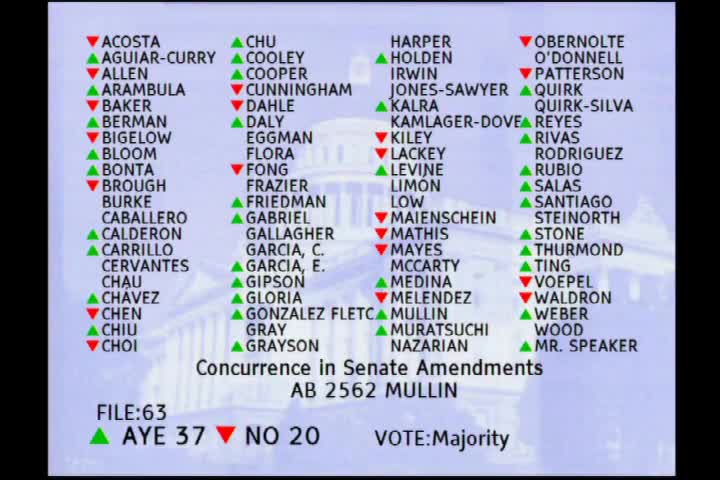

Bill Author

Bill Co-Author(s):