AB 2247: Foster youth: case plan: placement changes.
- Session Year: 2017-2018
- House: Assembly
- Latest Version Date: 2018-09-22
Existing law establishes the Aid to Families with Dependent Children-Foster Care (AFDC-FC) program, under which counties provide payments to foster care providers on behalf of qualified children in foster care. In order to be eligible for AFDC-FC, existing law requires, in pertinent part, a child to be placed in one of several specified placements. Existing law sets forth the rights of a minor in foster care, including, among other rights, the right to be involved in the development of and to review his or her own case plan and plan for permanent placement, and, if he or she is 12 years of age or older and in a permanent placement, the right to receive information about his or her out-of-home placement and case plan, including the right to be told of changes to the plan.
Existing law establishes the Office of the State Foster Care Ombudsperson as an autonomous entity within the State Department of Social Services for the purpose of providing children who are placed in foster care with a means to resolve issues related to their care, placement, or services. Existing law requires the office to investigate and attempt to resolve complaints made by or on behalf of children placed in foster care, that relate to their care, placement, or services.
This bill would require, prior to making a change in the placement of a dependent child, a social worker or placing agency to develop and implement a placement preservation strategy to preserve the dependent childs placement, and if a placement change is necessary, would further require a social worker or placing agency to provide 14 days prior notice of the change, as specified. The bill would prohibit placement changes from occurring during specified hours, except as specified. The bill would, if a complaint alleging that a placement change occurred in violation of these requirements is made to the Office of the State Foster Care Ombudsperson and that complaint is investigated, require the office to provide the findings of the investigation to the county child welfare director, or his or her designee, for the purposes of training, technical assistance, and quality improvement. The bill would express the intent of the Legislature with regard to these provisions and would make certain findings and declarations.
By increasing the duties of county social workers and placing agencies, this bill would impose a state-mandated local program.
The California Constitution requires the state to reimburse local agencies and school districts for certain costs mandated by the state. Statutory provisions establish procedures for making that reimbursement.
This bill would provide that no reimbursement is required by this act for a specified reason.
Existing law establishes the Aid to Families with Dependent Children-Foster Care (AFDC-FC) program, under which counties provide payments to foster care providers on behalf of qualified children in foster care. In order to be eligible for AFDC-FC, existing law requires, in pertinent part, a child to be placed in one of several specified placements. Existing law sets forth the rights of a minor in foster care, including, among other rights, the right to be involved in the development of and to review his or her own case plan and plan for permanent placement, and, if he or she is 12 years of age or older and in a permanent placement, the right to receive information about his or her out-of-home placement and case plan, including the right to be told of changes to the plan.
Existing law establishes the Office of the State Foster Care Ombudsperson as an autonomous entity within the State Department of Social Services for the purpose of providing children who are placed in foster care with a means to resolve issues related to their care, placement, or services. Existing law requires the office to investigate and attempt to resolve complaints made by or on behalf of children placed in foster care, that relate to their care, placement, or services.
This bill would require a case plan developed in consultation with the dependent childs child and family team to include a strategy to preserve the childs placement, require, prior to making a change in the placement of a dependent child, a social worker or placing agency to develop and implement a placement preservation strategy to preserve the dependent childs placement, and if a placement change is necessary, would further require a social worker or placing agency to provide 14 days prior notice of the change, as specified. The bill would prohibit placement changes from occurring during specified hours, except as specified. The bill would authorize a change to a dependent childs placement without fulfilling the requirements relating to the development and implementation of the preservation plan as described above if, among other things, it is determined that remaining in the existing placement or providing prior written notice of the placement change poses a threat to the dependent childs health and safety. The bill would, if a complaint alleging that a placement change occurred in violation of these requirements is made to the Office of the State Foster Care Ombudsperson and that complaint is investigated, require the office to provide the findings of the investigation to the county child welfare director, or his or her designee, for the purposes of training, technical assistance, and quality improvement. The bill would express the intent of the Legislature with regard to these provisions and would make certain findings and declarations.
By increasing the duties of county social workers and placing agencies, this bill would impose a state-mandated local program.
The California Constitution requires the state to reimburse local agencies and school districts for certain costs mandated by the state. Statutory provisions establish procedures for making that reimbursement.
This bill would provide that no reimbursement is required by this act for a specified reason.
Existing law establishes the Aid to Families with Dependent Children-Foster Care (AFDC-FC) program, under which counties provide payments to foster care providers on behalf of qualified children in foster care. In order to be eligible for AFDC-FC, existing law requires, in pertinent part, a child to be placed in one of several specified placements. Existing law sets forth the rights of a minor in foster care, including, among other rights, the right to be involved in the development of and to review his or her own case plan and plan for permanent placement, and, if he or she is 12 years of age or older and in a permanent placement, the right to receive information about his or her out-of-home placement and case plan, including the right to be told of changes to the plan.
Existing law establishes the Office of the State Foster Care Ombudsperson as an autonomous entity within the State Department of Social Services for the purpose of providing children who are placed in foster care with a means to resolve issues related to their care, placement, or services. Existing law requires the office to investigate and attempt to resolve complaints made by or on behalf of children placed in foster care, that relate to their care, placement, or services.
This bill would require a social worker or placing agency to develop and implement a plan, known as the preservation plan, to preserve an existing placement prior to making a change to a dependent childs placement. The bill would require the plan to be developed in consultation with the dependent childs child and family team, and to include both conflict resolution practices and facilitated meetings, as defined. If case plan developed in consultation with the dependent childs child and family team to include a strategy to preserve the childs placement, and if a placement change is necessary, the bill would further require the a social worker or placing agency to provide 14 days prior notice of the change, as specified. The bill would prohibit placement changes from occurring during specified hours, except as specified. The bill would authorize a change to a dependent childs placement without fulfilling the requirements relating to the development and implementation of the preservation plan as described above if, among other things, it is determined that remaining in the existing placement or providing prior written notice of the placement change poses a threat to the dependent childs health and safety. The bill would, if a complaint alleging that a placement change occurred in violation of these requirements is made to the Office of the State Foster Care Ombudsperson and that complaint is investigated, require the office to provide the findings of the investigation to the county child welfare director, or his or her designee, for the purposes of training, technical assistance, and quality improvement. The bill would express the intent of the Legislature with regard to these provisions and would make certain findings and declarations.
By increasing the duties of county social workers and placing agencies, this bill would impose a state-mandated local program.
The California Constitution requires the state to reimburse local agencies and school districts for certain costs mandated by the state. Statutory provisions establish procedures for making that reimbursement.
This bill would provide that no reimbursement is required by this act for a specified reason.
Existing law establishes the Aid to Families with Dependent Children-Foster Care (AFDC-FC) program, under which counties provide payments to foster care providers on behalf of qualified children in foster care. In order to be eligible for AFDC-FC, existing law requires requires, in pertinent part, a child or nonminor dependent to be placed in one of several specified placements. Existing law imposes certain requirements on placing agencies with regard to the placement of a dependent child, including, among others, a prohibition against a placement or a change in placement of a child outside the United States prior to a judicial finding that the placement is in the best interest of the child, except as required by federal law or treaty. Existing law sets forth the rights of a minor in foster care, including, among other rights, the right to be involved in the development of and to review his or her own case plan and plan for permanent placement, and, if he or she is 12 years of age or older and in a permanent placement, the right to receive information about his or her out-of-home placement and case plan, including the right to be told of changes to the plan.
Existing law establishes the Office of the State Foster Care Ombudsperson as an autonomous entity within the State Department of Social Services for the purpose of providing children who are placed in foster care with a means to resolve issues related to their care, placement, or services. Existing law requires the office to investigate and attempt to resolve complaints made by or on behalf of children placed in foster care, that relate to their care, placement, or services.
This bill would require a social worker or placing agency to develop and implement a plan, known as the preservation plan, to preserve an existing placement prior to making a change to a dependent childs placement. The bill would require the plan to be developed in consultation with the dependent childs child and family team, and to include both conflict resolution practices and facilitated meetings, as defined. If a placement change is necessary, the bill would require the social worker or placing agency to provide 15 14 days prior notice of the change, as specified. The bill would prohibit placement changes from occurring during specified hours, except as specified. The bill would grant a child who is 10 years of age or older, or the representative of a child who is under 10 years of age, the right to notify the Office of the State Foster Care Ombudsperson if a placement change occurs in violation of these provisions. The bill would require the ombudsperson to, among other things, ensure that the account of the child or the childs representative is documented in the case plan and investigate the complaint, as specified. The bill would authorize a change to a dependent childs placement without fulfilling the requirements relating to the development and implementation of the preservation plan as described above if, among other things, it is determined that remaining in the existing placement or providing prior written notice of the placement change poses a threat to the dependent childs health and safety. The bill would, if a complaint alleging that a placement change occurred in violation of these requirements is made to the Office of the State Foster Care Ombudsperson and that complaint is investigated, require the office to provide the findings of the investigation to the county child welfare director, or his or her designee, for the purposes of training, technical assistance, and quality improvement. The bill would express the intent of the Legislature with regard to these provisions and would make certain findings and declarations.
By increasing the duties of county social workers and placing agencies, this bill would impose a state-mandated local program.
The California Constitution requires the state to reimburse local agencies and school districts for certain costs mandated by the state. Statutory provisions establish procedures for making that reimbursement.
This bill would provide that no reimbursement is required by this act for a specified reason.
Existing law establishes the Aid to Families with Dependent Children-Foster Care (AFDC-FC) program, under which counties provide payments to foster care providers on behalf of qualified children in foster care. In order to be eligible for AFDC-FC, existing law requires a child or nonminor dependent to be placed in one of several specified placements. Existing law imposes certain requirements on placing agencies with regard to the placement of a dependent child, including, among others, a prohibition against a placement or a change in placement of a child outside the United States prior to a judicial finding that the placement is in the best interest of the child, except as required by federal law or treaty.
This bill would require a social worker or placing agency to implement a plan, known as the preservation plan, to preserve an existing placement prior to making a change to a dependent childs placement. The bill would require the plan to be developed in consultation with the dependent childs child and family team, and to include both restorative justice conflict resolution practices and facilitated mediation, meetings, as defined. If a placement change is necessary, the bill would require the social worker or placing agency to provide 15 days prior notice of the change, as specified. The bill would prohibit placement changes from occurring during specified hours. hours, except as specified. The bill would grant a child who is 10 years of age or older, or the representative of a child who is under 10 years of age, the right to notify the Office of the State Foster Care Ombudsperson if a placement change occurs in violation of these provisions. The bill would require the ombudsperson to, among other things, ensure that the account of the child or the childs representative is documented in the case plan and investigate the complaint, as specified. The bill would authorize a social worker or placing agency to change to a dependent childs placement without fulfilling the requirements described above if if, among other things, it is determined that remaining in the existing placement or providing prior written notice of the placement change poses a threat to the dependent childs health and safety. The bill would express the intent of the Legislature with regard to these provisions and would make certain findings and declarations.
By increasing the duties of county social workers and placing agencies, this bill would impose a state-mandated local program.
The California Constitution requires the state to reimburse local agencies and school districts for certain costs mandated by the state. Statutory provisions establish procedures for making that reimbursement.
This bill would provide that no reimbursement is required by this act for a specified reason.
Existing law establishes the Aid to Families with Dependent Children-Foster Care (AFDC-FC) program, under which counties provide payments to foster care providers on behalf of qualified children in foster care. In order to be eligible for AFDC-FC, existing law requires a child or nonminor dependent to be placed in one of several specified placements. Existing law imposes certain requirements on placing agencies with regard to the placement of a dependent child, including, among others, a prohibition against a placement or a change in placement of a child outside the United States prior to a judicial finding that the placement is in the best interest of the child, except as required by federal law or treaty.
This bill would require a social worker or placing agency to implement a plan plan, known as the preservation plan, to preserve an existing placement prior to making a change to a dependent childs placement. The bill would require the plan to include the be developed in consultation with the dependent childs child and family team, and to include both restorative justice practices, practices and facilitated mediation. mediation, as defined. If a placement change is necessary, the bill would require the social worker or placing agency to provide 15 days prior notice of the change, as specified. The bill would prohibit placement changes from occurring during specified hours. The bill would grant a child who is 10 years of age or older older, or the representative of a child who is under 10 years of age, the right to notify the Office of the State Foster Care Ombudsperson if a placement change occurs in violation of these provisions. The bill would require the ombudsperson to, among other things, document ensure that the childs account of the child or the childs representative is documented in the case plan and investigate the complaint, as specified. The bill would authorize a social worker or placing agency to change a dependent childs placement without fulfilling the requirements described above if doing so would endanger it is determined that remaining in the existing placement or providing prior written notice of the placement change poses a threat to the dependent childs health and safety. The bill would express the intent of the Legislature with regards regard to these provisions and would make certain findings and declarations.
By increasing the duties of county social workers and placing agencies, this bill would impose a state-mandated local program.
The California Constitution requires the state to reimburse local agencies and school districts for certain costs mandated by the state. Statutory provisions establish procedures for making that reimbursement.
This bill would provide that no reimbursement is required by this act for a specified reason.
Existing law establishes the Aid to Families with Dependent Children-Foster Care (AFDC-FC) program, under which counties provide payments to foster care providers on behalf of qualified children in foster care. In order to be eligible for AFDC-FC, existing law requires a child or nonminor dependent to be placed in one of several specified placements. Existing law imposes certain requirements on placing agencies with regard to the placement of a dependent child, including, among others, a prohibition against a placement or a change in placement of a child outside the United States prior to a judicial finding that the placement is in the best interest of the child, except as required by federal law or treaty.
This bill would require a social worker or placing agency to implement a plan to preserve an existing placement prior to making a change to a dependent childs placement. The bill would require the plan to include the dependent childs child and family team, restorative justice practices, and facilitated mediation. If a placement change is necessary, the bill would require the social worker or placing agency to provide 15 days prior notice of the change, as specified. The bill would prohibit placement changes from occurring during specified hours. The bill would grant a child who is 10 years of age or older the right to notify the Office of the State Foster Care Ombudsperson if a placement change occurs in violation of these provisions. The bill would require the ombudsperson to, among other things, document the childs account and investigate the complaint, as specified. The bill would authorize a social worker or placing agency to change a dependent childs placement without fulfilling the requirements described above if doing so would endanger the childs health and safety. The bill would express the intent of the Legislature with regards to these provisions and would make certain findings and declarations.
By increasing the duties of county social workers and placing agencies, this bill would impose a state-mandated local program.
The California Constitution requires the state to reimburse local agencies and school districts for certain costs mandated by the state. Statutory provisions establish procedures for making that reimbursement.
This bill would provide that no reimbursement is required by this act for a specified reason.
(a)It is the intent of the Legislature to prevent children or youth in foster care from experiencing unnecessary or abrupt placement changes that negatively impact their well-being or sense of security. It is the intent of the Legislature to preserve and strengthen the placement of a child or youth whenever possible. It is also the intent of the Legislature to ensure that placement changes do not occur due to gender, gender identity, race, or cultural differences. The Legislature finds and declares that unnecessary or abrupt placement changes undermine the essential duties that resource families have an obligation to uphold.
(b)Prior to making a change in the placement of a dependent child, a social worker or placing agency shall develop and implement a placement preservation strategy, in consultation with the dependent childs child and family team pursuant to clause (ii) of subparagraph (A) of paragraph (4) of subdivision (a) of Section 16501, to preserve the dependent childs placement. The strategy may include, but is not limited to, conflict resolution practices and facilitated meetings.
(c)A social worker or placing agency shall include a strategy developed and implemented pursuant to subdivision (b) within the dependent childs case notes in the statewide child welfare information system.
(d)For purposes of this subdivision, the following definitions shall apply:
(1)Child and family team has the same meaning as defined in Section 16501.
(2)Conflict resolution practices means a process designed to begin a dialogue to address conflict or concerns and identify agreements or solutions, which may be incorporated as part of a meeting of a dependent childs child and family team.
(3)Facilitated meeting means a facilitated process designed to acknowledge, address, and respond to the underlying needs of all parties, that may include, but is not limited to, a meeting of a dependent childs child and family team.
(e)If, after implementing the placement preservation strategy developed and implemented pursuant to subdivision (b), the social worker or placement agency finds that a placement change is necessary, the social worker or placing agency shall serve written notice on all of the following parties at least 14 days prior to the change:
(1)The dependent childs parent or guardian.
(2)The dependent childs caregiver.
(3)The dependent childs attorney.
(4)The dependent child, if he or she is 10 years of age or older.
(f)A placement change shall not take place between 9 p.m. and 7 a.m., except by the mutual agreement of all of the following persons:
(1)The dependent child, if he or she is 10 years of age or older, or the representative of the dependent child, if he or she is under 10 years of age.
(2)The dependent childs current caregiver.
(3)The dependent childs prospective caregiver.
(4)The dependent childs social worker.
(g)If a complaint is made to the Office of the State Foster Care Ombudsperson alleging that a placement change occurred in violation of this section, and that complaint is investigated pursuant to Section 16164, the office shall provide the findings of the investigation to the county child welfare director, or his or her designee, for the purposes of training, technical assistance, and quality improvement.
(h)Notwithstanding subdivisions (b) and (e), a social worker or placing agency may change a dependent childs placement without fulfilling the requirements of subdivisions (b) and (e) in either of the following circumstances:
(1)If it is determined that remaining in the existing placement or providing prior written notice of that placement change poses an imminent risk to the health or safety of the dependent child or other children in the home or facility.
(2)If either the dependent childs child and family team and the dependent child, if the dependent child is 10 years of age or older, or the dependent childs child and family team and the representative of that dependent child, if the dependent child is less than 10 years of age, unanimously agree to waive the requirements described in subdivisions (b) and (e).
(i)This section shall apply only to children and youth for whom the dependency court has entered a judgment pursuant to Section 360.
(j)This section does not apply to a nonminor dependent, as defined in subdivision (v) of Section 11400, who is placed in a Transitional Housing Placement program for nonminor dependents, as defined in subparagraph (B) of paragraph (2) of subdivision (a) of Section 1559.110 of the Health and Safety Code, or a supervised independent living placement, as defined in subdivision (w) of Section 11400.
(k)This section does not apply to a planned placement change as informed by the dependent childs child and family team and that is described in the dependent childs case plan.
SEC. 2.To the extent that this act has an overall effect of increasing the costs already borne by a local agency for programs or levels of service mandated by the 2011 Realignment Legislation within the meaning of Section 36 of Article XIII of the California Constitution, it shall apply to local agencies only to the extent that the state provides annual funding for the cost increase. Any new program or higher level of service provided by a local agency pursuant to this act above the level for which funding has been provided shall not require a subvention of funds by the state or otherwise be subject to Section 6 of Article XIIIB of the California Constitution.
(a)It is the intent of the Legislature to prevent children or youth in foster care from experiencing unnecessary or abrupt placement changes that negatively impact their well-being or sense of security. It is the intent of the Legislature to preserve and strengthen the placement of a child or youth whenever possible. It is also the intent of the Legislature to ensure that placement changes do not occur due to gender, gender identity, race, or cultural differences. The Legislature finds and declares that unnecessary or abrupt placement changes undermine the essential duties that resource families have an obligation to uphold.
(b)(1)The case plan developed in consultation with the dependent childs child and family team, as defined in Section 16501, shall include a strategy to preserve the childs placement that may include, but is not limited to, conflict resolution practices and facilitated meetings.(b)Prior to making a change in the placement of a dependent child, a social worker or placing agency shall develop and implement a placement preservation strategy, in consultation with the dependent childs child and family team pursuant to clause (ii) of subparagraph (A) of paragraph (4) of subdivision (a) of Section 16501, to preserve the dependent childs placement. The strategy may include, but is not limited to, conflict resolution practices and facilitated meetings.
(c)A social worker or placing agency shall include a strategy developed and implemented pursuant to subdivision (b) within the dependent childs case notes in the statewide child welfare information system.
(2)(d)For purposes of this subdivision, the following definitions shall apply:
(A)(1)Child and family team has the same meaning as defined in Section 16501.
(2)Conflict resolution practices means a process designed to begin a dialogue to address conflict or concerns and identify agreements or solutions, which may be incorporated as part of a meeting of a dependent childs child and family team, as defined in Section 16501. team.
(B)(3)Facilitated meeting means a facilitated process designed to acknowledge, address, and respond to the underlying needs of all parties, which that may include, but is not limited to, a meeting of a dependent childs child and family team, as defined in Section 16501. team.
(c)(e)If, after implementing the placement preservation strategies specified in strategy developed and implemented pursuant to subdivision (b), the social worker or placement agency finds that a placement change is necessary, the social worker or placing agency shall serve written notice on all of the following parties at least 14 days prior to the change:
(1)The dependent childs parent or guardian.
(2)The dependent childs caregiver.
(3)The dependent childs attorney.
(4)The dependent child, if he or she is 10 years of age or older.
(d)(f)A placement change shall not take place between 9 p.m. and 7 a.m., except by the mutual agreement of all of the following persons:
(1)The dependent child, if he or she is 10 years of age or older, or the representative of the dependent child, if he or she is under 10 years of age.
(2)The dependent childs current caregiver.
(3)The dependent childs prospective caregiver.
(4)The dependent childs social worker.
(e)(g)If a complaint is made to the Office of the State Foster Care Ombudsperson alleging that a placement change occurred in violation of this section, and that complaint is investigated pursuant to Section 16164, the office shall provide the findings of the investigation to the county child welfare director, or his or her designee, for the purposes of training, technical assistance, and quality improvement.
(f)(h)Notwithstanding subdivisions (b) and (c), (e), a social worker or placing agency may change a dependent childs placement without fulfilling the requirements of subdivisions (b) and (c) (e) in either of the following circumstances:
(1)If it is determined that remaining in the existing placement or providing prior written notice of that placement change poses a threat to the dependent childs health or safety.(1)If it is determined that remaining in the existing placement or providing prior written notice of that placement change poses an imminent risk to the health or safety of the dependent child or other children in the home or facility.
(2)If either the dependent childs child and family team, as defined in Section 16501, team and the dependent child, if he or she the dependent child is 10 years of age or older, or the dependent childs child and family team and the representative of that dependent child, if the dependent child is less than 10 years of age, unanimously agree to waive the requirements described in subdivisions (b) and (c). (e).
(g)(i)This section shall apply only to children and youth for whom the dependency court has entered a judgment pursuant to Section 360.
(h)(j)This section does not apply to a nonminor dependent, as defined in subdivision (v) of Section 11400, who is placed in a Transitional Housing Placement program for nonminor dependents, as defined in subparagraph (B) of paragraph (2) of subdivision (a) of Section 1559.110 of the Health and Safety Code, or a supervised independent living placement, as defined in subdivision (w) of Section 11400.
(k)This section does not apply to a planned placement change as informed by the dependent childs child and family team and that is described in the dependent childs case plan.
SEC. 2.To the extent that this act has an overall effect of increasing the costs already borne by a local agency for programs or levels of service mandated by the 2011 Realignment Legislation within the meaning of Section 36 of Article XIII of the California Constitution, it shall apply to local agencies only to the extent that the state provides annual funding for the cost increase. Any new program or higher level of service provided by a local agency pursuant to this act above the level for which funding has been provided shall not require a subvention of funds by the state or otherwise be subject to Section 6 of Article XIIIB of the California Constitution.
(a)It is the intent of the Legislature to prevent children or youth in foster care from experiencing unnecessary or abrupt placement changes that negatively impact their well-being or sense of security. It is the intent of the Legislature to preserve and strengthen the placement of a child or youth whenever possible. It is also the intent of the Legislature to ensure that placement changes do not occur due to gender, gender identity, race, or cultural differences. The Legislature finds and declares that unnecessary or abrupt placement changes undermine the essential duties that resource families have an obligation to uphold.
(b)Prior to making a change in placement, a social worker or placing agency shall develop and implement a plan to preserve the existing placement, known as the preservation plan.(1)The preservation plan shall be developed in consultation with the dependent childs child and family team, as defined in Section 16501.(2)The preservation plan shall include both conflict resolution practices and facilitated meetings, and shall become part of the dependent childs case plan, as described in Section 16501.1.(b)(1)The case plan developed in consultation with the dependent childs child and family team, as defined in Section 16501, shall include a strategy to preserve the childs placement that may include, but is not limited to, conflict resolution practices and facilitated meetings.
(3)(2)For purposes of this subdivision, the following definitions shall apply:
(A)Conflict resolution practices means a process designed to begin a dialogue to address conflict or concerns and identify agreements or solutions, which may be incorporated as part of a meeting of a dependent childs child and family team, as defined in Section 16501.
(B)Facilitated meeting means a facilitated process designed to acknowledge, address, and respond to the underlying needs of all parties, which may include, but is not limited to, a meeting of a dependent childs child and family team, as defined in Section 16501.
(c)If, after implementing the placement preservation plan strategies specified in subdivision (b), the social worker or placement agency finds that a placement change is necessary, the social worker or placing agency shall serve written notice on all of the following parties at least 14 days prior to the change:
(1)The dependent childs parent or guardian.
(2)The dependent childs caregiver.
(3)The dependent childs attorney.
(4)The dependent child, if he or she is 10 years of age or older.
(d)A placement change shall not take place between 7 9 p.m. and 7 a.m., except by the mutual agreement of all of the following persons:
(1)The dependent child, if he or she is 10 years of age or older, or the representative of the dependent child, if he or she is under 10 years of age.
(2)The dependent childs current caregiver.
(3)The dependent childs prospective caregiver.
(4)The dependent childs social worker.
(e)If a complaint is made to the Office of the State Foster Care Ombudsperson alleging that a placement change occurred in violation of this section, and that complaint is investigated pursuant to Section 16164, the office shall provide the findings of the investigation to the county child welfare director, or his or her designee, for the purposes of training, technical assistance, and quality improvement.
(f)Notwithstanding subdivisions (b) and (c), a social worker or placing agency may change a dependent childs placement without fulfilling the requirements of subdivisions (b) and (c) in either of the following circumstances:
(1)If it is determined that remaining in the existing placement or providing prior written notice of that placement change poses a threat to the dependent childs health or safety.
(2)If the dependent childs child and family team, as defined in Section 16501, and the dependent child, if he or she is 10 years of age or older, or the representative of that dependent child, unanimously agree to waive the requirements described in subdivisions (b) and (c).
(g)This section shall apply only to children and youth for whom the dependency court has entered a judgment pursuant to Section 360.
(h)This section does not apply to a nonminor dependent, as defined in subdivision (v) of Section 11400, who is placed in a Transitional Housing Placement program for nonminor dependents, as defined in subparagraph (B) of paragraph (2) of subdivision (a) of Section 1559.110 of the Health and Safety Code, or a supervised independent living placement, as defined in subdivision (w) of Section 11400.
SEC. 2.To the extent that this act has an overall effect of increasing the costs already borne by a local agency for programs or levels of service mandated by the 2011 Realignment Legislation within the meaning of Section 36 of Article XIII of the California Constitution, it shall apply to local agencies only to the extent that the state provides annual funding for the cost increase. Any new program or higher level of service provided by a local agency pursuant to this act above the level for which funding has been provided shall not require a subvention of funds by the state or otherwise be subject to Section 6 of Article XIIIB of the California Constitution.
(a)It is the intent of the Legislature to prevent children or youth in foster care from experiencing unnecessary or abrupt placement changes that negatively impact their well-being or sense of security. It is the intent of the Legislature to preserve and strengthen the placement of a child or youth whenever possible. It is also the intent of the Legislature to ensure that placement changes do not occur due to gender, gender identity, race, or cultural differences. The Legislature finds and declares that unnecessary or abrupt placement changes undermine the essential duties that resource families have an obligation to uphold.
(b)Prior to making a change in placement, a social worker or placing agency shall develop and implement a plan to preserve the existing placement, known as the preservation plan.
(1)The preservation plan shall be developed in consultation with the dependent childs child and family team, as defined in Section 16501.
(2)The preservation plan shall include both conflict resolution practices and facilitated meetings, and shall become part of the dependent childs case plan, as described in Section 16501.1.
(3)For purposes of this subdivision, the following definitions shall apply:
(A)Conflict resolution practices means a process designed to begin a dialogue to address conflict or concerns and identify agreements or solutions, which may be incorporated as part of a meeting of a dependent childs child and family team, as defined in Section 16501.
(B)Facilitated meeting means a facilitated process designed to acknowledge, address, and respond to the underlying needs of all parties, which may include, but is not limited to, a meeting of a dependent childs child and family team, as defined in Section 16501.
(c)If, after implementing the preservation plan specified in subdivision (b), the social worker or placement agency finds that a placement change is necessary, the social worker or placing agency shall serve written notice on all of the following parties at least 15 14 days prior to the placement change:
(1)The dependent childs parent or guardian.
(2)The dependent childs caregiver.
(3)The dependent childs attorney.
(4)The dependent child, if he or she is 10 years of age or older.
(d)A placement change shall not take place between 7 p.m. and 7 a.m., except by the mutual agreement of all of the following persons:
(1)The dependent child, if he or she is 10 years of age or older, or the representative of the dependent child, if he or she is under 10 years of age.
(2)The dependent childs current caregiver.
(3)The dependent childs prospective caregiver.
(4)The dependent childs social worker.
(e)If a placement change occurs in violation of this section, a dependent child who is 10 years of age or older or a representative of a dependent child who is under 10 years of age has the right to notify the Office of the State Foster Care Ombudsperson. The ombudsperson shall ensure that the account of the dependent child or the dependent childs representative is documented in the dependent childs case plan, and compare the account to the stated reason of the social worker or placing agency for the placement change. If the account conflicts with the stated reason for the placement change, the ombudsperson shall investigate the complaint pursuant to Section 16164.(e)If a complaint is made to the Office of the State Foster Care Ombudsperson alleging that a placement change occurred in violation of this section, and that complaint is investigated pursuant to Section 16164, the office shall provide the findings of the investigation to the county child welfare director, or his or her designee, for the purposes of training, technical assistance, and quality improvement.
(f)Notwithstanding subdivisions (b) and (c), a social worker or placing agency may change a dependent childs placement without fulfilling the requirements of those provisions subdivisions (b) and (c) in either of the following circumstances:
(1)If it is determined that remaining in the existing placement or providing prior written notice of the that placement change poses a threat to the dependent childs health or safety.
(2)If the dependent childs child and family team, as defined in Section 16501, and the dependent child, if he or she is 10 years of age or older, or the representative of the that dependent child, unanimously agree to waive the requirements described in subdivisions (b) and (c).
(g)This section shall apply only to children and youth for whom the dependency court has entered a judgement judgment pursuant to Section 360.
(h)This section does not apply to a nonminor dependent, as defined in subdivision (v) of Section 11400, who is placed in a Transitional Housing Placement program for nonminor dependents, as defined in subparagraph (B) of paragraph (2) of subdivision (a) of Section 1559.110 of the Health and Safety Code, or a supervised independent living placement, as defined in subdivision (w) of Section 11400.
SEC. 2.To the extent that this act has an overall effect of increasing the costs already borne by a local agency for programs or levels of service mandated by the 2011 Realignment Legislation within the meaning of Section 36 of Article XIII of the California Constitution, it shall apply to local agencies only to the extent that the state provides annual funding for the cost increase. Any new program or higher level of service provided by a local agency pursuant to this act above the level for which funding has been provided shall not require a subvention of funds by the state or otherwise be subject to Section 6 of Article XIIIB of the California Constitution.
(a)It is the intent of the Legislature to prevent children or youth in foster care from experiencing unnecessary or abrupt placement changes that negatively impact their well-being or sense of security. It is the intent of the Legislature to preserve and strengthen the placement of a child or youth whenever possible. It is also the intent of the Legislature to ensure that placement changes do not occur due to gender, gender identity, race, or cultural differences. The Legislature finds and declares that unnecessary or abrupt placement changes undermine the essential duties that resource families have an obligation to uphold.
(b)Prior to making a change in placement, a social worker or placing agency shall develop and implement a plan to preserve the existing placement, known as the preservation plan.
(1)The preservation plan shall be developed in consultation with the dependent childs child and family team, as defined in Section 16501.
(2)The preservation plan shall include both conflict resolution practices and facilitated mediation. meetings, and shall become part of the dependent childs case plan, as described in Section 16501.1.
(3)For purposes of this subdivision, the following definitions shall apply:
(A)Conflict resolution practices means a process designed to begin a dialogue to address conflict or concerns and identify agreements or solutions. solutions, which may be incorporated as part of a meeting of a dependent childs child and family team, as defined in Section 16501.
(B)Facilitated mediation meeting means a facilitated process designed to acknowledge, address, and respond to the underlying needs of all parties. parties, which may include, but is not limited to, a meeting of a dependent childs child and family team, as defined in Section 16501.
(c)If, after implementing the preservation plan specified in subdivision (b), the social worker or placement agency finds that a placement change is necessary, the social worker or placing agency shall serve written notice on all of the following parties at least 15 days prior to the placement change:
(1)The dependent childs parent or guardian.
(2)The dependent childs caregiver.
(3)The dependent childs attorney.
(4)The dependent child, if he or she is 10 years of age or older.
(d)A placement change shall not take place between 7 p.m. and 7 a.m. 7 a.m., except by the mutual agreement of all of the following persons:
(1)The dependent child, if he or she is 10 years of age or older, or the representative of the dependent child, if he or she is under 10 years of age.
(2)The dependent childs current caregiver.
(3)The dependent childs prospective caregiver.
(4)The dependent childs social worker.
(e)If a placement change occurs in violation of this section, a dependent child who is 10 years of age or older or a representative of a dependent child who is under 10 years of age has the right to notify the Office of the State Foster Care Ombudsperson. The ombudsperson shall ensure that the account of the dependent child or the dependent childs representative is documented in the dependent childs case plan, and compare the account to the stated reason of the social worker or placing agency for the placement change. If the account conflicts with the stated reason for the placement change, the ombudsperson shall investigate the complaint pursuant to Section 16164.
(f)Notwithstanding subdivisions (b) and (c), a social worker or placing agency may change a dependent childs placement without fulfilling the requirements of those provisions if it is determined that remaining in the existing placement or providing prior written notice of the placement change poses a threat to the dependent childs health or safety. in either of the following circumstances:
(1)If it is determined that remaining in the existing placement or providing prior written notice of the placement change poses a threat to the dependent childs health or safety.
(2)If the dependent childs child and family team, as defined in Section 16501, and the dependent child, if he or she is 10 years of age or older, or the representative of the dependent child, unanimously agree to waive the requirements described in subdivisions (b) and (c).
(g)This section shall apply only to children and youth for whom the dependency court has entered a judgement pursuant to Section 360.
SEC. 2.To the extent that this act has an overall effect of increasing the costs already borne by a local agency for programs or levels of service mandated by the 2011 Realignment Legislation within the meaning of Section 36 of Article XIII of the California Constitution, it shall apply to local agencies only to the extent that the state provides annual funding for the cost increase. Any new program or higher level of service provided by a local agency pursuant to this act above the level for which funding has been provided shall not require a subvention of funds by the state or otherwise be subject to Section 6 of Article XIIIB of the California Constitution.
(a)It is the intent of the Legislature to prevent children or youth in foster care from experiencing unnecessary or abrupt placement changes that negatively impact their well-being or sense of security. It is the intent of the Legislature to preserve and strengthen a child or youths the placement of a child or youth whenever possible. It is also the intent of the Legislature to ensure that placement changes do not occur due to gender, gender identity, race, or cultural differences. The Legislature finds and declares that unnecessary or abrupt placement changes undermine the essential duties that resource families have an obligation to uphold.
(b)Prior to making a change in placement, a social worker or placing agency shall develop and implement a plan to preserve the existing placement. The plan to preserve the placement shall include all of the following: placement, known as the preservation plan.
(1)The preservation plan shall be developed in consultation with the dependent childs child and family team, as defined in Section 16501.
(2)Restorative justice practices.(3)Facilitated mediation.(2)The preservation plan shall include both conflict resolution practices and facilitated mediation.
(3)For purposes of this subdivision, the following definitions shall apply:
(A)Conflict resolution practices means a process designed to begin a dialogue to address conflict or concerns and identify agreements or solutions.
(B)Facilitated mediation means a facilitated process designed to acknowledge, address, and respond to the underlying needs of all parties.
(c)(1)If, after implementing the preservation plan specified in subdivision (b), the social worker or placement agency finds that a placement change is necessary, the social worker or placing agency shall serve written notice on all of the following parties at least 15 days prior to the placement change:
(A)
(1)The dependent childs parent or guardian.
(B)
(2)The dependent childs caregiver.
(C)
(3)The dependent childs attorney.
(D)
(4)The child, if he or she is 10 years of age or older.
(2)(d)A placement change made pursuant to this subdivision shall not take place between 7 oclock p.m. and 7 oclock a.m.
(d)(e)If a placement change occurs in violation of this section, a child who is 10 years of age or older or a representative of a child who is under 10 years of age has the right to notify the Office of the State Foster Care Ombudsperson. The ombudsperson shall document the dependent childs account and include it ensure that the account of the dependent child or the dependent childs representative is documented in the childs case plan. plan, and compare the account to the stated reason of the social worker or placing agency for the placement change. If the childs account conflicts with the social worker or placing agencys stated reason for the placement change, the ombudsperson shall investigate the complaint pursuant to Section 16164.
(e)(f)Notwithstanding subdivisions (b) and (c), a social worker or placing agency may change a dependent childs placement without fulfilling the requirements of those provisions if it is determined that remaining in the existing placement or providing prior written notice of the placement change would endanger poses a threat to the dependent childs health or safety.
SEC. 2.To the extent that this act has an overall effect of increasing the costs already borne by a local agency for programs or levels of service mandated by the 2011 Realignment Legislation within the meaning of Section 36 of Article XIII of the California Constitution, it shall apply to local agencies only to the extent that the state provides annual funding for the cost increase. Any new program or higher level of service provided by a local agency pursuant to this act above the level for which funding has been provided shall not require a subvention of funds by the state or otherwise be subject to Section 6 of Article XIIIB of the California Constitution.
(a)It is the intent of the Legislature to prevent children or youth in foster care from experiencing unnecessary or abrupt placement changes that negatively impact their well-being or sense of security. It is the intent of the Legislature to preserve and strengthen a child or youths placement whenever possible. It is also the intent of the Legislature to ensure that placement changes do not occur due to gender, gender identity, race, or cultural differences. The Legislature finds and declares that unnecessary or abrupt placement changes undermine the essential duties that resource families have an obligation to uphold.
(b)Prior to making a change in placement, a social worker or placing agency shall implement a plan to preserve the existing placement. The plan to preserve the placement shall include all of the following:
(1)The dependent childs child and family team, as defined in Section 16501.
(2)Restorative justice practices.
(3)Facilitated mediation.
(c)(1)If, after implementing the preservation plan specified in subdivision (b), the social worker or placement agency finds that a placement change is necessary, the social worker or placing agency shall serve written notice on all of the following parties at least 15 days prior to the placement change:
(A)The dependent childs parent or guardian.
(B)The dependent childs caregiver.
(C)The dependent childs attorney.
(D)The child, if he or she is 10 years of age or older.
(2)A placement change made pursuant to this subdivision shall not take place between 7 oclock p.m. and 7 oclock a.m.
(d)If a placement change occurs in violation of this section, a child who is 10 years of age or older has the right to notify the Office of the State Foster Care Ombudsperson. The ombudsperson shall document the dependent childs account and include it in the childs case plan. If the childs account conflicts with the social worker or placing agencys stated reason for the placement change, the ombudsperson shall investigate the complaint pursuant to Section 16164.
(e)Notwithstanding subdivisions (b) and (c), a social worker or placing agency may change a dependent childs placement without fulfilling the requirements of those provisions if remaining in the existing placement or providing prior written notice of the placement change would endanger the dependent childs health or safety.
SEC. 2.To the extent that this act has an overall effect of increasing the costs already borne by a local agency for programs or levels of service mandated by the 2011 Realignment Legislation within the meaning of Section 36 of Article XIII of the California Constitution, it shall apply to local agencies only to the extent that the state provides annual funding for the cost increase. Any new program or higher level of service provided by a local agency pursuant to this act above the level for which funding has been provided shall not require a subvention of funds by the state or otherwise be subject to Section 6 of Article XIIIB of the California Constitution.
|
Date
|
Status
|
|---|---|
| Sep 22, 2018 | Chaptered by Secretary of State - Chapter 674, Statutes of 2018. |
| Sep 22, 2018 | Approved by the Governor. |
| Sep 5, 2018 | Enrolled and presented to the Governor at 3 p.m. |
| Aug 27, 2018 | Senate amendments concurred in. To Engrossing and Enrolling. |
| Aug 23, 2018 | In Assembly. Concurrence in Senate amendments pending. May be considered on or after August 25 pursuant to Assembly Rule 77. |
| Aug 23, 2018 | Read third time. Passed. Ordered to the Assembly. |
| Aug 20, 2018 | Read second time. Ordered to third reading. |
| Aug 17, 2018 | From committee: Amend, and do pass as amended. (Ayes 7. Noes 0.) (August 16). |
| Aug 6, 2018 | In committee: Referred to APPR. suspense file. |
| Jul 2, 2018 | Read second time and amended. Re-referred to Com. on APPR. |
| Jun 28, 2018 | From committee: Amend, and do pass as amended and re-refer to Com. on APPR. (Ayes 6. Noes 0.) (June 26). |
| Jun 19, 2018 | From committee chair, with author's amendments: Amend, and re-refer to committee. Read second time, amended, and re-referred to Com. on HUMAN S. |
| Jun 13, 2018 | Referred to Com. on HUMAN S. |
| Jun 4, 2018 | In Senate. Read first time. To Com. on RLS. for assignment. |
| May 31, 2018 | Read third time. Passed. Ordered to the Senate. |
| May 29, 2018 | Read second time. Ordered to third reading. |
| May 25, 2018 | From committee: Amend, and do pass as amended. (Ayes 12. Noes 0.) (May 25). |
| Apr 18, 2018 | In committee: Set, first hearing. Referred to APPR. suspense file. |
| Apr 3, 2018 | Re-referred to Com. on APPR. |
| Apr 2, 2018 | Read second time and amended. |
| Mar 23, 2018 | From committee: Amend, and do pass as amended and re-refer to Com. on APPR. (Ayes 7. Noes 0.) (March 20). |
| Mar 1, 2018 | Referred to Com. on HUM. S. |
| Feb 14, 2018 | From printer. May be heard in committee March 16. |
| Feb 13, 2018 | Read first time. To print. |
|
Date
|
Description
|
Location
|
Votes
|
|
|---|---|---|---|---|
| Aug 27, 2018 | AB 2247 GIPSON Concurrence in Senate Amendments | Assembly Floor |
Passed |
|
| Aug 23, 2018 | Assembly 3rd Reading AB2247 Gipson et al. By Stone | Senate Floor |
Passed |
|
| Aug 16, 2018 | Do pass as amended | Senate Standing Committee on Appropriations |
Passed |
|
| Aug 6, 2018 | Placed on suspense file | Senate Standing Committee on Appropriations |
Passed |
|
| Jun 26, 2018 | Do pass as amended, but first amend, and re-refer to the Committee on [Appropriations] | Senate Standing Committee on Human Services |
Passed |
|
| May 31, 2018 | AB 2247 GIPSON Assembly Third Reading | Assembly Floor |
Passed |
|
| May 25, 2018 | Do pass as amended. | Assembly Standing Committee on Appropriations |
Passed |
|
| Mar 20, 2018 | Do pass as amended and be re-referred to the Committee on [Appropriations] | Assembly Standing Committee on Human Services |
Passed |
This list shows positions taken on this bill by organizations on the date displayed, which is linked to the original source.
Positions by individuals are not included.
CONCURRENCE IN SENATE AMENDMENTS
CSA1 Bill Id:AB 2247
Author:(Gipson)
As Amended Ver:August 17, 2018
Majority vote
ASSEMBLY: | 78-0 | (May 31, 2018) | SENATE: | 39-0 | (August 23, 2018) |
Original Committee Reference: HUM. S.
SUMMARY: Requires a social worker or placement agency to implement a placement preservation strategy prior to changing a dependent child's placement, and requires at least 14 days' written notice to be given prior to a placement change, except in instances where delayed placement or prior notice of a placement change would endanger a child's health or safety or where all specified parties have agreed to waive these requirements.
Specifically, this bill:
- States Legislative findings and declarations that abrupt or unnecessary placement changes for children and youth in foster care undermine the essential duties that resource families have an obligation to uphold and, further, states Legislative intent to do all of the following:
- Prevent children and youth in foster care from experiencing abrupt or unnecessary changes in placement that lead to detrimental impacts on their well-being or sense of security;
- Preserve and strengthen a child's or youth's placement whenever possible; and
- Ensure that placement changes do not take place as a result of gender, gender identity, race, or cultural differences.
- Requires a social worker or placing agency to develop and implement a strategy to preserve an existing placement, known as the placement preservation strategy, in consultation with the dependent child’s child and family team, as specified, prior to making changes in a placement of a dependent child.
- Requires a social worker or placing agency to include the placement preservation strategy within the dependent child’s case notes in the statewide child information system.
- Defines "conflict resolution practices" to mean a process designed to begin a dialogue to address conflict or concerns and identify agreements or solutions, which may be incorporated as part of a meeting of a dependent child's child and family team, as specified.
- Defines "facilitated meeting" to mean a facilitated process designed to acknowledge, address, and respond to the underlying needs of all parties, as specified.
- Allows the placement preservation strategy to include both conflict resolution practices and facilitated meetings.
- Requires the social worker or placing agency, if that worker or agency finds that a placement change is necessary after implementation of the placement preservation strategy, to serve written notice, at least 14 days before the placement change, on a dependent child's parent or guardian, caregiver, and attorney, and the dependent child if that child is at least 10 years old.
- Prohibits any placement change from taking place between the hours of 9 p.m. and 7 a.m., except by the mutual agreement of all of the following:
- The dependent child, if he or she is at least 10 years of age, or the representative of the dependent child if he or she is under 10 years of age;
- The dependent child's current caregiver;
- The dependent child's prospective caregiver; and
- The dependent child's social worker.
- Requires the Office of the State Foster Care Ombudsperson, if a complaint is made to the office alleging a violation of placement change requirements, and an investigation is made into that complaint, as specified, to provide the findings of the investigation to the county child welfare director, or his or her designee, for the purposes of training, technical assistance, and quality improvement.
- Authorizes a social worker or placing agency to change a dependent child's placement without meeting the requirements set forth by this bill in either of the following instances:
- If it is determined that remaining in the existing placement or providing prior written notice of the placement change poses a threat to the health or safety of the dependent child or other children in the home or facility; or
- If the dependent child's child and family team and the dependent child, if he or she is at least 10 years old, or the representative of the dependent child, unanimously agree to waive the requirements set forth in the bill related to the placement preservation strategy and 14-day notice of placement change, as specified.
- Stipulates that the provisions of the bill shall only apply to children and youth for whom the dependency court has entered a judgment and do not apply to a nonminor dependent who is placed in a Transitional Housing Placement program or a supervised independent living facility, as specified.
- Stipulates that the provisions of this bill do not apply to a planned placement change as informed by the dependent child’s child and family team and that is described in the dependent child’s case plan.
The Senate amendments:
- Rename the "preservation plan" a "placement preservation strategy," and add conforming language.
- Add language that requires a social worker or placing agency to include the placement preservation strategy within the dependent child’s case notes in the statewide child information system.
- Reduce from 15 days to 14 days the amount of time required to lapse between notification of a placement change and execution of a placement change.
- Change the timeframe during which, unless excepted, placement changes are prohibited from: between 7 p.m. and 7 a.m. to between 9 p.m. and 7 a.m.
- Clarify that, if an existing placement or provision of written notice of a placement change would pose a threat to the health or safety of any children (and not just dependent children) in a home or facility, a social worker or placing agency is authorized to change a dependent child's placement without meeting the requirements set forth by this bill.
- Stipulate that the provisions of the bill do not apply to a nonminor dependent who is placed in a Transitional Housing Placement program or a supervised independent living facility, as specified.
- Stipulate that the provisions of this bill do not apply to a planned placement change as informed by the dependent child’s child and family team and that is described in the dependent child’s case plan.
- Delete language granting a dependent child who is at least 10 years old, or the representative of a dependent child under 10 years of age, the right to notify the Office of the State Foster Care Ombudsperson if a placement change occurs in violation of the provisions of this bill.
- Delete language requiring the Ombudsperson to ensure that the account of the dependent child or dependent child's representative is documented in the child's case plan, and to compare the account to the stated reason of the social worker or placing agency for the placement change and, further, requiring the Ombudsperson, if the account conflicts with the stated reason for the placement change, to investigate the complaint, as specified.
- Add language that requires the Office of the State Foster Care Ombudsperson, if a complaint is made to the office alleging a violation of placement change requirements, and an investigation is made into that complaint, as specified, to provide the findings of the investigation to the county child welfare director, or his or her designee, for the purposes of training, technical assistance, and quality improvement.
- Change from required to permissive the inclusion of conflict resolution practices and facilitated meetings in a child’s placement preservation strategy.
EXISTING LAW:
- Permits the juvenile court to adjudge a child a dependent of the court for specified reasons, including, but not limited to, if a child has suffered or is at substantial risk of suffering serious physical harm, emotional damage, or sexual abuse, as specified. (Welfare and Institutions Code Section (WIC) 300)
- States that the purpose of foster care law is to provide maximum safety and protection for children who are currently being physically, sexually, or emotionally abused, neglected, or exploited, and to ensure the safety, protection, and physical and emotional well-being of children who are at risk of harm. (WIC 300.2)
- Declares the intent of the Legislature to, whenever possible, preserve and strengthen a child's family ties and, when a child must be removed from the physical custody of his or her parents, to give preferential consideration to placement with relatives. States the intent of the Legislature to reaffirm its commitment to children who are in out-of-home placement to live in the least restrictive family setting and as close to the child's family as possible, as specified. Further states the intent of the Legislature that all children live with a committed, permanent, nurturing family and states that services and supports should be tailored to meet the specific needs of the individual child and family being served, as specified. (WIC 16000)
- Requires out-of-home placement of a child in foster care to be based upon selection of a safe setting that is the least restrictive family setting that promotes normal childhood experiences and the most appropriate setting that meets the child's individual needs, as specified. Further requires the selection of placement to consider, in order of priority, placement with: relatives, nonrelative extended family members, and tribal members; foster family homes, resource families, and approved or certified homes of foster family agencies; followed by intensive services for foster care homes or multidimensional treatment foster care homes or therapeutic foster care homes; group care placements in the order of short-term residential therapeutic programs, group homes, community treatment facilities, and out-of-state residential treatment, as specified. (WIC 16501.1(d)(1))
- Enumerates rights of minors and nonminors in foster care, including but not limited to the right to: live in a safe, healthy, and comfortable home where he or she is treated with respect; be free from physical, sexual, emotional, or other abuse, or corporal punishment; receive adequate and healthy food, adequate clothing, and, for youth in group homes, an allowance; receive medical, dental, vision, and mental health services; be involved in the development of his or her own case plan and plan for permanent placement; and review his or her own case plan and plan for permanent placement, if he or she is 12 years of age or older and in a permanent placement, and receive information about his or her out-of-home placement and case plan, including being told of changes to the plan. (WIC 16001.9)
- Defines "nonminor dependent" as a current foster youth or ward of the juvenile court, or nonminor under the transition jurisdiction of the court, who is between 18 and 21 years old, in foster care under the responsibility of the county welfare department, county probation department, or Indian Tribe, and has a transitional independent living plan, as specified. (WIC 11400 (v))
- Establishes the Office of the State Foster Care Ombudsperson within the Department of Social Services (DSS) for the purpose of providing children placed in foster care with a means to resolve issues related to their care, placement, or services. (WIC 16160-16167)
- Requires the Office of the State Foster Care Ombudsperson to investigate and seek to resolve complaints regarding care, placement, or services made by, or on behalf of, foster youth and further, requires the Ombudsperson to document the number, source, origin, location and nature of these complaints and annually report on the complaints to the Legislature, as specified. (WIC 16164)
- Requires foster parents to be given no less than seven days' advance written notice of intent to remove a child and of the right to request a grievance review, with certain exceptions including, among others, that the child is in immediate danger, the court has ordered the child's removal, or that a signed waiver of notice has been obtained from the foster parent, as specified. (DSS Manual of Policies and Procedures Division 31-440)
FISCAL EFFECT: According to the Senate Appropriations Committee on August 16, 2018, this bill may result in the following costs:
- Unknown, significant costs, likely in the hundreds of thousands of dollars annually for county social workers develop a placement preservation plan. Developing the preservation plan and updating the case notes when necessary would require approximately an additional 15 minutes of workload time per case at $99.46 an hour for the social worker. (General Fund/local fund)
- Significant costs to the DSS of up to $300,000 per year for additional personnel within the Office of the State Foster Care Ombudsman to investigate complaints related to placement changes occurring in violation of law. (General Fund/federal/local funds)
COMMENTS:
Continuum of Care Reform: Child welfare services were realigned to counties with the passage of SB 1013 (Budget and Fiscal Review Committee), Chapter 35, Statutes of 2012. This bill also, among other things, called on DSS to convene a working group to examine the use of group homes in California and to report recommendations to the Legislature. This report was submitted in January 2015 and contained a number of recommendations aimed at reforming the foster care system and reducing California's reliance on group homes as a tenable placement for foster youth. Initially named "Congregate Care Reform," the resulting efforts were later renamed "Continuum of Care Reform" (CCR) to better reflect the need for a strong system of home-based care and supports to complement and support the decreased reliance on group homes. AB 403 (Stone), Chapter 773, Statutes of 2015, AB 1997 (Stone), Chapter 612, Statutes of 2016, and AB 404 (Stone), Chapter 732, Statutes of 2017, adopted many of the CCR report recommendations into law, including enacting a sunset for existing licensure, rate-setting, and other provisions for group homes and providing for a new licensure category of Short-Term Residential Therapeutic Programs (STRTPs) to offer temporary housing and intensive up-front services for youth prior to placing them with a family.
An important part of CCR was the formalization and clarification of the role of the "child and family team," which includes a child or youth, family members, and other identified members of the child or youth's informal and formal support network who are brought together by the placing agency to identify the strengths and needs of the child or youth and family and to help them achieve positive outcomes related to the safety, permanency, and well-being of the child or youth. Child and family teams are intended to identify and address a family's individualized care needs and to facilitate collaboration on assessment, case planning, and placement decisions to best support the child or youth.
Seven-day notices: DSS regulations contained in division 31-440 of the department's Manual of Policies and Procedures require that foster parents be given at least seven days' advance written notice of plans to remove a child (except in certain circumstances, such as the child being in immediate danger or the court having ordered the child's removal), and affords foster parents the right to a grievance review regarding this decision. Conversely, foster parents are expected to give the social worker seven days' notice of the desire to have a child removed from placement with them, except under special circumstances warranting immediate removal.
The impacts of placement changes on foster youth: Over 62% of children and youth who have been in foster care in California for at least 12 months experience at least two placements; almost 28% of these children and youth experience at least three placements. Placement changes can be disruptive for children and youth by creating instability, hindering the ability to form and maintain strong relationships, and negatively impacting academic achievement and socio-emotional health. A 2008 literature review on placement stability in child welfare services prepared by the University of California, Davis's Center for Human Services observed that, "Frequent placement moves not only compounds the issue of being separated from one's parents, but can also result in separation from siblings, relocating to a new geographical area, and experiencing a sense of not belonging; all of which can lead to distress and have a profound negative emotional impact. Children who are removed from their homes and then who experience placement disruption can lead to them experiencing profound distress and a sense of loss and not belonging, all of which can lead to distrust and a fear of forming secure healthy relationships."
However, it is not just the frequency of placement changes, but also the abruptness with which they take place that can negatively impact children and youth. In a recent commentary written for the Chronicle of Social Change, Katarina Kabick (a member of the California Youth Connection [CYC], sponsors of this bill) observed that, "Seven days is not an adequate timetable for a transition to another placement. Nobody else makes a transition in this timeframe, and the reality is that many foster youth are moved in the middle of the night, pulled out of bed – or in the middle of the day, pulled out of school – with no notice at all. That means no goodbyes, no packing, no sense of security. Employees leaving jobs usually give a minimum of two weeks' notice. Families moving to a new home often plan their transition for six months to a year."
Need for this bill: The 2008 literature review, cited earlier, on placement stability in child welfare services prepared by the University of California, Davis's Center for Human Services, stated that one path for reducing the occurrence of displacement for foster youth is to conduct permanency planning, the purpose of which is to identify and put into action methods for increasing the likelihood that a child or youth moves out of substitute care into a permanent family home as soon as possible. The purpose of permanency planning – which doesn't have a single, universally-accepted definition – is to develop and implement methods that increase the likelihood that children move out of substitute care into permanent family homes as quickly as possible.
According to the author of this bill, "Foster youth from across California have made clear that one of the root causes of disruption in their lives is placement instability. Familial disputes should never lead to foster youth being kicked out of their home in the middle of the night, nor should youth be forced to jump from one placement to another because of a lack of communication. Foster youth deserve access to services that facilitate stronger bonds with their caregiver. [This bill] will create a process for social workers, youth, and caregivers to work together and ensure each child is in the best placement possible."
Analysis Prepared by: Daphne Hunt / HUM. S. / (916) 319-2089 FN: 004724
Office of Senate Floor Analyses (916) 651-1520 Fax: (916) 327-4478 | AB |
THIRD READING
Bill No: AB 2247
:
SENATE HUMAN SERVICES COMMITTEE: 6-0, 6/26/18
AYES: Wiener, Glazer, Leyva, McGuire, Nguyen, Portantino
NO VOTE RECORDED: Berryhill
SENATE APPROPRIATIONS COMMITTEE: 7-0, 8/16/18
AYES: Portantino, Bates, Beall, Bradford, Hill, Nielsen, Wiener
ASSEMBLY FLOOR: 78-0, 5/31/18 - See last page for vote
SUBJECT: Foster youth: case plan: placement changes
SOURCE: California Youth Connection
DIGEST:
This bill requires that, prior to making a change in the placement of a dependent child, a social worker or placing agency must develop and implement a preservation strategy to preserve the dependent child’s placement. This bill also requires, that if after implementing placement preservation strategies a placement change is necessary, the social worker or placing agency provide 14 days of prior notice, as specified.
Existing law:
- Establishes a system of juvenile dependency for children for specified reasons, including but not limited to children who are, or are at risk of, being physically, sexually, or emotionally abused, being neglected or being exploited, to ensure their safety, protection, and physical and emotional well-being, as specified. (WIC 300 et seq.)
- States that the purpose of foster care law is to provide maximum safety and protection for children who are currently being physically, sexually, or emotionally abused, neglected or exploited, and to ensure the safety, protection, and physical and emotional well-being of children who are at risk of harm. (WIC 300.2)
- Requires the social worker provide written notice on the parent or guardian, child’s attorney, and child, if they are 10 years of age or older, at least 14 days prior to an out of county placement, unless the child’s health or well-being is endangered by delaying the action or would be endangered if prior notice was given. Further requires the notice state the reasons requiring out of county placement and that if the child, parent, or guardian objects, within seven days of receiving the notice, the court shall hold a hearing, within five days of receiving the objection, and shall order out-of-county placement only if it finds that the child’s particular needs require it. (WIC 361.2(h))
- Declares the intent of the Legislature to, whenever possible, preserve and strengthen a child's family ties and, when a child must be removed from the physical custody of his or her parents, to give preferential consideration to placement with relatives (WIC 16000)
- Requires out-of-home placement of a child in foster care to be based upon selection of a safe setting that is the least restrictive family setting that promotes normal childhood experiences and the most appropriate setting that meets the child's individual needs, as specified. (WIC 16501.1(d)(1))
- Enumerates rights of minors and nonminors in foster care, as provided, including the right to review their own case plan and plan for permanent placement, if they are 12 years of age or older and in a permanent placement, and receive information about their out-of-home placement and case plan, including being told of changes to the plan. (WIC 16001.9)
- Establishes the Office of the State Foster Care Ombudsperson (Ombudsperson) within the California Department of Social Services (CDSS) for the purpose of providing children placed in foster care with a means to resolve issues related to their care, placement, or services. (WIC 16160-16167)
- Requires the Ombudsperson to investigate and seek to resolve complaints regarding care, placement, or services made by, or on behalf of, foster youth. Further requires the Ombudsperson to document the number, source, origin, location and nature of these complaints and annually report on the complaints to the Legislature, as specified. (WIC 16164)
- Requires foster parents to be given no less than seven days' advance written notice of intent to remove a child and of the right to request a grievance review, with certain exceptions including, among others, that the child is in immediate danger, the court has ordered the child's removal, or that a signed waiver of notice has been obtained from the foster parent, as specified. (CDSS Manual of Policies and Procedures Division 31-440)
This bill:
- States legislative intent, findings and declarations regarding the negative impact of abrupt or unnecessary placement changes for children and youth in foster care.
- Requires, prior to making a change in the placement of a dependent child, a social worker or placing agency shall develop and implement a placement preservation strategy in consultation with the dependent child’s Child and Family Team (CFT). This strategy may include, but is not limited to, conflict resolution practices and facilitated meetings.
- Requires the preservation strategy be included within the dependent child’s case notes in the statewide child welfare information system.
- Defines "conflict resolution practices" to mean a process designed to begin a dialogue to address conflict or concerns and identify agreements or solutions, which may be incorporated as part of a meeting of a dependent child's child and family team, as specified.
- Defines "facilitated meeting" to mean a facilitated process designed to acknowledge, address, and respond to the underlying needs of all parties, as specified.
- Provides that if, after implementing the placement preservation strategies as specified, the social worker or placement agency finds that a placement change is necessary, the social worker or placing agency shall serve written notice on all of the following parties at least 14 days prior to the change: the dependent child’s parent or guardian; the dependent child’s caregiver; the dependent child’s attorney; and the dependent child, if they are 10 years of age or older.
- Provides that a placement change shall not take place between 9 p.m. and 7 a.m., except by mutual agreement of all of the following persons: the dependent child, if they are 10 years of age or older; the dependent child’s current caregiver; the dependent child’s prospective caregiver; and the dependent child’s social worker.
- Provides that if a complaint is made to the Ombudsperson alleging that a placement change occurred in violation of this bill, and that complaint is investigated, the office shall provide the findings of the investigation to the county child welfare director, or their designee, for the purposes of training, technical assistance, and quality improvement.
- Provides that a social worker or placing agency may change a dependent child’s placement without following the preservation strategies or providing 14 days of written notice if:
- It is determined that remaining in the existing placement or providing prior written notice of that placement change poses an imminent risk to the health or safety of the dependent child or other children in the home or facility; or
- If the dependent child’s CFT and the dependent child, if they are 10 years of age or older, or the representative of that dependent child under the age of 10, unanimously agree to waive those requirements.
- Provides that these provisions only apply to children and youth for whom the court has entered a dependency judgment, as specified, and that these provisions do not apply to a nonminor dependent who is placed in a Transitional Housing Placement program or a supervised independent living placement. Further provides that these provisions do not apply to a planned placement change as informed by the dependent child’s CFT and as described in the dependent child’s case plan.
Background
Child and Family Teams (CFTs). A CFT is a group of individuals who are convened by a placing agency and engaged through a variety of team-based processes to help identify the strengths and needs of a child or youth and their family. The goal of a CFT is to have the members help achieve positive outcomes for the child’s or youth’s safety, permanency, and well-being, instead of relying on a single social worker to assess, plan and coordinate care. Team members include the child or youth, the child or youth’s family and extended family members, current caregiver, placing agency social worker and other individuals who are identified by the family as being important. Composition of the team is driven by the family and child or youth’s preferences. This may include coaches, teachers, tribal members, behavioral health staff and others who have relationships with the child or youth and can help with case planning, and placement decisions that are made to best support the family’s success.
This bill requires that a social worker or placing agency develop and implement a placement preservation strategy, in consultation with the dependent child’s or youth’s CFT. This placement preservation strategy is intended to be incident and situation based, but must be developed for each dependent child prior to a placement change unless one of the provided for exceptions is met.
Required Notices Under Existing Law and Regulation. CDSS regulations contained in division 31-440 of the Department’s Manual of Policies and Procedures require that foster parents be given at least seven days’ advance written notice of plans to remove a child. This existing policy makes exceptions for certain circumstances, such as the child being in immediate danger or the court having ordered the child’s removal, as well as provides foster parents the right to a grievance review regarding the removal decision. Conversely, foster parents are expected to give the social worker seven days’ notice of the desire to have a child removed from placement with them, except under specific circumstances warranting immediate removal.
Additionally, existing law requires the child or youth’s social worker to provide written notice to the parent or guardian, and the child, if the child is 10 years of age or older, at least 14 days prior to an out of county placement. This notice is required to state the reasons requiring out of county placement, and provides that if the child, parent, or guardian objects within seven days of receiving the notice, the court shall hold a hearing and shall order out-of-county placement only if the court finds that the child’s particular needs require it.
This bill requires, following the implementation of the placement preservation strategy, that the social worker provide written notice to the parent or guardian, caregiver, child’s attorney, and the child, if the child is 10 years of age or older, at least 14 days prior to any placement change. This bill allows placement changes to occur without this prior notice if it is determined that remaining in the existing placement or providing prior notice poses a threat to the child’s health or safety, or if the child’s CFT and the child, who is 10 years of age or older, unanimously agree to waive the required notice.
FISCAL EFFECT: Appropriation: Fiscal Com.: Local:
According to the Senate Appropriations Committee:
- Unknown, significant costs, likely in the hundreds of thousands of dollars annually for county social workers develop a placement preservation plan. Developing the preservation plan and updating the case notes when necessary would require approximately an additional 15 minutes of workload time per case at $99.46 an hour for the social worker. (GF/local fund)
- Significant costs to the CDSS of up to $300,000 per year for additional personnel within the Ombudsman to investigate complaints related to placement changes occurring in violation of law. (GF/federal/local funds)
California Youth Connection (source)
California Lawyers Association
California State PTA
California Youth Connection
Children Now
Children’s Law Center of California
Crystal Stairs
El Camino Child and Family Services, Inc.
John Burton Advocates for Youth
The California Court Appointed Special Advocate Association
The National center for Youth Law
Youth Law Center
OPPOSITION: (Verified 8/17/18)
Department of Finance
ARGUMENTS IN SUPPORT: California Youth Connection, the sponsor of this bill, states, “AB 2247 seeks to create a youth-centered process for placement changes for foster youth. Specifically, AB 2247 will ensure a consistent process to maintain stability in all facets of their lives, including in wellness, placement, services, relationships, and mental health.
“For youth in foster care who have experience trauma or neglect, stability in placement, services and relationships is paramount to their well-being and ability to form and maintain strong relationships. However, in most cases, the practice of 7-day notices can be retraumatizing and detrimental to the child or youth’s wellbeing. A 7-day notice is the formal process in which a resource parent or social worker initiates a placement change. Yet, social workers or placing agencies are not held to a statewide procedure for placement changes between foster homes.
“AB 2247 would require a social worker or placing agency to implement a plan to attempt to preserve and support the existing placement prior to making a change in the placement. This bill is an important step to influence normalcy in a youth’s life and promote relationship based healing and excellent parenting in the resource family.”
ARGUMENTS IN OPPOSITION: The Department of Finance is opposed to the July 2, 2018 version of this bill for the following reasons:
- The permanency-related provisions of this bill are duplicative of current CCR efforts to improve foster youth placements and increase placement stability for a minor or nonminor dependent. Permanency support is a core CCR service that a county must make available to children and nonminor dependents either directly or through formal agreements with other trauma-informed and culturally relevant agencies.
- This bill creates first-year General Fund costs of approximately $35 million and approximately $1 million thereafter, which increases the risk to the state budget in future years when revenues decline.
- Because the additional funding needs associated with this bill were not included in the 2018 Budget Act, and this bill does not include an appropriation, counties will not be able to begin implementation efforts until 2019-20. Similarly, the Department would have to redirect existing resources from other statutorily-required activities in 2018-19 to comply with its provisions.
ASSEMBLY FLOOR: 78-0, 5/31/18
AYES: Acosta, Aguiar-Curry, Travis Allen, Arambula, Baker, Berman, Bigelow, Bloom, Bonta, Brough, Burke, Caballero, Calderon, Carrillo, Cervantes, Chau, Chávez, Chen, Chiu, Choi, Chu, Cooley, Cooper, Cunningham, Dahle, Daly, Eggman, Flora, Fong, Frazier, Friedman, Gallagher, Cristina Garcia, Eduardo Garcia, Gipson, Gloria, Gonzalez Fletcher, Gray, Grayson, Harper, Holden, Irwin, Jones-Sawyer, Kalra, Kamlager-Dove, Kiley, Lackey, Levine, Limón, Low, Maienschein, Mathis, Mayes, McCarty, Medina, Melendez, Mullin, Muratsuchi, Nazarian, Obernolte, O'Donnell, Patterson, Quirk, Quirk-Silva, Reyes, Rodriguez, Rubio, Salas, Santiago, Steinorth, Mark Stone, Thurmond, Ting, Voepel, Waldron, Weber, Wood, Rendon
8/20/18 11:11:25
**** END ****
SENATE COMMITTEE ON
Senator Anthony Portantino, Chair
2017 - 2018 Regular Session
AB 2247 (Gipson) - Foster youth: case plan: placement changes
Version: | Policy Vote: |
Urgency: | Mandate: |
Hearing Date: | Consultant: |
Bill Summary:
AB 2247 would require a case plan developed in consultation with the dependent child’s child and family team to include a strategy to preserve the child’s placement, and if a placement change is necessary, to require a social worker or placing agency to provide 14 days prior notice of the change, as specified.
*********** ANALYSIS ADDENDUM – SUSPENSE FILE ***********
The following information is revised to reflect amendments
adopted by the committee on August 16, 2018
Fiscal Impact:
- Unknown, significant costs, likely in the hundreds of thousands of dollars annually for county social workers develop a placement preservation plan. Developing the preservation plan and updating the case notes when necessary would require approximately an additional 15 minutes of workload time per case at $99.46 an hour for the social worker. (GF/local fund)
- Significant costs to the California Department of Social Services (CDSS) of up to $300,000 per year for additional personnel within the Office of the State Foster Care Ombudsman to investigate complaints related to placement changes occurring in violation of law. (GF/federal/local funds)
Author Amendments:
Require the child and family team to establish a preservation strategy prior to making a placement change.
-- END --
SENATE COMMITTEE ON APPROPRIATIONS
Senator Anthony Portantino, Chair
2017 - 2018 Regular Session
AB 2247 (Gipson) - Foster youth: case plan: placement changes
Version: July 2, 2018 | Policy Vote: HUMAN S. 6 - 0 |
Urgency: No | Mandate: Yes |
Hearing Date: August 6, 2018 | Consultant: Debra Cooper |
This bill meets the criteria for referral to the Suspense File.
Bill Summary:
AB 2247 would require a case plan developed in consultation with the dependent child’s child and family team to include a strategy to preserve the child’s placement, and if a placement change is necessary, to require a social worker or placing agency to provide 14 days prior notice of the change, as specified
Fiscal Impact:
- Unknown, significant costs, likely in the tens of millions of dollars annually for county social workers develop placement preservation strategies and to update case plans. Updating the case plan plus associated time in court would require 6-8 hours of workload time at $99.46 an hour for the social worker per case. This cost would likely decrease in subsequent years as case plans have already been developed. (GF/local fund)
- Significant costs to the California Department of Social Services (CDSS) of up to $300,000 per year for additional personnel within the Office of the State Foster Care Ombudsman to investigate complaints related to placement changes occurring in violation of law. (GF/federal/local funds)
Background:
California’s child welfare services (CWS) system is an essential component of the state’s safety net. Social workers in each county receive reports of abuse or neglect, investigate and resolve those reports. Abused and neglected children who have been removed from their homes fall under the jurisdiction of the county’s juvenile dependency court. The dependency court holds legal jurisdiction over the child, while the child is served by the CWS system social worker. The CWS system provides multiple opportunities for the custody of the child, or the child’s placement outside of the home, to be evaluated, reviewed, and determined by the judicial system, in consultation with the child’s social worker to help provide the best possible services to the child. It is the state’s goal to reunify a foster child or youth with their biological family whenever possible. In instances where reunification is not possible, it is the state’s goal to provide a permanent placement alternative, such as adoption or guardianship, with the second highest placement priority of the CWS system being to unite children with other relatives or nonrelative extended family members.
A child and family team (CFT) is a group of individuals who are convened by a placing agency and engaged through a variety of team-based processes to help identify the strengths and needs of a child or youth and their family. The goal of a CFT is to have the members help achieve positive outcomes for the child or youth’s safety, permanency, and well-being, instead of relying on a single social worker to assess, plan and coordinate care. Team members include the youth, the youth’s family and extended family members, current caregiver, placing agency social worker and other individuals who are identified by the family as being important.
Proposed Law:
This bill would:
- State Legislative intent to prevent children or youth in foster care from experiencing unnecessary or abrupt placement changes and to preserve and strengthen the placement of a child or youth whenever possible;
- Require that the case plan developed in consultation with the dependent child’s CFT include a strategy to preserve the child’s placement that may include, but is not limited to, conflict resolution practices and facilitated meetings;
- If, after implementing the placement preservation strategies, the social worker or placement agency finds that a placement change is necessary, require the social worker or placement agency to serve written notice on specified parties related to the child’s care and placement;
- If a complaint is made to the Office of the State Foster Care Ombudsperson alleging that a placement change occurred in violation of these provisions, and that complaint is investigated, require the office to the findings of the investigation to the county child welfare director, or his or her designee, for the purposes of training, technical assistance, and quality improvement;
- Authorize a social worker or placing agency to change a dependent child’s placement without fulfilling these requirements if it is determined that remaining in the existing placement poses a threat to the dependent child’s health or safety or the child’s child and family team and the dependent child unanimously agree to waive the requirements.
Related Legislation:
AB 403 (Stone, Chapter 773, Statutes of 2015) began implementation of CCR by sunsetting existing licensure, rate setting and other provisions for group homes and creating new models of care. It also required implementation of child and family teams for every child in foster care statewide. AB 1997 (Stone, Chapter 612, Statutes of 2016), AB 404 (Stone, Chapter 732, Statutes of 2017), and AB 1930 (Stone, 2018) further CCR efforts made by AB 403.
-- END --
SENATE COMMITTEE ON HUMAN SERVICES
Senator Wiener, Chair
2017 - 2018 Regular
Bill No: AB 2247
Author: | Gipson | ||
Version: | June 19, 2018 | Hearing Date: | June 26, 2018 |
Urgency: | No | Fiscal: | Yes |
Consultant: | Marisa Shea | ||
Subject: Foster youth: placement changes
SUMMARY
This bill requires a social worker or placement agency to implement a preservation plan prior to changing a dependent child’s placement, and requires at least 14 days written notice to be given prior to a placement change, except in instances where delayed placement or prior notice of a placement change would endanger the child’s health or safety or where all specified parties have agreed to waive these requirements.
ABSTRACT
Existing law:
- Establishes a system of juvenile dependency for children for specified reasons, including but not limited to children who are, or are at risk of, being physically, sexually, or emotionally abused, being neglected or being exploited, to ensure their safety, protection, and physical and emotional well-being, as specified. (WIC 300 et seq.)
- States that the purpose of foster care law is to provide maximum safety and protection for children who are currently being physically, sexually, or emotionally abused, neglected or exploited, and to ensure the safety, protection, and physical and emotional well-being of children who are at risk of harm. (WIC 300.2)
- Requires the social worker provide written notice on the parent or guardian, child’s attorney, and child, if they are 10 years of age or older, at least 14 days prior to an out of county placement, unless the child’s health or well-being is endangered by delaying the action or would be endangered if prior notice was given. Further requires the notice state the reasons requiring out of county placement and that if the child, parent, or guardian objects, within seven days of receiving the notice, the court shall hold a hearing, within five days of receiving the objection, and shall order out-of-county placement only if it finds that the child’s particular needs require it. (WIC 361.2(h))
- Declares the intent of the Legislature to, whenever possible, preserve and strengthen a child's family ties and, when a child must be removed from the physical custody of his or her parents, to give preferential consideration to placement with relatives. States the intent of the Legislature to reaffirm its commitment to children who are in out-of-home placement to live in the least restrictive family setting and as close to the child's family as possible, as specified. Further states the intent of the Legislature that all children live with a committed, permanent, nurturing family and states that services and supports should be tailored to meet the specific needs of the individual child and family being served, as specified. (WIC 16000)
- Requires out-of-home placement of a child in foster care to be based upon selection of a safe setting that is the least restrictive family setting that promotes normal childhood experiences and the most appropriate setting that meets the child's individual needs, as specified. Further requires the selection of placement to consider, in order of priority, placement with: relatives, nonrelative extended family members, and tribal members; foster family homes, resource families, and approved or certified homes of foster family agencies; followed by intensive services for foster care homes or multidimensional treatment foster care homes or therapeutic foster care homes; group care placements in the order of short-term residential therapeutic programs, group homes, community treatment facilities, and out-of-state residential treatment, as specified. (WIC 16501.1(d)(1))
- Enumerates rights of minors and nonminors in foster care, as provided, including the right to review their own case plan and plan for permanent placement, if they are 12 years of age or older and in a permanent placement, and receive information about their out-of-home placement and case plan, including being told of changes to the plan. (WIC 16001.9)
- Defines "nonminor dependent" as a current foster youth or ward of the juvenile court, or nonminor under the transition jurisdiction of the court, who is between 18 and 21 years old, in foster care under the responsibility of the county welfare department, county probation department, or Indian Tribe, and has a transitional independent living plan, as specified. (WIC 11400(v))
- Establishes the Office of the State Foster Care Ombudsperson (Ombudsperson) within the California Department of Social Services (CDSS) for the purpose of providing children placed in foster care with a means to resolve issues related to their care, placement, or services. (WIC 16160-16167)
- Requires the Ombudsperson to investigate and seek to resolve complaints regarding care, placement, or services made by, or on behalf of, foster youth. Further requires the Ombudsperson to document the number, source, origin, location and nature of these complaints and annually report on the complaints to the Legislature, as specified. (WIC 16164)
- Requires foster parents to be given no less than seven days' advance written notice of intent to remove a child and of the right to request a grievance review, with certain exceptions including, among others, that the child is in immediate danger, the court has ordered the child's removal, or that a signed waiver of notice has been obtained from the foster parent, as specified. (CDSS Manual of Policies and Procedures Division 31-440)
This bill:
- States Legislative findings and declarations that abrupt or unnecessary placement changes for children and youth in foster care undermine the essential duties that resource families have an obligation to uphold and, further, states Legislative intent to do all of the following:
- Prevent children and youth in foster care from experiencing abrupt or unnecessary changes in placement that lead to detrimental impacts on their well-being or sense of security;
- Preserve and strengthen a child's or youth's placement whenever possible; and
- Ensure that placement changes do not take place as a result of gender, gender identity, race, or cultural differences.
- Requires a social worker to develop and implement a plan to preserve an existing placement, known as the preservation plan, prior to making changes in a placement.
- Requires the preservation plan to be developed in consultation with the dependent child's child and family team, as defined in current law.
- Defines "conflict resolution practices" to mean a process designed to begin a dialogue to address conflict or concerns and identify agreements or solutions, which may be incorporated as part of a meeting of a dependent child's child and family team, as specified.
- Defines "facilitated meeting" to mean a facilitated process designed to acknowledge, address, and respond to the underlying needs of all parties, as specified.
- Requires the preservation plan to include both conflict resolution practices and facilitated meetings, and to become part of the dependent child's case plan, as described in current law.
- Requires the social worker, if that worker finds that a placement change is necessary after implementation of the preservation plan, to serve written notice, at least 14 days before the placement change, on a dependent child's parent or guardian, caregiver, and attorney, and the dependent child if that child is at least 10 years old.
- Prohibits any placement change from taking place between the hours of 7 p.m. and 7 a.m., except by the mutual agreement of all of the following:
- The dependent child, if he or she is at least 10 years of age, or the representative of the dependent child if he or she is under 10 years of age;
- The dependent child's current caregiver;
- The dependent child's prospective caregiver; and
- The dependent child's social worker.
- Provides that if a compliant is made to the Ombudsperson alleging that a placement change occurred in violation of this section, and investigated as provided, the Ombudsperson shall provide the findings of the investigation to the county child welfare director, or their designee, for the purposes of training, technical assistance, and qualify improvement.
- Authorizes a social worker to change a dependent child's placement without meeting the requirements set forth by this bill in either of the following instances:
- If it is determined that remaining in the existing placement or providing prior written notice of the placement change poses a threat to the dependent child's health or safety; or
- If the dependent child's child and family team and the dependent child, if he or she is at least 10 years old, or the representative of the dependent child, unanimously agree to waive the requirements set forth in the bill related to the preservation plan and 15-day notice of placement change, as specified.
- Stipulates that the provisions of the bill shall only apply to children and youth for whom the dependency court has entered a judgment, as specified.
- Stipulates that the provisions of the bill shall not apply to non-minor dependents, as defined, placed in transitional housing placement program or a supervised independent living placement.
FISCAL IMPACT
According to the Assembly Committee on Appropriations on May 25, 2018, this bill may result in the following costs:
- Unknown ongoing costs, but likely in the low millions of dollars (General Fund) annually, for county social workers to develop "placement preservation plans" and all the associated elements;
- Unknown ongoing costs, likely in the low hundreds of thousands of dollars, for county social workers to cooperate and participate with the Ombudsperson to enter information in casefiles and undertake additional investigations;
- Unknown costs to the Office of the State Foster Care Ombudsperson to document and investigate complaints; and
- Unknown costs for facilitated mediation services.
BACKGROUND AND DISCUSSION
Purpose of the bill:
According to the author, “foster youth from across California have made clear that one of the root causes of disruption in their lives is placement instability. Foster youth deserve access to services that facilitate stronger bonds with their caregiver. AB 2247 will create a process for social workers, youth, and caregivers to work together and ensure each child is in the best placement possible.”
Child Welfare Services
California’s child welfare services (CWS) system is an essential component of the state’s safety net. Social workers in each county receive reports of abuse or neglect, investigate and resolve those reports. Abused and neglected children who have been removed from their homes fall under the jurisdiction of the County’s juvenile dependency court. The dependency court holds legal jurisdiction over the child, while the child is served by the CWS system social worker. This system seeks to ensure the safety and protection of these children, and where possible, preserve and strengthen families through visitation and family reunification. The CWS system provides multiple opportunities for the custody of the child, or the child’s placement outside of the home, to be evaluated, reviewed and determined by the judicial system, in consultation with the child’s social worker to help provide the best possible services to the child. It is the state’s goal to reunify a foster child or youth with their biological family whenever possible. In instances where reunification is not possible, it is the state’s goal to provide a permanent placement alternative, such as adoption or guardianship, with the second highest placement priority of the CWS system being to unite children with other relatives or nonrelative extended family members.
As of October 1, 2017, there were 60,354 children in California’s child welfare system.
Continuum of Care Reform (CCR) Effort
For more than a decade, researchers have documented poor outcomes for foster children, especially for those who are placed in group care. CCR intends to reduce the numbers of foster children placed in congregate settings by improving assessments of children and families, emphasizing home-based family placements of foster children, and changing the goals of congregate care placements.
“Children should live in their communities in home-based family care settings,” according to a 2015 report by CDSS entitled “California’s Child Welfare Continuum of Care Reform,” which forms the basis of the CCR. In 2015, the Legislature passed the first of three CDSS-sponsored bills enacting the CCR, AB 403 (Mark Stone, Chapter 773, Statutes of 2015). Among the essential components of the CCR is the establishment a child and family team for each child in foster care, as well as the elimination of the group home category, and its replacement with short term residential therapeutic programs.
Child and Family Teams (CFTs)
A CFT is a group of individuals who are convened by a placing agency and engaged through a variety of team-based processes to help identify the strengths and needs of a child or youth and their family. The goal of a CFT is to have the members help achieve positive outcomes for the child or youth’s safety, permanency, and well-being, instead of relying on a single social worker to assess, plan and coordinate care. Team members include the youth, the youth’s family and extended family members, current caregiver, placing agency social worker and other individuals who are identified by the family as being important. Composition of the team is driven by the family and youth’s preferences. This may include coaches, teachers, tribal members, behavioral health staff and others who have relationships with the child and can help with case planning, and placement decisions that are made to best support the family’s success.
Required Notices Under Existing Law and Regulation
CDSS regulations contained in division 31-440 of the department’s Manual of Policies and Procedures require that foster parents be given at least seven days’ advance written notice of plans to remove a child. This existing policy makes exceptions for certain circumstances, such as the child being in immediate danger or the court having ordered the child’s removal, as well as provides foster parents the right to a grievance review regarding the removal decision. Conversely, foster parents are expected to give the social worker seven days’ notice of the desire to have a child removed from placement with them, except under specific circumstances warranting immediate removal.
Additionally, existing law requires the child or youth’s social worker to provide written notice to the parent or guardian, and the child, if the child is 10 years of age or older, at least 14 days prior to an out of county placement. This notice is required to state the reasons requiring out of county placement, and provides that if the child, parent, or guardian objects within seven days of receiving the notice, the court shall hold a hearing and shall order out-of-county placement only if the court finds that the child’s particular needs require it. Similar to existing CDSS regulations, existing law does not require 14 days of notice for out of county placements if the child’s health or well-being would be endangered by delaying the action or by providing prior notice.
This bill would require, following the creation of a preservation plan, that the social worker provide written notice to the parent or guardian, caregiver, child’s attorney, and the child, if the child is 10 years of age or older, at least 14 days prior to any placement change. This bill would allow placement changes to occur without this prior notice if it is determined that remaining in the existing placement or providing prior notice poses a threat to the child’s health or safety, or if the child’s CFT and the child, who is 10 years of age or older, unanimously agree to waive the required notice.
Placement Stability
The University of California, Berkeley, School of Social Welfare considers placement stability so important that their research utilizes it as a performance measurement when assessing outcome goals. Their research has prioritized placement stability as a performance measurement because of the importance of providing children with stability as they are developing attachments and relationships to caregivers.[1] The CWS system has prioritized placement stability as an outcome goal because research shows that placement stability is linked with a number of positive outcomes, including: fewer school transitions, decreased stress, and fewer behavior, mental health, and academic achievement problems.
Placement instability, on the other hand, is associated with numerous negative outcomes, including a prevalence of attachment disorders and behavioral challenges.[2] For example, a 2008 literature review on placement stability in CWS prepared by the University of California, Davis, Center for Human Services found that on top of the stress resulting from being separated from their parents, children who experience multiple placements can “experience profound distress and a sense of loss and not belonging, all of which can lead to distrust and a fear of forming secure healthy relationships.”[3] Moreover, research suggests that placement instability tends to lend itself to a cycle of multiple placement changes, as the changes may exacerbate existing behavioral concerns and lead to additional challenges, making children who have experienced multiple placements vulnerable to additional placement changes and a lack of long term stability.[4]
Related legislation:
AB 1930 (Stone, 2018) furthers CCR efforts. It is currently scheduled to be heard in the Senate Committee on the Judiciary on June 26, 2018.
AB 404 (Stone, Chapter 732, Statutes of 2017) adopted changes to further facilitate implementation of CCR recommendations.
AB 1006 (Maienschein, Chapter 714, Statutes of 2017) required the provision of information about mental health treatment information to a prospective adoptive family or the guardian or guardians of foster youth, and requires specialized permanency services be provided to certain youth.
AB 1997 (Stone, Chapter 612, Statutes of 2016) adopted changes to further facilitate implementation of CCR recommendations including, but not limited to: modifications of the RFA process; required payment of the basic rate to all families regardless of approval process; and altered requirements for mental health certification of STRTPs.
AB 403 (Stone, Chapter 773, Statutes of 2015) began implementation of CCR by sunsetting existing licensure, rate setting and other provisions for group homes and creating new models of care. It also required implementation of child and family teams for every child in foster care statewide.
SB 1013 (Senate Budget and Fiscal Review, Chapter 35, Statutes of 2012) realigned the child welfare services system to counties and required CDSS to convene a workgroup to discuss and recommend changes to the continuum of care within CWS and how to reform the use of congregate care.
AB 490 (Steinberg, Chapter 862, Statutes of 2003) adopted a number of changes intended to improve educational stability for foster youth.
SUPPORT/OPPOSITION
Arguments in Support:
California Youth Connection, the sponsor of this bill, states, “For youth in foster care who have experience trauma or neglect, stability in placement, services and relationships is paramount to their well-being and ability to form and maintain strong relationships. However, in most cases, the practice of 7-day notices can be retraumatizing and detrimental to the child or youth’s wellbeing. A 7-day notice is the formal process in which a resource parent or social worker initiates a placement change. Yet, social workers or placing agencies are not held to a statewide procedure for placement changes between foster homes.
AB 2247 would require a social worker or placing agency to implement a plan to attempt to preserve and support the existing placement prior to making a change in the placement. This bill is an important step to influence normalcy in a youth’s life and promote relationship based healing and excellent parenting in the resource family.”
Arguments in Opposition
The Department of Finance states, “Finance estimates at a minimum, this bill creates costs of approximately $15.6 million ($12.5 million General Fund) in 2018-19 and approximately $5.6 million ($4.5 million General Fund) annually thereafter to comply with the preservation plan provisions of this bill. This estimate assumes only one placement change for approximately 60 percent of current foster youth will be necessary in a 12-month period. To the extent a minor or nonminor dependent experiences more than one placement change in a year, the resulting costs will increase accordingly.”
Finance state is it opposed to this bill because, “the permanency-related provisions of this bill are duplicative of current Continuum of Care Reform (CCR) efforts to improve foster youth placements and increase placement stability for a minor or nonminor dependent. Permanency support is a core CCR service that a county must make available to children and nonminor dependents either directly or through formal agreements with other trauma informed and culturally relevant agencies.”
COMMENTS
Despite placement stability being utilized as a performance measure and seen as a goal outcome, current statistics show that over 62 percent of children and youth who have been in foster care in California for at least 12 months experience at least two placement changes, 28 percent of whom have experienced at least three placements in that time period. In sharing their own stories, youth highlight that it is not just the frequency of placement changes, and resulting instability, but also the abruptness with which placement changes take place that can negatively impact their experiences and development. Recent commentary written for the Chronicle of Social Change shares the real life impact of these placement disruptions. In that commentary, Katarina Kabick, a member of the California Youth Connection, the sponsor of this bill, noted that:
“Seven days is not an adequate timetable for transition to another placement. Nobody else makes a transition in this timeframe, and the reality is that many foster youth are moved in the middle of the night, pulled out of bed – or in the middle of the day, pulled out of school – with no notice at all.
That means no goodbyes, no packing, no sense of security. Employees leaving jobs usually give a minimum of two weeks’ notice. Families moving to a new home often plan their transition for six months to a year.”
This bill seeks to provide a process in statute for how placement changes occur, while also encouraging CFTs to further consider placement stability and work towards successful placements for California’s foster youth. In order to ensure permanency planning is incorporated into the child’s existing case plan, rather than create a new permanency plan, this Committee suggests the following amendments:
On page 3, line 13:
(b) Prior to making a change in placement, a social worker or placing agency shall develop and implement a plan to preserve the existing placement, known as the preservation plan.
(b)(1) The preservationcase plan, shall be developed in consultation with the dependent child’s child and family team, as defined in Section 16501, shall include a strategy to preserve the child’s placement, which may include, but not be limited to, conflict resolution practices and facilitated meetings.
(2) The preservation plan shall include both conflict resolution practices and facilitated meetings, and shall become part of the dependent child’s case plan, as described in Section 16501.1.
(3)(2) For purposes of this subdivision, the following definitions shall apply:
On page 4, line 8:
(c) If, after implementing the placement preservation plan strategies specified in subdivision (b), the social worker or placement agency finds that a placement change is necessary, the social worker or placing agency shall serve written notice on all of the following parties at least 14 days prior to the change:
PRIOR VOTES
Assembly Floor: | 78 - 0 |
Assembly Appropriations Committee: | 12 - 0 |
Assembly Human Services Committee: | 7 - 0 |
POSITIONS
Support:
California Youth Connection (Sponsor)
California Lawyers Association
California State PTA
California Youth Connection
Children Now
Children’s Law Center of California
Crystal Stairs
El Camino Child and Family Services, Inc.
John Burton Advocates for Youth
The California Court Appointed Special Advocate Association
The National center for Youth Law
Youth Law Center
Oppose:
Department of Finance
-- END --
Sarah Carnochan , Megan Moore & Michael J. Austin (2013) Achieving Placement Stability, Journal of Evidence-Based Social Work, 10:3, 235-253, < http://dx.doi.org/10.1080/15433714.2013.788953> (as of June 18, 2018). ↑
Id. ↑
Placement Stability Literature Review, UC Davis, Northern California Training Academy, The Center for Human Services (2008) <http://www.childsworld.ca.gov/res/pdf/PlacementStability.pdf> (as of June 18, 2018). ↑
Id. ↑
ASSEMBLY THIRD READING
ATR Bill Id:AB 2247
Author:(Gipson)
As Amended Ver:May 25, 2018
Majority vote
Committee | Votes | Ayes | Noes |
Human Services | 7-0 | Rubio, Choi, Arambula, Maienschein, Reyes, Mark Stone, Thurmond | |
Appropriations | 12-0 | Gonzalez Fletcher, Bloom, Bonta, Calderon, Carrillo, Chau, Eggman, Friedman, Eduardo Garcia, Nazarian, Quirk, Reyes |
|
SUMMARY: Requires a social worker or placement agency to implement a preservation plan prior to changing a dependent child's placement, and requires at least 15 days' written notice to be given prior to a placement change, except in instances where delayed placement or prior notice of a placement change would endanger the child's health or safety or where all specified parties have agreed to waive these requirements.
Specifically, this bill:
- States Legislative findings and declarations that abrupt or unnecessary placement changes for children and youth in foster care undermine the essential duties that resource families have an obligation to uphold and, further, states Legislative intent to do all of the following:
- Prevent children and youth in foster care from experiencing abrupt or unnecessary changes in placement that lead to detrimental impacts on their well-being or sense of security;
- Preserve and strengthen a child's or youth's placement whenever possible; and
- Ensure that placement changes do not take place as a result of gender, gender identity, race, or cultural differences.
- Requires a social worker or placing agency to develop and implement a plan to preserve an existing placement, known as the preservation plan, prior to making changes in a placement.
- Requires the preservation plan to be developed in consultation with the dependent child's child and family team, as defined in current law.
- Defines "conflict resolution practices" to mean a process designed to begin a dialogue to address conflict or concerns and identify agreements or solutions, which may be incorporated as part of a meeting of a dependent child's child and family team, as specified.
- Defines "facilitated meeting" to mean a facilitated process designed to acknowledge, address, and respond to the underlying needs of all parties, as specified.
- Requires the preservation plan to include both conflict resolution practices and facilitated meetings, and to become part of the dependent child's case plan, as described in current law.
- Requires the social worker or placing agency, if that worker or agency finds that a placement change is necessary after implementation of the preservation plan, to serve written notice, at least 15 days before the placement change, on a dependent child's parent or guardian, caregiver, and attorney, and the dependent child if that child is at least 10 years old.
- Prohibits any placement change from taking place between the hours of 7 p.m. and 7 a.m, except by the mutual agreement of all of the following:
- The dependent child, if he or she is at least 10 years of age, or the representative of the dependent child if he or she is under 10 years of age;
- The dependent child's current caregiver;
- The dependent child's prospective caregiver; and
- The dependent child's social worker.
- Grants a dependent child who is at least 10 years old, or the representative of a dependent child under 10 years of age, the right to notify the Office of the State Foster Care Ombudsperson if a placement change occurs in violation of the provisions of this bill.
- Requires the Ombudsperson to ensure that the account of the dependent child or dependent child's representative is documented in the child's case plan, and to compare the account to the stated reason of the social worker or placing agency for the placement change and, further, requires the Ombudsperson, if the account conflicts with the stated reason for the placement change, to investigate the complaint, as specified.
- Authorizes a social worker or placing agency to change a dependent child's placement without meeting the requirements set forth by this bill in either of the following instances:
- If it is determined that remaining in the existing placement or providing prior written notice of the placement change poses a threat to the dependent child's health or safety; or
- If the dependent child's child and family team and the dependent child, if he or she is at least 10 years old, or the representative of the dependent child, unanimously agree to waive the requirements set forth in the bill related to the preservation plan and 15-day notice of placement change, as specified.
- Stipulates that the provisions of the bill shall only apply to children and youth for whom the dependency court has entered a judgment, as specified.
EXISTING LAW:
- Permits the juvenile court to adjudge a child a dependent of the court for specified reasons, including, but not limited to, if a child has suffered or is at substantial risk of suffering serious physical harm, emotional damage, or sexual abuse, as specified. (Welfare and Institutions Code Section (WIC) 300)
- States that the purpose of foster care law is to provide maximum safety and protection for children who are currently being physically, sexually, or emotionally abused, neglected, or exploited, and to ensure the safety, protection, and physical and emotional well-being of children who are at risk of harm. (WIC 300.2)
- Declares the intent of the Legislature to, whenever possible, preserve and strengthen a child's family ties and, when a child must be removed from the physical custody of his or her parents, to give preferential consideration to placement with relatives. States the intent of the Legislature to reaffirm its commitment to children who are in out-of-home placement to live in the least restrictive family setting and as close to the child's family as possible, as specified. Further states the intent of the Legislature that all children live with a committed, permanent, nurturing family and states that services and supports should be tailored to meet the specific needs of the individual child and family being served, as specified. (WIC 16000)
- Requires out-of-home placement of a child in foster care to be based upon selection of a safe setting that is the least restrictive family setting that promotes normal childhood experiences and the most appropriate setting that meets the child's individual needs, as specified. Further requires the selection of placement to consider, in order of priority, placement with: relatives, nonrelative extended family members, and tribal members; foster family homes, resource families, and approved or certified homes of foster family agencies; followed by intensive services for foster care homes or multidimensional treatment foster care homes or therapeutic foster care homes; group care placements in the order of short-term residential therapeutic programs, group homes, community treatment facilities, and out-of-state residential treatment, as specified. (WIC 16501.1(d)(1))
- Enumerates rights of minors and nonminors in foster care, including but not limited to the right to: live in a safe, healthy, and comfortable home where he or she is treated with respect; be free from physical, sexual, emotional, or other abuse, or corporal punishment; receive adequate and healthy food, adequate clothing, and, for youth in group homes, an allowance; receive medical, dental, vision, and mental health services; be involved in the development of his or her own case plan and plan for permanent placement; and review his or her own case plan and plan for permanent placement, if he or she is 12 years of age or older and in a permanent placement, and receive information about his or her out-of-home placement and case plan, including being told of changes to the plan. (WIC 16001.9)
- Defines "nonminor dependent" as a current foster youth or ward of the juvenile court, or nonminor under the transition jurisdiction of the court, who is between 18 and 21 years old, in foster care under the responsibility of the county welfare department, county probation department, or Indian Tribe, and has a transitional independent living plan, as specified. (WIC 11400 (v))
- Establishes the Office of the State Foster Care Ombudsperson within the Department of Social Services (DSS) for the purpose of providing children placed in foster care with a means to resolve issues related to their care, placement, or services. (WIC 16160-16167)
- Requires the Office of the State Foster Care Ombudsperson to investigate and seek to resolve complaints regarding care, placement, or services made by, or on behalf of, foster youth and further, requires the Ombudsperson to document the number, source, origin, location and nature of these complaints and annually report on the complaints to the Legislature, as specified. (WIC 16164)
- Requires foster parents to be given no less than seven days' advance written notice of intent to remove a child and of the right to request a grievance review, with certain exceptions including, among others, that the child is in immediate danger, the court has ordered the child's removal, or that a signed waiver of notice has been obtained from the foster parent, as specified. (DSS Manual of Policies and Procedures Division 31-440)
FISCAL EFFECT: According to the Assembly Appropriations Committee on May 25, 2018, this bill may result in the following costs:
- Unknown ongoing costs, but likely in the low millions of dollars (General Fund) annually, for county social workers to develop "placement preservation plans" and all the associated elements;
- Unknown ongoing costs, likely in the low hundreds of thousands of dollars, for county social workers to cooperate and participate with the ombudsperson to enter information in casefiles and undertake additional investigations;
- Unknown costs to the Office of the State Foster Care Ombudsperson to document and investigate complaints; and
- Unknown costs for facilitated mediation services.
COMMENTS:
Continuum of Care Reform: Child welfare services were realigned to counties with the passage of SB 1013 (Budget and Fiscal Review Committee), Chapter 35, Statutes of 2012. This bill also, among other things, called on DSS to convene a working group to examine the use of group homes in California and to report recommendations to the Legislature. This report was submitted in January 2015 and contained a number of recommendations aimed at reforming the foster care system and reducing California's reliance on group homes as a tenable placement for foster youth. Initially named "Congregate Care Reform," the resulting efforts were later renamed "Continuum of Care Reform" (CCR) to better reflect the need for a strong system of home-based care and supports to complement and support the decreased reliance on group homes. AB 403 (Stone), Chapter 773, Statutes of 2015, AB 1997 (Stone), Chapter 612, Statutes of 2016, and AB 404 (Stone), Chapter 732, Statutes of 2017, adopted many of the CCR report recommendations into law, including enacting a sunset for existing licensure, rate-setting, and other provisions for group homes and providing for a new licensure category of Short-Term Residential Therapeutic Programs (STRTPs) to offer temporary housing and intensive up-front services for youth prior to placing them with a family.
An important part of CCR was the formalization and clarification of the role of the "child and family team," which includes a child or youth, family members, and other identified members of the child or youth's informal and formal support network who are brought together by the placing agency to identify the strengths and needs of the child or youth and family and to help them achieve positive outcomes related to the safety, permanency, and well-being of the child or youth. Child and family teams are intended to identify and address a family's individualized care needs and to facilitate collaboration on assessment, case planning, and placement decisions to best support the child or youth.
Seven-day notices: DSS regulations contained in division 31-440 of the department's Manual of Policies and Procedures require that foster parents be given at least seven days' advance written notice of plans to remove a child (except in certain circumstances, such as the child being in immediate danger or the court having ordered the child's removal), and affords foster parents the right to a grievance review regarding this decision. Conversely, foster parents are expected to give the social worker seven days' notice of the desire to have a child removed from placement with them, except under special circumstances warranting immediate removal.
The impacts of placement changes on foster youth: Over 62% of children and youth who have been in foster care in California for at least 12 months experience at least two placements; almost 28% of these children and youth experience at least three placements. Placement changes can be disruptive for children and youth by creating instability, hindering the ability to form and maintain strong relationships, and negatively impacting academic achievement and socio-emotional health. A 2008 literature review on placement stability in child welfare services prepared by the University of California, Davis's Center for Human Services observed that, "Frequent placement moves not only compounds the issue of being separated from one's parents, but can also result in separation from siblings, relocating to a new geographical area, and experiencing a sense of not belonging; all of which can lead to distress and have a profound negative emotional impact. Children who are removed from their homes and then who experience placement disruption can lead to them experiencing profound distress and a sense of loss and not belonging, all of which can lead to distrust and a fear of forming secure healthy relationships."
However, it is not just the frequency of placement changes, but also the abruptness with which they take place that can negatively impact children and youth. In a recent commentary written for the Chronicle of Social Change, Katarina Kabick (a member of the California Youth Connection [CYC], sponsors of this bill) observed that, "Seven days is not an adequate timetable for a transition to another placement. Nobody else makes a transition in this timeframe, and the reality is that many foster youth are moved in the middle of the night, pulled out of bed – or in the middle of the day, pulled out of school – with no notice at all. That means no goodbyes, no packing, no sense of security. Employees leaving jobs usually give a minimum of two weeks' notice. Families moving to a new home often plan their transition for six months to a year."
Need for this bill: The 2008 literature review, cited earlier, on placement stability in child welfare services prepared by the University of California, Davis's Center for Human Services, stated that one path for reducing the occurrence of displacement for foster youth is to conduct permanency planning, the purpose of which is to identify and put into action methods for increasing the likelihood that a child or youth moves out of substitute care into a permanent family home as soon as possible. The purpose of permanency planning – which doesn't have a single, universally-accepted definition – is to develop and implement methods that increase the likelihood that children move out of substitute care into permanent family homes as quickly as possible.
According to the author of this bill, "Foster youth from across California have made clear that one of the root causes of disruption in their lives is placement instability. Familial disputes should never lead to foster youth being kicked out of their home in the middle of the night, nor should youth be forced to jump from one placement to another because of a lack of communication. Foster youth deserve access to services that facilitate stronger bonds with their caregiver. [This bill] will create a process for social workers, youth, and caregivers to work together and ensure each child is in the best placement possible."
Analysis Prepared by: Daphne Hunt / HUM. S. / (916) 319-2089 FN: 0003401
Date of Hearing: April 18, 2018
ASSEMBLY COMMITTEE ON APPROPRIATIONS
Lorena Gonzalez Fletcher, Chair
ABPCA Bill Id:AB 2247
Author:(Gipson) – As Amended Ver:April 2, 2018
Policy Committee: | Human Services | Vote: | 7 - 0 |
|
| ||
|
|
Urgency: No State Mandated Local Program: Yes Reimbursable: No
SUMMARY:
This bill requires a county social worker or placing agency to develop and implement a preservation plan prior to changing a dependent child’s placement. The bill also requires at least 15 days’ written notice to be given prior to a placement change, except in instances where a delay poses a threat to the child’s health or safety. Specifically, this bill:
- Requires the preservation plan be developed in consultation with the dependent child’s child and family team and include both conflict resolution practices and facilitated mediation.
- Requires the social worker or placing agency, if that worker or agency finds that a placement change is necessary after implementation of the preservation plan, to serve written notice, at least 15 days before the placement change, on a dependent child’s parent or guardian, caregiver, and attorney, and the dependent child if that child is at least 10 years old.
- Prohibits a placement change to take place between the hours of 7 p.m. and 7 a.m.
- Grants a child who is at least 10 years old, or a representative of a child who is under 10 years old, the right to notify the Office of the State Foster Care Ombudsperson if a placement change occurs in violation of the provisions of this bill.
- Requires the ombudsperson, upon receiving notification from a child or child’s representative, to ensure the child’s account is documented in the child’s case plan, compare the account to the stated reason of the social worker or placing agency for the placement change and, if the child’s account conflicts with that of the social worker or placement agency, to investigate the complaint.
- Authorizes a social worker or placing agency to change a child’s placement without meeting the requirements of this bill if it is determined that the existing placement or providing prior written notice of the placement change poses a threat to the child’s health or safety.
FISCAL EFFECT:
- Unknown ongoing costs, but likely in the low millions of dollars (GF) annually, for county social workers to develop “placement preservation plans” and all the associated elements. There are approximately 60,000 children and youth in the foster care system. If, for example, 25% require a placement preservation plan and a social worker spends four hours on each one (including the team meeting), total costs would be $6 million ($4.8 million GF).
- Unknown ongoing costs, likely in the hundreds of thousands of dollars, for county social workers to cooperate and participate with the ombudsperson to enter information in casefiles and undertake additional investigations. For example, if 500 cases (1%) required two hours of social worker time each, total costs would be approximately $100,000.
- Unknown costs for facilitated mediation services. The bill is unclear as to what this service will entail and how it will be provided. Some counties currently provide types of mediation services, others contract for mediation services. It is likely that additional mediation services will be needed under this bill.
COMMENTS:
- Purpose. This bill seeks to reduce the number of placement changes foster youth undergo by requiring a social worker or placing agency to develop and implement a plan to preserve the existing placement prior to making a change. According to the author:
Foster youth from across California have made clear that one of the root causes of disruption in their lives is placement instability. Familial disputes should never lead to foster youth being kicked out of their home in the middle of the night, nor should youth be forced to jump from one placement to another because of a lack of communication. Foster youth deserve access to services that facilitate stronger bonds with their caregiver. [This bill] will create a process for social workers, youth, and caregivers to work together and ensure each child is in the best placement possible.
- Background. AB 403 (Stone), Chapter 773, Statutes of 2015, implemented Continuum of Care Reform (CCR) recommendations to better serve children and youth in California's child welfare services system. One of the primary goals of CCR is to minimize the need for group-care settings and shift resources and support to family-based settings. AB 1997 (Stone), Chapter 612, Statutes of 2016, and AB 404 (Stone), Chapter 732, Statutes of 2017, furthered the implementation of the CCR. This year’s cleanup bill, AB 1930 (Stone), is pending hearing in the Assembly Human Services Committee.
An important part of CCR was formalizing and clarifying the role of the “child and family team,” which includes a child or youth, family members, and other identified members of the child or youth’s informal and formal support network. These teams are intended to identify and address a family’s individualized care needs and to facilitate collaboration on assessment, case planning, and placement decisions to best support the child or youth. With CCR implementation efforts still underway, it is unclear how this bill will interact with those efforts, particularly regarding the use of child and family teams and facilitated mediation.
DSS regulations require foster parents be given at least seven days’ advance written notice of plans to remove a child (except in certain circumstances) and afford foster parents the right to a grievance review regarding this decision. Conversely, foster parents are expected to give the social worker seven days’ notice of the desire to have a child removed from placement with them, except under special circumstances warranting immediate removal.
There are approximately 60,000 children and youth in California’s foster care system. Over 62% who have been in foster care for at least 12 months experience at least two placements; nearly 28% of these children and youth experience at least three placements. It is well documented that both the frequency and abruptness of placement changes can be disruptive for children and youth by creating instability, hindering the ability to form and maintain strong relationships, and harming academic achievement and socio-emotional health.
Analysis Prepared by: Jennifer Swenson / APPR. / (916) 319-2081
Date of Hearing: March 20, 2018
ASSEMBLY COMMITTEE ON HUMAN SERVICES
Blanca Rubio, Chair
ABPCA Bill Id:AB 2247 (
Author:Gipson) – As Introduced Ver:February 13, 2018
SUBJECT: Foster youth: placement changes
SUMMARY: Requires a social worker or placement agency to implement a preservation plan prior to changing a dependent child’s placement, and requires at least 15 days’ written notice to be given prior to a placement change, except in instances where delayed placement or prior notice of a placement change would endanger the child’s health or safety.
Specifically, this bill:
- States Legislative findings and declaration that abrupt or unnecessary placement changes for children and youth in foster care undermine the essential duties that resource families have an obligation to uphold and, further, states Legislative intent to do all of the following:
- Prevent children and youth in foster care from experiencing abrupt or unnecessary changes in placement that lead to detrimental impacts on their well-being or sense of security;
- Preserve and strengthen a child’s or youth’s placement whenever possible; and
- Ensure that placement changes do not take place as a result of gender, gender identity, race, or cultural differences.
- Requires a social worker or placing agency to implement a plan to preserve an existing placement prior to making changes in a placement.
- Requires the plan to preserve placement to include: the dependent child’s child and family team, as defined in current law; restorative justice practices; and facilitated mediation.
- Requires the social worker or placing agency, if that worker or agency finds that a placement change is necessary after implementation of the preservation plan, to serve written notice, at least 15 days before the placement change, on a dependent child’s parent or guardian, caregiver, and attorney, and the dependent child if that child is at least 10 years old.
- Prohibits any placement change made pursuant to provisions of this bill to take place between the hours of 7 p.m. and 7 a.m.
- Grants a child who is at least 10 years old the right to notify the Office of the State Foster Care Ombudsperson if a placement change occurs in violation of the provisions of this bill.
- Requires the Ombudsperson, upon receiving notification from a child 10 years of age or older about a placement change in violation of the provisions of this bill, to document the child’s account and include it in the child’s case plan and, if the child’s account conflicts with that of the social worker or placement agency, to investigate the complaint, as specified.
- Authorizes a social worker or placing agency to change a dependent child’s placement without meeting the requirements put forth by this bill in instances where a child’s health or safety would be endangered by the child remaining in an existing placement or prior written notice of the placement change being provided.
EXISTING LAW:
- Permits the juvenile court to adjudge a child a dependent of the court for specified reasons, including, but not limited to, if a child has suffered or is at substantial risk of suffering serious physical harm, emotional damage, or sexual abuse, as specified. (WIC 300)
- States that the purpose of foster care law is to provide maximum safety and protection for children who are currently being physically, sexually, or emotionally abused, neglected, or exploited, and to ensure the safety, protection, and physical and emotional well-being of children who are at risk of harm. (WIC 300.2)
- Declares the intent of the Legislature to, whenever possible, preserve and strengthen a child’s family ties and, when a child must be removed from the physical custody of his or her parents, to give preferential consideration to placement with relatives. States the intent of the Legislature to reaffirm its commitment to children who are in out-of-home placement to live in the least restrictive family setting and as close to the child’s family as possible, as specified. Further states the intent of the Legislature that all children live with a committed, permanent, nurturing family and states that services and supports should be tailored to meet the specific needs of the individual child and family being served, as specified. (WIC 16000)
- Requires out-of-home placement of a child in foster care to be based upon selection of a safe setting that is the least restrictive family setting that promotes normal childhood experiences and the most appropriate setting that meets the child’s individual needs, as specified. Further requires the selection of placement to consider, in order of priority, placement with: relatives, nonrelative extended family members, and tribal members; foster family homes, resource families, and approved or certified homes of foster family agencies; followed by intensive services for foster care homes or multidimensional treatment foster care homes or therapeutic foster care homes; group care placements in the order of short-term residential therapeutic programs, group homes, community treatment facilities, and out-of-state residential treatment, as specified. (WIC 16501.1(d)(1))
- Enumerates rights of minors and nonminors in foster care, including but not limited to the right to: live in a safe, healthy, and comfortable home where he or she is treated with respect; be free from physical, sexual, emotional, or other abuse, or corporal punishment; receive adequate and healthy food, adequate clothing, and, for youth in group homes, an allowance; receive medical, dental, vision, and mental health services; be involved in the development of his or her own case plan and plan for permanent placement; and review his or her own case plan and plan for permanent placement, if he or she is 12 years of age or older and in a permanent placement, and receive information about his or her out-of-home placement and case plan, including being told of changes to the plan. (WIC 16001.9)
- Defines “nonminor dependent” as a current foster youth or ward of the juvenile court, or nonminor under the transition jurisdiction of the court, who is between 18 and 21 years old, in foster care under the responsibility of the county welfare department, county probation department, or Indian Tribe, and has a transitional independent living plan, as specified. (WIC 11400 (v))
- Establishes the Office of the State Foster Care Ombudsperson within the Department of Social Services (DSS) for the purpose of providing children placed in foster care with a means to resolve issues related to their care, placement, or services. (WIC 16160-16167)
- Requires the Office of the State Foster Care Ombudsperson to investigate and seek to resolve complaints regarding care, placement, or services made by, or on behalf of, foster youth and further, requires the Ombudsperson to document the number, source, origin, location and nature of these complaints and annually report on the complaints to the Legislature, as specified. (WIC 16164)
- Requires foster parents to be given no less than seven days’ advance written notice of intent to remove a child and of the right to request a grievance review, with certain exceptions including, among others, that the child is in immediate danger, the court has ordered the child’s removal, or that a signed waiver of notice has been obtained from the foster parent, as specified. (DSS Manual of Policies and Procedures Division 31-440)
FISCAL EFFECT: Unknown
COMMENTS:
Child Welfare Services: California's Child Welfare Services (CWS) system exists for the protection of children from abuse and neglect and is designed to provide for their health and safety. County juvenile courts can hold legal jurisdiction over children determined to be at risk of abuse, neglect, or abandonment. These children are served by the CWS system through the appointment of a social worker. There are multiple opportunities for the custody of the child, or his or her placement outside of the home, to be evaluated, reviewed and determined by the judicial system, in consultation with the child's social worker, to help provide the best possible services to the child. Often, the goal of the CWS system is to help children who have been removed from their homes reunify with their parents or guardians, whenever appropriate. When this is not appropriate, the second highest placement priority of the CWS system is to unite children with other relatives or nonrelative extended family members. As of October 1, 2017, there were 60,354 children in California’s child welfare system.
Continuum of Care Reform: Child welfare services were realigned to counties with the passage of SB 1013 (Budget and Fiscal Review Committee), Chapter 35, Statutes of 2012. This bill also, among other things, called on DSS to convene a working group to examine the use of group homes in California and to report recommendations to the Legislature. This report was submitted in January 2015 and contained a number of recommendations aimed at reforming the foster care system and reducing California's reliance on group homes as a tenable placement for foster youth. Initially named "Congregate Care Reform," the resulting efforts were later renamed "Continuum of Care Reform" (CCR) to better reflect the need for a strong system of home-based care and supports to complement and support the decreased reliance on group homes. AB 403 (Stone), Chapter 773, Statutes of 2015, AB 1997 (Stone), Chapter 612, Statutes of 2016, and AB 404 (Stone), Chapter 732, Statutes of 2017, adopted many of the CCR report recommendations into law, including enacting a sunset for existing licensure, rate-setting, and other provisions for group homes and providing for a new licensure category of Short-Term Residential Therapeutic Programs (STRTPs) to offer temporary housing and intensive up-front services for youth prior to placing them with a family.
An important part of CCR was the formalization and clarification of the role of the “child and family team,” which includes a child or youth, family members, and other identified members of the child or youth’s informal and formal support network who are brought together by the placing agency to identify the strengths and needs of the child or youth and family and to help them achieve positive outcomes related to the safety, permanency, and well-being of the child or youth. Child and family teams are intended to identify and address a family’s individualized care needs and to facilitate collaboration on assessment, case planning, and placement decisions to best support the child or youth.
Seven-day notices: DSS regulations contained in division 31-440 of the department’s Manual of Policies and Procedures require that foster parents be given at least seven days’ advance written notice of plans to remove a child (except in certain circumstances, such as the child being in immediate danger or the court having ordered the child’s removal), and affords foster parents the right to a grievance review regarding this decision. Conversely, foster parents are expected to give the social worker seven days’ notice of the desire to have a child removed from placement with them, except under special circumstances warranting immediate removal.
The impacts of placement changes on foster youth: Over 62% of children and youth who have been in foster care in California for at least 12 months experience at least two placements; almost 28% of these children and youth experience at least three placements. Placement changes can be disruptive for children and youth by creating instability, hindering the ability to form and maintain strong relationships, and negatively impacting academic achievement and socio-emotional health. A 2008 literature review on placement stability in child welfare services prepared by the University of California, Davis’s Center for Human Services observed that, “Frequent placement moves not only compounds the issue of being separated from one’s parents, but can also result in separation from siblings, relocating to a new geographical area, and experiencing a sense of not belonging; all of which can lead to distress and have a profound negative emotional impact. Children who are removed from their homes and then who experience placement disruption can lead to them experiencing profound distress and a sense of loss and not belonging, all of which can lead to distrust and a fear of forming secure healthy relationships.”
However, it is not just the frequency of placement changes, but also the abruptness with which they take place that can negatively impact children and youth. In a recent commentary written for the Chronicle of Social Change, Katarina Kabick (a member of the California Youth Connection [CYC], sponsors of this bill) observed that:
“Seven days is not an adequate timetable for a transition to another placement. Nobody else makes a transition in this timeframe, and the reality is that many foster youth are moved in the middle of the night, pulled out of bed – or in the middle of the day, pulled out of school – with no notice at all.
That means no goodbyes, no packing, no sense of security. Employees leaving jobs usually give a minimum of two weeks’ notice. Families moving to a new home often plan their transition for six months to a year.”
Need for this bill: The 2008 literature review, cited earlier, on placement stability in child welfare services prepared by the University of California, Davis’s Center for Human Services, stated that one path for reducing the occurrence of displacement for foster youth is to conduct permanency planning, the purpose of which is to identify and put into action methods for increasing the likelihood that a child or youth moves out of substitute care into a permanent family home as soon as possible. The purpose of permanency planning – which doesn’t have a single, universally-accepted definition – is to develop and implement methods that increase the likelihood that children move out of substitute care into permanent family homes as quickly as possible.
According to the author of this bill, “Foster youth from across California have made clear that one of the root causes of disruption in their lives is placement instability. Familial disputes should never lead to foster youth being kicked out of their home in the middle of the night, nor should youth be forced to jump from one placement to another because of a lack of communication. Foster youth deserve access to services that facilitate stronger bonds with their caregiver. [This bill] will create a process for social workers, youth, and caregivers to work together and ensure each child is in the best placement possible.”
Staff comments: The numerous reforms adopted under CCR are in various stages of implementation across the state. Some of these reforms – and in particular, the use of child and family teams – hold the promise of better-informing placement decisions and increasing placement stability. Should this bill move forward, committee staff would encourage the author to ensure that the efforts proposed by this bill are designed and implemented in a manner that is coordinated with, and complementary to, CCR efforts already underway.
Recommended amendments: In order to clarify processes and definitions, committee staff recommends the following amendments, beginning on line 14 of page 2 of the bill:
13
(b) Prior to making a change in placement, a social worker or
14
placing agency shall develop and implement a plan to preserve the existing
15
placement, known as the “preservation plan.” The plan to preserve the placement shall include all of
16
the following:
P3 1
(1) The preservation plan shall be developed in consultation with the dependent child’s child and family team, as defined in
2
Section 16501.
3
(2) Restorative justice practices. The preservation plan shall include both conflict resolution practices and facilitated mediation.
4
(3) Facilitated mediation.
(A) For purposes of this paragraph, “conflict resolution practices” refers to a process designed to begin a dialogue to address conflict or concerns and identify agreements or solutions.
(B) For purposes of this paragraph, “facilitated mediation” refers to a facilitated process designed to acknowledge, address, and respond to the underlying needs of all parties.
In order to clarify the responsibilities of the Office of the State Foster Care Ombudsperson and to ensure equal application of the bill’s provisions to children under the age of 10, committee staff recommends the following amendments, beginning on line 14 of page 3 of the bill:
14
(2) (d) A placement change made pursuant to this subdivision shall
15
not take place between 7 o’clock p.m. and 7 o’clock a.m.
16
(d) (e) If a placement change occurs in violation of this section, a
17
child who is 10 years of age or older or a representative of a child who is under the age of 10 has the right to notify the
18
Office of the State Foster Care Ombudsperson. The ombudsperson
19
shall document ensure that the dependent child’s or representative’s account and include it is documented in the
20
child’s case plan, and compare the account to the social worker’s or placing agency’s stated reason for the placement change. If the child’s or representative’s account conflicts with the social
21
worker’s or placing agency’s stated reason for the placement change,
22
the ombudsperson shall investigate the complaint pursuant to
23
Section 16164.
24
(e) (f) Notwithstanding subdivisions (b) and (c), a social worker
25
or placing agency may change a dependent child’s placement
26
without fulfilling the requirements of those provisions if it is determined that remaining
27
in the existing placement or providing prior written notice of the
28
placement change would endanger poses a threat to the dependent child’s health
29
or safety.
PRIOR LEGISLATION:
AB 1930 (Stone), 2018, furthers CCR efforts. It is currently scheduled to be heard in the Assembly Human Services Committee on April 24, 2018.
AB 404 (Stone), Chapter 732, Statutes of 2017, adopted changes to further facilitate implementation of CCR recommendations.
AB 1006 (Maienschein), Chapter 714, Statutes of 2017, required the provision of information about mental health treatment information to a prospective adoptive family or the guardian or guardians of foster youth, and requires specialized permanency services be provided to certain youth.
AB 1997 (Stone), Chapter 612, Statutes of 2016, adopted changes to further facilitate implementation of CCR recommendations including, but not limited to: modifications of the RFA process; required payment of the basic rate to all families regardless of approval process; and altered requirements for mental health certification of STRTPs.
AB 403 (Stone), Chapter 773, Statutes of 2015, implemented Continuum of Care Reform (CCR) recommendations to better serve children and youth in California's child welfare services system.
SB 1013 (Senate Budget and Fiscal Review) Chapter 35, Statutes of 2012, realigned the child welfare services system to counties and required the Department of Social Services to convene a workgroup to discuss and recommend changes to the continuum of care within child welfare services and how to reform the use of congregate care.
AB 490 (Steinberg), Chapter 862, Statutes of 2003, adopted a number of changes intended to improve educational stability for foster youth.
REGISTERED SUPPORT / OPPOSITION:
Support
California Youth Connection (sponsor)
El Camino Children and Family Services Inc.
John Burton Advocates for Youth
National Center for Youth Law
Youth Law Center
Opposition
None on file.
Analysis Prepared by: Daphne Hunt / HUM. S. / (916) 319-2089
Discussed in Hearing
 59SEC
Assembly Floor
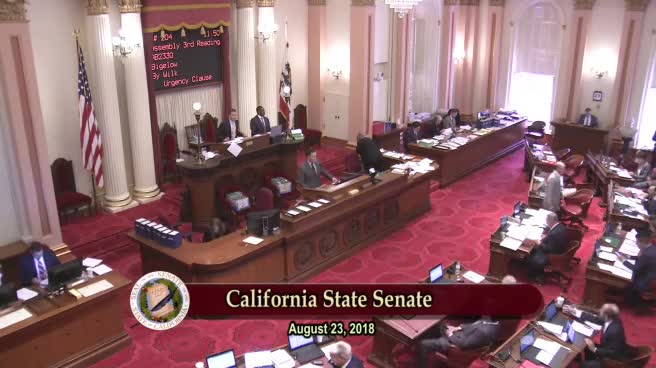 2MIN
Senate Floor
 1H
Senate Standing Committee on Appropriations
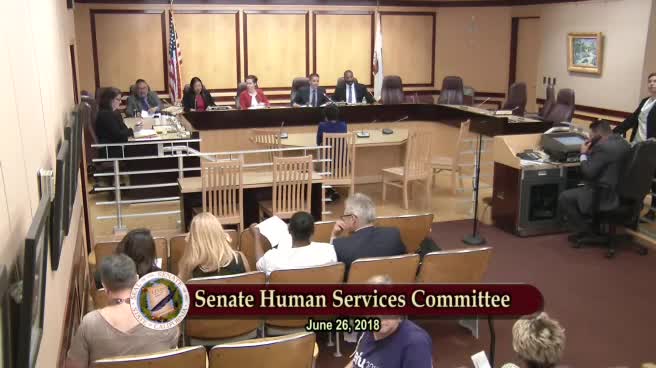 6MIN
Senate Standing Committee on Human Services
 6MIN
Assembly Floor
 10MIN
Assembly Standing Committee on Human Services
Bill Author