AB 2252: State grants: state grant administrator.
- Session Year: 2017-2018
- House: Assembly
- Latest Version Date: 2018-09-10
The Grant Information Act of 1999 authorizes state agencies to make available on the Internet a listing, of all grants administered by that agency, that includes specified information and provides instructions on filing grant applications electronically, or on the manner in which to download, complete, and mail grant applications to the state agency, or both. The act also authorizes each state agency to make available on the Internet any printed grant application form used by the agency to award grants that are administered by that agency.
This bill would, instead, enact the Grant Information Act of 2018. The bill would require the California State Library, on or before July 1, 2020, to create a funding opportunities Internet Web portal that provides a centralized location for grant seekers to find state grant opportunities. The bill would additionally require each state agency, on or before July 1, 2020, to register every grant the state agency administers with the California State Library prior to commencing a solicitation or award process for distribution of the grant, as specified. The bill would require each state agency, on or before July 1, 2020, to provide for the acceptance of electronic applications for any grant administered by the state agency, as appropriate. The bill would additionally require the California State Library to create an annual report to the Legislature relating to the effectiveness of the Internet Web portal, as specified.
The Grant Information Act of 1999 authorizes state agencies to make available on the Internet a listing listing, of all grants administered by that agency, that includes specified information and provides instructions on filing grant applications electronically, or on the manner in which to download, complete, and mail grant applications to the state agency, or both. The act also authorizes each state agency to make available on the Internet any printed grant application form used by the agency to award grants that are administered by that agency.
This bill would would, instead, enact the Grant Information Act of 2018. The bill would require the Government Operations Agency, California State Library, on or before July 1, 2020, to create a funding opportunities web Internet Web portal that provides a centralized location for grant seekers to find state grant opportunities. The bill would additionally require each state agency, on or before July 1, 2020, to register every grant the state agency administers with the Government Operations Agency California State Library prior to commencing a solicitation or award process for distribution of the grant, as specified. The bill would require each state agency, on or before July 1, 2020, to provide for the acceptance of electronic applications for any grant administered by the state agency. agency, as appropriate. The bill would additionally require the California State Library to create an annual report to the Legislature relating to the effectiveness of the Internet Web portal, as specified.
The Grant Information Act of 1999 authorizes state agencies to make available on the Internet a listing of all grants administered by that agency, that includes specified information and provides instructions on filing grant applications electronically, or on the manner in which to download, complete, and mail grant applications to the state agency, or both. The act also authorizes each state agency to make available on the Internet any printed grant application form used by the agency to award grants that are administered by that agency.
This bill would enact the Grant Information Act of 2018. The bill would require the Government Operations Agency, on or before July 1, 2020, to create a funding opportunities web portal that provides a centralized location for grant seekers to find state grant opportunities. The bill would additionally require each state agency, on or before July 1, 2020, to register every grant the state agency administers with the Government Operations Agency prior to commencing a solicitation or award process for distribution of the grant, as specified. The bill would require each state agency, on or before July 1, 2020, to provide for the acceptance of electronic applications for any grant administered by the state agency.
Existing law establishes the State Clearinghouse as the office designated by the Governor as the clearinghouse for information from the federal Office of Management and Budget in accordance with federal law. Existing law establishes a federal grant administrator, within the State Clearinghouse, who is designated by the Governor and authorized to serve as a primary point of contact for information on federal grants related to community, economic, and local development, and serve as a coordinator to manage and maximize federal grant opportunities within the state, as provided. Existing law further authorizes the federal grant administrator to maintain information on the Office of Planning and Researchs Internet Web site relating to federal grants. Existing law requires the federal grant administrator, on or before January 1, 2018, and annually thereafter, to prepare a summary of federal grant funding to the state that includes, among other performance metrics, the total federal dollars received by the state through federal grants during the report year.This bill would establish, within the Government Operations Agency, a state grant administrator who is designated by the Governor to serve as the states primary point of contact for information on grants provided by state agencies. The bill would authorize the state grant administrator, among other things, to support the establishment of a statewide network of individuals who serve as point of contact for state grant opportunities in state agencies. The bill would authorize the state grant administrator to develop and maintain information on the Government Operations Agencys Internet Web site related to new state grant opportunities, grant management best practices, and other resources to support the ability of entities, including, but not limited to, local governments and nonprofit organizations, to apply and manage state grants. The bill would require state agencies that provide grants to provide grant information for the Internet Web site as determined by the state grant administrator. The bill would require the state grant administrator, on or before June 30, 2020, and annually thereafter, to prepare a summary of state grant funding, as specified.Existing law establishes the State Clearinghouse as the office designated by the Governor as the clearinghouse for information from the federal Office of Management and Budget in accordance with federal law. Existing law establishes a federal grant administrator, within the State Clearinghouse, who is designated by the Governor and authorized to serve as a primary point of contact for information on federal grants related to community, economic, and local development, and serve as a coordinator to manage and maximize federal grant opportunities within the state, as provided. Existing law further authorizes the federal grant administrator to maintain information on the Office of Planning and Researchs Internet Web site relating to federal grants. Existing law requires the federal grant administrator, on or before January 1, 2018, and annually thereafter, to prepare a summary of federal grant funding to the state that includes, among other performance metrics, the total federal dollars received by the state through federal grants during the report year.
This bill would establish, within the Government Operations Agency, a state grant administrator who is designated by the Governor to serve as the states primary point of contact for information on grants provided by state agencies. The bill would authorize the state grant administrator, among other things, to support the establishment of a statewide network of individuals who serve as point of contact for state grant opportunities in state agencies. The bill would authorize the state grant administrator to develop and maintain information on the Office of Planning and Researchs Government Operations Agencys Internet Web site related to new state grant opportunities, grant management best practices, and other resources to support the ability of entities, including, but not limited to, local governments and nonprofit organizations, to apply and manage state grants. The bill would require state agencies that provide grants to provide grant information for the Internet Web site as determined by the state grant administrator. The bill would require the state grant administrator, on or before June 30, 2020, and annually thereafter, to prepare a summary of state grant funding, as specified.
Existing law establishes the State Clearinghouse as the office designated by the Governor as the clearinghouse for information from the federal Office of Management and Budget in accordance with federal law. Existing law establishes a federal grant administrator, within the State Clearinghouse, who is designated by the Governor and authorized to serve as a primary point of contact for information on federal grants related to community, economic, and local development, and serve as a coordinator to manage and maximize federal grant opportunities within the state, as provided. Existing law further authorizes the federal grant administrator to maintain information on the Office of Planning and Researchs Internet Web site relating to federal grants. Existing law requires the federal grant administrator, on or before January 1, 2018, and annually thereafter, to prepare a summary of federal grant funding to the state that includes, among other performance metrics, the total federal dollars received by the state through federal grants during the report year.
This bill would establish, within the State Clearinghouse, Government Operations Agency, a state grant administrator who is designated by the Governor to serve as the states primary point of contact for information on grants provided by state agencies. The bill would authorize the state grant administrator, among other things, to support the establishment of a statewide network of individuals who serve as point of contact for state grant opportunities in state agencies. The bill would authorize the state grant administrator to develop and maintain information on the Office of Planning and Researchs Internet Web site related to new state grant opportunities, grant management best practices, and other resources to support the ability of entities, including, but not limited to, local governments and nonprofit organizations, to apply and manage state grants. The bill would require state agencies that provide grants to provide grant information for the Internet Web site as determined by the state grant administrator. The bill would require the state grant administrator, on or before January 1, June 30, 2020, and annually thereafter, to prepare a summary of state grant funding, as specified.
Existing law establishes the State Clearinghouse as the office designated by the Governor as the clearinghouse for information from the federal Office of Management and Budget in accordance with federal law. Existing law establishes a federal grant administrator, within the State Clearinghouse, who is designated by the Governor and authorized to serve as a primary point of contact for information on federal grants related to community, economic, and local development, and serve as a coordinator to manage and maximize federal grant opportunities within the state, as provided. Existing law further authorizes the federal grant administrator to maintain information on the Office of Planning and Researchs Internet Web site relating to federal grants. Existing law requires the federal grant administrator, on or before January 1, 2018, and annually thereafter, to prepare a summary of federal grant funding to the state that includes, among other performance metrics, the total federal dollars received by the state through federal grants during the report year.
This bill would establish, within the State Clearinghouse, a state grant administrator who is designated by the Governor to serve as the states primary point of contact for information on grants provided by state agencies. The bill would authorize the state grant administrator, among other things, to support the establishment of a statewide network of individuals who serve as point of contact for state grant opportunities in state agencies. The bill would authorize the state grant administrator to develop and maintain information on the Office of Planning and Researchs Internet Web site related to new state grant opportunities, grant management best practices, and other resources to support the ability of entities, including, but not limited to, local governments and nonprofit organizations, to apply and manage state grants. The bill would require state agencies that provide grants to provide grant information for the Internet Web site as determined by the state grant administrator. The bill would require the state grant administrator, on or before January 1, 2020, and annually thereafter, to prepare a summary of state grant funding, as specified.
This chapter shall be known, and may be cited, as the Grant Information Act of 2018. All state agencies shall implement this act in a manner that is consistent with the statewide strategy for electronic commerce as established by the Department of Information Technology.
SEC. 2.Section 8333.1 is added to the Government Code, to read:8333.1.On or before July 1, 2020, the California State Library shall create a funding opportunities Internet Web portal that provides a centralized location for grant seekers to find state grant opportunities. The funding opportunities Internet Web portal shall include, but is not limited to, an interactive Internet Web site that is launched to include, at a minimum, information identifying every grant administered by the state and any incentive opportunities allocated by statute or in the annual budget that will provide local assistance funds. The California State Library, in consultation with the Strategic Growth Council and the State Air Resources Board, shall ensure that the Internet Web site is accessible and provides helpful information to a diverse set of potential applicants, including nonprofit and community-based organizations, and other entities that are working to support and benefit disadvantaged and low-income communities.
SEC. 3.Section 8333.2 is added to the Government Code, to read:8333.2.(a)The California State Library shall provide an annual report to the Legislature on the effectiveness of the Internet Web portal, including, but not limited to, the utilization rate by state agencies, the number of grants registered, the amount of funding per grant, the number of visits to the Internet Web portal, including what parts of the Internet Web portal are visited, and whether there has been an increase in grant applications. The first annual report shall be submitted on or before January 1, 2022, and shall cover the period of July 1, 2020, to July 1, 2021, inclusive. Each subsequent annual report shall be submitted on or before January 1, and shall cover the previous fiscal year.
(b)A report to be submitted pursuant to subdivision (a) shall be submitted in compliance with Section 9795.
SEC. 4.Section 8334 of the Government Code is repealed.SEC. 5.Section 8334 is added to the Government Code, to read:8334.(a)(1)On or before July 1, 2020, each state agency shall register every grant the state agency administers with the California State Library prior to commencing a solicitation or award process for distribution of the grant. Each agency shall provide information regarding the grant, that assists the California State Library with cataloging the distribution of grants and provides potential applicants with understandable and consistent information about available funding opportunities, including, but not limited to, all of the following:
(A)The title of the grant opportunity and grant identification number.
(B)The revenue source allocated to fund the grant.
(C)The purpose of the grant.
(D)A brief description of the grant, including, but not limited to, the mechanism used to announce the availability of funding.
(E)Any eligibility requirements, including, but not limited to, any matching funds requirements.
(F)Geographic limitations, if any.
(G)A description of the total available grant funding, the number of awards, and the amounts per award.
(H)The period of time covered by the grant.
(I)The date the grant will be issued.
(J)The deadline for proposals to be submitted.
(K)Internet address for electronic submission of the proposal.
(L)Contact information of a staff member responsible for communicating the grant requirements.
(2)Each state agency shall provide a link to the California State Librarys funding opportunities Internet Web portal on the state agencys Internet Web site.
(b)On or before July 1, 2020, each state agency shall provide for the acceptance of electronic proposals for any grant administered by the state agency, as appropriate.
(c)Grant as used in this chapter means any mechanism used by a state agency to distribute appropriations that have been allocated for the purpose of financial assistance through a competitive or first-come award process. The term shall include loans and federal assistance funds that are administered by a state agency. The term shall not include the procurement of goods or services for a state agency nor the acquisition, construction, alteration, improvement, or repair of real property for a state agency.
(d)The Government Operations Agency shall assist the California State Library with state agency compliance and creating streamlined processes, as appropriate.
This chapter shall be known, and may be cited, as the Grant Information Act of 2018. All state agencies shall implement this act in a manner that is consistent with the statewide strategy for electronic commerce as established by the Department of Information Technology.
SEC. 2.Section 8333.1 is added to the Government Code, to read:8333.1.On or before July 1, 2020, the Government Operations Agency California State Library shall create a funding opportunities web Internet Web portal that provides a centralized location for grant seekers to find state grant opportunities. The funding opportunities web Internet Web portal shall include, but is not limited to, an interactive Internet Web site that is launched to include, at a minimum, information identifying every grant administered by the state and any incentive opportunities allocated by statute or in the annual budget that will provide funds for assistance to local agencies. The Government Operations Agency, local assistance funds. The California State Library, in consultation with the Strategic Growth Council and the State Air Resources Board, shall ensure that the Internet Web site is accessible and provides helpful information to a diverse set of potential applicants, including nonprofit and community-based organizations, and other entities that are working to support and benefit disadvantaged and low-income communities.
SEC. 3.Section 8333.2 is added to the Government Code, to read:8333.2.(a)The California State Library shall provide an annual report to the Legislature on the effectiveness of the Internet Web portal, including, but not limited to, the utilization rate by state agencies, the number of grants registered, the amount of funding per grant, the number of visits to the Internet Web portal, including what parts of the Internet Web portal are visited, and whether there has been an increase in grant applications. The first annual report shall be submitted on or before January 1, 2022, and shall cover the period of July 1, 2020, to July 1, 2021, inclusive. Each subsequent annual report shall be submitted on or before January 1, and shall cover the previous fiscal year.
(b)A report to be submitted pursuant to subdivision (a) shall be submitted in compliance with Section 9795.
SEC. 3.SEC. 4.Section 8334 of the Government Code is repealed.SEC. 4.SEC. 5.Section 8334 is added to the Government Code, to read:8334.(a)(1)On or before July 1, 2020, each state agency shall register every grant the state agency administers with the Government Operations Agency California State Library prior to commencing a solicitation or award process for distribution of the grant. Each agency shall provide information regarding the grant, that assists the Government Operations Agency California State Library with cataloging the distribution of grants and provides potential applicants with understandable and consistent information about available funding opportunities, including, but not limited to, all of the following:
(A)The title of the grant opportunity and grant identification number.
(B)The revenue source allocated to fund the grant.
(C)The purpose of the grant.
(D)A brief description of the grant, including, but not limited to, whether the grant is a request for proposal (RFP) or a request for assistance (RFA). the mechanism used to announce the availability of funding.
(E)A brief description of the request for proposal (RFP) or request for assistance (RFA). (F)(E)Any eligibility requirements, including, but not limited to, any matching funds requirements.
(G)(F)Geographic limitations, if any.
(H)(G)A description of the total available grant funding, the number of awards, and the amounts per award.
(I)(H)The period of time covered by the grant.
(J)(I)The date the request for proposals (RFP) or request for assistance (RFA) grant will be issued.
(K)(J)The deadline for proposals to be submitted.
(L)(K)Internet address for electronic submission of the proposal.
(M)(L)Contact information of a staff member responsible for communicating the grant requirements.
(2)Each state agency shall provide a link to the Government Operations Agencys California State Librarys funding opportunities web Internet Web portal on the state agencys Internet Web site.
(b)On or before July 1, 2020, each state agency shall provide for the acceptance of electronic proposals for any grant administered by the state agency. agency, as appropriate.
(c)(1)Notwithstanding subdivision (a) of Section 11000, state agency as used in this chapter includes the Office of the Chancellor of the California State University, but does not include any individual campus of the California State University or any auxiliary enterprise affiliated with the California State University.(2)This chapter shall only apply to the Office of the Chancellor of the California State University if the decision to award or not to award funds to an individual or entity filing a grant application is under the control of the Office of the Chancellor of the California State University. This chapter shall not apply to opportunities available solely to the campuses of the California State University and auxiliary enterprises affiliated with the California State University to apply for funds to the Office of the Chancellor of the California State University. (d)(c)Grant as used in this chapter means a solicited or unsolicited proposal, including, but not limited to, a request for proposals (RFP) and a request for applications (RFA), to furnish assistance to another entity so that the latter may carry out its own program. any mechanism used by a state agency to distribute appropriations that have been allocated for the purpose of financial assistance through a competitive or first-come award process. The term shall include loans and federal assistance funds that are administered by a state agency. The term shall not include the procurement of goods or services for a state agency nor the acquisition, construction, alteration, improvement, or repair of real property for a state agency.
(d)The Government Operations Agency shall assist the California State Library with state agency compliance and creating streamlined processes, as appropriate.
This chapter shall be known known, and may be cited cited, as the Grant Information Act of 1999. 2018. All state agencies that have Internet websites shall implement to the best of their ability this act in a manner that is consistent with the statewide strategy for electronic commerce as established by the Department of Information Technology.
SEC. 2.Section 8333.1 is added to the Government Code, to read:8333.1.On or before July 1, 2020, the Government Operations Agency shall create a funding opportunities web portal that provides a centralized location for grant seekers to find state grant opportunities. The funding opportunities web portal shall include, but is not limited to, an interactive Internet Web site that is launched to include, at a minimum, information identifying every grant administered by the state and any incentive opportunities allocated by statute or in the annual budget that will provide funds for assistance to local agencies. The Government Operations Agency, in consultation with the Strategic Growth Council and the State Air Resources Board, shall ensure that the Internet Web site is accessible and provides helpful information to a diverse set of potential applicants, including nonprofit and community-based organizations, and other entities that are working to support and benefit disadvantaged and low-income communities.
SEC. 3.Section 8334 of the Government Code is repealed.8334.(a)State agencies may make available on the Internet a listing of all grants administered by that agency, which shall provide instructions on filing grant applications electronically, or on the manner in which to download, complete, and mail grant applications to the state agency, or both, consistent with whichever method the agency establishes for the filing of grant applications.(b)Each state agency may make any printed grant application form used by the agency to award grants that are subject to administration by that agency available on the Internet, and shall provide the instructions specified in subdivision (a).(c)State agencies making grant application forms available on the Internet shall, to the extent feasible, advise individuals calling the state agency for information about a grant program of both of the following:(1)The availability of grant information on the Internet.(2)That many public libraries provide Internet access.(d)Each state agency posting a listing of grants administered by that agency pursuant to subdivision (a) shall include an executive summary of each grant as part of that listing that includes, but is not limited to, all of the following:(1)The title of the grant opportunity and grant identification number.(2)A brief description of the request for proposals (RFP) or request for assistance (RFA).(3)Grant eligibility requirements.(4)Geographic limitations, if any.(5)Description of the total available grant funding, the number of awards, and the amounts per award.(6)Period of time covered by the grant.(7)Date the request for proposals (RFP) or request for assistance (RFA) is issued.(8)Deadline for proposals to be submitted.(9)Internet address for electronic submission, when appropriate.(10)Contact information.(e)(1)Notwithstanding subdivision (a) of Section 11000, state agency as used in this chapter includes the Office of the Chancellor of the California State University, but does not include any individual campus of the California State University or any auxiliary enterprise affiliated with the California State University.(2)This chapter shall only apply to the Office of the Chancellor of the California State University if the decision to award or not to award funds to an individual or entity filing a grant application is under the control of the Office of the Chancellor of the California State University. This chapter shall not apply to opportunities available solely to the campuses of the California State University and auxiliary enterprises affiliated with the California State University to apply for funds to the Office of the Chancellor of the California State University.(f)Grant as used in this chapter means a solicited or unsolicited proposal, including, but not limited to, a request for proposals (RFP) and a request for applications (RFA), to furnish assistance to another entity so that the latter may carry out its own program. The term shall not include the procurement of goods or services for a state agency nor the acquisition, construction, alteration, improvement, or repair of real property for a state agency.(g)This chapter shall not be implemented until July 1, 2001, unless otherwise authorized by the Department of Information Technology pursuant to Executive Order D-3-99.SEC. 4.Section 8334 is added to the Government Code, to read:8334.(a)(1)On or before July 1, 2020, each state agency shall register every grant the state agency administers with the Government Operations Agency prior to commencing a solicitation or award process for distribution of the grant. Each agency shall provide information regarding the grant, that assists the Government Operations Agency with cataloging the distribution of grants and provides potential applicants with understandable and consistent information about available funding opportunities, including, but not limited to, all of the following:
(A)The title of the grant opportunity and grant identification number.
(B)The revenue source allocated to fund the grant.
(C)The purpose of the grant.
(D)A brief description of the grant, including, but not limited to, whether the grant is a request for proposal (RFP) or a request for assistance (RFA).
(E)A brief description of the request for proposal (RFP) or request for assistance (RFA).
(F)Any eligibility requirements, including, but not limited to, any matching funds requirements.
(G)Geographic limitations, if any.
(H)A description of the total available grant funding, the number of awards, and the amounts per award.
(I)The period of time covered by the grant.
(J)The date the request for proposals (RFP) or request for assistance (RFA) will be issued.
(K)The deadline for proposals to be submitted.
(L)Internet address for electronic submission of the proposal.
(M)Contact information of a staff member responsible for communicating the grant requirements.
(2)Each state agency shall provide a link to the Government Operations Agencys funding opportunities web portal on the state agencys Internet Web site.
(b)On or before July 1, 2020, each state agency shall provide for the acceptance of electronic proposals for any grant administered by the state agency.
(c)(1)Notwithstanding subdivision (a) of Section 11000, state agency as used in this chapter includes the Office of the Chancellor of the California State University, but does not include any individual campus of the California State University or any auxiliary enterprise affiliated with the California State University.
(2)This chapter shall only apply to the Office of the Chancellor of the California State University if the decision to award or not to award funds to an individual or entity filing a grant application is under the control of the Office of the Chancellor of the California State University. This chapter shall not apply to opportunities available solely to the campuses of the California State University and auxiliary enterprises affiliated with the California State University to apply for funds to the Office of the Chancellor of the California State University.
(d)Grant as used in this chapter means a solicited or unsolicited proposal, including, but not limited to, a request for proposals (RFP) and a request for applications (RFA), to furnish assistance to another entity so that the latter may carry out its own program. The term shall not include the procurement of goods or services for a state agency nor the acquisition, construction, alteration, improvement, or repair of real property for a state agency.
SECTION 1.Article 15 (commencing with Section 11148.10) is added to Chapter 1 of Part 1 of Division 3 of Title 2 of the Government Code, to read:15.State Grant Administrator11148.10.(a)There is in state government, within the Government Operations Agency, the state grant administrator who is an individual designated by the Governor to serve as the states primary point of contact for information on grants provided by state agencies.(b)The state grant administrator may do any of the following:(1)Work with representatives from state and local government, nonprofit organizations, foundations, institutions of higher learning, and other interested parties on applying for and managing state grants.(2)Identify employees within state government with expertise in state grant management.(3)Support the establishment of a statewide network of individuals who serve as point of contact for state grant opportunities in state agencies.(4)Provide or facilitate the provision of in-person and online training to encourage and improve the ability to pursue and manage state grants.(5)(A)Develop and maintain information on the Government Operations Agencys Internet Web site related to new state grant opportunities, grant management best practices, and other resources to support the ability of entities, including, but not limited to, local governments and nonprofit organizations, to apply and manage state grants.(B)State agencies that provide grants shall provide grant information for the Internet Web site as determined by the state grant administrator.(c)On or before June 30, 2020, and annually thereafter, the state grant administrator shall prepare a summary of state grant funding that includes, but is not limited to, all of the following performance metrics:(1)Number of state grants awarded during the report year.(2)Number of completed state grant applications submitted to the state during the report year.(3)Total state dollars distributed through state grants during the report year.(4)Number of training sessions hosted by the state grant administrator and attendance at those events during the report year.(5)Other relevant information regarding state grant activities during the report year, as determined by the state grant administrator.SEC. 2.Section 12803.2 of the Government Code is amended to read:12803.2.(a)The Government Operations Agency shall consist of all of the following:(1)The Office of Administrative Law.(2)The Public Employees Retirement System.(3)The State Teachers Retirement System.(4)The State Personnel Board.(5)The California Victim Compensation Board.(6)The Department of General Services.(7)The Department of Technology.(8)The Franchise Tax Board.(9)The Department of Human Resources.(10)The California Department of Tax and Fee Administration.(11)The state grant administrator.(b)The Government Operations Agency shall include the Department of FISCal upon the acceptance of the Financial Information System for California (FISCal) by the state, as determined by the Director of Finance, pursuant to Section 11890.(c)The Government Operations Agency shall be governed by the Secretary of Government Operations pursuant to Section 12801. However, the Director of Human Resources shall report directly to the Governor on issues relating to labor relations.(d)The Governor, upon the recommendation of the Secretary of Government Operations, may appoint up to three deputies for the secretary.(e)This section shall become operative on July 1, 2017.(a)There is in state government, within the Government Operations Agency, the state grant administrator who is an individual designated by the Governor to serve as the states primary point of contact for information on grants provided by state agencies.
(b)The state grant administrator may do any of the following:
(1)Work with representatives from state and local government, nonprofit organizations, foundations, institutions of higher learning, and other interested parties on applying for and managing state grants.
(2)Identify employees within state government with expertise in state grant management.
(3)Support the establishment of a statewide network of individuals who serve as point of contact for state grant opportunities in state agencies.
(4)Provide or facilitate the provision of in-person and online training to encourage and improve the ability to pursue and manage state grants.
(5)(A)Develop and maintain information on the Government Operations Agencys Internet Web site related to new state grant opportunities, grant management best practices, and other resources to support the ability of entities, including, but not limited to, local governments and nonprofit organizations, to apply and manage state grants.
(B)State agencies that provide grants shall provide grant information for the Internet Web site as determined by the state grant administrator.
(c)On or before June 30, 2020, and annually thereafter, the state grant administrator shall prepare a summary of state grant funding that includes, but is not limited to, all of the following performance metrics:
(1)Number of state grants awarded during the report year.
(2)Number of completed state grant applications submitted to the state during the report year.
(3)Total state dollars distributed through state grants during the report year.
(4)Number of training sessions hosted by the state grant administrator and attendance at those events during the report year.
(5)Other relevant information regarding state grant activities during the report year, as determined by the state grant administrator.
SEC. 2.Section 12803.2 of the Government Code is amended to read:12803.2.(a)The Government Operations Agency shall consist of all of the following:
(1)The Office of Administrative Law.
(2)The Public Employees Retirement System.
(3)The State Teachers Retirement System.
(4)The State Personnel Board.
(5)The California Victim Compensation Board.
(6)The Department of General Services.
(7)The Department of Technology.
(8)The Franchise Tax Board.
(9)The Department of Human Resources.
(10)The California Department of Tax and Fee Administration.
(11)The state grant administrator.
(b)The Government Operations Agency shall include the Department of FISCal upon the acceptance of the Financial Information System for California (FISCal) by the state, as determined by the Director of Finance, pursuant to Section 11890.
(c)The Government Operations Agency shall be governed by the Secretary of Government Operations pursuant to Section 12801. However, the Director of Human Resources shall report directly to the Governor on issues relating to labor relations.
(d)The Governor, upon the recommendation of the Secretary of Government Operations, may appoint up to three deputies for the secretary.
(e)This section shall become operative on July 1, 2017.
(a)There is in state government, within the State Clearinghouse, Government Operations Agency, the state grant administrator who is an individual designated by the Governor to serve as the states primary point of contact for information on grants provided by state agencies.
(b)The state grant administrator may do any of the following:
(1)Work with representatives from state and local government, nonprofit organizations, foundations, institutions of higher learning, and other interested parties on applying for and managing state grants.
(2)Identify employees within state government with expertise in state grant management.
(3)Support the establishment of a statewide network of individuals who serve as point of contact for state grant opportunities in state agencies.
(4)Provide or facilitate the provision of in-person and online training to encourage and improve the ability to pursue and manage state grants.
(5)(A)Develop and maintain information on the Office of Planning and Researchs Internet Web site related to new state grant opportunities, grant management best practices, and other resources to support the ability of entities, including, but not limited to, local governments and nonprofit organizations, to apply and manage state grants.
(B)State agencies that provide grants shall provide grant information for the Internet Web site as determined by the state grant administrator.
(c)On or before January 1, June 30, 2020, and annually thereafter, the state grant administrator shall prepare a summary of state grant funding that includes, but is not limited to, all of the following performance metrics:
(1)Number of state grants awarded during the three years year prior to the establishment of the state grant administrator and during the report year.
(2)Number of completed state grant applications submitted to the state during the report year.
(3)Total state dollars distributed through state grants during the report year.
(4)Number of training sessions hosted by the state grant administrator and attendance at those events during the report year.
(5)Other relevant information regarding state grant activities during the report year, as determined by the state grant administrator.
SEC. 2.Section 12803.2 of the Government Code is amended to read:12803.2.(a)The Government Operations Agency shall consist of all of the following:
(1)The Office of Administrative Law.
(2)The Public Employees Retirement System.
(3)The State Teachers Retirement System.
(4)The State Personnel Board.
(5)The California Victim Compensation Board.
(6)The Department of General Services.
(7)The Department of Technology.
(8)The Franchise Tax Board.
(9)The Department of Human Resources.
(10)The California Department of Tax and Fee Administration.
(11)The state grant administrator.
(b)The Government Operations Agency shall include the Department of FISCal upon the acceptance of the Financial Information System for California (FISCal) by the state, as determined by the Director of Finance, pursuant to Section 11890.
(c)The Government Operations Agency shall be governed by the Secretary of Government Operations pursuant to Section 12801. However, the Director of Human Resources shall report directly to the Governor on issues relating to labor relations.
(d)The Governor, upon the recommendation of the Secretary of Government Operations, may appoint up to three deputies for the secretary.
(e)This section shall become operative on July 1, 2017.
(a)There is in state government, within the State Clearinghouse, the state grant administrator who is an individual designated by the Governor to serve as the states primary point of contact for information on grants provided by state agencies.
(b)The state grant administrator may do any of the following:
(1)Work with representatives from state and local government, nonprofit organizations, foundations, institutions of higher learning, and other interested parties on applying for and managing state grants.
(2)Identify employees within state government with expertise in state grant management.
(3)Support the establishment of a statewide network of individuals who serve as point of contact for state grant opportunities in state agencies.
(4)Provide or facilitate the provision of in-person and online training to encourage and improve the ability to pursue and manage state grants.
(5)(A)Develop and maintain information on the Office of Planning and Researchs Internet Web site related to new state grant opportunities, grant management best practices, and other resources to support the ability of entities, including, but not limited to, local governments and nonprofit organizations, to apply and manage state grants.
(B)State agencies that provide grants shall provide grant information for the Internet Web site as determined by the state grant administrator.
(c)On or before January 1, 2020, and annually thereafter, the state grant administrator shall prepare a summary of state grant funding that includes, but is not limited to, all of the following performance metrics:
(1)Number of state grants awarded during the three years prior to the establishment of the state grant administrator and during the report year.
(2)Number of completed state grant applications submitted to the state during the report year.
(3)Total state dollars distributed through state grants during the report year.
(4)Number of training sessions hosted by the state grant administrator and attendance at those events during the report year.
(5)Other relevant information regarding state grant activities during the report year, as determined by the state grant administrator.
|
Date
|
Status
|
|---|---|
| Sep 10, 2018 | Chaptered by Secretary of State - Chapter 318, Statutes of 2018. |
| Sep 10, 2018 | Approved by the Governor. |
| Sep 5, 2018 | Enrolled and presented to the Governor at 3 p.m. |
| Aug 27, 2018 | Senate amendments concurred in. To Engrossing and Enrolling. |
| Aug 23, 2018 | In Assembly. Concurrence in Senate amendments pending. May be considered on or after August 25 pursuant to Assembly Rule 77. |
| Aug 23, 2018 | Read third time. Passed. Ordered to the Assembly. |
| Aug 20, 2018 | Read second time. Ordered to third reading. |
| Aug 17, 2018 | From committee: Amend, and do pass as amended. (Ayes 7. Noes 0.) (August 16). |
| Aug 6, 2018 | In committee: Referred to APPR. suspense file. |
| Jun 26, 2018 | From committee: Do pass and re-refer to Com. on APPR. (Ayes 13. Noes 0.) (June 26). Re-referred to Com. on APPR. |
| Jun 14, 2018 | From committee chair, with author's amendments: Amend, and re-refer to committee. Read second time, amended, and re-referred to Com. on G.O. |
| Jun 7, 2018 | Referred to Com. on G.O. |
| May 30, 2018 | In Senate. Read first time. To Com. on RLS. for assignment. |
| May 29, 2018 | Read third time. Passed. Ordered to the Senate. |
| May 25, 2018 | From committee: Do pass. (Ayes 16. Noes 0.) (May 25). |
| Apr 11, 2018 | In committee: Set, first hearing. Referred to APPR. suspense file. |
| Apr 4, 2018 | Re-referred to Com. on APPR. |
| Apr 3, 2018 | Read second time and amended. |
| Apr 2, 2018 | From committee: Amend, and do pass as amended and re-refer to Com. on APPR. (Ayes 6. Noes 0.) (March 21). |
| Mar 15, 2018 | Re-referred to Com. on A. & A.R. |
| Mar 14, 2018 | From committee chair, with author's amendments: Amend, and re-refer to Com. on A. & A.R. Read second time and amended. |
| Mar 1, 2018 | Referred to Com. on A. & A.R. |
| Feb 14, 2018 | From printer. May be heard in committee March 16. |
| Feb 13, 2018 | Read first time. To print. |
|
Date
|
Description
|
Location
|
Votes
|
|
|---|---|---|---|---|
| Aug 27, 2018 | AB 2252 LIMÓN Concurrence in Senate Amendments | Assembly Floor |
Passed |
|
| Aug 23, 2018 | Assembly 3rd Reading AB2252 Limón By Hertzberg | Senate Floor |
Passed |
|
| Aug 16, 2018 | Do pass as amended | Senate Standing Committee on Appropriations |
Passed |
|
| Aug 6, 2018 | Placed on suspense file | Senate Standing Committee on Appropriations |
Passed |
|
| Jun 26, 2018 | Do pass, but first be re-referred to the Committee on [Appropriations] | Senate Standing Committee on Governmental Organization |
Passed |
|
| May 29, 2018 | AB 2252 LIMÓN Assembly Third Reading | Assembly Floor |
Passed |
|
| May 25, 2018 | Do pass. | Assembly Standing Committee on Appropriations |
Passed |
|
| Mar 21, 2018 | Do pass as amended and be re-referred to the Committee on [Appropriations] | Assembly Standing Committee on Accountability and Administrative Review |
Passed |
This list shows positions taken on this bill by organizations on the date displayed, which is linked to the original source.
Positions by individuals are not included.
CONCURRENCE IN SENATE AMENDMENTS
CSA1 Bill Id:AB 2252
Author:(Limón)
As Amended Ver:August 17, 2018
Majority vote
ASSEMBLY: | 78-0 | (May 29, 2018) | SENATE: | 39-0 | (August 23, 2018) |
Original Committee Reference: A. & A.R.
SUMMARY: Requires the California State Library (State Library), by July 1, 2020, to create an online funding opportunity portal that provides grant seekers a central location for state grant information.
The Senate amendments
- Shift the responsibility to create and manage the portal from the Government Operations Agency to the State Library.
- Require state agencies to provide a link to the portal from their websites.
- Require the State Library to provide annual reports to the Legislature related to the number of grants posted and the use of the portal.
EXISTING LAW: Authorizes, under the Grant Information Act of 1999, state agencies to make available on their websites, a listing of all grants administered by that agency, as specified.
FISCAL EFFECT: According to the Senate Appropriations Committee: One-time costs to the State Library of up to $200,000 to enter into a contract to design the website, and for additional workload to work with grant entities to assist and encourage compliance and to provide assistance to grant entities as needed. Ongoing costs of approximately $115,000 would be needed to continually maintain the website, for continual assistance for grant entities, and to provide the annual report.
COMMENTS: This bill establishes an online central location for state grant information. According to the author, this will help nonprofits and others better access grant opportunities.
Analysis Prepared by: Scott Herbstman / A. & A.R. / (916) 319-3600 FN: 0004477
Office of Senate Floor Analyses (916) 651-1520 Fax: (916) 327-4478 | AB |
THIRD READING
Bill No: AB 2252
:
SENATE GOVERNMENTAL ORG. COMMITTEE: 13-0, 6/26/18
AYES: Dodd, Wilk, Bradford, Cannella, Gaines, Galgiani, Glazer, Hill, Hueso, Lara, Portantino, Vidak, Wiener
SENATE APPROPRIATIONS COMMITTEE: 7-0, 8/16/18
AYES: Portantino, Bates, Beall, Bradford, Hill, Nielsen, Wiener
ASSEMBLY FLOOR: 78-0, 5/29/18 - See last page for vote
SOURCE: California Association of Nonprofits
DIGEST:
This bill enacts the Grant Information Act of 2018, and requires the California State Library (Library) to create a funding opportunities Internet Web portal (Portal) that provides a centralized location for grant seekers to find state grant opportunities, as specified.
Existing law:
- Authorizes, under the Grant Information Act of 1999, state agencies to make available on their Internet Web sites, a listing of all grants administered by that agency, as specified.
- Authorizes each state agency to make available on their Internet Web site any printed grant application form used by the agency to award grants that are administered by that agency.
- Establishes the State Clearinghouse as the office designated by the Governor as the clearinghouse for information from the federal Office of Management and Budget in accordance with federal law.
This bill:
- Requires the Library, on or before July 1, 2020, to create a funding opportunities Internet Web portal that provides a centralized location for grant seekers to find state grant opportunities.
- Provides that the Portal shall include an interactive Internet Web site that includes, at minimum, information identifying every grant administered by the state and any incentive opportunities allocated by statute or in the annual budget that will provide local assistance funds.
- Requires the Library, in consultation with the Strategic Growth Council and the State Air Resources Board (CARB), to ensure that the Internet Web site is accessible and provides helpful information to a diverse set of potential applicants and other entities that are working to support and benefit disadvantaged and low-income communities.
- Requires the Library to provide an annual report to the Legislature on the effectiveness of the Portal, as specified.
- Requires each state agency, on or before July 1, 2020, to register every grant the state agency administers with the Library prior to commencing a solicitation or award process for distribution of the grant.
- Requires each state agency to provide information regarding the grant, that assists the Library with cataloging the distribution of grants and provides potential applicants with understandable and consistent information about available funding opportunities, including, but not limited to, all of the following:
- The title of the grant opportunity and grant identification number.
- The revenue source allocated to fund the grant.
- The purpose of the grant.
- A brief description of the grant, including, but not limited to, the mechanism used to announce the availability of funding.
- Any eligibility requirements, including, but not limited to, any matching funds requirements.
- Geographic limitations, if any.
- A description of the total available grant funding, the number of awards, and the amounts per award.
- The period of time covered by the grant.
- The date the grant will be issued.
- The deadline for proposals to be submitted.
- Internet address for electronic submission of the proposal.
- Contact information of a staff member responsible for communicating the grant requirements.
- Requires each state agency to provide a link to the Library’s Portal on their Internet Web sites.
- Requires each state agency, on or before July 1, 2020, to provide for the acceptance of electronic proposals for any grant administered by the state agency, as appropriate.
- Defines “grant” to mean any mechanism used by a state agency to distribute appropriations that have been allocated for the purpose of financial assistance through a competitive or first-come award process including loans and federal assistance funds that are administered by a state agency.
- Requires the Government Operations Agency (GovOps) to assist the Library with state agency compliance and creating streamlined processes, as appropriate.
- Repeals outdated provisions of the Grant Information Act of 1999.
Comments
Purpose of the bill. According to the author, “AB 2252 would require the state to compile and maintain up to date funding information on one searchable website. By making California grants accessible and transparent, we can ensure all interested entities have a fair opportunity at state funding.”
Further, the author states that California currently does not have a centralized database to find state grants, and that interested parties must wade through complex Web sites with varying levels of information or contacts.
Current aggregating Internet Web sites. Currently there are two state-run Internet Web sites which provide aggregated searchable information on grants and funding opportunities for nonprofits. CARB operates a site known as Funding Wizard, which according to the site “combs the internet weekly for funding opportunities to help support a sustainable future.” The site includes a search tool with filters including funding type, category, eligible applicants, or by using keywords.
Additionally, GovOps operates California’s “Open Data Portal.” According to information posted on this site, open data is “public data collected by the state through its routine business activities and published in a format that is easy to search, easy to download, and easy to combine with other data sets from other sources; it does not include private or confidential data about individuals.”
The author points out that information provided on these two sites is completely voluntary and dependent upon reporting from state departments and agencies, which often does not occur. The author argues that due to funding constraints, some nonprofits and other interested parties lack the expertise to navigate the system and may miss out of funding resources, and that disproportionately affects underfunded entities and regions.
Related/Prior Legislation
AB 1348 (Irwin, Chapter 444, Statutes of 2016) established the position of federal grant administrator within the State Clearinghouse, to serve as the state’s primary point of contact for information on federal grants related to community, economic, and local development.
AB 187 (Hertzberg, Chapter 405, Statutes of 1999) the Grant Information Act of 1999 authorized state agencies to make available on their Internet Web sites a listing of all grants administered by that agency, as specified.
FISCAL EFFECT: Appropriation: Fiscal Com.: Local:
According to the Senate Appropriations Committee, one-time costs to the California State Library of up to $200,000 to enter into a contract to design the website, and for additional workload to work with grant entities to assist and encourage compliance and to provide assistance to grant entities as needed. Ongoing costs of approximately $115,000 would be needed to continually maintain the website, for continual assistance for grant entities, and to provide the annual report.
California Association of Nonprofits (source)
Abundance for All, Inc.
Alameda Council of Community Mental Health Agencies
Asili Research Alliance
Barrio Action Youth and Family Center
Blue Star Ranch, Serving Our Nation’s Veterans
Boys and Girls Club of Greater Conejo
Cabrillo Economic Development Corporation
California Institute for Rural Studies
California Society of Association Executives
Cancer Care Network Foundation
Catholic Big Brothers Big Sisters
Catholic Charities of Santa Clara County
Celiac Disease Foundation
Center for Human Services
Disability Rights California
EntreNous Youth Empowerment Service, Inc. – Compton YouthBuild
Exceptional Minds
Family Care Network, Inc.
Greater Opportunities for the Developmentally Disabled
Ink People, Inc.
Innovative Housing Opportunities
Institute for Religious Tolerance, Peace and Justice
K-12 Team
Legal Aid Association of California
Lower Depth Theatre Ensemble
Men Creating Peace
My Sister’s Keeper Success Institute, Inc.
Peninsula Family Service
Pomeroy Recreation and Rehabilitation
Propel a Cure
Rebuilding Together San Francisco
Recovery Café San Jose
San Francisco – Ho Chi Minh City Sister City Committee
Sanctuary Forest
Serving Seniors
Solano Computer & Digital Skills Center
SOMArts Cultural Center
Talent for Epilepsy
The Children’s Tree House
The Narrative Method
The Promises Foundation
TransFamily Support Services
United Roots
United Ways of California
Whole Systems Learning
Youth Leadership Institute
OPPOSITION: (Verified 8/17/18)
None received
ARGUMENTS IN SUPPORT: According to the California Association of Nonprofits (CalNonprofits), “government grants make up almost half of contributed income to nonprofits, and there are notable disparities in the geographic distribution of the revenue and assets that nonprofits receive. California currently does not have a centralized database that nonprofits can access to identify state grants they might be eligible for, making it difficult for many nonprofits to find the information they need about state funding opportunities. This disproportionately impacts underserved communities, making it harder for them to compete for and procure state funds.”
ASSEMBLY FLOOR: 78-0, 5/29/18
AYES: Acosta, Aguiar-Curry, Travis Allen, Arambula, Baker, Berman, Bigelow, Bloom, Bonta, Brough, Burke, Caballero, Calderon, Carrillo, Cervantes, Chau, Chávez, Chen, Chiu, Choi, Chu, Cooley, Cooper, Cunningham, Dahle, Daly, Eggman, Flora, Fong, Frazier, Friedman, Gallagher, Cristina Garcia, Eduardo Garcia, Gipson, Gloria, Gonzalez Fletcher, Gray, Grayson, Harper, Holden, Irwin, Jones-Sawyer, Kalra, Kamlager-Dove, Kiley, Lackey, Levine, Limón, Low, Maienschein, Mathis, Mayes, McCarty, Medina, Melendez, Mullin, Muratsuchi, Nazarian, Obernolte, O'Donnell, Patterson, Quirk, Quirk-Silva, Reyes, Rodriguez, Rubio, Salas, Santiago, Steinorth, Mark Stone, Thurmond, Ting, Voepel, Waldron, Weber, Wood, Rendon
8/20/18 9:50:25
**** END ****
SENATE COMMITTEE ON APPROPRIATIONS
Senator Anthony Portantino, Chair
2017 - 2018 Regular Session
AB 2252 (Limón) - State grants: state grant administrator
Version: June 14, 2018 | Policy Vote: G.O. 13 - 0 |
Urgency: No | Mandate: No |
Hearing Date: August 16, 2018 | Consultant: Debra Cooper |
Bill Summary:
AB 2252 would enact the Grant Information Act of 2018 and require the Government Operations Agency (GovOps) to create a funding opportunities web portal (portal) that provides a centralized location for grant seekers to find state grant opportunities, as specified.
*********** ANALYSIS ADDENDUM – SUSPENSE FILE ***********
The following information is revised to reflect amendments
adopted by the committee on August 16, 2018
Fiscal Impact:
One-time costs to the California State Library of up to $200,000 to enter into a contract to design the website, and for additional workload to work with grant entities to assist and encourage compliance and to provide assistance to grant entities as needed. Ongoing costs of approximately $115,000 would be needed to continually maintain the website, for continual assistance for grant entities, and to provide the annual report.
Author Amendments:
Transfer the responsibility for the portal from GovOps to the California State Library and add a reporting requirement.
-- END --
SENATE COMMITTEE ON APPROPRIATIONS
Senator Anthony Portantino, Chair
2017 - 2018 Regular Session
AB 2252 (Limón) - State grants: state grant administrator
Version: June 14, 2018 | Policy Vote: G.O. 13 - 0 |
Urgency: No | Mandate: No |
Hearing Date: August 6, 2018 | Consultant: Debra Cooper |
This bill meets the criteria for referral to the Suspense File.
Bill Summary:
AB 2252 would enact the Grant Information Act of 2018 and require the Government Operations Agency (GovOps) to create a funding opportunities web portal (portal) that provides a centralized location for grant seekers to find state grant opportunities, as specified.
Fiscal Impact:
One-time costs to GovOps of approximately $130,000 for additional workload to design the website, to work with grant entities to assist and encourage compliance, and to provide assistance to grant entities as needed. Ongoing costs of approximately $115,000 would be needed to continually maintain the website and for continual assistance for grant entities.
Background:
The federal government’s grants website – www.grants.gov – is a comprehensive website for information on all current federal grant opportunities. The searchable system allows eligible entities to find specific grants fitting their needs, deadlines, and a streamlined application process.
Currently California does not have a comprehensive, centralized database to find state grants. However, there are two state-run Internet Web sites which provide aggregated searchable information on grants and funding opportunities for nonprofits. The California Air Resources Board (CARB) operates a site known as Funding Wizard, which according to the site “combs the internet weekly for funding opportunities to help support a sustainable future.” The site includes a search tool with filters including funding type, category, eligible applicants, or by using keywords.
Additionally, the GovOps operates California’s “Open Data Portal.” According to information posted on their site, open data is “public data collected by the state through its routine business activities and published in a format that is easy to search, easy to download, and easy to combine with other data sets from other sources; it does not include private or confidential data about individuals.”
According to the author, information provided on these two sites is completely voluntary and dependent upon reporting from state departments and agencies, which often does not occur.
Proposed Law:
This bill would enact the Grant Information Act of 2018 that would require the Government Operations Agency, on or before July 1, 2020, to create a funding opportunities web portal that provides a centralized location for grant seekers to find state grant opportunities. Specifically, this bill would:
- Repeal outdated provisions of the Grant Information Act of 1999;
- Require the portal to include an interactive Internet Web site that includes, at minimum, information identifying every grant administered by the state and any incentive opportunities allocated by statute that will provide funds for assistance to local agencies;
- Require GovOps, in consultation with the Strategic Growth Council and CARB, to ensure that the Internet Web site is accessibly and provides information to a diverse set of potential applicants and other entities that are working to support and benefit disadvantaged and low-income communities;
- Require each state agency, on or before July 1, 2020, register every grant the state agency administers with the GovOps prior to commencing a solicitation or award process for distribution of the grant. Agencies would also be required to provide information regarding the grant, that assists the GovOps with cataloging the distribution of grants and provides potential applicants with understandable and consistent information about available funding opportunities, as specified;
- Require each state agency to provide a link to the GovOps portal on its Internet Web site, and require each state agency, on or before July 1, 2020, to provide for the acceptance of electronic proposals for any grant administered by the state agency;
- Provide that this bill would only apply to the Office of the Chancellor of the California State University if the decision to award or not to award funds to an individual or entity filing a grant application is under the control of the Office of the Chancellor of the California State University.
Related Legislation:
AB 1348 (Irwin, Chapter 444, Statutes of 2016) established the position of federal grant administrator within the State Clearinghouse, to serve as the state’s primary point of contact for information on federal grants related to community, economic, and local development.
AB 187 (Hertzberg, Chapter 405, Statutes of 1999) the Grant Information Act of 1999 authorized state agencies to make available on their Internet Web sites a listing of all grants administered by that agency, as specified.
-- END --
SENATE COMMITTEE ON GOVERNMENTAL ORGANIZATION
Senator Bill Dodd
Chair
2017 - 2018 Regular
Bill No: 2252 Hearing Date: 6/26/2018
Author: | |||
Version: | 6/14/2018 Amended | ||
Urgency: | No | Fiscal: | Yes |
Consultant: | Brian Duke | ||
SUBJECT: State grants: state grant administrator
DIGEST: This bill enacts the Grant Information Act of 2018, and requires the Government Operations Agency (GOA) to create a funding opportunities web portal (Portal) that provides a centralized location for grant seekers to find state grant opportunities, as specified.
ANALYSIS:
Existing law:
- The Grant Information Act of 1999 authorizes state agencies to make available on their Internet Web sites, a listing of all grants administered by that agency, as specified.
- Authorizes each state agency to make available on their Internet Web site any printed grant application form used by the agency to award grants that are administered by that agency.
- Establishes the State Clearinghouse as the office designated by the Governor as the clearinghouse for information from the federal Office of Management and Budget in accordance with federal law.
- Establishes a federal grant administrator, within the State Clearinghouse, who is designated by the Governor and authorized to serve as a primary point of contact for information on federal grants related to community, economic, and local development, and serve as a coordinator to manage and maximize federal grant opportunities within the state, as provided.
- Requires the federal grant administrator, on or before January 1, 2018, and annually thereafter, to prepare a summary of federal grant funding to the state that includes, among other performance metrics, the total federal dollars received by the state through federal grants during the report year.
This bill:
- Enacts the Grant Information Act of 2018.
- Requires the GOA, on or before July 1, 2020, to create a Portal that provides a centralized location for grant seekers to find state grant opportunities.
- Provides that the Portal shall include an interactive Internet Web site that includes, at minimum, information identifying every grant administered by the state and any incentive opportunities allocated by statute that will provide funds for assistance to local agencies.
- Requires GOA to ensure that the Internet Web site is accessible and provides helpful information to a diverse set of potential applicants and other entities that are working to support and benefit disadvantaged and low-income communities.
- Requires each state agency, on or before July 1, 2020, to register every grant the state agency administers with GOA prior to commencing a solicitation or award process for distribution of the grant.
- Requires each state agency to provide information regarding the grant, that assists the GOA with cataloging the distribution of grants and provides potential applicants with understandable and consistent information about available funding opportunities, including, but not limited to, all of the following:
- The title of the grant opportunity and grant identification number.
- The revenue source allocated to fund the grant.
- The purpose of the grant.
- A brief description of the grant, including, but not limited to, whether the grant is a request for proposal (RFP) or request for assistance (RFA).
- A brief description of the RFP or RFA.
- Any eligibility requirements, including, but not limited to, any matching funds requirements.
- Geographic limitations, if any.
- A description of the total available grant funding, the number of awards, and the amounts per award.
- The period of time covered by the grant.
- The date the RFP or RFA will be issued.
- The deadline for proposals to be submitted.
- Internet address for electronic submission of the proposal.
- Contact information of a staff member responsible for communicating the grant requirements.
- Requires each state agency to provide a link to the GOA’s Portal on its Internet Web site.
- Requires each state agency, on or before July 1, 2020, to provide for the acceptance of electronic proposals for any grant administered by the state agency.
- Defines “state agency” to include every state office, officer, department, division, bureau, board, commission, and the Office of the Chancellor of the California State University (Chancellor), but does not include any individual campus of the California State University or any auxiliary enterprise affiliated with the California State University.
- Provides that this bill only applies to the Chancellor if the decision to award or not to award funds to an individual or entity filing a grant application is under the control of the Chancellor.
- Provides that this bill does not apply to opportunities available solely to the campuses of the California State University and auxiliary enterprises affiliated with the California State University to apply for funds to the Chancellor.
- Defines “grant” to mean a solicited or unsolicited proposal, including, but not limited to an RFP and an RFA, to furnish assistance to another entity so that the latter may carry out its own program. “Grant” does not mean the procurement of goods or services for a state agency nor the acquisition, construction, alteration, improvement, or repair of real property for a state agency.
- Repeals outdated provisions of the Grant Information Act of 1999.
- Makes conforming and technical changes.
Background
Purpose of the bill. According to the author, “AB 2252 would require the state to compile and maintain up to date funding information on one searchable website. By making California grants accessible and transparent, we can ensure all interested entities have a fair opportunity at state funding.”
Further, the author states that California currently does not have a centralized database to find state grants, and that interested parties must wade through complex websites with varying levels of information or contacts.
Current aggregating Internet Web sites. Currently there are two state-run Internet Web sites which provide aggregated searchable information on grants and funding opportunities for nonprofits. The California Air Resources Board operates a site known as Funding Wizard, which according to the site “combs the internet weekly for funding opportunities to help support a sustainable future.” The site includes a search tool with filters including funding type, category, eligible applicants, or by using keywords.
Additionally, the GOA operates California’s “Open Data Portal.” According to information posted on this site, open data is “public data collected by the state through its routine business activities and published in a format that is easy to search, easy to download, and easy to combine with other data sets from other sources; it does not include private or confidential data about individuals.”
The author points out that information provided on these two sites is completely voluntary and dependent upon reporting from state departments and agencies, which often does not occur. The author argues that due to funding constraints, some nonprofits and other interested parties lack the expertise to navigate the system and may miss out of funding resources, and that disproportionately affects underfunded entities and regions.
Prior/Related Legislation
SB 1396 (Galgiani, 2018) establishes the Office of Accessible Technology to be the central point of responsibility for ensuring state and entity compliance with state and federal electronic and information accessibility technology policy and statutes, as specified. (Pending in the Assembly Privacy and Consumer Protection Committee)
AB 434 (Baker, Chapter 780, Statutes of 2017) required the director and chief information officer of each state agency or state entity to post a signed certification on the front page of the state agency's or entity’s Internet Web site that it is in compliance with specified accessibility standards.
AB 1348 (Irwin, Chapter 444, Statutes of 2016) established the position of federal grant administrator within the State Clearinghouse, to serve as the state’s primary point of contact for information on federal grants related to community, economic, and local development.
AB 187 (Hertzberg, Chapter 405, Statutes of 1999) the Grant Information Act of 1999 authorized state agencies to make available on their Internet Web sites a listing of all grants administered by that agency, as specified.
FISCAL EFFECT: Appropriation: Fiscal Com.: Local:
SUPPORT:
California Association of Nonprofits (Source)
Abundance for All, Inc.
Alameda Council of Community Mental Health Agencies
Asili Research Alliance
Barrio Action Youth and Family Center
Blue Star Ranch, Serving Our Nation’s Veterans
Boys and Girls Club of Greater Conejo
Cabrillo Economic Development Corporation
California Institute for Rural Studies
Cancer Care Network Foundation
Catholic Big Brothers Big Sisters
Catholic Charities of Santa Clara County
Celiac Disease Foundation
Center for Human Services
Disability Rights California
EntreNous Youth Empowerment Service, Inc. – Compton YouthBuild
Exceptional Minds
Family Care Network, Inc.
Greater Opportunities for the Developmentally Disabled
Ink People, Inc.
Innovative Housing Opportunities
Institute for Religious Tolerance, Peace and Justice
K-12 Team
Legal Aid Association of California
Lower Depth Theatre Ensemble
Men Creating Peace
My Sister’s Keeper Success Institute, Inc.
Peninsula Family Service
Pomeroy Recreation and Rehabilitation
Propel a Cure
Rebuilding Together San Francisco
Recovery Café San Jose
San Francisco – Ho Chi Minh City Sister City Committee
Sanctuary Forest
Serving Seniors
Solano Computer & Digital Skills Center
SOMArts Cultural Center
Talent for Epilepsy
The Children’s Tree House
The Narrative Method
The Promises Foundation
TransFamily Support Services
United Roots
United Ways of California
Whole Systems Learning
Youth Leadership Institute
OPPOSITION:
None received
ARGUMENTS IN SUPPORT: According to the California Association of Nonprofits (CalNonprofits), “government grants make up almost half of contributed income to nonprofits, and there are notable disparities in the geographic distribution of the revenue and assets that nonprofits receive. California currently does not have a centralized database that nonprofits can access to identify state grants they might be eligible for, making it difficult for many nonprofits to find the information they need about state funding opportunities. This disproportionately impacts underserved communities, making it harder for them to compete for and procure state funds.”
ASSEMBLY THIRD READING
ATR Bill Id:AB 2252
Author:(Limón)
As Amended Ver:April 3, 2018
Majority vote
Committee | Votes | Ayes | Noes |
Accountability | 6-0 | Eggman, Patterson, Cervantes, Lackey, Medina, Quirk-Silva | |
Appropriations | 16-0 | Gonzalez Fletcher, Bigelow, Bloom, Bonta, Calderon, Carrillo, Chau, Eggman, Fong, Friedman, Gallagher, Eduardo Garcia, Nazarian, Obernolte, Quirk, Reyes |
|
SUMMARY: Establishes within the Government Operations Agency (GovOps) the state grant administrator (SGA) to serve as the state's primary point of contact for information on grants provided by state agencies. Specifically, this bill:
- Allows the SGA to work with those applying for grants and to establish a website related to state grants, as specified.
- Requires a state agency with grants to provide grant information to the SGA for the grant website.
- Requires the SGA to prepare an annual report as specified.
EXISTING LAW: Establishes a federal grant administrator who is designated by the Governor and authorized to serve as the primary contact for specified types of federal grants.
FISCAL EFFECT: According to the Assembly Appropriations Committee:
- First year costs to GovOps of approximately $1.1 million (general fund (GF)) for the state grant administrator position, additional staff necessary for training and outreach efforts specified in the bill, office lease, and equipment (computers, etc.). GovOps indicates the office lease is necessary because they have no existing space to accommodate additional staff.
- Ongoing costs of approximately $950,000 (GF) to support the positions and activities of the office, web application maintenance, and the office lease.
COMMENTS: This bill establishes the SGA, who is designated by the Governor, as the state's primary contact for information on state grants. The SGA can work with state entities, local governments, nonprofit organizations, foundations, institutions of higher education, and other interested parties when applying for and managing state grants. Additionally, the SGA can identify state government employees with expertise in state grant management and support a statewide network of individuals who serve as contacts for state grant opportunities.
This bill also authorizes the SGA to develop and maintain a website related to state grant opportunities, grant management best practices, and other resources to support those applying for grants. This approach would provide online centralized access to state grant information.
Currently, some state entities provide extensive information about their grants on their websites while others offer limited information.
The requirements in this bill that set a system for state grants is similar to the existing one for federal grants. The existing federal grant administrator, who serves as the state's primary contact for certain types of federal grants is housed within the Governor's Office of Planning and Research (OPR). The federal grant administrator's web page is maintained on the OPR website, and includes information about applying for grants and a link to a search tool for federal grants.
According to the author, this bill will increase access to state grant information and enhance equity. "Government grants make up almost half of contributed income to nonprofits, and there are notable disparities in the geographic distribution of the revenue and assets that nonprofits receive, especially in rural and underserved communities. Assembly Bill 2252 is an important step in increasing the accessibility of state grants to California nonprofits," the author states.
In addition to establishing the SGA, this bill also requires the SGA to issue annual reports, as specified, with the first report due June 30, 2020. Reports must include performance metrics for the prior year including the number of state grants awarded, number of completed reports submitted to the state, total state amount distributed, specified information about grant training provided, and other information about state grants at the discretion of the SGA.
PRIOR LEGISLATION: AB 1348 (Irwin), Chapter 444, Statutes of 2016, establishes a federal grant administrator.
Analysis Prepared by: Scott Herbstman / A. & A.R. / (916) 319-3600 FN: 0003028
Date of Hearing: April 11, 2018
ASSEMBLY COMMITTEE ON APPROPRIATIONS
Lorena Gonzalez Fletcher, Chair
ABPCA Bill Id:AB 2252
Author:(Limón) – As Amended Ver:April 3, 2018
Policy Committee: | Accountability and Administrative Review | Vote: | 6 - 0 |
|
| ||
|
|
Urgency: No State Mandated Local Program: No Reimbursable: No
SUMMARY:
This bill establishes the “state grant administrator” within the Government Operations Agency (GovOps) to serve as the state's primary point of contact for information on grants provided by state agencies. Specifically, this bill:
- Authorizes the grant administrator to do the following:
- Work with state and local governments, nonprofits, foundations, institutions of higher education, and other interested parties on applying for and managing state grants.
- Support the establishment of a statewide network of individuals who serve as point-of-contact for state grant opportunities in state agencies.
- Provide, or facilitate the provision of, in-person and online training to encourage and improve their ability to pursue and manage state grants.
- Develop and maintain information on the GovOps internet website related to new state grant opportunities, grant management best practices, and other resources to support the state and local governments and nonprofit entities to apply and manage state grants.
- Requires the grant administrator, on or before June 30, 2020, to prepare an annual summary of state grant funding that tracks the following: the number of state grants awarded; the number of completed applications submitted for grant funding; total state dollars distributed through state grants; and training event information.
FISCAL EFFECT:
- First year costs to GovOps of approximately $1.1 million (GF) for the state grant administrator position, additional staff necessary for training and outreach efforts specified in the bill, office lease, and equipment (computers, etc.). GovOps indicates the office lease is necessary because they have no existing space to accommodate additional staff.
- Ongoing costs of approximately $950,000 (GF) to support the positions and activities of the office, web application maintenance, and the office lease.
COMMENTS:
- Purpose. According to the author, this bill will increase access to state grant information and enhance equity. The author states:
Government grants make up almost half of contributed income to nonprofits, and there are notable disparities in the geographic distribution of the revenue and assets that nonprofits receive, especially in rural and underserved communities. Assembly Bill 2252 is an important step in increasing the accessibility of state grants to California nonprofits.
- Background. GovOps is responsible for administering state operations including procurement, information technology, and human resources. Their mission is to improve management and accountability of government programs, increase efficiency, and promote better and more coordinated operation decisions.
With regard to state grants, some state entities provide extensive information about their grants on their websites while others offer limited information. This bill sets up a system for state grants that is similar to the existing one for federal grants, established by AB 1348 (Irwin), Chapter 444, Statutes of 2016. The existing federal grant administrator, who serves as the state's primary contact for certain types of federal grants, is housed within the Governor's Office of Planning and Research (OPR). The federal grant administrator's web page is maintained on the OPR website, and includes information about applying for grants and a link to a search tool for federal grants.
Analysis Prepared by: Jennifer Swenson / APPR. / (916) 319-2081
Date of Hearing: March 21, 2018
ASSEMBLY COMMITTEE ON ACCOUNTABILITY AND ADMINISTRATIVE REVIEW
Susan Talamantes Eggman, Chair
ABPCA Bill Id:AB 2252 (
Author:Limón) – As Amended Ver:March 14, 2018
SUBJECT: State grants: state grant administrator
SUMMARY: Establishes within the Government Operations Agency the state grant administrator (SGA) to serve as the state's primary point of contact for information on grants provided by state agencies. Specifically, this bill:
- Allows the SGA to work with those applying for grants and to establish a website related to state grants, as specified.
- Requires a state agency with grants to provide grant information to the SGA for the grant website.
- Requires the SGA to prepare an annual report as specified.
EXISTING LAW: Establishes a federal grant administrator who is designated by the Governor and authorized to serve as the primary contact for specified types of federal grants.
FISCAL EFFECT: Unknown
COMMENTS: This bill establishes the SGA, who is designated by the Governor, as the state's primary contact for information on state grants. The SGA can work with state entities, local governments, nonprofit organizations, foundations, institutions of higher education, and other interested parties when applying for and managing state grants. Additionally, the SGA can identify state government employees with expertise in state grant management and support a statewide network of individuals who serve as contacts for state grant opportunities.
This bill also authorizes the SGA to develop and maintain a website related to state grant opportunities, grant management best practices, and other resources to support those applying for grants. This approach would provide online centralized access to state grant information.
Currently, some state entities provide extensive information about their grants on their websites while others offer limited information.
The requirements in this bill that set a system for state grants is similar to the existing one for federal grants. The existing federal grant administrator, who serves as the state's primary contact for certain types of federal grants is housed within the Governor's Office of Planning and Research (OPR). The federal grant administrator's web page is maintained on the OPR website, and includes information about applying for grants and a link to a search tool for federal grants.
According to the author, this bill will increase access to state grant information and enhance equity. "Government grants make up almost half of contributed income to nonprofits, and there are notable disparities in the geographic distribution of the revenue and assets that nonprofits receive, especially in rural and underserved communities. Assembly Bill 2252 is an important step in increasing the accessibility of state grants to California nonprofits," the author states.
In addition to establishing the SGA, this bill also requires the SGA to issue annual reports, as specified, with the first report due June 30, 2020. Reports must include performance metrics for the prior year including the number of state grants awarded, number of completed reports submitted to the state, total state amount distributed, specified information about grant training provided, and other information about state grants at the discretion of the SGA.
PRIOR LEGISLATION: AB 1348 (Irwin), Chapter 444, Statutes of 2016, establishes a federal grant administrator.
COMMITTEE AMENDMENTS
Recent amendments moved the location of the SGA within state government and changed reporting requirements. To clarify these changes, the committee is recommending the following amendments to two sections of this bill:
Amendment 1:
(5) (A) Develop and maintain information on the Office of Planning and Research’s Government Operations Agency's Internet Web site related to new state grant opportunities, grant management best practices, and other resources to support the ability of entities, including, but not limited to, local governments and nonprofit organizations, to apply and manage state grants.
Amendment 2:
(1) Number of state grants awarded during the year prior to the establishment of the state grant administrator and during the report year.
REGISTERED SUPPORT / OPPOSITION:
Support
California Association of Nonprofits (sponsor)
Opposition
None on file
Analysis Prepared by: Scott Herbstman / A. & A.R. / (916) 319-3600
Discussed in Hearing
 1MIN
Assembly Floor
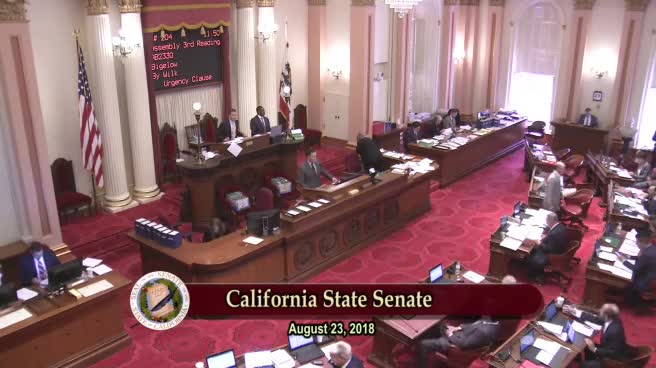 3MIN
Senate Floor
 1H
Senate Standing Committee on Appropriations
 5MIN
Senate Standing Committee on Governmental Organization
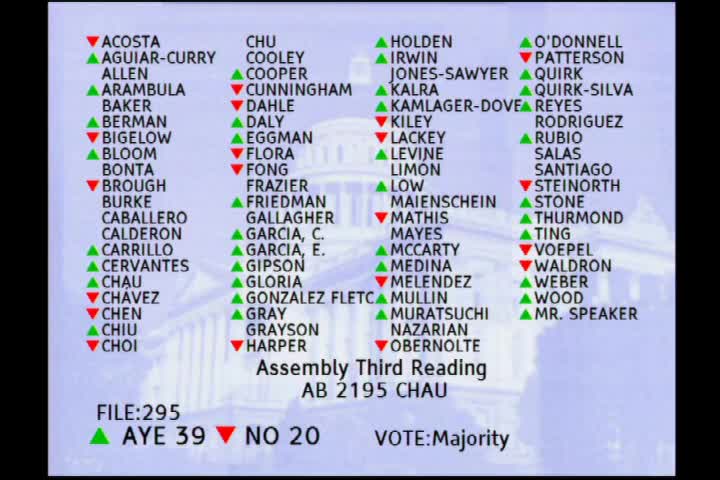 1MIN
Assembly Floor
 4MIN
Assembly Standing Committee on Accountability and Administrative Review
Bill Author

Bill Co-Author(s):