AB 2259: Personal income taxes: credit: still birth.
- Session Year: 2017-2018
- House: Assembly
- Latest Version Date: 2018-04-30
The Personal Income Tax Law allows various credits against the taxes imposed by that law, including a credit for a personal exemption for dependents.
This bill bill, for taxable years beginning on or after January 1, 2018, and before January 1, 2023, would allow a credit against those taxes for each taxable year beginning on or after January 1, 2018, to taxpayers to a taxpayer who hold holds a Certificate of Still Birth in an amount equal to the credit for a personal exemption for a dependent, as provided, for the taxable year in which the certificate is issued. actual amount of medical and burial or cremation costs paid or incurred, not to exceed $2,000, during the taxable year in which the still birth occurred.
This bill would take effect immediately as a tax levy.
The Personal Income Tax Law allows various credits against the taxes imposed by that law, including a credit for a personal exemption for dependents.
This bill would allow a credit against those taxes for each taxable year beginning on or after January 1, 2018, to taxpayers who hold a Certificate of Still Birth in an amount equal to the credit for a personal exemption for a dependent, as provided, for the taxable year in which the certificate is issued.
This bill would take effect immediately as a tax levy.
(a)For each taxable year beginning on or after January 1, 2018, and before January 1, 2023, there shall be allowed to a taxpayer who holds a Certificate of Still Birth a credit against the net tax, as defined in Section 17039, in an amount equal to the credit allowed for a personal exemption for a dependent, determined pursuant to Section 17054, for the taxable year in which the certificate is issued. actual amount of medical and burial or cremation costs paid or incurred, not to exceed two thousand dollars ($2,000), during the taxable year in which the still birth occurred.
(b)Section 41 does not apply to the credit allowed by this section.
(c)This section shall remain in effect only until December 1, 2023, and as of that date is repealed.
SEC. 2.This act provides for a tax levy within the meaning of Article IV of the California Constitution and shall go into immediate effect.
(a)For each taxable year beginning on or after January 1, 2018, there shall be allowed to a taxpayer who holds a Certificate of Still Birth a credit against the net tax, as defined in Section 17039, in an amount equal to the credit allowed for a personal exemption for a dependent, determined pursuant to Section 17054, for the taxable year in which the certificate is issued.
(b)Section 41 does not apply to the credit allowed by this section.
SEC. 2.This act provides for a tax levy within the meaning of Article IV of the California Constitution and shall go into immediate effect.
|
Date
|
Status
|
|---|---|
| May 25, 2018 | Joint Rule 62(a), file notice suspended. |
| May 23, 2018 | In committee: Set, first hearing. Referred to APPR. suspense file. |
| May 15, 2018 | From committee: Do pass and re-refer to Com. on APPR. (Ayes 8. Noes 0.) (May 14). Re-referred to Com. on APPR. |
| May 1, 2018 | Re-referred to Com. on REV. & TAX. |
| Apr 30, 2018 | From committee chair, with author's amendments: Amend, and re-refer to Com. on REV. & TAX. Read second time and amended. |
| Mar 19, 2018 | In committee: Hearing postponed by committee. |
| Mar 1, 2018 | Referred to Com. on REV. & TAX. |
| Feb 14, 2018 | From printer. May be heard in committee March 16. |
| Feb 13, 2018 | Read first time. To print. |
|
Date
|
Description
|
Location
|
Votes
|
|
|---|---|---|---|---|
| May 14, 2018 | Do pass and be re-referred to the Committee on [Appropriations] | Assembly Standing Committee on Revenue and Taxation |
Passed |
This list shows positions taken on this bill by organizations on the date displayed, which is linked to the original source.
Positions by individuals are not included.
Date of Hearing: May 23, 2018
ASSEMBLY COMMITTEE ON APPROPRIATIONS
Lorena Gonzalez Fletcher, Chair
ABPCA Bill Id:AB 2259
Author:(Patterson) – As Amended Ver:April 30, 2018
Policy Committee: | Revenue and Taxation | Vote: | 8 - 0 |
|
| ||
|
|
Urgency: No State Mandated Local Program: No Reimbursable: No
SUMMARY:
This bill allows, for tax years 2018 through 2022, a $2,000 income tax credit for birth-related medical and burial or cremation costs paid or incurred during the taxable year. Eligibility is limited to a taxpayer who holds a Certificate of Still Birth.
FISCAL EFFECT:
Annual General Fund revenue loss of $2.3 million in 2018-19, $1.5 million in 2019-20, and $1.5 million in 2020-21.
COMMENTS:
- Background. Approximately 2,400 still births occur every year in California. In addition to the expenses parents incur in anticipation of a newborn, parents incur additional expenses stemming from the still birth. California law requires the burial or cremation of a fetus beyond 20 weeks, resulting in burial or cremation expenses. Medical insurance does not cover certain medical costs, such as autopsy reports and genetic testing for a stillborn fetus. Other expenses parents may incur include grief counseling and lost wages.
In 2008, California began issuing certificates of still birth, which serve as symbolic document for parents who experience the loss of a wanted pregnancy. Supporters of AB 2259 note that the certificate brings solace to parents.
- Purpose. According to the author, AB 2259 will provide much-needed financial relief to families who have experienced a tragic loss through still birth. Supporters of the bill argue that in addition to this financial relief, AB 2259 will also foster an empathic and supportive interaction between the government and bereaved parents.
- Fiscal implications of tax expenditures. Existing law allows for various tax expenditures such as credits, deductions, exclusions, and exemptions for particular taxpayer groups. These features of the tax code can result in significant state costs through foregone tax revenue and, in many cases, policymakers have little control over the revenue loss that occurs in any given year. As a result, many tax expenditure bills now include provisions designed to give the Legislature more control over costs. Examples of such provisions include placing a sunset date or making a bill’s provisions contingent upon a separate budget appropriation. AB 2259 contains a sunset.
Analysis Prepared by: Luke Reidenbach / APPR. / (916) 319-2081
Date of Hearing: May 14, 2018
ASSEMBLY COMMITTEE ON REVENUE AND TAXATION
Autumn R. Burke, Chairwoman
ABPCA Bill Id:AB 2259 (
Author:Patterson) – As Amended Ver:April 30, 2018
Majority vote. Tax levy. Fiscal committee.
SUBJECT: Personal income taxes: credit: still birth
SUMMARY: Allows, under the Personal Income Tax (PIT) Law, a $2,000 tax credit for still birth-related medical and burial or cremation costs paid or incurred during the taxable year. Specifically, this bill:
- Allows the credit for each taxable year beginning on or after January 1, 2018, and before January 1, 2023.
- Limits eligibility to a taxpayer who holds a Certificate of Still Birth (Certificate).
- Limits the credit to the actual amount of medical and burial or cremation costs paid or incurred, not to exceed $2,000, during the taxable year in which the still birth occurred.
- Applies the credit against "net tax" as defined in Revenue and Taxation Code (R&TC) Section 17039.
- Excludes the credit from R&TC Section 41 requirements for new credits, such as credit objectives and performance indicators.
- Repeals the credit on December 1, 2023.
- Takes effect immediately as a tax levy.
EXISTING FEDERAL LAW: Lacks a tax credit specific to a parent who experiences a still birth and incurs still birth-related expenses.
EXISTING STATE LAW:
- Provides various tax credits designed to provide tax relief for taxpayers who incur certain expenses, such as child adoption, or to influence behavior.
- Allows an individual taxpayer to deduct unreimbursed medical expenses as an itemized deduction, but only to the extent that such expenses exceed 7.5% of the individual's adjusted gross income.
- Lacks a tax credit specific to still birth related expenses.
- Requires the State Registrar of Vital Statistics to administer the registration of live births, deaths, fetal deaths, and marriages.
- Requires each fetal death in which the fetus has advanced beyond the 20th week to be registered with the local registrar of births and deaths, in the district where the fetal death was officially pronounced, which results in a fetal death certificate containing items necessary to establish the fact of fetal death and confidential medical and health related data for public heath use only. (Health and Safety Code (H&SC) Section 102950 and Section 103025.)
- Allows the mother or father of a fetus to request a Certificate of Still Birth under the Missing Angels Act (Act). Defines "stillbirth" as recorded on the Certificate to mean the delivery of a fetus where there was a naturally occurring intrauterine fetal death after a gestational age of not less than 20 completed weeks. Requires a fee for the Certificate, which must contain the fetal death certificate number. Either the local registrar or the State Registrar issues the Certificate. (H&SC Section 103040.1.)
- Requires the State Registrar to issue a Certificate upon a parent's request regardless of the fetal death certificate issue date. (H&SC Section 103040.1.)
- Restricts the use of the Act solely to Certificate-issuance matters. Bars the definition, use, meaning, or intent of terms in the Act to any other statute, California case law, or the California Constitution. Provides that, other than prescribing the right to request a Certificate, nothing in the Act shall be construed to create any new right, privilege, or entitlement, or to abrogate any existing right, privilege, or entitlement. (H&SC Section 103040.1(j).)
- Reaffirms within the Act that through its courts, statutes, and under its Constitution, California law protects a woman's right to reproductive privacy, and it is the intent of the Legislature to reaffirm these protections in accordance with the California Supreme Court's decision in People v. Belous (1969) 71 Cal.2d 954, 966-968. (H&SC Section 103040.1(k).)
FISCAL EFFECT: The Franchise Tax Board (FTB) estimates this bill will result in an annual revenue loss of $2.3 million in fiscal year (FY) 2018-19, $1.5 million in FY 2019-20, and $1.5 million in FY 2020-21.
COMMENTS:
- The author has provided the following statement in support of this bill:
AB 2259 will provide much-needed financial relief to families who have experienced a tragic loss through still birth. In addition to the emotional toll, there are considerable financial hardships resulting from a still birth, including medical bills, funeral arrangements, and even grief counseling. This also doesn't factor the cost of a crib, diapers, clothing, and other items the families may have already purchased in excitement and anticipation of the birth of their child.
This bill will provide parents who have experienced a still birth with a tax credit of up to $2,000.00 to assist with associated healthcare and burial costs for the taxable year in which the still birth occurred. While this bill can't take away from the loss they've experienced, it can provide incredible relief for families in need.
- In support of this bill, proponents explain that the income tax filing process can offend grieving parents and add to the challenges faced by parents following a still birth. Supporters note that just as the Certificate has brought solace to parents, so would the tax credit. As parents prepare their annual tax return and encounter certain questions and read the tax instructions specific to still births, this governmental interaction on this sensitive issue can be an affront to parents as they perceive the government insulting their loss and responding bureaucratically to their circumstance. Thus, in addition to offsetting expenses, the tax credit can serve as therapeutic jurisprudence that is of value to the parents' wellbeing by enacting a law that offers empathic and supportive interaction between the government and the bereaved parents.
- Committee Staff Comments:
- What does this bill do? This bill creates a new income tax credit that would allow up to a $2,000 tax credit on the PIT return to a parent that requests and obtains a Certificate of Still Birth if he/she incurs still birth-related expenses. This tax credit will offset his/her state income tax liability.
- Still Birth Certificates: In 2008, California began issuing Certificates of Still Birth. The Certificate is in addition to the fetal death certificate. The Certificate has no legal effect but serves as a symbolic document that can offer some solace and comfort to parents who experience the loss of a wanted pregnancy. Only a parent may request the Certificate for which he/she must apply and pay a fee (about $24). A parent can request the Certificate at any time from the State Registrar regardless of when the fetal death certificate was issued. Thus, a new Certificate can be issued for a still birth occurring decades ago so long as a fetal death certificate exists. As such, this bill provides that the tax credit applies to the taxable year in which the still birth occurred, rather than the year the Certificate is issued.
- Number of still births: Based on data from the Centers on Disease Control and Prevention, FTB staff estimates 2,450 still births would occur in 2018. The number of parents that will subsequently request Certificates each year is unknown.
- Tax credits: Existing law allows various credits under the PIT Law. These credits are generally designed to provide relief to taxpayers who incur certain expenses, such as child adoption (up to $2,500), or to encourage socially beneficial behavior.
- Still birth-related expenses: In addition to the expenses parents incur in anticipation of a newborn, parents incur further expenses stemming from the still birth. California law requires the burial or cremation of a fetus beyond 20 weeks, resulting in burial or cremation expenses. Medical insurance does not cover certain medical costs, such as autopsy reports and genetic testing for a stillborn fetus. Other expenses parents may incur include grief counseling and lost wages.
- Fetal life and death: A California Law Review[1] essay discusses in depth the law's relationship to mourning practices in the difficult circumstances of still birth and generally finds that still birth-related statutes can be crafted to address the most worrisome concerns over how enacting the statute might impact other laws or rights. Committee staff notes that California's Certificate-issuance statute includes such language. (See H&SC Section 103040.1 (j) and (k).)
- Five-year sunset: This bill's proposed tax credit, which is a "tax expenditure", includes an automatic sunset after five years to repeal its provisions, consistent with this Committee's longstanding sunset-date-inclusion policy. Tax credits result in foregone revenue losses. As such, they are characterized as “tax expenditures”. Without sunsets, once enacted tax expenditures may be reviewed infrequently and may result in uncontrolled revenue losses. The Department of Finance's 2017-18 Tax Expenditure Report identifies $61.3 billion in such tax expenditures. Moreover, absent a sunset provision, tax expenditures can be conferred by a majority vote but can only be rescinded with a supermajority vote. For these reasons, this Committee's policy is to include a sunset date to allow the Legislature to periodically reevaluate tax expenditure programs.
- Conformity: California typically conforms to federal law. This bill would establish a tax credit for which federal law has no counterpart, thus increasing nonconformity. While the federal government is considering a refundable $2,000 still birth tax credit, H.R. 3549, the Savannah Hope Stillbirth Child Tax Credit Act, has not been enacted.
- Other States: Currently, four states offer still birth-related tax credits or dependent exemptions: Arizona, Minnesota, Missouri, and North Dakota. Tax benefits in these states range from $1,200 to $2,300. Three other states are considering a $2,000 still birth tax credit.
- Prior Legislation:
- AB 673 (Grove), of the 2013-14 Legislative Session, would have expanded the current dependent tax credit to an "expected child" defined as an unborn child with a medically verified anticipated delivery date. AB 673 was never heard by this Committee and was returned to the Chief Clerk.
- SB 850 (Maldonado), Chapter 661, Statutes of 2007, added the Missing Angels Act to the H&SC to require the issuance of Certificates of Still Birth upon a parent's request.
REGISTERED SUPPORT / OPPOSITION:
Support
First Candle
Heaven's Gain Ministries
Hinds Hospice, Angel Babies
Infants Remembered in Silence, Inc.
Los Angeles MISS Foundation Chapter
Return to Zero Center for Healing
Sidelines National Support Network
Share Pregnancy & Infant Loss Support, Inc.
Sharing Parents of Sacramento
5 Individuals
Opposition
None on file
Analysis Prepared by: Rose Marie Kinnee / REV. & TAX. / (916) 319-2098
Carol Sanger, "The Birth of Death": Stillborn Birth Certificates and the Problem for Law. (2012) California Law Review Vol. 100: 269. ↑
Discussed in Hearing
 7MIN
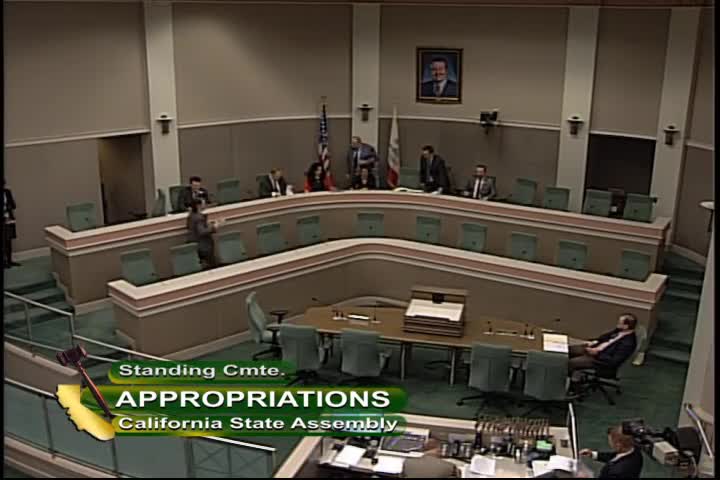
Assembly Standing Committee on Appropriations
 13MIN
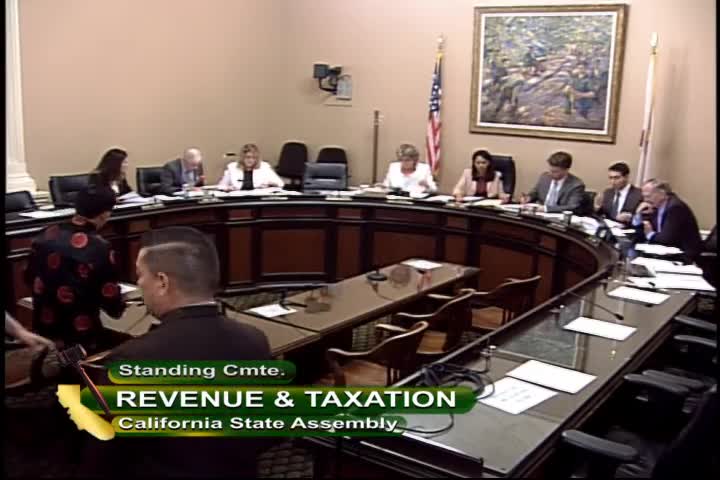
Assembly Standing Committee on Revenue and Taxation
Bill Author

Bill Co-Author(s):