AB 2275: Medi-Cal managed care: quality assessment and performance improvement.
- Session Year: 2017-2018
- House: Assembly
- Latest Version Date: 2018-08-29
Existing law establishes the Medi-Cal program, administered by the State Department of Health Care Services and under which health care services are provided to qualified, low-income persons. The Medi-Cal program is, in part, governed and funded by federal Medicaid Program provisions. Under existing law, one of the methods by which Medi-Cal services are provided is pursuant to contracts with various types of managed care health plans, including through a county organized health system and geographic managed care.
This bill would require the department to establish a quality assessment and performance improvement program for all Medi-Cal managed care plans, through which the plans, commencing January 1, 2021, would be required to meet a minimum performance level (MPL) that improves quality of care and reduces health disparities for beneficiaries, as specified. The bill would require managed care plans that meet the performance targets to receive specified financial incentives. The bill would require the department, in consultation with stakeholders, to develop a plan for a value-based financial incentive program. The bill would make the implementation of the plan subject to an appropriation of funds by the Legislature to the extent that additional funding is required to implement that plan, as specified. The bill would require the department to establish the measures by which the MPL and performance targets would be assessed and would require the measures to be collected annually, commencing July 1, 2019.
The bill would also require the department to establish a public stakeholder process in the planning, development, and ongoing oversight of the program and in the planning of the financial incentive program. The bill would require the department to annually and publicly report the program results on its Internet Web site.
The bill would require the department to utilize the program results to develop a Quality Rating System for Medi-Cal managed care plans, subject to federal approval. The department would not be required to report data that would result in statistically unreliable information or the disclosure of personally identifiable information, or to establish requirements mandated by the bill based solely on data that is determined to be statistically unreliable.
Existing law establishes the Medi-Cal program, administered by the State Department of Health Care Services and under which health care services are provided to qualified, low-income persons. The Medi-Cal program is, in part, governed and funded by federal Medicaid Program provisions. Under existing law, one of the methods by which Medi-Cal services are provided is pursuant to contracts with various types of managed care health plans, including through a county organized health system and geographic managed care.
This bill would require the department to establish a quality assessment and performance improvement program for all Medi-Cal managed care plans, through which the plans, commencing January 1, 2021, would be required to meet a minimum performance level (MPL) that improves quality of care and reduces health disparities for beneficiaries, as specified. The bill would require managed care plans that meet the performance targets to receive specified financial incentives. The bill would require the department, in consultation with stakeholders, to develop a plan for a value-based financial incentive program. The bill would make the implementation of the plan subject to an appropriation of funds by the Legislature to the extent that additional funding is required to implement that plan, as specified. The bill would require the department to establish the measures by which the MPL and performance targets would be assessed and would require the measures to be collected annually, commencing July 1, 2019.
The bill would also require the department to establish a public stakeholder process in the planning, development, and ongoing oversight of the program and in the planning of the financial incentive program. The bill would require the department to annually and publicly report the program results on its Internet Web site.
The bill would require the department to utilize the program results to develop a Quality Rating System for Medi-Cal managed care plans, subject to federal approval. The department would not be required to report data that would result in statistically unreliable information or the disclosure of personally identifiable information, or to establish requirements mandated by the bill based solely on data that is determined to be statistically unreliable.
Existing law establishes the Medi-Cal program, administered by the State Department of Health Care Services and under which health care services are provided to qualified, low-income persons. The Medi-Cal program is, in part, governed and funded by federal Medicaid Program provisions. Under existing law, one of the methods by which Medi-Cal services are provided is pursuant to contracts with various types of managed care health plans, including through a county organized health system and geographic managed care.
This bill would require the department to establish a quality assessment and performance improvement program for all Medi-Cal managed care plans, through which the plans, commencing January 1, 2021, would be required to meet a minimum performance level (MPL) that improves quality of care and reduces health disparities, disparities for beneficiaries, as specified. The bill would require managed care plans that meet the performance targets to receive specified financial incentives. The bill would require the department, in consultation with stakeholders, to develop a plan for a value-based financial incentive program. The bill would make the implementation of the plan subject to an appropriation of funds by the Legislature to the extent that additional funding is required to implement that plan, as specified. The bill would require the department to establish the measures by which the MPL and performance targets would be assessed and would require the measures to be collected annually, commencing July 1, 2019.
The bill would also require the department to establish a public stakeholder process in the planning, development, and ongoing oversight of the program and in the planning of the financial incentive program. The bill would require the department to annually and publicly report the program results on its Internet Web site.
The bill would require the department to utilize the program results to develop a Quality Rating System for Medi-Cal managed care plans, subject to federal approval. The department would not be required to report data that would result in statistically unreliable information or the disclosure of personally identifiable information, or to establish requirements mandated by the bill based solely on data that is determined to be statistically unreliable.
Existing law establishes the Medi-Cal program, administered by the State Department of Health Care Services and under which health care services are provided to qualified, low-income persons. The Medi-Cal program is, in part, governed and funded by federal Medicaid Program provisions. Under existing law, one of the methods by which Medi-Cal services are provided is pursuant to contracts with various types of managed care health plans, including through a county organized health system and geographic managed care.
This bill would require the department to establish a quality assessment and performance improvement program for all Medi-Cal managed care plans, through which the plans, commencing January 1, 2021, would be required to meet a minimum performance level (MPL) that improves quality and reduces health disparities, as specified. The bill would require managed care plans that meet the performance targets to receive specified financial incentives. The bill would require the department department, in consultation with stakeholders, to develop a plan for a value-based financial incentive program. The bill would make the implementation of the plan subject to an appropriation of funds by the Legislature to the extent that additional funding is required to implement that plan, as specified. The bill would require the department to establish the measures by which the MPL and performance targets would be assessed and would require the measures to be collected annually, commencing July 1, 2019.
The bill would also require the department to establish a public stakeholder process in the planning, development, and ongoing oversight of the program and in the planning of the financial incentive program. The bill would require the department to annually and publicly report the program results on its Internet Web site.
The bill would require the department to utilize the program results to develop a Quality Rating System for Medi-Cal managed care plans, subject to federal approval. The department would not be required to report data that would result in statistically unreliable information or the disclosure of personally identifiable information, or to establish requirements mandated by the bill based solely on data that is determined to be statistically unreliable.
Existing law establishes the Medi-Cal program, administered by the State Department of Health Care Services and under which health care services are provided to qualified, low-income persons. The Medi-Cal program is, in part, governed and funded by federal Medicaid Program provisions. Under existing law, one of the methods by which Medi-Cal services are provided is pursuant to contracts with various types of managed care health plans, including through a county organized health system and geographic managed care.
This bill would require the department to establish a quality assessment and performance improvement program for all Medi-Cal managed care plans, through which the plans, commencing January 1, 2021, would be required to meet a minimum performance level (MPL) that improves quality and reduces health disparities, as specified. The bill would require managed care plans that meet the performance targets to receive specified financial incentives. The bill would require the department to establish the measures by which the MPL and performance targets would be assessed and would require the measures to be collected annually, commencing July 1, 2019.
The bill would also require the department to establish a public stakeholder process in the planning, development, and ongoing oversight of the program and in the planning of the financial incentive program. The bill would require the department to annually and publicly report the program results on its Internet Web site.
The bill would require the department to utilize the program results to develop a Quality Rating System for Medi-Cal managed care plans, subject to federal approval. The department would not be required to report data that would result in statistically unreliable information or the disclosure of personally identifiable information, or to establish requirements mandated by the bill based solely on data that is determined to be statistically unreliable.
Existing law establishes the Medi-Cal program, administered by the State Department of Health Care Services and under which health care services are provided to qualified, low-income persons. The Medi-Cal program is, in part, governed and funded by federal Medicaid Program provisions. Under existing law, one of the methods by which Medi-Cal services are provided is pursuant to contracts with various types of managed care health plans, including through a county organized health system and geographic managed care.
This bill would require the department to establish a quality assessment and performance improvement program for all Medi-Cal managed care plans, through which the plans plans, commencing January 1, 2021, would be required to meet annual improvements in quality measures and reduction of a minimum performance level (MPL) that improves quality and reduces health disparities, as specified. The bill would require the department to require the plans to track and trend quality measures by specified demographic categories. managed care plans that meet the performance targets to receive specified financial incentives. The bill would require the department to establish quality improvement performance targets, the measures by which the MPL and performance targets would be assessed and would require the measures to be collected annually, commencing July 1, 2019, and to develop a financial incentive program to reward high-performing plans and progress towards meeting annual targets, as specified. 2019.
The bill would also require the department to establish a public stakeholder process in the planning, development, and ongoing oversight of the program and in the planning of the financial incentive program. The bill would require the department to annually and publicly report the program results on its Internet Web site.
The bill would require the program to require plans to annually complete and report to the department the results of the Consumer Assessment of Health Care Providers and Systems (CAHPS) Health Plan surveys, which are developed by the federal Agency for Healthcare Research and Quality. The bill would require the department to provide translations of the CAHPS survey in all Medi-Cal threshold languages, and require plans to administer the surveys in each county. The bill would require the department to publicly report on the survey results, including specified information.The bill would require the department to utilize the program results to develop a Quality Rating System for Medi-Cal managed care plans, subject to federal approval. The department would not be required to report data that would result in statistically unreliable information or the disclosure of personally identifiable information, or to establish requirements mandated by the bill based solely on data that is determined to be statistically unreliable.
Existing law establishes the Medi-Cal program, administered by the State Department of Health Care Services and under which health care services are provided to qualified, low-income persons. The Medi-Cal program is, in part, governed and funded by federal Medicaid Program provisions. Under existing law, one of the methods by which Medi-Cal services are provided is pursuant to contracts with various types of managed care health plans, including through a county organized health system and geographic managed care.
This bill would require the department to establish a quality assessment and performance improvement program for all Medi-Cal managed care plans, through which the plans would be required to meet annual improvements in quality measures and reduction of health disparities, as specified. The bill would require the department to require the plans to track and trend quality measures by specified demographic categories. The bill would require the department to establish quality improvement performance targets, commencing July 1, 2019, and to develop a financial incentive program to reward high-performing plans and progress towards meeting annual targets, as specified.
The bill would also require the department to establish a public stakeholder process in the planning, development, and ongoing oversight of the program and in the planning of the financial incentive program. The bill would require the department to annually and publicly report the program results on its Internet Web site.
The bill would require the program to require plans to annually complete and report to the department the results of the Consumer Assessment of Health Care Providers and Systems (CAHPS) Health Plan surveys, which are developed by the federal Agency for Healthcare Research and Quality. The bill would require the department to provide translations of the CAHPS survey in all Medi-Cal threshold languages, and require plans to administer the surveys in each county. The bill would require the department to publicly report on the survey results, including specified information.
The bill would require the department to utilize the program results to develop a Quality Rating System for Medi-Cal managed care plans, subject to federal approval.
(a)(1)The department shall establish a quality assessment and performance improvement program for all Medi-Cal managed care plans.
(2)Commencing January 1, 2021, the quality assessment and performance program shall require Medi-Cal managed care plans to meet a minimum performance level (MPL) that improves quality of care and reduces health disparities for beneficiaries. For purposes of this section, health disparities means variations in disease occurrence, including communicable diseases, and health outcomes between population groups by geographic area, primary language, race, ethnicity, sex, age, sexual orientation, gender identity, and disability status. The department shall consult with stakeholders, pursuant to subdivision (e), to establish the MPL and shall consider all of the following:
(A)The median performance of Medicaid plans nationwide, for measures established in subdivision (c) that are measured and reported in states other than California.
(B)Variations in the performance of Medi-Cal managed care plans in California as compared to performance of Medicaid plans nationwide.
(C)The median performance of health plans regulated by the Department of Managed Health Care and the Department of Insurance, for measures established in subdivision (b), taking into consideration regional variation.
(D)Sufficient scientific evidence and research indicating the appropriate MPLs to improve quality and reduce health disparities.
(E)Requirements that may be established by the federal Centers for Medicare and Medicaid Services (CMS), the federal Health Resources and Services Administration (HRSA), and the federal Centers for Disease Control and Prevention (CDC).
(F)As appropriate, the quality assessment and performance levels established by other state purchasers including the California Health Benefit Exchange (Exchange) and the California Public Employees Retirement System (CalPERS), taking into consideration regional variation.
(3)The department may require corrective action plans and impose sanctions to ensure compliance with requirements of paragraph (2).
(4)Commencing July 1, 2021, the department shall establish quality improvement performance targets for all Medi-Cal managed care plans that improve quality of care and reduce health disparities for beneficiaries. The performance targets shall exceed the MPL and shall be based on national benchmarks, analysis of variation in California performance, best existing science of quality improvement, and effective engagement of stakeholders. Medi-Cal managed care plans that meet performance targets may receive financial incentive payments if a program is implemented pursuant to subdivision (d).
(b)The department shall establish the measures by which the MPL and performance targets will be assessed and require the measures to be collected annually commencing July 1, 2019. The department shall establish the measures in the following manner:
(1)The measures shall include the External Accountability Set (EAS) that includes, but is not limited to, the Healthcare Effectiveness Data and Information Set and the Consumer Assessment of Healthcare Providers and Systems (CAHPS).
(2)The measures shall be determined in collaboration with the stakeholder process established in subdivision (e) and shall consider the ability of the measures to demonstrate performance in reducing health disparities.
(3)The measures shall include CAHPS supplemental questions pertaining to cultural competency and health literacy.
(A)By January 1, 2021, the department shall provide validated translations of the CAHPS survey in all Medi-Cal threshold languages.
(B)By January 1, 2022, the department shall require an external quality review organization to administer the surveys annually in each county in all Medi-Cal threshold languages in that county.
(C)A Medi-Cal managed care plan that is accredited by the National Committee for Quality Assurance (NCQA) may submit to the external quality review organization, CAHPS, survey data collected annually as part of the plans NCQA accreditation. The department shall accept this data if CAHPS determines that the survey data is collected annually and meets the requirements of the quality review.
(4)The measures shall be able to be collected in a way that allows an analysis of the measures by county, primary language, race, ethnicity, sex, age, sexual orientation, gender identity, and disability status. Sexual orientation and gender identity analysis shall only be to the extent that sexual orientation and gender identity is collected and statistically reliable data is available.
(5)As appropriate, the measures shall take into account quality assessment and performance measures utilized by other state purchasers including the Exchange and CalPERS.
(c)In order to establish the MPL described in paragraph (2) of subdivision (a) and determine the measures described in subdivision (b), the department shall require Medi-Cal managed care plans to produce baseline data for measures in the existing EAS stratified by county, or stratified by region if the plan is unable to stratify without disclosing personally identifiable information, primary language, race, ethnicity, sex, age, sexual orientation, gender identity, and disability status.
(d)In consultation with stakeholders pursuant to subdivision (e), the department shall develop a plan for a value-based financial incentive program to reward high-performing managed care plans that meet performance targets for quality improvement and health disparities reduction pursuant to paragraph (4) of subdivision (a). To the extent that additional funding is required to implement the plan, the department shall submit the plan to the Legislature for review and the implementation of that plan shall be subject to an appropriation of funds for that purpose in the annual Budget Act. This subdivision shall not preclude the department from developing or implementing a value-based financial incentive program that does not require any additional appropriation of funds.
(e)(1)The department shall establish a public stakeholder process in the planning, development, and ongoing oversight of the quality assessment and performance improvement program established in subdivision (a) and in the planning of the financial incentive program established in subdivision (d).
(2)The stakeholder process shall provide stakeholders meaningful input in the establishment of the MPL, selection of measures by which the MPL and performance targets shall be assessed, and in the design of the financial incentive program.
(3)The stakeholders shall, at a minimum, include consumer advocates, public health experts, health care providers, and representatives from the Medi-Cal managed care plans. The department shall consult with other state purchasers, including the Exchange to discuss alignment of quality measures across payers where appropriate.
(4)The department shall convene the stakeholders no less than quarterly until a majority of the stakeholders agree that quarterly meetings are no longer necessary. Materials for those meetings shall be posted on the departments Internet Web site 24 hours in advance of the meetings. Information about the meetings time and place shall be sent to all interested members of the public no later than one week prior to the meeting. Stakeholder meetings shall be open to the public either in person or over the phone.
(f)The department shall annually and publicly report the results of the quality assessment and performance improvement program on the departments Internet Web site. The report shall identify disparities in quality of care provided to Medi-Cal managed care enrollees and shall include an analysis of performance measures established in subdivision (b), by Medi-Cal managed care plan, county, or region if unable to be produced without personally identifiable information, primary language, race, ethnicity, sex, age, sexual orientation, gender identity, and disability status.
(g)The department shall require the quality improvement system in Medi-Cal managed care contracts to include a definition of health disparities consistent with paragraph (4) of subdivision (a).
(h)(1)The department shall utilize the results of the quality assessment and performance improvement program to develop a publicly reported Quality Rating System for Medi-Cal managed care plans subject to federal approval.
(2)In developing the Quality Rating System, the department shall consult with stakeholders, including Medi-Cal managed care plans and consumers, to provide feedback to the department on topics that include the selection of data domains, survey methodology, rate calculation methodology, public display so that it is accessible to all members, including members who are limited-English-proficient and persons with disabilities, dissemination, and rules regarding marketing of results.
(i)The department shall not be required to report data that would result in statistically unreliable information or the disclosure of personally identifiable information. The department also shall not be required to establish requirements mandated by this section based solely on data that is determined to be statistically unreliable.
(j)For purposes of this section, Medi-Cal managed care plan means an individual, organization, or entity that enters into a contract with the department to provide general health care services to enrolled Medi-Cal beneficiaries, including any of the following:
(1)Article 2.7 (commencing with Section 14087.3), excluding dental managed care programs developed pursuant to Section 14087.46.
(2)Article 2.8 (commencing with Section 14087.5).
(3)Article 2.81 (commencing with Section 14087.96).
(4) Article 2.82 (commencing with Section 14087.98).
(5)Article 2.91 (commencing with Section 14089).
(6)Chapter 3 (commencing with Section 101675) of Part 4 of Division 101 of the Health and Safety Code.
(a)(1)The department shall establish a quality assessment and performance improvement program for all Medi-Cal managed care plans, including county organized health systems implemented pursuant to Article 2.8 (commencing with Section 14087.5) of Chapter 7 and Article 2.82 (commencing with Section 14087.98) of Chapter 7, and entities contracting with the department to provide services pursuant to Article 2.7 (commencing with Section 14087.3) of Chapter 7 (two-plan models), Article 2.81 (commencing with Section 14087.96) of Chapter 7, and Article 2.91 (commencing with Section 14089) of Chapter 7 (geographic managed care). plans.
(2)Commencing January 1, 2021, the quality assessment and performance program shall require Medi-Cal managed care plans to meet a minimum performance level (MPL) that improves quality of care and reduces health disparities for beneficiaries. For purposes of this section, health disparities means variations in disease occurrence, including communicable diseases, and health outcomes between population groups by geographic area, primary language, race, ethnicity, sex, age, sexual orientation, gender identity, and disability status. The department shall consult with stakeholders, pursuant to subdivision (e), to establish the MPL and shall consider all of the following:
(A)The median performance of Medicaid plans nationwide, for measures established in subdivision (c) that are measured and reported in states other than California.
(B)Variations in the performance of Medi-Cal managed care plans in California as compared to performance of Medicaid plans nationwide.
(C)The median performance of health plans regulated by the Department of Managed Health Care and the Department of Insurance, for measures established in subdivision (b), taking into consideration regional variation.
(D)Sufficient scientific evidence and research indicating the appropriate MPLs to improve quality and reduce health disparities.
(E)Requirements that may be established by the federal Centers for Medicare and Medicaid Services (CMS), the federal Health Resources and Services Administration (HRSA), and the federal Centers for Disease Control and Prevention (CDC).
(F)As appropriate, the quality assessment and performance levels established by other state purchasers including the California Health Benefit Exchange (Exchange) and the California Public Employees Retirement System (CalPERS), taking into consideration regional variation.
(3)The department may require corrective action plans and impose sanctions to ensure compliance with requirements of paragraph (2).
(4)Commencing July 1, 2021, the department shall establish quality improvement performance targets for all Medi-Cal managed care plans that improve quality of care and reduce health disparities for beneficiaries. The performance targets shall exceed the MPL and shall be based on national benchmarks, analysis of variation in California performance, best existing science of quality improvement, and effective engagement of stakeholders. Medi-Cal managed care plans that meet performance targets may receive financial incentive payments if a program is implemented pursuant to subdivision (d).
(b)The department shall establish the measures by which the MPL and performance targets will be assessed and require the measures to be collected annually commencing July 1, 2019. The department shall establish the measures in the following manner:
(1)The measures shall include the External Accountability Set (EAS) that includes, but is not limited to, the Healthcare Effectiveness Data and Information Set and the Consumer Assessment of Healthcare Providers and Systems (CAHPS).
(2)The measures shall be determined in collaboration with the stakeholder process established in subdivision (e) and shall consider the ability of the measures to demonstrate performance in reducing health disparities.
(3)The measures shall include CAHPS supplemental questions pertaining to cultural competency and health literacy.
(A)By January 1, 2021, the department shall provide validated translations of the CAHPS survey in all Medi-Cal threshold languages.
(B)By January 1, 2022, the department shall require an external quality review organization to administer the surveys annually in each county in all Medi-Cal threshold languages in that county.
(C)A Medi-Cal managed care plan that is accredited by the National Committee for Quality Assurance (NCQA) may submit to the external quality review organization, CAHPS, survey data collected annually as part of the plans NCQA accreditation. The department shall accept this data if CAHPS determines that the survey data is collected annually and meets the requirements of the quality review.
(4)The measures shall be able to be collected in a way that allows an analysis of the measures by county, primary language, race, ethnicity, sex, age, sexual orientation, gender identity, and disability status. Sexual orientation and gender identity analysis shall only be to the extent that sexual orientation and gender identity is collected and statistically reliable data is available.
(5)As appropriate, the measures shall take into account quality assessment and performance measures utilized by other state purchasers including the Exchange and CalPERS.
(c)In order to establish the MPL described in paragraph (2) of subdivision (a) and determine the measures described in subdivision (b), the department shall require Medi-Cal managed care plans to produce baseline data for measures in the existing EAS stratified by county, or stratified by region if the plan is unable to stratify without disclosing personally identifiable information, primary language, race, ethnicity, sex, age, sexual orientation, gender identity, and disability status.
(d)In consultation with stakeholders pursuant to subdivision (e), the department shall develop a plan for a value-based financial incentive program to reward high-performing managed care plans that meet performance targets for quality improvement and health disparities reduction pursuant to paragraph (4) of subdivision (a). To the extent that additional funding is required to implement the plan, the department shall submit the plan to the Legislature for review and the implementation of that plan shall be subject to an appropriation of funds for that purpose in the annual Budget Act. This subdivision shall not preclude the department from developing or implementing a value-based financial incentive program that does not require any additional appropriation of funds.
(e)(1)The department shall establish a public stakeholder process in the planning, development, and ongoing oversight of the quality assessment and performance improvement program established in subdivision (a) and in the planning of the financial incentive program established in subdivision (d).
(2)The stakeholder process shall provide stakeholders meaningful input in the establishment of the MPL, selection of measures by which the MPL and performance targets shall be assessed, and in the design of the financial incentive program.
(3)The stakeholders shall, at a minimum, include consumer advocates, public health experts, health care providers, and representatives from the Medi-Cal managed care plans. The department shall consult with other state purchasers, including the Exchange to discuss alignment of quality measures across payers where appropriate.
(4)The department shall convene the stakeholders no less than quarterly until a majority of the stakeholders agree that quarterly meetings are no longer necessary. Materials for those meetings shall be posted on the departments Internet Web site 24 hours in advance of the meetings. Information about the meetings time and place shall be sent to all interested members of the public no later than one week prior to the meeting. Stakeholder meetings shall be open to the public either in person or over the phone.
(f)The department shall annually and publicly report the results of the quality assessment and performance improvement program on the departments Internet Web site. The report shall identify disparities in quality of care provided to Medi-Cal managed care enrollees and shall include an analysis of performance measures established in subdivision (b), by Medi-Cal managed care plan, county, or region if unable to be produced without personally identifiable information, primary language, race, ethnicity, sex, age, sexual orientation, gender identity, and disability status.
(g)The department shall require the quality improvement system in Medi-Cal managed care contracts to include a definition of health disparities consistent with paragraph (4) of subdivision (a).
(h)(1)The department shall utilize the results of the quality assessment and performance improvement program to develop a publicly reported Quality Rating System for Medi-Cal managed care plans subject to federal approval.
(2)In developing the Quality Rating System, the department shall consult with stakeholders, including Medi-Cal managed care plans and consumers, to provide feedback to the department on topics that include the selection of data domains, survey methodology, rate calculation methodology, public display so that it is accessible to all members, including members who are limited-English-proficient and persons with disabilities, dissemination, and rules regarding marketing of results.
(i)The department shall not be required to report data that would result in statistically unreliable information or the disclosure of personally identifiable information. The department also shall not be required to establish requirements mandated by this section based solely on data that is determined to be statistically unreliable.
(j)For purposes of this section, Medi-Cal managed care plan means an individual, organization, or entity that enters into a contract with the department to provide general health care services to enrolled Medi-Cal beneficiaries, including any of the following:
(1)Article 2.7 (commencing with Section 14087.3), excluding dental managed care programs developed pursuant to Section 14087.46.
(2)Article 2.8 (commencing with Section 14087.5).
(3)Article 2.81 (commencing with Section 14087.96).
(4) Article 2.82 (commencing with Section 14087.98).
(5)Article 2.91 (commencing with Section 14089).
(6)Chapter 3 (commencing with Section 101675) of Part 4 of Division 101 of the Health and Safety Code.
(a)(1)The department shall establish a quality assessment and performance improvement program for all Medi-Cal managed care plans, including county organized health systems implemented pursuant to Article 2.8 (commencing with Section 14087.5) of Chapter 7 and Article 2.82 (commencing with Section 14087.98) of Chapter 7, and entities contracting with the department to provide services pursuant to Article 2.7 (commencing with Section 14087.3) of Chapter 7 (two-plan models), Article 2.81 (commencing with Section 14087.96) of Chapter 7, and Article 2.91 (commencing with Section 14089) of Chapter 7 (geographic managed care).
(2)Commencing January 1, 2021, the quality assessment and performance program shall require Medi-Cal managed care plans to meet a minimum performance level (MPL) that improves quality of care and reduces health disparities. disparities for beneficiaries. For purposes of this section, health disparities means variations in disease occurrence occurrence, including communicable diseases, and health outcomes between population groups by geographic area, primary language, race, ethnicity, sex, age, sexual orientation, gender identity, and disability status. The department shall consult with stakeholders, pursuant to subdivision (e), to establish the MPL and shall consider all of the following:
(A)The median performance of Medicaid plans nationwide, for measures established in subdivision (c) that are measured and reported in states other than California.
(B)Variations in the performance of Medi-Cal managed care plans in California as compared to performance of Medicaid plans nationwide.
(C)The median performance of health plans regulated by the Department of Managed Health Care and the Department of Insurance, for measures established in subdivision (b). (b), taking into consideration regional variation.
(D)Sufficient scientific evidence and research indicating the appropriate MPLs to improve quality and reduce health disparities.
(E)Requirements that may be established by the federal Centers for Medicare and Medicaid Services (CMS). (CMS), the federal Health Resources and Services Administration (HRSA), and the federal Centers for Disease Control and Prevention (CDC).
(F)As appropriate, the quality assessment and performance levels established by other state purchasers including the California Health Benefit Exchange (Exchange) and CalPERS. the California Public Employees Retirement System (CalPERS), taking into consideration regional variation.
(3)The department may require corrective action plans and impose sanctions to ensure compliance with requirements of paragraph (2).
(4)Commencing July 1, 2021, the department shall establish quality improvement performance targets for all Medi-Cal managed care plans that improve quality of care and reduce health disparities for all Medi-Cal managed care plans. beneficiaries. The performance targets shall exceed the MPL and shall be based on national benchmarks, analysis of variation in California performance, best existing science of quality improvement, and effective engagement of stakeholders. Medi-Cal managed care plans that meet performance targets may receive financial incentive payments if a program is implemented pursuant to subdivision (d).
(b)The department shall establish the measures by which the MPL and performance targets will be assessed and require the measures to be collected annually commencing July 1, 2019. The department shall establish the measures in the following manner:
(1)The measures shall include the External Accountability Set (EAS) that includes, but is not limited to, the Healthcare Effectiveness Data and Information Set and the Consumer Assessment of Healthcare Providers and Systems (CAHPS).
(2)The measures shall be determined in collaboration with the stakeholder process established in subdivision (e) and shall consider the ability of the measures to demonstrate performance in reducing health disparities.
(3)The measures shall include CAHPS supplemental questions pertaining to cultural competency and health literacy.
(A)By January 1, 2021, the department shall provide validated translations of the CAHPS survey in all Medi-Cal threshold languages.
(B)By January 1, 2022, the department shall require an external quality review organization to administer the surveys annually in each county in all Medi-Cal threshold languages in that county.
(C)A Medi-Cal managed care plan that is accredited by the National Committee for Quality Assurance (NCQA) may submit to the external quality review organization, CAHPS, survey data collected annually as part of the plans NCQA accreditation. The department shall accept this data if CAHPS determines that the survey data is collected annually and meets the requirements of the quality review.
(4)The measures shall be able to be collected in a way that allows an analysis of the measures by county, primary language, race, ethnicity, sex, age, sexual orientation, gender identity, and disability status. Sexual orientation and gender identity analysis shall only be to the extent that sexual orientation and gender identity is collected and statistically reliable data is available.
(5)As appropriate, the measures shall align with take into account quality assessment and performance measures utilized by other state purchasers including the Exchange and CalPERS.
(c)In order to establish the MPL described in paragraph (2) of subdivision (a) and determine the measures described in subdivision (b), the department shall require Medi-Cal managed care plans to produce baseline data for measures in the existing EAS stratified by county, or stratified by region if the plan is unable to stratify without disclosing personally identifiable information, primary language, race, ethnicity, sex, age, sexual orientation, gender identity, and disability status.
(d)In consultation with stakeholders pursuant to subdivision (e), the department shall develop a plan for a value-based financial incentive program to reward high-performing managed care plans that meet performance targets for quality improvement and health disparities reduction pursuant to paragraph (4) of subdivision (a). To the extent that additional funding is required to implement the plan, the department shall submit the plan to the Legislature for review and the implementation of that plan shall be subject to an appropriation of funds for that purpose in the annual Budget Act. This subdivision shall not preclude the department from developing or implementing a value-based financial incentive program that does not require any additional appropriation of funds.
(e)(1)The department shall establish a public stakeholder process in the planning, development, and ongoing oversight of the quality assessment and performance improvement program established in subdivision (a) and in the planning of the financial incentive program established in subdivision (d).
(2)The stakeholder process shall provide stakeholders meaningful input in the establishment of the MPL, selection of measures by which the MPL and performance targets shall be assessed, and in the design of the financial incentive program.
(3)The stakeholders shall, at a minimum, include consumer advocates, public health experts, health care providers, and representatives from the Medi-Cal managed care plans. The department shall consult with other state purchasers, including the Exchange to discuss alignment of quality measures across payers where appropriate.
(4)The department shall convene the stakeholders no less than quarterly until all a majority of the stakeholders agree that quarterly meetings are no longer necessary. Materials for those meetings shall be posted on the departments Internet Web site 24 hours in advance of the meetings. Information about the meetings time and place shall be sent to all interested members of the public no later than one week prior to the meeting. Stakeholder meetings shall be open to the public either in person or over the phone.
(f)The department shall annually and publicly report the results of the quality assessment and performance improvement program on the departments Internet Web site. The report shall identify disparities in quality of care provided to Medi-Cal managed care enrollees and shall include an analysis of performance measures established in subdivision (b), by Medi-Cal managed care plan, county, or region if unable to be produced without personally identifiable information, primary language, race, ethnicity, sex, age, sexual orientation, gender identity, and disability status.
(g)The department shall require the quality improvement system in Medi-Cal managed care contracts to include a definition of health disparities consistent with paragraph (4) of subdivision (a).
(h)(1)The department shall utilize the results of the quality assessment and performance improvement program to develop a publicly reported Quality Rating System for Medi-Cal managed care plans subject to federal approval.
(2)In developing the Quality Rating System, the department shall consult with stakeholders, including Medi-Cal managed care plans and consumers, to provide feedback to the department on topics that include the selection of data domains, survey methodology, rate calculation methodology, public display so that it is accessible to all members, including members who are limited-English-proficient and persons with disabilities, dissemination, and rules regarding marketing of results.
(3)(i)The department shall not be required to report data that would result in statistically unreliable information or the disclosure of personally identifiable information. The department also shall not be required to establish requirements mandated by this section based solely on data that is determined to be statistically unreliable.
(a)(1)The department shall establish a quality assessment and performance improvement program for all Medi-Cal managed care plans, including county organized health systems implemented pursuant to Article 2.8 (commencing with Section 14087.5) of Chapter 7 and Article 2.82 (commencing with Section 14087.98) of Chapter 7, and entities contracting with the department to provide services pursuant to Article 2.7 (commencing with Section 14087.3) of Chapter 7 (two-plan models), Article 2.81 (commencing with Section 14087.96) of Chapter 7, and Article 2.91 (commencing with Section 14089) of Chapter 7 (geographic managed care).
(2)Commencing January 1, 2021, the quality assessment and performance program shall require Medi-Cal managed care plans to meet a minimum performance level (MPL) that improves quality and reduces health disparities. For purposes of this section, health disparities means variations in disease occurrence and health outcomes between population groups by geographic area, primary language, race, ethnicity, sex, age, sexual orientation, gender identity, and disability status. The department shall consult with stakeholders, pursuant to subdivision (e), to establish the MPL and shall consider all of the following:
(A)The median performance of Medicaid plans nationwide, for measures established in subdivision (c) that are measured and reported in states other than California.
(B)Variations in the performance of Medi-Cal managed care plans in California as compared to performance of Medicaid plans nationwide.
(C)The median performance of health plans regulated by the Department of Managed Health Care and the Department of Insurance, for measures established in subdivision (b).
(D)Sufficient scientific evidence and research indicating the appropriate MPLs to improve quality and reduce health disparities.
(E)Requirements that may be established by the federal Centers for Medicare and Medicaid Services (CMS).
(F)As appropriate, the quality assessment and performance levels established by other state purchasers including the California Health Benefit Exchange (Exchange) and CalPERS.
(3)The department may require corrective action plans and impose sanctions to ensure compliance with requirements of paragraph (2).
(4)Commencing July 1, 2021, the department shall establish quality improvement performance targets that improve quality and reduce health disparities for all Medi-Cal managed care plans. The performance targets shall exceed the MPL and shall be based on national benchmarks, analysis of variation in California performance, best existing science of quality improvement, and effective engagement of stakeholders. Medi-Cal managed care plans that meet performance targets shall may receive financial incentive payments if a program is implemented pursuant to subdivision (d).
(b)The department shall establish the measures by which the MPL and performance targets will be assessed and require the measures to be collected annually commencing July 1, 2019. The department shall establish the measures in the following manner:
(1)The measures shall include the External Accountability Set (EAS) that includes, but is not limited to, the Healthcare Effectiveness Data and Information Set and the Consumer Assessment of Healthcare Providers and Systems (CAHPS).
(2)The measures shall be determined in collaboration with the stakeholder process established in subdivision (e) and shall consider the ability of the measures to demonstrate performance in reducing health disparities.
(3)The measures shall include CAHPS supplemental questions pertaining to cultural competency and health literacy.
(A)By January 1, 2021, the department shall provide translations of the CAHPS survey in all Medi-Cal threshold languages.
(B)By January 1, 2022, the department shall require an external quality review organization to administer the surveys annually in each county in all Medi-Cal threshold languages in that county.
(4)The measures shall be able to be collected in a way that allows an analysis of the measures by county, primary language, race, ethnicity, sex, age, sexual orientation, gender identity, and disability status.
(5)As appropriate, the measures shall align with quality assessment and performance measures utilized by other state purchasers including the Exchange and CalPERS.
(c)In order to establish the MPL described in paragraph (2) of subdivision (a) and determine the measures described in subdivision (b), the department shall require Medi-Cal managed care plans to produce baseline data for measures in the existing EAS stratified by county, or stratified by region if the plan is unable to stratify without disclosing personally identifiable information, primary language, race, ethnicity, sex, age, sexual orientation, gender identity, and disability status.
(d)In consultation with stakeholders pursuant to subdivision (e), the department shall develop a plan for a value-based financial incentive program to reward high-performing managed care plans that meet performance targets for quality improvement and health disparities reduction pursuant to paragraph (4) of subdivision (a). To the extent that additional funding is required to implement the plan, the department shall submit the plan to the Legislature for review and the implementation of that plan shall be subject to an appropriation of funds for that purpose in the Budget Act. This subdivision shall not preclude the department from developing or implementing a value-based financial incentive program that does not require any additional appropriation of funds.
(e)(1)The department shall establish a public stakeholder process in the planning, development, and ongoing oversight of the quality assessment and performance improvement program established in subdivision (a) and in the planning of the financial incentive program established in subdivision (d).
(2)The stakeholder process shall provide stakeholders meaningful input in the establishment of the MPL, selection of measures by which the MPL and performance targets shall be assessed, and in the design of the financial incentive program.
(3)The stakeholders shall, at a minimum, include consumer advocates, public health experts, health care providers, and representatives from the Medi-Cal managed care plans. The department shall consult with other state purchasers, including the Exchange to discuss alignment of quality measures across payers where appropriate.
(4)The department shall convene the stakeholders no less than quarterly until all stakeholders agree that quarterly meetings are no longer necessary. Materials for those meetings shall be posted on the departments Internet Web site 24 hours in advance of the meetings. Information about the meetings time and place shall be sent to all interested members of the public no later than one week prior to the meeting. Stakeholder meetings shall be open to the public either in person or over the phone.
(f)The department shall annually and publicly report the results of the quality assessment and performance improvement program on the departments Internet Web site. The report shall identify disparities in quality of care provided to Medi-Cal managed care enrollees and shall include an analysis of performance measures established in subdivision (b), by Medi-Cal managed care plan, county, or region if unable to be produced without personally identifiable information, primary language, race, ethnicity, sex, age, sexual orientation, gender identity, and disability status.
(g)The department shall require the quality improvement system in Medi-Cal managed care contracts to include a definition of health disparities consistent with paragraph (4) of subdivision (a).
(h)(1)The department shall utilize the results of the quality assessment and performance improvement program to develop a publicly reported Quality Rating System for Medi-Cal managed care plans subject to federal approval.
(2)In developing the Quality Rating System, the department shall consult with stakeholders, including Medi-Cal managed care plans and consumers, to provide feedback to the department on topics that include the selection of data domains, survey methodology, rate calculation methodology, public display so that it is accessible to all members, including members who are limited-English-proficient and persons with disabilities, dissemination, and rules regarding marketing of results.
(3)The department shall not be required to report data that would result in statistically unreliable information or the disclosure of personally identifiable information. The department also shall not be required to establish requirements mandated by this section based solely on data that is determined to be statistically unreliable.
(a)(1)The department shall establish a quality assessment and performance improvement program for all Medi-Cal managed care plans, including county organized health systems implemented pursuant to Article 2.8 (commencing with Section 14087.5) of Chapter 7 and Article 2.82 (commencing with Section 14087.98) of Chapter 7, and entities contracting with the department to provide services pursuant to Article 2.7 (commencing with Section 14087.3) of Chapter 7 (two-plan models), Article 2.81 (commencing with Section 14087.96) of Chapter 7, and Article 2.91 (commencing with Section 14089) of Chapter 7 (geographic managed care).
(2)Commencing January 1, 2021, the quality assessment and performance program shall require Medi-Cal managed care plans to meet a minimum performance level (MPL) that improves quality and reduces health disparities. For purposes of this section, health disparities means variations in disease occurrence and health outcomes between population groups by geographic area, primary language, race, ethnicity, sex, age, sexual orientation, gender identity, and disability status. The department shall consult with stakeholders, pursuant to subdivision (e), to establish the MPL and shall consider all of the following:
(A)The median performance of Medicaid plans nationwide, for measures established in subdivision (c) that are measured and reported in states other than California.
(B)Variations in the performance of Medi-Cal managed care plans in California as compared to performance of Medicaid plans nationwide.
(C)The median performance of health plans regulated by the Department of Managed Health Care and the Department of Insurance, for measures established in subdivision (b).
(D)Sufficient scientific evidence and research indicating the appropriate minimum performance levels MPLs to improve quality and reduce health disparities.
(E)Requirements that may be established by the federal Centers for Medicare and Medicaid Services (CMS).
(F)As appropriate, the quality assessment and performance levels established by other state purchasers including the California Health Benefit Exchange (Exchange) and CalPERS.
(3)The department may require corrective action plans and impose sanctions to ensure compliance with requirements of paragraph (2).
(4)Commencing July 1, 2021, the department shall establish quality improvement performance targets that improve quality and reduce health disparities for all Medi-Cal managed care plans. The performance targets shall exceed the MPL and shall be based on national benchmarks, analysis of variation in California performance, best existing science of quality improvement, and effective engagement of stakeholders. Medi-Cal managed care plans that meet performance targets shall receive financial incentive payments pursuant to subdivision (f). (d).
(b)The department shall establish the measures by which the MPL and performance targets will be assessed and require the measures to be collected annually commencing July 1, 2019. The department shall establish the measures in the following manner:
(1)The measures shall include the External Accountability Set (EAS) that includes, but is not limited to, the Healthcare Effectiveness Data and Information Set and the Consumer Assessment of Healthcare Providers and Systems (CAHPS).
(2)The measures shall be determined in collaboration with the stakeholder process established in subdivision (e) and shall consider the ability of the measures to demonstrate performance in reducing health disparities.
(3)The measures shall include CAHPS supplemental questions pertaining to cultural competency and health literacy.
(A)By January 1, 2021, the department shall provide translations of the CAHPS survey in all Medi-Cal threshold languages.
(B)By January 1, 2022, the department shall require an external quality review organization to administer the surveys annually in each county in all Medi-Cal threshold languages in that county.
(4)The measures shall be able to be collected in a way that allows an analysis of the measures by county, primary language, race, ethnicity, sex, age, sexual orientation, gender identity, and disability status.
(5)As appropriate, the measures shall align with quality assessment and performance measures utilized by other state purchasers including the Exchange and CalPERS.
(c)In order to establish the minimum performance level MPL described in paragraph (2) of subdivision (a) and determine the measures described in subdivision (b), the department shall require Medi-Cal managed care plans to produce baseline data for measures in the existing EAS stratified by county, or stratified by region if the plan is unable to stratify without disclosing personally identifiable information, primary language, race, ethnicity, sex, age, sexual orientation, gender identity, and disability status.
(d)In consultation with stakeholders pursuant to subdivision (e), the department shall develop a value-based financial incentive program to reward high-performing managed care plans that meet performance targets for quality improvement and health disparities reduction pursuant to paragraph (4) of subdivision (a).
(e)(1)The department shall establish a public stakeholder process in the planning, development, and ongoing oversight of the quality assessment and performance improvement program established in subdivision (a) and in the planning of the financial incentive program established in subdivision (d).
(2)The stakeholder process shall provide stakeholders meaningful input in the establishment of the MPL, selection of measures by which the MPL and performance targets shall be assessed, and in the design of the financial incentive program.
(3)The stakeholders shall, at a minimum, include consumer advocates, public health experts, health care providers, and representatives from the Medi-Cal managed care plans. The department shall consult with other state purchasers, including the Exchange to discuss alignment of quality measures across payers where appropriate.
(4)The department shall convene the stakeholders no less than quarterly until such time that all stakeholders agree that quarterly meetings are no longer necessary. Materials for those meetings shall be posted on the departments Internet Web site 24 hours in advance of the meetings. Information about the meetings time and place shall be sent to all interested members of the public no later than one week prior to the meeting. Stakeholder meetings shall be open to the public either in person or over the phone.
(f)The department shall annually and publicly report the results of the quality assessment and performance improvement program on the departments Internet Web site. The report shall identify disparities in quality of care provided to Medi-Cal managed care enrollees and shall include an analysis of performance measures established in subdivision (b), by Medi-Cal managed care plan, county, or region if unable to be produced without personally identifiable information, primary language, race, ethnicity, sex, age, sexual orientation, gender identity, and disability status.
(g)The department shall require the quality improvement system in Medi-Cal managed care contracts to include a definition of health disparities consistent with paragraph (4) of subdivision (a).
(h)(1)The department shall utilize the results of the quality assessment and performance improvement program to develop a publicly reported Quality Rating System for Medi-Cal managed care plans subject to federal approval.
(2)In developing the Quality Rating System, the department shall consult with stakeholders, including Medi-Cal managed care plans and consumers, to provide feedback to the department on topics that include the selection of data domains, survey methodology, rate calculation methodology, public display so that it is accessible to all members, including members who are limited-English-proficient and persons with disabilities, dissemination, and rules regarding marketing of results.
(3)The department shall not be required to report data that would result in statistically unreliable information or the disclosure of personally identifiable information. The department also shall not be required to establish requirements mandated by this section based solely on data that is determined to be statistically unreliable.
(a)(1)The department shall establish a quality assessment and performance improvement program for all Medi-Cal managed care plans, including county organized health systems implemented pursuant to Article 2.8 (commencing with Section 14087.5) of Chapter 7 and Article 2.82 (commencing with Section 14087.98) of Chapter 7, and entities contracting with the department to provide services pursuant to Article 2.7 (commencing with Section 14087.3) of Chapter 7 (two-plan models), Article 2.81 (commencing with Section 14087.96) of Chapter 7, and Article 2.91 (commencing with Section 14089) of Chapter 7 (geographic managed care).
(2)The quality assessment and performance improvement program shall require Medi-Cal managed care plans to meet annual improvements in quality measures and the reduction of health disparities determined by the department and achieve target performance improvements in these areas as determined by the department. The department shall require all of the following:(A)Medi-Cal managed care plans shall track and trend quality measures by geographic area, primary language, race, ethnicity, gender, sexual orientation, gender identity, and disability status.(B)Medi-Cal managed care plans that fall below the minimum performance level (MPL) established by the department shall make annual performance improvements in quality metrics to meet the MPL. Annual performance improvements shall reduce disparities in quality of care received by Medi-Cal beneficiaries as identified in subparagraph (A).(C)Medi-Cal managed care plans that meet or exceed the minimum performance level (MPL) established by the department shall make annual performance improvements in quality metrics as determined by the department. Annual performance improvements shall reduce disparities in quality of care received by Medi-Cal beneficiaries as identified in subparagraph (A).(2)Commencing January 1, 2021, the quality assessment and performance program shall require Medi-Cal managed care plans to meet a minimum performance level (MPL) that improves quality and reduces health disparities. For purposes of this section, health disparities means variations in disease occurrence and health outcomes between population groups by geographic area, primary language, race, ethnicity, sex, age, sexual orientation, gender identity, and disability status. The department shall consult with stakeholders, pursuant to subdivision (e), to establish the MPL and shall consider all of the following:
(A)The median performance of Medicaid plans nationwide, for measures established in subdivision (c) that are measured and reported in states other than California.
(B)Variations in the performance of Medi-Cal managed care plans in California as compared to performance of Medicaid plans nationwide.
(C)The median performance of health plans regulated by the Department of Managed Health Care and the Department of Insurance, for measures established in subdivision (b).
(D)Sufficient scientific evidence and research indicating the appropriate minimum performance levels to improve quality and reduce health disparities.
(E)Requirements that may be established by the federal Centers for Medicare and Medicaid Services (CMS).
(F)As appropriate, the quality assessment and performance levels established by other state purchasers including the California Health Benefit Exchange (Exchange) and CalPERS.
(3)The department may require corrective action plans and impose sanctions to ensure compliance with requirements of paragraph (2).
(3)(4)Commencing July 1, 2019, 2021, the department shall establish quality improvement performance targets that improve quality and reduce health disparities for all Medi-Cal managed care plans plans. The performance targets shall be based on national benchmarks, analysis of variation in California performance, best existing science of quality improvement, and effective engagement of stakeholders. Performance improvement targets shall reduce disparities in quality of care received by Medi-Cal beneficiaries as identified in subparagraph (A) of paragraph (2). Medi-Cal managed care plans that meet performance targets shall receive financial incentive payments pursuant to subdivision (f).
(b)The department shall establish the measures by which the MPL and performance targets will be assessed and require the measures to be collected annually commencing July 1, 2019. The department shall establish the measures in the following manner:
(1)The measures shall include the External Accountability Set (EAS) that includes, but is not limited to, the Healthcare Effectiveness Data and Information Set and the Consumer Assessment of Healthcare Providers and Systems (CAHPS).
(2)The measures shall be determined in collaboration with the stakeholder process established in subdivision (e) and shall consider the ability of the measures to demonstrate performance in reducing health disparities.
(3)The measures shall include CAHPS supplemental questions pertaining to cultural competency and health literacy.
(A)By January 1, 2021, the department shall provide translations of the CAHPS survey in all Medi-Cal threshold languages.
(B)By January 1, 2022, the department shall require an external quality review organization to administer the surveys annually in each county in all Medi-Cal threshold languages in that county.
(4)The measures shall be able to be collected in a way that allows an analysis of the measures by county, primary language, race, ethnicity, sex, age, sexual orientation, gender identity, and disability status.
(5)As appropriate, the measures shall align with quality assessment and performance measures utilized by other state purchasers including the Exchange and CalPERS.
(c)In order to establish the minimum performance level described in paragraph (2) of subdivision (a) and determine the measures described in subdivision (b), the department shall require Medi-Cal managed care plans to produce baseline data for measures in the existing EAS stratified by county, or stratified by region if the plan is unable to stratify without disclosing personally identifiable information, primary language, race, ethnicity, sex, age, sexual orientation, gender identity, and disability status.
(b)The(d)In consultation with stakeholders pursuant to subdivision (e), the department shall develop a financial incentive program to reward high-performing managed care plans and progress towards meeting annual that meet performance targets for quality improvement and health disparities reduction pursuant to subdivision (a). Annual targets include reaching 80 percent self-reported demographic data by July 1, 2019, adopting the latest federal standards for Electronic Health Records, and other targets to be established pursuant to subdivision (c). paragraph (4) of subdivision (a).
(c)(e)(1)The department shall establish a public stakeholder process in the planning, development, and ongoing oversight of the quality assessment and performance improvement program established in subdivision (a) and in the planning of the financial incentive program established in subdivision (b). (d).
(2)The stakeholder process shall provide stakeholders meaningful input in the selection of quality assessment metrics, including patient-specific Healthcare Effectiveness Data and Information Set measures, Consumer Assessment of Healthcare Providers and Systems (CAHPS) measures or their External Accountability Set performance measure equivalent, and in the design of the financial incentive program. establishment of the MPL, selection of measures by which the MPL and performance targets shall be assessed, and in the design of the financial incentive program.
(3)The stakeholders shall, at a minimum, include consumer advocates advocates, public health experts, health care providers, and representatives from the Medi-Cal managed care plans. The department shall consult with other state purchasers, including the California Health Benefit Exchange (Exchange) Exchange to discuss alignment of quality measures across payers where appropriate.
(4)The department shall convene the stakeholders no less than quarterly until such time that all stakeholders agree that quarterly meetings are no longer necessary. Materials for those meetings shall be posted on the departments Internet Web site 24 hours in advance of the meetings. Information about the meetings time and place shall be sent to all interested members of the public no later than one week prior to the meeting. Stakeholder meetings shall be open to the public either in person or over the phone.
(d)(f)The department shall annually and publicly report the results of the quality assessment and performance improvement program on the departments Internet Web site. The report shall identify disparities in quality of care provided to Medi-Cal managed care enrollees and shall include all of the following: an analysis of performance measures established in subdivision (b), by Medi-Cal managed care plan, county, or region if unable to be produced without personally identifiable information, primary language, race, ethnicity, sex, age, sexual orientation, gender identity, and disability status.
(1)An analysis of all-patient specific Healthcare Effectiveness Data and Information Set (HEDIS), or External Accountability Set (EAS) performance measure equivalent, by geographic area, primary language, race, ethnicity, gender, sexual orientation, and disability status.(2)An analysis of the performance of each county, Medi-Cal managed care plan, and the overall Medi-Cal managed care program by the factors identified in paragraph (1).(e)(g)The department shall require the quality improvement system in Medi-Cal managed care contracts to include a definition of health disparities that includes primary language, race, ethnicity, gender, sexual orientation, gender identity, income, and disability status. consistent with paragraph (4) of subdivision (a).
(f)(1)The quality assessment and performance improvement program shall require the Medi-Cal managed care plans to annually complete and report to the department the results of the Consumer Assessment of Health Care Providers and Systems (CAHPS) Health Plan surveys, which are developed by the federal Agency for Healthcare Research and Quality, and shall include CAHPS supplemental questions pertaining to cultural competency and health literacy.(2)The department shall provide translations of the CAHPS survey in all Medi-Cal threshold languages and shall require plans to administer the surveys in each county in all Medi-Cal threshold languages in that county.(3)In order to identify disparities in the quality of care provided to Medi-Cal managed care enrollees based on the factors set forth in this subdivision, the department shall stratify the results of the surveys described in this subdivision by all of the following factors:(A)Geographic region.(B)Primary language.(C)Race.(D)Ethnicity.(E)Gender.(F)Sexual orientation and gender identity.(G)Disability.(4)The department shall annually prepare and make publicly available a report on the results of the surveys on the departments Internet Web site. The report shall include all of the following:(A)Aggregated data on Medi-Cal managed care results compared to national Medicaid data and statewide data.(B)Aggregated Medi-Cal managed care results stratified by the factors set forth in paragraph (3).(C)Plan results at the county level, including results for all Medi-Cal managed care plan models.(g)(h)(1)The department shall utilize the results of the quality assessment and performance improvement program to develop a publicly reported Quality Rating System for Medi-Cal managed care plans subject to federal approval.
(2)In developing the Quality Rating System, the department shall consult with stakeholders, including Medi-Cal managed care plans and consumers, to provide feedback to the department on topics that include the selection of data domains, survey methodology, rate calculation methodology, public display so that it is accessible to all members, including members who are limited-English-proficient and persons with disabilities, dissemination, and rules regarding marketing of results.
(3)The department shall not be required to report data that would result in statistically unreliable information or the disclosure of personally identifiable information. The department also shall not be required to establish requirements mandated by this section based solely on data that is determined to be statistically unreliable.
(a)(1)The department shall establish a quality assessment and performance improvement program for all Medi-Cal managed care plans, including county organized health systems implemented pursuant to Article 2.8 (commencing with Section 14087.5) of Chapter 7 and Article 2.82 (commencing with Section 14087.98) of Chapter 7, and entities contracting with the department to provide services pursuant to Article 2.7 (commencing with Section 14087.3) of Chapter 7 (two-plan models), Article 2.81 (commencing with Section 14087.96) of Chapter 7, and Article 2.91 (commencing with Section 14089) of Chapter 7 (geographic managed care).
(2)The quality assessment and performance improvement program shall require Medi-Cal managed care plans to meet annual improvements in quality measures and the reduction of health disparities determined by the department and achieve target performance improvements in these areas as determined by the department. The department shall require all of the following:
(A)Medi-Cal managed care plans shall track and trend quality measures by geographic area, primary language, race, ethnicity, gender, sexual orientation, gender identity, and disability status.
(B)Medi-Cal managed care plans that fall below the minimum performance level (MPL) established by the department shall make annual performance improvements in quality metrics to meet the MPL. Annual performance improvements shall reduce disparities in quality of care received by Medi-Cal beneficiaries as identified in subparagraph (A).
(C)Medi-Cal managed care plans that meet or exceed the minimum performance level (MPL) established by the department shall make annual performance improvements in quality metrics as determined by the department. Annual performance improvements shall reduce disparities in quality of care received by Medi-Cal beneficiaries as identified in subparagraph (A).
(3)Commencing July 1, 2019, the department shall establish quality improvement performance targets for all Medi-Cal managed care plans based on national benchmarks, analysis of variation in California performance, best existing science of quality improvement, and effective engagement of stakeholders. Performance improvement targets shall reduce disparities in quality of care received by Medi-Cal beneficiaries as identified in subparagraph (A) of paragraph (2).
(b)The department shall develop a financial incentive program to reward high-performing managed care plans and progress towards meeting annual targets for quality improvement and health disparities reduction pursuant to subdivision (a). Annual targets include reaching 80 percent self-reported demographic data by July 1, 2019, adopting the latest federal standards for Electronic Health Records, and other targets to be established pursuant to subdivision (c).
(c)(1)The department shall establish a public stakeholder process in the planning, development, and ongoing oversight of the quality assessment and performance improvement program established in subdivision (a) and in the planning of the financial incentive program established in subdivision (b).
(2)The stakeholder process shall provide stakeholders meaningful input in the selection of quality assessment metrics, including patient-specific Healthcare Effectiveness Data and Information Set measures, Consumer Assessment of Healthcare Providers and Systems (CAHPS) measures or their External Accountability Set performance measure equivalent, and in the design of the financial incentive program.
(3)The stakeholders shall, at a minimum, include consumer advocates and representatives from the Medi-Cal managed care plans. The department shall consult with other state purchasers, including the California Health Benefit Exchange (Exchange) to discuss alignment of quality measures across payers where appropriate.
(4)The department shall convene the stakeholders no less than quarterly until such time that all stakeholders agree that quarterly meetings are no longer necessary. Materials for those meetings shall be posted on the departments Internet Web site 24 hours in advance of the meetings. Information about the meetings time and place shall be sent to all interested members of the public no later than one week prior to the meeting. Stakeholder meetings shall be open to the public either in person or over the phone.
(d)The department shall annually and publicly report the results of the quality assessment and performance improvement program on the departments Internet Web site. The report shall identify disparities in quality of care provided to Medi-Cal managed care enrollees and shall include all of the following:
(1)An analysis of all-patient specific Healthcare Effectiveness Data and Information Set (HEDIS), or External Accountability Set (EAS) performance measure equivalent, by geographic area, primary language, race, ethnicity, gender, sexual orientation, and disability status.
(2)An analysis of the performance of each county, Medi-Cal managed care plan, and the overall Medi-Cal managed care program by the factors identified in paragraph (1).
(e)The department shall require the quality improvement system in Medi-Cal managed care contracts to include a definition of health disparities that includes primary language, race, ethnicity, gender, sexual orientation, gender identity, income, and disability status.
(f)(1)The quality assessment and performance improvement program shall require the Medi-Cal managed care plans to annually complete and report to the department the results of the Consumer Assessment of Health Care Providers and Systems (CAHPS) Health Plan surveys, which are developed by the federal Agency for Healthcare Research and Quality, and shall include CAHPS supplemental questions pertaining to cultural competency and health literacy.
(2)The department shall provide translations of the CAHPS survey in all Medi-Cal threshold languages and shall require plans to administer the surveys in each county in all Medi-Cal threshold languages in that county.
(3)In order to identify disparities in the quality of care provided to Medi-Cal managed care enrollees based on the factors set forth in this subdivision, the department shall stratify the results of the surveys described in this subdivision by all of the following factors:
(A)Geographic region.
(B)Primary language.
(C)Race.
(D)Ethnicity.
(E)Gender.
(F)Sexual orientation and gender identity.
(G)Disability.
(4)The department shall annually prepare and make publicly available a report on the results of the surveys on the departments Internet Web site. The report shall include all of the following:
(A)Aggregated data on Medi-Cal managed care results compared to national Medicaid data and statewide data.
(B)Aggregated Medi-Cal managed care results stratified by the factors set forth in paragraph (3).
(C)Plan results at the county level, including results for all Medi-Cal managed care plan models.
(g)(1)The department shall utilize the results of the quality assessment and performance improvement program to develop a publicly reported Quality Rating System for Medi-Cal managed care plans subject to federal approval.
(2)In developing the Quality Rating System, the department shall consult with stakeholders, including Medi-Cal managed care plans and consumers, to provide feedback to the department on topics that include the selection of data domains, survey methodology, rate calculation methodology, public display so that it is accessible to all members, including members who are limited-English-proficient and persons with disabilities, dissemination, and rules regarding marketing of results.
|
Date
|
Status
|
|---|---|
| Sep 10, 2018 | Vetoed by Governor. |
| Sep 6, 2018 | Enrolled and presented to the Governor at 3 p.m. |
| Aug 28, 2018 | Senate amendments concurred in. To Engrossing and Enrolling. |
| Aug 22, 2018 | In Assembly. Concurrence in Senate amendments pending. May be considered on or after August 24 pursuant to Assembly Rule 77. |
| Aug 22, 2018 | Read third time. Passed. Ordered to the Assembly. |
| Aug 17, 2018 | From committee: Do pass. (Ayes 6. Noes 1.) (August 16). |
| Aug 6, 2018 | In committee: Referred to APPR. suspense file. |
| Jul 2, 2018 | Read second time and amended. Re-referred to Com. on APPR. |
| Jun 28, 2018 | From committee: Amend, and do pass as amended and re-refer to Com. on APPR. (Ayes 8. Noes 0.) (June 20). |
| Jun 11, 2018 | From committee chair, with author's amendments: Amend, and re-refer to committee. Read second time, amended, and re-referred to Com. on HEALTH. |
| Jun 7, 2018 | Referred to Com. on HEALTH. |
| May 31, 2018 | In Senate. Read first time. To Com. on RLS. for assignment. |
| May 30, 2018 | Read third time. Passed. Ordered to the Senate. |
| May 29, 2018 | Read second time. Ordered to third reading. |
| May 25, 2018 | From committee: Amend, and do pass as amended. (Ayes 12. Noes 4.) (May 25). |
| May 16, 2018 | In committee: Set, first hearing. Referred to APPR. suspense file. |
| Apr 23, 2018 | Re-referred to Com. on APPR. |
| Apr 19, 2018 | Read second time and amended. |
| Apr 18, 2018 | From committee: Amend, and do pass as amended and re-refer to Com. on APPR. (Ayes 12. Noes 3.) (April 17). |
| Apr 10, 2018 | Re-referred to Com. on HEALTH. |
| Apr 9, 2018 | From committee chair, with author's amendments: Amend, and re-refer to Com. on HEALTH. Read second time and amended. |
| Mar 1, 2018 | Referred to Com. on HEALTH. |
| Feb 14, 2018 | From printer. May be heard in committee March 16. |
| Feb 13, 2018 | Read first time. To print. |
|
Date
|
Description
|
Location
|
Votes
|
|
|---|---|---|---|---|
| Aug 28, 2018 | AB 2275 ARAMBULA Concurrence in Senate Amendments | Assembly Floor |
Passed |
|
| Aug 22, 2018 | Assembly 3rd Reading AB2275 Arambula By Pan | Senate Floor |
Passed |
|
| Aug 16, 2018 | Do pass | Senate Standing Committee on Appropriations |
Passed |
|
| Aug 6, 2018 | Placed on suspense file | Senate Standing Committee on Appropriations |
Passed |
|
| Jun 20, 2018 | Do pass as amended, but first amend, and re-refer to the Committee on [Appropriations] | Senate Standing Committee on Health |
Passed |
|
| May 30, 2018 | AB 2275 ARAMBULA Assembly Third Reading | Assembly Floor |
Passed |
|
| May 25, 2018 | Do pass as amended. | Assembly Standing Committee on Appropriations |
Passed |
|
| Apr 17, 2018 | Do pass as amended and be re-referred to the Committee on [Appropriations] | Assembly Standing Committee on Health |
Passed |
This list shows positions taken on this bill by organizations on the date displayed, which is linked to the original source.
Positions by individuals are not included.
GOVERNOR'S VETO
GV Bill Id:AB 2275
Author:(Arambula)
As Enrolled Ver:September 6, 2018
2/3 vote
ASSEMBLY: | 53-23 | (May 30, 2018) | SENATE: | 26-12 | (August 22, 2018) |
ASSEMBLY: | 56-23 | (August 28, 2018) |
|
|
|
Original Committee Reference: HEALTH
SUMMARY: Requires the Department of Health Care Services (DHCS) to establish a quality assessment and performance improvement (QAPI) program for all Medi-Cal managed care (MCMC) plans, through which the MCMC plans, commencing January 1, 2021, would be required to meet a minimum performance level (MPL) that improves quality and reduces health disparities, as specified. Requires MCMC plans that meet the performance targets to receive specified financial incentives.
The Senate amendments:
- Clarify that the definition of health disparities means variations in disease occurrence, including communicable diseases.
- Clarify that regional variation be considered in the median performance of health plans.
- Add the federal Health Resources and Services Administration, and the Federal Center for Disease Control and Prevention as entities DHCS must consider when establishing MPLs.
- Clarify that DHCS provide validated transactions of the Consumer Assessment of Healthcare Providers and Systems (CAHPS) survey, as specified.
- Allow a MCMC plan that is accredited by the National Committee for Quality Assurance (NCQA) to submit to the external quality review organization (EQRO), CAHPS, survey data collected annually as part of the MCMC’s NCQA accreditation. Require DHCS to accept this data if CAHPS determines that the survey data is collected annual and meeting the quality review requirements.
- Specify that sexual orientation and gender identity analysis be analyzed to the extent that sexual orientation and gender identity is collected and statistically reliable data is available.
- Require the DHCS to convene stakeholders no less than quarterly until a majority of stakeholders agree that meetings are no longer necessary.
- Add a definition of MCMC plan, as specified.
- Make technical changes.
FISCAL EFFECT: According to the Senate Appropriations Committee, indeterminate costs associated with the financial incentive program, as program structure is unknown at this time.
- $3.1 million ($1.3 million General Fund (GF)) and ten positions in fiscal year 2019-20 and ongoing for the DHCS to conduct the annual survey, provide translation services, and to develop and operate the financial incentive program, should the program be funded.
- Potential significant cost pressure in the tens of millions (GF/federal fund) for the incentive program. The Senate Appropriations Committee notes that incentive programs in Medicaid may not reimburse MCMC plans more than 5% above their actuarially certified and approved capitation rates. To the extent the program is funded at the five percent cap in the annual budget process, there may be additional cost pressures (GF).
COMMENTS: According to the author, providing consistency in our health services and plans throughout the state is necessary in order to ensure equity and access to everyone. Existing quality improvement efforts for health plans are not standardized across plans and do not require specific improvements. This bill focuses on setting tangible year-over-year targets for quality improvements and the reduction of health disparities based on existing data and benchmarks, but also with effective engagement of stakeholders. The author states that this bill will bring about much needed alignment and improvement for our healthcare services in order to tackle health disparities.
The author also notes that California's Medi-Cal program covers nearly 14 million people, majorities (66%) of whom are from communities of color. With the decade's long trend toward managed care, over 10 million Medi-Cal recipients are now currently enrolled in a MCMC plan. Under a managed care system, health plans receive a monthly premium for delivering services to Medi-Cal enrollees and are held financially responsible for the services it provides.
The author states that through its contracts with MCMC plans, DHCS measures and monitors the quality of care provided by the plans. Under existing practices, MCMC plans that perform poorly face enforcement actions, corrective action plans, and loss of auto assignment of enrollees. DHCS provides public recognition to plans that perform well.
Implementation of the Patient Protection and Affordable Care Act's (ACA) Medicaid Managed Care Final Rule now requires the state "to draft and implement a written quality strategy for assessing and improving the quality of health care and services furnished by [managed care plans]." California's state-based marketplace, Covered California, has already started to stake out its position to improve quality. Covered California's contracts will require health plans to demonstrate year-over-year reductions in health disparities in four targeted areas of chronic disease: diabetes, asthma, hypertension and behavioral health. The author concludes that this bill would build on Covered California's progress by bringing these efforts to Medi-Cal.
Medi-Cal Managed Care. The Medi-Cal program is projected to cover 13.5 million Californians each month in 2018-19 at a cost of $101.5 billion in total funds ($21.6 billion GF). DHCS administers Medi-Cal through two types of delivery systems: managed care and fee for service (FFS).
DHCS contracts with 22 MCMC plans across California, 56 county specialty mental health plans, and two primary care case management plans. Slightly over 81% of Medi-Cal beneficiaries (10.9 million individuals) receive care through a MCMC plan, a significant shift from December 2011, when approximately 45% of beneficiaries were enrolled in MCMC. In California, there are six primary models of managed care.
Specialty mental health services are carved out from the benefit provided by FFS and MCMC and delivered through the 56 county specialty mental health plans that provide mental health services to Medi-Cal beneficiaries with a severe mental illness.
Dental services provided through Medi-Cal are known as Denti-Cal, and are primarily provided through FFS, except in two counties (Sacramento and Los Angeles). In Sacramento County, enrollment in a Denti-Cal managed care plan is mandatory for Medi-Cal beneficiaries. In Los Angeles County, enrollment in a Denti-Cal managed care plan is optional for beneficiaries. According to a 2016 DHCS report, between the two counties, there are approximately 932,000 beneficiaries receiving care under Denti-Cal managed care.
Measuring quality in MCMC plans. Federal Medicaid regulations require states to require, through their contracts, that each managed care plan establish and implement an ongoing comprehensive quality assessment and performance improvement program for the services it furnishes to its enrollees that includes specified elements. Federal regulations also require states to review, at least annually, the impact and effectiveness of the quality assessment and performance improvement program. States must also have a qualified EQRO perform an annual external quality review for each such contracting plan. States are required to ensure that the external quality review results in an annual detailed technical report that summarizes findings on access and quality of care.
California Pan-Ethnic Health Network and Western Center on Law and Poverty, co-sponsors of this bill, state that while DHCS has made efforts to improve the quality of services delivered by MCMC plans, the results do not show the progress anticipated by the ACA nor do they address the significant disparities that exist across health plans, regions, and demographic factors they state.
The California Association of Health Plans writes in opposition that this is an administratively burdensome and costly bill that is excessive and duplicative of MCMC plan quality efforts that are currently in place.
This bill would require the Department of Health Care Services to establish a quality assessment and performance improvement program for Medi-Cal managed care plans.
The department, however, is required by federal law to have an external organization conduct periodic quality reviews of its managed care program. The department also requires extensive plan-specific quality improvement projects.
Adopting these statutory requirements will duplicate current efforts while adding significant costs to Medi-Cal.
Analysis Prepared by: Kristene Mapile / HEALTH / (916) 319-2097 FN: 0005363
CONCURRENCE IN SENATE AMENDMENTS
CSA1 Bill Id:AB 2275
Author:(Arambula)
As Amended Ver:July 2, 2018
Majority vote
ASSEMBLY: | 53-23 | (May 30, 2018) | SENATE: | 26-12 | (August 22, 2018) |
Original Committee Reference: HEALTH
SUMMARY: Requires the Department of Health Care Services (DHCS) to establish a quality assessment and performance improvement (QAPI) program for all Medi-Cal managed care (MCMC) plans, through which the MCMC plans, commencing January 1, 2021, would be required to meet a minimum performance level (MPL) that improves quality and reduces health disparities, as specified. Requires MCMC plans that meet the performance targets to receive specified financial incentives.
The Senate amendments:
- Clarify that the definition of health disparities means variations in disease occurrence, including communicable diseases.
- Clarify that regional variation be considered in the median performance of health plans.
- Add the federal Health Resources and Services Administration, and the Federal Center for Disease Control and Prevention as entities DHCS must consider when establishing MPLs.
- Clarify that DHCS provide validated transactions of the Consumer Assessment of Healthcare Providers and Systems (CAHPS) survey, as specified.
- Allow a MCMC plan that is accredited by the National Committee for Quality Assurance (NCQA) to submit to the external quality review organization (EQRO), CAHPS, survey data collected annually as part of the MCMC's NCQA accreditation. Require DHCS to accept this data if CAHPS determines that the survey data is collected annual and meeting the quality review requirements.
- Specify that sexual orientation and gender identity analysis be analyzed to the extent that sexual orientation and gender identity is collected and statistically reliable data is available.
- Require the DHCS to convene stakeholders no less than quarterly until a majority of stakeholders agree that meetings are no longer necessary.
- Add a definition of MCMC plan, as specified.
- Make technical changes.
FISCAL EFFECT: According to the Senate Appropriations Committee, indeterminate costs associated with the financial incentive program, as program structure is unknown at this time.
- $3.1 million ($1.3 million General Fund (GF)) and ten positions in fiscal year 2019-20 and ongoing for the DHCS to conduct the annual survey, provide translation services, and to develop and operate the financial incentive program, should the program be funded.
- Potential significant cost pressure in the tens of millions (GF/federal fund) for the incentive program. The Senate Appropriations Committee notes that incentive programs in Medicaid may not reimburse MCMC plans more than 5% above their actuarially certified and approved capitation rates. To the extent the program is funded at the five percent cap in the annual budget process, there may be additional cost pressures (GF).
COMMENTS: According to the author, providing consistency in our health services and plans throughout the state is necessary in order to ensure equity and access to everyone. Existing quality improvement efforts for health plans are not standardized across plans and do not require specific improvements. This bill focuses on setting tangible year-over-year targets for quality improvements and the reduction of health disparities based on existing data and benchmarks, but also with effective engagement of stakeholders. The author states that this bill will bring about much needed alignment and improvement for our healthcare services in order to tackle health disparities.
The author also notes that California's Medi-Cal program covers nearly 14 million people, majorities (66%) of whom are from communities of color. With the decade's long trend toward managed care, over 10 million Medi-Cal recipients are now currently enrolled in a MCMC plan. Under a managed care system, health plans receive a monthly premium for delivering services to Medi-Cal enrollees and are held financially responsible for the services it provides.
The author states that through its contracts with MCMC plans, DHCS measures and monitors the quality of care provided by the plans. Under existing practices, MCMC plans that perform poorly face enforcement actions, corrective action plans, and loss of auto assignment of enrollees. DHCS provides public recognition to plans that perform well.
Implementation of the Patient Protection and Affordable Care Act's (ACA) Medicaid Managed Care Final Rule now requires the state "to draft and implement a written quality strategy for assessing and improving the quality of health care and services furnished by [managed care plans]." California's state-based marketplace, Covered California, has already started to stake out its position to improve quality. Covered California's contracts will require health plans to demonstrate year-over-year reductions in health disparities in four targeted areas of chronic disease: diabetes, asthma, hypertension and behavioral health. The author concludes that this bill would build on Covered California's progress by bringing these efforts to Medi-Cal.
Medi-Cal Managed Care. The Medi-Cal program is projected to cover 13.5 million Californians each month in 2018-19 at a cost of $101.5 billion in total funds ($21.6 billion GF). DHCS administers Medi-Cal through two types of delivery systems: managed care and fee for service (FFS).
DHCS contracts with 22 MCMC plans across California, 56 county specialty mental health plans, and two primary care case management plans. Slightly over 81% of Medi-Cal beneficiaries (10.9 million individuals) receive care through a MCMC plan, a significant shift from December 2011, when approximately 45% of beneficiaries were enrolled in MCMC. In California, there are six primary models of managed care.
Specialty mental health services are carved out from the benefit provided by FFS and MCMC and delivered through the 56 county specialty mental health plans that provide mental health services to Medi-Cal beneficiaries with a severe mental illness.
Dental services provided through Medi-Cal are known as Denti-Cal, and are primarily provided through FFS, except in two counties (Sacramento and Los Angeles). In Sacramento County, enrollment in a Denti-Cal managed care plan is mandatory for Medi-Cal beneficiaries. In Los Angeles County, enrollment in a Denti-Cal managed care plan is optional for beneficiaries. According to a 2016 DHCS report, between the two counties, there are approximately 932,000 beneficiaries receiving care under Denti-Cal managed care.
Measuring quality in MCMC plans. Federal Medicaid regulations require states to require, through their contracts, that each managed care plan establish and implement an ongoing comprehensive quality assessment and performance improvement program for the services it furnishes to its enrollees that includes specified elements. Federal regulations also require states to review, at least annually, the impact and effectiveness of the quality assessment and performance improvement program. States must also have a qualified EQRO perform an annual external quality review for each such contracting plan. States are required to ensure that the external quality review results in an annual detailed technical report that summarizes findings on access and quality of care.
California Pan-Ethnic Health Network and Western Center on Law and Poverty, co-sponsors of this bill, state that while DHCS has made efforts to improve the quality of services delivered by MCMC plans, the results do not show the progress anticipated by the ACA nor do they address the significant disparities that exist across health plans, regions, and demographic factors they state.
The California Association of Health Plans writes in opposition that this is an administratively burdensome and costly bill that is excessive and duplicative of MCMC plan quality efforts that are currently in place.
Analysis Prepared by: Kristene Mapile / HEALTH / (916) 319-2097 FN: 0004271
Office of Senate Floor Analyses (916) 651-1520 Fax: (916) 327-4478 | AB |
THIRD READING
Bill No: AB 2275
:
SENATE HEALTH COMMITTEE: 8-0, 6/20/18
AYES: Pan, Nguyen, Beall, Hernandez, Leyva, Mitchell, Monning, Roth
NO VOTE RECORDED: Nielsen
SENATE APPROPRIATIONS COMMITTEE: 6-1, 8/16/18
AYES: Portantino, Beall, Bradford, Hill, Nielsen, Wiener
NOES: Bates
ASSEMBLY FLOOR: 53-23, 5/30/18 - See last page for vote
SOURCE: California Pan-Ethnic Health Network
Western Center on Law and Poverty
DIGEST:
This bill (1) requires the Department of Health Care Services (DHCS) to establish a quality assessment and performance improvement program for all Medi-Cal managed care plans which requires plans to meet a minimum performance level (MPL) that improves quality of care and reduces health disparities for beneficiaries; (2) requires DHCS, commencing July 1, 2021, to establish quality improvement performance targets which exceed the MPL for all Medi-Cal managed care plans; (3) requires DHCS to develop a plan for a value-based financial incentive program to reward high-performing managed care plans that meet performance targets for quality improvement and health disparities reduction; (4) requires DHCS to utilize the results of the quality assessment and performance improvement program to develop a publicly reported Quality Rating System for Medi-Cal managed care plans; and (5) requires a stakeholder process to provide input in the establishment of the MPL, the selection of the MPL and the performance target measures, and in the design of the financial incentive program.
Existing law:
- Establishes the Medi-Cal program, administered by DHCS, under which low income individuals are eligible for medical coverage. [WIC §14000, et seq.]
- Authorizes the Director of DHCS to contract, on a bid or nonbid basis, with any qualified individual, organization, or entity to provide services to, arrange for, or case manage the care of Medi-Cal beneficiaries. [WIC §14087.3]
- Requires, pursuant to federal Medicaid managed care regulation, states contracting with managed care plan, to draft and implement a written quality strategy for assessing and improving the quality of health care and services furnished by the plan. [42 CFR §438.340]
- Requires, pursuant to federal Medicaid managed care regulation, states contracting with managed care plans to furnish services to Medicaid beneficiaries to:
- Adopt the Medicaid managed care quality rating system developed by the Centers for Medicare and Medicaid Services (CMS); or
- Adopt an alternative Medicaid managed care quality rating system (QRS). [42 CFR §438.334]
This bill:
- Requires DHCS to establish a quality assessment and performance improvement program for all Medi-Cal managed care plans. Requires, beginning January 1, 2021, the quality assessment and performance program to require Medi-Cal managed care plans to meet a MPL that improves quality of care and reduces health disparities for beneficiaries.
- Requires DHCS to consult with stakeholders to establish the MPL and to consider all of the following:
- The median performance of Medicaid plans nationwide, for measures established that are measured and reported in states other than California;
- Variations in the performance of Medi-Cal managed care plans in California as compared to the performance of Medicaid plans nationwide;
- The median performance of health plans regulated by the Department of Managed Health Care (DMHC) and the Department of Insurance (CDI), for measures, taking into consideration regional variation;
- Sufficient scientific evidence and research indicating the appropriate MPLs to improve quality and reduce health disparities;
- Requirements that may be established by CMS, the Health Resources and Services Administration (HRSA), and the Centers for Disease Control and Prevention (CDC); and,
- As appropriate, the quality assessment and performance levels established by other state purchasers including the California Health Benefit Exchange (known as Covered California) and the California Public Employees’ Retirement System (CalPERS), taking into consideration regional variation.
- Permits DHCS to require corrective action plans and impose sanctions to ensure compliance with the requirements above.
- Requires DHCS, commencing July 1, 2021, to establish quality improvement performance targets for all Medi-Cal managed care plans that improve quality of care and reduce health disparities for beneficiaries.
- Requires the performance targets to exceed the MPL and to be based on national benchmarks, analysis of variation in California performance, best existing science of quality improvement, and effective engagement of stakeholders. Medi-Cal managed care plans that meet performance targets may receive financial incentive payments, if a program is implemented.
- Requires DHCS to establish the measures by which the MPL and performance targets will be assessed, and requires the measures to be collected annually commencing July 1, 2019.
- Requires DHCS to establish the measures in the following manner:
- Requires the measures to include the External Accountability Set (EAS) that includes, but is not limited to, the Healthcare Effectiveness Data and Information Set (HEDIS) and the Consumer Assessment of Healthcare Providers and Systems (CAHPS);
- Requires the measures to be determined in collaboration with the stakeholder process established by this bill, and to consider the ability of the measures to demonstrate performance in reducing health disparities; and,
- Requires the measures to include CAHPS supplemental questions pertaining to cultural competency and health literacy.
- Requires DHCS, by January 1, 2021, to provide validated translations of the CAHPS survey in all Medi-Cal threshold languages.
- Requires DHCS, by January 1, 2022, to require an external quality review organization (EQRO) to administer the surveys annually in each county in all Medi-Cal threshold languages in that county.
- Permits a Medi-Cal managed care plan that is accredited by the National Committee for Quality Assurance (NCQA) to submit to the EQRO the CAHPS, survey data collected annually as part of the plan’s NCQA accreditation. Requires DHCS to accept this data if CAHPS determines that the survey data is collected annually and meets the requirements of the quality review.
- Requires the measures to be able to be collected in a way that allows an analysis of the measures by county, primary language, race, ethnicity, sex, age, sexual orientation, gender identity, and disability status. Requires sexual orientation and gender identity analysis only to the extent that sexual orientation and gender identity is collected and statistically reliable data is available.
- Requires, as appropriate, the measures to take into account quality assessment and performance measures utilized by other state purchasers including Covered California and CalPERS.
- Requires DHCS, in order to establish the MPL and determine the measures above, to require Medi-Cal managed care plans to produce baseline data for measures in the existing EAS stratified by county, or stratified by region if the plan is unable to stratify without disclosing personally identifiable information, primary language, race, ethnicity, sex, age, sexual orientation, gender identity, and disability status.
- Requires DHCS, in consultation with stakeholders, to develop a plan for a value-based financial incentive program to reward high-performing managed care plans that meet performance targets for quality improvement and health disparities reduction.
- Requires DHCS, to the extent that additional funding is required to implement the plan, to submit it to the Legislature for review, and makes the implementation of that plan subject to an appropriation of funds for that purpose in the annual Budget Act. Prohibits this provision from precluding DHCS from developing or implementing a value-based financial incentive program that does not require any additional appropriation of funds.
- Requires DHCS to establish a public stakeholder process in the planning, development, and ongoing oversight of the quality assessment and performance improvement program and in the planning of the financial incentive program.
- Requires a stakeholder process to provide meaningful input in the establishment of the MPL, selection of measures by which the MPL and performance targets are assessed, and in the design of the financial incentive program.
- Requires stakeholders, at a minimum, to include consumer advocates, public health experts, health care providers, and representatives from Medi-Cal managed care plans.
- Requires DHCS to consult with other state purchasers, including Covered California, to discuss alignment of quality measures across payers where appropriate.
- Requires DHCS to convene the stakeholders no less than quarterly until a majority of the stakeholders agree that quarterly meetings are no longer necessary. Requires materials for those meetings to be posted on DHCS Internet Web site 24 hours in advance of the meetings, and requires information about the meeting’s time and place to be sent to all interested members of the public no later than one week prior to the meeting. Requires stakeholder meetings to be open to the public either in person or over the phone.
- Requires DHCS to annually and publicly report the results of the quality assessment and performance improvement program on the DHCS Web site. Requires the report identify disparities in quality of care provided to Medi-Cal managed care enrollees and to include an analysis of performance measures established by this bill, by Medi-Cal managed care plan, county, or region if unable to be produced without personally identifiable information, primary language, race, ethnicity, sex, age, sexual orientation, gender identity, and disability status.
- Requires DHCS to require the quality improvement system in Medi-Cal managed care contracts to include a definition of “health disparities,” as specified.
- Requires DHCS to utilize the results of the quality assessment and performance improvement program to develop a publicly reported Quality Rating System (QRS) for Medi-Cal managed care plans, subject to federal approval.
- Requires DHCS, in developing the QRS, to consult with stakeholders, including Medi-Cal managed care plans and consumers, to provide feedback to DHCS on topics that include the selection of data domains, survey methodology, rate calculation methodology, public display so that it is accessible to all members, including members who are limited-English-proficient and persons with disabilities, dissemination, and rules regarding marketing of results.
Comments
Author’s statement. According to the author, providing consistency in our health services and plans throughout the state is necessary in order to ensure equity and access to everyone. Existing quality improvement efforts for health plans are not standardized across plans and do not require specific improvements. AB 2275 focuses on setting tangible year-over-year targets for quality improvements and the reduction of health disparities based on existing data and benchmarks, but also with effective engagement of stakeholders. This bill will bring about much needed alignment and improvement for our healthcare services in order to tackle health disparities.
FISCAL EFFECT: Appropriation: Fiscal Com.: Local:
According to the Senate Appropriation Committee, staff notes indeterminate costs associated with the financial incentive program, as program structure is unknown at this time.
- $3.1 million ($1.3 million General Fund) and 10 positions in fiscal year 2019-20 and ongoing for DHCS to conduct the annual survey, provide translation services, and to develop and operate the financial incentive program, should the program be funded.
- Potential significant cost pressure in the tens of millions (General fund/federal fund) for the incentive program. Staff notes that incentive programs in Medicaid may not reimburse Medi-Cal managed care plan more than five percent above their actuarially certified and approved capitation rates. To the extent the program is funded at the five percent cap in the annual budget process, there may be additional cost pressures (General Fund).
California Pan-Ethnic Health Network (co-source)
Western Center on Law and Poverty (co-source)
AARP California
American Cancer Society Cancer Action Network
American Federation of State, County and Municipal Employees
California Academy of Family Physicians
California Chapter of the American College of Emergency Physicians
California Retired Teachers Association
Children Now
Children’s Defense Fund-California
Congress of California Seniors
Consumer Union
County Health Executives Association of California
Disability Rights California
Disability Rights Education & Defense Fund
Health Access California
National Health Law Program
Nurse-Family Partnership
Prevention Institute
Regional Asthma Management and Prevention
Southeast Asia Resource Action Center
The Children’s Partnership
United Ways of California
OPPOSITION: (Verified 8/16/18)
California Association of Health Plans
Department of Finance
Health Net
LA Care Health Plan
ARGUMENTS IN SUPPORT: This bill is jointly sponsored by California Pan-Ethnic Health Network (CPEHN) and Western Center on Law and Poverty (WCLP) to establish a quality assessment and performance improvement program to improve the quality of health care services provided by Medi-Cal managed care plans and reduce health disparities. To better serve the over 10 million Medi-Cal managed care enrollees, this bill establishes a new MPL with specific standards to be determined by a stakeholder process. This differs from the existing MPL DHCS has set, which is currently the 25th percentile of Medicaid plan performance nationwide. Instead, this bill creates a new MPL that takes into account factors that will drive quality and improve health disparities, including the median performance of Medicaid plans nationwide, the performance of commercial health plans in California, and scientific evidence and research indicating the appropriate MPL. This bill ensures health plans serving Californians in Medi-Cal are providing the right treatment, preventing illnesses, and closing gaps in health outcomes.
ARGUMENTS IN OPPOSITION: The California Association of Health Plans (CAHP) writes in opposition that this is an administratively burdensome and costly bill that is excessive and duplicative of Medi-Cal Managed Care plan quality efforts that are currently in place. The Department of Finance writes in opposition that this it is opposed to this bill because it results in General Fund costs, creates potentially significant ongoing General Fund pressure, and duplicates existing quality and performance monitoring and reporting efforts.
ASSEMBLY FLOOR: 53-23, 5/30/18
AYES: Aguiar-Curry, Arambula, Berman, Bloom, Bonta, Burke, Caballero, Calderon, Carrillo, Cervantes, Chau, Chiu, Chu, Cooley, Cooper, Eggman, Frazier, Friedman, Cristina Garcia, Eduardo Garcia, Gipson, Gloria, Gonzalez Fletcher, Gray, Grayson, Holden, Irwin, Jones-Sawyer, Kalra, Kamlager-Dove, Levine, Limón, Low, McCarty, Medina, Mullin, Muratsuchi, Nazarian, O'Donnell, Quirk, Quirk-Silva, Reyes, Rodriguez, Rubio, Salas, Santiago, Mark Stone, Thurmond, Ting, Waldron, Weber, Wood, Rendon
NOES: Acosta, Travis Allen, Baker, Bigelow, Brough, Chávez, Chen, Choi, Cunningham, Dahle, Flora, Fong, Gallagher, Harper, Lackey, Maienschein, Mathis, Mayes, Melendez, Obernolte, Patterson, Steinorth, Voepel
NO VOTE RECORDED: Daly, Kiley
8/18/18 13:17:26
SENATE COMMITTEE ON APPROPRIATIONS
Senator Anthony Portantino, Chair
2017 - 2018 Regular Session
AB 2275 (Arambula) - Medi-Cal managed care: quality assessment and performance improvement
Version: July 2, 2018 | Policy Vote: HEALTH 8 - 0 |
Urgency: No | Mandate: No |
Hearing Date: August 6, 2018 | Consultant: Samantha Lui |
This bill meets the criteria for referral to the Suspense File.
Bill Summary:
Requires Department of Health Care Services (DHCS) to establish a quality assessment and performance improvement program for all Medi-Cal managed care plans, which requires plans to meet a minimum performance level, effective January 1, 2021, that improves quality of care and reduces health disparities for beneficiaries. Requires DHCS to develop a plan for value-based financial incentive program, subject to appropriation in the annual Budget Act, to reward high-performing managed care plans that meet performance targets.
Fiscal Impact:
Staff notes indeterminate costs associated with the financial incentive program, as program structure is unknown at this time.
- $3.1 million ($1.3 million General Fund) and ten positions in fiscal year 2019-20 and ongoing for the Department of Health Care Services to conduct the annual survey, provide translation services, and to develop and operate the financial incentive program, should the program be funded.
- Potential significant cost pressure in the tens of millions (General fund/federal fund) for the incentive program. Staff notes that incentive programs in Medicaid may not reimburse Medi-Cal managed care plan more than five percent above their actuarially certified and approved capitation rates. To the extent the program is funded at the five percent cap in the annual budget process, there may be additional cost pressures (General Fund).
Background:
Federal Medicaid regulations require states to require, through their contracts, that each managed care plan establish and implement an ongoing comprehensive quality assessment and performance improvement program for the services it furnishes to its enrollees that includes specified elements. Federal regulations also require states to review, at least annually, the impact and effectiveness of the quality assessment and performance improvement program. States must also have a qualified EQRO perform an annual EQR for each such contracting plan. States are required to ensure that the EQR results in an annual detailed technical report that summarizes findings on access and quality of care.
In California, some initiatives include a managed care performance dashboard that includes comprehensive data on a variety of measures including enrollment, health care utilization, appeals and grievances, network adequacy, and quality of care. Federal regulations require states to conduct an External Quality Review (EQR) of each managed care plan, a major quality monitoring effort. DHCS contracts with EQR organizations to monitor plan quality and DHCS can require corrective action plans to remediate deficiencies. The Consumer Assessment of Healthcare Providers and Systems (CAHPS) survey measures consumer satisfaction with their health care interactions. This is conducted every three years in English and Spanish.
Proposed Law:
The bill includes the following provisions, among others:
- Requires DHCS to establish a quality assessment and performance improvement program for all Medi-Cal managed care plans.
- Commencing January 1, 2021, the quality assessment and performance program shall require Medi-Cal managed care plans to meet a minimum performance level (MPL) that improves quality of care and reduces health disparities for beneficiaries.
- Requires DHCS to consult with stakeholders, to establish the MPL and consider specified information.
- Authorizes the department to require corrective action plans and impose sanctions to ensure compliance.
- Requires, effective July 1, 2021, the department to establish quality improvement performance targets for all Medi-Cal managed care plans that improve quality of care and reduce health disparities for beneficiaries. The performance targets must exceed the MPL and be based on national benchmarks, analysis of variation in California performance, best existing science of quality improvement, and effective engagement of stakeholders.
- Authorizes a Medi-Cal managed care plan that meet performance targets may receive financial incentive payments if a program is implemented.
- Requires DHCS to establish the measures by which the MPL and performance targets will be assessed and require the measures to be collected annually commencing July 1, 2019.
- Requires DHCS to establish the measures in a specified manner to include the External Accountability Set (EAS), the Healthcare Effectiveness Data and Information Set and the Consumer Assessment of Healthcare Providers and Systems (CAHPS); in collaboration with the stakeholder process; and to demonstrate performance in reducing health disparities.
- Requires, by January 1, 2021, DHCS to provide validated translations of the CAHPS survey in all Medi-Cal threshold languages.
- Requires, by January 1, 2022, DHCS to require an external quality review organization to administer the surveys annually in each county in all Medi-Cal threshold languages in that county.
- Authorizes a Medi-Cal managed care plan that is accredited by the National Committee for Quality Assurance (NCQA) may submit to the external quality review organization, CAHPS, survey data collected annually as part of the plan’s NCQA accreditation. DHCS must accept this data if CAHPS determines that the survey data is collected annually and meets the requirements of the quality review.
- Requires the measures to be collected in a way that allows an analysis of the measures by county, primary language, race, ethnicity, sex, age, sexual orientation, gender identity, and disability status.
- Requires Medi-Cal managed care plans to produce baseline data for measures in the existing EAS stratified by county, or stratified by region if the plan is unable to stratify without disclosing personally identifiable information, primary language, race, ethnicity, sex, age, sexual orientation, gender identity, and disability status.
- Requires DHCS to develop a plan for a value-based financial incentive program to reward high-performing managed care plans that meet performance targets for quality improvement and health disparities reduction pursuant to paragraph.
- To the extent that additional funding is required to implement the plan, DHCS must submit the plan to the Legislature for review and the implementation of that plan shall be subject to an appropriation of funds for that purpose in the annual Budget Act.
- Requires DHCS to establish a public stakeholder process, and meeting no less than quarterly, in the planning, development, and ongoing oversight of the quality assessment and performance improvement program.
- Requires DHCS to annually and publicly report results of the quality assessment and performance improvement program on the department’s Internet Web site. The report must identify disparities in quality of care provided to Medi-Cal managed care enrollees and shall include an analysis of performance measures established in subdivision (b), by Medi-Cal managed care plan, county, or region if unable to be produced without personally identifiable information, primary language, race, ethnicity, sex, age, sexual orientation, gender identity, and disability status.
Related Legislation:
The Legislature has considered similar policies related to managed care plans, including:
- AB 2670 (Roger Hernández of 2016) would have required DHCS to administer, on an annual basis, the CAHPS Medi-Cal managed care plan surveys, as developed by the federal Agency for Healthcare research and Quality for all Medi-Cal managed care populations. AB 2670 was held on the Assembly Appropriations Committee suspense file.
- AB 209 (Pan, 2013) would have required DHCS to develop and implement a plan to monitor, evaluate, and improve the quality, accessibility, and utilization of health care and dental services provided through Medi-Cal managed care, with the plan being required to include specified components, national recognized quality and access measures, and process for input, minimum and benchmark performance standards and contract requirements, strategies to encourage and reward improvement and identify and reduce health disparities and sanctions and corrective actions in cases of deficiencies, and a performance dashboard. AB 209 failed passage on the Senate Floor.
- AB 411 (Pan, 2013) would have required, when DHCS enters into a new contract with an EQRO for the EQRO to perform work associated with Medi-Cal managed care programs, the terms of the new contract to contain a requirement that, upon approval of the contract, the EQRO stratify all patient-specific HEDIS measures, or their EAS performance measure equivalent, by geographic area, primary language, race, ethnicity, gender, and, to the extent reliable data is available, by sexual orientation and gender identity, in order to identify disparities in the quality of care provided to Medi-Cal managed care enrollees based on those factors. AB 411 was vetoed by Governor Brown, who stated that nothing in current law prevents DHCS from requiring its EQRO to provide more detailed data by geography, race, ethnicity, or other demographic attribute, and if DHCS sees a need or benefit that justifies the costs of procuring this additional data, he was confident that they will procure it.
-- END --
SENATE COMMITTEE ON HEALTH
Senator Dr. Richard Pan, Chair
BILL NO: AB 2275
AUTHOR: | Arambula | ||
VERSION: | June 11, 2018 | ||
HEARING DATE: | June 20, 2018 | ||
CONSULTANT: | Scott Bain | ||
SUBJECT: Medi-Cal managed care: quality assessment and performance improvement
SUMMARY:
- Requires the Department of Health Care Services (DHCS) to establish a quality assessment and performance improvement program for all Medi-Cal managed care plans which requires plans to meet a minimum performance level (MPL) that improves quality of care and reduces health disparities for beneficiaries. Requires DHCS, commencing July 1, 2021, to establish quality improvement performance targets which exceed the MPL for all Medi-Cal managed care plans. Requires DHCS to develop a plan for a value-based financial incentive program to reward high-performing managed care plans that meet performance targets for quality improvement and health disparities reduction. Requires DHCS to utilize the results of the quality assessment and performance improvement program to develop a publicly reported Quality Rating System for Medi-Cal managed care plans. Requires a stakeholder process to provide input in the establishment of the MPL, the selection of the MPL and the performance target measures, and in the design of the financial incentive program.
Existing law:
- Establishes the Medi-Cal program, administered by the Department of Health Care Services (DHCS), under which low income individuals are eligible for medical coverage. [WIC §14000, et seq.]
- Authorizes the Director of DHCS to contract, on a bid or nonbid basis, with any qualified individual, organization, or entity to provide services to, arrange for, or case manage the care of Medi-Cal beneficiaries. [WIC §14087.3]
- Requires DHCS to pay capitation rates to health plans participating in the Medi-Cal managed care program using actuarial methods. Permits DHCS to establish health-plan- and county-specific rates. [WIC §14303]
- Permits DHCS to develop Medi-Cal managed care rates that pay plans based on performance incentives, including quality indicators, access to care, and data submission. [WIC §14301.1]
- Requires, pursuant to federal Medicaid managed care regulation, states contracting with managed care plan, to draft and implement a written quality strategy for assessing and improving the quality of health care and services furnished by the plan. [42 CFR §438.340]
- Requires, pursuant to federal Medicaid managed care regulation, states contracting with managed care plans to furnish services to Medicaid beneficiaries to:
- Adopt the Medicaid managed care quality rating system developed by the Centers for Medicare and Medicaid Services (CMS); or
- Adopt an alternative Medicaid managed care quality rating system (QRS). [42 CFR §438.334]
- Requires, pursuant to federal Medicaid managed care regulation, capitation rates for managed care plans to be reviewed and approved by CMS as actuarially sound. [42 CFR §438.4]
- Defines, pursuant federal Medicaid managed care regulations, “incentive arrangement” to mean any payment mechanism under which a managed care plan may receive additional funds over and above the capitation rates it was paid for meeting targets specified in the contract. [42 CFR §438.6]
- Prohibits, pursuant to federal Medicaid managed care regulations, contracts with incentive arrangements from providing for payment in excess of 105% of the approved capitation payments attributable to the enrollees or services covered by the incentive arrangement. [42 CFR §438.6]
This bill:
- Requires DHCS to establish a quality assessment and performance improvement program for all Medi-Cal managed care plans.
- Requires, beginning January 1, 2021, the quality assessment and performance program to require Medi-Cal managed care plans to meet a MPL that improves quality of care and reduces health disparities for beneficiaries.
- Defines “health disparities” to mean variations in disease occurrence, including communicable diseases, and health outcomes between population groups by geographic area, primary language, race, ethnicity, sex, age, sexual orientation, gender identity, and disability status.
- Requires DHCS to consult with stakeholders to establish the MPL and to consider all of the following:
- The median performance of Medicaid plans nationwide, for measures established that are measured and reported in states other than California;
- Variations in the performance of Medi-Cal managed care plans in California as compared to the performance of Medicaid plans nationwide;
- The median performance of health plans regulated by the Department of Managed Health Care (DMHC) and the Department of Insurance (CDI), for measures, taking into consideration regional variation;
- Sufficient scientific evidence and research indicating the appropriate MPLs to improve quality and reduce health disparities;
- Requirements that may be established by CMS, the Health Resources and Services Administration (HRSA), and the Centers for Disease Control and Prevention (CDC); and,
- As appropriate, the quality assessment and performance levels established by other state purchasers including the California Health Benefit Exchange (known as Covered California) and the California Public Employees’ Retirement System (CalPERS), taking into consideration regional variation.
- Permits DHCS to require corrective action plans and impose sanctions to ensure compliance with the requirements above.
- Requires DHCS, commencing July 1, 2021, to establish quality improvement performance targets for all Medi-Cal managed care plans that improve quality of care and reduce health disparities for beneficiaries.
- Requires the performance targets to exceed the MPL and to be based on national benchmarks, analysis of variation in California performance, best existing science of quality improvement, and effective engagement of stakeholders. Medi-Cal managed care plans that meet performance targets may receive financial incentive payments, if a program is implemented.
- Requires DHCS to establish the measures by which the MPL and performance targets will be assessed, and requires the measures to be collected annually commencing July 1, 2019.
- Requires DHCS to establish the measures in the following manner:
- Requires the measures to include the External Accountability Set (EAS) that includes, but is not limited to, the Healthcare Effectiveness Data and Information Set (HEDIS) and the Consumer Assessment of Healthcare Providers and Systems (CAHPS);
- Requires the measures to be determined in collaboration with the stakeholder process established by this bill, and to consider the ability of the measures to demonstrate performance in reducing health disparities; and,
- Requires the measures to include CAHPS supplemental questions pertaining to cultural competency and health literacy.
- Requires DHCS, by January 1, 2021, to provide validated translations of the CAHPS survey in all Medi-Cal threshold languages.
- Requires DHCS, by January 1, 2022, to require an external quality review organization (EQRO) to administer the surveys annually in each county in all Medi-Cal threshold languages in that county.
- Permits a Medi-Cal managed care plan that is accredited by the National Committee for Quality Assurance (NCQA) to submit to the EQRO the CAHPS, survey data collected annually as part of the plan’s NCQA accreditation. Requires DHCS to accept this data if CAHPS determines that the survey data is collected annually and meets the requirements of the quality review.
- Requires the measures to be able to be collected in a way that allows an analysis of the measures by county, primary language, race, ethnicity, sex, age, sexual orientation, gender identity, and disability status. Requires sexual orientation and gender identity analysis only to the extent that sexual orientation and gender identity is collected and statistically reliable data is available.
- Requires, as appropriate, the measures to take into account quality assessment and performance measures utilized by other state purchasers including Covered California and CalPERS.
- Requires DHCS, in order to establish the MPL and determine the measures above, to require Medi-Cal managed care plans to produce baseline data for measures in the existing EAS stratified by county, or stratified by region if the plan is unable to stratify without disclosing personally identifiable information, primary language, race, ethnicity, sex, age, sexual orientation, gender identity, and disability status.
- Requires DHCS, in consultation with stakeholders, to develop a plan for a value-based financial incentive program to reward high-performing managed care plans that meet performance targets for quality improvement and health disparities reduction.
- Requires DHCS, to the extent that additional funding is required to implement the plan, to submit it to the Legislature for review, and makes the implementation of that plan subject to an appropriation of funds for that purpose in the annual Budget Act. Prohibits this provision from precluding DHCS from developing or implementing a value-based financial incentive program that does not require any additional appropriation of funds.
- Requires DHCS to establish a public stakeholder process in the planning, development, and ongoing oversight of the quality assessment and performance improvement program and in the planning of the financial incentive program.
- Requires a stakeholder process to provide meaningful input in the establishment of the MPL, selection of measures by which the MPL and performance targets are assessed, and in the design of the financial incentive program.
- Requires stakeholders, at a minimum, to include consumer advocates, public health experts, health care providers, and representatives from Medi-Cal managed care plans.
- Requires DHCS to consult with other state purchasers, including Covered California, to discuss alignment of quality measures across payers where appropriate.
- Requires DHCS to convene the stakeholders no less than quarterly until a majority of the stakeholders agree that quarterly meetings are no longer necessary. Requires materials for those meetings to be posted on DHCS Internet Web site 24 hours in advance of the meetings, and requires information about the meeting’s time and place to be sent to all interested members of the public no later than one week prior to the meeting. Requires stakeholder meetings to be open to the public either in person or over the phone.
- Requires DHCS to annually and publicly report the results of the quality assessment and performance improvement program on the DHCS Web site. Requires the report identify disparities in quality of care provided to Medi-Cal managed care enrollees and to include an analysis of performance measures established by this bill, by Medi-Cal managed care plan, county, or region if unable to be produced without personally identifiable information, primary language, race, ethnicity, sex, age, sexual orientation, gender identity, and disability status.
- Requires DHCS to require the quality improvement system in Medi-Cal managed care contracts to include a definition of “health disparities,” as specified.
- Requires DHCS to utilize the results of the quality assessment and performance improvement program to develop a publicly reported Quality Rating System (QRS) for Medi-Cal managed care plans, subject to federal approval.
- Requires DHCS, in developing the QRS, to consult with stakeholders, including Medi-Cal managed care plans and consumers, to provide feedback to DHCS on topics that include the selection of data domains, survey methodology, rate calculation methodology, public display so that it is accessible to all members, including members who are limited-English-proficient and persons with disabilities, dissemination, and rules regarding marketing of results.
- Prohibits DHCS from being required to report data that would result in statistically unreliable information or the disclosure of personally identifiable information.
- Prohibits DHCS from being required to establish requirements under this bill based solely on data that is determined to be statistically unreliable.
FISCAL EFFECT:
According to the Assembly Appropriations Committee:
- Ongoing costs in the range of $3.1 million ($1.3 million General Fund (GF) /$1.8 million federal) to DHCS to translate the consumer survey and administer it annually; create a financial incentive program; collect, analyze, and report data; develop and implement a quality rating system; and support expanded stakeholder engagement.
- Unknown cost pressure to fund a financial incentive program developed pursuant to this bill (GF/federal, assuming the program is structured such that federal financial participation is available).
PRIOR VOTES:
Assembly Floor: | 53 - 23 |
Assembly Appropriations Committee: | 12 - 4 |
Assembly Health Committee: | 12 - 3 |
COMMENTS:
- Author’s statement. According to the author, providing consistency in our health services and plans throughout the state is necessary in order to ensure equity and access to everyone. Existing quality improvement efforts for health plans are not standardized across plans and do not require specific improvements. AB 2275 focuses on setting tangible year-over-year targets for quality improvements and the reduction of health disparities based on existing data and benchmarks, but also with effective engagement of stakeholders. This bill will bring about much needed alignment and improvement for our healthcare services in order to tackle health disparities.
- Medi-Cal Managed Care. The Medi-Cal program is projected to cover 13.5 million Californians each month in 2018-19 at a cost of $101.5 billion in total funds ($21.6 billion GF). DHCS administers Medi-Cal through two types of delivery systems: managed care and fee for service (FFS).
DHCS contracts with 22 Medi-Cal managed care plans across California, 56 county specialty mental health plans, and two primary care case management plans (AIDS Healthcare Foundation [AHF] and Family Mosaic). Slightly over 81% of Medi-Cal beneficiaries (10.9 million individuals) receive care through a Medi-Cal managed care plan, a significant shift from December 2011, when approximately 45% of beneficiaries were enrolled in Medi-Cal managed care. In California, there are six primary models of managed care.
Specialty mental health services are carved out from the benefit provided by FFS and Medi-Cal managed care and delivered through the 56 county specialty mental health plans that provide mental health services to Medi-Cal beneficiaries with a severe mental illness (two counties are served by one plan).
Dental services provided through Medi-Cal are known as Denti-Cal, and are primarily provided through FFS, except in two counties (Sacramento and Los Angeles). In Sacramento County, enrollment in a Denti-Cal managed care plan is mandatory for Medi-Cal beneficiaries. In Los Angeles County, enrollment in a Denti-Cal managed care plan is optional for beneficiaries. According to a 2016 DHCS report, between the two counties, there are approximately 932,000 beneficiaries receiving care under Denti-Cal managed care. - Measuring quality in Medi-Cal managed care plans. Federal Medicaid regulations require states to require, through their contracts, that each managed care plan establish and implement an ongoing comprehensive quality assessment and performance improvement program for the services it furnishes to its enrollees that includes specified elements. Federal regulations also require states to review, at least annually, the impact and effectiveness of the quality assessment and performance improvement program. States must also have a qualified EQRO perform an annual EQR for each such contracting plan. States are required to ensure that the EQR results in an annual detailed technical report that summarizes findings on access and quality of care.
- DHCS Medi-Cal Managed Care Quality Strategy. To comply with the federal requirement that states that have contracts with managed care organizations must have a written strategy for assessing and improving the quality of managed care services offered by all Medi-Cal managed care health plans, DHCS publishes a Medi-Cal Managed Care Quality Strategy intended to evaluate managed care plan performance, update progress toward measurable objectives for key indicators, establish new targets for improvement, assess past interventions, introduce future interventions and describe changes in service delivery, contractual standards and enhancing oversight and monitoring of Medi-Cal Managed Care.
- EAS performance measure. The EAS performance measure consists of a set of HEDIS measures developed by NCQA, and the Consumer Assessment of Healthcare Providers and Systems (CAHPS) survey. In addition to the HEDIS measures, the EAS performance measures may also include other standardized performance measures and/or DHCS-developed performance measures selected by DHCS for evaluation of health plan performance. The EAS performance measures are selected by DHCS for annual reporting by plans. In 2017, plans were required to measure for 17 categories of measures (for example, childhood immunizations, breast and cervical cancer screening, comprehensive diabetes care, controlling high blood pressure, depression screening) for reporting in 2018.
This bill requires DHCS establish the measures, in consultation with the stakeholder workgroup required by this bill, to determine the performance measures, which include, but is not limited to, the HEDIS and CAHPS, and to consider the ability of the measures to demonstrate performance in reducing health disparities. The measures are required to be collected in a way that allows an analysis of the measures by county, primary language, race, ethnicity, disability status, sex, age, sexual orientation, gender identity (to the extent sexual orientation and gender identity are collected and statistically reliable data is available). - CAHPS. DHCS contracted with Health Services Advisory Group, Inc. (HSAG), an EQRO, to administer and report the results of the CAHPS plan survey, an EQR activity to assess managed care beneficiaries’ satisfaction with their health care services. The goal of the CAHPS Health Plan Survey is to provide performance feedback that is actionable and will aid in improving overall beneficiary satisfaction. DHCS required that CAHPS surveys are administered to both adult beneficiaries and parents or caretakers of child beneficiaries. The 2018 CAHPS report includes results from adult beneficiaries and parents or caretakers of child beneficiaries enrolled in a managed care plan who completed surveys from February to May 2016, which represented beneficiaries’ experiences with care and services over the prior six months.
This bill requires DHCS, by January 1, 2021, to provide validated translations of the CAHPS survey in all Medi-Cal threshold languages, and would require, by January 1, 2022, DHCS to require the EQRO to administer the surveys annually in each county in all Medi-Cal threshold languages in that county. CAHPS is currently performed by the EQRO every three years in English and Spanish. DHCS indicates the current cost to conduct the CAHPS survey $798,882 or $266,294 each year. DHCS additional languages would cost DHCS an estimated $33,000 per language per year, and translating CAHPS into ten additional languages would results in costs of approximately $330,000 per year. - Auto-assignment program. In 2005, DHCS also began using HEDIS performance measures as one factor in the algorithm that is used to assign Medi-Cal beneficiaries who do not affirmatively select a health plan. The algorithm was previously based on the Medi-Cal managed care plan’s use of safety net providers. The algorithm is currently based on a mix of HEDIS measures selected in consultation with plans, and two factors based on use of safety net providers. Points are assigned based on a comparison of the plans in the county and for improvement or exceptionally strong performance. DHCS awards more default enrollment to plans that score high on these measures and achieve improvement over time. The auto-assignment program is intended to encourage plans to improve and/or maintain quality of care and services provided to their members.
- Beneficiary complaint data. DHCS uses data it receives from beneficiary grievances, fair hearings, and calls to the Medi-Cal Ombudsman’s office monitor Medi-Cal managed care plan performance.
- Medi-Cal Managed Care Dashboard. DHCS, with support from the California HealthCare Foundation (CHCF), developed a Medi-Cal managed care performance dashboard for ongoing monitoring of Medi-Cal managed care participating health plans. The dashboard provides information in charts and graphs for easier readability and provides information on select measures (such as emergency department [ED] visits, ED visits that result in an admission, mild-to-moderate mental health visits, number and type of grievances, state fair hearings, overall HEDIS score). There were four releases of the dashboard in 2015 and 2016, and three in 2017. The most recent dashboard release was March 2018.
- Prior legislation. AB 205 (Wood, Chapter 738, Statutes of 2017) and SB 171 (Hernandez, Chapter 768, Statutes of 2017) implement various provisions set forth in federal regulations governing Medicaid managed care plans.
AB 2670 (Roger Hernández of 2016) would have required DHCS to administer, on an annual basis, the CAHPS Medi-Cal managed care plan surveys, as developed by the federal Agency for Healthcare research and Quality for all Medi-Cal managed care populations. AB 2670 was held on the Assembly Appropriations Committee suspense file.
AB 209 (Pan of 2013) would have required DHCS to develop and implement a plan to monitor, evaluate, and improve the quality, accessibility, and utilization of health care and dental services provided through Medi-Cal managed care, with the plan being required to include specified components, national recognized quality and access measures, and process for input, minimum and benchmark performance standards and contract requirements, strategies to encourage and reward improvement and identify and reduce health disparities and sanctions and corrective actions in cases of deficiencies, and a performance dashboard. AB 209 failed passage on the Senate Floor.
AB 411 (Pan of 2013) would have required, when DHCS enters into a new contract with an EQRO for the EQRO to perform work associated with Medi-Cal managed care programs, the terms of the new contract to contain a requirement that, upon approval of the contract, the EQRO stratify all patient-specific HEDIS measures, or their EAS performance measure equivalent, by geographic area, primary language, race, ethnicity, gender, and, to the extent reliable data is available, by sexual orientation and gender identity, in order to identify disparities in the quality of care provided to Medi-Cal managed care enrollees based on those factors. AB 411 was vetoed by Governor Brown, who stated that nothing in current law prevents DHCS from requiring its EQRO to provide more detailed data by geography, race, ethnicity, or other demographic attribute, and if DHCS sees a need or benefit that justifies the costs of procuring this additional data, he was confident that they will procure it.
- Support. This bill is jointly sponsored by California Pan-Ethnic Health Network (CPEHN) and Western Center on Law and Poverty (WCLP) to establish a quality assessment and performance improvement program to improve the quality of health care services provided by Medi-Cal managed care plans and reduce health disparities. While DHCS has made efforts to improve the quality of services delivered by Medi-Cal managed care plans, the results do not show the progress anticipated by the Affordable Care Act nor do they address the significant disparities that exist across health plans, regions, and demographic factors. The sponsors state that DHCS’s quality improvement projects for health plans is a scattershot of individual projects with limited comparability and long-term sustainability, and the EQRO analysis of health disparities commissioned by DHCS in 2016 continues to be delayed. An analysis of data from 2015 is not expected until 2018. Meanwhile, the health of Californians relying on Medi-Cal suffers and wide disparities in race and ethnicity persist. For example, African- American women with recent births are often at higher risk for complications yet have the lowest postpartum visit rate of any race or ethnic group. In certain areas, such as tobacco use and cessation for certain populations, Medi-Cal data has shown that fewer patients are being offered preventative measures.
To better serve the over ten million Medi-Cal managed care enrollees, this bill would establish a new MPL with specific standards to be determined by a stakeholder process. This differs from the existing MPL DHCS has set, which is currently the 25th percentile of Medicaid plan performance nationwide. Instead, this bill would create a new MPL that takes into account factors that will drive quality and improve health disparities, including the median performance of Medicaid plans nationwide, the performance of commercial health plans in California, and scientific evidence and research indicating the appropriate MPL. Following sufficient time to develop stakeholder process, report on baseline data, and meet new MPL, this bill would create a financial incentive program to reward Medi-Cal plans that meet performance targets that exceed the new MPL. This would incentive Medi-Cal plans to do better and would align with existing quality improvement efforts currently underway with Covered California and other large purchasers, such as CalPERS. This bill would ensure health plans serving Californians in Medi-Cal are providing the right treatment, preventing illnesses, and closing gaps in health outcomes. - Opposition. The California Association of Health Plans (CAHP) writes in opposition that this is an administratively burdensome and costly bill that is excessive and duplicative of Medi-Cal Managed Care plan quality efforts that are currently in place. CAHP states its Medi-Cal managed care members participate in the DHCS Medi-Cal managed Care Quality Strategy processes, and the strategy was developed after DHCS received feedback from the quarterly Stakeholder Advisory Committee that includes consumer groups and plans. Under the current program, DHCS coordinates a comprehensive review and update to the existing quality strategy process every three years. CAHP states that quality in the Medi-Cal program is currently analyzed using health care metrics with the HEDIS tool and consumer information with the CAHPS survey, and the changes to the existing programs required by this bill will increase both the DHCS’ and MCPs’ administrative costs by accelerating the frequency of surveys and requires data collection and analysis by population metrics that may not produce valid sample sizes. CAHP concludes that its members support promoting quality and actively participate in DHCS quality improvement initiatives, but it is not able to support the additions to the ongoing quality efforts contained in this bill.
Health Net writes in opposition that there are several quality improvement programs underway within the Medi-Cal managed care program as part of DHCS’s federal managed care regulation implementation, including provisions dedicated to reducing health disparities. Because of its ongoing health disparity reduction efforts and collaboration with DHCS on various quality improvement projects, Health Net believes new, complex, and administratively cumbersome programs related to quality improvement and financial incentives are unnecessary, and there are ample existing opportunities and programs through which to address health disparities and promote health equity among our membership. Health Net concludes that enacting a new, sweeping quality program would take valuable resources away from providing care to its patients.
- Definition of Medi-Cal managed care. This bill requires DHCS to establish a quality assessment and performance improvement program for all Medi-Cal managed care plans, and references specific types of plans including by model type (for example, COHS and geographic managed care). Staff recommends an amendment to include a COHS with statutory authority under the Health and Safety Code, to apply the definition throughout the bill, and to clarify whether this bill is intended to apply to Denti-Cal managed care plans and county specialty mental health plans.
SUPPORT AND OPPOSITION:
Support: California Pan-Ethnic Health Network (co-sponsor)
Western Center on Law and Poverty (co-sponsor)
AARP California
American Cancer Society Cancer Action Network
American Federation of State, County and Municipal Employees
California Academy of Family Physicians
California Chapter of the American College of Emergency Physicians
California Retired Teachers Association
Children’s Defense Fund-California
Children Now
Congress of California Seniors
County Health Executives Association of California
Consumer Union
Health Access California
Disability Rights California
Disability Rights Education & Defense Fund
National Health Law Program
Nurse-Family Partnership
. Prevention Institute
Regional Asthma Management and Prevention
Southeast Asia Resource Action Center
The Children’s Partnership
United Ways of California
Oppose: California Association of Health Plans
Health Net
LA Care Health Plan
-- END --
ASSEMBLY THIRD READING
ATR Bill Id:
Author:(Arambula)
As Amended Ver:May 25, 2018
Majority vote
Committee | Votes | Ayes | Noes |
Health | 12-3 | Wood, Aguiar-Curry, Bonta, Burke, Carrillo, Limón, McCarty, Nazarian, Rodriguez, Santiago, Thurmond, Waldron | Mayes, Bigelow, Flora |
Appropriations | 12-4 | Gonzalez Fletcher, Bloom, Bonta, Calderon, Carrillo, Chau, Eggman, Friedman, Eduardo Garcia, Nazarian, Quirk, Reyes | Bigelow, Fong, Gallagher, Obernolte |
SUMMARY: Requires the Department of Health Care Services (DHCS) to establish a quality assessment and performance improvement (QAPI) program for all Medi-Cal managed care (MCMC) plans, through which the MCMC plans, commencing January 1, 2021, would be required to meet a minimum performance level (MPL) that improves quality and reduces health disparities, as specified. Requires MCMC plans that meet the performance targets to receive specified financial incentives. Specifically, this bill:
- Requires DHCS to establish a QAPI program for all MCMC plans, as specified.
- Authorizes, beginning January 1, 2021, the QAPI program to require MCMC plans to meet a MPL that improves quality and reduces health disparities. Specifies the following,
- Defines health disparities as variations in disease occurrence and health outcomes between population groups by geographic area, primary language, race, ethnicity, sex, age, sexual orientation, gender identity, and disability status.
- Requires DHCS to consult with stakeholders, pursuant to 8) below, to establish the MPL and to consider all of the following:
- The median performance of Medicaid plans nationwide, for measures established in 5) below that are measured and reported in states other than California;
- Variations in the performance of MCMC plans in California as compared to performance of Medicaid plans nationwide;
- The median of performance of health plans regulated by the Department of Managed Health Care and the Department of Insurance, for measures established in 8) below;
- Sufficient scientific evidence and research indicating appropriate MPLs to improve quality and reduce health disparities;
- Requirements that may be established by the federal Centers for Medicare and Medicaid Services; and,
- As appropriate, the quality assessment and performance levels established by other state purchasers including the California Health Benefit Exchange (Exchange) and the California Public Employees' Retirement System (CalPERS).
- Allows DHCS to require corrective action plans and impose sanctions to ensure compliance with the requirements of 2) above.
- Requires DHCS, beginning July 1, 2021, to establish quality improvement targets that improve quality and reduce health disparities for all MCMC plans. Requires the performance targets to be based on national benchmarks, analysis of variation in California performance, best existing science of quality improvement, and effective engagement of stakeholders. Allows MCMC plans that meet performance targets to receive financial incentive payments pursuant to 7) below.
- Authorizes DHCS to establish the measures by which the MPL and performance targets will be assessed and to require the measures to be collected annually beginning July 1, 2019. Requires DHCS to establish the measures in the following manner:
- To include the External Accountability Set (EAS) that includes, but is not limited to, the Healthcare Effectiveness Data and Information Set and the Consumer Assessment of Healthcare Providers and Systems (CAHPS);
- To determine in collaboration with the stakeholder process established in 8) below and consider the ability of the measures to demonstrate performance in reducing health disparities;
- To include CAHPS supplemental questions pertaining to cultural competency and health literacy. Requires DHCS, by January 1, 2021, to provide translations of the CAHPS survey in all Medi-Cal threshold languages, and by January 1, 2022, to require an external quality review organization (EQRO) to administer the surveys annually in each county in all Medi-Cal threshold languages in that county.
- To collect in a way that allows an analysis of the measures by county: primary language, race, ethnicity, sex, age, sexual orientation, gender identity, and disability status.
- As appropriate, to align with quality assessment and performance measures utilized by other state purchasers including the Exchange and CalPERS.
- Requires DHCS, in order to establish the MPL described in 2) above and determine the measures described in 5) above, to require MCMC plans to produce baseline data for measures in the existing EAS stratified by county, or stratified by region if the plan is unable to stratify without disclosing personally identifiable information, primary language, race, ethnicity, sex, age, sexual orientation, gender identify, and disability status.
- Requires DHCS, in consultation with stakeholders pursuant to 8) below, to develop a plan for a value-based financial incentive program to reward high-performing MCMC plans that meet performance targets for quality improvement and health disparities reduction pursuant to 4) above. Requires DHCS to submit the plan to the Legislature for review and subject to appropriation of funds, as specified. Specifies that this bill does not preclude DHCS from developing or implementing a value-based financial incentive program that does not require any additional appropriation of funds.
- Requires DHCS to establish a public stakeholder process in the planning, development, and ongoing oversight of the QAPI program established in 1) above and in the planning of the financial incentive program established in 4) above.
- Requires the stakeholder process to provide stakeholders with meaningful input in the establishment of the MPL, selection of measures by which the MPL and performance targets will be assessed, and in the design of the financial incentive program;
- Requires stakeholders to include, at a minimum, consumer advocates, public health experts, health care providers, and representatives from the MCMC plans. Requires DHCS to consult with other state purchasers, including the Exchange to discuss alignment of quality measures across payers where appropriate; and,
- Requires DHCS to convene stakeholders no less than quarterly and until such time that all stakeholders agree that quarterly meetings are no longer necessary. Requires materials for meetings to be posted on the DHCS Internet Website 24 hours in advance of the meetings. Requires information about the meeting's time and place to be sent to all interested members of the public no later than one week prior to the meeting, and requires the meetings to be open to the public in person or over the phone.
- Requires DHCS to annually and publicly report the results of the QAPI program on its Internet Website. Requires the report to identify disparities in quality of care provided to MCMC enrollees and include an analysis of performance measures established in 2) above, by MCMC plan, county, or region if unable to be produced without personally identifiable information, primary language, race, ethnicity, sex, age, sexual orientation, gender identity, and disability status.
- Requires DHCS to utilize the results of the QAPI program to develop a publicly reported Quality Rating System for MCMC plans subject to federal approval.
- Requires DHCS, in developing the Quality Rating System, to consult with stakeholders, including MCMC plans and consumers, to provide feedback to DHCS on topics that include the selection of data domains, survey methodology, rate calculation methodology, public display so that it is accessible to all members, including members who are limited-English-proficient and persons with disabilities, dissemination, and rules regarding marketing of results.
- Specifies that DHCS is not required to report data that would result in statistically unreliable information or the disclosure of personally identifiable information, as specified.
FISCAL EFFECT: According to the Assembly Appropriations Committee,
- Ongoing costs in the range of $3.1 million ($1.3 million General Fund (GF) /$1.8 million federal) to DHCS to translate the consumer survey and administer it annually; create a financial incentive program; collect, analyze, and report data; develop and implement a quality rating system; and support expanded stakeholder engagement.
- Unknown cost pressure to fund a financial incentive program developed pursuant to this bill (GF/federal, assuming the program is structured such that federal financial participation is available).
COMMENTS: According to the author, providing consistency in our health services and plans throughout the state is necessary in order to ensure equity and access to everyone. Existing quality improvement efforts for health plans are not standardized across plans and do not require specific improvements. This bill focuses on setting tangible year-over-year targets for quality improvements and the reduction of health disparities based on existing data and benchmarks, but also with effective engagement of stakeholders. The author states that this bill will bring about much needed alignment and improvement for our healthcare services in order to tackle health disparities.
The author also notes that California's Medi-Cal program covers nearly 14 million people, majorities (66%) of whom are from communities of color. With the decade's long trend toward managed care, over 10 million Medi-Cal recipients are now currently enrolled in a MCMC plan. Under a managed care system, health plans receive a monthly premium for delivering services to Medi-Cal enrollees and are held financially responsible for the services it provides.
The author states that through its contracts with MCMC plans, DHCS measures and monitors the quality of care provided by the plans. Under existing practices, MCMC plans that perform poorly face enforcement actions, corrective action plans, and loss of auto assignment of enrollees. DHCS provides public recognition to plans that perform well.
Implementation of the Affordable Care Act's Medicaid Managed Care Final Rule now requires the state "to draft and implement a written quality strategy for assessing and improving the quality of health care and services furnished by [managed care plans]." California's state-based marketplace, Covered California, has already started to stake out its position to improve quality. Covered California's contracts will require health plans to demonstrate year-over-year reductions in health disparities in four targeted areas of chronic disease: diabetes, asthma, hypertension and behavioral health. The author concludes that this bill would build on Covered California's progress by bringing these efforts to Medi-Cal.
- Medi-Cal Managed Care Quality Strategy Report (Medi-Cal Report). On March 28, 2018, DHCS released for public comment a draft of its Report. The Medicaid Managed Care and Children's Health Insurance Program Managed Care Final Rule (Final Rule), at 42 Code of Federal Regulations (CFR) 438.340, requires each state Medicaid agency to implement a written quality strategy to assess and improve the quality of health care and services furnished by all Medicaid managed care entities in that state. The Medi-Cal Report describes California's Medicaid quality strategy, and how it meets the requirements of the federal regulations. The Medi-Cal Report includes quality strategies across all of California's Medicaid managed care delivery systems, including: i) MCMC plans; ii) County Mental Health Plans; iii) Drug Medi-Cal Organized Delivery Systems; and, iv) Dental Managed Care plans.
In compliance with the Final Rule, DHCS has prepared and submitted a Medi-Cal Report, as an annual assessment and as a Comprehensive Review every three years. Until now, this report has specifically addressed quality improvement for MCMC plans, which administer medical benefits for Medi-Cal beneficiaries. Going forward, DHCS will publish a comprehensive report, which will include information previously reported in the report, and information for California's other MCMC delivery systems.
According to the Medi-Cal Report, each of the four Medi-Cal managed care delivery systems has developed goals, objectives, metrics, and performance improvement projects aligned to department-wide priorities. Some of the MCMC delivery systems already publish these and additional quality improvement measures in other documents, and the current report includes links to these other documents when appropriate. This Medi-Cal Report also describes California's arrangements for external quality reviews, descriptions of transition of care policies, plans to reduce health disparities, use of intermediate sanctions, and identification of persons who need long-term services and supports. DHCS emphasizes learning and sharing of best practices among the managed care delivery systems, as DHCS has previously implemented many of the quality strategy reporting requirements for MCMC plans.
The 2018 DHCS Strategy for Quality Improvement in Health Care (Strategy) is a separate document that highlights the goals, priorities, guiding principles, and specific programs that advance population health and high-quality health care for all DHCS managed care and fee for service delivery systems. The Strategy report is anchored by the DHCS' three linked goals known as the Triple Aim:
Improve the health of all Californians;
Enhance quality, including the patient care experience, in all DHCS programs; and,
Reduce the DHCS's per capita health care program costs.
In conjunction with the Triple Aim, the Strategy includes seven department-wide priorities:
- Improve patient safety;
- Deliver effective, efficient, affordable care;
- Engage persons and families in their health;
- Enhance communication and coordination of care;
- Advance prevention;
- Foster healthy communities; and
- Eliminate health disparities.
According to the Medi-Cal Report, these seven priorities are all viewed as equally important and critical to drive improvements in population health and health care delivery.
- CalPERS and Covered CA quality measures. According to the CalPERS Health Benefits Program Annual Report 2017, large health plan carriers that contract with CalPERS are required to submit Healthcare Effectiveness Data and Information Set (HEDIS) and HEDIS-like data specific to CalPERS members on an annual basis. Additionally, Covered California's Qualified Health Plan contracts include an "attachment 7," which specifically references Covered California's "Triple Aim" framework that seeks to lower costs, improve quality, and improve health outcomes, while ensuring a good choice of plans for consumers. By contract, the health plans agree to work with Covered California to develop and implement policies and practices that will promote the Triple Aim, impacting not just the enrollees of Covered California but the health plan's entire California membership.
California Pan-Ethnic Health Network and Western Center on Law and Poverty, co-sponsors of this bill, state that while DHCS has made efforts to improve the quality of services delivered by MCMC plans, the results do not show the progress anticipated by the Affordable Care Act (ACA) nor do they address the significant disparities that exist across health plans, regions, and demographic factors they state.
The California Association of Health Plans contends that the changes to existing programs will increase both DHCS and MCMC plans' administrative costs by accelerating the frequency of surveys and requires data collection and analysis by population metrics that may not produce valid sample sizes.
Analysis Prepared by: Kristene Mapile / HEALTH / (916) 319-2097 FN: 0003343
Date of Hearing: May 16, 2018
ASSEMBLY COMMITTEE ON APPROPRIATIONS
Lorena Gonzalez Fletcher, Chair
ABPCA Bill Id:AB 2275
Author:(Arambula) – As Amended Ver:April 19, 2018
Policy Committee: | Health | Vote: | 12 - 3 |
Urgency: No State Mandated Local Program: No Reimbursable: No
SUMMARY:
This bill establishes numerous quality assessment and performance improvement requirements for Medi-Cal managed care plans, recasting a number of current quality-related activities according to the bill's specifications. Specifically, this bill:
- Commencing January 1, 2021, requires the Department of Health Care Services (DHCS) to develop a quality assessment and performance program that requires Medi-Cal managed care plans to meet a minimum performance level (MPL) improve quality and reduce health disparities.
- Commencing July 1, 2021, also requires DHCS to establish performance targets higher than the MPLs.
- Requires DHCS to establish the measures and collect them annually commencing July 1, 2019. Requires DHCS to first collect baseline data.
- By January 1, 2021, requires DHCS to provide translations of a consumer survey in all Medi-Cal threshold languages.
- By January 1, 2022, requires DHCS to require an external quality review organization to administer surveys annually in all Medi-Cal threshold languages in each county.
- Specifies measures must be able to be stratified by county, primary language, race, ethnicity, sex, age, sexual orientation, gender identity, and disability status.
- Requires DHCS to develop a value-based financial incentive program to reward managed care plans that meet performance targets.
- Requires DHCS to establish a public stakeholder process in the planning, development, and ongoing oversight of the quality assessment and performance improvement program, and specifies the process must include meaningful stakeholder input.
- Requires DHCS to annually report the results of the quality assessment and performance improvement program on the department’s website.
- Requires DHCS to develop a publicly reported Quality Rating System for Medi-Cal managed care plans, subject to federal approval, using the quality and performance data.
FISCAL EFFECT:
- Ongoing costs in the range of $3.1 million ($1.3 million GF /$1.8 million federal) to DHCS to translate the consumer survey and administer it annually; create a financial incentive program; collect, analyze, and report data; develop and implement a quality rating system; and support expanded stakeholder engagement.
- Significant costs, potentially in the tens of millions of dollars, for financial incentives (GF/federal, assuming the program is structured such that federal financial participation is available). This bill is vague about the structure of the incentives.
COMMENTS:
- Purpose. According to the bill's sponsor, DHCS's existing Medi-Cal managed care quality activities are fragmented and insufficiently reflective of stakeholder input, and quality goals are set too low. This bill focuses on setting tangible year-over-year targets for quality improvements and the reduction of health disparities based on existing data and benchmarks.
- Background. Pursuant to federal and state law requirements, as well as departmental initiatives, DHCS coordinates a variety of quality monitoring and improvement efforts. These include, for instance, a managed care performance dashboard that includes comprehensive data on a variety of measures including enrollment, health care utilization, appeals and grievances, network adequacy, and quality of care. Federal regulations require states to conduct an External Quality Review (EQR) of each managed care plan, a major quality monitoring effort. DHCS contracts with EQR organizations to monitor plan quality and DHCS can require corrective action plans to remediate deficiencies. The Consumer Assessment of Healthcare Providers and Systems (CAHPS) survey measures consumer satisfaction with their health care interactions. This is conducted every three years in English and Spanish.
- Support and Opposition. This bill is co-sponsored by the Western Center on Law and Poverty and the California Pan-ethnic Health Network, and supported by a wide range of health advocacy organizations. California Association of Health Plans opposes this bill, contending it increases administrative costs and that frequent data collection may hamper quality.
- Staff Comment. Because of the large potential cost of financial incentives, the author may wish to consider whether these can be implemented on a budget-neutral basis.
Analysis Prepared by: Lisa Murawski / APPR. / (916) 319-2081
Date of Hearing: April 17, 2018
ASSEMBLY COMMITTEE ON HEALTH
Jim Wood, Chair
ABPCA Bill Id:AB 2275
Author:(Arambula) – As Amended Ver:April 9, 2018
SUBJECT: Medi-Cal managed care: quality assessment and performance improvement.
SUMMARY: Requires the Department of Health Care Services (DHCS) to establish a quality assessment and performance improvement (QAPI) program for all Medi-Cal managed care (MCMC) plans, through which the MCMC plans, commencing January 1, 2021, would be required to meet a minimum performance level (MPL) that improves quality and reduces health disparities, as specified. Requires MCMC plans that meet the performance targets to receive specified financial incentives. Specifically, this bill:
- Requires DHCS to establish a QAPI program for all MCMC plans, as specified.
- Authorizes, beginning January 1, 2021, the QAPI program to require MCMC plans to meet a MPL that improves quality and reduces health disparities. Specifies the following,
- Defines health disparities as variations in disease occurrence and health outcomes between population groups by geographic area, primary language, race, ethnicity, sex, age, sexual orientation, gender identity, and disability status.
- Requires DHCS to consult with stakeholders, pursuant to 8) below, to establish the MPL and to consider all of the following:
- The median performance of Medicaid plans nationwide, for measures established in 5) below that are measured and reported in states other than California;
- Variations in the performance of MCMC plans in California as compared to performance of Medicaid plans nationwide;
- The median of performance of health plans regulated by the Department of Managed Health Care and the Department of Insurance, for measures established in 8) below;
- Sufficient scientific evidence and research indicating appropriate MPLs to improve quality and reduce health disparities;
- Requirements that may be established by the federal Centers for Medicare and Medicaid Services; and,
- As appropriate, the quality assessment and performance levels established by other state purchasers including the California Health Benefit Exchange (Exchange) and the California Public Employees’ Retirement System (CalPERS).
- Allows DHCS to require corrective action plans and impose sanctions to ensure compliance with the requirements of 2) above.
- Requires DHCS, beginning July 1, 2021, to establish quality improvement targets that improve quality and reduce health disparities for all MCMC plans. Requires the performance targets to be based on national benchmarks, analysis of variation in California performance, best existing science of quality improvement, and effective engagement of stakeholders. Requires MCMC plans that meet performance targets to receive financial incentive payments pursuant to 9) below.
- Authorizes DHCS to establish the measures by which the MPL and performance targets will be assessed and to require the measures to be collected annually beginning July 1, 2019. Requires DHCS to establish the measures in the following manner:
- To include the External Accountability Set (EAS) that includes, but is not limited to, the Healthcare Effectiveness Data and Information Set and the Consumer Assessment of Healthcare Providers and Systems (CAHPS);
- To determine in collaboration with the stakeholder process established in 8) below and consider the ability of the measures to demonstrate performance in reducing health disparities;
- To include CAHPS supplemental questions pertaining to cultural competency and health literacy. Requires DHCS, by January 1, 2021, to provide translations of the CAHPS survey in all Medi-Cal threshold languages, and by January 1, 2022, to require an external quality review organization (EQRO) to administer the surveys annually in each county in all Medi-Cal threshold languages in that county.
- To collect in a way that allows an analysis of the measures by county: primary language, race, ethnicity, sex, age, sexual orientation, gender identity, and disability status.
- As appropriate, to align with quality assessment and performance measures utilized by other state purchasers including the Exchange and CalPERS.
- Requires DHCS, in order to establish the MPL described in 2) above and determine the measures described in 5) above, to require MCMC plans to produce baseline data for measures in the existing EAS stratified by county, or stratified by region if the plan is unable to stratify without disclosing personally identifiable information, primary language, race, ethnicity, sex, age, sexual orientation, gender identify, and disability status.
- Requires DHCS, in consultation with stakeholders pursuant to 8) below, to develop a financial incentive program to reward high-performing MCMC plans that meet performance targets for quality improvement and health disparities reduction pursuant to 4) above.
- Requires DHCS to establish a public stakeholder process in the planning, development, and ongoing oversight of the QAPI program established in 1) above and in the planning of the financial incentive program established in 4) above.
- Requires the stakeholder process to provide stakeholders with meaningful input in the establishment of the MPL, selection of measures by which the MPL and performance targets will be assessed, and in the design of the financial incentive program;
- Requires stakeholders to include, at a minimum, consumer advocates, public health experts, health care providers, and representatives from the MCMC plans. Requires DHCS to consult with other state purchasers, including the Exchange to discuss alignment of quality measures across payers where appropriate; and,
- Requires DHCS to convene stakeholders no less than quarterly and until such time that all stakeholders agree that quarterly meetings are no longer necessary. Requires materials for meetings to be posted on the DHCS Internet Website 24 hours in advance of the meetings. Requires information about the meeting’s time and place to be sent to all interested members of the public no later than one week prior to the meeting, and requires the meetings to be open to the public in person or over the phone.
- Requires DHCS to annually and publicly report the results of the QAPI program on its Internet Website. Requires the report to identify disparities in quality of care provided to MCMC enrollees and include an analysis of performance measures established in 2) above, by MCMC plan, county, or region if unable to be produced without personally identifiable information, primary language, race, ethnicity, sex, age, sexual orientation, gender identity, and disability status.
- Requires DHCS to utilize the results of the QAPI program to develop a publicly reported Quality Rating System for MCMC plans subject to federal approval.
- Requires DHCS, in developing the Quality Rating System, to consult with stakeholders, including MCMC plans and consumers, to provide feedback to DHCS on topics that include the selection of data domains, survey methodology, rate calculation methodology, public display so that it is accessible to all members, including members who are limited-English-proficient and persons with disabilities, dissemination, and rules regarding marketing of results.
- Specifies that DHCS is not required to report data that would result in statistically unreliable information or the disclosure of personally identifiable information, as specified.
EXISTING LAW:
- Establishes the Medi-Cal program, administered by DHCS, under which qualified low-income persons receive health care benefits and, in part, governed and funded by federal Medicaid program provisions.
- Provides that Medi-Cal services are provided pursuant to contracts with various types of managed care health plans, including through a County Organized Health System, two plan, and geographic managed care plan model.
- Requires DHCS to monitor, evaluate, and improve the quality of care provided by MCMC plans.
- Requires, in federal law, each state Medicaid agency to implement a written quality strategy to assess and improve the quality of health care and services furnished by all Medicaid managed care entities in that state.
- Requires the DHCS Director to terminate a contract with a prepaid health plan or a MCMC plan if he or she makes a finding of noncompliance or for other good cause, as described, in accordance with specified procedures, or, in lieu of contract termination, and authorizes the DHCS Director to take one or more specified sanctions, including the imposition of civil penalties, against the contractor for noncompliance. Sets forth, in federal regulations, the maximum civil monetary penalty that a state may impose depending on the nature of the MCMC plan’s action or failure to act. Authorizes the DHCS Director to impose a civil penalty in specified amounts that are consistent with those federal regulations depending on the nature of the plan’s action or failure to act, as specified.
FISCAL EFFECT: This bill has not yet been analyzed by a fiscal committee.
COMMENTS:
- PURPOSE OF THIS BILL. According to the author, providing consistency in our health services and plans throughout the state is necessary in order to ensure equity and access to everyone. Existing quality improvement efforts for health plans are not standardized across plans and do not require specific improvements. This bill focuses on setting tangible year-over-year targets for quality improvements and the reduction of health disparities based on existing data and benchmarks, but also with effective engagement of stakeholders. The author states that this bill will bring about much needed alignment and improvement for our healthcare services in order to tackle health disparities.
The author also notes that California’s Medi-Cal program covers nearly 14 million people, majorities (66%) of whom are from communities of color. With the decade’s long trend toward managed care, over 10 million Medi-Cal recipients are now currently enrolled in a MCMC plan. Under a managed care system, health plans receive a monthly premium for delivering services to Medi-Cal enrollees and are held financially responsible for the services it provides.
The author states that through its contracts with MCMC plans, DHCS measures and monitors the quality of care provided by the plans. Under existing practices, MCMC plans that perform poorly face enforcement actions, corrective action plans, and loss of auto assignment of enrollees. DHCS provides public recognition to plans that perform well.
Implementation of the Affordable Care Act’s Medicaid Managed Care Final Rule now requires the state “to draft and implement a written quality strategy for assessing and improving the quality of health care and services furnished by [managed care plans].” California’s state-based marketplace, Covered California, has already started to stake out its position to improve quality. Covered California’s contracts will require health plans to demonstrate year-over-year reductions in health disparities in four targeted areas of chronic disease: diabetes, asthma, hypertension and behavioral health. The author concludes that this bill would build on Covered California’s progress by bringing these efforts to Medi-Cal.
- BACKGROUND.
- Legislative Analyst Office (LAO) Report – An LAO Report (Report) on Improving MCMC Plan Quality dated May 5, 2015, analyzed the quality of MCMC plans and DHCS efforts to improve MCMC plan quality, and considered additional steps and alternative approaches, such as pay-for-performance programs (that provide financial incentives to plans for meeting specified quality performance standards), the state could take to monitor plans and stimulate quality improvement in MCMC plans.
- Medi-Cal Managed Care Quality Strategy Report (Medi-Cal Report). On March 28, 2018, DHCS released for public comment a draft of its Report. The Medicaid Managed Care and Children’s Health Insurance Program Managed Care Final Rule (Final Rule), at 42 Code of Federal Regulations (CFR) 438.340, requires each state Medicaid agency to implement a written quality strategy to assess and improve the quality of health care and services furnished by all Medicaid managed care entities in that state. The Medi-Cal Report describes California’s Medicaid quality strategy, and how it meets the requirements of the federal regulations. The Medi-Cal Report includes quality strategies across all of California’s Medicaid managed care delivery systems, including: i) MCMC plans; ii) County Mental Health Plans; iii) Drug Medi-Cal Organized Delivery Systems; and, iv) Dental Managed Care plans.
In compliance with the Final Rule, DHCS has prepared and submitted a Medi-Cal Report, as an annual assessment and as a Comprehensive Review every three years. Until now, this report has specifically addressed quality improvement for MCMC plans, which administer medical benefits for Medi-Cal beneficiaries. Going forward, DHCS will publish a comprehensive report, which will include information previously reported in the report, and information for California’s other MCMC delivery systems.
According to the Medi-Cal Report, each of the four Medi-Cal managed care delivery systems has developed goals, objectives, metrics, and performance improvement projects aligned to department-wide priorities. Some of the MCMC delivery systems already publish these and additional quality improvement measures in other documents, and the current report includes links to these other documents when appropriate. This Medi-Cal Report also describes California’s arrangements for external quality reviews, descriptions of transition of care policies, plans to reduce health disparities, use of intermediate sanctions, and identification of persons who need long-term services and supports. DHCS emphasizes learning and sharing of best practices among the managed care delivery systems, as DHCS has previously implemented many of the quality strategy reporting requirements for MCMC plans.
The 2018 DHCS Strategy for Quality Improvement in Health Care (Strategy) is a separate document that highlights the goals, priorities, guiding principles, and specific programs that advance population health and high-quality health care for all DHCS managed care and fee for service delivery systems. The Strategy report is anchored by the DHCS’ three linked goals known as the Triple Aim:
Improve the health of all Californians;
Enhance quality, including the patient care experience, in all DHCS programs; and,
Reduce the DHCS’s per capita health care program costs.
In conjunction with the Triple Aim, the Strategy includes seven department-wide priorities:
- Improve patient safety;
- Deliver effective, efficient, affordable care;
- Engage persons and families in their health;
- Enhance communication and coordination of care;
- Advance prevention;
- Foster healthy communities; and
- Eliminate health disparities.
According to the Medi-Cal Report, these seven priorities are all viewed as equally important and critical to drive improvements in population health and health care delivery.
- CalPERS and Covered CA quality measures. According to the CalPERS Health Benefits Program Annual Report 2017, large health plan carriers that contract with CalPERS are required to submit HEDIS and HEDIS like data specific to CalPERS members on an annual basis. Additionally, Covered California’s Qualified Health Plan contracts include an attachment 7, which specifically references Covered California’s “Triple Aim” framework that seeks to lower costs, improve quality, and improve health outcomes, while ensuring a good choice of plans for consumers. By contract, the health plans agree to work with Covered California to develop and implement policies and practices that will promote the Triple Aim, impacting not just the enrollees of Covered California but the health plan’s entire California membership.
- SUPPORT. California Pan-Ethnic Health Network and Western Center on Law and Poverty, co-sponsors of this bill, state that while DHCS has made efforts to improve the quality of services delivered by MCMC plans, the results do not show the progress anticipated by the ACA nor do they address the significant disparities that exist across health plans, regions, and demographic factors they state. For example, DHCS’s quality improvement projects for health plans are a scattershot of individual projects with limited comparability and long-term sustainability. Additionally, the EQRO analysis of health disparities commissioned by DHCS in 2016 continues to be delayed. An analysis of data from 2015 is not expected until 2018.
The sponsors state that this bill establishes a new MPL with specific standards to be determined by a stakeholder process to better serve the over 10 million Medi-Cal enrollees in a MCMC plan. This differs from the existing MPL DHCS has set, which is currently the 25th percentile of Medicaid plan performance nationwide. Instead, this bill creates a new MPL that takes into account factors that will drive quality and improve health disparities, including the median performance of Medicaid plans nationwide, the performance of commercial health plans in California, and scientific evidence and research indicating the appropriate MPL.
The sponsors also report that the LAO’s analysis of performance measures collected by DHCS from 2008 through 2012 found that the average performance of MCMC plans was generally consistent with or better than the national average for Medicaid managed care plans. More recent data from the 2016 and 2017 Medi-Cal Managed Care Performance Dashboard demonstrate similar findings with MCMC plans weighted average being 20 percentage points higher than the MPL. This indicates that MCMC plans can and should aim higher than the bottom quartile of Medicaid plans nationwide.
- OPPOSITION. The California Association of Health Plans contends that the changes to existing programs will increase both DHCS and MCMC plans’ administrative costs by accelerating the frequency of surveys and requires data collection and analysis by population metrics that may not produce valid sample sizes.
- PREVIOUS LEGISLATION.
- AB 205 (Wood), Chapter 738, Statutes of 2017, and SB 171 (Hernandez), Chapter 768, Statutes of 2017, implement various provisions set forth in federal regulations governing Medicaid managed care plans.
- AB 2670 (Roger Hernández) of 2016 would have required DHCS to administer, on an annual basis, the CAHPS MCMC plan surveys, as developed by the federal Agency for Healthcare research and Quality for all MCMC populations. AB 2670 was held on the Assembly Appropriations suspense file.
- TECHNICAL AMENDMENTS. The author proposes the following technical amendments:
- On page 3, line 20, paragraph (4): The sentence should read that the "The performance targets shall exceed the MPL and be based on ..."
- On page 3, line 27, paragraph (d): Should read "The department shall develop a value-based financial incentive program..."
REGISTERED SUPPORT / OPPOSITION:
Support
California Pan-Ethnic Health Network – CPEHN (co-sponsor)
Western Center on Law and Poverty (co-sponsor)
American Health Association/American Stroke Association
Asian Law Alliance
Asian & Pacific Islander American Health Forum
California Immigrant Policy Center
California Retired Teachers Association
California State Council of the Service Employees International Union (SEIU)
Children Now
Children’s Defense Fund-California
Community Health Councils
Disability Rights Education & Defense Fund
Having Our Say Coalition
Health Officers Association of California
National Health Law Program
Nurse Family Partnerships
Prevention Institute
Regional Asthma Management and Prevention
San Francisco Senior & Disability Action
Services, Immigrant Rights, and Education Network
South Asian Network
Southeast Asia Resource Action Center
The Children’s Partnership
United Ways of California
Opposition
California Association of Health Plans
Analysis Prepared by: Kristene Mapile / HEALTH / (916) 319-2097



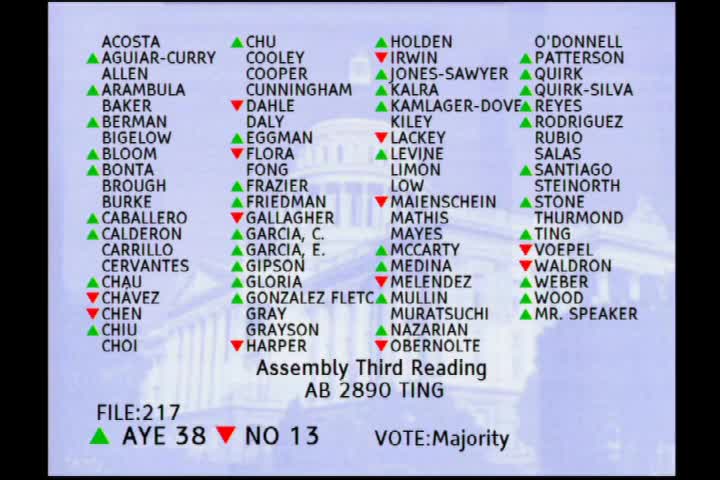

Bill Author

Bill Co-Author(s):