AB 228: Collectibles: sale of autographed memorabilia.
- Session Year: 2017-2018
- House: Assembly
- Latest Version Date: 2017-10-12
Existing law regulates the sale or offer to sell by a dealer to a consumer of a collectible in or from this state, as specified. Existing law defines the term collectible to mean any autographed item, as specified, sold or offered for sale in or from this state by a dealer, to a consumer for $5 or more. Existing law defines the term autographed to mean bearing the actual signature of a personality signed by that individuals own hand. Existing law defines a dealer, among other things, as a person who is principally in the business of selling or offering for sale collectibles in or from this state or a person who by his or her occupation holds himself or herself out as having knowledge or skill peculiar to collectibles. Existing law includes a person engaged in a cable television business for the sale of collectibles in the definition of dealer. Existing law excludes, among other persons, the personality who signs the memorabilia from the definition of dealer. Existing law also excludes from the definition of dealer a provider or operator of an online marketplace, provided that the marketplace provider or operator is not principally in the business of selling, or offering for sale, collectibles, in or from the state, exclusively or nonexclusively, or does not hold itself out as having knowledge or skill peculiar to collectibles.
This bill would instead define autographed collectible to mean an autographed sports or entertainment media item, as specified, sold or offered for sale by a dealer to a consumer for $50 or more, bearing the signature of a particular person that increases the sale value of the item over that of a comparable item without the actual signature. The bill would exclude, among other items, works of fine art, signed books, furniture, and decorative objects, from the definition of an autographed collectible. The bill would amend the definition of a dealer to be, among other things, a person who is in the business of selling autographed collectibles and who sells 3 or more autographed collectibles in a period of 12 months. The bill would include a person engaged in any television business for the sale of autographed collectibles and an auctioneer or auction company in the definition of dealer. The bill would delete the exclusion of a provider or operator of an online marketplace from the definition of dealer.
Existing law requires a dealer to provide a certificate of authenticity, as specified, for each collectible to, among other things, indicate to a buyer whether a collectible item was purchased from a 3rd party and if so, the name and address of the 3rd party.
This bill instead would require a dealer to provide an express warranty, as specified. The bill also would require a dealer, for items obtained on and after January 1, 2018, separate from the express warranty, to maintain a record stating whether the autographed collectible was purchased by the dealer from a 3rd party and the name and address of the 3rd party. The bill would permit discovery of this information in a civil dispute, as specified. The bill would require the dealer to keep the 3rd-party information on file for 7 years.
Existing law requires a dealer displaying or offering for sale a collectible in this state to have at the location and in close proximity to the collectible merchandise a conspicuous sign that informs consumers of the written certificate of authenticity requirement, as specified. Existing law exempts auctioneers selling collectibles from this requirement. Existing law also requires a dealer engaged in a mail-order, telephone-order, or online business for the sale of collectibles in or from this state to, among other things, include in each television or online advertisement a similar disclosure in an onscreen message, as specified.
This bill would require an auctioneer, auction company, and a vendor at a trade show to display specified signage regarding the express warranty requirements for autographed collectibles.
Existing law grants certain individuals the right to cancel or to rescind certain contracts within a specified number of business days. Existing law requires a retail seller that sells goods to the public in this state that has a policy as to any of those goods of not giving full refunds, or of not allowing equal exchanges, or any combination thereof, for at least 7 days following purchase of the goods, as specified, to conspicuously display that policy, as specified.
The bill would grant a consumer the right to cancel the contract for the purchase of an autographed collectible represented by a dealer as authentic until at least midnight of the 3rd day after the day on which the consumer purchased the autographed collectible, except when the autographed collectible is purchased at a public auction or trade show, or as part of a trade or barter, as specified. The bill would specify procedures and conditions of the cancellation. The bill would require the 3-day right of return, except as specified, to be included in the sign and the onscreen message a dealer is required to display.
Existing law prohibits a dealer from displaying or offering for sale a collectible in this state at any trade show or similar event primarily featuring sales of collectibles or other memorabilia that offers onsite admission ticket sales, except as provided. Existing law requires a promoter who arranges or organizes a trade show featuring collectibles and autograph signings to provide a specified notification to any dealer who agrees to purchase or rent space in the trade show.
This bill would repeal those provisions.
Existing law provides that a consumer who is injured by a failure of the dealer to provide a certificate of authenticity is entitled to recover from that dealer, among other things, 10 times his or her actual damages. Existing law also authorizes the court to award additional damages based on the egregiousness of the dealers conduct.
This bill instead would provide for specified civil penalties in a civil action against the dealer for failure to comply with the provisions regarding express warranties. The bill would provide for separate specified civil penalties for providing a false warranty, providing a false warranty as the result of gross negligence, and knowingly providing a false warranty, as well as attorneys fees and other costs to be paid to the consumer. The bill would authorize the court to award punitive damages based on the egregiousness of the dealers conduct.
This bill would declare that it is to take effect immediately as an urgency statute.
Existing law regulates the sale or offer to sell by a dealer to a consumer of a collectible in or from this state, as specified. Existing law defines the term collectible to mean any autographed item, as specified, sold or offered for sale in or from this state by a dealer, to a consumer for $5 or more. Existing law defines the term autographed to mean bearing the actual signature of a personality signed by that individuals own hand. Existing law defines a dealer, among other things, as a person who is principally in the business of selling or offering for sale collectibles in or from this state or a person who by his or her occupation holds himself or herself out as having knowledge or skill peculiar to collectibles. Existing law includes a person engaged in a cable television business for the sale of collectibles in the definition of dealer. Existing law excludes, among other persons, the personality who signs the memorabilia from the definition of dealer. Existing law also excludes from the definition of dealer a provider or operator of an online marketplace, provided that the marketplace provider or operator is not principally in the business of selling, or offering for sale, collectibles, in or from the state, exclusively or nonexclusively, or does not hold itself out as having knowledge or skill peculiar to collectibles.
This bill would instead define autographed collectible to mean an autographed sports or entertainment media item, as specified, sold or offered for sale in or from this state by a dealer to a consumer for $50 or more, bearing the actual signature of a particular person signed by that individuals own hand that increases the sale value of the item over that of a comparable item without the actual signature. The bill would exclude, among other items, works of fine art, signed books, furniture, and decorative objects, from the definition of an autographed collectible. The bill would amend the definition of a dealer to be, among other things, a person who is in the business of selling autographed collectibles and who sells 3 or more autographed collectibles in a period of 12 months. The bill would include a person engaged in any television business for the sale of autographed collectibles and an auctioneer or auction company in the definition of dealer. The bill would exclude from the definition of dealer the person who autographed the collectible, instead of the personality who signs the memorabilia. The bill would amend the terms under which delete the exclusion of a provider or operator of an online marketplace is excluded from the definition of dealer to exclude a provider or operator that is not in the business of selling, or offering for sale, autographed collectibles, exclusively or nonexclusively. dealer.
Existing law requires a dealer to provide a certificate of authenticity, as specified, for each collectible to, among other things, indicate to a buyer whether a collectible item was purchased from a 3rd party and if so, the name and address of the 3rd party.
This bill instead would require a dealer to provide an express warranty, as specified. The bill also would require a dealer, for items obtained on and after January 1, 2018, separate from the express warranty, to maintain a record stating whether the autographed collectible was purchased by the dealer from a 3rd party and the name and address of the 3rd party. The bill would permit discovery of this information in a civil dispute, as specified. The bill would require the dealer to keep the 3rd-party information on file for 7 years.
Existing law requires a dealer displaying or offering for sale a collectible in this state to have at the location and in close proximity to the collectible merchandise a conspicuous sign that informs consumers of the written certificate of authenticity requirement, as specified. Existing law exempts auctioneers selling collectibles from this requirement. Existing law also requires a dealer engaged in a mail-order, telephone-order, or online business for the sale of collectibles in or from this state to, among other things, include in each television or online advertisement a similar disclosure in an onscreen message, as specified.
This bill would require an auctioneer, auction company, and a vendor at a trade show to display specified signage regarding the express warranty requirements for autographed collectibles.
Existing law grants certain individuals the right to cancel or to rescind certain contracts within a specified number of business days. Existing law requires a retail seller that sells goods to the public in this state that has a policy as to any of those goods of not giving full refunds, or of not allowing equal exchanges, or any combination thereof, for at least 7 days following purchase of the goods, as specified, to conspicuously display that policy, as specified.
The bill would require grant a consumer to have the right to cancel the contract for the purchase of an autographed collectible represented by a dealer as authentic until at least midnight of the 3rd day after the day on which the consumer purchased the autographed collectible, except when the autographed collectible is purchased at a public auction, auction or trade show, or as part of a trade or barter, as specified. The bill would specify procedures and conditions of the cancellation. The bill would require the 3-day right of return, except as specified, to be included in the sign and the onscreen message a dealer is required to display.
Existing law prohibits a dealer from displaying or offering for sale a collectible in this state at any trade show or similar event primarily featuring sales of collectibles or other memorabilia that offers onsite admission ticket sales, except as provided. Existing law requires a promoter who arranges or organizes a trade show featuring collectibles and autograph signings to provide a specified notification to any dealer who agrees to purchase or rent space in the trade show.
This bill would repeal those provisions.
Existing law provides that a consumer who is injured by a failure of the dealer to provide a certificate of authenticity is entitled to recover from that dealer, among other things, 10 times his or her actual damages. Existing law also authorizes the court to award additional damages based on the egregiousness of the dealers conduct.
This bill instead would provide for specified civil penalties in a civil action against the dealer for failure to comply with the provisions regarding express warranties. The bill would provide for separate specified civil penalties for providing a false warranty, providing a false warranty as the result of gross negligence, and knowingly providing a false warranty, as well as attorneys fees and other costs to be paid to the consumer. The bill would authorize the court to award punitive damages based on the egregiousness of the dealers conduct.
This bill would declare that it is to take effect immediately as an urgency statute.
Existing law regulates the sale or offer to sell by a dealer to a consumer of a collectible in or from this state, as specified. Existing law defines the term collectible to mean any autographed item, as specified, sold or offered for sale in or from this state by a dealer, to a consumer for $5 or more. Existing law defines the term autographed to mean bearing the actual signature of a personality signed by that individuals own hand. Existing law defines a dealer, among other things, as a person who is principally in the business of selling or offering for sale collectibles in or from this state or a person who by his or her occupation holds himself or herself out as having knowledge or skill peculiar to collectibles. Existing law includes a person engaged in a cable television business for the sale of collectibles in the definition of dealer. Existing law excludes, among other persons, the personality who signs the memorabilia from the definition of dealer. Existing law also excludes from the definition of dealer a provider or operator of an online marketplace, provided that the marketplace provider or operator is not principally in the business of selling, or offering for sale, collectibles, in or from the state, exclusively or nonexclusively, or does not hold itself out as having knowledge or skill peculiar to collectibles.
This bill would instead define autographed collectible to mean an autographed sports or entertainment media item, as specified, sold or offered for sale in or from this state by a dealer to a consumer for $50 or more, bearing the actual signature of a person signed by that individuals own hand that increases the sale value of the item over that of a comparable item without the actual signature. The bill would exclude, among other items, works of fine art, signed books, furniture, and certain decorative objects, from the definition of an autographed collectible. The bill would amend the definition of a dealer to be, among other things, a person who is in the business of selling autographed collectibles and who is required to have a sellers permit issued by the California Department of Tax and Fee Administration. sells 3 or more autographed collectibles in a period of 12 months. The bill would include a person engaged in any television business for the sale of autographed collectibles in the definition of dealer. The bill would exclude from the definition of dealer the person who autographed the collectible, instead of the personality who signs the memorabilia. The bill would amend the terms under which a provider or operator of an online marketplace is excluded from the definition of dealer to exclude a provider or operator that is not in the business of selling, or offering for sale, autographed collectibles, exclusively or nonexclusively.
Existing law requires a dealer to provide a certificate of authenticity authenticity, as specified, for each collectible to, among other things, indicate to a buyer whether a collectible item was purchased from a 3rd party and if so, the name and address of the 3rd party. Existing
This bill instead would require a dealer to provide an express warranty, as specified. The bill also would require a dealer, for items obtained on and after January 1, 2018, separate from the express warranty, to maintain a record stating whether the autographed collectible was purchased by the dealer from a 3rd party and the name and address of the 3rd party. The bill would permit discovery of this information in a civil dispute, as specified. The bill would require the dealer to keep the 3rd-party information on file for 7 years.
Existing law requires a dealer displaying or offering for sale a collectible in this state to have at the location and in close proximity to the collectible merchandise a conspicuous sign that informs consumers of the written certificate of authenticity requirement, as specified. Existing law exempts auctioneers selling collectibles from this requirement. Existing law also requires a dealer engaged in a mail-order, telephone-order, or online business for the sale of collectibles in or from this state to, among other things, include in each television or online advertisement a similar disclosure in an onscreen message, as specified.
This bill would require an auctioneer, auction company, and a vendor at a trade show to display specified signage regarding the express warranty requirements for autographed collectibles.
Existing law grants certain individuals the right to cancel or to rescind certain contracts within a specified number of business days. Existing law requires a retail seller that sells goods to the public in this state that has a policy as to any of those goods of not giving full refunds, or of not allowing equal exchanges, or any combination thereof, for at least 7 days following purchase of the goods, as specified, to conspicuously display that policy, as specified.
This bill instead would require a dealer to provide an express warranty, as specified. The bill also would require a dealer, for items obtained on and after January 1, 2018, separate from the express warranty, to maintain a record stating whether the autographed collectible was purchased by the dealer from a 3rd party and the name and address of the 3rd party. The bill would permit discovery of this information in a civil dispute, as specified.The bill would require a consumer to have the right to cancel the contract for the purchase of an autographed collectible represented by a dealer as authentic until at least midnight of the 3rd day after the day on which the consumer purchased the autographed collectible, except when the autographed collectible is purchased at a public auction, as specified. The bill would specify procedures and conditions of the cancellation. The bill would require the 3-day right of return, except as specified, to be included in the sign and the onscreen message a dealer is required to display.
Existing law prohibits a dealer from displaying or offering for sale a collectible in this state at any trade show or similar event primarily featuring sales of collectibles or other memorabilia that offers onsite admission ticket sales, except as provided. Existing law requires a promoter who arranges or organizes a trade show featuring collectibles and autograph signings to provide a specified notification to any dealer who agrees to purchase or rent space in the trade show.
This bill would repeal those provisions.
Existing law provides that a consumer who is injured by a failure of the dealer to provide a certificate of authenticity is entitled to recover from that dealer, among other things, 10 times his or her actual damages. Existing law also authorizes the court to award additional damages based on the egregiousness of the dealers conduct.
This bill instead would provide for specified civil penalties in a civil action against the dealer for failure to comply with the provisions regarding express warranties. The bill would also provide for separate specified civil penalties for providing a false warranty, providing a false warranty as the result of gross negligence, and knowingly providing a false warranty, as well as attorneys fees and other costs to be paid to the consumer.
Existing law regulates the sale or offer to sell by a dealer to a consumer of a collectible in or from this state, as specified. Existing law defines the term collectible to mean any autographed item, as specified, sold or offered for sale in or from this state by a dealer, to a consumer for $5 or more. Existing law defines the term autographed to mean bearing the actual signature of a personality signed by that individuals own hand. Existing law defines a dealer, among other things, as a person who is principally in the business of selling or offering for sale collectibles in or from this state or a person who by his or her occupation holds himself or herself out as having knowledge or skill peculiar to collectibles. Existing law includes a person engaged in a cable television business for the sale of collectibles in the definition of dealer. Existing law excludes, among other persons, the personality who signs the memorabilia from the definition of dealer. Existing law also excludes from the definition of dealer a provider or operator of an online marketplace, provided that the marketplace provider or operator is not principally in the business of selling, or offering for sale, collectibles, in or from the state, exclusively or nonexclusively, or does not hold itself out as having knowledge or skill peculiar to collectibles.
This bill would instead define autographed collectible to mean an autographed sports or entertainment media item, as specified, sold or offered for sale in or from this state by a dealer to a consumer for $50 or more, bearing the actual signature of a person signed by that individuals own hand that increases the sale value of the item over that of a comparable item without the actual signature. The bill would exclude, among other items, works of fine art, signed books, furniture, and certain decorative objects, from the definition of an autographed collectible. The bill would amend the definition of a dealer to be, among other things, a person who is in the business of selling autographed collectibles and who also sells 3 or more autographed collectibles in a 12-month period. is required to have a sellers permit issued by the California Department of Tax and Fee Administration. The bill would include a person engaged in any television business for the sale of autographed collectibles in the definition of dealer. The bill would exclude from the definition of dealer the person who autographed the collectible, instead of the personality who signs the memorabilia. The bill would amend the terms under which a provider or operator of an online marketplace is excluded from the definition of dealer to exclude a provider or operator that is not in the business of selling, or offering for sale, autographed collectibles, exclusively or nonexclusively, and does not sell 3 or more autographed collectibles in a 12-month period. nonexclusively.
Existing law requires a dealer to provide a certificate of authenticity for each collectible to, among other things, indicate to a buyer whether a collectible item was purchased from a 3rd party and if so, the name and address of the 3rd party. Existing law requires a dealer displaying or offering for sale a collectible in this state to have at the location and in close proximity to the collectible merchandise a conspicuous sign that informs consumers of the written certificate of authenticity requirement, as specified. Existing law also requires a dealer engaged in a mail-order, telephone-order, or online business for the sale of collectibles in or from this state to, among other things, include in each television or online advertisement a similar disclosure in an onscreen message, as specified.
Existing law grants certain individuals the right to cancel or to rescind certain contracts within a specified number of business days. Existing law requires a retail seller that sells goods to the public in this state that has a policy as to any of those goods of not giving full refunds, or of not allowing equal exchanges, or any combination thereof, for at least 7 days following purchase of the goods, as specified, to conspicuously display that policy, as specified.
This bill instead would require a dealer to provide an express warranty, as specified. The bill also would require a dealer, for items obtained on and after January 1, 2018, separate from the express warranty, to maintain a record stating whether the autographed collectible was purchased by the dealer from a 3rd party and the name and address of the 3rd party. The bill would permit discovery of this information in a civil dispute, as specified.
The bill would require a consumer to have the right to cancel the contract for the purchase of an autographed collectible represented by a dealer as authentic until at least midnight of the 3rd day after the day on which the consumer purchased the autographed collectible, except when the autographed collectible is purchased at a public auction, as specified. The bill would specify procedures and conditions of the cancellation. The bill would require the 3-day right of return, except as specified, to be included in the sign and the onscreen message a dealer is required to display.
Existing law prohibits a dealer from displaying or offering for sale a collectible in this state at any trade show or similar event primarily featuring sales of collectibles or other memorabilia that offers onsite admission ticket sales, except as provided. Existing law requires a promoter who arranges or organizes a trade show featuring collectibles and autograph signings to provide a specified notification to any dealer who agrees to purchase or rent space in the trade show.
This bill would repeal those provisions.
Existing law provides that a consumer who is injured by a failure of the dealer to provide a certificate of authenticity is entitled to recover from that dealer, among other things, 10 times his or her actual damages.
This bill instead would provide for specified civil penalties in a civil action against the dealer for failure to comply with the provisions regarding express warranties. The bill would also provide for civil penalties for knowingly providing a false warranty, as well as attorneys fees and other costs to be paid to the consumer.
Existing law regulates the sale or offer to sell by a dealer to a consumer of a collectible in or from this state, as specified. Existing law defines the term collectible to mean any autographed item, as specified, sold or offered for sale in or from this state by a dealer, to a consumer for $5 or more. Existing law defines the term autographed to mean bearing the actual signature of a personality signed by that individuals own hand. Existing law defines a dealer, among other things, as a person who is principally in the business of selling or offering for sale collectibles in or from this state or a person who by his or her occupation holds himself or herself out as having knowledge or skill peculiar to collectibles. Existing law includes a person engaged in a cable television business for the sale of collectibles in the definition of dealer. Existing law excludes, among other persons, the personality who signs the memorabilia from the definition of dealer. Existing law also excludes from the definition of dealer a provider or operator of an online marketplace, provided that the marketplace provider or operator is not principally in the business of selling, or offering for sale, collectibles, in or from the state, exclusively or nonexclusively, or does not hold itself out as having knowledge or skill peculiar to collectibles.
This bill would instead define autographed collectible to mean an autographed sports or entertainment media item, as specified, sold or offered for sale in or from this state by a dealer to a consumer for $50 or more, bearing the actual signature of a person signed by that individuals own hand that increases the sale value of the item over that of a comparable item without the actual signature. The bill would amend the definition of a dealer to be, among other things, a person who is in the business of selling autographed collectibles and who also sells 3 or more autographed collectibles in a 12-month period. The bill would include a person engaged in any television business for the sale of autographed collectibles in the definition of dealer. The bill would exclude from the definition of dealer the person who autographed the collectible, instead of the personality who signs the memorabilia. The bill would amend the terms under which a provider or operator of an online marketplace is excluded from the definition of dealer to exclude a provider or operator that is not in the business of selling, or offering for sale, autographed collectibles, exclusively or nonexclusively, and does not sell 3 or more autographed collectibles in a 12-month period.
Existing law requires a dealer to provide a certificate of authenticity for each collectible to, among other things, indicate to a buyer whether a collectible item was purchased from a 3rd party and if so, the name and address of the 3rd party. Existing law requires a dealer displaying or offering for sale a collectible in this state to have at the location and in close proximity to the collectible merchandise a conspicuous sign that informs consumers of the written certificate of authenticity requirement, as specified. Existing law also requires a dealer engaged in a mail-order, telephone-order, or online business for the sale of collectibles in or from this state to, among other things, include in each television or online advertisement a similar disclosure in an onscreen message, as specified.
Existing law grants certain individuals the right to cancel or to rescind certain contracts within a specified number of business days. Existing law requires a retail seller that sells goods to the public in this state that has a policy as to any of those goods of not giving full refunds, or of not allowing equal exchanges, or any combination thereof, for at least 7 days following purchase of the goods, as specified, to conspicuously display that policy, as specified.
This bill instead would require a dealer to provide an express warranty, as specified. The bill also would require a dealer, for items obtained on and after January 1, 2018, separate from the express warranty, to maintain a record stating whether the autographed collectible was purchased by the dealer from a 3rd party and the name and address of the 3rd party. The bill would permit discovery of this information in a civil dispute, as specified.
The bill would require a consumer to have the right to cancel the contract for the purchase of an autographed collectible represented by a dealer as authentic until at least midnight of the 3rd day after the day on which the consumer purchased the autographed collectible, except when the autographed collectible is purchased at a public auction, as specified. The bill would specify procedures and conditions of the cancellation. The bill would require the 3-day right of return, except as specified, to be included in the sign and the onscreen message a dealer is required to display.
Existing law prohibits a dealer from displaying or offering for sale a collectible in this state at any trade show or similar event primarily featuring sales of collectibles or other memorabilia that offers onsite admission ticket sales, except as provided. Existing law requires a promoter who arranges or organizes a trade show featuring collectibles and autograph signings to provide a specified notification to any dealer who agrees to purchase or rent space in the trade show.
This bill would repeal those provisions.
Existing law provides that a consumer who is injured by a failure of the dealer to provide a certificate of authenticity is entitled to recover from that dealer, among other things, 10 times his or her actual damages.
This bill instead would provide for specified civil penalties in a civil action against the dealer for failure to comply with the provisions regarding express warranties. The bill would also provide for civil penalties for knowingly providing a false warranty, as well as attorneys fees and other costs to be paid to the consumer.
Existing law regulates the sale or offer to sell by a dealer to a consumer of a collectible in or from this state, as specified. Existing law defines the term collectible to mean any autographed item, as specified, sold or offered for sale in or from this state by a dealer, to a consumer for $5 or more. Existing law defines the term autographed to mean bearing the actual signature of a personality signed by that individuals own hand. Existing law defines a dealer, among other things, as a person who is principally in the business of selling or offering for sale collectibles in or from this state or a person who by his or her occupation holds himself or herself out as having knowledge or skill peculiar to collectibles. Existing law includes a person engaged in a cable television business for the sale of collectibles in the definition of dealer. Existing law excludes, among other persons, the personality who signs the memorabilia from the definition of dealer. Existing law also excludes from the definition of dealer a provider or operator of an online marketplace, provided that the marketplace provider or operator is not principally in the business of selling, or offering for sale, collectibles, in or from the state, exclusively or nonexclusively, or does not hold itself out as having knowledge or skill peculiar to collectibles.
This bill would narrow the definition of collectible instead define autographed collectible to mean an autographed sports or entertainment media item, as specified, sold or offered for sale in or from this state by a dealer to a consumer for $100 $50 or more. The bill would amend the definition of authographed to mean more, bearing the actual signature of a person signed by that individuals own hand that increases the sale value of the item over that of a comparable item without the actual signature. The bill would amend the definition of a dealer to be, among other things, a person who is in the business of selling autographed collectibles and who also sells 3 or more autographed collectibles in a 12-month period. The bill would include a person engaged in any television business for the sale of autographed collectibles in the definition of dealer. The bill would exclude from the definition of dealer the person who autographed the collectible, instead of the personality who signs the memorabilia. The bill would amend the terms under which a provider or operator of an online marketplace is excluded from the definition of dealer to exclude a provider or operator that is not in the business of selling, or offering for sale, autographed collectibles, in or from the state, exclusively or nonexclusively, and does not sell 3 or more autographed collectibles in a 12-month period.
Existing law requires a dealer to provide a certificate of authenticity for each collectible to, among other things, indicate to a buyer whether a collectible item was purchased from a 3rd party and if so, the name and address of the 3rd party. Existing law requires a dealer displaying or offering for sale a collectible in this state to have at the location and in close proximity to the collectible merchandise a conspicuous sign that informs consumers of the written certificate of authenticity requirement, as specified. Existing law also requires a dealer engaged in a mail-order, telephone-order, or online business for the sale of collectibles in or from this state to, among other things, include in each television or online advertisement a similar disclosure in an onscreen message, as specified.
Existing law grants certain individuals the right to cancel or to rescind certain contracts within a specified number of business days. Existing law requires a retail seller that sells goods to the public in this state that has a policy as to any of those goods of not giving full refunds, or of not allowing equal exchanges, or any combination thereof, for at least 7 days following purchase of the goods, as specified, to conspicuously display that policy, as specified.
This bill instead would require a dealer to provide an express warranty, as specified. The bill also would require a dealer, for items obtained on and after January 1, 2018, separate from the express warranty, to maintain a record stating whether the item autographed collectible was purchased by the dealer from a 3rd party and the name and address of the 3rd party. The bill would authorize this information to be disclosed by court order, permit discovery of this information in a civil dispute, as specified.
The bill would require a consumer to have the right to cancel the contract for the purchase of a an autographed collectible represented by a dealer as authentic until at least midnight of the 3rd day after the day on which the consumer purchased the autographed collectible, except when the autographed collectible is purchased at a public auction, as specified. The bill would specify procedures and conditions of the cancellation. The bill would require the 3-day right of return, except as specified, to be included in the sign and the onscreen message a dealer is required to display.
Existing law prohibits a dealer from displaying or offering for sale a collectible in this state at any trade show or similar event primarily featuring sales of collectibles or other memorabilia that offers onsite admission ticket sales, except as provided. Existing law requires a promoter who arranges or organizes a trade show featuring collectibles and autograph signings to provide a specified notification to any dealer who agrees to purchase or rent space in the trade show.
This bill would repeal those provisions.
Existing law provides that a consumer who is injured by a failure of the dealer to provide a certificate of authenticity is entitled to recover from that dealer, among other things, 10 times his or her actual damages.
This bill instead would require that a dealer be knowingly willful or negligent in failing to provide the express warranty in order for the penalties to apply. provide for specified civil penalties in a civil action against the dealer for failure to comply with the provisions regarding express warranties. The bill would also provide for civil penalties for knowingly providing a false warranty, as well as attorneys fees and other costs to be paid to the consumer.
Existing law regulates the sale or offer to sell by a dealer to a consumer of a collectible in or from this state, as specified. Existing law defines the term collectible to mean any autographed item, as specified, sold or offered for sale in or from this state by a dealer, to a consumer for $5 or more. Existing law defines the term autographed to mean bearing the actual signature of a personality signed by that individuals own hand. Existing law defines a dealer, among other things, as a person who is principally in the business of selling or offering for sale collectibles in or from this state or a person who by his or her occupation holds himself or herself out as having knowledge or skill peculiar to collectibles. Existing law includes a person engaged in a cable television business for the sale of collectibles in the definition of dealer. Existing law excludes, among other persons, the personality who signs the memorabilia from the definition of dealer. Existing law also excludes from the definition of dealer a provider or operator of an online marketplace, provided that the marketplace provider or operator is not principally in the business of selling, or offering for sale, collectibles, in or from the state, exclusively or nonexclusively, or does not hold itself out as having knowledge or skill peculiar to collectibles.
This bill would narrow the definition of collectible collectible to mean an autographed sports or entertainment media item, as specified, sold or offered for sale in or from this state by a dealer to a consumer for $100 or more. The bill would amend the definition of autographed authographed to mean bearing the actual signature of a person signed by that individuals own hand that increases the sale value of the item over that of a comparable item without the actual signature. The bill would amend the definition of a dealer to be, among other things, a person who is in the business of selling collectibles and who also sells or has sold 3 or more collectibles in either the current or the immediately preceding calendar year. a 12-month period. The bill would include a person engaged in any television business for the sale of collectibles in the definition of dealer. The bill would exclude from the definition of dealer the person who autographed the collectible, instead of the personality who signs the memorabilia. The bill would amend the terms under which a provider or operator of an online marketplace is excluded from the definition of dealer to exclude a provider or operator that is not in the business of selling, or offering for sale, collectibles, in or from the state, exclusively or nonexclusively, and has not sold or does not sell 3 or more collectibles in either the current or the immediately preceding calendar year. a 12-month period.
Existing law requires a dealer to provide a certificate of authenticity for each collectible to, among other things, indicate to a buyer whether a collectible item was purchased from a 3rd party and if so, the name and address of the 3rd party. Existing law requires a dealer displaying or offering for sale a collectible in this state to have at the location and in close proximity to the collectible merchandise a conspicuous sign that informs consumers of the written certificate of authenticity requirement, as specified. Existing law also requires a dealer engaged in a mail-order, telephone-order, or online business for the sale of collectibles in or from this state to, among other things, include in each television or online advertisement a similar disclosure in an onscreen message, as specified.
Existing law grants certain individuals the right to cancel or to rescind certain contracts within a specified number of business days. Existing law requires a retail seller that sells goods to the public in this state that has a policy as to any of those goods of not giving full refunds, or of not allowing equal exchanges, or any combination thereof, for at least 7 days following purchase of the goods, as specified, to conspicuously display that policy, as specified.
This bill instead would require a dealer to provide an express warranty, as specified. The bill also would require a dealer, for items obtained on and after January 1, 2018, separate from the express warranty, to maintain a record stating whether the item was purchased by the dealer from a 3rd party and the name and address of the 3rd party. The bill would authorize this information to be disclosed by court order, as specified.
The bill would require a consumer to have the right to cancel the contract for the purchase of a collectible represented by a dealer as authentic until midnight of the 3rd day after the day on which the consumer purchased the collectible. collectible, except when the collectible is purchased at a public auction, as specified. The bill would specify procedures and conditions of the cancellation. The bill would require the 3-day right of return return, except as specified, to be included in the sign and the onscreen message a dealer is required to display.
Existing law prohibits a dealer from displaying or offering for sale a collectible in this state at any trade show or similar event primarily featuring sales of collectibles or other memorabilia that offers onsite admission ticket sales, except as provided. Existing law requires a promoter who arranges or organizes a trade show featuring collectibles and autograph signings to provide a specified notification to any dealer who agrees to purchase or rent space in the trade show.
This bill would repeal those provisions.
Existing law provides that a consumer who is injured by a failure of the dealer to provide a certificate of authenticity is entitled to recover from that dealer, among other things, 10 times his or her actual damages.
This bill instead would require that a dealer be knowingly willful or negligent in failing to provide the express warranty in order for the penalties to apply.
Existing law regulates the sale or offer to sell by a dealer to a consumer of a collectible in or from this state, as specified. Existing law defines the term collectible to mean any autographed item, as specified, sold or offered for sale in or from this state by a dealer, to a consumer for $5 or more. Existing law defines the term autographed to mean bearing the actual signature of a personality signed by that individuals own hand. Existing law defines a dealer, among other things, as a person who is principally in the business of selling or offering for sale collectibles in or from this state or a person who by his or her occupation holds himself or herself out as having knowledge or skill peculiar to collectibles. Existing law includes a person engaged in a cable television business for the sale of collectibles in the definition of dealer. Existing law excludes, among other persons, the personality who signs the memorabilia from the definition of dealer. Existing law also excludes from the definition of dealer a provider or operator of an online marketplace, provided that the marketplace provider or operator is not principally in the business of selling, or offering for sale, collectibles, in or from the state, exclusively or nonexclusively, or does not hold itself out as having knowledge or skill peculiar to collectibles.
This bill would define principally to mean that a majority of the number of inventory items offered or sold by a dealer are collectibles. The bill also would narrow the definition of collectible to mean an autographed sports or entertainment media item, as specified, sold or offered for sale in or from this state by a dealer to a consumer for $100 or more. The bill would amend the definition of autographed to mean bearing the actual signature of a person signed by that individuals own hand that increases the sale value of the item over that of a comparable item without the actual signature. The bill would amend the definition of a dealer to be, among other things, a person who is principally in the business of selling collectibles and who also holds himself or herself out as having knowledge or skill peculiar to collectibles. sells or has sold 3 or more collectibles in either the current or the immediately preceding calendar year. The bill would include a person engaged in any television business for the sale of collectibles in the definition of dealer. The bill would exclude from the definition of dealer the person who autographed the collectible, instead of the personality who signs the memorabilia. The bill would amend the terms under which a provider or operator of an online marketplace is excluded from the definition of dealer to exclude a provider or operator that is not in the business of selling, or offering for sale, collectibles, in or from the state, exclusively or nonexclusively, and has not sold or does not sell 3 or more collectibles in either the current or the immediately preceding calendar year.
Existing law requires a dealer to provide a certificate of authenticity for each collectible to, among other things, indicate to a buyer whether a collectible item was purchased from a 3rd party and if so, the name and address of the 3rd party. Existing law requires a dealer displaying or offering for sale a collectible in this state to have at the location and in close proximity to the collectible merchandise a conspicuous sign that informs consumers of the written certificate of authenticity requirement, as specified. Existing law also requires a dealer engaged in a mail-order, telephone-order, or online business for the sale of collectibles in or from this state to, among other things, include in each television or online advertisement a similar disclosure in an onscreen message, as specified.
Existing law grants certain individuals the right to cancel or to rescind certain contracts within a specified number of business days. Existing law requires a retail seller that sells goods to the public in this state that has a policy as to any of those goods of not giving full refunds, or of not allowing equal exchanges, or any combination thereof, for at least 7 days following purchase of the goods, as specified, to conspicuously display that policy, as specified.
This bill, bill instead would instead, require a dealer to provide an express warranty, as specified. The bill also would require a dealer, for items obtained on and after January 1, 2018, separate from the certificate of authenticity, express warranty, to maintain a record stating whether the item was purchased by the dealer from a 3rd party and the name and address of the 3rd party. The bill would authorize this information to be disclosed by court order, as specified.
The bill would require a consumer to have the right to cancel the contract for the purchase of a collectible represented by a dealer as authentic until midnight of the 3rd day after the day on which the consumer purchased the collectible. The bill would specify procedures and conditions of the cancellation. The bill would require the 3-day right of return to be included in the sign and the onscreen message a dealer is required to display.
Existing law prohibits a dealer from displaying or offering for sale a collectible in this state at any trade show or similar event primarily featuring sales of collectibles or other memorabilia that offers onsite admission ticket sales, except as provided. Existing law requires a promoter who arranges or organizes a trade show featuring collectibles and autograph signings to provide a specified notification to any dealer who agrees to purchase or rent space in the trade show.
This bill would repeal those provisions.
Existing law provides that a consumer who is injured by a failure of the dealer to provide a certificate of authenticity is entitled to recover from that dealer, among other things, 10 times his or her actual damages.
This bill, bill instead would instead, require that a dealer be knowingly willful or negligent in failing to provide the certificate of authenticity express warranty in order for the penalties to apply.
Existing law regulates the sale or offer to sell by a dealer to a consumer of a collectible in or from this state, as specified. Existing law defines the term collectible to mean any autographed item, as specified, sold or offered for sale in or from this state by a dealer, to a consumer for $5 or more. Existing law defines a dealer, among other things, as a person who is principally in the business of selling or offering for sale collectibles in or from this state or a person who by his or her occupation holds himself or herself out as having knowledge or skill peculiar to collectibles.
This bill would define principally to mean that a majority of the number of inventory items offered or sold by a dealer are collectibles. The bill also would amend the definition of a dealer to be, among other things, a person who is principally in the business of selling collectibles and who also holds himself or herself out as having knowledge or skill peculiar to collectibles.
Existing law requires a dealer to provide a certificate of authenticity for each collectible to, among other things, indicate to a buyer whether a collectible item was purchased from a 3rd party and if so, the name and address of the 3rd party.
This bill, would instead, require a dealer, for items obtained on and after January 1, 2018, separate from the certificate of authenticity, to maintain a record stating whether the item was purchased by the dealer from a 3rd party and the name and address of the 3rd party. The bill would authorize this information to be disclosed by court order, as specified.
Existing law provides that a consumer who is injured by a failure of the dealer to provide a certificate of authenticity is entitled to recover from that dealer, among other things, 10 times his or her actual damages.
This bill, would instead, require that a dealer be knowingly willful or negligent in failing to provide the certificate of authenticity in order for the penalties to apply.
(a)As used in this section:
(1)Autographed collectible means an item bearing the signature of a particular person that is sold or offered for sale for fifty dollars ($50) or more, excluding sales tax and shipping fees, when the dealer offers the signed item at a higher price than the dealer would charge for a comparable item without the signature.
(2)For purposes of this section, an autographed collectible shall be limited to the following items:
(A)Sports items, including, but not limited to, a photograph, ticket, plaque, sports program, trading card, item of sports equipment or clothing, or other sports memorabilia.
(B)Entertainment media items related to music, television, and films, including, but not limited to, a picture, photo, record, compact disc, digital video disc, ticket, program, playbill, clothing, hat, poster, toy, plaque, trading card, musical instrument, or other entertainment memorabilia.
(3)For purposes of this section, and notwithstanding paragraph (2), an autographed collectible does not include the following items:
(A)Works of fine art, as defined by paragraph (1) of subdivision (d) of Section 982 that are originals or numbered multiples, and signed by the artist or maker.
(B)Furniture and decorative objects, including works of pottery, jewelry, and design that are signed by the artist or maker.
(C)Signed books, manuscripts, and correspondence, as well as ephemera not related to sports or entertainment media.
(D)Signed numismatic items or bullion.
(4)Consumer means any natural person who purchases an autographed collectible from a dealer for personal, family, or household purposes. Consumer also includes a prospective purchaser meeting these criteria.
(5)(A)Dealer means a person who is in the business of selling or offering for sale autographed collectibles exclusively or nonexclusively, and sells three or more autographed collectibles in a period of 12 months. Dealer includes an auctioneer or auction company that sells autographed collectibles at a public auction. Dealer includes a person engaged in a mail-order, telephone-order, online, or television business for the sale of autographed collectibles.
(B)Dealer does not include any of the following:
(i)A pawnbroker licensed pursuant to Chapter 3 (commencing with Section 21300) of Division 8 of the Financial Code, if the autographed collectible was acquired through a foreclosure on a collateral loan, provided that the pawnbroker does not hold himself or herself out as having knowledge or skill peculiar to autographed collectibles.
(ii)The person who autographed the collectible.
(6)Limited edition means any autographed collectible that meets all of the following requirements:
(A)A company has produced a specific quantity of an autographed collectible and placed it on the open market.
(B)The producer of the autographed collectible has posted a notice, at its primary place of business, that it will provide any consumer, upon request, with a copy of a notice that states the exact number of an autographed collectible produced in that series of limited editions.
(C)The producer makes available, upon request of a consumer, evidence that the electronic encoding, films, molds, or plates used to create the autographed collectible have been destroyed after the specified number of autographed collectibles have been produced.
(D)The sequence number of the autographed collectible and the number of the total quantity produced in the limited edition are printed on the autographed collectible.
(7)Person means any natural person, partnership, corporation, limited liability company, company, trust, association, or other entity, however organized.
(8)Representation means any oral or written representation, including, but not limited to, a representation in an advertisement, brochure, catalog, flyer, invoice, sign, radio or television broadcast, online communication, Internet Web page, email, or other commercial or promotional material.
(9)Auctioneer means an auctioneer as defined in subdivision (d) of Section 1812.601, or a representative or agent of an auctioneer.
(10)Auction company means an auction company as defined in subdivision (c) of Section 1812.601, or a representative or agent of an auction company.
(b)A dealer who, in selling or offering to sell to a consumer an autographed collectible, makes a representation to a consumer that the signature on the autographed collectible is the authentic signature of a particular person in that persons own hand, shall furnish an express warranty to the consumer at the time of sale. The dealer shall retain a copy of the express warranty for not less than seven years. The express warranty, which may be included in the bill of sale or invoice, shall meet all of the following criteria:
(1)Is written in at least 10-point type.
(2)Is signed by the dealer or his or her authorized agent, and contains the dealers true legal name, business street address, and the last four digits of the dealers sellers permit account number from the California Department of Tax and Fee Administration, if applicable.
(3)Specifies the date of sale and the purchase price.
(4)Describes the autographed collectible and specifies the name of the person who autographed it.
(5)Expressly warrants the autographed collectible as authentic, and that the warranty is conclusively presumed to be part of the bargain. The warranty shall not be negated or limited by reason of the lack of words such as warranty or guarantee or because the dealer does not have a specific intent or authorization to make the warranty or because any statement relevant to the autographed collectible is or purports to be, or is capable of being, merely the dealers opinion.
(6)If the autographed collectible is offered as one of a limited edition, specifies (A) how the autographed collectible and edition are numbered and (B) the size of the edition and the size of any prior or anticipated future edition, if known by the dealer. If the size of the edition and the size of any prior or anticipated future edition is not known, the warranty shall contain an explicit statement to that effect.
(7)Indicates whether the dealer is surety bonded or is otherwise insured to protect the consumer against errors and omissions of the dealer and, if bonded or insured, provides proof thereof.
(8)Indicates if the autographed collectible was autographed in the presence of the dealer, and any proof thereof. Specify the date and location of, and the name of a witness to, the autograph signing, if known, and applicable.
(9)Identifies all information upon which the dealer relied when making the representation that the autographed collectible is authentic.
(10)Indicates an identifying serial number that corresponds to an identifying number printed on the autographed collectible item, if any.
(11)Indicates whether the item was obtained or purchased from a third party.
(c)The dealer shall retain, after January 1, 2018, a record of the name and address of the third party, as described in paragraph (11) of subdivision (b). This third-party information may be discoverable during a civil dispute. However, nothing in this subdivision prohibits a party from objecting to a discovery request on the grounds of a right to privacy. This third-party information shall be kept on file for seven years.
(d)(1)In addition to any other right or remedy provided under existing law, including, but not limited to, any rights and remedies provided under contract law, a consumer shall have the right to cancel the contract for the purchase of an autographed collectible represented by a dealer as authentic until midnight of the third day after the day on which the consumer purchased the autographed collectible. Notice of the cancellation may be provided in person or in a written or electronic form, and is deemed effective once communicated or sent. The autographed collectible shall be returned to the dealer within 30 days of the sale in the same condition in which it was sold, the cost of which shall be borne by the consumer. The price paid by the consumer shall be refunded within 10 days of receipt of the returned autographed collectible. Nothing in this section prevents the parties from agreeing to cancel a contract after midnight of the third day after the day on which the consumer purchases the autographed collectible.
(2)This subdivision does not apply to the following:
(A)Autographed collectibles sold by an auctioneer or auction company at auction.
(B)Autographed collectibles purchased by barter or trade of other items.
(C)Autographed collectibles sold at a trade show.
(D)Autographed collectibles sold by one dealer to another dealer.
(e)(1)No dealer shall display or offer for sale an autographed collectible unless, at the location where the autographed collectible is offered for sale and in close proximity to the autographed collectible merchandise, there is a conspicuous sign that reads as follows:
SALE OF AUTOGRAPHED COLLECTIBLES: AS REQUIRED BY LAW, A DEALER WHO SELLS TO A CONSUMER ANY COLLECTIBLE DESCRIBED AS BEING AUTOGRAPHED MUST PROVIDE A WRITTEN EXPRESS WARRANTY AT THE TIME OF SALE AND A THREE-DAY RIGHT OF RETURN. THIS DEALER MAY BE SURETY BONDED OR OTHERWISE INSURED TO ENSURE THE AUTHENTICITY OF ANY AUTOGRAPHED COLLECTIBLE SOLD BY THIS DEALER.
(2)This subdivision does not apply to an autographed collectible sold by an auctioneer or auction company at auction or an autographed collectible sold at a trade show.
(f)No dealer selling at a trade show, nor an auctioneer or auction company shall display or offer for sale an autographed collectible unless, at the location where the autographed collectible is offered for sale and in close proximity to the autographed collectible merchandise, there is a conspicuous sign that reads as follows:
SALE OF AUTOGRAPHED COLLECTIBLES: AS REQUIRED BY LAW, A DEALER WHO SELLS TO A CONSUMER ANY COLLECTIBLE DESCRIBED AS
BEING AUTOGRAPHED MUST PROVIDE A WRITTEN EXPRESS WARRANTY AT THE TIME OF SALE. THIS DEALER MAY BE SURETY BONDED OR OTHERWISE INSURED TO ENSURE THE AUTHENTICITY OF ANY AUTOGRAPHED COLLECTIBLE SOLD BY THIS DEALER.
(g)Any dealer engaged in a mail-order, telephone-order, or online business for the sale of autographed collectibles:
(1)Shall include the disclosure specified in subdivision (e), in type of conspicuous size, in any written advertisement relating to an autographed collectible.
(2)Shall include in each television or online advertisement relating to an autographed collectible the following written onscreen message, which shall be prominently displayed, easily readable, and clearly visible for no less than five seconds, and which shall be repeated for five seconds once during each four-minute segment of
the advertisement following the initial four minutes:
A written express warranty is provided with each autographed collectible, as required by law. This dealer may be surety bonded or otherwise insured to ensure the authenticity of any autographed collectible sold by this dealer.
(3)Shall include as part of the oral message of each radio advertisement for an autographed collectible the disclosure specified in subdivision (e).
(h)In a civil action brought by a consumer against a dealer, the following shall apply:
(1)A dealer who fails to provide an express warranty, or provides an express warranty that does not comply with all of the requirements of subdivision (b), shall be subject to a civil penalty of up to one thousand dollars ($1,000), payable to the consumer.
(2)A dealer who provides a false express warranty that injures the consumer shall be subject to a civil penalty of up to one thousand dollars ($1,000) payable to the consumer.
(3)A dealer who provides a false express warranty and whose act or omission amounts to gross negligence that injures the consumer, shall be subject to a civil penalty of three thousand dollars ($3,000), or an amount equal to three times actual damages, whichever is greater, payable to the consumer.
(4)A dealer who knowingly provides a false express warranty, or knowingly fails to provide an express warranty required by this section, and whose act or omission results in an injury to a consumer shall be subject to a civil penalty of five thousand dollars ($5,000), or an amount equal to five times actual damages, whichever is greater, payable to the consumer.
(5)A consumer may recover court costs, reasonable attorneys fees, interest, and expert witness fees, if applicable, pursuant to an action described in paragraphs (2) to (4), inclusive.
(6)The remedies specified in this section are in addition to, and not in lieu of, any other remedy that may be provided by law. The court, in its discretion, may award punitive damages based on the egregiousness of the dealers conduct.
(i)A dealer may be surety bonded or otherwise insured for purposes of indemnification against errors and omissions arising from the authentication, sale, or resale of autographed collectibles.
(j)It is the intent of the Legislature that neither the amendment to this section by Assembly Bill 1570 of the 20152016 Regular Session, adding an exclusion of a provider or operator of an online marketplace to the definition of a dealer, nor the amendment to this section by Assembly Bill 228 of the 20172018 Regular Session, removing that exclusion from the definition of a dealer, be construed to affect the decision of the Court of Appeal in Gentry v. eBay, Inc. (2002) 99 Cal.App.4th 816.
SEC. 2.This act is an urgency statute necessary for the immediate preservation of the public peace, health, or safety within the meaning of Article IV of the California Constitution and shall go into immediate effect. The facts constituting the necessity are:
In order to alleviate some of the burdens on, and to protect the privacy of, bookstore owners, collectors, comic book retailers, consignors, art galleries, and antique dealers as soon as possible, it is necessary that this act take effect immediately.
(a)As used in this section:
(1)Autographed collectible means an item bearing the signature of a particular person in that persons own hand that is sold or offered for sale for fifty dollars ($50) or more, excluding sales tax and shipping fees, when the signature increases the sale price of the item over that of dealer offers the signed item at a higher price than the dealer would charge for a comparable item without the signature.
(2)For purposes of this section, an autographed collectible shall be limited to the following items:
(A)Sports items, including, but not limited to, a photograph, ticket, plaque, sports program, trading card, item of sports equipment or clothing, or other sports memorabilia.
(B)Entertainment media items related to music, television, and films, including, but not limited to, a picture, photo, record, compact disc, digital video disc, ticket, program, playbill, clothing, hat, poster, toy, plaque, trading card, musical instrument, or other entertainment memorabilia.
(3)For purposes of this section, and notwithstanding paragraph (2), an autographed collectible does not include the following items:
(A)Works of fine art, as defined by paragraph (1) of subdivision (d) of Section 982 that are originals or numbered multiples, and signed by the artist or maker.
(B)Furniture and decorative objects, including works of pottery, jewelry, and design that are signed by the artist or maker.
(C)Signed books, manuscripts, and correspondence, as well as ephemera not related to sports or entertainment media.
(D)Signed numismatic items or bullion.
(4)Consumer means any natural person who purchases an autographed collectible from a dealer for personal, family, or household purposes. Consumer also includes a prospective purchaser meeting these criteria.
(5)(A)Dealer means a person who is in the business of selling or offering for sale autographed collectibles exclusively or nonexclusively, and sells three or more autographed collectibles in a period of 12 months. Dealer includes an auctioneer who or auction company that sells autographed collectibles at a public auction, and also includes persons who are consignors or representatives or agents of auctioneers. auction. Dealer includes a person engaged in a mail-order, telephone-order, online, or television business for the sale of autographed collectibles.
(B)Dealer does not include any of the following:
(i)A pawnbroker licensed pursuant to Chapter 3 (commencing with Section 21300) of Division 8 of the Financial Code, if the autographed collectible was acquired through a foreclosure on a collateral loan, provided that the pawnbroker does not hold himself or herself out as having knowledge or skill peculiar to autographed collectibles.
(ii)The person who autographed the collectible.
(iii)A provider or operator of an online marketplace, provided that the online marketplace provider or operator is not in the business of selling, or offering for sale, autographed collectibles, exclusively or nonexclusively.(6)Limited edition means any autographed collectible that meets all of the following requirements:
(A)A company has produced a specific quantity of an autographed collectible and placed it on the open market.
(B)The producer of the autographed collectible has posted a notice, at its primary place of business, that it will provide any consumer, upon request, with a copy of a notice that states the exact number of an autographed collectible produced in that series of limited editions.
(C)The producer makes available, upon request of a consumer, evidence that the electronic encoding, films, molds, or plates used to create the autographed collectible have been destroyed after the specified number of autographed collectibles have been produced.
(D)The sequence number of the autographed collectible and the number of the total quantity produced in the limited edition are printed on the autographed collectible.
(7)Person means any natural person, partnership, corporation, limited liability company, company, trust, association, or other entity, however organized.
(8)Representation means any oral or written representation, including, but not limited to, a representation in an advertisement, brochure, catalog, flyer, invoice, sign, radio or television broadcast, online communication, Internet Web page, email, or other commercial or promotional material.
(9)Auctioneer means an auctioneer as defined in subdivision (d) of Section 1812.601, or a representative or agent of an auctioneer.
(10)Auction company means an auction company as defined in subdivision (c) of Section 1812.601, or a representative or agent of an auction company.
(b)A dealer who, in selling or offering to sell to a consumer an autographed collectible, makes a representation to a consumer that the signature on the autographed collectible is the authentic signature of a particular person in that persons own hand, shall furnish an express warranty to the consumer at the time of sale. The express warranty may be included in the bill of sale or invoice. The dealer shall retain a copy of the express warranty for not less than seven years. The express warranty warranty, which may be included in the bill of sale or invoice, shall meet all of the following criteria:
(1)Is written in at least 10-point type.
(2)Is signed by the dealer or his or her authorized agent, and contains the dealers true legal name, business street address, and the last four digits of the dealers sellers permit account number from the California Department of Tax and Fee Administration, if applicable.
(3)Specifies the date of sale and the purchase price.
(4)Describes the autographed collectible and specifies the name of the person who autographed it.
(5)Expressly warrants the autographed collectible as authentic, and that the warranty is conclusively presumed to be part of the bargain. The warranty shall not be negated or limited by reason of the lack of words such as warranty or guarantee or because the dealer does not have a specific intent or authorization to make the warranty or because any statement relevant to the autographed collectible is or purports to be, or is capable of being, merely the dealers opinion.
(6)If the autographed collectible is offered as one of a limited edition, specifies (A) how the autographed collectible and edition are numbered and (B) the size of the edition and the size of any prior or anticipated future edition, if known. known by the dealer. If the size of the edition and the size of any prior or anticipated future edition is not known, the warranty shall contain an explicit statement to that effect.
(7)Indicates whether the dealer is surety bonded or is otherwise insured to protect the consumer against errors and omissions of the dealer and, if bonded or insured, provides proof thereof.
(8)Indicates if the autographed collectible was autographed in the presence of the dealer, and any proof thereof. Specify the date and location of, and the name of a witness to, the autograph signing, if known, and applicable.
(9)Identifies all information upon which the dealer relied on to represent when making the representation that the autographed collectible as is authentic.
(10)Indicates an identifying serial number that corresponds to an identifying number printed on the autographed collectible item, if any.
(11)Indicates whether the item was obtained or purchased from a third party.
(c)The dealer shall retain, after January 1, 2018, a record of the name and address of the third party, as described in paragraph (11) of subdivision (b). This third-party information may be discoverable during a civil dispute. However, nothing in this subdivision prohibits a party from objecting to a discovery request on the grounds of a right to privacy. This third-party information shall be kept on file for seven years.
(d)(1)In addition to any other right or remedy provided under existing law, including, but not limited to, any rights and remedies provided under contract law, a consumer shall have the right to cancel the contract for the purchase of an autographed collectible represented by a dealer as authentic until midnight of the third day after the day on which the consumer purchased the autographed collectible. This right of cancellation is not applicable to items purchased by barter or trade of other items. Notice of the cancellation may be provided in person or in a written or electronic form, and is deemed effective once communicated or sent. The autographed collectible shall be returned to the dealer within 30 days of the sale in the same condition in which it was sold, the cost of which shall be borne by the consumer. The price paid by the consumer shall be refunded within 10 days of receipt of the returned autographed collectible. Nothing in this section prevents the parties from agreeing to cancel a contract after midnight of the third day after the day on which the consumer purchases the autographed collectible.
(2)This subdivision does not apply to an autographed collectible sold the following:
(A)Autographed collectibles sold by an auctioneer or auction company at auction, as defined in Section 1812.601, or an autographed collectible sold at a trade show. auction.
(B)Autographed collectibles purchased by barter or trade of other items.
(C)Autographed collectibles sold at a trade show.
(D)Autographed collectibles sold by one dealer to another dealer.
(e)(1)No dealer shall display or offer for sale an autographed collectible unless, at the location where the autographed collectible is offered for sale and in close proximity to the autographed collectible merchandise, there is a conspicuous sign that reads as follows:
SALE OF AUTOGRAPHED COLLECTIBLES: AS REQUIRED BY LAW, A DEALER WHO SELLS TO A CONSUMER ANY COLLECTIBLE DESCRIBED AS BEING AUTOGRAPHED MUST PROVIDE A WRITTEN EXPRESS WARRANTY AT THE TIME OF SALE AND A THREE-DAY RIGHT OF RETURN. THIS DEALER MAY BE SURETY BONDED OR OTHERWISE INSURED TO ENSURE THE AUTHENTICITY OF ANY AUTOGRAPHED COLLECTIBLE SOLD BY THIS DEALER.
(2)This subdivision does not apply to a an autographed collectible sold by an auctioneer or auction company at auction, as defined in Section 1812.601, auction or an autographed collectible sold at a trade show.
(f)No vendor dealer selling at a trade show, auctioneer, nor an auctioneer or auction company shall display or offer for sale an autographed collectible unless, at the location where the autographed collectible is offered for sale and in close proximity to the autographed collectible merchandise, there is a conspicuous sign that reads as follows:
SALE OF AUTOGRAPHED COLLECTIBLES: AS REQUIRED BY LAW, A DEALER WHO SELLS TO A CONSUMER ANY COLLECTIBLE DESCRIBED AS
BEING AUTOGRAPHED MUST PROVIDE A WRITTEN EXPRESS WARRANTY AT THE TIME OF SALE. THIS DEALER MAY BE SURETY BONDED OR OTHERWISE INSURED TO ENSURE THE AUTHENTICITY OF ANY AUTOGRAPHED COLLECTIBLE SOLD BY THIS DEALER.
(g)Any dealer engaged in a mail-order, telephone-order, or online business for the sale of autographed collectibles:
(1)Shall include the disclosure specified in subdivision (e), in type of conspicuous size, in any written advertisement relating to an autographed collectible.
(2)Shall include in each television or online advertisement relating to an autographed collectible the following written onscreen message, which shall be prominently displayed, easily readable, and clearly visible for no less than five seconds, and which shall be repeated for five seconds once during each four-minute segment of
the advertisement following the initial four minutes:
A written express warranty is provided with each autographed collectible, as required by law. This dealer may be surety bonded or otherwise insured to ensure the authenticity of any autographed collectible sold by this dealer.
(3)Shall include as part of the oral message of each radio advertisement for an autographed collectible the disclosure specified in subdivision (e).
(h)(1)In a civil action brought by a consumer against a dealer, the following shall apply:
(1)A dealer who fails to provide an express warranty, or provides an express warranty that does not comply with all of the requirements of subdivision (b), shall be subject to a civil penalty of up to one thousand dollars ($1,000), payable to the consumer in a civil action brought against the dealer. consumer.
(2)A dealer who provides a false express warranty resulting in injury to a that injures the consumer shall be subject to a civil penalty of up to one thousand dollars ($1,000) payable to the consumer, plus court costs, reasonable attorneys fees, interest, and expert witness fees, if applicable, incurred by the consumer in a civil action brought against the dealer. consumer.
(3)A dealer who provides a false express warranty resulting in injury to a consumer that is the result of an act or omission of the dealer that and whose act or omission amounts to gross negligence that injures the consumer, shall be subject to a civil penalty of three thousand dollars ($3,000), or an amount equal to three times actual damages, whichever is greater, payable to the consumer, plus court costs, reasonable attorneys fees, interest, and expert witness fees, if applicable, incurred by the consumer in a civil action brought against the dealer. consumer.
(4)A dealer who knowingly provides a false express warranty, or knowingly fails to provide a an express warranty required by this section, resulting in and whose act or omission results in an injury to a consumer shall be subject to a civil penalty of five thousand dollars ($5,000), or an amount equal to five times actual damages, whichever is greater, payable to the consumer, plus court costs, reasonable attorneys fees, interest, and expert witness fees, if applicable, incurred by the consumer in a civil action brought against the dealer. consumer.
(5)A consumer may recover court costs, reasonable attorneys fees, interest, and expert witness fees, if applicable, pursuant to an action described in paragraphs (2) to (4), inclusive.
(5)(6)The remedies specified in this section are in addition to, and not in lieu of, any other remedy that may be provided by law. The court, in its discretion, may award additional punitive damages based on the egregiousness of the dealers conduct.
(i)A dealer may be surety bonded or otherwise insured for purposes of indemnification against errors and omissions arising from the authentication, sale, or resale of autographed collectibles.
(j)It is the intent of the Legislature that neither the amendment to this section by Assembly Bill 1570 of the 20152016 Regular Session, adding an exclusion of a provider or operator of an online marketplace to the definition of a dealer, nor the amendment to this section by Assembly Bill 228 of the 20172018 Regular Session, removing that exclusion from the definition of a dealer, be construed to affect the decision of the Court of Appeal in Gentry v. eBay, Inc. (2002) 99 Cal.App.4th 816.
SEC. 2.This act is an urgency statute necessary for the immediate preservation of the public peace, health, or safety within the meaning of Article IV of the California Constitution and shall go into immediate effect. The facts constituting the necessity are:
In order to alleviate some of the burdens on, and to protect the privacy of, bookstore owners, collectors, comic book retailers, consignors, art galleries, and antique dealers as soon as possible, it is necessary that this act take effect immediately.
(a)As used in this section:
(1)Autographed collectible means an item bearing the signature of a person in that persons own hand that is sold or offered for sale for fifty dollars ($50) or more, when the signature increases the sale price of the item over that of a comparable item without the signature.
(2)For purposes of this section, an autographed collectible shall be limited to the following items:
(A)Sports items, including, but not limited to, a photograph, ticket, plaque, sports program, trading card, item of sports equipment or clothing, or other sports memorabilia.
(B)Entertainment media items related to music, television, and films, including, but not limited to, a picture, photo, record, compact disc, digital video disc, ticket, program, playbill, clothing, hat, poster, toy, plaque, trading card, musical instrument, or other entertainment memorabilia.
(3)For purposes of this section, an autographed collectible does not include the following items:
(A)Works of fine art, as defined by paragraph (1) of subdivision (d) of Section 982 that are originals or numbered multiples, and signed by the artist or maker.
(B)Furniture and decorative objects, including works of pottery, jewelry, and design that are signed by the artist or maker.
(C)Signed books, manuscripts, and correspondence, as well as ephemera not related to sports or entertainment media.
(D)Signed numismatic items or bullion.
(4)Consumer means any natural person who purchases an autographed collectible from a dealer for personal, family, or household purposes. Consumer also includes a prospective purchaser meeting these criteria.
(5)(A)Dealer means a person who is in the business of selling or offering for sale autographed collectibles exclusively or nonexclusively, and who is required to have a sellers permit, issued by the California Department of Tax and Fee Administration. sells three or more autographed collectibles in a period of 12 months. Dealer includes an auctioneer who sells autographed collectibles at a public auction, and also includes persons who are consignors or representatives or agents of auctioneers. Dealer includes a person engaged in a mail-order, telephone-order, online, or television business for the sale of autographed collectibles.
(B)Dealer does not include any of the following:
(i)A pawnbroker licensed pursuant to Chapter 3 (commencing with Section 21300) of Division 8 of the Financial Code, if the autographed collectible was acquired through a foreclosure on a collateral loan, provided that the pawnbroker does not hold himself or herself out as having knowledge or skill peculiar to autographed collectibles.
(ii)The person who autographed the collectible.
(iii)A provider or operator of an online marketplace, provided that the online marketplace provider or operator is not in the business of selling, or offering for sale, autographed collectibles, exclusively or nonexclusively.
(6)Limited edition means any autographed collectible that meets all of the following requirements:
(A)A company has produced a specific quantity of an autographed collectible and placed it on the open market.
(B)The producer of the autographed collectible has posted a notice, at its primary place of business, that it will provide any consumer, upon request, with a copy of a notice that states the exact number of an autographed collectible produced in that series of limited editions.
(C)The producer makes available, upon request of a consumer, evidence that the electronic encoding, films, molds, or plates used to create the autographed collectible have been destroyed after the specified number of autographed collectibles have been produced.
(D)The sequence number of the autographed collectible and the number of the total quantity produced in the limited edition are printed on the autographed collectible.
(7)Person means any natural person, partnership, corporation, limited liability company, company, trust, association, or other entity, however organized.
(8)Representation means any oral or written representation, including, but not limited to, a representation in an advertisement, brochure, catalog, flyer, invoice, sign, radio or television broadcast, online communication, Internet Web page, email, or other commercial or promotional material.
(b)A dealer who, in selling or offering to sell to a consumer an autographed collectible, makes a representation to a consumer that the autographed collectible is authentic shall furnish an express warranty to the consumer at the time of sale. The express warranty may be included in the bill of sale or invoice. The dealer shall retain a copy of the express warranty for not less than seven years. The express warranty shall meet all of the following criteria:
(1)Is written in at least 10-point type.
(2)Is signed by the dealer or his or her authorized agent, and contains the dealers true legal name, business street address, and the last four digits of the dealers sellers permit account number from the State Board of Equalization. California Department of Tax and Fee Administration, if applicable.
(3)Specifies the date of sale and the purchase price.
(4)Describes the autographed collectible and specifies the name of the person who autographed it.
(5)Expressly warrants the autographed collectible as authentic, and that the warranty is conclusively presumed to be part of the bargain. The warranty shall not be negated or limited by reason of the lack of words such as warranty or guarantee or because the dealer does not have a specific intent or authorization to make the warranty or because any statement relevant to the autographed collectible is or purports to be, or is capable of being, merely the dealers opinion.
(6)If the autographed collectible is offered as one of a limited edition, specifies (A) how the autographed collectible and edition are numbered and (B) the size of the edition and the size of any prior or anticipated future edition, if known. If the size of the edition and the size of any prior or anticipated future edition is not known, the warranty shall contain an explicit statement to that effect.
(7)Indicates whether the dealer is surety bonded or is otherwise insured to protect the consumer against errors and omissions of the dealer and, if bonded or insured, provides proof thereof.
(8)Indicates if the autographed collectible has a certificate of authenticity from a third party, or if it was autographed in the presence of the dealer, and any proof thereof. Specify the date and location of, and the name of a witness to, the autograph signing, if known, and applicable.
(9)Identifies all information relied on to represent the autographed collectible as authentic.
(9)(10)Indicates an identifying serial number that corresponds to an identifying number printed on the autographed collectible item, if any.
(11)Indicates whether the item was obtained or purchased from a third party.
(c)In addition to retaining the express warranty described in subdivision (b), the The dealer shall also retain, after January 1, 2018, a record stating whether the autographed collectible was purchased by the dealer from a third party and of the name and address of the third party. party, as described in paragraph (11) of subdivision (b). This third-party information may be discoverable during a civil dispute. However, nothing in this subdivision prohibits a party from objecting to a discovery request on the grounds of a right to privacy. This third-party information shall be kept on file for seven years.
(d)(1)In addition to any other right or remedy provided under existing law, including, but not limited to, any rights and remedies provided under contract law, a consumer shall have the right to cancel the contract for the purchase of an autographed collectible represented by a dealer as authentic until midnight of the third day after the day on which the consumer purchased the autographed collectible. This right of cancellation is not applicable to items purchased by barter or trade of other items. Notice of the cancellation may be provided in person or in a written or electronic form, and is deemed effective once communicated or sent. The autographed collectible shall be returned to the dealer within 30 days of the sale in the same condition in which it was sold, the cost of which shall be borne by the consumer. The price paid by the consumer shall be refunded within 10 days of receipt of the returned autographed collectible. Nothing in this section prevents the parties from agreeing to cancel a contract after midnight of the third day after the day on which the consumer purchases the autographed collectible.
(2)This subdivision does not apply to an autographed collectible sold by an auctioneer or auction company at a public auction, or consignors, representatives, or agents of an auctioneer. auction, as defined in Section 1812.601, or an autographed collectible sold at a trade show.
(e)(1)No dealer shall display or offer for sale an autographed collectible unless, at the location where the autographed collectible is offered for sale and in close proximity to the autographed collectible merchandise, there is a conspicuous sign that reads as follows:
SALE OF AUTOGRAPHED COLLECTIBLES: AS REQUIRED BY LAW, A DEALER
WHO SELLS TO A CONSUMER ANY COLLECTIBLE DESCRIBED AS BEING AUTOGRAPHED MUST PROVIDE A WRITTEN EXPRESS WARRANTY AT THE TIME OF SALE AND A THREE-DAY RIGHT OF RETURN. THIS DEALER MAY BE SURETY BONDED OR OTHERWISE INSURED TO ENSURE THE AUTHENTICITY OF ANY AUTOGRAPHED COLLECTIBLE SOLD BY THIS DEALER.
(2)This subdivision does not apply to a collectible sold by an auctioneer or auction company at a public auction, or consignors, representatives, or agents of an auctioneer. auction, as defined in Section 1812.601, or an autographed collectible sold at a trade show.
(f)No vendor selling at a trade show, auctioneer, or auction company shall display or offer for sale an autographed collectible unless, at the location where the autographed collectible is offered for sale and in close proximity to the autographed collectible merchandise, there is a conspicuous sign that reads as follows:
SALE OF AUTOGRAPHED COLLECTIBLES: AS REQUIRED BY LAW, A DEALER WHO SELLS TO A CONSUMER ANY COLLECTIBLE DESCRIBED AS BEING AUTOGRAPHED MUST PROVIDE A WRITTEN EXPRESS WARRANTY AT THE TIME OF SALE. THIS DEALER MAY BE SURETY BONDED OR OTHERWISE INSURED TO ENSURE THE AUTHENTICITY OF ANY AUTOGRAPHED COLLECTIBLE SOLD BY THIS DEALER.
(g)Any dealer engaged in a mail-order, telephone-order, or online business for the sale of autographed collectibles:
(1)Shall include the disclosure specified in subdivision (e), in type of conspicuous size, in any written advertisement relating to an autographed collectible.
(2)Shall include in each television or online advertisement relating to an autographed collectible the following written onscreen message, which shall be prominently displayed, easily readable, and clearly visible for no less than five seconds, and which shall be repeated for five seconds once during each four-minute segment of the advertisement following the initial four minutes:
A written express warranty is provided with each autographed collectible, as required by law. This dealer may be surety bonded or otherwise insured to ensure the authenticity of any autographed collectible sold by this dealer.
(3)Shall include as part of the oral message of each radio advertisement for an autographed collectible the disclosure specified in subdivision (e).
(g)(h)(1)A dealer who fails to provide an express warranty, or provides an express warranty that does not comply with all of the requirements of subdivision (b), shall be subject to a civil penalty of up to one thousand dollars ($1,000), payable to the consumer in a civil action brought against the dealer.
(2)A dealer who knowingly provides a false warranty shall be subject to a civil penalty of up to five thousand dollars ($5,000), payable to the consumer, plus court costs, reasonable attorneys fees, interest, and expert witness fees, if applicable, incurred by the consumer in a civil action brought against the dealer.(2)A dealer who provides a false warranty resulting in injury to a consumer shall be subject to a civil penalty of up to one thousand dollars ($1000) payable to the consumer, plus court costs, reasonable attorneys fees, interest, and expert witness fees, if applicable, incurred by the consumer in a civil action brought against the dealer.
(3)A dealer who provides a false warranty resulting in injury to a consumer that is the result of an act or omission of the dealer that amounts to gross negligence shall be subject to a civil penalty of three thousand dollars ($3,000), or an amount equal to three times actual damages, whichever is greater, payable to the consumer, plus court costs, reasonable attorneys fees, interest, and expert witness fees, if applicable, incurred by the consumer in a civil action brought against the dealer.
(4)A dealer who knowingly provides a false warranty, or knowingly fails to provide a warranty required by this section, resulting in injury to a consumer shall be subject to a civil penalty of five thousand dollars ($5,000), or an amount equal to five times actual damages, whichever is greater, payable to the consumer, plus court costs, reasonable attorneys fees, interest, and expert witness fees, if applicable, incurred by the consumer in a civil action brought against the dealer.
(3)(5)The remedy remedies specified in this section is are in addition to, and not in lieu of, any other remedy that may be provided by law. The court, in its discretion, may award additional damages based on the egregiousness of the dealers conduct.
(h)No person shall represent himself or herself as a dealer unless he or she possesses a valid sellers permit from the State Board of Equalization.(i)A dealer may be surety bonded or otherwise insured for purposes of indemnification against errors and omissions arising from the authentication, sale, or resale of autographed collectibles.
(a)As used in this section:
(1)Autographed collectible means an item bearing the signature of a person in that persons own hand that is sold or offered for sale for fifty dollars ($50) or more, when the signature increases the sale price of the item over that of a comparable item without the signature.
(2)For purposes of this section, an autographed collectible shall be limited to the following items:
(A)Sports items, including, but not limited to, a photograph, book, ticket, plaque, sports program, trading card, item of sports equipment or clothing, or other sports memorabilia.
(B)Entertainment media items related to music, television, and films, including, but not limited to, a picture, photo, record, compact disc, digital video disc, ticket, program, playbill, clothing, hat, poster, toy, plaque, trading card, musical instrument, or other entertainment memorabilia.
(3)For purposes of this section, an autographed collectible does not include the following items:
(A)Works of fine art, as defined by paragraph (1) of subdivision (d) of Section 982 that are originals or numbered multiples, and signed by the artist or maker.
(B)Furniture and decorative objects, including works of pottery, jewelry, and design that are signed by the artist or maker.
(C)Signed books, manuscripts, and correspondence, as well as ephemera not related to sports or entertainment media.
(D)Signed numismatic items or bullion.
(3)(4)Consumer means any natural person who purchases an autographed collectible from a dealer for personal, family, or household purposes. Consumer also includes a prospective purchaser meeting these criteria.
(4)(5)(A)Dealer means a person who is in the business of selling or offering for sale autographed collectibles exclusively or nonexclusively, and sells three or more autographed collectibles in a period of 12 months. who is required to have a sellers permit, issued by the California Department of Tax and Fee Administration. Dealer includes an auctioneer who sells autographed collectibles at a public auction, and also includes persons who are consignors or representatives or agents of auctioneers. Dealer includes a person engaged in a mail-order, telephone-order, online, or television business for the sale of autographed collectibles.
(B)Dealer does not include any of the following:
(i)A pawnbroker licensed pursuant to Chapter 3 (commencing with Section 21300) of Division 8 of the Financial Code, if the autographed collectible was acquired through a foreclosure on a collateral loan, provided that the pawnbroker does not hold himself or herself out as having knowledge or skill peculiar to autographed collectibles.
(ii)The person who autographed the collectible.
(iii)A provider or operator of an online marketplace, provided that the online marketplace provider or operator is not in the business of selling, or offering for sale, autographed collectibles, exclusively or nonexclusively, and does not sell three or more autographed collectibles in a period of 12 months. nonexclusively.
(5)(6)Limited edition means any autographed collectible that meets all of the following requirements:
(A)A company has produced a specific quantity of an autographed collectible and placed it on the open market.
(B)The producer of the autographed collectible has posted a notice, at its primary place of business, that it will provide any consumer, upon request, with a copy of a notice that states the exact number of an autographed collectible produced in that series of limited editions.
(C)The producer makes available, upon request of a consumer, evidence that the electronic encoding, films, molds, or plates used to create the autographed collectible have been destroyed after the specified number of autographed collectibles have been produced.
(D)The sequence number of the autographed collectible and the number of the total quantity produced in the limited edition are printed on the autographed collectible.
(6)(7)Person means any natural person, partnership, corporation, limited liability company, company, trust, association, or other entity, however organized.
(7)(8)Representation means any oral or written representation, including, but not limited to, a representation in an advertisement, brochure, catalog, flyer, invoice, sign, radio or television broadcast, online communication, Internet Web page, email, or other commercial or promotional material.
(b)A dealer who, in selling or offering to sell to a consumer an autographed collectible, makes a representation to a consumer that the autographed collectible is authentic shall furnish an express warranty to the consumer at the time of sale. The express warranty may be included in the bill of sale or invoice. The dealer shall retain a copy of the express warranty for not less than seven years. The express warranty shall meet all of the following criteria:
(1)Is written in at least 10-point type.
(2)Is signed by the dealer or his or her authorized agent, and contains the dealers true legal name, business street address, and the last four digits of the dealers sellers permit account number from the State Board of Equalization.
(3)Specifies the date of sale and the purchase price.
(4)Describes the autographed collectible and specifies the name of the person who autographed it.
(5)Expressly warrants the autographed collectible as authentic, and that the warranty is conclusively presumed to be part of the bargain. The warranty shall not be negated or limited by reason of the lack of words such as warranty or guarantee or because the dealer does not have a specific intent or authorization to make the warranty or because any statement relevant to the autographed collectible is or purports to be, or is capable of being, merely the dealers opinion.
(6)If the autographed collectible is offered as one of a limited edition, specifies (A) how the autographed collectible and edition are numbered and (B) the size of the edition and the size of any prior or anticipated future edition, if known. If the size of the edition and the size of any prior or anticipated future edition is not known, the warranty shall contain an explicit statement to that effect.
(7)Indicates whether the dealer is surety bonded or is otherwise insured to protect the consumer against errors and omissions of the dealer and, if bonded or insured, provides proof thereof.
(8)Indicates if the autographed collectible has a certificate of authenticity from a third party, or if it was autographed in the presence of the dealer, and any proof thereof.
(9)Indicates an identifying serial number that corresponds to an identifying number printed on the autographed collectible item, if any.
(c)In addition to retaining the express warranty described in subdivision (b), the dealer shall also retain, after January 1, 2018, a record stating whether the autographed collectible was purchased by the dealer from a third party and the name and address of the third party. This third-party information may be discoverable during a civil dispute. However, nothing in this subdivision prohibits a party from objecting to a discovery request on the grounds of a right to privacy.
(d)(1)In addition to any other right or remedy provided under existing law, including, but not limited to, any rights and remedies provided under contract law, a consumer shall have the right to cancel the contract for the purchase of an autographed collectible represented by a dealer as authentic until midnight of the third day after the day on which the consumer purchased the autographed collectible. Notice of the cancellation may be provided in person or in a written or electronic form, and is deemed effective once communicated or sent. The autographed collectible shall be returned to the dealer within 30 days of the sale in the same condition in which it was sold, the cost of which shall be borne by the consumer. The price paid by the consumer shall be refunded within 10 days of receipt of the returned autographed collectible. Nothing in this section prevents the parties from agreeing to cancel a contract after midnight of the third day after the day on which the consumer purchases the autographed collectible.
(2)This subdivision does not apply to an autographed collectible sold by an auctioneer at a public auction, or consignors, representatives, or agents of an auctioneer.
(e)(1)No dealer shall display or offer for sale an autographed collectible unless, at the location where the autographed collectible is offered for sale and in close proximity to the autographed collectible merchandise, there is a conspicuous sign that reads as follows:
SALE OF AUTOGRAPHED COLLECTIBLES: AS REQUIRED BY LAW, A DEALER WHO SELLS TO A CONSUMER ANY COLLECTIBLE DESCRIBED AS BEING AUTOGRAPHED MUST PROVIDE A WRITTEN EXPRESS WARRANTY AT THE TIME OF SALE AND A THREE-DAY RIGHT OF RETURN. THIS DEALER MAY BE SURETY BONDED OR OTHERWISE INSURED TO ENSURE THE AUTHENTICITY OF ANY AUTOGRAPHED COLLECTIBLE SOLD BY THIS DEALER.
(2)This subdivision does not apply to a collectible sold by an auctioneer at a public auction, or consignors, representatives, or agents of an auctioneer.
(f)Any dealer engaged in a mail-order, telephone-order, or online business for the sale of autographed collectibles:
(1)Shall include the disclosure specified in subdivision (e), in type of conspicuous size, in any written advertisement relating to an autographed collectible.
(2)Shall include in each television or online advertisement relating to an autographed collectible the following written onscreen message, which shall be prominently displayed, easily readable, and clearly visible for no less than five seconds, and which shall be repeated for five seconds once during each four-minute segment of the advertisement following the initial four minutes:
A written express warranty is provided with each autographed collectible, as required by law. This dealer may be surety bonded or otherwise insured to ensure the authenticity of any autographed collectible sold by this dealer.
(3)Shall include as part of the oral message of each radio advertisement for an autographed collectible the disclosure specified in subdivision (e).
(g)(1)A dealer who fails to provide an express warranty, or provides an express warranty that does not comply with all of the requirements of subdivision (b), shall be subject to a civil penalty of up to one thousand dollars ($1,000), payable to the consumer in a civil action brought against the dealer.
(2)A dealer who knowingly provides a false warranty shall be subject to a civil penalty of up to five thousand dollars ($5,000), payable to the consumer, plus court costs, reasonable attorneys fees, interest, and expert witness fees, if applicable, incurred by the consumer in a civil action brought against the dealer.
(3)The remedy specified in this section is in addition to, and not in lieu of, any other remedy that may be provided by law.
(h)No person shall represent himself or herself as a dealer unless he or she possesses a valid sellers permit from the State Board of Equalization.
(i)A dealer may be surety bonded or otherwise insured for purposes of indemnification against errors and omissions arising from the authentication, sale, or resale of autographed collectibles.
(a)As used in this section:
(1)Autographed collectible means an item bearing the signature of a person in that persons own hand that is sold or offered for sale for fifty dollars ($50) or more, when the signature increases the sale price of the item over that of a comparable item without the signature.
(2)For purposes of this section, an autographed collectible shall be limited to the following items:
(A)Sports items, including, but not limited to, a photograph, book, ticket, plaque, sports program, trading card, item of sports equipment or clothing, or other sports memorabilia.
(B)Entertainment media items related to music, television, and films, including, but not limited to, a picture, photo, record, compact disc, digital video disc, ticket, program, playbill, clothing, hat, poster, toy, plaque, trading card, musical instrument, or other entertainment memorabilia.
(3)Consumer means any natural person who purchases an autographed collectible from a dealer for personal, family, or household purposes. Consumer also includes a prospective purchaser meeting these criteria.
(4)(A)Dealer means a person who is in the business of selling or offering for sale autographed collectibles exclusively or nonexclusively, and sells three or more autographed collectibles in a period of 12 months. Dealer includes an auctioneer who sells autographed collectibles at a public auction, and also includes persons who are consignors or representatives or agents of auctioneers. Dealer includes a person engaged in a mail-order, telephone-order, online, or television business for the sale of autographed collectibles.
(B)Dealer does not include any of the following:
(i)A pawnbroker licensed pursuant to Chapter 3 (commencing with Section 21300) of Division 8 of the Financial Code, if the autographed collectible was acquired through a foreclosure on a collateral loan, provided that the pawnbroker does not hold himself or herself out as having knowledge or skill peculiar to autographed collectibles.
(ii)The person who autographed the collectible.
(iii)A provider or operator of an online marketplace, provided that the online marketplace provider or operator is not in the business of selling, or offering for sale, autographed collectibles, in or from the state, exclusively or nonexclusively, and does not sell three or more autographed collectibles in a period of 12 months.
(5)Limited edition means any autographed collectible that meets all of the following requirements:
(A)A company has produced a specific quantity of an autographed collectible and placed it on the open market.
(B)The producer of the autographed collectible has posted a notice, at its primary place of business, that it will provide any consumer, upon request, with a copy of a notice that states the exact number of an autographed collectible produced in that series of limited editions.
(C)The producer makes available, upon request of a consumer, evidence that the electronic encoding, films, molds, or plates used to create the autographed collectible have been destroyed after the specified number of autographed collectibles have been produced.
(D)The sequence number of the autographed collectible and the number of the total quantity produced in the limited edition are printed on the autographed collectible.
(6)Person means any natural person, partnership, corporation, limited liability company, company, trust, association, or other entity, however organized.
(7)Representation means any oral or written representation, including, but not limited to, a representation in an advertisement, brochure, catalog, flyer, invoice, sign, radio or television broadcast, online communication, Internet Web page, email, or other commercial or promotional material.
(b)A dealer who, in selling or offering to sell to a consumer an autographed collectible in or from this state, collectible, makes a representation to a consumer that the autographed collectible is authentic shall furnish an express warranty to the consumer at the time of sale. The express warranty may be included in the bill of sale or invoice. The dealer shall retain a copy of the express warranty for not less than seven years. The express warranty shall meet all of the following criteria:
(1)Is written in at least 10-point type.
(2)Is signed by the dealer or his or her authorized agent, and contains the dealers true legal name, business street address, and the last four digits of the dealers sellers permit account number from the State Board of Equalization.
(3)Specifies the date of sale and the purchase price.
(4)Describes the autographed collectible and specifies the name of the person who autographed it.
(5)Expressly warrants the autographed collectible as authentic, and that the warranty is conclusively presumed to be part of the bargain. The warranty shall not be negated or limited by reason of the lack of words such as warranty or guarantee or because the dealer does not have a specific intent or authorization to make the warranty or because any statement relevant to the autographed collectible is or purports to be, or is capable of being, merely the dealers opinion.
(6)If the autographed collectible is offered as one of a limited edition, specifies (A) how the autographed collectible and edition are numbered and (B) the size of the edition and the size of any prior or anticipated future edition, if known. If the size of the edition and the size of any prior or anticipated future edition is not known, the warranty shall contain an explicit statement to that effect.
(7)Indicates whether the dealer is surety bonded or is otherwise insured to protect the consumer against errors and omissions of the dealer and, if bonded or insured, provides proof thereof.
(8)Indicates if the autographed collectible has a certificate of authenticity from a third party, or if it was autographed in the presence of the dealer, and any proof thereof.
(9)Indicates an identifying serial number that corresponds to an identifying number printed on the autographed collectible item, if any.
(c)In addition to retaining the express warranty described in subdivision (b), the dealer shall also retain, after January 1, 2018, a record stating whether the autographed collectible was purchased by the dealer from a third party and the name and address of the third party. This third-party information may be discoverable during a civil dispute. However, nothing in this subdivision prohibits a party from objecting to a discovery request on the grounds of a right to privacy.
(d)(1)In addition to any other right or remedy provided under existing law, including, but not limited to, any rights and remedies provided under contract law, a consumer shall have the right to cancel the contract for the purchase of an autographed collectible represented by a dealer as authentic until midnight of the third day after the day on which the consumer purchased the autographed collectible. Notice of the cancellation may be provided in person or in a written or electronic form, and is deemed effective once communicated or sent. The autographed collectible shall be returned to the dealer within 30 days of the sale in the same condition in which it was sold, the cost of which shall be borne by the consumer. The price paid by the consumer shall be refunded within 10 days of receipt of the returned autographed collectible. Nothing in this section prevents the parties from agreeing to cancel a contract after midnight of the third day after the day on which the consumer purchases the autographed collectible.
(2)This subdivision does not apply to an autographed collectible sold by an auctioneer at a public auction, or consignors, representatives, or agents of an auctioneer.
(e)(1)No dealer shall display or offer for sale an autographed collectible unless, at the location where the autographed collectible is offered for sale and in close proximity to the autographed collectible merchandise, there is a conspicuous sign that reads as follows:
SALE OF AUTOGRAPHED COLLECTIBLES: AS REQUIRED BY LAW, A DEALER WHO SELLS TO A CONSUMER ANY COLLECTIBLE
DESCRIBED AS BEING AUTOGRAPHED MUST PROVIDE A WRITTEN EXPRESS WARRANTY AT THE TIME OF SALE AND A THREE-DAY RIGHT OF RETURN. THIS DEALER MAY BE SURETY BONDED OR OTHERWISE INSURED TO ENSURE THE AUTHENTICITY OF ANY AUTOGRAPHED COLLECTIBLE SOLD BY THIS DEALER.
(2)This subdivision does not apply to a collectible sold by an auctioneer at a public auction, or consignors, representatives, or agents of an auctioneer.
(f)Any dealer engaged in a mail-order, telephone-order, or online business for the sale of autographed collectibles in or from this state: collectibles:
(1)Shall include the disclosure specified in subdivision (e), in type of conspicuous size, in any written advertisement relating to an autographed collectible.
(2)Shall include in each television or online advertisement relating to an autographed collectible the following written onscreen message, which shall be prominently displayed, easily readable, and clearly visible for no less than five seconds, and which shall be repeated for five seconds once during each four-minute segment of the advertisement following the initial four minutes:
A written express warranty is provided with each autographed collectible, as required by law. This dealer may be surety bonded or otherwise insured to ensure the authenticity of any autographed collectible sold by this dealer.
(3)Shall include as part of the oral message of each radio advertisement for an autographed collectible the disclosure specified in subdivision (e).
(g)(1)A dealer who fails to provide an express warranty, or provides an express warranty that does not comply with all of the requirements of subdivision (b), shall be subject to a civil penalty of up to one thousand dollars ($1,000), payable to the consumer in a civil action brought against the dealer.
(2)A dealer who knowingly provides a false warranty shall be subject to a civil penalty of up to five thousand dollars ($5,000), payable to the consumer, plus court costs, reasonable attorneys fees, interest, and expert witness fees, if applicable, incurred by the consumer in a civil action brought against the dealer.
(3)The remedy specified in this section is in addition to, and not in lieu of, any other remedy that may be provided by law.
(h)No person shall represent himself or herself as a dealer unless he or she possesses a valid sellers permit from the State Board of Equalization.
(i)A dealer may be surety bonded or otherwise insured for purposes of indemnification against errors and omissions arising from the authentication, sale, or resale of autographed collectibles.
(a)As used in this section:
(1)Autographed means bearing the actual signature of a personality signed by that individuals own hand that increases the sale value of the item over that of a comparable item without the actual signature.(2)Collectible means an autographed item sold or offered for sale in or from this state by a dealer to a consumer for one hundred dollars ($100) or more of either of the following categories:(1)Autographed collectible means an item bearing the signature of a person in that persons own hand that is sold or offered for sale for fifty dollars ($50) or more, when the signature increases the sale price of the item over that of a comparable item without the signature.
(2)For purposes of this section, an autographed collectible shall be limited to the following items:
(A)Sports items, including, but not limited to, a photograph, book, ticket, plaque, sports program, trading card, item of sports equipment or clothing, or other sports memorabilia.
(B)Entertainment media items related to music, television, and films, including, but not limited to, a picture, photo, record, compact disc, digital video disc, ticket, program, playbill, clothing, hat, poster, toy, plaque, trading card, musical instrument, or other entertainment memorabilia.
(3)Consumer means any natural person who purchases a an autographed collectible from a dealer for personal, family, or household purposes. Consumer also includes a prospective purchaser meeting these criteria.
(4)(A)Dealer means a person who is in the business of selling or offering for sale autographed collectibles in or from this state, exclusively or nonexclusively, and sells three or more autographed collectibles in a period of 12 months. Dealer includes an auctioneer who sells autographed collectibles at a public auction, and also includes persons who are consignors or representatives or agents of auctioneers. Dealer includes a person engaged in a mail order, telephone order, mail-order, telephone-order, online, or television business for the sale of autographed collectibles.
(B)Dealer does not include any of the following:
(i)A pawnbroker licensed pursuant to Chapter 3 (commencing with Section 21300) of Division 8 of the Financial Code, if the autographed collectible was acquired through a foreclosure on a collateral loan, provided that the pawnbroker does not hold himself or herself out as having knowledge or skill peculiar to autographed collectibles.
(ii)The person who autographed the collectible.
(iii)A provider or operator of an online marketplace, provided that the online marketplace provider or operator is not in the business of selling, or offering for sale, autographed collectibles, in or from the state, exclusively or nonexclusively, and does not sell three or more autographed collectibles in a period of 12 months.
(5)Limited edition means any autographed collectible that meets all of the following requirements:
(A)A company has produced a specific quantity of a an autographed collectible and placed it on the open market.
(B)The producer of the autographed collectible has posted a notice, at its primary place of business, that it will provide any consumer, upon request, with a copy of a notice that states the exact number of a an autographed collectible produced in that series of limited editions.
(C)The producer makes available, upon request of a consumer, evidence that the electronic encoding, films, molds, or plates used to create the autographed collectible have been destroyed after the specified number of autographed collectibles have been produced.
(D)The sequence number of the autographed collectible and the number of the total quantity produced in the limited edition are printed on the autographed collectible.
(6)Person means any natural person, partnership, corporation, limited liability company, company, trust, association, or other entity, however organized.
(7)Representation means any oral or written representation, including, but not limited to, a representation in an advertisement, brochure, catalog, flyer, invoice, sign, radio or television broadcast, online communication, Internet Web page, email, or other commercial or promotional material.
(b)A dealer who, in selling or offering to sell to a consumer a an autographed collectible in or from this state, makes a representation to a consumer that the autographed collectible is authentic shall furnish an express warranty, which may be included in the bill of sale or invoice, warranty to the consumer at the time of sale. The express warranty may be included in the bill of sale or invoice. The dealer shall retain a copy of the express warranty for not less than seven years. The express warranty shall meet all of the following criteria:
(1)Is written in at least 10-point type.
(2)Is signed by the dealer or his or her authorized agent, and contains the dealers true legal name, business street address, and the last four digits of the dealers sellers permit account number from the State Board of Equalization.
(3)Specifies the date of sale and the purchase price.
(4)Describes the autographed collectible and specifies the name of the person who autographed it.
(5)Expressly warrants the autographed collectible as authentic, and that the warranty is conclusively presumed to be part of the bargain. The warranty shall not be negated or limited by reason of the lack of words such as warranty or guarantee or because the dealer does not have a specific intent or authorization to make the warranty or because any statement relevant to the autographed collectible is or purports to be, or is capable of being, merely the dealers opinion.
(6)If the autographed collectible is offered as one of a limited edition, specifies (A) how the autographed collectible and edition are numbered and (B) the size of the edition and the size of any prior or anticipated future edition, if known. If the size of the edition and the size of any prior or anticipated future edition is not known, the warranty shall contain an explicit statement to that effect.
(7)Indicates whether the dealer is surety bonded or is otherwise insured to protect the consumer against errors and omissions of the dealer and, if bonded or insured, provide provides proof thereof.
(8)Indicates if the autographed collectible has a certificate of authenticity from a third party, or if it was autographed in the presence of the dealer, and any proof thereof.
(9)Indicates an identifying serial number that corresponds to an identifying number printed on the autographed collectible item, if any.
(c)Separate from the express warranty whenever selling or offering to sell a collectible in or from the state that was obtained by the dealer on or after January 1, 2018, the dealer shall maintain In addition to retaining the express warranty described in subdivision (b), the dealer shall also retain, after January 1, 2018, a record stating whether the item autographed collectible was purchased by the dealer from a third party and the name and address of the third party. This third-party information may be disclosed in the event of a civil dispute pursuant to a court order, subject to the privacy protections under Section 1798.90. discoverable during a civil dispute. However, nothing in this subdivision prohibits a party from objecting to a discovery request on the grounds of a right to privacy.
(d)(1)In addition to any other right or remedy, remedy provided under existing law, including, but not limited to, any rights and remedies provided under contract law, a consumer shall have the right to cancel the contract for the purchase of a an autographed collectible represented by a dealer as authentic until midnight of the third day after the day on which the consumer purchased the autographed collectible. Notice of the cancellation may be provided in person or in a written or electronic form, and is deemed effective once communicated or sent. The autographed collectible shall be returned to the dealer within 30 days of the sale in the same condition in which it was sold, the cost of which shall be borne by the consumer. The price paid by the consumer shall be refunded within 10 days of receipt of the returned autographed collectible. Nothing in this section prevents the parties from agreeing to cancel a contract after midnight of the third day after the day on which the consumer purchases the autographed collectible.
(2)This subdivision does not apply to a an autographed collectible sold by an auctioneer at a public auction, or consignors, representatives, or agents of an auctioneer.
(e)(1)No dealer shall display or offer for
sale a
an autographed collectible in this state unless, at the location where the autographed collectible is offered for sale and in close proximity to the autographed collectible merchandise, there is a conspicuous sign that reads as follows:
SALE OF AUTOGRAPHED COLLECTIBLES: AS REQUIRED BY LAW, A DEALER WHO SELLS TO A CONSUMER ANY COLLECTIBLE DESCRIBED AS BEING AUTOGRAPHED MUST PROVIDE A WRITTEN EXPRESS WARRANTY AT THE TIME OF SALE AND A THREE-DAY RIGHT OF RETURN. THIS DEALER MAY
BE SURETY BONDED OR OTHERWISE INSURED TO ENSURE THE AUTHENTICITY OF ANY AUTOGRAPHED COLLECTIBLE SOLD BY THIS DEALER.
(2)This subdivision does not apply to a collectible sold by an auctioneer at a public auction, or consignors, representatives, or agents of an auctioneer.
(f)Any dealer engaged in a mail-order, telephone-order, or online business for the sale of autographed collectibles in or from this state:
(1)Shall include the disclosure specified in subdivision (e), in type of conspicuous size, in any written advertisement relating to a an autographed collectible.
(2)Shall include in each television or online advertisement relating to a an autographed collectible the following written onscreen message, which shall be prominently displayed, easily readable, and clearly visible for no less than five seconds, and which shall be repeated for five seconds once during each four-minute segment of the advertisement following the initial four minutes:
A written express warranty is
provided with each autographed collectible, as required by law. This dealer may be surety bonded or otherwise insured to ensure the authenticity of any autographed collectible sold by this dealer.
(3)Shall include as part of the oral message of each radio advertisement for a an autographed collectible the disclosure specified in subdivision (e).
(g)Any consumer injured by a dealers knowingly willful or negligent furnishing of an express warranty that is false, shall be entitled to recover, in addition to actual damages, a civil penalty in an amount equal to 10 times actual damages, plus court costs, reasonable attorneys fees, interest, and expert witness fees, if applicable, incurred by the consumer in the action. The court, in its discretion, may award additional damages based on the egregiousness of the dealers conduct. The remedy specified in this section is in addition to, and not in lieu of, any other remedy that may be provided by law.(g)(1)A dealer who fails to provide an express warranty, or provides an express warranty that does not comply with all of the requirements of subdivision (b), shall be subject to a civil penalty of up to one thousand dollars ($1,000), payable to the consumer in a civil action brought against the dealer.
(2)A dealer who knowingly provides a false warranty shall be subject to a civil penalty of up to five thousand dollars ($5,000), payable to the consumer, plus court costs, reasonable attorneys fees, interest, and expert witness fees, if applicable, incurred by the consumer in a civil action brought against the dealer.
(3)The remedy specified in this section is in addition to, and not in lieu of, any other remedy that may be provided by law.
(h)No person shall represent himself or herself as a dealer in this state unless he or she possesses a valid sellers permit from the State Board of Equalization.
(i)A dealer may be surety bonded or otherwise insured for purposes of indemnification against errors and omissions arising from the authentication, sale, or resale of autographed collectibles.
(a)As used in this section:
(1)Autographed means bearing the actual signature of a personality signed by that individuals own hand that increases the sale value of the item over that of a comparable item without the actual signature.
(2)Collectible means an autographed item sold or offered for sale in or from this state by a dealer to a consumer for one hundred dollars ($100) or more of either of the following categories:
(A)Sports items, including, but not limited to, a photograph, book, ticket, plaque, sports program, trading card, item of sports equipment or clothing, or other sports memorabilia.
(B)Entertainment media items related to music, television, and films, including, but not limited to, a picture, photo, record, compact disc, digital video disc, ticket, program, playbill, clothing, hat, poster, toy, plaque, trading card, musical instrument, or other entertainment memorabilia.
(3)Consumer means any natural person who purchases a collectible from a dealer for personal, family, or household purposes. Consumer also includes a prospective purchaser meeting these criteria.
(4)(A)Dealer means a person who is in the business of selling or offering for sale collectibles in or from this state, exclusively or nonexclusively, and sells or has sold three or more collectibles in either the current or the immediately preceding calendar year. a period of 12 months. Dealer includes an auctioneer who sells collectibles at a public auction, and also includes persons who are consignors or representatives or agents of auctioneers. Dealer includes a person engaged in a mail order, telephone order, online, or television business for the sale of collectibles.
(B)Dealer does not include any of the following:
(i)A pawnbroker licensed pursuant to Chapter 3 (commencing with Section 21300) of Division 8 of the Financial Code, if the collectible was acquired through a foreclosure on a collateral loan, provided that the pawnbroker does not hold himself or herself out as having knowledge or skill peculiar to collectibles.
(ii)The person who autographed the collectible.
(iii)A provider or operator of an online marketplace, provided that the online marketplace provider or operator is not in the business of selling, or offering for sale, collectibles, in or from the state, exclusively or nonexclusively, and has not sold or does not sell three or more collectibles in either the current or the immediately preceding calendar year. a period of 12 months.
(5)Limited edition means any collectible that meets all of the following requirements:
(A)A company has produced a specific quantity of a collectible and placed it on the open market.
(B)The producer of the collectible has posted a notice, at its primary place of business, that it will provide any consumer, upon request, with a copy of a notice that states the exact number of a collectible produced in that series of limited editions.
(C)The producer makes available, upon request of a consumer, evidence that the electronic encoding, films, molds, or plates used to create the collectible have been destroyed after the specified number of collectibles have been produced.
(D)The sequence number of the collectible and the number of the total quantity produced in the limited edition are printed on the collectible.
(6)Person means any natural person, partnership, corporation, limited liability company, company, trust, association, or other entity, however organized.
(7)Representation means any oral or written representation, including, but not limited to, a representation in an advertisement, brochure, catalog, flyer, invoice, sign, radio or television broadcast, online communication, Internet Web page, email, or other commercial or promotional material.
(b)A dealer who, in selling or offering to sell to a consumer a collectible in or from this state, makes a representation to a consumer that the collectible is authentic shall furnish an express warranty, which may be included in the bill of sale or invoice, to the consumer at the time of sale. The dealer shall retain a copy of the express warranty for not less than seven years. The express warranty shall meet all of the following criteria:
(1)Is written in at least 10-point type.
(2)Is signed by the dealer or his or her authorized agent, and contains the dealers true legal name, business street address, and the last four digits of the dealers sellers permit account number from the State Board of Equalization.
(3)Specifies the date of sale and the purchase price.
(4)Describes the collectible and specifies the name of the person who autographed it.
(5)Expressly warrants the collectible as authentic, and that the warranty is conclusively presumed to be part of the bargain. The warranty shall not be negated or limited by reason of the lack of words such as warranty or guarantee or because the dealer does not have a specific intent or authorization to make the warranty or because any statement relevant to the collectible is or purports to be, or is capable of being, merely the dealers opinion.
(6)If the collectible is offered as one of a limited edition, specifies (A) how the collectible and edition are numbered and (B) the size of the edition and the size of any prior or anticipated future edition, if known. If the size of the edition and the size of any prior or anticipated future edition is not known, the warranty shall contain an explicit statement to that effect.
(7)Indicates whether the dealer is surety bonded or is otherwise insured to protect the consumer against errors and omissions of the dealer and, if bonded or insured, provide proof thereof.
(8)Indicates if the collectible has a certificate of authenticity from a third party, or if it was autographed in the presence of the dealer, and any proof thereof.
(9)Indicates an identifying serial number that corresponds to an identifying number printed on the collectible item, if any.
(c)Separate from the express warranty whenever selling or offering to sell a collectible in or from the state that was obtained by the dealer on or after January 1, 2018, the dealer shall maintain a record stating whether the item was purchased by the dealer from a third party and the name and address of the third party. This third-party information may be disclosed in the event of a civil dispute pursuant to a court order, subject to the privacy protections under Section 1798.90.
(d)(1)In addition to any other right or remedy, a consumer shall have the right to cancel the contract for the purchase of a collectible represented by a dealer as authentic until midnight of the third day after the day on which the consumer purchased the collectible. Notice of the cancellation may be provided in person or in a written or electronic form, and is deemed effective once communicated or sent. The collectible shall be returned to the dealer within 30 days of the sale in the same condition in which it was sold, the cost of which shall be borne by the consumer. The price paid by the consumer shall be refunded within 10 days of receipt of the returned collectible.
(2)This subdivision does not apply to a collectible sold by an auctioneer at a public auction, or consignors, representatives, or agents of an auctioneer.
(e)(1)No dealer shall display or offer for sale a collectible in this state unless, at the location where the collectible is offered for sale and in close proximity to the collectible merchandise, there is a conspicuous sign that reads as follows:
SALE OF AUTOGRAPHED MEMORABILIA: COLLECTIBLES: AS REQUIRED BY LAW, A DEALER WHO SELLS TO A CONSUMER ANY MEMORABILIA COLLECTIBLE DESCRIBED AS BEING AUTOGRAPHED MUST PROVIDE A WRITTEN EXPRESS WARRANTY AT THE TIME OF SALE AND A THREE-DAY RIGHT OF RETURN. THIS DEALER
MAY BE SURETY BONDED OR OTHERWISE INSURED TO ENSURE THE AUTHENTICITY OF ANY COLLECTIBLE SOLD BY THIS DEALER.
(2)This subdivision does not apply to a collectible sold by an auctioneer at a public auction, or consignors, representatives, or agents of an auctioneer.
(f)Any dealer engaged in a mail-order, telephone-order, or online business for the sale of collectibles in or from this state:
(1)Shall include the disclosure specified in subdivision (e), in type of conspicuous size, in any written advertisement relating to a collectible.
(2)Shall include in each television or online advertisement relating
to a collectible the following written onscreen message, which shall be prominently displayed, easily readable, and clearly visible for no less than five seconds, and which shall be repeated for five seconds once during each four-minute segment of the advertisement following the initial four minutes:
A written express warranty is provided with each autographed collectible, as required by law. This dealer may be surety bonded or otherwise insured to ensure the authenticity of any collectible sold by this dealer.
(3)Shall include as part of the oral message of each radio advertisement for a collectible the disclosure specified in subdivision (e).
(g)Any consumer injured by a dealers knowingly willful or negligent furnishing of an express warranty that is false, shall be entitled to recover, in addition to actual damages, a civil penalty in an amount equal to 10 times actual damages, plus court costs, reasonable attorneys fees, interest, and expert witness fees, if applicable, incurred by the consumer in the action. The court, in its discretion, may award additional damages based on the egregiousness of the dealers conduct. The remedy specified in this section is in addition to, and not in lieu of, any other remedy that may be provided by law.
(h)No person shall represent himself or herself as a dealer in this state unless he or she possesses a valid sellers permit from the State Board of Equalization.
(i)A dealer may be surety bonded or otherwise insured for purposes of indemnification against errors and omissions arising from the authentication, sale, or resale of collectibles.
(a)As used in this section:
(1)Autographed means bearing the actual signature of a personality signed by that individuals own hand. hand that increases the sale value of the item over that of a comparable item without the actual signature.
(2)Collectible means an autographed item sold or offered for sale in or from this state by a dealer to a consumer for five dollars ($5) or more. one hundred dollars ($100) or more of either of the following categories:
(A)Sports items, including, but not limited to, a photograph, book, ticket, plaque, sports program, trading card, item of sports equipment or clothing, or other sports memorabilia.
(B)Entertainment media items related to music, television, and films, including, but not limited to, a picture, photo, record, compact disc, digital video disc, ticket, program, playbill, clothing, hat, poster, toy, plaque, trading card, musical instrument, or other entertainment memorabilia.
(3)Consumer means any natural person who purchases a collectible from a dealer for personal, family, or household purposes. Consumer also includes a prospective purchaser meeting these criteria.
(4)(A)Dealer means a person who is principally in the business of selling or offering for sale collectibles in or from this state, exclusively or nonexclusively, and a person who by his or her occupation holds himself or herself out as having knowledge or skill peculiar to collectibles, or to whom that knowledge or skill may be attributed by his or her employment of an agent or other intermediary that by his or her occupation holds himself or herself out as having that knowledge or skill. sells or has sold three or more collectibles in either the current or the immediately preceding calendar year. Dealer includes an auctioneer who sells collectibles at a public auction, and also includes persons who are consignors or representatives or agents of auctioneers. Dealer includes a person engaged in a mail order, telephone order, online, or cable television business for the sale of collectibles.
(B)Dealer does not include any of the following:
(i)A pawnbroker licensed pursuant to Chapter 3 (commencing with Section 21300) of Division 8 of the Financial Code, if the collectible was acquired through a foreclosure on a collateral loan, provided that the pawnbroker does not hold himself or herself out as having knowledge or skill peculiar to collectibles.
(ii)The personality person who signs autographed the memorabilia. collectible.
(iii)A provider or operator of an online marketplace, provided that the online marketplace provider or operator is not principally in the business of selling, or offering for sale, collectibles, in or from the state, exclusively or nonexclusively, or does not hold itself out as having knowledge or skill peculiar to collectibles. and has not sold or does not sell three or more collectibles in either the current or the immediately preceding calendar year.
(5)Description means any of the following:(A)Any representation in writing, including, but not limited to, a representation in an advertisement, brochure, catalog, flyer, invoice, sign, Internet Web page, email, or other commercial or promotional material.(B)Any oral representation.(C)Any representation included in a radio or television broadcast or online communication to the public in or from this state.(6)(5)Limited edition means any collectible that meets all of the following requirements:
(A)A company has produced a specific quantity of a collectible and placed it on the open market.
(B)The producer of the collectible has posted a notice, at its primary place of business, that it will provide any consumer, upon request, with a copy of a notice that states the exact number of a collectible produced in that series of limited editions.
(C)The producer makes available, upon request of a consumer, evidence that the electronic encoding, films, molds, or plates used to create the collectible have been destroyed after the specified number of collectibles have been produced.
(D)The sequence number of the collectible and the number of the total quantity produced in the limited edition are printed on the collectible.
(7)Mint condition means any collectible sold on the open market or through a private transaction that meets all of the following requirements:(A)The item has never been circulated, used, or worn.(B)The item exhibits little or no sign of aging or degradation caused by oxidation or exposure to sunlight as a result of its display.(C)The item is otherwise free from creases, blemishes, or marks.(8)Promoter means a person who arranges, holds, organizes, or presents a trade show featuring collectibles, autograph signings, or both.(9)(6)Person means any natural person, partnership, corporation, limited liability company, company, trust, association, or other entity, however organized.
(10)Principally means that a majority of the number of inventory items offered or sold by a dealer are collectibles.(7)Representation means any oral or written representation, including, but not limited to, a representation in an advertisement, brochure, catalog, flyer, invoice, sign, radio or television broadcast, online communication, Internet Web page, email, or other commercial or promotional material.
(b)Whenever a dealer, in A dealer who, in selling or offering to sell to a consumer a collectible in or from this state, provides a description of that collectible as being autographed, the dealer makes a representation to a consumer that the collectible is authentic shall furnish a certificate of authenticity an express warranty, which may be included in the bill of sale or invoice, to the consumer at the time of sale. The certificate of authenticity shall be in writing, shall be signed by the dealer or his or her authorized agent, and shall specify the date of sale. The certificate of authenticity shall be in at least 10-point boldface type and shall contain the dealers true legal name and street address. The dealer shall retain a copy of the certificate of authenticity express warranty for not less than seven years. Each certificate of authenticity shall do all of the following: The express warranty shall meet all of the following criteria:
(1)Is written in at least 10-point type.
(2)Is signed by the dealer or his or her authorized agent, and contains the dealers true legal name, business street address, and the last four digits of the dealers sellers permit account number from the State Board of Equalization.
(3)Specifies the date of sale and the purchase price.
(1)Describe(4)Describes the collectible and specify specifies the name of the personality person who autographed it.
(2)Either specify the purchase price and date of sale or be accompanied by a separate invoice setting forth that information.(3)Contain an express warranty, which shall be(5)Expressly warrants the collectible as authentic, and that the warranty is conclusively presumed to be part of the bargain, of the authenticity of the collectible. This bargain. The warranty shall not be negated or limited by reason of the lack of words such as warranty or guarantee or because the dealer does not have a specific intent or authorization to make the warranty or because any statement relevant to the collectible is or purports to be, or is capable of being, merely the dealers opinion.
(4)Specify whether(6)If the collectible is offered as one of a limited edition and, if so, specify edition, specifies (A) how the collectible and edition are numbered and (B) the size of the edition and the size of any prior or anticipated future edition, if known. If the size of the edition and the size of any prior or anticipated future edition is not known, the certificate warranty shall contain an explicit statement to that effect.
(5)Indicate(7)Indicates whether the dealer is surety bonded or is otherwise insured to protect the consumer against errors and omissions of the dealer and, if bonded or insured, provide proof thereof.
(6)Indicate the last four digits of the dealers sellers permit number from the State Board of Equalization.(7)Indicate whether the item(8)Indicates if the collectible has a certificate of authenticity from a third party, or if it was autographed in the presence of the dealer and specify the date and location of, and the name of a witness to, the autograph signing. dealer, and any proof thereof.
(8)Include(9)Indicates an identifying serial number that corresponds to an identifying number printed on the collectible item, if any. The serial number shall also be printed on the sales receipt. If the sales receipt is printed electronically, the dealer may manually write the serial number on the receipt.
(c)Separate from the certificate of authenticity, express warranty whenever selling or offering to sell an autographed a collectible in or from the state that was obtained by the dealer on or after January 1, 2018, the dealer shall maintain a record stating whether the item was purchased by the dealer from a third party and the name and address of the third party. This third-party information may be disclosed in the event of a civil dispute pursuant to a court order, subject to the privacy protections under Section 1798.90.
(d)A dealer shall not represent an item as a collectible if it was not autographed by the personality in his or her own hand.(d)In addition to any other right or remedy, a consumer shall have the right to cancel the contract for the purchase of a collectible represented by a dealer as authentic until midnight of the third day after the day on which the consumer purchased the collectible. Notice of the cancellation may be provided in person or in a written or electronic form, and is deemed effective once communicated or sent. The collectible shall be returned to the dealer within 30 days of the sale in the same condition in which it was sold, the cost of which shall be borne by the consumer. The price paid by the consumer shall be refunded within 10 days of receipt of the returned collectible.
(e)No dealer shall display or offer for sale a collectible in this state unless, at the location where the collectible is offered for sale and in close proximity to the collectible merchandise, there is a conspicuous sign that reads as
follows:
SALE OF AUTOGRAPHED MEMORABILIA: AS REQUIRED BY LAW, A DEALER WHO SELLS TO A CONSUMER ANY MEMORABILIA DESCRIBED AS BEING AUTOGRAPHED MUST PROVIDE A WRITTEN CERTIFICATE OF AUTHENTICITY EXPRESS WARRANTY AT THE TIME OF SALE. SALE AND A THREE-DAY RIGHT OF RETURN. THIS DEALER MAY BE SURETY BONDED OR OTHERWISE INSURED TO ENSURE THE AUTHENTICITY OF ANY COLLECTIBLE SOLD BY THIS DEALER.
(f)Any dealer engaged in a mail-order, telephone-order, or online business for the sale of collectibles in or from this state:
(1)Shall include the disclosure specified in subdivision (d), (e), in type of conspicuous size, in any written advertisement relating to a collectible.
(2)Shall include in each television or online advertisement relating to a collectible the following written on-screen onscreen message, which shall be prominently displayed, easily readable, and clearly visible for no less than five seconds, and which shall be repeated for five seconds once during each four-minute segment of the advertisement following the initial four minutes:
A written certificate of authenticity
express warranty is provided with each autographed collectible, as required by law. This dealer may be surety bonded or otherwise insured to ensure the authenticity of any collectible sold by this dealer.
(3)Shall include as part of the oral message of each radio advertisement for a collectible the disclosure specified in subdivision (d). (e).
(g)No dealer shall display or offer for sale a collectible in this state at any trade show or similar event primarily featuring sales of collectibles or other memorabilia that offers onsite admission ticket sales unless, at each onsite location where admission tickets are sold, there is prominently displayed a specimen example of a certificate of authenticity.(h)(g)Any consumer injured by a dealers knowingly willful or negligent furnishing of a certificate of authenticity an express warranty that is false, shall be entitled to recover, in addition to actual damages, a civil penalty in an amount equal to 10 times actual damages, plus court costs, reasonable attorneys fees, interest, and expert witness fees, if applicable, incurred by the consumer in the action. The court, in its discretion, may award additional damages based on the egregiousness of the dealers conduct. The remedy specified in this section is in addition to, and not in lieu of, any other remedy that may be provided by law.
(i)(h)No person shall represent himself or herself as a dealer in this state unless he or she possesses a valid resale certificate number sellers permit from the State Board of Equalization.
(j)(i)A dealer may be surety bonded or otherwise insured for purposes of indemnification against errors and omissions arising from the authentication, sale, or resale of collectibles.
(k)Whenever a promoter arranges or organizes a trade show featuring collectibles and autograph signings, the promoter shall notify, in writing, any dealer who has agreed to purchase or rent space in this trade show what the promoter will do if any laws of this state are violated, including the fact that law enforcement officials will be contacted when those laws are violated. This notice shall be delivered to the dealer, at his or her registered place of business, at the time the agreement to purchase space in the trade show is made. The following language shall be included in each notice:As a vendor at this collectibles trade show, you are a professional representative of this hobby. As a result, you will be required to follow the laws of this state, including laws regarding the sale and display of collectibles, as defined in Section 1739.7 of the Civil Code, forged and counterfeit collectibles and autographs, and mint and limited edition collectibles. If you do not obey the laws, you may be evicted from this trade show, be reported to law enforcement, and be held liable for a civil penalty of 10 times the amount of damages.(a)As used in this section:
(1)Autographed means bearing the actual signature of a personality signed by that individuals own hand.
(2)Collectible means an autographed item sold or offered for sale in or from this state by a dealer to a consumer for five dollars ($5) or more.
(3)Consumer means any natural person who purchases a collectible from a dealer for personal, family, or household purposes. Consumer also includes a prospective purchaser meeting these criteria.
(4)(A)Dealer means a person who is principally in the business of selling or offering for sale collectibles in or from this state, exclusively or nonexclusively, or and a person who by his or her occupation holds himself or herself out as having knowledge or skill peculiar to collectibles, or to whom that knowledge or skill may be attributed by his or her employment of an agent or other intermediary that by his or her occupation holds himself or herself out as having that knowledge or skill. Dealer includes an auctioneer who sells collectibles at a public auction, and also includes persons who are consignors or representatives or agents of auctioneers. Dealer includes a person engaged in a mail order, telephone order, online, or cable television business for the sale of collectibles.
(B)Dealer does not include any of the following:
(i)A pawnbroker licensed pursuant to Chapter 3 (commencing with Section 21300) of Division 8 of the Financial Code, if the collectible was acquired through a foreclosure on a collateral loan, provided that the pawnbroker does not hold himself or herself out as having knowledge or skill peculiar to collectibles.
(ii)The personality who signs the memorabilia.
(iii)A provider or operator of an online marketplace, provided that the online marketplace provider or operator is not principally in the business of selling, or offering for sale, collectibles, in or from the state, exclusively or nonexclusively, or does not hold itself out as having knowledge or skill peculiar to collectibles.
(5)Description means any of the following:
(A)Any representation in writing, including, but not limited to, a representation in an advertisement, brochure, catalog, flyer, invoice, sign, Internet Web page, email, or other commercial or promotional material.
(B)Any oral representation.
(C)Any representation included in a radio or television broadcast or online communication to the public in or from this state.
(6)Limited edition means any collectible that meets all of the following requirements:
(A)A company has produced a specific quantity of a collectible and placed it on the open market.
(B)The producer of the collectible has posted a notice, at its primary place of business, that it will provide any consumer, upon request, with a copy of a notice that states the exact number of a collectible produced in that series of limited editions.
(C)The producer makes available, upon request of a consumer, evidence that the electronic encoding, films, molds, or plates used to create the collectible have been destroyed after the specified number of collectibles have been produced.
(D)The sequence number of the collectible and the number of the total quantity produced in the limited edition are printed on the collectible.
(7)Mint condition means any collectible sold on the open market or through a private transaction that meets all of the following requirements:
(A)The item has never been circulated, used, or worn.
(B)The item exhibits little or no sign of aging or degradation caused by oxidation or exposure to sunlight as a result of its display.
(C)The item is otherwise free from creases, blemishes, or marks.
(8)Promoter means a person who arranges, holds, organizes, or presents a trade show featuring collectibles, autograph signings, or both.
(9)Person means any natural person, partnership, corporation, limited liability company, company, trust, association, or other entity, however organized.
(10)Principally means that a majority of the number of inventory items offered or sold by a dealer are collectibles.
(b)Whenever a dealer, in selling or offering to sell to a consumer a collectible in or from this state, provides a description of that collectible as being autographed, the dealer shall furnish a certificate of authenticity to the consumer at the time of sale. The certificate of authenticity shall be in writing, shall be signed by the dealer or his or her authorized agent, and shall specify the date of sale. The certificate of authenticity shall be in at least 10-point boldface type and shall contain the dealers true legal name and street address. The dealer shall retain a copy of the certificate of authenticity for not less than seven years. Each certificate of authenticity shall do all of the following:
(1)Describe the collectible and specify the name of the personality who autographed it.
(2)Either specify the purchase price and date of sale or be accompanied by a separate invoice setting forth that information.
(3)Contain an express warranty, which shall be conclusively presumed to be part of the bargain, of the authenticity of the collectible. This warranty shall not be negated or limited by reason of the lack of words such as warranty or guarantee or because the dealer does not have a specific intent or authorization to make the warranty or because any statement relevant to the collectible is or purports to be, or is capable of being, merely the dealers opinion.
(4)Specify whether the collectible is offered as one of a limited edition and, if so, specify (A) how the collectible and edition are numbered and (B) the size of the edition and the size of any prior or anticipated future edition, if known. If the size of the edition and the size of any prior or anticipated future edition is not known, the certificate shall contain an explicit statement to that effect.
(5)Indicate whether the dealer is surety bonded or is otherwise insured to protect the consumer against errors and omissions of the dealer and, if bonded or insured, provide proof thereof.
(6)Indicate the last four digits of the dealers resale certificate sellers permit number from the State Board of Equalization.
(7)Indicate whether the item was autographed in the presence of the dealer and specify the date and location of, and the name of a witness to, the autograph signing.
(8)Indicate whether the item was obtained or purchased from a third party. If so, indicate the name and address of this third party.(9)(8)Include an identifying serial number that corresponds to an identifying number printed on the collectible item, if any. The serial number shall also be printed on the sales receipt. If the sales receipt is printed electronically, the dealer may manually write the serial number on the receipt.
(c)Separate from the certificate of authenticity, whenever selling or offering to sell an autographed collectible in or from the state that was obtained by the dealer on or after January 1, 2018, the dealer shall maintain a record stating whether the item was purchased by the dealer from a third party and the name and address of the third party. This third-party information may be disclosed in the event of a civil dispute pursuant to a court order, subject to the privacy protections under Section 1798.90.
(c)(d)A dealer shall not represent an item as a collectible if it was not autographed by the personality in his or her own hand.
(d)(e)No dealer shall display or offer for sale a collectible in this state
unless, at the location where the collectible is offered for sale and in close proximity to the collectible merchandise, there is a conspicuous sign that reads as follows:
SALE OF AUTOGRAPHED MEMORABILIA: AS REQUIRED BY LAW, A DEALER WHO SELLS TO A CONSUMER ANY MEMORABILIA DESCRIBED AS BEING AUTOGRAPHED MUST PROVIDE A WRITTEN CERTIFICATE OF AUTHENTICITY AT THE TIME OF SALE. THIS DEALER MAY BE SURETY BONDED OR OTHERWISE INSURED TO ENSURE THE AUTHENTICITY OF ANY COLLECTIBLE SOLD BY THIS DEALER.
(f)Any dealer engaged in a mail-order, telephone-order, or online business for the sale of collectibles in or from this state:
(1)Shall include the disclosure specified in subdivision (d), in type of conspicuous size, in any written advertisement relating to a collectible.
(2)Shall include in each television or online advertisement relating to a collectible the following written on-screen message, which shall be prominently displayed, easily readable, and clearly visible for no less than five seconds, and which shall be repeated for five seconds once during each four-minute segment of the advertisement following the initial four minutes:
A written certificate of authenticity is provided with each autographed collectible, as required by law. This dealer may be surety bonded or otherwise insured to ensure the authenticity of any collectible sold by this dealer.
(3)Shall include as part of the oral message of each radio advertisement for a collectible the disclosure specified in subdivision (d).
(f)(g)No dealer shall display or offer for sale a collectible in this state at any trade show or similar event primarily featuring sales of collectibles or other memorabilia that offers onsite admission ticket sales unless, at each onsite location where admission tickets are sold, there is prominently displayed a specimen example of a certificate of authenticity.
(g)(h)Any consumer injured by the failure of a dealer to provide a certificate of authenticity containing the information required by this section, or by a dealers knowingly willful or negligent furnishing of a certificate of authenticity that is false, shall be entitled to recover, in addition to actual damages, a civil penalty in an amount equal to 10 times actual damages, plus court costs, reasonable attorneys fees, interest, and expert witness fees, if applicable, incurred by the consumer in the action. The court, in its discretion, may award additional damages based on the egregiousness of the dealers conduct. The remedy specified in this section is in addition to, and not in lieu of, any other remedy that may be provided by law.
(h)(i)No person shall represent himself or herself as a dealer in this state unless he or she possesses a valid resale certificate number from the State Board of Equalization.
(i)(j)A dealer may be surety bonded or otherwise insured for purposes of indemnification against errors and omissions arising from the authentication, sale, or resale of collectibles.
(j)(k)Whenever a promoter arranges or organizes a trade show featuring collectibles and autograph signings, the promoter shall notify, in writing, any dealer who has agreed to purchase or rent space in this trade show what the promoter will do if any laws of this state are violated, including the fact that law enforcement officials will be contacted when those laws are violated. This notice shall be delivered to the dealer, at his or her registered place of business, at the time the agreement to purchase space in the trade show is made. The following language shall be included in each notice:
As a vendor at this collectibles trade show, you are a professional representative of this hobby. As a result, you will be required to follow the laws of this state, including laws regarding the sale and display of collectibles, as defined in Section 1739.7 of the Civil Code, forged and counterfeit collectibles and autographs, and mint and limited edition
collectibles. If you do not obey the laws, you may be evicted from this trade show, be reported to law enforcement, and be held liable for a civil penalty of 10 times the amount of damages.
|
Date
|
Status
|
|---|---|
| Oct 12, 2017 | Chaptered by Secretary of State - Chapter 696, Statutes of 2017. |
| Oct 12, 2017 | Approved by the Governor. |
| Sep 20, 2017 | Enrolled and presented to the Governor at 4:30 p.m. |
| Sep 13, 2017 | Assembly Rule 77(a) suspended. |
| Sep 13, 2017 | In Assembly. Concurrence in Senate amendments pending. May be considered on or after September 15 pursuant to Assembly Rule 77. |
| Sep 12, 2017 | Read third time. Urgency clause adopted. Passed. Ordered to the Assembly. |
| Sep 11, 2017 | Read second time. Ordered to third reading. |
| Sep 8, 2017 | Read third time and amended. Ordered to second reading. |
| Aug 21, 2017 | From Consent Calendar. |
| Jul 20, 2017 | Read second time and amended. Ordered to consent calendar. |
| Jul 19, 2017 | From committee: Amend, and do pass as amended. To Consent Calendar. (Ayes 7. Noes 0.) (July 18). |
| Jul 11, 2017 | From committee: Do pass and re-refer to Com. on JUD. (Ayes 8. Noes 0.) (July 10). Re-referred to Com. on JUD. |
| Jul 5, 2017 | From committee chair, with author's amendments: Amend, and re-refer to committee. Read second time, amended, and re-referred to Com. on B., P. & E.D. |
| Jun 27, 2017 | In committee: Hearing postponed by committee. |
| Jun 20, 2017 | In committee: Hearing postponed by committee. |
| Jun 8, 2017 | Referred to Coms. on B., P. & E.D. and JUD. |
| May 26, 2017 | In Senate. Read first time. To Com. on RLS. for assignment. |
| May 26, 2017 | Read third time. Passed. Ordered to the Senate. (Ayes 74. Noes 0. Page 1710.) |
| May 22, 2017 | Read third time and amended. Ordered to third reading. (Page 1653.) |
| May 15, 2017 | Read second time. Ordered to third reading. |
| May 11, 2017 | Read second time and amended. Ordered returned to second reading. |
| May 10, 2017 | From committee: Amend, and do pass as amended. (Ayes 11. Noes 0.) (May 9). |
| May 8, 2017 | Re-referred to Com. on JUD. |
| May 4, 2017 | Read second time and amended. |
| May 3, 2017 | From committee: Amend, and do pass as amended and re-refer to Com. on JUD. (Ayes 10. Noes 0.) (May 2). |
| Apr 25, 2017 | Re-referred to Com. on P. & C.P. |
| Apr 24, 2017 | From committee chair, with author's amendments: Amend, and re-refer to Com. on P. & C.P. Read second time and amended. |
| Apr 17, 2017 | In committee: Hearing postponed by committee. |
| Mar 23, 2017 | Coauthors revised. |
| Mar 21, 2017 | In committee: Hearing postponed by committee. |
| Mar 14, 2017 | Coauthors revised. |
| Mar 1, 2017 | Coauthors revised. |
| Feb 6, 2017 | Referred to Coms. on P. & C.P. and JUD. |
| Jan 27, 2017 | From printer. May be heard in committee February 26. |
| Jan 26, 2017 | Read first time. To print. |
|
Date
|
Description
|
Location
|
Votes
|
|
|---|---|---|---|---|
| Sep 13, 2017 | AB 228 Gloria Concurrence - Urgency Added | Assembly Floor |
Passed |
|
| Sep 12, 2017 | Assembly 3rd Reading AB228 Gloria et al. By Galgiani Urgency Clause | Senate Floor |
Passed |
|
| Jul 18, 2017 | Do pass as amended, and be ordered to the Consent Calendar | Senate Standing Committee on Judiciary |
Passed |
|
| Jul 10, 2017 | Do pass, but first be re-referred to the Committee on [Judiciary] | Senate Standing Committee on Business, Professions and Economic Development |
Passed |
|
| May 26, 2017 | AB 228 GLORIA Assembly Third Reading | Assembly Floor |
Passed |
|
| May 9, 2017 | Do pass as amended. | Assembly Standing Committee on Judiciary |
Passed |
|
| May 2, 2017 | Do pass as amended and be re-referred to the Committee on [Judiciary] | Assembly Standing Committee on Privacy and Consumer Protection |
Passed |
This list shows positions taken on this bill by organizations on the date displayed, which is linked to the original source.
Positions by individuals are not included.
CONCURRENCE IN SENATE AMENDMENTS
CSA1 Bill Id:AB 228
Author:(Gloria and Chiu)
As Amended Ver:September 8, 2017
2/3 vote. Urgency
ASSEMBLY: | 74-0 | (May 26, 2017) | SENATE: | 39-0 | (September 12, 2017) |
Original Committee Reference: P. & C.P.
SUMMARY: Revises and recasts existing consumer protections for purchasers of autographed collectibles, which would apply those protections only to sports and entertainment collectibles sold for more than $50, narrow the definition of a dealer, revise the information required to be provided to the buyer, modify the range of the civil remedy, and create a new three-day right of cancellation in certain circumstances.
The Senate amendments:
- Clarify that an "autographed collectible" means an item bearing the signature of a particular person that is sold or offered for sale for $50 or more, excluding sales tax and shipping fees, when the dealer offers the signed item at a higher price than the dealer would charge for a comparable item without the signature.
- Exclude from the definition of an autographed collectible the following items:
- Works of fine art, as defined, that are originals or numbered multiples, and signed by the artist or maker;
- Furniture and decorative objects, including works of pottery, jewelry, and design that are signed by the artist or maker;
- Signed books, manuscripts, and correspondence, as well as ephemera not related to sports or entertainment media; and
- Signed numismatic items or bullion.
- Clarify that a "dealer" includes an auction company that sells autographed collectibles at a public auction.
- Delete from the definition of a dealer the exemption for a provider or operator of an online marketplace.
- Replace references to the State Board of Equalization with the California Department of Tax and Fee Administration.
- Clarify that a dealer who, in selling or offering to sell to a consumer an autographed collectible, makes a representation to a consumer that the signature on the autographed collectible is the authentic signature of a particular person in that person's own hand, is required to furnish an express warranty to the consumer at the time of sale.
- Require, as part of the express warranty, that the dealer specify the date and location of, and the name of a witness to, the autograph signing, if known, and applicable.
- Require, as part of the express warranty, the dealer to identify all information relied upon by the dealer to represent the autographed collectible as authentic.
- Require, as part of the express warranty, the dealer to indicate whether the collectible was obtained or purchased from a third party.
- Require that a dealer keep a record of the name and address information of third-party sellers of collectibles for seven years.
- Clarify that the right of cancellation is not applicable to items sold by an auctioneer or auction company, purchased by barter or trade of other items, sold at trade shows, or sold between dealers.
- Require trade show vendors, auctioneers, or auction companies to conspicuously display a sign notifying consumers of their right to an express warranty and the bond requirements of a dealer, in close proximity to autographed collectible merchandise, as specified.
- Revise the penalty provisions of the chapter as follows:
- Decreases the civil penalty for providing a false warranty that injures a consumer from $5,000 to $1,000 per violation.
- Creates a civil penalty for a dealer who provides a false warranty resulting in injury to a consumer that is the result of an act or omission of the dealer that amounts to gross negligence of $3,000, or an amount equal to three times actual damages, whichever is greater, plus legal fees and costs.
- Creates a civil penalty for a dealer who knowingly provides a false warranty, or knowingly fails to provide a warranty as required by law, resulting in injury to a consumer of $5,000, or an amount equal to five times actual damages, whichever is greater, plus legal fees and costs.
- Authorizes a consumer to recover court costs, reasonable attorney's fees, interest, and expert witness fees.
- Grants courts the discretion to award punitive damages based on the egregiousness of the dealer's conduct.
- Delete the requirement that a dealer possess a valid seller's permit.
- Define the terms "auctioneer" and "auction company."
- Make other technical or clarifying changes.
- State the intent of the Legislature that neither the amendment to this section by Assembly Bill 1570 of the 2015–2016 Regular Session, adding an exclusion of a provider or operator of an online marketplace to the definition of a dealer, nor the amendment to this section by Assembly Bill 228 of the 2017–2018 Regular Session, removing that exclusion from the definition of a dealer, be construed to affect the decision of the Court of Appeal in Gentry v. eBay, Inc. (2002) 99 Cal.App.4th 816.
- Add an urgency clause for the purpose of alleviating some of the burdens on, and to protect the privacy of, bookstore owners, collectors, comic book retailers, consignors, art galleries, and antique dealers.
EXISTING LAW:
- Regulates the sale or offer to sell by a dealer to a consumer of a collectible in or from this state, including requiring a dealer to provide a certificate of authenticity for each collectible to, among other things, indicate to a buyer whether a collectible item was purchased from a third party and if so, the name and address of the third party. (Civil Code (CIV) Section 1739.7)
- Defines the term "collectible" to mean any autographed item, as specified, sold or offered for sale in or from this state by a dealer, to a consumer for $5 or more. (CIV Section 1739.7(a)(2))
- Defines a "dealer," among other things, as a person who is principally in the business of selling or offering for sale collectibles in or from this state or a person who by his or her occupation holds himself or herself out as having knowledge or skill peculiar to collectibles. (CIV Section 1739.7(a)(4))
- Provides that a consumer who is injured by a failure of the dealer to provide a certificate of authenticity is entitled to recover from that dealer, among other things, 10 times his or her actual damages. (CIV Section 1739.7(g))
- Enacts the Reader Privacy Act, which places restrictions relative to user information on commercial businesses that offer "book services," such as the rental, purchase, borrowing, browsing, or viewing of books, to the public. (CIV Section 1798.90)
FISCAL EFFECT: None. This bill has been keyed nonfiscal by the Legislative Counsel.
COMMENTS:
In 1992, California passed AB 3113 (Speier), Chapter 656, Statutes of 1992, a law that was intended to curb fraud in the sports collectibles market. By 2016, the statute had evolved to require, among other things, dealers of signed sports memorabilia to provide a certificate of authenticity to accompany any item purportedly signed by a sports personality. The certificate of authenticity must contain an express warranty, as well as a variety of other information about the collectible and the dealer. The certificate of authenticity requirement is enforced by penalty provisions that entitle a consumer to recover, in addition to any actual damages, civil penalties equal to 10 times actual damages, plus court costs, attorney's fees, interest, and expert witness fees, as well as additional damages at a judge's discretion based on egregious conduct.
In 2016, that law was amended again by AB 1570 (Chang), Chapter 258, Statutes of 2016, which expanded the statute to apply to all autographed collectibles, regardless of the underlying product. According to the author of AB 1570, the measure was motivated by widespread fraud in the market for autographed collectibles in the music and entertainment industries, writing that:
Experts estimate that… 94% of all autographed Beatles memorabilia is forged, as are 76% of Marilyn Monroe and Elvis Presley collectibles. In the last twenty years, the FBI [Federal Bureau of Investigation] instituted two major investigations uncovering millions in forged sports, entertainment and historical autographed memorabilia – both cases involved operations in California. During the most recent investigation, the FBI estimated forged memorabilia 'comprises between $500,000,000 and $900,000,000' of the overall market. As recently as 2015, the widow of The Jimi Hendrix Experience drummer Mitch Mitchell warned that many items sold online that purported to have been signed by Jimi Hendrix were really fake. While Star Wars icon Mark Hamill took to Twitter to tell fans which of their signed collectibles were forged and which were genuine.
AB 1570 passed the Assembly and the Senate on consent, never receiving a NO vote.
However, once AB 1570 had been passed and signed, numerous industries that were now covered by the expansion of the law began to raise a host of concerns – booksellers being one of many. In response, Assemblymember Chang drafted a public Letter of Intent dated October 18, 2016, that attempted to clarify that "the intent behind the expansion of this 25 year old consumer protection law was not to include booksellers…[T]he focus was on dealers who sell historical and entertainment related signed collectibles…[The bill's amendments] were designed to ensure the provisions of the bill did not capture entities not predominately focused on signed collectibles. This would include, but is not limited to, thrift stores or garage sales." Nevertheless, the plain language of the statute could still be read to include any type of autographed collectible.
The author of AB 228 argues that AB 1570 "created unintended consequences and negatively impacted small business that are not primarily engaged in selling autographed collectibles. These include booksellers, coin dealers, and many other businesses. Ambiguous language in the law can potentially affect thousands of small businesses – increasing burdens and exposing them to litigation… [AB 1570] requires all dealers of autographed items to provide a [certificate of authenticity] with the name and address of the person from whom they obtained the item. This raises privacy concerns as items can be sold multiple times and buyers of autographed items must now disclose their names and address."
Furthermore, the author contends that these new changes have had a swift and serious negative impact on commerce: "Along with dealers, this law requires that organizers of major events where autographs are bought and sold, like Comic-Con, art fairs, and book fairs, [to] post notices and notify authorities if the law is being violated. Organizers of the 50th Annual California International Antiquarian Book Fair taking place in Oakland this February 10-12 – the largest and most prestigious event of its kind on the West Coast - report that several out-of-state booksellers dropped out as a result of the law. The law has had a chilling effect on sales of autograph memorabilia in the state because of its breadth and accompanying penalties…[And as] the law applies to anyone selling autographed collectibles in California, including at trade shows, the law extends far beyond the state's borders."
Analysis Prepared by: Hank Dempsey / P. & C.P. / (916) 319-2200 FN: 0002321
Office of Senate Floor Analyses (916) 651-1520 Fax: (916) 327-4478 | AB |
THIRD READING
Bill No: AB 228
Amended: 9/8/17 in Senate
SENATE BUS., PROF. & ECON. DEV. COMMITTEE: 8-0, 7/10/17
AYES: Hill, Dodd, Galgiani, Glazer, Hernandez, Newman, Pan, Wilk
NO VOTE RECORDED: Fuller
SENATE JUDICIARY COMMITTEE: 7-0, 7/18/17
AYES: Jackson, Moorlach, Anderson, Hertzberg, Monning, Stern, Wieckowski
ASSEMBLY FLOOR: 74-0, 5/26/17 - See last page for vote
SOURCE: Antiquarian Booksellers’ Association of America
DIGEST:
This bill revises and recasts the definition of an “autographed collectible;” revises the information required to be given to the purchaser of an autographed collectible; changes the definition of a dealer; creates a new three-day cancellation, as specified; adds an urgency clause, makes findings and declarations related to an exemption to the definition of a dealer; revises the current penalties; and, makes other technical and substantive changes related to autographed memorabilia.
Senate Floor Amendments of 9/8/17 clarify the definition of an “autographed collectible,” clarify the definition of a “dealer,” specify that the “right to cancel” does not apply to autographed collectibles sold at a trade show, or autographed collectibles sold by one dealer to another; exempt trade shows and auctioneer or auction company from specified posting requirements; clarify penalty provisions; delete the exemption of a provider or operator of an online marketplace, as specified, from the definition of a dealer; add an urgency clause; add intent language related to the exclusion of a provider or operator of an online marketplace, as specified; and, make other technical and clarifying changes.
Existing law:
- Defines a “collectible” as an autographed item sold or offered for sale in or from this state by a dealer to a consumer for five dollars or more. (Civil Code (CIV) § 1739.7(a)(3))
- Defines “dealer” to mean any natural person who is principally in the business of selling or offering for sale collectibles in or from this state, exclusively or nonexclusively, or a person who by his or her occupation holds himself or herself out as having knowledge or skill peculiar to collectibles, or to whom that knowledge or skill may be attributed by his or her employment of an agent or other intermediary that by his or her occupation holds himself or herself out as having that knowledge or skill, as specified. (CIV § 1739.7(a)(4)(A))
- Defines “description” to mean any representation in writing, including but not limited to, a representation in an advertisement, brochure, catalog, flyer, invoice, sign Internet Web page, email, or other commercial or promotional material or any representation included in a radio or television broadcast or online communication to the public; and, any oral representation. (CIV § 1739.7(a)(5))
- Defines “mint condition” to mean any collectible sold on the open market or through a private transaction that has never been circulated, used, or worn; exhibits little or no sign or aging or degradation caused by oxidation or exposure to sunlight, or is otherwise free from creases, blemishes, or marks. (CIV § 1739.7(a)(7))
- Defines a “promoter” to mean a person who arranges, holds, organizes, or presents a trade show featuring collectibles, autograph signings or both. (CIV § 1739.7(a)(8))
- Requires a dealer, when selling or offering to sell to a consumer a collectible that provides a description as being autographed, to furnish a certificate of authenticity (COA) to the consumer at the time of sale, and requires the COA to be in writing, signed by the dealer or his or her authorized agent, and specify the date of the sale. (CIV § 7139.7(b))
- Requires each COA to contain all of the following: (CIV § 1739.7(b))
- A description of the collectible and the name of the personality who autographed it;
- The purchase price and date of sale or be accompanied by a separate invoice setting forth that information;
- An express warranty of the authenticity of the collectible, which shall be conclusively presumed to be part of the bargain, as specified;
- Whether the collectible is offered as one of a limited edition and, if so, how the collectible and edition are numbered; the size of the edition, and the size of any prior or anticipated future edition, as specified;
- Whether the dealer is surety bonded or is otherwise insured to protect the consumer against errors and omissions of the dealer and, if bonded or insured, proof thereof;
- The last four digits of the dealer’s resale certificate number from the State Board of Equalization;
- Whether the item was autographed in the presence of the dealer and if so, the date and location of, and the name of a witness to, the autograph signing;
- Whether the item was obtained or purchased from a third party, and the name and address of this third party, if applicable; and,
- An identifying serial number that corresponds to an identifying number printed on the collectible item, if any, which shall also be printed on the sales receipt.
- Prohibits a dealer from representing an item as collectible if it was not autographed by the personality in his or her own hand. (CIV § 1739.7(c))
- Entitles any consumer injured by the failure of a dealer to provide a valid certificate to recover, in addition to actual damages, a civil penalty in an amount equal to 10 times actual damages, plus court costs, reasonable attorney’s fees, interest, and expert witness fees, if applicable, plus additional damages based on the egregiousness of the dealer’s conduct. (CIV § 1739.7(g))
- Defines “fine art” to mean any work of visual art, including but not limited to, a drawing, painting, sculpture, mosaic, or photograph, a work of calligraphy, work of graphic art, crafts, or mixed media, as specified. (CIV § 982(d)(1))
This bill:
- Revises and recasts the definition of “autographed collectible” to mean “an item bearing the signature of a particular person that is sold, or offered for sale for fifty dollars or more, excluding sales tax and shipping fees, when the dealer offers the signed item at a higher price than the dealer would charge for a comparable item without the signature.”
- Limits an autographed collectible to the following:
- Sports items, including, but not limited to, a photograph, ticket, plaque, sports program, trading card, item of sports equipment or clothing, or other sports memorabilia; and,
- Entertainment media items related to music, television, and films, including, but not limited to, a picture, photo, record, compact disc, digital video disc, ticket, program, playbill, clothing, hat, poster, toy, plaque, trading card, musical instrument, or other entertainment memorabilia.
- Specifies that an autographed collectible does not include the following items:
- Works of fine art, as specified, that are originals or numbered multiples, and signed by the artist or maker;
- Furniture and decorative objects, including works of pottery, jewelry, and design that are signed by the artist or maker;
- Signed books, manuscripts, and correspondence, as well as ephemera not related to sports or entertainment media; and,
- Signed numismatic items or bullion.
- Revises the definition of “dealer” to mean a person in the business of selling or offering for sale autographed collectibles, as specified, who sells three or more autographed collectibles in a period of 12 months.
- Defines “representation” to mean “any oral or written representation, including, but not limited to, a representation in an advertisement, brochure, catalog, flyer, invoice, sign, radio or television broadcast, online communication, Internet Web page, email, or other commercial promotional material.”
- Deletes the current requirements for a dealer selling an autographed collectible to provide a COA, and instead requires a dealer selling an autographed collectible, who makes a representation to a consumer that the signature on the autographed collectible is the authentic signature of a particular person, in that person’s own hand, to furnish an express warranty, as specified, to the consumer at the time of sale, which may be included in the bill of sale or invoice.
- Provides a consumer with the right to cancel the contract for the purchase of an autographed collectible represented by a dealer as authentic until midnight of the third day after the day on which the consumer purchased the autographed collectible, and specifies that the notice of the cancellation may be provided in person or in a written or electronic form and is deemed effective once communicated or sent. However, nothing shall prevent the parties from agreeing to cancel a contract after midnight of the third day after the day on which the consumer purchases the autographed collectible.
- Requires, in the event a consumer cancels the contract for purchase of an autographed collectible as specified, the autographed collectible be returned to the dealer within 30 days of the sale in the same condition in which it was sold, the cost of which is borne by the consumer, and the price paid by the consumer is to be refunded within 10 days of the receipt of the returned item.
- Specifies that the three-day right to cancel does not apply to (a) autographed collectibles purchased by barter or trade of other items; (b) autographed collectibles sold by an auctioneer or auction company at auction; (c) autographed collectibles sold at a trade show; or (d) autographed collectibles sold by one dealer to another.
- Revises signage requirements for a dealer to include notice to a consumer about the three-day right of return, as specified.
- Requires a vendor selling at a trade show, an auctioneer, or an auction company to display at the location where the autographed collectible is offered for sale, and in close proximity to the autographed collectible merchandise, a conspicuous sign that reads: “Sale of autographed collectibles: As required by law, a dealer who sells to a consumer any collectible described as being autographed must provide a written express warranty at the time of the sale. This dealer may be surety bonded or otherwise insured to ensure the authenticity of any autographed collectible sold by this dealer.”
- Establishes various penalties for a dealer who fails to provide an express warranty or provides an express warranty that does not comply with all the specified requirements and who provides a false warranty resulting in injury to a consumer.
- States that the remedies specified in this bill are in addition to, and not in lieu of, any other remedy that may be provided by law. The court in its discretion, may award additional damages based on the egregiousness of the dealer’s conduct.
- Defines and “Auctioneer” and an “Auction Company” as specified.
- Deletes the current exemption of a provider or operator of an online marketplace that is not in the business of selling or offering for sale, autographed collectibles from the definition of a dealer, as specified.
- Revises the penalty provisions, as specified.
- States that “it is the intent of the Legislature that neither the amendment by AB 1570 of the 2015-2016 Regular Session, adding an exclusion of a provider or operator of an online marketplace to the definition of a dealer, nor the amendment to this section by Assembly Bill 228 of the 2017-2018 Regular Session, removing that exclusion from the definition of a dealer, be construed to affect the decision of the Court of Appeals in Gentry v. eBay, Inc. (2002) 99 Cal.App.4th 816.”
- Adds an urgency clause.
- Makes numerous other technical and clarifying changes relative to the sale of autographed collectibles.
Background
In 2016, the Legislature passed, and the Governor signed, AB 1570 (Chang, Chapter 258, Statutes of 2016) which expanded the definition of “collectible” (previously defined as an autographed sports-related item) to include any autographed item sold or offered for sale by a dealer for $5 or more. According to previous legislative Committees’ analyses of that bill, the intent was to address concerns centered on the proliferation of forged celebrity autographs being sold to unsuspecting fans and collectors.
By expanding the definition of a collectible, AB 1570 subjected any dealer who sold or offered for sale a collectible item worth $5 or more to provide a COA to the purchaser, and required dealers to keep a copy of the COA on file at least seven years, among other requirements. According to the author, as a result of AB 1570, there have been unintended consequences as it potentially pulled in all businesses who sell any type of autographed memorabilia regardless of the quantity or type of items sold. AB 1570’s broad scope has been perceived as difficult to comply with for independent booksellers and other collectible dealers, as the law now requires a COA to detail whether the item was autographed in the presence of the dealer and specify the date and location of, and the name of a witness to, the autograph signing. It additionally must indicate whether the item was obtained or purchased from a third party, and if so, indicate the name and address of the third party.
This bill makes numerous changes to the current statute related to autographed collectibles including:
Definition. As a result of the issues raised above about the expansion of items viewed as collectible with the passage of AB 1570, this bill seeks to narrow the definition of an autographed collectible to include only those collectibles in sports and entertainment-related areas, and provides specific exclusions for works of fine art, that are originals or numbered multiples and signed by the artist or maker, signed books, manuscripts and ephemera not related to sports or entertainment media, and signed bullion. In addition, this bill proposes to raise the threshold value, from $5 to $50, of the item in order to trigger this law.
Third-party identification. This bill revises third-party disclosure requirements to keep specified seller information private unless requested through a discovery during a civil suit.
Dealer. This bill revises the definition of a “dealer” to specify that a dealer is person who sells three or more autographed collectibles worth $50 or more in a twelve month period.
COA and express warranty. Current law requires a dealer to provide a COA to the purchaser of a collectible item. This bill replaces the requirements for a COA with that of an express warranty, which contains a majority of the same provisions required of a COA.
Three-day cancellation. This bill adds a three-day right of rescission for a consumer, allowing a consumer to cancel his or her purchase up until midnight of the third-day and provides the consumer with 30-days to return the item in its original condition. However, this bill exempts autographed collectibles sold by an auctioneer or auction company, autographed collectibles sold at a trade show; autographed collectibles purchased by barter or trade, or autographed collectibles sold by one dealer to another.
Penalties. Revises the current penalty structure.
FISCAL EFFECT: Appropriation: Fiscal Com.: Local:
Antiquarian Booksellers’ Association of America (source)
AutographsForSale.com
Barnes & Noble Booksellers
Biblio, Inc.
California Police Chiefs Association, Inc.
Comic Book Legal Defense Fund
Dark Delicacies
Hackenberg Booksellers
Professional Autograph Dealers Association
Syndicat National de la Librairie Ancienne et Moderne
The Book Club of California
The Easton Press
The Ephemera Society of America
The Grolier Club of New York
The Horror Writers Association
The Independent Online Booksellers Association
The International League of Antiquarian Booksellers
The Manuscript Society
Universal Autograph Collectors Club, Inc.
One individual
None received
ARGUMENTS IN SUPPORT: Supporters believe that this bill “offers sensibly targeted amendments that will heed the laudable intent of AB 1570 while mitigating this new law’s tremendously damaging unintended consequences and strikes the right balance in regulating autographed collectibles and ensuring seller privacy.”
ASSEMBLY FLOOR: 74-0, 5/26/17
AYES: Acosta, Aguiar-Curry, Travis Allen, Arambula, Baker, Berman, Bigelow, Bloom, Bocanegra, Bonta, Brough, Burke, Caballero, Calderon, Cervantes, Chávez, Chen, Chiu, Choi, Chu, Cooley, Cooper, Cunningham, Dababneh, Daly, Flora, Fong, Frazier, Friedman, Gallagher, Cristina Garcia, Eduardo Garcia, Gipson, Gloria, Gomez, Gonzalez Fletcher, Gray, Grayson, Holden, Irwin, Jones-Sawyer, Kalra, Kiley, Lackey, Levine, Limón, Low, Maienschein, Mathis, Mayes, McCarty, Medina, Melendez, Mullin, Muratsuchi, Nazarian, Obernolte, O'Donnell, Patterson, Quirk, Quirk-Silva, Reyes, Ridley-Thomas, Rodriguez, Rubio, Salas, Santiago, Mark Stone, Thurmond, Ting, Voepel, Weber, Wood, Rendon
NO VOTE RECORDED: Chau, Dahle, Eggman, Harper, Steinorth, Waldron
9/11/17 11:18:04
**** END ****
Office of Senate Floor Analyses (916) 651-1520 Fax: (916) 327-4478 | AB |
THIRD READING
Bill No: AB 228
:
SENATE BUS., PROF. & ECON. DEV. COMMITTEE: 8-0, 7/10/17
AYES: Hill, Dodd, Galgiani, Glazer, Hernandez, Newman, Pan, Wilk
NO VOTE RECORDED: Fuller
SENATE JUDICIARY COMMITTEE: 7-0, 7/18/17
AYES: Jackson, Moorlach, Anderson, Hertzberg, Monning, Stern, Wieckowski
ASSEMBLY FLOOR: 74-0, 5/26/17 - See last page for vote
SOURCE: Antiquarian Booksellers’ Association of America
DIGEST:
This bill revises and recasts the definition of an “autographed collectible;” revises the information required to be given to the purchaser of an autographed collectible; changes the definition of a dealer; creates a new three-day cancellation, as specified; and, makes other technical and substantive changes related to autographed memorabilia.
Existing law:
- Defines a “collectible” as an autographed item sold or offered for sale in or from this state by a dealer to a consumer for five dollars or more. (Civil Code (CIV) § 1739.7(a)(3))
- Defines “dealer” to mean any natural person who is principally in the business of selling or offering for sale collectibles in or from this state, exclusively or nonexclusively, or a person who by his or her occupation holds himself or herself out as having knowledge or skill peculiar to collectibles, or to whom that knowledge or skill may be attributed by his or her employment of an agent or other intermediary that by his or her occupation holds himself or herself out as having that knowledge or skill, as specified. (CIV § 1739.7(a)(4)(A))
- Defines “description” to mean any representation in writing, including but not limited to, a representation in an advertisement, brochure, catalog, flyer, invoice, sign Internet Web page, email, or other commercial or promotional material or any representation included in a radio or television broadcast or online communication to the public; and, any oral representation. (CIV § 1739.7(a)(5))
- Defines “mint condition” to mean any collectible sold on the open market or through a private transaction that has never been circulated, used, or worn; exhibits little or no sign or aging or degradation caused by oxidation or exposure to sunlight, or is otherwise free from creases, blemishes, or marks. (CIV § 1739.7(a)(7))
- Defines a “promoter” to mean a person who arranges, holds, organizes, or presents a trade show featuring collectibles, autograph signings or both.
(CIV § 1739.7(a)(8)) - Requires a dealer, when selling or offering to sell to a consumer a collectible that provides a description as being autographed, to furnish a certificate of authenticity (COA) to the consumer at the time of sale, and requires the COA to be in writing, signed by the dealer or his or her authorized agent, and specify the date of the sale. (CIV § 7139.7(b))
- Requires each COA to contain all of the following: (CIV § 1739.7(b))
- A description of the collectible and the name of the personality who autographed it;
- The purchase price and date of sale or be accompanied by a separate invoice setting forth that information;
- An express warranty of the authenticity of the collectible, which shall be conclusively presumed to be part of the bargain, as specified;
- Whether the collectible is offered as one of a limited edition and, if so, how the collectible and edition are numbered; the size of the edition, and the size of any prior or anticipated future edition, as specified;
- Whether the dealer is surety bonded or is otherwise insured to protect the consumer against errors and omissions of the dealer and, if bonded or insured, proof thereof;
- The last four digits of the dealer’s resale certificate number from the State Board of Equalization;
- Whether the item was autographed in the presence of the dealer and if so, the date and location of, and the name of a witness to, the autograph signing;
- Whether the item was obtained or purchased from a third party, and the name and address of this third party, if applicable; and,
- An identifying serial number that corresponds to an identifying number printed on the collectible item, if any, which shall also be printed on the sales receipt. (CIV § 1739.7(b))
- Prohibits a dealer from representing an item as collectible if it was not autographed by the personality in his or her own hand. (CIV § 1739.7(c))
- Entitles any consumer injured by the failure of a dealer to provide a valid certificate to recover, in addition to actual damages, a civil penalty in an amount equal to 10 times actual damages, plus court costs, reasonable attorney’s fees, interest, and expert witness fees, if applicable, plus additional damages based on the egregiousness of the dealer’s conduct. (CIV § 1739.7(g))
- Defines “fine art” to mean any work of visual art, including but not limited to, a drawing, painting, sculpture, mosaic, or photograph, a work of calligraphy, work of graphic art, crafts, or mixed media, as specified. (CIV § 982(d)(1))
This bill:
- Revises and recasts the definition of “autographed collectible” to mean “an item bearing the signature of a person in that person’s own hand that is sold, or offered for sale for fifty dollars or more, when the signature increases the sale price of the item over that of a comparable item without the signature.”
- Limits an autographed collectible to the following:
- Sports items, including, but not limited to, a photograph, ticket, plaque, sports program, trading card, item of sports equipment or clothing, or other sports memorabilia; and,
- Entertainment media items related to music, television, and films, including, but not limited to, a picture, photo, record, compact disc, digital video disc, ticket, program, playbill, clothing, hat, poster, toy, plaque, trading card, musical instrument, or other entertainment memorabilia.
- Specifies that an autographed collectible does not include the following items:
- Works of fine art, as specified, that are originals or numbered multiples, and signed by the artist or maker;
- Furniture and decorative objects, including works of pottery, jewelry, and design that are signed by the artist or maker;
- Signed books, manuscripts, and correspondence, as well as ephemera not related to sports or entertainment media; and,
- Signed numismatic items or bullion.
- Revises the definition of “dealer” to mean a person in the business of selling or offering for sale autographed collectibles, as specified, who sells three or more autographed collectibles in a period of 12 months.
- Defines “representation” to mean “any oral or written representation, including, but not limited to, a representation in an advertisement, brochure, catalog, flyer, invoice, sign, radio or television broadcast, online communication, Internet Web page, email, or other commercial promotional material.”
- Deletes the current requirements for a dealer selling an autographed collectible to provide a COA, and instead requires a dealer selling an autographed collectible, who makes a representation to a consumer that the autographed collectible is authentic, to furnish an express warranty to the consumer at the time of sale.
- Deletes the prohibition on a dealer representing an item as a collectible if it was not autographed by the personality in his or her own hand.
- Provides a consumer with the right to cancel the contract for the purchase of an autographed collectible represented by a dealer as authentic until midnight of the third day after the day on which the consumer purchased the autographed collectible; specifies that this right of cancellation is not applicable to items purchased by barter or trade of other items and, notice of the cancellation may be provided in person or in a written or electronic form and is deemed effective once communicated or sent. However, nothing shall prevent the parties from agreeing to cancel a contract after midnight of the third day after the day on which the consumer purchases the autographed collectible.
- Requires, in the event a consumer cancels the contract for purchase of an autographed collectible as specified, the autographed collectible be returned to the dealer within 30 days of the sale in the same condition in which it was sold, the cost of which is borne by the consumer, and the price paid by the consumer is to be refunded within 10 days of the receipt of the returned item.
- Prohibits the contract cancellation provisions from applying to an autographed collectible sold by an auctioneer or auction company at auction, as specified or an autographed collectible sold at a trade show.
- Revises signage requirements for a dealer to include notice to a consumer about the three-day right of return.
- Requires a vendor selling at a trade show, an auctioneer, or an auction company to display at the location where the autographed collectible is offered for sale, and in close proximity to the autographed collectible merchandise, a conspicuous sign that reads: “Sale of autographed collectibles: As required by law, a dealer who sells to a consumer any collectible described as being autographed must provide a written express warranty at the time of the sale. This dealer may be surety bonded or otherwise insured to ensure the authenticity of any autographed collectible sold by this dealer.”
- Establishes various penalties for a dealer who fails to provide an express warranty or provides an express warranty that does not comply with all the specified requirements and who provides a false warranty resulting in injury to a consumer.
- States that the remedies specified in this bill are in addition to, and not in lieu of, any other remedy that may be provided by law. The court in its discretion, may award additional damages based on the egregiousness of the dealer’s conduct.
- Makes numerous other technical and clarifying changes.
Background
In 2016, the Legislature passed, and the Governor signed, AB 1570 (Chang, Chapter 258, Statutes of 2016) which expanded the definition of “collectible” (previously defined as an autographed sports-related item) to include any autographed item sold or offered for sale by a dealer for $5 or more. According to previous legislative Committees’ analyses of that bill, the intent was to address concerns centered on the proliferation of forged celebrity autographs being sold to unsuspecting fans and collectors.
By expanding the definition of a collectible, AB 1570 subjected any dealer who sold or offered for sale a collectible item worth $5 or more to provide a COA to the purchaser, and required dealers to keep a copy of the COA on file at least seven years, among other requirements. According to the author, as a result of AB 1570, there have been unintended consequences as it potentially pulled in all businesses who sell any type of autographed memorabilia regardless of the quantity or type of items sold. AB 1570’s broad scope has been perceived as difficult to comply with for independent booksellers and other collectible dealers, as the law now requires a COA to detail whether the item was autographed in the presence of the dealer and specify the date and location of, and the name of a witness to, the autograph signing. It additionally must indicate whether the item was obtained or purchased from a third party, and if so, indicate the name and address of the third party.
This bill makes numerous changes to the current statute related to autographed collectibles including:
- Definition. As a result of the issues raised above about the expansion of items viewed as collectible with the passage of AB 1570, this bill seeks to narrow the definition of an autographed collectible to include only those collectibles in sports and entertainment-related areas, and provides specific exclusions for works of fine art, that are originals or numbered multiples and signed by the artist or maker, signed books, manuscripts and ephemera not related to sports or entertainment media, and signed bullion. In addition, this bill proposes to raise the threshold value, from $5 to $50, of the item in order to trigger this law.
- Third-party identification. This bill revises third-party disclosure requirements to keep specified seller information private unless requested through a discovery during a civil suit.
- Dealer. This bill revises the definition of a “dealer” to specify that a dealer is person who sells three or more autographed collectibles worth $50 or more in a twelve month period.
- COA and express warranty. Current law requires a dealer to provide a COA to the purchaser of a collectible item. This bill replaces the requirements for a COA with that of an express warranty, which contains a majority of the same provisions required of a COA.
- Three-day cancellation. This bill adds a three-day right of rescission for a consumer, allowing a consumer to cancel his or her purchase up until midnight of the third-day and provides the consumer with 30-days to return the item in its original condition. However, this bill exempts collectibles sold by an auctioneer, Auction Company or sold at a trade show.
- Penalties. Revises the current penalty structure.
FISCAL EFFECT: Appropriation: Fiscal Com.: Local:
Antiquarian Booksellers’ Association of America (source)
AutographsForSale.com
Barnes & Noble Booksellers
Biblio, Inc.
California Police Chiefs Association, Inc.
Comic Book Legal Defense Fund
Dark Delicacies
Hackenberg Booksellers
Professional Autograph Dealers Association
Syndicat National de la Librairie Ancienne et Moderne
The Book Club of California
The Easton Press
The Ephemera Society of America
The Grolier Club of New York
The Horror Writers Association
The Independent Online Booksellers Association
The International League of Antiquarian Booksellers
The Manuscript Society
Universal Autograph Collectors Club, Inc.
One individual
OPPOSITION: (Verified 7/27/17)
None received
ARGUMENTS IN SUPPORT: Supporters believe that this bill “offers sensibly targeted amendments that will heed the laudable intent of AB 1570 while mitigating this new law’s tremendously damaging unintended consequences and strikes the right balance in regulating autographed collectibles and ensuring seller privacy.”
ASSEMBLY FLOOR: 74-0, 5/26/17
AYES: Acosta, Aguiar-Curry, Travis Allen, Arambula, Baker, Berman, Bigelow, Bloom, Bocanegra, Bonta, Brough, Burke, Caballero, Calderon, Cervantes, Chávez, Chen, Chiu, Choi, Chu, Cooley, Cooper, Cunningham, Dababneh, Daly, Flora, Fong, Frazier, Friedman, Gallagher, Cristina Garcia, Eduardo Garcia, Gipson, Gloria, Gomez, Gonzalez Fletcher, Gray, Grayson, Holden, Irwin, Jones-Sawyer, Kalra, Kiley, Lackey, Levine, Limón, Low, Maienschein, Mathis, Mayes, McCarty, Medina, Melendez, Mullin, Muratsuchi, Nazarian, Obernolte, O'Donnell, Patterson, Quirk, Quirk-Silva, Reyes, Ridley-Thomas, Rodriguez, Rubio, Salas, Santiago, Mark Stone, Thurmond, Ting, Voepel, Weber, Wood, Rendon
NO VOTE RECORDED: Chau, Dahle, Eggman, Harper, Steinorth, Waldron
8/24/17 14:01:55
Office of Senate Floor Analyses (916) 651-1520 Fax: (916) 327-4478 | AB |
CONSENT
Bill No: AB 228
:
SENATE BUS., PROF. & ECON. DEV. COMMITTEE: 8-0, 7/10/17
AYES: Hill, Dodd, Galgiani, Glazer, Hernandez, Newman, Pan, Wilk
NO VOTE RECORDED: Fuller
SENATE JUDICIARY COMMITTEE: 7-0, 7/18/17
AYES: Jackson, Moorlach, Anderson, Hertzberg, Monning, Stern, Wieckowski
ASSEMBLY FLOOR: 74-0, 5/26/17 - See last page for vote
SOURCE: Antiquarian Booksellers’ Association of America
DIGEST:
This bill revises and recasts the definition of an “autographed collectible;” revises the information required to be given to the purchaser of an autographed collectible; changes the definition of a dealer; creates a new three-day cancellation, as specified; and, makes other technical and substantive changes related to autographed memorabilia.
Existing law:
- Defines a “collectible” as an autographed item sold or offered for sale in or from this state by a dealer to a consumer for five dollars or more. (Civil Code (CIV) § 1739.7(a)(3))
- Defines “dealer” to mean any natural person who is principally in the business of selling or offering for sale collectibles in or from this state, exclusively or nonexclusively, or a person who by his or her occupation holds himself or herself out as having knowledge or skill peculiar to collectibles, or to whom that knowledge or skill may be attributed by his or her employment of an agent or other intermediary that by his or her occupation holds himself or herself out as having that knowledge or skill, as specified. (CIV § 1739.7(a)(4)(A))
- Defines “description” to mean any representation in writing, including but not limited to, a representation in an advertisement, brochure, catalog, flyer, invoice, sign Internet Web page, email, or other commercial or promotional material or any representation included in a radio or television broadcast or online communication to the public; and, any oral representation. (CIV § 1739.7(a)(5))
- Defines “mint condition” to mean any collectible sold on the open market or through a private transaction that has never been circulated, used, or worn; exhibits little or no sign or aging or degradation caused by oxidation or exposure to sunlight, or is otherwise free from creases, blemishes, or marks. (CIV § 1739.7(a)(7))
- Defines a “promoter” to mean a person who arranges, holds, organizes, or presents a trade show featuring collectibles, autograph signings or both.
(CIV § 1739.7(a)(8)) - Requires a dealer, when selling or offering to sell to a consumer a collectible that provides a description as being autographed, to furnish a certificate of authenticity (COA) to the consumer at the time of sale, and requires the COA to be in writing, signed by the dealer or his or her authorized agent, and specify the date of the sale. (CIV § 7139.7(b))
- Requires each COA to contain all of the following: (CIV § 1739.7(b))
- A description of the collectible and the name of the personality who autographed it;
- The purchase price and date of sale or be accompanied by a separate invoice setting forth that information;
- An express warranty of the authenticity of the collectible, which shall be conclusively presumed to be part of the bargain, as specified;
- Whether the collectible is offered as one of a limited edition and, if so, how the collectible and edition are numbered; the size of the edition, and the size of any prior or anticipated future edition, as specified;
- Whether the dealer is surety bonded or is otherwise insured to protect the consumer against errors and omissions of the dealer and, if bonded or insured, proof thereof;
- The last four digits of the dealer’s resale certificate number from the State Board of Equalization;
- Whether the item was autographed in the presence of the dealer and if so, the date and location of, and the name of a witness to, the autograph signing;
- Whether the item was obtained or purchased from a third party, and the name and address of this third party, if applicable; and,
- An identifying serial number that corresponds to an identifying number printed on the collectible item, if any, which shall also be printed on the sales receipt. (CIV § 1739.7(b))
- Prohibits a dealer from representing an item as collectible if it was not autographed by the personality in his or her own hand. (CIV § 1739.7(c))
- Entitles any consumer injured by the failure of a dealer to provide a valid certificate to recover, in addition to actual damages, a civil penalty in an amount equal to 10 times actual damages, plus court costs, reasonable attorney’s fees, interest, and expert witness fees, if applicable, plus additional damages based on the egregiousness of the dealer’s conduct. (CIV § 1739.7(g))
- Defines “fine art” to mean any work of visual art, including but not limited to, a drawing, painting, sculpture, mosaic, or photograph, a work of calligraphy, work of graphic art, crafts, or mixed media, as specified. (CIV § 982(d)(1))
This bill:
- Revises and recasts the definition of “autographed collectible” to mean “an item bearing the signature of a person in that person’s own hand that is sold, or offered for sale for fifty dollars or more, when the signature increases the sale price of the item over that of a comparable item without the signature.”
- Limits an autographed collectible to the following:
- Sports items, including, but not limited to, a photograph, ticket, plaque, sports program, trading card, item of sports equipment or clothing, or other sports memorabilia; and,
- Entertainment media items related to music, television, and films, including, but not limited to, a picture, photo, record, compact disc, digital video disc, ticket, program, playbill, clothing, hat, poster, toy, plaque, trading card, musical instrument, or other entertainment memorabilia.
- Specifies that an autographed collectible does not include the following items:
- Works of fine art, as specified, that are originals or numbered multiples, and signed by the artist or maker;
- Furniture and decorative objects, including works of pottery, jewelry, and design that are signed by the artist or maker;
- Signed books, manuscripts, and correspondence, as well as ephemera not related to sports or entertainment media; and,
- Signed numismatic items or bullion.
- Revises the definition of “dealer” to mean a person in the business of selling or offering for sale autographed collectibles, as specified, who sells three or more autographed collectibles in a period of 12 months.
- Defines “representation” to mean “any oral or written representation, including, but not limited to, a representation in an advertisement, brochure, catalog, flyer, invoice, sign, radio or television broadcast, online communication, Internet Web page, email, or other commercial promotional material.”
- Deletes the current requirements for a dealer selling an autographed collectible to provide a COA, and instead requires a dealer selling an autographed collectible, who makes a representation to a consumer that the autographed collectible is authentic, to furnish an express warranty to the consumer at the time of sale.
- Deletes the prohibition on a dealer representing an item as a collectible if it was not autographed by the personality in his or her own hand.
- Provides a consumer with the right to cancel the contract for the purchase of an autographed collectible represented by a dealer as authentic until midnight of the third day after the day on which the consumer purchased the autographed collectible; specifies that this right of cancellation is not applicable to items purchased by barter or trade of other items and, notice of the cancellation may be provided in person or in a written or electronic form and is deemed effective once communicated or sent. However, nothing shall prevent the parties from agreeing to cancel a contract after midnight of the third day after the day on which the consumer purchases the autographed collectible.
- Requires, in the event a consumer cancels the contract for purchase of an autographed collectible as specified, the autographed collectible be returned to the dealer within 30 days of the sale in the same condition in which it was sold, the cost of which is borne by the consumer, and the price paid by the consumer is to be refunded within 10 days of the receipt of the returned item.
- Prohibits the contract cancellation provisions from applying to an autographed collectible sold by an auctioneer or auction company at auction, as specified or an autographed collectible sold at a trade show.
- Revises signage requirements for a dealer to include notice to a consumer about the three-day right of return.
- Requires a vendor selling at a trade show, an auctioneer, or an auction company to display at the location where the autographed collectible is offered for sale, and in close proximity to the autographed collectible merchandise, a conspicuous sign that reads: “Sale of autographed collectibles: As required by law, a dealer who sells to a consumer any collectible described as being autographed must provide a written express warranty at the time of the sale. This dealer may be surety bonded or otherwise insured to ensure the authenticity of any autographed collectible sold by this dealer.”
- Establishes various penalties for a dealer who fails to provide an express warranty or provides an express warranty that does not comply with all the specified requirements and who provides a false warranty resulting in injury to a consumer.
- States that the remedies specified in this bill are in addition to, and not in lieu of, any other remedy that may be provided by law. The court in its discretion, may award additional damages based on the egregiousness of the dealer’s conduct.
- Makes numerous other technical and clarifying changes.
Background
In 2016, the Legislature passed, and the Governor signed, AB 1570 (Chang, Chapter 258, Statutes of 2016) which expanded the definition of “collectible” (previously defined as an autographed sports-related item) to include any autographed item sold or offered for sale by a dealer for $5 or more. According to previous legislative Committees’ analyses of that bill, the intent was to address concerns centered on the proliferation of forged celebrity autographs being sold to unsuspecting fans and collectors.
By expanding the definition of a collectible, AB 1570 subjected any dealer who sold or offered for sale a collectible item worth $5 or more to provide a COA to the purchaser, and required dealers to keep a copy of the COA on file at least seven years, among other requirements. According to the author, as a result of AB 1570, there have been unintended consequences as it potentially pulled in all businesses who sell any type of autographed memorabilia regardless of the quantity or type of items sold. AB 1570’s broad scope has been perceived as difficult to comply with for independent booksellers and other collectible dealers, as the law now requires a COA to detail whether the item was autographed in the presence of the dealer and specify the date and location of, and the name of a witness to, the autograph signing. It additionally must indicate whether the item was obtained or purchased from a third party, and if so, indicate the name and address of the third party.
This bill makes numerous changes to the current statute related to autographed collectibles including:
- Definition. As a result of the issues raised above about the expansion of items viewed as collectible with the passage of AB 1570, this bill seeks to narrow the definition of an autographed collectible to include only those collectibles in sports and entertainment-related areas, and provides specific exclusions for works of fine art, that are originals or numbered multiples and signed by the artist or maker, signed books, manuscripts and ephemera not related to sports or entertainment media, and signed bullion. In addition, this bill proposes to raise the threshold value, from $5 to $50, of the item in order to trigger this law.
- Third-party identification. This bill revises third-party disclosure requirements to keep specified seller information private unless requested through a discovery during a civil suit.
- Dealer. This bill revises the definition of a “dealer” to specify that a dealer is person who sells three or more autographed collectibles worth $50 or more in a twelve month period.
- COA and express warranty. Current law requires a dealer to provide a COA to the purchaser of a collectible item. This bill replaces the requirements for a COA with that of an express warranty, which contains a majority of the same provisions required of a COA.
- Three-day cancellation. This bill adds a three-day right of rescission for a consumer, allowing a consumer to cancel his or her purchase up until midnight of the third-day and provides the consumer with 30-days to return the item in its original condition. However, this bill exempts collectibles sold by an auctioneer, Auction Company or sold at a trade show.
- Penalties. Revises the current penalty structure
FISCAL EFFECT: Appropriation: Fiscal Com.: Local:
Antiquarian Booksellers’ Association of America (source)
AutographsForSale.com
Barnes & Noble Booksellers
Biblio, Inc.
California Police Chiefs Association, Inc.
Comic Book Legal Defense Fund
Dark Delicacies
Hackenberg Booksellers
Professional Autograph Dealers Association
Syndicat National de la Librairie Ancienne et Moderne
The Book Club of California
The Easton Press
The Ephemera Society of America
The Grolier Club of New York
The Horror Writers Association
The Independent Online Booksellers Association
The International League of Antiquarian Booksellers
The Manuscript Society
Universal Autograph Collectors Club, Inc.
One individual
OPPOSITION: (Verified 7/27/17)
None received
ARGUMENTS IN SUPPORT: Supporters believe that this bill “offers sensibly targeted amendments that will heed the laudable intent of AB 1570 while mitigating this new law’s tremendously damaging unintended consequences and strikes the right balance in regulating autographed collectibles and ensuring seller privacy.”
ASSEMBLY FLOOR: 74-0, 5/26/17
AYES: Acosta, Aguiar-Curry, Travis Allen, Arambula, Baker, Berman, Bigelow, Bloom, Bocanegra, Bonta, Brough, Burke, Caballero, Calderon, Cervantes, Chávez, Chen, Chiu, Choi, Chu, Cooley, Cooper, Cunningham, Dababneh, Daly, Flora, Fong, Frazier, Friedman, Gallagher, Cristina Garcia, Eduardo Garcia, Gipson, Gloria, Gomez, Gonzalez Fletcher, Gray, Grayson, Holden, Irwin, Jones-Sawyer, Kalra, Kiley, Lackey, Levine, Limón, Low, Maienschein, Mathis, Mayes, McCarty, Medina, Melendez, Mullin, Muratsuchi, Nazarian, Obernolte, O'Donnell, Patterson, Quirk, Quirk-Silva, Reyes, Ridley-Thomas, Rodriguez, Rubio, Salas, Santiago, Mark Stone, Thurmond, Ting, Voepel, Weber, Wood, Rendon
NO VOTE RECORDED: Chau, Dahle, Eggman, Harper, Steinorth, Waldron
8/17/17 11:22:05
Senator Hannah-Beth Jackson, Chair
2017-2018 Regular Session
Bill No: AB 228 (Author:Gloria)
Version: July 5, 2017
Hearing Date: July 18, 2017
Fiscal: No
Urgency: No
Consultant: CK
SUBJECT
Collectibles: sale of autographed memorabilia
DESCRIPTION
This bill would amend the Autographed Memorabilia Act by limiting the items covered under it and restructuring the penalty provisions. The bill would also convert the required “certificate of authenticity” into an “express warranty.”
BACKGROUND
In 1992, then-Assemblymember Jackie Speier introduced AB 3113 (Speier, Chapter 656, Statutes of 1992) to protect consumers from fraudulently-autographed memorabilia. The intent was to provide purchasers with greater assurances as to an item’s authenticity and to serve as a deterrent to those that might consider selling forged items. The statute required dealers to provide a certificate of authenticity outlining specific details if the dealer, in selling the collectible, provided a description of the collectible as being autographed. A consumer injured by the failure of a dealer to provide such a certificate, or by the provision of a false certificate, could bring an action for civil penalties and damages up to three times actual damages.
“Dealer” was defined to mean a person who is in the business of selling or offering for sale collectibles in or from this state, exclusively or nonexclusively, or a person who by his or her occupation holds himself or herself out as having knowledge or skill peculiar to collectibles, or to whom that knowledge or skill may be attributed by his or her employment of an agent or other intermediary that by his or her occupation holds himself or herself out as having that knowledge or skill. It specifically included an auctioneer who sells collectibles at a public auction, and also includes persons who are consignors, representatives, or agents of auctioneers. “Collectibles” was initially limited to autographed sports items.
The statute has been revisited numerous times since enactment and its consumer protections have been repeatedly bolstered. In 1995, the statute was amended to raise the civil penalty to 10 times the amount of actual damages and to require additional details to be included in the certificate of authenticity, including an indication of whether the item was autographed in the dealer’s presence and whether the item was obtained from a third party. If it was obtained from a third party, the dealer was now required to indicate the name and address of this third party. In 1997, the statute was again strengthened. Among other changes, dealers were required to thereafter specify the date and location of, and the name of a witness to, the autograph signing in the certificate of authenticity.
More recently, AB 1570 (Chang, Chapter 258, Statutes of 2016) broadly expanded the scope of the statute. Relevant here, the bill changed the definition of collectible from an “autographed sports item” to any autographed item. In response to the bill’s enactment, many industries came forward with various concerns about the statute’s new, broad sweep and the workability of the provisions of the statute in regards to various autographed collectibles. This bill attempts to address those concerns by amending the definition of “collectibles” covered by the statute and converting the “certificate of authenticity” currently required by the statute into an express warranty. This bill would also restructure the penalty provisions.
CHANGES TO EXISTING LAW
Existing law, the Autographed Memorabilia Act, regulates the marketing and sale of autographed collectibles. (Civ. Code Sec. 1739.7.)
Existing law states that whenever a dealer, in selling or offering to sell to a consumer a collectible in or from this state, provides a description of that collectible as being autographed, the dealer shall furnish a certificate of authenticity to the consumer at the time of sale. The certificate of authenticity must be in writing, be signed by the dealer or his or her authorized agent, and specify the date of sale. The certificate of authenticity shall be in at least 10-point boldface type and shall contain the dealer’s true legal name and street address. The dealer shall retain a copy of the certificate of authenticity for not less than seven years. The certificate of authenticity must do all of the following:
- describe the collectible and specify the name of the personality who autographed it;
- either specify the purchase price and date of sale or be accompanied by a separate invoice setting forth that information;
- contain an express warranty, which shall be conclusively presumed to be part of the bargain, of the authenticity of the collectible;
- specify whether the collectible is offered as one of a limited edition and provide specific details of the nature of the limited edition;
- indicate whether the dealer is surety bonded or is otherwise insured to protect the consumer against errors and omissions of the dealer and, if bonded or insured, provide proof thereof;
- indicate the last four digits of the dealer’s resale certificate number from the State Board of Equalization;
- indicate whether the item was autographed in the presence of the dealer and specify the date and location of, and the name of a witness to, the autograph signing;
- indicate whether the item was obtained or purchased from a third party. If so, indicate the name and address of this third party; and
- include an identifying serial number that corresponds to an identifying number printed on the collectible item, if any.
(Civ. Code Sec. 1739.7(b).)
Existing law prohibits dealers from representing an item as a collectible if it was not autographed by the personality in the personality’s own hand, and from representing themselves as a dealer unless they have a valid resale certificate number. (Civ. Code Sec. 1739.7(c), (h).)
Existing law states that no dealer shall display or offer for sale a collectible in this state unless, at the location where the collectible is offered for sale and in close proximity to the collectible merchandise, there is a conspicuous sign that reads as follows:
“SALE OF AUTOGRAPHED MEMORABILIA: AS REQUIRED BY LAW, A DEALER WHO SELLS TO A CONSUMER ANY MEMORABILIA DESCRIBED AS BEING AUTOGRAPHED MUST PROVIDE A WRITTEN CERTIFICATE OF AUTHENTICITY AT THE TIME OF SALE. THIS DEALER MAY BE SURETY BONDED OR OTHERWISE INSURED TO ENSURE THE AUTHENTICITY OF ANY COLLECTIBLE SOLD BY THIS DEALER.” (Civ. Code Sec. 1739.7(d).)
Existing law provides that any consumer injured by the failure of a dealer to provide a certificate of authenticity containing the information required, or by a dealer’s furnishing of a certificate of authenticity that is false, shall be entitled to recover, in addition to actual damages, a civil penalty in an amount equal to 10 times actual damages, plus court costs, reasonable attorney’s fees, interest, and expert witness fees, if applicable, incurred by the consumer in the action. The court, in its discretion, may award additional damages based on the egregiousness of the dealer’s conduct. The remedy specified in this section is in addition to, and not in lieu of, any other remedy that may be provided by law. (Civ. Code Sec. 1739.7(g).)
Existing law provides the following definitions as they relate to the sale of autographed collectibles:
- “collectible” means an autographed item sold or offered for sale in or from this state by a dealer to a consumer for five dollars ($5) or more;
- “description” means any oral representation, any representation included in a public broadcast, and any representation in writing, including, but not limited to, a representation in an advertisement, brochure, catalog, flyer, invoice, sign, Internet Web page, email, or other commercial or promotional material;
- “dealer” means a person who is principally in the business of selling or offering for sale collectibles in or from this state, exclusively or nonexclusively, or a person who by his or her occupation holds himself or herself out as having knowledge or skill peculiar to collectibles, or to whom that knowledge or skill may be attributed by his or her employment of an agent or other intermediary that by his or her occupation holds himself or herself out as having that knowledge or skill. Existing law specifically includes an auctioneer who sells collectibles at a public auction, and persons who are consignors or representatives or agents of auctioneers in the definition of dealer. The definition also includes a person engaged in a mail order, telephone order, online, or cable television business for the sale of collectibles;
- “dealer” does not include the person who signed the collectible, providers or operators of online marketplaces, or pawnbrokers, if the collectible was acquired through a foreclosure on a collateral loan and the pawnbroker does not hold himself or herself out as having knowledge or skill peculiar to collectibles. (Civ. Code Sec. 1739.7(a).)
Existing law provides that whenever a promoter arranges or organizes a trade show featuring collectibles and autograph signings, the promoter shall notify, in writing, any dealer who has agreed to purchase or rent space in this trade show, what the promoter will do if any laws of this state are violated, including the fact that law enforcement officials will be contacted when those laws are violated. This notice shall be delivered to the dealer, at his or her registered place of business, at the time the agreement to purchase space in the trade show is made. The following language shall be included in each notice: “As a vendor at this collectibles trade show, you are a professional representative of this hobby. As a result, you will be required to follow the laws of this state, including laws regarding the sale and display of collectibles, as defined in Section 1739.7 of the Civil Code, forged and counterfeit collectibles and autographs, and mint and limited edition collectibles. If you do not obey the laws, you may be evicted from this trade show, be reported to law enforcement, and be held liable for a civil penalty of 10 times the amount of damages.” (Civ. Code Sec. 1739.7(j).)
This bill would replace the terms “collectible” and “autographed” with “autographed collectible.” An autographed collectible would be defined as an item bearing the signature of a person in that person’s own hand that is sold or offered for sale for fifty dollars ($50) or more, when the signature increases the sale price of the item over that of a comparable item without the signature. This bill would limit the term to the following items:
- sports items, including, but not limited to, a photograph, ticket, plaque, sports program, trading card, item of sports equipment or clothing, or other sports memorabilia;
- entertainment media items related to music, television, and films, including, but not limited to, a picture, photo, record, compact disc, digital video disc, ticket, program, playbill, clothing, hat, poster, toy, plaque, trading card, musical instrument, or other entertainment memorabilia.
This bill would specifically exclude from the definition of autographed collectible the following items:
- works of fine art, as defined by paragraph (1) of subdivision (d) of Section 982 of the Civil Code that are originals or numbered multiples, and signed by the artist or maker;
- furniture and decorative objects, including works of pottery, jewelry, and design that are signed by the artist or maker;
- signed books, manuscripts, and correspondence, as well as ephemera not related to sports or entertainment media; and
- signed numismatic items or bullion.
This bill would define “dealer” to mean a person who is in the business of selling or offering for sale autographed collectibles exclusively or nonexclusively, and who is required to have a seller’s permit, issued by the California Department of Tax and Fee Administration. This definition would include an auctioneer who sells autographed collectibles at a public auction, and also includes persons who are consignors or representatives or agents of auctioneers, as well as a person engaged in a mail-order, telephone-order, online, or television business for the sale of autographed collectibles.
This bill would exclude certain persons, including a provider or operator of an online marketplace, provided that the online marketplace provider or operator is not in the business of selling, or offering for sale, autographed collectibles, exclusively or nonexclusively.
This bill would also amend other definitions included in the statute and remove language describing covered autographed collectibles as sold “in or from this state” from the statute.
This bill would convert the requirement that a dealer provide consumers with a certificate of authenticity into a requirement that the dealer provide an express warranty. Such express warranty would be required to meet the following criteria:
- is written in at least 10-point type;
- is signed by the dealer or his or her authorized agent, and contains the dealer’s true legal name, business street address, and the last four digits of the dealer’s seller’s permit account number from the State Board of Equalization;
- specifies the date of sale and the purchase price;
- describes the autographed collectible and specifies the name of the person who autographed it;
- expressly warrants the autographed collectible as authentic, and that the warranty is conclusively presumed to be part of the bargain. The warranty shall not be negated or limited by reason of the lack of words such as “warranty” or “guarantee” or because the dealer does not have a specific intent or authorization to make the warranty or because any statement relevant to the autographed collectible is or purports to be, or is capable of being, merely the dealer’s opinion;
- if the autographed collectible is offered as one of a limited edition, specifies (A) how the autographed collectible and edition are numbered and (B) the size of the edition and the size of any prior or anticipated future edition, if known. If the size of the edition and the size of any prior or anticipated future edition is not known, the warranty shall contain an explicit statement to that effect;
- indicates whether the dealer is surety bonded or is otherwise insured to protect the consumer against errors and omissions of the dealer and, if bonded or insured, provides proof thereof;
- indicates if the autographed collectible has a certificate of authenticity from a third party, or if it was autographed in the presence of the dealer, and any proof thereof;
- indicates an identifying serial number that corresponds to an identifying number printed on the autographed collectible item, if any.
This bill would require the dealer to retain, after January 1, 2018, a record stating whether the autographed collectible was purchased by the dealer from a third party and the name and address of the third party. This third-party information would be discoverable during a civil dispute. However, it would not prohibit a party from objecting to a discovery request on the grounds of a right to privacy.
This bill would provide that, in addition to any other right or remedy provided under existing law, including, but not limited to, any rights and remedies provided under contract law, a consumer shall have the right to cancel the contract for the purchase of an autographed collectible represented by a dealer as authentic until midnight of the third day after the day on which the consumer purchased the autographed collectible. Notice of the cancellation would need to be provided in person or in a written or electronic form, and would be deemed effective once communicated or sent. The autographed collectible would be required to be returned to the dealer within 30 days of the sale in the same condition in which it was sold, the cost of which shall be borne by the consumer. The price paid by the consumer would need to be refunded within 10 days of receipt of the returned autographed collectible. This three-day right of rescission would not apply to an autographed collectible sold by an auctioneer at a public auction, or consignors, representatives, or agents of an auctioneer.
This bill would include the three-day right to cancel into the required signage provision, but would remove auctioneers from having to post such signage.
This bill would remove references to “collectibles in or from this state.”
This bill would provide that a dealer who fails to provide an express warranty, or provides an express warranty that does not comply with all of the requirements, shall be subject to a civil penalty of up to one thousand dollars ($1,000), payable to the consumer in a civil action brought against the dealer. A dealer who knowingly provides a false warranty would be subject to a civil penalty of up to five thousand dollars ($5,000), payable to the consumer, plus court costs, reasonable attorney’s fees, interest, and expert witness fees, if applicable, incurred by the consumer in a civil action brought against the dealer.
COMMENT
1. Stated need for the bill
According to the author:
AB 228 protects small business from burdensome requirements and makes changes to existing law that clarify who is required to provide an express warranty for autographed memorabilia.
Recent changes to current law have created unintended consequences and negatively impacted small business that are not primarily engaged in selling autographed collectibles. These include booksellers, coin dealers, and many other businesses. Ambiguous language in the law can potentially affect thousands of small businesses – increasing burdens and exposing them to litigation. Current law requires all dealers of autographed items to provide a certificate of authenticity with the name and address of the person from whom they obtained the item. This raises privacy concerns as items can be sold multiple times and buyers of autographed items must now disclose their names and address.
Assembly Bill 228 reduces burdens on small business, protects consumer privacy, and increases consumer protections for Californians who purchase autographed memorabilia.
The Antiquarian Booksellers’ Association of America, the sponsor of this bill, writes: “Assembly Bill 228 offers sensibly targeted amendments that will heed the laudable intent of the AB 1570 while mitigating this new law’s tremendously damaging unintended consequences.”
2. Definitions included in the bill
This bill would make a series of amendments to the definitions included in this statute. Two of the more substantive changes are to the definition of “collectible” and the definition of a “dealer.”
- Autographed Collectible
AB 1570 (Chang, Chapter 258, Statutes of 2016) changed the definition of “collectible” in Section 1739.7 of the Civil Code. It had been defined as “an autographed sports item, including, but not limited to, a photograph, book, ticket, plaque, sports program, trading card, item of sports equipment or clothing, or other sports memorabilia sold or offered for sale in or from this state by a dealer to a consumer for five dollars ($5) or more.” AB 1570 amended that definition to provide: “‘Collectible’ means an autographed item sold or offered for sale in or from this state by a dealer to a consumer for five dollars ($5) or more.”
Many of those in support of this bill argue this change goes too far. In response, this bill would combine the definitions of autographed and collectible together. An “autographed collectible” would be limited to include only sports and entertainment items. SB 579 (Galgiani, 2017) also amends this definition. It passed out of this Committee earlier this year, seeking to also address the overly broad reach AB 1570 created. That bill took a different approach, however. SB 579 specifically excluded the following items from the definition of collectible:
- works of fine art;
- furniture and decorative objects, including works of pottery, jewelry, and design that are signed by the artist or maker;
- signed books and manuscripts; and
- signed numismatic items and bullion.
In an effort to align the approaches taken by the respective bills, the author, working with the Senate Business and Professions Committee, has taken amendments to this bill that melds these two definitions. This bill would continue to cover sports and entertainment items, as specified, but would also specifically exclude the items listed in SB 579.
- Dealer
Current Section 1739.7 of the Civil Code defines “dealer” as follows:
a person who is principally in the business of selling or offering for sale collectibles in or from this state, exclusively or nonexclusively, or a person who by his or her occupation holds himself or herself out as having knowledge or skill peculiar to collectibles, or to whom that knowledge or skill may be attributed by his or her employment of an agent or other intermediary that by his or her occupation holds himself or herself out as having that knowledge or skill. “Dealer” includes an auctioneer who sells collectibles at a public auction, and also includes persons who are consignors or representatives or agents of auctioneers. “Dealer” includes a person engaged in a mail order, telephone order, online, or cable television business for the sale of collectibles.
A number of concerns were raised about the lack of clarity in this definition. As this bill worked its way through the Assembly, a clearer definition was honed. The goal was to simplify the definition but ensure that it did not sweep up certain sellers, such as those having garage sales, into the definition. When the bill entered the Senate, the definition of dealer in this bill was as follows:
a person who is in the business of selling or offering for sale autographed collectibles exclusively or nonexclusively, and sells three or more autographed collectibles in a period of 12 months. “Dealer” includes an auctioneer who sells autographed collectibles at a public auction, and also includes persons who are consignors or representatives or agents of auctioneers. “Dealer” includes a person engaged in a mail-order, telephone-order, online, or television business for the sale of autographed collectibles.
This criterion, three or more sales of autographed collectibles in a year, was simple and avoided the “garage sale” problem. However, a recent amendment to the bill again changed this definition to covering those persons who are required to have a seller’s permit, issued by the California Department of Tax and Fee Administration. The argument was that persons who sell more than three items are required to get a seller’s permit, so this new definition would not change who was covered, but would tie the definition to other laws.
However, the law governing who must obtain a seller’s permit is more nuanced than simply covering those with more than three sales. For instance, dealers selling items at trade shows would generally be exempt from having to obtain a seller’s permit. With this amendment, these dealers could sell autographed collectibles without complying with the requirements of this statute. Given these unintended implications of the most recent amendment, the author has agreed to roll it back and return the definition to its prior form when it passed off of the Assembly Floor.
Amendments
On page 5, lines 9-11, delete “who is required to have a seller’s permit, issued by the California Department of Tax and Fee Administration.” and insert:
“sells three or more autographed collectibles in a period of 12 months.”
On page 6, line 29, delete “State Board of Equalization.” and insert:
“California Department of Tax and Fee Administration, if applicable.”
On page 9, delete lines 13-15
3. Converting the Certificate of Authenticity to an Express Warranty
Current law requires a dealer who sells or offers to sell a collectible and presents that item as autographed is required to furnish a certificate of authenticity to the consumer at the time of sale. There are a number of requirements connected with the certificate of authenticity. It must include a number of details regarding the sale and the item. It must contain an express warranty of the authenticity of the collectible, which is presumed to be part of the bargain. The certificate of authenticity must indicate whether the item was obtained from a third party, and actually include the name and address of that third party. The certificate of authenticity must also indicate whether the item was autographed in the presence of the dealer and specify the date and location of, and the name of a witness to, the autograph signing.
Concerns have been raised regarding the workability of some of these requirements and the privacy implications of requiring third party information. This bill would convert this certificate of authenticity into an express warranty and rework what is included therein.
Some of the major changes include eliminating the requirement to indicate whether the item was autographed in the presence of the dealer and specify the date and location of, and the name of a witness to, the autograph signing. This bill would also eliminate the requirement to indicate whether the item was obtained from a third party and that person’s details. It would replace this latter provision with a requirement to maintain that information in the dealer’s records.
Generally, the express warranty functions as the certificate of authenticity would. The bill removes some of the more problematic requirements in existing law. However, these changes arguably undermine some of the consumer protections that the current law provides. For instance, this bill would not require more detailed information regarding the basis for the dealer’s warranty that the autographed collectible is authentic, such as information regarding the date it was signed and a witness to that signing. In an effort to address these concerns and to ensure proper consumer protections, the author has agreed to the following amendments:
Amendments
On page 7, lines 11-12, delete “has a certificate of authenticity from a third party, or if it”
On page 7, line 13, after the period, insert:
“Specify the date and location of, and the name of a witness to, the autograph signing, if known, and applicable.
(9) Identifies all information relied on to represent the autographed collectible as authentic.”
On page 7, after line 16, insert “Indicates whether the item was obtained or purchased from a third party.”
On page 7, delete lines 17-24 and insert:
“(c) The dealer shall retain, after January 1, 2018, a record of the name and address of the third party as described in (b)(11). This third-party information may be discoverable during a civil dispute. However, nothing in this subdivision prohibits a party from objecting to a discovery request on the grounds of a right to privacy. This third-party information must be kept on file for seven years.”
By requiring a dealer to specifically indicate what the dealer relied on to authenticate an item, the consumer is able to take the express warranty to an expert or another sophisticated party, should concerns about the authenticity of the item arise, and verify that such information is reasonable for a dealer to rely on for such a warranty. If litigation were to ensue in connection with a fraudulent item, this information would assist in narrowing the scope of the inquiry and prevent a dealer from shifting its basis for authenticating a fraudulent item.
A number of stakeholders have expressed the problem of “certificate mills” where companies will unreliably authenticate signatures without reasonable investigation or basis. Taking out the information that simply requires a dealer to indicate if the autographed collectible has a certificate of authenticity from a third party could lead to false assurances on the part of the consumer in the reliability of that certificate. Of course, if the dealer believes that certificate to be reliable and did so rely on it to warrant the autographed collectible as authentic, it could list the certificate as part of the basis for its warranty.
The amendments also require the express warranty to indicate whether the item was obtained from a third party, but addresses the concerns regarding the privacy of third parties by simply requiring the dealer to maintain that information and turn it over should litigation ensue.
4. Three-day right of rescission
In order to further protect consumers, this bill would create the right to cancel any contract for the purchase of an autographed collectible represented by a dealer as authentic until midnight of the third day after the day on which the consumer purchased the autographed collectible. Notice of the cancellation would be required to be provided in person or in a written or electronic form, and would be deemed effective once communicated or sent. The consumer would then be entitled to a refund. Given the nature of auctions, this right of cancellation would not apply to an autographed collectible sold by an auctioneer at a public auction, or consignors, representatives, or agents of an auctioneer.
Despite the intentions behind this provision, concerns have been raised in response to it. A representative of the auction houses has expressed concerns with the definition of auctioneers in the exception, requesting a clear statutory cross reference. The California Coin and Bullion Merchants Association has also expressed concerns with several provisions of the bill, but particularly this provision providing for a three-day right of rescission. The concerns focus on transactions for autographed collectibles that involve the trading or bartering of other items and transactions at trade shows, which present some practical problems with the operation of this right of cancellation. In the hearing of this bill by the Senate Business and Professions Committee, concerns over this provision as it applies to trade shows were also highlighted. In response to all of these concerns, the author has agreed to amendments including the insertion of certain exemptions to address these concerns.
Amendments
On page 7, line 31, before “Notice” insert:
“This right of cancellation is not applicable to items purchased by barter or trade of other items.”
On page 8, delete lines 1-3 and insert:
“(2) This subdivision does not apply to an autographed collectible sold by an auctioneer or auction company at auction, as defined in Section 1812.600 et seq. of the Civil Code or an autographed collectible sold at a trade show.”
Current law requires dealers to display a sign indicating the requirement that dealers provide a certificate of authenticity. This bill would require information regarding this three-day right to cancel to be included in the sign. Because certain dealers are exempt from this three-day right of return, this bill exempts them from this requirement. These changes would essentially remove the current requirement for auctioneers to display any sign. The author has agreed to include a provision that requires those exempted from the three-day right of return to display a sign with the appropriate information.
Amendments
On page 8, delete lines 18-20 and insert:
“(2) This subdivision does not apply to a collectible sold by an auctioneer or auction company at auction, as defined in Section 1812.600 et seq. of the Civil Code, or an autographed collectible sold at a trade show.
(f) No vendor selling at a trade show, auctioneer, or auction company shall display or offer for sale an autographed collectible unless, at the location where the autographed collectible is offered for sale and in close proximity to the autographed collectible merchandise, there is a conspicuous sign that reads as follows:
‘SALE OF AUTOGRAPHED COLLECTIBLES: AS REQUIRED BY LAW, A DEALER WHO SELLS TO A CONSUMER ANY COLLECTIBLE DESCRIBED AS BEING AUTOGRAPHED MUST PROVIDE A WRITTEN EXPRESS WARRANTY AT THE TIME OF SALE. THIS DEALER MAY BE SURETY BONDED OR OTHERWISE INSURED TO ENSURE THE AUTHENTICITY OF ANY AUTOGRAPHED COLLECTIBLE SOLD BY THIS DEALER.’”
5. Out-of-state sellers
The Autographed Memorabilia Act currently indicates that the term “dealer” only includes a person principally in the business of selling collectibles “in or from this state.” Several other references to “in or from this state” are also made. Such as the requirement that dealers provide a certificate of authenticity only when they are selling signed collectibles “in or from this state.” This language has been in the statute since it was originally enacted almost a quarter of a century ago.
Some have argued that the statute may run afoul of the recent Ninth Circuit opinion in Sam Francis Foundation v. Christie’s, Inc. (9th Cir. 2015) 784 F.3d 1320.
In Sam Francis Foundation v. Christie’s, Inc. (9th Cir. 2015) 784 F.3d 1320, the Ninth Circuit analyzed a clause of California’s Resale Royalty Act, Civil Code Section 986. In relevant part, the Act requires a seller of fine art to pay the artist a five percent royalty if “the seller resides in California.” The Ninth Circuit court, relying on precedent from the United States Supreme Court, held that this clause of the Act violates the dormant Commerce Clause of the United States Constitution because the Act could be applied to regulate transactions that did not have any connection with California except the residency of the seller. It reasoned that the Commerce Clause “precludes the application of a state statute to commerce that takes place wholly outside of the State’s borders.”
It is unlikely the current statute runs afoul of the dormant Commerce Clause. When SB 579 was in this Committee, an amendment was taken that simply clarified that the statute does not apply to sales that take place wholly outside of the state. This bill addresses this perceived problem by removing the references to “in or from this state.”
6. Penalty provisions
Current law provides that any consumer injured by the failure of a dealer to provide a certificate of authenticity containing the information required, or by a dealer’s furnishing of a certificate of authenticity that is false, is entitled to recover, in addition to actual damages, a civil penalty in an amount equal to 10 times actual damages, plus court costs, reasonable attorney’s fees, interest, and expert witness fees, if applicable, incurred by the consumer in the action. The statute also allows the court, in its discretion, to award additional damages based on the egregiousness of the dealer’s conduct.
Concerns have been raised by a number of stakeholders that these penalties are draconian and may overly punish relatively minor mistakes by unsuspecting dealers, including smaller businesses that may not be able to absorb such awards.
This bill would remove these penalties. It would instead provide:
A dealer who fails to provide an express warranty, or provides an express warranty that does not comply with all of the requirements . . . shall be subject to a civil penalty of up to one thousand dollars ($1,000), payable to the consumer in a civil action brought against the dealer.
[]A dealer who knowingly provides a false warranty shall be subject to a civil penalty of up to five thousand dollars ($5,000), payable to the consumer, plus court costs, reasonable attorney’s fees, interest, and expert witness fees, if applicable, incurred by the consumer in a civil action brought against the dealer.
Although these amendments would address the concerns that current law is too punitive, they may swing too far in the opposite direction. For instance, if a dealer provides an express warranty that provides all the required information but is actually false, and the autographed collectible turn out to be fraudulent, the consumer would have no recourse so long as the dealer did not know it was false. A dealer would essentially be able to do the bare minimum in verifying the authenticity of an item and as long as they do not confirm an item is fraudulent, they would not be held liable for providing a false warranty. In addition, a person who knowingly provides a false warranty on an item of any price would be limited to a civil penalty of $5,000, a sum that could pale in comparison to the price of the item and arguably fails to address the heightened culpability of the dealer.
Arguably the penalties should have some nexus to the culpability of the dealer. When a false warranty is provided, a consumer should have a clear right to certain redress. Given that suits are most often not going to be brought, these penalties should also act as sufficient deterrents to unscrupulous dealers.
To address these concerns, the author has agreed to a series of amendments that would provide tiered penalties to address the various potential situations. These amendments ensure that smaller businesses that may make minor mistakes are not unfairly punished, but holds the more deviant dealers sufficiently accountable.
Amendments
On page 9, delete lines 6-10 and insert:
“(2) A dealer who provides a false warranty resulting in injury to a consumer shall be subject to a civil penalty of up to one thousand dollars ($1,000) payable to the consumer, plus court costs, reasonable attorney’s fees, interest, and expert witness fees, if applicable, incurred by the consumer in a civil action brought against the dealer.
(3) A dealer who provides a false warranty resulting in injury to a consumer that is the result of an act or omission of the dealer that amounts to gross negligence shall be subject to a civil penalty of three thousand dollars ($3,000), or an amount equal to 3 times actual damages, whichever is greater, payable to the consumer, plus court costs, reasonable attorney’s fees, interest, and expert witness fees, if applicable, incurred by the consumer in a civil action brought against the dealer.
(4) A dealer who knowingly provides a false warranty, or knowingly fails to provide a warranty required by this section, resulting in injury to a consumer shall be subject to a civil penalty of five thousand dollars ($5,000), or an amount equal to five times actual damages, whichever is greater, payable to the consumer, plus court costs, reasonable attorney’s fees, interest, and expert witness fees, if applicable, incurred by the consumer in a civil action brought against the dealer.”
On page 9, delete lines 11-12 and insert:
“(5) The remedies specified in this section are in addition to, and not in lieu of, any other remedy that may be provided by law. The court, in its discretion, may award additional damages based on the egregiousness of the dealer’s conduct.”
Support: Autographsforsale.com; Barnes & Noble Booksellers, Inc.; Biblio, Inc.; Book Club of California; California Police Chiefs Association, Inc.; Comic Book Legal Defense Fund; Dark Delicacies; Easton Press; Hackenberg Booksellers; Independent Online Booksellers Association; International League of Antiquarian Booksellers; The Manuscript Society; Professional Autograph Dealers Association; Syndicat national de la Ancienne et Moderne; Universal Autograph Collectors Club, Inc.; one individual
Opposition: None Known
HISTORY
Source: Antiquarian Booksellers Association of America, Inc.
Related Pending Legislation: SB 579 (Galgiani, 2017) would amend the Autographed Memorabilia Act. This bill is currently in the Assembly Judiciary Committee.
Prior Legislation:
AB 1570 (Chang, Ch. 258, Stats. 2016) See Background.
AB 3113 (Speier, Ch. 656, Stats. 1992) See Background.
Prior Vote:
Senate Business and Professions Committee (Ayes 8, Noes 0)
Assembly Floor (Ayes 74, Noes 0)
Assembly Judiciary Committee (Ayes 11, Noes 0)
Assembly Privacy and Consumer Protection Committee (Ayes 10, Noes 0)
**************
SENATE COMMITTEE ON
BUSINESS, PROFESSIONS AND ECONOMIC DEVELOPMENT
Senator Jerry Hill, Chair
2017 - 2018 Regular
Bill No: AB 228 Hearing Date: July 10, 2017
Author: | Gloria | ||
Version: |
| ||
Urgency: | Fiscal: | ||
Consultant: | |||
Subject: Collectibles: sale of autographed memorabilia
SUMMARY:
Revises and recasts the definition of an “autographed collectible;” revises the information required to be given to the purchaser of an autographed collectible; changes the definition of a dealer; creates a new three-day cancellation; and, makes other technical and substantive changes related to autographed memorabilia.
Existing law:
- Defines a “collectible” as an autographed item sold or offered for sale in or from this state by a dealer to a consumer for five dollars or more. (Civil Code (CIV) § 1739.7(a)(3))
- Defines “dealer” to mean any natural person who is principally in the business of selling or offering for sale collectibles in or from this state, exclusively or nonexclusively, or a person who by his or her occupation holds himself or herself out as having knowledge or skill peculiar to collectibles, or to whom that knowledge or skill may be attributed by his or her employment of an agent or other intermediary that by his or her occupation holds himself or herself out as having that knowledge or skill, as specified. (CIV § 1739.7(a)(4)(A))
- States that a dealer does not include a licensed pawnbroker, if the collectible was acquired through a foreclosure on a collateral loan, as specified; the personality who signs the memorabilia; or, a provider or operator of an online marketplace, provided that the online marketplace provider or operator is not principally in the business of selling or offering for sale, collectibles in or from this state, exclusively or nonexclusively, or does not hold itself out as having knowledge or skill peculiar to collectibles. (CIV § 1739.7(a)(B))
- Defines “description” to mean any of the following:
- Any representation in writing, including but not limited to, a representation in an advertisement, brochure, catalog, flyer, invoice, sign Internet Web page, email, or other commercial or promotional material;
- Any representation included in a radio or television broadcast or online communication to the public; and,
- Any oral representation. (CIV § 1739.7(a)(5))
- Any representation in writing, including but not limited to, a representation in an advertisement, brochure, catalog, flyer, invoice, sign Internet Web page, email, or other commercial or promotional material;
- Defines “mint condition” to mean any collectible sold on the open market or through a private transaction that has never been circulated, used, or worn; exhibits little or no sign or aging or degradation caused by oxidation or exposure to sunlight, or is otherwise free from creases, blemishes, or marks. (CIV § 1739.7(a)(7))
- Defines a “promoter” to mean a person who arranges, holds, organizes, or presents a trade show featuring collectibles, autograph signings or both.
(CIV § 1739.7(a)(8)) - Requires a dealer, when selling or offering to sell to a consumer a collectible that provides a description as being autographed, to furnish a certificate of authenticity (COA) to the consumer at the time of sale, and requires the COA to be in writing, signed by the dealer or his or her authorized agent, and specify the date of the sale. (CIV § 7139.7(b))
- Requires each COA to do all of the following: (CIV § 1739.7(b))
- Describe the collectible and specify the name of the personality who autographed it;
- Either specify the purchase price and date of sale or be accompanied by a separate invoice setting forth that information;
- Contain an express warranty, which shall be conclusively presumed to be part of the bargain, of the authenticity of the collectible, as specified;
- Specify whether the collectible is offered as one of a limited edition and, if so, specify how the collectible and edition are numbered; and the size of the edition and the size of any prior or anticipated future edition, as specified;
- Indicate whether the dealer is surety bonded or is otherwise insured to protect the consumer against errors and omissions of the dealer and, if bonded or insured, provide proof thereof;
- Indicate the last four digits of the dealer’s resale certificate number from the State Board of Equalization;
- Indicate whether the item was autographed in the presence of the dealer and specify the date and location of, and the name of a witness to, the autograph signing;
- Indicate whether the item was obtained or purchased from a third party, and the name and address of this third party, if applicable; and,
- Include an identifying serial number that corresponds to an identifying number printed on the collectible item, if any, which shall also be printed on the sales receipt. (CIV § 1739.7(b))
- Prohibits a dealer from representing an item as collectible if it was not autographed by the personality in his or her own hand. (CIV § 1739.7(c))
- Prohibits a dealer from displaying or offering for sale a collectible in this state unless he or she displays a conspicuous sign at the location where the collectible is offered for sale and in close proximity to the collectible merchandise, as specified.
(CIV § 1739.7(d)) - Entitles any consumer injured by the failure of a dealer to provide a valid certificate to recover, in addition to actual damages, a civil penalty in an amount equal to
10 times actual damages, plus court costs, reasonable attorney’s fees, interest, and expert witness fees, if applicable, plus additional damages based on the egregiousness of the dealer’s conduct. (CIV § 1739.7(g)) - Prohibits a person from representing himself or herself as a dealer in this state unless he or she possesses a valid resale certificate number from the State Board of Equalization. (CIV § 1739.7(h))
- Requires a promoter arranging or organizing a trade show featuring collectibles and autograph signings to notify in writing any dealer who has agreed to purchase or rent space in this trade show as to their legal responsibilities, as specified.
(CIV § 1739.7(j)) - Defines “fine art” to mean any work of visual art, including but not limited to, a drawing, painting, sculpture, mosaic, or photograph, a work of calligraphy, work of graphic art, crafts, or mixed media, as specified. (CIV § 982(d)(1))
This bill:
- Revises and recasts the definition of “autographed collectible” to mean “an item bearing the signature of a person in that person’s own hand that is sold, or offered for sale for fifty dollars or more, when the signature increases the sale price of the item over that of a comparable item without the signature.”
- Limits an autographed collectible, defined in Item #1) above, to the following items:
- Sports items, including, but not limited to, a photograph, ticket, plaque, sports program, trading card, item of sports equipment or clothing, or other sports memorabilia; and,
- Entertainment media items related to music, television, and films, including, but not limited to, a picture, photo, record, compact disc, digital video disc, ticket, program, playbill, clothing, hat, poster, toy, plaque, trading card, musical instrument, or other entertainment memorabilia.
- Sports items, including, but not limited to, a photograph, ticket, plaque, sports program, trading card, item of sports equipment or clothing, or other sports memorabilia; and,
- Specifies that an autographed collectible, as defined in Item #1) above, does not include the following items:
- Works of fine art, as specified, that are originals or numbered multiples, and signed by the artist or maker;
- Furniture and decorative objects, including works of pottery, jewelry, and design that are signed by the artist or maker;
- Signed books, manuscripts, and correspondence, as well as ephemera not related to sports or entertainment media; or,
- Signed numismatic items or bullion.
- Revises the definition of “dealer” to mean a person in the business of selling or offering for sale autographed collectibles, as specified, who is required to have a seller’s permit issued by the Department of Tax and Fee Administration.
- Replaces the term “collectible” with “autographed collectible”.
- Deletes the definition of “description”.
- Deletes the definition of “mint condition”.
- Deletes the definition of “promoter”.
- Adds a definition of “representation” and defines it to mean “any oral or written representation, including, but not limited to, a representation in an advertisement, brochure, catalog, flyer, invoice, sign, radio or television broadcast, online communication, Internet Web page, email, or other commercial promotional material.”
- Replaces a “COA” with an “express warranty”.
- Deletes the current requirements for a dealer selling an autographed collectible to provide a COA, and instead requires a dealer selling an autographed collectible, who makes a representation to a consumer that the autographed collectible is authentic, to furnish an express warranty to the consumer at the time of sale.
- Requires the express warranty to indicate if the autographed collectible has a COA from a third party or if it was autographed in the presence of the dealer, and any proof thereof.
- Requires a dealer, in addition to retaining the express warranty, to retain after January 1, 2018, a record stating whether the autographed collectible was purchased by the dealer from a third party and the name and address of the third party. The third party information may be used as discoverable during a civil dispute; however, nothing prohibits a party from objecting to a discovery request on the grounds of a right to privacy.
- Deletes the prohibition on a dealer representing an item as a collectible if it was not autographed by the personality in his or her own hand.
- Provides, in addition to any other right or remedy provided under existing law, including but not limited to, any rights and remedies provided under contract law, a consumer has the right to cancel the contract for the purchase of an autographed collectible represented by a dealer as authentic until midnight of the third day after the day on which the consumer purchased the autographed collectible; notice of the cancellation may be provided in person or in a written electronic form and is deemed effective once communicated or sent.
- Requires, in the event a consumer cancels the contract for purchase of an autographed collectible as specified in Item #15) above, the autographed collectible be returned to the dealer within 30 days of the sale in the same condition in which it was sold, the cost of which is borne by the consumer, and the price paid by the consumer is to be refunded within 10 days of the receipt of the returned item; but does not apply to an autographed collectible sold by an auctioneer at a public auction, as specified.
- Specifies that nothing in Item #15) or #16) above prevents the parties from agreeing to cancel a contract after midnight of the third day after the day on which the consumer purchases the autographed collectible.
- Deletes the prohibition on a dealer displaying or offering for sale a collectible in California at any trade show or similar event primarily featuring the sale of collectibles, as specified, without a prominently displayed COA.
- Revises the civil penalties for a dealer’s failure to provide a COA, or furnishing a false COA as follows:
- States that a dealer who fails to provide an express warranty, or provides an express warranty that does not comply with all of the requirements required of an express warranty is subject to a civil penalty of up to $1,000 payable to the consumer in a civil action brought against the dealer; and,
- Subjects a dealer who knowingly provides a false warranty to a civil penalty of up to $5,000 payable to the consumer.
- States that a dealer who fails to provide an express warranty, or provides an express warranty that does not comply with all of the requirements required of an express warranty is subject to a civil penalty of up to $1,000 payable to the consumer in a civil action brought against the dealer; and,
- Deletes the “notice” requirement for a promoter who arranges or organizes a trade show featuring collectibles and autograph signings.
- Exempts an auctioneer from signage requirements when selling a collectible, as specified.
- Makes numerous other technical and clarifying changes.
FISCAL EFFECT:
This bill is keyed as non-fiscal by the Legislative Counsel.
COMMENTS:
- Purpose. This bill is sponsored by the Antiquarian Booksellers Association of America. According to the Author, “Recent changes to law have negatively impacted small businesses throughout the state that are not mainly engaged in selling autographed collectibles. These include booksellers, private collectors, and many others. Ambiguous language in this law can potentially affect thousands of small businesses – increasing burdens and exposing them to litigation.
Beginning January 1, 2017, the law requires all dealers of autographed items to provide a COA with the name and address of the person from whom they obtained the item. This raises privacy concerns as items can be sold multiple times and buyers of autographed items must now disclose their names and address. Additionally, the COA was created for sports items and therefore needs to be modernized and adjusted to fit other industries.”
- Background. In 2016, the Legislature passed, and the Governor signed, AB 1570 (Chang, Chapter 258, Statutes of 2016) which expanded the definition of “collectible” (previously defined as an autographed sports-related item) to include any autographed item sold or offered for sale by a dealer for $5 or more. According to previous Legislative Committees’ analyses of that bill, the intent was to address concerns centered on the proliferation of forged celebrity autographs being sold to unsuspecting fans and collectors.
By expanding the definition of a collectible, AB 1570 subjected any dealer who sold or offered for sale a collectible item worth $5 or more to provide a COA to the purchaser, and also required dealers to keep a copy of the COA on file for not less than seven years, among other requirements. According to the Author, as a result of AB 1570, there have been unintended consequences as it potentially pulled in all businesses who sell any type of autographed memorabilia regardless of the quantity or type of items sold.
AB 1570’s broad scope has been perceived as difficult to comply with for independent booksellers and other collectible dealers as the law now requires a COA to detail whether the item was autographed in the presence of the dealer and specify the date and location of, and the name of a witness to, the autograph signing. It additionally must indicate whether the item was obtained or purchased from a third party, and if so, indicate the name and address of the third party. Since many works of fine art and books were created and signed over a century ago, concerns have been raised that the dealer would not have been present during the autograph signing and may not know the specific date and location of, and the name of the witness to the autograph signing.
- Proposed Changes to the Collectibles Law. In addition to narrowing the definition of “autographed collectible” this bill makes numerous changes to the current statute related to autographed collectibles including, revising definitions, eliminating penalties, and revising the COA requirements.
- Definition. As a result of the issues raised above about the expansion of items viewed as collectible with the passage of AB 1570, this bill seeks to narrow the definition of an autographed collectible to include only those collectibles in sports and entertainment-related areas, and provides specific exclusions for works of fine art, that are originals or numbered multiples and signed by the artist or maker, signed books, manuscripts and ephemera not related to sports or entertainment media, and signed bullion. In addition, this bill proposes to raise,
from $5 to $50, the amount an item must be worth in order for a dealer to comply with the COA and other strict dealer requirements. - Third-party Identification. Current law requires a dealer to disclose the name and address of a third party who provided a collectible to the dealer before being sold to a consumer. The original intent was to provide a mechanism of recourse should there be concerns of a fraudulent collectible. However, concerns have been raised about the privacy of individuals who may not want to have their information shared when selling a collectible item. This bill revises third-party disclosure requirements to keep specified seller information private unless requested through a court order.
- Dealer. The current definition of a dealer includes a person who is principally in the business of selling autographed collectibles and includes an auctioneer who sells collectibles at a public auction, and persons engaged in a mail order, telephone order, online, or cable television business for the sale of collectibles, but does not include a pawnbroker, the personality who signs the collectible or a provider of an online marketplace, as specified. This bill revises the definition of a “dealer” to specify that a dealer is person who sells autographed collectibles worth $50 or more and is required to have a sellers’ permit issued by the California Department of Tax and Fee Administration (DTFA), (formally the BOE). According to the Author, this change is conforms to the DTFA’s definition of a dealer.
- COA and Express Warranty. Current law requires a dealer to provide a COA to the purchaser of a collectible item. As specified above, the information provided on a COA is prescribed in statute and each dealer is required to retain a copy of the COA for not less than seven years. The information contained in a COA details specific information about the product including, but not limited to, the purchase price, description of the item, the name of the personality who signed it, specifies if the collectible is a limited edition, indicates if the dealer is bonded and that it contains an express warranty. This bill replaces the requirements for a COA and instead requires the dealer to provide an express warranty. The majority of the information contained in the COA will be required in the revised express warranty.
- Three-day Cancellation. There is currently nothing in current law on autographed memorabilia as specified in the CIV § 1739.7 which provide a consumer with the right of rescission to cancel a purchase. This bill adds a three-day right of rescission for a consumer, allowing a consumer to cancel his or her purchase up until midnight of the third-day and provides the consumer with 30-days to return the item in its original condition.
- Definition. As a result of the issues raised above about the expansion of items viewed as collectible with the passage of AB 1570, this bill seeks to narrow the definition of an autographed collectible to include only those collectibles in sports and entertainment-related areas, and provides specific exclusions for works of fine art, that are originals or numbered multiples and signed by the artist or maker, signed books, manuscripts and ephemera not related to sports or entertainment media, and signed bullion. In addition, this bill proposes to raise,
- Current Legislation to Address Implementation Issues of AB 1570. Two bills (AB 228 Gloria and SB 579 Galgiani) have been introduced this year. Both bills attempt to maintain the spirit of AB 1570, by ensuring that sports and entertainment related collectibles are subject to strict dealer requirements while allowing the California market for fine art and collectibles to continue to succeed. Prior to the recent amendments of AB 228, one of the main differences between the bills was the definition of a collectible—this bill identified a narrow list of items that should be included in the definition of an autographed collectible, while SB 579 provided an exclusion of those items that should not be included in a category of autographed collectibles. With the recent amendments, AB 228 merges the approach of both bills to provide a non-inclusive list of what should be considered an autographed collectible, while detailing those specified items: books, fine art, and signed bullion, which should not covered under the autographed memorabilia law.
In addition, AB 228 provides numerous technical and other more substantive changes relative to the entire statute related to autographed memorabilia. As currently pending in the Assembly Committee on Privacy and Consumer protection, SB 579 is silent on many of the changes that this bill provides. While both bills continue to address issues to avoid widespread fraud of autographed collectibles, it would be best for stakeholders and the Authors to continue efforts to address the different approaches in both bills.
- Related Legislation This Session. SB 579 (Galgiani of 2017), excludes specific items from the definition of a “collectible” under current law so that a dealer is not required to furnish a certificate of authenticity when selling these items. This bill also exempts the sale of items that take place wholly outside this state from the requirements of the Autographed Memorabilia Act and removes the requirement to provide the name of the third party from whom a dealer has bought or obtained a collectible, unless litigation ensues. (Status: This bill is currently pending in the Assembly Committee on Privacy.)
- Prior Related Legislation. AB 1570 (Chang, Chapter 258, Statutes of 2016), required dealers who advertise and sell any type of autographed collectible to provide a COA to the purchaser, and generally expanded the variety of consumer protections that currently only apply to autographed sports memorabilia to cover all such collectibles.
- Arguments in Support. The Antiquarian Booksellers Association of America writes in support in a letter dated April 26, 2017, “Assembly Bill 228 offers sensibly targeted amendments that will heed the laudable intent of AB 1570 while mitigating this new law’s tremendously damaging unintended consequences.”
The California Police Chiefs Association Inc., writes in support, “AB 1570 had the unintended consequence of requiring dealers to provide the name and the address of a third-party seller of low-value items such as books. By raising the value of affected memorabilia from $5 to $50 and limiting the scope of autographed collectibles subject to the consumer protections outlined in this legislation. AB 228 strikes the right balance in regulating autographed collectibles and ensuring seller privacy.”
The California Police Chiefs Association, Inc. writes in support, “AB 1570 had the unintended consequence of requiring dealers to provide the name and the address of a third-party seller of low-value items such as signed books. By raising the value of affected memorabilia from $5 to $50 and limiting the scope of autographed collectibles subject to the consumer protections outlined in this legislation, AB 228 strikes the right balance in regulating autographed collectables and ensuring seller privacy.”
- Arguments of Concern. As of July 5, 2017, the Committee has not received any letters of opposition, but the Committee has received letters of concerns from the California Coin and Bullion Merchants Association, and the following auction companies: Abell; Bonhams; Clars Auction Gallery; Invaluable; Live Auctioneers; Michaan’s Auction; and, Robert Slawinski Auctioneers.
The California Coin and Merchants Association writes in a letter dated June 28, 2017, related to the three-day rescission, “…that provision, while well-intentioned, is commercially infeasible and will cause serious harm.”
Abell; Bonhams; Clars Auction Gallery; Invaluable; Live Auctioneers; Michaan’s Auction; and, Robert Slawinski Auctioneers. writes in concern in a letter dated June 16, 2017, “…we respectfully wish to express our concerns with several other provisions of AB 228, including the definition of the categories of regulated material, and its lack of clarity with respect to geographic application.”
- Policy Concern: Three-day Right of Cancellation. The three-day right of cancellation or rescission proposed in this bill, which would allow a consumer to cancel the purchase of an autographed collectible within three-days of the purchase, while intended to help a purchaser, may be harmful to small dealers. As currently drafted, while the consumer has only three days to cancel the purchase, this bill would provide the purchaser with up to 30-days to return an item to the dealer in the same condition as it was sold. During those 30-days, while waiting for the item’s return, the dealer would not be able to sell the item, and depending on the condition on its return, may not be able to sell the item immediately. Also, a person could potentially purchase a collectible, replicate it, return the original, and potentially try to pass off as fake. Additionally, while many autographed collectible items may be purchased through cash transactions, others may be made through exchanges or swaps. The Author may wish to continue working with stakeholders to address potential issues with the proposed three-day cancellation policy in this bill.
NOTE:
Double-referral to Senate Committee on Judiciary, second.
SUPPORT AND OPPOSITION:
Support:
Antiquarian Booksellers Association of America (sponsor)
California Police Chiefs Association Inc.
One individual
The Book Club of California (May 22, 2017 version)
The Easton Press (May 22 version)
The International League of Antiquarian Booksellers (May 22, version)
Universal Autograph Collectors Club, Inc. (May 22, 2017 version)
Syndicat National de la Librairie Ancienne et Moderne (May 4, version)
Antiquarian Booksellers’ Association of America, Inc. (April 24 version)
Biblio, Inc. (April 24, 2017 version)
Comic Book Legal Defense Fund (April 24, 2017 version)
Hackenberg Booksellers (April 24, 2017 version)
Professional Autograph Dealers Association (April 24, 2017 version)
The Manuscript Society (April 24, 2017 version)
The Independent Online Booksellers Association (April 24, 2017 version)
Autographs for sale.com (Introduced version)
Barnes & Noble Booksellers (Introduced version)
Dark Delicacies (Introduced version)
The Ephemera Society of America (Introduced version)
The Grolier Club of New York (Introduced version)
The Horror Writers Association (Introduced version)
Concerns:
Californian Coin and Bullion Merchants Association
Abell
Bonhams
Clars Auction Gallery
Invaluable
Live Auctioneers
Michaan’s Auction
Robert Slawinski Auctioneers
Opposition:
None on file as of July 5, 2017.
-- END --
ASSEMBLY THIRD READING
ATR Bill Id:AB 228
Author:(Gloria and Chiu)
As Amended Ver:May 22, 2017
Majority vote
Committee | Votes | Ayes | Noes |
Privacy | 10-0 | Chau, Kiley, Baker, Berman, Calderon, Dababneh, Irwin, Kalra, Obernolte, Reyes | |
Judiciary | 11-0 | Mark Stone, Cunningham, Chau, Chiu, Cristina Garcia, Holden, Kalra, Kiley, Maienschein, Reyes, Ting |
SUMMARY: Revises and recasts existing consumer protections for purchasers of autographed collectibles, which would apply those protections only to sports and entertainment collectibles sold for more than $50, revise the information required to be given to the consumer, change the definition of a dealer, narrow the scope of the civil remedy, and create a new three-day right of rescission. Specifically, this bill:
- Defines "autographed collectible" as an item bearing the signature of a person in that person’s own hand that is sold or offered for sale for $50 or more, when the signature increases the sale price of the item over that of a comparable item without the signature.
- Restricts the definition of autographed collectible, and the application of the statute, to the following items:
- Sports items, including, but not limited to, a photograph, book, ticket, plaque, sports program, trading card, item of sports equipment or clothing, or other sports memorabilia.
- Entertainment media items related to music, television, and films, including, but not limited to, a picture, photo, record, compact disc, digital video disc, ticket, program, playbill, clothing, hat, poster, toy, plaque, trading card, musical instrument, or other entertainment memorabilia.
- Revises the definition of a dealer to mean a person who is in the business of selling or offering for sale autographed collectibles, exclusively or nonexclusively, and sells three or more autographed collectibles in a period of 12 months. Provides that a dealer includes an auctioneer who sells autographed collectibles at a public auction, and also includes persons who are consignors or representatives or agents of auctioneers. Provides that a dealer includes a person engaged in a mail-order, telephone-order, online, or television business for the sale of autographed collectibles.
- Specifies that the definition of a dealer does not include a provider or operator of an online marketplace, provided that the online marketplace provider or operator is not in the business of selling, or offering for sale, autographed collectibles and does not sell three or more autographed collectibles in a period of 12 months.
- Provides that a dealer who, in selling or offering to sell to a consumer an autographed collectible and makes a representation to a consumer that the autographed collectible is authentic, shall furnish an express warranty to the consumer at the time of sale.
- Requires the express warranty to provide specified information to the consumer, as provided. Provides that the express warranty may be included in the bill of sale or invoice.
- Requires a dealer after January 1, 2018, to retain, in addition to the express warranty, a record stating whether the autographed collectible was purchased by the dealer from a third party and the name and address of the third party, which may be discoverable during a civil dispute.
- Provides that in addition to any other right or remedy provided under existing law, including but not limited to any rights and remedies provided under contract law, a consumer shall have the right to cancel the contract for the purchase of an autographed collectible represented by a dealer as authentic until midnight of the third day after the day on which the consumer purchased the autographed collectible, as provided. This provision does not apply to an auctioneer, as provided.
- Provides that a dealer who fails to provide an express warranty, or provides an express warranty that does not comply with all of the requirements as provided shall be subject to a civil penalty of up to $1,000 payable to the consumer.
- Provides that a dealer who knowingly provides a false express warranty shall be subject to a civil penalty of up to $5,000 payable to the consumer, plus court costs, reasonable attorney's fees, interest, and expert witness fees, if applicable, incurred by the consumer in the action.
- Deletes the requirement that a dealer display an example of a certificate of authenticity at ticket booths at a trade show or similar event.
- Deletes the requirement that a promoter arranging or organizing a trade show featuring collectibles to notify dealers in writing regarding what legal action the promoter will take if any state laws are violated.
- Defines the term "representation".
- Deletes the definitions of "description," "mint condition," and "principally."
- Makes other clarifying, technical or conforming changes.
FISCAL EFFECT: None. This bill has been keyed nonfiscal by the Legislative Counsel.
COMMENTS:
- Purpose of this bill: This bill is intended to aid businesses in complying with California's collectibles law by narrowing and simplifying its overall requirements, while also better protecting consumers by clarifying and expanding certain rights. This bill is sponsored by the Antiquarian Booksellers' Association of America.
- California's changing collectibles law: In 1992, California passed AB 3113 (Speier), Chapter 656, Statutes of 1992, a law that was intended to curb fraud in the sports collectibles market. By 2016, the statute had evolved to require, among other things, dealers of signed sports memorabilia to provide a certificate of authenticity to accompany any item purportedly signed by a sports personality. The certificate of authenticity must contain an express warranty, as well as a variety of other information about the collectible and the dealer. The certificate of authenticity requirement is enforced by penalty provisions that entitle a consumer to recover, in addition to any actual damages, civil penalties equal to 10 times actual damages, plus court costs, attorney's fees, interest, and expert witness fees, as well as additional damages at a judge's discretion based on egregious conduct.
In 2016, that law was amended by AB 1570 (Chang), Chapter 258, Statutes of 2016, which expanded the statute to apply to all autographed collectibles, regardless of the underlying product. According to the author of AB 1570, the measure was inspired by widespread fraud in the autographed collectibles market for the music and entertainment industries.
However, once AB 1570 had been signed, numerous industries that were now covered by the expansion of the law began to raise concerns – booksellers being one of many. In response, Assembly Member Chang drafted a public Letter of Intent dated October 18, 2016, that attempted to clarify that "the intent behind the expansion of this 25 year old consumer protection law was not to include booksellers… [T]he focus was on dealers who sell historical and entertainment related signed collectibles… [The bill's amendments] were designed to ensure the provisions of the bill did not capture entities not predominately focused on signed collectibles. This would include, but is not limited to, thrift stores or garage sales." Nevertheless, the plain language of the statute could still be read to include any type of autographed collectible.
The author of this bill argues that AB 1570 "created unintended consequences and negatively impacted small business that are not primarily engaged in selling autographed collectibles. These include booksellers, coin dealers, and many other businesses. Ambiguous language in the law can potentially affect thousands of small businesses – increasing burdens and exposing them to litigation… [AB 1570] requires all dealers of autographed items to provide a [certificate of authenticity] with the name and address of the person from whom they obtained the item. This raises privacy concerns as items can be sold multiple times and buyers of autographed items must now disclose their names and address."
Furthermore, the author contends that AB 1570 has had a swift and serious negative impact on commerce: "Along with dealers, this law requires that organizers of major events where autographs are bought and sold, like Comic-Con, art fairs, and book fairs, [to] post notices and notify authorities if the law is being violated. Organizers of the 50th Annual California International Antiquarian Book Fair taking place in Oakland this February 10-12 – the largest and most prestigious event of its kind on the West Coast - report that several out-of-state booksellers dropped out as a result of the law. The law has had a chilling effect on sales of autograph memorabilia in the state because of its breadth and accompanying penalties."
Analysis Prepared by: Hank Dempsey / P. & C.P. / (916) 319-2200 FN: 0000470
ASSEMBLY THIRD READING
ATR Bill Id:AB 228
Author:(Gloria and Chiu)
As Amended Ver:May 11, 2017
Majority vote
Committee | Votes | Ayes | Noes |
Privacy | 10-0 | Chau, Kiley, Baker, Berman, Calderon, Dababneh, Irwin, Kalra, Obernolte, Reyes | |
Judiciary | 11-0 | Mark Stone, Cunningham, Chau, Chiu, Cristina Garcia, Holden, Kalra, Kiley, Maienschein, Reyes, Ting |
SUMMARY: Revises and recasts existing consumer protections for purchasers of autographed collectibles, which would apply those protections only to sports and entertainment collectibles sold for more than $50, revise the information required to be given to the consumer, change the definition of a dealer, narrow the scope of the civil remedy, and create a new three-day right of rescission. Specifically, this bill:
- Defines "autographed collectible" as an item bearing the signature of a person in that person's own hand that is sold or offered for sale for $50 or more, when the signature increases the sale price of the item over that of a comparable item without the signature.
- Restricts the definition of autographed collectible, and the application of the statute, to the following items:
- Sports items, including, but not limited to, a photograph, book, ticket, plaque, sports program, trading card, item of sports equipment or clothing, or other sports memorabilia.
- Entertainment media items related to music, television, and films, including, but not limited to, a picture, photo, record, compact disc, digital video disc, ticket, program, playbill, clothing, hat, poster, toy, plaque, trading card, musical instrument, or other entertainment memorabilia.
- Revises the definition of a dealer to mean a person who is in the business of selling or offering for sale autographed collectibles, exclusively or nonexclusively, and sells three or more autographed collectibles in a period of 12 months. Provides that a dealer includes an auctioneer who sells autographed collectibles at a public auction, and also includes persons who are consignors or representatives or agents of auctioneers. Provides that a dealer includes a person engaged in a mail-order, telephone-order, online, or television business for the sale of autographed collectibles.
- Specifies that the definition of a dealer does not include a provider or operator of an online marketplace, provided that the online marketplace provider or operator is not in the business of selling, or offering for sale, autographed collectibles and does not sell three or more autographed collectibles in a period of 12 months.
- Provides that a dealer who, in selling or offering to sell to a consumer an autographed collectible and makes a representation to a consumer that the autographed collectible is authentic, shall furnish an express warranty to the consumer at the time of sale.
- Requires the express warranty to provide specified information to the consumer, as provided. Provides that the express warranty may be included in the bill of sale or invoice.
- Requires a dealer after January 1, 2018, to retain, in addition to the express warranty, a record stating whether the autographed collectible was purchased by the dealer from a third party and the name and address of the third party, which may be discoverable during a civil dispute.
- Provides that in addition to any other right or remedy provided under existing law, including but not limited to any rights and remedies provided under contract law, a consumer shall have the right to cancel the contract for the purchase of an autographed collectible represented by a dealer as authentic until midnight of the third day after the day on which the consumer purchased the autographed collectible, as provided. This provision does not apply to an auctioneer, as provided.
- Provides that a dealer who fails to provide an express warranty, or provides an express warranty that does not comply with all of the requirements as provided shall be subject to a civil penalty of up to $1,000 payable to the consumer.
- Provides that a dealer who knowingly provides a false express warranty shall be subject to a civil penalty of up to $5,000 payable to the consumer, plus court costs, reasonable attorney's fees, interest, and expert witness fees, if applicable, incurred by the consumer in the action.
- Deletes the requirement that a dealer display an example of a certificate of authenticity at ticket booths at a trade show or similar event.
- Deletes the requirement that a promoter arranging or organizing a trade show featuring collectibles to notify dealers in writing regarding what legal action the promoter will take if any state laws are violated.
- Defines the term "representation".
- Deletes the definitions of "description," "mint condition," and "principally."
- Makes other clarifying, technical or conforming changes.
FISCAL EFFECT: None. This bill has been keyed non-fiscal by the Legislative Counsel.
COMMENTS:
- Purpose of this bill: This bill is intended to aid businesses in complying with California's collectibles law by narrowing and simplifying its overall requirements, while also better protecting consumers by clarifying and expanding certain rights. This bill is sponsored by the Antiquarian Booksellers' Association of America.
- California's changing collectibles law: In 1992, California passed AB 3113 (Speier), (Chapter 656), Statutes of 1992, a law that was intended to curb fraud in the sports collectibles market. By 2016, the statute had evolved to require, among other things, dealers of signed sports memorabilia to provide a certificate of authenticity to accompany any item purportedly signed by a sports personality. The certificate of authenticity must contain an express warranty, as well as a variety of other information about the collectible and the dealer. The certificate of authenticity requirement is enforced by penalty provisions that entitle a consumer to recover, in addition to any actual damages, civil penalties equal to 10 times actual damages, plus court costs, attorney's fees, interest, and expert witness fees, as well as additional damages at a judge's discretion based on egregious conduct.
In 2016, that law was amended by AB 1570 (Chang), Chapter 258, Statutes of 2016, which expanded the statute to apply to all autographed collectibles, regardless of the underlying product. According to the author of AB 1570, the measure was inspired by widespread fraud in the autographed collectibles market for the music and entertainment industries.
However, once AB 1570 had been signed, numerous industries that were now covered by the expansion of the law began to raise concerns – booksellers being one of many. In response, Assembly Member Chang drafted a public Letter of Intent dated October 18, 2016, that attempted to clarify that "the intent behind the expansion of this 25 year old consumer protection law was not to include booksellers…[T]he focus was on dealers who sell historical and entertainment related signed collectibles…[The bill's amendments] were designed to ensure the provisions of the bill did not capture entities not predominately focused on signed collectibles. This would include, but is not limited to, thrift stores or garage sales." Nevertheless, the plain language of the statute could still be read to include any type of autographed collectible.
The author of this bill argues that AB 1570 "created unintended consequences and negatively impacted small business that are not primarily engaged in selling autographed collectibles. These include booksellers, coin dealers, and many other businesses. Ambiguous language in the law can potentially affect thousands of small businesses – increasing burdens and exposing them to litigation… [AB 1570] requires all dealers of autographed items to provide a [certificate of authenticity] with the name and address of the person from whom they obtained the item. This raises privacy concerns as items can be sold multiple times and buyers of autographed items must now disclose their names and address."
Furthermore, the author contends that AB 1570 has had a swift and serious negative impact on commerce: "Along with dealers, this law requires that organizers of major events where autographs are bought and sold, like Comic-Con, art fairs, and book fairs, [to] post notices and notify authorities if the law is being violated. Organizers of the 50th Annual California International Antiquarian Book Fair taking place in Oakland this February 10-12 – the largest and most prestigious event of its kind on the West Coast - report that several out-of-state booksellers dropped out as a result of the law. The law has had a chilling effect on sales of autograph memorabilia in the state because of its breadth and accompanying penalties."
Analysis Prepared by: Hank Dempsey / P. & C.P. / (916) 319-2200 FN: 0000428
Date of Hearing: May 9, 2017
ASSEMBLY COMMITTEE ON JUDICIARY
Mark Stone, Chair
ABPCA Bill Id:AB 228
Author:(Gloria & Chiu) – As AmendedVer: May 4, 2017
As Proposed to be Amended
SUBJECT: COLLECTIBLES: SALE OF AUTOGRAPHED MEMORABILIA
KEY ISSUE: IN ORDER TO CLARIFY EXISTING PROTECTIONS FOR CONSUMERS OF CERTAIN COLLECTIBLES AND MEMORABILIA, SHOULD CALIFORNIA’S SPECIAL CIVIL REMEDY FOR AUTOGRAPHED COLLECTIBLES BE LIMITED TO SPORTS AND ENTERTAINMENT ITEMS AND BE REVISED in an effort TO encourage COMPLIANCE?
SYNOPSIS
The Legislature has long considered consumer protection to be a matter of high public importance. State law is replete with statutes aimed at protecting California consumers from unfair, dishonest, or harmful market practices. For example, the Consumer Legal Remedies Act (CLRA) was enacted “to protect the statute’s beneficiaries from deceptive and unfair business practices,” and to provide aggrieved consumers with “strong remedial provisions for violations of the statute.” Consistent with those provisions of law, the Legislature—in 1992—enacted AB 3113 (Speier, Chap. 656, Stats. 1992), which provided a special civil remedy for consumers damaged by the sale of fake, altered, or unauthorized sports memorabilia over $50. Over the years, the Legislature has strengthened the memorabilia law, setting forth additional requirements for what would be required under a certificate of authenticity, and eventually lowering the dollar threshold for items captured under the law to $5 dollars. (SB 2024, Rainey, Chap. 494, Stats. 1998.)
Last year, the Legislature enacted AB 1570 (Chang, Chap. 258, Stats. 2016), which expanded the autographed memorabilia law to include all fake signed memorabilia, not just sports items because there were concerns that consumers needed the same protections for non-sports forgeries. After AB 1570 became law, however, many groups raised ire over the new law—where some even called for its repeal.
This bill is—in part—a response to the concerns raised by the enactment of AB 1570. In summary, this bill narrows the scope of those protections to sports and entertainment collectibles over $50. The bill also changes the information required to be given to the consumer, changes the definition of a dealer, and creates a new three-day right of rescission. As proposed to be amended, this bill modifies the civil remedies for consumers of autographed collectibles and makes various clarifying changes to reduce confusion about its applicability, and thus, promote compliance. The author will take these proposed amendments in this Committee. The bill summary and analysis reflect those amendments.
This bill is sponsored by the Antiquarian Booksellers’ Association of America, and supported by various booksellers, and has no opposition on file. The bill previously passed out of the Assembly Privacy and Consumer Protection Committee with a 10-0 vote.
SUMMARY: Redefines an autographed collectible to mean an item bearing the signature of a person in that person’s own hand sold for fifty dollars ($50) or more, and narrows the scope of the civil remedy for consumers purchasing an autographed collectible from a dealer without an express warranty to sports and entertainment items, as defined. Modifies the express warranty, redefines a dealer, and changes the penalty structure from a multiplier of damages to civil penalties. Revises and recasts various provisions. Specifically, this bill:
- Defines “autographed collectible” as an item bearing the signature of a person in that person’s own hand that is sold or offered for sale for fifty dollars ($50) or more, and where the signature increases the sale price of the item over that of a comparable item without such signature.
- Limits the scope of this bill to the following items:
- Sports items, including, but not limited to, a photograph, book, ticket, plaque, sports program, trading card, item of sports equipment or clothing, or other sports memorabilia.
- Entertainment media items related to music, television, and films, including, but not limited to, a picture, photo, record, compact disc, digital video disc, ticket, program, playbill, clothing, hat, poster, toy, plaque, trading card, musical instrument, or other entertainment memorabilia.
- Revises the definition of a dealer to mean a person who is in the business of selling or offering for sale autographed collectibles, exclusively or nonexclusively, and sells three or more autographed collectibles in a period of 12 months. Provides that a dealer includes an auctioneer who sells autographed collectibles at a public auction, and also includes persons who are consignors or representatives or agents of auctioneers. Provides that a dealer includes a person engaged in a mail order, telephone order, online, or television business for the sale of autographed collectibles.
- Revises the definition of a dealer to not include a pawnbroker, as provided; the person who autographed the collectible; and a provider or operator of an online marketplace, as provided.
- Provides that a dealer who, in selling or offering to sell to a consumer an autographed collectible and makes a representation to a consumer that the autographed collectible is authentic, shall furnish an express warranty to the consumer at the time of sale.
- Provides that the express warranty may be included in the bill of sale or invoice. Requires the express warranty to meet specified criteria, as provided.
- Requires a dealer after January 1, 2018, to retain, in addition to the express warranty, a record stating whether the autographed collectible was purchased by the dealer from a third party and the name and address of the third party. The third-party information may be discoverable during a civil dispute. However, nothing prohibits a party from objecting to a discovery request on the grounds of right to privacy.
- Provides that in addition to any other right or remedy provided under existing law, including but not limited to any rights and remedies provided under contract law, a consumer shall have the right to cancel the contract for the purchase of an autographed collectible represented by a dealer as authentic until midnight of the third day after the day on which the consumer purchased the autographed collectible, as provided. Nothing prevents the parties from agreeing to cancel a contract after midnight of the third day after the day on which the consumer purchases the autographed collectible. This provision does not apply to an auctioneer, as provided.
- Provides that a dealer who fails to provide an express warranty, or provides an express warranty that does not comply with all of the requirements as provided shall be subject to a civil penalty of up to one thousand dollars ($1,000) payable to the consumer.
- Provides that a dealer who knowingly provides a false express warranty shall be subject to a civil penalty of up to five thousand dollars ($5,000) payable to the consumer, plus court costs, reasonable attorney’s fees, interest, and expert witness fees, if applicable, incurred by the consumer in the action.
- Provides that the remedy specified in this bill is in addition to, and not in lieu of, any other remedy that may be provided by law.
EXISTING LAW:
- Regulates the sale or offer of sale to a consumer a collectible in or from this state of a collectible described as being autographed, as provided. (Civil Code Section 1739.7. Unless otherwise stated, all further statutory references are to the Civil Code.)
- Provides the following definitions for the sale of autographed collectibles.
- “Autographed” means bearing the actual signature of a personality signed by that individual’s own hand. (Section 1739.7 (a).)
- “Collectible” means an autographed item sold or offered for sale in or from this state by a dealer to a consumer for five dollars ($5) or more. (Ibid.)
- “Consumer” means any natural person who purchases a collectible from a dealer for personal, family, or household purposes. “Consumer” also includes a prospective purchaser meeting these criteria. (Ibid.)
- “Dealer” means a person who is principally in the business of selling or offering for sale collectibles in or from this state, exclusively or nonexclusively, or a person who by his or her occupation holds himself or herself out as having knowledge or skill peculiar to collectibles, or to whom that knowledge or skill may be attributed by his or her employment of an agent or other intermediary that by his or her occupation holds himself or herself out as having that knowledge or skill. “Dealer” includes an auctioneer who sells collectibles at a public auction, and also includes persons who are consignors or representatives or agents of auctioneers. “Dealer” includes a person engaged in a mail order, telephone order, online, or cable television business for the sale of collectibles. (Ibid.)
- “Dealer” does not include:
- A pawnbroker licensed pursuant to Chapter 3 (commencing with Section 21300) of Division 8 of the Financial Code, if the collectible was acquired through a foreclosure on a collateral loan, provided that the pawnbroker does not hold himself or herself out as having knowledge or skill peculiar to collectibles.
- The personality who signs the memorabilia.
- A provider or operator of an online marketplace, provided that the online marketplace provider or operator is not principally in the business of selling, or offering for sale, collectibles, in or from the state, exclusively or nonexclusively, or does not hold itself out as having knowledge or skill peculiar to collectibles. (Ibid.)
- Provides that whenever a dealer, in selling or offering to sell to a consumer a collectible in or from this state, provides a description of that collectible as being autographed, the dealer shall furnish a certificate of authenticity to the consumer at the time of sale. The certificate of authenticity shall be in writing, shall be signed by the dealer or his or her authorized agent, and shall specify the date of sale. The certificate of authenticity shall be in at least 10-point boldface type and shall contain the dealer’s true legal name and street address. The dealer shall retain a copy of the certificate of authenticity for not less than seven years. (Section 1739.7 (b).)
- Requires the certificate of authenticity to do all of the following:
- Describe the collectible and specify the name of the personality who autographed it.
- Either specify the purchase price and date of sale or be accompanied by a separate invoice setting forth that information.
- Contain an express warranty, which shall be conclusively presumed to be part of the bargain, of the authenticity of the collectible. This warranty shall not be negated or limited by reason of the lack of words such as “warranty” or “guarantee” or because the dealer does not have a specific intent or authorization to make the warranty or because any statement relevant to the collectible is or purports to be, or is capable of being, merely the dealer’s opinion.
- Specify whether the collectible is offered as one of a limited edition and, if so, specify how the collectible and edition are numbered and the size of the edition and the size of any prior or anticipated future edition, if known. If the size of the edition and the size of any prior or anticipated future edition is not known, the certificate shall contain an explicit statement to that effect.
- Indicate whether the dealer is surety bonded or is otherwise insured to protect the consumer against errors and omissions of the dealer and, if bonded or insured, provide proof thereof.
- Indicate the last four digits of the dealer’s resale certificate number from the State Board of Equalization.
- Indicate whether the item was autographed in the presence of the dealer and specify the date and location of, and the name of a witness to, the autograph signing.
- Indicate whether the item was obtained or purchased from a third party. If so, indicate the name and address of this third party.
- Include an identifying serial number that corresponds to an identifying number printed on the collectible item, if any. The serial number shall also be printed on the sales receipt. If the sales receipt is printed electronically, the dealer may manually write the serial number on the receipt. (Ibid.)
- Prohibits a dealer from representing that an item is a collectible if it was not autographed by the personality in his or her own hand. (Section 1739.7 (c).)
- Prohibits a dealer from displaying or offering for sale a collectible in this state unless, at the location where the collectible is offered for sale and in close proximity to the collectible merchandise, there is a conspicuous sign that reads as follows:
SALE OF AUTOGRAPHED MEMORABILIA: AS REQUIRED BY LAW, A DEALER WHO SELLS TO A CONSUMER ANY MEMORABILIA DESCRIBED AS BEING AUTOGRAPHED MUST PROVIDE A WRITTEN CERTIFICATE OF AUTHENTICITY AT THE TIME OF SALE. THIS DEALER MAY BE SURETY BONDED OR OTHERWISE INSURED TO ENSURE THE AUTHENTICITY OF ANY COLLECTIBLE SOLD BY THIS DEALER. (Section 1739.7 (d).)
- Requires a dealer engaged in a mail-order, telephone-order, or online business for the sale of collectibles in or from this state to be subject to certain conditions, as provided. (Section 1739.7 (e).)
- Prohibits a dealer from displaying or offering for sale a collectible in this state at any trade show or similar event primarily featuring sales of collectibles or other memorabilia that offers onsite admissions ticket sales unless as provided. (Section 1739.7 (f).)
- Provides that any consumer injured by the failure of a dealer to provide a certificate of authenticity containing the information as provided, or by a dealer’s furnishing a certificate of authenticity that is false, shall be entitled to recover, in addition to actual damages, a civil penalty in an amount equal to 10 times actual damages, plus court costs, reasonable attorney’s fees, interest, and expert witness fees, if applicable, incurred by the consumer in the action. The court, in its discretion, may award additional damages based on the egregiousness of the dealer’s conduct. The remedy specified in this section is in addition to, and not in lieu of, any other remedy that may be provided by law. (Section 1739.7 (g).)
- Authorizes a dealer to be surety bonded or otherwise insured for purposes of indemnification, as provided. (Section 1739.7 (i).)
- Requires a promoter, whenever arranging or organizing a trade show featuring collectibles and autograph signings, to notify, in writing to any dealer what the promoter will do if any laws of this state are violated, as provided. (Section 1739.7 (j).)
- Establishes the Consumers Legal Remedies Act, which remedies to consumers for unfair methods of competition and unfair or deceptive acts or practices in the sale or lease of goods or services. (Section 1750 et seq.)
FISCAL EFFECT: As currently in print this bill is keyed non-fiscal.
COMMENTS: The Legislature has long considered consumer protection to be a matter of high public importance. State law is replete with statutes aimed at protecting California consumers from unfair, dishonest, or harmful market practices. For example, the Consumer Legal Remedies Act (CLRA) was enacted “to protect the statute’s beneficiaries from deceptive and unfair business practices,” and to provide aggrieved consumers with “strong remedial provisions for violations of the statute.” (Am. Online, Inc. v. Superior Court (2001) 90 Cal.App.4th 1, 11.) Among other things, the CLRA prohibits merchants from representing that goods have “characteristics, ingredients, uses, benefits, or quantities which they do not have,” or representing that goods “are of a particular standard, quality, or grade” when they are of another. (Civil Code Section 1750 et seq.) Consumers who are harmed by unlawful practices specified in the Act may recover damages and other remedies. Similarly, California’s Unfair Practices Act protects California consumers from “unlawful, unfair or fraudulent business act[s] or practice[s].” (Business and Professions Code Section 17000 et seq.)
The Legislature created a civil scheme to protect consumers from fraudulent sports memorabilia. Consistent with those provisions of law, the Legislature—in 1992—enacted AB 3113 (Speier, Chap. 656, Stats. 1992), which provided a special civil remedy for consumers damaged by the sale of fake, altered, or unauthorized sports memorabilia over $50. To provide consumer protection under the law, a dealer in sports memorabilia was required to provide a certificate of authenticity upon sale. AB 3113 appears to have been in response to testimony expressing the view that the sports memorabilia industry was plagued with products containing fake signatures of sports stars. (See Assembly Committee on Consumer Protection, Governmental Efficiency and Economic Development of AB 434 (Rainey); April 17, 1995.)
Indeed, as stated in another Committee’s analysis:
During the 1990s, the FBI identified a major problem threatening the entire sports and celebrity memorabilia market. In the mid-1990s, the Chicago Division of the FBI initiated a sports memorabilia fraud investigation targeting a group of individuals who forged, fraudulently authenticated, and distributed Chicago athletes’ autographed memorabilia (including Michael Jordan). The case resulted in the conviction of fourteen individuals in five states involved with forging and distributing forged memorabilia. Information developed by the Chicago FBI’s “Foul Ball” investigation suggested that the problem might be national in scope.
While it is impossible to definitively estimate the percentage of forged memorabilia, most industry experts concede that over half of the most sought-after athletes’ and celebrities’ autographed memorabilia is forged. Industry experts estimate that the autographed memorabilia market in the United States is approximately $1 billion per year. Cooperating subjects and memorabilia experts estimate forged memorabilia comprises over $100 million of the market each year. In 1997, the FBI in San Diego utilized information from Operation Foul Ball and other sources to institute an undercover operation designed to infiltrate the nationwide memorabilia fraud network [known as Operation Bullpen]. . . . Although Operation Bullpen has highlighted the fraud problem within this industry, additional education of the public will help eliminate the crime. (FBI, Operation Bullpen Overview (July 2005) <https://www.fbi.gov/news/stories/2005/july/ operation-bullpen-overview > [as of June 18, 2016].) (Senate Judiciary Committee analysis of AB 1570; June 28, 2016.)
Thereafter, out of concern that the law did not provide enough protections for consumers, the Legislature enacted AB 434 (Rainey, Chap. 360, Stats. 1995). Then, AB 434 lowered the dollar threshold for items that would fall within the ambit of the law (from $50 to $25), and raised the civil damages (from treble damages to decuple damages [i.e. 3X to 10X]). Indeed, one purpose behind AB 434 was to protect children from the sale of bogus baseball cards. (Assembly Committee on Consumer Protection, Governmental Efficiency and Economic Development of AB 434 (Rainey); April 17, 1995.) Over the years, the Legislature has strengthened the memorabilia law, setting forth additional requirements for what would be required under a certificate of authenticity, and eventually lowering the dollar threshold for items captured under the law to $5 dollars. (SB 2024, Rainey, Chap. 494, Stats. 1998.)
Last year, the Legislature enacted AB 1570 (Chang, Chap. 258, Stats. 2016), which expanded the autographed memorabilia law to include all fake signed memorabilia, not just sports items. Quite simply, AB 1570 struck out the word “sports” and expanded the law to other types of memorabilia. In support of expanding the law, the author of AB 1570 wrote:
Fake autographs can be difficult for anyone to identify without professional validation, let alone children who are often the victims of fake signed memorabilia. Because it is so easy to fabricate a signature, authentication requirements are needed across all genres of collectibles to ensure consumers have ample protections—including civil recourse if they are sold fake items. (Assembly Privacy and Consumer Protection Committee analysis of AB 1570; April 25, 2016).
Supporters of AB 1570 noted the same sentiment as the author. For example, the California Police Chiefs Association, in its support of AB 1570, said that “no law is currently in place to protect the consumers from music, movie, historical, or other non-sport related forgeries, despite these forged collectibles being just as prevalent.”
Additionally, the Consumer Federation of California, in support, wrote:
Forged autographs are estimated to account for $100 million of the approximately $1 billion per year autographed memorabilia market in the United States. Signatures are comparatively easy to fake and consumers are often defrauded by bad actors. Current law already protects consumers in the case of sports memorabilia; the autographs of famous non-athlete historical figures are no different and consumers deserve the same protections for those purchases.
Indeed, actor Mark Hamill said that “[s]tandardized authentication requirements are needed across all genres of collectibles—not just sports related—to ensure all memorabilia sold is authentic.” (Assembly Privacy and Consumer Protection Committee analysis of AB 1570; April 25, 2016).
And yet, the enactment of AB 1570 has created significant concern and consternation. After AB 1570 became law, many groups raised ire over the new law. For example, the American Society of Appraisers—noting the potential litigation exposure to its members—encouraged its members to seek appropriate legal counsel to determine whether the new law would apply to them. (American Society of Appraisers, California AB 1570’s Impact: Confusion, Cost, and Correction? (Jan. 19, 2017).) Additionally, many booksellers raised alarm about the new law’s affect on its businesses. (McPhate, Booksellers See a Threat in New Law, N.Y. Times (Dec. 8, 2016).) Indeed, the Los Angeles Times Editorial Board opined that:
[AB 1570] never should have passed. The Legislature must fix or repeal it immediately when it resumes business. But what really needs fixing is the system that allows legislators to propose new laws whose implications they don’t fully understand. (Editorial Board, With So Many Bills in California, It’s No Surprise One Truly Horrible Law Slipped Through Unnoticed, L.A. Times (October 19, 2016.)
Even the author of AB 1570 wanted to clarify her intent. In a letter of intent, then-Assemblywoman Chang wrote:
Both the letter and spirit of the law are clear that AB 1570 does not apply to booksellers....AB 1570 was crafted and vetted by a number of legislative committees to ensure the definition of dealer does not cast too wide of a legal net, but instead applies to the segment of the market where forgeries are prevalent and consumer protections are needed, including online sales.
Purpose of this bill. Although this Committee never heard AB 1570, a plain reading of the law seems clear: all dealers of autographed memorabilia must provide a certificate of authenticity. Be that as it may, according to this author, this bill is—in part—a response to the concerns raised above. In support of this bill, the author writes:
AB 1570 is fatally flawed legislation, rife with unintended, adverse impacts on consumers, business concerns, and the state. The law should be immediately be amended to avoid the damaging consequences, economic and otherwise, of this problematic statute. This bill reduces burdens on small business and protects consumer privacy by clarifying to which types of businesses California’s autographed memorabilia law applies.
Summary of this bill. This bill modifies the civil remedies for consumers of autographed collectibles, and narrows the scope of those protections to sports and entertainment collectibles only. The bill also changes the information required to be given to the consumer, changes the definition of a dealer, creates a new three-day right of rescission, and changes the penalty structure.
This bill significantly narrows the scope of the law to only sports and entertainment memorabilia. As mentioned, under current law, the civil remedy for consumers of autographed memorabilia is applied to all autographed items. This bill narrows the scope of the law to only sports and entertainment memorabilia. Although this Committee was not involved in last year’s discussions over AB 1570, Committee staff is not entirely convinced why this bill has been significantly limited to only these two genres, especially if there is a strong public policy goal to protect all consumers from misrepresentation of all products, similar to CLRA or California Unfair Practices Act. According to the author, the reason behind this winnowing is to address those industries where there is a demonstrated evidence of fraud. However, this Committee has not seen any evidence of the fraud limited to just sports or entertainment autographed collectibles. Indeed, the evidence that this Committee relies upon is the evidence that was relied upon by the Legislature in passing previous measures.
Is “other memorabilia” too vague? Notwithstanding this fact, it is unclear whether the categories that have been outlined by this bill are abundantly clear to achieve its intended protections of consumers and small businesses. For example, it is unclear whether the bill creates untenable definitions that may be difficult to determine whether an item is covered by this bill or not. For example, if the book “Quidditch Through the Ages” by J.K. Rowling was represented to be autographed by the author, would it be considered entertainment memorabilia? Under a plain reading of the “entertainment media items,” probably not. However, it might be captured under the “sports items” definition. (See US Quidditch (USQ), www.usquidditch.org.) Or consider, a Marvel Spider-Man comicbook signed by actor Tobey Maguire compared to a Spider-Man action figure signed by the same actor. Since entertainment media items does not cover “books,” the comic book would not be covered but the action figure would be under “toy”. Is there a good reason why the consumer who purchased the Quidditch book should be protected, but the Spider-Man comic book fan shouldn’t? Is there a good reason why the person with the action figure should be protected, but the comic book fan shouldn’t? This Committee may wish to consider whether the definitions provided under this bill are sufficiently clear or reasonable, or whether there is an alternative approach to target forgery or counterfeits. Alternatively, if AB 1570 is so terrible, the Committee may wish to consider whether it would be more appropriate to repeal AB 1570 altogether.
This bill, as proposed to be amended, lowers the dollar threshold provided in the bill to $50 and provides a right-of-rescission. Under existing law, the protections provided to consumers are to items over $5 or more. Indeed, even before AB 1570, the $5-threshold was in place for more than 15 years. Originally, this bill raised the dollar threshold to $100. To address concerns raised by this Committee about ensuring that protections are equal for consumers, regardless of the price of the good, this bill as proposed to be amended lowers this dollar threshold to $50. To balance the higher threshold, this bill appropriately adds a new contractual remedy by providing a three-day right of rescission for the consumer. This allows the consumer to cancel his or her purchase of a collectible covered by the statute with three days of the purchase. This provision gives the consumer more control over the transaction, and provides an extra tool for situations where the consumer may be concerned about the authenticity of an item. As proposed to be amended, this bill clarifies that this additional remedy is in addition to existing legal remedies (e.g. fraud) and contractual rights and remedies (e.g. nonperformance, misrepresentation, breach).
This bill makes various clarifying changes to the statute intended to reduce confusion about its applicability, and thus, promote compliance. During conversations between this Committee’s staff and the author’s office, there were significant discussions about removing vague, confusing, or subjective terms that made the statute difficult for purposes of compliance. For example, this bill rightly moves the term “principally” in the business, and creates a bright line rule defining who is a dealer, consistent with existing law. This bill also clarifies what it means to make a representation that a collectible is autographed, and appropriately recasts the document provided to the consumer as an express warranty, rather than a certificate of authenticity.
This bill, as proposed to be amended, modifies the civil penalties so that it is consistent with other civil remedies. Under existing law, any consumer injured by the failure of a dealer to provide a certificate of authenticity containing the information as provided, or by a dealer’s furnishing a certificate of authenticity that is false is entitled to recover—in addition to actual damages—a civil penalty in an amount equal to 10 times actual damages, plus court costs, reasonable attorney’s fees, interest, and expert witness fees, if applicable, incurred by the consumer in the action. Additionally, a court has the discretion to award additional damages based on the egregiousness of the dealer’s conduct.
According to the sponsor, the current civil penalty structure is alarming because of the potential litigation exposure (even though the penalties are unlikely to apply to its members based on definition of sports and entertainment memorabilia provided under the bill). This Committee is unaware of another statutory example where there is a civil decuple multiplier for civil penalties. Admittedly, the civil penalties could be viewed by a court as highly punitive. Given that many other statutory remedies provide for a basic civil penalty (see CLRA), this bill as proposed to be amended modernizes the civil penalty structure to mirror those statutory schemes. As proposed to be amended, this bill rightly provides that a dealer who fails to provide an express warranty, or provides an express warranty that does not comply with all of the requirements as provided is subject to a civil penalty of up to $1,000 payable to the consumer. If a dealer knowingly provides a false express warranty, the dealer is subject to a civil penalty of up to $5,000 payable to the consumer. Importantly, this bill as proposed to be amended maintains that these civil remedies are in addition to—and not in lieu of—any other remedies that may be provided by law.
To address potential dormant commerce clause concerns, this bill as proposed to be amended removes language referencing in and out of state persons. The dormant commerce clause doctrine is an interpretation of the Commerce Clause that limits a state’s authority from burdening interstate commerce. (U.S. Const., art. I, Section 8.) Generally, the dormant commerce clause prevents states from erecting barriers on interstate trade. A state law may violate the doctrine if the statute has the practical effect of extraterritorial control of interstate commerce. (Healy v. Beer Institute (1989) 491 U.S. 324, 336.) To determine whether a law has extraterritorial effect, a court examines the direct consequences of the statute, and how the statute may interact with other States’ regulations. (Rocky Mountain Farmers Union v. Corey (9th Cir. 2013) 730 F.3d 1070, 1101.)
It has been argued that under the current statutory scheme, the autographed memorabilia law is seeking to control the behavior of out-of-state actors, and thus essentially, the law has extraterritorial reach in violation of dormant Commerce Clause principles. Although Committee staff is not convinced that a court would reach this conclusion, this bill as proposed to be amended strikes out specific references to persons who are “in or out of the state,” out of an abundance of caution. Presumably, however, this amendment would not affect a court’s ability to continue to have personal jurisdiction over an out-of-state defendant who has established minimum contacts with California, and purposefully availed itself to Californians and injured Californians from its activities. (International Shoe Co. v. Washington (1945) 326 U.S. 310, 320.)
ARGUMENTS IN SUPPORT: The Antiquarian Booksellers’ Association of America, Inc., the sponsor of this bill, believes that this bill corrects the overreach of AB 1570. It writes:
Our members and colleagues in the rare book trade, as well as the collectors we serve, sincerely appreciate the efforts of the California State Legislature to safeguard consumers. Unfortunately, the unintentionally broad scope of AB 1570 actually threatens to undermine rights, protections, and legitimate commerce of both consumers and businesses, both within and beyond California. Regrettably, these unintended consequences were neither understood by the author nor substantiated by Legislative Counsel until after AB 1570 had been approved. [Assembly Bill 228] offers sensibly targeted amendments that will heed the laudable intent of the AB 1570 while mitigating this new law’s tremendously damaging unintended consequences.
SIMILAR LEGISLATION: SB 579 (Galgiani, 2017) excludes specific items from the definition of a collectible under current law so that a dealer is not required to furnish a certificate of authenticity when selling these items. This bill passed out of Senate Business, Professions and Economic Development, and is currently in the Senate Judiciary Committee.
REGISTERED SUPPORT / OPPOSITION:
Support
Antiquarian Booksellers’ Association of America, Inc. (sponsor)
AutographsForSale.com
Barnes & Noble Booksellers, Inc.
Biblio, Inc.
The Book Club of California
Comic Book Legal Defense Fund
Dark Delicacies
The Easton Press
The Ephemera Society of America
The Grolier Club of New York
Hackenberg Booksellers
Horror Writers Association
Independent Online Booksellers Association
International League of Antiquarian Booksellers
Lion Heart Autographs, Inc.
The Manuscript Society
National French Association of Antiquarian Booksellers
Northern California Independent Booksellers Association
Universal Autograph Collector’s Club
Various individuals
Opposition
None on file
Analysis Prepared by: Eric Dang and Alison Merrilees / JUD. / (916) 319-2334
Date of Hearing: May 2, 2017
ASSEMBLY COMMITTEE ON PRIVACY AND CONSUMER PROTECTION
Ed Chau, Chair
ABPCA Bill Id:AB 228 (
Author:Gloria) – As Amended Ver:April 24, 2017
SUBJECT: Collectibles: sale of autographed memorabilia
SUMMARY: Revises and recasts existing consumer protections for purchasers of autographed collectibles, which would apply those protections to sports and entertainment collectibles only, revise the information required to be given to the consumer, change the definition of a dealer, and create a new three-day right of rescission. Specifically, this bill:
- Requires a dealer, in selling or offering to sell to a consumer a collectible in or from this state, who makes a representation to a consumer that the collectible is authentic, to furnish an express warranty to the consumer at the time of sale, as specified.
- Deletes the requirement for a certificate of authenticity, and instead requires an express warranty, which shall contain the following information:
- Is written in at least 10-point type;
- Is signed by the dealer or his or her authorized agent, and contains the dealer's true legal name, business street address, and the last four digits of the dealer’s seller’s permit account number from the California State Board of Equalization (BOE);
- Specifies the date of sale and the purchase price;
- Describes the collectible and specifies the name of the person who autographed it;
- Expressly warrants the collectible as authentic, and that the warranty is conclusively presumed to be part of the bargain. The warranty shall not be negated or limited by reason of the lack of words such as “warranty” or “guarantee” or because the dealer does not have a specific intent or authorization to make the warranty or because any statement relevant to the collectible is or purports to be, or is capable of being, merely the dealer’s opinion;
- If the collectible is offered as one of a limited edition, specifies how the collectible and edition are numbered, and the size of the edition and the size of any prior or anticipated future edition, if known. If the size of the edition and the size of any prior or anticipated future edition is not known, the express warranty shall contain an explicit statement to that effect;
- Indicates whether the dealer is surety bonded or is otherwise insured to protect the consumer against errors and omissions of the dealer and, if bonded or insured, provide proof thereof;
- Indicates if the collectible has a certificate of authenticity from a third party, or if it was autographed in the presence of the dealer, and any proof thereof; and
- Indicates an identifying serial number, if any, which corresponds to an identifying number printed on the collectible item, if any.
- Requires the dealer to retain a copy of the express warranty for a period of not less than seven years.
- Requires a dealer, whenever selling or offering to sell a collectible in or from the state that was obtained by the dealer on or after January 1, 2018, to maintain a record stating whether the item was purchased by the dealer from a third party, and the name and address of the third party. Such information may be disclosed in the event of a civil dispute only pursuant to a court order, as specified.
- Grants, in addition to any other right or remedy, a consumer the right to cancel the contract for the purchase of a collectible represented by a dealer as authentic until midnight of the third day after the day on which the consumer purchased the collectible, as specified. The collectible must be returned to the dealer within 30 days of the sale in the same condition in which it was sold, the cost of which shall be borne by the consumer. The price paid by the consumer must be refunded within 10 days of receipt of the returned collectible.
- Provides that a dealer who injures a consumer through the knowingly and willful, or even negligent, furnishing of an express warranty that is false shall be subject to the enforcement provisions of existing law.
- Deletes the requirement that a dealer display an example of a certificate of authenticity at ticket booths at a trade show or similar event.
- Deletes the requirement that a promoter arranging or organizing a trade show featuring collectibles to notify dealers in writing regarding what legal action the promoter will take if any state laws are violated.
- Redefines "autographed" to mean bearing the actual signature of a person signed by that individual’s own hand that increases the sale value of the item over that of a comparable item without the actual signature.
- Redefines "collectible" to mean an autographed item sold or offered for sale in or from this state by a dealer to a consumer for $100 or more of either of the following categories:
- Sports items, including but not limited to, a photograph, book, ticket, plaque, sports program, trading card, item of sports equipment or clothing, or other sports memorabilia; or
- Entertainment media items related to music, television and films, including but not limited to, a picture, photo, record, compact disc, digital video disc, ticket, program, playbill, clothing, hat, poster, toy, plaque, trading card, musical instrument, or other entertainment memorabilia.
- Redefines "dealer" to mean a person who is in the business of selling or offering for sale collectibles in or from this state, exclusively or nonexclusively, and sells or has sold three or more collectibles in either the current or the immediately preceding calendar year. “Dealer” includes an auctioneer who sells collectibles at a public auction, and also includes persons who are consignors or representatives or agents of auctioneers. “Dealer” includes a person engaged in a mail order, telephone order, online, or television business for the sale of collectibles.
- Clarifies that a "dealer" does not mean a person who autographed the collectible, nor does it mean a provider or operator of an online marketplace, provided that the online marketplace provider or operator is not in the business of selling, or offering for sale, collectibles, in or from the state, exclusively or nonexclusively, and has not sold or does not sell three or more collectibles in either the current or the immediately preceding calendar year.
- Defines "representation" to mean any oral or written representation, including, but not limited to, a representation in an advertisement, brochure, catalog, flyer, invoice, sign, radio or television broadcast, online communication, internet webpage, email, or other commercial or promotional material.
- Deletes the definitions of "description," "mint condition," and "principally."
- Makes other clarifying, technical or conforming changes.
EXISTING LAW:
- Regulates the sale or offer to sell by a dealer to a consumer of a collectible in or from this state, including requiring a dealer to provide a certificate of authenticity for each collectible to, among other things, indicate to a buyer whether a collectible item was purchased from a third party and if so, the name and address of the third party. (Civil Code (CC) Section 1739.7)
- Defines the term “collectible” to mean any autographed item, as specified, sold or offered for sale in or from this state by a dealer, to a consumer for $5 or more. (CC 1739.7(a)(2))
- Defines a “dealer,” among other things, as a person who is principally in the business of selling or offering for sale collectibles in or from this state or a person who by his or her occupation holds himself or herself out as having knowledge or skill peculiar to collectibles. (CC 1739.7(a)(4))
- Provides that a consumer who is injured by a failure of the dealer to provide a certificate of authenticity is entitled to recover from that dealer, among other things, 10 times his or her actual damages. (CC 1739.7(g))
- Enacts the Reader Privacy Act, which places restrictions relative to user information on commercial businesses that offer “book services,” such as the rental, purchase, borrowing, browsing, or viewing of books, to the public. (CC 1798.90)
FISCAL EFFECT: None. This bill has been keyed nonfiscal by the Legislative Counsel.
COMMENTS:
- Purpose of this bill: This bill is intended to aid businesses in complying with California's collectibles law by narrowing and simplifying its overall requirements, while also better protecting consumers by clarifying and expanding certain rights. This bill is sponsored by the Antiquarian Booksellers’ Association of America.
- Author's statement: According to the author, "Assembly Bill 228 (AB 228) reduces burdens on small business, protects consumer privacy, and increases consumer protections for Californians who purchase autographed memorabilia."
"AB 1570 (Chang), which was passed in 2016, applied California’s sports memorabilia law to all businesses that principally sold autographed memorabilia. However, it failed to set clear thresholds for which businesses were subject to this law. This has had unintended consequences and has pulled in hundreds of small businesses and individuals that are not mainly in the business of selling autographed collectibles. These include booksellers, coin dealers, and many other businesses.
"AB 228 ensures that we are protecting consumers from industries which have demonstrated high levels of fraud – sports and entertainment memorabilia. The measure also increases consumer protections by giving consumers a tangible and easy-to-use remedy when they are concerned about the authenticity of an item. Consumers will now have the right to return an item and get their money back if they question its authenticity, in addition to the remedies currently available in state law. AB 228 reduces burdens on small business by ensuring we are targeting the law at bad actors and that they are not subject to record keeping costs if they do not meet a clear sales threshold over a two-year period. Finally, this bill protects both consumer and seller privacy by complying with The Reader Privacy Act, which prohibits a consumer’s reading history and personal information from being disclosed to third parties."
- California's changing collectibles law: In 1992, California passed AB 3113 (Speier) (Chapter 656, Statutes of 1992), a law that was intended to curb fraud in the sports collectibles market. By 2016, the statute had evolved to require, among other things, dealers of signed sports memorabilia to provide a certificate of authenticity to accompany any item purportedly signed by a sports personality. The certificate of authenticity must contain an express warranty, as well as a variety of other information about the collectible and the dealer. The certificate of authenticity requirement is enforced by penalty provisions that entitle a consumer to recover, in addition to any actual damages, civil penalties equal to 10 times actual damages, plus court costs, attorney's fees, interest, and expert witness fees, as well as additional damages at a judge's discretion based on egregious conduct.
In 2016, that law was amended again by AB 1570 (Chang) (Chapter 258, Statutes of 2016), which expanded the statute to apply to all autographed collectibles, regardless of the underlying product. According to the author of AB 1570, the measure was motivated by widespread fraud in the market for autographed collectibles in the music and entertainment industries, writing that:
"Experts estimate that… 94% of all autographed Beatles memorabilia is forged, as are 76% of Marilyn Monroe and Elvis Presley collectibles. In the last twenty years, the FBI [Federal Bureau of Investigation] instituted two major investigations uncovering millions in forged sports, entertainment and historical autographed memorabilia – both cases involved operations in California. During the most recent investigation, the FBI estimated forged memorabilia 'comprises between $500,000,000 and $900,000,000' of the overall market. As recently as 2015, the widow of The Jimi Hendrix Experience drummer Mitch Mitchell warned that many items sold online that purported to have been signed by Jimi Hendrix were really fake. While Star Wars icon Mark Hamill took to Twitter to tell fans which of their signed collectibles were forged and which were genuine."
AB 1570 passed out of this Committee, the Assembly and the Senate on consent, never receiving a NO vote.
However, once AB 1570 had been passed and signed, numerous industries that were now covered by the expansion of the law began to raise a host of concerns – booksellers being one of many. In response, Assemblymember Chang drafted a public Letter of Intent dated October 18, 2016, that attempted to clarify that "the intent behind the expansion of this 25 year old consumer protection law was not to include booksellers…[T]he focus was on dealers who sell historical and entertainment related signed collectibles…[The bill's amendments] were designed to ensure the provisions of the bill did not capture entities not predominately focused on signed collectibles. This would include, but is not limited to, thrift stores or garage sales." Nevertheless, the plain language of the statute could still be read to include any type of autographed collectible.
The author of AB 228 argues that AB 1570 "created unintended consequences and negatively impacted small business that are not primarily engaged in selling autographed collectibles. These include booksellers, coin dealers, and many other businesses. Ambiguous language in the law can potentially affect thousands of small businesses – increasing burdens and exposing them to litigation… [AB 1570] requires all dealers of autographed items to provide a [certificate of authenticity] with the name and address of the person from whom they obtained the item. This raises privacy concerns as items can be sold multiple times and buyers of autographed items must now disclose their names and address."
Furthermore, the author contends that these new changes have had a swift and serious negative impact on commerce: "Along with dealers, this law requires that organizers of major events where autographs are bought and sold, like Comic-Con, art fairs, and book fairs, [to] post notices and notify authorities if the law is being violated. Organizers of the 50th Annual California International Antiquarian Book Fair taking place in Oakland this February 10-12 – the largest and most prestigious event of its kind on the West Coast - report that several out-of-state booksellers dropped out as a result of the law. The law has had a chilling effect on sales of autograph memorabilia in the state because of its breadth and accompanying penalties…[And as] the law applies to anyone selling autographed collectibles in California, including at trade shows, the law extends far beyond the state’s borders."
- This bill in practice: In response to the concerns raised, the author has revised and recast the main consumer protection elements of the underlying statute so that the law's scope can be narrowed to apply to the problems cited in AB 1570, while simplifying its provisions to make it more easily understood and complied with by businesses while maintaining reasonable protections for consumers. It also creates an important new consumer protection: a right of rescission.
The most noteworthy changes to the statute are as follows:
- Narrowing of scope. AB 228 narrows the scope of the law from all collectibles to cover sports memorabilia as it did prior to AB 1570, and adds entertainment media in order to deal with the problems specifically raised in AB 1570. This amendment is intended to include memorabilia markets shown to have substantial problems with fraud but where existing enforcement regimes appeared to be insufficient to stop the problem. The change in scope should address concerns raised by a host of other industries newly affected by the statute (such as fine art dealers, coin and bullion dealers, etc.), who argue that their industries have their own unique enforcement mechanisms, and that no evidence has been presented to justify their inclusion in the statute.
- Raising the value threshold. This bill raises the value threshold for collectibles covered under the statute from $5 to $100. This was done largely in recognition of the administrative burden required by the statute, so that paperwork is not required to sell, for example, a $5 hand-painted postcard, where fraud is unlikely to be a serious problem or pose significant financial risks to the consumer. The author also notes that the original law set the threshold at $50, which would equal $87 in today's currency.
- Clarifying the definition of a dealer. The previous definition of a dealer led to a fair amount of confusion, in part because it included persons "principally in the business of selling" as well as persons who by occupation, knowledge or skill held themselves out as such. Not only did the vagueness of the term make it difficult for businesses to know if they were covered by the statute, even the quantifiable meaning of "principally" was in dispute.
To simplify compliance for dealers, and ensure that genuine dealers are bound by the law but private individuals and "garage-salers" are not, dealers are now simply defined as someone in the business of selling collectibles and who sells three or more collectibles in the current or past calendar year – similar to the standard used by the BOE to trigger the requirement for a seller's permit. - Requiring a warranty instead of a certificate of authenticity. Existing law requires the dealer to provide a certificate of authenticity with specified information, including an express warranty to give financial redress to a consumer if the collectible turns out to be fake. Unfortunately, this led to a substantial amount of confusion among the industries newly covered by the statute because many such industries already use the term "certificate of authenticity" to describe third-party expert opinions that certify autographs are genuine – something that many dealers would have great difficulty doing even if they could afford the cost.
To address that confusion, the document required to be provided by a dealer has simply been renamed an “express warranty”, which was the primary protection for the consumer in any event. The majority of the information contained in the certificate required under current law remains a requirement for the express warranty under this bill. - Providing better privacy protection for sellers. The statute currently requires that a dealer disclose the name and address of a third party who provided a collectible to the dealer before being sold to a consumer. That provision had been intended to provide an evidentiary trail in the event a collectible is discovered to be a fraud.
However, in some industries this also creates a real risk to privacy and security – a seller who deals in highly valuable collectibles may not want it publicly known that they have pieces worth tens of thousands of dollars or more because that would make them an inviting target for thieves who now have the seller's address. It also unintentionally weakens the state Reader Privacy Act, which generally prohibits providers of books from disclosing personal information about users of the books.
Instead, this bill would keep the seller's name and address private unless a court ordered disclosure of the information, for example, if a fraud investigation were opened, in compliance with the Reader Privacy Act. - New right of rescission. One new provision for the law is a three-day right of rescission for the consumer. This allows the consumer to cancel their purchase of a collectible covered by the statute until midnight of the third day after purchase. The consumer then has 30 days to return the collectible in the same condition as purchased (at the consumer's cost), at which point the dealer has 10 days to return the consumer's money. This provision was added as a means to give the consumer more control over the transaction in general, and an extra tool for situations where the consumer may be concerned after the purchase about the authenticity of an item.
While supporters and other stakeholders have expressed significant and ongoing concern about elements of the underlying statute not yet affected by this bill, particularly the penalty provisions and applicability of the statute in other states, the current set of amendments were designed to address the major consumer protection elements of the statute only. Because this bill is double-referred with the Assembly Judiciary Committee, those remaining issues would be more appropriately dealt with in that venue.
- Suggested amendments: One workability question regarding the new right of rescission is its impact on auctioneers. Auction houses remain covered by the provisions of this bill, which means that the new right of rescission would apply to them as well. Generally speaking, rescission rights have worked effectively for years in different retail contexts, but this new right could have serious negative implications in a competitive auction environment.
For example, if the Beatles' Yellow Submarine album, signed by Paul McCartney, were offered at auction and bidding reached $10,000 – the winner of the auction could return the album a couple of days later and get their money back, but the auction house and the original owner would have lost the opportunity to sell item to the next highest bidder, who might not return to a subsequent auction.
In recognition of this problem, the author and Committee members may wish to consider amending the bill to exclude auction houses from the right of rescission requirement.
Page 8, line 24, after "receipt of the returned collectible." add:
"The right provided by this subdivision shall not apply to a collectible sold by an auctioneer at a public auction, or consignors, representatives or agents of an auctioneer."
A second potential point of clarification is the definition of a dealer. The new language requires the business to sell or have sold three or more collectibles in either the current or immediately preceding calendar year in order to qualify as a dealer. This was intended to parallel the BOE requirements for a seller's permit (Article 7, Regulation 1595), but did not entirely succeed because the bill language differs from that in the regulations by explicitly applying to a preceding year. In order to ease compliance for affected businesses, the Committee and author may wish to amend the definition of a dealer to better match the existing seller's permit requirements.
Page 4, lines 31-33, strike "sells or has sold three or more collectibles in either the current or the immediately preceding calendar year." and add:
"sells three or more collectibles in a period of 12 months."
- Arguments in support: According to the sponsor, the Antiquarian Booksellers' Association of America and numerous other supporters, "[o]ur members and colleagues in the rare book trade, as well as the collectors we serve, sincerely appreciate the efforts of the California State Legislature to safeguard consumers. Unfortunately, the unintentionally broad scope of AB 1570 actually threatens to undermine rights, protections, and legitimate commerce of both consumers and businesses, both within and beyond California. Regrettably, these unintended consequences were neither understood by the author nor substantiated by Legislative Counsel until after AB 1570 had been approved…Assembly Bill 228 offers sensibly targeted amendments that will heed the laudable intent of the AB 1570 while mitigating this new law’s tremendously damaging unintended consequences."
Dark Delicacies bookstore states, "[t]here is no way our store…can keep specialized [certificates of authenticity] for each item $5 and up and for seven years. It is burdensome and impossible. I have been told that since we aren’t a store that is over 50% autographs it doesn’t apply to us. But it only takes one person who wants to try and sue us to kill this small business just trying to fight an unjust challenge. Not only is the law overreaching but it is really a duplicate because there are already laws in place to fight illegal autographs. It’s called fraud. The current law needs to be reworked tweaked or completely disassembled to be useful."
AutographsForSale.com writes "AB 1570 was written with good intentions. There is no doubt that the sale of fake autographs hurts buyers and legitimate autograph dealers like myself alike. But the fake autograph problem is mainly a law ENFORCEMENT issue. There are many local, state and federal civil and criminal laws regarding fake autographs. They are rarely enforced. AB 228 strengthens state law regarding autographs without overly burdening small businesses like mine nor invading the privacy of Californians."
- Related legislation: SB 579 (Galgiani) would define a collectible to exclude various forms of fine art, exclude auction houses and out of state persons or businesses from the definition of a dealer. SB 579 is an urgency measure and is currently pending hearing in the Senate Judiciary Committee.
- Prior legislation: AB 1570 (Chang), Chapter 258, Statutes of 2016, required dealers who advertise and sell any type of autographed collectible to provide a certificate of authenticity to the purchaser, and generally expanded the variety of consumer protections that currently only apply to autographed sports memorabilia to cover all such collectibles.
SB 602 (Yee), Chapter 424, Statutes of 2011, enacts the Reader Privacy Act, placing restrictions relative to user information on commercial businesses that offer “book services,” the rental, purchase, borrowing, browsing, or viewing of books, to the public. - Double-referral: This bill is double-referred with the Judiciary Committee, where it will be heard if passed by this Committee.
REGISTERED SUPPORT / OPPOSITION:
Support
Antiquarian Booksellers’ Association of America (sponsor)
AutographsForSale.com
Barnes & Noble Booksellers, Inc.
Biblio
Book Club of California
Comic Book Legal Defense Fund
Dark Delicacies
Easton Press
Ephemera Society of America
Grolier Club of New York
Horror Writers Association
Independent Online Booksellers Association (IOBA)
International League of Antiquarian Booksellers (ILAB)
Manuscript Society
Northern California Independent Booksellers Association
Professional Autograph Dealers Association (PADA)
Syndicat national de la Librarie Ancienne et Moderne (SLAM)
Universal Autograph Collectors Club, Inc.
1 individual
Opposition
None on file.
Analysis Prepared by: Hank Dempsey / P. & C.P. /
Discussed in Hearing
 5MIN
Senate Floor
 3MIN
Senate Floor
 35MIN
Senate Standing Committee on Business, Professions and Economic Development
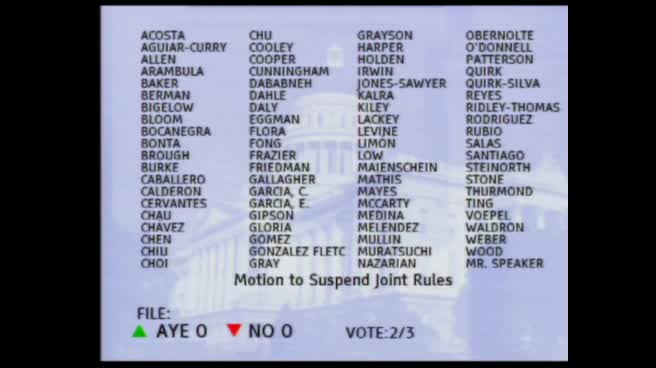 2MIN
Assembly Floor
 50SEC
Assembly Floor
 9MIN
Assembly Standing Committee on Judiciary
 20MIN










