AB 2289: Pupil rights: pregnant and parenting pupils.
- Session Year: 2017-2018
- House: Assembly
- Latest Version Date: 2018-09-30
(1)Federal and state regulations prohibit an educational institution from applying any rule concerning a pupils actual or potential parental, family, or marital status that treats pupils differently on the basis of sex.
This bill would codify those regulations and related regulations in state law, as they apply to local educational agencies, defined to include a school district, a county office of education, a school operated by a school district or a county office of education, a charter school, the California Schools for the Deaf, or the California School for the Blind. The bill would find and declare that pregnant and parenting pupils are entitled to accommodations that provide them with the opportunity to succeed academically while protecting their health and the health of their children, and would establish specified accommodations as rights of pregnant and parenting pupils of local educational agencies. The bill would include in these established accommodations, among other rights, that a pregnant or parenting pupil is entitled to 8 weeks of parental leave, as specified. The bill would authorize a complaint of noncompliance with those established rights to be filed with the local educational agency pursuant to the Uniform Complaint Procedures, as specified. The bill would require local educational agencies to notify pregnant and parenting pupils and parents and guardians of pupils of the rights and options available to pregnant and parenting pupils, as specified.
(2)Existing law requires a pupil to be excused from school for specified types of absences.
This bill would include as another type of excused absence an absence to care for a sick child, for which the school is prohibited from requiring a note from a doctor.
(3)To the extent that this bill would impose additional duties on schools of school districts and county offices of education, charter schools, county offices of education, and school districts, the bill would impose a state-mandated local program.
(4)This bill would incorporate additional changes to Section 48205 of the Education Code proposed by SB 816 to be operative only if this bill and SB 816 are enacted and this bill is enacted last.
(5)The California Constitution requires the state to reimburse local agencies and school districts for certain costs mandated by the state. Statutory provisions establish procedures for making that reimbursement.
This bill would provide that, if the Commission on State Mandates determines that the bill contains costs mandated by the state, reimbursement for those costs shall be made pursuant to the statutory provisions noted above.
(1)Federal and state regulations prohibit an educational institution from applying any rule concerning a pupils actual or potential parental, family, or marital status that treats pupils differently on the basis of sex.
This bill would codify those regulations and related regulations in state law, as they apply to local educational agencies, defined to include a school district, a county office of education, a school operated by a school district or a county office of education, a charter school, the California Schools for the Deaf, or the California School for the Blind. The bill would find and declare that pregnant and parenting pupils are entitled to accommodations that provide them with the opportunity to succeed academically while protecting their health and the health of their children, and would establish specified accommodations as rights of pregnant and parenting pupils of local educational agencies. The bill would include in these established accommodations, among other rights, that a pregnant or parenting pupil is entitled to a minimum of 8 weeks of parental leave, as specified. The bill would authorize a complaint of noncompliance with those established rights to be filed with the local educational agency pursuant to the Uniform Complaint Procedures, as specified. The bill would require local educational agencies to notify pregnant and parenting pupils and parents and guardians of pupils of the rights and options available to pregnant and parenting pupils, as specified.
(2)Existing law requires a pupil to be excused from school for specified types of absences.
This bill would include as another type of excused absence an absence to care for a sick child, for which the school is prohibited from requiring a note from a doctor.
(3)To the extent that this bill would impose additional duties on schools of school districts and county offices of education, charter schools, county offices of education, and school districts, the bill would impose a state-mandated local program.
(4)This bill would incorporate additional changes to Section 48205 of the Education Code proposed by SB 816 to be operative only if this bill and SB 816 are enacted and this bill is enacted last.
(4)(5)The California Constitution requires the state to reimburse local agencies and school districts for certain costs mandated by the state. Statutory provisions establish procedures for making that reimbursement.
This bill would provide that, if the Commission on State Mandates determines that the bill contains costs mandated by the state, reimbursement for those costs shall be made pursuant to the statutory provisions noted above.
(1)Federal and state regulations prohibit an educational institution from applying any rule concerning a pupils actual or potential parental, family, or marital status that treats pupils differently on the basis of sex.
This bill would codify those regulations and related regulations in state law. law, as they apply to local educational agencies, defined to include a school district, a county office of education, a school operated by a school district or a county office of education, a charter school, the California Schools for the Deaf, or the California School for the Blind. The bill would find and declare that pregnant and parenting pupils are entitled to accommodations that provide them with the opportunity to succeed academically while protecting their health and the health of their children, and would establish specified accommodations as rights of pregnant and parenting pupils of local educational agencies, defined to include a school district, a county office of education, a school operated by a school district or a county office of education, a charter school, the California Schools for the Deaf, or the California School for the Blind. agencies. The bill would include in these established accommodations, among other rights, that a pregnant or parenting pupil is entitled to a minimum of 8 weeks of parental leave, as specified. The bill would authorize a complaint of noncompliance with those established rights to be filed with the local educational agency pursuant to the Uniform Complaint Procedures, as specified. The bill would require school districts local educational agencies to notify pregnant and parenting pupils and parents and guardians of pupils of the rights and options available to pregnant and parenting pupils, as specified.
(2)Existing law requires a pupil to be excused from school for specified types of absences.
This bill would include as another type of excused absence an absence to care for a sick child, for which the school is prohibited from requiring a note from a doctor.
(3)To the extent that this bill would impose additional duties on schools of school districts and county offices of education, charter schools, county offices of education, and school districts, the bill would impose a state-mandated local program.
(4)The California Constitution requires the state to reimburse local agencies and school districts for certain costs mandated by the state. Statutory provisions establish procedures for making that reimbursement.
This bill would provide that, if the Commission on State Mandates determines that the bill contains costs mandated by the state, reimbursement for those costs shall be made pursuant to the statutory provisions noted above.
(1)Federal and state regulations prohibit an educational institution from applying any rule concerning a pupils actual or potential parental, family, or marital status that treats pupils differently on the basis of sex.
This bill would codify those regulations and related regulations in state law. The bill would find and declare that pregnant and parenting pupils are entitled to accommodations that provide them with the opportunity to succeed academically while protecting their health and the health of their children, and would establish specified accommodations as rights of pregnant and parenting pupils of local educational agencies, defined to include a school district, a county office of education, a school operated by a school district or a county office of education, a charter school, the California Schools for the Deaf, or the California School for the Blind. The bill would include in these established accommodations, among other rights, that a pregnant or parenting pupil is entitled to a minimum of 8 weeks of parental leave, as specified. The bill would authorize a complaint of noncompliance with those established rights to be filed with the local educational agency pursuant to the Uniform Complaint Procedures, as specified. The bill would require school districts to notify pregnant and parenting pupils and parents and guardians of pupils of the rights and options available to pregnant and parenting pupils, as specified.
(2)Existing law requires a pupil to be excused from school for specified types of absences.
This bill would include as another type of excused absence an absence to care for a sick child, for which the school is prohibited from requiring a note from a doctor. The bill would authorize a school to limit these excused absences for which the school is prohibited from requiring a note from a doctor to 4 or more per school year.
(3)To the extent that this bill would impose additional duties on schools of school districts and county offices of education, charter schools, county offices of education, and school districts, the bill would impose a state-mandated local program.
(4)The California Constitution requires the state to reimburse local agencies and school districts for certain costs mandated by the state. Statutory provisions establish procedures for making that reimbursement.
This bill would provide that, if the Commission on State Mandates determines that the bill contains costs mandated by the state, reimbursement for those costs shall be made pursuant to the statutory provisions noted above.
(1)Federal and state regulations prohibit an educational institution from applying any rule concerning a pupils actual or potential parental, family, or marital status that treats pupils differently on the basis of sex.
This bill would codify those regulations and related regulations in state law. The bill would find and declare that pregnant and parenting pupils are entitled to accommodations that provide them with the opportunity to succeed academically while protecting their health and the health of their children, and would establish specified accommodations as rights of pregnant and parenting pupils of local educational agencies, defined to include a school district, a county office of education, a school operated by a school district or a county office of education, a charter school, the California Schools for the Deaf, or the California School for the Blind. The bill would include in these established accommodations, among other rights, that, up to one year after the birth of a pupils child, the that a pregnant or parenting pupil who gives or expects to give birth is entitled to a minimum of 6 8 weeks of parental leave or a minimum of 8 weeks of parental leave for a cesarian section birth or birth with complications, and the parenting pupil not giving birth is entitled to a minimum of 4 weeks of parental leave. leave, as specified. The bill would authorize a complaint of noncompliance with those established rights to be filed with the local educational agency pursuant to the Uniform Complaint Procedures, as specified. The bill would require school districts to notify pregnant and parenting pupils and parents and guardians of pupils of the rights and options available to pregnant and parenting pupils, as specified.
(2)Existing law requires a pupil to be excused from school for specified types of absences.
This bill would include as another type of excused absence an absence to care for a sick child, for which the school is prohibited from requiring a note from a doctor. The bill would authorize a school to limit these excused absences for which the school is prohibited from requiring a note from a doctor to 4 or more per school year.
(3)To the extent that this bill would impose additional duties on schools of school districts and county offices of education, charter schools, county offices of education, and school districts, the bill would impose a state-mandated local program.
(4)The California Constitution requires the state to reimburse local agencies and school districts for certain costs mandated by the state. Statutory provisions establish procedures for making that reimbursement.
This bill would provide that, if the Commission on State Mandates determines that the bill contains costs mandated by the state, reimbursement for those costs shall be made pursuant to the statutory provisions noted above.
(1)Federal and state regulations prohibit an educational institution from applying any rule concerning a pupils actual or potential parental, family, or marital status that treats pupils differently on the basis of sex.
This bill would codify those regulations and related regulations in state law. The bill would find and declare that pregnant and parenting pupils are entitled to accommodations that provide them with the opportunity to succeed academically while protecting their health and the health of their children, and would establish specified accommodations as rights of pregnant and parenting pupils of local educational agencies, defined to include a school district, a county office of education, a school operated by a school district or a county office of education, a charter school, the California Schools for the Deaf, or the California School for the Blind. The bill would include in these established accommodations, among other rights, that, up to one year after the birth of a pupils child, the pregnant or parenting pupil who gives or expects to give birth is entitled to a minimum of 6 weeks of parental leave or a minimum of 8 weeks of parental leave for a cesarian section birth or birth with complications, and the parenting pupil not giving birth is entitled to a minimum of 4 weeks of parental leave. The bill would authorize a complaint of noncompliance with those established rights to be filed with the local educational agency pursuant to the Uniform Complaint Procedures, as specified. The bill would require school districts to notify pregnant and parenting pupils and parents and guardians of pupils of the rights and options available to pregnant and parenting pupils, as specified.
(1)(2)Existing law requires a pupil to be excused from school for specified types of absences and prohibits those excused absences from generating state apportionment payments by deeming them as absences in computing average daily attendance. absences.
This bill would include as another type of excused absence, 4 absences per school year absence an absence to care for a sick child, for which the school is prohibited from requiring a note from a doctor. The bill would require a school of a school district or county office of education and a charter school to allow a parenting pupil who gives or expects to give birth up to 6 weeks of parental leave or 8 weeks of parental leave for a caesarian section birth or birth with complications, and to allow a parenting pupil not giving birth up to 4 weeks of parental leave after the birth. The bill would specify that parental leave absences shall not be deemed absences in computing average daily attendance if the governing board of the school district or county office of education or the governing body of the charter school of attendance files with the State Department of Education an expectant and parenting pupil policy that includes procedures for ensuring pupils are provided with schoolwork while on parental leave. The bill would authorize a school to limit these excused absences for which the school is prohibited from requiring a note from a doctor to 4 or more per school year.
(2)Existing state regulations require an educational institution to treat pregnancy, childbirth, false pregnancy, termination of pregnancy, and recovery from those conditions in the same manner and under the same policies as any other temporary disability. Existing law requires a school district that receives notification of a pupils temporary disability to determine whether the pupil will be able to receive individualized instruction and, if the determination is positive, to provide the individualized instruction, as specified.This bill would require a school district to provide a pupil with a temporary disability as a result of pregnancy with guidelines for makeup work plan development if the option for individualized instruction is not available at the pupils school or school district.(3)Existing law prohibits discrimination on the basis of disability, gender, or other specified characteristics in any program or activity conducted by an educational institution that receives, or benefits from, state financial assistance or enrolls pupils who receive state financial aid. This bill would require a school district to notify pregnant and parenting pupils of specified rights and options available to those pupils, as specified.(4)(3)To the extent that this bill would impose additional duties on schools of school districts and county offices of education, charter schools, county offices of education, and school districts, the bill would impose a state-mandated local program.
(5)(4)The California Constitution requires the state to reimburse local agencies and school districts for certain costs mandated by the state. Statutory provisions establish procedures for making that reimbursement.
This bill would provide that, if the Commission on State Mandates determines that the bill contains costs mandated by the state, reimbursement for those costs shall be made pursuant to the statutory provisions noted above.
(1)Existing law requires a pupil to be excused from school for specified types of absences and prohibits those excused absences from generating state apportionment payments by deeming them as absences in computing average daily attendance.
This bill would include as another type of excused absence, 4 absences per school year to care for a sick child, for which the school is prohibited from requiring a note from a doctor. The bill would require a school of a school district or county office of education and a charter school to allow a parenting pupil who gives or expects to give birth up to 6 weeks of parental leave or 8 weeks of parental leave for a caesarian section birth or birth with complications, and to allow a parenting pupil not giving birth up to 4 weeks of parental leave after the birth. The bill would specify that parental leave absences shall not be deemed absences in computing average daily attendance if the governing board of the school district or county office of education or the governing body of the charter school of attendance files with the State Department of Education an expectant and parenting pupil policy that includes procedures for ensuring pupils are provided with schoolwork while on parental leave.
(2)Existing state regulations require an educational institution to treat pregnancy, childbirth, false pregnancy, termination of pregnancy, and recovery from those conditions in the same manner and under the same policies as any other temporary disability. Existing law requires a school district that receives notification of a pupils temporary disability to determine whether the pupil will be able to receive individualized instruction and, if the determination is positive, to provide the individualized instruction, as specified.
This bill would require a school district to provide a pupil with a temporary disability as a result of pregnancy with guidelines for makeup work plan development if the option for individualized instruction is not available at the pupils school or school district.
(3)Existing law prohibits discrimination on the basis of disability, gender, or other specified characteristics in any program or activity conducted by an educational institution that receives, or benefits from, state financial assistance or enrolls pupils who receive state financial aid.
This bill would require a school district to notify pregnant and parenting pupils of specified rights and options available to those pupils, as specified.
(4)To the extent that this bill would impose additional duties on schools of school districts and county offices of education, charter schools, and school districts, the bill would impose a state-mandated local program.
(5)The California Constitution requires the state to reimburse local agencies and school districts for certain costs mandated by the state. Statutory provisions establish procedures for making that reimbursement.
This bill would provide that, if the Commission on State Mandates determines that the bill contains costs mandated by the state, reimbursement for those costs shall be made pursuant to the statutory provisions noted above.
(a)The Legislature finds and declares all of the following:
(1)In 2015, over 24,000 children were born to 15- to 19-year-olds in California. Nationwide, 70 percent of young parents are pushed out of school, and fewer than 4 in 10 young mothers graduate from high school by 18 years of age.
(2)Title IX of the federal Education Amendments of 1972 (20 U.S.C. Sec. 1681 et seq.) and California law protect all pupils rights to equal educational opportunities regardless of sex, yet only some of Californias school districts provide pregnant and parenting pupil programs.
(3)Pregnant and parenting pupils face overwhelming, system-enforced obstacles to graduating and receiving an education of equal quality to that of their peers that vary across school districts, and include all of the following:
(A)Inconsistent access to excused family leave absences to care for new infants during the critical period of early child development, with male parents often having no access.
(B)Involuntary pushout due to high absence rates related to pregnancy and parenting responsibilities.
(C)Rigid requirements to verify excused absences to care for a sick child.
(D)Allowed reasonable amount of time to make up work is defined by the school districts and not to the individual circumstances or to support a pupils goal to graduate.
(E)Varying levels of support and engagement from schools while pupils are absent.
(F)Encouragement to pursue independent study that may not fulfill the AG admission requirements for the California State University and the University of California or have inconsistent and rigorous attendance policies.
(G)Parenting pupils lack of awareness of their rights under Title IX of the federal Education Amendments of 1972 (20 U.S.C. Sec. 1681 et seq.) and California law, as well as pupils different educational options during pregnancy, postpartum, and as a parent.
(4)While California has an 80 percent high school graduation rate, only 38 percent of young moms who have a child before they are 18 years of age graduate from high school, 19 percent get a General Education Development (GED) credential, and only 2 percent go to college before 30 years of age.
(5)Educational challenges set the stage for economic hardship: The median income for women over 25 years of age without a high school degree is $15,021, less than 53 percent of that of their peers median income of $31,904.
(6)Nearly 60 percent of mothers under 19 years of age live in poverty.
(7)Studies show that pregnancy can motivate pupils to complete school and pursue postsecondary education.
(8)Further, a familys ability to take more time to recover, bond, breastfeed, and go to doctors appointments leads to improved child and parent physical and mental health. Bonding time is critical for an infants long-term development and the well-being of parents. California has acknowledged the importance of bonding time and paved the way in supporting bonding within working families.
(9)Since 2004, workers have been entitled to up to six weeks of family leave to bond with their children. Working families benefit significantly from bonding time. Parenting pupils and their infants, some of our most vulnerable citizens, should not have to choose between their family and education.
(b)It is the intent of the Legislature that, whenever possible, pregnant and parenting pupils have the opportunity to participate in graduation ceremonies alongside their four-year cohort peers.
SEC. 2.Section 221.51 is added to the Education Code, immediately following Section 221.5, to read:221.51.(a)A local educational agency shall not apply any rule concerning a pupils actual or potential parental, family, or marital status that treats pupils differently on the basis of sex.
(b)A local educational agency shall not exclude nor deny any pupil from any educational program or activity, including class or extracurricular activity, solely on the basis of the pupils pregnancy, childbirth, false pregnancy, termination of pregnancy, or recovery therefrom.
(c)A local educational agency may require any pupil to obtain the certification of a physician or nurse practitioner that the pupil is physically and emotionally able to continue participation in the regular education program or activity.
(d)Pregnant or parenting pupils shall not be required to participate in pregnant minor programs or alternative education programs. Pregnant or parenting pupils who voluntarily participate in alternative education programs shall be given educational programs, activities, and courses equal to those they would have been in if participating in the regular education program.
(e)A local educational agency shall treat pregnancy, childbirth, false pregnancy, termination of pregnancy, and recovery therefrom in the same manner and under the same policies as any other temporary disabling condition.
(f)For purposes of this section, local educational agency means a school district, a county office of education, a school operated by a school district or a county office of education, a charter school, the California Schools for the Deaf, or the California School for the Blind.
SEC. 3.Section 222.5 is added to the Education Code, to read:222.5.(a)A local educational agency shall notify pregnant and parenting pupils of their rights and options available under the law through annual school year welcome packets and through independent study packets.
(b)A local educational agency shall annually notify parents and guardians of pupils at the beginning of the regular school term of the rights and options available to pregnant and parenting pupils under the law.
(c)For purposes of this section, local educational agency means a school district, a county office of education, a school operated by a school district or a county office of education, a charter school, the California Schools for the Deaf, or the California School for the Blind.
SEC. 4.Section 46015 is added to the Education Code, to read:46015.(a)The Legislature finds and declares that pregnant and parenting pupils are entitled to accommodations that provide them with the opportunity to succeed academically while protecting their health and the health of their children. The Legislature hereby establishes the following accommodations as rights of pregnant and parenting pupils:
(1)A pregnant or parenting pupil is entitled to eight weeks of parental leave, which the pupil may take before the birth of the pupils infant if there is a medical necessity and after childbirth during the school year in which the birth takes place, inclusive of any mandatory summer instruction, in order to protect the health of the pupil who gives or expects to give birth and the infant, and to allow the pregnant or parenting pupil to care for and bond with the infant. It is the intent of the Legislature that the pupil, if the pupil is 18 years of age or older, or, if the pupil is under 18 years of age, the person holding the right to make educational decisions for the pupil, notify the school of the pupils intent to exercise this right. Failure to notify the school shall not abridge the rights established by this paragraph or any other right established by this subdivision.
(2)A pregnant or parenting pupil who does not wish to take all or part of the parental leave to which they are entitled pursuant to paragraph (1) shall not be required to do so.
(3)A pregnant or parenting pupil is entitled to receive more than eight weeks of parental leave pursuant to paragraph (1) if deemed medically necessary by the pupils physician.
(4)When a pupil takes parental leave pursuant to paragraph (1), the supervisor of attendance shall ensure that absences from the pupils regular school program are excused until the pupil is able to return to the regular school program or an alternative education program.
(5)During parental leave taken pursuant to paragraph (1), a local educational agency shall not require a pregnant or parenting pupil to complete academic work or other school requirements.
(6)A pregnant or parenting pupil may return to the school and the course of study in which he or she was enrolled before taking parental leave pursuant to paragraph (1).
(7)Upon return to school after taking parental leave pursuant to paragraph (1), a pregnant or parenting pupil is entitled to opportunities to make up work missed during his or her leave, including, but not limited to, makeup work plans and reenrollment in courses.
(8)Notwithstanding any other law, a pregnant or parenting pupil may remain enrolled for a fifth year of instruction in the school in which the pupil was previously enrolled when it is necessary in order for the pupil to be able to complete state and any local graduation requirements, unless the local educational agency makes a finding that the pupil is reasonably able to complete the local educational agencys graduation requirements in time to graduate from high school by the end of the pupils fourth year of high school.
(9)A pupil who chooses not to return to the school in which he or she was enrolled before taking parental leave pursuant to paragraph (1) is entitled to alternative education options offered by the local educational agency.
(10)In accordance with subdivision (d) of Section 221.51, a pregnant or parenting pupil who participates in an alternative education program shall be given educational programs, activities, and courses equal to those he or she would have been in if participating in the regular education program.
(11)A pupil shall not incur an academic penalty as a result of his or her use of the accommodations specified in this subdivision.
(b)(1)A complaint of noncompliance with the requirements of this section may be filed with the local educational agency under the Uniform Complaint Procedures set forth in Chapter 5.1 (commencing with Section 4600) of Division 1 of Title 5 of the California Code of Regulations.
(2)A local educational agency shall respond to a complaint filed pursuant to paragraph (1) in accordance with Chapter 5.1 (commencing with Section 4600) of Division 1 of Title 5 of the California Code of Regulations.
(3)A complainant not satisfied with the decision of a local educational agency may appeal the decision to the department pursuant to Chapter 5.1 (commencing with Section 4600) of Division 1 of Title 5 of the California Code of Regulations and shall receive a written decision regarding the appeal within 60 days of the departments receipt of the appeal.
(4)If a local educational agency finds merit in a complaint, or if the department finds merit in an appeal, the local educational agency shall provide a remedy to the affected pupil.
(c)For purposes of this section, the following definitions apply, unless the context requires otherwise:
(1)Local educational agency means a school district, a county office of education, a school operated by a school district or a county office of education, a charter school, the California Schools for the Deaf, or the California School for the Blind.
(2)Pregnant or parenting pupil means a pupil who gives or expects to give birth or a parenting pupil who has not given birth and who identifies as the parent of the infant.
(3)Pupil means a pupil enrolled in a local educational agency.
SEC. 5.Section 48205 of the Education Code is amended to read:48205.(a)Notwithstanding Section 48200, a pupil shall be excused from school when the absence is:
(1)Due to the pupils illness.
(2)Due to quarantine under the direction of a county or city health officer.
(3)For the purpose of having medical, dental, optometrical, or chiropractic services rendered.
(4)For the purpose of attending the funeral services of a member of the pupils immediate family, so long as the absence is not more than one day if the service is conducted in California and not more than three days if the service is conducted outside California.
(5)For the purpose of jury duty in the manner provided for by law.
(6)Due to the illness or medical appointment during school hours of a child of whom the pupil is the custodial parent, including absences to care for a sick child for which the school shall not require a note from a doctor.
(7)For justifiable personal reasons, including, but not limited to, an appearance in court, attendance at a funeral service, observance of a holiday or ceremony of the pupils religion, attendance at religious retreats, attendance at an employment conference, or attendance at an educational conference on the legislative or judicial process offered by a nonprofit organization when the pupils absence is requested in writing by the parent or guardian and approved by the principal or a designated representative pursuant to uniform standards established by the governing board.
(8)For the purpose of serving as a member of a precinct board for an election pursuant to Section 12302 of the Elections Code.
(9)For the purpose of spending time with a member of the pupils immediate family, who is an active duty member of the uniformed services, as defined in Section 49701, and has been called to duty for, is on leave from, or has immediately returned from, deployment to a combat zone or combat support position. Absences granted pursuant to this paragraph shall be granted for a period of time to be determined at the discretion of the superintendent of the school district.
(10)For the purpose of attending the pupils naturalization ceremony to become a United States citizen.
(b)A pupil absent from school under this section shall be allowed to complete all assignments and tests missed during the absence that can be reasonably provided and, upon satisfactory completion within a reasonable period of time, shall be given full credit therefor. The teacher of the class from which a pupil is absent shall determine which tests and assignments shall be reasonably equivalent to, but not necessarily identical to, the tests and assignments that the pupil missed during the absence.
(c)For purposes of this section, attendance at religious retreats shall not exceed four hours per semester.
(d)Absences pursuant to this section are deemed to be absences in computing average daily attendance and shall not generate state apportionment payments.
(e)Immediate family, as used in this section, has the same meaning as set forth in Section 45194, except that references therein to employee shall be deemed to be references to pupil.
SEC. 5.5.Section 48205 of the Education Code is amended to read:48205.(a)Notwithstanding Section 48200, a pupil shall be excused from school when the absence is:
(1)Due to the pupils illness.
(2)Due to quarantine under the direction of a county or city health officer.
(3)For the purpose of having medical, dental, optometrical, or chiropractic services rendered.
(4)For the purpose of attending the funeral services of a member of the pupils immediate family, so long as the absence is not more than one day if the service is conducted in California and not more than three days if the service is conducted outside California.
(5)For the purpose of jury duty in the manner provided for by law.
(6)Due to the illness or medical appointment during school hours of a child of whom the pupil is the custodial parent, including absences to care for a sick child for which the school shall not require a note from a doctor.
(7)For justifiable personal reasons, including, but not limited to, an appearance in court, attendance at a funeral service, observance of a holiday or ceremony of the pupils religion, attendance at religious retreats, attendance at an employment conference, or attendance at an educational conference on the legislative or judicial process offered by a nonprofit organization when the pupils absence is requested in writing by the parent or guardian and approved by the principal or a designated representative pursuant to uniform standards established by the governing board.
(8)For the purpose of serving as a member of a precinct board for an election pursuant to Section 12302 of the Elections Code.
(9)For the purpose of spending time with a member of the pupils immediate family who is an active duty member of the uniformed services, as defined in Section 49701, and has been called to duty for, is on leave from, or has immediately returned from, deployment to a combat zone or combat support position. Absences granted pursuant to this paragraph shall be granted for a period of time to be determined at the discretion of the superintendent of the school district.
(10)For the purpose of attending the pupils naturalization ceremony to become a United States citizen.
(11)Authorized at the discretion of a school administrator, as described in subdivision (c) of Section 48260.
(b)A pupil absent from school under this section shall be allowed to complete all assignments and tests missed during the absence that can be reasonably provided and, upon satisfactory completion within a reasonable period of time, shall be given full credit therefor. The teacher of the class from which a pupil is absent shall determine which tests and assignments shall be reasonably equivalent to, but not necessarily identical to, the tests and assignments that the pupil missed during the absence.
(c)For purposes of this section, attendance at religious retreats shall not exceed four hours per semester.
(d)Absences pursuant to this section are deemed to be absences in computing average daily attendance and shall not generate state apportionment payments.
(e)Immediate family, as used in this section, means the parent or guardian, brother or sister, grandparent, or any other relative living in the household of the pupil.
SEC. 6.Section 48980 of the Education Code is amended to read:48980.(a)At the beginning of the first semester or quarter of the regular school term, the governing board of each school district shall notify the parent or guardian of a minor pupil regarding the right or responsibility of the parent or guardian under Sections 35291, 46014, 46015, 48205, 48207, 48208, 49403, 49423, 49451, 49472, and 51938 and Chapter 2.3 (commencing with Section 32255) of Part 19 of Division 1 of Title 1.
(b)The notification also shall advise the parent or guardian of the availability of individualized instruction as prescribed by Section 48206.3, and of the program prescribed by Article 9 (commencing with Section 49510) of Chapter 9.
(c)The notification also shall advise the parents and guardians of all pupils attending a school within the school district of the schedule of minimum days and pupil-free staff development days, and if minimum or pupil-free staff development days are scheduled thereafter, the governing board of the school district shall notify parents and guardians of the affected pupils as early as possible, but not later than one month before the scheduled minimum or pupil-free day.
(d)The notification also may advise the parent or guardian of the importance of investing for future college or university education for their children and of considering appropriate investment options, including, but not limited to, United States savings bonds.
(e)Each school district that elects to provide a fingerprinting program pursuant to Article 10 (commencing with Section 32390) of Chapter 3 of Part 19 of Division 1 of Title 1 shall inform parents or guardians of the program as specified in Section 32390.
(f)The notification also shall include a copy of the written policy of the school district on sexual harassment established pursuant to Section 231.5, as it relates to pupils.
(g)The notification shall advise the parent or guardian of all existing statutory attendance options and local attendance options available in the school district. This notification component shall include all options for meeting residency requirements for school attendance, programmatic options offered within the local attendance areas, and any special programmatic options available on both an interdistrict and intradistrict basis. This notification component also shall include a description of all options, a description of the procedure for application for alternative attendance areas or programs, an application form from the school district for requesting a change of attendance, and a description of the appeals process available, if any, for a parent or guardian denied a change of attendance. The notification component also shall include an explanation of the existing statutory attendance options, including, but not limited to, those available under Section 35160.5, Chapter 5 (commencing with Section 46600) of Part 26, and subdivision (b) of Section 48204. The department shall produce this portion of the notification and shall distribute it to all school districts.
(h)It is the intent of the Legislature that the governing board of each school district annually review the enrollment options available to the pupils within its school district and that the school districts strive to make available enrollment options that meet the diverse needs, potential, and interests of the pupils of California.
(i)The notification shall advise the parent or guardian that a pupil shall not have his or her grade reduced or lose academic credit for any absence or absences excused pursuant to Section 48205 if missed assignments and tests that can reasonably be provided are satisfactorily completed within a reasonable period of time, and shall include the full text of Section 48205.
(j)The notification shall advise the parent or guardian of the availability of state funds to cover the costs of advanced placement examination fees pursuant to Section 52242.
(k)The notification to the parent or guardian of a minor pupil enrolled in any of grades 9 to 12, inclusive, also shall include the information required pursuant to Section 51229.
(l)If a school district elects to allow a career technical education course to satisfy the requirement imposed by subparagraph (E) of paragraph (1) of subdivision (a) of Section 51225.3, the school district shall include, in the notification required pursuant to this section, both of the following:
(1)Information about the high school graduation requirements of the school district and how each requirement satisfies or does not satisfy the subject matter requirements for admission to the California State University and the University of California.
(2)A complete list of career technical education courses offered by the school district that satisfy the subject matter requirements for admission to the California State University and the University of California, and which of the specific college admission requirements these courses satisfy.
(m)A school district that elects to adopt a policy regarding the transfer of pupils pursuant to Article 1.5 (commencing with Section 48929) shall inform parents or guardians of the policy in the notification required pursuant to this section.
SEC. 7.Section 5.5 of this bill incorporates amendments to Section 48205 of the Education Code proposed by both this bill and Senate Bill 816. That section of this bill shall only become operative if (1) both bills are enacted and become effective on or before January 1, 2019, (2) each bill amends Section 48205 of the Education Code, and (3) this bill is enacted after Senate Bill 816, in which case Section 5 of this bill shall not become operative.
SEC. 8.If the Commission on State Mandates determines that this act contains costs mandated by the state, reimbursement to local agencies and school districts for those costs shall be made pursuant to Part 7 (commencing with Section 17500) of Division 4 of Title 2 of the Government Code.
(a)The Legislature finds and declares all of the following:
(1)In 2012, about 35,000 2015, over 24,000 children were born to 15- to 19-year-olds in California. Nationwide, 70 percent of young parents are pushed out of school, and fewer than 4 in 10 young mothers graduate from high school by 18 years of age.
(2)Title IX of the federal Education Amendments of 1972 (20 U.S.C. Sec. 1681 et seq.) and California law protect all pupils rights to equal educational opportunities regardless of sex, yet only some of Californias school districts provide pregnant and parenting pupil programs.
(3)Pregnant and parenting pupils face overwhelming, system-enforced obstacles to graduating and receiving an education of equal quality to that of their peers that vary across school districts, and include all of the following:
(A)Inconsistent access to excused family leave absences to care for new infants during the critical period of early child development, with male parents often having no access.
(B)Involuntary pushout due to high absence rates related to pregnancy and parenting responsibilities.
(C)Rigid requirements to verify excused absences to care for a sick child.
(D)Allowed reasonable amount of time to make up work is defined by the school districts and not to the individual circumstances or to support a pupils goal to graduate.
(E)Varying levels of support and engagement from schools while pupils are absent.
(F)Encouragement to pursue independent study that may not fulfill the AG admission requirements for the California State University and the University of California or have inconsistent and rigorous attendance policies.
(G)Parenting pupils lack of awareness of their rights under Title IX of the federal Education Amendments of 1972 (20 U.S.C. Sec. 1681 et seq.) and California law, as well as pupils different educational options during pregnancy, postpartum, and as a parent.
(4)While California has an 80 percent high school graduation rate, only 38 percent of young moms who have a child before they are 18 years of age graduate from high school, 19 percent get a General Education Development (GED) credential, and only 2 percent go to college before 30 years of age.
(5)Educational challenges set the stage for economic hardship: The median income for women over 25 years of age without a high school degree is $15,021, less than 53 percent of that of their peers median income of $31,904.
(6)Nearly 60 percent of mothers under 19 years of age live in poverty.
(7)Studies show that pregnancy can motivate pupils to complete school and pursue postsecondary education.
(8)Further, bonding a familys ability to take more time to recover, bond, breastfeed, and go to doctors appointments leads to improved child and parent physical and mental health. Bonding time is critical for an infants long-term development and the well-being of parents. California has acknowledged the importance of bonding time and paved the way in supporting bonding within working families.
(9)Since 2004, workers have been entitled to up to six weeks of family leave to bond with their children. Working families benefit significantly from bonding time. Parenting pupils and their infants, some of our most vulnerable citizens, should not have to choose between their family and education.
(b)It is the intent of the Legislature that, whenever possible, pregnant and parenting pupils have the opportunity to participate in graduation ceremonies alongside their four-year cohort peers.
SEC. 2.Section 221.51 is added to the Education Code, immediately following Section 221.5, to read:221.51.(a)A local educational agency shall not apply any rule concerning a pupils actual or potential parental, family, or marital status that treats pupils differently on the basis of sex.
(b)A local educational agency shall not exclude nor deny any pupil from any educational program or activity, including class or extracurricular activity, solely on the basis of the pupils pregnancy, childbirth, false pregnancy, termination of pregnancy, or recovery therefrom.
(c)A local educational agency may require any pupil to obtain the certification of a physician or nurse practitioner that the pupil is physically and emotionally able to continue participation in the regular education program or activity.
(d)Pregnant or parenting pupils shall not be required to participate in pregnant minor programs or alternative education programs. Pregnant or parenting pupils who voluntarily participate in alternative education programs shall be given educational programs, activities, and courses equal to those they would have been in if participating in the regular education program.
(e)A local educational agency shall treat pregnancy, childbirth, false pregnancy, termination of pregnancy, and recovery therefrom in the same manner and under the same policies as any other temporary disabling condition.
(f)For purposes of this section, local educational agency means a school district, a county office of education, a school operated by a school district or a county office of education, a charter school, the California Schools for the Deaf, or the California School for the Blind.
SEC. 3.Section 222.5 is added to the Education Code, to read:222.5.(a)A local educational agency shall notify pregnant and parenting pupils of their rights and options available under the law through annual school year welcome packets and through independent study packets.
(b)A local educational agency shall annually notify parents and guardians of pupils at the beginning of the regular school term of the rights and options available to pregnant and parenting pupils under the law.
(c)For purposes of this section, local educational agency means a school district, a county office of education, a school operated by a school district or a county office of education, a charter school, the California Schools for the Deaf, or the California School for the Blind.
SEC. 4.Section 46015 is added to the Education Code, to read:46015.(a)The Legislature finds and declares that pregnant and parenting pupils are entitled to accommodations that provide them with the opportunity to succeed academically while protecting their health and the health of their children. The Legislature hereby establishes the following accommodations as rights of pregnant and parenting pupils:
(1)A pregnant or parenting pupil is entitled to a minimum of eight weeks of parental leave, which the pupil may take before the birth of the pupils infant if there is a medical necessity or up to one year after the birth and after childbirth during the school year in which the birth takes place, inclusive of any mandatory summer instruction, in order to protect the health of the pupil who gives or expects to give birth and the infant, and to allow the pregnant or parenting pupil to care for and bond with the infant. It is the intent of the Legislature that the pupil, if the pupil is 18 years of age or older, or, if the pupil is under 18 years of age, the person holding the right to make educational decisions for the pupil, notify the school of the pupils intent to exercise this right. Failure to notify the school shall not abridge the rights established by this paragraph or any other right established by this subdivision.
(2)A pregnant or parenting pupil who does not wish to take all or part of the parental leave to which they are entitled pursuant to paragraph (1) shall not be required to do so.
(3)A pregnant or parenting pupil is entitled to receive more than eight weeks of parental leave pursuant to paragraph (1) if deemed medically necessary by the pupils physician.
(2)(4)When a pupil takes parental leave pursuant to paragraph (1), the supervisor of attendance shall ensure that absences from the pupils regular school program are excused until the pupil is able to return to the regular school program or an alternative education program.
(3)(5)During parental leave taken pursuant to paragraph (1), a local educational agency shall not require a pregnant or parenting pupil to complete academic work or other school requirements.
(4)(6)A pregnant or parenting pupil may return to the school and the course of study in which he or she was enrolled before taking parental leave pursuant to paragraph (1).
(5)(7)Upon return to school after taking parental leave pursuant to paragraph (1), a pregnant or parenting pupil is entitled to opportunities to make up work missed during his or her leave, including, but not limited to, makeup work plans and reenrollment in courses.
(6)(8)Notwithstanding any other law, a pregnant or parenting pupil may remain enrolled for a fifth year of instruction in the school in which the pupil was previously enrolled when it is necessary in order for the pupil to be able to complete state and any local graduation requirements, unless the local educational agency makes a finding that the pupil is reasonably able to complete the local educational agencys graduation requirements in time to graduate from high school by the end of the pupils fourth year of high school.
(7)(9)A pupil who chooses not to return to the school in which he or she was enrolled before taking parental leave pursuant to paragraph (1) is entitled to alternative education options offered by the local educational agency.
(8)(10)In accordance with subdivision (d) of Section 221.51, a pregnant or parenting pupil who participates in an alternative education program shall be given educational programs, activities, and courses equal to those he or she would have been in if participating in the regular education program.
(9)(11)A pupil shall not incur an academic penalty as a result of his or her use of the accommodations specified in this subdivision.
(b)(1)A complaint of noncompliance with the requirements of this section may be filed with the local educational agency under the Uniform Complaint Procedures set forth in Chapter 5.1 (commencing with Section 4600) of Division 1 of Title 5 of the California Code of Regulations.
(2)A local educational agency shall respond to a complaint filed pursuant to paragraph (1) in accordance with Chapter 5.1 (commencing with Section 4600) of Division 1 of Title 5 of the California Code of Regulations.
(3)A complainant not satisfied with the decision of a local educational agency may appeal the decision to the department pursuant to Chapter 5.1 (commencing with Section 4600) of Division 1 of Title 5 of the California Code of Regulations and shall receive a written decision regarding the appeal within 60 days of the departments receipt of the appeal.
(4)If a local educational agency finds merit in a complaint, or if the department finds merit in an appeal, the local educational agency shall provide a remedy to the affected pupil.
(c)For purposes of this section, the following definitions apply, unless the context requires otherwise:
(1)Local educational agency means a school district, a county office of education, a school operated by a school district or a county office of education, a charter school, the California Schools for the Deaf, or the California School for the Blind.
(2)Pregnant or parenting pupil means a pupil who gives or expects to give birth or who has experienced false pregnancy or termination of pregnancy, or a parenting pupil who has not given birth. birth and who identifies as the parent of the infant.
(3)Pupil means a pupil enrolled in a local educational agency.
SEC. 5.Section 48205 of the Education Code is amended to read:48205.(a)Notwithstanding Section 48200, a pupil shall be excused from school when the absence is:
(1)Due to the pupils illness.
(2)Due to quarantine under the direction of a county or city health officer.
(3)For the purpose of having medical, dental, optometrical, or chiropractic services rendered.
(4)For the purpose of attending the funeral services of a member of the pupils immediate family, so long as the absence is not more than one day if the service is conducted in California and not more than three days if the service is conducted outside California.
(5)For the purpose of jury duty in the manner provided for by law.
(6)Due to the illness or medical appointment during school hours of a child of whom the pupil is the custodial parent, including absences to care for a sick child for which the school shall not require a note from a doctor.
(7)For justifiable personal reasons, including, but not limited to, an appearance in court, attendance at a funeral service, observance of a holiday or ceremony of the pupils religion, attendance at religious retreats, attendance at an employment conference, or attendance at an educational conference on the legislative or judicial process offered by a nonprofit organization when the pupils absence is requested in writing by the parent or guardian and approved by the principal or a designated representative pursuant to uniform standards established by the governing board.
(8)For the purpose of serving as a member of a precinct board for an election pursuant to Section 12302 of the Elections Code.
(9)For the purpose of spending time with a member of the pupils immediate family, who is an active duty member of the uniformed services, as defined in Section 49701, and has been called to duty for, is on leave from, or has immediately returned from, deployment to a combat zone or combat support position. Absences granted pursuant to this paragraph shall be granted for a period of time to be determined at the discretion of the superintendent of the school district.
(10)For the purpose of attending the pupils naturalization ceremony to become a United States citizen.
(b)A pupil absent from school under this section shall be allowed to complete all assignments and tests missed during the absence that can be reasonably provided and, upon satisfactory completion within a reasonable period of time, shall be given full credit therefor. The teacher of the class from which a pupil is absent shall determine which tests and assignments shall be reasonably equivalent to, but not necessarily identical to, the tests and assignments that the pupil missed during the absence.
(c)For purposes of this section, attendance at religious retreats shall not exceed four hours per semester.
(d)Absences pursuant to this section are deemed to be absences in computing average daily attendance and shall not generate state apportionment payments.
(e)Immediate family, as used in this section, has the same meaning as set forth in Section 45194, except that references therein to employee shall be deemed to be references to pupil.
SEC. 5.5.Section 48205 of the Education Code is amended to read:48205.(a)Notwithstanding Section 48200, a pupil shall be excused from school when the absence is:
(1)Due to the pupils illness.
(2)Due to quarantine under the direction of a county or city health officer.
(3)For the purpose of having medical, dental, optometrical, or chiropractic services rendered.
(4)For the purpose of attending the funeral services of a member of the pupils immediate family, so long as the absence is not more than one day if the service is conducted in California and not more than three days if the service is conducted outside California.
(5)For the purpose of jury duty in the manner provided for by law.
(6)Due to the illness or medical appointment during school hours of a child of whom the pupil is the custodial parent. parent, including absences to care for a sick child for which the school shall not require a note from a doctor.
(7)For justifiable personal reasons, including, but not limited to, an appearance in court, attendance at a funeral service, observance of a holiday or ceremony of the pupils religion, attendance at religious retreats, attendance at an employment conference, or attendance at an educational conference on the legislative or judicial process offered by a nonprofit organization when the pupils absence is requested in writing by the parent or guardian and approved by the principal or a designated representative pursuant to uniform standards established by the governing board.
(8)For the purpose of serving as a member of a precinct board for an election pursuant to Section 12302 of the Elections Code.
(9)For the purpose of spending time with a member of the pupils immediate family, family who is an active duty member of the uniformed services, as defined in Section 49701, and has been called to duty for, is on leave from, or has immediately returned from, deployment to a combat zone or combat support position. Absences granted pursuant to this paragraph shall be granted for a period of time to be determined at the discretion of the superintendent of the school district.
(10)For the purpose of attending the pupils naturalization ceremony to become a United States citizen.
(11)Authorized at the discretion of a school administrator, as described in subdivision (c) of Section 48260.
(b)A pupil absent from school under this section shall be allowed to complete all assignments and tests missed during the absence that can be reasonably provided and, upon satisfactory completion within a reasonable period of time, shall be given full credit therefor. The teacher of the class from which a pupil is absent shall determine which tests and assignments shall be reasonably equivalent to, but not necessarily identical to, the tests and assignments that the pupil missed during the absence.
(c)For purposes of this section, attendance at religious retreats shall not exceed four hours per semester.
(d)Absences pursuant to this section are deemed to be absences in computing average daily attendance and shall not generate state apportionment payments.
(e)Immediate family, as used in this section, has the same meaning as set forth in Section 45194, except that references therein to employee shall be deemed to be references to pupil. means the parent or guardian, brother or sister, grandparent, or any other relative living in the household of the pupil.
SEC. 6.Section 48980 of the Education Code is amended to read:48980.(a)At the beginning of the first semester or quarter of the regular school term, the governing board of each school district shall notify the parent or guardian of a minor pupil regarding the right or responsibility of the parent or guardian under Sections 35291, 46014, 46015, 48205, 48207, 48208, 49403, 49423, 49451, 49472, and 51938 and Chapter 2.3 (commencing with Section 32255) of Part 19 of Division 1 of Title 1.
(b)The notification also shall advise the parent or guardian of the availability of individualized instruction as prescribed by Section 48206.3, and of the program prescribed by Article 9 (commencing with Section 49510) of Chapter 9.
(c)The notification also shall advise the parents and guardians of all pupils attending a school within the school district of the schedule of minimum days and pupil-free staff development days, and if minimum or pupil-free staff development days are scheduled thereafter, the governing board of the school district shall notify parents and guardians of the affected pupils as early as possible, but not later than one month before the scheduled minimum or pupil-free day.
(d)The notification also may advise the parent or guardian of the importance of investing for future college or university education for their children and of considering appropriate investment options, including, but not limited to, United States savings bonds.
(e)Each school district that elects to provide a fingerprinting program pursuant to Article 10 (commencing with Section 32390) of Chapter 3 of Part 19 of Division 1 of Title 1 shall inform parents or guardians of the program as specified in Section 32390.
(f)The notification also shall include a copy of the written policy of the school district on sexual harassment established pursuant to Section 231.5, as it relates to pupils.
(g)The notification shall advise the parent or guardian of all existing statutory attendance options and local attendance options available in the school district. This notification component shall include all options for meeting residency requirements for school attendance, programmatic options offered within the local attendance areas, and any special programmatic options available on both an interdistrict and intradistrict basis. This notification component also shall include a description of all options, a description of the procedure for application for alternative attendance areas or programs, an application form from the school district for requesting a change of attendance, and a description of the appeals process available, if any, for a parent or guardian denied a change of attendance. The notification component also shall include an explanation of the existing statutory attendance options, including, but not limited to, those available under Section 35160.5, Chapter 5 (commencing with Section 46600) of Part 26, and subdivision (b) of Section 48204. The department shall produce this portion of the notification and shall distribute it to all school districts.
(h)It is the intent of the Legislature that the governing board of each school district annually review the enrollment options available to the pupils within its school district and that the school districts strive to make available enrollment options that meet the diverse needs, potential, and interests of the pupils of California.
(i)The notification shall advise the parent or guardian that a pupil shall not have his or her grade reduced or lose academic credit for any absence or absences excused pursuant to Section 48205 if missed assignments and tests that can reasonably be provided are satisfactorily completed within a reasonable period of time, and shall include the full text of Section 48205.
(j)The notification shall advise the parent or guardian of the availability of state funds to cover the costs of advanced placement examination fees pursuant to Section 52242.
(k)The notification to the parent or guardian of a minor pupil enrolled in any of grades 9 to 12, inclusive, also shall include the information required pursuant to Section 51229.
(l)If a school district elects to allow a career technical education course to satisfy the requirement imposed by subparagraph (E) of paragraph (1) of subdivision (a) of Section 51225.3, the school district shall include, in the notification required pursuant to this section, both of the following:
(1)Information about the high school graduation requirements of the school district and how each requirement satisfies or does not satisfy the subject matter requirements for admission to the California State University and the University of California.
(2)A complete list of career technical education courses offered by the school district that satisfy the subject matter requirements for admission to the California State University and the University of California, and which of the specific college admission requirements these courses satisfy.
(m)A school district that elects to adopt a policy regarding the transfer of pupils pursuant to Article 1.5 (commencing with Section 48929) shall inform parents or guardians of the policy in the notification required pursuant to this section.
SEC. 7.Section 5.5 of this bill incorporates amendments to Section 48205 of the Education Code proposed by both this bill and Senate Bill 816. That section of this bill shall only become operative if (1) both bills are enacted and become effective on or before January 1, 2019, (2) each bill amends Section 48205 of the Education Code, and (3) this bill is enacted after Senate Bill 816, in which case Section 5 of this bill shall not become operative.
SEC. 7.SEC. 8.If the Commission on State Mandates determines that this act contains costs mandated by the state, reimbursement to local agencies and school districts for those costs shall be made pursuant to Part 7 (commencing with Section 17500) of Division 4 of Title 2 of the Government Code.
(a)The Legislature finds and declares all of the following:
(1)In 2012, about 35,000 children were born to 15- to 19-year-olds in California. Nationwide, 70 percent of young parents are pushed out of school, and fewer than 4 in 10 young mothers graduate from high school by 18 years of age.
(2)Title IX of the federal Education Amendments of 1972 (20 U.S.C. Sec. 1681 et seq.) and California law protect all pupils rights to equal educational opportunities regardless of sex, yet, yet only some of Californias school districts provide pregnant and parenting pupil programs.
(3)Pregnant and parenting pupils face overwhelming, system-enforced obstacles to graduating and receiving an education of equal quality to that of their peers that vary across school districts, and include all of the following:
(A)Inconsistent access to excused family leave absences to care for new infants during the critical period of early child development, with male parents often having no access.
(B)Involuntary pushout due to high absence rates related to pregnancy and parenting responsibilities.
(C)Rigid requirements to verify excused absences to care for a sick child.
(D)Allowed reasonable amount of time to make up work is defined by the school districts and not to the individual circumstances or to support a pupils goal to graduate.
(E)Varying levels of support and engagement from schools while pupils are absent.
(F)Encouragement to pursue independent study that may not fulfill the AG admission requirements for the California State University and the University of California or have inconsistent and rigorous attendance policies.
(G)Parenting pupils lack of awareness of their rights under Title IX of the federal Education Amendments of 1972 (20 U.S.C. Sec. 1681 et seq.) and California law, as well as pupils different educational options during pregnancy, postpartum, and as a parent.
(4)While California has an 80 percent high school graduation rate, only 38 percent of young moms who have a child before they are 18 years of age graduate from high school, 19 percent get a General Education Development (GED) credential, and only 2 percent go to college before 30 years of age.
(5)Educational challenges set the stage for economic hardship: The median income for women over 25 years of age without a high school degree is $15,021, less than 53 percent of that of their peers median income of $31,904.
(6)Nearly 60 percent of mothers under 19 years of age live in poverty.
(7)Studies show that pregnancy can motivate pupils to complete school and pursue postsecondary education.
(8)Further, bonding time is critical for an infants long-term development and the well-being of parents. California has acknowledged the importance of bonding time and paved the way in supporting bonding within working families.
(9)Since 2004, workers have been entitled to up to six weeks of family leave to bond with their children. Working families benefit significantly from bonding time. Parenting pupils and their infants, some of our most vulnerable citizens, should not have to choose between their family and education.
(b)It is the intent of the Legislature that, whenever possible, pregnant and parenting pupils have the opportunity to participate in graduation ceremonies alongside their four-year cohort peers.
SEC. 2.Section 221.51 is added to the Education Code, immediately following Section 221.5, to read:221.51.(a)An A local educational institution agency shall not apply any rule concerning a pupils actual or potential parental, family, or marital status that treats pupils differently on the basis of sex.
(b)An A local educational institution agency shall not exclude nor deny any pupil from any educational program or activity, including class or extracurricular activity, solely on the basis of the pupils pregnancy, childbirth, false pregnancy, termination of pregnancy, or recovery therefrom.
(c)An A local educational institution agency may require any pupil to obtain the certification of a physician or nurse practitioner that the pupil is physically and emotionally able to continue participation in the regular education program or activity.
(d)Pregnant or parenting pupils shall not be required to participate in pregnant minor programs or alternative education programs. Pregnant or parenting pupils who voluntarily participate in alternative education programs shall be given educational programs, activities, and courses equal to those they would have been in if participating in the regular education program.
(e)An A local educational institution agency shall treat pregnancy, childbirth, false pregnancy, termination of pregnancy, and recovery therefrom in the same manner and under the same policies as any other temporary disabling condition.
(f)For purposes of this section, local educational agency means a school district, a county office of education, a school operated by a school district or a county office of education, a charter school, the California Schools for the Deaf, or the California School for the Blind.
SEC. 3.Section 222.5 is added to the Education Code, to read:222.5.(a)A school district local educational agency shall notify pregnant and parenting pupils of their rights and options available under the law through annual school year welcome packets issued pursuant to Section 48980 and through independent study packets.
(b)A local educational agency shall annually notify parents and guardians of pupils at the beginning of the regular school term of the rights and options available to pregnant and parenting pupils under the law.
(c)For purposes of this section, local educational agency means a school district, a county office of education, a school operated by a school district or a county office of education, a charter school, the California Schools for the Deaf, or the California School for the Blind.
SEC. 4.Section 46015 is added to the Education Code, to read:46015.(a)The Legislature finds and declares that pregnant and parenting pupils are entitled to accommodations that provide them with the opportunity to succeed academically while protecting their health and the health of their children. The Legislature hereby establishes the following accommodations as rights of pregnant and parenting pupils:
(1)A pregnant or parenting pupil is entitled to a minimum of eight weeks of parental leave, which the pupil may take before the birth of the pupils infant if there is a medical necessity or up to one year after the birth to care for and bond with the infant. It is the intent of the Legislature that the pupil, if the pupil is 18 years of age or older, or, if the pupil is under 18 years of age, the person holding the right to make educational decisions for the pupil, notify the school of the pupils intent to exercise this right. Failure to notify the school shall not abridge the rights established by this paragraph or any other right established by this subdivision.
(2)When a pupil takes parental leave pursuant to paragraph (1), the supervisor of attendance shall ensure that absences from the pupils regular school program are excused until the pupil is able to return to the regular school program or an alternative education program.
(3)During parental leave taken pursuant to paragraph (1), a local educational agency shall not require a pregnant or parenting pupil to complete academic work or other school requirements.
(4)A pregnant or parenting pupil may return to the school and the course of study in which he or she was enrolled before taking parental leave pursuant to paragraph (1).
(5)Upon return to school after taking parental leave pursuant to paragraph (1), a pregnant or parenting pupil is entitled to opportunities to make up work missed during his or her leave, including, but not limited to, makeup work plans and reenrollment in courses.
(6)Notwithstanding any other law, a pregnant or parenting pupil may remain enrolled for a fifth year of instruction in the school in which the pupil was previously enrolled when it is necessary in order for the pupil to be able to complete state and any local graduation requirements, unless the local educational agency makes a finding that the pupil is reasonably able to complete the local educational agencys graduation requirements in time to graduate from high school by the end of the pupils fourth year of high school.
(7)A pupil who chooses not to return to the school in which he or she was enrolled before taking parental leave pursuant to paragraph (1) is entitled to alternative education options offered by the local educational agency.
(8)In accordance with subdivision (d) of Section 221.51, a pregnant or parenting pupil who participates in an alternative education program shall be given educational programs, activities, and courses equal to those he or she would have been in if participating in the regular education program.
(9)A pupil shall not incur an academic penalty as a result of his or her use of the accommodations specified in this subdivision.
(b)(1)A complaint of noncompliance with the requirements of this section may be filed with the local educational agency under the Uniform Complaint Procedures set forth in Chapter 5.1 (commencing with Section 4600) of Division 1 of Title 5 of the California Code of Regulations.
(2)A local educational agency shall respond to a complaint filed pursuant to paragraph (1) in accordance with Chapter 5.1 (commencing with Section 4600) of Division 1 of Title 5 of the California Code of Regulations.
(3)A complainant not satisfied with the decision of a local educational agency may appeal the decision to the department pursuant to Chapter 5.1 (commencing with Section 4600) of Division 1 of Title 5 of the California Code of Regulations and shall receive a written decision regarding the appeal within 60 days of the departments receipt of the appeal.
(4)If a local educational agency finds merit in a complaint, or if the department finds merit in an appeal, the local educational agency shall provide a remedy to the affected pupil.
(c)For purposes of this section, the following definitions apply, unless the context requires otherwise:
(1)Local educational agency means a school district, a county office of education, a school operated by a school district or a county office of education, a charter school, the California Schools for the Deaf, or the California School for the Blind.
(2)Pregnant or parenting pupil means a pupil who gives or expects to give birth or who has experienced false pregnancy or termination of pregnancy, or a parenting pupil who has not given birth.
(3)Pupil means a pupil enrolled in a local educational agency.
SEC. 5.Section 48205 of the Education Code is amended to read:48205.(a)Notwithstanding Section 48200, a pupil shall be excused from school when the absence is:
(1)Due to the pupils illness.
(2)Due to quarantine under the direction of a county or city health officer.
(3)For the purpose of having medical, dental, optometrical, or chiropractic services rendered.
(4)For the purpose of attending the funeral services of a member of the pupils immediate family, so long as the absence is not more than one day if the service is conducted in California and not more than three days if the service is conducted outside California.
(5)For the purpose of jury duty in the manner provided for by law.
(6)Due to the illness or medical appointment during school hours of a child of whom the pupil is the custodial parent, including absences to care for a sick child for which the school shall not require a note from a doctor.
(7)For justifiable personal reasons, including, but not limited to, an appearance in court, attendance at a funeral service, observance of a holiday or ceremony of the pupils religion, attendance at religious retreats, attendance at an employment conference, or attendance at an educational conference on the legislative or judicial process offered by a nonprofit organization when the pupils absence is requested in writing by the parent or guardian and approved by the principal or a designated representative pursuant to uniform standards established by the governing board.
(8)For the purpose of serving as a member of a precinct board for an election pursuant to Section 12302 of the Elections Code.
(9)For the purpose of spending time with a member of the pupils immediate family, who is an active duty member of the uniformed services, as defined in Section 49701, and has been called to duty for, is on leave from, or has immediately returned from, deployment to a combat zone or combat support position. Absences granted pursuant to this paragraph shall be granted for a period of time to be determined at the discretion of the superintendent of the school district.
(10)For the purpose of attending the pupils naturalization ceremony to become a United States citizen.
(b)A pupil absent from school under this section shall be allowed to complete all assignments and tests missed during the absence that can be reasonably provided and, upon satisfactory completion within a reasonable period of time, shall be given full credit therefor. The teacher of the class from which a pupil is absent shall determine which tests and assignments shall be reasonably equivalent to, but not necessarily identical to, the tests and assignments that the pupil missed during the absence.
(c)For purposes of this section, attendance at religious retreats shall not exceed four hours per semester.
(d)Absences pursuant to this section are deemed to be absences in computing average daily attendance and shall not generate state apportionment payments.
(e)Immediate family, as used in this section, has the same meaning as set forth in Section 45194, except that references therein to employee shall be deemed to be references to pupil.
SEC. 6.Section 48980 of the Education Code is amended to read:48980.(a)At the beginning of the first semester or quarter of the regular school term, the governing board of each school district shall notify the parent or guardian of a minor pupil regarding the right or responsibility of the parent or guardian under Sections 35291, 46014, 46015, 48205, 48207, 48208, 49403, 49423, 49451, 49472, and 51938 and Chapter 2.3 (commencing with Section 32255) of Part 19 of Division 1 of Title 1.
(b)The notification also shall advise the parent or guardian of the availability of individualized instruction as prescribed by Section 48206.3, and of the program prescribed by Article 9 (commencing with Section 49510) of Chapter 9.
(c)The notification also shall advise the parents and guardians of all pupils attending a school within the school district of the schedule of minimum days and pupil-free staff development days, and if minimum or pupil-free staff development days are scheduled thereafter, the governing board of the school district shall notify parents and guardians of the affected pupils as early as possible, but not later than one month before the scheduled minimum or pupil-free day.
(d)The notification also may advise the parent or guardian of the importance of investing for future college or university education for their children and of considering appropriate investment options, including, but not limited to, United States savings bonds.
(e)Each school district that elects to provide a fingerprinting program pursuant to Article 10 (commencing with Section 32390) of Chapter 3 of Part 19 of Division 1 of Title 1 shall inform parents or guardians of the program as specified in Section 32390.
(f)The notification also shall include a copy of the written policy of the school district on sexual harassment established pursuant to Section 231.5, as it relates to pupils.
(g)The notification shall advise the parent or guardian of all existing statutory attendance options and local attendance options available in the school district. This notification component shall include all options for meeting residency requirements for school attendance, programmatic options offered within the local attendance areas, and any special programmatic options available on both an interdistrict and intradistrict basis. This notification component also shall include a description of all options, a description of the procedure for application for alternative attendance areas or programs, an application form from the school district for requesting a change of attendance, and a description of the appeals process available, if any, for a parent or guardian denied a change of attendance. The notification component also shall include an explanation of the existing statutory attendance options, including, but not limited to, those available under Section 35160.5, Chapter 5 (commencing with Section 46600) of Part 26, and subdivision (b) of Section 48204. The department shall produce this portion of the notification and shall distribute it to all school districts.
(h)It is the intent of the Legislature that the governing board of each school district annually review the enrollment options available to the pupils within its school district and that the school districts strive to make available enrollment options that meet the diverse needs, potential, and interests of the pupils of California.
(i)The notification shall advise the parent or guardian that a pupil shall not have his or her grade reduced or lose academic credit for any absence or absences excused pursuant to Section 48205 if missed assignments and tests that can reasonably be provided are satisfactorily completed within a reasonable period of time, and shall include the full text of Section 48205.
(j)The notification shall advise the parent or guardian of the availability of state funds to cover the costs of advanced placement examination fees pursuant to Section 52242.
(k)The notification to the parent or guardian of a minor pupil enrolled in any of grades 9 to 12, inclusive, also shall include the information required pursuant to Section 51229.
(l)If a school district elects to allow a career technical education course to satisfy the requirement imposed by subparagraph (E) of paragraph (1) of subdivision (a) of Section 51225.3, the school district shall include, in the notification required pursuant to this section, both of the following:
(1)Information about the high school graduation requirements of the school district and how each requirement satisfies or does not satisfy the subject matter requirements for admission to the California State University and the University of California.
(2)A complete list of career technical education courses offered by the school district that satisfy the subject matter requirements for admission to the California State University and the University of California, and which of the specific college admission requirements these courses satisfy.
(m)A school district that elects to adopt a policy regarding the transfer of pupils pursuant to Article 1.5 (commencing with Section 48929) shall inform parents or guardians of the policy in the notification required pursuant to this section.
SEC. 7.If the Commission on State Mandates determines that this act contains costs mandated by the state, reimbursement to local agencies and school districts for those costs shall be made pursuant to Part 7 (commencing with Section 17500) of Division 4 of Title 2 of the Government Code.
(a)The Legislature finds and declares all of the following:
(1)In 2012, about 35,000 children were born to 15- to 19-year-olds in California. Nationwide, 70 percent of young parents are pushed out of school, and fewer than 4 in 10 young mothers graduate from high school by 18 years of age.
(2)Title IX of the federal Education Amendments of 1972 (20 U.S.C. Sec. 1681 et seq.) and California law protect all pupils rights to equal educational opportunities regardless of sex, yet, only some of Californias school districts provide pregnant and parenting pupil programs.
(3)Pregnant and parenting pupils face overwhelming, system-enforced obstacles to graduating and receiving an education of equal quality to that of their peers that vary across school districts, and include all of the following:
(A)Inconsistent access to excused family leave absences to care for new infants during the critical period of early child development, with male parents often having no access.
(B)Involuntary pushout due to high absence rates related to pregnancy and parenting responsibilities.
(C)Rigid requirements to verify excused absences to care for a sick child.
(D)Allowed reasonable amount of time to make up work is defined by the school districts and not to the individual circumstances or to support a pupils goal to graduate.
(E)Varying levels of support and engagement from schools while pupils are absent.
(F)Encouragement to pursue independent study that may not fulfill the AG admission requirements for the California State University and the University of California or have inconsistent and rigorous attendance policies.
(G)Parenting pupils lack of awareness of their rights under Title IX of the federal Education Amendments of 1972 (20 U.S.C. Sec. 1681 et seq.) and California law, as well as pupils different educational options during pregnancy, postpartum, and as a parent.
(4)While California has an 80 percent high school graduation rate, only 38 percent of young moms who have a child before they are 18 years of age graduate from high school, 19 percent get a General Education Development (GED) credential, and only 2 percent go to college before 30 years of age.
(5)Educational challenges set the stage for economic hardship: The median income for women over 25 years of age without a high school degree is $15,021, less than 53 percent of that of their peers median income of $31,904.
(6)Nearly 60 percent of mothers under 19 years of age live in poverty.
(7)Studies show that pregnancy can motivate pupils to complete school and pursue postsecondary education.
(8)Further, bonding time is critical for an infants long-term development and the well-being of parents. California has acknowledged the importance of bonding time and paved the way in supporting bonding within working families.
(9)Since 2004, workers have been entitled to up to six weeks of family leave to bond with their children. Working families benefit significantly from bonding time. Parenting pupils and their infants, some of our most vulnerable citizens, should not have to choose between their family and education.
(b)It is the intent of the Legislature that, whenever possible, pregnant and parenting pupils have the opportunity to participate in graduation ceremonies alongside their four-year cohort peers.
SEC. 2.Section 221.51 is added to the Education Code, immediately following Section 221.5, to read:221.51.(a)An educational institution shall not apply any rule concerning a pupils actual or potential parental, family, or marital status that treats pupils differently on the basis of sex.
(b)An educational institution shall not exclude nor deny any pupil from any educational program or activity, including class or extracurricular activity, solely on the basis of the pupils pregnancy, childbirth, false pregnancy, termination of pregnancy, or recovery therefrom.
(c)An educational institution may require any pupil to obtain the certification of a physician or nurse practitioner that the pupil is physically and emotionally able to continue participation in the regular education program or activity.
(d)Pregnant or parenting pupils shall not be required to participate in pregnant minor programs or alternative education programs. Pregnant or parenting pupils who voluntarily participate in alternative education programs shall be given educational programs, activities, and courses equal to those they would have been in if participating in the regular education program.
(e)An educational institution shall treat pregnancy, childbirth, false pregnancy, termination of pregnancy, and recovery therefrom in the same manner and under the same policies as any other temporary disabling condition.
SEC. 3.Section 222.5 is added to the Education Code, to read:222.5.A school district shall notify pregnant and parenting pupils of their rights and options available under the law through annual school year welcome packets issued pursuant to Section 48980 and through independent study packets.
SEC. 4.Section 46015 is added to the Education Code, to read:46015.(a)The Legislature finds and declares that pregnant and parenting pupils are entitled to accommodations that provide them with the opportunity to succeed academically while protecting their health and the health of their children. The Legislature hereby establishes the following accommodations as rights of pregnant and parenting pupils:
(1)A pregnant or parenting pupil is entitled to a minimum of eight weeks of parental leave, which the pupil may take before the birth of the pupils infant if there is a medical necessity or up to one year after the birth to care for and bond with the infant. It is the intent of the Legislature that the pupil, if the pupil is 18 years of age or older, or, if the pupil is under 18 years of age, the person holding the right to make educational decisions for the pupil, notify the school of the pupils intent to exercise this right. Failure to notify the school shall not abridge the rights established by this paragraph or any other right established by this subdivision.
(2)When a pupil takes parental leave pursuant to paragraph (1), the supervisor of attendance shall ensure that absences from the pupils regular school program are excused until the pupil is able to return to the regular school program or an alternative education program.
(3)During parental leave taken pursuant to paragraph (1), a local educational agency shall not require a pregnant or parenting pupil from completing to complete academic work or other school requirements.
(4)A pregnant or parenting pupil may return to the school and the course of study in which he or she was enrolled before taking parental leave pursuant to paragraph (1).
(5)Upon return to school after taking parental leave pursuant to paragraph (1), a pregnant or parenting pupil is entitled to opportunities to make up work missed during his or her leave, including, but not limited to, makeup work plans and reenrollment in courses.
(6)Notwithstanding any other law, a pregnant or parenting pupil may remain enrolled for a fifth year of instruction in the school in which the pupil was previously enrolled when it is necessary in order for the pupil to be able to complete state and any local graduation requirements, unless the local educational agency makes a finding that the pupil is reasonably able to complete the local educational agencys graduation requirements in time to graduate from high school by the end of the pupils fourth year of high school.
(7)A pupil who chooses not to return to the school in which he or she was enrolled before taking parental leave pursuant to paragraph (1) is entitled to alternative education options offered by the local educational agency.
(8)In accordance with subdivision (d) of Section 221.51, a pregnant or parenting pupil who participates in an alternative education program shall be given educational programs, activities, and courses equal to those he or she would have been in if participating in the regular education program.
(9)A pupil shall not incur an academic penalty as a result of his or her use of the accommodations specified in this subdivision.
(b)(1)A complaint of noncompliance with the requirements of this section may be filed with the local educational agency under the Uniform Complaint Procedures set forth in Chapter 5.1 (commencing with Section 4600) of Division 1 of Title 5 of the California Code of Regulations.
(2)A local educational agency shall respond to a complaint filed pursuant to paragraph (1) in accordance with Chapter 5.1 (commencing with Section 4600) of Division 1 of Title 5 of the California Code of Regulations.
(3)A complainant not satisfied with the decision of a local educational agency may appeal the decision to the department pursuant to Chapter 5.1 (commencing with Section 4600) of Division 1 of Title 5 of the California Code of Regulations and shall receive a written decision regarding the appeal within 60 days of the departments receipt of the appeal.
(4)If a local educational agency finds merit in a complaint, or if the department finds merit in an appeal, the local educational agency shall provide a remedy to the affected pupil.
(c)For purposes of this section, the following definitions apply, unless the context requires otherwise:
(1)Local educational agency means a school district, a county office of education, a school operated by a school district or a county office of education, a charter school, the California Schools for the Deaf, or the California School for the Blind.
(2)Pregnant or parenting pupil means a pupil who gives or expects to give birth or who has experienced false pregnancy or termination of pregnancy, or a parenting pupil who has not given birth.
(3)Pupil means a pupil enrolled in a local educational agency.
SEC. 5.Section 48205 of the Education Code is amended to read:48205.(a)Notwithstanding Section 48200, a pupil shall be excused from school when the absence is:
(1)Due to the pupils illness.
(2)Due to quarantine under the direction of a county or city health officer.
(3)For the purpose of having medical, dental, optometrical, or chiropractic services rendered.
(4)For the purpose of attending the funeral services of a member of the pupils immediate family, so long as the absence is not more than one day if the service is conducted in California and not more than three days if the service is conducted outside California.
(5)For the purpose of jury duty in the manner provided for by law.
(6)Due to the illness or medical appointment during school hours of a child of whom the pupil is the custodial parent, including absences to care for a sick child for which the school shall not require a note from a doctor. A school may limit the number of excused absences for a pupil to care for a sick child for which the school shall not require a note from a doctor to four or more per school year.
(7)For justifiable personal reasons, including, but not limited to, an appearance in court, attendance at a funeral service, observance of a holiday or ceremony of the pupils religion, attendance at religious retreats, attendance at an employment conference, or attendance at an educational conference on the legislative or judicial process offered by a nonprofit organization when the pupils absence is requested in writing by the parent or guardian and approved by the principal or a designated representative pursuant to uniform standards established by the governing board.
(8)For the purpose of serving as a member of a precinct board for an election pursuant to Section 12302 of the Elections Code.
(9)For the purpose of spending time with a member of the pupils immediate family, who is an active duty member of the uniformed services, as defined in Section 49701, and has been called to duty for, is on leave from, or has immediately returned from, deployment to a combat zone or combat support position. Absences granted pursuant to this paragraph shall be granted for a period of time to be determined at the discretion of the superintendent of the school district.
(10)For the purpose of attending the pupils naturalization ceremony to become a United States citizen.
(b)A pupil absent from school under this section shall be allowed to complete all assignments and tests missed during the absence that can be reasonably provided and, upon satisfactory completion within a reasonable period of time, shall be given full credit therefor. The teacher of the class from which a pupil is absent shall determine which tests and assignments shall be reasonably equivalent to, but not necessarily identical to, the tests and assignments that the pupil missed during the absence.
(c)For purposes of this section, attendance at religious retreats shall not exceed four hours per semester.
(d)Absences pursuant to this section are deemed to be absences in computing average daily attendance and shall not generate state apportionment payments.
(e)Immediate family, as used in this section, has the same meaning as set forth in Section 45194, except that references therein to employee shall be deemed to be references to pupil.
SEC. 6.Section 48980 of the Education Code is amended to read:48980.(a)At the beginning of the first semester or quarter of the regular school term, the governing board of each school district shall notify the parent or guardian of a minor pupil regarding the right or responsibility of the parent or guardian under Sections 35291, 46014, 46015, 48205, 48207, 48208, 49403, 49423, 49451, 49472, and 51938 and Chapter 2.3 (commencing with Section 32255) of Part 19 of Division 1 of Title 1.
(b)The notification also shall advise the parent or guardian of the availability of individualized instruction as prescribed by Section 48206.3, and of the program prescribed by Article 9 (commencing with Section 49510) of Chapter 9.
(c)The notification also shall advise the parents and guardians of all pupils attending a school within the school district of the schedule of minimum days and pupil-free staff development days, and if minimum or pupil-free staff development days are scheduled thereafter, the governing board of the school district shall notify parents and guardians of the affected pupils as early as possible, but not later than one month before the scheduled minimum or pupil-free day.
(d)The notification also may advise the parent or guardian of the importance of investing for future college or university education for their children and of considering appropriate investment options, including, but not limited to, United States savings bonds.
(e)Each school district that elects to provide a fingerprinting program pursuant to Article 10 (commencing with Section 32390) of Chapter 3 of Part 19 of Division 1 of Title 1 shall inform parents or guardians of the program as specified in Section 32390.
(f)The notification also shall include a copy of the written policy of the school district on sexual harassment established pursuant to Section 231.5, as it relates to pupils.
(g)The notification shall advise the parent or guardian of all existing statutory attendance options and local attendance options available in the school district. This notification component shall include all options for meeting residency requirements for school attendance, programmatic options offered within the local attendance areas, and any special programmatic options available on both an interdistrict and intradistrict basis. This notification component also shall include a description of all options, a description of the procedure for application for alternative attendance areas or programs, an application form from the school district for requesting a change of attendance, and a description of the appeals process available, if any, for a parent or guardian denied a change of attendance. The notification component also shall include an explanation of the existing statutory attendance options, including, but not limited to, those available under Section 35160.5, Chapter 5 (commencing with Section 46600) of Part 26, and subdivision (b) of Section 48204. The department shall produce this portion of the notification and shall distribute it to all school districts.
(h)It is the intent of the Legislature that the governing board of each school district annually review the enrollment options available to the pupils within its school district and that the school districts strive to make available enrollment options that meet the diverse needs, potential, and interests of the pupils of California.
(i)The notification shall advise the parent or guardian that a pupil shall not have his or her grade reduced or lose academic credit for any absence or absences excused pursuant to Section 48205 if missed assignments and tests that can reasonably be provided are satisfactorily completed within a reasonable period of time, and shall include the full text of Section 48205.
(j)The notification shall advise the parent or guardian of the availability of state funds to cover the costs of advanced placement examination fees pursuant to Section 52242.
(k)The notification to the parent or guardian of a minor pupil enrolled in any of grades 9 to 12, inclusive, also shall include the information required pursuant to Section 51229.
(l)If a school district elects to allow a career technical education course to satisfy the requirement imposed by subparagraph (E) of paragraph (1) of subdivision (a) of Section 51225.3, the school district shall include, in the notification required pursuant to this section, both of the following:
(1)Information about the high school graduation requirements of the school district and how each requirement satisfies or does not satisfy the subject matter requirements for admission to the California State University and the University of California.
(2)A complete list of career technical education courses offered by the school district that satisfy the subject matter requirements for admission to the California State University and the University of California, and which of the specific college admission requirements these courses satisfy.
(m)A school district that elects to adopt a policy regarding the transfer of pupils pursuant to Article 1.5 (commencing with Section 48929) shall inform parents or guardians of the policy in the notification required pursuant to this section.
SEC. 7.If the Commission on State Mandates determines that this act contains costs mandated by the state, reimbursement to local agencies and school districts for those costs shall be made pursuant to Part 7 (commencing with Section 17500) of Division 4 of Title 2 of the Government Code.
(a)The Legislature finds and declares all of the following:
(1)In 2012, about 35,000 children were born to 15- to 19-year-olds in California. Nationwide, 70 percent of young parents are pushed out of school, and fewer than 4 in 10 young mothers graduate from high school by 18 years of age.
(2)Title IX of the federal Education Amendments of 1972 (20 U.S.C. Sec. 1681 et seq.) and California law protect all pupils rights to equal educational opportunities regardless of sex, yet, only some of Californias school districts provide pregnant and parenting pupil programs.
(3)Pregnant and parenting pupils face overwhelming, system-enforced obstacles to graduating and receiving an education of equal quality to that of their peers that vary across school districts, and include all of the following:
(A)Inconsistent access to excused family leave absences to care for new infants during the critical period of early child development, with male parents often having no access.
(B)Involuntary pushout due to high absence rates related to pregnancy and parenting responsibilities.
(C)Rigid requirements to verify excused absences to care for a sick child.
(D)Allowed reasonable amount of time to make up work is defined by the school districts and not to the individual circumstances or to support a pupils goal to graduate.
(E)Varying levels of support and engagement from schools while pupils are absent.
(F)Encouragement to pursue independent study that may not fulfill the AG admission requirements for the California State University and the University of California or have inconsistent and rigorous attendance policies.
(G)Parenting pupils lack of awareness of their rights under Title IX of the federal Education Amendments of 1972 (20 U.S.C. Sec. 1681 et seq.) and California law, as well as pupils different educational options during pregnancy, postpartum, and as a parent.
(4)While California has an 80 percent high school graduation rate, only 38 percent of young moms who have a child before they are 18 years of age graduate from high school, 19 percent get a General Education Development (GED) credential, and only 2 percent go to college before 30 years of age.
(5)Educational challenges set the stage for economic hardship: The median income for women over 25 years of age without a high school degree is $15,021, less than 53 percent of that of their peers median income of $31,904.
(6)Nearly 60 percent of mothers under 19 years of age live in poverty.
(7)Studies show that pregnancy can motivate pupils to complete school and pursue postsecondary education.
(8)Further, bonding time is critical for an infants long-term development and the well-being of parents. California has acknowledged the importance of bonding time and paved the way in supporting bonding within working families.
(9)Since 2004, workers have been entitled to up to six weeks of family leave to bond with their children. Working families benefit significantly from bonding time. Parenting pupils and their infants, some of our most vulnerable citizens, should not have to choose between their family and education.
(b)It is the intent of the Legislature that, whenever possible, pregnant and parenting pupils have the opportunity to participate in graduation ceremonies alongside their four-year cohort peers.
SEC. 2.Section 221.51 is added to the Education Code, immediately following Section 221.5, to read:221.51.(a)An educational institution shall not apply any rule concerning a pupils actual or potential parental, family, or marital status that treats pupils differently on the basis of sex.
(b)An educational institution shall not exclude nor deny any pupil from any educational program or activity, including class or extracurricular activity, solely on the basis of the pupils pregnancy, childbirth, false pregnancy, termination of pregnancy, or recovery therefrom.
(c)An educational institution may require any pupil to obtain the certification of a physician or nurse practitioner that the pupil is physically and emotionally able to continue participation in the regular education program or activity.
(d)Pregnant or parenting pupils shall not be required to participate in pregnant minor programs or alternative education programs. Pregnant or parenting pupils who voluntarily participate in alternative education programs shall be given educational programs, activities, and courses equal to those they would have been in if participating in the regular education program.
(e)An educational institution shall treat pregnancy, childbirth, false pregnancy, termination of pregnancy, and recovery therefrom in the same manner and under the same policies as any other temporary disabling condition.
SEC. 3.Section 222.5 is added to the Education Code, to read:222.5.A school district shall notify pregnant and parenting pupils of their rights and options available under the law through annual school year welcome packets issued pursuant to Section 48980 and through independent study packets.
SEC. 4.Section 46015 is added to the Education Code, to read:46015.(a)The Legislature finds and declares that pregnant and parenting pupils are entitled to accommodations that provide them with the opportunity to succeed academically while protecting their health and the health of their children. The Legislature hereby establishes the following accommodations as rights of pregnant and parenting pupils:
(1)Up to one year after the birth of a pupils child, the pregnant or parenting pupil who gives or expects to give birth is entitled to a minimum of six weeks of parental leave or a minimum of eight weeks of parental leave for a cesarian section birth or birth with complications, and the parenting pupil not giving birth is entitled to a minimum of four weeks of parental leave to care for and bond with an infant. It(1)A pregnant or parenting pupil is entitled to a minimum of eight weeks of parental leave, which the pupil may take before the birth of the pupils infant if there is a medical necessity or up to one year after the birth to care for and bond with the infant. It is the intent of the Legislature that the pupil, if the pupil is 18 years of age or older, or, if the pupil is under 18 years of age, the person holding the right to make educational decisions for the pupil, notify the school of the pupils intent to exercise this right. Failure to notify the school shall not abridge the rights established by this paragraph any other right established by this subdivision.
(2)When a pupil takes parental leave pursuant to paragraph (1), the supervisor of attendance shall ensure that absences from the pupils regular school program are excused until the pupil is able to return to the regular school program or an alternative education program.
(3)During parental leave taken pursuant to paragraph (1), a local educational agency shall not require a pregnant or parenting pupil from completing academic work or other school requirements.
(4)A pregnant or parenting pupil may return to the school and the course of study in which he or she was enrolled before taking parental leave pursuant to paragraph (1).
(5)Upon return to school after taking parental leave pursuant to paragraph (1), a pregnant or parenting pupil is entitled to opportunities to make up work missed during his or her leave, including, but not limited to, makeup work plans and reenrollment in courses.
(6)Notwithstanding any other law, a pregnant or parenting pupil may remain enrolled for a fifth year of instruction in the school in which the pupil was previously enrolled when it is necessary in order for the pupil to be able to complete state and any local graduation requirements, unless the local educational agency makes a finding that the pupil is reasonably able to complete the local educational agencys graduation requirements in time to graduate from high school by the end of the pupils fourth year of high school.
(7)A pupil who chooses not to return to the school in which he or she was enrolled before taking parental leave pursuant to paragraph (1) is entitled to alternative education options offered by the local educational agency.
(8)In accordance with subdivision (d) of Section 221.51, a pregnant or parenting pupil who participates in an alternative education program shall be given educational programs, activities, and courses equal to those he or she would have been in if participating in the regular education program.
(9)A pupil shall not incur an academic penalty as a result of his or her use of the accommodations specified in this subdivision.
(b)(1)A complaint of noncompliance with the requirements of this section may be filed with the local educational agency under the Uniform Complaint Procedures set forth in Chapter 5.1 (commencing with Section 4600) of Division 1 of Title 5 of the California Code of Regulations.
(2)A local educational agency shall respond to a complaint filed pursuant to paragraph (1) in accordance with Chapter 5.1 (commencing with Section 4600) of Division 1 of Title 5 of the California Code of Regulations.
(3)A complainant not satisfied with the decision of a local educational agency may appeal the decision to the department pursuant to Chapter 5.1 (commencing with Section 4600) of Division 1 of Title 5 of the California Code of Regulations and shall receive a written decision regarding the appeal within 60 days of the departments receipt of the appeal.
(4)If a local educational agency finds merit in a complaint, or if the department finds merit in an appeal, the local educational agency shall provide a remedy to the affected pupil.
(c)For purposes of this section, the following definitions apply, unless the context requires otherwise:
(1)Local educational agency means a school district, a county office of education, a school operated by a school district or a county office of education, a charter school, the California Schools for the Deaf, or the California School for the Blind.
(2)Pregnant or parenting pupil means a pupil who gives or expects to give birth or who has experienced false pregnancy or termination of pregnancy, or a parenting pupil who has not given birth.
(3)Pupil means a pupil enrolled in a local educational agency.
SEC. 5.Section 48205 of the Education Code is amended to read:48205.(a)Notwithstanding Section 48200, a pupil shall be excused from school when the absence is:
(1)Due to the pupils illness.
(2)Due to quarantine under the direction of a county or city health officer.
(3)For the purpose of having medical, dental, optometrical, or chiropractic services rendered.
(4)For the purpose of attending the funeral services of a member of the pupils immediate family, so long as the absence is not more than one day if the service is conducted in California and not more than three days if the service is conducted outside California.
(5)For the purpose of jury duty in the manner provided for by law.
(6)Due to the illness or medical appointment during school hours of a child of whom the pupil is the custodial parent, including absences to care for a sick child for which the school shall not require a note from a doctor. A school may limit the number of excused absences for a pupil to care for a sick child for which the school shall not require a note from a doctor to four or more per school year.
(7)For justifiable personal reasons, including, but not limited to, an appearance in court, attendance at a funeral service, observance of a holiday or ceremony of the pupils religion, attendance at religious retreats, attendance at an employment conference, or attendance at an educational conference on the legislative or judicial process offered by a nonprofit organization when the pupils absence is requested in writing by the parent or guardian and approved by the principal or a designated representative pursuant to uniform standards established by the governing board.
(8)For the purpose of serving as a member of a precinct board for an election pursuant to Section 12302 of the Elections Code.
(9)For the purpose of spending time with a member of the pupils immediate family, who is an active duty member of the uniformed services, as defined in Section 49701, and has been called to duty for, is on leave from, or has immediately returned from, deployment to a combat zone or combat support position. Absences granted pursuant to this paragraph shall be granted for a period of time to be determined at the discretion of the superintendent of the school district.
(10)For the purpose of attending the pupils naturalization ceremony to become a United States citizen.
(b)A pupil absent from school under this section shall be allowed to complete all assignments and tests missed during the absence that can be reasonably provided and, upon satisfactory completion within a reasonable period of time, shall be given full credit therefor. The teacher of the class from which a pupil is absent shall determine which tests and assignments shall be reasonably equivalent to, but not necessarily identical to, the tests and assignments that the pupil missed during the absence.
(c)For purposes of this section, attendance at religious retreats shall not exceed four hours per semester.
(d)Absences pursuant to this section are deemed to be absences in computing average daily attendance and shall not generate state apportionment payments.
(e)Immediate family, as used in this section, has the same meaning as set forth in Section 45194, except that references therein to employee shall be deemed to be references to pupil.
SEC. 6.Section 48980 of the Education Code is amended to read:48980.(a)At the beginning of the first semester or quarter of the regular school term, the governing board of each school district shall notify the parent or guardian of a minor pupil regarding the right or responsibility of the parent or guardian under Sections 35291, 46014, 46015, 48205, 48207, 48208, 49403, 49423, 49451, 49472, and 51938 and Chapter 2.3 (commencing with Section 32255) of Part 19 of Division 1 of Title 1.
(b)The notification also shall advise the parent or guardian of the availability of individualized instruction as prescribed by Section 48206.3, and of the program prescribed by Article 9 (commencing with Section 49510) of Chapter 9.
(c)The notification also shall advise the parents and guardians of all pupils attending a school within the school district of the schedule of minimum days and pupil-free staff development days, and if minimum or pupil-free staff development days are scheduled thereafter, the governing board of the school district shall notify parents and guardians of the affected pupils as early as possible, but not later than one month before the scheduled minimum or pupil-free day.
(d)The notification also may advise the parent or guardian of the importance of investing for future college or university education for their children and of considering appropriate investment options, including, but not limited to, United States savings bonds.
(e)Each school district that elects to provide a fingerprinting program pursuant to Article 10 (commencing with Section 32390) of Chapter 3 of Part 19 of Division 1 of Title 1 shall inform parents or guardians of the program as specified in Section 32390.
(f)The notification also shall include a copy of the written policy of the school district on sexual harassment established pursuant to Section 231.5, as it relates to pupils.
(g)The notification shall advise the parent or guardian of all existing statutory attendance options and local attendance options available in the school district. This notification component shall include all options for meeting residency requirements for school attendance, programmatic options offered within the local attendance areas, and any special programmatic options available on both an interdistrict and intradistrict basis. This notification component also shall include a description of all options, a description of the procedure for application for alternative attendance areas or programs, an application form from the school district for requesting a change of attendance, and a description of the appeals process available, if any, for a parent or guardian denied a change of attendance. The notification component also shall include an explanation of the existing statutory attendance options, including, but not limited to, those available under Section 35160.5, Chapter 5 (commencing with Section 46600) of Part 26, and subdivision (b) of Section 48204. The department shall produce this portion of the notification and shall distribute it to all school districts.
(h)It is the intent of the Legislature that the governing board of each school district annually review the enrollment options available to the pupils within its school district and that the school districts strive to make available enrollment options that meet the diverse needs, potential, and interests of the pupils of California.
(i)The notification shall advise the parent or guardian that a pupil shall not have his or her grade reduced or lose academic credit for any absence or absences excused pursuant to Section 48205 if missed assignments and tests that can reasonably be provided are satisfactorily completed within a reasonable period of time, and shall include the full text of Section 48205.
(j)The notification shall advise the parent or guardian of the availability of state funds to cover the costs of advanced placement examination fees pursuant to Section 52242.
(k)The notification to the parent or guardian of a minor pupil enrolled in any of grades 9 to 12, inclusive, also shall include the information required pursuant to Section 51229.
(l)If a school district elects to allow a career technical education course to satisfy the requirement imposed by subparagraph (E) of paragraph (1) of subdivision (a) of Section 51225.3, the school district shall include, in the notification required pursuant to this section, both of the following:
(1)Information about the high school graduation requirements of the school district and how each requirement satisfies or does not satisfy the subject matter requirements for admission to the California State University and the University of California.
(2)A complete list of career technical education courses offered by the school district that satisfy the subject matter requirements for admission to the California State University and the University of California, and which of the specific college admission requirements these courses satisfy.
(m)A school district that elects to adopt a policy regarding the transfer of pupils pursuant to Article 1.5 (commencing with Section 48929) shall inform parents or guardians of the policy in the notification required pursuant to this section.
SEC. 7.If the Commission on State Mandates determines that this act contains costs mandated by the state, reimbursement to local agencies and school districts for those costs shall be made pursuant to Part 7 (commencing with Section 17500) of Division 4 of Title 2 of the Government Code.
REVISIONS: HeadingLine 1.(a)The Legislature finds and declares all of the following:
(a)(1)In 2012, about 35,000 children were born to 15- to 19-year-olds in California. Nationwide, 70 percent of young parents are pushed out of school, and fewer than 4 in 10 young mothers graduate from high school by 18 years of age.
(b)(2)Title IX of the federal Education Amendments of 1972 (20 U.S.C. Sec. 1681 et seq.) and California law protect all pupils rights to equal educational opportunities regardless of sex, yet, only some of Californias school districts provide pregnant and parenting pupil programs.
(c)(3)Pregnant and parenting pupils face overwhelming, system-enforced obstacles to graduating and receiving an education of equal quality to that of their peers that vary across school districts, and include all of the following:
(1)(A)Inconsistent access to excused family leave absences to care for new infants during the critical period of early child development, with male parents often having no access.
(2)(B)Involuntary pushout due to high absence rates related to pregnancy and parenting responsibilities.
(3)(C)Rigid requirements to verify excused absences to care for a sick child.
(4)(D)Allowed reasonable amount of time to make up work is defined by the school districts and not to the individual circumstances or to support a pupils goal to graduate.
(5)(E)Varying levels of support and engagement from schools while pupils are absent.
(6)(F)Encouragement to pursue independent study that may not fulfill the A-G AG admission requirements for the California State University and the University of California or have inconsistent and rigorous attendance policies.
(7)(G)Parenting pupils lack of awareness of their rights under Title IX of the federal Education Amendments of 1972 (20 U.S.C. Sec. 1681 et seq.) and California law, as well as pupils different educational options during pregnancy, postpartum, and as a parent.
(d)(4)While California has an 80 percent high school graduation rate, only 38 percent of young moms who have a child before they are 18 years of age graduate from high school, 19 percent get a General Education Development (GED) credential, and only 2 percent go to college before 30 years of age.
(e)(5)Educational challenges set the stage for economic hardship: The median income for women over 25 years of age without a high school degree is $15,021, less than 53 percent of that of their peers median income of $31,904.
(f)(6)Nearly 60 percent of mothers under 19 years of age live in poverty.
(g)Children of teen mothers tend to struggle more in school, are less likely to complete high school, have lower performance on standardized tests, and are more likely to enter the foster care system and become teen parents themselves.(h)(7)Studies show that pregnancy can motivate pupils to complete school and pursue postsecondary education.
(i)(8)Further, bonding time is critical for an infants long-term development and the well-being of parents. California has acknowledged the importance of bonding time and paved the way in supporting bonding within working families.
(j)(9)Since 2004, workers have been entitled to up to six weeks of family leave to bond with their children. Working families benefit significantly from bonding time. Parenting pupils and their infants, some of our most vulnerable citizens, should not have to choose between their family and education.
(b)It is the intent of the Legislature that, whenever possible, pregnant and parenting pupils have the opportunity to participate in graduation ceremonies alongside their four-year cohort peers.
SEC. 2.Section 221.51 is added to the Education Code, immediately following Section 221.5, to read:221.51.(a)An educational institution shall not apply any rule concerning a pupils actual or potential parental, family, or marital status that treats pupils differently on the basis of sex.
(b)An educational institution shall not exclude nor deny any pupil from any educational program or activity, including class or extracurricular activity, solely on the basis of the pupils pregnancy, childbirth, false pregnancy, termination of pregnancy, or recovery therefrom.
(c)An educational institution may require any pupil to obtain the certification of a physician or nurse practitioner that the pupil is physically and emotionally able to continue participation in the regular education program or activity.
(d)Pregnant or parenting pupils shall not be required to participate in pregnant minor programs or alternative education programs. Pregnant or parenting pupils who voluntarily participate in alternative education programs shall be given educational programs, activities, and courses equal to those they would have been in if participating in the regular education program.
(e)An educational institution shall treat pregnancy, childbirth, false pregnancy, termination of pregnancy, and recovery therefrom in the same manner and under the same policies as any other temporary disabling condition.
SEC. 2.SEC. 3.Section 222.5 is added to the Education Code, to read:222.5.A school district shall notify pregnant and parenting pupils of their rights and options available under the law through annual school year welcome packets issued pursuant to Section 48980, 48980 and through independent study packets, and through postings online and in lactation rooms, locker rooms, and libraries. packets.
SEC. 3.Section 46015 is added to the Education Code, to read:46015.(a)A school shall allow a parenting pupil who gives or expects to give birth up to six weeks of parental leave or eight weeks of parental leave for a caesarian section birth or birth with complications, and shall allow a parenting pupil not giving birth up to four weeks of parental leave after the birth.(b)(1)Absences allowed pursuant to this section shall not be deemed absences in computing average daily attendance pursuant to Section 42238.5 if the governing board of the school district or county office of education or the governing body of the charter school of attendance files an expectant and parenting pupil policy, including procedures for ensuring pupils are provided with schoolwork while on parental leave, with the department.(2)An expectant and parenting pupil policy shall require a pupil to submit a parental leave request form, similar or the same as request forms used to request temporary disability time off, to the pupils school before the end of the pregnant pupils 32nd week of pregnancy. A school shall process a request within five business days and provide makeup work plan development process guidelines to a pupil in conjunction with the positive determination of parental leave.(c)For purposes of this section, school includes a school of a school district or county office of education and a charter school.SEC. 4.Section 46015 is added to the Education Code, to read:46015.(a)The Legislature finds and declares that pregnant and parenting pupils are entitled to accommodations that provide them with the opportunity to succeed academically while protecting their health and the health of their children. The Legislature hereby establishes the following accommodations as rights of pregnant and parenting pupils:
(1)Up to one year after the birth of a pupils child, the pregnant or parenting pupil who gives or expects to give birth is entitled to a minimum of six weeks of parental leave or a minimum of eight weeks of parental leave for a cesarian section birth or birth with complications, and the parenting pupil not giving birth is entitled to a minimum of four weeks of parental leave to care for and bond with an infant. It is the intent of the Legislature that the pupil, if the pupil is 18 years of age or older, or, if the pupil is under 18 years of age, the person holding the right to make educational decisions for the pupil, notify the school of the pupils intent to exercise this right. Failure to notify the school shall not abridge the rights established by this paragraph any other right established by this subdivision.
(2)When a pupil takes parental leave pursuant to paragraph (1), the supervisor of attendance shall ensure that absences from the pupils regular school program are excused until the pupil is able to return to the regular school program or an alternative education program.
(3)During parental leave taken pursuant to paragraph (1), a local educational agency shall not require a pregnant or parenting pupil from completing academic work or other school requirements.
(4)A pregnant or parenting pupil may return to the school and the course of study in which he or she was enrolled before taking parental leave pursuant to paragraph (1).
(5)Upon return to school after taking parental leave pursuant to paragraph (1), a pregnant or parenting pupil is entitled to opportunities to make up work missed during his or her leave, including, but not limited to, makeup work plans and reenrollment in courses.
(6)Notwithstanding any other law, a pregnant or parenting pupil may remain enrolled for a fifth year of instruction in the school in which the pupil was previously enrolled when it is necessary in order for the pupil to be able to complete state and any local graduation requirements, unless the local educational agency makes a finding that the pupil is reasonably able to complete the local educational agencys graduation requirements in time to graduate from high school by the end of the pupils fourth year of high school.
(7)A pupil who chooses not to return to the school in which he or she was enrolled before taking parental leave pursuant to paragraph (1) is entitled to alternative education options offered by the local educational agency.
(8)In accordance with subdivision (d) of Section 221.51, a pregnant or parenting pupil who participates in an alternative education program shall be given educational programs, activities, and courses equal to those he or she would have been in if participating in the regular education program.
(9)A pupil shall not incur an academic penalty as a result of his or her use of the accommodations specified in this subdivision.
(b)(1)A complaint of noncompliance with the requirements of this section may be filed with the local educational agency under the Uniform Complaint Procedures set forth in Chapter 5.1 (commencing with Section 4600) of Division 1 of Title 5 of the California Code of Regulations.
(2)A local educational agency shall respond to a complaint filed pursuant to paragraph (1) in accordance with Chapter 5.1 (commencing with Section 4600) of Division 1 of Title 5 of the California Code of Regulations.
(3)A complainant not satisfied with the decision of a local educational agency may appeal the decision to the department pursuant to Chapter 5.1 (commencing with Section 4600) of Division 1 of Title 5 of the California Code of Regulations and shall receive a written decision regarding the appeal within 60 days of the departments receipt of the appeal.
(4)If a local educational agency finds merit in a complaint, or if the department finds merit in an appeal, the local educational agency shall provide a remedy to the affected pupil.
(c)For purposes of this section, the following definitions apply, unless the context requires otherwise:
(1)Local educational agency means a school district, a county office of education, a school operated by a school district or a county office of education, a charter school, the California Schools for the Deaf, or the California School for the Blind.
(2)Pregnant or parenting pupil means a pupil who gives or expects to give birth or who has experienced false pregnancy or termination of pregnancy, or a parenting pupil who has not given birth.
(3)Pupil means a pupil enrolled in a local educational agency.
SEC. 4.SEC. 5.Section 48205 of the Education Code is amended to read:48205.(a)Notwithstanding Section 48200, a pupil shall be excused from school when the absence is:
(1)Due to the pupils illness.
(2)Due to quarantine under the direction of a county or city health officer.
(3)For the purpose of having medical, dental, optometrical, or chiropractic services rendered.
(4)For the purpose of attending the funeral services of a member of the pupils immediate family, so long as the absence is not more than one day if the service is conducted in California and not more than three days if the service is conducted outside California.
(5)For the purpose of jury duty in the manner provided for by law.
(6)Due to the illness or medical appointment during school hours of a child of whom the pupil is the custodial parent, including up to four absences per school year to care for a sick child, child for which the school shall not require a note from a doctor. A school may limit the number of excused absences for a pupil to care for a sick child for which the school shall not require a note from a doctor to four or more per school year.
(7)For justifiable personal reasons, including, but not limited to, an appearance in court, attendance at a funeral service, observance of a holiday or ceremony of the pupils religion, attendance at religious retreats, attendance at an employment conference, or attendance at an educational conference on the legislative or judicial process offered by a nonprofit organization when the pupils absence is requested in writing by the parent or guardian and approved by the principal or a designated representative pursuant to uniform standards established by the governing board.
(8)For the purpose of serving as a member of a precinct board for an election pursuant to Section 12302 of the Elections Code.
(9)For the purpose of spending time with a member of the pupils immediate family, who is an active duty member of the uniformed services, as defined in Section 49701, and has been called to duty for, is on leave from, or has immediately returned from, deployment to a combat zone or combat support position. Absences granted pursuant to this paragraph shall be granted for a period of time to be determined at the discretion of the superintendent of the school district.
(10)For the purpose of attending the pupils naturalization ceremony to become a United States citizen.
(b)A pupil absent from school under this section shall be allowed to complete all assignments and tests missed during the absence that can be reasonably provided and, upon satisfactory completion within a reasonable period of time, shall be given full credit therefor. The teacher of the class from which a pupil is absent shall determine which tests and assignments shall be reasonably equivalent to, but not necessarily identical to, the tests and assignments that the pupil missed during the absence.
(c)For purposes of this section, attendance at religious retreats shall not exceed four hours per semester.
(d)Absences pursuant to this section are deemed to be absences in computing average daily attendance and shall not generate state apportionment payments.
(e)Immediate family, as used in this section, has the same meaning as set forth in Section 45194, except that references therein to employee shall be deemed to be references to pupil.
SEC. 5.Section 48206.3 of the Education Code is amended to read:48206.3.(a)Except for those pupils receiving individual instruction provided pursuant to Section 48206.5, a pupil with a temporary disability that makes attendance in the regular day classes or alternative education program in which the pupil is enrolled impossible or inadvisable shall receive individual instruction provided by the district in which the pupil is deemed to reside.(b)For purposes of this section and Sections 48206.5, 48207, and 48208, the following terms have the following meanings:(1)Individual instruction means instruction provided to an individual pupil in the pupils home, in a hospital or other residential health facility, excluding state hospitals, or under other circumstances prescribed by regulations adopted for that purpose by the state board.(2)Temporary disability means a physical, mental, or emotional disability incurred while a pupil is enrolled in regular day classes or an alternative education program, and after which the pupil can reasonably be expected to return to regular day classes or the alternative education program without special intervention. Temporary disability also includes pregnancy, childbirth, false pregnancy, termination of pregnancy, and recovery therefrom. A temporary disability shall not include a disability for which a pupil is identified as an individual with exceptional needs pursuant to Section 56026.(c)(1)For purposes of computing average daily attendance pursuant to Section 42238.5, each clock hour of teaching time devoted to individual instruction shall count as one day of attendance.(2)A pupil shall not be credited with more than five days of attendance per calendar week, or more than the total number of calendar days that regular classes are maintained by the district in any fiscal year.(d)Notice of the availability of individualized instruction shall be given pursuant to Section 48980.SEC. 6.Section 48208 of the Education Code is amended to read:48208.(a)It shall be the primary responsibility of the parent or guardian of a pupil with a temporary disability to notify the school district in which the pupil is deemed to reside pursuant to Section 48207 of the pupils presence in a qualifying hospital, with notification before the end of the pupils 32nd week of pregnancy by a parent or guardian of a pupil with a temporary disability as a result of pregnancy.(b)Upon receipt of notification pursuant to subdivision (a), a school district shall do all of the following:(1)(A)Within five working days of receipt of the notification, determine whether the pupil will be able to receive individualized instruction, and, if the determination is positive, when the individualized instruction may commence. Individualized instruction shall commence no later than five working days after the positive determination has been rendered.(B)A school district shall provide a pupil with a temporary disability as a result of pregnancy with guidelines for makeup work plan development if the option for individualized instruction is not available at the pupils school or school district.(2)Provide the pupil with individualized instruction pursuant to Section 48206.3. The school district may enter into an agreement with the school district in which the pupil previously attended regular day classes or an alternative education program, to have the school district the pupil previously attended provide the pupil with individualized instruction pursuant to Section 48206.3.(3)Within five working days of the commencement of individualized instruction, provide the school district in which the pupil previously attended regular day classes or an alternative education program with written notice that the pupil shall not be counted by that school district for purposes of computing average daily attendance pursuant to Section 42238.5, effective the date on which individualized instruction commenced.SEC. 6.Section 48980 of the Education Code is amended to read:48980.(a)At the beginning of the first semester or quarter of the regular school term, the governing board of each school district shall notify the parent or guardian of a minor pupil regarding the right or responsibility of the parent or guardian under Sections 35291, 46014, 46015, 48205, 48207, 48208, 49403, 49423, 49451, 49472, and 51938 and Chapter 2.3 (commencing with Section 32255) of Part 19 of Division 1 of Title 1.
(b)The notification also shall advise the parent or guardian of the availability of individualized instruction as prescribed by Section 48206.3, and of the program prescribed by Article 9 (commencing with Section 49510) of Chapter 9.
(c)The notification also shall advise the parents and guardians of all pupils attending a school within the school district of the schedule of minimum days and pupil-free staff development days, and if minimum or pupil-free staff development days are scheduled thereafter, the governing board of the school district shall notify parents and guardians of the affected pupils as early as possible, but not later than one month before the scheduled minimum or pupil-free day.
(d)The notification also may advise the parent or guardian of the importance of investing for future college or university education for their children and of considering appropriate investment options, including, but not limited to, United States savings bonds.
(e)Each school district that elects to provide a fingerprinting program pursuant to Article 10 (commencing with Section 32390) of Chapter 3 of Part 19 of Division 1 of Title 1 shall inform parents or guardians of the program as specified in Section 32390.
(f)The notification also shall include a copy of the written policy of the school district on sexual harassment established pursuant to Section 231.5, as it relates to pupils.
(g)The notification shall advise the parent or guardian of all existing statutory attendance options and local attendance options available in the school district. This notification component shall include all options for meeting residency requirements for school attendance, programmatic options offered within the local attendance areas, and any special programmatic options available on both an interdistrict and intradistrict basis. This notification component also shall include a description of all options, a description of the procedure for application for alternative attendance areas or programs, an application form from the school district for requesting a change of attendance, and a description of the appeals process available, if any, for a parent or guardian denied a change of attendance. The notification component also shall include an explanation of the existing statutory attendance options, including, but not limited to, those available under Section 35160.5, Chapter 5 (commencing with Section 46600) of Part 26, and subdivision (b) of Section 48204. The department shall produce this portion of the notification and shall distribute it to all school districts.
(h)It is the intent of the Legislature that the governing board of each school district annually review the enrollment options available to the pupils within its school district and that the school districts strive to make available enrollment options that meet the diverse needs, potential, and interests of the pupils of California.
(i)The notification shall advise the parent or guardian that a pupil shall not have his or her grade reduced or lose academic credit for any absence or absences excused pursuant to Section 48205 if missed assignments and tests that can reasonably be provided are satisfactorily completed within a reasonable period of time, and shall include the full text of Section 48205.
(j)The notification shall advise the parent or guardian of the availability of state funds to cover the costs of advanced placement examination fees pursuant to Section 52242.
(k)The notification to the parent or guardian of a minor pupil enrolled in any of grades 9 to 12, inclusive, also shall include the information required pursuant to Section 51229.
(l)If a school district elects to allow a career technical education course to satisfy the requirement imposed by subparagraph (E) of paragraph (1) of subdivision (a) of Section 51225.3, the school district shall include, in the notification required pursuant to this section, both of the following:
(1)Information about the high school graduation requirements of the school district and how each requirement satisfies or does not satisfy the subject matter requirements for admission to the California State University and the University of California.
(2)A complete list of career technical education courses offered by the school district that satisfy the subject matter requirements for admission to the California State University and the University of California, and which of the specific college admission requirements these courses satisfy.
(m)A school district that elects to adopt a policy regarding the transfer of pupils pursuant to Article 1.5 (commencing with Section 48929) shall inform parents or guardians of the policy in the notification required pursuant to this section.
SEC. 7.If the Commission on State Mandates determines that this act contains costs mandated by the state, reimbursement to local agencies and school districts for those costs shall be made pursuant to Part 7 (commencing with Section 17500) of Division 4 of Title 2 of the Government Code.
The Legislature finds and declares all of the following:
(a)In 2012, about 35,000 children were born to 15- to 19-year-olds in California. Nationwide, 70 percent of young parents are pushed out of school, and fewer than 4 in 10 young mothers graduate from high school by 18 years of age.
(b)Title IX of the federal Education Amendments of 1972 (20 U.S.C. Sec. 1681 et seq.) and California law protect all pupils rights to equal educational opportunities regardless of sex, yet, only some of Californias school districts provide pregnant and parenting pupil programs.
(c)Pregnant and parenting pupils face overwhelming, system-enforced obstacles to graduating and receiving an education of equal quality to that of their peers that vary across school districts, and include all of the following:
(1)Inconsistent access to excused family leave absences to care for new infants during the critical period of early child development, with male parents often having no access.
(2)Involuntary pushout due to high absence rates related to pregnancy and parenting responsibilities.
(3)Rigid requirements to verify excused absences to care for a sick child.
(4)Allowed reasonable amount of time to make up work is defined by the school districts and not to the individual circumstances or to support a pupils goal to graduate.
(5)Varying levels of support and engagement from schools while pupils are absent.
(6)Encouragement to pursue independent study that may not fulfill the A-G admission requirements for the California State University and the University of California or have inconsistent and rigorous attendance policies.
(7)Parenting pupils lack of awareness of their rights under Title IX of the federal Education Amendments of 1972 (20 U.S.C. Sec. 1681 et seq.) and California law, as well as pupils different educational options during pregnancy, postpartum, and as a parent.
(d)While California has an 80 percent high school graduation rate, only 38 percent of young moms who have a child before they are 18 years of age graduate from high school, 19 percent get a General Education Development (GED) credential, and only 2 percent go to college before 30 years of age.
(e)Educational challenges set the stage for economic hardship: The median income for women over 25 years of age without a high school degree is $15,021, less than 53 percent of that of their peers median income of $31,904.
(f)Nearly 60 percent of mothers under 19 years of age live in poverty.
(g)Children of teen mothers tend to struggle more in school, are less likely to complete high school, have lower performance on standardized tests, and are more likely to enter the foster care system and become teen parents themselves.
(h)Studies show that pregnancy can motivate pupils to complete school and pursue postsecondary education.
(i)Further, bonding time is critical for an infants long-term development and the well-being of parents. California has acknowledged the importance of bonding time and paved the way in supporting bonding within working families.
(j)Since 2004, workers have been entitled to up to six weeks of family leave to bond with their children. Working families benefit significantly from bonding time. Parenting pupils and their infants, some of our most vulnerable citizens, should not have to choose between their family and education.
SEC. 2.Section 222.5 is added to the Education Code, to read:222.5.A school district shall notify pregnant and parenting pupils of their rights and options available under the law through annual school year welcome packets issued pursuant to Section 48980, through independent study packets, and through postings online and in lactation rooms, locker rooms, and libraries.
SEC. 3.Section 46015 is added to the Education Code, to read:46015.(a)A school shall allow a parenting pupil who gives or expects to give birth up to six weeks of parental leave or eight weeks of parental leave for a caesarian section birth or birth with complications, and shall allow a parenting pupil not giving birth up to four weeks of parental leave after the birth.
(b)(1)Absences allowed pursuant to this section shall not be deemed absences in computing average daily attendance pursuant to Section 42238.5 if the governing board of the school district or county office of education or the governing body of the charter school of attendance files an expectant and parenting pupil policy, including procedures for ensuring pupils are provided with schoolwork while on parental leave, with the department.
(2)An expectant and parenting pupil policy shall require a pupil to submit a parental leave request form, similar or the same as request forms used to request temporary disability time off, to the pupils school before the end of the pregnant pupils 32nd week of pregnancy. A school shall process a request within five business days and provide makeup work plan development process guidelines to a pupil in conjunction with the positive determination of parental leave.
(c)For purposes of this section, school includes a school of a school district or county office of education and a charter school.
SEC. 4.Section 48205 of the Education Code is amended to read:48205.(a)Notwithstanding Section 48200, a pupil shall be excused from school when the absence is:
(1)Due to the pupils illness.
(2)Due to quarantine under the direction of a county or city health officer.
(3)For the purpose of having medical, dental, optometrical, or chiropractic services rendered.
(4)For the purpose of attending the funeral services of a member of the pupils immediate family, so long as the absence is not more than one day if the service is conducted in California and not more than three days if the service is conducted outside California.
(5)For the purpose of jury duty in the manner provided for by law.
(6)Due to the illness or medical appointment during school hours of a child of whom the pupil is the custodial parent. parent, including up to four absences per school year to care for a sick child, for which the school shall not require a note from a doctor.
(7)For justifiable personal reasons, including, but not limited to, an appearance in court, attendance at a funeral service, observance of a holiday or ceremony of the pupils religion, attendance at religious retreats, attendance at an employment conference, or attendance at an educational conference on the legislative or judicial process offered by a nonprofit organization when the pupils absence is requested in writing by the parent or guardian and approved by the principal or a designated representative pursuant to uniform standards established by the governing board.
(8)For the purpose of serving as a member of a precinct board for an election pursuant to Section 12302 of the Elections Code.
(9)For the purpose of spending time with a member of the pupils immediate family, who is an active duty member of the uniformed services, as defined in Section 49701, and has been called to duty for, is on leave from, or has immediately returned from, deployment to a combat zone or combat support position. Absences granted pursuant to this paragraph shall be granted for a period of time to be determined at the discretion of the superintendent of the school district.
(10)For the purpose of attending the pupils naturalization ceremony to become a United States citizen.
(b)A pupil absent from school under this section shall be allowed to complete all assignments and tests missed during the absence that can be reasonably provided and, upon satisfactory completion within a reasonable period of time, shall be given full credit therefor. The teacher of the class from which a pupil is absent shall determine which tests and assignments shall be reasonably equivalent to, but not necessarily identical to, the tests and assignments that the pupil missed during the absence.
(c)For purposes of this section, attendance at religious retreats shall not exceed four hours per semester.
(d)Absences pursuant to this section are deemed to be absences in computing average daily attendance and shall not generate state apportionment payments.
(e)Immediate family, as used in this section, has the same meaning as set forth in Section 45194, except that references therein to employee shall be deemed to be references to pupil.
SEC. 5.Section 48206.3 of the Education Code is amended to read:48206.3.(a)Except for those pupils receiving individual instruction provided pursuant to Section 48206.5, a pupil with a temporary disability which that makes attendance in the regular day classes or alternative education program in which the pupil is enrolled impossible or inadvisable shall receive individual instruction provided by the district in which the pupil is deemed to reside.
(b)For purposes of this section and Sections 48206.5, 48207, and 48208, the following terms have the following meanings:
(1)Individual instruction means instruction provided to an individual pupil in the pupils home, in a hospital or other residential health facility, excluding state hospitals, or under other circumstances prescribed by regulations adopted for that purpose by the State Board of Education. state board.
(2)Temporary disability means a physical, mental, or emotional disability incurred while a pupil is enrolled in regular day classes or an alternative education program, and after which the pupil can reasonably be expected to return to regular day classes or the alternative education program without special intervention. Temporary disability also includes pregnancy, childbirth, false pregnancy, termination of pregnancy, and recovery therefrom. A temporary disability shall not include a disability for which a pupil is identified as an individual with exceptional needs pursuant to Section 56026.
(c)(1)For purposes of computing average daily attendance pursuant to Section 42238.5, each clock hour of teaching time devoted to individual instruction shall count as one day of attendance.
(2)No A pupil shall not be credited with more than five days of attendance per calendar week, or more than the total number of calendar days that regular classes are maintained by the district in any fiscal year.
(d)Notice of the availability of individualized instruction shall be given pursuant to Section 48980.
SEC. 6.Section 48208 of the Education Code is amended to read:48208.(a)It shall be the primary responsibility of the parent or guardian of a pupil with a temporary disability to notify the school district in which the pupil is deemed to reside pursuant to Section 48207 of the pupils presence in a qualifying hospital. hospital, with notification before the end of the pupils 32nd week of pregnancy by a parent or guardian of a pupil with a temporary disability as a result of pregnancy.
(b)Upon receipt of notification pursuant to subdivision (a), a school district shall do all of the following:
(1)(A)Within five working days of receipt of the notification, determine whether the pupil will be able to receive individualized instruction, and, if the determination is positive, when the individualized instruction may commence. Individualized instruction shall commence no later than five working days after the positive determination has been rendered.
(B)A school district shall provide a pupil with a temporary disability as a result of pregnancy with guidelines for makeup work plan development if the option for individualized instruction is not available at the pupils school or school district.
(2)Provide the pupil with individualized instruction pursuant to Section 48206.3. The school district may enter into an agreement with the school district in which the pupil previously attended regular day classes or an alternative education program, to have the school district the pupil previously attended provide the pupil with individualized instruction pursuant to Section 48206.3.
(3)Within five working days of the commencement of individualized instruction, provide the school district in which the pupil previously attended regular day classes or an alternative education program with written notice that the pupil shall not be counted by that school district for purposes of computing average daily attendance pursuant to Section 42238.5, effective the date on which individualized instruction commenced.
SEC. 7.If the Commission on State Mandates determines that this act contains costs mandated by the state, reimbursement to local agencies and school districts for those costs shall be made pursuant to Part 7 (commencing with Section 17500) of Division 4 of Title 2 of the Government Code.
|
Date
|
Status
|
|---|---|
| Sep 30, 2018 | Chaptered by Secretary of State - Chapter 942, Statutes of 2018. |
| Sep 30, 2018 | Approved by the Governor. |
| Sep 10, 2018 | Enrolled and presented to the Governor at 3:30 p.m. |
| Aug 30, 2018 | Senate amendments concurred in. To Engrossing and Enrolling. |
| Aug 29, 2018 | In Assembly. Concurrence in Senate amendments pending. |
| Aug 29, 2018 | Read third time. Passed. Ordered to the Assembly. |
| Aug 27, 2018 | Read second time. Ordered to third reading. |
| Aug 24, 2018 | Read third time and amended. Ordered to second reading. |
| Aug 17, 2018 | From committee: Do pass. (Ayes 7. Noes 0.) (August 16). |
| Aug 6, 2018 | In committee: Referred to APPR. suspense file. |
| Jun 27, 2018 | Read second time and amended. Re-referred to Com. on APPR. |
| Jun 26, 2018 | From committee: Amend, and do pass as amended and re-refer to Com. on APPR. (Ayes 7. Noes 0.) (June 20). |
| Jun 7, 2018 | From committee chair, with author's amendments: Amend, and re-refer to committee. Read second time, amended, and re-referred to Com. on ED. |
| Jun 7, 2018 | Referred to Com. on ED. |
| May 30, 2018 | In Senate. Read first time. To Com. on RLS. for assignment. |
| May 29, 2018 | Read third time. Passed. Ordered to the Senate. |
| May 25, 2018 | Coauthors revised. |
| May 16, 2018 | In committee: Set, first hearing. Referred to APPR. suspense file. |
| May 9, 2018 | Re-referred to Com. on APPR. |
| May 8, 2018 | From committee chair, with author's amendments: Amend, and re-refer to Com. on APPR. Read second time and amended. |
| Apr 23, 2018 | Re-referred to Com. on APPR. |
| Apr 19, 2018 | Read second time and amended. |
| Apr 18, 2018 | From committee: Amend, and do pass as amended and re-refer to Com. on APPR. (Ayes 7. Noes 0.) (April 11). |
| Mar 1, 2018 | Referred to Com. on ED. |
| Feb 14, 2018 | From printer. May be heard in committee March 16. |
| Feb 13, 2018 | Read first time. To print. |
|
Date
|
Description
|
Location
|
Votes
|
|
|---|---|---|---|---|
| Aug 30, 2018 | AB 2289 WEBER Concurrence in Senate Amendments | Assembly Floor |
Passed |
|
| Aug 29, 2018 | Assembly 3rd Reading AB2289 Weber et al. By Galgiani | Senate Floor |
Passed |
|
| Aug 16, 2018 | Do pass | Senate Standing Committee on Appropriations |
Passed |
|
| Aug 6, 2018 | Placed on suspense file | Senate Standing Committee on Appropriations |
Passed |
|
| Jun 20, 2018 | Do pass as amended, but first amend, and re-refer to the Committee on [Appropriations] | Senate Standing Committee on Education |
Passed |
|
| May 29, 2018 | AB 2289 WEBER Assembly Third Reading | Assembly Floor |
Passed |
|
| May 25, 2018 | Do pass. | Assembly Standing Committee on Appropriations |
Passed |
|
| Apr 11, 2018 | Do pass as amended and be re-referred to the Committee on [Appropriations] | Assembly Standing Committee on Education |
Passed |
This list shows positions taken on this bill by organizations on the date displayed, which is linked to the original source.
Positions by individuals are not included.
CONCURRENCE IN SENATE AMENDMENTS
CSA1 Bill Id:AB 2289
Author:(Weber and Gonzalez Fletcher)
As Amended Ver:August 24, 2018
Majority vote
ASSEMBLY: | 78-0 | (May 29, 2018) | SENATE: | 39-0 | (August 29, 2018) |
Original Committee Reference: ED.
SUMMARY: Establishes certain accommodations as rights of a pregnant or parenting pupil; requires schools to annually notify pregnant and parenting pupils and their parents of their rights and available educational options; requires parenting pupils to be excused from school without a doctor's note for the purpose of caring for their sick children or attending their children's medical appointments; authorizes complaints of noncompliance using Uniform Complaint Procedures (UCP).
The Senate amendments:
- Replace "educational institution" with "local educational agency," to specify that rights of the pregnant and parenting pupil apply to students served by local educational agencies (LEAs), including school districts, county offices of education, schools operated by school districts or county offices of education, charter schools, the California Schools for the Deaf, and the California School for the Blind.
- Expand the requirement to notify pregnant and parenting pupils of their rights and options available under the law from school districts to all LEAs, as defined above.
- Require LEAs to annually notify parents and guardians of pupils, at the beginning of the regular school term, of the rights and options available to pregnant and parenting pupils under the law.
- Establish the right of pregnant and parenting pupils to eight weeks, instead of a minimum of eight weeks, of parental leave.
- Eliminate the right of pregnant and parenting pupils to take parental leave up to one year after birth, and instead establish the right of pregnant and parenting pupils to take parental leave after childbirth during the school year in which the birth takes place, inclusive of any mandatory summer instruction, in order to protect the health of the infant and the pupil who gives or expects to give birth.
- Prohibit pregnant and parenting pupils from being required to take all or part of their parental leave, if they do not wish to do so.
- Entitle pregnant or parenting pupils to receive more than eight weeks of parental leave, if deemed medically necessary by the pupil's physician.
- Define "pregnant or parenting pupil" to include a parenting pupil who has not given birth and who identifies as the parent of an infant.
- Eliminate pupils who have experienced false pregnancy or termination of pregnancy from the definition of "pregnant or parenting pupil."
- Eliminate the authorization for a school to limit the number of excused absences that do not require a doctor's note to four or more per school year for pupils caring for their sick children, and instead require a pupil to be excused from school, without requiring a doctor's note, whenever an absence is due to the illness or medical appointment of the pupil's child.
- State legislative findings and declarations relating to the parental and child health benefits of giving families time to recover, bond, breastfeed, and attend doctor's appointments.
- Make technical, clarifying changes.
- Add double-jointing language to avoid chaptering out issues with SB 816 (Education Committee) of the current legislative session.
FISCAL EFFECT: According to the Senate Appropriations Committee:
- This bill could result in Proposition 98 General Fund costs, likely in the tens of thousands to low hundreds of thousands of dollars, for LEAs to disseminate information to parents and students. To the extent the Commission on State Mandates determines these activities to be reimbursable, there could be pressure to increase the K-12 Mandates Block Grant.
- There could also be an increase in average daily attendance (ADA) funding for pregnant and parenting students that decide to continue to attend high school for a 5th year as a result of this bill. The extent of these costs is unknown.
- This bill could result in additional General Fund costs to the California Department of Education (CDE) to process and respond to complaints. A precise amount would depend on the number of complaints filed and the number of appeals. To the extent that CDE receives more than 100 complaints annually, there could be costs of about $200,000 to respond.
COMMENTS:
Need for the bill. According to the author's office: "Title IX and California's Sex Equity in Education Act protects all students' rights to equal and educational opportunities, regardless of sex. Yet in California, a pregnant and parenting student's rights to an education and access to leave are dependent on their geographic location. Inconsistent educational policies across school districts have hindered a pregnant and parenting student's right to care for their child while continuing their education.
All too often, to meet the demands of pregnancy and parenting, students are pushed out to programs like independent study or continuation school. Courses at these schools often are not comparable to traditional high schools as they tend to have limited, if any, college preparatory courses that meet A-G requirements for admission into a four-year university.
A high absence rate, coupled with rigid attendance verification laws, truancy, and falling behind in their work contribute to the pushing out of pregnant and parenting students. Such prolonged absences can lead to the identification of pregnant and parenting students as truant and decrease their chances of receiving credit for their class. In addition, attendance verification policies require students to submit a doctor's note for prolonged absence. In the case of tending for a sick child or when childcare becomes a challenge, a doctor's note may be impossible to obtain.
Significant parental leave will help young parents navigate and become more familiar with their new responsibilities as parents without having to worry about the pressures of school, leaving their school, or giving up on going to their preferred school. In addition, parental and sick leave will help with bonding between young parents and their child, resulting in better attachment between them and helping to stave off future behavioral issues, which will result in better educational outcomes for the child."
Analysis Prepared by: Naomi Ondrasek / ED. / (916) 319-2087 FN: 0005013
Office of Senate Floor Analyses (916) 651-1520 Fax: (916) 327-4478 | AB |
THIRD READING
Bill No: AB 2289
:
SENATE EDUCATION COMMITTEE: 7-0, 6/20/18
AYES: Allen, Wilk, Galgiani, Leyva, McGuire, Pan, Vidak
SENATE APPROPRIATIONS COMMITTEE: 7-0, 8/16/18
AYES: Portantino, Bates, Beall, Bradford, Hill, Nielsen, Wiener
ASSEMBLY FLOOR: 78-0, 5/29/18 - See last page for vote
SOURCE: ACCESS Women’s Health Justice
ACT for Women and Girls
Black Women for Wellness
California Latinas for Reproductive Justice
DIGEST:
This bill establishes certain accommodations as rights of a pregnant or parenting students, including the right to take eight weeks of parental leave; requires schools to notify both pregnant and parenting students and their associated parent or guardian of their rights and available options; requires schools to provide excused absences for students to take care of a sick child without requiring a note from a doctor; and authorizes complaints of noncompliance using the Uniform Complaint Procedures (UCP).
Senate Floor Amendments of 8/24/18 clarify that a pregnant or parenting student is entitled to eight weeks of parental leave, rather than up to eight weeks; clarify that the leave may be during the school year or any mandatory summer session; clarify that student is not required to take all or part of the parental leave; provides that a student is entitled to receive more than eight weeks of parental leave if deemed medically necessary by the student’s physician; remove references to false pregnancy or termination of pregnancy from the definition of “pregnant or parenting pupil”; and, include double-jointing language to avoid chaptering issues with SB 816 (Committee on Education).
Existing law:
- Prohibits, under federal law, known as Title IX, discrimination on the basis of sex, including pregnancy and parental status, in educational programs and activities. Title IX requires schools to allow pregnant or parenting students to continue participating in classes and extracurricular activities, allow students to choose whether to attend special programs or classes for pregnant students, excuse absences due to pregnancy or childbirth for as long as the student’s doctor says is necessary, allow students to return to the same academic and extracurricular status as before giving birth, and give students the opportunity to make up any missed assignments. (United States Code, Title 20, § 1681, et seq.)
- Prohibits, pursuant to state regulations, an educational institution from excluding or denying any student from any educational program or activity solely on the basis of the student’s pregnancy, childbirth, false pregnancy, termination of pregnancy, or recovery therefrom. State regulations require educational institutions to treat pregnancy, childbirth, false pregnancy, termination of pregnancy, and recovery therefrom in the same manner and under the same policies as any other temporary disabling condition. (California Code of Regulations, Title 5, § 4950)
- Provides the following pursuant to federal regulations:
- Prohibits a recipient of federal financial aid, including a local educational agency (LEA), from discriminating against any student, or exclude any student from its education program or activity, on the basis of the student’s pregnancy, childbirth, false pregnancy, termination of pregnancy, or recovery therefrom.
- Requires a recipient of federal financial aid to treat pregnancy, childbirth, false pregnancy, termination of pregnancy, and recovery therefrom in the same manner and under the same policies as any other temporary disability.
- Requires a recipient of federal financial aid to treat pregnancy, childbirth, false pregnancy, termination of pregnancy, and recovery therefrom as a justification for a leave of absence for so long a period of time as is deemed medically necessary by the student’s physician, at the conclusion of which the student must be reinstated to the status which she held when the leave began. (Code of Federation Regulations, Title 34, § 106.40)
- Requires that students be excused from school when absences are due to several specified reasons, including due to the illness of medical appointment during school hours of a child whom the student is the custodial parent. (Education Code § 48205)
- Requires that students absent for specified reasons be allowed to complete, and receive credit for, assignments and tests missed during their absence (EC § 48205).
- Provides that excused absences shall not generate state apportionment payment, but does allow the student to make up any missed classroom assignments or tests during the absence. (EC § 48205)
This bill:
- Prohibits a LEA from applying rules related to the student’s actual or potential parental, family or marital status differently on the basis of sex, including:
- Denying educational programs or extracurricular activities to any student solely on the basis of the student’s pregnancy.
- Requiring pregnant or parenting students to participate in pregnant minor programs or alternative education programs solely on the basis of the student’s pregnancy or parenting status.
- Permits a LEA to require certification from a physician or nurse practitioner that the student is able to participate in the regular education program or activity.
- Specifies that temporary disability also includes pregnancy, childbirth, false pregnancy, termination of pregnancy and recovery therefrom.
- Requires a LEA to notify pregnant and parenting students and their parents and guardians of their rights annually.
- Establishes that pregnant and parenting students have:
- The right to parental leave, during which time a student cannot be required to complete academic work or other school requirements.
- The right to eight weeks of parental leave, which can be taken before the birth if deemed a medical necessity an after childbirth during the school year in which the birth takes place, inclusive of any mandatory summer instruction.
- The right to return to the school and course of study in which he or she was enrolled prior to taking parental leave.
- The right to make up work missed during parental leave, upon return to school.
- The right to a fifth year of instruction in the school in which the student was enrolled prior to parental leave, in order to complete state and local graduation requirements, unless the LEA determines that the student is able to complete graduation requirements by the end of his or her fourth year.
- The right to alternative education options that are comprised of programs, activities, and courses equal to those of the regular education program, for students who decide not to return to their original school or course of study.
- The right to use the accommodations listed in this section, without incurring academic penalties.
- Provides that a pregnant or parenting student is entitled to receive more than eight weeks of parental leave if deemed medically necessary by the student’s physician.
- Provides that a pregnant or parenting student who does not wish to take all or part of the parental leave to which they are entitled shall not be required to do so.
- Authorizes a student to file a complaint for noncompliance with California Department of Education (CDE) if a LEA does not comply.
- Permits a student to an excused absence when caring for a sick child and prohibits a school from requiring a note from a doctor to verify the child is sick.
Comments
Past programs supporting pregnant pupils rolled into LCFF. The establishment of the Local Control Funding Formula (LCFF) eliminated almost all categorical programs, including the California School Age Families Education (Cal-SAFE) program, which provided expectant and parenting students and their children with comprehensive, integrated, community-linked, school-based services. According to the CDE, from 2000-2010, the program had enrolled 98,000 expectant and parenting students and 62,000 young children. Cal-SAFE provided academic and support services to both female and male students under 18 who had not graduated from high school and were expectant, custodial, or non-custodial parents. The program also provided enrollees with training on effective parenting skills and their children with child care, health screenings, and early childhood development programs. While teen parents were enrolled in the program, their children were eligible for services until age five or entry into kindergarten. The ACLU reports that 73 percent of participants completed high school with the support provided by Cal-SAFE.
Current options for pregnant or parenting students. Since the elimination of the categorical Cal-SAFE program, it is unclear how many school districts have continued the program using LCFF funds. According to CDE, pregnant and parenting pupils may enroll in several alternative educational options, including independent study, individualized instruction, and continuation schools. Independent study programs are voluntary and offered in some, but not all school districts. The intent of independent study is to provide a flexible educational option that is comparable in quality and quantity to regular school programs, adapts to the individual needs and learning styles of a student, and can be used on either a short or long-term basis. The CDE states that several types of students may benefit from independent study, including pregnant minors and teen parents. In 2014-15, CDE reports that nearly 168,000 students in grades K-12 were receiving 50 percent or more of their instruction through independent study; it is unclear how many of these students were pregnant or parenting.
Although the California Code of Regulations and Title IX already prohibit schools from denying students educational opportunities, or forcing them to enroll in alternative educational programs on the basis of their parental or marital status, the sponsors of this bill report that pregnant and parenting pupils are often compelled to leave their regular educational programs and enroll in continuation schools. These claims raise concerns that pregnant and parenting pupils are being denied access to future educational and career opportunities, despite the protections afforded them by law.
What new options are created for students? This bill gives pregnant and parenting students, regardless of sex, eight weeks of parental leave. Current law permits the only the mother to a leave of absence for as long as deemed medically necessary, so the bill enhances the protections of student parents and provides a standard leave time for all students across the state. It grants student parents eight weeks of protected time to bond with his or her child where the student is not required to complete academic work. Importantly this bill also extends the right for protected leave to fathers. This bill also allows parenting students to be excused from school when caring for a sick child and prohibits the school from requiring a doctor’s note. This bill also provides a mechanism to file a complaint with the CDE through the Uniform Complaint Procedures if the LEA fails to comply with these requirements.
Rights and notifications. Title IX prohibits discrimination on the basis of sex, including pregnancy and parental status, in educational programs and activities. However, the author contends that students face varying levels of support and engagement from schools as well as inconsistent access to excused family leave. AB 2289 codifies federal and state regulations that outline specific sex discrimination prohibitions in the context of pregnant and parenting students. This should provide a more consistent policy and ensure that schools treat pregnancy in the same manner as other temporary disability conditions. Furthermore, by requiring schools to notify both students and their parents/guardians of their rights as pregnant or parenting students, this bill should result in more students understanding their rights and choices. This will likely result in more students taking the protected eight weeks of leave and provide more consistent bonding opportunities for teen parents across the state.
FISCAL EFFECT: Appropriation: Fiscal Com.: Local:
According to the Senate Appropriations Committee, this bill:
- Could result in Proposition 98 General Fund costs, likely in the tens of thousands to low hundreds of thousands of dollars, for LEAs to disseminate information to parents and students. To the extent the Commission on State Mandates determines these activities to be reimbursable, there could be pressure to increase the K-12 Mandates Block Grant.
- Could also be an increase in average daily attendance funding for pregnant and parenting students that decide to continue to attend high school for a fifth year as a result of this bill. The extent of these costs is unknown.
- Could result in additional General Fund costs to the CDE to process and respond to complaints. A precise amount would depend on the number of complaints filed and the number of appeals. To the extent that CDE receives more than 100 complaints annually, there could be costs of about $200,000 to respond.
ACCESS Women’s Health Justice (co-source)
ACT for Women and Girls (co-source)
Black Women for Wellness (co-source)
California Latinas for Reproductive Justice (co-source)
Alliance for Boys and Men of Color
Alliance for Children's Rights
American Academy of Pediatrics, California
American Civil Liberties Union of California Center for Advocacy and Policy
American College of Obstetricians and Gynecologists
Association of California School Administrators
Breastfeed LA
Brighter Beginnings
Business & Professional Women of Nevada County
California Academy of Family Physicians
California Association of School Health Educators
California Calls
California Catholic Conference
California Federation of Teachers, AFT, AFL-CIO
California Legislative Women Caucus
California Nurse-Midwives Association
California Pan-Ethnic Health Network
California School Boards Association
California School Nurses Organization
California State PTA
California Women's Law Center
Californians United for a Responsible Budget
Center on Reproductive Rights and Justice at the University of California, Berkeley, School of Law
Citizens for Choice
Common Sense Kids Action
County Health Executives Association
Equal Rights Advocates
Essential Access Health
Feminist Majority Foundation
First 5
First Place for Youth
Free Speech Coalition
Fresno Barrios Unidos
Having Our Say Coalition
Khmer Girls in Action
Los Angeles Trust for Children’s Health
Maternal and Child Health Access
NARAL Pro-Choice California
National Center for Youth Law
National Council of Jewish Women, California
National Health Law Program
National Organization for Women, Hollywood Chapter
Physicians for Reproductive Health
Planned Parenthood Affiliates of California
Public Health Justice Collective
San Diego LGBT Community Center
San Francisco Community Health Center
Teen Success, Inc.
Women's Foundation of California
Youth Alliance
One individual
OPPOSITION: (Verified 8/24/18)
None received
ASSEMBLY FLOOR: 78-0, 5/29/18
AYES: Acosta, Aguiar-Curry, Travis Allen, Arambula, Baker, Berman, Bigelow, Bloom, Bonta, Brough, Burke, Caballero, Calderon, Carrillo, Cervantes, Chau, Chávez, Chen, Chiu, Choi, Chu, Cooley, Cooper, Cunningham, Dahle, Daly, Eggman, Flora, Fong, Frazier, Friedman, Gallagher, Cristina Garcia, Eduardo Garcia, Gipson, Gloria, Gonzalez Fletcher, Gray, Grayson, Harper, Holden, Irwin, Jones-Sawyer, Kalra, Kamlager-Dove, Kiley, Lackey, Levine, Limón, Low, Maienschein, Mathis, Mayes, McCarty, Medina, Melendez, Mullin, Muratsuchi, Nazarian, Obernolte, O'Donnell, Patterson, Quirk, Quirk-Silva, Reyes, Rodriguez, Rubio, Salas, Santiago, Steinorth, Mark Stone, Thurmond, Ting, Voepel, Waldron, Weber, Wood, Rendon
8/27/18 19:32:27
**** END ****
Office of Senate Floor Analyses (916) 651-1520 Fax: (916) 327-4478 | AB |
THIRD READING
Bill No: AB 2289
:
SENATE EDUCATION COMMITTEE: 7-0, 6/20/18
AYES: Allen, Wilk, Galgiani, Leyva, McGuire, Pan, Vidak
SENATE APPROPRIATIONS COMMITTEE: 7-0, 8/16/18
AYES: Portantino, Bates, Beall, Bradford, Hill, Nielsen, Wiener
ASSEMBLY FLOOR: 78-0, 5/29/18 - See last page for vote
SOURCE: ACCESS Women’s Health Justice
ACT for Women and Girls
Black Women for Wellness
California Latinas for Reproductive Justice
DIGEST:
This bill establishes certain accommodations as rights of a pregnant or parenting students, including the right to take eight weeks of parental leave; requires schools to notify both pregnant and parenting students and their associated parent or guardian of their rights and available options; requires schools to provide excused absences for students to take care of a sick child without requiring a note from a doctor; and authorizes complaints of noncompliance using the Uniform Complaint Procedures (UCP).
Existing law:
- Prohibits, under federal law, known as Title IX, discrimination on the basis of sex, including pregnancy and parental status, in educational programs and activities. Title IX requires schools to allow pregnant or parenting students to continue participating in classes and extracurricular activities, allow students to choose whether to attend special programs or classes for pregnant students, excuse absences due to pregnancy or childbirth for as long as the student’s doctor says is necessary, allow students to return to the same academic and extracurricular status as before giving birth, and give students the opportunity to make up any missed assignments. (United States Code, Title 20, § 1681, et seq.)
- Prohibits, pursuant to state regulations, an educational institution from excluding or denying any student from any educational program or activity solely on the basis of the student’s pregnancy, childbirth, false pregnancy, termination of pregnancy, or recovery therefrom. State regulations require educational institutions to treat pregnancy, childbirth, false pregnancy, termination of pregnancy, and recovery therefrom in the same manner and under the same policies as any other temporary disabling condition. (California Code of Regulations, Title 5, § 4950)
- Provides the following pursuant to federal regulations:
- Prohibits a recipient of federal financial aid, including a local educational agency (LEA), from discriminating against any student, or exclude any student from its education program or activity, on the basis of the student’s pregnancy, childbirth, false pregnancy, termination of pregnancy, or recovery therefrom.
- Requires a recipient of federal financial aid to treat pregnancy, childbirth, false pregnancy, termination of pregnancy, and recovery therefrom in the same manner and under the same policies as any other temporary disability.
- Requires a recipient of federal financial aid to treat pregnancy, childbirth, false pregnancy, termination of pregnancy, and recovery therefrom as a justification for a leave of absence for so long a period of time as is deemed medically necessary by the student’s physician, at the conclusion of which the student must be reinstated to the status which she held when the leave began. (Code of Federation Regulations, Title 34, § 106.40)
- Requires that students be excused from school when absences are due to several specified reasons, including due to the illness of medical appointment during school hours of a child whom the student is the custodial parent. (Education Code § 48205)
- Requires that students absent for specified reasons be allowed to complete, and receive credit for, assignments and tests missed during their absence (EC § 48205).
- Provides that excused absences shall not generate state apportionment payment, but does allow the student to make up any missed classroom assignments or tests during the absence. (EC § 48205)
This bill establishes rights for pregnant and parenting students, including the right to take eight weeks of parental leave. This bill establishes compliant procedures for noncompliance with these rights and ensures that both pregnant and parenting students and their associated parents and guardians are notified of these rights. Specifically, this bill:
- Prohibits a LEA from applying rules related to the student’s actual or potential parental, family or marital status differently on the basis of sex, including:
- Denying educational programs or extracurricular activities to any student solely on the basis of the student’s pregnancy.
- Requiring pregnant or parenting students to participate in pregnant minor programs or alternative education programs solely on the basis of the student’s pregnancy or parenting status.
- Permits a LEA to require certification from a physician or nurse practitioner that the student is able to participate in the regular education program or activity.
- Specifies that temporary disability also includes pregnancy, childbirth, false pregnancy, termination of pregnancy and recovery therefrom.
- Requires a LEA to notify pregnant and parenting students and their parents and guardians of their rights annually.
- Establishes that pregnant and parenting students have:
- The right to parental leave, during which time a student cannot be required to complete academic work or other school requirements.
- The right to a minimum of eight weeks of parental leave, which can be taken before the birth if deemed a medical necessity or up to one year after the birth. Prohibits a student's failure to notify the school of his or her intent to take this leave from abridging this right.
- The right to return to the school and course of study in which he or she was enrolled prior to taking parental leave.
- The right to make up work missed during parental leave, upon return to school.
- The right to a fifth year of instruction in the school in which the student was enrolled prior to parental leave, in order to complete state and local graduation requirements, unless the LEA determines that the student is able to complete graduation requirements by the end of his or her fourth year.
- The right to alternative education options that are comprised of programs, activities, and courses equal to those of the regular education program, for students who decide not to return to their original school or course of study.
- The right to use the accommodations listed in this section, without incurring academic penalties.
- Authorizes a student to file a complaint for noncompliance with California Department of Education (CDE) if a LEA does not comply.
- Permits a student to an excused absence when caring for a sick child and prohibits a school from requiring a note from a doctor to verify the child is sick.
Comments
Past programs supporting pregnant pupils rolled into LCFF. The establishment of the Local Control Funding Formula (LCFF) eliminated almost all categorical programs, including the California School Age Families Education (Cal-SAFE) program, which provided expectant and parenting students and their children with comprehensive, integrated, community-linked, school-based services. According to the CDE, from 2000-2010, the program had enrolled 98,000 expectant and parenting students and 62,000 young children. Cal-SAFE provided academic and support services to both female and male students under 18 who had not graduated from high school and were expectant, custodial, or non-custodial parents. The program also provided enrollees with training on effective parenting skills and their children with child care, health screenings, and early childhood development programs. While teen parents were enrolled in the program, their children were eligible for services until age five or entry into kindergarten. The ACLU reports that 73 percent of participants completed high school with the support provided by Cal-SAFE.
Current options for pregnant or parenting students. Since the elimination of the categorical Cal-SAFE program, it is unclear how many school districts have continued the program using LCFF funds. According to CDE, pregnant and parenting pupils may enroll in several alternative educational options, including independent study, individualized instruction, and continuation schools. Independent study programs are voluntary and offered in some, but not all school districts. The intent of independent study is to provide a flexible educational option that is comparable in quality and quantity to regular school programs, adapts to the individual needs and learning styles of a student, and can be used on either a short or long-term basis. The CDE states that several types of students may benefit from independent study, including pregnant minors and teen parents. In 2014-15, CDE reports that nearly 168,000 students in grades K-12 were receiving 50 percent or more of their instruction through independent study; it is unclear how many of these students were pregnant or parenting.
Although the California Code of Regulations and Title IX already prohibit schools from denying students educational opportunities, or forcing them to enroll in alternative educational programs on the basis of their parental or marital status, the sponsors of this bill report that pregnant and parenting pupils are often compelled to leave their regular educational programs and enroll in continuation schools. These claims raise concerns that pregnant and parenting pupils are being denied access to future educational and career opportunities, despite the protections afforded them by law.
What new options are created for students? This bill gives pregnant and parenting students, regardless of sex, a minimum of eight weeks of parental leave. Current law permits the only the mother to a leave of absence for as long as deemed medically necessary, so the bill enhances the protections of student parents and provides a standard leave time for all students across the state. It grants student parents a minimum of eight weeks of protected time to bond with his or her child where the student is not required to complete academic work. Importantly this bill also extends the right for protected leave to fathers. This bill also allows parenting students to be excused from school when caring for a sick child and prohibits the school from requiring a doctor’s note. This bill also provides a mechanism to file a complaint with the CDE through the Uniform Complaint Procedures if the LEA fails to comply with these requirements.
Rights and notifications. Title IX prohibits discrimination on the basis of sex, including pregnancy and parental status, in educational programs and activities. However, the author contends that students face varying levels of support and engagement from schools as well as inconsistent access to excused family leave. Are students and parents being notified of their rights and options under current law? AB 2289 codifies federal and state regulations that outline specific sex discrimination prohibitions in the context of pregnant and parenting students. This should provide a more consistent policy and ensure that schools treat pregnancy in the same manner as other temporary disability conditions. Furthermore, by requiring schools to notify both students and their parents/guardians of their rights as pregnant or parenting students, this bill should result in more students understanding their rights and choices. This will likely result in more students taking the protected eight weeks of leave and provide more consistent bonding opportunities for teen parents across the state.
How many students? According to the author, over 24,000 children were born to 15 to 19 year olds in California in 2015.
FISCAL EFFECT: Appropriation: Fiscal Com.: Local:
According to the Senate Appropriations Committee:
- This bill could result in Proposition 98 General Fund costs, likely in the tens of thousands to low hundreds of thousands of dollars, for LEAs to disseminate information to parents and students. To the extent the Commission on State Mandates determines these activities to be reimbursable, there could be pressure to increase the K-12 Mandates Block Grant.
- There could also be an increase in average daily attendance funding for pregnant and parenting students that decide to continue to attend high school for a 5th year as a result of this bill. The extent of these costs is unknown.
- This bill could result in additional General Fund costs to the CDE to process and respond to complaints. A precise amount would depend on the number of complaints filed and the number of appeals. To the extent that CDE receives more than 100 complaints annually, there could be costs of about $200,000 to respond.
ACCESS Women’s Health Justice (co-source)
ACT for Women and Girls (co-source)
Black Women for Wellness (co-source)
California Latinas for Reproductive Justice (co-source)
Alliance for Boys and Men of Color
Alliance for Children's Rights
American Academy of Pediatrics, California
American Civil Liberties Union of California Center for Advocacy and Policy
American College of Obstetricians and Gynecologists
Association of California School Administrators
Breastfeed LA
Brighter Beginnings
Business & Professional Women of Nevada County
California Academy of Family Physicians
California Association of School Health Educators
California Calls
California Catholic Conference
California Federation of Teachers, AFT, AFL-CIO
California Legislative Women Caucus
California Nurse-Midwives Association
California Pan-Ethnic Health Network
California School Boards Association
California School Nurses Organization
California State PTA
California Women's Law Center
Californians United for a Responsible Budget
Center on Reproductive Rights and Justice at the University of California, Berkeley, School of Law
Citizens for Choice
Common Sense Kids Action
County Health Executives Association
Equal Rights Advocates
Essential Access Health
Feminist Majority Foundation
First 5
First Place for Youth
Free Speech Coalition
Fresno Barrios Unidos
Having Our Say Coalition
Khmer Girls in Action
Los Angeles Trust for Children’s Health
Maternal and Child Health Access
NARAL Pro-Choice California
National Center for Youth Law
National Council of Jewish Women, California
National Health Law Program
National Organization for Women, Hollywood Chapter
Physicians for Reproductive Health
Planned Parenthood Affiliates of California
Public Health Justice Collective
San Diego LGBT Community Center
San Francisco Community Health Center
Teen Success, Inc.
Women's Foundation of California
Youth Alliance
One individual
OPPOSITION: (Verified 8/17/18)
None received
ASSEMBLY FLOOR: 78-0, 5/29/18
AYES: Acosta, Aguiar-Curry, Travis Allen, Arambula, Baker, Berman, Bigelow, Bloom, Bonta, Brough, Burke, Caballero, Calderon, Carrillo, Cervantes, Chau, Chávez, Chen, Chiu, Choi, Chu, Cooley, Cooper, Cunningham, Dahle, Daly, Eggman, Flora, Fong, Frazier, Friedman, Gallagher, Cristina Garcia, Eduardo Garcia, Gipson, Gloria, Gonzalez Fletcher, Gray, Grayson, Harper, Holden, Irwin, Jones-Sawyer, Kalra, Kamlager-Dove, Kiley, Lackey, Levine, Limón, Low, Maienschein, Mathis, Mayes, McCarty, Medina, Melendez, Mullin, Muratsuchi, Nazarian, Obernolte, O'Donnell, Patterson, Quirk, Quirk-Silva, Reyes, Rodriguez, Rubio, Salas, Santiago, Steinorth, Mark Stone, Thurmond, Ting, Voepel, Waldron, Weber, Wood, Rendon
8/18/18 13:41:51
**** END ****
SENATE COMMITTEE ON APPROPRIATIONS
Senator Anthony Portantino, Chair
2017 - 2018 Regular Session
AB 2289 (Weber) - Pupil rights: pregnant and parenting pupils
Version: June 27, 2018 | Policy Vote: ED. 7 - 0 |
Urgency: No | Mandate: Yes |
Hearing Date: August 6, 2018 | Consultant: Lenin Del Castillo |
This bill meets the criteria for referral to the Suspense File.
Bill Summary:
This bill establishes rights for pregnant and parenting students, including the right to take eight weeks of parental leave. The bill also establishes compliant procedures for noncompliance with these rights and ensures that both pregnant and parenting students and their associated parents and guardians are notified of these rights.
Fiscal Impact:
- This bill could result in Proposition 98 General Fund costs, likely in the tens of thousands to low hundreds of thousands of dollars, for local educational agencies (LEAs) to disseminate information to parents and students. To the extent the Commission on State Mandates determines these activities to be reimbursable, there could be pressure to increase the K-12 Mandates Block Grant.
- There could also be an increase in average daily attendance (ADA) funding for pregnant and parenting students that decide to continue to attend high school for a 5th year as a result of this bill. The extent of these costs is unknown.
- This bill could result in additional General Fund costs to the California Department of Education (CDE) to process and respond to complaints. A precise amount would depend on the number of complaints filed and the number of appeals. To the extent that CDE receives more than 100 complaints annually, there could be costs of about $200,000 to respond.
Background:
Existing federal law, known as Title IX, prohibits discrimination on the basis of sex, including pregnancy and parental status, in educational programs and activities. Title IX requires schools to allow pregnant or parenting students to continue participating in classes and extracurricular activities, allow students to choose whether to attend special programs or classes for pregnant students, excuse absences due to pregnancy or childbirth for as long as the student’s doctor says is necessary, allow students to return to the same academic and extracurricular status as before giving birth, and give students the opportunity to make up any missed assignments.
Existing state regulations prohibit an educational institution from excluding or denying any student from any educational program or activity solely on the basis of the student’s pregnancy, childbirth, false pregnancy, termination of pregnancy, or recovery therefrom. State regulations require educational institutions to treat pregnancy, childbirth, false pregnancy, termination of pregnancy, and recovery therefrom in the same manner and under the same policies as any other temporary disabling condition.
Existing law requires that students be excused from school when absences are due to several specified reasons, including due to the illness of medical appointment during school hours of a child whom the student is the custodial parent, and also requires that students absent for specified reasons be allowed to complete, and receive credit for, assignments and tests missed during their absence.
Existing law provides that excused absences shall not generate state apportionment payment, but does allow the student to make up any missed classroom assignments or tests during the absence.
Proposed Law:
This bill prohibits an LEA from applying rules related to the student’s actual or potential parental, family or marital status differently on the basis of sex, including denying educational programs or extracurricular activities to any student solely on the basis of the student’s pregnancy and requiring pregnant or parenting students to participate in pregnant minor programs or alternative education programs solely on the basis of the student’s pregnancy or parenting status.
This bill permits an LEA to require certification from a physician or nurse practitioner that the student is able to participate in the regular education program or activity.
This bill specifies that temporary disability also includes pregnancy, childbirth, false pregnancy, termination of pregnancy and recovery therefrom.
This bill requires an LEA to notify pregnant and parenting pupils of their rights in the annual school welcome packet.
This bill establishes that pregnant and parenting pupils have:
- The right to parental leave, during which time a student cannot be required to complete academic work or other school requirements.
- The right to a minimum of eight weeks of parental leave, which can be taken before the birth if deemed a medical necessity or up to one year after the birth. Prohibits a student's failure to notify the school of his or her intent to take this leave from abridging this right.
- The right to return to the school and course of study in which he or she was enrolled prior to taking parental leave.
- The right to make up work missed during parental leave, upon return to school.
- The right to a fifth year of instruction in the school in which the student was enrolled prior to parental leave, in order to complete state and local graduation requirements, unless the LEA determines that the student is able to complete graduation requirements by the end of his or her fourth year.
- The right to alternative education options that are comprised of programs, activities, and courses equal to those of the regular education program, for students who decide not to return to their original school or course of study.
- The right to use the accommodations listed in this section, without incurring academic penalties.
This bill authorizes a student to file a complaint for noncompliance with California Department of Education if a local educational agency does not comply.
This bill permits a pupil to an excused absence when caring for a sick child and prohibits a school from requiring a note from a doctor to verify the child is sick.
This bill requires the governing board of each school district to annually notify the parent or guardian of a minor student of the rights of pregnant and parenting students.
Related Legislation:
SB 1014 (Liu, 2016), similar to this measure, proposed protections for pregnant and parenting students. This bill failed passage in the Assembly Appropriations Committee.
-- END --
SENATE COMMITTEE ON EDUCATION
Senator Benjamin Allen, Chair
2017 - 2018 Regular
Bill No: Hearing Date: June 20, 2018
Author: | |||
Version: |
| ||
Urgency: | Fiscal: | ||
Consultant: | |||
Subject: .
SUMMARY
This bill establishes certain accommodations as rights of a pregnant or parenting students; requires schools to notify both pregnant and parenting students and their associated parent or guardian of their rights and available options; requires schools to provide excused absences for students to take care of a sick child without requiring a note from a doctor; and authorizes complaints of noncompliance using the Uniform Complaint Procedures (UCP).
BACKGROUND
Existing law:
- Federal law, known as Title IX, prohibits discrimination on the basis of sex, including pregnancy and parental status, in educational programs and activities. Title IX requires schools to allow pregnant or parenting students to continue participating in classes and extracurricular activities, allow students to choose whether to attend special programs or classes for pregnant students, excuse absences due to pregnancy or childbirth for as long as the student’s doctor says is necessary, allow students to return to the same academic and extracurricular status as before giving birth, and give students the opportunity to make up any missed assignments. (United States Code, Title 20, § 1681, et seq.)
- State regulations prohibit an educational institution from excluding or denying any student from any educational program or activity solely on the basis of the student’s pregnancy, childbirth, false pregnancy, termination of pregnancy, or recovery therefrom. State regulations require educational institutions to treat pregnancy, childbirth, false pregnancy, termination of pregnancy, and recovery therefrom in the same manner and under the same policies as any other temporary disabling condition. (California Code of Regulations, Title 5, § 4950)
- Federal regulations:
- Prohibit a recipient of federal financial aid, including a local educational agency, from discriminating against any student, or exclude any student from its education program or activity, on the basis of the student’s pregnancy, childbirth, false pregnancy, termination of pregnancy, or recovery therefrom.
- Require a recipient of federal financial aid to treat pregnancy, childbirth, false pregnancy, termination of pregnancy, and recovery therefrom in the same manner and under the same policies as any other temporary disability.
- Requires a recipient of federal financial aid to treat pregnancy, childbirth, false pregnancy, termination of pregnancy, and recovery therefrom as a justification for a leave of absence for so long a period of time as is deemed medically necessary by the student’s physician, at the conclusion of which the student must be reinstated to the status which she held when the leave began. (Code of Federation Regulations, Title 34, § 106.40)
- Requires that students be excused from school when absences are due to several specified reasons, including due to the illness of medical appointment during school hours of a child whom the student is the custodial parent. (Education Code (EC) § 48205)
- Requires that students absent for specified reasons be allowed to complete, and receive credit for, assignments and tests missed during their absence (EC § 48205).
- Provides that excused absences shall not generate state apportionment payment, but does allow the student to make up any missed classroom assignments or tests during the absence. (EC § 48205)
ANALYSIS
This bill establishes rights for pregnant and parenting students, including the right to take eight weeks of parental leave. The bill establishes compliant procedures for noncompliance with these rights and ensures that both pregnant and parenting students and their associated parents and guardians are notified of these rights. Specifically, this bill:
- Prohibits an educational institution from applying rules related to the student’s actual or potential parental, family or marital status differently on the basis of sex, including:
- Denying educational programs or extracurricular activities to any student solely on the basis of the student’s pregnancy.
- Requiring pregnant or parenting students to participate in pregnant minor programs or alternative education programs solely on the basis of the student’s pregnancy or parenting status.
- Permits an educational institution to require certification from a physician or nurse practitioner that the student is able to participate in the regular education program or activity.
- Specifies that temporary disability also includes pregnancy, childbirth, false pregnancy, termination of pregnancy and recovery therefrom.
- Requires a school district to notify pregnant and parenting pupils of their rights in the annual school welcome packet.
- Establishes that pregnant and parenting pupils have:
- The right to parental leave, during which time a student cannot be required to complete academic work or other school requirements.
- The right to a minimum of eight weeks of parental leave, which can be taken before the birth if deemed a medical necessity or up to one year after the birth. Prohibits a student's failure to notify the school of his or her intent to take this leave from abridging this right.
- The right to return to the school and course of study in which he or she was enrolled prior to taking parental leave.
- The right to make up work missed during parental leave, upon return to school.
- The right to a fifth year of instruction in the school in which the student was enrolled prior to parental leave, in order to complete state and local graduation requirements, unless the local educational agency (LEA) determines that the student is able to complete graduation requirements by the end of his or her fourth year.
- The right to alternative education options that are comprised of programs, activities, and courses equal to those of the regular education program, for students who decide not to return to their original school or course of study.
- The right to use the accommodations listed in this section, without incurring academic penalties.
- Authorizes a student to file a complaint for noncompliance with California Department of Education if a local educational agency does not comply.
- Permits a pupil to an excused absence when caring for a sick child and prohibits a school from requiring a note from a doctor to verify the child is sick.
- Requires the governing board of each school district to annually notify the parent or guardian of a minor student of the rights of pregnant and parenting students.
STAFF COMMENTS
- Need for the bill. According to the author, “Title IX and California’s Sex Equity in Education Act protects all students’ rights to equal educational opportunities regardless of sex. Yet in California, a pregnant and parenting student’s rights to an education and access to leave are dependent on their geographic location. Inconsistent educational policies across school districts have hindered a pregnant and parenting student’s right to care for their child while continuing their education. Also, pregnancy and parenting creates responsibilities and demands that are not compatible with the expectations of traditional students. They have to juggle school while meeting the financial, physical and emotional obligations of taking care of a child and themselves, which is sometimes often unpredictable. The California Legislature can help to keep young parents in school by amending and adding to additional codes that provide sick and parental leave to pregnancy and parenting students and provide avenues to ensure they are engaged in school. “
- Pregnancy and parenting during adolescence. According to the Centers for Disease Control (CDC), the U.S. teen birth rate is substantially higher than in other western industrialized nations, although rates vary depending on ethnic or geographic characteristics. In 2016, just over 208,800 babies were born to teen girls between 15 and 19.
Teen pregnancy has been linked to lower academic achievement and higher dropout rates. CDC reports that by age 22, only 50 percent of teen mothers have received a high school diploma. In contrast, 90 percent of teens who do not give birth during high school receive a high school diploma by age 22. The children of teenage mothers are also more likely to have lower school achievement, drop out from high school, have more health programs and face unemployment as a young adult. Parenting can be a huge challenge for adolescent parents and a support system is often critical to success. Support programs for teenage parents provide a variety of resources including access to health services, child care, parenting support, access to social services programs and help with applying to college and financial aid.
- Past programs supporting pregnant pupils rolled into LCFF. The establishment of the Local Control Funding Formula (LCFF) eliminated almost all categorical programs, including the California School Age Families Education (Cal-SAFE) program, which provided expectant and parenting students and their children with comprehensive, integrated, community-linked, school-based services. According to the California Department of Education (CDE), from 2000-2010, the program had enrolled 98,000 expectant and parenting students and 62,000 young children. Cal-SAFE provided academic and support services to both female and male students under 18 who had not graduated from high school and were expectant, custodial, or non-custodial parents. The program also provided enrollees with training on effective parenting skills and their children with child care, health screenings, and early childhood development programs. While teen parents were enrolled in the program, their children were eligible for services until age five or entry into kindergarten. The ACLU reports that 73 percent of participants completed high school with the support provided by Cal-SAFE.
- Current options for pregnant or parenting students. Since the elimination of the categorical Cal-SAFE program, it is unclear how many school districts have continued the program using LCFF funds. According to CDE, pregnant and parenting pupils may enroll in several alternative educational options, including independent study, individualized instruction, and continuation schools. Independent study programs are voluntary and offered in some, but not all school districts. The intent of independent study is to provide a flexible educational option that is comparable in quality and quantity to regular school programs, adapts to the individual needs and learning styles of a student, and can be used on either a short or long-term basis. The California Department of Education (CDE) states that several types of students may benefit from independent study, including pregnant minors and teen parents. In 2014-15, CDE reports that nearly 168,000 students in grades K-12 were receiving 50 percent or more of their instruction through independent study; it is unclear how many of these students were pregnant or parenting.
Although the California Code of Regulations and Title IX already prohibit schools from denying students educational opportunities, or forcing them to enroll in alternative educational programs on the basis of their parental or marital status, the sponsors of this bill report that pregnant and parenting pupils are often compelled to leave their regular educational programs and enroll in continuation schools. These claims raise concerns that pregnant and parenting pupils are being denied access to future educational and career opportunities, despite the protections afforded them by law.
- What new options are created for students? This bill gives pregnant and parenting students, regardless of sex, a minimum of eight weeks of parental leave. Current law permits the only the mother to a leave of absence for as long as deemed medically necessary, so the bill enhances the protections of student parents and provides a standard leave time for all students across the state. It grants student parents a minimum of eight weeks of protected time to bond with his or her child where the student is not required to complete academic work. Importantly the bill also extends the right for protected leave to fathers. The bill also allows parenting students to be excused from school when caring for a sick child and prohibits the school from requiring a doctor’s note. The bill also provides a mechanism to file a complaint with the Department of Education through the Uniform Complaint Procedures if the local educational agency (LEA) fails to comply with these requirements.
- Rights and notifications. Title IX prohibits discrimination on the basis of sex, including pregnancy and parental status, in educational programs and activities. However, the author contends that students face varying levels of support and engagement from schools as well as inconsistent access to excused family leave. Are students and parents being notified of their rights and options under current law? AB 2289 codifies federal and state regulations that outline specific sex discrimination prohibitions in the context of pregnant and parenting students. This should provide a more consistent policy and ensure that schools treat pregnancy in the same manner as other temporary disability conditions. Furthermore, by requiring schools to notify both students and their parents/guardians of their rights as pregnant or parenting students, the bill should result in more students understanding their rights and choices. This will likely result in more students taking the protected eight weeks of leave and provide more consistent bonding opportunities for teen parents across the state.
- How many students? According to the author, over 24,000 children were born to 15 to 19 year olds in California in 2015.
- Fiscal impact. According to the Assembly Appropriations Committee:
- Unknown Proposition 98 GF costs, likely in the low hundreds-of-thousands of dollars, for LEAs to disseminate information to parents and students. To the extent the Commission on State Mandates determines these activities to be reimbursable, this could create pressure to increase the K-12 mandate block grant.
- Potential GF costs to CDE to process and respond to complaints. Whether the costs are absorbable depends on the number of complaints filed and of appeals. In the event CDE receives more than 100 complaints annually, costs of about $200,000 to hire staff to respond.
- Technical amendments. Staff recommends technical amendments as follows:
- Replace “educational institution” with local educational agency (LEA) in Section 221.51 and add the definition of LEA to be the same as used in Section 46015.
- Expand the notification requirement to all LEAs, which includes county offices of education and charter schools. This aligns with the intent of the bill, which is to provide rights to pregnant and parenting students at the defined LEAs. Notably the current appropriation estimate of this bill includes the notification for all LEAs, so this will clarify that intent, but not increase the cost of the bill.
- Previous Legislation: SB 1014 (Liu, 2016-17 session) proposed protections for pregnant and parenting students that were very similar to those listed in this bill. SB 1014 died in the Assembly Appropriations Committee.
AB 302 (Garcia), Chapter 690, Statutes of 2015, requires a school to provide reasonable accommodations to a lactating student on their respective campuses.
SUPPORT
ACCESS Women’s Health Justice (co-sponsor)
ACT for Women and Girls (co-sponsor)
Black Women for Wellness (co-sponsor)
California Latinas for Reproductive Justice (co-sponsor)
Alliance for Boys and Men of Color
Alliance for Children's Rights
American Academy of Pediatrics, California
American Civil Liberties Union of California Center for Advocacy and Policy
Association of California School Administrators
Breastfeed LA
Brighter Beginnings
Business & Professional Women of Nevada County
California Academy of Family Physicians
California Association of School Health Educators
California Calls
California Catholic Conference
California Federation of Teachers, AFT, AFL-CIO
California Legislative Women Caucus
California Nurse-Midwives Association
California School Boards Association
California School Nurses Organization
California State PTA
Californians United for a Responsible Budget
California Women's Law Center
Center on Reproductive Rights and Justice at the University of California, Berkeley, School of Law
Citizens for Choice
Common Sense Kids Action
County Health Executives Association
Essential Access Health
Equal Rights Advocates
Feminist Majority Foundation
First 5
First Place for Youth
Free Speech Coalition
Fresno Barrios Unidos
Having Our Say Coalition
Khmer Girls in Action
Los Angeles Trust for Children’s Health
Maternal and Child Health Access
NARAL Pro-Choice California
National Center for Youth Law
National Council of Jewish Women, California
National Health Law Program
National Organization for Women, Hollywood Chapter
Physicians for Reproductive Health
Planned Parenthood Affiliates of California
Public Health Justice Collective
San Diego LGBT Community Center
San Francisco Community Health Center
Teen Success, Inc.
Women's Foundation of California
Youth Alliance
One individual
OPPOSITION
None received
-- END --
ASSEMBLY THIRD READING
ATR Bill Id:
Author:(Weber)
As Amended Ver:May 8, 2018
Majority vote
Committee | Votes | Ayes | Noes |
Education | 7-0 | O'Donnell, Kiley, Kalra, McCarty, Steinorth, Thurmond, Weber | |
Appropriations | 16-0 | Gonzalez Fletcher, Bigelow, Bloom, Bonta, Calderon, Carrillo, Chau, Eggman, Fong, Friedman, Gallagher, Eduardo Garcia, Nazarian, Obernolte, Quirk, Reyes |
|
SUMMARY: Establishes certain accommodations as rights of a pregnant or parenting pupil; requires schools to notify pregnant and parenting pupils of their rights and available options through annual school year welcome packets and independent study packets; requires schools to provide pregnant and parenting pupils with at least 4 excused absences per school year without requiring a doctor's note, for the purpose of caring for a sick child; authorizes complaints of noncompliance using Uniform Complaint Procedures (UCP). Specifically, this bill:
- Codifies the following prohibitions that are currently in regulations:
- Applying certain rules—those concerning a pupil's actual or potential parental, family, or marital status— that treat pupils differently on the basis of sex.
- Excluding pupils from educational programs or activities, including classes or extracurricular activities, on the basis of a pupil's pregnancy, childbirth, false pregnancy, pregnancy termination, or recovery therefrom.
- Requiring pregnant or parenting pupils to participate in pregnant minor programs or alternative education programs. Requires that, when pregnant and parenting pupils voluntarily enroll in alternative education programs, educational institutions provide activities and courses equal to those of the regular education program.
- Permits educational institutions to require pupils to obtain certification from a doctor or nurse practitioner that shows he or she is physically and emotionally capable of continuing to participate in the regular education program or activity.
- Requires educational institutions to treat pregnancy, childbirth, false pregnancy, pregnancy terminations, and recovery therefrom in the same manner and under the same policies as any other temporary disabling condition.
- Requires school districts to notify pregnant and parenting pupils of their rights and options, under the law, through annual school year welcome packets and independent study packets.
- Requires schools to excuse a parenting pupil, without requiring a doctor's note, for at least 4 absences taken during the school year to care for their sick child.
- Finds and declares that pregnant and parenting pupils are entitled to accommodations that provide them with the opportunity to succeed academically, while protecting their health and the health of their children.
- Establishes that pregnant and parenting pupils have:
- The right to parental leave, during which time a pupil cannot be required to complete academic work or other school requirements.
- The right to a minimum of eight weeks of parental leave, counted as excused absences, which pupils may take before the birth of their infants if there is a medical necessity, or up to one year after the birth to care for and bond with their infants. Prohibits a student's failure to notify the school of his or her intent to take this leave from abridging this right.
- The right to return to the school and course of study in which he or she was enrolled prior to taking parental leave.
- The right to make up work missed during parental leave, upon return to school.
- The right to a fifth year of instruction in the school in which the pupil was enrolled prior to parental leave, in order to complete state and local graduation requirements, unless the local educational agency (LEA) determines that the pupil is able to complete graduation requirements by the end of his or her fourth year.
- The right to alternative education options that are comprised of programs, activities, and courses equal to those of the regular education program, for pupils who decide not to return to their original school or course of study.
- The right to use the accommodations listed in this section, without incurring academic penalties.
- Defines, for the purposes of this section, the following:
- "LEA" to mean a school district, county office of education, a school operated by a school district or county office of education, a charter school, the California Schools for the Deaf, or the California School for the Blind.
- "Pregnant or parenting pupil" to mean a pupil who gives or expects to give birth, or who has experienced false pregnancy or pregnancy termination, or a parenting pupil who has not given birth.
- "Pupil" to mean a pupil enrolled in an LEA.
- Authorizes complaints—issued to the LEA using the UCP—for noncompliance with the requirements regarding pregnant and parenting pupil rights.
- Authorizes complainants to appeal the decision of an LEA regarding complaints filed under the UCP.
- Requires that complainants receive a written decision within 60 days of California Department of Education (CDE)'s receipt of their appeals.
- Requires an LEA to provide a remedy for a complaint, if the LEA finds merit in the complaint, or if the CDE finds merit in the appeal.
FISCAL EFFECT: According to the Assembly Appropriations Committee:
- Unknown Proposition 98 General Fund (GF) costs, likely in the low hundreds-of-thousands of dollars, for LEAs to disseminate information to parents and students. To the extent the Commission on State Mandates determines these activities to be reimbursable, this could create pressure to increase the K-12 mandate block grant.
- Potential GF costs to CDE to process and respond to complaints. Whether the costs are absorbable depends on the number of complaints filed and of appeals. In the event CDE receives more than 100 complaints annually, costs of about $200,000 to hire staff to respond.
COMMENTS:
Need for the bill. According to the author's office: "Title IX and California's Sex Equity in Education Act protects all students' rights to equal and educational opportunities, regardless of sex. Yet in California, a pregnant and parenting student's rights to an education and access to leave are dependent on their geographic location. Inconsistent educational policies across school districts have hindered a pregnant and parenting student's right to care for their child while continuing their education.
All too often, to meet the demands of pregnancy and parenting, students are pushed out to programs like independent study or continuation school. Courses at these schools often are not comparable to traditional high schools as they tend to have limited, if any, college preparatory courses that meet A-G requirements for admission into a four-year university.
A high absence rate, coupled with rigid attendance verification laws, truancy, and falling behind in their work contribute to the pushing out of pregnant and parenting students. Such prolonged absences can lead to the identification of pregnant and parenting students as truant and decrease their chances of receiving credit for their class. In addition, attendance verification policies require students to submit a doctor's note for prolonged absence. In the case of tending for a sick child or when childcare becomes a challenge, a doctor's note may be impossible to obtain.
Significant parental leave will help young parents navigate and become more familiar with their new responsibilities as parents without having to worry about the pressures of school, leaving their school, or giving up on going to their preferred school. In addition, parental and sick leave will help with bonding between young parents and their child, resulting in better attachment between them and helping to stave off future behavioral issues, which will result in better educational outcomes for the child."
Analysis Prepared by: Naomi Ondrasek / ED. / (916) 319-2087 FN: 0003267
Date of Hearing: May 16, 2018
ASSEMBLY COMMITTEE ON APPROPRIATIONS
Lorena Gonzalez Fletcher, Chair
ABPCA Bill Id:AB 2289
Author:(Weber) – As Amended Ver:May 8, 2018
Policy Committee: | Education | Vote: | 7 - 0 |
|
| ||
|
|
Urgency: No State Mandated Local Program: Yes Reimbursable: Yes
SUMMARY: This bill requires every local education agency (LEA), including charter schools, to a) grant parental leave of at least eight weeks to a student who is a parent or is soon to be a parent, b) grant a parenting student four excused absences per school year to care for a sick child, and c) notify a pregnant or parenting student of their educational rights and options. It also authorizes a student to file a complaint of noncompliance with the California Department of Education (CDE) if an LEA does not conform.
FISCAL EFFECT:
- Unknown Proposition 98 GF costs, likely in the low hundreds-of-thousands of dollars, for LEAs to disseminate information to parents and students. To the extent the Commission on State Mandates determines these activities to be reimbursable, this could create pressure to increase the K-12 mandate block grant.
- Potential GF costs to CDE to process and respond to complaints. Whether the costs are absorbable depends on the number of complaints filed and of appeals. In the event CDE receives more than 100 complaints annually, costs of about $200,000 to hire staff to respond.
COMMENTS:
- Purpose. According to the author:
Inconsistent educational policies across school districts have hindered a pregnant and parenting student’s right to care for their child while continuing their education. All too often, to meet the demands of pregnancy and parenting, students are pushed out to programs like independent study or continuation school. …Significant parental leave will help young parents navigate and become more familiar with their new responsibilities as parents without having to worry about the pressures of school, leaving their school, or giving up on going to their preferred school.
- Background. About 35,000 children were born to 15- to-19-year-olds in California in 2012. Pregnant and parenting students may enroll in several alternative educational options, if they choose. These options include independent study, individualized instruction, and continuation schools. State law requires enrollment in these programs to be voluntary. (As opposed to certain other alternative education options, such as county community schools, which are not voluntary and typically serve expelled students or students on probation.) Independent study programs are offered in some, but not all, school districts. The intent of independent study is to provide a flexible educational option that is comparable in quality and quantity to regular school programs, adapts to the individual needs and learning styles of a student, and can be used on either a short- or long-term basis. Individualized instruction, also known as home and hospital instruction, provides students with temporary disabilities instruction in the student’s home, hospital, or other residential health facility. Continuation schools provide an alternative high school setting to students age 16 and older, and are required to operate for half of the hours a traditional high school is required to operate. Students enrolling in continuation schools are often credit-deficient or may need a more flexible educational environment because they are working or have family obligations. Educational resources at continuation high schools vary significantly across the state. In general, however, these schools tend to offer more-limited programs than traditional high schools, including fewer college preparatory courses.
The California Code of Regulations and federal Title IX law prohibits schools from denying students educational opportunities or forcing them to enroll in alternative educational programs on the basis of their parental or marital status. However, sponsors of this bill report that pregnant and parenting students are often compelled to leave their regular educational programs and enroll in continuation schools. These claims raise concerns that pregnant and parenting students are being denied access to educational opportunities.
- Staff Comments. LEAs with students who take leave or absences consistent with this bill would not generate apportionments for their LEAs while they are absent. To the extent these students would have otherwise returned to school sooner after the birth of their child, LEAs could generate less apportionment funding then they otherwise would have. To the extent this bill leads to more students returning to school after taking leave, rather than exiting school, LEAs could generate more apportionment funding in the longer term.
- Prior Legislation. SB 1014 (Liu), of the 2016-17 Legislative Session, proposed protections for pregnant and parenting students that were very similar to those in this bill. The bill died in this committee.
AB 302 (Garcia), Chapter 690, Statutes of 2015, requires a school district or county office of education to provide reasonable accommodations to a lactating student on its campus and prohibits them from applying academic penalties to a mother who uses these accommodations.
Analysis Prepared by: Natasha Collins / APPR. / (916) 319-2081
Date of Hearing: April 11, 2018
ASSEMBLY COMMITTEE ON EDUCATION
Patrick O'Donnell, Chair
ABPCA Bill Id:AB 2289 (
Author:Weber) – As Introduced Ver:February 13, 2018
SUBJECT: Pupil rights: pregnant and parenting pupils
SUMMARY: Requires schools to grant parental leave to students who are parents or are soon to be parents, prohibits parental leave from being deemed absences in computing average daily attendance, requires schools to grant parenting pupils four excused absences per school year to care for a sick child, requires schools to notify pregnant and parenting students of their educational rights and options, and requires schools to provide students with guidelines for a make-up work plan if individualized instruction is not available. Specifically, this bill:
- Requires school districts to notify pregnant and parenting pupils of their rights and options through annual welcome packets, independent study packets, on the school district’s website, in lactation rooms, and in locker rooms.
- Requires schools, school districts, county offices of education (COEs), and charter schools to provide a pupil who gives or expects to give birth with up to six weeks of parental leave, a pupil who undergoes caesarian section or a complicated birth with up to eight weeks of leave, and a parenting pupil not giving birth with up to four weeks of leave.
- Specifies that parental leave absences are not deemed absences in computing average daily attendance (ADA), if the governing board of a school district, COE, or charter school files with the California Department of Education (CDE) an expectant and parenting pupil policy that ensures students will receive schoolwork during their leave.
- Requires that pregnant or parenting pupils have up to 4 excused absences per school year to care for a sick child, for which the school is prohibited from requiring a doctor’s note.
- Specifies that temporary disability also includes pregnancy, childbirth, false pregnancy, termination of pregnancy, and recovery therefrom.
- Requires school districts to provide pupils with a temporary disability resulting from pregnancy with guidelines for makeup work plan development, if the option for individualized instruction is not available in a school district.
- Requires the parent or guardian of a pregnant pupil to notify a school district of the pupil’s need for individualized instruction, before the end of the pupil’s 32nd week of pregnancy.
EXISTING LAW:
- Prohibits, in federal and state law, educational institutions that receive federal or state financial assistance from applying any rule concerning a pupil’s parental, family, or marital status that treats pupils differently on the basis of sex, or discriminating against or excluding any student from its education program or activity on the basis of pregnancy or childbirth-related conditions (34 C.F.R. § 106.40(b)(1), 5 C.C.R. § 4950).
- Requires, in federal and state law, that alternative educational programs for pregnant pupils be attended on a voluntary basis, and that these programs provide an education that is comparable to that of regular programs for non-pregnant pupils (34 C.F.R. § 106.40(b)(3), 5 C.C.R. § 4950(c)).
- Requires, in federal law, that in the absence of a leave policy for students, or in the case of a student who does not qualify for leave under such policy, a recipient of federal funding to treat pregnancy and recovery from childbirth-related conditions as justifications for a leave of absence, for as long as is deemed medically necessary by the student’s physician (34 C.F.R. § 106.40(b)(5).
- Requires, in federal law, that a student be reinstated to her previous status following leave taken for pregnancy or childbirth-related conditions (34 C.F.R. § 106.40(b)(5).
- Requires, in federal and state law, that pregnant students and those recovering from childbirth-related conditions be provided with the same accommodations and support services available to other students with temporary disabilities (34 C.F.R. § 106.40(b)(4), 5 C.C.R. § 4950(d)).
- Requires school districts, COEs, and charter schools to post on their websites the name and contact information for their Title IX coordinator, pupil rights under Title IX, and a description of how to file a complaint under Title IX (EC 221.61).
- Requires school districts to provide students with individualized instruction in a pupil’s home or in a hospital when they have a temporary disability that prevents them from attending regular day classes or alternative educational programs, specifies that one hour of individualized instruction counts as one day of attendance for the purposes of computing ADA apportionment, and prohibits pupils from being credited with more than five days of attendance per calendar week (EC 48206.3).
- Requires instruction to commence within five working days after a student is deemed eligible for individualized instruction (EC 48208).
- Authorizes the governing board of a school district or a COE to offer independent study to meet the individual needs and learning styles of students (EC 51745).
- Requires school districts that choose to voluntarily enroll high school students in a continuation school to establish policies that govern the identification, placement, and intake procedures for those pupils; ensure that no specific group of pupils is disproportionately enrolled in continuation schools; and ensure that transfer to a continuation school is voluntary and the pupil has the right to return to his or her previous school (EC 48432.3).
- Prohibits pupils who are pregnant or the primary caregivers for their children from being counted towards a 10 percent cap on the number of pupils at opportunity or continuation schools who are deemed eligible for apportionment funding (EC 51745).
- Deems excused absences to be absences in computing ADA that do not generate state apportionment payments (EC 48205).
- Requires that pupils be excused from school when absences are due to several specified reasons, including when a pupil is the custodial parent of a child with an illness or a medical appointment during school hours (EC 48205).
- Requires that parents be advised, via a notification provided at the beginning of the school term, that a pupil shall not have his or her grade reduced or lose academic credit for any absence excused for specified reasons, if missed assignments and tests are satisfactorily completed within a reasonable timeframe (EC 48980).
- Requires that pupils absent for specified reasons be allowed to complete, and receive credit for, assignments and tests missed during their absence (EC 48205).
- Prohibits an employer from refusing to allow employees with specified qualifications to take up to twelve weeks of parental leave within one year of the child’s birth, adoption, or foster care placement (GOV 12945.6).
- Requires an employer to guarantee employees with specified qualifications the ability to return to the same or comparable positions after returning from parental leave (GOV 12945.6).
- Prohibits an employer from refusing to hire, or to discharge, fine, suspend, expel, or discriminate against an individual because an individual exercised his or her right to parental leave (GOV 12945.6).
FISCAL EFFECT: The Office of Legislative Counsel has keyed this bill as a state mandated local program.
COMMENTS:
Need for the bill. According to the author’s office: “Title IX and California’s Sex Equity in Education Act protects all students’ rights to equal and educational opportunities, regardless of sex. Yet in California, a pregnant and parenting student’s rights to an education and access to leave are dependent on their geographic location. Inconsistent educational policies across school districts have hindered a pregnant and parenting student’s right to care for their child while continuing their education.
All too often, to meet the demands of pregnancy and parenting, students are pushed out to programs like independent study or continuation school. Courses at these schools often are not comparable to traditional high schools as they tend to have limited, if any, college preparatory courses that meet A-G requirements for admission into a four-year university.
A high absence rate, coupled with rigid attendance verification laws, truancy, and falling behind in their work contribute to the pushing out of pregnant and parenting students. Such prolonged absences can lead to the identification of pregnant and parenting students as truant and decrease their chances of receiving credit for their class. In addition, attendance verification policies require students to submit a doctor’s note for prolonged absence. In the case of tending for a sick child or when childcare becomes a challenge, a doctor’s note may be impossible to obtain.
Significant parental leave will help young parents navigate and become more familiar with their new responsibilities as parents without having to worry about the pressures of school, leaving their school, or giving up on going to their preferred school. In addition, a substantial amount of parental and sick leave will help with bonding between young parents and their child, resulting in better attachment between them and helping to stave off future behavioral issues, which will result in better educational outcomes for the child.”
Long-term consequences of becoming parents during adolescence. According to the Centers for Disease Control (CDC), the U.S. teen birth rate is substantially higher than in other western industrialized nations, although rates vary depending on ethnic or geographic characteristics. In 2015, Hispanic and African American teens had teen birth rates that were around twice the rate for non-Hispanic white teens. At 17 live births per 1,000 females in the 15 to 19 age group, California’s national ranking in 2016 for teen birth rates was 34th.
CDC also reports that by age 22, only 50 percent and 30 percent of teen mothers have received a high school diploma or general education development (GED) certificate, respectively. In contrast, 90 percent of teens who do not give birth during high school receive a high school diploma by age 22. Because of these statistics, CDC has deemed teen pregnancy prevention as one of its top seven priorities.
Although research and policy considerations of adolescent parents frequently focus on teenage mothers, the National Coalition for Women and Girls in Education (NCWGE) argues that educational barriers are also of significant concern for boys. In its 2012 report on pregnant and parenting students, the organization states that one-third of male dropouts identify fatherhood as a driving factor for their decision to leave high school. In a 2017 report on pregnant and parenting students, NCWGE further states that pregnant and parenting students require greater support than currently exists in most schools, including flexible leave options, funding for child care, and guidance in developing educational goals. Research also shows that teen fathers have a 25 to 30 percent lower probability of graduating from high school than teenage boys who are not fathers.
CDC reports that teen pregnancy and childbearing is associated with substantial social and economic costs. For example, in 2010, teen pregnancy and childbirth accounted for an estimated $9.4 billion in taxpayer costs due to increased health care and foster care, increased incarceration rates among children of teen parents, and lost tax revenue resulting from lower educational achievement and income for teen mothers. According to the US Department of Education, “opportunity youth,” or persons between 14 and 24 years old who are not in school or working due to challenges such as teen parenting, represent a significant loss in human capital that can be addressed by reengaging them in education and career pathways, and by providing them with support services, including housing and childcare.
Title IX and California Code of Regulations establish rights for pregnant and parenting pupils. Title IX, a federal civil rights law that prohibits discrimination on the basis of sex in educational programs, includes several protections for pregnant and parenting students. Provisions similar to those listed in Title IX are included in the California Code of Regulations. Specifically, federal and state law gives pregnant and parenting students the right to:
- Continue participating in classes and extracurricular activities, regardless of a pupil’s parental, marital, or family status.
- Voluntarily enroll in alternative educational programs, which must be comparable to regular programs.
- A leave of absence for pregnancy and recovery from childbirth-related conditions, for as long is deemed medically necessary by the student physician.
- To be reinstated to previous status as a student following leave taken for pregnancy or childbirth-related conditions.
- To receive the same accommodations and support services as other students with temporary disabilities.
Louisiana and North Carolina have incorporated federal Title IX protections for pregnant and parenting students into their state statutes, although neither specifies a minimum duration of parental leave to which students are entitled. For example, Louisiana’s Expectant and Parenting Students Act, enacted in 2016, states only that a school’s governing authority must maintain a policy that implements “sensible attendance policies.” In 2015, New Mexico enacted legislation that grants pregnant students a parental leave of 10 days following a child’s birth. In Georgia and Illinois, codified violations of Title IX were not addressed until lawsuits forced statutory revisions.
According to CDE, the department maintains a Title IX coordinator responsible for investigating civil rights violations for protected classes of students, monitoring Title IX implementation, and conducting approximately 40 compliance reviews annually. The department also states that school districts may maintain their own Title IX coordinators (often school principals) who are responsible for monitoring Title IX compliance and implementing a grievance process when parents or students issue complaints. Although school districts must post contact information for their Title IX coordinators on their websites, this bill’s sponsors report that pregnant and parenting pupils have encountered difficulty reporting Title IX violations because they are not always able to identify the Title IX coordinators responsible for their schools.
No complaint or enforcement mechanism is proposed in this bill for allegations of non-compliance with the proposed protections for pregnant and parenting pupils. The committee may wish to consider if an existing process administered by local educational agencies, called the Uniform Complaint Procedures (UCP), which is available on an expedited timeframe for lactating students, could be an appropriate means of addressing such complaints.
Inadequate leave negatively impacts wellbeing and health for parents and babies. In 2017, New America published an extensive review of existing research on how parental leave impacts mothers, fathers, and babies, entitled Paid Family Leave: How Much Time is Enough? The authors discuss optimal durations of paid parental leave in the context of four issue areas: infant and child health and wellbeing, maternal health and wellbeing, gender equality, and economic impact. With respect to infant and child health and wellbeing, the report states that the national average duration of paid and unpaid maternity leave—10 weeks—does not allow parents to fully address the developmental needs of their infants. In addition, the authors report that longer durations of paid family leave can decrease the number of low birth weight and early term babies, particularly for the children of single and African American mothers; promote higher rates of breastfeeding (which has both short and long-term benefits for a child’s immune system and cognitive development); promote higher rates of immunizations; decrease rates of child abuse; and increase long-term achievement for children. In addition, increased leave durations have been linked to decreased rates of infant mortality, a particularly notable finding given that, among countries with advanced economies, the U.S. has one of the highest rates of infant mortality.
For mothers, returning to work too soon is associated with multiple negative outcomes, including higher rates of maternal depression and anxiety, reduced sensitivity to their infants, reduced understanding of infant development, impaired self-esteem, increased feelings of overload, increased rates of relationship dissatisfaction, and difficulty recovering from common physical symptoms that persist several weeks postpartum. Conversely, longer durations of maternity leave were associated with improved mental health and a decrease in depressive symptoms, longer parental lifespans, reductions in maternal stress, and reductions in intimate partner violence. Regarding the economic impacts of maternity leave, the report states that women who take paid leave are 93 percent more likely to be in the workforce 9 to 12 months after a child’s birth, compared to mothers who do not take leave.
Less is known about the impact of parental leave on fathers, but available research suggests the following benefits when fathers take leave: reduced family stress, more involved parenting by fathers in the long-term, more stable relationships with partners, better understanding by fathers of their children’s needs, increased emotional attachment of fathers to their children, and increased short and long-term participation of fathers in childcare.
Their extensive review of the consequences of specific leave times led the authors to identify the following optimal leave durations, across the four issue areas mentioned above:
Optimal Paid Leave Duration Recommendations | |
To maximize benefits of leave for: | A minimum of this much leave is needed: |
Infant and child health and wellbeing | 1 year, split between parents |
Maternal health and wellbeing | 6 months |
Gender equality | Equal bonding leave time, continuous or intermittent, with policy and culture support for men to use leave |
Economic impact | 9 months to 1 year for women’s labor force participation, with graduated return to flexible work |
In light of these findings, the committee may wish to consider whether pupils should be afforded protected parental leaves in which they are not required to complete schoolwork, so that they have adequate opportunity to rest and recover from labor and delivery, learn how to care for their infants, and bond with their children. Furthermore, the committee may wish to consider whether students, particularly those who are co-parenting, would benefit from having the ability to take their leave anytime within one year of their child’s birth.
Existing educational options for pregnant and parenting pupils. According to CDE, pregnant and parenting pupils may enroll in several alternative educational options, including independent study, individualized instruction, and continuation schools. Independent study programs are voluntary (students cannot be assigned to independent study) and offered in some, but not all school districts. The intent of independent study is to provide a flexible educational option that is comparable in quality and quantity to regular school programs, adapts to the individual needs and learning styles of a student, and can be used on either a short or long-term basis. CDE states that several types of students may benefit from independent study, including pregnant minors and teen parents. In 2014-15, CDE reports that nearly 168,000 students in grades K-12 were receiving 50% or more of their instruction through independent study; it is unclear how many of these students were pregnant or parenting.
Individualized instruction, also known as home and hospital instruction, is an alternative educational option that students with temporary disabilities are entitled to, if they cannot reasonably be expected to return to regular day classes or an alternative education program without special intervention. The goal of home and hospital instruction is to provide these students with instruction in the student’s home, or in a hospital or other residential health facility, for a minimum of one clock hour per day, which is considered equivalent to one day of attendance for the purposes of determining ADA apportionment. According to CDE, for the 2016-17 school year, there were a total of 99,681 students who were reported as either enrolled in a home/hospital school or taking courses with a home/hospital instructional strategy. CDE further states that school districts are already using home/hospital instruction for pupils who have given birth, when health concerns inhibit them from returning to the classroom.
Continuation education is a high school diploma program designed to meet the needs of students ages 16 or older who have not graduated from high school, are not exempt from compulsory school attendance, and are considered at risk for not completing high school. According to CDE, students enrolling in continuation schools are often credit deficient, or may need a more flexible educational environment because they are working or have family obligations. For apportionment purposes, minimum attendance is 15 hours per week, or 180 minutes per day. Although CDE states that continuation education may be an appropriate option for pregnant and parenting pupils, it also states that educational services vary widely on a local basis, depending upon the resources that each LEA commits to a continuation high school. Specifically, CDE states, “When LEAs devote few resources, continuation high school students suffer from the lack of quality educational services and may drop out of school.”
Although the California Code of Regulations and Title IX already prohibit schools from denying students educational opportunities, or forcing them to enroll in alternative educational programs on the basis of their parental or marital status, the sponsors of this bill report that pregnant and parenting pupils are often compelled to leave their regular educational programs and enroll in continuation schools. These claims raise concerns that pregnant and parenting pupils are being denied access to future educational and career opportunities, despite the protections afforded them by law.
Programs supporting pregnant pupils rolled into LCFF. The establishment of the Local Control Funding Formula (LCFF) eliminated almost all categorical programs, including the California School Age Families Education (Cal-SAFE) program, which provided expectant and parenting students and their children with comprehensive, integrated, community-linked, school-based services. According to CDE, from 2000-2010, the program had enrolled 98,000 expectant and parenting students and 62,000 young children. Cal-SAFE provided academic and support services to both female and male students under 18 who had not graduated from high school and were expectant, custodial, or non-custodial parents. The program also provided enrollees with training on effective parenting skills and their children with child care, health screenings, and early childhood development programs. While teen parents were enrolled in the program, their children were eligible for services until age five or entry into kindergarten. The ACLU reports that 73% of participants completed high school with the support provided by Cal-SAFE. It is unclear how many school districts have continued the program using LCFF funds.
Committee amendments. This bill mandates the provision of certain services and supports to pregnant and parenting pupils, but does not explicitly identify rights for these students. Because this bill proposes extensions of protections included in Title IX, which is a body of law that identifies required accommodations for pregnant and parenting students on the basis of pupil rights, the committee may wish to consider whether restructuring this bill to similarly identify pupil rights is more consistent with established law. Because the availability of certain instructional programs and pregnant minor programs may vary on a local basis, restructuring the bill in this manner may have the added benefit of giving LEAs greater flexibility in deciding how to use their existing programs to best honor each student’s rights.
Staff recommends the following amendments, so that the bill:
- Codifies the following requirements, prohibitions, and authorizations for educational institutions, regarding protections for pregnant and parenting pupils that are listed in the California Code of Regulations:
- A prohibition on applying any rule concerning a pupil’s parental, family, or marital status that treats students differently on the basis of sex.
- A prohibition on excluding or denying any student from any educational program or activity solely on the basis of a student’s pregnancy, childbirth, false pregnancy, termination of pregnancy, or recovery from pregnancy-related conditions.
- An authorization to require a student to obtain a physician’s or nurse practitioner’s certification that shows the student is physically and emotionally able to continue participating in the regular educational program.
- A prohibition on requiring pregnant minors and minor parents to participate in pregnant minor or alternative educational programs.
- A requirement that alternative educational programs be comparable the regular program.
- A requirement that a student’s pregnancy, childbirth, false pregnancy, termination of pregnancy, or recovery from pregnancy-related conditions be treated under the same policies as other temporary disabling conditions.
- Explicitly states that pregnant and parenting pupils have the following rights:
- Protected parental leave, which pupils may take within one year of a child’s birth, and during which a pupil is not required to work.
- Return to the pupil’s original school and course of study.
- The option of a fifth year of instruction, if necessary.
- Voluntarily enroll in alternative educational programs, which must be comparable in quality to the regular school program.
- Issue a complaint of noncompliance with the required protections for pregnant and parenting pupils, using UCP.
In addition, staff recommends:
- Striking the prohibition on identifying parental leave as absences for the purposes of computing ADA apportionment.
- Striking the requirement that pregnant and parenting pupils state their intent to take parental leave by the 32nd week of pregnancy.
- Requiring school districts to provide at least, rather than a maximum of, four days of excused absences to care for a sick child.
- Striking the requirement that schools provide pregnant and parenting pupils with home/hospital instruction.
- Stating that it is the intent of the Legislature to allow pregnant and parenting pupils to participate in graduation ceremonies alongside their four-year cohort peers, whenever possible.
Related legislation. AB 2785 (Rubio) of this Session extends the protections proffered by AB 302 (see below) to lactating students on the campuses of the California Community Colleges and the California State University.
AB 1938 (Burke) of this Session prohibits employers or employment agencies from printing or circulating publications, or making inquiries unrelated to an employee’s job, that express limitations based upon a person’s familial status, including pregnancy and parenting.
Previous legislation. SB 1014 (Liu) of the 2016-17 Session proposed protections for pregnant and parenting pupils that were very similar to those listed in this bill. SB 1014 died in the Assembly Appropriations Committee.
AB 302 (Garcia), Chapter 690, Statutes of 2015 requires a school district or county office of education to provide reasonable accommodations—including enough time to express breast milk or breastfeed an infant child, and access to a private and secure room with a power source—to a lactating student on their respective campuses. AB 2785 also prohibits these institutions from applying academic penalties to mothers who use these accommodations.
AB 2111 (Ammiano) of the 2014-15 Session proposed to repeal existing statutes that govern Cal-SAFE and reestablish it as an optional program that may be offered by an LEA. The bill would have required Cal-SAFE programs to adhere to several health, safety, and quality requirements and to participate in data collection and evaluation systems to track program outcomes and effectiveness. AB 2111 died in the Assembly Appropriations Committee.
SB 1064 (Johnston), Chapter 1078, Statutes of 1998 established Cal-SAFE to provide educational and other support services to pregnant and parenting teens and their children.
AB 731 (Gallagher), Chapter 303, Statutes of 2015 defined the rights of pregnant and parenting graduate students attending postsecondary institutions in California.
REGISTERED SUPPORT / OPPOSITION:
Support
ACCESS Women’s Health Justice (co-sponsor)
ACT for Women and Girls (co-sponsor)
Black Women for Wellness (co-sponsor)
California Latinas for Reproductive Justice (co-sponsor)
Alliance for Boys and Men of Color
Alliance for Children’s Rights
American Academy of Pediatrics
American Civil Liberties Union of California Center for Advocacy and Policy
American College of Obstetricians and Gynecologists District IX
Brighter Beginnings
California Academy of Family Physicians
California Catholic Conference
California Federation of Teachers
California Nurse-Midwives Association
California Pan-Ethnic Health Network
California School Boards Association
California State PTA
California Voices for Progress
Center on Reproductive Rights and Justice at UC Berkeley School of Law
Common Sense Kids Action
County Health Executives Association of California
Equal Rights Advocates
Forward Together
Fresno Barrios Unidos
Having our Say Coalition
Maternal and Child Health Access
NARAL Pro-Choice California
National Council of Jewish Women, California
National Center for Youth Law
Planned Parenthood Affiliates of California
Physicians for Reproductive Health
Public Health Justice Collective
The San Diego LGBT Community Center
Teen Success, Inc.
Women’s Foundation of California
Youth Alliance
Opposition
None received
Analysis Prepared by: Naomi Ondrasek / ED. / (916) 319-2087
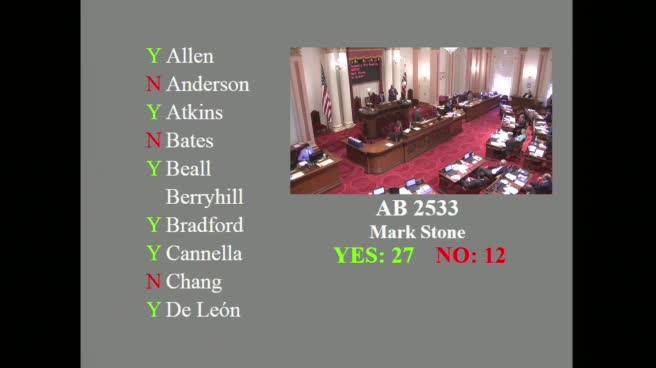

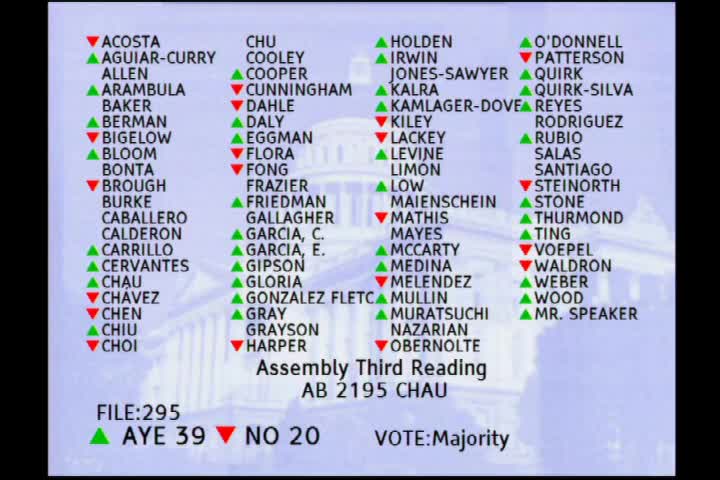


Bill Co-Author(s):