AB 2310: Public Employees’ Retirement System: contracting members.
- Session Year: 2017-2018
- House: Assembly
- Latest Version Date: 2018-08-27
Existing law, the Public Employees Retirement Law (PERL), establishes the Public Employees Retirement System (PERS), which provides a defined benefit to members of the system, based on final compensation, credited service, and age at retirement, subject to certain variations. PERL authorizes a public agency to contract to make its employees members of PERS, and prescribes a process for this. Under PERL, a contracting agency and its employees may agree in writing to share the costs of the employer contribution in accordance with specified procedures. Existing law requires, in these circumstances, the collective bargaining agreement for a contracting agency and its employees to specify the exact percentage of member compensation that is to be paid toward the current service costs of the benefits by members.
This bill would revise that provision to also refer to a memorandum of understanding ratified by the employee bargaining unit and the governing body of the contracting agency. The bill would require these agreements, as an alternative to specifying the exact percentage of member compensation to be paid toward the current service cost of the benefit by members, to specify the methodology for calculating that cost-sharing rate.
Under PERL, the above-described provision regarding cost sharing does not apply to a contracting agency or its employees until the agency elects to be subject to this provision by contract or contract amendment. Existing law further specifies that contributions are withheld from member compensation or otherwise collected when the contract amendment becomes effective.
This bill would specify that once a contracting agency elects to be subject to the cost-sharing provision, contract amendments are not required to effectuate cost sharing in subsequent collective bargaining agreements or memoranda of understanding ratified by the employee bargaining unit and the governing body of the agency. The bill would, however, further require the contracting agency, if a collective bargaining agreement or memorandum of understanding sets forth a methodology for calculating the cost-sharing rate instead of an exact percentage, to provide the retirement system with a signed side letter ratified by the employee bargaining unit and the agency indicating the exact percentage at least 90 days prior to the effective date of the cost-sharing rate as set forth in the signed side letter.
Existing law, the Public Employees Retirement Law (PERL), establishes the Public Employees Retirement System (PERS), which provides a defined benefit to members of the system, based on final compensation, credited service, and age at retirement, subject to certain variations. PERL authorizes a public agency to contract to make its employees members of PERS, and prescribes a process for this. PERL authorizes a public agency wishing to participate in PERS to request a quotation of the approximate contributions that would be required in this regard. If the governing body intends to approve the proposed contract, PERL requires the body to adopt a resolution giving notice of that intention and prohibits approval of the contract until an election has been held that permits the employees to be included in PERS to express their approval or disapproval. Under PERL, a contracting agency and its employees may agree in writing to share the costs of the employer contribution in accordance with specified procedures. Existing law requires, in these circumstances, the collective bargaining agreement for a contracting agency and its employees to specify the exact percentage of member compensation that is to be paid toward the current service costs of the benefits by members.
This bill would make nonsubstantive changes to the provisions requiring a governing body to adopt a resolution and conditioning contract approval on holding an election, as described above. revise that provision to also refer to a memorandum of understanding ratified by the employee bargaining unit and the governing body of the contracting agency. The bill would require these agreements, as an alternative to specifying the exact percentage of member compensation to be paid toward the current service cost of the benefit by members, to specify the methodology for calculating that cost-sharing rate.
Under PERL, the above-described provision regarding cost sharing does not apply to a contracting agency or its employees until the agency elects to be subject to this provision by contract or contract amendment. Existing law further specifies that contributions are withheld from member compensation or otherwise collected when the contract amendment becomes effective.
This bill would specify that once a contracting agency elects to be subject to the cost-sharing provision, contract amendments are not required to effectuate cost sharing in subsequent collective bargaining agreements or memoranda of understanding ratified by the employee bargaining unit and the governing body of the agency. The bill would, however, further require the contracting agency, if a collective bargaining agreement or memorandum of understanding sets forth a methodology for calculating the cost-sharing rate instead of an exact percentage, to provide the retirement system with a signed side letter ratified by the employee bargaining unit and the agency indicating the exact percentage at least 90 days prior to the effective date of the cost-sharing rate as set forth in the signed side letter.
Existing law, the Public Employees Retirement Law (PERL), establishes the Public Employees Retirement System (PERS), which provides a defined benefit to members of the system, based on final compensation, credited service, and age at retirement, subject to certain variations. PERL authorizes a public agency to contract to make its employees members of PERS, and prescribes a process for this. PERL authorizes a public agency wishing to participate in PERS to request a quotation of the approximate contributions that would be required in this regard. If the governing body intends to approve the proposed contract, PERL requires the body to adopt a resolution giving notice of that intention and prohibits approval of the contract until an election has been held that permits the employees to be included in PERS to express their approval or disapproval.
This bill would make nonsubstantive changes to the provisions requiring a governing body to adopt a resolution and conditioning contract approval on holding an election, as described above.
(a)Notwithstanding any other provision of this part, with or without a change in benefits, a contracting agency and its employees may agree, in writing, to share the costs of the employer contribution. The cost sharing pursuant to this section shall also apply for related nonrepresented employees as approved in a resolution passed by the contracting agency.
(b)The collective bargaining agreement or memorandum of understanding ratified by the employee bargaining unit and the governing body of the contracting agency shall specify the exact percentage of member compensation that shall be paid toward the current service cost of the benefits by members or the methodology for calculating that cost-sharing rate. The member contributions shall be contributions over and above normal contributions otherwise required by this part and shall be treated as normal contributions for all purposes of this part. The contributions shall be uniform, except as described in subdivision (c), with respect to all members within each of the following classifications: local miscellaneous members, local police officers, local firefighters, county peace officers, and all local safety members other than local police officers, local firefighters, and county peace officers. The balance of any costs shall be paid by the contracting agency and shall be credited to the employers account. An employer shall not use impasse procedures to impose member cost sharing on any contribution amount above that which is authorized by law.
(c)Member cost sharing may differ by classification for groups of employees subject to different levels of benefits pursuant to Sections 7522.20, 7522.25, and 20475, or by a recognized collective bargaining unit if agreed to in a memorandum of understanding reached pursuant to the applicable collective bargaining laws.
(d)This section shall not apply to any contracting agency nor to the employees of a contracting agency until the agency elects to be subject to this section by contract or by amendment to its contract made in the manner prescribed for approval of contracts. Contributions provided by this section shall be withheld from member compensation or otherwise collected when the contract amendment becomes effective. Once the contracting agency elects to be subject to this section, contract amendments shall not be required to effectuate cost sharing in subsequent collective bargaining agreements or memoranda of understanding ratified by the employee bargaining unit and the governing body of the agency; provided, however, that if a collective bargaining agreement or memorandum of understanding sets forth a methodology for calculating the cost-sharing rate instead of an exact percentage, the contracting agency shall provide the retirement system with a signed side letter ratified by the employee bargaining unit and the agency indicating the exact percentage at least 90 days prior to the effective date of the cost-sharing rate as set forth in the signed side letter.
(e)For the purposes of this section, all contributions, liabilities, actuarial interest rates, and other valuation factors shall be determined on the basis of actuarial assumptions and methods that, in the aggregate, are reasonable and that, in combination, offer the actuarys best estimate of anticipated experience under this system.
(f)Nothing in this section shall preclude a contracting agency and its employees from independently agreeing in a memorandum of understanding to share the costs of any benefit, in a manner inconsistent with this section. However, any agreement in a memorandum of understanding that is inconsistent with this section shall not be part of the contract between this system and the contracting agency.
(g)If, and to the extent that, the board determines that a cost-sharing agreement under this section would conflict with Title 26 of the United States Code, the board may refuse to approve the agreement.
(h)Nothing in this section shall require a contracting agency to enter into a memorandum of understanding or collective bargaining agreement with a bargaining representative in order to increase the amount of member contributions when such a member contribution increase is authorized by other provisions under this part.
(a)Notwithstanding any other provision of this part, with or without a change in benefits, a contracting agency and its employees may agree, in writing, to share the costs of the employer contribution. The cost sharing pursuant to this section shall also apply for related nonrepresented employees as approved in a resolution passed by the contracting agency.
(b)The collective bargaining agreement or memorandum of understanding ratified by the employee bargaining unit and the governing body of the contracting agency shall specify the exact percentage of member compensation that shall be paid toward the current service cost of the benefits by members. members or the methodology for calculating that cost-sharing rate. The member contributions shall be contributions over and above normal contributions otherwise required by this part and shall be treated as normal contributions for all purposes of this part. The contributions shall be uniform, except as described in subdivision (c), with respect to all members within each of the following classifications: local miscellaneous members, local police officers, local firefighters, county peace officers, and all local safety members other than local police officers, local firefighters, and county peace officers. The balance of any costs shall be paid by the contracting agency and shall be credited to the employers account. An employer shall not use impasse procedures to impose member cost sharing on any contribution amount above that which is authorized by law.
(c)Member cost sharing may differ by classification for groups of employees subject to different levels of benefits pursuant to Sections 7522.20, 7522.25, and 20475, or by a recognized collective bargaining unit if agreed to in a memorandum of understanding reached pursuant to the applicable collective bargaining laws.
(d)This section shall not apply to any contracting agency nor to the employees of a contracting agency until the agency elects to be subject to this section by contract or by amendment to its contract made in the manner prescribed for approval of contracts. Contributions provided by this section shall be withheld from member compensation or otherwise collected when the contract amendment becomes effective. Once the contracting agency elects to be subject to this section, contract amendments shall not be required to effectuate cost sharing in subsequent collective bargaining agreements or memoranda of understanding ratified by the employee bargaining unit and the governing body of the agency; provided, however, that if a collective bargaining agreement or memorandum of understanding sets forth a methodology for calculating the cost-sharing rate instead of an exact percentage, the contracting agency shall provide the retirement system with a signed side letter ratified by the employee bargaining unit and the agency indicating the exact percentage at least 90 days prior to the effective date of the cost-sharing rate as set forth in the signed side letter.
(e)For the purposes of this section, all contributions, liabilities, actuarial interest rates, and other valuation factors shall be determined on the basis of actuarial assumptions and methods that, in the aggregate, are reasonable and that, in combination, offer the actuarys best estimate of anticipated experience under this system.
(f)Nothing in this section shall preclude a contracting agency and its employees from independently agreeing in a memorandum of understanding to share the costs of any benefit, in a manner inconsistent with this section. However, any agreement in a memorandum of understanding that is inconsistent with this section shall not be part of the contract between this system and the contracting agency.
(g)If, and to the extent that, the board determines that a cost-sharing agreement under this section would conflict with Title 26 of the United States Code, the board may refuse to approve the agreement.
(h)Nothing in this section shall require a contracting agency to enter into a memorandum of understanding or collective bargaining agreement with a bargaining representative in order to increase the amount of member contributions when such a member contribution increase is authorized by other provisions under this part.
SECTION 1.Section 20469 of the Government Code is amended to read:20469.If, after receiving the approximate contribution quotation, the governing body intends to approve the proposed contract, it shall adopt a resolution giving notice of that intention. The resolution shall contain a summary of the major provisions of the proposed retirement plan. The contract shall not be approved unless an election has been held to permit the employees proposed to be included in this system to express by secret ballot their approval or disapproval of the retirement proposal. Prior to the election, each governing body shall be furnished with a schedule of rates of contribution of members, which shall be made available by the governing body to each employee proposed to be included in this system. The ballot at the election shall include the summary of the retirement plan as set forth in the resolution. The election shall be conducted in the manner prescribed by the governing body and shall be such as to permit the firefighters, the police officers, the county peace officers, and the other employees proposed to be included in this system to express separately their approval or disapproval.If If, after receiving the approximate contribution quotation quotation, the governing body intends to approve the proposed contract, it shall adopt a resolution giving notice of that intention. The resolution shall contain a summary of the major provisions of the proposed retirement plan. The contract shall not be approved unless an election has been held to permit the employees proposed to be included in this system to express by secret ballot their approval or disapproval of the retirement proposal. Prior to the election election, each governing body shall be furnished with a schedule of rates of contribution of members, which shall be made available by the governing body to each employee proposed to be included in this system. The ballot at the election shall include the summary of the retirement plan as set forth in the resolution. The election shall be conducted in the manner prescribed by the governing body which and shall be such as to permit the firefighters, the police officers, the county peace officers, and the other employees proposed to be included in this system to express separately their approval or disapproval.
|
Date
|
Status
|
|---|---|
| Aug 27, 2018 | Chaptered by Secretary of State - Chapter 213, Statutes of 2018. |
| Aug 27, 2018 | Approved by the Governor. |
| Aug 13, 2018 | Enrolled and presented to the Governor at 3 p.m. |
| Aug 7, 2018 | In Assembly. Ordered to Engrossing and Enrolling. |
| Aug 6, 2018 | Read third time. Passed. Ordered to the Assembly. |
| Jun 26, 2018 | Read second time. Ordered to third reading. |
| Jun 25, 2018 | From committee: Be ordered to second reading pursuant to Senate Rule 28.8. |
| Jun 12, 2018 | From committee: Do pass and re-refer to Com. on APPR. (Ayes 5. Noes 0.) (June 11). Re-referred to Com. on APPR. |
| May 24, 2018 | Referred to Com. on P.E. & R. |
| May 10, 2018 | In Senate. Read first time. To Com. on RLS. for assignment. |
| May 10, 2018 | Read third time. Passed. Ordered to the Senate. |
| May 3, 2018 | Read second time. Ordered to Consent Calendar. |
| May 2, 2018 | From committee: Do pass. To Consent Calendar. (Ayes 17. Noes 0.) (May 2). |
| Apr 18, 2018 | From committee: Do pass and re-refer to Com. on APPR. (Ayes 6. Noes 0.) (April 18). Re-referred to Com. on APPR. |
| Mar 21, 2018 | Re-referred to Com. on P.E., R., & S.S. |
| Mar 20, 2018 | From committee chair, with author's amendments: Amend, and re-refer to Com. on P.E., R., & S.S. Read second time and amended. |
| Mar 19, 2018 | Referred to Com. on P.E., R., & S.S. |
| Feb 14, 2018 | From printer. May be heard in committee March 16. |
| Feb 13, 2018 | Read first time. To print. |
|
Date
|
Description
|
Location
|
Votes
|
|
|---|---|---|---|---|
| Aug 6, 2018 | Assembly 3rd Reading AB2310 Aguiar-Curry By Dodd | Senate Floor |
Passed |
|
| Jun 11, 2018 | Do pass, but first be re-referred to the Committee on [Appropriations] | Senate Standing Committee on Public Employment and Retirement |
Passed |
|
| May 10, 2018 | AB 2310 AGUIAR-CURRY Consent Calendar Second Day Regular Session | Assembly Floor |
Passed |
|
| May 2, 2018 | Do pass. To Consent Calendar. | Assembly Standing Committee on Appropriations |
Passed |
|
| Apr 18, 2018 | Do pass and be re-referred to the Committee on [Appropriations] | Assembly Standing Committee on Public Employees, Retirement, and Social Security |
Passed |
This list shows positions taken on this bill by organizations on the date displayed, which is linked to the original source.
Positions by individuals are not included.
Office of Senate Floor Analyses (916) 651-1520 Fax: (916) 327-4478 | AB |
THIRD READING
Bill No: AB 2310
:
SENATE PUBLIC EMP. & RET. COMMITTEE: 5-0, 6/11/18
AYES: Pan, Morrell, Leyva, Moorlach, Portantino
SENATE APPROPRIATIONS COMMITTEE: Senate Rule 28.8
ASSEMBLY FLOOR: 73-0, 5/10/18 (Consent) - See last page for vote
SOURCE: Napa County Board of Supervisors
DIGEST:
This bill provides greater flexibility to contracting agencies that wish to adopt member cost sharing provisions in a memorandum of understanding (MOU) by modifying California Public Employees’ Retirement System (CalPERS) contract amendment procedures to accept an MOU that specifies the methodology for calculating a cost-sharing rate instead of the existing CalPERS requirement that the MOU list an exact percentage of member compensation that the members shall pay toward the current service cost of the benefits. This bill also requires the contracting agency to provide CalPERS notice of any change in cost sharing rates as calculated by the methodology by submitting a signed side letter ratified by the employee bargaining unit and the agency indicating the exact percentage at least 90 days prior to the effective date of the cost-sharing rate as set forth in the signed side letter.
ANALYSIS:
Existing law:
- Permits a CalPERS contracting agency and its represented employees to agree in writing to share the costs of the employer contribution for employee retirement benefits (i.e., cost sharing), and requires that the cost sharing agreement also apply to related nonrepresented employees as approved in a resolution passed by the contracting agency.
- Requires that the collective bargaining agreement (CBA) between the contracting agency and the employees’ representative specify the exact percentage of member compensation to be paid toward the current service costs of the benefits by members. Also, current law requires the member contributions be over and above normal contributions but be otherwise treated as normal contributions for all other purposes, as specified.
- Requires that the contributions be uniform with respect to all members within a classification except that member cost sharing may differ by classification for groups of employees subject to different levels of benefits, as specified, or by a recognized bargaining unit if agreed to in a MOU.
- Requires that the balance of costs for retiree benefits be paid by the contracting agency and prohibits the contracting agency from using impasse procedures to impose cost sharing on any contribution amount above that which is authorized by law.
- Permits a contracting agency and its employees to independently agree in a MOU to share the costs of any benefit. However, if it is inconsistent, an agreement in a MOU will not be part of the contract between CalPERS and the contracting agency employer.
- Permits CalPERS to refuse to approve the agreement if it determines that a cost-sharing agreement would conflict with federal tax law.
- Clarifies that a contracting agency is not required to enter into a MOU or CBA with a bargaining representative to increase the amount of member contributions authorized under other provisions of law.
This bill:
- Provides that the contracting agency’s CBA or MOU with the bargaining unit may specify the methodology for calculating that cost-sharing rate or the exact percentage of member compensation that the members shall pay toward the current service cost of the benefits.
- Provides that a contracting agency, having elected to adopt cost sharing under this provision of the law, does not need to execute a contract amendment with CalPERS to effectuate cost sharing in subsequent CBAs or MOUs ratified by the employee bargaining unit and the governing body of the agency; provided, however, that if a CBA or MOU sets forth a methodology for calculating the cost-sharing rate instead of an exact percentage, the contracting agency shall provide CalPERS with a signed side letter ratified by the employee bargaining unit and the agency indicating the exact percentage at least 90 days prior to the effective date of the cost-sharing rate as set forth in the signed side letter.
Related/Prior Legislation
AB 197 (Buchanan, Chapter 297, Statutes of 2012), eliminated former requirements that employers provide offsetting increases in benefits in exchange for higher member contributions, and it allowed employers to bargain increased cost sharing by bargaining unit versus retirement membership class. The bill also required that the employer bargain these increases and not be allowed to increase the member share through impasse procedures above the contribution amount required by law.
FISCAL EFFECT: Appropriation: Fiscal Com.: Local:
Napa County Board of Supervisors (source)
OPPOSITION: (Verified 6/27/18)
None received
ARGUMENTS IN SUPPORT: According to the sponsor, “AB 2310 does not change, disrupt, or impact the negotiations process between a bargaining group and a contracting agency CalPERS agency, it simply clarifies and removes an excessive administrative burden for those agencies and their employees that have annual changes in their cost sharing.”
ASSEMBLY FLOOR: 73-0, 5/10/18
AYES: Acosta, Aguiar-Curry, Arambula, Baker, Berman, Bigelow, Bloom, Bonta, Brough, Burke, Caballero, Calderon, Carrillo, Cervantes, Chau, Chávez, Chen, Chiu, Choi, Chu, Cooper, Cunningham, Dahle, Daly, Eggman, Flora, Fong, Frazier, Gallagher, Eduardo Garcia, Gipson, Gloria, Gonzalez Fletcher, Gray, Grayson, Harper, Holden, Irwin, Jones-Sawyer, Kalra, Kamlager-Dove, Kiley, Lackey, Levine, Limón, Low, Maienschein, Mathis, Mayes, McCarty, Medina, Melendez, Mullin, Muratsuchi, Nazarian, O'Donnell, Patterson, Quirk, Quirk-Silva, Reyes, Rodriguez, Rubio, Salas, Santiago, Steinorth, Mark Stone, Thurmond, Ting, Voepel, Waldron, Weber, Wood, Rendon
NO VOTE RECORDED: Travis Allen, Cooley, Friedman, Cristina Garcia, Obernolte
6/27/18 15:42:59
**** END ****
SENATE COMMITTEE ON
PUBLIC EMPLOYMENT AND RETIREMENT
Dr. Richard Pan, Chair
2017 - 2018 Regular
Bill No: AB 2310 Hearing Date: 6/11/18
Author: | Aguiar-Curry | ||
Version: | 3/20/18 As amended | ||
Urgency: | No | Fiscal: | Yes |
Consultant: | Glenn Miles | ||
Subject: Public Employees’ Retirement System: contracting members.
SOURCE: Napa County Board of Supervisors
ASSEMBLY VOTES:
Assembly Floor: | 73 - 0 |
Assembly Appropriations Committee: | 17 - 0 |
Assembly Public Employees, Retirement, and Social Security Committee: | 6 - 0 |
DIGEST: This bill provides greater flexibility to contracting agencies that wish to adopt member cost sharing provisions in a memorandum of understanding (MOU) by modifying California Public Employees’ Retirement System (CalPERS) contract amendment procedures to accept an MOU that specifies the methodology for calculating a cost-sharing rate instead of the existing CalPERS requirement that the MOU list an exact percentage of member compensation that the members shall pay toward the current service cost of the benefits.
The bill also requires the contracting agency to provide CalPERS notice of any change in cost sharing rates as calculated by the methodology by submitting a signed side letter ratified by the employee bargaining unit and the agency indicating the exact percentage at least 90 days prior to the effective date of the cost-sharing rate as set forth in the signed side letter.
ANALYSIS:
Existing law:
- Permits a CalPERS contracting agency and its represented employees to agree in writing to share the costs of the employer contribution for employee retirement benefits (i.e., cost sharing), and requires that the cost sharing agreement also apply to related nonrepresented employees as approved in a resolution passed by the contracting agency.
- Requires that the collective bargaining agreement (CBA) between the contracting agency and the employees’ representative specify the exact percentage of member compensation to be paid toward the current service costs of the benefits by members. Also, current law requires the member contributions be over and above normal contributions but be otherwise treated as normal contributions for all other purposes, as specified.
- Requires that the contributions be uniform with respect to all members within a classification except that member cost sharing may differ by classification for groups of employees subject to different levels of benefits, as specified, or by a recognized bargaining unit if agreed to in a MOU.
- Requires that the balance of costs for retiree benefits be paid by the contracting agency and prohibits the contracting agency from using impasse procedures to impose cost sharing on any contribution amount above that which is authorized by law.
- Permits a contracting agency and its employees to independently agree in a MOU to share the costs of any benefit. However, if it is inconsistent, an agreement in a MOU will not be part of the contract between CalPERS and the contracting agency employer.
- Permits CalPERS to refuse to approve the agreement if it determines that a cost-sharing agreement would conflict with federal tax law.
- Clarifies that a contracting agency is not required to enter into a MOU or CBA with a bargaining representative to increase the amount of member contributions authorized under other provisions of law.
This bill:
- Provides that the contracting agency’s CBA or MOU with the bargaining unit may specify the methodology for calculating that cost-sharing rate or the exact percentage of member compensation that the members shall pay toward the current service cost of the benefits.
- Provides that a contracting agency, having elected to adopt cost sharing under this provision of the law, does not need to execute a contract amendment with CalPERS to effectuate cost sharing in subsequent CBAs or MOUs ratified by the employee bargaining unit and the governing body of the agency; provided, however, that if a CBA or MOU sets forth a methodology for calculating the cost-sharing rate instead of an exact percentage, the contracting agency shall provide CalPERS with a signed side letter ratified by the employee bargaining unit and the agency indicating the exact percentage at least 90 days prior to the effective date of the cost-sharing rate as set forth in the signed side letter.
Related/Prior Legislation
AB 197 (Buchanan, Chapter 297, Statutes of 2012), eliminated former requirements that employers provide offsetting increases in benefits in exchange for higher member contributions, and it allowed employers to bargain increased cost sharing by bargaining unit versus retirement membership class. The bill also required that the employer bargain these increases and not be allowed to increase the member share through impasse procedures above the contribution amount required by law.
FISCAL EFFECT: Appropriation: No Fiscal Com.: Yes Local: No
SUPPORT:
Napa County Board of Supervisors (source)
OPPOSITION:
None received.
ARGUMENTS IN SUPPORT: According to the sponsor, “AB 2310 does not change, disrupt, or impact the negotiations process between a bargaining group and a contracting agency CalPERS agency, it simply clarifies and removes an excessive administrative burden for those agencies and their employees that have annual changes in their cost sharing.”
Date of Hearing: May 2, 2018
ASSEMBLY COMMITTEE ON APPROPRIATIONS
Lorena Gonzalez Fletcher, Chair
ABPCA Bill Id:AB 2310
Author:(Aguiar-Curry) – As Amended Ver:March 20, 2018
Policy Committee: | Public Employees, Retirement, and Social Security | Vote: | 6 - 0 |
|
| ||
|
|
Urgency: No State Mandated Local Program: No Reimbursable: No
SUMMARY:
This bill allows a memorandum of understanding (MOU) ratified by an employee bargaining unit and a contracting agency to specify the percentage of member compensation paid toward the current service cost of benefits (cost sharing), and provides that contract amendments are not required to effectuate cost sharing in subsequent collective bargaining or MOU agreements. If the collective bargaining agreement or MOU specifies a methodology for calculating the cost sharing rate, then a signed and ratified side letter must be provided to the California Public Employees Retirement System (CalPERS).
FISCAL EFFECT:
Negligible state costs.
COMMENTS:
- Background. Under existing law, a contracting agency of CalPERS and its employees may agree, in writing, to share the costs of the employer contributions into the system. The collective bargaining agreement between the agency and the employees must specify the exact percentage of the member compensation to be paid toward current service costs. If the contracting agency and employees agree to change the cost sharing percentage through a MOU or side letter, then the CalPERS contract amendment process is triggered and employees must approve the change with a vote.
- Purpose. According to supporters, AB 2310 will reduce an administrative burden for agencies that have annual changes to their cost sharing agreements. According to the Napa County Board of Supervisors, the current process creates unnecessary confusion. They note that the current process requires both a ratified MOU and a separate vote on the CalPERS contract. AB 2310 allows an MOU or a CBA to change the cost sharing rate without a separate vote on the CalPERS agreement.
Analysis Prepared by: Luke Reidenbach / APPR. / (916) 319-2081
Date of Hearing: April 18, 2018
ASSEMBLY COMMITTEE ON PUBLIC EMPLOYEES, RETIREMENT, AND SOCIAL SECURITY
Freddie Rodriguez, Chair
ABPCA Bill Id:AB 2310 (
Author:Aguiar-Curry) – As Amended Ver:March 20, 2018
SUBJECT: Public Employees’ Retirement System: contracting members
SUMMARY: Amends existing law relating to changes in cost sharing percentages memorialized in a Memorandum of Understanding (MOU) between a contracting agency of the California Public Employees Retirement System (CalPERS) and its employees, and the approval process for those changes, among other provisions. Specifically, this bill:
1) Clarifies that a collective bargaining agreement (CBA) or MOU ratified by the employee bargaining unit and the contracting agency must specify the exact percentage of member compensation to be paid toward the current service cost of the benefits by members or the methodology for calculating that cost-sharing rate.
2) Provides that once the contracting agency elects to be subject to these provisions, contract amendments are not required to effectuate cost sharing in a subsequent CBA or MOU ratified by the bargaining unit of the contracting agency; provided, however, that if the CBA or MOU specifies the methodology for calculating the cost-sharing rate instead of a an exact percentage, a signed side letter that has been ratified by the bargaining unit and agency must be provided to CalPERS by the CalPERS contracting agency. The side letter must indicate the exact percentage at least 90 days prior to the effective date of the cost-sharing rate as provided for in the signed side letter.
EXISTING LAW:
1) Permits, pursuant to the Public Employees’ Retirement Law (PERL), a contracting agency of CalPERS and its represented and related nonrepresented employees to agree in writing to share the costs of the employer contribution under certain specified procedures.
2) Requires the CBA for a contracting agency and its employees to specify the exact percentage of member compensation that is to be paid toward the current service costs of the benefits by members; and, member contributions to be over and above normal contributions, as specified, that are treated as normal contributions to all members within certain specified categories.
3) Provides that member cost sharing may differ by classification for groups of employees subject to different levels of benefits, as specified, or recognized by a bargaining unit if agreed to in a MOU.
4) Permits a contracting agency and its employees to independently agree in a MOU to share the costs of any benefit. However, if it is inconsistent, an agreement in a MOU will not be part of the contract between CalPERS and the contracting agency employer.
5) Permits CalPERS to refuse to approve the agreement if it determines that a cost-sharing agreement would conflict with federal law, as specified.
6) Provides that a contracting agency is not required to enter into a MOU or CBA with a bargaining representative to increase the amount of member contributions, as specified.
FISCAL EFFECT: Unknown. This bill has been flagged fiscal by Legislative Counsel.
COMMENTS: According to the author, “[t]his bill will help clean up Section 20516 of the Government Code to provide clarity on the agreements between employees and contracting agencies. Assembly Bill 2310 will allow a change in the cost sharing percentage in the CalPERS contract via side letter or new MOU language without requiring an election from the employees affected.
‘This bill will also ensure that once a contracting agency agrees to be subject to the cost-sharing provision, contract amendments are not required to fulfill a change in the cost-sharing percentage in future collective bargaining agreements or MOU. These changes will ease the confusion for agency employees who don’t understand why they need to vote on the CalPERS contract again, when they already voted on and approved the MOU.”
1) Comments by Supporters
According to the Napa County Board of Supervisors, “Napa County has agreements with its two bargaining groups, the Deputy Sheriffs Association and the Public Service Employees Unit, to share equally the annual increases or decreases in the CalPERS required contributions among the county employees. While each MOU is slightly different in terms of how the formula works, the method in the MOU language describes each cost sharing process. Each year, once the county receives its CalPERS actuarial reports, staff calculate the employee share and provides that information to the bargaining groups in the form of a side letter.
‘Understanding the existing PERL regulations, the county is also required to complete the CalPERS amendment process which can be confusing to employees. If an employee group were to vote “no” on the CalPERS amendment, the county would be in a situation where it would be out of compliance with either the MOU and/or the CalPERS contract – both legally binding agreements.
‘Assembly Bill 2310 does not change, disrupt nor impact the negotiations process between a bargaining group and a contracting CalPERS agency. It simply clarifies and removes and excessive administrative burden for those agencies and their employees that have annual changes to their cost sharing.”
REGISTERED SUPPORT / OPPOSITION:
Support
Napa County Board of Supervisors (Sponsor)
Opposition
None one file.
Analysis Prepared by: Michael Bolden / P.E.,R., & S.S. / (916) 319-3957
Discussed in Hearing
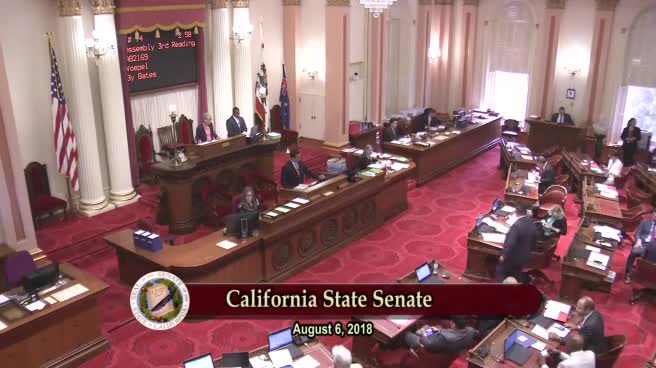 3MIN
Senate Floor
 3MIN
Senate Standing Committee on Public Employment and Retirement
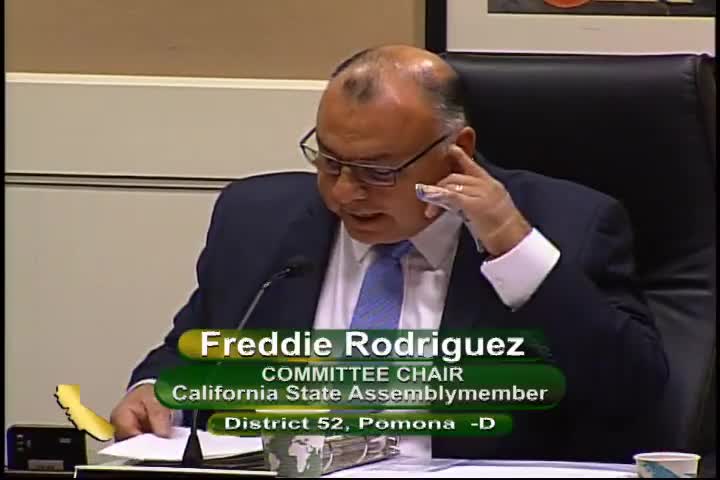 4MIN
Assembly Standing Committee on Public Employees, Retirement, and Social Security
Bill Author

Bill Co-Author(s):