AB 2315: Pupil health: mental and behavioral health services: telehealth technology: guidelines.
- Session Year: 2017-2018
- House: Assembly
- Latest Version Date: 2018-09-26
Existing law requires the governing board of any school district to give diligent care to the health and physical development of pupils and authorizes the governing board of a school district to employ properly certified persons for the work.
This bill would require the State Department of Education, in consultation with the State Department of Health Care Services and appropriate stakeholders, to, on or before July 1, 2020, develop guidelines, as provided, for the use of telehealth technology in public schools, including charter schools, to provide mental health and behavioral health services to pupils on school campuses. The bill would require the State Department of Education to post the guidelines on its Internet Web site on or before July 1, 2020. The bill would provide that it shall only be implemented if sufficient funds are made available to the State Department of Education pursuant to an appropriation in the annual Budget Act or another statute for that purpose.
Existing law requires the governing board of any school district to give diligent care to the health and physical development of pupils and authorizes the governing board of a school district to employ properly certified persons for the work.
This bill would require the State Department of Education, in consultation with the State Department of Health Care Services and appropriate stakeholders, to, on or before July 1, 2020, develop guidelines, as provided, for the use of telehealth technology in public schools, including charter schools, to provide mental health and behavioral health services to pupils on school campuses. The bill would require the State Department of Education to post the guidelines on its Internet Web site on or before July 1, 2020. The bill would provide that it shall only be implemented if sufficient funds are made available to the State Department of Education pursuant to an appropriation in the annual Budget Act or another statute for that purpose.
Existing law requires the governing board of any school district to give diligent care to the health and physical development of pupils and authorizes the governing board of a school district to employ properly certified persons for the work.
This bill would require the State Department of Education, in consultation with the State Department of Health Care Services and appropriate stakeholders, to, on or before December 31, 2019, July 1, 2020, develop guidelines, as provided, for the use of telehealth technology in public schools, including charter schools, to provide mental health and behavioral health services to pupils on school campuses. The bill would require the department State Department of Education to post the guidelines on its Internet Web site on or before December 31, 2019. July 1, 2020. The bill would provide that it shall only be implemented if sufficient funds are made available to the State Department of Education pursuant to an appropriation in the annual Budget Act or another statute for that purpose.
Existing law requires the governing board of any school district to give diligent care to the health and physical development of pupils and authorizes the governing board of a school district to employ properly certified persons for the work.
This bill would require the State Department of Education, in consultation with the State Department of Health Care Services and appropriate stakeholders, to, on or before December 31, 2019, develop guidelines, as provided, for the use of telehealth technology in public schools, including charter schools, to provide mental health and behavioral health services to pupils on school campuses. The bill would require the department to post the guidelines on its Internet Web site on or before December 31, 2019.
(1)Existing law, the Mental Health Services Act (MHSA), an initiative measure enacted by the voters by Proposition 63 at the November 2, 2004, statewide general election, establishes the continuously appropriated Mental Health Services Fund to fund various county mental health programs by imposing a tax of 1% on annual incomes above $1,000,000. The MHSA establishes the Mental Health Services Oversight and Accountability Commission to oversee various parts of the act, as specified. Under the MHSA, funds are distributed to counties to be expended pursuant to a local plan for specified purposes, including, but not limited to, prevention and early intervention of mental illness. The MHSA permits amendment by the Legislature by a 2/3 vote of each house if the amendment is consistent with, and furthers the intent of, the MHSA.This bill would require the commission to establish a pilot program and provide funding for three school districts that maintain kindergarten or any of grades 1 to 12, inclusive, to purchase telehealth technology and equipment to connect pupils with mental and behavioral health providers. The bill would require the commission to allocate money from the Mental Health Services Fund to purchase the telehealth technology and equipment. The bill would require the State Department of Education and the State Department of Health Care Services to work jointly with the commission to develop the pilot program and to provide oversight to ensure that mental and behavioral health services are provided by licensed providers.(2)Existing law provides for the Medi-Cal program, which is administered by the State Department of Health Care Services, under which qualified low-income individuals receive health care services. Existing law provides that in-person contact between a health care provider and a patient is not required under the Medi-Cal program for services appropriately provided through telehealth, as defined.This bill would require the department to allow a licensed mental health provider that provides mental or behavioral telehealth services to pupils pursuant to the telehealth pilot program described above to receive Medi-Cal reimbursement in accordance with the Medicaid state plan.(1)Existing law, the Mental Health Services Act (MHSA), an initiative measure enacted by the voters by Proposition 63 at the November 2, 2004, statewide general election, establishes the continuously appropriated Mental Health Services Fund to fund various county mental health programs by imposing a tax of 1% on annual incomes above $1,000,000. The MHSA establishes the Mental Health Services Oversight and Accountability Commission to oversee various parts of the act, as specified. Under the MHSA, funds are distributed to counties to be expended pursuant to a local plan for specified purposes, including, but not limited to, prevention and early intervention of mental illness. The MHSA permits amendment by the Legislature by a 2/3 vote of each house if the amendment is consistent with, and furthers the intent of, the MHSA.
This bill would require the commission to establish a pilot program and provide funding for three school districts that maintain kindergarten or any of grades 1 to 12, inclusive, to purchase telehealth technology and equipment to connect pupils with mental and behavioral health providers. The bill would require the commission to allocate money from the Mental Health Services Fund to purchase the telehealth technology and equipment. The bill would require the State Department of Education and the State Department of Health Care Services to work jointly with the commission to develop the pilot program and to provide oversight to ensure that mental and behavioral health services are provided by licensed providers.
(2)Existing law provides for the Medi-Cal program, which is administered by the State Department of Health Care Services, under which qualified low-income individuals receive health care services. Existing law provides that in-person contact between a health care provider and a patient is not required under the Medi-Cal program for services appropriately provided through telehealth, as defined.
This bill would require the department to allow a licensed mental health provider that provides mental or behavioral telehealth services to pupils pursuant to the telehealth pilot program described above to receive Medi-Cal reimbursement in accordance with the Medicaid state plan.
Existing law requires the governing board of any school district to give diligent care to the health and physical development of pupils and authorizes the governing board of a school district to employ properly certified persons for the work.This bill would authorize a school district maintaining kindergarten or any of grades 1 to 12, inclusive, to partner with a health care provider to provide telehealth services, as defined, to pupils at schools of the school district.Existing law requires the governing board of any school district to give diligent care to the health and physical development of pupils and authorizes the governing board of a school district to employ properly certified persons for the work.
This bill would authorize a school district maintaining kindergarten or any of grades 1 to 12, inclusive, to partner with a health care provider to provide telehealth services, as defined, to pupils at schools of the school district.
(a)The department, in consultation with the State Department of Health Care Services and appropriate stakeholders, including stakeholders with experience in telehealth, as defined in subdivision (d), shall develop guidelines on or before July 1, 2020, for the use of telehealth technology in public schools, including charter schools, to provide mental health and behavioral health services to pupils on school campuses.
(b)The guidelines developed pursuant to subdivision (a) shall include, but are not limited to, guidance on all of the following:
(1)Qualifications of individuals authorized to provide assistance, within their scope of practice, to pupils in accessing mental health and behavioral health services via telehealth technology at a schoolsite.
(2)Qualifications of individuals authorized to provide mental health and behavioral health services, within their scope of practice, to pupils via telehealth technology.
(3)Potential sources of funding for the purchase of the necessary equipment and technology infrastructure by schools to allow schools to provide telehealth services.
(4)The ability of mental and behavioral health services providers to access reimbursement through the Medi-Cal program or other sources for services provided to pupils at schoolsites via telehealth technology.
(5)The legal requirements for parental consent for the provision of mental health and behavioral health treatment of minors via telehealth technology.
(6)Measures necessary to protect the security of data transmitted via telehealth technology.
(7)Measures necessary to protect the privacy of pupil data pursuant to the federal Family Educational Rights and Privacy Act of 1974 (20 U.S.C. Sec. 1232g) and medical records pursuant to the federal Health Insurance Portability and Accountability Act of 1996 (Public Law 104-191).
(8)Potential school district, county office of education, and charter school liability associated with the provision of telehealth services.
(c)The department shall post the guidelines developed pursuant to this section on its Internet Web site on or before July 1, 2020.
(d)For purposes of this section, telehealth means the mode of delivering health care services via information and communication technologies to facilitate the diagnosis, consultation, treatment, education, care management, and self-management of a pupils health care while the pupil is at a schoolsite and the health care provider is at a distant site.
(e)This section shall only be implemented if sufficient funds are made available to the department pursuant to an appropriation in the annual Budget Act or another statute for that purpose.
(a)The department, in consultation with the State Department of Health Care Services and appropriate stakeholders, including stakeholders with experience in telehealth, as defined in subdivision (d), shall develop guidelines on or before July 1, 2020, for the use of telehealth technology in public schools, including charter schools, to provide mental health and behavioral health services to pupils on school campuses.
(b)The guidelines developed pursuant to subdivision (a) shall include, but are not limited to, guidance on all of the following:
(1)Qualifications of individuals authorized to provide assistance, within their scope of practice, to pupils in accessing mental health and behavioral health services via telehealth technology at a schoolsite.
(2)Qualifications of individuals authorized to provide mental health and behavioral health services, within their scope of practice, to pupils via telehealth technology.
(3)Potential sources of funding for the purchase of the necessary equipment and technology infrastructure by schools to allow schools to provide telehealth services.
(4)The ability of mental and behavioral health services providers to access reimbursement through the Medi-Cal program or other sources for services provided to pupils at schoolsites via telehealth technology.
(5)The legal requirements for parental consent for the provision of mental health and behavioral health treatment of minors via telehealth technology.
(6)Measures necessary to protect the security of data transmitted via telehealth technology.
(7)Measures necessary to protect the privacy of pupil data pursuant to the federal Family Educational Rights and Privacy Act of 1974 (20 U.S.C. Sec. 1232g) and medical records pursuant to the federal Health Insurance Portability and Accountability Act of 1996 (Public Law 104-191).
(8)Potential school district, county office of education, and charter school liability associated with the provision of telehealth services.
(c)The department shall post the guidelines developed pursuant to this section on its Internet Web site on or before July 1, 2020.
(d)For purposes of this section, telehealth means the mode of delivering health care services via information and communication technologies to facilitate the diagnosis, consultation, treatment, education, care management, and self-management of a pupils health care while the pupil is at a schoolsite and the health care provider is at a distant site.
(e)This section shall only be implemented if sufficient funds are made available to the department pursuant to an appropriation in the annual Budget Act or another statute for that purpose.
(a)The department, in consultation with the State Department of Health Care Services and appropriate stakeholders, including stakeholders with experience in telehealth, as defined in subdivision (d), shall develop guidelines on or before December 31, 2019, July 1, 2020, for the use of telehealth technology in public schools, including charter schools, to provide mental health and behavioral health services to pupils on school campuses.
(b)The guidelines developed pursuant to subdivision (a) shall include, but are not limited to, guidance on all of the following:
(1)Qualifications of individuals authorized to provide assistance, within their scope of practice, to pupils in accessing mental health and behavioral health services via telehealth technology at a schoolsite.
(2)Qualifications of individuals authorized to provide mental health and behavioral health services, within their scope of practice, to pupils via telehealth technology.
(3)Potential sources of funding for the purchase of the necessary equipment and technology infrastructure by schools to allow schools to provide telehealth services.
(4)The ability of mental and behavioral health services providers to access reimbursement through the Medi-Cal program or other sources for services provided to pupils at schoolsites via telehealth technology.
(5)The legal requirements for parental consent for the provision of mental health and behavioral health treatment of minors via telehealth technology.
(6)Measures necessary to protect the security of data transmitted via telehealth technology.
(7)Measures necessary to protect the privacy of pupil data pursuant to the federal Family Educational Rights and Privacy Act of 1974 (20 U.S.C. Sec. 1232g) and medical records pursuant to the federal Health Insurance Portability and Accountability Act of 1996 (Public Law 104-191).
(8)Potential school district, county office of education, and charter school liability associated with the provision of telehealth services.
(c)The department shall post the guidelines developed pursuant to this section on its Internet Web site on or before December 31, 2019. July 1, 2020.
(d)For purposes of this section, telehealth means the mode of delivering health care services via information and communication technologies to facilitate the diagnosis, consultation, treatment, education, care management, and self-management of a pupils health care while the pupil is at a schoolsite and the health care provider is at a distant site.
(e)This section shall only be implemented if sufficient funds are made available to the department pursuant to an appropriation in the annual Budget Act or another statute for that purpose.
(a)The department, in consultation with the State Department of Health Care Services and appropriate stakeholders, including stakeholders with experience in telehealth, as defined in subdivision (d), shall develop guidelines on or before December 31, 2019, for the use of telehealth technology in public schools, including charter schools, to provide mental health and behavioral health services to pupils on school campuses.
(b)The guidelines developed pursuant to subdivision (a) shall include, but are not limited to, guidance on all of the following:
(1)Qualifications of individuals authorized to provide assistance, within their scope of practice, to pupils in accessing mental health and behavioral health services via telehealth technology at a schoolsite.
(2)Qualifications of individuals authorized to provide mental health and behavioral health services, within their scope of practice, to pupils via telehealth technology.
(3)Potential sources of funding for the purchase of the necessary equipment and technology infrastructure by schools to allow schools to provide telehealth services.
(4)The ability of mental and behavioral health services providers to access reimbursement through the Medi-Cal program or other sources for services provided to pupils at schoolsites via telehealth technology.
(5)The legal requirements for parental consent for the provision of mental health and behavioral health treatment of minors via telehealth technology.
(6)Measures necessary to protect the security of data transmitted via telehealth technology.
(7)Measures necessary to protect the privacy of pupil data pursuant to the federal Family Educational Rights and Privacy Act of 1974 (20 U.S.C. Sec. 1232g) and medical records pursuant to the federal Health Insurance Portability and Accountability Act of 1996 (Public Law 104-191).
(8)Potential school district, county office of education, and charter school liability associated with the provision of telehealth services.
(c)The department shall post the guidelines developed pursuant to this section on its Internet Web site on or before December 31, 2019.
(d)For purposes of this section, telehealth means the mode of delivering health care services via information and communication technologies to facilitate the diagnosis, consultation, treatment, education, care management, and self-management of a pupils health care while the pupil is at a schoolsite and the health care provider is at a distant site.
SECTION 1.Section 5848.3 is added to the Welfare and Institutions Code, to read:5848.3.(a)(1) The commission shall establish a pilot program and provide funding for three school districts that maintain kindergarten or any of grades 1 to 12, inclusive, to purchase telehealth technology and equipment to connect pupils with mental and behavioral health providers.(2)The three participating school districts shall be located in three different regions of the state and shall include one school district in a rural area, one school district in an urban area, and one school district in a tribal community.(3) A participating school district shall be equipped with portable telehealth technology and equipment that enables the delivery of mental and behavioral health services, as well as provider consultation and training via live video.(4)The commission shall allocate money from the Mental Health Services Fund to participating school districts to purchase the telehealth technology and equipment.(b)The State Department of Education and the State Department of Health Care Services shall work jointly with the commission to develop the pilot program and to provide oversight to ensure that mental and behavioral health services are provided by licensed providers.(c)For purposes of this section, telehealth means the mode of delivering health care services via information and communication technologies to facilitate the diagnosis, consultation, treatment, education, care management, and self-management of a pupils health care while the pupil is at a schoolsite and the health care provider is at a distant site.SEC. 2.Section 14132.722 is added to the Welfare and Institutions Code, to read:14132.722.(a)The department shall allow a licensed mental health provider that provides mental or behavioral telehealth services to a pupil pursuant to the telehealth pilot program established by Section 5848.3 to receive Medi-Cal reimbursement in accordance with the Medicaid state plan.(b)The department shall specify in the Medi-Cal Provider Manual that a school district participating in the telehealth pilot program pursuant to Section 5848.3 qualifies as an eligible originating site under Section 2290.5 of the Business and Professions Code, for purposes of Medi-Cal coverage of mental and behavioral telehealth services provided by a licensed mental health care provider.(a)(1) The commission shall establish a pilot program and provide funding for three school districts that maintain kindergarten or any of grades 1 to 12, inclusive, to purchase telehealth technology and equipment to connect pupils with mental and behavioral health providers.
(2)The three participating school districts shall be located in three different regions of the state and shall include one school district in a rural area, one school district in an urban area, and one school district in a tribal community.
(3) A participating school district shall be equipped with portable telehealth technology and equipment that enables the delivery of mental and behavioral health services, as well as provider consultation and training via live video.
(4)The commission shall allocate money from the Mental Health Services Fund to participating school districts to purchase the telehealth technology and equipment.
(b)The State Department of Education and the State Department of Health Care Services shall work jointly with the commission to develop the pilot program and to provide oversight to ensure that mental and behavioral health services are provided by licensed providers.
(c)For purposes of this section, telehealth means the mode of delivering health care services via information and communication technologies to facilitate the diagnosis, consultation, treatment, education, care management, and self-management of a pupils health care while the pupil is at a schoolsite and the health care provider is at a distant site.
SEC. 2.Section 14132.722 is added to the Welfare and Institutions Code, to read:14132.722.(a)The department shall allow a licensed mental health provider that provides mental or behavioral telehealth services to a pupil pursuant to the telehealth pilot program established by Section 5848.3 to receive Medi-Cal reimbursement in accordance with the Medicaid state plan.
(b)The department shall specify in the Medi-Cal Provider Manual that a school district participating in the telehealth pilot program pursuant to Section 5848.3 qualifies as an eligible originating site under Section 2290.5 of the Business and Professions Code, for purposes of Medi-Cal coverage of mental and behavioral telehealth services provided by a licensed mental health care provider.
SECTION 1.Section 49418 is added to the Education Code, to read:49418.(a)A school district maintaining kindergarten or any of grades 1 to 12, inclusive, may partner with a health care provider to provide telehealth services to pupils at schools of the school district.(b)For purposes of this section, telehealth means the mode of delivering health care services via information and communication technologies to facilitate the diagnosis, consultation, treatment, education, care management, and self-management of a pupils health care while the pupil is at a schoolsite and the health care provider is at a distant site.(a)A school district maintaining kindergarten or any of grades 1 to 12, inclusive, may partner with a health care provider to provide telehealth services to pupils at schools of the school district.
(b)For purposes of this section, telehealth means the mode of delivering health care services via information and communication technologies to facilitate the diagnosis, consultation, treatment, education, care management, and self-management of a pupils health care while the pupil is at a schoolsite and the health care provider is at a distant site.
|
Date
|
Status
|
|---|---|
| Sep 26, 2018 | Chaptered by Secretary of State - Chapter 759, Statutes of 2018. |
| Sep 26, 2018 | Approved by the Governor. |
| Sep 10, 2018 | Enrolled and presented to the Governor at 3:30 p.m. |
| Aug 30, 2018 | Senate amendments concurred in. To Engrossing and Enrolling. |
| Aug 29, 2018 | In Assembly. Concurrence in Senate amendments pending. |
| Aug 29, 2018 | Read third time. Passed. Ordered to the Assembly. |
| Aug 20, 2018 | Read second time. Ordered to third reading. |
| Aug 17, 2018 | From committee: Amend, and do pass as amended. (Ayes 7. Noes 0.) (August 16). |
| Aug 6, 2018 | In committee: Referred to APPR. suspense file. |
| Jun 21, 2018 | From committee: Do pass and re-refer to Com. on APPR. (Ayes 9. Noes 0.) (June 20). Re-referred to Com. on APPR. |
| Jun 13, 2018 | From committee: Do pass and re-refer to Com. on HEALTH. (Ayes 7. Noes 0.) (June 13). Re-referred to Com. on HEALTH. |
| Jun 7, 2018 | Referred to Coms. on ED. and HEALTH. |
| May 31, 2018 | In Senate. Read first time. To Com. on RLS. for assignment. |
| May 30, 2018 | Read third time. Passed. Ordered to the Senate. |
| May 25, 2018 | From committee: Do pass. (Ayes 12. Noes 4.) (May 25). |
| May 9, 2018 | In committee: Set, first hearing. Referred to APPR. suspense file. |
| Apr 25, 2018 | From committee: Do pass and re-refer to Com. on APPR. (Ayes 15. Noes 0.) (April 24). Re-referred to Com. on APPR. |
| Apr 17, 2018 | Re-referred to Com. on HEALTH. |
| Apr 16, 2018 | Read second time and amended. |
| Apr 12, 2018 | From committee: Amend, and do pass as amended and re-refer to Com. on HEALTH. (Ayes 7. Noes 0.) (April 11). |
| Apr 3, 2018 | Re-referred to Com. on ED. |
| Apr 2, 2018 | From committee chair, with author's amendments: Amend, and re-refer to Com. on ED. Read second time and amended. |
| Mar 21, 2018 | In committee: Set, first hearing. Hearing canceled at the request of author. |
| Mar 1, 2018 | Referred to Coms. on ED. and HEALTH. |
| Feb 14, 2018 | From printer. May be heard in committee March 16. |
| Feb 13, 2018 | Read first time. To print. |
|
Date
|
Description
|
Location
|
Votes
|
|
|---|---|---|---|---|
| Aug 30, 2018 | AB 2315 QUIRK-SILVA Concurrence in Senate Amendments | Assembly Floor |
Passed |
|
| Aug 29, 2018 | Assembly 3rd Reading AB2315 Quirk-Silva By Bradford | Senate Floor |
Passed |
|
| Aug 16, 2018 | Do pass as amended | Senate Standing Committee on Appropriations |
Passed |
|
| Aug 6, 2018 | Placed on suspense file | Senate Standing Committee on Appropriations |
Passed |
|
| Jun 20, 2018 | Do pass, but first be re-referred to the Committee on [Appropriations] | Senate Standing Committee on Health |
Passed |
|
| Jun 13, 2018 | Do pass, but first be re-referred to the Committee on [Health] | Senate Standing Committee on Education |
Passed |
|
| May 30, 2018 | AB 2315 QUIRK-SILVA Assembly Third Reading | Assembly Floor |
Passed |
|
| May 25, 2018 | Do pass. | Assembly Standing Committee on Appropriations |
Passed |
|
| Apr 24, 2018 | Do pass and be re-referred to the Committee on [Appropriations] | Assembly Standing Committee on Health |
Passed |
|
| Apr 11, 2018 | Do pass as amended and be re-referred to the Committee on [Health] | Assembly Standing Committee on Education |
Passed |
This list shows positions taken on this bill by organizations on the date displayed, which is linked to the original source.
Positions by individuals are not included.
CONCURRENCE IN SENATE AMENDMENTS
CSA1 Bill Id:AB 2315
Author:(Quirk-Silva)
As Amended Ver:August 17, 2018
Majority vote
ASSEMBLY: | 77-0 | (May 30, 2018) | SENATE: | 39-0 | (August 29, 2018) |
Original Committee Reference: ED.
SUMMARY: Requires the California Department of Education (CDE), in consultation with the Department of Health Care Services (DHCS) and appropriate stakeholders with experience in telehealth, to develop guidelines on or before July 1, 2020, for the use of telehealth technology to provide mental health and behavioral health services to pupils on public school campuses, including charter schools.
The Senate amendments:
- Delay the deadline for the CDE and DHCS to develop guidelines on the use of telehealth technology in public schools, and for CDE to post the guidelines on their website to July 1, 2020.
- Specify that the guidelines are to be developed and posted only if sufficient funds are made available to the CDE upon an appropriation in the annual Budget Act or another statute for this purpose.
EXISTING LAW:
- Requires the governing board of a school district to give diligent care to the health and physical development of pupils, and authorizes the district to employ properly certified persons for the work.
- Expresses the intent of the Legislature to recognize the practice of telehealth as a legitimate means by which an individual may receive health care services from a health care provider without in-person contact with the provider.
- Defines "telehealth" as the mode of delivering health care services and public health via information and communication technologies to facilitate the diagnosis, consultation, treatment, education, care management, and self-management of a patient's health care while the patient is at the originating site and the health care provider is at a distant site. Telehealth facilitates patient self-management and caregiver support for patients and includes synchronous interactions and asynchronous store and forward transfers.
FISCAL EFFECT: According to the Senate Appropriations Committee, while the CDE estimates one-time General Fund costs of between $277,000 to $416,000 and two positions over a one and half year period to develop the guidelines required by this measure, the provisions would be contingent upon an appropriation. There could also be cost pressure for CDE to provide technical assistance and professional development to local school districts. Any workload for DHCS is expected to be minor and absorbable within existing resources.
COMMENTS: According to the author:
"For over a decade, schools across America have been looking to technology to solve patient access to care issues for their student body. A desktop PC [personal computer] or laptop with a video link can connect small and rural schools with a nurse at the district's head office, or even to a doctor at a nearby hospital. A telehealth platform can also be used for behavioral health counseling.
Schools are increasingly challenged by the rising number of children with behavioral health and mental health issues. Unfortunately, there are limited resources available to address a student in crisis during the school day. Due to this lack of resources, schools often turn to School Resource Officers to intervene when a student is experiencing a behavior problem. These officers are not trained mental health providers and their involvement with a student during this time can escalate an already stressful situation."
Background. According to a report by the American Institutes for Research, up to 20% of children in the United States experience a mental, emotional, or behavioral health disorder every year. Nearly half of all children with emotional or behavioral health difficulties receive no mental health services. Among the few children and youth who do receive mental health services, most do so at school.
Across the country, school systems are increasingly joining forces with community health, mental health, and social service agencies to promote student well-being and to prevent and treat mental health disorders. Because children spend more time in school than in community mental health centers, schools are well positioned to link students with mental health services. Schools are also places where prevention and early intervention activities can occur in a non-stigmatizing environment.
The National Association of School Nurses suggests that telehealth solutions may greatly benefit a school system by providing the ability to link a student with a distant healthcare official. This could address the special needs of individual students whether they are suffering from a chronic health condition or needing increased access to behavioral health services, particularly for those students living in rural areas. They note that telehealth services have the capacity to connect a student with a psychiatrist or behavioral specialist to deal with issues relating to a chronic behavioral condition or a recent loss or trauma. Students would receive treatment without taking time away from school.
Analysis Prepared by: Debbie Look / ED. / (916) 319-2087 FN: 0004289
Office of Senate Floor Analyses (916) 651-1520 Fax: (916) 327-4478 | AB |
THIRD READING
Bill No: AB 2315
: Senate
SENATE EDUCATION COMMITTEE: 7-0, 6/13/18
AYES: Allen, Wilk, Galgiani, Leyva, McGuire, Pan, Vidak
SENATE HEALTH COMMITTEE: 9-0, 6/20/18
AYES: Pan, Nguyen, Beall, Hernandez, Leyva, Mitchell, Monning, Nielsen, Roth
SENATE APPROPRIATIONS COMMITTEE: 7-0, 8/16/18
AYES: Portantino, Bates, Beall, Bradford, Hill, Nielsen, Wiener
ASSEMBLY FLOOR: 77-0, 5/30/18 - See last page for vote
DIGEST:
This bill requires the California Department of Education (CDE), in consultation with the State Department of Health Care Services and appropriate stakeholders with experience in telehealth, to develop guidelines on or before July 1, 2020, for the use of telehealth technology in public schools, including charter schools, to provide mental health and behavioral health services to pupils on school campuses.
Existing law:
1) Expresses the intent of the Legislature that the that the governing board of each school district and each county superintendent of schools maintain fundamental school health services at a level that is adequate to accomplish all of the following: preserve pupils’ ability to learn, fulfill existing state requirements and policies regarding pupils’ health, and contain health care costs through preventive programs and education. (Education Code § 49427)
2) Requires the governing board of a school district to give diligent care to the health and physical development of pupils, and authorizes the district to employ properly certified persons for the work. (EC § 49400)
3) Expresses the intent of the Legislature to recognize the practice of telehealth as a legitimate means by which an individual may receive health care services from a health care provider without in-person contact with the provider.
a) Specifies that in-person contact between a health care provider and a patient is not required under the Medi-Cal program for services appropriately provided through telehealth, subject to reimbursement policies adopted by the department to compensate a licensed health care provider who provides health care services through telehealth that are otherwise reimbursed by the Medi-Cal program.
b) For the purposes of payment for covered treatment or services provided through telehealth, prohibits the California Department of Health Care Services from limiting the type of setting where services are provided for the patient or by the healthcare provider.
4) Defines “telehealth” as the mode of delivering health care services and public health via information and communication technologies to facilitate the diagnosis, consultation, treatment, education, care management, and self-management of a patient’s health care while the patient is at the originating site and the health care provider is at a distant site. Telehealth facilitates patient self-management and caregiver support for patients and includes synchronous interactions and asynchronous store and forward transfers. (Business & Professions Code § 2290.5).
5) Defines “originating site” as a site where a patient is located at the time health care services are provided via a telecommunications system or where the asynchronous store and forward service originates. (BPC § 2290.5)
6) Requires prior to the delivery of telehealth, the health care provider initiating the use of telehealth to inform the patient about the use of telehealth and obtain verbal or written consent from the patient for the use of telehealth as an acceptable mode of delivering health care services and public health. Requires the consent to be documented in the patient’s medical record.
7) Authorizes psychiatrists to receive fee-for-service Medi-Cal reimbursement for services provided through telehealth in accordance with the Medicaid state plan.
(Welfare and Institutions Code § 14132.73)
This bill requires CDE, in consultation with the State Department of Health Care Services and appropriate stakeholders with experience in telehealth, to develop guidelines on or before July 1, 2020, for the use of telehealth technology in public schools, including charter schools, to provide mental health and behavioral health services to pupils on school campuses. Specifically, this bill:
1) Requires the guidelines to include, but not be limited to, guidance on all of the following:
a) Qualifications of individuals authorized to provide assistance, within their scope of practice, to pupils in accessing mental health and behavioral health services via telehealth technology at a schoolsite.
b) Qualifications of individuals authorized to provide mental health and behavioral health services, within their scope of practice, to pupils via telehealth technology.
c) Potential sources of funding for the purchase of the necessary equipment and technology infrastructure by schools to allow schools to provide telehealth services.
d) The ability of mental and behavioral health services providers to access reimbursement through the Medi-Cal program or other sources for services provided to pupils at schoolsites via telehealth technology.
e) The legal requirements for parental consent for the provision of mental health and behavioral health treatment of minors via telehealth technology.
f) Measures necessary to protect the security of data transmitted via telehealth technology.
g) Measures necessary to protect the privacy of pupil data pursuant to the federal Family Educational Rights and Privacy Act of 1974 (20 U.S.C. Sec. 1232g) and medical records pursuant to the federal Health Insurance Portability and Accountability Act of 1996 (Public Law 104-191).
h) Potential school district, county office of education, and charter school liability associated with the provision of telehealth services.
2) Requires CDE to the guidelines developed on its Internet Web site on or before July 1, 2020.
3) Defines “telehealth” to mean the mode of delivering health care services via information and communication technologies to facilitate the diagnosis, consultation, treatment, education, care management, and self-management of a pupil’s health care while the pupil is at a schoolsite and the health care provider is at a distant site.
4) Specifies that the bill shall only be implemented if sufficient funds are made available to the department in the annual Budget Act or another statute.
Comments
- Need for the bill. According to the author, “While schools are increasingly recognized as places where students should have access to mental health services, only a small number of campuses provide access to onsite mental health professionals.
The teletherapy model of mental healthcare is one of the fastest-growing platforms used today and has emerged as a valuable way to expand the capacity of schools to meet the mental health needs of children, particularly those who are low income, and living in medically underserved areas.
The use of teletherapy ensures that students have consistent access to a mental health counselor and gives schools the flexibility to provide students with crisis counseling when necessary. This model has been used successfully across the United States and, in some cases, drastically reduced behavioral problems on campus in addition to improving student academic outcomes.
Unfortunately, there are currently no guidelines for the use of telehealth technology in public schools to provide mental and behavioral health to students.”
2) Student Mental Health Policy Workgroup and Project Cal-Well. The State Superintendent of Public Instruction (SPI) convened the Student Mental Health Policy Workgroup (SMHPW) in 2012 to assess the mental health needs of California students and gather evidence to support policy recommendations to the SSPI and the California Legislature. The all-volunteer, unpaid work group is composed of teachers, school counselors, school social workers, school psychologists, school nurses, and school administrators, and state and county mental health professionals. This diverse group has used its combined expertise to develop policy recommendations related to mental health training for educators, youth suicide, student safety, and other mental health-related issues. In addition to its work in providing policy recommendations, the SMHPW now serves as the State Management Team for Project Cal-Well, a five-year federal grant program which serves to foster collaboration between the CDE and local educational agencies to address critical mental health needs of California's kindergarten through twelfth-grade students. Its policy recommendations include “recommending that the SPI encourage local agencies to work together to develop comprehensive school-based mental health programs. Working together as a team, school staff, school and district boards, county offices of education, and community agencies can be more effective in providing needed assistance to students and their families to support student mental health.” Examples include:
a) Comprehensive partnerships and collaborative teams need to be developed at both the school and district level to support student mental health needs and ensure that all students receive the care they need. Multi-tiered systems that include health care plans and health care providers should be part of this system.
b) School districts need to establish collaboration between county mental health programs and county mental health plans and providers, enabling schools to evaluate all children demonstrating behaviors that indicate likely mental health issues.
c) Schools and districts are encouraged to build collaborative partnerships with families and communities to address the mental health needs of students as a key strategy in the continuous improvement process.
3) Incidence of mental health and behavioral health issues for children and youth. A 2014 UCLA Policy Brief notes that nearly half of all Americans will need mental health treatment sometime during their lifetimes, with initial symptoms frequently occurring in childhood or adolescence. According to a report by the American Institutes for Research (AIR), Mental Health Needs of Children and Youth, up to 20 percent of children in the United States experience a mental, emotional, or behavioral health disorder every year. The most prevalent mental health disorder in children and youth is attention deficit hyperactivity disorder (ADHD), followed by depression, behavioral or conduct problems, anxiety, substance use disorders, Autism spectrum disorders, and Tourette syndrome. In many cases, these conditions occur together, which can complicate identification and treatment.
4) California lags in providing social-emotional support to pupils. According to CDE data for 2016-17, there were 5,932 school psychologists and 687 social workers employed in California schools. Further, 29 percent of California school districts have no counseling programs at all. The ratio of students per counselor in this state averages 945 to 1, compared to the national average of 477 to 1, ranking California last in the nation. As of 2016-17, there were only 2,630 credential school nurses, but there are more than 10,000 public K-12 schools in California.
5) Barriers to seeking treatment for mental and behavioral health disorders. As noted by the Assembly Health Committee analysis and the Assembly Education Committee analysis, “studies cite a lack of insurance coverage as one of the barriers to children and youth receiving mental health services. Additional barriers to accessing mental health services include parents with limited English proficiency – 88.6 % of children whose parents had limited English proficiency did not receive any mental health treatment compared to 66.6 % of children with English proficient parents. Other barriers include the complexity of the care system, the inadequate linguistic capacity of existing professional services and resources, as well as the stigmas and cultural barriers to recognizing and seeking treatment for mental health problems.”
6) Telehealth. According to the Assembly Health Committee analysis, “Access to providers and health care services is an ongoing concern among stakeholders and policymakers throughout the state. In an effort to ensure quality services are accessible to patients, health reform policies have focused on innovative methods, such as telehealth, to deliver care. Telehealth uses telecommunication tools and technologies to connect providers to patients who may otherwise have limited access to care. In doing so, it provides a means of delivering care and services, including diagnosis, treatment, and patient education. The California HealthCare Foundation reports that health plans, providers, and information technology vendors are currently using telehealth applications to increase quality of care, reduce costs, and increase access for the underserved, and that studies have demonstrated telehealth services have improved outcomes and continuity of care for patients, particularly in rural settings. The National Association of School Nurses (NASN) suggests that telehealth solutions may greatly benefit a school system by providing the ability to link a student with a distant healthcare official. This could address the special needs of individual students whether they are suffering from a chronic health condition or needing increased access to behavioral health services, particularly for those students living in rural areas. It notes that telehealth services have the capacity to connect a student with a psychiatrist or behavioral specialist to deal with issues relating to a chronic behavioral condition or a recent loss or trauma. Students would receive treatment without taking time away from school. However, it notes that these technologies cannot replace the care coming directly from a school nurse. The NASN position statement on The Use of Telehealth in Schools states that “telehealth technology may be used to augment school health services but not replace in-person health care provided by the school nurse.”
FISCAL EFFECT: Appropriation: Fiscal Com.: Local:
According to the Senate Appropriations Committee, while the CDE estimates one-time General Fund costs of between $277,000 to $416,000 and two positions over a one and half year period to develop the guidelines required by this measure, the provisions would be contingent upon an appropriation. There could also be cost pressure for CDE to provide technical assistance and professional development to local school districts. Any workload for DHCS is expected to be minor and absorbable within existing resources.
California Academy of Family Physicians
Children’s Specialty Care Coalition
Oregon Community Health Information Network
OPPOSITION: (Verified 8/17/18)
None received
ASSEMBLY FLOOR: 77-0, 5/30/18
AYES: Acosta, Aguiar-Curry, Travis Allen, Arambula, Baker, Berman, Bigelow, Bloom, Bonta, Brough, Burke, Caballero, Calderon, Carrillo, Cervantes, Chau, Chávez, Chen, Chiu, Choi, Chu, Cooley, Cooper, Cunningham, Dahle, Daly, Eggman, Flora, Fong, Frazier, Friedman, Gallagher, Cristina Garcia, Eduardo Garcia, Gipson, Gloria, Gonzalez Fletcher, Gray, Grayson, Harper, Holden, Irwin, Jones-Sawyer, Kalra, Kamlager-Dove, Kiley, Lackey, Levine, Limón, Low, Maienschein, Mathis, Mayes, McCarty, Melendez, Mullin, Muratsuchi, Nazarian, Obernolte, O'Donnell, Patterson, Quirk, Quirk-Silva, Reyes, Rodriguez, Rubio, Salas, Santiago, Steinorth, Mark Stone, Thurmond, Ting, Voepel, Waldron, Weber, Wood, Rendon
NO VOTE RECORDED: Medina
8/19/18 13:53:48
**** END ****
SENATE COMMITTEE ON APPROPRIATIONS
Senator Anthony Portantino, Chair
2017 - 2018 Regular Session
AB 2315 (Quirk-Silva) - Pupil health: mental and behavioral health services: telehealth technology: guidelines
Version: April 16, 2018 | Policy Vote: ED. 7 - 0, HEALTH 9 - 0 |
Urgency: No | Mandate: No |
Hearing Date: August 16, 2018 | Consultant: Lenin Del Castillo |
Bill Summary:
This bill requires the California Department of Education (CDE), in consultation with the Department of Health Care Services (DHCS) and appropriate stakeholders with experience in telehealth, to develop guidelines on or before December 31, 2019, for the use of telehealth technology to provide mental health and behavioral health services to pupils on school campuses.
*********** ANALYSIS ADDENDUM – SUSPENSE FILE ***********
The following information is revised to reflect amendments
adopted by the committee on August 16, 2018
Fiscal Impact:
While the CDE estimates one-time General Fund costs of between $277,000 to $416,000 and two positions over a one and half year period to develop the guidelines required by this measure, the provisions would be contingent upon an appropriation. There could also be cost pressure for CDE to provide technical assistance and professional development to local school districts. Any workload for DHCS is expected to be minor and absorbable within existing resources.
Author Amendments:
Delay implementation to July 1, 2020 and make the provisions contingent upon an appropriation.
-- END --
SENATE COMMITTEE ON APPROPRIATIONS
Senator Anthony Portantino, Chair
2017 - 2018 Regular Session
AB 2315 (Quirk-Silva) - Pupil health: mental and behavioral health services: telehealth technology: guidelines
Version: April 16, 2018 | Policy Vote: ED. 7 - 0, HEALTH 9 - 0 |
Urgency: No | Mandate: No |
Hearing Date: August 6, 2018 | Consultant: Lenin Del Castillo |
This bill meets the criteria for referral to the Suspense File.
Bill Summary:
This bill requires the California Department of Education (CDE), in consultation with the Department of Health Care Services (DHCS) and appropriate stakeholders with experience in telehealth, to develop guidelines on or before December 31, 2019, for the use of telehealth technology to provide mental health and behavioral health services to pupils on school campuses.
Fiscal Impact:
The CDE estimates one-time General Fund costs of between $277,000 to $416,000 and two positions over a one and half year period to develop the guidelines required by this measure. There could also be cost pressure for CDE to provide technical assistance and professional development to local school districts. Any additional workload for DHCS is expected to be minor and absorbable within existing resources.
Background:
Existing law expresses the intent of the Legislature to recognize the practice of telehealth as a legitimate means by which an individual may receive health care services from a health care provider without in-person contact with the provider.
Existing law specifies that in-person contact between a health care provider and a patient is not required under the Medi-Cal program for services appropriately provided through telehealth, subject to reimbursement policies adopted by the department to compensate a licensed health care provider who provides health care services through telehealth that are otherwise reimbursed by the Medi-Cal program.
For the purposes of payment for covered treatment or services provided through telehealth, existing law prohibits the California Department of Health Care Services from limiting the type of setting where services are provided for the patient or by the healthcare provider.
Existing law defines “telehealth” as the mode of delivering health care services and public health via information and communication technologies to facilitate the diagnosis, consultation, treatment, education, care management, and self-management of a patient’s health care while the patient is at the originating site and the health care provider is at a distant site. Telehealth facilitates patient self-management and caregiver support for patients and includes synchronous interactions and asynchronous store and forward transfers.
Proposed Law:
This bill requires the CDE, in consultation with the State Department of Health Care Services and appropriate stakeholders with experience in telehealth, to develop guidelines on or before December 31, 2019, for the use of telehealth technology in public schools, including charter schools, to provide mental health and behavioral health services to pupils on school campuses.
This bill requires the guidelines to include, but not be limited to, guidance on all of the following:
- Qualifications of individuals authorized to provide assistance, within their scope of practice, to pupils in accessing mental health and behavioral health services via telehealth technology at a schoolsite.
- Qualifications of individuals authorized to provide mental health and behavioral health services, within their scope of practice, to pupils via telehealth technology.
- Potential sources of funding for the purchase of the necessary equipment and technology infrastructure by schools to allow schools to provide telehealth services.
- The ability of mental and behavioral health services providers to access reimbursement through the Medi-Cal program or other sources for services provided to pupils at schoolsites via telehealth technology.
- The legal requirements for parental consent for the provision of mental health and behavioral health treatment of minors via telehealth technology.
- Measures necessary to protect the security of data transmitted via telehealth technology.
- Measures necessary to protect the privacy of pupil data pursuant to the federal Family Educational Rights and Privacy Act of 1974 (20 U.S.C. Sec. 1232g) and medical records pursuant to the federal Health Insurance Portability and Accountability Act of 1996 (Public Law 104-191).
- Potential school district, county office of education, and charter school liability associated with the provision of telehealth services.
This bill requires the CDE to post the guidelines on its Internet Web site on or before December 31, 2019, and defines “telehealth” to mean the mode of delivering health care services via information and communication technologies to facilitate the diagnosis, consultation, treatment, education, care management, and self-management of a pupil’s health care while the pupil is at a schoolsite and the health care provider is at a distant site.
-- END --
SENATE COMMITTEE ON HEALTH
Senator Dr. Richard Pan, Chair
BILL NO: AB 2315
AUTHOR: | Quirk-Silva | ||
VERSION: | April 16, 2018 | ||
HEARING DATE: | June 20, 2018 | ||
CONSULTANT: | Teri Boughton | ||
SUBJECT: Pupil health: mental and behavioral health services: telehealth technology: guidelines.
SUMMARY:
- Requires the California Department of Education, in consultation with the Department of Health Care Services and appropriate stakeholders to develop and post guidelines, as specified, on or before December 31, 2019, for the use of telehealth technology in public and charter schools to provide mental health and behavioral health services to pupils on school campuses.
Existing law:
- Establishes the Medi-Cal program, which is administered by the Department of Health Care Services (DHCS), under which qualified low-income individuals receive health care services, including certain dental services, as specified. [WIC §14000, et seq.]
- Establishes the Medi-Cal Early and Periodic Screening, Diagnosis, and Treatment (EPSDT) program for eligible people under 21 years of age to provide periodic screenings to determine health care needs, and based upon the identified health care need and diagnosis, treatment services are provided. Requires EPSDT services to be administered through local county mental health plans under contract with DHCS. [WIC §14132]
- Provides that, to the extent that federal financial participation is available, face-to-face contact between a health care provider and a patient is not required under the Medi-Cal program for “teleophthalmology, teledermatology and teledentistry by store and forward,” as defined to mean the asynchronous transmission of medical information to be reviewed at a later time by a licensed physician or optometrist, as specified, at a distant site. [WIC §14132.725]
- Establishes the Primary Intervention Program, using the School-based Early Mental Health Intervention and Prevention Services for Children Act (EMHI) funds, to provide school-based early detection and prevention of emotional, behavioral, and learning problems in students in kindergarten and grades one to three, with services provided by child aides under the supervision of a school-based mental health professional. [WIC §4343]
- Defines “local educational agency” (LEA) as a school district, a county office of education, a nonprofit charter school participating as a member of a special education local plan area (SELPA). [EDC §56026.3]
- Authorizes the Director of the Department of Mental Health, in consultation with the Superintendent of Public Instruction, to award matching grants to LEAs to pay the state share of the costs of providing school-based early mental health intervention and prevention services to eligible students, subject to the availability of funding each year. [WIC §4370, et seq.]
- States legislative intent to recognize the practice of telehealth as a legitimate means by which an individual may receive health care services from a health care provider without in-person contact with the provider. Prohibits a health plan or health insurer from requiring in-person contact between a health care provider and a patient before payment is made for the covered services appropriately provided through telehealth, subject to the terms and conditions of the contract entered into between the enrollee and the health plan or the insured and health insurer, and between the health plan or health insurer and its participating providers or provider groups. [HSC §1374.13 and IC §10123.85]
- Defines “telehealth” to mean the mode of delivering health care services and public health via information and communication technologies to facilitate the diagnosis, consultation, treatment, education, care management, and self-management of a patient’s health care while the patient is at the originating site and the health care provider is at a distant site. [BCP §2290.5]
- Requires, prior to the delivery of health care via telehealth, the health care provider initiating the use of telehealth to inform the patient about the use of telehealth and obtain verbal or written consent from the patient for the use of telehealth as an acceptable mode of delivering health care services and public health. Requires the consent to be documented. [BCP §2290.5]
- Prohibits existing law, as specified, including 8) and 9) from precluding a patient from receiving in-person health care delivery services during a specified course of health care and treatment after agreeing to receive services via telehealth. [BCP §2290.5]
- Establishes the California Department of Education (CDE) and legislative intent that the governing board of each school district and each county superintendent of schools maintain fundamental school health services at a level that is adequate to accomplish all of the following:
- Preserve pupils’ ability to learn;
- Fulfill existing state requirements and policies regarding pupils’ health; and,
- Contain health care costs through preventive programs and education. [EDC §49427]
- Establishes under the federal Health Insurance Portability and Accountability Act of 1996 (HIPAA) standards for privacy of individually identifiable health information and security standards for the protection of electronic protected health information. [42 U.S.C. §300gg and 29 U.S.C. §1181, et seq. and 42 U.S.C. §1320d, et seq]
This bill:
- Requires CDE, in consultation with DHCS and appropriate stakeholders, including stakeholders with experience in telehealth, to develop guidelines on or before December 31, 2019, for the use of telehealth technology in public schools, including charter schools, to provide mental health and behavioral health services to pupils on school campuses.
- Requires the guidelines to include, but not be limited to, guidance on all of the following:
- Qualifications of individuals authorized to provide assistance, within their scope of practice, to pupils in accessing mental health and behavioral health services via telehealth technology at a schoolsite;
- Qualifications of individuals authorized to provide mental health and behavioral health services, within their scope of practice, to pupils via telehealth technology;
- Potential sources of funding for the purchase of the necessary equipment and technology infrastructure by schools to allow schools to provide telehealth services;
- The ability of mental and behavioral health services providers to access reimbursement through the Medi-Cal program or other sources for services provided to pupils at schoolsites via telehealth technology;
- The legal requirements for parental consent for the provision of mental health and behavioral health treatment of minors via telehealth technology;
- Measures necessary to protect the security of data transmitted via telehealth technology;
- Measures necessary to protect the privacy of pupil data pursuant to the federal Family Educational Rights and Privacy Act of 1974 and medical records pursuant to HIPAA; and,
- Potential school district, county office of education, and charter school liability associated with the provision of telehealth services.
- Requires CDE to post the guidelines on its Web site on or before December 31, 2019.
- Defines, “telehealth” to mean the mode of delivering health care services via information and communication technologies to facilitate the diagnosis, consultation, treatment, education, care management, and self-management of a pupil’s health care while the pupil is at a schoolsite and the health care provider is at a distant site.
FISCAL EFFECT:
According to the Assembly Appropriations Committee, one-time general fund costs of about $300,000 for two staff positions at CDE to consult with DHCS and other stakeholders to develop telehealth technology guidelines and post the guidelines on its website.
PRIOR VOTES:
Assembly Floor: | 77 - 0 |
Assembly Appropriations Committee: | 16 - 0 |
Assembly Education Committee: | 7 - 0 |
COMMENTS:
- Author’s statement. According to the author, telehealth – the use of information and communications technology to provide health care at a distance – has emerged as a valuable way to complement and expand the capacity of schools to meet the health care needs of children, particularly those who are low income and living in medically underserved areas. By creating a state partnership to explore the guidelines necessary to implement this technology on our K-12 campuses, AB 2315 is a great step forward towards making sure that our youth have access to qualified professionals when they are in crisis on campus.
- School-based telehealth. According to an October 2009 brief by the Children’s Partnership, school-based telehealth can be as simple as using a Web camera attached to a desktop or laptop computer in the school to connect to a distant health care provider. However, most school-based telehealth programs utilize more sophisticated equipment. Many use video conferencing equipment with electronic otoscopes and stethoscopes and sometimes specialized cameras for taking pictures of the skin and other parts of the body. Teledentistry involves intraoral cameras and digital dental radiology. Some programs use digital scanning and imaging equipment. Many school-based telehealth programs use special software to schedule visits, manage patients and other aspects of the project, generate notices to families and providers, and send data over the internet in a secure way.
The Los Angeles Unified School District is planning to test the use of telemedicine carts in the 2018-2019 school year that allow a pediatrician to see students without leaving the school site. Some mental health experts believe that telebehavioral health might be better than in-person care for children and adolescents because of convenience, it is a familiar mode of communication, and the home provides more comfortable surroundings than a clinician’s office.
- Mental illness among school-aged children. According to the National Alliance on Mental Illness, approximately one in five youth aged 13 to 18 (21.4%) experiences a severe mental disorder at some point during their life. For children aged eight to 15, the estimate is 13%. Just over half (50.6%) of children with a mental health condition aged eight to 15 received mental health services in the previous year. Half of all chronic mental illness begins by age 14; three-quarters by age 24. According to the California HealthCare Foundation, two-thirds of adolescents with major depressive episodes did not get treatment.
- DHCS Policy. Medi-Cal pays for a significant portion of mental health treatment in California. DHCS began reimbursing for services delivered via telehealth after the Telemedicine Development Act of 1996. Medi-Cal currently covers: evaluation and management codes; psychiatric therapeutic procedures; originating site facility fees and transmission fees; teleopthalmology, teledermatology, and teledentistry; and, X-rays and EKG interpretations/reports. DHCS is in the process of updating its policies to potentially add 50 more codes for reimbursement, including psychotherapy, behavioral counseling, depression screening, diabetes self-management training, medical nutrition therapy, emergency room consultations, smoking cessation, alcohol screening and counseling, transitional care management services, critical care consultations.
- California compared to other states. According to the Center for Connected Health Policy, California does not have the most expansive Medicaid policy on telehealth. Telehealth can be used to meet network adequacy requirements, but it is not clear how. California has a private payer law, but payers are not mandated to reimburse for telehealth, only to have a telehealth reimbursement policy. Medi-Cal does reimburse for some telehealth delivered services such as limited list of live video, and store & forward (dermatology, ophthalmology, and dentistry) but not for remote patient monitoring. There are no geographical restrictions except that patient location must essentially be a clinical setting, unless the provider is with the patient. There is a limited list of providers and there are not explicitly clear written policies in the telehealth provider manual. Other states allow the home and other non-clinical settings like schools to be an originating site while not requiring a provider to be with a patient and include remote patient monitoring. Other states allow a larger variety of providers to be reimbursed, and mandate private payers to cover and pay for the same amount for services delivered via telehealth. Texas requires private payers to publish their telehealth reimbursement policies on their website.
- Medi-Cal Children’s Health Advisory Panel. The Medi-Cal Children’s Health Advisory Panel (MCHAP) has provided a list of recommendations to DHCS, including that DHCS collaborate with CDE to develop guidelines for mental health prevention and treatment services and to clarify reimbursement and financial responsibilities and improve timely, effective and evidence-based service delivery by removing barriers to innovative service delivery options and supporting training and care management. MCHAP recommendations include ensuring that telehealth services can be delivered and reimbursed through home, school and primary care settings, and promote the use of mental health e-consult, curbside consult, and decision support for primary care providers. In response to these recommendations, the DHCS director indicated that the majority of Californians receive care through managed care; and school-based health centers need to contract with managed care plans in order to obtain reimbursement. Additionally, the DHCS director indicated that the department’s coverage and reimbursement policies for telehealth align with the California Telehealth Advancement Act of 2011 and federal regulations. Telehealth is available for reimbursement through Medi-Cal to school-based clinics that are otherwise qualified Medi-Cal providers, which includes the Medi-Cal managed care contract relationship previously described.
- Double referral. This bill was heard in the Senate Education Committee on June 13, 2018, and passed with a 7-0 vote.
- Related legislation. SB 1023 (Hernandez) clarifies that health plans, insurers, and Medi-Cal managed care plans are permitted to cover sexual and reproductive health services that are provided appropriately, as specified, through telehealth according to clinical guidelines. Requires services provided by a Family PACT provider through telehealth appropriately, as specified, to be covered services under Family PACT. Permits Family PACT providers to determine program eligibility remotely, as specified, and permits DHCS to develop program policies to support implementation of off-site eligibility determination and enrollment. SB 1023 is set for hearing on June 26, 2018 in the Assembly Health Committee.
- Prior legislation. SB 289 (Mitchell of 2015) would have required health insurers and health plans to provide coverage for telephonic and electronic patient management services provided by a contracted physician or non-physician health care provider. SB 289 was held on suspense in the Senate Appropriations Committee.
SB 960 (Hernandez of 2015) would have required reproductive health care services provided through telehealth and telephonic and electronic patient management services to be covered by the Medi-Cal program. SB 960 was held on suspense in the Senate Appropriations Committee.
AB 2507 (Gordon of 2016) would have expanded the definition of telehealth to also include telephone, email and synchronous text, and chat conferencing as billable telehealth modalities and requires health plans and insurers to reimburse telehealth services to the same extent as services provided through in person. AB 2507 was held on suspense in the Senate Appropriations Committee.
AB 580 (O’ Donnell of 2015) would have required CDE to develop model referral protocols for voluntary use by schools to address the appropriate and timely referral by school staff of students with mental health concerns. In his veto message, the Governor states:
California does not currently have specific model referral protocols for addressing student mental health as outlined by this bill. However, the California Department of Education recently received a grant from the federal Department of Health and Human Services, Substance Abuse and Mental Health Services Administration to identify and address critical student and family mental health needs.
It's premature to impose an additional and overly prescriptive requirement until the current efforts are completed and we can strategically target resources to best address student mental health.
AB 1771 (V. Manuel Pérez of 2014) would have required health plans and health insurers to cover telephone visits provided by a physician. AB 1771 was held on suspense in the Senate Appropriations Committee.
AB 415 (Logue, Chapter 547, Statutes of 2011) the Telehealth Advancement Act of 2011, among other provisions, prohibits DHCS from requiring that a health care provider document a barrier to an in-person visit prior to paying for services provided via telehealth to a Medi-Cal beneficiary. Repeals the prohibition of paying for a service provided by telephone or facsimile and would instead prohibit DHCS from limiting the type of setting where services are provided for the patient. Prohibits health plans and insurers from requiring that in-person contact occur between a health care provider and a patient before payment is made for the services appropriately provided through telehealth, subject to the terms of the relevant contract. Repeals the prohibition for paying for a service provided by telephone or facsimile and would instead prohibit health plans and insurers from limiting the type of setting where services are provided for the patient or by the health care provider.
SB 1665 (Thompson, Chapter 864, Statutes of 1996) establishes the Telemedicine Development Act of 1996 to set standards for the use of telemedicine by health care practitioners and insurers. SB 1665 specifies, in part, that face-to-face contact between a health care provider and a patient is not required under the Medi-Cal program for services appropriately provided through telemedicine, when those services are otherwise covered by Medi-Cal, and requires a health care practitioner to obtain verbal and written consent prior to providing services through telemedicine.
- Support. The Children’s Specialty Care Coalition (CSCC) supports this bill because many of their medical groups utilize telehealth in their practices with great success, benefits range from reduced no-show rates, to less missed work for parents who must transport their children to appointments, to improved patient access to specialty physicians in areas where access to a specialty is not easy. Telehealth is a health care delivery modality that we need to build on, and utilizing it for mental and behavioral health services within the school system is a great way to effectively expand its use. This bill will establish the guidelines needed to do so. The California Children’s Hospital Association writes that many schools are not sure how to go about expanding the services they offer, or how to incorporate new technologies to make previously inaccessible services a viable option in school settings. This bill seeks to provide public schools with detailed guidelines regarding the use of telehealth technologies in schools to bring mental and behavioral health services to their students in an effective, affordable and convenient way.
SUPPORT AND OPPOSITION:
Support: The Children’s Partnership (sponsor)
California Academy of Family Physicians
California Children’s Hospital Association
California School-Based Health Alliance
California School Nurses Organization
Children’s Specialty Care Coalition
OCHIN
United Ways of California
Oppose: None received
-- END --
SENATE COMMITTEE ON EDUCATION
Senator Benjamin Allen, Chair
2017 - 2018 Regular
Bill No: Hearing Date: June 13, 2018
Author: | Quirk-Silva | ||
Version: |
| ||
Urgency: | Fiscal: | ||
Consultant: | |||
Subject:
Note: This bill has been referred to the Committees on Education and Health. A "do pass" motion should include referral to the Committee on Health.
SUMMARY
This bill requires the California Department of Education, in consultation with the State Department of Health Care Services and appropriate stakeholders with experience in telehealth, to develop guidelines on or before December 31, 2019, for the use of telehealth technology in public schools, including charter schools, to provide mental health and behavioral health services to pupils on school campuses.
BACKGROUND
Existing law:
1) Expresses the intent of the Legislature that the that the governing board of each school district and each county superintendent of schools maintain fundamental school health services at a level that is adequate to accomplish all of the following: preserve pupils’ ability to learn, fulfill existing state requirements and policies regarding pupils’ health, and contain health care costs through preventive programs and education. (Education Code § 49427)
2) Requires the governing board of a school district to give diligent care to the health and physical development of pupils, and authorizes the district to employ properly certified persons for the work. (EC § 49400)
3) Expresses the intent of the Legislature to recognize the practice of telehealth as a legitimate means by which an individual may receive health care services from a health care provider without in-person contact with the provider.
a) Specifies that in-person contact between a health care provider and a patient is not required under the Medi-Cal program for services appropriately provided through telehealth, subject to reimbursement policies adopted by the department to compensate a licensed health care provider who provides health care services through telehealth that are otherwise reimbursed by the Medi-Cal program.
b) For the purposes of payment for covered treatment or services provided through telehealth, prohibits the California Department of Health Care Services from limiting the type of setting where services are provided for the patient or by the healthcare provider.
4) Defines “telehealth” as the mode of delivering health care services and public health via information and communication technologies to facilitate the diagnosis, consultation, treatment, education, care management, and self-management of a patient’s health care while the patient is at the originating site and the health care provider is at a distant site. Telehealth facilitates patient self-management and caregiver support for patients and includes synchronous interactions and asynchronous store and forward transfers. (Business & Professions Code § 2290.5).
5) Defines “originating site” as a site where a patient is located at the time health care services are provided via a telecommunications system or where the asynchronous store and forward service originates. (BPC § 2290.5)
6) Requires prior to the delivery of telehealth, the health care provider initiating the use of telehealth to inform the patient about the use of telehealth and obtain verbal or written consent from the patient for the use of telehealth as an acceptable mode of delivering health care services and public health. Requires the consent to be documented in the patient’s medical record.
7) Authorizes psychiatrists to receive fee-for-service Medi-Cal reimbursement for services provided through telehealth in accordance with the Medicaid state plan.
(Welfare and Institutions Code § 14132.73)
ANALYSIS
This bill requires the California Department of Education, in consultation with the State Department of Health Care Services and appropriate stakeholders with experience in telehealth, to develop guidelines on or before December 31, 2019, for the use of telehealth technology in public schools, including charter schools, to provide mental health and behavioral health services to pupils on school campuses. Specifically, this bill:
1) Requires the guidelines to include, but not be limited to, guidance on all of the following:
a) Qualifications of individuals authorized to provide assistance, within their scope of practice, to pupils in accessing mental health and behavioral health services via telehealth technology at a schoolsite.
b) Qualifications of individuals authorized to provide mental health and behavioral health services, within their scope of practice, to pupils via telehealth technology.
c) Potential sources of funding for the purchase of the necessary equipment and technology infrastructure by schools to allow schools to provide telehealth services.
d) The ability of mental and behavioral health services providers to access reimbursement through the Medi-Cal program or other sources for services provided to pupils at schoolsites via telehealth technology.
e) The legal requirements for parental consent for the provision of mental health and behavioral health treatment of minors via telehealth technology.
f) Measures necessary to protect the security of data transmitted via telehealth technology.
g) Measures necessary to protect the privacy of pupil data pursuant to the federal Family Educational Rights and Privacy Act of 1974 (20 U.S.C. Sec. 1232g) and medical records pursuant to the federal Health Insurance Portability and Accountability Act of 1996 (Public Law 104-191).
h) Potential school district, county office of education, and charter school liability associated with the provision of telehealth services.
2) Requires the California Department of Education to the guidelines developed on its Internet Web site on or before December 31, 2019.
3) Defines “telehealth” to mean the mode of delivering health care services via information and communication technologies to facilitate the diagnosis, consultation, treatment, education, care management, and self-management of a pupil’s health care while the pupil is at a schoolsite and the health care provider is at a distant site.
STAFF COMMENTS
- Need for the bill. According to the author, “While schools are increasingly recognized as places where students should have access to mental health services, only a small number of campuses provide access to onsite mental health professionals.
The teletherapy model of mental healthcare is one of the fastest-growing platforms used today and has emerged as a valuable way to expand the capacity of schools to meet the mental health needs of children, particularly those who are low income, and living in medically underserved areas.
The use of teletherapy ensures that students have consistent access to a mental health counselor and gives schools the flexibility to provide students with crisis counseling when necessary. This model has been used successfully across the United States and, in some cases, drastically reduced behavioral problems on campus in addition to improving student academic outcomes.
Unfortunately, there are currently no guidelines for the use of telehealth technology in public schools to provide mental and behavioral health to students.”
2) Student Mental Health Policy Workgroup and Project Cal-Well. The State Superintendent of Public Instruction (SPI) convened the Student Mental Health Policy Workgroup (SMHPW) in 2012 to assess the mental health needs of California students and gather evidence to support policy recommendations to the SSPI and the California Legislature. The all-volunteer, unpaid work group is composed of teachers, school counselors, school social workers, school psychologists, school nurses, and school administrators, and state and county mental health professionals. This diverse group has used its combined expertise to develop policy recommendations related to mental health training for educators, youth suicide, student safety, and other mental health-related issues. In addition to its work in providing policy recommendations, the SMHPW now serves as the State Management Team for Project Cal-Well, a five-year federal grant program which serves to foster collaboration between the California Department of Education (CDE) and local educational agencies to address critical mental health needs of California's kindergarten through twelfth-grade students. Its policy recommendations include “recommending that the SPI encourage local agencies to work together to develop comprehensive school-based mental health programs. Working together as a team, school staff, school and district boards, county offices of education, and community agencies can be more effective in providing needed assistance to students and their families to support student mental health.” Examples include:
a) Comprehensive partnerships and collaborative teams need to be developed at both the school and district level to support student mental health needs and ensure that all students receive the care they need. Multi-tiered systems that include health care plans and health care providers should be part of this system.
b) School districts need to establish collaboration between county mental health programs and county mental health plans and providers, enabling schools to evaluate all children demonstrating behaviors that indicate likely mental health issues.
c) Schools and districts are encouraged to build collaborative partnerships with families and communities to address the mental health needs of students as a key strategy in the continuous improvement process.
3) Incidence of mental health and behavioral health issues for children and youth. A 2014 UCLA Policy Brief notes that nearly half of all Americans will need mental health treatment sometime during their lifetimes, with initial symptoms frequently occurring in childhood or adolescence. According to a report by the American Institutes for Research (AIR), Mental Health Needs of Children and Youth, up to 20 percent of children in the United States experience a mental, emotional, or behavioral health disorder every year. The most prevalent mental health disorder in children and youth is attention deficit hyperactivity disorder (ADHD), followed by depression, behavioral or conduct problems, anxiety, substance use disorders, Autism spectrum disorders, and Tourette syndrome. In many cases, these conditions occur together, which can complicate identification and treatment.
4) California lags in providing social-emotional support to pupils. According to California Department of Education (CDE) data for 2016-17, there were 5,932 school psychologists and 687 social workers employed in California schools. Further, 29 percent of California school districts have no counseling programs at all. The ratio of students per counselor in this state averages 945 to 1, compared to the national average of 477 to 1, ranking California last in the nation. As of 2016-17, there were only 2,630 credential school nurses, but there are more than 10,000 public K-12 schools in California.
5) Barriers to seeking treatment for mental and behavioral health disorders. As noted by the Assembly Health Committee analysis and the Assembly Education Committee analysis, “studies cite a lack of insurance coverage as one of the barriers to children and youth receiving mental health services. Additional barriers to accessing mental health services include parents with limited English proficiency – 88.6 % of children whose parents had limited English proficiency did not receive any mental health treatment compared to 66.6 % of children with English proficient parents. Other barriers include the complexity of the care system, the inadequate linguistic capacity of existing professional services and resources, as well as the stigmas and cultural barriers to recognizing and seeking treatment for mental health problems.”
6) Telehealth. According to the Assembly Health Committee analysis, Access to providers and health care services is an ongoing concern among stakeholders and policymakers throughout the state. In an effort to ensure quality services are accessible to patients, health reform policies have focused on innovative methods, such as telehealth, to deliver care. Telehealth uses telecommunication tools and technologies to connect providers to patients who may otherwise have limited access to care. In doing so, it provides a means of delivering care and services, including diagnosis, treatment, and patient education. The California HealthCare Foundation reports that health plans, providers, and information technology vendors are currently using telehealth applications to increase quality of care, reduce costs, and increase access for the underserved, and that studies have demonstrated telehealth services have improved outcomes and continuity of care for patients, particularly in rural settings. The National Association of School Nurses (NASN) suggests that telehealth solutions may greatly benefit a school system by providing the ability to link a student with a distant healthcare official. This could address the special needs of individual students whether they are suffering from a chronic health condition or needing increased access to behavioral health services, particularly for those students living in rural areas. It notes that telehealth services have the capacity to connect a student with a psychiatrist or behavioral specialist to deal with issues relating to a chronic behavioral condition or a recent loss or trauma. Students would receive treatment without taking time away from school. However, it notes that these technologies cannot replace the care coming directly from a school nurse. The NASN position statement on The Use of Telehealth in Schools states that “telehealth technology may be used to augment school health services but not replace in-person health care provided by the school nurse.”
7) Related and previous legislation. AB 2022 (Chu, 2018) would require a school of a school district or county office of education and a charter school shall notify pupils and parents or guardians of pupils no less than twice during the school year how to initiate access to available pupil mental health services on campus or in the community, or both. AB 2022 has not been heard in its current form and is pending referral in the Senate Rules Committee.
AB 2471 (Thurmond, 2018) would require the transfer of funds from the Youth, Education, Prevention, Early Intervention and Treatment Account established through the passage of the Control, Regulate and Tax Adult Use of Marijuana Act to establish a grant program which would allow schools to provide in-school support services to pupils. AB 2471 was held in the Assembly Appropriations Committee.
AB 2498 (Eggman, 2018) would the California Department of Education (CDE) to develop a competitive grant application and provide a multiyear grant award to one school district in each of the counties of Alameda, Riverside, San Benito, San Joaquin, and Shasta, to fund a social worker at each eligible school within the school district for the 2020-21 fiscal year through to the 2024-25 fiscal year. AB 2498 was held in the Assembly Appropriations Committee.
AB 580 (O’Donnell, 2015-16 Session) would have required the California Department of Education to develop model referral protocols for voluntary use by schools to address the appropriate and timely referral by school staff of students with mental health concerns. This bill was vetoed by the Governor, who stated:
“This bill requires the California Department of Education to develop model referral protocols to address the appropriate and timely referral by school staff of students with mental health concerns.
California does not currently have specific model referral protocols for addressing student mental health as outlined by this bill. However, the California Department of Education recently received a grant from the federal Department of Health and Human Services, Substance Abuse and Mental Health Services Administration to identify and address critical student and family mental health needs.
It's premature to impose an additional and overly prescriptive requirement until the current efforts are completed and we can strategically target resources to best address student mental health.”
AB 415 (Logue, Chapter 547, Statutes of 2011) establishes the Telehealth Advancement Act to revise and update existing law to facilitate the advancement of telehealth as a service delivery mode in managed care and the Medi-Cal program.
SUPPORT
California Academy of Family Physicians
Children’s Specialty Care Coalition
OPPOSITION
None received
-- END --
ASSEMBLY THIRD READING
ATR Bill Id:AB 2315
Author:(Quirk-Silva)
As Amended Ver:April 16, 2018
Majority vote
Committee | Votes | Ayes | Noes |
Education | 7-0 | O'Donnell, Kiley, Kalra, McCarty, Steinorth, Thurmond, Weber | |
Health | 15-0 | Wood, Mayes, Aguiar-Curry, Bigelow, Bonta, Burke, Carrillo, Flora, Limón, McCarty, Nazarian, Rodriguez, Santiago, Thurmond, Waldron | |
Appropriations | 16-0 | Gonzalez Fletcher, Bigelow, Bloom, Bonta, Calderon, Carrillo, Chau, Eggman, Fong, Friedman, Gallagher, Eduardo Garcia, Nazarian, Obernolte, Quirk, Reyes |
SUMMARY: Requires the California Department of Education to consult with the California Department of Health Care Services and stakeholders to develop guidelines for the use of telehealth technology in public schools to provide mental health and behavioral health services to pupils on school campuses by December 31, 2019 and to post the guidelines on the department's website. Specifically, this bill:
- Requires the California Department of Education (CDE) to consult with the California Department of Health Care Services (DHCS) and appropriate stakeholders to develop guidelines on or before December 31, 2019, for the use of telehealth technology in public schools, including charter schools, to provide mental health and behavioral health services to pupils on school campuses.
- Requires the guidelines developed to include, but not be limited to, guidance on all of the following:
- Qualifications of individuals authorized to provide assistance, within their scope of practice, to pupils in accessing mental health and behavioral health services via telehealth technology at a school site.
- Qualifications of individuals authorized to provide mental health and behavioral health services, within their scope of practice, to pupils via telehealth technology.
- Potential sources of funding for the purchase of the necessary equipment and technology infrastructure by schools to allow schools to provide telehealth services.
- The ability of mental and behavioral health service providers to access reimbursement through the Medi-Cal program or other sources for services provided to pupils at school sites via telehealth technology.
- The legal requirements for parental consent for the provision of mental health and behavioral health treatment of minors via telehealth technology.
- Measures necessary to protect the security of data transmitted via telehealth technology.
- Measures necessary to protect the privacy of pupil data pursuant to specified federal laws.
- Potential school district, county office of education, and charter school liability associated with the provision of telehealth services.
- Requires the CDE to post the guidelines developed on its website by December 31, 2019.
- Defines "telehealth" as the mode of delivering health care services via information and communication technologies to facilitate the diagnosis, consultation, treatment, education, care management, and self-management of a pupil's health care while the pupil is at a schoolsite and the health care provider is at a distant site.
FISCAL EFFECT: According to the Assembly Appropriations Committee, one-time general fund costs of about $300,000 for two staff positions at CDE to consult with DHCS and other stakeholders to develop telehealth technology guidelines and post the guidelines on its website.
COMMENTS: According to a report by the American Institutes for Research, up to 20 % of children in the United States experience a mental, emotional, or behavioral health disorder every year. The most prevalent mental health disorder in children and youth is attention deficit hyperactivity disorder, followed by depression, behavioral or conduct problems, anxiety, substance use disorders, Autism spectrum disorders, and Tourette syndrome. In many cases, these conditions occur together, which can complicate identification and treatment.
The National Association of School Nurses suggests that telehealth solutions may greatly benefit a school system by providing the ability to link a student with a distant healthcare official. This could address the special needs of individual students whether they are suffering from a chronic health condition or needing increased access to behavioral health services, particularly for those students living in rural areas. They note that telehealth services have the capacity to connect a student with a psychiatrist or behavioral specialist to deal with issues relating to a chronic behavioral condition or a recent loss or trauma. Students would receive treatment without taking time away from school.
Need for the bill. According to the author:
For over a decade, schools across America have been looking to technology to solve patient access to care issues for their student body. A desktop PC or laptop with a video link can connect small and rural schools with a nurse at the district's head office, or even to a doctor at a nearby hospital. A telehealth platform can also be used for behavioral health counseling.
Schools are increasingly challenged by the rising number of children with behavioral health and mental health issues. Unfortunately, there are limited resources available to address a student in crisis during the school day. Due to this lack of resources, schools often turn to School Resource Officers to intervene when a student is experiencing a behavior problem. These officers are not trained mental health providers and their involvement with a student during this time can escalate an already stressful situation.
Analysis Prepared by: Debbie Look / ED. / (916) 319-2087 FN: 0003201
Date of Hearing: May 9, 2018
ASSEMBLY COMMITTEE ON APPROPRIATIONS
Lorena Gonzalez Fletcher, Chair
ABPCA Bill Id:AB 2315
Author:(Quirk-Silva) – As Amended Ver:April 16, 2018
Policy Committee: | Education | Vote: | 7 - 0 |
Health | 15 - 0 | ||
|
|
Urgency: No State Mandated Local Program: No Reimbursable: No
SUMMARY: This bill requires the California Department of Education (CDE) to consult with the California Department of Health Care Services (DHCS) and appropriate stakeholders to develop guidelines on or before December 31, 2019, for the use of telehealth technology in public schools, including charter schools, to provide mental health and behavioral health services to pupils on school campuses. It also requires CDE to post the guidelines its website by December 31, 2019.
FISCAL EFFECT:
One-time GF costs of about $300,000 for CDE to hire two positions to consult with DHCS and other stakeholder to develop telehealth technology guidelines and post the guidelines on its website.
COMMENTS:
- Purpose. According to the author:
While California has been a pioneer in telehealth among state, most California schools are not equipped to provide mental and behavioral health services via this mode on campus. By exploring best practices in behavioral telehealth in K-12 settings, this bill will allow California schools to lay the groundwork to provide students access to appropriate mental health counseling when they are in need.
- Telehealth. Telehealth uses telecommunication tools and technologies to connect providers to patients who may otherwise have limited access to care. In doing so, it provides a means of delivering care and services, including diagnosis, treatment, and patient education. The California HealthCare Foundation reports that health plans, providers, and information technology vendors are currently using telehealth applications to increase quality of care, reduce costs, and increase access for the underserved, and that studies have demonstrated telehealth services have improved outcomes and continuity of care for patients, particularly in rural settings. In schools, telehealth services can connect a student with specialists they might not otherwise have access to, including psychiatrist or behavioral specialists.
- Staff Comments. CDE staff recommends that the due date for the standards be changed from December 31, 2019, to July 1, 2020, to allow enough time to develop and implement the guidelines.
- Related Legislation. AB 2022 (Chu), of this session, requires schools to have at least one mental health professional who is accessible to students on campus during school hours for every 600 pupils by December 31, 2021. The bill is pending before this committee.
Analysis Prepared by: Natasha Collins / APPR. / (916) 319-2081
Date of Hearing: April 24, 2018
ASSEMBLY COMMITTEE ON HEALTH
Jim Wood, Chair
ABPCA Bill Id:AB 2315
Author:(Quirk-Silva) – As Amended Ver:April 16, 2018
SUBJECT: Pupil health: mental and behavioral health services: telehealth technology: guidelines.
SUMMARY: Requires the California Department of Education (CDE) to consult with the California Department of Health Care Services (DHCS) and appropriate stakeholders, as specified, to develop guidelines on or before December 31, 2019, for the use of telehealth technology in public schools and charter schools to provide mental health and behavioral health services to pupils on school campuses. Specifically, this bill:
- Requires the CDE to consult with DHCS and appropriate stakeholders, including stakeholders with telehealth experience, as defined in 2) below and to develop guidelines on or before December 31, 2019, for the use of telehealth technology in public schools and charter schools to provide mental health and behavioral health services to pupils on school campuses.
- Requires the guidelines developed in 1) above to include, but are not limited to, guidance on all of the following:
- Qualifications of individuals authorized to provide assistance, within their scope of practice, to pupils in accessing mental health and behavioral health services via telehealth technology at a school site;
- Qualifications of individuals authorized to provide mental health and behavioral health services, within their scope of practice, to pupils via telehealth technology;
- Potential sources of funding for the purchase of the necessary equipment and technology infrastructure by schools to allow schools to provide telehealth services;
- The ability of mental and behavioral health service providers to access reimbursement through the Medi-Cal program or other sources for services provided to pupils at school sites via telehealth technology;
- The legal requirements for parental consent for the provision of mental health and behavioral health treatment of minors via telehealth technology;
- Measures necessary to protect the security of data transmitted via telehealth technology;
- Measures necessary to protect the privacy of pupil data pursuant to specified federal laws; and,
- Potential school district, county office of education, and charter school liability associated with the provision of telehealth services.
- Requires CDE to post the guidelines developed in 1) above to be posted on its Internet Website on or before December 31, 2019.
EXISTING LAW:
Establishes the Medi-Cal program, administered by DHCS, under which qualified low-income individuals receive health care services.
Requires DHCS to ensure that all covered mental health benefits and substance use disorder benefits, as defined, are provided in compliance with federal regulations governing mental health parity requirements to address the application of certain mental health parity requirements under a specified federal law to certain Medicaid managed care plans, Medicaid benchmark and benchmark-equivalent plans, and the Children’s Health Insurance Program.
Provides that in-person contact between a health care provider and a patient is not required under the Medi-Cal program for services appropriately provided through telehealth, as defined, subject to reimbursement policies adopted by DHCS to compensate a licensed health care provider who provides health care services through telehealth that are otherwise reimbursed pursuant to the Medi-Cal program. Prohibits, for purposes of payment for covered treatment or services provided through telehealth, DHCS from limiting the type of setting where services are provided for the patient or by the health care provider.
Authorizes psychiatrists to receive fee-for-service Medi-Cal reimbursement for services provided through telehealth in accordance with the Medicaid state plan.
Defines telehealth as the mode of delivering health care services and public health via information and communication technologies to facilitate the diagnosis, consultation, treatment, education, care management, and self-management of a patient's health care while the patient is at the originating site and the health care provider is at a distant site.
Requires prior to the delivery of telehealth, the health care provider initiating the use of telehealth to inform the patient about the use of telehealth and obtain verbal or written consent from the patient for the use of telehealth as an acceptable mode of delivering health care services and public health. Requires the consent to be documented in the patient’s medical record.
Establishes under federal law, the Health Insurance Portability and Accountability Act of 1996 (HIPAA) which sets standards for privacy of individually identifiable health information and security standards for the protection of electronic protected health information, including, through regulations, that a HIPAA covered entity may not condition the provision of treatment, payment, enrollment in the health plan, or eligibility for benefits on the provision of an authorization, except under specified circumstances. Provides that if HIPAA’s provisions conflict with state law, the provision that is most protective of patient privacy prevails.
- States that all laws regarding the confidentiality of health care information and a patient's rights to his or her medical information apply to telehealth interactions.
FISCAL EFFECT: This bill has not been analyzed by a fiscal committee.
COMMENTS:
- PURPOSE OF THIS BILL. According to the author, “as a long time educator, I know personally that keeping children well, ready-to-learn, and in the classroom can improve their academic achievement and life prospects. This is especially true when a child is faced with mental and behavioral health challenges during their school day. While California has been a pioneer in telehealth among state, most California schools are not equipped to provide mental and behavioral health services via this mode on campus. By exploring best practices in behavioral telehealth in K-12 settings, this bill will allow California schools to lay the groundwork to provide students access to appropriate mental health counseling when they are in need.”
- BACKGROUND.
- Early and Periodic Screening, Diagnostic, and Treatment (EPSDT) Program. EPSDT is a Medi-Cal benefit for individuals under the age of 21 who have full-scope Medi-Cal eligibility. This benefit allows for periodic screenings to determine health care needs and based upon the identified health care need and diagnosis, treatment services are provided. EPSDT services include all services otherwise covered by Medi-Cal and EPSDT beneficiaries can receive additional medically necessary services. EPSDT mental health services are Medi-Cal services that correct or improve mental health problems that have been determined by a physician, psychologist, counselor, social worker, or other health or social services provider. EPSDT provides eligible children with access to a range of mental health services that include, but are not limited to:
- Mental health assessment;
- Collateral contracts;
- Therapy;
- Rehabilitation;
- Mental health services;
- Medication support services;
- Day rehabilitation; day treatment intensive;
- Crisis intervention/stabilization;
- Targeted case management; and,
- Therapeutic behavioral services.
- Early and Periodic Screening, Diagnostic, and Treatment (EPSDT) Program. EPSDT is a Medi-Cal benefit for individuals under the age of 21 who have full-scope Medi-Cal eligibility. This benefit allows for periodic screenings to determine health care needs and based upon the identified health care need and diagnosis, treatment services are provided. EPSDT services include all services otherwise covered by Medi-Cal and EPSDT beneficiaries can receive additional medically necessary services. EPSDT mental health services are Medi-Cal services that correct or improve mental health problems that have been determined by a physician, psychologist, counselor, social worker, or other health or social services provider. EPSDT provides eligible children with access to a range of mental health services that include, but are not limited to:
Local Education Agencies (LEAs) are responsible for educationally necessary mental health services that are identified in a student’s individualized education program ( IEP), but are prohibited from directly providing or billing for EPSDT services unless the county mental health department chooses to contract with the LEA for those services (EPSDT is considered specialty mental health). LEAs are required to ensure services identified in a student’s IEP are provided, regardless of whether the county directly provides services, denies services, or reimburses the school for any costs if the LEA provides services (in cases where the LEA provides services covered under general Medi-Cal that overlap with EPSDT services).
According to CDE, LEAs may use one or more of the following options for sourcing mental health services to Medi-Cal eligible students (including EPSDT and other mental health services):
- Provide and pay for services without seeking Medi-Cal reimbursement;
- Use the LEA Medi-Cal Billing Option Program. Through this program, the LEA employs or contracts with qualified practitioners to provide the services pursuant to the IEP, pays for the services, and submits a claim for reimbursement. In order to use this option, the LEA must meet a number of administrative conditions, including enrollment as a Medi-Cal provider; and,
- For EPSDT services, collaborate with county mental health departments to secure the specialty mental health services through the county mental health plan. There are two ways an LEA can secure these services:
- Enter into a contract or memorandum of understanding with the mental health plan for a specialty mental health service or an array of specialty mental health services. In this case, county mental health plans provide the service and incur the cost, and bill Medi-Cal for federal reimbursement; or,
- Request to be a certified provider of Medi-Cal specialty mental health services from the county mental health plan. If the county mental health plan certifies the LEA as an organizational provider, the LEA would provide the specialty mental health service through an LEA qualified employee and submit a claim to the county mental health plan for reimbursement.
- Barriers to seeking treatment for mental and behavioral health disorders. Studies cite a lack of insurance coverage as one of the barriers to children and youth receiving mental health services. Additional barriers to accessing mental health services include parents with limited English proficiency – 88.6 % of children whose parents had limited English proficiency did not receive any mental health treatment compared to 66.6 % of children with English proficient parents. Other barriers include the complexity of the care system, the inadequate linguistic capacity of existing professional services and resources, as well as the stigmas and cultural barriers to recognizing and seeking treatment for mental health problems.
- School-based and school-linked mental health services for pupils. Across the country, school systems are increasingly joining forces with community health, mental health, and social service agencies to promote student well-being and to prevent and treat mental health disorders. Because children spend more time in school than in community mental health centers, schools are well positioned to link students with mental health services. Mental health services that are provided in schools may include academic counseling, brief interventions to address behavior problems, assessments and referrals to other systems. Providing mental health services in a school-based setting helps address barriers to learning and provide supports so that all students can achieve in school and ultimately in life. Schools are also places where prevention and early intervention activities can occur in a non-stigmatizing environment. Schools offering comprehensive mental health programs rely on partnerships with community systems, such as community mental health centers, hospitals, and universities. Schools, working with their community partners, can collect prevalence data to build a foundation to plan, develop, and implement comprehensive mental health programs and services through strong school-community partnerships.
- Telehealth. Access to providers and health care services is an ongoing concern among stakeholders and policymakers throughout the state. In an effort to ensure quality services are accessible to patients, health reform policies have focused on innovative methods, such as telehealth, to deliver care. Telehealth uses telecommunication tools and technologies to connect providers to patients who may otherwise have limited access to care. In doing so, it provides a means of delivering care and services, including diagnosis, treatment, and patient education. The California HealthCare Foundation reports that health plans, providers, and information technology vendors are currently using telehealth applications to increase quality of care, reduce costs, and increase access for the underserved, and that studies have demonstrated telehealth services have improved outcomes and continuity of care for patients, particularly in rural settings. AB 415 (Logue), Chapter 547, Statutes of 2011, established the Telehealth Advancement Act to revise and update existing law to facilitate the advancement of telehealth as a service delivery mode in managed care and the Medi-Cal program.
- Telehealth in public schools. The National Association of School Nurses (NASN) suggests that telehealth solutions may greatly benefit a school system by providing the ability to link a student with a distant healthcare official. This could address the special needs of individual students whether they are suffering from a chronic health condition or needing increased access to behavioral health services, particularly for those students living in rural areas. It notes that telehealth services have the capacity to connect a student with a psychiatrist or behavioral specialist to deal with issues relating to a chronic behavioral condition or a recent loss or trauma. Students would receive treatment without taking time away from school. However, it notes that these technologies cannot replace the care coming directly from a school nurse. The NASN position statement on The Use of Telehealth in Schools states that “telehealth technology may be used to augment school health services but not replace in-person health care provided by the school nurse.”
- SUPPORT. Autism Speaks and the Center for Autism and Related Disorders state that this bill will increase access to behavioral health for children with autism in our schools.
- OPPOSITION. California Right to Life Committee, Inc. has concerns about the capability of the student accessing and assessing telehealth information while at the school site and without parental consultation.
- RELATED LEGISLATION.
- AB 2904 (Carrillo) requires a health care provider to document the consent of the patient to use telehealth in either printed or electronic form. AB 2904 is pending in Assembly Health Committee.
- AB 2861 (Salas) requires the DHCS to allow a licensed practitioner of the healing arts or a certified substance use disorder counselor to receive Medi-Cal reimbursement for substance use disorder services provided through telehealth in accordance with the Medicaid state plan.
- SB 1023 (Hernandez) requires the Family Planning, Access, Care, and Treatment (Family PACT) Program to cover services provided by a Family PACT Provider through direct video and telephonic communications with a provider and direct or asynchronous care provided through a smart phone application that is appropriate to be delivered remotely based on current clinical guidelines.
- AB 2576 (Aguiar-Curry) provides, only to the extent that federal financial participation is available, that neither face-to-face contact nor a patient’s physical presence on the premises of an enrolled community clinic, is required for services provided by the clinic to a Medi-Cal beneficiary during or immediately following a state of emergency, as specified. AB 2576 would require that telehealth services, telephonic services, and other specified services be reimbursable when provided by an enrolled community clinic during a state of emergency. AB 2576 is pending in Assembly Business and Professions Committee.
- DOUBLE REFFERED. This bill was heard in the Assembly Education Committee and passed with a 7-0 vote on April 11, 2018.
REGISTERED SUPPORT / OPPOSITION:
Support
Autism Speaks
California Academy of Family Physicians
California School Nurses Organization
Center for Autism and Related Disorders
Opposition
California Right to Life Committee, Inc.
Analysis Prepared by: Kristene Mapile / HEALTH / (916) 319-2097
Date of Hearing: April 11, 2018
ASSEMBLY COMMITTEE ON EDUCATION
Patrick O'Donnell, Chair
ABPCA Bill Id:AB 2315 (
Author:Quirk-Silva) – As Amended Ver:April 2, 2018
[Note: This bill is doubled referred to the Assembly Health Committee and will be heard by that Committee as it relates to issues under its jurisdiction.]
SUBJECT: Pupil health: health care: telehealth services
SUMMARY: Establishes a telehealth pilot program in three school districts, allocates funding from the Mental Health Services Fund for the purchase of telehealth equipment and technology and specifies that providers would qualify for Medi-Cal reimbursement for mental and behavioral health services provided to a pupil via telehealth. Specifically, this bill:
- Requires the Mental Health Services Oversight and Accountability Commission to establish a pilot program and provide funding for three school districts, serving pupils in any of kindergarten through 12th grade inclusive, to purchase telehealth technology and equipment to connect pupils with mental and behavioral health providers.
- Specifies that the three school districts must be located in three different regions of the state and must include one school district in a rural area, one in an urban area, and one in a tribal community.
- Requires that a participating school district be equipped with portable telehealth technology and equipment that enables the delivery of mental and behavioral health services, as well as provider consultation and training via live video.
- Requires the commission to allocate funds from the Mental Health Services Fund to participating school districts to purchase the telehealth technology and equipment.
- Requires the California Department of Education (CDE) and the Department of Health Care Services (DHCS) to work jointly with the Commission to develop the pilot program and to provide oversight to ensure that mental and behavioral health services are provided by licensed providers.
- Defines “telehealth” as the mode of delivering health care services via information and communication technologies to facilitate the diagnosis, consultation, treatment, education, care management, and self-management of a pupil’s health care while the pupil is at a schoolsite and the health care provider is at a distant site.
- Requires DHCS to allow a licensed mental health provider that provides mental or behavioral telehealth services to a pupil pursuant to the telehealth pilot program established to receive Medi-Cal reimbursement in accordance with the Medicaid state plan.
- Requires DHCS to specify in the Medi-Cal Provider Manual that a school district participating in the telehealth pilot program qualifies as an “eligible originating site” for purposes of Medi-Cal coverage of mental and behavioral telehealth services provided by a licensed mental health care provider.
EXISTING LAW:
- Expresses the intent of the Legislature that the that the governing board of each school district and each county superintendent of schools maintain fundamental school health services at a level that is adequate to accomplish all of the following: preserve pupils’ ability to learn, fulfill existing state requirements and policies regarding pupils’ health, and contain health care costs through preventive programs and education (EC 49427).
- Requires the governing board of a school district to give diligent care to the health and physical development of pupils, and authorizes the district to employ properly certified persons for the work (EC 49400).
- Specifies that the minimum requirements for the services credential with a specialization in pupil personnel services are a baccalaureate degree or higher degree from an approved institution, a fifth year of study, and any specialized and professional preparation that the commission shall require. The services credential with a specialization in pupil personnel services shall authorize the holder to perform, at all grade levels, the pupil personnel service approved by the commission as designated on the credential, which may include, but need not be limited to, school counseling, school psychology, child welfare and attendance services, and school social work (EC 44266).
- Any psychologist employed to provide care to the health and physical development of pupils must hold a school psychologist credential, a general pupil personnel services credential authorizing service as a school psychologist, a standard designated services credential with a specialization in pupil personnel services authorizing service as a psychologist, or a services credential issued by the State Board of Education or Commission on Teacher Credentialing (EC 49422).
- Prohibits any person who is an employee of a school district from administering psychological tests or engaging in other psychological activities involving the application of psychological principles, methods or procedures unless the person holds a valid and current credential as a school psychologist or is a psychological assistant or intern performing the testing or activities under the supervision of a credentialed psychologist (EC 49422).
- The minimum requirements for a services credential with a specialization in health for a school nurse are all of the following: a baccalaureate or higher degree from an accredited institution, a valid California license as a registered nurse, and one year of coursework beyond the baccalaureate degree in a program approved by the commission. The services credential with a specialization in health for a school nurse authorizes the holder to perform, at grades 12 and below, the health services approved by the commission designated on the credential (EC 44267.5).
- Expresses the intent of the Legislature to recognize the practice of telehealth as a legitimate means by which an individual may receive health care services from a health care provider without in-person contact with the provider (Welfare & Institutions Code (WIC) 14132.72)
- Specifies that in-person contact between a health care provider and a patient is not required under the Medi-Cal program for services appropriately provided through telehealth, subject to reimbursement policies adopted by the department to compensate a licensed health care provider who provides health care services through telehealth that are otherwise reimbursed by the Medi-Cal program.
- For the purposes of payment for covered treatment or services provided through telehealth, the department shall not limit the type of setting where services are provided for the patient or by the health care provider.
- Defines “telehealth” as the mode of delivering health care services and public health via information and communication technologies to facilitate the diagnosis, consultation, treatment, education, care management, and self-management of a patient’s health care while the patient is at the originating site and the health care provider is at a distant site. Telehealth facilitates patient self-management and caregiver support for patients and includes synchronous interactions and asynchronous store and forward transfers (Business & Professions Code (BPC) 2290.5).
- Defines “originating site” as a site where a patient is located at the time health care services are provided via a telecommunications system or where the asynchronous store and forward service originates (BPC 2290.5)
- Authorizes psychiatrists to receive fee-for-service Medi-Cal reimbursement for services provided through telehealth in accordance with the Medicaid state plan (WIC 14132.73).
- Establishes the Investment in Mental Health Wellness Act of 2013, including Community-Based Services, to, among other objectives: provide a complete continuum of crisis services for children and youth 21 years of age and under regardless of where they live in the state.
Authorizes the California Health Facilities Financing Authority (Authority) and the Mental Health Services Oversight and Accountability Commission (Commission) to administer competitive selection processes for capital capacity and program expansion to increase capacity for mobile crisis support, crisis intervention, crisis stabilization services, crisis residential treatment, and specified personnel resources. Funds appropriated by the Legislature for purposes of this section are to be made available to selected counties, or counties acting jointly. The authority may, at its discretion, also give consideration to private nonprofit corporations and public agencies in an area or region of the state if a county, or counties acting jointly, supports this designation and collaboration in lieu of a county government directly receiving grant funds (WIC 5848.5).
FISCAL EFFECT: Unknown
COMMENTS: Need for the bill. According to the author:
“For over a decade, schools across America have been looking to technology to solve patient access to care issues for their student body. A desktop PC or laptop with a video link can connect small and rural schools with a nurse at the district’s head office, or even to a doctor at a nearby hospital. A telehealth platform can also be used for behavioral health counseling.
Schools are increasingly challenged by the rising number of children with behavioral health and mental health issues. According to a 2017 Kidsdata (Packard Foundation) survey, an estimated 21% of California youth ages 12-17 needed help for emotional or mental health problems (such as feeling sad, anxious, or nervous) in 2013-2014, up from 17% in 2005.
Among those who needed help, approximately one-third (35%) received counseling. According to 2011-2012 parent reports, an estimated 63% of California children ages 2-17 who needed mental health treatment or counseling received services in the previous year, with county-level estimates ranging from 53% to 67%. Additionally, the survey found that nearly 1 in 6 high school students reported seriously considering suicide in the previous year, and 1 in 13 reported attempting it.
Unfortunately, there are limited resources available to address a student in crisis during the school day. Due to this lack of resources, schools often turn to School Resource Officers to intervene when a student is experiencing a behavior problem. These officers are not trained mental health providers and their involvement with a student during this time can escalate an already stressful situation.”
Incidence of mental health and behavioral health issues for children and youth. According to a report by the American Institutes for Research (AIR), Mental Health Needs of Children and Youth, up to 20 percent of children in the United States experience a mental, emotional, or behavioral health disorder every year. The most prevalent mental health disorder in children and youth is attention deficit hyperactivity disorder (ADHD), followed by depression, behavioral or conduct problems, anxiety, substance use disorders, Autism spectrum disorders, and Tourette syndrome. In many cases, these conditions occur together, which can complicate identification and treatment.
Importance of prevention and early intervention. Research suggests that nearly half of all children with emotional or behavioral health difficulties receive no mental health services. Among the few children and youth who do receive mental health services, most do so at school. One study found that 70.8 percent of California children identified with mental health needs through a statewide survey did not receive treatment. Mental health problems that are not addressed early in life can inflict severe consequences including serious difficulties at home, with peers, and in school; a higher risk for dropping out of school; and increased risk of engaging in substance use, criminal behavior, and other risk-taking behaviors.
Barriers to seeking treatment for mental and behavioral health disorders. Studies cite a lack of insurance coverage as one of the barriers to children and youth receiving mental health services. Additional barriers to accessing mental health services include parents with limited English proficiency – 88.6 percent of children whose parents had limited English proficiency did not receive any mental health treatment compared to 66.6 percent of children with English proficient parents. Other barriers include the complexity of the care system, the inadequate linguistic capacity of existing professional services and resources, as well as the stigmas and cultural barriers to recognizing and seeking treatment for mental health problems.
School-based and school-linked mental health services for pupils. Across the country, school systems are increasingly joining forces with community health, mental health, and social service agencies to promote student well-being and to prevent and treat mental health disorders. Because children spend more time in school than in community mental health centers, schools are well positioned to link students with mental health services.
Mental health services that are provided in schools may include academic counseling, brief interventions to address behavior problems, assessments and referrals to other systems. Providing mental health services in a school-based setting helps address barriers to learning and provide supports so that all students can achieve in school and ultimately in life. Schools are also places where prevention and early intervention activities can occur in a non-stigmatizing environment.
Schools offering comprehensive mental health programs rely on partnerships with community systems, such as community mental health centers, hospitals, and universities. Schools, working with their community partners, can collect prevalence data to build a foundation to plan, develop, and implement comprehensive mental health programs and services through strong school-community partnerships.
California schools lag in providing social emotional support to pupils. According to CDE data for 2016-17, there were 5,932 school psychologists and 687 social workers employed in California schools. Further, 29 percent of California school districts have no counseling programs at all. The ratio of students per counselor in this state averages 945 to 1, compared to the national average of 477 to 1, ranking California last in the nation. As of 2016-17, there were only 2,630 credential school nurses in California. This clearly fails to meet the threshold of one teacher per school as there are more than 10,000 public K-12 schools in California. Clearly California lacks sufficient numbers of trained personnel in our schools to meet the social and emotional needs of over six million pupils.
Telehealth in public schools. The National Association of School Nurses (NASN) suggests that telehealth solutions may greatly benefit a school system by providing the ability to link a student with a distant healthcare official. This could address the special needs of individual students whether they are suffering from a chronic health condition or needing increased access to behavioral health services, particularly for those students living in rural areas. They note that telehealth services have the capacity to connect a student with a psychiatrist or behavioral specialist to deal with issues relating to a chronic behavioral condition or a recent loss or trauma. Students would receive treatment without taking time away from school. However, they note that these technologies cannot replace the care coming directly from a school nurse. The NASN position statement on The Use of Telehealth in Schools states that “telehealth technology may be used to augment school health services but not replace in-person health care provided by the school nurse”.
Funding for school-based mental health services in California. There are a number of local, state, and federal funding streams available to link students with mental health services. These include funding established in 2004 as a result of the passage of Proposition 63, the Mental Health Services Act (MHSA), which levies a one percent tax on personal income above one million. Revenues are distributed directly to counties based on total population, measures of poverty, levels of uninsured individuals and the prevalence of mental illness. Target populations include children and adolescents with Serious Emotional Disturbance and transition-aged youth. MHSA includes two funding streams which could be relevant for this purpose:
- MHSA Prevention and Early Intervention (PEI) allocates 20 percent of the fund to counties for PEI programs which emphasize strategies to reduce negative outcomes that may result from untreated mental illness, including suicide, incarceration, school failure or dropout, unemployment, prolonged suffering, homelessness, and removal of children from their homes.
- MHSA Community Services and Support (CSS) allocates 55 percent of funds to CSS programs to provide funding for services identified in childrens’ and adults’ systems of care treatment plans that are not funded through any other source, including public or private insurance. The intent is to serve unserved and underserved populations with a serious mental illness, and include an emphasis on eliminating racial and other disparities.
This bill directs funding from the CSS portion of the MHSA for the purpose of purchasing equipment and technology to establish telehealth capabilities in participating public schools to serve the mental health and behavioral health needs of children and youth.
Provider reimbursement for telehealth services. This bill would require DHCS to allow a licensed mental health provider providing services to pupils via the telehealth pilot program to receive Medi-Cal reimbursement and would also require DHCS to specify that a participating school district would qualify as an “eligible originating site” for purposes of Medi-Cal coverage of mental health and behavioral telehealth services provided by a licensed mental health provider.
According to the American Telemedicine Association, telemedicine is becoming more common in schools and at least 18 states authorize Medicaid reimbursement for telemedicine services provided in schools and 28 states require private insurers to cover telemedicine appointments as they would face-to-face doctor visits. California is not currently one of the states that authorize Medicaid reimbursement for school telemedicine.
Privacy concerns relating to the provision of telehealth in public schools. The use of telehealth in public school settings requires attention to the protection of the health records and personal information of pupils related to the Health Insurance Portability and Accountability Act of 1996 (HIPPA) or the Family Educational Rights and Privacy Act of 1974 (FERPA).
Need to address significant issues in order to provide a successful telehealth program. This bill fails to address many of the key issues critical to the successful implementation of a telehealth program to provide mental and behavioral health services to pupils on school campuses. These include, but are not limited to:
- There is no requirement that a credentialed school nurse or other health professional be with the pupil who is receiving telehealth services. It is conceivable that non-medical personnel would be overseeing and serving as “health providers” and thus, could be considered to be practicing medicine or nursing without a license This could raise concerns regarding the level of care for the pupils and result in liability issues for the school or district involved.
- There is no requirement for the distant provider of mental or behavioral to hold a services credential with a specialization in pupil personnel services (PPS) or a services credential with a specialization in health for a school nurse provided through the Commission on Teaching Credentials (CTC) as is currently required for any school employee providing health services.
- The bill does require CDE and DHCS to ensure that services are provided by licensed providers, however current law requires that any licensed provider without the above noted credentials must only provide health service to pupils under the supervision of a PPS credential or an administrative credential holder.
- It is not clear whether the redirection of monies by DHCS from a county directly to a school district to fund the purchase of telehealth equipment and technology, without the approval of the county, furthers the intent of Proposition 63.
- The bill makes no reference to billing private insurance companies for pupils receiving telehealth services who are covered by private insurance and thus raises the question of whether the provision of telehealth services to pupils not covered by Medi-Cal would be a financial burden to the school or to the distant mental health or behavioral health provider if there is no ability to seek reimbursement from private health insurance providers.
- There is no provision in the bill for policies and procedures regarding data security and protections for the privacy of pupil records and medical information or for seeking parental consent for treatment of minors.
Committee staff recommends that the bill be amended to strike the contents of the bill and replace it with language directing CDE, in consultation with DHCS, and appropriate stakeholders, including those with experience in the field of telehealth, to develop guidelines for the use of telehealth technology in public schools to provide mental health and behavioral health to students by a specified date.
These guidelines would include, but not be limited to, definitions of the providers of the telehealth services, both at the schoolsite with the student as well as the distant provider, scope of practice considerations, the funding mechanisms to allow for the purchase of the necessary technology and equipment and for reimbursement of providers, data security measures, the procedures necessary to protect the privacy of a pupil’s medical records and personal information, and the methods to be used to gain parental consent for treatment of minors.
Similar and prior legislation. AB 2022 (Chu) of this Session requires schools to have at least one mental health professional for every 600 pupils generally accessible to pupils on campus during school hours by December 31, 2012. This bill is pending before this Committee.
AB 2471 (Thurmond) requires the transfer of funds from the Youth, Education, Prevention, Early Intervention and Treatment Account established through the passage of the Control, Regulate and Tax Adult Use of Marijuana Act to the California Department of Education (CDE) to establish a grant program which would allow schools to provide in-school support services to pupils. This bill is pending before this committee.
AB 2498 (Eggman) of this Session establishes the School Social Worker Pilot Program to provide multiyear grants to school districts in specified counties to fund a social worker at each eligible school. This bill is pending before this committee.
AB 580 (O’Donnell) of the 2015-16 Session requires the CDE to develop model referral protocols for voluntary use by schools to address the appropriate and timely referral by school staff of students with mental health concerns. This bill was vetoed by the Governor.
AB 809 (Logue) Chapter 404, Statutes of 2014 revises the informed consent requirement relating to the delivery of healthcare via telehealth by permitting consent to be made verbally or in writing, and by deleting the requirement that the health care provider who obtains the consent be at the originating site where the patient is physically located.
REGISTERED SUPPORT / OPPOSITION:
Support
California Academy of Family Physicians
Opposition
California Nurses Association
California Right to Life Committee, Inc.
Analysis Prepared by: Debbie Look / ED. / (916) 319-2087
Discussed in Hearing
 1MIN
Assembly Floor
 1MIN
Senate Floor
 1H
Senate Standing Committee on Appropriations
 4MIN
Senate Standing Committee on Education
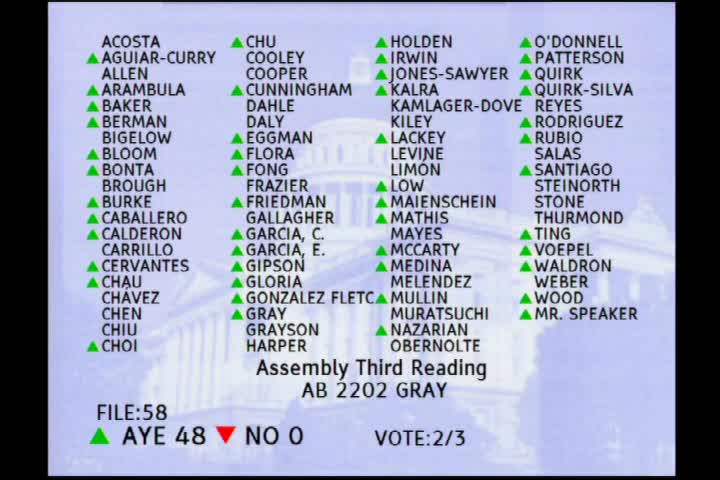 1MIN
Assembly Floor
 4MIN
Assembly Standing Committee on Health
 5MIN
Assembly Standing Committee on Education
Bill Author

Bill Co-Author(s):