AB 2322: Department of Motor Vehicles: records: confidentiality.
- Session Year: 2017-2018
- House: Assembly
- Latest Version Date: 2018-09-29
Existing law prohibits the disclosure of the home addresses of certain public employees and officials, including judges and court commissioners, that appear in records of the Department of Motor Vehicles upon the request of the employee or official, except to a court, a law enforcement agency, an attorney in a civil or criminal action under certain circumstances, and certain other official entities. Existing law prohibits the disclosure of the home addresses of the public employees and officials described above for a period of 3 years following termination of office or employment, except as specified. Existing law prohibits the disclosure of the home address of a retired peace officer permanently upon his or her request for confidentiality. Existing law also prohibits the disclosure of the home address of the surviving spouse or child of a peace officer for 3 years following the death of the peace officer if he or she died in the line of duty.
This bill would clarify that the above-described provisions apply to active or retired judges and court commissioners, and would expand those protections to the surviving spouse or child of a judge or court commissioner, if the judge or court commissioner died in the performance of his or her duties. The bill would also prohibit the disclosure of the home address of a retired judge or court commissioner permanently upon his or her request for confidentiality, and would prohibit the disclosure of the home address of the surviving spouse or child of a judge or court commissioner who died in the performance of his or her duties for 3 years following his or her death. The bill would make conforming changes to those provisions.
If the disclosure of the confidential home address of a peace officer, a nonsworn employee of the city police department or county sheriffs office, or the spouses or children of these persons in violation of these provisions results in bodily injury to those persons, existing law makes that violation a felony.
This bill would make a violation of these provisions with respect to a judge or court commissioner, or the spouses or children of these persons, a felony, thereby expanding the scope of an existing crime, and imposing a state-mandated local program.
Existing constitutional provisions require that a statute that limits the right of access to the meetings of public bodies or the writings of public officials and agencies be adopted with findings demonstrating the interest protected by the limitation and the need for protecting that interest.
This bill would make legislative findings to that effect.
The California Constitution requires the state to reimburse local agencies and school districts for certain costs mandated by the state. Statutory provisions establish procedures for making that reimbursement.
This bill would provide that no reimbursement is required by this act for a specified reason.
Existing law prohibits the disclosure of the home addresses of certain public employees and officials, including judges and court commissioners, that appear in records of the Department of Motor Vehicles upon the request of the employee or official, except to a court, a law enforcement agency, an attorney in a civil or criminal action under certain circumstances, and certain other official entities. Existing law prohibits the disclosure of the home addresses of the public employees and officials described above for a period of 3 years following termination of office or employment, except as specified. Existing law prohibits the disclosure of the home address of a retired peace officer permanently upon his or her request for confidentiality. Existing law also prohibits the disclosure of the home address of the surviving spouse or child of a peace officer for 3 years following the death of the peace officer if he or she died in the line of duty.
This bill would prohibit the disclosure of the home addresses of justices that appear in records of the department, subject to the same exceptions described above. The bill would also prohibit the disclosure of the home address of a retired judge, justice, judge or court commissioner permanently upon his or her request for confidentiality, and would prohibit the disclosure of the home address of the surviving spouse or child of a judge, justice, judge or court commissioner for 3 years following his or her death.
Existing constitutional provisions require that a statute that limits the right of access to the meetings of public bodies or the writings of public officials and agencies be adopted with findings demonstrating the interest protected by the limitation and the need for protecting that interest.
This bill would make legislative findings to that effect.
Existing law prohibits the disclosure of the home addresses of certain public employees and officials, including judges and court commissioners, that appear in records of the Department of Motor Vehicles upon the request of the employee or official, except to a court, a law enforcement agency, an attorney in a civil or criminal action under certain circumstances, and certain other official entities. Existing law prohibits the disclosure of the home addresses of the public employees and officials described above for a period of 3 years following termination of office or employment, except as specified. Existing law prohibits the disclosure of the home address of a retired peace officer permanently upon his or her request for confidentiality. Existing law also prohibits the disclosure of the home address of the surviving spouse or child of a peace officer for 3 years following the death of the peace officer if he or she died in the line of duty.
This bill would prohibit the disclosure of the home addresses of justices that appear in records of the department, subject to the same exceptions described above. The bill would also prohibit the disclosure of the home address of a retired judge, justice, or court commissioner permanently upon his or her request for confidentiality, and would prohibit the disclosure of the home address of the surviving spouse or child of a judge, justice, or court commissioner for 3 years following his or her death.
Existing constitutional provisions require that a statute that limits the right of access to the meetings of public bodies or the writings of public officials and agencies be adopted with findings demonstrating the interest protected by the limitation and the need for protecting that interest.
This bill would make legislative findings to that effect.
(a)For all of the following persons, his or her home address that appears in a record of the department is confidential if the person requests the confidentiality of that information:
(1)Attorney General.
(2)State Public Defender.
(3)A Member of the Legislature.
(4)An active or retired judge or court commissioner.
(5)A district attorney.
(6)A public defender.
(7)An attorney employed by the Department of Justice, the office of the State Public Defender, or a county office of the district attorney or public defender.
(8)A city attorney, city prosecutor, or an attorney who submits verification from his or her public employer that the attorney represents the city in matters that routinely place the attorney in personal contact with persons under investigation for, charged with, or convicted of, committing criminal acts, if that attorney is employed by a city attorney or city prosecutor.
(9)A nonsworn police dispatcher.
(10)A child abuse investigator or social worker, working in child protective services within a social services department.
(11)An active or retired peace officer, as defined in Chapter 4.5 (commencing with Section 830) of Title 3 of Part 2 of the Penal Code.
(12)An employee of the Department of Corrections and Rehabilitation, Division of Juvenile Facilities, or the Prison Industry Authority specified in Sections 20403 and 20405 of the Government Code.
(13)A nonsworn employee of a city police department, a county sheriffs office, the Department of the California Highway Patrol, a federal, state, or local detention facility, or a local juvenile hall, camp, ranch, or home, who submits agency verification that, in the normal course of his or her employment, he or she controls or supervises inmates or is required to have a prisoner in his or her care or custody.
(14)A county counsel assigned to child abuse cases.
(15)An investigator employed by the Department of Justice, a county district attorney, or a county public defender.
(16)A member of a city council.
(17)A member of a board of supervisors.
(18)A federal prosecutor, criminal investigator, or National Park Service Ranger working in this state.
(19)An active or retired city enforcement officer engaged in the enforcement of the Vehicle Code or municipal parking ordinances.
(20)An employee of a trial court.
(21)A psychiatric social worker employed by a county.
(22)A police or sheriff department employee designated by the chief of police of the department or the sheriff of the county as being in a sensitive position. A designation pursuant to this paragraph shall, for purposes of this section, remain in effect for three years subject to additional designations that, for purposes of this section, shall remain in effect for additional three-year periods.
(23)A state employee in one of the following classifications:
(A)Licensing-Registration Examiner, Department of Motor Vehicles.
(B)Motor Carrier Specialist I, Department of the California Highway Patrol.
(C)Museum Security Officer and Supervising Museum Security Officer.
(D)Licensing Program Analyst, State Department of Social Services.
(24)(A)The spouse or child of a person listed in paragraphs (1) to (23), inclusive, regardless of the spouses or childs place of residence.
(B)The surviving spouse or child of a peace officer, as defined in Chapter 4.5 (commencing with Section 830) of Title 3 of Part 2 of the Penal Code, if the peace officer died in the line of duty.
(C)The surviving spouse or child of a judge or court commissioner, if the judge or court commissioner died in the performance of his or her duties.
(D)(i)Subparagraphs (A), (B), and (C) shall not apply if the person listed in those subparagraphs was convicted of a crime and is on active parole or probation.
(ii)For requests made on or after January 1, 2011, the person requesting confidentiality for their spouse or child listed in subparagraph (A), (B), or (C) shall declare, at the time of the request for confidentiality, whether the spouse or child has been convicted of a crime and is on active parole or probation.
(iii)Neither the listed persons employer nor the department shall be required to verify, or be responsible for verifying, that a person listed in subparagraph (A), (B), or (C) was convicted of a crime and is on active parole or probation.
(D)(i)The department shall discontinue holding a home address confidential pursuant to this subdivision for a person specified in subparagraph (A), (B), or (C) who is the child or spouse of a person described in paragraph (4), (9), (11), (13), or (22) if the child or spouse is convicted of a felony in this state or is convicted of an offense in another jurisdiction that, if committed in California, would be a felony.
(ii)The department shall comply with this subparagraph upon receiving notice of a disqualifying conviction from the agency that employs or formerly employed the parent or spouse of the convicted person, or as soon as the department otherwise becomes aware of the disqualifying conviction.
(b)The confidential home address of a person listed in subdivision (a) shall not be disclosed, except to any of the following:
(1)A court.
(2)A law enforcement agency.
(3)The State Board of Equalization.
(4)An attorney in a civil or criminal action that demonstrates to a court the need for the home address, if the disclosure is made pursuant to a subpoena.
(5)A governmental agency to which, under any provision of law, information is required to be furnished from records maintained by the department.
(c)(1)A record of the department containing a confidential home address shall be open to public inspection, as provided in Section 1808, if the address is completely obliterated or otherwise removed from the record.
(2)Following termination of office or employment, a confidential home address shall be withheld from public inspection for three years, unless the termination is the result of conviction of a criminal offense. If the termination or separation is the result of the filing of a criminal complaint, a confidential home address shall be withheld from public inspection during the time in which the terminated individual may file an appeal from termination, while an appeal from termination is ongoing, and until the appeal process is exhausted, after which confidentiality shall be at the discretion of the employing agency if the termination or separation is upheld. Upon reinstatement to an office or employment, the protections of this section are available.
(3)With respect to a retired peace officer, his or her home address shall be withheld from public inspection permanently upon request of confidentiality at the time the information would otherwise be opened. The home address of the surviving spouse or child listed in subparagraph (B) of paragraph (24) of subdivision (a) shall be withheld from public inspection for three years following the death of the peace officer.
(4)The department shall inform a person who requests a confidential home address what agency the individual whose address was requested is employed by or the court at which the judge or court commissioner presides.
(5)With respect to a retired judge or court commissioner, his or her home address shall be withheld from public inspection permanently upon request of confidentiality at the time the information would otherwise be opened. The home address of the surviving spouse or child listed in subparagraph (C) of paragraph (24) of subdivision (a) shall be withheld from public inspection for three years following the death of the judge or court commissioner.
(d)A violation of subdivision (a) by the disclosure of the confidential home address of a peace officer, as specified in paragraph (11) of subdivision (a), a nonsworn employee of the city police department or county sheriffs office, a judge or court commissioner, as specified in paragraph (4) of subdivision (a), or the spouses or children of these persons, including, but not limited to, the surviving spouse or child listed in subparagraph (B) or (C) of paragraph (24) of subdivision (a), that results in bodily injury to the peace officer, employee of the city police department or county sheriffs office, judge or court commissioner, or the spouses or children of these persons is a felony.
SEC. 2.The Legislature finds and declares that Section 1 of this act, which amends Section 1808.4 of the Vehicle Code, imposes a limitation on the publics right of access to the meetings of public bodies or the writings of public officials and agencies within the meaning of Section 3 of Article I of the California Constitution. Pursuant to that constitutional provision, the Legislature makes the following findings to demonstrate the interest protected by this limitation and the need for protecting that interest:
The need to protect the privacy of judges and court commissioners, and their surviving spouses or children, from the public disclosure of their home addresses outweighs the interest in public disclosure of that information.
SEC. 3.No reimbursement is required by this act pursuant to Section 6 of Article XIIIB of the California Constitution because the only costs that may be incurred by a local agency or school district will be incurred because this act creates a new crime or infraction, eliminates a crime or infraction, or changes the penalty for a crime or infraction, within the meaning of Section 17556 of the Government Code, or changes the definition of a crime within the meaning of Section 6 of Article XIIIB of the California Constitution.
(a)For all of the following persons, his or her home address that appears in a record of the department is confidential if the person requests the confidentiality of that information:
(1)Attorney General.
(2)State Public Defender.
(3)A Member of the Legislature.
(4)A An active or retired judge or court commissioner.
(5)A district attorney.
(6)A public defender.
(7)An attorney employed by the Department of Justice, the office of the State Public Defender, or a county office of the district attorney or public defender.
(8)A city attorney, city prosecutor, or an attorney who submits verification from his or her public employer that the attorney represents the city in matters that routinely place the attorney in personal contact with persons under investigation for, charged with, or convicted of, committing criminal acts, if that attorney is employed by a city attorney or city prosecutor.
(9)A nonsworn police dispatcher.
(10)A child abuse investigator or social worker, working in child protective services within a social services department.
(11)An active or retired peace officer, as defined in Chapter 4.5 (commencing with Section 830) of Title 3 of Part 2 of the Penal Code.
(12)An employee of the Department of Corrections and Rehabilitation, Division of Juvenile Facilities, or the Prison Industry Authority specified in Sections 20403 and 20405 of the Government Code.
(13)A nonsworn employee of a city police department, a county sheriffs office, the Department of the California Highway Patrol, a federal, state, or local detention facility, or a local juvenile hall, camp, ranch, or home, who submits agency verification that, in the normal course of his or her employment, he or she controls or supervises inmates or is required to have a prisoner in his or her care or custody.
(14)A county counsel assigned to child abuse cases.
(15)An investigator employed by the Department of Justice, a county district attorney, or a county public defender.
(16)A member of a city council.
(17)A member of a board of supervisors.
(18)A federal prosecutor, criminal investigator, or National Park Service Ranger working in this state.
(19)An active or retired city enforcement officer engaged in the enforcement of the Vehicle Code or municipal parking ordinances.
(20)An employee of a trial court.
(21)A psychiatric social worker employed by a county.
(22)A police or sheriff department employee designated by the chief of police of the department or the sheriff of the county as being in a sensitive position. A designation pursuant to this paragraph shall, for purposes of this section, remain in effect for three years subject to additional designations that, for purposes of this section, shall remain in effect for additional three-year periods.
(23)A state employee in one of the following classifications:
(A)Licensing-Registration Examiner, Department of Motor Vehicles.
(B)Motor Carrier Specialist I, Department of the California Highway Patrol.
(C)Museum Security Officer and Supervising Museum Security Officer.
(D)Licensing Program Analyst, State Department of Social Services.
(24)(A)The spouse or child of a person listed in paragraphs (1) to (23), inclusive, regardless of the spouses or childs place of residence.
(B)The surviving spouse or child of a peace officer, as defined in Chapter 4.5 (commencing with Section 830) of Title 3 of Part 2 of the Penal Code, if the peace officer died in the line of duty.
(C)The surviving spouse or child of a judge or court commissioner, if the judge or court commissioner died in the performance of his or her duties.
(C)(D)(i)Subparagraphs (A) and (B) (A), (B), and (C) shall not apply if the person listed in those subparagraphs was convicted of a crime and is on active parole or probation.
(ii)For requests made on or after January 1, 2011, the person requesting confidentiality for their spouse or child listed in subparagraph (A) or (B) (A), (B), or (C) shall declare, at the time of the request for confidentiality, whether the spouse or child has been convicted of a crime and is on active parole or probation.
(iii)Neither the listed persons employer nor the department shall be required to verify, or be responsible for verifying, that a person listed in subparagraph (A) or (B) (A), (B), or (C) was convicted of a crime and is on active parole or probation.
(D)(i)The department shall discontinue holding a home address confidential pursuant to this subdivision for a person specified in subparagraph (A) or (B) (A), (B), or (C) who is the child or spouse of a person described in paragraph (4), (9), (11), (13), or (22) if the child or spouse is convicted of a felony in this state or is convicted of an offense in another jurisdiction that, if committed in California, would be a felony.
(ii)The department shall comply with this subparagraph upon receiving notice of a disqualifying conviction from the agency that employs or formerly employed the parent or spouse of the convicted person, or as soon as the department otherwise becomes aware of the disqualifying conviction.
(b)The confidential home address of a person listed in subdivision (a) shall not be disclosed, except to any of the following:
(1)A court.
(2)A law enforcement agency.
(3)The State Board of Equalization.
(4)An attorney in a civil or criminal action that demonstrates to a court the need for the home address, if the disclosure is made pursuant to a subpoena.
(5)A governmental agency to which, under any provision of law, information is required to be furnished from records maintained by the department.
(c)(1)A record of the department containing a confidential home address shall be open to public inspection, as provided in Section 1808, if the address is completely obliterated or otherwise removed from the record.
(2)Following termination of office or employment, a confidential home address shall be withheld from public inspection for three years, unless the termination is the result of conviction of a criminal offense. If the termination or separation is the result of the filing of a criminal complaint, a confidential home address shall be withheld from public inspection during the time in which the terminated individual may file an appeal from termination, while an appeal from termination is ongoing, and until the appeal process is exhausted, after which confidentiality shall be at the discretion of the employing agency if the termination or separation is upheld. Upon reinstatement to an office or employment, the protections of this section are available.
(3)With respect to a retired peace officer, his or her home address shall be withheld from public inspection permanently upon request of confidentiality at the time the information would otherwise be opened. The home address of the surviving spouse or child listed in subparagraph (B) of paragraph (24) of subdivision (a) shall be withheld from public inspection for three years following the death of the peace officer.
(4)The department shall inform a person who requests a confidential home address what agency the individual whose address was requested is employed by or the court at which the judge or court commissioner presides.
(5)With respect to a retired judge or court commissioner, his or her home address shall be withheld from public inspection permanently upon request of confidentiality at the time the information would otherwise be opened. The home address of the surviving spouse or child of a judge or court commissioner listed in subparagraph (C) of paragraph (24) of subdivision (a) shall be withheld from public inspection for three years following the death of the judge or court commissioner.
(d)A violation of subdivision (a) by the disclosure of the confidential home address of a peace officer, as specified in paragraph (11) of subdivision (a), a nonsworn employee of the city police department or county sheriffs office, a judge or court commissioner, as specified in paragraph (4) of subdivision (a), or the spouses or children of these persons, including, but not limited to, the surviving spouse or child listed in subparagraph (B) or (C) of paragraph (24) of subdivision (a), that results in bodily injury to the peace officer, employee of the city police department or county sheriffs office, judge or court commissioner, or the spouses or children of these persons is a felony.
SEC. 2.The Legislature finds and declares that Section 1 of this act, which amends Section 1808.4 of the Vehicle Code, imposes a limitation on the publics right of access to the meetings of public bodies or the writings of public officials and agencies within the meaning of Section 3 of Article I of the California Constitution. Pursuant to that constitutional provision, the Legislature makes the following findings to demonstrate the interest protected by this limitation and the need for protecting that interest:
The need to protect the privacy of judges and court commissioners, and their surviving spouses or children, from the public disclosure of their home addresses outweighs the interest in public disclosure of that information.
SEC. 3.No reimbursement is required by this act pursuant to Section 6 of Article XIIIB of the California Constitution because the only costs that may be incurred by a local agency or school district will be incurred because this act creates a new crime or infraction, eliminates a crime or infraction, or changes the penalty for a crime or infraction, within the meaning of Section 17556 of the Government Code, or changes the definition of a crime within the meaning of Section 6 of Article XIIIB of the California Constitution.
(a)For all of the following persons, his or her home address that appears in a record of the department is confidential if the person requests the confidentiality of that information:
(1)Attorney General.
(2)State Public Defender.
(3)A Member of the Legislature.
(4)A judge, justice, judge or court commissioner.
(5)A district attorney.
(6)A public defender.
(7)An attorney employed by the Department of Justice, the office of the State Public Defender, or a county office of the district attorney or public defender.
(8)A city attorney, city prosecutor, or an attorney who submits verification from his or her public employer that the attorney represents the city in matters that routinely place the attorney in personal contact with persons under investigation for, charged with, or convicted of, committing criminal acts, if that attorney is employed by a city attorney or city prosecutor.
(9)A nonsworn police dispatcher.
(10)A child abuse investigator or social worker, working in child protective services within a social services department.
(11)An active or retired peace officer, as defined in Chapter 4.5 (commencing with Section 830) of Title 3 of Part 2 of the Penal Code.
(12)An employee of the Department of Corrections and Rehabilitation, Division of Juvenile Facilities, or the Prison Industry Authority specified in Sections 20403 and 20405 of the Government Code.
(13)A nonsworn employee of a city police department, a county sheriffs office, the Department of the California Highway Patrol, a federal, state, or local detention facility, or a local juvenile hall, camp, ranch, or home, who submits agency verification that, in the normal course of his or her employment, he or she controls or supervises inmates or is required to have a prisoner in his or her care or custody.
(14)A county counsel assigned to child abuse cases.
(15)An investigator employed by the Department of Justice, a county district attorney, or a county public defender.
(16)A member of a city council.
(17)A member of a board of supervisors.
(18)A federal prosecutor, criminal investigator, or National Park Service Ranger working in this state.
(19)An active or retired city enforcement officer engaged in the enforcement of the Vehicle Code or municipal parking ordinances.
(20)An employee of a trial court.
(21)A psychiatric social worker employed by a county.
(22)A police or sheriff department employee designated by the chief of police of the department or the sheriff of the county as being in a sensitive position. A designation pursuant to this paragraph shall, for purposes of this section, remain in effect for three years subject to additional designations that, for purposes of this section, shall remain in effect for additional three-year periods.
(23)A state employee in one of the following classifications:
(A)Licensing-Registration Examiner, Department of Motor Vehicles.
(B)Motor Carrier Specialist I, Department of the California Highway Patrol.
(C)Museum Security Officer and Supervising Museum Security Officer.
(D)Licensing Program Analyst, State Department of Social Services.
(24)(A)The spouse or child of a person listed in paragraphs (1) to (23), inclusive, regardless of the spouses or childs place of residence.
(B)The surviving spouse or child of a peace officer, as defined in Chapter 4.5 (commencing with Section 830) of Title 3 of Part 2 of the Penal Code, if the peace officer died in the line of duty.
(C)(i)Subparagraphs (A) and (B) shall not apply if the person listed in those subparagraphs was convicted of a crime and is on active parole or probation.
(ii)For requests made on or after January 1, 2011, the person requesting confidentiality for their spouse or child listed in subparagraph (A) or (B) shall declare, at the time of the request for confidentiality, whether the spouse or child has been convicted of a crime and is on active parole or probation.
(iii)Neither the listed persons employer nor the department shall be required to verify, or be responsible for verifying, that a person listed in subparagraph (A) or (B) was convicted of a crime and is on active parole or probation.
(D)(i)The department shall discontinue holding a home address confidential pursuant to this subdivision for a person specified in subparagraph (A) or (B) who is the child or spouse of a person described in paragraph (9), (11), (13), or (22) if the child or spouse is convicted of a felony in this state or is convicted of an offense in another jurisdiction that, if committed in California, would be a felony.
(ii)The department shall comply with this subparagraph upon receiving notice of a disqualifying conviction from the agency that employs or formerly employed the parent or spouse of the convicted person, or as soon as the department otherwise becomes aware of the disqualifying conviction.
(b)The confidential home address of a person listed in subdivision (a) shall not be disclosed, except to any of the following:
(1)A court.
(2)A law enforcement agency.
(3)The State Board of Equalization.
(4)An attorney in a civil or criminal action that demonstrates to a court the need for the home address, if the disclosure is made pursuant to a subpoena.
(5)A governmental agency to which, under any provision of law, information is required to be furnished from records maintained by the department.
(c)(1)A record of the department containing a confidential home address shall be open to public inspection, as provided in Section 1808, if the address is completely obliterated or otherwise removed from the record.
(2)Following termination of office or employment, a confidential home address shall be withheld from public inspection for three years, unless the termination is the result of conviction of a criminal offense. If the termination or separation is the result of the filing of a criminal complaint, a confidential home address shall be withheld from public inspection during the time in which the terminated individual may file an appeal from termination, while an appeal from termination is ongoing, and until the appeal process is exhausted, after which confidentiality shall be at the discretion of the employing agency if the termination or separation is upheld. Upon reinstatement to an office or employment, the protections of this section are available.
(3)With respect to a retired peace officer, his or her home address shall be withheld from public inspection permanently upon request of confidentiality at the time the information would otherwise be opened. The home address of the surviving spouse or child listed in subparagraph (B) of paragraph (24) of subdivision (a) shall be withheld from public inspection for three years following the death of the peace officer.
(4)The department shall inform a person who requests a confidential home address what agency the individual whose address was requested is employed by or the court at which the judge, justice, judge or court commissioner presides.
(5)With respect to a retired judge, justice, judge or court commissioner, his or her home address shall be withheld from public inspection permanently upon request of confidentiality at the time the information would otherwise be opened. The home address of the surviving spouse or child of a judge, justice, judge or court commissioner shall be withheld from public inspection for three years following the death of the judge, justice, judge or court commissioner.
(d)A violation of subdivision (a) by the disclosure of the confidential home address of a peace officer, as specified in paragraph (11) of subdivision (a), a nonsworn employee of the city police department or county sheriffs office, or the spouses or children of these persons, including, but not limited to, the surviving spouse or child listed in subparagraph (B) of paragraph (24) of subdivision (a), that results in bodily injury to the peace officer, employee of the city police department or county sheriffs office, or the spouses or children of these persons is a felony.
SEC. 2.The Legislature finds and declares that Section 1 of this act, which amends Section 1808.4 of the Vehicle Code, imposes a limitation on the publics right of access to the meetings of public bodies or the writings of public officials and agencies within the meaning of Section 3 of Article I of the California Constitution. Pursuant to that constitutional provision, the Legislature makes the following findings to demonstrate the interest protected by this limitation and the need for protecting that interest:
The need to protect the privacy of judges, justices, judges and court commissioners, and their surviving spouses or children, from the public disclosure of their home addresses outweighs the interest in public disclosure of that information.
(a)For all of the following persons, his or her home address that appears in a record of the department is confidential if the person requests the confidentiality of that information:
(1)Attorney General.
(2)State Public Defender.
(3)A Member of the Legislature.
(4)A judge judge, justice, or court commissioner.
(5)A district attorney.
(6)A public defender.
(7)An attorney employed by the Department of Justice, the office of the State Public Defender, or a county office of the district attorney or public defender.
(8)A city attorney, city prosecutor, or an attorney who submits verification from his or her public employer that the attorney represents the city in matters that routinely place the attorney in personal contact with persons under investigation for, charged with, or convicted of, committing criminal acts, if that attorney is employed by a city attorney or city prosecutor.
(9)A nonsworn police dispatcher.
(10)A child abuse investigator or social worker, working in child protective services within a social services department.
(11)An active or retired peace officer, as defined in Chapter 4.5 (commencing with Section 830) of Title 3 of Part 2 of the Penal Code.
(12)An employee of the Department of Corrections and Rehabilitation, Division of Juvenile Facilities, or the Prison Industry Authority specified in Sections 20403 and 20405 of the Government Code.
(13)A nonsworn employee of a city police department, a county sheriffs office, the Department of the California Highway Patrol, a federal, state, or local detention facility, or a local juvenile hall, camp, ranch, or home, who submits agency verification that, in the normal course of his or her employment, he or she controls or supervises inmates or is required to have a prisoner in his or her care or custody.
(14)A county counsel assigned to child abuse cases.
(15)An investigator employed by the Department of Justice, a county district attorney, or a county public defender.
(16)A member of a city council.
(17)A member of a board of supervisors.
(18)A federal prosecutor, criminal investigator, or National Park Service Ranger working in this state.
(19)An active or retired city enforcement officer engaged in the enforcement of the Vehicle Code or municipal parking ordinances.
(20)An employee of a trial court.
(21)A psychiatric social worker employed by a county.
(22)A police or sheriff department employee designated by the chief of police of the department or the sheriff of the county as being in a sensitive position. A designation pursuant to this paragraph shall, for purposes of this section, remain in effect for three years subject to additional designations that, for purposes of this section, shall remain in effect for additional three-year periods.
(23)A state employee in one of the following classifications:
(A)Licensing-Registration Examiner, Department of Motor Vehicles.
(B)Motor Carrier Specialist I, Department of the California Highway Patrol.
(C)Museum Security Officer and Supervising Museum Security Officer.
(D)Licensing Program Analyst, State Department of Social Services.
(24)(A)The spouse or child of a person listed in paragraphs (1) to (23), inclusive, regardless of the spouses or childs place of residence.
(B)The surviving spouse or child of a peace officer, as defined in Chapter 4.5 (commencing with Section 830) of Title 3 of Part 2 of the Penal Code, if the peace officer died in the line of duty.
(C)(i)Subparagraphs (A) and (B) shall not apply if the person listed in those subparagraphs was convicted of a crime and is on active parole or probation.
(ii)For requests made on or after January 1, 2011, the person requesting confidentiality for their spouse or child listed in subparagraph (A) or (B) shall declare, at the time of the request for confidentiality, whether the spouse or child has been convicted of a crime and is on active parole or probation.
(iii)Neither the listed persons employer nor the department shall be required to verify, or be responsible for verifying, that a person listed in subparagraph (A) or (B) was convicted of a crime and is on active parole or probation.
(D)(i)The department shall discontinue holding a home address confidential pursuant to this subdivision for a person specified in subparagraph (A) or (B) who is the child or spouse of a person described in paragraph (9), (11), (13), or (22) if the child or spouse is convicted of a felony in this state or is convicted of an offense in another jurisdiction that, if committed in California, would be a felony.
(ii)The department shall comply with this subparagraph upon receiving notice of a disqualifying conviction from the agency that employs or formerly employed the parent or spouse of the convicted person, or as soon as the department otherwise becomes aware of the disqualifying conviction.
(b)The confidential home address of a person listed in subdivision (a) shall not be disclosed, except to any of the following:
(1)A court.
(2)A law enforcement agency.
(3)The State Board of Equalization.
(4)An attorney in a civil or criminal action that demonstrates to a court the need for the home address, if the disclosure is made pursuant to a subpoena.
(5)A governmental agency to which, under any provision of law, information is required to be furnished from records maintained by the department.
(c)(1)A record of the department containing a confidential home address shall be open to public inspection, as provided in Section 1808, if the address is completely obliterated or otherwise removed from the record.
(2)Following termination of office or employment, a confidential home address shall be withheld from public inspection for three years, unless the termination is the result of conviction of a criminal offense. If the termination or separation is the result of the filing of a criminal complaint, a confidential home address shall be withheld from public inspection during the time in which the terminated individual may file an appeal from termination, while an appeal from termination is ongoing, and until the appeal process is exhausted, after which confidentiality shall be at the discretion of the employing agency if the termination or separation is upheld. Upon reinstatement to an office or employment, the protections of this section are available.
(3)With respect to a retired peace officer, his or her home address shall be withheld from public inspection permanently upon request of confidentiality at the time the information would otherwise be opened. The home address of the surviving spouse or child listed in subparagraph (B) of paragraph (24) of subdivision (a) shall be withheld from public inspection for three years following the death of the peace officer.
(4)The department shall inform a person who requests a confidential home address what agency the individual whose address was requested is employed by or the court at which the judge judge, justice, or court commissioner presides.
(5)With respect to a retired judge, justice, or court commissioner, his or her home address shall be withheld from public inspection permanently upon request of confidentiality at the time the information would otherwise be opened. The home address of the surviving spouse or child of a judge, justice, or court commissioner shall be withheld from public inspection for three years following the death of the judge, justice, or court commissioner.
(d)A violation of subdivision (a) by the disclosure of the confidential home address of a peace officer, as specified in paragraph (11) of subdivision (a), a nonsworn employee of the city police department or county sheriffs office, or the spouses or children of these persons, including, but not limited to, the surviving spouse or child listed in subparagraph (B) of paragraph (24) of subdivision (a), that results in bodily injury to the peace officer, employee of the city police department or county sheriffs office, or the spouses or children of these persons is a felony.
SEC. 2.The Legislature finds and declares that Section 1 of this act, which amends Section 1808.4 of the Vehicle Code, imposes a limitation on the publics right of access to the meetings of public bodies or the writings of public officials and agencies within the meaning of Section 3 of Article I of the California Constitution. Pursuant to that constitutional provision, the Legislature makes the following findings to demonstrate the interest protected by this limitation and the need for protecting that interest:
The need to protect the privacy of judges, justices, and court commissioners, and their surviving spouses or children, from the public disclosure of their home addresses outweighs the interest in public disclosure of that information.
|
Date
|
Status
|
|---|---|
| Sep 29, 2018 | Chaptered by Secretary of State - Chapter 914, Statutes of 2018. |
| Sep 29, 2018 | Approved by the Governor. |
| Aug 24, 2018 | Enrolled and presented to the Governor at 4:30 p.m. |
| Aug 20, 2018 | Senate amendments concurred in. To Engrossing and Enrolling. |
| Aug 14, 2018 | In Assembly. Concurrence in Senate amendments pending. May be considered on or after August 16 pursuant to Assembly Rule 77. |
| Aug 13, 2018 | Read third time. Passed. Ordered to the Assembly. |
| Aug 7, 2018 | Read second time. Ordered to third reading. |
| Aug 6, 2018 | Read third time and amended. Ordered to second reading. |
| Jun 28, 2018 | From Consent Calendar. |
| Jun 26, 2018 | Read second time. Ordered to Consent Calendar. |
| Jun 25, 2018 | From committee: Be ordered to second reading file pursuant to Senate Rule 28.8 and ordered to Consent Calendar. |
| May 15, 2018 | From committee: Do pass and re-refer to Com. on APPR. with recommendation: To Consent Calendar. (Ayes 7. Noes 0.) (May 15). Re-referred to Com. on APPR. |
| Apr 25, 2018 | Referred to Com. on PUB. S. |
| Apr 12, 2018 | In Senate. Read first time. To Com. on RLS. for assignment. |
| Apr 12, 2018 | Read third time. Passed. Ordered to the Senate. |
| Apr 5, 2018 | Read second time. Ordered to Consent Calendar. |
| Apr 4, 2018 | From committee: Do pass. To Consent Calendar. (Ayes 15. Noes 0.) (April 4). |
| Mar 20, 2018 | From committee: Do pass and re-refer to Com. on APPR. with recommendation: To Consent Calendar. (Ayes 13. Noes 0.) (March 19). Re-referred to Com. on APPR. |
| Mar 8, 2018 | Re-referred to Com. on TRANS. |
| Mar 7, 2018 | From committee chair, with author's amendments: Amend, and re-refer to Com. on TRANS. Read second time and amended. |
| Mar 1, 2018 | Referred to Com. on TRANS. |
| Feb 14, 2018 | From printer. May be heard in committee March 16. |
| Feb 13, 2018 | Read first time. To print. |
|
Date
|
Description
|
Location
|
Votes
|
|
|---|---|---|---|---|
| Aug 20, 2018 | AB 2322 DALY Concurrence in Senate Amendments | Assembly Floor |
Passed |
|
| Aug 13, 2018 | Assembly 3rd Reading AB2322 Daly By Wieckowski | Senate Floor |
Passed |
|
| May 15, 2018 | Do pass, but first be re-referred to the Committee on [Appropriations] with the recommendation: To Consent Calendar | Senate Standing Committee on Public Safety |
Passed |
|
| Apr 12, 2018 | AB 2322 DALY Consent Calendar Second Day Regular Session | Assembly Floor |
Passed |
|
| Apr 4, 2018 | Do pass. To Consent Calendar. | Assembly Standing Committee on Appropriations |
Passed |
|
| Mar 19, 2018 | Do pass and be re-referred to the Committee on [Appropriations] with recommendation: To Consent Calendar | Assembly Standing Committee on Transportation |
Passed |
This list shows positions taken on this bill by organizations on the date displayed, which is linked to the original source.
Positions by individuals are not included.
CONCURRENCE IN SENATE AMENDMENTS
CSA1 Bill Id:AB 2322
Author:(Daly)
As Amended Ver:August 6, 2018
Majority vote
ASSEMBLY: | 68-0 | (April 12, 2018) | SENATE: | 36-0 | (August 13, 2018) |
Original Committee Reference: TRANS.
SUMMARY: Requires the Department of Motor Vehicles (DMV), upon request, to make a retired judge or court commissioner's home address confidential for the rest of his or her life and for any surviving spouse or child for three years following the death of the judge or court commissioner.
The Senate amendments allow a surviving child or spouse of a judge or court commissioner to permanently be in the Confidential Records Program (CRP) if the judge or court commissioner died in performance of his or her duties. Further, a retired judge, court commissioner or their surviving spouse or child would be removed from the CRP if they are convicted of a crime and are on active parole or probation.
EXISTING LAW makes confidential the home addresses of all individuals contained within DMV records. These provisions similarly allow for disclosure to courts, law enforcement agencies, and other governmental agencies, but also allow for limited disclosure to financial institutions, insurance companies, attorneys, vehicle manufacturers, and persons doing statistical research.
FISCAL EFFECT: According to the Senate Appropriations Committee, pursuant to Senate Rule 28.8, negligible state cost.
COMMENTS: Until 1989, DMV records were considered public records unless state law specifically made them confidential, as was the case for the addresses of peace officers and certain other officials thought to be at risk. Because home addresses were not considered confidential, any person who gave a reason that DMV deemed legitimate and could present to DMV a person's driver's license number or license plate number could obtain address information on that individual.
In 1989, actress Rebecca Schaeffer was stalked and killed. The murderer obtained her address from a private investigation agency doing business in Arizona. The private investigation agency acquired her address through a subcontractor agent in California, who obtained it from DMV. In response, the Legislature enacted AB 1779 (Roos), Chapter 1213, Statutes of 1989, which made all home addresses in DMV records confidential, with limited exceptions. AB 1779 left in place existing confidentiality provisions that applied only to peace officers and certain other officials. The list of those to whom the pre-AB 1779 confidentiality provisions apply, generally referred to as the CRP, now includes 23 classes of persons. DMV is not aware of any instances since the implementation of AB 1779 where confidential home address information has been used for physical harm or for violent criminal purposes.
Judges and court commissioners are currently included in the CRP. Their records are included in the CRP for three years after termination of office or employment. This bill will extend their participation in the program until his or her death, and keep their surviving child or spouse in the CRP for an additional three years. This is a similar provision already applied to peace officers.
Statement in Support: According to The California Judges Association: "This change to current law is needed because three years of protection after a judicial officer's retirement is inadequate. Judicial officers decide the punishment a suspect receives, and suspects convicted of serious or violent felonies receive lengthy state prison commitments, leaving many years for their friends and families, and the suspects themselves, to retaliate against the judicial officer…. Unlike peace officers, judicial officers are not generally trained nor equipped to effectively defend themselves and are not issued weapons."
Given that DMV records are universally confidential, with limited exceptions, and the fact that DMV is not aware of any instances since the implementation of AB 1779 in which DMV home address information has been used for physical harm or for violent criminal purposes, the need for this bill is unclear. While it may appear that the CRP provides a greater level of confidentiality than is available to the general public, functionally the level of confidentiality is the same. People seeking confidential information about others generally do not look to DMV records for personal data since those records are so carefully protected and the same information is much more easily obtainable via the internet and social media.
A 2009 investigative article from Jennifer Muir at the Orange County Register found another use for individuals protected under the CRP: evading tickets. The article found:
- Vehicles with protected license plates can run through dozens of intersections controlled by red light cameras and breeze along the 91 toll lanes with impunity.
- Parking citations issued to vehicles with protected plates are often dismissed because the process necessary to pierce the shield is too cumbersome.
- Some patrol officers let drivers with protected plates off with a warning because the plates signal that the drivers are "one of their own" or related to someone who is.
In fact, the Register found through a public records request of the Orange County Transportation Authority that there were 14,535 unpaid trips on toll facilities in the county by motorists with confidential plates over a five year period.
Analysis Prepared by: David Sforza / TRANS. / (916) 319-2093 FN: 0003997
Office of Senate Floor Analyses (916) 651-1520 Fax: (916) 327-4478 | AB |
THIRD READING
Bill No: AB 2322
: in Senate
SENATE PUBLIC SAFETY COMMITTEE: 7-0, 5/15/18
AYES: Skinner, Anderson, Bradford, Jackson, Mitchell, Stone, Wiener
SENATE APPROPRIATIONS COMMITTEE: Senate Rule 28.8
ASSEMBLY FLOOR: 68-0, 4/12/18 (Consent) - See last page for vote
SOURCE: California Judges Association
DIGEST:
This bill provides that a judge who requests an additional level of confidentiality from the Department of Motor Vehicles shall have his or her records remain confidential even after retirement.
Senate Floor Amendments of 8/6/18 make technical and clarifying amendments.
Existing law:
- Provides that the residential addresses of certain public employees and their families are confidential. (Vehicle Code §§ 1808.4 and 1808.6 - began in 1977.)
- States that all residence addresses in any record of the Department of Motor Vehicles (DMV) are confidential and shall not be disclosed to any person, except a court, law enforcement agency, or other governmental agency, or as authorized in section 1808.22 of the Vehicle Code. (Vehicle Code §§ 1808.21 - added in 1989.)
- States that any person may seek suppression of any DMV registration or driver’s license record if he or she can show that he or she is the subject of stalking or a threat of death or great bodily injury. The suppression will be for a period of one year renewable for two more one year periods. (Vehicle Code § 1808.21(d).)
- Provides that the home address of specified persons which appear in the records of DMV is confidential upon the request of the person and that it not be disclosed except as specified. (Vehicle Code §§ 1808.4 and 1808.6.)
- Provides that the willful, unauthorized disclosure of this information as it relates to specified law enforcement (peace officers, employees of city police departments, and county sheriffs’ offices and their families) that results in the bodily injury to the individual or individuals whose specified information was confidential, is a felony. (Vehicle Code § 1808.4.)
- Provides that a retired peace officer shall have his or her home address permanently withheld from public inspection upon the initial request of confidentiality and it shall not be opened after they retired. (Vehicle Code § 1880.4 (c)(3))
- Provides that the release of such confidential information, for all other persons specified, is a misdemeanor and punishable by a fine of up to $5,000 and/or by up to one year in a county jail. (Vehicle Code § 1808.45.)
This bill provides that with respect to a retired judge or court commissioner, his or her home address shall be withheld from public inspection permanently upon request of confidentiality at the time the information would otherwise be opened. The home address of the surviving spouse or child of a judge or court commissioner shall be withheld from public inspection for three years following the death of the judge or court commissioner who died while in the performance of his or her duties.
Background
Background of DMV Confidentiality. Vehicle Code section 1808.4 was added by statute in 1977 to provide confidentiality of home addresses to specified public employees and their families.
In 1989, Vehicle Code section 1808.21 was added to make all residence addresses contained within the Department of Motor Vehicle files confidential. Vehicle Code section 1808.21(a) states the following:
The residence address in any record of the department is confidential and cannot be disclosed to any person except a court, law enforcement agency, or other governmental agency, or as authorized in Section 1808.22 or 1808.23.
This section was further amended in 1994 to allow individuals under specific circumstances to request that their entire records be suppressed. Any individual who is the subject of stalking or who is experiencing a threat of death or great bodily injury to his or her person may request their entire record to be suppressed under this section.
Upon suppression of a record, each request for information about that record has to be authorized by the subject of the record or verified as legitimate by other investigative means by the DMV before the information is released.
A record is suppressed for a one-year period. At the end of the one year period, the suppression is continued for a period determined by the department and if the person submits verification acceptable to the department that he or she continues to have reasonable cause to believe that he or she is the subject of stalking or that there exists a threat of death or great bodily injury to his or her person.
DMV has long maintained that all residence addresses are suppressed and only persons authorized by statute can access this information. The general public cannot under any circumstances access anyone’s records.
Under sections 1808.4 and 1808.6 the home addresses of specific individuals are suppressed and can only be accessed through the Confidential Records Unit of the DMV while under section 1808.21, the residence address portion of all individuals’ records are suppressed but can be accessed by a court, law enforcement agency, or other governmental agency or other authorized persons.
In addition, peace officers’ records shall be suppressed even after they retire if they request this additional confidentiality.
This bill additionally provides that the records of a judge or court commissioner shall be permanently suppressed even after he or she retires if he or she had requested the additional confidentiality.
FISCAL EFFECT: Appropriation: Fiscal Com.: Local:
California Judges Association (source)
Judicial Council
A number of current and former Superior Court Judges
None received
ASSEMBLY FLOOR: 68-0, 4/12/18
AYES: Acosta, Aguiar-Curry, Travis Allen, Arambula, Baker, Berman, Bigelow, Bonta, Brough, Burke, Caballero, Calderon, Carrillo, Cervantes, Chau, Chávez, Chen, Chiu, Choi, Chu, Cooley, Cooper, Cunningham, Dahle, Daly, Eggman, Flora, Fong, Frazier, Friedman, Gallagher, Eduardo Garcia, Gipson, Gloria, Gonzalez Fletcher, Grayson, Harper, Holden, Irwin, Kalra, Kiley, Lackey, Levine, Maienschein, Mathis, Mayes, McCarty, Medina, Melendez, Muratsuchi, Nazarian, Obernolte, O'Donnell, Patterson, Quirk, Quirk-Silva, Reyes, Rodriguez, Rubio, Salas, Mark Stone, Thurmond, Ting, Voepel, Waldron, Weber, Wood, Rendon
NO VOTE RECORDED: Bloom, Cristina Garcia, Gray, Jones-Sawyer, Limón, Low, Mullin, Santiago, Steinorth
8/8/18 10:21:43
**** END ****
Office of Senate Floor Analyses (916) 651-1520 Fax: (916) 327-4478 | AB |
THIRD READING
Bill No: AB 2322
:
SENATE PUBLIC SAFETY COMMITTEE: 7-0, 5/15/18
AYES: Skinner, Anderson, Bradford, Jackson, Mitchell, Stone, Wiener
SENATE APPROPRIATIONS COMMITTEE: Senate Rule 28.8
ASSEMBLY FLOOR: 68-0, 4/12/18 (Consent) - See last page for vote
SOURCE: California Judges Association
DIGEST:
This bill provides that a judge who requests an additional level of confidentiality from the Department of Motor Vehicles shall have his or her records remain confidential even after retirement.
Existing law:
- Provides that the residential addresses of certain public employees and their families are confidential. (Vehicle Code §§ 1808.4 and 1808.6 - began in 1977.)
- States that all residence addresses in any record of the Department of Motor Vehicles (DMV) are confidential and shall not be disclosed to any person, except a court, law enforcement agency, or other governmental agency, or as authorized in section 1808.22 of the Vehicle Code. (Vehicle Code §§ 1808.21 - added in 1989.)
- States that any person may seek suppression of any DMV registration or driver’s license record if he or she can show that he or she is the subject of stalking or a threat of death or great bodily injury. The suppression will be for a period of one year renewable for two more one year periods. (Vehicle Code § 1808.21(d).)
- Provides that the home address of specified persons which appear in the records of DMV is confidential upon the request of the person and that it not be disclosed except as specified. (Vehicle Code §§ 1808.4 and 1808.6.)
- Provides that the willful, unauthorized disclosure of this information as it relates to specified law enforcement (peace officers, employees of city police departments, and county sheriffs’ offices and their families) that results in the bodily injury to the individual or individuals whose specified information was confidential, is a felony. (Vehicle Code § 1808.4.)
- Provides that a retired peace officer shall have his or her home address permanently withheld from public inspection upon the initial request of confidentiality and it shall not be opened after they retired. (Vehicle Code § 1880.4 (c)(3))
- Provides that the release of such confidential information, for all other persons specified, is a misdemeanor and punishable by a fine of up to $5,000 and/or by up to one year in a county jail. (Vehicle Code § 1808.45.)
This bill provides that with respect to a retired judge or court commissioner, his or her home address shall be withheld from public inspection permanently upon request of confidentiality at the time the information would otherwise be opened. The home address of the surviving spouse or child of a judge or court commissioner shall be withheld from public inspection for three years following the death of the judge or court commissioner.
Background
Background of DMV Confidentiality
Vehicle Code section 1808.4 was added by statute in 1977 to provide confidentiality of home addresses to specified public employees and their families.
In 1989, Vehicle Code section 1808.21 was added to make all residence addresses contained within the Department of Motor Vehicle files confidential. Vehicle Code section 1808.21(a) states the following:
The residence address in any record of the department is confidential and cannot be disclosed to any person except a court, law enforcement agency, or other governmental agency, or as authorized in Section 1808.22 or 1808.23.
This section was further amended in 1994 to allow individuals under specific circumstances to request that their entire records be suppressed. Any individual who is the subject of stalking or who is experiencing a threat of death or great bodily injury to his or her person may request their entire record to be suppressed under this section.
Upon suppression of a record, each request for information about that record has to be authorized by the subject of the record or verified as legitimate by other investigative means by the DMV before the information is released.
A record is suppressed for a one-year period. At the end of the one year period, the suppression is continued for a period determined by the department and if the person submits verification acceptable to the department that he or she continues to have reasonable cause to believe that he or she is the subject of stalking or that there exists a threat of death or great bodily injury to his or her person.
DMV has long maintained that all residence addresses are suppressed and only persons authorized by statute can access this information. The general public cannot under any circumstances access anyone’s records.
Under sections 1808.4 and 1808.6 the home addresses of specific individuals are suppressed and can only be accessed through the Confidential Records Unit of the DMV while under section 1808.21, the residence address portion of all individuals’ records are suppressed but can be accessed by a court, law enforcement agency, or other governmental agency or other authorized persons.
In addition, peace officers’ records shall be suppressed even after they retire if they request this additional confidentiality.
This bill additionally provides that the records of a judge or court commissioner shall be permanently suppressed even after he or she retires if he or she had requested the additional confidentiality.
FISCAL EFFECT: Appropriation: Fiscal Com.: Local:
California Judges Association (source)
Judicial Council
A number of current and former Superior Court Judges
OPPOSITION: (Verified 6/25/18)
None received
ASSEMBLY FLOOR: 68-0, 4/12/18
AYES: Acosta, Aguiar-Curry, Travis Allen, Arambula, Baker, Berman, Bigelow, Bonta, Brough, Burke, Caballero, Calderon, Carrillo, Cervantes, Chau, Chávez, Chen, Chiu, Choi, Chu, Cooley, Cooper, Cunningham, Dahle, Daly, Eggman, Flora, Fong, Frazier, Friedman, Gallagher, Eduardo Garcia, Gipson, Gloria, Gonzalez Fletcher, Grayson, Harper, Holden, Irwin, Kalra, Kiley, Lackey, Levine, Maienschein, Mathis, Mayes, McCarty, Medina, Melendez, Muratsuchi, Nazarian, Obernolte, O'Donnell, Patterson, Quirk, Quirk-Silva, Reyes, Rodriguez, Rubio, Salas, Mark Stone, Thurmond, Ting, Voepel, Waldron, Weber, Wood, Rendon
NO VOTE RECORDED: Bloom, Cristina Garcia, Gray, Jones-Sawyer, Limón, Low, Mullin, Santiago, Steinorth
Prepared by: Mary Kennedy / PUB. S. /
6/28/18 14:45:52
**** END ****
SENATE COMMITTEE ON PUBLIC SAFETY
Senator Nancy Skinner, Chair
2017 - 2018 Regular
Bill No: AB 2322 Hearing Date: May 15, 2018
Author: | Daly | ||
Version: | March 7, 2018 | ||
Urgency: | No | Fiscal: | Yes |
Consultant: | MK | ||
Subject: Department of Motor Vehicles: Records: Confidentiality
HISTORY
Source: California Judges Association
Prior Legislation: SB 1131 (Galgiani) Held Senate Appropriations 2016
SB 372 (Galgiani) 2015 this version held in Senate Appropriations
SB 767 (Lieu) (as amended in the Assembly) failed Assembly
Transportation, 2014
AB 2687 (Bocanegra) Ch. 273, Stats. 2014
AB 1270 (Eggman) failed Assembly Appropriations, 2013
AB 923 (Swanson) failed Assembly Appropriations, 2009
AB 529 (Lowenthal) failed Assembly Appropriations, 2009
AB 1958 (Swanson) failed Assembly Appropriations, 2008
AB 1311 (Berryhill) not heard Assembly Transportation, 2007
AB 1706 (Strickland) failed Assembly Transportation, 2005
AB 2012 (Chu) section amended out of the bill, 2004
AB 130 (Campbell) not heard Assembly Transportation, 2003
AB 246 (Cox) not heard Assembly Transportation, 2003
AB 1775 (Ortiz) no vote in Senate Public Safety, 2002
AB 84 (Hertzberg) Ch. 809, Stats. 2001
AB 1029 (Oropeza) Ch. 486, Stats. 2001
AB 151 (Longville) vetoed, 2000
AB 298 (Battin) held in Assembly Transportation, 2000
AB 1310 (Granlund) vetoed, 2000
AB 1358 (Shelley) Ch. 808, Stats. 2000
AB 1864 (Correa) held Assembly Appropriations, 2000
SB 171 (Knight) vetoed, 1998
AB 1941 (Bordonaro) Ch. 880, Stats. 1996
AB 191(Cannella) died in Sen. Committee on Criminal Procedure, 1996
AB 3033 (Baca) died in Sen. Committee on Criminal Procedure, 1996
AB 3391 (Ducheny) never heard, 1996
AB 688 (Frusetta) died in Sen. Committee on Criminal Procedure, 1996
AB 1396 (Poochigian) died in Sen. Committee on Criminal Procedure,
1996
AB 1931 (Conroy) Ch. 77, Stats. 1994
AB 3454 (Speier) Ch. 395, Stats. 1994
AB 3161 (Frazee) Ch. 838, Stats. 1994
AB 1268 (Martinez) Ch. 1268, Stats. 1993
AB 2367 (Polanco) Ch. 1291, Stats. 1993
SB 274 (Committee on Transportation) Ch. 1292, Stats. 1993
SB 602 (1992) Chaptered
AB 1779 (1989) Chaptered
Support: Judicial Council; a number of current and former Superior Court Judges
Opposition: None known
Assembly Floor Vote: 68 - 0
PURPOSE
The purpose of this bill is to provide that a judge who requests an additional level of confidentiality from the Department of Motor Vehicles shall have his or her records remain confidential even after retirement.
Under existing law the residential addresses of certain public employees and their families are confidential. (Vehicle Code §§ 1808.4 and 1808.6 - began in 1977.)
Existing law states that all residence addresses in any record of the Department of Motor Vehicles (DMV) are confidential and shall not be disclosed to any person, except a court, law enforcement agency, or other governmental agency, or as authorized in section 1808.22 of the Vehicle Code. (Vehicle Code §§ 1808.21 - added in 1989.)
Existing law states that any person may seek suppression of any DMV registration or driver’s license record if he or she can show that he or she is the subject of stalking or a threat of death or great bodily injury. The suppression will be for a period of one year renewable for two more one year periods. (Vehicle Code § 1808.21(d).)
Existing law provides that the home address of specified persons which appear in the records of DMV is confidential upon the request of the person and that it not be disclosed except as specified. (Vehicle Code §§ 1808.4 and 1808.6.)
Existing law provides that the willful, unauthorized disclosure of this information as it relates to specified law enforcement (peace officers, employees of city police departments, and county sheriffs’ offices and their families) that results in the bodily injury to the individual or individuals whose specified information was confidential, is a felony. (Vehicle Code § 1808.4.)
Existing law provides that a retired peace officer shall have his or her home address permanently withheld from public inspection upon the initial request of confidentiality and it shall not be opened after they retired. (Vehicle Code § 1880.4 (c)(3))
Existing law provides that the release of such confidential information, for all other persons specified, is a misdemeanor and punishable by a fine of up to $5,000 and/or by up to one year in a county jail. (Vehicle Code § 1808.45.)
This bill provides that with respect to a retired judge or court commissioner, his or her home address shall be withheld from public inspection permanently upon request of confidentiality at the time the information would otherwise be opened. The home address of the surviving spouse or child of a judge or court commissioner shall be withheld from public inspection for three years following the death of the judge or court commissioner.
COMMENTS
1. Need for This Bill
According to the author:
Current law lists almost 30 occupations where an employee can request to have his or her home address confidential in any DMV records while they’re an employee. However, for every occupation other than a peace officer, the protection of this sensitive information ends 3 years after retirement, resignation or termination from that job. This is problematic for some of the listed occupations, such as a judge or court commissioners, who may face retaliation years after they’ve left their position.
Judicial officers, like peace officers, perform critically essential duties in requiring compliance with the law and ensuring public safety. For public safety reasons, many suspects who have been convicted of serious and violent felonies receive lengthy prison sentences, typically longer than three years. These suspects, and often times their families and friends, have years to harbor ill will towards that judicial officer. Most suspects do not retaliate against the judicial officer but some do. Statistically, judicial officers are at the greatest risk of targeted violence in any profession, even higher than prosecutors or investigating officers. Fifty-one percent of all targeted attacks against judicial officers occurred at their homes [1].
2. Background of DMV Confidentiality
Vehicle Code section 1808.4 was added by statute in 1977 to provide confidentiality of home addresses to specified public employees and their families.
In 1989, Vehicle Code section 1808.21 was added to make all residence addresses contained within the Department of Motor Vehicle files confidential. Vehicle Code section 1808.21(a) states the following:
The residence address in any record of the department is confidential and cannot
be disclosed to any person except a court, law enforcement agency, or other governmental agency, or as authorized in Section 1808.22 or 1808.23.
This section was further amended in 1994 to allow individuals under specific circumstances to request that their entire records be suppressed. Any individual who is the subject of stalking or who is experiencing a threat of death or great bodily injury to his or her person may request their entire record to be suppressed under this section.
Upon suppression of a record, each request for information about that record has to be authorized by the subject of the record or verified as legitimate by other investigative means by the DMV before the information is released.
A record is suppressed for a one-year period. At the end of the one year period, the suppression is continued for a period determined by the department and if the person submits verification acceptable to the department that he or she continues to have reasonable cause to believe that he or she is the subject of stalking or that there exists a threat of death or great bodily injury to his or her person.
DMV has long maintained that all residence addresses are suppressed and only persons authorized by statute can access this information. The general public can not.
Under sections 1808.4 and 1808.6 the home addresses of specific individuals are suppressed and can only be accessed through the Confidential Records Unit of the Department of Motor Vehicles while under section 1808.21, the residence address portion of all individuals’ records are suppressed but can be accessed by a court, law enforcement agency, or other governmental agency or other authorized persons.
In addition, peace officers’ records shall be suppressed even after they retire if they request this additional confidentiality.
This bill would additionally provide that the records of a judge or court commissioner shall be permanently suppressed even after he or she retires if he or she had requested the additional confidentiality.
3. The Department of Motor Vehicles
There have been a number of bills adding or attempting to add various public employees to the enhanced confidentiality provisions of the Vehicle Code.
According to a Senate Committee on Public Safety analysis for June 11, 1996 of AB 1941 (Bordonaro):
According to a letter dated June 9, 1995 from the Department of Motor Vehicles concerning related measures initially set for hearing last year (AB 191, AB 688,
AB 1396) on this issue, AB 1941 “is just one of four bills slated for the Criminal Procedure Committee hearing on June 13 which seek to include various professions within the category of confidential records that have historically been reserved for law enforcement personnel. When names are added to this special category, they cannot be accessed except through a telephone procedure utilized in one particular file security area in the DMV’s Sacramento headquarters location. Currently, we estimate that this file contains close to half a million individual records which must be manually entered and individually retrieved when access is authorized.
The DMV has stated that approximately 1000 requests for confidentiality of home addresses are made each week. The Confidential Records Unit of the DMV consists of 12 people and only two of these people review these forms to determine whether the individuals requesting confidentiality are in fact qualified to do so.
According to the DMV, a majority of these requests are granted due to the fact that the DMV restricts the release of the request forms to qualifying agencies and individuals only. The Confidential Records Unit of the DMV updated “5900 records in May 1995 and only 273 applications were rejected.”
4. Argument in Support
According to the sponsor:
This change to current law is needed because three years of protection after a judicial officer’s retirement is inadequate. Judicial officers decide the punishment a suspect receives, and suspects convicted of serious or violent felonies receive lengthy state prison commitments, leaving many years for their friends and families, and the suspects themselves, to retaliate against the judicial officer. The Legislature has appropriately recognized the risks faced by peace officers as a result of their duties. Judicial officers perform similarly critical duties as peace officers in requiring compliance with the law and ensuring public safety, yet judicial officers do not receive the extended confidentiality. Unlike peace officers, judicial officers are not generally trained nor equipped to effectively defend themselves and are not issued weapons.
-- END –
Murdered Justice: An Exploratory Study of Targeted Attacks Against the Justice Community (2013) by Glenn McGovern, Santa Clara County District Attorney Investigator – information is also cited in Judge James Brandlin’s letter. ↑
Date of Hearing: April 4, 2018
ASSEMBLY COMMITTEE ON APPROPRIATIONS
Lorena Gonzalez Fletcher, Chair
ABPCA Bill Id:AB 2322
Author:(Daly) – As Amended Ver:March 7, 2018
Policy Committee: | Transportation | Vote: | 13 - 0 |
|
| ||
|
|
Urgency: No State Mandated Local Program: No Reimbursable: No
SUMMARY:
This bill requires the Department of Motor Vehicles (DMV), upon request, to make a retired judge or court commissioner’s home address confidential for the rest of his or her life and for any surviving spouse or child for three years following the death of the judge or court commissioner.
FISCAL EFFECT:
Minor and absorbable costs to DMV.
COMMENTS:
- Background. Until 1989, DMV records were considered public records unless state law specifically made them confidential, as was the case for the addresses of peace officers and certain other officials thought to be at risk. Because home addresses were not considered confidential, any person who gave a reason that DMV deemed legitimate and could present to DMV a person's driver's license number or license plate number could obtain address information on that individual. In 1989, there was a high-profile murder case where the perpetrator obtained the victim’s address through the DMV (via an intermediary). In response, the Legislature enacted AB 1779 (Roos), Chapter 1213, Statutes of 1989, which made all home addresses in DMV records confidential, with limited exceptions. AB 1779 left in place existing confidentiality provisions that applied only to peace officers and certain other officials. The list of those to whom the pre-AB 1779 confidentiality provisions apply, generally referred to as the Confidential Records Program (CRP), now includes 23 classes of persons. Judges and court commissioners are currently included in the CRP. Their records are included in the CRP for three years after termination of office or employment.
- Purpose. According to The California Judges Association, “This change to current law is needed because three years of protection after a judicial officer’s retirement is inadequate.”
- Benefits and tradeoffs of CRP program. Given that DMV records are universally confidential, with limited exceptions, and the fact that DMV is not aware of any instances since the implementation of AB 1779 in which DMV home address information has been used for physical harm or for violent criminal purposes, the need for this bill is unclear. While it may appear that the CRP provides a greater level of confidentiality than is available to the general public, functionally the level of confidentiality is the same. People seeking confidential information about others generally do not look to DMV records for personal data since those records are so carefully protected and the same information is much more easily obtainable via the internet and social media. However, there have been reports of individuals protected under the CRP program evading tickets and tolls or receiving preferential treatment during a traffic stop due to the person’s enrollment in the CRP program.
Analysis Prepared by: Jessica Peters / APPR. / (916) 319-2081
Date of Hearing: March 19, 2018
ASSEMBLY COMMITTEE ON TRANSPORTATION
Jim Frazier, Chair
ABPCA Bill Id:AB 2322 (
Author:Daly) – As Amended Ver:March 7, 2018
SUBJECT: Department of Motor Vehicles: records: confidentiality
SUMMARY: Requires the Department of Motor Vehicles (DMV), upon request, to make a retired judge or court commissioner’s home address confidential for the rest of his or her life and for any surviving spouse or child for three years following the death of the judge or court commissioner.
EXISTING LAW:
- Lists 23 classes of persons, primarily in law enforcement fields, plus the spouses and children of those persons, that may request that their home addresses be held confidential by DMV. The home addresses of these persons may only be disclosed to a court; a law enforcement agency; the State Board of Equalization (BOE); an attorney in a civil or criminal action who demonstrates to a court the need for the home address, if the disclosure is made pursuant to a subpoena; and any governmental agency legally required to be furnished the information.
- Makes confidential the home addresses of all individuals contained within DMV records. These provisions similarly allow for disclosure to courts, law enforcement agencies, and other governmental agencies, but also allow for limited disclosure to financial institutions, insurance companies, attorneys, vehicle manufacturers, and persons doing statistical research.
- Grants DMV the authority to suppress all records for at least one year for persons who are under threat of death or bodily injury. Under these circumstances, the entire record, including the address, is rendered inaccessible.
FISCAL EFFECT: Unknown
COMMENTS: Until 1989, DMV records were considered public records unless state law specifically made them confidential, as was the case for the addresses of peace officers and certain other officials thought to be at risk. Because home addresses were not considered confidential, any person who gave a reason that DMV deemed legitimate and could present to DMV a person's driver's license number or license plate number could obtain address information on that individual.
In 1989, actress Rebecca Schaeffer was stalked and killed. The murderer obtained her address from a private investigation agency doing business in Arizona. The private investigation agency acquired her address through a subcontractor agent in California, who obtained it from DMV. In response, the Legislature enacted AB 1779 (Roos), Chapter 1213, Statutes of 1989, which made all home addresses in DMV records confidential, with limited exceptions. AB 1779 left in place existing confidentiality provisions that applied only to peace officers and certain other officials. The list of those to whom the pre-AB 1779 confidentiality provisions apply, generally referred to as the Confidential Records Program (CRP), now includes 23 classes of persons. DMV is not aware of any instances since the implementation of AB 1779 where confidential home address information has been used for physical harm or for violent criminal purposes.
Judges and court commissioners are currently included in the CRP. Their records are included in the CRP for three years after termination of office or employment. This bill will extend their participation in the program until his or her death, and keep their surviving child or spouse in the CRP for an additional three years. This is a similar provision already applied to peace officers.
Statement in Support: According to The California Judges Association: “This change to current law is needed because three years of protection after a judicial officer’s retirement is inadequate. Judicial officers decide the punishment a suspect receives, and suspects convicted of serious or violent felonies receive lengthy state prison commitments, leaving many years for their friends and families, and the suspects themselves, to retaliate against the judicial officer…. Unlike peace officers, judicial officers are not generally trained nor equipped to effectively defend themselves and are not issued weapons.”
Given that DMV records are universally confidential, with limited exceptions, and the fact that DMV is not aware of any instances since the implementation of AB 1779 in which DMV home address information has been used for physical harm or for violent criminal purposes, the need for this bill is unclear. While it may appear that the CRP provides a greater level of confidentiality than is available to the general public, functionally the level of confidentiality is the same. People seeking confidential information about others generally do not look to DMV records for personal data since those records are so carefully protected and the same information is much more easily obtainable via the internet and social media.
A 2009 investigative article from Jennifer Muir at the Orange County Register found another use for individuals protected under the CRP: evading tickets. The article found:
- Vehicles with protected license plates can run through dozens of intersections controlled by red light cameras and breeze along the 91 toll lanes with impunity.
- Parking citations issued to vehicles with protected plates are often dismissed because the process necessary to pierce the shield is too cumbersome.
- Some patrol officers let drivers with protected plates off with a warning because the plates signal that the drivers are “one of their own” or related to someone who is.
In fact, the Register found through a public records request of the Orange County Transportation Authority that there were 14,535 unpaid trips on toll facilities in the county by motorists with confidential plates over a five year period.
Current legislation: AB 3017 (Acosta) adds air marshals to the list of persons who can request that their home address be held confidential by the DMV. AB 3017 is awaiting a hearing by this committee.
SB 1093 (Jackson) adds adult abuse investigators or social workers to the list of persons who can request their home address be held confidential by the DMV. SB 1093 is set to be heard by the Senate Public Safety Committee on April 10, 2018.
Prior legislation: Over the past 12 years, there have been a number of bills proposing to expand the list of those eligible to apply for the CRP, only one of which was chaptered, including:
AB 2687 (Bocanegra), Chapter 273, Statutes of 2014, added Licensing Program Analysts with the Department of Social Services to the list.
SB 362 (Galgiani) of 2017, SB 1131 (Galgiani) of 2016 and SB 372 (Galgiani) of 2015: These bills would have added Department of Insurance investigators, code enforcement officers, and parking control officers to the list of categories for which the (DMV) must hold home addresses confidential. These bills were held on the Senate Appropriations Committee suspense file.
AB 222 (Achadjian) of 2015, would have added certain employees of the Department of State Hospitals (DSH) and the California Department of Corrections and Rehabilitation (CDCR) to the list of persons who can request that their home address be held confidential by the DMV.
AB 222 was held on the Senate Appropriations Committee suspense file.
SB 767 (Lieu) of 2014, would have added code enforcement officers and would have required eligible persons requesting confidentiality for their spouse or child to disclose whether the spouse or child had been convicted of a crime and or was on mandatory supervision or post release community supervision at the time of the request for confidentiality. SB 767 was referred to this committee but was not heard at the request of the author.
AB 1270 (Eggman) of 2013, would have added code enforcement officers and their spouses and children. AB 1270 was held in the Assembly Appropriations Committee on the suspense file.
AB 923 (Swanson) of 2009, would have added BOE members, code enforcement officers, and certain veterinarians. AB 923 was held in the Assembly Appropriations Committee on the suspense file.
AB 592 (Lowenthal) of 2009, would have added BOE staff who are designated to exercise limited peace officer authority and duties. AB 592 was held in the Assembly Appropriations Committee on the suspense file.
AB 1958 (Swanson) of 2008, would have added firefighters, code enforcement officers, and certain veterinarians. AB 1958 was held in the Assembly Appropriations Committee on the suspense file.
AB 1311 (Berryhill) of 2007, would have added community service and public service officers employed by police departments. AB 1311 was referred to this committee but was not heard at the request of the author.
AB 1706 (Strickland) of 2005, would have added fraud investigators, park rangers, emergency dispatchers, and DMV employees who test new drivers. AB 1706 was referred to this committee but was not heard at the request of the author.
AB 2012 (Chu) of 2004, would have added court-appointed attorneys, their investigators, and social workers assigned to child abuse cases. These provisions were eventually amended out of the bill.
AB 130 (Campbell) of 2003 and AB 246 (Cox) of 2003, both bills would have added members of Congress. Both bills were referred to this committee but neither was heard.
REGISTERED SUPPORT / OPPOSITION:
Support
California Judges Association (Sponsor)
Honorable Charlaine F. Olmedo,
Superior Court Judge, Los Angeles County Superior Court
Honorable James R. Brandlin,
Superior Court Judge, Los Angeles County Superior Court
Honorable Dave Rosenberg,
Superior Court Judge, County of Yolo
Opposition
None on file
Analysis Prepared by: David Sforza / TRANS. / (916) 319-2093
Discussed in Hearing
View Older Hearings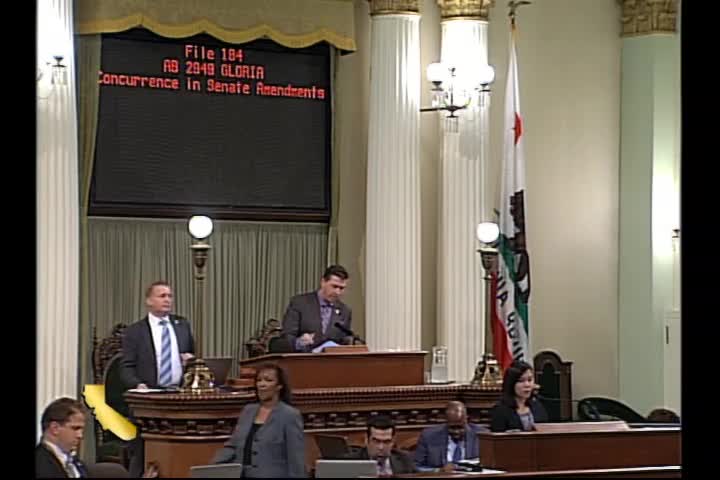
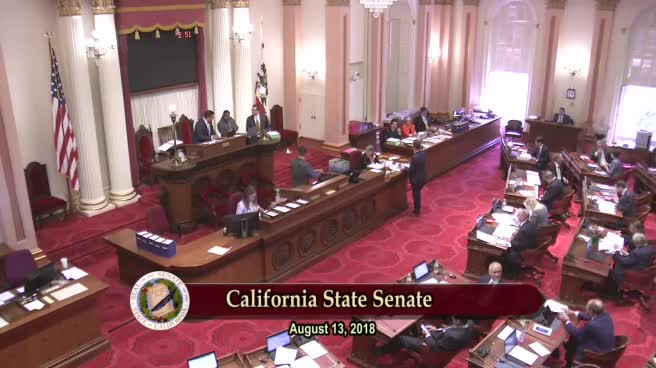
Bill Author

Bill Co-Author(s):