AB 2363: Zero Traffic Fatalities Task Force.
- Session Year: 2017-2018
- House: Assembly
- Latest Version Date: 2018-09-21
Existing law requires the Department of Transportation to include in the California Manual on Uniform Traffic Control Devices a requirement that the department and local authorities, when setting speed limits, round speed limits to the nearest 5 miles per hour of the 85th percentile speed of traffic as determined by an engineering and traffic survey. Existing law authorizes the department or a local authority to round the speed limit down to the lower 5 miles per hour increment in instances when the speed limit should be rounded up, but prohibits that speed limit from being further reduced for any reason.
This bill would require the Secretary of Transportation, on or before July 1, 2019, to establish and convene the Zero Traffic Fatalities Task Force, which shall include, but is not limited to, representatives from the Department of the California Highway Patrol, the University of California and other academic institutions, the Department of Transportation, the State Department of Public Health, local governments, bicycle safety organizations, statewide motorist service membership organizations, transportation advocacy organizations, and labor organizations. The bill would require the task force to develop a structured, coordinated process for early engagement of all parties to develop policies to reduce traffic fatalities to zero. The bill would require the Secretary of Transportation to prepare and submit a report of findings based on the task forces efforts to the appropriate policy and fiscal committees of the Legislature on or before January 1, 2020. The bill would require the report to include a detailed analysis of specified issues, including the existing process for establishing speed limits and a recommendation as to whether an alternative to the use of the 85th percentile as a method for determining speed limits should be considered. The provisions of the bill would be repealed on January 1, 2023.
Existing law requires the Department of Transportation to include in the California Manual on Uniform Traffic Control Devices a requirement that the department and local authorities, when setting speed limits, round speed limits to the nearest 5 miles per hour of the 85th percentile speed of traffic as determined by an engineering and traffic survey. Existing law authorizes the department or a local authority to round the speed limit down to the lower 5 miles per hour increment in instances when the speed limit should be rounded up, but prohibits that speed limit from being further reduced for any reason.
This bill would require the Secretary of Transportation, on or before July 1, 2019, to establish and convene the Vision Zero Task Force, Zero Traffic Fatalities Task Force, which shall include, but is not limited to, representatives from the Department of the California Highway Patrol, the University of California and other academic institutions, the Department of Transportation, the State Department of Public Health, local governments, bicycle safety organizations, statewide motorist service membership organizations, transportation advocacy organizations, and labor organizations. The bill would require the task force to develop a structured, coordinated process for early engagement of all parties to develop policies to reduce traffic fatalities to zero. The bill would require the Secretary of Transportation to prepare and submit a report of findings based on the task forces efforts to the appropriate policy and fiscal committees of the Legislature on or before January 1, 2020. The bill would require the report to include a detailed analysis of specified issues, including the existing process for establishing speed limits and a recommendation as to whether an alternative to the use of the 85th percentile as a method for determining speed limits should be considered. The provisions of the bill would be repealed on January 1, 2023.
Existing law requires the Department of Transportation to include in the California Manual on Uniform Traffic Control Devices a requirement that the department and local authorities, when setting speed limits, round speed limits to the nearest 5 miles per hour of the 85th percentile speed of traffic as determined by an engineering and traffic survey. Existing law authorizes the department or a local authority to round the speed limit down to the lower 5 miles per hour increment in instances when the speed limit should be rounded up, but prohibits that speed limit from being further reduced for any reason.
This bill would require the Secretary of Transportation, on or before July 1, 2019, to establish and convene the Vision Zero Task Force, which shall include, but is not limited to, representatives from the Department of the California Highway Patrol, the University of California and other academic institutions, the Department of Transportation, local governments, bicycle safety organizations, road safety statewide motorist service membership organizations, transportation advocacy organizations, and labor organizations. The bill would require the task force to develop a structured, coordinated process for early engagement of all parties to develop policies to reduce traffic fatalities to zero. The bill would require the Secretary of Transportation to prepare and submit a report of findings based on the task forces efforts to the appropriate policy and fiscal committees of the Legislature on or before January 1, 2020. The bill would require the report to include a detailed analysis of specified issues, including the existing process for establishing speed limits and a recommendation as to whether an alternative to the use of the 85th percentile as a method for determining speed limits should be considered. The provisions of the bill would be repealed on January 1, 2023.
Existing law requires the Department of Transportation to include in the California Manual on Uniform Traffic Control Devices a requirement that the department and local authorities, when setting speed limits, round speed limits to the nearest 5 miles per hour of the 85th percentile speed of traffic as determined by an engineering and traffic survey. Existing law authorizes the department or a local authority to round the speed limit down to the lower 5 miles per hour increment in instances when the speed limit should be rounded up, but prohibits that speed limit from being further reduced for any reason.
This bill would require the Secretary of Transportation, on or before January July 1, 2019, to establish and convene the Vision Zero Task Force, which shall include, but is not limited to, representatives from the Department of the California Highway Patrol, the University of California and other academic institutions, local governments, bicycle safety organizations, road safety organizations, and labor organizations. The bill would require the task force to develop a structured, coordinated process for early engagement of all parties to develop policies to reduce traffic fatalities to zero. The bill would require the Secretary of Transportation to prepare and submit a report of findings based on the task forces efforts to the appropriate policy and fiscal committees of the Legislature on or before May 15, 2019. January 1, 2020. The bill would require the report to include a detailed analysis of specified issues, including the existing process for establishing speed limits and a recommendation as to whether an alternative to the use of the 85th percentile as a method for determining speed limits should be considered. The provisions of the bill would be repealed on May 15, 2023. January 1, 2023.
Existing law requires the Department of Transportation to include in the California Manual on Uniform Traffic Control Devices a requirement that the department and local authorities, when setting speed limits, round speed limits to the nearest 5 miles per hour of the 85th percentile speed of traffic as determined by an engineering and traffic survey. Existing law authorizes the department or a local authority to round the speed limit down to the lower 5 miles per hour increment in instances when the speed limit should be rounded up, but prohibits that speed limit from being further reduced for any reason.
This bill would require the Secretary of Transportation, on or before January 1, 2019, to establish and convene the Vision Zero Task Force, which shall include, but is not limited to, representatives from the Department of the California Highway Patrol, the University of California and other academic institutions, local governments, bicycle safety organizations, road safety organizations, and labor organizations. The bill would require the task force to develop a structured, coordinated process for early engagement of all parties to develop policies to reduce traffic fatalities to zero. The bill would require the Secretary of Transportation to prepare and submit a report of findings based on the task forces efforts to the appropriate policy and fiscal committees of the Legislature on or before May 15, 2019. The bill would require the report to include a detailed analysis of specified issues, including the existing process for establishing speed limits and a recommendation as to whether an alternative to the use of the 85th percentile as a method for determining speed limits should be considered. The provisions of the bill would be repealed on May 15, 2023.
(1)Existing law requires a survey of highway and traffic conditions conducted by a state or local authority for the purpose of setting speed limits to include consideration of certain factors, including prevailing speeds and accident records. Existing law also authorizes a local authority conducting such a survey to consider additional factors, including pedestrian and bicycle safety and residential density, as specified.This bill would additionally authorize a local authority conducting the survey described above to consider the potential for, and frequency of, traffic collisions resulting in death or injury.(2)Existing law requires the Department of Transportation to include in the California Manual on Uniform Traffic Control Devices, a requirement that the department and local authorities, when setting speed limits, round speed limits to the nearest 5 miles per hour of the 85th percentile speed of traffic as determined by an engineering and traffic survey. Existing law authorizes the department or a local authority to round the speed limit down to the lower 5 miles per hour increment in instances when the speed limit should be rounded up, but prohibits that speed limit from being further reduced for any reason.This bill would instead require the department to revise the California Manual on Uniform Traffic Control Devices, as it read on January 1, 2018, to authorize the department or a local authority to round speed limits to within 5 miles per hour of the 85th-percentile of the free-flowing traffic. The bill would also authorize the department or local authority to reduce the speed limit an additional 5 miles per hour for any of the factors described in paragraph (1) above.(1)Existing law requires a survey of highway and traffic conditions conducted by a state or local authority for the purpose of setting speed limits to include consideration of certain factors, including prevailing speeds and accident records. Existing law also authorizes a local authority conducting such a survey to consider additional factors, including pedestrian and bicycle safety and residential density, as specified.
This bill would additionally authorize a local authority conducting the survey described above to consider the potential for, and frequency of, traffic collisions resulting in death or injury.
(2)Existing law requires the Department of Transportation to include in the California Manual on Uniform Traffic Control Devices, a requirement that the department and local authorities, when setting speed limits, round speed limits to the nearest 5 miles per hour of the 85th percentile speed of traffic as determined by an engineering and traffic survey. Existing law authorizes the department or a local authority to round the speed limit down to the lower 5 miles per hour increment in instances when the speed limit should be rounded up, but prohibits that speed limit from being further reduced for any reason.
This bill would instead require the department to revise the California Manual on Uniform Traffic Control Devices, as it read on January 1, 2018, to authorize the department or a local authority to round speed limits to within 5 miles per hour of the 85th-percentile of the free-flowing traffic. The bill would also authorize the department or local authority to reduce the speed limit an additional 5 miles per hour for any of the factors described in paragraph (1) above.
Existing law authorizes a local authority to establish lower speed limits under certain circumstances for specified streets and roadways if the local authority determines on the basis of an engineering and traffic survey that the existing speed limit is more than is reasonable or safe. This bill would authorize a local authority to make that determination and establish those lower speed limits on the basis of an accident survey.Existing law authorizes a local authority to establish lower speed limits under certain circumstances for specified streets and roadways if the local authority determines on the basis of an engineering and traffic survey that the existing speed limit is more than is reasonable or safe.
This bill would authorize a local authority to make that determination and establish those lower speed limits on the basis of an accident survey.
(a)On or before July 1, 2019, the Secretary of Transportation shall establish and convene the Zero Traffic Fatalities Task Force.
(b)The task force shall include, but is not limited to, representatives from the Department of the California Highway Patrol, the University of California and other academic institutions, the Department of Transportation, the State Department of Public Health, local governments, bicycle safety organizations, statewide motorist service membership organizations, transportation advocacy organizations, and labor organizations.
(c)The task force shall develop a structured, coordinated process for early engagement of all parties to develop policies to reduce traffic fatalities to zero.
3096.(a)The Secretary of Transportation shall prepare and submit a report of findings based on the Zero Traffic Fatalities Task Forces efforts to the appropriate policy and fiscal committees of the Legislature on or before January 1, 2020.
(b)The report shall include, but is not limited to, a detailed analysis of the following issues:
(1)The existing process for establishing speed limits, including a detailed discussion on where speed limits are allowed to deviate from the 85th percentile.
(2)Existing policies on how to reduce speeds on local streets and roads.
(3)A recommendation as to whether an alternative to the use of the 85th percentile as a method for determining speed limits should be considered, and if so, what alternatives should be looked at.
(4)Engineering recommendations on how to increase vehicular, pedestrian, and bicycle safety.
(5)Additional steps that can be taken to eliminate vehicular, pedestrian, and bicycle fatalities on the road.
(6)Existing reports and analyses on calculating the 85th percentile at the local, state, national, and international levels.
(7)Usage of the 85th percentile in urban and rural settings.
(8)How local bicycle and pedestrian plans affect the 85th percentile.
3097.This chapter shall remain in effect only until January 1, 2023, and as of that date is repealed.
(a)On or before July 1, 2019, the Secretary of Transportation shall establish and convene the Vision Zero Task Force. Zero Traffic Fatalities Task Force.
(b)The task force shall include, but is not limited to, representatives from the Department of the California Highway Patrol, the University of California and other academic institutions, the Department of Transportation, the State Department of Public Health, local governments, bicycle safety organizations, statewide motorist service membership organizations, transportation advocacy organizations, and labor organizations.
(c)The task force shall develop a structured, coordinated process for early engagement of all parties to develop policies to reduce traffic fatalities to zero.
3096.(a)The Secretary of Transportation shall prepare and submit a report of findings based on the Vision Zero Task Forces Zero Traffic Fatalities Task Forces efforts to the appropriate policy and fiscal committees of the Legislature on or before January 1, 2020.
(b)The report shall include, but is not limited to, a detailed analysis of the following issues:
(1)The existing process for establishing speed limits, including a detailed discussion on where speed limits are allowed to deviate from the 85th percentile.
(2)Existing policies on how to reduce speeds on local streets and roads.
(3)A recommendation as to whether an alternative to the use of the 85th percentile as a method for determining speed limits should be considered, and if so, what alternatives should be looked at.
(4)Engineering recommendations on how to increase vehicular, pedestrian, and bicycle safety.
(5)Additional steps that can be taken to eliminate vehicular, pedestrian, and bicycle fatalities on the road.
(6)Existing reports and analyses on calculating the 85th percentile at the local, state, national, and international levels.
(7)Usage of the 85th percentile in urban and rural settings.
(8)How local bicycle and pedestrian plans affect the 85th percentile.
3097.This chapter shall remain in effect only until January 1, 2023, and as of that date is repealed.
(a)On or before July 1, 2019, the Secretary of Transportation shall establish and convene the Vision Zero Task Force.
(b)The task force shall include, but is not limited to, representatives from the Department of the California Highway Patrol, the University of California and other academic institutions, the Department of Transportation, local governments, bicycle safety organizations, road safety statewide motorist service membership organizations, transportation advocacy organizations, and labor organizations.
(c)The task force shall develop a structured, coordinated process for early engagement of all parties to develop policies to reduce traffic fatalities to zero.
3096.(a)The Secretary of Transportation shall prepare and submit a report of findings based on the Vision Zero Task Forces efforts to the appropriate policy and fiscal committees of the Legislature on or before January 1, 2020.
(b)The report shall include, but is not limited to, a detailed analysis of the following issues:
(1)The existing process for establishing speed limits, including a detailed discussion on where speed limits are allowed to deviate from the 85th percentile.
(2)Existing policies on how to reduce speeds on local streets and roads.
(3)A recommendation as to whether an alternative to the use of the 85th percentile as a method for determining speed limits should be considered, and if so, what alternatives should be looked at.
(4)Engineering recommendations on how to increase vehicular, pedestrian, and bicycle safety.
(5)Additional steps that can be taken to eliminate vehicular, pedestrian, and bicycle fatalities on the road.
(6)Existing reports and analyses on calculating the 85th percentile at the local, state, national, and international levels.
(7)Usage of the 85th percentile in urban and rural settings.
(8)How local bicycle and pedestrian plans affect the 85th percentile.
3097.This chapter shall remain in effect only until January 1, 2023, and as of that date is repealed.
(a)On or before January July 1, 2019, the Secretary of Transportation shall establish and convene the Vision Zero Task Force.
(b)The task force shall include, but is not limited to, representatives from the Department of the California Highway Patrol, the University of California and other academic institutions, local governments, bicycle safety organizations, road safety organizations, and labor organizations.
(c)The task force shall develop a structured, coordinated process for early engagement of all parties to develop policies to reduce traffic fatalities to zero.
3096.(a)The Secretary of Transportation shall prepare and submit a report of findings based on the Vision Zero Task Forces efforts to the appropriate policy and fiscal committees of the Legislature on or before May 15, 2019. January 1, 2020.
(b)The report shall include, but is not limited to, a detailed analysis of the following issues:
(1)The existing process for establishing speed limits, including a detailed discussion on where speed limits are allowed to deviate from the 85th percentile.
(2)Existing policies on how to reduce speeds on local streets and roads.
(3)A recommendation as to whether an alternative to the use of the 85th percentile as a method for determining speed limits should be considered, and if so, what alternatives should be looked at.
(4)Engineering recommendations on how to increase vehicular, pedestrian, and bicycle safety.
(5)Additional steps that can be taken to eliminate vehicular, pedestrian, and bicycle fatalities on the road.
(6)Existing reports and analyses on calculating the 85th percentile at the local, state, national, and international level. levels.
(7)Usage of the 85th percentile in urban and rural settings.
(8)How local bicycle and pedestrian plans affect the 85th percentile.
3097.This chapter shall remain in effect only until May 15, 2023, and as of that date is repealed, unless a later enacted statute that is enacted before May 15, 2023, deletes or extends that date.3097.This chapter shall remain in effect only until January 1, 2023, and as of that date is repealed.
(a)On or before January 1, 2019, the Secretary of Transportation shall establish and convene the Vision Zero Task Force.
(b)The task force shall include, but is not limited to, representatives from the Department of the California Highway Patrol, the University of California and other academic institutions, local governments, bicycle safety organizations, road safety organizations, and labor organizations.
(c)The task force shall develop a structured, coordinated process for early engagement of all parties to develop policies to reduce traffic fatalities to zero.
3096.(a)The Secretary of Transportation shall prepare and submit a report of findings based on the Vision Zero Task Forces efforts to the appropriate policy and fiscal committees of the Legislature on or before May 15, 2019.
(b)The report shall include, but is not limited to, a detailed analysis of the following issues:
(1)The existing process for establishing speed limits, including a detailed discussion on where speed limits are allowed to deviate from the 85th percentile.
(2)Existing policies on how to reduce speeds on local streets and roads.
(3)A recommendation as to whether an alternative to the use of the 85th percentile as a method for determining speed limits should be considered, and if so, what alternatives should be looked at.
(4)Engineering recommendations on how to increase vehicular, pedestrian, and bicycle safety.
(5)Additional steps that can be taken to eliminate vehicular, pedestrian, and bicycle fatalities on the road.
(6)Existing reports and analyses on calculating the 85th percentile at the local, state, national, and international level.
(7)Usage of the 85th percentile in urban and rural settings.
(8)How local bicycle and pedestrian plans affect the 85th percentile.
3097.This chapter shall remain in effect only until May 15, 2023, and as of that date is repealed, unless a later enacted statute that is enacted before May 15, 2023, deletes or extends that date.
SECTION 1.Section 627 of the Vehicle Code is amended to read:627.(a)Engineering and traffic survey, as used in this code, means a survey of highway and traffic conditions in accordance with methods determined by the Department of Transportation for use by state and local authorities.(b)An engineering and traffic survey shall include, among other requirements deemed necessary by the department, consideration of all of the following:(1)Prevailing speeds as determined by traffic engineering measurements.(2)Accident records.(3)Highway, traffic, and roadside conditions not readily apparent to the driver.(c)When conducting an engineering and traffic survey, local authorities, in addition to the factors set forth in paragraphs (1) to (3), inclusive, of subdivision (b), may consider all of the following:(1)Residential density, if any of the following conditions exist on the particular portion of highway and the property contiguous thereto, other than a business district:(A)Upon one side of the highway, within a distance of a quarter of a mile, the contiguous property fronting thereon is occupied by 13 or more separate dwelling houses or business structures.(B)Upon both sides of the highway, collectively, within a distance of a quarter of a mile, the contiguous property fronting thereon is occupied by 16 or more separate dwelling houses or business structures.(C)The portion of highway is longer than one-quarter of a mile but has the ratio of separate dwelling houses or business structures to the length of the highway described in either subparagraph (A) or (B).(2)Pedestrian and bicyclist safety.(3)Potential for, and frequency of, traffic collisions resulting in death or injury.SEC. 2.Section 21400 of the Vehicle Code is amended to read:21400.(a)(1)The Department of Transportation shall, after consultation with local agencies and public hearings, adopt rules and regulations prescribing uniform standards and specifications for all official traffic control devices placed pursuant to this code, including, but not limited to, stop signs, yield right-of-way signs, speed restriction signs, railroad warning approach signs, street name signs, lines and markings on the roadway, and stock crossing signs placed pursuant to Section 21364.(2)The Department of Transportation shall, after notice and public hearing, determine and publicize the specifications for uniform types of warning signs, lights, and devices to be placed upon a highway by a person engaged in performing work that interferes with or endangers the safe movement of traffic upon that highway.(3)Only those signs, lights, and devices as are provided for in this section shall be placed upon a highway to warn traffic of work that is being performed on the highway.(4) Control devices or markings installed upon traffic barriers on or after January 1, 1984, shall conform to the uniform standards and specifications required by this section.(b)The Department of Transportation shall revise the California Manual on Uniform Traffic Control Devices, as it read on January 1, 2018, to authorize the Department of Transportation or a local authority to round speed limits to within five miles per hour of the 85th percentile of the free-flowing traffic. The Department of Transportation or a local authority may reduce the speed limit an additional five miles per hour for any of the factors described in subdivisions (b) and (c) of Section 627.(a)Engineering and traffic survey, as used in this code, means a survey of highway and traffic conditions in accordance with methods determined by the Department of Transportation for use by state and local authorities.
(b)An engineering and traffic survey shall include, among other requirements deemed necessary by the department, consideration of all of the following:
(1)Prevailing speeds as determined by traffic engineering measurements.
(2)Accident records.
(3)Highway, traffic, and roadside conditions not readily apparent to the driver.
(c)When conducting an engineering and traffic survey, local authorities, in addition to the factors set forth in paragraphs (1) to (3), inclusive, of subdivision (b) (b), may consider all of the following:
(1)Residential density, if any of the following conditions exist on the particular portion of highway and the property contiguous thereto, other than a business district:
(A)Upon one side of the highway, within a distance of a quarter of a mile, the contiguous property fronting thereon is occupied by 13 or more separate dwelling houses or business structures.
(B)Upon both sides of the highway, collectively, within a distance of a quarter of a mile, the contiguous property fronting thereon is occupied by 16 or more separate dwelling houses or business structures.
(C)The portion of highway is longer than one-quarter of a mile but has the ratio of separate dwelling houses or business structures to the length of the highway described in either subparagraph (A) or (B).
(2)Pedestrian and bicyclist safety.
(3)Potential for, and frequency of, traffic collisions resulting in death or injury.
SEC. 2.Section 21400 of the Vehicle Code is amended to read:21400.(a)(1)The Department of Transportation shall, after consultation with local agencies and public hearings, adopt rules and regulations prescribing uniform standards and specifications for all official traffic control devices placed pursuant to this code, including, but not limited to, stop signs, yield right-of-way signs, speed restriction signs, railroad warning approach signs, street name signs, lines and markings on the roadway, and stock crossing signs placed pursuant to Section 21364.
(2)The Department of Transportation shall, after notice and public hearing, determine and publicize the specifications for uniform types of warning signs, lights, and devices to be placed upon a highway by a person engaged in performing work that interferes with or endangers the safe movement of traffic upon that highway.
(3)Only those signs, lights, and devices as are provided for in this section shall be placed upon a highway to warn traffic of work that is being performed on the highway.
(4) Control devices or markings installed upon traffic barriers on or after January 1, 1984, shall conform to the uniform standards and specifications required by this section.
(b)The Department of Transportation shall revise the California Manual on Uniform Traffic Control Devices, as it read on January 1, 2012, 2018, to require authorize the Department of Transportation or a local authority to round speed limits to the nearest within five miles per hour of the 85th percentile of the free-flowing traffic. However, in cases in which the speed limit needs to be rounded up to the nearest five miles per hour increment of the 85th-percentile speed, the Department of Transportation or a local authority may decide to instead round down the speed limit to the lower five miles per hour increment, but then the The Department of Transportation or a local authority shall not may reduce the speed limit any further an additional five miles per hour for any reason. of the factors described in subdivisions (b) and (c) of Section 627.
SECTION 1.Section 22358 of the Vehicle Code is amended to read:22358.(a)Whenever a local authority determines upon the basis of an engineering and traffic survey or an accident survey that the limit of 65 miles per hour is more than is reasonable or safe upon any portion of any street other than a state highway where the limit of 65 miles per hour is applicable, the local authority may by ordinance determine and declare a prima facie speed limit of 60, 55, 50, 45, 40, 35, 30, or 25 miles per hour, whichever is found most appropriate to facilitate the orderly movement of traffic and is reasonable and safe. The declared prima facie limit shall be effective when appropriate signs giving notice thereof are erected upon the street.(b)This section shall become operative on the date specified in subdivision (c) of Section 22366.SEC. 2.Section 22358.3 of the Vehicle Code is amended to read:22358.3.Whenever a local authority determines upon the basis of an engineering and traffic survey or an accident survey that the prima facie speed limit of 25 miles per hour in a business or residence district or in a public park on any street having a roadway not exceeding 25 feet in width, other than a state highway, is more than is reasonable or safe, the local authority may, by ordinance or resolution, determine and declare a prima facie speed limit of 20 or 15 miles per hour, whichever is found most appropriate and is reasonable and safe. The declared prima facie limit shall be effective when appropriate signs giving notice thereof are erected upon the street.SEC. 3.Section 22358.4 of the Vehicle Code is amended to read:22358.4.(a)(1)Whenever a local authority determines upon the basis of an engineering and traffic survey or an accident survey that the prima facie speed limit of 25 miles per hour established by subdivision (b) of Section 22352 is more than is reasonable or safe, the local authority may, by ordinance or resolution, determine and declare a prima facie speed limit of 20 or 15 miles per hour, whichever is justified as the appropriate speed limit by that survey.(2)An ordinance or resolution adopted under paragraph (1) shall not be effective until appropriate signs giving notice of the speed limit are erected upon the highway and, in the case of a state highway, until the ordinance is approved by the Department of Transportation and the appropriate signs are erected upon the highway.(b)(1)Notwithstanding subdivision (a) or any other law, a local authority may, by ordinance or resolution, determine and declare prima facie speed limits as follows:(A)A 15 miles per hour prima facie limit in a residence district, on a highway with a posted speed limit of 30 miles per hour or slower, when approaching, at a distance of less than 500 feet from, or passing, a school building or the grounds of a school building, contiguous to a highway and posted with a school warning sign that indicates a speed limit of 15 miles per hour, while children are going to or leaving the school, either during school hours or during the noon recess period. The prima facie limit shall also apply when approaching, at a distance of less than 500 feet from, or passing, school grounds that are not separated from the highway by a fence, gate, or other physical barrier while the grounds are in use by children and the highway is posted with a school warning sign that indicates a speed limit of 15 miles per hour.(B)A 25 miles per hour prima facie limit in a residence district, on a highway with a posted speed limit of 30 miles per hour or slower, when approaching, at a distance of 500 to 1,000 feet from, a school building or the grounds thereof, contiguous to a highway and posted with a school warning sign that indicates a speed limit of 25 miles per hour, while children are going to or leaving the school, either during school hours or during the noon recess period. The prima facie limit shall also apply when approaching, at a distance of 500 to 1,000 feet from, school grounds that are not separated from the highway by a fence, gate, or other physical barrier while the grounds are in use by children and the highway is posted with a school warning sign that indicates a speed limit of 25 miles per hour.(2)The prima facie limits established under paragraph (1) apply only to highways that meet all of the following conditions:(A)A maximum of two traffic lanes.(B)A maximum posted 30 miles per hour prima facie speed limit immediately prior to and after the school zone.(3)The prima facie limits established under paragraph (1) apply to all lanes of an affected highway, in both directions of travel.(4)When determining the need to lower the prima facie speed limit, the local authority shall take the provisions of Section 627 into consideration.(5)(A)An ordinance or resolution adopted under paragraph (1) shall not be effective until appropriate signs giving notice of the speed limit are erected upon the highway and, in the case of a state highway, until the ordinance is approved by the Department of Transportation and the appropriate signs are erected upon the highway.(B)For purposes of subparagraph (A) of paragraph (1), school warning signs indicating a speed limit of 15 miles per hour may be placed at a distance up to 500 feet away from school grounds.(C)For purposes of subparagraph (B) of paragraph (1), school warning signs indicating a speed limit of 25 miles per hour may be placed at any distance between 500 and 1,000 feet away from the school grounds.(D)A local authority shall reimburse the Department of Transportation for all costs incurred by the department under this subdivision.(a)Whenever a local authority determines upon the basis of an engineering and traffic survey or an accident survey that the limit of 65 miles per hour is more than is reasonable or safe upon any portion of any street other than a state highway where the limit of 65 miles per hour is applicable, the local authority may by ordinance determine and declare a prima facie speed limit of 60, 55, 50, 45, 40, 35, 30, or 25 miles per hour, whichever is found most appropriate to facilitate the orderly movement of traffic and is reasonable and safe, which safe. The declared prima facie limit shall be effective when appropriate signs giving notice thereof are erected upon the street.
(b)This section shall become operative on the date specified in subdivision (c) of Section 22366.
SEC. 2.Section 22358.3 of the Vehicle Code is amended to read:22358.3.Whenever a local authority determines upon the basis of an engineering and traffic survey or an accident survey that the prima facie speed limit of 25 miles per hour in a business or residence district or in a public park on any street having a roadway not exceeding 25 feet in width, other than a state highway, is more than is reasonable or safe, the local authority may, by ordinance or resolution, determine and declare a prima facie speed limit of 20 or 15 miles per hour, whichever is found most appropriate and is reasonable and safe. The declared prima facie limit shall be effective when appropriate signs giving notice thereof are erected upon the street.
SEC. 3.Section 22358.4 of the Vehicle Code is amended to read:22358.4.(a)(1)Whenever a local authority determines upon the basis of an engineering and traffic survey or an accident survey that the prima facie speed limit of 25 miles per hour established by subdivision (b) of Section 22352 is more than is reasonable or safe, the local authority may, by ordinance or resolution, determine and declare a prima facie speed limit of 20 or 15 miles per hour, whichever is justified as the appropriate speed limit by that survey.
(2)An ordinance or resolution adopted under paragraph (1) shall not be effective until appropriate signs giving notice of the speed limit are erected upon the highway and, in the case of a state highway, until the ordinance is approved by the Department of Transportation and the appropriate signs are erected upon the highway.
(b)(1)Notwithstanding subdivision (a) or any other provision of law, a local authority may, by ordinance or resolution, determine and declare prima facie speed limits as follows:
(A)A 15 miles per hour prima facie limit in a residence district, on a highway with a posted speed limit of 30 miles per hour or slower, when approaching, at a distance of less than 500 feet from, or passing, a school building or the grounds of a school building, contiguous to a highway and posted with a school warning sign that indicates a speed limit of 15 miles per hour, while children are going to or leaving the school, either during school hours or during the noon recess period. The prima facie limit shall also apply when approaching, at a distance of less than 500 feet from, or passing, school grounds that are not separated from the highway by a fence, gate, or other physical barrier while the grounds are in use by children and the highway is posted with a school warning sign that indicates a speed limit of 15 miles per hour.
(B)A 25 miles per hour prima facie limit in a residence district, on a highway with a posted speed limit of 30 miles per hour or slower, when approaching, at a distance of 500 to 1,000 feet from, a school building or the grounds thereof, contiguous to a highway and posted with a school warning sign that indicates a speed limit of 25 miles per hour, while children are going to or leaving the school, either during school hours or during the noon recess period. The prima facie limit shall also apply when approaching, at a distance of 500 to 1,000 feet from, school grounds that are not separated from the highway by a fence, gate, or other physical barrier while the grounds are in use by children and the highway is posted with a school warning sign that indicates a speed limit of 25 miles per hour.
(2)The prima facie limits established under paragraph (1) apply only to highways that meet all of the following conditions:
(A)A maximum of two traffic lanes.
(B)A maximum posted 30 miles per hour prima facie speed limit immediately prior to and after the school zone.
(3)The prima facie limits established under paragraph (1) apply to all lanes of an affected highway, in both directions of travel.
(4)When determining the need to lower the prima facie speed limit, the local authority shall take the provisions of Section 627 into consideration.
(5)(A)An ordinance or resolution adopted under paragraph (1) shall not be effective until appropriate signs giving notice of the speed limit are erected upon the highway and, in the case of a state highway, until the ordinance is approved by the Department of Transportation and the appropriate signs are erected upon the highway.
(B)For purposes of subparagraph (A) of paragraph (1), school warning signs indicating a speed limit of 15 miles per hour may be placed at a distance up to 500 feet away from school grounds.
(C)For purposes of subparagraph (B) of paragraph (1), school warning signs indicating a speed limit of 25 miles per hour may be placed at any distance between 500 and 1,000 feet away from the school grounds.
(D)A local authority shall reimburse the Department of Transportation for all costs incurred by the department under this subdivision.
|
Date
|
Status
|
|---|---|
| Sep 21, 2018 | Chaptered by Secretary of State - Chapter 650, Statutes of 2018. |
| Sep 21, 2018 | Approved by the Governor. |
| Aug 24, 2018 | Enrolled and presented to the Governor at 4:30 p.m. |
| Aug 20, 2018 | Senate amendments concurred in. To Engrossing and Enrolling. |
| Aug 14, 2018 | In Assembly. Concurrence in Senate amendments pending. May be considered on or after August 16 pursuant to Assembly Rule 77. |
| Aug 13, 2018 | Read third time. Passed. Ordered to the Assembly. |
| Aug 8, 2018 | Read second time and amended. Ordered to third reading. |
| Aug 7, 2018 | From committee: Amend, and do pass as amended. (Ayes 5. Noes 1.) (August 6). |
| Jun 21, 2018 | Read second time and amended. Re-referred to Com. on APPR. |
| Jun 20, 2018 | From committee: Amend, and do pass as amended and re-refer to Com. on APPR. (Ayes 10. Noes 2.) (June 19). |
| Jun 7, 2018 | Referred to Com. on T. & H. |
| May 31, 2018 | In Senate. Read first time. To Com. on RLS. for assignment. |
| May 30, 2018 | Read third time. Passed. Ordered to the Senate. |
| May 29, 2018 | Read second time. Ordered to third reading. |
| May 25, 2018 | From committee: Amend, and do pass as amended. (Ayes 15. Noes 0.) (May 25). |
| May 9, 2018 | In committee: Set, first hearing. Referred to APPR. suspense file. |
| Apr 30, 2018 | Re-referred to Com. on APPR. |
| Apr 26, 2018 | Read second time and amended. |
| Apr 25, 2018 | From committee: Amend, and do pass as amended and re-refer to Com. on APPR. (Ayes 13. Noes 1.) (April 23). |
| Apr 3, 2018 | Re-referred to Com. on TRANS. |
| Apr 2, 2018 | From committee chair, with author's amendments: Amend, and re-refer to Com. on TRANS. Read second time and amended. |
| Apr 2, 2018 | Referred to Com. on TRANS. |
| Feb 15, 2018 | From printer. May be heard in committee March 17. |
| Feb 14, 2018 | Read first time. To print. |
|
Date
|
Description
|
Location
|
Votes
|
|
|---|---|---|---|---|
| Aug 20, 2018 | AB 2363 FRIEDMAN Concurrence in Senate Amendments | Assembly Floor |
Passed |
|
| Aug 13, 2018 | Assembly 3rd Reading AB2363 Friedman et al. By Wiener | Senate Floor |
Passed |
|
| Aug 6, 2018 | Do pass as amended | Senate Standing Committee on Appropriations |
Passed |
|
| Jun 19, 2018 | Do pass as amended, but first amend, and re-refer to the Committee on [Appropriations] | Senate Standing Committee on Transportation and Housing |
Passed |
|
| May 30, 2018 | AB 2363 FRIEDMAN Assembly Third Reading | Assembly Floor |
Passed |
|
| May 25, 2018 | Do pass as amended. | Assembly Standing Committee on Appropriations |
Passed |
|
| Apr 23, 2018 | Do pass as amended and be re-referred to the Committee on [Appropriations] | Assembly Standing Committee on Transportation |
Passed |
This list shows positions taken on this bill by organizations on the date displayed, which is linked to the original source.
Positions by individuals are not included.
CONCURRENCE IN SENATE AMENDMENTS
CSA1 Bill Id:AB 2363
Author:(Friedman and Frazier)
As Amended Ver:August 8, 2018
Majority vote
ASSEMBLY: | 77-0 | (May 30, 2018) | SENATE: | 28-7 | (August 13, 2018) |
Original Committee Reference: TRANS.
SUMMARY: Requires the Secretary of Transportation, by July 1, 2019, to convene the Vision Zero Task Force to evaluate whether an alternative to the current process for setting speed limits should be considered and make recommendations on other steps to increase pedestrian and bicyclist safety. This bill specifies some of the membership of the task force and certain factors the task force must consider. In addition, this bill requires the Secretary of Transportation to report on the findings of the task force to the legislature by January 1, 2020.
The Senate amendments:
- Remove road safety organizations from the task force and instead add statewide motorist service membership organizations, transportation advocacy organizations, the Department of Public Health and the Department of Transportation to the task force.
- Change the name of the task force to the "Zero Traffic Fatalities Task Force."
FISCAL EFFECT: According to the Senate Appropriations Committee:
- One-time California State Transportation Agency (CalSTA) costs of less than $100,000 to convene the task force and prepare the specified report. (State Highway Account)
- Minor and absorbable costs for representatives of the California Highway Patrol (CHP), University of California (UC), and the Department of Transportation (Caltrans) to participate in the task force. (General Fund, various special funds)
COMMENTS: According to the National Transportation Safety Board (NTSB), from 2005-14, crashes in which a law enforcement officer indicated a vehicle's speed was a factor resulted in 112,580 fatalities, representing 31% of all traffic fatalities. Passenger vehicles constitute 77% of speeding vehicles involved in fatal crashes.
Existing law requires Caltrans, after consultation with local agencies and public hearings, to adopt rules and regulations that prescribe uniform standards and specifications for traffic control devices, including the posting of speed limits. Caltrans adopts these rules as the California Manual on Uniform Traffic Control Devices (MUTCD), which, among other things, prescribes the process for setting speed limits in this state.
In California and elsewhere, speed limits are generally set in accordance with engineering and traffic surveys, which measure prevailing vehicular speeds and establish the limit at or near the 85th percentile (i.e., the speed that 15% of motorists exceed). California uses the 85th percentile to set speed limits except in cases where the limit is set in state law, such as the 25 miles per hour (mph) limit in residence districts and school zones, or where an engineering and traffic survey shows that other safety-related factors suggest that a lower speed limit is warranted. These safety-related factors, as prescribed by law, include accident data; highway, traffic, and roadway conditions not readily apparent to the driver; residential density; and pedestrian and bicyclist safety.
Caltrans rules allow speed limits to deviate from the 85th percentile in a couple of ways. First, if 85th percentile is not in an increment of 5 mph, MUTCD requires the speed limit to be rounded to the nearest 5 mph limit. So if the 85th percentile is 32 mph, the speed limit can be rounded down to 30. If the 85th percentile is 34 mph, it must be rounded up to 35 mph. In the first example, traffic surveyors are allowed to reduce the speed limit from 30 mph to 25 mph based on accident records, pedestrian and bicycle safety, and the density of the area. In the second example, traffic surveyors would be allowed to round down to 30 mph, but are prohibited from lowering the speed limit any further.
In the most recent Federal Highway Administration (FHWA) report entitled Methods and Practices for Setting Speed Limits: an Informational Report, FHWA notes that the 85th percentile may not be the safest speed, "but it is important to note that setting speed limits lower than 85th percentile speed does not encourage compliance with the posted speed limit."
It is a generally accepted that reducing speed limits requires the three E's: education, engineering and enforcement. The Governors Highway Safety Association (GHSA), a nonprofit organization representing state and territorial highway safety offices, noted in its most recent report that evidenced-based strategies to reduce pedestrian deaths include: refuge islands, which allow pedestrians to cross two-way streets one direction at a time; sidewalks, pedestrian overpasses/ underpasses, countdown pedestrian signals that provide ample crossing time, High-Intensity Activated crosswalk (HAWK) signals where traffic signals stop traffic midblock to allow pedestrians to cross, and new traffic signals.
It would also be helpful to make pedestrians more visible to drivers, as 75% of all pedestrian fatalities occur in the dark. Finally, as a way of slowing drivers down, GHSA recommends road diets that create space for other modes (e.g. bicycle lanes, sidewalks, turn lanes), roundabouts, and traffic calming devices such as speed humps and curb extensions.
Several alternatives to the 85th percentile have been recommended by the National Transportation Safety Board (NTSB), including requiring traffic surveyors to consider safety related factors when doing traffic surveys (which is already California law), requiring the use of a federal web based system known as USLIMITS2 while imputing data from a traffic survey, or setting speed limits based on a safe system approach while simultaneously designing roads to reduce speeds in urban areas. According to NTSB, "In the safe system approach, speed limits are set according to the likely crash types, the resulting impact forces, and the human body's ability to withstand these forces. It allows for human errors and acknowledges that humans are physically vulnerable. Therefore, in this approach, speed limits are set to minimize death and serious injury as a consequence of a crash."
Please see the policy committee analysis for full discussion of this bill.
Analysis Prepared by: David Sforza / TRANS. / (916) 319-2093 FN: 0003893
Office of Senate Floor Analyses (916) 651-1520 Fax: (916) 327-4478 | AB |
THIRD READING
Bill No: AB 2363
:
SENATE TRANS. & HOUSING COMMITTEE: 10-2, 6/19/18
AYES: Beall, Allen, Dodd, Gaines, Galgiani, McGuire, Roth, Skinner, Wieckowski, Wiener
NOES: Morrell, Vidak
NO VOTE RECORDED: Cannella
SENATE APPROPRIATIONS COMMITTEE: 5-1, 8/6/18
AYES: Portantino, Beall, Bradford, Hill, Wiener
NOES: Nielsen
NO VOTE RECORDED: Bates
ASSEMBLY FLOOR: 77-0, 5/30/18 - See last page for vote
DIGEST:
This bill creates a task force to determine whether the traditional methodology for establishing speed limits (the 85th percentile rule) needs to be replaced.
Existing law:
- Requires the California Department of Transportation (Caltrans), after consultation with local agencies and holding public hearings, to adopt rules and regulations prescribing uniform standards and specifications for all official traffic control devices, including speed restriction signs.
- Defines as a speed trap a section of highway where the speed limit is not justified by an engineering and traffic survey (ETS) and prohibits radar enforcement of a speed limit within a speed trap.
- Requires an ETS to include, among other requirements deemed necessary by Caltrans, consideration of all of the following:
- Prevailing speeds as determined by traffic engineering measurements;
- Accident records; and,
- Highway, traffic, and roadside conditions not readily apparent to the driver.
- Permits local authorities additionally to consider residential safety and pedestrian and bicycle safety when conducting an ETS.
This bill:
- Requires the Secretary of Transportation, on or before July 1, 2019, to establish and convene a “Zero Traffic Fatalities Task Force.”
- Requires the task force to include, but not be limited to, representatives from the Department of the California Highway Patrol (CHP), the University of California (UC) and other academic institutions, Caltrans, Department of Public Health, local governments, bicycle safety organizations, road safety organizations, and labor organizations.
- Requires the task force to develop a structured, coordinated process for early engagement of all parties to develop policies to reduce traffic fatalities to zero.
- Requires the Secretary of Transportation to prepare and submit a report of findings based on the Zero Traffic Fatalities Task Force’s efforts to the appropriate policy and fiscal committees of the Legislature on or before January 1, 2020.
- Requires the report to include, but not be limited to, a detailed analysis of the following issues:
- The existing process for establishing speed limits, including a detailed discussion on where speed limits are allowed to deviate from the 85th percentile.
- Existing policies on how to reduce speeds on local streets and roads.
- A recommendation as to whether an alternative to the use of the 85th percentile as a method for determining speed limits should be considered, and if so, what alternatives should be looked at.
- Engineering recommendations on how to increase vehicular, pedestrian, and bicycle safety.
- Additional steps that can be taken to eliminate vehicular, pedestrian, and bicycle fatalities on the road.
- Existing reports and analyses on calculating the 85th percentile at the local, state, national, and international level.
- Usage of the 85th percentile in urban and rural settings.
- How local bicycle and pedestrian plans affect the 85th percentile.
- Sunsets the bill’s provisions on May 15, 2023.
Comments
- Purpose. The author states that speed is the single greatest determining factor in the severity of crashes. Higher vehicle speeds correlate to the increased likelihood of a crash occurring and its severity. Cities like Los Angeles have adopted plans to eliminate traffic deaths and curtail dangerous speeding is fundamental to that strategy. Cities must have the tools and authority to set safe speeds.
- How California sets speed limits. In California and elsewhere, speed limits are generally set in accordance with ETSs which measure prevailing vehicle speeds and establish the limit at or near the 85th percentile (meaning the speed 15% of motorists exceed, based on road design and average conditions). California uses the 85th percentile rule to set speed limits except in cases where the limit is set in state law, such as the 25 mph limit on residential streets and in school zones, or where an ETS shows that other safety-related factors suggest that a lower speed limit is warranted. These safety-related factors, as prescribed by law, include accident data; highway, traffic, and roadway conditions not readily apparent to the driver; residential density; and pedestrian and bicyclist safety.
Studies show that arbitrarily setting the posted speed limit lower than the prevailing vehicle speed without also making changes to the road environment does not usually result in vehicles driving at a slower speed.[1] Instead, this may result in more drivers violating the law and being subject to traffic citations. This is because drivers tend to drive as fast as seems safe based on the width and geometry of the road, and other factors, rather than the posted speed limit.
- Second look? Setting speed limits at the 85th percentile has a long history in California and throughout the nation and there is a wealth of data to support its propriety. However, many local governments have long chafed at what they perceive to be the rigidity of its application. They contend that as motorists drive faster, speed limits are required to be adjusted upwards, creating a self-reinforcing loop. Whether or not this is true, convening a task force of experts to study speed limit issues can only serve to re-examine longstanding assumptions and recommend new strategies as may be needed.
Related/Prior Legislation
AB 2955 (Friedman, 2018) allows the Cities of Burbank, Glendale and Los Angeles to consider equestrian safety when conducting an ETS within specified areas of those cities. This bill is currently on the Senate floor.
FISCAL EFFECT: Appropriation: Fiscal Com.: Local:
According to Senate Appropriations Committee:
- One-time California Transportation Agency costs of less than $100,000 to convene the task force and prepare the specified report. (State Highway Account)
- Minor and absorbable costs for representatives of the CHP, UC, and Caltrans to participate in the task force. (General Fund, various special funds)
California Bicycle Coalition
California Walks
City of Long Beach
City of Los Angeles
City of Oakland
City of Sacramento
City of Thousand Oaks
League of California Cities
Los Feliz Neighborhood Council
Vision Zero Network
Walk San Francisco
Safer Streets L.A.
ARGUMENTS IN SUPPORT: In support of the bill, the League of California Cities says, “this bill will take much-needed steps towards making our local streets and roads safer… By investigating ways to make our roads safer, this task force will help all Californians who drive on our roads.”
ARGUMENTS IN OPPOSITION: In opposition to the bill, Safer Streets LA states that a “task force constituted to examine the protocols used for setting speed limits must be limited in scope to this issue only. Further, the task force must include only those participants that are fair and impartial, have proven to be dedicated to examining the issue with a science and data driven approach, and have not previously expressed a hostility towards the current protocols for setting speed limits.”
ASSEMBLY FLOOR: 77-0, 5/30/18
AYES: Acosta, Aguiar-Curry, Travis Allen, Arambula, Baker, Berman, Bigelow, Bloom, Bonta, Brough, Burke, Caballero, Calderon, Carrillo, Cervantes, Chau, Chávez, Chen, Chiu, Choi, Chu, Cooley, Cooper, Cunningham, Dahle, Daly, Eggman, Flora, Fong, Frazier, Friedman, Gallagher, Cristina Garcia, Eduardo Garcia, Gipson, Gloria, Gonzalez Fletcher, Gray, Grayson, Harper, Holden, Irwin, Jones-Sawyer, Kalra, Kamlager-Dove, Kiley, Lackey, Levine, Limón, Low, Maienschein, Mathis, Mayes, McCarty, Medina, Melendez, Mullin, Muratsuchi, Nazarian, O'Donnell, Patterson, Quirk, Quirk-Silva, Reyes, Rodriguez, Rubio, Salas, Santiago, Steinorth, Mark Stone, Thurmond, Ting, Voepel, Waldron, Weber, Wood, Rendon
NO VOTE RECORDED: Obernolte
8/8/18 15:38:05
**** END ****
https://safety.fhwa.dot.gov/speedmgt/ref_mats/fhwasa16076/ ↑
SENATE COMMITTEE ON APPROPRIATIONS
Senator Anthony Portantino, Chair
2017 - 2018 Regular Session
AB 2363 (Friedman) - Vision Zero Task Force
Version: June 21, 2018 | Policy Vote: T. & H. 10 - 2 |
Urgency: No | Mandate: No |
Hearing Date: August 6, 2018 | Consultant: Mark McKenzie |
This bill does not meet the criteria for referral to the Suspense File.
Bill Summary:
AB 2363 would require the California Transportation Agency (CalSTA) to convene a “Vision Zero Task Force” to develop policies to reduce traffic fatalities to zero. The bill requires CalSTA to prepare and submit a report to the Legislature by January 1, 2020 that examines the existing and alternative process for establishing speed limits, and makes recommendations on how to increase vehicular, pedestrian, and bicycle safety, and to eliminate traffic fatalities.
Fiscal Impact:
- One-time CalSTA costs of less than $100,000 to convene the task force and prepare the specified report. (State Highway Account)
- Minor and absorbable costs for representatives of the California Highway Patrol (CHP), University of California (UC), and the Department of Transportation (Caltrans) to participate in the task force. (General Fund, various special funds)
Background:
Existing law requires Caltrans, after consultation with local agencies and public hearings, to adopt rules and regulations that prescribe uniform standards and specifications for traffic control devices, including the posting of speed limits. Caltrans adopts these rules as the California Manual on Uniform Traffic Control Devices (MUTCD), which, among other things, prescribes the process for setting speed limits in this state.
In California and elsewhere, speed limits are generally set in accordance with engineering and traffic surveys, which measure prevailing vehicular speeds and establish the limit at or near the 85th percentile (i.e., the speed that 15% of motorists exceed). California uses the 85th percentile to set speed limits except in cases where the limit is set in state law, such as the 25 mph limit in residential districts and school zones, or where an engineering and traffic survey shows that other safety-related factors suggest that a lower speed limit is warranted. These safety-related factors, as prescribed by law, include accident data, highway, traffic, and roadway conditions not readily apparent to the driver, residential density, and pedestrian and bicyclist safety.
The Federal Highway Administration (FHWA) has conducted research in 22 states showing that simply lowering speed limits has a minimal effect on reducing actual speeds. A recent FHWA report notes that the 85th percentile may not be the safest speed, “but it is important to note that setting speed limits lower than 85th percentile speed does not encourage compliance with the posted speed limit.”
Proposed Law:
AB 2363 would require the Secretary of Transportation to convene the Vision Zero Task Force by July 1, 2019, comprised of the representatives of CHP, the UC, Caltrans, local governments, bicycle safety organizations, statewide motorist service membership organizations, transportation advocacy organizations, and labor organizations.
The task force would develop a process for early engagement of all parties to develop policies to reduce traffic fatalities to zero, and to prepare and submit a report to the Legislature by January 1, 2020 that includes a detailed analysis of the following:
- The existing process for establishing speed limits, including a detailed discussion of where speed limits are allowed to deviate from the 85th percentile.
- Existing policies on how to reduce speed limits on local streets and roads.
- A recommendation regarding whether an alternative to using the 85th percentile as a method for determining speed limits should be considered, and identifying those alternatives.
- Engineering recommendations on how to increase vehicular, pedestrian, and bicycle safety.
- Additional steps that can be taken to eliminate vehicular, pedestrian, and bicycle fatalities on the road.
- Existing reports and analyses on calculating the 85th percentile at the local, state, national, and international level.
- Usage of the 85th percentile in urban and rural settings.
- How local bicycle and pedestrian plans affect the 85th percentile.
Related Legislation:
AB 2955 (Friedman), which is currently pending on the Senate Floor, would authorize the Cities of Burbank, Glendale and Los Angeles to consider equestrian safety when conducting an ETS within specified areas of those cities.
Proposed Author Amendments:
The author will propose amendments in committee to change the name of the task force to the “Zero Traffic Fatalities Task Force,” and to add the Department of Public Health to the task force.
-- END --
SENATE COMMITTEE ON TRANSPORTATION AND HOUSING
Senator Jim Beall, Chair
2017 - 2018 Regular
Bill No: AB 2363 Hearing Date: 6/12/2018
Author: | Friedman | ||
Version: | 5/25/2018 | ||
Urgency: | No | Fiscal: | Yes |
Consultant: | Howard Posner | ||
SUBJECT: Vision Zero Task Force
DIGEST: This bill creates a task force to determine whether the traditional methodology for establishing speed limits (the 85th percentile rule) needs to be replaced.
ANALYSIS:
Existing law:
- Requires The California Department of Transportation (Caltrans), after consultation with local agencies and holding public hearings, to adopt rules and regulations prescribing uniform standards and specifications for all official traffic control devices, including speed restriction signs.
- Defines as a speed trap a section of highway where the speed limit is not justified by an engineering and traffic survey (ETS) and prohibits radar enforcement of a speed limit within a speed trap.
- Requires an ETS to include, among other requirements deemed necessary by Caltrans, consideration of all of the following:
- Prevailing speeds as determined by traffic engineering measurements;
- Accident records; and,
- Highway, traffic, and roadside conditions not readily apparent to the driver.
- Permits local authorities additionally to consider residential safety and pedestrian and bicycle safety when conducting an ETS.
This bill:
- Requires the Secretary of Transportation, on or before July 1, 2019, to establish and convene a “Vision Zero Task Force.”
- Requires the task force to include, but not be limited to, representatives from the Department of the California Highway Patrol (CHP), the University of California (UC) and other academic institutions, local governments, bicycle safety organizations, road safety organizations, and labor organizations.
- Requires the task force to develop a structured, coordinated process for early engagement of all parties to develop policies to reduce traffic fatalities to zero.
- Requires the Secretary of Transportation to prepare and submit a report of findings based on the Vision Zero Task Force’s efforts to the appropriate policy and fiscal committees of the Legislature on or before January 1, 2020.
- Requires the report to include, but not be limited to, a detailed analysis of the following issues:
- The existing process for establishing speed limits, including a detailed discussion on where speed limits are allowed to deviate from the 85th percentile.
- Existing policies on how to reduce speeds on local streets and roads.
- A recommendation as to whether an alternative to the use of the 85th percentile as a method for determining speed limits should be considered, and if so, what alternatives should be looked at.
- Engineering recommendations on how to increase vehicular, pedestrian, and bicycle safety.
- Additional steps that can be taken to eliminate vehicular, pedestrian, and bicycle fatalities on the road.
- Existing reports and analyses on calculating the 85th percentile at the local, state, national, and international level.
- Usage of the 85th percentile in urban and rural settings.
- How local bicycle and pedestrian plans affect the 85th percentile.
- Sunsets the bill’s provisions on May 15, 2023.
COMMENTS
- Author’s Statement. Speed is the single greatest determining factor in the severity of crashes. Higher vehicle speeds correlate to the increased likelihood of a crash occurring and its severity. Cities like Los Angeles have adopted plans to eliminate traffic deaths and curtail dangerous speeding is fundamental to that strategy. Cities must have the tools and authority to set safe speeds.
- How it currently works. In California and elsewhere, speed limits are generally set in accordance with ETSs which measure prevailing vehicle speeds and establish the limit at or near the 85th percentile (meaning the speed 15% of motorists exceed, based on road design and average conditions). California uses the 85th percentile rule to set speed limits except in cases where the limit is set in state law, such as the 25 mph limit on residential streets and in school zones, or where an ETS shows that other safety-related factors suggest that a lower speed limit is warranted. These safety-related factors, as prescribed by law, include accident data; highway, traffic, and roadway conditions not readily apparent to the driver; residential density; and pedestrian and bicyclist safety. Arbitrarily lowering a speed limit does not usually result in vehicles driving at a slower speed, but instead results in more drivers violating the law and being subject to traffic citations. This is because drivers tend to drive as fast as seems safe based on the width and geometry of the road, and other factors.
- Time to take a second look? Setting speed limits at the 85th percentile has a long history in California and throughout the nation and there is a wealth of data to support its propriety. However, many local governments have long chafed at what they perceive to be the rigidity of its application. They contend that as motorists drive faster, speed limits are required to be adjusted upwards, creating a self-reinforcing loop. Whether or not this is true, the gathering of transportation professionals to study speed limit issues can only serve to re-examine longstanding assumptions and recommend new strategies as may be needed.
- What’s in a name? Some observers have noted that naming the entity “The Vision Zero Task Force” might tend to predispose it to look for ways to reduce speed limits in more instances than might otherwise be justified. Vision Zero is the name of an international movement that seeks to eliminate all traffic fatalities and particularly strives to protect pedestrians and bicyclists. One suggestion offered to the Committee would be to rename it the Speed Limit Task Force, a title which would appear to be more viewpoint-neutral.
- Author’s Amendments. The author proposes to add Caltrans as a member of the task force as well as including statewide membership road safety organizations and transportation advocacy organizations.
ASSEMBLY VOTES:
Floor: 77-0
Transportation: 13-1
RELATED LEGISLATION:
AB 2955 (Friedman, 2017) — would allow the Cities of Burbank, Glendale and Los Angeles to consider equestrian safety when conducting an ETS within specified areas of those cities. This bill passed out of the Senate Transportation & Housing Committee on June 12 and is currently on the Senate floor.
FISCAL EFFECT: Appropriation: Fiscal Com.: Local:
POSITIONS: (Communicated to the committee before noon on Wednesday,
June 6, 2018.)
SUPPORT:
California Bicycle Coalition
California Walks
City of Long Beach
City of Los Angeles
City of Sacramento
Los Feliz Neighborhood Council
Vision Zero Network
OPPOSITION:
Safer Streets L.A.
-- END --
ASSEMBLY THIRD READING
ATR Bill Id:AB 2363
Author:(Friedman and Frazier)
As Amended Ver:May 25, 2018
Majority vote
Committee | Votes | Ayes | Noes |
Transportation | 13-1 | Frazier, Fong, Aguiar-Curry, Baker, Berman, Chu, Daly, Friedman, Gipson, Harper, Medina, Nazarian, O'Donnell | Mathis |
Appropriations | 15-0 | Gonzalez Fletcher, Bigelow, Bloom, Bonta, Calderon, Carrillo, Chau, Eggman, Fong, Friedman, Gallagher, Eduardo Garcia, Nazarian, Quirk, Reyes |
SUMMARY: Requires the Secretary of Transportation, by July 1, 2019, to convene the Vision Zero Task Force to evaluate whether an alternative to the current process for setting speed limits should be considered and make recommendations on other steps to increase pedestrian and bicyclist safety. This bill specifies some of the membership of the task force and certain factors the task force must consider. In addition, this bill requires the Secretary of Transportation to report on the findings of the task force to the legislature by January 1, 2020.
FISCAL EFFECT: According to the Assembly Appropriations Committee, minor costs for the Secretary of Transportation to convene the task force and prepare the required report.
COMMENTS:
According to the National Transportation Safety Board (NTSB), from 2005-14, crashes in which a law enforcement officer indicated a vehicle's speed was a factor resulted in 112,580 fatalities, representing 31% of all traffic fatalities. Passenger vehicles constitute 77% of speeding vehicles involved in fatal crashes.
Existing law requires Caltrans, after consultation with local agencies and public hearings, to adopt rules and regulations that prescribe uniform standards and specifications for traffic control devices, including the posting of speed limits. Caltrans adopts these rules as the California Manual on Uniform Traffic Control Devices (MUTCD), which, among other things, prescribes the process for setting speed limits in this state.
In California and elsewhere, speed limits are generally set in accordance with engineering and traffic surveys, which measure prevailing vehicular speeds and establish the limit at or near the 85th percentile (i.e., the speed that 15% of motorists exceed). California uses the 85th percentile to set speed limits except in cases where the limit is set in state law, such as the 25 mph limit in residence districts and school zones, or where an engineering and traffic survey shows that other safety-related factors suggest that a lower speed limit is warranted. These safety-related factors, as prescribed by law, include accident data; highway, traffic, and roadway conditions not readily apparent to the driver; residential density; and pedestrian and bicyclist safety.
Caltrans rules allow speed limits to deviate from the 85th percentile in a couple of ways. First, if 85th percentile is not in an increment of 5 mph, MUTCD requires the speed limit to be rounded to the nearest 5 mph limit. So if the 85th percentile is 32 mph, the speed limit can be rounded down to 30. If the 85th percentile is 34 mph, it must be rounded up to 35 mph. In the first example, traffic surveyors are allowed to reduce the speed limit from 30 mph to 25 mph based on accident records, pedestrian and bicycle safety, and the density of the area. In the second example, traffic surveyors would be allowed to round down to 30 mph, but are prohibited from lowering the speed limit any further.
In the most recent Federal Highway Administration (FHWA) report entitled Methods and Practices for Setting Speed Limits: an Informational Report, FHWA notes that the 85th percentile may not be the safest speed, "but it is important to note that setting speed limits lower than 85th percentile speed does not encourage compliance with the posted speed limit."
It is a generally accepted that reducing speed limits requires the three E's: education, engineering and enforcement. The Governors Highway Safety Association (GHSA), a nonprofit organization representing state and territorial highway safety offices, noted in its most recent report that evidenced-based strategies to reduce pedestrian deaths include: refuge islands, which allow pedestrians to cross two-way streets one direction at a time; sidewalks, pedestrian overpasses/ underpasses, countdown pedestrian signals that provide ample crossing time, High-Intensity Activated crosswalk (HAWK) signals where traffic signals stop traffic midblock to allow pedestrians to cross, and new traffic signals.
It would also be helpful to make pedestrians more visible to drivers, as 75% of all pedestrian fatalities occur in the dark. Finally, as a way of slowing drivers down, GHSA recommends road diets that create space for other modes (e.g. bicycle lanes, sidewalks, turn lanes), roundabouts, and traffic calming devices such as speed humps and curb extensions.
Several alternatives to the 85th percentile have been recommended by the National Transportation Safety Board (NTSB), including requiring traffic surveyors to consider safety related factors when doing traffic surveys (which is already California law), requiring the use of a federal web based system known as USLIMITS2 while imputing data from a traffic survey, or setting speed limits based on a safe system approach while simultaneously designing roads to reduce speeds in urban areas. According to NTSB, "In the safe system approach, speed limits are set according to the likely crash types, the resulting impact forces, and the human body's ability to withstand these forces. It allows for human errors and acknowledges that humans are physically vulnerable. Therefore, in this approach, speed limits are set to minimize death and serious injury as a consequence of a crash."
Please see the policy committee analysis for full discussion of this bill.
Analysis Prepared by: David Sforza / TRANS. / (916) 319-2093 FN: 0003380
Date of Hearing: May 9, 2018
ASSEMBLY COMMITTEE ON APPROPRIATIONS
Lorena Gonzalez Fletcher, Chair
ABPCA Bill Id:AB 2363
Author:(Friedman) – As Amended Ver:April 26, 2018
Policy Committee: | Transportation | Vote: | 13 - 1 |
|
| ||
|
|
Urgency: No State Mandated Local Program: No Reimbursable: No
SUMMARY:
This bill requires the Secretary of Transportation, by January 1, 2019, to convene the Vision Zero Task Force to evaluate whether an alternative to the current process for setting speed limits should be considered and make recommendations on other steps to increase pedestrian and bicyclist safety. This bill specifies some of the membership of the task force and certain factors the task force must consider. In addition, this bill requires the Secretary of Transportation to report on the findings of the task force by May 15, 2019.
FISCAL EFFECT:
Significant costs (State Highway Account), likely in the hundreds of thousands of dollars, for the Secretary of Transportation to convene the task force and make the required report in the expedited timeframe required.
COMMENTS:
- Background. In California and elsewhere, speed limits are generally set in accordance with engineering and traffic surveys, which measure prevailing vehicle speeds and establish the limit at or near the 85th percentile (meaning the speed 15% of motorists exceed, based on road design and average conditions). California uses the 85th percentile rule to set speed limits except in cases where the limit is set in state law, such as the 25 mph limit on residential streets and in school zones, or where an engineering and traffic survey shows that other safety-related factors suggest that a lower speed limit is warranted. These safety-related factors, as prescribed by law, include accident data; highway, traffic, and roadway conditions not readily apparent to the driver; residential density; and pedestrian and bicyclist safety. Arbitrarily lowering a speed limit does not usually result in vehicles driving at a slower speed, but instead results in more drivers violating the law and being subject to traffic citations. This is because drivers tend to drive as fast as seems safe based on the width and geometry of the road, and other factors.
- Purpose. According to the author:
Speed is the single greatest determining factor in the severity of crashes. Higher vehicle speeds correlate to the increased likelihood of a crash occurring and its severity. Cities like Los Angeles have adopted plans to eliminate traffic deaths and curtailing dangerous speeding is fundamental to that strategy. Cities must have the tools and authority to set safe speeds.
- Staff comments. This bill does not appear to allow enough time for the Secretary of Transportation to convene the task force and complete its work. Specifically, this bill requires the task force be convened on or before January 1, 2019. However, this bill will not take effect until January 1, 2019.
In addition, this bill requires a report be submitted to the Legislature by May 15, 2019, to describe the findings of the task force. Given that the 85th percentile rule for setting speed limits has been in place since the 1940s, allowing only four-and-a-half-months to evaluate whether this rule should be abandoned in favor of a different process for setting speed limits does not appear sufficient. It is likely that the results from such a truncated evaluation period may not be helpful. Furthermore, conducting an evaluation on such a short time frame will result in higher costs than if the Secretary of Transportation is allowed a more reasonable amount of time to convene the task force and complete the required work.
Analysis Prepared by: Jessica Peters / APPR. / (916) 319-2081
Date of Hearing: April 23, 2018
ASSEMBLY COMMITTEE ON TRANSPORTATION
Jim Frazier, Chair
ABPCA Bill Id:AB 2363 (
Author:Friedman) – As Amended Ver:April 2, 2018
SUBJECT: Vehicles: speed laws
SUMMARY: Allows traffic surveyors to lower speed limits as low as 9 miles per hour (mph) below what the speed limit would otherwise be set at. Specifically this bill:
- Allows traffic surveyors to take into account the potential for, and frequency of, traffic collisions resulting in death or injury when setting speed limits.
- Allows the California Department of Transportation (Caltrans) or a local authority to round speed limits within 5 mph of the 85th percentile of traffic speed, based on an engineering study, instead of to the nearest 5 mph and allows for the speed limit to be reduced an additional 5 mph under certain conditions.
EXISTING LAW:
- Requires Caltrans, after consultation with local agencies and public hearings, to adopt rules and regulations prescribing uniform standards and specifications for all official traffic control devices, including, but not limited to, stop signs, yield right-of-way signs, speed restriction signs, railroad warning approach signs, street name signs, lines and markings on the roadway, and stock crossing signs.
- Requires an engineering and traffic survey to include, among other requirements deemed necessary by Caltrans, consideration of all of the following:
- Prevailing speeds as determined by traffic engineering measurements;
- Accident records; and,
- Highway, traffic, and roadside conditions not readily apparent to the driver.
- Permits local authorities to additionally consider all of the following when conducting an engineering and traffic survey:
- Residential density, if any of the following conditions exist on the particular portion of highway and the property contiguous thereto, other than a business district:
- Upon one side of the highway, within a distance of a quarter of a mile, the contiguous property fronting thereon is occupied by 13 or more separate dwelling houses or business structures;
- Upon both sides of the highway, collectively, within a distance of a quarter of a mile, the contiguous property fronting thereon is occupied by 16 or more separate dwelling houses or business structures; or,
- The portion of highway is longer than one-quarter of a mile but has the ratio of separate dwelling houses or business structures to the length of the highway described in either of the above.
- Upon one side of the highway, within a distance of a quarter of a mile, the contiguous property fronting thereon is occupied by 13 or more separate dwelling houses or business structures;
- Pedestrian and bicyclist safety.
- Residential density, if any of the following conditions exist on the particular portion of highway and the property contiguous thereto, other than a business district:
FISCAL EFFECT: Unknown
COMMENTS:
Dangers of Speed: According to the National Transportation Safety Board (NTSB), from
2005-14, crashes in which a law enforcement officer indicated a vehicle’s speed was a factor resulted in 112,580 fatalities, representing 31% of all traffic fatalities. Passenger vehicles constitute 77% of speeding vehicles involved in fatal crashes.
NTSB notes that speeding increases crash risk in two ways:
- It increases the likelihood of being involved in a crash; and,
- It increases the severity of injuries sustained by all road users.
Setting Speed Limits: Existing law requires Caltrans, after consultation with local agencies and public hearings, to adopt rules and regulations that prescribe uniform standards and specifications for traffic control devices, including the posting of speed limits. Caltrans adopts these rules as the California Manual on Uniform Traffic Control Devices (MUTCD), which, among other things, prescribes the process for setting speed limits in this state.
In California and elsewhere, speed limits are generally set in accordance with engineering and traffic surveys, which measure prevailing vehicular speeds and establish the limit at or near the 85th percentile (i.e., the speed that 15% of motorists exceed). California uses the 85th percentile to set speed limits except in cases where the limit is set in state law, such as the 25 mph limit in residence districts and school zones, or where an engineering and traffic survey shows that other safety-related factors suggest that a lower speed limit is warranted. These safety-related factors, as prescribed by law, include accident data; highway, traffic, and roadway conditions not readily apparent to the driver; residential density; and pedestrian and bicyclist safety.
In addition to the aforementioned factors listed, this bill would allow traffic surveyors to also take into consideration the potential for, and frequency of, traffic collisions resulting in death or injury. It is unclear why this factor is necessary, as they are already allowed to take into account accident records, pedestrian safety and bicyclist safety.
Caltrans rules allow speed limits to deviate from the 85th percentile in a couple of ways. First, if 85th percentile is not in an increment of 5 mph, MUTCD requires the speed limit to be rounded to the nearest 5 mph limit. So if the 85th percentile is 32 mph, the speed limit can be rounded down to 30. If the 85th percentile is 34 mph, it must be rounded up to 35 mph. In the first example, traffic surveyors are allowed to reduce the speed limit from 30 mph to 25 mph based on accident records, pedestrian and bicycle safety, and the density of the area. In the second example, traffic surveyors would be allowed to round down to 30 mph, but are prohibited from lowering the speed limit any further.
Deviations From the 85th Percentile: This bill makes two deviations from the current standard for setting speed limits. First, instead of rounding to the nearest 5 mph, this bill allows traffic surveyor’s to round within 5 mph. Then, in addition to that, a traffic surveyor would be allowed to reduce the speed limit an additional 5 mph taking into account accident records, roadside conditions, residential density, pedestrian and bicyclist safety and the potential for, and frequency of, traffic collisions resulting in death or injury.
For example, consider a scenario where the 85th percentile speed was 34 mph. Under this bill, traffic surveyors could first round the speed limit down to 30 mph, and then reduce the speed limit an additional 5 mph on the basis of any of the aforementioned reasons to 25 mph. In essence, that would mean the speed limit would be reduced nearly 10 mph slower than the speed 85% of drivers feel comfortable driving.
Why the 85th Percentile: The 85th percentile has been used to calculate speed limits since the 1940s. According to NTSB, the use of the operating speed, more specifically the 85th percentile speed, is based on the assumption that the majority of drivers are:
- Capable of selecting appropriate speeds according to weather conditions, traffic, road geometry, and roadside development; and,
- Operate at reasonable and prudent speeds. The support for this comes from empirical research of self-reported crashes on 2- or 4 lane rural highways in the late 1950s. Research showed that drivers operating at much lower and much higher speeds than the majority of drivers were involved in a disproportionally high number of crashes.
Lowering Speed Limits Does Not Lower Speeds: The Federal Highway Administration (FHWA) has conducted research in 22 states showing that lowering speed limits has a minimal effect on reducing actual speeds. In fact, they found that lowering the speed limit by 5 mph of the 85th percentile reduced speeds by less than 2 mph.
In addition, FHWA collected crash data from 99 different sites for a 3-year before period and a two-year after period. At these sites, FHWA set lower and higher speed limits than the current 85th percentile. FHWA concluded after their study that, “Based on the best information available to date, there was no evidence to suggest that lowering or raising posted speed limits on nonlimited access roadways has an effect on crashes. Reducing the posted speed limit without utilizing other enforcement, educational and engineering measures does not appear to be an effective safety treatment.”
In the most recent FHWA report entitled Methods and Practices for Setting Speed Limits: an Informational Report, FHWA notes that the 85th percentile may not be the safest speed, “but it is important to note that setting speed limits lower than 85th percentile speed does not encourage compliance with the posted speed limit.”
How to Actually Reduce Speed: It is a generally accepted that reducing speed limits requires the three E’s: education, engineering and enforcement. The Governors Highway Safety Association (GHSA), a nonprofit organization representing state and territorial highway safety offices, noted in its most recent report that evidenced-based strategies to reduce pedestrian deaths include: refuge islands, which allow pedestrians to cross two-way streets one direction at a time; sidewalks, pedestrian overpasses/ underpasses, countdown pedestrian signals that provide ample crossing time, High-Intensity Activated crosswalk (HAWK) signals where traffic signals stop traffic midblock to allow pedestrians to cross, and new traffic signals.
It would also be helpful to make pedestrians more visible to drivers, as 75% of all pedestrian fatalities occur in the dark. Finally, as a way of slowing drivers down, GHSA recommends road diets that create space for other modes (e.g. bicycle lanes, sidewalks, turn lanes), roundabouts, and traffic calming devices such as speed humps and curb extensions.
Increasing Traffic Violators: There is one thing for certain that this bill will do - increase the number of people violating the speed limit. The author argues that setting the speed limit closer to the 50th percentile speed is not a “trap”. However by this very definition, half of all drivers would be violating the speed limit if they were to continue to operate at the normal flow of traffic.
The costs of fines and fees associated with traffic and parking citations has steadily increased over the last few decades. After adding on fees to base fines, tickets can total in the hundreds of dollars. Add-on fees for minor offenses double or quadruple the original fine, and until recently California suspended driver’s licenses for failure to pay traffic fines.
Unpaid traffic fine debt has been adding up. According to the Legislative Analyst Office, the state now has over $10 billion in unpaid court ordered debt. The Legislature and Governor have made several efforts to collect unpaid debt and to address the negative consequences of unpaid fines. In last year’s budget, the state removed the court’s authority to notify DMV for the suspension of individual’s driver’s licenses for unpaid traffic fines. Governor Brown also signed AB 503 (Lackey), Chapter 741, Statutes of 2017, which requires a payment program to be offered to indigent individuals before agencies can use DMV to collect unpaid parking tickets.
Driving 1-15 mph over the speed limit would result in a $238 ticket under the bail schedule. Driving 16-25 mph over the speed limit would result in a $367 ticket. Driving 26 mph over the speed limit would result in a $490 ticket.
By reducing speed limits as much as 9 mph, as this bill intends to do, nearly half of all drivers would be eligible for a $238 ticket. Drivers that were previously going 6 mph higher than the average operating speed would now be eligible for a $367 ticket.
Committee Comments: The number of people killed by speeding in the United States is alarming. Cities across the country have begun to institute Vision Zero programs to identify ways of reducing traffic fatalities to zero. While speed limits are set by the 85th percentile rule, NTSB has found that there is no strong evidence that the 85th percentile speed within a given traffic flow equates to the speed with the lower crash involvement rate for all road types.
Reducing speed should be a primary goal in this state, but reducing speed limits without enforcement, engineering and education will do nothing but increase the number of people violating the speed limit.
Therefore, this committee recommends the author amend this bill to take a more comprehensive look at traffic fatalities as whole.
Suggested Amendments: Strike the current contents of the bill and replace it with the following:
Vehicle Code Section 3095: (a) On or before April 1, 2019, the Secretary of Transportation shall establish and convene the Vision Zero Task Force.
(b) The task for shall include, but is not limited to, representatives from the Department of the California Highway Patrol, the University of California and other academic institutions, local governments, bicycle safety organizations, and road safety organizations.
(c) The task force shall develop a structured, coordinated process for early engagement of all parties to develop policies to reduce traffic fatalities to zero.
Vehicle Code Section 3096: (a) The Secretary of Transportation shall prepare and submit a report of finding based on the Vision Zero Task Force’s efforts to the appropriate policy and fiscal committees of the Legislature on or Before December 1, 2020.
(b) The report shall include, but is not limited to, a detailed analysis of the following issues:
(1) The existing process for establishing speed limits, including a detailed discussion on where speed limits are allowed to deviate from the 85th percentile.
(2) Existing policies on how to reduce speeds on local streets and roads.
(3) A recommendation as to whether an alternative to the use of the 85th percentile as a method for determining speed limits should be considered, and if so, what alternatives should be looked at.
(4) Engineering recommendations on how to increase vehicular, pedestrian and bicycle safety.
(5) Additional steps that can be taken to eliminate vehicular, pedestrian, and bicycle fatalities on the road.
Vehicle Code Section 3097: This chapter shall remain in effect only until January 1, 2024, and as of that date is repealed, unless a later enacted statute that is enacted before January 1, 2024, deletes or extends that date.
Previous Legislation: AB 529 (Gatto), Chapter 528, statutes of 2011, allowed, in instances where Caltrans or the local authority should round up to reach the nearest 5 mph, that Caltrans or the local authority may instead round down but then may not reduce the posted speed limit by a
5 mph increment for a safety-related factor.
SB 570 (Maldonado) of 2009, would have established a prima facie speed limit of 40 mph for any roadway where the residential density is eight residential units or more fronting the street. SB 570 passed out of the Senate Transportation and Housing Committee and was amended in the Senate Appropriations Committee with language relative to the California State Lottery.
AB 564 (Portantino) of 2009, would amend the definition of a "local street or road," under the speed trap law, for the City of Pasadena, to mean that it is either included in the latest maps submitted to FHWA or one that is not wider than 40 feet, longer than one-half mile, or more than one lane in each direction. AB 564 passed the Assembly and was amended in the Senate with language relative to the Substance Abuse Treatment Trust Fund.
AB 766 (Krekorian) of 2009, would have allowed a local city or county to retain a prima facie speed limit on any street, other than a state highway, if it makes a finding after a public hearing and determines that a higher speed limit is not appropriate and does not promote safety. AB 766 was referred to this committee but was not heard at the request of the author.
AB 2767 (Jackson), Chapter 45, Statutes of 2000, allowed local authorities to consider residential density and bicycle and pedestrian safety as additional factors in engineering and traffic surveys conducted for purposes of setting speed limits.
REGISTERED SUPPORT / OPPOSITION:
Support
California Bicycle Coalition
California Walks
City of Los Angeles
Los Feliz Neighborhood Council
Vision Zero Network
Opposition
AAA Northern California, Nevada & Utah
Automobile Club of Southern California
California Teamsters
National Motorist Association
Safer Streets L.A.
Western State Trucking Association
Analysis Prepared by: David Sforza / TRANS. / (916) 319-2093
Discussed in Hearing
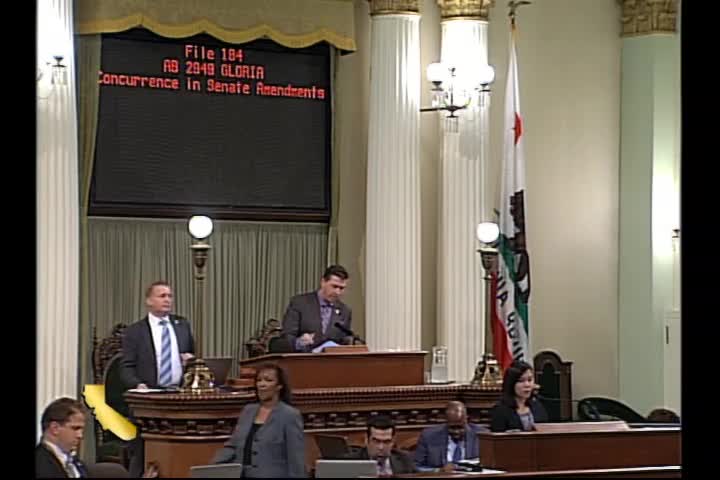 1MIN
Assembly Floor
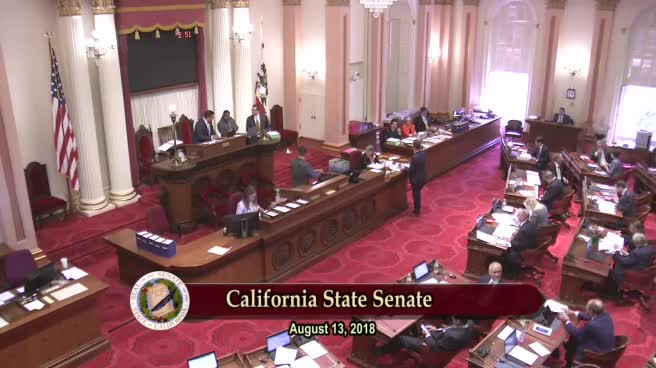 2MIN
Senate Floor
 5MIN
Senate Standing Committee on Appropriations
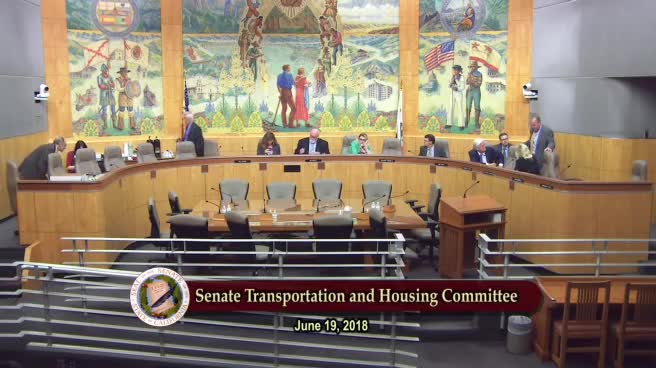 14MIN
Senate Standing Committee on Transportation and Housing
 2MIN
Assembly Floor
 14MIN
Assembly Standing Committee on Transportation


Bill Co-Author(s):