AB 2371: Water use efficiency: landscape irrigation.
- Session Year: 2017-2018
- House: Assembly
- Latest Version Date: 2018-09-28
(1)Existing law, the Contractors State License Law, provides for the licensing by written examination and regulation of contractors by the Contractors State License Board in the Department of Consumer Affairs. Existing law requires the board to periodically review and, if needed, revise the contents of qualifying examinations to ensure that the examination questions are timely and relevant to the business of contracting.
This bill, before revision of the landscaping contractor examination, would require the board to confer with specified entities to determine whether any updates or revisions to the examination are needed to reflect new and emerging landscape irrigation efficiency practices, as specified.
(2)Existing law regulates a person who performs certain home inspections for a fee. Under existing law, a home inspection report is a written report prepared for a fee and issued after a home inspection, and clearly describes and identifies the inspected systems, structures, or components of the dwelling, any material defects identified, and any recommendations, as specified.
This bill would authorize a home inspection report on a dwelling unit on a parcel containing an in-ground landscape irrigation system to include certain information regarding the operation and observation of the irrigation system. The bill, to the extent funds are available, would require the Department of Water Resources, in consultation with a specified association and the Department of Housing and Community Development, to compile an estimate of the number of properties for which an irrigation system inspection report has been prepared each year, beginning with 2018, for inclusion in an update to the California Water Plan.
(3)Existing law requires the Department of Water Resources, in consultation with the California Urban Water Conservation Council, to convene an independent technical panel, consisting of no more than 7 members, as prescribed, to provide information and recommendations to the department and the Legislature on new demand management measures, technologies, and approaches. Existing law requires the panel to report to the Legislature every 5 years, as specified.
This bill would require the Director of Water Resources, on or before June 30, 2019, to convene a working group comprised of various representatives, including, but not limited to, the independent technical panel, and would prescribe tasks for the working group relating to water use associated with landscape plants. The bill would require the working group to complete the tasks on or before January 1, 2020, and to provide a written overview of its findings and recommendations, as specified. The bill would require the department, on or before January 1, 2020, and every 3 years thereafter, to consider and propose revisions to a certain publication and its database as the director deems necessary or desirable, as specified.
(1)Existing law, the Contractors State License Law, provides for the licensing by written examination and regulation of contractors by the Contractors State License Board in the Department of Consumer Affairs. Existing law requires the Contractors State License Board to periodically review and, if needed, revise the contents of qualifying examinations to insure ensure that the examination questions are timely and relevant to the business of contracting.
This bill, before revision of the landscaping contractor examination, would require the Contractors State License Board to confer with specified entities to determine whether any updates or revisions to the examination are needed to reflect new and emerging landscape irrigation efficiency practices, as specified.
(2)Existing law regulates a person who performs certain home inspections for a fee. Under existing law, a home inspection report is a written report prepared for a fee and issued after a home inspection, and clearly describes and identifies the inspected systems, structures, or components of the dwelling, any material defects identified, and any recommendations, as specified.
This bill would authorize a home inspection, upon request by the client, to include an inspection of a landscape irrigation system by a qualified home inspector. inspection report on a dwelling unit on a parcel containing an in-ground landscape irrigation system to include certain information regarding the operation and observation of the irrigation system. The bill, to the extent funds are available, would require the Department of Water Resources, in consultation with a specified association and the Department of Housing and Community Development, to compile an estimate of the number of properties for which an irrigation system inspection report has been prepared each year, beginning with 2018, for inclusion in an update to the California Water Plan.
(3)Existing law requires the Department of Water Resources, in consultation with the California Urban Water Conservation Council, to convene an independent technical panel, consisting of no more than 7 members, as prescribed, to provide information and recommendations to the department and the Legislature on new demand management measures, technologies, and approaches. Existing law requires the panel to report to the Legislature every 5 years, as specified.
This bill would require the Director of Water Resources, on or before June 30, 2019, to convene a working group comprised of various representatives, including, but not limited to, the independent technical panel, and would prescribe tasks for the working group relating to water use associated with landscape plants. The bill would require the working group to complete the tasks on or before January 1, 2020, and to provide a written overview of its findings and recommendations, as specified. The bill would require the department, on or before January 1, 2020, and every 3 years thereafter, to consider and propose revisions to a certain publication and its database as the director deems necessary or desirable, as specified.
This bill would require the Department of Water Resources, on or before June 30, 2019, and at least every 3 years thereafter, to collaborate with the University of California Division of Agriculture and Natural Resources to review and revise the Water Use Classification of Landscape Species publication, and its associated database, relating to plant taxa. The bill would encourage the University of California Division of Agriculture and Natural Resources to provide additional specified information for each listed plant taxa in the database.(1)Existing law, the Contractors State License Law, provides for the licensing by written examination and regulation of contractors by the Contractors State License Board in the Department of Consumer Affairs. Existing law requires the Contractors State License Board to periodically review and, if needed, revise the contents of qualifying examinations to insure that the examination questions are timely and relevant to the business of contracting.
This bill, before revision of specified the landscaping contractor examinations, examination, would require the Contractors State License Board to confer with specified entities to determine whether any updates or revisions to the examination are needed to reflect new and emerging landscape irrigation efficiency practices, as specified.
(3)(2)Existing law regulates a person who performs certain home inspections for a fee. Under existing law, a home inspection report is a written report prepared for a fee and issued after a home inspection, and clearly describes and identifies the inspected systems, structures, or components of the dwelling, any material defects identified, and any recommendations, as specified.
This bill would authorize a home inspection, upon request by the client, to include an inspection of a landscape irrigation system by a qualified home inspector.
(4)(3)Existing law requires the Department of Water Resources, in consultation with the California Urban Water Conservation Council, to convene an independent technical panel, consisting of no more than 7 members, as prescribed, to provide information and recommendations to the department and the Legislature on new demand management measures, technologies, and approaches. Existing law requires the panel to report to the Legislature every 5 years, as specified.
This bill would require the Secretary of Food and Agriculture, Director of Water Resources, on or before June 30, 2019, to convene a working group comprised of various representatives, including, but not limited to, the independent technical panel, and would prescribe tasks for the working group relating to water use associated with landscape plants. The bill would require the working group to complete the tasks on or before December 31, 2019, January 1, 2020, and to provide a written overview of its findings and recommendations, as specified.
This bill would require the Department of Water Resources, on or before June 30, 2019, and at least every 3 years thereafter, to collaborate with the University of California Division of Agriculture and Natural Resources to review and revise the Water Use Classification of Landscape Species publication, and its associated database, relating to plant taxa. The bill would encourage the University of California Division of Agriculture and Natural Resources to provide additional specified information for each listed plant taxa in the database.
(5)The California Constitution requires the state to reimburse local agencies and school districts for certain costs mandated by the state. Statutory provisions establish procedures for making that reimbursement.This bill would provide that with regard to certain mandates no reimbursement is required by this act for a specified reason.With regard to any other mandates, this bill would provide that, if the Commission on State Mandates determines that the bill contains costs so mandated by the state, reimbursement for those costs shall be made pursuant to the statutory provisions noted above.(1)Existing law regulates the labeling of nursery stock and requires that when nursery stock is sold or shipped, delivered, or transported to any purchaser, it be labeled as to the correct name, as specified, including that the correct name for ornamentals is the botanical name. Existing law allows nursery stock on display for sale at retail to be labeled by a sign on any block of stock of the same kind and species and requires turf to be labeled by a sign showing the required correct name of the stock on display. Existing law vests with the Secretary of Food and Agriculture and the county agricultural commissions commission of each county the responsibility of enforcing these provisions and makes a violation of these provisions a crime.
This bill would also require, upon delivery to a job site, as defined, each landscape plant or a representative number of each landscape plant, as determined by the Secretary of Food and Agriculture, to be individually labeled as to its correct name in order to correctly identify nursery stock installed in outdoor landscapes that are subject to inspection under the Model Water Efficient Landscape Ordinance or any local water efficient landscape ordinance. By adding to the responsibilities of local officials, this bill would impose a state-mandated local program. By generally creating new crimes, this bill would impose a state-mandated local program. The bill would require the Secretary of Food and Agriculture to adopt regulations to implement these provisions no later than June 30, 2020.
This bill would require the Department of Water Resources, on or before June 30, 2019, and at least every 3 years thereafter, to collaborate with the University of California Division of Agriculture and Natural Resources to review and revise the Water Use Classification of Landscape Species publication, and its associated database, relating to plant taxa. The bill would encourage the University of California Division of Agriculture and Natural Resources to provide additional specified information for each listed plant taxa in the database.
(2)Existing law, the Contractors State License Law, provides for the licensing by written examination and regulation of contractors by the Contractors State License Board in the Department of Consumer Affairs. Existing law requires the Contractors State License Board to periodically review and, if needed, revise the contents of qualifying examinations to insure that the examination questions are timely and relevant to the business of contracting.
This bill, before revision of specified contractor examinations, would require the Contractors State License Board to confer with specified entities to determine whether any updates or revisions to the examination are needed to reflect new and emerging landscape irrigation efficiency practices, as specified.
(3)Existing law regulates a person who performs certain home inspections for a fee. Under existing law, a home inspection report is a written report prepared for a fee and issued after a home inspection, and clearly describes and identifies the inspected systems, structures, or components of the dwelling, any material defects identified, and any recommendations, as specified.
This bill would require, commencing January 1, 2020, each home inspection report on a dwelling unit on a parcel containing an in-ground landscape irrigation system, except as specified, to include certain information regarding the operation and observation of the irrigation system. authorize a home inspection, upon request by the client, to include an inspection of a landscape irrigation system by a qualified home inspector.
(4)Existing law requires the Department of Water Resources, in consultation with the California Urban Water Conservation Council, to convene an independent technical panel, consisting of no more than 7 members, as prescribed, to provide information and recommendations to the department and the Legislature on new demand management measures, technologies, and approaches. Existing law requires the panel to report to the Legislature every 5 years, as specified.
This bill would require the Secretary of Food and Agriculture, on or before June 30, 2019, to convene a working group comprised of various representatives, including, but not limited to, the independent technical panel, and would prescribe tasks for the working group relating to water use associated with landscape plants. The bill would require the working group to complete the tasks on or before December 31, 2019, and to provide a written overview of its findings and recommendations, as specified.
(5)The California Constitution requires the state to reimburse local agencies and school districts for certain costs mandated by the state. Statutory provisions establish procedures for making that reimbursement.
This bill would provide that with regard to certain mandates no reimbursement is required by this act for a specified reason.
With regard to any other mandates, this bill would provide that, if the Commission on State Mandates determines that the bill contains costs so mandated by the state, reimbursement for those costs shall be made pursuant to the statutory provisions noted above.
(1)Existing law regulates the labeling of nursery stock and requires that when nursery stock is sold or shipped, delivered, or transported to any purchaser, it be labeled as to the correct name, as specified, including that the correct name for ornamentals is the botanical name. Existing law allows nursery stock on display for sale at retail to be labeled by a sign on any block of stock of the same kind and species and requires turf to be labeled by a sign showing the required correct name of the stock on display. Existing law vests with the Secretary of Food and Agriculture and the county agricultural commissions of each county the responsibility of enforcing these provisions and makes a violation of these provisions a crime.
This bill would also require nursery stock, for any taxa listed in the Water Use Classification of Landscape Species, published by the University of California Division of Agriculture and Natural Resources, to be labeled with the correct water use classification, as identified by that publication. The bill would specify, with regard to the correct name of ornamentals being the botanical name, that the botanical name includes any subspecies, hybrid, cultivar, or variety. The bill would require nursery stock on display for sale at retail to be individually labeled, except as specified. The bill would require turf to be labeled by a sign also showing the water use classification. require, upon delivery to a job site, as defined, each landscape plant or a representative number of each landscape plant, as determined by the Secretary of Food and Agriculture, to be individually labeled as to its correct name in order to correctly identify nursery stock installed in outdoor landscapes that are subject to inspection under the Model Water Efficient Landscape Ordinance or any local water efficient landscape ordinance. By adding to the responsibilities of local officials, this bill would impose a state-mandated local program. By generally creating new crimes, this bill would impose a state-mandated local program. The bill would require the Secretary of Food and Agriculture to adopt regulations to implement these provisions no later than June 30, 2019. 2020.
This bill would require the Department of Water Resources, on or before June 30, 2019, and at least every 3 years thereafter, to collaborate with the University of California Division of Agriculture and Natural Resources to review and revise the Water Use Classification of Landscape Species publication, and its associated database, relating to plant taxa. The bill would encourage the University of California Division of Agriculture and Natural Resources to provide additional specified information for each listed plant taxa in the database.
(2)Existing law, the Contractors State License Law, provides for the licensing by written examination and regulation of contractors by the Contractors State License Board in the Department of Consumer Affairs. Existing law requires the Contractors State License Board to periodically review and, if needed, revise the contents of qualifying examinations to insure that the examination questions are timely and relevant to the business of contracting.
This bill, before revision of specified contractor examinations, would require the Contractors State License Board to confer with specified entities to determine whether any updates or revisions to the examination are needed to reflect new and emerging landscape irrigation efficiency practices, as specified.
(3)Existing law regulates a person who performs certain home inspections for a fee. Under existing law, a home inspection report is a written report prepared for a fee and issued after a home inspection, and clearly describes and identifies the inspected systems, structures, or components of the dwelling, any material defects identified, and any recommendations, as specified.
This bill would require, commencing January 1, 2020, each home inspection report on a dwelling unit on a parcel containing an in-ground landscape irrigation system, except as specified, to include certain information regarding the operation and observation of the irrigation system.
(4)Existing law requires the Department of Water Resources, in consultation with the California Urban Water Conservation Council, to convene an independent technical panel, consisting of no more than 7 members, as prescribed, to provide information and recommendations to the department and the Legislature on new demand management measures, technologies, and approaches. Existing law requires the panel to report to the Legislature every 5 years, as specified.
This bill would require the Secretary of Food and Agriculture, on or before June 30, 2019, to convene a working group comprised of various representatives, including, but not limited to, the independent technical panel, and would prescribe tasks for the working group relating to water use associated with landscape plants. The bill would require the working group to complete the tasks on or before December 31, 2019, and to provide a written overview of its findings and recommendations, as specified.
(4)(5)The California Constitution requires the state to reimburse local agencies and school districts for certain costs mandated by the state. Statutory provisions establish procedures for making that reimbursement.
This bill would provide that with regard to certain mandates no reimbursement is required by this act for a specified reason.
With regard to any other mandates, this bill would provide that, if the Commission on State Mandates determines that the bill contains costs so mandated by the state, reimbursement for those costs shall be made pursuant to the statutory provisions noted above.
(1)Existing law regulates the labeling of nursery stock and requires that when nursery stock is sold or shipped, delivered, or transported to any purchaser, it be labeled as to the correct name, as specified, including that the correct name for ornamentals is the botanical name. Existing law allows nursery stock on display for sale at retail to be labeled by a sign on any block of stock of the same kind and species and requires turf to be labeled by a sign showing the required correct name of the stock on display. Existing law vests with the Secretary of Food and Agriculture and the county agricultural commissions of each county the responsibility of enforcing these provisions and makes a violation of these provisions a crime.
This bill would also require nursery stock, for any taxa listed in the Water Use Classification of Landscape Species, published by the University of California Division of Agriculture and Natural Resources, to be labeled with the correct water use classification, as identified by that publication. The bill would specify, with regard to the correct name of ornamentals being the botanical name, that the botanical name includes any subspecies, hybrid, cultivar, or variety. The bill would require nursery stock on display for sale at retail to be individually labeled, except as specified. The bill would require turf to be labeled by a sign also showing the water use classification. By adding to the responsibilities of local officials, this bill would impose a state-mandated local program. By generally creating new crimes, this bill would impose a state-mandated local program. The bill would require the Secretary of Food and Agriculture to adopt regulations to implement these provisions no later than June 30, 2019.
This bill would require the Department of Water Resources, on or before June 30, 2019, and at least every 3 years thereafter, to collaborate with the University of California Division of Agriculture and Natural Resources to review and revise the Water Use Classification of Landscape Species publication, and its associated database, relating to plant taxa. The bill would encourage the University of California Division of Agriculture and Natural Resources to provide additional specified information for each listed plant taxa in the database.
(2)Existing law requires the Department of General Services to provide planning, acquisition, construction, and maintenance of state buildings and property, and maintain a statewide property inventory of all real property held by the state. Existing law, when a state agency builds upon state-owned real property, purchases real property, or replaces landscaping or irrigation, except as specified, requires the state agency to reduce water consumption and increase water efficiencies for that property where feasible, as defined, through specified water efficiency measures.This bill would also exclude from application of the water efficiency measures state-owned real property that is a registered historical site and would additionally include, as one of the specified water efficiency measures, implementation of stormwater capture. The bill would impose additional requirements on the landscaping of state-owned facilities relating to water use efficiency. For state-owned real property that is not covered by these provisions, except state-owned real property that is leased to a private party for agricultural purposes or a registered historical site, the bill would require the Department of General Services to comply with other landscaping water efficiency provisions. This bill, on or before January 1, 2020, would require the Department General Services, in consultation with the Department of Water Resources, to establish a protocol for landscape and irrigation systems of state-owned facilities, as specified, and would require the Green Action Team, to update the Green Building Action Plan, State Administrative Manual, and management memorandums, as necessary, to minimize or eliminate supplemental irrigation.(3)(2)Existing law, the Contractors State License Law, provides for the licensing by written examination and regulation of contractors by the Contractors State License Board in the Department of Consumer Affairs. Existing law requires the Contractors State License Board to periodically review and, if needed, revise the contents of qualifying examinations to insure that the examination questions are timely and relevant to the business of contracting.
This bill, before revision of specified contractor examinations, would require the Contractors State License Board to confer with specified entities to determine whether any updates or revisions to the examination are needed to reflect new and emerging landscape irrigation efficiency practices, as specified.
(4)(3)Existing law regulates a person who performs certain home inspections for a fee. Under existing law, a home inspection report is a written report prepared for a fee and issued after a home inspection, and clearly describes and identifies the inspected systems, structures, or components of the dwelling, any material defects identified, and any recommendations, as specified.
This bill would require, commencing January 1, 2020, each home inspection report on a dwelling unit on a parcel containing an in-ground landscape irrigation system, except as specified, to include certain information regarding the operation and observation of the irrigation system.
(5)(4)The California Constitution requires the state to reimburse local agencies and school districts for certain costs mandated by the state. Statutory provisions establish procedures for making that reimbursement.
This bill would provide that with regard to certain mandates no reimbursement is required by this act for a specified reason.
With regard to any other mandates, this bill would provide that, if the Commission on State Mandates determines that the bill contains costs so mandated by the state, reimbursement for those costs shall be made pursuant to the statutory provisions noted above.
(1)Existing law regulates the labeling of nursery stock and requires that when nursery stock is sold or shipped, delivered, or transported to any purchaser, it be labeled as to the correct name, as specified, including that the correct name for ornamentals is the botanical name. Existing law allows nursery stock on display for sale at retail to be labeled by a sign on any block of stock of the same kind and species and requires turf to be labeled by a sign showing the required correct name of the stock on display. Existing law vests with the Secretary of Food and Agriculture and the county agricultural commissions of each county the responsibility of enforcing these provisions and makes a violation of these provisions a crime.
This bill would also require nursery stock, for any taxa listed in the Water Use Classification of Landscape Species, published by the University of California Division of Agriculture and Natural Resources, to be labeled with the correct water use classification, as identified by that publication. The bill would specify, with regard to the correct name of ornamentals being the botanical name, that the botanical name includes any subspecies, hybrid, cultivar, or variety. The bill would require nursery stock on display for sale at retail to be individually labeled, except as specified. The bill would require turf to be labeled by a sign also showing the water use classification. By adding to the responsibilities of local officials, this bill would impose a state-mandated local program. By generally creating new crimes, this bill would impose a state-mandated local program. The bill would require the Secretary of Food and Agriculture to adopt regulations to implement these provisions no later than June 30, 2019.
This bill would require the Department of Water Resources, on or before June 30, 2019, and at least every 3 years thereafter, to collaborate with the University of California Division of Agriculture and Natural Resources to review and revise the Water Use Classification of Landscape Species publication, and its associated database, relating to plant taxa. The bill would encourage the University of California Division of Agriculture and Natural Resources to provide additional specified information for each listed plant taxa in the database.
(2)Existing law requires the Department of General Services to provide planning, acquisition, construction, and maintenance of state buildings and property, and maintain a statewide property inventory of all real property held by the state. Existing law, when a state agency builds upon state-owned real property, purchases real property, or replaces landscaping or irrigation, except as specified, requires the state agency to reduce water consumption and increase water efficiencies for that property where feasible, as defined, through specified water efficiency measures.
This bill would also exclude from application of the water efficiency measures state-owned real property that is a registered historical site and would additionally include, as one of the specified water efficiency measures, implementation of stormwater capture. The bill would impose additional requirements on the landscaping of state-owned facilities relating to water use efficiency. For state-owned real property that is not covered by these provisions, except state-owned real property that is leased to a private party for agricultural purposes or a registered historical site, the bill would require the Department of General Services to comply with other landscaping water efficiency provisions.
This bill, on or before January 1, 2020, would require the Department General Services, in consultation with the Department of Water Resources, to establish a protocol for landscape and irrigation systems of state-owned facilities, as specified, and would require the Green Action Team, to update the Green Building Action Plan, State Administrative Manual, and management memorandums, as necessary, to minimize or eliminate supplemental irrigation.
(3)Existing law, the Contractors State License Law, provides for the licensing by written examination and regulation of contractors by the Contractors State License Board in the Department of Consumer Affairs. Existing law requires the Contractors State License Board to periodically review and, if needed, revise the contents of qualifying examinations to insure that the examination questions are timely and relevant to the business of contracting.
This bill, before revision of a specific landscaping contractor examination, specified contractor examinations, would require the Contractors State License Board to confer with specified entities to determine whether any updates or revisions to the examination are needed to reflect new and emerging landscape irrigation efficiency practices, as specified.
(4)Existing law regulates a person who performs certain home inspections for a fee. Under existing law, a home inspection report is a written report prepared for a fee and issued after a home inspection, and clearly describes and identifies the inspected systems, structures, or components of the dwelling, any material defects identified, and any recommendations, as specified.
This bill would require, commencing January 1, 2020, each home inspection report on a dwelling unit on a parcel containing an in-ground landscape irrigation system, except as specified, to include certain information regarding the operation and observation of the irrigation system.
(5)The California Constitution requires the state to reimburse local agencies and school districts for certain costs mandated by the state. Statutory provisions establish procedures for making that reimbursement.
This bill would provide that with regard to certain mandates no reimbursement is required by this act for a specified reason.
With regard to any other mandates, this bill would provide that, if the Commission on State Mandates determines that the bill contains costs so mandated by the state, reimbursement for those costs shall be made pursuant to the statutory provisions noted above.
(1)Existing law regulates the labeling of nursery stock and requires that when nursery stock is sold or shipped, delivered, or transported to any purchaser, it be labeled as to the correct name, as specified, including that the correct name for ornamentals is the botanical name. Existing law allows nursery stock on display for sale at retail to be labeled by a sign on any block of stock of the same kind and species and requires turf to be labeled by a sign showing the required correct name of the stock on display. Existing law vests with the Secretary of Food and Agriculture and the county agricultural commissions of each county the responsibility of enforcing these provisions and makes a violation of these provisions a crime.
This bill would also require nursery stock, for any taxa listed in the Water Use Classification of Landscape Species, published by the University of California Division of Agriculture and Natural Resources, to be labeled with the correct water use classification, as identified by that publication. The bill would specify, with regard to the correct name of ornamentals being the botanical name, that the botanical name includes any subspecies, hybrid, cultivar, or variety. The bill would require nursery stock on display for sale at retail to be individually labeled, except as specified. The bill would require turf to be labeled by a sign also showing the water use classification. By adding to the responsibilities of local officials, this bill would impose a state-mandated local program. By generally creating new crimes, this bill would impose a state-mandated local program. The bill would require the Secretary of Food and Agriculture to adopt regulations to implement these provisions no later than June 30, 2019.
This bill would require the Department of Water Resources, on or before June 30, 2019, and at least every 3 years thereafter, to collaborate with the University of California Division of Agriculture and Natural Resources to review and revise the Water Use Classification of Landscape Species publication, and its associated database, relating to plant taxa. The bill would encourage the University of California Division of Agriculture and Natural Resources to provide additional specified information for each listed plant taxa in the database.
(2)Existing law requires the Department of General Services to provide planning, acquisition, construction, and maintenance of state buildings and property, and maintain a statewide property inventory of all real property held by the state. Existing law, when a state agency builds upon state-owned real property, purchases real property, or replaces landscaping or irrigation, except as specified, requires the state agency to reduce water consumption and increase water efficiencies for that property where feasible, as defined, through specified water efficiency measures.
This bill would also exclude from application of the water efficiency measures state-owned real property that is a registered historical site and would additionally include, as one of the specified water efficiency measures, implementation of stormwater capture. The bill would impose additional requirements on the landscaping of state-owned facilities relating to water use efficiency. For state-owned real property that is not covered by these provisions, the bill would require the Department of General Services to comply with other landscaping water efficiency provisions.
This bill, on or before January 1, 2020, would require the Department General Services, in consultation with the Department of Water Resources, to establish a protocol for landscape and irrigation systems of state-owned facilities, as specified, and would require the Green Action Team, to update the Green Building Action Plan, State Administrative Manual, and management memorandums, as necessary, to minimize or eliminate supplemental irrigation.
(3)Existing law, the Contractors State License Law, provides for the licensing by written examination and regulation of contractors by the Contractors State License Board in the Department of Consumer Affairs. Existing law requires the Contractors State License Board to periodically review and, if needed, revise the contents of qualifying examinations to insure that the examination questions are timely and relevant to the business of contracting.
This bill, before revision of a specific landscaping contractor examination, would require the Contractors State License Board to confer with specified entities to determine whether any updates or revisions to the examination are needed to reflect new and emerging landscape irrigation efficiency practices, as specified.
(4)Existing law regulates a person who performs certain home inspections for a fee. Under existing law, a home inspection report is a written report prepared for a fee and issued after a home inspection, and clearly describes and identifies the inspected systems, structures, or components of the dwelling, any material defects identified, and any recommendations, as specified.
This bill would require, commencing January 1, 2020, each home inspection report on a dwelling unit on a parcel containing an in-ground landscape irrigation system, except as specified, to include certain information regarding the operation and observation of the irrigation system.
(5)The California Constitution requires the state to reimburse local agencies and school districts for certain costs mandated by the state. Statutory provisions establish procedures for making that reimbursement.
This bill would provide that with regard to certain mandates no reimbursement is required by this act for a specified reason.
With regard to any other mandates, this bill would provide that, if the Commission on State Mandates determines that the bill contains costs so mandated by the state, reimbursement for those costs shall be made pursuant to the statutory provisions noted above.
Existing law, the Water Conservation in Landscaping Act, requires the Department of Water Resources to update its model water-efficient landscape ordinance by regulation and prescribes various requirements for the updated model ordinance. This bill would state the intent of the Legislature to enact legislation that would improve water use sustainability in Californias outdoor irrigation practices.Existing law, the Water Conservation in Landscaping Act, requires the Department of Water Resources to update its model water-efficient landscape ordinance by regulation and prescribes various requirements for the updated model ordinance.
This bill would state the intent of the Legislature to enact legislation that would improve water use sustainability in Californias outdoor irrigation practices.
The Legislature finds and declares all of the following:
(a)Approximately one-half of the urban water provided for all purposes in California is used outdoors, primarily for landscape irrigation. This significant amount of potable water use, approximately four million acre-feet per year, illuminates the critical importance of the choices individuals and communities make about landscaping.
(b)The choices consumers make regarding landscape design and application can have an important role in advancing a strong water conservation and water use efficiency ethic within the state.
(c)Consumers require timely and easily accessible information when making decisions regarding purchases of plants, grasses, and other landscape materials, particularly related to consumptive water needs of the plants and grasses that will be used in landscapes.
(d)User-friendly and more readily accessible information regarding the consumptive water needs of plants and grasses would assist consumers in making decisions about efficient and sustainable landscape materials that would benefit California and help water managers to meet outdoor water use standards in the future.
SEC. 2.Section 7065.06 is added to the Business and Professions Code, to read:7065.06.(a)Before the board revises the examination for a landscaping contractor (C-27), the board shall confer with the Department of Water Resources and the California Landscape Contractors Association to determine whether any updates or revisions to the examination are needed to reflect new and emerging landscape irrigation efficiency practices.
(b)The board shall ensure that the examination includes questions that are specific to water use efficiency and sustainable practices to help ensure that the states water efficiency needs identified in the California Water Plan, described in Section 10004 of the Water Code, are sufficiently supported.
(c)The board shall ensure that the reference study material for the examination continues to include the most current version of the Model Water Efficient Landscape Ordinance (23 Cal. Code Regs. 490, et seq.) and shall add other collateral material specific to water use efficiency and sustainability.
SEC. 3.Section 7195.5 is added to the Business and Professions Code, to read:7195.5.(a)For purposes of improving landscape water use and irrigation efficiency, a home inspection report on a dwelling unit prepared pursuant to this chapter on a parcel containing an in-ground landscape irrigation system, the operation of which is under the exclusive control of the owner or occupant of the dwelling, may include an irrigation system inspection report, prepared by either a home inspector or certified landscape irrigation auditor, that contains all of the following:
(1)Examination of the irrigation system controller, if present, noting observable defects in installation or operation, or both.
(2)Activation of each zone or circuit providing irrigation water to turf grass, noting malfunctions observed in the operation of each of the following:
(A)The irrigation valve.
(B)Visible irrigation supply piping.
(C)Sprinkler heads and stems.
(3)During activation of the system pursuant to paragraph (2), observation of any of the following during the period of operation, in minutes, specified in the report:
(A)Irrigation spray being directed to hardscape.
(B)Irrigation water leaving the irrigated area as surface runoff.
(C)Ponding of irrigation water on the surface of the irrigated area.
(4)Notation whether inspection is limited due to snow, ice, or other site conditions that impede an inspection.
(b)Notwithstanding any other law, a sanction or penalty regarding prohibited hours, days, or effects of operation of a landscape irrigation system shall not be levied upon either the home inspector, the landscape irrigation auditor, the occupant, or the owner of a property by any state or local agency or water purveyor as a consequence of the operation of a landscape irrigation system for the purpose of an irrigation system inspection carried out under this section.
(c)A home inspector is encouraged to provide information or access to information regarding water-efficient landscape irrigation systems within the home inspection report.
(d)To the extent funds are available, the Department of Water Resources, in consultation with the California Real Estate Inspection Association and the Department of Housing and Community Development, shall compile an estimate of the number of properties for which an irrigation system inspection report has been prepared each year, beginning with 2018, for inclusion in an update to the California Water Plan.
SEC. 4.Section 65592 of the Government Code is amended to read:65592.Unless the context requires otherwise, the following definitions govern the construction of this article:
(a)Department means the Department of Water Resources.
(b)Director means the Director of Water Resources.
(c)Local agency means any city, county, or city and county, including a charter city or charter county.
(d)Water efficient landscape ordinance means an ordinance or resolution adopted by a local agency, or prepared by the department, to address the efficient use of water in landscaping.
SEC. 5.Section 65596 of the Government Code is amended to read:65596.The updated model ordinance adopted pursuant to Sections 65595 and 65596.5 shall do all the following in order to reduce water use:
(a)Include provisions for water conservation and the appropriate use and groupings of plants that are well-adapted to particular sites and to particular climatic, soil, or topographic conditions. The model ordinance shall not prohibit or require specific plant species, but it may include conditions for the use of plant species or encourage water conserving plants. However, the model ordinance shall not include conditions that have the effect of prohibiting or requiring specific plant species.
(b)Include a landscape water budget component that establishes the maximum amount of water to be applied through the irrigation system, based on climate, landscape size, irrigation efficiency, and plant needs.
(c)Promote the benefits of consistent local ordinances in neighboring areas.
(d)Encourage the capture and retention of stormwater onsite to improve water use efficiency or water quality.
(e)Include provisions for the use of automatic irrigation systems and irrigation schedules based on climatic conditions, specific terrains and soil types, and other environmental conditions. The model ordinance shall include references to local, state, and federal laws and regulations regarding standards for water-conserving irrigation equipment. The model ordinance may include climate information for irrigation scheduling based on the California Irrigation Management Information System (Chapter 2 (commencing with Section 10015) of Part 1.5 of Division 6 of the Water Code).
(f)Include provisions for onsite soil assessment and soil management plans that include grading and drainage to promote healthy plant growth and to prevent excessive erosion and runoff, and the use of mulches in shrub areas, garden beds, and landscaped areas where appropriate.
(g)Promote the use of recycled water consistent with Article 4 (commencing with Section 13520) of Chapter 7 of Division 7 of the Water Code.
(h)Seek to educate water users on the efficient use of water and the benefits of doing so.
(i)Address regional differences, including fire prevention needs.
(j)Exempt landscaping that is part of a registered historical site.
(k)Encourage the use of economic incentives to promote the efficient use of water.
(l)Include provisions for landscape maintenance practices that foster long-term landscape water conservation. Landscape maintenance practices may include, but are not limited to, performing routine irrigation system repair and adjustments, conducting water audits, and prescribing the amount of water applied per landscaped acre.
(m)Include provisions to minimize landscape irrigation overspray and runoff.
(n)Include provisions requiring that each plant or a representative number of each type of plant, as determined by the director, installed in a new or rehabilitated landscape be identifiable at the time of inspection as to its correct name as specified in Section 53481 of the Food and Agricultural Code.
SEC. 6.Section 65596.5 of the Government Code is amended to read:65596.5.(a)On or before January 1, 2020, and at least every three years thereafter, the department, after holding one or more public hearings, shall do one of the following:
(1)Update the model water-efficient landscape ordinance adopted pursuant to Chapter 1145 of the Statutes of 1990.
(2)Make a finding that an update to the model water-efficient landscape ordinance at that time is not a useful or effective means to improve either the efficiency of landscape water use or the administration of the ordinance.
(b)On or before January 1, 2020, and at least every three years thereafter, the department shall consider and propose revisions to the publication Water Use Classification of Landscape Species and its associated database as the director deems necessary or desirable to add unlisted plant taxa being offered for sale in California and to correct errors in existing listings.
(c)When the model water-efficient landscape ordinance has been updated, the department shall submit the update to the Building Standards Commission for consideration during the triennial revision process of the California Green Building Standards Code.
SEC. 7.Section 65596.7 is added to the Government Code, to read:65596.7.(a)On or before June 30, 2019, the director shall convene a working group comprised of representatives from the landscape nursery industry, the agricultural community, the landscape retail industry, environmental organizations, urban water agencies, academia, landscape contractors, landscape architects, and the independent technical panel created pursuant to Section 10631.7 of the Water Code.
(b)The working group shall have both of the following tasks:
(1)Examining the current state of consumer information available and accessible regarding water use associated with landscape plants.
(2)Exploring and identifying options for improving the availability, accessibility, and quality of consumer information regarding water use associated with landscape plants, in both electronic and physical formats.
(c)The working group shall complete its tasks on or before January 1, 2020, and shall provide a written overview of its findings and recommendations, if any, to the director, the Executive Director of the State Water Resources Control Board, the Speaker of the Assembly, and the President pro Tempore of the Senate.
The Legislature finds and declares all of the following:
(a)Approximately one-half of the urban water provided for all purposes in California is used outdoors, primarily for landscape irrigation. This significant amount of potable water use, approximately four million acre-feet per year, illuminates the critical importance of the choices individuals and communities make about landscaping.
(b)The choices consumers make regarding landscape design and application can have an important role in advancing a strong water conservation and water use efficiency ethic within the state.
(c)Consumers require timely and easily accessible information when making decisions regarding purchases of plants, grasses, and other landscape materials, particularly related to consumptive water needs of the plants and grasses that will be used in landscapes.
(d)User-friendly and more readily accessible information regarding the consumptive water needs of plants and grasses would assist consumers in making decisions about efficient and sustainable landscape materials that would benefit California and help water managers to meet outdoor water use standards in the future.
SEC. 2.Section 7065.06 is added to the Business and Professions Code, to read:7065.06.(a)Before the board revises the examination for a landscaping contractor (C-27), the board shall confer with the Department of Water Resources and the California Landscape Contractors Association to determine whether any updates or revisions to the examination are needed to reflect new and emerging landscape irrigation efficiency practices.
(b)The board shall ensure that the examination includes questions that are specific to water use efficiency and sustainable practices to help ensure that the states water efficiency needs identified in the California Water Plan, described in Section 10004 of the Water Code, are sufficiently supported.
(c)The board shall ensure that the reference study material for the examination continues to include the most current version of the Model Water Efficient Landscape Ordinance (23 Cal. Code Regs. 490, et seq.) and shall add other collateral material specific to water use efficiency and sustainability.
SEC. 3.Section 7195.5 is added to the Business and Professions Code, to read:7195.5.A home inspection, if requested by the client, may include an inspection of a landscape irrigation system by a qualified home inspector.7195.5.(a)For purposes of improving landscape water use and irrigation efficiency, a home inspection report on a dwelling unit prepared pursuant to this chapter on a parcel containing an in-ground landscape irrigation system, the operation of which is under the exclusive control of the owner or occupant of the dwelling, may include an irrigation system inspection report, prepared by either a home inspector or certified landscape irrigation auditor, that contains all of the following:
(1)Examination of the irrigation system controller, if present, noting observable defects in installation or operation, or both.
(2)Activation of each zone or circuit providing irrigation water to turf grass, noting malfunctions observed in the operation of each of the following:
(A)The irrigation valve.
(B)Visible irrigation supply piping.
(C)Sprinkler heads and stems.
(3)During activation of the system pursuant to paragraph (2), observation of any of the following during the period of operation, in minutes, specified in the report:
(A)Irrigation spray being directed to hardscape.
(B)Irrigation water leaving the irrigated area as surface runoff.
(C)Ponding of irrigation water on the surface of the irrigated area.
(4)Notation whether inspection is limited due to snow, ice, or other site conditions that impede an inspection.
(b)Notwithstanding any other law, a sanction or penalty regarding prohibited hours, days, or effects of operation of a landscape irrigation system shall not be levied upon either the home inspector, the landscape irrigation auditor, the occupant, or the owner of a property by any state or local agency or water purveyor as a consequence of the operation of a landscape irrigation system for the purpose of an irrigation system inspection carried out under this section.
(c)A home inspector is encouraged to provide information or access to information regarding water-efficient landscape irrigation systems within the home inspection report.
(d)To the extent funds are available, the Department of Water Resources, in consultation with the California Real Estate Inspection Association and the Department of Housing and Community Development, shall compile an estimate of the number of properties for which an irrigation system inspection report has been prepared each year, beginning with 2018, for inclusion in an update to the California Water Plan.
SEC. 4.Section 65592 of the Government Code is amended to read:65592.Unless the context requires otherwise, the following definitions govern the construction of this article:
(a)Department means the Department of Water Resources.
(b)Director means the Director of Water Resources.
(c)Local agency means any city, county, or city and county, including a charter city or charter county.
(d)Water efficient landscape ordinance means an ordinance or resolution adopted by a local agency, or prepared by the department, to address the efficient use of water in landscaping.
SEC. 5.Section 65596 of the Government Code is amended to read:65596.The updated model ordinance adopted pursuant to Section Sections 65595 and 65596.5 shall do all the following in order to reduce water use:
(a)Include provisions for water conservation and the appropriate use and groupings of plants that are well-adapted to particular sites and to particular climatic, soil, or topographic conditions. The model ordinance shall not prohibit or require specific plant species, but it may include conditions for the use of plant species or encourage water conserving plants. However, the model ordinance shall not include conditions that have the effect of prohibiting or requiring specific plant species.
(b)Include a landscape water budget component that establishes the maximum amount of water to be applied through the irrigation system, based on climate, landscape size, irrigation efficiency, and plant needs.
(c)Promote the benefits of consistent local ordinances in neighboring areas.
(d)Encourage the capture and retention of stormwater onsite to improve water use efficiency or water quality.
(e)Include provisions for the use of automatic irrigation systems and irrigation schedules based on climatic conditions, specific terrains and soil types, and other environmental conditions. The model ordinance shall include references to local, state, and federal laws and regulations regarding standards for water-conserving irrigation equipment. The model ordinance may include climate information for irrigation scheduling based on the California Irrigation Management Information System (Chapter 2 (commencing with Section 10015) of Part 1.5 of Division 6 of the Water Code).
(f)Include provisions for onsite soil assessment and soil management plans that include grading and drainage to promote healthy plant growth and to prevent excessive erosion and runoff, and the use of mulches in shrub areas, garden beds, and landscaped areas where appropriate.
(g)Promote the use of recycled water consistent with Article 4 (commencing with Section 13520) of Chapter 7 of Division 7 of the Water Code.
(h)Seek to educate water users on the efficient use of water and the benefits of doing so.
(i)Address regional differences, including fire prevention needs.
(j)Exempt landscaping that is part of a registered historical site.
(k)Encourage the use of economic incentives to promote the efficient use of water.
(l)Include provisions for landscape maintenance practices that foster long-term landscape water conservation. Landscape maintenance practices may include, but are not limited to, performing routine irrigation system repair and adjustments, conducting water audits, and prescribing the amount of water applied per landscaped acre.
(m)Include provisions to minimize landscape irrigation overspray and runoff.
(n)Include provisions requiring that each plant or a representative number of each type of plant, as determined by the director, installed in a new or rehabilitated landscape be identifiable at the time of inspection as to its correct name as specified in Section 53481 of the Food and Agricultural Code.
SEC. 6.Section 65596.5 of the Government Code is amended to read:65596.5.(a)On or before January 1, 2020, and at least every three years thereafter, the department, after holding one or more public hearings, shall do one of the following:
(1)Update the model water-efficient landscape ordinance adopted pursuant to Chapter 1145 of the Statutes of 1990.
(2)Make a finding that an update to the model water-efficient landscape ordinance at that time is not a useful or effective means to improve either the efficiency of landscape water use or the administration of the ordinance.
(b)On or before January 1, 2020, and at least every three years thereafter, the department shall consider and propose revisions to the publication Water Use Classification of Landscape Species and its associated database as the director deems necessary or desirable to add unlisted plant taxa being offered for sale in California and to correct errors in existing listings.
(b)(c)When the model water-efficient landscape ordinance has been updated, the department shall submit the update to the Building Standards Commission for consideration during the triennial revision process of the California Green Building Standards Code.
SEC. 5.SEC. 7.Section 65596.7 is added to the Government Code, to read:65596.7.(a)On or before June 30, 2019, the director shall convene a working group comprised of representatives from the landscape nursery industry, the agricultural community, the landscape retail industry, environmental organizations, urban water agencies, academia, landscape contractors, landscape architects, and the independent technical panel created pursuant to Section 10631.7 of the Water Code.
(b)The working group shall have both of the following tasks:
(1)Examining the current state of consumer information available and accessible regarding water use associated with landscape plants.
(2)Exploring and identifying options for improving the availability, accessibility, and quality of consumer information regarding water use associated with landscape plants, in both electronic and physical formats.
(c)The working group shall complete its tasks on or before January 1, 2020, and shall provide a written overview of its findings and recommendations, if any, to the director, the Executive Director of the State Water Resources Control Board, the Speaker of the Assembly, and the President pro Tempore of the Senate.
SEC. 6.Part 2.13 (commencing with Section 10960) is added to Division 6 of the Water Code, to read:2.13.Landscape Water Use10960.(a)On or before June 30, 2019, and at least every three years thereafter, the department shall collaborate with the University of California Division of Agriculture and Natural Resources for the review and revision of the publication Water Use Classification of Landscape Species and its associated database to consider the addition of unlisted plant taxa and to correct errors in existing listings.(b)(1)The University of California Division of Agriculture and Natural Resources, commencing July 1, 2019, is encouraged to include the following additional information for each listed plant taxa in the Water Use Classification of Landscape Species database:(A)A photograph of the plant.(B)A narrative description of the plant.(C)Key cultural information about the plant.(2)The University of California Division of Agriculture and Natural Resources is encouraged to add the additional information specified by this subdivision, for plant taxa listed in the database before July 1, 2019, to the publication before July 1, 2024, at a rate of not less than 20 percent of total entries per year. The University of California Division of Agriculture and Natural Resources is encouraged to prioritize including the additional information for the most commonly used landscape plants, as identified in its existing contract with the department.The Legislature finds and declares all of the following:
(a)Approximately one-half of the urban water provided for all purposes in California is used outdoors, primarily for landscape irrigation. This significant amount of potable water use, approximately four million acre-feet per year, illuminates the critical importance of the choices individuals and communities make about landscaping.
(b)The choices consumers make regarding landscape design and application can have an important role in advancing a strong water conservation and water use efficiency ethic within the state.
(c)Consumers require timely and easily accessible information when making decisions regarding purchases of plants, grasses, and other landscape materials, particularly related to consumptive water needs of the plants and grasses that will be used in landscapes.
(d)User-friendly and more readily accessible information regarding the consumptive water needs of plants and grasses would assist consumers in making decisions about efficient and sustainable landscape materials that would benefit California and help water managers to meet outdoor water use standards in the future.
SEC. 2.Section 7065.06 is added to the Business and Professions Code, to read:7065.06.(a)Before the board revises the examinations for a general engineering contractor described in Section 7056, a general building contractor described in Section 7057, or examination for a landscaping contractor (C-27), the board shall confer with the Department of Water Resources and the California Landscape Contractors Association to determine whether any updates or revisions to the examination are needed to reflect new and emerging landscape irrigation efficiency practices.
(b)The board shall ensure that the examination includes questions that are specific to water use efficiency and sustainable practices to help ensure that the states water efficiency needs identified in the California Water Plan, described in Section 10004 of the Water Code, are sufficiently supported.
(c)The board shall ensure that the reference study material for the examination continues to include the most current version of the Model Water Efficient Landscape Ordinance (23 Cal. Code Regs. 490, et seq.) and shall add other collateral material specific to water use efficiency and sustainability.
SEC. 3.Section 7195.5 is added to the Business and Professions Code, to read:7195.5.A home inspection, if requested by the client, may include an inspection of a landscape irrigation system by a qualified home inspector.
SEC. 4.Section 53314 is added to the Food and Agricultural Code, to read:53314.Job site means a parcel of land in the state containing either a new landscape project or a rehabilitated landscape project subject to review and approval under the Model Water Efficient Landscape Ordinance (23 Cal. Code Regs. Sec. 490 et seq.) or any local water efficient landscape ordinance.SEC. 5.Section 53333 is added to the Food and Agricultural Code, to read:53333.(a)On or before June 30, 2019, the secretary shall convene a working group comprised of representatives from the landscape nursery industry, the agricultural community, the landscape retail industry, environmental organizations, urban water agencies, academia, landscape contractors, and the independent technical panel created pursuant to Section 10631.7 of the Water Code.(b)The working group shall have both of the following tasks:(1)Examining the current state of consumer information available and accessible regarding water use associated with landscape plants.(2)Exploring and identifying options for improving the availability, accessibility, and quality of consumer information regarding water use associated with landscape plants, in both electronic and physical formats.(c)The working group shall complete its tasks on or before December 31, 2019, and shall provide a written overview of its findings and recommendations, if any, to the secretary, the Director of Water Resources, the Executive Director of the State Water Resources Control Board, the Speaker of the Assembly, and the President pro Tempore of the Senate.SEC. 6.Section 53391 of the Food and Agricultural Code is amended to read:53391.(a)The secretary may adopt regulations that may be necessary to carry into effect the purposes of this chapter and each section of it, and may issue in relation to this chapter explanatory data and charts.(b)On or before June 30, 2020, the secretary shall adopt regulations to implement Section 53482.5.SEC. 7.Section 53482.5 is added to the Food and Agricultural Code, to read:53482.5.In order to correctly identify nursery stock installed in outdoor landscapes that is subject to inspection under the Model Water Efficient Landscape Ordinance (23 Cal. Code Regs. 490, et seq.) or any local water efficient landscape ordinance, upon delivery to a job site, each landscape plant or a representative number of each landscape plant, as determined by the secretary, shall be individually labeled as to its correct name as specified in Section 53481.SEC. 4.Section 65592 of the Government Code is amended to read:65592.Unless the context requires otherwise, the following definitions govern the construction of this article:
(a)Department means the Department of Water Resources.
(b)Director means the Director of Water Resources.
(b)(c)Local agency means any city, county, or city and county, including a charter city or charter county.
(c)(d)Water efficient landscape ordinance means an ordinance or resolution adopted by a local agency, or prepared by the department, to address the efficient use of water in landscaping.
SEC. 5.Section 65596.7 is added to the Government Code, to read:65596.7.(a)On or before June 30, 2019, the director shall convene a working group comprised of representatives from the landscape nursery industry, the agricultural community, the landscape retail industry, environmental organizations, urban water agencies, academia, landscape contractors, and the independent technical panel created pursuant to Section 10631.7 of the Water Code.
(b)The working group shall have both of the following tasks:
(1)Examining the current state of consumer information available and accessible regarding water use associated with landscape plants.
(2)Exploring and identifying options for improving the availability, accessibility, and quality of consumer information regarding water use associated with landscape plants, in both electronic and physical formats.
(c)The working group shall complete its tasks on or before January 1, 2020, and shall provide a written overview of its findings and recommendations, if any, to the director, the Executive Director of the State Water Resources Control Board, the Speaker of the Assembly, and the President pro Tempore of the Senate.
SEC. 8.SEC. 6.Part 2.13 (commencing with Section 10960) is added to Division 6 of the Water Code, to read:2.13.Landscape Water Use10960.(a)On or before June 30, 2019, and at least every three years thereafter, the department shall collaborate with the University of California Division of Agriculture and Natural Resources for the review and revision of the publication Water Use Classification of Landscape Species and its associated database to consider the addition of unlisted plant taxa and to correct errors in existing listings.
(b)(1)The University of California Division of Agriculture and Natural Resources, commencing July 1, 2019, is encouraged to include the following additional information for each listed plant taxa in the Water Use Classification of Landscape Species database:
(A)A photograph of the plant.
(B)A narrative description of the plant.
(C)Key cultural information about the plant.
(2)The University of California Division of Agriculture and Natural Resources is encouraged to add the additional information specified by this subdivision, for plant taxa listed in the database before July 1, 2019, to the publication before July 1, 2024, at a rate of not less than 20 percent of total entries per year. The University of California Division of Agriculture and Natural Resources is encouraged to prioritize including the additional information for the most commonly used landscape plants, as identified in its existing contract with the department.
SEC. 9.No reimbursement is required by this act pursuant to Section 6 of Article XIIIB of the California Constitution for certain costs that may be incurred by a local agency or school district because, in that regard, this act creates a new crime or infraction, eliminates a crime or infraction, or changes the penalty for a crime or infraction, within the meaning of Section 17556 of the Government Code, or changes the definition of a crime within the meaning of Section 6 of Article XIIIB of the California Constitution.However, if the Commission on State Mandates determines that this act contains other costs mandated by the state, reimbursement to local agencies and school districts for those costs shall be made pursuant to Part 7 (commencing with Section 17500) of Division 4 of Title 2 of the Government Code.The Legislature finds and declares all of the following:
(a)Approximately one-half of the urban water provided for all purposes in California is used outdoors, primarily for landscape irrigation. This significant amount of potable water use, approximately four million acre-feet per year, illuminates the critical importance of the choices individuals and communities make about landscaping.
(b)The choices consumers make regarding landscape design and application can have an important role in advancing a strong water conservation and water use efficiency ethic within the state.
(c)Consumers require timely and easily accessible information when making decisions regarding purchases of plants, grasses, and other landscape materials, particularly related to consumptive water needs of the plants and grasses that will be used in landscapes.
(d)User-friendly and more readily accessible information regarding the consumptive water needs of plants and grasses would assist consumers in making decisions about efficient and sustainable landscape materials that would benefit California and help water managers to meet outdoor water use standards in the future.
SEC. 2.Section 7065.06 is added to the Business and Professions Code, to read:7065.06.(a)Before the board revises the examinations for a general engineering contractor described in Section 7056, a general building contractor described in Section 7057, or a landscaping contractor (C-27), the board shall confer with the Department of Water Resources and the California Landscape Contractors Association to determine whether any updates or revisions to the examination are needed to reflect new and emerging landscape irrigation efficiency practices.
(b)The board shall ensure that the examination includes questions that are specific to water use efficiency and sustainable practices to help ensure that the states water efficiency needs identified in the California Water Plan, described in Section 10004 of the Water Code, are sufficiently supported.
(c)The board shall ensure that the reference study material for the examination continues to include the most current version of the Model Water Efficient Landscape Ordinance (23 Cal. Code Regs. 490, et seq.) and shall add other collateral material specific to water use efficiency and sustainability.
SEC. 3.Section 7195.5 is added to the Business and Professions Code, to read:7195.5.(a)For purposes of improving landscape water use and irrigation efficiency, commencing January 1, 2020, a home inspection report on a dwelling unit prepared pursuant to this chapter on a parcel containing an in-ground landscaping irrigation system, the operation of which is under the exclusive control of the owner or occupant of the dwelling, shall include all of the following:(1)Examination of the irrigation system controller, if present, noting material defects in installation or operation, or both.(2)Activation of each zone or circuit providing irrigation water to turf grass, noting material defects observed in the operation of each of the following:(A)The irrigation valve.(B)Visible irrigation supply piping.(C)Sprinkler heads and stems.(3)During activation of the system pursuant to paragraph (2), observation of any of the following:(A)Irrigation spray being directed to hardscape.(B)Irrigation water leaving the irrigated area as surface runoff.(C)Ponding of irrigation water on the surface of the irrigated area.(4)Notation whether inspection is limited due to snow, ice, or other site conditions that impede an inspection.(b)This section does not apply to any of the following:(1)An inspection performed by a city, county, city and county, or public water supplier.(2)An inspection performed at the direction of any court.(3)An appraisal for the purpose of preparing a report containing an estimated market value of a dwelling.SEC. 3.Section 7195.5 is added to the Business and Professions Code, to read:7195.5.A home inspection, if requested by the client, may include an inspection of a landscape irrigation system by a qualified home inspector.
SEC. 4.Section 53314 is added to the Food and Agricultural Code, to read:53314.Job site means a parcel of land in the state containing either a new landscape project or a rehabilitated landscape project subject to review and approval under the Model Water Efficient Landscape Ordinance (23 Cal. Code Regs. Sec. 490 et seq.) or any local water efficient landscape ordinance.
SEC. 5.Section 53333 is added to the Food and Agricultural Code, to read:53333.(a)On or before June 30, 2019, the secretary shall convene a working group comprised of representatives from the landscape nursery industry, the agricultural community, the landscape retail industry, environmental organizations, urban water agencies, academia, landscape contractors, and the independent technical panel created pursuant to Section 10631.7 of the Water Code.
(b)The working group shall have both of the following tasks:
(1)Examining the current state of consumer information available and accessible regarding water use associated with landscape plants.
(2)Exploring and identifying options for improving the availability, accessibility, and quality of consumer information regarding water use associated with landscape plants, in both electronic and physical formats.
(c)The working group shall complete its tasks on or before December 31, 2019, and shall provide a written overview of its findings and recommendations, if any, to the secretary, the Director of Water Resources, the Executive Director of the State Water Resources Control Board, the Speaker of the Assembly, and the President pro Tempore of the Senate.
SEC. 6.Section 53391 of the Food and Agricultural Code is amended to read:53391.(a)The secretary may adopt regulations that may be necessary to carry into effect the purposes of this chapter and each section of it, and may issue in relation to this chapter explanatory data and charts.
(b)On or before June 30, 2020, the secretary shall adopt regulations to implement Section 53482.5.
SEC. 7.Section 53482.5 is added to the Food and Agricultural Code, to read:53482.5.In order to correctly identify nursery stock installed in outdoor landscapes that is subject to inspection under the Model Water Efficient Landscape Ordinance (23 Cal. Code Regs. 490, et seq.) or any local water efficient landscape ordinance, upon delivery to a job site, each landscape plant or a representative number of each landscape plant, as determined by the secretary, shall be individually labeled as to its correct name as specified in Section 53481.
SEC. 8.Part 2.13 (commencing with Section 10960) is added to Division 6 of the Water Code, to read:2.13.Landscape Water Use10960.(a)On or before June 30, 2019, and at least every three years thereafter, the department shall collaborate with the University of California Division of Agriculture and Natural Resources for the review and revision of the publication Water Use Classification of Landscape Species and its associated database to consider the addition of unlisted plant taxa and to correct errors in existing listings.
(b)(1)The University of California Division of Agriculture and Natural Resources, commencing July 1, 2019, is encouraged to include the following additional information for each listed plant taxa in the Water Use Classification of Landscape Species database:
(A)A photograph of the plant.
(B)A narrative description of the plant.
(C)Key cultural information about the plant.
(2)The University of California Division of Agriculture and Natural Resources is encouraged to add the additional information specified by this subdivision, for plant taxa listed in the database before July 1, 2019, to the publication before July 1, 2024, at a rate of not less than 20 percent of total entries per year. The University of California Division of Agriculture and Natural Resources is encouraged to prioritize including the additional information for the most commonly used landscape plants, as identified in its existing contract with the department.
SEC. 9.No reimbursement is required by this act pursuant to Section 6 of Article XIIIB of the California Constitution for certain costs that may be incurred by a local agency or school district because, in that regard, this act creates a new crime or infraction, eliminates a crime or infraction, or changes the penalty for a crime or infraction, within the meaning of Section 17556 of the Government Code, or changes the definition of a crime within the meaning of Section 6 of Article XIIIB of the California Constitution.
However, if the Commission on State Mandates determines that this act contains other costs mandated by the state, reimbursement to local agencies and school districts for those costs shall be made pursuant to Part 7 (commencing with Section 17500) of Division 4 of Title 2 of the Government Code.
The Legislature finds and declares all of the following:
(a)Approximately one-half of the urban water provided for all purposes in California is used outdoors, primarily for landscape irrigation. This significant amount of potable water use, approximately four million acre-feet per year, illuminates the critical importance of choices individuals and communities make about landscaping.
(b)The choices consumers make regarding landscape design and application can have an important role in advancing a strong water conservation and water use efficiency ethic within the state.
(c)Consumers require timely and easily accessible information when making decisions regarding purchases of plants, grasses, and other landscape materials, particularly related to consumptive water needs of the plants and grasses that will be used in landscapes.
(d)User-friendly and more readily accessible information regarding the consumptive water needs of plants and grasses would assist consumers in making decisions about efficient and sustainable landscape materials that would benefit California and help water managers to meet outdoor water use standards in the future.
SECTION 1.SEC. 2.Section 7065.06 is added to the Business and Professions Code, to read:7065.06.(a)Before the board revises the examinations for a general engineering contractor described in Section 7056, a general building contractor described in Section 7057, or a landscaping contractor (C-27), the board shall confer with the Department of Water Resources and the California Landscape Contractors Association to determine whether any updates or revisions to the examination are needed to reflect new and emerging landscape irrigation efficiency practices.
(b)The board shall ensure that the examination includes questions that are specific to water use efficiency and sustainable practices to help ensure that the states water efficiency needs identified in the California Water Plan, described in Section 10004 of the Water Code, are sufficiently supported.
(c)The board shall ensure that the reference study material for the examination continues to include the most current version of the Model Water Efficient Landscape Ordinance (23 Cal. Code Regs. 490, et seq.) and shall add other collateral material specific to water use efficiency and sustainability.
SEC. 2.SEC. 3.Section 7195.5 is added to the Business and Professions Code, to read:7195.5.(a)For purposes of improving landscape water use and irrigation efficiency, commencing January 1, 2020, a home inspection report on a dwelling unit prepared pursuant to this chapter on a parcel containing an in-ground landscaping irrigation system, the operation of which is under the exclusive control of the owner or occupant of the dwelling, shall include all of the following:
(1)Examination of the irrigation system controller, if present, noting material defects in installation or operation, or both.
(2)Activation of each zone or circuit providing irrigation water to turf grass, noting material defects observed in the operation of each of the following:
(A)The irrigation valve.
(B)Visible irrigation supply piping.
(C)Sprinkler heads and stems.
(3)During activation of the system pursuant to paragraph (2), observation of any of the following:
(A)Irrigation spray being directed to hardscape.
(B)Irrigation water leaving the irrigated area as surface runoff.
(C)Ponding of irrigation water on the surface of the irrigated area.
(4)Notation whether inspection is limited due to snow, ice, or other site conditions that impede an inspection.
(b)This section does not apply to any of the following:
(1)An inspection performed by a city, county, city and county, or public water supplier.
(2)An inspection performed at the direction of any court.
(3)An appraisal for the purpose of preparing a report containing an estimated market value of a dwelling.
SEC. 4.Section 53314 is added to the Food and Agricultural Code, to read:53314.Job site means a parcel of land in the state containing either a new landscape project or a rehabilitated landscape project subject to review and approval under the Model Water Efficient Landscape Ordinance (23 Cal. Code Regs. Sec. 490 et seq.) or any local water efficient landscape ordinance.
SEC. 5.Section 53333 is added to the Food and Agricultural Code, to read:53333.(a)On or before June 30, 2019, the secretary shall convene a working group comprised of representatives from the landscape nursery industry, the agricultural community, the landscape retail industry, environmental organizations, urban water agencies, academia, landscape contractors, and the independent technical panel created pursuant to Section 10631.7 of the Water Code.
(b)The working group shall have both of the following tasks:
(1)Examining the current state of consumer information available and accessible regarding water use associated with landscape plants.
(2)Exploring and identifying options for improving the availability, accessibility, and quality of consumer information regarding water use associated with landscape plants, in both electronic and physical formats.
(c)The working group shall complete its tasks on or before December 31, 2019, and shall provide a written overview of its findings and recommendations, if any, to the secretary, the Director of Water Resources, the Executive Director of the State Water Resources Control Board, the Speaker of the Assembly, and the President pro Tempore of the Senate.
SEC. 3.SEC. 6.Section 53391 of the Food and Agricultural Code is amended to read:53391.(a)The secretary may adopt regulations that may be necessary to carry into effect the purposes of this chapter and each section of it, and may issue in relation to this chapter explanatory data and charts.
(b)On or before June 30, 2019, 2020, the secretary shall adopt regulations to implement Sections 53481, 53482, and 53483. Section 53482.5.
SEC. 4.Section 53481 of the Food and Agricultural Code is amended to read:53481.When nursery stock is sold, it shall be labeled plainly and legibly as to the grade size, if so required by regulations, and as to the correct name and water use classification as follows:(a)The correct name for ornamentals, except roses, fruit trees, and annual or herbaceous perennial ornamental plants, shall be the botanical name. For purposes of this section, ornamentals include any subspecies, hybrid, cultivar, or variety, if any, of the ornamental.(b)The correct name for fruit trees shall be the recognized common name and cultivar.(c)The correct name for turf shall be the kind and cultivar.(d)The correct name for roses, annual or herbaceous perennial ornamental plants, dormant bulbs, tubers, roots, corms, rhizomes, pips, and other kinds of nursery stock shall be the cultivar name and botanical name, if available, except that the recognized common name, if any, shall be required whenever no cultivar name has been given or can be determined.(e)The correct water use classification, as identified by most current version of the Water Use Classification of Landscape Species, for any taxa listed in that publication. For purposes of this subdivision, the Water Use Classification of Landscape Species is the publication by that same name as published by the University of California Division of Agriculture and Natural Resources.SEC. 5.Section 53482 of the Food and Agricultural Code is amended to read:53482.In order to identify nursery stock properly, whenever it is shipped, delivered, or transported to any purchaser, each plant shall be individually labeled as to the correct name and water use classification. The director may create exceptions to this section by regulation, which shall be consistent with the need to correctly identify plants that are subject to inspection after installation of a landscape subject to the Model Water Efficient Landscape Ordinance (23 Cal. Code Regs. 490, et seq.) or any local landscape ordinance.SEC. 6.Section 53483 of the Food and Agricultural Code is amended to read:53483.Nursery stock on display for sale at retail shall be individually labeled, except that plants of the same taxa that are packaged inseparably together may be identified by a single label on each package. Turf shall be labeled by a sign showing the required correct name and water use classification of the stock on display.SEC. 7.Section 53482.5 is added to the Food and Agricultural Code, to read:53482.5.In order to correctly identify nursery stock installed in outdoor landscapes that is subject to inspection under the Model Water Efficient Landscape Ordinance (23 Cal. Code Regs. 490, et seq.) or any local water efficient landscape ordinance, upon delivery to a job site, each landscape plant or a representative number of each landscape plant, as determined by the secretary, shall be individually labeled as to its correct name as specified in Section 53481.
SEC. 7.SEC. 8.Part 2.13 (commencing with Section 10960) is added to Division 6 of the Water Code, to read:2.13.Landscape Water Use10960.(a)On or before June 30, 2019, and at least every three years thereafter, the department shall collaborate with the University of California Division of Agriculture and Natural Resources for the review and revision of the publication Water Use Classification of Landscape Species and its associated database to consider the addition of unlisted plant taxa and to correct errors in existing listings.
(b)(1)The University of California Division of Agriculture and Natural Resources, commencing July 1, 2019, is encouraged to include the following additional information for each listed plant taxa in the Water Use Classification of Landscape Species database:
(A)A photograph of the plant.
(B)A narrative description of the plant.
(C)Key cultural information about the plant.
(2)The University of California Division of Agriculture and Natural Resources is encouraged to add the additional information specified by this subdivision, for plant taxa listed in the database before July 1, 2019, to the publication before July 1, 2024, at a rate of not less than 20 percent of total entries per year. The University of California Division of Agriculture and Natural Resources is encouraged to prioritize including the additional information for the most commonly used landscape plants, as identified in its existing contract with the department.
SEC. 8.SEC. 9.No reimbursement is required by this act pursuant to Section 6 of Article XIIIB of the California Constitution for certain costs that may be incurred by a local agency or school district because, in that regard, this act creates a new crime or infraction, eliminates a crime or infraction, or changes the penalty for a crime or infraction, within the meaning of Section 17556 of the Government Code, or changes the definition of a crime within the meaning of Section 6 of Article XIIIB of the California Constitution.
However, if the Commission on State Mandates determines that this act contains other costs mandated by the state, reimbursement to local agencies and school districts for those costs shall be made pursuant to Part 7 (commencing with Section 17500) of Division 4 of Title 2 of the Government Code.
(a)Before the board revises the examinations for a general engineering contractor described in Section 7056, a general building contractor described in Section 7057, or a landscaping contractor (C-27), the board shall confer with the Department of Water Resources and the California Landscape Contractors Association to determine whether any updates or revisions to the examination are needed to reflect new and emerging landscape irrigation efficiency practices.
(b)The board shall ensure that the examination includes questions that are specific to water use efficiency and sustainable practices to help ensure that the states water efficiency needs identified in the California Water Plan, described in Section 10004 of the Water Code, are sufficiently supported.
(c)The board shall ensure that the reference study material for the examination continues to include the most current version of the Model Water Efficient Landscape Ordinance (23 Cal. Code Regs. 490, et seq.) and shall add other collateral material specific to water use efficiency and sustainability.
SEC. 2.Section 7195.5 is added to the Business and Professions Code, to read:7195.5.(a)For purposes of improving landscape water use and irrigation efficiency, commencing January 1, 2020, a home inspection report on a dwelling unit prepared pursuant to this chapter on a parcel containing an in-ground landscaping irrigation system, the operation of which is under the exclusive control of the owner or occupant of the dwelling, shall include all of the following:
(1)Examination of the irrigation system controller, if present, noting material defects in installation or operation, or both.
(2)Activation of each zone or circuit providing irrigation water to turf grass, noting material defects observed in the operation of each of the following:
(A)The irrigation valve.
(B)Visible irrigation supply piping.
(C)Sprinkler heads and stems.
(3)During activation of the system pursuant to paragraph (2), observation of any of the following:
(A)Irrigation spray being directed to hardscape.
(B)Irrigation water leaving the irrigated area as surface runoff.
(C)Ponding of irrigation water on the surface of the irrigated area.
(4)Notation whether inspection is limited due to snow, ice, or other site conditions that impede an inspection.
(b)This section does not apply to any of the following:
(1)An inspection performed by a city, county, city and county, or public water supplier.
(2)An inspection performed at the direction of any court.
(3)An appraisal for the purpose of preparing a report containing an estimated market value of a dwelling.
SEC. 3.Section 53391 of the Food and Agricultural Code is amended to read:53391.(a)The secretary may adopt regulations that may be necessary to carry into effect the purposes of this chapter and each section of it, and may issue in relation to this chapter explanatory data and charts.
(b)On or before June 30, 2019, the secretary shall adopt regulations to implement Sections 53481, 53482, and 53483.
SEC. 4.Section 53481 of the Food and Agricultural Code is amended to read:53481.When nursery stock is sold, it shall be labeled plainly and legibly as to the grade size, if so required by regulations, and as to the correct name and water use classification as follows:
(a)The correct name for ornamentals, except roses, fruit trees, and annual or herbaceous perennial ornamental plants, shall be the botanical name. For purposes of this section, ornamentals include any subspecies, hybrid, cultivar, or variety, if any, of the ornamental.
(b)The correct name for fruit trees shall be the recognized common name and cultivar.
(c)The correct name for turf shall be the kind and cultivar.
(d)The correct name for roses, annual or herbaceous perennial ornamental plants, dormant bulbs, tubers, roots, corms, rhizomes, pips, and other kinds of nursery stock shall be the cultivar name and botanical name, if available, except that the recognized common name, if any, shall be required whenever no cultivar name has been given or can be determined.
(e)The correct water use classification, as identified by most current version of the Water Use Classification of Landscape Species, for any taxa listed in that publication. For purposes of this subdivision, the Water Use Classification of Landscape Species is the publication by that same name as published by the University of California Division of Agriculture and Natural Resources.
SEC. 5.Section 53482 of the Food and Agricultural Code is amended to read:53482.In order to identify nursery stock properly, whenever it is shipped, delivered, or transported to any purchaser, each plant shall be individually labeled as to the correct name and water use classification. The director may create exceptions to this section by regulation, which shall be consistent with the need to correctly identify plants that are subject to inspection after installation of a landscape subject to the Model Water Efficient Landscape Ordinance (23 Cal. Code Regs. 490, et seq.) or any local landscape ordinance.
SEC. 6.Section 53483 of the Food and Agricultural Code is amended to read:53483.Nursery stock on display for sale at retail shall be individually labeled, except that plants of the same taxa that are packaged inseparably together may be identified by a single label on each package. Turf shall be labeled by a sign showing the required correct name and water use classification of the stock on display.
SEC. 7.Section 11011.29 of the Government Code is amended to read:11011.29.(a)When a state agency builds upon state-owned real property, purchases real property, or replaces landscaping or irrigation, the state agency shall reduce water consumption and increase water efficiencies for that property, where feasible, through any or all of the following measures:(1)Replacement of landscaping with drought-tolerant plants with an emphasis on native plant species.(2)Replacement of irrigation timers to permit efficient watering schedules.(3)Replacement of existing irrigation with drip irrigation, bubblers, or low precipitation spray nozzles, or a combination of these irrigation methods.(4)Implementation of recycled water irrigation or rainwater capture irrigation or both.(5)Installation of irrigation submeters.(6)Use of on-site water recycling.(7)Implementation of stormwater capture.(b)(1)A state agency landscape design project that commences on and after January 1, 2025, shall, to the maximum extent practicable, implement the watershed approach through eliminating supplemental potable irrigation onsite and maximizing nonpotable water sources where cost effective, rainwater infiltration, and onsite reuse.(2)The Department of General Services shall establish an interim target that 50 percent of new facilities designed on and after January 1, 2020, be targeted to achieve a goal to only use reclaimed water for supplemental irrigation or a goal consistent with the LEED v4 Outdoor Water Use Reduction, Option 1, which requires a demonstration that the landscape does not require a permanent irrigation system beyond the maximum two-year establishment period.(3)Where practicable and feasible, a project described in paragraph (1) shall include demonstration gardens, including appropriate educational signage.(c)This section shall not apply to state-owned real property that is leased to a private party for agricultural purposes or to a registered historical site.(d)For purposes of this section, feasible means that the water efficiency measures may be accomplished in a cost-effective manner within a reasonable period of time, taking into account life-cycle cost analyses and technological factors, as determined by the state agency.SEC. 8.Section 11011.30 is added to the Government Code, to read:11011.30.(a)For state-owned real property that is not covered by Section 11011.29, the Department of General Services shall do all of the following:(1)On or before June 30, 2023, comply with the Model Water Efficient Landscape Ordinance (23 Cal. Code Regs. 490, et seq.), including the maximum applied water allowance for existing landscapes pursuant to Section 493.1 of Title 23 of the California Code of Regulations. This shall include rainwater, or stormwater, capture where site conditions permit.(2)Begin transition of all buildings owned, leased, or operated by the Department of General Services from traditional ornamental turf to sustainable landscaping at a rate of 10 percent of the total number of buildings per year, with a goal of complete transition before January 1, 2029. The Department of General Services shall give priority to customer service buildings.(3)Install demonstration or educational signage at a customer service building that is owned, leased, or operated by the Department of General Services to identify sustainable landscaping at the building and the resulting water savings.(b)This section shall not apply to state-owned real property that is leased to a private party for agricultural purposes or to a registered historical site.(c)For purposes of this section, customer service building means a building operated by the state agency that is open to the public and that customers of the agency commonly visit.SEC. 9.Section 11011.31 is added to the Government Code, to read:11011.31.A state agency shall do all of the following:(a)Employ or contract with, or both, sufficiently trained landscape design professionals and managers to help ensure that an investment in landscape upgrades or new landscaping is sufficiently designed and maintained to protect the aesthetic benefits of sustainable landscaping. (b)Implement mandatory educational training for job classifications that serve in the capacity of state-employed landscape managers.(c)For all new facilities that are owned, leased, or operated by the state, use landscape design templates that are accessible to new building developers.SEC. 10.Section 11011.32 is added to the Government Code, to read:11011.32.(a)On or before January 1, 2020, the Department of General Services, in consultation with the Department of Water Resources, shall establish a landscape and irrigation system water efficiency building protocol for landscape and irrigation systems of state-owned facilities. The protocol shall include procedures to ensure the proper installation of landscape and irrigation systems and the education of landscape maintenance staff of those procedures.(b)(1)On or before January 1, 2020, the Green Action Team, shall update the Green Building Action Plan, State Administrative Manual, and management memorandums, as necessary, to minimize or eliminate supplemental irrigation in new state-owned buildings and major renovations of state-owned buildings where water use efficiency standards are applicable.(2)The Governor is encouraged to update Executive Order No. B-18-12 to be consistent with paragraph (1).SEC. 11.SEC. 7.Part 2.13 (commencing with Section 10960) is added to Division 6 of the Water Code, to read:2.13.Landscape Water Use10960.(a)On or before June 30, 2019, and at least every three years thereafter, the department shall collaborate with the University of California Division of Agriculture and Natural Resources for the review and revision of the publication Water Use Classification of Landscape Species and its associated database to consider the addition of unlisted plant taxa and to correct errors in existing listings.
(b)(1)The University of California Division of Agriculture and Natural Resources, commencing July 1, 2019, is encouraged to include the following additional information for each listed plant taxa in the Water Use Classification of Landscape Species database:
(A)A photograph of the plant.
(B)A narrative description of the plant.
(C)Key cultural information about the plant.
(2)The University of California Division of Agriculture and Natural Resources is encouraged to add the additional information specified by this subdivision, for plant taxa listed in the database before July 1, 2019, to the publication before July 1, 2024, at a rate of not less than 20 percent of total entries per year. The University of California Division of Agriculture and Natural Resources is encouraged to prioritize including the additional information for the most commonly used landscape plants, as identified in its existing contract with the department.
SEC. 12.SEC. 8.No reimbursement is required by this act pursuant to Section 6 of Article XIIIB of the California Constitution for certain costs that may be incurred by a local agency or school district because, in that regard, this act creates a new crime or infraction, eliminates a crime or infraction, or changes the penalty for a crime or infraction, within the meaning of Section 17556 of the Government Code, or changes the definition of a crime within the meaning of Section 6 of Article XIIIB of the California Constitution.
However, if the Commission on State Mandates determines that this act contains other costs mandated by the state, reimbursement to local agencies and school districts for those costs shall be made pursuant to Part 7 (commencing with Section 17500) of Division 4 of Title 2 of the Government Code.
(a)Before the board revises the Landscaping Contractors License Examination examinations for a general engineering contractor described in Section 7056, a general building contractor described in Section 7057, or a landscaping contractor (C-27), the board shall confer with the Department of Water Resources and the California Landscape Contractors Association to determine whether any updates or revisions to the examination are needed to reflect new and emerging landscape irrigation efficiency practices.
(b)The board shall ensure that the examination includes questions that are specific to water use efficiency and sustainable practices to help ensure that the states water efficiency needs identified in the California Water Plan, described in Section 10004 of the Water Code, are sufficiently supported.
(c)The board shall ensure that the reference study material for the examination continues to include the most current version of the Model Water Efficient Landscape Ordinance (23 Cal. Code Regs. 490, et. et seq.) and shall add other collateral material specific to water use efficiency and sustainability.
SEC. 2.Section 7195.5 is added to the Business and Professions Code, to read:7195.5.(a)For purposes of improving landscape water use and irrigation efficiency, commencing January 1, 2020, a home inspection report on a dwelling unit prepared pursuant to this chapter on a parcel containing an in-ground landscaping irrigation system, the operation of which is under the exclusive control of the owner or occupant of the dwelling, shall include all of the following:
(1)Examination of the irrigation system controller, if present, noting material defects in installation or operation, or both.
(2)Activation of each zone or circuit providing irrigation water to turf grass, noting material defects observed in the operation of each of the following:
(A)The irrigation valve.
(B)Visible irrigation supply piping.
(C)Sprinkler heads and stems.
(3)During activation of the system pursuant to paragraph (2), observation of any of the following:
(A)Irrigation spray being directed to hardscape.
(B)Irrigation water leaving the irrigated area as surface runoff.
(C)Ponding of irrigation water on the surface of the irrigated area.
(4)Notation whether inspection is limited due to snow, ice, or other site conditions that impede an inspection.
(b)This section does not apply to any of the following:
(1)An inspection performed by a city, county, city and county, or public water supplier.
(2)An inspection performed at the direction of any court.
(3)An appraisal for the purpose of preparing a report containing an estimated market value of a dwelling.
SEC. 3.Section 53391 of the Food and Agricultural Code is amended to read:53391.(a)The secretary may adopt regulations that may be necessary to carry into effect the purposes of this chapter and each section of it, and may issue in relation to this chapter explanatory data and charts.
(b)On or before June 30, 2019, the secretary shall adopt regulations to implement Sections 53481, 53482, and 53483.
SEC. 4.Section 53481 of the Food and Agricultural Code is amended to read:53481.When nursery stock is sold, it shall be labeled plainly and legibly as to the grade size, if so required by regulations, and as to the correct name and water use classification as follows:
(a)The correct name for ornamentals, except roses, fruit trees, and annual or herbaceous perennial ornamental plants, shall be the botanical name. For purposes of this section, ornamentals include any subspecies, hybrid, cultivar, or variety, if any, of the ornamental.
(b)The correct name for fruit trees shall be the recognized common name and cultivar.
(c)The correct name for turf shall be the kind and cultivar.
(d)The correct name for roses, annual or herbaceous perennial ornamental plants, dormant bulbs, tubers, roots, corms, rhizomes, pips, and other kinds of nursery stock shall be the cultivar name and botanical name, if available, except that the recognized common name, if any, shall be required whenever no cultivar name has been given or can be determined.
(e)The correct water use classification, as identified by most current version of the Water Use Classification of Landscape Species, for any taxa listed in that publication. For purposes of this subdivision, the Water Use Classification of Landscape Species is the publication by that same name as published by the University of California Division of Agriculture and Natural Resources.
SEC. 5.Section 53482 of the Food and Agricultural Code is amended to read:53482.In order to identify nursery stock properly, whenever it is shipped, delivered, or transported to any purchaser, each plant shall be individually labeled as to the correct name and water use classification. The director may create exceptions to this section by regulation, which shall be consistent with the need to correctly identify plants that are subject to inspection after installation of a landscape subject to the Model Water Efficient Landscape Ordinance (23 Cal. Code Regs. 490, et. et seq.) or any local landscape ordinance.
SEC. 6.Section 53483 of the Food and Agricultural Code is amended to read:53483.Nursery stock on display for sale at retail shall be individually labeled, except that plants of the same taxa that are packaged inseparably together may be identified by a single label on each package. Turf shall be labeled by a sign showing the required correct name and water use classification of the stock on display.
SEC. 7.Section 11011.29 of the Government Code is amended to read:11011.29.(a)When a state agency builds upon state-owned real property, purchases real property, or replaces landscaping or irrigation, the state agency shall reduce water consumption and increase water efficiencies for that property, where feasible, through any or all of the following measures:
(1)Replacement of landscaping with drought-tolerant plants with an emphasis on native plant species.
(2)Replacement of irrigation timers to permit efficient watering schedules.
(3)Replacement of existing irrigation with drip irrigation, bubblers, or low precipitation spray nozzles, or a combination of these irrigation methods.
(4)Implementation of recycled water irrigation or rainwater capture irrigation or both.
(5)Installation of irrigation submeters.
(6)Use of on-site water recycling.
(7)Implementation of stormwater capture.
(b)(1)A state agency landscape design project that commences on and after January 1, 2025, shall, to the maximum extent practicable, implement the watershed approach through eliminating supplemental portable potable irrigation onsite and maximizing nonpotable water sources where cost effective, rainwater infiltration, and onsite reuse.
(2)The Department of General Services shall establish an interim target that 50 percent of new facilities designed on and after January 1, 2020, be targeted to achieve a goal to only use reclaimed water for supplemental irrigation or a goal consistent with the LEED v4 Outdoor Water Use Reduction, Option 1, which requires a demonstration that the landscape does not require a permanent irrigation system beyond the maximum two-year establishment period.
(3)Where practicable and feasible, a project described in paragraph (1) shall include demonstration gardens, including appropriate educational signage.
(c)This section shall not apply to state-owned real property that is leased to a private party for agricultural purposes or to a registered historical site.
(d)For purposes of this section, feasible means that the water efficiency measures may be accomplished in a cost-effective manner within a reasonable period of time, taking into account life-cycle cost analyses and technological factors, as determined by the state agency.
SEC. 8.Section 11011.30 is added to the Government Code, to read:11011.30.(a)For state-owned real property that is not covered by Section 11011.29, the Department of General Services shall do all of the following:
(1)On or before June 30, 2023, comply with the Model Water Efficient Landscape Ordinance (23 Cal. Code Regs. 490, et. et seq.), including the maximum applied water allowance for existing landscapes pursuant to Section 493.1 of Title 23 of the California Code of Regulations. This shall include rainwater, or stormwater, capture where site conditions permit.
(2)Begin transition of all buildings owned, leased, or operated by the Department of General Services from traditional ornamental turf to sustainable landscaping at a rate of 10 percent of the total number of buildings per year, with a goal of complete transition before January 1, 2029. The Department of General Services shall give priority to customer service buildings.
(3)Install demonstration or educational signage at a customer service building that is owned, leased, or operated by the Department of General Services to identify sustainable landscaping at the building and the resulting water savings.
(b)This section shall not apply to state-owned real property that is leased to a private party for agricultural purposes or to a registered historical site.
(b)(c)For purposes of this section, customer service building means a building operated by the state agency that is open to the public and that customers of the agency commonly visit.
SEC. 9.Section 11011.31 is added to the Government Code, to read:11011.31.A state agency shall do all of the following:
(a)Employ or contract with, or both, sufficiently trained landscape design professionals and managers to help ensure that an investment in landscape upgrades or new landscaping is sufficiently designed and maintained to protect the aesthetic benefits of sustainable landscaping.
(b)Implement mandatory educational training for job classifications that serve in the capacity of state-employed landscape managers.
(c)For all new facilities that are owned, leased, or operated by the state, use landscape design templates that are accessible to new building developers.
SEC. 10.Section 11011.32 is added to the Government Code, to read:11011.32.(a)On or before January 1, 2020, the Department of General Services, in consultation with the Department of Water Resources, shall establish a landscape and irrigation system water efficiency building protocol for landscape and irrigation systems of state-owned facilities. The protocol shall include procedures to ensure the proper installation of landscape and irrigation systems and the education of landscape maintenance staff of those procedures.
(b)(1)On or before January 1, 2020, the Green Action Team, shall update the Green Building Action Plan, State Administrative Manual, and management memorandums, as necessary, to minimize or eliminate supplemental irrigation in new state-owned buildings and major renovations of state-owned buildings where water use efficiency standards are applicable.
(2)The Governor is encouraged to update Executive Order No. B-18-12 to be consistent with paragraph (1).
SEC. 11.Chapter 9 (commencing with Section 10609) is added to Part 2.55 of Division 6 of the Water Code, to read:9.Landscape Water Use 10609.(a)On or before June 30, 2019, and at least every three years thereafter, the department shall collaborate with the University of California Division of Agriculture and Natural Resources for the review and revision of the publication Water Use Classification of Landscape Species and its associated database to consider the addition of unlisted plant taxa and to correct errors in existing listings.(b)(1)The University of California Division of Agriculture and Natural Resources, commencing July 1, 2019, is encouraged to include the following additional information for each listed plant taxa in the Water Use Classification of Landscape Species database:(A)A photograph of the plant.(B)A narrative description of the plant.(C)Key cultural information about the plant.(2)The University of California Division of Agriculture and Natural Resources is encouraged to add the additional information specified by this subdivision, for plant taxa listed in the database before July 1, 2019, to the publication before July 1, 2024, at a rate of not less than 20 percent of total entries per year.SEC. 11.Part 2.13 (commencing with Section 10960) is added to Division 6 of the Water Code, to read:2.13.Landscape Water Use10960.(a)On or before June 30, 2019, and at least every three years thereafter, the department shall collaborate with the University of California Division of Agriculture and Natural Resources for the review and revision of the publication Water Use Classification of Landscape Species and its associated database to consider the addition of unlisted plant taxa and to correct errors in existing listings.
(b)(1)The University of California Division of Agriculture and Natural Resources, commencing July 1, 2019, is encouraged to include the following additional information for each listed plant taxa in the Water Use Classification of Landscape Species database:
(A)A photograph of the plant.
(B)A narrative description of the plant.
(C)Key cultural information about the plant.
(2)The University of California Division of Agriculture and Natural Resources is encouraged to add the additional information specified by this subdivision, for plant taxa listed in the database before July 1, 2019, to the publication before July 1, 2024, at a rate of not less than 20 percent of total entries per year. The University of California Division of Agriculture and Natural Resources is encouraged to prioritize including the additional information for the most commonly used landscape plants, as identified in its existing contract with the department.
SEC. 12.No reimbursement is required by this act pursuant to Section 6 of Article XIIIB of the California Constitution for certain costs that may be incurred by a local agency or school district because, in that regard, this act creates a new crime or infraction, eliminates a crime or infraction, or changes the penalty for a crime or infraction, within the meaning of Section 17556 of the Government Code, or changes the definition of a crime within the meaning of Section 6 of Article XIIIB of the California Constitution.
However, if the Commission on State Mandates determines that this act contains other costs mandated by the state, reimbursement to local agencies and school districts for those costs shall be made pursuant to Part 7 (commencing with Section 17500) of Division 4 of Title 2 of the Government Code.
(a)Before the board revises the Landscaping Contractors License Examination (C-27), the board shall confer with the Department of Water Resources and the California Landscape Contractors Association to determine whether any updates or revisions to the examination are needed to reflect new and emerging landscape irrigation efficiency practices.
(b)The board shall ensure that the examination includes questions that are specific to water use efficiency and sustainable practices to help ensure that the states water efficiency needs identified in the California Water Plan, described in Section 10004 of the Water Code, are sufficiently supported.
(c)The board shall ensure that the reference study material for the examination continues to include the most current version of the Model Water Efficient Landscape Ordinance (23 Cal. Code Regs. 490, et. seq.) and shall add other collateral material specific to water use efficiency and sustainability.
SEC. 2.Section 7195.5 is added to the Business and Professions Code, to read:7195.5.(a)For purposes of improving landscape water use and irrigation efficiency, commencing January 1, 2020, a home inspection report on a dwelling unit prepared pursuant to this chapter on a parcel containing an in-ground landscaping irrigation system, the operation of which is under the exclusive control of the owner or occupant of the dwelling, shall include all of the following:
(1)Examination of the irrigation system controller, if present, noting material defects in installation or operation, or both.
(2)Activation of each zone or circuit providing irrigation water to turf grass, noting material defects observed in the operation of each of the following:
(A)The irrigation valve.
(B)Visible irrigation supply piping.
(C)Sprinkler heads and stems.
(3)During activation of the system pursuant to paragraph (2), observation of any of the following:
(A)Irrigation spray being directed to hardscape.
(B)Irrigation water leaving the irrigated area as surface runoff.
(C)Ponding of irrigation water on the surface of the irrigated area.
(4)Notation whether inspection is limited due to snow, ice, or other site conditions that impede an inspection.
(b)This section does not apply to any of the following:
(1)An inspection performed by a city, county, city and county, or public water supplier.
(2)An inspection performed at the direction of any court.
(3)An appraisal for the purpose of preparing a report containing an estimated market value of a dwelling.
SEC. 3.Section 53391 of the Food and Agricultural Code is amended to read:53391.(a)The director secretary may adopt regulations which that may be necessary to carry into effect the purposes of this chapter and each section of it, and may issue in relation to this chapter explanatory data and charts.
(b)On or before June 30, 2019, the secretary shall adopt regulations to implement Sections 53481, 53482, and 53483.
SEC. 4.Section 53481 of the Food and Agricultural Code is amended to read:53481.When nursery stock is sold, it shall be labeled plainly and legibly as to the grade size, if so required by regulations, and as to the correct name and water use classification as follows:
(a)The correct name for ornamentals, except roses, fruit trees, and annual or herbaceous perennial ornamental plants, shall be the botanical name. For purposes of this section, ornamentals include any subspecies, hybrid, cultivar, or variety, if any, of the ornamental.
(b)The correct name for fruit trees shall be the recognized common name and cultivar.
(c)The correct name for turf shall be the kind and cultivar.
(d)The correct name for roses, annual or herbaceous perennial ornamental plants, dormant bulbs, tubers, roots, corms, rhizomes, pips, and other kinds of nursery stock shall be the cultivar name, name and botanical name, if available, except that the recognized common name name, if any, shall be required whenever no cultivar name has been given or can be determined.
(e)The correct water use classification, as identified by most current version of the Water Use Classification of Landscape Species, for any taxa listed in that publication. For purposes of this subdivision, the Water Use Classification of Landscape Species is the publication by that same name as published by the University of California Division of Agriculture and Natural Resources.
SEC. 5.Section 53482 of the Food and Agricultural Code is amended to read:53482.In order to identify nursery stock properly, whenever it is shipped, delivered, or transported to any purchaser, each plant shall be individually labeled as to the correct name. name and water use classification. The director may create exceptions to this section by regulation. regulation, which shall be consistent with the need to correctly identify plants that are subject to inspection after installation of a landscape subject to the Model Water Efficient Landscape Ordinance (23 Cal. Code Regs. 490, et. seq.) or any local landscape ordinance.
SEC. 6.Section 53483 of the Food and Agricultural Code is amended to read:53483.Nursery stock on display for sale at retail may be labeled by a sign on any block of stock of the same kind and species. shall be individually labeled, except that plants of the same taxa that are packaged inseparably together may be identified by a single label on each package. Turf shall be labeled by a sign showing the required correct name and water use classification of the stock on display.
SEC. 7.Section 11011.29 of the Government Code is amended to read:11011.29.(a)When a state agency builds upon state-owned real property, purchases real property, or replaces landscaping or irrigation, the state agency shall reduce water consumption and increase water efficiencies for that property, where feasible, through any or all of the following measures:
(1)Replacement of landscaping with drought-tolerant plants with an emphasis on native plant species.
(2)Replacement of irrigation timers to permit efficient watering schedules.
(3)Replacement of existing irrigation with drip irrigation, bubblers, or low precipitation spray nozzles, or a combination of these irrigation methods.
(4)Implementation of recycled water irrigation or rainwater capture irrigation or both.
(5)Installation of irrigation submeters.
(6)Use of on-site water recycling.
(7)Implementation of stormwater capture.
(b)(1)A state agency landscape design project that commences on and after January 1, 2025, shall, to the maximum extent practicable, implement the watershed approach through eliminating supplemental portable irrigation onsite and maximizing nonpotable water sources where cost effective, rainwater infiltration, and onsite reuse.
(2)The Department of General Services shall establish an interim target that 50 percent of new facilities designed on and after January 1, 2020, be targeted to achieve a goal to only use reclaimed water for supplemental irrigation or a goal consistent with the LEED v4 Outdoor Water Use Reduction, Option 1, which requires a demonstration that the landscape does not require a permanent irrigation system beyond the maximum two-year establishment period.
(3)Where practicable and feasible, a project described in paragraph (1) shall include demonstration gardens, including appropriate educational signage.
(b)(c)This section shall not apply to state-owned real property that is leased to a private party for agricultural purposes. purposes or to a registered historical site.
(c)(d)For purposes of this section, feasible means that the water efficiency measures may be accomplished in a cost-effective manner within a reasonable period of time, taking into account life-cycle cost analyses and technological factors, as determined by the state agency.
SEC. 8.Section 11011.30 is added to the Government Code, to read:11011.30.(a)For state-owned real property that is not covered by Section 11011.29, the Department of General Services shall do all of the following:
(1)On or before June 30, 2023, comply with the Model Water Efficient Landscape Ordinance (23 Cal. Code Regs. 490, et. seq.), including the maximum applied water allowance for existing landscapes pursuant to Section 493.1 of Title 23 of the California Code of Regulations. This shall include rainwater, or stormwater, capture where site conditions permit.
(2)Begin transition of all buildings owned, leased, or operated by the Department of General Services from traditional ornamental turf to sustainable landscaping at a rate of 10 percent of the total number of buildings per year, with a goal of complete transition before January 1, 2029. The Department of General Services shall give priority to customer service buildings.
(3)Install demonstration or educational signage at a customer service building that is owned, leased, or operated by the Department of General Services to identify sustainable landscaping at the building and the resulting water savings.
(b)For purposes of this section, customer service building means a building operated by the state agency that is open to the public and that customers of the agency commonly visit.
SEC. 9.Section 11011.31 is added to the Government Code, to read:11011.31.A state agency shall do all of the following:
(a)Employ or contract with, or both, sufficiently trained landscape design professionals and managers to help ensure that an investment in landscape upgrades or new landscaping is sufficiently designed and maintained to protect the aesthetic benefits of sustainable landscaping.
(b)Implement mandatory educational training for job classifications that serve in the capacity of state-employed landscape managers.
(c)For all new facilities that are owned, leased, or operated by the state, use landscape design templates that are accessible to new building developers.
SEC. 10.Section 11011.32 is added to the Government Code, to read:11011.32.(a)On or before January 1, 2020, the Department of General Services, in consultation with the Department of Water Resources, shall establish a landscape and irrigation system water efficiency building protocol for landscape and irrigation systems of state-owned facilities. The protocol shall include procedures to ensure the proper installation of landscape and irrigation systems and the education of landscape maintenance staff of those procedures.
(b)(1)On or before January 1, 2020, the Green Action Team, shall update the Green Building Action Plan, State Administrative Manual, and management memorandums, as necessary, to minimize or eliminate supplemental irrigation in new state-owned buildings and major renovations of state-owned buildings where water use efficiency standards are applicable.
(2)The Governor is encouraged to update Executive Order No. B-18-12 to be consistent with paragraph (1).
SEC. 11.Chapter 9 (commencing with Section 10609) is added to Part 2.55 of Division 6 of the Water Code, to read:9.Landscape Water Use 10609.(a)On or before June 30, 2019, and at least every three years thereafter, the department shall collaborate with the University of California Division of Agriculture and Natural Resources for the review and revision of the publication Water Use Classification of Landscape Species and its associated database to consider the addition of unlisted plant taxa and to correct errors in existing listings.
(b)(1)The University of California Division of Agriculture and Natural Resources, commencing July 1, 2019, is encouraged to include the following additional information for each listed plant taxa in the Water Use Classification of Landscape Species database:
(A)A photograph of the plant.
(B)A narrative description of the plant.
(C)Key cultural information about the plant.
(2)The University of California Division of Agriculture and Natural Resources is encouraged to add the additional information specified by this subdivision, for plant taxa listed in the database before July 1, 2019, to the publication before July 1, 2024, at a rate of not less than 20 percent of total entries per year.
SEC. 12.No reimbursement is required by this act pursuant to Section 6 of Article XIIIB of the California Constitution for certain costs that may be incurred by a local agency or school district because, in that regard, this act creates a new crime or infraction, eliminates a crime or infraction, or changes the penalty for a crime or infraction, within the meaning of Section 17556 of the Government Code, or changes the definition of a crime within the meaning of Section 6 of Article XIIIB of the California Constitution.
However, if the Commission on State Mandates determines that this act contains other costs mandated by the state, reimbursement to local agencies and school districts for those costs shall be made pursuant to Part 7 (commencing with Section 17500) of Division 4 of Title 2 of the Government Code.
SECTION 1.The Legislature finds and declares all of the following:(a)Approximately one-half of the urban water provided for all purposes in California is used outdoors, primarily for landscape irrigation. This significant amount of potable water use, approximately four million acre-feet per year, illuminates the critical importance of choices individuals and communities make about landscaping.(b)Functional and attractive landscapes are essential to Californians quality of life, providing places to recreate and relax, cooling the environment around buildings, offering wildlife habitat, and creating places of beauty.(c)The most recent prolonged drought is a reminder that the landscape designs used widely today throughout California, coupled with ingrained habitats of water use, are not sustainable.(d)In May 2016, the Independent Technical Panel on Demand Management Measures, created pursuant to Chapter 628 of the Statutes of 2007, completed a report to the Legislature entitled, Recommendations Report to the Legislature on Landscape Water Use Efficiency.(e)The Independent Technical Panels report contains dozens of recommendations for improving landscape water use efficiency in California, and many of the recommendations require changes to existing statutes.SEC. 2.It is the intent of the Legislature to enact legislation that would improve water use sustainability in Californias outdoor irrigation practices.The Legislature finds and declares all of the following:
(a)Approximately one-half of the urban water provided for all purposes in California is used outdoors, primarily for landscape irrigation. This significant amount of potable water use, approximately four million acre-feet per year, illuminates the critical importance of choices individuals and communities make about landscaping.
(b)Functional and attractive landscapes are essential to Californians quality of life, providing places to recreate and relax, cooling the environment around buildings, offering wildlife habitat, and creating places of beauty.
(c)The most recent prolonged drought is a reminder that the landscape designs used widely today throughout California, coupled with ingrained habitats of water use, are not sustainable.
(d)In May 2016, the Independent Technical Panel on Demand Management Measures, created pursuant to Chapter 628 of the Statutes of 2007, completed a report to the Legislature entitled, Recommendations Report to the Legislature on Landscape Water Use Efficiency.
(e)The Independent Technical Panels report contains dozens of recommendations for improving landscape water use efficiency in California, and many of the recommendations require changes to existing statutes.
SEC. 2.It is the intent of the Legislature to enact legislation that would improve water use sustainability in Californias outdoor irrigation practices.
|
Date
|
Status
|
|---|---|
| Sep 28, 2018 | Chaptered by Secretary of State - Chapter 867, Statutes of 2018. |
| Sep 28, 2018 | Approved by the Governor. |
| Sep 10, 2018 | Enrolled and presented to the Governor at 3:30 p.m. |
| Aug 29, 2018 | Senate amendments concurred in. To Engrossing and Enrolling. |
| Aug 27, 2018 | In Assembly. Concurrence in Senate amendments pending. May be considered on or after August 29 pursuant to Assembly Rule 77. |
| Aug 27, 2018 | Read third time. Passed. Ordered to the Assembly. |
| Aug 20, 2018 | Read second time. Ordered to third reading. |
| Aug 17, 2018 | From committee: Amend, and do pass as amended. (Ayes 5. Noes 1.) (August 16). |
| Aug 6, 2018 | In committee: Referred to APPR. suspense file. |
| Jun 28, 2018 | Read second time and amended. Re-referred to Com. on APPR. |
| Jun 27, 2018 | From committee: Amend, and do pass as amended and re-refer to Com. on APPR. (Ayes 7. Noes 1.) (June 26). |
| Jun 20, 2018 | Read second time and amended. Re-referred to Com. on N.R. & W. |
| Jun 19, 2018 | From committee: Amend, and do pass as amended and re-refer to Com. on N.R. & W. (Ayes 7. Noes 1.) (June 18). |
| Jun 13, 2018 | Referred to Coms. on B., P. & E.D. and N.R. & W. |
| Jun 4, 2018 | In Senate. Read first time. To Com. on RLS. for assignment. |
| May 31, 2018 | Read third time. Passed. Ordered to the Senate. |
| May 29, 2018 | Read third time and amended. Ordered to third reading. |
| May 25, 2018 | From committee: Do pass. (Ayes 12. Noes 4.) (May 25). |
| May 16, 2018 | In committee: Set, first hearing. Referred to APPR. suspense file. |
| Apr 26, 2018 | Re-referred to Com. on APPR. pursuant to Assembly Rule 96. |
| Apr 25, 2018 | In committee: Set, first hearing. Hearing canceled at the request of author. |
| Apr 24, 2018 | Re-referred to Com. on A. & A.R. |
| Apr 23, 2018 | From committee chair, with author's amendments: Amend, and re-refer to Com. on A. & A.R. Read second time and amended. |
| Apr 12, 2018 | Re-referred to Com. on A. & A.R. |
| Apr 11, 2018 | Read second time and amended. |
| Apr 10, 2018 | From committee: Amend, and do pass as amended and re-refer to Com. on A. & A.R. (Ayes 8. Noes 5.) (April 10). |
| Apr 2, 2018 | Re-referred to Com. on W.,P., & W. |
| Mar 22, 2018 | From committee chair, with author's amendments: Amend, and re-refer to Com. on W.,P., & W. Read second time and amended. |
| Feb 15, 2018 | From printer. May be heard in committee March 17. |
| Feb 14, 2018 | Read first time. To print. |
|
Date
|
Description
|
Location
|
Votes
|
|
|---|---|---|---|---|
| Aug 29, 2018 | AB 2371 CARRILLO Concurrence in Senate Amendments | Assembly Floor |
Passed |
|
| Aug 27, 2018 | Assembly 3rd Reading AB2371 Carrillo et al. By Glazer | Senate Floor |
Passed |
|
| Aug 16, 2018 | Do pass as amended | Senate Standing Committee on Appropriations |
Passed |
|
| Aug 6, 2018 | Placed on suspense file | Senate Standing Committee on Appropriations |
Passed |
|
| Jun 26, 2018 | Do pass as amended, but first amend, and re-refer to the Committee on [Appropriations] | Senate Standing Committee on Natural Resources and Water |
Passed |
|
| Jun 18, 2018 | Do pass as amended, but first amend, and re-refer to the Committee on [Natural Resources and Water] | Senate Standing Committee on Business, Professions and Economic Development |
Passed |
|
| May 31, 2018 | AB 2371 CARRILLO Assembly Third Reading | Assembly Floor |
Passed |
|
| May 25, 2018 | Do pass. | Assembly Standing Committee on Appropriations |
Passed |
|
| Apr 10, 2018 | Do pass as amended and be re-referred to the Committee on [Accountability and Administrative Review] | Assembly Standing Committee on Water, Parks, and Wildlife |
Passed |
This list shows positions taken on this bill by organizations on the date displayed, which is linked to the original source.
Positions by individuals are not included.
CONCURRENCE IN SENATE AMENDMENTS
CSA1 Bill Id:AB 2371
Author:(Carrillo)
As Amended Ver:August 17, 2018
Majority vote
ASSEMBLY: | 46-28 | (May 31, 2018) | SENATE: | 32-6 | (August 27, 2018) |
Original Committee Reference: W., P., & W.
SUMMARY: Requires the implementation of policies that affect outdoor landscape water use efficiency. Specifically, this bill:
- Requires the Contractors State Licensing Board (CSLB) to revise the landscaping contractor's license examination (C-27) to, among other things, include questions on water efficient landscape practices.
- Specifies that a home inspection may include an examination of an irrigation system, with specified elements.
- Requires the updated model water efficient landscaping ordinance (MWELO) to include, among its provisions to reduce water use, a provision that each plant or representative number of each plant type installed at a new landscape be identifiable, as specified in existing law, at the time of inspection.
- Requires the Secretary of the California Department of Food and Agriculture (CDFA) to, by June 30, 2019, convene a working group comprised of representatives, as specified. The working group is required to examine currently available consumer information available on landscape plant water use, and to explore options for improving consumer information on landscape plant water use. The working group, by January 1, 2020, is required to provide a written overview of its findings and recommendations, as specified.
- Requires on or before January 1, 2020, and at least every three years thereafter, the Department of Water Resources (DWR) consider and propose revisions, as specified, to the Water Use Classification of Landscape Species (WUCOLS).
- Makes findings and declarations about the role of landscape in water use, the importance of consumer choice in efficient landscape water use, and the benefit of information in assisting consumers to make decisions about efficient landscape.
The Senate amendments:
- Remove general contractors license examinations from the examinations the CSLB will revise to include questions on water efficient landscape practices.
- Make an inspection of an irrigation system, as specified, which is part of a home inspection, discretionary, as opposed to required.
- Remove the requirement that the Secretary of the CDFA adopt regulations related to the water use labeling of landscape plants at large landscape projects.
- Require the updated model water efficient landscaping ordinance (MWELO) to include, among its provisions to reduce water use, a provision that each plant or representative number of each plant type installed at a new landscape be identifiable at the time of inspection as specified in existing law.
- Make other technical changes.
EXISTING LAW:
- Requires the DWR to adopt, and every three years update, a model water efficient landscaping ordinance (MWELO). Requires local agencies to adopt an ordinance that is at least as efficient as MWELO or MWELO will apply.
- Requires MWELO to address specific elements to reduce water use, including but not limited to, water conservation and appropriate plant use, a landscape water budget, stormwater capture, automatic irrigation systems and schedules, soil assessment and management, use of recycled water, water user education, economic incentives, maintenance practices for long-term water conservation, and minimization of overspray and runoff.
- Requires the DWR to convene an independent technical panel (ITP) to provide recommendations to the DWR and the Legislature on new demand management measures, technologies, and approaches. Requires the ITP members to reflect a balanced representation of experts.
- Requires labeling of nursery stock for identification purposes.
- Defines terms related to home inspections in connection with the transfer of property. Requires that a home inspection performed at a property with a swimming pool or spa include an evaluation of drowning prevention.
- Establishes the CSLB in the Department of Consumer Affairs (DCA) to be responsible for implementation and enforcement of the Contractors State License Law. Requires all businesses and individuals who construct or alter, or offer to construct or alter, any building, highway, road, parking facility, railroad, excavation, or other structure in California be licensed by the CSLB.
FISCAL EFFECT: According to Assembly Appropriations Committee:
- The DWR will require a total of approximately $470,000 General Fund every three years to implement the provisions of this bill.
- The CSLB and the CDFA costs are absorbable.
COMMENTS: Approximately half of urban water use in California is outdoors, primarily for landscape irrigation. This is the equivalent of approximately four million acre-feet of water per year. In 2007, AB 1420 (Laird), Chapter 628, required the DWR to convene an independent technical panel (ITP) on demand management to provide the DWR and the Legislature with information and recommendations on new water demand management measures, technologies and approaches to water use efficiency. The ITP members reflect a balanced representation of experts.
The most recent report of the ITP was issued in May 2016 and is titled "Recommendations Report to the Legislature on Landscape Water Use Efficiency." The report made 19 recommendations, of which, three have been implemented, to date. This bill includes additional recommendations that were unanimously supported by the ITP members.
The DWR is required to develop the model water efficient landscape ordinance (MWELO), to coordinate statewide policy on urban outdoor water use. Among other things, MWELO requires a water budget for a landscape that uses the efficient delivery of water needed to maintain healthy plants as a basis for the total budget. MWELO bases the water budget on landscape that would have 50% high and medium water use plants and 50% low and very low water use plants. MWELO categorizes a plant water use needs based on the water use classification of landscape species (WUCOLS). This bill would require at the next update of MWELO that each plant or representative number of each plant type installed at a new landscape be identifiable, according to existing nursery labeling requirements, at the time of inspection.
The bill would require the Secretary of the California Department of Food and Agriculture to convene a working group comprised of landscape industry, water agencies, and the ITP, among others, to examine and make recommendations to, improve the information available to consumers on landscape plant water use.
Analysis Prepared by: Ryan Ojakian / W., P., & W. / (916) 319-2096 FN: 0004385
Office of Senate Floor Analyses (916) 651-1520 Fax: (916) 327-4478 | AB |
THIRD READING
Bill No: AB 2371
Amended: 8/17/18 in Senate
SENATE BUS., PROF. & ECON. DEV. COMMITTEE: 7-1, 6/18/18
AYES: Hill, Allen, Dodd, Galgiani, Glazer, Hernandez, Pan
NOES: Fuller
NO VOTE RECORDED: Wilk
SENATE NATURAL RES. & WATER COMMITTEE: 7-1, 6/26/18
AYES: Hertzberg, Stone, Allen, Hueso, Jackson, Monning, Stern
NOES: Vidak
NO VOTE RECORDED: McGuire
SENATE APPROPRIATIONS COMMITTEE: 5-1, 8/16/18
AYES: Portantino, Beall, Bradford, Hill, Wiener
NOES: Nielsen
NO VOTE RECORDED: Bates
ASSEMBLY FLOOR: 46-28, 5/31/18 - See last page for vote
SOURCE: Natural Resources Defense Council
San Diego County Water Authority
DIGEST:
This bill requires implementation of policies that affect outdoor landscape water use efficiency recommended by an independent review panel, including requiring the Contractors State License Board (Board) to conduct an analysis of its examination content related to landscape irrigation efficiency practices; permitting a home inspection to include an examination of the irrigation system, as specified; among other requirements related to landscape water efficiency and standards.
Existing law:
- Requires the Board to periodically review and revise, if needed, the contents of qualifying examinations to insure that the examination questions are timely and relevant to the business of contracting. (BPC § 7065.05)
- Defines a “home inspection report” as a written report prepared for a fee and issued after a home inspection and clearly describes and identifies the inspected systems, structures, or components of the dwelling, any material defects identified, and any recommendations regarding the conditions observed or recommendations for evaluation by appropriate person. (BPC § 7195(c))
- Defines a “home inspector” as any individual who performs a home inspection. (BPC § 7195(d))
- States that it is the duty of a home inspector who is not licensed as a general contractor, structural pest control operator, or architect, or registered as a professional engineer to conduct a home inspection with the degree of care that a reasonably prudent home inspector would exercise. (BPC § 7196)
- Requires the Department of Water Resources (DWR) in consultation with the California Urban Water Conservation Council, to convene an independent technical panel (ITP) to provide information and recommendations to DWR and the Legislature on new demand management measures, technologies, and approaches; and specifies that the ITP members reflect a balanced representation of experts. The ITP is required to report every five years.
(Water Code (WAT § 10631.7.)
This bill:
- Requires the Board to confer with the DWR and the California Landscape Contractors Association to determine whether any updates or revisions to the general engineering contractor examination are needed to reflect new and emerging landscape irrigation efficiency practices, as specified.
- Requires the Board to ensure the examination in 1) above, includes questions that are specific to water use efficiency and sustainable practices to help ensure that the state’s water efficiency needs identified in the California Water Plan are sufficiently supported.
- Permits a home inspection report on a dwelling unit, on a parcel containing an in-ground landscape irrigation system, the operation of which is under the exclusive control of the owner or occupant of the dwelling, may include an irrigation system inspection report, prepared by either a home inspector or certified landscape irrigation auditor, that contains specified information.
- Specifies that a penalty shall not be levied upon the home inspector, the landscape irrigation auditor, the occupant, or the owner of the property, as specified, as a consequence of the operation of an irrigation system for an inspection.
- Encourages a home inspector to provide information or access to information regarding water-efficient landscape irrigation systems within the home inspection report.
- States that to the extent funds are available, the DWR in consultation with the California Real Estate Inspection Association and the Department of Housing and Community Development, must compile an estimate of the number of properties for which an irrigation system inspection report has been prepared each year beginning in 2018, for inclusion in an update to the California Water Plan.
- Requires the Director of DWR to convene a working group comprised of representatives from the landscape nursery industry, the agricultural community, the landscape retail industry, environmental organizations, urban water agencies, academia, landscape contractors, and the ITP.
Background
In 2007, the Legislature passed and the Governor signed, AB 1420 (Laird, Chapter 628, Statutes of 2007) which required, among numerous other provisions, that the DWR convene an ITP on demand measurement measures, technologies, and approaches. The intent of convening of the ITP and the subsequent report was to provide the DWR and the Legislature with information and recommendations on new water demand management measures, technologies and approaches to water use efficiency. The most recent report of the ITP made a number of recommendations, of which 3 have been implemented to date. This bill incorporates additional recommendations by the ITP, including reviewing or altering the contractors’ licensing examination for specified classifications; allowing a home inspection to include an inspection of the irrigation system; and requiring the convening of a working group with prescribed tasks related to water use associated with landscape plants, among other requirements.
Contractor licenses are classified within three basic branches of contracting as defined in the BPC and in the regulations of the Board. There are two general classifications (Class “A” and Class “B” licenses) and 42 specialty classifications (Class “C” licenses). As currently drafted, the classification affected by this bill is the Class “C-27” landscape contractor which constructs, maintains, repairs, installs, or subcontracts the development of landscape systems and facilities for public and private gardens and other areas.
Applicants must pass the standard Law and Business examination; in addition, with the exception of the C-61 limited specialty classification, they must pass a second test covering the specific trade or certification area for which they are applying. As part of this process, the Board makes study guides available for examination review. This bill, as currently drafted, would require the Board, before it revises the examination for the C-27 specialty contractor to consult with the DWR and the California Landscape Contractors Association on whether or not any updates or revisions are needed. Further, the Board will be required to ensure that the examination includes questions that are specific to water use efficiency. Lastly, the Board will be responsible for ensuring that reference study material incorporates relevant information related to the most current version of the Model Water Efficient Landscape Ordinance (MWELO) as specified in regulations.
Home inspectors are not licensed in California. However, home inspectors can be licensed in other professional capacities such as contractors, architects, engineers, and structural pest control operators. Existing law establishes a standard of care for home inspectors, defines terms related to paid home inspections, mandates specified information be included in a home inspection report, and prohibits home inspections in which the inspector has a financial interest, among other things. There are private, voluntary certification programs for home inspectors; however, home inspectors are not required to be certified, only comply with specified industry standards.
A home inspection report is intended to identify and describe the inspected systems, structures, or components of the dwelling, including any material defects identified and recommendations regarding the conditions observed, or any recommendations for evaluation by the appropriate persons. However, there are no requirements on the specifics to be included in the report, other than specified pool safety features. A home inspection, if requested by the client, can include an inspection of energy efficiency items. This bill will additionally authorize a home inspection to include an assessment of a landscape irrigation system by a qualified home inspector or a landscape irrigation auditor, if requested by the client. If requested, the home inspection would be required to provide specified information including, an examination of the irrigation system controller for defects, activation of each zone noting malfunctions, observation of irrigation spray being directed to hardscape or runoff, ponding and a notation of when whether or other issues impeded the inspection, among other requirements.
Outdoor Water Use and MWELO and Water Use Classification of Landscape Species (WUCOLS). The DWR is required to develop the MWELO which establishes water efficiency standards for new development and retrofitted landscape above a certain size. MWELO requires all local agencies to adopt, implement, and enforce MWELO or a more stringent ordinance. The WUCOLS project was initiated and funded by the Water Use Efficiency Office of the DWR. WUCOLS is used as a guide to help determine how much water a landscape needs to be healthy and has been updated four times, to date. This bill adds additional requirements to the MWELO.
FISCAL EFFECT: Appropriation: Fiscal Com.: Local:
According to the Senate Appropriations Committee analysis dated August 16, 2018, this bill will result in costs in the high hundreds of thousands of dollars over three years for DWR to do a species list update, revise regulations, develop exams, and contract with the University of California for advisory group meetings and unknown cost pressures for the University of California to consult.
Natural Resources Defense Council (co-source)
San Diego Water Authority (co-source)
California Coastal Protection Network
California Coastkeeper Alliance
California League of Conversation Voters
California Municipal Utilities Association
East Bay Municipal Utility District
Regional Water Authority
Santa Clara Valley Water District
Sierra Club California
Wholly H2O
OPPOSITION: (Verified 8/17/18)
None received
ARGUMENTS IN SUPPORT: Supporters believe this bill would advance several important recommendations from the ITP final draft report that have the potential to improve landscape water use efficiency substantially. Supporters believe this bill would facilitate improved landscape water use efficiency by ensuring landscape contractors know about new efficiency practices, ensuring home buyers know if there are any issues with irrigation systems and note that improving urban landscape water use efficiency and reducing waste can save energy, lower water and wastewater treatment costs, eliminate the need for costly new infrastructure, and help California meet its short-term and long-term water challenges.
ASSEMBLY FLOOR: 46-28, 5/31/18
AYES: Arambula, Berman, Bloom, Bonta, Burke, Calderon, Carrillo, Cervantes, Chau, Chiu, Chu, Cooley, Cooper, Eggman, Frazier, Friedman, Cristina Garcia, Eduardo Garcia, Gipson, Gloria, Gonzalez Fletcher, Grayson, Holden, Irwin, Jones-Sawyer, Kalra, Kamlager-Dove, Levine, Limón, Low, McCarty, Medina, Mullin, Muratsuchi, Nazarian, O'Donnell, Quirk, Reyes, Rodriguez, Rubio, Santiago, Mark Stone, Thurmond, Ting, Weber, Rendon
NOES: Acosta, Travis Allen, Baker, Bigelow, Brough, Caballero, Chávez, Chen, Choi, Cunningham, Dahle, Fong, Gallagher, Gray, Harper, Kiley, Lackey, Maienschein, Mathis, Mayes, Melendez, Obernolte, Patterson, Quirk-Silva, Salas, Steinorth, Voepel, Waldron
NO VOTE RECORDED: Aguiar-Curry, Daly, Flora, Wood
8/20/18 10:06:36
**** END ****
SENATE COMMITTEE ON APPROPRIATIONS
Senator Anthony Portantino, Chair
2017 - 2018 Regular Session
AB 2371 (Carrillo) - Water use efficiency: landscape irrigation
Version: June 28, 2018 | Policy Vote: B., P. & E.D. 7 - 1, N.R. & W. 7 - 1 |
Urgency: No | Mandate: No |
Hearing Date: August 16, 2018 | Consultant: Ashley Ames |
*********** ANALYSIS ADDENDUM – SUSPENSE FILE ***********
The following information is revised to reflect amendments
adopted by the committee on August 16, 2018
Bill Summary:
This bill would require implementation of policies that affect outdoor landscape water use efficiency as recommended by an independent review panel.
Fiscal Impact:
- High hundreds of thousands of dollars over three years for the Department of Water Resources (DWR) to do a species list update, revise regulations, develop exams, and contract with the University of California for advisory group meetings.
- Unknown cost pressures for the University of California to consult with DWR.
Author Amendments:
Make clarifying changes and reduce costs related to updating the database.
-- END --
SENATE COMMITTEE ON APPROPRIATIONS
Senator Anthony Portantino, Chair
2017 - 2018 Regular Session
AB 2371 (Carrillo) - Water use efficiency: landscape irrigation
Version: June 28, 2018 | Policy Vote: B., P. & E.D. 7 - 1, N.R. & W. 7 - 1 |
Urgency: No | Mandate: No |
Hearing Date: August 6, 2018 | Consultant: Ashley Ames |
This bill meets the criteria for referral to the Suspense File.
Bill Summary:
This bill would require implementation of policies that affect outdoor landscape water use efficiency as recommended by an independent review panel.
Fiscal Impact:
- $867,500 over three years for the Department of Water Resources (DWR) to do a species list update, revise regulations, develop exams, and contract with the University of California for advisory group meetings.
- Unknown cost pressures for the University of California to consult with DWR.
Background: Existing law requires DWR to convene an Independent Technical Panel to provide information and recommendations to the Legislature on new demand management measures, technologies, and approaches. The State Administrative Manual prescribes sustainable landscaping and irrigation practices for state facilities. The panel developed a set of recommendations focusing on landscape water use, which were included in a May 2016 final report.
Existing law also provides for the licensing by written examination and regulation of contractors by the Contractors’ State License Board (CSLB) in the Department of Consumer Affairs. Requires the CSLB to periodically review and, if needed, revise the contents of qualifying examinations to insure that the examination questions are timely and relevant to the business of contracting.
Proposed Law:
This bill would:
- Require, upon delivery to a job site, each landscape plant or a representative number of each landscape plant to be individually labeled as to its correct name in order to correctly identify nursery stock installed in outdoor landscapes that are subject to inspection under MWELO or any local water efficient landscape ordinance. The Secretary of Food and Agriculture (secretary) would be required to adopt regulations to implement these provisions no later than June 30, 2020.
- Require the Contractors’ State License Board, before revision of specified contractor examinations, to confer with specified entities to determine whether any updates or revisions to the examination are needed to reflect new and emerging landscape irrigation efficiency practices, as specified.
- Authorize a home inspection, upon request by the client, to include an inspection of a landscape irrigation system by a qualified home inspector.
- Require the secretary, by June 30, 2019, to convene a working group comprised of various representatives, including, but not limited to, the independent technical panel, and would prescribe tasks for the working group relating to water use associated with landscape plants. The bill would require the working group to complete the tasks by December 31, 2019, and to provide a written overview of its findings and recommendations.
- Require DWR, on or before June 30, 2019, and at least every 3 years thereafter, to collaborate with the University of California Division of Agriculture and Natural Resources to review and revise the Water Use Classification of Landscape Species publication, and its associated database, relating to plant taxa. The bill would encourage the University of California Division of Agriculture and Natural Resources to provide additional specified information for each listed plant taxa in the database.
-- END --
SENATE COMMITTEE ON NATURAL RESOURCES AND WATER
Senator Robert Hertzberg, Chair
2017 - 2018 Regular
Bill No: AB Hearing Date: June 26, 2018
Author: | Carrillo | ||
Version: | June 20, 2018 Amended | ||
Urgency: | No | Fiscal: | Yes |
Consultant: | Dennis O'Connor | ||
Subject: Water use efficiency: landscape irrigation
BACKGROUND AND EXISTING LAW
Background:
In 2007, AB 1420 (Laird) was signed into law, and among other provisions, it directed the Department of Water Resources (DWR) to convene an Independent Technical Panel (ITP) to provide information and recommendations to DWR and the Legislature on policies and practices that will make landscape water use more sustainable in California. The ITP was comprised of seven members selected to reflect knowledge of demand management measures, geographic variation, the irrigation industry, and a balance of organizational interests. Several significant ITP recommendations have yet to be acted upon.
Current law:
- Regulates the labeling of nursery stock and requires that when nursery stock is sold or transported to any purchaser, it be labeled as to the correct name.
- Provides for the licensing by written examination and regulation of contractors by the Contractors’ State License Board in the Department of Consumer Affairs.
- Regulates a person who performs certain home inspections for a fee, including the contents of a home inspection report.
- Requires DWR, in consultation with the California Urban Water Conservation Council, to convene an independent technical panel, consisting of no more than 7 members, as prescribed, to provide information and recommendations to DWR and the Legislature on new demand management measures, technologies, and approaches. The panel is required to report to the Legislature every 5 years, as specified.
- Requires DWR, under the Water Conservation in Landscaping Act, by January 1, 2020, and at least every three years thereafter, to do one of the following:
- Update the model water-efficient landscape ordinance (MWELO).
- Make a finding that an update to MWELO at that time is not a useful or effective means to improve either the efficiency of landscape water use or the administration of the ordinance.
PROPOSED LAW
This bill would:
- Require, upon delivery to a job site, each landscape plant or a representative number of each landscape plant to be individually labeled as to its correct name in order to correctly identify nursery stock installed in outdoor landscapes that are subject to inspection under MWELO or any local water efficient landscape ordinance. The Secretary of Food and Agriculture (secretary) would be required to adopt regulations to implement these provisions no later than June 30, 2020.
- Require the Contractors’ State License Board, before revision of specified contractor examinations, to confer with specified entities to determine whether any updates or revisions to the examination are needed to reflect new and emerging landscape irrigation efficiency practices, as specified.
- Authorize a home inspection, upon request by the client, to include an inspection of a landscape irrigation system by a qualified home inspector.
- Require the secretary, by June 30, 2019, to convene a working group comprised of various representatives, including, but not limited to, the independent technical panel, and would prescribe tasks for the working group relating to water use associated with landscape plants. The bill would require the working group to complete the tasks by December 31, 2019, and to provide a written overview of its findings and recommendations.
- Require DWR, on or before June 30, 2019, and at least every 3 years thereafter, to collaborate with the University of California Division of Agriculture and Natural Resources to review and revise the Water Use Classification of Landscape Species publication, and its associated database, relating to plant taxa. The bill would encourage the University of California Division of Agriculture and Natural Resources to provide additional specified information for each listed plant taxa in the database.
ARGUMENTS IN SUPPORT
According to the author, “AB 2371 advances several recommendations based on the report of an independent technical panel convened by … DWR to provide information and recommendations to DWR and the Legislature on ways to make landscape water use more sustainable in California. By improving urban landscape water use efficiency and reducing waste, we can save energy, lower water and wastewater treatment costs, eliminate the need for costly new infrastructure, and help California meet our short- and long-term water challenges.”
ARGUMENTS IN OPPOSITION
Opponents raise two sets of concerns. First, they identify a number of issues with the provisions regarding labeling of nursery stock. The most recent letter (6/18/18) raises particular concerns with the requirement that a representative sample of plants used in a job site to be individually labeled as to its correct identity: Specifically, the requirement that the plant be tagged so an inspector is able to identify it after it has been planted. They assert that generally, landscape contractors do not want individual plant tags because of the labor required to take them off and the potential for litter.
Additionally, they assert that the Department of Food and Agriculture (DFA) does not currently have an inspection or enforcement program in place for this purpose. The funds for this working group would have to come from somewhere, and they don’t want the existing Plant Health and Pest Prevention monies to be used to fund this activity.
COMMENTS
Amendments. This bill was heard on 6/18/18 in the Senate Business, Professions, & Economic Development (BP&ED) Committee, where the author accepted the suggested committee amendments.
- Technical Amendments (Part I)
The BP&ED analysis identified a number of suggested amendments, but in processing the amendments an amendment was inadvertently left out regarding removing the examination requirement for both general engineering and general building contractors.
- Amendments Committed to in BP&ED
At the BP&ED hearing, the author committed to making amendments to do both the following:
- Move the working group from DFA to DWR, and
- Remove the labeling requirements.
- Technical amendments (Part II)
In making the amendments described in 2), additional technical amendments are required, including amendments to:
- Delete the definition of “job site”.
- Add a definition of “director” to the Water Conservation in Landscaping Act.
- Change the due date for the working group to align with other reporting requirements in the Water Conservation in Landscaping Act.
- Delete the requirement that the Secretary adopt regulations to implement the labeling requirements.
All these amendments are reflected in the attached mock-up.
This Bill Is Still A Work In Progress. After this bill passed BP&ED, some supporters suggested additional amendments to this bill. These include topics such as:
- Requiring the Landscape Architects Technical Committee to determine whether any updates or revisions to the examination are needed to reflect new and emerging landscape irrigation efficiency practices.
- Providing detail as to what should be included in an inspection of a landscape irrigation system by a qualified home inspector.
- Compiling data on the number of properties for which an irrigation system inspection report has been prepared each year.
- Directing the next MWELO update to consider:
- Whether additional plant labeling would be helpful.
- Whether updates or revisions to “Water Use Classification of Landscape Species” and its associated databases would be helpful.
Staff has not had sufficient time to sufficiently evaluate or vet these suggested amendments to offer an opinion on whether these amendments would improve the bill or not. Should the committee decide to pass this bill to the Senate Appropriations Committee, the author should be encouraged to work with committee staff and staff from BP&ED when considering additional amendments.
SUGGESTED AMENDMENTS: See attached mock-up
SUPPORT
Association of California Water Agencies
California Coastal Protection Network
California Coastkeeper Alliance
California League of Conservation Voters
California Municipal Utilities Association
East Bay Municipal Utility District
Natural Resources Defense Council
Regional Water Authority
San Diego County Water Authority
Sierra Club California
Wholly H2O
OPPOSITION
California Association of Nurseries and Garden Centers
California Farm Bureau Federation
Mock-Up of Proposed Amendments To AB 2371
SECTION 1. The Legislature finds and declares all of the following:
(a) Approximately one-half of the urban water provided for all purposes in California is used outdoors, primarily for landscape irrigation. This significant amount of potable water use, approximately four million acre-feet per year, illuminates the critical importance of the choices individuals and communities make about landscaping.
(b) The choices consumers make regarding landscape design and application can have an important role in advancing a strong water conservation and water use efficiency ethic within the state.
(c) Consumers require timely and easily accessible information when making decisions regarding purchases of plants, grasses, and other landscape materials, particularly related to consumptive water needs of the plants and grasses that will be used in landscapes.
(d) User-friendly and more readily accessible information regarding the consumptive water needs of plants and grasses would assist consumers in making decisions about efficient and sustainable landscape materials that would benefit California and help water managers to meet outdoor water use standards in the future.
SEC. 2. Section 7065.06 is added to the Business and Professions Code, to read:
7065.06. (a) Before the board revises the examination for examinations for a general engineering contractor described in Section 7056, a general building contractor described in Section 7057, or a landscaping contractor (C-27), the board shall confer with the Department of Water Resources and the California Landscape Contractors Association to determine whether any updates or revisions to the examination are needed to reflect new and emerging landscape irrigation efficiency practices.
(b) The board shall ensure that the examination includes questions that are specific to water use efficiency and sustainable practices to help ensure that the state’s water efficiency needs identified in the California Water Plan, described in Section 10004 of the Water Code, are sufficiently supported.
(c) The board shall ensure that the reference study material for the examination continues to include the most current version of the Model Water Efficient Landscape Ordinance (23 Cal. Code Regs. 490, et seq.) and shall add other collateral material specific to water use efficiency and sustainability.
SEC. 3.Section 7195.5 is added to the Business and Professions Code, to read:
7195.5.(a)For purposes of improving landscape water use and irrigation efficiency, commencing January 1, 2020, a home inspection report on a dwelling unit prepared pursuant to this chapter on a parcel containing an in-ground landscaping irrigation system, the operation of which is under the exclusive control of the owner or occupant of the dwelling, shall include all of the following:
(1)Examination of the irrigation system controller, if present, noting material defects in installation or operation, or both.
(2)Activation of each zone or circuit providing irrigation water to turf grass, noting material defects observed in the operation of each of the following:
(A)The irrigation valve.
(B)Visible irrigation supply piping.
(C)Sprinkler heads and stems.
(3)During activation of the system pursuant to paragraph (2), observation of any of the following:
(A)Irrigation spray being directed to hardscape.
(B)Irrigation water leaving the irrigated area as surface runoff.
(C)Ponding of irrigation water on the surface of the irrigated area.
(4)Notation whether inspection is limited due to snow, ice, or other site conditions that impede an inspection.
(b)This section does not apply to any of the following:
(1)An inspection performed by a city, county, city and county, or public water supplier.
(2)An inspection performed at the direction of any court.
(3)An appraisal for the purpose of preparing a report containing an estimated market value of a dwelling.
SEC. 3. Section 7195.5 is added to the Business and Professions Code, to read:
7195.5. A home inspection, if requested by the client, may include an inspection of a landscape irrigation system by a qualified home inspector.
SEC. 4. Section 53314 is added to the Food and Agricultural Code, to read:
53314. “Job site” means a parcel of land in the state containing either a new landscape project or a rehabilitated landscape project subject to review and approval under the Model Water Efficient Landscape Ordinance (23 Cal. Code Regs. Sec. 490 et seq.) or any local water efficient landscape ordinance.
SEC. 4. Section 65592 of the Government Code is amended to read:
65592. Unless the context requires otherwise, the following definitions govern the construction of this article:
(a) “Department” means the Department of Water Resources.
(b) “Director” means the Director of the Department of Water Resources.
(c) “Local agency” means any city, county, or city and county, including a charter city or charter county.
(c)(d) “Water efficient landscape ordinance” means an ordinance or resolution adopted by a local agency, or prepared by the department, to address the efficient use of water in landscaping.
SEC. 5. Section 53333 is added to the Food and Agricultural Code, Section 65596.7 is added to the Government Code, to read:
53333. 65596.7. (a) On or before June 30, 2019, the secretary director shall convene a working group comprised of representatives from the landscape nursery industry, the agricultural community, the landscape retail industry, environmental organizations, urban water agencies, academia, landscape contractors, and the independent technical panel created pursuant to Section 10631.7 of the Water Code.
(b) The working group shall have both of the following tasks:
(1) Examining the current state of consumer information available and accessible regarding water use associated with landscape plants.
(2) Exploring and identifying options for improving the availability, accessibility, and quality of consumer information regarding water use associated with landscape plants, in both electronic and physical formats.
(c) The working group shall complete its tasks on or before December 31, 2019, January 1, 2020, and shall provide a written overview of its findings and recommendations, if any, to the secretary, the Director of Water Resources, director, the Executive Director of the State Water Resources Control Board, the Speaker of the Assembly, and the President pro Tempore of the Senate.
SEC. 6. Section 53391 of the Food and Agricultural Code is amended to read:
53391. (a) The secretary may adopt regulations that may be necessary to carry into effect the purposes of this chapter and each section of it, and may issue in relation to this chapter explanatory data and charts.
(b) On or before June 30, 2020, the secretary shall adopt regulations to implement Section 53482.5.
SEC. 7. Section 53482.5 is added to the Food and Agricultural Code, to read:
53482.5. In order to correctly identify nursery stock installed in outdoor landscapes that is subject to inspection under the Model Water Efficient Landscape Ordinance (23 Cal. Code Regs. 490, et seq.) or any local water efficient landscape ordinance, upon delivery to a job site, each landscape plant or a representative number of each landscape plant, as determined by the secretary, shall be individually labeled as to its correct name as specified in Section 53481.
SEC. 8. SEC. 8. Part 2.13 (commencing with Section 10960) is added to Division 6 of the Water Code, to read:
PART 2.13. Landscape Water Use
10960. (a) On or before June 30, 2019, and at least every three years thereafter, the department shall collaborate with the University of California Division of Agriculture and Natural Resources for the review and revision of the publication “Water Use Classification of Landscape Species” and its associated database to consider the addition of unlisted plant taxa and to correct errors in existing listings.
(b) (1) The University of California Division of Agriculture and Natural Resources, commencing July 1, 2019, is encouraged to include the following additional information for each listed plant taxa in the Water Use Classification of Landscape Species database:
(A) A photograph of the plant.
(B) A narrative description of the plant.
(C) Key cultural information about the plant.
(2) The University of California Division of Agriculture and Natural Resources is encouraged to add the additional information specified by this subdivision, for plant taxa listed in the database before July 1, 2019, to the publication before July 1, 2024, at a rate of not less than 20 percent of total entries per year. The University of California Division of Agriculture and Natural Resources is encouraged to prioritize including the additional information for the most commonly used landscape plants, as identified in its existing contract with the department.
SEC. 9. No reimbursement is required by this act pursuant to Section 6 of Article XIII B of the California Constitution for certain costs that may be incurred by a local agency or school district because, in that regard, this act creates a new crime or infraction, eliminates a crime or infraction, or changes the penalty for a crime or infraction, within the meaning of Section 17556 of the Government Code, or changes the definition of a crime within the meaning of Section 6 of Article XIII B of the California Constitution.
However, if the Commission on State Mandates determines that this act contains other costs mandated by the state, reimbursement to local agencies and school districts for those costs shall be made pursuant to Part 7 (commencing with Section 17500) of Division 4 of Title 2 of the Government Code.
-- END --
SENATE COMMITTEE ON
BUSINESS, PROFESSIONS AND ECONOMIC DEVELOPMENT
Senator Jerry Hill, Chair
2017 - 2018 Regular
Bill No: Hearing Date: June 18, 2018
Author: | |||
Version: | May 29, 2018 | ||
Urgency: | No | Fiscal: | Yes |
Consultant: | Elissa Silva | ||
Subject:
SUMMARY:
Requires implementation of policies that affect outdoor landscape water use efficiency recommended by an independent review panel, including requiring the Contractors State License Board (Board) to conduct an analysis of its examination content related to landscape irrigation efficiency practices; requiring a home inspection to include an examination of the irrigation system, as specified; among other requirements related to landscape water efficiency and standards.
Existing law:
- Establishes the Board within the Department of Consumer Affairs (DCA) to enforce and administer the Contractors’ State License Law (law). (Business and Professions Code (BPC) § 7000 et seq.)
- Requires the Board, by and with the approval of the Director of the DCA, to appoint a Registrar of contractors and fix his or her compensation. (BPC § 7011(a))
- Requires the registrar to investigate, classify, and qualify applicants for contractors’ licenses by written examination and the examination must include questions designed to show that the applicant has the necessary degree of knowledge, as specified, to include pertinent questions relating to the laws of California and the contracting business and trade. (BPC § 7065(a))
- Requires the Board to periodically review and revise, if needed, the contents of qualifying examinations to insure that the examination questions are timely and relevant to the business of contracting. (BPC § 7065.05)
- Defines a “home inspection” as a noninvasive, physical examination, performed for a fee in connection with a transfer, as specified, of real property, of the mechanical, electrical, or plumbing systems or the structural and essential components of a residential dwelling of one to four units designed to identify material defects in those systems, structures and components. (Business and Professions Code (BPC) § 7195(a)(1))
- Permits a home inspection to include an inspection of energy efficiency items, as specified, if requested by the client. (BPC § 7195(a)(3))
- Defines a “home inspection report” as a written report prepared for a fee and issued after a home inspection and clearly describes and identifies the inspected systems, structures, or components of the dwelling, any material defects identified, and any recommendations regarding the conditions observed or recommendations for evaluation by appropriate person. (BPC § 7195(c))
- Defines a “home inspector” as any individual who performs a home inspection. (BPC § 7195(d))
- States that it is the duty of a home inspector who is not licensed as a general contractor, structural pest control operator, or architect, or registered as a professional engineer to conduct a home inspection with the degree of care that a reasonably prudent home inspector would exercise. (BPC § 7196)
- Requires labeling of nursery stock for identification purposes, as specified.
(Food and Agriculture Code (FAC) § 53301) - Requires the Department of Water Resources (DWR) in consultation with the California Urban Water Conservation Council, to convene an independent technical panel (ITP) to provide information and recommendations to DWR and the Legislature on new demand management measures, technologies, and approaches; and specifies that the ITP members reflect a balanced representation of experts. The panel is required to report every five years.
(Water Code (WAT § 10631.7.)
This bill:
- Requires the Board to confer with the DWR and the California Landscape Contractors Association to determine whether any updates or revisions to the general engineering contractor examination are needed to reflect new and emerging landscape irrigation efficiency practices, as specified.
- Requires the Board to ensure the examination in number Item #1) above, includes questions that are specific to water use efficiency and sustainable practices to help ensure that the state’s water efficiency needs identified in the California Water Plan are sufficiently supported.
- Requires the Board to ensure that reference study material for the examination in
Item #1) above, continues to include the most current version of the Model Water Efficient Landscape Ordinance (MWELO) and add other collateral material specific to water use and efficiency and sustainability. - Requires, beginning January 1, 2020, a home inspection report on a dwelling unit prepared on a parcel containing an in-ground landscaping irrigation system, as specified, to include all of the following:
- Examination of the irrigation system controller, if present, noting material defects in installation or operation or both;
- Activation of each zone or circuit providing irrigation water to turf grass, noting material defects observed in the operation of each of the following;
- The irrigation valve;
- Visible irrigation supply piping; and,
- Sprinkler heads and stems.
- The irrigation valve;
- During activation of the system specified in Item b) above, observation of any of the following:
- Irrigation spray being directed to hardscape;
- Irrigation water leaving the irrigated area as surface runoff; and,
- Ponding of irrigation water on the surface of the irrigated area.
- Irrigation spray being directed to hardscape;
- Notation whether inspection is limited due to snow, ice or other site conditions that impede an inspection.
- Examination of the irrigation system controller, if present, noting material defects in installation or operation or both;
- Specifies that the above provisions do not apply to an inspection performed by a city, county, city and county, or public water supplier; an inspection performed at the direction of any court; or, an appraisal report, as specified.
- Defines “job site” to mean a parcel of land containing either a new landscape project or a rehabilitated landscape project subject to review and approval under the MWELO or any local water efficient landscape ordinance.
- Requires the Secretary of the DOF to convene a working group comprised of representatives from the landscape nursery industry, the agricultural community, the landscape retail industry, environmental organizations, urban water agencies, academia, landscape contractors, and the ITP.
- Specifies the tasks of the working group include examining the current state of consumer information available and accessible regarding water use associated with landscape plants and exploring and identifying options for improving the availability, accessibility, and quality of consumer information regarding water use associated with landscape plants in both electronic and physical formats.
- Requires the working group to complete its tasks on or before December 31, 2019 and provide a written overview of its findings and recommendations, if any, to the Secretary of the DOF, the Director of Water Resources, the Executive Director of the Water Resources Control Board, the Speaker of the Assembly and the President Pro Tempore of the Senate.
- Requires each landscape plant or a representative number of each landscape plant as determined by the Secretary of the DOF, upon delivery to a job site, be individually labeled as to its correct name, as specified, and requires the Secretary of the DOF to adopt regulations to implement these requirements.
- Requires on or before June 30, 2019, and at least every three years thereafter, the Department of Water to collaborate with the University of California, Division of Agriculture and Natural Resources for the review and revision of the publication “Water Use Classification of Landscape Species” and its associated database to consider the addition of unlisted plant taxa and to correct errors in existing listings.
- Encourages the University of California Division of Agriculture and Natural Resources, commencing July 1, 2019, to include additional information for each listed plant taxa in the Water Use Classification of Landscape Species database, as specified, and encourages the University of California Division of Agriculture and Natural Resources to add the additional information, for plant taxa listed in the database before July 1, 2019, to the publication before July 1, 2024, at a rate of not less than 20 percent of total entries per year; and, further is encouraged to prioritize including the additional information for the most commonly used landscape plants, as identified in its existing contract with the Department.
- Makes findings and declarations related to information pertaining to water use efficiency and landscape design and application.
FISCAL EFFECT:
Unknown. This bill is keyed fiscal by the Legislative Counsel. According to the Assembly Committee on Appropriations analysis dated May 16, 2018, this bill will result in the following costs: 1) DWR will require a total of approximately $470,000 GF every three years to implement the provisions of this bill. 2) CSLB and CDFA costs are absorbable.
COMMENTS:
- Purpose. This bill is sponsored by the Natural Resources Defense Council and the San Diego County Water Authority. According to the Author, “While there have already been some efforts to legislatively advance recommendations from the ITP final report, a significant number of the ITP’s recommendations – which could substantially improve landscape water use efficiency in California – have yet to be acted upon.”
- Background. Independent Technical Panel. In 2007, the Legislature passed and the Governor signed, AB 1420 (Laird Chapter 628, Statutes of 2007) which required, among numerous other provisions, that the DWR convene an ITP on demand measurement measures, technologies, and approaches. The panel was required to provide its initial report in January of 2010 and an update every five years thereafter. The intent of convening of the ITP and the subsequent report was to provide the DWR and the Legislature with information and recommendations on new water demand management measures, technologies and approaches to water use efficiency. The ITP membership was to include a balanced representation of industry and experts. The most recent report of the ITP was issued in May of 2016, and is titled “Recommendations Report to the Legislature on Landscape Water Use Efficiency.” The report made a number of recommendations, of which 3 have been implemented to date. This bill would require that additional recommendations by the ITP members be implemented, including reviewing or altering the contractors’ licensing examination for specified classifications; requiring a home inspection to include an inspection of the irrigation system; require the DWR to collaborate with the University of California Division of Agriculture and Natural Resources to review and revise water use classifications related to plant taxa; and require the Secretary of the DOF to convene a working group with prescribed tasks related to water use associated with landscape plants, among other requirements.
Contractors and the Contractors State License Board. The Board is responsible for implementation and enforcement of the Contractors Law and the laws and regulations related to licensure and enforcement of construction related entities in California. All businesses and individuals who construct or alter, or offer to construct or alter, any building, highway, road, parking facility, railroad, excavation, or other structure in California must be licensed by the Board if the total cost (labor and materials) of one or more contracts on the project is $500 or more. The Board licenses contractors in 44 license classifications and two certifications.
Contractor licenses are classified within three basic branches of contracting as defined in the BPC and in the regulations of the Board. There are two general classifications (Class “A” and Class “B” licenses) and 42 specialty classifications (Class “C” licenses). As currently drafted, the classification affected by this bill include: 1) Class “A” General Engineering contractor; which are involved in construction of infrastructure and similar projects requiring specialized engineering knowledge and skill; 2) Class “B” General Building contractor; which are involved in construction of buildings, housing, commercial, office, etc; and, 3) Class “C-27” landscape contractor which constructs, maintains, repairs, installs, or subcontracts the development of landscape systems and facilities for public and private gardens and other areas.
Applicants must pass the standard Law and Business examination; in addition, with the exception of the C-61 Limited specialty classification, they must pass a second test covering the specific trade or certification area for which they are applying. As part of this process, the Board makes study guides available for examination review. This bill, as currently drafted, would require the Board, before it revises its examinations for the general engineering, the general building and C-27 specialty contractor’s licensing classifications to consult with the DWR and the landscape contractors association on whether or not any updates or revisions are needed. Further the Board will be required to ensure that the examinations include questions that are specific to water use efficiency. Lastly, the Board will be responsible for ensuring that reference study material incorporates relevant information related to the most current version of the MWELO as specified in regulations. Under current law, BPC § 7065.05, the Board is required to periodically review, and if needed revise the content of its qualifying examinations to insure that questions are timely and relevant to the business of contracting. The Board notes that it conducts this review every five years.
Home Inspectors. Home inspectors are not licensed in California. However, home inspectors can be licensed in other professional capacities such as contractors, architects, engineers, and structural pest control operators. Existing law establishes a standard of care for home inspectors, defines terms related to paid home inspections, mandates specified information be included in a home inspection report, and prohibits home inspections in which the inspector has a financial interest, among other things. There are private, voluntary certification programs for home inspectors; however, home inspectors are not required to be certified, only comply with specified industry standards.
BPC § 7195(a)) requires a home inspector to include a noninvasive physical examination of the pool or spa and the dwelling to identify which, if any, of the safety features identified in the health and safety code to prevent drownings including, mesh removable fences around the pool, door alarms, pool covers, among others are observed. In addition, the home inspector is required to identify in the home inspection report, which of those safety features are present, and specifically note if there are less than two safety features present. This bill would require, in addition to including information on a home inspection report pertaining to pool and spa safety features, a home inspection report to include an assessment of an in-ground landscaping irrigation system. However, as currently drafted, it is unclear what this information is intended to provide to the requestor of the inspection (i.e. inform of problems, inefficient landscape equipment, non-water wise landscaping?).
A home inspection report is intended to clearly identify and describe the inspected systems, structures, or components of the dwelling, including any material defects identified and recommendations regarding the conditions observed, or any recommendations for evaluation by the appropriate persons. However, there are no requirements on the specifics to be included in the report, other than the pool safety features. A home inspection, if requested by the client, can include an inspection of energy efficiency items. There is currently no requirement for purchasers of real property (one to four unit dwellings) to obtain a home inspection. Therefore, the information intended to be provided in this bill may not be available to all purchasers of real property.
Outdoor Water Use and the Model Water Efficient Landscape Ordinance (MWELO) and Water Use Classification of Landscape Species (WUCOLS). The DWR is required to develop the model water efficient landscape ordinance (MWELO) which establishes water efficiency standards for new development and retrofitted landscape above a certain size. MWELO requires all local agencies to adopt, implement, and enforce MWELO or a more stringent ordinance. This bill would require labeling of specified nursery stock installed in outdoor landscapes subject to inspection under the MWELO, and further requires the Secretary of the CDFA to adopt regulations to implement this requirement.
The WUCOLS project was initiated and funded by the Water Use Efficiency Office of the DWR. WUCOLS is used as a guide to help determine how much water a landscape needs to be healthy and has been updated four times, to date. This bill would require additional updating of WUCOLS by the DWR and in collaboration with the University of California Division of Agriculture and Natural Resources, and further encourage the inclusion of additional information for each listed plant.
- Arguments in Support. San Diego Water Authority writes in support, “AB 2371 would advance several important recommendations from the ITP final draft report that have the potential to improve landscape water use efficiency substantially…”
National Resources Defense Council, writes in support, “With the five-year record-breaking drought still fresh in California’s collective memory and hot, dry conditions gripping much of the state, it is critical that we take commonsense steps to improve landscape designs, irrigation systems, and urban water use practices.
East Bay Municipal Utility District writes in support, “AB 2371 would facilitate improved landscape water use efficiency by ensuring landscape contractors know about new efficiency practices, ensuring home buyers know if there are any issues with irrigation systems…”
California Coastal Protection Network, California Coastkeeper Alliance, California League of Conversation Voters, California Municipal Utilities Association, Sierra Club California, and Wholly H2O write in support and note that “improving urban landscape water use efficiency and reducing waste can save energy, lower water and wastewater treatment costs, eliminate the need for costly new infrastructure, and help California meet its short-term and long-term water challenges.”
Regional Water Authority and the California Municipal Utilities Association write in support and note that this bill advances recommendations from the ITP, which will improve landscape water use and efficiency.
- Arguments in Opposition. The California Association of Realtors writes in opposition, “…Moreover, and perhaps more devastating to the ability of membership to conduct business, qualified home inspectors would become more difficult to find, as few home inspectors have sufficient expertise in irrigation systems. Due to this, completing transactions in the amount of time allowed by lenders will become problematic.”
The California Real Estate Inspection Association, notes concerns with the bill, as it would require time and impose costs without accomplishing water savings, this inspection should be optional, would impose significant new obligations on home inspectors, and would impose responsibilities on home inspectors that are not adequately defined.
- Related Legislation This Session. SB 988 (Galgiani) would require a home inspector to include a specified notice in a home inspection report if the inspector observes any shade of yellow corrugated stainless steel tubing during a home inspection.
- Prior Related Legislation. SB 442 (Newman, Chapter 670, Statutes of 2017), requires newly constructed or remodeled swimming pools or spas at private single-family residences to incorporate at least two of seven specified drowning prevention safety features. It also requires home inspections conducted as part of the transfer of a property with a pool or spa to include an assessment of whether the pool is equipped with adequate drowning prevention features.
AB 2515 (Weber, Chapter 576, Statutes of 2016,) required DWR, by January 1, 2020, and at least every three years thereafter, to update the Model Water Efficient Landscape Ordinance (model ordinance) or make a finding that an update to the model ordinance at that time is not a useful.
AB 1809 (Smyth Chapter 453, Statutes of 2010) provided that a home inspector may perform a home inspection that includes a Home Energy Rating System (HERS) “California home energy audit,” as defined in current regulations of the California Energy Commission which implement the California HERS Program.
AB 1420 (Laird, Chapter 628, Statutes 2007) conditioned grants awarded or administered by the DWR, the State Water Resources Control Board, or the California Bay-Delta Authority to an urban water supplier on implementing the water supplier’s water demand management measures as required by existing law, and
makes a number of exceptions to the above stated requirement and established the ITP, among other provisions.
- Policy Concerns.
- As currently drafted, this bill would require the Board to add questions to the general engineering contractor examination, the general building contractor examination and the landscaping contractor examination which are specific to water use efficiency and sustainable practices. While ensuring that landscaping contractors whose prime responsibility is to construct, maintain, install, or subcontract for the development of landscape systems are properly informed about water efficiency and sustainability practices; adding questions on this topic to the general contracting examination could potentially remove other pertinent questions which focus more generally on the construction of buildings, housing, and other commercial facilities. To ensure that the Board maintains discretion in determining the appropriate examination standards, the Author should consider amending the bill to remove the examination requirement for both general engineering and general building contractors.
- Existing law establishes a standard of care for home inspectors, defines terms related to paid home inspections, mandates specified information be included in a home inspection report only for purposes of identifying pool safety features and only as part of a transfer or real property. Currently, if a consumer requests, a home inspector may include an inspection of energy efficiency items and statute specifies what may be included in that inspection. However, this is a voluntary option and allows inspectors who may not have the expertise in energy efficiency items, the discretion as to whether or not they will include it as part of an inspection. Additionally, the voluntary nature of the home energy efficiency items allows consumers flexibility in choosing what information may be of value to them when purchasing a home inspection.
- As currently drafted, this bill would require the Board to add questions to the general engineering contractor examination, the general building contractor examination and the landscaping contractor examination which are specific to water use efficiency and sustainable practices. While ensuring that landscaping contractors whose prime responsibility is to construct, maintain, install, or subcontract for the development of landscape systems are properly informed about water efficiency and sustainability practices; adding questions on this topic to the general contracting examination could potentially remove other pertinent questions which focus more generally on the construction of buildings, housing, and other commercial facilities. To ensure that the Board maintains discretion in determining the appropriate examination standards, the Author should consider amending the bill to remove the examination requirement for both general engineering and general building contractors.
Further, there are private, voluntary certification programs for home inspectors; however, home inspectors are not required to be certified or licensed, only comply with specified industry standards, and those standards may not include irrigation efficiency specifications. This bill would require a home inspection report to include an examination of the irrigation system, noting material defects in installation, operation or both. While many home inspectors may be qualified to perform this, many may not. Allowing a home inspector, at the request of a consumer, the option to include, as part of the home inspection, an inspection of the irrigation system for purposes of water efficiency would be more consistent with existing law related to home inspectors. The Author should amend the bill to make the inspection of an irrigation system voluntary and should continue to work with the stakeholders to determine the appropriate content of the voluntary inspection.
- Suggested Author Amendments.
To address the policy concern in Item a) above: On page 4, in line 26, after “the” strike examinations for a, strike line 27, and in line 28, strike building contractor described in Section 7057, or, and insert “examination for”
To address the policy concern in Item b) above, on page 5, strike lines 12 through 40 and on page 6, strike lines 1 and 2.
On page 5, in line 11 insert “home inspection” if requested by the client, may include an inspection of a landscape irrigation system, by a qualified home inspector.
NOTE:
Double-referral to Senate Committee on Natural Resources and Water.
SUPPORT AND OPPOSITION:
Support:
Natural Resources Defense Council (sponsor)
San Diego Water Authority (sponsor)
California Coastal Protection Network
California Coastkeeper Alliance
California League of Conversation Voters
California Municipal Utilities Association
East Bay Municipal Utility District
Regional Water Authority
Sierra Club California
Wholly H2O
Opposition:
California Association of Realtors
California Real Estate Inspection Association
-- END --
ASSEMBLY THIRD READING
ATR Bill Id:AB 2371
Author:(Carrillo)
As Amended Ver:May 29, 2018
Majority vote
Committee | Votes | Ayes | Noes |
Water | 8-5 | Carrillo, Chu, Friedman, Gloria, Kalra, Levine, Rubio, Wood | Gallagher, Bigelow, Choi, Harper, Mathis |
Appropriations | 12-4 | Gonzalez Fletcher, Bloom, Bonta, Calderon, Carrillo, Chau, Eggman, Friedman, Eduardo Garcia, Nazarian, Quirk, Reyes | Bigelow, Fong, Gallagher, Obernolte |
SUMMARY: Requires the implementation of policies that affect outdoor landscape water use efficiency. Specifically, this bill:
- Requires the Contractors State Licensing Board (CSLB) to revise the landscaping contractor's license examination (C-27) to, among other things, include questions on water efficient landscape practices.
- Requires an examination of an irrigation system for defects and inefficiencies in operation as part of a home inspection associated with the transfer of property.
- Requires the Secretary of the Department of Food and Agriculture (CDFA), by June 30, 2020, to adopt regulations to require landscape plants delivered to a job site be individually labeled with its correct name. Defines "job site" to mean a parcel of land with a landscape project that is subject to the Model Water Efficient Landscape Ordinance (MWELO).
- Requires the Secretary of the CDFA to, by June 30, 2019, convene a working group comprised of representatives, as specified. The working group is required to examine currently available consumer information available on landscape plant water use, and to explore options for improving consumer information on landscape plant water use. The working group, by December 31, 2019, is required to provide a written overview of its findings and recommendations, as specified.
- Requires on or before June 30, 2019, and at least every three years thereafter, the Department of Water Resources (DWR) to collaborate with the University of California Division of Agriculture and Natural Resources to update the Water Use Classification of Landscape Species (WUCOLS). Additionally, the bill would encourage WUCOLS to be updated for each plant in the database to include photos, narrative description, and cultural information in a 5-year time period.
- Makes findings and declarations about the role of landscape in water use, the importance of consumer choice in efficient landscape water use, and the benefit of information in assisting consumers to make decisions about efficient landscape.
EXISTING LAW:
- Requires the DWR to adopt, and every three years update, a model water efficient landscaping ordinance (MWELO). Requires local agencies to adopt an ordinance that is at least as efficient as MWELO or MWELO will apply.
- Requires MWELO to address specific elements to reduce water use, including but not limited to, water conservation and appropriate plant use, a landscape water budget, stormwater capture, automatic irrigation systems and schedules, soil assessment and management, use of recycled water, water user education, economic incentives, maintenance practices for long-term water conservation, and minimization of overspray and runoff.
- Requires the DWR to convene an independent technical panel (ITP) to provide recommendations to the DWR and the Legislature on new demand management measures, technologies, and approaches. Requires the ITP members to reflect a balanced representation of experts.
- Requires labeling of nursery stock for identification purposes.
- Defines terms related to home inspections in connection with the transfer of property. Requires that a home inspection performed at a property with a swimming pool or spa include an evaluation of drowning prevention.
- Establishes the CSLB in the Department of Consumer Affairs (DCA) to be responsible for implementation and enforcement of the Contractors State License Law. Requires all businesses and individuals who construct or alter, or offer to construct or alter, any building, highway, road, parking facility, railroad, excavation, or other structure in California be licensed by the CSLB.
FISCAL EFFECT: According to Assembly Appropriations Committee:
- The DWR will require a total of approximately $470,000 General Fund every three years to implement the provisions of this bill.
- The CSLB and the CDFA costs are absorbable.
COMMENTS: Approximately half of urban water use in California is outdoors, primarily for landscape irrigation. This is the equivalent of approximately four million acre-feet of water per year. In 2007, AB 1420 (Laird), Chapter 628, required the DWR to convene an independent technical panel (ITP) on demand management to provide the DWR and the Legislature with information and recommendations on new water demand management measures, technologies and approaches to water use efficiency. The ITP members reflect a balanced representation of experts.
The most recent report of the ITP was issued in May 2016 and is titled "Recommendations Report to the Legislature on Landscape Water Use Efficiency." The report made 19 recommendations, of which, three have been implemented, to date. This bill includes additional recommendations that were unanimously supported by the ITP members.
The DWR is required to develop the model water efficient landscape ordinance (MWELO), to coordinate statewide policy on urban outdoor water use. Among other things, MWELO requires a water budget for a landscape that uses the efficient delivery of water needed to maintain healthy plants as a basis for the total budget. MWELO bases the water budget on landscape that would have 50% high and medium water use plants and 50% low and very low water use plants. MWELO categorizes a plant water use needs based on the water use classification of landscape species (WUCOLS).
In addition to the ITP recommendations this bill would require the Secretary of the CDFA to adopt regulations to require the correct labeling of plants to be installed at landscape projects that are subject to MWELO. The bill would also require the Secretary to convene a working group comprised of landscape industry, water agencies, and the ITP, among others, to examine and make recommendations to, improve the information available to consumers on landscape plant water use.
Analysis Prepared by: Ryan Ojakian / W., P., & W. / (916) 319-2096 FN: 0003364
ASSEMBLY THIRD READING
ATR Bill Id:AB 2371
Author:(Carrillo)
As Amended Ver:April 23, 2018
Majority vote
Committee | Votes | Ayes | Noes |
Water | 8-5 | Carrillo, Chu, Friedman, Gloria, Kalra, Levine, Rubio, Wood | Gallagher, Bigelow, Choi, Harper, Mathis |
Appropriations | 12-4 | Gonzalez Fletcher, Bloom, Bonta, Calderon, Carrillo, Chau, Eggman, Friedman, Eduardo Garcia, Nazarian, Quirk, Reyes | Bigelow, Fong, Gallagher, Obernolte |
SUMMARY: Requires the implementation of four distinct policies that affect outdoor landscape water use efficiency. Specifically, this bill:
- Requires the Contractors State Licensing Board (CSLB) revise the landscaping contractor's license examination (C-27) to, among other things, include questions on water efficient landscape practices.
- Requires an examination of an irrigation system for defects and inefficiencies in operation as part of a home inspection associated with the transfer of property.
- Requires the Secretary of the Department of Food and Agriculture (CDFA) to adopt regulations to require nursery stock be labeled for its water use under the most current version of the Water Use Classification of Landscape Species (WUCOLS). Specifies that any exceptions in the regulations shall be consistent with the Model Water Efficient Landscape Ordinance (MWELO).
- Requires on or before June 30, 2019, and at least every three years thereafter, the DWR to collaborate with the University of California Division of Agriculture and Natural Resources to update the WUCOLS. Additionally, the bill would encourage WUCOLS to be updated for each plant in the database to include photos, narrative description, and cultural information in a five-year time period.
EXISTING LAW:
- Requires the DWR to adopt, and every three years update, a model water efficient landscaping ordinance (MWELO). Requires local agencies to adopt an ordinance that is at least as efficient as MWELO or MWELO will apply.
- Requires MWELO to address specific elements to reduce water use, including but not limited to, water conservation and appropriate plant use, a landscape water budget, stormwater capture, automatic irrigation systems and schedules, soil assessment and management, use of recycled water, water user education, economic incentives, maintenance practices for long-term water conservation, and minimization of overspray and runoff.
- Requires the DWR to convene an independent technical panel (ITP) to provide recommendations to the DWR and the Legislature on new demand management measures, technologies, and approaches. Requires the ITP members to reflect a balanced representation of experts.
- Requires labeling of nursery stock for identification purposes.
- Requires state agencies to reduce water consumption and increase water efficiencies, as specified, when building on state-owned property, or replacing landscaping or irrigation.
- Defines terms related to home inspections in connection with the transfer of property. Requires that a home inspection performed at a property with a swimming pool or spa include an evaluation of drowning prevention.
- Establishes the CSLB in the Department of Consumer Affairs (DCA) to be responsible for implementation and enforcement of the Contractors State License Law. Requires all businesses and individuals who construct or alter, or offer to construct or alter, any building, highway, road, parking facility, railroad, excavation, or other structure in California be licensed by the CSLB.
FISCAL EFFECT: According to Assembly Appropriations Committee:
- The DWR will require a total of approximately $470,000 general fund (GF) every three years to implement the provisions of this bill.
- The CSLB and the CDFA costs are absorbable.
COMMENTS: Approximately half of urban water use in California is outdoors, primarily for landscape irrigation. This is the equivalent of approximately four million acre-feet of water per year. In 2007, AB 1420 (Laird), required the DWR to convene the an independent technical panel (ITP) on demand management to provide the DWR and the Legislature with information and recommendations on new water demand management measures, technologies and approaches to water use efficiency. The ITP members reflect a balanced representation of experts.
The most recent report of the ITP was issued in May 2016 and is titled "Recommendations Report to the Legislature on Landscape Water Use Efficiency." The report made 19 recommendations, of which three have been implemented to date. This bill includes additional recommendations that were unanimously supported by the ITP members.
The DWR is required to develop the model water efficient landscape ordinance (MWELO), to coordinate statewide policy on urban outdoor water use. Among other things, MWELO requires a water budget for a landscape that uses the efficient delivery of water needed to maintain healthy plants as a basis for the total budget. MWELO bases the water budget on landscape that would have 50 percent high and medium water use plants and 50 percent low and very low water use plants. MWELO categorizes a plant water use needs based on the water use classification of landscape species (WUCOLS).
Analysis Prepared by: Ryan Ojakian / W., P., & W. / (916) 319-2096 FN: 0003150
Date of Hearing: May 16, 2018
ASSEMBLY COMMITTEE ON APPROPRIATIONS
Lorena Gonzalez Fletcher, Chair
ABPCA Bill Id:AB 2371
Author:(Carrillo) – As Amended Ver:April 23, 2018
Policy Committee: | Water, Parks and Wildlife | Vote: | 8 - 5 |
|
| ||
|
|
Urgency: No State Mandated Local Program: Yes Reimbursable: No
SUMMARY:
This bill requires implementation of policies that affect outdoor landscape water use efficiency recommended by an independent review panel. Specifically, this bill:
- Requires the Contractors State Licensing Board (CSLB) to revise the landscaping contractor’s license examination to, among other things, include questions on water-efficient landscape practices.
- Requires an examination of an irrigation system for defects and inefficiencies in operation as part of a home inspection associated with the transfer of property.
- Requires the Secretary of the Department of Food and Agriculture (CDFA) to adopt regulations to require nursery stock and turf to be labeled for its water use under the most current version of the Water Use Classification of Landscape Species (WUCOLS). Specifies that any exceptions in the regulations shall be consistent with the Model Water Efficient Landscape Ordinance (MWELO).
- Requires on or before June 30, 2019, and at least every three years thereafter, DWR to collaborate with the University of California Division of Agriculture and Natural Resources to update the WUCOLS. Additionally, the bill would encourage WUCOLS to be updated for each plant in the database to include photos, narrative description, and cultural information in a five-year time period.
FISCAL EFFECT:
- DWR will require a total of approximately $470,000 GF every three years to implement the provisions of this bill.
- CSLB and CDFA costs are absorbable.
COMMENTS:
Background and Purpose. Approximately half of urban water use in California is outdoors, primarily for landscape irrigation. This is the equivalent of approximately four million acre-feet of water per year. In 2007, AB 1420 (Laird), required DWR to convene the an independent technical panel (ITP) on demand management to provide DWR and the Legislature withn information and recommendations on new water demand management measures, technologies and approaches to water use efficiency. The ITP members reflect a balanced representation of experts.
The most recent report of the ITP was issued in May 2016 and is titled “Recommendations Report to the Legislature on Landscape Water Use Efficiency.” The report made 19 recommendations, of which three have been implemented to date. This bill includes additional recommendations that were unanimously supported by the ITP members.
According to the author:
Improving urban landscape water use efficiency and reducing waste can save energy, lower water and wastewater treatment costs, eliminate the need for costly new infrastructure, and help California meet its short- and long-term water challenges. Importantly, lower water and wastewater treatment costs help to ensure the affordability of services that are essential to all of California’s communities.
Analysis Prepared by: Jennifer Galehouse / APPR. / (916) 319-2081
Date of Hearing: April 10, 2018
ASSEMBLY COMMITTEE ON WATER, PARKS, AND WILDLIFE
Eduardo Garcia, Chair
ABPCA Bill Id:AB 2371 (
Author:Carrillo) – As Amended Ver:March 22, 2018
SUBJECT: Water use efficiency
SUMMARY: Requires the implementation of 6 distinct policies that affect outdoor landscape water use efficiency. Specifically, this bill:
- Requires the Contractors State Licensing Board (CSLB) revise the landscaping contractor’s license examination (C-27) to, among other things, include questions on water efficient landscape practices.
- Requires an examination of an irrigation system for defects and inefficiencies in operation as part of a home inspection associated with the transfer of property.
- Requires the Secretary of the Department of Food and Agriculture (CDFA) to adopt regulations to require nursery stock be labeled for its water use under the most current version of the Water Use Classification of Landscape Species (WUCOLS). Specifies that any exceptions in the regulations shall be consistent with the Model Water Efficient Landscape Ordinance (MWELO).
- Generally, requires more efficient irrigation practices on state-owned or -managed property. Specifically,
- Adds stormwater capture to the list of required water consumption and efficiency measures that must occur on state-owned property when the state is undertaking a project that involves landscaping at the property. Requires where practical and feasible inclusion of demonstration gardens and educational signage as part of those landscaping projects.
- Requires any state agency landscape design project that commences after January 1, 2025, to implement the watershed approach as specified.
- Requires the Department of General Services (DGS) to establish a target for 50 percent of landscaping projects occurring after January 1, 2020, to not need a permanent irrigation system.
- Requires the state to employ or contract with sufficiently trained landscape design professionals and implement mandatory educational training for landscape managers.
- Requires on or before January 1, 2020, the DGS in consultation with the Department of Water Resources (DWR) to, for state-owned facilities, develop a landscape and irrigation water efficiency protocol.
- Requires on or before June 30, 2019, and at least every three years thereafter, the DWR to collaborate with the University of California Division of Agriculture and Natural Resources to update the WUCOLS. Additionally, the bill would encourage WUCOLS to be updated for each plant in the database to include photos, narrative description, and cultural information in a 5-year time period.
EXISTING LAW:
- Requires the DWR to adopt, and every three years update, a model water efficient landscaping ordinance (MWELO). Requires local agencies to adopt an ordinance that is at least as efficient as MWELO or MWELO will apply.
- Requires MWELO to address specific elements to reduce water use, including but not limited to, water conservation and appropriate plant use, a landscape water budget, stormwater capture, automatic irrigation systems and schedules, soil assessment and management, use of recycled water, water user education, economic incentives, maintenance practices for long-term water conservation, and minimization of overspray and runoff.
- Requires the DWR to convene an independent technical panel (ITP) to provide recommendations to the DWR and the Legislature on new demand management measures, technologies, and approaches. Requires the ITP members to reflect a balanced representation of experts.
- Requires labeling of nursery stock for identification purposes.
- Requires state agencies to reduce water consumption and increase water efficiencies, as specified, when building on state-owned property, or replacing landscaping or irrigation.
- Defines terms related to home inspections in connection with the transfer of property. Requires that a home inspection performed at a property with a swimming pool or spa include an evaluation of drowning prevention.
- Establishes the CSLB in the Department of Consumer Affairs (DCA) to be responsible for implementation and enforcement of the Contractors State License Law. Requires all businesses and individuals who construct or alter, or offer to construct or alter, any building, highway, road, parking facility, railroad, excavation, or other structure in California be licensed by the CSLB.
FISCAL EFFECT: Unknown.
COMMENTS:
Author’s Statement:
This bill advances five recommendations from the ITP final draft report that have the potential to improve landscape water use efficiency substantially. Improving urban landscape water use efficiency and reducing waste can save energy, lower water and wastewater treatment costs, eliminate the need for costly new infrastructure, and help California meet its short- and long-term water challenges. Importantly, lower water and wastewater treatment costs help to ensure the affordability of services that are essential to all of California’s communities.
Background: The Independent Technical Panel (ITP). At the request of the Legislature in 2007, an Independent Technical Panel (ITP) on demand management measures was formed to provide the DWR and the Legislature information and recommendations on new water demand management measures, technologies and approaches to water use efficiency. The ITP members are required to reflect a balanced representation of experts.
The most recent report of the ITP was issued in May 2016 and is titled “Recommendations Report to the Legislature on Landscape Water Use Efficiency.” The report made 19 recommendations, of which 3 have been implemented to date. This bill would require that 6 specific additional unanimously supported recommendations by the ITP members be implemented. Those 6 recommendations that would be required through this bill are:
- Require the CSLB to revise the landscaping contractor’s license examination to include questions on water use efficiency and include MWELO in the reference materials. The bill would make this requirement of the CSLB for landscape contractors (C-27) but does not specify a similar requirement for general contracting (A and B class) licensees who are also licensed for landscaping.
- Require a home inspection associated with the sale of a property shall include an inspection of the irrigation system. Home inspections currently require the inspection of a pool or spa for the purposes of identifying drowning prevention features. Home inspections currently may include energy efficiency inspections with 8 specified items that may be inspected.
- Require the Secretary of CDFA to adopt plant labeling regulations for nurseries that specify the water use classification of the plant under the WUCOLS publication.
- Require each state agency to update and maintain existing water use consumption and efficiencies requirements on state property, including removal of all turf, and compliance with MWELO.
- Require the state to employ those who are trained in sustainable landscaping and establish irrigation system standards.
- Require the WUCOLS database to be regularly updated and include information that is understandable to a larger number of people.
Outdoor Water Use and the Model Water Efficient Landscape Ordinance (MWELO). Approximately half of urban water use in California is outdoors, primarily for landscape irrigation. This is the equivalent of approximately four million acre-feet of water per year. Landscape water use is the most variable part of urban water use that changes significantly within and between seasons and years. Urban water suppliers’ water use demands are often shaped by outdoor water use, and peak demand is almost always tied to summer time outdoor water use. Large water savings can be gained through a variety of policies, including but not limited to, proper landscape design, installation, and maintenance.
To address a coordinated policy approach to urban outdoor water use, the DWR is required to develop the model water efficient landscape ordinance (MWELO). MWELO establishes water efficiency standards for new development and retrofitted landscape above a certain size. MWELO requires all local agencies to adopt, implement, and enforce MWELO or a more stringent ordinance. Among other things, MWELO requires a water budget for a landscape that uses the efficient delivery of water needed to maintain healthy plants as a basis for the total budget. The current requirements of a landscape water budget in MWELO are based on a landscape design which includes plants that are 50 percent high and medium water use (examples include, turf grass and azaleas) and 50 percent low and very low water use. MWELO recognizes climatic differences across the state in water use necessary to maintain healthy plants (i.e., it takes more water to keep azaleas healthy in warmer inland parts of the state than in cooler coastal parts of the state). MWELO requires that the designation of a plant as high, medium, low, or very low is based on its classification in the WUCOLS database or other sources approved by the DWR.
Water Use Classification of Landscape Species (WUCOLS). In the early ’90s, the University of California Cooperative Extension and the DWR teamed to create WUCOLS. WUCOLS is used as a guide to help determine how much water a landscape needs to be healthy and has been updated four times, to date. Less than two percent of plant species have been evaluated and the WUCOLS list currently contains extensive information on the water use of approximately 3,500 plants. The list categorizes each plant into one of four water use categories of high, medium, low, and very low and has averaged the addition of about 30 plants per year.
This bill would require the Secretary of the Department of Food and Agriculture to adopt regulations to require nursery stock be labeled for its water use under the most current version of WUCOLS. The bill would also require that the WUCOLS database be revised every 3 years for the addition of new plants. Additionally, the bill would encourage WUCOLS to be updated for each plant to include photos, narrative description, and cultural information in a 5-year time frame from July 1, 2019 to July 1, 2024.
The DWR has helped fund the development of WUCOLS and currently has a contract for the database to include photos of the approximately 200 most commonly used landscape plants.
Considerations. As this bill moves forward the author may wish to consider if the inspections of an in-ground irrigation system as part of the home inspection should be optional. This could be similar to the existing optional requirements for energy efficiency that may occur as part of a home inspection. Additionally, the author may wish to consider if changes to the home inspection process should be expanded beyond the outdoor irrigation system to include a water use efficiency inspection generally.
Prior and Related Legislation:
- AB 1420 (Laird), Chapter 628, Statutes of 2007, among other things, required the DWR to convene the ITP to provide recommendations on landscape water use efficiency.
- AB 1881 (Laird), Chapter 559, Statutes of 2006, required the DWR to update MWELO, and required local agencies to adopt a water efficient landscape ordinance.
- SB 1404 (Lowenthal), 2008, would have required plant sellers to label plants as high, medium, low, or very low water use as defined in WUCOLS. Failed passage in Assembly Agriculture Committee.
- AB 606 (Levine), Chapter 665, Statutes of 2015, requires state agencies to reduce water consumption and increase water efficiencies when building on state-owned property, or replacing landscaping or irrigation.
- SB 442 (Newman), Chapter 670, Statutes of 2017, requires pools and spas be inspected for drowning prevention as part of a home inspection.
- AB 2515 (Weber), Chapter 576, Statutes of 2016, requires MWELO be updated every 3 years, on or before January 1, 2020. This bill implements one of the recommendations in the ITP 2016 report.
- SB 1340 (Wolk), 2016, would have required a permit for the installation of large landscape irrigation systems. Vetoed by the Governor.
- AB 1928 (Campos), Chapter 326, Statutes of 2016, requires landscape irrigation equipment performance standards and labeling. This bill implements two of the recommendations in the ITP 2016 report.
Double Referral: This bill has been double referred to Assembly Accountability and Administrative Review where the issues related to management of state properties will be addressed in greater detail.
Supporting Arguments: Several significant ITP recommendations have yet to be acted upon. This bill would advance six recommendations from the ITP report that have the potential to improve landscape water use efficiency substantially. Improving urban landscape water use efficiency and reducing waste can save energy, lower water and wastewater treatment costs, eliminate the need for costly new infrastructure, and help California meet its short- and long-term water challenges.
Opposing Arguments: This bill would require additional and unnecessary labeling of all nursery stock sold. Additional labeling requirements would complicate the current requirements at almost no benefit to the consumer. Care for plants is more complicated than just listing a high, medium or low water requirement. With so many micro climates in California, it would be much better to provide this information online where it could be tailored to be area specific, climate specific and easily accessible to the consumer. Requiring this detailed information to be included on one label would be overwhelming to consumers and an unnecessary burden and expense to nursery stock growers and retailers.
Committee Amendments:
- Section 1 of the bill on page 4, lines 1-18, should be amended to apply the required licensing examination revisions to general contracting A and B licenses in addition to the C-27 license.
- In section 7 of the bill on page 7, line 18, the word “portable” should be stricken and replaced with the word “potable”.
- Section 8 of the bill on page 8, lines 3-26, should be amended to exempt the same properties that are exempt from section 7 of the bill. The exemption in section 7 is found in the changes to Government Code section 11011.29 (c) on page 7, lines 33-35.
- Section 11 of the bill on page 9, lines 19- 40, and page 10, lines 1-3, should be moved from the Water Code to the Government Code.
- Section 11 of the bill in 10609 (b) page 9, lines 31-40, and page 10, lines 1-3, should be amended to specify that the additional information to be included in WUCOLS be limited to and reflect the prioritization in the existing DWR contract to include additional information on the most commonly used landscape plants.
REGISTERED SUPPORT / OPPOSITION:
Support
California Coastal Protection Network
California Coastkeeper Alliance
California League of Conservation Voters
California Municipal Utilities Association
Natural Resources Defense Council
San Diego County Water Authority
Sierra Club
Wholly H2O
Opposition
California Association of Nurseries and Garden Centers
Analysis Prepared by: Ryan Ojakian / W., P., & W. / (916) 319-2096
Discussed in Hearing
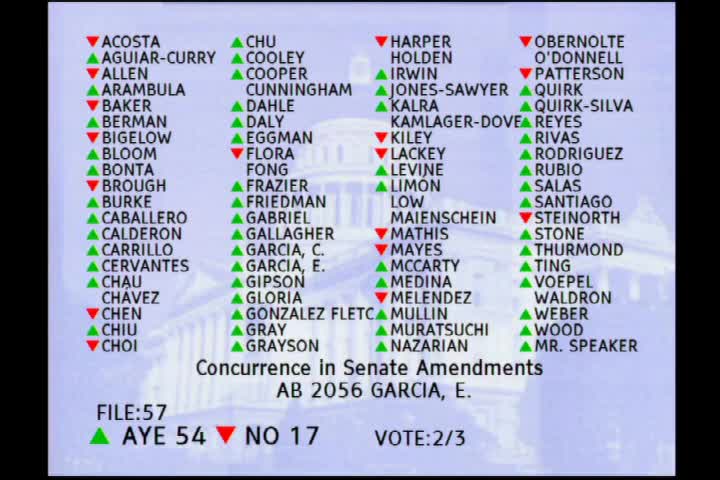 1MIN
Assembly Floor
 2MIN
Senate Floor
 1H
Senate Standing Committee on Appropriations
 8MIN
Senate Standing Committee on Business, Professions and Economic Development
 3MIN
Assembly Floor
 23MIN
Assembly Standing Committee on Water, Parks, and Wildlife
Bill Author

Bill Co-Author(s):
