AB 2377: Agriculture: Cannella Environmental Farming Act of 1995: technical assistance grant program.
- Session Year: 2017-2018
- House: Assembly
- Latest Version Date: 2018-09-28
Existing law, the Cannella Environmental Farming Act of 1995, requires the Department of Food and Agriculture to establish and oversee an environmental farming program to provide incentives to farmers whose practices promote the well-being of ecosystems, air quality, and wildlife and their habitat. The act requires the Secretary of Food and Agriculture to convene the Scientific Advisory Panel on Environmental Farming, as prescribed, for the purpose of providing advice to the secretary on the implementation of the Healthy Soils Program and the State Water Efficiency and Enhancement Program and assistance to federal, state, and local government agencies on issues relating to the impact of agricultural practices on air, water, and wildlife habitat, as specified. Existing law requires the department, in consultation with the panel, to establish and oversee a Healthy Soils Program to seek to optimize climate benefits while supporting the economic viability of California agriculture by providing incentives, including, but not limited to, loans, grants, research, and technical assistance, and educational materials and outreach, to farmers whose management practices contribute to healthy soils and result in net long-term on-farm greenhouse gas benefits.
This bill would require the department to establish a technical assistance grant program to provide funds to technical assistance providers, as defined, to provide assistance to Healthy Soils Program, alternative manure management practices programs, and State Water Efficiency and Enhancement Program applicants. The bill would require the secretary to make available to the grant program not less than 5% of the funds appropriated to the department for those programs, but not more than $5,000,000, for the purposes of providing technical assistance to farmers and ranchers who apply for grants from those programs, prioritizing that technical assistance to farms and ranches that are 500 acres or less, and supporting annual information sharing among technical assistance providers, the department, and other relevant stakeholders for the continuous improvement of programmatic guidelines, application processes, and relevant climate change and agricultural research. The bill would require the department, on or before January 31, 2021, to provide an update to the panel on the grant program.
Existing law, the Cannella Environmental Farming Act of 1995, requires the Department of Food and Agriculture to establish and oversee an environmental farming program to provide incentives to farmers whose practices promote the well-being of ecosystems, air quality, and wildlife and their habitat. The act requires the Secretary of Food and Agriculture to convene the Scientific Advisory Panel on Environmental Farming, as prescribed, for the purpose of providing advice and assistance to federal, state, and local government agencies on issues relating to the impact of agricultural practices on air, water, and wildlife habitat, as specified. Existing law requires the department, in consultation with the panel, to establish and oversee a Healthy Soils Program to seek to optimize climate benefits while supporting the economic viability of California agriculture by providing incentives, including, but not limited to, loans, grants, research, and technical assistance, and educational materials and outreach, to farmers whose management practices contribute to healthy soils and result in net long-term on-farm greenhouse gas benefits.
This bill would require the department, in consultation with the panel, department to establish a technical assistance grant program to provide funds to technical assistance providers, as defined, to provide assistance to Healthy Soils Program, alternative manure management practices programs, and State Water Efficiency and Enhancement Program, Program applicants. The bill would require the department secretary to make available to the grant program not less than 15% 5% of the funds appropriated to the department for those programs, but not more than $5,000,000, for the purposes of providing technical assistance to farmers and ranchers who apply for grants from those programs, prioritizing that technical assistance to small and moderately scaled farms and ranches, ranches that are 500 acres or less, and supporting annual information sharing among technical assistance providers, the department, and other relevant stakeholders for the continuous improvement of programmatic guidelines, application processes, and relevant climate change and agricultural research. The bill would require the department, on or before January 31, 2021, to provide a report an update to the panel on the grant program.
Existing law, the Cannella Environmental Farming Act of 1995, requires the Department of Food and Agriculture to establish and oversee an environmental farming program to provide incentives to farmers whose practices promote the well-being of ecosystems, air quality, and wildlife and their habitat. The act requires the Secretary of Food and Agriculture to convene the Scientific Advisory Panel on Environmental Farming, as prescribed, for the purpose of providing advice and assistance to federal, state, and local government agencies on issues relating to the impact of agricultural practices on air, water, and wildlife habitat, as specified. Existing law requires the department, in consultation with the panel, to establish and oversee a Healthy Soils Program to seek to optimize climate benefits while supporting the economic viability of California agriculture by providing incentives, including, but not limited to, loans, grants, research, and technical assistance, and educational materials and outreach, to farmers whose management practices contribute to healthy soils and result in net long-term on-farm greenhouse gas benefits.
This bill would require the department, in consultation with the panel, to establish a technical assistance grant program to provide funds to technical assistance providers, as defined, to provide assistance to Healthy Soils Program, alternative manure management practices programs, and State Water Efficiency and Enhancement Program, applicants. The bill would require the department to make available to the grant program not less than 15% of the funds appropriated to the department for those programs, but not more than $5,000,000, for the purposes of providing technical assistance to farmers and ranchers who apply for grants from those programs, prioritizing that technical assistance to small and moderately-scaled moderately scaled farms and ranches, and supporting annual information sharing among technical assistance providers, the department, and other relevant stakeholders for the continuous improvement of programmatic guidelines, application processes, and relevant climate change and agricultural research. The bill would require the department, on or before January 31, 2021, to provide a report to the panel on the grant program.
Existing law, the Cannella Environmental Farming Act of 1995, requires the Department of Food and Agriculture to establish and oversee an environmental farming program to provide incentives to farmers whose practices promote the well-being of ecosystems, air quality, and wildlife and their habitat. The act requires the Secretary of Food and Agriculture to convene Scientific Advisory Panel on Environmental Farming, as prescribed, for the purpose of providing advice and assistance to federal, state, and local government agencies on issues relating to the impact of agricultural practices on air, water, and wildlife habitat, as specified. Existing law requires the department, in consultation with the panel, to establish and oversee a Healthy Soils Program to seek to optimize climate benefits while supporting the economic viability of California agriculture by providing incentives, including, but not limited to, loans, grants, research, and technical assistance, and educational materials and outreach, to farmers whose management practices contribute to healthy soils and result in net long-term on-farm greenhouse gas benefits.
This bill would require the department, in consultation with the panel, to establish a technical assistance grant program to provide funds to technical assistance providers, as defined, to provide assistance to Healthy Soils Program, alternative manure management practices programs, and State Water Efficiency and Enhancement Program, applicants. The bill would require the department to make available to the grant program not less than 15% of the funds appropriated to the department for those programs, for the purposes of providing technical assistance to farmers and ranchers who apply for grants from those programs, prioritizing that technical assistance to small and moderately-scaled farms and ranches, and supporting annual information sharing among technical assistance providers, the department, and other relevant stakeholders for the continuous improvement of programmatic guidelines, application processes, and relevant climate change and agricultural research. The bill would require the department, on or before January 31, 2021, to provide a report to the panel on the grant program.
(a)The Legislature finds and declares all of the following:
(1)Californias 77,000 farms and ranches are uniquely vulnerable to the effects of climate change, including rising temperatures, increased occurrences of extreme weather events, constrained water resources, new pest and disease pressures, reduced winter chilling hours, and rising sea levels.
(2)As described in the states 2017 update of the scoping plan prepared pursuant to Section 38561 of the Health and Safety Code, the states farms and ranches are also uniquely positioned to mitigate climate change by reducing potent greenhouse gas emissions, increasing carbon storage in agricultural lands, saving water and energy, and producing on-farm and on-ranch renewable energy.
(3)Many of agricultures climate change mitigation strategies provide numerous agronomic, environmental, and public health benefits, including increased water retention in soils, groundwater recharge, and energy and water savings, improved crop and forage yields, improved air and water quality, and enhanced wildlife habitat.
(4)Californias climate smart agriculture programs provide important financial resources to encourage farmers and ranchers to adopt farm and ranch management practices that will reduce greenhouse gas emissions, increase carbon sequestration, and help the state meet its 2030 greenhouse gas emissions reduction target. It is in the interest of the state that these resources be used as effectively as possible to maximize the programs benefits to farmers, ranchers, and the state.
(5)Improved delivery of technical assistance to farmers and ranchers, including during project design, the grant application process, and project implementation, will allow for a greater number of farmers and ranchers to successfully participate in climate smart agriculture programs. Increased technical assistance for farmers and ranchers will also improve project implementation and increase the overall impact of climate smart agriculture programs.
(6)Small and moderately scaled farmers and ranchers, socially disadvantaged farmers and ranchers, and women farmers and ranchers, who may not have ready access to technical assistance, are especially in need of greater support to increase their participation in climate smart agriculture programs.
(7)Because agriculture is a management intensive business that requires ongoing knowledge transfer, California has developed public and private technical assistance programs for farmers and ranchers, including local resource conservation districts, the University of California Cooperative Extension, and nonprofit organizations, to improve agriculture and resource conservation.
(8)These technical service providers can work with farmers and ranchers on climate change and agriculture issues to identify appropriate projects, determine project feasibility, design projects, and assist in project application and implementation.
(9)The Natural Resources Conservation Service of the United States Department of Agriculture is an important partner in the states efforts to promote climate smart agriculture. By coordinating efforts with the Natural Resources Conservation Service, the state can more effectively and efficiently reach Californias diverse farm and ranch communities.
(10)To ensure state funds expended to further Californias greenhouse gas reduction goals are used as effectively as possible and for projects that are properly designed and implemented, it is vital that adequate technical assistance be provided to farmers and ranchers through climate smart agriculture programs and that qualified technical assistance be available for the design and implementation of those projects.
(11)It is in the interest of the state to improve the effectiveness of multiyear climate smart agriculture projects by ensuring that consistent and stable technical assistance is available throughout the life of those projects.
(b)It is the intent of the Legislature to enhance the long-term viability of California agriculture by making technical assistance an integral component of Californias climate smart agriculture programs, which will increase participation by the states farmers and ranchers and improve project implementation, thereby increasing the climate change mitigation and adaptation benefits of climate smart agriculture programs.
SEC. 2.Section 570 is added to the Food and Agricultural Code, to read:570.(a)For purposes of this section, the following definitions shall apply:
(1)Grant program means the technical assistance grant program established pursuant to subdivision (c).
(2)Programs means the Healthy Soils Program established pursuant to Section 569, alternative manure management practices programs, and the State Water Efficiency and Enhancement Program established by the department from moneys made available pursuant to Chapter 2 of the Statutes of 2014.
(3)Technical assistance means outreach, education, project planning, project design, grant application assistance, project implementation, or project reporting assistance provided to a farmer or rancher to improve his or her successful participation in the programs.
(4)Technical assistance providers means resource conservation districts, the University of California Cooperative Extension, and nonprofit organizations, with demonstrated technical expertise in designing and implementing agricultural management practices to achieve the purposes identified in subdivision (b).
(b)The secretary shall make available not less than 5 percent of the funds appropriated to the department for the programs, but not more than five million dollars ($5,000,000), to the grant program established pursuant to subdivision (c) for both of the following purposes:
(1)Providing technical assistance, pursuant to subdivision (c), to farmers and ranchers who apply for grants from the programs, prioritizing that technical assistance to farms and ranches that are 500 acres or less.
(2)Supporting annual information sharing among technical assistance providers, the department, and other relevant stakeholders for the continuous improvement of programmatic guidelines, application processes, and relevant climate change and agricultural research.
(c)The department shall establish a technical assistance grant program to provide funds to technical assistance providers to provide assistance to program applicants, including, but not limited to, conducting initial program outreach to farmers and ranchers, and assisting farmers and ranchers to submit grant applications under the programs to the department and with project design, development, and implementation. The grant program shall do all of the following:
(1)Establish criteria and guidelines for technical assistance providers to qualify to receive grants to provide technical assistance. The criteria and guidelines shall require technical assistance providers to demonstrate expertise in working with California farmers and ranchers on projects relevant to one or more of the purposes identified in subdivision (b). The department shall coordinate grant program guideline development and outreach with the Natural Resources Conservation Service of the United States Department of Agriculture.
(2)Establish a process for technical assistance providers to apply to the department to receive grants to provide technical assistance. Grant applications shall include, at minimum, a work plan that identifies which of the purposes identified in subdivision (b) will be targeted by the technical assistance provider, specific activities that will be undertaken to maximize farmer and rancher program participation and project success, an estimate of the number of farmers and ranchers to be served by the technical assistance provider, and a statement of qualifications of its relevant staff and project partners.
(3)Ensure at least 25 percent of the grant program funds are used to provide technical assistance to socially disadvantaged farmers or ranchers, as defined in Section 512.
(4)Review grant program applications from technical assistance providers and recommend grant awardees to the secretary.
(5)Allow direct project costs and a percentage of overhead expenses, to be determined by the secretary, to be funded as part of the grant awards.
(6)Consult with the Scientific Advisory Panel on Environmental Farming on grant program design, guidelines, and outreach for the technical assistance to improve coordination and information sharing on technical assistance strategies and activities for the departments programs.
(d)The department shall provide an update to the Scientific Advisory Panel on Environmental Farming on or before January 31, 2021, on the grant program, including grant program outcomes, ongoing technical assistance needs for the programs, and future plans for the grant program.
(e)The secretary shall award grants to technical assistance providers of no less than ten thousand dollars ($10,000) and up to one hundred thousand dollars ($100,000) annually for no more than three years, for a total grant of not more than three hundred thousand dollars ($300,000) per technical assistance provider. A technical assistance provider that demonstrates on its application that the majority of the persons it provides technical assistance to are socially disadvantaged farmers or ranchers shall receive priority consideration for additional grant program funding to cover translation services, the production of outreach materials, and additional outreach-related expenses.
(a)The Legislature finds and declares all of the following:
(1)Californias 77,000 farms and ranches are uniquely vulnerable to the effects of climate change, including rising temperatures, increased occurrences of extreme weather events, constrained water resources, new pest and disease pressures, reduced winter chilling hours, and rising sea levels.
(2)As described in the states 2017 update of the scoping plan prepared pursuant to Section 38561 of the Health and Safety Code, the states farms and ranches are also uniquely positioned to mitigate climate change by reducing potent greenhouse gas emissions, increasing carbon storage in agricultural lands, saving water and energy, and producing on-farm and on-ranch renewable energy.
(3)Many of agricultures climate change mitigation strategies provide numerous agronomic, environmental, and public health benefits, including increased water retention in soils, groundwater recharge, and energy and water savings, improved crop and forage yields, improved air and water quality, and enhanced wildlife habitat.
(4)Californias climate smart agriculture programs provide important financial resources to encourage farmers and ranchers to adopt farm and ranch management practices that will reduce greenhouse gas emissions, increase carbon sequestration, and help the state meet its 2030 greenhouse gas emissions reduction target. It is in the interest of the state that these resources be used as effectively as possible to maximize the programs benefits to farmers, ranchers, and the state.
(5)Improved delivery of technical assistance to farmers and ranchers, including during project design, the grant application process, and project implementation, will allow for a greater number of farmers and ranchers to successfully participate in climate smart agriculture programs. Increased technical assistance for farmers and ranchers will also improve project implementation and increase the overall impact of climate smart agriculture programs.
(6)Small and moderately scaled farmers and ranchers, socially disadvantaged farmers and ranchers, and women farmers and ranchers, who may not have ready access to technical assistance, are especially in need of greater support to increase their participation in climate smart agriculture programs.
(7)Because agriculture is a management intensive business that requires ongoing knowledge transfer, California has developed public and private technical assistance programs for farmers and ranchers, including local resource conservation districts, the University of California Cooperative Extension, and nonprofit organizations, to improve agriculture and resource conservation.
(8)These technical service providers can work with farmers and ranchers on climate change and agriculture issues to identify appropriate projects, determine project feasibility, design projects, and assist in project application and implementation.
(9)The Natural Resources Conservation Service of the United States Department of Agriculture is an important partner in the states efforts to promote climate smart agriculture. By coordinating efforts with the Natural Resources Conservation Service, the state can more effectively and efficiently reach Californias diverse farm and ranch communities.
(10)To ensure state funds expended to further Californias greenhouse gas reduction goals are used as effectively as possible and for projects that are properly designed and implemented, it is vital that adequate technical assistance be provided to farmers and ranchers through climate smart agriculture programs and that qualified technical assistance be available for the design and implementation of those projects.
(11)It is in the interest of the state to improve the effectiveness of multiyear climate smart agriculture projects by ensuring that consistent and stable technical assistance is available throughout the life of those projects.
(b)It is the intent of the Legislature to enhance the long-term viability of California agriculture by making technical assistance an integral component of Californias climate smart agriculture programs, which will increase participation by the states farmers and ranchers and improve project implementation, thereby increasing the climate change mitigation and adaptation benefits of climate smart agriculture programs.
SEC. 2.Section 570 is added to the Food and Agricultural Code, to read:570.(a)For purposes of this section, the following definitions shall apply:
(1)Grant program means the technical assistance grant program established pursuant to subdivision (c).
(2)Programs means the Healthy Soils Program established pursuant to Section 569, alternative manure management practices programs, and the State Water Efficiency and Enhancement Program established by the department from moneys made available pursuant to Chapter 2 of the Statutes of 2014.
(3)Technical assistance means outreach, education, project planning, project design, grant application assistance, project implementation, or project reporting assistance provided to a farmer or rancher to improve his or her successful participation in the programs.
(4)Technical assistance providers means resource conservation districts, the University of California Cooperative Extension, and nonprofit organizations, with demonstrated technical expertise in designing and implementing agricultural management practices to achieve the purposes identified in subdivision (b).
(b)The secretary shall make available not less than 5 percent of the funds appropriated to the department for the programs, but not more than five million dollars ($5,000,000), to the grant program established pursuant to subdivision (c) for both of the following purposes:
(1)Providing technical assistance, pursuant to subdivision (c), to farmers and ranchers who apply for grants from the programs, prioritizing that technical assistance to farms and ranches that are 500 acres or less.
(2)Supporting annual information sharing among technical assistance providers, the department, and other relevant stakeholders for the continuous improvement of programmatic guidelines, application processes, and relevant climate change and agricultural research.
(c)The department shall establish a technical assistance grant program to provide funds to technical assistance providers to provide assistance to program applicants, including, but not limited to, conducting initial program outreach to farmers and ranchers, and assisting farmers and ranchers to submit grant applications under the programs to the department and with project design, development, and implementation. The grant program shall do all of the following:
(1)Establish criteria and guidelines for technical assistance providers to qualify to receive grants to provide technical assistance. The criteria and guidelines shall require technical assistance providers to demonstrate expertise in working with California farmers and ranchers on projects relevant to one or more of the purposes identified in subdivision (b). The department shall coordinate grant program guideline development and outreach with the Natural Resources Conservation Service of the United States Department of Agriculture.
(2)Establish a process for technical assistance providers to apply to the department to receive grants to provide technical assistance. Grant applications shall include, at minimum, a work plan that identifies which of the purposes identified in subdivision (b) will be targeted by the technical assistance provider, specific activities that will be undertaken to maximize farmer and rancher program participation and project success, an estimate of the number of farmers and ranchers to be served by the technical assistance provider, and a statement of qualifications of its relevant staff and project partners.
(3)Ensure at least 25 percent of the grant program funds are used to provide technical assistance to socially disadvantaged farmers or ranchers, as defined in Section 512.
(4)Review grant program applications from technical assistance providers and recommend grant awardees to the secretary.
(5)Allow direct project costs and a reasonable percentage of overhead expenses expenses, to be determined by the secretary, to be funded from as part of the grant awards.
(6)Consult with the Scientific Advisory Panel on Environmental Farming on grant program design, guidelines, and outreach for the technical assistance to improve coordination and information sharing on technical assistance strategies and activities for the departments programs.
(d)The department shall provide an update to the Scientific Advisory Panel on Environmental Farming on or before January 31, 2021, on the grant program, including grant program outcomes, ongoing technical assistance needs for the programs, and future plans for the grant program.
(e)The secretary shall award grants to technical assistance providers of no less than ten thousand dollars ($10,000) and up to one hundred thousand dollars ($100,000) annually for no more than three years, for a total grant of not more than three hundred thousand dollars ($300,000) per technical assistance provider. A technical assistance provider that demonstrates on its application that the majority of the persons it provides technical assistance to are socially disadvantaged farmers or ranchers shall receive priority consideration for additional grant program funding to cover translation services, the production of outreach materials, and additional outreach-related expenses.
(a)The Legislature finds and declares all of the following:
(1)Californias 77,000 farms and ranches are uniquely vulnerable to the effects of climate change, including rising temperatures, increased occurrences of extreme weather events, constrained water resources, new pest and disease pressures, reduced winter chilling hours, and rising sea levels.
(2)As described in the states 2017 update of the scoping plan prepared pursuant to Section 38561 of the Health and Safety Code, the states farms and ranches are also uniquely positioned to mitigate climate change by reducing potent greenhouse gas emissions, increasing carbon storage in agricultural lands, saving water and energy, and producing on-farm and on-ranch renewable energy.
(3)Many of agricultures climate change mitigation strategies provide numerous agronomic, environmental, and public health benefits, including increased water retention in soils, groundwater recharge, and energy and water savings, improved crop and forage yields, improved air and water quality, and enhanced wildlife habitat.
(4)Californias climate smart agriculture programs provide important financial resources to encourage farmers and ranchers to adopt farm and ranch management practices that will reduce greenhouse gas emissions, increase carbon sequestration, and help the state meet its 2030 greenhouse gas emissions reduction target. It is in the interest of the state that these resources be used as effectively as possible to maximize the programs benefits to farmers, ranchers, and the state.
(5)Improved delivery of technical assistance to farmers and ranchers, including during project design, the grant application process, and project implementation, will allow for a greater number of farmers and ranchers to successfully participate in climate smart agriculture programs. Increased technical assistance for farmers and ranchers will also improve project implementation and increase the overall impact of climate smart agriculture programs.
(6)Small and moderately-scaled moderately scaled farmers and ranchers, socially disadvantaged farmers and ranchers, and women farmers and ranchers, who may not have ready access to technical assistance, are especially in need of greater support to increase their participation in climate smart agriculture programs.
(7)Because agriculture is a management intensive business that requires ongoing knowledge transfer, California has developed public and private technical assistance programs for farmers and ranchers, including local resource conservation districts, the University of California Cooperative Extension, and nonprofit organizations, to improve agriculture and resource conservation.
(8)These technical service providers can work with farmers and ranchers on climate change and agriculture issues to identify appropriate projects, determine project feasibility, design projects, and assist in project application and implementation.
(9)The Natural Resources Conservation Service of the United States Department of Agriculture is an important partner in the states efforts to promote climate smart agriculture. By coordinating efforts with the Natural Resources Conservation Service, the state can more effectively and efficiently reach Californias diverse farm and ranch communities.
(10)To ensure state funds expended to further Californias greenhouse gas reduction goals are used as effectively as possible and for projects that are properly designed and implemented, it is vital that adequate technical assistance be provided to farmers and ranchers through climate smart agriculture programs and that qualified technical assistance be available for the design and implementation of those projects.
(11)It is in the interest of the state to improve the effectiveness of multi year multiyear climate smart agriculture projects by ensuring that consistent and stable technical assistance is available throughout the life of those projects.
(b)It is the intent of the Legislature to enhance the long-term viability of California agriculture by making technical assistance an integral component of Californias climate smart agriculture programs, which will increase participation by the states farmers and ranchers and improve project implementation, thereby increasing the climate change mitigation and adaptation benefits of climate smart agriculture programs.
SEC. 2.Section 570 is added to the Food and Agricultural Code, to read:570.(a)For purposes of this section, the following definitions shall apply:
(1)Grant program means the technical assistance grant program established pursuant to subdivision (c).
(2)Programs means the Healthy Soils Program established pursuant to Section 569, alternative manure management practices programs, and the State Water Efficiency and Enhancement Program established by the department from moneys made available pursuant to Chapter 2 of the Statutes of 2014.
(3)Technical assistance means outreach, education, project planning, project design, grant application assistance, or project implementation implementation, or project reporting assistance provided to a farmer or rancher to improve his or her successful participation in the programs.
(4)Technical assistance providers means resource conservation districts, the University of California Cooperative Extension, and nonprofit organizations, with demonstrated technical expertise in designing and implementing agricultural management practices to achieve the purposes identified in subdivision (b).
(b)The secretary shall make available not less than 15 5 percent of the funds appropriated to the department for the programs, but not more than five million dollars ($5,000,000), to the grant program established pursuant to subdivision (c) for both of the following purposes:
(1)Providing technical assistance, pursuant to subdivision (c), to farmers and ranchers who apply for grants from the programs, prioritizing that technical assistance to small and moderately scaled farms and ranches. ranches that are 500 acres or less.
(2)Supporting annual information sharing among technical assistance providers, the department, and other relevant stakeholders for the continuous improvement of programmatic guidelines, application processes, and relevant climate change and agricultural research.
(c)The department, in consultation with the Scientific Advisory Panel on Environmental Farming, department shall establish a technical assistance grant program to provide funds to technical assistance providers to provide assistance to program applicants, including, but not limited to, conducting initial program outreach to farmers and ranchers, and assisting farmers and ranchers to submit grant applications under the programs to the department and with project design, development, and implementation. The grant program shall do all of the following:
(1)Establish criteria and guidelines for technical assistance providers to qualify to receive grants to provide technical assistance. The criteria and guidelines shall require technical assistance providers to demonstrate expertise in working with California farmers and ranchers on projects relevant to one or more of the purposes identified in subdivision (b). The department shall coordinate grant program guideline development and outreach with the Natural Resources Conservation Service of the United States Department of Agriculture.
(2)Establish a process for technical assistance providers to apply to the department to receive grants to provide technical assistance. Grant applications shall include, at minimum, a work plan that identifies which of the purposes identified in subdivision (b) will be targeted by the technical assistance provider, specific activities that will be undertaken to maximize farmer and rancher program participation and project success, an estimate of the number of farmers and ranchers to be served by the technical assistance provider, and a statement of qualifications of its relevant staff and project partners.
(3)Ensure at least 25 percent of the grant program funds are used to provide technical assistance to socially disadvantaged farmers or ranchers, as defined in Section 512.
(4)Review grant program applications from technical assistance providers and recommend grant awardees to the secretary.
(5)Allow direct project costs and a reasonable percentage of overhead expenses to be funded from the grant awards.
(6)Consult with the Scientific Advisory Panel on Environmental Farming on grant program design, guidelines, and outreach for the technical assistance to improve coordination and information sharing on technical assistance strategies and activities for the departments programs.
(d)The department shall provide a report an update to the Scientific Advisory Panel on Environmental Farming on or before January 31, 2021, on the grant program, including grant program outcomes, ongoing technical assistance needs for the programs, and future plans for the grant program.
(e)The secretary shall award grants to technical assistance providers of no less than ten thousand dollars ($10,000) and up to one hundred twenty-five thousand dollars ($125,000) ($100,000) annually for no more than three years, for a total grant of not more than three hundred seventy-five thousand dollars ($375,000) ($300,000) per technical assistance provider. A technical assistance provider that demonstrates on its application that the majority of the persons it provides technical assistance to are socially disadvantaged farmers or ranchers shall receive priority consideration for additional grant program funding to cover translation services, the production of outreach materials, and additional outreach-related expenses.
(a)The Legislature finds and declares all of the following:
(1)Californias 77,000 farms and ranches are uniquely vulnerable to the effects of climate change, including rising temperatures, increased occurrences of extreme weather events, constrained water resources, new pest and disease pressures, reduced winter chilling hours, and rising sea levels.
(2)As described in the states 2017 update of the scoping plan prepared pursuant to Section 38561 of the Health and Safety Code, the states farms and ranches are also uniquely positioned to mitigate climate change by reducing potent greenhouse gas emissions, increasing carbon storage in agricultural lands, saving water and energy, and producing on-farm and on-ranch renewable energy.
(3)Many of agricultures climate change mitigation strategies provide numerous agronomic, environmental, and public health benefits, including increased water retention in soils, groundwater recharge, and energy and water savings, improved crop and forage yields, improved air and water quality, and enhanced wildlife habitat.
(4)Californias climate smart agriculture programs provide important financial resources to encourage farmers and ranchers to adopt farm and ranch management practices that will reduce greenhouse gas emissions and emissions, increase carbon sequestration sequestration, and will help the state meet its 2030 greenhouse gas emissions reduction target. It is in the interest of the state that these resources be used as effectively as possible to maximize the programs benefits to farmers, ranchers, and the state.
(5)Improved delivery of technical assistance to farmers and ranchers, including during project design, the grant application process, and project implementation, will allow for a greater number of farmers and ranchers to successfully participate in climate smart agriculture programs. Increased technical assistance for farmers and ranchers will also improve project implementation and increase the overall impact of climate smart agriculture programs.
(6)Small and moderately-scaled farmers and ranchers, socially disadvantaged farmers and ranchers, and women farmers and ranchers, who may not have ready access to technical assistance, are especially in need of greater support to increase their participation in climate smart agriculture programs.
(7)Because agriculture is a management intensive business that requires on-going ongoing knowledge transfer, California has developed public and private technical assistance programs for farmers and ranchers, including local resource conservation districts, the University of California Cooperative Extension, and nonprofit organizations, to improve agriculture and resource conservation.
(8)These technical service providers can work with farmers and ranchers on climate change and agriculture issues to identify appropriate projects, determine project feasibility, design projects, and assist in project application and implementation.
(9)The Natural Resources Conservation Service of the United States Department of Agriculture is an important partner in the states efforts to promote climate smart agriculture. By coordinating efforts with the Natural Resources Conservation Service, the state can more effectively and efficiently reach Californias diverse farm and ranch communities.
(10)To ensure state funds expended to further Californias greenhouse gas reduction goals are used as effectively as possible and for projects that are properly designed and implemented, it is vital that adequate technical assistance be provided to farmers and ranchers through climate smart agriculture programs and that qualified technical assistance be available for the design and implementation of those projects.
(11)It is in the interest of the state to improve the effectiveness of multi-year multi year climate smart agriculture projects by ensuring that consistent and stable technical assistance is available throughout the life of those projects.
(b)It is the intent of the Legislature to enhance the long-term viability of California agriculture by making technical assistance an integral component of Californias climate smart agriculture programs, which will increase participation by the states farmers and ranchers and improve project implementation, thereby increasing the climate change mitigation and adaptation benefits of climate smart agriculture programs.
SEC. 2.Section 570 is added to the Food and Agricultural Code, to read:570.(a)For purposes of this section, the following definitions shall apply:
(1)Grant program means the technical assistance grant program established pursuant to subdivision (c).
(2)Programs means the Healthy Soils Program established pursuant to Section 569, alternative manure management practices programs, and the State Water Efficiency and Enhancement Program established by the department from moneys made available pursuant to Chapter 2 of the Statutes of 2014.
(3)Technical assistance means outreach, education, project planning, project design, grant application assistance, or project implementation assistance provided to a farmer or rancher to improve his or her successful participation in the programs.
(4)Technical assistance providers means resource conservation districts, the University of California Cooperative Extension, and nonprofit organizations, agricultural trade associations, and other agricultural professionals with demonstrated technical expertise in designing and implementing agricultural management practices to achieve the purposes identified in subdivision (b).
(b)The secretary shall make available not less than 15 percent of the funds appropriated to the department for the programs, but not more than five million dollars ($5,000,000), to the grant program established pursuant to subdivision (c) for both of the following purposes:
(1)Providing technical assistance, pursuant to subdivision (c), to farmers and ranchers who apply for grants from the programs, prioritizing that technical assistance to small and moderately-scaled moderately scaled farms and ranches.
(2)Supporting annual information sharing among technical assistance providers, the department, and other relevant stakeholders for the continuous improvement of programmatic guidelines, application processes, and relevant climate change and agricultural research.
(c)The department, in consultation with the Scientific Advisory Panel on Environmental Farming, shall establish a technical assistance grant program to provide funds to technical assistance providers to provide assistance to program applicants, including, but not limited to, conducting initial program outreach to farmers and ranchers, and assisting farmers and ranchers to submit grant applications under the programs to the department and with project design, development, and implementation. The grant program shall do all of the following:
(1)Establish criteria and guidelines for technical assistance providers to qualify to receive grants to provide technical assistance. The criteria and guidelines shall require technical assistance providers to demonstrate expertise in working with California farmers and ranchers on projects relevant to one or more of the purposes identified in subdivision (b). The department shall coordinate grant program guideline development and outreach with the Natural Resources Conservation Service of the United States Department of Agriculture.
(2)Establish a process for technical assistance providers to apply to the department to receive grants to provide technical assistance. Grant applications shall include, at minimum, a work plan that identifies which of the purposes identified in subdivision (b) will be targeted by the technical assistance provider, specific activities that will be undertaken to maximize farmer and rancher program participation and project success, an estimate of the number of farmers and ranchers to be served by the technical assistance provider, and a statement of qualifications of its relevant staff and project partners.
(3)Ensure at least 25 percent of the grant program funds are used to provide technical assistance to socially disadvantaged farmers or ranchers, as defined in Section 512.
(4)Review grant program applications from technical assistance providers and recommend grant awardees to the secretary.
(d)The department shall provide a report to the Scientific Advisory Panel on Environmental Farming on or before January 31, 2021, on the grant program, including grant program outcomes, on-going ongoing technical assistance needs for the programs, and future plans for the grant program.
(e)The secretary shall award grants to technical assistance providers of up to one hundred twenty-five thousand dollars ($125,000) annually for no more than three years, for a total grant of not more than three hundred seventy-five thousand dollars ($375,000) per technical assistance provider.
(a)The Legislature finds and declares all of the following:
(1)Californias 77,000 farms and ranches are uniquely vulnerable to the effects of climate change, including rising temperatures, increased occurrences of extreme weather events, constrained water resources, new pest and disease pressures, reduced winter chilling hours, and rising sea levels.
(2)As described in the states 2017 update of the scoping plan prepared pursuant to Section 38561 of the Health and Safety Code, the states farms and ranches are also uniquely positioned to mitigate climate change by reducing potent greenhouse gas emissions, increasing carbon storage in agricultural lands, saving water and energy, and producing on-farm and on-ranch renewable energy.
(3)Many of agricultures climate change mitigation strategies provide numerous agronomic, environmental, and public health benefits, including increased water retention in soils, groundwater recharge, and energy and water savings, improved crop and forage yields, improved air and water quality, and enhanced wildlife habitat.
(4)Californias climate smart agriculture programs provide important financial resources to encourage farmers and ranchers to adopt farm and ranch management practices that will reduce greenhouse gas emissions and increase carbon sequestration and will help the state meet its 2030 greenhouse gas emissions reduction target. It is in the interest of the state that these resources be used as effectively as possible to maximize the programs benefits to farmers, ranchers, and the state.
(5)Improved delivery of technical assistance to farmers and ranchers, including during project design, the grant application process, and project implementation, will allow for a greater number of farmers and ranchers to successfully participate in climate smart agriculture programs. Increased technical assistance for farmers and ranchers will also improve project implementation and increase the overall impact of climate smart agriculture programs.
(6)Small and moderately-scaled farmers and ranchers, socially disadvantaged farmers and ranchers, and women farmers and ranchers, who may not have ready access to technical assistance, are especially in need of greater support to increase their participation in climate smart agriculture programs.
(7)Because agriculture is a management intensive business that requires on-going knowledge transfer, California has developed public and private technical assistance programs for farmers and ranchers, including local resource conservation districts, the University of California Cooperative Extension, and nonprofit organizations, to improve agriculture and resource conservation.
(8)These technical service providers can work with farmers and ranchers on climate change and agriculture issues to identify appropriate projects, determine project feasibility, design projects, and assist in project application and implementation.
(9)The Natural Resources Conservation Service of the United States Department of Agriculture is an important partner in the states efforts to promote climate smart agriculture. By coordinating efforts with the Natural Resources Conservation Service, the state can more effectively and efficiently reach Californias diverse farm and ranch communities.
(10)To ensure state funds expended to further Californias greenhouse gas reduction goals are used as effectively as possible and for projects that are properly designed and implemented, it is vital that adequate technical assistance be provided to farmers and ranchers through climate smart agriculture programs and that qualified technical assistance be available for the design and implementation of those projects.
(11)It is in the interest of the state to improve the effectiveness of multi-year climate smart agriculture projects by ensuring that consistent and stable technical assistance is available throughout the life of those projects.
(b)It is the intent of the Legislature to enhance the long-term viability of California agriculture by making technical assistance an integral component of Californias climate smart agriculture programs, which will increase participation by the states farmers and ranchers and improve project implementation, thereby increasing the climate change mitigation and adaptation benefits of climate smart agriculture programs.
SEC. 2.Section 570 is added to the Food and Agricultural Code, to read:570.(a)For purposes of this section, the following definitions shall apply:
(1)Grant program means the technical assistance grant program established pursuant to subdivision (c).
(2)Programs means the Healthy Soils Program established pursuant to Section 569, alternative manure management practices programs, and the State Water Efficiency and Enhancement Program established by the department from moneys made available pursuant to Chapter 2 of the Statutes of 2014.
(3)Technical assistance means outreach, education, project planning, project design, grant application assistance, or project implementation assistance provided to a farmer or rancher to improve his or her successful participation in the programs.
(4)Technical assistance providers means resource conservation districts, the University of California Cooperative Extension, nonprofit organizations, agricultural trade associations, and other agricultural professionals with demonstrated technical expertise in designing and implementing agricultural management practices to achieve the purposes identified in subdivision (b).
(b)The secretary shall make available not less than 15 percent of the funds appropriated to the department for the programs, to the grant program established pursuant to subdivision (c) for both of the following purposes:
(1)Providing technical assistance, pursuant to subdivision (c), to farmers and ranchers who apply for grants from the programs, prioritizing that technical assistance to small and moderately-scaled farms and ranches.
(2)Supporting annual information sharing among technical assistance providers, the department, and other relevant stakeholders for the continuous improvement of programmatic guidelines, application processes, and relevant climate change and agricultural research.
(c)The department, in consultation with the Scientific Advisory Panel on Environmental Farming, shall establish a technical assistance grant program to provide funds to technical assistance providers to provide assistance to program applicants, including, but not limited to, conducting initial program outreach to farmers and ranchers, and assisting farmers and ranchers to submit grant applications under the programs to the department and with project design, development, and implementation. The grant program shall do all of the following:
(1)Establish criteria and guidelines for technical assistance providers to qualify to receive grants to provide technical assistance. The criteria and guidelines shall require technical assistance providers to demonstrate expertise in working with California farmers and ranchers on projects relevant to one or more of the purposes identified in subdivision (b). The department shall coordinate grant program guideline development and outreach with the Natural Resources Conservation Service of the United States Department of Agriculture.
(2)Establish a process for technical assistance providers to apply to the department to receive grants to provide technical assistance. Grant applications shall include, at minimum, a work plan that identifies which of the purposes identified in subdivision (b) will be targeted by the technical assistance provider, specific activities that will be undertaken to maximize farmer and rancher program participation and project success, an estimate of the number of farmers and ranchers to be served by the technical assistance provider, and a statement of qualifications of its relevant staff and project partners.
(3)Ensure at least 25 percent of the grant program funds are used to provide technical assistance to socially disadvantaged farmers or ranchers, as defined in Section 512.
(4)Review grant program applications from technical assistance providers and recommend grant awardees to the secretary.
(d)The department shall provide a report to the Scientific Advisory Panel on Environmental Farming on or before January 31, 2021, on the grant program, including grant program outcomes, on-going technical assistance needs for the programs, and future plans for the grant program.
(e)The secretary shall award grants to technical assistance providers of up to one hundred twenty-five thousand dollars ($125,000) annually for no more than three years, for a total grant of not more than three hundred seventy-five thousand dollars ($375,000) per technical assistance provider.
REVISIONS: HeadingLine 2.|
Date
|
Status
|
|---|---|
| Sep 28, 2018 | Chaptered by Secretary of State - Chapter 868, Statutes of 2018. |
| Sep 28, 2018 | Approved by the Governor. |
| Sep 10, 2018 | Enrolled and presented to the Governor at 3:30 p.m. |
| Aug 29, 2018 | Assembly Rule 77 suspended. |
| Aug 28, 2018 | In Assembly. Concurrence in Senate amendments pending. May be considered on or after August 30 pursuant to Assembly Rule 77. |
| Aug 28, 2018 | Read third time. Passed. Ordered to the Assembly. |
| Aug 23, 2018 | Read second time. Ordered to third reading. |
| Aug 22, 2018 | Read third time and amended. Ordered to second reading. |
| Aug 20, 2018 | Read second time. Ordered to third reading. |
| Aug 17, 2018 | From committee: Amend, and do pass as amended. (Ayes 5. Noes 0.) (August 16). |
| Jul 2, 2018 | In committee: Referred to APPR. suspense file. |
| Jun 19, 2018 | From committee: Do pass and re-refer to Com. on APPR. (Ayes 4. Noes 0.) (June 19). Re-referred to Com. on APPR. |
| Jun 13, 2018 | Referred to Com. on AGRI. |
| Jun 4, 2018 | In Senate. Read first time. To Com. on RLS. for assignment. |
| May 31, 2018 | Read third time. Passed. Ordered to the Senate. |
| May 29, 2018 | Read second time. Ordered to third reading. |
| May 25, 2018 | From committee: Amend, and do pass as amended. (Ayes 14. Noes 1.) (May 25). |
| May 9, 2018 | In committee: Set, first hearing. Referred to APPR. suspense file. |
| Apr 17, 2018 | From committee: Do pass and re-refer to Com. on APPR. (Ayes 10. Noes 0.) (April 16). Re-referred to Com. on APPR. |
| Apr 12, 2018 | From committee: Do pass and re-refer to Com. on NAT. RES. (Ayes 9. Noes 0.) (April 11). Re-referred to Com. on NAT. RES. |
| Apr 9, 2018 | Assembly Rule 56 suspended. |
| Mar 19, 2018 | In committee: Hearing postponed by committee. |
| Mar 1, 2018 | Referred to Coms. on AGRI. and NAT. RES. |
| Feb 15, 2018 | From printer. May be heard in committee March 17. |
| Feb 14, 2018 | Read first time. To print. |
|
Date
|
Description
|
Location
|
Votes
|
|
|---|---|---|---|---|
| Aug 29, 2018 | AB 2377 IRWIN Concurrence in Senate Amendments | Assembly Floor |
Passed |
|
| Aug 28, 2018 | Assembly 3rd Reading AB2377 Irwin et al. By McGuire | Senate Floor |
Passed |
|
| Aug 16, 2018 | Do pass as amended | Senate Standing Committee on Appropriations |
Passed |
|
| Jul 2, 2018 | Placed on suspense file | Senate Standing Committee on Appropriations |
Passed |
|
| Jun 19, 2018 | Do pass, but first be re-referred to the Committee on [Appropriations] | Senate Standing Committee on Agriculture |
Passed |
|
| May 31, 2018 | AB 2377 IRWIN Assembly Third Reading | Assembly Floor |
Passed |
|
| May 25, 2018 | Do pass as amended. | Assembly Standing Committee on Appropriations |
Passed |
|
| Apr 16, 2018 | Do pass and be re-referred to the Committee on [Appropriations] | Assembly Standing Committee on Natural Resources |
Passed |
|
| Apr 11, 2018 | Do pass and be re-referred to the Committee on [Natural Resources] | Assembly Standing Committee on Agriculture |
Passed |
This list shows positions taken on this bill by organizations on the date displayed, which is linked to the original source.
Positions by individuals are not included.
CONCURRENCE IN SENATE AMENDMENTS
CSA1 Bill Id:AB 2377
Author:(Irwin)
As Amended Ver:August 22, 2018
Majority vote
ASSEMBLY: | 72-0 | (May 31, 2018) | SENATE: | 39-0 | (August 28, 2018) |
Original Committee Reference: AGRI.
SUMMARY: This bill requires the California Department of Food and Agriculture (CDFA) to establish a technical assistance grant program (TAG program) to provide funds to technical assistance providers (TAP) to work with applicants for the Healthy Soils Program (HSP), alternative manure management programs (AMMP), and the State Water Efficiency and Enhancement Program (SWEEP).
The Senate amendments:
- Lower the percent of funds available for technical assistance from 15% to 5% and make clarifying changes.
- Require CDFA to consult the Scientific Advisory Panel on Environmental Farming (SAPEF) on TAG program design, guidelines, and outreach for the technical assistance to improve coordination and information sharing on technical assistance strategies and activities for the TAG Program.
- Reduce the total grant amount per applicant from $125,000 to $100,000 per year, for a maximum of three years, as specified.
EXISTING LAW:
- Established the Cannella Environmental Farming Act of 1995, which requires CDFA to establish and oversee an environmental farming program to provide incentives to farmers whose practices promote the well-being of ecosystems, air quality, and wildlife and their habitat.
- Requires CDFA to convene SAPEF to advise and assist federal, state, and local government agencies on issues relating to the impact of agricultural practices on air, water, and wildlife habitat.
- Requires CDFA, in consultation with SAPEF, to establish and oversee HSP to provide incentives including, but not limited to, loans, grants, research, technical assistance, educational materials, and outreach to farmers who participate in practices that contribute to healthy soils.
FISCAL EFFECT: According to the Assembly Appropriations Committee, this bill is estimated to cost $5 million from CDFA-funded projects to technical assistant grants.
COMMENTS: HSP, AMMP, and SWEEP, are programs aimed at helping the state reduce greenhouse gas (GHG) emissions and are a component of Climate Smart Agriculture. SWEEP provides financial assistance in the form of grants to implement irrigation systems that reduce GHG and save water on California agricultural operations. The Healthy Soils Program provides financial assistance for incentivizing and demonstrating the enactment of conservation agricultural management practices that sequester carbon, reduce GHG and improve soil health. AMMP provides financial assistance for the implementation of non-digester manure management practices in California, which will result in reduced GHG emissions.
This bill will address the need for more technical assistance by requiring that 5% of the budgets for the SWEEP, AMMP, and HSP are used to establish a TAG program to provide up to $100,000 per year, for up to three years to technical assistance providers, to support SWEEP, AMMP, and HSP applicants.
This bill is substantially similar to the version passed by the Assembly.
Analysis Prepared by: Victor Francovich / AGRI. / (916) 319-2084 FN: 0004313
Office of Senate Floor Analyses (916) 651-1520 Fax: (916) 327-4478 | AB |
THIRD READING
Bill No: AB 2377
: Senate
SENATE AGRICULTURE COMMITTEE: 4-0, 6/19/18
AYES: Galgiani, Wilk, Dodd, Pan
NO VOTE RECORDED: Berryhill
SENATE APPROPRIATIONS COMMITTEE: 5-0, 8/16/18
AYES: Portantino, Beall, Bradford, Hill, Wiener
NO VOTE RECORDED: Bates, Nielsen
ASSEMBLY FLOOR: 72-0, 5/31/18 - See last page for vote
SUBJECT: Agriculture: Cannella Environmental Farming Act of 1995: technical assistance grant program
SOURCE: California Climate and Agriculture Network
DIGEST:
This bill requires the California Department of Food and Agriculture (CDFA) to establish a technical assistance grant program (TAG) to provide funds to technical assistance providers who help farmers and ranchers apply for grants from the Healthy Soils Program (HSP), alternative manure management programs (AMMP), and the State Water Efficiency and Enhancement Program (SWEEP).
Senate Floor Amendments of 8/22/18 remove the language allowing a reasonable percentage of overhead expenses to be funded from the grant awards and replaces it with language that designates that the secretary shall determine a percentage of overhead expenses that can be funded as part of the grant awards.
Existing law:
- Establishes the Cannella Environmental Farming Act of 1995 that requires CDFA to establish and oversee an environmental farming program to provide incentives to farmers whose practices promote the well-being of the ecosystems, air quality, and wildlife and their habitat.
- Requires the secretary to convene the Scientific Advisory Panel on Environmental Farming (SAPEF) to advise and assist federal, state, and local government agencies on issues relating to the impact of agricultural practices on air, water, and wildlife habitat.
- Requires the department, in consultation with the panel, to establish and oversee a Healthy Soils Program to provide incentives including, but not limited to, loans, grants, research, technical assistance, educational materials, and outreach to farmers who participate in practices that contribute to healthy soils.
This bill:
- Requires CDFA, in consultation with the panel, to establish a technical assistance grant program to provide funds to technical assistance providers to assist farmers to apply for the Healthy Soils Program, the alternative manure management practices programs, and State Water Efficiency and Enhancement Program.
- States that technical assistance for farms and ranches that are 500 acres or less be prioritized.
- Requires the secretary of CDFA to make available not less than 5%, but not more than $5 million, of the funds appropriated to CDFA for the programs to the TAG program, as specified.
- Allows direct project costs and a reasonable percentage of overhead expenses to be determined by the secretary to be funded from the grant awards.
- Requires CDFA to provide a report to SAPEF on or before January 31, 2021, on the TAG program, including TAG program outcomes, on-going technical assistance needs for the programs, and future plans for the TAG program.
- Requires the secretary to annually award grants to technical assistance providers of up to $100,000 for no more than three years, for a total grant of not more than $375,000 per provider.
Background
HSP, AMMP, and SWEEP are programs aimed at reducing the state’s greenhouse gas (GHG) emissions. SWEEP provides financial assistance in the form of grants to implement irrigation systems that reduce GHG and save water on California agricultural operations. HSP provides financial assistance for incentivizing and demonstrating the enactment of conservation agricultural management practices that sequester carbon, reduce GHG, and improve soil health. AMMP provides financial assistance for the implementation of non-digester manure management practices in California, which will result in reduced GHG emissions.
FISCAL EFFECT: Appropriation: Fiscal Com.: Local:
According to the Senate Appropriations Committee:
- This bill diverts spending of up to $5 million annually from CDFA-funded projects toward technical assistant grants. The exact dollar amount that is redirected from programs cannot be determined, as existing technical assistance grant programs are likely covered by this bill. The redirected funding proposed by this bill would create cost pressures for other projects currently funded through the HSP, AMMP, and SWEEP programs.
- The California Air Resources Board would incur annual costs of $172,000 to implement its provisions of the bill (Greenhouse Gas Reduction Fund).
California Climate and Agriculture Network (source)
American Farmland Trust
California Alliance of Farmers’ Markets
California Association of Resource Conservation Districts
California Association of Winegrape Growers
California Certified Organic Farmers
California FarmLink
Californians Against Waste
Carbon Cycle Institute
Center for Food Safety
Community Alliance with Family Farmers
Community Environmental Council
Ecological Farming Association
Ecology Center
Family Winemakers of California
Fish Friendly Farming
National Center for Appropriate Technology
National Hmong American Farmers Association
Occidental Arts and Ecology Center
Organic Valley/CROPP Cooperative
Point Blue Conservation Science
Vineyard Team
Wild Farm Alliance
Wine Institute
OPPOSITION: (Verified 8/17/18)
None received
ARGUMENTS IN SUPPORT: According to the author, “AB 2377 would fund technical assistance for farmers and ranchers seeking to transition to Climate Smart Agriculture. Specifically, it requires that 15 percent of the annual budgets for the State Water Efficiency and Enhancement Program, Alternative Manure Management Program, and Healthy Soils Program be used to provide technical assistance to farmers and ranchers. This will improve farmer participation, project implementation, and the impact of Climate Smart Agriculture programs.”
ASSEMBLY FLOOR: 72-0, 5/31/18
AYES: Acosta, Arambula, Baker, Berman, Bigelow, Bloom, Bonta, Brough, Burke, Caballero, Calderon, Carrillo, Cervantes, Chau, Chávez, Chen, Chiu, Choi, Chu, Cooley, Cooper, Cunningham, Dahle, Daly, Eggman, Flora, Fong, Frazier, Friedman, Cristina Garcia, Eduardo Garcia, Gipson, Gloria, Gonzalez Fletcher, Gray, Grayson, Holden, Irwin, Jones-Sawyer, Kalra, Kamlager-Dove, Kiley, Lackey, Levine, Limón, Low, Maienschein, Mathis, Mayes, McCarty, Medina, Melendez, Mullin, Muratsuchi, Nazarian, O'Donnell, Patterson, Quirk, Quirk-Silva, Reyes, Rodriguez, Rubio, Salas, Santiago, Steinorth, Mark Stone, Thurmond, Ting, Voepel, Waldron, Weber, Rendon
NO VOTE RECORDED: Aguiar-Curry, Travis Allen, Gallagher, Harper, Obernolte, Wood
8/23/18 16:04:28
**** END ****
Office of Senate Floor Analyses (916) 651-1520 Fax: (916) 327-4478 | AB |
THIRD READING
Bill No: AB 2377
: Senate
SENATE AGRICULTURE COMMITTEE: 4-0, 6/19/18
AYES: Galgiani, Wilk, Dodd, Pan
NO VOTE RECORDED: Berryhill
SENATE APPROPRIATIONS COMMITTEE: 5-0, 8/16/18
AYES: Portantino, Beall, Bradford, Hill, Wiener
NO VOTE RECORDED: Bates, Nielsen
ASSEMBLY FLOOR: 72-0, 5/31/18 - See last page for vote
SOURCE: California Climate and Agriculture Network
DIGEST:
This bill requires the California Department of Food and Agriculture (CDFA) to establish a technical assistance grant program (TAG) to provide funds to technical assistance providers who help farmers and ranchers apply for grants from the Healthy Soils Program (HSP), alternative manure management programs (AMMP), and the State Water Efficiency and Enhancement Program (SWEEP).
Existing law:
- Establishes the Cannella Environmental Farming Act of 1995 that requires CDFA to establish and oversee an environmental farming program to provide incentives to farmers whose practices promote the well-being of the ecosystems, air quality, and wildlife and their habitat.
- Requires the secretary to convene the Scientific Advisory Panel on Environmental Farming (SAPEF) to advise and assist federal, state, and local government agencies on issues relating to the impact of agricultural practices on air, water, and wildlife habitat.
- Requires the department, in consultation with the panel, to establish and oversee a Healthy Soils Program to provide incentives including, but not limited to, loans, grants, research, technical assistance, educational materials, and outreach to farmers who participate in practices that contribute to healthy soils.
This bill:
- Requires CDFA, in consultation with the panel, to establish a technical assistance grant program to provide funds to technical assistance providers to assist farmers to apply for the Healthy Soils Program, the alternative manure management practices programs, and State Water Efficiency and Enhancement Program.
- States that technical assistance for farms and ranches that are 500 acres or less be prioritized.
- Requires the secretary of CDFA to make available not less than 5%, but not more than $5 million, of the funds appropriated to CDFA for the programs to the TAG program, as specified.
- Allows direct project costs and a reasonable percentage of overhead expenses to be determined by the secretary to be funded from the grant awards.
- Requires CDFA to provide a report to SAPEF on or before January 31, 2021, on the TAG program, including TAG program outcomes, on-going technical assistance needs for the programs, and future plans for the TAG program.
- Requires the secretary to annually award grants to technical assistance providers of up to $100,000 for no more than three years, for a total grant of not more than $375,000 per provider.
Background
HSP, AMMP, and SWEEP are programs aimed at reducing the state’s greenhouse gas (GHG) emissions. SWEEP provides financial assistance in the form of grants to implement irrigation systems that reduce GHG and save water on California agricultural operations. HSP provides financial assistance for incentivizing and demonstrating the enactment of conservation agricultural management practices that sequester carbon, reduce GHG, and improve soil health. AMMP provides financial assistance for the implementation of non-digester manure management practices in California, which will result in reduced GHG emissions.
FISCAL EFFECT: Appropriation: Fiscal Com.: Local:
According to the Senate Appropriations Committee:
- This bill diverts spending of up to $5 million annually from CDFA-funded projects toward technical assistant grants. The exact dollar amount that is redirected from programs cannot be determined, as existing technical assistance grant programs are likely covered by this bill. The redirected funding proposed by this bill would create cost pressures for other projects currently funded through the HSP, AMMP, and SWEEP programs.
- The California Air Resources Board would incur annual costs of $172,000 to implement its provisions of the bill (Greenhouse Gas Reduction Fund).
California Climate and Agriculture Network (source)
American Farmland Trust
California Alliance of Farmers’ Markets
California Association of Resource Conservation Districts
California Association of Winegrape Growers
California Certified Organic Farmers
California FarmLink
Californians Against Waste
Carbon Cycle Institute
Center for Food Safety
Community Alliance with Family Farmers
Community Environmental Council
Ecological Farming Association
Ecology Center
Family Winemakers of California
Fish Friendly Farming
National Center for Appropriate Technology
National Hmong American Farmers Association
Occidental Arts and Ecology Center
Organic Valley/CROPP Cooperative
Point Blue Conservation Science
Vineyard Team
Wild Farm Alliance
Wine Institute
OPPOSITION: (Verified 8/17/18)
None received
ARGUMENTS IN SUPPORT: According to the author, “AB 2377 would fund technical assistance for farmers and ranchers seeking to transition to Climate Smart Agriculture. Specifically, it requires that 15 percent of the annual budgets for the State Water Efficiency and Enhancement Program, Alternative Manure Management Program, and Healthy Soils Program be used to provide technical assistance to farmers and ranchers. This will improve farmer participation, project implementation, and the impact of Climate Smart Agriculture programs.”
ASSEMBLY FLOOR: 72-0, 5/31/18
AYES: Acosta, Arambula, Baker, Berman, Bigelow, Bloom, Bonta, Brough, Burke, Caballero, Calderon, Carrillo, Cervantes, Chau, Chávez, Chen, Chiu, Choi, Chu, Cooley, Cooper, Cunningham, Dahle, Daly, Eggman, Flora, Fong, Frazier, Friedman, Cristina Garcia, Eduardo Garcia, Gipson, Gloria, Gonzalez Fletcher, Gray, Grayson, Holden, Irwin, Jones-Sawyer, Kalra, Kamlager-Dove, Kiley, Lackey, Levine, Limón, Low, Maienschein, Mathis, Mayes, McCarty, Medina, Melendez, Mullin, Muratsuchi, Nazarian, O'Donnell, Patterson, Quirk, Quirk-Silva, Reyes, Rodriguez, Rubio, Salas, Santiago, Steinorth, Mark Stone, Thurmond, Ting, Voepel, Waldron, Weber, Rendon
NO VOTE RECORDED: Aguiar-Curry, Travis Allen, Gallagher, Harper, Obernolte, Wood
8/21/18 19:20:43
**** END ****
SENATE COMMITTEE ON
Senator Anthony Portantino, Chair
2017 - 2018 Regular Session
AB 2377 (Irwin) - Agriculture: Cannella Environmental Farming Act of 1995: technical assistance grant program
Version: | Policy Vote: |
Urgency: | Mandate: |
Hearing Date: | Consultant: |
Bill Summary:
AB 2377 would require the California Department of Food and Agriculture (CDFA) to establish a technical assistance grant program to provide funds to technical assistance providers who work with applicants for the Healthy Soils Program (HSP), alternative manure management programs (AMMP), and the State Water Efficiency and Enhancement Program (SWEEP).
*********** ANALYSIS ADDENDUM – SUSPENSE FILE ***********
The following information is revised to reflect amendments
adopted by the committee on August 16, 2018
Fiscal Impact:
- This bill would divert spending of up to $5 million annually from CDFA-funded projects toward technical assistant grants. The exact dollar amount that is redirected from programs cannot be determined, as existing technical assistance grant programs are likely covered by this bill. The redirected funding proposed by this bill would create cost pressures for other projects currently funded through the HSP, AMMP, and SWEEP programs.
- The California Air Resources Board (CARB) would incur annual costs of $172,000 to implement its provisions of the bill (Greenhouse Gas Reduction Fund).
Author Amendments:
Lower the percent of funds available for technical assistance from 15 percent to 5 percent and make clarifying changes.
-- END --
SENATE COMMITTEE ON APPROPRIATIONS
Senator Anthony Portantino, Chair
2017 - 2018 Regular Session
AB 2377 (Irwin) - Agriculture: Cannella Environmental Farming Act of 1995: technical assistance grant program
Version: May 25, 2018 | Policy Vote: AGRI. 4 - 0 |
Urgency: No | Mandate: No |
Hearing Date: July 2, 2018 | Consultant: Robert Ingenito |
This bill meets the criteria for referral to the Suspense File.
Bill Summary:
AB 2377 would require the California Department of Food and Agriculture (CDFA) to establish a technical assistance grant program to provide funds to technical assistance providers who work with applicants for the Healthy Soils Program (HSP), alternative manure management programs (AMMP), and the State Water Efficiency and Enhancement Program (SWEEP).
Fiscal Impact:
- This bill would divert spending of up to $5 million annually from CDFA-funded projects toward technical assistant grants. The exact dollar amount that is redirected from programs cannot be determined, as existing technical assistance grant programs are likely covered by this bill. The redirected funding proposed by this bill would create cost pressures for other projects currently funded through the HSP, AMMP, and SWEEP programs.
- The California Air Resources Board (CARB) would incur annual costs of $172,000 to implement its provisions of the bill (Greenhouse Gas Reduction Fund).
Background:
Current law, the Cannella Environmental Farming Act of 1995, requires CDFA to establish and oversee an environmental farming program to provide incentives to farmers whose practices promote the well-being of the ecosystems, air quality, and wildlife and their habitat. Additionally, CDFA is required to convene the Scientific Advisory Panel on Environmental Farming (SAPEF) to advise and assist federal, state, and local government agencies on issues relating to the impact of agricultural practices on air, water, and wildlife habitat.
HSP, AMMP, and SWEEP are programs aimed at reducing the State’s greenhouse gas (GHG) emission and are a component of Climate Smart Agriculture. SWEEP provides financial assistance in the form of grants to implement irrigation systems that reduce GHG and save water on California agricultural operations. HSP provides financial assistance for incentivizing and demonstrating the enactment of conservation agricultural management practices that sequester carbon, reduce GHG and improve soil health. AMMP provides financial assistance for the implementation of non-digester manure management practices in California, which will result in reduced GHG emissions. The three programs can provide numerous agronomic, environmental and public health benefits, including increased water retention in soils, improved crop and forage yields, improved air and water quality, and increased energy and water savings.
Proposed Law:
This bill would, among other things, do the following:
- Require CDFA, in consultation with SAPEF, to establish a technical assistance grant (TAG) program to provide funds to technical assistance providers to assist farmers to apply for the HSP, AMMP, and SWEEP.
- Require CDFA to make available not less than 15 percent, but not more than $5 million, of the funds appropriated to CDFA for the programs, to the TAG program, as specified.
- Require CDFA to provide a report to SAPEF on or before January 31, 2021, on the TAG program, including TAG program outcomes, on-going technical assistance needs for the programs, and future plans for the TAG program.
- Require CDFA to annually award grants to technical assistance providers of up to $125,000 for no more than three years, for a total grant of not more than $375,000 per provider.
Related Legislation:
AB 389 (Cannella, Chapter 928, Statutes of 1995) established the Cannella Environmental Farming Act of 1995.
Staff Comments:
Improved delivery of technical assistance to farmers and ranchers, including project design, grant application assistance and project implementation, would allow for a greater diversity of producers to successfully participate in the Climate Smart Agriculture programs. Increased technical assistance for farmers and ranchers also would improve the overall climate impact of the Climate Smart Agriculture programs. This bill would increase technical assistance resources and likely increase participation toward these ends.
CARB has general statutory responsibility to provide guidance to administering public agencies on facilitating GHG emissions reductions and reporting on outcomes. CARB notes that this bill would add substantial complexity to technical assistance efforts currently in place. CARB indicates that an ongoing annual GGRF appropriation in the range of $5 million for a CDFA technical assistance program would increase its workload, requiring project level benefit analysis, including net GHG benefits, co-benefits, benefits to priority populations, and possibly benefits to socially disadvantaged farmers and ranchers. Thus, this bill would create a fiscal impact for CARB; specifically, CARB would require one position and $172,000 annually to (1) assess whether technical assistance project types have quantifiable benefits and develop quantification methodologies and other project or program level assessment tools, as needed, (2) develop tracking methods for technical assistance projects with CDFA, (3) adapt CARB’s online CCI Reporting and Tracking System for technical assistance project types, and (4) expand the technical assistance reporting section of the Annual Report.
-- END --
SENATE COMMITTEE ON AGRICULTURE
Senator Cathleen Galgiani, Chair
2017 - 2018 Regular
Bill No: AB 2377 Hearing Date: 06/19/18
Author: | Irwin | ||
Version: | 5/25/18 Amended | ||
Urgency: | No | Fiscal: | Yes |
Consultant: | Reichel Everhart | ||
Subject: Agriculture: Cannella Environmental Farming Act of 1995: technical assistance grant program
SUMMARY
:
This bill requires the California Department of Food and Agriculture (CDFA) to establish a technical assistance grant program to provide funds to technical assistance providers who work with applicants for the Healthy Soils Program (HSP), alternative manure management programs (AMMP), and the State Water Efficiency and Enhancement Program (SWEEP).
BACKGROUND AND EXISTING LAW
:
Existing law:
- Cannella Environmental Farming Act of 1995:
- Requires CDFA to establish and oversee an environmental farming program to provide incentives to farmers whose practices promote the well-being of the ecosystems, air quality, and wildlife and their habitat.
- Requires the secretary to convene the Scientific Advisory Panel on Environmental Farming (SAPEF) to advise and assist federal, state, and local government agencies on issues relating to the impact of agricultural practices on air, water, and wildlife habitat.
- Requires the department, in consultation with the panel, to establish and oversee a Healthy Soils Program to provide incentives including, but not limited to, loans, grants, research, and technical assistance, and educational materials and outreach, to farmers who participate in practices that contribute to healthy soils.
PROPOSED LAW
:
This bill requires CDFA, in consultation with the panel, to establish a technical assistance grant program to provide funds to technical assistance providers to assist farmers to apply for the Healthy Soils Program, the alternative manure management practices programs, and State Water Efficiency and Enhancement Program.
The bill also requires the secretary of CDFA to make available not less than 15%, but not more than $5 million, of the funds appropriated to CDFA for the programs, to the TAG program, as specified.
The bill requires CDFA to provide a report to SAPEF on or before January 31, 2021, on the TAG program, including TAG program outcomes, on-going technical assistance needs for the programs, and future plans for the TAG program.
The bill requires the Secretary to annually award grants to technical assistance providers of up to $125,000 for no more than three years, for a total grant of not more than $375,000 per provider.
This bill also defines the following:
- “Grant program” to mean the technical assistance grant program established, as specified.
- “Programs” to mean HSP, AMMP, and SWEEP, as specified.
- “Technical assistance” to mean outreach, education, project planning, project design, grant application assistance, or project implementation assistance provided to a farmer or rancher to improve his or her successful participation in the programs
- “Technical assistant providers” to mean resource conservation districts, the University of California Cooperative Extension, and nonprofit organizations, with demonstrated technical expertise in designing and implementing agricultural management practices to achieve the purposes, as specified.
ARGUMENTS IN SUPPORT:
According to the author, “AB 2377 would fund technical assistance for farmers and ranchers seeking to transition to Climate Smart Agriculture. Specifically, it requires that 15 percent of the annual budgets for the State Water Efficiency and Enhancement Program, Alternative Manure Management Program, and Healthy Soils Program be used to provide technical assistance to farmers and ranchers. This will improve farmer participation, project implementation, and the impact of Climate Smart Agriculture programs.”
ARGUMENTS IN OPPOSITION:
None received
COMMENTS
:
According to supporters, California has “77,000 farms and ranches and they are uniquely vulnerable to the effects of climate change, including constrained water resources, extreme weather events, and new pest and disease pressures.” To help these farms and ranches reduce their carbon footprint, California launched its innovative climate smart agriculture programs in 2014. These programs have been funded from the state’s Cap-and-Trade Program. The programs include the Sustainable Agricultural Lands Conservation Program, the State Water efficiency and Enhancement Program, the Healthy Soils Program, and the Alternative Manure Management Program. These programs provide grants for farmers and ranchers to adopt management practices that help reduce greenhouse gas emissions while providing many benefits to improve the health of our farms, ecosystems, and communities.
This bill addresses the need for more technical assistance by requiring that 15% of the annual budgets for SWEEP, AMMP, and Healthy Soils programs are used to establish a technical assistance grant program to provide up to $125,000 annually for up to 3 years to technical assistance providers to support applicants. By providing technical assistance for farmers and ranchers to apply for these grant programs, this bill will ensure greater participation in these climate smart agricultural programs, ultimately benefitting all of California.
RELATED LEGISLATION
:
AB 389 (Cannella) Chapter 928, Statutes of 1995. This bill established the Cannella Environmental Farming Act of 1995.
PRIOR ACTIONS
:
Assembly Floor: | 72 - 0 |
Assembly Appropriations Committee: | 14 - 1 |
Assembly Natural Resources Committee | 10 – 0 |
Assembly Agriculture Committee: | 9 - 0 |
SUPPORT
:
California Climate and Agriculture Network (Sponsor)
American Farmland Trust
Californians Against Waste
California Association of Resource Conservation Districts
California Association of Winegrape Growers
California Alliance of Farmers’ Markets
California Certified Organic Farmers (CCOF)
California FarmLink
Carbon Cycle Institute
Center for Food Safety
Community Alliance with Family Farmers
Community Environmental Council
Ecological Farming Association
Ecology Center
Family Winemakers of California
Fish Friendly Farming
National Center for Appropriate Technology
National Hmong American Farmers Association
Occidental Arts and Ecology Center
Organic Valley/CROPP Cooperative
Point Blue Conservation Science
Vineyard Team
Wild Farm Alliance
Wine Institute
OPPOSITION
:
None received
-- END --
ASSEMBLY THIRD READING
ATR Bill Id:AB 2377
Author:(Irwin)
As Amended Ver:May 25, 2018
Majority vote
Committee | Votes | Ayes | Noes |
Agriculture | 9-0 | Caballero, Mathis, Aguiar-Curry, Flora, Gray, Eggman, Jones-Sawyer, Levine, Salas | |
Natural Resources | 10-0 | Muratsuchi, Acosta, Chau, Eggman, Flora, Limón, McCarty, Melendez, Mark Stone, Bloom | |
Appropriations | 14-1 | Gonzalez Fletcher, Bigelow, Bloom, Bonta, Calderon, Carrillo, Chau, Eggman, Fong, Friedman, Eduardo Garcia, Nazarian, Quirk, Reyes | Gallagher |
SUMMARY: This bill requires the California Department of Food and Agriculture (CDFA) to establish a technical assistance grant program (TAG program) to provide funds to technical assistance providers (TAP) to work with applicants for the Healthy Soils Program (HSP), alternative manure management programs (AMMP), and the State Water Efficiency and Enhancement Program (SWEEP). Specifically, this bill:
- Defines the following:
- Grant program to mean the technical assistance grant program established, as specified;
- Programs to mean HSP, AMMP, and SWEEP, as specified;
- Technical assistance to mean outreach, education, project planning, project design, grant application assistance, or project implementation assistance provided to a farmer or rancher to improve his or her successful participation in the programs; and,
- TAPs to mean resource conservation districts, the University of California Cooperative Extension, and nonprofit organizations, with demonstrated technical expertise in designing and implementing agricultural management practices to achieve the purposes, as specified.
- Requires the Secretary (Secretary) of CDFA to make available not less than 15%, but not more than $5 million, of the funds appropriated to CDFA for the programs, to the TAG program, as specified.
- Requires CDFA, in consultation with the Scientific Advisory Panel on Environmental Farming (SAPEF), to establish a TAG program to provide funds to TAPs to provide assistance to program applicants, including, but not limited to, conducting initial program outreach to farmers and ranchers, and assisting farmers and ranchers to submit grant applications under the programs to CDFA, as specified.
- Establishes the TAG grant program, as specified.
- Requires CDFA to provide a report to SAPEF on or before January 31, 2021, on the TAG program, including TAG program outcomes, on-going technical assistance needs for the programs, and future plans for the TAG program.
- Requires the Secretary to annually award grants to TAPS of up to $125,000 for no more than three years, for a total grant of not more than $375,000 per TAP.
FISCAL EFFECT: According to the Assembly Appropriations Committee, this bill is estimated to cost $5 million from CDFA-funded projects to technical assistant grants.
COMMENTS: HSP, AMMP, and SWEEP are programs aimed at helping the state reduce greenhouse gas (GHG) emissions and are a component of Climate Smart Agriculture. SWEEP provides financial assistance in the form of grants to implement irrigation systems that reduce GHG and save water on California agricultural operations. HSP provides financial assistance for incentivizing and demonstrating the enactment of conservation agricultural management practices that sequester carbon, reduce GHG and improve soil health. AMMP provides financial assistance for the implementation of non-digester manure management practices in California, which will result in reduced GHG emissions.
This bill will address the need for more technical assistance by requiring that 15% of the annual budgets for the SWEEP, AMMP, and Healthy Soils programs are used to establish a technical assistance grant program to provide up to $125,000 annually for up to three years to technical assistance providers, to support SWEEP, AMMP, and Healthy Soils program applicants.
Analysis Prepared by: Victor Francovich / AGRI. / (916) 319-2084 FN: 0003164
Date of Hearing: May 9, 2018
ASSEMBLY COMMITTEE ON APPROPRIATIONS
Lorena Gonzalez Fletcher, Chair
ABPCA Bill Id:AB 2377
Author:(Irwin) – As Introduced Ver:February 14, 2018
Policy Committee: | Agriculture | Vote: | 9 - 0 |
Natural Resources | 10 - 0 | ||
|
|
Urgency: No State Mandated Local Program: No Reimbursable: No
SUMMARY:
This bill requires the California Department of Food and Agriculture (CDFA) to establish a technical assistance grant program to provide funds to technical assistance providers to work with applicants for the Healthy Soils Program (HSP), the Alternative Manure Management Program (AMMP), and the State Water Efficiency and Enhancement Program (SWEEP). CDFA must make at least 15% of the funds appropriated for these programs available for technical assistance grants.
FISCAL EFFECT:
Redirected spending, possibly in the millions of dollars, from CDFA-funded projects to technical assistant grants. The exact dollar amount that is redirected from programs is unknown because existing technical assistance grant programs are likely covered by this bill. Total proposed 2018-19 spending for HSP, AMMP, and SWEEP is approximately $50 million, which would result in $6.75 million set aside for technical grants. This redirected funding will create cost pressures for other projects funded through the HSP, AMMP, and SWEEP programs.
COMMENTS:
- Background and purpose. AB 2377 aims to provide additional technical assistance to specified programs with complicated application and quantification requirements. The targeted programs are: a) HSP, which provides financial assistance for incentivizing and demonstrating implementation of conservation agricultural management practices; b) AMMP, which provides financial assistance for the implementation of non-digester manure; and c) SWEEP, which provides grants to implement irrigation systems that reduce GHG emissions and save water on agricultural operations.
According to the author, AB 2377 will improve delivery of technical assistance to farmers and ranchers and allow additional producers to successfully participate in these programs. The author notes that small and moderately scaled producers without access to consultants are in need of greater technical support.
- Other technical assistance programs. AB 2377 builds on existing technical assistance workshop programs offered by CDFA. For example, HSP provides grants worth up to $5,000 to entities providing farmers and ranchers on-demand application assistance. In 2016 and 2017, CDFA used federal and state cap-and-trade dollars to support technical assistance workshops for SWEEP applicants. AB 2377 allows CDFA to offer other types of technical assistance in addition to these technical workshops, including outreach, project design, and project implementation assistance. Moreover, the grants are likely to be much larger: AB 2377 allows for grants to technical assistance providers of up to $125,000 annually for up to three years.
Analysis Prepared by: Luke Reidenbach / APPR. / (916) 319-2081
Date of Hearing: April 16, 2018
ASSEMBLY COMMITTEE ON NATURAL RESOURCES
Al Muratsuchi, Acting Chair
ABPCA Bill Id:AB 2377 (
Author:Irwin) – As Introduced Ver:February 14, 2018
SUBJECT: Agriculture: Cannella Environmental Farming Act of 1995: technical assistance grant program
SUMMARY: Requires the California Department of Food and Agriculture (CDFA) to establish a technical assistance grant program (TAG program) to provide funds to technical assistance providers to work with applicants for the Healthy Soils Program (HSP), alternative manure management programs (AMMP), and the State Water Efficiency and Enhancement Program (SWEEP).
EXISTING LAW:
- Requires the Air Resources Board (ARB), pursuant to California Global Warming Solutions Act of 2006 [AB 32 (Nuñez), Chapter 488, Statutes of 2006], to adopt a statewide greenhouse gas (GHG) emissions limit equivalent to 1990 levels by 2020 and adopt regulations to achieve maximum technologically feasible and cost-effective GHG emission reductions.
- Requires ARB to reduce GHG emissions at least 40% below the statewide GHG emissions limit no later than December 31, 2030. Authorizes, until December 31, 2030, ARB to permit the use of market-based compliance mechanisms (i.e., the Cap-and-Trade Program) to comply with GHG reduction regulations once specified conditions are met.
- Establishes the Greenhouse Gas Reduction Fund (GGRF) and requires all moneys, except for fines and penalties, collected by ARB from the auction or sale of allowances pursuant to a market-based compliance mechanism to be deposited in the GGRF and available for appropriation by the Legislature.
- Establishes the Greenhouse Gas Reduction Fund Investment Plan and Communities Revitalization Act (Act) to set procedures for the investment of GHG allowance auction revenues. Authorizes a range of GHG reduction investments and establishes several policy objectives:
- Maximize economic, environmental, and public health benefits;
- Foster job creation;
- Complement efforts to improve air quality;
- Direct investment toward the most disadvantaged communities and households in the state;
- Provide opportunities for businesses, public agencies, nonprofits, and other community institutions to participate in and benefit from statewide efforts to reduce GHG emissions; and,
- Lessen the impacts and effects of climate change on the state's communities, economy, and environment.
- Maximize economic, environmental, and public health benefits;
- Specifies that moneys appropriated from the GGRF through investments may include funding to reduce GHG emissions as follows:
- Energy efficiency, clean and renewable energy generation, distributed renewable energy generation, transmission and storage, and other related actions;
- The development of state-of-the-art systems to move goods and freight, advanced technology vehicles and vehicle infrastructure, advanced biofuels, and low-carbon and efficient public transportation;
- Water use and water supply, land and natural resource conservation and management, forestry, and sustainable agriculture projects;
- Strategic planning and development of sustainable infrastructure projects;
- In-state diversion of municipal solid waste from disposal through waste reduction, diversion, and reuse;
- Investments in programs implemented by local and regional agencies, local and regional collaboratives, and nonprofit organizations coordinating with local governments; and,
- Funding research, development, and deployment of innovative technologies, measures, and practices related to programs and projects funded pursuant to the Act.
- Energy efficiency, clean and renewable energy generation, distributed renewable energy generation, transmission and storage, and other related actions;
- Beginning this year, establishes the following priorities for expenditure of cap-and-trade auction revenue through 2030:
- Toxic and criteria air pollutants from stationary and mobile sources;
- Low- and zero-carbon transportation alternatives;
- Sustainable agricultural practices that promote clean technology, water efficiency, and improved air quality;
- Healthy forests and urban greening;
- Short-lived climate pollutants;
- Climate adaptation and resiliency; and,
- Climate and clean energy research.
- Toxic and criteria air pollutants from stationary and mobile sources;
- Established the Cannella Environmental Farming Act of 1995, which requires CDFA to establish and oversee an environmental farming program to provide incentives to farmers whose practices promote the well-being of ecosystems, air quality, and wildlife and their habitat.
- Requires the Secretary of CDFA to convene a Scientific Advisory Panel on Environmental Farming (SAPEF) for the purpose of providing advice and assistance to federal, state, and local government agencies on issues relating to the impact of agricultural practices on air, water, and wildlife habitat, as specified.
- Requires CDFA, in consultation with SAPEF, to establish and oversee an HSP to seek to optimize climate benefits while supporting the economic viability of California agriculture by providing incentives, including, but not limited to, loans, grants, research, and technical assistance, and educational materials and outreach, to farmers whose management practices contribute to healthy soils and result in net long-term on-farm greenhouse gas benefits.
THIS BILL:
- Make legislative findings and declarations regarding the need and benefits of agriculture's climate change mitigation programs and the need to provide greater technical assistance to farmers to aid in implementation of these programs.
- Defines the following terms:
- “Technical assistance” to mean outreach, education, project planning, project design, grant application assistance, or project implementation assistance provided to a farmer or rancher to improve his or her successful participation in the programs; and,
- “Technical Assistance Providers” to mean resource conservation districts, the University of California Cooperative Extension, nonprofit organizations, agricultural trade associations, and other agricultural professionals with demonstrated technical expertise in designing and implementing agricultural management practices to achieve the purposes, as specified.
- Requires CDFA to make available not less than 15% of the funds appropriated to CDFA for the programs, to the TAG program for both of the following purposes:
- Provide technical assistance for the TAG program to farmers and ranchers who apply for grants from the programs, prioritizing that technical assistance to small and moderately-scaled farms and ranches; and,
- Support annual information sharing among technical assistance providers, CDFA, and other relevant stakeholders for the continuous improvement of programmatic guidelines, application processes, and relevant climate change and agricultural research.
- Requires CDFA, in consultation with the SAPEF, to establish a TAG program to provide funds to technical assistance providers to assist program applicants, including, but not limited to, conducting initial program outreach to farmers and ranchers, and assisting farmers and ranchers to submit grant applications under the programs to CDFA, as specified.
- Requires the TAG grant program to do all of the following:
- Establish criteria and guidelines for technical assistance providers to qualify to receive grants to provide technical assistance;
- Require technical assistance providers to demonstrate expertise in working with California farmers and ranchers on projects, as specified; and
- Require CDFA to coordinate grant program guideline development and outreach with the Natural Resources Conservation Service of the United States Department of Agriculture;
- Establish a process for technical assistance providers to apply to CDFA to receive grants to provide technical assistance;
- Require grant applications to include, at minimum, a work plan that identifies which of the purposes, as specified, will be targeted by technical assistance providers, specific activities that will be undertaken to maximize farmer and rancher program participation and project success, an estimate of the number of farmers and ranchers to be served by technical assistance providers, and a statement of qualifications of its relevant staff and project partners;
- Ensure at least 25% of the grant program funds are used to provide technical assistance to socially disadvantaged farmers or ranchers, as specified; and,
- Review grant program applications from technical assistance providers and recommend grant awardees to the Secretary of CDFA.
- Establish criteria and guidelines for technical assistance providers to qualify to receive grants to provide technical assistance;
- Requires CDFA to provide a report to SAPEF on or before January 31, 2021, on the TAG program, including TAG program outcomes, on-going technical assistance needs for the programs, and future plans for the TAG program.
- Requires the Secretary to annually award grants to technical assistance providers of up to $125,000 for no more than three years, for a total grant of not more than $375,000 per technical assistance providers.
FISCAL EFFECT: Unknown
COMMENTS:
- Author’s statement:
California’s Climate Smart Agriculture programs provide important financial resources to encourage farmers and ranchers to adopt farm management practices that will reduce greenhouse gas emissions and increase carbon sequestration to help meet the state’s 2030 greenhouse gas emissions reduction target.
Improved delivery of technical assistance to farmers and ranchers, including project design, grant application assistance and project implementation, will allow for a greater diversity of producers to successfully participate in the Climate Smart Agriculture programs. Increased technical assistance for farmers and ranchers will also improve the overall climate impact of the Climate Smart Agriculture programs.
Small and moderately-scaled producers, including many women and socially disadvantaged farmers and ranchers, who do not have ready access to consultants, are especially in need of greater support to improve their participation in the Climate Smart Agriculture programs.
- Background. HSP provides financial assistance for incentivizing and demonstrating the implementation of conservation agricultural management practices that sequester carbon, reduce GHG emissions and improve soil health. AMMP provides financial assistance for the implementation of non-digester manure management practices in California, which will result in reduced greenhouse gas emissions. SWEEP provides grants to implement irrigation systems that reduce GHG emissions and save water on California agricultural operations. CDFA has received $235 million from GGRF to implement these programs and the dairy digester program. These programs have complicated application and quantification requirements. This makes it difficult for farmers that cannot afford to hire consultants to access the programs, which in turn has made it difficult for CDFA to expend all of the funds it has received.
- Technical assistance. Since 2017, agencies receiving GGRF have implemented a collaborative engagement strategy to increase participation among, and deliver meaningful benefits to, disadvantaged communities and low-income communities and households throughout the state through coordinated outreach and technical assistance. Administering agencies recognize that disadvantaged and low-income communities face barriers to accessing California Climate Investments or other funding opportunities, and can benefit from technical assistance to compete successfully for funds. This may include direct application assistance, project or partnership development, or capacity building activities. In recognition of these challenges, the Legislature appropriated $500,000 of GGRF to the Strategic Growth Council to establish a pilot program for technical assistance for disadvantaged communities in FY 2015-16. The pilot technical assistance program provided individualized, direct application assistance for applicants located in disadvantaged communities. This bill would establish a similar technical assistance program for small and moderately-scaled producers and socially disadvantaged and women farmers and ranchers to support them in accessing the HSP, AMMP, and SWEEP.
- Double referral. This bill passed out of the Assembly Agriculture Committee on April 11, 2018, with a 9-0 vote.
REGISTERED SUPPORT / OPPOSITION:
Support
California Climate & Agriculture Network (sponsor)
Agriculture and Land-Based Training Association
American Farmland Trust
California Association of Resource Conservation Districts
California Certified Organic Farmers
California Farmlink
Carbon Cycle Institute
Center for Food Safety
Community Alliance with Family Farmers
Ecological Farming Association
Family Winemakers of California
Fish Friendly Farming
National Center for Appropriate Technology
Occidental Arts & Ecology Center
Organic Valley
Point Blue Conservation Science
Vineyard Team
Wild Farm Alliance
Opposition
None on file
Analysis Prepared by: Michael Jarred / NAT. RES. /
Date of Hearing: April 11, 2018
ASSEMBLY COMMITTEE ON AGRICULTURE
Anna Caballero, Chair
ABPCA Bill Id:AB 2377
Author:(Irwin) – As Introduced Ver:February 14, 2018
SUBJECT: Agriculture: Cannella Environmental Farming Act of 1995: technical assistance grant program.
SUMMARY: This bill requires the California Department of Food and Agriculture (CDFA) to establish a technical assistance grant program (TAG program) to provide funds to technical assistance providers (TAP) to work with applicants for the Healthy Soils Program (HSP), alternative manure management programs (AMMP), and the State Water Efficiency and Enhancement Program (SWEEP). Specifically, this bill:
- Make legislative findings and declarations regarding the need and benefits of agriculture's climate change mitigation programs and the need to provide greater technical assistance to framers to aid in implementation of these programs.
- Defines the following:
- Grant program to mean the technical assistance grant program established, as specified;
- Programs to mean HSP, AMMP, and SWEEP, as specified;
- Technical assistance to mean outreach, education, project planning, project design, grant application assistance, or project implementation assistance provided to a farmer or rancher to improve his or her successful participation in the programs; and,
- TAPs to mean resource conservation districts, the University of California Cooperative Extension, nonprofit organizations, agricultural trade associations, and other agricultural professionals with demonstrated technical expertise in designing and implementing agricultural management practices to achieve the purposes, as specified.
- Requires the Secretary (Secretary) of CDFA to make available not less than 15% of the funds appropriated to CDFA for the programs, to the TAG program for both of the following purposes:
- Provide technical assistance for the TAG program to farmers and ranchers who apply for grants from the programs, prioritizing that technical assistance to small and moderately-scaled farms and ranches; and,
- Support annual information sharing among TAPs, CDFA, and other relevant stakeholders for the continuous improvement of programmatic guidelines, application processes, and relevant climate change and agricultural research.
- Requires CDFA, in consultation with the Scientific Advisory Panel on Environmental Farming (SAPEF), to establish a TAG program to provide funds to TAPs to provide assistance to program applicants, including, but not limited to, conducting initial program outreach to farmers and ranchers, and assisting farmers and ranchers to submit grant applications under the programs to CDFA, as specified.
- Requires the TAG grant program to do all of the following:
- Establish criteria and guidelines for TAPs to qualify to receive grants to provide technical assistance;
- Require TAPs to demonstrate expertise in working with California farmers and ranchers on projects, as specified; and
- Require CDFA to coordinate grant program guideline development and outreach with the Natural Resources Conservation Service of the United States Department of Agriculture;
- Establish a process for TAPs to apply to CDFA to receive grants to provide technical assistance;
- Require grant applications to include, at minimum, a work plan that identifies which of the purposes, as specified, will be targeted by TAP, specific activities that will be undertaken to maximize farmer and rancher program participation and project success, an estimate of the number of farmers and ranchers to be served by TAP, and a statement of qualifications of its relevant staff and project partners;
- Ensure at least 25% of the grant program funds are used to provide technical assistance to socially disadvantaged farmers or ranchers, as specified; and,
- Review grant program applications from TAPs and recommend grant awardees to the Secretary.
- Establish criteria and guidelines for TAPs to qualify to receive grants to provide technical assistance;
- Requires CDFA to provide a report to SAPPEF on or before January 31, 2021, on the TAG program, including TAG program outcomes, on-going technical assistance needs for the programs, and future plans for the TAG program.
- Requires the Secretary to annually award grants to TAPS of up to $125,000 for no more than three years, for a total grant of not more than $375,000 per TAP.
EXISTING LAW:
- Established the Cannella Environmental Farming Act of 1995, which requires CDFA to establish and oversee an environmental farming program to provide incentives to farmers whose practices promote the well-being of ecosystems, air quality, and wildlife and their habitat.
- Requires the Secretary to convene SAPEF for the purpose of providing advice and assistance to federal, state, and local government agencies on issues relating to the impact of agricultural practices on air, water, and wildlife habitat, as specified.
- Requires CDFA, in consultation with SAPEF, to establish and oversee a HSP to seek to optimize climate benefits while supporting the economic viability of California agriculture by providing incentives, including, but not limited to, loans, grants, research, and technical assistance, and educational materials and outreach, to farmers whose management practices contribute to healthy soils and result in net long-term on-farm greenhouse gas benefits.
FISCAL EFFECT: Unknown
COMMENTS: HSP, AMMP, and SWEEP are programs aimed at helping the state reduce greenhouse gas (GHG) emission and are a component of Climate Smart Agriculture. SWEEP provides financial assistance in the form of grants to implement irrigation systems that reduce GHG and save water on California agricultural operations. HSP provides financial assistance for incentivizing and demonstrating the enactment of conservation agricultural management practices that sequester carbon, reduce GHG and improve soil health. AMMP provides financial assistance for the implementation of non-digester manure management practices in California, which will result in reduced GHG emissions.
HSP, AMMP and SWEEP can provide numerous agronomic, environmental and public health benefits, including increased water retention in soils, improved crop and forage yields, improved air and water quality, and increased energy and water savings. California's Climate Smart Agriculture programs provide important financial resources to encourage farmers and ranchers to adopt farm management practices that will reduce greenhouse gas emissions and increase carbon sequestration to help meet the state’s 2030 greenhouse gas emissions reduction target.
According to the author, improved delivery of technical assistance to farmers and ranchers, including project design, grant application assistance and project implementation, will allow for a greater diversity of producers to successfully participate in the Climate Smart Agriculture programs. Increased technical assistance for farmers and ranchers will also improve the overall climate impact of the Climate Smart Agriculture programs.
AB 2377 prioritizes technical assistance for small and moderately-scaled farms and ranches and requires at least 25% of the technical assistance funds available to be provided to socially disadvantaged farmers and ranchers. These farms do not have ready access to consultants and are especially in need of greater support to improve their participation in the Climate Smart Agriculture programs.
This bill will address the need for more technical assistance by requiring that 15% of the annual budgets for the SWEEP, AMMP, and Healthy Soils programs are used to establish a technical assistance grant program to provide up to $125,000 annually for up to three years to technical assistance providers to support SWEEP, AMMP, and Healthy Soils program applicants.
DOUBLE REFERRED: Should this bill pass this committee, it will be re-referred to the Assembly Committee on Natural Resources.
REGISTERED SUPPORT / OPPOSITION:
Support
California Climate & Agriculture Network (Sponsor)
Agriculture and Land-based Training Association
American Farmland Trust
California Association of Resource Conservation Districts
California Association of Winegrape Growers
Californians Against Waste
California Certified Organic Farmers
California Farm Link
Carbon Cycle Institute
Center for Food Safety
Community Alliance with Family Farmers
Community Environmental Council
Ecological Farming Association
Fish Friendly Farming
National Center for Appropriate Technology
Occidental Arts & Ecology Center
Organic Valley
Point blue Conservation Science
Vineyard Team
Wild Farm Alliance
Wine Institute
Opposition
None on file
Analysis Prepared by: Victor Francovich / AGRI. / (916) 319-2084
Discussed in Hearing
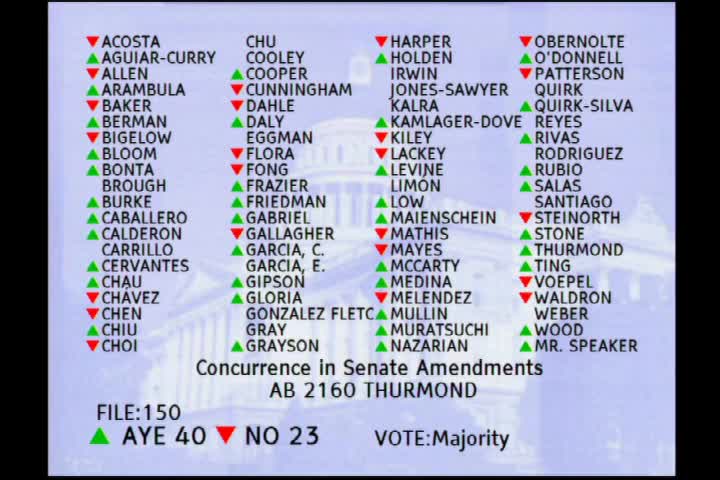 1MIN
Assembly Floor
 2MIN
Senate Floor
 1H
Senate Standing Committee on Appropriations
 7MIN
Senate Standing Committee on Agriculture
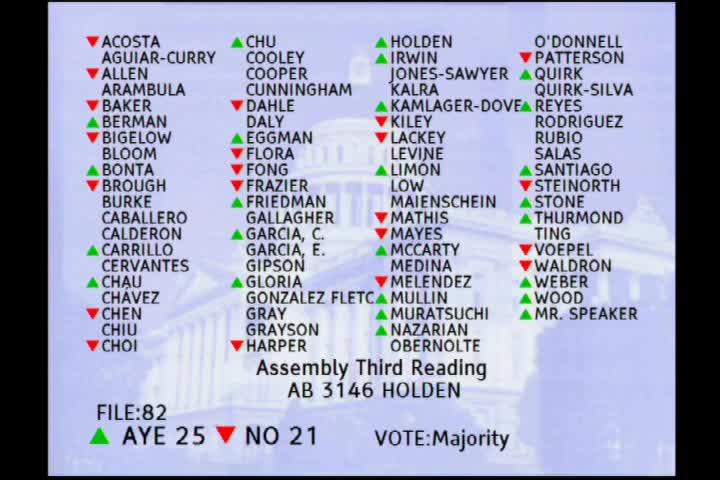 1MIN
Assembly Floor
 9MIN
Assembly Standing Committee on Natural Resources
 3MIN
Assembly Standing Committee on Agriculture
Bill Author

Bill Co-Author(s):
