AB 2379: Waste management: plastic microfiber.
- Session Year: 2017-2018
- House: Assembly
- Latest Version Date: 2018-04-26
The Safe Drinking Water and Toxic Enforcement Act of 1986 (Proposition 65) prohibits any person, in the course of doing business, from knowingly and intentionally exposing any individual to a chemical known to the state to cause cancer or reproductive toxicity without giving a specified warning, or from discharging or releasing such a chemical into any source of drinking water, except as specified. Existing law prohibits the sale of expanded polystyrene packaging material by a wholesaler or manufacturer unless that material is composed of 100% recycled material. Existing law prohibits a person from selling a plastic product in this state that is labeled with the term compostable, home compostable, or marine degradable unless, at the time of sale, the plastic product meets the applicable ASTM International standard specification. Existing law prohibits, on and after January 1, 2020, a person, business, or other entity from selling or offering for promotional purposes in this state a personal care product containing plastic microbeads, as specified.
This bill would require that new clothing made from fabric that is composed of more than 50% synthetic material bear a conspicuous label that is visible to the consumer at the point of sale, in the form of a sticker, hang tag, or any other label type, with specified information, including a statement that the garment sheds plastic microfibers when washed. The bill would require new clothing with that material composition, if a care label is required pursuant to federal law, to include additional information on the care label, including that same statement. The bill would prohibit a person from selling or offering for sale new clothing made from fabric that is composed of more than 50% synthetic material that does not bear those labels. The bill would require that these requirements be enforced only through a civil action brought by the Attorney General, a district attorney, or a city attorney. The bill would make these provisions effective on January 1, 2020.
The Safe Drinking Water and Toxic Enforcement Act of 1986 (Proposition 65) prohibits any person, in the course of doing business, from knowingly and intentionally exposing any individual to a chemical known to the state to cause cancer or reproductive toxicity without giving a specified warning, or from discharging or releasing such a chemical into any source of drinking water, except as specified. Existing law prohibits the sale of expanded polystyrene packaging material by a wholesaler or manufacturer unless that material is composed of 100% recycled material. Existing law prohibits a person from selling a plastic product in this state that is labeled with the term compostable, home compostable, or marine degradable unless, at the time of sale, the plastic product meets the applicable ASTM International standard specification. Existing law prohibits, on and after January 1, 2020, a person, business, or other entity from selling or offering for promotional purposes in this state a personal care product containing plastic microbeads, as specified.
This bill would require that new clothing made from fabric that is composed of more than 50% synthetic material bear a conspicuous label that is visible to the consumer at the point of sale, in the form of a sticker, hang tag, or any other label type, with specified information, including a statement that the garment sheds plastic microfibers when washed. The bill would require new clothing with that material composition, if a care label is required pursuant to federal law, to include additional information on the care label, including that same statement. The bill would prohibit a person from selling or offering for sale new clothing made from fabric that is composed of more than 50% synthetic material that does not bear those labels. The bill would make these provisions effective on January 1, 2020.
The Safe Drinking Water and Toxic Enforcement Act of 1986 (Proposition 65) prohibits any person, in the course of doing business, from knowingly and intentionally exposing any individual to a chemical known to the state to cause cancer or reproductive toxicity without giving a specified warning, or from discharging or releasing such a chemical into any source of drinking water, except as specified. Existing law prohibits the sale of expanded polystyrene packaging material by a wholesaler or manufacturer unless that material is composed of 100% recycled material. Existing law prohibits a person from selling a plastic product in this state that is labeled with the term compostable, home compostable, or marine degradable unless, at the time of sale, the plastic product meets the applicable ASTM International standard specification. Existing law prohibits, on and after January 1, 2020, a person, business, or other entity from selling or offering for promotional purposes in this state a personal care product containing plastic microbeads, as specified.
This bill would require that clothing made from fabric that is composed of more than 50% synthetic material bear a conspicuous label that is visible to the consumer at the point of sale, in the form of a sticker, hang tag, or any other label type, with specified information, including a statement that the garment sheds plastic microfibers when washed. The bill would require that clothing made from fabric that is more than 50% polyester bear a conspicuous label stating that the garment sheds plastic microfibers when washed and recommending hand washing. with that material composition, if a care label is required pursuant to federal law, to include additional information on the care label, including that same statement. The bill would prohibit a person, on and after January 1, 2020, person from selling or offering for sale clothing made from fabric that is composed of more than 50% polyester synthetic material that does not bear that label. those labels. The bill would make these provisions effective on January 1, 2020.
The Safe Drinking Water and Toxic Enforcement Act of 1986 (Proposition 65) prohibits any person, in the course of doing business, from knowingly and intentionally exposing any individual to a chemical known to the state to cause cancer or reproductive toxicity without giving a specified warning, or from discharging or releasing such a chemical into any source of drinking water, except as specified. Existing law prohibits the sale of expanded polystyrene packaging material by a wholesaler or manufacturer unless that material is composed of 100% recycled material. Existing law prohibits a person from selling a plastic product in this state that is labeled with the term compostable, home compostable, or marine degradable unless, at the time of sale, the plastic product meets the applicable ASTM International standard specification. Existing law prohibits, on and after January 1, 2020, a person, business, or other entity from selling or offering for promotional purposes in this state a personal care product containing plastic microbeads, as specified.
This bill would require that clothing made from fabric that is more than 50% polyester bear a conspicuous label stating that the garment sheds plastic microfibers when washed and recommending hand washing. The bill would prohibit a person, on and after January 1, 2020, from selling or offering for sale clothing made from fabric that is more than 50% polyester that does not bear that label.
(a)The Legislature finds and declares all of the following:
(1)Microfiber is a subcategory of microplastic that is shed from synthetic fabric when that fabric is washed.
(2)These small, nondegradable fibers that are less than 5 millimeters in length are a major category of plastic pollution in water, pose a serious threat to the environment, and have been found within fish and shellfish that are consumed by humans.
(3)Garments made from synthetic fabrics, such as polyester, can shed up to 1,900 microfibers per wash.
(4)Polyester is the most widely used fiber in the textiles industry and accounts for about 50 percent of the total fiber market.
(5)Effluent from washing machines and wastewater treatment plants is a significant source of microfiber pollution that enters waterways and the ocean.
(b)It is therefore the intent of the Legislature to do both of the following:
(1)Recognize the emerging threat that microfibers pose to the environment and water quality and provide information to the general public about the sources of microfiber pollution.
(2)Reduce the amount of microfiber that enters the environment and is subsequently consumed by wildlife.
SEC. 2.Chapter 6.2 (commencing with Section 42375) is added to Part 3 of Division 30 of the Public Resources Code, to read:6.2.Microfiber Pollution Education and Reduction42375.For purposes of this chapter, the following definitions apply:
(a)Clothing means an article of apparel intended to be worn by a person, not including hats or shoes.
(b)Plastic microfiber means a small synthetic particle that is fibrous in shape, less than 5 millimeters in length, and is released into water through the regular washing of textiles made from synthetic material.
42375.1.(a)New clothing made from fabric that is composed of more than 50 percent synthetic material, if a care label is required for that clothing pursuant to Part 423 (commencing with Section 423.1) of Title 16 of the Code of Federal Regulations, shall include on the care label, in addition to the care information and instructions required pursuant to that federal law, the following statement: This garment sheds plastic microfibers when washed.
(b)New clothing made from fabric that is composed of more than 50 percent synthetic material shall bear a conspicuous label that is visible to the consumer at the point of sale, in the form of a sticker, hang tag, or any other label type, that includes one of the following statements, as applicable: statement: This garment sheds plastic microfibers when washed, which contributes to marine plastic pollution.
(1)For clothing for which dry cleaning is required: This garment sheds plastic microfibers when washed, which contributes to marine plastic pollution. Dry clean only.(2)For all clothing that does not meet the description in paragraph (1) or if including the statement in paragraph (1) would violate Part 423 (commencing with Section 423.1) of Title 16 of the Code of Federal Regulations: This garment sheds plastic microfibers when washed, which contributes to marine plastic pollution.(c)A person shall not sell or offer for sale new clothing made from fabric that is composed of more than 50 percent synthetic material unless the clothing is labeled in accordance with this section.
(d)This section shall be enforced only through a civil action brought by the Attorney General, a district attorney, or a city attorney.
(e)A violation of subdivision (a), (b), or (c) shall not constitute unfair competition for purposes of Chapter 5 (commencing with Section 17200) of Part 2 of Division 7 of the Business and Profession Code.
(d)(f)This section shall become operative on January 1, 2020.
(a)The Legislature finds and declares all of the following:
(1)Microfiber is a subcategory of microplastic that is shed from synthetic fabric when that fabric is washed.
(2)These small, nondegradable fibers that are less than 5 millimeters in length are a major category of plastic pollution in water, pose a serious threat to the environment, and have been found within fish and shellfish that are consumed by humans.
(3)Garments made from synthetic fabrics, such as polyester, can shed up to 1,900 microfibers per wash.
(4)Polyester is the most widely used fiber in the textiles industry and accounts for about 50 percent of the total fiber market.
(5)Effluent from washing machines and wastewater treatment plants is a significant source of microfiber pollution that enters waterways and the ocean.
(b)It is therefore the intent of the Legislature to do both of the following:
(1)Recognize the emerging threat that microfibers pose to the environment and water quality and provide information to the general public about the sources of microfiber pollution.
(2)Reduce the amount of microfiber that enters the environment and is subsequently consumed by wildlife.
SEC. 2.Chapter 6.2 (commencing with Section 42375) is added to Part 3 of Division 30 of the Public Resources Code, to read:6.2.Microfiber Pollution Education and Reduction42375.For purposes of this chapter, the following definitions apply:
(a)Clothing means an article of apparel intended to be worn by a person, not including hats or shoes.
(b)Plastic microfiber means a small synthetic particle that is fibrous in shape, less than 5 millimeters in length, and is released into water through the regular washing of textiles made from synthetic material.
42375.1.(a)New clothing made from fabric that is composed of more than 50 percent synthetic material, if a care label is required for that clothing pursuant to Part 423 (commencing with Section 423.1) of Title 16 of the Code of Federal Regulations, shall include on the care label, in addition to the care information and instructions required pursuant to that federal law, one of the following statements, as applicable: statement: This garment sheds plastic microfibers when washed.
(1)For clothing for which machine washing or hand washing is recommended or required: This garment sheds plastic microfibers when washed. Hand washing recommended to reduce shedding.(2)For all clothing that does not meet the description in paragraph (1) or if including the statement in paragraph (1) would violate Part 423 (commencing with Section 423.1) of Title 16 of the Code of Federal Regulations: This garment sheds plastic microfibers when washed.(b)New clothing made from fabric that is composed of more than 50 percent synthetic material shall bear a conspicuous label that is visible to the consumer at the point of sale, in the form of a sticker, hang tag, or any other label type, that includes one of the following statements, as applicable:
(1)For clothing for which machine washing or hand washing is recommended or required: This garment sheds plastic microfibers when washed, which contributes to marine plastic pollution. Hand washing recommended to reduce shedding.(2)(1)For clothing for which dry cleaning is required: This garment sheds plastic microfibers when washed, which contributes to marine plastic pollution. Dry clean only.
(3)(2)For all clothing that does not meet the description in paragraph (1) or (2) or if including the applicable statement in paragraph (1) or (2) would violate Part 423 (commencing with Section 423.1) of Title 16 of the Code of Federal Regulations: This garment sheds plastic microfibers when washed, which contributes to marine plastic pollution.
(c)A person shall not sell or offer for sale new clothing made from fabric that is composed of more than 50 percent synthetic material unless the clothing is labeled in accordance with this section.
(d)This section shall become operative on January 1, 2020.
(a)The Legislature finds and declares all of the following:
(1)Microfiber is a subcategory of microplastic that is shed from synthetic fabric when that fabric is washed.
(2)These small, nondegradable fibers that are less than 5 millimeters in length are a major category of plastic pollution in water, pose a serious threat to the environment, and have been found within fish and shellfish that are consumed by humans.
(3)Garments made from synthetic fabrics, such as polyester, can shed up to 1,900 microfibers per wash.
(4)Polyester is the most widely used fiber in the textiles industry and accounts for about 50 percent of the total fiber market.
(5)Effluent from washing machines and wastewater treatment plants is a significant source of microfiber pollution that enters waterways and the ocean.
(b)It is therefore the intent of the Legislature to do both of the following:
(1)Recognize the emerging threat that microfibers pose to the environment and water quality and provide information to the general public about the sources of microfiber pollution.
(2)Reduce the amount of microfiber that enters the environment and is subsequently consumed by wildlife.
SEC. 2.Chapter 6.2 (commencing with Section 42375) is added to Part 3 of Division 30 of the Public Resources Code, to read:6.2.Microfiber Pollution Education and Reduction42375.For purposes of this chapter, the following definitions apply:
(a)Clothing means an article of apparel intended to be worn by a person, not including hats or shoes.
(b)Plastic microfiber means a small synthetic particle that is fibrous in shape, less than 5 millimeters in length, and is released into water through the regular washing of textiles made from synthetic material.
42375.1.(a)Clothing New clothing made from fabric that is composed of more than 50 percent synthetic material, if a care label is required for that clothing pursuant to Part 423 (commencing with Section 423.1) of Title 16 of the Code of Federal Regulations, shall include on the care label, in addition to the care information and instructions required pursuant to that federal law, one of the following statements, as applicable:
(1)For clothing for which machine washing or hand washing is recommended or required: This garment sheds plastic microfibers when washed. Hand washing recommended to reduce shedding.
(2)For all other clothing that does not meet the description in paragraph (1) or if including the statement in paragraph (1) would violate any federal law: Part 423 (commencing with Section 423.1) of Title 16 of the Code of Federal Regulations: This garment sheds plastic microfibers when washed.
(b)Clothing New clothing made from fabric that is composed of more than 50 percent synthetic material shall bear a conspicuous label that is visible to the consumer at the point of sale, in the form of a sticker, hang tag, or any other label type, that includes one of the following statements, as applicable:
(1)For clothing for which machine washing or hand washing is recommended or required: This garment sheds plastic microfibers when washed. washed, which contributes to marine plastic pollution. Hand washing recommended to reduce shedding.
(2)For clothing for which dry cleaning is required: This garment sheds plastic microfibers when washed. washed, which contributes to marine plastic pollution. Dry clean only.
(3)For all other clothing that does not meet the description in paragraph (1) or (2) or if including the applicable statement in paragraph (1) or (2) would violate any federal law: Part 423 (commencing with Section 423.1) of Title 16 of the Code of Federal Regulations: This garment sheds plastic microfibers when washed. washed, which contributes to marine plastic pollution.
(c)A person shall not sell or offer for sale new clothing made from fabric that is composed of more than 50 percent synthetic material unless the clothing is labeled in accordance with this section.
(d)This section shall become operative on January 1, 2020.
(a)The Legislature finds and declares all of the following:
(1)Microfiber is a subcategory of microplastic that is shed from synthetic fabric when that fabric is washed.
(2)These small, nondegradable fibers that are less than 5 millimeters in length are a major category of plastic pollution in water, pose a serious threat to the environment, and have been found within fish and shellfish that are consumed by humans.
(3)Garments made from synthetic fabrics, such as polyester, can shed up to 1,900 microfibers per wash.
(4)Polyester is the most widely used fiber in the textiles industry and accounts for about 50 percent of the total fiber market.
(5)Effluent from washing machines and wastewater treatment plants is a significant source of microfiber pollution that enters waterways and the ocean.
(b)It is therefore the intent of the Legislature to do both of the following:
(1)Recognize the emerging threat that microfibers pose to the environment and water quality and provide information to the general public about the sources of microfiber pollution.
(2)Reduce the amount of microfiber that enters the environment and is subsequently consumed by wildlife.
SEC. 2.Chapter 6 6.2 (commencing with Section 42368) 42375) is added to Part 3 of Division 30 of the Public Resources Code, to read:6.6.2.Microfiber Pollution Education and Reduction42368.42375.For purposes of this chapter, the following definitions apply:
(a)Clothing means an article of apparel intended to be worn by a person, not including hats or shoes.
(b)Plastic microfiber means a small polyester synthetic particle that is fibrous in shape, less than 5 millimeters in length, and is released into water through the regular washing of polyester-based textiles. textiles made from synthetic material.
42369.42375.1.(a)Clothing made from fabric that is composed of more than 50 percent polyester synthetic material, if a care label is required for that clothing pursuant to Part 423 (commencing with Section 423.1) of Title 16 of the Code of Federal Regulations, shall bear a conspicuous label that states: This garment sheds plastic microfibers when washed. Hand washing recommended. include on the care label, in addition to the care information and instructions required pursuant to federal law, one of the following statements, as applicable:
(1)For clothing for which machine washing or hand washing is recommended or required: This garment sheds plastic microfibers when washed. Hand washing recommended to reduce shedding.
(2)For all other clothing that does not meet the description in paragraph (1) or if including the statement in paragraph (1) would violate any federal law: This garment sheds plastic microfibers when washed.
(b)Clothing made from fabric that is composed of more than 50 percent synthetic material shall bear a conspicuous label that is visible to the consumer at the point of sale, in the form of a sticker, hang tag, or any other label type, that includes one of the following statements, as applicable:
(1)For clothing for which machine washing or hand washing is recommended or required: This garment sheds plastic microfibers when washed. Hand washing recommended to reduce shedding.
(2)For clothing for which dry cleaning is required: This garment sheds plastic microfibers when washed. Dry clean only.
(3)For all other clothing that does not meet the description in paragraph (1) or (2) or if including the statement in paragraph (1) or (2) would violate any federal law: This garment sheds plastic microfibers when washed.
(b)On and after January 1, 2020, a(c)A person shall not sell or offer for sale clothing made from fabric that is composed of more than 50 percent polyester, synthetic material unless the clothing is labeled in accordance with this section.
(d)This section shall become operative on January 1, 2020.
(a)The Legislature finds and declares all of the following:
(1)Microfiber is a subcategory of microplastic that is shed from synthetic fabric when that fabric is washed.
(2)These small, nondegradable fibers that are less than 5 millimeters in length are a major category of plastic pollution in water, pose a serious threat to the environment, and have been found within fish and shellfish that are consumed by humans.
(3)Garments made from synthetic fabrics, such as polyester, can shed up to 1,900 microfibers per wash.
(4)Polyester is the most widely used fiber in the textiles industry and accounts for about 50 percent of the total fiber market.
(5)Effluent from washing machines and wastewater treatment plants is a significant source of microfiber pollution that enters waterways and the ocean.
(b)It is therefore the intent of the Legislature to do both of the following:
(1)Recognize the emerging threat that microfibers pose to the environment and water quality and provide information to the general public about the sources of microfiber pollution.
(2)Reduce the amount of microfiber that enters the environment and is subsequently consumed by wildlife.
SEC. 2.Chapter 6 (commencing with Section 42368) is added to Part 3 of Division 30 of the Public Resources Code, to read:6.Microfiber Pollution Education and Reduction42368.For purposes of this chapter, the following definitions apply:
(a)Clothing means an article of apparel intended to be worn by a person, not including hats or shoes.
(b)Plastic microfiber means a small polyester particle that is fibrous in shape, less than 5 millimeters in length, and is released into water through the regular washing of polyester-based textiles.
42369.(a)Clothing made from fabric that is more than 50 percent polyester shall bear a conspicuous label that states: This garment sheds plastic microfibers when washed. Hand washing recommended.
(b)On and after January 1, 2020, a person shall not sell or offer for sale clothing made from fabric that is more than 50 percent polyester, unless the clothing is labeled in accordance with this section.
|
Date
|
Status
|
|---|---|
| Jun 4, 2018 | Ordered to inactive file at the request of Assembly Member Bloom. |
| Apr 30, 2018 | Read second time. Ordered to third reading. |
| Apr 26, 2018 | Read second time and amended. Ordered returned to second reading. |
| Apr 25, 2018 | From committee: Amend, and do pass as amended. (Ayes 5. Noes 2.) (April 24). |
| Apr 19, 2018 | Re-referred to Com. on E.S. & T.M. |
| Apr 18, 2018 | From committee chair, with author's amendments: Amend, and re-refer to Com. on E.S. & T.M. Read second time and amended. |
| Apr 17, 2018 | Re-referred to Com. on E.S. & T.M. |
| Apr 16, 2018 | Read second time and amended. |
| Apr 12, 2018 | From committee: Amend, and do pass as amended and re-refer to Com. on E.S. & T.M. (Ayes 6. Noes 4.) (April 9). |
| Apr 3, 2018 | Re-referred to Com. on NAT. RES. |
| Apr 2, 2018 | From committee chair, with author's amendments: Amend, and re-refer to Com. on NAT. RES. Read second time and amended. |
| Mar 8, 2018 | Referred to Coms. on NAT. RES. and E.S. & T.M. |
| Feb 15, 2018 | From printer. May be heard in committee March 17. |
| Feb 14, 2018 | Read first time. To print. |
|
Date
|
Description
|
Location
|
Votes
|
|
|---|---|---|---|---|
| Apr 24, 2018 | Do pass as amended. | Assembly Standing Committee on Environmental Safety and Toxic Materials |
Passed |
|
| Apr 9, 2018 | Do pass as amended and be re-referred to the Committee on [Environmental Safety and Toxic Materials] | Assembly Standing Committee on Natural Resources |
Passed |
This list shows positions taken on this bill by organizations on the date displayed, which is linked to the original source.
Positions by individuals are not included.
ASSEMBLY THIRD READING
ATR Bill Id:AB 2379
Author:(Bloom)
As Amended Ver:April 26, 2018
Majority vote
Committee | Votes | Ayes | Noes |
Natural Resources | 6-4 | Muratsuchi, Chau, Limón, McCarty, Mark Stone, Bloom | Acosta, Eggman, Flora, Melendez |
Environmental Safety | 5-2 | Quirk, Arambula, Bloom, Holden, Muratsuchi | Melendez, Brough |
SUBJECT: Waste management: polyester microfiber
SUMMARY: Beginning January 1, 2020, requires polyester clothing sold in California to include a label stating that the garment sheds plastic microfibers.
EXISTING LAW:
- Under the federal Marine Plastic Pollution Research and Control Act of 1987 (Public Law 100-220, Title II) prohibits the at-sea disposal of plastic and other solid materials for all navigable waters within the United States. The law also requires the US Environmental Protection Agency (EPA), the National Oceanic and Atmospheric Administration, and the US Coast Guard to jointly conduct a public education program on the marine environment.
- Under the federal Clean Water Act requires the state to identify a list of impaired water-bodies and develop and implement Total Maximum Daily Loads (TMDLs) for impaired water bodies.
- Under the Porter Cologne Water Quality Control Act regulates discharges of pollutants in storm water and urban runoff by regulating, through the National Pollution Discharge Elimination System (NPDES), industrial discharges and discharges through the municipal storm drain systems.
- Beginning January 1, 2020, prohibits a person from selling or offering for promotional purposes a personal care product containing plastic microbeads that is used to exfoliate or cleanse in a rinse-off product. Establishes enforcement provisions, including civil penalties not to exceed $2,500 per day for each violation.
THIS BILL:
- Requires new clothing sold in California on and after January 1, 2020 that is composed of more than 50% synthetic material to comply with the following:
- Clothing that requires a care label to include on that label this statement: "This garment sheds plastic microfibers when washed."
- Bear a conspicuous label that is visible to the consumer at the point of sale this statement: "This garment sheds plastic microfibers when washed, which contributes to marine plastic pollution."
- Defines terms used in the bill.
- Specifies that the requirements of the bill shall be enforced through a civil action brought by the Attorney General, a district attorney, or a city attorney, as specified.
- States legislative findings relating to the environmental impacts of microfibers and stating the intent of the Legislature to:
- Recognize the emerging threat that microfibers pose to the environment and water quality and provide information to the general public about the sources of microfiber pollution; and,
- Reduce the amount of microfiber that enters the environment and is subsequently consumed by wildlife.
FISCAL EFFECT: This bill is keyed non-fiscal by the Legislative Counsel.
COMMENTS: Plastic microfibers are small plastic fibers that are shed from polyester fabrics, such as polyester fleece, during washing. Researchers at the University of Plymouth found that synthetic garments emit up to 70,000 fibers per wash. Wastewater treatment systems are not capable of capturing these small particles, and they pass directly into the state's waterways and eventually to the ocean.
Plastics are estimated to comprise 60-80% of all marine debris and 90% of all floating debris. By 2050, plastics in the ocean will outweigh fish pound for pound if society keeps producing and failing to properly manage plastics at predicted rates, according to a January, 2016, report by the World Economic Forum, The New Plastics Economy: Rethinking the Future of Plastics.
Plastic is the predominate form of marine debris. Plastics are estimated to comprise 60-80% of all marine debris and 90% of all floating debris. According to the California Coastal Commission, the primary source of marine debris is urban runoff. Due to the interplay of ocean currents, marine debris preferentially accumulates in certain areas throughout the ocean. A study published March 22, 2018 found that the North Pacific Gyre contains 79,000 metric tons. This study, Evidence that the Great Pacific Garbage Patch is Rapidly Accumulating Plastic, published in Scientific Reports, found that approximately 46% of the material in the Gyre by weight was comprised of abandoned fishing nets. Microplastics accounted for 94% of the estimated 1.8 trillion pieces of plastic floating in the area. Distressingly, the study found that the plastic pollution in the Gyre is increasing exponentially and at a faster rate than surrounding waters.
All plastic in the ocean will eventually become microplastic. Even large pieces of plastic break down into smaller and smaller particles due to excessive ultraviolet radiation exposure and subsequent photo-degradation. These plastic pieces are confused with small fish, plankton, or krill and ingested by aquatic organisms. Over 600 marine animal species have been negatively affected by ingesting plastic worldwide. In 2017, scientists at the Australian Research Council Centre of Excellence for Coral Reef Studies at James Cook University found that corals are also ingesting small plastic particles, which remain in their small stomach cavities and impede their ability to consume and digest food.
In addition to the physical impacts of plastic pollution, hydrophobic chemicals present in the ocean in trace amounts (e.g., from contaminated runoff and oil and chemical spills) have an affinity for, and can bind to, plastic particles where they enter and accumulate in the food chain.
Microplastics consumed by marine organisms make their way into the animals' tissues and are beginning to show up in the fish that humans eat. In a recent study by University of California Davis and Hasunuddin University in Indonesia, researchers sampled fish from fish markets in Makassar, Indonesia, Half Moon Bay, California, and Princeton, New Jersey. One-quarter of the fish sampled in all locations contained plastic. In California, 80% of the plastic debris in the fish consisted of microfibers. In contrast, none of the fish in Indonesia were contaminated with mircofibers.
Microplastics are also making their way into our drinking water. Last month the State University of New York completed a study of 259 bottles of water from 11 different brands purchased in 19 locations in 9 countries and found microplastics in 93%. It is unclear if the particles were in the water prior to bottling or if they entered the water during the bottling process.
Plastic is also prevalent in tap water. Researchers at the State University of New York and the University of Minnesota tested 159 drinking water samples from cities and towns across five continents. Eighty-three percent of those samples worldwide contained microplastic. In the United States, 94% of the samples contained microplastic, including a sample collected from the United States Environmental Protection Agency headquarters. People ingest the fibers when they drink and eat foods prepared by using tap water.
A United Nations resolution was drafted in 2017 to create legally binding marine plastic pollution targets. Opposition to the targets, primarily from the United States and China, forced a deal that replaced the targets with non-binding language urging all actors to "step up actions by 2025, prevent and significantly reduce marine pollution of all kinds" and "encourages member states to prioritize policies [that] avoid marine litter and microplastic entering the marine environment." Resolution 72/72, Oceans and the Law of the Sea, was signed by all 193 members of the United Nations in December 2017.
Analysis Prepared by: Elizabeth MacMillan / NAT. RES. / (916) 319-2092 FN: 0002743
Date of Hearing: April 24, 2018
ASSEMBLY COMMITTEE ON ENVIRONMENTAL SAFETY AND TOXIC MATERIALS
Bill Quirk, Chair
ABPCA Bill Id:AB 2379 (
Author:Bloom) – As Amended Ver:April 18, 2018
SUBJECT: Waste management: polyester microfiber
SUMMARY: Requires, on or before January 1, 2020, all clothing composed of more than 50 percent synthetic material (e.g. polyester) to bear a care label and a conspicuously visible label at the point of sale that states, "This garment sheds plastic microfibers when washed, which contributes to marine plastic pollution," or a similar statement as specified. Specifically, this bill:
- Defines "clothing" as an article or apparel intended to be worn by a person, not including hats or shoes.
- Defines "plastic microfiber" as a small synthetic particle that is fibrous in shape, less than 5 millimeters in length, and is released into water through the regular washing of textiles made from synthetic material.
- Requires clothing composed of more than 50 percent synthetic material to bear, in addition to the care information and instructions required by federal law, a care label including the statement, "This garment sheds plastic microfibers when washed."
- Requires, at the point of sale to a customer, clothing composed of more than 50 percent synthetic material to bear a conspicuous label that includes one of the following statements, as applicable:
- "This garment sheds plastic microfibers when washed, which contributes to marine plastic pollution. Dry clean only." for clothing requiring dry cleaning.
- "This garment sheds plastic microfiber when washed, which contributes to marine plastic pollution." for all other clothing.
- Makes uncodified findings and declarations related to microfiber pollution.
EXISTING LAW:
Under federal law:
- Prohibits, under the federal Marine Plastic Pollution Research and Control Act of 1987, the at-sea disposal of plastic and other solid materials for all navigable waters within the United States. (33 United States Code (USC) § 1901 et seq.)
- Under the Microbead-Free Waters Act of 2015, the Federal Food, Drug, and Cosmetic Act bans rinse-off cosmetics that contain intentionally-added plastic microbeads and bans manufacturing of these cosmetics. (21 USC § 331)
- Requires clothing to be labeled with their constituent fiber names and percentages by weight. (15 USC § 70 et seq.)
- Requires manufacturers and importers to attach care labels providing washing, drying, ironing, bleaching, and warning instructions to clothing. (§ 423.1 et seq. of Title 16 of the Code of Federal Regulations)
Under state law:
- Regulates, under the Porter-Cologne Water Quality Control Act, discharges of pollutants in storm water and urban runoff by regulating, through the National Pollution Discharge Elimination System (NPDES), industrial discharges and discharges through the municipal storm drain systems. (Water Code (WC) § 13000 et seq.)
- Requires the State Water Resources Control Board (SWRCB) and the regional water boards to implement a program to control discharges of preproduction plastic (nurdles) from point and nonpoint sources. Requires the SWRCB to determine the appropriate regulatory methods to address the discharges from these point and nonpoint sources. (WC § 13367)
- Declares that littered plastic products have caused and continue to cause significant environmental harm and have burdened local governments with significant environmental cleanup costs. (Public Resources Code (PRC) § 42355)
- Prohibits the sale of personal care products that contain plastic microbeads on and after January 1, 2020. (PRC §42360 et seq.)
FISCAL EFFECT: Unknown.
COMMENTS:
Need for the bill: According to the author,
"Clothing made from synthetic fabrics dominates the clothing industry, and as a result millions of people regularly wash clothes made of synthetic material. In fact, 60% of fabric produced in the textile industry in 2014 contained polyester. The consumption of clothing made from synthetic fabrics that release microfibers are on the rise.
Right now, it's estimated that synthetic fibers are, by count, the single largest contributor to watershed plastic pollution in developed countries and account for a significant portion of plastic waste entering the ocean. We don't know yet the extent to which microplastic pollution might affect humans. We do, however, know that many animals within the aquatic food chain ingest these plastics and the toxics they absorb from the water around them. This can transfer to their tissue and cause gut impaction, hormone disruption, and liver damage.
This raises an important question about the human health consequences of unintended consumption of plastic microfibers. University of California, Davis (UC Davis) sampled fish and shellfish sold at local California fish markets and found one-quarter of fish and one-third of shellfish contained plastic debris. A majority of the plastic debris found in the fish samples were microfibers. Similarly, a survey compared 150 tap water samples from locations in five continents; microplastic fibers were found in nearly every sample. The survey also found 94% of the United States water samples contained plastic microfibers."
Natural and synthetic fibers: Natural fibers, such as wool and cotton, are formed through biological processes that are part of an organism’s life processes. These fibers are spun together into yarn, which can be knit into textiles. Synthetic fibers are manufactured by reacting simple, petroleum-based chemical precursors into polymer plastics. This plastic is melted and spun into yarn. Many types of synthetic fabrics can be formed by combining different chemical precursors and varying process conditions. Polyester, nylon, microfiber, acrylic, and spandex, are all examples of common synthetic fabrics. Natural materials can also be chemically modified to form semisynthetic fibers. For example, rayon, also known as viscose, is a semisynthetic fiber formed by modifying the plant material cellulose. Multiple fiber types can be blended and spun together into single yarn. From 1950 to 2010, synthetic material use in textiles increased from 2.1 million tons to almost 50 million tons, accounting for almost 60% of total global fiber production. The bulk of synthetic fibers produced are either polyester or nylon. According to Tecnon OrbiChem, a company that provides data and analysis to the petrochemical industry, fiber production growth has been driven almost exclusively by increased polyester production in China, and they project that this trend will continue.
Microfibers: Over time, textiles shed small fibers through the normal process of wear, tear, and washing. These fibers are typically classified as microfibers when they are shorter than five millimeters. While all textiles seem to shed, studies conducted at academic laboratories and by the outdoor clothing and gear company, Patagonia, in collaboration with the University of California at Santa Barbara (Patagonia Study), indicate that many factors determine how much a textile sheds when washed. Textile age, washing machine type, detergent use, and textile weave can all play a role. For example, microfleece is a polyester fabric that is mechanically cut to create its velvety appearance. The Patagonia Study found that, on average, microfleece jackets release almost 2 grams of microfiber per wash. Currently, washing machines are not equipped to filter out microfibers and up to 40% of microfibers pass through wastewater treatment plants. Therefore, large quantities (about 4 billion microfibers, an estimated 81 kilograms, per day at one treatment plant studied) are discharged into the environment. One of the first studies to identify microfibers as a significant component of microplastic pollution back in 2011 noted that the proportion of polyester and acrylic fibers found in habitats receiving sewage discharge matched those in clothing.
Microfiber, mega-pollution: Plastic microfibers and other microplastics are not biodegradable and can absorb toxic pollutants such as PCBs, DDT, and PDBEs. Broken down by ultraviolet radiation and wave action, all plastic in the ocean eventually becomes microplastic, and plastics are estimated to comprise 60-80% of all marine debris. A 2017 study by the International Union for Conservation of Nature (IUCN) found that, of the 9.5 million tons of plastic waste flowing into the ocean each year, an estimated 15-30 percent comprises fibers shed from clothing.
A harder problem to solve than plastic microbeads: Plastic microbeads were previously added to personal care products, such as face washes, as exfoliates. Like microfibers, these beads would pass through the sewage system and into natural waters where they were a pervasive marine pollutant. However, in 2015, California and the US government both signed laws phasing out their use (AB 888 Bloom, Chapter 594, Statutes of 2015) and HR 1321 (Pallone, Public Law No: 114-114)). Though microfibers may pose a bigger problem than plastic microbeads (in a 2015 study published in Scientific Reports by UC Davis researchers, microfibers comprised 80% of the debris found in fish and shellfish sampled in local markets in Half Moon Bay, CA) a ban is not feasible and therefore, stakeholders must pursue mitigation strategies. AB 2379 implements one of those strategies by requiring disclosure of the problem on products contributing to it.
Ecological significance of microplastics: While it is intuitive that tons of microplastic pollution cannot be a good thing for aquatic life, there is evidence supporting a number of specific impacts these particles have or may have. These plastics are eaten by marine life from coral to remote deep-sea fish and from mollusks to whales. In multiple species, including crabs, ingesting microplastics reduces food consumption, decreasing the overall energy budget available for growth. In fish, microplastics can cut the intestinal track and cause tissue death and inflammation. Fish fed microplastic fragments which had absorbed these chemicals sustained liver damage. The impacts of ingesting micro plastics on individual organisms and on whole ecosystems are current areas of scientific research.
Harmful to humans? People are exposed to microfibers, and microplastics more broadly, through a number of routes including seafood consumption, tap water, bottled water, and inhalation of airborne microfibers. Bioaccumulation of toxins from microplastics in seafood has raised concerns that consumption may be a route of exposure to toxins as well as plastic. In March, the World Health Organization announced a review of the potential risks of plastic in drinking water after a new analysis of bottled drinking water carried out by scientists based at the State University of New York in Fredonia commissioned by Orb Media. The analysis found microplastics, including plastic microfibers, in more than 90% of the 259 bottles tested and spanned 11 different international brands, including Aquafina and Dasani. On average, there were 325 microplastic particles per liter of water. A previous study also found microplastics in tap water. Legislation currently under consideration in the California Senate would require the State Water Board to monitor microplastics in drinking water [SB 1422 (Portantino)] and require the Ocean Protection Council to assess the risks of microplastics and what can be done to mitigate these risks [SB 1263 (Portantino)]. While there is cause for concern, so far there is no direct evidence that this escalating problem directly impacts human health.
One component of a solution to pollution: There does not seem to be any debate over whether microfiber pollution is a problem nor around whether washing clothing made from synthetic textiles contributes to the problem. AB 2379 could be one step towards stemming the tide of plastic flowing into the ocean every year, and there are many other possible points of intervention that are currently being explored:
- Additional origins of microfibers: The majority of study and discussion has focused around microfiber shedding in the wash. However, the process of garment manufacture and disposal could also shed microfibers, and other textile products, including bedding and carpets, likely shed significantly as well.
- Preventing microfiber shedding: Identifying washing conditions that minimize shedding and developing shed-resistant fabrics may mitigate microfiber pollution.
- Catching fibers at home: Two consumer products, the Cora Ball and Patagonia’s Guppyfriend claim to catch microfibers in the washing machine and washing machine manufacturers are developing filters that can conveniently capture fibers before they enter the waste stream.
- Wastewater treatment: As discussed above, up to 40% of microfibers pass through wastewater treatment plants. Most microfibers that are filtered out appear to be removed during primary sedimentation and mechanical removal. However, a portion of sewage sludge is applied to farmland as fertilizer, so even if wastewater treatment plants could filter out all microfibers, they may still make their way into the environment.
AB 2379’s intervention in the microfiber pollution problem is a public education strategy requiring disclosure of this problem on clothing. Labeling synthetic clothes may effectively raise awareness around the problem of synthetic microfiber pollution, and like price, brand, and care instructions, consumers can take into account the information on the "microfiber" label while shopping.
Arguments in support: According to Heal the Bay, Surfrider Foundation, Plastic Pollution Coalition, Seventh Generation Advisors, UPSTREATM Policy, Zero Waste USA, WILDCOAST, The Center for Oceanic Awareness, Research, and Education (CAORE), Wishtoyo Chumash Foundation, The 5 Gyres Institute, GAIA, Marin County Hazardous and Solid Waste Management Joint Powers Authority, Clean River Alliance Russian River, StopWaste, and Ecology Action:
"Washing machines and wastewater treatment plants aren’t designed to filter out microfibers, and as a result the vast majority of microfibers are being released into waterways. Unlike natural fibers, synthetic fibers don’t biodegrade and persist in the environment for long periods of time. Researchers continue to find evidence that microfibers are present in marine environments and even within marine species. A study from UC Santa Barbara found that a synthetic fleece jacket releases an average of 1.7 grams of microfibers per wash, and that the amount of microfibers released increases as the jacket ages. A study on the presence of microfibers in seafood found that 25% of fish and 30% of shellfish purchased at a fish market in California contained microfibers within their gut contents. A survey of water samples from around the world found that 94% of water samples from the United States contained plastic microfibers. Microfibers are making their way from synthetic clothing to the seafood and water that we consume. AB 2379 is an important first step in approaching the complicated issue of microfiber pollution."
Arguments in opposition: According to California Retailers Association, American Apparel & Footwear Association, American Chemistry Council, California Chamber of Commerce, California Fashion Association California Manufacturers & Technology Association, National Retail Foundation, Plastics Industry Association, Retail Industry Leaders Association, this bill,
"…imposes a premature conclusion on an issue that is still being researched academically… according to the Ocean Conservancy, the current major knowledge ‘gaps in scientific understanding’ are: 1) the total amount of annual microfiber emissions to the environment, and the relative contributions of various sources (e.g. the percentage of microfiber emissions stemming from apparel vs. other sources like carpet and upholstery); 2) potential geographic variations in microfiber emissions; 3) the shed rates of different materials in different applications, and how shed rates vary as materials age; and 4) how washing methods and conditions (e.g., front-loading, top-loading, hand washing, temperature and detergents) may affect shed rates. Until we know these answers, what value does AB 2379 provide by targeting an unproven solution?" Furthermore, "The bill mandates a premature recommended solution that is not supported by emerging technology… Washing machine manufacturers are investigating new filters that can capture fibers before being released into the waste stream. Lint LUV-R and Wexco’s Filtrol 160 are both filters that attach to a laundry water discharge hose." Furthermore, "The bill penalizes low and middle income families who purchase synthetic fabrics because they are generally less expensive than natural fibers like silk, wool, cashmere, linen and cotton…and increases liability on California retailers."
Proposed amendments: As currently drafted, the bill’s provisions would be enforced under the Unfair Competition Law (UCL). The author and committee may wish to consider whether it is appropriate for this law to apply to these provisions.
In addition, dry cleaning typically involves washing clothes in a washing machine, except that organic solvents are used instead of water. The current language implies that dry cleaning releases fewer microfibers than other methods; however, it is not clear whether this is the case and may depend on how the dry clean solvents are disposed of. Therefore, the author and committee may which to consider amendments that would require, at the point of sale, a "sticker, hang tag, or any other label type, that includes the following statement: ‘This garment sheds plastic microfibers when washed, which contributes to marine plastic pollution.’" on all garments regardless of whether they are Dry Clean Only or not.
Related legislation:
- SB 1422 (Portantino). Requires the State Water Resources Control Board to adopt regulations requiring annual testing for, and reporting of, the amount of microplastics in drinking water, including public disclosure of those results. This bill passed out of the Senate Committee on Environmental Quality on April 18, 2018 and was re-referred to the senate Committee on Appropriations.
- SB 1263 (Portantino). Requires, to the extent funds are available, the California Ocean Protection Council to adopt and implement a Statewide Microplastics Strategy by December 31, 2024. The goal of the Statewide Microplastics Strategy would be to increase the understanding of the scale and risks of microplastic materials and microfibers on the marine environment and identify proposed solutions to address the impacts of microplastic materials and microfibers, to the extent feasible. This bill was double referred to the Senate Committee on Natural Resources and Water and the Senate Committee on Environmental Quality. It is set for hearing in the Senate Committee on Natural Resources and Water on April 24, 2018.
- AB 888 (Bloom, Chapter 594, Statutes of 2015). This bill prohibits the sale of personal care products that contain plastic microbeads on and after January 1, 2020.
Double referral: This bill passed out of the Assembly Committee on Natural Resources on April 9, 2018.
REGISTERED SUPPORT / OPPOSITION:
Support
Californians Against Waste (Sponsor)
Azul
Consumer Watchdog
Clean Water Action
East Bay Municipal Utility District
GAIA
Marin County Hazardous and Solid Waste Management Joint Powers Authority
5 Gyres Institute
California Association of Local Conservation Corps
California Association of Sanitation Agencies
California League of Conservation Voters
Castro Valley Sanitary District
Center for Oceanic Awareness, Research, and Education
Central Valley Sanitation District
Clean River Alliance
Clean Water Action
Consumer Watchdog
Ecology Action
Environment California
Environmental Working Group
Friends of the Earth - US
Heal the Bay
Northern California Recycling Association
Plastic Pollution Coalition
Rethink Waste
Seventh Generation Advisors
Sierra Club California
Stopwaste
Surfrider Foundation
Tri-CED Community Recycling
UPSTREAM Policy
WILDCOAST
Wishtoyo Chumash Foundation
Zanker Recycling
Zero Waste USA
1 Individual
Opposition
American Apparel & Footwear Association
American Chemistry Council
California Chamber of Commerce
California Fashion Association
California Manufacturers & Technology Association
California Retailers Association
National Retail Foundation
Plastics Industry Association
Retail Industry Leaders Association
Textile Rental Services Association
National Council of Textile Organizations
Analysis Prepared by: Amy Gilson / E.S. & T.M. /
Date of Hearing: April 9, 2018
ASSEMBLY COMMITTEE ON NATURAL RESOURCES
Al Muratsuchi, Acting Chair
ABPCA Bill Id:AB 2379 (
Author:Bloom) – As Amended Ver:April 2, 2018
SUBJECT: Waste management: polyester microfiber
SUMMARY: Beginning January 1, 2020, requires polyester clothing sold in California to include a label recommending hand washing to avoid shedding plastic microfibers.
EXISTING LAW:
- Under the federal Marine Plastic Pollution Research and Control Act of 1987 (Public Law 100-220, Title II) prohibits the at-sea disposal of plastic and other solid materials for all navigable waters within the United States. The law also requires the US Environmental Protection Agency (EPA), the National Oceanic and Atmospheric Administration, and the US Coast Guard to jointly conduct a public education program on the marine environment.
- Under the federal Clean Water Act requires the state to identify a list of impaired water-bodies and develop and implement Total Maximum Daily Loads (TMDLs) for impaired water bodies.
- Under the Porter Cologne Water Quality Control Act regulates discharges of pollutants in storm water and urban runoff by regulating, through the National Pollution Discharge Elimination System (NPDES), industrial discharges and discharges through the municipal storm drain systems.
- Beginning January 1, 2020, prohibits a person from selling or offering for promotional purposes a personal care product containing plastic microbeads that is used to exfoliate or cleanse in a rinse-off product. Establishes enforcement provisions, including civil penalties not to exceed $2,500 per day for each violation.
- Establishes the Preproduction Plastic Debris Program, which requires the State Water Resources Control Board (SWRCB) and regional boards to develop a program that requires plastic manufacturing, handling, and transportation facilities to implement best management practices to control discharges of preproduction plastic pellets. The program includes inspections, stakeholder outreach efforts, and enforcement activities.
THIS BILL:
- Requires clothing sold in California on or after January 1, 2020 that is composed of more than 50% synthetic material to comply with the following:
- Clothing that requires a care label to include on that label one of the following statements:
- For clothing that is machine washable: "This garment sheds plastic microfibers when washed. Hand washing recommended to reduce shedding."
- For clothing that is dry clean only: "This garment sheds plastic microfibers when washed. Dry clean only."
- For all other clothing: "This garment sheds plastic microfibers when washed."
- Clothing that requires a care label to include on that label one of the following statements:
- All clothing made from more than 50% synthetic material to bear a conspicuous label that is visible to the consumer at the point that includes one of the above statements.
- Defines terms used in the bill.
- States legislative findings relating to the environmental impacts of microfibers and stating the intent of the Legislature to:
- Recognize the emerging threat that microfibers pose to the environment and water quality and provide information to the general public about the sources of microfiber pollution; and,
- Reduce the amount of microfiber that enters the environment and is subsequently consumed by wildlife.
FISCAL EFFECT: Nonfiscal
COMMENTS:
- Author's statement:
Clothing made from synthetic fabrics dominates the clothing industry, and as a result millions of people regularly wash clothes made of synthetic material. In fact, 60% of fabric produced in the textile industry in 2014 contained polyester. The consumption of clothing made from synthetic fabrics that release microfibers are on the rise.
Right now, it's estimated that synthetic fibers are, by count, the single largest contributor to watershed plastic pollution in developed countries and account for a significant portion of plastic waste entering the ocean. We don't know yet the extent to which microplastic pollution might affect humans. We do, however, know that many animals within the aquatic food chain ingest these plastics and the toxics they absorb from the water around them. This can transfer to their tissue and cause gut impaction, hormone disruption, and liver damage.
This raises an important question about the human health consequences of unintended consumption of plastic microfibers. University of California, Davis (UC Davis) sampled fish and shellfish sold at local California fish markets and found one-quarter of fish and one-third of shellfish contained plastic debris. A majority of the plastic debris found in the fish samples were microfibers. Similarly, a survey compared 150 tap water samples from locations in five continents; microplastic fibers were found in nearly every sample. The survey also found 94% of the United States water samples contained plastic microfibers.
- Plastic pollution. Plastic microfibers are small plastic fibers that are shed from polyester fabrics, such as polyester fleece, during washing. Researchers at the University of Plymouth found that synthetic garments emit up to 70,000 fibers per wash. Wastewater treatment systems are not capable of capturing these small particles, and they pass directly into the state's waterways and eventually to the ocean.
Plastics are estimated to comprise 60-80% of all marine debris and 90% of all floating debris. By 2050, plastics in the ocean will outweigh fish pound for pound if society keeps producing and failing to properly manage plastics at predicted rates, according to a January, 2016, report by the World Economic Forum, The New Plastics Economy: Rethinking the Future of Plastics.
Plastic is the predominate form of marine debris. Plastics are estimated to comprise 60-80% of all marine debris and 90% of all floating debris. According to the California Coastal Commission, the primary source of marine debris is urban runoff. Due to the interplay of ocean currents, marine debris preferentially accumulates in certain areas throughout the ocean. A study published March 22, 2018 found that the North Pacific Gyre contains 79,000 metric tons. This study, Evidence that the Great Pacific Garbage Patch is Rapidly Accumulating Plastic, published in Scientific Reports, found that approximately 46% of the material in the Gyre by weight was comprised of abandoned fishing nets. Microplastics accounted for 94% of the estimated 1.8 trillion pieces of plastic floating in the area. Distressingly, the study found that the plastic pollution in the Gyre is increasing exponentially and at a faster rate than surrounding waters.
All plastic in the ocean will eventually become microplastic. Even large pieces of plastic break down into smaller and smaller particles due to excessive ultraviolet radiation exposure and subsequent photo-degradation. These plastic pieces are confused with small fish, plankton, or krill and ingested by aquatic organisms. Over 600 marine animal species have been negatively affected by ingesting plastic worldwide. In 2017, scientists at the ARC Centre of Excellence for Coral Reef Studies at James Cook University found that corals are also ingesting small plastic particles, which remain in their small stomach cavities and impede their ability to consume and digest food.
In addition to the physical impacts of plastic pollution, hydrophobic chemicals present in the ocean in trace amounts (e.g., from contaminated runoff and oil and chemical spills) have an affinity for, and can bind to, plastic particles where they enter and accumulate in the food chain.
- Plastic for dinner. Microplastics consumed by marine organisms make their way into the animals' tissues and are beginning to show up in the fish that humans eat. In a recent study by UC Davis and Hasunuddin University in Indonesia, researchers sampled fish from fish markets in Makassar, Indonesia, Half Moon Bay, California, and Princeton, New Jersey. One-quarter of the fish sampled in all locations contained plastic. In California, 80% of the plastic debris in the fish consisted of microfibers. In contrast, none of the fish in Indonesia were contaminated with mircofibers.
Microplastics are also making their way into our drinking water. Last month the State University of New York completed a study of 259 bottles of water from 11 different brands purchased in 19 locations in 9 countries and found microplastics in 93%. It is unclear if the particles were in the water prior to bottling or if they entered the water during the bottling process.
Plastic is also prevalent in tap water. Researchers at the State University of New York and the University of Minnesota tested 159 drinking water samples from cities and towns across five continents. Eighty-three percent of those samples worldwide contained microplastic. In the United States, 94% of the samples contained microplastic, including a sample collected from the United States Environmental Protection Agency headquarters. People ingest the fibers when they drink and eat foods prepared by using tap water. - United Nations Resolution. A United Nations resolution was drafted in 2017 to create legally binding marine plastic pollution targets. Opposition to the targets, primarily from the United States and China, forced a deal that replaced the targets with non-binding language urging all actors to "step up actions by 2025, prevent and significantly reduce marine pollution of all kinds" and "encourages member states to prioritize policies [that] avoid marine litter and microplastic entering the marine environment." Resolution 72/72, Oceans and the Law of the Sea, was signed by all 193 members of the United Nations in December 2017.
- Double referral. This bill is double referred to the Environmental Safety and Toxic Materials Committee.
- Suggested amendment. The committee may wish to amend this bill to clarify that it applies to new clothing and to provide additional public education on the tag to specify that plastic microfibers contribute to marine plastic pollution.
REGISTERED SUPPORT / OPPOSITION:
Support
5 Gyres Institute
California Association of Local Conservation Corps
California Association of Sanitation Agencies
California Ecology Action
California League of Conservation Voters
Californians Against Waste
Center for Oceanic Awareness, Research, and Education
Central Valley Sanitation District
Clean River Alliance
Ecology Action
Environment California
Environmental Working Group
Friends of the Earth - US
Global Alliance for Incinerator Alternatives
Heal the Bay
Northern California Recycling Association
Plastic Pollution Coalition
Rethink Waste
Seventh Generation Advisors
Sierra Club California
Stopwaste
Surfrider Foundation
Tri-CED Community Recycling
UPSTREAM Policy
WILDCOAST
Wishtoyo Chumash Foundation
Zanker Recycling
Zero Waste USA
1 Individual
Opposition
American Apparel & Footwear Association
American Chemistry Council
BizFed
California Chamber of Commerce
California Fashion Association
California Manufacturers & Technology Association
California Retailers Association
National Retail Foundation
Plastics Industry Association
Retail Industry Leaders Association
Analysis Prepared by: Elizabeth MacMillan / NAT. RES. /
Discussed in Hearing
 19MIN
Assembly Standing Committee on Environmental Safety and Toxic Materials
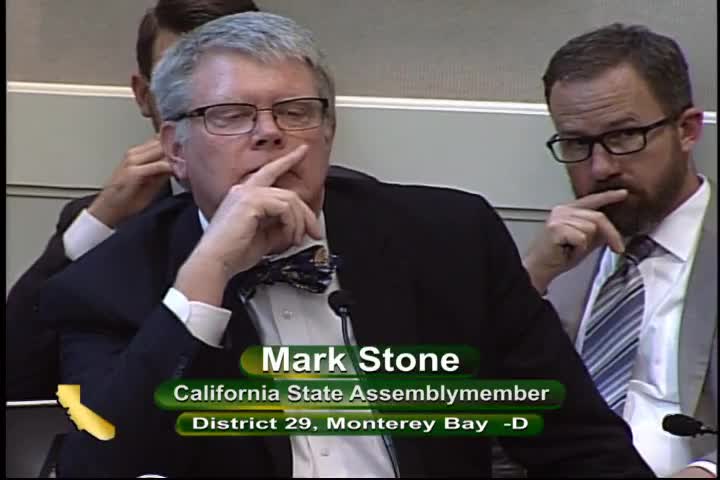 27MIN
Assembly Standing Committee on Natural Resources
Bill Author


