AB 2385: Public postsecondary education: textbooks.
- Session Year: 2017-2018
- House: Assembly
- Latest Version Date: 2018-08-27
The Donahoe Higher Education Act authorizes the activities of the 4 segments of the postsecondary education system in the state. These segments include the 3 public postsecondary segments: the University of California, which is administered by the Regents of the University of California, the California State University, which is administered by the Trustees of the California State University, and the California Community Colleges, which is administered by the Board of Governors of the California Community Colleges. Private and independent postsecondary educational institutions constitute the remaining segment.
Provisions of the Donahoe Higher Education Act apply to the University of California only to the extent that the regents act, by resolution, to make them applicable.
Existing law urges textbook publishers to take specified actions aimed at informing students about, and reducing the amounts that students pay for, college textbooks. Among those actions, existing law urges textbook publishers to provide to faculty and departments considering textbook orders, and to post on their Internet Web sites, among other things, an explanation of how the newest edition is different from previous editions.
This bill would instead urge textbook publishers to post in a prominent location on their Internet Web sites, among other things, a detailed description of how the newest edition differs from the previous edition, as specified.
The Donahoe Higher Education Act authorizes the activities of the 4 segments of the postsecondary education system in the state. These segments include the 3 public postsecondary segments: the University of California, which is administered by the Regents of the University of California, the California State University, which is administered by the Trustees of the California State University, and the California Community Colleges, which is administered by the Board of Governors of the California Community Colleges. Private and independent postsecondary educational institutions constitute the remaining segment.
Provisions of the Donahoe Higher Education Act apply to the University of California only to the extent that the regents act, by resolution, to make them applicable.
Existing law urges textbook publishers to take specified actions aimed at informing students about, and reducing the amounts that students pay for, college textbooks. Among those actions, existing law urges textbook publishers to provide to faculty and departments considering textbook orders, and to post on their Internet Web sites, among other things, an explanation of how the newest edition is different from previous editions.
This bill would instead urge textbook publishers to post in a prominent location on their Internet Web sites, among other things, a detailed description of how the newest edition differs from the previous edition, as specified. The bill would authorize the Assembly Higher Education Committee and the Senate Committee on Education to field complaints from students about textbooks for which the publishers Internet Web sites do not contain the described information and would authorize either committee, or both committees, to forward the most egregious cases to the Joint Legislative Audit Committee for investigation.
The Donahoe Higher Education Act authorizes the activities of the 4 segments of the postsecondary education system in the state. These segments include the 3 public postsecondary segments: the University of California, which is administered by the Regents of the University of California, the California State University, which is administered by the Trustees of the California State University, and the California Community Colleges, which is administered by the Board of Governors of the California Community Colleges. Private and independent postsecondary educational institutions constitute the remaining segment.
Provisions of the Donahoe Higher Education Act apply to the University of California only to the extent that the regents act, by resolution, to make them applicable.
Existing law urges textbook publishers to take specified actions aimed at informing students about, and reducing the amounts that students pay for textbooks, including providing to faculty and departments considering textbook orders a list of all the different products the publisher sells. for, college textbooks. Among those actions, existing law urges textbook publishers to provide to faculty and departments considering textbook orders, and to post on their Internet Web sites, among other things, an explanation of how the newest edition is different from previous editions.
This bill would make a nonsubstantive change to that provision. instead urge textbook publishers to post in a prominent location on their Internet Web sites, among other things, a detailed description of how the newest edition differs from the previous edition, as specified. The bill would authorize the Assembly Higher Education Committee and the Senate Committee on Education to field complaints from students about textbooks for which the publishers Internet Web sites do not contain the described information and would authorize either committee, or both committees, to forward the most egregious cases to the Joint Legislative Audit Committee for investigation.
The Donahoe Higher Education Act authorizes the activities of the 4 segments of the postsecondary education system in the state. These segments include the 3 public postsecondary segments: the University of California, which is administered by the Regents of the University of California, the California State University, which is administered by the Trustees of the California State University, and the California Community Colleges, which is administered by the Board of Governors of the California Community Colleges. Private and independent postsecondary educational institutions constitute the remaining segment.
Provisions of the Donahoe Higher Education Act apply to the University of California only to the extent that the regents act, by resolution, to make them applicable.
Existing law urges textbook publishers to take specified actions aimed at reducing the amounts that students pay for textbooks, including providing to faculty and departments considering textbook orders a list of all the different products the publisher sells.
This bill would make a nonsubstantive change to that provision.
(a)The Legislature finds and declares that the production and pricing of college textbooks deserves a high level of attention from educators and lawmakers because they impact the quality and affordability of higher education.
(b)Consistent with Section 133 of Title I of the federal Higher Education Act of 1965, as amended (20 U.S.C. Sec. 1015b), the state urges textbook publishers to do all of the following:
(1)Unbundle the instructional materials to give students the option of buying textbooks, CD-ROMs, and workbooks a la carte or without additional materials.
(2)Post in a prominent location on the publishers Internet Web sites, where it is readily available to college faculty, students, and departments, both of the following types of information:
(A)A list of all of the different products they sell, including both bundled and unbundled options, and the net price of each product.
(B)A detailed description of how the newest edition differs from the previous edition, including an initial summary of content changes such as reordered, renamed, added, or deleted chapters. The description shall detail changes in each chapter, including but not limited to, additions, subtractions, and revisions. The description shall apply to changes in text, illustrations, statistics, graphics, and any other component of the chapter. The state urges online textbook sellers to add to their Internet Web sites links to the publishers descriptions established pursuant to this subparagraph.
(3)Give preference to paper or online supplements to current editions rather than producing entirely new editions.
(4)Disclose to faculty the length of time they intend to produce the current edition so that professors know how long they can use the same book.
(5)Provide to faculty a free copy of each textbook selected by faculty for use in the classroom for placement on reserve in the campus library.
(c)The Trustees of the California State University and the Board of Governors of the California Community Colleges shall, and the Regents of the University of California are requested to, accomplish all of the following:
(1)Work with the academic senates of each respective segment to do all of the following:
(A)Encourage faculty to give consideration to the least costly practices in assigning textbooks, varying by discipline, such as adopting the least expensive edition when the educational content is equal, and using a selected textbook as long as it is educationally sound, as determined by the appropriate faculty.
(B)Encourage faculty to disclose both of the following to students:
(i)How new editions of textbooks are different from the previous editions.
(ii)The cost to students for textbooks selected for use in each course.
(C)Review procedures for faculty to inform college and university bookstores of textbook selections.
(D)Encourage faculty to work closely with publishers and college and university bookstores in creating bundles and packages if they are economically sound and deliver cost savings to students, and if bundles and packages have been requested by faculty. Students should have the option of purchasing textbooks and other instructional materials that are unbundled.
(2)Require college and university bookstores to work with the academic senates of each respective campus to do both of the following:
(A)Review issues relative to timelines and processes involved in ordering and stocking selected textbooks.
(B)Work closely with faculty or publishers, or both, to create bundles and packages that are economically sound and deliver cost savings to students.
(3)Encourage college and university bookstores to disclose retail textbook costs, on a per course basis, to faculty, and make this information otherwise publicly available.
(4)Encourage campuses to provide as many forums for students to have access to as many used books as possible, including, but not necessarily limited to, all of the following:
(A)Implementing campus-sponsored textbook rental programs.
(B)Encouraging students to consider on-campus and online book swaps so that students may buy and sell used books and set their own prices.
(C)Encouraging students to consider student book lending programs.
(D)Encouraging college and university bookstores that offer book buyback programs to actively promote and publicize these programs.
(E)Encouraging the establishment of textbook rental programs and any other appropriate approaches to providing high-quality materials that are affordable to students.
(d)It is the intent of the Legislature to encourage private colleges and universities to work with their respective academic senates and to encourage faculty to consider practices in selecting textbooks that will result in the lowest costs to students.
(a)The Legislature finds and declares that the production and pricing of college textbooks deserves a high level of attention from educators and lawmakers because they impact the quality and affordability of higher education.
(b)The Consistent with Section 133 of Title I of the federal Higher Education Act of 1965, as amended (20 U.S.C. Sec. 1015b), the state urges textbook publishers to do all of the following:
(1)Unbundle the instructional materials to give students the option of buying textbooks, CD-ROMs, and workbooks a la carte or without additional materials.
(2)Post in a prominent location on the publishers Internet Web sites, where it is readily available to college faculty, students, and departments, both of the following types of information:
(A)A list of all of the different products they sell, including both bundled and unbundled options, and the net price of each product.
(B)A detailed description of how the newest edition differs from the previous edition, including an initial summary of content changes such as reordered, renamed, added, or deleted chapters. The description shall detail changes in each chapter, including but not limited to, additions, subtractions, and revisions. The description shall apply to changes in text, illustrations, statistics, graphics, and any other component of the chapter. The state urges online textbook sellers to add to their Internet Web sites links to the publishers descriptions established pursuant to this subparagraph.
(3)Give preference to paper or online supplements to current editions rather than producing entirely new editions.
(4)Disclose to faculty the length of time they intend to produce the current edition so that professors know how long they can use the same book.
(5)Provide to faculty a free copy of each textbook selected by faculty for use in the classroom for placement on reserve in the campus library.
(c)The Trustees of the California State University and the Board of Governors of the California Community Colleges shall, and the Regents of the University of California are requested to, accomplish all of the following:
(1)Work with the academic senates of each respective segment to do all of the following:
(A)Encourage faculty to give consideration to the least costly practices in assigning textbooks, varying by discipline, such as adopting the least expensive edition when the educational content is equal, and using a selected textbook as long as it is educationally sound, as determined by the appropriate faculty.
(B)Encourage faculty to disclose both of the following to students:
(i)How new editions of textbooks are different from the previous editions.
(ii)The cost to students for textbooks selected for use in each course.
(C)Review procedures for faculty to inform college and university bookstores of textbook selections.
(D)Encourage faculty to work closely with publishers and college and university bookstores in creating bundles and packages if they are economically sound and deliver cost savings to students, and if bundles and packages have been requested by faculty. Students should have the option of purchasing textbooks and other instructional materials that are unbundled.
(2)Require college and university bookstores to work with the academic senates of each respective campus to do both of the following:
(A)Review issues relative to timelines and processes involved in ordering and stocking selected textbooks.
(B)Work closely with faculty or publishers, or both, to create bundles and packages that are economically sound and deliver cost savings to students.
(3)Encourage college and university bookstores to disclose retail textbook costs, on a per course basis, to faculty, and make this information otherwise publicly available.
(4)Encourage campuses to provide as many forums for students to have access to as many used books as possible, including, but not necessarily limited to, all of the following:
(A)Implementing campus-sponsored textbook rental programs.
(B)Encouraging students to consider on-campus and online book swaps so that students may buy and sell used books and set their own prices.
(C)Encouraging students to consider student book lending programs.
(D)Encouraging college and university bookstores that offer book buyback programs to actively promote and publicize these programs.
(E)Encouraging the establishment of textbook rental programs and any other appropriate approaches to providing high-quality materials that are affordable to students.
(d)It is the intent of the Legislature to encourage private colleges and universities to work with their respective academic senates and to encourage faculty to consider practices in selecting textbooks that will result in the lowest costs to students.
(a)The Legislature finds and declares that the production and pricing of college textbooks deserves a high level of attention from educators and lawmakers because they impact the quality and affordability of higher education.
(b)The state urges textbook publishers to do all of the following:
(1)Unbundle the instructional materials to give students the option of buying textbooks, CD-ROMs, and workbooks a la carte or without additional materials.
(2)Post in a prominent location on the publishers Internet Web sites, where it is readily available to college faculty, students, and departments, both of the following types of information:
(A)A list of all of the different products they sell, including both bundled and unbundled options, and the net price of each product.
(B)A detailed description of how the newest edition differs from the previous edition, including an initial summary of content changes such as reordered, renamed, added, or deleted chapters. The description shall detail changes in each chapter, including but not limited to, additions, subtractions, and revisions. The description shall apply to changes in text, illustrations, statistics, graphics, and any other component of the chapter. The state urges online textbook sellers to add to their Internet Web sites links to the publishers descriptions established pursuant to this subparagraph.
(3)Give preference to paper or online supplements to current editions rather than producing entirely new editions.
(4)Disclose to faculty the length of time they intend to produce the current edition so that professors know how long they can use the same book.
(5)Provide to faculty a free copy of each textbook selected by faculty for use in the classroom for placement on reserve in the campus library.
(c)The Trustees of the California State University and the Board of Governors of the California Community Colleges shall, and the Regents of the University of California are requested to, accomplish all of the following:
(1)Work with the academic senates of each respective segment to do all of the following:
(A)Encourage faculty to give consideration to the least costly practices in assigning textbooks, varying by discipline, such as adopting the least expensive edition when the educational content is equal, and using a selected textbook as long as it is educationally sound, as determined by the appropriate faculty.
(B)Encourage faculty to disclose both of the following to students:
(i)How new editions of textbooks are different from the previous editions.
(ii)The cost to students for textbooks selected for use in each course.
(C)Review procedures for faculty to inform college and university bookstores of textbook selections.
(D)Encourage faculty to work closely with publishers and college and university bookstores in creating bundles and packages if they are economically sound and deliver cost savings to students, and if bundles and packages have been requested by faculty. Students should have the option of purchasing textbooks and other instructional materials that are unbundled.
(2)Require college and university bookstores to work with the academic senates of each respective campus to do both of the following:
(A)Review issues relative to timelines and processes involved in ordering and stocking selected textbooks.
(B)Work closely with faculty or publishers, or both, to create bundles and packages that are economically sound and deliver cost savings to students.
(3)Encourage college and university bookstores to disclose retail textbook costs, on a per course basis, to faculty, and make this information otherwise publicly available.
(4)Encourage campuses to provide as many forums for students to have access to as many used books as possible, including, but not necessarily limited to, all of the following:
(A)Implementing campus-sponsored textbook rental programs.
(B)Encouraging students to consider on-campus and online book swaps so that students may buy and sell used books and set their own prices.
(C)Encouraging students to consider student book lending programs.
(D)Encouraging college and university bookstores that offer book buyback programs to actively promote and publicize these programs.
(E)Encouraging the establishment of textbook rental programs and any other appropriate approaches to providing high-quality materials that are affordable to students.
(d)It is the intent of the Legislature to encourage private colleges and universities to work with their respective academic senates and to encourage faculty to consider practices in selecting textbooks that will result in the lowest costs to students.
(e)The Assembly Higher Education Committee and the Senate Committee on Education may field complaints from students about textbooks for which the publishers Internet Web sites do not contain the information described in paragraph (2) of subdivision (b). Either committee, or both committees, may forward the most egregious cases to the Joint Legislative Audit Committee for investigation of those complaints.(a)The Legislature finds and declares that the production and pricing of college textbooks deserves a high level of attention from educators and lawmakers because they impact the quality and affordability of higher education.
(b)The state urges textbook publishers to do all of the following:
(1)Unbundle the instructional materials to give students the option of buying textbooks, CD-ROMs, and workbooks a la carte or without additional materials.
(2)Provide all of the following information to faculty and departments when they are considering what textbooks to order, and post both of the following types of information on publishers Internet Web sites where it is easily accessible:(2)Post in a prominent location on the publishers Internet Web sites, where it is readily available to college faculty, students, and departments, both of the following types of information:
(A)A list of all of the different products they sell, including both bundled and unbundled options, and the net price of each product.
(B)An explanation of how the newest edition is different from previous editions.(B)A detailed description of how the newest edition differs from the previous edition, including an initial summary of content changes such as reordered, renamed, added, or deleted chapters. The description shall detail changes in each chapter, including but not limited to, additions, subtractions, and revisions. The description shall apply to changes in text, illustrations, statistics, graphics, and any other component of the chapter. The state urges online textbook sellers to add to their Internet Web sites links to the publishers descriptions established pursuant to this subparagraph.
(3)Give preference to paper or online supplements to current editions rather than producing entirely new editions.
(4)Disclose to faculty the length of time they intend to produce the current edition so that professors know how long they can use the same book.
(5)Provide to faculty a free copy of each textbook selected by faculty for use in the classroom for placement on reserve in the campus library.
(c)The Trustees of the California State University and the Board of Governors of the California Community Colleges shall, and the Regents of the University of California are requested to, accomplish all of the following:
(1)Work with the academic senates of each respective segment to do all of the following:
(A)Encourage faculty to give consideration to the least costly practices in assigning textbooks, varying by discipline, such as adopting the least expensive edition when the educational content is equal, and using a selected textbook as long as it is educationally sound, as determined by the appropriate faculty.
(B)Encourage faculty to disclose both of the following to students:
(i)How new editions of textbooks are different from the previous editions.
(ii)The cost to students for textbooks selected for use in each course.
(C)Review procedures for faculty to inform college and university bookstores of textbook selections.
(D)Encourage faculty to work closely with publishers and college and university bookstores in creating bundles and packages if they are economically sound and deliver cost savings to students, and if bundles and packages have been requested by faculty. Students should have the option of purchasing textbooks and other instructional materials that are unbundled.
(2)Require college and university bookstores to work with the academic senates of each respective campus to do both of the following:
(A)Review issues relative to timelines and processes involved in ordering and stocking selected textbooks.
(B)Work closely with faculty or publishers, or both, to create bundles and packages that are economically sound and deliver cost savings to students.
(3)Encourage college and university bookstores to disclose retail textbook costs, on a per course basis, to faculty, and make this information otherwise publicly available.
(4)Encourage campuses to provide as many forums for students to have access to as many used books as possible, including, but not necessarily limited to, all of the following:
(A)Implementing campus-sponsored textbook rental programs.
(B)Encouraging students to consider on-campus and online book swaps so that students may buy and sell used books and set their own prices.
(C)Encouraging students to consider student book lending programs.
(D)Encouraging college and university bookstores that offer book buyback programs to actively promote and publicize these programs.
(E)Encouraging the establishment of textbook rental programs and any other appropriate approaches to providing high-quality materials that are affordable to students.
(d)It is the intent of the Legislature to encourage private colleges and universities to work with their respective academic senates and to encourage faculty to consider practices in selecting textbooks that will result in the lowest costs to students.
(e)The Assembly Higher Education Committee and the Senate Committee on Education may field complaints from students about textbooks for which the publishers Internet Web sites do not contain the information described in paragraph (2) of subdivision (b). Either committee, or both committees, may forward the most egregious cases to the Joint Legislative Audit Committee for investigation of those complaints.
(a)The Legislature finds and declares that the production and pricing of college textbooks deserves a high level of attention from educators and lawmakers because they impact the quality and affordability of higher education.
(b)The State of California state urges textbook publishers to do all of the following:
(1)Unbundle the instructional materials to give students the option of buying textbooks, CD-ROMs, and workbooks a la carte or without additional materials.
(2)Provide all of the following information to faculty and departments when they are considering what textbooks to order, and post both of the following types of information on publishers Internet Web sites where it is easily accessible:
(A)A list of all of the different products they sell, including both bundled and unbundled options, and the net price of each product.
(B)An explanation of how the newest edition is different from previous editions.
(3)Give preference to paper or online supplements to current editions rather than producing entirely new editions.
(4)Disclose to faculty the length of time they intend to produce the current edition so that professors know how long they can use the same book.
(5)Provide to faculty a free copy of each textbook selected by faculty for use in the classroom for placement on reserve in the campus library.
(c)The Trustees of the California State University and the Board of Governors of the California Community Colleges shall, and the Regents of the University of California are requested to, accomplish all of the following:
(1)Work with the academic senates of each respective segment to do all of the following:
(A)Encourage faculty to give consideration to the least costly practices in assigning textbooks, varying by discipline, such as adopting the least expensive edition when the educational content is equal, and using a selected textbook as long as it is educationally sound, as determined by the appropriate faculty.
(B)Encourage faculty to disclose both of the following to students:
(i)How new editions of textbooks are different from the previous editions.
(ii)The cost to students for textbooks selected for use in each course.
(C)Review procedures for faculty to inform college and university bookstores of textbook selections.
(D)Encourage faculty to work closely with publishers and college and university bookstores in creating bundles and packages if they are economically sound and deliver cost savings to students, and if bundles and packages have been requested by faculty. Students should have the option of purchasing textbooks and other instructional materials that are unbundled.
(2)Require college and university bookstores to work with the academic senates of each respective campus to do both of the following:
(A)Review issues relative to timelines and processes involved in ordering and stocking selected textbooks.
(B)Work closely with faculty or publishers, or both, to create bundles and packages that are economically sound and deliver cost savings to students.
(3)Encourage college and university bookstores to disclose retail textbook costs, on a per course basis, to faculty, and make this information otherwise publicly available.
(4)Encourage campuses to provide as many forums for students to have access to as many used books as possible, including, but not necessarily limited to, all of the following:
(A)Implementing campus-sponsored textbook rental programs.
(B)Encouraging students to consider on-campus and online book swaps so that students may buy and sell used books and set their own prices.
(C)Encouraging students to consider student book lending programs.
(D)Encouraging college and university bookstores that offer book buyback programs to actively promote and publicize these programs.
(E)Encouraging the establishment of textbook rental programs and any other appropriate approaches to providing high-quality materials that are affordable to students.
(d)It is the intent of the Legislature to encourage private colleges and universities to work with their respective academic senates and to encourage faculty to consider practices in selecting textbooks that will result in the lowest costs to students.
|
Date
|
Status
|
|---|---|
| Aug 27, 2018 | Chaptered by Secretary of State - Chapter 214, Statutes of 2018. |
| Aug 27, 2018 | Approved by the Governor. |
| Aug 14, 2018 | Enrolled and presented to the Governor at 4 p.m. |
| Aug 9, 2018 | Senate amendments concurred in. To Engrossing and Enrolling. |
| Jul 5, 2018 | In Assembly. Concurrence in Senate amendments pending. May be considered on or after August 3 pursuant to Assembly Rule 77. |
| Jul 5, 2018 | Read third time. Passed. Ordered to the Assembly. |
| Jun 20, 2018 | Read second time and amended. Ordered to third reading. |
| Jun 19, 2018 | From committee: Amend, and do pass as amended. (Ayes 7. Noes 0.) (June 13). |
| May 24, 2018 | Referred to Com. on ED. |
| May 10, 2018 | In Senate. Read first time. To Com. on RLS. for assignment. |
| May 10, 2018 | Read third time. Passed. Ordered to the Senate. |
| Apr 30, 2018 | Read second time. Ordered to third reading. |
| Apr 26, 2018 | Read second time and amended. Ordered returned to second reading. |
| Apr 25, 2018 | From committee: Amend, and do pass as amended. (Ayes 12. Noes 0.) (April 24). |
| Mar 19, 2018 | Re-referred to Com. on HIGHER ED. |
| Mar 15, 2018 | Referred to Com. on HIGHER ED. |
| Feb 15, 2018 | From printer. May be heard in committee March 17. |
| Feb 14, 2018 | Read first time. To print. |
|
Date
|
Description
|
Location
|
Votes
|
|
|---|---|---|---|---|
| Aug 9, 2018 | AB 2385 CUNNINGHAM Concurrence in Senate Amendments | Assembly Floor |
Passed |
|
| Jul 5, 2018 | Assembly 3rd Reading AB2385 Cunningham By Monning | Senate Floor |
Passed |
|
| Jun 13, 2018 | Do pass as amended | Senate Standing Committee on Education |
Passed |
|
| May 10, 2018 | AB 2385 CUNNINGHAM Assembly Third Reading | Assembly Floor |
Passed |
|
| Apr 24, 2018 | Do pass as amended. | Assembly Standing Committee on Higher Education |
Passed |
This list shows positions taken on this bill by organizations on the date displayed, which is linked to the original source.
Positions by individuals are not included.
CONCURRENCE IN SENATE AMENDMENTS
CSA1 Bill Id:AB 2385
Author:(Cunningham)
As Amended Ver:June 20, 2018
Majority vote
ASSEMBLY: | 71-0 | (May 10, 2018) | SENATE: | 35-0 | (July 5, 2018) |
Original Committee Reference: HIGHER ED.
SUMMARY: Urges textbook publishers to post in a prominent location on the publishers' Internet Web sites, where it is readily available to college faculty, students, and departments, a detailed description of how the newest textbook edition differs from the previous edition.
The Senate amendments clarify that urging textbook publishers to take specified actions is consistent with Part C of Title I of the Higher Education Act of 1965 as amended by Title 1, Section 112 of the Higher Education Opportunity Act of 2008 (20 United States Code Section (U.S.C.) 1015).
EXISTING LAW:
Federal law. Requires, when a publisher provides a faculty member or other person or adopting entity in charge of selecting course materials at an institution of higher education receiving Federal financial assistance with information regarding a college textbook or supplemental material, the publisher shall include, with any such information and in writing (which may include electronic communications), the following:
- The price at which the publisher would make the college textbook or supplemental material available to the bookstore on the campus of, or otherwise associated with, such institution of higher education and, if available, the price at which the publisher makes the college textbook or supplemental material available to the public;
- The copyright dates of the three previous editions of such college textbook, if any;
- A description of the substantial content revisions made between the current edition of the college textbook or supplemental material and the previous edition, if any; and,
- Whether the college textbook or supplemental material is available in any other format, including paperback and unbound; and, for each other format of the college textbook or supplemental material, the price at which the publisher would make the college textbook or supplemental material in the other format available to the bookstore on the campus of, or otherwise associated with, such institution of higher education and, if available, the price at which the publisher makes such other format of the college textbook or supplemental material available to the public (U.S.C. Title 20, Chapter 28, Subchapter I, Part C, Section 1015(b)).
State law.
- Requires the California State University (CSU) Trustees and the California Community Colleges (CCC) Board of Governors, and requests the University of California (UC) Regents to work with the academic senates to encourage faculty to give consideration to the least costly practices in assigning textbooks; to encourage faculty to disclose to students how new editions of textbooks are different from previous editions; and, the cost to students for textbooks selected, among other things. Current law also urges textbook publishers to provide information to faculty when they are considering what textbooks to order, and to post information on the publishers' Web sites, including "an explanation of how the newest edition is different from previous editions." Publishers are also asked to disclose to faculty the length of time they intend to produce the current edition and provide faculty free copies of each textbook selected (Education Code (EC) Section 66406).
- Establishes the College Textbook Transparency Act, which, among others:
- Defines "textbook" as a book that contains printed material and is intended for use as a source of study material for a class or group of students, a copy of which is expected to be available for the use of each of the students in that class or group, specifying that "textbook" does not include a novel;
- Defines "adopter" as any faculty member or academic department or other adopting entity at an institution of higher education responsible for considering and choosing course materials to be used in connection with the accredited courses taught at that institution;
- Encourages adopters to consider cost in the adoption of textbooks; and,
- Requires each campus bookstore at any public postsecondary educational institution to post in its store or on its Internet Web site a disclosure of its retail pricing policy on new and used textbooks (EC Section 66406.7).
- Requires, as of January 1, 2020, any person, firm or corporation that publishes textbooks offered for sale at the UC, CSU, CCC, or a private college or university, to make the textbooks available for sale in electronic format (EC Section 66410).
- Establishes the College Textbook Affordability Act, which, among others:
- Encourages faculty to accelerate the adoption of lower cost, high-quality, open educational resources in order to reduce costs for college students;
- Establishes the Open Educational Resources Adoption Incentive Program ; and,
- Defines "open educational resources" as high-quality teaching, learning, and research resources that reside in the public domain or have been released under an intellectual property license, such as a Creative Commons license, that permits their free use and repurposing by others, and may include other resources that are legally available and free of cost to students (EC Section 67421, et seq.).
FISCAL EFFECT: This measure has been keyed non-fiscal by the Legislative Counsel.
COMMENTS: Purpose of this measure. According to the author, many college students struggle to afford their textbooks. The author states, "In some classes, they [students] could save money by buying an older, less expensive edition of a book. But they often lack enough information about differences between editions to be able to judge whether buying an older edition would reduce their ability to do well in a class; in response, students sometimes buy expensive new editions when a less expensive older edition would have served just as well."
This measure urges textbook publishers to provide (via their Web sites) detailed comparisons from the newest edition to the previous edition.
Higher Education Opportunity Act (HEOA) Textbook Provision. The HEOA Textbook Provision, in part, referenced in the "Existing Law" section of this analysis, went into effect on July 1, 2010.
The purpose of the HEOA Textbook Provision is to ensure that students have access to affordable course materials by decreasing costs to students and enhancing transparency and disclosure with respect to the selection, purchase, sale, and use of course materials. Additionally, the HEOA Textbook Provision seeks to encourage all of the involved parties, including faculty, students, administrators, institutions of higher education, bookstores, distributors, and publishers, to work together to identify ways to decrease the cost of college textbooks and supplemental materials for students while supporting the academic freedom of faculty members to select high quality course materials for students.
United States Government Accountability Office (GAO) Report. The GAO issued a report, College Textbooks: Students have Greater Access to Textbook Information, in June 2013. The purpose of the report, in evaluating the effectiveness of the HEOA Textbook Provision, was two-fold: 1) address the efforts publishers have made to provide textbook information to faculty and make bundled materials available for sale individually, and how these practices have informed faculty selection of course materials; and 2) address the extent to which postsecondary schools have provided students and college bookstores access to textbook information, and what the resulting costs and benefits have been.
The GAO report found that, based on a review of a nationally representative sample of schools, an estimated 81% provided fall 2012 textbook information online, and stakeholders interviewed by GAO said implementation costs were manageable and students have benefited from increased transparency. Additionally, GAO found that there was general consensus among students and student organizations interviewed by GAO; students expressed they benefited from timely and dependable textbook information and student organizations opined that they had sufficient information and time to comparison-shop for their course materials before each academic term.
To note, the GAO report makes no recommendations.
Analysis Prepared by: Jeanice Warden / HIGHER ED. / (916) 319-3960 FN: 0003576
Office of Senate Floor Analyses (916) 651-1520 Fax: (916) 327-4478 | AB |
THIRD READING
Bill No: AB 2385
: in Senate
SENATE EDUCATION COMMITTEE: 7-0, 6/13/18
AYES: Allen, Wilk, Galgiani, Leyva, McGuire, Pan, Vidak
ASSEMBLY FLOOR: 71-0, 5/10/18 - See last page for vote
DIGEST:
This bill urges textbook publishers to post online specified information about college textbooks, and expands the types of information to be reported related to how the newest edition differs from previous editions.
ANALYSIS: Existing federal law requires, when a publisher provides a faculty member or other person or adopting entity in charge of selecting course materials at an institution of higher education receiving federal financial assistance with information regarding a college textbook or supplemental material, the publisher to include, with any such information and in writing (which may include electronic communications), all of the following:
- The price at which the publisher would make the college textbook or supplemental material available to the bookstore on the campus of, or otherwise associated with, such institution of higher education (net price) and, if available, the price at which the publisher makes the college textbook or supplemental material available to the public (list price).
- The copyright dates of the three previous editions of such college textbook or supplemental material, if any.
- A description of the substantial content revisions made between the current edition of the college textbook or supplemental material and the previous edition, if any.
- Whether the college textbook or supplemental material is available in any other format, including paperback and unbound, and for each other format of the college textbook or supplemental material, the price at which the publisher would make the college textbook or supplemental material in the other format available to the bookstore on the campus of such institution of higher education (net price) and, if available, the price at which the publisher makes such other format of the college textbook or supplemental material available to the public (list price). (United States Code, Title 20, Chapter 28, Subchapter I, Part C, Section 1015b).
Existing state law:
- Requires the California State University (CSU) Trustees and the California Community Colleges (CCC) Board of Governors, and requests the University of California (UC) Regents to:
- Work with the academic senates to encourage faculty to give consideration to the least costly practices in assigning textbooks; encourage faculty to disclose to students how new editions of textbooks are different from previous editions and the cost to students for textbooks selected; review procedures for faculty to inform bookstores of textbook selections; encourage faculty to work with publishers and bookstores in creating bundles and packages.
- Require college and university bookstores to work with the academic senates to review issues relative to timelines and processes involved in ordering and stocking selected textbooks; work closely with faculty or publishers to create bundles and packages.
- Encourage college and university bookstores to disclose retail textbook costs to faculty and make this information otherwise publicly available.
- Encourage campuses to provide as many forums for students to access as many used books as possible. (Education Code § 66406)
- Work with the academic senates to encourage faculty to give consideration to the least costly practices in assigning textbooks; encourage faculty to disclose to students how new editions of textbooks are different from previous editions and the cost to students for textbooks selected; review procedures for faculty to inform bookstores of textbook selections; encourage faculty to work with publishers and bookstores in creating bundles and packages.
- Urges textbook publishers to provide all of the following information to faculty and departments when they are considering what textbooks to order, and post information on the publishers’ Web sites:
- A list of all of the different products they sell, including both bundled and unbundled options, and the net price of each product.
- An explanation of how the newest edition is different from previous editions.
- Give preference to paper or online supplements.
- Disclose to faculty the length of time they intend to produce the current edition.
- Provide to faculty a free copy of each textbook selected by faculty for use in the classroom for placement on reserve in the campus library. (EC § 66406)
- Establishes the College Textbook Transparency Act, which among other things, requires textbook publishers to print specified information on the outer cover or within the standard textbook (including a summary of the substantive content differences between the new and prior editions); requires each campus bookstore at any public postsecondary education institution to post in its store or on its Web site a disclosure of its retail pricing policy on new and used textbooks; encourages textbook adopters to place their orders with sufficient lead time to enable the bookstore to confirm the availability of the requested materials. (EC § 66406.7)
- Requires a textbook publisher to provide a prospective purchaser with all of the following:
- A list of all the products offered for sale by the publisher.
- The wholesale or retail price of the product, and the estimated length of time the publisher intends to keep the product on the market.
- For each new edition, a list of the substantial content differences or changes between the new edition and the previous edition of the textbook. (EC § 66407)
- A list of all the products offered for sale by the publisher.
- Requires, by January 1, 2020, any person, firm, partnership, or corporation that publishes textbooks offered for sale at the UC, CSU, CCC, or a private college or university, to make the textbooks available for sale in electronic format. (EC § 66410)
- Establishes the College Textbook Affordability Act to reduce costs for college students by encouraging faculty to accelerate the adoption of lower cost, high-quality, open educational resources. Existing law establishes the Open Educational Resources Adoption Incentive Program to carry out this purpose. Existing law requires this initiative to use those identified, housed, produced, and otherwise found appropriate pursuant to the California Open Education Resources Council and the California Digital Open Source Library. (EC § 67421)
This bill:
- Urges, consistent with federal law, textbook publishers to post in a prominent location on the publishers’ Web site, where it is readily available to college faculty, students, and departments specific information related to textbooks (rather than providing that information only to faculty and departments).
- Expands the information to be reported, from an explanation of how the newest edition is different from previous editions, to a detailed description of how the newest edition differs from the previous edition, including an initial summary of content changes such as reordered, renamed, added, or deleted chapters.
- Requires the description to detail changes in each chapter, including but not limited to additions, subtractions, and revisions.
- Requires the description to apply to changes in text, illustrations, statistics, graphics, and any other component of the chapter.
- Urges online textbook sellers to add to their Web sites links to the publishers’ descriptions.
- Requires the description to detail changes in each chapter, including but not limited to additions, subtractions, and revisions.
Comments
Differs from federal law. The federal Higher Education Opportunity Act and existing state law require publishers to provide specific information to faculty or person selecting course materials. This bill requires publishers to post this information on the publishers’ Web site where it is readily available to college faculty, students, and departments.
In addition, the federal Higher Education Opportunity Act and the state College Textbook Transparency Act require publishers to provide to faculty or person selecting course materials a description of the substantial or substantive content revisions made between the current edition of the college textbook or supplemental material and the previous edition, if any. This bill requires publishers to provide a detailed description of how the newest edition differs from the previous edition, including an initial summary of content changes and detail changes in each chapter; and apply to changes in text, illustrations, statistics, and graphics. Currently, it’s up to the publishers to determine what is substantial or substantive; the explanations can be vague, such as “improved discussion of cash basis vs. accrual basis accounting,” “clarified discussion of what constitutes of a discontinued operation,” and “revised discussion of goods in transit.”
FISCAL EFFECT: Appropriation: Fiscal Com.: Local:
California Association of College Stores
OPPOSITION: (Verified 6/19/18)
Association of American Publishers
ASSEMBLY FLOOR: 71-0, 5/10/18
AYES: Acosta, Aguiar-Curry, Arambula, Baker, Berman, Bigelow, Bloom, Bonta, Brough, Burke, Caballero, Calderon, Carrillo, Cervantes, Chau, Chávez, Chen, Chiu, Choi, Chu, Cooper, Cunningham, Dahle, Daly, Eggman, Flora, Fong, Gallagher, Eduardo Garcia, Gipson, Gloria, Gonzalez Fletcher, Gray, Grayson, Harper, Holden, Jones-Sawyer, Kalra, Kamlager-Dove, Kiley, Lackey, Levine, Limón, Low, Maienschein, Mathis, Mayes, McCarty, Medina, Melendez, Mullin, Muratsuchi, Nazarian, O'Donnell, Patterson, Quirk, Quirk-Silva, Reyes, Rodriguez, Rubio, Salas, Santiago, Steinorth, Mark Stone, Thurmond, Ting, Voepel, Waldron, Weber, Wood, Rendon
NO VOTE RECORDED: Travis Allen, Cooley, Frazier, Friedman, Cristina Garcia, Irwin, Obernolte
6/20/18 15:12:20
**** END ****
SENATE COMMITTEE ON EDUCATION
Senator Benjamin Allen, Chair
2017 - 2018 Regular
Bill No: AB 2385 Hearing Date: June 13, 2018
Author: | |||
Version: | April 26, 2018 | ||
Urgency: | No | Fiscal: | No |
Consultant: | Lynn Lorber | ||
Subject: Public postsecondary education: textbooks.
SUMMARY
This bill urges textbook publishers to post online specified information about college textbooks, and expands the types of information to be reported related to how the newest edition differs from previous editions.
BACKGROUND
Existing federal law requires, when a publisher provides a faculty member or other person or adopting entity in charge of selecting course materials at an institution of higher education receiving federal financial assistance with information regarding a college textbook or supplemental material, the publisher to include, with any such information and in writing (which may include electronic communications), all of the following:
- The price at which the publisher would make the college textbook or supplemental material available to the bookstore on the campus of, or otherwise associated with, such institution of higher education (net price) and, if available, the price at which the publisher makes the college textbook or supplemental material available to the public (list price).
- The copyright dates of the three previous editions of such college textbook or supplemental material, if any.
- A description of the substantial content revisions made between the current edition of the college textbook or supplemental material and the previous edition, if any.
- Whether the college textbook or supplemental material is available in any other format, including paperback and unbound, and for each other format of the college textbook or supplemental material, the price at which the publisher would make the college textbook or supplemental material in the other format available to the bookstore on the campus of such institution of higher education (net price) and, if available, the price at which the publisher makes such other format of the college textbook or supplemental material available to the public (list price).
(United States Code, Title 20, Chapter 28, Subchapter I, Part C, Section 1015b).
Existing state law:
- Requires the California State University (CSU) Trustees and the California Community Colleges (CCC) Board of Governors, and requests the University of California (UC) Regents to:
- Work with the academic senates to encourage faculty to give consideration to the least costly practices in assigning textbooks; encourage faculty to disclose to students how new editions of textbooks are different from previous editions and the cost to students for textbooks selected; review procedures for faculty to inform bookstores of textbook selections; encourage faculty to work with publishers and bookstores in creating bundles and packages.
- Require college and university bookstores to work with the academic senates to review issues relative to timelines and processes involved in ordering and stocking selected textbooks; work closely with faculty or publishers to create bundles and packages.
- Encourage college and university bookstores to disclose retail textbook costs to faculty and make this information otherwise publicly available.
- Encourage campuses to provide as many forums for students to access as many used books as possible. (Education Code § 66406)
- Work with the academic senates to encourage faculty to give consideration to the least costly practices in assigning textbooks; encourage faculty to disclose to students how new editions of textbooks are different from previous editions and the cost to students for textbooks selected; review procedures for faculty to inform bookstores of textbook selections; encourage faculty to work with publishers and bookstores in creating bundles and packages.
- Urges textbook publishers to:
- Provide all of the following information to faculty and departments when they are considering what textbooks to order, and post information on the publishers’ websites:
- A list of all of the different products they sell, including both bundled and unbundled options, and the net price of each product.
- An explanation of how the newest edition is different from previous editions.
- Give preference to paper or online supplements.
- Disclose to faculty the length of time they intend to produce the current edition.
- Provide to faculty a free copy of each textbook selected by faculty for use in the classroom for placement on reserve in the campus library. (EC § 66406)
- A list of all of the different products they sell, including both bundled and unbundled options, and the net price of each product.
- Provide all of the following information to faculty and departments when they are considering what textbooks to order, and post information on the publishers’ websites:
- Establishes the College Textbook Transparency Act, which among other things, requires textbook publishers to print specified information on the outer cover or within the standard textbook (including a summary of the substantive content differences between the new and prior editions); requires each campus bookstore at any public postsecondary education institution to post in its store or on its website a disclosure of its retail pricing policy on new and used textbooks; encourages textbook adopters to place their orders with sufficient lead time to enable the bookstore to confirm the availability of the requested materials.
(EC § 66406.7) - Requires a textbook publisher to provide a prospective purchaser with all of the following:
- A list of all the products offered for sale by the publisher.
- The wholesale or retail price of the product, and the estimated length of time the publisher intends to keep the product on the market.
- For each new edition, a list of the substantial content differences or changes between the new edition and the previous edition of the textbook. (EC § 66407)
- A list of all the products offered for sale by the publisher.
- Requires, by January 1, 2020, any person, firm, partnership, or corporation that publishes textbooks offered for sale at the University of California, California State University, California Community College, or a private college or university, to make the textbooks available for sale in electronic format. (EC § 66410)
- Establishes the College Textbook Affordability Act to reduce costs for college students by encouraging faculty to accelerate the adoption of lower cost, high-quality, open educational resources. Existing law establishes the Open Educational Resources Adoption Incentive Program to carry out this purpose. Existing law requires this initiative to use those identified, housed, produced, and otherwise found appropriate pursuant to the California Open Education Resources Council and the California Digital Open Source Library. (EC § 67421)
ANALYSIS
This bill:
- Urges textbook publishers to post in a prominent location on the publishers’ website, where it is readily available to college faculty, students, and departments specific information related to textbooks (rather than providing that information only to faculty and departments).
- Expands the information to be reported, from an explanation of how the newest edition is different from previous editions, to a detailed description of how the newest edition differs from the previous edition, including an initial summary of content changes such as reordered, renamed, added, or deleted chapters.
- Requires the description to detail changes in each chapter, including but not limited to additions, subtractions, and revisions.
- Requires the description to apply to changes in text, illustrations, statistics, graphics, and any other component of the chapter.
- Urges online textbook sellers to add to their websites links to the publishers’ descriptions.
- Requires the description to detail changes in each chapter, including but not limited to additions, subtractions, and revisions.
STAFF COMMENTS
- Need for the bill. According to the author, “Many college students struggle to afford course materials. In some classes, they could save money by buying an older, less expensive edition of a book. But they often lack enough information about differences between editions to be able to judge whether buying an older edition would reduce their ability to do well in a class; in response, students sometimes buy expensive new editions when a less expensive older edition would have serviced just as well. In some admirable instances, publishers already provide enough detailed information for students to make informed decisions about whether to buy an old edition; but it is easy to find other instances in which not enough information is provided.”
- Differs from federal law. The federal Higher Education Opportunity Act and existing state law require publishers to provide specific information to faculty or person selecting course materials. This bill requires publishers to post this information on the publishers’ website where it is readily available to college faculty, students, and departments.
In addition, the federal Higher Education Opportunity Act and the state College Textbook Transparency Act require publishers to provide to faculty or person selecting course materials a description of the substantial or substantive content revisions made between the current edition of the college textbook or supplemental material and the previous edition, if any. This bill requires publishers to provide a detailed description of how the newest edition differs from the previous edition, including an initial summary of content changes and detail changes in each chapter; and apply to changes in text, illustrations, statistics, and graphics. Currently, it’s up to the publishers to determine what is substantial or substantive; the explanations can be vague, such as “improved discussion of cash basis vs. accrual basis accounting,” “clarified discussion of what constitutes of a discontinued operation,” and “revised discussion of goods in transit.”
Is it reasonable to require publishers to provide such detailed information? Could this requirement cause publishers to increase the cost of their products? - Author’s amendment. The author wishes to amend this bill to clarify that urging textbook publishers to take specified actions is consistent with Part C of Title I of the Higher Education Act of 1965 as amended by Title 1, section 112 of the Higher Education Opportunity Act of 2008 (20 U.S.C. 1015).
(b) Consistent with Part C of Title I of the Higher Education Act of 1965 as amended by Title 1, section 112 of the Higher Education Opportunity Act of 2008 (20 U.S.C. 1015),Thethe state urges textbook publishers to do all of the following: - Related legislation. SB 727 (Galgiani) authorizes a public postsecondary educational institution to adopt policies that allow for the use of innovative pricing techniques and payment options for textbooks and other instructional materials. SB 727 is pending on the Senate Floor.
AB 2075 (Quirk-Silva) prohibited higher education institutions to require its students to purchase bundled textbooks, and required faculty to inform their students of the most economically viable options for purchasing textbooks. AB 2075 was never heard.
AB 960 (Brough) provided a partial Sales and Use Tax exemption for the purchases of textbooks purchased by students of an institution of higher education from a retailer whose primary purpose is to provide textbooks to those students. AB 960 was held in the Assembly Appropriations Committee.
SUPPORT
California Association of College Stores
OPPOSITION
Association of American Publishers
-- END --
ASSEMBLY THIRD READING
ATR Bill Id:AB 2385
Author:(Cunningham)
As Amended Ver:April 26, 2018
Majority vote
Committee | Votes | Ayes | Noes |
Higher Education | 12-0 | Medina, Baker, Arambula, Bloom, Chávez, Kiley, Levine, Low, Patterson, Quirk-Silva, Santiago, Weber |
SUMMARY: Urges textbook publishers to post in a prominent location on the publishers' Internet Web sites, where it is readily available to college faculty, students, and departments, a detailed description of how the newest textbook edition differs from the previous edition.
EXISTING LAW:
Federal law. Requires, when a publisher provides a faculty member or other person or adopting entity in charge of selecting course materials at an institution of higher education receiving Federal financial assistance with information regarding a college textbook or supplemental material, the publisher shall include, with any such information and in writing (which may include electronic communications), the following:
- The price at which the publisher would make the college textbook or supplemental material available to the bookstore on the campus of, or otherwise associated with, such institution of higher education and, if available, the price at which the publisher makes the college textbook or supplemental material available to the public;
- The copyright dates of the three previous editions of such college textbook, if any;
- A description of the substantial content revisions made between the current edition of the college textbook or supplemental material and the previous edition, if any; and,
- Whether the college textbook or supplemental material is available in any other format, including paperback and unbound; and, for each other format of the college textbook or supplemental material, the price at which the publisher would make the college textbook or supplemental material in the other format available to the bookstore on the campus of, or otherwise associated with, such institution of higher education and, if available, the price at which the publisher makes such other format of the college textbook or supplemental material available to the public (Title 20 United States Code Section (U.S.C.) Chapter 28, Subchapter I, Part C, Section 1015b).
State law.
- Requires the California State University (CSU) Trustees and the California Community Colleges (CCC) Board of Governors, and requests the University of California (UC) Regents to work with the academic senates to encourage faculty to give consideration to the least costly practices in assigning textbooks; to encourage faculty to disclose to students how new editions of textbooks are different from previous editions; and, the cost to students for textbooks selected, among other things. Current law also urges textbook publishers to provide information to faculty when they are considering what textbooks to order, and to post information on the publishers' Web sites, including "an explanation of how the newest edition is different from previous editions." Publishers are also asked to disclose to faculty the length of time they intend to produce the current edition and provide faculty free copies of each textbook selected (Education Code (EC) Section 66406).
- Establishes the College Textbook Transparency Act, which, among others:
- Defines "textbook" as a book that contains printed material and is intended for use as a source of study material for a class or group of students, a copy of which is expected to be available for the use of each of the students in that class or group, specifying that "textbook" does not include a novel;
- Defines "adopter" as any faculty member or academic department or other adopting entity at an institution of higher education responsible for considering and choosing course materials to be used in connection with the accredited courses taught at that institution;
- Encourages adopters to consider cost in the adoption of textbooks; and,
- Requires each campus bookstore at any public postsecondary educational institution to post in its store or on its Internet Web site a disclosure of its retail pricing policy on new and used textbooks (EC Section 66406.7).
- Requires, as of January 1, 2020, any person, firm or corporation that publishes textbooks offered for sale at the UC, CSU, CCC, or a private college or university, to make the textbooks available for sale in electronic format (EC Section 66410).
- Establishes the College Textbook Affordability Act, which, among others:
- Encourages faculty to accelerate the adoption of lower cost, high-quality, open educational resources in order to reduce costs for college students;
- Establishes the Open Educational Resources Adoption Incentive Program ; and,
- Defines "open educational resources" as high-quality teaching, learning, and research resources that reside in the public domain or have been released under an intellectual property license, such as a Creative Commons license, that permits their free use and repurposing by others, and may include other resources that are legally available and free of cost to students (EC Section 67421, et seq.).
FISCAL EFFECT: This measure has been keyed non-fiscal by the Legislative Counsel.
COMMENTS: Purpose of this measure. According to the author, many college students struggle to afford their textbooks. The author states, "In some classes, they [students] could save money by buying an older, less expensive edition of a book. But they often lack enough information about differences between editions to be able to judge whether buying an older edition would reduce their ability to do well in a class; in response, students sometimes buy expensive new editions when a less expensive older edition would have served just as well."
This measure urges textbook publishers to provide (via their Web sites) detailed comparisons from the newest edition to the previous edition.
Higher Education Opportunity Act (HEOA) Textbook Provision. The HEOA Textbook Provision, in part, referenced in the "Existing Law" section of this analysis, went into effect on July 1, 2010.
The purpose of the HEOA Textbook Provision is to ensure that students have access to affordable course materials by decreasing costs to students and enhancing transparency and disclosure with respect to the selection, purchase, sale, and use of course materials. Additionally, the HEOA Textbook Provision seeks to encourage all of the involved parties, including faculty, students, administrators, institutions of higher education, bookstores, distributors, and publishers, to work together to identify ways to decrease the cost of college textbooks and supplemental materials for students while supporting the academic freedom of faculty members to select high quality course materials for students.
United States Government Accountability Office (GAO) Report. The GAO issued a report, College Textbooks: Students have Greater Access to Textbook Information, in June 2013. The purpose of the report, in evaluating the effectiveness of the HEOA Textbook Provision, was two-fold: (1) address the efforts publishers have made to provide textbook information to faculty and make bundled materials available for sale individually, and how these practices have informed faculty selection of course materials; and (2) address the extent to which postsecondary schools have provided students and college bookstores access to textbook information, and what the resulting costs and benefits have been.
The GAO report found that, based on a review of a nationally representative sample of schools, an estimated 81% provided fall 2012 textbook information online, and stakeholders interviewed by GAO said implementation costs were manageable and students have benefited from increased transparency. Additionally, GAO found that there was general consensus among students and student organizations interviewed by GAO; students expressed they benefited from timely and dependable textbook information and student organizations opined that they had sufficient information and time to comparison-shop for their course materials before each academic term.
To note, the GAO report makes no recommendations.
Analysis Prepared by: Jeanice Warden / HIGHER ED. / (916) 319-3960 FN: 0002754
Date of Hearing: April 24, 2018
ASSEMBLY COMMITTEE ON HIGHER EDUCATION
Jose Medina, Chair
ABPCA Bill Id:AB 2385 (
Author:Cunningham) – As Amended Ver:March 15, 2018
SUBJECT: Public postsecondary education: textbooks.
SUMMARY: Urges textbook publishers to post in a prominent location on the publishers’ Internet Web sites, where it is readily available to college faculty, students, and departments, a detailed description of how the newest textbook edition differs from the previous edition, and authorizes the Assembly Committee on Higher Education (AHED) and the Senate Committee on Education to field complaints from students about textbooks for which publishers did not provide detailed descriptions of the differences from one edition to the next. Specifically, this bill:
- Urges textbook publishers to post in a prominent location on the publishers’ Internet Web sites, where it is readily available to college faculty, students, and departments, the following types of information:
- A detailed description of how the newest edition differs from the previous edition, including an initial summary of content changes such as reordered, renamed, added, or deleted chapters.
- Specifies that the description shall detail changes in each chapter, including but not limited to, additions, subtractions, and revisions.
- The description shall apply to changes in text, illustrations, statistics, graphics, and any other component of the chapter.
- Urges online textbook sellers to add to their Internet Web sites links to the publishers’ descriptions as outlined in (1)(a-c) above.
- Authorizes the AHED and the Senate Committee on Education to field complaints from students about textbooks for which the publishers’ Internet Web sites do not contain the information as described in (1)(a-c) above.
- Specifies that either committee, or both committees, may forward the most egregious cases to the Joint Legislative Audit Committee (JLAC) for investigation of those complaints.
EXISTING LAW:
Federal law. Requires, when a publisher provides a faculty member or other person or adopting entity in charge of selecting course materials at an institution of higher education receiving Federal financial assistance with information regarding a college textbook or supplemental material, the publisher shall include, with any such information and in writing (which may include electronic communications), the following:
- The price at which the publisher would make the college textbook or supplemental material available to the bookstore on the campus of, or otherwise associated with, such institution of higher education and, if available, the price at which the publisher makes the college textbook or supplemental material available to the public;
- The copyright dates of the three previous editions of such college textbook, if any;
- A description of the substantial content revisions made between the current edition of the college textbook or supplemental material and the previous edition, if any; and,
- Whether the college textbook or supplemental material is available in any other format, including paperback and unbound; and, for each other format of the college textbook or supplemental material, the price at which the publisher would make the college textbook or supplemental material in the other format available to the bookstore on the campus of, or otherwise associated with, such institution of higher education and, if available, the price at which the publisher makes such other format of the college textbook or supplemental material available to the public (U. S. Code (U.S.C.) Title 20, Chapter 28, Subchapter I, Part C, Section 1015b).
State law.
- Requires the California State University (CSU) Trustees and the California Community Colleges (CCC) Board of Governors, and requests the University of California (UC) Regents to work with the academic senates to encourage faculty to give consideration to the least costly practices in assigning textbooks; to encourage faculty to disclose to students how new editions of textbooks are different from previous editions; and, the cost to students for textbooks selected, among other things. Current law also urges textbook publishers to provide information to faculty when they are considering what textbooks to order, and to post information on the publishers’ Web sites, including “an explanation of how the newest edition is different from previous editions.” Publishers are also asked to disclose to faculty the length of time they intend to produce the current edition and provide faculty free copies of each textbook selected (Education Code (EC) Section 66406).
- Establishes the College Textbook Transparency Act, which, among others:
- Defines "textbook" as a book that contains printed material and is intended for use as a source of study material for a class or group of students, a copy of which is expected to be available for the use of each of the students in that class or group, specifying that "textbook" does not include a novel;
- Defines "adopter" as any faculty member or academic department or other adopting entity at an institution of higher education responsible for considering and choosing course materials to be used in connection with the accredited courses taught at that institution;
- Encourages adopters to consider cost in the adoption of textbooks; and,
- Requires each campus bookstore at any public postsecondary educational institution to post in its store or on its Internet Web site a disclosure of its retail pricing policy on new and used textbooks (EC Section 66406.7).
- Requires, as of January 1, 2020, any person, firm or corporation that publishes textbooks offered for sale at the UC, CSU, CCC, or a private college or university, to make the textbooks available for sale in electronic format (EC Section 66410).
- Establishes the College Textbook Affordability Act, which, among others:
- Encourages faculty to accelerate the adoption of lower cost, high-quality, open educational resources in order to reduce costs for college students;
- Establishes the Open Educational Resources Adoption Incentive Program ; and,
- Defines “open educational resources” as high-quality teaching, learning, and research resources that reside in the public domain or have been released under an intellectual property license, such as a Creative Commons license, that permits their free use and repurposing by others, and may include other resources that are legally available and free of cost to students (EC Section 67421, et seq.).
FISCAL EFFECT: This measure has been keyed non-fiscal by the Legislative Counsel.
COMMENTS: Purpose of this measure. According to the author, many college students struggle to afford their textbooks. The author states, "In some classes, they [students] could save money by buying an older, less expensive edition of a book. But they often lack enough information about differences between editions to be able to judge whether buying an older edition would reduce their ability to do well in a class; in response, students sometimes buy expensive new editions when a less expensive older edition would have served just as well."
This measure urges textbook publishers to provide (via their Web sites) detailed comparisons from the newest edition to the previous edition.
Higher Education Opportunity Act (HEOA) Textbook Provision. The HEOA Textbook Provision, in part, referenced in the "Existing Law" section of this analysis, went into effect on July 1, 2010.
The purpose of the HEOA Textbook Provision is to ensure that students have access to affordable course materials by decreasing costs to students and enhancing transparency and disclosure with respect to the selection, purchase, sale, and use of course materials. Additionally, the HEOA Textbook Provision seeks to encourage all of the involved parties, including faculty, students, administrators, institutions of higher education, bookstores, distributors, and publishers, to work together to identify ways to decrease the cost of college textbooks and supplemental materials for students while supporting the academic freedom of faculty members to select high quality course materials for students.
United States Government Accountability Office (GAO) Report. The GAO issued a report, College Textbooks: Students have Greater Access to Textbook Information, in June 2013. The purpose of the report, in evaluating the effectiveness of the HEOA Textbook Provision, was two-fold: (1) address the efforts publishers have made to provide textbook information to faculty and make bundled materials available for sale individually, and how these practices have informed faculty selection of course materials; and (2) address the extent to which postsecondary schools have provided students and college bookstores access to textbook information, and what the resulting costs and benefits have been.
The GAO report found that, based on a review of a nationally representative sample of schools, an estimated 81 percent provided fall 2012 textbook information online, and stakeholders interviewed by GAO said implementation costs were manageable and students have benefited from increased transparency. Additionally, GAO found that there was general consensus among students and student organizations interviewed by GAO; students expressed they benefited from timely and dependable textbook information and student organizations opined that they had sufficient information and time to comparison-shop for their course materials before each academic term.
To note, the GAO report makes no recommendations.
Committee comments and amendments. As currently drafted, this measure urges publishers to provide what appears to be even more information on their Web sites than what is currently required under federal law.
Moving forward, the author may wish to work with the Legislative Counsel Bureau and effected stakeholders in order to ensure this measure can be implemented.
As currently drafted, this measure authorizes the AHED and the Senate Committee on Education to field complaints from students about textbooks for which the publishers’ Web sites do not contain specified information; and specifies that either committee, or both committees, may forward the most egregious cases to JLAC for investigation of those complaints.
The policy committees of the Legislature do not serve in the capacity of "fielding complaints", nor does JLAC conduct investigations. Even if the committees were responsible for fielding complaints, it is presently unclear how the complaint process would be structured.
Committee Staff recommends, and the author has agreed to, the following amendment, striking this portion of the bill:
66406. (e) The Assembly Higher Education Committee and the Senate Committee on Education may field complaints from students about textbooks for which the publishers’ Internet Web sites do not contain the information described in paragraph (2) of subdivision (b). Either committee, or both committees, may forward the most egregious cases to the Joint Legislative Audit Committee for investigation of those complaints.
REGISTERED SUPPORT / OPPOSITION:
Support
None on file.
Opposition
Association of AmericanPublishers
Analysis Prepared by: Jeanice Warden / HIGHER ED. / (916) 319-3960
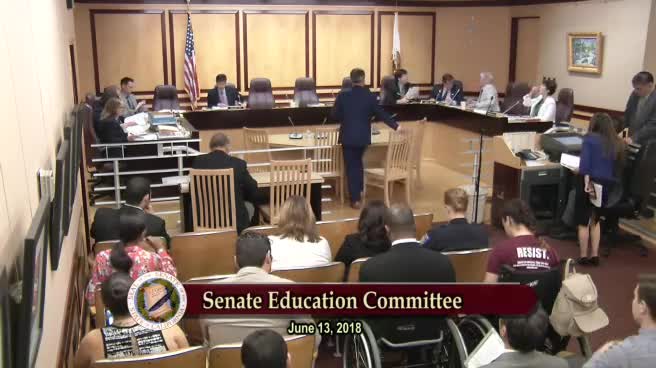
Bill Author

Bill Co-Author(s):