AB 2390: Pupil safety: identification cards: suicide prevention telephone numbers.
- Session Year: 2017-2018
- House: Assembly
- Latest Version Date: 2018-05-08
Existing law, the California Suicide Prevention Act of 2000, authorizes the State Department of Health Care Services to establish and implement a suicide prevention, education, and gatekeeper program to reduce the severity, duration, and incidence of suicidal behaviors. The act authorizes the State Department of Health Care Services to contract with an outside agency to establish and implement a targeted public awareness and education campaign on suicide prevention and treatment, and requires that target populations include junior high and high school students.
Existing law requires the governing board or body of a county office of education, school district, state special school, or charter school that serves pupils in grades 7 to 12, inclusive, to, before the beginning of the 201718 school year, adopt a policy on pupil suicide prevention, as specified, that specifically addresses the needs of high-risk groups. Existing law requires the Instructional Quality Commission to consider developing, and recommending for adoption by the State Board of Education, a distinct category on mental health instruction to educate pupils about all aspects of mental health, including, among other things, depression and suicidal thoughts and behaviors, as specified. Existing law requires the Superintendent of Public Instruction to send a notice to each middle school, junior high school, and high school that encourages each school to provide suicide prevention training to each school counselor, provides information on the availability of certain suicide prevention training curriculum, informs schools about certain suicide prevention training, and describes how a school might retain those services.
This bill would, commencing July 1, 2019, require a public school, including a charter school, that serves pupils in any of grades 7 to 12, inclusive, that issues pupil identification cards to include on the back of the pupil identification cards the telephone number for the National Suicide Prevention Lifeline, the Crisis Text Line, and the schools campus police or security telephone number or, if the school does not have a campus police or security telephone number, the local nonemergency telephone number.
Existing law, the California Suicide Prevention Act of 2000, authorizes the State Department of Health Care Services to establish and implement a suicide prevention, education, and gatekeeper program to reduce the severity, duration, and incidence of suicidal behaviors. The act authorizes the State Department of Health Care Services to contract with an outside agency to establish and implement a targeted public awareness and education campaign on suicide prevention and treatment, and requires that target populations include junior high and high school students.
Existing law requires the governing board or body of a county office of education, school district, state special school, or charter school that serves pupils in grades 7 to 12, inclusive, to, before the beginning of the 201718 school year, adopt a policy on pupil suicide prevention, as specified, that specifically addresses the needs of high-risk groups. Existing law requires the Instructional Quality Commission to consider developing, and recommending for adoption by the State Board of Education, a distinct category on mental health instruction to educate pupils about all aspects of mental health, including, among other things, depression and suicidal thoughts and behaviors, as specified. Existing law requires the Superintendent of Public Instruction to send a notice to each middle school, junior high school, and high school that encourages each school to provide suicide prevention training to each school counselor, provides information on the availability of certain suicide prevention training curriculum, informs schools about certain suicide prevention training, and describes how a school might retain those services.
This bill would would, commencing July 1, 2019, require a public high school school, including a charter school, that serves pupils in any of grades 7 to 12, inclusive, that issues pupil identification cards to include on the back of the pupil identification cards the telephone number for the National Suicide Prevention Lifeline, the Crisis Text Line, and the schools campus police or security telephone number or, if the school does not have a campus police or security telephone number, the local nonemergency telephone number.
Existing law, the California Suicide Prevention Act of 2000, authorizes the State Department of Health Care Services to establish and implement a suicide prevention, education, and gatekeeper program to reduce the severity, duration, and incidence of suicidal behaviors. The act authorizes the State Department of Health Care Services to contract with an outside agency to establish and implement a targeted public awareness and education campaign on suicide prevention and treatment, and requires that target populations include junior high and high school students.
Existing law requires the governing board or body of a county office of education, school district, state special school, or charter school that serves pupils in grades 7 to 12, inclusive, to, before the beginning of the 201718 school year, adopt a policy on pupil suicide prevention, as specified, that specifically addresses the needs of high-risk groups. Existing law requires the Instructional Quality Commission to consider developing, and recommending for adoption by the State Board of Education, a distinct category on mental health instruction to educate pupils about all aspects of mental health, including, among other things, depression and suicidal thoughts and behaviors, as specified. Existing law requires the Superintendent of Public Instruction to send a notice to each middle school, junior high school, and high school that encourages each school to provide suicide prevention training to each school counselor, provides information on the availability of certain suicide prevention training curriculum, informs schools about certain suicide prevention training, and describes how a school might retain those services.
This bill would require a public high school that issues pupil identification cards to include on the back of the pupil identification cards the telephone number for the National Suicide Prevention Lifeline, the Crisis Text Line, and the schools campus police or security telephone number or, if the school does not have a campus police or security telephone number, the local nonemergency telephone number.
(a)Commencing July 1, 2019, a public school, including a charter school, that serves pupils in any of grades 7 to 12, inclusive, that issues pupil identification cards shall include on the back of the pupil identification cards the telephone number for the National Suicide Prevention Lifeline, the Crisis Text Line, and the schools campus police or security telephone number or, if the school does not have a campus police or security telephone number, the local nonemergency telephone number.
(b)Notwithstanding subdivision (a), if, as of January 1, 2019, a school subject to the requirements of subdivision (a) has a supply of unissued pupil identification cards that do not comply with the requirement in subdivision (a), the school shall issue those pupil identification cards to pupils until that supply is depleted.
(c)Subdivision (a) shall apply for a pupil identification card issued to a new pupil and for a pupil identification card issued to replace a pupils damaged or lost pupil identification card at the request of that pupil.
Commencing July 1, 2019, a public high school school, including a charter school, that serves pupils in any of grades 7 to 12, inclusive, that issues pupil identification cards shall include on the back of the pupil identification cards the telephone number for the National Suicide Prevention Lifeline, the Crisis Text Line, and the schools campus police or security telephone number or, if the school does not have a campus police or security telephone number, the local nonemergency telephone number.
Commencing July 1, 2019, a public high school that issues pupil identification cards shall include on the back of the pupil identification cards the telephone number for the National Suicide Prevention Lifeline, the Crisis Text Line, and the schools campus police or security telephone number or, if the school does not have a campus police or security telephone number, the local nonemergency telephone number.
|
Date
|
Status
|
|---|---|
| Jun 7, 2018 | Referred to Com. on ED. |
| May 25, 2018 | In Senate. Read first time. To Com. on RLS. for assignment. |
| May 25, 2018 | Read third time. Passed. Ordered to the Senate. |
| May 17, 2018 | Read second time. Ordered to Consent Calendar. |
| May 16, 2018 | From committee: Do pass. To Consent Calendar. (Ayes 17. Noes 0.) (May 16). |
| May 9, 2018 | Re-referred to Com. on APPR. |
| May 8, 2018 | From committee chair, with author's amendments: Amend, and re-refer to Com. on APPR. Read second time and amended. |
| May 1, 2018 | Re-referred to Com. on APPR. |
| Apr 30, 2018 | Read second time and amended. |
| Apr 26, 2018 | From committee: Amend, and do pass as amended and re-refer to Com. on APPR. (Ayes 7. Noes 0.) (April 25). |
| Mar 1, 2018 | Referred to Com. on ED. |
| Feb 15, 2018 | From printer. May be heard in committee March 17. |
| Feb 14, 2018 | Read first time. To print. |
|
Date
|
Description
|
Location
|
Votes
|
|
|---|---|---|---|---|
| May 25, 2018 | AB 2390 HARPER Consent Calendar Second Day Regular Session | Assembly Floor |
Passed |
|
| May 16, 2018 | Do pass. To Consent Calendar. | Assembly Standing Committee on Appropriations |
Passed |
|
| Apr 25, 2018 | Do pass as amended and be re-referred to the Committee on [Appropriations] | Assembly Standing Committee on Education |
Passed |
This list shows positions taken on this bill by organizations on the date displayed, which is linked to the original source.
Positions by individuals are not included.
Date of Hearing: May 16, 2018
ASSEMBLY COMMITTEE ON APPROPRIATIONS
Lorena Gonzalez Fletcher, Chair
ABPCA Bill Id:AB 2390
Author:(Harper) – As Amended Ver:May 8, 2018
Policy Committee: | Education | Vote: | 7 - 0 |
|
| ||
|
|
Urgency: No State Mandated Local Program: No Reimbursable: No
SUMMARY: This bill requires, beginning July 1, 2019, local education agencies (LEAs) serving students in any grades 7-12 to list on student identification cards the telephone number for the National Suicide Prevention Lifeline, the Crisis Text Line, and the school’s campus police or security telephone number or, if the school does not have a campus police or security telephone number, the local nonemergency telephone number. The requirement will apply only to cards issued to a new student and to cards issued to replace a damaged or lost card. In addition, if an LEA has a supply of unissued cards, it may issue those cards until depleted.
FISCAL EFFECT:
Minor one-time GF costs in the tens of thousands of dollars to reformat student identification cards for students in grades 7-12 at LEAs.
COMMENTS:
- Purpose. According to the author, inclusion of this information on a student identification card would provide students experiencing suicidal thoughts a resource to get help.
- Student Identification Cards. LEAs tend to issue student identification cards to students in high school and often times issue identification cards to students in middle school. The cards tend to be unique to the LEA. This bill applies only to schools choosing to issue student identification cards.
- Related Legislation. AB 2391 (Harper), of this session, requires California Community College and California State University campuses, and requests University of California campuses and independent institutions of higher education, to include on the back of their student identification cards the telephone numbers for suicide prevention services. The bill is pending a hearing in the Senate.
SB 972 (Portantino), which is currently in the Senate, requires both schools serving students in any of grades 7-12 and institutions of higher education that issue student identification cards to have printed on the back of the identification card the number for a suicide hotline or text line, or both. The bill is pending a hearing in the Assembly Education Committee.
Analysis Prepared by: Natasha Collins / APPR. / (916) 319-2081
Date of Hearing: April 25, 2018
ASSEMBLY COMMITTEE ON EDUCATION
Patrick O'Donnell, Chair
ABPCA Bill Id:AB 2390 (
Author:Harper) – As Introduced Ver:February 14, 2018
SUBJECT: Pupil safety: identification cards: suicide prevention telephone numbers
SUMMARY: Requires high schools which issue student identification cards to include on the back the telephone number for the National Suicide Prevention Lifeline and other crisis phone numbers. Specifically, this bill:
- Requires, commencing July 1, 2019, a public high school that issues pupil identification cards to include on the back of the pupil identification cards all of the following:
- the telephone number for the National Suicide Prevention Lifeline
- the Crisis Text Line
- the school’s campus police or security telephone number
- Requires that, if the school does not have a campus police or security telephone number, the local non-emergency telephone number be printed.
EXISTING LAW:
- Requires the governing boards of school districts, county offices of education, the state special schools, and charter schools which serve students in grades 7 to 12 to adopt, before the beginning of the 2017–18 school year, a policy on student suicide prevention for students in those grades.
- Requires that these policies address, at a minimum, procedures relating to suicide prevention, intervention, and postvention.
- Requires the policies to be developed in consultation with school and community stakeholders, school-employed mental health professionals, and suicide prevention experts.
- Requires that the policies specifically address the needs of high-risk groups, including youth bereaved by suicide, youth with disabilities, mental illness, or substance use disorders, youth experiencing homelessness or in out-of-home settings, students in foster care, and lesbian, gay, bisexual, transgender, or questioning youth.
- Requires that the policy address any training to be provided to teachers of students in grades 7 to 12 on suicide awareness and prevention.
- Requires the policy to be written to ensure that school employees act only within the authorization or scope of their credential or license.
- Requires the CDE, to assist LEAs in developing policies for student suicide prevention, to develop and maintain a model policy to serve as a guide for LEAs.
FISCAL EFFECT: This bill has been keyed non-fiscal by the Office of Legislative Counsel.
COMMENTS:
Need for the bill. The author’s office states: “According to Mental Health Reporting, more than 90 percent of people who take their own lives have a diagnosable mental disorder that are frequently experienced with undiagnosed, undertreated, or untreated depression. Increased awareness and accessibility to resources are important steps in treating mental health throughout California. With increased accessibility on high school IDs, students will be offered appropriate sources to get help before it is too late.”
Youth suicide in California. According to the Lucile Packard Foundation for Children’s Health, which compiles and reports data from state agency sources:
- In 2011-13, nearly 20% of California public school students in grades 9, 11, and nontraditional classes reported seriously considering attempting suicide in the past year.
- Reported suicidal ideation is higher among female students and among students from multiracial and Native Hawaiian/Pacific Islander backgrounds.
- In 2013, 481 California youth ages 5-24 were known to have committed suicide.
- The state’s youth suicide rate in 2011-13 was 7.7 per 100,000 youth ages 15-24, slightly higher than previous years, but substantially lower than the rate in 1995-97 (9.4 per 100,000).
- In 2013, males accounted for almost 80% of youth suicides in California (354 of 452). Statewide and nationally, many more male youth (ages 15-24) than female youth commit suicide.
- In 2013, there were 3,322 hospitalizations for non-fatal self-inflicted injuries among children and youth ages 5-20 in California.
- In 2013, 62% of hospitalizations for self-inflicted injuries in California involved youth ages 16-20.
Suicide rate for middle school students at an all-time high. The requirements of this bill apply to identification cards issued for high school students.
According to the Centers for Disease Control and Prevention (CDC), the national incidence of suicide among students aged 10-14 doubled from 2007 (0.9%) to 2014 (2.1%), resulting in 425 deaths in 2014. Suicide is the third leading cause of death among students aged 10-14, and more die by suicide than as a result of motor vehicle accidents. Staff recommends that this bill be amended to extend its requirements to 7th and 8th grade identification cards.
High risk groups. Research identifies specific groups of students who are at higher risk of suicide:
- Youth bereaved by suicide: Young people appear to be particularly affected by others’ suicides. Research has found that the relative risk of suicide following exposure to another individual’s suicide was 2 to 4 times higher among 15- to 19-year-olds than among other age groups, and that between 1 percent and 5 percent of teen suicides occur in “suicide clusters.” A phenomenon known as “suicide contagion” refers to the increased risk of suicide for individuals bereaved by the suicide of others.
- Youth with disabilities: Research shows that adolescents with particular disabilities, such as chronic pain, loss of mobility, disfigurement, multiple sclerosis, and spinal cord injuries are at higher risk of suicide. People with multiple sclerosis, for example, are more than twice as likely as the general population to attempt suicide and almost twice as likely to actually complete suicide.
- Youth with mental illness and substance abuse disorders: Nearly 90% of all suicides are associated with a diagnosable mental health or substance-abuse disorder. People experiencing depression, manic-depressive disorder, anxiety disorders, borderline personality disorder, schizophrenia, and conduct disorders are at elevated risk for suicide.
- Youth experiencing homelessness: Limited research suggests that more than half of homeless and runaway youth have attempted suicide.
- Youth in foster care: Limited research suggests that youth in foster care are more than twice as likely to commit suicide and nearly four times as likely to attempt suicide as their peers.
- Youth in juvenile detention: Youth involved with the juvenile justice system are four times more likely to commit suicide than their peers.
- Lesbian, gay and bisexual youth: LGBTQ youth are four times more likely to attempt suicide than their straight peers. Nearly half of young transgender people have seriously considered suicide, and one-quarter report having made a suicide attempt.
Research identifies several other factors associated with elevated risk of suicide:
- Research indicates that a past history of suicide attempts is the best predictor of future attempts. Youth who have engaged in self harm are also at elevated risk.
- Analysis from the RAND Corporation also shows significant regional differences in suicide rates in California, with the highest rates – roughly double those of the regions with the lowest rates – in the rural northern counties of the state.
- In California, Native Hawaiian and Pacific Islander (Samoan, Guamanian, Chamorro only) are at elevated risk, and according to an analysis of data from the California Department of Public Health, between 2005 and 2010 the rate of suicide among this group doubled, while increasing 17% in the white population.
National Suicide Prevention Lifeline. This bill requires that the National Suicide Prevention Lifeline be printed on the back of high school identification cards.
The National Suicide Prevention Lifeline provides free and confidential support to people in suicidal crisis or emotional distress 24 hours a day, 7 days a week. The Lifeline is comprised of a national network of over 165 local crisis centers. The Lifeline was launched by the U.S. Substance Abuse and Mental Health Services Administration and the Mental Health Association of New York City in 2005. The Lifeline also established the only national suicide prevention hotline for Spanish speakers (800-273-TALK, “Oprima numero 2”). In 2014, Lifeline answered about 1.5 million calls.
Research (Gould, 2013) on the effect of the Lifeline found that suicidal individuals who spoke with trained crisis hotline staff were less likely to feel depressed and suicidal following the phone call. Research from Australia (King, 2011) found significant decreases in suicidality and significant improvement in mental state during the course of counselling sessions on a suicide prevention phone line.
Health curriculum framework under revision, will include suicide prevention content. The state’s health content standards adopted in 2008 for grades 7-12 include mental, emotional and social health concepts such as analyzing signs of depression, potential suicide, and other self-destructive behaviors, and identifying warning signs for suicide.
The state’s current health framework was last revised in 2003. It does not reflect the state’s health content standards, which were adopted in 2008. Work on revising of the health framework was initiated in 2008, but was suspended in 2009 as a result of state’s fiscal emergency.
The Health curriculum framework revision is now underway, and final adoption by the SBE is scheduled for May, 2019. According to the CDE timeline, the IQC is scheduled to approve a draft of the framework, initiating a 60-day public review period. Once the framework is complete, the state can adopt standards-aligned instructional materials for LEAs to purchase.
According to the CDE, the draft framework includes content regarding suicide prevention in both the middle and high school sections, including a mention of the local suicide prevention policies required by AB 2246 and the model policy posted by the CDE. In addition, the draft includes instructional examples for recognizing warning signs of suicide, knowing when to ask for help and how to get help, and prompting awareness of mental health issues including suicide prevention.
Recommended amendments. Staff recommends that this bill be amended to:
- add charter schools to the requirements of the bill
- apply the requirements of the bill to schools serving students in grades 7 and 8 (in addition to high school grades)
Related and prior legislation. AB 2391 (Harper) of this Session would require, commencing July 1, 2019, a campus of the California Community Colleges or the California State University that issues student identification cards, and requests a campus of the University of California that issues student ID cards, to include on the back of the student ID cards the telephone numbers for the National Suicide Prevention Lifeline and Crisis Text Line, and the campus police or security telephone number or, if the campus does not have a campus police or security telephone number, the local nonemergency telephone number.
SB 972 (Portantino) of this Session would require schools public schools, including charter schools, and private schools that serve students in any of grades 7-12, and institutions of higher education, that issue student identification cards to have printed on the back of the identification card the number for a suicide hotline or text line, or both.
AB 2369 (Berman and O’Donnell) of this Session requires the CDE to identify and make available an online training program in suicide prevention that a LEA can use to train school staff and pupils, consistent with the LEA’s policy on suicide prevention.
AB 2246 (O’Donnell) Chapter 642, Statutes of 2016 requires local educational agencies (LEAs) to adopt policies for the prevention of student suicides, and requires the CDE to develop and maintain a model suicide prevention policy.
AB 739 (Lowenthal) of the 2011-12 Session would have required the SBE and the Curriculum Development and Supplemental Materials Commission to include suicide prevention instruction and mental illness awareness instruction in the health education framework for pupils in grades 7 to 12 during the next revision of the framework. The bill would have authorized a school district, commencing with the 2012–13 school year, to provide suicide prevention instruction and mental illness awareness instruction to pupils in grades 7 to 12. This bill was held in the Assembly Appropriations Committee.
REGISTERED SUPPORT / OPPOSITION:
Support
Active Minds
American Academy of Pediatrics, California
American Foundation for Suicide Prevention
Association of Regional Center Agencies
California School Boards Association
California State PTA
Crisis Text Line
Didi Hirsch Mental Health Services
Each Mind Matters: California's Mental Health Movement
Junior Leagues of California State Public Affairs Committee
Los Angeles Trust for Children's Health
An individual
Opposition
None on file
Analysis Prepared by: Tanya Lieberman / ED. / (916) 319-2087
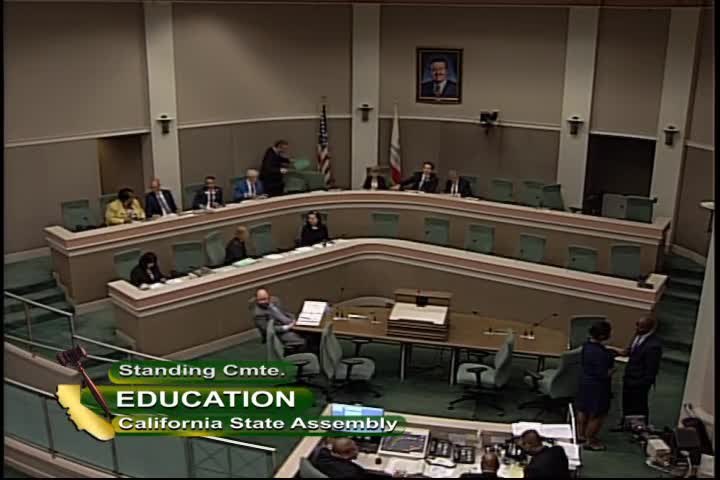
Bill Author


