AB 2400: Personal income taxes: voluntary contribution fund: Alzheimer’s disease research.
- Session Year: 2017-2018
- House: Assembly
- Latest Version Date: 2018-09-07
Existing law allows taxpayers, until January 1, 2020, to designate on his or her personal income tax return that a specified amount in excess of his or her personal income tax liability be contributed to the California Alzheimers Disease and Related Disorders Research Fund, which is subject to appropriation by the Legislature, to be allocated to the Franchise Tax Board, the Controller, and the appropriate state department as established by the Secretary of California Health and Human Services in consultation with the California Department of Aging, and any others that the secretary deems appropriate to be expended for Alzheimers disease research.
Existing law requires that when establishing or extending the operation of these voluntary tax contribution funds the words voluntary tax contribution be included in the name of the fund, that the administering agency comply with specified Internet Web site reporting requirements, that the fund provisions remain in effect only until January 1 of the 7th calendar year following the first appearance of the voluntary tax contribution on the personal income tax return, that the required calendar year minimum contribution amount for the fund to continue appearing on the return is $250,000, and that the contributions be continuously appropriated from the fund to the administering entity.
This bill would rename the fund as the California Alzheimers Disease and Related Dementia Research Voluntary Tax Contribution Fund and would instead require the funds to be allocated to the State Department of Public Health to support eligible programs awarded grants under selection criteria established by the State Department of Public Health Alzheimers Disease Program.
The bill would also conform with the above-mentioned requirements by extending the operation of the provisions of the California Alzheimers Disease and Related Disorders Research Fund to January 1, 2025, renaming the fund, continuously appropriating the fund to the Franchise Tax Board, the Controller, and the State Department of Public Health for purposes of carrying out these provisions, and requiring the State Department of Public Health to comply with those Internet Web site reporting requirements. By continuously appropriating the funds described above, the bill would make an appropriation.
(a)An individual may designate on the tax return that a contribution in excess of the tax liability, if any, be made to the California Alzheimers Disease and Related Dementia Research Voluntary Tax Contribution Fund, that is established by Section 18764.
(b)The contributions shall be in full dollar amounts and may be made individually by each signatory on the joint return.
(c)A designation under subdivision (a) shall be made for any taxable year on the individual return for that taxable year, and once made shall be irrevocable. In the event that payments and credits reported on the return, together with any other credits associated with the individuals account, do not exceed the individuals tax liability, the return shall be treated as though no designation has been made.
(d)The Franchise Tax Board shall revise the forms of the return to include a space labeled the Alzheimers Disease and Related Dementia Voluntary Tax Contribution Fund to allow for the designation permitted under subdivision (a). The forms shall also include in the instructions information that the contribution may be in the amount of one dollar ($1) or more and that the contribution shall be used to conduct research relating to the cure and treatment of Alzheimers disease.
(e)A deduction shall be allowed under Article 6 (commencing with Section 17201) of Chapter 3 of Part 10 for any contribution made pursuant to subdivision (a).
SEC. 3.Section 18764 of the Revenue and Taxation Code is amended to read:18764.There is in the State Treasury the California Alzheimers Disease and Related Dementia Research Voluntary Tax Contribution Fund to receive contributions made pursuant to Section 18763. The Franchise Tax Board shall notify the Controller of both the amount of money paid by individuals in excess of their tax liability and the amount of refund money that individuals have designated pursuant to Section 18763 to be transferred to the California Alzheimers Disease and Related Dementia Research Voluntary Tax Contribution Fund. The Controller shall transfer from the Personal Income Tax Fund to the California Alzheimers Disease and Related Dementia Research Voluntary Tax Contribution Fund an amount not in excess of the sum of the amounts designated by individuals pursuant to Section 18763 for payment into that fund.
SEC. 4.Section 18765 of the Revenue and Taxation Code is amended to read:18765.(a)(1)Notwithstanding Section 13340 of the Government Code, all money transferred to the California Alzheimers Disease and Related Dementia Research Voluntary Tax Contribution Fund shall be continuously appropriated and allocated as follows:
(A)To the Franchise Tax Board, the Controller, and the State Department of Public Health for reimbursement of all administrative costs incurred by the Franchise Tax Board, the Controller, and the State Department of Public Health in connection with their duties under this article.
(B)To the State Department of Public Health to support eligible programs awarded grants under the selection criteria established by the State Department of Public Healths Alzheimers Disease Program (Article 4 (commencing with Section 125275) of Chapter 2 of Part 5 of Division 106 of the Health and Safety Code) and for direct program-related expenses.
(2)All moneys allocated pursuant to paragraph (1) may be carried over from the year in which they were received.
(3)Grant moneys shall not be used for any purpose outside this state.
(b)The State Department of Public Health shall comply with the Internet Web site reporting requirements described in Section 18873.
SEC. 5.Section 18766 of the Revenue and Taxation Code is amended to read:18766.(a)Except as otherwise provided in subdivision (b), this article shall remain in effect only for taxable years beginning before January 1, 2025, and as of December 1 of that year is repealed.
(b)(1)By September 1, 2019, and by September 1 of each subsequent calendar year that the California Alzheimers Disease and Related Dementia Research Voluntary Tax Contribution Fund appears on a tax return, the Franchise Tax Board shall determine whether the amount of contributions estimated to be received during the calendar year will equal or exceed the minimum contributions amount for the calendar year pursuant to paragraph (3). The Franchise Tax Board shall estimate the amount of contributions to be received by using the actual amounts received and an estimate of the contributions that will be received by the end of that calendar year. If the Franchise Tax Board determines that the fund is projected to fall below the minimum contribution amount, the Franchise Tax Board shall provide written notification to the State Department of Public Health.
(2)If the Franchise Tax Board determines that the amount of contributions estimated to be received during a calendar year will not at least equal the minimum contribution amount for the calendar year, this article shall be inoperative with respect to taxable years beginning on or after January 1 of that calendar year and shall be repealed on December 1 of that year.
(3)For purposes of this section, the minimum contribution amount for a calendar year means two hundred fifty thousand dollars ($250,000).
(a)An individual may designate on the tax return that a contribution in excess of the tax liability, if any, be made to the California Alzheimers Disease and Related Dementia Research Voluntary Tax Contribution Fund, that is established by Section 18764.
(b)The contributions shall be in full dollar amounts and may be made individually by each signatory on the joint return.
(c)A designation under subdivision (a) shall be made for any taxable year on the individual return for that taxable year, and once made shall be irrevocable. In the event that payments and credits reported on the return, together with any other credits associated with the individuals account, do not exceed the individuals tax liability, the return shall be treated as though no designation has been made.
(d)The Franchise Tax Board shall revise the forms of the return to include a space labeled the Alzheimers Disease and Related Dementia Voluntary Tax Contribution Fund to allow for the designation permitted under subdivision (a). The forms shall also include in the instructions information that the contribution may be in the amount of one dollar ($1) or more and that the contribution shall be used to conduct research relating to the cure and treatment of Alzheimers disease.
(e)A deduction shall be allowed under Article 6 (commencing with Section 17201) of Chapter 3 of Part 10 for any contribution made pursuant to subdivision (a).
SEC. 3.Section 18764 of the Revenue and Taxation Code is amended to read:18764.There is in the State Treasury the California Alzheimers Disease and Related Dementia Research Voluntary Tax Contribution Fund to receive contributions made pursuant to Section 18763. The Franchise Tax Board shall notify the Controller of both the amount of money paid by individuals in excess of their tax liability and the amount of refund money that individuals have designated pursuant to Section 18763 to be transferred to the California Alzheimers Disease and Related Dementia Research Voluntary Tax Contribution Fund. The Controller shall transfer from the Personal Income Tax Fund to the California Alzheimers Disease and Related Dementia Research Voluntary Tax Contribution Fund an amount not in excess of the sum of the amounts designated by individuals pursuant to Section 18763 for payment into that fund.
SEC. 4.Section 18765 of the Revenue and Taxation Code is amended to read:18765.(a)(1)Notwithstanding Section 13340 of the Government Code, all money transferred to the California Alzheimers Disease and Related Dementia Research Voluntary Tax Contribution Fund shall be continuously appropriated and allocated as follows:
(A)To the Franchise Tax Board and the Controller Board, the Controller, and the State Department of Public Health for reimbursement of all administrative costs incurred by the Franchise Tax Board and the Controller Board, the Controller, and the State Department of Public Health in connection with their duties under this article.
(B)To the State Department of Public Health to support eligible programs awarded grants under the selection criteria established by the State Department of Public Healths Alzheimers Disease Program (Article 4 (commencing with Section 125275) of Chapter 2 of Part 5 of Division 106 of the Health and Safety Code) and for direct program-related expenses.
(2)All moneys allocated pursuant to paragraph (1) may be carried over from the year in which they were received.
(3)Grant moneys shall not be used for any purpose outside this state.
(b)The State Department of Public Health shall comply with the Internet Web site reporting requirements described in Section 18873.
SEC. 5.Section 18766 of the Revenue and Taxation Code is amended to read:18766.(a)Except as otherwise provided in subdivision (b), this article shall remain in effect only for taxable years beginning before January 1, 2025, and as of December 1 of that year is repealed.
(b)(1)By September 1, 2019, and by September 1 of each subsequent calendar year that the California Alzheimers Disease and Related Dementia Research Voluntary Tax Contribution Fund appears on a tax return, the Franchise Tax Board shall determine whether the amount of contributions estimated to be received during the calendar year will equal or exceed the minimum contributions amount for the calendar year pursuant to paragraph (3). The Franchise Tax Board shall estimate the amount of contributions to be received by using the actual amounts received and an estimate of the contributions that will be received by the end of that calendar year. If the Franchise Tax Board determines that the fund is projected to fall below the minimum contribution amount, the Franchise Tax Board shall provide written notification to the State Department of Public Health.
(2)If the Franchise Tax Board determines that the amount of contributions estimated to be received during a calendar year will not at least equal the minimum contribution amount for the calendar year, this article shall be inoperative with respect to taxable years beginning on or after January 1 of that calendar year and shall be repealed on December 1 of that year.
(3)For purposes of this section, the minimum contribution amount for a calendar year means two hundred fifty thousand dollars ($250,000).
(a)Any An individual may designate on the tax return that a contribution in excess of the tax liability, if any, be made to the California Alzheimers Disease and Related Disorders Dementia Research Voluntary Tax Contribution Fund, that is established by Section 18764.
(b)The contributions shall be in full dollar amounts and may be made individually by each signatory on the joint return.
(c)A designation under subdivision (a) shall be made for any taxable year on the individual return for that taxable year, and once made shall be irrevocable. In the event that payments and credits reported on the return, together with any other credits associated with the individuals account, do not exceed the individuals tax liability, the return shall be treated as though no designation has been made.
(d)The Franchise Tax Board shall revise the forms of the return to include a space labeled the Alzheimers Disease/Related Disorders Disease and Related Dementia Voluntary Tax Contribution Fund to allow for the designation permitted under subdivision (a). The forms shall also include in the instructions information that the contribution may be in the amount of one dollar ($1) or more and that the contribution shall be used to conduct research relating to the cure and treatment of Alzheimers disease.
(e)A deduction shall be allowed under Article 6 (commencing with Section 17201) of Chapter 3 of Part 10 for any contribution made pursuant to subdivision (a).
SEC. 3.Section 18764 of the Revenue and Taxation Code is amended to read:18764.There is in the State Treasury the California Alzheimers Disease and Related Disorders Dementia Research Voluntary Tax Contribution Fund to receive contributions made pursuant to Section 18763. The Franchise Tax Board shall notify the Controller of both the amount of money paid by individuals in excess of their tax liability and the amount of refund money which that individuals have designated pursuant to Section 18763 to be transferred to the California Alzheimers Disease and Related Disorders Dementia Research Voluntary Tax Contribution Fund. The Controller shall transfer from the Personal Income Tax Fund to the California Alzheimers Disease and Related Disorders Dementia Research Voluntary Tax Contribution Fund an amount not in excess of the sum of the amounts designated by individuals pursuant to Section 18763 for payment into that fund.
SEC. 4.Section 18765 of the Revenue and Taxation Code is amended to read:18765.All (a)(1)Notwithstanding Section 13340 of the Government Code, all money transferred to the California Alzheimers Disease and Related Disorders Dementia Research Fund, upon appropriation by the Legislature, Voluntary Tax Contribution Fund shall be continuously appropriated and allocated as follows:
(a)(A)To the Franchise Tax Board and the Controller for reimbursement of all costs incurred by the Franchise Tax Board and the Controller in connection with their duties under this article.
(b)(B)To the appropriate state department as established by the Secretary of California Health and Human Services in consultation with the California Department of Aging, and any others which the secretary deems appropriate. These funds shall be expended for the purpose of conducting research relating to the care, treatment, and the cure of Alzheimers disease through contracts or grants developed and awarded as determined by the Secretary of California Health and Human Services, in consultation with the California Department of Aging and any others which the secretary deems appropriate. the State Department of Public Health to support eligible programs awarded grants under the selection criteria established by the State Department of Public Healths Alzheimers Disease Program (Article 4 (commencing with Section 125275) of Chapter 2 of Part 5 of Division 106 of the Health and Safety Code) and for direct program-related expenses.
(2)All moneys allocated pursuant to paragraph (1) may be carried over from the year in which they were received.
(b)The State Department of Public Health shall comply with the Internet Web site reporting requirements described in Section 18873.
SEC. 5.Section 18766 of the Revenue and Taxation Code is amended to read:18766.(a)Except as otherwise provided in paragraph (2) of subdivision (b), this article shall remain in effect only for taxable years beginning before January 1, 2020, 2025, and as of December 1 of that year is repealed. repealed.
(b)(1)By September 1, 2006, 2019, and by September 1 of each subsequent calendar year that the California Alzheimers Disease and Related Disorders Dementia Research Voluntary Tax Contribution Fund appears on a tax return, the Franchise Tax Board shall do all of the following:
(A)Determine the minimum contribution amount required to be received during the next calendar year for the fund to appear on the tax return for the taxable year that includes that next calendar year.(B)Provide written notification to the Secretary of California Health and Human Services of the amount determined in subparagraph (A).(C)Determine shall determine whether the amount of contributions estimated to be received during the calendar year will equal or exceed the minimum contributions amount determined by the Franchise Tax Board for the calendar year pursuant to subparagraph (A). paragraph (3). The Franchise Tax Board shall estimate the amount of contributions to be received by using the actual amounts received and an estimate of the contributions that will be received by the end of that calendar year. If the Franchise Tax Board determines that the fund is projected to fall below the minimum contribution amount, the Franchise Tax Board shall provide written notification to the State Department of Public Health.
(2)If the Franchise Tax Board determines that the amount of contributions estimated to be received during a calendar year will not at least equal the minimum contribution amount for the calendar year, this article shall be inoperative with respect to taxable years beginning on or after January 1 of that calendar year and shall be repealed on December 1 of that year.
(3)For purposes of this section, the minimum contribution amount for a calendar year means two hundred fifty thousand dollars ($250,000) for the 2000 calendar year or the minimum contribution amount as adjusted pursuant to subdivision (c). ($250,000).
(c)For each calendar year, beginning with calendar year 2001, the Franchise Tax Board shall adjust, on or before September 1 of that calendar year, the minimum contribution amount specified in subdivision (b) as follows:(1)The minimum contribution amount for the calendar year shall be an amount equal to the product of the minimum contribution amount for the prior calendar year multiplied by the inflation factor adjustment as specified in paragraph (2) of subdivision (h) of Section 17041, rounded off to the nearest dollar.(2)The inflation factor adjustment used for the calendar year shall be based on the figures for the percentage change in the California Consumer Price Index received on or before August 1 of the calendar year pursuant to paragraph (1) of subdivision (h) of Section 17041.(d)Notwithstanding the repeal of this article, any contribution amounts designated pursuant to this article prior to its repeal shall continue to be transferred and disbursed in accordance with this article as in effect immediately prior to that repeal. REVISIONS: HeadingLine 3.|
Date
|
Status
|
|---|---|
| Sep 7, 2018 | Chaptered by Secretary of State - Chapter 299, Statutes of 2018. |
| Sep 7, 2018 | Approved by the Governor. |
| Aug 24, 2018 | Enrolled and presented to the Governor at 4:30 p.m. |
| Aug 20, 2018 | Senate amendments concurred in. To Engrossing and Enrolling. |
| Aug 14, 2018 | In Assembly. Concurrence in Senate amendments pending. May be considered on or after August 16 pursuant to Assembly Rule 77. |
| Aug 13, 2018 | Read third time. Passed. Ordered to the Assembly. |
| Aug 1, 2018 | Ordered to special consent calendar. |
| Jul 3, 2018 | Read second time. Ordered to third reading. |
| Jul 2, 2018 | From committee: Do pass. (Ayes 7. Noes 0.) (July 2). |
| Jun 14, 2018 | Read second time and amended. Re-referred to Com. on APPR. |
| Jun 13, 2018 | From committee: Amend, and do pass as amended and re-refer to Com. on APPR. (Ayes 7. Noes 0.) (June 13). |
| Apr 25, 2018 | Referred to Com. on GOV. & F. |
| Apr 12, 2018 | In Senate. Read first time. To Com. on RLS. for assignment. |
| Apr 12, 2018 | Read third time. Passed. Ordered to the Senate. |
| Apr 5, 2018 | Read second time. Ordered to Consent Calendar. |
| Apr 4, 2018 | Coauthors revised. |
| Mar 20, 2018 | From committee: Do pass and re-refer to Com. on APPR. (Ayes 10. Noes 0.) (March 19). Re-referred to Com. on APPR. |
| Mar 1, 2018 | Referred to Com. on REV. & TAX. |
| Feb 15, 2018 | From printer. May be heard in committee March 17. |
| Feb 14, 2018 | Read first time. To print. |
|
Date
|
Description
|
Location
|
Votes
|
|
|---|---|---|---|---|
| Aug 20, 2018 | AB 2400 KALRA Concurrence in Senate Amendments | Assembly Floor |
Passed |
|
| Aug 13, 2018 | Special Consent AB2400 | Senate Floor |
Passed |
|
| Jul 2, 2018 | Do pass | Senate Standing Committee on Appropriations |
Passed |
|
| Jun 13, 2018 | Do pass as amended, but first amend, and re-refer to the Committee on [Appropriations] | Senate Standing Committee on Governance and Finance |
Passed |
|
| Apr 12, 2018 | AB 2400 KALRA Consent Calendar Second Day Regular Session | Assembly Floor |
Passed |
|
| Apr 4, 2018 | Do pass. To Consent Calendar. | Assembly Standing Committee on Appropriations |
Passed |
|
| Mar 19, 2018 | Do pass and be re-referred to the Committee on [Appropriations] | Assembly Standing Committee on Revenue and Taxation |
Passed |
This list shows positions taken on this bill by organizations on the date displayed, which is linked to the original source.
Positions by individuals are not included.
CONCURRENCE IN SENATE AMENDMENTS
CSA1 Bill Id:AB 2400
Author:(Kalra)
As Amended Ver:June 14, 2018
Majority vote
ASSEMBLY: | 68-0 | (April 12, 2018) | SENATE: | 37-0 | (August 13, 2018) |
Original Committee Reference: REV. & TAX.
SUMMARY: Extends, by five years, the sunset date for the existing voluntary contribution fund (VCF) on the personal income tax (PIT) return dedicated to researching Alzheimer's and related disorders.
The Senate amendments:
- Add the State Department of Public Health to the list of entities reimbursed for their VCF-related administrative expenses.
- Provide that grant moneys shall not be used for any purpose outside California.
EXISTING LAW:
- Allows taxpayers to contribute to one or more of 24 VCFs on the 2017 PIT return.
- Provides a specific sunset date for each VCF, except for the California Seniors Special Fund and the State Parks Protection Fund.
- Requires each VCF to meet an annual minimum contribution amount to remain in effect, except for the California Firefighters' Memorial Fund, the California Peace Officer Memorial Foundation Fund, and the California Seniors Special Fund.
AS PASSED BY THE ASSEMBLY, this bill:
- Changed the name of the California Alzheimer's Disease and Related Disorders Research Fund to the California Alzheimer's Disease and Related Dementia Research Voluntary Tax Contribution Fund (Fund).
- Provided that, notwithstanding Government Code Section 13340, all money transferred to the Fund shall be continuously appropriated.
- Provided that Fund moneys shall be allocated to the State Department of Public Health to support eligible programs awarded grants under the selection criteria established by the State Department of Public Health's Alzheimer's Disease Program and for direct program-related expenses.
- Provided that all moneys allocated may be carried over from the year in which they were received.
- Required the State Department of Public Health to comply with the Internet Web site reporting requirements described in Revenue and Taxation Code (RTC) Section 18873.
- Provided that the Fund provisions shall remain in effect for taxable years beginning before January 1, 2025 (instead of January 1, 2020 under current law).
- Lowered the Fund's minimum contribution amount to $250,000 (instead of the current 2018 amount of $367,135), and eliminated the provisions requiring the minimum contribution amount to be indexed for inflation.
- Provided that, if the Franchise Tax Board (FTB) determines that the Fund is projected to fall below the minimum contribution amount, the FTB shall provide written notice to the State Department of Public Health.
FISCAL EFFECT: According to the Senate Appropriations Committee:
- The FTB estimates that, beginning in fiscal year 2020-21, this bill would result in an annual revenue loss of $10,000 (General Fund).
- The State Controller's Office, the Department of Public Health and the FTB would be reimbursed for related administrative costs.
COMMENTS:
- Author's Statement. The author has provided the following statement in support of this bill:
AB 2400 reflects a shared priority of both the Legislature and the public. For more than 30 years, California taxpayers have voluntarily supported Alzheimer's disease research with modest donations on their annual tax form. These contributions – over time, have combined to fund $25 million in competitive research grants in all parts of our state. Included among the funded projects are researchers at University of California (UC) San Diego, UC Irvine, UCLA, University of Southern California, Stanford University, UC San Francisco and UC Davis.
California is uniquely positioned to be at the forefront of Alzheimer's disease research. We have world renowned academic institutions, an innovative biosciences sector and, in my own district, a global technology industry. Accelerating research in our state is smart public policy.
I commend our legislative colleagues who, over three decades, have renewed this very important tax check off option. Clearly, we are in sync with the public in prioritizing Alzheimer's research – a national concern as more than five million Americans are currently facing the disease. In our own state, Alzheimer's is now the 3rd leading cause of death. I urge you to join with me in supporting AB 2400 on behalf of the 2.2 million Californians who are presently living with the disease or caring for a loved one at home.
- Committee Staff Comments:
- General background: As the Legislature has previously noted in findings and declarations, Alzheimer's disease and related dementia disorders are devastating health conditions that cause a loss of intellectual functioning so severe that they interfere with an individual's daily functioning and eventually result in death. These conditions also cause serious financial, social, and emotional hardships on both those impacted and on their caregivers.
In recognition of these facts, the Legislature established the Fund as a VCF on the PIT return. Thus, an individual may designate on the tax return that a contribution in excess of tax liability, if any, be made to the Fund. All money transferred to the Fund is first allocated, upon appropriation, to the FTB and the State Controller to reimburse their administrative expenses. Remaining moneys are currently expended to conduct research relating to the care, treatment, and cure of Alzheimer's disease through contracts or grants developed and awarded as determined by the Secretary of California Health and Human Services, in consultation with the California Department of Aging and any others the secretary deems appropriate.
- This bill: This bill includes multiple changes to the statutory provisions governing the Fund. First and foremost, this bill extends the Fund's sunset date by five years. This bill also recasts how the Fund moneys are to be allocated. Specifically, under this bill, Fund moneys will now be allocated to the State Department of Public Health to support eligible programs awarded grants under the selection criteria established by the department's Alzheimer's Disease Program. Finally, this bill makes several other modifications to bring the Fund statutes into conformity with the VCF "best practices" set forth in RTC Section 18873.
Analysis Prepared by: FN: 0003807
Office of Senate Floor Analyses (916) 651-1520 Fax: (916) 327-4478 | AB |
THIRD READING
Bill No: AB 2400
:
SENATE GOVERNANCE & FIN. COMMITTEE: 7-0, 6/13/18
AYES: McGuire, Nguyen, Beall, Hernandez, Hertzberg, Lara, Moorlach
SENATE APPROPRIATIONS COMMITTEE: 7-0, 7/2/18
AYES: Portantino, Bates, Beall, Bradford, Hill, Nielsen, Wiener
ASSEMBLY FLOOR: 68-0, 4/12/18 (Consent) - See last page for vote
SOURCE: Alzheimer’s Association
DIGEST:
This bill renames the California Alzheimer’s Disease and Related Disorders Fund to the California Alzheimer’s Disease and Related Dementia Voluntary Contribution Fund and makes other minor adjustments.
Existing law:
- Allows taxpayers to contribute money to voluntary contribution funds (VCFs) by checking a box on their personal income tax returns. There were 24 VCFs listed on the 2017 Personal Income Tax Return, including the California Alzheimer's Disease and Related Disorders Research Fund.
- Requires contributions made through so-called “check-offs” to be made from taxpayers’ own resources and not from their tax liability, as is possible on federal tax returns.
- Allows contribution amounts to be claimed as charitable contributions on taxpayers’ tax returns in the subsequent year.
- Requires that each VCF is individually added to the tax return by legislation. With a few exceptions, VCFs remain on the return until they are repealed by a sunset date or fail to generate a minimum contribution amount. In general, the minimum contribution amounts are adjusted annually for inflation. For most VCFs, the minimum contribution amount is $250,000, beginning in the fund’s second year. The following check-offs do not have a minimum contribution requirement:
- California Firefighters’ Memorial Foundation Fund,
- California Peace Officer Memorial Foundation Fund, and
- California Seniors Special Fund.
This bill:
- Changes the name of the California Alzheimer's Disease and Related Disorders Research Fund to the California Alzheimer's Disease and Related Dementia Research Voluntary Tax Contribution Fund (Fund).
- Provides that all money transferred to the Fund shall be continuously appropriated.
- Provides that Fund moneys shall be allocated to the State Department of Public Health to support eligible programs by awarding grants
- Requires grants to be used for direct program-related expenses using the selection criteria established by the State Department of Public Health's Alzheimer's Disease Program.
- Allows the State Department of Public Health, the State Controller, and the Franchise Tax Board to collect reimbursement for administrative costs associated with administering the fund.
- Provides that all moneys allocated may be carried over from the year in which they were received.
- Requires the State Department of Public Health to comply with VCF Internet Web site reporting requirements.
- Provides that the Fund provisions shall remain in effect for taxable years beginning before January 1, 2025 (instead of January 1, 2020, under current law).
- Prohibits grant moneys from being used outside of the state.
- Lowers the Fund's minimum contribution amount to $250,000 (instead of the current 2018 amount of $367,135), and eliminates the provisions requiring the minimum contribution amount to be indexed for inflation.
Background
One of the VCFs currently listed is the California Alzheimer’s Disease and Related Disorders Research Fund which first appeared on the 1997 tax return. Since 2014, it has received $1.7 million in total contributions and is set to expire on January 1, 2020.
FISCAL EFFECT: Appropriation: Fiscal Com.: Local:
According to the Senate Appropriations Committee:
- The Franchise Tax Board (FTB) estimates that, beginning in 2019-20, this bill will result in an annual revenue loss of $8,000 (General Fund).
- The State Controller’s Office and FTB would be reimbursed for related administrative costs.
Alzheimer’s Association (source)
AARP California
None received
ARGUMENTS IN SUPPORT: According to the author, “AB 2400 reflects a shared priority of both the Legislature and the public. For more than 30 years, California taxpayers have voluntarily supported Alzheimer's disease research with modest donations on their annual tax form. These contributions – over time, have combined to fund $25 million in competitive research grants in all parts of our state. Included among the funded projects are researchers at UC San Diego, UC Irvine, UCLA, University of Southern California, Stanford University, UC San Francisco and UC Davis. California is uniquely positioned to be at the forefront of Alzheimer's disease research. We have world renowned academic institutions, an innovative biosciences sector and, in my own district, a global technology industry. Accelerating research in our state is smart public policy. I commend our legislative colleagues who, over three decades, have renewed this very important tax check off option. Clearly, we are in sync with the public in prioritizing Alzheimer's research – a national concern as more than 5 million Americans are currently facing the disease. In our own state, Alzheimer's is now the 3rd leading cause of death. I urge you to join with me in supporting AB 2400 on behalf of the 2.2 million Californians who are presently living with the disease or caring for a loved one at home.”
ASSEMBLY FLOOR: 68-0, 4/12/18
AYES: Acosta, Aguiar-Curry, Travis Allen, Arambula, Baker, Berman, Bigelow, Bonta, Brough, Burke, Caballero, Calderon, Carrillo, Cervantes, Chau, Chávez, Chen, Chiu, Choi, Chu, Cooley, Cooper, Cunningham, Dahle, Daly, Eggman, Flora, Fong, Frazier, Friedman, Gallagher, Eduardo Garcia, Gipson, Gloria, Gonzalez Fletcher, Grayson, Harper, Holden, Irwin, Kalra, Kiley, Lackey, Levine, Maienschein, Mathis, Mayes, McCarty, Medina, Melendez, Muratsuchi, Nazarian, Obernolte, O'Donnell, Patterson, Quirk, Quirk-Silva, Reyes, Rodriguez, Rubio, Salas, Mark Stone, Thurmond, Ting, Voepel, Waldron, Weber, Wood, Rendon
NO VOTE RECORDED: Bloom, Cristina Garcia, Gray, Jones-Sawyer, Limón, Low, Mullin, Santiago, Steinorth
7/3/18 15:27:13
**** END ****
SENATE COMMITTEE ON APPROPRIATIONS
Senator Anthony Portantino, Chair
2017 - 2018 Regular Session
AB 2400 (Kalra) - Personal income taxes: voluntary contribution fund: Alzheimer’s disease research
Version: June 14, 2018 | Policy Vote: GOV. & F. 7 - 0 |
Urgency: No | Mandate: No |
Hearing Date: July 2, 2018 | Consultant: Robert Ingenito |
This bill does not meet the criteria for referral to the Suspense File.
Bill Summary:
AB 2400 would (1) rename the California Alzheimer’s Disease and Related Disorders Fund to the California Alzheimer’s Disease and Related Dementia Voluntary Contribution Fund, (2) extend the Fund’s sunset through taxable year 2024, and (3) make other minor adjustments.
Fiscal Impact:
- The Franchise Tax Board (FTB) estimates that, beginning in 2020-21, this bill would result in an annual revenue loss of $10,000 (General Fund).
- The State Controller’s Office (SCO), the Department of Public Health (DPH) and FTB would be reimbursed for related administrative costs.
Background:
Current law allows taxpayers to contribute money to one or more of 24 voluntary contribution funds (VCF) during the process of filing their state income tax return. These contributions are made from taxpayers' own resources, not from their tax liability, as is the case with federal tax returns. Check-off amounts are deductible as charitable contributions on taxpayers' returns during the subsequent tax year. With some exceptions, each VCF (1) has a sunset date, and (2) is required to meet a minimum contribution amount of $250,000, adjusted annually for inflation.
When a taxpayer contributes to a VCF, FTB deposits the total of all contributions, less an administrative fee, into the fund created as part of its legislative authorization. For some VCFs, taxpayers’ contributions are allocated to a state agency for use in a state-administered grant program. Other VCFs’ authorizing statutes direct administrative agencies to allocate donations to a private organization, such as the American Red Cross. Still other VCFs require SCO to send the funds directly to private organizations, such as the California Fire Foundation, without passing through an administrative agency. Like FTB, SCO, and administrative agencies may deduct administration fees from the amount of donations each VCF receives.
In 2016, SB 1476 (Committee on Governance and Finance) established general provisions for all VCFs established or extended after January 2, 2017. Specifically, the bill: (1) set a minimum contribution amount of $250,000 beginning the second calendar year after the fund’s first appearance on the income tax return, with no inflation adjustment in subsequent years, (2) increased the current standard five-year sunset to seven years, (3) required administering agencies to post online the process for awarding money, the amount of money spent on administration, and an itemization of how program funds were awarded, including, but not limited to, information regarding recipients of funds, (4) provided that funds shall be continuously appropriated to the administering agency to be spent as prescribed in the bill that enacts the voluntary contribution, and (5) required “voluntary tax contribution” in the name of the fund.
One of the VCFs currently listed is the California Alzheimer’s Disease and Related Disorders Research Fund, which first appeared on the 1997 tax return. It has received $1.7 million in total contributions since 2014, and is scheduled to sunset on January 1st, 2020.
Proposed Law:
This bill would rename the California Alzheimer’s Disease and Related Disorders Research Fund to the California Alzheimer’s Disease and Related Dementia Research Voluntary Tax Contribution Fund (Fund). Contributions to the Fund would be allocated to DPH to administer to eligible programs—in the form of grants—under the selection criteria established by its Alzheimer’s Disease Program. Additionally, the bill would make specified adjustments to bring the Fund into compliance with SB 1476’s general provisions. Finally, the bill would extend the Fund’s sunset date through taxable year 2024.
Related Legislation:
SB 1476 (Committee on Governance and Finance, Chapter 597, Statutes of 2016) added general requirements applicable to VCFs added or extended on or after January 2, 2017.
Staff Comments:
FTB notes that about 56 percent of taxpayers who contribute to VCFs itemize their deductions. Total contributions to the California Alzheimer’s Disease and Related Disorders Fund totaled about $300,000 in taxable year 2017. Assuming an average tax rate of six percent, FTB estimates the annual revenue loss would be $10,000.
Contributions related to the extension of the fund will be in made 2020 when 2019 returns are filed. The deduction for such contributions would be claimed on the 2020 return filed by April 15, 2021; consequently, revenue impact from the bill would not begin until 2020-21.
-- END --
SENATE COMMITTEE ON GOVERNANCE AND FINANCE
Senator Mike McGuire, Chair
2017 - 2018 Regular
Bill No: | AB 2400 | Hearing Date: | 6/13/18 |
Author: | Kalra | Tax Levy: | No |
Version: | 2/14/18 | Fiscal: | Yes |
Consultant: | Brown | ||
Personal income taxes: voluntary contribution fund: Alzheimer’s disease research
Renames the California Alzheimer’s Disease and Related Disorders Fund to the California Alzheimer’s Disease and Related Dementia Voluntary Contribution Fund and makes other minor adjustments.
Background
Existing state law allows a taxpayer to contribute money to voluntary contribution funds (VCFs), by checking a box on his or her State Personal Income Tax Return. California law requires contributions made through VCFs — or tax check-offs— to be made from a taxpayer’s own resources. The contributions cannot come from the taxpayer’s tax liability. Check-off amounts may be claimed as charitable contributions on the taxpayer’s tax return in the subsequent year.
Each VCF is individually added to the return by legislation. With a few exceptions, VCFs remain on the return until they are repealed by a sunset date or they fail to generate a minimum contribution amount. In general, the minimum contribution amount is $250,000. The check-offs listed below do not have a minimum contribution requirement:
- California Firefighters’ Memorial Foundation Fund;
- California Peace Officer Memorial Foundation Fund; and
- California Seniors Special Fund.
When a taxpayer contributes to a VCF, the Franchise Tax Board (FTB) deposits the total of all contributions, less an administrative fee, into the organization’s fund. For some VCFs, the taxpayer’s contributions are allocated directly to a private organization by an administrative agency. For example, the Office of Emergency Services passes the taxpayer’s contributions to the American Red Cross. For other VCFs, the taxpayer’s contributions are allocated directly to the private organizations through the State Controller’s office, without passing through an administrative agency. For example, the State Controller’s office passes the taxpayer’s contributions to the California Fire Foundation.
In 2016, SB 1476 (Committee on Governance and Finance) established general provisions for all VCFs established on or extended after January 2, 2017. Specifically, the bill:
- Set a minimum contribution amount of $250,000 beginning the second calendar year the fund made an appearance on the Tax Return;
- Eliminated the inflation adjustment in subsequent years for the minimum contribution amount;
- Lengthened the current standard sunset provision from five years to seven years;
- Required the administering agency to post online the process and the administrative costs of awarding the money, as well as the itemization of funds awarded (including, but not limited to, information regarding recipients of funds);
- Provided that funds shall be continuously appropriated to the administering agency to be spent as prescribed in the bill that enacted the voluntary contribution; and
- Required “voluntary tax contribution” to be in the name of the fund.
There are currently 24 check-offs listed on the tax return. In the 2016 taxable year, VCFs received roughly $4 million in contributions, collectively.
One of the VCFs currently listed is the California Alzheimer’s Disease and Related Disorders Research Fund which first appeared on the 1997 tax return. Since 2014, it has received $1.7 million in total contributions and is set to expire on January 1st, 2020. The author would like to extend its appearance on the tax return as well as make a few additional adjustments.
Proposed Law
AB 2400 renames the California Alzheimer’s Disease and Related Disorders Research Fund to the California Alzheimer’s Disease and Related Dementia Research Voluntary Tax Contribution Fund (Fund). It also requires contributions be allocated to the California Department of Public Health (CDPH) to administer to eligible programs—in the form of grants—under the selection criteria established by CDPH’s Alzheimer’s Disease Program.
Additionally, AB 2400 makes various other adjustments to bring the Fund into compliance with SB 1476’s general provisions. These include to:
- Lower the Fund’s minimum contribution amount to $250,000;
- Eliminate the provision which requires the minimum contribution amount be indexed to inflation;
- Require CDPH to post on its Internet Web site the process and the administrative costs of awarding the contributions as well as the itemization of funds awarded; and
- Require contributions be continuously appropriated.
AB 2400 also extends the Fund’s sunset date to taxable years before January 1st, 2025.
State Revenue Impact
FTB estimates no revenue loss in both 2018-19 and 2019-20, and a $10,000 revenue loss in 2020-21.
Comments
1. Purpose of the bill. According to the author, “AB 2400 reflects a shared priority of both the Legislature and the public. For more than 30 years, California taxpayers have voluntarily supported Alzheimer's disease research with modest donations on their annual tax form. These contributions – over time, have combined to fund $25 million in competitive research grants in all parts of our state. Included among the funded projects are researchers at UC San Diego, UC Irvine, UCLA, University of Southern California, Stanford University, UC San Francisco and UC Davis. California is uniquely positioned to be at the forefront of Alzheimer's disease research. We have world renowned academic institutions, an innovative biosciences sector and, in my own district, a global technology industry. Accelerating research in our state is smart public policy. I commend our legislative colleagues who, over three decades, have renewed this very important tax check off option. Clearly, we are in sync with the public in prioritizing Alzheimer's research – a national concern as more than 5 million Americans are currently facing the disease. In our own state, Alzheimer's is now the 3rd leading cause of death. I urge you to join with me in supporting AB 2400 on behalf of the 2.2 million Californians who are presently living with the disease or caring for a loved one at home.”
2. Bills, bills, bills. Currently, VCFs must be added by the Legislature. In 2008, 11 VCFs appeared on the Personal Income Tax Return. Today, the return contains 24 VCFs. With legislation introduced every year to add new VCFs, there is little reason to expect this number to stop growing. However, space on the return is limited. FTB estimates the system can handle only a few more VCFs before an additional page is added to the return. Furthermore, there are numerous causes that would both be worthy of and benefit from a VCF. Critics argue the current system for adding or extending VCFs on the tax return is unstable, inefficient, subjective, and doesn’t include other worthy causes. The Committee may wish to consider the length of the return as well as the process by which VCFs get Legislative approval.
3. SB 1476. In December 2015, this Committee held an oversight hearing on VCFs. The Committee identified best practices and reforms needed to ensure that taxpayer contributions were being put toward charitable purposes in both a transparent and timely fashion. The best practices identified at the oversight hearing — outlined in SB 1476 — were chaptered in state law in September 2016. AB 2400 meets the best practices outlined in SB 1476.
4. Diminishing returns. Expanding the list of VCFs that appear on the return may have unintended consequences for the funds currently listed. FTB states that over time, as the list of VCFs expands, the increased competition causes some funds to receive less money from year to year. As a result, VCFs may have a difficult time meeting the $250,000 minimum contribution requirement needed to remain on the return. AB 2400 renews the Fund’s sunset date allowing it to remain on the return another seven years. Considering the Fund has appeared on the return since 1997, critics argue it’s time to give other worthy causes a chance to raise revenue. The Fund’s renewed presence on the return could have unintended consequences for other VCFs. The Committee may wish to consider the effects AB 2400 may have on the other 23 VCFs currently listed on the return.
5. Technical amendments. Committee staff suggests the following technical amendments:
- Allow CDPH the ability to collect reimbursement for all costs incurred in connection with their duties to administer the Fund; and
- Insert in Section 18765 “(3) Grant moneys shall not be used for any purpose outside of this state.”
Assembly Actions
Assembly Revenue and Taxation 10-0
Assembly Appropriations 15-0
Assembly Floor 68-0
Support and Opposition
(6/7/18)
Support: Alzheimer’s Association (Sponsor); and AARP California.
Opposition: Unknown.
-- END --
Date of Hearing: April 4, 2018
ASSEMBLY COMMITTEE ON APPROPRIATIONS
Lorena Gonzalez Fletcher, Chair
ABPCA Bill Id:AB 2400
Author:(Kalra) – As Introduced Ver:February 14, 2018
Policy Committee: | Revenue and Taxation | Vote: | 10 - 0 |
|
| ||
|
|
Urgency: No State Mandated Local Program: No Reimbursable: No
SUMMARY:
This bill extends the sunset date for a voluntary contribution fund (VCF) related to Alzheimer’s research and makes other changes to its structure and implementation. Specifically, this bill:
- Renames the VCF to the California Alzheimer’s Disease and Related Dementia Research Voluntary Tax Contribution Fund (Alzheimer’s Fund) and extends its sunset from January 1, 2020, to January 1, 2025.
- Specifies that money transferred to the Alzheimer’s Fund is continuously appropriated to the Franchise Tax Board (FTB) and State Controller for reimbursement of relevant expenses and to the State Department of Public Health (DPH) to support eligible programs.
- Lowers the minimum contribution amount to $250,000 and makes assorted technical changes.
FISCAL EFFECT:
- Annual General Fund (GF) revenue loss in the range of $10,000 beginning on 2020-21.
- Minor administrative costs to FTB, the State Controller, and DPH.
COMMENTS:
- Background and purpose. Taxpayers can make contributions to 24 VCFs listed on the state personal income tax return. These VCFs support a range of causes or organizations, such as funding school arts programs or cancer research.
According to the author, AB 2400 will continue a successful VCF and provide additional support for research of Alzheimer’s disease. The author’s office notes that the Alzheimer’s-related VCF has generated $25 million in competitive research grants over the last few decades.
- Recent changes to VCF policy. The proliferation of VCFs and their lack of consistency resulted in SB 1476 (Senate Committee on Government and Finance), Chapter 597, Statutes of 2016, which established various administrative guidelines for all future or renewed VCFs. AB 2400 modifies a current VCF to comply with the guidelines established by SB 1476.
Analysis Prepared by: Luke Reidenbach / APPR. / (916) 319-2081
Date of Hearing: March 19, 2018
ASSEMBLY COMMITTEE ON REVENUE AND TAXATION
Autumn R. Burke, Chairwoman
ABPCA Bill Id:AB 2400 (
Author:Kalra) – As Introduced Ver:February 14, 2018
SUBJECT: Personal income taxes: voluntary contribution fund: Alzheimer's disease research
SUMMARY: Extends, by five years, the sunset date for the existing voluntary contribution fund (VCF) on the personal income tax (PIT) return dedicated to researching Alzheimer's and related disorders. Specifically, this bill:
- Changes the name of the California Alzheimer's Disease and Related Disorders Research Fund to the California Alzheimer's Disease and Related Dementia Research Voluntary Tax Contribution Fund (Fund).
- Provides that, notwithstanding Government Code Section 13340, all money transferred to the Fund shall be continuously appropriated.
- Provides that Fund moneys shall be allocated to the State Department of Public Health to support eligible programs awarded grants under the selection criteria established by the State Department of Public Health's Alzheimer's Disease Program and for direct program-related expenses.
- Provides that all moneys allocated may be carried over from the year in which they were received.
- Requires the State Department of Public Health to comply with the Internet Web site reporting requirements described in Revenue and Taxation Code (R&TC) Section 18873.
- Provides that the Fund provisions shall remain in effect for taxable years beginning before January 1, 2025 (instead of January 1, 2020 under current law).
- Lowers the Fund's minimum contribution amount to $250,000 (instead of the current 2018 amount of $367,135), and eliminates the provisions requiring the minimum contribution amount to be indexed for inflation.
- Provides that, if the Franchise Tax Board (FTB) determines that the Fund is projected to fall below the minimum contribution amount, the FTB shall provide written notice to the State Department of Public Health.
EXISTING LAW:
- Allows taxpayers to contribute to one or more of 24 VCFs on the 2017 PIT return.
- Provides a specific sunset date for each VCF, except for the California Seniors Special Fund and the State Parks Protection Fund.
- Requires each VCF to meet an annual minimum contribution amount to remain in effect, except for the California Firefighters' Memorial Fund, the California Peace Officer Memorial Foundation Fund, and the California Seniors Special Fund.
FISCAL EFFECT: The FTB estimates that this bill would result in annual revenue losses of $10,000, beginning in fiscal year 2020-21.
COMMENTS:
- The author has provided the following statement in support of this bill:
AB 2400 reflects a shared priority of both the Legislature and the public. For more than 30 years, California taxpayers have voluntarily supported Alzheimer's disease research with modest donations on their annual tax form. These contributions – over time, have combined to fund $25 million in competitive research grants in all parts of our state. Included among the funded projects are researchers at UC San Diego, UC Irvine, UCLA, University of Southern California, Stanford University, UC San Francisco and UC Davis.
California is uniquely positioned to be at the forefront of Alzheimer's disease research. We have world renowned academic institutions, an innovative biosciences sector and, in my own district, a global technology industry. Accelerating research in our state is smart public policy.
I commend our legislative colleagues who, over three decades, have renewed this very important tax check off option. Clearly, we are in sync with the public in prioritizing Alzheimer's research – a national concern as more than 5 million Americans are currently facing the disease. In our own state, Alzheimer's is now the 3rd leading cause of death. I urge you to join with me in supporting AB 2400 on behalf of the 2.2 million Californians who are presently living with the disease or caring for a loved one at home.
- This bill is sponsored by the Alzheimer's Association, which notes the following:
More than 5 million Americans are currently living with Alzheimer's or a related dementia, making it the most expensive disease in our nation. In California, Alzheimer's is now the 3rd leading cause of death. There is an urgent need to accelerate research to change the trajectory of this disease in advance of the historic demographic shift slated to hit our country in 2025 – the year it's projected that the "oldest old" population will grow exponentially.
- Committee Staff Comments:
- General background: As the Legislature has previously noted in findings and declarations, Alzheimer's disease and related dementia disorders are devastating health conditions that cause a loss of intellectual functioning so severe that they interfere with an individual's daily functioning and eventually result in death. These conditions also cause serious financial, social, and emotional hardships on both those impacted and on their caregivers.
In recognition of these facts, the Legislature established the Fund as a VCF on the PIT return. Thus, an individual may designate on the tax return that a contribution in excess of tax liability, if any, be made to the Fund. All money transferred to the Fund is first allocated, upon appropriation, to the FTB and the State Controller to reimburse their administrative expenses. Remaining moneys are currently expended to conduct research relating to the care, treatment, and cure of Alzheimer's disease through contracts or grants developed and awarded as determined by the Secretary of California Health and Human Services, in consultation with the California Department of Aging and any others the secretary deems appropriate.
- This bill: This bill includes multiple changes to the statutory provisions governing the Fund. First and foremost, this bill extends the Fund's sunset date by five years. This bill also recasts how the Fund moneys are to be allocated. Specifically, under this bill, Fund moneys will now be allocated to the State Department of Public Health to support eligible programs awarded grants under the selection criteria established by the department's Alzheimer's Disease Program. Finally, this bill makes several other modifications to bring the Fund statutes into conformity with the VCF "best practices" set forth in R&TC Section 18873. Section 18873 was added by SB 1476 (Committee on Governance and Finance), Chapter 597, Statutes of 2016, to bring a degree of uniformity and improvement to the disparate VCF statutes. Among other things, Section 18873 provides the following guidelines for new and extended VCFs:
- The words "voluntary tax contribution" shall be included as part of the name of the fund;
- The Web site of the fund's administering agency shall report the process for awarding money, the amount of money spent on administration, and an itemization of how program funds were awarded, as specified;
- The minimum contribution amount that must be received for the fund to continue appearing on the tax return is $250,000, without subsequent inflation adjustments; and,
- Contributions shall be continuously appropriated from the fund to the administering agency.
- This bill: This bill includes multiple changes to the statutory provisions governing the Fund. First and foremost, this bill extends the Fund's sunset date by five years. This bill also recasts how the Fund moneys are to be allocated. Specifically, under this bill, Fund moneys will now be allocated to the State Department of Public Health to support eligible programs awarded grants under the selection criteria established by the department's Alzheimer's Disease Program. Finally, this bill makes several other modifications to bring the Fund statutes into conformity with the VCF "best practices" set forth in R&TC Section 18873. Section 18873 was added by SB 1476 (Committee on Governance and Finance), Chapter 597, Statutes of 2016, to bring a degree of uniformity and improvement to the disparate VCF statutes. Among other things, Section 18873 provides the following guidelines for new and extended VCFs:
This bill, in turn, incorporates each of these changes into the statutory regime governing the Fund.
REGISTERED SUPPORT / OPPOSITION:
Support
The Alzheimer's Association (Sponsor)
Opposition
None on file
Analysis Prepared by: M. David Ruff / REV. & TAX. / (916) 319-2098
Discussed in Hearing
 54SEC
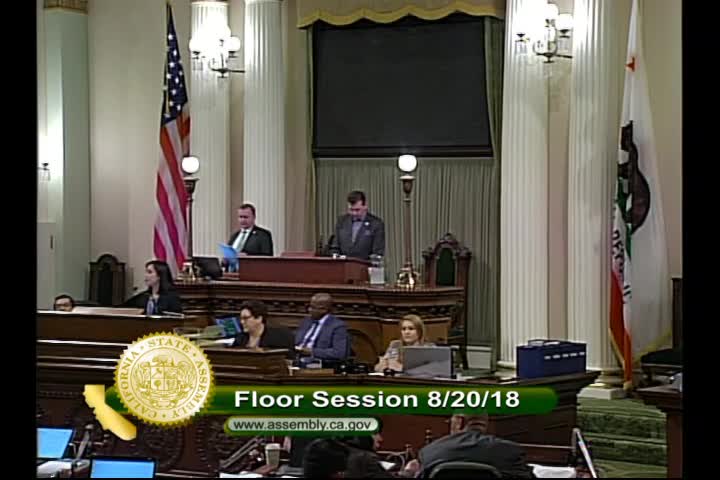
Assembly Floor
 3MIN
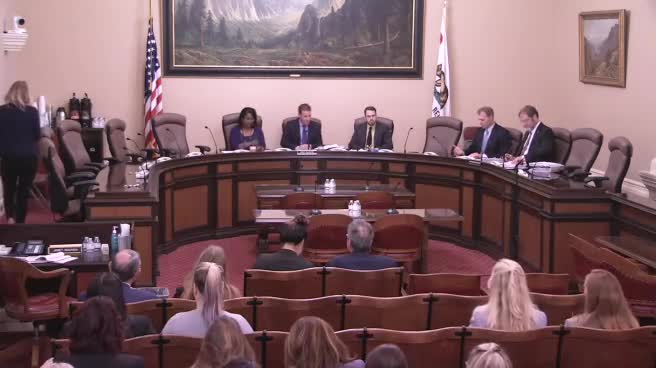
Senate Standing Committee on Governance and Finance
 6MIN
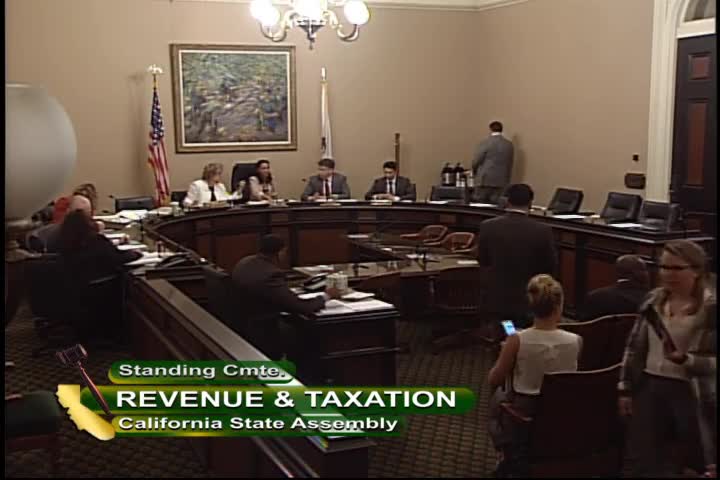
Assembly Standing Committee on Revenue and Taxation
Bill Author