AB 2416: Health care coverage.
- Session Year: 2017-2018
- House: Assembly
- Latest Version Date: 2018-04-26
Existing federal law, the federal Patient Protection and Affordable Care Act (PPACA), enacted various health care coverage market reforms that took effect on January 1, 2014. PPACA required each state, by January 1, 2014, to establish an American Health Benefit Exchange to facilitate the purchase of qualified health benefit plans by qualified individuals and qualified small employers. Existing state law creates the California Health Benefit Exchange, also known as Covered California, to facilitate the purchase of qualified health plans by qualified individuals and qualified small employers.
Existing law, the Knox-Keene Health Care Service Plan Act of 1975, provides for the licensure and regulation of health care service plans, including individual health benefit plans, by the Department of Managed Health Care, and makes a willful violation of its provisions a crime. Existing law provides for the Medi-Cal program, which is administered by the State Department of Health Care Services, under which qualified low-income individuals receive health care services. The Medi-Cal program is, in part, governed and funded by federal Medicaid program provisions. Under existing law, one of the methods by which Medi-Cal services are provided is pursuant to contracts with various types of managed care plans.
Existing law requires a health care service plan, on and after October 1, 2013, to offer, market, and sell all of the plans health benefit plans that are sold in the individual market for policy years on or after January 1, 2014, to all individuals and dependents in a service area in which the plan provides or arranges for the provision of health care services.
This bill bill, commencing January 1, 2020, would require a health care service plan that has a contract with the State Department of Health Care Services to offer Medi-Cal managed care plans or prepaid health plans, or a Program of All-Inclusive Care for the Elderly (PACE) organization contract with the department, plans to negotiate with Covered California regarding offering individual products on the Exchange in approved service areas that overlap with counties where there are 2 or fewer health care service plans offering products on the Exchange, as specified. Because a willful violation of the bills requirements would be a crime, the bill would impose a state-mandated local program.
The California Constitution requires the state to reimburse local agencies and school districts for certain costs mandated by the state. Statutory provisions establish procedures for making that reimbursement.
This bill would provide that no reimbursement is required by this act for a specified reason.
Existing federal law, the federal Patient Protection and Affordable Care Act (PPACA), enacted various health care coverage market reforms that took effect on January 1, 2014. PPACA required each state, by January 1, 2014, to establish an American Health Benefit Exchange to facilitate the purchase of qualified health benefit plans by qualified individuals and qualified small employers. Existing state law creates the California Health Benefit Exchange, also known as Covered California, to facilitate the purchase of qualified health plans by qualified individuals and qualified small employers.
Existing law, the Knox-Keene Health Care Service Plan Act of 1975, provides for the licensure and regulation of health care service plans, including individual health benefit plans, by the Department of Managed Health Care, and makes a willful violation of its provisions a crime. Existing law provides for the Medi-Cal program, which is administered by the State Department of Health Care Services, under which qualified low-income individuals receive health care services. The Medi-Cal program is, in part, governed and funded by federal Medicaid program provisions. Under existing law, one of the methods by which Medi-Cal services are provided is pursuant to contracts with various types of managed care plans.
Existing law requires a health care service plan, on and after October 1, 2013, to offer, market, and sell all of the plans health benefit plans that are sold in the individual market for policy years on or after January 1, 2014, to all individuals and dependents in a service area in which the plan provides or arranges for the provision of health care services.
This bill would require a health care service plan that has a contract with the State Department of Health Care Services to offer Medi-Cal managed care plans or prepaid health plans, or a Program of All-Inclusive Care for the Elderly (PACE) organization contract with the department, to negotiate with Covered California regarding offering individual products on the Exchange in approved service areas that overlap with counties where there are 2 or fewer health care service plans offering products on the Exchange, as specified. Because a willful violation of the bills requirements would be a crime, the bill would impose a state-mandated local program.
The California Constitution requires the state to reimburse local agencies and school districts for certain costs mandated by the state. Statutory provisions establish procedures for making that reimbursement.
This bill would provide that no reimbursement is required by this act for a specified reason.
Existing law, the Knox-Keene Health Care Service Plan Act of 1975, provides for the licensure and regulation of health care service plans by the Department of Managed Health Care, and makes a willful violation of its provisions a crime. Existing law prohibits the cancellation or nonrenewal of individual or group health benefit plans by a health care service plan except in specified circumstances.This bill would make technical, nonsubstantive changes by deleting obsolete provisions.Existing law, the Knox-Keene Health Care Service Plan Act of 1975, provides for the licensure and regulation of health care service plans by the Department of Managed Health Care, and makes a willful violation of its provisions a crime. Existing law prohibits the cancellation or nonrenewal of individual or group health benefit plans by a health care service plan except in specified circumstances.
This bill would make technical, nonsubstantive changes by deleting obsolete provisions.
If On or after January 1, 2020, if a health care service plan has a contract with the State Department of Health Care Services pursuant to Chapter 7 (commencing with Section 14000), 14000) or Chapter 8 (commencing with Section 14200), or Chapter 8.75 (commencing with Section 14591) 14200) of Part 3 of Division 9 of the Welfare and Institutions Code, the plan shall negotiate with Covered California regarding offering individual products on the Exchange in the plans approved service areas that overlap with counties where there are two or fewer health care service plans offering products on the Exchange as of the plan year beginning in 2018.
SEC. 2.No reimbursement is required by this act pursuant to Section 6 of Article XIIIB of the California Constitution because the only costs that may be incurred by a local agency or school district will be incurred because this act creates a new crime or infraction, eliminates a crime or infraction, or changes the penalty for a crime or infraction, within the meaning of Section 17556 of the Government Code, or changes the definition of a crime within the meaning of Section 6 of Article XIIIB of the California Constitution.
If a health care service plan has a contract with the State Department of Health Care Services pursuant to Chapter 7 (commencing with Section 14000), Chapter 8 (commencing with Section 14200), or Chapter 8.75 (commencing with Section 14591) of Part 3 of Division 9 of the Welfare and Institutions Code, the plan shall negotiate with Covered California regarding offering individual products on the Exchange in the plans approved service areas that overlap with counties where there are two or fewer health care service plans offering products on the Exchange as of the plan year beginning in 2018.
SEC. 2.No reimbursement is required by this act pursuant to Section 6 of Article XIIIB of the California Constitution because the only costs that may be incurred by a local agency or school district will be incurred because this act creates a new crime or infraction, eliminates a crime or infraction, or changes the penalty for a crime or infraction, within the meaning of Section 17556 of the Government Code, or changes the definition of a crime within the meaning of Section 6 of Article XIIIB of the California Constitution.
SECTION 1.Section 1365 of the Health and Safety Code is amended to read:1365.(a)An enrollment or a subscription shall not be canceled or not renewed except for the following reasons:(1)(A)For nonpayment of the required premiums by the individual, employer, or contractholder if the individual, employer, or contractholder has been duly notified and billed for the charge and at least a 30-day grace period has elapsed since the date of notification or, if longer, the period of time required for notice and any other requirements pursuant to Section 2703, 2712, or 2742 of the federal Public Health Service Act (42 U.S.C. Secs. 300gg-2, 300gg-12, and 300gg-42) and any subsequent rules or regulations has elapsed.(B)Pursuant to subparagraph (A), a health care service plan shall continue to provide coverage as required by the individuals, employers, or contractholders health care service plan contract during the period described in subparagraph (A).(2)The plan demonstrates fraud or an intentional misrepresentation of material fact under the terms of the health care service plan contract by the individual contractholder or employer.(3)In the case of an individual health care service plan contract, the individual subscriber no longer resides, lives, or works in the plans service area, but only if the coverage is terminated uniformly without regard to any health status-related factor of covered individuals.(4)In the case of a group health care service plan contract, violation of a material contract provision relating to employer contribution or group participation rates by the contractholder or employer.(5)If the plan ceases to provide or arrange for the provision of health benefits for new health care service plan contracts in the individual or group market, or all markets, in this state, provided, however, that the following conditions are satisfied:(A)Notice of the decision to cease new or existing health benefit plans in the state is provided to the director, the individual or group contractholder or employer, and the enrollees covered under those contracts, at least 180 days prior to discontinuation of those contracts.(B)Health benefit plans shall not be canceled for 180 days after the date of the notice required under subparagraph (A) and, for that business of a plan that remains in force, any plan that ceases to offer for sale new health benefit plans shall continue to be governed by this section with respect to business conducted under this section.(C)Except as authorized under subdivision (b) of Section 1357.09 and Section 1357.10, a plan that ceases to write new health benefit plans in the individual or group market, or all markets, in this state shall be prohibited from offering for sale health benefit plans in that market or markets in this state for a period of five years from the date of the discontinuation of the last coverage not so renewed.(6)If the plan withdraws a health benefit plan from the market, provided that all of the following conditions are satisfied:(A)The plan notifies all affected subscribers, contractholders, employers, and enrollees and the director at least 90 days prior to the discontinuation of the plan.(B)The plan makes available to the individual or group contractholder or employer all health benefit plans that it makes available to new individual or group business, respectively.(C)In exercising the option to discontinue a health benefit plan under this paragraph and in offering the option of coverage under subparagraph (B), the plan acts uniformly without regard to the claims experience of the individual or contractholder or employer, or any health status-related factor relating to enrollees or potential enrollees.(7)In the case of a group health benefit plan, if an individual or employer ceases to be a member of a guaranteed association, as defined in subdivision (n) of Section 1357, but only if that coverage is terminated under this paragraph uniformly without regard to any health status-related factor relating to any enrollee.(b)(1)An enrollee or subscriber who alleges that an enrollment or subscription has been or will be improperly canceled, rescinded, or not renewed may request a review by the director pursuant to Section 1368.(2)If the director determines that a proper complaint exists, the director shall notify the plan and the enrollee or subscriber who requested the review.(3)If, after review, the director determines that the cancellation, rescission, or failure to renew is contrary to existing law, the director shall order the plan to reinstate the enrollee or subscriber. Within 15 days after receipt of that order, the health care service plan shall request a hearing or reinstate the enrollee or subscriber.(4)If an enrollee or subscriber requests a review of the health care service plans determination to cancel or rescind or failure to renew the enrollees or subscribers health care service plan contract pursuant to this section, the health care service plan shall continue to provide coverage to the enrollee or subscriber under the terms of the contract until a final determination of the enrollees or subscribers request for review has been made by the director. This paragraph shall not apply if the health care service plan cancels or does not renew the enrollees or subscribers health care service plan contract for nonpayment of premiums pursuant to paragraph (1) of subdivision (a).(5)A reinstatement pursuant to this subdivision shall be retroactive to the time of cancellation, rescission, or failure to renew and the plan shall be liable for the expenses incurred by the subscriber or enrollee for covered health care services from the date of cancellation, rescission, or nonrenewal to and including the date of reinstatement. The health care service plan shall reimburse the enrollee or subscriber for any expenses incurred pursuant to this paragraph within 30 days of receipt of the completed claim.(c)This section shall not abrogate any preexisting contracts entered into prior to the effective date of this chapter between a subscriber or enrollee and a health care service plan or a specialized health care service plan, including, but not limited to, the financial liability of the plan, except that each plan shall, if directed to do so by the director, exercise its authority, if any, under those preexisting contracts to conform them to existing law.(d)As used in this section, health benefit plan means any individual or group insurance policy or health care service plan contract that provides medical, hospital, and surgical benefits. The term does not include accident only, credit, or disability income coverage, coverage of Medicare services pursuant to contracts with the United States government, Medicare supplement coverage, long-term care insurance, dental or vision coverage, coverage issued as a supplement to liability insurance, insurance arising out of workers compensation law or similar law, automobile medical payment insurance, or insurance under which benefits are payable with or without regard to fault and that is statutorily required to be contained in any liability insurance policy or equivalent self-insurance.(a)An enrollment or a subscription shall not be canceled or not renewed except for the following reasons:
(1)(A)For nonpayment of the required premiums by the individual, employer, or contractholder if the individual, employer, or contractholder has been duly notified and billed for the charge and at least a 30-day grace period has elapsed since the date of notification or, if longer, the period of time required for notice and any other requirements pursuant to Section 2703, 2712, or 2742 of the federal Public Health Service Act (42 U.S.C. Secs. 300gg-2, 300gg-12, and 300gg-42) and any subsequent rules or regulations has elapsed.
(B)Pursuant to subparagraph (A), a health care service plan shall continue to provide coverage as required by the individuals, employers, or contractholders health care service plan contract during the period described in subparagraph (A).
(2)The plan demonstrates fraud or an intentional misrepresentation of material fact under the terms of the health care service plan contract by the individual contractholder or employer.
(3)In the case of an individual health care service plan contract, the individual subscriber no longer resides, lives, or works in the plans service area, but only if the coverage is terminated uniformly without regard to any health status-related factor of covered individuals.
(4)In the case of a group health care service plan contract, violation of a material contract provision relating to employer contribution or group participation rates by the contractholder or employer.
(5)If the plan ceases to provide or arrange for the provision of health benefits for new health care service plan contracts in the individual or group market, or all markets, in this state, provided, however, that the following conditions are satisfied:
(A)Notice of the decision to cease new or existing health benefit plans in the state is provided to the director, the individual or group contractholder or employer, and the enrollees covered under those contracts, at least 180 days prior to discontinuation of those contracts.
(B)Health benefit plans shall not be canceled for 180 days after the date of the notice required under subparagraph (A) and, for that business of a plan that remains in force, any plan that ceases to offer for sale new health benefit plans shall continue to be governed by this section with respect to business conducted under this section.
(C)Except as authorized under subdivision (b) of Section 1357.09 and Section 1357.10, a plan that ceases to write new health benefit plans in the individual or group market, or all markets, in this state shall be prohibited from offering for sale health benefit plans in that market or markets in this state for a period of five years from the date of the discontinuation of the last coverage not so renewed.
(6)If the plan withdraws a health benefit plan from the market, provided that all of the following conditions are satisfied:
(A)The plan notifies all affected subscribers, contractholders, employers, and enrollees and the director at least 90 days prior to the discontinuation of the plan.
(B)The plan makes available to the individual or group contractholder or employer all health benefit plans that it makes available to new individual or group business, respectively.
(C)In exercising the option to discontinue a health benefit plan under this paragraph and in offering the option of coverage under subparagraph (B), the plan acts uniformly without regard to the claims experience of the individual or contractholder or employer, or any health status-related factor relating to enrollees or potential enrollees.
(D)For small employer health care service plan contracts offered under Article 3.1 (commencing with Section 1357), the premium for the new plan contract complies with the renewal increase requirements set forth in Section 1357.12. This subparagraph shall not apply after December 31, 2013.(7)In the case of a group health benefit plan, if an individual or employer ceases to be a member of a guaranteed association, as defined in subdivision (n) of Section 1357, but only if that coverage is terminated under this paragraph uniformly without regard to any health status-related factor relating to any enrollee.
(b)(1)An enrollee or subscriber who alleges that an enrollment or subscription has been or will be improperly canceled, rescinded, or not renewed may request a review by the director pursuant to Section 1368.
(2)If the director determines that a proper complaint exists, the director shall notify the plan and the enrollee or subscriber who requested the review.
(3)If, after review, the director determines that the cancellation, rescission, or failure to renew is contrary to existing law, the director shall order the plan to reinstate the enrollee or subscriber. Within 15 days after receipt of that order, the health care service plan shall request a hearing or reinstate the enrollee or subscriber.
(4)If an enrollee or subscriber requests a review of the health care service plans determination to cancel or rescind or failure to renew the enrollees or subscribers health care service plan contract pursuant to this section, the health care service plan shall continue to provide coverage to the enrollee or subscriber under the terms of the contract until a final determination of the enrollees or subscribers request for review has been made by the director. This paragraph shall not apply if the health care service plan cancels or does not renew the enrollees or subscribers health care service plan contract for nonpayment of premiums pursuant to paragraph (1) of subdivision (a).
(5)A reinstatement pursuant to this subdivision shall be retroactive to the time of cancellation, rescission, or failure to renew and the plan shall be liable for the expenses incurred by the subscriber or enrollee for covered health care services from the date of cancellation, rescission, or nonrenewal to and including the date of reinstatement. The health care service plan shall reimburse the enrollee or subscriber for any expenses incurred pursuant to this paragraph within 30 days of receipt of the completed claim.
(c)This section shall not abrogate any preexisting contracts entered into prior to the effective date of this chapter between a subscriber or enrollee and a health care service plan or a specialized health care service plan, including, but not limited to, the financial liability of the plan, except that each plan shall, if directed to do so by the director, exercise its authority, if any, under those preexisting contracts to conform them to existing law.
(d)As used in this section, health benefit plan means any individual or group insurance policy or health care service plan contract that provides medical, hospital, and surgical benefits. The term does not include accident only, credit, or disability income coverage, coverage of Medicare services pursuant to contracts with the United States government, Medicare supplement coverage, long-term care insurance, dental or vision coverage, coverage issued as a supplement to liability insurance, insurance arising out of workers compensation law or similar law, automobile medical payment insurance, or insurance under which benefits are payable with or without regard to fault and that is statutorily required to be contained in any liability insurance policy or equivalent self-insurance.
(e)On or before July 1, 2011, the director may issue guidance to health care service plans regarding compliance with this section and that guidance shall not be subject to the Administrative Procedure Act (Chapter 3.5 (commencing with Section 11340) of Part 1 of Division 3 of Title 2 of the Government Code). Any guidance issued pursuant to this subdivision shall only be effective through December 31, 2013, or until the director adopts and effects regulations pursuant to the Administrative Procedure Act, whichever occurs first.|
Date
|
Status
|
|---|---|
| May 25, 2018 | In committee: Held under submission. |
| May 16, 2018 | In committee: Set, first hearing. Referred to APPR. suspense file. |
| Apr 30, 2018 | Re-referred to Com. on APPR. |
| Apr 26, 2018 | Read second time and amended. |
| Apr 25, 2018 | From committee: Amend, and do pass as amended and re-refer to Com. on APPR. (Ayes 14. Noes 0.) (April 24). |
| Apr 2, 2018 | Re-referred to Com. on HEALTH. |
| Mar 23, 2018 | From committee chair, with author's amendments: Amend, and re-refer to Com. on HEALTH. Read second time and amended. |
| Mar 22, 2018 | Referred to Com. on HEALTH. |
| Feb 15, 2018 | From printer. May be heard in committee March 17. |
| Feb 14, 2018 | Read first time. To print. |
|
Date
|
Description
|
Location
|
Votes
|
|
|---|---|---|---|---|
| Apr 24, 2018 | Do pass as amended and be re-referred to the Committee on [Appropriations] | Assembly Standing Committee on Health |
Passed |
This list shows positions taken on this bill by organizations on the date displayed, which is linked to the original source.
Positions by individuals are not included.
Date of Hearing: May 16, 2018
ASSEMBLY COMMITTEE ON APPROPRIATIONS
Lorena Gonzalez Fletcher, Chair
ABPCA Bill Id:AB 2416
Author:(Wood) – As Amended Ver:April 26, 2018
Policy Committee: | Health | Vote: | 14 - 0 |
Urgency: No State Mandated Local Program: Yes Reimbursable: No
SUMMARY:
This bill attempts to create more competition in areas of the state with two or fewer plans selling coverage on the individual market through the state's health benefits exchange (Covered California) by requiring Medi-Cal managed care plans in such counties to negotiate with Covered California for potential inclusion on the exchange.
FISCAL EFFECT:
- To the extent new workload is created in the areas of Qualified Health Plan certification application review and negotiation, Covered California may incur additional staff costs of up to $300,000 (California Health Trust Fund).
- If Covered California contracts with additional QHPs as a result of the negotiations required by this bill, this would likely result in unknown additional operational costs (California Health Trust Fund).
COMMENTS:
- Purpose. According to the author, this bill is intended to increase access to care by increasing health plan competition. There are many areas in California with one or two health plan choices and this lack of competition is impacting premium prices. This bill is supported by Health Access California and the Western Center on Law and Poverty and has no opposition.
- Background. Aside from the Medi-Cal optional expansion, the ACA also established online marketplaces (health benefits exchanges), to give individuals who do not have access to public coverage or affordable employer coverage the ability to purchase insurance. In order to make insurance more affordable, premium and cost-sharing credits are available to those who qualify. Competition is robust in many areas of the state, but availability of insurer choice varies across the state's 19 regions. Covered California is an "active purchaser," which means plans must meet certain criteria for inclusion. Many counties have two plan choices, while six counties have only one choice. There are no "bare" counties in California that lack health plan choices altogether.
Analysis Prepared by: Lisa Murawski / APPR. / (916) 319-2081
Date of Hearing: April 24, 2018
ASSEMBLY COMMITTEE ON HEALTH
Jim Wood, Chair
ABPCA Bill Id:AB 2416
Author:(Wood) – As Amended Ver:March 23, 2018
SUBJECT: Health care coverage.
SUMMARY: Requires a health care service plan (health plan) that has a contract with the State Department of Health Care Services (DHCS), as specified, to negotiate with Covered California regarding offering individual products on the Exchange in the health plan’s approved service areas that overlap with counties where there are two or fewer health plans offering products on the Exchange as of the 2018 plan year.
EXISTING LAW:
- Establishes the federal Patient Protection and Affordable Care Act (ACA), which enacts various health care coverage market reforms including the availability of health insurance exchanges.
- Establishes, in state government, the Exchange and also known as Covered California, as an independent public entity not affiliated with an agency or department, and requires the Exchange to compare and make available through selective contracting health insurance for individual and small business purchasers as authorized under the ACA. Specifies the powers and duties of the board governing the Exchange, and requires the board to facilitate the purchase of qualified health plans though the Exchange by qualified individuals and small employers.
- Requires the board in 2) above to determine the criteria and process for eligibility, enrollment, and disenrollment of enrollees and potential enrollees in the Exchange and coordinate that process with state and local government entities administering other health care coverage programs, as specified.
- Establishes the Department of Managed Health Care (DMHC) to regulate health plans and the California Department of Insurance (CDI) to regulate health insurers.
- Describes individual market to include health benefit plans defined as any individual health plan contract that provides medical, hospital, and surgical benefits. Requires a health plan to fairly and affirmatively offer, market, and sell all of the health plan’s health benefit plans that are sold in the individual market for policy years on and after January 1, 2014, to all individuals and dependents in each service area in which the plan provides or arranges for the provision of health care services.
- Requires a health insurer to consider as a single risk pool for rating purposes in the individual market the claims experience of all insureds and enrollees in all non-grandfathered individual health benefit plans offered by that health insurer in this state, whether offered as a health insurance policy, or individual health plan, including those insureds and enrollees who enroll in individual coverage through Covered California and insureds and enrollees who enroll in individual coverage outside of Covered California.
- Requires each year, a health insurance carrier to establish an index rate for the individual market in the state based on the total combined claims costs for providing essential health benefits, as defined, within the single risk pool.
- Establishes the Medi-Cal program, administered by DHCS, under which qualified low-income persons receive health care benefits and, in part, governed and funded by federal Medicaid program provisions.
- Provides that Medi-Cal services are provided pursuant to contracts with various types of managed care health plans, including through a county organized health system, two plan, and geographic managed care plan model.
FISCAL EFFECT: This bill has not yet been analyzed by a fiscal committee.
COMMENTS:
- PURPOSE OF THIS BILL. According to the author, this bill is intended to increase access to care by increasing health plan competition. There are many areas in California with one or two health plan choices and this lack of competition is impacting premium prices. This bill requires health plans with Medi-Cal contracts and that are also licensed to offer health plans that qualify under the ACA, to negotiate with Covered California, the state’s official health care marketplace where individuals, families and small businesses can find health care coverage through the ACA.
- BACKGROUND.
- Covered California. Aside from the Medi-Cal optional expansion, the ACA also established online marketplaces, known as Health Benefit Exchanges (HBEs) to give individuals, who do not have access to public coverage or affordable employer coverage, the ability to purchase insurance. In order to make insurance more affordable, premium and cost-sharing credits are available to those who qualify. Under the ACA, states were given the option to either administer their own HBEs or use the federal platform: Healthcare.gov. While the majority of states chose to use the federal platform, California created the California Health Benefit Exchange, known as Covered California. Covered California facilitates the purchase of qualified health plans (QHPs) by individuals and small employers and develops standard benefit designs to allow consumers to shop and compare QHP products. As an active purchaser of health insurance, Covered California negotiates premiums and QHP contract provisions, like its “Triple Aim” framework that seeks to lower costs, improve quality, and improve health outcomes, while ensuring a good choice of plans for consumers. Covered California has served approximately 2.5 million residents since enrollment began in 2014 and is the largest state-run marketplace.
- Covered California 2018 report. A March 8, 2018 Covered California analysis found that absent any federal policy action, premium increases for every state could range from 12 to 32 %. The analysis also noted that availability of insurer choice varies across and within states. Since 2014, most states have seen declines in the number of insurers offering individual market products, particularly those offering coverage through the health insurance marketplaces. In 2018, states averaged 3.5 insurers participating on their health insurance marketplaces, compared with an average of five insurers per state in 2014. Issuers have cited various reasons for exiting the markets, including a higher-than-anticipated risk score, underfunding of the federal risk-corridor program and uncertainty over implementation of policies affecting insurance markets (e.g., cost-sharing reduction payments, enforcement of the federal mandate) according to the report. Existence of insurer choice is important not only in providing consumer options, but because choice is directly correlated with lower premiums.
- Individual Market Changes. According to Covered California, for the 2018 plan year, Health Net Life reduced coverage in the following regions, where it serves about 1,367 people: Region 1 (Northern Counties); 3 (Contra Costa); 7 (Santa Clara); and, 11 (Fresno, Kings, and Madera); and, also expanded its offerings in Regions 15 and 16 (Los Angeles County); Region 17 (San Bernardino, Riverside); 18 (Orange); and, 19 (San Diego). Anthem Blue Cross (Anthem) withdrew from 16 of California’s 19 regions, affecting about 153,000 people. Anthem will, however, continue to serve Regions 1 (Northern counties); 7 (Santa Clara County); and, 10 (Central Valley), where it covers over 108,000 enrollees, approximately 41% of its current enrollment. Anthem’s change impacted individual products on and off California’s exchange.
- Counties with two or less health plans. In plan year 2018, Covered California has approximately 213 zip codes or partial zip codes (8 % of zip codes/partial zip codes in California) in which consumers have only one choice of health plan and approximately 635 zip codes/partial zip codes (24 % of zip codes in California) in which consumers are limited to two health plan choices. Consumers have only one health plan choice in Monterey, San Benito, San Luis Obispo, Santa Barbara, Inyo, Mono, and most of Kings County. Twenty-two additional counties have either two plans, or two or less plans, in all the zip codes/partial zip codes in the county. For approximately one-third of the zip codes in California, consumers are limited to one or two health plans in their region.
- Select Committee. In March 2017, California Assembly Speaker Anthony Rendon appointed a Select Committee on Health Care Delivery Systems and Universal Coverage (Select Committee) to identify the best and quickest path to universal coverage for California and to explore strategies for improving the health care system. The California State Assembly contracted with the University of California San Francisco in order to provide a report (UC report) to the Select Committee summarizing the Select Committee's hearings, including any findings and potential options.
The UC report states that California has made great progress in reducing the number of uninsured but has not yet achieved universal coverage. In high-performing health care systems around the globe, universal coverage is essential for ensuring access to care, improving outcomes and controlling costs. A strong primary care system, a comprehensive basic benefit package, provider payments that reward better health outcomes, a strong social safety net and administrative simplicity are other important ingredients for high performance. The UC report contends that California could take short-term steps and establish a longer term roadmap for system transformation. The report identified short term steps California can take within the current health care system as a potential path towards universal coverage, including addressing affordability and increasing participation for those already eligible for Medi-Cal and Covered California.
- SUPPORT. Health Access California states that in regions where consumers do not have an adequate choice of plans, the state has a strong interest to use its relationships and purchasing power to ask these licensed managed care plans to participate in Covered California. Western Center on Law and Poverty states that adding another health insurance plan to a region would further stabilize the market in those areas and potentially lower prices through increased competition.
- RELATED LEGISLATION.
- AB 2427 (Wood) requires DHCS to terminate or decline to renew or award a contract, in whole or in part, of a for-profit health plan or insurer if the Attorney General determines that the for-profit health plan or insurer engaged or engages in anticompetitive conduct or practices, as defined, or if DHCS determines that the for-profit health plan or insurer has a pattern or practice of not complying with the medical loss ratio, as specified. AB 2427 is pending in Assembly Health Committee.
- AB 2472 (Wood) requires the Covered California board to prepare an analysis and evaluation, known as a feasibility analysis, to determine the feasibility of a public health insurance plan option to increase competition and choice for health care consumers. Requires the feasibility analysis to include, among other things, an actuarial and economic analysis of a public health insurance plan and an analysis of the extent to which a new public health insurance plan option could address the underlying factors that limit health plan choices in some regions. Requires the board to submit the feasibility analysis to the Legislature on or before January 1, 2020. AB 2472 is pending in Assembly Health Committee.
- PREVIOUS LEGISLATION.
- AB 1602 (John A Pérez), Chapter 655, Statutes of 2010, and SB 900 (Alquist), Chapter 659, Statutes of 2010, establish the Exchange in California and delineate its powers and duties.
- ABX1 2 (Pan), Chapter 1, Statutes of 2013-14 First Extraordinary Session and SBX1 2 (Hernandez), Chapter 2, Statutes of 2013-14 First Extraordinary Session, establish health insurance market reforms contained in the ACA specific to individual purchasers, such as prohibiting insurers from denying coverage based on preexisting conditions; and, make conforming changes to small employer health insurance laws resulting from final federal regulations.
- AUTHOR’S AMENDMENTS. This bill currently applies to specified contracts with DHCS, including a Program of All-Inclusive Care for the Elderly (PACE) organization contract, and is effective on January 1, 2019. The author wishes to amend this bill as follows:
- Clarify that this bill only applies to licensed Medi-Cal managed care plans licensed by DMHC and delete provisions of this bill related to a PACE organization contract; and,
- Add a later implementation date of January 1, 2020 to address concerns that the Covered California application process for the 2019 contract year has begun.
REGISTERED SUPPORT / OPPOSITION:
Support
Health Access California
Western Center on Law and Poverty
Opposition
None on file.
Analysis Prepared by: Kristene Mapile / HEALTH / (916) 319-2097
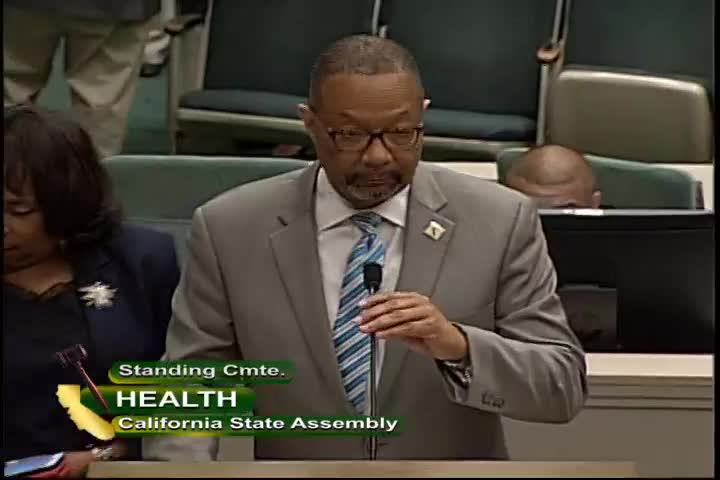
Bill Author