AB 2425: Property taxation: property records: transmission by mail or electronic format.
- Session Year: 2017-2018
- House: Assembly
- Latest Version Date: 2018-09-30
Existing property tax law requires, upon request of an assessee of property or designated representative, a county assessor to permit the assessee or representative to inspect or copy all information, documents, and records, other than market data, whether or not required to be kept or prepared by the assessor, relating to the appraisal and the assessment of the assessees property, and any penalties and interest thereon.
This bill would require, upon written request of an assessee or the assessees designated representative, the assessor to transmit the information, documents, or records by mail, or in electronic format if the information, documents, or records are available in electronic format or have been previously digitized. By imposing a new duty on county assessors, this bill would impose a state-mandated local program.
Existing property tax law, if the assessor, pursuant to the request of any party, provides information or records that the assessor is not required by law to prepare or keep, authorizes the county to require that a fee reasonably related to the actual cost of developing and providing that information be paid by the party receiving the information, including developmental and indirect costs.
This bill would provide that fees for costs of providing information or records that the assessor is not required by law to prepare or keep do not apply to information, documents, or records requested by the assessee or representative if that information is transmitted in electronic format, except that any developmental or indirect costs to provide that information, such as costs to acquire or compile data that is not required to be kept or prepared by the assessor, may be recovered.
Existing property tax law requires each person owning taxable personal property, other than a certain class of manufactured housing, having an aggregate cost of $100,000 or more for any assessment year to file a signed property statement with the assessor. Existing property tax law also requires every person, as required by the county assessor, to make available for examination information or records regarding his or her property or any other personal property located on premises that he or she owns or controls.
This bill would require, upon written request of an assessor, the assessee or the assessees designated representative to transmit the information or records by mail, or in electronic format if the information or records are available in electronic format or have been previously digitized.
Existing property tax law requires a person owning, claiming, possessing, or controlling property subject to local assessment to make available at his or her principal place of business, principal location or principal address in California, or at a place mutually agreeable to the county assessor and the person, a true copy of business records relevant to the amount, cost, and value of all property that he or she owns, claims, possesses, or controls within the county.
This bill would eliminate the requirement of making a true copy of business records available at a place mutually agreeable to the county assessor and the person, and would require, upon written request of an assessor, that copy business records be transmitted by an assessee or the assessees designated representative by mail, or electronic format if the business records are available in electronic format or have been previously digitized.
This bill would incorporate additional changes to Section 408 of the Revenue and Taxation Code proposed by SB 1172 to be operative only if this bill and SB 1172 are enacted and this bill is enacted last.
The California Constitution requires the state to reimburse local agencies and school districts for certain costs mandated by the state. Statutory provisions establish procedures for making that reimbursement.
This bill would provide that no reimbursement is required by this act for a specified reason.
Existing property tax law requires, upon request of an assessee of property or designated representative, a county assessor to permit the assessee or representative to inspect or copy all information, documents, and records, other than market data, whether or not required to be kept or prepared by the assessor, relating to the appraisal and the assessment of the assessees property, and any penalties and interest thereon.
This bill would require, upon written request of an assessee or the assessees designated representative, the assessor to transmit the information, documents, or records by mail, or in electronic format if available. the information, documents, or records are available in electronic format or have been previously digitized. By imposing a new duty on county assessors, this bill would impose a state-mandated local program.
Existing property tax law, if the assessor, pursuant to the request of any party, provides information or records that the assessor is not required by law to prepare or keep, authorizes the county to require that a fee reasonably related to the actual cost of developing and providing that information be paid by the party receiving the information, including developmental and indirect costs.
This bill would provide that fees for costs of providing information or records that the assessor is not required by law to prepare or keep do not apply to information, documents, or records requested by the assessee or representative if that information is transmitted in electronic format, except that any developmental or indirect costs to provide that information, such as costs to acquire or compile data that is not required to be kept or prepared by the assessor, may be recovered.
Existing property tax law requires each person owning taxable personal property, other than a certain class of manufactured housing, having an aggregate cost of $100,000 or more for any assessment year to file a signed property statement with the assessor. Existing property tax law also requires every person, as required by the county assessor, to make available for examination information or records regarding his or her property or any other personal property located on premises that he or she owns or controls.
This bill would require, upon written request of an assessor, the assessee or the assessees designated representative to transmit the information or records by mail, or in electronic format if available, as provided. the information or records are available in electronic format or have been previously digitized.
Existing property tax law requires a person owning, claiming, possessing, or controlling property subject to local assessment to make available at his or her principal place of business, principal location or principal address in California, or at a place mutually agreeable to the county assessor and the person, a true copy of business records relevant to the amount, cost, and value of all property that he or she owns, claims, possesses, or controls within the county.
This bill would eliminate the requirement of making a true copy of business records available at a place mutually agreeable to the county assessor and the person, and would require, upon written request of an assessor, that copy business records be transmitted by an assessee or the assessees designated representative by mail, or electronic format if available, as provided. the business records are available in electronic format or have been previously digitized.
This bill would incorporate additional changes to Section 408 of the Revenue and Taxation Code proposed by SB 1172 to be operative only if this bill and SB 1172 are enacted and this bill is enacted last.
The California Constitution requires the state to reimburse local agencies and school districts for certain costs mandated by the state. Statutory provisions establish procedures for making that reimbursement.
This bill would provide that no reimbursement is required by this act for a specified reason.
Existing property tax law requires, upon request of an assessee of property or designated representative, a county assessor to permit the assessee or representative to inspect or copy all information, documents, and records, other than market data, whether or not required to be kept or prepared by the assessor, relating to the appraisal and the assessment of the assessees property, and any penalties and interest thereon.
This bill would require, upon written request of an assessee or the assessees designated representative, the assessor to transmit the information, documents, or records by mail, or in electronic format if available. By imposing a new duty on county assessors, this bill would impose a state-mandated local program.
Existing property tax law, if the assessor, pursuant to the request of any party, provides information or records that the assessor is not required by law to prepare or keep, authorizes the county to require that a fee reasonably related to the actual cost of developing and providing that information be paid by the party receiving the information, including developmental and indirect costs.
This bill would provide that fees for costs of providing information or records that the assessor is not required by law to prepare or keep do not apply to information, documents, or records requested by the assessee or representative if that information is transmitted in electronic format, except that any developmental or indirect costs to provide that information, such as costs to acquire or compile data that is not required to be kept or prepared by the assessor, may be recovered.
Existing property tax law requires each person owning taxable personal property, other than a certain class of manufactured housing, having an aggregate cost of $100,000 or more for any assessment year to file a signed property statement with the assessor. Existing property tax law also requires every person, as required by the county assessor, to make available for examination information or records regarding his or her property or any other personal property located on premises that he or she owns or controls.
This bill would authorize the county assessor to require that information or record, be provided to the assessor by mail or in an electronic format, if available.This bill would require, upon written request of an assessor, the assessee or the assessees designated representative to transmit the information or records by mail, or in electronic format if available, as provided.
Existing property tax law requires a person owning, claiming, possessing, or controlling property subject to local assessment to make available at his or her principal place of business, principal location or principal address in California, or at a place mutually agreeable to the county assessor and the person, a true copy of business records relevant to the amount, cost, and value of all property that he or she owns, claims, possesses, or controls within the county.
This bill would instead require that copy of records to be provided to the county assessor upon request by mail, or electronic format if available.This bill would eliminate the requirement of making a true copy of business records available at a place mutually agreeable to the county assessor and the person, and would require, upon written request of an assessor, that copy business records be transmitted by an assessee or the assessees designated representative by mail, or electronic format if available, as provided.
The California Constitution requires the state to reimburse local agencies and school districts for certain costs mandated by the state. Statutory provisions establish procedures for making that reimbursement.
This bill would provide that no reimbursement is required by this act for a specified reason.
Existing law requires each person owning taxable personal property, other than a certain class of manufactured housing, having an aggregate cost of $100,000 or more for any assessment year to file a signed property statement with the assessor. Existing law also requires every person, as required by the county assessor, to make available for examination information or records regarding his or her property or any other personal property located on premises that he or she owns or controls.
This bill would authorize the county assessor to require that information or record, be provided to the assessor by mail or in an electronic format, if available.
Existing law requires a person owning, claiming, possessing, or controlling property subject to local assessment to make available at his or her principal place of business, principal location or principal address in California, or at a place mutually agreeable to the county assessor and the person, a true copy of business records relevant to the amount, cost, and value of all property that he or she owns, claims, possesses, or controls within the county.
This bill would instead require that copy of records to be provided to the county assessor upon request by mail, or electronic format if available.
Existing sales and use tax laws impose a tax on retailers measured by the gross receipts from the sale of tangible personal property sold at retail in this state, or on the storage, use, or other consumption in this state of tangible personal property purchased from a retailer for storage, use, or other consumption in this state. The Sales and Use Tax Law defines in this state for purposes of those taxes.This bill would make nonsubstantive changes to that definition.Existing sales and use tax laws impose a tax on retailers measured by the gross receipts from the sale of tangible personal property sold at retail in this state, or on the storage, use, or other consumption in this state of tangible personal property purchased from a retailer for storage, use, or other consumption in this state. The Sales and Use Tax Law defines in this state for purposes of those taxes.
This bill would make nonsubstantive changes to that definition.
(a)Except as otherwise provided in subdivisions (b), (c), (d), (e), and (g), any information and records in the assessors office that are not required by law to be kept or prepared by the assessor, disabled veterans exemption claims, and homeowners exemption claims, are not public documents and shall not be open to public inspection. Property receiving the homeowners exemption shall be clearly identified on the assessment roll. The assessor shall maintain records which shall be open to public inspection to identify those claimants who have been granted the homeowners exemption.
(b)The assessor may provide any appraisal data in his or her possession to the assessor of any county.
The assessor shall disclose information, furnish abstracts, or permit access to all records in his or her office to law enforcement agencies, the county grand jury, the board of supervisors or their duly authorized agents, employees, or representatives when conducting an investigation of the assessors office pursuant to Section 25303 of the Government Code, the county recorder when conducting an investigation to determine whether a documentary transfer tax is imposed, the Controller, employees of the Controller for property tax postponement purposes, probate referees, employees of the Franchise Tax Board for tax administration purposes only, staff appraisers of the Division of Financial Institutions, the Department of Transportation, the Department of General Services, the State Board of Equalization, the State Lands Commission, the State Department of Social Services, the Department of Child Support Services, the Department of Water Resources, and other duly authorized legislative or administrative bodies of the state pursuant to their authorization to examine the records. Whenever the assessor discloses information, furnishes abstracts, or permits access to records in his or her office to staff appraisers of the Department of Business Oversight, the Department of Transportation, the Department of General Services, the State Lands Commission, or the Department of Water Resources pursuant to this section, the department shall reimburse the assessor for any costs incurred as a result thereof.
(c)Upon the request of the tax collector, the assessor shall disclose and provide to the tax collector information used in the preparation of that portion of the unsecured roll for which the taxes thereon are delinquent. The tax collector shall certify to the assessor that he or she needs the information requested for the enforcement of the tax lien in collecting those delinquent taxes. Information requested by the tax collector may include social security numbers, and the assessor shall recover from the tax collector his or her actual and reasonable costs for providing the information. The tax collector shall add the costs described in the preceding sentence to the assessees delinquent tax lien and collect those costs subject to subdivision (e) of Section 2922.
(d)The assessor shall, upon the request of an assessee or his or her designated representative, permit the assessee or representative to inspect or copy any market data in the assessors possession. For purposes of this subdivision, market data means any information in the assessors possession, whether or not required to be prepared or kept by him or her, relating to the sale of any property comparable to the property of the assessee, if the assessor bases his or her assessment of the assessees property, in whole or in part, on that comparable sale or sales. The assessor shall provide the names of the seller and buyer of each property on which the comparison is based, the location of that property, the date of the sale, and the consideration paid for the property, whether paid in money or otherwise. However, for purposes of providing market data, the assessor may not display any document relating to the business affairs or property of another.
(e)(1)With respect to information, documents, and records, other than market data as defined in subdivision (d), the assessor shall, upon request of an assessee of property, or his or her designated representative, permit the assessee or representative to inspect or copy all information, documents, and records, including auditors narrations and workpapers, whether or not required to be kept or prepared by the assessor, relating to the appraisal and the assessment of the assessees property, and any penalties and interest thereon.
(A)Upon written request of an assessee or the assessees designated representative, the assessor shall transmit the information, documents, or records described in paragraph (1) by mail, or in electronic format if the information, documents, or records are available in electronic format or have been previously digitized. This subparagraph shall not be construed or interpreted to limit the authority of the assessee or the assessees designated representative to also inspect or copy information, documents, or records described in paragraph (1).
(B)Information, documents, and records requested by an assessee, or the assessees designated representative, shall be transmitted pursuant to subparagraph (A) within a reasonable time period.
(C)The costs enumerated in subdivision (a) of Section 409 shall not apply to information, documents, or records requested by the assessee or the assessees designated representative if that information is transmitted in electronic format, except that any developmental or indirect costs to provide that information, such as costs to acquire or compile data that is not required to be kept or prepared by the assessor, may be recovered pursuant to Section 409.
(2)After enrolling an assessment, the assessor shall respond to a written request for information supporting the assessment, including, but not limited to, any appraisal and other data requested by the assessee.
(3)Except as provided in Section 408.1, an assessee, or his or her designated representative, may not be permitted to inspect or copy information and records that also relate to the property or business affairs of another, unless that disclosure is ordered by a competent court in a proceeding initiated by a taxpayer seeking to challenge the legality of the assessment of his or her property.
(f)(1)Permission for the inspection or copying requested pursuant to subdivision (d) or (e) shall be granted as soon as reasonably possible to the assessee or his or her designated representative.
(2)If the assessee, or his or her designated representative, requests the assessor to make copies of any of the requested records, the assessee shall reimburse the assessor for the reasonable costs incurred in reproducing and providing the copies.
(3)If the assessor fails to permit the inspection or copying of materials or information as requested pursuant to subdivision (d) or (e) and the assessor introduces any requested materials or information at any assessment appeals board hearing, the assessee or his or her representative may request and shall be granted a continuance for a reasonable period of time. The continuance shall extend the two-year period specified in subdivision (c) of Section 1604 for a period of time equal to the period of continuance.
(g)Upon the written request of the tax collector, the assessor shall provide to the tax collector information for the preparation and enforcement of Part 6 (commencing with Section 3351). The tax collector shall certify to the assessor that he or she needs the contact information to assist with the preparation and enforcement of Part 6 (commencing with Section 3351). The assessor shall provide the information, which may not include social security numbers. Any information provided to the tax collector pursuant to this subdivision shall not become a public record and shall not be open to public inspection. The tax collector shall reimburse the assessor for the actual and reasonable costs incurred by the assessor for providing the information to administer this subdivision. The tax collector shall add the costs described in the preceding sentence to the assessees delinquent taxes and include the costs incurred subject to Sections 4112 and 4672.2. The tax collector or his or her designated employee shall, under penalty of perjury, certify to the assessor that he or she needs the information to assist with the preparation and enforcement of Part 6 (commencing with Section 3351), and that the information provided pursuant to this subdivision that is not public record and that is not open to public inspection shall not become public record and shall not be open to public inspection.
SEC. 1.5.Section 408 of the Revenue and Taxation Code is amended to read:408.(a)Except as otherwise provided in subdivisions (b), (c), (d), (e), and (g), any information and records in the assessors office that are not required by law to be kept or prepared by the assessor, disabled veterans exemption claims, and homeowners exemption claims are not public documents and shall not be open to public inspection. Property receiving the homeowners exemption shall be clearly identified on the assessment roll. The assessor shall maintain records that shall be open to public inspection to identify those claimants who have been granted the homeowners exemption.
(b)(1)The assessor may provide any appraisal data in his or her possession to the assessor of any county.
(2)The assessor shall disclose information, furnish abstracts, or permit access to all records in his or her office to law enforcement agencies, the county grand jury, the board of supervisors or their duly authorized agents, employees, or representatives when conducting an investigation of the assessors office pursuant to Section 25303 of the Government Code, the county recorder when conducting an investigation to determine whether a documentary transfer tax is imposed, the Controller, employees of the Controller for property tax postponement purposes, probate referees, employees of the Franchise Tax Board for tax administration purposes only, staff appraisers of the Division of Financial Institutions, the Department of Transportation, the Department of General Services, the High-Speed Rail Authority, the State Board of Equalization, the State Lands Commission, the State Department of Social Services, the Department of Child Support Services, the Department of Water Resources, and other duly authorized legislative or administrative bodies of the state pursuant to their authorization to examine the records. Whenever the assessor discloses information, furnishes abstracts, or permits access to records in his or her office to staff appraisers of the Department of Business Oversight, the Department of Transportation, the Department of General Services, the High-Speed Rail Authority, the State Lands Commission, or the Department of Water Resources pursuant to this section, the department, commission, or authority shall reimburse the assessor for any costs incurred as a result.
(c)Upon the request of the tax collector, the assessor shall disclose and provide to the tax collector information used in the preparation of that portion of the unsecured roll for which the taxes thereon are delinquent. The tax collector shall certify to the assessor that he or she needs the information requested for the enforcement of the tax lien in collecting those delinquent taxes. Information requested by the tax collector may include social security numbers, and the assessor shall recover from the tax collector his or her actual and reasonable costs for providing the information. The tax collector shall add the costs described in the preceding sentence to the assessees delinquent tax lien and collect those costs subject to subdivision (e) of Section 2922.
(d)The assessor shall, upon the request of an assessee or his or her designated representative, permit the assessee or representative to inspect or copy any market data in the assessors possession. For purposes of this subdivision, market data means any information in the assessors possession, whether or not required to be prepared or kept by him or her, relating to the sale of any property comparable to the property of the assessee, if the assessor bases his or her assessment of the assessees property, in whole or in part, on that comparable sale or sales. The assessor shall provide the names of the seller and buyer of each property on which the comparison is based, the location of that property, the date of the sale, and the consideration paid for the property, whether paid in money or otherwise. However, for purposes of providing market data, the assessor shall not display any document relating to the business affairs or property of another.
(e)(1)With respect to information, documents, and records, other than market data as defined in subdivision (d), the assessor shall, upon request of an assessee of property or his or her designated representative, permit the assessee or representative to inspect or copy all information, documents, and records, including auditors narrations and workpapers, whether or not required to be kept or prepared by the assessor, relating to the appraisal and the assessment of the assessees property, and any penalties and interest.
(A)Upon written request of an assessee or the assessees designated representative, the assessor shall transmit the information, documents, or records described in paragraph (1) by mail, or in electronic format if the information, documents, or records are available in electronic format or have been previously digitized. This subparagraph shall not be construed or interpreted to limit the authority of the assessee or the assessees designated representative to also inspect or copy information, documents, or records described in paragraph (1).
(B)Information, documents, and records requested by an assessee, or the assessees representative, shall be transmitted pursuant to subparagraph (A) within a reasonable time period.
(C)The costs enumerated in subdivision (a) of Section 409 shall not apply to information, documents, or records requested by the assessee or the assessees designated representative if that information is transmitted in electronic format, except that any developmental or indirect costs to provide that information, such as costs to acquire or compile data that is not required to be kept or prepared by the assessor, may be recovered pursuant to Section 409.
(2)After enrolling an assessment, the assessor shall respond to a written request for information supporting the assessment, including, but not limited to, any appraisal and other data requested by the assessee.
(3)Except as provided in Section 408.1, an assessee or his or her designated representative shall not be permitted to inspect or copy information and records that also relate to the property or business affairs of another, unless that disclosure is ordered by a competent court in a proceeding initiated by a taxpayer seeking to challenge the legality of the assessment of his or her property.
(f)(1)Permission for the inspection or copying requested pursuant to subdivision (d) or (e) shall be granted as soon as reasonably possible to the assessee or his or her designated representative.
(2)If the assessee or his or her designated representative requests the assessor to make copies of any of the requested records, the assessee shall reimburse the assessor for the reasonable costs incurred in reproducing and providing the copies.
(3)If the assessor fails to permit the inspection or copying of materials or information as requested pursuant to subdivision (d) or (e) and the assessor introduces any requested materials or information at any assessment appeals board hearing, the assessee or his or her representative may request and shall be granted a continuance for a reasonable period of time. The continuance shall extend the two-year period specified in subdivision (c) of Section 1604 for a period of time equal to the period of continuance.
(g)Upon the written request of the tax collector, the assessor shall provide to the tax collector information for the preparation and enforcement of Part 6 (commencing with Section 3351). The tax collector shall certify to the assessor that he or she needs the contact information to assist with the preparation and enforcement of Part 6 (commencing with Section 3351). The assessor shall provide the information, which may not include social security numbers. Any information provided to the tax collector pursuant to this subdivision shall not become a public record and shall not be open to public inspection. The tax collector shall reimburse the assessor for the actual and reasonable costs incurred by the assessor for providing the information to administer this subdivision. The tax collector shall add the costs described in the preceding sentence to the assessees delinquent taxes and include the costs incurred subject to Sections 4112 and 4672.2. The tax collector or his or her designated employee shall, under penalty of perjury, certify to the assessor that he or she needs the information to assist with the preparation and enforcement of Part 6 (commencing with Section 3351), and that the information provided pursuant to this subdivision that is not a public record and that is not open to public inspection shall not become a public record and shall not be open to public inspection.
SEC. 2.Section 441 of the Revenue and Taxation Code is amended to read:441.(a)Each person owning taxable personal property, other than a manufactured home subject to Part 13 (commencing with Section 5800), having an aggregate cost of one hundred thousand dollars ($100,000) or more for any assessment year shall file a signed property statement with the assessor. Every person owning personal property that does not require the filing of a property statement or real property shall, upon request of the assessor, file a signed property statement. Failure of the assessor to request or secure the property statement does not render any assessment invalid.
(b)The property statement shall be declared to be true under the penalty of perjury and filed annually with the assessor between the lien date and 5 p.m. on April 1. The penalty provided by Section 463 applies for property statements not filed by May 7. If May 7 falls on a Saturday, Sunday, or legal holiday, a property statement that is mailed and postmarked on the next business day shall be deemed to have been filed between the lien date and 5 p.m. on May 7. If, on the dates specified in this subdivision, the countys offices are closed for the entire day, that day is considered a legal holiday for purposes of this section.
(c)The property statement may be filed with the assessor through the United States mail, properly addressed with postage prepaid. For purposes of determining the date upon which the property statement is deemed filed with the assessor, the date of postmark as affixed by the United States Postal Service, or the date certified by a bona fide private courier service on the envelope containing the application, shall control. This subdivision shall be applicable to every taxing agency, including, but not limited to, a chartered city and county, or chartered city.
(d)(1)At any time, as required by the assessor for assessment purposes, every person shall make available for examination information or records regarding his or her property or any other personal property located on premises he or she owns or controls. In this connection details of property acquisition transactions, construction and development costs, rental income, and other data relevant to the determination of an estimate of value are to be considered as information essential to the proper discharge of the assessors duties.
(2)(A)Upon written request of an assessor, the assessee or the assessees designated representative shall transmit the information or records described in paragraph (1) by mail, or in electronic format if the information or records are available in electronic format or have been previously digitized. This paragraph shall not be construed or interpreted to limit the assessors authority to also examine information or records described in paragraph (1).
(B)Information or records requested pursuant to this paragraph shall be transmitted within a reasonable time period.
(3)(A)This subdivision shall also apply to an owner-builder or an owner-developer of new construction that is sold to a third party, is constructed on behalf of a third party, or is constructed for the purpose of selling that property to a third party.
(B)The owner-builder or owner-developer of new construction described in subparagraph (A), shall, within 45 days of receipt of a written request by the assessor for information or records, provide the assessor with all information and records regarding that property. The information and records provided to the assessor shall include the total consideration provided either by the purchaser or on behalf of the purchaser that was paid or provided either, as part of or outside of the purchase agreement, including, but not limited to, consideration paid or provided for the purchase or acquisition of upgrades, additions, or for any other additional or supplemental work performed or arranged for by the owner-builder or owner-developer on behalf of the purchaser.
(e)In the case of a corporate owner of property, the property statement shall be signed either by an officer of the corporation or an employee or agent who has been designated in writing by the board of directors to sign the statements on behalf of the corporation.
(f)In the case of property owned by a bank or other financial institution and leased to an entity other than a bank or other financial institution, the property statement shall be submitted by the owner bank or other financial institution.
(g) The assessor may refuse to accept any property statement he or she determines to be in error.
(h)If a taxpayer fails to provide information to the assessor pursuant to subdivision (d) and introduces any requested materials or information at any assessment appeals board hearing, the assessor may request and shall be granted a continuance for a reasonable period of time. The continuance shall extend the two-year period specified in subdivision (c) of Section 1604 for a period of time equal to the period of the continuance.
(i)Notwithstanding any other provision of law, every person required to file a property statement pursuant to this section shall be permitted to amend that property statement until May 31 of the year in which the property statement is due, for errors and omissions not the result of willful intent to erroneously report. The penalty authorized by Section 463 does not apply to an amended statement received prior to May 31, provided the original statement is not subject to penalty pursuant to subdivision (b). The amended property statement shall otherwise conform to the requirements of a property statement as provided in this article.
(j)This subdivision shall apply to the oil, gas, and mineral extraction industry only. Any information that is necessary to file a true, correct, and complete statement shall be made available by the assessor, upon request, to the taxpayer by mail or at the office of the assessor by February 28. For each business day beyond February 28 that the information is unavailable, the filing deadline in subdivision (b) shall be extended in that county by one business day, for those statements affected by the delay. In no case shall the filing deadline be extended beyond June 1 or the first business day thereafter.
(k)The assessor may accept the filing of a property statement by the use of electronic media. In lieu of the signature required by subdivision (a) and the declaration under penalty of perjury required by subdivision (b), property statements filed using electronic media shall be authenticated pursuant to methods specified by the assessor and approved by the board. Electronic media includes, but is not limited to, computer modem, magnetic media, optical disk, and facsimile machine.
(l)(1)After receiving the notice required by Section 1162, the manager in control of a fleet of fractionally owned aircraft shall file with the lead county assessors office one signed property statement for all of its aircraft that have acquired situs in the state, as described in Section 1161.
(2)Flight data required to compute fractionally owned aircraft allocation under Section 1161 shall be segregated by airport.
(m)(1)After receiving the notice required by paragraph (5) of subdivision (b) of Section 1153.5, a commercial air carrier whose certificated aircraft is subject to Article 6 (commencing with Section 1150) of Chapter 5 shall file with the lead county assessors office designated under Section 1153.5 one signed property statement for its personal property at all airport locations and fixtures at all airport locations.
(2)Each commercial air carrier may file one schedule for all of its certificated aircraft that have acquired situs in this state under Section 1151.
(3)Flight data required to compute certificated aircraft allocation under Section 1152 and subdivision (g) of Section 202 of Title 18 of the California Code of Regulations shall be segregated by airport location.
(4)Beginning with the 2006 assessment year, a commercial air carrier may file a statement described in this subdivision electronically by means of the California Assessors Standard Data Record (SDR) network. If the SDR is not equipped to accept electronic filings for the 2006 assessment year, an air carrier may file a printed version of its property statement for that year with its lead county assessors office.
(5)This subdivision shall remain operative only until December 31, 2016.
SEC. 3.Section 470 of the Revenue and Taxation Code is amended to read:470.(a)Upon request of an assessor, a person owning, claiming, possessing, or controlling property subject to local assessment shall make available at his or her principal place of business, principal location, or principal address in California, a true copy of business records relevant to the amount, cost, and value of all property that he or she owns, claims, possesses, or controls within the county.
(b)(1)Upon written request of an assessor, the assessee or the assessees designated representative shall transmit the business records described in subdivision (a) by mail, or in electronic format if the business records are available in electronic format or have been previously digitized. This paragraph shall not be construed or interpreted to limit the assessors authority to also examine information or records described in subdivision (a).
(2)Information or records requested by the assessor under this subdivision shall be transmitted within a reasonable time period.
(c)In the case of a taxpayer that has its principal place of business outside of California and has been requested to make business records available pursuant to subdivision (a), that taxpayer may, as an alternative to making the requested business records available pursuant to the terms of that subdivision, pay the county the amount of reasonable and ordinary expenses for food, lodging, transportation, and other related items incurred by the assessors representative, in traveling to the place outside California where the requested business records are available for examination and performing his or her official duties with respect to the examination of those records.
SEC. 4.The amendments made to this act to Sections 408, 441, and 470 of the Revenue and Taxation Code shall not be read to alter or lessen any of the confidentiality provisions provided to taxpayers pursuant to Section 408 of the Revenue and Taxation Code.
SEC. 5.Section 1.5 of this bill incorporates amendments to Section 408 of the Revenue and Taxation Code proposed by both this bill and Senate Bill 1172. That section of this bill shall only become operative if (1) both bills are enacted and become effective on or before January 1, 2019, (2) each bill amends Section 408 of the Revenue and Taxation Code, and (3) this bill is enacted after Senate Bill 1172, in which case Section 1 of this bill shall not become operative.
SEC. 6.No reimbursement is required by this act pursuant to Section 6 of Article XIIIB of the California Constitution because this act provides for offsetting savings to local agencies or school districts that result in no net costs to the local agencies or school districts, within the meaning of Section 17556 of the Government Code.
(a)Except as otherwise provided in subdivisions (b), (c), (d), (e), and (g), any information and records in the assessors office that are not required by law to be kept or prepared by the assessor, disabled veterans exemption claims, and homeowners exemption claims, are not public documents and shall not be open to public inspection. Property receiving the homeowners exemption shall be clearly identified on the assessment roll. The assessor shall maintain records which shall be open to public inspection to identify those claimants who have been granted the homeowners exemption.
(b)The assessor may provide any appraisal data in his or her possession to the assessor of any county.
The assessor shall disclose information, furnish abstracts, or permit access to all records in his or her office to law enforcement agencies, the county grand jury, the board of supervisors or their duly authorized agents, employees, or representatives when conducting an investigation of the assessors office pursuant to Section 25303 of the Government Code, the county recorder when conducting an investigation to determine whether a documentary transfer tax is imposed, the Controller, employees of the Controller for property tax postponement purposes, probate referees, employees of the Franchise Tax Board for tax administration purposes only, staff appraisers of the Division of Financial Institutions, the Department of Transportation, the Department of General Services, the State Board of Equalization, the State Lands Commission, the State Department of Social Services, the Department of Child Support Services, the Department of Water Resources, and other duly authorized legislative or administrative bodies of the state pursuant to their authorization to examine the records. Whenever the assessor discloses information, furnishes abstracts, or permits access to records in his or her office to staff appraisers of the Department of Business Oversight, the Department of Transportation, the Department of General Services, the State Lands Commission, or the Department of Water Resources pursuant to this section, the department shall reimburse the assessor for any costs incurred as a result thereof.
(c)Upon the request of the tax collector, the assessor shall disclose and provide to the tax collector information used in the preparation of that portion of the unsecured roll for which the taxes thereon are delinquent. The tax collector shall certify to the assessor that he or she needs the information requested for the enforcement of the tax lien in collecting those delinquent taxes. Information requested by the tax collector may include social security numbers, and the assessor shall recover from the tax collector his or her actual and reasonable costs for providing the information. The tax collector shall add the costs described in the preceding sentence to the assessees delinquent tax lien and collect those costs subject to subdivision (e) of Section 2922.
(d)The assessor shall, upon the request of an assessee or his or her designated representative, permit the assessee or representative to inspect or copy any market data in the assessors possession. For purposes of this subdivision, market data means any information in the assessors possession, whether or not required to be prepared or kept by him or her, relating to the sale of any property comparable to the property of the assessee, if the assessor bases his or her assessment of the assessees property, in whole or in part, on that comparable sale or sales. The assessor shall provide the names of the seller and buyer of each property on which the comparison is based, the location of that property, the date of the sale, and the consideration paid for the property, whether paid in money or otherwise. However, for purposes of providing market data, the assessor may not display any document relating to the business affairs or property of another.
(e)(1)With respect to information, documents, and records, other than market data as defined in subdivision (d), the assessor shall, upon request of an assessee of property, or his or her designated representative, permit the assessee or representative to inspect or copy all information, documents, and records, including auditors narrations and workpapers, whether or not required to be kept or prepared by the assessor, relating to the appraisal and the assessment of the assessees property, and any penalties and interest thereon.
(A)Upon written request of an assessee or the assessees designated representative, the assessor shall transmit the information, documents, or records described in paragraph (1) by mail, or in electronic format if available. the information, documents, or records are available in electronic format or have been previously digitized. This subparagraph shall not be construed or interpreted to limit the authority of the assessee or the assessees designated representative to also inspect or copy information, documents, or records described in paragraph (1).
(B)Information, documents, and records requested by an assessee, or his or her the assessees designated representative, shall be transmitted pursuant to subparagraph (A) within a reasonable time period.
(C)The costs enumerated in subdivision (a) of Section 409 shall not apply to information, documents, or records requested by the assessee or the assessees designated representative if that information is transmitted in electronic format, except that any developmental or indirect costs to provide that information, such as costs to acquire or compile data that is not required to be kept or prepared by the assessor, may be recovered pursuant to Section 409.
(2)After enrolling an assessment, the assessor shall respond to a written request for information supporting the assessment, including, but not limited to, any appraisal and other data requested by the assessee.
(3)Except as provided in Section 408.1, an assessee, or his or her designated representative, may not be permitted to inspect or copy information and records that also relate to the property or business affairs of another, unless that disclosure is ordered by a competent court in a proceeding initiated by a taxpayer seeking to challenge the legality of the assessment of his or her property.
(f)(1)Permission for the inspection or copying requested pursuant to subdivision (d) or (e) shall be granted as soon as reasonably possible to the assessee or his or her designated representative.
(2)If the assessee, or his or her designated representative, requests the assessor to make copies of any of the requested records, the assessee shall reimburse the assessor for the reasonable costs incurred in reproducing and providing the copies.
(3)If the assessor fails to permit the inspection or copying of materials or information as requested pursuant to subdivision (d) or (e) and the assessor introduces any requested materials or information at any assessment appeals board hearing, the assessee or his or her representative may request and shall be granted a continuance for a reasonable period of time. The continuance shall extend the two-year period specified in subdivision (c) of Section 1604 for a period of time equal to the period of continuance.
(g)Upon the written request of the tax collector, the assessor shall provide to the tax collector information for the preparation and enforcement of Part 6 (commencing with Section 3351). The tax collector shall certify to the assessor that he or she needs the contact information to assist with the preparation and enforcement of Part 6 (commencing with Section 3351). The assessor shall provide the information, which may not include social security numbers. Any information provided to the tax collector pursuant to this subdivision shall not become a public record and shall not be open to public inspection. The tax collector shall reimburse the assessor for the actual and reasonable costs incurred by the assessor for providing the information to administer this subdivision. The tax collector shall add the costs described in the preceding sentence to the assessees delinquent taxes and include the costs incurred subject to Sections 4112 and 4672.2. The tax collector or his or her designated employee shall, under penalty of perjury, certify to the assessor that he or she needs the information to assist with the preparation and enforcement of Part 6 (commencing with Section 3351), and that the information provided pursuant to this subdivision that is not public record and that is not open to public inspection shall not become public record and shall not be open to public inspection.
SEC. 1.5.Section 408 of the Revenue and Taxation Code is amended to read:408.(a)Except as otherwise provided in subdivisions (b), (c), (d), (e), and (g), any information and records in the assessors office that are not required by law to be kept or prepared by the assessor, disabled veterans exemption claims, and homeowners exemption claims, claims are not public documents and shall not be open to public inspection. Property receiving the homeowners exemption shall be clearly identified on the assessment roll. The assessor shall maintain records which that shall be open to public inspection to identify those claimants who have been granted the homeowners exemption.
(b)(1)The assessor may provide any appraisal data in his or her possession to the assessor of any county.
The(2)The assessor shall disclose information, furnish abstracts, or permit access to all records in his or her office to law enforcement agencies, the county grand jury, the board of supervisors or their duly authorized agents, employees, or representatives when conducting an investigation of the assessors office pursuant to Section 25303 of the Government Code, the county recorder when conducting an investigation to determine whether a documentary transfer tax is imposed, the Controller, employees of the Controller for property tax postponement purposes, probate referees, employees of the Franchise Tax Board for tax administration purposes only, staff appraisers of the Division of Financial Institutions, the Department of Transportation, the Department of General Services, the High-Speed Rail Authority, the State Board of Equalization, the State Lands Commission, the State Department of Social Services, the Department of Child Support Services, the Department of Water Resources, and other duly authorized legislative or administrative bodies of the state pursuant to their authorization to examine the records. Whenever the assessor discloses information, furnishes abstracts, or permits access to records in his or her office to staff appraisers of the Department of Business Oversight, the Department of Transportation, the Department of General Services, the High-Speed Rail Authority, the State Lands Commission, or the Department of Water Resources pursuant to this section, the department department, commission, or authority shall reimburse the assessor for any costs incurred as a result thereof. result.
(c)Upon the request of the tax collector, the assessor shall disclose and provide to the tax collector information used in the preparation of that portion of the unsecured roll for which the taxes thereon are delinquent. The tax collector shall certify to the assessor that he or she needs the information requested for the enforcement of the tax lien in collecting those delinquent taxes. Information requested by the tax collector may include social security numbers, and the assessor shall recover from the tax collector his or her actual and reasonable costs for providing the information. The tax collector shall add the costs described in the preceding sentence to the assessees delinquent tax lien and collect those costs subject to subdivision (e) of Section 2922.
(d)The assessor shall, upon the request of an assessee or his or her designated representative, permit the assessee or representative to inspect or copy any market data in the assessors possession. For purposes of this subdivision, market data means any information in the assessors possession, whether or not required to be prepared or kept by him or her, relating to the sale of any property comparable to the property of the assessee, if the assessor bases his or her assessment of the assessees property, in whole or in part, on that comparable sale or sales. The assessor shall provide the names of the seller and buyer of each property on which the comparison is based, the location of that property, the date of the sale, and the consideration paid for the property, whether paid in money or otherwise. However, for purposes of providing market data, the assessor may shall not display any document relating to the business affairs or property of another.
(e)(1)With respect to information, documents, and records, other than market data as defined in subdivision (d), the assessor shall, upon request of an assessee of property, property or his or her designated representative, permit the assessee or representative to inspect or copy all information, documents, and records, including auditors narrations and workpapers, whether or not required to be kept or prepared by the assessor, relating to the appraisal and the assessment of the assessees property, and any penalties and interest thereon. interest.
(A)Upon written request of an assessee or the assessees designated representative, the assessor shall transmit the information, documents, or records described in paragraph (1) by mail, or in electronic format if the information, documents, or records are available in electronic format or have been previously digitized. This subparagraph shall not be construed or interpreted to limit the authority of the assessee or the assessees designated representative to also inspect or copy information, documents, or records described in paragraph (1).
(B)Information, documents, and records requested by an assessee, or the assessees representative, shall be transmitted pursuant to subparagraph (A) within a reasonable time period.
(C)The costs enumerated in subdivision (a) of Section 409 shall not apply to information, documents, or records requested by the assessee or the assessees designated representative if that information is transmitted in electronic format, except that any developmental or indirect costs to provide that information, such as costs to acquire or compile data that is not required to be kept or prepared by the assessor, may be recovered pursuant to Section 409.
(2)After enrolling an assessment, the assessor shall respond to a written request for information supporting the assessment, including, but not limited to, any appraisal and other data requested by the assessee.
(3)Except as provided in Section 408.1, an assessee, assessee or his or her designated representative, may representative shall not be permitted to inspect or copy information and records that also relate to the property or business affairs of another, unless that disclosure is ordered by a competent court in a proceeding initiated by a taxpayer seeking to challenge the legality of the assessment of his or her property.
(f)(1)Permission for the inspection or copying requested pursuant to subdivision (d) or (e) shall be granted as soon as reasonably possible to the assessee or his or her designated representative.
(2)If the assessee, assessee or his or her designated representative, representative requests the assessor to make copies of any of the requested records, the assessee shall reimburse the assessor for the reasonable costs incurred in reproducing and providing the copies.
(3)If the assessor fails to permit the inspection or copying of materials or information as requested pursuant to subdivision (d) or (e) and the assessor introduces any requested materials or information at any assessment appeals board hearing, the assessee or his or her representative may request and shall be granted a continuance for a reasonable period of time. The continuance shall extend the two-year period specified in subdivision (c) of Section 1604 for a period of time equal to the period of continuance.
(g)Upon the written request of the tax collector, the assessor shall provide to the tax collector information for the preparation and enforcement of Part 6 (commencing with Section 3351). The tax collector shall certify to the assessor that he or she needs the contact information to assist with the preparation and enforcement of Part 6 (commencing with Section 3351). The assessor shall provide the information, which may not include social security numbers. Any information provided to the tax collector pursuant to this subdivision shall not become a public record and shall not be open to public inspection. The tax collector shall reimburse the assessor for the actual and reasonable costs incurred by the assessor for providing the information to administer this subdivision. The tax collector shall add the costs described in the preceding sentence to the assessees delinquent taxes and include the costs incurred subject to Sections 4112 and 4672.2. The tax collector or his or her designated employee shall, under penalty of perjury, certify to the assessor that he or she needs the information to assist with the preparation and enforcement of Part 6 (commencing with Section 3351), and that the information provided pursuant to this subdivision that is not a public record and that is not open to public inspection shall not become a public record and shall not be open to public inspection.
SEC. 2.Section 441 of the Revenue and Taxation Code is amended to read:441.(a)Each person owning taxable personal property, other than a manufactured home subject to Part 13 (commencing with Section 5800), having an aggregate cost of one hundred thousand dollars ($100,000) or more for any assessment year shall file a signed property statement with the assessor. Every person owning personal property that does not require the filing of a property statement or real property shall, upon request of the assessor, file a signed property statement. Failure of the assessor to request or secure the property statement does not render any assessment invalid.
(b)The property statement shall be declared to be true under the penalty of perjury and filed annually with the assessor between the lien date and 5 p.m. on April 1. The penalty provided by Section 463 applies for property statements not filed by May 7. If May 7 falls on a Saturday, Sunday, or legal holiday, a property statement that is mailed and postmarked on the next business day shall be deemed to have been filed between the lien date and 5 p.m. on May 7. If, on the dates specified in this subdivision, the countys offices are closed for the entire day, that day is considered a legal holiday for purposes of this section.
(c)The property statement may be filed with the assessor through the United States mail, properly addressed with postage prepaid. For purposes of determining the date upon which the property statement is deemed filed with the assessor, the date of postmark as affixed by the United States Postal Service, or the date certified by a bona fide private courier service on the envelope containing the application, shall control. This subdivision shall be applicable to every taxing agency, including, but not limited to, a chartered city and county, or chartered city.
(d)(1)At any time, as required by the assessor for assessment purposes, every person shall make available for examination information or records regarding his or her property or any other personal property located on premises he or she owns or controls. In this connection details of property acquisition transactions, construction and development costs, rental income, and other data relevant to the determination of an estimate of value are to be considered as information essential to the proper discharge of the assessors duties.
(2)(A)Upon written request of an assessor, the assessee or the assessees designated representative shall transmit the information or records described in paragraph (1) by mail, or in electronic format if available. the information or records are available in electronic format or have been previously digitized. This paragraph shall not be construed or interpreted to limit the assessors authority to also examine information or records described in paragraph (1).
(B)Information or records requested pursuant to this paragraph shall be transmitted within a reasonable time period.
(3)(A)This subdivision shall also apply to an owner-builder or an owner-developer of new construction that is sold to a third party, is constructed on behalf of a third party, or is constructed for the purpose of selling that property to a third party.
(B)The owner-builder or owner-developer of new construction described in subparagraph (A), shall, within 45 days of receipt of a written request by the assessor for information or records, provide the assessor with all information and records regarding that property. The information and records provided to the assessor shall include the total consideration provided either by the purchaser or on behalf of the purchaser that was paid or provided either, as part of or outside of the purchase agreement, including, but not limited to, consideration paid or provided for the purchase or acquisition of upgrades, additions, or for any other additional or supplemental work performed or arranged for by the owner-builder or owner-developer on behalf of the purchaser.
(e)In the case of a corporate owner of property, the property statement shall be signed either by an officer of the corporation or an employee or agent who has been designated in writing by the board of directors to sign the statements on behalf of the corporation.
(f)In the case of property owned by a bank or other financial institution and leased to an entity other than a bank or other financial institution, the property statement shall be submitted by the owner bank or other financial institution.
(g) The assessor may refuse to accept any property statement he or she determines to be in error.
(h)If a taxpayer fails to provide information to the assessor pursuant to subdivision (d) and introduces any requested materials or information at any assessment appeals board hearing, the assessor may request and shall be granted a continuance for a reasonable period of time. The continuance shall extend the two-year period specified in subdivision (c) of Section 1604 for a period of time equal to the period of the continuance.
(i)Notwithstanding any other provision of law, every person required to file a property statement pursuant to this section shall be permitted to amend that property statement until May 31 of the year in which the property statement is due, for errors and omissions not the result of willful intent to erroneously report. The penalty authorized by Section 463 does not apply to an amended statement received prior to May 31, provided the original statement is not subject to penalty pursuant to subdivision (b). The amended property statement shall otherwise conform to the requirements of a property statement as provided in this article.
(j)This subdivision shall apply to the oil, gas, and mineral extraction industry only. Any information that is necessary to file a true, correct, and complete statement shall be made available by the assessor, upon request, to the taxpayer by mail or at the office of the assessor by February 28. For each business day beyond February 28 that the information is unavailable, the filing deadline in subdivision (b) shall be extended in that county by one business day, for those statements affected by the delay. In no case shall the filing deadline be extended beyond June 1 or the first business day thereafter.
(k)The assessor may accept the filing of a property statement by the use of electronic media. In lieu of the signature required by subdivision (a) and the declaration under penalty of perjury required by subdivision (b), property statements filed using electronic media shall be authenticated pursuant to methods specified by the assessor and approved by the board. Electronic media includes, but is not limited to, computer modem, magnetic media, optical disk, and facsimile machine.
(l)(1)After receiving the notice required by Section 1162, the manager in control of a fleet of fractionally owned aircraft shall file with the lead county assessors office one signed property statement for all of its aircraft that have acquired situs in the state, as described in Section 1161.
(2)Flight data required to compute fractionally owned aircraft allocation under Section 1161 shall be segregated by airport.
(m)(1)After receiving the notice required by paragraph (5) of subdivision (b) of Section 1153.5, a commercial air carrier whose certificated aircraft is subject to Article 6 (commencing with Section 1150) of Chapter 5 shall file with the lead county assessors office designated under Section 1153.5 one signed property statement for its personal property at all airport locations and fixtures at all airport locations.
(2)Each commercial air carrier may file one schedule for all of its certificated aircraft that have acquired situs in this state under Section 1151.
(3)Flight data required to compute certificated aircraft allocation under Section 1152 and subdivision (g) of Section 202 of Title 18 of the California Code of Regulations shall be segregated by airport location.
(4)Beginning with the 2006 assessment year, a commercial air carrier may file a statement described in this subdivision electronically by means of the California Assessors Standard Data Record (SDR) network. If the SDR is not equipped to accept electronic filings for the 2006 assessment year, an air carrier may file a printed version of its property statement for that year with its lead county assessors office.
(5)This subdivision shall remain operative only until December 31, 2016.
SEC. 3.Section 470 of the Revenue and Taxation Code is amended to read:470.(a)Upon request of an assessor, a person owning, claiming, possessing, or controlling property subject to local assessment shall make available at his or her principal place of business, principal location, or principal address in California, a true copy of business records relevant to the amount, cost, and value of all property that he or she owns, claims, possesses, or controls within the county.
(b)(1)Upon written request of an assessor, the assessee or the assessees designated representative shall transmit the business records described in subdivision (a) by mail, or in electronic format if available. the business records are available in electronic format or have been previously digitized. This paragraph shall not be construed or interpreted to limit the assessors authority to also examine information or records described in subdivision (a).
(2)Information or records requested by the assessor under this subdivision shall be transmitted within a reasonable time period.
(c)In the case of a taxpayer that has its principal place of business outside of California and has been requested to make business records available pursuant to subdivision (a), that taxpayer may, as an alternative to making the requested business records available pursuant to the terms of that subdivision, pay the county the amount of reasonable and ordinary expenses for food, lodging, transportation, and other related items incurred by the assessors representative, in traveling to the place outside California where the requested business records are available for examination and performing his or her official duties with respect to the examination of those records.
SEC. 4.The amendments made to this act to Sections 408, 441, and 470 of the Revenue and Taxation Code shall not be read to alter or lessen any of the confidentiality provisions provided to taxpayers pursuant to Section 408 of the Revenue and Taxation Code.
SEC. 5.Section 1.5 of this bill incorporates amendments to Section 408 of the Revenue and Taxation Code proposed by both this bill and Senate Bill 1172. That section of this bill shall only become operative if (1) both bills are enacted and become effective on or before January 1, 2019, (2) each bill amends Section 408 of the Revenue and Taxation Code, and (3) this bill is enacted after Senate Bill 1172, in which case Section 1 of this bill shall not become operative.
SEC. 4.SEC. 6.No reimbursement is required by this act pursuant to Section 6 of Article XIIIB of the California Constitution because this act provides for offsetting savings to local agencies or school districts that result in no net costs to the local agencies or school districts, within the meaning of Section 17556 of the Government Code.
(a)Except as otherwise provided in subdivisions (b), (c), (d), (e), and (g), any information and records in the assessors office that are not required by law to be kept or prepared by the assessor, disabled veterans exemption claims, and homeowners exemption claims, are not public documents and shall not be open to public inspection. Property receiving the homeowners exemption shall be clearly identified on the assessment roll. The assessor shall maintain records which shall be open to public inspection to identify those claimants who have been granted the homeowners exemption.
(b)The assessor may provide any appraisal data in his or her possession to the assessor of any county.
The assessor shall disclose information, furnish abstracts, or permit access to all records in his or her office to law enforcement agencies, the county grand jury, the board of supervisors or their duly authorized agents, employees, or representatives when conducting an investigation of the assessors office pursuant to Section 25303 of the Government Code, the county recorder when conducting an investigation to determine whether a documentary transfer tax is imposed, the Controller, employees of the Controller for property tax postponement purposes, probate referees, employees of the Franchise Tax Board for tax administration purposes only, staff appraisers of the Division of Financial Institutions, the Department of Transportation, the Department of General Services, the State Board of Equalization, the State Lands Commission, the State Department of Social Services, the Department of Child Support Services, the Department of Water Resources, and other duly authorized legislative or administrative bodies of the state pursuant to their authorization to examine the records. Whenever the assessor discloses information, furnishes abstracts, or permits access to records in his or her office to staff appraisers of the Department of Business Oversight, the Department of Transportation, the Department of General Services, the State Lands Commission, or the Department of Water Resources pursuant to this section, the department shall reimburse the assessor for any costs incurred as a result thereof.
(c)Upon the request of the tax collector, the assessor shall disclose and provide to the tax collector information used in the preparation of that portion of the unsecured roll for which the taxes thereon are delinquent. The tax collector shall certify to the assessor that he or she needs the information requested for the enforcement of the tax lien in collecting those delinquent taxes. Information requested by the tax collector may include social security numbers, and the assessor shall recover from the tax collector his or her actual and reasonable costs for providing the information. The tax collector shall add the costs described in the preceding sentence to the assessees delinquent tax lien and collect those costs subject to subdivision (e) of Section 2922.
(d)The assessor shall, upon the request of an assessee or his or her designated representative, permit the assessee or representative to inspect or copy any market data in the assessors possession. For purposes of this subdivision, market data means any information in the assessors possession, whether or not required to be prepared or kept by him or her, relating to the sale of any property comparable to the property of the assessee, if the assessor bases his or her assessment of the assessees property, in whole or in part, on that comparable sale or sales. The assessor shall provide the names of the seller and buyer of each property on which the comparison is based, the location of that property, the date of the sale, and the consideration paid for the property, whether paid in money or otherwise. However, for purposes of providing market data, the assessor may not display any document relating to the business affairs or property of another.
(e)(1)With respect to information, documents, and records, other than market data as defined in subdivision (d), the assessor shall, upon request of an assessee of property, or his or her designated representative, permit the assessee or representative to inspect or copy all information, documents, and records, including auditors narrations and workpapers, whether or not required to be kept or prepared by the assessor, relating to the appraisal and the assessment of the assessees property, and any penalties and interest thereon.
(A)Upon written request of an assessee or the assessees designated representative, the assessor shall transmit the information, documents, or records described in paragraph (1) by mail, or in electronic format if available. This subparagraph shall not be construed or interpreted to limit the authority of the assessee or the assessees designated representative to also inspect or copy information, documents, or records described in paragraph (1).
(B)Information, documents, and records requested by an assessee, or his or her designated representative, shall be transmitted pursuant to subparagraph (A) within a reasonable time period.
(C)The costs enumerated in subdivision (a) of Section 409 shall not apply to information, documents, or records requested by the assessee or the assessees designated representative if that information is transmitted in electronic format, except that any developmental or indirect costs to provide that information, such as costs to acquire or compile data that is not required to be kept or prepared by the assessor, may be recovered pursuant to Section 409.
(2)After enrolling an assessment, the assessor shall respond to a written request for information supporting the assessment, including, but not limited to, any appraisal and other data requested by the assessee.
(3)Except as provided in Section 408.1, an assessee, or his or her designated representative, may not be permitted to inspect or copy information and records that also relate to the property or business affairs of another, unless that disclosure is ordered by a competent court in a proceeding initiated by a taxpayer seeking to challenge the legality of the assessment of his or her property.
(f)(1)Permission for the inspection or copying requested pursuant to subdivision (d) or (e) shall be granted as soon as reasonably possible to the assessee or his or her designated representative.
(2)If the assessee, or his or her designated representative, requests the assessor to make copies of any of the requested records, the assessee shall reimburse the assessor for the reasonable costs incurred in reproducing and providing the copies.
(3)If the assessor fails to permit the inspection or copying of materials or information as requested pursuant to subdivision (d) or (e) and the assessor introduces any requested materials or information at any assessment appeals board hearing, the assessee or his or her representative may request and shall be granted a continuance for a reasonable period of time. The continuance shall extend the two-year period specified in subdivision (c) of Section 1604 for a period of time equal to the period of continuance.
(g)Upon the written request of the tax collector, the assessor shall provide to the tax collector information for the preparation and enforcement of Part 6 (commencing with Section 3351). The tax collector shall certify to the assessor that he or she needs the contact information to assist with the preparation and enforcement of Part 6 (commencing with Section 3351). The assessor shall provide the information, which may not include social security numbers. Any information provided to the tax collector pursuant to this subdivision shall not become a public record and shall not be open to public inspection. The tax collector shall reimburse the assessor for the actual and reasonable costs incurred by the assessor for providing the information to administer this subdivision. The tax collector shall add the costs described in the preceding sentence to the assessees delinquent taxes and include the costs incurred subject to Sections 4112 and 4672.2. The tax collector or his or her designated employee shall, under penalty of perjury, certify to the assessor that he or she needs the information to assist with the preparation and enforcement of Part 6 (commencing with Section 3351), and that the information provided pursuant to this subdivision that is not public record and that is not open to public inspection shall not become public record and shall not be open to public inspection.
SECTION 1.SEC. 2.Section 441 of the Revenue and Taxation Code is amended to read:441.(a)Each person owning taxable personal property, other than a manufactured home subject to Part 13 (commencing with Section 5800), having an aggregate cost of one hundred thousand dollars ($100,000) or more for any assessment year shall file a signed property statement with the assessor. Every person owning personal property that does not require the filing of a property statement or real property shall, upon request of the assessor, file a signed property statement. Failure of the assessor to request or secure the property statement does not render any assessment invalid.
(b)The property statement shall be declared to be true under the penalty of perjury and filed annually with the assessor between the lien date and 5 p.m. on April 1. The penalty provided by Section 463 applies for property statements not filed by May 7. If May 7 falls on a Saturday, Sunday, or legal holiday, a property statement that is mailed and postmarked on the next business day shall be deemed to have been filed between the lien date and 5 p.m. on May 7. If, on the dates specified in this subdivision, the countys offices are closed for the entire day, that day is considered a legal holiday for purposes of this section.
(c)The property statement may be filed with the assessor through the United States mail, properly addressed with postage prepaid. For purposes of determining the date upon which the property statement is deemed filed with the assessor, the date of postmark as affixed by the United States Postal Service, or the date certified by a bona fide private courier service on the envelope containing the application, shall control. This subdivision shall be applicable to every taxing agency, including, but not limited to, a chartered city and county, or chartered city.
(d)(1)At any time, as required by the assessor for assessment purposes, every person shall make available for examination information or records regarding his or her property or any other personal property located on premises he or she owns or controls. In this connection details of property acquisition transactions, construction and development costs, rental income, and other data relevant to the determination of an estimate of value are to be considered as information essential to the proper discharge of the assessors duties.
(2)(A)Upon written request of an assessor, the assessee or the assessees designated representative shall transmit the information or records described in paragraph (1) by mail, or in electronic format if available. This paragraph shall not be construed or interpreted to limit the assessors authority to also examine information or records described in paragraph (1).
(B)Information or records requested pursuant to this paragraph shall be transmitted within a reasonable time period.
(2)(3)(A)This subdivision shall also apply to an owner-builder or an owner-developer of new construction that is sold to a third party, is constructed on behalf of a third party, or is constructed for the purpose of selling that property to a third party.
(B)The owner-builder or owner-developer of new construction described in subparagraph (A), shall, within 45 days of receipt of a written request by the assessor for information or records, provide the assessor with all information and records regarding that property. The information and records provided to the assessor shall include the total consideration provided either by the purchaser or on behalf of the purchaser that was paid or provided either, as part of or outside of the purchase agreement, including, but not limited to, consideration paid or provided for the purchase or acquisition of upgrades, additions, or for any other additional or supplemental work performed or arranged for by the owner-builder or owner-developer on behalf of the purchaser.
(3)The assessor may require that the information or records described in this subdivision be provided to the assessor by mail or in electronic format, if available.(e)In the case of a corporate owner of property, the property statement shall be signed either by an officer of the corporation or an employee or agent who has been designated in writing by the board of directors to sign the statements on behalf of the corporation.
(f)In the case of property owned by a bank or other financial institution and leased to an entity other than a bank or other financial institution, the property statement shall be submitted by the owner bank or other financial institution.
(g) The assessor may refuse to accept any property statement he or she determines to be in error.
(h)If a taxpayer fails to provide information to the assessor pursuant to subdivision (d) and introduces any requested materials or information at any assessment appeals board hearing, the assessor may request and shall be granted a continuance for a reasonable period of time. The continuance shall extend the two-year period specified in subdivision (c) of Section 1604 for a period of time equal to the period of the continuance.
(i)Notwithstanding any other provision of law, every person required to file a property statement pursuant to this section shall be permitted to amend that property statement until May 31 of the year in which the property statement is due, for errors and omissions not the result of willful intent to erroneously report. The penalty authorized by Section 463 does not apply to an amended statement received prior to May 31, provided the original statement is not subject to penalty pursuant to subdivision (b). The amended property statement shall otherwise conform to the requirements of a property statement as provided in this article.
(j)This subdivision shall apply to the oil, gas, and mineral extraction industry only. Any information that is necessary to file a true, correct, and complete statement shall be made available by the assessor, upon request, to the taxpayer by mail or at the office of the assessor by February 28. For each business day beyond February 28 that the information is unavailable, the filing deadline in subdivision (b) shall be extended in that county by one business day, for those statements affected by the delay. In no case shall the filing deadline be extended beyond June 1 or the first business day thereafter.
(k)The assessor may accept the filing of a property statement by the use of electronic media. In lieu of the signature required by subdivision (a) and the declaration under penalty of perjury required by subdivision (b), property statements filed using electronic media shall be authenticated pursuant to methods specified by the assessor and approved by the board. Electronic media includes, but is not limited to, computer modem, magnetic media, optical disk, and facsimile machine.
(l)(1)After receiving the notice required by Section 1162, the manager in control of a fleet of fractionally owned aircraft shall file with the lead county assessors office one signed property statement for all of its aircraft that have acquired situs in the state, as described in Section 1161.
(2)Flight data required to compute fractionally owned aircraft allocation under Section 1161 shall be segregated by airport.
(m)(1)After receiving the notice required by paragraph (5) of subdivision (b) of Section 1153.5, a commercial air carrier whose certificated aircraft is subject to Article 6 (commencing with Section 1150) of Chapter 5 shall file with the lead county assessors office designated under Section 1153.5 one signed property statement for its personal property at all airport locations and fixtures at all airport locations.
(2)Each commercial air carrier may file one schedule for all of its certificated aircraft that have acquired situs in this state under Section 1151.
(3)Flight data required to compute certificated aircraft allocation under Section 1152 and subdivision (g) of Section 202 of Title 18 of the California Code of Regulations shall be segregated by airport location.
(4)Beginning with the 2006 assessment year, a commercial air carrier may file a statement described in this subdivision electronically by means of the California Assessors Standard Data Record (SDR) network. If the SDR is not equipped to accept electronic filings for the 2006 assessment year, an air carrier may file a printed version of its property statement for that year with its lead county assessors office.
(5)This subdivision shall remain operative only until December 31, 2016.
SEC. 2.SEC. 3.Section 470 of the Revenue and Taxation Code is amended to read:470.(a)Upon request of an assessor, a person owning, claiming, possessing, or controlling property subject to local assessment shall make available by mail, or electronic format if available, at his or her principal place of business, principal location, or principal address in California, a true copy of business records relevant to the amount, cost, and value of all property that he or she owns, claims, possesses, or controls within the county.
(b)(1)Upon written request of an assessor, the assessee or the assessees designated representative shall transmit the business records described in subdivision (a) by mail, or in electronic format if available. This paragraph shall not be construed or interpreted to limit the assessors authority to also examine information or records described in subdivision (a).
(2)Information or records requested by the assessor under this subdivision shall be transmitted within a reasonable time period.
(b)(c)In the case of a taxpayer that has its principal place of business outside of California and has been requested to make business records available pursuant to subdivision (a), that taxpayer may, as an alternative to making the requested business records available pursuant to the terms of that subdivision, pay the county the amount of reasonable and ordinary expenses for food, lodging, transportation, and other related items incurred by the assessors representative, in traveling to the place outside California where the requested business records are available for examination and performing his or her official duties with respect to the examination of those records.
SEC. 4.No reimbursement is required by this act pursuant to Section 6 of Article XIIIB of the California Constitution because this act provides for offsetting savings to local agencies or school districts that result in no net costs to the local agencies or school districts, within the meaning of Section 17556 of the Government Code.
(a)Each person owning taxable personal property, other than a manufactured home subject to Part 13 (commencing with Section 5800), having an aggregate cost of one hundred thousand dollars ($100,000) or more for any assessment year shall file a signed property statement with the assessor. Every person owning personal property that does not require the filing of a property statement or real property shall, upon request of the assessor, file a signed property statement. Failure of the assessor to request or secure the property statement does not render any assessment invalid.
(b)The property statement shall be declared to be true under the penalty of perjury and filed annually with the assessor between the lien date and 5 p.m. on April 1. The penalty provided by Section 463 applies for property statements not filed by May 7. If May 7 falls on a Saturday, Sunday, or legal holiday, a property statement that is mailed and postmarked on the next business day shall be deemed to have been filed between the lien date and 5 p.m. on May 7. If, on the dates specified in this subdivision, the countys offices are closed for the entire day, that day is considered a legal holiday for purposes of this section.
(c)The property statement may be filed with the assessor through the United States mail, properly addressed with postage prepaid. For purposes of determining the date upon which the property statement is deemed filed with the assessor, the date of postmark as affixed by the United States Postal Service, or the date certified by a bona fide private courier service on the envelope containing the application, shall control. This subdivision shall be applicable to every taxing agency, including, but not limited to, a chartered city and county, or chartered city.
(d)(1)At any time, as required by the assessor for assessment purposes, every person shall make available for examination information or records regarding his or her property or any other personal property located on premises he or she owns or controls. In this connection details of property acquisition transactions, construction and development costs, rental income, and other data relevant to the determination of an estimate of value are to be considered as information essential to the proper discharge of the assessors duties.
(2)(A)This subdivision shall also apply to an owner-builder or an owner-developer of new construction that is sold to a third party, is constructed on behalf of a third party, or is constructed for the purpose of selling that property to a third party.
(B)The owner-builder or owner-developer of new construction described in subparagraph (A), shall, within 45 days of receipt of a written request by the assessor for information or records, provide the assessor with all information and records regarding that property. The information and records provided to the assessor shall include the total consideration provided either by the purchaser or on behalf of the purchaser that was paid or provided either, as part of or outside of the purchase agreement, including, but not limited to, consideration paid or provided for the purchase or acquisition of upgrades, additions, or for any other additional or supplemental work performed or arranged for by the owner-builder or owner-developer on behalf of the purchaser.
(3)The assessor may require that the information or records described in this subdivision be provided to the assessor by mail or in electronic format, if available.
(e)In the case of a corporate owner of property, the property statement shall be signed either by an officer of the corporation or an employee or agent who has been designated in writing by the board of directors to sign the statements on behalf of the corporation.
(f)In the case of property owned by a bank or other financial institution and leased to an entity other than a bank or other financial institution, the property statement shall be submitted by the owner bank or other financial institution.
(g) The assessor may refuse to accept any property statement he or she determines to be in error.
(h)If a taxpayer fails to provide information to the assessor pursuant to subdivision (d) and introduces any requested materials or information at any assessment appeals board hearing, the assessor may request and shall be granted a continuance for a reasonable period of time. The continuance shall extend the two-year period specified in subdivision (c) of Section 1604 for a period of time equal to the period of the continuance.
(i)Notwithstanding any other provision of law, every person required to file a property statement pursuant to this section shall be permitted to amend that property statement until May 31 of the year in which the property statement is due, for errors and omissions not the result of willful intent to erroneously report. The penalty authorized by Section 463 does not apply to an amended statement received prior to May 31, provided the original statement is not subject to penalty pursuant to subdivision (b). The amended property statement shall otherwise conform to the requirements of a property statement as provided in this article.
(j)This subdivision shall apply to the oil, gas, and mineral extraction industry only. Any information that is necessary to file a true, correct, and complete statement shall be made available by the assessor, upon request, to the taxpayer by mail or at the office of the assessor by February 28. For each business day beyond February 28 that the information is unavailable, the filing deadline in subdivision (b) shall be extended in that county by one business day, for those statements affected by the delay. In no case shall the filing deadline be extended beyond June 1 or the first business day thereafter.
(k)The assessor may accept the filing of a property statement by the use of electronic media. In lieu of the signature required by subdivision (a) and the declaration under penalty of perjury required by subdivision (b), property statements filed using electronic media shall be authenticated pursuant to methods specified by the assessor and approved by the board. Electronic media includes, but is not limited to, computer modem, magnetic media, optical disk, and facsimile machine.
(l)(1)After receiving the notice required by Section 1162, the manager in control of a fleet of fractionally owned aircraft shall file with the lead county assessors office one signed property statement for all of its aircraft that have acquired situs in the state, as described in Section 1161.
(2)Flight data required to compute fractionally owned aircraft allocation under Section 1161 shall be segregated by airport.
(m)(1)After receiving the notice required by paragraph (5) of subdivision (b) of Section 1153.5, a commercial air carrier whose certificated aircraft is subject to Article 6 (commencing with Section 1150) of Chapter 5 shall file with the lead county assessors office designated under Section 1153.5 one signed property statement for its personal property at all airport locations and fixtures at all airport locations.
(2)Each commercial air carrier may file one schedule for all of its certificated aircraft that have acquired situs in this state under Section 1151.
(3)Flight data required to compute certificated aircraft allocation under Section 1152 and subdivision (g) of Section 202 of Title 18 of the California Code of Regulations shall be segregated by airport location.
(4)Beginning with the 2006 assessment year, a commercial air carrier may file a statement described in this subdivision electronically by means of the California Assessors Standard Data Record (SDR) network. If the SDR is not equipped to accept electronic filings for the 2006 assessment year, an air carrier may file a printed version of its property statement for that year with its lead county assessors office.
(5)This subdivision shall remain operative only until December 31, 2016.
SEC. 2.Section 470 of the Revenue and Taxation Code is amended to read:470.(a)Upon request of an assessor, a person owning, claiming, possessing, or controlling property subject to local assessment shall make available at his or her principal place of business, principal location or principal address in California or at a place mutually agreeable to the assessor and the person, by mail, or electronic format if available, a true copy of business records relevant to the amount, cost, and value of all property that he or she owns, claims, possesses, or controls within the county.
(b)In the case of a taxpayer that has its principal place of business outside of California and has been requested to make business records available pursuant to subdivision (a), that taxpayer may, as an alternative to making the requested business records available pursuant to the terms of that subdivision, pay the county the amount of reasonable and ordinary expenses for food, lodging, transportation, and other related items incurred by the assessors representative, in traveling to the place outside California where the requested business records are available for examination and performing his or her official duties with respect to the examination of those records.
SECTION 1.Section 6017 of the Revenue and Taxation Code is amended to read:6017.In this state or in the state means within the exterior limits of the State of California and includes all territory within these limits owned by or ceded to the United States of America.In this State or in the State In this state or in the state means within the exterior limits of the State of California and includes all territory within these limits owned by or ceded to the United States of America.
|
Date
|
Status
|
|---|---|
| Sep 30, 2018 | Chaptered by Secretary of State - Chapter 968, Statutes of 2018. |
| Sep 30, 2018 | Approved by the Governor. |
| Sep 6, 2018 | Enrolled and presented to the Governor at 3 p.m. |
| Aug 29, 2018 | Assembly Rule 77 suspended. |
| Aug 28, 2018 | In Assembly. Concurrence in Senate amendments pending. May be considered on or after August 30 pursuant to Assembly Rule 77. |
| Aug 28, 2018 | Read third time. Passed. Ordered to the Assembly. |
| Aug 21, 2018 | Read second time. Ordered to third reading. |
| Aug 20, 2018 | Read third time and amended. Ordered to second reading. |
| Jun 26, 2018 | Read second time. Ordered to third reading. |
| Jun 25, 2018 | From committee: Be ordered to second reading pursuant to Senate Rule 28.8. |
| Jun 13, 2018 | From committee: Do pass and re-refer to Com. on APPR. (Ayes 5. Noes 1.) (June 13). Re-referred to Com. on APPR. |
| May 24, 2018 | Referred to Com. on GOV. & F. |
| May 10, 2018 | In Senate. Read first time. To Com. on RLS. for assignment. |
| May 10, 2018 | Read third time. Passed. Ordered to the Senate. |
| May 3, 2018 | Read second time. Ordered to third reading. |
| May 2, 2018 | Read second time and amended. Ordered returned to second reading. |
| May 1, 2018 | From committee: Amend, and do pass as amended. (Ayes 7. Noes 2.) (April 30). |
| Apr 23, 2018 | In committee: Set, first hearing. Hearing canceled at the request of author. |
| Mar 20, 2018 | Re-referred to Com. on REV. & TAX. |
| Mar 19, 2018 | From committee chair, with author's amendments: Amend, and re-refer to Com. on REV. & TAX. Read second time and amended. |
| Mar 15, 2018 | Referred to Com. on REV. & TAX. |
| Feb 15, 2018 | From printer. May be heard in committee March 17. |
| Feb 14, 2018 | Read first time. To print. |
|
Date
|
Description
|
Location
|
Votes
|
|
|---|---|---|---|---|
| Aug 29, 2018 | AB 2425 BERMAN Concurrence in Senate Amendments | Assembly Floor |
Passed |
|
| Aug 28, 2018 | Assembly 3rd Reading AB2425 Berman By McGuire | Senate Floor |
Passed |
|
| Jun 13, 2018 | Do pass, but first be re-referred to the Committee on [Appropriations] | Senate Standing Committee on Governance and Finance |
Passed |
|
| May 10, 2018 | AB 2425 BERMAN Assembly Third Reading | Assembly Floor |
Passed |
|
| Apr 30, 2018 | Do pass as amended. | Assembly Standing Committee on Revenue and Taxation |
Passed |
This list shows positions taken on this bill by organizations on the date displayed, which is linked to the original source.
Positions by individuals are not included.
CONCURRENCE IN SENATE AMENDMENTS
CSA1 Bill Id:AB 2425
Author:(Berman)
As Amended Ver:August 20, 2018
Majority vote
ASSEMBLY: | 50-21 | (May 10, 2018) | SENATE: | 26-11 | (August 28, 2018) |
Original Committee Reference: REV. & TAX.
SUMMARY: Authorizes the assessor to require a property owner to transmit requested information, documents, or records necessary for property tax assessment purposes by mail or in an electronic format, if available, as specified.
The Senate amendments:
- Clarifies that the assessee or the assessor need provide information in an electronic format only if the information, documents, or records are available in electronic format or have been previously digitized.
- Adds an uncodified statement that this bill shall not be read to alter or lessen specified taxpayer confidentiality provisions.
- Inserts double-jointing amendments to SB 1172 (Beall) which also proposes amendments to Revenue and Taxation Code (RTC) Section 441.
EXISTING LAW:
- Provides a body of law called "Information from Taxpayer" (Revenue and Taxation Code (RTC) Sections 441 to 470) specific to obtaining and examining taxpayer information, records, and documents for assessment purposes as well as the remedies and penalties if taxpayers fail to provide, furnish, or make available the requested information, records, or documents.
- Lacks definitions for the terms ""provide", "furnish", or "make available" within Article 2.
- Requires every person owning, claiming, possessing, controlling or managing property to furnish any required information or records to the assessor for examination at any time.
- Requires every person to make available for examination information or records regarding his or her property or any other personal property located on premises he or she owns or controls at any time as required by the assessor for assessment purposes.
- Specifies information considered to be essential to the proper discharge of the assessor's duty as follows:
- Details of property acquisition transactions;
- Construction and development costs;
- Rental income; and,
- Other data relevant to the determination of an estimate of value.
- Requires owner-builders and owner-developers of newly constructed property offering property for sale on the open market to provide assessor-requested information or records within 45-days of the assessor's written request for the information or records.
- Allows an assessor to request an assessment appeals hearing continuance for a reasonable time period, if a taxpayer fails to provide assessor-requested information pursuant to RTC Section 441(d) and later introduces the requested information or materials at an appeals hearing.
- Makes a misdemeanor offence the following action: every person who, after written request by the assessor, refuses to make available to the assessor any information required by RTC Section 441(d).
- Makes a misdemeanor offence the following action: every person who, not under oath, willfully states anything he or she knows to be false in any oral or written statement required or authorized to be made, which is the basis of imposing any tax or assessment.
- Allows the assessor to subpoena and examine any person in relation to any statement furnished by the person, or any statement disclosing assessable property in the county that may be stored with, possessed, or controlled by that person.
- Allows, in addition to any other remedies under RTC Section 441 et. seq., the assessor to apply to the superior court for a subpoena, if any person fails to furnish any information or records required upon the assessor's request.
- Requires a person owning, claiming, possessing, or controlling property subject to local assessment to make available at his or her principal place of residence, principal location or principal address in California, or at a place mutually agreeable to the assessor, a true copy of business records relevant to the amount, cost, and value of all property that he or she owns, claims, possesses, or controls within the county.
- Requires the assessor to hold secret all information requested or furnished in a property statement.
- Allows the assessor to estimate property value if any person fails to furnish information required by RTC Sections 441 and 470.
- Requires the assessor, upon request, to allow a person to inspect and copy information, documents, and records, as specified, relating to the appraisal and assessment of his or her property.
- Allows the assessor to require a fee, as specified, pursuant to a person's request for information or records, as specified.
AS PASSED BY THE ASSEMBLY, this bill:
- Allowed the assessor to require, upon written request, that information or records that a person must "make available for examination" regarding his or her property, and which is essential to the proper discharge of the assessor's duties, be transmitted to the assessor "by mail or in electronic format, if available" for assessment purposes.
- Required the person to transmit to the assessor the requested information or records within a reasonable time period.
- Required a person, upon an assessor's written request, to transmit by mail or electronic format, if available, a true copy of business records relevant to the amount, cost, and value of all property the person owns within the county.
- Required the person to transmit to the assessor the requested business records within a reasonable time period.
- Deleted a requirement that a person make available at a place mutually agreeable to the assessor a true copy of business records.
- Allowed a person, upon written request, to require the assessor to transmit information, documents, or records, as specified, by mail or in electronic format if available.
- Required the assessor to transmit requested information, documents, or records within a reasonable time period.
- Allowed the assessor to waive certain costs, as specified, if requested information is transmitted in electronic format, as specified.
FISCAL EFFECT: According to the Senate Appropriations Committee, pursuant to Senate Rule 28.8, negligible state costs.
COMMENTS:
- The author has provided the following statement in support of this bill:
AB 2425 would modernize how an assessor may request and taxpayer may provide information needed for property tax assessments. Specifically, the bill would codify the existing practice of providing taxpayer information via the mail, as well as via electronic format. The goal is to improve government efficiency and make this process more convenient for all parties.
- Assembly Revenue and Taxation Committee Staff Comments:
- What does this bill do? This bill expressly provides that when an assessor requests additional information from a taxpayer relative to the assessment of his or her property for property tax purposes, the taxpayer must mail, or provide electronically, the specific information the assessor is requesting. This bill addresses the transmittal of information to the assessor, not the scope of any assessor's information request. This bill also establishes reciprocity for taxpayers to request, in writing, specified information from the assessor by mail, or in electronic format, if available. If the information is transmitted in electronic format, then the assessor shall not charge certain costs, as specified.
- Why do assessors need information from property owners? The property tax is not a self-reported tax. Assessors must use their professional judgment to appraise property (i.e., determine its value) consistent with California property tax law. Committee staff notes that this bill proposes to amend general provisions of law, unrelated to whether a property owner has filed an assessment appeal to challenge the assessor's estimate of property value. These information-related provisions apply in many circumstances. For example:
- Setting a property's initial value for Proposition 13 purposes (i.e., base year value);
- Reviewing a property's January 1st (lien date) value if market values dip below protected Proposition 13 values (i.e., "decline in value" assessment or "Proposition 8" value);
- Reassessing property after a change in ownership (particularly for transfers occurring without a sales price or in a non-open-market transaction);
- Assessing newly constructed property upon its completion;
- Valuing construction in progress on the lien date;
- Investigating property escaping assessment;
- Auditing annual business personal property statements; and,
- Re-examining a property value when an appeal has been filed.
- What is the problem? This bill addresses the stance taken by some that when an assessor requests information, or requires information for assessment purposes, there is no requirement or legal obligation for a taxpayer to submit that information directly to the assessor by mail, electronically, or otherwise. Specifically, the position held is that:
- The taxpayer need only "make available for examination information or records", in the case of RTC Section 441(d); and,
- The taxpayer need only "make available at his or her principal place of business … a true copy of business records", in the case of RTC Section 470(a).
- The law of unintended consequences - costly information access: Since 1929, assessors have had the authority to require that an assessee furnish the assessor with "such information or records for examination as may be required by the assessor to make a proper assessment." (See former Political Code 3629.) In 1939, when the Political Code was reorganized into the Revenue and Taxation Code, RTC Section 441 stated "[a]t any time, as required by the assessor for assessment purposes, every person shall furnish information or records for examination." In 1966, RTC Section 470 was added and Section 441 was amended, as further discussed below, with the intent to broaden the assessor's right to information in performing the valuation task. Decades later, consistent with the law of unintended consequences, the express language in these codes is, in some cases, being interpreted to effectively restrict the assessor's right to information by making the manner of access to that information administratively impractical. A key principle in effective tax administration is that the costs to collect a tax should be kept to a minimum for both the government and taxpayers. Requiring government employees to travel to a business location to obtain routine documents (information, records, or business records) in the taxpayer's possession is inconsistent with this principle. In view of today's technological tools, to require in-person collection of necessary information would appear to squander and mismanage public funds, which this bill seeks to rectify.
- Transmitting documents – taxpayer to assessor: This bill addresses the transmittal of information, records, or documents to the assessor and does not change the scope of any information requested by the assessor. As such, this bill:
- Uses the term "transmit" to clarify that this bill relates to the transmittal of the requested information or records by mail or in electronic format if available;
- Requires the taxpayer to transmit the requested information or records within a reasonable time period; and,
- Requires the assessor's request for information or records to the taxpayer to be in writing;
- Document transmittal reciprocity – assessor to taxpayer: To address concerns expressed by tax consultants about per-page document costs, this bill allows certain costs to be waived if the information, documents, and records is transmitted in electronic format. To address concerns that this bill initially failed to compel county assessors to also transmit documents by mail or in electronic format, if available, to a requesting taxpayer, this bill amends RTC Section 408(e) which relates to a taxpayer's right to request to inspect or copy specified information, documents, and records. As such, this bill:
- Allows the taxpayer to request information, documents, or records from the assessor specified in RTC Section 408(e) by mail or in electronic format, if available;
- Requires the taxpayer's request to be in writing;
- Provides that certain costs specified in R&TC Section 409(a) will not apply if the requested information, documents, or records is transmitted in electronic format; and,
- Requires the assessor to transmit the information, documents, or records within a reasonable time period.
- Electronic format: The taxpayer or the assessor need provide information to the other party in an "electronic format" only if the information, documents, or records are available in electronic format or have been previously digitized. Thus, neither party is required to create an electronic version of the requested information, document, or a record.
Analysis Prepared by: Rose Marie Kinnee / REV. & TAX. / (916) 319-2098 FN: 0004981
Office of Senate Floor Analyses (916) 651-1520 Fax: (916) 327-4478 | AB |
THIRD READING
Bill No: AB 2425
:
SENATE GOVERNANCE & FIN. COMMITTEE: 5-1, 6/13/18
AYES: McGuire, Beall, Hernandez, Hertzberg, Lara
NOES: Nguyen
NO VOTE RECORDED: Moorlach
SENATE APPROPRIATIONS COMMITTEE: Senate Rule 28.8
ASSEMBLY FLOOR: 50-21, 5/10/18 - See last page for vote
SUBJECT: Property taxation: property records: transmission by mail or electronic format
DIGEST:
This bill requires taxpayers to send specified information to assessors, and directs assessors to send taxpayers information relating to their assessments.
Senate Floor Amendments of 8/20/18 clarify that assessors and taxpayers are not required to digitize records in response to requests authorized by the bill, and resolve conflicts with SB 1172 (Galgiani).
Existing law:
- Provides that all property is taxable at the same percentage of fair market value unless explicitly exempted by the Constitution or federal law (California Constitution, Article XIII).
- Provides that while the Constitution limits the maximum amount of any ad valorem tax on real property at 1% of full cash value, and precludes reassessment unless the property is newly constructed or changes ownership, assessors value personal property each year. (California Constitution, Article XIIIA).
- Provides that most records of state and local public agencies are subject to disclosure to members of the public upon request; however, taxpayer information and records kept by the assessor used to assess a taxpayer’s property for tax purposes are generally not public documents, with specified exceptions.
- Allows taxpayers to access information relating to their properties by making a request to the assessor. Upon request, the assessor must permit the assessee or his or her representative to inspect or copy any or all information, documents, and records relating to the appraisal and assessment of his or her property, regardless of whether a legal requirement exists to do so. After assessment, the assessor must also respond to a written request for information supporting that assessment.
- Requires the assessor to grant permission for the assessee or his or her representative to copy or inspect any requested records as soon as reasonably possible. If the assessor fails to permit the inspection or copying of materials or information as requested, and the assessor introduces any requested materials or information at any assessment appeals board hearing, the assessee or his or her representative may request and must be granted a continuance for a reasonable period of time.
- Directs taxpayers with any taxable personal property exceeding $100,000 in value to file a property statement with assessors each year.
- Applies penalties of 10% of the assessed value of the property for failing to file the property statement; however, the penalty may be abated if the assessee can establish that the failure was due to reasonable cause and not willful neglect.
- Requires taxpayers to make available for examination by the assessor any information or records regarding his or her property or any other personal property located on premises he or she owns or controls.
- Does not force a taxpayer to submit that information directly to the assessor. Instead, persons owning, claiming, possessing, or controlling property subject to assessment must make available to the assessor at his or her principal place of business, principal location, principal address in California, or at a location mutually agreed to by the assessor and the person, a true copy of business records relevant to that property, upon request of the assessor.
- Requires the assessor to keep the property statement and any information requested secret.
- Provides that if the taxpayer fails to provide the information, the assessor estimates its value based on information in his or her possession, and then promptly assesses the property.
This bill:
- Requires assessors to transmit any or all information, documents, and records relating to the appraisal and assessment of his or her property.
- The assessor may send the information by mail, and must do so within a reasonable time period. The assessor may send the information electronically only when the information, documents, or records are available in electronic format, or have been previously digitized.
- The assessor cannot recover any costs for sending the information electronically, except for any developmental or indirect costs to provide that information.
- Directs taxpayers to transmit information and records to the assessor regarding his or her property or any other personal property located on premises he or she owns or controls, upon written request from the assessor.
- Allows the taxpayer to send the information by mail, or electronically only when the information, documents, or records are available in electronic format, or have been previously digitized.
- Provides that the taxpayer must send the information within a reasonable time period.
- Requires taxpayers to transmit a true copy of business records relevant to that property, upon written request of the assessor.
- Allows the taxpayer to send the records by mail, or electronically only when the information, documents, or records are available in electronic format, or have been previously digitized.
- Provides that the taxpayer must send the information within a reasonable time period.
- States that this bill shall not be read to alter or lessen any confidentiality provisions provided to taxpayers under Section 408 of the Revenue and Taxation Code.
Background
Assessors must obtain information to fulfill their constitutional and statutory duties to properly assess property at its full taxable value to ensure no one escapes a just and equal assessment. Case law provides that such information is not limited to factual data, but also includes interpretive information as well. The assessor needs only demonstrate that the demand is not indefinite, the information reasonably relevant, the action not taken to seek some collateral advantage, and subject to court review.
Recently, representatives for taxpayer advocates filing property tax appeals argue that assessors have summarily dismissed appeals because taxpayers have not responded to assessor’s requests for information. In response, the Board of Equalization held an interested parties meeting in April 2018, to discuss issues related to county assessor requests for information, the conditions under which an assessment appeals board can reject an application for assessment appeal, and the conditions under which already-scheduled appeals hearings may be postponed. The interested parties had differences, and concluded that “due to the number of issues and their complexity, a second meeting is needed to adequately address them. That meeting, expected in late summer after assessors have completed their work for the 2018 assessment rolls, will be scheduled and announced by staff in the coming weeks.”
FISCAL EFFECT: Appropriation: Fiscal Com.: Local:
California Assessors’ Association
California State Association of Counties
California State Sheriffs’ Association
Santa Clara County Assessor Larry Stone
OPPOSITION: (Verified 8/21/18)
Board of Equalization Chair George Runner
California Alliance of Taxpayer Advocates
Declaration Services, Inc.
Property Tax Assistance Company
Ryan LLC
ARGUMENTS IN SUPPORT: According to the author, “Increasingly documents can be provided by assessors and taxpayers in a more efficient and cost-effective manner – by mail and, in some instances, electronically. Unfortunately, existing law is woefully out of date. As a result, county assessor staff may travel to various locations around the state to obtain the information necessary to do their job, even though the information could be mailed or perhaps transmitted electronically. Similarly, when a taxpayer needs information from an assessor office, the taxpayer travels to and may wait in line at a county office. Accordingly, AB 2425 would create the reciprocal right of an assessor or taxpayer to request the information be mailed to them, or sent electronically if available.”
ARGUMENTS IN OPPOSITION: According to the California Alliance of Taxpayer Advocates (CATA), “In a dispute with any County Assessor, the taxpayer has the burden of proof to show that the assessor’s property tax assessment is wrong and that the taxpayer’s opinion of value is correct. Existing law requires every person to make available for examination information or records regarding his or her property or any other personal property located on premises he or she owns or controls at any time as required by the assessor for assessment purposes. CATA is concerned about information requests that are so overly broad and unreasonable that the taxpayer cannot satisfy the information request or that it is so burdensome that the taxpayer gives up its appeal or ends up having their hearing before the Assessment Appeals Board denied or unreasonably delayed. It is our experience that a significant number of appeals are withdrawn, particularly by small business, because of information requests that are overly broad and unreasonable. This measure seeks to provide assessors greater authority over taxpayers thereby providing greater leverage to drop appeals. AB 2425 provides simple but highly significant changes that we believe may further exacerbate the problem regarding a taxpayer’s right to a timely assessment appeal hearing.”
ASSEMBLY FLOOR: 50-21, 5/10/18
AYES: Aguiar-Curry, Arambula, Berman, Bloom, Bonta, Burke, Caballero, Calderon, Carrillo, Cervantes, Chau, Chiu, Chu, Cooper, Daly, Eggman, Frazier, Eduardo Garcia, Gipson, Gloria, Gonzalez Fletcher, Gray, Grayson, Holden, Irwin, Jones-Sawyer, Kalra, Kamlager-Dove, Levine, Limón, Low, McCarty, Medina, Mullin, Muratsuchi, Nazarian, O'Donnell, Quirk, Quirk-Silva, Reyes, Rodriguez, Rubio, Salas, Santiago, Mark Stone, Thurmond, Ting, Weber, Wood, Rendon
NOES: Acosta, Baker, Bigelow, Brough, Chávez, Chen, Cunningham, Dahle, Fong, Gallagher, Harper, Kiley, Lackey, Maienschein, Mathis, Mayes, Melendez, Patterson, Steinorth, Voepel, Waldron
NO VOTE RECORDED: Travis Allen, Choi, Cooley, Flora, Friedman, Cristina Garcia, Obernolte
8/21/18 19:01:08
**** END ****
Office of Senate Floor Analyses (916) 651-1520 Fax: (916) 327-4478 | AB |
THIRD READING
Bill No: AB 2425
:
SENATE GOVERNANCE & FIN. COMMITTEE: 5-1, 6/13/18
AYES: McGuire, Beall, Hernandez, Hertzberg, Lara
NOES: Nguyen
NO VOTE RECORDED: Moorlach
SENATE APPROPRIATIONS COMMITTEE: Senate Rule 28.8
ASSEMBLY FLOOR: 50-21, 5/10/18 - See last page for vote
DIGEST:
This bill requires taxpayers to send specified information to assessors, and directs assessors to send taxpayers information relating to their assessments.
Existing law:
- Provides that all property is taxable at the same percentage of fair market value unless explicitly exempted by the Constitution or federal law (California Constitution, Article XIII).
- Provides that while the Constitution limits the maximum amount of any ad valorem tax on real property at 1% of full cash value, and precludes reassessment unless the property is newly constructed or changes ownership, assessors value personal property each year. (California Constitution, Article XIIIA).
- Provides that most records of state and local public agencies are subject to disclosure to members of the public upon request; however, taxpayer information and records kept by the assessor used to assess a taxpayer’s property for tax purposes are generally not public documents, with specified exceptions.
- Allows taxpayers to access information relating to their properties by making a request to the assessor. Upon request, the assessor must permit the assessee or his or her representative to inspect or copy any or all information, documents, and records relating to the appraisal and assessment of his or her property, regardless of whether a legal requirement exists to do so. After assessment, the assessor must also respond to a written request for information supporting that assessment.
- Requires the assessor to grant permission for the assessee or his or her representative to copy or inspect any requested records as soon as reasonably possible. If the assessor fails to permit the inspection or copying of materials or information as requested, and the assessor introduces any requested materials or information at any assessment appeals board hearing, the assessee or his or her representative may request and must be granted a continuance for a reasonable period of time.
- Directs taxpayers with any taxable personal property exceeding $100,000 in value to file a property statement with assessors each year.
- Applies penalties of 10% of the assessed value of the property for failing to file the property statement; however, the penalty may be abated if the assessee can establish that the failure was due to reasonable cause and not willful neglect.
- Requires taxpayers to make available for examination by the assessor any information or records regarding his or her property or any other personal property located on premises he or she owns or controls.
- Does not force a taxpayer to submit that information directly to the assessor. Instead, persons owning, claiming, possessing, or controlling property subject to assessment must make available to the assessor at his or her principal place of business, principal location, principal address in California, or at a location mutually agreed to by the assessor and the person, a true copy of business records relevant to that property, upon request of the assessor.
- Requires the assessor to keep the property statement and any information requested secret.
- Provides that if the taxpayer fails to provide the information, the assessor estimates its value based on information in his or her possession, and then promptly assesses the property.
This bill:
- Requires assessors to transmit any or all information, documents, and records relating to the appraisal and assessment of his or her property.
- The assessor may send the information by mail, or electronically if possible, and must do so within a reasonable time period.
- The assessor cannot recover any costs for sending the information electronically, except for any developmental or indirect costs to provide that information.
- Directs taxpayers to transmit information and records to the assessor regarding his or her property or any other personal property located on premises he or she owns or controls, upon written request from the assessor.
- Allows the taxpayer to send the information by mail, or electronically if possible.
- Provides that the taxpayer must send the information within a reasonable time period.
- Requires taxpayers to transmit a true copy of business records relevant to that property, upon written request of the assessor.
- Allows the taxpayer to send the information by mail, or electronically if possible.
- Provides that the taxpayer must send the information within a reasonable time period.
Background
Assessors must obtain information to fulfill their constitutional and statutory duties to properly assess property at its full taxable value to ensure no one escapes a just and equal assessment. Case law provides that such information is not limited to factual data, but also includes interpretive information as well. The assessor needs only demonstrate that the demand is not indefinite, the information reasonably relevant, the action not taken to seek some collateral advantage, and subject to court review.
Recently, representatives for taxpayer advocates filing property tax appeals argue that assessors have summarily dismissed appeals because taxpayers have not responded to assessor’s requests for information. In response, the Board of Equalization held an interested parties meeting in April 2018, to discuss issues related to county assessor requests for information, the conditions under which an assessment appeals board can reject an application for assessment appeal, and the conditions under which already-scheduled appeals hearings may be postponed. The interested parties had differences, and concluded that “due to the number of issues and their complexity, a second meeting is needed to adequately address them. That meeting, expected in late summer after assessors have completed their work for the 2018 assessment rolls, will be scheduled and announced by staff in the coming weeks.”
FISCAL EFFECT: Appropriation: Fiscal Com.: Local:
California Assessors’ Association
California State Association of Counties
California State Sheriffs’ Association
Santa Clara County Assessor Larry Stone
OPPOSITION: (Verified 6/26/18)
Board of Equalization Chair George Runner
California Alliance of Taxpayer Advocates
Declaration Services, Inc.
Property Tax Assistance Company
Ryan LLC
ARGUMENTS IN SUPPORT: According to the author, “Increasingly documents can be provided by assessors and taxpayers in a more efficient and cost-effective manner – by mail and, in some instances, electronically. Unfortunately, existing law is woefully out of date. As a result, county assessor staff may travel to various locations around the state to obtain the information necessary to do their job, even though the information could be mailed or perhaps transmitted electronically. Similarly, when a taxpayer needs information from an assessor office, the taxpayer travels to and may wait in line at a county office. Accordingly, AB 2425 would create the reciprocal right of an assessor or taxpayer to request the information be mailed to them, or sent electronically if available.”
ARGUMENTS IN OPPOSITION: According to the California Alliance of Taxpayer Advocates (CATA), “In a dispute with any County Assessor, the taxpayer has the burden of proof to show that the assessor’s property tax assessment is wrong and that the taxpayer’s opinion of value is correct. Existing law requires every person to make available for examination information or records regarding his or her property or any other personal property located on premises he or she owns or controls at any time as required by the assessor for assessment purposes. CATA is concerned about information requests that are so overly broad and unreasonable that the taxpayer cannot satisfy the information request or that it is so burdensome that the taxpayer gives up its appeal or ends up having their hearing before the Assessment Appeals Board denied or unreasonably delayed. It is our experience that a significant number of appeals are withdrawn, particularly by small business, because of information requests that are overly broad and unreasonable. This measure seeks to provide assessors greater authority over taxpayers thereby providing greater leverage to drop appeals. AB 2425 provides simple but highly significant changes that we believe may further exacerbate the problem regarding a taxpayer’s right to a timely assessment appeal hearing.”
ASSEMBLY FLOOR: 50-21, 5/10/18
AYES: Aguiar-Curry, Arambula, Berman, Bloom, Bonta, Burke, Caballero, Calderon, Carrillo, Cervantes, Chau, Chiu, Chu, Cooper, Daly, Eggman, Frazier, Eduardo Garcia, Gipson, Gloria, Gonzalez Fletcher, Gray, Grayson, Holden, Irwin, Jones-Sawyer, Kalra, Kamlager-Dove, Levine, Limón, Low, McCarty, Medina, Mullin, Muratsuchi, Nazarian, O'Donnell, Quirk, Quirk-Silva, Reyes, Rodriguez, Rubio, Salas, Santiago, Mark Stone, Thurmond, Ting, Weber, Wood, Rendon
NOES: Acosta, Baker, Bigelow, Brough, Chávez, Chen, Cunningham, Dahle, Fong, Gallagher, Harper, Kiley, Lackey, Maienschein, Mathis, Mayes, Melendez, Patterson, Steinorth, Voepel, Waldron
NO VOTE RECORDED: Travis Allen, Choi, Cooley, Flora, Friedman, Cristina Garcia, Obernolte
6/27/18 9:13:47
**** END ****
SENATE COMMITTEE ON GOVERNANCE AND FINANCE
Senator Mike McGuire, Chair
2017 - 2018 Regular
Bill No: | AB 2425 | Hearing Date: | 6/13/18 |
Author: | Berman | Tax Levy: | No |
Version: | 5/2/18 | Fiscal: | Yes |
Consultant: | Grinnell | ||
Property taxation: property records: transmission by mail or electronic format
Requires taxpayers to send specified information to assessors, and directs assessors to send taxpayers information relating to their assessments.
Background
Section One of Article XIII of the California Constitution provides that all property is taxable and shall be assessed at the same percentage of fair market value, unless explicitly exempted by the Constitution or federal law. While the Constitution limits the maximum amount of any ad valorem tax on real property at 1% of full cash value, and precludes reassessment unless the property is newly constructed or changes ownership, assessors value personal property each year. The Constitution requires that property be assessed in the county, city, or district, in which it is situated.
Assessor information. Most records of state and local public agencies are subject to disclosure to members of the public upon request. However, taxpayer information and records kept by the assessor used to assess a taxpayer’s property for tax purposes are generally not public documents, with specified exceptions. For example, county assessors must disclose information, furnish abstracts, or permit access to all records to law enforcement agencies, the board of supervisors, the tax collector, and the county grand jury, among others.
Taxpayers can access information relating to their properties by making a request to the assessor. Upon request, the assessor must permit the assessee or his or her representative to inspect or copy any or all information, documents, and records relating to the appraisal and assessment of his or her property, regardless of whether a legal requirement exists to do so. After assessment, the assessor must also respond to a written request for information supporting that assessment. Additionally, the assessor must grant permission for the assessee or his or her representative to copy or inspect any requested records as soon as reasonably possible. If the assessor fails to permit the inspection or copying of materials or information as requested, and the assessor introduces any requested materials or information at any assessment appeals board hearing, the assessee or his or her representative may request and shall be granted a continuance for a reasonable period of time. However, the county can require the party receiving the information to pay a fee reasonably related to the actual cost of developing and providing that information.
Information from taxpayers. Assessors must obtain information to fulfill their constitutional and statutory duties to properly assess property at its full taxable value to ensure no one escapes a just and equal assessment. To assist with these requirements, state law requires taxpayers with any taxable personal property exceeding $100,000 in value to file a property statement with assessors each year. Taxpayers are subject to penalties of 10% of the assessed value of the property for failing to file the property statement; however, the penalty may be abated if the assessee can establish that the failure was due to reasonable cause and not willful neglect. Taxpayers must make available for examination by the assessor any information or records regarding his or her property or any other personal property located on premises he or she owns or controls. However, state law does not force a taxpayer to submit that information directly to the assessor. Instead, persons owning, claiming, possessing, or controlling property subject to assessment must make available to the assessor at his or her principal place of business, principal location, principal address in California, or at a location mutually agreed to by the assessor and the person, a true copy of business records relevant to that property, upon request of the assessor. Case law provides that such information is not limited to factual data, but also includes interpretive information as well. The assessor needs only demonstrate that the demand is not indefinite, the information reasonably relevant, the action not taken to seek some collateral advantage, and subject to court review. The assessor must keep the property statement and any information requested secret. If the person fails to provide the information, the assessor estimates its value based on information in his or her possession, and then promptly assesses the property.
Arguing that current property tax law is antiquated and inefficient, and requires assessors to travel to the taxpayer’s business location when information can be directly sent by mail or electronically, the California Assessors’ Association wants to allow assessors to require taxpayers to transmit information and records either electronically or by mail.
Proposed Law
Assembly Bill 2425 makes three changes to property tax law:
- First, the bill requires assessors to transmit any or all information, documents, and records relating to the appraisal and assessment of his or her property. The assessor may send the information by mail, or electronically if possible, and must do so within a reasonable time period. The assessor cannot recover any costs for sending the information electronically, except for any developmental or indirect costs to provide that information.
- Second, the measure directs taxpayers to transmit information and records to the assessor regarding his or her property or any other personal property located on premises he or she owns or controls, upon written request from the assessor. The taxpayer may send the information by mail, or electronically if possible, and must do so within a reasonable time period.
- Lastly, the bill requires taxpayers to transmit a true copy of business records relevant to that property, upon written request of the assessor. The taxpayer may send the information by mail, or electronically if possible, and must do so within a reasonable time period.
The measure also makes conforming and clarifying changes.
State Revenue Impact
According to BOE, AB 2425 does not have a direct revenue impact.
Comments
1. Purpose of the bill. According to the author, “Increasingly documents can be provided by assessors and taxpayers in a more efficient and cost-effective manner – by mail and, in some instances, electronically. Unfortunately, existing law is woefully out of date. As a result, county assessor staff may travel to various locations around the state to obtain the information necessary to do their job, even though the information could be mailed or perhaps transmitted electronically. Similarly, when a taxpayer needs information from an assessor office, the taxpayer travels to and may wait in line at a county office. Accordingly, AB 2425 would create the reciprocal right of an assessor or taxpayer to request the information be mailed to them, or sent electronically if available.”
2. Too soon? Recently, representatives for taxpayer advocates filing property tax appeals argue that assessors have summarily dismissed appeals because taxpayers have not responded to assessor’s requests for information. In response, BOE held an interested parties meeting in April, 2018, to discuss issues related to county assessor requests for information, the conditions under which an assessment appeals board can reject an application for assessment appeal, and the conditions under which already-scheduled appeals hearings may be postponed. The interested parties had differences, and concluded that “due to the number of issues and their complexity, a second meeting is needed to adequately address them. That meeting, expected in late summer after assessors have completed their work for the 2018 assessment rolls, will be scheduled and announced by staff in the coming weeks.”
AB 2425 allows assessors new authority to compel taxpayers to supply information by written request, which the measure’s opponents argue presupposes the outcome of this interested parties process. Opponents add that the bill increases assessors leverage to compel taxpayers to abandon their appeals, and that assessor’s requests for information may be unreasonable when asking for too many documents or in specific electronic formats not available to the taxpayer. However, the bill merely requires taxpayers to comply with an assessor’s written request by supplying information, and also requires assessors to send information requested by taxpayers within a reasonable time period. The Committee may wish to consider the merits of AB 2425’s changes and whether deferring action until BOE completes its interested parties process is desirable.
3. Mandate. The California Constitution requires the state to reimburse local governments for the costs of new or expanded state mandated local programs. Because AB 2425 requires assessors to submit information to taxpayers upon request within a reasonable period of time, Legislative Counsel says that it imposes a new state mandate. However, the measure states that no reimbursement is requires because it provides for offsetting savings to local agencies or school districts that result in no net costs to the local agencies or school districts.
Assembly Actions
Assembly Revenue and Taxation Committee: 7-2
Assembly Floor: 50-21
Support and Opposition
(6/8/18)
Support: Santa Clara County Assessor Larry Stone; California Assessors’ Association; California State Association of Counties; California State Sheriffs’ Association.
Opposition: BOE Chair George Runner; California Alliance of Taxpayer Advocates, Declaration Services, Inc.; Property Tax Assistance Company; Ryan LLC.
-- END --
ASSEMBLY THIRD READING
ATR Bill Id:AB 2425
Author:(Berman)
As Amended Ver:May 2, 2018
Majority vote
Committee | Votes | Ayes | Noes |
Revenue & Taxation | 7-2 | Burke, Bonta, Chu, Gray, McCarty, Mullin, Quirk | Melendez, Voepel |
SUMMARY: Authorizes the assessor to require a property owner to transmit requested information or records necessary for property tax assessment purposes by mail or in an electronic format, if available. Specifically, this bill:
- Allows the assessor to require, upon written request, that information or records that a person must "make available for examination" regarding his or her property, and which is essential to the proper discharge of the assessor's duties, be transmitted to the assessor "by mail or in electronic format, if available" for assessment purposes.
- Requires the person to transmit to the assessor the requested information or records within a reasonable time period.
- Requires a person, upon an assessor's written request, to transmit by mail or electronic format, if available, a true copy of business records relevant to the amount, cost, and value of all property the person owns within the county.
- Requires the person to transmit to the assessor the requested business records within a reasonable time period.
- Deletes a requirement that a person make available at a place mutually agreeable to the assessor a true copy of business records.
- Allows a person, upon written request, to require the assessor to transmit information, documents, or records, as specified, by mail or in electronic format if available.
- Requires the assessor to transmit requested information, documents, or records within a reasonable time period.
- Allows the assessor to waive certain costs, as specified, if requested information is transmitted in electronic format, as specified.
EXISTING LAW:
- Provides a body of law called "Information from Taxpayer" (Revenue and Taxation Code (R&TC) Sections 441 to 470) specific to obtaining and examining taxpayer information, records, and documents for assessment purposes as well as the remedies and penalties if taxpayers fail to provide, furnish, or make available the requested information, records, or documents.
- Lacks definitions for the terms ""provide", "furnish", or "make available" within Article 2.
- Requires every person owning, claiming, possessing, controlling or managing property to furnish any required information or records to the assessor for examination at any time.
- Requires every person to make available for examination information or records regarding his or her property or any other personal property located on premises he or she owns or controls at any time as required by the assessor for assessment purposes.
- Specifies information considered to be essential to the proper discharge of the assessor's duty as follows:
- Details of property acquisition transactions;
- Construction and development costs;
- Rental income; and,
- Other data relevant to the determination of an estimate of value.
- Requires owner-builders and owner-developers of newly constructed property offering property for sale on the open market to provide assessor-requested information or records within 45-days of the assessor's written request for the information or records.
- Allows an assessor to request an assessment appeals hearing continuance for a reasonable time period, if a taxpayer fails to provide assessor-requested information pursuant to R&TC Section 441(d) and later introduces the requested information or materials at an appeals hearing.
- Makes a misdemeanor offence the following action: every person who, after written request by the assessor, refuses to make available to the assessor any information required by R&TC Section 441(d).
- Makes a misdemeanor offence the following action: every person who, not under oath, willfully states anything he or she knows to be false in any oral or written statement required or authorized to be made, which is the basis of imposing any tax or assessment.
- Allows the assessor to subpoena and examine any person in relation to any statement furnished by the person, or any statement disclosing assessable property in the county that may be stored with, possessed, or controlled by that person.
- Allows, in addition to any other remedies under R&TC Section 441 et. seq., the assessor to apply to the superior court for a subpoena, if any person fails to furnish any information or records required upon the assessor's request.
- Requires a person owning, claiming, possessing, or controlling property subject to local assessment to make available at his or her principal place of residence, principal location or principal address in California, or at a place mutually agreeable to the assessor, a true copy of business records relevant to the amount, cost, and value of all property that he or she owns, claims, possesses, or controls within the county.
- Requires the assessor to hold secret all information requested or furnished in a property statement.
- Allows the assessor to estimate property value if any person fails to furnish information required by R&TC Sections 441 and 470.
- Requires the assessor, upon request, to allow a person to inspect and copy information, documents, and records, as specified, relating to the appraisal and assessment of his or her property.
- Allows the assessor to require a fee, as specified, pursuant to a person's request for information or records, as specified.
FISCAL EFFECT: This bill has been keyed non-fiscal by the Legislative Counsel.
COMMENTS:
- The author has provided the following statement in support of this bill:
AB 2425 would modernize how an assessor may request and taxpayer may provide information needed for property tax assessments. Specifically, the bill would codify the existing practice of providing taxpayer information via the mail, as well as via electronic format. The goal is to improve government efficiency and make this process more convenient for all parties.
- This bill is supported by the California Assessors' Association, which states the following:
The free flow in information between assessors and taxpayers is critical for assessors to perform their constitutional duties to enroll fair and equitable property tax assessments, which are the backbone of funding for public schools and local communities. Assessors routinely rely upon the cooperation and assistance of taxpayers in pursuit of rendering accurate assessments based on fair market values. Information requested can range from rent rolls to invoices and are treated confidentially. In most cases, the information requested is provided promptly by property owners, or their agents, by mail.
In today's age, taxpayer documents are provided in an electronic format. When information is unavailable by mail or electronically, the code provides an option for assessor staff to access the taxpayer's records at their place of business, or a mutually agreeable location. Our proposed changes to [R&TC] Sections 441 and 470, will conserve limited staff and financial resources, and avoid unnecessary and expensive travel to pick up documents that otherwise could be provided electronically, by mail, or delivery service such as FedEx or United Parcel Service (UPS).
- This bill is opposed by the California Alliance of Taxpayer Advocates (CATA), which states the following:
CATA is a non-profit trade association made up of tax consultants representing taxpayers before County Assessors and the State Board of Equalization. CATA's purpose is to protect the rights of California property taxpayers. CATA believes County Assessors should have the information necessary to make fair and accurate assessments. What we object to are information requests that are so overly broad and unreasonable that the taxpayer either gives up its appeal or ends up being denied the right to a hearing before the Assessment Appeals Board.
AB 2425 seeks to provide County Assessors the authority to compel taxpayers to provide assessors documents by mail or electronically but purposefully fails to provide taxpayers the same authority to compel County Assessors to provide a taxpayer documents by mail or electronically.
Many county assessors require taxpayers that request […] information to come to the Office of the County Assessor and pay anywhere from $0.05/page to $2.00/page.
- Committee Staff Comments:
- What does this bill do? This bill expressly provides that when an assessor requests additional information from a taxpayer relative to the assessment of his or her property for property tax purposes, the taxpayer must mail, or provide electronically, the specific information the assessor is requesting. This bill addresses the transmittal of information to the assessor, not the scope of any assessor's information request. This bill also establishes reciprocity for taxpayers to request, in writing, specified information from the assessor by mail, or in electronic format, if available. If the information is transmitted in electronic format, then the assessor shall not charge certain costs, as specified.
- Why do assessors need information from property owners? The property tax is not a self-reported tax. Assessors must use their professional judgment to appraise property (i.e., determine its value) consistent with California property tax law. Committee staff notes that this bill proposes to amend general provisions of law, unrelated to whether a property owner has filed an assessment appeal to challenge the assessor's estimate of property value. These information-related provisions apply in many circumstances. For example:
- Setting a property's initial value for Proposition 13 purposes (i.e., base year value);
- Reviewing a property's January 1st (lien date) value if market values dip below protected Proposition 13 values (i.e., "decline in value" assessment or "Proposition 8" value);
- Reassessing property after a change in ownership (particularly for transfers occurring without a sales price or in a non-open-market transaction);
- Assessing newly constructed property upon its completion;
- Valuing construction in progress on the lien date;
- Investigating property escaping assessment;
- Auditing annual business personal property statements; and,
- Re-examining a property value when an appeal has been filed.
- What is the problem? This bill addresses the stance taken by some that when an assessor requests information, or requires information for assessment purposes, there is no requirement or legal obligation for a taxpayer to submit that information directly to the assessor by mail, electronically, or otherwise. Specifically, the position held is that:
- The taxpayer need only "make available for examination information or records", in the case of R&TC Section 441(d); and,
- The taxpayer need only "make available at his or her principal place of business … a true copy of business records", in the case of R&TC Section 470(a).
- The law of unintended consequences - costly information access: Since 1929, assessors have had the authority to require that an assessee furnish the assessor with "such information or records for examination as may be required by the assessor to make a proper assessment." (See former Political Code 3629.) In 1939, when the Political Code was reorganized into the Revenue and Taxation Code, R&TC Section 441 stated "[a]t any time, as required by the assessor for assessment purposes, every person shall furnish information or records for examination." In 1966, R&TC Section 470 was added and Section 441 was amended, as further discussed below, with the intent to broaden the assessor's right to information in performing the valuation task. Decades later, consistent with the law of unintended consequences, the express language in these codes is, in some cases, being interpreted to effectively restrict the assessor's right to information by making the manner of access to that information administratively impractical. A key principle in effective tax administration is that the costs to collect a tax should be kept to a minimum for both the government and taxpayers. Requiring government employees to travel to a business location to obtain routine documents (information, records, or business records) in the taxpayer's possession is inconsistent with this principle. In view of today's technological tools, to require in-person collection of necessary information would appear to squander and mismanage public funds, which this bill seeks to rectify.
- Transmitting documents – taxpayer to assessor: This bill addresses the transmittal of information, records, or documents to the assessor and does not change the scope of any information requested by the assessor. As such, this bill:
- Uses the term "transmit" to clarify that this bill relates to the transmittal of the requested information or records by mail or in electronic format if available;
- Requires the taxpayer to transmit the requested information or records within a reasonable time period; and,
- Requires the assessor's request for information or records to the taxpayer to be in writing;
- Document transmittal reciprocity – assessor to taxpayer: To address concerns expressed by tax consultants about per-page document costs, this bill allows certain costs to be waived if the information, documents, and records is transmitted in electronic format. To address concerns that this bill initially failed to compel county assessors to also transmit documents by mail or in electronic format, if available, to a requesting taxpayer, this bill amends R&TC Section 408(e) which relates to a taxpayer's right to request to inspect or copy specified information, documents, and records. As such, this bill:
- Allows the taxpayer to request information, documents, or records from the assessor specified in R&TC Section 408(e) by mail or in electronic format, if available;
- Requires the taxpayer's request to be in writing;
- Provides that certain costs specified in R&TC Section 409(a) will not apply if the requested information, documents, or records is transmitted in electronic format; and,
- Requires the assessor to transmit the information, documents, or records within a reasonable time period.
Analysis Prepared by: Rose Marie Kinnee / REV. & TAX. / (916) 319-2098 FN: 0002795
Date of Hearing: April 30, 2018
ASSEMBLY COMMITTEE ON REVENUE AND TAXATION
Autumn R. Burke, Chairwoman
ABPCA Bill Id:AB 2425 (
Author:Berman) – As Amended Ver:March 19, 2018
Majority vote.
SUBJECT: Property taxation: property records: examination by assessor
SUMMARY: Authorizes the assessor to require a property owner to provide requested information or records necessary for property tax assessment purposes by mail or in an electronic format, if available. Specifically, this bill:
- Allows the assessor to require that information or records that a person must "make available for examination" regarding his or her property, and which is essential to the proper discharge of the assessor's duties, be provided to the assessor "by mail or in electronic format, if available" for assessment purposes.
- Requires a person, upon an assessor's request, to "make available" by mail or electronic format, if available, a true copy of business records relevant to the amount, cost, and value of all property the person owns within the county.
- Deletes a requirement that a person make available at his or her principal place of residence, principal location or principal address in California or at a place mutually agreeable to the assessor, a true copy of business records.
EXISTING LAW:
- Provides a body of law called "Information from Taxpayer" (R&TC Sections 441 to 470) specific to obtaining and examining taxpayer information, records, and documents for assessment purposes as well as the remedies and penalties if taxpayers fail to provide, furnish, or make available the requested information, records, or documents. (R&TC Section 441 et seq.)
- Lacks definitions for the terms ""provide", "furnish", or "make available" within Article 2.
- Requires every person owning, claiming, possessing, controlling or managing property to furnish any required information or records to the assessor for examination at any time. (R&TC Section 442.)
- Requires every person to make available for examination information or records regarding his or her property or any other personal property located on premises he or she owns or controls at any time as required by the assessor for assessment purposes. (R&TC Section 441(d)(1).)
- Specifies information considered to be essential to the proper discharge of the assessor's duty as follows:
- Details of property acquisition transactions;
- Construction and development costs;
- Rental income; and,
- Other data relevant to the determination of an estimate of value. (R&TC Section 441(d)(1).)
- Requires owner-builders and owner-developers of newly constructed property offering property for sale on the open market to provide assessor-requested information or records within 45-days of the assessor's written request for the information or records. (R&TC Section 441(d)(2).)
- Allows an assessor to request an assessment appeals hearing continuance for a reasonable time period, if a taxpayer fails to provide assessor-requested information pursuant to R&TC Section 441(d) and later introduces the requested information or materials at an appeals hearing. (R&TC Section 441(h).)
- Makes a misdemeanor offence the following action: every person who, after written request by the assessor, refuses to make available to the assessor any information required by R&TC Section 441(d). (R&TC Section 462.)
- Makes a misdemeanor offence the following action: every person who, not under oath, willfully states anything he or she knows to be false in any oral or written statement required or authorized to be made, which is the basis of imposing any tax or assessment. (R&TC Section 461.)
- Allows the assessor to subpoena and examine any person in relation to any statement furnished by the person, or any statement disclosing assessable property in the county that may be stored with, possessed, or controlled by that person. (R&TC Section 454.)
- Allows, in addition to any other remedies under R&TC Section 441 et. seq., the assessor to apply to the superior court for a subpoena, if any person fails to furnish any information or records required upon the assessor's request. (R&TC Section 468.)
- Requires a person owning, claiming, possessing, or controlling property subject to local assessment to make available at his or her principal place of residence, principal location or principal address in California, or at a place mutually agreeable to the assessor, a true copy of business records relevant to the amount, cost, and value of all property that he or she owns, claims, possesses, or controls within the county. (R&TC Section 470.)
- Requires the assessor to hold secret all information requested or furnished in a property statement. (R&TC Section 451.)
- Allows the assessor to estimate property value if any person fails to furnish information required by R&TC Sections 441 and 470. (R&TC Section 501.)
FISCAL EFFECT: None
COMMENTS:
- The author has provided the following statement in support of this bill:
AB 2425 would modernize how an assessor may request and taxpayer may provide information needed for property tax assessments. Specifically, the bill would codify the existing practice of providing taxpayer information via the mail, as well as via electronic format. The goal is to improve government efficiency and make this process more convenient for all parties.
- This bill is supported by the California Assessors' Association, which states the following:
The free flow in information between assessors and taxpayers is critical for assessors to perform their constitutional duties to enroll fair and equitable property tax assessments, which are the backbone of funding for public schools and local communities. Assessors routinely rely upon the cooperation and assistance of taxpayers in pursuit of rendering accurate assessments based on fair market values. Information requested can range from rent rolls to invoices and are treated confidentially. In most cases, the information requested is provided promptly by property owners, or their agents, by mail.
In today's age, taxpayer documents are provided in an electronic format. When information is unavailable by mail or electronically, the code provides an option for assessor staff to access the taxpayer's records at their place of business, or a mutually agreeable location. Our proposed changes to Sections 441 and 470, will conserve limited staff and financial resources, and avoid unnecessary and expensive travel to pick up documents that otherwise could be provided electronically, by mail, or delivery service such as FedEx or UPS.
- This bill is opposed by the California Alliance of Taxpayer Advocates, which states the following:
CATA is a non-profit trade association made up of tax consultants representing taxpayers before County Assessors and the State Board of Equalization. CATA's purpose is to protect the rights of California property taxpayers. CATA believes County Assessors should have the information necessary to make fair and accurate assessments. What we object to are information requests that are so overly broad and unreasonable that the taxpayer either gives up its appeal or ends up being denied the right to a hearing before the Assessment Appeals Board.
…
AB 2425 seeks to provide County Assessors the authority to compel taxpayers to provide assessors documents by mail or electronically but purposefully fails to provide taxpayers the same authority to compel County Assessors to provide a taxpayer documents by mail or electronically.
…
Many county assessors require taxpayers that request […] information to come to the Office of the County Assessor and pay anywhere from $0.05/page to $2.00/page.
- Committee Staff Comments:
- What does this bill do? This bill expressly provides that when an assessor requests additional information from a taxpayer relative to the assessment of his or her property for property tax purposes, the taxpayer must mail, or provide electronically, the specific information the assessor is requesting. This bill addresses the transmittal of information to the assessor, not the scope of any assessor's information request.
- Why do assessors need information from property owners? The property tax is not a self-reported tax. Assessors must use their professional judgment to appraise property (i.e., determine its value) consistent with California property tax law. Committee staff notes that this bill proposes to amend general provisions of law, unrelated to whether a property owner has filed an assessment appeal to challenge the assessor's estimate of property value. These information-related provisions apply in many circumstances. For example:
- Setting a property's initial value for Proposition 13 purposes (i.e., base year value);
- Reviewing a property's January 1st (lien date) value if market values dip below protected Proposition 13 values (i.e., "decline in value" assessment or "Proposition 8" value);
- Reassessing property after a change in ownership (particularly for transfers occurring without a sales price or in a non-open-market transaction);
- Assessing newly constructed property upon its completion;
- Valuing construction in progress on the lien date;
- Investigating property escaping assessment;
- Auditing annual business personal property statements; and,
- Re-examining a property value when an appeal has been filed.
- What is the problem? This bill addresses the stance taken by some that when an assessor requests information, or requires information for assessment purposes, there is no requirement or legal obligation for a taxpayer to submit that information directly to the assessor by mail, electronically, or otherwise. Specifically, the position held is that:
- The taxpayer need only "make available for examination information or records", in the case of R&TC Section 441(d); and,
- The taxpayer need only "make available at his or her principal place of business … a true copy of business records", in the case of R&TC Section 470(a).
- The law of unintended consequences - costly information access: Since 1929, assessors have had the authority to require that an assessee furnish the assessor with "such information or records for examination as may be required by the assessor to make a proper assessment." (See former Political Code 3629.) In 1939, when the Political Code was reorganized into the Revenue and Taxation Code, R&TC Section 441 stated "[a]t any time, as required by the assessor for assessment purposes, every person shall furnish information or records for examination." In 1966, R&TC Section 470 was added and Section 441 was amended, as further discussed below, with the intent to broaden the assessor's right to information in performing the valuation task. Decades later, consistent with the law of unintended consequences, the express language in these codes is, in some cases, being interpreted to effectively restrict the assessor's right to information by making the manner of access to that information administratively impractical. A key principle in effective tax administration is that the costs to collect a tax should be kept to a minimum for both the government and taxpayers. Requiring government employees to travel to a business location to obtain routine documents (information, records, or business records) in the taxpayer's possession is inconsistent with this principle. In view of today's technological tools, to require in-person collection of necessary information would appear to squander and mismanage public funds, which this bill seeks to rectify.
- The past is prologue – the perils of deleting a tool: This bill removes a requirement that a person make available at his or her principal place of residence, principal location or principal address in California or at a place mutually agreeable to the assessor, a true copy of business records. However, on-site examinations of business records have a place in a properly functioning property tax system. For instance, the law requires assessors to perform audits of certain businesses with significant personal property holdings which generally include an on-site component. Allowing the assessor access to a true copy of business records, when necessary, strengthens the integrity of the property tax system. This is particularly so given the ease, through technological advances, of the electronic creation and manipulation of documents.
Moreover, the provision to view original (or true copy) documents at a person's business was part of a landmark legislative reform measure following alleged collusion between assessors and business officials to under-assess property.[1] The Knox-Petris Property Tax Reform Bill of 1966[2] added R&TC Section 470[3] and amended R&TC Section 441. The legislative history of the two sections, which this bill seeks to amend, indicates these provisions were expressly added to provide local assessors with better tools for detecting falsification and under-reporting on property statements.[4] At that time, the Attorney General's fraud specialists investigating the collusion found that the reporting procedures functioned as an open invitation to falsification. And, various property tax consultants testified that this permitted them to understate business property holdings with impunity. More recently, in 2012, alleged collusion between the former assessor, assessor staff, and a tax consultant surfaced in Los Angeles County with charges filed and the matter still pending resolution. For these reasons, Committee staff recommends the Committee consider restoring the substance of this investigative tool.
- Transmitting documents – taxpayer to assessor: This bill is intended to address the transmittal of information, records, or documents to the assessor, not the scope of any information requested by the assessor. To better align the language in this bill with its intent, Committee staff recommends that this bill's provisions be amended as follows:
- Require the assessor's information or record request to the taxpayer to be in writing;
- Clarify that this bill relates to the transmittal by mail or in electronic format if available, of the requested information or records; and,
- Require the taxpayer to transmit the requested information or records within a reasonable time period.
- Document transmittal reciprocity – assessor to taxpayer: To address concerns expressed by tax consultants about per-page document costs and that this bill fails to compel county assessors to also transmit documents by mail or in electronic format, if available, to a requesting taxpayer, Committee staff recommends that this bill also include an amendment to R&TC Section 408(e) which relates to a taxpayer's right to request to inspect or copy specified information, documents, and records as follows:
- Allow the taxpayer to request information, documents, or records from the assessor specified in R&TC Section 408(e) by mail or in electronic format, if available;
- Require the taxpayer's request to be in writing;
- Provide that certain costs specified in R&TC Section 409(a) will not apply if the requested information, documents, or records is transmitted in electronic format; and,
- Require the assessor to transmit the information, documents, or records within a reasonable time period.
- Transmitting documents – taxpayer to assessor: This bill is intended to address the transmittal of information, records, or documents to the assessor, not the scope of any information requested by the assessor. To better align the language in this bill with its intent, Committee staff recommends that this bill's provisions be amended as follows:
REGISTERED SUPPORT / OPPOSITION:
Support
California Assessors' Association
Santa Clara County Assessor
Opposition
California Alliance of Taxpayer Advocates
Declaration Services, Inc.
Property Tax Assistance Company, Inc.
Ryan, LLC
Analysis Prepared by: Rose Marie Kinnee / REV. & TAX. / (916) 319-2098
See generally, Transcript of Hearing on the Subject of Operation and Administration of County Assessors Offices, Meeting of the Assembly Interim Committee on Municipal and County Governments, Dec. 8 and 9, 1965, pp. 1-127. ↑
AB 80, Chapter 147, Statutes of 1966, First Extraordinary Session. ↑
As added, Section 470 only included the provisions of subdivision (a). In 1991, AB 2045, Chapter 1148, Statutes of 1991, added subdivision (b). ↑
See Roberts v. Gulf Oil (1983) 147 Cal.App. 3d 770, 781, Footnote 7. ↑
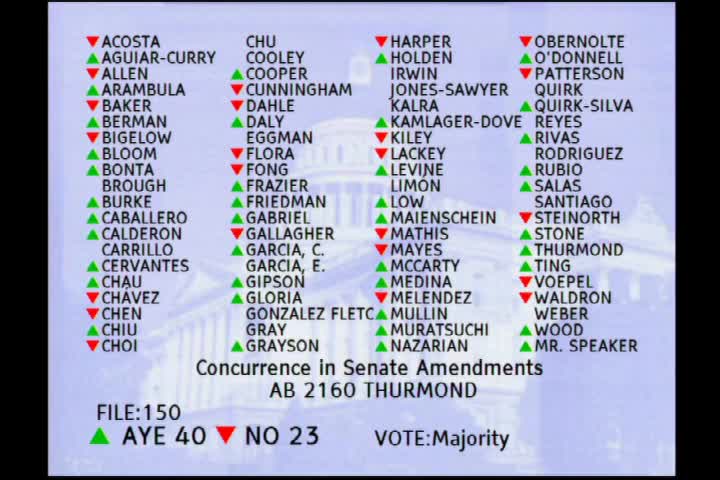

Bill Author

Bill Co-Author(s):