AB 2433: Department of Transportation: voluntary inspection and testing services.
- Session Year: 2017-2018
- House: Assembly
- Latest Version Date: 2018-02-14
Existing law provides that the Department of Transportation has full possession and control of all state highways and associated property. Existing law creates the State Highway Account in the State Transportation Fund, and requires all money appropriated, contributed, or made available from any source for expenditure on work within the powers and duties of the department, including sources other than state appropriations, to be transferred to or deposited in the account.
This bill would authorize the department to establish a subaccount of the State Highway Account to accommodate deposits and expenditures of moneys relative to voluntary inspection and testing services.
The department may establish a subaccount of the State Highway Account to accommodate deposits and expenditures of moneys relative to voluntary inspection and testing services.
|
Date
|
Status
|
|---|---|
| Jun 26, 2018 | In committee: Set, first hearing. Hearing canceled at the request of author. |
| Jun 7, 2018 | Referred to Com. on T. & H. |
| May 30, 2018 | In Senate. Read first time. To Com. on RLS. for assignment. |
| May 29, 2018 | Read third time. Passed. Ordered to the Senate. |
| May 25, 2018 | From committee: Do pass. (Ayes 16. Noes 0.) (May 25). |
| May 2, 2018 | In committee: Set, first hearing. Referred to APPR. suspense file. |
| Apr 24, 2018 | From committee: Do pass and re-refer to Com. on APPR. with recommendation: To Consent Calendar. (Ayes 14. Noes 0.) (April 23). Re-referred to Com. on APPR. |
| Mar 5, 2018 | Referred to Com. on TRANS. |
| Feb 15, 2018 | From printer. May be heard in committee March 17. |
| Feb 14, 2018 | Read first time. To print. |
|
Date
|
Description
|
Location
|
Votes
|
|
|---|---|---|---|---|
| May 29, 2018 | AB 2433 SALAS Assembly Third Reading | Assembly Floor |
Passed |
|
| May 25, 2018 | Do pass. | Assembly Standing Committee on Appropriations |
Passed |
|
| Apr 23, 2018 | Do pass and be re-referred to the Committee on [Appropriations] with recommendation: To Consent Calendar | Assembly Standing Committee on Transportation |
Passed |
This list shows positions taken on this bill by organizations on the date displayed, which is linked to the original source.
Positions by individuals are not included.
SENATE COMMITTEE ON TRANSPORTATION AND HOUSING
Senator Jim Beall, Chair
2017 - 2018 Regular
Bill No: Hearing Date: 6/26/2018
Author: | Salas | ||
Version: | 2/14/2018 | ||
Urgency: | No | Fiscal: | Yes |
Consultant: | Howard Posner | ||
SUBJECT:
DIGEST: This bill authorizes the California Department of Transportation (Caltrans) to establish an account to manage moneys for voluntary inspection and testing services.
ANALYSIS:
Existing law:
- Grants Caltrans broad powers to acquire, construct, and control all state highways.
- Creates the State Highway Account (SHA) in the State Transportation Fund. Funds in the account are available for expenditure on work within the powers and duties of Caltrans, including, but not limited to, services, investigations, surveys, experiments, reports, right-of-way acquisitions, major and minor construction, maintenance, improvements, and equipment.
- Requires, under federal regulations, each state transportation department to develop a quality assurance program which will assure that the materials and workmanship incorporated into each federal-aid highway construction project on the national highway system conform to the requirements of approved plans and specifications.
This bill authorizes Caltrans to establish a subaccount within the SHA to accommodate deposits and expenditures of moneys relative to voluntary inspection and testing services.
COMMENTS
- According to the sponsor, the California Construction and Industrial Materials Association, current Caltrans procedures only allow paving materials to be tested after they have been designated for use on a particular project. The result is that state and local highway construction projects can be delayed 30 days or more while this testing is completed.
- How did we get here? Caltrans' transitioned several years ago to a primarily zero-based budget system where costs associated with personnel and expenses for capital outlay and support are to be assigned to a particular project. Zero-based budgeting allows Caltrans project managers to accurately monitor and report on expenditures throughout a project and helps to ensure Caltrans is accountable to stakeholders.
As a result of zero-based budgeting, Caltrans is reducing and/or eliminating many overhead charging practices. While this move will improve project accountability, it limits the department's flexibility to perform work unless the work can be attributed directly to a project. As an example, prior to zero-based budgeting, Caltrans routinely carried out certain concrete and asphalt plant and material inspection and testing functions during the winter, outside of the construction season. This practice allowed Caltrans to better manage the workload associated with these inspection and testing services, and also allowed plants and suppliers to be up, running, and certified at the beginning of construction season. Caltrans halted these pre-certification activities, however, when it went to zero-based budgeting. Now, the necessary inspections and testing do not begin until a project has been awarded. This allows Caltrans to assign the cost and personnel resources to a specific project, rather than characterize them as overhead.
- What is the practical effect? This re-designed business practice is resulting in project delays. Where contractors used to be able to commence work using pre-certified concrete and asphalt plants soon after a project was awarded, Caltrans' new zero-based budgeting process effectively prohibits this from happening at the beginning of the construction season. Plant and materials certification cannot begin until a project is awarded and a specific concrete or asphalt plant and mix design are chosen. The process of testing materials takes over 30 days to complete. The actual testing process cannot be condensed because it requires, for example, concrete to set up for a specified number of days/weeks before certain tests can be completed. As a result, contractors are idled while the certification and testing are completed.
This new process is primarily affecting projects initiated early in the construction season, when many plants need certification and testing at about the same time. Once completed, certifications are generally valid for a year, allowing future projects using the same mix designs from already-certified plants to proceed after only minimal project-specific testing. Consequently, the backlog causes further delays in Caltrans being able to conduct the necessary inspection and testing work. This backlog, along with the fixed length of time it takes to complete the actual testing, is delaying projects by about 50 days.
- Proposed solutions. Caltrans and the construction industry worked collaboratively for six years to address the issues caused by the new zero-based budget process. As a result of that work, Senator Roth introduced SB 389 last year, which authorized Caltrans to develop a fee-for-service program for specific services related to concrete and asphalt plant inspection and testing. That bill effectively allowed Caltrans to return to its previous practice of pre-certifying plants and mix designs in the off season, for those plant operators that choose to participate in the program, thereby enabling plants to be up and running at the beginning of the construction season. According to industry representatives, the price of the fee to be pre-certified is more than offset by the certainty that projects will not be delayed for lack of inspection and testing. SB 389 died in the Assembly Appropriations Committee.
This bill is the industry’s new attempt at a solution to the problem. The bill creates a subaccount within the State Highway Account wherein Caltrans could receive funding from plant operators to enable it to conduct pre-certification inspection and testing. It has been argued, however, that the real problem is not legislative but administrative and that Caltrans needs to address it through improving its business practices or by simply restarting the pre-certification program under its existing authority. The author in turn believes that this bill is necessary to encourage Caltrans and the administration to continue trying to address the underlying problem of project delays and increased costs.
Related Legislation:
SB 389 (Roth, 2017) —would have authorized Caltrans to develop a fee-for-service program for specific services related to concrete and asphalt plant inspection and testing. SB 389 was held on Suspense in the Assembly Appropriations Committee.
ASSEMBLY VOTES:
Floor: 78-0
Transportation: 14-0
FISCAL EFFECT: Appropriation: No Fiscal Com.: Yes Local: No
POSITIONS: (Communicated to the committee before noon on Wednesday,
June 20, 2018.)
SUPPORT:
California Construction and Industrial Materials Association (Sponsor)
Applied Conveyor Technology
California Asphalt Pavement Association
California Nevada Cement Association
Central Concrete Supply Co.
DeSilva Gates Construction
Granite Construction Inc.
Granite Rock
Lehigh Hanson
Puente Ready Mix
Pyramid Materials
Robertson’s Rock and Sand
Santa Fe Aggregators
Syar Industries
Teichert Materials
Vulcan Materials Company
OPPOSITION:
None received.
-- END --
ASSEMBLY THIRD READING
ATR Bill Id:AB 2433
Author:(Salas)
As Introduced Ver:February 14, 2018
Majority vote
Committee | Votes | Ayes | Noes |
Transportation | 14-0 | Frazier, Fong, Aguiar-Curry, Baker, Berman, Chu, Daly, Friedman, Gipson, Harper, Mathis, Medina, Nazarian, O'Donnell | |
Appropriations | 16-0 | Gonzalez Fletcher, Bigelow, Bloom, Bonta, Calderon, Carrillo, Chau, Eggman, Fong, Friedman, Gallagher, Eduardo Garcia, Nazarian, Obernolte, Quirk, Reyes |
|
SUMMARY: Authorizes the California Department of Transportation (Caltrans) to establish a subaccount within the State Highway Account to accommodate deposits and expenditures of moneys relative to voluntary inspection and testing services.
EXISTING LAW:
- Grants Caltrans broad powers to acquire, construct, and control all state highways.
- Creates the State Highway Account in the State Transportation Fund. Funds in the account are available for expenditure on work within the powers and duties of Caltrans, including, but not limited to, services, investigations, surveys, experiments, reports, right-of-way acquisitions, major and minor construction, maintenance, improvements, and equipment.
- As set forth in federal regulations, requires each state transportation department to develop a quality assurance program which will assure that the materials and workmanship incorporated into each federal-aid highway construction project on the national highway system conform to the requirements of approved plans and specifications.
FISCAL EFFECT: According to the Assembly Appropriations Committee, cost pressures (SHA) to Caltrans, likely in the hundreds of thousands of dollars annually, to implement a voluntary inspection and testing services program.
COMMENTS: According to the sponsor, the California Construction and Industrial Materials Association, the genesis of this bill is Caltrans' relatively recent transition to a primarily zero-based budget system where costs associated with personnel and expenses for capital outlay and support are to be assigned to a particular project. Zero-based budgeting allows Caltrans project managers to accurately monitor and report on expenditures throughout a project and helps to ensure Caltrans is accountable to stakeholders.
As a result of zero-based budgeting, Caltrans is reducing and/or eliminating many overhead charging practices. While this move will improve project accountability, it limits the department's flexibility to perform work unless the work can be attributed directly to a project. As an example, prior to zero-based budgeting, Caltrans routinely carried out certain concrete and asphalt plant and material inspection and testing functions during the winter, outside of the construction season. This practice allowed Caltrans to better manage the workload associated with these inspection and testing services, and also allowed plants and suppliers to be up, running, and certified at the beginning of construction season. Caltrans halted these pre-certification activities, however, when it went to zero-based budgeting. Now, the necessary inspections and testing do not begin until a project has been awarded. This allows Caltrans to assign the cost and personnel resources to a specific project, rather than characterize them as overhead.
This re-designed business practice is resulting in project delays. Where contractors used to be able to commence work using pre-certified concrete and asphalt plants soon after a project was awarded, Caltrans' new zero-based budgeting process effectively prohibits this from happening at the beginning of the construction season. Plant and materials certification cannot begin until a project is awarded and a specific concrete or asphalt plant and mix design are chosen. The process of testing materials takes over 30 days to complete. The actual testing process cannot be condensed because it requires, for example, concrete to set up for a specified number of days/weeks before certain tests can be completed. As a result, contractors are idled while the certification and testing are completed.
This new process is primarily affecting projects initiated early in the construction season, when many plants need certification and testing at about the same time. Once completed, certifications are generally valid for a year, allowing future projects using the same mix designs from already-certified plants to proceed after only minimal project-specific testing. Consequently, the backlog causes further delays in Caltrans being able to conduct the necessary inspection and testing work. This backlog, along with the fixed length of time it takes to complete the actual testing, is delaying projects by about 50 days.
Caltrans and the construction industry worked collaboratively for six years to address the issues caused by the new zero-based budget process. As a result of that work, Senator Roth introduced SB 389 last year, which authorized Caltrans to develop a fee-for-service program for specific services related to concrete and asphalt plant inspection and testing. That bill effectively allowed Caltrans to return to its previous practice of pre-certifying plants and mix designs in the off season, for those plant operators that choose to participate in the program, thereby enabling plants to be up and running at the beginning of the construction season. According to industry representatives, the price of the fee to be pre-certified is more than offset by the certainty that projects will not be delayed for lack of inspection and testing. SB 389 was held on Assembly Appropriations Committee suspense file.
This bill is the industry’s new attempt at a solution to the problem. This bill creates a subaccount within the State Highway Account wherein Caltrans could receive funding from plant operators to enable Caltrans to conduct pre-certification inspection and testing. It is unclear whether this proposal will enjoy any more success than SB 389, however, as it appears the real problem is not legislative but administrative and Caltrans needs to address the administrative problem through improving its business practices. The author believes that this bill is necessary to encourage Caltrans and the administration to continue trying to address the underlying problem of project delays and increased costs.
Analysis Prepared by: Eric Thronson / TRANS. / (916) 319-2093 FN: 0003064
Date of Hearing: May 2, 2018
ASSEMBLY COMMITTEE ON APPROPRIATIONS
Lorena Gonzalez Fletcher, Chair
ABPCA Bill Id:AB 2433
Author:(Salas) – As Introduced Ver:February 14, 2018
Policy Committee: | Transportation | Vote: | 14 - 0 |
|
| ||
|
|
Urgency: No State Mandated Local Program: No Reimbursable: No
SUMMARY:
This bill authorizes the California Department of Transportation (Caltrans) to establish a subaccount within the State Highway Account to accommodate deposits and expenditures of moneys relative to voluntary inspection and testing services.
FISCAL EFFECT:
Cost pressures (SHA) to Caltrans, likely in the hundreds of thousands of dollars annually, to implement a voluntary inspection and testing services program.
COMMENTS:
- Background. As a result of a move toward zero-based budgeting (ZBB), Caltrans is reducing and, in some cases, eliminating many overhead charging practices. While this will improve project accountability, it limits the department's flexibility to perform work unless the work can be attributed directly to a project. As an example, prior to ZBB, Caltrans routinely carried out certain concrete and asphalt plant and material inspection and testing functions during the winter, outside of the construction season. This practice allowed Caltrans to better manage the workload associated with these inspection and testing services, and also allowed plants and suppliers to be up, running, and certified at the beginning of construction season. Caltrans halted these pre-certification activities, however, when it went to ZBB. Now, the necessary inspections and testing do not begin until a project has been awarded. Under the ZBB approach Caltrans must assign the cost and personnel resources to a specific project, rather than characterize them as overhead.
- Purpose. Despite certain potential benefits of Caltrans current approach, ZBB is resulting in project delays. Where contractors could previously commence work using pre-certified concrete and asphalt plants soon after a project was awarded, Caltrans' new business practices effectively prohibits this type of pre-certification. Under the current ZBB process, plant and materials certification cannot begin until a project is awarded and a specific concrete or asphalt plant and mix design are chosen. This process of testing materials takes over 30 days to complete. As a result, contractors are idled while the certification and testing are completed. This bill takes the initial steps to remedy the delays caused by the department’s new business practices by creating an account to receive funds from a voluntary inspection and testing program that Caltrans would like the authority to operate.
- Staff Comments. The goal of minimizing project delays is noble. However, this bill initiates a legislative solution to reinstate a previously-operated Caltrans pre-certification program for concrete and asphalt plants that was stopped by an administrative decision by the department. Legislation is not needed to address this problem because the department could simply restart the pre-certification program under its existing authority.
- Prior legislation. SB 389 (Roth), of the current legislative session, authorized Caltrans to develop a fee-for-service program for testing and inspection services. SB 389 was held on this committee’s suspense file.
Analysis Prepared by: Jessica Peters / APPR. / (916) 319-2081
Date of Hearing: April 23, 2018
ASSEMBLY COMMITTEE ON TRANSPORTATION
Jim Frazier, Chair
ABPCA Bill Id:AB 2433 (
Author:Salas) – As Introduced Ver:February 14, 2018
SUBJECT: Department of Transportation: voluntary inspection and testing services
SUMMARY: Authorizes the California Department of Transportation (Caltrans) to establish a subaccount within the State Highway Account to accommodate deposits and expenditures of moneys relative to voluntary inspection and testing services.
EXISTING LAW:
- Grants Caltrans broad powers to acquire, construct, and control all state highways.
- Creates the State Highway Account in the State Transportation Fund. Funds in the account are available for expenditure on work within the powers and duties of Caltrans, including, but not limited to, services, investigations, surveys, experiments, reports, right-of-way acquisitions, major and minor construction, maintenance, improvements, and equipment.
- As set forth in federal regulations, requires each state transportation department to develop a quality assurance program which will assure that the materials and workmanship incorporated into each federal-aid highway construction project on the national highway system conform to the requirements of approved plans and specifications.
FISCAL EFFECT: Unknown
COMMENTS: According to the sponsor, the California Construction and Industrial Materials Association, the genesis of this bill is Caltrans' relatively recent transition to a primarily zero-based budget system where costs associated with personnel and expenses for capital outlay and support are to be assigned to a particular project. Zero-based budgeting allows Caltrans project managers to accurately monitor and report on expenditures throughout a project and helps to ensure Caltrans is accountable to stakeholders.
As a result of zero-based budgeting, Caltrans is reducing and/or eliminating many overhead charging practices. While this move will improve project accountability, it limits the department's flexibility to perform work unless the work can be attributed directly to a project. As an example, prior to zero-based budgeting, Caltrans routinely carried out certain concrete and asphalt plant and material inspection and testing functions during the winter, outside of the construction season. This practice allowed Caltrans to better manage the workload associated with these inspection and testing services, and also allowed plants and suppliers to be up, running, and certified at the beginning of construction season. Caltrans halted these pre-certification activities, however, when it went to zero-based budgeting. Now, the necessary inspections and testing do not begin until a project has been awarded. This allows Caltrans to assign the cost and personnel resources to a specific project, rather than characterize them as overhead.
This re-designed business practice is resulting in project delays. Where contractors used to be able to commence work using pre-certified concrete and asphalt plants soon after a project was awarded, Caltrans' new zero-based budgeting process effectively prohibits this from happening at the beginning of the construction season. Plant and materials certification cannot begin until a project is awarded and a specific concrete or asphalt plant and mix design are chosen. The process of testing materials takes over 30 days to complete. The actual testing process cannot be condensed because it requires, for example, concrete to set up for a specified number of days/weeks before certain tests can be completed. As a result, contractors are idled while the certification and testing are completed.
This new process is primarily affecting projects initiated early in the construction season, when many plants need certification and testing at about the same time. Once completed, certifications are generally valid for a year, allowing future projects using the same mix designs from already-certified plants to proceed after only minimal project-specific testing. Consequently, the backlog causes further delays in Caltrans being able to conduct the necessary inspection and testing work. This backlog, along with the fixed length of time it takes to complete the actual testing, is delaying projects by about 50 days.
Caltrans and the construction industry worked collaboratively for six years to address the issues caused by the new zero-based budget process. As a result of that work, Senator Roth introduced SB 389 last year, which authorized Caltrans to develop a fee-for-service program for specific services related to concrete and asphalt plant inspection and testing. That bill effectively allowed Caltrans to return to its previous practice of pre-certifying plants and mix designs in the off season, for those plant operators that choose to participate in the program, thereby enabling plants to be up and running at the beginning of the construction season. According to industry representatives, the price of the fee to be pre-certified is more than offset by the certainty that projects will not be delayed for lack of inspection and testing. SB 389 was held on Assembly Appropriations Committee suspense file.
This bill is the industry’s new attempt at a solution to the problem. This bill creates a subaccount within the State Highway Account wherein Caltrans could receive funding from plant operators to enable Caltrans to conduct pre-certification inspection and testing. It is unclear whether this proposal will enjoy any more success than SB 389, however, as it appears the real problem is not legislative but administrative and Caltrans needs to address the administrative problem through improving its business practices. The author believes that this bill is necessary to encourage Caltrans and the administration to continue trying to address the underlying problem of project delays and increased costs.
Related Legislation: SB 389 (Roth), authorized Caltrans to develop a fee-for-service program for specific services related to concrete and asphalt plant inspection and testing. SB 389 was held on the Assembly Appropriations Committee suspense file.
REGISTERED SUPPORT / OPPOSITION:
Support
California Construction and Industrial Materials Association (Sponsor)
7/11 Materials, Inc.
Basic Resources, Inc.
California Asphalt Pavement Association
California Nevada Cement Association
CalPortland Company
Central Concrete Supply Co.
Chandler’s Sand & Gravel
Don Chapin Company
Escondido Materials
George Reed, Inc.
Granite Construction Inc.
National Ready Mixed Concrete
Robertson’s
Sprague’s Ready Mix
Syar Industries/Syar Concrete LLC
Truckee North Tahoe Materials
Teichert Materials
United Contractors
VSS International
VSS Macropaver
Vulcan Materials Company
Opposition
None on file
Analysis Prepared by: Eric Thronson / TRANS. / (916) 319-2093
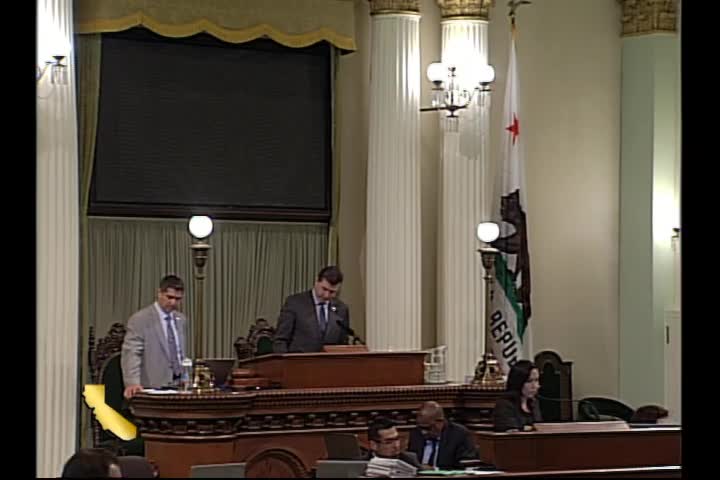
Bill Author

Bill Co-Author(s):