AB 1640: Retirement: public employees.
- Session Year: 2015-2016
- House: Assembly
- Latest Version Date: 2016-06-20
The California Public Employees Pension Reform Act of 2013 (PEPRA) requires a public retirement system, as defined, to modify its plan or plans to comply with the act and, among other provisions, establishes new retirement formulas that may not be exceeded by a public employer offering a defined benefit pension plan for employees first hired on or after January 1, 2013. PEPRA exempts from its provisions certain public employees whose collective bargaining rights are subject to specified provisions of federal law until a specified federal district court decision on a certification by the United States Secretary of Labor, or until January 1, 2016, whichever is sooner.
This bill would extend indefinitely that exemption for those public employees, whose collective bargaining rights are subject to specified provisions of federal law and who became a member of a state or local public retirement system prior to December 30, 2014. The bill would exempt these employees from PEPRA without regard to date of hire upon issuance of a specified federal district court decision.
The California Public Employees Pension Reform Act of 2013 (PEPRA) requires a public retirement system, as defined, to modify its plan or plans to comply with the act and, among other provisions, establishes new retirement formulas that may not be exceeded by a public employer offering a defined benefit pension plan for employees first hired on or after January 1, 2013. PEPRA exempts from its provisions certain public employees whose collective bargaining rights are subject to specified provisions of federal law until a specified federal district court decision on a certification by the United States Secretary of Labor, or until January 1, 2016, whichever is sooner.
This bill would extend indefinitely that exemption for those public employees, whose collective bargaining rights are subject to specified provisions of federal law and who became a member of a state or local public retirement system prior to December 30, 2014.
(a)(1)Notwithstanding any other law, except as provided in this article, on and after January 1, 2013, this article shall apply to all state and local public retirement systems and to their participating employers, including the Public Employees Retirement System, the State Teachers Retirement System, the Legislators Retirement System, the Judges Retirement System, the Judges Retirement System II, county and district retirement systems created pursuant to the County Employees Retirement Law of 1937 (Chapter 3 (commencing with Section 31450) of Part 3 of Division 4 of Title 3), independent public retirement systems, and to individual retirement plans offered by public employers. However, this article shall be subject to the Internal Revenue Code and Section 17 of Article XVI of the California Constitution. The administration of the requirements of this article shall comply with applicable provisions of the Internal Revenue Code and the Revenue and Taxation Code.
(2)Notwithstanding paragraph (1), this article shall not apply to the entities described in Section 9 of Article IX of, and Sections 4 and 5 of Article XI of, the California Constitution, except to the extent that these entities continue to be participating employers in any retirement system governed by state statute. Accordingly, any retirement plan approved before January 1, 2013, by the voters of any entity excluded from coverage by this section shall not be affected by this article.
(3)(A)Notwithstanding paragraph (1), this article shall not apply to a public employee whose interests are protected under Section 5333(b) of Title 49 of the United States Code and who became a member of a state or local public retirement system prior to December 30, 2014.
(B)If a federal district court upholds the determination of the United States Secretary of Labor, or his or her designee, that application of this article precludes him or her from providing a certification under Section 5333(b) of Title 49 of the United States Code, this article shall not apply to a public employee whose interests are protected under that section.
(4)Notwithstanding paragraph (1), this article shall not apply to a multiemployer plan authorized by Section 302(c)(5) of the federal Taft-Hartley Act (29 U.S.C. Sec. 186(c)(5)) if the public employer began participation in that plan prior to January 1, 2013, and the plan is regulated by the federal Employee Retirement Income Security Act of 1974 (29 U.S.C. Sec. 1001 et seq.).
(b)The benefit plan required by this article shall apply to public employees who are new members as defined in Section 7522.04.
(c)(1)Individuals who were employed by any public employer before January 1, 2013, and who became employed by a subsequent public employer for the first time on or after January 1, 2013, shall be subject to the retirement plan that would have been available to employees of the subsequent employer who were first employed by the subsequent employer on or before December 31, 2012, if the individual was subject to concurrent membership for which creditable service was performed in the previous six months or reciprocity established under any of the following provisions:
(A)Article 5 (commencing with Section 20350) of Chapter 3 of Part 3 of Division 5 of Title 2.
(B)Chapter 3 (commencing with Section 31450) of Part 3 of Division 4 of Title 3.
(C)Any agreement between public retirement systems to provide reciprocity to members of the systems.
(D)Section 22115.2 of the Education Code.
(2)An individual who was employed before January 1, 2013, and who, without a separation from employment, changed employment positions and became subject to a different defined benefit plan in a different public retirement system offered by his or her employer shall be subject to that defined benefit plan as it would have been available to employees who were first employed on or before December 31, 2012.
(d)If a public employer, before January 1, 2013, offers a defined benefit pension plan that provides a defined benefit formula with a lower benefit factor at normal retirement age and results in a lower normal cost than the defined benefit formula required by this article, that employer may continue to offer that defined benefit formula instead of the defined benefit formula required by this article, and shall not be subject to the requirements of Section 7522.10 for pensionable compensation subject to that formula. However, if the employer adopts a new defined benefit formula on or after January 1, 2013, that formula must conform to the requirements of this article or must be determined and certified by the retirement systems chief actuary and the retirement board to have no greater risk and no greater cost to the employer than the defined benefit formula required by this article and must be approved by the Legislature. New members of the defined benefit plan may only participate in the lower cost defined benefit formula that was in place before January 1, 2013, or a defined benefit formula that conforms to the requirements of this article or is approved by the Legislature as provided in this subdivision.
(e)If a public employer, before January 1, 2013, offers a retirement benefit plan that consists solely of a defined contribution plan, that employer may continue to offer that plan instead of the defined benefit pension plan required by this article. However, if the employer adopts a new defined benefit pension plan or defined benefit formula on or after January 1, 2013, that plan or formula must conform to the requirements of this article or must be determined and certified by the retirement systems chief actuary and the systems board to have no greater risk and no greater cost to the employer than the defined benefit formula required by this article and must be approved by the Legislature. New members of the employers plan may only participate in the defined contribution plan that was in place before January 1, 2013, or a defined contribution plan or defined benefit formula that conforms to the requirements of this article. This subdivision shall not be construed to prohibit an employer from offering a defined contribution plan on or after January 1, 2013, either with or without a defined benefit plan, whether or not the employer offered a defined contribution plan prior to that date.
(f)(1)If, on or after January 1, 2013, the Cities of Brea and Fullerton form a joint powers authority pursuant to the provisions of the Joint Exercise of Powers Act (Article 1 (commencing with Section 6500) of Chapter 5), that joint powers authority may provide employees the defined benefit plan or formula that those employees received from their respective employers prior to the exercise of a common power, to which the employee is associated, by the joint powers authority to any employee of the City of Brea, the City of Fullerton, or a city described in paragraph (2) who is not a new member and subsequently is employed by the joint powers authority within 180 days of the city providing for the exercise of a common power, to which the employee was associated, by the joint powers authority.
(2)On or before January 1, 2017, a city in Orange County that is contiguous to the City of Brea or the City of Fullerton may join the joint powers authority described in paragraph (1) but not more than three cities shall be permitted to join.
(3)The formation of a joint powers authority on or after January 1, 2013, shall not act in a manner as to exempt a new employee or a new member, as defined by Section 7522.04, from the requirements of this article. New members may only participate in a defined benefit plan or formula that conforms to the requirements of this article.
(g)The Judges Retirement System and the Judges Retirement System II shall not be required to adopt the defined benefit formula required by Section 7522.20 or 7522.25 or the compensation limitations defined in Section 7522.10.
(h)This article shall not be construed to provide membership in any public retirement system for an individual who would not otherwise be eligible for membership under that systems applicable rules or laws.
(i)On and after January 1, 2013, each public retirement system shall modify its plan or plans to comply with the requirements of this article and may adopt regulations or resolutions for this purpose.
(a)(1)Notwithstanding any other law, except as provided in this article, on and after January 1, 2013, this article shall apply to all state and local public retirement systems and to their participating employers, including the Public Employees Retirement System, the State Teachers Retirement System, the Legislators Retirement System, the Judges Retirement System, the Judges Retirement System II, county and district retirement systems created pursuant to the County Employees Retirement Law of 1937 (Chapter 3 (commencing with Section 31450) of Part 3 of Division 4 of Title 3), independent public retirement systems, and to individual retirement plans offered by public employers. However, this article shall be subject to the Internal Revenue Code and Section 17 of Article XVI of the California Constitution. The administration of the requirements of this article shall comply with applicable provisions of the Internal Revenue Code and the Revenue and Taxation Code.
(2)Notwithstanding paragraph (1), this article shall not apply to the entities described in Section 9 of Article IX of, and Sections 4 and 5 of Article XI of, the California Constitution, except to the extent that these entities continue to be participating employers in any retirement system governed by state statute. Accordingly, any retirement plan approved before January 1, 2013, by the voters of any entity excluded from coverage by this section shall not be affected by this article.
(3)(A)Notwithstanding paragraph (1), this article shall not apply to a public employee whose interests are protected under Section 5333(b) of Title 49 of the United States Code until a federal district court rules that the United States Secretary of Labor, or his or her designee, erred in determining that the application of this article precludes certification under that section, or until January 1, 2016, whichever is sooner. and who became a member of a state or local public retirement system prior to December 30, 2014.
(B)If a federal district court upholds the determination of the United States Secretary of Labor, or his or her designee, that application of this article precludes him or her from providing a certification under Section 5333(b) of Title 49 of the United States Code, this article shall not apply to a public employee specified in subparagraph (A).
(4)Notwithstanding paragraph (1), this article shall not apply to a multiemployer plan authorized by Section 302(c)(5) of the federal Taft-Hartley Act (29 U.S.C. Sec. 186(c)(5)) if the public employer began participation in that plan prior to January 1, 2013, and the plan is regulated by the federal Employee Retirement Income Security Act of 1974 (29 U.S.C. Sec. 1001 et seq.).
(b)The benefit plan required by this article shall apply to public employees who are new members as defined in Section 7522.04.
(c)(1)Individuals who were employed by any public employer before January 1, 2013, and who became employed by a subsequent public employer for the first time on or after January 1, 2013, shall be subject to the retirement plan that would have been available to employees of the subsequent employer who were first employed by the subsequent employer on or before December 31, 2012, if the individual was subject to concurrent membership for which creditable service was performed in the previous six months or reciprocity established under any of the following provisions:
(A)Article 5 (commencing with Section 20350) of Chapter 3 of Part 3 of Division 5 of Title 2.
(B)Chapter 3 (commencing with Section 31450) of Part 3 of Division 4 of Title 3.
(C)Any agreement between public retirement systems to provide reciprocity to members of the systems.
(D)Section 22115.2 of the Education Code.
(2)An individual who was employed before January 1, 2013, and who, without a separation from employment, changed employment positions and became subject to a different defined benefit plan in a different public retirement system offered by his or her employer shall be subject to that defined benefit plan as it would have been available to employees who were first employed on or before December 31, 2012.
(d)If a public employer, before January 1, 2013, offers a defined benefit pension plan that provides a defined benefit formula with a lower benefit factor at normal retirement age and results in a lower normal cost than the defined benefit formula required by this article, that employer may continue to offer that defined benefit formula instead of the defined benefit formula required by this article, and shall not be subject to the requirements of Section 7522.10 for pensionable compensation subject to that formula. However, if the employer adopts a new defined benefit formula on or after January 1, 2013, that formula must conform to the requirements of this article or must be determined and certified by the retirement systems chief actuary and the retirement board to have no greater risk and no greater cost to the employer than the defined benefit formula required by this article and must be approved by the Legislature. New members of the defined benefit plan may only participate in the lower cost defined benefit formula that was in place before January 1, 2013, or a defined benefit formula that conforms to the requirements of this article or is approved by the Legislature as provided in this subdivision.
(e)If a public employer, before January 1, 2013, offers a retirement benefit plan that consists solely of a defined contribution plan, that employer may continue to offer that plan instead of the defined benefit pension plan required by this article. However, if the employer adopts a new defined benefit pension plan or defined benefit formula on or after January 1, 2013, that plan or formula must conform to the requirements of this article or must be determined and certified by the retirement systems chief actuary and the systems board to have no greater risk and no greater cost to the employer than the defined benefit formula required by this article and must be approved by the Legislature. New members of the employers plan may only participate in the defined contribution plan that was in place before January 1, 2013, or a defined contribution plan or defined benefit formula that conforms to the requirements of this article. This subdivision shall not be construed to prohibit an employer from offering a defined contribution plan on or after January 1, 2013, either with or without a defined benefit plan, whether or not the employer offered a defined contribution plan prior to that date.
(f)(1)If, on or after January 1, 2013, the Cities of Brea and Fullerton form a joint powers authority pursuant to the provisions of the Joint Exercise of Powers Act (Article 1 (commencing with Section 6500) of Chapter 5), that joint powers authority may provide employees the defined benefit plan or formula that those employees received from their respective employers prior to the exercise of a common power, to which the employee is associated, by the joint powers authority to any employee of the City of Brea, the City of Fullerton, or a city described in paragraph (2) who is not a new member and subsequently is employed by the joint powers authority within 180 days of the city providing for the exercise of a common power, to which the employee was associated, by the joint powers authority.
(2)On or before January 1, 2017, a city in Orange County that is contiguous to the City of Brea or the City of Fullerton may join the joint powers authority described in paragraph (1) but not more than three cities shall be permitted to join.
(3)The formation of a joint powers authority on or after January 1, 2013, shall not act in a manner as to exempt a new employee or a new member, as defined by Section 7522.04, from the requirements of this article. New members may only participate in a defined benefit plan or formula that conforms to the requirements of this article.
(g)The Judges Retirement System and the Judges Retirement System II shall not be required to adopt the defined benefit formula required by Section 7522.20 or 7522.25 or the compensation limitations defined in Section 7522.10.
(h)This article shall not be construed to provide membership in any public retirement system for an individual who would not otherwise be eligible for membership under that systems applicable rules or laws.
(i)On and after January 1, 2013, each public retirement system shall modify its plan or plans to comply with the requirements of this article and may adopt regulations or resolutions for this purpose.
|
Date
|
Status
|
|---|---|
| Aug 29, 2016 | Ordered to inactive file at the request of Senator Monning. |
| Aug 3, 2016 | Read second time. Ordered to third reading. |
| Aug 2, 2016 | From committee: Do pass. (Ayes 5. Noes 2.) (August 1). |
| Jun 27, 2016 | From committee: Do pass and re-refer to Com. on APPR. (Ayes 3. Noes 0.) (June 27). Re-referred to Com. on APPR. |
| Jun 20, 2016 | From committee chair, with author's amendments: Amend, and re-refer to committee. Read second time, amended, and re-referred to Com. on P.E. & R. |
| Jun 9, 2016 | In committee: Set, first hearing. Hearing canceled at the request of author. |
| May 5, 2016 | Referred to Com. on P.E. & R. |
| Apr 28, 2016 | Read third time. Passed. Ordered to the Senate. (Ayes 53. Noes 26. Page 4564.) |
| Apr 28, 2016 | Read third time. Passed. Ordered to the Senate. (Ayes 53. Noes 26.) |
| Apr 28, 2016 | In Senate. Read first time. To Com. on RLS. for assignment. |
| Apr 28, 2016 | Read third time. Passed. Ordered to the Senate. |
| Apr 21, 2016 | Read second time. Ordered to third reading. |
| Apr 20, 2016 | From committee: Do pass. (Ayes 11. Noes 5.) (April 20). |
| Apr 6, 2016 | From committee: Do pass and re-refer to Com. on APPR. (Ayes 5. Noes 1.) (April 6). Re-referred to Com. on APPR. |
| Feb 4, 2016 | Referred to Com. on P.E., R., & S.S. |
| Jan 8, 2016 | From printer. May be heard in committee February 7. |
| Jan 7, 2016 | Read first time. To print. |
|
Date
|
Description
|
Location
|
Votes
|
|
|---|---|---|---|---|
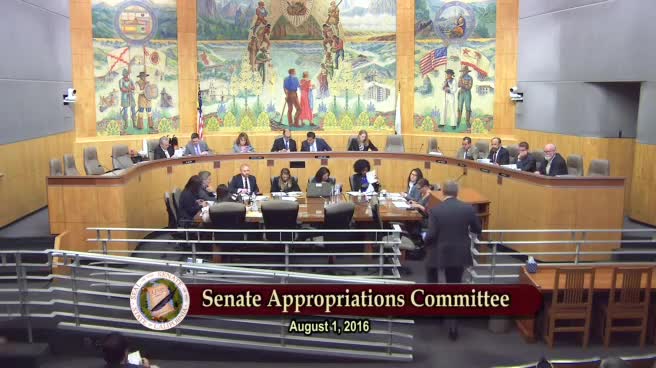
| Aug 1, 2016 | Do pass | Senate Standing Committee on Appropriations |
Passed |
|
| Jun 27, 2016 | Do pass, but first be re-referred to the Committee on [Appropriations] | Senate Standing Committee on Public Employment and Retirement |
Passed |
|
| Apr 28, 2016 | AB 1640 STONE Assembly Third Reading | Assembly Floor |
Passed |
|
| Apr 20, 2016 | Do pass. | Assembly Standing Committee on Appropriations |
Passed |
|
| Apr 6, 2016 | Do pass and be re-referred to the Committee on [Appropriations] | Assembly Standing Committee on Public Employees, Retirement, and Social Security |
Passed |
This list shows positions taken on this bill by organizations on the date displayed, which is linked to the original source.
Positions by individuals are not included.
Office of Senate Floor Analyses (916) 651-1520 Fax: (916) 327-4478 | AB |
THIRD READING
Bill No: AB 1640
:
SENATE PUBLIC EMP. & RET. COMMITTEE: 3-0, 6/27/16
AYES: Pan, Beall, Hall
NO VOTE RECORDED: Morrell, Moorlach
SENATE APPROPRIATIONS COMMITTEE: 5-2, 8/1/16
AYES: Lara, Beall, Hill, McGuire, Mendoza
NOES: Bates, Nielsen
ASSEMBLY FLOOR: 53-26, 4/28/16 - See last page for vote
SOURCE: Santa Clara Valley Transportation Authority
DIGEST: This bill permanently exempts a specific group of public transit workers from being subject to the California Public Employees’ Pension Reform Act of 2013 (PEPRA). These employees were previously temporarily exempted pending a ruling from the federal district court with regard to whether or not the implementation of PEPRA and its perceived impact on collective bargaining rights precluded certification of certain transit projects and related federal funding.
ANALYSIS:
Existing federal law:
- Protects the collective bargaining rights of specified transit workers employed in certain transit agencies and districts that were, mostly in the 1960s through the 1970s, converted from private to public agencies. Many such agencies are now included in the California Public Employees’ Retirement System (CalPERS) or the Orange County Employees’ Retirement System (OCERS), a 1937 Act retirement system.
- Requires, under Section 13(c) of the Federal Transit Law, that these employee protections, commonly referred to as "protective arrangements" or "Section 13(c) arrangements," must be certified by the United States Department of Labor (US DOL) and in place before federal transit funds can be released to a mass transit employer subject to the Federal Transit Law.
Section 13(c) requires, among other things, the continuation of collective bargaining rights, and protection of transit employees' wages, working conditions, pension benefits, seniority, vacation, sick and personal leave, travel passes, and other conditions of employment.
- Allows the US DOL to determine if the collective bargaining rights of an employee group protected under a 13(c) arrangement have been impaired, and if so determined, to stop the flow of federal transportation funding until such time as the those rights have been restored.
- Allows an employer to appeal the US DOL decision to the federal court of appeals. The federal court of appeals may then determine whether or not the US DOL erred in its decision.
Existing state law:
- Implements comprehensive public employee pension reform through enactment of PEPRA (and related statutory changes) that apply to all public employers (including public transit agencies) and public pension plans on and after January 1, 2013, excluding the University of California and charter cities and counties that do not participate in a retirement system governed by state statute.
- Changes, under PEPRA, the retirement benefit plans that may be offered to new public employees, including:
- Establishing uniform retirement formulas, including a 2% at age 62 formula for non-safety workers;
- Requiring a three-year final compensation period for determining a pension;
- Requiring employee member contributions equal to 50% of the normal cost of the employee's benefit plan;
- Capping the amount of compensation that can count toward a pension ($118,500 in 2016); and
- Restricting the pay items that may be included in pensionable compensation.
- Protects the vested benefits of workers employed prior to the implementation of PEPRA. These employees are subject to benefit plans in place prior to the implementation of PEPRA.
- Specifies, with some exceptions, that the PEPRA requirements (including those listed above) are applicable to new retirement plan members who first become members on and after January 1, 2013.
- Makes an exemption to PEPRA for employees who are covered by federal 13(c) arrangements until either of the following occur:
- A federal district court rules that the United States Secretary of Labor (or his or her designee) erred in determining that application of PEPRA precludes certification of federal transit funding; or
- January 1, 2016, whichever is sooner.
- Requires that, following either of the above conditions, whichever occurring sooner, the retirement systems discontinue exempting transit workers who would otherwise have been subject to PEPRA.
- States that if the federal district court upholds the US DOL determination, then affected transit employees shall be permanently exempted from PEPRA.
- Ensures the rights of all represented public employees, including transit workers, to collectively bargain over issues impacting the wages and working conditions of the employees. These rights apply regardless of whether or not the employee is subject to PEPRA.
This bill reinstates and extends indefinitely the former exemption from PEPRA for certain public transit workers whose collective bargaining rights are protected under Section 13(c) of the Federal Transit Law and who became members of a state or local public retirement system prior to December 30, 2014. (These are the newly hired transit workers who would otherwise have been subject to PEPRA, exempted from January 1, 2013 to December 30, 2014, pending the federal district court ruling.)
Background
In 2012, the state adopted PEPRA, which became effective on January 1, 2013. In 2013, labor unions representing public transit employees began asserting to the US DOL that PEPRA impairs pension benefits contained in existing collective bargaining agreements and restricts collective bargaining rights, in violation of the protections in Section 13(c) of the Federal Transit Act.
In response, in 2013 the US DOL withheld certification of a federal grant to the Sacramento Regional Transit District, which in turn brought an action in federal court to challenge the US DOL determination. That case was decided in December of 2014. The federal court of appeals ruled that the US DOL had erred in its determination that PEPRA precludes certification of transit funds.
While the case was ongoing, transit workers were exempted from PEPRA until either the federal court issued a decision or January 1, 2016, whichever occurred sooner. If the court had sided with US DOL, the statute requires the transit workers to be permanently excluded from PEPRA. If the court ruled that US DOL erred in its determination, the statute requires that the workers become subject to PEPRA.
Accordingly, when the court determined that US DOL had erred in its determination, CalPERS made formerly exempt transit employees subject to PEPRA. These employees (1,431 employees from 36 CalPERS employers, according to CalPERS) were reclassified as PEPRA members following the federal ruling on December 30, 2014. Therefore, the affected employees will receive “classic” benefits for the period of time from January 1, 2013, until December 30, 2014, and PEPRA benefits from that time period forward.
At the present time, US DOL has appealed the findings of the district court and the case is ongoing.
Finally, according to the Assembly Public Employees Retirement and Social Security Committee, the only 1937 Act County Retirement System that has transit worker members is OCERS. According to the information provided, approximately 170 public transit workers were hired during the exemption period (i.e., January 1, 2013, to December 30, 2014), and in August of 2015, OCERS determined, based on its reading of the exemption, that those members would be permanently exempted from PEPRA.
Related/Prior Legislation
SB 292 (Pan, 2015) sought to exempt public workers in specified cities from the PEPRA requirement that employees pay one-half of the normal cost of their benefit plans in member contributions, based on dedicated tax revenues in those districts for pension costs. Vetoed by the Governor who stated, “The employee share-of-cost is a crucial standard that must be retained. I am unwilling to chip
away at this reform.”
AB 1783 (Jones Sawyer, Chapter 724, Statutes of 2014) extended the January 1, 2015, date established in AB 1222 (Bloom, 2013) until January 1, 2016.
AB 837 (Wieckowski, 2014) would have created an exemption to PEPRA for seven judges who were elected prior to implementation of PEPRA but who assumed office after PEPRA became effective. Vetoed by the Governor who stated, “This measure creates an exemption to the California Public Employees' Pension Reform Act of 2013. I am unwilling to begin chipping away at these reforms.”
AB 1222 (Bloom, Chapter 527, Statutes of 2013) created the exemption for transit workers subject to Section 13(c) protections. The bill made the exemption effective until the sooner of either the federal court decision or January 1, 2015.
AB 340 (Furutani, Chapter 296, Statutes of 2012) enacted PEPRA.
FISCAL EFFECT: Appropriation: Fiscal Com.: Local:
According to the Senate Appropriations Committee, this bill results in one-time administrative costs of approximately $65,000 to CalPERS to implement system changes and data corrections.
Santa Clara Valley Transportation Authority (source)
California Conference Board of the Amalgamated Transit Union
California Teamsters Public Affairs Council
California Transit Association
Monterey-Salinas Transit
Peninsula Corridor Joint Powers Board
San Mateo County Transit District
San Mateo County Transportation Authority
None received
ARGUMENTS IN SUPPORT: The sponsor states that the current statute is being interpreted inconsistently. CalPERS has converted affected transit workers to PEPRA membership as of December 30, 2014, while OCERS members and employees in independent transit agency retirement systems are being treated as permanently exempt from PEPRA so long as they were hired during the January 1, 2013, to December 30, 2014 timeframe.
Furthermore, the sponsor believes that the statute is unclear and that some transit workers hired during the exemption period may have believed that their PEPRA exemption would be permanent.
“Thus we have a situation where public transit workers hired while the AB 1222 exemption was in place are being treated differently depending on which agency employs them, which raises a question of fairness.” “AB 1640 would end the ambiguity and confusion regarding application of PEPRA to these employees. It would ensure that all employees hired by public transit agencies while the AB 1222 exemption was in place are being treated fairly and in the same manner, regardless of which agency they work for and which retirement system their agency uses.”
ASSEMBLY FLOOR: 53-26, 4/28/16
AYES: Alejo, Arambula, Atkins, Bloom, Bonilla, Bonta, Brown, Burke, Calderon, Campos, Chau, Chiu, Chu, Cooley, Cooper, Dababneh, Dodd, Eggman, Frazier, Cristina Garcia, Eduardo Garcia, Gatto, Gipson, Gomez, Gonzalez, Gordon, Gray, Roger Hernández, Holden, Irwin, Jones-Sawyer, Lackey, Linder, Lopez, Low, McCarty, Medina, Mullin, Nazarian, O'Donnell, Quirk, Ridley-Thomas, Rodriguez, Salas, Santiago, Mark Stone, Thurmond, Ting, Waldron, Weber, Williams, Wood, Rendon
NOES: Achadjian, Travis Allen, Baker, Bigelow, Brough, Chang, Chávez, Dahle, Beth Gaines, Gallagher, Grove, Hadley, Harper, Jones, Kim, Levine, Maienschein, Mathis, Mayes, Melendez, Obernolte, Olsen, Patterson, Steinorth, Wagner, Wilk
NO VOTE RECORDED: Daly
8/3/16 18:49:53
**** END ****
SENATE COMMITTEE ON
Senator Ricardo Lara, Chair
2015 - 2016 Regular Session
AB 1640 (Mark Stone) - Retirement: public employees
Version: | Policy Vote: |
Urgency: | Mandate: |
Hearing Date: | Consultant: |
This bill does not meet the criteria for referral to the Suspense File.
Bill Summary:
AB 1640 would permanently exempt specified public transit workers represented in collective bargaining (who first became members of a public retirement system between January 1, 2013 and December 29, 2014), from the provisions of the Public Employees Pension Reform Act of 2013 (PEPRA).
Fiscal Impact:
- One-time administrative costs of approximately $65,000 to CalPERS to implement system changes and data corrections.
Background:
In 2012, the state adopted PEPRA, which reduced retirement benefits for public employees who first became retirement system members on or after January 1, 2013. In 2013, labor unions representing public transit employees began asserting to the U.S. Department of Labor (DOL) that PEPRA impairs pension benefits contained in existing collective bargaining agreements and restricts collective bargaining rights, in violation of the protections in Section 13(c) of the Federal Transit Act. Under federal transit law, DOL can prevent the U.S. Department of Transportation from distributing grants until it certifies that labor agreements preserve collective bargaining rights.
In 2013, DOL withheld certification of a federal grant to the Sacramento Regional Transit District, which in turn brought an action in federal court to challenge the DOL determination. That case was decided in December of 2014. The federal court of appeals ruled that DOL had erred in its determination that PEPRA precludes certification of transit funds.
While the case was ongoing, transit workers were exempted from PEPRA until either the federal court issued a decision or January 1, 2016, whichever occurred sooner. If the court had sided with DOL, the statute requires the transit workers to be permanently excluded from PEPRA. If the court ruled that DOL erred in its determination, the statute requires that the workers become subject to PEPRA.
Thus, when the court determined that DOL had erred in its determination, CalPERS made formerly exempt transit employees subject to PEPRA. These employees (1,431 employees from 36 CalPERS employers, according to CalPERS) were reclassified as PEPRA members following the federal ruling on December 30, 2014. Therefore, the affected employees will receive “classic” benefits for the period of time from January 1, 2013 until December 30, 2014, and PEPRA benefits from that time period forward.
At the present time, DOL has appealed the findings of the district court and the case is ongoing.
Proposed Law:
This bill would reinstate and extend indefinitely the former exemption from PEPRA for certain public transit workers whose collective bargaining rights are protected under Section 13(c) of the Federal Transit Law and who became members of a state or local public retirement system prior to December 30, 2014. (These are the newly hired transit workers who would otherwise have been subject to PEPRA, exempted from January 1, 2013 to December 30, 2014, pending the federal district court ruling.)
Related Legislation:
SB 292 (Pan, 2015) sought to exempt public workers in specified cities from the PEPRA requirement that employees pay one-half of the normal cost of their benefit plans in member contributions, based on dedicated tax revenues in those districts for pension costs. The bill was vetoed by the Governor.
Staff Comments:
The Assembly Public Employees Retirement and Social Security Committee indicates that the only 1937 Act County Retirement System that has transit worker members is the Orange County Employees Retirement System (OCERS). According to the information provided, approximately 170 public transit workers were hired during the exemption period (January 1, 2013 to December 30, 2014), and in August of 2015, OCERS determined, based on its reading of the exemption, that those members would be permanently exempted from PEPRA.
The bill, while having a minimal fiscal impact to the State, could result in an unknown but potentially significant erosion of projected PEPRA savings at the local level.
-- END --
SENATE COMMITTEE ON
PUBLIC EMPLOYMENT AND RETIREMENT
Dr. Richard Pan, Chair
2015 - 2016 Regular
Bill No: AB 1640 Hearing Date: 6/27/16
Author: | Mark Stone | ||
Version: | 6/20/16 As amended | ||
Urgency: | No | Fiscal: | Yes |
Consultant: | Pamela Schneider | ||
Subject: Retirement: public transit worker employees subject to the Public Employees Pension Reform Act of 2013 (PEPRA)
SOURCE: Santa Clara Valley Transportation Authority
ASSEMBLY VOTES:
Assembly Floor: | 53 - 26 |
Assembly Appropriations Committee: | 11 - 5 |
Assembly Public Employees, Retirement/Soc Sec Committee: | 5 - 1 |
DIGEST: This bill would permanently exempt a specific group of public transit workers from being subject to PEPRA. These employees were previously temporarily exempted pending a ruling from the federal district court with regard to whether or not the implementation of PEPRA and its perceived impact on collective bargaining rights precluded certification of certain transit projects and related federal funding.
ANALYSIS:
Existing state law:
- Implemented comprehensive public employee pension reform through enactment of PEPRA (and related statutory changes) that apply to all public employers (including public transit agencies) and public pension plans on and after January 1, 2013, excluding the University of California and charter cities and counties that do not participate in a retirement system governed by state statute.
- Under PEPRA, changed the retirement benefit plans that may be offered to new public employees, including:
- Establishing uniform retirement formulas, including a 2% at age 62 formula for non-safety workers;
- Requiring a 3-year final compensation period for determining a pension;
- Requiring employee member contributions equal to 50% of the normal cost of the employee's benefit plan;
- Capping the amount of compensation that can count toward a pension (118,500 in 2016); and
- Restricting the pay items that may be included in pensionable compensation.
- Protects the vested benefits of workers employed prior to the implementation of PEPRA. These employees are subject to benefit plans in place prior to the implementation of PEPRA.
- Specifies, with some exceptions, that the PEPRA requirements (including those listed above) are applicable to new retirement plan members who first become members on and after January 1, 2013.
- Makes an exemption to PEPRA for employees who are covered by federal 13(c) arrangements until either of the following occur:
- A federal district court rules that the United States Secretary of Labor (or his or her designee) erred in determining that application of PEPRA precludes certification of federal transit funding; or
- January 1, 2016, whichever is sooner.
- Requires that, following either of the above conditions, whichever occurring sooner, the retirement systems discontinue exempting transit workers who would otherwise have been subject to PEPRA.
- States that if the federal district court upholds the DOL determination, then affected transit employees shall be permanently exempted from PEPRA.
- Ensures the rights of all represented public employees, including transit workers, to collectively bargain over issues impacting the wages and working conditions of the employees. These rights apply regardless of whether or not the employee is subject to PEPRA.
Existing federal law:
- Protects the collective bargaining rights of specified transit workers employed in certain transit agencies and districts that were, mostly in the 1960's through the 1970's, converted from private to public agencies. Many such agencies are now included in CalPERS or the Orange County Employees’ Retirement System (OCERS), a 1937 Act retirement system.
- Requires, under Section 13(c) of the Federal Transit Law, that these employee protections, commonly referred to as "protective arrangements" or "Section 13(c) arrangements," must be certified by the United States Department of Labor (US DOL) and in place before federal transit funds can be released to a mass transit employer subject to the Federal Transit Law.
Section 13(c) requires, among other things, the continuation of collective bargaining rights, and protection of transit employees' wages, working conditions, pension benefits, seniority, vacation, sick and personal leave, travel passes, and other conditions of employment.
- Allows the US DOL to determine if the collective bargaining rights of an employee group protected under a 13(c) arrangement have been impaired, and if so determined, to stop the flow of federal transportation funding until such time as the those rights have been restored.
- Allows an employer to appeal the US DOL decision to the federal court of appeals. The federal court of appeals may then determine whether or not the US DOL erred in its decision.
This bill:
- Reinstates and extends indefinitely the former exemption from PEPRA for certain public transit workers whose collective bargaining rights are protected under Section 13(c) of the Federal Transit Law and who became members of a state or local public retirement system prior to December 30, 2014. (These are the newly hired transit workers who would otherwise have been subject to PEPRA, exempted from January 1, 2013 to December 30, 2014, pending the federal district court ruling.)
Background
In 2012, the state adopted PEPRA, which became effective on January 1, 2013. In 2013, labor unions representing public transit employees began asserting to the US DOL that PEPRA impairs pension benefits contained in existing collective bargaining agreements and restricts collective bargaining rights, in violation of the protections in Section 13(c) of the Federal Transit Act.
In response, in 2013 the US DOL withheld certification of a federal grant to the Sacramento Regional Transit District, which in turn brought an action in federal court to challenge the US DOL determination. That case was decided in December of 2014. The federal court of appeals ruled that the US DOL had erred in its determination that PEPRA precludes certification of transit funds.
While the case was ongoing, transit workers were exempted from PEPRA until either the federal court issued a decision or January 1, 2016, whichever occurred sooner. If the court had sided with US DOL, the statute requires the transit workers to be permanently excluded from PEPRA. If the court ruled that US DOL erred in its determination, the statute requires that the workers become subject to PEPRA.
Accordingly, when the court determined that US DOL had erred in its determination, CalPERS made formerly exempt transit employees subject to PEPRA. These employees (1,431 employees from 36 CalPERS employers, according to CalPERS) were reclassified as PEPRA members following the federal ruling on December 30, 2014. Therefore, the affected employees will receive “classic” benefits for the period of time from January 1, 2013 until December 30, 2014, and PEPRA benefits from that time period forward.
At the present time, US DOL has appealed the findings of the district court and the case is ongoing.
Finally, according to the Assembly Public Employees Retirement and Social Security Committee, the only 1937 Act County Retirement System that has transit worker members is OCERS. According to the information provided, approximately 170 public transit workers were hired during the exemption period (i.e., January 1, 2013 to December 30, 2014), and in August of 2015, OCERS determined, based on its reading of the exemption, that those members would be permanently exempted from PEPRA.
Related/Prior Legislation
SB 292 (Pan, 2015) sought to exempt public workers in specified cities from the PEPRA requirement that employees pay one-half of the normal cost of their benefit plans in member contributions, based on dedicated tax revenues in those districts for pension costs. Vetoed by the Governor who stated, “The employee share-of-cost is a crucial standard that must be retained. I am unwilling to chip
away at this reform.”
AB 1783 (Jones Sawyer, Chapter 724, Statutes of 2014) extended the January 1, 2015, date established in AB 1222 until January 1, 2016.
AB 837 (Wieckowski, 2014) would have created an exemption to PEPRA for 7 judges who were elected prior to implementation of PEPRA but who assumed office after PEPRA became effective. Vetoed by the Governor who stated, “This measure creates an exemption to the California Public Employees' Pension Reform Act of 2013. I am unwilling to begin chipping away at these reforms.”
AB 1222 (Bloom, Chapter 527, Statutes of 2013) created the exemption for transit workers subject to Section 13(c) protections. This bill made the exemption effective until the sooner of either the federal court decision or January 1, 2015.
AB 340 (Furutani, Chapter 296, Statutes of 2012) enacted PEPRA.
FISCAL EFFECT: Appropriation: No Fiscal Com.: Yes Local: No
SUPPORT:
Santa Clara Valley Transportation Authority (source)
California Conference Board of the Amalgamated Transit Union
California Teamsters Public Affairs Council
California Transit Association
Monterey-Salinas Transit
Peninsula Corridor Joint Powers Board
San Mateo County Transit District
San Mateo County Transportation Authority
OPPOSITION:
None received
ARGUMENTS IN SUPPORT:
The sponsor states that the current statute is being interpreted inconsistently. CalPERS has converted affected transit workers to PEPRA membership as of December 30, 2014, while OCERS members and employees in independent transit agency retirement systems are being treated as permanently exempt from PEPRA so long as they were hired during the January 1, 2013 to December 30, 2014 timeframe.
Furthermore, the sponsor believes that the statute is unclear and that some transit workers hired during the exemption period may have believed that their PEPRA exemption would be permanent.
“Thus we have a situation where public transit workers hired while the AB 1222 exemption was in place are being treated differently depending on which agency employees them, which raises a question of fairness.” “AB 1640 would end the ambiguity and confusion regarding application of PEPRA to these employees. It would ensure that all employees hired by public transit agencies while the AB 1222 exemption was in place are being treated fairly and in the same manner, regardless of which agency they work for and which retirement system their agency uses.”
ASSEMBLY THIRD READING
ATR Bill Id:AB 1640
Author:(Mark Stone)
As Introduced Ver:January 7, 2016
Majority vote
Committee | Votes | Ayes | Noes |
Public Employees | 5-1 | Bonta, Cooley, Cooper, Cristina Garcia, O'Donnell | Wagner |
Appropriations | 11-5 | Gonzalez, Bloom, Bonilla, Bonta, Calderon, Daly, Eggman, Roger Hernández, Quirk, Santiago, Wood | Bigelow, Chang, Gallagher, Obernolte, Wagner |
SUMMARY: Permanently exempts certain public transit workers, who first became members of a public retirement system between January 1, 2013 and December 29, 2014, from the requirements of the Public Employees' Pension Reform Act of 2013 (PEPRA). Specifically, this bill:
- Extends indefinitely the current exemption from PEPRA for certain public transit workers whose collective bargaining rights are protected under Section 13(c) of the Federal Transit Law (13(c) arrangements) who became members of a state or local public retirement system prior to December 30, 2014.
- Deletes provisions related to specified federal district court rulings regarding the certification of federal transit funding.
EXISTING STATE LAW:
- Establishes comprehensive public employee pension reform through enactment of PEPRA (and related statutory changes) that apply to all public employers and public pension plans on and after January 1, 2013, excluding the University of California and charter cities and counties that do not participate in a retirement system governed by state statute.
- As enacted by AB 1222 (Bloom), Chapter 527, Statutes of 2013, makes an exemption to PEPRA for employees who are covered by 13(c) arrangements until either a federal district court rules that the United States Secretary of Labor (or his or her designee) erred in determining that application of PEPRA precludes certification of federal transit funding or January 1, 2015, whichever is sooner.
- Specifies that if the federal district court upholds the determination of the United States Secretary of Labor (or his or her designee) that application of PEPRA precludes certification of federal transit funding, then PEPRA shall not apply to an employee protected under a 13(c) arrangement.
EXISTING FEDERAL LAW:
- Protects the collective bargaining rights of specified transit workers employed in certain transit agencies and districts that were, mostly in the 1960's through the 1970's, converted from private to public agencies.
- Requires, under Section 13(c) of the Federal Transit Law, that these employee protections, commonly referred to as "protective arrangements" or "Section 13(c) arrangements" must be certified by the United States Department of Labor (USDOL) and in place before federal transit funds can be released to a mass transit employer subject to the Federal Transit Law.
- Section 13(c) requires, among other things, the continuation of collective bargaining rights, and protection of transit employees' wages, working conditions, pension benefits, seniority, vacation, sick and personal leave, travel passes, and other conditions of employment.
- Allows the USDOL to determine if the collective bargaining rights of an employee group protected under a 13(c) arrangement have been impaired, and if so determined, to stop the flow of federal transportation funding until such time as the those rights have been restored.
FISCAL EFFECT: According to the Assembly Appropriations Committee:
- One-time administrative costs of approximately $65,000 to CalPERS to implement system changes and data corrections.
- Additional benefit costs of approximately $2.4 million annually spread across 36 non-state public employers.
COMMENTS: According to the author, "The recent decision in the State of California v. United States Department of Labor ended the exemption provided to transit employees by AB 1222 (Bloom) [Chapter 309, Statutes of 2015]. As a result of this decision the California Public Employees' Retirement System (CalPERS) has circulated a letter to transit districts notifying them that employees hired after January 1, 2013 through December 29, 2014 will retain their classic retirement status for that time period, but those hired on or after December 30, 2014 would be PEPRA appointments receiving PEPRA retirement benefits."
"Although transit districts are appealing the federal court decision, AB 1640 would clarify that workers hired during the exemption between January 1, 2013 and December 29, 2014 should continue to receive classic employee retirement benefits instead of PEPRA employee retirement benefits."
Supporters contend that CalPERS "appears" to be the only retirement system for public transit employees that has interpreted AB 1222 to mean that those covered by the exemption are only entitled to receive their "classic" retirement benefits from their date of hire to December 30, 2014, and not for the duration of their employment. Supporters further contend that this interpretation is resulting in an inconsistent application of PEPRA across public transit agencies, and "perhaps a misapplication of the Legislature's intent for AB 1222 (Bloom)."
Supporters conclude, "This bill would clarify that public transit employees, hired between January 1, 2013 and December 30, 2014, are exempt from PEPRA for the duration of their employment. In doing so, the bill would remove any ambiguity regarding the applicability of PEPRA to these public transit employees, limiting it only to employees hired after December 30, 2014; and create consistency in the manner in which public transit employees, across public transit agencies and various retirement systems, are impacted by PEPRA. This bill would also instill some fairness into this ongoing discussion by ensuring that public transit employees, hired while the AB 1222 (Bloom) exemption was in place, receive the classic retirement benefits they were told they would receive upon accepting employment with a public transit agency."
According to information provided to the Committee by CalPERS, 1,431 members from 36 different CalPERS covered employers were reclassified back into PEPRA membership after the December 30, 2014 ruling. The Committee was also informed that the only 1937 Act County Retirement System that has transit workers is the Orange County Employees' Retirement System (OCERS). According to the information provided, approximately 170 public transit workers were hired during the exemption period and in August of 2015, OCERS determined that those members would be permanently exempted from PEPRA.
There is no opposition on file.
Analysis Prepared by: Karon Green / P.E.,R., & S.S. / (916) 319-3957 FN: 0002765
Date of Hearing: April 20, 2016
ASSEMBLY COMMITTEE ON APPROPRIATIONS
Lorena Gonzalez, Chair
ABPCA Bill Id:AB 1640
Author:(Mark Stone) – As Introduced Ver:January 7, 2016
Policy Committee: | Public Employees, Retirement/Soc Sec | Vote: | 5 - 1 |
|
|
Urgency: No State Mandated Local Program: No Reimbursable: No
SUMMARY:
This bill permanently exempts public transit workers whose collective bargaining rights are protected under Section 13(c) of the Federal Transit Law, who first became members of a public retirement system between January 1, 2013 and December 29, 2014, from the requirements of the Public Employees’ Pension Reform Act of 2013 (PEPRA).
FISCAL EFFECT:
- One-time administrative costs of approximately $65,000 to CalPERS to implement system changes and data corrections.
- Additional benefit costs of approximately $2.4 million annually spread across 36 non-state public employers.
COMMENTS:
- Purpose. According to the author, AB 1640 would allow transit employees hired under an agreement for “classic” retirement benefits to retain those benefits for the duration of their employment. Supporters also argue that this bill would create consistency across public transit agencies and public retirement systems in how they are affected by PEPRA.
- Background. Following the passage of PEPRA, the US Department of Labor (DOL) withheld certification of federal grants to California transit agencies, arguing that this new state law violated existing collective bargaining rights. AB 1222 (Bloom), Chapter 527, Statutes of 2013, exempted these transit workers from PEPRA for a specified period of time, pending a ruling from the federal district court. This exemption allowed federal grants to be certified in these transit districts. Following a District Court ruling in December 2014 that found that DOL acted in excess of its authority in denying grants, CalPERS notified employers that transit employees hired on or after January 1, 2013 would now be subject to PEPRA, but that transit employees hired on or after January 1, 2013 through December 29, 2014 would retain their “classic” retirement benefits for that period of time.
CalPERS estimates that 1,431 members from 26 different CalPERS covered employers were reclassified back into PEPRA membership after the December 2014 court ruling. This bill would permanently exempt these workers from PEPRA.
Analysis Prepared by: Luke Reidenbach / APPR. / (916) 319-2081
Date of Hearing: April 6, 2016
ASSEMBLY COMMITTEE ON PUBLIC EMPLOYEES, RETIREMENT, AND SOCIAL SECURITY
Rob Bonta, Chair
ABPCA Bill Id:AB 1640 (
Author:Mark Stone) – As Introduced Ver:January 7, 2016
SUBJECT: Retirement: public employees
SUMMARY: Permanently exempts certain public transit workers, who first became members of a public retirement system between January 1, 2013 and December 29, 2014, from the requirements of the Public Employees' Pension Reform Act of 2013 (PEPRA). Specifically, this bill:
- Extends indefinitely the current exemption from PEPRA for certain public transit workers whose collective bargaining rights are protected under Section 13(c) of the Federal Transit Law who became members of a state or local public retirement system prior to December 30, 2014.
- Deletes provisions related to specified federal district court rulings regarding the certification of federal transit funding.
EXISTING STATE LAW:
- Establishes comprehensive public employee pension reform through enactment of PEPRA (and related statutory changes) that apply to all public employers and public pension plans on and after January 1, 2013, excluding the University of California and charter cities and counties that do not participate in a retirement system governed by state statute.
- As enacted by AB 1222 (Bloom and Dickenson), Chapter 527, Statutes of 2013, makes an exemption to PEPRA for employees who are covered by 13(c) arrangements until either a federal district court rules that the United States Secretary of Labor (or his or her designee) erred in determining that application of PEPRA precludes certification of federal transit funding or January 1, 2015, whichever is sooner.
- Specifies that if the federal district court upholds the determination of the United States Secretary of Labor (or his or her designee) that application of PEPRA precludes certification of federal transit funding, then PEPRA shall not apply to an employee protected under a 13(c) arrangement.
EXISTING FEDERAL LAW:
- Protects the collective bargaining rights of specified transit workers employed in certain transit agencies and districts that were, mostly in the 1960's through the 1970's, converted from private to public agencies.
- Requires, under Section 13(c) of the Federal Transit Law, that these employee protections, commonly referred to as "protective arrangements" or "Section 13(c) arrangements" must be certified by the United States Department of Labor (USDOL) and in place before federal transit funds can be released to a mass transit employer subject to the Federal Transit Law.
- Section 13(c) requires, among other things, the continuation of collective bargaining rights, and protection of transit employees' wages, working conditions, pension benefits, seniority, vacation, sick and personal leave, travel passes, and other conditions of employment.
- Allows the USDOL to determine if the collective bargaining rights of an employee group protected under a 13(c) arrangement have been impaired, and if so determined, to stop the flow of federal transportation funding until such time as the those rights have been restored.
FISCAL EFFECT: Unknown.
COMMENTS: According to the author, "The recent decision in the State of California v. United States Department of Labor ended the exemption provided to transit employees by
AB 1222 (Bloom). As a result of this decision the California Public Employees’ Retirement System (CalPERS) has circulated a letter to transit districts notifying them that employees hired after January 1, 2013 through December 29, 2014 will retain their classic retirement status for that time period, but those hired on or after December 30, 2014 would be PEPRA appointments receiving PEPRA retirement benefits."
"Although transit districts are appealing the federal court decision, AB 1640 would clarify that workers hired during the exemption between January 1, 2013 and December 29, 2014 should continue to receive classic employee retirement benefits instead of PEPRA employee retirement benefits."
Supporters contend that CalPERS "appears" to be the only retirement system for public transit employees that has interpreted AB 1222 to mean that those covered by the exemption are only entitled to receive their "classic" retirement benefits from their date of hire to
December 30, 2014, and not for the duration of their employment. Supporters further contend that this interpretation is resulting in an inconsistent application of PEPRA across public transit agencies, and "perhaps a misapplication of the Legislature's intent for AB 1222 (Bloom)."
Supporters conclude, "This bill would clarify that public transit employees, hired between January 1, 2013 and December 30, 2014, are exempt from PEPRA for the duration of their employment. In doing so, the bill would remove any ambiguity regarding the applicability of PEPRA to these public transit employees, limiting it only to employees hired after
December 30, 2014; and create consistency in the manner in which public transit employees, across public transit agencies and various retirement systems, are impacted by PEPRA. This bill would also instill some fairness into this ongoing discussion by ensuring that public transit employees, hired while the AB 1222 (Bloom) exemption was in place, receive the classic retirement benefits they were told they would receive upon accepting employment with a public transit agency."
According to information provided to the Committee by CalPERS, 1,431 members from 36 different CalPERS covered employers were reclassified back into PEPRA membership after the December 30, 2014 ruling. The Committee was also informed that the only 1937 Act County Retirement System that has transit workers is the Orange County Employees' Retirement System (OCERS). According to the information provided, approximately 170 public transit workers were hired during the exemption period and in August of 2015, OCERS determined that those members would be permanently exempted from PEPRA.
REGISTERED SUPPORT / OPPOSITION:
Support
Santa Clara Valley Transportation Authority (Sponsor)
California Conference Board of the Amalgamated Transit Union
California Conference of Machinist
California Teamsters Public Affairs Council
California Transit Association
Monterey-Salinas Transit
Opposition
None on file
Analysis Prepared by: Karon Green / P.E.,R., & S.S. / (916) 319-3957
Discussed in Hearing
 4MIN
Senate Standing Committee on Appropriations
 3MIN
Assembly Floor
 2MIN
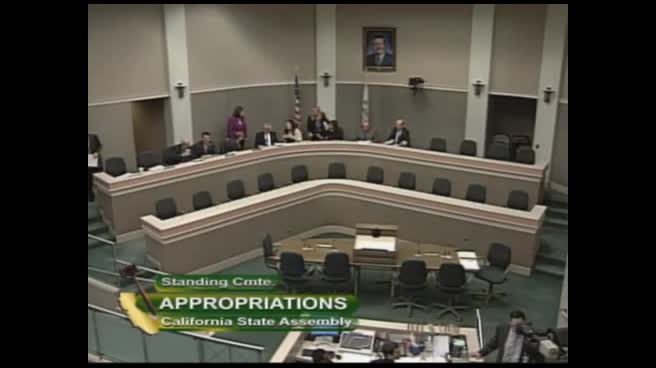
Assembly Standing Committee on Appropriations
Bill Author

Bill Co-Author(s):