AB 2448: Juveniles: rights: computing technology.
- Session Year: 2017-2018
- House: Assembly
- Latest Version Date: 2018-09-30
Existing law, the Youth Bill of Rights, enumerates various rights for youth confined in a facility of the Division of Juvenile Justice, including, among others, the right to maintain frequent and continuing contact with family members and the right to receive a quality education.
This bill would require a minor detained in or committed to a juvenile hall or juvenile ranch, camp, or forestry camp, to be provided with access to computer technology and the Internet for the purposes of education, and would allow him or her to be provided with access to computer technology and the Internet for the purpose of maintaining relationships with family. The bill would specify that these provisions do not limit the authority of the chief probation officer, or his or her designee, to limit or deny access to computer technology or the Internet for safety and security or staffing reasons. By requiring counties to provide minors in their custody access to computer technology and the Internet, the bill would impose a state-mandated local program.
Under existing law, (1) every child adjudged a dependent child of the juvenile court, and (2) every minor adjudged a ward of the juvenile court who is placed in a specified care setting by a probation agency, is entitled to participate in age-appropriate extracurricular, enrichment, and social activities.
This bill would require that these age-appropriate extracurricular, enrichment, and social activities include access to computer technology and the Internet. By requiring counties to provide access to computer technology and Internet to dependent children and wards of the juvenile court, this bill would impose a state-mandated local program.
The California Constitution requires the state to reimburse local agencies and school districts for certain costs mandated by the state. Statutory provisions establish procedures for making that reimbursement.
This bill would provide that with regard to certain mandates no reimbursement is required by this act for a specified reason.
With regard to any other mandates, this bill would provide that, if the Commission on State Mandates determines that the bill contains costs so mandated by the state, reimbursement for those costs shall be made pursuant to the statutory provisions noted above.
Existing law, the Youth Bill of Rights, enumerates various rights for youth confined in a facility of the Division of Juvenile Justice, including, among others, the right to maintain frequent and continuing contact with family members and the right to receive a quality education.
This bill would require a minor detained in or committed to a juvenile hall or juvenile ranch, camp, or forestry camp, to be provided with access to computer technology and the Internet for the purposes of education, and would allow him or her to be provided with access to computer technology and the Internet for the purpose of maintaining relationships with family. The bill would specify that these provisions do not limit the authority of the chief probation officer, or his or her designee, to limit or deny access to computer technology or the Internet for safety and security or staffing reasons. By requiring counties to provide minors in their custody access to computer technology and the Internet, the bill would impose a state-mandated local program.
Under existing law, (1) every child adjudged a dependent child of the juvenile court court, and (2) every minor adjudged a ward of the juvenile court who is placed in a specified care setting by a probation agency, is entitled to participate in age-appropriate extracurricular, enrichment, and social activities.
This bill would require that these age-appropriate extracurricular, enrichment, and social activities include access to computer technology and the Internet. By requiring counties to provide access to computer technology and Internet to dependent children and wards of the juvenile court, this bill would impose a state-mandated local program.
The California Constitution requires the state to reimburse local agencies and school districts for certain costs mandated by the state. Statutory provisions establish procedures for making that reimbursement.
This bill would provide that with regard to certain mandates no reimbursement is required by this act for a specified reason.
With regard to any other mandates, this bill would provide that, if the Commission on State Mandates determines that the bill contains costs so mandated by the state, reimbursement for those costs shall be made pursuant to the statutory provisions noted above.
Existing law, the Youth Bill of Rights, enumerates various rights for youth confined in a facility of the Division of Juvenile Justice, including, among others, the right to maintain frequent and continuing contact with family members and the right to receive a quality education.
This bill would require a minor detained in or committed to a juvenile hall or juvenile ranch, camp, or forestry camp, to be provided with access to computer technology and the Internet for the purposes of education, and would allow him or her to be provided with access to computer technology and the Internet for the purpose of maintaining relationships with family. The bill would specify that these provisions do not limit the authority of the chief probation officer, or his or her designee, to limit or deny access to computer technology or the Internet for safety and security or staffing reasons. By requiring counties to provide minors in their custody access to computer technology and the Internet, the bill would impose a state-mandated local program.
Under existing law, every child adjudged a dependent child of the juvenile court and every minor adjudged a ward of the juvenile court is entitled to participate in age-appropriate extracurricular, enrichment, and social activities.
This bill would require that these age-appropriate extracurricular, enrichment, and social activities include access to computer technology and the Internet. By requiring counties to provide access to computer technology and Internet to dependent children and wards of the juvenile court, this bill would impose a state-mandated local program.
The California Constitution requires the state to reimburse local agencies and school districts for certain costs mandated by the state. Statutory provisions establish procedures for making that reimbursement.
This bill would provide that with regard to certain mandates no reimbursement is required by this act for a specified reason.
With regard to any other mandates, this bill would provide that, if the Commission on State Mandates determines that the bill contains costs so mandated by the state, reimbursement for those costs shall be made pursuant to the statutory provisions noted above.
(a)(1)Every child adjudged a dependent child of the juvenile court shall be entitled to participate in age-appropriate extracurricular, enrichment, and social activities, including, but not limited to, access to computer technology and the Internet. A state or local regulation or policy shall not prevent, or create barriers to, participation in those activities. Each state and local entity shall ensure that private agencies that provide foster care services to dependent children have policies consistent with this section and that those agencies promote and protect the ability of dependent children to participate in age-appropriate extracurricular, enrichment, and social activities, including, but not limited to, access to computer technology and the Internet. A short-term residential therapeutic program or a group home administrator, a facility manager, or his or her responsible designee, and a caregiver, as defined in paragraph (1) of subdivision (a) of Section 362.04, shall use a reasonable and prudent parent standard in determining whether to give permission for a child residing in foster care to participate in extracurricular, enrichment, and social activities, including, but not limited to, access to computer technology and the Internet. A short-term residential therapeutic program or a group home administrator, a facility manager, or his or her responsible designee, and a caregiver shall take reasonable steps to determine the appropriateness of the activity in consideration of the childs age, maturity, and developmental level.
(2)Training for caregivers shall include knowledge and skills relating to the reasonable and prudent parent standard for the participation of the child in age or developmentally appropriate activities, consistent with this section and Section 671(a)(24) of Title 42 of the United States Code.
(b)A short-term residential therapeutic program or a group home administrator, a facility manager, or his or her responsible designee, is encouraged to consult with social work or treatment staff members who are most familiar with the child at the group home in applying and using the reasonable and prudent parent standard.
(c)(1)Reasonable and prudent parent or reasonable and prudent parent standard means the standard characterized by careful and sensible parental decisions that maintain the health, safety, and best interests of a child while at the same time encouraging the emotional and developmental growth of the child, that a caregiver shall use when determining whether to allow a child in foster care under the responsibility of the state to participate in age or developmentally appropriate extracurricular, enrichment, cultural, and social activities.
(2)The term age or developmentally appropriate means both of the following:
(A)Activities or items that are generally accepted as suitable for children of the same chronological age or level of maturity or that are determined to be developmentally appropriate for a child, based on the development of cognitive, emotional, physical, and behavioral capacities that are typical for an age or age group.
(B)In the case of a specific child, activities or items that are suitable for the child based on the developmental stages attained by the child with respect to the cognitive, emotional, physical, and behavioral capacities of the child.
SEC. 2.Section 727 of the Welfare and Institutions Code is amended to read:727.(a)(1)If a minor or nonminor is adjudged a ward of the court on the ground that he or she is a person described by Section 601 or 602, the court may make any reasonable orders for the care, supervision, custody, conduct, maintenance, and support of the minor or nonminor, including medical treatment, subject to further order of the court.
(2)In the discretion of the court, a ward may be ordered to be on probation without supervision of the probation officer. The court, in so ordering, may impose on the ward any and all reasonable conditions of behavior as may be appropriate under this disposition. A minor or nonminor who has been adjudged a ward of the court on the basis of the commission of any of the offenses described in subdivision (b) or paragraph (2) of subdivision (d) of Section 707, Section 459 of the Penal Code, or subdivision (a) of Section 11350 of the Health and Safety Code, shall not be eligible for probation without supervision of the probation officer. A minor or nonminor who has been adjudged a ward of the court on the basis of the commission of any offense involving the sale or possession for sale of a controlled substance, except misdemeanor offenses involving marijuana, as specified in Chapter 2 (commencing with Section 11053) of Division 10 of the Health and Safety Code, or of an offense in violation of Section 32625 of the Penal Code, shall be eligible for probation without supervision of the probation officer only when the court determines that the interests of justice would best be served and states reasons on the record for that determination.
(3)In all other cases, the court shall order the care, custody, and control of the minor or nonminor to be under the supervision of the probation officer.
(4)It is the responsibility, pursuant to Section 672(a)(2)(B) of Title 42 of the United States Code, of the probation agency to determine the appropriate placement for the ward once the court issues a placement order. In determination of the appropriate placement for the ward, the probation officer shall consider any recommendations of the child and family. The probation agency may place the minor or nonminor in any of the following:
(A)The approved home of a relative or the approved home of a nonrelative, extended family member, as defined in Section 362.7. If a decision has been made to place the minor in the home of a relative, the court may authorize the relative to give legal consent for the minors medical, surgical, and dental care and education as if the relative caregiver were the custodial parent of the minor.
(B)A foster home, the approved home of a resource family as defined in Section 16519.5, or a home or facility in accordance with the federal Indian Child Welfare Act (25 U.S.C. Sec. 1901 et seq.).
(C)A suitable licensed community care facility, as identified by the probation officer, except a runaway and homeless youth shelter licensed by the State Department of Social Services pursuant to Section 1502.35 of the Health and Safety Code.
(D)A foster family agency, as defined in subdivision (g) of Section 11400 and paragraph (4) of subdivision (a) of Section 1502 of the Health and Safety Code, in a suitable certified family home or with a resource family.
(E)A minor or nonminor dependent may be placed in a group home or short-term residential therapeutic program as defined in subdivision (ad) of Section 11400 and paragraph (18) of subdivision (a) of Section 1502 of the Health and Safety Code. The placing agency shall also comply with requirements set forth in paragraph (9) of subdivision (e) of Section 361.2, which includes, but is not limited to, authorization, limitation on length of stay, extensions, and additional requirements related to minors. For youth 13 years of age and older, the chief probation officer of the county probation department, or his or her designee, shall approve the placement if it is longer than 12 months, and no less frequently than every 12 months thereafter.
(F)(i)Every minor adjudged a ward of the juvenile court shall be entitled to participate in age-appropriate extracurricular, enrichment, and social activities. A state or local regulation or policy shall not prevent, or create barriers to, participation in those activities. Each state and local entity shall ensure that private agencies that provide foster care services to wards have policies consistent with this section and that those agencies promote and protect the ability of wards to participate in age-appropriate extracurricular, enrichment, and social activities. A short-term residential therapeutic program or a group home administrator, a facility manager, or his or her responsible designee, and a caregiver, as defined in paragraph (1) of subdivision (a) of Section 362.04, shall use a reasonable and prudent parent standard, as defined in paragraph (2) of subdivision (a) of Section 362.04, in determining whether to give permission for a minor residing in foster care to participate in extracurricular, enrichment, and social activities. A short-term residential therapeutic program or a group home administrator, a facility manager, or his or her responsible designee, and a caregiver shall take reasonable steps to determine the appropriateness of the activity taking into consideration the minors age, maturity, and developmental level. For every minor placed in a setting described in subparagraphs (A) through (E), inclusive, age-appropriate extracurricular, enrichment, and social activities shall include access to computer technology and the Internet.
(ii)A short-term residential therapeutic program or a group home administrator, facility manager, or his or her responsible designee, is encouraged to consult with social work or treatment staff members who are most familiar with the minor at the group home in applying and using the reasonable and prudent parent standard.
(G)For nonminors, an approved supervised independent living setting as defined in Section 11400, including a residential housing unit certified by a licensed transitional housing placement provider.
(5)The minor or nonminor shall be released from juvenile detention upon an order being entered under paragraph (3), unless the court determines that a delay in the release from detention is reasonable pursuant to Section 737.
(b)(1)To facilitate coordination and cooperation among agencies, the court may, at any time after a petition has been filed, after giving notice and an opportunity to be heard, join in the juvenile court proceedings any agency that the court determines has failed to meet a legal obligation to provide services to a minor, for whom a petition has been filed under Section 601 or 602, to a nonminor, as described in Section 303, or to a nonminor dependent, as defined in subdivision (v) of Section 11400. In any proceeding in which an agency is joined, the court shall not impose duties upon the agency beyond those mandated by law. The purpose of joinder under this section is to ensure the delivery and coordination of legally mandated services to the minor. The joinder shall not be maintained for any other purpose. Nothing in this section shall prohibit agencies that have received notice of the hearing on joinder from meeting prior to the hearing to coordinate services.
(2)The court has no authority to order services unless it has been determined through the administrative process of an agency that has been joined as a party, that the minor, nonminor, or nonminor dependent is eligible for those services. With respect to mental health assessment, treatment, and case management services pursuant to an individualized education program developed pursuant to Article 2 (commencing with Section 56320) of Chapter 4 of Part 30 of Division 4 of Title 2 of the Education Code, the courts determination shall be limited to whether the agency has complied with that chapter.
(3)For the purposes of this subdivision, agency means any governmental agency or any private service provider or individual that receives federal, state, or local governmental funding or reimbursement for providing services directly to a child, nonminor, or nonminor dependent.
(c)If a minor has been adjudged a ward of the court on the ground that he or she is a person described in Section 601 or 602, and the court finds that notice has been given in accordance with Section 661, and if the court orders that a parent or guardian shall retain custody of that minor either subject to or without the supervision of the probation officer, the parent or guardian may be required to participate with that minor in a counseling or education program, including, but not limited to, parent education and parenting programs operated by community colleges, school districts, or other appropriate agencies designated by the court.
(d)The juvenile court may direct any reasonable orders to the parents and guardians of the minor who is the subject of any proceedings under this chapter as the court deems necessary and proper to carry out subdivisions (a), (b), and (c), including orders to appear before a county financial evaluation officer, to ensure the minors regular school attendance, and to make reasonable efforts to obtain appropriate educational services necessary to meet the needs of the minor.
If counseling or other treatment services are ordered for the minor, the parent, guardian, or foster parent shall be ordered to participate in those services, unless participation by the parent, guardian, or foster parent is deemed by the court to be inappropriate or potentially detrimental to the minor.
(e)The court may, after receipt of relevant testimony and other evidence from the parties, affirm or reject the placement determination. If the court rejects the placement determination, the court may instruct the probation department to determine an alternative placement for the ward, or the court may modify the placement order to an alternative placement recommended by a party to the case after the court has received the probation departments assessment of that recommendation and other relevant evidence from the parties.
SEC. 3.Section 851.1 is added to the Welfare and Institutions Code, to read:851.1.(a)(1)Minors detained in or committed to a juvenile hall shall be provided with access to computer technology and the Internet for the purposes of education.
(2)Minors detained in or committed to a juvenile hall may be provided with access to computer technology and the Internet for maintaining relationships with family.
(b)This section does not limit the authority of the chief probation officer, or his or her designee, to limit or deny access to computer technology or the Internet for safety and security or staffing reasons.
SEC. 4.Section 889.1 is added to the Welfare and Institutions Code, to read:889.1.(a)(1) Minors detained in or committed to a juvenile ranch, camp, or forestry camp shall be provided with access to computer technology and the Internet for the purposes of education.
(2)Minors detained in or committed to a juvenile ranch, camp, or forestry camp may be provided with access to computer technology and the Internet for maintaining relationships with family.
(b)This section does not limit the authority of the chief probation officer, or his or her designee, to limit or deny access to computer technology or the Internet for safety and security or staffing reasons.
SEC. 5.To the extent that this act has an overall effect of increasing certain costs already borne by a local agency for programs or levels of service mandated by the 2011 Realignment Legislation within the meaning of Section 36 of Article XIII of the California Constitution, it shall apply to local agencies only to the extent that the state provides annual funding for the cost increase. Any new program or higher level of service provided by a local agency pursuant to this act above the level for which funding has been provided shall not require a subvention of funds by the state or otherwise be subject to Section 6 of Article XIIIB of the California Constitution.
However, if the Commission on State Mandates determines that this act contains other costs mandated by the state, reimbursement to local agencies and school districts for those costs shall be made pursuant to Part 7 (commencing with Section 17500) of Division 4 of Title 2 of the Government Code.
(a)(1)Every child adjudged a dependent child of the juvenile court shall be entitled to participate in age-appropriate extracurricular, enrichment, and social activities, including, but not limited to, access to computer technology and the Internet. A state or local regulation or policy shall not prevent, or create barriers to, participation in those activities. Each state and local entity shall ensure that private agencies that provide foster care services to dependent children have policies consistent with this section and that those agencies promote and protect the ability of dependent children to participate in age-appropriate extracurricular, enrichment, and social activities, including, but not limited to, access to computer technology and the Internet. A short-term residential therapeutic program or a group home administrator, a facility manager, or his or her responsible designee, and a caregiver, as defined in paragraph (1) of subdivision (a) of Section 362.04, shall use a reasonable and prudent parent standard in determining whether to give permission for a child residing in foster care to participate in extracurricular, enrichment, and social activities, including, but not limited to, access to computer technology and the Internet. A short-term residential therapeutic program or a group home administrator, a facility manager, or his or her responsible designee, and a caregiver shall take reasonable steps to determine the appropriateness of the activity in consideration of the childs age, maturity, and developmental level.
(2)Training for caregivers shall include knowledge and skills relating to the reasonable and prudent parent standard for the participation of the child in age or developmentally appropriate activities, consistent with this section and Section 671(a)(24) of Title 42 of the United States Code.
(b)A short-term residential therapeutic program or a group home administrator, a facility manager, or his or her responsible designee, is encouraged to consult with social work or treatment staff members who are most familiar with the child at the group home in applying and using the reasonable and prudent parent standard.
(c)(1)Reasonable and prudent parent or reasonable and prudent parent standard means the standard characterized by careful and sensible parental decisions that maintain the health, safety, and best interests of a child while at the same time encouraging the emotional and developmental growth of the child, that a caregiver shall use when determining whether to allow a child in foster care under the responsibility of the state to participate in age or developmentally appropriate extracurricular, enrichment, cultural, and social activities.
(2)The term age or developmentally appropriate means both of the following:
(A)Activities or items that are generally accepted as suitable for children of the same chronological age or level of maturity or that are determined to be developmentally appropriate for a child, based on the development of cognitive, emotional, physical, and behavioral capacities that are typical for an age or age group.
(B)In the case of a specific child, activities or items that are suitable for the child based on the developmental stages attained by the child with respect to the cognitive, emotional, physical, and behavioral capacities of the child.
SEC. 2.Section 727 of the Welfare and Institutions Code is amended to read:727.(a)(1)If a minor or nonminor is adjudged a ward of the court on the ground that he or she is a person described by Section 601 or 602, the court may make any reasonable orders for the care, supervision, custody, conduct, maintenance, and support of the minor or nonminor, including medical treatment, subject to further order of the court.
(2)In the discretion of the court, a ward may be ordered to be on probation without supervision of the probation officer. The court, in so ordering, may impose on the ward any and all reasonable conditions of behavior as may be appropriate under this disposition. A minor or nonminor who has been adjudged a ward of the court on the basis of the commission of any of the offenses described in subdivision (b) or paragraph (2) of subdivision (d) of Section 707, Section 459 of the Penal Code, or subdivision (a) of Section 11350 of the Health and Safety Code, shall not be eligible for probation without supervision of the probation officer. A minor or nonminor who has been adjudged a ward of the court on the basis of the commission of any offense involving the sale or possession for sale of a controlled substance, except misdemeanor offenses involving marijuana, as specified in Chapter 2 (commencing with Section 11053) of Division 10 of the Health and Safety Code, or of an offense in violation of Section 32625 of the Penal Code, shall be eligible for probation without supervision of the probation officer only when the court determines that the interests of justice would best be served and states reasons on the record for that determination.
(3)In all other cases, the court shall order the care, custody, and control of the minor or nonminor to be under the supervision of the probation officer.
(4)It is the responsibility, pursuant to Section 672(a)(2)(B) of Title 42 of the United States Code, of the probation agency to determine the appropriate placement for the ward once the court issues a placement order. In determination of the appropriate placement for the ward, the probation officer shall consider any recommendations of the child and family. The probation agency may place the minor or nonminor in any of the following:
(A)The approved home of a relative or the approved home of a nonrelative, extended family member, as defined in Section 362.7. If a decision has been made to place the minor in the home of a relative, the court may authorize the relative to give legal consent for the minors medical, surgical, and dental care and education as if the relative caregiver were the custodial parent of the minor.
(B)A foster home, the approved home of a resource family as defined in Section 16519.5, or a home or facility in accordance with the federal Indian Child Welfare Act (25 U.S.C. Sec. 1901 et seq.).
(C)A suitable licensed community care facility, as identified by the probation officer, except a runaway and homeless youth shelter licensed by the State Department of Social Services pursuant to Section 1502.35 of the Health and Safety Code.
(D)A foster family agency, as defined in subdivision (g) of Section 11400 and paragraph (4) of subdivision (a) of Section 1502 of the Health and Safety Code, in a suitable certified family home or with a resource family.
(E)A minor or nonminor dependent may be placed in a group home or short-term residential therapeutic program as defined in subdivision (ad) of Section 11400 and paragraph (18) of subdivision (a) of Section 1502 of the Health and Safety Code. The placing agency shall also comply with requirements set forth in paragraph (9) of subdivision (e) of Section 361.2, which includes, but is not limited to, authorization, limitation on length of stay, extensions, and additional requirements related to minors. For youth 13 years of age and older, the chief probation officer of the county probation department, or his or her designee, shall approve the placement if it is longer than 12 months, and no less frequently than every 12 months thereafter.
(F)(i)Every minor adjudged a ward of the juvenile court shall be entitled to participate in age-appropriate extracurricular, enrichment, and social activities, including, but not limited to, access to computer technology and the Internet. activities. A state or local regulation or policy shall not prevent, or create barriers to, participation in those activities. Each state and local entity shall ensure that private agencies that provide foster care services to wards have policies consistent with this section and that those agencies promote and protect the ability of wards to participate in age-appropriate extracurricular, enrichment, and social activities, including, but not limited to, access to computer technology and the Internet. activities. A short-term residential therapeutic program or a group home administrator, a facility manager, or his or her responsible designee, and a caregiver, as defined in paragraph (1) of subdivision (a) of Section 362.04, shall use a reasonable and prudent parent standard, as defined in paragraph (2) of subdivision (a) of Section 362.04, in determining whether to give permission for a minor residing in foster care to participate in extracurricular, enrichment, and social activities, including, but not limited to, access to computer technology and the Internet. activities. A short-term residential therapeutic program or a group home administrator, a facility manager, or his or her responsible designee, and a caregiver shall take reasonable steps to determine the appropriateness of the activity taking into consideration the minors age, maturity, and developmental level. For every minor placed in a setting described in subparagraphs (A) through (E), inclusive, age-appropriate extracurricular, enrichment, and social activities shall include access to computer technology and the Internet.
(ii)A short-term residential therapeutic program or a group home administrator, facility manager, or his or her responsible designee, is encouraged to consult with social work or treatment staff members who are most familiar with the minor at the group home in applying and using the reasonable and prudent parent standard.
(G)For nonminors, an approved supervised independent living setting as defined in Section 11400, including a residential housing unit certified by a licensed transitional housing placement provider.
(5)The minor or nonminor shall be released from juvenile detention upon an order being entered under paragraph (3), unless the court determines that a delay in the release from detention is reasonable pursuant to Section 737.
(b)(1)To facilitate coordination and cooperation among agencies, the court may, at any time after a petition has been filed, after giving notice and an opportunity to be heard, join in the juvenile court proceedings any agency that the court determines has failed to meet a legal obligation to provide services to a minor, for whom a petition has been filed under Section 601 or 602, to a nonminor, as described in Section 303, or to a nonminor dependent, as defined in subdivision (v) of Section 11400. In any proceeding in which an agency is joined, the court shall not impose duties upon the agency beyond those mandated by law. The purpose of joinder under this section is to ensure the delivery and coordination of legally mandated services to the minor. The joinder shall not be maintained for any other purpose. Nothing in this section shall prohibit agencies that have received notice of the hearing on joinder from meeting prior to the hearing to coordinate services.
(2)The court has no authority to order services unless it has been determined through the administrative process of an agency that has been joined as a party, that the minor, nonminor, or nonminor dependent is eligible for those services. With respect to mental health assessment, treatment, and case management services pursuant to an individualized education program developed pursuant to Article 2 (commencing with Section 56320) of Chapter 4 of Part 30 of Division 4 of Title 2 of the Education Code, the courts determination shall be limited to whether the agency has complied with that chapter.
(3)For the purposes of this subdivision, agency means any governmental agency or any private service provider or individual that receives federal, state, or local governmental funding or reimbursement for providing services directly to a child, nonminor, or nonminor dependent.
(c)If a minor has been adjudged a ward of the court on the ground that he or she is a person described in Section 601 or 602, and the court finds that notice has been given in accordance with Section 661, and if the court orders that a parent or guardian shall retain custody of that minor either subject to or without the supervision of the probation officer, the parent or guardian may be required to participate with that minor in a counseling or education program, including, but not limited to, parent education and parenting programs operated by community colleges, school districts, or other appropriate agencies designated by the court.
(d)The juvenile court may direct any reasonable orders to the parents and guardians of the minor who is the subject of any proceedings under this chapter as the court deems necessary and proper to carry out subdivisions (a), (b), and (c), including orders to appear before a county financial evaluation officer, to ensure the minors regular school attendance, and to make reasonable efforts to obtain appropriate educational services necessary to meet the needs of the minor.
If counseling or other treatment services are ordered for the minor, the parent, guardian, or foster parent shall be ordered to participate in those services, unless participation by the parent, guardian, or foster parent is deemed by the court to be inappropriate or potentially detrimental to the minor.
(e)The court may, after receipt of relevant testimony and other evidence from the parties, affirm or reject the placement determination. If the court rejects the placement determination, the court may instruct the probation department to determine an alternative placement for the ward, or the court may modify the placement order to an alternative placement recommended by a party to the case after the court has received the probation departments assessment of that recommendation and other relevant evidence from the parties.
SEC. 3.Section 851.1 is added to the Welfare and Institutions Code, to read:851.1.(a)(1)Minors detained in or committed to a juvenile hall shall be provided with access to computer technology and the Internet for the purposes of education.
(2)Minors detained in or committed to a juvenile hall may be provided with access to computer technology and the Internet for maintaining relationships with family.
(b)This section does not limit the authority of the chief probation officer, or his or her designee, to limit or deny access to computer technology or the Internet for safety and security or staffing reasons.
SEC. 4.Section 889.1 is added to the Welfare and Institutions Code, to read:889.1.(a)(1) Minors detained in or committed to a juvenile ranch, camp, or forestry camp shall be provided with access to computer technology and the Internet for the purposes of education.
(2)Minors detained in or committed to a juvenile ranch, camp, or forestry camp may be provided with access to computer technology and the Internet for maintaining relationships with family.
(b)This section does not limit the authority of the chief probation officer, or his or her designee, to limit or deny access to computer technology or the Internet for safety and security or staffing reasons.
SEC. 5.To the extent that this act has an overall effect of increasing certain costs already borne by a local agency for programs or levels of service mandated by the 2011 Realignment Legislation within the meaning of Section 36 of Article XIII of the California Constitution, it shall apply to local agencies only to the extent that the state provides annual funding for the cost increase. Any new program or higher level of service provided by a local agency pursuant to this act above the level for which funding has been provided shall not require a subvention of funds by the state or otherwise be subject to Section 6 of Article XIIIB of the California Constitution.
However, if the Commission on State Mandates determines that this act contains other costs mandated by the state, reimbursement to local agencies and school districts for those costs shall be made pursuant to Part 7 (commencing with Section 17500) of Division 4 of Title 2 of the Government Code.
(a)(1)Every child adjudged a dependent child of the juvenile court shall be entitled to participate in age-appropriate extracurricular, enrichment, and social activities. No activities, including, but not limited to, access to computer technology and the Internet. A state or local regulation or policy may shall not prevent, or create barriers to, participation in those activities. Each state and local entity shall ensure that private agencies that provide foster care services to dependent children have policies consistent with this section and that those agencies promote and protect the ability of dependent children to participate in age-appropriate extracurricular, enrichment, and social activities. activities, including, but not limited to, access to computer technology and the Internet. A short-term residential therapeutic program or a group home administrator, a facility manager, or his or her responsible designee, and a caregiver, as defined in paragraph (1) of subdivision (a) of Section 362.04, shall use a reasonable and prudent parent standard in determining whether to give permission for a child residing in foster care to participate in extracurricular, enrichment, and social activities. activities, including, but not limited to, access to computer technology and the Internet. A short-term residential therapeutic program or a group home administrator, a facility manager, or his or her responsible designee, and a caregiver shall take reasonable steps to determine the appropriateness of the activity in consideration of the childs age, maturity, and developmental level.
(2)Training for caregivers shall include knowledge and skills relating to the reasonable and prudent parent standard for the participation of the child in age or developmentally appropriate activities, consistent with this section and Section 671(a)(24) of Title 42 of the United States Code.
(b)A short-term residential therapeutic program or a group home administrator, a facility manager, or his or her responsible designee, is encouraged to consult with social work or treatment staff members who are most familiar with the child at the group home in applying and using the reasonable and prudent parent standard.
(c)(1)Reasonable and prudent parent or reasonable and prudent parent standard means the standard characterized by careful and sensible parental decisions that maintain the health, safety, and best interests of a child while at the same time encouraging the emotional and developmental growth of the child, that a caregiver shall use when determining whether to allow a child in foster care under the responsibility of the state to participate in age or developmentally appropriate extracurricular, enrichment, cultural, and social activities.
(2)The term age or developmentally appropriate means both of the following:
(A)Activities or items that are generally accepted as suitable for children of the same chronological age or level of maturity or that are determined to be developmentally appropriate for a child, based on the development of cognitive, emotional, physical, and behavioral capacities that are typical for an age or age group.
(B)In the case of a specific child, activities or items that are suitable for the child based on the developmental stages attained by the child with respect to the cognitive, emotional, physical, and behavioral capacities of the child.
SEC. 2.Section 727 of the Welfare and Institutions Code is amended to read:727.(a)(1)If a minor or nonminor is adjudged a ward of the court on the ground that he or she is a person described by Section 601 or 602, the court may make any reasonable orders for the care, supervision, custody, conduct, maintenance, and support of the minor or nonminor, including medical treatment, subject to further order of the court.
(2)In the discretion of the court, a ward may be ordered to be on probation without supervision of the probation officer. The court, in so ordering, may impose on the ward any and all reasonable conditions of behavior as may be appropriate under this disposition. A minor or nonminor who has been adjudged a ward of the court on the basis of the commission of any of the offenses described in subdivision (b) or paragraph (2) of subdivision (d) of Section 707, Section 459 of the Penal Code, or subdivision (a) of Section 11350 of the Health and Safety Code, shall not be eligible for probation without supervision of the probation officer. A minor or nonminor who has been adjudged a ward of the court on the basis of the commission of any offense involving the sale or possession for sale of a controlled substance, except misdemeanor offenses involving marijuana, as specified in Chapter 2 (commencing with Section 11053) of Division 10 of the Health and Safety Code, or of an offense in violation of Section 32625 of the Penal Code, shall be eligible for probation without supervision of the probation officer only when the court determines that the interests of justice would best be served and states reasons on the record for that determination.
(3)In all other cases, the court shall order the care, custody, and control of the minor or nonminor to be under the supervision of the probation officer.
(4)It is the responsibility responsibility, pursuant to 42 U.S.C. Section 672(a)(2)(B) of Title 42 of the United States Code, of the probation agency to determine the appropriate placement for the ward once the court issues a placement order. In determination of the appropriate placement for the ward, the probation officer shall consider any recommendations of the child and family. The probation agency may place the minor or nonminor in any of the following:
(A)The approved home of a relative or the approved home of a nonrelative, extended family member, as defined in Section 362.7. If a decision has been made to place the minor in the home of a relative, the court may authorize the relative to give legal consent for the minors medical, surgical, and dental care and education as if the relative caregiver were the custodial parent of the minor.
(B)A foster home, the approved home of a resource family as defined in Section 16519.5, or a home or facility in accordance with the federal Indian Child Welfare Act (25 U.S.C. Sec. 1901 et seq.).
(C)A suitable licensed community care facility, as identified by the probation officer, except a runaway and homeless youth shelter licensed by the State Department of Social Services pursuant to Section 1502.35 of the Health and Safety Code.
(D)A foster family agency, as defined in subdivision (g) of Section 11400 and paragraph (4) of subdivision (a) of Section 1502 of the Health and Safety Code, in a suitable certified family home or with a resource family.
(E)A minor or nonminor dependent may be placed in a group home or short-term residential therapeutic program as defined in subdivision (ad) of Section 11400 and paragraph (18) of subdivision (a) of Section 1502 of the Health and Safety Code. The placing agency shall also comply with requirements set forth in paragraph (9) of subdivision (e) of Section 361.2, which includes, but is not limited to, authorization, limitation on length of stay, extensions, and additional requirements related to minors. For youth 13 years of age and older, the chief probation officer of the county probation department, or his or her designee, shall approve the placement if it is longer than 12 months, and no less frequently than every 12 months thereafter.
(F)(i)Every minor adjudged a ward of the juvenile court shall be entitled to participate in age-appropriate extracurricular, enrichment, and social activities. activities, including, but not limited to, access to computer technology and the Internet. A state or local regulation or policy shall not prevent, or create barriers to, participation in those activities. Each state and local entity shall ensure that private agencies that provide foster care services to wards have policies consistent with this section and that those agencies promote and protect the ability of wards to participate in age-appropriate extracurricular, enrichment, and social activities. activities, including, but not limited to, access to computer technology and the Internet. A short-term residential therapeutic program or a group home administrator, a facility manager, or his or her responsible designee, and a caregiver, as defined in paragraph (1) of subdivision (a) of Section 362.04, shall use a reasonable and prudent parent standard, as defined in paragraph (2) of subdivision (a) of Section 362.04, in determining whether to give permission for a minor residing in foster care to participate in extracurricular, enrichment, and social activities. activities, including, but not limited to, access to computer technology and the Internet. A short-term residential therapeutic program or a group home administrator, a facility manager, or his or her responsible designee, and a caregiver shall take reasonable steps to determine the appropriateness of the activity taking into consideration the minors age, maturity, and developmental level.
(ii)A short-term residential therapeutic program or a group home administrator, facility manager, or his or her responsible designee, is encouraged to consult with social work or treatment staff members who are most familiar with the minor at the group home in applying and using the reasonable and prudent parent standard.
(G)For nonminors, an approved supervised independent living setting as defined in Section 11400, including a residential housing unit certified by a licensed transitional housing placement provider.
(5)The minor or nonminor shall be released from juvenile detention upon an order being entered under paragraph (3), unless the court determines that a delay in the release from detention is reasonable pursuant to Section 737.
(b)(1)To facilitate coordination and cooperation among agencies, the court may, at any time after a petition has been filed, after giving notice and an opportunity to be heard, join in the juvenile court proceedings any agency that the court determines has failed to meet a legal obligation to provide services to a minor, for whom a petition has been filed under Section 601 or 602, to a nonminor, as described in Section 303, or to a nonminor dependent, as defined in subdivision (v) of Section 11400. In any proceeding in which an agency is joined, the court shall not impose duties upon the agency beyond those mandated by law. The purpose of joinder under this section is to ensure the delivery and coordination of legally mandated services to the minor. The joinder shall not be maintained for any other purpose. Nothing in this section shall prohibit agencies that have received notice of the hearing on joinder from meeting prior to the hearing to coordinate services.
(2)The court has no authority to order services unless it has been determined through the administrative process of an agency that has been joined as a party, that the minor, nonminor, or nonminor dependent is eligible for those services. With respect to mental health assessment, treatment, and case management services pursuant to an individualized education program developed pursuant to Article 2 (commencing with Section 56320) of Chapter 4 of Part 30 of Division 4 of Title 2 of the Education Code, the courts determination shall be limited to whether the agency has complied with that chapter.
(3)For the purposes of this subdivision, agency means any governmental agency or any private service provider or individual that receives federal, state, or local governmental funding or reimbursement for providing services directly to a child, nonminor, or nonminor dependent.
(c)If a minor has been adjudged a ward of the court on the ground that he or she is a person described in Section 601 or 602, and the court finds that notice has been given in accordance with Section 661, and if the court orders that a parent or guardian shall retain custody of that minor either subject to or without the supervision of the probation officer, the parent or guardian may be required to participate with that minor in a counseling or education program, including, but not limited to, parent education and parenting programs operated by community colleges, school districts, or other appropriate agencies designated by the court.
(d)The juvenile court may direct any reasonable orders to the parents and guardians of the minor who is the subject of any proceedings under this chapter as the court deems necessary and proper to carry out subdivisions (a), (b), and (c), including orders to appear before a county financial evaluation officer, to ensure the minors regular school attendance, and to make reasonable efforts to obtain appropriate educational services necessary to meet the needs of the minor.
If counseling or other treatment services are ordered for the minor, the parent, guardian, or foster parent shall be ordered to participate in those services, unless participation by the parent, guardian, or foster parent is deemed by the court to be inappropriate or potentially detrimental to the minor.
(e)The court may, after receipt of relevant testimony and other evidence from the parties, affirm or reject the placement determination. If the court rejects the placement determination, the court may instruct the probation department to determine an alternative placement for the ward, or the court may modify the placement order to an alternative placement recommended by a party to the case after the court has received the probation departments assessment of that recommendation and other relevant evidence from the parties.
SEC. 3.Section 851.1 is added to the Welfare and Institutions Code, to read:851.1.(a)(1)Minors detained in or committed to a juvenile hall shall be provided with access to computer technology and the Internet for the purposes of education.
(2)Minors detained in or committed to a juvenile hall may be provided with access to computer technology and the Internet for maintaining relationships with family.
(b)This section does not limit the authority of the chief probation officer, or his or her designee, to limit or deny access to computer technology or the Internet for safety and security or staffing reasons.
SEC. 4.Section 889.1 is added to the Welfare and Institutions Code, to read:889.1.(a)(1) Minors detained in or committed to a juvenile ranch, camp, or forestry camp shall be provided with access to computer technology and the Internet for the purposes of education.
(2)Minors detained in or committed to a juvenile ranch, camp, or forestry camp may be provided with access to computer technology and the Internet for maintaining relationships with family.
(b)This section does not limit the authority of the chief probation officer, or his or her designee, to limit or deny access to computer technology or the Internet for safety and security or staffing reasons.
SEC. 5.To the extent that this act has an overall effect of increasing certain costs already borne by a local agency for programs or levels of service mandated by the 2011 Realignment Legislation within the meaning of Section 36 of Article XIII of the California Constitution, it shall apply to local agencies only to the extent that the state provides annual funding for the cost increase. Any new program or higher level of service provided by a local agency pursuant to this act above the level for which funding has been provided shall not require a subvention of funds by the state or otherwise be subject to Section 6 of Article XIIIB of the California Constitution.
However, if the Commission on State Mandates determines that this act contains other costs mandated by the state, reimbursement to local agencies and school districts for those costs shall be made pursuant to Part 7 (commencing with Section 17500) of Division 4 of Title 2 of the Government Code.
REVISIONS: HeadingLine 2.|
Date
|
Status
|
|---|---|
| Sep 30, 2018 | Chaptered by Secretary of State - Chapter 997, Statutes of 2018. |
| Sep 30, 2018 | Approved by the Governor. |
| Sep 7, 2018 | Enrolled and presented to the Governor at 2:30 p.m. |
| Aug 29, 2018 | Senate amendments concurred in. To Engrossing and Enrolling. |
| Aug 27, 2018 | In Assembly. Concurrence in Senate amendments pending. May be considered on or after August 29 pursuant to Assembly Rule 77. |
| Aug 27, 2018 | Read third time. Passed. Ordered to the Assembly. |
| Aug 20, 2018 | Read second time. Ordered to third reading. |
| Aug 17, 2018 | From committee: Amend, and do pass as amended. (Ayes 5. Noes 1.) (August 16). |
| Aug 6, 2018 | In committee: Referred to APPR. suspense file. |
| Jun 26, 2018 | From committee: Do pass and re-refer to Com. on APPR. (Ayes 5. Noes 2.) (June 26). Re-referred to Com. on APPR. |
| Jun 13, 2018 | From committee: Do pass and re-refer to Com. on PUB. S. (Ayes 6. Noes 0.) (June 12). Re-referred to Com. on PUB. S. |
| Jun 7, 2018 | Referred to Coms. on HUMAN S. and PUB. S. |
| May 31, 2018 | In Senate. Read first time. To Com. on RLS. for assignment. |
| May 30, 2018 | Read third time. Passed. Ordered to the Senate. |
| May 25, 2018 | Coauthors revised. |
| May 9, 2018 | In committee: Set, first hearing. Referred to APPR. suspense file. |
| Apr 25, 2018 | From committee: Do pass and re-refer to Com. on APPR. (Ayes 5. Noes 2.) (April 24). Re-referred to Com. on APPR. |
| Apr 11, 2018 | Coauthors revised. |
| Mar 12, 2018 | Referred to Coms. on HUM. S. and PUB. S. |
| Feb 15, 2018 | From printer. May be heard in committee March 17. |
| Feb 14, 2018 | Read first time. To print. |
|
Date
|
Description
|
Location
|
Votes
|
|
|---|---|---|---|---|
| Aug 29, 2018 | AB 2448 GIPSON Concurrence in Senate Amendments | Assembly Floor |
Passed |
|
| Aug 27, 2018 | Assembly 3rd Reading AB2448 Gipson et al. By Mitchell | Senate Floor |
Passed |
|
| Aug 16, 2018 | Do pass as amended | Senate Standing Committee on Appropriations |
Passed |
|
| Aug 6, 2018 | Placed on suspense file | Senate Standing Committee on Appropriations |
Passed |
|
| Jun 26, 2018 | Do pass, but first be re-referred to the Committee on [Appropriations] | Senate Standing Committee on Public Safety |
Passed |
|
| Jun 12, 2018 | Do pass, but first be re-referred to the Committee on [Public Safety] | Senate Standing Committee on Human Services |
Passed |
|
| May 30, 2018 | AB 2448 GIPSON Assembly Third Reading | Assembly Floor |
Passed |
|
| May 25, 2018 | Do pass. | Assembly Standing Committee on Appropriations |
Passed |
|
| Apr 24, 2018 | Do pass and be re-referred to the Committee on [Appropriations] | Assembly Standing Committee on Public Safety |
Passed |
|
| Apr 10, 2018 | Do pass and be re-referred to the Committee on [Public Safety] | Assembly Standing Committee on Human Services |
Passed |
This list shows positions taken on this bill by organizations on the date displayed, which is linked to the original source.
Positions by individuals are not included.
CONCURRENCE IN SENATE AMENDMENTS
CSA1 Bill Id:AB 2448
Author:(Gipson)
As Amended Ver:August 17, 2018
Majority vote
ASSEMBLY: | 50-24 | (May 30, 2018) | SENATE: | 34-5 | (August 27, 2018) |
Original Committee Reference: HUM. S.
SUMMARY: Provides for access to computer technology and the Internet for certain dependents and wards of the court under specified circumstances and for specific purposes.
Specifically, this bill:
- Includes access to computer technology and the Internet among the activities that every child adjudged a dependent or ward of the juvenile court is entitled to, as specified.
- Specifies that age-appropriate extracurricular, enrichment, and social activities for youth in certain placements, as specified, includes access to computer technology and the Internet.
- Requires minors detained in or committed to a juvenile hall, ranch, camp, or forestry camp be provided with access to computer technology and the Internet for educational purposes, and permits access to computer technology and the Internet to maintain relationships with family and supportive adults.
- Preserves the authority of the chief probation officer, or his or her designee, to limit or deny access to computer technology or the Internet for safety and security or staffing reasons.
- Makes technical changes.
The Senate amendments: Clarify that the inclusion of access to technology among the age-appropriate extracurricular, enrichment, and social activities in which youth are entitled to participate is limited to youth placed in certain settings, as specified.
EXISTING LAW:
- Establishes a state and local system of child welfare services, including foster care, for children who have been adjudged by the court to be at risk or who have been abused or neglected, as specified. (Welfare and Institutions Code Section (WIC) 202)
- States that the purpose of foster care law is to provide maximum safety and protection for children who are currently being physically, sexually, or emotionally abused, neglected, or exploited, and to ensure the safety, protection, and physical and emotional well-being of children who are at risk of harm. (WIC 300.2)
- Declares the intent of the Legislature to, whenever possible, preserve and strengthen a child's family ties and, when a child must be removed from the physical custody of his or her parents, to give preferential consideration to placement with relatives. States the intent of the Legislature to reaffirm its commitment to children who are in out-of-home placement to live in the least restrictive family setting and as close to the child's family as possible, as specified. Further states the intent of the Legislature that all children live with a committed, permanent, nurturing family and states that services and supports should be tailored to meet the specific needs of the individual child and family being served, as specified. (WIC 16000)
- Establishes the role of the juvenile court and states that it is the purpose of the juvenile court to provide for the safety of the public and each minor under the jurisdiction of the juvenile court and to preserve and strengthen the minor's family ties whenever possible. (WIC 200 et seq.)
- Allows a juvenile court to adjudge a child a ward or a dependent of the court for specified reasons, including, but not limited to, if the child has been left without any provision for support, as specified. (WIC 300)
- Enumerates rights of minors and nonminors in foster care, as specified. (WIC 16001.9)
- Entitles every child adjudged a dependent child of the juvenile court and every minor adjudged a ward of the juvenile court to participate in age-appropriate extracurricular, enrichment, and social activities. (WIC 362.05 and WIC 727)
- Defines "reasonable and prudent parent" or "reasonable and prudent parent standard" as the standard characterized by careful and sensible parental decisions that maintain the health, safety, and best interests of a child while at the same time encouraging the emotional and developmental growth of the child, that a caregiver shall use when determining whether to allow a child in foster care under the responsibility of the state to participate in age or developmentally appropriate extracurricular, enrichment, and social activities. (WIC 362.05(c)(1))
FISCAL EFFECT: According to the Senate Appropriations Committee on August 16, 2018, this bill may result in the following costs:
- County Probation Departments: Unknown costs, potentially in the millions of dollars to provide computer technology and internet access as specified in this bill. (Local funds, General Fund)
- Foster Care: Minor potentially-reimbursable costs to county departments to incorporate the new right in training to social workers. The amount of any reimbursements would be determined by the Commission on State Mandates. (Local funds, General Fund)
COMMENTS:
Foster youth rights: Current law affords a number of rights to foster youth in California. In order to ensure foster youth are informed of their rights and the full range of services afforded to them under the CWS system, AB 899 (Liu), Chapter 683, Statutes of 2001, enacted into law the Foster Youth Bill of Rights. This legislation required social workers and probation officers to periodically inform youth of their rights in an age-appropriate manner, and required the Office of State Foster Care Ombudsperson to create and distribute information regarding these rights to any facility that is licensed to provide care for six or more children. The bill of rights consists of 27 enumerated rights, which include the right of a foster youth to: live in a safe, comfortable home where he or she is treated with respect; attend religious services and activities of his or her choice; visit and contact brothers and sisters, unless prohibited by court order; and receive medical, dental, vision, and mental health services, among others. SB 731 (Leno), Chapter 805, Statutes of 2015, recently amended the bill of rights to include the right of foster youth to be placed in out-of-home care according to their gender identity, regardless of the gender or sex listed in their court or child welfare records.
The Preventing Sex Trafficking and Strengthening Families Act (Public Law 113-183), was signed by President Obama in 2014, and among other things, adopted changes seeking to assist in providing "normalcy" for youth in foster care; in California, SB 794 (Human Services Committee), Chapter 425, Statutes of 2015, enacted these changes. An important aspect of ensuring normalcy for foster youth is ensuring that youth have the opportunity to engage in extracurricular and social activities with their peers. The provisions of this bill seek to include access to computer technology and the Internet among the extracurricular and social activities foster youth have the right to engage in.
Internet access for foster youth: Foster youth can experience multiple placements and disruptions throughout their time in care which ultimately lead to disruptions in social connections with friends, family, and influential adults, such as teachers, coaches, and care takers. The loss of physical possessions with sentimental value as a result of frequent moves is also common among foster youth. With the rise of social media in recent years, however, foster youth have greater opportunities to maintain social connections with friends and family, which can have lasting, positive effects on their physical and mental health.
According to an article in the Journal of Human Behavior in the Social Environment entitled "Positive Youth Development and Foster Care Youth: A Digital Perspective," there is little information that discusses how foster youth use the Internet, social media, or other digital content. However, the Internet has the potential to facilitate social connections among foster youth and the individuals from whom they have been separated. Complex interactive games and social networking sites also enable youth to build connections with others regardless of physical location. Still, access to technology is accompanied by risk, including increased exposure to cyber bullying, access to upsetting or offensive material, and an increased risk of exposure to unwanted sexually explicit or violent content from others, including child predators. Youth who report high parental conflict and experiences of physical and sexual abuse are significantly more likely to receive aggressive sexual solicitations online, according to the Human Behavior article. Foster youth, already at risk for multiple negative educational, psychological, economic, and emotional outcomes, may be at greater risk for negative online experiences. Particularly for older foster youth who age out of the foster care system, lack of foster parents or adults that can offer guidance for safe Internet usage may expose them to the negative aspects of social media and Internet use.
Governor's Veto Message: This bill is substantially similar to AB 811 (Gipson) of 2017, which was vetoed by the Governor. In his veto message, Governor Brown stated: "This bill requires that reasonable access to computer technology and the internet be provided to foster youth, as well as youth confined in Department of Juvenile Justice or local juvenile facilities. While I agree with this bill's intent, the inclusion of state facilities alone will cost upwards of $15 million for infrastructure upgrades. Also, the reasonable access standard in this bill is vague, and could lead to implementation questions on top of the potentially costly state mandate created by the legislation." In order to address the Governor's concerns, the author of this bill removed references to youth confined in Department of Juvenile Justice facilities and the reasonable access standard.
In response to the Governor's veto message, the author removed "reasonable" from the language of the bill, and instead relied upon the "reasonable and prudent parent standard," as defined in current law. On April 22, 2016, the Department of Social Services (DSS) issued All-County Letter (ACL) 16-31 providing county child welfare agencies and county probation departments with information about the reasonable and prudent parent standard. The ACL states:
While attempting to keep children safe from harm, some foster care policies and practices unnecessarily create barriers for youth to have normal childhood and adolescent experiences similar to their peers. Although the intent is to ensure a youth's safety, such policies can further isolate foster youth as they are attempting to integrate into a new family, school, and community. The reasonable and prudent parent standard is meant to eliminate unreasonable limitations on everyday activities and to ensure normalcy for youth in the foster care system. This standard eliminates overly restrictive practices an allows for participating in age-appropriate activities such as sport and extracurricular events, getting haircuts, staying over with friends, and obtaining a driver's license.
When the use of the reasonable and prudent parent standard is applied, the caregiver is encouraged to analyze the situation and ask himself or herself certain questions, including: does the activity seem reasonable, is the activity age or developmentally appropriate for the child, and does the activity assist in normalizing life in foster care, among others.
Need for this bill: According to the author, "Technology is an essential component of modern communication and a lack of digital literacy can derail a youth's life for years to come. The United Nations has gone so far as to declare access to the Internet a human right, noting that technology must be recognized as part of our right to freedom of expression. Youth in out-of-home placement already face academic challenges and social isolation that result in poor outcomes when the youth reenter their communities. Access to technology and the Internet is vital to ensure that these vulnerable youth continue to make academic progress and maintain important connections with family and friends. Education and supportive connections are crucial for these youth to succeed. [This bill] is so important because it gives our most disadvantaged youth an opportunity to thrive."
Analysis Prepared by: Kelsy Castillo / HUM. S. / (916) 319-2089 FN: 0004631
Office of Senate Floor Analyses (916) 651-1520 Fax: (916) 327-4478 | AB |
THIRD READING
Bill No: AB 2448
: in Senate
SENATE HUMAN SERVICES COMMITTEE: 6-0, 6/12/18
AYES: Wiener, Glazer, Leyva, McGuire, Nguyen, Portantino
NO VOTE RECORDED: Berryhill
SENATE PUBLIC SAFETY COMMITTEE: 5-2, 6/26/18
AYES: Skinner, Bradford, Jackson, Mitchell, Wiener
NOES: Anderson, Stone
SENATE APPROPRIATIONS COMMITTEE: 5-1, 8/16/18
AYES: Portantino, Beall, Bradford, Hill, Wiener
NOES: Nielsen
NO VOTE RECORDED: Bates
ASSEMBLY FLOOR: 50-24, 5/30/18 - See last page for vote
DIGEST:
This bill grants youth confined in or committed to certain juvenile facilities, as well as individuals in foster care, the right to reasonable access to computer technology and the Internet.
Existing law:
- Establishes the role of the juvenile court and states that it is the purpose of the juvenile court to provide for the safety of the public and each minor under the jurisdiction of the juvenile court and to preserve and strengthen the minor’s family ties whenever possible. (WIC 200 et seq.)
- Establishes a system of juvenile dependency for children for specified reasons, including, but not limited to, children who are, or are at risk of, being physically, sexually, or emotionally abused, being neglected or being exploited, to ensure their safety, protection, and physical and emotional well-being, as specified. Further allows the juvenile court to adjudge a child a ward or dependent of the court if the child has been left without any provision for support, as specified. (WIC 300 et seq.)
- States that the purpose of foster care law is to provide maximum safety and protection for children who are currently being physically, sexually, or emotionally abused, neglected or exploited, and to ensure the safety, protection, and physical and emotional well-being of children who are at risk of harm. (WIC 300.2)
- Declares the intent of the Legislature, to whenever possible, preserve and strengthen a child’s family ties and, when a child must be removed from the physical custody of his or her parents, to give preferential consideration to placement with relatives. States the intent of the Legislature to reaffirm its commitment to children who are in out-of-home placement to live in the least restrictive family setting and as close to the child’s family as possible, as specified. Further states the intent of the Legislature that all children live with a committed, permanent, nurturing family and states that services and supports should be tailored to meet the specific needs of the individual child and family being served, as specified. (WIC 16000)
- Enumerates rights of minors and nonminor dependents in foster care, as specified. (WIC 16001.9)
- Entitles every child adjudged a dependent child of the juvenile court and every minor adjudged a ward of the juvenile court to participate in age-appropriate extracurricular, enrichment, and social activities. (WIC 362.05, WIC 727)
- Defines “reasonable and prudent parent” or “reasonable and prudent parent standard” as the standard characterized by careful and sensible parental decisions that maintain the health, safety, and best interests of a child while at the same time encouraging the emotional and developmental growth of the child, that a caregiver shall use when determining whether to allow a child in foster care under the responsibility of the state to participate in age or developmentally appropriate extracurricular, enrichment, and social activities. (WIC 362.05(c)(1))
This bill:
- Includes access to computer technology and the Internet among the activities that every child adjudged a dependent or ward of the juvenile court is entitled to, as specified.
- Requires minors detained in or committed to juvenile hall, ranch, camp, or forestry camp to be provided with access to computer technology and the Internet for educational purposes, and permits access to computer technology and the Internet to maintain relationships with family and supportive adults.
- Provides that age-appropriate extracurricular, enrichment, and social activities that any minor placed by a probation agency shall have access to as provided, includes access to computer technology and the Internet.
- Preserves the authority of the chief probation officer, or his or her designee, to limit or deny access to computer technology or the Internet for safety and security or staffing reasons.
- Makes technical changes.
Background
According to the author, “technology is an essential component of modern communication and a lack of digital literacy can derail a youth’s life for years to come. Youth in out-of-home placement already face academic challenges and social isolation that result in poor outcomes when youth reenter their communities. Access to technology and the Internet are vital to ensure that these vulnerable youth continue to make academic progress and maintain important connections with family and friends.”
Child Welfare Services (CWS). California’s CWS system is an essential component of the state’s safety net. Social workers in each county receive reports of abuse or neglect, investigate and resolve those reports. Abused and neglected children who have been removed from their homes fall under the jurisdiction of the county’s juvenile dependency court. While the child is served by the CWS system social worker. This system seeks to ensure the safety and protection of these children, and where possible, preserve and strengthen families through visitation and family reunification. The CWS system provides multiple opportunities for the custody of the child, or the child’s placement outside of the home, to be evaluated, reviewed and determined by the judicial system, in consultation with the child’s social worker to help provide the best possible services to the child. It is the state’s goal to reunify a foster child or youth with their biological family whenever possible. In instances where reunification is not possible, it is the state’s goal to provide a permanent placement alternative, such as adoption or guardianship. In regards to providing permanency, the state’s highest placement priority of the CWS system is to to unite children with other relatives or nonrelative extended family members.
As of October 1, 2017, there were 60,354 children in California’s child welfare system.
Foster Youth Rights. Existing law outlines various rights of California’s Foster Youth. Many are unambiguously enumerated within California’s Foster Youth Bill of Rights, which was adopted with the passage of AB 899 (Liu, Chapter 683, Statutes of 2001). AB 899 consolidated and codified all of the rights of dependent children and youth into one place in statute, as well as required social workers and probations officers to periodically inform children of these rights in an age-appropriate manner. The Office of the State Foster Care Ombudsperson is mandated to disseminate information on these rights. Additionally, any facility licensed to provide foster care for six or more children is required to post a listing of these rights.
When AB 899 was being considered, proponents of the bill acknowledged that existing regulations contained a number of rights of foster children, but argued that these lists tended to vary and were not conveyed in a uniform and consistent manner to foster youth. This codification has not limited the rights of foster youth to those listed in the Foster Youth Bill of rights, rather additional code sections continue to contain and modify the rights of foster children. Thus, changes to code sections other than the Foster Youth Bill of Rights may also update and modify the rights of foster youth.
Reasonable and Prudent Parent Standard. Foster parents are required to guide their decision making for foster youth along a “reasonable and prudent parent standard.” State law defines this to mean the standard characterized by careful and sensible parental decisions that maintain the health, safety, and best interests of a child while encouraging emotional and developmental growth of the child.
The caregiver must use this standard when determining whether to allow a child in foster care to participate in age or developmentally appropriate extracurricular, enrichment, cultural, and social activities. The standard is intended to allow foster children have as “normal” a childhood as possible, given the safety and regulatory oversight that is placed on court-supervised children. Examples of when a caregiver might apply the standard is in deciding whether to allow a child to attend a sleepover birthday party of a school friend, or to participate in sports, or other activities. Internet usage is not currently directly addressed in the statute, however it would be expected that a parent would exercise control over a foster child’s use of the Internet according to this standard.
On April 22, 2016, the California Department of Social Services (CDSS) issued All-County Letter 16-31 providing county child welfare agencies and county probation departments with information about the reasonable and prudent parent standard, which states: “While attempting to keep children safe from harm, some foster care policies and practices unnecessarily create barriers for youth to have normal childhood and adolescent experiences similar to their peers. Although the intent is to ensure a youth’s safety, such policies can further isolate foster youth as they are attempting to integrate into a new family, school, and community. The reasonable and prudent parent standard is meant to eliminate unreasonable limitations on everyday activities and to ensure normalcy for youth in the foster care system. This standard eliminates overly restrictive practices and allows for participation in age-appropriate activities such as sport and extracurricular events, getting haircuts, staying over with friends, and obtaining a driver’s license.”
Juvenile Detention Facilities. California’s county probation officers are responsible for caring for children who are arrested and subsequently made wards of the juvenile court. Children may be housed in camps or ranches, or in the juvenile hall, which is a jail-like facility dedicated to youth offenders.
Internet Access for Foster Youth. Foster youth may experience multiple placements and disruptions throughout their time in care which can ultimately lead to disruptions in social connections with friends, family, and influential adults, such as teachers, coaches, and caregivers. The rise of social media and technology presents foster youth with greater opportunities to maintain social connections with friends and family, which may have lasting, positive effects on their physical and mental health.
For all youth, use of technology comes with some risk. Numerous articles discuss the reality and risks of cyberbullying, and researchers at the U.S. Office of Juvenile Justice and Delinquency Prevention identified high risks for Commercially Sexually Exploited Children (CSEC) for being trafficked and recruited through the Internet. The incidence of CSEC among foster youth has been a concern among California Legislators, child welfare advocates, CDSS, and others. The Journal of Human Behavior in the Social Environment suggests that these risks may be greater for foster youth. Their research found that youth who report high parental conflict and experiences of physical and sexual abuse are significantly more likely to receive aggressive sexual solicitations online. Thus, foster youth, already at risk for multiple negative educational, psychological, economic, and emotional outcomes, may be at greater risk for negative online experiences.
FISCAL EFFECT: Appropriation: Fiscal Com.: Local:
According to the Senate Appropriations Committee, this bill presents the following costs:
- County Probation Departments: Unknown costs, potentially in the millions of dollars to provide computer technology and internet access as specified in this bill. (Local funds, General Fund*)
- Foster Care: Minor potentially-reimbursable costs to county departments to incorporate the new right in training to social workers. The amount of any reimbursements would be determined by the Commission on State Mandates. (Local funds, General Fund)
* Proposition 30 (2012) exempts the state from mandate reimbursement for realigned responsibilities for “Public Safety Services” including the managing of local jails and the provision of services for and supervision of minor and adult offenders. [NOTE: For more information, please reference the Senate Appropriations Committee analysis of this bill.]
Youth Law Center (source)
Advokids
American Academy of Pediatrics, California
American Civil Liberties Union of California
Aspiranet
California Attorneys for Criminal Justice
California Public Defenders Association
Center on Juvenile and Criminal Justice
Children Now
Children’s Defense Fund, California
Children’s Law Center of California
Disability Rights California
Electronic Frontier Foundation
John Burton Advocates for Youth
Law Foundation of Silicon Valley
Los Angeles LGBT Center
National Association of Social Workers, California Chapter
National Center for Youth Law
Pacific Juvenile Defender Center
Young Women’s Freedom Center
OPPOSITION: (Verified 8/17/18)
Department of Finance
ARGUMENTS IN SUPPORT: The Youth Law Center, sponsor, writes in support, “AB 2448 will update current law to reflect changes in technology so that these already vulnerable youth do not become further disadvantaged educationally and socially, but instead can avail themselves of education and communication tools technology offers.
“There are costs to providing access to technology to youth in facilities with outdated equipment, but facilities around the country, including in California, have found safe, affordable ways to provide youth in their care with appropriate access to computers and the Internet. In 2013 San Diego began providing laptops and Internet access to youth in its juvenile facilities, including the ability to use Skupe for online visits with family. The Butte County juvenile facility also provides Skype as an option for youth to supplement visits with family through videoconferencing. AB 2448 will allow youth in foster care or county-run juvenile facilities to access technology to complete homework assignments, develop career skills, maintain supportive family connections, and experience a level of normalcy that supports their wellbeing and long-term success.”
ARGUMENTS IN OPPOSITION: The Department of Finance is opposed to the February 14, 2018 version of this bill “because it results in Significant General Fund costs not included in the Administration’s current fiscal plan and creates state-reimbursable costs for specified juvenile facilities to provide access to computer technology and the internet.
“Existing law entitles every child adjudged a dependent or ward of the court to participate in age-appropriate extracurricular, enrichment, and social activities.
This bill requires that every child adjudged a dependent or ward of the juvenile court to be entitled to access computer technology and the internet. In addition, this bill requires juvenile hall, juvenile ranch, camp, or forestry camp, to provide wards under their care with access to computer technology and the internet for the purposes of education and maintaining contact with their families. This bill preserves the authority of the chief probation officer or designee to limit or deny access to computer technology or internet for safety and security or staffing reasons.”
ASSEMBLY FLOOR: 50-24, 5/30/18
AYES: Aguiar-Curry, Arambula, Berman, Bloom, Bonta, Burke, Caballero, Calderon, Carrillo, Cervantes, Chau, Chiu, Chu, Cooley, Eggman, Frazier, Friedman, Gallagher, Cristina Garcia, Eduardo Garcia, Gipson, Gloria, Gonzalez Fletcher, Gray, Grayson, Holden, Irwin, Jones-Sawyer, Kalra, Kamlager-Dove, Levine, Limón, Low, McCarty, Medina, Mullin, Muratsuchi, Nazarian, O'Donnell, Quirk, Quirk-Silva, Reyes, Rubio, Santiago, Mark Stone, Thurmond, Ting, Weber, Wood, Rendon
NOES: Acosta, Travis Allen, Baker, Bigelow, Brough, Chávez, Chen, Choi, Cunningham, Dahle, Flora, Fong, Harper, Kiley, Lackey, Maienschein, Mathis, Melendez, Obernolte, Patterson, Salas, Steinorth, Voepel, Waldron
NO VOTE RECORDED: Cooper, Daly, Mayes, Rodriguez
8/19/18 14:12:52
**** END ****
SENATE COMMITTEE ON APPROPRIATIONS
Senator Anthony Portantino, Chair
2017 - 2018 Regular Session
AB 2448 (Gipson) - Juveniles: rights: computing technology
Version: February 14, 2018 | Policy Vote: HUMAN S. 6 - 0, PUB. S. 5 - 2 |
Urgency: No | Mandate: Yes |
Hearing Date: August 16, 2018 | Consultant: Shaun Naidu |
Bill Summary:
AB 2448 would entitle youth placed in specified juvenile facilities, and specify that dependents in foster care, access to computer technology and the internet, as specified.
*********** ANALYSIS ADDENDUM – SUSPENSE FILE ***********
The following information is revised to reflect amendments
adopted by the committee on August 16, 2018
Fiscal Impact:
- County Probation Departments: Unknown costs, potentially in the millions of dollars to provide computer technology and internet access as specified in this bill. (Local funds, General Fund*)
- Foster Care: Minor potentially-reimbursable costs to county departments to incorporate the new right in training to social workers. The amount of any reimbursements would be determined by the Commission on State Mandates. (Local funds, General Fund)
*Proposition 30 (2012) exempts the state from mandate reimbursement for realigned responsibilities for “Public Safety Services” including the managing of local jails and the provision of services for and supervision of minor and adult offenders. The constitutional amendment, however, provides that legislation enacted after September 30, 2012 that has an overall effect of increasing the costs already borne by a local agency for public safety services transferred by the 2011 Realignment Legislation apply to local agencies only to the extent that the state provides annual funding for the costs increase. If the local costs resulting from this measure are determined to be included within the scope of Proposition 30, the local agency would not be obligated to provide the level of service required by this bill above the level for which funding is provided by the state. The provisions of this bill may lead to the additional subvention of funds to obtain local compliance, resulting cost pressure on the General Fund.
Author Amendments:
Specify that age-appropriate extracurricular, enrichment, and social activities include access to computer technology and the internet for minors placed in specified settings.
-- END --
SENATE COMMITTEE ON
Senator Anthony Portantino, Chair
2017 - 2018 Regular Session
AB 2448 (Gipson) - Juveniles: rights: computing technology
Version: | Policy Vote: |
Urgency: | Mandate: |
Hearing Date: | Consultant: |
This bill meets the criteria for referral to the Suspense File.
Bill Summary:
AB 2448 would entitle youth placed in specified juvenile facilities, and specify that dependents in foster care, access to computer technology and the internet, as specified.
Fiscal Impact:
- County Probation Departments: Unknown costs, potentially in the millions of dollars to provide computer technology and internet access as specified in this bill. (Local funds, General Fund*)
- Foster Care: Minor potentially-reimbursable costs to county departments to incorporate the new right in training to social workers. The amount of any reimbursements would be determined by the Commission on State Mandates. (Local funds, General Fund)
*Proposition 30 (2012) exempts the state from mandate reimbursement for realigned responsibilities for “Public Safety Services” including the managing of local jails and the provision of services for and supervision of minor and adult offenders. The constitutional amendment, however, provides that legislation enacted after September 30, 2012 that has an overall effect of increasing the costs already borne by a local agency for public safety services transferred by the 2011 Realignment Legislation apply to local agencies only to the extent that the state provides annual funding for the costs increase. If the local costs resulting from this measure are determined to be included within the scope of Proposition 30, the local agency would not be obligated to provide the level of service required by this bill above the level for which funding is provided by the state. The provisions of this bill may lead to the additional subvention of funds to obtain local compliance, resulting cost pressure on the General Fund.
Background:
It is the policy of the state that all minor and nonminor dependents in foster care have specified rights, including, among others, the right to contact family members, unless prohibited by court order, and the right, beginning at age sixteen, to have access to existing information regarding the educational options available.
Proposed Law:
This bill would require that minors detained in or committed to a juvenile hall, juvenile ranch, camp, or forestry camp be provided with access to computer technology and the internet for the purposes of education and may be provided access for maintaining relationships with family, subject to the ability of the chief probation officer, or his or her designee, to limit or deny access for safety and security or staffing reasons.
Additionally, AB 2448 would specify that all individuals in foster care have the right to access to computer technology and the internet, in accordance with the “reasonable and prudent parent standard,” as that standard is specified in existing law.
Related Legislation:
AB 811 (Gipson, 2017) would have granted youth placed in specified juvenile facilities, and specify that individuals in foster care, have the right to have reasonable access to computer technology and the internet, as specified. AB 811 was vetoed by the governor, who agreed with the bill’s intent but stated that inclusion of state facilities alone would cost more than $15 million and that the reasonable access standard in the bill “is vague, and could lead to implementation questions on top of the potentially costly state mandate created by this legislation.”
-- END --
SENATE COMMITTEE ON PUBLIC SAFETY
Senator Nancy Skinner, Chair
2017 - 2018 Regular
Bill No: AB 2448 Hearing Date: June 26, 2018
Author: | Gipson | ||
Version: | February 14, 2018 | ||
Urgency: | No | Fiscal: | Yes |
Consultant: | EC | ||
Subject: Juveniles: Rights: Computing Technology
HISTORY
Source: Youth Law Center
Prior Legislation: AB 811 (Gipson), 2017, vetoed by the Governor
SB 1250 (Yee), Chapter 522, Statutes of 2008
SB 518 (Migden), Chapter 649, Statutes of 2007
SB 889 (Liu), Chapter of 683, Statutes of 2001
Support: Advokids; American Academy of Pediatrics, California; American Civil Liberties Union of California; Aspiranet; California Court Appointed Special Advocate Association; California Public Defenders Association; Center on Juvenile and Criminal Justice; Children Now; Children's Defense Fund; Children's Law Center of California; Electronic Frontier Foundation; John Burton Advocates for Youth; Law Foundation of Silicon Valley; Los Angeles LGBT Center; National Association of Social Workers; National Center for Lesbian Rights; National Center for Youth Law; Pacific Juvenile Defender Center; Young Women's Freedom Center; Youth Law Center
Opposition: None known
Assembly Floor Vote: 50 - 24
PURPOSE
The purpose of the bill is to grant youth in or committed to specified juvenile facilities and foster care, the right to reasonable access to computer technology and the Internet.
Existing law establishes a list of 17 rights for youth confined in a facility of the Division of Juvenile Facilities, including the right to have counsel, to attend all court hearings pertaining to them, to receive a quality education, and to make and receive confidential phone calls. (Welf. & Inst. Code, § 224.71.)
Existing law requires every county to maintain a suitable home, known as juvenile hall, for the detention of wards and dependent children of the juvenile court, as specified. (Welf. & Inst. Code, § 850.)
Existing law provides that the juvenile hall is under the management and control of the probation officer. (Welf. & Inst. Code, § 852.)
Existing law permits a county to establish juvenile ranches, camps or forestry camps to which wards of the court may be committed. (Welf. & Inst. Code, § 881.)
Existing law establishes a list of 27 rights for minors and nonminors in foster care, including the right to live in a safe, healthy and comfortable home where he or she is treated with respect, to be free from physical, sexual, emotional or other abuse or corporal punishment, to contact with family members, social workers and attorneys, and to visit and contact brothers and sisters. (Welf. & Inst. Code, § 16001.9.)
Existing law provides that every child adjudged a dependent child of the juvenile court is entitled to participate in age-appropriate extracurricular, enrichment, and social activities and that a child’s designated caretaker must use the reasonable and prudent parent standard in giving permission to participate. (Welf. & Inst. Code, § 362.05, subd. (a).)
Existing law defines “reasonable and prudent parent” or “reasonable and prudent parent standard” as “the standard characterized by careful and sensible parental decisions that maintain the health, safety, and best interests of a child while at the same time encouraging the emotional and developmental growth of the child, that a caregiver shall use when determining whether to allow a child in foster care under the responsibility of the state to participate in age or developmentally appropriate extracurricular, enrichment, cultural, and social activities.” (Welf. & Inst. Code, § 362.05, subd. (c)(1).)
This bill provides that every child adjudged a dependent child of juvenile court shall be entitled to access to computer technology and the Internet.
This bill allows a short-term residential therapeutic program or a group home administrator, a facility manager, or their responsible designee, and a caregiver to use a reasonable and prudent parent standard in determining whether to give permission for a foster child to participate in computer technologies and the Internet.
This bill states that a state or local regulation or policy shall not prevent, or create barriers to, participation in those events.
This bill provides that minors detained in or committed to a juvenile hall shall be provided with access to computer technology and Internet for the purposes of education and maintaining relationships with family.
This bill provides that minors in or committed to a juvenile ranch, camp, or forestry camp shall be provided with access to computer technology and the Internet for the purposes of education and maintaining relationships with family.
This bill does not limit the authority of the chief probation officer, or their designee, to limit or deny access to computer technology or the Internet for safety and security or staffing reasons.
COMMENTS
1. Need for This Bill
The author states:
Technological development and internet access allow people to obtain information that helps them grow and learn, stay in contact with family members and friends, and connect with supportive services that enhance their wellbeing. The United Nations has gone so far as to declare access to the Internet a human right, noting that technology must be recognized as part of our right to freedom of expression. Foster youth in out-of-home placements and juveniles in local detention facilities may be cut off from internet access for years at a time. Crucial to their educational success and connectivity to support systems is a basic right to which they are currently denied.
For example, foster youth are often abruptly moved from one out-of-home placement to another, leaving behind friends and family that they have no means of communicating with effectively. They may not be able to access required online school information or other educational materials needed to succeed academically, graduate, and continue their education.
Similarly, juveniles in local detention facilities are at a critical juncture of rehabilitation and personal growth. Family members may have barriers to visiting juveniles who are often left socially isolated. Academic opportunities may be lost because the youth do not have online access. Social isolation and lost academic opportunities fail to rehabilitate youth or prepare them for a productive life when they re-enter the community.
AB 2448 would help ensure that youth in out-of-home placements are able to access technology so they take advantage of online education opportunities, gain vital skills needed for the work world, and maintain connections with supportive people in their lives. AB 2448 would require that a child who is a dependent of the court or a ward of the juvenile court in foster care is entitled to access to computer technology and the internet as part of age-appropriate extracurricular, enrichment, and social activities.
This bill also requires that minors detained in or committed to a juvenile hall, juvenile ranch, camp, or forestry camp are provided with access to computer technology and the internet for educational purposes and clarifies that access may also be provided to maintain relationships with family. For purposes of public safety, AB 2448 clarifies that local probation departments may limit access for safety and security or staffing reasons.
2. Youth Bill of Rights
In 2007, California enacted SB 518 (Migden) establishing the Youth Bill of Rights. The Youth Bill of Rights states that all youth confined in a facility of the Division of Juvenile Facilities have all the following rights:
- To live in a safe, healthy, and clean environment conducive to treatment and rehabilitation and where they are treated with dignity and respect;
- To be free from physical, sexual, emotional, or other abuse, or corporal punishment;
- To receive adequate and healthy food and water, sufficient personal hygiene items, and clothing that is adequate and clean;
- To receive adequate and appropriate medical, dental, vision, and mental health services;
- To refuse the administration of psychotropic and other medications consistent with applicable law or unless immediately necessary for the preservation of life or the prevention of serious bodily harm;
- To not be searched for the purpose of harassment or humiliation or as a form of discipline or punishment;
- To maintain frequent and continuing contact with parents, guardians, siblings, children, and extended family members, through visits, telephone calls, and mail;
- To make and receive confidential telephone calls, send and receive confidential mail, and have confidential visits with attorneys and their authorized representatives, ombudspersons and other advocates, holders of public office, state and federal court personnel, and legal service organizations;
- To have fair and equal access to all available services, placement, care, treatment, and benefits, and to not be subjected to discrimination or harassment on the basis of actual or perceived race, ethnic group identification, ancestry, national origin, color, religion, sex, sexual orientation, gender identity, mental or physical disability, or HIV status;
- To have regular opportunity for age-appropriate physical exercise and recreation, including time spent outdoors;
- To contact attorneys, ombudspersons and other advocates, and representatives of state or local agencies, regarding conditions of confinement or violations of rights, and to be free from retaliation for making these contacts or complaints;
- To participate in religious services and activities of their choice;
- To not be deprived of any of the following as a disciplinary measure: food, contact with parents, guardians, or attorneys, sleep, exercise, education, bedding, access to religious services, a daily shower, a drinking fountain, a toilet, medical services, reading material, or the right to send and receive mail;
- To receive a quality education that complies with state law, to attend age-appropriate school classes and vocational training, and to continue to receive educational services while on disciplinary or medical status;
- To attend all court hearings pertaining to them;
- To have counsel and a prompt probable cause hearing when detained on probation or parole violations; and
- To make at least two free telephone calls within an hour after initially being placed in a facility of the Division of Juvenile Facilities following an arrest.
3. Technology and Youth
In 2010, the Pew Research Center described a distinguishing feature of the millennial generation from their previous generations as “technological exceptionalism.” The generation does not only wield technological gadgets for convenience, but also, infuse their social lives into technology and social networks. Caution must be given when attributing characteristics to an entire generation however; millennials are trending towards becoming “digital natives”.[1]
4. Internet Access and Youth in the Juvenile Justice System
Education and rehabilitation is vital for youth confined to juvenile secure care facilities. Access to educational technology has been largely standardized amongst schools. While some Internet restrictions must be adopted to maintain a student’s safety and security, the restrictions of computer technologies and the Internet may prove detrimental to students in the educational and social foundation. Juvenile facilities may create barriers to providing comparable educational experiences to students without access to the internet.
According to a joint report published by the U.S. Departments of Education in Justice in 2014:
Integrating technology-enhanced learning in the secure care classroom is critical to achieving positive outcomes for youths in these settings. Although security concerns have been identified as potential barriers to high-quality education that includes Internet-based coursework and supplemental materials, many facilities have identified strategies to implement technology-enhanced learning while maintaining a secure learning environment....Today’s students and teachers use the Internet in many facets of the teaching-learning process, and allowing system-involved youths to be deprived of this educational tool promotes inequities.[2]
Many juvenile correctional facilitates around the country have successfully utilized technology and the Internet successfully and broadened their scope of education programming while maintaining appropriate and effective safeguards for detained youth. Security can be maintained by staff monitoring, firearms, screening software, or review of online history on a monthly basis.[3]
AB 2447 allows discretion for chief probation officers or their designee to limit or deny access to computer technology or the Internet for safety, security, or staffing reasons. The bill addresses unintended educational and social harms associated with juvenile incarceration while balancing risks unique to the population.
5. Internet Access and Foster Youth
While the internet is a critical educational tool, it is also a medium in which to promote connections and stability for foster youth. Foster youth can maintain contact with their birth families along a continuum of communication methods depending on the needs and abilities of both youth and their birth family. Case workers may help facilitate positive connections with friends and family to help youth remember their histories and foster healthy relationships. Several reports have found that healthy communication and relationships, including those maintained through Internet-based social platforms, can boost the self-esteem and overall positivity of youth in foster care, which is likely to provide long-term benefits.[4] Access to the internet can normalize foster youth experiences in atypical housing and familial circumstances.
Internet access not only provides benefits for maintaining normalcy regarding relationships, but also for normalcy in education. Students without Internet access face a considerable disadvantage compared to their counterparts because they lack access to important Internet-based resources, such as research databases, educational forums, and online class supplements. In a recent study, researchers found that access to Internet and computer technology had a significant positive impact on student performance and the development of important educational skills. The technological skills that were developed during the study are also skills that are highly marketable in the work force since technology is integrated into the vast majority of occupations in some form or another.[5]
AB 2447 allows discretion for therapeutic programs, group home administrator, facility manager, or their responsible designee, and a caregiver to use reasonable and prudent parent standard in determining whether to give permission for a child residing in juvenile facilities
6. Governor’s Veto
AB 811 (Gipson), of the 2017-2018 Legislative Session, was substantially similar to this bill in that it gave youth confined in or committed to certain juvenile facilities, as well as individuals in foster care, the right to reasonable access to computer technology and the Internet. In the Governor's veto message of AB 811, he wrote:
While I agree with the bill's intent, the inclusion of state facilities alone will cost upwards of $15 million for infrastructure upgrades. Also the reasonable access standard is vague and could lead to implementation questions on top of the costly state mandate created by the legislation. I therefore urge the proponents to revisit the local aspects of this bill in the future, taking these concerns under advisement. In the meantime, I am directing the Department of Juvenile Justice to present a plan in the coming year to provide computer and Internet as soon as practicable, and that can be budgeted accordingly.[6]
Unlike AB 811, AB 2448 is aimed toward providing computer technology and Internet access to local juvenile facilities and does not include youth confined in state Department of Juvenile Justice facilities.
7. Argument in Support
According to the Center on Juvenile and Criminal Justice:
Technology affects every facet of our lives and is particularly crucial for learning and communication. Without computers or the Internet, youth in out-of-home placements cannot access online school assignments and materials, conduct online research, and engage in normal day-to-day communications with family and friends. They risk falling behind academically and becoming isolated from their communities and supportive connections. At minimal expense and with appropriate supervision, youth in out-of-home placements can access the technology they need to maintain their academic progress and the relationships that are vital to their wellbeing and success.
Existing law gives foster youth and juvenile justice-involved youth certain specified rights, including the right to contact with family members and right to education, yet foster youth in out-of-home placements and justice-involved youth in local detention facilities can be denied access to the Internet for communication. Moreover, AB 2448 will support the future success of youth in out-of-home placements by allowing them to complete school assignments, gain vital career skills, and stay connected to the family members and friends who support their wellbeing and long-term success.
-- END –
Cesia Roche, J. Mitchell Vaterlaus, and Jimmy A. Young, “A Foster Care Alumna’s Past and Present Technological Experience: A Feminist Case Study Approach,” SAGE Open 5, no. 2 (April 1, 2015): 2158244015584946, https://doi.org/10.1177/2158244015584946. ↑
“Guiding Principles for Providing High-Quality Education in Juvenile Justice Secure Care Settings,” accessed June 14, 2018, https://ed.gov/policy/gen/guid/correctional-education/guiding-principles.pdf. ↑
“Reentry-Council-Mythbuster-IT-Juveniles.Pdf,” accessed June 14, 2018, https://csgjusticecenter.org/wp-content/uploads/2014/06/reentry-council-mythbuster-IT-juveniles.pdf. ↑
Ramona Denby Brinson, Efren Gomez, and Keith A Alford, “Becoming ‘Smart’ about Relationship Building: Foster Care Youth and the Use of Technology,” n.d., 13. ↑
“1_Laptop_FCC_Evaluation_Report.Pdf,” accessed June 14, 2018, http://www.cacollegepathways.org/wp-content/uploads/2015/09/1_Laptop_FCC_Evaluation_Report.pdf. ↑
“Bill Status,” accessed June 14, 2018, https://leginfo.legislature.ca.gov/faces/billStatusClient.xhtml?bill_id=201720180AB811. ↑
SENATE COMMITTEE ON HUMAN SERVICES
Senator Wiener, Chair
2017 - 2018 Regular
Bill No: AB 2448
Author: | Gipson | ||
Version: | February 14, 2018 | Hearing Date: | June 12, 2018 |
Urgency: | No | Fiscal: | Yes |
Consultant: | Marisa Shea | ||
Subject: Juveniles: rights: computing technology
SUMMARY
This bill grants youth confined in or committed to certain juvenile facilities, as well as individuals in foster care, the right to reasonable access to computer technology and the Internet.
ABSTRACT
Existing law:
- Establishes the role of the juvenile court and states that it is the purpose of the juvenile court to provide for the safety of the public and each minor under the jurisdiction of the juvenile court and to preserve and strengthen the minor’s family ties whenever possible. (WIC 200 et seq.)
- Establishes a system of juvenile dependency for children for specified reasons, including but not limited to children who are, or are at risk of, being physically, sexually, or emotionally abused, being neglected or being exploited, to ensure their safety, protection, and physical and emotional well-being, as specified. Further allows the juvenile court to adjudge a child a ward or dependent of the court if the child has been left without any provision for support, as specified. (WIC 300 et seq.)
- States that the purpose of foster care law is to provide maximum safety and protection for children who are currently being physically, sexually, or emotionally abused, neglected or exploited, and to ensure the safety, protection, and physical and emotional well-being of children who are at risk of harm. (WIC 300.2)
- Declares the intent of the Legislature, to whenever possible, preserve and strengthen a child’s family ties and, when a child must be removed from the physical custody of his or her parents, to give preferential consideration to placement with relatives. States the intent of the Legislature to reaffirm its commitment to children who are in out-of-home placement to live in the least restrictive family setting and as close to the child’s family as possible, as specified. Further states the intent of the Legislature that all children live with a committed, permanent, nurturing family and states that services and supports should be tailored to meet the specific needs of the individual child and family being served, as specified. (WIC 16000)
- Enumerates rights of minors and nonminor dependents in foster care, as specified. (WIC 16001.9)
- Entitles every child adjudged a dependent child of the juvenile court and every minor adjudged a ward of the juvenile court to participate in age-appropriate extracurricular, enrichment, and social activities. (WIC 362.05, WIC 727)
- Defines “reasonable and prudent parent” or “reasonable and prudent parent standard” as the standard characterized by careful and sensible parental decisions that maintain the health, safety, and best interests of a child while at the same time encouraging the emotional and developmental growth of the child, that a caregiver shall use when determining whether to allow a child in foster care under the responsibility of the state to participate in age or developmentally appropriate extracurricular, enrichment, and social activities. (WIC 362.05(c)(1))
This bill:
- Includes access to computer technology and the Internet among the activities that every child adjudged a dependent or ward of the juvenile court is entitled to, as specified.
- Requires minors detained in or committed to juvenile hall, ranch, camp, or forestry camp be provided with access to computer technology and the Internet for educational purposes, and permits access to computer technology and the Internet to maintain relationships with family and supportive adults.
- Preserves the authority of the chief probation officer, or his or her designee, to limit or deny access to computer technology or the Internet for safety and security or staffing reasons.
- Makes technical changes.
FISCAL IMPACT
According to the Assembly Committee on Appropriations on May 9, 2018, this bill may result in the following costs:
- Unknown costs, potentially in the low millions of dollars (local funds) to county probation departments to provide computer technology and Internet access as specified in this bill. Costs may be mitigated, in whole or in part, to the extent county probation departments already provide access to computer technology and the Internet at juvenile halls, ranches, or camps; and
- Minor potentially reimbursable costs (local funds/General Fund) to county departments to incorporate the new requirements in training to social workers. It is unlikely a county would make a claim to the Commission on State mandates for these minor costs.
The analysis notes that Proposition 30 (2012) exempts the state from mandating reimbursement for realigned responsibilities for “public safety services” including the managing of local jails and the provision of services for and supervision of minor and adult offenders. The constitutional amendment, however, provides that legislation enacted after September 30, 2012, that has an overall effect of increasing the costs already borne by a local agency for public safety services transferred by the 2011 realignment legislation applies to local agencies only to the extent that the state provides annual funding for the cost increase. Under Proposition 30, the local agency would not be obligated to provide the level of service required by this bill above the level for which funding is provided by the state, resulting in cost pressure on the General Fund.
BACKGROUND AND DISCUSSION
Purpose of the bill:
According to the author, “technology is an essential component of modern communication and a lack of digital literacy can derail a youth’s life for years to come. Youth in out-of-home placement already face academic challenges and social isolation that result in poor outcomes when the youth reenter their communities. Access to technology and the Internet are vital to ensure that these vulnerable youth continue to make academic progress and maintain important connections with family and friends.”
Child Welfare Services
California’s child welfare services (CWS) system is an essential component of the state’s safety net. Social workers in each county receive reports of abuse or neglect, investigate and resolve those reports. Abused and neglected children who have been removed from their homes fall under the jurisdiction of the county’s juvenile dependency court. The dependency court holds legal jurisdiction over the child, while the child is served by the CWS system social worker. This system seeks to ensure the safety and protection of these children, and where possible, preserve and strengthen families through visitation and family reunification. The CWS system provides multiple opportunities for the custody of the child, or the child’s placement outside of the home, to be evaluated, reviewed and determined by the judicial system, in consultation with the child’s social worker to help provide the best possible services to the child. It is the state’s goal to reunify a foster child or youth with their biological family whenever possible. In instances where reunification is not possible, it is the state’s goal to provide a permanent placement alternative, such as adoption or guardianship, with the second highest placement priority of the CWS system being to unite children with other relatives or nonrelative extended family members.
As of October 1, 2017, there were 60,354 children in California’s child welfare system.
Foster Youth Rights
Existing law outlines various rights of California’s Foster Youth. Many are unambiguously enumerated within California’s Foster Youth Bill of Rights, which was adopted with the passage of AB 899 (Liu, Chapter 683, Statutes of 2001). AB 899 consolidated and codified all of the rights of dependent children and youth into one place in statute, as well as required social workers and probations officers to periodically inform children of these rights in an age-appropriate manner. The Office of the State Foster Care Ombudsperson is mandated to disseminate information on these rights. Additionally, any facility licensed to provide foster care for six or more children is required to post a listing of these rights.
When AB 899 was being considered, proponents of the bill acknowledged that existing regulations contained a number of rights of foster children, but argued that these lists tended to vary and were not conveyed in a uniform and consistent manner to foster youth. This codification has not limited the rights of foster youth to those listed in the Foster Youth Bill of rights, rather additional code sections continue to contain and modify the rights of foster children. Thus, changes to code sections other than the Foster Youth Bill of Rights may also update and modify the rights of foster youth.
Reasonable and Prudent Parent Standard
Foster parents are required to guide their decision making for foster youth along a “reasonable and prudent parent standard.” State law defines this to mean the standard characterized by careful and sensible parental decisions that maintain the health, safety, and best interests of a child while encouraging emotional and developmental growth of the child.
The caregiver must use this standard when determining whether to allow a child in foster care to participate in age or developmentally appropriate extracurricular, enrichment, cultural, and social activities. The standard is intended to allow foster children have as “normal” a childhood as possible, given the safety and regulatory oversight that is placed on court-supervised children. Examples of when a caregiver might apply the standard is in deciding whether to allow a child to attend a sleepover birthday party of a school friend, or to participate in sports, or other activities. Internet usage is not currently directly addressed in the statute, however it would be expected that a parent would exercise control over a foster child’s use of the Internet according to this standard.
On April 22, 2016, the CDSS issued All-County Letter (ACL) 16-31 providing county child welfare agencies and county probation departments with information about the reasonable and prudent parent standard, which states: “While attempting to keep children safe from harm, some foster care policies and practices unnecessarily create barriers for youth to have normal childhood and adolescent experiences similar to their peers. Although the intent is to ensure a youth’s safety, such policies can further isolate foster youth as they are attempting to integrate into a new family, school, and community. The reasonable and prudent parent standard is meant to eliminate unreasonable limitations on everyday activities and to ensure normalcy for youth in the foster care system. This standard eliminates overly restrictive practices an allows for participating in age-appropriate activities such as sport and extracurricular events, getting haircuts, staying over with friends, and obtaining a driver’s license.”
Juvenile Detention Facilities
California’s county probation officers are responsible for caring for children who are arrested and subsequently made wards of the juvenile court. Children may be housed in camps or ranches, or in the juvenile hall, which is a jail-like facility dedicated to youth offenders. Juvenile delinquency facilities are in the policy jurisdiction of the Senate Public Safety Committee, where this bill will be heard if it is passed from this Committee.
Internet Access for Foster Youth
Foster youth may experience multiple placements and disruptions throughout their time in care which can ultimately lead to disruptions in social connections with friends, family, and influential adults, such as teachers, coaches, and caregivers. The rise of social media and technology presents foster youth with greater opportunities to maintain social connections with friends and family, which may have lasting, positive effects on their physical and mental health.
A 2015 article in the Journal of Human Behavior in the Social Environment suggests there is little information that discusses how foster youth use the Internet, social medial, or other digital content.[1] There is however significant research on how teens more broadly use this technology. According to a 2015 Pew Research Center Survey, one in four teens said they go online “almost constantly,” for social interaction and other purposes. Additionally, this study found that for most teens the technology of choice is a smart phone. Eighty-eight percent of teens ages 13-17 reported they had a cell phone, with 73 percent reporting they had their own smart phone. Ninety percent reported that they used these phones to text. Additionally, this study reported that the average teen sends and receives 30 texts per day, not including their use of messaging apps like Facebook message, WhatsApp, and Kik.[2]
For all youth, use of technology comes with some risk. Numerous articles discuss the reality and risks of cyberbullying, and researchers at the U.S. Office of Juvenile Justice and Delinquency Prevention identified high risks for Commercially Sexually Exploited Children (CSEC) for being trafficked and recruited through the Internet. The incidence of CSEC among foster youth has been a concern among California Legislators, child welfare advocates, CDSS, and others. The Journal of Human Behavior in the Social Environment suggests that these risks may be greater for foster youth. Their research found that youth who report high parental conflict and experiences of physical and sexual abuse are significantly more likely to receive aggressive sexual solicitations online.[3] Thus, foster youth, already at risk for multiple negative educational, psychological, economic, and emotional outcomes, may be at greater risk for negative online experiences.
Related legislation:
AB 811 (Gipson, 2017) was substantially similar to this bill and would have required certain youth to have reasonable access to computer technology and the Internet for purposes of education and maintaining contact with family and supportive adults. It was vetoed by the Governor.
AB 1067 (Gipson, Chapter 851, Statutes of 2016) required CDSS to convene a working group to develop standardized information about the rights of all minors and nonminors in foster care, and expands requirements regarding the distribution of information regarding these rights, as specified.
H. R. 4980 (Camp, P.L. 113-183, 2014) known as the Preventing Sex Trafficking and Strengthening Families Act, made changes to Title IV-E of the Social Security Act and required state agencies to amend their standards to allow caregivers to use the reasonable and prudent parent standard, and defines that standard in federal law.
AB 899 (Liu, Chapter 683, Statutes of 2001) adopted California’s Foster Youth Bill of Rights.
SB 1974 (Watson, 1996) among other things, would have required youth placed in foster care to be provided an orientation that included an explanation of the child’s rights. This bill was vetoed by the Governor.
AB 2923 (Bates, 1994) would have adopted a Group Home Bill of Rights. This bill was vetoed by the Governor.
COMMENTS
Double Referral: This bill has been double-referred. Should this bill pass out of this Committee, it will be referred to the Senate Committee on Public Safety.
Additionally, this bill is substantially similar to AB 811 (Gipson, 2017) which was vetoed by the Governor. In his veto message, Governor Brown stated: “This bill requires that reasonable access to computer technology and the internet be provided to foster youth, as well as youth confined in the Department of Juvenile Justice or local juvenile facilities. While I agree with this bill's intent, the inclusion of state facilities alone will cost upwards of $15 million for infrastructure upgrades. Also, the reasonable access standard in this bill is vague, and could lead to implementation questions on top of the potentially costly state mandate created by the legislation.”
In order to address the Governor’s concerns, the author of this bill has removed references to youth confined in Department of Juvenile Justice facilities and the reasonable access standard. Furthermore, this bill does not add the right to access computer technology and the Internet to the Foster Youth Bill of Rights, as AB 811 did, but rather updates existing law relating to foster youth and wards of the juvenile court’s ability to participate in extracurricular, enrichment, and social activities. By modifying these code sections, rather than the Foster Youth Bill of Rights, this bill creates consistency of access between youth in foster care and youth in the juvenile justice system. Additionally, by structuring the right to access in this way and removing the “reasonable” standard, this bill allows a youth’s access to this technology to be determined in line with the prudent parent standard, helping to ensure that this access may be tailored to fit the needs of the particular situation. Use of this standard encourages caregivers to analyze the situation and ask themselves certain questions, including does this activity seem reasonable, is the activity age or developmentally appropriate for the child, and does the activity assist in normalizing life in foster care, among others.
The use of the “reasonable and prudent parent standard” in application to a foster youth’s access to technology suggests that foster youth will not face unnecessary barriers to the same technology and Internet programs utilized by their peers, while also ensuring the appropriateness of their use and their overall safety.
PRIOR VOTES
Assembly Floor: | 73 - 0 |
Assembly Appropriations Committee: | 16 - 0 |
Assembly Human Services Committee: | 7 - 0 |
POSITIONS
Support:
Youth Law Center (Sponsor)
Advokids
American Academy of Pediatrics, California
American Civil Liberties Union of California (ACLU)
Aspiranet
Center on Juvenile and Criminal Justice
Children Now
Children’s Defense Fund, California
Children’s Law Center of California
Disability Rights California
Electronic Frontier Foundation (EFF)
John Burton Advocates for Youth
Law Foundation of Silicon Valley
National Center for Youth Law
Pacific Juvenile Defender Center
The California Public Defenders Association
The Law Foundation of Silicon Valley
The Los Angeles LGBT Center
The National Association of Social Workers, California Chapter
The National Center for Youth Law
The Young Women’s Freedom Center
Oppose:
None received
-- END --
Nora Gustavsson & Ann MacEachron (2015) Positive Youth Development and Foster Care Youth: A Digital Perspective, Journal of Human Behavior in the Social Environment, 25:5, 407-415, DOI: 10.1080/10911359.2014.966223. ↑
Lenhart, Amanda. Teens, Social Media, and Technology Overview 2015 (2015) Pew Research Center < http://www.pewinternet.org/2015/04/09/teens-social-media-technology-2015/> (as of June 5, 2018). ↑
Ibid. ↑
ASSEMBLY THIRD READING
ATR Bill Id:AB 2448
Author:(Gipson)
As Introduced Ver:February 14, 2018
Majority vote
Committee | Votes | Ayes | Noes |
Human Services | 7-0 | Rubio, Choi, Arambula, Maienschein, Reyes, Mark Stone, Thurmond | |
Public Safety | 5-2 | Jones-Sawyer, Carrillo, Kamlager-Dove, Quirk, Santiago | Lackey, Kiley |
Appropriations | 12-4 | Gonzalez Fletcher, Bloom, Bonta, Calderon, Carrillo, Chau, Eggman, Friedman, Eduardo Garcia, Nazarian, Quirk, Reyes | Bigelow, Fong, Gallagher, Obernolte |
SUMMARY: Provides for access to computer technology and the Internet for certain dependents and wards of the court under specified circumstances and for specific purposes. Specifically, this bill:
- Includes access to computer technology and the Internet among the activities that every child adjudged a dependent or ward of the juvenile court is entitled to, as specified.
- Requires minors detained in or committed to a juvenile hall, ranch, camp, or forestry camp be provided with access to computer technology and the Internet for educational purposes, and permits access to computer technology and the Internet to maintain relationships with family and supportive adults.
- Preserves the authority of the chief probation officer, or his or her designee, to limit or deny access to computer technology or the Internet for safety and security or staffing reasons.
- Makes technical changes.
EXISTING LAW:
- Establishes a state and local system of child welfare services, including foster care, for children who have been adjudged by the court to be at risk or who have been abused or neglected, as specified. (Welfare and Institutions Code Section (WIC) 202)
- States that the purpose of foster care law is to provide maximum safety and protection for children who are currently being physically, sexually, or emotionally abused, neglected, or exploited, and to ensure the safety, protection, and physical and emotional well-being of children who are at risk of harm. (WIC 300.2)
- Declares the intent of the Legislature to, whenever possible, preserve and strengthen a child's family ties and, when a child must be removed from the physical custody of his or her parents, to give preferential consideration to placement with relatives. States the intent of the Legislature to reaffirm its commitment to children who are in out-of-home placement to live in the least restrictive family setting and as close to the child's family as possible, as specified. Further states the intent of the Legislature that all children live with a committed, permanent, nurturing family and states that services and supports should be tailored to meet the specific needs of the individual child and family being served, as specified. (WIC 16000)
- Establishes the role of the juvenile court and states that it is the purpose of the juvenile court to provide for the safety of the public and each minor under the jurisdiction of the juvenile court and to preserve and strengthen the minor's family ties whenever possible. (WIC 200 et seq.)
- Allows a juvenile court to adjudge a child a ward or a dependent of the court for specified reasons, including, but not limited to, if the child has been left without any provision for support, as specified. (WIC 300)
- Enumerates rights of minors and nonminors in foster care, as specified. (WIC 16001.9)
- Entitles every child adjudged a dependent child of the juvenile court and every minor adjudged a ward of the juvenile court to participate in age-appropriate extracurricular, enrichment, and social activities. (WIC 362.05 and WIC 727)
- Defines "reasonable and prudent parent" or "reasonable and prudent parent standard" as the standard characterized by careful and sensible parental decisions that maintain the health, safety, and best interests of a child while at the same time encouraging the emotional and developmental growth of the child, that a caregiver shall use when determining whether to allow a child in foster care under the responsibility of the state to participate in age or developmentally appropriate extracurricular, enrichment, and social activities. (WIC 362.05 (c)(1))
FISCAL EFFECT: According to the Assembly Appropriations Committee on May 9, 2018, this bill may result in the following costs:
- Unknown costs, potentially in the low millions of dollars (local funds) to county probation departments to provide computer technology and internet access as specified in this bill. Costs may be mitigated, in whole or in part, to the extent county probation departments already provide access to computer technology and the internet at juvenile halls, ranches, or camps; and
- Minor potentially reimbursable costs (local funds/General Fund) to county departments to incorporate the new requirements in training to social workers. It is unlikely a county would make a claim to the Commission on State mandates for these minor costs.
COMMENTS:
Foster youth rights: Current law affords a number of rights to foster youth in California. In order to ensure foster youth are informed of their rights and the full range of services afforded to them under the CWS system, AB 899 (Liu), Chapter 683, Statutes of 2001, enacted into law the Foster Youth Bill of Rights. This legislation required social workers and probation officers to periodically inform youth of their rights in an age-appropriate manner, and required the Office of State Foster Care Ombudsperson to create and distribute information regarding these rights to any facility that is licensed to provide care for six or more children. The bill of rights consists of 27 enumerated rights, which include the right of a foster youth to: live in a safe, comfortable home where he or she is treated with respect; attend religious services and activities of his or her choice; visit and contact brothers and sisters, unless prohibited by court order; and receive medical, dental, vision, and mental health services, among others. SB 731 (Leno), Chapter 805, Statutes of 2015, recently amended the bill of rights to include the right of foster youth to be placed in out-of-home care according to their gender identity, regardless of the gender or sex listed in their court or child welfare records.
The Preventing Sex Trafficking and Strengthening Families Act (P.L. 113-183), was signed by President Obama in 2014, and among other things, adopted changes seeking to assist in providing "normalcy" for youth in foster care; in California, SB 794 (Senate Committee on Human Services), Chapter 425, Statutes of 2015, enacted these changes. An important aspect of ensuring normalcy for foster youth is ensuring that youth have the opportunity to engage in extracurricular and social activities with their peers. The provisions of this bill seek to include access to computer technology and the Internet among the extracurricular and social activities foster youth have the right to engage in.
Internet access for foster youth: Foster youth can experience multiple placements and disruptions throughout their time in care which ultimately lead to disruptions in social connections with friends, family, and influential adults, such as teachers, coaches, and care takers. The loss of physical possessions with sentimental value as a result of frequent moves is also common among foster youth. With the rise of social media in recent years, however, foster youth have greater opportunities to maintain social connections with friends and family, which can have lasting, positive effects on their physical and mental health.
According to an article in the Journal of Human Behavior in the Social Environment entitled "Positive Youth Development and Foster Care Youth: A Digital Perspective," there is little information that discusses how foster youth use the Internet, social media, or other digital content. However, the Internet has the potential to facilitate social connections among foster youth and the individuals from whom they have been separated. Complex interactive games and social networking sites also enable youth to build connections with others regardless of physical location. Still, access to technology is accompanied by risk, including increased exposure to cyber bullying, access to upsetting or offensive material, and an increased risk of exposure to unwanted sexually explicit or violent content from others, including child predators. Youth who report high parental conflict and experiences of physical and sexual abuse are significantly more likely to receive aggressive sexual solicitations online, according to the Human Behavior article. Foster youth, already at risk for multiple negative educational, psychological, economic, and emotional outcomes, may be at greater risk for negative online experiences. Particularly for older foster youth who age out of the foster care system, lack of foster parents or adults that can offer guidance for safe Internet usage may expose them to the negative aspects of social media and Internet use.
Governor's Veto Message: This bill is substantially similar to AB 811 (Gipson) of 2017, which was vetoed by the Governor. In his veto message, Governor Brown stated: "This bill requires that reasonable access to computer technology and the internet be provided to foster youth, as well as youth confined in Department of Juvenile Justice or local juvenile facilities. While I agree with this bill's intent, the inclusion of state facilities alone will cost upwards of $15 million for infrastructure upgrades. Also, the reasonable access standard in this bill is vague, and could lead to implementation questions on top of the potentially costly state mandate created by the legislation." In order to address the Governor's concerns, the author of this bill removed references to youth confined in Department of Juvenile Justice facilities and the reasonable access standard.
In response to the Governor's veto message, the author removed "reasonable" from the language of the bill, and instead relied upon the "reasonable and prudent parent standard," as defined in current law. On April 22, 2016, the Department of Social Services (DSS) issued All-County Letter (ACL) 16-31 providing county child welfare agencies and county probation departments with information about the reasonable and prudent parent standard. The ACL states:
"While attempting to keep children safe from harm, some foster care policies and practices unnecessarily create barriers for youth to have normal childhood and adolescent experiences similar to their peers. Although the intent is to ensure a youth's safety, such policies can further isolate foster youth as they are attempting to integrate into a new family, school, and community. The reasonable and prudent parent standard is meant to eliminate unreasonable limitations on everyday activities and to ensure normalcy for youth in the foster care system. This standard eliminates overly restrictive practices an allows for participating in age-appropriate activities such as sport and extracurricular events, getting haircuts, staying over with friends, and obtaining a driver's license."
When the use of the reasonable and prudent parent standard is applied, the caregiver is encouraged to analyze the situation and ask himself or herself certain questions, including: does the activity seem reasonable, is the activity age or developmentally appropriate for the child, and does the activity assist in normalizing life in foster care, among others.
Need for this bill: According to the author, "Technology is an essential component of modern communication and a lack of digital literacy can derail a youth's life for years to come. The United Nations has gone so far as to declare access to the Internet a human right, noting that technology must be recognized as part of our right to freedom of expression. Youth in out-of-home placement already face academic challenges and social isolation that result in poor outcomes when the youth reenter their communities. Access to technology and the Internet is vital to ensure that these vulnerable youth continue to make academic progress and maintain important connections with family and friends. Education and supportive connections are crucial for these youth to succeed. [This bill] is so important because it gives our most disadvantaged youth an opportunity to thrive."
Analysis Prepared by: Kelsy Castillo / HUM. S. / (916) 319-2089 FN: 0003217
Date of Hearing: May 9, 2018
ASSEMBLY COMMITTEE ON APPROPRIATIONS
Lorena Gonzalez Fletcher, Chair
ABPCA Bill Id:AB 2448
Author:(Gipson) – As Introduced Ver:February 14, 2018
Policy Committee: | Human Services | Vote: | 7 - 0 |
Public Safety | 5 - 2 | ||
|
|
Urgency: No State Mandated Local Program: Yes Reimbursable: Yes
SUMMARY:
This bill grants youth confined in or committed to certain juvenile facilities, as well as individuals in foster care, the right to reasonable access to computer technology and the internet. Specifically, this bill:
- Requires that a minor being detained or committed to a juvenile hall, ranch, camp, or forestry camp be provided with access to computer technology and the internet for the purpose of education.
- Provides a minor being detained or committed to a juvenile hall, ranch, camp, or forestry camp may be provided with access to computer technology and the internet for the purpose maintaining relationships with family.
- Preserves the authority of the chief probation officer, or his or her designee, to limit or deny access to computer technology or the internet for safety and security or staffing reasons.
- Includes access to computer technology and the internet among the activities that every child adjudged a dependent or ward of the juvenile court is entitled to.
FISCAL EFFECT:
- Unknown costs, potentially in the low millions of dollars (local funds*) to county probation departments to provide computer technology and internet access as specified in this bill. Costs may be mitigated, in whole or in part, to the extent county probation departments already provide access to computer technology and the internet at juvenile halls, ranches, or camps.
- Minor potentially reimbursable costs (local funds/GF) to county departments to incorporate the new requirements in training to social workers. It is unlikely a county would make a claim to the Commission on State mandates for these minor costs.
* Proposition 30 (2012) exempts the state from mandate reimbursement for realigned responsibilities for “public safety services” including the managing of local jails and the provision of services for and supervision of minor and adult offenders. The constitutional amendment, however, provides that legislation enacted after September 30, 2012, that has an overall effect of increasing the costs already borne by a local agency for public safety services transferred by the 2011 realignment legislation applies to local agencies only to the extent that the state provides annual funding for the cost increase. Under Proposition 30, the local agency would not be obligated to provide the level of service required by this bill above the level for which funding is provided by the state, resulting in cost pressure on the General Fund.
COMMENTS:
- Purpose. This bill is intended to ensure that youth in out-of-home placements are able to access technology so they take advantage of online education opportunities, gain vital skills needed for the work world, and maintain connections with supportive people in their lives. According to the author:
Youth in out-of-home placement already face academic challenges and social isolation that result in poor outcomes when the youth reenter their communities. Access to technology and the Internet is vital to ensure that these vulnerable youth continue to make academic progress and maintain important connections with family and friends. Education and supportive connections are crucial for these youth to succeed.
- Background. It is well documented that the incarceration of juveniles imposes significant burdens, such as disruption of education and isolation from a supportive community, which may drastically increase the likelihood for juveniles to reoffend. Solutions to this disruption and its natural consequences point to the importance of computer technology and internet-based educational and social resources. Studies show that access to these resources remains instrumental to removing educational inequities for detained juveniles and helps to prepare juveniles to integrate back into their communities upon release.
Foster youth can experience multiple placements and disruptions throughout their time in care, which ultimately lead to disruptions in social connections with friends, family, and influential adults, such as teachers, coaches, and care takers. The loss of physical possessions with sentimental value as a result of frequent moves is also common among foster youth. With the rise of social media in recent years, however, foster youth have greater opportunities to maintain social connections with friends and family, which can have lasting, positive effects on their physical and mental health.
- Prior Legislation. This bill is substantially similar to AB 811 (Gipson), 2017, which was vetoed by the governor. In his veto message, Governor Brown stated:
This bill requires that reasonable access to computer technology and the internet be provided to foster youth, as well as youth confined in Department of Juvenile Justice or local juvenile facilities. While I agree with this bill's intent, the inclusion of state facilities alone will cost upwards of $15 million for infrastructure upgrades. Also, the reasonable access standard in this bill is vague, and could lead to implementation questions on top of the potentially costly state mandate created by the legislation.
In order to address the governor’s concerns, the author of this bill removed references to youth confined in Department of Juvenile Justice facilities and the reasonable access standard and instead relied upon the “reasonable and prudent parent standard,” as defined in current law.
Analysis Prepared by: Jennifer Swenson / APPR. / (916) 319-2081
Date of Hearing:
Chief Counsel: Gregory Pagan
ASSEMBLY COMMITTEE ON PUBLIC SAFETY
Reginald Byron Jones-Sawyer, Sr., Chair
ABPCA Bill Id:AB 2448
Author:(Gipson) – As Introduced Ver:February 14, 2018
SUMMARY: Grants youth confined in or committed to certain juvenile facilities, as well as individuals in foster care, the right to reasonable access to computer technology and the Internet.
Specifically, this bill:
- Requires that a minor being detained or committed to a juvenile hall, ranch, camp, or forestry camp be provided with access to computer technology and the Internet for the purpose of education.
- Provides a minor being detained or committed to a juvenile hall, ranch, camp, or forestry camp may be provided with access to computer technology and the Internet for the purpose maintaining relationships with family.
- States that the chief probation or his or her designee shall not be limited in their authority to deny access to computer technology or the Internet for safety and security or staffing reasons.
- Provides that every child adjudged to be a dependent child of the juvenile court or resides in foster care shall be provided access to computer technology or the Internet.
EXISTING LAW:
- Establishes the Youth Bill of Rights, which provides that all youth confined in a facility of the Division of Juvenile Facilities have all of the following rights:
- To live in a safe, healthy, and clean environment conducive to treatment and rehabilitation and where they are treated with dignity and respect;
- To be free from physical, sexual, emotional, or other abuse, or corporal punishment;
- To receive adequate and healthy food and water, sufficient personal hygiene items, and clothing that is adequate and clean;
- To receive adequate and appropriate medical, dental, vision, and mental health services;
- To refuse the administration of psychotropic and other medications consistent with applicable law or unless immediately necessary for the preservation of life or the prevention of serious bodily harm;
- To not be searched for the purpose of harassment or humiliation or as a form of discipline or punishment;
- To maintain frequent and continuing contact with parents, guardians, siblings, children, and extended family members, through visits, telephone calls, and mail;
- To make and receive confidential telephone calls, send and receive confidential mail, and have confidential visits with attorneys and their authorized representatives, ombudspersons and other advocates, holders of public office, state and federal court personnel, and legal service organizations;
- To have fair and equal access to all available services, placement, care, treatment, and benefits, and to not be subjected to discrimination or harassment on the basis of actual or perceived race, ethnic group identification, ancestry, national origin, color, religion, sex, sexual orientation, gender identity, mental or physical disability, or HIV status;
- To have regular opportunity for age-appropriate physical exercise and recreation, including time spent outdoors;
- To contact attorneys, ombudspersons and other advocates, and representatives of state or local agencies, regarding conditions of confinement or violations of rights, and to be free from retaliation for making these contacts or complaints;
- To participate in religious services and activities of their choice;
- To not be deprived of any of the following as a disciplinary measure: food, contact with parents, guardians, or attorneys, sleep, exercise, education, bedding, access to religious services, a daily shower, a drinking fountain, a toilet, medical services, reading material, or the right to send and receive mail;
- To receive a quality education that complies with state law, to attend age-appropriate school classes and vocational training, and to continue to receive educational services while on disciplinary or medical status;
- To attend all court hearings pertaining to them;
- To have counsel and a prompt probable cause hearing when detained on probation or parole violations; and,
- To make at least two free telephone calls within an hour after initially being placed in a facility of the Division of Juvenile Facilities following an arrest. (Welf. & Inst. Code, § 224.71.)
- To live in a safe, healthy, and clean environment conducive to treatment and rehabilitation and where they are treated with dignity and respect;
- Provides the following definitions regarding the Youth Bill of Rights:
- “Committed” means placed in a facility of the Division of Juvenile Facilities pursuant to a court order, independent of, or in connection with, other sentencing alternatives;
- “Detained” means held in secure confinement in a juvenile facility of the Division of Juvenile Facilities;
- “Extended family member” means any adult related to the youth by blood, adoption, or marriage, and any adult who has an established familial or mentoring relationship with the youth, including, but not limited to, godparents, clergy, teachers, neighbors, and family friends;
- “Facility of the Division of Juvenile Facilities” means a place of confinement that is operated by, or contracted for, the Department of Corrections and Rehabilitation, for the purpose of the detention or commitment of youth who are taken into custody, as specified, and who are adjudged to be a ward of the court; and
- “Youth” means any person detained in a facility of the Division of Juvenile Facilities. (Welf. & Inst. Code, § 224.70.)
- “Committed” means placed in a facility of the Division of Juvenile Facilities pursuant to a court order, independent of, or in connection with, other sentencing alternatives;
- Provides that it is the policy of the state that all minors and nonminors in foster care shall have the following rights:
- To live in a safe, healthy, and comfortable home where he or she is treated with respect;
- To be free from physical, sexual, emotional, or other abuse, or corporal punishment;
- To receive adequate and healthy food, adequate clothing, and, for youth in group homes, an allowance;
- To receive medical, dental, vision, and mental health services;
- To be free of the administration of medication or chemical substances, unless authorized by a physician;
- To contact family members, unless prohibited by court order, and social workers, attorneys, foster youth advocates and supporters, Court Appointed Special Advocates (CASAs), and probation officers;
- To visit and contact brothers and sisters, unless prohibited by court order;
- To contact the Community Care Licensing Division of the State Department of Social Services or the State Foster Care Ombudsperson regarding violations of rights, to speak to representatives of these offices confidentially, and to be free from threats or punishment for making complaints;
- To make and receive confidential telephone calls and send and receive unopened mail, unless prohibited by court order;
- To attend religious services and activities of his or her choice;
- To maintain an emancipation bank account and manage personal income, consistent with the child’s age and developmental level, unless prohibited by the case plan;
- To not be locked in a room, building, or facility premises, unless placed in a community treatment facility;
- To attend school and participate in extracurricular, cultural, and personal enrichment activities, consistent with the child’s age and developmental level, with minimal disruptions to school attendance and educational stability;
- To work and develop job skills at an age-appropriate level, consistent with state law;
- To have social contacts with people outside of the foster care system, including teachers, church members, mentors, and friends;
- To attend Independent Living Program classes and activities if he or she meets age requirements;
- To attend court hearings and speak to the judge;
- To have storage space for private use;
- To be involved in the development of his or her own case plan and plan for permanent placement;
- To review his or her own case plan and plan for permanent placement, if he or she is 12 years of age or older and in a permanent placement, and to receive information about his or her out-of-home placement and case plan, including being told of changes to the plan;
- To be free from unreasonable searches of personal belongings;
- To the confidentiality of all juvenile court records consistent with existing law;
- To have fair and equal access to all available services, placement, care, treatment, and benefits, and to not be subjected to discrimination or harassment on the basis of actual or perceived race, ethnic group identification, ancestry, national origin, color, religion, sex, sexual orientation, gender identity, mental or physical disability, or HIV status;
- To be placed in out-of-home care according to their gender identity, regardless of the gender or sex listed in their court or child welfare records;
- To have caregivers and child welfare personnel who have received instruction on cultural competency and sensitivity relating to, and best practices for, providing adequate care to lesbian, gay, bisexual, and transgender youth in out-of-home care;
- At 16 years of age or older, to have access to existing information regarding the educational options available, including, but not limited to, the coursework necessary for vocational and postsecondary educational programs, and information regarding financial aid for postsecondary education; and
- To have access to age-appropriate, medically accurate information about reproductive health care, the prevention of unplanned pregnancy, and the prevention and treatment of sexually transmitted infections at 12 years of age or older. (Welf. & Inst. Code, § 16001.9.)
- To live in a safe, healthy, and comfortable home where he or she is treated with respect;
- Provides that every child adjudged a dependent child of the juvenile court shall be entitled to participate in age-appropriate extracurricular, enrichment, and social activities and that a child’s designated caretaker must use the reasonable and prudent parent standard in giving permission to participate. (Welf. & Inst. Code, § 362.05, subd. (a).)
- Defines “reasonable and prudent parent” or “reasonable and prudent parent standard” as “the standard characterized by careful and sensible parental decisions that maintain the health, safety, and best interests of a child while at the same time encouraging the emotional and developmental growth of the child, that a caregiver shall use when determining whether to allow a child in foster care under the responsibility of the state to participate in age or developmentally appropriate extracurricular, enrichment, cultural, and social activities.” (Welf. & Inst. Code, § 362.05, subd. (c)(1).)
FISCAL EFFECT: Unknown
COMMENTS:
- Author's Statement: According to the author, "Technology is an essential component of modern communications and a lack of digital literacy can derail a youth's life for years to come. The United Nations has gone as far as to declare access to the Internet is a human right, noting that technology must be recognized as part of our freedom of expression. Youth in out-of-home placement already face academic challenges and social isolation that result in poor outcomes when the youth reenter their communities. Access to technology and the Internet is vital to ensure that these vulnerable youth continue to make academic progress and maintain important connections with family and friends. Education and supportive connections are crucial for these youth to succeed. AB 2448 is so important because it gives our most disadvantaged youth an opportunity to thrive."
- Internet Access and Foster Youth Normalcy: In providing services to youth in foster programs, the state has explicitly stated the intent to maximize healthy family communications and provide for normal childhood experiences. (Welf. & Inst. Code, § 16000, subd. (a).) As internet-based social platforms and computer technology have become the most commonly used means of maintaining communications amongst youth and their extended communities, providing access to internet is an essential element of creating normalcy for youth in foster care. Several reports have found that healthy communication and relationships, including those maintained through internet-based social platforms, can boost the self-esteem and overall positivity of youth in foster care, which is likely to provide long-term benefits.<http://digitalscholarship.unlv.edu/cgi/viewcontent.cgi?article=1016&context=lincy_publications> (as of April 18, 2017).
Internet access not only provides benefits for maintaining normalcy regarding relationships, but also for normalcy in education. Students without access to internet face a considerable disadvantage compared to their counterparts because they lack access to important internet-based resources, such as research databases, educational forums, and online class supplements. In a study conducted by the University of Nevada, researchers found that access to internet and computer technology had a significant positive impact on student performance and the development of important educational skills. The technological skills that were developed during the study are also skills that are highly marketable in the work force since technology is integrated into the vast majority of occupations in some form or another. <http://www.cacollegepathways.org/wp-content/uploads/2015/09/1_Laptop_FCC_Evaluation_Report.pdf> (as of April 18, 2017)
AB 2448 would help individuals maintain important relationships while simultaneously developing valuable educational and occupational skills by ensuring access to computer technology and internet for youth in foster care.
- Internet Access and Juvenile Security: According to a U.S. Department of Justice and Department of Education joint report titled “Guiding Principles for Providing High-Quality Education in Juvenile Justice Secure Care Settings,” the incarceration of juveniles imposes significant burdens, such as disruption of education and isolation from a supportive community, which may drastically increase the likelihood for juveniles to reoffend. As a solution to this disruption and its natural consequences, the report notes the importance of integrating computer technology and Internet-based educational and social resources while simultaneously acknowledging the security concerns related to Internet access and the juvenile population. Although the report acknowledges that Internet-based educational resources cannot act as a standalone source of education, access to these resources remains instrumental to removing educational inequities for detained juveniles. Similarly, Internet and computer-based communication, while insufficient on its own, may help prepare juveniles to integrate back into their communities upon release in order to balance the need for access to computer technology and Internet-based resources with security concerns, the report suggests that “secure-care schools can employ firewalls, filters, special programming, and other methods to restrict student access to educationally relevant sites only. The facility, through the leadership of the agency (or agencies) operating a juvenile justice facility, and school program can establish (1) policies, procedures, and practices that keep students on the desired programs and content; (2) classroom procedures for monitoring students’ online behavior; and (3) appropriate responses to the misuse of technology.” <2.ed.gov/policy/gen/guid/correctional-education/guiding-principles.pdf> (as of April 18, 2017)
AB 2448 would guarantee that individuals committed to juvenile facilities have access to Internet and computer technology while limiting that access to educational purposes and maintaining contact with family and supportive adults. Furthermore, the access only needs to be “reasonable” which allows for facilities to use discretion in determining the extent to which juveniles may access this technology. Under this framework, AB 2448 addresses unintended educational and social harms associated with juvenile incarceration while balancing risks unique to the population. - Governor's Veto: AB 811 (Gipson), of the 2017-2018 Legislative Session, was substantially similar to this bill in that it gave youth confined in or committed to certain juvenile facilities, as well as individuals in foster care, the right to reasonable access to computer technology and the Internet. AB 811 was vetoed by the Governor. In the Governor's veto message, the Governor stated, "I am returning AB 811 without my signature. This bill requires that reasonable access to computer technology and the Internet be provided to foster youth, as well as youth in the Department of Juvenile Justice or local juvenile facilities.
"While I agree with the bill's intent, the inclusion of state facilities alone will cost upwards of $15 million for infrastructure upgrades. Also the reasonable access standard is vague and could lead to implementation questions on top of the costly state mandate created by the legislation. I therefore urge the proponents to revisit the local aspects of this bill in the future, taking these concerns under advisement. In the meantime, I am directing the Department of Juvenile Justice to present a plan in the coming year to provide computer and Internet as soon as practicable, and that can be budgeted accordingly."
It should be noted that AB 2448, unlike AB 811, does not include youth confined in state Department of Juvenile Justice facilities.
REGISTERED SUPPORT / OPPOSITION:
Support
Advokids
American Civil Liberties Union
Aspiranet
California Public Defenders Association
Center on Juvenile and Criminal Justice
Children Now
Children's Law Center of California
Electronic Frontier Foundation
John Burton Advocates for Youth
Legal Advocates for Children
Los Angeles LGBT Center
National Association of Social Workers, California Chapter
National Center for Youth Law
Pacific Juvenile Defender Center
Young Women's Freedom Center
Youth Law Center (Sponsor)
Opposition
None
Analysis Prepared by:
Gregory Pagan / PUB. S. / (916) 319-3744
Date of Hearing: April 10, 2018
ASSEMBLY COMMITTEE ON HUMAN SERVICES
Blanca Rubio, Chair
ABPCA Bill Id:AB 2448 (
Author:Gipson) – As Introduced Ver:February 14, 2018
SUBJECT: Juveniles: rights: computing technology
SUMMARY: Provides for access to computer technology and the Internet for certain dependents and wards of the court under specified circumstances and for specific purposes.
Specifically, this bill:
- Includes access to computer technology and the Internet among the activities that every child adjudged a dependent or ward of the juvenile court is entitled to, as specified.
- Requires minors detained in or committed to a juvenile hall, ranch, camp, or forestry camp be provided with access to computer technology and the Internet for educational purposes, and permits access to computer technology and the Internet to maintain relationships with family and supportive adults.
- Preserves the authority of the chief probation officer, or his or her designee, to limit or deny access to computer technology or the Internet for safety and security or staffing reasons.
- Makes technical changes.
EXISTING LAW:
- Establishes a state and local system of child welfare services, including foster care, for children who have been adjudged by the court to be at risk or who have been abused or neglected, as specified. (WIC 202)
- States that the purpose of foster care law is to provide maximum safety and protection for children who are currently being physically, sexually, or emotionally abused, neglected, or exploited, and to ensure the safety, protection, and physical and emotional well-being of children who are at risk of harm. (WIC 300.2)
- Declares the intent of the Legislature to, whenever possible, preserve and strengthen a child’s family ties and, when a child must be removed from the physical custody of his or her parents, to give preferential consideration to placement with relatives. States the intent of the Legislature to reaffirm its commitment to children who are in out-of-home placement to live in the least restrictive family setting and as close to the child’s family as possible, as specified. Further states the intent of the Legislature that all children live with a committed, permanent, nurturing family and states that services and supports should be tailored to meet the specific needs of the individual child and family being served, as specified. (WIC 16000)
- Establishes the role of the juvenile court and states that it is the purpose of the juvenile court to provide for the safety of the public and each minor under the jurisdiction of the juvenile court and to preserve and strengthen the minor’s family ties whenever possible. (WIC 200 et seq.)
- Allows a juvenile court to adjudge a child a ward or a dependent of the court for specified reasons, including, but not limited to, if the child has been left without any provision for support, as specified. (WIC 300)
- Enumerates rights of minors and nonminors in foster care, as specified. (WIC 16001.9)
- Entitles every child adjudged a dependent child of the juvenile court and every minor adjudged a ward of the juvenile court to participate in age-appropriate extracurricular, enrichment, and social activities. (WIC 362.05 and WIC 727)
- Defines “reasonable and prudent parent” or “reasonable and prudent parent standard” as the standard characterized by careful and sensible parental decisions that maintain the health, safety, and best interests of a child while at the same time encouraging the emotional and developmental growth of the child, that a caregiver shall use when determining whether to allow a child in foster care under the responsibility of the state to participate in age or developmentally appropriate extracurricular, enrichment, and social activities. (WIC 362.05 (c)(1))
FISCAL EFFECT: Unknown.
COMMENTS:
Child Welfare Services: The primary objective of California’s Child Welfare Services (CWS) system is to protect children from abuse and neglect while also providing for their health, safety, and overall well-being. When it is determined that a child is at risk of abuse, neglect, or abandonment, county juvenile courts hold legal jurisdiction and the CWS system appoints a social worker in order to best serve the needs of the child. Through CWS, multiple opportunities arise for the judicial system to evaluate, review and determine the custody of the child, or determine the best out of home placement for the youth. Together, the judicial system and the child’s social worker work to ensure that the best possible services are provided to the child. The CWS system also, when appropriate, works to reunite children who have been removed from the custody of their parents or guardians with individuals they consider to be family. California’s child welfare system currently serves over 60,000 children and youth.
Foster youth rights: Current law affords a number of rights to foster youth in California. In order to ensure foster youth are informed of their rights and the full range of services afforded to them under the CWS system, AB 899 (Liu), Chapter 683, Statutes of 2001, enacted into law the Foster Youth Bill of Rights. This legislation required social workers and probation officers to periodically inform youth of their rights in an age-appropriate manner, and required the Office of State Foster Care Ombudsperson to create and distribute information regarding these rights to any facility that is licensed to provide care for six or more children. The bill of rights consists of 27 enumerated rights, which include the right of a foster youth to: live in a safe, comfortable home where he or she is treated with respect; attend religious services and activities of his or her choice; visit and contact brothers and sisters, unless prohibited by court order; and receive medical, dental, vision, and mental health services, among others. SB 731 (Leno), Chapter 805, Statutes of 2015, recently amended the bill of rights to include the right of foster youth to be placed in out-of-home care according to their gender identity, regardless of the gender or sex listed in their court or child welfare records.
The Preventing Sex Trafficking and Strengthening Families Act (P.L. 113-183), was signed by President Obama in 2014, and among other things, adopted changes seeking to assist in providing “normalcy” for youth in foster care; in California, SB 794 (Senate Committee on Human Services), Chapter 425, Statutes of 2015, enacted these changes. An important aspect of ensuring normalcy for foster youth is ensuring that youth have the opportunity to engage in extracurricular and social activities with their peers. The provisions of this bill seek to include access to computer technology and the Internet among the extracurricular and social activities foster youth have the right to engage in.
Internet access for foster youth: Foster youth can experience multiple placements and disruptions throughout their time in care which ultimately lead to disruptions in social connections with friends, family, and influential adults, such as teachers, coaches, and care takers. The loss of physical possessions with sentimental value as a result of frequent moves is also common among foster youth. With the rise of social media in recent years, however, foster youth have greater opportunities to maintain social connections with friends and family, which can have lasting, positive effects on their physical and mental health.
According to an article in the Journal of Human Behavior in the Social Environment entitled “Positive Youth Development and Foster Care Youth: A Digital Perspective,” there is little information that discusses how foster youth use the Internet, social media, or other digital content. However, the Internet has the potential to facilitate social connections among foster youth and the individuals from whom they have been separated. Complex interactive games and social networking sites also enable youth to build connections with others regardless of physical location. Still, access to technology is accompanied by risk, including increased exposure to cyber bullying, access to upsetting or offensive material, and an increased risk of exposure to unwanted sexually explicit or violent content from others, including child predators. Youth who report high parental conflict and experiences of physical and sexual abuse are significantly more likely to receive aggressive sexual solicitations online, according to the Human Behavior article. Foster youth, already at risk for multiple negative educational, psychological, economic, and emotional outcomes, may be at greater risk for negative online experiences. Particularly for older foster youth who age out of the foster care system, lack of foster parents or adults that can offer guidance for safe Internet usage may expose them to the negative aspects of social media and Internet use.
Governor’s Veto Message: This bill is substantially similar to AB 811 (Gipson), 2017, which was vetoed by the Governor. In his veto message, Governor Brown stated: “This bill requires that reasonable access to computer technology and the internet be provided to foster youth, as well as youth confined in Department of Juvenile Justice or local juvenile facilities. While I agree with this bill's intent, the inclusion of state facilities alone will cost upwards of $15 million for infrastructure upgrades. Also, the reasonable access standard in this bill is vague, and could lead to implementation questions on top of the potentially costly state mandate created by the legislation.” In order to address the Governor’s concerns, the author of this bill removed references to youth confined in Department of Juvenile Justice facilities and the reasonable access standard.
In response to the Governor’s veto message, the author removed “reasonable” from the language of the bill, and instead relied upon the “reasonable and prudent parent standard,” as defined in current law. On April 22, 2016, the Department of Social Services (DSS) issued All-County Letter (ACL) 16-31 providing county child welfare agencies and county probation departments with information about the reasonable and prudent parent standard. The ACL states:
“While attempting to keep children safe from harm, some foster care policies and practices unnecessarily create barriers for youth to have normal childhood and adolescent experiences similar to their peers. Although the intent is to ensure a youth’s safety, such policies can further isolate foster youth as they are attempting to integrate into a new family, school, and community. The reasonable and prudent parent standard is meant to eliminate unreasonable limitations on everyday activities and to ensure normalcy for youth in the foster care system. This standard eliminates overly restrictive practices an allows for participating in age-appropriate activities such as sport and extracurricular events, getting haircuts, staying over with friends, and obtaining a driver’s license.”
When the use of the reasonable and prudent parent standard is applied, the caregiver is encouraged to analyze the situation and ask himself or herself certain questions, including: does the activity seem reasonable, is the activity age or developmentally appropriate for the child, and does the activity assist in normalizing life in foster care, among others.
Need for this bill: According to the author, “Technology is an essential component of modern communication and a lack of digital literacy can derail a youth’s life for years to come. The United Nations has gone so far as to declare access to the Internet a human right, noting that technology must be recognized as part of our right to freedom of expression. Youth in out-of-home placement already face academic challenges and social isolation that result in poor outcomes when the youth reenter their communities. Access to technology and the Internet is vital to ensure that these vulnerable youth continue to make academic progress and maintain important connections with family and friends. Education and supportive connections are crucial for these youth to succeed. [This bill] is so important because it gives our most disadvantaged youth an opportunity to thrive.”
PRIOR LEGISLATION
AB 811 (Gipson), 2017, was substantially similar to this bill and would have required certain youth to have reasonable access to computer technology and the Internet for purposes of education and maintaining contact with family and supportive adults. It was vetoed by the Governor.
AB 1067 (Gipson), Chapter 851, Statutes of 2016, required the DSS to convene a working group to develop standardized information about the rights of all minors and nonminors in foster care, and expands requirements regarding the distribution of information regarding these rights, as specified.
H. R. 4980 (Camp), P.L. 113-183, 2014, known as the Preventing Sex Trafficking and Strengthening Families Act, made changes to Title IV-E of the Social Security Act and required state agencies to amend their standards to allow caregivers to use the reasonable and prudent parent standard, and defines that standard in federal law.
AB 899 (Liu), Chapter 683, Statutes of 2001, adopted California’s Foster Youth Bill of Rights.
SB 1974 (Watson), 1996, among other things, would have required youth placed in foster care to be provided an orientation that included an explanation of the child’s rights. This bill was vetoed by the Governor.
AB 2923 (Bates), 1994, would have adopted a Group Home Bill of Rights. This bill was vetoed by the Governor.
DOUBLE REFERRAL. This bill has been double-referred. Should this bill pass out of this committee, it will be referred to the Assembly Public Safety Committee.
REGISTERED SUPPORT / OPPOSITION:
Support
Advokids
Center on Juvenile and Criminal Justice
Children Now
Children’s Law Center of CA
Electronic Frontier Foundation
John Burton Advocates for Youth
Legal Advocates for Children and Youth
National Association of Social Workers, CA Chapter
National Center for Youth Law
Pacific Juvenile Defender Center
Young Women’s Freedom Center
Youth Law Center – sponsor
Opposition
None on file.
Analysis Prepared by: Kelsy Castillo / HUM. S. / (916) 319-2089
Discussed in Hearing
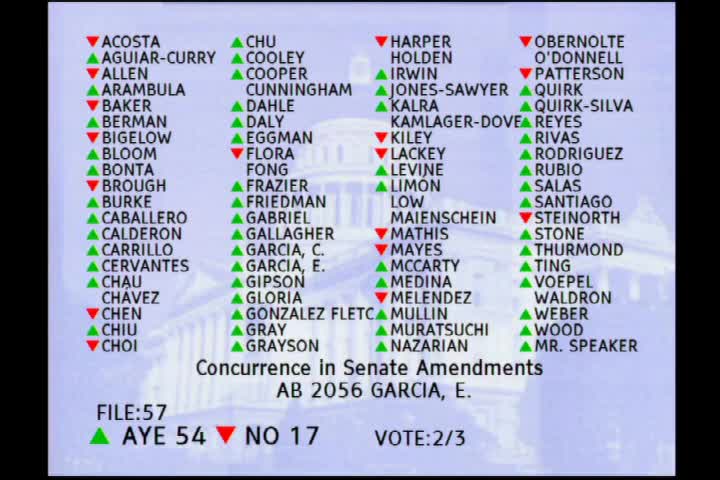 1MIN
Assembly Floor
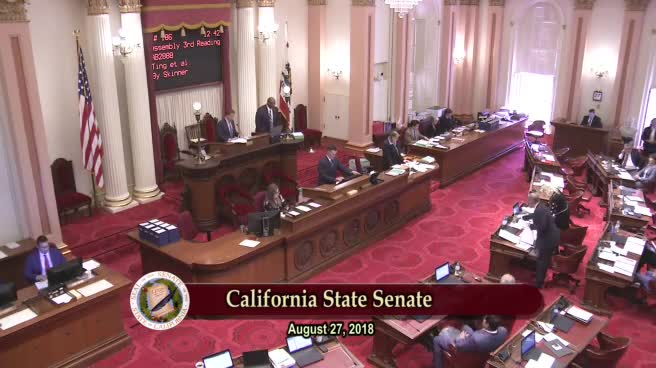 2MIN
Senate Floor
 1H
Senate Standing Committee on Appropriations
 5MIN
Senate Standing Committee on Public Safety
 4MIN
Senate Standing Committee on Human Services
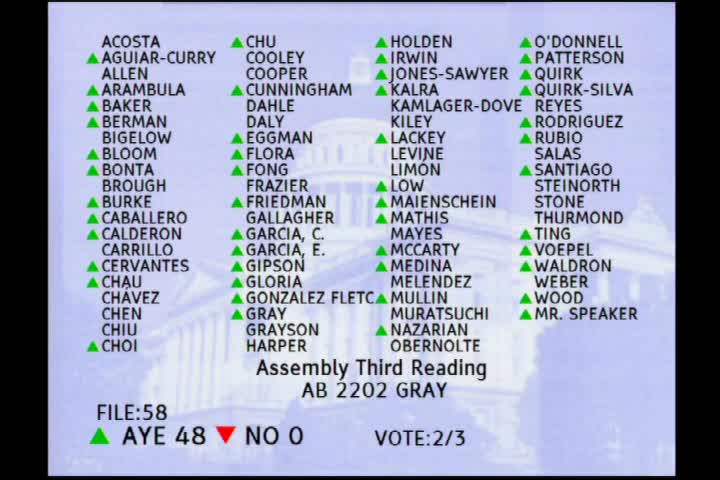 1MIN
Assembly Floor
 2MIN
Assembly Standing Committee on Public Safety
 9MIN
Assembly Standing Committee on Human Services
Bill Author