AB 2470: Invasive Species Council of California.
- Session Year: 2017-2018
- House: Assembly
- Latest Version Date: 2018-09-28
(1)Existing law generally provides for the eradication of pests that threaten this states agriculture and imposes various duties on the Department of Food and Agriculture in that regard. Under existing law, the department is designated as the lead department in noxious weed management, and requires the department, in cooperation with the Secretary of the Natural Resources Agency, to implement provisions relating to noxious weed management.
This bill would establish the Invasive Species Council of California, with a prescribed membership, to help coordinate a comprehensive effort to prevent the introduction of invasive species in the state and to advise state agencies how to facilitate coordinated, complementary, and cost-effective control or eradication of invasive species that have entered or are already established in the state, as specified.
The bill would authorize the council to establish advisory committees and ad hoc working groups, including the California Invasive Species Advisory Committee, with a prescribed membership, to advise the council on a broad array of issues related to preventing the introduction of invasive species and providing for their control or eradication, as well as minimizing the economic, ecological, and human health impacts that invasive species cause, as specified.
The bill would require the council to coordinate with state and local public agencies, publicly funded educational institutions, and stakeholder groups to develop a plan for the cure or suppression of diseases associated with the spread of invasive shot hole borers.
The bill would establish the Invasive Species Account in the Department of Food and Agriculture Fund and moneys in the account would be available, upon appropriation, to the Secretary of Food and Agriculture for the purposes of funding invasive species projects and activities recommended by the council.
(2)Existing law creates the Noxious Weed Management Account in the Department of Food and Agriculture Fund, and provides for the allocation of those moneys, by percentage, for specified purposes, including control and abatement and research, and to the department for the purposes of carrying out those provisions relating to noxious weed management.
This bill would revise the purposes for which 20% of the moneys in the Noxious Weed Management Account are to be allocated for research to instead be made available through a grant program administered by the department for proposals evaluated in consultation with the Range Management Advisory Committee, with an emphasis placed on the funding of needs-based, applied, and practical research, as specified.
(1)Existing law generally provides for the eradication of pests that threaten this states agriculture and imposes various duties on the Department of Food and Agriculture in that regard. Under existing law, the Department of Food and Agriculture department is designated as the lead department in noxious weed management, and requires the department, in cooperation with the Secretary of the Natural Resources Agency, to implement provisions relating to noxious weed management.
This bill would establish the Invasive Species Council of California, with a prescribed membership, to help coordinate a comprehensive effort to prevent the introduction of invasive species in the state and to provide for the advise state agencies how to facilitate coordinated, complementary, and cost-effective control or eradication of invasive species that have entered or are already established in the state, as specified.
ThisThe bill would establish authorize the council to establish advisory committees and ad hoc working groups, including the California Invasive Species Advisory Committee, with a prescribed membership, to advise the council on a broad array of issues related to preventing the introduction of invasive species and providing for their control or eradication, as well as minimizing the economic, ecological, and human health impacts that invasive species cause, as specified.
ThisThe bill would require the council and the advisory committee to coordinate with state and local public agencies, publicly funded educational institutions, and stakeholder groups to develop a plan for the cure or suppression of diseases associated with the spread of invasive shot hole borers.
The bill would establish the Invasive Species Account in the Department of Food and Agriculture Fund and moneys in the account would be available, upon appropriation, to the Secretary of Food and Agriculture for the purposes of funding invasive species projects and activities recommended by the council.
(2)Existing law creates the Noxious Weed Management Account in the Department of Food and Agriculture Fund, and provides for the allocation of those moneys, by percentage, for specified purposes, including control and abatement and research, and to the department for the purposes of carrying out those provisions relating to noxious weed management.
This bill would establish the Invasive Species Fund, and moneys in the fund would be available, upon appropriation, to the council for the purposes of funding invasive species projects and activities recommended by the advisory committeeThis bill would revise the purposes for which 20% of the moneys in the Noxious Weed Management Account are to be allocated for research to instead be made available through a grant program administered by the department for proposals evaluated in consultation with the advisory committee and the Range Management Advisory Committee, with an emphasis placed on the funding of needs-based, applied applied, and practical research, as specified.
This bill would authorize moneys from the Noxious Weed Management Account to be available, upon appropriation, to the Secretary of Food and Agriculture for allocation to projects for the control and abatement of noxious and invasive weeds. This bill would authorize the secretary to allocate moneys, upon appropriation, to the University of California, Agriculture and Natural Resources, or another qualified academic or research institution for invasive species research and outreach activities that are coordinated with the council and recommended by the advisory committee.(1)Under existing law, the Department of Food and Agriculture is designated as the lead department in noxious weed management, and requires the department, in cooperation with the Secretary of the Natural Resources Agency, to implement provisions relating to noxious weed management.
This bill would establish the Invasive Species Council of California, with a prescribed membership, to help coordinate a comprehensive effort to prevent the introduction of invasive species in the state and to provide for the control or eradication of invasive species already established in the state, as specified.
This bill would establish the California Invasive Species Advisory Committee, with a prescribed membership, to advise the council on a broad array of issues related to preventing the introduction of invasive species and providing for their control or eradication, as well as minimizing the economic, ecological, and human health impacts that invasive species cause, as specified.
This bill would require the council and the advisory committee to coordinate with state and local public agencies, publicly funded educational institutions, and stakeholder groups to develop a plan for the cure or suppression of diseases associated with the spread of invasive shot hole borers.
(2)Existing law creates the Noxious Weed Management Account in the Department of Food and Agriculture Fund, and provides for the allocation of those moneys, by percentage, for specified purposes, including control and abatement and research, and to the department for purposes of carrying out those provisions relating to noxious weed management.
This bill would establish the Invasive Species Fund, and moneys in the fund would be available, upon appropriation, to the council for the purposes of funding invasive species projects and activities recommended by the advisory committee
This bill would revise the purposes for which 20% of the moneys in the Noxious Weed Management Account are to be allocated for research to instead be made available through a grant program administered by the department for proposals evaluated in consultation with the advisory committee and the Range Management Advisory Committee, with an emphasis placed on the funding of needs-based, applied and practical research, as specified.
This bill would authorize moneys from the Noxious Weed Management Account to be available, upon appropriation, to the Secretary of Food and Agriculture for allocation to projects for the control and abatement of noxious and invasive weeds.
This bill would authorize the secretary to allocate moneys, upon appropriation, to the University of California, Agriculture and Natural Resources, or another qualified academic or research institution for invasive species research and outreach activities that are coordinated with the council and recommended by the advisory committee.
Existing law regulates the discharge of nonindigenous species into the waters of the state or into waters that may impact waters of the state, through ballast water management requirements.This bill would establish the Invasive Species Council of California, composed as prescribed, to help coordinate a comprehensive effort to prevent the introduction of invasive species in the state and to provide for the control or eradication of invasive species already established in the state. The bill would establish a California Invasive Species Advisory Committee to advise the council on a broad array of issues related to preventing the introduction of invasive species and providing for their control or eradication, as well as minimizing the economic, ecological, and human health impacts that invasive species cause. The bill would establish the Invasive Species Fund and, upon appropriation by the Legislature, moneys in the fund would be available for the purposes of funding invasive species projects. The bill would provide that upon appropriation by the Legislature, funding would be available to the University of California for invasive species research and outreach activities that are coordinated with the council and recommended by the committee.Existing law designates the Department of Food and Agriculture as the lead department in noxious weed management and provides for the formation of a weed management area. Under existing law, a weed management area is a local organization that brings together all interested landowners, land managers, special districts, and the public in a county or other geographical area for the purpose of coordinating and combining their action and expertise to deal with their common weed control problems.This bill would provide that, upon appropriation by the Legislature, funding would be available to the Secretary of Food and Agriculture to be allocated to the Noxious Weed Management Account for projects for the control and abatement of noxious and invasive weeds.Existing law regulates the discharge of nonindigenous species into the waters of the state or into waters that may impact waters of the state, through ballast water management requirements.
This bill would establish the Invasive Species Council of California, composed as prescribed, to help coordinate a comprehensive effort to exclude prevent the introduction of invasive species in the state and to provide for the control or eradication of invasive species already established in the state. The bill would establish a California Invasive Species Advisory Committee to advise the council on a broad array of issues related to preventing the introduction of invasive species and providing for their control or eradication, as well as minimizing the economic, ecological, and human health impacts that invasive species cause. The bill would establish the Invasive Species Fund and, upon appropriation by the Legislature, moneys in the fund would be available for the purposes of funding invasive species projects. The bill would provide that upon appropriation by the Legislature, funding would be available to the University of California for invasive species research and outreach activities that are coordinated with the council and recommended by the committee.
Existing law designates the Department of Food and Agriculture as the lead department in noxious weed management and provides for the formation of a weed management area. Under existing law, a weed management area is a local organization that brings together all interested landowners, land managers, special districts, and the public in a county or other geographical area for the purpose of coordinating and combining their action and expertise to deal with their common weed control problems.
This bill would provide that, upon appropriation by the Legislature, funding would be available to the Secretary of Food and Agriculture to be allocated to the Noxious Weed Management Account for projects for the control and abatement of noxious and invasive weeds.
Existing law regulates the discharge of nonindigenous species into the waters of the state or into waters that may impact waters of the state, through ballast water management requirements.
This bill would establish the Invasive Species Council of California, composed as prescribed, to help coordinate a comprehensive effort to exclude invasive species already established in the state. The bill would establish a California Invasive Species Advisory Committee to advise the council on a broad array of issues related to preventing the introduction of invasive species and providing for their control or eradication, as well as minimizing the economic, ecological, and human health impacts that invasive species cause. The bill would transfer $10,000,000 from the Greenhouse Gas Reduction Fund to the Invasive Species Fund this bill would establish in the State Treasury. The money in the Invasive Species Fund would be continuously appropriated to the council for the purposes of funding invasive species projects that reduce greenhouse gas emissions, thereby making an appropriation. The bill would appropriate from the Greenhouse Gas Reduction Fund $2,000,000 to be available to the University of California for invasive species research and outreach that reduces greenhouse gas emissions and is coordinated with the council and recommended by the committee.
Existing law designates the Department of Food and Agriculture as the lead department in noxious weed management and provides for the formation of a weed management area. Under existing law, a weed management area is a local organization that brings together all interested landowners, land managers, special districts, and the public in a county or other geographical area for the purpose of coordinating and combining their action and expertise to deal with their common weed control problems.The bill would appropriate from the Greenhouse Gas Reduction Fund $2,500,000 to the Secretary of Food and Agriculture to be allocated to weed management areas for projects for the control and abatement of noxious and invasive weeds that reduce greenhouse gas emissions.Existing law, the California Global Warming Solutions Act of 2006, designates the State Air Resources Board as the state agency charged with monitoring and regulating sources of emissions of greenhouse gases. The act authorizes the state board to include use of market-based compliance mechanisms. Existing law requires all moneys, except for fines and penalties, collected by the state board as part of a market-based compliance mechanism to be deposited in the Greenhouse Gas Reduction Fund and to be available upon appropriation. Existing law continuously appropriates 35% of the annual proceeds of the fund for transit, affordable housing, and sustainable communities programs and 25% of the annual proceeds of the fund for certain components of a specified high-speed rail project.
This bill would establish the Invasive Species Council of California, composed as prescribed, to help coordinate a comprehensive effort to exclude invasive species already established in the state. The bill would establish a California Invasive Species Advisory Committee to advise the council on a broad array of issues related to preventing the introduction of invasive species and providing for their control or eradication, as well as minimizing the economic, ecological, and human health impacts that invasive species cause. The bill would transfer $10,000,000 from the Greenhouse Gas Reduction Fund to the Invasive Species Fund this bill would establish in the State Treasury. The money in the Invasive Species Fund would be continuously appropriated to the council for the purposes of funding invasive species projects that reduce greenhouse gas emissions, thereby making an appropriation. The bill would appropriate from the Greenhouse Gas Reduction Fund $2,000,000 to be available to the University of California for invasive species research and outreach that reduces greenhouse gas emissions and is coordinated with the council and recommended by the committee.
Existing law designates the Department of Food and Agriculture as the lead department in noxious weed management and provides for the formation of a weed management area. Under existing law, a weed management area is a local organization that brings together all interested landowners, land managers, special districts, and the public in a county or other geographical area for the purpose of coordinating and combining their action and expertise to deal with their common weed control problems.
The bill would appropriate from the Greenhouse Gas Reduction Fund $2,500,000 to the Secretary of Food and Agriculture to be allocated to weed management areas for projects for the control and abatement of noxious and invasive weeds that reduce greenhouse gas emissions.
The Legislature hereby finds and declares all of the following:
(a)California is home to more species of plants and animals in the world and the highest number of species found nowhere else in the world.
(b)The states plants and animals coexist to create the complex ecosystems upon which so much of the states people and economy depend.
(c)Global travel, global trade, and climate change are introducing invasive animals, plants, insects, and plant and animal diseases to California.
(d)Global warming is changing ecosystems at an unprecedented pace. These changes bring invasive species and pests that pose direct threats to the states native and agricultural biodiversity.
(e)The State of California should undertake advance planning on whether and how to address those invasive animals, plants, insects, and plant and animal diseases that are a threat to the states agriculture, environment, or economy.
(f)The Legislature fully recognizes that any prediction of which invasive pests will enter California cannot be precise because of the many entry mechanisms.
SEC. 2.Section 7271 of the Food and Agricultural Code is amended to read:7271.(a)The Legislature designates the department as the lead department in noxious weed management and the department is responsible for the implementation of this article in cooperation with the Secretary of the Natural Resources Agency.
(b)There is hereby created in the Department of Food and Agriculture Fund the Noxious Weed Management Account.
(c)Moneys appropriated for expenditure by the secretary for the purposes of this article may be spent without regard to fiscal year and shall be allocated as follows:
(1)Sixty percent of the moneys in the account shall be made available to eligible weed management areas or county agricultural commissioners for the control and abatement of noxious and invasive weeds according to an approved integrated weed management plan. These control moneys shall be made available through a grant program administered by the department. Proposals shall be evaluated based on the strategic importance for local and regional eradication of high priority noxious and invasive weeds.
(2)(A)Twenty percent shall be made available toward research on the biology, ecology, or management of noxious and invasive weeds; the mapping, risk assessment, and prioritization of weeds; the prevention of weed introduction and spread; and education and outreach activities. These moneys shall be made available to qualified applicants through a grant program administered by the department. Proposals shall be evaluated in consultation with the Range Management Advisory Committee, established pursuant to Section 741 of the Public Resources Code, with an emphasis placed on funding of needs-based, applied, and practical research.
(B)For purposes of this paragraph, a qualified applicant includes nonprofits, publicly funded educational institutions, state and local agencies, and California Native American tribes.
(3)Twenty percent shall be made available to the department, and shall only be used for the following purposes:
(A)Carrying out the provisions of this article.
(B)Developing noxious weed control strategies.
(C)Seeking new, effective biological control agents for the long-term control of noxious weeds.
(D)Conducting private and public workshops as needed to discuss and plan weed management strategies with all interested and affected local, state, and federal agencies, private landowners, educational institutions, interest groups, and county agricultural commissioners.
(E)Appointing a noxious weed coordinator and weed mapping specialist to assist in weed inventory, mapping, and control strategies.
SEC. 3.Part 4.5 (commencing with Section 7700) is added to Division 4 of the Food and Agricultural Code, to read:4.5.Invasive Species Council of California7700.(a)(1)There is in state government the Invasive Species Council of California. The purpose of the council is to help coordinate a comprehensive effort to prevent the introduction of invasive species in the state and to advise state agencies, including, but not limited to, the department and the Natural Resources Agency, within their respective authorities how to facilitate coordinated, complementary, and cost-effective control or eradication of invasive species that have entered or are already established in the state. The council may address nonnative organisms that cause economic or environmental harm. Invasive species within the scope of the councils advisory duties do not include humans, domestic livestock, domestic or domesticated species exempted pursuant to Section 2118 of the Fish and Game Code, or nonharmful exotic organisms.
(2)This part shall not prohibit the department from serving as the states governing authority in invasive pest and plant management, as specified in this division.
(b)The Invasive Species Council of California shall consist of the following six members:
(1)The secretary or his or her designated representative.
(2)The Secretary of the Natural Resources Agency or his or her designated representative.
(3)The Secretary for Environmental Protection or his or her designated representative.
(4)The Secretary of Transportation or his or her designated representative.
(5)The Secretary of California Health and Human Services or his or her designated representative.
(6)The Director of Emergency Services or his or her designated representative.
(c)The Secretary of the Natural Resources Agency or his or her designated representative and the secretary or his or her designee shall serve as cochairs of the council.
(d)The Invasive Species Council of California shall meet annually and as needed as determined by the cochairs.
(e)The secretary may designate a staff liaison to further the purposes of this part.
(f)(1)The Invasive Species Council of California may establish advisory committees and ad hoc working groups, as necessary, to advise on a broad array of issues related to preventing the introduction of invasive species and providing for their control or eradication, as well as minimizing the economic, ecological, and human health impacts that invasive species cause.
(2)The advisory committees and working groups may consist of representatives from state agencies, federal agencies, county agricultural commissioners, academia, nonprofit organizations, tribal nations, industry representatives, and members of the public.
7702.Upon the appropriation or transfer of adequate moneys to the Invasive Species Account, created pursuant to Section 7706, the Invasive Species Council of California may make recommendations on invasive species projects and activities, including, but not limited to, any of the following:
(a)To assist state, federal, and local agencies to prevent the introduction of invasive species.
(b)To relevant state agencies and departments regarding any of the following:
(1)Detection, control, and eradication of invasive species, including emergency and nonemergency detection and rapid response.
(2)Development and maintenance of statewide surveys and mapping of high-risk areas.
(3)Improvement of inspections at state and national boundaries to prevent the introduction of invasive species.
(c)To develop comprehensive reports on the ecological, agricultural, and economic impacts of invasive species.
(d)To develop statewide education, outreach, and branding of invasive species.
(e)To increase coordination and collaboration among invasive species partners.
(f)To develop statewide invasive species action plans, including the plan required pursuant to Section 7708.
(g)To host an annual California Invasive Species Summit to develop new recommendations and to coordinate invasive species activities.
(h)(1)To develop a report containing activities of the Invasive Species Council of California and recommendations to improve invasive species management.
(2)The council shall submit the report developed pursuant to this subdivision to the Legislature and the Governor.
(3)A report to be submitted to the Legislature pursuant to this subdivision shall be submitted in compliance with Section 9795 of the Government Code.
7704.The Invasive Species Council of California may establish the California Invasive Species Advisory Committee, which shall consist of the following 19 members:
(a)Four members designated by the secretary.
(b)Four members designated by the Secretary of the Natural Resources Agency or his or her designated representative.
(c)One member appointed by the Secretary for Environmental Protection or his or her designated representative.
(d)One member appointed by the Secretary of Transportation or his or her designated representative.
(e)One member appointed by the Secretary of California Health and Human Services or his or her designated representative.
(f)One member appointed by the Director of Emergency Services or his or her designated representative.
(g)Six members appointed by the cochairs of the Invasive Species Council of California to create a diverse makeup of federal, nonprofit organization, tribal, industry, and other representatives.
(h)One member appointed by the California Agricultural Commissioners and Sealers Association.
7706.(a)The Invasive Species Account is hereby established in the Department of Food and Agriculture Fund. Moneys in the account are available, upon appropriation by the Legislature, to the secretary for the purposes of funding invasive species projects and activities recommended by the Invasive Species Council of California.
(b)Moneys in the Invasive Species Account appropriated by the Legislature for allocation by the secretary for the purposes of this part may be allocated without regard to fiscal year.
7708.(a)The Invasive Species Council of California shall coordinate with state and local public agencies, publicly funded educational institutions, and stakeholder groups to develop a plan for the cure or suppression of diseases associated with the spread of invasive shot hole borers, including, but not limited to, the Polyphagous and Kuroshio shot hole borers.
(b)(1)Upon the completion of the plan required pursuant to subdivision (a), the department, subject to the availability of appropriations for those specified purposes, shall support the efforts of state and local agencies, California Native American tribes, and nonprofits to cure or suppress the diseases affiliated with the invasive shot hole borer infestation as provided in paragraph (2).
(2)Support provided by the department pursuant to this section may include, but is not limited to, the following:
(A)Grants to support research related to the identification of infected trees and methods to prevent further infestation.
(B)Grants to state and local agencies, California Native American tribes, and nonprofits to support suppression or cure efforts.
(c)No state moneys shall be awarded to a local agency pursuant to subdivision (b) unless the local agency has contributed from local resources a dollar amount that is equal to the dollar amount of state moneys to be awarded or the local agency is located in a disadvantaged community, as identified pursuant to Section 39711 of the Health and Safety Code.
The Legislature hereby finds and declares all of the following:
(a)California is home to more species of plants and animals in the world and the highest number of species found nowhere else in the world.
(b)The states plants and animals coexist to create the complex ecosystems upon which so much of the states people and economy depend.
(a)(c)Global travel, global trade, and climate change are introducing invasive animals, plants, insects, and plant and animal diseases to California.
(d)Global warming is changing ecosystems at an unprecedented pace. These changes bring invasive species and pests that pose direct threats to the states native and agricultural biodiversity.
(b)(e)The State of California should undertake advance planning on whether and how to address those invasive animals, plants, insects, and plant and animal diseases that are a threat to the states agriculture, environment, or economy.
(c)(f)The Legislature fully recognizes that any prediction of which invasive pests will enter California cannot be precise because of the many entry mechanisms.
SECTION 1.SEC. 2.Section 7271 of the Food and Agricultural Code is amended to read:7271.(a)The Legislature designates the department as the lead department in noxious weed management and the department is responsible for the implementation of this article in cooperation with the Secretary of the Natural Resources Agency.
(b)There is hereby created in the Department of Food and Agriculture Fund the Noxious Weed Management Account.
(c)Moneys appropriated for expenditure by the secretary for the purposes of this article may be spent without regard to fiscal year and shall be allocated as follows:
(1)Sixty percent of the moneys in the account shall be made available to eligible weed management areas or county agricultural commissioners for the control and abatement of noxious and invasive weeds according to an approved integrated weed management plan. These control moneys shall be made available through a grant program administered by the department. Proposals shall be evaluated based on the strategic importance for local and regional eradication of high priority noxious and invasive weeds.
(2)(A)Twenty percent shall be made available toward research on the biology, ecology, or management of noxious and invasive weeds; the mapping, risk assessment, and prioritization of weeds; and the prevention of weed introduction and spread. spread; and education and outreach activities. These moneys shall be made available to qualified applicants through a grant program administered by the department. Proposals shall be evaluated in consultation with the California Invasive Species Advisory Committee, established pursuant to Section 7702, and the Range Management Advisory Committee, established pursuant to Section 741 of the Public Resources Code, with an emphasis placed on funding of needs-based, applied applied, and practical research.
(B)For purposes of this paragraph, a qualified applicant includes nonprofits, publicly funded educational institutions, state and local agencies, and California Native American tribes.
(3)Twenty percent shall be made available to the department, and shall only be used for the following purposes:
(A)Carrying out the provisions of this article.
(B)Developing noxious weed control strategies.
(C)Seeking new, effective biological control agents for the long-term control of noxious weeds.
(D)Conducting private and public workshops as needed to discuss and plan weed management strategies with all interested and affected local, state, and federal agencies, private landowners, educational institutions, interest groups, and county agricultural commissioners.
(E)Appointing a noxious weed coordinator and weed mapping specialist to assist in weed inventory, mapping, and control strategies.
SEC. 2.SEC. 3.Part 4.5 (commencing with Section 7700) is added to Division 4 of the Food and Agricultural Code, to read:4.5.Invasive Species Council of California7700.(a)(1)There is in state government the Invasive Species Council of California. The purpose of the council is to help coordinate a comprehensive effort to prevent the introduction of invasive species in the state and to provide for the control or eradication of invasive species already established in the state. advise state agencies, including, but not limited to, the department and the Natural Resources Agency, within their respective authorities how to facilitate coordinated, complementary, and cost-effective control or eradication of invasive species that have entered or are already established in the state. The council shall may address nonnative organisms that cause economic or environmental harm. Invasive species within the scope of the councils advisory duties do not include humans, domestic livestock, domestic or domesticated species exempted pursuant to Section 2118 of the Fish and Game Code, or nonharmful exotic organisms.
(2)This part shall not prohibit the department from serving as the states governing authority in invasive pest and plant management, as specified in this division.
(b)The Invasive Species Council of California shall consist of the following six members:
(1)The secretary or his or her designated representative.
(2)The Secretary of the Natural Resources Agency or his or her designated representative.
(3)The Secretary for Environmental Protection or his or her designated representative.
(4)The Secretary of Transportation or his or her designated representative.
(5)The Secretary of California Health and Human Services or his or her designated representative.
(6)The Director of Emergency Services or his or her designated representative.
(c)The Secretary of the Natural Resources Agency, Agency or his or her designated representative, representative and the secretary, secretary or his or her designee, designee shall serve as co-chairs cochairs of the council.
(d)The Invasive Species Council of California shall meet annually and as needed as determined by the co-chairs. cochairs.
(e)The Invasive Species Council of California shall select an executive director and a liaison to further the purposes of this part.(e)The secretary may designate a staff liaison to further the purposes of this part.
(f)(1)The Invasive Species Council of California may establish advisory committees and ad hoc working groups, as necessary, to advise on a broad array of issues related to preventing the introduction of invasive species and providing for their control or eradication, as well as minimizing the economic, ecological, and human health impacts that invasive species cause.
(2)The advisory committees and working groups may consist of representatives from state agencies, federal agencies, county agricultural commissioners, academia, nonprofit organizations, tribal nations, industry representatives, and members of the public.
7702.(a)There is in state government the California Invasive Species Advisory Committee. The purpose of the committee is to advise the Invasive Species Council of California on a broad array of issues related to preventing the introduction of invasive species and providing for their control or eradication, as well as minimizing the economic, ecological, and human health impacts that invasive species cause.(b)The California Invasive Species Advisory Committee shall consist of the following 19 members:(1)Four members designated by the secretary.(2)Four members designated by the Secretary of the Natural Resources Agency or his or her designated representative.(3)One member appointed by the Secretary for Environmental Protection or his or her designated representative.(4)One member appointed by the Secretary of Transportation or his or her designated representative.(5)One member appointed by the Secretary of California Health and Human Services or his or her designated representative.(6)One member appointed by the Director of Emergency Services or his or her designated representative.(7)Six members appointed by the Invasive Species Council of California co-chairs to create a diverse makeup of federal, nonprofit organization, tribal, industry, and other representatives.(8)One member appointed by the California Agricultural Commissioners and Sealers Association.(c)The California Invasive Species Advisory Committee shall meet quarterly and as needed as determined by the co-chairs of the Invasive Species Council of California.7704.(a)(1)The Invasive Species Council of California shall develop a report in coordination with the California Invasive Species Advisory Committee through a public process and submit the report to the advisory committee.(2)The California Invasive Species Advisory Committee shall review and approve the report.(3)Once reviewed and approved by the California Invasive Species Advisory Committee, the final report shall be submitted to the Legislature and be available for public review.(4)A report to be submitted pursuant to paragraph (3) shall be submitted in compliance with Section 9795 of the Government Code.(b)The California Invasive Species Advisory Committee may hold an annual California Invasive Species Summit to develop new recommendations and to coordinate invasive species activities.(c)The California Invasive Species Advisory Committee shall recommend expenditures from the Invasive Species Fund to the Invasive Species Council of California.7706.The Invasive Species Fund is hereby established in the State Treasury. Moneys in the fund are available, upon appropriation by the Legislature, to the Invasive Species Council of California for the purposes of funding invasive species projects and activities recommended by the California Invasive Species Advisory Committee. Those projects and activities may include, but are not limited to, any of the following:(a)The prevention of the introduction of invasive species.(b)The detection, control, and eradication of invasive species.(c)Emergency and nonemergency detection and rapid response activities.(d)The conducting of comprehensive reports on the ecological, agricultural, and economic impacts of invasive species.(e)The development and maintenance of statewide surveys and mapping of high-risk areas.(f)The development of statewide education, outreach, and branding of invasive species.(g)Increased coordination and collaboration amongst invasive species partners.(h)Increased inspections at state and national boundaries.7702.Upon the appropriation or transfer of adequate moneys to the Invasive Species Account, created pursuant to Section 7706, the Invasive Species Council of California may make recommendations on invasive species projects and activities, including, but not limited to, any of the following:
(a)To assist state, federal, and local agencies to prevent the introduction of invasive species.
(b)To relevant state agencies and departments regarding any of the following:
(1)Detection, control, and eradication of invasive species, including emergency and nonemergency detection and rapid response.
(2)Development and maintenance of statewide surveys and mapping of high-risk areas.
(3)Improvement of inspections at state and national boundaries to prevent the introduction of invasive species.
(c)To develop comprehensive reports on the ecological, agricultural, and economic impacts of invasive species.
(d)To develop statewide education, outreach, and branding of invasive species.
(e)To increase coordination and collaboration among invasive species partners.
(f)To develop statewide invasive species action plans, including the plan required pursuant to Section 7708.
(g)To host an annual California Invasive Species Summit to develop new recommendations and to coordinate invasive species activities.
(h)(1)To develop a report containing activities of the Invasive Species Council of California and recommendations to improve invasive species management.
(2)The council shall submit the report developed pursuant to this subdivision to the Legislature and the Governor.
(3)A report to be submitted to the Legislature pursuant to this subdivision shall be submitted in compliance with Section 9795 of the Government Code.
7704.The Invasive Species Council of California may establish the California Invasive Species Advisory Committee, which shall consist of the following 19 members:
(a)Four members designated by the secretary.
(b)Four members designated by the Secretary of the Natural Resources Agency or his or her designated representative.
(c)One member appointed by the Secretary for Environmental Protection or his or her designated representative.
(d)One member appointed by the Secretary of Transportation or his or her designated representative.
(e)One member appointed by the Secretary of California Health and Human Services or his or her designated representative.
(f)One member appointed by the Director of Emergency Services or his or her designated representative.
(g)Six members appointed by the cochairs of the Invasive Species Council of California to create a diverse makeup of federal, nonprofit organization, tribal, industry, and other representatives.
(h)One member appointed by the California Agricultural Commissioners and Sealers Association.
7706.(a)The Invasive Species Account is hereby established in the Department of Food and Agriculture Fund. Moneys in the account are available, upon appropriation by the Legislature, to the secretary for the purposes of funding invasive species projects and activities recommended by the Invasive Species Council of California.
(b)Moneys in the Invasive Species Account appropriated by the Legislature for allocation by the secretary for the purposes of this part may be allocated without regard to fiscal year.
7708.(a)The Invasive Species Council of California and the California Invasive Species Advisory Committee shall coordinate with state and local public agencies, publicly funded educational institutions, and stakeholder groups to develop a plan for the cure or suppression of diseases associated with the spread of invasive shot hole borers, including, but not limited to, the Polyphagous and Kuroshio shot hole borers.
(b)(1)Upon the completion of the plan required pursuant to subdivision (a), the department, subject to the availability of appropriations, appropriations for those specified purposes, shall support the efforts of state and local agencies, California Native American tribes, and nonprofits to cure or suppress the diseases affiliated with the invasive shot hole borer infestation as provided in paragraph (2).
(2)Support provided by the department pursuant to this section may include, but is not limited to, the following:
(A)Grants to support research related to the identification of infected trees and methods to prevent further infestation.
(B)Grants to state and local agencies, California Native American tribes, and nonprofits to support suppression or cure efforts.
(c)No state moneys shall be awarded to a local agency pursuant to subdivision (b) unless the local agency has contributed from local resources a dollar amount that is equal to the dollar amount of state moneys to be awarded or the local agency is located in a disadvantaged community, as identified pursuant to Section 39711 of the Health and Safety Code.
7710.(a)Upon appropriation by the Legislature, moneys from the Noxious Weed Management Account, created pursuant to Section 7271, shall be available to the secretary for allocation to projects for the control and abatement of noxious and invasive weeds.(b)(1)Upon appropriation by the Legislature, moneys may be allocated by the secretary to the University of California, Agriculture and Natural Resources, or another qualified academic or research institution for invasive species research and outreach activities that are coordinated with the Invasive Species Council of California and recommended by the California Invasive Species Advisory Committee. These moneys may be allocated to complement the research and outreach needs of the Invasive Species Council of California and recommended by the California Invasive Species Advisory Committee.(2)For purposes of this subdivision, research and outreach activities include, but are not limited to, training events, educational materials, and online resources.(a)The Legislature designates the Department of Food and Agriculture department as the lead department in noxious weed management and the department is responsible for the implementation of this article in cooperation with the Secretary of the Natural Resources Agency.
(b)There is hereby created in the Department of Food and Agriculture Fund the Noxious Weed Management Account.
(c)Funds Moneys appropriated for expenditure by the secretary for the purposes of this article may be spent without regard to fiscal year and shall be allocated as follows:
(1)Sixty percent of the moneys in the account shall be made available to eligible weed management areas or county agricultural commissioners for the control and abatement of noxious and invasive weeds according to an approved integrated weed management plan. These control moneys shall be made available through a grant program administered by the department. Proposals shall be evaluated based on the strategic importance for local and regional eradication of high priority noxious and invasive weeds.
(2)(A)Twenty percent shall be made available toward research on the biology, ecology, or management of noxious and invasive weeds, and weeds; the mapping, risk assessment, and prioritization of weeds. weeds; and the prevention of weed introduction and spread. These research moneys shall be made available to qualified researchers applicants through a grant program administered by the department. Proposals shall be evaluated in consultation with the California Invasive Species Advisory Committee, established pursuant to Section 7702, and the Range Management Advisory Committee, established pursuant to Section 741 of the Public Resources Code, with an emphasis placed on funding of needs-based, applied and practical research.
(B)For purposes of this paragraph, a qualified applicant includes nonprofits, publicly funded educational institutions, state and local agencies, and California Native American tribes.
(3)Twenty percent shall be made available to the department, and shall only be used for the following purposes:
(A)Carrying out the provisions of this article.
(B)Developing noxious weed control strategies.
(C)Seeking new, effective biological control agents for the long-term control of noxious weeds.
(D)Conducting private and public workshops as needed to discuss and plan weed management strategies with all interested and affected local, state, and federal agencies, private landowners, educational institutions, interest groups, and county agricultural commissioners.
(E)Appointing a noxious weed coordinator and weed mapping specialist to assist in weed inventory, mapping, and control strategies.
SEC. 2.Part 4.5 (commencing with Section 7700) is added to Division 4 of the Food and Agricultural Code, to read:4.5.Invasive Species Council of California7700.(a)There is in state government the Invasive Species Council of California. The purpose of the council is to help coordinate a comprehensive effort to prevent the introduction of invasive species in the state and to provide for the control or eradication of invasive species already established in the state. The council shall address nonnative organisms that cause economic or environmental harm. Invasive species within the scope of the councils duties do not include humans, domestic livestock, domestic or domesticated species exempted pursuant to Section 2118 of the Fish and Game Code, or nonharmful exotic organisms.
(b)The Invasive Species Council of California shall consist of the following six members:
(1)The secretary or his or her designated representative.
(2)The Secretary of the Natural Resources Agency or his or her designated representative.
(3)The Secretary for Environmental Protection or his or her designated representative.
(4)The Secretary of Transportation or his or her designated representative.
(5)The Secretary of California Health and Human Services or his or her designated representative.
(6)The Director of Emergency Services or his or her designated representative.
(c)The Secretary of the Natural Resources Agency, or his or her designated representative, and the secretary, or his or her designee, shall serve as co-chairs of the council.
(d)The Invasive Species Council of California shall meet annually and as needed as determined by the co-chairs.
(e)The Invasive Species Council of California shall select an executive director and a liaison to further the purposes of this part.
7702.(a)There is in state government the California Invasive Species Advisory Committee. The purpose of the committee is to advise the Invasive Species Council of California on a broad array of issues related to preventing the introduction of invasive species and providing for their control or eradication, as well as minimizing the economic, ecological, and human health impacts that invasive species cause.
(b)The California Invasive Species Advisory Committee shall consist of the following 19 members:
(1)Four members designated by the secretary.
(2)Four members designated by the Secretary of the Natural Resources Agency or his or her designated representative.
(3)One member appointed by the Secretary for Environmental Protection or his or her designated representative.
(4)One member appointed by the Secretary of Transportation or his or her designated representative.
(5)One member appointed by the Secretary of California Health and Human Services or his or her designated representative.
(6)One member appointed by the Director of Emergency Services or his or her designated representative.
(7)Six members appointed by the Invasive Species Council of California co-chairs to create a diverse makeup of federal, nonprofit organization, tribal, industry, and other representatives.
(8)One member appointed by the California Agricultural Commissioners and Sealers Association.
(c)The California Invasive Species Advisory Committee shall meet quarterly and as needed as determined by the co-chairs of the Invasive Species Council of California.
7704.(a)(1)The Invasive Species Council of California shall develop a report in coordination with the California Invasive Species Advisory Committee through a public process and submit the report to the advisory committee.
(2)The California Invasive Species Advisory Committee shall review and approve the report.
(3)Once reviewed and approved by the California Invasive Species Advisory Committee, the final report shall be submitted to the Legislature and be available for public review.
(4)A report to be submitted pursuant to paragraph (3) shall be submitted in compliance with Section 9795 of the Government Code.
(b)The California Invasive Species Advisory Committee may hold an annual California Invasive Species Summit to develop new recommendations and to coordinate invasive species activities.
(c)The California Invasive Species Advisory Committee shall recommend expenditures from the Invasive Species Fund to the Invasive Species Council of California.
7706.The Invasive Species Fund is hereby established in the State Treasury. Moneys in the fund are available, upon appropriation by the Legislature, to the Invasive Species Council of California for the purposes of funding invasive species projects and activities recommended by the California Invasive Species Advisory Committee. Those projects and activities may include, but are not limited to, any of the following:
(a)The prevention of the introduction of invasive species.
(b)The detection, control, and eradication of invasive species.
(c)Emergency and nonemergency detection and rapid response activities.
(d)The conducting of comprehensive reports on the ecological, agricultural, and economic impacts of invasive species.
(e)The development and maintenance of statewide surveys and mapping of high-risk areas.
(f)The development of statewide education, outreach, and branding of invasive species.
(g)Increased coordination and collaboration amongst invasive species partners.
(h)Increased inspections at state and national boundaries.
7708.(a)The Invasive Species Council of California and the California Invasive Species Advisory Committee shall coordinate with state and local public agencies, publicly funded educational institutions, and stakeholder groups to develop a plan for the cure or suppression of diseases associated with the spread of invasive shot hole borers, including, but not limited to, the Polyphagous and Kuroshio shot hole borers.
(b)(1)Upon the completion of the plan required pursuant to subdivision (a), the department, subject to the availability of appropriations, shall support the efforts of state and local agencies, California Native American tribes, and nonprofits to cure or suppress the diseases affiliated with the invasive shot hole borer infestation as provided in paragraph (2).
(2)Support provided by the department pursuant to this section may include, but is not limited to, the following:
(A)Grants to support research related to the identification of infected trees and methods to prevent further infestation.
(B)Grants to state and local agencies, California Native American tribes, and nonprofits to support suppression or cure efforts.
(c)No state moneys shall be awarded to a local agency pursuant to subdivision (b) unless the local agency has contributed from local resources a dollar amount that is equal to the dollar amount of state moneys to be awarded or the local agency is located in a disadvantaged community, as identified pursuant to Section 39711 of the Health and Safety Code.
7710.(a)Upon appropriation by the Legislature, moneys from the Noxious Weed Management Account, created pursuant to Section 7271, shall be available to the secretary for allocation to projects for the control and abatement of noxious and invasive weeds.
(b)(1)Upon appropriation by the Legislature, moneys may be allocated by the secretary to the University of California, Agriculture and Natural Resources, or another qualified academic or research institution for invasive species research and outreach activities that are coordinated with the Invasive Species Council of California and recommended by the California Invasive Species Advisory Committee. These moneys may be allocated to complement the research and outreach needs of the Invasive Species Council of California and recommended by the California Invasive Species Advisory Committee.
(2)For purposes of this subdivision, research and outreach activities include, but are not limited to, training events, educational materials, and online resources.
SECTION 1.Division 37.5 (commencing with Section 72000) is added to the Public Resources Code, to read:37.5. Invasive Species Council of California72000.(a)There is in state government the Invasive Species Council of California. The purpose of the council is to help coordinate a comprehensive effort to prevent the introduction of invasive species in California and to provide for the control or eradication of invasive species already established in the state. The council shall address nonnative organisms that cause economic or environmental harm. Invasive species within the scope of the councils duties do not include humans, domestic livestock, or nonharmful exotic organisms.(b)The council shall consist of the following eight members:(1)The Secretary of Food and Agriculture or his or her designated representative.(2)The Secretary of the Natural Resources Agency or his or her designated representative.(3)The Secretary for Environmental Protection or his or her designated representative.(4)The Secretary of Transportation or his or her designated representative.(5)The Secretary of California Health and Human Services or his or her designated representative.(6)The Director of Emergency Services or his or her designated representative.(7)The Director of the Department of Forestry and Fire Protection or his or her designated representative.(8)The Chair of the State Lands Commission or his or her designated representative.(c)The Secretary of the Natural Resources Agency, or his or her designated representative, and the Secretary of Food and Agriculture, or his or her designee, shall serve as cochairpersons of the council.(d)The council shall meet annually and as needed as determined by the cochairpersons.(e)The council shall select an executive director and a liaison to further the purposes of this division.(f)(1)The council shall review and approve a yearly progress report submitted by the California Invasive Species Advisory Committee. The council shall develop a final approved report in coordination with the committee through a public process. Once approved by the council, the final report shall be sent to the Legislature and available for public review and comment.(2)A report to be submitted pursuant to paragraph (1) shall be submitted in compliance with Section 9795 of the Government Code.72005.(a)There is in state government the California Invasive Species Advisory Committee. The purpose of the committee is to advise the Invasive Species Council of California on a broad array of issues related to preventing the introduction of invasive species and providing for their control or eradication, as well as minimizing the economic, ecological, and human health impacts that invasive species cause.(b)The committee shall consist of the following 13 members:(1)One appointee designated by the Secretary of Food and Agriculture.(2)One appointee designated by the Secretary of the Natural Resources Agency.(3)One appointee designated by the Secretary for Environmental Protection.(4)One appointee designated by the Secretary of Transportation or his or her designated representative.(5)One appointee designated by the Secretary of California Health and Human Services or his or her designated representative.(6)One appointee designated by the Director of Emergency Services or his or her designated representative.(7)One appointee designated by the Director of the Department of Forestry and Fire Protection or his or her designated representative.(8)One appointee designated by the Chair of the State Lands Commission or his or her designated representative.(9)Four appointees selected by the Invasive Species Council of California cochairpersons with demonstrated expertise on invasive species that shall include one representative each from a federal agency, nonprofit organization, tribal government, and industry.(10)One appointee designated by the California Agricultural Commissioners and Sealers Association.(c)The committee shall meet quarterly and as needed as determined by the cochairpersons of the Invasive Species Council of California. The committee shall submit a yearly progress report to the council for review and approval.(d)The committee may hold an annual California Invasive Species Summit to develop new recommendations and to coordinate invasive species activities.72010.The Invasive Species Fund is hereby established in the State Treasury. Moneys in the fund are available, upon appropriation by the Legislature, to the Invasive Species Council of California for the purposes of funding invasive species projects that may include, but are not limited to, the following projects:(a)Emergency and nonemergency rapid response and dedication activities, including, but not limited to, activities relating to invasive shot hole borer activity.(b)Conducting comprehensive reports on the ecological, agricultural, and economic impacts of invasive species.(c)Developing and maintaining statewide surveys and mapping of high-risk areas.(d)Developing statewide education, outreach, and branding of invasive species.(e)Increasing border inspections.(f)Increasing coordination and collaboration amongst invasive species partners.(g)Other invasive species activities recommended by the California Invasive Species Advisory Committee.SEC. 2.(a)Upon appropriation by the Legislature, funding shall be available to the Secretary of Food and Agriculture to be allocated to the Noxious Weed Management Account established in Section 7271 of the Food and Agriculture Code for projects for the control and abatement of noxious and invasive weeds.(b)Upon appropriation by the Legislature, funding shall be available to the University of California for invasive species research and outreach activities that are coordinated with the Invasive Species Council of California and recommended by the California Invasive Species Advisory Committee. These funds shall be used to complement the research and outreach needs of the council and committee. For the purposes of this subdivision, research and outreach activities include, but are not limited to, trainings, events, educational materials, and online resources.(a)There is in state government the Invasive Species Council of California. The purpose of the council is to help coordinate a comprehensive effort to exclude prevent the introduction of invasive species in California and to provide for the control or eradication of invasive species already established in the state. The council shall address nonnative organisms that cause economic or environmental harm. Invasive species within the scope of the councils duties do not include humans, domestic livestock, or nonharmful exotic organisms.
(b)The council shall consist of the following six eight members:
(1)The Secretary of Food and Agriculture or his or her designated representative.
(2)The Secretary of the Natural Resources Agency or his or her designated representative.
(3)The Secretary for Environmental Protection or his or her designated representative.
(4)The Secretary of Transportation or his or her designated representative.
(5)The Secretary of California Health and Human Services or his or her designated representative.
(6)The Director of Emergency Services or his or her designated representative.
(7)The Director of the Department of Forestry and Fire Protection or his or her designated representative.
(8)The Chair of the State Lands Commission or his or her designated representative.
(c)The Secretary of the Natural Resources Agency, or his or her designated representative, and the Secretary of Food and Agriculture, or his or her designee, shall serve as cochairpersons of the council.
(d)The council shall meet annually and as needed as determined by the cochairpersons.
(e)The council shall select an executive director and a liaison to further the purposes of this division.
(f)(1)The council shall review and approve a yearly progress report submitted by the California Invasive Species Advisory Committee. The council shall develop a final approved report in coordination with the committee through a public process. Once approved by the council, the final report shall be sent to the Legislature and available for public review. review and comment.
(2)A report to be submitted pursuant to paragraph (1) shall be submitted in compliance with Section 9795 of the Government Code.
72005.(a)There is in state government the California Invasive Species Advisory Committee. The purpose of the committee is to advise the Invasive Species Council of California on a broad array of issues related to preventing the introduction of invasive species and providing for their control or eradication, as well as minimizing the economic, ecological, and human health impacts that invasive species cause.
(b)The committee shall consist of the following 12 13 members:
(1)One appointee designated by the Secretary of Food and Agriculture.
(2)One appointee designated by the Secretary of the Natural Resources Agency.
(3)One appointee designated by the Secretary for Environmental Protection.
(4)One appointee designated by the Secretary of Transportation or his or her designated representative.
(5)One appointee designated by the Secretary of California Health and Human Services or his or her designated representative.
(6)One appointee designated by the Director of Emergency Services or his or her designated representative.
(7)One appointee designated by the Director of the Department of Forestry and Fire Protection or his or her designated representative.
(8)One appointee designated by the Chair of the State Lands Commission or his or her designated representative.
(7)Five(9)Four appointees selected by the Invasive Species Council of California cochairpersons to create a diverse makeup of federal, with demonstrated expertise on invasive species that shall include one representative each from a federal agency, nonprofit organization, tribal, industry, and other representatives. tribal government, and industry.
(8)(10)One appointee designated by the California Agricultural Commissioners and Sealers Association.
(c)The committee shall meet quarterly and as needed as determined by the cochairpersons of the Invasive Species Council of California. The committee shall submit a yearly progress report to the council for review and approval.
(d)The committee may hold an annual California Invasive Species Summit to develop new recommendations and to coordinate invasive species activities.
72010.The Invasive Species Fund is hereby established in the State Treasury. Moneys in the fund are available, upon appropriation by the Legislature, to the Invasive Species Council of California for the purposes of funding invasive species projects that may include, but are not limited to, the following projects:
(a)Emergency and nonemergency rapid response and dedication activities, including, but not limited to, activities relating to invasive shot hole borer activity.
(b)Conducting comprehensive reports on the ecological, agricultural, and economic impacts of invasive species.
(c)Developing and maintaining statewide surveys and mapping of high-risk areas.
(d)Developing statewide education, outreach, and branding of invasive species.
(e)Increasing border inspections.
(f)Increasing coordination and collaboration amongst invasive species partners.
(g)Other invasive species activities recommended by the California Invasive Species Advisory Committee.
SEC. 2.(a)Upon appropriation by the Legislature, funding shall be available to the Secretary of Food and Agriculture to be allocated to the Noxious Weed Management Account established in Section 7271 of the Food and Agriculture Code for projects for the control and abatement of noxious and invasive weeds.
(b)Upon appropriation by the Legislature, funding shall be available to the University of California for invasive species research and outreach activities that are coordinated with the Invasive Species Council of California and recommended by the California Invasive Species Advisory Committee. These funds shall be used to complement the research and outreach needs of the council and committee. For the purposes of this subdivision, research and outreach activities include, but are not limited to, trainings, events, educational materials, and online resources.
(a)There is in state government the Invasive Species Council of California. The purpose of the council is to help coordinate a comprehensive effort to exclude invasive species already established in the state. The council shall address nonnative organisms that cause economic or environmental harm. Invasive species within the scope of the councils duties do not include humans, domestic livestock, or nonharmful exotic organisms.
(b)The council shall consist of the following six members:
(1)The Secretary of Food and Agriculture or his or her designated representative.
(2)The Secretary of the Natural Resources Agency or his or her designated representative.
(3)The Secretary for Environmental Protection or his or her designated representative.
(4)The Secretary of Transportation or his or her designated representative.
(5)The Secretary of California Health and Human Services or his or her designated representative.
(6)The Director of Emergency Services or his or her designated representative.
(c)The Secretary of the Natural Resources Agency, or his or her designated representative, and the Secretary of Food and Agriculture, or his or her designee, shall serve as cochairpersons of the council.
(d)The council shall meet annually and as needed as determined by the cochairpersons.
(e)The council shall select an executive director and a liaison to further the purposes of this division.
(f)(1)The council shall review and approve a yearly progress report submitted by the California Invasive Species Advisory Committee. The council shall develop a final approved report in coordination with the committee through a public process. Once approved by the council, the final report shall be sent to the Legislature and available for public review.
(2)A report to be submitted pursuant to paragraph (1) shall be submitted in compliance with Section 9795 of the Government Code.
72005.(a)There is in state government the California Invasive Species Advisory Committee. The purpose of the committee is to advise the Invasive Species Council of California on a broad array of issues related to preventing the introduction of invasive species and providing for their control or eradication, as well as minimizing the economic, ecological, and human health impacts that invasive species cause.
(b)The committee shall consist of the following 11 12 members:
(1)One appointee designated by the Secretary of Food and Agriculture.
(2)One appointee designated by the Secretary of the Natural Resources Agency.
(3)One appointee designated by the Secretary for Environmental Protection.
(4)One appointee designated by the Secretary of Transportation or his or her designated representative.
(5)One appointee designated by the Secretary of California Health and Human Services or his or her designated representative.
(6)One appointee designated by the Director of Emergency Services or his or her designated representative.
(7)Five appointees selected by the Invasive Species Council of California cochairpersons to create a diverse makeup of federal, nonprofit organization, tribal, industry, and other representatives.
(8)One appointee designated by the California Agricultural Commissioners and Sealers Association.
(c)The committee shall meet quarterly and as needed as determined by the cochairpersons of the Invasive Species Council of California. The committee shall submit a yearly progress report to the council for review and approval.
(d)The committee shall recommend expenditures from the Invasive Species Fund to the Invasive Species Council of California.(e)(d)The committee may hold an annual California Invasive Species Summit to develop new recommendations and to coordinate invasive species activities.
72010.The Invasive Species Fund is hereby established in the State Treasury. Notwithstanding Section 13340 of the Government Code, moneys in the fund are continuously appropriated without regard to fiscal years to the Invasive Species Council of California for the purposes of funding invasive species projects that reduce greenhouse gas emissions and may include, but are not limited to, the following projects if those projects reduce greenhouse gas emissions:(a)Emergency and nonemergency rapid response and dedication activities, including, but not limited to, activities relating to invasive shot hole borer activity.(b)Conducting comprehensive reports on the ecological, agricultural, and economic impacts of invasive species.(c)Developing and maintaining statewide surveys and mapping of high-risk areas.(d)Developing statewide education, outreach, and branding of invasive species.(e)Increasing border inspections.(f)Increasing coordination and collaboration amongst invasive species partners.(g)Other invasive species activities recommended by the California Invasive Species Advisory Committee.SEC. 2.(a)The sum of ten million dollars ($10,000,000) is hereby transferred from the Greenhouse Gas Reduction Fund, created pursuant to Section 16428.8 of the Government Code, to the Invasive Species Fund established in Section 72010 of the Public Resources Code.(b)The sum of four million five hundred thousand dollars ($4,500,000) is hereby appropriated from the Greenhouse Gas Reduction Fund as follows:(1)Two million five hundred thousand dollars ($2,500,000) shall be available to the Secretary of Food and Agriculture to be allocated to weed management areas for projects for the control and abatement of noxious and invasive weeds that reduce greenhouse gas emissions.(2)Two million dollars ($2,000,000) shall be available to the University of California for invasive species research and outreach activities that are designed to reduce greenhouse gas emissions and are coordinated with the Invasive Species Council of California and recommended by the California Invasive Species Advisory Committee. These funds shall be used to complement the research and outreach needs of the council and committee. Of the funds available pursuant to this paragraph, one million two hundred fifty thousand dollars ($1,250,000) shall be available for research, and seven hundred fifty thousand dollars ($750,000) shall be available for outreach. REVISIONS: HeadingLine 1.(a)There is in state government the Invasive Species Council of California. The purpose of the council is to help coordinate a comprehensive effort to exclude invasive species already established in the state. The council shall address nonnative organisms that cause economic or environmental harm. Invasive species within the scope of the councils duties do not include humans, domestic livestock, or nonharmful exotic organisms.
(b)The council shall consist of the following six members:
(1)The Secretary of Food and Agriculture or his or her designated representative.
(2)The Secretary of the Natural Resources Agency or his or her designated representative.
(3)The Secretary for Environmental Protection or his or her designated representative.
(4)The Secretary of Transportation or his or her designated representative.
(5)The Secretary of California Health and Human Services or his or her designated representative.
(6)The Director of Emergency Services or his or her designated representative.
(c)The Secretary of the Natural Resources Agency, or his or her designated representative, and the Secretary of Food and Agriculture, or his or her designee, shall serve as cochairpersons of the council.
(d)The council shall meet annually and as needed as determined by the cochairpersons.
(e)The council shall select an executive director and a liaison to further the purposes of this division.
(f)(1)The council shall review and approve a yearly progress report submitted by the California Invasive Species Advisory Committee. The council shall develop a final approved report in coordination with the committee through a public process. Once approved by the council, the final report shall be sent to the Legislature and available for public review.
(2)A report to be submitted pursuant to paragraph (1) shall be submitted in compliance with Section 9795 of the Government Code.
72005.(a)There is in state government the California Invasive Species Advisory Committee. The purpose of the committee is to advise the Invasive Species Council of California on a broad array of issues related to preventing the introduction of invasive species and providing for their control or eradication, as well as minimizing the economic, ecological, and human health impacts that invasive species cause.
(b)The committee shall consist of the following 11 members:
(1)One appointee designated by the Secretary of Food and Agriculture.
(2)One appointee designated by the Secretary of the Natural Resources Agency.
(3)One appointee designated by the Secretary for Environmental Protection.
(4)One appointee designated by the Secretary of Transportation or his or her designated representative.
(5)One appointee designated by the Secretary of California Health and Human Services or his or her designated representative.
(6)One appointee designated by the Director of Emergency Services or his or her designated representative.
(7)Five appointees selected by the Invasive Species Council of California cochairpersons to create a diverse makeup of federal, nonprofit organization, tribal, industry, and other representatives.
(c)The committee shall meet quarterly and as needed as determined by the cochairpersons of the Invasive Species Council of California. The committee shall submit a yearly progress report to the council for review and approval.
(d)The committee shall recommend expenditures from the Invasive Species Fund to the Invasive Species Council of California.
(e)The committee may hold an annual California Invasive Species Summit to develop new recommendations and to coordinate invasive species activities.
72010.The Invasive Species Fund is hereby established in the State Treasury. Notwithstanding Section 13340 of the Government Code, moneys in the fund are continuously appropriated without regard to fiscal years to the Invasive Species Council of California for the purposes of funding invasive species projects that reduce greenhouse gas emissions and may include, but are not limited to, the following projects if those projects reduce greenhouse gas emissions:
(a)Emergency and nonemergency rapid response and dedication activities, including, but not limited to, activities relating to invasive shot hole borer activity.
(b)Conducting comprehensive reports on the ecological, agricultural, and economic impacts of invasive species.
(c)Developing and maintaining statewide surveys and mapping of high-risk areas.
(d)Developing statewide education, outreach, and branding of invasive species.
(e)Increasing border inspections.
(f)Increasing coordination and collaboration amongst invasive species partners.
(g)Other invasive species activities recommended by the California Invasive Species Advisory Committee.
SEC. 2.(a)The sum of ten million dollars ($10,000,000) is hereby transferred from the Greenhouse Gas Reduction Fund, created pursuant to Section 16428.8 of the Government Code, to the Invasive Species Fund established in Section 72010 of the Public Resources Code.
(b)The sum of four million five hundred thousand dollars ($4,500,000) is hereby appropriated from the Greenhouse Gas Reduction Fund as follows:
(1)Two million five hundred thousand dollars ($2,500,000) shall be available to the Secretary of Food and Agriculture to be allocated to weed management areas for projects for the control and abatement of noxious and invasive weeds that reduce greenhouse gas emissions.
(2)Two million dollars ($2,000,000) shall be available to the University of California for invasive species research and outreach activities that are designed to reduce greenhouse gas emissions and are coordinated with the Invasive Species Council of California and recommended by the California Invasive Species Advisory Committee. These funds shall be used to complement the research and outreach needs of the council and committee. Of the funds available pursuant to this paragraph, one million two hundred fifty thousand dollars ($1,250,000) shall be available for research, and seven hundred fifty thousand dollars ($750,000) shall be available for outreach.
|
Date
|
Status
|
|---|---|
| Sep 28, 2018 | Chaptered by Secretary of State - Chapter 870, Statutes of 2018. |
| Sep 28, 2018 | Approved by the Governor. |
| Sep 12, 2018 | Enrolled and presented to the Governor at 12 p.m. |
| Aug 31, 2018 | Senate amendments concurred in. To Engrossing and Enrolling. |
| Aug 30, 2018 | Re-referred to Com. on AGRI. pursuant to Assembly Rule 77.2. |
| Aug 29, 2018 | In Assembly. Concurrence in Senate amendments pending. |
| Aug 29, 2018 | Read third time. Passed. Ordered to the Assembly. |
| Aug 27, 2018 | Read second time. Ordered to third reading. |
| Aug 24, 2018 | Read third time and amended. Ordered to second reading. |
| Aug 7, 2018 | Read second time. Ordered to third reading. |
| Aug 6, 2018 | From committee: Be ordered to second reading pursuant to Senate Rule 28.8. |
| Jun 19, 2018 | From committee: Do pass and re-refer to Com. on APPR. (Ayes 4. Noes 0.) (June 19). Re-referred to Com. on APPR. |
| Jun 13, 2018 | From committee chair, with author's amendments: Amend, and re-refer to committee. Read second time, amended, and re-referred to Com. on AGRI. |
| Jun 12, 2018 | From committee: Do pass and re-refer to Com. on AGRI. with recommendation: To Consent Calendar. (Ayes 9. Noes 0.) (June 12). Re-referred to Com. on AGRI. |
| Jun 7, 2018 | Referred to Coms. on N.R. & W. and AGRI. |
| May 31, 2018 | In Senate. Read first time. To Com. on RLS. for assignment. |
| May 30, 2018 | Read third time. Passed. Ordered to the Senate. |
| May 29, 2018 | Read second time. Ordered to third reading. |
| May 25, 2018 | From committee: Amend, and do pass as amended. (Ayes 16. Noes 0.) (May 25). |
| May 9, 2018 | In committee: Set, first hearing. Referred to APPR. suspense file. |
| Apr 24, 2018 | Coauthors revised. |
| Apr 12, 2018 | From committee: Do pass and re-refer to Com. on W.,P., & W. with recommendation: To Consent Calendar. (Ayes 10. Noes 0.) (April 11). Re-referred to Com. on W.,P., & W. |
| Apr 5, 2018 | Re-referred to Com. on AGRI. |
| Apr 4, 2018 | From committee chair, with author's amendments: Amend, and re-refer to Com. on AGRI. Read second time and amended. |
| Mar 19, 2018 | In committee: Hearing postponed by committee. |
| Mar 5, 2018 | Referred to Coms. on AGRI. and NAT. RES. |
| Feb 15, 2018 | From printer. May be heard in committee March 17. |
| Feb 14, 2018 | Read first time. To print. |
|
Date
|
Description
|
Location
|
Votes
|
|
|---|---|---|---|---|
| Aug 31, 2018 | AB 2470 GRAYSON Concurrence in Senate Amendments | Assembly Floor |
Passed |
|
| Aug 30, 2018 | With recommendation: That Senate amendments be concurred in. | Assembly Standing Committee on Agriculture |
Passed |
|
| Aug 29, 2018 | Assembly 3rd Reading AB2470 Grayson et al. By Galgiani | Senate Floor |
Passed |
|
| Jun 19, 2018 | Do pass, but first be re-referred to the Committee on [Appropriations] | Senate Standing Committee on Agriculture |
Passed |
|
| Jun 12, 2018 | Do pass, but first be re-referred to the Committee on [Agriculture] with the recommendation: To Consent Calendar | Senate Standing Committee on Natural Resources and Water |
Passed |
|
| May 30, 2018 | AB 2470 GRAYSON Assembly Third Reading | Assembly Floor |
Passed |
|
| May 25, 2018 | Do pass as amended. | Assembly Standing Committee on Appropriations |
Passed |
|
| Apr 24, 2018 | Do pass and be re-referred to the Committee on [Appropriations] | Assembly Standing Committee on Water, Parks, and Wildlife |
Passed |
|
| Apr 11, 2018 | Do pass and be re-referred to the Committee on [Water, Parks, and Wildlife] with recommendation: To Consent Calendar | Assembly Standing Committee on Agriculture |
Passed |
This list shows positions taken on this bill by organizations on the date displayed, which is linked to the original source.
Positions by individuals are not included.
CONCURRENCE IN SENATE AMENDMENTS
CSA1 Bill Id:AB 2470
Author:(Grayson and Gonzalez Fletcher)
As Amended Ver:August 24, 2018
Majority vote
ASSEMBLY: | 76-0 | (May 30, 2018) | SENATE: | 39-0 | (August 29, 2018) |
Original Committee Reference: AGRI.
SUMMARY: This bill codifies the Invasive Species Council of California (ISCC) and allows ISCC to establish the California Invasive Specifies Advisory Committee (CISAC) to assist in a comprehensive effort to suppress and eradicate invasive species in California. Upon appropriation by the Legislature, the bill also establishes the Invasive Species Account (ISA) for purposes of funding invasive species projects and activities recommended by ISCC. Makes changes to the allocation of grant funds from the Noxious Weed Management Account (NWMA), as specified. This bill establishes a framework for local and state agencies and other stakeholders to coordinate efforts to suppress and eradicate diseases associated with the spread of invasive shot hole borers (SHB), as specified.
The Senate amendments:
- Make additional legislative findings and declarations related to the need to protect California from invasive pests and plants.
- Clarify ISCC's advisory role in pest control and eradication with state agencies.
- Clarify that this bill does not prohibit California Department of Food and Agriculture (CDFA) from being the state's governing authority in invasive pest and plant management.
- Allow ISCC to establish advisory committees and ad hoc working groups to assist in a comprehensive effort to suppress and eradicate invasive species in California, as specified.
- Clarify and specify the recommendations that ISCC make to state and local agencies.
- Change, in the NWMA, funds for research to a grant program for the prevention of introduction and spread of noxious weeds. The grants will be evaluated by the Range Management Advisory Committee. The grant program will be open to nonprofits, publicly funded educational institutions, state and local agencies, and California Native American tribes.
- Establish a framework for local and state agencies and other stakeholders to coordinate efforts to suppress and eradicate diseases associated with the spread of invasive SHB, as specified.
- Make technical and clarifying amendments.
EXISTING LAW:
- Designates CDFA as the lead department in noxious weed management and provides for the formation of a weed management area.
- Creates NWMA in the CDFA Fund, and provides for the allocation of those moneys, by percentage, for specified purposes, including control and abatement and research, and to CDFA for purposes of carrying out those provisions relating to noxious weed management.
FISCAL EFFECT: According to the Assembly Appropriations Committee, this bill has unknown cost pressures, possibly in the millions of dollars from the General Fund (GF), as a result of codifying ISCC in law. The portion related to SHB is likely in excess of $10 million from the GF, for CDFA to support SHB-related activities, and a modest one-time cost to ISCC and several departments from GF and special funds.
COMMENTS: ISCC is an inter-agency council that helps to coordinate and ensure complementary, cost-efficient, environmentally sound and effective state activities regarding invasive species. The ISCC was established February 10, 2009. The goal of ISCC is exclusion, early detection and rapid response to deal with undesirable pest and plants. Further goals of ISCC is to guide efforts to keep invasive species out of the state, find invasions before permanent establishment occurs, and take steps to eradicate early populations of unwanted species. ISCC promotes a consistent approach to invasive species at the state level and enhance regional collaboration and inter-state efforts. Education and cooperation are key components to an effective strategy. However, at this time ISCC has not been formally established in statute; it exist as an informal partnership and has no mechanism to receive continuous funding.
Invasive species are highly varied in their range, impacts, and strategies for mitigation. Consequently, they fall under the purview of a multitude of organizations in California. Federal, state, and local agencies, non-governmental organizations, and public and private landowners all need to be involved in invasive species prevention and management.
The author states that invasive species do not stop at property lines, recognize political boundaries, or acknowledge inter-agency lines of authority; coordination of organizational capacity is therefore essential to ensure maximum effectiveness. This bill, which is based on recommendations from CISAC's, Strategic Framework for Protecting California from Invasive Species, will give California an effective platform to fight the spread of invasive species and protect our environmental heritage and precious natural resources.
The ISCC and CISAC play a role in facilitating leadership and coordination through their member agencies and stakeholder representatives. Placing ISCC into law helps ensure that the work underway continues and to maintain this valuable forum for coordinating state programs. This bill provides long-term stability and the appropriate level of flexibility and authority for ISCC. ISCC would receive appropriated funding to cover their basic administrative functions, including preparation of regular progress reports, plus project budgets for communications and outreach activities.
This bill incorporated language that was in AB 2054 (Gonzalez Fletcher) that establishes a frame work for stopping the spread of SHB. AB 2054 passed out of the Assembly on a 78-0 vote. AB 2470, as it left the Assembly, had funding for NWMA. The Senate amendments also have funding for NWMA, but allow more groups to apply for grants to prevent the induction and spread of noxious weeds. The Senate amendments also clarify and narrow the duties and responsibilities of ISCC as it is codified into law.
This bill is substantially similar to the version passed by the Assembly and consistent with the policy goals of the version passed by the Assembly.
Analysis Prepared by: Victor Francovich / AGRI. / (916) 319-2084 FN: 0005052
Date of Hearing: August 30, 2018
ASSEMBLY COMMITTEE ON AGRICULTURE
Anna Caballero, Chair
ABPCA Bill Id:AB 2470 (
Author:Grayson) – As Amended Ver:August 24, 2018
SUBJECT: Invasive species
SUMMARY: This bill codifies the Invasive Species Council of California (ISCC) and allows ISCC to establish the California Invasive Specifies Advisory Committee (CISAC) to assist in a comprehensive effort to suppress and eradicate invasive species in California. Upon appropriation by the Legislature, the bill also establishes the Invasive Species Account (ISA) for purposes of funding invasive species projects and activities recommended by ISCC. Makes changes to the allocation of grant funds from the Noxious Weed Management Account (NWMA), as specified. This bill establishes a framework for local and state agencies and other stakeholders to coordinate efforts to suppress and eradicate diseases associated with the spread of invasive shot hole borers (SHB), as specified.
The Senate amendments:
- Make additional legislative findings and declarations related to the need to protect California from invasive pests and plants.
- Clarify ISCC's advisory role in pest control and eradication with state agencies.
- Clarify that this bill does not prohibit California Department of Food and Agriculture (CDFA) from being the state's governing authority in invasive pest and plant management.
- Allow ISCC to establish advisory committees and ad hoc working groups to assist in a comprehensive effort to suppress and eradicate invasive species in California, as specified.
- Clarify and specify the recommendations that ISCC make to state and local agencies.
- Change, in the NWMA, funds for research to a grant program for the prevention of introduction and spread of noxious weeds. The grants will be evaluated by the Range Management Advisory Committee. The grant program will be open to nonprofits, publicly funded educational institutions, state and local agencies, and California Native American tribes.
- Establish a framework for local and state agencies and other stakeholders to coordinate efforts to suppress and eradicate diseases associated with the spread of invasive SHB, as specified.
- Make technical and clarifying amendments.
EXISTING LAW:
- Designates CDFA as the lead department in noxious weed management and provides for the formation of a weed management area.
- Creates NWMA in the CDFA Fund, and provides for the allocation of those moneys, by percentage, for specified purposes, including control and abatement and research, and to CDFA for purposes of carrying out those provisions relating to noxious weed management.
FISCAL EFFECT: According to the Assembly Appropriations Committee, this bill has unknown cost pressures, possibly in the millions of dollars from the General Fund (GF), as a result of codifying ISCC in law. The portion related to SHB is likely in excess of $10 million from the GF, for CDFA to support SHB-related activities, and a modest one-time cost to ISCC and several departments from GF and special funds.
COMMENTS: ISCC is an inter-agency council that helps to coordinate and ensure complementary, cost-efficient, environmentally sound and effective state activities regarding invasive species. The ISCC was established February 10, 2009. The goal of ISCC is exclusion, early detection and rapid response to deal with undesirable pest and plants. Further goals of ISCC is to guide efforts to keep invasive species out of the state, find invasions before permanent establishment occurs, and take steps to eradicate early populations of unwanted species. ISCC promotes a consistent approach to invasive species at the state level and enhance regional collaboration and inter-state efforts. Education and cooperation are key components to an effective strategy. However, at this time ISCC has not been formally established in statute; it exist as an informal partnership and has no mechanism to receive continuous funding.
Invasive species are highly varied in their range, impacts, and strategies for mitigation. Consequently, they fall under the purview of a multitude of organizations in California. Federal, state, and local agencies, non-governmental organizations, and public and private landowners all need to be involved in invasive species prevention and management.
The author states that invasive species do not stop at property lines, recognize political boundaries, or acknowledge inter-agency lines of authority; coordination of organizational capacity is therefore essential to ensure maximum effectiveness. This bill, which is based on recommendations from CISAC's, Strategic Framework for Protecting California from Invasive Species, will give California an effective platform to fight the spread of invasive species and protect our environmental heritage and precious natural resources.
The ISCC and CISAC play a role in facilitating leadership and coordination through their member agencies and stakeholder representatives. Placing ISCC into law helps ensure that the work underway continues and to maintain this valuable forum for coordinating state programs. This bill provides long-term stability and the appropriate level of flexibility and authority for ISCC. ISCC would receive appropriated funding to cover their basic administrative functions, including preparation of regular progress reports, plus project budgets for communications and outreach activities.
This bill incorporated language that was in AB 2054 (Gonzalez Fletcher) that establishes a frame work for stopping the spread of SHB. AB 2054 passed out of the Assembly on a 78-0 vote. AB 2470, as it left the Assembly, had funding for NWMA. The Senate amendments also have funding for NWMA, but allow more groups to apply for grants to prevent the induction and spread of noxious weeds. The Senate amendments also clarify and narrow the duties and responsibilities of ISCC as it is codified into law.
This bill is substantially similar to the version passed by the Assembly and consistent with the policy goals of the version passed by the Assembly.
REGISTERED SUPPORT / OPPOSITION:
Support
California Association of Nurseries and Garden Centers (co-source)
California Invasive Plants Council
(co-source)
Big Sur Land Trust
Bolsa Chica Land Trust
Butte County Weed Management Area
Cache Creek Conservancy
California Agricultural Commissioners and Sealers Association
California Association of Resource Conservation Districts
California Forest Pest Council
California Forestry Association
California Native Grasslands Association
California Native Plant Society –
Marin Chapter
California Native Plant Society –
San Luis Obispo Chapter
California Native Plant Society –
Willis Linn Jepson Chapter
California Tahoe Alliance
California Urban Forests Council
California Wildlife Foundation
City of Arcata
City of Santa Cruz Water Department
City of Thousand Oaks
Conejo Open Space Foundation
County of Placer Board of Supervisors
County of San Mateo
County of Santa Clara
Creekside Science
Defenders of Wildlife
Ecological Concerns Incorporated
Friends of Alhambra Creek
Friends of Aquatic Park
Friends of Corte Madera Creek Watershed
Friends of Edgewood
Friends of the Desert Mountains
Golden Gate National Parks Conservancy
Golden Hour Restoration Institute
Humboldt Weed Management Area
Marin Baylands Advocates
Marin Conservation League
Marin County Department of Agriculture
Mid Klamath Watershed Council
Midpeninsula Regional Open Space District
Mojave Desert Resource Conservation District
Mountains Recreation & Conservation Authority
Palos Verdes Peninsula Land Conservancy
Peninsula Open Space Trust Consultation
Plumas-Sierra Counties Department of Agriculture
Putah Creek Council
Resource Conservation District of
Santa Cruz County
Resource Conservation District of the
Santa Monica Mountains
Santa Barbara Botanic Garden
Santa Clara Valley Open Space Authority
Society of American Foresters –
Bay Area Chapter
Sonoma County Agriculture Preservation & Open Space District
Sustainable Conservation
The Nature Conservancy
The Wildlands Conservancy
Trinidad Coastal Land Trust
Truckee River Watershed Council
Wildlands Conservancy
Yolo County Resource Conservation District
Opposition
None on file.
Analysis Prepared by: Victor Francovich / AGRI. / (916) 319-2084
CONCURRENCE IN SENATE AMENDMENTS
CSA2 Bill Id:AB 2470
Author:(Grayson and Gonzalez Fletcher)
As Amended Ver:August 24, 2018
Majority vote
ASSEMBLY: | 76-0 | (May 30, 2018) | SENATE: | 39-0 | (August 29, 2018) |
COMMITTEE VOTE: | 8-0 | (August 30, 2018) | RECOMMENDATION: | concur |
(AGRI.)
Original Committee Reference: AGRI.
SUMMARY: This bill codifies the Invasive Species Council of California (ISCC) and allows ISCC to establish the California Invasive Specifies Advisory Committee (CISAC) to assist in a comprehensive effort to suppress and eradicate invasive species in California. Upon appropriation by the Legislature, the bill also establishes the Invasive Species Account (ISA) for purposes of funding invasive species projects and activities recommended by ISCC. Makes changes to the allocation of grant funds from the Noxious Weed Management Account (NWMA), as specified. This bill establishes a framework for local and state agencies and other stakeholders to coordinate efforts to suppress and eradicate diseases associated with the spread of invasive shot hole borers (SHB), as specified.
The Senate amendments:
- Make additional legislative findings and declarations related to the need to protect California from invasive pests and plants.
- Clarify ISCC's advisory role in pest control and eradication with state agencies.
- Clarify that this bill does not prohibit California Department of Food and Agriculture (CDFA) from being the state's governing authority in invasive pest and plant management.
- Allow ISCC to establish advisory committees and ad hoc working groups to assist in a comprehensive effort to suppress and eradicate invasive species in California, as specified.
- Clarify and specify the recommendations that ISCC make to state and local agencies.
- Change, in the NWMA, funds for research to a grant program for the prevention of introduction and spread of noxious weeds. The grants will be evaluated by the Range Management Advisory Committee. The grant program will be open to nonprofits, publicly funded educational institutions, state and local agencies, and California Native American tribes.
- Establish a framework for local and state agencies and other stakeholders to coordinate efforts to suppress and eradicate diseases associated with the spread of invasive SHB, as specified.
- Make technical and clarifying amendments.
EXISTING LAW:
- Designates CDFA as the lead department in noxious weed management and provides for the formation of a weed management area.
- Creates NWMA in the CDFA Fund, and provides for the allocation of those moneys, by percentage, for specified purposes, including control and abatement and research, and to CDFA for purposes of carrying out those provisions relating to noxious weed management.
FISCAL EFFECT: According to the Assembly Appropriations Committee, this bill has unknown cost pressures, possibly in the millions of dollars from the General Fund (GF), as a result of codifying ISCC in law. The portion related to SHB is likely in excess of $10 million from the GF, for CDFA to support SHB-related activities, and a modest one-time cost to ISCC and several departments from GF and special funds.
COMMENTS: ISCC is an inter-agency council that helps to coordinate and ensure complementary, cost-efficient, environmentally sound and effective state activities regarding invasive species. The ISCC was established February 10, 2009. The goal of ISCC is exclusion, early detection and rapid response to deal with undesirable pest and plants. Further goals of ISCC is to guide efforts to keep invasive species out of the state, find invasions before permanent establishment occurs, and take steps to eradicate early populations of unwanted species. ISCC promotes a consistent approach to invasive species at the state level and enhance regional collaboration and inter-state efforts. Education and cooperation are key components to an effective strategy. However, at this time ISCC has not been formally established in statute; it exist as an informal partnership and has no mechanism to receive continuous funding.
Invasive species are highly varied in their range, impacts, and strategies for mitigation. Consequently, they fall under the purview of a multitude of organizations in California. Federal, state, and local agencies, non-governmental organizations, and public and private landowners all need to be involved in invasive species prevention and management.
The author states that invasive species do not stop at property lines, recognize political boundaries, or acknowledge inter-agency lines of authority; coordination of organizational capacity is therefore essential to ensure maximum effectiveness. This bill, which is based on recommendations from CISAC's, Strategic Framework for Protecting California from Invasive Species, will give California an effective platform to fight the spread of invasive species and protect our environmental heritage and precious natural resources.
The ISCC and CISAC play a role in facilitating leadership and coordination through their member agencies and stakeholder representatives. Placing ISCC into law helps ensure that the work underway continues and to maintain this valuable forum for coordinating state programs. This bill provides long-term stability and the appropriate level of flexibility and authority for ISCC. ISCC would receive appropriated funding to cover their basic administrative functions, including preparation of regular progress reports, plus project budgets for communications and outreach activities.
This bill incorporated language that was in AB 2054 (Gonzalez Fletcher) of the current legislative session, that establishes a frame work for stopping the spread of SHB. AB 2054 passed out of the Assembly on a 78-0 vote. AB 2470, as it left the Assembly, had funding for NWMA. The Senate amendments also have funding for NWMA, but allow more groups to apply for grants to prevent the induction and spread of noxious weeds. The Senate amendments also clarify and narrow the duties and responsibilities of ISCC as it is codified into law.
This bill is substantially similar to the version passed by the Assembly and consistent with the policy goals of the version passed by the Assembly.
Analysis Prepared by: Victor Francovich / AGRI. / (916) 319-2084 FN: 0005194
Office of Senate Floor Analyses (916) 651-1520 Fax: (916) 327-4478 | AB |
THIRD READING
Bill No: AB 2470
: 8/24/18
SENATE NATURAL RES. & WATER COMMITTEE: 9-0, 6/12/18
AYES: Hertzberg, Stone, Allen, Hueso, Jackson, McGuire, Monning, Stern, Vidak
SENATE AGRICULTURE COMMITTEE: 4-0, 6/19/18
AYES: Galgiani, Wilk, Dodd, Pan
NO VOTE RECORDED: Berryhill
SENATE APPROPRIATIONS COMMITTEE: Senate Rule 28.8
ASSEMBLY FLOOR: 76-0, 5/30/18 - See last page for vote
DIGEST:
This bill codifies in state law the Invasive Species Council of California (ISCC) to assist in a comprehensive effort to suppress and eradicate invasive species in California. This bill establishes the membership of the ISCC and specifies funding sources.
Senate Floor Amendments of 8/24/18 (1) add legislative findings; (2) clarify that the ISCC will advise state agencies on how to facilitate coordinated, complementary, and cost-effective control or eradication of invasive species that have entered or are already established in the state; (3) authorize the ISCC to establish advisory committees and ad hoc working groups; (4) require the ISCC to coordinate with state and local public agencies, publicly funded educational institutions, and stakeholder groups to develop a plan for the cure or suppression of diseases associated with the spread of shot hole borers; (5) strike the language establishing the Invasive Species Fund and establishes the Invasive Species Account within CDFA and instead states moneys in the fund would be available for the purpose of funding projects and activities recommended by the ISCC; (6) revise the purposes for which 20% of the moneys in the Noxious weed Management Account are to be allocated to include education and outreach activities; and (7) provide other technical changes.
Existing law:
- Establishes the ISCC. The ISCC is currently an interagency council that coordinates activities relating to invasive species. It is chaired by the Secretary of the Department of Food and Agriculture and vice-chaired by the Secretary of the Natural Resources Agency. The ISCC is composed of the secretaries of the Environmental Protection Agency, State Transportation Agency, the Health and Human Services Agency, and Office of Emergency Services.
- Establishes the Noxious Weed Management Account. The account has funded the effective treatment or eradication of thousands of acres of high-priority weed infestations.
- Establishes the Range Management Advisory Committee to advise the Board of Forestry and Fire Protection, Resources Agency, Environmental Protection Agency, and the Department of Food and Agriculture on rangeland resources.
This bill codifies into state law the ISCC to suppress and eradicate invasive species in California. Specifically, this bill:
- Requires ISCC to address non-native organisms that cause economic or environmental harm.
- States that invasive species within the scope of ISCC's duties do not include humans, domestic livestock, or non-harmful exotic organisms.
- States the ISCC shall consist of the following six members or his or her designated representative:
- Secretary of the Department of Food and Agriculture.
- Secretary of the Natural Resources Agency.
- Secretary for Environmental Protection.
- Secretary of Transportation.
- Secretary of Health and Human Services.
- Director of Emergency Services.
- States the Secretary of the Natural Resources Agency and the Secretary of the Department of Food and Agriculture shall serve as co-chairs of the ISCC.
- Requires the ISCC to meet annually and as needed as determined by the co-chairs. The Secretary of the Department of Food and Agriculture may designate a staff liaison to further the purposes of this part.
- States the ISCC may establish advisory committees and ad hoc working groups to assist the ISCC on a broad array of issues related to preventing the introduction of invasive species. The advisory committees and working groups may consist of representatives from state and federal agencies, county agricultural commissioners, academia, nonprofit organizations, tribal nations, industry representatives, and members of the public.
- Establishes the Invasive Species Account and moneys in the account would be available, upon appropriation, to the ISCC for funding invasive species projects and activities recommended by the advisory committee. The projects and activities may include, but are not limited to, any of the following:
- To assist state, federal, and local agencies to prevent the introduction of invasive species.
- To relevant state agencies and departments regarding any of the following:
- Detection, control, and eradication of invasive species, including emergency and nonemergency detection and rapid response.
- Development and maintenance of statewide surveys and mapping of high-risk areas.
- Improvement of inspections at state and national boundaries to prevent the introduction of invasive species.
- To develop comprehensive reports on the ecological, agricultural, and economic impacts of invasive species.
- To develop statewide education, outreach, and branding of invasive species.
- To increase coordination and collaboration among invasive species partners.
- To develop statewide invasive species action plans, including the plan to address the cure or suppression of diseases associated with the spread of invasive shot hole borers.
- To host an annual California Invasive Species Summit to develop new recommendations and to coordinate invasive species activities.
- To develop a report containing activities of the ISCC and recommendations to improve invasive species management. The ISCC shall submit the report to the Legislature and the Governor.
- States, upon completion of the plan, CDFA, subject to the availability of funding, shall support the efforts of state and local agencies. This includes, but is not limited to:
- Grants for research related to identifying infected trees.
- Grants to local agencies, California Native American tribes, and nonprofits for suppression and cure efforts.
- States, upon appropriation by the Legislature, moneys from the Noxious Weed Management Account shall be available to the secretary for allocation to projects for the control and abatement of noxious and invasive weeds.
- States 60% of the moneys in the account shall be made available to eligible weed management areas or county agricultural commissioners for the control and abatement of noxious and invasive weeds according to an approved integrated weed management plan. These control moneys shall be made available through a grant program administered by the department.
- States 20% shall be made available for research on the biology, ecology, or management of noxious and invasive weeds; the mapping, risk assessment, and prioritization of weeds; and the prevention of weed introduction and spread. These moneys shall be made available to qualified researchers who apply through a grant program administered by the department.
- States a qualified applicant includes nonprofits, publicly funded educational institutions, state and local agencies, and California Native American tribes.
- States 20% shall be made available to the department and shall only be used for the following purposes:
- Carrying out the provisions of this article.
- Developing noxious weed control strategies.
- Seeking new, effective biological control agents for the long-term control of noxious weeds.
- Conducting private and public workshops as needed to discuss and plan weed management strategies with all interested and affected local, state, and federal agencies, private landowners, educational institutions, interest groups, and county agricultural commissioners.
- Appointing a noxious weed coordinator and weed mapping specialist to assist in weed inventory, mapping, and control strategies.
- States, upon appropriation by the Legislature, moneys may be allocated by the Secretary of CDFA to the University of California, Agriculture and Natural Resources or another qualified academic or research institution for invasive species research and outreach activities that are coordinated with the Invasive Species Council of California and recommended by the California Invasive Species Advisory Committee. These moneys may be allocated to complement the research and outreach needs of the ISCC and recommended by the CISAC.
- States research and outreach activities include, but are not limited to, training events, educational materials, and online resources.
Background
The ISCC was created to help coordinate and ensure complementary, cost-efficient, environmentally sound and effective state activities regarding invasive species. The ISCC was established February 10, 2009. The ISCC approved the ISCC bylaws and California Invasive Species Advisory Committee Charter on April 8, 2009. The ISCC is not formally established in statute and only exists as an informal partnership with no mechanism for funding.
FISCAL EFFECT: Appropriation: Fiscal Com.: Local:
California Association of Nurseries and Garden Centers (co-source)
California Invasive Plants Council (co-source)
Big Sur Land Trust
Bolsa Chica Land Trust
Butte County Weed Management Area
Cache Creek Conservancy
California Agricultural Commissioners and Sealers Association
California Association of Resource Conservation Districts
California Forest Pest Council
California Forestry Association
California Native Grasslands Association
California Native Plant Society – Marin Chapter
California Native Plant Society – San Luis Obispo Chapter
California Native Plant Society - Willis Linn Jepson Chapter
California Tahoe Alliance
California Urban Forests Council
California Wildlife Foundation
City of Arcata
City of Santa Cruz Water Department
City of Thousand Oaks
Conejo Open Space Foundation
County of Placer Board of Supervisors
County of San Mateo
County of Santa Clara
Creekside Science
Defenders of Wildlife
Ecological Concerns Incorporated
Friends of Alhambra Creek
Friends of Aquatic Park
Friends of Corte Madera Creek Watershed
Friends of Edgewood
Friends of the Desert Mountains
Golden Gate National Parks Conservancy
Golden Hour Restoration Institute
Humboldt Weed Management Area
Marin Baylands Advocates
Marin Conservation League
Marin County Department of Agriculture
Mid Klamath Watershed Council
Midpeninsula Regional Open Space District
Mojave Desert Resource Conservation District
Mountains Recreation & Conservation Authority
Palos Verdes Peninsula Land Conservancy
Peninsula Open Space Trust Consultation
Plumas-Sierra Counties Department of Agriculture
Putah Creek Council
Resource Conservation District of Santa Cruz County
Resource Conservation District of the Santa Monica Mountains
Santa Barbara Botanic Garden
Santa Clara Valley Open Space Authority
Society of American Foresters – Bay Area Chapter
Sonoma County Agriculture Preservation & Open Space District
Sustainable Conservation
The Nature Conservancy
The Wildlands Conservancy
Trinidad Coastal Land Trust
Truckee River Watershed Council
Wildlands Conservancy
Yolo County Resource Conservation District
OPPOSITION: (Verified 8/27/18)
None received
ARGUMENTS IN SUPPORT: According to the author, “In January 2018, stakeholders including Resource Conservation Districts, State Agencies, non-profits, Agricultural Commissioners, and conservation groups came together for the Invasive Species Summit, a collaborative event aimed at refining the state’ s approach to invasive species control and making recommendations for further action. AB 2470 will implement the recommendations of the Summit.”
ASSEMBLY FLOOR: 76-0, 5/30/18
AYES: Acosta, Travis Allen, Arambula, Baker, Berman, Bigelow, Bloom, Bonta, Brough, Burke, Caballero, Calderon, Carrillo, Cervantes, Chau, Chávez, Chen, Chiu, Choi, Chu, Cooley, Cooper, Cunningham, Dahle, Daly, Eggman, Flora, Fong, Frazier, Friedman, Gallagher, Cristina Garcia, Eduardo Garcia, Gipson, Gloria, Gonzalez Fletcher, Gray, Grayson, Harper, Holden, Irwin, Jones-Sawyer, Kalra, Kamlager-Dove, Kiley, Lackey, Levine, Limón, Low, Maienschein, Mathis, Mayes, Medina, Melendez, Mullin, Muratsuchi, Nazarian, Obernolte, O'Donnell, Patterson, Quirk, Quirk-Silva, Reyes, Rodriguez, Rubio, Salas, Santiago, Steinorth, Mark Stone, Thurmond, Ting, Voepel, Waldron, Weber, Wood, Rendon
NO VOTE RECORDED: Aguiar-Curry, McCarty
8/27/18 19:26:54
Office of Senate Floor Analyses (916) 651-1520 Fax: (916) 327-4478 | AB |
THIRD READING
Bill No: AB 2470
:
SENATE NATURAL RES. & WATER COMMITTEE: 9-0, 6/12/18
AYES: Hertzberg, Stone, Allen, Hueso, Jackson, McGuire, Monning, Stern, Vidak
SENATE AGRICULTURE COMMITTEE: 4-0, 6/19/18
AYES: Galgiani, Wilk, Dodd, Pan
NO VOTE RECORDED: Berryhill
SENATE APPROPRIATIONS COMMITTEE: Senate Rule 28.8
ASSEMBLY FLOOR: 76-0, 5/30/18 - See last page for vote
DIGEST:
This bill codifies the Invasive Species Council of California (ISCC) and the California Invasive Species Advisory Committee (CISAC) to assist in a comprehensive effort to suppress and eradicate invasive species in California. This bill also establishes, upon appropriation by the Legislature, the Invasive Species Fund and allocates money to the Noxious Weed Management Account and the University of California for invasive species management.
Existing law:
- Recognizes the ISCC as an interagency council that coordinates activities relating to invasive species. The ISCC is chaired by the secretary of the California Department of Food and Agriculture (CDFA) and vice-chaired by the secretary of the California Natural Resources Agency (CNRA) and includes the secretaries of the California Environmental Protection Agency (CalEPA), California State Transportation Agency (CalSTA), the California Health and Human Services Agency (CHHA), and the Office of Emergency Services.
- Recognizes the CISAC whose members are appointed by the ISCC and tasked with making recommendations to develop and prioritize an invasive species action plan. The CISAC is composed of stakeholders from local governments, tribal governments, federal agencies, as well as environmental organizations, academic and science institutions, affected industry sectors, and impacted landowners.
- Establishes the Noxious Weed Management Account that has funded the effective treatment or eradication of many high-priority weed infestations.
This bill:
- Codifies ISCC to help prevent invasive species from becoming established in California.
- Requires ISCC to address non-native organisms that cause economic or environmental harm.
- States that invasive species within the scope of ISCC's duties do not include humans, domestic livestock, or non-harmful exotic organisms.
- States the ISCC shall consist of the following six members:
- The secretary of CDFA or his or her designated representative.
- The secretary of the CNRA or his or her designated representative.
- The secretary of CalEPA or his or her designated representative.
- The secretary of Transportation or his or her designated representative.
- The secretary of CHHA or his or her designated representative.
- The director of Emergency Services or his or her designated representative.
- States the secretary of the CNRA, or his or her designated representative, and the secretary of the CDFA, or his or her designee, shall serve as co-chairs of the ISCC.
- Requires the ISCC to meet annually and as needed as determined by the co-chairs.
- States the ISCC shall select an executive director and a liaison to further the purposes of this bill.
- Requires CISAC to consist of the following 19 members:
- Four members designated by the secretary of the CDFA or his or her designated representative.
- Four members designated by the secretary of the CNRA or his or her designated representative.
- One member appointed by the secretary of CalEPA or his or her designated representative.
- One member appointed by the secretary of Transportation or his or her designated representative.
- One member appointed by the secretary of CHHA or his or her designated representative.
- One member appointed by the Director of Emergency Services or his or her designated representative.
- Six members appointed by the ISCC co-chairs to create a diverse makeup of federal, nonprofit organization, tribal, industry, and other representatives.
- One member appointed by the California Agricultural Commissioners and Sealers Association.
- Requires CISAC to meet quarterly and as needed as determined by the co-chairs of the ISCC.
- Requires the ISCC to develop a report in coordination with the CISAC through a public process and submit the report to the advisory committee.
- Requires the CISAC to review and approve the report. Once approved by the CISAC, the CISAC will submit the report to the Legislature.
- Establishes the Invasive Species Fund. Moneys in the fund are available, upon appropriation by the Legislature, to the ISCC for the purposes of funding invasive species projects and activities recommended by the CISAC. Those projects and activities may include, but are not limited to, any of the following:
- Prevention of the introduction of invasive species.
- Detection, control, and eradication of invasive species.
- Emergency and nonemergency detection and rapid response activities.
- Conducting of comprehensive reports on the ecological, agricultural, and economic impacts of invasive species.
- Development and maintenance of statewide surveys and mapping of high-risk areas.
- Development of statewide education, outreach, and branding of invasive species.
- Increased coordination and collaboration among invasive species partners.
- Increased inspections at state and national borders.
- States the ISCC and the CISAC shall coordinate with state and local public agencies, publicly funded educational institutions, and stakeholder groups to develop a plan for the cure or suppression of diseases associated with the spread of invasive shot hole borers, including, but not limited to, the Polyphagous and Kuroshio shot hole borers. Upon completion of the plan, CDFA, subject to the availability of funding, shall support the efforts of state and local agencies. This includes, but is not limited to:
- Grants for research related to identifying infected trees.
- Grants to local agencies, California native tribes, and nonprofits or suppression and cure efforts.
- States upon appropriation by the Legislature, moneys from the Noxious Weed Management Account, created pursuant to Section 7271, shall be available to the secretary of CDFA for allocation to projects for the control and abatement of noxious and invasive weeds.
- Requires sixty percent of the moneys in the account be made available to eligible weed management areas or county agricultural commissioners for the control and abatement of noxious and invasive weeds according to an approved integrated weed management plan. These control moneys shall be made available through a grant program administered by the CDFA.
- Requires twenty percent be made available toward research on the biology, ecology, or management of noxious and invasive weeds; the mapping, risk assessment, and prioritization of weeds; and the prevention of weed introduction and spread. These moneys shall be made available to qualified researchers applicants through a grant program administered by the CDFA. Specifies, a qualified applicant includes nonprofits, publicly funded educational institutions, state and local agencies, and California Native American tribes.
- Requires twenty percent be made available to the CDFA, and only be used for the following purposes:
- Carrying out the provisions of this article.
- Developing noxious weed control strategies.
- Seeking new, effective biological control agents for the long-term control of noxious weeds.
- Conducting private and public workshops as needed to discuss and plan weed management strategies with all interested and affected local, state, and federal agencies, private landowners, educational institutions, interest groups, and county agricultural commissioners.
- Appointing a noxious weed coordinator and weed mapping specialist to assist in weed inventory, mapping, and control strategies.
- Specifies, upon appropriation by the Legislature, moneys may be allocated by the secretary of CDFA to the University of California, Agriculture and Natural Resources, or another qualified academic or research institution for invasive species research and outreach activities that are coordinated with the ISCC and recommended by the CISAC. These moneys may be allocated to complement the research and outreach needs of the ISCC and recommended by the CISAC.
- Specifies research and outreach activities include, but are not limited to, training events, educational materials, and online resources.
FISCAL EFFECT: Appropriation: Fiscal Com.: Local:
Big Sur Land Trust
Bolsa Chica Land Trust
Butte County Weed Management Area
Cache Creek Conservancy
California Agricultural Commissioners and Sealers Association
California Association of Nurseries and Garden Centers
California Association of Resource Conservation Districts
California Forest Pest Council
California Forestry Association
California Invasive Plants Council
California Native Grasslands Association
California Native Plant Society – Marin Chapter
California Native Plant Society – San Luis Obispo Chapter
California Native Plant Society - Willis Linn Jepson Chapter
California Tahoe Alliance
California Urban Forests Council
California Wildlife Foundation
City of Arcata
City of Santa Cruz Water Department
City of Thousand Oaks
Conejo Open Space Foundation
County of Placer
County of San Mateo County Board of Supervisors
County of Santa Clara
Creekside Science
Defenders of Wildlife
Ecological Concerns Incorporated
Friends of Alhambra Creek
Friends of Aquatic Park
Friends of Corte Madera Creek Watershed
Friends of Edgewood
Friends of the Desert Mountains
Golden Gate National Parks Conservancy
Golden Hour Restoration Institute
Humboldt Weed Management Area
Marin Baylands Advocates
Marin Conservation League
Marin County Department of Agriculture
Mid Klamath Watershed Council
Midpeninsula Regional Open Space District
Mojave Desert Resource Conservation District
Mountains Recreation & Conservation Authority
Palos Verdes Peninsula Land Conservancy
Peninsula Open Space Trust Consultation
Plumas-Sierra Counties Department of Agriculture
Putah Creek Council
Resource Conservation District of Santa Cruz County
Resource Conservation District of the Santa Monica Mountains
Santa Barbara Botanic Garden
Santa Clara Valley Open Space Authority
Society of American Foresters – Bay Area Chapter
Sonoma County Agriculture Preservation & Open Space District
Sustainable Conservation
The Nature Conservancy
The Wildlands Conservancy
Trinidad Coastal Land Trust
Truckee River Watershed Council
Wildlands Conservancy
Yolo County Resource Conservation District
None received
ARGUMENTS IN SUPPORT: According to the author, “In January 2018, stakeholders including Resource Conservation Districts, state agencies, non-profits, Agricultural Commissioners, and conservation groups came together for the Invasive Species Summit, a collaborative event aimed at refining the state’ s approach to invasive species control and making recommendations for further action. AB 2470 will implement the recommendations of the Summit.”
ASSEMBLY FLOOR: 76-0, 5/30/18
AYES: Acosta, Travis Allen, Arambula, Baker, Berman, Bigelow, Bloom, Bonta, Brough, Burke, Caballero, Calderon, Carrillo, Cervantes, Chau, Chávez, Chen, Chiu, Choi, Chu, Cooley, Cooper, Cunningham, Dahle, Daly, Eggman, Flora, Fong, Frazier, Friedman, Gallagher, Cristina Garcia, Eduardo Garcia, Gipson, Gloria, Gonzalez Fletcher, Gray, Grayson, Harper, Holden, Irwin, Jones-Sawyer, Kalra, Kamlager-Dove, Kiley, Lackey, Levine, Limón, Low, Maienschein, Mathis, Mayes, Medina, Melendez, Mullin, Muratsuchi, Nazarian, Obernolte, O'Donnell, Patterson, Quirk, Quirk-Silva, Reyes, Rodriguez, Rubio, Salas, Santiago, Steinorth, Mark Stone, Thurmond, Ting, Voepel, Waldron, Weber, Wood, Rendon
NO VOTE RECORDED: Aguiar-Curry, McCarty
8/8/18 10:54:47
SENATE COMMITTEE ON AGRICULTURE
Senator Cathleen Galgiani, Chair
2017 - 2018 Regular
Bill No: AB 2470 Hearing Date: 6/19/18
Author: | Grayson | ||
Version: | 6/13/18 Amended | ||
Urgency: | No | Fiscal: | Yes |
Consultant: | Reichel Everhart | ||
Subject: Invasive Species Council of California: California Invasive Species Advisory Committee.
SUMMARY
:
This bill codifies the Invasive Species Council of California (ISCC) and the California Invasive Species Advisory Committee (CISAC) to assist in a comprehensive effort to suppress and eradicate invasive species in California.
Upon appropriation by the legislature, the bill also establishes the Invasive Species Fund and allocates money to the Noxious Weed Management Account and the University of California for invasive species management.
BACKGROUND AND EXISTING LAW
:
Invasive Species Council of California: The ISCC is an interagency council that coordinates activities relating to invasive species. The ISCC is chaired by the secretary of the California Department of Food and Agriculture (CDFA) and vice-chaired by the secretary of the California Natural Resources Agency (CNRA) and includes the secretaries of the California Environmental Protection Agency (CalEPA), California State Transportation Agency (CalSTA), the California Health and Human Services Agency (CHHA), and the Office of Emergency Services.
California Invasive Species Advisory Committee: CISAC members are appointed by the ISCC and tasked with making recommendations to develop and prioritize an invasive species action plan. The CISAC is composed of stakeholders from local governments, tribal governments, federal agencies, as well as environmental organizations, academic and science institutions, affected industry sectors, and impacted landowners.
Noxious Weed Management Account: The Noxious Weed Management Account has funded the effective treatment or eradication of thousands of acres of high-priority weed infestations.
PROPOSED LAW
:
This bill:
- Establishes ISCC to help prevent invasive species from becoming established in California.
- Requires ISCC to address non-native organisms that cause economic or environmental harm.
- States that invasive species within the scope of ISCC's duties do not include humans, domestic livestock, or non-harmful exotic organisms.
- States the ISCC shall consist of the following six members:
- The secretary or his or her designated representative.
- The secretary of the Natural Resources Agency or his or her designated representative.
- The secretary for Environmental Protection or his or her designated representative.
- The secretary of Transportation or his or her designated representative.
- The secretary of California Health and Human Services or his or her designated representative.
- The director of Emergency Services or his or her designated representative.
- States the secretary of the Natural Resources Agency, or his or her designated representative, and the secretary of the California Department of Food and Agriculture, or his or her designee, shall serve as co-chairs of the council.
- Requires the ISCC to meet annually and as needed as determined by the co-chairs.
- States the ISCC shall select an executive director and a liaison to further the purposes of this part.
- Requires CISAC to consist of the following 19 members:
- Four members designated by the secretary of the California Department of Food and Agriculture or his or her designated representative.
- Four members designated by the Secretary of the Natural Resources Agency or his or her designated representative.
- One member appointed by the Secretary for Environmental Protection or his or her designated representative.
- One member appointed by the Secretary of Transportation or his or her designated representative.
- One member appointed by the Secretary of California Health and Human Services or his or her designated representative.
- One member appointed by the Director of Emergency Services or his or her designated representative.
- Six members appointed by the Invasive Species Council of California co-chairs to create a diverse makeup of federal, nonprofit organization, tribal, industry, and other representatives.
- One member appointed by the California Agricultural Commissioners and Sealers Association.
- Requires CISAC to meet quarterly and as needed as determined by the co-chairs of the ISCC.
- Requires the ISCC to develop a report in coordination with the CISAC through a public process and submit the report to the advisory committee.
- Requires the CISAC to review and approve the report. Once approved by the committee, the committee will submit the report to the Legislature.
- Establishes the Invasive Species Fund. Moneys in the fund are available, upon appropriation by the Legislature, to the Invasive Species Council of California for the purposes of funding invasive species projects and activities recommended by the CISAC. Those projects and activities may include, but are not limited to, any of the following:
- Prevention of the introduction of invasive species.
- Detection, control, and eradication of invasive species.
- Emergency and nonemergency detection and rapid response activities.
- Conducting of comprehensive reports on the ecological, agricultural, and economic impacts of invasive species.
- Development and maintenance of statewide surveys and mapping of high-risk areas.
- Development of statewide education, outreach, and branding of invasive species.
- Increased coordination and collaboration among invasive species partners.
- Increased inspections at state and national borders.
- States the Invasive Species Council of California and the California Invasive Species Advisory Committee shall coordinate with state and local public agencies, publicly funded educational institutions, and stakeholder groups to develop a plan for the cure or suppression of diseases associated with the spread of invasive shot hole borers, including, but not limited to, the Polyphagous and Kuroshio shot hole borers.
- Upon completion of the plan, CDFA, subject to the availability of funding, shall support the efforts of state and local agencies. This includes, but is not limited to:
- Grants for research related to identifying infected trees.
- Grants to local agencies, California native tribes, and nonprofits or suppression and cure efforts.
- Upon completion of the plan, CDFA, subject to the availability of funding, shall support the efforts of state and local agencies. This includes, but is not limited to:
- States upon appropriation by the Legislature, moneys from the Noxious Weed Management Account, created pursuant to Section 7271, shall be available to the secretary for allocation to projects for the control and abatement of noxious and invasive weeds.
- Sixty percent of the moneys in the account shall be made available to eligible weed management areas or county agricultural commissioners for the control and abatement of noxious and invasive weeds according to an approved integrated weed management plan. These control moneys shall be made available through a grant program administered by the department.
- Twenty percent shall be made available toward research on the biology, ecology, or management of noxious and invasive weeds; the mapping, risk assessment, and prioritization of weeds; and the prevention of weed introduction and spread. These moneys shall be made available to qualified researchers applicants through a grant program administered by the department.
- For purposes of this paragraph, a qualified applicant includes nonprofits, publicly funded educational institutions, state and local agencies, and California Native American tribes.
- Twenty percent shall be made available to the department, and shall only be used for the following purposes:
- Carrying out the provisions of this article.
- Developing noxious weed control strategies.
- Seeking new, effective biological control agents for the long-term control of noxious weeds.
- Conducting private and public workshops as needed to discuss and plan weed management strategies with all interested and affected local, state, and federal agencies, private landowners, educational institutions, interest groups, and county agricultural commissioners.
- Appointing a noxious weed coordinator and weed mapping specialist to assist in weed inventory, mapping, and control strategies.
- Upon appropriation by the Legislature, moneys may be allocated by the secretary of CDFA to the University of California, Agriculture and Natural Resources, or another qualified academic or research institution for invasive species research and outreach activities that are coordinated with the Invasive Species Council of California and recommended by the California Invasive Species Advisory Committee. These moneys may be allocated to complement the research and outreach needs of the ISCC and recommended by the CISAC.
- For purposes of this subdivision, research and outreach activities include, but are not limited to, training events, educational materials, and online resources.
ARGUMENTS IN SUPPORT:
According to the author, “In January 2018, stakeholders including Resource Conservation Districts, State Agencies, non-profits, Agricultural Commissioners, and conservation groups came together for the Invasive Species Summit, a collaborative event aimed at refining the state’ s approach to invasive species control and making recommendations for further action. AB 2470 will implement the recommendations of the Summit.”
ARGUMENTS IN OPPOSITION:
None received
COMMENTS
:
California is in need of statewide cooperation for the successful suppression and eradication of many different invasive species. Since March of this year, this committee and the Select Committee on Invasive Species have held informational hearings on the Asian citrus psyllid and the nutria. The committee is also watching the Polyphagous Shot Hole Borer closely, as it is affecting 200 species of trees in California. Because of the varied types of invasive species and their impacts on agriculture and wildlife, it would be beneficial to have all stakeholders coordinate efforts for effectiveness.
RELATED LEGISLATION
:
AB 2054 (Gonzalez Fletcher) of 2018, This bill establishes a framework for local and state agencies and other stakeholders to coordinate efforts to suppress and eradicate diseases associated with the spread of invasive shot hole borers, including, but not limited to, Polyphagous (PSHB) and Kuroshio (KSHB) shot hole borers.
PRIOR ACTIONS
:
Senate Natural Resources and Water Committee: | 9-0 |
Assembly Floor: | 76 - 0 |
Assembly Appropriations Committee: | 16 - 0 |
Assembly Agriculture Committee: | 10 - 0 |
SUPPORT
:
California Association of Nurseries and Garden Centers (Co-sponsor)
California Invasive Plant Council (Co-sponsor)
Big Sur Land Trust
Bolsa Chica Land Trust
Butte County Weed Management Area
Cache Creek Conservancy
California Agricultural Commissioners and Sealers Association
California Association of Resource Conservation Districts
California Forest Pest Council
California Forestry Association
California Native Grasslands Association
California Native Plant Society – Marin Chapter
California Native Plant Society – San Luis Obispo Chapter
California Native Plant Society - Willis Linn Jepson Chapter
California Tahoe Alliance
California Urban Forests Council
California Wildlife Foundation
City of Arcata
City of Santa Cruz Water Department
City of Thousand Oaks
Conejo Open Space Foundation
County of Placer
County of San Mateo County Board of Supervisors
County of Santa Clara
Creekside Science
Defenders of Wildlife
Ecological Concerns Incorporated
Friends of Alhambra Creek
Friends of Aquatic Park
Friends of Corte Madera Creek Watershed
Friends of Edgewood
Friends of the Desert Mountains
Golden Gate National Parks Conservancy
Golden Hour Restoration Institute
Humboldt Weed Management Area
Marin Baylands Advocates
Marin Conservation League
Marin County Department of Agriculture
Mid Klamath Watershed Council
Midpeninsula Regional Open Space District
Mojave Desert Resource Conservation District
Mountains Recreation & Conservation Authority
Palos Verdes Peninsula Land Conservancy
Peninsula Open Space Trust Consultation
Plumas-Sierra Counties Department of Agriculture
Putah Creek Council
Resource Conservation District of Santa Cruz County
Resource Conservation District of the Santa Monica Mountains
Santa Barbara Botanic Garden
Santa Clara Valley Open Space Authority
Society of American Foresters – Bay Area Chapter
Sonoma County Agriculture Preservation & Open Space District
Sustainable Conservation
The Nature Conservancy
The Wildlands Conservancy
Trinidad Coastal Land Trust
Truckee River Watershed Council
Wildlands Conservancy
Yolo County Resource Conservation District
2 Individuals
OPPOSITION
:
None received
-- END --
SENATE COMMITTEE ON NATURAL RESOURCES AND WATER
Senator Robert Hertzberg, Chair
2017 - 2018 Regular
Bill No: AB 2470 Hearing Date: June 12, 2018
Author: | |||
Version: |
| ||
Urgency: | Fiscal: | ||
Consultant: | |||
Subject: Invasive species
BACKGROUND AND EXISTING LAW
Existing law does all the following:
- Designates the California Department of Food and Agriculture (CDFA) as the lead department in noxious weed management and provides for the formation of a weed management area.
- Establishes the California Ballast Water Management Program at the California State Lands Commission.
- Establishes invasive species, weed control, and quagga/zebra mussel control programs at the Division of Boating and Waterways at California State Parks and Recreation.
- Establishes specified invasive species control programs at the Department of Pesticide Regulation.
- Establishes various invasive species programs at the Department of Fish and Wildlife.
- Recognizes numerous non-profit organizations, university programs, and federal agencies that coordinate with state agencies on invasive species projects, many of which involve several state departments.
PROPOSED LAW
This bill creates the Invasive Species Council of California (ISCC) to help coordinate a comprehensive effort to exclude invasive species already established in California and does all the following:
- Establishes ISCC to help prevent invasive species from becoming established in California.
- Requires ISCC to address non-native organisms that cause economic or environmental harm.
- States that invasive species within the scope of ISCC's duties do not include humans, domestic livestock, or non-harmful exotic organisms.
- Requires ISCC to have the following members:
- The Secretary of Food and Agriculture (Secretary of CDFA) or his or her designated representative;
- The Secretary of the Natural Resources Agency (Secretary of Resources) or his or her designated representative;
- The Secretary for Environmental Protection (CAL EPA) or his or her designated representative;
- The Secretary of Transportation (Cal DOT) or his or her designated representative;
- The Secretary of California Health and Human Services (CHHS) or his or her designated representative; and,
- The Director of Emergency Services (Cal OES) or his or her designated representative.
- The director of the Department of Forestry or a designee.
- The chair of the State Lands Commission or a designee.
- Four appointees selected by the Invasive Species Council of California cochairpersons that shall include one representative each from a federal agency, nonprofit organization, tribal government, and industry.
- One appointee designated by the California Agricultural Commissioners and Sealers Association.
- The Secretary of Food and Agriculture (Secretary of CDFA) or his or her designated representative;
- Requires the Secretary of CDFA and Secretary of Resources, as specified, to serve as co-chairpersons of ISCC.
- Requires ISCC to annually meet and as needed as determined by the co-chairpersons.
- Requires ISCC to select an executive director and a liaison to help run the ISCC.
- Requires ISCC to review and approve a yearly progress report submitted by the California Invasive Species Advisory Committee (CISAC), as specified, and send the final report to the Legislature and be made available for public review and comment.
- Requires ISCC's annual report to be submitted to the Legislature to follow current law.
- Establishes CISAC for the purpose of advising ISCC on a broad array of issues related to preventing the introduction of invasive species and providing for their control or eradication, as well as minimizing the economic, ecological, and human health impacts that invasive species cause.
- Requires CISAC to consist of the following 13 members:
- One appointee designated by the Secretary of CDFA;
- One appointee designated by the Secretary of Resources;
- One appointee designated by the Secretary of Cal EPA;
- One appointee designated by the Secretary of Cal DOT or the designee.
- One appointee designated by the Secretary of CHHS or the designee.
- One appointee designated by the Director of Cal OES or the designee.
- One appointee designated by the Director of the Department of Forestry and Fire Protection or the designee.
- One appointee designated by the Chair of the State Lands Commission, or the designee.
- Four appointees selected by ISCC co-chairpersons, one each from a federal agency, a nonprofit organization, tribal government, and industry, all of whom shall have demonstrated expertise on invasive species.
- One appointee designated by the California Agricultural Commissioners and Sealers Association.
- One appointee designated by the Secretary of CDFA;
- Requires CISAC to meet quarterly and as needed as determined by the co-chairpersons of ISCC of California.
- Requires CISAC to submit a yearly progress report to ISCC for review and approval.
- Allows CISAC to hold an annual California Invasive Species Summit to develop new recommendations and to coordinate invasive species activities.
- Establishes an Invasive Species Fund subject to legislative appropriation, for projects that include, but are not limited to, emergency and non-emergency rapid response, reporting, statewide surveys and mapping of high-risk areas, statewide education and outreach activities, increased border inspections, and others.
- Authorizes expenditures to CDFA for control and abatement of noxious and invasive weeds.
- Authorizes expenditures to the University of California for invasive species research and outreach activities that are coordinated with the council.
ARGUMENTS IN SUPPORT
According to the author, invasive species are an issue of statewide concern: they affect urban forests, rural agricultural land, coastal wetlands, and mountain watersheds, impacting farmers, homeowners, parks, water infrastructure, groundwater, timber, and recreation. They include feral pigs and nutria which overrun and destroy native habitats, quagga mussels and water hyacinth that clog waterways and damage infrastructure, insects like Shot Hole Borer and Asian Citrus Psyllid that attack crops and urban forests, and weeds like Yellow Star Thistle which degrade rangeland and waste massive amounts of water. In January 2018, stakeholders came together for the Invasive Species Summit, a collaborative event aimed at refining the state’s approach to invasive species control and making recommendations for further action. AB 2470 will implement the recommendations of the Summit by formally establishing the ISCC and CISAC, providing funding to the University of California for invasive species research, and providing funding to Weed Management Areas, local organizations that bring together landowners, land managers, special districts, and the public to coordinate their efforts to deal with their common weed control problems.
Invasive species do not stop at property lines, recognize political boundaries, or acknowledge inter-agency lines of authority; coordination is therefore essential for a successful response. AB 2470 will give California an effective platform to fight the spread of invasive species and safeguard our unique environmental heritage.
ARGUMENTS IN OPPOSITION
None received.
COMMENTS
The ISCC is currently an inter-agency council that helps to coordinate and ensure complementary, cost-efficient, environmentally sound and effective state activities regarding invasive species. The ISCC was established February 10, 2009. However, at this time ISCC is not formally established in statute. It exists as an informal partnership and has no mechanism to receive continuous funding.
Staff recommends three technical amendments. The first excludes domestic animal species from the scope of the council’s duties. The second allows two agency secretaries’ designees to make appointments to the committee to conform to the language used for the other appointing authorities in that section of the bill. Finally, the provision allowing funding to go to UC should be expanded to include other research institutions.
Double-referral The Rules Committee referred this bill to both the Committee on Natural Resources and Water and to the Committee on Agriculture. Therefore, if this bill passes this committee, it will be referred to the Committee on Agriculture, which will consider the issues within their jurisdiction.
SUGGESTED AMENDMENTS
AMENDMENT 1
Page 2, line 15, after “livestock,” add “domestic or domesticated species exempted pursuant to section 2118 of the Fish and Game Code”
AMENDMENT 2
Page 4, lines 2 and 4, at end, add: “or his or her designated representative”
AMENDMENT 3
Page 5, line 18, After UC, add “or other qualified academic or research institution”
SUPPORT
Big Sur Land Trust
Bolsa Chica Land Trust
Butte County Weed Management Area
Cache Creek Conservancy
Calforests
California Association of Nurseries and Garden Centers
California Association of Resource Conservation Districts
California Forest Pest Council
California Invasive Plant Council
California Native Grasslands Association
California Native Plant Society – Marin Chapter
California Native Plant Society – San Luis Obispo Chapter
California Native Plant Society - Willis Linn Jepson Chapter
California Tahoe Alliance
California Urban Forests Council
California Wildlife Foundation
City of Arcata
City of Santa Cruz Water Department
City of Thousand Oaks
Conejo Open Space Foundation
County of Placer
County of San Mateo County Board of Supervisors
Creekside Science
Defenders of Wildlife
Ecological Concerns Inc.
Ecological Concerns Incorporated
Friends of Alhambra Creek
Friends of Aquatic Park
Friends of Corte Madera Creek Watershed
Friends of Edgewood
Friends of the Desert Mountains
Golden Gate National Parks Conservancy
Golden Hour Restoration Institute
Humboldt Weed Management Area
Marin Baylands Advocates
Marin Conservation League
Marin County Department of Agriculture
Mid Klamath Watershed Council
Midpeninsula Regional Open Space District
Mojave Desert Resource Conservation District
Mountains Recreation & Conservation Authority
Palos Verdes Peninsula Land Conservancy
Peninsula Open Space Trust Consultation
Plumas-Sierra Counties Department of Agriculture
Putah Creek Council
Resource Conservation District of Santa Cruz County
Resource Conservation District of the Santa Monica Mountains
Santa Barbara Botanic Garden
Santa Clara Valley Open Space Authority
Society of American Foresters – Bay Area Chapter
Sonoma County Agriculture Preservation & Open Space District
Sustainable Conservation
The Nature Conservancy
The Wildlands Conservancy
Trinidad Coastal Land Trust
Truckee River Watershed Council
Wildlands Conservancy
Yolo County Resource Conservation District
2 Individuals
OPPOSITION
None Received
-- END --
ASSEMBLY THIRD READING
ATR Bill Id:AB 2470
Author:(Grayson and Gonzalez Fletcher)
As Amended Ver:May 25, 2018
Majority vote
Committee | Votes | Ayes | Noes |
Agriculture | 10-0 | Caballero, Mathis, Aguiar-Curry, Flora, Gallagher, Gray, Eggman, Jones-Sawyer, Levine, Salas | |
Water | 15-0 | Eduardo Garcia, Gallagher, Bigelow, Carrillo, Choi, Chu, Friedman, Gloria, Harper, Kalra, Levine, Mathis, Rubio, Salas, Wood | |
Appropriations | 16-0 | Gonzalez Fletcher, Bigelow, Bloom, Bonta, Calderon, Carrillo, Chau, Eggman, Fong, Friedman, Gallagher, Eduardo Garcia, Nazarian, Obernolte, Quirk, Reyes |
|
SUMMARY: This bill formalizes in statute the work of the Invasive Species Council of California (ISCC) and the California Invasive Species Advisory Council (CISAC). This bill details ISCC's and CISAC's respective missions and memberships and requires CISAC and ISCC to develop an annual report to the Legislature. Furthermore, upon appropriation by the Legislature, this bill establishes the Invasive Species Fund, allocates money to the Noxious Weed management Account, and the University of California for specified purposes related to invasive species management.
FISCAL EFFECT: According to the Assembly Appropriations Committee, this bill has unknown cost pressures, possibly in the millions of dollars (Greenhouse Gas Reduction Fund or General Fund), as a result of codifying ISCC and CISAC in law.
COMMENTS: ISCC is an inter-agency council that helps to coordinate and ensure complementary, cost-efficient, environmentally sound and effective state activities regarding invasive species. The ISCC was established February 10, 2009. The goal of ISCC is exclusion, early detection and rapid response to deal with undesirable pest and plants. Further goals of ISCC and CISAC is to guide efforts to keep invasive species out of the state, find invasions before permanent establishment occurs and take steps to eradicate early populations of unwanted species. ISCC promotes a consistent approach to invasive species at the state level and enhance regional collaboration and inter-state efforts. Education and cooperation are key components to an effective strategy. However, at this time ISCC and CISAC have not been formally established in statute; they exist as an informal partnership and have no mechanism to receive continuous funding.
Invasive species are highly varied in their range, impacts, and strategies for mitigation. Consequently, they fall under the purview of a multitude of organizations in California. Federal, state, and local agencies, non-governmental organizations, and public and private landowners all need to be involved in invasive species prevention and management.
The author states that invasive species do not stop at property lines, recognize political boundaries, or acknowledge inter-agency lines of authority; coordination of organizational capacity is therefore essential to ensure maximum effectiveness. This bill, which is based on recommendations from CISAC's Strategic Framework for Protecting California from Invasive Species, will give California an effective platform to fight the spread of invasive species and protect our environmental heritage and precious natural resources.
The ISCC and CISAC play a role in facilitating leadership and coordination through their member agencies and stakeholder representatives. Placing ISCC into law helps ensure that the work underway continues and to maintain this valuable forum for coordinating state programs. This bill provides long-term stability and the appropriate level of flexibility and authority for ISCC. ISCC would receive appropriated funding to cover their basic administrative functions, including preparation of regular progress reports, plus project budgets for communications and outreach activities.
Analysis Prepared by: Victor Francovich / AGRI. / (916) 319-2084 FN: 0003165
Date of Hearing: May 9, 2018
ASSEMBLY COMMITTEE ON APPROPRIATIONS
Lorena Gonzalez Fletcher, Chair
ABPCA Bill Id:AB 2470
Author:(Grayson) – As Amended Ver:April 4, 2018
Policy Committee: | Agriculture | Vote: | 10 - 0 |
Water, Parks and Wildlife | 15 - 0 |
Urgency: No State Mandated Local Program: No Reimbursable: No
SUMMARY:
This bill formalizes in statute the work of the Invasive Species Council of California (ISCC) and the California Invasive Species Advisory Council (CISAC). This bill details ISCC’s and CISAC’s respective missions and memberships and requires CISAC and ISCC to develop an annual report to the Legislature.
FISCAL EFFECT:
Unknown cost pressures, possibly in the millions of dollars (Greenhouse Gas Reduction Fund or General Fund), as a result of codifying ISCC and CISAC in law.
ISCC and CISAC currently operate through existing resources made available by CDFA and the Natural Resources Agency. AB 2470 does not expand ISCC’s and CISAC’s duties beyond what they already do, and the bill maintains the current membership structure of both bodies. However, codifying their respective duties into law will allow for appropriated funds to cover their functions and outreach efforts. Give the scale of the invasive species challenge in California, it can be reasonably assumed that AB 2470 lays the groundwork for a more robust state effort to combat invasive species.
COMMENTS:
- Background. There are a large number of insects, weeds, animals, and diseases that have entered the state of California from elsewhere, causing ecological damage and economic losses. The CISAC lists over 1,700 invasive species, though these species vary significantly in their potential damage. Examples of dangerous species include:
- The gypsy moth, a species native to Europe and Asia, which is threatening oak trees in Ventura County.
- Polyphagous Shot Hole Borer, a boring beetle that drills into trees and brings with it a destructive fungus.
- The Asian citrus psyllid, which spreads huanglongbing disease, also known as citrus greening disease, in Southern California citrus.
- Purpose. According to the author, AB 2470 will formally establish ISCC and CISAC and give California an effective platform to fight the spread of invasive species. As the Assembly Committee on Natural Resources notes in its analysis, AB 2470 is based on a recommendation from CISAC’s Strategic Framework for Protecting California from Invasive Species report.
- Introduced version. AB 2470, as introduced, appropriated $10 million from the Greenhouse Gas Reduction Fund to support ISCC in its efforts of funding invasive species projects that reduce greenhouse gas emissions. As amended, AB 2470 no longer includes this appropriation.
Analysis Prepared by: Luke Reidenbach / APPR. / (916) 319-2081
Date of Hearing: April 24, 2018
ASSEMBLY COMMITTEE ON WATER, PARKS, AND WILDLIFE
Eduardo Garcia, Chair
ABPCA Bill Id:AB 2470 (
Author:Grayson) – As Amended Ver:April 4, 2018
SUBJECT: Invasive species
SUMMARY: Formalizes the work of the Invasive Species Council of California (ISCC) and the California Invasive Species Advisory Committee (CISAC) in statute. Specifically, this bill:
- Establishes the ISCC to help coordinate a comprehensive effort to exclude invasive species already established in the state.
- Requires the ISCC to address non-native organisms that cause economic or environmental harm, and excludes humans, domestic livestock, or nonharmful exotic organisms from the scope of the council’s duties.
- Requires that the ISCC meet annually and as needed as determined by the co-chairpersons.
- Requires the Secretary of Food and Agriculture and the Secretary for Natural Resources or their designees to serve as co-chairpersons of the ISCC.
- Requires the ISCC to have the following six members:
- The Secretary of Food and Agriculture or his or her designated representative;
- The Secretary for Natural Resources or his or her designated representative;
- The Secretary for Environmental Protection or his or her designated representative;
- The Secretary of Transportation or his or her designated representative;
- The Secretary of California Health and Human Services (CHHS) or his or her designated representative; and,
- The Director of Emergency Services or his or her designated representative.
- Requires the ISCC to select an executive director and a liaison to help run the ISCC.
- Requires the CISAC to submit a yearly progress report to the ISCC, and requires the ISCC to review and approve the yearly progress report submitted by the CISAC, and to develop a final approved report in coordination with the CISAC through a public process. Once approved by the ISCC, the final report is required to be sent to the Legislature and available for public review.
- Establishes the CISAC to advise the ISCC on a broad array of issues related to preventing the introduction of invasive species and providing for their control or eradication, as well as minimizing the economic, ecological, and human health impacts that invasive species cause.
- Requires the CISAC to consist of the following 12 members:
- One appointee designated by the Secretary of Food and Agriculture;
- One appointee designated by the Secretary of Natural Resources;
- One appointee designated by the Secretary for Environmental Protection;
- One appointee designated by the Secretary of Transportation;
- One appointee designated by the Secretary of CHHS;
- One appointee designated by the Director of Emergency Services;
- Five appointees selected by the ISCC co-chairpersons to create a diverse makeup of federal, nonprofit organization, tribal, industry, and other representatives; and
- One appointee designated by the California Agricultural Commissioners and Sealers Association.
- Requires the CISAC meet quarterly and as needed as determined by the co-chairpersons of the ISCC.
- Permits the CISAC to hold an annual California Invasive Species Summit to develop new recommendations and to coordinate invasive species activities.
EXISTING LAW:
- Designates the California Department of Food and Agriculture (CDFA) as the lead department in noxious weed management and provides for the formation of a weed management area.
- Requires the California State Lands Commission (CSLC), under the Marine Invasive Species Act, to implement and administer laws regulating the uptake or discharge of ballast water to minimize the uptake and release of non-native species from vessels that impact marine species in the state’s waterways.
- Finds and declares that, acting under policy direction of the Secretary of Food and Agriculture, California’s unique system of county agricultural commissioners forms the front line of defense in protecting the state from the many exotic and invasive species threatening the people, commerce, and environment of California.
FISCAL EFFECT: Unknown
COMMENTS: This bill formalizes the work of the ISCC and the CISAC in statute.
Author’s Statement:
Invasive species are an issue of statewide concern: they affect urban forests, rural agricultural land, coastal wetlands, and mountain watersheds, impacting farmers, homeowners, parks, water infrastructure, groundwater, timber, and recreation. They include feral pigs and nutria which overrun and destroy native habitats, quagga mussels and water hyacinth that clog waterways and damage infrastructure, insects like Shot Hole Borer and Asian Citrus Psyllid that attack crops and urban forests, and weeds like Yellow Star Thistle which degrade rangeland and waste massive amounts of water. In January 2018, stakeholders came together for the Invasive Species Summit, a collaborative event aimed at refining the state’ s approach to invasive species control and making recommendations for further action. AB 2470 will implement the recommendations of the Summit by formally establishing the ISCC and CISAC, providing funding to the University of California for invasive species research, and providing funding to Weed Management Areas, local organizations that bring together landowners, land managers, special districts, and the public to coordinate their efforts to deal with their common weed control problems. Invasive species do not stop at property lines, recognize political boundaries, or acknowledge inter-agency lines of authority; coordination is therefore essential for a successful response. AB 2470 will give California an effective platform to fight the spread of invasive species and safeguard our unique environmental heritage.
Background: Invasive Species. An invasive species is defined as a species that is non-native to the ecosystem under consideration and whose introduction causes, or is likely to cause, economic or environmental harm or harm to human health. It is possible to have a non-native species that does not spread prolifically and harmfully, which is the case with many crop species or ornamental trees on land that require constant human intervention in order to sustain the crop or plant. However, an invasive species causes some amount of damage or harm to the new area it has invaded.
Species are introduced to new ranges through pathways including natural processes like wind, currents, or a specific behavioral or morphological characteristic that a species might employ to disperse itself. Species are also introduced to new ranges by a plethora of human-mediated pathways that may involve intentional or unintentional movement. For example, in a report prepared for the Pew Oceans Commission, several pathways were identified as being particularly susceptible to aiding marine invasions. These include ships (ballast water and hulls), drilling platforms, dry docks, aids to navigation (such as buoys), seaplanes, canals, public aquaria, research laboratories, marine debris, scuba and snorkeling equipment, fisheries (including aquaculture/mariculture and bait), the aquarium pet industry, habitat restoration activities, and releases from educational institutions.
Impacts in California. There are a large number of insects, weeds, animals, and diseases that have entered the state of California from elsewhere on the globe, causing ecological damage and economic losses. The CISAC has generated a list of over 1,700 species, and has drafted scorecards for more than 200 of the most important species. Based on historical data, a new invertebrate species establishes itself in California about every six weeks, on average. The California Invasive Plant Council, a nonprofit, estimated in 2008 that the state spends $82 million per year on control, monitoring, and outreach for invasive plants alone. The economic expense in terms of actual ecosystem impacts is estimated to be over $1 billion. Invasive plants can increase wildfire potential, reduce water resources, accelerate erosion and flooding, threaten wildlife, degrade range-, crop- and timberland, and diminish outdoor recreation opportunities. A few examples of invasive species in California include:
- The gypsy moth, a species native to Europe and Asia, which is threatening oak trees in Ventura County.
- Desert knapweed, which comes from Africa, made its first North American appearance in California's Anza-Borrego Desert, where it has started to crowd out native plants.
- The Asian citrus psyllid, which spreads huanglongbing disease, also known as citrus greening disease, in Southern California citrus.
- Nutria, rodents from South America, which cause various kinds of damage through burrowing, intense herbivory, and carrying pathogens and parasites. The burrowing activity of nutria frequently causes water-retention or flood control levees to breech, weakens structural foundations, and erodes banks. Having been previously eradicated in California, a reproducing population of nutria was discovered in the San Joaquin Valley in 2017. As of February 2018, nutria have been confirmed in Stanislaus, Tuolumne, Merced, and Fresno counties.
- Quagga and Zebra (Dressinid) mussels, which pose a threat to California's waters and fisheries. The spread of these freshwater mussels can impact recreational boating and fishing, aquatic ecosystems and fisheries, water delivery systems, hydroelectric facilities, and agriculture.
- The Polyphagous Shot Hole Borer (PSHB), a boring beetle. It drills into trees and brings with it a pathogenic fungus (Fusarium euwallacea), as well as other fungal species that may help establish the colonies. The PSHB attacks a wide range of native, ornamental, and horticultural trees. As of fall 2014, it’s been found to attack over 200 species of trees in the Los Angeles area. Thirty-three tree species have been confirmed as reproductive hosts including the native riparian species Coast Live Oak, California sycamore, Fremont cottonwood, red willow, and white alder, as well as 52 species (about 57%) of the most common street trees in the area, including box elder, liquidambar, and Japanese wisteria. Avocado trees have also been impacted.
- The European grapevine moth, which was detected in California's wine country in 2009, and later found as far south as Fresno County. University of California Agriculture and Natural Resources academics studied the moth's biology, life cycle, host range and proven management practices. They developed a pest management program that relied on mating disruption with pheromones and application of carefully timed insecticides. Following the implementation of this program, the moth population plummeted, and the state was declared free of European grapevine moth, lifting a quarantine, enhancing farmers' ability to export its product, and preserving the communities' economic wellbeing.
ISCC and CISAC. The ISCC is an inter-agency council that helps to coordinate and ensure complementary, cost-efficient, environmentally sound and effective state activities regarding invasive species. The ISCC was established February 10, 2009. The goal of the ISCC is exclusion, early detection and rapid response to deal with undesirable pest and plants. Further goals of the ISCC and the CISAC are to guide efforts to keep invasive species out of the state, find invasions before permanent establishment occurs, and take steps to eradicate early populations of unwanted species. The official council generally meets two times a year, and is composed as this bill proposes.
The CISAC is primarily tasked with making recommendations to develop and prioritize an Invasive Species Action Plan. The CISAC is made up of stakeholders and takes input from local governments, tribal governments and federal agencies, as well as environmental organizations, academic and science institutions, affected industry sectors, and impacted landowners. Several working groups may be convened under the auspices of the CISAC to help write and implement an Invasive Species Action Plan, together with a Rapid Response Plan as well as other documents.
At this time the ISCC and the CISAC have not been formally established in statute. Some argue that placing the ISCC and the CISAC into law helps ensure that the work underway continues and maintains coordination between state programs. Codification in law enables the ISCC to receive appropriated funding to cover administrative functions, including preparation of regular progress reports, plus project budgets for communications and outreach activities. This bill is based on recommendations from the CISAC’s Strategic Framework for Protecting California from Invasive Species, as well as a key strategy recommended by participants at the Invasive Species Summit held in Sacramento in January 2018.
Other State Efforts. In 2010, CDFA created a strategic framework for addressing California's ongoing invasive pest problems and potential future introductions. Successful implementation of the framework requires partnerships involving government from the state to local levels, the agriculture industry and commodity groups, non-governmental organizations, and researchers at universities.
The Department of Fish and Wildlife Marine Invasive Species Program within the Office of Spill Prevention and Response coordinates with the CSLC to control the introduction of non-native species from the ballast water of ocean-going vessels. The marine invasive species fee (formerly known as the ballast water management fee) was established in 1999 to address the introduction and spread of non-native aquatic species into California waters. Owners or operators of vessels that arrive at any California port from a port or place outside of California owe the marine invasive species fee. The fee is set by the CSLC and the California Department of Tax and Fee Administration is responsible for the collection of the fee.
The Department of Parks and Recreation Division of Boating and Waterways imposes an additional Quagga and Zebra Mussel Infestation Prevention Fee to the boater registration fee collected by the Department of Motor Vehicles. Funds from this fee are used by the Aquatic Invasive Species Program for the purpose of funding infestation prevention programs in California's reservoirs.
National Invasive Species Council (NISC). The NISC coordinates federal government efforts to safeguard interests of the United States by preventing, eradicating, and controlling invasive species, as well as restoring ecosystems and other assets impacted by invasive species. The NISC’s policy and planning activities benefit from technical input provided by federal agency staff, and federal inter-agency bodies working on invasive species issues, as well as non-federal stakeholders. The NISC also established the Invasive Species Advisory Committee (ISAC), which provides information and advice for consideration by the NISC on invasive-species related issues. The ISAC members include representatives of state, territorial, tribal, and local governments, as well as academic institutions, non-governmental organizations, and the private sector.
Definitions:
Non-indigenous species: any species, including, but not limited to, the seeds, eggs, spores, or other biological material capable of reproducing that species, or any other viable biological material that enters an ecosystem beyond its historic range, including any of those organisms transferred from one country into another (Public Resources Code, Section 71200, subdivision j). Invasive species are defined by the NISC as a species that is not native to the ecosystem under consideration and whose introduction causes, or is likely to cause, economic or environmental harm or harm to human health. Synonyms include: alien, exotic, non-indigenous, ornamental
Considerations: As this bill moves forward, the author may wish to:
- Strike “exclude invasive species already established in the state” and add “prevent the introduction of invasive species in California and to provide for the control or eradication of invasive species already established in the state” on Page 3, lines 1-2.
- Add “(7) One appointee designated by the Chair of the State Lands Commission or his or her designated representative” on Page 4, after line 15.
Double Referral: This bill passed the Assembly Committee on Agriculture 10-0.
Prior and Related Legislation:
AB 1312 (O’Donnell), Chapter 644, Statutes of 2015, delayed implementation of California’s performance standards for vessels that discharge ballast water in the state to 2020 and expanded the CSLC’s vessel inspection authority to include biofouling management.
AB 2402 (Buchanan), Chapter 271, Statutes of 2014, redistributed the allocation of funds from the Noxious Weed Management Account to be used for specific activities, such as weed control and research, to the CDFA to carry out provisions of noxious weed management.
AB 2443 (Williams), Chapter 485, Statutes of 2012, created the Quagga and Zebra Mussel Infestation Prevention Fee and required funds from the fee to be used to administer quagga and zebra mussel monitoring, inspection, and infestation prevention programs.
Arguments in Support: Those in support argue that codifying the work of the ISCC and CISAC is critical for coordination of invasive species efforts at the state and local level.
Arguments in Opposition: None on file
REGISTERED SUPPORT / OPPOSITION:
Support
California Association of Nurseries and Garden Centers (Co-Sponsor)
California Invasive Plant Council (Co-Sponsor)
Marin Conservation League
Opposition
None on file
Analysis Prepared by: Keith Cialino / W., P., & W. / (916) 319-2096
Date of Hearing: April 11, 2018
ASSEMBLY COMMITTEE ON AGRICULTURE
Anna Caballero, Chair
ABPCA Bill Id:AB 2470
Author:(Grayson) – As Amended Ver:April 4, 2018
SUBJECT: Invasive species.
SUMMARY: This bill establishes the Invasive Species Council of California (ISCC) to help coordinate a comprehensive effort to exclude invasive species already established in California.
Specifically, this bill:
- Establishes ISCC to help prevent invasive species from becoming established in California.
- Requires ISCC to address non-native organisms that cause economic or environmental harm.
- States that Invasive species within the scope of ISCC's duties do not include humans, domestic livestock, or non-harmful exotic organisms.
- Requires ISCC to have the following members:
- The Secretary of Food and Agriculture (Secretary of CDFA) or his or her designated representative;
- The Secretary of the Natural Resources Agency (Secretary of Resources) or his or her designated representative;
- The Secretary for Environmental Protection (CAL EPA) or his or her designated representative;
- The Secretary of Transportation (Cal DOT) or his or her designated representative;
- The Secretary of California Health and Human Services (CHHS) or his or her designated representative; and,
- The Director of Emergency Services (Cal OES) or his or her designated representative.
- The Secretary of Food and Agriculture (Secretary of CDFA) or his or her designated representative;
- Requires the Secretary of CDFA and Secretary of Resources, as specified, to serve as co-chairpersons of ISCC.
- Requires ISCC to annually meet and as needed as determined by the co-chairpersons.
- Requires ISCC to select an executive director and a liaison to help run the ISCC.
- Requires ISCC to review and approve a yearly progress report submitted by the California Invasive Species Advisory Committee (CISAC), as specified, and send the final report to the Legislature and be made available for public review.
- Requires ISCC's annual report to be submitted to the Legislature to follow current law.
- Establishes CISAC for the purpose of advising ISCC on a broad array of issues related to preventing the introduction of invasive species and providing for their control or eradication, as well as minimizing the economic, ecological, and human health impacts that invasive species cause.
- Requires CISAC to consist of the following 12 members:
- One appointee designated by the Secretary of CDFA;
- One appointee designated by the Secretary of Resources;
- One appointee designated by the Secretary of Cal EPA;
- One appointee designated by the Secretary of Cal DOT;
- One appointee designated by the Secretary of CHHS;
- One appointee designated by the Director of Cal OES; and,
- Five appointees selected by ISCC co-chairpersons to create a diverse makeup of federal, nonprofit organization, tribal, industry, and other representatives.
- One appointee designated by the California Agricultural Commissioners and Sealers Association.
- One appointee designated by the Secretary of CDFA;
- Requires CISAC to meet quarterly and as needed as determined by the co-chairpersons of ISCC of California.
- Requires CISAC to submit a yearly progress report to ISCC for review and approval.
- Allows CISAC to hold an annual California Invasive Species Summit to develop new recommendations and to coordinate invasive species activities.
EXISTING LAW designates CDFA as the lead department in noxious weed management and provides for the formation of a weed management area.
FISCAL EFFECT: Unknown
COMMENTS: ISCC is an inter-agency council that helps to coordinate and ensure complementary, cost-efficient, environmentally sound and effective state activities regarding invasive species. The ISCC was established February 10, 2009. The goal of ISCC is exclusion, early detection and rapid response to deal with undesirable pest and plants. Further goals of ISCC and CISAC is to guide efforts to keep invasive species out of the state, find invasions before permanent establishment occurs and take steps to eradicate early populations of unwanted species. ISCC promotes a consistent approach to invasive species at the state level and enhance regional collaboration and inter-state efforts. Education and cooperation are key components to an effective strategy. However, at this time ISCC and CISAC have not been formally established in statute; they exist as an informal partnership and have no mechanism to receive continuous funding.
Invasive species are highly varied in their range, impacts, and strategies for mitigation. Consequently, they fall under the purview of a multitude of organizations in California. Federal, state, and local agencies, non-governmental organizations, and public and private landowners all need to be involved in invasive species prevention and management.
The author states invasive species do not stop at property lines, recognize political boundaries, or acknowledge inter-agency lines of authority; coordination of organizational capacity is therefore essential to ensure maximum effectiveness. This bill, which is based on recommendations from CISAC’s Strategic Framework for Protecting California from Invasive Species, will give California an effective platform to fight the spread of invasive species and protect our environmental heritage and precious natural resources.
The ISCC and CISAC play a role in facilitating leadership and coordination through their member agencies and stakeholder representatives. Placing ISCC into law helps ensure that the work underway continues and to maintain this valuable forum for coordinating state programs. This bill provides long-term stability and the appropriate level of flexibility and authority for ISCC. ISCC would receive appropriated funding to cover their basic administrative functions, including preparation of regular progress reports, plus project budgets for communications and outreach activities.
DOUBLE REFERRED: Should this bill pass this committee, it will be re-referred to the Assembly Committee on Natural Resources.
REGISTERED SUPPORT / OPPOSITION:
Support
California Invasive Plant Council (Co-Sponsor)
Big Sur Land Trust
Bolsa Chica Land Trust
Butte County Weed Management Area
Cache Creek Conservancy
Calforests
California Agricultural Commissioners and Sealers Association
California Association of Resource Conservation Districts
California Invasive Plant Council
California Native Grassland Association
California Native Plant Society
California Native Plant Society: Marin Chapter
California Native Plant Society: San Luis Obispo Chapter
California Native Plant Society: Willis Linn Jepson Chapter
California Urban Forests Council
California Wildlife Foundation
Caltrans District 1
City of Arcata
City of Santa Cruz
Conejo Open Space Foundation
County of Placer, Board of Supervisors
Defenders of Wildlife
Ecological Concerns, Inc.
Fiscalini Ranch Preserve
Friends of Edgewood
Friends of Five Creeks
Friends of the Desert Mountains
Golden Hour Restoration Institute
Humboldt Weed Management Area
Marin Conservation League
Marin County Department of Agriculture
Midpeninsula Reginal Open Space District
Mohave Desert Resource Conservation District
Mountains Recreation & Conservation Authority
North Topanga Canyon Fire Safe Council
Palos Verdes Peninsula Land Conservancy
Peninsula Open Space Trust Consultation
Placer County Board of Supervisors
Putah Creek Council
San Mateo Weed Management Area
Santa Clara Valley Open Space Authority
Sustainable Conservation
The Nature Conservancy
Trinidad Coastal Lad Trust
Truckee River Watershed Council
9 individuals
Opposition
None on file
Analysis Prepared by: Victor Francovich / AGRI. / (916) 319-2084
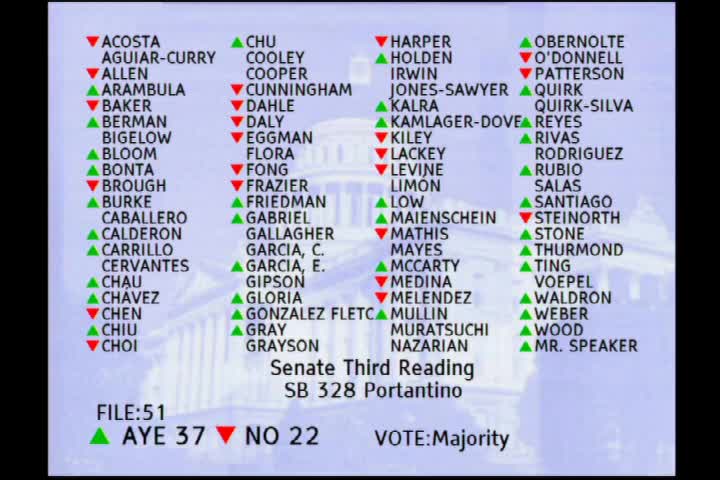


Bill Co-Author(s):