AB 2493: Beverage container recycling: recycling centers and payments.
- Session Year: 2017-2018
- House: Assembly
- Latest Version Date: 2018-09-23
(1)The California Beverage Container Recycling and Litter Reduction Act requires the Department of Resources Recycling and Recovery to annually designate convenience zones and requires that at least one certified recycling center or location within every convenience zone accept all types of empty beverage containers and pay the refund value, if any, for those beverage containers at one location, and be open for business at least 30 hours per week, as provided.
The act provides that a recycling center that consists of reverse vending machines or other unmanned automated equipment is open for business, for purposes of the requirement to be open 30 hours per week, if the equipment at the recycling center is properly functioning, accepting all types of empty beverage containers at the recycling location, and paying posted refund values no less than the minimums required by the act.
This bill would provide that a recycling center that meets those requirements is not required to have an employee present during the hours of operation in order to be open for business.
The bill would provide that a recycling center that is a reverse vending machine that accepts all types of empty beverage containers except those that are 3 or more liters in volume and those that are pouches is open for business if it provides an attendant to accept all types of empty beverage containers for no less than 10 hours per week, as provided, and is operable and properly functioning for no less than 70 hours per week. The bill would require the department to pay handling fees to those recycling centers, and would require those recycling centers to pay refund values, on the basis of the number of beverage containers redeemed through the reverse vending machines, and not on the basis of weight. The bill would require the department to determine the method of certifying the validity of the number of beverage containers counted by the reverse vending machine.
(2)Under the act, a beverage distributor is required to pay a redemption payment to the department for every beverage container sold or offered for sale in the state by the distributor, and the department is required to deposit those amounts in the California Beverage Container Recycling Fund. The money in the fund is continuously appropriated to the department to, among other things, pay refund values and administrative fees to processors. Additionally, under the act, the department is required to calculate a processing fee for each beverage container with a specified scrap value, which is required to be paid by beverage manufacturers for each beverage container sold or transferred to a distributor or dealer. Under the act, the processing fee is calculated based on the recycling rate for each particular container type, which determines the fee at a specified corresponding percentage of the processing payment for that particular container type.
This bill would specify that a payment made pursuant to the act, including, but not limited to, a handling fee payment, refund value payment, processing fee payment, or processing payment, may be made electronically.
(3)The act requires a certified recycling center to accept from any consumer or dropoff or collection program any empty beverage container and to pay to the consumer or dropoff or collection program the refund value of the beverage container. Existing regulations require payments to consumers to be in cash or by check or voucher that is immediately redeemable for cash.This bill would require a recycling center to pay the refund value of a beverage container in cash or in another form of payment, including, but not limited to, in the form of a check or voucher, and would prohibit the department from requiring a recycling center that consists of reverse vending machines or other unmanned automated equipment to make that payment on the same day that the recycling center accepts the beverage container.(1)The California Beverage Container Recycling and Litter Reduction Act requires the Department of Resources Recycling and Recovery to annually designate convenience zones and requires that at least one certified recycling center or location within every convenience zone accept all types of empty beverage containers and pay the refund value, if any, for those beverage containers at one location, and be open for business at least 30 hours per week, as provided. The act continuously appropriates to the department the amount necessary to pay handling fees to certain types of recyclers to provide an incentive for the redemption of empty beverage containers in convenience zones and prohibits the department from making handling fee payments to more than one certified recycling center within a convenience zone. Existing law defines convenience zone as either the area within a 1/2-mile radius of a supermarket or the area designated by the department in a rural region, as specified.
This bill, on or before December 1, 2020, would require the department to adopt regulations to redefine convenience zone, as specified. The bill would provide that recycling centers that received a handling fee immediately before the adoption of those regulations would remain eligible to receive handling fee payments if they meet all requirements that were applicable to eligible recycling centers in convenience zones immediately before the adoption of those regulations.The act provides that a recycling center that consists of reverse vending machines or other unmanned automated equipment is open for business, for purposes of the requirement to be open 30 hours per week, if the equipment at the recycling center is properly functioning, accepting all types of empty beverage containers at the recycling location, and paying posted refund values no less than the minimums required by the act.
This bill would provide that a recycling center that meets those requirements is not required to have an employee present during the hours of operation in order to be open for business.
(2)Under the act, a beverage distributor is required to pay a redemption payment to the department for every beverage container sold or offered for sale in the state by the distributor, and the department is required to deposit those amounts in the California Beverage Container Recycling Fund. The money in the fund is continuously appropriated to the department to, among other things, pay refund values and administrative fees to processors. Additionally, under the act, the department is required to calculate a processing fee for each beverage container with a specified scrap value, which is required to be paid by beverage manufacturers for each beverage container sold or transferred to a distributor or dealer. Under the act, the processing fee is calculated based on the recycling rate for each particular container type, which determines the fee at a specified corresponding percentage of the processing payment for that particular container type.
This bill would specify that a payment made pursuant to the act, including, but not limited to, a handling fee payment, refund value payment, processing fee payment, or processing payment, may be made electronically.
(3)The act requires a certified recycling center to accept from any consumer or dropoff or collection program any empty beverage container and to pay to the consumer or dropoff or collection program the refund value of the beverage container. Existing regulations require payments to consumers to be in cash or by check or voucher that is immediately redeemable for cash.
This bill would require a recycling center to pay the refund value of a beverage container in cash or in another form of payment, including, but not limited to, in the form of a check or voucher, and would prohibit the department from requiring a recycling center that consists of reverse vending machines or other unmanned automated equipment to make that payment on the same day that the recycling center accepts the beverage container.
(1)The California Beverage Container Recycling and Litter Reduction Act requires the Department of Resources Recycling and Recovery to annually designate convenience zones and requires that at least one certified recycling center that meets certain requirements be located within every convenience zone, with exemptions. or location within every convenience zone accept all types of empty beverage containers and pay the refund value, if any, for those beverage containers at one location, and be open for business at least 30 hours per week, as provided. The act continuously appropriates to the department the amount necessary to pay handling fees to certain types of recyclers to provide an incentive for the redemption of empty beverage containers in convenience zones and prohibits the department from making handling fee payments to more than one certified recycling center within a convenience zone. Existing law defines convenience zone as either the area within a 1/2-mile radius of a supermarket or the area designated by the department, department in a rural region, as specified.
This bill, on or before December 1, 2020, would require the department to adopt regulations to redefine convenience zone. zone, as specified. The bill would provide that recycling centers that received a handling fee immediately before the adoption of those regulations would remain eligible to receive handling fee payments if they meet all requirements that were applicable to eligible recycling centers in convenience zones immediately before the adoption of those regulations.
The act provides that a recycling center that consists of reverse vending machines or other unmanned automated equipment is open for business, for purposes of the requirement to be open 30 hours per week, if the equipment at the recycling center is properly functioning, accepting all types of empty beverage containers at the recycling location, and paying posted refund values no less than the minimums required by the act.
This bill would provide that a recycling center that meets those requirements is not required to have an employee present during the hours of operation in order to be open for business.
(2)Under the act, a beverage distributor is required to pay a redemption payment to the department for every beverage container sold or offered for sale in the state by the distributor, and the department is required to deposit those amounts in the California Beverage Container Recycling Fund. The money in the fund is continuously appropriated to the department to, among other things, pay refund values and administrative fees to processors. Additionally, under the act, the department is required to calculate a processing fee for each beverage container with a specified scrap value, which is required to be paid by beverage manufacturers for each beverage container sold or transferred to a distributor or dealer. Under the act, the processing fee is calculated based on the recycling rate for each particular container type, which determines the fee at a specified corresponding percentage of the processing payment for that particular container type.
This bill would specify that a payment made pursuant to the act, including, but not limited to, a handling fee payment, refund value payment, processing fee payment, or processing payment, may be made electronically.
(3)The act requires a certified recycling center to accept from any consumer or dropoff or collection program any empty beverage container and to pay to the consumer or dropoff or collection program the refund value of the beverage container. Existing regulations require payments to consumers to be in cash or by check or voucher that is immediately redeemable for cash.
This bill would require a recycling center to pay the refund value of a beverage container in cash or in another form of payment, including, but not limited to, in the form of a check or voucher, and would prohibit the department from requiring a recycling center that consists of reverse vending machines or other unmanned automated equipment to make that payment on the same day that the recycling center accepts the beverage container.
The California Beverage Container Recycling and Litter Reduction Act requires the Department of Resources Recycling and Recovery to annually designate convenience zones and requires that at least one certified recycling center that meets certain requirements be located within every convenience zone, with exemptions. The act continuously appropriates to the department the amount necessary to pay handling fees to certain types of recyclers to provide an incentive for the redemption of empty beverage containers in convenience zones and prohibits the department from making handling fee payments to more than one certified recycling center within a convenience zone. Existing law defines convenience zone as either the area within a 1/2-mile radius of a supermarket or the area designated by the department, as specified.
This bill, on or before December 1, 2020, would require the department to adopt regulations to redefine convenience zone. The bill would provide that recycling centers that received a handling fee immediately before the adoption of those regulations would remain eligible to receive handling fee payments if they meet all requirements that were applicable to eligible recycling centers in convenience zones immediately before the adoption of those regulations.
Existing law authorizes the formation of resource conservation districts for the control of runoff, the prevention or control of soil erosion, the development and distribution of water, and the improvement of land capabilities. Existing law authorizes a resource conservation district to, among other things, facilitate coordinated resource management efforts for watershed restoration and enhancement, but prohibits a district from conserving water for power purposes and from producing or distributing power for its own use or for the use of others.This bill would make nonsubstantive changes to that provision.Existing law authorizes the formation of resource conservation districts for the control of runoff, the prevention or control of soil erosion, the development and distribution of water, and the improvement of land capabilities. Existing law authorizes a resource conservation district to, among other things, facilitate coordinated resource management efforts for watershed restoration and enhancement, but prohibits a district from conserving water for power purposes and from producing or distributing power for its own use or for the use of others.
This bill would make nonsubstantive changes to that provision.
A payment made pursuant to this division, including, but not limited to, a handling fee payment, refund value payment, processing fee payment, or processing payment, may be made electronically.
SEC. 2.Section 14571 of the Public Resources Code is amended to read:14571.(a)Except as otherwise provided in this chapter, there shall be at least one certified recycling center or location within every convenience zone that accepts and pays the refund value, if any, at one location for all types of empty beverage containers and is open for business during at least 30 hours per week with a minimum of five hours of operation occurring during periods other than from Monday to Friday, from 9 a.m. to 5 p.m.
(b)(1)Notwithstanding subdivision (a), the department may require a certified recycling center to operate 15 of its 30 hours of operation other than during 9 a.m. to 5 p.m.
(2)Notwithstanding subdivision (a) and paragraph (1), the department may certify a recycling center that will operate less than 30 hours per week, if all of the following conditions are met:
(A)The recycling center is in a rural region. For purposes of this subparagraph, rural region means a nonurban area identified by the department on an annual basis using the loan eligibility criteria of the Rural Housing Service of the United States Department of Agriculture, Rural Development Administration, or its successor agency. Those criteria include, but are not limited to, places, open country, cities, towns, or census designated places with populations that are less than 10,000 persons. The department may designate an area with a population of between 10,000 and 50,000 persons as a rural region, unless the area is identified as part of, or associated with, an urban area, as determined by the department on an individual basis.
(B)The recycling center agrees to post a sign indicating the location of the nearest recycling center that is open at least 30 hours per week and that will accept all material types.
(C)The needs of the community and the goals of this division will be best served by certification of the operation as a recycling center.
(c)Before establishing operating hours for a certified recycling center pursuant to subdivision (b), the department shall make a determination that this action is necessary to further the goals of this division and that the proposed operating hours will not significantly decrease the ability of consumers to conveniently return beverage containers for the refund value to a certified recycling center redeeming all material types.
(d)For purposes of this section, if the recycling center is staffed and is not a reverse vending machine, a center is open for business if all of the following requirements are met:
(1)An employee of the certified recycling center or location is present during the hours of operation and available to the public to accept containers and to pay the refund values.
(2)In addition to the sign specified in subdivision (i), a sign having a minimum size of two feet by two feet is posted at the certified recycling center or location indicating that the center or location is open. Where allowed by local zoning requirements or where zoning restrictions apply, the sign shall be of the maximum allowable size.
(3)The prices paid, by weight or per container, are posted at the location.
(e)(1)Except as provided in subdivisions (f) and (h), for the purpose of this section, if the recycling center consists of reverse vending machines or other unmanned automated equipment, the center is open for business if the equipment is properly functioning, accepting all types of empty beverage containers at the recycling location, and paying posted refund values no less than the minimums required by this division.
(2)A recycling center that meets the requirements in paragraph (1) shall not be required to have an employee present during the hours of operation in order to be open for business.
(f)If a recycling center consists of reverse vending machines or other automated equipment, the recycling center is open for business if the equipment is properly functioning, and accepting all types of empty beverage containers at one physical recycling location within the recycling location.
(g)Whenever a recycling center that is a reverse vending machine is not open for business during the 30 hours of operation required and posted pursuant to this section and Section 14570, the dealer that is hosting the reverse vending machine at its place of business shall redeem all empty beverage container types at all open cash registers or one designated location in the store, as specified on the sign required pursuant to subdivision (i).
(h)(1)A recycling center that is a reverse vending machine that accepts all types of empty beverage containers except those that are three or more liters in volume and those that are pouches is open for business if it does both of the following:
(A)Provides an attendant to accept all types of empty beverage containers for no less than 10 hours per week, with no less than five of those hours on a weekend day between the hours of 9 a.m. and 5 p.m.
(B)Is operational and properly functioning for no less than 70 hours per week.
(2)A handling fee shall not be paid to a recycling center described in paragraph (1) if the recycling center is located in a convenience zone in which a preexisting certified recycling center is located. Notwithstanding paragraph (1) of subdivision (c) of Section 14585, a preexisting certified recycling center located in the same convenience zone as a recycling center described in paragraph (1) shall continue to be eligible to receive handling fee payments.
(3)The department shall pay handling fees to a recycling center described in paragraph (1), and the recycling center shall pay refund values, on the basis of the number of beverage containers redeemed through the reverse vending machine, and not on the basis of weight. The department shall determine the method of certifying the validity of the number of beverage containers counted by the reverse vending machine.
(i)In addition to the sign specified in paragraph (2) of subdivision (d), each reverse vending machine shall be posted with a clear and conspicuous sign on or near the reverse vending machine that states that beverage containers may be redeemed by the host dealer if the machine is nonoperational at any time during the required 30 hours of operation, pursuant to subdivision (g). The department shall determine the size and location of the sign and the message required to be printed on the sign.
A payment made pursuant to this division, including, but not limited to, a handling fee payment, refund value payment, processing fee payment, or processing payment, may be made electronically.
SEC. 2.Section 14571 of the Public Resources Code is amended to read:14571.(a)Except as otherwise provided in this chapter, there shall be at least one certified recycling center or location within every convenience zone that accepts and pays the refund value, if any, at one location for all types of empty beverage containers and is open for business during at least 30 hours per week with a minimum of five hours of operation occurring during periods other than from Monday to Friday, from 9 a.m. to 5 p.m.
(b)(1)Notwithstanding subdivision (a), the department may require a certified recycling center to operate 15 of its 30 hours of operation other than during 9 a.m. to 5 p.m.
(2)Notwithstanding subdivision (a) and paragraph (1), the department may certify a recycling center that will operate less than 30 hours per week, if all of the following conditions are met:
(A)The recycling center is in a rural region. For purposes of this subparagraph, rural region means a nonurban area identified by the department on an annual basis using the loan eligibility criteria of the Rural Housing Service of the United States Department of Agriculture, Rural Development Administration, or its successor agency. Those criteria include, but are not limited to, places, open country, cities, towns, or census designated places with populations that are less than 10,000 persons. The department may designate an area with a population of between 10,000 and 50,000 persons as a rural region, unless the area is identified as part of, or associated with, an urban area, as determined by the department on an individual basis.
(B)The recycling center agrees to post a sign indicating the location of the nearest recycling center that is open at least 30 hours per week and that will accept all material types.
(C)The needs of the community and the goals of this division will be best served by certification of the operation as a recycling center.
(c)Before establishing operating hours for a certified recycling center pursuant to subdivision (b), the department shall make a determination that this action is necessary to further the goals of this division and that the proposed operating hours will not significantly decrease the ability of consumers to conveniently return beverage containers for the refund value to a certified recycling center redeeming all material types.
(d)For purposes of this section, if the recycling center is staffed and is not a reverse vending machine, a center is open for business if all of the following requirements are met:
(1)An employee of the certified recycling center or location is present during the hours of operation and available to the public to accept containers and to pay the refund values.
(2)In addition to the sign specified in subdivision (h), (i), a sign having a minimum size of two feet by two feet is posted at the certified recycling center or location indicating that the center or location is open. Where allowed by local zoning requirements or where zoning restrictions apply, the sign shall be of the maximum allowable size.
(3)The prices paid, by weight or per container, are posted at the location.
(e)(1)Except as provided in subdivision (f), subdivisions (f) and (h), for the purpose of this section, if the recycling center consists of reverse vending machines or other unmanned automated equipment, the center is open for business if the equipment is properly functioning, accepting all types of empty beverage containers at the recycling location, and paying posted refund values no less than the minimums required by this division.
(2)A recycling center that meets the requirements in paragraph (1) shall not be required to have an employee present during the hours of operation in order to be open for business.
(f)If a recycling center consists of reverse vending machines or other automated equipment, the recycling center is open for business if the equipment is properly functioning, and accepting all types of empty beverage containers at one physical recycling location within the recycling location.
(g)Whenever a recycling center that is a reverse vending machine is not open for business during the 30 hours of operation required and posted pursuant to this section and Section 14570, the dealer that is hosting the reverse vending machine at its place of business shall redeem all empty beverage container types at all open cash registers or one designated location in the store, as specified on the sign required pursuant to subdivision (h). (i).
(h)(1)A recycling center that is a reverse vending machine that accepts all types of empty beverage containers except those that are three or more liters in volume and those that are pouches is open for business if it does both of the following:
(A)Provides an attendant to accept all types of empty beverage containers for no less than 10 hours per week, with no less than five of those hours on a weekend day between the hours of 9 a.m. and 5 p.m.
(B)Is operational and properly functioning for no less than 70 hours per week.
(2)A handling fee shall not be paid to a recycling center described in paragraph (1) if the recycling center is located in a convenience zone in which a preexisting certified recycling center is located. Notwithstanding paragraph (1) of subdivision (c) of Section 14585, a preexisting certified recycling center located in the same convenience zone as a recycling center described in paragraph (1) shall continue to be eligible to receive handling fee payments.
(3)The department shall pay handling fees to a recycling center described in paragraph (1), and the recycling center shall pay refund values, on the basis of the number of beverage containers redeemed through the reverse vending machine, and not on the basis of weight. The department shall determine the method of certifying the validity of the number of beverage containers counted by the reverse vending machine.
(h)(i)In addition to the sign specified in paragraph (2) of subdivision (d), each reverse vending machine shall be posted with a clear and conspicuous sign on or near the reverse vending machine that states that beverage containers may be redeemed by the host dealer if the machine is nonoperational at any time during the required 30 hours of operation, pursuant to subdivision (g). The department shall determine the size and location of the sign and the message required to be printed on the sign.
SEC. 3.Section 14572 of the Public Resources Code is amended to read:14572.(a)(1)Except as provided in subdivision (b), a certified recycling center shall accept from any consumer or dropoff or collection program any empty beverage container, and shall pay to the consumer or dropoff or collection program the refund value of the beverage container.(2)Except as provided in paragraph (3), the recycling center may pay the refund value based on the weight of returned containers.(3)For beverage containers redeemed by consumers, a certified recycling center shall pay the refund value using the applicable segregated rate, as defined in paragraph (43) of subsection (a) of Section 2000 of Title 14 of the California Code of Regulations, as that section read on September 1, 2013, which shall be based on the weight of the redeemed beverage containers.(4)The recycling center shall pay the refund value of a beverage container in cash or in another form of payment, including, but not limited to, in the form of a check or voucher. The department shall not require a recycling center that consists of reverse vending machines or other unmanned automated equipment to make payment for a beverage container pursuant to this paragraph on the same day that the recycling center accepts that beverage container.(b)A recycling center or processor that was in existence on January 1, 1986, and that refused, as of January 1, 1986, to accept at a particular location a certain type of empty beverage container may continue to refuse to accept at the location the type or types of empty beverage containers that the recycling center or processor refused to accept as of January 1, 1986. A certified recycling center that refuses, pursuant to this subdivision, to accept a certain type or types of empty beverage containers is not eligible to receive handling fees unless the center agrees to accept all types of empty beverage containers and is a supermarket site. This subdivision does not preclude the certified recycling center from receiving a handling fee for beverage containers redeemed at supermarket sites that do accept all types of containers.(c)The department shall develop procedures by which recycling centers and processors that meet the criteria of subdivision (b) may recertify to change the material types accepted.(d)(1)Only a certified recycling center may pay the refund value to consumers or dropoff or collection programs. A person shall not pay a noncertified recycler for empty beverage containers an amount that exceeds the current scrap value for each container type, which shall be determined in the following manner:(A)For a plastic or glass beverage container, the current scrap value shall be determined by the department.(B)For an aluminum beverage container, the current scrap value shall be not greater than the amount paid to the processor for that aluminum beverage container, on the date the container was purchased, by the location of end use, as defined in the regulations of the department.(2)A person shall not receive or retain, for empty beverage containers that come from out of state, any refund values, processing payments, or administrative fees for which a claim is made to the department against the fund.(3)Paragraph (1) does not affect curbside programs under contract with cities or counties.A payment made pursuant to this division, including, but not limited to, a handling fee payment, refund value payment, processing fee payment, or processing payment, may be made electronically.
SEC. 4.Section 14536.2 is added to the Public Resources Code, to read:14536.2.(a)On or before December 1, 2020, the department shall adopt regulations to define convenience zone.(b)In developing regulations pursuant to this section, the department shall do both of the following:(1)Seek to increase redemption opportunities for consumers.(2)Not adopt a definition for convenience zone that will result in the elimination or potential elimination of any existing consumer redemption opportunities.(c)For convenience zones that were unserved immediately before the adoption of regulations pursuant to this section, the department may define convenience zone in a manner that makes possible, notwithstanding the requirements of Section 14571, increased consumer opportunities for redemption, if the redemption opportunities accept all types of empty beverage containers.SEC. 5.SEC. 2.Section 14571 of the Public Resources Code is amended to read:14571.(a)Except as otherwise provided in this chapter, there shall be at least one certified recycling center or location within every convenience zone that accepts and pays the refund value, if any, at one location for all types of empty beverage containers and is open for business during at least 30 hours per week with a minimum of five hours of operation occurring during periods other than from Monday to Friday, from 9 a.m. to 5 p.m.
(b)(1)Notwithstanding subdivision (a), the department may require a certified recycling center to operate 15 of its 30 hours of operation other than during 9 a.m. to 5 p.m.
(2)Notwithstanding subdivision (a) and paragraph (1), the department may certify a recycling center that will operate less than 30 hours per week, if all of the following conditions are met:
(A)The recycling center is in a rural region. For purposes of this subparagraph, rural region means a nonurban area identified by the department on an annual basis using the loan eligibility criteria of the Rural Housing Service of the United States Department of Agriculture, Rural Development Administration, or its successor agency. Those criteria include, but are not limited to, places, open country, cities, towns, or census designated places with populations that are less than 10,000 persons. The department may designate an area with a population of between 10,000 and 50,000 persons as a rural region, unless the area is identified as part of, or associated with, an urban area, as determined by the department on an individual basis.
(B)The recycling center agrees to post a sign indicating the location of the nearest recycling center that is open at least 30 hours per week and that will accept all material types.
(C)The needs of the community and the goals of this division will be best served by certification of the operation as a recycling center.
(c)Before establishing operating hours for a certified recycling center pursuant to subdivision (b), the department shall make a determination that this action is necessary to further the goals of this division and that the proposed operating hours will not significantly decrease the ability of consumers to conveniently return beverage containers for the refund value to a certified recycling center redeeming all material types.
(d)For purposes of this section, if the recycling center is staffed and is not a reverse vending machine, a center is open for business if all of the following requirements are met:
(1)An employee of the certified recycling center or location is present during the hours of operation and available to the public to accept containers and to pay the refund values.
(2)In addition to the sign specified in subdivision (h), a sign having a minimum size of two feet by two feet is posted at the certified recycling center or location indicating that the center or location is open. Where allowed by local zoning requirements or where zoning restrictions apply, the sign shall be of the maximum allowable size.
(3)The prices paid, by weight or per container, are posted at the location.
(e)(1)Except as provided in subdivision (f), for the purpose of this section, if the recycling center consists of reverse vending machines or other unmanned automated equipment, the center is open for business if the equipment is properly functioning, accepting all types of empty beverage containers at the recycling location, and paying posted refund values no less than the minimums required by this division.
(2)A recycling center that meets the requirements in paragraph (1) shall not be required to have an employee present during the hours of operation in order to be open for business.
(f)If a recycling center consists of reverse vending machines or other automated equipment, the recycling center is open for business if the equipment is properly functioning, and accepting all types of empty beverage containers at one physical recycling location within the recycling location.
(g)Whenever a recycling center that is a reverse vending machine is not open for business during the 30 hours of operation required and posted pursuant to this section and Section 14570, the dealer that is hosting the reverse vending machine at its place of business shall redeem all empty beverage container types at all open cash registers or one designated location in the store, as specified on the sign required pursuant to subdivision (h).
(h)In addition to the sign specified in paragraph (2) of subdivision (d), each reverse vending machine shall be posted with a clear and conspicuous sign on or near the reverse vending machine that states that beverage containers may be redeemed by the host dealer if the machine is nonoperational at any time during the required 30 hours of operation, pursuant to subdivision (g). The department shall determine the size and location of the sign and the message required to be printed on the sign.
SEC. 6.SEC. 3.Section 14572 of the Public Resources Code is amended to read:14572.(a)(1)Except as provided in subdivision (b), a certified recycling center shall accept from any consumer or dropoff or collection program any empty beverage container, and shall pay to the consumer or dropoff or collection program the refund value of the beverage container.
(2)Except as provided in paragraph (3), the recycling center may pay the refund value based on the weight of returned containers.
(3)For beverage containers redeemed by consumers, a certified recycling center shall pay the refund value using the applicable segregated rate, as defined in paragraph (43) of subsection (a) of Section 2000 of Title 14 of the California Code of Regulations, as that section read on September 1, 2013, which shall be based on the weight of the redeemed beverage containers.
(4)The recycling center shall pay the refund value of a beverage container in cash or in another form of payment, including, but not limited to, in the form of a check or voucher. The department shall not require a recycling center that consists of reverse vending machines or other unmanned automated equipment to make payment for a beverage container pursuant to this paragraph on the same day that the recycling center accepts that beverage container.
(b)A recycling center or processor that was in existence on January 1, 1986, and that refused, as of January 1, 1986, to accept at a particular location a certain type of empty beverage container may continue to refuse to accept at the location the type or types of empty beverage containers that the recycling center or processor refused to accept as of January 1, 1986. A certified recycling center that refuses, pursuant to this subdivision, to accept a certain type or types of empty beverage containers is not eligible to receive handling fees unless the center agrees to accept all types of empty beverage containers and is a supermarket site. This subdivision does not preclude the certified recycling center from receiving a handling fee for beverage containers redeemed at supermarket sites that do accept all types of containers.
(c)The department shall develop procedures by which recycling centers and processors that meet the criteria of subdivision (b) may recertify to change the material types accepted.
(d)(1)Only a certified recycling center may pay the refund value to consumers or dropoff or collection programs. A person shall not pay a noncertified recycler for empty beverage containers an amount that exceeds the current scrap value for each container type, which shall be determined in the following manner:
(A)For a plastic or glass beverage container, the current scrap value shall be determined by the department.
(B)For an aluminum beverage container, the current scrap value shall be not greater than the amount paid to the processor for that aluminum beverage container, on the date the container was purchased, by the location of end use, as defined in the regulations of the department.
(2)A person shall not receive or retain, for empty beverage containers that come from out of state, any refund values, processing payments, or administrative fees for which a claim is made to the department against the fund.
(3)Paragraph (1) does not affect curbside programs under contract with cities or counties.
SEC. 7.Section 14585 of the Public Resources Code is amended to read:14585.(a)The department shall adopt guidelines and methods for paying handling fees to supermarket sites, nonprofit convenience zone recyclers, or rural region recyclers to provide an incentive for the redemption of empty beverage containers in convenience zones. The guidelines shall include, but not be limited to, all of the following:(1)Handling fees shall be paid on a monthly basis, in the form and manner adopted by the department. The department shall require that claims for the handling fee be filed with the department not later than the first day of the second month following the month for which the handling fee is claimed as a condition of receiving any handling fee.(2)The department shall determine the number of eligible containers per site for which a handling fee will be paid in the following manner:(A)Each eligible sites combined monthly volume of glass and plastic beverage containers shall be divided by the sites total monthly volume of all empty beverage container types.(B)If the quotient determined pursuant to subparagraph (A) is equal to, or more than, 10 percent, the total monthly volume of the site shall be the maximum volume which is eligible for a handling fee for that month.(C)If the quotient determined pursuant to subparagraph (A) is less than 10 percent, the department shall divide the volume of glass and plastic beverage containers by 10 percent. That quotient shall be the maximum volume that is eligible for a handling fee for that month.(3)The department shall pay a handling fee per eligible container in the amount determined pursuant to subdivision (f).(4)If the eligible volume in any given month would result in handling fee payments that exceed the allocation of funds for that month, as provided in subdivision (b), sites with higher eligible monthly volumes shall receive handling fees for their entire eligible monthly volume before sites with lower eligible monthly volumes receive any handling fees.(5)(A)If a dealer where a supermarket site, nonprofit convenience zone recycler, or rural region recycler is located ceases operation for remodeling or for a change of ownership, the operator of that supermarket site, nonprofit convenience zone recycler, or rural region recycler shall be eligible to apply for handling fees for that site for a period of three months following the date of the closure of the dealer.(B)Every supermarket site operator, nonprofit convenience zone recycler, or rural region recycler shall promptly notify the department of the closure of the dealer where the supermarket site, nonprofit convenience zone recycler, or rural region recycler is located.(C)Notwithstanding subparagraph (A), any operator who fails to provide notification to the department pursuant to subparagraph (B) shall not be eligible to apply for handling fees.(b)The department may allocate the amount authorized for expenditure for the payment of handling fees pursuant to paragraph (1) of subdivision (a) of Section 14581 on a monthly basis and may carry over any unexpended monthly allocation to a subsequent month or months. However, unexpended monthly allocations shall not be carried over to a subsequent fiscal year for the purpose of paying handling fees but may be carried over for any other purpose pursuant to Section 14581.(c)(1)The department shall not make handling fee payments to more than one certified recycling center in a convenience zone. If a dealer is located in more than one convenience zone, the department shall offer a single handling fee payment to a supermarket site located at that dealer. This handling fee payment shall not be split between the affected zones. The department shall stop making handling fee payments if another recycling center certifies to operate within the convenience zone without receiving payments pursuant to this section, if the department monitors the performance of the other recycling center for 60 days and determines that the recycling center is in compliance with this division. Any recycling center that locates in a convenience zone, thereby causing a preexisting recycling center to become ineligible to receive handling fee payments, is ineligible to receive any handling fee payments in that convenience zone.(2)The department shall offer a single handling fee payment to a rural region recycler located anywhere inside a convenience zone, if that convenience zone is not served by another certified recycling center and the rural region recycler does either of the following:(A)Operates a minimum of 30 hours per week in one convenience zone.(B)Serves two or more convenience zones, and meets all of the following criteria:(i)Is the only certified recycler within each convenience zone.(ii)Is open and operating at least eight hours per week in each convenience zone and is certified at each location.(iii)Operates at least 30 hours per week in total for all convenience zones served.(d)The department may require the operator of a supermarket site, or the operator of a rural region recycler, receiving handling fees to maintain records for each location where beverage containers are redeemed, and may require the supermarket site or rural region recycler to take any other action necessary for the department to determine that the supermarket site or rural region recycler does not receive an excessive handling fee.(e)The department may determine and utilize a standard container per pound rate, for each material type, for the purpose of calculating volumes and making handling fee payments.(f)(1)On or before January 1, 2008, and every two years thereafter, the department shall conduct a survey pursuant to this subdivision of a statistically significant sample of certified recycling centers that receive handling fee payments to determine the actual cost incurred for the redemption of empty beverage containers by those certified recycling centers. The department shall conduct these cost surveys in conjunction with the cost surveys performed by the department pursuant to subdivision (b) of Section 14575 to determine processing payments and processing fees. The department shall include, in determining the actual costs, only those allowable costs contained in the regulations adopted pursuant to this division that are used by the department to conduct cost surveys pursuant to subdivision (b) of Section 14575.(2)Using the information obtained pursuant to paragraph (1), the department shall then determine the statewide weighted average cost incurred for the redemption of empty beverage containers, per empty beverage container, at recycling centers that receive handling fees.(3)The department shall determine the amount of the handling fee to be paid for each empty beverage container by subtracting the amount of the statewide weighted average cost per container to redeem empty beverage containers by recycling centers that do not receive handling fees from the amount of the statewide weighted average cost per container determined pursuant to paragraph (2).(4)The department shall adjust the statewide average cost determined pursuant to paragraph (2) for each beverage container annually to reflect changes in the cost of living, as measured by the Bureau of Labor Statistics of the United States Department of Labor or a successor agency of the United States government.(5)The cost information collected pursuant to this section at recycling centers that receive handling fees shall not be used in the calculation of the processing payments determined pursuant to Section 14575.(g)The department may update the methodology and scrap values used for calculating the handling fee from the most recent cost survey if it finds that the handling fee resulting from the most recent cost survey does not accurately represent the actual cost incurred for the redemption of empty beverage containers by those certified recycling centers.(h)Notwithstanding the regulations adopted pursuant to Section 14536.2 defining convenience zone, a recycling center that received a handling fee for the reporting period immediately before the adoption of those regulations shall remain eligible to receive handling fee payments pursuant to this section if it meets all of the requirements that were applicable to eligible recycling centers in convenience zones immediately before the adoption of those regulations.(a)Convenience zone means either of the following:
(1)The area within a one-half mile radius of a supermarket.
(2)The area designated by the department pursuant to Section 14571.5.
(b)This section shall become inoperative on the operative date of the regulations adopted pursuant to Section 14536.2 and as of that date is repealed.
SEC. 2.Section 14509.4 is added to the Public Resources Code, to read:14509.4.(a)Convenience zone means an area designated by the department pursuant to regulations adopted pursuant to Section 14536.2.
(b)This section shall become operative on the operative date of the regulations adopted pursuant to Section 14536.2.
SEC. 3.Section 14531 is added to the Public Resources Code, to read:14531.A payment made pursuant to this division, including, but not limited to, a handling fee payment, refund value payment, processing fee payment, or processing payment, may be made electronically.
SEC. 3.SEC. 4.Section 14536.2 is added to the Public Resources Code, to read:14536.2.(a)On or before December 1, 2020, the department shall adopt regulations to define convenience zone.
(b)In developing regulations pursuant to this section, the department shall do both of the following:
(1)Seek to increase redemption opportunities for consumers.
(2)Not adopt a definition for convenience zone that will result in the elimination or potential elimination of any existing consumer redemption opportunities.
(c)For convenience zones that were unserved immediately before the adoption of regulations pursuant to this section, the department may define convenience zone in a manner that makes possible, notwithstanding the requirements of Section 14571, increased consumer opportunities for redemption, if the redemption opportunities accept all types of empty beverage containers.
SEC. 5.Section 14571 of the Public Resources Code is amended to read:14571.(a)Except as otherwise provided in this chapter, there shall be at least one certified recycling center or location within every convenience zone that accepts and pays the refund value, if any, at one location for all types of empty beverage containers and is open for business during at least 30 hours per week with a minimum of five hours of operation occurring during periods other than from Monday to Friday, from 9 a.m. to 5 p.m.
(b)(1)Notwithstanding subdivision (a), the department may require a certified recycling center to operate 15 of its 30 hours of operation other than during 9 a.m. to 5 p.m.
(2)Notwithstanding subdivision (a) and paragraph (1), the department may certify a recycling center that will operate less than 30 hours per week, if all of the following conditions are met:
(A)The recycling center is in a rural region. For purposes of this subparagraph, rural region means a nonurban area identified by the department on an annual basis using the loan eligibility criteria of the Rural Housing Service of the United States Department of Agriculture, Rural Development Administration, or its successor agency. Those criteria include, but are not limited to, places, open country, cities, towns, or census designated places with populations that are less than 10,000 persons. The department may designate an area with a population of between 10,000 and 50,000 persons as a rural region, unless the area is identified as part of, or associated with, an urban area, as determined by the department on an individual basis.
(B)The recycling center agrees to post a sign indicating the location of the nearest recycling center that is open at least 30 hours per week and that will accept all material types.
(C)The needs of the community and the goals of this division will be best served by certification of the operation as a recycling center.
(c)Before establishing operating hours for a certified recycling center pursuant to subdivision (b), the department shall make a determination that this action is necessary to further the goals of this division and that the proposed operating hours will not significantly decrease the ability of consumers to conveniently return beverage containers for the refund value to a certified recycling center redeeming all material types.
(d)For purposes of this section, if the recycling center is staffed and is not a reverse vending machine, a center is open for business if all of the following requirements are met:
(1)An employee of the certified recycling center or location is present during the hours of operation and available to the public to accept containers and to pay the refund values.
(2)In addition to the sign specified in subdivision (h), a sign having a minimum size of two feet by two feet is posted at the certified recycling center or location indicating that the center or location is open. Where allowed by local zoning requirements or where zoning restrictions apply, the sign shall be of the maximum allowable size.
(3)The prices paid, by weight or per container, are posted at the location.
(e)(1)Except as provided in subdivision (f), for the purpose of this section, if the recycling center consists of reverse vending machines or other unmanned automated equipment, the center is open for business if the equipment is properly functioning, accepting all types of empty beverage containers at the recycling location, and paying posted refund values no less than the minimums required by this division.
(2)A recycling center that meets the requirements in paragraph (1) shall not be required to have an employee present during the hours of operation in order to be open for business.
(f)If a recycling center consists of reverse vending machines or other automated equipment, the recycling center is open for business if the equipment is properly functioning, and accepting all types of empty beverage containers at one physical recycling location within the recycling location.
(g)Whenever a recycling center that is a reverse vending machine is not open for business during the 30 hours of operation required and posted pursuant to this section and Section 14570, the dealer that is hosting the reverse vending machine at its place of business shall redeem all empty beverage container types at all open cash registers or one designated location in the store, as specified on the sign required pursuant to subdivision (h).
(h)In addition to the sign specified in paragraph (2) of subdivision (d), each reverse vending machine shall be posted with a clear and conspicuous sign on or near the reverse vending machine which that states that beverage containers may be redeemed by the host dealer if the machine is nonoperational at any time during the required 30 hours of operation, pursuant to subdivision (g). The department shall determine the size and location of the sign and the message required to be printed on the sign.
SEC. 6.Section 14572 of the Public Resources Code is amended to read:14572.(a)(1)Except as provided in subdivision (b), a certified recycling center shall accept from any consumer or dropoff or collection program any empty beverage container, and shall pay to the consumer or dropoff or collection program the refund value of the beverage container.
(2)Except as provided in paragraph (3), the recycling center may pay the refund value based on the weight of returned containers.
(3)On and after September 1, 2013, for For beverage containers redeemed by consumers, a certified recycling center shall pay the refund value using the applicable segregated rate, as defined in paragraph (43) of subsection (a) of Section 2000 of Title 14 of the California Code of Regulations, as that section read on September 1, 2013, which shall be based on the weight of the redeemed beverage containers.
(4)The recycling center shall pay the refund value of a beverage container in cash or in another form of payment, including, but not limited to, in the form of a check or voucher. The department shall not require a recycling center that consists of reverse vending machines or other unmanned automated equipment to make payment for a beverage container pursuant to this paragraph on the same day that the recycling center accepts that beverage container.
(b)Any A recycling center or processor that was in existence on January 1, 1986, and that refused, as of January 1, 1986, to accept at a particular location a certain type of empty beverage container may continue to refuse to accept at the location the type or types of empty beverage containers that the recycling center or processor refused to accept as of January 1, 1986. A certified recycling center that refuses, pursuant to this subdivision, to accept a certain type or types of empty beverage containers is not eligible to receive handling fees unless the center agrees to accept all types of empty beverage containers and is a supermarket site. This subdivision does not preclude the certified recycling center from receiving a handling fee for beverage containers redeemed at supermarket sites that do accept all types of containers.
(c)The department shall develop procedures by which recycling centers and processors that meet the criteria of subdivision (b) may recertify to change the material types accepted.
(d)(1)Only a certified recycling center may pay the refund value to consumers or dropoff or collection programs. A person shall not pay a noncertified recycler for empty beverage containers an amount that exceeds the current scrap value for each container type, which shall be determined in the following manner:
(A)For a plastic or glass beverage container, the current scrap value shall be determined by the department.
(B)For an aluminum beverage container, the current scrap value shall be not greater than the amount paid to the processor for that aluminum beverage container, on the date the container was purchased, by the location of end use, as defined in the regulations of the department.
(2)A person shall not receive or retain, for empty beverage containers that come from out of state, any refund values, processing payments, or administrative fees for which a claim is made to the department against the fund.
(3)Paragraph (1) does not affect curbside programs under contract with cities or counties.
SEC. 4.SEC. 7.Section 14585 of the Public Resources Code is amended to read:14585.(a)The department shall adopt guidelines and methods for paying handling fees to supermarket sites, nonprofit convenience zone recyclers, or rural region recyclers to provide an incentive for the redemption of empty beverage containers in convenience zones. The guidelines shall include, but not be limited to, all of the following:
(1)Handling fees shall be paid on a monthly basis, in the form and manner adopted by the department. The department shall require that claims for the handling fee be filed with the department not later than the first day of the second month following the month for which the handling fee is claimed as a condition of receiving any handling fee.
(2)The department shall determine the number of eligible containers per site for which a handling fee will be paid in the following manner:
(A)Each eligible sites combined monthly volume of glass and plastic beverage containers shall be divided by the sites total monthly volume of all empty beverage container types.
(B)If the quotient determined pursuant to subparagraph (A) is equal to, or more than, 10 percent, the total monthly volume of the site shall be the maximum volume which is eligible for a handling fee for that month.
(C)If the quotient determined pursuant to subparagraph (A) is less than 10 percent, the department shall divide the volume of glass and plastic beverage containers by 10 percent. That quotient shall be the maximum volume that is eligible for a handling fee for that month.
(3)The department shall pay a handling fee per eligible container in the amount determined pursuant to subdivision (f).
(4)If the eligible volume in any given month would result in handling fee payments that exceed the allocation of funds for that month, as provided in subdivision (b), sites with higher eligible monthly volumes shall receive handling fees for their entire eligible monthly volume before sites with lower eligible monthly volumes receive any handling fees.
(5)(A)If a dealer where a supermarket site, nonprofit convenience zone recycler, or rural region recycler is located ceases operation for remodeling or for a change of ownership, the operator of that supermarket site, nonprofit convenience zone recycler, or rural region recycler shall be eligible to apply for handling fees for that site for a period of three months following the date of the closure of the dealer.
(B)Every supermarket site operator, nonprofit convenience zone recycler, or rural region recycler shall promptly notify the department of the closure of the dealer where the supermarket site, nonprofit convenience zone recycler, or rural region recycler is located.
(C)Notwithstanding subparagraph (A), any operator who fails to provide notification to the department pursuant to subparagraph (B) shall not be eligible to apply for handling fees.
(b)The department may allocate the amount authorized for expenditure for the payment of handling fees pursuant to paragraph (1) of subdivision (a) of Section 14581 on a monthly basis and may carry over any unexpended monthly allocation to a subsequent month or months. However, unexpended monthly allocations shall not be carried over to a subsequent fiscal year for the purpose of paying handling fees but may be carried over for any other purpose pursuant to Section 14581.
(c)(1)The department shall not make handling fee payments to more than one certified recycling center in a convenience zone. If a dealer is located in more than one convenience zone, the department shall offer a single handling fee payment to a supermarket site located at that dealer. This handling fee payment shall not be split between the affected zones. The department shall stop making handling fee payments if another recycling center certifies to operate within the convenience zone without receiving payments pursuant to this section, if the department monitors the performance of the other recycling center for 60 days and determines that the recycling center is in compliance with this division. Any recycling center that locates in a convenience zone, thereby causing a preexisting recycling center to become ineligible to receive handling fee payments, is ineligible to receive any handling fee payments in that convenience zone.
(2)The department shall offer a single handling fee payment to a rural region recycler located anywhere inside a convenience zone, if that convenience zone is not served by another certified recycling center and the rural region recycler does either of the following:
(A)Operates a minimum of 30 hours per week in one convenience zone.
(B)Serves two or more convenience zones, and meets all of the following criteria:
(i)Is the only certified recycler within each convenience zone.
(ii)Is open and operating at least eight hours per week in each convenience zone and is certified at each location.
(iii)Operates at least 30 hours per week in total for all convenience zones served.
(d)The department may require the operator of a supermarket site, or the operator of a rural region recycler, receiving handling fees to maintain records for each location where beverage containers are redeemed, and may require the supermarket site or rural region recycler to take any other action necessary for the department to determine that the supermarket site or rural region recycler does not receive an excessive handling fee.
(e)The department may determine and utilize a standard container per pound rate, for each material type, for the purpose of calculating volumes and making handling fee payments.
(f)(1)On or before January 1, 2008, and every two years thereafter, the department shall conduct a survey pursuant to this subdivision of a statistically significant sample of certified recycling centers that receive handling fee payments to determine the actual cost incurred for the redemption of empty beverage containers by those certified recycling centers. The department shall conduct these cost surveys in conjunction with the cost surveys performed by the department pursuant to subdivision (b) of Section 14575 to determine processing payments and processing fees. The department shall include, in determining the actual costs, only those allowable costs contained in the regulations adopted pursuant to this division that are used by the department to conduct cost surveys pursuant to subdivision (b) of Section 14575.
(2)Using the information obtained pursuant to paragraph (1), the department shall then determine the statewide weighted average cost incurred for the redemption of empty beverage containers, per empty beverage container, at recycling centers that receive handling fees.
(3)The department shall determine the amount of the handling fee to be paid for each empty beverage container by subtracting the amount of the statewide weighted average cost per container to redeem empty beverage containers by recycling centers that do not receive handling fees from the amount of the statewide weighted average cost per container determined pursuant to paragraph (2).
(4)The department shall adjust the statewide average cost determined pursuant to paragraph (2) for each beverage container annually to reflect changes in the cost of living, as measured by the Bureau of Labor Statistics of the United States Department of Labor or a successor agency of the United States government.
(5)The cost information collected pursuant to this section at recycling centers that receive handling fees shall not be used in the calculation of the processing payments determined pursuant to Section 14575.
(g)The department may update the methodology and scrap values used for calculating the handling fee from the most recent cost survey if it finds that the handling fee resulting from the most recent cost survey does not accurately represent the actual cost incurred for the redemption of empty beverage containers by those certified recycling centers.
(h)Notwithstanding the regulations adopted pursuant to Section 14536.2 defining convenience zone, a recycling center that received a handling fee for the reporting period immediately before the adoption of those regulations shall remain eligible to receive handling fee payments pursuant to this section if it meets all of the requirements that were applicable to eligible recycling centers in convenience zones immediately before the adoption of those regulations.
(a)Convenience zone means either of the following:
(a)(1)The area within a one-half mile radius of a supermarket.
(b)(2)The area designated by the department pursuant to Section 14571.5.
(b)This section shall become inoperative on the operative date of the regulations adopted pursuant to Section 14536.2 and as of that date is repealed.
SEC. 2.Section 14509.4 is added to the Public Resources Code, to read:14509.4.(a)Convenience zone means an area designated by the department pursuant to regulations adopted pursuant to Section 14536.2.
(b)This section shall become operative on the operative date of the regulations adopted pursuant to Section 14536.2.
SEC. 3.Section 14536.2 is added to the Public Resources Code, to read:14536.2.On or before December 1, 2020, the department shall adopt regulations to define convenience zone.
SEC. 4.Section 14585 of the Public Resources Code is amended to read:14585.(a)The department shall adopt guidelines and methods for paying handling fees to supermarket sites, nonprofit convenience zone recyclers, or rural region recyclers to provide an incentive for the redemption of empty beverage containers in convenience zones. The guidelines shall include, but not be limited to, all of the following:
(1)Handling fees shall be paid on a monthly basis, in the form and manner adopted by the department. The department shall require that claims for the handling fee be filed with the department not later than the first day of the second month following the month for which the handling fee is claimed as a condition of receiving any handling fee.
(2)The department shall determine the number of eligible containers per site for which a handling fee will be paid in the following manner:
(A)Each eligible sites combined monthly volume of glass and plastic beverage containers shall be divided by the sites total monthly volume of all empty beverage container types.
(B)If the quotient determined pursuant to subparagraph (A) is equal to, or more than, 10 percent, the total monthly volume of the site shall be the maximum volume which is eligible for a handling fee for that month.
(C)If the quotient determined pursuant to subparagraph (A) is less than 10 percent, the department shall divide the volume of glass and plastic beverage containers by 10 percent. That quotient shall be the maximum volume that is eligible for a handling fee for that month.
(3)(A)On and after the effective date of the act amending this section during the 201112 Regular Session, and until March 1, 2013, the department shall pay a handling fee per eligible container in the amount determined pursuant to subdivisions (f) and (g).(B)On and after July 1, 2014, the(3)The department shall pay a handling fee per eligible container in the amount determined pursuant to subdivision (f).
(4)If the eligible volume in any given month would result in handling fee payments that exceed the allocation of funds for that month, as provided in subdivision (b), sites with higher eligible monthly volumes shall receive handling fees for their entire eligible monthly volume before sites with lower eligible monthly volumes receive any handling fees.
(5)(A)If a dealer where a supermarket site, nonprofit convenience zone recycler, or rural region recycler is located ceases operation for remodeling or for a change of ownership, the operator of that supermarket site site, nonprofit convenience zone recycler, or rural region recycler shall be eligible to apply for handling fees for that site for a period of three months following the date of the closure of the dealer.
(B)Every supermarket site operator, nonprofit convenience zone recycler, or rural region recycler shall promptly notify the department of the closure of the dealer where the supermarket site, nonprofit convenience zone recycler, or rural region recycler is located.
(C)Notwithstanding subparagraph (A), any operator who fails to provide notification to the department pursuant to subparagraph (B) shall not be eligible to apply for handling fees.
(b)The department may allocate the amount authorized for expenditure for the payment of handling fees pursuant to paragraph (1) of subdivision (a) of Section 14581 on a monthly basis and may carry over any unexpended monthly allocation to a subsequent month or months. However, unexpended monthly allocations shall not be carried over to a subsequent fiscal year for the purpose of paying handling fees but may be carried over for any other purpose pursuant to Section 14581.
(c)(1)The department shall not make handling fee payments to more than one certified recycling center in a convenience zone. If a dealer is located in more than one convenience zone, the department shall offer a single handling fee payment to a supermarket site located at that dealer. This handling fee payment shall not be split between the affected zones. The department shall stop making handling fee payments if another recycling center certifies to operate within the convenience zone without receiving payments pursuant to this section, if the department monitors the performance of the other recycling center for 60 days and determines that the recycling center is in compliance with this division. Any recycling center that locates in a convenience zone, thereby causing a preexisting recycling center to become ineligible to receive handling fee payments, is ineligible to receive any handling fee payments in that convenience zone.
(2)The department shall offer a single handling fee payment to a rural region recycler located anywhere inside a convenience zone, if that convenience zone is not served by another certified recycling center and the rural region recycler does either of the following:
(A)Operates a minimum of 30 hours per week in one convenience zone.
(B)Serves two or more convenience zones, and meets all of the following criteria:
(i)Is the only certified recycler within each convenience zone.
(ii)Is open and operating at least eight hours per week in each convenience zone and is certified at each location.
(iii)Operates at least 30 hours per week in total for all convenience zones served.
(d)The department may require the operator of a supermarket site site, or the operator of a rural region recycler recycler, receiving handling fees to maintain records for each location where beverage containers are redeemed, and may require the supermarket site or rural region recycler to take any other action necessary for the department to determine that the supermarket site or rural region recycler does not receive an excessive handling fee.
(e)The department may determine and utilize a standard container per pound rate, for each material type, for the purpose of calculating volumes and making handling fee payments.
(f)(1)On or before January 1, 2008, and every two years thereafter, the department shall conduct a survey pursuant to this subdivision of a statistically significant sample of certified recycling centers that receive handling fee payments to determine the actual cost incurred for the redemption of empty beverage containers by those certified recycling centers. The department shall conduct these cost surveys in conjunction with the cost surveys performed by the department pursuant to subdivision (b) of Section 14575 to determine processing payments and processing fees. The department shall include, in determining the actual costs, only those allowable costs contained in the regulations adopted pursuant to this division that are used by the department to conduct cost surveys pursuant to subdivision (b) of Section 14575.
(2)Using the information obtained pursuant to paragraph (1), the department shall then determine the statewide weighted average cost incurred for the redemption of empty beverage containers, per empty beverage container, at recycling centers that receive handling fees.
(3)Except as provided in subdivision (g), the The department shall determine the amount of the handling fee to be paid for each empty beverage container by subtracting the amount of the statewide weighted average cost per container to redeem empty beverage containers by recycling centers that do not receive handling fees from the amount of the statewide weighted average cost per container determined pursuant to paragraph (2).
(4)The department shall adjust the statewide average cost determined pursuant to paragraph (2) for each beverage container annually to reflect changes in the cost of living, as measured by the Bureau of Labor Statistics of the United States Department of Labor or a successor agency of the United States government.
(5)The cost information collected pursuant to this section at recycling centers that receive handling fees shall not be used in the calculation of the processing payments determined pursuant to Section 14575.
(g)(1)On and after the effective date of the act amending this section during the 201112 Regular Session, and until March 1, 2013, the per-container handling fee shall not be less than the amount of the per-container handling fee that was in effect on July 1, 2011.(2)(g)The department may update the methodology and scrap values used for calculating the handling fee from the most recent cost survey if it finds that the handling fee resulting from the most recent cost survey does not accurately represent the actual cost incurred for the redemption of empty beverage containers by those certified recycling centers.
(h)Notwithstanding the regulations adopted pursuant to Section 14536.2 defining convenience zone, a recycling center that received a handling fee for the reporting period immediately before the adoption of those regulations shall remain eligible to receive handling fee payments pursuant to this section if it meets all of the requirements that were applicable to eligible recycling centers in convenience zones immediately before the adoption of those regulations.
SECTION 1.Section 9001 of the Public Resources Code is amended to read:9001.(a)The Legislature hereby declares that resource conservation is of fundamental importance to the prosperity and welfare of the people of this state. The Legislature believes that the state must assume leadership in formulating and putting into effect a statewide program of soil and water conservation and related natural resource conservation and hereby declares that this division is enacted to accomplish the following purposes:(1)To provide the means by which the state may cooperate with the United States and with resource conservation districts organized pursuant to this division in securing the adoption in this state of conservation practices, including, but not limited to, farm, range, open space, urban development, wildlife, recreation, watershed, water quality, and woodland, best adapted to save the basic resources, soil, water, and air of the state from unreasonable and economically preventable waste and destruction.(2)To provide for the organization and operation of resource conservation districts for the purposes of soil and water conservation, the control of runoff, the prevention and control of soil erosion, and erosion stabilization, including, but not limited to, these purposes in open areas, agricultural areas, urban development, wildlife areas, recreational developments, watershed management, the protection of water quality and water reclamation, the development of storage and distribution of water, and the treatment of each acre of land according to its needs.(b)A district, in addition to any other authority provided by law, may do all of the following:(1)Ensure consistency with the authorities and policies of the United States, this state, counties, cities, public districts, other resource conservation districts, persons, associations, and corporations.(2)With the consent of the owner, construct on privately or publicly owned lands any necessary works for the prevention and control of soil erosion and erosion stabilization.(3)Facilitate coordinated resource management efforts for watershed restoration and enhancement.(c)A district shall not conserve water for power purposes or produce or distribute power for its own use or for the use of others.(a)The Legislature hereby declares that resource conservation is of fundamental importance to the prosperity and welfare of the people of this state. The Legislature believes that the state must assume leadership in formulating and putting into effect a statewide program of soil and water conservation and related natural resource conservation and hereby declares that this division is enacted to accomplish the following purposes:
(1)To provide the means by which the state may cooperate with the United States and with resource conservation districts organized pursuant to this division in securing the adoption in this state of conservation practices, including, but not limited to, farm, range, open space, urban development, wildlife, recreation, watershed, water quality, and woodland, best adapted to save the basic resources, soil, water, and air of the state from unreasonable and economically preventable waste and destruction.
(2)To provide for the organization and operation of resource conservation districts for the purposes of soil and water conservation, the control of runoff, the prevention and control of soil erosion, and erosion stabilization, including, but not limited to, these purposes in open areas, agricultural areas, urban development, wildlife areas, recreational developments, watershed management, the protection of water quality and water reclamation, the development of storage and distribution of water, and the treatment of each acre of land according to its needs.
(b)The districts, A district, in addition to any other authority provided by law, may do all of the following:
(1)Ensure consistency with the authorities and policies of the United States, this state, counties, cities, public districts, other resource conservation districts, persons, associations, and corporations.
(2)With the consent of the owner, construct on privately or publicly owned lands any necessary works for the prevention and control of soil erosion and erosion stabilization.
(3)Facilitate coordinated resource management efforts for watershed restoration and enhancement.
(c)The districts A district shall not conserve water for power purposes or produce or distribute power for their its own use or for the use of others.
|
Date
|
Status
|
|---|---|
| Sep 23, 2018 | Chaptered by Secretary of State - Chapter 715, Statutes of 2018. |
| Sep 23, 2018 | Approved by the Governor. |
| Sep 10, 2018 | Enrolled and presented to the Governor at 3:30 p.m. |
| Aug 30, 2018 | Senate amendments concurred in. To Engrossing and Enrolling. |
| Aug 29, 2018 | In Assembly. Concurrence in Senate amendments pending. |
| Aug 29, 2018 | Read third time. Passed. Ordered to the Assembly. |
| Aug 27, 2018 | Read second time. Ordered to third reading. |
| Aug 24, 2018 | Read third time and amended. Ordered to second reading. |
| Aug 23, 2018 | Ordered to third reading. |
| Aug 21, 2018 | Ordered to special consent calendar. |
| Aug 17, 2018 | Read second time. Ordered to third reading. |
| Aug 6, 2018 | In committee: Referred to APPR. suspense file. |
| Jun 27, 2018 | Read second time and amended. Re-referred to Com. on APPR. |
| Jun 26, 2018 | From committee: Amend, and do pass as amended and re-refer to Com. on APPR. (Ayes 7. Noes 0.) (June 20). |
| Jun 13, 2018 | Referred to Com. on EQ. |
| Jun 4, 2018 | In Senate. Read first time. To Com. on RLS. for assignment. |
| May 31, 2018 | Read third time. Passed. Ordered to the Senate. |
| May 25, 2018 | From committee: Do pass. (Ayes 16. Noes 0.) (May 25). |
| May 2, 2018 | In committee: Set, first hearing. Referred to APPR. suspense file. |
| Apr 24, 2018 | From committee: Do pass and re-refer to Com. on APPR. (Ayes 10. Noes 0.) (April 23). Re-referred to Com. on APPR. |
| Apr 18, 2018 | Re-referred to Com. on NAT. RES. |
| Apr 17, 2018 | From committee chair, with author's amendments: Amend, and re-refer to Com. on NAT. RES. Read second time and amended. |
| Apr 2, 2018 | Re-referred to Com. on NAT. RES. |
| Mar 22, 2018 | Referred to Com. on NAT. RES. |
| Feb 15, 2018 | From printer. May be heard in committee March 17. |
| Feb 14, 2018 | Read first time. To print. |
|
Date
|
Description
|
Location
|
Votes
|
|
|---|---|---|---|---|
| Aug 30, 2018 | AB 2493 BLOOM Concurrence in Senate Amendments | Assembly Floor |
Passed |
|
| Aug 29, 2018 | Assembly 3rd Reading AB2493 Bloom By Wieckowski | Senate Floor |
Passed |
|
| Aug 16, 2018 | Do pass | Senate Standing Committee on Appropriations |
Passed |
|
| Aug 6, 2018 | Placed on suspense file | Senate Standing Committee on Appropriations |
Passed |
|
| Jun 20, 2018 | Do pass as amended, but first amend, and re-refer to the Committee on [Appropriations] | Senate Standing Committee on Environmental Quality |
Passed |
|
| May 31, 2018 | AB 2493 BLOOM Assembly Third Reading | Assembly Floor |
Passed |
|
| May 25, 2018 | Do pass. | Assembly Standing Committee on Appropriations |
Passed |
|
| Apr 23, 2018 | Do pass and be re-referred to the Committee on [Appropriations] | Assembly Standing Committee on Natural Resources |
Passed |
This list shows positions taken on this bill by organizations on the date displayed, which is linked to the original source.
Positions by individuals are not included.
CONCURRENCE IN SENATE AMENDMENTS
CSA1 Bill Id:AB 2493
Author:(Bloom)
As Amended Ver:August 24, 2018
Majority vote
ASSEMBLY: | 78-0 | (May 31, 2018) | SENATE: | 39-0 | (August 29, 2018) |
Original Committee Reference: NAT. RES.
SUMMARY: Allows payments made under the California Beverage Container Recycling and Litter Reduction Act (Bottle Bill) to be made electronically and provides that a recycling center that uses reverse vending machines or unmanned automated equipment that accepts all types of empty beverage containers is not required to have an employee present during operating hours.
The Senate amendments:
- Delete the requirement for the Department of Resources Recycling and Recovery (CalRecycle) to establish a definition for "convenience zone" and related provisions.
- Specify that a recycling center that is a reverse vending machine that accepts beverage containers, except those over three liters and pouches, is open for business if:
- It provides an attendant to accept all types of empty beverage containers for a minimum of 10 hours per week, as specified; and,
- Is operational and properly functioning for no less than 70 hours per week.
- Specify that a handling fee shall not be paid to a recycling center that is located in a convenience zone with a preexisting recycling center, and that the preexisting center shall continue to be eligible for handling fees.
- Delete a provision that prohibited CalRecycle from requiring dropoff programs and reverse vending machine recycling centers to pay the CRV to consumers on the same day that it accepts the beverage container.
- Make related technical and clarifying changes.
EXISTING LAW establishes the California Beverage Container Recycling and Litter Reduction Act (Bottle Bill), which:
- Requires beverage containers sold in this state to have a California redemption value (CRV) of five cents for containers that hold fewer than 24 ounces and 10 cents for containers that hold 24 ounces or more and requires a distributor to pay a redemption payment to CalRecycle. Continuously appropriates these funds to CalRecycle for the payment of refund values and processing fees.
- Defines a number of terms, including:
- "Beverage" to include soda, beer and other malt beverages, wine and distilled spirit coolers, carbonated mineral and soda waters, noncarbonated fruit drinks, and vegetable juices in liquid form that are intended for human consumption. Excludes from the definition of beverage vegetable drinks in beverage containers of more than 16 ounces, milk, medical food, and any product sold in a container that is not an aluminum beverage container, a glass container, a plastic beverage container, or a bimetal container.
- "Convenience zone" to mean either an area within a one-half mile radius of a supermarket, or an area designated by CalRecycle at a location where there is no supermarket but there are two or more dealers located within a one-mile radius of each other, and meet certain specified criteria.
FISCAL EFFECT: According to the Senate Appropriations Committee, unknown but potentially significant costs (Beverage Container Recycling Fund) to the extent that the increased convenience of electronic payments and the use of reverse vending machines increase the recycling rate.
COMMENTS: California's Bottle Bill is intended to create a financial incentive for recycling and to make recycling convenient for consumers to decrease the beverage container component of the solid waste stream. The centerpiece of the Bottle Bill is the CRV. Consumers pay a deposit, the CRV, on each beverage container they purchase. Retailers collect the CRV from consumers when they buy beverages. The dealer retains a small percentage of the deposit for administration and remits the remainder to the distributor, who also retains a small portion for administration before remitting the balance to CalRecycle. When consumers return their empty beverage containers to a recycler, the deposit is paid back as a refund. Consumers can also recycle the containers in their curbside program, in which case the CRV is returned to the local jurisdiction rather than the consumer.
The Bottle Bill has achieved an overall recycling rate over 80% – higher than any other bottle bill program North America. According to Californians Against Waste, since its inception 30 years ago, the program has resulted in the recycling of over 362 billion containers and reduced greenhouse gas emissions by 41 million tons. Recycling in California also results in economic benefits to the state. The Bottle Bill program has resulted in more than 10,000 jobs and over $100 million in reduced landfill disposal fees.
Only certain beverage containers containing certain beverages are part of the CRV program. Most containers made from glass, plastic, aluminum, and bimetal (consisting of one or more metals) are eligible. Wine, spirits, milk, fruit juices over 46 ounces, vegetable juice over 16 ounces, and soy drinks are not eligible for CRV. Container types that are not included in the CRV program are cartons, pouches, and any container that holds 64 ounces or more.
Over the last few years, various concerns about the program have been raised, such as the structural deficit, the effectiveness of some supplemental programs supported by the program, fraud, and whether some offsets support the goals of the program. Falling scrap values have created financial challenges for recyclers. Since 2013, nearly 1,000 recycling centers have closed, roughly 38% of the statewide total, leaving many Californians without redemption opportunities.
The Administration has attempted to collaborate with stakeholders on a comprehensive reform of the Bottle Bill that is intended to align with the state's climate change goals and the state's 75% solid waste reduction, recycling, and composting goal, as well as creating long-term fiscal sustainability. CalRecycle has proposed a policy framework for modernizing the program based on the following principles: 1) Improving recycling and remanufacturing; 2) Sharing responsibility; and, 3) Enhancing adaptability and sustainability. However, CalRecycle has not sponsored legislation to accomplish these goals and several legislative policy and budget proposals have failed.
Analysis Prepared by: Elizabeth MacMillan / NAT. RES. / (916) 319-2092 FN: 0005175
Office of Senate Floor Analyses (916) 651-1520 Fax: (916) 327-4478 | AB |
THIRD READING
Bill No: AB 2493
:
SENATE ENVIRONMENTAL QUALITY COMMITTEE: 7-0, 6/20/18
AYES: Wieckowski, Stone, Gaines, Hill, Lara, Skinner, Stern
SENATE APPROPRIATIONS COMMITTEE: 7-0, 8/16/18
AYES: Portantino, Bates, Beall, Bradford, Hill, Nielsen, Wiener
ASSEMBLY FLOOR: 78-0, 5/31/18 - See last page for vote
SUBJECT: Beverage container recycling: recycling centers and payments
DIGEST:
This bill allows payments made under the California Beverage Container Recycling and Litter Reduction Act to be made electronically and authorizes a recycling center that is a reverse vending machine (RVM) that accepts all beverage containers, except as specified, to be considered “open for business” if the recycling center meets certain requirements.
Senate Floor Amendments of 8/24/18 authorize a recycling center that is an RVM that accepts all types of beverage containers, except those that exceed a certain volume and those that are pouches, is open for business if it provides an attendant to accept all types of beverage containers and meets certain operational standards.
ANALYSIS: Existing law, the California Beverage Container Recycling and Litter Reduction Act (Bottle Bill):
- Requires beverage containers sold in this state to have a California redemption value (CRV) of five cents for containers that hold fewer than 24 ounces and 10 cents for containers that hold 24 ounces or more and requires a distributor to pay a redemption payment to the Department of Resources Recycling and Recovery (CalRecycle). These funds are continuously appropriated to CalRecycle for the payment of refund values and processing fees.
- Requires CalRecycle to certify recycling centers and processors that participate in the program (PRC §§ 14538, 14539).
- Requires there to be at least one certified recycling center or location within every CZ that is open for business, as specified (PRC § 14571):
- Requires dealers in a CZ that do not have a certified recycling center or location to, and until one is established, either a) redeem empty beverage containers; or, b) pay CalRecycle an in-lieu fee of $100/day until a recycling location is established. (PRC §14571.6).
- Authorizes CalRecycle to grant an exemption for a CZ based on specified conditions, such as whether the CZ is within the curbside service area which collects CRZ containers at least twice a month, whether there is sufficient number of recycling centers in the area, and whether the volume collected by the last recycler in the CZ was below 60,000 containers in the past 12 months (PRC § 14571.8).
- Requires dealers in a CZ that do not have a certified recycling center or location to, and until one is established, either a) redeem empty beverage containers; or, b) pay CalRecycle an in-lieu fee of $100/day until a recycling location is established. (PRC §14571.6).
- Specifies that if a recycling center consists of RVMs or other unmanned automated equipment, the center is “open for business” if the equipment is properly functioning, accepting all types of empty beverage containers at the recycling location, and paying at least the minimum refund value (PRC § 14571(e)(2)).
- Authorizes CalRecycle to grant an exemption for a CZ based on specified conditions (PRC § 14571.8).
- Pays handling fees to supermarket sites, nonprofit convenience zone recyclers, and rural region recyclers to provide an incentive for the redemption of empty beverage containers in convenience zones (PRC § 14585).
- Provides for various types of payments, including, but not limited to, handling fees, refund values, processing payments, and processing fee payments.
This bill:
- Authorizes for payments pursuant to the Bottle Bill to be made electronically.
- Specifies that a recycling center that consists of RVMs or other unmanned automated equipment is not required to have an employee present during the hours of operation in order to be “open for business.”
- Authorizes a recycling center that is an RVM that accepts all types of beverage containers, except those that exceed a certain volume and those that are pouches, are open for business if it provides an attendant to accept all types of beverage containers and meets certain operational standards.
Background
- Bottle Bill program. The Bottle Bill was established by AB 2020 (Margolin, Chapter 1290, Statutes of 1986). The purpose of the program is to be a self-funded program that encourages consumers to recycle beverage containers to prevent littering. The program accomplishes this goal by requiring consumers to pay a deposit for each eligible container purchased. Then the program guarantees consumers repayment of that deposit, the CRV, for each eligible container returned to a certified recycler. Statute includes two main goals for the program: (a) reducing litter; and, (b) achieving a recycling rate of 80% for eligible containers.
Over the years, various concerns about the program have been raised such as the closure of recycling centers, reduced convenience for consumers, effectiveness of some supplemental programs supported by the program, fraud, and whether some offsets support the goals of the program. - Recycling convenience zones. A convenience zone is typically a half-mile radius with the center point originating at a supermarket that: a) is identified in the Progressive Grocer Marketing Guidebook; b) has gross annual sales of $2 million or more; and, c) is considered a “full-line” store that sells a line of dry groceries, canned goods, or non-food items and perishable items.
In some instances, a convenience zone may be larger than a half mile. For example, an interested person may petition CalRecycle for a three-mile convenience zone to be created in a rural region when there are at least two dealers within three miles of a singular recycling center, and where the dealers are a mile or less apart and have an aggregate sales volume of at least $2 million gross annual sales. Convenience zones are intended to provide consumers opportunities to redeem containers near where beverages are purchased.
Recycling centers are privately owned and operated by individuals, profit, and nonprofit organizations. They are certified by CalRecycle and must adhere to standards to help provide the public the service they need, e.g. operating at least 30 hours per week and signs depicting prices paid for beverage containers.
Overlapping convenience zones are common in commercial zoning areas throughout the state. If a recycler is on-site at one convenience zone where one or more convenience zones overlap, each of these zones are served by this recycler. Accordingly, it is not necessary in such cases for each convenience zone to support its own recycling center.
A convenience zone may be exempt from the requirement to have a recycling center within its boundaries if one or more conditions are met, including: Ease of access to redemption center by consumers, reasonable distance to next closest recycling center, consumers in area predominantly use curbside program for recycling, and recycling centers in the area fail to meet a sufficient volume for economic viability. - Unserved convenience zones: Option A & Option B. When a dealer finds itself in an unserved convenience zone, the dealer has 2 choices: Option A, in which the dealer agrees to take back beverage containers in-store; or, Option B, in which the dealer agrees to pay an in-lieu fee of $100/day if they choose not to take back beverage containers in-store. Prior to January 1, 2016, CalRecycle had 1,521 Option A dealers.
In June 2016, CalRecycle sent out 1,074 letters notifying stores that they were in unserved convenience zones and must choose Option A or Option B. Of the 1,074 letters, 416 of the recipients were unserved zone dealers prior to January 1, 2016, and 478 recipients were around the rePlanet closures .
In August 2016, CalRecycle sent out 738 letters asking unresponsive stores to submit an affidavit choosing either Option A or Option B.
In November 2016, CalRecycle sent out an additional 450 notices to those stores that had yet to respond and notified those stores that they would be invoiced $100/day beginning January 2, 2017.
- Handling fees. Handling fees are monthly payments made by CalRecycle to recycling centers that meet certain eligibility requirements. A recycler can receive a monthly handling fee payment for each eligible container redeemed at an eligible center. CalRecycle makes handling fee payments to recyclers in order to provide incentives for the convenient redemption of empty beverage containers, with the idea being that there is an extra cost incurred by these recyclers associated with redeeming containers at certain locations, specifically near supermarkets and places of beverage retail. The handling fee is based solely on actual numbers of containers redeemed as reported on a calendar monthly basis. To be eligible for handling fees, a recycler must be one of the following types of recycling centers:
- Supermarket Site Recycling Center, where the recycling center is located within or outside and immediately adjacent to the entrance of, or within
a parking lot or loading area surrounding, a supermarket which is the focal point of a convenience zone, or a dealer that is located within that zone, and which is accessible to motor traffic. - Nonprofit Convenience Zone Recycling Center, where the operator of the site must be a nonprofit organization and has recycling centers which are certified and located somewhere within a convenience zone.
- Rural Region Recycling Center, where the recycling center must be located in a rural region and the recycling center is located somewhere within a convenience zone.
- Supermarket Site Recycling Center, where the recycling center is located within or outside and immediately adjacent to the entrance of, or within
- Recent recycling center closures. One reason for recycling center closures may be attributed to subsidies allocated to recycling centers. According to the Legislative Analyst’s Office, the state subsidizes recycling by making “processing payments” to recyclers and processors. Processing payments are intended to cover the difference between a container’s scrap value (the worth of a physical asset’s components when the asset itself is deemed no longer usable) and the cost of recycling it (including a reasonable rate of return). Both the costs of recycling and the scrap value of beverage containers can fluctuate significantly based on changing market prices. As a result, processing payments vary over time. Some contend that they have failed to keep up with real time pricing and includes a minimum three-month gap – this gap results in recycling centers receiving insufficient state payments to make up for the income they may lose from the decline in scrap value.
rePlanet runs the largest recycling network in California. On January 31, 2016, the company announced that it closed 191 of its 350 recycling centers and laid off 278 of its 800 employees throughout the state. In an announcement on February 1, 2016, rePlanet stated, “Following the most recent reduction in State fees on January 1, 2016 and after enduring twelve months of unprecedented declines in commodities pricing of aluminum and PET plastic, coupled with the mandated rise in operating costs as a result of minimum wage increases and required health and workers compensation insurance, the Company has concluded that operation of these recycling centers is no longer sustainable.”
Comments
- Purpose of bill. According to the author:
“The California Beverage Container Program, better known as the Bottle Bill Program, is a self-funded program that encourages consumers to recycle beverage containers to prevent littering.
“Over the three decades of operation, the Bottle Bill program has diverted tons of beverage containers from landfills. However, in the recent years, many have raised a variety of concerns about the program. These concerns include fraud, the effectiveness of some supplemental programs supported by the program, whether some offsets support the goals of the program, and the program’s ability to adapt to changes.
“More recently, the concerns centered on the program’s ongoing structural deficit and the over-reliance on consumers for financing. Urgency to reform the program began in 2015, when approximately one-third of the total in-state convenience zone recycling infrastructure shuttered operations. This was caused by the compounding effects of plummeting worldwide commodities prices and a reduction in state payments.
“Due to the very diverse group of stakeholders, the Legislature and the Administration has not been able to reach an agreement on how to comprehensively reform the program. The program’s fund is currently reflecting a healthy balance, due to the reduced recycling infrastructure. However, many of the issues that drove the need for program reform remain.
“Consumers in many areas continue to have limited or no access to redemption opportunities. Grocers must continue with the inconvenience of taking back the containers or paying a $100/day fee. According to an annual report published by CalRecycle in 2017, the state’s empty beverage container recycling rate fell below 80 percent for the first time since 2008, with peak recycling rate at 85 percent in 2013.
“AB 2493 attempts to take small steps to improve and modernize the bottle bill program. These changes are needed to enable technological innovation within the bottle bill program.” - Modernizing the Bottle Bill. When the Bottle Bill was enacted almost 30 years ago, electronic technology was not as developed as it is today. To reflect advances in technology, this bill specifies that payments under the program may be made electronically.
- RVMs and convenience zones. If a convenience zone has a certified recycling center that (a) accepts all types of empty beverage containers for redemption and (b) meets certain “open for business” requirements, it is considered “served.” For these purposes, a recycling center that consist of RVMs is considered “open for business” if it meets certain requirements, including that it accepts all types of empty beverage containers.
An RVM is a mechanical device that accepts one or more types of empty beverage containers and issues a cash refund or a redeemable credit slip. Most RVMs are not equipped to accept empty beverage containers that are larger than 3 liters in volume, due to safety considerations, or pouches, due to technology constraints. However, under existing law, in order for a recycling center to be considered “open for business” for purposes of determining whether a convenience zone is served, if that recycling center consists of RVMs, it must accept all types of empty beverage containers, including the containers that are larger than 3 liters in volume and that are pouches.
AB 2493 provides another option for recycling centers that are RVMs to be considered “open for business” by permitting RVMs that do not accept all empty beverage containers as long as the recycling center provides an attendant to accept all types of beverage containers for a minimum number of hours.
Handling fees are only paid to one certified recycling center in a convenience zone. If a second recycling center certifies to operate within the same convenience zone and operates in compliance for 60 days, the original recycling center no longer receives handling fees. To prevent preexisting recycling centers that accept all types of beverage containers, especially those that provide onsite attendants, from becoming ineligible for handling fees due to the opening of these types of RVMs in the same convenience zone, AB 2493 specifically provides that those preexisting recycling centers are still eligible to receive handling fee payments.
FISCAL EFFECT: Appropriation: Fiscal Com.: Local:
According to the Senate Appropriations Committee, the fiscal effect is unknown but there are potentially significant costs to the Beverage Container Recycling Fund to the extent that the increased convenience of electronic payments and the use of RVMs increase the recycling rate.
Californians Against Waste
Protect CRV
Tomra
OPPOSITION: (Verified 8/27/18)
None received
ASSEMBLY FLOOR: 78-0, 5/31/18
AYES: Acosta, Aguiar-Curry, Travis Allen, Arambula, Baker, Berman, Bigelow, Bloom, Bonta, Brough, Burke, Caballero, Calderon, Carrillo, Cervantes, Chau, Chávez, Chen, Chiu, Choi, Chu, Cooley, Cooper, Cunningham, Dahle, Daly, Eggman, Flora, Fong, Frazier, Friedman, Gallagher, Cristina Garcia, Eduardo Garcia, Gipson, Gloria, Gonzalez Fletcher, Gray, Grayson, Harper, Holden, Irwin, Jones-Sawyer, Kalra, Kamlager-Dove, Kiley, Lackey, Levine, Limón, Low, Maienschein, Mathis, Mayes, McCarty, Medina, Melendez, Mullin, Muratsuchi, Nazarian, Obernolte, O'Donnell, Patterson, Quirk, Quirk-Silva, Reyes, Rodriguez, Rubio, Salas, Santiago, Steinorth, Mark Stone, Thurmond, Ting, Voepel, Waldron, Weber, Wood, Rendon
8/27/18 19:47:23
**** END ****
Office of Senate Floor Analyses (916) 651-1520 Fax: (916) 327-4478 | AB |
THIRD READING
Bill No: AB 2493
:
SENATE ENVIRONMENTAL QUALITY COMMITTEE: 7-0, 6/20/18
AYES: Wieckowski, Stone, Gaines, Hill, Lara, Skinner, Stern
SENATE APPROPRIATIONS COMMITTEE: 7-0, 8/16/18
AYES: Portantino, Bates, Beall, Bradford, Hill, Nielsen, Wiener
ASSEMBLY FLOOR: 78-0, 5/31/18 - See last page for vote
SUBJECT: Beverage container recycling: recycling centers and payments
DIGEST:
This bill allows payments made under the California Beverage Container Recycling and Litter Reduction Act to be made electronically and provides that a recycling center that uses reverse vending machines or unmanned automated equipment that accepts all types of empty beverage containers is not required to have an employee present during operating hours.
ANALYSIS: Existing law, the California Beverage Container Recycling and Litter Reduction Act (Bottle Bill):
- Requires beverage containers sold in this state to have a California redemption value (CRV) of five cents for containers that hold fewer than 24 ounces and 10 cents for containers that hold 24 ounces or more and requires a distributor to pay a redemption payment to the Department of Resources Recycling and Recovery (CalRecycle). These funds are continuously appropriated to CalRecycle for the payment of refund values and processing fees.
- Requires CalRecycle to certify recycling centers and processors that participate in the program (PRC §§ 14538, 14539).
- Requires CalRecycle to annually designate all convenience zones (CZs) (PRC § 14571.1).
- Requires there to be at least one certified recycling center or location within every CZ that is open for business, as specified (PRC § 14571):
- Requires dealers in a CZ that do not have a certified recycling center or location to, and until one is established, either a) redeem empty beverage containers; or, b) pay CalRecycle an in-lieu fee of $100/day until a recycling location is established. (PRC §14571.6).
- Authorizes CalRecycle to grant an exemption for a CZ based on specified conditions, such as whether the CZ is within the curbside service area which collects CRZ containers at least twice a month, whether there is sufficient number of recycling centers in the area, and whether the volume collected by the last recycler in the CZ was below 60,000 containers in the past 12 months (PRC § 14571.8).
- Requires dealers in a CZ that do not have a certified recycling center or location to, and until one is established, either a) redeem empty beverage containers; or, b) pay CalRecycle an in-lieu fee of $100/day until a recycling location is established. (PRC §14571.6).
- Specifies that if a recycling center consists of reverse vending machines or other unmanned automated equipment, the center is “open for business” if the equipment is properly functioning, accepting all types of empty beverage containers at the recycling location, and paying at least the minimum refund value (PRC § 14571(e)(2)).
- Requires certified recycling centers to accept from consumers and dropoff or collection programs empty beverage containers and to pay the consumer or dropoff or collection program the refund value of the beverage container.
- Authorizes CalRecycle to grant an exemption for a CZ based on specified conditions, such as whether the CZ is within the curbside service area which collects CRZ containers at least twice a month, whether there is sufficient number of recycling centers in the area, and whether the volume collected by the last recycler in the CZ was below 60,000 containers in the past 12 months (PRC § 14571.8).
- Pays handling fees to supermarket sites, nonprofit convenience zone recyclers, and rural region recyclers to provide an incentive for the redemption of empty beverage containers in convenience zones (PRC 14585).
- Provides for various types of payments, including, but not limited to, handling fees, refund values, processing payments, and processing fee payments.
This bill:
- Authorizes a recycling center to pay the refund value of a beverage container in cash or another form of payment, including, but not limited to, of a check or voucher.
- Specifies that a recycling center that consists of reverse vending machines or other unmanned automated equipment is not required to have an employee present during the hours of operation in order to be “open for business.”
- Authorizes for payments pursuant to the Bottle Bill to be made electronically.
- Makes various technical, nonsubstantive changes.
Background
- Bottle Bill program. The Bottle Bill was established by AB 2020 (Margolin, Chapter 1290, Statutes of 1986). The purpose of the program is to be a self-funded program that encourages consumers to recycle beverage containers to prevent littering. The program accomplishes this goal by requiring consumers to pay a deposit for each eligible container purchased. Then the program guarantees consumers repayment of that deposit, the CRV, for each eligible container returned to a certified recycler. Statute includes two main goals for the program: (a) reducing litter; and, (b) achieving a recycling rate of 80% for eligible containers.
Over the years, various concerns about the program have been raised such as the closure of recycling centers, reduced convenience for consumers, effectiveness of some supplemental programs supported by the program, fraud, and whether some offsets support the goals of the program. - Recycling convenience zones. A convenience zone is typically a half-mile radius with the center point originating at a supermarket that: a) is identified in the Progressive Grocer Marketing Guidebook; b) has gross annual sales of $2 million or more; and, c) is considered a “full-line” store that sells a line of dry groceries, canned goods, or non-food items and perishable items.
In some instances, a convenience zone may be larger than a half mile. For example, an interested person may petition CalRecycle for a three-mile convenience zone to be created in a rural region when there are at least two dealers within three miles of a singular recycling center, and where the dealers are a mile or less apart and have an aggregate sales volume of at least $2 million gross annual sales. Convenience zones are intended to provide consumers opportunities to redeem containers near where beverages are purchased.
Recycling centers are privately owned and operated by individuals, profit, and nonprofit organizations. They are certified by CalRecycle and must adhere to standards to help provide the public the service they need, e.g. operating at least 30 hours per week and signs depicting prices paid for beverage containers.
Overlapping convenience zones are common in commercial zoning areas throughout the state. If a recycler is on-site at one convenience zone where one or more convenience zones overlap, each of these zones are served by this recycler. Accordingly, it is not necessary in such cases for each convenience zone to support its own recycling center.
A convenience zone may be exempt from the requirement to have a recycling center within its boundaries if one or more conditions are met, including: Ease of access to redemption center by consumers, reasonable distance to next closest recycling center, consumers in area predominantly use curbside program for recycling, and recycling centers in the area fail to meet a sufficient volume for economic viability. - Unserved convenience zones: Option A & Option B. When a dealer finds itself in an unserved convenience zone, the dealer has 2 choices: Option A, in which the dealer agrees to take back beverage containers in-store; or, Option B, in which the dealer agrees to pay an in-lieu fee of $100/day if they choose not to take back beverage containers in-store. Prior to January 1, 2016, CalRecycle had 1,521 Option A dealers.
In June 2016, CalRecycle sent out 1,074 letters notifying stores that they were in unserved convenience zones and must choose Option A or Option B. Of the 1,074 letters, 416 of the recipients were unserved zone dealers prior to January 1, 2016, and 478 recipients were around the rePlanet closures .
In August 2016, CalRecycle sent out 738 letters asking unresponsive stores to submit an affidavit choosing either Option A or Option B.
In November 2016, CalRecycle sent out an additional 450 notices to those stores that had yet to respond and notified those stores that they would be invoiced $100/day beginning January 2, 2017.
- Handling fees. Handling fees are monthly payments made by CalRecycle to recycling centers that meet certain eligibility requirements. A recycler can receive a monthly handling fee payment for each eligible container redeemed at an eligible center. CalRecycle makes handling fee payments to recyclers in order to provide incentives for the convenient redemption of empty beverage containers, with the idea being that there is an extra cost incurred by these recyclers associated with redeeming containers at certain locations, specifically near supermarkets and places of beverage retail. The handling fee is based solely on actual numbers of containers redeemed as reported on a calendar monthly basis. To be eligible for handling fees, a recycler must be one of the following types of recycling centers:
- Supermarket Site Recycling Center, where the recycling center is located within or outside and immediately adjacent to the entrance of, or within
a parking lot or loading area surrounding, a supermarket which is the focal point of a convenience zone, or a dealer that is located within that zone, and which is accessible to motor traffic. - Nonprofit Convenience Zone Recycling Center, where the operator of the site must be a nonprofit organization and has recycling centers which are certified and located somewhere within a convenience zone.
- Rural Region Recycling Center, where the recycling center must be located in a rural region and the recycling center is located somewhere within a convenience zone.
- Supermarket Site Recycling Center, where the recycling center is located within or outside and immediately adjacent to the entrance of, or within
- Recent recycling center closures. One reason for recycling center closures may be attributed to subsidies allocated to recycling centers. According to the Legislative Analyst’s Office, the state subsidizes recycling by making “processing payments” to recyclers and processors. Processing payments are intended to cover the difference between a container’s scrap value (the worth of a physical asset’s components when the asset itself is deemed no longer usable) and the cost of recycling it (including a reasonable rate of return). Both the costs of recycling and the scrap value of beverage containers can fluctuate significantly based on changing market prices. As a result, processing payments vary over time. Some contend that they have failed to keep up with real time pricing and includes a minimum three-month gap – this gap results in recycling centers receiving insufficient state payments to make up for the income they may lose from the decline in scrap value.
rePlanet runs the largest recycling network in California. On January 31, 2016, the company announced that it closed 191 of its 350 recycling centers and laid off 278 of its 800 employees throughout the state. In an announcement on February 1, 2016, rePlanet stated, “Following the most recent reduction in State fees on January 1 2016 and after enduring twelve months of unprecedented declines in commodities pricing of aluminum and PET plastic, coupled with the mandated rise in operating costs as a result of minimum wage increases and required health and workers compensation insurance, the Company has concluded that operation of these recycling centers is no longer sustainable.”
Comments
- Purpose of bill. According to the author:
“The California Beverage Container Program, better known as the Bottle Bill Program, is a self-funded program that encourages consumers to recycle beverage containers to prevent littering.
“Over the three decades of operation, the Bottle Bill program has diverted tons of beverage containers from landfills. However, in the recent years, many have raised a variety of concerns about the program. These concerns include fraud, the effectiveness of some supplemental programs supported by the program, whether some offsets support the goals of the program, and the program’s ability to adapt to changes.
“More recently, the concerns centered on the program’s ongoing structural deficit and the over-reliance on consumers for financing. Urgency to reform the program began in 2015, when approximately one-third of the total in-state convenience zone recycling infrastructure shuttered operations. This was caused by the compounding effects of plummeting worldwide commodities prices and a reduction in state payments.
“Due to the very diverse group of stakeholders, the Legislature and the Administration has not been able to reach an agreement on how to comprehensively reform the program. The program’s fund is currently reflecting a healthy balance, due to the reduced recycling infrastructure. However, many of the issues that drove the need for program reform remain.
“Consumers in many areas continue to have limited or no access to redemption opportunities. Grocers must continue with the inconvenience of taking back the containers or paying a $100/day fee. According to an annual report published by CalRecycle in 2017, the state’s empty beverage container recycling rate fell below 80 percent for the first time since 2008, with peak recycling rate at 85 percent in 2013.
“AB 2493 attempts to take small steps to improve and modernize the bottle bill program. This bill also makes other changes to the program such as allowing other forms of payment aside from cash. These changes are needed to enable technological innovation within the bottle bill program.” - Modernizing the Bottle Bill. When the Bottle Bill was enacted almost 30 years ago, electronic technology was not as developed as it is today. To reflect advances in technology, this bill specifies that payments under the program may be made electronically.
FISCAL EFFECT: Appropriation: Fiscal Com.: Local:
According to the Senate Appropriations Committee, the fiscal effect is unknown but there are potentially significant costs to the Beverage Container Recycling Fund to the extent that the increased convenience of electronic payments and the use of reverse vending machines increases the recycling rate.
None received
OPPOSITION: (Verified 8/16/18)
None received
ASSEMBLY FLOOR: 78-0, 5/31/18
AYES: Acosta, Aguiar-Curry, Travis Allen, Arambula, Baker, Berman, Bigelow, Bloom, Bonta, Brough, Burke, Caballero, Calderon, Carrillo, Cervantes, Chau, Chávez, Chen, Chiu, Choi, Chu, Cooley, Cooper, Cunningham, Dahle, Daly, Eggman, Flora, Fong, Frazier, Friedman, Gallagher, Cristina Garcia, Eduardo Garcia, Gipson, Gloria, Gonzalez Fletcher, Gray, Grayson, Harper, Holden, Irwin, Jones-Sawyer, Kalra, Kamlager-Dove, Kiley, Lackey, Levine, Limón, Low, Maienschein, Mathis, Mayes, McCarty, Medina, Melendez, Mullin, Muratsuchi, Nazarian, Obernolte, O'Donnell, Patterson, Quirk, Quirk-Silva, Reyes, Rodriguez, Rubio, Salas, Santiago, Steinorth, Mark Stone, Thurmond, Ting, Voepel, Waldron, Weber, Wood, Rendon
8/18/18 13:55:29
**** END ****
SENATE COMMITTEE ON APPROPRIATIONS
Senator Anthony Portantino, Chair
2017 - 2018 Regular Session
AB 2493 (Bloom) - Beverage container recycling: recycling centers and payments
Version: June 27, 2018 | Policy Vote: E.Q. 7 - 0 |
Urgency: No | Mandate: No |
Hearing Date: August 6, 2018 | Consultant: Ashley Ames |
This bill meets the criteria for referral to the Suspense File.
Bill Summary:
This bill would allow from the Beverage Container Recycling Program (BCRP) to be made electronically. It would also provide that a recycling center that uses reverse vending machines or unmanned automated equipment that accepts all types of empty beverage containers is not required to have an employee present during operating hours.
Fiscal Impact:
Unknown but potentially significant costs (Beverage Container Recycling Fund) to the extent that the increased convenience of electronic payments and the use of reverse vending machines increases the recycling rate.
Background: Existing law charges CalRecycle with implementing the Beverage Container Recycling Fund, which is used to pay consumers the California Redemption Value for redeemed containers and to fund various types of litter reduction and recycling programs. The heart of the program is the California Redemption Value, which is paid by beverage distributors on every beverage container sold or offered in California. Distributors make a redemption payment to the BCRF. The distributors are then reimbursed this redemption value when they sell the beverage to retailers. The retailers in turn charge the consumer a deposit at the point of purchase. Consumers can return their empty beverage container to a recycler and get their deposit back (the deposit is called the California Refund Value). Finally, certified recyclers receive reimbursement from the Department of Resources Recycling and Recovery for Refund Values paid, administrative costs, and processing costs. The Department utilizes unredeemed redemption payments to fund litter reduction programs, public education and information campaigns, and departmental administration.
Convenience zone recyclers are generally required to be open for business at least 30 hours per week, with at least five hours of operation outside of the Monday-Friday 9:00am - 5:00pm timeframe. CalRecycle can certify a recycling center that is open fewer than 30 hours per week in certain circumstances, including if the recycler operates in a rural region. CalRecycle considers a recycler "open for business" if an employee is present, certain signs are posted, and prices are posted. A recycling center that consists of a reverse vending machine is "open for business" if the equipment is properly functioning, accepts all types of containers, and pays at least the required refund values. CalRecycle apparently requires these reverse vending machine centers to have an employee present. If the reverse vending machine is not operational during the required hours of operation, beverage containers may be redeemed at the host dealer.
Proposed Law:
This bill would:
- Allow payments (refund values, processing payments, and handling payments) within the BCRP to be made electronically.
- Provide that a recycling center that uses reverse vending machines or unmanned automated equipment that accepts all types of empty beverage containers shall not be required to have an employee present during operating hours in order to be considered "open for business" by CalRecycle.
- Allow a recycling center to pay the refund value in alternative forms of payment, including check or vouchers.
It also would prohibit CalRecycle from requiring a reverse vending machine or unmanned automated equipment to make a payment on the same day that the recycling center accepts the beverage container.
Staff Comments: Even small fluctuations in the recycling rate can have significant impacts on BCRF expenditures. For example, a one percent increase results in roughly $12 million in increased redemption value paid out to consumers. Electronic payments and reverse vending machines would increase the convenience of recycling, and therefore are likely to increase the recycling rate by some amount.
-- END --
SENATE COMMITTEE ON ENVIRONMENTAL QUALITY
Senator Wieckowski, Chair
2017 - 2018 Regular
Bill No: AB 2493
Author: | Bloom | ||
Version: | 4/17/2018 | Hearing Date: | 6/20/2018 |
Urgency: | No | Fiscal: | Yes |
Consultant: | Genevieve Wong | ||
SUBJECT: Beverage container recycling: convenience zones and payments
ANALYSIS:
Existing law, the California Beverage Container Recycling and Litter Reduction Act (Bottle Bill):
- Requires beverage containers sold in this state to have a California redemption value (CRV) of 5 cents for containers that hold fewer than 24 ounces and 10 cents for containers that hold 24 ounces or more and requires a distributor to pay a redemption payment to the Department of Resources Recycling andRecovery (CalRecycle). These funds are continuously appropriated to CalRecycle for the payment of refund values and processing fees.
- Requires CalRecycle to certify recycling centers and processors that participate in the program (PRC §§ 14538, 14539).
- Requires CalRecycle to annually designate all convenience zones (CZs) (PRC § 14571.1).
- Defines “convenience zone,” as either the area within one-half mile radius of a supermarket or the area designated by CalRecycle in a rural region that meets specified criteria. (PRC §14509.4).
- Defines “convenience zone,” as either the area within one-half mile radius of a supermarket or the area designated by CalRecycle in a rural region that meets specified criteria. (PRC §14509.4).
- Requires there to be at least one certified recycling center or location within every CZ that is open for business, as specified (PRC § 14571).
- Requires dealers in a CZ that do not have a certified recycling center or location to, and until one is established, either a) redeem empty beverage containers; or, b) pay CalRecycle an in-lieu fee of $100/day until a recycling location is established. (PRC §14571.6).
- Authorizes CalRecycle to grant an exemption for a CZ based on specified conditions, such as whether the CZ is within the curbside service area which collects CRZ containers at least twice a month, whether there is sufficient number of recycling centers in the area, and whether the volume collected by the last recycler in the CZ was below 60,000 containers in the past 12 months (PRC § 14571.8).
- Requires dealers in a CZ that do not have a certified recycling center or location to, and until one is established, either a) redeem empty beverage containers; or, b) pay CalRecycle an in-lieu fee of $100/day until a recycling location is established. (PRC §14571.6).
- Specifies that if a recycling center consists of reverse vending machines or other unmanned automated equipment, the center is “open for business” if the equipment is properly functioning, accepting all types of empty beverage containers at the recycling location, and paying at least the minimum refund value (PRC § 14571(e)(2)).
- Requires certified recycling centers to accept for consumers and dropoff or collection program empty beverage containers and to pay the consumer or dropoff or collection program the refund value of the beverage container.
- Authorizes CalRecycle to grant an exemption for a CZ based on specified conditions, such as whether the CZ is within the curbside service area which collects CRZ containers at least twice a month, whether there is sufficient number of recycling centers in the area, and whether the volume collected by the last recycler in the CZ was below 60,000 containers in the past 12 months (PRC § 14571.8).
- Pays handling fees to supermarket sites, nonprofit convenience zone recyclers, and rural region recyclers to provide an incentive for the redemption of empty beverage containers in convenience zones (PRC 14585).
- Provides for various types of payments, including, but not limited to, handling fees, refund values, processing payments, and processing fee payments.
This bill:
- Requires CalRecycle, on or before December 1, 2020, to adopt regulations to define CZs.
- In developing the guidelines, requires CalRecycle to do both of the following:
- Seek to increase redemption opportunities.
- Not adopt a definition of CZ that will result in the elimination or potential elimination of any existing consumer redemption opportunities.
- Seek to increase redemption opportunities.
- Authorizes CalRecycle to define “convenience zone,” for those that were unserved immediately before the adoption of the regulations, in a manner that makes possible increased consumer opportunities for redemption, if the redemption opportunities accept all types of empty beverage containers.
- Authorizes a recycling center to pay the refund value of a beverage container in cash or another form of payment, including, but not limited to, of a check or voucher.
- In developing the guidelines, requires CalRecycle to do both of the following:
- Repeals the definition of “convenience zone” upon the adoption of regulations.
- Makes recycling centers that were eligible to receive a handling fee for the reporting period immediately before the adoption of those regulations eligible to continue to receive handling fee payments if it meets all of the requirements that were applicable to eligible recycling centers in convenience zones before the adoption of regulations.
- Specifies that a recycling center that consists of reverse vending machines or other unmanned automated equipment is not required to have an employee present during the hours of operation in order to be “open for business.”
- Authorizes for payments pursuant to the Bottle Bill to be made electronically.
- Makes various technical, nonsubstantive changes.
Background
- Background on the Bottle Bill program. The Bottle Bill was established by AB 2020 (Margolin, Chapter 1290, Statutes of 1986). The purpose of the program is to be a self-funded program that encourages consumers to recycle beverage containers to prevent littering. The program accomplishes this goal by requiring consumers to pay a deposit for each eligible container purchased. Then the program guarantees consumers repayment of that deposit, the California Redemption Value (CRV), for each eligible container returned to a certified recycler. Statute includes two main goals for the program: (1) reducing litter; and, (2) achieving a recycling rate of 80% for eligible containers.
Over the years, various concerns about the program have been raised such as the closure of recycling centers, reduced convenience for consumers, effectiveness of some supplemental programs supported by the program, fraud, and whether some offsets support the goals of the program. - Recycling convenience zones. A convenience zone is typically a half-mile radius with the center point originating at a supermarket that: a) is identified in the Progressive Grocer Marketing Guidebook; b) has gross annual sales of $2 million or more; and, c) is considered a “full-line” store that sells a line of dry groceries, canned goods, or non-food items and perishable items.
In some instances, a convenience zone may be larger than a half mile. For example, an interested person may petition CalRecycle for a three-mile convenience zone to be created in a rural region when there are at least two dealers within three miles of a singular recycling center, and where the dealers are a mile or less apart and have an aggregate sales volume of at least $2 million gross annual sales. Convenience zones are intended to provide consumers opportunities to redeem containers near where beverages are purchased.
Recycling centers are privately owned and operated by individuals, profit, and nonprofit organizations. They are certified by CalRecycle and must adhere to standards to help provide the public the service they need, e.g. operating at least 30 hours per week and signs depicting prices paid for beverage containers.
Overlapping convenience zones are common in commercial zoning areas throughout the state. If a recycler is on-site at one convenience zone where one or more convenience zones overlap, each of these zones are served by this recycler. Accordingly, it is not necessary in such cases for each convenience zone to support its own recycling center.
A convenience zone may be exempt from the requirement to have a recycling center within its boundaries if one or more conditions are met, including: Ease of access to redemption center by consumers, reasonable distance to next closest recycling center, consumers in area predominantly use curbside program for recycling, and recycling centers in the area fail to meet a sufficient volume for economic viability. - Unserved convenience zones: Option A & Option B. When a dealer finds itself in an unserved convenience zone, the dealer has 2 choices: Option A, in which the dealer agrees to take back beverage containers in-store; or, Option B, in which the dealer agrees to pay an in-lieu fee of $100/day if they choose not to take back beverage containers in-store. Prior to January 1, 2016, CalRecycle had 1,521 Option A dealers.
In June 2016, CalRecycle sent out 1,074 letters notifying stores that they were in unserved convenience zones and must choose Option A or Option B. Of the 1,074 letters, 416 of the recipients were unserved zone dealers prior to January 1, 2016, and 478 recipients were around the rePlanet closures .
In August 2016, CalRecycle sent out 738 letters asking unresponsive stores to submit an affidavit choosing either Option A or Option B.
In November 2016, CalRecycle sent out an additional 450 notices to those stores that had yet to respond and notified those stores that they would be invoiced $100/day beginning January 2, 2017.- Handling fees. Handling fees are monthly payments made by CalRecycle to recycling centers that meet certain eligibility requirements. A recycler can receive a monthly handling fee payment for each eligible container redeemed at an eligible center. CalRecycle makes handling fee payments to recyclers in order to provide incentives for the convenient redemption of empty beverage containers, with the idea being that there is an extra cost incurred by these recyclers associated with redeeming containers at certain locations, specifically near supermarkets and places of beverage retail. The handling fee is based solely on actual numbers of containers redeemed as reported on a calendar monthly basis. To be eligible for handling fees, a recycler must be one of the following types of recycling centers:
- Supermarket Site Recycling Center, where the recycling center is located within or outside and immediately adjacent to the entrance of, or within
a parking lot or loading area surrounding, a supermarket which is the focal point of a convenience zone, or a dealer that is located within that zone, and which is accessible to motor traffic. - Nonprofit Convenience Zone Recycling Center, where the operator of the site must be a nonprofit organization and has recycling centers which are certified and located somewhere within a convenience zone.
- Rural Region Recycling Center, where the recycling center must be located in a rural region and the recycling center is located somewhere within a convenience zone.
- Supermarket Site Recycling Center, where the recycling center is located within or outside and immediately adjacent to the entrance of, or within
- Recent recycling center closures. One reason for recycling center closures may be attributed to subsidies allocated to recycling centers. According to the Legislative Analyst’s Office, the state subsidizes recycling by making “processing payments” to recyclers and processors. Processing payments are intended to cover the difference between a container’s scrap value (the worth of a physical asset’s components when the asset itself is deemed no longer usable) and the cost of recycling it (including a reasonable rate of return). Both the costs of recycling and the scrap value of beverage containers can fluctuate significantly based on changing market prices. As a result, processing payments vary over time. Some contend that they have failed to keep up with real time pricing and includes a minimum three-month gap – this gap results in recycling centers receiving insufficient state payments to make up for the income they may lose from the decline in scrap value.
rePlanet runs the largest recycling network in California. On January 31, 2016, the company announced that it closed 191 of its 350 recycling centers and laid off 278 of its 800 employees throughout the state. In an announcement on February 1, 2016, rePlanet stated, “Following the most recent reduction in State fees on January 1 2016 and after enduring twelve months of unprecedented declines in commodities pricing of aluminum and PET plastic, coupled with the mandated rise in operating costs as a result of minimum wage increases and required health and workers compensation insurance, the Company has concluded that operation of these recycling centers is no longer sustainable.” - Recycling pilot projects. In an effort to address increasing number of unserved CZs, the Legislature enacted SB 458 (Weiner, Chapter 648, Statutes of 2017) which authorized, until January 1, 2020, CalRecycle to approve up to five limited-term pilot projects proposed by local jurisdictions that would provide greater flexibility for recycling centers in the unserved areas. Compared to traditional certifications, pilot project recyclers would have additional flexibility, including hours of operations, and jurisdictions may propose alternative methods of redemption, such as stationary drop-off locations or mobile collection programs. CalRecycle is currently in the process of adopting emergency regulations to implement SB 458 and pilot projects will begin operation January 1, 2022.
Comments
- Purpose of Bill. According to the author,
“The California Beverage Container Program, better known as the Bottle Bill Program, is a self-funded program that encourages consumers to recycle beverage containers to prevent littering.
Over the three decades of operation, the Bottle Bill program has diverted tons of beverage containers from landfills. However, in the recent years, many have raised a variety of concerns about the program. These concerns include fraud, the effectiveness of some supplemental programs supported by the program, whether some offsets support the goals of the program, and the program’s ability to adapt to changes.
More recently, the concerns centered on the program’s ongoing structural deficit and the over-reliance on consumers for financing. Urgency to reform the program began in 2015, when approximately one-third of the total in-state convenience zone recycling infrastructure shuttered operations. This was caused by the compounding effects of plummeting worldwide commodities prices and a reduction in state payments.
Due to the very diverse group of stakeholders, the Legislature and the Administration has not been able to reach an agreement on how to comprehensively reform the program. The program’s fund is currently reflecting a healthy balance, due to the reduced recycling infrastructure. However, many of the issues that drove the need for program reform remain.
Consumers in many areas continue to have limited or no access to redemption opportunities. Grocers must continue with the inconvenience of taking back the containers or paying a $100/day fee. According to an annual report published by CalRecycle in 2017, the state’s empty beverage container recycling rate fell below 80 percent for the first time since 2008, with peak recycling rate at 85 percent in 2013.
AB 2493 attempts to take small steps to improve and modernize the bottle bill program. This bill would authorize CalRecycle to look at what it means to provide consumers convenience and provide them the authority to adopt regulations to address this.
In recognition of the fragile state of our recycling infrastructure, we included grandfathering language to protect the existing infrastructure from any potential impacts of the newly adopted definition.
The bill also requires CalRecycle to make certain considerations when adopting a new definition of convenience. Specifically, the bill requires CalRecycle to ensure existing redemption opportunities are not eliminated while increasing redemption opportunities. This bill also makes other changes to the program such as allowing other forms of payment aside from cash. These changes are needed to enable technological innovation within the bottle bill program.” - Modernizing the Bottle Bill. When Bottle Bill was enacted almost 30 years ago, electronic technology was not as developed as it is today. To reflect advances in technology, this bill would specify that payments under the program may be made electronically.
- Grandfathering in existing recycling centers. In an effort to preserve the remaining open recycling centers, AB 2493 requires that a recycling center that received a handling fee for the reporting period immediately before the regulations are adopted remain eligible to receive handling fees if it meets all of the requirements that were applicable before the adoption of regulations. In other words, if a recycling center received a handling fee immediately before the regulations, they remain eligible after as long as they comply with those prior requirements.
Ultimately, this means that in addition to the new area that is designated by CalRecycle as a CZ under AB 2493, CalRecycle, for purposes of handling fees for recyclers that received handling fees immediately before regulation adoption, will also be tied to the existing definition of CZ.
- Two definitions of CZs? Under AB 2493, CalRecycle is required to adopt regulations that would redefine what is considered a CZ. There is the potential that what is defined as a CZ could vary by region. Also under AB 2493, recyclers that received a handling fee for the reporting period immediately before the regulations would continue to be eligible for handling fees if they continue to meet the requirements that were in place before CalRecycle adopted those regulations. Therefore, CalRecycle would be responsible for tracking the eligibility of recyclers for handling payments in accordance with two different standards – the definition of CZ before their regulations and the definition of CZ after their regulations.
Without knowing the structure of CZs that might ultimately result from the regulatory process, it is hard to determine how these two different concepts of CZs would or would not conflict or overlap.
- Timing with SB 458. Last year the Legislature passed SB 458 which authorized CalRecycle to approve, until January 1, 2020, limited pilot projects that would begin operation on January 1, 2022. CalRecycle is still in the process of adopting regulations to implement this pilot program. If under AB 2493 CalRecyle adopts a new definition of CZ by January 1, 2020, which definition of CZ would apply? Presumptively, pilot project applications have been designing pilot projects based on the current definition of CZ. But if a new definition of CZ is enacted, how does that jive with their projects? Given the timing of the implementation of SB 458, the committee may wish to consider whether redefining CZ is appropriate at this point in time.
An amendment is needed to remove the requirement that CalRecycle redefine “convenience zone.”
Related/Prior Legislation
SB 452 (Glazer) would, among other things, require CalRecycle to evaluate “direct redemption opportunities in every community, increase the number of allowed unserved convenience zones, allow certain dealers in unserved convenience zones to be exempt from certain take-back provisions that provide redemption opportunities to consumers, and extend the Plastic Market Development Payment program to 2024. AB 452 is currently in the Assembly Natural Resources Committee.
SB 458 (Weiner) authorizes CalRecycle to approve up to five limited-term recycling pilot projects that are designed to improve redemption opportunities in unserved convenience zones.
SOURCE:
Author.
SUPPORT:
None received
OPPOSITION:
None received
-- END --
ASSEMBLY THIRD READING
ATR Bill Id:AB 2493
Author:(Bloom)
As Amended Ver:April 17, 2018
Majority vote
Committee | Votes | Ayes | Noes |
Natural Resources | 10-0 | Muratsuchi, Acosta, Chau, Eggman, Flora, Limón, McCarty, Melendez, Mark Stone, Reyes | |
Appropriations | 16-0 | Gonzalez Fletcher, Bigelow, Bloom, Bonta, Calderon, Carrillo, Chau, Eggman, Fong, Friedman, Gallagher, Eduardo Garcia, Nazarian, Obernolte, Quirk, Reyes |
|
SUBJECT: Beverage container recycling: convenience zones and payments
SUMMARY: Requires the Department of Resources Recycling and Recovery (CalRecycle) to adopt regulations on or before December 1, 2020 to define "convenience zone." Specifically, this bill:
- Specifies that when developing regulations, CalRecycle:
- Seek to increase redemption opportunities for consumers; and,
- Not adopt a definition for "convenience zone" that will result in the elimination or potential elimination of any existing consumer redemption opportunities.
- Repeals the statutory definition of convenience zone upon adoption of CalRecycle regulations.
- Specifies that recycling centers that consist of reverse vending machines or other unmanned automated equipment are not required to have an employee present during the hours or operation. Specifies that for these recycling centers, CalRecycle shall not require the center to make a payment for beverage containers on the same day that it accepts the beverage container.
- Specifies that recycling centers that were eligible to receive handling fees for the reporting period directly before the adoption of CalRecycle regulations that define convenience zone shall remain eligible to receive handling fee payments if they meet all of the requirements that were applicable to eligible recycling centers in convenience zones before the adoption of the regulations.
EXISTING LAW establishes the California Beverage Container Recycling and Litter Reduction Act (Bottle Bill), which:
- Requires beverage containers sold in this state to have a California redemption value (CRV) of five cents for containers that hold fewer than 24 ounces and 10 cents for containers that hold 24 ounces or more and requires a distributor to pay a redemption payment to CalRecycle. Continuously appropriates these funds to CalRecycle for the payment of refund values and processing fees.
- Defines a number of terms, including:
- "Beverage" to include soda, beer and other malt beverages, wine and distilled spirit coolers, carbonated mineral and soda waters, noncarbonated fruit drinks, and vegetable juices in liquid form that are intended for human consumption. Excludes from the definition of beverage vegetable drinks in beverage containers of more than 16 ounces, milk, medical food, and any product sold in a container that is not an aluminum beverage container, a glass container, a plastic beverage container, or a bimetal container.
- "Convenience zone" to mean either an area within a one-half mile radius of a supermarket, or an area designated by CalRecycle at a location where there is no supermarket but there are two or more dealers located within a one-mile radius of each other, and meet certain specified criteria.
FISCAL EFFECT: One-time costs of approximately $240,000 per year for two years (2 PY) for CalRecyle to develop the new regulations (Beverage Container Recycling Fund).
COMMENTS: California's Bottle Bill is intended to create a financial incentive for recycling and to make recycling convenient for consumers to decrease the beverage container component of the solid waste stream. The centerpiece of the Bottle Bill is the CRV. Consumers pay a deposit, the CRV, on each beverage container they purchase. Retailers collect the CRV from consumers when they buy beverages. The dealer retains a small percentage of the deposit for administration and remits the remainder to the distributor, who also retains a small portion for administration before remitting the balance to CalRecycle. When consumers return their empty beverage containers to a recycler, the deposit is paid back as a refund. Consumers can also recycle the containers in their curbside program, in which case the CRV is returned to the local jurisdiction rather than the consumer.
The Bottle Bill has achieved an overall recycling rate over 80% – higher than any other bottle bill program North America. According to Californians Against Waste, since its inception 30 years ago, the program has resulted in the recycling of over 362 billion containers and reduced greenhouse gas emissions by 41 million tons. Recycling in California also results in economic benefits to the state. The Bottle Bill program has resulted in more than 10,000 jobs and over $100 million in reduced landfill disposal fees.
Only certain beverage containers containing certain beverages are part of the CRV program. Most containers made from glass, plastic, aluminum, and bimetal (consisting of one or more metals) are eligible. Wine, spirits, milk, fruit juices over 46 ounces, vegetable juice over 16 ounces, and soy drinks are not eligible for CRV. Container types that are not included in the CRV program are cartons, pouches, and any container that holds 64 ounces or more.
Over the last few years, various concerns about the program have been raised, such as the structural deficit, the effectiveness of some supplemental programs supported by the program, fraud, and whether some offsets support the goals of the program. Falling scrap values have created financial challenges for recyclers. Since 2013, nearly 1,000 recycling centers have closed, roughly 38% of the statewide total, leaving many Californians without redemption opportunities.
The Administration has attempted to collaborate with stakeholders on a comprehensive reform of the Bottle Bill that is intended to align with the state's climate change goals and the state's 75% solid waste reduction, recycling, and composting goal, as well as creating long-term fiscal sustainability. CalRecycle has proposed a policy framework for modernizing the program based on the following principles: 1) Improving recycling and remanufacturing; 2) Sharing responsibility; and, 3) Enhancing adaptability and sustainability. However, CalRecycle has not sponsored legislation to accomplish these goals and several legislative policy and budget proposals have failed.
Analysis Prepared by: Elizabeth MacMillan / NAT. RES. / (916) 319-2092 FN: 0003045
Date of Hearing: May 2, 2018
ASSEMBLY COMMITTEE ON APPROPRIATIONS
Lorena Gonzalez Fletcher, Chair
ABPCA Bill Id:AB 2493
Author:(Bloom) – As Amended Ver:April 17, 2018
Policy Committee: | Natural Resources | Vote: | 10 - 0 |
|
| ||
|
|
Urgency: No State Mandated Local Program: No Reimbursable: No
SUMMARY: This bill requires CalRecycle to adopt regulations by December 1, 2020, to define "convenience zone." Additionally, this bill:
- Requires Cal Recycle, when developing regulations, to seek to increase redemption opportunities for consumers and prohibits CalReycle from adopting a definition for "convenience zone" that will result in the elimination or potential elimination of any existing consumer redemption opportunities.
- Repeals the statutory definition of convenience zone upon adoption of CalRecycle regulations.
- Specifies recycling centers consisting of reverse vending machines or other unstaffed automated equipment are not required to have an employee present during the hours of operation. Prohibits CalRecycle from requiring such a recycling center to make a payment for beverage containers on the same day it accepts the beverage container for such recycling centers.
- Specifies recycling centers eligible to receive handling fees for the reporting period directly before the adoption of new CalRecycle regulations shall remain eligible to receive handling fee payments if they meet all of the requirements that were applicable to eligible recycling centers in convenience zones before the adoption of the new regulations.
FISCAL EFFECT:
One-time costs of approximately $240,000 per year for two years (2 PY) for CalRecyle to develop the new regulations (Beverage Container Recycling Fund).
COMMENTS:
- Background. The Bottle Bill was created to establish a financial incentive for recycling and to decrease the beverage container component of the solid waste stream by making recycling more convenient for consumers. The California redemption value (CRV) is the centerpiece of the Bottle Bill. Retailers collect a small deposit, the CRV, on each beverage container purchased. The dealer retains a small percentage of the deposit for administration and remits the remainder to the distributor, who also retains a small portion for administration before remitting the balance to CalRecycle. When consumers return their empty beverage containers to a recycler (or donate them to a curbside or other program), the deposit is paid back as a refund.
Recycling centers are privately owned and operated by individuals, and include both for-profit, and nonprofit organizations. They are certified by CalRecycle and must adhere to specified standards to help provide the public the service it needs (e.g., operate at least 30 hours per week and have signage indicating prices paid for beverage containers).
A “convenience zone” is typically the half-mile radius surrounding a supermarket that: a) is identified in the Progressive Grocer Marketing Guidebook; b) has gross annual sales of $2 million or more; and, c) is considered a “full-line” store that sells a line of dry groceries, canned goods, or non-food items and perishable items. In some instances, such as rural areas, a convenience zone may be larger than a half mile. Convenience zones are intended to provide consumers opportunities to redeem containers near where beverages are purchased.
Overlapping convenience zones are common in commercial zoning areas. If a recycler is on-site at one convenience zone where one or more convenience zones overlap, each of these zones are served by this recycler. Accordingly, it is not necessary for each convenience zone to support its own recycling center.
A convenience zone may not be required to have a recycling center within its boundaries if certain conditions related to access to redemption centers are met. For example, a convenience zone may be deemed "exempt" if the next closest recycling center is within a reasonable distance, if consumers in the area predominantly use the curbside program for recycling, or if recycling centers in the area fail to meet a sufficient volume for economic viability.
- Purpose. If there is not a recycler located in the convenience zone, the grocer is obligated to take back the containers or pay a $100 fee per day. Due to economic conditions, one-third of the state’s recycling centers closed in the last 5 years. This has left many areas of the state without a recycling center within a convenience zone, thus limiting consumers’ ability to redeem their containers. This has also forced grocers to pay the $100 per-day fee or take the containers back, which many are not equipped to do.
According to the author, “Defining convenience as a half mile radius around a grocery store does not necessarily work for all areas of the state. Rural and urban areas have very different needs. CalRecycle says they do not have the regulatory authority to address this.”
This bill authorizes CalRecycle to redefine “convenience” to better meet the needs of consumers and grocers.
Analysis Prepared by: Jennifer Galehouse / APPR. / (916) 319-2081
Date of Hearing: April 23, 2018
ASSEMBLY COMMITTEE ON NATURAL RESOURCES
Al Muratsuchi, Acting Chair
ABPCA Bill Id:AB 2493 (
Author:Bloom) – As Amended Ver:April 17, 2018
SUBJECT: Beverage container recycling: convenience zones and payments
SUMMARY: Requires the Department of Resources Recycling and Recovery (CalRecycle) to adopt regulations on or before December 1, 2020 to define "convenience zone," as specified.
EXISTING LAW establishes the California Beverage Container Recycling and Litter Reduction Act (Bottle Bill), which:
- Requires beverage containers sold in this state to have a California redemption value (CRV) of five cents for containers that hold fewer than 24 ounces and 10 cents for containers that hold 24 ounces or more and requires a distributor to pay a redemption payment to CalRecycle. Continuously appropriates these funds to CalRecycle for the payment of refund values and processing fees.
- Defines a number of terms, including:
- "Beverage" to include soda, beer and other malt beverages, wine and distilled spirit coolers, carbonated mineral and soda waters, noncarbonated fruit drinks, and vegetable juices in liquid form that are intended for human consumption. Excludes from the definition of beverage vegetable drinks in beverage containers of more than 16 ounces, milk, medical food, and any product sold in a container that is not an aluminum beverage container, a glass container, a plastic beverage container, or a bimetal container.
- “Convenience zone” to mean either an area within a one-half mile radius of a supermarket, or an area designated by CalRecycle at a location where there is no supermarket but there are two or more dealers located within a one-mile radius of each other, and meet certain specified criteria.
- "Beverage" to include soda, beer and other malt beverages, wine and distilled spirit coolers, carbonated mineral and soda waters, noncarbonated fruit drinks, and vegetable juices in liquid form that are intended for human consumption. Excludes from the definition of beverage vegetable drinks in beverage containers of more than 16 ounces, milk, medical food, and any product sold in a container that is not an aluminum beverage container, a glass container, a plastic beverage container, or a bimetal container.
- Requires CalRecycle to:
- Establish reporting periods of six months each for redemption rates and recycling rates for beverage containers and requires them to determine and report the redemption rates and recycling rates for those beverage containers for each reporting period.
- Certify recycling centers and promulgate regulations establishing a procedure for certification of recycling centers. Specifies that these regulations shall include, as a condition for certification, that if one or more certified entities have operated at the same location within the past five years, the recycling center must demonstrate to CalRecycle that its operations exhibit a pattern of compliance with the Bottle Bill and its related regulations.
- Pay handling fees to supermarket sites, nonprofit convenience zone recyclers, or rural region recyclers to provide an incentive for the redemption of empty beverage containers in convenience zones, and adopt guidelines and methods specifying a procedure for the payment of these fees.
- After deducting refund values, administrative fees, and a reserve for contingencies, appropriate remaining monies to designated programs, grants, and fee payments (PRC Section 14581).
- Establish reporting periods of six months each for redemption rates and recycling rates for beverage containers and requires them to determine and report the redemption rates and recycling rates for those beverage containers for each reporting period.
- Prohibits a lease entered into by a dealer to contain a leasehold restriction that prohibits or results in the prohibition of the establishment of a recycling location and prohibits CalRecycle from making any payments, grants, or loans to a city, county, or city and county if that municipality has adopted or is enforcing a land use restriction that prevents the siting or operation of a certified recycling center at a supermarket site.
THIS BILL:
- Requires CalRecycle to adopt regulations on or before December 1, 2020 to define "convenience zone." Specifies that when developing regulations, CalRecycle:
- Seek to increase redemption opportunities for consumers; and,
- Not adopt a definition for "convenience zone" that will result in the elimination or potential elimination of any existing consumer redemption opportunities.
- Repeals the statutory definition of convenience zone upon adoption of CalRecycle regulations.
- Specifies that recycling centers that consist of reverse vending machines or other unmanned automated equipment are not required to have an employee present during the hours or operation. Specifies that for these recycling centers, CalRecycle shall not require the center to make a payment for beverage containers on the same day that it accepts the beverage container.
- Specifies that recycling centers that were eligible to receive handling fees for the reporting period directly before the adoption of CalRecycle regulations that define convenience zone shall remain eligible to receive handling fee payments if they meet all of the requirements that were applicable to eligible recycling centers in convenience zones before the adoption of the regulations.
FISCAL EFFECT: Unknown
COMMENTS:
- Author's statement
Currently law requires a recycling center be located in a convenience zone, which is defined as a half mile around a supermarket/grocery store. The intent of this is to provide convenience for the consumer returning their empty bottles or cans. The grocer is obligated to takeback the containers or pay $100 if there isn’t a recycler located in the convenience zone. Due to economic conditions, one-third of the state’s recycling centers closed in the last 5 years. This has left many areas of the state without a recycling center within a convenience zone, thus limiting the consumers’ ability to redeem their containers. Also, grocers are saddled with the inconvenience of having to take the containers back or pay a $100 fee.
Defining convenience as a half mile radius around a grocery store does not necessarily work for all areas of the state. Rural and urban areas have very different needs. CalRecycle says they do not have the regulatory authority to address this. This bill seeks to resolve this by providing CalRecycle the authority to redefine “convenience” to better meet the needs of consumers and also to provide some level of relief to grocers.
- Bottle Bill. California's Bottle Bill is intended to create a financial incentive for recycling and to make recycling convenient for consumers to decrease the beverage container component of the solid waste stream. The centerpiece of the Bottle Bill is the CRV. Consumers pay a deposit, the CRV, on each beverage container they purchase. Retailers collect the CRV from consumers when they buy beverages. The dealer retains a small percentage of the deposit for administration and remits the remainder to the distributor, who also retains a small portion for administration before remitting the balance to CalRecycle. When consumers return their empty beverage containers to a recycler, the deposit is paid back as a refund. Consumers can also recycle the containers in their curbside program, in which case the CRV is returned to the local jurisdiction rather than the consumer.
The Bottle Bill has achieved an overall recycling rate over 80% – higher than any other bottle bill program North America. According to Californians Against Waste, since its inception 30 years ago, the program has resulted in the recycling of over 362 billion containers and reduced greenhouse gas emissions by 41 million tons. Recycling in California also results in economic benefits to the state. The Bottle Bill program has resulted in more than 10,000 jobs and over $100 million in reduced landfill disposal fees.
- Eligible containers. Only certain beverage containers containing certain beverages are part of the CRV program. Most containers made from glass, plastic, aluminum, and bimetal (consisting of one or more metals) are eligible. Wine, spirits, milk, fruit juices over 46 ounces, vegetable juice over 16 ounces, and soy drinks are not eligible for CRV. Container types that are not included in the CRV program are cartons, pouches, and any container that holds 64 ounces or more.
- Program concerns. Over the last few years, various concerns about the program have been raised, such as the structural deficit, the effectiveness of some supplemental programs supported by the program, fraud, and whether some offsets support the goals of the program. Falling scrap values have created financial challenges for recyclers. Since 2013, nearly 1,000 recycling centers have closed, roughly 38% of the statewide total, leaving many Californians without redemption opportunities.
The Administration has attempted to collaborate with stakeholders on a comprehensive reform of the Bottle Bill that is intended to align with the state’s climate change goals and the state’s 75% solid waste reduction, recycling, and composting goal, as well as creating long-term fiscal sustainability. CalRecycle has proposed a policy framework for modernizing the program based on the following principles: a) Improving recycling and remanufacturing; b) Sharing responsibility; and, c) Enhancing adaptability and sustainability. However, CalRecycle has not sponsored legislation to accomplish these goals and several legislative policy and budget proposals have failed.
- Legislative oversight. This bill grants broad authority to CalRecycle to revise the state's convenience zones. The author may wish to work closely with affected stakeholders to ensure that this bill includes adequate legislative oversight to ensure that CalRecycle's regulations provide convenient redemption opportunities for all Californians and preserve our existing recycling infrastructure.
REGISTERED SUPPORT / OPPOSITION:
Support
California Retailers Association
Opposition
None on file
Analysis Prepared by: Elizabeth MacMillan / NAT. RES. /
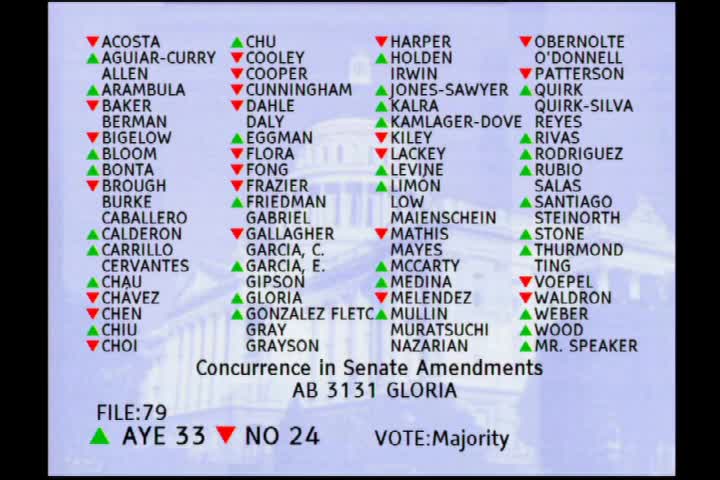

Bill Author

Bill Co-Author(s):