AB 2514: Pupil instruction: dual language programs: grant program.
- Session Year: 2017-2018
- House: Assembly
- Latest Version Date: 2018-09-26
Existing law establishes a system of public elementary and secondary schools in this state and authorizes local educational agencies throughout the state to operate schools and provide instruction to pupils in kindergarten and grades 1 to 12, inclusive. Existing law, enacted by the approval of Proposition 58 at the November 8, 2016, statewide general election, requires school districts and county offices of education to solicit input on and provide to pupils effective and appropriate instructional methods, including establishing language acquisition programs, in order to ensure that all pupils, including English learners and native speakers of English, have access to the core academic content standards and become proficient in English.
This bill would establish the Pathways to Success Grant Program with the goal of providing pupils in preschool, transitional kindergarten, kindergarten, and grades 1 to 12, inclusive, with dual language immersion programs, developmental bilingual programs for English learners, or early learning dual language learners programs, as those terms are defined. The bill would require the State Department of Education to administer the program and, commencing September 1, 2019, would require the department to award a minimum of 10 one-time grants of up to $300,000 per grant, to school districts and consortia of school districts in partnership with other specified entities. The bill would require the department to develop criteria for awarding the grants, and would require the department to consult with specified persons and entities in developing those criteria. The bill would authorize a school district or consortium to apply to the department to be eligible to receive a grant, as provided.
The bill would require a school district or consortium that receives a grant to use it for specified purposes relating to dual language immersion programs, developmental bilingual programs for English learners, and early learning dual language learners programs. The bill would require the department, on or before June 30, 2025, to submit a report to the appropriate committees of the Legislature detailing the successes, best practices, barriers or constraints, and outcomes of school district and consortium programs funded with these grants. The bill would require its provisions to be implemented only upon an appropriation for its purposes in the annual Budget Act or other statute.
Existing law establishes a system of public elementary and secondary schools in this state and authorizes local educational agencies throughout the state to operate schools and provide instruction to pupils in kindergarten and grades 1 to 12, inclusive. Existing law, enacted by the approval of Proposition 58 at the November 8, 2016, statewide general election, requires school districts and county offices of education to solicit input on and provide to pupils effective and appropriate instructional methods, including establishing language acquisition programs, in order to ensure that all pupils, including English learners and native speakers of English, have access to the core academic content standards and become proficient in English.
This bill would establish the Pathways to Success Grant Program with the goal of providing pupils in preschool, transitional kindergarten, kindergarten, and grades 1 to 12, inclusive, with dual language immersion programs, developmental bilingual programs for English learners, or early learning dual language learners programs, as those terms are defined. The bill would require the State Department of Education to administer the program and, commencing September 1, 2019, would require the department to award a minimum of 10 one-time grants of up to $300,000 per grant, to school districts and consortia of school districts in partnership with other specified entities. The bill would require the department to develop criteria for awarding the grants, and would require the department to consult with specified persons and entities in developing those criteria. The bill would authorize a school district or consortium to apply to the department to be eligible to receive a grant, as provided.
The bill would require a school district or consortium that receives a grant to use it for specified purposes relating to dual language immersion programs, developmental bilingual programs for English learners, and early learning dual language learner learners programs. The bill would require the department, on or before June 30, 2025, to submit a report to the appropriate committees of the Legislature detailing the successes, best practices, barriers or constraints, and outcomes of school district and consortium programs funded with these grants. The bill would require its provisions to be implemented only upon an appropriation for its purposes in the annual Budget Act or other statute.
Existing law establishes a system of public elementary and secondary schools in this state and authorizes local educational agencies throughout the state to operate schools and provide instruction to pupils in kindergarten and grades 1 to 12, inclusive. Existing law, enacted by the approval of Proposition 58 at the November 8, 2016, statewide general election, requires school districts and county offices of education to solicit input on and provide to pupils effective and appropriate instructional methods, including establishing language acquisition programs, in order to ensure that all pupils, including English learners and native speakers of English, have access to the core academic content standards and become proficient in English.
This bill would establish the Pathways to Success Grant Program with the goal of providing pupils in preschool, transitional kindergarten, kindergarten, and grades 1 to 12, inclusive, with dual language immersion programs, developmental bilingual programs for English learners, or early learning dual language learners programs, as those terms are defined. The bill would require the State Department of Education to administer the program and, commencing September 1, 2019, would require the department to award a minimum of 10 one-time grants of up to $300,000 per grant, to school districts, districts and consortia of school districts in partnership with other specified entities, and consortia of charter schools for purposes of the program. entities. The bill would require the department to develop criteria for awarding the grants, and would require the department to consult with specified persons and entities in developing those criteria. The bill would authorize a school district or consortium to apply to the department to be eligible to receive a grant, as provided.
The bill would require a school district or consortium that receives a grant to use it for specified purposes relating to dual language immersion programs, developmental bilingual programs for English learners, and early learning dual language learner programs. The bill would require the department, on or before June 30, 2025, to submit a report to the appropriate committees of the Legislature detailing the successes, best practices, barriers or constraints, and outcomes of school district and consortium programs funded with these grants. The bill would require its provisions to be implemented only upon an appropriation for its purposes in the annual Budget Act or other statute.
Existing law establishes a system of public elementary and secondary schools in this state and authorizes local educational agencies throughout the state to operate schools and provide instruction to pupils in kindergarten and grades 1 to 12, inclusive. Existing law, enacted by the approval of Proposition 58 at the November 8, 2016, statewide general election, requires school districts and county offices of education to solicit input on and provide to pupils effective and appropriate instructional methods, including establishing language acquisition programs, in order to ensure that all pupils, including English learners and native speakers of English, have access to the core academic content standards and become proficient in English.
This bill would establish the Pathways to Success Grant Program with the goal of providing pupils in preschool, transitional kindergarten, kindergarten, and grades 1 to 12, inclusive, with dual language immersion programs, developmental bilingual programs for English learners, or early learning dual language learners programs, as those terms are defined. The bill would require the State Department of Education to administer the program and, commencing September 1, 2019, would require the department to award a minimum of 10 one-time grants of up to $300,000 per grant, to school districts or consortia districts, consortia of school districts in partnership with other specified entities, and consortia of charter schools for purposes of the program. The bill would require the department to develop criteria for awarding the grants, and would require the department to consult with specified persons and entities in developing those criteria. The bill would authorize a school district or consortium to apply to the department to be eligible to receive a grant, as provided.
The bill would require a school district or consortium that receives a grant to use it for specified purposes relating to dual language immersion programs, developmental bilingual programs for English learners, and early learning dual language learner programs. The bill would require the department, on or before June 30, 2024, 2025, to submit a report to the appropriate committees of the Legislature detailing the successes, best practices, barriers or constraints, and outcomes of school district and consortium programs funded with these grants. The bill would require its provisions to be implemented only upon an appropriation for its purposes in the annual Budget Act or other statute.
Existing law establishes a system of public elementary and secondary schools in this state and authorizes local educational agencies throughout the state to operate schools and provide instruction to pupils in kindergarten and grades 1 to 12, inclusive. Existing law, enacted by the approval of Proposition 58 at the November 8, 2016, statewide general election, requires school districts and county offices of education to solicit input on and provide to pupils effective and appropriate instructional methods, including establishing language acquisition programs, in order to ensure that all pupils, including English learners and native speakers of English, have access to the core academic content standards and become proficient in English.
This bill would establish the Pathways to Success Incentive Grant Program with the goal of providing pupils in preschool, transitional kindergarten, kindergarten, and grades 1 to 12, inclusive, with dual language immersion programs, developmental bilingual programs for English learners, or early learning dual language learners programs, as those terms are defined. The bill would require the State Department of Education to develop and administer the program and, commencing September 1, 2019, would require the department to award a minimum of 10 incentive grants each year for 3 years, in an amount not to exceed one-time grants of up to $300,000 per incentive grant, to school districts or consortia for purposes of the program. The bill would require the department to develop criteria for awarding the incentive grants grants, and would require the department to consult with specified persons and entities in developing those criteria. The bill would authorize a school district or consortium to apply to the department to be eligible to receive an incentive a grant, as provided.
The bill would require a school district or consortium that receives an incentive a grant to use it for specified purposes relating to dual language immersion programs, developmental bilingual programs for English learners, and early learning dual language learner programs. The bill would require the department, on or before June 30, 2024, to submit a report to the appropriate committees of the Legislature detailing the successes, best practices, barriers or constraints, and outcomes of school district and consortium programs funded with the incentive these grants. The bill would require its provisions to be implemented only upon an appropriation for its purposes in the annual Budget Act or other statute.
Existing law establishes a system of public elementary and secondary schools in this state and authorizes local educational agencies throughout the state to operate schools and provide instruction to pupils in kindergarten and grades 1 to 12, inclusive. Existing law, enacted by the approval of Proposition 58 at the November 8, 2016, statewide general election, requires school districts and county offices of education to solicit input on and provide to pupils effective and appropriate instructional methods, including establishing language acquisition programs, in order to ensure that all pupils, including English learners and native speakers of English, have access to the core academic content standards and become proficient in English.
This bill would establish the Pathways to Success Incentive Grant Program with the goal of providing pupils in preschool, transitional kindergarten, kindergarten, and grades 1 to 12, inclusive, with dual language immersion programs, developmental programs for English learners, or early learning dual language learners programs, as those terms are defined. The bill would require the State Department of Education to develop and administer the program and, commencing September 1, 2019, would require the department to award 10 incentive grants each year for 3 years, in an amount not to exceed $300,000 per incentive grant, to school districts for purposes of the program. The bill would require the department to develop criteria for awarding the incentive grants and would require the department to consult with specified persons and entities in developing those criteria. The bill would authorize a school district to apply to the department to be eligible to receive an incentive grant, as provided.
The bill would require a school district that receives an incentive grant to use it for specified purposes relating to dual language immersion programs, developmental programs for English learners, and early learning dual language learner programs. The bill would require the department, on or before June 30, 2024, to submit a report to the appropriate committees of the Legislature detailing the successes, best practices, barriers or constraints, and outcomes of school district programs funded with the incentive grants. The bill would require its provisions to be implemented only upon an appropriation for its purposes in the annual Budget Act or other statute.
(a)The Legislature finds and declares all of the following:
(1)The California Education for a Global Economy Initiative, approved by the voters as Proposition 58 at the November 8, 2016, statewide general election, which was passed by an overwhelming 73.5 percent of California voters, calls for: (A) multilingual opportunities for all pupils, including English learners; (B) eliminating restrictions on instructing English learners imposed by Proposition 227 of 1998; and (C) places the decision of how to educate English learners back in the hands of school districts, schools, and communities.
(2)The approval of the English Learner Roadmap by the State Board of Education on July 12, 2017, helps to inform the implementation of Proposition 58. The English Learner Roadmap is the first new language policy adopted in nearly 20 years to serve the 1.4 million English learners in California. The English Learner Roadmap will provide guidance to school districts on the implementation of high-quality services and programs for English learners by addressing the systemic considerations necessary to support effectiveness as well as the alignment and articulation within and across grades and schools. The English Learner Roadmap will assist school districts in their efforts to provide English learners with intellectually rich and developmentally appropriate learning experiences, as well as meaningful access.
(3)Extensive research has demonstrated the cognitive, economic, and long-term academic benefits of multilingualism and biliteracy.
(4)Researchers assert the benefits of bilingualism and biliteracy to promote the multilingual and multicultural competencies necessary for a global business job market, while ameliorating the significant achievement gap between language majority and language minority pupils.
(5)Parents now have the opportunity to participate in building innovative new programs offering pupils greater opportunities to acquire 21st century skills, such as multilingualism and biliteracy.
(6)Parents now have a choice and a voice to seek the best education for their children, including access to language programs that improve their childrens preparation for college and careers and allow them to be more competitive in a global economy.
(b)It is the intent of the Legislature that all children in California have access to high-quality dual language immersion, developmental bilingual for English learners, and early learning dual language learners programs.
SEC. 2.Article 11 (commencing with Section 33440) is added to Chapter 3 of Part 20 of Division 2 of Title 2 of the Education Code, to read:11.Pathways to Success Grant Program33440.For purposes of this article, the following terms have the following meanings:
(a)English learner has the same meaning as defined in Section 306.
(b)Native speaker of English has the same meaning as defined in Section 306.
(c)Dual language immersion program is a program that enrolls both English learners and native speakers of English and provides integrated language learning and academic instruction for native speakers of English and native speakers of another language, with the goals of high academic achievement, first and second language proficiency, and cross-cultural understanding. These programs are also known as two-way bilingual immersion programs.
(d)Developmental bilingual program for English learners is a program in which academic instruction and literacy development occurs in both a pupils home language and in English. It is a program that exists across all grade levels in schools. Academic curriculum is taught through a pupils home language plus English language development, with increasing academic instruction in English until pupils develop literacy in both languages, at which point academic study in both languages continues.
(e)Early learning dual language learners programs refer to language programs in early care and education settings that serve children from birth to five years of age before entry into kindergarten. These programs include, but are not necessarily limited to, preschool, expanded transitional kindergarten, and transitional kindergarten, where the goal is to support development of both languages and to promote bilingualism and biliteracy.
(f)Dual language learners (DLLs) is the term used in early education to refer to children from birth to age five who are learning two or more languages at the same time, or who are learning a second language, such as English, while continuing to develop their home language.
33441.(a)The Pathways to Success Grant Program is hereby established with the goal of providing pupils in preschool, transitional kindergarten, kindergarten, and grades 1 to 12, inclusive, with dual language immersion programs, developmental bilingual programs for English learners, or early learning dual language learners programs that are consistent with the adopted state policy of the English Learner Roadmap.
(b)The purpose of the Pathways to Success Grant Program is to grow capacity for high-quality dual language learning by doing all of the following:
(1)Establishing dual language immersion programs or developmental bilingual programs for English learners for pupils in elementary and secondary schools.
(2)Establishing early learning dual language learners programs in state preschools operated by school districts and charter schools.
(3)Expanding existing dual language immersion programs or developmental bilingual programs for English learners to new schoolsites.
(4)Providing professional development modules to school districts, schools, county offices of education, or a consortium of these entities, with evidence-based, demonstrated professional development techniques on how to design and implement new, or to expand existing, dual language immersion programs or developmental bilingual programs for English learners and early learning dual language learners programs.
33442.(a)(1)The department shall administer the Pathways to Success Grant Program, which shall be a three-year grant program. Commencing September 1, 2019, the department shall award a minimum of 10 one-time grants of up to three hundred thousand dollars ($300,000) per grant, to entities described in subdivision (b) considering any of the following:
(A)Establishing a dual language immersion program or developmental bilingual program for English learners.
(B)Expanding an established dual language immersion program or developmental bilingual program for English learners.
(C)Establishing early learning dual language learners programs in state preschool programs operated by school districts and charter schools.
(2)When awarding a grant to an applicant proposing to establish a dual language immersion program or developmental bilingual program for English learners in a target language other than Spanish, the department shall provide additional funding of up to twenty thousand dollars ($20,000) over the amount of the grant awarded pursuant to paragraph (1).
(3)Priority shall be given to proposals for programs with an enrollment that consists of at least 40 percent English learners at the elementary level and at least 40 percent English learners and reclassified fluent English proficient pupils at the middle and high school levels.
(b)Both of the following entities are eligible to apply for a grant pursuant to this section:
(1)A school district.
(2)A consortium composed of a school district in partnership with one or more of the following:
(A)Other school districts.
(B)County offices of education.
(C)Bilingual teacher programs in schools of education in institutions of higher education.
(D)Charter schools, other than for-profit charter schools, located within the school district.
(c)In accordance with Section 33444, the department shall identify criteria for evaluating applicants and awarding the grants.
(d)An entity described in subdivision (b) may apply to the department to receive a grant pursuant to subdivision (a). Participation in this grant program shall be on a voluntary basis.
(e)An application shall include a description of all of the following:
(1)The high-quality curriculum and instruction to be provided by the dual language immersion program or developmental bilingual program for English learners.
(2)Projected grade levels, number of school districts, number of schoolsites, and number of classrooms proposed in the expansion or establishment of dual language immersion programs or developmental bilingual programs for English learners, for each grant.
(3)The early learning dual language learners program to be provided to dual language learners in early childhood education programs, such as state preschool, the high-quality, standards-based curriculum and instruction, and the projected number of classrooms included for each grant.
(4)Pupil enrollment, disaggregated by English learners, dual language learners, and native speakers of English.
(5)How the program for which the applicant proposes to use the grant will serve the applicants English learner population and dual language learners, including outreach to families who speak the target language of the new or expanded program.
(6)How the applicant will secure bilingual teachers, bilingual preschool educators, bilingual paraeducators, and bilingual program staff.
(7)How the applicant will sustain its expanded or new dual language immersion program, developmental bilingual program for English learners, or early learning dual language learners program beyond the three-year grant period.
(8)Evidence of support by the applicant school districts or districts county board or boards of education or the governing board or boards of the school district or districts, or the authorizing body or bodies of the charter schools.
(9)Efforts to align program goals with school district responsibilities pursuant to Section 305.
(10)A program budget identifying the amount of funding proposed to be expended for the allowable expenses identified in subdivision (a) of Section 33445, including information on how much grant funding will be spent at each schoolsite.
(11)Available funding within the current or projected budget for the three-year grant period that will be committed in addition to grant funding, including any funding received pursuant to its local control funding formula allocation, federal law, or other sources.
(12)How the applicant will collect data required by the department for purposes of the departments report described in Section 33446. The application shall include the number of pupils to be served, including English learners, native English speakers, and dual language learners, by the applicant and the number of pupils successfully completing programs described in this article at the elementary and secondary levels and in early childhood education programs.
(13)Assurance that the applicant will sustain and maintain the program or programs described in this article and a description of the support, including funding, it commits to do so.
33443.The department shall perform all of the following functions in the administration of the Pathways to Success Grant Program:
(a)Review applications and award grants.
(b)Provide technical assistance to school districts, county offices of education, or consortia implementing a dual language immersion program, developmental bilingual program for English learners, or early learning dual language learners program.
(c)Identify data to be collected by grant recipients.
(d)Identify how it will collect data reported by grant recipients, and how it will make that data available to the public.
33444.The department shall consult with the following persons and entities in the development of the criteria for awarding the grants and in developing the professional development modules:
(a)Professional organizations with demonstrated expertise and experience in developing, implementing, and maintaining a dual language immersion program, developmental bilingual program for English learners, and early learning dual language learners program.
(b)Classroom teachers providing instruction in a dual language immersion program, development bilingual program for English learners, or early learning dual language learners program.
(c)Principals of schools with an existing dual language immersion program, development bilingual program for English learners, or early learning dual language learners program.
(d)Researchers and representatives of nonprofit professional organizations with demonstrated expertise and experience specific to dual language immersion programs, developmental bilingual programs for English learners, or early learning dual language learners programs.
33445.(a)A grant recipient shall use the grant for any of the following purposes:
(1)School administrator, teacher, and staff training specific to the implementation and maintenance of a dual language immersion program, developmental bilingual program for English learners, or early learning dual language learners program.
(2)Recruitment of bilingual preschool, elementary, and secondary school teachers and paraeducators.
(3)Professional development for teachers after the initial establishment of the program.
(4)Ongoing outreach to families of pupils, including strategies for family engagement.
(5)Establishment and support of language learning professional learning communities for teachers.
(6)Instructional coaches with demonstrated expertise and experience in implementing a dual language immersion program, developmental bilingual program for English learners, or early learning dual language learners program.
(7)Standards-based instructional materials in target languages for proposed dual language immersion programs, developmental bilingual programs for English learners, or early learning dual language learners programs.
(b)A grant recipient shall use the grant to supplement funding used for ongoing program costs received pursuant to its local control funding formula allocation and federal funding, such as Title I, II, or III funding.
33446.On or before June 30, 2025, the department shall submit a report to the appropriate committees of the Legislature detailing the successes, best practices, barriers or constraints, and outcomes of school district and consortium programs funded with grants pursuant to this article. The report shall include the number of pupils in dual language immersion programs, developmental bilingual programs for English learners, and early learning dual language learners programs, and how these programs supported the goals of each of the school district programs and consortia funded with these grants.
33447.This article shall be implemented only upon an appropriation for its purposes in the annual Budget Act or other statute.
(a)The Legislature finds and declares all of the following:
(1)The California Education for a Global Economy Initiative, approved by the voters as Proposition 58 at the November 8, 2016, statewide general election, which was passed by an overwhelming 73.5 percent of California voters, calls for: (A) multilingual opportunities for all pupils, including English learners; (B) eliminating restrictions on instructing English learners imposed by Proposition 227 of 1998; and (C) places the decision of how to educate English learners back in the hands of school districts, schools, and communities.
(2)The approval of the English Learner Roadmap by the State Board of Education on July 12, 2017, helps to inform the implementation of Proposition 58. The English Learner Roadmap is the first new language policy adopted in nearly 20 years to serve the 1.4 million English learners in California. The English Learner Roadmap will provide guidance to school districts on the implementation of high-quality services and programs for English learners by addressing the systemic considerations necessary to support effectiveness as well as the alignment and articulation within and across grades and schools. The English Learner Roadmap will assist school districts in their efforts to provide English learners with intellectually rich and developmentally appropriate learning experiences, as well as meaningful access.
(3)Extensive research has demonstrated the cognitive, economic, and long-term academic benefits of multilingualism and biliteracy.
(4)Researchers assert the benefits of bilingualism and biliteracy to promote the multilingual and multicultural competencies necessary for a global business job market, while ameliorating the significant achievement gap between language majority and language minority pupils.
(5)Parents now have the opportunity to participate in building innovative new programs offering pupils greater opportunities to acquire 21st century skills, such as multilingualism and biliteracy.
(6)Parents now have a choice and a voice to seek the best education for their children, including access to language programs that improve their childrens preparation for college and careers and allow them to be more competitive in a global economy.
(b)It is the intent of the Legislature that all children in California have access to high-quality dual language immersion, developmental bilingual for English learners, and early learning dual language learners programs.
SEC. 2.Article 11 (commencing with Section 33440) is added to Chapter 3 of Part 20 of Division 2 of Title 2 of the Education Code, to read:11.Pathways to Success Grant Program33440.For purposes of this article, the following terms have the following meanings:
(a)English learner has the same meaning as defined in Section 306.
(b)Native speaker of English has the same meaning as defined in Section 306.
(c)Dual language immersion program is a program that enrolls both English learners and native speakers of English and provides integrated language learning and academic instruction for native speakers of English and native speakers of another language, with the goals of high academic achievement, first and second language proficiency, and cross-cultural understanding. These programs are also known as two-way bilingual immersion programs.
(d)Developmental bilingual program for English learners is a program in which academic instruction and literacy development occurs in both a pupils home language and in English. It is a program that exists across all grade levels in schools. Academic curriculum is taught through a pupils home language plus English language development, with increasing academic instruction in English until pupils develop literacy in both languages, at which point academic study in both languages continues.
(e)Early learning dual language learners program refers programs refer to language programs in early care and education settings that serve children from birth to five years of age before entry into kindergarten. These programs include, but are not necessarily limited to, preschool, expanded transitional kindergarten, and transitional kindergarten, where the goal is to support development of both languages and to promote bilingualism and biliteracy.
(f)Dual language learners (DLLs) is the term used in early education to refer to children from birth to age five who are learning two or more languages at the same time, or who are learning a second language, such as English, while continuing to develop their home language.
33441.(a)The Pathways to Success Grant Program is hereby established with the goal of providing pupils in preschool, transitional kindergarten, kindergarten, and grades 1 to 12, inclusive, with dual language immersion programs, developmental bilingual programs for English learners, or early learning dual language learners programs that are consistent with the adopted state policy of the English Learner Roadmap.
(b)The purpose of the Pathways to Success Grant Program is to grow capacity for high-quality dual language learning by doing all of the following:
(1)Establishing dual language immersion programs or developmental bilingual programs for English learners for pupils in elementary and secondary schools.
(2)Establishing early learning dual language learners programs in state preschools operated by school districts and charter schools.
(3)Expanding existing dual language immersion programs or developmental bilingual programs for English learners to new schoolsites.
(4)Providing professional development modules to school districts, schools, county offices of education, or a consortium of these entities, with evidence-based, demonstrated professional development techniques on how to design and implement new, or to expand existing, dual language immersion programs or developmental bilingual programs for English learners and early learning dual language learners. learners programs.
33442.(a)(1)The department shall administer the Pathways to Success Grant Program, which shall be a three-year grant program. Commencing September 1, 2019, the department shall award a minimum of 10 one-time grants of up to three hundred thousand dollars ($300,000) per grant, to entities described in subdivision (b) considering any of the following:
(A)Establishing a dual language immersion program or developmental bilingual program for English learners.
(B)Expanding an established dual language immersion program or developmental bilingual program for English learners.
(C)Establishing early learning dual language learners programs in state preschool programs operated by school districts and charter schools.
(2)When awarding a grant to an applicant proposing to establish a dual language immersion program or developmental bilingual program for English learners in a target language other than Spanish, the department shall provide additional funding of up to twenty thousand dollars ($20,000) over the amount of the grant awarded pursuant to paragraph (1).
(3)Priority shall be given to proposals for programs with an enrollment that consists of at least 40 percent English learners. learners at the elementary level and at least 40 percent English learners and reclassified fluent English proficient pupils at the middle and high school levels.
(b)Both of the following entities are eligible to apply for a grant pursuant to this section:
(1)A school district.
(2)A consortium composed of a school district in partnership with one or more of the following:
(A)Other school districts.
(B)County offices of education.
(C)Bilingual teacher programs in schools of education in institutions of higher education.
(D)Charter schools, other than for-profit charter schools, located within the school district.
(c)In accordance with Section 33444, the department shall identify criteria for evaluating applicants and awarding the grants.
(d)An entity described in subdivision (b) may apply to the department to receive a grant pursuant to subdivision (a). Participation in this grant program shall be on a voluntary basis.
(e)An application shall include a description of all of the following:
(1)The high-quality curriculum and instruction to be provided by the dual language immersion program or developmental bilingual program for English learners.
(2)Projected grade levels, number of school districts, number of schoolsites, and number of classrooms proposed in the expansion or establishment of dual language immersion programs or developmental bilingual programs for English learners, for each grant.
(3)The early learning dual language learners program to be provided to dual language learners in early childhood education programs, such as state preschool, the high-quality, standards-based curriculum and instruction, and the projected number of classrooms included for each grant.
(4)Pupil enrollment, disaggregated by English learners, dual language learners, and native speakers of English.
(5)How the program for which the applicant proposes to use the grant will serve the applicants English learner population and dual language learners, including outreach to families who speak the target language of the new or expanded program.
(6)How the applicant will secure bilingual teachers, bilingual preschool educators, bilingual paraeducators, and bilingual program staff.
(7)How the applicant will sustain its expanded or new dual language immersion program, developmental bilingual program for English learners, or early learning dual language learners program beyond the three-year grant period.
(8)Evidence of support by the applicant school districts or districts county board or boards of education or the governing board or boards of the school district or districts, or the authorizing body or bodies of the charter schools.
(9)Efforts to align program goals with school district responsibilities pursuant to Section 305.
(10)A program budget identifying the amount of funding proposed to be expended for the allowable expenses identified in subdivision (a) of Section 33445, including information on how much grant funding will be spent at each schoolsite.
(11)Available funding within the current or projected budget for the three-year grant period that will be committed in addition to grant funding, including any funding received pursuant to its local control funding formula allocation, federal law, or other sources.
(12)How the applicant will collect data required by the department for purposes of the departments report described in Section 33446. The application shall include the number of pupils to be served, including English learners, native English speakers, and dual language learners, by the applicant and the number of pupils successfully completing programs described in this article at the elementary and secondary levels and in early childhood education programs.
(13)Assurance that the applicant will sustain and maintain the program or programs described in this article and a description of the support, including funding, it commits to do so.
33443.The department shall perform all of the following functions in the administration of the initiative: Pathways to Success Grant Program:
(a)Review applications and award grants.
(b)Provide technical assistance to school districts, county offices of education, or consortia implementing a dual language immersion program, developmental bilingual program for English learners, or early learning dual language learners program.
(c)Identify data to be collected by grant recipients.
(d)Identify how it will collect data reported by grant recipients, and how it will make that data available to the public.
33444.The department shall consult with the following persons and entities in the development of the criteria for awarding the grants and in developing the professional development modules:
(a)Professional organizations with demonstrated expertise and experience in developing, implementing, and maintaining a dual language immersion program, developmental bilingual program for English learners, and early learning dual language learners program.
(b)Classroom teachers providing instruction in a dual language immersion program, development bilingual program for English learners, or early learning dual language learners program.
(c)Principals of schools with an existing dual language immersion program, development bilingual program for English learners, or early learning dual language learners program.
(d)Researchers and representatives of nonprofit professional organizations with demonstrated expertise and experience specific to dual language immersion programs, developmental bilingual programs for English learners, or early learning dual language learner learners programs.
33445.(a)A grant recipient shall use the grant for any of the following purposes:
(1)School administrator, teacher, and staff training specific to the implementation and maintenance of a dual language immersion program, developmental bilingual program for English learners, or early learning dual language learners program.
(2)Recruitment of bilingual preschool, elementary, and secondary school teachers and paraeducators.
(3)Professional development for teachers after the initial establishment of the program.
(4)Ongoing outreach to families of pupils, including strategies for family engagement.
(5)Establishment and support of language learning professional learning communities for teachers.
(6)Instructional coaches with demonstrated expertise and experience in implementing a dual language immersion program, developmental bilingual program for English learners, or early learning dual language learner learners program.
(7)Standards-based instructional materials in target languages for proposed dual language immersion programs, developmental bilingual programs for English learners, or early learning dual language learners programs.
(b)An applicant A grant recipient shall use the grant to supplement funding used for ongoing program costs received pursuant to its local control funding formula allocation and federal funding, such as Title I, II, or III funding.
33446.On or before June 30, 2025, the department shall submit a report to the appropriate committees of the Legislature detailing the successes, best practices, barriers or constraints, and outcomes of school district and consortium programs funded with grants pursuant to this article. The report shall include the number of pupils in dual language immersion programs, developmental bilingual programs for English learners, and early learning dual language learners programs, and how these programs supported the goals of each of the school district programs and consortia funded with these grants.
33447.This article shall be implemented only upon an appropriation for its purposes in the annual Budget Act or other statute.
CORRECTIONS: HeadingLine 1.(a)The Legislature finds and declares all of the following:
(1)The California Education for a Global Economy Initiative, approved by the voters as Proposition 58 at the November 8, 2016, statewide general election, which was passed by an overwhelming 73.5 percent of California voters, calls for: (A) multilingual opportunities for all pupils, including English learners; (B) eliminating restrictions on instructing English learners imposed by Proposition 227 of 1998; and (C) places the decision of how to educate English learners back in the hands of school districts, schools, and communities.
(2)The approval of the English Learner Roadmap by the State Board of Education on July 12, 2017, helps to inform the implementation of Proposition 58. The English Learner Roadmap is the first new language policy adopted in nearly 20 years to serve the 1.4 million English learners in California. The English Learner Roadmap will provide guidance to school districts on the implementation of high-quality services and programs for English learners by addressing the systemic considerations necessary to support effectiveness as well as the alignment and articulation within and across grades and schools. The English Learner Roadmap will assist school districts in their efforts to provide English learners with intellectually rich and developmentally appropriate learning experiences, as well as meaningful access.
(3)Extensive research has demonstrated the cognitive, economic, and long-term academic benefits of multilingualism and biliteracy.
(4)Researchers assert the benefits of bilingualism and biliteracy to promote the multilingual and multicultural competencies necessary for a global business job market, while ameliorating the significant achievement gap between language majority and language minority pupils.
(5)Parents now have the opportunity to participate in building innovative new programs offering pupils greater opportunities to acquire 21st century skills, such as multilingualism and biliteracy.
(6)Parents now have a choice and a voice to seek the best education for their children, including access to language programs that improve their childrens preparation for college and careers and allow them to be more competitive in a global economy.
(b)It is the intent of the Legislature that all children in California have access to high-quality dual language immersion, developmental bilingual for English learners, and early learning dual language learners programs.
SEC. 2.Article 11 (commencing with Section 33440) is added to Chapter 3 of Part 20 of Division 2 of Title 2 of the Education Code, to read:11.Pathways to Success Grant Program33440.For purposes of this article, the following terms have the following meanings:
(a)English learner has the same meaning as defined in Section 306.
(b)Native speaker of English has the same meaning as defined in Section 306.
(c)Dual language immersion program is a program that enrolls both English learners and native speakers of English and provides integrated language learning and academic instruction for native speakers of English and native speakers of another language, with the goals of high academic achievement, first and second language proficiency, and cross-cultural understanding. These programs are also known as two-way bilingual immersion programs.
(d)Developmental bilingual program for English learners is a program in which academic instruction and literacy development occurs in both a pupils home language and in English. It is a program that exists across all grade levels in schools. Academic curriculum is taught through a pupils home language plus English language development, with increasing academic instruction in English until pupils develop literacy in both languages, at which point academic study in both languages continues.
(e)Early learning dual language learners program refers to language programs in early care and education settings that serve children from birth to five years of age before entry into kindergarten. These programs include, but are not necessarily limited to, preschool, expanded transitional kindergarten, and transitional kindergarten, where the goal is to support development of both languages and to promote bilingualism and biliteracy.
(f)Dual language learners (DLLs) is the term used in early education to refer to children from birth to age five who are learning two or more languages at the same time, or who are learning a second language, such as English, while continuing to develop their home language.
33441.(a)The Pathways to Success Grant Program is hereby established with the goal of providing pupils in preschool, transitional kindergarten, kindergarten, and grades 1 to 12, inclusive, with dual language immersion programs, developmental bilingual programs for English learners, or early learning dual language learners programs that are consistent with the adopted state policy of the English Learner Roadmap.
(b)The purpose of the Pathways to Success Grant Program is to grow capacity for high-quality dual language learning by doing all of the following:
(1)Establishing dual language immersion programs or developmental bilingual programs for English learners for pupils in elementary and secondary schools.
(2)Establishing early learning dual language learners programs in state preschools operated by school districts and charter schools.
(3)Expanding existing dual language immersion programs or developmental bilingual programs for English learners to new schoolsites.
(4)Providing professional development modules to school districts, schools, county offices of education, or a consortium of these entities, with evidence-based, demonstrated professional development techniques on how to design and implement new, or to expand existing, dual language immersion programs or developmental bilingual programs for English learners and early learning dual language learners.
33442.(a)(1)The department shall administer the Pathways to Success Grant Program, which shall be a three-year grant program. Commencing September 1, 2019, the department shall award a minimum of 10 one-time grants of up to three hundred thousand dollars ($300,000) per grant, to entities described in subdivision (b) considering any of the following:
(A)Establishing a dual language immersion program or developmental bilingual program for English learners.
(B)Expanding an established dual language immersion program or developmental bilingual program for English learners.
(C)Establishing early learning dual language learners programs in state preschool programs operated by school districts and charter schools.
(2)When awarding a grant to an applicant proposing to establish a dual language immersion program or developmental bilingual program for English learners in a target language other than Spanish, the department shall provide additional funding of up to twenty thousand dollars ($20,000) over the amount of the grant awarded pursuant to paragraph (1).
(3)Priority shall be given to proposals for programs with an enrollment that consists of at least 40 percent English learners.
(b)All Both of the following entities are eligible to apply for a grant pursuant to this section:
(1)A school district.
(2)A consortium composed of a school district in partnership with one or more of the following:
(A)Other school districts.
(B)County offices of education.
(C)Bilingual teacher programs in schools of education in institutions of higher education.
(3)A consortium of charter schools, other than for-profit charter schools, established for the purpose of establishing or expanding dual language immersion programs, developmental bilingual programs for English learners, or early learning dual language learners programs.(D)Charter schools, other than for-profit charter schools, located within the school district.
(c)In accordance with Section 33444, the department shall identify criteria for evaluating applicants and awarding the grants.
(d)An entity described in subdivision (b) may apply to the department to receive a grant pursuant to subdivision (a). Participation in this grant program shall be on a voluntary basis.
(e)An application shall include a description of all of the following:
(1)The high-quality curriculum and instruction to be provided by the dual language immersion program or developmental bilingual program for English learners.
(2)Projected grade levels, number of school districts, number of schoolsites, and number of classrooms proposed in the expansion or establishment of dual language immersion programs or developmental bilingual programs for English learners, for each grant.
(3)The early learning dual language learners program to be provided to dual language learners in early childhood education programs, such as state preschool, the high-quality high-quality, standards-based curriculum and instruction, and the projected number of classrooms included for each grant.
(4)Pupil enrollment, disaggregated by English learners, dual language learners, and native speakers of English.
(5)How the program for which the applicant proposes to use the grant will serve the applicants English learner population and dual language learners, including outreach to families who speak the target language of the new or expanded program.
(6)How the applicant will secure bilingual teachers, bilingual preschool educators, bilingual paraeducators, and bilingual program staff.
(7)How the applicant will sustain its expanded or new dual language immersion program, developmental bilingual program for English learners, or early learning dual language learners program beyond the three-year grant period.
(8)Evidence of support by the applicant school districts or districts county board board or boards of education or the governing board board or boards of the school district, district or districts, or the governing bodies of the charter schools in a consortium of charter schools. authorizing body or bodies of the charter schools.
(9)Efforts to align program goals with school district responsibilities pursuant to Section 305.
(10)A program budget identifying the amount of funding proposed to be expended for the allowable expenses identified in subdivision (a) of Section 33445, including information on how much grant funding will be spent at each schoolsite.
(11)Available funding within the current or projected budget for the three-year grant period that will be committed in addition to grant funding, including any funding received pursuant to its local control funding formula allocation, federal law, or other sources.
(12)How the applicant will collect data required by the department for purposes of the departments report described in Section 33446. The application shall include the number of pupils to be served, including English learners, native English speakers, and dual language learners, by the applicant and the number of pupils successfully completing programs described in this article at the elementary and secondary levels and in early childhood education programs.
(13)Assurance that the applicant will sustain and maintain the program or programs described in this article and a description of the support, including funding, it commits to do so.
33443.The department shall perform all of the following functions in the administration of the initiative:
(a)Review applications and award grants.
(b)Provide technical assistance to school districts, county offices of education, or consortia implementing a dual language immersion program, developmental bilingual program for English learners, or early learning dual language learners program.
(c)Identify data to be collected by grant recipients.
(d)Identify how it will collect data reported by grant recipients, and how it will make that data available to the public.
33444.The department shall consult with the following persons and entities in the development of the criteria for awarding the grants and in developing the professional development modules:
(a)Professional organizations with demonstrated expertise and experience in developing, implementing, and maintaining a dual language immersion program, developmental bilingual program for English learners, and early learning dual language learners program.
(b)Classroom teachers providing instruction in a dual language immersion program, development bilingual program for English learners, or early learning dual language learners program.
(c)Principals of schools with an existing dual language immersion program, development bilingual program for English learners, or early learning dual language learners program.
(d)Researchers and representatives of nonprofit professional organizations with demonstrated expertise and experience specific to dual language immersion programs, developmental bilingual programs for English learners, or early learning dual language learner programs.
33445.(a)A grant recipient shall use the grant for any of the following purposes:
(1)School administrator, teacher, and staff training specific to the implementation and maintenance of a dual language immersion program, developmental bilingual program for English learners, or early learning dual language learners program.
(2)Recruitment of bilingual preschool, elementary, and secondary school teachers and paraeducators.
(3)Professional development for teachers after the initial establishment of the program.
(4)Ongoing outreach to families of pupils, including strategies for family engagement.
(5)Establishment and support of language learning professional learning communities for teachers.
(6)Instructional coaches with demonstrated expertise and experience in implementing a dual language immersion program, developmental bilingual program for English learners, or early learning dual language learner program.
(7)Instructional Standards-based instructional materials in target languages for proposed dual language immersion programs, developmental bilingual programs for English learners, or early learning dual language learners programs.
(b)An applicant shall use the grant to supplement funding used for ongoing program costs received pursuant to its local control funding formula allocation and federal funding, such as Title I, II, or III funding.
33446.(a)On or before June 30, 2025, the department shall submit a report to the appropriate committees of the Legislature detailing the successes, best practices, barriers or constraints, and outcomes of school district and consortium programs funded with grants pursuant to this article. The report shall include the number of pupils in dual language immersion programs, developmental bilingual programs for English learners, and early learning dual language learners programs, and how these programs supported the goals of each of the school district programs and consortia funded with these grants.
(b)The department may contract with an outside entity with demonstrated experience and expertise relating to establishing, administering, and maintaining dual language immersion and developmental bilingual programs for English learners for purposes of completing the report.33447.This article shall be implemented only upon an appropriation for its purposes in the annual Budget Act or other statute.
CORRECTIONS: HeadingLine 2.(a)The Legislature finds and declares all of the following:
(1)The California Education for a Global Economy Initiative, approved by the voters as Proposition 58 at the November 8, 2016, statewide general election, which was passed by an overwhelming 73.5 percent of California voters, calls for: (A) multilingual opportunities for all pupils, including English learners; (B) eliminating restrictions on instructing English learners imposed by Proposition 227 of 1998; and (C) places the decision of how to educate English learners back in the hands of school districts, schools, and communities.
(2)The approval of the English Learner Roadmap by the State Board of Education on July 12, 2017, helps to inform the implementation of Proposition 58. The English Learner Roadmap is the first new language policy adopted in nearly 20 years to serve the 1.4 million English learners in California. The English Learner Roadmap will provide guidance to school districts on the implementation of high-quality services and programs for English learners by addressing the systemic considerations necessary to support effectiveness as well as the alignment and articulation within and across grades and schools. The English Learner Roadmap will assist school districts in their efforts to provide English learners with intellectually rich and developmentally appropriate learning experiences, as well as meaningful access.
(3)Extensive research has demonstrated the cognitive, economic, and long-term academic benefits of multilingualism and biliteracy.
(4)Researchers assert the benefits of bilingualism and biliteracy to promote the multilingual and multicultural competencies necessary for a global business job market, while ameliorating the significant achievement gap between language majority and language minority pupils.
(5)Parents now have the opportunity to participate in building innovative new programs offering pupils greater opportunities to acquire 21st century skills, such as multilingualism and biliteracy.
(6)Parents now have a choice and a voice to seek the best education for their children, including access to language programs that improve their childrens preparation for college and careers and allow them to be more competitive in a global economy.
(b)It is the intent of the Legislature that all children in California have access to high-quality dual language immersion, developmental bilingual for English learners, and early learning dual language learners programs.
SECTION 1.SEC. 2.Article 11 (commencing with Section 33440) is added to Chapter 3 of Part 20 of Division 2 of Title 2 of the Education Code, to read:11.Pathways to Success Incentive Grant Program33440.(a)The Legislature finds and declares all of the following:(1)The California Education for a Global Economy Initiative, approved by the voters as Proposition 58 at the November 8, 2016, statewide general election, which was passed by an overwhelming 73.5 percent of California voters, calls for: (A) multilingual opportunities for all pupils, including English learners; (B) eliminating restrictions on instructing English learners imposed by Proposition 227 of 1998; and (C) places the decision of how to educate English learners back in the hands of school districts, schools, and communities.(2)The approval of the English Learner Roadmap by the State Board of Education on July 12, 2017, helps to inform the implementation of Proposition 58. The English Learner Roadmap is the first new language policy adopted in nearly 20 years to serve the 1.4 million English learners in California. The English Learner Roadmap will provide guidance to school districts on the implementation of high-quality services and programs for English learners by addressing the systemic considerations necessary to support effectiveness as well as the alignment and articulation within and across grades and schools. The English Learner Roadmap will assist school districts in their efforts to provide English learners with intellectually rich and developmentally appropriate learning experiences, as well as meaningful access.(3)Extensive research has demonstrated the cognitive, economic, and long-term academic benefits of multilingualism and biliteracy.(4)Researchers assert the benefits of bilingualism and biliteracy to promote the multilingual and multicultural competencies necessary for a global business job market, while ameliorating the significant achievement gap between language majority and language minority pupils.(5)Parents now have the opportunity to participate in building innovative new programs offering pupils greater opportunities to acquire 21st century skills, such as multilingualism and biliteracy.(6)Parents now have a choice and voice to seek the best education for their children, including access to language programs that improve their childrens preparation for college and careers and allow them to be more competitive in a global economy.(b)It is the intent of the Legislature that all children in California have access to high-quality dual language immersion, developmental bilingual for English learners, and early learning dual language learners programs.33441.33440.For purposes of this article, the following terms have the following meanings:
(a)English learner has the same meaning as defined in Section 306.
(b)Native speaker of English has the same meaning as defined in Section 306.
(c)Dual language immersion program is a program that enrolls both English learners and native speakers of English and provides integrated language learning and academic instruction for native speakers of English (English dominant) and native speakers of another language, with the goals of high academic achievement, first and second language proficiency, and cross-cultural understanding. These programs are also known as two-way bilingual immersion programs.
(d)Developmental bilingual program for English learners is a program that provides instruction to pupils that uses English and a pupils native language for literacy and academic instruction and enables an English learner to achieve English proficiency and academic mastery of subject matter content and higher order skills, including critical thinking, in order to meet state-adopted academic content standards in English and the pupils primary language. in which academic instruction and literacy development occurs in both a pupils home language and in English. It is a program that exists across all grade levels in schools. Academic curriculum is taught through a pupils home language plus English language development, with increasing academic instruction in English until pupils develop literacy in both languages, at which point academic study in both languages continues.
(e)Early learning dual language learners program refers to language programs in early care and education settings that serve children from birth to five years of age before entry into kindergarten. These programs include, but are not necessarily limited to, preschool, expanded transitional kindergarten, and transitional kindergarten, where the goal is to support development of both languages and to promote bilingualism and biliteracy.
(f)Dual language learners (DLLs) is the term used in early education to refer to children who are under five years of age from birth to age five who are learning two or more languages at the same time, or who are learning a second language, such as English, while continuing to develop their home language.
33442.33441.(a)The Pathways to Success Grant Program is hereby established with the goal of providing pupils in preschool, transitional kindergarten, kindergarten, and grades 1 to 12, inclusive, with dual language immersion programs, developmental bilingual programs for English learners, or early learning dual language learners programs that are consistent with the adopted state policy of the English Learner Roadmap.
(b)The purpose of the Pathways to Success Grant Program is to grow capacity for high-quality dual language learning by doing all of the following:
(1)Establishing dual language immersion programs or developmental bilingual programs for English learners for pupils in elementary and secondary schools.
(2)Establishing dual language immersion or developmental bilingual programs for dual language learners in state preschools. early learning dual language learners programs in state preschools operated by school districts and charter schools.
(3)Expanding existing dual language immersion programs or developmental bilingual programs for English learners. learners to new schoolsites.
(4)Providing professional development modules to school districts, schools, county offices of education, or a consortium of these entities, with demonstrated professional development techniques on how to design and implement new, or to expand existing, dual language immersion programs or developmental bilingual programs for English learners and early learning dual language learners.
33443.33442.(a)(1)The department shall administer the Pathways to Success Grant Program, which shall be a three-year grant program. Commencing September 1, 2019, the department shall award a minimum of 10 one-time grants of up to three hundred thousand dollars ($300,000) per grant, to school districts or consortia entities described in subdivision (b) considering any of the following:
(A)Establishing a dual language immersion program or developmental bilingual program for English learners.
(B)Expanding an established dual language immersion program or developmental bilingual program for English learners.
(C)Establishing dual language learning in early childhood education for dual language learners. early learning dual language learners programs in state preschool programs operated by school districts and charter schools.
(D)Establishing a consortium composed of a school district in partnership with one or more of the following:(i)Other school districts.(ii)County offices of education.(iii)Bilingual teacher programs in schools of education in institutions of higher education.(E)Establishing a consortium of charter schools, other than for-profit charter schools, established for the purpose of establishing or expanding dual language immersion programs, developmental bilingual programs for English learners, or early learning dual language learners programs.(2)When awarding a grant to an applicant proposing to establish a dual language immersion program or developmental bilingual program for English learners in a target language other than Spanish, the department shall provide additional funding of up to twenty thousand dollars ($20,000) over the amount of the grant awarded pursuant to paragraph (1).
(3)Priority shall be given to grants for multiple schools and for school districts proposals for programs with an enrollment that consists of at least 40 percent English learners.
(b)All of the following entities are eligible to apply for a grant pursuant to this section:
(1)A school district.
(2)A consortium composed of a school district in partnership with one or more of the following:
(A)Other school districts.
(B)County offices of education.
(C)Bilingual teacher programs in schools of education in institutions of higher education.
(3)A consortium of charter schools, other than for-profit charter schools, established for the purpose of establishing or expanding dual language immersion programs, developmental bilingual programs for English learners, or early learning dual language learners programs.
(b)(c)In accordance with Section 33445, 33444, the department shall identify criteria for evaluating applicants and awarding the grants.
(c)(d)A school district An entity described in subdivision (b) may apply to the department to receive a grant pursuant to subdivision (a). Participation in this grant program shall be on a voluntary basis.
(d)(e)An application shall include a description of all of the following:
(1)The high-quality curriculum and instruction to be provided by the dual language immersion program or developmental bilingual program. program for English learners.
(2)Projected grade levels, number of school districts, number of schoolsites, and number of classrooms proposed in the expansion or establishment of dual language immersion programs or developmental bilingual programs for English learners, for each grant.
(3)The early learning dual language learners program to be provided to dual language learners in early childhood education programs, such as state preschool, the high-quality curriculum and instruction, and the projected number of classrooms included for each grant.
(4)Pupil enrollment, disaggregated by English learners, dual language learners, and native speakers of English.
(5)How the program for which the school district applicant proposes to use the grant will serve the school districts applicants English learner population and dual language learners, including outreach to families who speak the target language of the new or expanded program.
(6)How the school district applicant will secure bilingual teachers, bilingual preschool educators, bilingual paraeducators, and bilingual program staff.
(7)How the school district applicant will sustain its expanded or new dual language immersion program, developmental bilingual program for English learners, or early learning dual language learners program beyond the three-year grant period.
(8)Evidence of support by the school districts county board of education or the governing board of the school district. district, or the governing bodies of the charter schools in a consortium of charter schools.
(9)Evidence of inclusion in the school districts local control and accountability plan adopted pursuant to Section 52060.(9)Efforts to align program goals with school district responsibilities pursuant to Section 305.
(10)A program budget identifying the amount of funding proposed to be expended for the allowable expenses identified in subdivision (a) of Section 33445, including information on how much grant funding will be spent at each schoolsite.
(10)(11)Available funding within the current or projected budget for the three-year grant period, period that will be committed in addition to grant funding, including any funding received pursuant to its local control funding formula allocation, federal law, or other sources.
(11)(12)How the school district applicant will collect data required by the department for purposes of the departments report described in Section 33447. 33446. The application shall include the number of pupils to be served, including English learners learners, native English speakers, and dual language learners, by the school district applicant and the number of pupils successfully completing programs described in this article at the elementary and secondary levels and in early childhood education programs.
(12)(13)Assurance that the school district applicant will sustain and maintain the program or programs described in this article and a description of the support, including funding, it has commits to do so.
33444.33443.The department shall perform all of the following functions in the administration of the initiative:
(a)Review applications and award grants.
(b)Provide technical assistance to school districts, county offices of education, or consortia implementing a dual language immersion program, developmental bilingual program for English learners, or early learning dual language learners program.
(c)Convene grant recipients to coordinate and share their program models, best instructional practices, curricula, instructional materials, and other resources.(d)Develop and disseminate professional development modules on designing and implementing the establishment of, or expansion of, a dual language immersion program, developmental bilingual program for English learners, or dual language or developmental bilingual program for early learning dual language learners.(e)(c)Identify data to be collected by grant recipients.
(f)(d)Identify how it will collect data reported by grant recipients, and how it will make that data available to the public.
33445.33444.The department shall consult with the following persons and entities in the development of the criteria for awarding the grants and in developing the professional development modules:
(a)Professional organizations with demonstrated expertise and experience in developing, implementing, and maintaining a dual language immersion program, developmental bilingual program for English learners, and early learning dual language learners program.
(b)Classroom teachers providing instruction in a dual language immersion program, development bilingual program for English learners, or early learning dual language learners program.
(c)Principals of schools with an existing dual language immersion program, development bilingual program for English learners, or early learning dual language learners program.
(d)Researchers and representatives of nonprofit professional organizations with demonstrated expertise and experience specific to dual language immersion programs, developmental bilingual programs for English learners, or early learning dual language learner programs.
33446.33445.(a)A grant recipient shall use the grant for at least two any of the following purposes:
(1)School administrator, teacher, and staff training specific to the implementation and maintenance of a dual language immersion program, developmental bilingual program for English learners, or early learning dual language learner learners program.
(2)Recruitment of bilingual preschool and elementary preschool, elementary, and secondary school teachers and paraeducators.
(3)Ongoing professional Professional development for teachers. teachers after the initial establishment of the program.
(4)Ongoing outreach to families of pupils, including strategies for family engagement.
(5)Establishment and support of language learning professional learning communities for teachers.
(6)Teacher Instructional coaches with demonstrated expertise and experience in implementing a dual language immersion program, developmental bilingual program for English learners, or early learning dual language learner program.
(7)Instructional materials in targeted target languages for proposed dual language immersion programs, developmental bilingual programs for English learners, or early learning dual language learner learners programs.
(b)A school district An applicant shall use the grant to supplement funding used for ongoing program costs received pursuant to its local control funding formula allocation and federal funding, such as Title I, II, or III funding.
33447.33446.(a)On or before June 30, 2024, 2025, the department shall submit a report to the appropriate committees of the Legislature detailing the successes, best practices, barriers or constraints, and outcomes of school district and consortium programs funded with grants pursuant to this article. The report shall include the number of pupils in dual language immersion programs, developmental bilingual programs for English learners, and early learning dual language learner learners programs, and how these programs supported the goals of each of the school district programs and consortia funded with these grants.
(b)The department may contract with an outside entity with demonstrated experience and expertise relating to establishing, administering, and maintaining dual language immersion and developmental bilingual programs for English learners for purposes of completing the report.
33448.33447.This article shall be implemented only upon an appropriation for its purposes in the annual Budget Act or other statute.
REVISIONS: HeadingLine 2.(a)The Legislature finds and declares all of the following:
(1)The California Education for a Global Economy Initiative, approved by the voters as Proposition 58 at the November 8, 2016, statewide general election, which was passed by an overwhelming 73.5 percent of California voters and calls for voters, calls for: (A) multilingual opportunities for all pupils, overturns including English learners; (B) eliminating restrictions on instructing English learners imposed by Proposition 227, an initiative statute that was approved by the voters at the June 2, 1998, statewide primary election, and 227 of 1998; and (C) places the decision of how to educate English learners back in the hands of school districts, schools, and communities.
(2)The approval of the English Learner Roadmap by the State Board of Education on July 12, 2017, helps to inform the implementation of Proposition 58. The English Learner Roadmap is the first new language policy adopted in nearly 20 years to serve the 1.4 million English learners in California. The English Learner Roadmap will provide guidance to school districts on how to strengthen services and programs to English learners as well as how to improve teacher instruction, curriculum, and tests. the implementation of high-quality services and programs for English learners by addressing the systemic considerations necessary to support effectiveness as well as the alignment and articulation within and across grades and schools. The English Learner Roadmap will assist school districts in their efforts to provide English learners with intellectually rich and developmentally appropriate learning experiences, as well as meaningful access.
(3)Extensive research has demonstrated the cognitive, economic, and long-term academic benefits of multilingualism and multiliteracy. biliteracy.
(4)Researchers assert the benefits of bilingualism and biliteracy to promote the multilingual and multicultural competencies necessary for a global business job market, while ameliorating the significant achievement gap between language majority and language minority pupils.
(5)Parents now have the opportunity to participate in building innovative new programs offering pupils greater opportunities to acquire 21st century skills, such as multilingualism. multilingualism and biliteracy.
(6)Parents now have a choice and voice to seek the best education for their children, including access to language programs that improve their childrens preparation for college and careers and allow them to be more competitive in a global economy.
(b)It is the intent of the Legislature that all children in California have access to high-quality dual language immersion immersion, developmental bilingual for English learners, and early learning dual language learners programs.
33441.For purposes of this article, the following terms have the following meanings:
(a)English learner has the same meaning as defined in Section 306.
(b)Native speaker of English has the same meaning as defined in Section 306.
(c)Dual language immersion program means is a program that provides integrated language learning and academic instruction for native speakers of English (English dominant) and native speakers of another language, with the goals of high academic achievement, first and second language proficiency, and cross-cultural understanding. These programs are also known as two-way immersion bilingual programs.
(d)Developmental bilingual program for English learners means is a program that provides instruction to pupils that uses English and a pupils native language for literacy and academic instruction and enables an English learner to achieve English proficiency and academic mastery of subject matter content and higher order skills, including critical thinking, in order to meet state-adopted academic content standards. standards in English and the pupils primary language.
(e)Early learning dual language learners program means ____. refers to language programs in early care and education settings that serve children from birth to five years of age before entry into kindergarten. These programs include, but are not necessarily limited to, preschool, expanded transitional kindergarten, and transitional kindergarten, where the goal is to support development of both languages and to promote bilingualism and biliteracy.
(f)Dual language learners (DLLs) is the term used in early education to refer to children who are under five years of age who are learning two or more languages at the same time, or who are learning a second language, such as English, while continuing to develop their home language.
33442.(a)The Pathways to Success Incentive Grant Program is hereby established with the goal of providing pupils in preschool, transitional kindergarten, kindergarten, and grades 1 to 12, inclusive, with dual language immersion programs, developmental bilingual programs for English learners, or early learning dual language learners programs. programs that are consistent with the adopted state policy of the English Learner Roadmap.
(b)The purpose of the Pathways to Success Incentive Grant Program is to grow capacity for high-quality dual language learning by doing all of the following:
(1)Establishing dual language immersion programs or developmental bilingual programs for English learners for pupils in elementary and secondary schools.
(2)Establishing early learning dual language learners programs. dual language immersion or developmental bilingual programs for dual language learners in state preschools.
(3)Expanding existing dual language immersion programs or developmental bilingual programs for English learners.
(4)Providing professional development modules to school districts, schools, or county offices of education education, or a consortium of these entities, with demonstrated professional development techniques on how to design and expand implement new, or to expand existing, dual language immersion programs or developmental bilingual programs for English learners, or how to develop learners and early learning dual language learners programs. learners.
33443.(a)(1)The department shall develop and administer the Pathways to Success Incentive Grant Program, which shall be a three-year incentive grant program. Commencing September 1, 2019, the department shall award a minimum of 10 incentive grants each year for three years, in an amount not to exceed one-time grants of up to three hundred thousand dollars ($300,000) per incentive grant, to school districts or consortia considering any of the following:
(A)Establishing a dual language immersion program or developmental bilingual program for English learners in a school with predominantly English learners.
(B)Expanding an established dual language immersion program or developmental bilingual program for English learners in a school with predominantly English learners.
(C)Establishing dual language learning in early childhood education. education for dual language learners.
(D)Establishing a consortium composed of a school district in partnership with one or more of the following:
(i)Other school districts.
(ii)County offices of education.
(iii)Bilingual teacher programs in schools of education in institutions of higher education.
(E)Establishing a consortium of charter schools, other than for-profit charter schools, established for the purpose of establishing or expanding dual language immersion programs, developmental bilingual programs for English learners, or early learning dual language learners programs.
(2)When awarding an incentive a grant to an applicant proposing to establish a dual language immersion program or developmental bilingual program for English learners in a target language other than Spanish, the department shall provide additional funding of up to twenty thousand dollars ($20,000) over the amount of the grant awarded pursuant to paragraph (1).
(3)Priority shall be given to grants for multiple schools and for school districts with an enrollment that consists of at least 40 percent English learners.
(b)In accordance with Section 33445, the department shall identify criteria for evaluating applicants and awarding the incentive grants.
(c)A school district may apply to the department to receive an incentive a grant pursuant to subdivision (a). An Participation in this grant program shall be on a voluntary basis.
(d)An application shall include a description of all of the following:
(1)The high-quality curriculum and instruction to be provided. provided by the dual language immersion program or developmental bilingual program.
(2)Projected grade levels grade levels, number of school districts, number of schoolsites, and number of classrooms, including preschool, transitional kindergarten, and kindergarten classrooms, if applicable, classrooms proposed in the expansion or establishment of dual language programs. immersion programs or developmental bilingual programs for English learners, for each grant.
(3)The early learning dual language learners program to be provided to dual language learners in early childhood education programs. programs, such as state preschool, the high-quality curriculum and instruction, and the projected number of classrooms included for each grant.
(4)Pupil enrollment, disaggregated by English learners learners, dual language learners, and native speakers of English.
(5)How the program for which the school district proposes to use the incentive grant will serve the school districts English learner population, population and dual language learners, including outreach to families who speak the target language of the new or expanded program.
(6)How the school district will secure bilingual teachers, bilingual preschool educators, bilingual paraeducators, and bilingual program staff.
(7)How the school district will sustain an its expanded or new dual language immersion program, developmental bilingual program for English learners, or early learning dual language learners program beyond the three-year grant period.
(8)Evidence of support by the school districts county board of education or the governing board of the school district.
(9)Evidence of inclusion in the school districts local control and accountability plan adopted pursuant to Section 52060.
(10)Available funding within the current or projected budget for the three-year grant period, including any funding received pursuant to its local control funding formula allocation, federal law, or other sources.
(11)How the school district will collect data required by the department for purposes of the departments report described in Section 33447. The application shall include the number of pupils to be served, including English learners and dual language learners learners, by the school district plans to provide programs described in this article for and the number of pupils successfully completing programs described in this article at the elementary and secondary levels and in early childhood education programs.
(12)Assurance that the school district will sustain and maintain the program or programs described in this article and a description of the support, including funding, it has to do so.
33444.The department shall perform all of the following functions in the administration of the incentive grant program: initiative:
(a)Review incentive grant applications and award incentive grants.
(b)Provide technical assistance to school districts and districts, county offices of education education, or consortia implementing a dual language immersion program, developmental bilingual program for English learners, or early learning dual language learners program.
(c)Convene grant recipients to coordinate and share practices and resources. their program models, best instructional practices, curricula, instructional materials, and other resources.
(d)Develop and disseminate professional development modules on how to design and expand designing and implementing the establishment of, or expansion of, a dual language immersion program, developmental bilingual program for English learners, or dual language or developmental bilingual program for early learning dual language learners program. learners.
(e)Identify data to be collected by grant recipients.
(f)Identify how it will collect data reported by grant recipients, and how it will make that data available to the public.
33445.The department shall consult with the following persons and entities in the development of the criteria for awarding the incentive grants and in developing the professional development modules:
(a)Professional organizations with demonstrated expertise and experience in developing, implementing, and maintaining a dual language immersion program program, developmental bilingual program for English learners, and early learning dual language learners program.
(b)Classroom teachers providing instruction in a dual language immersion program program, development bilingual program for English learners, or early learning dual language learners program.
(c)Principals of schools with an existing dual language immersion program program, development bilingual program for English learners, or early learning dual language learners program.
(d)Researchers and representatives of nonprofit professional organizations with demonstrated expertise and experience specific to dual language immersion programs, developmental bilingual programs for English learners, or early learning dual language learner programs.
33446.(a)A grant recipient shall use the incentive grant for at least two of the following purposes:
(1)School administrator, teacher, and staff training specific to the implementation and maintenance of a dual language learning model and curriculum. immersion program, developmental bilingual program for English learners, or early learning dual language learner program.
(2)Bilingual Recruitment of bilingual preschool and elementary and secondary school teacher and paraeducator recruitment. teachers and paraeducators.
(3)Ongoing professional development for teachers.
(4)Ongoing outreach to families of pupils, including strategies for family engagement.
(5)Establishment and support of language learning communities for teachers.
(6)Teacher coaches with demonstrated expertise and experience in implementing a dual language immersion program, developmental bilingual program for English learners, or early learning dual language learner program.
(7)Instructional materials in targeted languages for proposed dual language immersion programs, developmental bilingual programs for English learners, or early learning dual language learner programs.
(b)A school district that receives an incentive grant may partner with its county office of education for the purposes described in this article. A school district may also use its incentive grant for purposes of an early childhood education program.(c)(b)A school district shall use an incentive the grant to supplement any funding used for ongoing program costs that it receives received pursuant to its local control funding formula allocation or federal law. and federal funding, such as Title I, II, or III funding.
33447.(a)On or before June 30, 2024, the department shall submit a report to the appropriate committees of the Legislature detailing the successes, best practices, barriers or constraints, and outcomes of school district and consortium programs funded with incentive grants pursuant to this article. The report shall include the number of pupils in early learning dual language learners programs and in dual language immersion programs, developmental bilingual programs for English learners, and early learning dual language learner programs, and how the early learning and elementary and secondary educational systems these programs supported the goals of each of the school district programs and consortia funded with incentive these grants.
(b)The department may contract with an outside entity with demonstrated experience and expertise relating to establishing, administering, and maintaining dual language immersion and developmental bilingual programs for English learners for purposes of completing the report.
33448.This article shall be implemented only upon an appropriation for its purposes in the annual Budget Act or other statute.
(a)The Legislature finds and declares all of the following:
(1)The California Education for a Global Economy Initiative, approved by the voters as Proposition 58 at the November 8, 2016, statewide general election, was passed by an overwhelming 73.5 percent of California voters and calls for multilingual opportunities for all pupils, overturns restrictions on instructing English learners imposed by Proposition 227, an initiative statute that was approved by the voters at the June 2, 1998, statewide primary election, and places the decision of how to educate English learners back in the hands of school districts, schools, and communities.
(2)The approval of the English Learner Roadmap by the State Board of Education on July 12, 2017, helps to inform the implementation of Proposition 58. The English Learner Roadmap is the first new language policy adopted in nearly 20 years to serve the 1.4 million English learners in California. The English Learner Roadmap will provide guidance to school districts on how to strengthen services and programs to English learners as well as how to improve teacher instruction, curriculum, and tests.
(3)Extensive research has demonstrated the cognitive, economic, and long-term academic benefits of multilingualism and multiliteracy.
(4)Researchers assert the benefits of bilingualism and biliteracy to promote the multilingual and multicultural competencies necessary for a global business job market, while ameliorating the significant achievement gap between language majority and language minority pupils.
(5)Parents now have the opportunity to participate in building innovative new programs offering pupils greater opportunities to acquire 21st century skills, such as multilingualism.
(6)Parents now have a choice and voice to seek the best education for their children, including access to language programs that improve their childrens preparation for college and careers and allow them to be more competitive in a global economy.
(b)It is the intent of the Legislature that all children in California have access to high-quality dual language immersion programs.
33441.For purposes of this article, the following terms have the following meanings:
(a)English learner has the same meaning as defined in Section 306.
(b)Native speaker of English has the same meaning as defined in Section 306.
(c)Dual language immersion program means a program that provides integrated language learning and academic instruction for native speakers of English and native speakers of another language, with the goals of high academic achievement, first and second language proficiency, and cross-cultural understanding. These programs are also known as two-way immersion programs.
(d)Developmental program for English learners means a program that provides instruction to pupils that uses English and a pupils native language for literacy and academic instruction and enables an English learner to achieve English proficiency and academic mastery of subject matter content and higher order skills, including critical thinking, in order to meet state-adopted academic content standards.
(e)Early learning dual language learners program means ____.
33442.(a)The Pathways to Success Incentive Grant Program is hereby established with the goal of providing pupils in preschool, transitional kindergarten, kindergarten, and grades 1 to 12, inclusive, with dual language immersion programs, developmental programs for English learners, or early learning dual language learners programs.
(b)The purpose of the Pathways to Success Incentive Grant Program is to grow capacity for high-quality dual language learning by doing all of the following:
(1)Establishing dual language immersion programs or developmental programs for English learners for pupils in elementary and secondary schools.
(2)Establishing early learning dual language learners programs.
(3)Expanding existing dual language immersion programs or developmental programs for English learners.
(4)Providing professional development modules to school districts, schools, or county offices of education with demonstrated professional development techniques on how to design and expand dual language immersion programs or developmental programs for English learners, or how to develop early learning dual language learners programs.
33443.(a)(1)The department shall develop and administer the Pathways to Success Incentive Grant Program, which shall be a three-year incentive grant program. Commencing September 1, 2019, the department shall award 10 incentive grants each year for three years, in an amount not to exceed three hundred thousand dollars ($300,000) per incentive grant, to school districts considering any of the following:
(A)Establishing a dual language immersion program or developmental program for English learners in a school with predominantly English learners.
(B)Expanding an established dual language immersion program or developmental program for English learners in a school with predominantly English learners.
(C)Establishing dual language learning in early childhood education.
(2)When awarding an incentive grant to an applicant proposing to establish a dual language immersion program or developmental program for English learners in a target language other than Spanish, the department shall provide additional funding of up to twenty thousand dollars ($20,000) over the amount of the grant awarded pursuant to paragraph (1).
(b)In accordance with Section 33445, the department shall identify criteria for evaluating applicants and awarding the incentive grants.
(c)A school district may apply to the department to receive an incentive grant pursuant to subdivision (a). An application shall include a description of all of the following:
(1)The high-quality curriculum and instruction to be provided.
(2)Projected grade levels and number of classrooms, including preschool, transitional kindergarten, and kindergarten classrooms, if applicable, proposed in the expansion or establishment of dual language programs.
(3)The early learning dual language learners program to be provided to dual language learners in early childhood education programs.
(4)Pupil enrollment, disaggregated by English learners and native speakers of English.
(5)How the program for which the school district proposes to use the incentive grant will serve the school districts English learner population, including outreach to families who speak the target language of the new or expanded program.
(6)How the school district will secure bilingual teachers, bilingual paraeducators, and bilingual program staff.
(7)How the school district will sustain an expanded or new dual language immersion program, developmental program for English learners, or early learning dual language learners program beyond the three-year grant period.
(8)Evidence of support by the school districts county board of education or the governing board of the school district.
(9)Evidence of inclusion in the school districts local control and accountability plan adopted pursuant to Section 52060.
(10)Available funding within the current or projected budget for the three-year grant period, including any funding received pursuant to its local control funding formula allocation, federal law, or other sources.
(11)How the school district will collect data required by the department for purposes of the departments report described in Section 33447. The application shall include the number of dual language learners the school district plans to provide programs described in this article for and the number of pupils successfully completing programs described in this article at the elementary and secondary levels and in early childhood education programs.
(12)Assurance that the school district will sustain and maintain the program described in this article and a description of the support, including funding, it has to do so.
33444.The department shall perform all of the following functions in the administration of the incentive grant program:
(a)Review incentive grant applications and award incentive grants.
(b)Provide technical assistance to school districts and county offices of education implementing a dual language immersion program, developmental program for English learners, or early learning dual language learners program.
(c)Convene grant recipients to coordinate and share practices and resources.
(d)Develop and disseminate professional development modules on how to design and expand a dual language immersion program, developmental program for English learners, or early learning dual language learners program.
(e)Identify data to be collected by grant recipients.
(f)Identify how it will collect data reported by grant recipients, and how it will make that data available to the public.
33445.The department shall consult with the following persons and entities in the development of the criteria for awarding the incentive grants and in developing the professional development modules:
(a)Professional organizations with demonstrated expertise and experience in developing, implementing, and maintaining a dual language immersion program and early learning dual language learners program.
(b)Classroom teachers providing instruction in a dual language immersion program or early learning dual language learners program.
(c)Principals of schools with an existing dual language immersion program or early learning dual language learners program.
(d)Researchers with demonstrated expertise and experience specific to dual language immersion programs, developmental programs for English learners, or early learning dual language learner programs.
33446.(a)A grant recipient shall use the incentive grant for at least two of the following purposes:
(1)School administrator, teacher, and staff training specific to the implementation of a dual language learning model and curriculum.
(2)Bilingual preschool and elementary and secondary school teacher and paraeducator recruitment.
(3)Ongoing professional development for teachers.
(4)Ongoing outreach to families of pupils, including strategies for family engagement.
(5)Establishment and support of language learning communities for teachers.
(6)Teacher coaches with demonstrated expertise and experience in implementing a dual language immersion program, developmental program for English learners, or early learning dual language learner program.
(7)Instructional materials in targeted languages for proposed dual language immersion programs, developmental programs for English learners, or early learning dual language learner programs.
(b)A school district that receives an incentive grant may partner with its county office of education for the purposes described in this article. A school district may also use its incentive grant for purposes of an early childhood education program.
(c)A school district shall use an incentive grant to supplement any funding used for ongoing program costs that it receives pursuant to its local control funding formula allocation or federal law.
33447.(a)On or before June 30, 2024, the department shall submit a report to the appropriate committees of the Legislature detailing the successes, best practices, barriers or constraints, and outcomes of school district programs funded with incentive grants pursuant to this article. The report shall include the number of pupils in early learning dual language learners programs and in dual language immersion programs, and how the early learning and elementary and secondary educational systems supported the goals of each of the school district programs funded with incentive grants.
(b)The department may contract with an outside entity for purposes of completing the report.
33448.This article shall be implemented only upon an appropriation for its purposes in the annual Budget Act or other statute.
|
Date
|
Status
|
|---|---|
| Sep 26, 2018 | Chaptered by Secretary of State - Chapter 763, Statutes of 2018. |
| Sep 26, 2018 | Approved by the Governor. |
| Sep 7, 2018 | Enrolled and presented to the Governor at 2:30 p.m. |
| Aug 29, 2018 | Senate amendments concurred in. To Engrossing and Enrolling. |
| Aug 24, 2018 | In Assembly. Concurrence in Senate amendments pending. May be considered on or after August 26 pursuant to Assembly Rule 77. |
| Aug 24, 2018 | Read third time. Passed. Ordered to the Assembly. |
| Aug 17, 2018 | Read second time. Ordered to third reading. |
| Aug 6, 2018 | In committee: Referred to APPR. suspense file. |
| Jul 6, 2018 | Measure version as amended on July 3 corrected. |
| Jul 3, 2018 | From committee chair, with author's amendments: Amend, and re-refer to committee. Read second time, amended, and re-referred to Com. on APPR. |
| Jun 27, 2018 | Read second time and amended. Re-referred to Com. on APPR. |
| Jun 26, 2018 | From committee: Amend, and do pass as amended and re-refer to Com. on APPR. (Ayes 7. Noes 0.) (June 20). |
| Jun 7, 2018 | Referred to Com. on ED. |
| May 30, 2018 | In Senate. Read first time. To Com. on RLS. for assignment. |
| May 29, 2018 | Read third time. Passed. Ordered to the Senate. |
| May 25, 2018 | Coauthors revised. |
| May 2, 2018 | In committee: Set, first hearing. Referred to APPR. suspense file. |
| Apr 19, 2018 | Re-referred to Com. on APPR. |
| Apr 18, 2018 | Read second time and amended. |
| Apr 17, 2018 | From committee: Amend, and do pass as amended and re-refer to Com. on APPR. (Ayes 6. Noes 0.) (April 11). |
| Apr 9, 2018 | Re-referred to Com. on ED. |
| Apr 5, 2018 | From committee chair, with author's amendments: Amend, and re-refer to Com. on ED. Read second time and amended. |
| Mar 5, 2018 | Referred to Com. on ED. |
| Feb 15, 2018 | From printer. May be heard in committee March 17. |
| Feb 14, 2018 | Read first time. To print. |
|
Date
|
Description
|
Location
|
Votes
|
|
|---|---|---|---|---|
| Aug 29, 2018 | AB 2514 THURMOND Concurrence in Senate Amendments | Assembly Floor |
Passed |
|
| Aug 24, 2018 | Assembly 3rd Reading AB2514 Thurmond et al. By Delgado | Senate Floor |
Passed |
|
| Aug 16, 2018 | Do pass | Senate Standing Committee on Appropriations |
Passed |
|
| Aug 6, 2018 | Placed on suspense file | Senate Standing Committee on Appropriations |
Passed |
|
| Jun 20, 2018 | Do pass as amended, but first amend, and re-refer to the Committee on [Appropriations] | Senate Standing Committee on Education |
Passed |
|
| May 29, 2018 | AB 2514 THURMOND Assembly Third Reading | Assembly Floor |
Passed |
|
| May 25, 2018 | Do pass. | Assembly Standing Committee on Appropriations |
Passed |
|
| Apr 11, 2018 | Do pass as amended and be re-referred to the Committee on [Appropriations] | Assembly Standing Committee on Education |
Passed |
This list shows positions taken on this bill by organizations on the date displayed, which is linked to the original source.
Positions by individuals are not included.
CONCURRENCE IN SENATE AMENDMENTS
CSA1 Bill Id:AB 2514
Author:(Thurmond)
As Amended Ver:July 3, 2018
Majority vote
ASSEMBLY: | 65-9 | (May 29, 2018) | SENATE: | 31-4 | (August 24, 2018) |
Original Committee Reference: ED.
SUMMARY: Establishes the Pathways to Success Grant Program, for the purpose of providing grants for the establishment and expansion dual language immersion programs, developmental bilingual programs for English learners, and early learning dual language learners programs.
The Senate amendments:
- Delete the option for the California Department of Education to contract with an outside entity with demonstrated experience and expertise relating to establishing, administering, and maintaining dual language immersion and developmental bilingual programs for English learners for purposes of completing a report to the Legislature on the program.
- Require that priority be given to proposals for programs with an enrollment that consists of at least 40% English learners at the elementary level and at least 40% English learners and reclassified fluent English proficient pupils at the middle and high school levels.
FISCAL EFFECT: According to the Senate Appropriations Committee:
- This bill would result in one-time Proposition 98 General Fund costs of $3.2 million to provide grants of as much $320,000 over a three-year period for ten schools to expand dual immersion and bilingual programs.
- The California Department of Education estimates one-time General Fund costs of about $1.2 million and two positions over a three-year period for additional staffing to develop the grant application and professional development modules, perform data-related activities, provide technical assistance to grantees, and prepare a report. This estimate also includes $60,000 for CDE to consult with experts and stakeholders to award the grants and develop professional development modules.
COMMENTS:
Need for the bill. The author's office states: "AB 2514 establishes the Pathways to Success Grant Program to be administered by the California Department of Education, a three year-program for the purpose of allowing local educational agencies to establish or expand existing dual language immersion or developmental bilingual programs, or start dual language early childhood education programs.
The National Academies of Science, Engineering and Mathematics' 2017 report makes clear the advantages of biliteracy programs in pre-school through 12th grade. The English Learner Roadmap approved by the State Board of Education in November 2017 affirmed that California's vision for English learners students is proficiency in English and another language. Proposition 58 (California Education for a Global Economy Initiative, approved by 73.5% of the voters, promotes and supports multilingual education. With its passage, local educational agencies have the opportunity to expand upon the success of existing multilingual/bilingual programs or establish new ones, whether in pre-school or Transitional Kindergarten through 12th grade.
Even though California has 1.3 million ELs attending our public schools, currently only 425 public schools offer dual language immersion programs. LEAs require additional resources and support to pursue the expansion of or establishment of new multilingual/bilingual programs. AB 2514 is a first step in providing LEAs interested in implementing Proposition 58 in their districts by providing grant "seed" funding."
Analysis Prepared by: Tanya Lieberman / ED. / (916) 319-2087 FN: 0004354
Office of Senate Floor Analyses (916) 651-1520 Fax: (916) 327-4478 | AB |
THIRD READING
Bill No: AB 2514
:
SENATE EDUCATION COMMITTEE: 7-0, 6/20/18
AYES: Allen, Wilk, Galgiani, Leyva, McGuire, Pan, Vidak
SENATE APPROPRIATIONS COMMITTEE: 6-1, 8/16/18
AYES: Portantino, Bates, Beall, Bradford, Hill, Wiener
NOES: Nielsen
ASSEMBLY FLOOR: 65-9, 5/29/18 - See last page for vote
DIGEST:
This bill establishes the Pathways to Success Grant Program, for the purpose of providing grants for the establishment and expansion of dual language immersion programs, developmental bilingual programs for English learners, and early learning dual language learners programs.
Existing law:
- Requires, through initiative statute, that public schools ensure students obtain English language proficiency. Requires school districts to solicit parent/community input in developing language acquisition programs. Requires instruction to ensure English acquisition as rapidly and effectively as possible. Authorizes school districts to establish dual–language immersion programs for both native and non–native English speakers.
- Requires, through initiative statute, that, as part of the parent and community engagement process required for the development of a local control and accountability plan shall provide to pupils, effective and appropriate instructional methods, including, but not limited to, establishing language acquisition programs, as specified.
- Defines, through initiative statute, the following types of language acquisition programs:
- Dual-language immersion programs as programs that provide integrated language learning and academic instruction for native speakers of English and native speakers of another language, with the goals of high academic achievement, first and second language proficiency, and cross-cultural understanding.
- Defines, through initiative statute, transitional or developmental programs for English learners that provide instruction to pupils that utilizes English and a pupil’s native language for literacy and academic instruction and enables an English learner to achieve English proficiency and academic mastery of subject matter content and higher-order skills, including critical thinking, in order to meet state-adopted academic content standards.
- Enacts the Local Control Funding Formula (LCFF). The LCFF establishes per-pupil funding targets, with adjustments for different student grade levels, and includes supplemental funding for local educational agencies (LEAs) serving students who are low-income, English learners, or foster youth. The LCFF replaced almost all sources of state funding for LEAs, including most categorical programs, with general purpose funding including few spending restrictions.
This bill:
- Establishes the Pathways to Success Grant program with the goal of providing children in preschool, transitional kindergarten, kindergarten, and grades 1 to 12, inclusive, with dual language immersion programs, developmental bilingual programs for English learners, or early learning dual language learners programs that are consistent with adopted state policy of the English Learner Roadmap.
- Provides that the goal of the Pathways to Success Grant Program is to grow capacity for high-quality dual language learning by doing all of the following:
- Establishing dual language immersion programs or developmental bilingual programs for English learners for students in elementary and secondary schools.
- Establishing early learning dual language learner programs in state preschools operated by school districts and charter schools.
- Expanding existing dual language immersion programs or developmental bilingual programs for English learners to new schoolsites.
- Providing professional development modules to school districts, schools, county offices of education, or a consortium of these entities on how to design and implement new, or expand existing, dual language immersion programs or developmental bilingual programs for English learners and early learning dual language learners.
Program Administration
- Requires the California Department of Education (CDE) to do all of the following:
- Administer the Pathways to Success Grant Program for three years and commencing September 1, 2019 award a minimum of 10 one-time grants of up to $300,000 per grant, to the specified entities that are considering establishing a or expanding one of the specified programs.
- Provide, when awarding a grant to an applicant proposing to establish a dual language immersion program or developmental bilingual program for English learners in a target language other than Spanish, additional funding of up to $20,000 over the amount of the grant awarded.
- Give priority to a proposal for programs with an enrollment that consists of at least 40 percent English learners at the elementary level and at least 40 percent English Learners and reclassified fluent English proficient students at the middle and high school levels.
- Perform a variety of functions, as specified in the administration of the Pathways to Success Grant Program.
- Identify criteria for evaluating applicants and awarding the grants, asprescribed. An eligible entity who volunteers to participate in the program, may apply to CDE to receive a grant.
Eligible Entities
- Makes the following entities eligible to apply for the grant:
- A school district.
- A consortium composed of a school district in partnership with one or more of the following:
- Other school districts.
- County offices of education.
- Bilingual teacher programs in schools of education in institutions of higher education.
- Charter Schools, other than for-profit charter schools, located within the school district.
Criteria for Awarding Grants
- Requires that the application include a description of all of the following:
- The high-quality curriculum and instruction to be provided by the specified programs.
- Projected grade levels, number of school districts, number of schoolsites, and number of classrooms proposed in the expansion or establishment of the specified programs.
- The early learning dual language learners program to be provided to dual language learners in early childhood education.
- Student enrollment, disaggregated by English learners, dual language learners, and native speakers of English.
- How the program for which the applicant proposes to use the grant will serve the applicant’s English learner population and dual language learners.
- How the applicant will (1) secure bilingual teachers, preschool educators, paraeducators, and program staff; (2) sustain its expanded or new program beyond the three-year grant period and; (3) collect required data.
- A program budget and evidence of support.
- Efforts to align program goals with school district responsibilities under currently related to English language education.
- Assurances that the applicant will sustain and maintain the program or programs described and a description of the support.
- Requires the CDE consult with certain persons and entities in the development of the criteria for awarding the grants and in developing the professional development modules.
Use of Funds
- Requires grant funds be used for training, professional development, recruitment of bilingual teachers and paraeducators, outreach, learning communities, instructional coaches and standards-based instructional materials in targeted languages, as specified.
- Requires that the grant be used to supplement funding used for ongoing program costs received pursuant to its local control funding formula allocation and federal funding.
Reporting Requirement
- Requires, by June 20, 2025, CDE to submit a report to the appropriate committees of the Legislature detailing, among other things, the success, best practices, barriers or constraints, and outcomes of school districts and consortium programs that are grant recipients.
- Conditions the implementation of the provisions in the bill to an appropriation in the annual Budget Act or other statute.
- Defines various terms for the purposes of this bill including:
- “Dual language immersion,” to mean a program that enrolls both English learners and native speakers of English and provides integrated language proficiency, and cross-cultural understanding.
- “Developmental bilingual program for English learners” to mean a program in which academic instruction and literacy development occurs in both a student’s home language and in English. Academic curriculum is taught through a student’s home language plus English language development, with increasing academic instruction in English until students develop literacy in both languages, at which point academic study in both languages continues.
- “Early learning dual language learners program,” refer to language programs in early care and education settings that serve children from birth to five years of age before entry into kindergarten. These programs include, but are not necessarily limited to, preschool, expanded transitional kindergarten, and transitional kindergarten, where the goal is to support development of both languages and to promote bilingualism and biliteracy.
- “Dual language learners” to mean a term used in early education to refer to children from birth to age five who are learning two or more languages at the same time, or who are learning a second language, such as English, while continuing to develop their home language.
Comments
- What are dual language immersion programs? This bill defines dual language immersion programs as “a program that provides integrated language learning and academic instruction for native speakers of English and native speakers of another language, with the goals of high academic achievement, first and second language proficiency, and cross-cultural understanding.”
According to the CDE, dual language immersion programs; a) provide instruction for proficiency in both native language and English; b) include students with an English background and students from one other language; c) provide instruction in both languages, typically starting with smaller proportions of instruction in English and gradually moving to half in each language and; d) students typically stay in the program throughout elementary school.
- English learners in California. According to the Legislative Analyst’s Office, “in 2015-16, about 2.7 million California public school students in the elementary and secondary grades spoke a language other than English at home. Schools classified about 1.4 million of these students as English learners, meaning they were not yet fluent in English. English learners make up 22 percent of all public school students in California. More than 80 percent of English learners in California are native Spanish speakers.”
This bill proposes to provide grant funding to establish or expand the developmental bilingual programs for English learners. This bill defines these programs to mean academic instruction and literacy development occurs in both a student’s home language and in English. Academic curriculum is taught through a student’s home language plus English language development, with increasing academic instruction in English until students develop literacy in both languages, at which point academic study in both languages continues.
- Data on dual language immersion programs in California. CDE estimates that there are about 200 dual language immersion programs in California, of which 184 are in Spanish, eight are in Mandarin or Cantonese, eight are in Korean, and one is in Japanese. This bill additionally proposes to provide grant funding to establish or expand early dual language immersion programs in state preschools. It is unclear how many early dual language immersion programs exist in California.
Under this bill, schools considering establishing or expanding the specified bilingual programs are eligible for $300,000 in one-time grants and provides for additional funding up to $20,000 for non-Spanish language programs. According to the author’s office, the purpose of the additional award is to: a) encourage the development of additional language programs outside of Spanish and; b) support the resources needed for instruction in less commonly spoken languages such as Hmong or Farsi.
- Related Budget activity. A challenge for bilingual program expansion is the lack of qualified teachers in the state. The 2017 Budget appropriated $5 million one-time funding for bilingual teacher professional development program. Under the program, the CDE will allocate competitive grants toLEAs to provide professional development to credentialed teachers or paraprofessionals who are authorized to teach English-learners and are fluent in a language other than English.
This bill seeks to increase the offering of bilingual/dual language programs for both English learners and native English speakers from early childhood education to grade 12.
FISCAL EFFECT: Appropriation: Fiscal Com.: Local:
According to the Senate Appropriations Committee, by requiring school districts to provide information on how to complete and submit the FAFSA or California Dream Act application, this bill could result in a reimbursable state mandate likely in the low hundreds of thousands of dollars each year. This estimate assumes that five to ten percent of high school teachers in the state would spend one hour of staff time on these activities. To the extent the Commission on State Mandates determines the bill’s requirements to be reimbursable, this could lead to pressure for the state to increase the K-12 Mandates Block Grant.
State Superintendent of Public Instruction, Tom Torlakson
Advancement Project
Alameda County Board of Supervisors
AVID
California Association for Bilingual Education
California Association for the Gifted
California Immigrant Policy Center
California Language Teachers Association
California State PTA
Californian’s Together
CAPPA
Common Sense Kids Action
Compton Unified School District
CSBA
Early Edge California
Oakland Unified School District
Parent Institute for Quality Education
Public Advocates
San Francisco Unified School District
The Education Trust-West
OPPOSITION: (Verified 8/16/18)
None received
ASSEMBLY FLOOR: 65-9, 5/29/18
AYES: Acosta, Aguiar-Curry, Arambula, Baker, Berman, Bloom, Bonta, Burke, Caballero, Calderon, Carrillo, Cervantes, Chau, Chen, Chiu, Choi, Chu, Cooley, Cooper, Cunningham, Daly, Eggman, Flora, Fong, Frazier, Friedman, Cristina Garcia, Eduardo Garcia, Gipson, Gloria, Gonzalez Fletcher, Gray, Grayson, Holden, Irwin, Jones-Sawyer, Kalra, Kamlager-Dove, Kiley, Lackey, Levine, Limón, Low, Maienschein, Mathis, McCarty, Medina, Mullin, Muratsuchi, Nazarian, O'Donnell, Quirk, Quirk-Silva, Reyes, Rodriguez, Rubio, Salas, Santiago, Steinorth, Mark Stone, Thurmond, Ting, Weber, Wood, Rendon
NOES: Bigelow, Brough, Chávez, Harper, Melendez, Obernolte, Patterson, Voepel, Waldron
NO VOTE RECORDED: Travis Allen, Dahle, Gallagher, Mayes
8/18/18 13:41:53
**** END ****
SENATE COMMITTEE ON APPROPRIATIONS
Senator Anthony Portantino, Chair
2017 - 2018 Regular Session
AB 2514 (Thurmond) - Pupil instruction: dual language programs: grant program
Version: July 3, 2018 | Policy Vote: ED. 7 - 0 |
Urgency: No | Mandate: No |
Hearing Date: August 6, 2018 | Consultant: Lenin Del Castillo |
This bill meets the criteria for referral to the Suspense File.
Bill Summary:
This bill establishes the Pathways to Success Grant Program, for the purpose of providing grants for the establishment and expansion of dual language immersion programs, developmental bilingual programs for English learners, and early learning dual language learners programs
Fiscal Impact:
- This bill would result in one-time Proposition 98 General Fund costs of $3.2 million to provide grants of as much $320,000 over a three-year period for ten schools to expand dual immersion and bilingual programs.
- The California Department of Education (CDE) estimates one-time General Fund costs of about $1.2 million and two positions over a three-year period for additional staffing to develop the grant application and professional development modules, perform data-related activities, provide technical assistance to grantees, and prepare a report. This estimate also includes $60,000 for CDE to consult with experts and stakeholders to award the grants and develop professional development modules.
Background:
In 1998, statewide voters passed Proposition 227 which restricted the use of bilingual instruction for English learners and required the following: 1) all children in California public schools be taught English by being taught in English and that they be placed in English language classrooms; 2) English learners be educated through sheltered English immersion during a temporary transition period not to exceed one year and; 3) once English learners had a good working knowledge of English, they be transferred to English language mainstream classrooms. The initiate permitted schools to provide classes in a language other than English under a parent initiated waiver process under certain conditions.
Proposition 58 was approved by voters in 2016 and removed the restrictions to bilingual programs established under Proposition 227. Schools can now teach their English learners using a variety of programs, including bilingual programs.
Proposed Law:
This bill establishes the Pathways to Success Grant Program with the goal of providing pupils in preschool through grade 12 with dual language immersion programs, developmental bilingual programs for English learners, or early learning dual language learners programs that are consistent with the adopted state policy called the English Learner Roadmap.
This bill states that the purpose of the Pathways to Success Grant Program is to grow capacity for high-quality dual language learning, as specified, and defines various terms for purposes of this act.
This bill requires the CDE to administer the Pathways to Success Grant Program, as a three-year grant program, and commencing September 1, 2019, to award a minimum of 10 one-time grants of up to three hundred thousand dollars ($300,000) per grant, to a school district or a consortium, as specified.
This bill requires that CDE award these grants to entities for the purpose of:
- Establishing a dual language immersion program or developmental bilingual program for English learners.
- Establishing
- Expanding existing dual language immersion program or developmental bilingual program for English learners to new school sites.
- Providing professional development modules to school districts, schools, county offices of education, or a consortium of these entities, with evidence-based, demonstrated professional development techniques on how to design and implement new, or to expand existing, dual language immersion programs or developmental bilingual programs.
Other provisions of the bill would:
- Require that, when awarding a grant to an applicant proposing to establish a dual language immersion program or developmental bilingual program for English learners in a target language other than Spanish, the CDE provide additional funding of up to twenty thousand dollars ($20,000) over the amount of the grant awarded.
- Grant priority to proposals for programs with an enrollment that consists of at least 40% English learners at the elementary level and at least 40 percent English learners and reclassified fluent English proficient students at the middle and high school levels.
- Require the CDE to identify criteria for evaluating applicants and awarding the grants.
- Requires that an application include a description of various components, including the high-quality curriculum and instruction to be provided by the dual language immersion program or developmental bilingual program for English learners, projected grade levels, number of school districts, number of schoolsites, and number of classrooms proposed in the expansion or establishment of dual language immersion programs or developmental bilingual programs for English learners, for each grant, and the early learning dual language learners program to be provided to dual language learners in early childhood education programs, such as state preschool, the high-quality standards-based curriculum and instruction, and the projected number of classrooms included for each grant.
- Require the CDE, in administering the program, to review applications and award grants, provide technical assistance to school districts, county offices of education, or consortia implementing a dual language immersion program, developmental bilingual program for English learners, or early learning dual language learners program, identify data to be collected by grant recipients, and identify how it will collect data reported by grant recipients, and how it will make that data available to the public.
- Require the CDE to consult with specified persons and entities in the development of the criteria for awarding the grants and in developing the professional development modules.
- Require a grant recipient to use the grant for specified purposes.
- Require that a grant recipient use the grant to supplement funding used for ongoing program costs received pursuant to its local control funding formula allocation and federal funding, such as Title I, II, or III funding.
- Require that, on or before June 30, 2025, the CDE to submit a report to the appropriate committees of the Legislature detailing the successes, best practices, barriers or constraints, and outcomes of school district and consortium programs funded with grants pursuant to this article. Requires the report to include the number of pupils in dual language immersion programs, developmental bilingual programs for English learners, and early learning dual language learners programs, and how these programs supported the goals of each of the school district programs and consortia funded with these grants.
- Make the act contingent upon an appropriation for its purposes in the annual Budget Act or another statute.
-- END --
SENATE COMMITTEE ON EDUCATION
Senator Benjamin Allen, Chair
2017 - 2018 Regular
Bill No: AB 2514 Hearing Date: June 20, 2018
Author: | Thurmond | ||
Version: | April 18, 2018 | ||
Urgency: | No | Fiscal: | Yes |
Consultant: | Olgalilia Ramirez | ||
Subject: Pupil instruction: dual language programs: grant program.
SUMMARY
This bill establishes the Pathways to Success Grant Program, for the purpose of providing grants for the establishment and expansion of dual language immersion programs, developmental bilingual programs for English learners, and early learning dual language learners programs.
BACKGROUND
Existing law:
- Through initiative statute, requires that public schools ensure students obtain English language proficiency. Requires school districts to solicit parent/community input in developing language acquisition programs. Requires instruction to ensure English acquisition as rapidly and effectively as possible. Authorizes school districts to establish dual–language immersion programs for both native and non–native English speakers.
- Through initiative statute requires that, as part of the parent and community engagement process required for the development of a local control and accountability plan shall provide to pupils, effective and appropriate instructional methods, including, but not limited to, establishing language acquisition programs, as specified.
- Through initiative statute, defines the following types of language acquisition programs:
- Dual-language immersion programs as programs that provide integrated language learning and academic instruction for native speakers of English and native speakers of another language, with the goals of high academic achievement, first and second language proficiency, and cross-cultural understanding.
- Defines, through initiative statute, transitional or developmental programs for English learners that provide instruction to pupils that utilizes English and a pupil’s native language for literacy and academic instruction and enables an English learner to achieve English proficiency and academic mastery of subject matter content and higher-order skills, including critical thinking, in order to meet state-adopted academic content standards.
- In 2013, the Local Control Funding Formula (LCFF) was enacted. The LCFF establishes per-pupil funding targets, with adjustments for different student grade levels, and includes supplemental funding for local educational agencies (LEAs) serving students who are low-income, English learners, or foster youth. The LCFF replaced almost all sources of state funding for LEAs, including most categorical programs, with general purpose funding including few spending restrictions.
ANALYSIS
This bill:
- Establishes the Pathways to Success Grant program with the goal of providing children in preschool, transitional kindergarten, kindergarten, and grades 1 to 12, inclusive, with dual language immersion programs, developmental bilingual programs for English learners, or early learning dual language learners programs that are consistent with adopted state policy of the English Learner Roadmap.
- Provides that the goal of the Pathways to Success Grant Program is to grow capacity for high-quality dual language learning by doing all of the following:
- Establishing dual language immersion programs or developmental
bilingual programs for English learners for students in elementary and secondary schools.
- Establishing early learning dual language learner programs in state
preschools operated by school districts and charter schools.
- Expanding existing dual language immersion programs or developmental
bilingual programs for English learners to new schoolsites.
- Providing professional development modules to school districts, schools,
county offices of education, or a consortium of these entities on how to design and implement new, or expand existing, dual language immersion programs or developmental bilingual programs for English learners and early learning dual language learners.
Program Administration
- Requires the California Department of Education (CDE) to do all of the following:
- Administer the Pathways to Success Grant Program for three years and
commencing September 1, 2019 award a minimum of 10 one-time grants of up to $300,000 per grant, to the specified entities that are considering any of the following:
- Establishing a or expanding an established dual language
immersion program or developmental bilingual program for English learners.
- Establishing early learning dual language learners programs in
state preschool programs operated by school districts and charter schools.
- When awarding a grant to an applicant proposing to establish a dual
language immersion program or developmental bilingual program for English learners in a target language other than Spanish, provide additional funding of up to $20,000 over the amount of the grant awarded.
- Give priority to a proposal for programs with an enrollment that consists of
at least 40 percent English learners.
- Requires the California Department of Education (CDE) to perform all of the following functions in the administration
of the initiative:
- Review applications and award grants.
- Provide technical assistance implementing the programs described.
- Identify data to be collected by grant recipients.
- Identify how it will collect data reported by grant recipients, and how
it will make that data available to the public.
- Identify criteria for evaluating applicants and awarding the grants, as
prescribed. An eligible entity who volunteers to participate in the program, may apply to CDE to receive a grant.
Eligible Entities
- Makes the following entities eligible to apply for the grant:
- A school district.
- A consortium composed of a school district in partnership with one or
more of the following:
- Other school districts.
- County offices of education.
- Bilingual teacher programs in schools of education in institutions of
higher education.
- A consortium of charter schools, other than for-profit charter schools,
established for the purpose of establishing or expanding dual language immersion programs, developmental bilingual programs for English learners, or early learning dual learners programs.
Criteria for awarding grants
- Requires the applicant to include a description of all of the following:
- The high-quality curriculum and instruction to be provided by the dual
language immersion program or developmental bilingual program for English learners.
- Projected grade levels, number of school districts, number of schoolsites,
and number of classrooms proposed in the expansion or establishment of dual language immersion programs or developmental bilingual programs for English Learners, for each grant.
- The early learning dual language learners program to be provided to dual
language learners in early childhood education programs, such as state preschool, the high-quality curriculum and instruction, and the projected number of classrooms included for each grant. Can one entity apply for multiple grants?
- Student enrollment, disaggregated by English learners, dual language
learners, and native speakers of English.
- How the program for which the applicant proposes to use the grant will
serve the applicant’s English learner population and dual language learners.
- How the applicant will secure bilingual teachers, bilingual preschool
educators, bilingual paraeducators, and bilingual program staff.
- How the applicant will sustain its expanded or new program beyond the
three-year grant period.
- Evidence of support by the school district’s county board of education or
the governing board of the school district, or the governing bodies of the charter schools in a consortium of charter schools.
- Efforts to align program goals with school district responsibilities under
currently related to English language education.
- A program budget identifying the amount of funding proposed to be
expended for the allowable expenses, as specified.
- How the applicant will collect required data, as specified.
- Assurances that the applicant will sustain and maintain the program or
programs described and a description of the support, including funding, it commits to do so.
- Requires the California Department of Education (CDE) to consult with certain persons and entities in the development of the criteria for awarding the grants and in developing the professional development modules.
Use of funds
- Provides that grant recipients are to use the grant for any of the following purposes:
- School administrators, teacher, and staff training specific to the
implementation and maintenance of a one of the specified programs.
- Recruitment of bilingual preschool, elementary, and secondary school
teachers and paraeducators.
- Professional development for teachers after the initial establishment of the
program.
- Ongoing outreach to families of students.
- Establishment and support of language learning professional learning
communities for teachers.
- Instructional coaches with demonstrated expertise and experience in
implementing the programs described.
- Instructional materials in targeted languages for proposed program(s).
- Requires that the grant be used to supplement funding used for ongoing program costs received pursuant to its local control funding formula allocation and federal funding.
Reporting requirement
- Requires, by June 20, 2025, CDE to submit a report to the appropriate committees of the Legislature detailing, among other things, the success, best practices, barriers or constraints, and outcomes of school districts and consortium programs that are grant recipients.
- Authorizes CDE to contract with an outside entity with demonstrated experience relating to establishing, administering, and maintaining dual language immersion and developmental bilingual programs for English learners for purposes of completing the report.
- Conditions the implementation of the provisions in the bill to an appropriation in the annual Budget Act or other statute.
- Defines various terms for the purposes of the bill including:
- “Dual language immersion,” to mean a program that enrolls both English
learners and native speakers of English and provides integrated language proficiency, and cross-cultural understanding.
- “Developmental bilingual program for English learners” to mean a program
in which academic instruction and literacy development occurs in both a student’s home language and in English. Academic curriculum is taught through a student’s home language plus English language development, with increasing academic instruction in English until students develop literacy in both languages, at which point academic study in both languages continues.
- “Early learning dual language learners program,” refers to language
programs in early care and education settings that serve children from birth to five years of age before entry into kindergarten. These programs include, but are not necessarily limited to, preschool, expanded transitional kindergarten, and transitional kindergarten, where the goal is to support development of both languages and to promote bilingualism and biliteracy.
- “Dual language learners” to mean a term used in early education to refer
to children from birth to age five who are learning two or more languages at the same time, or who are learning a second language, such as English, while continuing to develop their home language.
STAFF COMMENTS
- Need for the bill. According to the author, “There are 1.3 million English Learners in California. These students often face language barrier hurdles, requiring services tailored to their needs. The Local Control Funding Formula recognizes the need for support of English learner students, but more resources are needed. English learner students benefit from dual language immersion and developmental programs that help them learn in both English and their native language. Non-English learner students also benefit from dual language immersion programs.
California voters approved Propositions 58 in 2016, which allows local education agencies to adopt multilingual/bilingual programs for pre-school and Transitional Kindergarten through 12th grade. Many school districts, however, lack resources to establish new dual language programs or to support staff in learning how to successfully implement such a program.”
- Repeal of Proposition 227. In 1998, statewide voters passed Proposition 227 which restricted the use of bilingual instruction for English learners. Specifically, it required that; 1) all children in California public schools be taught English by being taught in English and that they be placed in English language classrooms; 2) English learners be educated through sheltered English immersion during a temporary transition period not to exceed one year and; 3) once English learners had a good working knowledge of English, they be transferred to English language mainstream classrooms. The initiative permitted schools to provide classes in a language other than English under a parent initiated waiver process under certain conditions.
Proposition 58, placed on the ballot by the state Legislature, was approved by voters in 2016, took effect in 2017. Prop. 58 removes restrictions to bilingual programs established under proposition 227. Schools can teach their English learners using a variety of programs, including bilingual programs.
This bill seeks to increase the offering of bilingual/dual language programs for both English learners and native English speakers from early childhood education to grade 12.
- What are dual language immersion programs? The bill defines dual language immersion programs as “a program that provides integrated language learning and academic instruction for native speakers of English and native speakers of another language, with the goals of high academic achievement, first and second language proficiency, and cross-cultural understanding.”
According to the California Department of Education (CDE), dual language immersion programs:
- Provide instruction for proficiency in both native language and English.
- Include students with an English background and students from one other language.
- Instruction is in both languages, typically starting with smaller proportions of instruction in English and gradually moving to half in each language.
- Students typically stay in the program throughout elementary school.
According to the CDE, there are “50:50” and “90:10” dual immersion models, which refer to the amount of time students study in the target language and English. In a 90:10 model, early instruction is nearly all in the target language, and decreases over time as English increases, until there is a 50:50 balance. A 50:50 model uses English and the target language for 50 percent of instructional time, throughout the duration of the program. The CDE notes that both models are effective but that the 90:10 model results in higher levels of bilingualism.
- English learners in California. According to the Legislative Analyst’s Office, “in 2015-16, about 2.7 million California public school students in the elementary and secondary grades spoke a language other than English at home. Schools classified about 1.4 million of these students as English learners, meaning they were not yet fluent in English. English learners make up 22 percent of all public school students in California. More than 80 percent of English learners in California are native Spanish speakers.”
This bill proposes to provide grant funding to establish or expand the developmental bilingual programs for English learners. The bill defines these programs to mean academic instruction and literacy development occurs in both a student’s home language and in English. Academic curriculum is taught through a student’s home language plus English language development, with increasing academic instruction in English until students develop literacy in both languages, at which point academic study in both languages continues.
- Advantages of biliteracy. Research shows the advantages of dual language immersion instruction and biliteracy programs in pre-school through grade for both English learners and native English speakers. For example, according to research published by the National Academies of Science, Engineering and Mathematics’ in 2017 concludes, among other things, that:
- Children given the opportunity to develop competence in two or more languages early in life benefit from their capacity to communicate in more than one language and may show enhancement of certain cognitive skills, as well as improved academic outcomes in school.
- The cognitive, communicative, cultural, and economic benefits of knowing English and another language are most likely to occur when individuals have high levels of linguistic and functional competence in both languages, including speaking, listening, reading, and writing in both. This is most likely to occur if development of the home language is maintained throughout the preschool and school years as dual language learners learn English.
- Data on dual language immersion programs in California. The California Department of Education (CDE) estimates that there are about 200 dual language immersion programs in California, of which 184 are in Spanish, 8 are in Mandarin or Cantonese, 8 are in Korean, and 1 is in Japanese. This bill additionally proposes to provide grant funding to establish or expand early dual language immersion programs in state preschools. It is unclear how many early dual language immersion programs exist in California.
Under this bill, schools considering establishing or expanding the specified bilingual programs are eligible for $300,000 in one-time grants and provides for additional funding up to $20,000 for non-Spanish language programs. According to the author’s office, the purpose of the additional award is to; 1) encourage the development of additional language programs outside of Spanish and; 2) support the resources needed for instruction in less commonly spoken languages such as Hmong or Farsi.
- Bilingual Teacher Shortage. A challenge for bilingual program expansion is the lack of qualified teachers in the state. The Learning Policy Institute (LPI) 2016 report, “Addressing California’s Emerging Teacher Shortage: An Analysis of Sources and Solutions” found the following:
- Few teacher preparation institutions offer bilingual authorization training programs. After the passage of Proposition 227, bilingual teacher preparation programs were greatly reduced across the state. In 2009, the Commission on Teacher Credentialing approved a set of standards that would allow teachers to pursue bilingual authorization through multiple routes, with both coursework and examination options, likely contributing to a greater share of bilingual authorizations being issued to existing teaching credentials than to new teaching credentials. Currently, only 30 teacher preparation institutions offer bilingual authorization training programs, compared with over 80 that grant secondary and elementary teaching certifications.
- California authorizes fewer than half the number of new bilingual teachers than it did when bilingual education was at its peak in the mid-1990s. At its peak in 1994-95, California granted over 1,800 bilingual authorizations. After the passage of Proposition 227, California issued over 1,200 bilingual authorizations a year between 2003–04 and 2009–10. Since then, there has been a steady decline in new bilingual authorizations, with fewer than 700 teachers authorized in 2015–16.
- Despite the fact that bilingual education was seriously hampered in California for nearly two decades, districts already report shortages of bilingual education teachers. In a fall 2016 survey of more than 200 California school districts, 14 percent reported shortages of bilingual teachers. Now that Proposition 58 allows for the expansion of bilingual programs, Learning Policy Institute predicts that these shortages are likely to grow.
Staff notes that the 2017 Budget appropriated $ 5 million one-time funding for bilingual teacher professional development program. Under the program, the California Department of Education (CDE) will allocate competitive grants to local education agencies (LEAs) to provide professional development to credentialed teachers or paraprofessionals who are authorized to teach English-learners and are fluent in a language other than English.
- Author amendments:
The author requests that the bill be amended to make clarifying and technical changes as follows:
- Specify that the professional development modules provided to school districts be evidence-based.
- Provide that, for purposes of establishing eligibility, a school district may partner with a charter school rather than a consortium of charters schools.
- Specify inclusion of standards-based curriculum, rather than curriculum, within the description of that early language dual language learners program provided by the applicant.
- Clarify funds be used for standards-based instructional materials.
- Remove the authorization for CDE to contract with an outside entity with demonstrated experience relating to establishing, administering, and maintaining dual language immersion and developmental bilingual programs for English learners for purposes of completing the report.
- And make the following change to section 33445 (a)(8) Evidence of support by the applicant school district’s or districts’ county board or boards of education or the governing board or boards of the school district or districts, or the
governing bodies of the charter schools in a consortium of charter schoolsauthorizing body or bodies of the charter schools.
- Prior and Related legislation.
AB 2735 (O’Donnell, 2018) prohibits English learners from being excluded from the standard instructional program of middle and high schools.
AB 2763 (O’Donnell, 2018) requires the California Department of Education to develop a standardized English language use observation protocol, for use in reclassifying English learners as fluent English proficient.
AB 952 (Reyes, 2017) would have established the Bilingual Teacher Professional Development Program, to provide professional development to teachers seeking to provide instruction in multilingual settings. This bill was held in the Senate but $5 million in one-time funding for the program was included in the 2017-18 budget.
SUPPORT
Advancement Project
Alameda County Board of Supervisors
AVID
California Association for Bilingual Education
California Association for the Gifted
California Immigrant Policy Center
California Immigrant Policy Center
California Language Teachers Association
California State PTA
Californian’s Together
CAPPA
Common Sense Kids Action
Compton Unified School District
CSBA
Early Edge California
Oakland Unified School District
Parent Institute for Quality Education
Public Advocates
San Francisco Unified School District
State Superintendent of Public Instruction, Tom Torlakson
The Education Trust-West
OPPOSITION
None received
-- END --
ASSEMBLY THIRD READING
ATR Bill Id:AB 2514
Author:(Thurmond)
As Amended Ver:April 18, 2018
Majority vote
Committee | Votes | Ayes | Noes |
Education | 6-0 | O'Donnell, Kiley, Kalra, McCarty, Thurmond, Weber | |
Appropriations | 13-2 | Gonzalez Fletcher, Bloom, Bonta, Calderon, Carrillo, Chau, Eggman, Fong, Friedman, Eduardo Garcia, Nazarian, Quirk, Reyes | Bigelow, Obernolte |
SUMMARY: Establishes the Pathways to Success Grant Program, for the purpose of providing grants for the establishment and expansion dual language immersion programs, developmental bilingual programs for English learners, and early learning dual language learners programs. Specifically, this bill:
- Establishes the Pathways to Success Grant Program with the goal of providing pupils in preschool through grade 12 with dual language immersion programs, developmental bilingual programs for English learners, or early learning dual language learners programs that are consistent with the adopted state policy called the English Learner Roadmap.
- States that the purpose of the Pathways to Success Grant Program is to grow capacity for high-quality dual language learning by doing all of the following:
- Establishing dual language immersion programs or developmental bilingual programs for English learners for pupils in elementary and secondary schools.
- Establishing dual language immersion or developmental bilingual programs for dual language learners in state preschool programs.
- Expanding existing dual language immersion programs or developmental bilingual programs for English learners.
- Providing professional development modules to school districts, schools, county offices of education, or a consortium of these entities, with demonstrated professional development techniques on how to design and implement new, or to expand existing, dual language immersion programs or developmental bilingual programs for English learners and early learning dual language learners.
- Defines the following terms for purposes of this act:
- "English learner" means a pupil who is "limited English proficient" as that term is defined in the federal No Child Left Behind Act of 2001.
- "Native speaker of English" means a pupil who has learned and used English in his or her home from early childhood and English has been his or her primary means of concept formation and communication.
- "Dual language immersion program" means a program that enrolls both English learners and native speakers of English and provides integrated language learning and academic instruction for native speakers of English and native speakers of another language, with the goals of high academic achievement, first and second language proficiency, and cross-cultural understanding. These programs are also known as two-way bilingual immersion programs.
- "Developmental bilingual program for English learners" means a program in which academic instruction and literacy development occurs in both a pupil's home language and in English. It is a program that exists across all grade levels in schools. Academic curriculum is taught through a pupil's home language plus English language development, with increasing academic instruction in English until pupils develop literacy in both languages, at which point academic study in both languages continues.
- "Early learning dual language learners program" refers to language programs in early care and education settings that serve children from birth to five years of age before entry into kindergarten. These programs include, but are not necessarily limited to, preschool, expanded transitional kindergarten, and transitional kindergarten, where the goal is to support development of both languages and to promote bilingualism and biliteracy.
- "Dual language learners" (DLLs) means from birth to age five who are learning two or more languages at the same time, or who are learning a second language, such as English, while continuing to develop their home language.
- Requires the California Department of Education (CDE) to administer the Pathways to Success Grant Program, as a three-year grant program.
- Requires, commencing September 1, 2019, CDE to award a minimum of 10 one-time grants of up to three hundred thousand dollars ($300,000) per grant, to the following entities:
- A school district
- A consortium composed of a school district in partnership with one or more of the following:
- Other school districts
- County offices of education
- Bilingual teacher programs in schools of education in institutions of higher education
- A consortium of charter schools, other than for-profit charter schools, established for the purpose of establishing or expanding dual language immersion programs, developmental bilingual programs for English learners, or early learning dual language learners programs.
- Requires that CDE award these grants to entities for the purpose of:
- Establishing a dual language immersion program or developmental bilingual program for English learners.
- Expanding an established dual language immersion program or developmental bilingual program for English learners.
- Establishing
- Requires that, when awarding a grant to an applicant proposing to establish a dual language immersion program or developmental bilingual program for English learners in a target language other than Spanish, the CDE provide additional funding of up to twenty thousand dollars ($20,000) over the amount of the grant awarded.
- Grants priority to proposals for programs with an enrollment that consists of at least 40% English learners.
- Requires the CDE to identify criteria for evaluating applicants and awarding the grants.
- States that an eligible entity may apply to the department to receive a grant and that participation in this grant program shall be on a voluntary basis.
- Requires that an application include a description of all of the following:
- The high-quality curriculum and instruction to be provided by the dual language immersion program or developmental bilingual program for English learners.
- Projected grade levels, number of school districts, number of schoolsites, and number of classrooms proposed in the expansion or establishment of dual language immersion programs or developmental bilingual programs for English learners, for each grant.
- The early learning dual language learners program to be provided to dual language learners in early childhood education programs, such as state preschool, the high-quality curriculum and instruction, and the projected number of classrooms included for each grant.
- Pupil enrollment, disaggregated by English learners, dual language learners, and native speakers of English.
- How the program for which the applicant proposes to use the grant will serve the applicant's English learner population and dual language learners, including outreach to families who speak the target language of the new or expanded program.
- How the applicant will secure bilingual teachers, bilingual preschool educators, bilingual paraeducators, and bilingual program staff.
- How the applicant will sustain its expanded or new dual language immersion program, developmental bilingual program for English learners, or early learning dual language learners program beyond the three-year grant period.
- Evidence of support by the school district's county board of education or the governing board of the school district, or the governing bodies of the charter schools in a consortium of charter schools.
- Efforts to align program goals with school district responsibilities relative to the parent and community engagement process required for the development of a local control and accountability plan (LCAP).
- A program budget identifying the amount of funding proposed to be expended for the allowable expenses, including information on how much grant funding will be spent at each schoolsite.
- Available funding within the current or projected budget for the three-year grant period that will be committed in addition to grant funding, including any funding received pursuant to its Local Control Funding Formula allocation, federal law, or other sources.
- How the applicant will collect data required by the department for purposes the report required by this act. Requires the application to include the number of pupils to be served, including English learners, native English speakers, and dual language learners, by the applicant and the number of pupils successfully completing programs described in this article at the elementary and secondary levels and in early childhood education programs.
- Assurance that the applicant will sustain and maintain the program or programs described in this article and a description of the support, including funding, it has to do so.
- Requires the CDE, in administering the program, to:
- Review applications and award grants.
- Provide technical assistance to school districts, county offices of education, or consortia implementing a dual language immersion program, developmental bilingual program for English learners, or early learning dual language learners program.
- Identify data to be collected by grant recipients.
- Identify how it will collect data reported by grant recipients, and how it will make that data available to the public.
- Requires the CDE to consult with the following persons and entities in the development of the criteria for awarding the grants and in developing the professional development modules:
- Professional organizations with demonstrated expertise and experience in developing, implementing, and maintaining a dual language immersion program, developmental bilingual program for English learners, and early learning dual language learners program.
- Classroom teachers providing instruction in a dual language immersion program, development bilingual program for English learners, or early learning dual language learners program.
- Principals of schools with an existing dual language immersion program, development bilingual program for English learners, or early learning dual language learners program.
- Researchers and representatives of nonprofit professional organizations with demonstrated expertise and experience specific to dual language immersion programs, developmental bilingual programs for English learners, or early learning dual language learner programs.
- Requires a grant recipient to use the grant for any of the following purposes:
- School administrator, teacher, and staff training specific to the implementation and maintenance of a dual language immersion program, developmental bilingual program for English learners, or early learning dual language learners program.
- Recruitment of bilingual preschool, elementary and secondary school teachers and paraeducators.
- Professional development for teachers after the initial establishment of the program.
- Ongoing outreach to families of pupils, including strategies for family engagement.
- Establishment and support of language learning professional learning communities for teachers.
- Instructional coaches with demonstrated expertise and experience in implementing a dual language immersion program, developmental bilingual program for English learners, or early learning dual language learner program.
- Instructional materials in target languages for proposed dual language immersion programs, developmental bilingual programs for English learners, or early learning dual language learners programs.
- Requires that an applicant use the grant to supplement funding used for ongoing program costs received pursuant to its local control funding formula allocation and federal funding, such as Title I, II, or III funding.
- Requires that, on or before June 30, 2025, the CDE to submit a report to the appropriate committees of the Legislature detailing the successes, best practices, barriers or constraints, and outcomes of school district and consortium programs funded with grants pursuant to this article. Requires the report to include the number of pupils in dual language immersion programs, developmental bilingual programs for English learners, and early learning dual language learners programs, and how these programs supported the goals of each of the school district programs and consortia funded with these grants.
- Permits the CDE to contract with an outside entity with demonstrated experience and expertise relating to establishing, administering, and maintaining dual language immersion and developmental bilingual programs for English learners for purposes of completing the report.
- Makes the act contingent upon an appropriation for its purposes in the annual Budget Act or another statute.
FISCAL EFFECT: According to the Assembly Appropriations Committee:
- One-time Proposition 98 General Fund (GF) costs of between $3 and $3.2 million to provide grants of as much $320,000 over a three-year period for schools to expand dual immersion and bilingual programs.
- One-time GF costs of about $300,000 to the CDE for additional staffing over the 2018-19 through the 2021-22 schools years to develop the grant application and professional development modules, perform data-related activities, provide technical assistance to grantees, and prepare a report.
- One-time GF costs of about $60,000 to the CDE to consult with experts and stakeholders to award the grants and develop professional development modules.
COMMENTS:
Need for the bill. The author's office states: "AB 2514 establishes the Pathways to Success Grant Program to be administered by the California Department of Education, a three year-program for the purpose of allowing local educational agencies to establish or expand existing dual language immersion or developmental bilingual programs, or start dual language early childhood education programs.
The National Academies of Science, Engineering and Mathematics' 2017 report makes clear the advantages of biliteracy programs in pre-school through 12th grade. The English Learner Roadmap approved by the State Board of Education in November 2017 affirmed that California's vision for English learners students is proficiency in English and another language. Proposition 58 (California Education for a Global Economy Initiative, approved by 73.5% of the voters, promotes and supports multilingual education. With its passage, local educational agencies have the opportunity to expand upon the success of existing multilingual/bilingual programs or establish new ones, whether in pre-school or Transitional Kindergarten through 12th grade.
Even though California has 1.3 million English learners (ELs) attending our public schools, currently only 425 public schools offer dual language immersion programs. Local education agencies (LEAs) require additional resources and support to pursue the expansion of or establishment of new multilingual/bilingual programs. This bill is a first step in providing LEAs interested in implementing Proposition 58 in their districts by providing grant "seed" funding."
Proposition 58 clears the way for more dual immersion and bilingual programs. Proposition 58 (California Education for a Global Economy Initiative), which was approved by the voters at the November, 2016 election, repealed key provisions of Proposition 227 (1998). Proposition 227 virtually eliminated bilingual programs in California, though dual language immersion and programs enrolling English learners and bilingual programs were permitted if the parents of English learners signed waivers. Under Proposition 58, parental waivers are no longer required for English learners to participate in dual language immersion or bilingual programs, and schools are required to offer such programs if enough parents request it, to the extent possible.
What are dual language immersion programs? This bill proposes to provide funding to support the development of dual language immersion and other programs. This bill defines dual language immersion programs as "a program that provides integrated language learning and academic instruction for native speakers of English and native speakers of another language, with the goals of high academic achievement, first and second language proficiency, and cross-cultural understanding." This bill states that these programs are also known as Two-Way Bilingual Immersion programs.
According to the CDE, dual language immersion programs:
- Provide instruction for proficiency in both native language and English
- Include students with an English background and students from one other language
- Instruction is in both languages, typically starting with smaller proportions of instruction in English and gradually moving to half in each language
- Students typically stay in the program throughout elementary school
According to the CDE, there are "50:50" and "90:10" dual immersion models, which refer to the amount of time students study in the target language and English. In a 90:10 model, early instruction is nearly all in the target language, and decreases over time as English increases, until there is a 50:50 balance. A 50:50 model uses English and the target language for 50 % of instructional time, throughout the duration of the program. The CDE notes that both models are effective but that the 90:10 model results in higher levels of bilingualism.
According to the CDE, two-way immersion programs are based on years of research from the language immersion models in Canada designed for English speakers learning French. This model, in which English-speaking students are instructed in French for up to 100% of their day, shows that students perform as well as or better on tests of English than their English-speaking peers who have been instructed only in English.
Data on dual language immersion programs in California. The CDE estimates that there are about 200 dual language immersion programs in California, of which 184 are in Spanish, eight are in Mandarin or Cantonese, eight are in Korean, and one is in Japanese. An independent website which maintains a directory of language immersion schools reported that there were, as of 2017, 413 dual language immersion programs, including 372 in Spanish, 27 in Mandarin, nine in Korean, six in Cantonese, three in French, two in Armenian, two in German, one in Italian, one in Hebrew, and one in Hmong.
Analysis Prepared by: Tanya Lieberman / ED. / (916) 319-2087 FN: 0003289
Date of Hearing: May 2, 2018
ASSEMBLY COMMITTEE ON APPROPRIATIONS
Lorena Gonzalez Fletcher, Chair
ABPCA Bill Id:AB 2514
Author:(Thurmond) – As Amended Ver:April 18, 2018
Policy Committee: | Education | Vote: | 6 - 0 |
|
| ||
|
|
Urgency: No State Mandated Local Program: No Reimbursable: No
SUMMARY: This bill creates the Pathways to Success Grant Program to expand dual language immersion programs and developmental bilingual programs for English learners. It requires the California Department of Education (CDE), commencing September 1, 2019, to award a minimum of 10 one-time grants of up to $300,000 to qualified school districts and certain consortia of providers, with additional funding of up to $20,000 to grantees who establish programs in languages other than Spanish. The bill specifies the program is to award one-time grants to different entities for three years. It also requires CDE to perform various other duties, including:
- Identify data CDE will collect from grantees, how CDE will collect the data, and how CDE will make that data available to the public.
- Provide technical assistance to grantees.
- Submit a report to the Legislature about the program by June 30, 2025.
- Consult with various experts and stakeholders to award the grants and to develop the professional development modules.
FISCAL EFFECT:
- One-time Proposition 98 General Fund (GF) costs of between $3 and $3.2 million to provide grants of as much $320,000 over a three-year period for schools to expand dual immersion and bilingual programs.
- One-time GF costs of about $300,000 to the CDE for additional staffing over the 2018-19 through the 2021-22 schools years to develop the grant application and professional development modules, perform data-related activities, provide technical assistance to grantees, and prepare a report.
- One-time GF costs of about $60,000 to the CDE to consult with experts and stakeholders to award the grants and develop professional development modules.
COMMENTS:
- Purpose. According to the author, “[Schools] require additional resources and support to pursue the expansion of or establishment of new multilingual/bilingual programs. AB 2514 is a first step in providing LEAs interested in implementing Proposition 58 in their districts by providing grant “seed” funding.”
- Background. Proposition 58, approved by voters in November 2016, repealed key provisions of Proposition 227, approved by voters in 1998. With some exceptions, Proposition 227 required schools to teach English learners in English immersion classes. Proposition 58 allows schools to teach students English through multiple programs outside of English immersion classes, including bilingual or dual immersion programs.
- Dual Language Immersion Programs. According to the CDE, dual language immersion programs have several elements and can be taught in preschool or in K-12. Specifically, such immersion programs (a) provide instruction for proficiency in both native language and English, (b) include students with an English language background and students who speak a language other than English, and (c) provide instruction in both languages, typically starting with smaller proportions of instruction in English and gradually moving to half in each language. It is unclear how many dual language immersion programs for preschool students exist in California. Estimates of dual immersion programs for students K-12 schools in California range from 200 to 400.
- Developmental Bilingual Education Programs. As defined by this bill, developmental bilingual education programs provide literacy development in a student’s home language and in English until the student develops literacy in both languages. Academic study is taught using both languages.
- Related and Prior Legislation. AB 2735 (O’Donnell) of this session prohibits English learners from being excluded from the standard instructional program of middle and high schools. This bill is set to be heard by this committee also on May 2, 2018.
AB 2763 (O’Donnell) of this session would require the CDE to develop a standardized English-language use observation protocol, for use in reclassifying English learners as fluent English proficient. This bill is currently on the Assembly Appropriations suspense file.
Analysis Prepared by: Natasha Collins / APPR. / (916) 319-2081
Date of Hearing: April 11, 2018
ASSEMBLY COMMITTEE ON EDUCATION
Patrick O'Donnell, Chair
ABPCA Bill Id:AB 2514 (
Author:Thurmond) – As Amended Ver:April 5, 2018
SUBJECT: Pupil instruction: dual language programs: grant program
SUMMARY: Establishes the Pathways to Success Grant Program, for the purpose of providing grants for the establishment and expansion dual language immersion programs, developmental bilingual programs for English learners, and early learning dual language learners programs. Specifically, this bill:
- Establishes the Pathways to Success Grant Program with the goal of providing pupils in preschool through grade 12 with dual language immersion programs, developmental bilingual programs for English learners, or early learning dual language learners programs that are consistent with the adopted state policy called the English Learner Roadmap.
- States that the purpose of the Pathways to Success Grant Program is to grow capacity for high-quality dual language learning by doing all of the following:
- Establishing dual language immersion programs or developmental bilingual programs for English learners for pupils in elementary and secondary schools.
- Establishing dual language immersion or developmental bilingual programs for dual language learners in state preschool programs.
- Expanding existing dual language immersion programs or developmental bilingual programs for English learners.
- Providing professional development modules to school districts, schools, county offices of education, or a consortium of these entities, with demonstrated professional development techniques on how to design and implement new, or to expand existing, dual language immersion programs or developmental bilingual programs for English learners and early learning dual language learners.
- Defines the following terms for purposes of this act:
- “English learner” means a pupil who is “limited English proficient” as that term is defined in the federal No Child Left Behind Act of 2001.
- “Native speaker of English” means a pupil who has learned and used English in his or her home from early childhood and English has been his or her primary means of concept formation and communication.
- “Dual language immersion program” is a program that provides integrated language learning and academic instruction for native speakers of English (English dominant) and native speakers of another language, with the goals of high academic achievement, first and second language proficiency, and cross-cultural understanding. These programs are also known as two-way bilingual programs.
- “Developmental bilingual program for English learners” is a program that provides instruction to pupils that uses English and a pupil’s native language for literacy and academic instruction and enables an English learner to achieve English proficiency and academic mastery of subject matter content and higher order skills, including critical thinking, in order to meet state-adopted academic content standards in English and the pupil’s primary language.
- “Early learning dual language learners program” refers to language programs in early care and education settings that serve children from birth to five years of age before entry into kindergarten. These programs include, but are not necessarily limited to, preschool, expanded transitional kindergarten, and transitional kindergarten, where the goal is to support development of both languages and to promote bilingualism and biliteracy.
- “Dual language learners” is the term used in early education to refer to children who are under five years of age who are learning two or more languages at the same time, or who are learning a second language, such as English, while continuing to develop their home language.
- Requires the California Department of Education (CDE) to administer the Pathways to Success Grant Program, as a three-year grant program.
- Requires that, commencing September 1, 2019, the CDE award a minimum of 10 one-time grants of up to three hundred thousand dollars ($300,000) per grant, to school districts or consortia considering any of the following:
- Establishing a dual language immersion program or developmental bilingual program for English learners.
- Expanding an established dual language immersion program or developmental bilingual program for English learners.
- Establishing dual language learning in early childhood education for dual language learners.
- Establishing a consortium composed of a school district in partnership with one or more of the following:
- Other school districts
- County offices of education
- Bilingual teacher programs in schools of education in institutions of higher education
- Establishing a consortium of charter schools, other than for-profit charter schools, established for the purpose of establishing or expanding dual language immersion programs, developmental bilingual programs for English learners, or early learning dual language learners programs.
- Requires that, when awarding a grant to an applicant proposing to establish a dual language immersion program or developmental bilingual program for English learners in a target language other than Spanish, the CDE provide additional funding of up to twenty thousand dollars ($20,000) over the amount of the grant awarded.
- Grants priority to multiple schools and for school districts with an enrollment that consists of at least 40 percent English learners.
- Requires the CDE to identify criteria for evaluating applicants and awarding the grants.
- Authorizes a school district to apply to the department to receive a grant, and states that participation in this grant program shall be on a voluntary basis.
- Requires that an application include a description of all of the following:
- The high-quality curriculum and instruction to be provided by the dual language immersion program or developmental bilingual program.
- Projected grade levels, number of school districts, number of schoolsites, and number of classrooms proposed in the expansion or establishment of dual language immersion programs or developmental bilingual programs for English learners, for each grant.
- The early learning dual language learners program to be provided to dual language learners in early childhood education programs, such as state preschool, the high-quality curriculum and instruction, and the projected number of classrooms included for each grant.
- Pupil enrollment, disaggregated by English learners, dual language learners, and native speakers of English.
- How the program for which the school district proposes to use the grant will serve the school district’s English learner population and dual language learners, including outreach to families who speak the target language of the new or expanded program.
- How the school district will secure bilingual teachers, bilingual preschool educators, bilingual paraeducators, and bilingual program staff.
- How the school district will sustain its expanded or new dual language immersion program, developmental bilingual program for English learners, or early learning dual language learners program beyond the three-year grant period.
- Evidence of support by the school district’s county board of education or the governing board of the school district.
- Evidence of inclusion in the school district’s local control and accountability plan (LCAP).
- Available funding within the current or projected budget for the three-year grant period, including any funding received pursuant to its local control funding formula allocation, federal law, or other sources.
- How the school district will collect data required by the department for purposes of the department’s report required by this act. Requires the application to include the number of pupils to be served, including English learners and dual language learners, by the school district and the number of pupils successfully completing programs described in this article at the elementary and secondary levels and in early childhood education programs.
- Assurance that the school district will sustain and maintain the program or programs described in this article and a description of the support, including funding, it has to do so.
- Requires the CDE, in administering the program, to:
- Review applications and award grants.
- Provide technical assistance to school districts, county offices of education, or consortia implementing a dual language immersion program, developmental bilingual program for English learners, or early learning dual language learners program.
- Convene grant recipients to coordinate and share their program models, best instructional practices, curricula, instructional materials, and other resources.
- Develop and disseminate professional development modules on designing and implementing the establishment of, or expansion of, a dual language immersion program, developmental bilingual program for English learners, or dual language or developmental bilingual program for early learning dual language learners.
- Identify data to be collected by grant recipients.
- Identify how it will collect data reported by grant recipients, and how it will make that data available to the public.
- Requires the CDE to consult with the following persons and entities in the development of the criteria for awarding the grants and in developing the professional development modules:
- Professional organizations with demonstrated expertise and experience in developing, implementing, and maintaining a dual language immersion program, developmental bilingual program for English learners, and early learning dual language learners program.
- Classroom teachers providing instruction in a dual language immersion program, development bilingual program for English learners, or early learning dual language learners program.
- Principals of schools with an existing dual language immersion program, development bilingual program for English learners, or early learning dual language learners program.
- Researchers and representatives of nonprofit professional organizations with demonstrated expertise and experience specific to dual language immersion programs, developmental bilingual programs for English learners, or early learning dual language learner programs.
- Requires a grant recipient to use the grant for at least two of the following purposes:
- School administrator, teacher, and staff training specific to the implementation and maintenance of a dual language immersion program, developmental bilingual program for English learners, or early learning dual language learner program.
- Recruitment of bilingual preschool and elementary and secondary school teachers and paraeducators.
- Ongoing professional development for teachers.
- Ongoing outreach to families of pupils, including strategies for family engagement.
- Establishment and support of language learning communities for teachers.
- Teacher coaches with demonstrated expertise and experience in implementing a dual language immersion program, developmental bilingual program for English learners, or early learning dual language learner program.
- Instructional materials in targeted languages for proposed dual language immersion programs, developmental bilingual programs for English learners, or early learning dual language learner programs.
- Requires that a school district use the grant to supplement funding used for ongoing program costs received pursuant to its local control funding formula allocation and federal funding, such as Title I, II, or III funding.
- Requires that, on or before June 30, 2024, the CDE to submit a report to the appropriate committees of the Legislature detailing the successes, best practices, barriers or constraints, and outcomes of school district and consortium programs funded with grants pursuant to this article. Requires the report to include the number of pupils in dual language immersion programs, developmental bilingual programs for English learners, and early learning dual language learner programs, and how these programs supported the goals of each of the school district programs and consortia funded with these grants.
- Permits the CDE to contract with an outside entity with demonstrated experience and expertise relating to establishing, administering, and maintaining dual language immersion and developmental bilingual programs for English learners for purposes of completing the report.
- Makes the act contingent upon an appropriation for its purposes in the annual Budget Act or another statute.
EXISTING LAW:
- Through initiative statute, requires that public schools ensure students obtain English language proficiency. Requires school districts to solicit parent/community input in developing language acquisition programs. Requires instruction to ensure English acquisition as rapidly and effectively as possible. Authorizes school districts to establish dual–language immersion programs for both native and non–native English speakers.
- Through initiative statute requires that, as part of the parent and community engagement process required for the development of a local control and accountability plan shall provide to pupils, effective and appropriate instructional methods, including, but not limited to, establishing language acquisition programs, as specified.
- Through initiative statute, defines the following types of language acquisition programs:
- Dual-language immersion programs as programs that provide integrated language learning and academic instruction for native speakers of English and native speakers of another language, with the goals of high academic achievement, first and second language proficiency, and cross-cultural understanding.
- Defines, through initiative statute, transitional or developmental programs for English learners that provide instruction to pupils that utilizes English and a pupil’s native language for literacy and academic instruction and enables an English learner to achieve English proficiency and academic mastery of subject matter content and higher order skills, including critical thinking, in order to meet state-adopted academic content standards.
FISCAL EFFECT: Unknown
COMMENTS:
Need for the bill. The author’s office states: “AB 2514 establishes the Pathways to Success Grant Program to be administered by the California Department of Education, a 3 year-program for the purpose of allowing local educational agencies to establish or expand existing dual language immersion or developmental bilingual programs, or start dual language early childhood education programs.
The National Academies of Science, Engineering and Mathematics’ 2017 report makes clear the advantages of biliteracy programs in pre-school through 12th grade. The English Learner Roadmap approved by the State Board of Education in November 2017 affirmed that California’s vision for English learners students is proficiency in English and another language. Proposition 58 (California Education for a Global Economy Initiative, approved by 73.5% of the voters, promotes and supports multilingual education. With its passage, local educational agencies have the opportunity to expand upon the success of existing multilingual/bilingual programs or establish new ones, whether in pre-school or Transitional Kindergarten through 12th grade.
Even though California has 1.3 million ELs attending our public schools, currently only 425 public schools offer dual language immersion programs. LEAs require additional resources and support to pursue the expansion of or establishment of new multilingual/bilingual programs. AB 2514 is a first step in providing LEAs interested in implementing Prop. 58 in their districts by providing grant “seed” funding.”
Proposition 58 clears the way for more dual immersion and bilingual programs. Proposition 58 (California Education for a Global Economy Initiative), which was approved by the voters at the November, 2016 election, repealed key provisions of Proposition 227 (1998). Proposition 227 virtually eliminated bilingual programs in California, though dual language immersion and programs enrolling English learners and bilingual programs were permitted if the parents of English learners signed waivers. Under Proposition 58, parental waivers are no longer required for English learners to participate in dual language immersion or bilingual programs, and schools are required to offer such programs if enough parents request it, to the extent possible.
What are dual language immersion programs? This bill proposes to provide funding to support the development of dual language immersion and other programs. The bill defines dual language immersion programs as “a program that provides integrated language learning and academic instruction for native speakers of English and native speakers of another language, with the goals of high academic achievement, first and second language proficiency, and cross-cultural understanding.” The bill states that these programs are also known as Two-Way Bilingual Immersion programs.
According to the CDE, dual language immersion programs:
- Provide instruction for proficiency in both native language and English
- Include students with an English background and students from one other language
- Instruction is in both languages, typically starting with smaller proportions of instruction in English and gradually moving to half in each language
- Students typically stay in the program throughout elementary school
According to the CDE, there are “50:50” and “90:10” dual immersion models, which refer to the amount of time students study in the target language and English. In a 90:10 model, early instruction is nearly all in the target language, and decreases over time as English increases, until there is a 50:50 balance. A 50:50 model uses English and the target language for 50 percent of instructional time, throughout the duration of the program. The CDE notes that both models are effective but that the 90:10 model results in higher levels of bilingualism.
According to the CDE, two-way immersion programs are based on years of research from the language immersion models in Canada designed for English speakers learning French. This model, in which English-speaking students are instructed in French for up to 100 percent of their day, shows that students perform as well as or better on tests of English than their English-speaking peers who have been instructed only in English.
Data on dual language immersion programs in California. The CDE estimates that there are about 200 dual language immersion programs in California, of which 184 are in Spanish, 8 are in Mandarin or Cantonese, 8 are in Korean, and 1 is in Japanese. An independent website which maintains a directory of language immersion schools reported that there were, as of 2017, 413 dual language immersion programs, including 372 in Spanish, 27 in Mandarin, 9 in Korean, 6 in Cantonese, 3 in French, 2 in Armenian, 2 in German, 1 in Italian, 1 in Hebrew, and 1 in Hmong.
 Research on dual language immersion programs. Research has demonstrated that dual language immersion programs have positive outcomes for both English learners and native English speakers.
The most commonly cited longitudinal studies, by Thomas and Collier, found that dual language immersion programs, when implemented well, are the most effective language instruction method for English learners, and in fact are the only method which allows English learners to close the achievement gap between English learners and native English speaking peers.
As illustrated by the Thomas and Collier’s chart on this page (displayed with permission of the authors), two-way dual language programs including English language development taught through academic content, had the most significant effects on the reading achievement of English learners, even exceeding the gap between them and their native English speaking peers in some cases. These findings were aggregated from a series of longitudinal studies of well-implemented, “mature” programs.
Thomas and Collier’s findings also suggest that dual language immersion programs can counteract the effect of low socioeconomic status among English learners and native English speakers, as English learners and African-American students of low socioeconomic status participating in dual language programs score higher in reading in all grades than their comparison groups not enrolled in dual language classes.
In addition, research indicates that dual language immersion programs benefit native English speakers, who develop skills in a new language, with no negative impact on their English skills. These students acquire intellectual, cognitive, and social-emotional advantages and enhanced cross-cultural awareness.
This research also identifies key elements of a successful dual language immersion program: district commitment, separation of the two languages for instruction, and minimum of 50% of instruction in the non-English language.
Early education dual immersion programs. This bill proposes to provide grant funding to establish or expand early dual language immersion programs in state preschools. It is unclear how many early dual language immersion programs exist in California.
Research supports the early exposure of children to languages, as well as early rich language experiences. California’s Preschool Learning Foundations support the use of home language in instruction at this age, noting its benefits for language acquisition and development of the brain:
The development of language and literacy skills in a child’s first language is important for the development of skills in a second language and, therefore, should be considered the first step in the range of expectations for children learning English as a second language. Learning by these children is not confined to one language. Children who have the skills to understand and communicate in their home language will transfer that knowledge to their learning of a second language, resulting in a more effective and efficient second-language learning process. Recent research suggests that the development of two languages benefits the brain through the increase in density of brain tissue in areas related to language, memory, and attention. This increased brain activity may have long-term positive effects. [References removed]
A key challenge facing the broad scale establishment and expansion of early education dual language immersion programs is the availability of qualified teachers. The Center for the Study of Child Care Employment, University of California at Berkeley reported in 2008 that licensed family child care providers and assistant teachers in centers are more linguistically diverse than the California adult population, but that the more qualified teachers are less likely to be able to communicate fluently with children and families in a language other than English. Providers (43 percent) and assistant teachers (49 percent) were the most likely, and teachers (37 percent) and directors (25 percent) were less likely, to have these language skills.
In addition to issues of supply, there is currently no early childhood education permit or supplementary authorization which qualifies a preschool teacher as a bilingual educator. Employers use their own means of determining whether early childhood educators possess the language and pedagogical skill to teach in another language. If early education dual language immersion and bilingual programs become more numerous, the Committee may wish to consider whether the state should consider establishing minimum qualifications for bilingual preschool teachers.
What are developmental bilingual education programs? There are several types of bilingual education programs, which vary by a number of factors, including the length of time a student is learning in her primary language before transitioning to English, and language goals for students.
This bill proposes to provide grants to establish or expand developmental bilingual programs. The author wishes to amend the definition of developmental bilingual education programs to read: “A program in which academic instruction and literacy development occurs in both home language and English. It is a program which exists across all grade levels in the schools. Academic curriculum is taught through home language plus English language development, with increasing academic instruction in English until students develop literacy in both languages. Academic study in both languages continues.”
This definition seems to be most consistent with what is known as “maintenance” or “late exit” bilingual education, in which the student's primary language and English are used as a means of instruction, with the goal of proficiency in two languages.
English Learner Roadmap for California supports an “assets oriented” approach to primary language. In July, 2017, the SBE adopted the California English Learner Roadmap State Board of Education Policy. The Roadmap is intended to articulate a common vision and mission for educating English learners. The Principles of the Roadmap are:
- Assets-Oriented and Needs-Responsive Schools
- Intellectual Quality of Instruction and Meaningful Access
- System Conditions that Support Effectiveness
- Alignment and Articulation Within and Across Systems
The section on Intellectual Quality of Instruction and Meaningful Access includes several statements related to opportunities for instruction in dual language immersion and bilingual programs:
- “Students’ home language is understood as a means to access subject matter content, as a foundation for developing English, and, where possible, is developed to high levels of literacy and proficiency along with English.”
- “English learners are provided choices of research-based language support/development programs (including options for developing skills in multiple languages) and are enrolled in programs designed to overcome language barriers and provide access to the curriculum.”
Bilingual teacher shortage. One serious constraint on the expansion of dual language and bilingual programs is the supply of qualified teachers.
According to the Learning Policy Institute, before the passage of Proposition 227, about 30% of ELs were served by bilingual programs. A decade later, the number of EL students served by bilingual programs decreased to just 5%. The Learning Policy Institute also notes:
- “Few teacher preparation institutions offer bilingual authorization training programs. After the passage of Proposition 227, bilingual teacher preparation programs were greatly reduced across the state. Currently, only 30 teacher preparation institutions offer bilingual authorization training programs, compared with over 80 that grant secondary and elementary teaching certifications.
- California authorizes fewer than half the number of new bilingual teachers than it did when bilingual education was at its peak in the mid-1990s. At its peak in 1994-95, California granted over 1,800 bilingual authorizations. After the passage of Proposition 227, California issued over 1,200 bilingual authorizations a year between 2003–04 and 2009–10. Since then, there has been a steady decline in new bilingual authorizations, with fewer than 700 teachers authorized in 2015–16.
- Despite the fact that bilingual education was seriously hampered in California for nearly two decades, districts already report shortages of bilingual education teachers. In a fall 2016 survey of more than 200 California school districts, 14% reported shortages of bilingual teachers. Now that Proposition 58 allows for the expansion of bilingual programs, LPI predicts that these shortages are likely to grow.”
Recommended amendments. Staff recommends the following amendments to this bill:
- Clarify that dual language immersion programs are programs that enroll both English learners and native English speakers.
- Clarify that the definition of Kindergarten-12th grade programs includes Transitional Kindergarten.
- Clarify the definition of “developmental bilingual education program” to mean: a program in which academic instruction and literacy development occurs in both home language and English. It is a program which exists across all grade levels in the schools. Academic curriculum is taught through home language plus ELD, with increasing academic instruction in English until students develop literacy in both languages. Academic study in both languages continues.”
- Strike the requirement that CDE convene grant recipients and develop and disseminate professional development modules.
- Clarify that funding for early education programs is for the establishment or expansion of these programs in state preschool programs operated by local educational agencies.
- Clarify that “expansion” means expansion of programs to new school sites.
- Require that grant proposals include a budget identifying proposed uses of funding, by school site.
- Clarify that priority is to be given to districts with at least 40% enrollment of English learners and to proposed programs which enroll at least 40% English learners.
- Strike a reference to LCAP and instead require evidence of efforts to align program goals with district responsibilities to engage families in the development of the LCAP.
- Delete the requirement that grant funding be spent on “at least two” of the allowable expenses.
- Require that applications identify additional sources of revenue which will be used to provide ongoing support for the program.
- Extend evaluation due date by one year.
- Other technical and clarifying changes, including uncodifing the findings.
Related and prior legislation. AB 2735 (O’Donnell) of this Session would prohibit English learners from being excluded from the standard instructional program of middle and high schools.
AB 2763 (O’Donnell) of this Session would require the CDE to develop a standardized English language use observation protocol, for use in reclassifying English learners as fluent English proficient.
AB 952 (Reyes) would have established the Bilingual Teacher Professional Development Program, to provide professional development to teachers seeking to provide instruction in multilingual settings. This bill was held in the Senate but $5 million in one time funding for the program was included in the 2017-18 budget.
AB 2350 (O’Donnell) of the 2015-16 Session would have prohibited English learners from being excluded from the standard instructional program of middle and high schools. This bill was held on the Assembly floor.
REGISTERED SUPPORT / OPPOSITION:
Support
Californians Together (co-sponsor)
California Association for Bilingual Education (co-sponsor)
California Immigrant Policy Center
Advancement Project
AVID Center
California Alternative Payment Program Association
California Kindergarten Association
California Language Teachers Association
Common Sense Kids Action
Public Advocates
San Francisco Unified School District
350 individuals
Opposition
None on file
Analysis Prepared by: Tanya Lieberman / ED. / (916) 319-2087
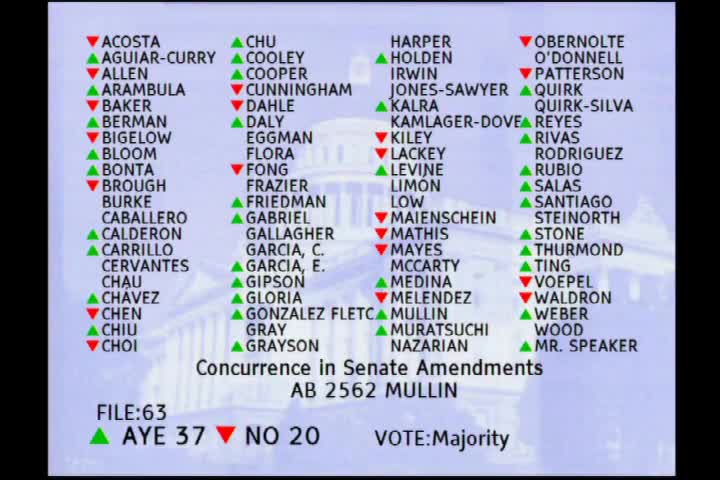
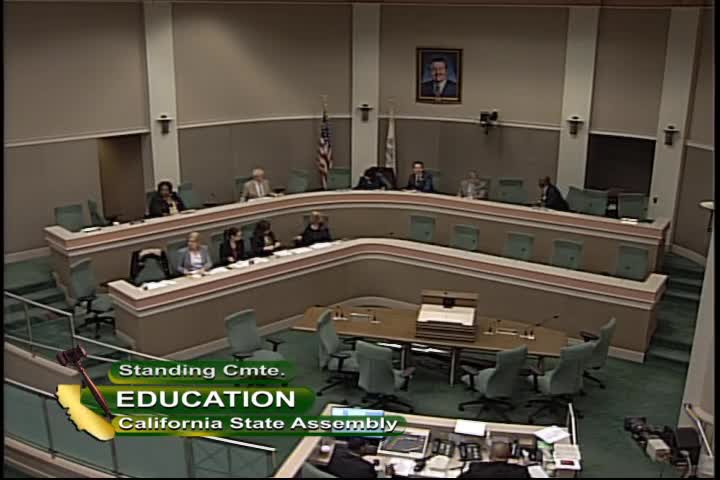
Bill Author