AB 2525: Conservation of public lands: unlawful cannabis cultivation: mitigation and enforcement.
- Session Year: 2017-2018
- House: Assembly
- Latest Version Date: 2018-03-22
Existing law establishes the Department of Fish and Wildlife in the Natural Resources Agency and makes the Department of Fish and Wildlife the trustee for fish and wildlife resources of the state. Existing law prohibits a person or other entity from diverting or obstructing the natural flow of any river, stream, or lake, without first notifying the department and, if necessary, entering into a lake or streambed alteration agreement. Existing law requires the department to establish a watershed enforcement program to facilitate the investigation, enforcement, and prosecution of unlawful water diversions and other violations of the Fish and Game Code associated with cannabis cultivation. Existing law requires the department, in coordination with the State Water Resources Control Board and the Department of Food and Agriculture, to establish a multiagency task force, known as the Watershed Enforcement Team, to address the environmental impacts of cannabis cultivation.
Existing law establishes the Department of Parks and Recreation in the Natural Resources Agency and requires the Director of Parks and Recreation, among other things, to promote and regulate the use of the state park system in a manner that conserves the scenery, natural and historic resources, and wildlife in units of the state park system for the enjoyment of future generations.
This bill would require the Department of Fish and Wildlife to collaborate with the Department of Parks and Recreation to conduct an annual survey of all public lands, as defined, and all surface water sources on public lands, for unlawful cannabis cultivation activity; to compile a database of unlawful cannabis cultivation activity occurring on public lands; and to ensure that this activity is eradicated by the Watershed Enforcement Team or other appropriate authority. The bill would require the Watershed Enforcement Team to prioritize the eradication of unlawful cannabis cultivation described in these provisions.
The bill would require the Natural Resources Agency to establish a program to restore public lands damaged by unlawful cannabis cultivation activity. The bill would create the Public Lands Cannabis Eradication Fund in the State Treasury. The bill would provide for moneys in the fund to be available, upon appropriation by the Legislature, to protect and restore public lands damaged by unlawful cannabis cultivation activity, including through the above-described activities.
Existing law requires supervising forest officers, under the direction of the Director of Forestry and Fire Protection, to have charge of the firefighting system and men and women in the districts, and to be charged with the duty of preventing and extinguishing forest fires and with the performance of other duties as may be required by the director.This bill would make nonsubstantive changes to this law.Existing law requires supervising forest officers, under the direction of the Director of Forestry and Fire Protection, to have charge of the firefighting system and men and women in the districts, and to be charged with the duty of preventing and extinguishing forest fires and with the performance of other duties as may be required by the director.
This bill would make nonsubstantive changes to this law.
This chapter shall be known, and may be cited, as the Public Lands Cannabis Eradication Act, or the PLCE Act.
1631.For purposes of this chapter, the following terms have the following meanings:
(a)Public lands means lands owned by, or under the jurisdiction of, the federal, state, or a local government.
(b)Qualified nonprofit organization means a nonprofit organization with experience in environmental cleanup and restoration.
1632.In order to protect public lands from unlawful cannabis cultivation activity, the department shall collaborate with the Department of Parks and Recreation to do all of the following:
(a)Conduct, during outdoor cannabis cultivation season, an annual survey of all public lands, and all surface water sources on public lands, for unlawful cannabis cultivation activity.
(b)(1)Compile a database of unlawful cannabis cultivation activity identified in surveys conducted pursuant to subdivision (a) or otherwise known to be occurring on public lands.
(2)The database compiled pursuant to paragraph (1) shall include, for each unlawful cannabis cultivation site, the date of discovery, location, approximate size, and current status of the site.
(c)Ensure that unlawful cannabis cultivation activity described in subdivision (b) is eradicated by the multiagency task force established pursuant to Section 12029 or other appropriate authority.
1633.(a)The Natural Resources Agency shall establish a program to restore public lands damaged by unlawful cannabis cultivation activity described in subdivision (b) of Section 1632.
(b)To carry out restoration activities under the program established pursuant to subdivision (a), the Natural Resources Agency may contract with a city, county, city and county, or other local governmental entity, the United States Department of Agriculture, the United States Department of the Interior, or a qualified nonprofit organization.
1634.(a)The Public Lands Cannabis Eradication Fund, or the PLCE Fund, is hereby created in the State Treasury.
(b)Moneys in the PLCE Fund shall be available, upon appropriation by the Legislature, to protect and restore public lands damaged by unlawful cannabis cultivation activity, including as provided in this chapter.
(c)Nothing in this section shall be construed to limit the availability of other funding to carry out the purposes provided in subdivision (b).
SEC. 2.Section 12029 of the Fish and Game Code is amended to read:12029.(a)The Legislature finds and declares all of the following:
(1)The environmental impacts associated with cannabis cultivation have increased, and unlawful water diversions for cannabis irrigation have a detrimental effect on fish and wildlife and their habitat, which are held in trust by the state for the benefit of the people of the state.
(2)The remediation of existing cannabis cultivation sites is often complex and the permitting of these sites requires greater department staff time and personnel expenditures. The potential for cannabis cultivation sites to significantly impact the states fish and wildlife resources requires immediate action on the part of the departments lake and streambed alteration permitting staff.
(b)In order to address unlawful water diversions and other violations of the Fish and Game Code associated with cannabis cultivation, the department shall establish the watershed enforcement program to facilitate the investigation, enforcement, and prosecution of these offenses.
(c)The department, in coordination with the State Water Resources Control Board and the Department of Food and Agriculture, shall establish a permanent multiagency task force to address the environmental impacts of cannabis cultivation. The multiagency task force, to the extent feasible and subject to available resources, shall expand its enforcement efforts on a statewide level to ensure the reduction of adverse impacts of cannabis cultivation on fish and wildlife and their habitats throughout the state. The multiagency task force shall prioritize the eradication of unlawful cannabis cultivation activity described in subdivision (b) of Section 1632.
(d)In order to facilitate the remediation and permitting of cannabis cultivation sites, the department may adopt regulations to enhance the fees on any entity subject to Section 1602 for cannabis cultivation sites that require remediation. The fee schedule established pursuant to this subdivision shall not exceed the fee limits in Section 1609.
SECTION 1.Section 4113 of the Public Resources Code is amended to read:4113.The supervising forest officers shall, under the direction of the director, have charge of the firefighting system and men and women in the districts, and are charged with the duty of preventing and extinguishing forest fires and with the performance of other duties as may be required by the director.The supervising forest officers shall, under the direction of the director, have charge of the firefighting system and men and women in such the districts, and are charged with the duty of preventing and extinguishing forest fires and with the performance of such other duties as may be required by the director.
|
Date
|
Status
|
|---|---|
| May 25, 2018 | In committee: Held under submission. |
| May 16, 2018 | In committee: Set, first hearing. Referred to APPR. suspense file. |
| Apr 24, 2018 | From committee: Do pass and re-refer to Com. on APPR. (Ayes 13. Noes 1.) (April 24). Re-referred to Com. on APPR. |
| Apr 2, 2018 | Re-referred to Com. on W.,P., & W. |
| Mar 22, 2018 | Referred to Com. on W.,P., & W. |
| Feb 15, 2018 | From printer. May be heard in committee March 17. |
| Feb 14, 2018 | Read first time. To print. |
|
Date
|
Description
|
Location
|
Votes
|
|
|---|---|---|---|---|
| Apr 24, 2018 | Do pass and be re-referred to the Committee on [Appropriations] | Assembly Standing Committee on Water, Parks, and Wildlife |
Passed |
This list shows positions taken on this bill by organizations on the date displayed, which is linked to the original source.
Positions by individuals are not included.
Date of Hearing: May 16, 2018
ASSEMBLY COMMITTEE ON APPROPRIATIONS
Lorena Gonzalez Fletcher, Chair
ABPCA Bill Id:AB 2525
Author:(Wood) – As Amended Ver:March 22, 2018
Policy Committee: | Water, Parks and Wildlife | Vote: | 13 - 1 |
|
| ||
|
|
Urgency: No State Mandated Local Program: No Reimbursable: No
SUMMARY:
This bill requires the Department of Fish and Wildlife (DFW), in collaboration with the Department of Parks and Recreation (DPR), to conduct a survey during outdoor cannabis cultivation season of all public lands and all surface water sources on such lands used for unlawful cultivation activity. Additionally, this bill:
- Requires DFW to compile a database of illegal cannabis cultivation activity identified in the surveys or otherwise known.
- Requires the California Natural Resources Agency (NRA) to establish a program to restore public lands damaged by illegal cannabis cultivation activity.
- Creates the Public Lands Cannabis Eradication Fund to provide funding for protection and restoration of public lands damaged by illegal cannabis cultivation activity.
- Requires the existing Watershed Enforcement Team to prioritize eradication of the illegal cannabis activities.
FISCAL EFFECT:
- DFW first-year equipment and staffing costs of approximately $3.9 million GF (11 PY) and ongoing annual staffing costs of approximately $2.5 million GF (the same 11 PY) to survey public lands, gather information and establish the database.
- Unknown cost pressures, likely in the millions of dollars, to fund a program for the protection and restoration of lands damaged by illegal cultivation activity (GF or special fund).
- NRA ongoing annual costs of $200,000 (1 PY) to develop regulations, evaluate and select suitable projects, contract with eligible entities, administer agreements through to project completion, and provide any necessary monitoring and reporting. Depending on the program’s size and scope, and in addition to the amount of funding specifically available for restoration projects, the staffing and costs to administer the program may be greater (GF or special fund).
- Unknown, likely absorbable costs for DPR to collaborate with DFW.
COMMENTS:
- Background and Purpose. DFW, in coordination with the State Water Resources Control Board (State Water Board) and the California Department of Food and Agriculture, established the multiagency task force (Watershed Enforcement Team, or WET) to address environmental impacts of cannabis cultivation, including illegal lake and streambed diversions, and pesticide and toxic materials eradication. The DFW Watershed Enforcement Program (WEP) consists of WETs throughout the state. The WEP works collaboratively with the State Water Board to prevent, investigate, enforce, and remediate environmental damage resulting from cannabis cultivation on private land.
Together, DFW and the State Water Board work to implement a strategic plan that describes a multiagency approach for regulating environmental impacts and enforcing civil violations associated with cannabis cultivation. The strategic plan directs DFW to investigate and enforce violations associated with cannabis cultivation, and the State Water Board to investigate and enforce against violations of water quality laws, regulations and objectives as well as unauthorized diversions of surface water.
The focus of the WET has been toxic cleanup, not the mission and purpose of the public lands—such as the enjoyment of recreation, and the restoration and sustainability of environmentally sensitive lands.
According to the author, “The threat of heavily armed rogue growers has kept families and recreationalists out of some of California’s most spectacular public parks for most of the summer and fall.” This bill provides an inventory of illegal cannabis grows on public lands—and a prioritization of funding to eradicate and clean up these areas.
- Related Legislation. AB 2243 (Wood), of the 2015-16 Legislative Session would have created a tax on medical cannabis distributors to fund environmental restoration. This bill was held in the Senate Appropriations Committee on suspense.
Analysis Prepared by: Jennifer Galehouse / APPR. / (916) 319-2081
Date of Hearing: April 24, 2018
ASSEMBLY COMMITTEE ON WATER, PARKS, AND WILDLIFE
Eduardo Garcia, Chair
ABPCA Bill Id:AB 2525 (
Author:Wood) – As Amended Ver:March 22, 2018
SUBJECT: Conservation of public lands: unlawful cannabis cultivation: mitigation and enforcement
SUMMARY: Provides for surveys of public lands for unlawful cannabis activity yearly, and for specified plans for eradication from responsible state agencies. Specifically, this bill:
- Requires the Department of Fish and Wildlife (DFW), in collaboration with the Department of Parks and Recreation (DPR), to conduct a survey of all public lands, including water sources, for unlawful cannabis cultivation activity.
- Requires the DFW to compile a database of illegal cannabis cultivation activity found on public lands
- Requires the existing Watershed Enforcement Team to prioritize eradication of the illegal cannabis activities.
- Requires the California Natural Resources Agency (CNRA) to establish a program to restore public lands damaged by illegal cannabis cultivation activity.
- Creates the Public Lands Cannabis Eradication Fund to provide funding for protection and restoration of public lands damaged by illegal cannabis cultivation activity.
EXISTING LAW:
- Establishes a Water Enforcement Task Force, in coordination with the State Water Resources Control Board (SWRCB) and California Department of Food and Agriculture (CDFA), to prevent, investigate, enforce, and remediate environmental damage resulting from cannabis cultivation on private land. (Fish and Game Code Section 12029)
- Authorizes the use of civil penalties on a person who has violated various environmental laws. (Fish and Game Code Section 12025)
- Assesses civil penalties on a person or entity that diverts or uses water for cannabis cultivation without approval from the state. (Water Code Section 1847)
FISCAL EFFECT: Unknown
COMMENTS: This bill provides for surveys of public lands for unlawful cannabis activity yearly, and for specified plans for eradication from responsible state agencies with priority given to public lands.
Author’s Statement:
For generations Californian’s have fought to protect our natural resources, and as a result have put in place some of the most stringent timber and water protection laws anywhere in the world. Unfortunately all of this hard work is being undone at record speed. Every year hundreds of rogue cannabis growers operate trespass grow operations in our state and national parks. These grow sites siphon off millions of gallons of water, divert and pollute streams and poison wildlife. Additionally, the threat of heavily armed rogue growers has kept families and recreationalists out of some of California’s most spectacular public parks for most of the summer and fall. AB 2525 creates a collaborative process to take back our parks.
Background and Purpose: The Need for Inventory of Illegal Cannabis Grows on Public Lands. According to the author, the remote nature of state and national parks, combined with the abundance of natural resources creates ideal conditions for growing cannabis. Every year dozens of trespass grows are stumbled upon in California state and national parks. These grow operations present enormous environmental and public safety risks. Popular hiking websites post “what do to” information sites containing information about what to look for, and how to get away from a suspected cannabis grow site on public lands. In 2017, according to the US Fish and (USFW), the refuge system law enforcement program began tracking marijuana cultivation sites in 1997. In recent years, refuge law enforcement officers have discovered and eradicated destructive sites on Stone Lakes National Wildlife Refuge outside Elk Grove, San Luis National Wildlife Refuge near Los Banos and the Sacramento National Wildlife Refuge near Willows, California. On average, the USFW discovers about three major grow sites a year in the state.
Watershed Task Force. The DFW in coordination with the SWRCB and the CDFA established the multiagency task force (Watershed Enforcement Team, or WET) to address environmental impacts of cannabis cultivation including illegal lake and streambed diversions, pesticide and toxic materials eradication. The DFW Watershed Enforcement Program (WEP) consists of Watershed Enforcement Teams (WET) throughout the state. The WEP works collaboratively with the SWRCB to prevent, investigate, enforce, and remediate environmental damage resulting from cannabis cultivation on private land. Together, the DFW and the SWRCB work to implement a strategic plan that describes a multiagency approach for regulating environmental impacts and enforcing civil violations associated with cannabis cultivation. The strategic plan directs the DFW to investigate and enforce violations associated with cannabis cultivation, and the SWRCB to investigate and enforce against violations of water quality laws, regulations and objectives as well as unauthorized diversions of surface
This bill argues that, while these efforts are ongoing, there needs to be a clear inventory of illegal cannabis grows on public lands—and a prioritization of funding to eradicate and clean up these areas. The impetus not only bridges toxic cleanup, but the missions and purposes of these lands—for the enjoyment of recreation, and for the restoration and sustainability of environmentally sensitive lands.
Environmental Impacts of Illegal Cannabis Cultivation. For example, according to the DFW, land-use practices, such as the removal of permanent cover like upland forests to make room for cannabis cultivation, can be the source of wide-ranging impacts on terrestrial and aquatic ecosystems. These impacts include loss and fragmentation of sensitive habitat due to road construction, grading and burying of streams, increased sediment delivery, mass wasting, and erosion. The agricultural practices of cannabis cultivation can result in terrestrial wildlife mortality from use of prohibited rodenticides; chemical and sediment pollution from the use of petroleum-based products, pesticides, and fertilizers; and reduced instream flow needs (or complete dewatering of streams) for spawning, migration, and rearing of salmonids.
Reduced or altered stream flow regimes can be a significant threat to aquatic species, particularly because the timing of water demands for cultivation can dampen spring base flows and accelerate the recession of critical summer flows as water demand increases for the agricultural growing season. This reduction in flows diminishes the amount of suitable habitat available for sensitive species like salmonid fishes that are dependent on high-quality cold water, or desiccation-intolerant amphibians such as the southern torrent salamander and coastal tailed frog. Reduced stream flow can also lead to decreases in food supply, production, dissolved oxygen, and habitat complexity that provide shelter for foraging or cool water refuge. It can cause increases in water temperature, transmission of disease, physiological stress, turbidity and suspended sediment, algal blooms, and predation due to intra- and interspecific competition. In the case of juvenile salmonids, reduced flow has been found to cause changes in behavioral tactics that have biological consequences, such as aggression, sheltering, drift foraging, roaming, and rock picking. Complete dewatering of stream reaches can result in stranding of fishes and mortality.
Marijuana Cultivation in State Parks. As an example, according to the DPR, state park rangers, assisted by multiple agencies, raided an illegal marijuana grow in Humboldt Redwoods State Park removing marijuana seedling plants, an assault rifle and toxic chemicals on Monday, May 9, 2016. Three armed suspects were located in a nearby illegal camp near Bull Creek and fled on foot when contacted by law enforcement. The three suspects remain at large. At the illegal camp, rangers recovered an MK99 type assault rifle with hundreds of rounds of ammunition. Rangers also found rodenticides and Furdadan, a highly toxic pesticide, within the grow site. Approximately 2,000 seedling marijuana plants were removed. Twenty acres of state park land had been illegally cleared of native vegetation. The marijuana plants were watered directly from water diverted from the tributaries of Bull Creek. Forty cubic yards of trash, fertilizers, pesticides, rodenticides, water hoses, hazardous material and other supplies were removed from the area. Disposal costs were paid for in part with assistance from the Humboldt County Public Works’ "Measure Z" public safety funding. The marijuana grow and camp was found within a quarter-mile of pristine old-growth redwood forest.
Arguments in Support: Supporters argue that, in rural counties, the issue of cannabis cultivation is of high importance. As the state transitions to licensed commercial cannabis production, there will inevitably be a significant number of cannabis entities that continue to operate in an illegal manner. The Watershed Task Force, while charged with enforcement of state laws, needs to know where and when unlawful cannabis activities take place on public lands. AB 2525 would promote and regulate specifically the use of public lands in a manner that conserves the scenery, natural and historic resources, and wildlife for the enjoyment of future generations.
Arguments in Opposition: Those in opposition argue AB 2525 will shift all of the monitoring enforcement and clean-up resources to public lands with nothing left for regulating cultivation on private lands. The bill would make the DFW the overseer/enforcer of cultivations on local, state and federal public lands, a massive undertaking. They argue that this will be an overwhelming job, taking resources away from such activities and regulating private lands, issuing Lake and Streambed Alteration permits and enforcing those provisions. Finally, they argue that this bill would place scientists in significant danger in their capacity to document illegal grow sites.
Related Legislation:
Proposition 64 (of 2016) legalized marijuana for recreational purposes, and authorized the collection of revenues to facilitate the investigation, enforcement, and prosecution of illegal cultivation, production, sale and use of marijuana or marijuana products on public land.
AB 2243 (Wood), 2016, would have directed resources to similar activities (died in Senate Appropriations).
AB 243 (Wood), Chapter 688; AB 266 (Bonta), Chapter 689; and, SB 643(McGuire), Chapter 719, of 2015, together created the Medical Cannabis Regulation and Safety Act (MCRSA) to regulate the entire medical cannabis industry.
AB 1254 (Wood), of this session, would make each day that a drug production or cultivation violation occurs or continues to occur on specified types of public or private land or while the person was trespassing on public or private land a separate violation subject to the additional civil penalty. Held in Senate Appropriations.
REGISTERED SUPPORT / OPPOSITION:
Support
Nature Conservancy, The
Rural County Representatives of California
Save the Redwoods League
Opposition
California Association of Professional Scientists
Analysis Prepared by: Catherine Freeman / W., P., & W. / (916) 319-2096
Discussed in Hearing
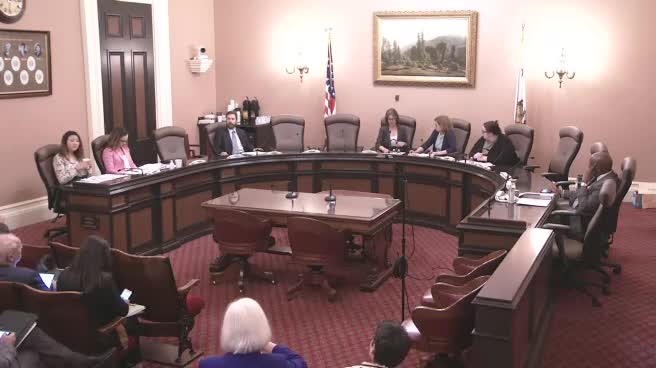 7MIN
Senate Standing Committee on Public Safety
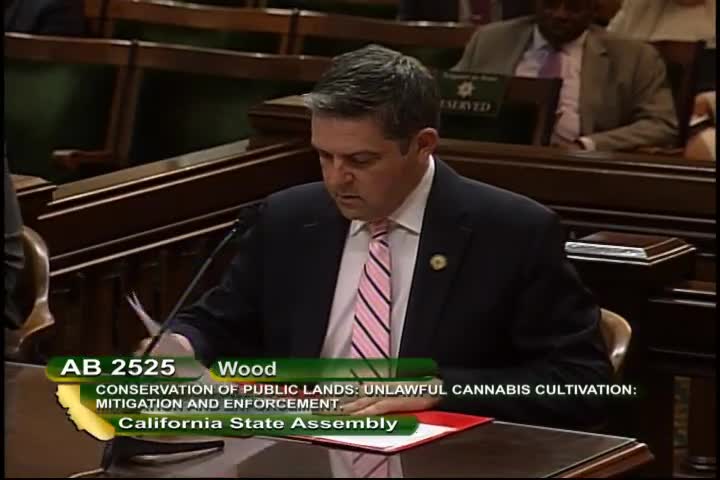 9MIN
Assembly Standing Committee on Water, Parks, and Wildlife
Bill Author

Bill Co-Author(s):