AB 2544: Parking penalties.
- Session Year: 2017-2018
- House: Assembly
- Latest Version Date: 2018-09-18
Existing law authorizes a processing agency that processes unpaid parking penalties to proceed under specified options to collect those penalties. Under one option, a processing agency is authorized to file an itemization of unpaid penalties with the Department of Motor Vehicles for the department to collect the penalties along with the registration of the vehicle. Existing law requires this option, starting on July 1, 2018, to include a process to provide a payment plan for indigent persons.
This bill would specify that the option to collect unpaid penalties that were issued before July 1, 2018, through the department requires a process to provide a payment plan for indigent persons, as specified. The bill would make technical changes to the provisions for all the specified options to collect the unpaid parking penalty.
This bill would declare that it is to take effect immediately as an urgency statute.
Existing law authorizes an a processing agency that processes unpaid parking penalties to proceed under 3 specified options to collect those penalties. Under one option, a processing agency is authorized to file an itemization of unpaid penalties with the Department of Motor Vehicles for the department to collect the penalties along with the registration of the vehicle. Existing law requires this option, starting on July 1, 2018, to include a process to provide a payment plan for indigent persons.
This bill would specify that this option is applicable to all unpaid parking penalties, regardless of the date on which the ticket was issued. The bill would further specify the timeframe for making an application for an indigency determination. the option to collect unpaid penalties that were issued before July 1, 2018, through the department requires a process to provide a payment plan for indigent persons, as specified. The bill would make technical changes to the provisions for the 3 all the specified options to collect the unpaid parking penalty.
This bill would declare that it is to take effect immediately as an urgency statute.
Existing law authorizes an agency that processes unpaid parking violations penalties to proceed under 3 specified options to collect the unpaid penalty. those penalties. Under one option, a processing agency is authorized to file an itemization of the unpaid penalties with the Department of Motor Vehicles for collection the department to collect the penalties along with the registration of the vehicle. Existing law requires this option, starting on July 1, 2018, to include a process to provide a payment plan for indigent persons.
This bill would permit the processing agency the option to collect the unpaid penalties along with the vehicle registration through the department, but only after providing a payment plan to indigent persons, and would make that option specify that this option is applicable to all unpaid parking penalties, regardless of the date on which the ticket was issued. The bill would further specify the timeframe for making an application for an indigency determination. The bill would make technical changes to the provisions for the 3 specified options to collect the unpaid parking penalty.
This bill would declare that it is to take effect immediately as an urgency statute.
Existing law authorizes an agency that processes unpaid parking violations to proceed under 3 specified options to collect the unpaid penalty. Under one option, a processing agency is authorized to file an itemization of the unpaid penalties with the Department of Motor Vehicles for collection with the registration of the vehicle. Existing law requires this option, starting on July 1, 2018, to include a process to provide a payment plan for indigent persons.
This bill would permit the processing agency the option to collect the unpaid penalties along with the vehicle registration through the department, but only after providing a payment plan to indigent persons, and would make that option applicable to all unpaid parking penalties, regardless of the date on which the ticket was issued.
(a)Except as otherwise provided in Sections 40220.5, 40221, and 40222, the processing agency may proceed under one of the following options in order to collect an unpaid parking penalty and related service fees:
(1)(A)File an itemization of unpaid parking penalties and related service fees with the department for collection with the registration of the vehicle pursuant to Section 4760. For unpaid parking penalties issued on and after July 1, 2018, and related service fees, the processing agency shall not file an itemization with the department unless all of the following conditions have been satisfied:
(i)The processing agency provides a payment plan option for indigent persons that, at a minimum, does all of the following:
(I)Allows payment of unpaid parking fines and related service fees to be paid off in monthly installments of no more than twenty-five dollars ($25) for total amounts due that are three hundred dollars ($300) or less. However, unpaid parking fines and fees shall be paid off within 18 months. There shall be no prepayment penalty for paying off the balance prior to the payment period expiring.
(II)Waives all late fees and penalty assessments, exclusive of any state surcharges described in Sections 70372, 76000, and 76000.3 of the Government Code, if an indigent person enrolls in the payment plan. Waived late fees and penalty assessments may be reinstated if the person falls out of compliance with the payment plan.
(III)Limits the processing fee to participate in a payment plan to five dollars ($5) or less for indigent persons. The processing fee for an indigent person may be added to the payment plan amount, at the discretion of the indigent person. If a processing agency offers a payment plan option to persons who are not indigent, limits the processing fee to participate in the payment plan to twenty-five dollars ($25) or less.
(IV)Allows a person a period of 60 calendar days from the issuance of a notice of parking violation or 10 days after the administrative hearing determination, whichever is later, to file a request to participate in a payment plan.
(ii)The processing agency includes the information described in subclauses (I) and (II) in the notice of parking violation, and includes both in the notice of parking violation and on its public Internet Web site, a Web page link and telephone number to more information on the payment program. The linked Internet Web page shall include all of the following information:
(I)The availability of an installment payment plan and the timeframe in which to apply.
(II)The persons right to request an indigency determination and the timeframe in which he or she must apply.
(III)Clear language about how the person can request an indigency determination and what that determination will entail.
(IV)Documents needed by the processing agency to make an indigency determination.
(iii)The person fails to enroll in the payment plan within the time specified in the notice or is not eligible for the payment plan because he or she is not indigent.
(B)The processing agency shall allow a person who falls out of compliance with the payment plan a one-time extension of 45 calendar days from the date the payment plan becomes delinquent to resume payments before the processing agency files an itemization of unpaid parking penalties and related service fees with the department pursuant to subparagraph (A).
(C)The processing agency shall rescind the filing of an itemization of unpaid parking penalties and related service fees with the department for an indigent person, for one time only, if the registered owner or lessee enrolls in a payment plan and pays a late fee of no more than five dollars ($5).
(D)(i)By August 1, 2018, each California State University and community college district governing board shall adopt a parking citation payment plan for persons with multiple unpaid parking citations. A parking citation payment policy adopted under this subparagraph shall include, but not be limited to, all of the following requirements:
(I)Late fees shall be placed in abeyance while the payment plan is in place and the person adheres to its terms, and shall be waived once the payment plan is completed.
(II) Once the payment plan is in place and the person adheres to its terms, an itemization of unpaid parking penalties and service fees as described in subparagraph (A) shall not be filed with the department.
(III)Each California State University and community college district campus shall post the parking citation payment policy on its Internet Web site for students awareness and access.
(ii)A California State University or community college district governing board that fails to implement a parking citation payment plan pursuant to clause (i) by August 1, 2018, shall implement the payment plan as provided in subparagraphs (A) to (C), inclusive, and subdivision (c).
(2) (A)If more than four hundred dollars ($400) in unpaid penalties and fees have been accrued by any person or registered owner, proof thereof may be filed with the court and shall have the same effect as a civil judgment. Execution may be levied and other measures may be taken for the collection of the judgment as are authorized for the collection of an unpaid civil judgment entered against a defendant in an action on a debtor. The court may assess costs against a judgment debtor to be paid upon satisfaction of the judgment. The processing agency shall send a notice by first-class mail to the person or registered owner indicating that a judgment shall be entered for the unpaid penalties, fees, and costs and that, after 21 calendar days from the date of the mailing of the notice, the judgment shall have the same effect as an entry of judgment against a judgment debtor. The person or registered owner shall also be notified at that time that execution may be levied against his or her assets, liens may be placed against his or her property, his or her wages may be garnished, and other steps may be taken to satisfy the judgment. If a judgment is rendered for the processing agency, that agency may contract with a collection agency to collect the amount of that judgment.
(B)Notwithstanding any other law, the processing agency shall pay the established first paper civil filing fee at the time an entry of civil judgment is requested.
(3)If the registration of the vehicle has not been renewed for 60 days beyond the renewal date, and the citation has not been collected by the department pursuant to Section 4760, file proof of unpaid penalties and fees with the court with the same effect as a civil judgment as provided in paragraph (2).
(b)This section does not apply to a registered owner of a vehicle if the citation was issued prior to the registered owner taking possession of the vehicle, and the department has notified the processing agency pursuant to Section 4764.
(c)(1)For purposes of paragraph (1) of subdivision (a), a person is indigent if any of the following conditions is met:
(A)The person meets the income criteria set forth in subdivision (b) of Section 68632 of the Government Code.
(B)The person receives public benefits from any of the programs listed in subdivision (a) of Section 68632 of the Government Code.
(2)The person may demonstrate that he or she is indigent by providing either of the following information, as applicable:
(A)Proof of income from a pay stub or another form of proof of earnings, such as a bank statement, that shows that the person meets the income criteria set forth in subdivision (b) of Section 68632 of the Government Code, subject to review and approval by the processing agency or its designee. The processing agency or its designee shall not unreasonably withhold its approval.
(B)Proof of receipt of benefits under the programs described in subparagraph (B) of paragraph (1), including, but not limited to, an electronic benefits transfer card or another card, subject to review and approval by the processing agency. The processing agency or its designee shall not unreasonably withhold its approval.
(3)If a defendants indigent status is found to have been willfully fraudulent, his or her fines and fees reduction shall be overturned and the full amount of fines and fees shall be restored.
SEC. 2.Section 40220.5 is added to the Vehicle Code, to read:40220.5.(a)(1)A processing agency may only use the process set forth in Section 4760 to collect unpaid parking penalties that were issued before July 1, 2018, and related service fees, if the processing agency provides indigent persons with the payment plan program described in this section.
(2)A processing agency shall not be required to comply with this section to collect unpaid parking penalties that were issued before July 1, 2018, and related service fees, pursuant to the process set forth in Section 4760 for any person who does not file an application for an indigency determination, any person who falls out of compliance with a payment plan, except as set forth in subdivision (d), or any person who the processing agency has determined is not an indigent person.
(b)A processing agency shall provide notice on its Internet Web site of a persons ability to request an indigency determination to qualify for a payment plan pursuant to this section. The notice shall include all of the following information:
(1)The availability of a payment plan for indigent persons to pay parking penalties that were issued before July 1, 2018, and related service fees.
(2)Clear language about how a person can request an indigency determination and what that determination will entail.
(3)Documents needed by the processing agency to make an indigency determination.
(c)A processing agency shall provide an indigent person an opportunity to pay unpaid parking penalties that were issued before July 1, 2018, and related service fees, pursuant to a payment plan that, at a minimum, does all of the following:
(1)Allows payment of unpaid parking penalties that were issued before July 1, 2018, and related service fees, to be paid off in monthly installments of no more than twenty-five dollars ($25) for total amounts due that are three hundred dollars ($300) or less. However, unpaid parking penalties and related service fees shall be paid off within 18 months. There shall be no prepayment penalty for paying off the balance prior to the payment period expiring.
(2)Waives all late fees and penalty assessments, exclusive of any state surcharges described in Sections 70372, 76000, and 76000.3 of the Government Code. Waived late fees and penalty assessments may be reinstated if the indigent person falls out of compliance with the payment plan.
(3)Limits the processing fee to participate in a payment plan to five dollars ($5) or less. The processing fee may be added to the payment plan amount, at the discretion of the indigent person.
(d)A processing agency shall allow an indigent person who falls out of compliance with the payment plan a one-time extension of 45 calendar days from the date the payment plan became delinquent to resume payments.
(e)A processing agency shall rescind the collection of unpaid parking penalties that were issued before July 1, 2018, and related service fees, with the department pursuant to the process set forth in Section 4760 for an indigent person, if the indigent person enrolls in a payment plan pursuant to this section.
(f)Indigent shall have the same meaning as set forth in subdivision (c) of Section 40220.
(g)This section shall remain in effect until January 1, 2027, and as of that date is repealed.
SEC. 3.This act is an urgency statute necessary for the immediate preservation of the public peace, health, or safety within the meaning of Article IV of the California Constitution and shall go into immediate effect. The facts constituting the necessity are:
In order to provide financial relief through a unified payment plan option for indigent persons to resolve outstanding parking penalties at the soonest possible time, it is necessary that this act take effect immediately.
(a)Except as otherwise provided in Sections 40221 40220.5, 40221, and 40222, the processing agency may proceed under one of the following options in order to collect an unpaid parking penalty: penalty and related service fees:
(1)(A)File an itemization of unpaid parking penalties and related service fees with the department for collection with the registration of the vehicle pursuant to Section 4760. Beginning July 1, 2018, For unpaid parking penalties issued on and after July 1, 2018, and related service fees, the processing agency shall not file an itemization to collect any unpaid parking penalties, regardless of the date on which the ticket was issued, with the department unless all of the following conditions have been satisfied:
(i)The issuing processing agency provides a payment plan option for indigent persons that, at a minimum, does all of the following:
(I)Allows payment of unpaid parking fines and related service fees to be paid off in monthly installments of no more than twenty-five dollars ($25) for total amounts due that are three hundred dollars ($300) or less. However, unpaid parking fines and fees shall be paid off within 18 months. There shall be no prepayment penalty for paying off the balance prior to the payment period expiring.
(II)Waives all late fees and penalty assessments, exclusive of any state surcharges described in Sections 70372, 76000, and 76000.3 of the Government Code, if an indigent person enrolls in the payment plan. Waived late fees and penalty assessments may be reinstated if the person falls out of compliance with the payment plan.
(III)Limits the processing fee to participate in a payment plan to five dollars ($5) or less for indigent persons. The processing fee for an indigent person may be added to the payment plan amount, at the discretion of the indigent person. If a processing agency offers the a payment plan option to persons who are not indigent, limits the processing fee to participate in the payment plan to twenty-five dollars ($25) or less.
(IV)For a parking penalty issued before July 1, 2018, allows for application for indigency determination. For a parking penalty issued on and after July 1, 2018, allows for Allows a person a period of 60 calendar days from the issuance of a notice of parking violation, violation or 10 days after the administrative hearing determination, whichever is later. later, to file a request to participate in a payment plan.
(ii)The processing agency includes the information described in subclauses (I) and (II) in the notice of parking violation, and includes both in the notice of parking violation and on its public Internet Web site, a Web page link and telephone number to more information on the payment program. The linked Internet Web page shall include all of the following information:
(I)The availability of an installment payment plan, plan and the timeframe in which to apply.
(II)The persons right to request an indigency determination and the timeframe in which he or she must apply.
(III)Clear language about how the person can request an indigency determination and what that determination will entail.
(IV)Documents needed by the processing agency to make an indigency determination.
(iii)The registered owner or lessee person fails to enroll in the payment plan within the time specified in the notice or is not eligible for the payment plan because he or she is not indigent.
(B)The processing agency shall allow a registered owner or lessee person who falls out of compliance with the payment plan a one-time extension of 45 calendar days from the date the payment plan becomes delinquent to resume payments before the processing agency files an itemization of unpaid parking penalties and related service fees with the department pursuant to subparagraph (A).
(C)The processing agency shall rescind the filing of an itemization of unpaid parking penalties and related service fees with the department for an indigent person, for one time only, if the registered owner or lessee enrolls in a payment plan and pays a late fee of no more than five dollars ($5).
(D)(i)By August 1, 2018, each California State University and community college district governing board shall adopt a parking citation payment plan for persons with multiple unpaid parking citations. A parking citation payment policy adopted under this subparagraph shall include, but not be limited to, all of the following requirements:
(I)Late fees shall be placed in abeyance while the payment plan is in place and the person adheres to its terms, and shall be waived once the payment plan is completed.
(II) Once the payment plan is in place and the person adheres to its terms, an itemization of unpaid parking penalties and service fees as described in subparagraph (A) shall not be filed with the department.
(III)Each California State University and community college district campus shall post the parking citation payment policy on its Internet Web site for students awareness and access.
(ii)A California State University or community college district governing board that fails to implement a parking citation payment plan pursuant to clause (i) by August 1, 2018, shall implement the payment plan as provided in subparagraphs (A) to (C), inclusive, and subdivision (c).
(2) (A)If more than four hundred dollars ($400) in unpaid penalties and fees have been accrued by any person or registered owner, proof thereof may be filed with the court and shall have the same effect as a civil judgment. Execution may be levied and other measures may be taken for the collection of the judgment as are authorized for the collection of an unpaid civil judgment entered against a defendant in an action on a debtor. The court may assess costs against a judgment debtor to be paid upon satisfaction of the judgment. The processing agency shall send a notice by first-class mail to the person or registered owner indicating that a judgment shall be entered for the unpaid penalties, fees, and costs and that, after 21 calendar days from the date of the mailing of the notice, the judgment shall have the same effect as an entry of judgment against a judgment debtor. The person or registered owner shall also be notified at that time that execution may be levied against his or her assets, liens may be placed against his or her property, his or her wages may be garnished, and other steps may be taken to satisfy the judgment. If a judgment is rendered for the processing agency, that agency may contract with a collection agency to collect the amount of that judgment.
(B)Notwithstanding any other law, the processing agency shall pay the established first paper civil filing fee at the time an entry of civil judgment is requested.
(3)If the registration of the vehicle has not been renewed for 60 days beyond the renewal date, and the citation has not been collected by the department pursuant to Section 4760, file proof of unpaid penalties and fees with the court with the same effect as a civil judgment as provided in paragraph (2).
(b)This section does not apply to a registered owner of a vehicle if the citation was issued prior to the registered owner taking possession of the vehicle, and the department has notified the processing agency pursuant to Section 4764.
(c)(1)For purposes of paragraph (1) of subdivision (a), a person is indigent if any of the following conditions is met:
(A)The person meets the income criteria set forth in subdivision (b) of Section 68632 of the Government Code.
(B)The person receives public benefits from any of the programs listed in subdivision (a) of Section 68632 of the Government Code.
(2)The person may demonstrate that he or she is indigent by providing either of the following information, as applicable:
(A)Proof of income from a pay stub or another form of proof of earnings, such as a bank statement, that shows that the person meets the income criteria set forth in subdivision (b) of Section 68632 of the Government Code, subject to review and approval by the processing agency or its designee. The processing agency or its designee shall not unreasonably withhold its approval.
(B)Proof of receipt of benefits under the programs described in subparagraph (B) of paragraph (1), including, but not limited to, an electronic benefits transfer card or another card, subject to review and approval by the processing agency. The processing agency or its designee shall not unreasonably withhold its approval.
(3)If a defendants indigent status is found to have been willfully fraudulent, his or her fines and fees reduction shall be overturned and the full amount of fines and fees shall be restored.
SEC. 2.Section 40220.5 is added to the Vehicle Code, to read:40220.5.(a)(1)A processing agency may only use the process set forth in Section 4760 to collect unpaid parking penalties that were issued before July 1, 2018, and related service fees, if the processing agency provides indigent persons with the payment plan program described in this section.
(2)A processing agency shall not be required to comply with this section to collect unpaid parking penalties that were issued before July 1, 2018, and related service fees, pursuant to the process set forth in Section 4760 for any person who does not file an application for an indigency determination, any person who falls out of compliance with a payment plan, except as set forth in subdivision (d), or any person who the processing agency has determined is not an indigent person.
(b)A processing agency shall provide notice on its Internet Web site of a persons ability to request an indigency determination to qualify for a payment plan pursuant to this section. The notice shall include all of the following information:
(1)The availability of a payment plan for indigent persons to pay parking penalties that were issued before July 1, 2018, and related service fees.
(2)Clear language about how a person can request an indigency determination and what that determination will entail.
(3)Documents needed by the processing agency to make an indigency determination.
(c)A processing agency shall provide an indigent person an opportunity to pay unpaid parking penalties that were issued before July 1, 2018, and related service fees, pursuant to a payment plan that, at a minimum, does all of the following:
(1)Allows payment of unpaid parking penalties that were issued before July 1, 2018, and related service fees, to be paid off in monthly installments of no more than twenty-five dollars ($25) for total amounts due that are three hundred dollars ($300) or less. However, unpaid parking penalties and related service fees shall be paid off within 18 months. There shall be no prepayment penalty for paying off the balance prior to the payment period expiring.
(2)Waives all late fees and penalty assessments, exclusive of any state surcharges described in Sections 70372, 76000, and 76000.3 of the Government Code. Waived late fees and penalty assessments may be reinstated if the indigent person falls out of compliance with the payment plan.
(3)Limits the processing fee to participate in a payment plan to five dollars ($5) or less. The processing fee may be added to the payment plan amount, at the discretion of the indigent person.
(d)A processing agency shall allow an indigent person who falls out of compliance with the payment plan a one-time extension of 45 calendar days from the date the payment plan became delinquent to resume payments.
(e)A processing agency shall rescind the collection of unpaid parking penalties that were issued before July 1, 2018, and related service fees, with the department pursuant to the process set forth in Section 4760 for an indigent person, if the indigent person enrolls in a payment plan pursuant to this section.
(f)Indigent shall have the same meaning as set forth in subdivision (c) of Section 40220.
(g)This section shall remain in effect until January 1, 2027, and as of that date is repealed.
SEC. 2.SEC. 3.This act is an urgency statute necessary for the immediate preservation of the public peace, health, or safety within the meaning of Article IV of the California Constitution and shall go into immediate effect. The facts constituting the necessity are:
In order to provide financial relief through a unified payment plan option for indigent persons to resolve outstanding parking penalties at the soonest possible time, it is necessary that this act take effect immediately.
(a)Except as otherwise provided in Sections 40221 and 40222, the processing agency may proceed under one of the following options in order to collect an unpaid parking penalty:
(1)(A)File an itemization of unpaid parking penalties and service fees with the department for collection with the registration of the vehicle pursuant to Section 4760. Beginning July 1, 2018, the processing agency shall not file an itemization to collect any unpaid parking penalties, regardless of the date on which the ticket was issued, unless all of the following conditions have been satisfied:
(i)The issuing agency provides a payment plan option for indigent persons that, at a minimum, does all of the following:
(I)Allows payment of unpaid parking fines and fees to be paid off in monthly installments of no more than twenty-five dollars ($25) for total amounts due that are three hundred dollars ($300) or less. However, unpaid parking fines and fees shall be paid off within 18 months. There shall be no prepayment penalty for paying off the balance prior to the payment period expiring.
(II)Waives all late fees and penalty assessments, exclusive of any state surcharges described in Sections 70372, 76000, and 76000.3 of the Government Code, if an indigent person enrolls in the payment plan. Waived late fees and penalty assessments may be reinstated if the person falls out of compliance with the payment plan.
(III)Limits the processing fee to participate in a payment plan to five dollars ($5) or less for indigent persons and twenty-five dollars ($25) or less for all other persons. persons. The processing fee for an indigent person may be added to the payment plan amount, at the discretion of the indigent person. If a processing agency offers the payment plan option to persons who are not indigent, limits the processing fee to participate in the payment plan to twenty-five dollars ($25) or less.
(IV)Allows For a parking penalty issued before July 1, 2018, allows for application for indigency determination determination. For a parking penalty issued on and after July 1, 2018, allows for a period of 60 calendar days from the issuance of a notice of parking violation, or 10 days after the administrative hearing determination, whichever is later.
(ii)The processing agency includes the information described in subclauses (I) and (II) in the notice of parking violation, and includes both in the notice of parking violation and on its public Internet Web site, a Web page link and telephone number to more information on the program. The linked Web page shall include all of the following information:
(I)The availability of an installment payment plan, and the timeframe in which to apply.
(II)The persons right to request an indigency determination and the timeframe in which he or she must apply.
(III)Clear language about how the person can request an indigency determination and what that determination will entail.
(IV)Documents needed by the processing agency to make an indigency determination.
(iii)The registered owner or lessee fails to enroll in the payment plan within the time specified in the notice or is not eligible for the payment plan because he or she is not indigent.
(B)The processing agency shall allow a registered owner or lessee who falls out of compliance with the payment plan a one-time extension of 45 calendar days from the date the plan becomes delinquent to resume payments before the processing agency files an itemization of unpaid parking penalties and service fees with the department pursuant to subparagraph (A).
(C)The processing agency shall rescind the filing of an itemization of unpaid parking penalties and service fees with the department for an indigent person, for one time only, if the registered owner or lessee enrolls in a payment plan and pays a late fee of no more than five dollars ($5).
(D)(i)By August 1, 2018, each California State University and community college district governing board shall adopt a parking citation payment plan for persons with multiple unpaid parking citations. A parking citation payment policy adopted under this subparagraph shall include, but not be limited to, all of the following requirements:
(I)Late fees shall be placed in abeyance while the payment plan is in place and the person adheres to its terms, and shall be waived once the payment plan is completed.
(II) Once the payment plan is in place and the person adheres to its terms, an itemization of unpaid parking penalties and service fees as described in subparagraph (A) shall not be filed with the department.
(III)Each California State University and community college district campus shall post the parking citation payment policy on its Internet Web site for students awareness and access.
(ii)A California State University or community college district governing board that fails to implement a parking citation payment plan pursuant to clause (i) by August 1, 2018, shall implement the payment plan as provided in subparagraphs (A) to (C), inclusive, and subdivision (c).
(2) (A)If more than four hundred dollars ($400) in unpaid penalties and fees have been accrued by any person or registered owner, proof thereof may be filed with the court and shall have the same effect as a civil judgment. Execution may be levied and other measures may be taken for the collection of the judgment as are authorized for the collection of an unpaid civil judgment entered against a defendant in an action on a debtor. The court may assess costs against a judgment debtor to be paid upon satisfaction of the judgment. The processing agency shall send a notice by first-class mail to the person or registered owner indicating that a judgment shall be entered for the unpaid penalties, fees, and costs and that, after 21 calendar days from the date of the mailing of the notice, the judgment shall have the same effect as an entry of judgment against a judgment debtor. The person or registered owner shall also be notified at that time that execution may be levied against his or her assets, liens may be placed against his or her property, his or her wages may be garnished, and other steps may be taken to satisfy the judgment. If a judgment is rendered for the processing agency, that agency may contract with a collection agency to collect the amount of that judgment.
(B) Notwithstanding any other law, the processing agency shall pay the established first paper civil filing fee at the time an entry of civil judgment is requested.
(3)If the registration of the vehicle has not been renewed for 60 days beyond the renewal date, and the citation has not been collected by the department pursuant to Section 4760, file proof of unpaid penalties and fees with the court with the same effect as a civil judgment as provided in paragraph (2).
(b)This section does not apply to a registered owner of a vehicle if the citation was issued prior to the registered owner taking possession of the vehicle, and the department has notified the processing agency pursuant to Section 4764.
(c)(1)For purposes of paragraph (1) of subdivision (a), a person is indigent if any of the following conditions is met:
(A)The person meets the income criteria set forth in subdivision (b) of Section 68632 of the Government Code.
(B)The person receives public benefits from any of the programs listed in subdivision (a) of Section 68632 of the Government Code.
(2)The person may demonstrate that he or she is indigent by providing either of the following information, as applicable:
(A)Proof of income from a pay stub or another form of proof of earnings, such as a bank statement, that shows that the person meets the income criteria set forth in subdivision (b) of Section 68632 of the Government Code, subject to review and approval by the processing agency or its designee. The processing agency or its designee shall not unreasonably withhold its approval.
(B)Proof of receipt of benefits under the programs described in subparagraph (B) of paragraph (1), including, but not limited to, an electronic benefits transfer card or another card, subject to review and approval by the processing agency. The processing agency or its designee shall not unreasonably withhold its approval.
(3)If a defendants indigent status is found to have been willfully fraudulent, his or her fines and fees reduction shall be overturned and the full amount of fines and fees shall be restored.
SEC. 2.This act is an urgency statute necessary for the immediate preservation of the public peace, health, or safety within the meaning of Article IV of the California Constitution and shall go into immediate effect. The facts constituting the necessity are:
In order to provide financial relief through a unified payment plan option for indigent persons to resolve outstanding parking penalties at the soonest possible time, it is necessary that this act take effect immediately.
(a)Except as otherwise provided in Sections 40221 and 40222, the processing agency may proceed under one of the following options in order to collect an unpaid parking penalty:
(1)(A)File an itemization of unpaid parking penalties and service fees with the department for collection with the registration of the vehicle pursuant to Section 4760. Beginning July 1, 2018, the processing agency shall not file an itemization pursuant to this subdivision to collect any unpaid parking penalties, regardless of the date on which the ticket was issued, unless all of the following conditions have been satisfied:
(i)The issuing agency provides a payment plan option for indigent persons that, at a minimum, does all of the following:
(I)Allows payment of unpaid parking fines and fees to be paid off in monthly installments of no more than twenty-five dollars ($25) for total amounts due that are three hundred dollars ($300) or less. However, unpaid parking fines and fees shall be paid off within 18 months. There shall be no prepayment penalty for paying off the balance prior to the payment period expiring.
(II)Waives all late fees and penalty assessments, exclusive of any state surcharges described in Sections 70372, 76000, and 76000.3 of the Government Code, if an indigent person enrolls in the payment plan. Waived late fees and penalty assessments may be reinstated if the person falls out of compliance with the payment plan.
(III)Limits the processing fee to participate in a payment plan to five dollars ($5) or less for indigent individuals persons and twenty-five dollars ($25) or less for all other individuals. persons. The processing fee for an indigent individual person may be added to the payment plan amount, at the discretion of the indigent owner. person.
(IV)Allows for application for indigency determination for a period of 60 calendar days from the issuance of a notice of parking violation, or 10 days after the administrative hearing determination, whichever is later.
(ii)The processing agency includes the information described in subclauses (I) and (II) in the notice of parking violation, and includes both in the notice of parking violation and on its public Internet Web site, a Web page link and telephone number to more information on the program. The linked Web page shall include all of the following information:
(I)The availability of an installment payment plan, and the timeframe in which to apply.
(II)The persons right to request an indigency determination and the timeframe in which he or she must apply.
(III)Clear language about how the person can request an indigency determination and what that determination will entail.
(IV)Documents needed by the processing agency to make an indigency determination.
(iii)The registered owner or lessee fails to enroll in the payment plan within the time specified in the notice or is not eligible for the payment plan because he or she is not indigent.
(B)The processing agency shall allow a registered owner or lessee who falls out of compliance with the payment plan a one-time extension of 45 calendar days from the date the plan becomes delinquent to resume payments before the processing agency files an itemization of unpaid parking penalties and service fees with the department pursuant to subparagraph (A).
(C)The processing agency shall rescind the filing of an itemization of unpaid parking penalties and service fees with the department for an indigent individual, person, for one time only, if the registered owner or lessee enrolls in a payment plan and pays a late fee of no more than five dollars ($5).
(D)(i)By August 1, 2018, each California State University and community college district governing board shall adopt a parking citation payment plan for individuals persons with multiple unpaid parking citations. A parking citation payment policy adopted under this subparagraph shall include, but not be limited to, all of the following requirements:
(I)Late fees shall be placed in abeyance while the payment plan is in place and the individual person adheres to its terms, and shall be waived once the payment plan is completed.
(II) Once the payment plan is in place and the individual person adheres to its terms, an itemization of unpaid parking penalties and service fees as described in subparagraph (A) shall not be filed with the department.
(III)Each California State University and community college district campus shall post the parking citation payment policy on its Internet Web site for students awareness and access.
(ii)A California State University or community college district governing board that fails to implement a parking citation payment plan pursuant to clause (i) by August 1, 2018, shall implement the payment plan as provided in subparagraphs (A) to (C), inclusive, and subdivision (c).
(2) (A)If more than four hundred dollars ($400) in unpaid penalties and fees have been accrued by any person or registered owner, proof thereof may be filed with the court with and shall have the same effect as a civil judgment. Execution may be levied and other measures may be taken for the collection of the judgment as are authorized for the collection of an unpaid civil judgment entered against a defendant in an action on a debtor. The court may assess costs against a judgment debtor to be paid upon satisfaction of the judgment. The processing agency shall send a notice by first-class mail to the person or registered owner indicating that a judgment shall be entered for the unpaid penalties, fees, and costs and that, after 21 calendar days from the date of the mailing of the notice, the judgment shall have the same effect as an entry of judgment against a judgment debtor. The person or registered owner shall also be notified at that time that execution may be levied against his or her assets, liens may be placed against his or her property, his or her wages may be garnished, and other steps may be taken to satisfy the judgment. If a judgment is rendered for the processing agency, that agency may contract with a collection agency to collect the amount of that judgment.
(B) Notwithstanding any other law, the processing agency shall pay the established first paper civil filing fee at the time an entry of civil judgment is requested.
(3)If the registration of the vehicle has not been renewed for 60 days beyond the renewal date, and the citation has not been collected by the department pursuant to Section 4760, file proof of unpaid penalties and fees with the court with the same effect as a civil judgment as provided in paragraph (2).
(b)This section does not apply to a registered owner of a vehicle if the citation was issued prior to the registered owner taking possession of the vehicle, and the department has notified the processing agency pursuant to Section 4764.
(c)(1)For purposes of paragraph (1) of subdivision (a), a person is indigent if any of the following conditions is met:
(A)The person meets the income criteria set forth in subdivision (b) of Section 68632 of the Government Code.
(B)The person receives public benefits from any of the programs listed in subdivision (a) of Section 68632 of the Government Code.
(2)The person may demonstrate that he or she is indigent by providing either of the following information, as applicable:
(A)Proof of income from a pay stub or another form of proof of earnings, such as a bank statement, that shows that the individual person meets the income criteria set forth in subdivision (b) of Section 68632 of the Government Code, subject to review and approval by the processing agency or its designee. The processing agency or its designee shall not unreasonably withhold its approval.
(B)Proof of receipt of benefits under the programs described in subparagraph (B) of paragraph (1), including, but not limited to, an electronic benefits transfer card or another card, subject to review and approval by the processing agency. The processing agency or its designee shall not unreasonably withhold its approval.
(3)If a defendants indigent status is found to have been willfully fraudulent, his or her fines and fees reduction shall be overturned and the full amount of fines and fees shall be restored.
|
Date
|
Status
|
|---|---|
| Sep 18, 2018 | Chaptered by Secretary of State - Chapter 494, Statutes of 2018. |
| Sep 18, 2018 | Approved by the Governor. |
| Aug 28, 2018 | Enrolled and presented to the Governor at 3 p.m. |
| Aug 23, 2018 | Urgency clause adopted. Senate amendments concurred in. To Engrossing and Enrolling. |
| Aug 20, 2018 | In Assembly. Concurrence in Senate amendments pending. May be considered on or after August 22 pursuant to Assembly Rule 77. |
| Aug 20, 2018 | Read third time. Urgency clause adopted. Passed. Ordered to the Assembly. |
| Aug 17, 2018 | From committee: Do pass. (Ayes 7. Noes 0.) (August 16). |
| Aug 13, 2018 | In committee: Referred to APPR. suspense file. |
| Aug 7, 2018 | Read second time and amended. Re-referred to Com. on APPR. |
| Aug 6, 2018 | (Received pursuant to Joint Rule 61(b)(14).) |
| Jun 14, 2018 | In committee: Hearing postponed by committee. |
| May 31, 2018 | From committee chair, with author's amendments: Amend, and re-refer to committee. Read second time, amended, and re-referred to Com. on T. & H. |
| May 3, 2018 | Referred to Com. on T. & H. |
| Apr 19, 2018 | In Senate. Read first time. To Com. on RLS. for assignment. |
| Apr 19, 2018 | Read third time. Passed. Ordered to the Senate. (Ayes 71. Noes 0.) |
| Apr 12, 2018 | Read second time. Ordered to Consent Calendar. |
| Apr 11, 2018 | From committee: Do pass. To Consent Calendar. (Ayes 15. Noes 0.) (April 11). |
| Apr 3, 2018 | From committee: Do pass and re-refer to Com. on APPR. (Ayes 13. Noes 0.) (April 2). Re-referred to Com. on APPR. |
| Mar 5, 2018 | Referred to Com. on TRANS. |
| Feb 16, 2018 | From printer. May be heard in committee March 18. |
| Feb 15, 2018 | Read first time. To print. |
|
Date
|
Description
|
Location
|
Votes
|
|
|---|---|---|---|---|
| Aug 23, 2018 | AB 2544 LACKEY Concurrence - Urgency Added | Assembly Floor |
Passed |
|
| Aug 20, 2018 | Assembly 3rd Reading AB2544 Lackey et al. By Wiener Urgency Clause | Senate Floor |
Passed |
|
| Aug 16, 2018 | Do pass | Senate Standing Committee on Appropriations |
Passed |
|
| Aug 13, 2018 | Placed on suspense file | Senate Standing Committee on Appropriations |
Passed |
|
| Jul 3, 2018 | Do pass as amended, but first amend, and re-refer to the Committee on [Appropriations] | Senate Standing Committee on Transportation and Housing |
Passed |
|
| Apr 19, 2018 | AB 2544 LACKEY Consent Calendar Second Day Regular Session | Assembly Floor |
Passed |
|
| Apr 11, 2018 | Do pass. To Consent Calendar. | Assembly Standing Committee on Appropriations |
Passed |
|
| Apr 2, 2018 | Do pass and be re-referred to the Committee on [Appropriations] | Assembly Standing Committee on Transportation |
Passed |
This list shows positions taken on this bill by organizations on the date displayed, which is linked to the original source.
Positions by individuals are not included.
CONCURRENCE IN SENATE AMENDMENTS
CSA1 Bill Id:AB 2544
Author:(Lackey)
As Amended Ver:August 7, 2018
2/3 vote. Urgency
ASSEMBLY: | 71-0 | (April 19, 2018) | SENATE: | 38-1 | (August 20, 2018) |
Original Committee Reference: TRANS.
SUMMARY: Clarifies existing law by requiring processing agencies, beginning on July 1, 2018, to provide a payment plan and waiver of late fees to indigent persons before they are able to send an itemization of unpaid parking penalties to the Department of Motor Vehicles (DMV) regardless of whether the tickets were issued before or after July 1, 2018.
The Senate amendments:
- Add technical and clarifying language and repeals the provision establishing a payment plan and waiver of late fees for tickets issued before July 1, 2018 on January 1, 2027.
- Add an urgency clause.
FISCAL EFFECT: According to the Senate Appropriations Committee:
- Unknown, reduction in state parking citation revenue, potentially in excess of $150,000 (for citations issued by state parking entities prior to July 1, 2018) related to the waiver of all late fees and penalty assessments for indigent persons that enter into payment plans. Additional potential revenue reductions may also occur as a result of removing a collection tool through the Department of Motor Vehicles (DMV). Actual revenue reductions would depend upon the number of qualifying persons who apply for an indigency determination for tickets issued prior to July 1, 2018. Revenue reductions would be mitigated partially by some revenue gains for partial payments on debt that may not have otherwise been paid. (State University Parking Revenue Fund, other funds administered by institutions of higher education)
- Unknown, potentially significant reduction in local parking citation revenue (for citations issued by local parking entities prior to July 1, 2018) related to the waiver of all late fees and penalty assessments for indigent persons that enter into payment plans. Additional potential revenue reductions may also occur as a result of removing a collection tool through DMV. Actual revenue reductions would depend upon the number of qualifying persons who apply for an indigency determination for tickets issued prior to July 1, 2018. Revenue reductions would be mitigated partially by some revenue gains for partial payments on debt that may not have otherwise been paid. (local funds)
- Minor costs to DMV to update regulations, develop and distribute memos to parking agencies and industry partners, and update its website and relevant publications. (Motor Vehicle Account)
COMMENTS: Cycle of debt: The costs of fines and fees associated with traffic and parking citations has steadily increased over the last few decades. After adding on fees to base fines, tickets can total in the hundreds of dollars. Add-on fees for minor offenses double or quadruple the original fine, and up until recently California suspended driver's licenses for failure to pay traffic fines.
For parking tickets, local agencies are allowed to use DMV to collect unpaid debt. DMV can require payment in full for unpaid parking tickets in order to renew vehicle registration. For poor individuals, these piling fees have created a cycle of debt where they are unable to pay back parking fines, and then get additional fines for driving an unregistered vehicle and an increased vehicle registration fee for late payments.
The cost from being late on payment of a parking ticket could easily spiral out of control for an indigent person. In Sacramento, the fine for a parking ticket amounts to $52. If someone is unable to pay that ticket on time, the late fee adds an additional $52. If Sacramento then were to ask DMV to collect the unpaid debt, before the passage of AB 503 (Lackey), Chapter 741, Statutes of 2017, DMV could add the entire cost of the ticket to vehicle registration fees. If someone were unable to pay the $104 all at once on top of their vehicle registration fees, late fees for vehicle registration increase by 60% of the original fee for payments over 30 days late, which can increase the registration fee as much as $100. If a person is then pulled over for having an unregistered vehicle, the fine for driving unregistered vehicles is currently $285. All totaled, these fines alone add up to $489. This would amount to nearly 1/4 of a single individual's monthly income if they made the maximum amount of money to be eligible for SNAP benefits.
Steps Taken: Unpaid traffic fines have been adding up. According to the Legislative Analyst's Office, the state now has over $10 billion in unpaid court ordered debt. The Legislature and Governor have made several efforts to collect unpaid debt and to address the negative consequences of unpaid fines. In last year's budget, the state removed the courts authority to notify DMV for the suspension of individuals driver's licenses for unpaid traffic fines.
The Governor also signed AB 503, which requires processing agencies to take several steps prior to asking DMV to collect their unpaid debt from indigent individuals, including establishing a payment program and waiving late fees and penalty assessments. Instead of the scenario discussed above, an indigent person would be given the opportunity to pay off the parking ticket in a maximum of $25 monthly payments, have the additional late fee waived, and avoid being placed in a position where they may be unable to pay back their vehicle registration fees on time. This approach provides a balance between recognizing that the fines still need to exist to enforce parking laws, while still providing a more reasonable payment plan for those who cannot afford to pay the tickets all at once.
Change in law, or clarification? AB 503's provisions state that after July 1, 2018, processing agencies have to offer the payment and waiver plan for indigent individuals before they can put in a request to DMV to collect the unpaid fees. While it appears clear for the law as written that after July 1, 2018, a processing agency has to comply with this code section before they can submit an itemization to DMV regardless of when the ticket was issued, this bill makes it unequivocal that this is the case.
Analysis Prepared by: David Sforza / TRANS. / (916) 319-2093 FN: 0004457
Office of Senate Floor Analyses (916) 651-1520 Fax: (916) 327-4478 | AB |
THIRD READING
Bill No: AB 2544
:
SENATE TRANS. & HOUSING COMMITTEE: 12-0, 7/3/18
AYES: Beall, Cannella, Allen, Dodd, Gaines, Galgiani, McGuire, Roth, Skinner, Vidak, Wieckowski, Wiener
NO VOTE RECORDED: Morrell
SENATE APPROPRIATIONS COMMITTEE: 7-0, 8/17/18
AYES: Portantino, Bates, Beall, Bradford, Hill, Nielsen, Wiener
ASSEMBLY FLOOR: 71-0, 4/19/18 (Consent) - See last page for vote
SOURCE: Western Center for Law and Poverty
DIGEST:
This bill requires processing agencies to provide a payment plan option and waiver of late fees to indigent persons for unpaid parking penalties issued before July 1, 2018.
Existing law:
- Defines a processing agency as the contracting party responsible for the processing of the notices of parking violations and notices of delinquent parking violations.
- Authorizes a processing agency, after completing specified collection efforts, to file an itemized list of unpaid parking penalties and fees with the Department of Motor Vehicles (DMV), so that the DMV can collect the unpaid fines when the owner registers or renews the vehicle’s registration.
- Prohibits a processing agency, starting on July 1, 2018, to collect on unpaid parking penalties for tickets by filing an itemization of unpaid parking penalties and service fees with DMV for collection with the registration of a vehicle, unless the agency provides a payment plan option for indigent people, as defined, that:
- Allows unpaid parking fines to be paid off in monthly installments of no more than $25 for total amounts due that are $300 or less, in a period within 18 months. No prepayment penalty for paying off the balance prior to the payment period may be assessed.
- Waives all late fees and penalty assessments, exclusive of any state surcharges, as defined, if an indigent person enrolls in the payment plan. Waived late fees and penalty assessments may be reinstated if the person falls out of compliance with the payment plan.
- Limits the processing fee to participate in a payment plan to $5 or less for indigent persons and $25 or less for all other persons. The processing fee may be added to the payment plan amount at the discretion of the payee.
- Allows the application for indigency determination for a period of 60 calendar days from the issuance of a notice of parking violation, or 10 days after the administrative hearing determination, whichever is later.
- Requires a processing agency to allow a registered owner or lessee who falls out of compliance with a payment plan a one-time extension of 45 calendar days from the date the plan becomes delinquent to resume payments before the processing agency files an itemization of unpaid parking penalties and service fees with DMV.
- Requires a processing agency to include on the notice of parking violation and its public website information regarding its payment plan option, and a Web page link and telephone number to more specified information.
- Defines “indigent” for the purposes of this section to mean anyone who either:
- Has a monthly income of 125% or less than the federal poverty level.
- Receives public benefits from any of the following public assistance programs: Supplemental Security Income (SSI), California Work Opportunity and Responsibility to Kids Act (CalWORKs), Supplemental Nutrition Assistance Program (SNAP), Medi-Cal, or In-Home Supportive Services (IHSS).
- Allows a person to demonstrate that he or she is indigent by providing proof of income from a pay stub or other form of proof of earnings, or proof of receipt of benefits, including, but not limited to, an electronic benefits transfer card.
This bill:
- Prohibits a processing agency to collect on unpaid parking penalties for tickets that were issued prior to July 1, 2018, by filing an itemization of unpaid parking penalties and service fees with DMV for collection with the registration of a vehicle, unless the agency provides a payment plan option for indigent people, that:
- Allows unpaid parking fines to be paid off in monthly installments of no more than $25 for total amounts due that are $300 or less, in a period within 18 months. No prepayment penalty for paying off the balance prior to the payment period may be assessed.
- Waives all late fees and penalty assessments, exclusive of any state surcharges, as defined, if an indigent person enrolls in the payment plan. Waived late fees and penalty assessments may be reinstated if the person falls out of compliance with the payment plan.
- Limits the processing fee to participate in a payment plan to $5 or less for indigent persons and $25 or less for all other persons. The processing fee may be added to the payment plan amount at the discretion of the payee.
- Specifies that a processing agency is not required to comply with this section to collect unpaid parking penalties that were issued before July 1, 2018, and related service fees, for any person who does not file an application for an indigency determination, any person who falls out of compliance with a payment plan, or any person who the processing agency has determined is not an indigent person.
- Requires a processing agency to provide notice on its website of the availability of a payment plan for indigent persons for tickets issued prior to July 1, 2018, with clear language about how a person can request an indigency determination.
- Sunsets these provisions on January 1, 2027.
Comments
- Purpose. The author states that this bill is a clean-up measure to last year’s AB 503 (Lackey, Chapter 741), to ensure that all persons with unpaid parking tickets have the incentive and method to resolve their tickets through this payment plan so that they can keep their vehicle registration current.
- Spiraling debt. The cost of being late or being unable to pay a parking ticket on time can easily spiral out of control for an indigent person. An unpaid parking ticket can accrue multiple cycles of late fees. Local agencies are authorized to file unpaid tickets with the DMV, which can require payment in full for unpaid parking tickets when the vehicle owner renews their vehicle registration. However, if someone were unable to pay their parking tickets, then they are unlikely to be able to pay their vehicle registration, which means additional late fees and additional fines for driving an unregistered vehicle. Last year, the Legislature passed and the Governor signed AB 503, to break this cycle of debt and require agencies to provide indigent people a payment plan for unpaid parking tickets that also waives late fees, prior to asking DMV to collect their unpaid parking debt, starting on July 1, 2018.
- Last year’s bill. Local agencies across the state have been developing payment plans, as specified in AB 503, or aligning their current payment plans with the provisions in AB 503 to be operational by July 1, 2018. Under AB 503, local agencies are required to notify people on the parking ticket and on their public websites about the availability of the payment plan option for indigent people. Indigent people who receive a parking ticket have 60 days upon issuance of the ticket to apply to the agency for indigency determination. Anyone with a monthly income of 125% or less than the federal poverty level, or anyone who receives public benefits from a number of programs, including SSI, CalWORKs, and Medi-Cal is considered indigent.
Upon this determination, an indigent person can get on a payment plan and have the opportunity to pay off the parking ticket (if the total amount due is less than $300) in a maximum of $25 monthly payments, have late fees and penalties waived, and avoid having their vehicle registration held by the DMV. This approach provides a balance between recognizing that fines still need to exist to enforce parking laws, while providing a reasonable payment plan for those who cannot afford to pay parking tickets all at once.
- Disagreement about eligibility. There has been disagreement about what tickets are covered under AB 503. Local agencies have worked all year to implement AB 503 with the understanding that the program would apply only to tickets issued starting on July 1, 2018. AB 503 specifies that people have 60 days after the issuance of a parking ticket to apply for indigency determination to get on a payment plan, and so it appears that existing law should only apply to tickets issued a maximum of 60 days prior to July 1, 2018.
However, the author and sponsor state that they intended for the provisions of AB 503 providing for a payment plan for indigent persons, to apply to all overdue parking tickets issued prior to July 1, 2018. This bill specifies that intent by requiring processing agencies, if they want to use DMV as a collection tool, to provide a payment plan, including the waiving of late fees and penalties, to indigent persons for unpaid tickets issued any time prior to July 1, 2018. Local agencies are required to provide notice on their websites on the availability of a payment plan for indigent persons with tickets issued prior to July 1, 2018, and are required to rescind the collection of parking tickets currently held at the DMV, only if the person with the tickets applies for a payment plan and is determined to be indigent.
- Exacerbating costs. This bill extends the eligibility of payment plans, including the waiving of late fees and penalties, to tickets issued before July 1, 2018, for indigent persons. The author and sponsor say that waiving late fees and penalties for tickets is necessary to help low-income drivers to be able to pay off their parking tickets in reasonable monthly amounts and get their vehicles registered. Local agencies are concerned that they have already invested significant time and resources into collection of these past due parking ticket fees and would have to absorb the loss, if late fees are waived. It is likely that this bill would reduce revenue for local agencies, though it may be partially mitigated by revenue gains from limited payments on debt that would not otherwise have been paid.
- Urgent. This bill is an urgency measure, so that these new provisions apply as soon as possible.
Related/Prior Legislation
AB 503 (Lackey, Chapter 741, Statutes of 2017) required the offering of a payment plan and the waiver of penalties for indigent people with unpaid parking tickets prior to filing an itemization of them at the DMV, starting on July 1, 2018.
FISCAL EFFECT: Appropriation: Fiscal Com.: Local:
According to the Senate Appropriations Committee:
- Unknown, reduction in state parking citation revenue, potentially in excess of $150,000 (for citations issued by state parking entities prior to July 1, 2018) related to the waiver of all late fees and penalty assessments for indigent persons that enter into payment plans. Additional potential revenue reductions may also occur as a result of removing a collection tool through DMV. Actual revenue reductions would depend upon the number of qualifying persons who apply for an indigency determination for tickets issued prior to July 1, 2018. Revenue reductions would be mitigated partially by some revenue gains for partial payments on debt that may not have otherwise been paid. (State University Parking Revenue Fund, other funds administered by institutions of higher education)
- Unknown, potentially significant reduction in local parking citation revenue (for citations issued by local parking entities prior to July 1, 2018) related to the waiver of all late fees and penalty assessments for indigent persons that enter into payment plans. Additional potential revenue reductions may also occur as a result of removing a collection tool through DMV. Actual revenue reductions would depend upon the number of qualifying persons who apply for an indigency determination for tickets issued prior to July 1, 2018. Revenue reductions would be mitigated partially by some revenue gains for partial payments on debt that may not have otherwise been paid. (local funds)
- Minor costs to DMV to update regulations, develop and distribute memos to parking agencies and industry partners, and update its website and relevant publications. (Motor Vehicle Account)
Western Center on Law and Poverty (source)
ACLU
East Bay Community Law Center
Legal Services for Prisoners with Children
Safer Streets Los Angeles
OPPOSITION: (Verified 8/16/18)
California Public Parking Association
City of Long Beach
City of Pasadena
City of Riverside
City of Sacramento
League of California Cities
ARGUMENTS IN SUPPORT: Writing in support of this bill, the Western Center on Law and Poverty says that “this bill applies the provisions of AB 503 to any ticket that was issued prior to the implementation of the law on July 1, 2018. This change will ensure that all low income drivers with unpaid tickets will have a legal remedy that allows them to pay the tickets in reasonable monthly amounts and be able to register their car with the Department of Motor Vehicles.”
ARGUMENTS IN OPPOSITION: Writing in opposition to this bill, the California Public Parking Association writes that “Local agencies are already working to meet the requirement of AB 503 and the mandated payment plans… [this bill] would require that local agencies who have invested time and resources into collecting past due ticket fees would need to absorb the loss. Most local agencies have a very high collection rate for parking tickets; and the cumulative mandated waiver of these late fees would be detrimental to cities and local agencies.”
ASSEMBLY FLOOR: 71-0, 4/19/18
AYES: Acosta, Aguiar-Curry, Travis Allen, Arambula, Baker, Berman, Bigelow, Bloom, Bonta, Brough, Burke, Caballero, Carrillo, Cervantes, Chau, Chávez, Chen, Chiu, Choi, Chu, Cooley, Cooper, Cunningham, Dahle, Daly, Eggman, Flora, Fong, Frazier, Friedman, Gallagher, Gipson, Gloria, Gonzalez Fletcher, Gray, Grayson, Harper, Holden, Irwin, Jones-Sawyer, Kalra, Kamlager-Dove, Kiley, Lackey, Levine, Limón, Low, Maienschein, Mathis, Mayes, McCarty, Medina, Muratsuchi, Nazarian, Obernolte, O'Donnell, Patterson, Quirk-Silva, Reyes, Rubio, Salas, Santiago, Steinorth, Mark Stone, Thurmond, Ting, Voepel, Waldron, Weber, Wood, Rendon
NO VOTE RECORDED: Calderon, Cristina Garcia, Eduardo Garcia, Melendez, Mullin, Quirk, Rodriguez
8/18/18 13:41:54
**** END ****
SENATE COMMITTEE ON
Senator Anthony Portantino, Chair
2017 - 2018 Regular Session
AB 2544 (Lackey) - Parking penalties
Version: | Policy Vote: |
Urgency: | Mandate: |
Hearing Date: | Consultant: |
This bill meets the criteria for referral to the Suspense File.
Bill Summary:
AB 2544, an urgency measure, would require parking ticket processing agencies to provide indigent persons with the option of entering into a specified payment plan that includes a waiver of late fees for unpaid tickets issued before July 1, 2018.
Fiscal Impact:
- Unknown, reduction in state parking citation revenue, potentially in excess of $150,000 (for citations issued by state parking entities prior to July 1, 2018) related to the waiver of all late fees and penalty assessments for indigent persons that enter into payment plans. Additional potential revenue reductions may also occur as a result of removing a collection tool through the Department of Motor Vehicles (DMV). Actual revenue reductions would depend upon the number of qualifying persons who apply for an indigency determination for tickets issued prior to July 1, 2018. Revenue reductions would be mitigated partially by some revenue gains for partial payments on debt that may not have otherwise been paid. (State University Parking Revenue Fund, other funds administered by institutions of higher education)
- Unknown, potentially significant reduction in local parking citation revenue (for citations issued by local parking entities prior to July 1, 2018) related to the waiver of all late fees and penalty assessments for indigent persons that enter into payment plans. Additional potential revenue reductions may also occur as a result of removing a collection tool through DMV. Actual revenue reductions would depend upon the number of qualifying persons who apply for an indigency determination for tickets issued prior to July 1, 2018. Revenue reductions would be mitigated partially by some revenue gains for partial payments on debt that may not have otherwise been paid. (local funds)
- Minor costs to DMV to update regulations, develop and distribute memos to parking agencies and industry partners, and update its website and relevant publications. (Motor Vehicle Account)
Background:
Existing law authorizes an agency that processes notices of parking violations and delinquent parking violations, after completing specified collection efforts, to file an itemized list of unpaid parking penalties and service fees with DMV for collection when a vehicle owner attempts to register his or her vehicle. Existing law requires DMV, after receiving an itemized list of a person’s unpaid parking penalties and fees, to refuse to renew his or her vehicle registration, or to issue or renew a driver’s license to that person until all outstanding penalties and fees are paid. After collecting payments for unpaid parking penalties and fees, DMV forwards the revenues to the local jurisdictions that filed the itemized list of unpaid tickets, after deducting its administrative costs.
Existing law, beginning on July 1, 2018, prohibits a processing agency from referring an itemized list of unpaid tickets to DMV to collect on delinquent amounts unless a payment plan is provided for indigent persons. An indigent person is generally defined as having net income at or below 125 percent of the federal poverty level, or receiving benefits under specified public assistance programs. The payment plan must allow monthly installments of no more than $25 for total amounts less than $300. Registered owners must be informed about the payment plan option, and the local agency must allow for an indigency determination for a period of 60 days from the issuance of a parking ticket. If a request has already been filed with DMV, the local agency must provide a one-time option for an indigent person to enroll in a payment plan and have the registration hold rescinded.
Proposed Law:
AB 2544, an urgency measure, would authorize a processing agency to refer unpaid parking tickets to the DMV for collection of unpaid penalties that were issued prior to July 1, 2018, and related service fees, only if the processing agency provides indigent persons with a payment plan, as specified. This provision would sunset on January 1, 2027.
The bill requires a processing agency to provide notice on its website of the availability of a payment plan for indigent persons for tickets issued prior to July 1, 2018, with clear language about how a person can request an indigency determination. An indigent person may participate in the payment plan for a processing fee of $5 or less, and the plan must allow monthly installments of no more than $25 for total amounts less than $300, and provide for a waiver of all late fees and penalty assessments, exclusive of specified assessments. A processing agency must rescind the collection of unpaid parking penalties issued prior to July 1, 2018, and related service fees, through the DMV for an indigent person enrolled in the payment plan.
Related Legislation:
AB 503 (Lackey), Chap. 741/2017, prohibited a processing agency, beginning on July 1, 2018, from referring unpaid parking tickets to the DMV for collection, unless the agency provides a payment plan option for indigent persons.
Staff Comments:
This bill is intended to clarify that provisions enacted in AB 503 last year providing for a payment plan for indigent persons to pay overdue parking tickets apply to tickets issued prior to July 1, 2018. Staff notes, however, that existing law specifies that the application for an indigency determination must be filed for a period of 60 calendar days after the issuance of a notice of parking violation, or 10 days after an administrative hearing determination, whichever is later. Thus, it appears that AB 503 was intended to only apply to tickets issued a maximum of 60 days prior to July 1, 2018.
This bill would require processing agencies to provide for a payment plan to indigent persons for unpaid tickets issued any time prior to July 1, 2018, and require the processing agency to rescind the collection of any tickets issued prior to that date for indigent persons. The bill will result in additional reductions in the overall amount of parking penalties and fees collected, but these revenue reductions would be partially mitigated by some revenue gains for partial payments on debt that may not have otherwise been paid.
-- END --
SENATE COMMITTEE ON TRANSPORTATION AND HOUSING
Senator Jim Beall, Chair
2017 - 2018 Regular
Bill No: Hearing Date: 7/3/2018
Author: | Lackey | ||
Version: | 5/31/2018 | ||
Urgency: | Yes | Fiscal: | Yes |
Consultant: | Jeffery Song | ||
SUBJECT:
DIGEST: This bill requires processing agencies, starting on July 1, 2018, to provide a payment plan option and waiver of late fees to indigent persons prior to sending an itemization of unpaid parking penalties to the Department of Motor Vehicles (DMV), regardless of the date on which the ticket was issued.
ANALYSIS:
Existing law:
- Defines a processing agency as the contracting party responsible for the processing of the notices of parking violations and notices of delinquent parking violations.
- Authorizes a processing agency, after completing specified collection efforts, to file an itemized list of unpaid parking penalties and fees with the DMV, so that the DMV can collect the unpaid fines when the owner registers or renews the vehicle’s registration.
- Prohibits a processing agency, starting on July 1, 2018, to collect on unpaid parking penalties for tickets by filing an itemization of unpaid parking penalties and service fees with DMV for collection with the registration of a vehicle, unless the agency provides a payment plan option for indigent people, as defined, that:
- Allows unpaid parking fines to be paid off in monthly installments of no more than $25 for total amounts due that are $300 or less, in a period within 18 months. No prepayment penalty for paying off the balance prior to the payment period may be assessed.
- Waives all late fees and penalty assessments, exclusive of any state surcharges, as defined, if an indigent person enrolls in the payment plan. Waived late fees and penalty assessments may be reinstated if the person falls out of compliance with the payment plan.
- Limits the processing fee to participate in a payment plan to $5 or less for indigent persons and $25 or less for all other persons. The processing fee may be added to the payment plan amount at the discretion of the payee.
- Allows the application for indigency determination for a period of 60 calendar days from the issuance of a notice of parking violation, or 10 days after the administrative hearing determination, whichever is later.
- Requires a processing agency to allow a registered owner or lessee who falls out of compliance with a payment plan a one-time extension of 45 calendar days from the date the plan becomes delinquent to resume payments before the processing agency files an itemization of unpaid parking penalties and service fees with DMV.
- Requires a processing agency to include on the notice of parking violation and its public website information regarding its payment plan option, and a Web page link and telephone number to more specified information.
- Defines “indigent” for the purposes of this section to mean anyone who either:
- Has a monthly income of 125% or less than the federal poverty level.
- Receives public benefits from any of the following public assistance programs: Supplemental Security Income (SSI), California Work Opportunity and Responsibility to Kids Act (CalWORKs), Supplemental Nutrition Assistance Program (SNAP), Medi-Cal, or In-Home Supportive Services (IHSS).
- Allows a person to demonstrate that he or she is indigent by providing proof of income from a pay stub or other form of proof of earnings, or proof of receipt of benefits, including, but not limited to, an electronic benefits transfer card.
This bill:
- Specifies that the processing agency, beginning July 1, 2018, shall not file an itemization to collect on unpaid parking penalties, regardless of the date on which the ticket was issued, unless they provide a payment plan option for indigent persons.
- Allows for application for indigency determination for a parking penalty issued before July 1, 2018. After July 1, 2018, allows for application for indigency determination for a period of 60 calendar days from the issuance of a notice of parking violation, or 10 days after the administrative hearing determination, whichever is later.
COMMENTS
- Purpose. The author states that this bill is a clean-up measure to last year’s AB 503, to ensure that all persons with unpaid parking tickets have the incentive and method to resolve their tickets through this payment plan so that they can keep their vehicle registration current.
- Spiraling Debt. The cost of being late or being unable to pay a parking ticket on time can easily spiral out of control for an indigent person. An unpaid parking ticket can accrue multiple cycles of late fees. Local agencies are authorized to file unpaid tickets with the DMV, which can require payment in full for unpaid parking tickets when the vehicle owner renews their vehicle registration. However, if someone were unable to pay their parking tickets, then they are unlikely to be able to pay their vehicle registration, which means additional late fees and additional fines for driving an unregistered vehicle. Last year, the Legislature passed and the Governor signed AB 503 (Lackey), to break this cycle of debt and require agencies to provide indigent people a payment plan for unpaid parking tickets that also waives late fees, prior to asking DMV to collect their unpaid parking debt, starting on July 1, 2018.
- Last Year’s Bill. Local agencies across the state have been developing payment plans, as specified in AB 503, or aligning their current payment plans with the provisions in AB 503 to be operational by July 1, 2018. Under AB 503, local agencies are required to notify people on the parking ticket and on their public websites about the availability of the payment plan option for indigent people. Indigent people who receive a parking ticket have 60 days upon issuance of the ticket to apply to the agency for indigency determination. Anyone with a monthly income of 125% or less than the federal poverty level, or anyone who receives public benefits from a number of programs, including SSI, CalWORKs, and Medi-Cal are considered indigent. Upon this determination, an indigent person can get on a payment plan and have the opportunity to pay off the ticket (if the total amount due is less than $300) in a maximum of $25 monthly payments, have late fees and penalties waived, and avoid having their vehicle registration held. This approach provides a balance between recognizing that fines still need to exist to enforce parking laws, while providing a reasonable payment plan for those who cannot afford to pay parking tickets all at once.
- Disagreement about Retroactivity. There has been disagreement about what tickets are covered under this law. Many local agencies across the state have been preparing all year to implement AB 503 with the understanding that the program would apply to tickets issued starting on July 1, 2018. However, the author and sponsor state that all existing tickets should also be eligible for the payment plan starting on July 1. This bill clarifies that intent, and prohibits agencies from filing any ticket with the DMV regardless of its issuance date, unless a payment plan is offered for indigent persons with those tickets.
- Issues with Retroactivity. It is unclear how local agencies would work out the retroactivity, as written in the bill. Local agencies currently have hundreds of thousands of unpaid parking tickets that are in various stages of the processing lifecycle, including those that are currently filed with the DMV, and need to be collected. Local agencies are concerned that, in order to comply with the bill, they would have to notify all existing tickets and withdraw any tickets currently with the DMV, since the tickets haven’t been offered the payment plan. This would cause significant administrative costs.
Current law provides a defined process that agencies have to follow, in order to file tickets issued after July 1, 2018 with the DMV, such as providing notification on the tickets about the payment plan, and a timeframe for indigent people to apply for the payment plan. However, it is unclear as to what agencies would have to do for existing tickets, especially those that are currently under DMV hold, in order to comply with the bill. In order to achieve the goal of expanding the eligibility of the payment plan to existing parking tickets while minimizing implementation issues for local agencies, the author may wish to consider amending the bill to specify that indigent people with tickets issued prior to July 1, 2018, can get on a payment plan, as specified in AB 503 including waiving of late fees and penalties, if available, upon request.
- Exacerbating Costs. This bill extends the eligibility of payment plans, including waiving late fees and penalties, to tickets issued before July 1, 2018, for indigent persons. The author and sponsor argue that waiving late fees and penalties is necessary to help low-income drivers to be able to pay off their parking tickets in reasonable monthly amounts and get their vehicles registered. Local agencies are concerned that they have already invested significant time and resources into collection of these past due parking ticket fees and would have to absorb the loss, if late fees are waived. This bill would likely exacerbate the costs of this payment plan program.
- Urgent. This bill is an urgency measure, so that these new provisions apply as close to July 1, 2018, as possible.
Related Legislation:
AB 503 (Lackey, Chapter 741, Statutes of 2017) — required the offering of a payment plan and the waiver of penalties for indigent people with unpaid parking tickets prior to filing an itemization of them at the DMV, starting on July 1, 2018.
Assembly Votes
Floor 71-0
Approps 15-0
Trans 13-0
FISCAL EFFECT: Appropriation: No Fiscal Com.: Yes Local: No
POSITIONS: (Communicated to the committee before noon on Wednesday,
June 27, 2018.)
SUPPORT:
Western Center on Law and Poverty (sponsor)
ACLU
Safer Streets Los Angeles
OPPOSITION:
California Public Parking Association
City of Long Beach
City of Sacramento
League of California Cities
-- END --
Date of Hearing: April 11, 2018
ASSEMBLY COMMITTEE ON APPROPRIATIONS
Lorena Gonzalez Fletcher, Chair
ABPCA Bill Id:AB 2544
Author:(Lackey) – As Introduced Ver:February 15, 2018
Policy Committee: | Transportation | Vote: | 13 - 0 |
|
| ||
|
|
Urgency: No State Mandated Local Program: No Reimbursable: No
SUMMARY:
This bill clarifies existing law, which requires parking ticket processing agencies, beginning on July 1, 2018, to provide a payment plan and waiver of late fees to indigent persons before they are able to send an unpaid parking penalties to the Department of Motor Vehicles (DMV) for collection. Specifically, this bill states that existing provisions requiring payment plans applies regardless of whether the unpaid parking tickets were issued before July 1, 2018.
FISCAL EFFECT:
Negligible fiscal effect since this bill only clarifies existing law.
COMMENTS:
- Background and purpose. In 2017, the Legislature enacted and the governor signed AB 503 (Lackey), Chapter 741 Statutes of 2017. AB 503 requires parking ticket processing agencies to take several steps before sending unpaid parking tickets to DMV for collection. While AB 503 appears to clearly state the date by which these new requirements go into effect, some parking ticket processing agencies have responded with different interpretations of the law. The purpose of this bill is to clarify the original intent of AB 503.
Analysis Prepared by: Jessica Peters / APPR. / (916) 319-2081
Date of Hearing: April 2, 2018
ASSEMBLY COMMITTEE ON TRANSPORTATION
Jim Frazier, Chair
ABPCA Bill Id:AB 2544 (
Author:Lackey) – As Introduced Ver:February 15, 2018
SUBJECT: Parking violations
SUMMARY: Clarifies existing law by requiring processing agencies, beginning on July 1, 2018, to provide a payment plan and waiver of late fees to indigent persons before they are able to send an itemization of unpaid parking penalties to the Department of Motor Vehicles (DMV) regardless of whether the tickets were issued before or after July 1, 2018.
EXISTING LAW:
- Provides several options to processing agencies collecting unpaid parking penalties for tickets given after July 1, 2018, including filing an itemization of unpaid parking penalties and service fees with DMV for collection with the registration of a vehicle, so long as the processing agency:
- Provides a payment plan option for indigent persons, as defined, that allows unpaid parking fines and fees to be paid off in monthly installments of no more than $25 for total amounts due that are $300 or less, in a period within 18 months. No prepayment penalty for paying off the balance prior to the payment period may be accessed.
- Waives all late fees and penalty assessments, exclusive of any state surcharges, as defined, if an indigent person enrolls in the payment plan. Waived late fees and penalty assessments may be reinstated if the person falls out of compliance with the payment plan.
- Limits the processing fee to participate in a payment plan to $5 or less for indigent persons and $25 or less for all other persons. The processing fee may be added to the payment plan amount at the discretion of the payee.
- Allows the application for indigency determination for a period of 60 calendar days from the issuance of a notice of parking violation, or 10 days after the administrative hearing determination, whichever is later.
- Requires a processing agency to allow a registered owner or lessee who falls out of compliance with a payment plan a one-time extension of 45 calendar days from the date the plan becomes delinquent to resume payments before the processing agency files an itemization of unpaid parking penalties and service fees with DMV.
- Requires a processing agency to include information regarding its payment plan option above on its public website, and a web page link and telephone number to more information on the program.
- Defines “indigent” for the purposes of this section to mean anyone who meets the income requirements for or is currently on several public assistance programs, including: Supplemental Security Income (SSI), Supplemental Nutrition Assistance Program (SNAP, or more commonly known as food stamps), Medi-Cal or IHSS.
FISCAL EFFECT: Unknown
COMMENTS:
- Cycle of debt: The costs of fines and fees associated with traffic and parking citations has steadily increased over the last few decades. After adding on fees to base fines, tickets can total in the hundreds of dollars. Add-on fees for minor offenses double or quadruple the original fine, and up until recently California suspended driver’s licenses for failure to pay traffic fines.
For parking tickets, local agencies are allowed to use DMV to collect unpaid debt. DMV can require payment in full for unpaid parking tickets in order to renew vehicle registration. For poor individuals, these piling fees have created a cycle of debt where they are unable to pay back parking fines, and then get additional fines for driving an unregistered vehicle and an increased vehicle registration fee for late payments.
The cost from being late on payment of a parking ticket could easily spiral out of control for an indigent person. In Sacramento, the fine for a parking ticket amounts to $52. If someone is unable to pay that ticket on time, the late fee adds an additional $52. If Sacramento then were to ask DMV to collect the unpaid debt, before the passage of AB 503 (Lackey), Chapter 741, Statutes of 2017, DMV could add the entire cost of the ticket to vehicle registration fees. If someone were unable to pay the $104 all at once on top of their vehicle registration fees, late fees for vehicle registration increase by 60% of the original fee for payments over 30 days late, which can increase the registration fee as much as $100. If a person is then pulled over for having an unregistered vehicle, the fine for driving unregistered vehicles is currently $285. All totaled, these fines alone add up to $489. This would amount to nearly 1/4 of a single individual’s monthly income if they made the maximum amount of money to be eligible for SNAP benefits.
- Steps Taken: Unpaid traffic fines have been adding up. According to the LAO, the state now has over $10 billion in unpaid court ordered debt. The Legislature and Governor have made several efforts to collect unpaid debt and to address the negative consequences of unpaid fines. In last year’s budget, the state removed the courts authority to notify DMV for the suspension of individuals driver’s licenses for unpaid traffic fines.
The Governor also signed AB 503, which requires processing agencies to take several steps prior to asking DMV to collect their unpaid debt from indigent individuals, including establishing a payment program and waiving late fees and penalty assessments. Instead of the scenario discussed above, an indigent person would be given the opportunity to pay off the parking ticket in a maximum of $25 monthly payments, have the additional late fee waived, and avoid being placed in a position where they may be unable to pay back their vehicle registration fees on time. This approach provides a balance between recognizing that the fines still need to exist to enforce parking laws, while still providing a more reasonable payment plan for those who cannot afford to pay the tickets all at once.
- Change in law, or clarification? AB 503’s provisions state that after July 1, 2018, processing agencies have to offer the payment and waiver plan for indigent individuals before they can put in a request to DMV to collect the unpaid fees. While it appears clear for the law as written that after July 1, 2018, a processing agency has to comply with this code section before they can submit an itemization to DMV regardless of when the ticket was issued, this bill makes it unequivocal that this is the case.
Related legislation: AB 2260 (Ting) would authorize a five year traffic amnesty program, by December 1, 2024, for delinquent debt. AB 2260 is scheduled to be heard by this committee on April 9, 2018.
SB 185 (Hertzberg) would requires a court to determine a defendant’s ability to pay traffic violations and make specified accommodations if it determines the defendant to be indigent. SB 185 is awaiting a hearing in the Assembly Appropriations Committee.
Prior legislation: AB 503 (Lackey), Chapter 741, Statutes of 2017, requires processing agencies to take several steps prior to asking DMV to collect their unpaid debt from indigent individuals, including establishing a payment program and waiving late fees and penalty assessments
SB 85 (Committee on Budget and Fiscal Review), Chapter 26, Statutes of 2015, authorizes an 18-month traffic amnesty program, by October 1, 2015, for delinquent debt. This program expired on March 31, 2017.
REGISTERED SUPPORT / OPPOSITION:
Support
Western Center on Law and Poverty (Sponsor)
American Civil Liberties Union of California Center for Advocacy and Policy
Safer Streets L. A.
Opposition
City of Sacramento
Analysis Prepared by: David Sforza / TRANS. / (916) 319-2093
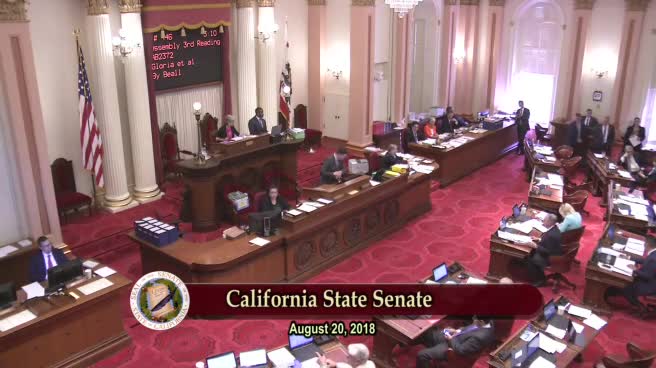
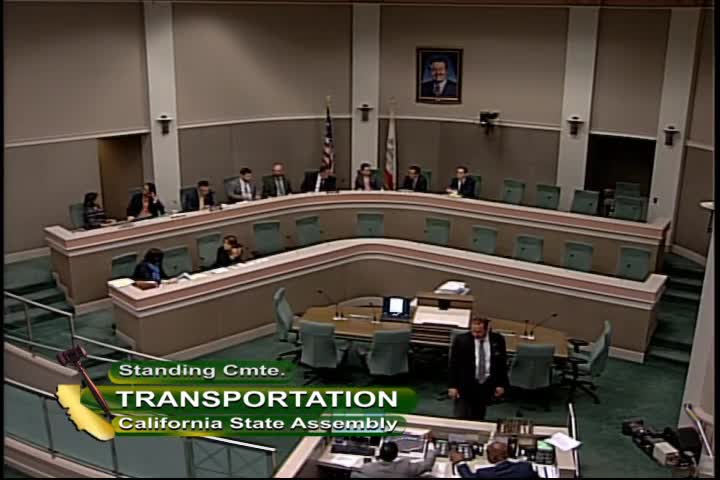
Bill Author