AB 2547: Teachers: Teacher Residency Grant Program: Local Solutions Grant Program: evaluation.
- Session Year: 2017-2018
- House: Assembly
- Latest Version Date: 2018-08-31
Existing law establishes a system of public elementary and secondary education in this state. Existing law establishes local educational agencies, including school districts and county offices of education, throughout the state, and authorizes these agencies to provide instruction to pupils in kindergarten and grades 1 to 12, inclusive. Existing law requires the Commission on Teacher Credentialing, among other duties, to establish standards for the issuance and renewal of credentials, certificates, and permits.
Existing law appropriates $75,000,000 from the General Fund to the commission for the 201819 fiscal year to establish the Teacher Residency Grant Program, including $50,000,000 to provide one-time competitive grants to develop new, or expand existing, teacher residency programs that recruit and support the preparation of special education teachers, and $25,000,000 to provide one-time competitive grants to develop new, or expand existing, teacher residency programs that recruit and support the preparation of bilingual education teachers, and science, technology, engineering, or mathematics (STEM) teachers.
Existing law appropriates $50,000,000 from the General Fund to the commission for the 201819 fiscal year to establish the Local Solutions Grant Program to provide one-time competitive grants to specified types of local educational agencies to develop and implement new, or expand existing, locally identified solutions that address a local need for special education teachers.
Existing law requires the commission to conduct an evaluation of the Teacher Residency Grant Program and the Local Solutions Grant Program to determine the effectiveness of these programs in recruiting, developing support systems for, and retaining special education and bilingual education teachers and teachers in the STEM subjects. Existing law requires the commission to provide a report on the evaluation to the Department of Finance and the appropriate fiscal and policy committees of the Legislature by December 1, 2023.
Existing law repeals the above-described provisions on January 1, 2027.
This bill would instead require the commission, with respect to this evaluation, to provide an initial implementation report to the Department of Finance and the appropriate fiscal and policy committees of the Legislature on or before December 1, 2023, and a final report to these entities on or before December 31, 2026. The bill would specify various topics and types of data that would be required to be included in the evaluation.
The bill would also delay the repeal of these programs until January 1, 2029.
Existing law establishes a system of public elementary and secondary education in this state. Existing law establishes local educational agencies, including school districts and county offices of education, throughout the state, and authorizes these agencies to provide instruction to pupils in kindergarten and grades 1 to 12, inclusive. Existing law requires the Commission on Teacher Credentialing, among other duties, to establish standards for the issuance and renewal of credentials, certificates, and permits.
Existing law appropriates $75,000,000 from the General Fund to the commission for the 201819 fiscal year to establish the Teacher Residency Grant Program, including $50,000,000 to provide one-time competitive grants to develop new, or expand existing, teacher residency programs that recruit and support the preparation of special education teachers, and $25,000,000 to provide one-time competitive grants to develop new, or expand existing, teacher residency programs that recruit and support the preparation of bilingual education teachers, and science, technology, engineering, or mathematics (STEM) teachers.
Existing law appropriates $50,000,000 from the General Fund to the commission for the 201819 fiscal year to establish the Local Solutions Grant Program to provide one-time competitive grants to specified types of local educational agencies to develop and implement new, or expand existing, locally identified solutions that address a local need for special education teachers.
Existing law requires the commission to conduct an evaluation of the Teacher Residency Grant Program and the Local Solutions Grant Program to determine the effectiveness of these programs in recruiting, developing support systems for, and retaining special education and bilingual education teachers and teachers in the STEM subjects. Existing law requires the commission to provide a report on the evaluation to the Department of Finance and the appropriate fiscal and policy committees of the Legislature by December 1, 2023.
Existing law repeals the above-described provisions on January 1, 2027.
This bill would instead require the commission, with respect to this evaluation, to provide an initial implementation report to the Department of Finance and the appropriate fiscal and policy committees of the Legislature on or before December 1, 2023, and a final report to these entities on or before December 31, 2026. The bill would specify various topics and types of data that would be required to be included in the evaluation.
The bill would also extend the operation delay the repeal of these programs until July 1, 2027. January 1, 2029.
Existing law establishes a system of public elementary and secondary education in this state. Existing law establishes local educational agencies, including school districts and county offices of education, throughout the state, and authorizes these agencies to provide instruction to pupils in kindergarten and grades 1 to 12, inclusive. Existing law requires the Commission on Teacher Credentialing, among other duties, to establish standards for the issuance and renewal of credentials, certificates, and permits.
This bill would enact the California Teacher Corps Act of 2018, under which the Commission on Teacher Credentialing would make grants to applicant local educational agencies and consortia of local educational agencies to assist these agencies in establishing, maintaining, or expanding teacher residency programs, as defined. The teacher residency programs established by the bill would be defined as school-based teacher preparation programs in which a prospective teacher would teach alongside an experienced mentor teacher, as defined, while also receiving teacher training instruction in a teacher credentialing program in a qualified institution of higher education. The bill would establish eligibility standards for persons who apply for participation in the teacher residency programs established by the bill.The bill would provide that its operation, for the 201819, 201920, and 202021 fiscal years, would be subject to the enactment, in the annual Budget Acts or other statutes, of appropriations from the General Fund to the commission to make grants to applicant local educational agencies and consortia of local educational agencies, as described above.Existing law appropriates $75,000,000 from the General Fund to the commission for the 201819 fiscal year to establish the Teacher Residency Grant Program, including $50,000,000 to provide one-time competitive grants to develop new, or expand existing, teacher residency programs that recruit and support the preparation of special education teachers, and $25,000,000 to provide one-time competitive grants to develop new, or expand existing, teacher residency programs that recruit and support the preparation of bilingual education teachers, and science, technology, engineering, or mathematics (STEM) teachers.
Existing law appropriates $50,000,000 from the General Fund to the commission for the 201819 fiscal year to establish the Local Solutions Grant Program to provide one-time competitive grants to specified types of local educational agencies to develop and implement new, or expand existing, locally identified solutions that address a local need for special education teachers.
Existing law requires the commission to conduct an evaluation of the Teacher Residency Grant Program and the Local Solutions Grant Program to determine the effectiveness of these programs in recruiting, developing support systems for, and retaining special education and bilingual education teachers and teachers in the STEM subjects. Existing law requires the commission to provide a report on the evaluation to the Department of Finance and the appropriate fiscal and policy committees of the Legislature by December 1, 2023.
Existing law repeals the above-described provisions on January 1, 2027.
This bill would instead require the commission, with respect to this evaluation, to provide an initial implementation report to the Department of Finance and the appropriate fiscal and policy committees of the Legislature on or before December 1, 2023, and a final report to these entities on or before December 31, 2026. The bill would specify various topics and types of data that would be required to be included in the evaluation.
The bill would also extend the operation of these programs until July 1, 2027.
Existing law establishes a system of public elementary and secondary education in this state. Existing law establishes local educational agencies, including school districts and county offices of education, throughout the state, and authorizes these agencies to provide instruction to pupils in kindergarten and grades 1 to 12, inclusive.
This bill would enact the California Teacher Corps Act of 2018, under which the Superintendent of Public Instruction Commission on Teacher Credentialing would make grants to applicant local educational agencies and consortia of local educational agencies to assist these agencies in establishing, maintaining, or expanding teacher residency programs, as defined. The teacher residency programs established by the bill would be defined as school-based teacher preparation programs in which a prospective teacher would teach alongside an experienced mentor teacher, as defined, while also receiving teacher training instruction in a teacher credentialing program in a qualified institution of higher education. The bill would establish eligibility standards for persons who apply for participation in the teacher residency programs established by the bill.
ThisThe bill would provide that its operation, for the 201819, 201920, and 202021 fiscal years, would be subject to the enactment, in the annual Budget Acts or other statutes, of appropriations from the General Fund to the Superintendent commission to make grants to applicant local educational agencies and consortia of local educational agencies, as described above.
Existing law establishes a system of public elementary and secondary education in this state. Existing law establishes local educational agencies, including school districts and county offices of education, throughout the state, and authorizes these agencies to provide instruction to pupils in kindergarten and grades 1 to 12, inclusive.
This bill would enact the California Teacher Corps Act of 2018, under which the Superintendent of Public Instruction would make grants to applicant local educational agencies and consortia of local educational agencies to assist these agencies in establishing, maintaining, or expanding teacher residency programs, as defined. The teacher residency programs established by the bill would be defined as school-based teacher preparation programs in which a prospective teacher would teach alongside an experienced mentor teacher, as defined, while also receiving teacher training instruction in a teacher credentialing program in a qualified institution of higher education. The bill would establish eligibility standards for persons who apply for participation in the teacher residency programs established by the bill.
This bill would provide that its operation, for the 201819, 201920, and 202021 fiscal years, would be subject to the enactment, in the annual Budget Acts or other statutes, of appropriations from the General Fund to the Superintendent to make grants to applicant local educational agencies and consortia of local educational agencies, as described above.
The Planning and Zoning Law, among other things, requires the legislative body of each county and city to adopt a comprehensive, long-term general plan for the physical development of the county or city and of any land outside its boundaries that relates to its planning, and provides for the adoption and administration of zoning laws, ordinances, rules, and regulations by counties and cities.This bill would make nonsubstantive changes to the Planning and Zoning Law.The Planning and Zoning Law, among other things, requires the legislative body of each county and city to adopt a comprehensive, long-term general plan for the physical development of the county or city and of any land outside its boundaries that relates to its planning, and provides for the adoption and administration of zoning laws, ordinances, rules, and regulations by counties and cities.
This bill would make nonsubstantive changes to the Planning and Zoning Law.
(a)The commission shall conduct an evaluation of the Teacher Residency Grant Program established in Section 44415 and the Local Solutions Grant Program established in Section 44416 to determine the effectiveness of these programs in recruiting, developing support systems for, and retaining special education, bilingual education, and science, technology, engineering, and mathematics (STEM) teachers and, with respect to this evaluation, to provide an initial implementation report to the Department of Finance and the appropriate fiscal and policy committees of the Legislature on or before December 1, 2023, and a final report to the Department of Finance and the appropriate fiscal and policy committees of the Legislature on or before December 31, 2026.
(b)The evaluation of the Teacher Residency Grant Program conducted pursuant to this section shall include, but not necessarily be limited to, all of the following:
(1)Information regarding Teacher Residency Grant Program implementation, including all of the following:
(A)The number of grant applicants and the number of residents proposed to be trained in each of the following subject areas: special education, bilingual education, and the STEM subjects.
(B)The number of residency grants awarded, the number of capacity grants awarded pursuant to subdivision (r) of Section 44415, and the amount of those grants.
(C)The grant recipients, including how each of them meets the priorities established pursuant to paragraph (2) of subdivision (i) of Section 44415.
(D)The partnering teacher preparation programs, and where applicable, other partners.
(E)The mean and range amount of total financial support provided to residents, such as stipends or tuition support.
(F)The average per resident costs of the program, including matching funds provided by the grantee and sources of those funds.
(2)Information regarding the effectiveness of the Teacher Residency Grant Program in recruiting, developing support systems for, and retaining special education and bilingual education teachers and teachers in the STEM subjects. Evidence of effectiveness shall include, but not necessarily be limited to, all of the following:
(A)The percentage of program participants who complete the residency program and earn a preliminary teaching credential.
(B)The extent to which program graduates are teaching in high-need subjects and locations, including all of the following:
(i)The number and percentage of program graduates who teach in special education, bilingual education, and STEM subjects within the boundaries of the grant recipient and the number and percentage who continue to teach in California outside the boundaries of the grant recipient that sponsored the candidate.
(ii)The number and percentage of program graduates who teach in hard-to-staff schools, as determined by the grant recipient.
(iii)The number and percentage of program graduates who teach in a school where 50 percent or more of the enrolled pupils are eligible for free or reduced-price meals.
(C)The extent to which program graduates increase the diversity of the grant recipients workforce, including the number and percentage of program graduates who are members of underrepresented groups.
(D)Teacher retention rates for program graduates, within the boundaries of the grant recipient and within California public schools.
(E)Residency program graduate achievement, as determined by first-time pass rates on the state teaching performance assessment required pursuant to Section 44320.2.
(F)The percentage of program participants who complete induction and earn a clear teaching credential.
(G)Results from candidate and program graduate surveys of the quality of preparation they received.
(3)Information regarding all of the following:
(A)Best practices found to be effective in implementing the program.
(B)Factors promoting or hindering program implementation.
(C)Lessons learned in order to inform future investments in this type of program.
(c)The evaluation of the Local Solutions Grant Program conducted pursuant to this section shall include, but not necessarily be limited to, both of the following:
(1)Information regarding Local Solutions Grant Program implementation, including all of the following:
(A)The number and amount of grants awarded.
(B)Information regarding the grant recipients, including grantee size, location, demographics, and urbanicity.
(C)The percentage of grant awards allocated to all of the following types of activities, including any reasonable subcategories, and the number of teachers participating in each activity:
(i)Recruitment, including signing bonuses for newly credentialed teachers who earn an education specialist credential.
(ii)Preparation, including teacher service scholarships and student debt payment.
(iii)Induction.
(iv)Professional learning.
(v)Teacher career pathways.
(vi)Other pertinent activities.
(2)Information regarding the effectiveness of the Local Solutions Grant Program in recruiting, developing support systems for, and retaining special education teachers, including, but not necessarily limited to, all of the following:
(A)A reduction in teacher turnover rates for special education teachers within the boundaries of the grant recipient.
(B)The number of special education teachers within the boundaries of the grant recipient serving on intern credentials, permits, or waivers.
(C)Best practices found to be effective in implementing the program.
(D)Factors promoting or hindering program implementation.
(E)Lessons learned in order to inform future investments in this type of program.
SEC. 2.Section 44418 of the Education Code is amended to read:44418.This article shall remain in effect only until January 1, 2029, and as of that date is repealed.
(a)The commission shall conduct an evaluation of the Teacher Residency Grant Program established in Section 44415 and the Local Solutions Grant Program established in Section 44416 to determine the effectiveness of these programs in recruiting, developing support systems for, and retaining special education, bilingual education, and science, technology, engineering, and mathematics (STEM) teachers and, with respect to this evaluation, to provide an initial implementation report to the Department of Finance and the appropriate fiscal and policy committees of the Legislature on or before December 1, 2023, and a final report to the Department of Finance and the appropriate fiscal and policy committees of the Legislature on or before December 31, 2026.
(b)The evaluation of the Teacher Residency Grant Program conducted pursuant to this section shall include, but not necessarily be limited to, all of the following:
(1)Information regarding Teacher Residency Grant Program implementation, including all of the following:
(A)The number of grant applicants and the number of residents proposed to be trained in each of the following subject areas: special education, bilingual education, and the STEM subjects.
(B)The number of residency grants awarded, the number of capacity grants awarded pursuant to subdivision (r) of Section 44415, and the amount of those grants.
(C)The grant recipients, including how each of them meets the priorities established pursuant to paragraph (2) of subdivision (i) of Section 44415.
(D)The partnering teacher preparation programs, and where applicable, other partners.
(E)The mean and range amount of total financial support provided to residents, such as stipends or tuition support.
(F)The average per resident costs of the program, including matching funds provided by the grantee and sources of those funds.
(2)Information regarding the effectiveness of the Teacher Residency Grant Program in recruiting, developing support systems for, and retaining special education and bilingual education teachers and teachers in the STEM subjects. Evidence of effectiveness shall include, but not necessarily be limited to, all of the following:
(A)The percentage of program participants who complete the residency program and earn a preliminary teaching credential.
(B)The extent to which program graduates are teaching in high-need subjects and locations, including all of the following:
(i)The number and percentage of program graduates who teach in special education, bilingual education, and STEM subjects within the boundaries of the grant recipient and the number and percentage who continue to teach in California outside the boundaries of the grant recipient that sponsored the candidate.
(ii)The number and percentage of program graduates who teach in hard-to-staff schools, as determined by the grant recipient.
(iii)The number and percentage of program graduates who teach in a school where 50 percent or more of the enrolled pupils are eligible for free or reduced-price meals.
(C)The extent to which program graduates increase the diversity of the grant recipients workforce, including the number and percentage of program graduates who are members of underrepresented groups.
(D)Teacher retention rates for program graduates, within the boundaries of the grant recipient and within California public schools.
(E)Residency program graduate achievement, as determined by first-time pass rates on the state teaching performance assessment required pursuant to Section 44320.2.
(F)The percentage of program participants who complete induction and earn a clear teaching credential.
(G)Results from candidate and program graduate surveys of the quality of preparation they received.
(3)Information regarding all of the following:
(A)Best practices found to be effective in implementing the program.
(B)Factors promoting or hindering program implementation.
(C)Lessons learned in order to inform future investments in this type of program.
(c)The evaluation of the Local Solutions Grant Program conducted pursuant to this section shall include, but not necessarily be limited to, both of the following:
(1)Information regarding Local Solutions Grant Program implementation, including all of the following:
(A)The number and amount of grants awarded.
(B)Information regarding the grant recipients, including grantee size, location, demographics, and urbanicity.
(C)The percentage of grant awards allocated to all of the following types of activities, including any reasonable subcategories, and the number of teachers participating in each activity:
(i)Recruitment, including signing bonuses for newly credentialed teachers who earn an education specialist credential.
(ii)Preparation, including teacher service scholarships and student debt payment.
(iii)Induction.
(iv)Professional learning.
(v)Teacher career pathways.
(vi)Other pertinent activities.
(2)Information regarding the effectiveness of the Local Solutions Grant Program in recruiting, developing support systems for, and retaining special education teachers, including, but not necessarily limited to, all of the following:
(A)A reduction in teacher turnover rates for special education teachers within the boundaries of the grant recipient.
(B)The number of special education teachers within the boundaries of the grant recipient serving on intern credentials, permits, or waivers.
(C)Best practices found to be effective in implementing the program.
(D)Factors promoting or hindering program implementation.
(E)Lessons learned in order to inform future investments in this type of program.
SEC. 2.Section 44418 of the Education Code is amended to read:44418.This article shall become inoperative on July 1, 2027. remain in effect only until January 1, 2029, and as of that date is repealed.
(a)The commission shall conduct an evaluation of the Teacher Residency Grant Program established in Section 44415 and the Local Solutions Grant Program established in Section 44416 to determine the effectiveness of these programs in recruiting, developing support systems for, and retaining special education, and bilingual education, and science, technology, engineering, and mathematics, mathematics (STEM) teachers and provide a and, with respect to this evaluation, to provide an initial implementation report to the Department of Finance and the appropriate fiscal and policy committees of the Legislature by December 1, 2023. on or before December 1, 2023, and a final report to the Department of Finance and the appropriate fiscal and policy committees of the Legislature on or before December 31, 2026.
(b)The evaluation of the Teacher Residency Grant Program conducted pursuant to this section shall include, but not necessarily be limited to, all of the following:
(1)Information regarding Teacher Residency Grant Program implementation, including all of the following:
(A)The number of grant applicants and the number of residents proposed to be trained in each of the following subject areas: special education, bilingual education, and the STEM subjects.
(B)The number of residency grants awarded, the number of capacity grants awarded pursuant to subdivision (r) of Section 44415, and the amount of those grants.
(C)The grant recipients, including how each of them meets the priorities established pursuant to paragraph (2) of subdivision (i) of Section 44415.
(D)The partnering teacher preparation programs, and where applicable, other partners.
(E)The mean and range amount of total financial support provided to residents, such as stipends or tuition support.
(F)The average per resident costs of the program, including matching funds provided by the grantee and sources of those funds.
(2)Information regarding the effectiveness of the Teacher Residency Grant Program in recruiting, developing support systems for, and retaining special education and bilingual education teachers and teachers in the STEM subjects. Evidence of effectiveness shall include, but not necessarily be limited to, all of the following:
(A)The percentage of program participants who complete the residency program and earn a preliminary teaching credential.
(B)The extent to which program graduates are teaching in high-need subjects and locations, including all of the following:
(i)The number and percentage of program graduates who teach in special education, bilingual education, and STEM subjects within the boundaries of the grant recipient and the number and percentage who continue to teach in California outside the boundaries of the grant recipient that sponsored the candidate.
(ii)The number and percentage of program graduates who teach in hard-to-staff schools, as determined by the grant recipient.
(iii)The number and percentage of program graduates who teach in a school where 50 percent or more of the enrolled pupils are eligible for free or reduced-price meals.
(C)The extent to which program graduates increase the diversity of the grant recipients workforce, including the number and percentage of program graduates who are members of underrepresented groups.
(D)Teacher retention rates for program graduates, within the boundaries of the grant recipient and within California public schools.
(E)Residency program graduate achievement, as determined by first-time pass rates on the state teaching performance assessment required pursuant to Section 44320.2.
(F)The percentage of program participants who complete induction and earn a clear teaching credential.
(G)Results from candidate and program graduate surveys of the quality of preparation they received.
(3)Information regarding all of the following:
(A)Best practices found to be effective in implementing the program.
(B)Factors promoting or hindering program implementation.
(C)Lessons learned in order to inform future investments in this type of program.
(c)The evaluation of the Local Solutions Grant Program conducted pursuant to this section shall include, but not necessarily be limited to, both of the following:
(1)Information regarding Local Solutions Grant Program implementation, including all of the following:
(A)The number and amount of grants awarded.
(B)Information regarding the grant recipients, including grantee size, location, demographics, and urbanicity.
(C)The percentage of grant awards allocated to all of the following types of activities, including any reasonable subcategories, and the number of teachers participating in each activity:
(i)Recruitment, including signing bonuses for newly credentialed teachers who earn an education specialist credential.
(ii)Preparation, including teacher service scholarships and student debt payment.
(iii)Induction.
(iv)Professional learning.
(v)Teacher career pathways.
(vi)Other pertinent activities.
(2)Information regarding the effectiveness of the Local Solutions Grant Program in recruiting, developing support systems for, and retaining special education teachers, including, but not necessarily limited to, all of the following:
(A)A reduction in teacher turnover rates for special education teachers within the boundaries of the grant recipient.
(B)The number of special education teachers within the boundaries of the grant recipient serving on intern credentials, permits, or waivers.
(C)Best practices found to be effective in implementing the program.
(D)Factors promoting or hindering program implementation.
(E)Lessons learned in order to inform future investments in this type of program.
SEC. 2.Section 44418 of the Education Code is amended to read:44418.This article shall remain in effect only until January 1, 2027, and as of that date is repealed. become inoperative on July 1, 2027.
SECTION 1.Chapter 3.9 (commencing with Section 44795) is added to Part 25 of Division 3 of Title 2 of the Education Code, to read:3.9.California Teacher Corps Act of 201844795.This act shall be known, and may be cited, as the California Teacher Corps Act of 2018.44795.5.The Legislature finds and declares all of the following:(a)The shortage of qualified teachers in California is reaching critical levels in a number of teaching areas.(b)Education experts agree that shortages of effective teachers in high-poverty schools and in specific teaching fields create a need for high-quality teachers who will enter, stay in, and be effective in these areas.(c)At least 30 percent of new teachers leave the profession in the first five years, and the proportions are generally higher in low-income communities.(d)Teacher shortages and high teacher turnover rates have a negative impact on pupil achievement and the quality of education.(e)Successful teacher preparation programs, and providing ongoing support, can make novice teachers effective more rapidly and can reduce teacher attrition.(f)Many new teachers lack such support, and, as a result, leave the profession.(g)Teacher candidates must see expert practices modeled, and must then practice them with ongoing mentoring support. Teacher preparation often lacks adequate or sufficient opportunities to learn under the direct supervision of expert teachers working in schools that effectively serve high-need pupils.(h)It is critical to develop programs that increase the probability that recruits will succeed and stay in the high-need classrooms where they are needed. Because many teacher candidates choose to teach where they grew up or went to college, it is important to have strong programs in urban and rural locations. Teacher residency programs effectively build teacher supply, since they recruit and prepare candidates in the school districts that sponsor them, in partnership with local preparation programs. Teacher residency programs have demonstrated the capacity to recruit, prepare, retain, and provide effective support for teachers.44796.For purposes of this chapter, the following terms have the following meanings:(a)Experienced mentor teacher means a teacher who meets all of the following requirements:(1)Has at least three years of teaching experience and a clear teaching credential in the field in which he or she will be mentoring.(2)Has a record of successful teaching.(3)Receives specific training for the mentor teacher role, and engages in ongoing professional learning and networking with other mentors.(4)Receives compensation or appropriate release time, or both, to serve as a mentor in the initial preparation or induction component of the teacher residency program. Compensation shall be ongoing as long as the mentor continues to serve in the role prescribed by the program.(b)Local educational agency includes, but is not necessarily limited to, a school district, county office of education, charter school, or charter management organization.(c)(1)Teacher residency program means a school-based teacher preparation program that is accredited by the Commission on Teacher Credentialing and in which a prospective teacher does all of the following:(A)Teaches at least one-half time alongside a teacher of record, who is an experienced mentor teacher, for at least one full academic year while engaging in initial preparation coursework.(B)Receives instruction in all of the following:(i)The teaching of the content area or areas in which the teacher will become certified to teach.(ii)Planning, curriculum development, and assessment.(iii)Learning and child development.(iv)Management of the classroom environment.(v)The use of culturally responsive practices and supports for language development, and supports for serving pupils with disabilities.(vi)Professional responsibilities, including interaction with families and colleagues.(C)Receives financial assistance and is provided a stipend.(D)Attains a preliminary teaching credential upon completion of the program.(E)Receives mentoring and induction support following the completion of the initial credential program necessary to obtain a clear credential and ongoing professional development and networking opportunities during his or her first years of teaching.(F)Has the option of completing a masters degree before completion of the program.(2)A teacher residency program does all of the following:(A)Seeks out individuals who meet the California Teaching Performance Expectations of the Commission on Teacher Credentialing and meet hiring needs of the local educational agency for difficult-to-fill areas, such as chronic teacher shortage areas, including special education, mathematics, science, and bilingual teachers.(B)Produces culturally responsive teachers who address specific pupil populations, local district initiatives and priorities, and teacher preparation emphasis while maintaining high state-established standards for credentials.(C)Allows residents to learn to teach in the same local educational agency in which they will work, learning the instructional initiatives and curriculum of the local educational agency.(D)Groups teacher candidates in cohorts to facilitate professional collaboration among residents, and places them in teaching schools or professional development programs that are organized to support a high-quality teacher learning experience in a supportive work environment.(E)Assigns a high priority to the recruiting of mid-career professionals, military veterans, and recent college graduates as prospective participants in the teacher residency program.(F)Builds coursework for residents and mentors around the classroom experience in ways that are aligned to pupil needs.(G)Offers structured feedback and coaching systems organized around the California Standards for the Teaching Profession to ensure that participants engage in a meaningful classroom teaching experience.(H)Ensures that candidates are prepared to pass a teacher performance assessment if that is required by the state as a condition of the initial license.(I)Maintains a program evaluation system that focuses on continual improvement for residents, mentors, teacher education faculty, and the teacher residency program itself.(J)Is developed collaboratively with the certified exclusive bargaining representative, or, if none exists, teacher representatives within the local educational agency.(d)Commission means the Commission on Teacher Credentialing.44796.5. The operation of this chapter, for the 201819, 201920, and 202021 fiscal years, is subject to the enactment, in the annual Budget Acts or other statutes, of appropriations from the General Fund to the commission to make grants to local educational agencies or consortia of local educational agencies to assist those agencies to establish, maintain, or expand teacher residency programs, with first priority given to local educational agencies or consortia of local educational agencies with programs that target chronic teacher shortage areas, including special education, mathematics, science, and bilingual teachers. Preference may also be given to local educational agencies or consortia of local educational agencies on the basis of their per pupil allocation of funds pursuant to Part A of Title II of the federal Every Student Succeeds Act (Public Law 114-95) for the most recent school year. These local educational agencies shall work with one or more institutions of higher education providing teacher preparation, and may work with other community partners or nonprofit organizations to develop and implement teacher residency programs of preparation and mentoring for prospective teachers who will be supported through teacher residency program funds and subsequently employed by the sponsoring local educational agency.44797.(a)To be eligible to participate in a teacher residency program under this chapter, a prospective participant shall become enrolled in a teacher credentialing program in a university or college that satisfies either of the following conditions:(1)It has entered into a written agreement relating to that program with the local educational agency or consortia of local educational agencies that is the recipient of a grant under this chapter.(2)It has been determined to meet the requirements of Article 7 (commencing with Section 44320) of Chapter 2 by the Commission on Teacher Credentialing.(b)A participant in a teacher residency program under this chapter shall complete, under the supervision of an experienced mentor teacher, not fewer than nine months of teaching a class or set of classes in a school chosen by the local educational agency that is the recipient of a grant under this chapter.(c)(1)A participant in a teacher residency program under this chapter shall agree in writing to be placed as a teacher of record in a school within the local educational agency after successfully completing the initial year of preparation.(2)Placement under this subdivision shall be for a period of at least four school years beginning with the school year that begins after the participant successfully completes the initial year of preparation and obtains a preliminary teaching credential. Once licensed, a participant shall be eligible to be hired as a teacher in a difficult-to-fill subject area. A participant who fails to complete the period of the placement, or the first four school years of the placement if the period is more than four school years, is required to pay back the cost of the training on a pro rata basis, relative to the amount of time served in proportion to the total pledged. A participant shall have five school years to complete the four-school-year teaching commitment.(d)If a participant is unable to complete a school year of teaching, that school year may still be counted toward the required four complete and consecutive school years if any of the following occur:(1)The participant has completed at least one-half of the school year.(2)The employer deems the participant to have fulfilled his or her contract requirements for the school year for the purposes of salary increases, tenure, and retirement.(3)The participant was not able to teach due to the financial circumstances of the local educational agency, including a decision to not reelect the employee for the next succeeding school year.(4)The participant has a condition covered under the federal Family and Medical Leave Act of 1993 (29 U.S.C. Sec. 2601 et seq.) or similar state law.(5)The participant was called or ordered to active duty status for more than 30 days as a member of a reserve component of the Armed Forces of the United States.44797.5.(a)A grant under this chapter shall be in an amount of twenty thousand dollars ($20,000) per resident of the jurisdiction of the local educational agency, as matched by that local educational agency. Funding may be applied to expenditures for any of the following in accordance with any relevant collective bargaining agreement: master teachers stipends, stipends and tuition assistance for residents, teacher residency program management, and costs of mentoring and induction following initial preparation.(b)The commission may make grants under this chapter each fiscal year, commencing with the 201819 fiscal year until the 202021 fiscal year. A local educational agency or consortia of local educational agencies shall not receive more than one award for an application under this chapter in any fiscal year, unless sufficient funds remain after awarding all other qualified applicants.(c)To receive a grant under this chapter, a local educational agency or consortia of local educational agencies shall submit to the commission an application at a time, in a manner, and containing information, prescribed by the commission.(d)The commission shall award grants under this chapter on a competitive basis, with first priority given to applicants that target chronic teacher shortage areas, including special education, mathematics, science, and bilingual teachers. Preferences may also be given to local educational agencies or consortia of local educational agencies on the basis of their per pupil allocation of funds pursuant to Part A of Title II of the federal Every Student Succeeds Act (Public Law 114-95) for the most recent school year.(e)The commission shall conduct an evaluation of the program established under this chapter to determine its effectiveness in recruiting and retaining high-quality teachers in chronic teacher shortage areas, including special education, mathematics, science, and bilingual teachers.(f)A local educational agency or consortia of local educational agencies that receives a grant under this chapter shall provide matching funds in an amount equal to 100 percent of grant funds provided to the local educational agency under this chapter to carry out the activities supported by the grant, which may be provided by community partners, institutions of higher education, or others.This act shall be known, and may be cited, as the California Teacher Corps Act of 2018.
44795.5.The Legislature finds and declares all of the following:
(a)The shortage of qualified teachers in California is reaching critical levels in a number of teaching areas.
(b)Education experts agree that shortages of effective teachers in high-poverty schools and in specific teaching fields create a need for high-quality teachers who will enter, stay in, and be effective in these areas.
(c)At least 30 percent of new teachers leave the profession in the first five years, and the proportions are generally higher in low-income communities.
(d)Teacher shortages and high teacher turnover rates have a negative impact on pupil achievement and the quality of education.
(e)Successful teacher preparation programs, and providing ongoing support, can make novice teachers effective more rapidly and can reduce teacher attrition.
(f)Many new teachers lack such support, and, as a result, leave the profession.
(g)Teacher candidates must see expert practices modeled, and must then practice them with ongoing mentoring support. Teacher preparation often lacks adequate or sufficient opportunities to learn under the direct supervision of expert teachers working in schools that effectively serve high-need pupils.
(h)It is critical to develop programs that increase the probability that recruits will succeed and stay in the high-need classrooms where they are needed. Because many teacher candidates choose to teach where they grew up or went to college, it is important to have strong programs in urban and rural locations. Teacher residency programs effectively build teacher supply, since they recruit and prepare candidates in the school districts that sponsor them, in partnership with local preparation programs. Teacher residency programs have demonstrated the capacity to recruit, prepare, retain, and provide effective support for teachers.
44796.For purposes of this chapter, the following terms have the following meanings:
(a)Experienced mentor teacher means a teacher who meets all of the following requirements:
(1)Has at least three years of teaching experience and a clear teaching credential in the field in which he or she will be mentoring.
(2)Has a record of successful teaching.
(3)Receives specific training for the mentor teacher role, and engages in ongoing professional learning and networking with other mentors.
(4)Receives compensation or appropriate release time, or both, to serve as a mentor in the initial preparation or induction component of the teacher residency program. Compensation shall be ongoing as long as the mentor continues to serve in the role prescribed by the program.
(b)Local educational agency includes, but is not necessarily limited to, a school district, county office of education, charter school, or charter management organization.
(c)(1)Teacher residency program means a school-based teacher preparation program that is accredited by the Commission on Teacher Credentialing and in which a prospective teacher does all of the following:
(A)Teaches at least one-half time alongside a teacher of record, who is designated as the an experienced mentor teacher, for at least one full academic year while engaging in initial preparation coursework.
(B)Receives instruction in all of the following:
(i)The teaching of the content area or areas in which the teacher will become certified to teach.
(ii)Planning, curriculum development, and assessment.
(iii)Learning and child development.
(iv)Management of the classroom environment.
(v)The use of culturally responsive practices, practices and supports for language development, and supports for serving pupils with disabilities.
(vi)Professional responsibilities, including interaction with families and colleagues.
(C)Receives financial assistance and is provided a stipend.
(D)Attains a preliminary teaching credential upon completion of the program.
(E)Receives mentoring and induction support following the completion of the initial credential program necessary to obtain a clear credential and ongoing professional development and networking opportunities during his or her first years of teaching.
(F)Has the option of completing a masters degree before completion of the program.
(2)A teacher residency program does all of the following:
(A)Seeks out individuals who meet the California Teaching Performance Expectations of the Commission on Teacher Credentialing and meet hiring needs of the local educational agency for difficult-to-fill areas, such as chronic teacher shortage areas, including special education, mathematics, science, and bilingual teachers.
(B)Produces culturally responsive teachers who address specific pupil populations, local district initiatives and priorities, and teacher preparation emphasis while maintaining high state-established standards for credentials.
(C)Allows residents to learn to teach in the same local educational agency in which they will work, learning the instructional initiatives and curriculum of the local educational agency.
(D)Groups teacher candidates in cohorts to facilitate professional collaboration among residents, and places them in teaching schools or professional development programs that are organized to support a high-quality teacher learning experience in a supportive work environment.
(E)Assigns a high priority to the recruiting of mid-career professionals, military veterans, and recent college graduates as prospective participants in the teacher residency program.
(F)Builds coursework for residents and mentors around the classroom experience in ways that are aligned to pupil needs.
(G)Offers structured feedback and coaching systems organized around the California Standards for the Teaching Profession to ensure that participants engage in a meaningful classroom teaching experience.
(H)Ensures that candidates are prepared to pass a teacher performance assessment if that is required by the state as a condition of the initial license.
(I)Maintains a program evaluation system that focuses on continual improvement for residents, mentors, teacher education faculty, and the teacher residency program itself.
(J)Is developed collaboratively with the certified exclusive bargaining representative, or, if none exists, teacher representatives within the local educational agency.
(d)Commission means the Commission on Teacher Credentialing.
44796.5.The operation of this chapter, for the 201819, 201920, and 202021 fiscal years, is subject to the enactment, in the annual Budget Acts or other statutes, of appropriations from the General Fund to the Superintendent commission to make grants to local educational agencies or consortia of local educational agencies to assist those agencies to establish, maintain, or expand teacher residency programs, with first priority given to local educational agencies or consortia of local educational agencies with programs that target chronic teacher shortage areas, including special education, mathematics, science, and bilingual teachers. Preference may also be given to local educational agencies or consortia of local educational agencies on the basis of their per pupil allocation of funds pursuant to Part A of Title II of the federal Every Student Succeeds Act (Public Law 114-95) for the most recent school year. These local educational agencies shall work with one or more institutions of higher education providing teacher preparation, and may work with other community partners or nonprofit organizations to develop and implement teacher residency programs of preparation and mentoring for prospective teachers who will be supported through teacher residency program funds and subsequently employed by the sponsoring local educational agency.
44797.(a)To be eligible to participate in a teacher residency program under this chapter, a prospective participant shall become enrolled in a teacher credentialing program in a university or college that satisfies either of the following conditions:
(1)It has entered into a written agreement relating to that program with the local educational agency or consortia of local educational agencies that is the recipient of a grant under this chapter.
(2)It has been determined to meet the requirements of Article 7 (commencing with Section 44320) of Chapter 2 by the Commission on Teacher Credentialing.
(b)A participant in a teacher residency program under this chapter shall complete, under the supervision of an experienced mentor teacher, not fewer than nine months of teaching a class or set of classes in a school chosen by the local educational agency that is the recipient of a grant under this chapter.
(c)(1)A participant in a teacher residency program under this chapter shall agree in writing to be placed as a teacher of record in a school within the local educational agency after successfully completing the initial year of preparation.
(2)Placement under this subdivision shall be for a period of at least four school years beginning with the school year that begins after the participant successfully completes the initial year of preparation and obtains a preliminary teaching credential. Once licensed, a participant shall be eligible to be hired as a teacher in a difficult-to-fill subject area. A participant who fails to complete the period of the placement, or the first four school years of the placement if the period is more than four school years, is required to pay back the cost of the training on a pro rata basis, relative to the amount of time served in proportion to the total pledged. A participant shall have five school years to complete the four-school-year teaching commitment.
(d)If a participant is unable to complete a school year of teaching, that school year may still be counted toward the required four complete and consecutive school years if any of the following occur:
(1)The participant has completed at least one-half of the school year.
(2)The employer deems the participant to have fulfilled his or her contract requirements for the school year for the purposes of salary increases, tenure, and retirement.
(3)The participant was not able to teach due to the financial circumstances of the local educational agency, including a decision to not reelect the employee for the next succeeding school year.
(4)The participant has a condition covered under the federal Family and Medical Leave Act of 1993 (29 U.S.C. Sec. 2601 et seq.) or similar state law.
(5)The participant was called or ordered to active duty status for more than 30 days as a member of a reserve component of the Armed Forces of the United States.
44797.5.(a)A grant under this chapter shall be in an amount of twenty thousand dollars ($20,000) per resident of the jurisdiction of the local educational agency, as matched by that local educational agency. Funding may be applied to expenditures for any of the following in accordance with any relevant collective bargaining agreement: master teachers stipends, stipends and tuition assistance for residents, teacher residency program management, and costs of mentoring and induction following initial preparation.
(b)The Superintendent commission may make grants under this chapter each fiscal year, commencing with the 201819 fiscal year until the 202021 fiscal year. A local educational agency or consortia of local educational agencies shall not receive more than one award for an application under this chapter in any fiscal year, unless sufficient funds remain after awarding all other qualified applicants.
(c)To receive a grant under this chapter, a local educational agency or consortia of local educational agencies shall submit to the Superintendent commission an application at a time, in a manner, and containing information, prescribed by the Superintendent. commission.
(d)The Superintendent commission shall award grants under this chapter on a competitive basis, with first priority given to applicants that target chronic teacher shortage areas, including special education, mathematics, science, and bilingual teachers. Preferences may also be given to local educational agencies or consortia of local educational agencies on the basis of their per pupil allocation of funds pursuant to Part A of Title II of the federal Every Student Succeeds Act (Public Law 114-95) for the most recent school year.
(e)The Superintendent commission shall conduct an evaluation of the program established under this chapter to determine its effectiveness in recruiting and retaining high-quality teachers in chronic teacher shortage areas, including special education, mathematics, science, and bilingual teachers.
(f)A local educational agency or consortia of local educational agencies that receives a grant under this chapter shall provide matching funds in an amount equal to 100 percent of grant funds provided to the local educational agency under this chapter to carry out the activities supported by the grant, which may be provided by community partners, institutions of higher education, or others.
This act shall be known, and may be cited, as the California Teacher Corps Act of 2018.
44795.5.The Legislature finds and declares all of the following:
(a)The shortage of qualified teachers in California is reaching critical levels in a number of teaching areas.
(b)Education experts agree that shortages of effective teachers in high-poverty schools and in specific teaching fields create a need for high-quality teachers who will enter, stay in, and be effective in these areas.
(c)At least 30 percent of new teachers leave the profession in the first five years, and the proportions are generally higher in low-income communities.
(d)Teacher shortages and high teacher turnover rates have a negative impact on pupil achievement and the quality of education.
(e)Successful teacher preparation programs, and providing ongoing support, can make novice teachers effective more rapidly and can reduce teacher attrition.
(f)Many new teachers lack such support, and, as a result, leave the profession.
(g)Teacher candidates must see expert practices modeled, and must then practice them with ongoing mentoring support. Teacher preparation often lacks adequate or sufficient opportunities to learn under the direct supervision of expert teachers working in schools that effectively serve high-need pupils.
(h)It is critical to develop programs that increase the probability that recruits will succeed and stay in the high-need classrooms where they are needed. Because many teacher candidates choose to teach where they grew up or went to college, it is important to have strong programs in hard-to-staff urban and rural locations. Teacher residency programs effectively build teacher supply, since they recruit and prepare candidates in the school districts that sponsor them, in partnership with local preparation programs. Teacher residency programs have demonstrated the capacity to recruit, prepare, retain, and provide effective support for teachers in hard-to-staff schools. teachers.
44796.For purposes of this chapter, the following terms have the following meanings:
(a)Experienced mentor teacher means a teacher who meets all of the following requirements:
(1)Has at least three years of teaching experience and a clear teaching credential in the field in which he or she will be mentoring.
(2)Has taught in a hard-to-staff school.(3)(2)Has a record of successful teaching.
(4)(3)Receives specific training for the mentor teacher role, and engages in ongoing professional learning and networking with other mentors. Compensation shall be ongoing as long as the mentor continues to serve in the role prescribed by the program.
(5)(4)Receives compensation or appropriate release time, or both, to serve as a mentor in the initial preparation or induction component of the teacher residency program. Compensation shall be ongoing as long as the mentor continues to serve in the role prescribed by the program.
(b)Hard-to-staff schools shall be determined by the governing board or body of the local educational agency.(c)(b)Local educational agency includes, but is not necessarily limited to, a school district, county office of education, charter school, or charter management organization.
(d)(c)(1)Teacher residency program means a school-based teacher preparation program that is accredited by the Commission on Teacher Credentialing and in which a prospective teacher does all of the following:
(A)Teaches at least one-half time alongside a teacher of record, who is designated as the mentor teacher, for at least one full academic year while engaging in initial preparation coursework.
(B)Receives instruction in all of the following:
(i)The teaching of the content area or areas in which the teacher will become certified to teach.
(ii)Planning, curriculum development, and assessment.
(iii)Learning and child development.
(iv)Management of the classroom environment.
(v)The use of culturally responsive practices, supports for language development, and supports for serving pupils with disabilities.
(vi)Professional responsibilities, including interaction with families and colleagues.
(C)Receives financial assistance and provides is provided a stipend.
(D)Attains a preliminary teaching credential upon completion of the program.
(E)Receives mentoring and induction support following the completion of the initial credential program necessary to obtain a clear credential and ongoing professional development and networking opportunities during his or her first years of teaching.
(F)Has the option of completing a masters degree before completion of the program.
(2)A teacher residency program does all of the following:
(A)Seeks out individuals who meet the California Teaching Performance Expectations of the Commission on Teacher Credentialing and meet hiring needs of the local educational agency for difficult-to-fill areas, such as chronic teacher shortage areas, including special education, mathematics, science, and bilingual teachers, and hard-to-staff schools. teachers.
(B)Produces culturally responsive teachers who address specific pupil populations, local district initiatives and priorities, and teacher preparation emphasis while maintaining high state-established standards for credentials.
(C)Allows residents to learn to teach in the same local educational agency in which they will work, learning the instructional initiatives and curriculum of the local educational agency.
(D)Groups teacher candidates in cohorts to facilitate professional collaboration among residents, and places them in teaching schools or professional development programs that are organized to support a high-quality teacher learning experience in a supportive work environment.
(E)Assigns a high priority to the recruiting of mid-career professionals, military veterans, and recent college graduates as prospective participants in the teacher residency program.
(F)Builds coursework for residents and mentors around the classroom experience in ways that are aligned to pupil needs.
(G)Offers structured feedback and coaching systems organized around the California Standards for the Teaching Profession to ensure that participants engage in a meaningful classroom teaching experience.
(H)Ensures that candidates are prepared to pass a teacher performance assessment if that is required by the state as a condition of the initial license.
(I)Maintains a program evaluation system that focuses on continual improvement for residents, mentors, teacher education faculty, and the teacher residency program itself.
(J)Is developed collaboratively with the certified exclusive bargaining representative, or, if none exists, teacher representatives within the local educational agency.
44796.5.The operation of this chapter, for the 201819, 201920, and 202021 fiscal years, is subject to the enactment, in the annual Budget Acts or other statutes, of appropriations from the General Fund to the Superintendent to make grants to local educational agencies or consortia of local educational agencies to assist those agencies to establish, maintain, or expand teacher residency programs, with first priority given to local educational agencies or consortia of local educational agencies with programs that target chronic teacher shortage areas, including special education, mathematics, science, and bilingual teachers. Preference may also be given to local educational agencies or consortia of local educational agencies on the basis of their per pupil allocation of funds pursuant to Part A of Title II of the federal Every Student Succeeds Act (Public Law 114-95) for the most recent school year. These local educational agencies shall work with one or more institutions of higher education providing teacher preparation, and may work with other community partners or nonprofit organizations to develop and implement teacher residency programs of preparation and mentoring for prospective teachers who will be supported through teacher residency program funds and subsequently employed by the sponsoring local educational agency.
44797.(a)To be eligible to participate in a teacher residency program under this chapter, a prospective participant shall become enrolled in a teacher credentialing program in a university or college that satisfies either of the following conditions:
(1)It has entered into a written agreement relating to that program with the local educational agency or consortia of local educational agencies that is the recipient of a grant under this chapter.
(2)It has been determined to meet the requirements of Article 7 (commencing with Section 44320) of Chapter 2 by the Commission on Teacher Credentialing.
(b)A participant in a teacher residency program under this chapter shall complete, under the supervision of an experienced mentor teacher, not fewer than nine months of teaching a class or set of classes in a school chosen by the local educational agency that is the recipient of a grant under this chapter.
(c)(1)A participant in a teacher residency program under this chapter shall agree in writing to be placed as a teacher of record in a school within the local educational agency after successfully completing the initial year of preparation.
(2)Placement under this subdivision shall be for a period of at least four school years beginning with the school year that begins after the participant successfully completes the initial year of preparation and obtains a preliminary teaching credential. Once licensed, a participant shall be eligible to be hired as a teacher in a hard-to-staff, underserved area or in a difficult-to-fill subject area. A participant who fails to complete the period of the placement, or the first four school years of the placement if the period is more than four school years, is required to pay back the cost of the training on a pro rata basis, relative to the amount of time served in proportion to the total pledged. A participant shall have five school years to complete the four-school-year teaching commitment.
(d)If a participant is unable to complete a school year of teaching, that school year may still be counted toward the required four complete and consecutive school years if any of the following occur:
(1)The participant has completed at least one-half of the school year.
(2)The employer deems the participant to have fulfilled his or her contract requirements for the school year for the purposes of salary increases, tenure, and retirement.
(3)The participant was not able to teach due to the financial circumstances of the local educational agency, including a decision to not reelect the employee for the next succeeding school year.
(4)The participant has a condition covered under the federal Family and Medical Leave Act of 1993 (29 U.S.C. Sec. 2601 et seq.) or similar state law.
(5)The participant was called or ordered to active duty status for more than 30 days as a member of a reserve component of the Armed Forces of the United States.
44797.5.(a)A grant under this chapter shall be in an amount of twenty thousand dollars ($20,000) per resident of the jurisdiction of the local educational agency, as matched by that local educational agency. Funding may be applied to expenditures for any of the following in accordance with any relevant collective bargaining agreement: master teachers stipends, stipends and tuition assistance for residents, teacher residency program management, and costs of mentoring and induction following initial preparation.
(b)The Superintendent may make grants under this chapter each fiscal year, commencing with the 201819 fiscal year until the 202021 fiscal year. A local educational agency or consortia of local educational agencies shall not receive more than one award for an application under this chapter in any fiscal year, unless sufficient funds remain after awarding all other qualified applicants.
(c)To receive a grant under this chapter, a local educational agency or consortia of local educational agencies shall submit to the Superintendent an application at a time, in a manner, and containing information, prescribed by the Superintendent.
(d)The Superintendent shall award grants under this chapter on a competitive basis, with first priority given to applicants that target chronic teacher shortage areas, including special education, mathematics, science, and bilingual teachers. Preferences may also be given to local educational agencies or consortia of local educational agencies on the basis of their per pupil allocation of funds pursuant to Part A of Title II of the federal Every Student Succeeds Act (Public Law 114-95) for the most recent school year.
(e)The Superintendent shall conduct an evaluation of the program established under this chapter to determine its effectiveness in recruiting and retaining high-quality teachers in chronic teacher shortage areas, including special education, mathematics, science, and bilingual teachers, and hard-to-staff schools. teachers.
(f)A local educational agency or consortia of local educational agencies that receives a grant under this chapter shall provide matching funds in an amount equal to 100 percent of grant funds provided to the local educational agency under this chapter to carry out the activities supported by the grant, which may be provided by community partners, institutions of higher education, or others.
This act shall be known, and may be cited, as the California Teacher Corps Act of 2018.
44795.5.The Legislature finds and declares all of the following:
(a)The shortage of qualified teachers in California is reaching critical levels in a number of teaching areas.
(b)Education experts agree that shortages of effective teachers in high-poverty schools and in specific teaching fields create a need for high-quality teachers who will enter, stay in, and be effective in these areas.
(c)At least 30 percent of new teachers leave the profession in the first five years, and the proportions are generally higher in low-income communities.
(d)Teacher shortages and high teacher turnover rates have a negative impact on pupil achievement and the quality of education.
(e)Successful teacher preparation programs, and providing ongoing support, can make novice teachers effective more rapidly and can reduce teacher attrition.
(f)Many new teachers lack such support, and, as a result, leave the profession.
(g)Teacher candidates must see expert practices modeled, and must then practice them with ongoing mentoring support. Teacher preparation often lacks adequate or sufficient opportunities to learn under the direct supervision of expert teachers working in schools that effectively serve high-need pupils.
(h)It is critical to develop programs that increase the probability that recruits will succeed and stay in the high-need classrooms where they are needed. Because many teacher candidates choose to teach where they grew up or went to college, it is important to have strong programs in hard-to-staff urban and rural locations. Teacher residency programs effectively build teacher supply, since they recruit and prepare candidates in the school districts that sponsor them, in partnership with local preparation programs. Teacher residency programs have demonstrated the capacity to recruit, prepare, retain, and provide effective support for teachers in hard-to-staff schools.
44796.For purposes of this chapter, the following terms have the following meanings:
(a)Experienced mentor teacher means a teacher who meets all of the following requirements:
(1)Has at least three years of teaching experience and a clear teaching credential in the field in which he or she will be mentoring.
(2)Has taught in a hard-to-staff school.
(3)Has a record of successful teaching.
(4)Receives specific training for the mentor teacher role, and engages in ongoing professional learning and networking with other mentors. Compensation shall be ongoing as long as the mentor continues to serve in the role prescribed by the program.
(5)Receives compensation or appropriate release time, or both, to serve as a mentor in the initial preparation or induction component of the teacher residency program.
(b)Hard-to-staff schools shall be determined by the governing board or body of the local educational agency.
(c)Local educational agency includes, but is not necessarily limited to, a school district, county office of education, charter school, or charter management organization.
(d)(1)Teacher residency program means a school-based teacher preparation program that is accredited by the Commission on Teacher Credentialing and in which a prospective teacher does all of the following:
(A)Teaches at least one-half time alongside a teacher of record, who is designated as the mentor teacher, for at least one full academic year while engaging in initial preparation coursework.
(B)Receives instruction in all of the following:
(i)The teaching of the content area or areas in which the teacher will become certified to teach.
(ii)Planning, curriculum development, and assessment.
(iii)Learning and child development.
(iv)Management of the classroom environment.
(v)The use of culturally responsive practices, supports for language development, and supports for serving pupils with disabilities.
(vi)Professional responsibilities, including interaction with families and colleagues.
(C)Receives financial assistance and provides a stipend.
(D)Attains a preliminary teaching credential upon completion of the program.
(E)Receives mentoring and induction support following the completion of the initial credential program necessary to obtain a clear credential and ongoing professional development and networking opportunities during his or her first years of teaching.
(F)Has the option of completing a masters degree before completion of the program.
(2)A teacher residency program does all of the following:
(A)Seeks out individuals who meet the California Teaching Performance Expectations of the Commission on Teacher Credentialing and meet hiring needs of the local educational agency for difficult-to-fill areas, such as chronic teacher shortage areas, including special education, mathematics, science, and bilingual teachers, and hard-to-staff schools.
(B)Produces culturally responsive teachers who address specific pupil populations, local district initiatives and priorities, and teacher preparation emphasis while maintaining high state-established standards for credentials.
(C)Allows residents to learn to teach in the same local educational agency in which they will work, learning the instructional initiatives and curriculum of the local educational agency.
(D)Groups teacher candidates in cohorts to facilitate professional collaboration among residents, and places them in teaching schools or professional development programs that are organized to support a high-quality teacher learning experience in a supportive work environment.
(E)Assigns a high priority to the recruiting of mid-career professionals, military veterans, and recent college graduates as prospective participants in the teacher residency program.
(F)Builds coursework for residents and mentors around the classroom experience in ways that are aligned to pupil needs.
(G)Offers structured feedback and coaching systems organized around the California Standards for the Teaching Profession to ensure that participants engage in a meaningful classroom teaching experience.
(H)Ensures that candidates are prepared to pass a teacher performance assessment if that is required by the state as a condition of the initial license.
(I)Maintains a program evaluation system that focuses on continual improvement for residents, mentors, teacher education faculty, and the teacher residency program itself.
(J)Is developed collaboratively with the certified exclusive bargaining representative, or, if none exists, teacher representatives within the local educational agency.
44796.5.The operation of this chapter, for the 201819, 201920, and 202021 fiscal years, is subject to the enactment, in the annual Budget Acts or other statutes, of appropriations from the General Fund to the Superintendent to make grants to local educational agencies or consortia of local educational agencies to assist those agencies to establish, maintain, or expand teacher residency programs, with first priority given to local educational agencies or consortia of local educational agencies with programs that target chronic teacher shortage areas, including special education, mathematics, science, and bilingual teachers. Preference may also be given to local educational agencies or consortia of local educational agencies on the basis of their per pupil allocation of funds pursuant to Part A of Title II of the federal Every Student Succeeds Act (Public Law 114-95) for the most recent school year. These local educational agencies shall work with one or more institutions of higher education providing teacher preparation, and may work with other community partners or nonprofit organizations to develop and implement teacher residency programs of preparation and mentoring for prospective teachers who will be supported through teacher residency program funds and subsequently employed by the sponsoring local educational agency.
44797.(a)To be eligible to participate in a teacher residency program under this chapter, a prospective participant shall become enrolled in a teacher credentialing program in a university or college that satisfies either of the following conditions:
(1)It has entered into a written agreement relating to that program with the local educational agency or consortia of local educational agencies that is the recipient of a grant under this chapter.
(2)It has been determined to meet the requirements of Article 7 (commencing with Section 44320) of Chapter 2 by the Commission on Teacher Credentialing.
(b)A participant in a teacher residency program under this chapter shall complete, under the supervision of an experienced mentor teacher, not fewer than nine months of teaching a class or set of classes in a school chosen by the local educational agency that is the recipient of a grant under this chapter.
(c)(1)A participant in a teacher residency program under this chapter shall agree in writing to be placed as a teacher of record in a school within the local educational agency after successfully completing the initial year of preparation.
(2)Placement under this subdivision shall be for a period of at least four school years beginning with the school year that begins after the participant successfully completes the initial year of preparation and obtains a preliminary teaching credential. Once licensed, a participant shall be eligible to be hired as a teacher in a hard-to-staff, underserved area or in a difficult-to-fill subject area. A participant who fails to complete the period of the placement, or the first four school years of the placement if the period is more than four school years, is required to pay back the cost of the training on a pro rata basis, relative to the amount of time served in proportion to the total pledged. A participant shall have five school years to complete the four-school-year teaching commitment.
(d)If a participant is unable to complete a school year of teaching, that school year may still be counted toward the required four complete and consecutive school years if any of the following occur:
(1)The participant has completed at least one-half of the school year.
(2)The employer deems the participant to have fulfilled his or her contract requirements for the school year for the purposes of salary increases, tenure, and retirement.
(3)The participant was not able to teach due to the financial circumstances of the local educational agency, including a decision to not reelect the employee for the next succeeding school year.
(4)The participant has a condition covered under the federal Family and Medical Leave Act of 1993 (29 U.S.C. Sec. 2601 et seq.) or similar state law.
(5)The participant was called or ordered to active duty status for more than 30 days as a member of a reserve component of the Armed Forces of the United States.
44797.5.(a)A grant under this chapter shall be in an amount of twenty thousand dollars ($20,000) per resident of the jurisdiction of the local educational agency, as matched by that local educational agency. Funding may be applied to expenditures for any of the following in accordance with any relevant collective bargaining agreement: master teachers stipends, stipends and tuition assistance for residents, teacher residency program management, and costs of mentoring and induction following initial preparation.
(b)The Superintendent may make grants under this chapter each fiscal year, commencing with the 201819 fiscal year until the 202021 fiscal year. A local educational agency or consortia of local educational agencies shall not receive more than one award for an application under this chapter in any fiscal year, unless sufficient funds remain after awarding all other qualified applicants.
(c)To receive a grant under this chapter, a local educational agency or consortia of local educational agencies shall submit to the Superintendent an application at a time, in a manner, and containing information, prescribed by the Superintendent.
(d)The Superintendent shall award grants under this chapter on a competitive basis, with first priority given to applicants that target chronic teacher shortage areas, including special education, mathematics, science, and bilingual teachers. Preferences may also be given to local educational agencies or consortia of local educational agencies on the basis of their per pupil allocation of funds pursuant to Part A of Title II of the federal Every Student Succeeds Act (Public Law 114-95) for the most recent school year.
(e)The Superintendent shall conduct an evaluation of the program established under this chapter to determine its effectiveness in recruiting and retaining high-quality teachers in chronic teacher shortage areas, including special education, mathematics, science, and bilingual teachers, and hard-to-staff schools.
(f)A local educational agency or consortia of local educational agencies that receives a grant under this chapter shall provide matching funds in an amount equal to 100 percent of grant funds provided to the local educational agency under this chapter to carry out the activities supported by the grant, which may be provided by community partners, institutions of higher education, or others.
SECTION 1.Section 65000 of the Government Code is amended to read:65000.This title shall be known, and may be cited, as the Planning and Zoning Law.This title shall be known, and may be cited cited, as the Planning and Zoning Law.
|
Date
|
Status
|
|---|---|
| Sep 26, 2018 | Vetoed by Governor. |
| Sep 7, 2018 | Enrolled and presented to the Governor at 2:30 p.m. |
| Aug 29, 2018 | Assembly Rule 77 suspended. |
| Aug 28, 2018 | In Assembly. Concurrence in Senate amendments pending. May be considered on or after August 30 pursuant to Assembly Rule 77. |
| Aug 28, 2018 | Read third time. Passed. Ordered to the Assembly. |
| Aug 24, 2018 | Read second time. Ordered to third reading. |
| Aug 23, 2018 | Read third time and amended. Ordered to second reading. |
| Aug 20, 2018 | Read second time. Ordered to third reading. |
| Aug 17, 2018 | From committee: Amend, and do pass as amended. (Ayes 7. Noes 0.) (August 16). |
| Jul 2, 2018 | In committee: Referred to APPR. suspense file. |
| Jun 20, 2018 | From committee: Do pass and re-refer to Com. on APPR. with recommendation: To Consent Calendar. (Ayes 7. Noes 0.) (June 20). Re-referred to Com. on APPR. |
| Jun 11, 2018 | From committee chair, with author's amendments: Amend, and re-refer to committee. Read second time, amended, and re-referred to Com. on ED. |
| Jun 7, 2018 | Referred to Com. on ED. |
| May 31, 2018 | In Senate. Read first time. To Com. on RLS. for assignment. |
| May 30, 2018 | Read third time. Passed. Ordered to the Senate. |
| May 25, 2018 | From committee: Do pass. (Ayes 16. Noes 0.) (May 25). |
| May 2, 2018 | In committee: Set, first hearing. Referred to APPR. suspense file. |
| Apr 23, 2018 | Re-referred to Com. on APPR. |
| Apr 19, 2018 | Read second time and amended. |
| Apr 18, 2018 | From committee: Amend, and do pass as amended and re-refer to Com. on APPR. with recommendation: To Consent Calendar. (Ayes 7. Noes 0.) (April 11). |
| Mar 19, 2018 | Re-referred to Com. on ED. |
| Mar 15, 2018 | Referred to Com. on ED. |
| Feb 16, 2018 | From printer. May be heard in committee March 18. |
| Feb 15, 2018 | Read first time. To print. |
|
Date
|
Description
|
Location
|
Votes
|
|
|---|---|---|---|---|
| Aug 29, 2018 | AB 2547 MCCARTY Concurrence in Senate Amendments | Assembly Floor |
Passed |
|
| Aug 28, 2018 | Assembly 3rd Reading AB2547 McCarty By Pan | Senate Floor |
Passed |
|
| Aug 16, 2018 | Do pass as amended | Senate Standing Committee on Appropriations |
Passed |
|
| Jul 2, 2018 | Placed on suspense file | Senate Standing Committee on Appropriations |
Passed |
|
| Jun 20, 2018 | Do pass, but first be re-referred to the Committee on [Appropriations] with the recommendation: To Consent Calendar | Senate Standing Committee on Education |
Passed |
|
| May 30, 2018 | AB 2547 MCCARTY Assembly Third Reading | Assembly Floor |
Passed |
|
| May 25, 2018 | Do pass. | Assembly Standing Committee on Appropriations |
Passed |
|
| Apr 11, 2018 | Do pass as amended, and be re-referred to the Committee on [Appropriations] with recommendation: To Consent Calendar | Assembly Standing Committee on Education |
Passed |
This list shows positions taken on this bill by organizations on the date displayed, which is linked to the original source.
Positions by individuals are not included.
GOVERNOR'S VETO
GV Bill Id:AB 2547
Author:(McCarty)
As Enrolled Ver:September 7, 2018
2/3 vote
ASSEMBLY: | 78-0 | (May 30, 2018) | SENATE: | 39-0 | (August 28, 2018) |
ASSEMBLY: | 80-0 | (August 29, 2018) |
|
|
|
Original Committee Reference: ED.
SUMMARY: Specifies the information that the Commission on Teacher Credentialing (CTC) shall include in its evaluation of the teacher residency and recruitment grant programs funded as part of the 2018 Budget Act.
The Senate amendments:
- Require the commission to conduct an evaluation of the Teacher Residency Grant Program and the Local Solutions Grant Program to determine the effectiveness of these programs in recruiting, developing support systems for, and retaining special education, bilingual education, and science, technology, engineering, and, mathematics (STEM) teachers and, with respect to this evaluation, to provide an initial implementation report to the Department of Finance and the appropriate fiscal and policy committees of the Legislature on or before December 1, 2023, and a final report to the Department of Finance and the appropriate fiscal and policy committees of the Legislature on or before December 31, 2026.
- Require the evaluation of the Teacher Residency Grant Program to include, but not necessarily be limited to, all of the following:
- Information regarding Teacher Residency Grant Program implementation, including all of the following:
- The number of grant applicants and the number of residents proposed to be trained in each of the following subject areas: special education, bilingual education, and the STEM subjects.
- The number of residency grants awarded, the number of capacity grants awarded pursuant to subdivision (r) of Section 44415, and the amount of those grants.
- The grant recipients, including how each of them meets the priorities established pursuant to paragraph (2) of subdivision (i) of Section 44415.
- The partnering teacher preparation programs, and where applicable, other partners.
- The mean and range amount of total financial support provided to residents, such as stipends or tuition support.
- The average per resident costs of the program, including matching funds provided by the grantee and sources of those funds.
- Information regarding the effectiveness of the Teacher Residency Grant Program in recruiting, developing support systems for, and retaining special education and bilingual education teachers and teachers in the STEM subjects. Evidence of effectiveness shall include, but not necessarily be limited to, all of the following:
- The percentage of program participants who complete the residency program and earn a preliminary teaching credential.
- The extent to which program graduates are teaching in high-need subjects and locations, including all of the following:
- The number and percentage of program graduates who teach in special education, bilingual education, and STEM subjects within the boundaries of the grant recipient and the number and percentage who continue to teach in California outside the boundaries of the grant recipient that sponsored the candidate.
- The number and percentage of program graduates who teach in hard-to-staff schools, as determined by the grant recipient.
- The number and percentage of program graduates who teach in a school where 50% or more of the enrolled pupils are eligible for free or reduced-price meals.
- The extent to which program graduates increase the diversity of the grant recipient's workforce, including the number and percentage of program graduates who are members of underrepresented groups.
- Teacher retention rates for program graduates, within the boundaries of the grant recipient and within California public schools.
- Residency program graduate achievement, as determined by first-time pass rates on the state teaching performance assessment required pursuant to Section 44320.2.
- The percentage of program participants who complete induction and earn a clear teaching credential.
- Results from candidate and program graduate surveys of the quality of preparation they received.
- Information regarding all of the following:
- Best practices found to be effective in implementing the program.
- Factors promoting or hindering program implementation.
- Lessons learned in order to inform future investments in this type of program.
- Information regarding Teacher Residency Grant Program implementation, including all of the following:
- Require the evaluation of the Local Solutions Grant Program to include, but not necessarily be limited to, both of the following:
- Information regarding Local Solutions Grant Program implementation, including all of the following:
- The number and amount of grants awarded.
- Information regarding the grant recipients, including grantee size, location, demographics, and urbanicity.
- The percentage of grant awards allocated to all of the following types of activities, including any reasonable subcategories, and the number of teachers participating in each activity:
- Recruitment, including signing bonuses for newly credentialed teachers who earn an education specialist credential.
- Preparation, including teacher service scholarships and student debt payment.
- Induction.
- Professional learning.
- Teacher career pathways.
- Other pertinent activities.
- Information regarding the effectiveness of the Local Solutions Grant Program in recruiting, developing support systems for, and retaining special education teachers, including, but not necessarily limited to, all of the following:
- A reduction in teacher turnover rates for special education teachers within the boundaries of the grant recipient.
- The number of special education teachers within the boundaries of the grant recipient serving on intern credentials, permits, or waivers.
- Best practices found to be effective in implementing the program.
- Factors promoting or hindering program implementation.
- Lessons learned in order to inform future investments in this type of program.
- Information regarding Local Solutions Grant Program implementation, including all of the following:
- Sunset and repeal the provisions of this measure on January 1, 2019.
FISCAL EFFECT: According to the Senate Appropriations Committee, the bill's requirement for the Commission on Teacher Credentialing to conduct the evaluation could result in special fund costs (Teacher Credentials Fund) in the low hundreds of thousands of dollars over a two-year period.
COMMENTS: According to the author, "California has 6.2 million students enrolled in its public, K-12 education system. According to the Legislative Analyst's Office (LAO), there are approximately 296,000 teachers employed in the public school, ranking California with the highest student-to-teacher ratio, at 20.9 students per teacher. Despite these ratios, a fall 2017 survey by the Learning Policy Institute revealed that 80% of surveyed districts report having a shortage of qualified teachers in 2017-2018; 82% hired underprepared teachers, and nearly half hired a greater proportion of underprepared teachers than the year before. Shortages have worsened since the 2013-14 school year, attributing that shortage to a shrinking supply of newly credentialed teachers. In 2015–16, California issued more than 10,000 intern credentials, permits, and waivers, more than double the number issued in 2012–13. These substandard teaching authorizations can only be granted when fully credentialed teachers are not available, and are thus a key indicator of shortages. In 2015–16, 2 out of 5 new mathematics and science authorizations were issued to individuals who had neither completed their training nor met California's requirements for a preliminary teaching credential, which is the standard credential for a new teacher. The passage of Proposition 58 reinstating bilingual education has triggered additional shortages of bilingual teachers. And career technical teachers have been in short supply. As is customary in the medical profession, a promising approach to attracting and retaining high-quality, well-prepared teachers involves offering service scholarships, particularly residency programs. Residency programs pair teachers-in-training with mentor teachers to provide the former with career mentoring that will keep them in the profession. The California Teacher Corps program, outlined in AB 2547, will create a state-wide teacher residency program with the goals of placing residents in high-need classrooms, such as math, science, and bilingual education."
This bill requires the Commission on Teacher Credentialing to collect specified data to evaluate the Teacher Residency Grant Program and Local Solutions Grant Program and determine each program's effectiveness at recruiting and trainng teachers.
The Commission is already required to conduct an evaluation of both programs and provide a report to the state Legislature and Department of Finance by December 1, 2023. I am confident that successful practices will be shared within the education community.
Analysis Prepared by: Chelsea Kelley / ED. / (916) 319-2087 FN: 0005281
CONCURRENCE IN SENATE AMENDMENTS
CSA1 Bill Id:AB 2547
Author:(McCarty)
As Amended Ver:August 23, 2018
Majority vote
ASSEMBLY: | 78-0 | (May 30, 2018) | SENATE: | 39-0 | (August 28, 2018) |
Original Committee Reference: ED.
SUMMARY: Specifies the information that the Commission on Teacher Credentialing (CTC) shall include in its evaluation of the teacher residency and recruitment grant programs funded as part of the 2018 Budget Act.
The Senate amendments:
- Require the commission to conduct an evaluation of the Teacher Residency Grant Program and the Local Solutions Grant Program to determine the effectiveness of these programs in recruiting, developing support systems for, and retaining special education, bilingual education, and science, technology, engineering, and, mathematics (STEM) teachers and, with respect to this evaluation, to provide an initial implementation report to the Department of Finance and the appropriate fiscal and policy committees of the Legislature on or before December 1, 2023, and a final report to the Department of Finance and the appropriate fiscal and policy committees of the Legislature on or before December 31, 2026.
- Require the evaluation of the Teacher Residency Grant Program to include, but not necessarily be limited to, all of the following:
- Information regarding Teacher Residency Grant Program implementation, including all of the following:
- The number of grant applicants and the number of residents proposed to be trained in each of the following subject areas: special education, bilingual education, and the STEM subjects.
- The number of residency grants awarded, the number of capacity grants awarded pursuant to Education Code Section 44415(r).
- The grant recipients, including how each of them meets the priorities established pursuant to Education Code Section 44415(i) paragraph (2).
- The partnering teacher preparation programs, and where applicable, other partners.
- The mean and range amount of total financial support provided to residents, such as stipends or tuition support.
- The average per resident costs of the program, including matching funds provided by the grantee and sources of those funds.
- Information regarding the effectiveness of the Teacher Residency Grant Program in recruiting, developing support systems for, and retaining special education and bilingual education teachers and teachers in the STEM subjects. Evidence of effectiveness shall include, but not necessarily be limited to, all of the following:
- The percentage of program participants who complete the residency program and earn a preliminary teaching credential.
- The extent to which program graduates are teaching in high-need subjects and locations, including all of the following:
- The number and percentage of program graduates who teach in special education, bilingual education, and STEM subjects within the boundaries of the grant recipient and the number and percentage who continue to teach in California outside the boundaries of the grant recipient that sponsored the candidate.
- The number and percentage of program graduates who teach in hard-to-staff schools, as determined by the grant recipient.
- The number and percentage of program graduates who teach in a school where 50 percent or more of the enrolled pupils are eligible for free or reduced-price meals.
- The extent to which program graduates increase the diversity of the grant recipient's workforce, including the number and percentage of program graduates who are members of underrepresented groups.
- Teacher retention rates for program graduates, within the boundaries of the grant recipient and within California public schools.
- Residency program graduate achievement, as determined by first-time pass rates on the state teaching performance assessment required pursuant to Education Code Section 44320.2.
- The percentage of program participants who complete induction and earn a clear teaching credential.
- Results from candidate and program graduate surveys of the quality of preparation they received.
- Information regarding all of the following:
- Best practices found to be effective in implementing the program.
- Factors promoting or hindering program implementation.
- Lessons learned in order to inform future investments in this type of program.
- Information regarding Teacher Residency Grant Program implementation, including all of the following:
- Require the evaluation of the Local Solutions Grant Program to include, but not necessarily be limited to, both of the following:
- Information regarding Local Solutions Grant Program implementation, including all of the following:
- The number and amount of grants awarded.
- Information regarding the grant recipients, including grantee size, location, demographics, and urbanicity.
- The percentage of grant awards allocated to all of the following types of activities, including any reasonable subcategories, and the number of teachers participating in each activity:
- Recruitment, including signing bonuses for newly credentialed teachers who earn an education specialist credential.
- Preparation, including teacher service scholarships and student debt payment.
- Induction.
- Professional learning.
- Teacher career pathways.
- Other pertinent activities.
- Information regarding the effectiveness of the Local Solutions Grant Program in recruiting, developing support systems for, and retaining special education teachers, including, but not necessarily limited to, all of the following:
- A reduction in teacher turnover rates for special education teachers within the boundaries of the grant recipient.
- The number of special education teachers within the boundaries of the grant recipient serving on intern credentials, permits, or waivers.
- Best practices found to be effective in implementing the program.
- Factors promoting or hindering program implementation.
- Lessons learned in order to inform future investments in this type of program
- Information regarding Local Solutions Grant Program implementation, including all of the following:
- Sunset and repeal the provisions of this measure on January 1, 2019.
FISCAL EFFECT: According to the Senate Appropriations Committee, the bill's requirement for the Commission on Teacher Credentialing to conduct the evaluation could result in special fund costs (Teacher Credentials Fund) in the low hundreds of thousands of dollars over a two-year period.
COMMENTS: According to the author, "California has 6.2 million students enrolled in its public, K-12 education system. According to the Legislative Analyst's Office (LAO), there are approximately 296,000 teachers employed in the public school, ranking California with the highest student-to-teacher ratio, at 20.9 students per teacher. Despite these ratios, a fall 2017 survey by the Learning Policy Institute revealed that 80% of surveyed districts report having a shortage of qualified teachers in 2017-2018; 82% hired underprepared teachers, and nearly half hired a greater proportion of underprepared teachers than the year before. Shortages have worsened since the 2013-14 school year, attributing that shortage to a shrinking supply of newly credentialed teachers. In 2015–16, California issued more than 10,000 intern credentials, permits, and waivers, more than double the number issued in 2012–13. These substandard teaching authorizations can only be granted when fully credentialed teachers are not available, and are thus a key indicator of shortages. In 2015–16, two out of five new mathematics and science authorizations were issued to individuals who had neither completed their training nor met California's requirements for a preliminary teaching credential, which is the standard credential for a new teacher. The passage of Proposition 58 reinstating bilingual education has triggered additional shortages of bilingual teachers. And career technical teachers have been in short supply. As is customary in the medical profession, a promising approach to attracting and retaining high-quality, well-prepared teachers involves offering service scholarships, particularly residency programs. Residency programs pair teachers-in-training with mentor teachers to provide the former with career mentoring that will keep them in the profession. The California Teacher Corps program, outlined in AB 2547, will create a state-wide teacher residency program with the goals of placing residents in high-need classrooms, such as math, science, and bilingual education."
Analysis Prepared by: Chelsea Kelley / ED. / (916) 319-2087 FN: 0005087
Office of Senate Floor Analyses (916) 651-1520 Fax: (916) 327-4478 | AB |
THIRD READING
Bill No: AB 2547
Amended: 8/23/18 in Senate
SENATE EDUCATION COMMITTEE: 7-0, 6/20/18
AYES: Allen, Wilk, Galgiani, Leyva, McGuire, Pan, Vidak
SENATE APPROPRIATIONS COMMITTEE: 7-0, 8/16/18
AYES: Portantino, Bates, Beall, Bradford, Hill, Nielsen, Wiener
ASSEMBLY FLOOR: 78-0, 5/30/18 - See last page for vote
SUBJECT: Teachers: Teacher Residency Grant Program: Local Solutions Grant Program: evaluation
DIGEST:
This bill prescribes the information that the Commission on Teacher Credentialing (CTC) shall include in its evaluation of the teacher residency and recruitment grant programs funded as part of the 2018 Budget Act.
Senate Floor Amendments of 8/23/18 specify that the bill shall remain in effect only until January 1, 2029, and as of that date is repealed.
Existing law:
- Includes, as part of the 2018 Budget Act, funding to support the development and implementation of a teacher residency grant program and teacher recruitment grant program.
- The first program, the Teacher Residency Grant Program, provides $75 million for competitive grants to local educational agencies (with $50 million allocated for the preparation of special education residents and $25 million allocated for the preparation of STEM (science, technology, engineering, and mathematics) and/or bilingual residents).
- The second program, the Local Solutions Grant Program, provides $50 million for competitive grants to local educational agencies to recruit additional special education teachers.
- Requires the CTC to conduct an evaluation of the Teacher Residency Grant Program and the Local Solutions Grant Program to determine the effectiveness of these programs in recruiting, developing support systems for, and retaining special education, and bilingual education, STEM, teachers and provide a report to the Department of Finance and the appropriate fiscal and policy committees of the Legislature by December 1, 2023.
This bill:
- Requires, with respect to the CTC’s evaluation of the programs enumerated above, the CTC to provide an initial implementation report to the Department of Finance and the Legislature by December 1, 2023, and a final report by December 31, 2026.
- Requires the evaluation of the Teacher Residency Grant Program to include, but not necessarily be limited to, specified information regarding program implementation, the effectiveness of the program in recruiting, developing support systems for, and retaining special education and bilingual teachers and teachers in the STEM subjects, and best practices or lessons learned during program implementation.
- Requires the evaluation of the Local Solutions Grant Program to include specified information regarding grant recipients, the types of activities funded, the effectiveness of the program in recruiting, developing support systems for, and retaining special education teachers, and best practices or lessons learned during program implementation.
- Specifies that the bill shall remain in effect only until January 1, 2029, and as of that date is repealed.
Comments
- Need for the bill. According to the author, “California has 6.2 million students enrolled in its public, K-12 education system. According to the Legislative Analyst’s Office (LAO), there are approximately 296,000 teachers employed in the public school, ranking California with the highest student-to-teacher ratio, at 20.9 students per teacher. Despite these ratios, a fall 2017 survey by the Learning Policy Institute revealed that 80 percent of surveyed districts report having a shortage of qualified teachers in 2017-2018; 82 percent hired underprepared teachers, and nearly half hired a greater proportion of underprepared teachers than the year before. Shortages have worsened since the 2013-14 school year, attributing that shortage to a shrinking supply of newly credentialed teachers. In 2015–16, California issued more than 10,000 intern credentials, permits, and waivers, more than double the number issued in 2012–13. These substandard teaching authorizations can only be granted when fully credentialed teachers are not available, and are thus a key indicator of shortages. In 2015–16, 2 out of 5 new mathematics and science authorizations were issued to individuals who had neither completed their training nor met California’s requirements for a preliminary teaching credential, which is the standard credential for a new teacher.
“The passage of Proposition 58 reinstating bilingual education has triggered additional shortages of bilingual teachers. And career technical teachers have been in short supply. As is customary in the medical profession, a promising approach to attracting and retaining high-quality, well-prepared teachers involves offering service scholarships, particularly residency programs. Residency programs pair teachers-in-training with mentor teachers to provide the former with career mentoring that will keep them in the profession.”
- Learning Policy Institute (LPI) report. The LPI’s 2016 report, “Addressing California’s Emerging Teacher Shortage: An Analysis of Sources and Solutions” included the following summary: “After many years of teacher layoffs in California, school districts around the state are hiring again. With the influx of new K-12 funding, districts are looking to lower student-teacher ratios and reinstate classes and programs that were reduced or eliminated during the Great Recession. However, mounting evidence indicates that teacher supply has not kept pace with the increased demand.” The report included the following findings:
- Enrollment in educator preparation programs has dropped by more than 70 percent over the last decade.
- In 2014-15, provisional and short-term permits nearly tripled from the number issued two years earlier, growing from about 850 to more than 2,400.
- The number of teachers hired on substandard permits and credentials nearly doubled in the last two years, to more than 7,700 comprising a third of all the new credentials issued in 2014-15.
- Estimated teacher hires for the 2015-16 school year increased by 25 percent from the previous year while enrollment in the University of California and the California State University teacher education programs increased by only about 3.8 percent.
The LPI report offered several policy recommendations for consideration. These recommendations include the reinstatement of the California Center on Teaching Careers and the establishment of incentives to attract diverse, talented individuals to teach in high-need locations and fields. This can be accomplished through programs that provide funding for candidates who prepare and teach in such schools and subject areas, e.g. the Assumption Program of Loans for Education. The report also recommends the creation of more innovative pipelines into teaching, such as high school career pathways or teacher preparation models that encourage and support young people and others to go into teaching in their own communities.
- LAO assessment. As part of the Proposition 98 Education Analysis for the 2016-17 Governor’s Budget released in February 2016, the LAO included a section on teacher workforce trends in which it examined evidence for teacher shortages in specific areas, identified and assessed past policy responses to these shortages, and raised issues for the Legislature to consider going forward in terms of new policy responses. In the report, the LAO indicated that the statewide teacher market will help alleviate existing shortages over time and that the shortages may decrease without direct state action. However, the LAO noted there are perennial staffing difficulties in specific areas, such as special education, math, and science, for which they encouraged the Legislature to address with narrowly tailored policies rather than with broad statewide policies. Specifically, they recommended the Legislature “consider outreach to re-engage former teachers or recruit out-of-state teachers. Both of these strategies are among the most cost-effective for increasing the supply of teachers within California in the short-term. If the state were to spend one-time funds on outreach, we encourage it to focus specifically on recruiting individuals who are trained to teach in perennial shortage areas. Outreach can attract viable teachers much faster and at a lower cost than many other shortage policies.”
- Differences between teacher residencies and internships. Teacher intern credentials authorize the credential holder to be the teacher of record in a classroom while completing and paying for his or her teacher preparation course work. To qualify, an individual must possess a bachelor’s degree, satisfy the basic skills requirements, meet subject matter competence, and obtain character and identification clearance. Completion of an intern program results in the issuance of a preliminary or clear credential.
While teacher residency programs have many similarities, there are several noteworthy differences. Typically, there is up to a full year of teaching alongside an expert mentor teacher rather than being the teacher of record. There is also added financial incentive for candidates under teacher residency programs. This bill allows the grants to be used for a resident’s tuition at his or her teacher preparation program, unlike the existing intern model whereby the teacher is responsible.
FISCAL EFFECT: Appropriation: Fiscal Com.: Local:
According to the Senate Appropriations Committee, the bill’s requirement for the CTC to conduct the evaluation could result in special fund costs (Teacher Credentials Fund) in the low hundreds of thousands of dollars over a two-year period.
Children Now
Public Advocates
OPPOSITION: (Verified 8/17/18)
None received
ASSEMBLY FLOOR: 78-0, 5/30/18
AYES: Acosta, Aguiar-Curry, Travis Allen, Arambula, Baker, Berman, Bigelow, Bloom, Bonta, Brough, Burke, Caballero, Calderon, Carrillo, Cervantes, Chau, Chávez, Chen, Chiu, Choi, Chu, Cooley, Cooper, Cunningham, Dahle, Daly, Eggman, Flora, Fong, Frazier, Friedman, Gallagher, Cristina Garcia, Eduardo Garcia, Gipson, Gloria, Gonzalez Fletcher, Gray, Grayson, Harper, Holden, Irwin, Jones-Sawyer, Kalra, Kamlager-Dove, Kiley, Lackey, Levine, Limón, Low, Maienschein, Mathis, Mayes, McCarty, Medina, Melendez, Mullin, Muratsuchi, Nazarian, Obernolte, O'Donnell, Patterson, Quirk, Quirk-Silva, Reyes, Rodriguez, Rubio, Salas, Santiago, Steinorth, Mark Stone, Thurmond, Ting, Voepel, Waldron, Weber, Wood, Rendon
8/24/18 14:39:54
**** END ****
Office of Senate Floor Analyses (916) 651-1520 Fax: (916) 327-4478 | AB |
THIRD READING
Bill No: AB 2547
:
SENATE EDUCATION COMMITTEE: 7-0, 6/20/18
AYES: Allen, Wilk, Galgiani, Leyva, McGuire, Pan, Vidak
SENATE APPROPRIATIONS COMMITTEE: 7-0, 8/16/18
AYES: Portantino, Bates, Beall, Bradford, Hill, Nielsen, Wiener
ASSEMBLY FLOOR: 78-0, 5/30/18 - See last page for vote
SUBJECT: Teachers: Teacher Residency Grant Program: Local Solutions Grant Program: evaluation
DIGEST:
This bill prescribes the information that the Commission on Teacher Credentialing (CTC) shall include in its evaluation of the teacher residency and recruitment grant programs funded as part of the 2018 Budget Act.
Existing law:
- Includes, as part of the 2018 Budget Act, funding to support the development and implementation of a teacher residency grant program and teacher recruitment grant program.
- The first program, the Teacher Residency Grant Program, provides $75 million for competitive grants to local educational agencies (with $50 million allocated for the preparation of special education residents and $25 million allocated for the preparation of STEM (science, technology, engineering, and mathematics) and/or bilingual residents).
- The second program, the Local Solutions Grant Program, provides $50 million for competitive grants to local educational agencies to recruit additional special education teachers.
- Requires the CTC to conduct an evaluation of the Teacher Residency Grant Program and the Local Solutions Grant Program to determine the effectiveness of these programs in recruiting, developing support systems for, and retaining special education, and bilingual education, STEM, teachers and provide a report to the Department of Finance and the appropriate fiscal and policy committees of the Legislature by December 1, 2023.
This bill:
- Requires, with respect to the CTC’s evaluation of the programs enumerated above, the CTC to provide an initial implementation report to the Department of Finance and the Legislature by December 1, 2023, and a final report by December 31, 2026.
- Requires the evaluation of the Teacher Residency Grant Program to include, but not necessarily be limited to, specified information regarding program implementation, the effectiveness of the program in recruiting, developing support systems for, and retaining special education and bilingual teachers and teachers in the STEM subjects, and best practices or lessons learned during program implementation.
- Requires the evaluation of the Local Solutions Grant Program to include specified information regarding grant recipients, the types of activities funded, the effectiveness of the program in recruiting, developing support systems for, and retaining special education teachers, and best practices or lessons learned during program implementation.
Comments
- Need for the bill. According to the author, “California has 6.2 million students enrolled in its public, K-12 education system. According to the Legislative Analyst’s Office (LAO), there are approximately 296,000 teachers employed in the public school, ranking California with the highest student-to-teacher ratio, at 20.9 students per teacher. Despite these ratios, a fall 2017 survey by the Learning Policy Institute revealed that 80 percent of surveyed districts report having a shortage of qualified teachers in 2017-2018; 82 percent hired underprepared teachers, and nearly half hired a greater proportion of underprepared teachers than the year before. Shortages have worsened since the 2013-14 school year, attributing that shortage to a shrinking supply of newly credentialed teachers. In 2015–16, California issued more than 10,000 intern credentials, permits, and waivers, more than double the number issued in 2012–13. These substandard teaching authorizations can only be granted when fully credentialed teachers are not available, and are thus a key indicator of shortages. In 2015–16, 2 out of 5 new mathematics and science authorizations were issued to individuals who had neither completed their training nor met California’s requirements for a preliminary teaching credential, which is the standard credential for a new teacher.
“The passage of Proposition 58 reinstating bilingual education has triggered additional shortages of bilingual teachers. And career technical teachers have been in short supply. As is customary in the medical profession, a promising approach to attracting and retaining high-quality, well-prepared teachers involves offering service scholarships, particularly residency programs. Residency programs pair teachers-in-training with mentor teachers to provide the former with career mentoring that will keep them in the profession.”
- Learning Policy Institute (LPI) report. The LPI’s 2016 report, “Addressing California’s Emerging Teacher Shortage: An Analysis of Sources and Solutions” included the following summary: “After many years of teacher layoffs in California, school districts around the state are hiring again. With the influx of new K-12 funding, districts are looking to lower student-teacher ratios and reinstate classes and programs that were reduced or eliminated during the Great Recession. However, mounting evidence indicates that teacher supply has not kept pace with the increased demand.” The report included the following findings:
- Enrollment in educator preparation programs has dropped by more than 70 percent over the last decade.
- In 2014-15, provisional and short-term permits nearly tripled from the number issued two years earlier, growing from about 850 to more than 2,400.
- The number of teachers hired on substandard permits and credentials nearly doubled in the last two years, to more than 7,700 comprising a third of all the new credentials issued in 2014-15.
- Estimated teacher hires for the 2015-16 school year increased by 25 percent from the previous year while enrollment in the University of California and the California State University teacher education programs increased by only about 3.8 percent.
The LPI report offered several policy recommendations for consideration. These recommendations include the reinstatement of the California Center on Teaching Careers and the establishment of incentives to attract diverse, talented individuals to teach in high-need locations and fields. This can be accomplished through programs that provide funding for candidates who prepare and teach in such schools and subject areas, e.g. the Assumption Program of Loans for Education. The report also recommends the creation of more innovative pipelines into teaching, such as high school career pathways or teacher preparation models that encourage and support young people and others to go into teaching in their own communities.
- LAO assessment. As part of the Proposition 98 Education Analysis for the 2016-17 Governor’s Budget released in February 2016, the LAO included a section on teacher workforce trends in which it examined evidence for teacher shortages in specific areas, identified and assessed past policy responses to these shortages, and raised issues for the Legislature to consider going forward in terms of new policy responses. In the report, the LAO indicated that the statewide teacher market will help alleviate existing shortages over time and that the shortages may decrease without direct state action. However, the LAO noted there are perennial staffing difficulties in specific areas, such as special education, math, and science, for which they encouraged the Legislature to address with narrowly tailored policies rather than with broad statewide policies. Specifically, they recommended the Legislature “consider outreach to re-engage former teachers or recruit out-of-state teachers. Both of these strategies are among the most cost-effective for increasing the supply of teachers within California in the short-term. If the state were to spend one-time funds on outreach, we encourage it to focus specifically on recruiting individuals who are trained to teach in perennial shortage areas. Outreach can attract viable teachers much faster and at a lower cost than many other shortage policies.”
- Differences between teacher residencies and internships. Teacher intern credentials authorize the credential holder to be the teacher of record in a classroom while completing and paying for his or her teacher preparation course work. To qualify, an individual must possess a bachelor’s degree, satisfy the basic skills requirements, meet subject matter competence, and obtain character and identification clearance. Completion of an intern program results in the issuance of a preliminary or clear credential.
While teacher residency programs have many similarities, there are several noteworthy differences. Typically, there is up to a full year of teaching alongside an expert mentor teacher rather than being the teacher of record. There is also added financial incentive for candidates under teacher residency programs. This bill allows the grants to be used for a resident’s tuition at his or her teacher preparation program, unlike the existing intern model whereby the teacher is responsible.
FISCAL EFFECT: Appropriation: Fiscal Com.: Local:
According to the Senate Appropriations Committee, the bill’s requirement for the CTC to conduct the evaluation could result in special fund costs (Teacher Credentials Fund) in the low hundreds of thousands of dollars over a two-year period.
Children Now
Public Advocates
OPPOSITION: (Verified 8/17/18)
None received
ASSEMBLY FLOOR: 78-0, 5/30/18
AYES: Acosta, Aguiar-Curry, Travis Allen, Arambula, Baker, Berman, Bigelow, Bloom, Bonta, Brough, Burke, Caballero, Calderon, Carrillo, Cervantes, Chau, Chávez, Chen, Chiu, Choi, Chu, Cooley, Cooper, Cunningham, Dahle, Daly, Eggman, Flora, Fong, Frazier, Friedman, Gallagher, Cristina Garcia, Eduardo Garcia, Gipson, Gloria, Gonzalez Fletcher, Gray, Grayson, Harper, Holden, Irwin, Jones-Sawyer, Kalra, Kamlager-Dove, Kiley, Lackey, Levine, Limón, Low, Maienschein, Mathis, Mayes, McCarty, Medina, Melendez, Mullin, Muratsuchi, Nazarian, Obernolte, O'Donnell, Patterson, Quirk, Quirk-Silva, Reyes, Rodriguez, Rubio, Salas, Santiago, Steinorth, Mark Stone, Thurmond, Ting, Voepel, Waldron, Weber, Wood, Rendon
8/19/18 13:26:10
**** END ****
SENATE COMMITTEE ON APPROPRIATIONS
Senator Anthony Portantino, Chair
2017 - 2018 Regular Session
AB 2547 (McCarty) - Teachers: California Teacher Corps Act of 2018: teacher residency programs
Version: June 11, 2018 | Policy Vote: ED. 7 - 0 |
Urgency: No | Mandate: No |
Hearing Date: August 16, 2018 | Consultant: Lenin Del Castillo |
Bill Summary:
This bill establishes the California Teacher Corps program to provide matching grants of $20,000 per teacher resident to local educational agencies (LEAs) to create or expand teacher residency programs.
*********** ANALYSIS ADDENDUM – SUSPENSE FILE ***********
The following information is revised to reflect amendments
adopted by the committee on August 16, 2018
Fiscal Impact:
The bill’s requirement for the Commission on Teacher Credentialing to conduct the evaluation could result in special fund costs (Teacher Credentials Fund) in the low hundreds of thousands of dollars over a two-year period.
Author Amendments:
As modified by the Committee, remove the provisions regarding the new teacher residency program and replace them with an evaluation of the teacher residency grant program funded as part of the 2018 Budget Act.
-- END --
SENATE COMMITTEE ON
Senator Anthony Portantino, Chair
2017 - 2018 Regular Session
AB 2547 (McCarty) - Teachers: California Teacher Corps Act of 2018: teacher residency programs
Version: | Policy Vote: |
Urgency: | Mandate: |
Hearing Date: | Consultant: |
This bill meets the criteria for referral to the Suspense File.
Bill Summary:
This bill establishes the California Teacher Corps program to provide matching grants of $20,000 per teacher resident to local educational agencies (LEAs) to create or expand teacher residency programs.
Fiscal Impact:
- While the bill’s establishment of a new teacher residency program is contingent upon funding provided in the budget, it could result in Proposition 98 General Fund cost pressure in the tens of millions of dollars annually. A precise amount will depend on the number of teacher residents to be funded. For example, if LEAs with 500 teacher residents were to be funded at the maximum amount authorized of $20,000 each, the associated costs would be $10 million. Staff notes that the 2018-19 Budget Act includes $75 million for this purpose.
- Because the bill requires LEAs to provide matching funds for any grants received, this bill would create an equal amount of cost pressure at the local level for participating LEAs.
- The CTC indicates ongoing special fund costs of approximately $350,000 to administer the program.
Background:
Existing law authorizes the Commission on Teacher Credentialing (CTC) to issue intern credentials as an alternate route to earning a teaching credential. This credential is valid for a period of two years and authorizes the holder to teach in a self-contained classroom while completing their teacher preparation course work. To qualify, an individual must possess a bachelor’s degree, satisfy the basic skills requirements, meet subject matter competence, and obtain character and identification clearance. Approved intern programs are sponsored by colleges, universities, school districts, or county offices of education. University intern programs are cooperative teaching, counseling, school psychology, and administrative programs between a university and an employing school district that are administered by the university. District intern programs are for teachers only and are administered by employing school districts whose programs may or may not involve university course work. Completion of an intern program results in the issuance of a preliminary or clear credential.
While teacher residency programs have many similarities, there are several noteworthy differences. Typically, there is up to a full year of teaching alongside an expert mentor teacher rather than being the teacher of record. There is also added financial incentive for candidates under teacher residency programs.
Proposed Law:
This bill establishes the California Teacher Corps Act of 2018, subject to funding provided in the budget for its purpose. This bill specifies that a teacher residency program shall meet the following conditions:
- Seeks out individuals who meet the Teaching Performing Expectations and meet the hiring needs of LEAs for difficult-to-fill-areas, including special education, math, science and bilingual teachers. Produces culturally responsive teachers who address specific student populations, local district initiatives and priorities, and teacher preparation emphasis while maintaining high state-established standards for credentials.
- Allows residents to learn to teach in the same LEA in which they will work.
- Groups teacher candidates in cohorts to facilitate professional collaboration among residents, and places them in teaching schools or professional development programs that are organized to support a high-quality teacher learning experience in a supportive work environment.
Other provisions of the bill would:
- Specify that first priority given to LEAs or consortia of LEAs with programs that target chronic teacher shortage areas. Preference may also be given on the basis of per-pupil allocation of funds, as specified.
- Require grant recipients to enroll in a teacher credentialing program in a university or college that satisfies specified conditions.
- Require a participant in a teacher residency program, under the supervision of an experienced mentor teacher, to complete at least nine months of teaching in a school chosen by the LEA that is the recipient of a grant.
- Require a participant to agree in writing to be placed, after successfully completing the initial year of preparation, as a teacher of record in a school within the LEA.
- Require the placement to be for at least four school years and provides that once a participant is licensed, he or she shall be eligible to be hired as a teacher in a difficult-to-fill subject area.
- Specify that a participant shall has five school years to complete the four-school-year teaching commitment.
- Provide that a participant who fails to complete the period of placement, or the first four school years of the placement if the period is more than four school years, is required to pay back the cost of the training on a pro rata basis, relative to the amount of time served in proportion to the total pledged.
- Provide that if a participant is unable to complete an academic year of teaching, that academic year may still be counted toward the required four complete and consecutive academic years if any specified conditions occur, including whether the participant has completed at least one-half of the academic year, or the employer deems the participant to have fulfilled his or her contract requirements for the academic year for the purposes of salary increases, tenure, and retirement, or the participant was not able to teach due to the financial circumstances of the LEA, including decision to not reelect the employee for the next succeeding school year.
- Provide that the grants provided shall be in an amount of $20,000 per resident of the jurisdiction of the LEA, as matched by that LEA.
- Provide that grant funds may be applied to expenditures for master teachers' stipends, living stipends for residents, tuition assistance, teacher residency program management, and costs of mentoring and induction following initial preparation.
- Prohibit an LEA or consortia of LEAs from receiving more than one award for an application in any fiscal year, unless sufficient funds remain after awarding all other qualified applicants.
- Require an LEA or consortia of LEAs to submit an application at a time, in a manner, and containing information prescribed by the CTC.
- Require the CTC to conduct an evaluation of the program to determine its effectiveness in recruiting and retaining high-quality teachers in chronic teacher shortage areas, including special education, math, science and bilingual teachers.
- Require grant recipients to provide matching funds in an amount equal to 100 percent of the funds provided to the LEA which may be provided by community partners, institutions of higher education, or others.
- Define teacher residency program as a school-based teacher preparation program that is accredited by the CTC and in which a prospective teacher meets specified conditions, including teaching at least one-half time alongside a teacher of record, who is an experienced mentor teacher, for at least one full academic year while engaging in initial preparation coursework.
-- END --
SENATE COMMITTEE ON EDUCATION
Senator Benjamin Allen, Chair
2017 - 2018 Regular
Bill No: Hearing Date: June 20, 2018
Author: | McCarty | ||
Version: |
| ||
Urgency: | Fiscal: | ||
Consultant: | |||
Subject:
SUMMARY
This bill establishes the California Teacher Corps program to provide matching grants to local educational agencies (LEAs) to create or expand teacher residency programs.
BACKGROUND
In 2013, the Local Control Funding Formula (LCFF) was enacted. The LCFF establishes per-pupil funding targets, with adjustments for different student grade levels, and includes supplemental funding for local educational agencies (LEAs) serving students who are low-income, English learners, or foster youth. The LCFF replaced almost all sources of state funding for LEAs, including most categorical programs, with general purpose funding including few spending restrictions. While school districts may choose to undertake these activities with their LCFF entitlements, the state has provided funding specifically for teacher support activities. For example, as part of the 2015 Budget Act, the state provided $490 million in one-time Proposition 98 funds for the educator effectiveness block grant, which school districts can use for a variety of teacher-related purposes, such as professional development and beginning teacher support and mentoring.
Existing law authorizes the Commission on Teacher Credentialing to issue intern credentials as an alternate route to earning a teaching credential. This credential is valid for a period of two years and authorizes the holder to teach in a self-contained classroom while completing their teacher preparation course work. Approved intern programs are sponsored by colleges, universities, school districts, or county offices of education. To qualify, an individual must possess a bachelor’s degree, satisfy the basic skills requirements, meet subject matter competence, and obtain character and identification clearance. University intern programs are cooperative teaching, counseling, school psychology, and administrative programs between a university and an employing school district that are administered by the university. District intern programs are for teachers only and are administered by employing school districts whose programs may or may not involve university course work. Completion of an intern program results in the issuance of a preliminary or clear credential.
ANALYSIS
This bill establishes the California Teacher Corps program to provide matching grants to LEAs to create or expand teacher residency programs. Specifically, this bill:
- Establishes the California Teacher Corps Act of 2018, subject to funding in the budget.
- Specifies that a teacher residency program meet the following conditions, among others:
- Seeks out individuals who meet the Teaching Performing Expectations and meet the hiring needs of local educational agencies (LEAs) for difficult-to-fill-areas, including special education, math, science and bilingual teachers. Produces culturally responsive teachers who address specific student populations, local district initiatives and priorities, and teacher preparation emphasis while maintaining high state-established standards for credentials.
- Allows residents to learn to teach in the same LEA in which they will work.
- Groups teacher candidates in cohorts to facilitate professional collaboration among residents, and places them in teaching schools or professional development programs that are organized to support a high-quality teacher learning experience in a supportive work environment.
- Specifies that the operation of the program in 2017–18, 2018–19, and 2019–20 is subject to an appropriation being made in the annual Budget Act or other statutes to make grants to LEAs to assist those agencies to establish, maintain and expand teacher residency programs, with first priority given to LEAs or consortia of LEAs with programs that target chronic teacher shortage areas. Preference may also be given on the basis of per-pupil allocation of funds, as specified. Provides that LEAs shall work with one or more teacher preparation institutions, and may work with other community partners or nonprofit organizations to develop and implement teacher residency programs.
- Requires grant recipients to enroll in a teacher credentialing program in a university or college that satisfies either of the following conditions:
- It has entered into a written agreement relating to that program with the LEA or consortia of LEAs that is the recipient of a grant.
- It has been determined to meet professional preparation requirements, as specified, by the Commission on Teacher Credentialing.
- Requires a participant in a teacher residency program, under the supervision of an experienced mentor teacher, to complete at least nine months of teaching in a school chosen by the LEA that is the recipient of a grant.
- Requires a participant to agree in writing to be placed, after successfully completing the initial year of preparation, as a teacher of record in a school within the LEA.
- Requires the placement to be for at least four school years, as specified. Provides that once a participant is licensed, he or she shall be eligible to be hired as a teacher in a difficult-to-fill subject area, and specifies that a participant shall have five school years to complete the four-school-year teaching commitment.
- Provides that a participant who fails to complete the period of placement, or the first four school years of the placement if the period is more than four school years, is required to pay back the cost of the training on a pro rata basis, relative to the amount of time served in proportion to the total pledged.
- Provides that if a participant is unable to complete an academic year of teaching, that academic year may still be counted toward the required four complete and consecutive academic years if any specified conditions occur, including whether the participant has completed at least one-half of the academic year, or the employer deems the participant to have fulfilled his or her contract requirements for the academic year for the purposes of salary increases, tenure, and retirement, or the participant was not able to teach due to the financial circumstances of the local educational agency (LEA), including decision to not reelect the employee for the next succeeding school year.
- Provides that the grants provided shall be in an amount of $20,000 per resident of the jurisdiction of the LEA, as matched by that LEA.
- Provides that grant funds may be applied to expenditures for master teachers' stipends, living stipends for residents, tuition assistance, teacher residency program management, and costs of mentoring and induction following initial preparation.
- Prohibits an LEA or consortia of LEAs from receiving more than one award for an application in any fiscal year, unless sufficient funds remain after awarding all other qualified applicants.
- Requires an LEA or consortia of LEAs to submit an application at a time, in a manner, and containing information prescribed by the Commission on Teacher Credentialing (CTC).
- Requires the CTC to award grants on a competitive basis, with first priority given to applicants that target chronic teacher shortage areas, including special education, math, science and bilingual teachers. Preference may also be given to LEAs or consortia on the basis of their federal Title II per pupil allocation of funds, as specified.
- Requires the CTC to conduct an evaluation of the program to determine its effectiveness in recruiting and retaining high-quality teachers in chronic teacher shortage areas, including special education, math, science and bilingual teachers.
- Requires grant recipients to provide matching funds in an amount equal to 100 percent of the funds provided to the LEA which may be provided by community partners, institutions of higher education, or others.
- Defines the following terms:
- Experienced mentor teacher: teacher who meets specified requirements, including at least three years of teaching experience and a clear teaching credential in the field in which he or she will be mentoring, has a record of successful teaching, receives specific training for the mentor teacher role, engages in ongoing professional learning and networking with other mentors, and receives compensation or appropriate release time, or both, to serve as a mentor.
- Local educational agency: includes but is not limited to a school district, county office of education, charter school, or charter management organization.
- Teacher residency program: a school-based teacher preparation program that is accredited by the Commission on Teacher Credentialing and in which a prospective teacher meets specified conditions, including:
- Teaches at least one-half time alongside a teacher of record, who is an experienced mentor teacher, for at least one full academic year while engaging in initial preparation coursework.
- Receives instruction in specified areas, including the teaching of the content area in which the teacher will become certified to teach and the management of the classroom environment.
- Receives financial assistance that provides a stipend.
- Receives mentoring and induction support following the completion of the initial credential program necessary to obtain a clear credential and ongoing professional development and networking opportunities during his or her first years of teaching.
STAFF COMMENTS
- Need for the bill. According to the author, “California has 6.2 million students enrolled in its public, K-12 education system. According to the Legislative Analyst’s Office (LAO), there are approximately 296,000 teachers employed in the public school, ranking California with the highest student-to-teacher ratio, at 20.9 students per teacher. Despite these ratios, a fall 2017 survey by the Learning Policy Institute revealed that 80 percent of surveyed districts report having a shortage of qualified teachers in 2017-2018; 82 percent hired underprepared teachers, and nearly half hired a greater proportion of underprepared teachers than the year before. Shortages have worsened since the 2013-14 school year, attributing that shortage to a shrinking supply of newly credentialed teachers. In 2015–16, California issued more than 10,000 intern credentials, permits, and waivers, more than double the number issued in 2012–13. These substandard teaching authorizations can only be granted when fully credentialed teachers are not available, and are thus a key indicator of shortages. In 2015–16, 2 out of 5 new mathematics and science authorizations were issued to individuals who had neither completed their training nor met California’s requirements for a preliminary teaching credential, which is the standard credential for a new teacher.
The passage of Proposition 58 reinstating bilingual education has triggered additional shortages of bilingual teachers. And career technical teachers have been in short supply. As is customary in the medical profession, a promising approach to attracting and retaining high-quality, well-prepared teachers involves offering service scholarships, particularly residency programs. Residency programs pair teachers-in-training with mentor teachers to provide the former with career mentoring that will keep them in the profession. The California Teacher Corps program, outlined in AB 2547, will create a state-wide teacher residency program with the goals of placing residents in high-need classrooms, such as math, science, and bilingual education, and in hard-to-staff schools.”
- Learning Policy Institute (LPI) report. The LPI’s 2016 report, “Addressing California’s Emerging Teacher Shortage: An Analysis of Sources and Solutions” included the following summary: “After many years of teacher layoffs in California, school districts around the state are hiring again. With the influx of new K-12 funding, districts are looking to lower student-teacher ratios and reinstate classes and programs that were reduced or eliminated during the Great Recession. However, mounting evidence indicates that teacher supply has not kept pace with the increased demand.” The report included the following findings:
- Enrollment in educator preparation programs has dropped by more than 70 percent over the last decade.
- In 2014-15, provisional and short-term permits nearly tripled from the number issued two years earlier, growing from about 850 to more than 2,400.
- The number of teachers hired on substandard permits and credentials nearly doubled in the last two years, to more than 7,700 comprising a third of all the new credentials issued in 2014-15.
- Estimated teacher hires for the 2015-16 school year increased by 25 percent from the previous year while enrollment in the University of California and the California State University teacher education programs increased by only about 3.8 percent.
The LPI report offered several policy recommendations for consideration. These recommendations include the reinstatement of the California Center on Teaching Careers and the establishment of incentives to attract diverse, talented individuals to teach in high-need locations and fields. This can be accomplished through programs that provide funding for candidates who prepare and teach in such schools and subject areas, e.g. the Assumption Program of Loans for Education. The report also recommends the creation of more innovative pipelines into teaching, such as high school career pathways or teacher preparation models that encourage and support young people and others to go into teaching in their own communities.
- Legislative Analyst Office (LAO) assessment. As part of the Proposition 98 Education Analysis for the 2016-17 Governor’s Budget released in February 2016, the LAO included a section on teacher workforce trends in which it examined evidence for teacher shortages in specific areas, identified and assessed past policy responses to these shortages, and raised issues for the Legislature to consider going forward in terms of new policy responses. In the report, the LAO indicated that the statewide teacher market will help alleviate existing shortages over time and that the shortages may decrease without direct state action. However, the LAO noted there are perennial staffing difficulties in specific areas, such as special education, math, and science, for which they encouraged the Legislature to address with narrowly tailored policies rather than with broad statewide policies. Specifically, they recommended the Legislature “consider outreach to re-engage former teachers or recruit out-of-state teachers. Both of these strategies are among the most cost-effective for increasing the supply of teachers within California in the short-term. If the state were to spend one-time funds on outreach, we encourage it to focus specifically on recruiting individuals who are trained to teach in perennial shortage areas. Outreach can attract viable teachers much faster and at a lower cost than many other shortage policies.”
- Differences between teacher residencies and internships. Teacher intern credentials authorize the credential holder to be the teacher of record in a classroom while completing and paying for his or her teacher preparation course work. To qualify, an individual must possess a bachelor’s degree, satisfy the basic skills requirements, meet subject matter competence, and obtain character and identification clearance. Completion of an intern program results in the issuance of a preliminary or clear credential.
While teacher residency programs have many similarities, there are several noteworthy differences. Typically, there is up to a full year of teaching alongside an expert mentor teacher rather than being the teacher of record. There is also added financial incentive for candidates under teacher residency programs. This bill would allow the grants to be used for a resident’s tuition at his or her teacher preparation program, unlike the existing intern model whereby the teacher is responsible.
SUPPORT
California Catholic Conference
California School Boards Association
California Teachers Association
Californians for Justice
Children Now
Common Sense Kids Action
Compton Unified School District
California State PTA
East Bay Economic Development Alliance
Public Advocates
San Francisco Teacher Residency
OPPOSITION
-- END --
ASSEMBLY THIRD READING
ATR Bill Id:AB 2547
Author:(McCarty)
As Amended Ver:April 19, 2018
Majority vote
Committee | Votes | Ayes | Noes |
Education | 7-0 | O'Donnell, Kiley, Kalra, McCarty, Steinorth, Thurmond, Weber | |
Appropriations | 16-0 | Gonzalez Fletcher, Bigelow, Bloom, Bonta, Calderon, Carrillo, Chau, Eggman, Fong, Friedman, Gallagher, Eduardo Garcia, Nazarian, Obernolte, Quirk, Reyes |
|
SUMMARY: Establishes the California Teacher Corps program, subject to funding in the budget, to provide matching grants to local school districts to create or expand teacher residency programs in which the funds can be used to pay for master teacher stipends, stipends for residents, tuition assistance and costs of mentoring and induction. Specifically, this bill:
- Establishes the California Teacher Corps Act of 2018 and makes various findings and declarations about the importance of developing programs that increase the probability that teacher recruits will succeed and stay in the profession and stay where they are most needed.
- Specifies that a teacher residency program meet the following conditions, among others:
- Seeks out individuals who meet the Teaching Performing Expectations of the California Commission on Teacher Credentialing and meet hiring needs of the local education agency (LEA) for difficult-to-fill-areas, such as chronic teacher shortage areas, including special education, math, science and bilingual teachers. Produces culturally responsive teachers who address specific student populations, local district initiatives and priorities, and teacher preparation emphasis while maintaining high state-established standards for credentials.
- Allows residents to learn to teach in the same LEA, in which they will work, learning the instructional initiatives and curriculum of the LEA.
- Groups teacher candidates in cohorts to facilitate professional collaboration among residents, and places them in teaching schools or professional development programs that are organized to support a high-quality teacher learning experience in a supportive work environment.
- Specifies, the operation of this measure, for the 2017–18, 2018–19, and 2019–20 fiscal years, is subject to the enactment, in the annual Budget Acts or other statutes, of appropriations from the General Fund to the Superintendent of Public Instruction (SPI) to make grants to LEAs to assist those agencies to establish, maintain and expand teacher residency programs, with first priority given to LEAs or consortia of LEAs with programs that target chronic teacher shortage areas, including special education, math, science and bilingual teachers. Preference may also be given on the basis of their per pupil allocation of funds, as specified. Provides that these LEAs shall work with one or more teacher preparation institutions, and may work with other community partners or nonprofit organizations to develop and implement teacher residency programs of preparation and mentoring for prospective teachers who will be supported through teacher residency program funds and subsequently employed by the sponsoring LEA.
- Requires that to be eligible to participate in a teacher residency program, a prospective participant must become enrolled in a teacher credentialing program in a university or college that satisfies either of the following conditions:
- It has entered into a written agreement relating to that program with the LEA or consortia of LEAs that is the recipient of a grant.
- It has been determined to meet professional preparation requirements, as specified, by the Commission on Teacher Credentialing.
- Requires a participant in a teacher residency program, under the supervision of an experienced mentor teacher, to complete not fewer than nine months of teaching a class or set of classes in a school chosen by the LEA that is the recipient of a grant.
- Requires a participant to agree in writing to be placed, after successfully completing the initial year of preparation, as a teacher of record in a school within the LEA.
- Requires the placement to be for a period of at least four school years, as specified. Provides that once a participant is licensed, he or she shall be eligible to be hired as a teacher in a difficult-to-fill subject area; and specifies that a participant shall have five school years to complete the four-school-year teaching commitment.
- Provides that a participant who fails to complete the period of placement, or the first four school years of the placement if the period is more than four school years, is required to pay back the cost of the training on a pro rata basis, relative to the amount of time served in proportion to the total pledged.
- Provides that if a participant is unable to complete an academic year of teaching, that academic year may still be counted toward the required four complete and consecutive academic years if any specified conditions occur, including whether the participant has completed at least one-half of the academic year, or the employer deems the participant to have fulfilled his or her contract requirements for the academic year for the purposes of salary increases, tenure, and retirement, or the participant was not able to teach due to the financial circumstances of the LEA, including decision to not reelect the employee for the next succeeding school year.
- Provides that the grants provided shall be in an amount of $20,000 per resident of the jurisdiction of the LEA, as matched by that LEA.
- Provides that these funds may be applied to expenditures for master teachers' stipends, living stipends for residents, tuition assistance, teacher residency program management, and costs of mentoring and induction following initial preparation.
- Provides that the Superintendent of Public Instruction (SPI) may make grants each fiscal year, commencing with the 2017-18 fiscal year until the 2019-20 fiscal year.
- Prohibits an LEA or consortia of LEAs from receiving more than one award for an application in any fiscal year, unless sufficient funds remain after awarding all other qualified applicants.
- Requires an LEA or consortia of LEAs to submit an application at a time, in a manner, and containing information prescribed by the SPI.
- Requires the SPI to award grants on a competitive basis, with first priority given to applicants that target chronic teacher shortage areas, including special education, math, science and bilingual teachers. Preference may also be given to LEAs or consortia on the basis of their federal Title II per pupil allocation of funds, as specified.
- Requires the SPI to conduct an evaluation of the program to determine its effectiveness in recruiting and retaining high-quality teachers in chronic teacher shortage areas, including special education, math, science and bilingual teachers.
- Requires grant recipients to provide matching funds in an amount equal to 100 percent of the funds provided to the LEA which may be provided by community partners, institutions of higher education, or others.
- Defines the following terms:
- Experienced mentor teacher: teacher who meets specified requirements, including at least three years of teaching experience and a clear teaching credential in the field in which he or she will be mentoring, has a record of successful teaching, receives specific training for the mentor teacher role, engages in ongoing professional learning and networking with other mentors, and receives compensation or appropriate release time, or both, to serve as a mentor.
- Local educational agency (LEA): includes but is not limited to a school district, county office of education, charter school, or charter management organization.
- Teacher residency program: a school-based teacher preparation program that is accredited by the Commission on Teacher Credentialing and in which a prospective teacher meets specified conditions, including:
- Teaches at least one-half time alongside a teacher of record, who is designated as the mentor teacher, for at least one full academic year while engaging in initial preparation coursework.
- Receives instruction in specified areas, including the teaching of the content area in which the teacher will become certified to teach and the management of the classroom environment.
- Receives financial assistance that provides a stipend.
- Receives mentoring and induction support following the completion of the initial credential program necessary to obtain a clear credential and ongoing professional development and networking opportunities during his or her first years of teaching.
FISCAL EFFECT: According to the Assembly Appropriations Committee, Proposition 98 General Fund (GF) costs of $20,000 per teacher resident in fiscal years 2018-19, 2019-20, and 2020-21 for California Department of Education (CDE) to provide stipends. If CDE were to provide 200 teacher residents with stipends, costs would be $4 million annually. Proposition 98 GF cost pressures to school districts to match the stipends. If CDE were to provide 200 teacher residents with stipends, schools would provide matching grants of $4 million annually. GF costs of about $350,000 annually for each year of the grant for the CDE to administer the program. Variables such as the number of applicants and grantees could affect the amount of funding required.
COMMENTS: This bill will provide school districts funding to create, maintain, or expand teacher residency programs. $20,000 grants will fund new teachers earning a credential through a residency program. Residents will apprentice alongside a mentor in a classroom serving students for one academic year, while taking coursework from a partnering university, and earning a stipend. Residents will be required to commit to teach in the district for four years beyond their residency.
According to the author, "California has 6.2 million students enrolled in its public, K-12 education system. According to the Legislative Analyst's Office (LAO), there are approximately 296,000 teachers employed in the public school, ranking California with the highest student-to-teacher ratio, at 20.9 students per teacher. Despite these ratios, a fall 2017 survey by the Learning Policy Institute revealed that 80% of surveyed districts report having a shortage of qualified teachers in 2017-2018; 82% hired underprepared teachers, and nearly half hired a greater proportion of underprepared teachers than the year before. Shortages have worsened since the 2013-14 school year, attributing that shortage to a shrinking supply of newly credentialed teachers. In 2015–16, California issued more than 10,000 intern credentials, permits, and waivers, more than double the number issued in 2012–13. These substandard teaching authorizations can only be granted when fully credentialed teachers are not available, and are thus a key indicator of shortages. In 2015–16, two out of five new mathematics and science authorizations were issued to individuals who had neither completed their training nor met California's requirements for a preliminary teaching credential, which is the standard credential for a new teacher. The passage of Proposition 58 reinstating bilingual education has triggered additional shortages of bilingual teachers. And career technical teachers have been in short supply. As is customary in the medical profession, a promising approach to attracting and retaining high-quality, well-prepared teachers involves offering service scholarships, particularly residency programs. Residency programs pair teachers-in-training with mentor teachers to provide the former with career mentoring that will keep them in the profession. The California Teacher Corps program, outlined in AB 2547, will create a state-wide teacher residency program with the goals of placing residents in high-need classrooms, such as math, science, and bilingual education."
Analysis Prepared by: Chelsea Kelley / ED. / (916) 319-2087 FN: 0003133
Date of Hearing: May 2, 2018
ASSEMBLY COMMITTEE ON APPROPRIATIONS
Lorena Gonzalez Fletcher, Chair
ABPCA Bill Id:AB 2547
Author:(McCarty) – As Amended Ver:April 19, 2018
Policy Committee: | Education | Vote: | 7 - 0 |
|
| ||
|
|
Urgency: No State Mandated Local Program: No Reimbursable: No
SUMMARY: This bill creates, subject to funding in the budget, a three-year California Teacher Corps pilot program and requires the California Department of Education (CDE) to provide competitive grants of $20,000 per teacher resident to school districts to create or expand teacher residency programs, conditional on grantees providing a 100% match. Priority must be given to applicants that target historically difficult-to-staff subject areas. It also requires the CDE to conduct an evaluation of the program to determine its effectiveness in recruiting and retaining high-quality teachers in chronic teacher-shortage areas.
FISCAL EFFECT:
- Proposition 98 General Fund (GF) costs of $20,000 per teacher resident in fiscal years 2018-19, 2019-20, and 2020-21 for CDE to provide stipends. If CDE were to provide 200 teacher residents with stipends, costs would be $4 million annually.
- Proposition 98 GF cost pressures to school districts to match the stipends. If CDE were to provide 200 teacher residents with stipends, schools would provide matching grants of $4 million annually.
- GF costs of about $350,000 annually for each year of the grant for the CDE to administer the program. Variables such as the number of applicants and grantees could affect the amount of funding required.
COMMENTS:
- Purpose. According to the author, the goal of this bill is to attract and retain high quality teachers to historically difficult-to-staff subject areas, including special education, math, and science.
- Teacher Residency Programs. While there are various approaches to teacher residency programs, they typically provide prospective teachers with a combination of on-the-job training under a teacher-mentor and related coursework. This bill will provide stipends to schools to offer a prospective teacher a teacher preparation program accredited by the Commission on Teacher Credentialing. The prospective teacher will teach at least half time alongside a teacher mentor for at least a year while taking other teacher preparation coursework. After completing the residency program, a prospective teacher will receive additional mentoring and support until they clear their teaching credential.
- Previous Legislation. SB 933 (Allen) from 2016, which was held on the Assembly Appropriations Suspense file, would have established the California Teacher Corps program to provide $60 million in one-time Proposition 98 GF for matching grants to local school districts to create or expand teacher residency programs.
- Staff Comments. This bill does not include an appropriation for its purpose and presumably would require funding in the Budget Act or another statute for implementation.
Analysis Prepared by: Natasha Collins / APPR. / (916) 319-2081
Date of Hearing: April 11, 2018
ASSEMBLY COMMITTEE ON EDUCATION
Patrick O'Donnell, Chair
ABPCA Bill Id:AB 2547 (
Author:McCarty) – As Amended Ver:March 15, 2018
SUBJECT: Teachers: California Teacher Corps Act of 2018: teacher residency programs
SUMMARY: Establishes the California Teacher Corps program, subject to funding in the budget, to provide matching grants to local school districts to create or expand teacher residency programs in which the funds can be used to pay for master teacher stipends, stipends for residents, tuition assistance and costs of mentoring and induction. Specifically, this bill:
- Establishes the California Teacher Corps Act of 2018 and makes various findings and declarations about the importance of developing programs that increase the probability that teacher recruits will succeed and stay in the profession and stay where they are most needed.
- Specifies that a teacher residency program meet the following conditions, among others:
- Seeks out individuals who meet the Teaching Performing Expectations of the California Commission on Teacher Credentialing and meet hiring needs of the local education agency (LEA) for difficult-to-fill-areas, such as chronic teacher shortage areas, including special education, math, science and bilingual teachers, and hard-to-staff schools. Produces culturally responsive teachers who address specific student populations, local district initiatives and priorities, and teacher preparation emphasis while maintaining high state-established standards for credentials.
- Allows residents to learn to teach in the same LEA, in which they will work, learning the instructional initiatives and curriculum of the LEA.
- Groups teacher candidates in cohorts to facilitate professional collaboration among residents, and places them in teaching schools or professional development programs that are organized to support a high-quality teacher learning experience in a supportive work environment.
- Specifies, the operation of this measure, for the 2017–18, 2018–19, and 2019–20 fiscal years, is subject to the enactment, in the annual Budget Acts or other statutes, of appropriations from the General Fund to the Superintendent of Public Instruction (SPI) to make grants to LEAs to assist those agencies to establish, maintain and expand teacher residency programs, with first priority given to LEAs or consortia of LEAs with programs that target chronic teacher shortage areas, including special education, math, science and bilingual teachers. Preference may also be given on the basis of their per pupil allocation of funds, as specified. Provides that these LEAs shall work with one or more teacher preparation institutions, and may work with other community partners or nonprofit organizations to develop and implement teacher residency programs of preparation and mentoring for prospective teachers who will be supported through teacher residency program funds and subsequently employed by the sponsoring LEA.
- Requires that to be eligible to participate in a teacher residency program, a prospective participant must become enrolled in a teacher credentialing program in a university or college that satisfies either of the following conditions:
- It has entered into a written agreement relating to that program with the LEA or consortia of LEAs that is the recipient of a grant.
- It has been determined to meet professional preparation requirements, as specified, by the Commission on Teacher Credentialing.
- Requires a participant in a teacher residency program, under the supervision of an experienced mentor teacher, to complete not fewer than nine months of teaching a class or set of classes in a school chosen by the LEA that is the recipient of a grant.
- Requires a participant to agree in writing to be placed, after successfully completing the initial year of preparation, as a teacher of record in a hard-to-staff school within the LEA.
- Requires the placement to be for a period of at least four school years, as specified. Provides that once a participant is licensed, he or she shall be eligible to be hired as a teacher in a hard-to-staff, underserved area or in a difficult-to-fill subject area; and specifies that a participant shall have five school years to complete the four-school-year teaching commitment.
- Provides that a participant who fails to complete the period of placement, or the first four school years of the placement if the period is more than four school years, is required to pay back the cost of the training on a pro rata basis, relative to the amount of time served in proportion to the total pledged.
- Provides that if a participant is unable to complete an academic year of teaching, that academic year may still be counted toward the required four complete and consecutive academic years if any specified conditions occur, including whether the participant has completed at least one-half of the academic year, or the employer deems the participant to have fulfilled his or her contract requirements for the academic year for the purposes of salary increases, tenure, and retirement, or the participant was not able to teach due to the financial circumstances of the LEA, including decision to not reelect the employee for the next succeeding school year.
- Provides that the grants provided shall be in an amount of $20,000 per resident of the jurisdiction of the LEA, as matched by that LEA.
- Provides that these funds may be applied to expenditures for master teachers' stipends, living stipends for residents, tuition assistance, teacher residency program management, and costs of mentoring and induction following initial preparation.
- Provides that the Superintendent of Public Instruction (SPI) may make grants each fiscal year, commencing with the 2017-18 fiscal year until the 2019-20 fiscal year.
- Prohibits an LEA or consortia of LEAs from receiving more than one award for an application in any fiscal year, unless sufficient funds remain after awarding all other qualified applicants.
- Requires an LEA or consortia of LEAs to submit an application at a time, in a manner, and containing information prescribed by the SPI.
- Requires the SPI to award grants on a competitive basis, with first priority given to applicants that target chronic teacher shortage areas, including special education, math, science and bilingual teachers. Preference may also be given to LEAs or consortia on the basis of their federal Title II per pupil allocation of funds, as specified.
- Requires the SPI to conduct an evaluation of the program to determine its effectiveness in recruiting and retaining high-quality teachers in chronic teacher shortage areas, including special education, math, science and bilingual teachers, and hard to staff schools.
- Requires grant recipients to provide matching funds in an amount equal to 100 percent of the funds provided to the LEA which may be provided by community partners, institutions of higher education, or others.
- Defines the following terms:
- Experienced mentor teacher: teacher who meets specified requirements, including at least three years of teaching experience and a clear teaching credential in the field in which he or she will be mentoring, has taught in a hard to staff school, has a record of successful teaching, receives specific training for the mentor teacher role, engages in ongoing professional learning and networking with other mentors, and receives compensation or appropriate release time, or both, to serve as a mentor.
- Local educational agency (LEA): includes but is not limited to a school district, county office of education, charter school, or charter management organization.
- Teacher residency program: a school-based teacher preparation program that is accredited by the Commission on Teacher Credentialing and in which a prospective teacher meets specified conditions, including:
- Teaches at least one-half time alongside a teacher of record, who is designated as the mentor teacher, for at least one full academic year while engaging in initial preparation coursework.
- Receives instruction in specified areas, including the teaching of the content area in which the teacher will become certified to teach and the management of the classroom environment.
- Receives financial assistance that provides a stipend.
- Receives mentoring and induction support following the completion of the initial credential program necessary to obtain a clear credential and ongoing professional development and networking opportunities during his or her first years of teaching.
EXISTING LAW authorizes the Commission on Teacher Credentialing to issue intern credentials as an alternate route to earning a teaching credential. This credential is valid for a period of two years and authorizes the holder to teach in a self-contained classroom while completing their teacher preparation course work. Approved intern programs are sponsored by colleges, universities, school districts, or county offices of education. To qualify, an individual must possess a bachelor’s degree, satisfy the basic skills requirements, meet subject matter competence, and obtain character and identification clearance. University intern programs are cooperative teaching, counseling, school psychology, and administrative programs between a university and an employing school district that are administered by the university. District intern programs are for teachers only and are administered by employing school districts whose programs may or may not involve university course work. Completion of an intern program results in the issuance of a preliminary or clear credential. (Education Code 44325, et seq.)
FISCAL EFFECT: Unknown
COMMENTS: This bill will provide school districts funding to create, maintain, or expand teacher residency programs. $20,000 grants will fund new teachers earning a credential through a residency program. Residents will apprentice alongside a mentor in a classroom serving students for one academic year, while taking coursework from a partnering university, and earning a stipend. Residents will be required to commit to teach in the district for four years beyond their residency.
According to the author, "California has 6.2 million students enrolled in its public, K-12 education system. According to the Legislative Analyst’s Office (LAO), there are approximately 296,000 teachers employed in the public school, ranking California with the highest student-to-teacher ratio, at 20.9 students per teacher. Despite these ratios, a fall 2017 survey by the Learning Policy Institute revealed that 80 percent of surveyed districts report having a shortage of qualified teachers in 2017-2018; 82% hired underprepared teachers, and nearly half hired a greater proportion of underprepared teachers than the year before. Shortages have worsened since the 2013-14 school year, attributing that shortage to a shrinking supply of newly credentialed teachers. In 2015–16, California issued more than 10,000 intern credentials, permits, and waivers, more than double the number issued in 2012–13. These substandard teaching authorizations can only be granted when fully credentialed teachers are not available, and are thus a key indicator of shortages. In 2015–16, 2 out of 5 new mathematics and science authorizations were issued to individuals who had neither completed their training nor met California’s requirements for a preliminary teaching credential, which is the standard credential for a new teacher. The passage of Proposition 58 reinstating bilingual education has triggered additional shortages of bilingual teachers. And career technical teachers have been in short supply. As is customary in the medical profession, a promising approach to attracting and retaining high-quality, well-prepared teachers involves offering service scholarships, particularly residency programs. Residency programs pair teachers-in-training with mentor teachers to provide the former with career mentoring that will keep them in the profession. The California Teacher Corps program, outlined in AB 2547, will create a state-wide teacher residency program with the goals of placing residents in high-need classrooms, such as math, science, and bilingual education, and in hard-to-staff schools."
Requirement to Work in Hard-to-Staff Schools: This bill requires teacher residents to teach in hard-to-staff schools or underserved areas for four years. With the understanding that teacher experience and teacher quality are correlated, the committee should consider whether the state should be requiring new teachers with the least experience to be teaching in the lowest performing schools?
Differences between teacher residencies and internships. Teacher intern credentials authorize the credential holder to be the teacher of record in a classroom while completing and paying for his or her teacher preparation course work. To qualify, an individual must possess a bachelor’s degree, satisfy the basic skills requirements, meet subject matter competence, and obtain character and identification clearance. Completion of an intern program results in the issuance of a preliminary or clear credential.
While teacher residency programs have many similarities, there are several noteworthy differences. Typically, there is up to a full-year of teaching alongside an expert mentor teacher rather than being the teacher of record. There is also added financial incentive for candidates under teacher residency programs. This bill allows the grants to be used for a resident’s tuition at his or her teacher preparation program, unlike the existing intern model whereby the teacher is responsible.
Committee Amendment: Staff recommends the following amendment:
- Remove the requirement for teacher residency program participants be placed in a hard-to-staff school or underserved area.
Previous Legislation: AB 1217 (Bocanegra) from 2017, was substantially similar to this bill, but was amended to be a measure on another topic.
SB 933 (Allen) from 2016, which was held on the Assembly Appropriations Suspense file, would have established the California Teacher Corps program to provide $60 million in one-time Proposition 98 funding for matching grants to local school districts to create or expand teacher residency programs. Grant funding could have be used for master teacher stipends, stipends and tuition for residents, and costs of mentoring and induction.
REGISTERED SUPPORT / OPPOSITION:
Support
California Catholic Conference
California School Boards Association
Children Now
Common Sense Kids Action
Public Advocates
San Francisco Teacher Residency
Opposition
None on file
Analysis Prepared by: Chelsea Kelley / ED. / (916) 319-2087
Discussed in Hearing
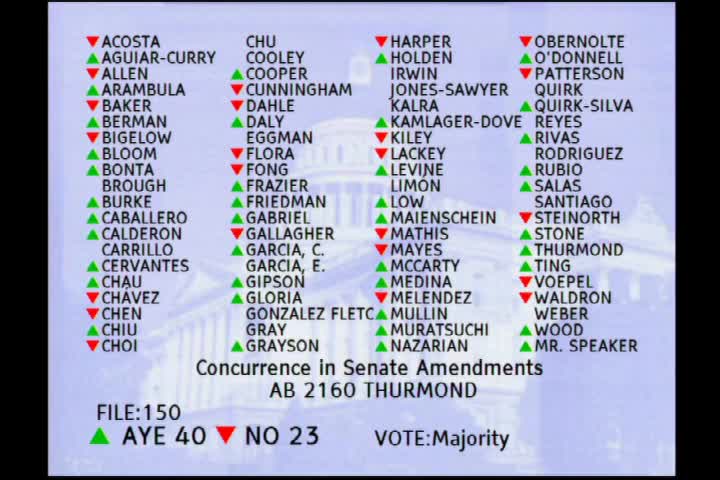 1MIN
Assembly Floor
 4MIN
Senate Floor
 1H
Senate Standing Committee on Appropriations
 1MIN
Assembly Floor
Bill Author

Bill Co-Author(s):