AB 2554: Public postsecondary education: exemption from mandatory systemwide tuition and fees: surviving child or spouse of a federal firefighter.
- Session Year: 2017-2018
- House: Assembly
- Latest Version Date: 2018-08-24
(1)Existing law prohibits the Board of Directors of the Hastings College of the Law, the Board of Governors of the California Community Colleges, the Trustees of the California State University, and, if they adopt an appropriate resolution, the Regents of the University of California, from collecting mandatory systemwide tuition and fees from any surviving spouse or surviving child of a deceased person who was a resident of the state and employed by or contracting with a public agency, whose principal duties consisted of active law enforcement service or active fire suppression and prevention, and who died as a result of his or her duties, as specified.
This bill would specify that the surviving child or spouse of a firefighter employed by the federal government whose duty assignment involved the performance of firefighting services in this state would also be eligible for exemption from mandatory systemwide tuition and fees under the provision described above.
To the extent that this bill would impose new duties on community college districts, it would constitute a state-mandated local program.
(2)The California Constitution requires the state to reimburse local agencies and school districts for certain costs mandated by the state. Statutory provisions establish procedures for making that reimbursement.
This bill would provide that, if the Commission on State Mandates determines that the bill contains costs mandated by the state, reimbursement for those costs shall be made pursuant to the statutory provisions noted above.
Existing law, the Ortiz-Pacheco-Poochigian-Vasconcellos Cal Grant Program (Cal Grant Program), establishes the Cal Grant A and B Entitlement Awards, the California Community College Transfer Entitlement Awards, the Competitive Cal Grant A and B Awards, the Cal Grant C Awards, and the Cal Grant T Awards under the administration of the Student Aid Commission, and establishes eligibility requirements for awards under these programs for participating students attending qualifying institutions, as defined. An existing provision related to the California Community College Transfer Entitlement Awards program requires a qualifying institution that participates in that program to report to the commission annually the number of students who, in accordance with a provision that has been deleted, will not be 24 years of age or older by December 31 of the award year and are determined to be independent, and the reasons therefor.This bill would delete the obsolete cross-reference, and instead require a qualifying institution that participates in the California Community College Transfer Entitlement Awards program to report to the commission annually the number of students who will not be 28 years of age or older by December 31 of the award year and are determined to be independent and the reasons each of these students was determined to be independent.Existing law, the Ortiz-Pacheco-Poochigian-Vasconcellos Cal Grant Program (Cal Grant Program), establishes the Cal Grant A and B Entitlement Awards, the California Community College Transfer Entitlement Awards, the Competitive Cal Grant A and B Awards, the Cal Grant C Awards, and the Cal Grant T Awards under the administration of the Student Aid Commission, and establishes eligibility requirements for awards under these programs for participating students attending qualifying institutions, as defined. An existing provision related to the California Community College Transfer Entitlement Awards program requires a qualifying institution that participates in that program to report to the commission annually the number of students who, in accordance with a provision that has been deleted, will not be 24 years of age or older by December 31 of the award year and are determined to be independent, and the reasons therefor.
This bill would delete the obsolete cross-reference, and instead require a qualifying institution that participates in the California Community College Transfer Entitlement Awards program to report to the commission annually the number of students who will not be 28 years of age or older by December 31 of the award year and are determined to be independent and the reasons each of these students was determined to be independent.
(a)The Legislature finds and declares all of the following:
(1)In California, a firefighter is a firefighter no matter the color of the uniform. Californias federal firefighters are recognized by the Legislature as being trained to the same standards as their state and local government colleagues.
(2)Californias federal firefighters are an integral part of Californias mutual aid network. They risk everything to protect our state from devastating fires and disasters, standing shoulder-to-shoulder with state and local government fire service personnel.
(3)As California reels from another season of record-breaking fire events, which are now becoming the norm and putting thousands of firefighters in jeopardy, we hail their selfless devotion to duty. These incidents are poignant reminders that, when a firefighter puts on turnouts, regardless of who issues the uniform, and heads out on a call, there is always the chance that he or she will not return.
(4)When a California firefighter falls in the line of duty, it is our duty as citizens to remember their sacrifice and to do everything we can to support the families they leave behind.
(5)Survivors of federal firefighters killed in the line of duty, and who lived and worked as firefighters in California, are eligible for some of the same occupational death benefits extended to state and local governmental firefighters under current law.
(6)With respect to survivor educational benefits, access to higher education is instrumental in a surviving family members ability to effectively achieve economic stability and for Californias surviving children of fallen firefighters to realize their full potential in the aftermath of their loved ones job-caused tragedy.
(7)Since the enactment of the fee waivers in Section 68120 of the Education Code, colleges and universities have administered the section in a manner that excludes surviving spouses and children of fallen federal firefighters who were residents of, and provided services within, this state.
(b)Therefore, it is the intent of the Legislature to clarify that Section 68120 of the Education Code applies to those survivors of California federal firefighters killed in the line of duty.
SEC. 2.Section 68120 of the Education Code is amended to read:68120.(a)Notwithstanding any other law, no mandatory systemwide fees or tuition of any kind shall be required of or collected by the Regents of the University of California, the Board of Directors of the Hastings College of the Law, the Trustees of the California State University, or the Board of Governors of the California Community Colleges from any surviving spouse or surviving child of a deceased person who met all of the following requirements:
(1)He or she was a resident of this state.
(2)He or she was employed by a public agency or was a contractor, or an employee of a contractor, performing services for a public agency, or was a firefighter employed by the federal government whose duty assignment involved the performance of firefighting services in this state.
(3)His or her principal duties consisted of active law enforcement service or active fire suppression and prevention. This section shall not apply to a person whose principal duties were clerical, even if he or she was subject to occasional call or was occasionally called upon to perform duties within the scope of active law enforcement or active fire suppression and prevention.
(4)He or she was killed in the performance of active law enforcement or active fire suppression and prevention duties, died as a result of an accident or an injury caused by external violence or physical force incurred in the performance of his or her active law enforcement or active fire suppression and prevention duties, or died as a result of an industrial injury or illness arising out of and in the course of active law enforcement or fire suppression and prevention duties.
(b)Notwithstanding subdivision (a), a person who qualifies for the waiver of mandatory systemwide fees and tuition under this section as a surviving child of a contractor, or of an employee of a contractor, who performed services for a public agency shall, in addition to the requirements set forth in subdivision (a), meet both of the following requirements:
(1)Enrollment as an undergraduate student at a campus of the University of California or the California State University or as a student at a community college campus.
(2)Documentation that his or her annual income, including the value of any support received from a parent, does not exceed the maximum household income and asset level for an applicant for a Cal Grant B award, as set forth in Section 69432.7.
(c)As used in this section:
(1)Contractor or employee of a contractor does not include a security guard or security officer, as defined in Section 7582.1 of the Business and Professions Code.
(2)Public agency means the state or any city, county, city and county, district, or other local authority or public body of or within the state.
(3)Spouse has the same meaning as defined in Section 22171.
(4)Surviving child means either of the following:
(A)A surviving natural or adopted child of the deceased person.
(B)A surviving stepchild who meets both of the following requirements:
(i)He or she was living or domiciled with the deceased person at the time of his or her death.
(ii)He or she was claimed on the tax form most recently filed by the deceased person prior to that persons death, or he or she received 50 percent or more of his or her support from that deceased person in the tax year immediately preceding the death of the deceased person, or both.
SEC. 3.If the Commission on State Mandates determines that this act contains costs mandated by the state, reimbursement to local agencies and school districts for those costs shall be made pursuant to Part 7 (commencing with Section 17500) of Division 4 of Title 2 of the Government Code.
(a)The Legislature finds and declares all of the following:
(1)In California, a firefighter is a firefighter no matter the color of the uniform. Californias federal firefighters are recognized by the Legislature as being trained to the same standards as their state and local government colleagues.
(2)Californias federal firefighters are an integral part of Californias mutual aid network. They risk everything to protect our state from devastating fires and disasters, standing shoulder-to-shoulder with state and local government fire service personnel.
(3)As California reels from another season of record-breaking fire events, which are now becoming the norm and putting thousands of firefighters in jeopardy, we hail their selfless devotion to duty. These incidents are poignant reminders that, when a firefighter puts on turnouts, regardless of who issues the uniform, and heads out on a call, there is always the chance that he or she will not return.
(4)When a California firefighter falls in the line of duty, it is our duty as citizens to remember their sacrifice and to do everything we can to support the families they leave behind.
(5)Survivors of federal firefighters killed in the line of duty, and who lived and worked as firefighters in California, are eligible for some of the same occupational death benefits extended to state and local governmental firefighters under current law.
(6)With respect to survivor educational benefits, access to higher education is instrumental in a surviving family members ability to effectively achieve economic stability and for Californias surviving children of fallen firefighters to realize their full potential in the aftermath of their loved ones job-caused tragedy.
(7)Since the enactment of the fee waivers in Section 68120 of the Education Code, colleges and universities have administered the section in a manner that excludes surviving spouses and children of fallen federal firefighters who were residents of, and provided services within, this state.
(b)Therefore, it is the intent of the Legislature to clarify that Section 68120 of the Education Code applies to those survivors of California federal firefighters killed in the line of duty.
SEC. 2.Section 68120 of the Education Code is amended to read:68120.(a)Notwithstanding any other law, no mandatory systemwide fees or tuition of any kind shall be required of or collected by the Regents of the University of California, the Board of Directors of the Hastings College of the Law, the Trustees of the California State University, or the Board of Governors of the California Community Colleges from any surviving spouse or surviving child of a deceased person who met all of the following requirements:
(1)He or she was a resident of this state.
(2)He or she was employed by a public agency or was a contractor, or an employee of a contractor, performing services for a public agency. agency, or was a firefighter employed by the federal government whose duty assignment involved the performance of firefighting services in this state.
(3)His or her principal duties consisted of active law enforcement service or active fire suppression and prevention. This section shall not apply to a person whose principal duties were clerical, even if he or she was subject to occasional call or was occasionally called upon to perform duties within the scope of active law enforcement or active fire suppression and prevention.
(4)He or she was killed in the performance of active law enforcement or active fire suppression and prevention duties, died as a result of an accident or an injury caused by external violence or physical force incurred in the performance of his or her active law enforcement or active fire suppression and prevention duties, or died as a result of an industrial injury or illness arising out of and in the course of active law enforcement or fire suppression and prevention duties.
(b)Notwithstanding subdivision (a), a person who qualifies for the waiver of mandatory systemwide fees and tuition under this section as a surviving child of a contractor, or of an employee of a contractor, who performed services for a public agency shall, in addition to the requirements set forth in subdivision (a), meet both of the following requirements:
(1)Enrollment as an undergraduate student at a campus of the University of California or the California State University or as a student at a community college campus.
(2)Documentation that his or her annual income, including the value of any support received from a parent, does not exceed the maximum household income and asset level for an applicant for a Cal Grant B award, as set forth in Section 69432.7.
(c)As used in this section:
(1)Contractor or employee of a contractor does not include a security guard or security officer, as defined in Section 7582.1 of the Business and Professions Code.
(2)Public agency means the state or any city, county, city and county, district, or other local authority or public body of or within the state.
(3)(3)Spouse has the same meaning as defined in Section 22171.
(4)Surviving child means either of the following:
(A)A surviving natural or adopted child of the deceased person.
(B)A surviving stepchild who meets both of the following requirements:
(i)He or she was living or domiciled with the deceased person at the time of his or her death.
(ii)He or she was claimed on the tax form most recently filed by the deceased person prior to that persons death, or he or she received 50 percent or more of his or her support from that deceased person in the tax year immediately preceding the death of the deceased person, or both.
SEC. 3.If the Commission on State Mandates determines that this act contains costs mandated by the state, reimbursement to local agencies and school districts for those costs shall be made pursuant to Part 7 (commencing with Section 17500) of Division 4 of Title 2 of the Government Code.
SECTION 1.Section 69436.5 of the Education Code is amended to read:69436.5.A participating qualifying institution shall report to the commission annually the number of students to whom paragraph (8) of subdivision (b) of Section 69436 is applicable who are determined to be independent and the reasons each of these students was determined to be independent.A participating qualifying institution shall report to the commission annually as to the number of students determined to be independent pursuant to subparagraph (E) of to whom paragraph (8) of subdivision (b) of Section 69436 is applicable who are determined to be independent and the reasons therefor. each of these students was determined to be independent.
|
Date
|
Status
|
|---|---|
| Aug 24, 2018 | Chaptered by Secretary of State - Chapter 191, Statutes of 2018. |
| Aug 24, 2018 | Approved by the Governor. |
| Aug 14, 2018 | Enrolled and presented to the Governor at 4 p.m. |
| Aug 9, 2018 | In Assembly. Ordered to Engrossing and Enrolling. |
| Aug 9, 2018 | Read third time. Passed. Ordered to the Assembly. |
| Jun 26, 2018 | Read second time. Ordered to third reading. |
| Jun 25, 2018 | From committee: Be ordered to second reading pursuant to Senate Rule 28.8. |
| Jun 6, 2018 | From committee: Do pass and re-refer to Com. on APPR. (Ayes 6. Noes 0.) (June 6). Re-referred to Com. on APPR. |
| May 10, 2018 | Referred to Com. on ED. |
| Apr 26, 2018 | In Senate. Read first time. To Com. on RLS. for assignment. |
| Apr 26, 2018 | Read third time. Passed. Ordered to the Senate. |
| Apr 19, 2018 | Read second time. Ordered to Consent Calendar. |
| Apr 18, 2018 | From committee: Do pass. To Consent Calendar. (Ayes 15. Noes 0.) (April 18). |
| Apr 4, 2018 | From committee: Do pass and re-refer to Com. on APPR. (Ayes 13. Noes 0.) (April 3). Re-referred to Com. on APPR. |
| Mar 13, 2018 | Re-referred to Com. on HIGHER ED. |
| Mar 12, 2018 | From committee chair, with author's amendments: Amend, and re-refer to Com. on HIGHER ED. Read second time and amended. |
| Mar 5, 2018 | Referred to Com. on HIGHER ED. |
| Feb 16, 2018 | From printer. May be heard in committee March 18. |
| Feb 15, 2018 | Read first time. To print. |
|
Date
|
Description
|
Location
|
Votes
|
|
|---|---|---|---|---|
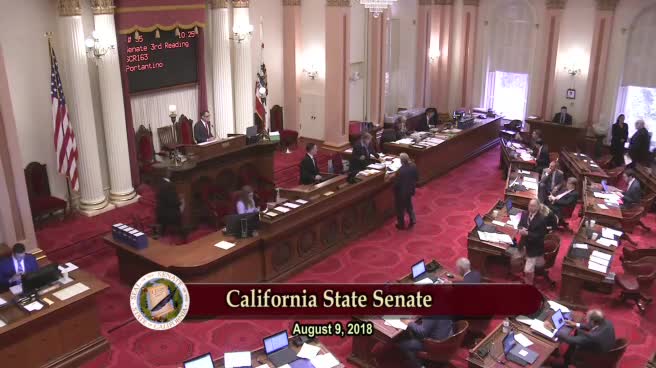
| Aug 9, 2018 | Assembly 3rd Reading AB2554 Bonta By Pan | Senate Floor |
Passed |
|
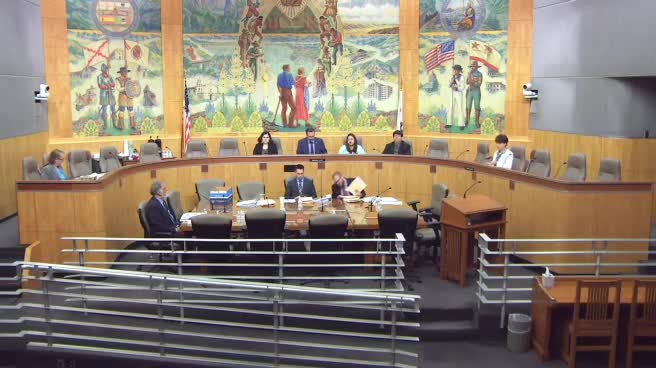
| Jun 6, 2018 | Do pass, but first be re-referred to the Committee on [Appropriations] | Senate Standing Committee on Education |
Passed |
|
| Apr 26, 2018 | AB 2554 BONTA Consent Calendar Second Day Regular Session | Assembly Floor |
Passed |
|
| Apr 18, 2018 | Do pass. To Consent Calendar. | Assembly Standing Committee on Appropriations |
Passed |
|
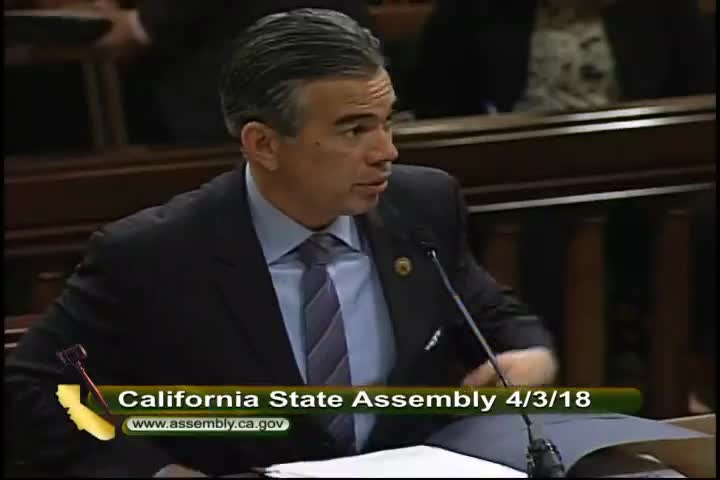
| Apr 3, 2018 | Do pass and be re-referred to the Committee on [Appropriations] | Assembly Standing Committee on Higher Education |
Passed |
This list shows positions taken on this bill by organizations on the date displayed, which is linked to the original source.
Positions by individuals are not included.
Office of Senate Floor Analyses (916) 651-1520 Fax: (916) 327-4478 | AB |
THIRD READING
Bill No: AB 2554
:
SENATE EDUCATION COMMITTEE: 6-0, 6/6/18
AYES: Allen, Wilk, Galgiani, Leyva, Pan, Vidak
SENATE APPROPRIATIONS COMMITTEE: Senate Rule 28.8
ASSEMBLY FLOOR: 74-0, 4/26/18 (Consent) - See last page for vote
DIGEST:
This bill extends an existing exemption from mandatory tuition and fees at the University of California (UC), the Hastings College of Law, the California State University (CSU), and the California Community Colleges (CCC), for surviving spouse or child of a California firefighter killed in the performance of duties to include survivors of a federally employed firefighter whose regular duty assignment was in California.
Existing law:
- Provides that no mandatory systemwide fees or tuition of any kind be collected by the UC, CSU or the CCCs from any surviving spouse or child, natural or adopted, of a deceased person who met all of the following requirements:
- Was a California resident.
- Was employed by a public agency to provide active law enforcement or fire suppression/prevention services.
- Was killed in the performance of active duty. (Education Code (EC) § 68120 et seq.)
- Prohibits, also, UC, CSU and CCC from charging mandatory systemwide tuition or fees to the dependents or survivors of disabled or deceased California veterans as specified and certain recipients (or children of recipients) of a Congressional Medal of Honor, as specified. (EC §66025.3)
- Extends health benefit coverage to the surviving spouse or eligible family member of a firefighter employed by the federal government who was a resident of, and whose regular duty assignment was to perform firefighting services in, this state, and who dies as a result of an injury or disease sustained in the line of duty. (Government Code § 22820)
This bill:
- Extends an existing exemption from mandatory tuition and fees at the University of California (UC), the Hastings College of Law, the California State University (CSU), and the California Community Colleges (CCC), for surviving spouse or child of a California firefighter killed in the performance of duties to include survivors of a federally employed firefighter whose regular duty assignment was in California.
- States legislative findings and declarations relative to the contributions of federal firefighters to this state.
- Establishes if the Commission on State Mandates determines that this act contains costs mandated by the state, the state shall reimburse the applicable entities.
Comments
- Need for the bill. Existing law provides that no mandatory systemwide fees or tuition of any kind be collected by the UC (if so directed by the UC regents ), CSU or the CCC from any surviving spouse or child of a deceased firefighter or law enforcement office who was killed in the line of duty. This exemption is known as the Alan Pattee Scholarship Act. According to the author, clarification of current law is needed to ensure that survivors of California’s federal firefighters killed in the line-of-duty are indeed eligible for the same educational benefit currently granted to family members of state and local firefighters. Existing law enables a spouse or child, natural or adopted, or stepchild of a firefighter killed in the line of duty to receive a public postsecondary educational fee waiver at our public institutions. According to the author, the program has been administered in a manner that excludes survivors of fallen federal firefighters who resided in California and provided services within the state.
This bill extends benefits provided by the state of California to state and local firefighters to those employed by the federal government.
- Existing Federal Benefit. The Public Safety Officers Educational Assistance (PSOEA) Program, pursuant to Federal Law Enforcement Dependents Assistance Act of 1996, provides assistance with higher education expenses to spouses and children of federal, state, or local police, fire, and emergency public safety officers killed or permanently and totally disabled in the line of duty. A surviving spouse is eligible for benefits anytime during his or her lifetime, and a surviving child is eligible until his or her 27th birthday. PSOEA funds may be used to defray expenses for tuition, room and board, book, supplies, and education-related fees for up to 45 months of full-time college attendance. The PSOEA benefit for full-time attendance is currently $485 per month. Funding for this program is subject to annual appropriation by Congress.
Related/Prior Legislation
SB 967 (Berryhill, 2018) prohibits public institutions from charging mandatory systemwide tuition or fees to current or former foster youth, who meet certain requirements, for a total of the equivalent of attendance in a 4-year undergraduate program.
AB 2990 (Low, 2018) requires public institutions to place a link on the financial aid section of the campus Web site describing the exemption from mandatory tuition and systemwide fees for an eligible survivor of a state or local public agency firefighter or law enforcement officer whose death was work related.
FISCAL EFFECT: Appropriation: Fiscal Com.: Local:
California Fire Chiefs Association
California Professional Firefighters
California State Firefighters’ Association
Fire Districts Association of California
San Jose Evergreen Community College District
Western Association for College Admission Counseling
OPPOSITION: (Verified 6/26/18)
None received
ASSEMBLY FLOOR: 74-0, 4/26/18
AYES: Acosta, Aguiar-Curry, Arambula, Baker, Berman, Bigelow, Bloom, Bonta, Brough, Burke, Caballero, Calderon, Carrillo, Cervantes, Chau, Chávez, Chen, Chiu, Choi, Chu, Cooley, Cooper, Cunningham, Dahle, Daly, Eggman, Flora, Frazier, Friedman, Gallagher, Eduardo Garcia, Gipson, Gloria, Gonzalez Fletcher, Gray, Grayson, Harper, Holden, Irwin, Jones-Sawyer, Kalra, Kamlager-Dove, Kiley, Lackey, Levine, Limón, Low, Maienschein, Mathis, Mayes, McCarty, Medina, Melendez, Mullin, Muratsuchi, Nazarian, Obernolte, O'Donnell, Patterson, Quirk, Quirk-Silva, Reyes, Rubio, Salas, Santiago, Steinorth, Mark Stone, Thurmond, Ting, Voepel, Waldron, Weber, Wood, Rendon
NO VOTE RECORDED: Travis Allen, Fong, Cristina Garcia, Rodriguez
6/27/18 17:17:55
**** END ****
SENATE COMMITTEE ON EDUCATION
Senator Benjamin Allen, Chair
2017 - 2018 Regular
Bill No: AB 2554 Hearing Date: June 6, 2018
Author: | Bonta | ||
Version: | March 12, 2018 | ||
Urgency: | No | Fiscal: | Yes |
Consultant: | Olgalilia Ramirez | ||
Subject: Public postsecondary education: exemption from mandatory systemwide tuition and fees: surviving child or spouse of a federal firefighter.
SUMMARY
This bill extends an existing exemption from mandatory tuition and fees at the University of California (UC), the Hastings College of Law, the California State University (CSU), and the California Community Colleges (CCC), for surviving spouse or child of a California firefighter killed in the performance of duties to include survivors of a federally employed firefighter whose regular duty assignment was in California.
BACKGROUND
Existing law:
- Provides that no mandatory systemwide fees or tuition of any kind be collected by the UC, CSU or the CCCs from any surviving spouse or child, natural or adopted, of a deceased person who met all of the following requirements.
- Was a California resident.
- Was employed by a public agency to provide active law enforcement or fire suppression/prevention services.
- Was killed in the performance of active duty. (Education Code (EC) § 68120 et seq.)
- Also prohibits UC, CSU and CCC from charging mandatory systemwide tuition or fees to the dependents or survivors of disabled or deceased California veterans as specified and certain recipients (or children of recipients) of a Congressional Medal of Honor, as specified. (EC §66025.3)
- Extends health benefit coverage to the surviving spouse or eligible family member of a firefighter employed by the federal government who was a resident of, and whose regular duty assignment was to perform firefighting services in, this state, and who dies as a result of an injury or disease sustained in the line of duty. (Government Code § 22820)
ANALYSIS
This bill:
- Extends an existing exemption from mandatory tuition and fees at the University of California (UC), the Hastings College of Law, the California State University (CSU), and the California Community Colleges (CCC), for surviving spouse or child of a California firefighter killed in the performance of duties to include survivors of a federally employed firefighter whose regular duty assignment was in California.
- States legislative findings and declarations relative to the contributions of federal firefighters to this state.
- Establishes if the Commission on State Mandates determines that this act contains costs mandated by the state, the state shall reimburse the applicable entities.
STAFF COMMENTS
- Need for the bill. Existing law provides that no mandatory systemwide fees or tuition of any kind be collected by the UC (if so directed by the UC regents ), CSU or the CCC from any surviving spouse or child of a deceased firefighter or law enforcement office who was killed in the line of duty. This exemption is known as the Alan Pattee Scholarship Act. According to the author, clarification of current law is needed to ensure that survivors of California’s federal firefighters killed in the line-of-duty are indeed eligible for the same educational benefit currently granted to family members of state and local firefighters. Existing law enables a spouse or child, natural or adopted, or stepchild of a firefighter killed in the line of duty to receive a public postsecondary educational fee waiver at our public institutions. According to the author, the program has been administered in a manner that excludes survivors of fallen federal firefighters who resided in California and provided services within the state.
This bill extends benefits provided by the state of California to state and local firefighters to those employed by the federal government.
- Existing Federal Benefit. The Public Safety Officers Educational Assistance (PSOEA) Program, pursuant to Federal Law Enforcement Dependents Assistance Act of 1996, provides assistance with higher education expenses to spouses and children of federal, state, or local police, fire, and emergency public safety officers killed or permanently and totally disabled in the line of duty. A surviving spouse is eligible for benefits anytime during his or her lifetime, and a surviving child is eligible until his or her 27th birthday. PSOEA funds may be used to defray expenses for tuition, room and board, book, supplies, and education-related fees for up to 45 months of full-time college attendance. The PSOEA benefit for full-time attendance is currently $485 per month. Funding for this program is subject to annual appropriation by Congress.
- Could a State waiver offset PSOEA dollars? Similar to this bill, AB 384 (Portantino, Chapter 225, Statutes of 2007) proposed, among other things, extending the Alan Pattee waiver to the families of federal firefighters. However, the provision was later removed, as noted in the Senate floor analysis, “because it is understood that these provisions (fee waiver) could reduce or eliminate existing federal benefits for the family members of firefighters killed in the line of duty. According to provisions relative to administration of the Public Safety Officers' Education Assistance (PSOEA), this federal benefit will be reduced by scholarships and tuition waivers received by State or other public sources. It is possible that the proposed state waiver could reduce the amount of the federal award, than they could otherwise receive, but only for those eligible for both programs.
Proponents of this bill argue that the State provides tuition waivers for state and local firefighters presently and that assistance is currently offsetting potential federal assistance under the PSOE program. Additionally, these firefighters live and work in California and their families should be granted the same protections and support from the state, should their loved one fall in the line duty.
- Other state fee waiver programs. As noted in the background of this analysis, current law prohibits public postsecondary institutions from applying certain fees to various groups impacted by a tragic event. According to California State University (CSU), in 2016-17 the system waived $51 million in tuition and fees in total for Alan Pattee waiver, Military Veterans and Medal of Honor survivors. In the same year about $30 million of in-state tuition and fees were waived by University of California (UC), specifically for eligible dependents of deceased or disabled veterans. Staff was unable to find data for similar waivers granted at California Community Colleges (CCC).
This bill provides no funding to backfill for the loss of fee revenue that would result from the tuition waiver. Its "costs" would be borne by UC (if they so choose) and CSU, and community college. According to the Assembly Appropriations Committee analysis, in the past ten years, one federal firefighter’s death was job-related. Actual impact would depend upon the number of existing and future survivors of fallen federal firefighters who utilize these benefits.
- Related legislation.
SB 967 (Berryhill, 2018) would, prohibit public institutions from charging mandatory systemwide tuition or fees to current or former foster youth, who meet certain requirements, for a total of the equivalent of attendance in a 4-year undergraduate program.
AB 2990 (Low, 2018) also on today's committee agenda, would require public institutions to place a link on the financial aid section of the campus website describing the exemption from mandatory tuition and systemwide fees for an eligible survivor of a state or local public agency firefighter or law enforcement officer whose death was work related.
SUPPORT
Western Association for College Admission Counseling
California Professional Firefighters
California State Firefighters’ Association
California Fire Chiefs Association
Fire Districts Association of California
OPPOSITION
None received
-- END --
Date of Hearing: April 18, 2018
ASSEMBLY COMMITTEE ON APPROPRIATIONS
Lorena Gonzalez Fletcher, Chair
ABPCA Bill Id:AB 2554
Author:(Bonta) – As Amended Ver:March 12, 2018
Policy Committee: | Higher Education | Vote: | 13 - 0 |
|
| ||
|
|
Urgency: No State Mandated Local Program: Yes Reimbursable: Yes
SUMMARY: This bill expands an existing exemption from mandatory tuition and fees at the Hastings College of Law, University of California (UC), California State University (CSU), and California Community Colleges (CCC) to newly include an eligible survivor of a state or local public agency firefighter whose death was job-related, was a California resident, and whose firefighting assignment was in California.
FISCAL EFFECT:
Potential minor cost pressures in the low tens of thousands of dollars for Hastings, UC, and CSU to waive annual tuition and fees for eligible survivors of federal firefighters. Potentially reimbursable mandate costs to the CCC likely in the low thousands of dollars. (Tuition and fees at Hastings, UC, CSU, or CCC are as follows: Hastings, $44,326; UC, $12,630; CSU, $5,742; and CCC, $1,380.) Actual costs would depend on the number of federal firefighters whose deaths are job-related and the number of eligible survivors wishing to attend public colleges and universities in California. In the past ten years, one federal firefighter’s death was job-related. Were the eligible survivor low-income, they likely would have their tuition covered by existing state or institutional grant aid.
COMMENTS:
Purpose. The author indicates that the state's federal firefighters are an integral part of the state's mutual aid firefighting network, and, like other state and local firefighters, risk injury and death to protect the state from fires and disasters. The author therefore argues that the eligible survivors of fallen federal firefighters should receive the same tuition and fee waiver exemption provided to the survivors of fallen state and local firefighters.
Background. The Alan Pattee Scholarship Act of 1970 was created to assist surviving family members of firefighters and law enforcement officers who died in the line of duty by requiring Hastings, UC, CSU and the CCC to cover their mandatory tuition and fees. AB 2164 (O'Donnell), of the 2015-16 Legislative Session, expanded eligibility for this tuition exemption to survivors of firefighters and law enforcement officers who died as a result of an industrial injury or illness arising out of and in the course of performing their duties.
There currently are about 600 federal firefighters residing in California, primarily on military bases.
Analysis Prepared by: Natasha Collins / APPR. / (916) 319-2081
Date of Hearing: April 3, 2018
ASSEMBLY COMMITTEE ON HIGHER EDUCATION
Jose Medina, Chair
ABPCA Bill Id:AB 2554 (
Author:Bonta) – As Amended Ver:March 12, 2018
SUBJECT: Public postsecondary education: exemption from mandatory systemwide tuition and fees: surviving child or spouse of a federal firefighter
SUMMARY: Expands an existing exemption from mandatory tuition and fees at the University of California (UC), the Hastings College of Law, the California State University (CSU), and the California Community Colleges—for an eligible survivor of a state or local public agency firefighter or law enforcement officer who died in the line of duty—to apply to an eligible survivor of a firefighter employed by the federal government who was a resident of California and whose duty assignment involved firefighting in California.
EXISTING LAW:
- Provides that no mandatory systemwide fees be required by the UC Regents, the Board of Directors of Hastings College of Law, the CSU Trustees, or the Board of Governors of the CCC from any surviving spouse or child, of a deceased person, who met all of the following requirements:
- He or she was a resident of this state;
- He or she was employed by a state or local public agency, or was a contractor, or an employee of a contractor, performing services for a public agency;
- His or her principal duties consisted of active law enforcement service or active fire suppression and prevention; and,
- He or she was killed in the performance of active law enforcement or active fire suppression and prevention duties, died as a result of an accident or an injury caused by external violence or physical force during the performing those duties, or died as a result of an industrial injury or illness arising out of and in the course of performing those duties. (Education Code (EC) Section 68120)
- Requires that any determination of eligibility, as specified, shall be consistent with any findings of the Workers’ Compensation Appeals Board, using the same procedures as in workers’ compensation hearings, as to whether the death of the person, as specified, was industrial. (EC Sect. 68120.5)
- Provides various workers' compensation benefits for firefighters, police officers, sheriffs, and their survivors in case of death from injuries and illnesses, such as cancer, leukemia, tuberculosis, and blood-borne infectious diseases or skin infections, caused by long-term exposures encountered in the workplace. (Labor Code Sections 3212.1, 3212.6, 3212.8)
FISCAL EFFECT: Expanding the eligibility pool for tuition and fee waivers would result in unknown revenue losses to UC, Hastings, CSU, and the CCC.
COMMENTS: Background. The Alan Pattee Scholarship Act of 1970 was created in order to assist surviving family members of firefighters and law enforcement officers who died in the line of duty. The Act waives all mandatory tuition and systemwide fees at UC, Hastings, CSU and the CCC for these survivors. Chapter 435/Statutes of 2016 (AB 2164, O'Donnell) expanded the eligibility for this tuition exemption to survivors of firefighters and law enforcement officers who died as a result of an industrial injury or illness arising out of and in the course of performing their duties. The purpose of AB 2164 was to update the Pattee Act for consistency with current workers' compensation law, thus reflecting other serious occupational hazards that firefighters and law enforcement officers can face, including the cumulative effect of exposure to toxic materials.
Purpose. The author indicates that the state's federal firefighters are an integral part of the state's mutual aid firefighting network, and that they equally risk everything to protect the state from devastating fires and disasters. The author therefore argues that the eligible survivors of fallen federal firefighters should receive the same tuition and fee waiver exemption provided to the survivors of fallen state and local firefighters. As with current law, the firefighters whose spouses and dependents would gained eligibility under this bill would have to have been California residents.
Federal Education Benefits. The Public Safety Officers Educational Assistance (PSOEA) Program, pursuant to Federal Law Enforcement Dependents Assistance Act of 1996, provides assistance with higher education expenses to spouses and children of federal, state, or local police, fire, and emergency public safety officers killed or permanently and totally disabled in the line of duty. A surviving spouse is eligible for benefits anytime during his or her lifetime, and a surviving child is eligible until his or her 27th birthday. PSOEA funds may be used to defray expenses for tuition, room and board, book, supplies, and education-related fees for up to 45 months of full-time college attendance. The PSOEA benefit for full-time attendance is currently $1,041 per month. Funding for this program is subject to annual appropriation by Congress.
Issue for Consideration. The Pattee Act currently applies to both law enforcement personnel and firefighters. The expansion of eligibility proposed in AB 2554 pertains to only federal firefighters. If the committee believes such expansion is appropriate, as a matter of consistency, should the survivors of federal law enforcement personnel in California who die in the line of duty also be made eligible for tuition and fee waivers?
Related Legislation. AB 2990 (Low), also on today's committee agenda, requires each UC, CSU, and CCC campus to place a link on the campus website, as specified, describing the availability of the tuition and fee exemption to those eligible under the Pattee Act.
REGISTERED SUPPORT / OPPOSITION:
Support
California Professional Firefighters (sponsor)
California State Firefighters' Association
Camp Pendleton Professional Firefighters
Opposition
None on file.
Analysis Prepared by: Chuck Nicol / HIGHER ED. / (916) 319-3960
Discussed in Hearing
 2MIN
Senate Floor
 5MIN
Senate Standing Committee on Education
 3MIN
Assembly Standing Committee on Higher Education
Bill Author

Bill Co-Author(s):