AB 2573: Beer: premiums, gifts, and free goods.
- Session Year: 2017-2018
- House: Assembly
- Latest Version Date: 2018-08-23
The Alcoholic Beverage Control Act generally prohibits any licensee from giving any premiums, gift, or free goods in connection with the sale or distribution of any alcoholic beverage, except as permitted by rule adopted by the Department of Alcoholic Beverage Control. The act prohibits the department from adopting a rule that permits a licensee to give any premium, gift, or free good of greater than inconsequential value, in connection with the sale or distribution of beer, except as specified. The act provides, with respect to beer, that premiums, gifts, or free goods, including specified advertising specialties, are deemed to have greater than inconsequential value if they cost more than $0.25 per unit, or cost more than $15 in the aggregate for all those items given by a single supplier to a single retail premises per calendar year.
This bill would authorize a beer manufacturer, without direct or indirect charge, to give up to five cases of retail advertising glassware to an on-sale retail licensee, per licensed location, each calendar year for use at the licensed location. The bill would permit an on-sale retail licensee to accept, without direct or indirect charge, up to 10 cases of retail advertising glassware, per licensed location, from licensed beer manufacturers each calendar year for use at the licensed location. The bill would prohibit the on-sale retail licensee from selling the glassware, giving it away, or returning it to a manufacturer for cash, credit, or replacement, would prohibit the on-sale retail licensee from conditioning the purchase of a beer manufacturers product or products on the giving of retail advertising glassware by that beer manufacturer, and would prohibit a beer wholesaler from contributing to specified costs associated with the glassware or serving as the agent of the beer manufacturer to deliver, stock, or store glassware for an on-sale retailer. The bill would prescribe definitions in this regard.
The Alcoholic Beverage Control Act generally prohibits any licensee from giving any premiums, gift, or free goods in connection with the sale or distribution of any alcoholic beverage, except as permitted by rule adopted by the Department of Alcoholic Beverage Control. The act prohibits the department from adopting a rule that permits a licensee to give any premium, gift, or free good of greater than inconsequential value, in connection with the sale or distribution of beer, except as specified. The act provides, with respect to beer, that premiums, gifts, or free goods, including specified advertising specialities, specialties, are deemed to have greater than inconsequential value if they cost more than $0.25 per unit, or cost more than $15 in the aggregate for all those items given by a single supplier to a single retail premises per calendar year.
This bill would authorize a licensed beer manufacturer, without direct or indirect charge, to give up to five cases of retail advertising glassware to an on-sale retail licensee, per licensed location, each calendar year for use at the licensed location. The bill would permit an on-sale retail licensee to accept, without direct or indirect charge, up to 10 cases of retail advertising glassware, per licensed location, from licensed beer manufacturers each calendar year for use at the licensed location. The bill would prohibit the on-sale retail licensee from selling the glassware, giving it away, or returning it to a manufacturer for cash, credit, or replacement, would prohibit the on-sale retail licensee from conditioning the purchase of a beer manufacturers product or products on the giving of retail advertising glassware by that beer manufacturer, and would prohibit a beer manufacturer wholesaler from contributing to specified costs associated with the glassware or serving as the agent of the beer manufacturer to deliver, stock, or store glassware for an on-sale retailer. The bill would prescribe definitions in this regard.
The Alcoholic Beverage Control Act generally prohibits any licensee from giving any premiums, gift, or free goods in connection with the sale or distribution of any alcoholic beverage, except as permitted by rule adopted by the Department of Alcoholic Beverage Control. The act prohibits the department from adopting a rule that permits a licensee to give any premium, gift, or free good of greater than inconsequential value, in connection with the sale or distribution of beer, except as specified. The act provides, with respect to beer, that premiums, gifts, or free goods, including specified advertising specialities, are deemed to have greater than inconsequential value if they cost more than $0.25 per unit, or cost more than $15 in the aggregate for all those items given by a single supplier to a single retail premises per calendar year.
This bill would authorize a licensed beer manufacturer, without direct or indirect charge, to give up to five cases of retail advertising glassware to an on-sale retail licensee, per licensed location, each calendar year for use at the licensed location. The bill would permit an on-sale retail licensee to accept, without direct or indirect charge, up to 10 cases of retail advertising glassware, per licensed location, from licensed beer manufacturers each calendar year for use at the licensed location. The bill would prohibit the on-sale retail licensee from selling the glassware, giving it away, or returning it to a manufacturer for cash, credit, or replacement. replacement, and would prohibit a beer manufacturer from contributing to specified costs associated with the glassware or serving as the agent of the beer manufacturer to deliver, stock, or store glassware for an on-sale retailer. The bill would prescribe definitions in this regard.
The Alcoholic Beverage Control Act generally prohibits any licensee from giving any premiums, gift, or free goods in connection with the sale or distribution of any alcoholic beverage, except, among other things, permits, with respect to beer, the giving of a premium, gift, or free goods of greater than inconsequential value. except as permitted by rule adopted by the Department of Alcoholic Beverage Control. The act prohibits the department from adopting a rule that permits a licensee to give any premium, gift, or free good of greater than inconsequential value, in connection with the sale or distribution of beer, except as specified. The act provides that provides, with respect to beer, that premiums, gifts, or free goods, including specified advertising specialities, are deemed to have greater than inconsequential value if they cost more than 25 $0.25 per unit, or cost more than $15 in the aggregate for all those items given by a single supplier to a single retail premises per calendar year. The act authorizes a beer manufacturer, as defined, to provide consumers free or discounted rides, as described, for the purpose of furthering public safety and prohibits a beer and wine wholesaler from directly or indirectly underwriting, sharing in, or contributing to, the costs of free or discounted rides or from serving as an agent of a beer manufacturer to provide free or discounted rides to consumers.
This bill, with regard to beer, bill would authorize a beer manufacturer, as defined, to give advertising specialties to an on-sale retail licensee, subject to specified conditions. The bill would prohibit an on-sale retail licensee that was given advertising specialties free of charge from selling those advertising specialties. The bill, with regard to the provision of free or discounted rides to consumers, would revise the prohibition described above to prohibit beer wholesalers from directly or indirectly underwriting, sharing in, or contributing to, the costs of free or discounted rides or from serving as an agent of a beer manufacturer to provide free or discounted rides to consumers. licensed beer manufacturer, without direct or indirect charge, to give up to five cases of retail advertising glassware to an on-sale retail licensee, per licensed location, each calendar year for use at the licensed location. The bill would permit an on-sale retail licensee to accept, without direct or indirect charge, up to 10 cases of retail advertising glassware, per licensed location, from licensed beer manufacturers each calendar year for use at the licensed location. The bill would prohibit the on-sale retail licensee from selling the glassware, giving it away, or returning it to a manufacturer for cash, credit, or replacement. The bill would prescribe definitions in this regard.
The Alcoholic Beverage Control Act prohibits any licensee from giving any premiums, gift, or free goods in connection with the sale or distribution of any alcoholic beverage, except, among other things, permits, with respect to beer, the giving of a premium, gift, or free goods of greater than inconsequential value. The act provides that with respect to beer, premiums, gifts, or free goods, including specified advertising specialities, are deemed to have greater than inconsequential value if they cost more than 25 per unit, or cost more than $15 in the aggregate for all those items given by a single supplier to a single retail premises per calendar year. The act authorizes a beer manufacturer, as defined, to provide consumers free or discounted rides, as described, for the purpose of furthering public safety and prohibits a beer and wine wholesaler from directly or indirectly underwriting, sharing in, or contributing to, the costs of free or discounted rides or from serving as an agent of a beer manufacturer to provide free or discounted rides to consumers.
This bill would, bill, with regard to beer, would authorize a beer manufacturer, as defined, to furnish, give, rent, loan, or sell give advertising specialties to an on-sale retail licensee, subject to specified conditions. The bill would prohibit an on-sale retail licensee that was furnished or given advertising specialties free of charge from selling those advertising specialties. The bill, with regard to the provision of free or discounted rides to consumers, would revise the prohibition described above to prohibit beer wholesalers from directly or indirectly underwriting, sharing in, or contributing to, the costs of free or discounted rides or from serving as an agent of a beer manufacturer to provide free or discounted rides to consumers.
The Alcoholic Beverage Control Act prohibits any licensee from giving any premiums, gift, or free goods in connection with the sale or distribution of any alcoholic beverage, except, among other things, permits, with respect to beer, the giving of a premium, gift, or free goods of greater than inconsequential value. The act provides that with respect to beer, premiums, gifts, or free goods, including specified advertising specialities, are deemed to have greater than inconsequential value if they cost more than 25 per unit, or cost more than $15 in the aggregate for all those items given by a single supplier to a single retail premises per calendar year.
This bill would remove the value thresholds described above and instead provide that the thresholds are ____ per unit and ____ in the aggregate, as provided. would, with regard to beer, authorize a beer manufacturer, as defined, to furnish, give, rent, loan, or sell advertising specialties to an on-sale retail licensee, subject to specified conditions. The bill would prohibit an on-sale retail licensee that was furnished or given advertising specialties free of charge from selling those advertising specialties.
The Alcoholic Beverage Control Act prohibits any licensee from giving any premiums, gift, or free goods in connection with the sale or distribution of any alcoholic beverage, except, among other things, permits, with respect to beer, the giving of a premium, gift, or free goods of greater than inconsequential value. The act provides that with respect to beer, premiums, gifts, or free goods, including specified advertising specialities, are deemed to have greater than inconsequential value if they cost more than 25 per unit, or cost more than $15 in the aggregate for all those items given by a single supplier to a single retail premises per calendar year.
This bill would remove the value thresholds described above and instead provide that the thresholds are ____ per unit and ____ in the aggregate, as provided.
(a)For purposes of this section:
(1)Beer manufacturer has the same meaning as that term is defined in subparagraph (B) of paragraph (2) of subdivision (b) of Section 25600.
(2)Case means a box containing up to 24 pieces of glassware.
(3)Glassware means a single-service glass container or nonglass container capable of holding no more than 23 ounces of liquid volume.
(4)Retail advertising glassware means glassware that bears conspicuous advertising required of a sign.
(b)Notwithstanding Section 25600 or any other law to the contrary:
(1)A beer manufacturer, without direct or indirect charge, may give up to five cases of retail advertising glassware to an on-sale retail licensee, per licensed location, each calendar year for use at the licensed location. The giving of retail advertising glassware shall not be conditioned upon the purchase of the beer manufacturers product.
(2)An on-sale retail licensee may accept, without direct or indirect charge, up to 10 cases of retail advertising glassware, per licensed location, from licensed beer manufacturers each calendar year for use at the licensed location. The on-sale retail licensee shall not sell the retail advertising glassware, give it away, or return it to a manufacturer for cash, credit, or replacement. The on-sale retail licensee shall not condition the purchase of a beer manufacturers product or products on the giving of retail advertising glassware by that beer manufacturer.
(c)Except as provided in paragraph (1) of subdivision (b) of Section 25600, a beer wholesaler shall not directly or indirectly underwrite, share in, or contribute to the costs of glassware or any costs of transportation or shipping or serve as the agent of the beer manufacturer to deliver, stock, or store glassware for an on-sale retailer.
(d)A licensee authorized to give glassware pursuant to this section shall not be precluded from doing so on the basis of having an interest in any other type of alcoholic beverage license within or outside of the state.
(e)A beer manufacturer and an on-sale retail licensee shall keep and maintain records for a three-year period of all glassware given or received pursuant to this section.
(a)For purposes of this section:
(1)Beer manufacturer has the same meaning as that term is defined in subparagraph (B) of paragraph (2) of subdivision (b) of Section 25600.
(2)Case means a box containing up to 24 pieces of glassware.
(3)Glassware means a single-service glass container or cup nonglass container capable of holding no more than 23 ounces of liquid volume.
(4)Retail advertising glassware means glassware that bears conspicuous advertising required of a sign.
(b)Notwithstanding Section 25600 or any other law to the contrary:
(1)A licensed beer manufacturer, without direct or indirect charge, may give up to five cases of retail advertising glassware to an on-sale retail licensee, per licensed location, each calendar year for use at the licensed location. The giving of retail advertising glassware shall not be conditioned upon the purchase of the beer manufacturers product.
(2)An on-sale retail licensee may accept, without direct or indirect charge, up to 10 cases of retail advertising glassware, per licensed location, from licensed beer manufacturers each calendar year for use at the licensed location. The on-sale retail licensee shall not sell the retail advertising glassware, give it away, or return it to a manufacturer for cash, credit, or replacement. The on-sale retail licensee shall not condition the purchase of a beer manufacturers product or products on the giving of retail advertising glassware by that beer manufacturer.
(c)Except as provided in paragraph (1) of subdivision (b) of Section 25600, a beer wholesaler shall not directly or indirectly underwrite, share in, or contribute to the costs of glassware or any costs of transportation or shipping or serve as the agent of the beer manufacturer to deliver, stock, or store glassware for an on-sale retailer.
(d)A licensee authorized to give glassware pursuant to this section shall not be precluded from doing so on the basis of having an interest in any other type of alcoholic beverage license within or outside of the state.
(e)A beer manufacturer and an on-sale retail licensee shall keep and maintain records for a three-year period of all glassware given or received pursuant to this section.
(a)For purposes of this section:
(1)Beer manufacturer has the same meaning as that term is defined in subparagraph (B) of paragraph (2) of subdivision (b) of Section 25600.
(1)(2)Case means a box containing up to 24 pieces of glassware.
(2)(3)Glassware means a single-service glass container or cup capable of holding no more than 23 ounces of liquid volume.
(3)(4)Retail advertising glassware means glassware that bears conspicuous advertising required of a sign.
(b)Notwithstanding Section 25600 or any other law to the contrary:
(1)A licensed beer manufacturer, without direct or indirect charge, may give up to five cases of retail advertising glassware to an on-sale retail licensee, per licensed location, each calendar year for use at the licensed location. The giving of retail glassware shall not be conditioned upon the purchase of the beer manufacturers product.
(2)An on-sale retail licensee may accept, without direct or indirect charge, up to 10 cases of retail advertising glassware, per licensed location, from licensed beer manufacturers each calendar year for use at the licensed location. The on-sale retail licensee shall not sell the retail advertising glassware, give it away, or return it to a manufacturer for cash, credit, or replacement.
(c)Except as provided in paragraph (1) of subdivision (b) of Section 25600, a beer wholesaler shall not directly or indirectly underwrite, share in, or contribute to the costs of glassware or any costs of transportation or shipping or serve as the agent of the beer manufacturer to deliver, stock, or store glassware for an on-sale retailer.
(d)A licensee authorized to give glassware pursuant to this section shall not be precluded from doing so on the basis of having an interest in any other type of alcoholic beverage license within or outside of the state.
(a)For purposes of this section:
(1)Case means a box containing up to 24 pieces of glassware.
(2)Glassware means a single-service glass container or cup capable of holding no more than 23 ounces of liquid volume.
(3)Retail advertising glassware means glassware that bears conspicuous advertising required of a sign.
(b)Notwithstanding Section 25600 or any other law to the contrary:
(1)A licensed beer manufacturer, without direct or indirect charge, may give up to five cases of retail advertising glassware to an on-sale retail licensee, per licensed location, each calendar year for use at the licensed location. The giving of retail glassware shall not be conditioned upon the purchase of the beer manufacturers product.
(2)An on-sale retail licensee may accept, without direct or indirect charge, up to 10 cases of retail advertising glassware, per licensed location, from licensed beer manufacturers each calendar year for use at the licensed location. The on-sale retail licensee shall not sell the retail advertising glassware, give it away, or return it to a manufacturer for cash, credit, or replacement.
SECTION 1.Section 25600 of the Business and Professions Code is amended to read:25600.(a)(1)No licensee shall, directly or indirectly, give any premium, gift, or free goods in connection with the sale or distribution of any alcoholic beverage, except as provided by rules that shall be adopted by the department to implement this section or as authorized by this division.(2)(A)Notwithstanding paragraph (1), for purposes of this section, a refund to, or exchange of products for, a dissatisfied consumer by a licensee authorized to sell to consumers shall not be deemed a premium, gift, or free goods given in connection with the sale or distribution of an alcoholic beverage.(B)A winegrower may advertise or otherwise offer consumers a guarantee of product satisfaction only in newsletters or other publications of the winegrower or at the winegrowers premises. A winegrower may refund to a dissatisfied consumer the entire purchase price of wine produced by that winegrower and sold to that consumer, regardless of where the wine was purchased.(b)(1)Except as provided in paragraph (2), a rule of the department shall not permit a licensee to give any premium, gift, or free goods of greater than inconsequential value in connection with the sale or distribution of beer. With respect to beer, premiums, gifts, or free goods, including advertising specialties that have no significant utilitarian value other than advertising, shall be deemed to have greater than inconsequential value if they cost more than twenty-five cents ($0.25) per unit, or cost more than fifteen dollars ($15) in the aggregate for all those items given by a single supplier to a single retail premises per calendar year.(2)(A)A rule of the department shall not impose a dollar limit for consumer advertising specialties furnished by a beer manufacturer to the general public other than three dollars ($3) per unit original cost to the beer manufacturer who purchased it.(B)With respect to beer, a beer manufacturer may give consumer advertising specialties to the general public that do not exceed three dollars ($3) per unit original cost to the beer manufacturer who purchased it. For purposes of this paragraph, beer manufacturer includes a holder of a beer manufacturers license, a holder of an out-of-state beer manufacturers certificate, an out-of-state vendor that holds a certificate of compliance, or a holder of a beer and wine importers general license. A licensee authorized to give consumer advertising specialties pursuant to this paragraph shall not be precluded from doing so on the basis of holding any other type of alcoholic beverage license.(C)A beer manufacturer, as defined in subparagraph (B) of paragraph (2) shall not require a beer wholesaler to fund the purchase of consumer advertising specialties that beer manufacturers are permitted to give under paragraph (2).(D)Consumer advertising specialties furnished by a beer manufacturer are intended only for adults of legal drinking age. Coin banks, toys, balloons, magic tricks, miniature bottles or cans, confections, dolls, or other items that appeal to minors or underage drinkers may not be used in connection with the merchandising of beer.(c)With respect to distilled spirits and wines, a licensee may furnish, give, rent, loan, or sell advertising specialties to a retailer, provided those items bear conspicuous advertising required of a sign and the total value of all retailer advertising specialties furnished by a supplier, directly or indirectly, to a retailer do not exceed fifty dollars ($50) per brand in any one calendar year per retail premises. The value of a retailer advertising specialty is the actual cost of that item to the supplier who initially purchased it, excluding transportation and installation costs. The furnishing or giving of any retailer advertising specialty shall not be conditioned upon the purchase of the suppliers product. Retail advertising specialties given or furnished free of charge may not be sold by the retail licensee. A rule of the department shall not impose a dollar limit for consumer advertising specialties furnished by a distilled spirits supplier to a retailer or to the general public of less than five dollars ($5) per unit original cost to the supplier who purchased it.(d)Notwithstanding any other provision of this division, a beer manufacturer may provide directly to consumers free or discounted rides through taxicabs, transportation network companies, or any other ride service for the purpose of furthering public safety. The free or discounted rides may be provided by vouchers, codes, or any other method to deliver the free or discounted ride. A free or discounted ride, or the provision of a voucher, code, or other method of delivery, shall not be conditioned upon the purchase of an alcoholic beverage. A beer wholesaler shall not directly or indirectly underwrite, share in, or contribute to, the costs of free or discounted rides or serve as an agent of a beer manufacturer to provide free or discounted rides to consumers. Nothing in this provision authorizes a beer manufacturer to provide a gift or anything of value directly or indirectly to a retail licensee. For purposes of this subdivision, beer manufacturer has the same meaning as defined in subparagraph (B) of paragraph (2) of subdivision (b).(e)(1)With respect to beer, a beer manufacturer may give advertising specialties to an on-sale retail licensee, subject to the following conditions:(A)The advertising specialties bear conspicuous advertising required of a sign.(B)The advertising specialties, if given to an on-sale retail licensee, do not exceed fifty dollars ($50) per brand in any one calendar year per retail premises, determined as the actual costs of the item to the supplier who initially purchased it, excluding transportation, shipping, and installation costs. (C)The giving of any advertising specialty is not conditioned upon the purchase of the beer manufacturers product.(D)Except as provided in paragraph (1) of subdivision (b), a beer wholesaler shall not directly or indirectly underwrite, share in, or contribute to, the costs of advertising specialties, any costs of transportation, shipping, or installation, or serve as the agent of the beer manufacturer to deliver, stock, store, or install advertising specialties for an on-sale retailer.(2)Advertising specialties given free of charge shall not be sold by the on-sale retail licensee.(3)A licensee authorized to give advertising specialties pursuant to this subdivision shall not be precluded from doing so on the basis of having an interest in any other type of alcoholic beverage license within or without the state.(4)For purposes of this subdivision, beer manufacturer has the same meaning as defined in subparagraph (B) of paragraph (2) of subdivision (b).(a)(1)No licensee shall, directly or indirectly, give any premium, gift, or free goods in connection with the sale or distribution of any alcoholic beverage, except as provided by rules that shall be adopted by the department to implement this section or as authorized by this division.
(2)(A)Notwithstanding paragraph (1), for purposes of this section, a refund to, or exchange of products for, a dissatisfied consumer by a licensee authorized to sell to consumers shall not be deemed a premium, gift, or free goods given in connection with the sale or distribution of an alcoholic beverage.
(B)A winegrower may advertise or otherwise offer consumers a guarantee of product satisfaction only in newsletters or other publications of the winegrower or at the winegrowers premises. A winegrower may refund to a dissatisfied consumer the entire purchase price of wine produced by that winegrower and sold to that consumer, regardless of where the wine was purchased.
(b)(1)Except as provided in paragraph (2), a rule of the department shall not permit a licensee to give any premium, gift, or free goods of greater than inconsequential value in connection with the sale or distribution of beer. With respect to beer, premiums, gifts, or free goods, including advertising specialties that have no significant utilitarian value other than advertising, shall be deemed to have greater than inconsequential value if they cost more than twenty-five cents ($0.25) per unit, or cost more than fifteen dollars ($15) in the aggregate for all those items given by a single supplier to a single retail premises per calendar year.
(2)(A)A rule of the department shall not impose a dollar limit for consumer advertising specialties furnished by a beer manufacturer to the general public other than three dollars ($3) per unit original cost to the beer manufacturer who purchased it.
(B)With respect to beer, a beer manufacturer may give consumer advertising specialties to the general public that do not exceed three dollars ($3) per unit original cost to the beer manufacturer who purchased it. For purposes of this paragraph, beer manufacturer includes a holder of a beer manufacturers license, a holder of an out-of-state beer manufacturers certificate, an out-of-state vendor that holds a certificate of compliance, or a holder of a beer and wine importers general license. A licensee authorized to give consumer advertising specialties pursuant to this paragraph shall not be precluded from doing so on the basis of holding any other type of alcoholic beverage license.
(C)A beer manufacturer, as defined in subparagraph (B) of paragraph (2) shall not require a beer wholesaler to fund the purchase of consumer advertising specialties that beer manufacturers are permitted to give under paragraph (2).
(D)Consumer advertising specialties furnished by a beer manufacturer are intended only for adults of legal drinking age. Coin banks, toys, balloons, magic tricks, miniature bottles or cans, confections, dolls, or other items that appeal to minors or underage drinkers may not be used in connection with the merchandising of beer.
(c)With respect to distilled spirits and wines, a licensee may furnish, give, rent, loan, or sell advertising specialties to a retailer, provided those items bear conspicuous advertising required of a sign and the total value of all retailer advertising specialties furnished by a supplier, directly or indirectly, to a retailer do not exceed fifty dollars ($50) per brand in any one calendar year per retail premises. The value of a retailer advertising specialty is the actual cost of that item to the supplier who initially purchased it, excluding transportation and installation costs. The furnishing or giving of any retailer advertising specialty shall not be conditioned upon the purchase of the suppliers product. Retail advertising specialties given or furnished free of charge may not be sold by the retail licensee. A rule of the department shall not impose a dollar limit for consumer advertising specialties furnished by a distilled spirits supplier to a retailer or to the general public of less than five dollars ($5) per unit original cost to the supplier who purchased it.
(d)Notwithstanding any other provision of this division, a beer manufacturer may provide directly to consumers free or discounted rides through taxicabs, transportation network companies, or any other ride service for the purpose of furthering public safety. The free or discounted rides may be provided by vouchers, codes, or any other method to deliver the free or discounted ride. A free or discounted ride, or the provision of a voucher, code, or other method of delivery, shall not be conditioned upon the purchase of an alcoholic beverage. A beer and wine wholesaler shall not directly or indirectly underwrite, share in, or contribute to, the costs of free or discounted rides or serve as an agent of a beer manufacturer to provide free or discounted rides to consumers. Nothing in this provision authorizes a beer manufacturer to provide a gift or anything of value directly or indirectly to a retail licensee. For purposes of this subdivision, beer manufacturer has the same meaning as defined in subparagraph (B) of paragraph (2) of subdivision (b).
(e)(1)Notwithstanding any other provision of this division, With respect to beer, a beer manufacturer may furnish, give, rent, loan, or sell give advertising specialities specialties to an on-sale retail licensee, subject to the following conditions:
(A)The advertising specialities specialties bear conspicuous advertising required of a sign.
(B)The advertising specialities, specialties, if furnished given to an on-sale retail licensee, do not exceed fifty dollars ($50) per brand in any one calendar year per retail premises, determined as the actual costs of the item to the supplier who initially purchased it, excluding transportation transportation, shipping, and installation costs.
(C)The furnishing or giving of any advertising specialty is not conditioned upon the purchase of the beer manufacturers product.
(D)Except as otherwise provided in this subdivision, a beer and wine wholesaler does not directly or indirectly underwrite, share in, or contribute to, the costs of advertising specialties.(E)A beer and wine wholesaler delivers the advertising specialties directly to the on-sale retail licensee.(D)Except as provided in paragraph (1) of subdivision (b), a beer wholesaler shall not directly or indirectly underwrite, share in, or contribute to, the costs of advertising specialties, any costs of transportation, shipping, or installation, or serve as the agent of the beer manufacturer to deliver, stock, store, or install advertising specialties for an on-sale retailer.
(2)Advertising specialities furnished or specialties given free of charge shall not be sold by the on-sale retail licensee.
(3)A licensee authorized to furnish, give, rent, loan, sell, or deliver give advertising specialties pursuant to this subdivision shall not be precluded from doing so on the basis of having an interest in any other type of alcoholic beverage license within or without the state.
(4)For purposes of this subdivision, beer manufacturer has the same meaning as defined in subparagraph (B) of paragraph (2) of subdivision (b).
(a)(1)No licensee shall, directly or indirectly, give any premium, gift, or free goods in connection with the sale or distribution of any alcoholic beverage, except as provided by rules that shall be adopted by the department to implement this section or as authorized by this division.
(2)(A)Notwithstanding paragraph (1), for purposes of this section, a refund to, or exchange of products for, a dissatisfied consumer by a licensee authorized to sell to consumers shall not be deemed a premium, gift, or free goods given in connection with the sale or distribution of an alcoholic beverage.
(B)A winegrower may advertise or otherwise offer consumers a guarantee of product satisfaction only in newsletters or other publications of the winegrower or at the winegrowers premises. A winegrower may refund to a dissatisfied consumer the entire purchase price of wine produced by that winegrower and sold to that consumer, regardless of where the wine was purchased.
(b)(1)Except as provided in paragraph (2), a rule of the department shall not permit a licensee to give any premium, gift, or free goods of greater than inconsequential value in connection with the sale or distribution of beer. With respect to beer, premiums, gifts, or free goods, including advertising specialties that have no significant utilitarian value other than advertising, shall be deemed to have greater than inconsequential value if they cost more than ____ per unit, or cost more than ____ twenty-five cents ($0.25) per unit, or cost more than fifteen dollars ($15) in the aggregate for all those items given by a single supplier to a single retail premises per calendar year.
(2)(A)A rule of the department shall not impose a dollar limit for consumer advertising specialties furnished by a beer manufacturer to the general public other than three dollars ($3) per unit original cost to the beer manufacturer who purchased it.
(B)With respect to beer, a beer manufacturer may give consumer advertising specialties to the general public that do not exceed three dollars ($3) per unit original cost to the beer manufacturer who purchased it. For purposes of this paragraph, beer manufacturer includes a holder of a beer manufacturers license, a holder of an out-of-state beer manufacturers certificate, an out-of-state vendor that holds a certificate of compliance, or a holder of a beer and wine importers general license. A licensee authorized to give consumer advertising specialties pursuant to this paragraph shall not be precluded from doing so on the basis of holding any other type of alcoholic beverage license.
(C)A beer manufacturer, as defined in subparagraph (B) of paragraph (2) shall not require a beer wholesaler to fund the purchase of consumer advertising specialties that beer manufacturers are permitted to give under paragraph (2).
(D)Consumer advertising specialties furnished by a beer manufacturer are intended only for adults of legal drinking age. Coin banks, toys, balloons, magic tricks, miniature bottles or cans, confections, dolls, or other items that appeal to minors or underage drinkers may not be used in connection with the merchandising of beer.
(c)With respect to distilled spirits and wines, a licensee may furnish, give, rent, loan, or sell advertising specialties to a retailer, provided those items bear conspicuous advertising required of a sign and the total value of all retailer advertising specialties furnished by a supplier, directly or indirectly, to a retailer do not exceed fifty dollars ($50) per brand in any one calendar year per retail premises. The value of a retailer advertising specialty is the actual cost of that item to the supplier who initially purchased it, excluding transportation and installation costs. The furnishing or giving of any retailer advertising specialty shall not be conditioned upon the purchase of the suppliers product. Retail advertising specialties given or furnished free of charge may not be sold by the retail licensee. A rule of the department shall not impose a dollar limit for consumer advertising specialties furnished by a distilled spirits supplier to a retailer or to the general public of less than five dollars ($5) per unit original cost to the supplier who purchased it.
(d)Notwithstanding any other provision of this division, a beer manufacturer may provide directly to consumers free or discounted rides through taxicabs, transportation network companies, or any other ride service for the purpose of furthering public safety. The free or discounted rides may be provided by vouchers, codes, or any other method to deliver the free or discounted ride. A free or discounted ride, or the provision of a voucher, code, or other method of delivery, shall not be conditioned upon the purchase of an alcoholic beverage. A beer and wine wholesaler shall not directly or indirectly underwrite, share in, or contribute to, the costs of free or discounted rides or serve as an agent of a beer manufacturer to provide free or discounted rides to consumers. Nothing in this provision authorizes a beer manufacturer to provide a gift or anything of value directly or indirectly to a retail licensee. For purposes of this subdivision, beer manufacturer has the same meaning as defined in subparagraph (B) of paragraph (2) of subdivision (b).
(e)(1)Notwithstanding any other provision of this division, a beer manufacturer may furnish, give, rent, loan, or sell advertising specialities to an on-sale retail licensee, subject to the following conditions:
(A)The advertising specialities bear conspicuous advertising required of a sign.
(B)The advertising specialities, if furnished to an on-sale retail licensee, do not exceed fifty dollars ($50) per brand in any one calendar year per retail premises, determined as the actual costs of the item to the supplier who initially purchased it, excluding transportation and installation costs.
(C)The furnishing or giving of any advertising specialty is not conditioned upon the purchase of the beer manufacturers product.
(D)Except as otherwise provided in this subdivision, a beer and wine wholesaler does not directly or indirectly underwrite, share in, or contribute to, the costs of advertising specialties.
(E)A beer and wine wholesaler delivers the advertising specialties directly to the on-sale retail licensee.
(2)Advertising specialities furnished or given free of charge shall not be sold by the on-sale retail licensee.
(3)A licensee authorized to furnish, give, rent, loan, sell, or deliver advertising specialties pursuant to this subdivision shall not be precluded from doing so on the basis of having an interest in any other type of alcoholic beverage license within or without the state.
(4)For purposes of this subdivision, beer manufacturer has the same meaning as defined in subparagraph (B) of paragraph (2) of subdivision (b).
(a)(1)No licensee shall, directly or indirectly, give any premium, gift, or free goods in connection with the sale or distribution of any alcoholic beverage, except as provided by rules that shall be adopted by the department to implement this section or as authorized by this division.
(2)(A)Notwithstanding paragraph (1), for purposes of this section, a refund to, or exchange of products for, a dissatisfied consumer by a licensee authorized to sell to consumers shall not be deemed a premium, gift, or free goods given in connection with the sale or distribution of an alcoholic beverage.
(B)A winegrower may advertise or otherwise offer consumers a guarantee of product satisfaction only in newsletters or other publications of the winegrower or at the winegrowers premises. A winegrower may refund to a dissatisfied consumer the entire purchase price of wine produced by that winegrower and sold to that consumer, regardless of where the wine was purchased.
(b)(1)Except as provided in paragraph (2), no a rule of the department may shall not permit a licensee to give any premium, gift, or free goods of greater than inconsequential value in connection with the sale or distribution of beer. With respect to beer, premiums, gifts, or free goods, including advertising specialties that have no significant utilitarian value other than advertising, shall be deemed to have greater than inconsequential value if they cost more than twenty-five cents ($0.25) ____ per unit, or cost more than fifteen dollars ($15) ____ in the aggregate for all those items given by a single supplier to a single retail premises per calendar year.
(2)(A)No A rule of the department may shall not impose a dollar limit for consumer advertising specialties furnished by a beer manufacturer to the general public other than three dollars ($3) per unit original cost to the beer manufacturer who purchased it.
(B)With respect to beer, a beer manufacturer may give consumer advertising specialties to the general public that do not exceed three dollars ($3) per unit original cost to the beer manufacturer who purchased it. For purposes of this paragraph, beer manufacturer includes a holder of a beer manufacturers license, a holder of an out-of-state beer manufacturers certificate, an out-of-state vendor that holds a certificate of compliance, or a holder of a beer and wine importers general license. A licensee authorized to give consumer advertising specialties pursuant to this paragraph shall not be precluded from doing so on the basis of holding any other type of alcoholic beverage license.
(C)A beer manufacturer, as defined in subparagraph (B) of paragraph (2) shall not require a beer wholesaler to fund the purchase of consumer advertising specialties that beer manufacturers are permitted to give under paragraph (2).
(D)Consumer advertising specialties furnished by a beer manufacturer are intended only for adults of legal drinking age. Coin banks, toys, balloons, magic tricks, miniature bottles or cans, confections, dolls, or other items that appeal to minors or underage drinkers may not be used in connection with the merchandising of beer.
(c)With respect to distilled spirits and wines, a licensee may furnish, give, rent, loan, or sell advertising specialties to a retailer, provided those items bear conspicuous advertising required of a sign and the total value of all retailer advertising specialties furnished by a supplier, directly or indirectly, to a retailer do not exceed fifty dollars ($50) per brand in any one calendar year per retail premises. The value of a retailer advertising specialty is the actual cost of that item to the supplier who initially purchased it, excluding transportation and installation costs. The furnishing or giving of any retailer advertising specialty shall not be conditioned upon the purchase of the suppliers product. Retail advertising specialties given or furnished free of charge may not be sold by the retail licensee. No A rule of the department may shall not impose a dollar limit for consumer advertising specialties furnished by a distilled spirits supplier to a retailer or to the general public of less than five dollars ($5) per unit original cost to the supplier who purchased it.
(d)Notwithstanding any other provision of this division, a beer manufacturer may provide directly to consumers free or discounted rides through taxicabs, transportation network companies, or any other ride service for the purpose of furthering public safety. The free or discounted rides may be provided by vouchers, codes, or any other method to deliver the free or discounted ride. A free or discounted ride, or the provision of a voucher, code, or other method of delivery, shall not be conditioned upon the purchase of an alcoholic beverage. A beer and wine wholesaler shall not directly or indirectly underwrite, share in, or contribute to, the costs of free or discounted rides or serve as an agent of a beer manufacturer to provide free or discounted rides to consumers. Nothing in this provision authorizes a beer manufacturer to provide a gift or anything of value directly or indirectly to a retail licensee. For purposes of this subdivision, beer manufacturer has the same meaning as defined in subparagraph (B) of paragraph (2) of subdivision (b).
|
Date
|
Status
|
|---|---|
| Sep 6, 2018 | Vetoed by Governor. |
| Aug 27, 2018 | Enrolled and presented to the Governor at 3 p.m. |
| Aug 22, 2018 | In Assembly. Ordered to Engrossing and Enrolling. |
| Aug 21, 2018 | Read third time. Passed. Ordered to the Assembly. |
| Aug 17, 2018 | From committee: Do pass. (Ayes 7. Noes 0.) (August 16). |
| Aug 6, 2018 | In committee: Referred to APPR. suspense file. |
| Jun 26, 2018 | From committee: Do pass and re-refer to Com. on APPR. (Ayes 13. Noes 0.) (June 26). Re-referred to Com. on APPR. |
| Jun 13, 2018 | Referred to Com. on G.O. |
| Jun 4, 2018 | In Senate. Read first time. To Com. on RLS. for assignment. |
| May 31, 2018 | Read third time. Passed. Ordered to the Senate. |
| May 29, 2018 | Read third time and amended. Ordered to third reading. |
| May 25, 2018 | From committee: Do pass. (Ayes 16. Noes 0.) (May 25). |
| May 16, 2018 | In committee: Set, first hearing. Referred to APPR. suspense file. |
| May 3, 2018 | Re-referred to Com. on APPR. |
| May 2, 2018 | From committee chair, with author's amendments: Amend, and re-refer to Com. on APPR. Read second time and amended. |
| Apr 26, 2018 | Re-referred to Com. on APPR. |
| Apr 25, 2018 | Read second time and amended. |
| Apr 24, 2018 | From committee: Amend, and do pass as amended and re-refer to Com. on APPR. (Ayes 21. Noes 0.) (April 18). |
| Apr 16, 2018 | Re-referred to Com. on G.O. |
| Apr 12, 2018 | From committee chair, with author's amendments: Amend, and re-refer to Com. on G.O. Read second time and amended. |
| Apr 3, 2018 | Re-referred to Com. on G.O. |
| Apr 2, 2018 | From committee chair, with author's amendments: Amend, and re-refer to Com. on G.O. Read second time and amended. |
| Mar 5, 2018 | Referred to Com. on G.O. |
| Feb 16, 2018 | From printer. May be heard in committee March 18. |
| Feb 15, 2018 | Read first time. To print. |
|
Date
|
Description
|
Location
|
Votes
|
|
|---|---|---|---|---|
| Aug 21, 2018 | Assembly 3rd Reading AB2573 Low By Dodd | Senate Floor |
Passed |
|
| Aug 16, 2018 | Do pass | Senate Standing Committee on Appropriations |
Passed |
|
| Aug 6, 2018 | Placed on suspense file | Senate Standing Committee on Appropriations |
Passed |
|
| Jun 26, 2018 | Do pass, but first be re-referred to the Committee on [Appropriations] | Senate Standing Committee on Governmental Organization |
Passed |
|
| May 31, 2018 | AB 2573 LOW Assembly Third Reading | Assembly Floor |
Passed |
|
| May 25, 2018 | Do pass. | Assembly Standing Committee on Appropriations |
Passed |
|
| Apr 18, 2018 | Do pass as amended and be re-referred to the Committee on [Appropriations] | Assembly Standing Committee on Governmental Organization |
Passed |
This list shows positions taken on this bill by organizations on the date displayed, which is linked to the original source.
Positions by individuals are not included.
GOVERNOR'S VETO
GV Bill Id:AB 2573
Author:(Low)
As Enrolled Ver:August 27, 2018
2/3 vote
Votes | Ayes | Noes | |
Governmental Organization | 21-0 | Gray, Bigelow, Acosta, Aguiar-Curry, Berman, Bonta, Cooley, Cooper, Daly, Gallagher, Eduardo Garcia, Gipson, Gloria, Jones-Sawyer, Kiley, Lackey, Levine, Low, Rubio, Salas, Waldron |
|
Appropriations | 16-0 | Gonzalez Fletcher, Bigelow, Bloom, Bonta, Calderon, Carrillo, Chau, Eggman, Fong, Friedman, Gallagher, Eduardo Garcia, Nazarian, Obernolte, Quirk, Reyes |
|
ASSEMBLY: | 78-0 | (May 31, 2018) | SENATE: | 39-0 | (August 21, 2018) |
SUMMARY: This bill would allow a beer manufacturer to give up to five cases of glassware to an on-sale retail licensee, as specified. Specifically, this bill:
- Allows a beer manufacturer, without direct or indirect charge, to give up to five cases of retail advertising glassware to an on-sale retail licensee, per license location, each calendar year for use at the licensed location.
- Prohibits the giving of glassware to be conditioned upon the purchase of the beer manufacturer's product.
- Allows an on-sale retail licensee to accept, without direct or indirect charge, up to 10 cases of glassware, per licensed location, from licensed beer manufacturers each calendar year for use at the licensed location.
- Prohibits the on-sale licensee from selling the glassware, giving it away, or returning it to a manufacturer for cash, credit, or replacement.
- Specifies that the on-sale licensee shall not condition the purchase of a beer manufacturer's product or products on the giving of glassware by that beer manufacturer.
- Specifies that a beer wholesaler shall not directly or indirectly underwrite, share in, or contribute to the costs of glassware or any costs of transportation or shipping or serve as the agent of the beer manufacturer to deliver, stock, or store glassware for an on-sale retailer.
- Specifies that a licensee authorized to give glassware pursuant to this bill shall not be precluded from doing so based on having interest in any other type of alcoholic beverage license within or outside of the state.
- Requires a beer manufacturer and an on-sale retail licensee to keep and maintain records for a three-year period of all glassware given or received pursuant to the provisions of this bill.
- Defines "case" to mean a box containing up to 24 pieces of glassware.
- Defines "glassware" to mean a single-service glass container or non-glass container capable of holding no more than 23 ounces of liquid volume.
EXISTING LAW:
- Establishes the Department of Alcoholic Beverage Control (ABC) and grants it exclusive authority to administer the provisions of the ABC Act in accordance with laws enacted by the Legislature. This involves licensing individuals and businesses associated with the manufacture, importation and sale of alcoholic beverages in this state and the collection of license fees for this purpose.
- Separates the alcoholic beverage industry into three component parts, known as the "tied-house" law, of manufacturer, wholesaler, and retailer. The original policy rationale for this body of law was to prohibit the vertical integration of the alcohol industry and to protect the public from predatory marketing practices. Generally, other than exemptions granted by the Legislature, the holder of one type of license is not permitted to do business as another type of licensee within the "three-tier" system.
- Prohibits ABC from adopting a rule that permits a licensee to give any premium, gift, or free good of greater than inconsequential value, in connection with the sale or distribution of beer, except as specified.
- Provides, with respect to beer, that premiums, gifts, or free goods, including specified advertising specialties, are deemed to have greater than inconsequential value if they costs more than $0.25 per unit, or cost more than $15 in the aggregate for all those items given by a single supplier to a single retail premises per calendar year.
- Provides that no rule of ABC may impose a dollar limit for consumer advertising specialties furnished by a beer manufacturer to the general public other than $3 per unit original cost to the beer manufacturer who purchased it. The consumer advertising specialties furnished by a beer manufacturer are intended only for adults of legal drinking age. Coin banks, toys, balloons, magic tricks, miniature bottles or cans, confections, dolls, or other items that appeal to minors or underage drinkers may not be used in connection with the merchandising of beer.
- Prohibits ABC from imposing a dollar limit of less than $5 for consumer advertising specialties furnished by a distilled spirits supplier to a retailer or the general public, as specified.
- Provides with respect to distilled spirits and wines, a licensee may furnish, give, rent, loan, or sell advertising specialties to a retailer, provided those items bear conspicuous advertising required of a sign and the total value of all retailer advertising specialties furnished by a supplier, directly or indirectly, to a retailer do not exceed fifty dollars ($50) per brand in any one calendar year per retail premises. The value of a retailer-advertising specialty is the actual cost of that item to the supplier who initially purchased it, excluding transportation and installation costs. The furnishing or giving of any retailer-advertising specialty shall not be conditioned upon the purchase of the supplier's product. Retail advertising specialties given or furnished free of charge may not be sold by the retail licensee.
- Allows a beer manufacturer, as defined, to provide directly to consumers free or discounted rides through taxicabs, transportation network companies, or any other ride service for the purpose of furthering public safety.
FISCAL EFFECT: According to the Senate Appropriations Committee, unknown, significant costs for ABC, likely in the high hundreds of thousands of dollars, for increased workload to investigate complaints. Because the number of complaints is unknown, it is difficult to determine specific costs; however, the number of complaints is anticipated to increase significantly.
In support: Supporters of the bill argue that having the appropriate style of branded glassware available to consumers at on-premises retail locations enhances the overall image of beer while helping retailers provide the best beer drinking experience to customers.
COMMENTS:
Purpose of the bill: According to the author's office, "tied house laws are in California's statutes for a reason. In general, they were enacted to prohibit the alcohol industry from vertically integrating and to protect the public from predatory marketing practices. However, since 1988, the wine and distilled spirits industries have been able to provide up to $50 in advertising specialties in a calendar year directly to retailers. For decades, beer manufacturers have been left out of this practice. AB 2573 will allow retail establishments to accept up to 10 cases of branded glassware directly from beer manufacturers each year."
The author further states that, "the bill permits beer manufacturers to provide up to five cases of branded glassware to each retailer per year. This way, beer manufacturers can provide glassware to retailers, but there is a reasonable limit so large beer manufacturers are not able to flood the market. Retail establishments will be able to serve beer in their intended glassware, so that it is enjoyed by consumers as intended by the manufacturer."
Tied-house laws: As noted, tied-house laws separate the alcoholic beverage industry into a three-tier license system (manufacturer, wholesaler, and retailers) and generally prohibit alcoholic beverage licensees from giving any gift in connection with the sale or distribution of an alcoholic beverage. Hence, alcoholic beverage manufacturers are prohibited from promoting or operating a designed driver program that provides such services to retail patrons.
The original policy rationale for this body of law was to 1) promote the state's interest in an orderly market; 2) prohibit the vertical integration and dominance by a single producer in the market place; 3) prohibit commercial bribery and to protect the public from predatory marketing practices; and, 4) discourage and/or prevent the intemperate use of alcoholic beverages. Exceptions to these restrictions have been enacted throughout the years in those specific instances where the Legislature determined that the public's interests are protected.
With respect to beer, existing law provides that premiums, gifts, or free goods, including advertising specialties that have no significant utilitarian value other than advertising, shall be deemed to have greater than inconsequential value if they cost more than $0.25 per unit, or cost more than $15 in the aggregate for all those items given by a single supplier to a single retail premises per calendar year. ABC Rule 106(e)(2) provides the following examples of the kinds of consumer giveaway items with "inconsequential" value: ash trays, bottle or can openers, litter or shopping bags, matches, recipe cards, pamphlets, pencils, post cards, hats, posters, bottle or can stoppers, etc.
Prior legislation: AB 711 (Low), Chapter 226, Statutes of 2017, allowed a beer manufacturer to provide consumers free or discounted rides through taxicabs, transportation network companies, or any other ride service for the purpose of furthering public safety. Additionally, the bill allowed the person authorized to conduct a hosted event to provide attendees at the event with a free ride home.
AB 609 (Santiago), Chapter 295, Statutes of 2017, extended the sunset date for five years, from 2018 to 2023, on a specific provision in the ABC Act, which permits specified licensees (distilled spirits manufacturers and winegrowers) or an authorized agent, to provide, free of charge, entertainment, food, and distilled spirits, wine, or nonalcoholic beverages to consumers at an invitation-only event.
AB 1116 (Hall), Chapter 461, Statutes of 2013, expanded an existing provision of law that permits certain alcoholic beverage producers to hold private, free of charge, invitational-only promotional events, to allow these events to be held on the premises of a "hotel," as defined; and extended the sunset on this provision of law from January 1, 2014 to January 1, 2018.
This bill allows a beer manufacturer to give up to five cases of glassware to an on-sale retail licensee.
Allowing beer manufacturers to give items of value to on-sale retail licensees could unduly influence such retailers to purchase those manufacturers' products. I also worry that this law creates an economic disadvantage for small beer manufactures who might not be able to provide free glassware in the same manner as the larger manufacturers.
Analysis Prepared by: Eric Johnson / G.O. / (916) 319-2531 FN: 0005235
Office of Senate Floor Analyses (916) 651-1520 Fax: (916) 327-4478 | AB |
THIRD READING
Bill No: AB 2573
:
SENATE GOVERNMENTAL ORG. COMMITTEE: 13-0, 6/26/18
AYES: Dodd, Wilk, Bradford, Cannella, Gaines, Galgiani, Glazer, Hill, Hueso, Lara, Portantino, Vidak, Wiener
SENATE APPROPRIATIONS COMMITTEE: 7-0, 8/16/18
AYES: Portantino, Bates, Beall, Bradford, Hill, Nielsen, Wiener
ASSEMBLY FLOOR: 78-0, 5/31/18 - See last page for vote
DIGEST: This bill allows a beer manufacturer to give up to five cases of glassware to an on-sale retail licensee, as specified.
ANALYSIS:
Existing law:
- Establishes the Department of Alcoholic Beverage Control (ABC) and grants it exclusive authority to administer the provisions of the ABC Act in accordance with laws enacted by the Legislature. This involves licensing individuals and businesses associated with the manufacture, importation and sale of alcoholic beverages in this state and the collection of license fees for this purpose.
- Separates the alcoholic beverage industry into three component parts, known as the “tied-house” law, of manufacturer, wholesaler, and retailer. The original policy rationale for this body of law was to prohibit the vertical integration of the alcohol industry and to protect the public from predatory marketing practices. Generally, other than exemptions granted by the Legislature, the holder of one type of license is not permitted to do business as another type of licensee within the “three-tier” system.
- Prohibits the Department of ABC from adopting a rule that permits a licensee to give any premium, gift, or free good of greater than inconsequential value, in connection with the sale or distribution of beer, except as specified.
- Provides, with respect to beer, that premiums, gifts, or free goods, including specified advertising specialties, are deemed to have greater than inconsequential value if they costs more than $0.25 per unit, or cost more than $15 in the aggregate for all those items given by a single supplier to a single retail premises per calendar year.
- Provides that no rule of the Department of ABC may impose a dollar limit for consumer advertising specialties furnished by a beer manufacturer to the general public other than $3 per unit original cost to the beer manufacturer who purchased it. The consumer advertising specialties furnished by a beer manufacturer are intended only for adults of legal drinking age. Coin banks, toys, balloons, magic tricks, miniature bottles or cans, confections, dolls, or other items that appeal to minors or underage drinkers may not be used in connection with the merchandising of beer.
- Prohibits the Department of ABC from imposing a dollar limit of less than $5 for consumer advertising specialties furnished by a distilled spirits supplier to a retailer or the general public, as specified.
- Provides with respect to distilled spirits and wines, a licensee may furnish, give, rent, loan, or sell advertising specialties to a retailer, provided those items bear conspicuous advertising required of a sign and the total value of all retailer advertising specialties furnished by a supplier, directly or indirectly, to a retailer do not exceed fifty dollars ($50) per brand in any one calendar year per retail premises. The value of a retailer advertising specialty is the actual cost of that item to the supplier who initially purchased it, excluding transportation and installation costs. The furnishing or giving of any retailer advertising specialty shall not be conditioned upon the purchase of the supplier’s product. Retail advertising specialties given or furnished free of charge may not be sold by the retail licensee.
- Allows a beer manufacturer, as defined, to provide directly to consumers free or discounted rides through taxicabs, transportation network companies, or any other ride service for the purpose of furthering public safety.
This bill:
- Allows a beer manufacturer, without direct or indirect charge, to give up to five cases of retail advertising glassware to an on-sale retail licensee, per license location, each calendar year for use at the licensed location.
- Prohibits the giving of glassware to be conditioned upon the purchase of the beer manufacturer’s product.
- Allows an on-sale retail licensee to accept, without direct or indirect charge, up to 10 cases of glassware, per licensed location, from licensed beer manufacturers each calendar year for use at the licensed location.
- Prohibits the on-sale licensee from selling the glassware, giving it away, or returning it to a manufacturer for cash, credit, or replacement.
- Specifies that the on-sale licensee shall not condition the purchase of a beer manufacturer’s product or products on the giving of glassware by that beer manufacturer.
- Specifies that a beer wholesaler shall not directly or indirectly underwrite, share in, or contribute to the costs of glassware or any costs of transportation or shipping or serve as the agent of the beer manufacturer to deliver, stock, or store glassware for an on-sale retailer.
- Specifies that a licensee authorized to give glassware pursuant to this bill shall not be precluded from doing so on the basis of having interest in any other type of alcoholic beverage license within or outside of the state.
- Requires a beer manufacturer and an on-sale retail licensee to keep and maintain records for a three-year period of all glassware given or received pursuant to the provisions of this bill.
- Defines “case” to mean a box containing up to 24 pieces of glassware.
- Defines “glassware” to mean a single-service glass container or nonglass container capable of holding no more than 23 ounces of liquid volume.
Background
Purpose of the bill. According to the author’s office, “tied house laws are in California’s statutes for a reason. In general, they were enacted to prohibit the alcohol industry from vertically integrating and to protect the public from predatory marketing practices. However, since 1988, the wine and distilled spirits industries have been able to provide up to $50 in advertising specialties in a calendar year directly to retailers. For decades, beer manufacturers have been left out of this practice. AB 2573 will allow retail establishments to accept up to 10 cases of branded glassware directly from beer manufacturers each year.”
The author further states that, “the bill permits beer manufacturers to provide up to five cases of branded glassware to each retailer per year. This way, beer manufacturers can provide glassware to retailers, but there is a reasonable limit so large beer manufacturers aren’t able to flood the market. Retail establishments will be able to serve beer in their intended glassware, so that it is enjoyed by consumers as intended by the manufacturer.”
Tied-house laws. As noted, tied-house laws separate the alcoholic beverage industry into a three-tier license system (manufacturer, wholesaler, and retailers) and generally prohibit alcoholic beverage licensees from giving any gift in connection with the sale or distribution of an alcoholic beverage. Hence, alcoholic beverage manufacturers are prohibited from promoting or operating a designed driver program that provides such services to retail patrons.
The original policy rationale for this body of law was to (a) promote the state’s interest in an orderly market; (b) prohibit the vertical integration and dominance by a single producer in the market place; (c) prohibit commercial bribery and to protect the public from predatory marketing practices; and, (d) discourage and/or prevent the intemperate use of alcoholic beverages. Exceptions to these restrictions have been enacted throughout the years in those specific instances where the Legislature determined that the public's interests are protected.
With respect to beer, existing law provides that premiums, gifts, or free goods, including advertising specialties that have no significant utilitarian value other than advertising, shall be deemed to have greater than inconsequential value if they cost more than $0.25 per unit, or cost more than $15 in the aggregate for all those items given by a single supplier to a single retail premises per calendar year. The Department of ABC Rule 106(e)(2) provides the following examples of the kinds of consumer giveaway items with “inconsequential” value: ash trays, bottle or can openers, litter or shopping bags, matches, recipe cards, pamphlets, pencils, post cards, hats, posters, bottle or can stoppers, etc.
Related/Prior Legislation
AB 711 (Low, Chapter 226, Statutes of 2017) allowed a beer manufacturer to provide consumers free or discounted rides through taxicabs, transportation network companies, or any other ride service for the purpose of furthering public safety. Additionally, the bill allowed the person authorized to conduct a hosted event to provide attendees at the event with a free ride home.
AB 609 (Santiago, Chapter 295, Statutes of 2017) extended the sunset date for five years, from 2018 to 2023, on a specific provision in the ABC Act, which permits specified licensees (distilled spirits manufacturers and winegrowers) or an authorized agent, to provide, free of charge, entertainment, food, and distilled spirits, wine, or nonalcoholic beverages to consumers at an invitation-only event.
AB 1116 (Hall, Chapter 461, Statutes of 2013) expanded an existing provision of law that permits certain alcoholic beverage producers to hold private, free of charge, invitational-only promotional events, to allow these events to be held on the premises of a “hotel,” as defined; and extended the sunset on this provision of law from January 1, 2014 to January 1, 2018.
FISCAL EFFECT: Appropriation: Fiscal Com.: Local:
According to the Senate Appropriations Committee, unknown, significant costs for the Department of ABC, likely in the high hundreds of thousands of dollars, for increased workload to investigate complaints. Because the number of complaints is unknown, it is difficult to determine specific costs; however, the number of complaints is anticipated to increase significantly.
Anheuser-Busch
California Teamsters Public Affairs Council
MillerCoors
OPPOSITION: (Verified 8/16/18)
None received
ARGUMENTS IN SUPPORT: Supporters of the bill argue that having the appropriate style of branded glassware available to consumers at on-premises retail locations enhances the overall image of beer while helping retailers provide the best beer drinking experience to customers.
ASSEMBLY FLOOR: 78-0, 5/31/18
AYES: Acosta, Aguiar-Curry, Travis Allen, Arambula, Baker, Berman, Bigelow, Bloom, Bonta, Brough, Burke, Caballero, Calderon, Carrillo, Cervantes, Chau, Chávez, Chen, Chiu, Choi, Chu, Cooley, Cooper, Cunningham, Dahle, Daly, Eggman, Flora, Fong, Frazier, Friedman, Gallagher, Cristina Garcia, Eduardo Garcia, Gipson, Gloria, Gonzalez Fletcher, Gray, Grayson, Harper, Holden, Irwin, Jones-Sawyer, Kalra, Kamlager-Dove, Kiley, Lackey, Levine, Limón, Low, Maienschein, Mathis, Mayes, McCarty, Medina, Melendez, Mullin, Muratsuchi, Nazarian, Obernolte, O'Donnell, Patterson, Quirk, Quirk-Silva, Reyes, Rodriguez, Rubio, Salas, Santiago, Steinorth, Mark Stone, Thurmond, Ting, Voepel, Waldron, Weber, Wood, Rendon
8/18/18 14:44:44
**** END ****
SENATE COMMITTEE ON
Senator Anthony Portantino, Chair
2017 - 2018 Regular Session
AB 2573 (Low) - Beer: premiums, gifts, and free goods
Version: | Policy Vote: |
Urgency: | Mandate: |
Hearing Date: | Consultant: |
This bill meets the criteria for referral to the Suspense File.
Bill Summary:
AB 2573 would allow a beer manufacturer to give up to five cases of glassware to an on-sale retail licensee, as specified.
Fiscal Impact:
Unknown, significant costs for the Department of Alcoholic Beverage Control (ABC), likely in the high hundreds of thousands of dollars, for increased workload to investigate complaints. Because the number of complaints is unknown, it is difficult to determine specific costs; however, the number of complaints is anticipated to increase significantly.
Background:
Tied-house laws generally prohibit suppliers and retailers from sharing common owners and legally restrict alcohol beverage suppliers’ ability to gain control over retailers through indirect means. These laws separate the alcoholic beverage industry into a three-tier license system (manufacturer, wholesaler, and retailers) and generally prohibit alcoholic beverage licensees from giving any gift in connection with the sale or distribution of an alcoholic beverage. Exceptions to these restrictions have been enacted throughout the years in specific instances where the Legislature determined that the public’s interests are protected.
Existing law provides that premiums, gifts, or free goods including advertising specialties that have no significant utilitarian value other than advertising, shall be deemed to have greater than inconsequential value if they cost more than $0.25 per unit or cost more than $15 in the aggregate for all those items given by a single supplier to a single retail premises per calendar year (Department of ABC’s Rule 106(e)(2)).
Proposed Law:
This bill would:
- Authorize a beer manufacturer, without direct or indirect charge, to give up to five cases of retail advertising glassware to an on-sale retail licensee, per licensed location, each calendar year for use at the licensed location. The giving of retail advertising glassware shall not be conditioned upon the purchase of the beer manufacturer’s product;
- Authorize an on-sale retail licensee to accept, without direct or indirect charge, up to 10 cases of retail advertising glassware, per licensed location, from licensed beer manufacturers each calendar year for use at the licensed location. The on-sale licensee would be prohibited from selling the retail advertising glassware, giving it away, or returning it to a manufacturer for cash, credit, or replacement. Additionally, the on-sale retail licensee shall not condition the purchase of a beer manufacturer’s product or products on the giving of retail advertising glassware by that beer manufacturer;
- Prohibit a beer wholesaler from directly or indirectly underwriting, sharing in, or contributing to the costs of glassware or any costs of transportation or shipping or serving as the agent of the beer manufacturer to deliver, stock, or store glassware for an on-sale retailer;
- Provide that a licensee authorized to give glassware shall not be precluded from doing so on the basis of having an interest in any other type of alcoholic beverage license within or outside of the state;
- Require a beer manufacturer and an on-sale retail licensee to keep and maintain records for a three-year period of all glassware given or received.
Staff Comments:
This bill would authorize beer manufacturers to supply branded glassware to more than 47,000 on-sale retail licenses in California. Assuming that 3% of the licensed retailers lead to new investigations, approximately 1,400 new investigations would be generated per year. The potential complexity of some of the investigations (particularly those that involve chain retailers, where glassware is provided to multiple retail premises of a single retail license) would require the Department of ABC to perform field investigations which would necessitate a minimum of six hours of agent time involving complex forensic analysis of the business and financial records.
-- END --
SENATE COMMITTEE ON GOVERNMENTAL ORGANIZATION
Senator Bill Dodd
Chair
2017 - 2018 Regular
Bill No: 2573 Hearing Date: 6/26/2018
Author: | |||
Version: | 5/29/2018 Amended | ||
Urgency: | No | Fiscal: | Yes |
Consultant: | Felipe Lopez | ||
SUBJECT: Beer: premiums, gifts, and free goods
DIGEST: This bill allows a beer manufacturer to give up to five cases of glassware to an on-sale retail licensee, as specified.
ANALYSIS:
Existing law:
- Establishes the Department of Alcoholic Beverage Control (ABC) and grants it exclusive authority to administer the provisions of the ABC Act in accordance with laws enacted by the Legislature. This involves licensing individuals and businesses associated with the manufacture, importation and sale of alcoholic beverages in this state and the collection of license fees for this purpose.
- Existing law, known as the “tied-house” law, separates the alcoholic beverage industry into three component parts of manufacturer, wholesaler, and retailer. The original policy rationale for this body of law was to prohibit the vertical integration of the alcohol industry and to protect the public from predatory marketing practices. Generally, other than exemptions granted by the Legislature, the holder of one type of license is not permitted to do business as another type of licensee within the “three-tier” system.
- Prohibits the Department of ABC from adopting a rule that permits a licensee to give any premium, gift, or free good of greater than inconsequential value, in connection with the sale or distribution of beer, except as specified.
- Provides, with respect to beer, that premiums, gifts, or free goods, including specified advertising specialties, are deemed to have greater than inconsequential value if they costs more than $0.25 per unit, or cost more than $15 in the aggregate for all those items given by a single supplier to a single retail premises per calendar year.
- Provides that no rule of the Department of ABC may impose a dollar limit for consumer advertising specialties furnished by a beer manufacturer to the general public other than $3 per unit original cost to the beer manufacturer who purchased it. The consumer advertising specialties furnished by a beer manufacturer are intended only for adults of legal drinking age. Coin banks, toys, balloons, magic tricks, miniature bottles or cans, confections, dolls, or other items that appeal to minors or underage drinkers may not be used in connection with the merchandising of beer.
- Prohibits the Department of ABC from imposing a dollar limit of less than $5 for consumer advertising specialties furnished by a distilled spirits supplier to a retailer or the general public, as specified.
- Provides with respect to distilled spirits and wines, a licensee may furnish, give, rent, loan, or sell advertising specialties to a retailer, provided those items bear conspicuous advertising required of a sign and the total value of all retailer advertising specialties furnished by a supplier, directly or indirectly, to a retailer do not exceed fifty dollars ($50) per brand in any one calendar year per retail premises. The value of a retailer advertising specialty is the actual cost of that item to the supplier who initially purchased it, excluding transportation and installation costs. The furnishing or giving of any retailer advertising specialty shall not be conditioned upon the purchase of the supplier’s product. Retail advertising specialties given or furnished free of charge may not be sold by the retail licensee.
- Allows a beer manufacturer, as defined, to provide directly to consumers free or discounted rides through taxicabs, transportation network companies, or any other ride service for the purpose of furthering public safety.
This bill:
- Allows a beer manufacturer, without direct or indirect charge, to give up to five cases of retail advertising glassware to an on-sale retail licensee, per license location, each calendar year for use at the licensed location.
- Prohibits the giving of glassware to be conditioned upon the purchase of the beer manufacturer’s product.
- Allows an on-sale retail licensee to accept, without direct or indirect charge, up to 10 cases of glassware, per licensed location, from licensed beer manufacturers each calendar year for use at the licensed location.
- Prohibits the on-sale licensee from selling the glassware, giving it away, or returning it to a manufacturer for cash, credit, or replacement.
- Specifies that the on-sale licensee shall not condition the purchase of a beer manufacturer’s product or products on the giving of glassware by that beer manufacturer.
- Specifies that a beer wholesaler shall not directly or indirectly underwrite, share in, or contribute to the costs of glassware or any costs of transportation or shipping or serve as the agent of the beer manufacturer to deliver, stock, or store glassware for an on-sale retailer.
- Specifies that a licensee authorized to give glassware pursuant to this bill shall not be precluded from doing so on the basis of having interest in any other type of alcoholic beverage license within or outside of the state.
- Requires a beer manufacturer and an on-sale retail licensee to keep and maintain records for a three-year period of all glassware given or received pursuant to the provisions of this bill.
- Defines “case” to mean a box containing up to 24 pieces of glassware.
- Defines “glassware” to mean a single-service glass container or nonglass container capable of holding no more than 23 ounces of liquid volume.
Background
Purpose of the bill. According to the author’s office, “tied house laws are in California’s statutes for a reason. In general, they were enacted to prohibit the alcohol industry from vertically integrating and to protect the public from predatory marketing practices. However, since 1988, the wine and distilled spirits industries have been able to provide up to $50 in advertising specialties in a calendar year directly to retailers. For decades, beer manufacturers have been left out of this practice. AB 2573 will allow retail establishments to accept up to 10 cases of branded glassware directly from beer manufacturers each year.”
The author further states that, “the bill permits beer manufacturers to provide up to five cases of branded glassware to each retailer per year. This way, beer manufacturers can provide glassware to retailers, but there is a reasonable limit so large beer manufacturers aren’t able to flood the market. Retail establishments will be able to serve beer in their intended glassware, so that it is enjoyed by consumers as intended by the manufacturer.”
Tied-house laws. As noted, tied-house laws separate the alcoholic beverage industry into a three-tier license system (manufacturer, wholesaler, and retailers) and generally prohibit alcoholic beverage licensees from giving any gift in connection with the sale or distribution of an alcoholic beverage. Hence, alcoholic beverage manufacturers are prohibited from promoting or operating a designed driver program that provides such services to retail patrons.
The original policy rationale for this body of law was to (a) promote the state’s interest in an orderly market; (b) prohibit the vertical integration and dominance by a single producer in the market place; (c) prohibit commercial bribery and to protect the public from predatory marketing practices; and, (d) discourage and/or prevent the intemperate use of alcoholic beverages. Exceptions to these restrictions have been enacted throughout the years in those specific instances where the Legislature determined that the public's interests are protected.
With respect to beer, existing law provides that premiums, gifts, or free goods, including advertising specialties that have no significant utilitarian value other than advertising, shall be deemed to have greater than inconsequential value if they cost more than $0.25 per unit, or cost more than $15 in the aggregate for all those items given by a single supplier to a single retail premises per calendar year. The Department of ABC Rule 106(e)(2) provides the following examples of the kinds of consumer giveaway items with “inconsequential” value: ash trays, bottle or can openers, litter or shopping bags, matches, recipe cards, pamphlets, pencils, post cards, hats, posters, bottle or can stoppers, etc.
Prior/Related Legislation
AB 711 (Low, Chapter 226, Statutes of 2017) allowed a beer manufacturer to provide consumers free or discounted rides through taxicabs, transportation network companies, or any other ride service for the purpose of furthering public safety. Additionally, the bill allowed the person authorized to conduct a hosted event to provide attendees at the event with a free ride home.
AB 609 (Santiago, Chapter 295, Statutes of 2017) extended the sunset date for five years, from 2018 to 2023, on a specific provision in the ABC Act, which permits specified licensees (distilled spirits manufacturers and winegrowers) or an authorized agent, to provide, free of charge, entertainment, food, and distilled spirits, wine, or nonalcoholic beverages to consumers at an invitation-only event.
AB 1116 (Hall, Chapter 461, Statutes of 2013) expanded an existing provision of law that permits certain alcoholic beverage producers to hold private, free of charge, invitational-only promotional events, to allow these events to be held on the premises of a “hotel,” as defined; and extended the sunset on this provision of law from January 1, 2014 to January 1, 2018.
AB 1282 (Hall, Chapter 521, Statutes of 2009) extended to out-of-state domestic and overseas brewers, as well as importers, the same privileges as California brewers have with respect to the dollar value of advertising specialty items that may be given away to adult consumers.
AB 1245 (Torrico, Chapter 629, Statutes of 2008) modified an existing provision of the ABC Act to allow beer manufacturers to give adult consumers promotional advertising items valued up to $3.
AB 2293 (De Leon, Chapter 638, Statutes of 2008) first authorized distilled spirits manufacturers and winegrowers to host invitation-only promotional events on premises for which a caterer’s permit authorization has been issued and allowed the person authorized to hold such an event to provide attendees with a free ride home or to a hotel or motel where the attendee is staying.
SB 993 (Burton, Chapter 544, Statutes of 1997) among other things, provided that no rule of the Department of ABC may impose a dollar limit for consumer advertising specialties furnished by a distilled spirits supplier to a retailer or to the general public of less than $5 per unit original cost to the supplier who purchased.
FISCAL EFFECT: Appropriation: Fiscal Com.: Local:
SUPPORT:
Anheuser-Busch
California Teamsters Public Affairs Council
MillerCoors
OPPOSITION:
None received
ARGUMENTS IN SUPPORT: Supporters of the bill argue that having the appropriate style of branded glassware available to consumers at on-premises retail locations enhances the overall image of beer while helping retailers provide the best beer drinking experience to customers.
ASSEMBLY THIRD READING
ATR Bill Id:AB 2573
Author:(Low)
As Amended Ver:May 29, 2018
Majority vote
Committee | Votes | Ayes | Noes |
Governmental Organization | 21-0 | Gray, Bigelow, Acosta, Aguiar-Curry, Berman, Bonta, Cooley, Cooper, Daly, Gallagher, Eduardo Garcia, Gipson, Gloria, Jones-Sawyer, Kiley, Lackey, Levine, Low, Rubio, Salas, Waldron | |
Appropriations | 16-0 | Gonzalez Fletcher, Bigelow, Bloom, Bonta, Calderon, Carrillo, Chau, Eggman, Fong, Friedman, Gallagher, Eduardo Garcia, Nazarian, Obernolte, Quirk, Reyes |
SUMMARY: Would allow a licensed beer manufacturer, without direct or indirect charge, to give up to five cases of retail advertising glassware to an on-sale retail licensee, per licensed location, each calendar year for use at the licensed location. This bill would permit an on-sale retail licensee to accept, without direct or indirect charge, up to 10 cases of retail advertising glassware, per licensed location, from licensed beer manufacturers each calendar year for use at the licensed location, as specified. Specifically, this bill:
- Provides a licensed beer manufacturer, without direct or indirect charge, may give up to five cases of retail advertising glassware to an on-sale retail licensee, per licensed location, each calendar year for use at the licensed location. The giving of retail glassware shall not be conditioned upon the purchase of the beer manufacturer's product.
- Provides that an on-sale retail licensee may accept, without direct or indirect charge, up to 10 cases of retail advertising glassware, per licensed location, from licensed beer manufacturers each calendar year for use at the licensed location. The on-sale retail licensee shall not sell the retail advertising glassware, give it away, or return it to a manufacturer for cash, credit, or replacement. An on-sale retail licensee shall not condition the purchase of a beer manufacturer's product or products on the giving of retail advertising glassware by the manufacturer
- Provides, except as specified, a beer wholesaler shall not directly or indirectly underwrite, share in, or contribute to the costs of glassware or any costs of transportation or shipping or serve as the agent of the beer manufacturer to deliver, stock, or store glassware for an on-sale retailer.
- States that a licensee authorized to give glassware, as defined, shall not be precluded from doing so on the basis of having an interest in any other type of alcoholic beverage license within or outside of the state.
- States "Beer manufacturer" has the same meaning as that term is defined in current law.
- Provides "Case" means a box containing up to 24 pieces of glassware.
- States "Glassware" means a single-service glass container or non-glass container capable of holding no more than 23 ounces of liquid volume.
- Declares that "Retail advertising glassware" means glassware that bears conspicuous advertising required of a sign.
- Provide a beer manufacturer and an on-sale retail licensee shall keep and maintain records for a three-year period of all glassware given or received.
EXISTING LAW:
- Establishes the Department of Alcoholic Beverage Control (ABC) and grants it exclusive authority to administer the provisions of the Alcoholic Beverage Control Act (Act) in accordance with laws enacted by the Legislature. This involves licensing individuals and businesses associated with the manufacture, importation and sale of alcoholic beverages in this state and the collection of license fees or occupation taxes for this purpose.
- States that "Tied-house" law separates the alcoholic beverage industry into three component parts of manufacturer, wholesaler, and retailer. The original policy rationale for this body of law was to prohibit the vertical integration of the alcohol industry and to protect the public from predatory marketing practices. Generally, other than exemptions granted by the Legislature, the holder of one type of license is not permitted to do business as another type of licensee within the "three-tier" system.
- Provides no licensee shall, directly or indirectly, give any premium, gift, or free goods in connection with the sale or distribution of any alcoholic beverage, except as provided by rules that shall be adopted by ABC, as defined.
- Specifies that no rule of ABC may permit a licensee to give any premium, gift, or free goods of greater than inconsequential value in connection with the sale or distribution of beer. With respect to beer, premiums, gifts, or free goods, including advertising specialties that have no significant utilitarian value other than advertising, shall be deemed to have greater than inconsequential value if they cost more than $0.25 per unit, or cost more than $15 in the aggregate for all those items given by a single supplier to a single retail premises per calendar year.
- Provides that no rule of ABC may impose a dollar limit for consumer advertising specialties furnished by a beer manufacturer to the general public other than $3 per unit original cost to the beer manufacturer who purchased it. The consumer advertising specialties furnished by a beer manufacturer are intended only for adults of legal drinking age. Coin banks, toys, balloons, magic tricks, miniature bottles or cans, confections, dolls, or other items that appeal to minors or underage drinkers may not be used in connection with the merchandising of beer.
- Prohibits the ABC from imposing a dollar limit of less than $5 for consumer advertising specialties furnished by a distilled spirits supplier to a retailer or the general public, as specified.
- Provides with respect to distilled spirits and wines, a licensee may furnish, give, rent, loan, or sell advertising specialties to a retailer, provided those items bear conspicuous advertising required of a sign and the total value of all retailer advertising specialties furnished by a supplier, directly or indirectly, to a retailer do not exceed fifty dollars ($50) per brand in any one calendar year per retail premises. The value of a retailer advertising specialty is the actual cost of that item to the supplier who initially purchased it, excluding transportation and installation costs. The furnishing or giving of any retailer advertising specialty shall not be conditioned upon the purchase of the supplier's product. Retail advertising specialties given or furnished free of charge may not be sold by the retail licensee.
- Allows a beer manufacturer, as defined, to provide directly to consumers free or discounted rides through taxicabs, transportation network companies, or any other ride service for the purpose of furthering public safety.
FISCAL EFFECT: According to the Assembly Appropriations Committee, unknown costs for ABC as a result of increased complaints. Because the number of complaints is unknown, specific cost estimates cannot be provided. However, this bill will have an impact on tens of thousands of licensees, and if two additional agents were needed costs would be in the range of $350,000 to $400,000 annually special fund.
COMMENTS:
Tied-house laws. As noted above, Tied-house laws separate the alcoholic beverage industry into a three-tier license system (manufacturer, wholesaler, and retailers) and generally prohibit alcoholic beverage licensees from giving any gift in connection with the sale or distribution of an alcoholic beverage (free goods, services, or advertising).
The original policy rationale for this body of law was to 1) promote the state's interest in an orderly market; 2) prohibit the vertical integration and dominance by a single producer in the market place; 3) prohibit commercial bribery and to protect the public from predatory marketing practices; and, 4) discourage and/or prevent the intemperate use of alcoholic beverages.
Numerous exceptions to these restrictions have been enacted throughout the years in those specific instances where the Legislature determined that the public's interests were protected.
With respect to beer, existing law provides that premiums, gifts, or free goods, including advertising specialties that have no significant utilitarian value other than advertising, shall be deemed to have greater than inconsequential value if they cost more than $0.25 per unit, or cost more than $15 in the aggregate for all those items given by a single supplier to a single retail premises per calendar year. ABC Rule 106(e)(2) provides the following examples of the kinds of consumer giveaway items with "inconsequential" value: ash trays, bottle or can openers, litter or shopping bags, matches, recipe cards, pamphlets, pencils, post cards, hats, posters, bottle or can stoppers, etc.
Purpose of the bill. According to the author's office, "Tied-house laws are in California's statutes for a reason. In general, they were enacted to prohibit the alcohol industry from vertically integrating and to protect the public from predatory marketing practices. AB 2573 will help create parity between beer manufacturers and wine and spirits manufactures. It does this by allowing beer manufacturers to provide up to five cases of glassware, with each case holding up to 24 pieces, to on-sale licensees."
The author points out that the State of New York allows beer manufacturers to provide up to $100 per brand per retail establishment in a calendar year. In North Carolina, the limit is $78 per brand per year. Maine permits up to $300 per retailer overall. In an analysis of all 50 states, plus Washington D.C.: 11 states permit the giving of glassware, napkins, coasters, etc. with no restrictions and 30 states permit the giving of glassware, napkins, coasters, etc. is legal with some restrictions.
In April 2017, Florida Governor Rick Scott signed HB 961which provides guidelines for a licensed malt beverage vendor to accept glassware from a distributor, at no charge. The distributor shall not give the vendor more than 10 cases per calendar year per licensed premises. The bill provides definitions as follows: a "case" means a box containing up to 24 pieces of glassware; "glassware" means a glass container that holds up to 23 fluid ounces.
In support. In support, Anheuser-Busch (AB) writes, "Elevating the customers' drinking experience by allowing beer to be served in glasses the beer manufacturer intended is a priority for AB. This bill would offer all beer manufacturers the opportunity to provide branded glassware directly to retailers where beer is served for on-premise consumption. Having the appropriate style of branded glass (tulip, pilsner, snifter, and chalice) available to consumers at on-premises retail locations enhances the overall image of beer while helping retailers provide the best beer drinking experience to customers. With reasonable restrictions, this bill will help get such branded glassware into the market."
Prior legislation. AB 711 (Low), Chapter 226, Statutes of 2017. Allows a beer manufacturer, as defined, to provide consumers free or discounted rides through taxicabs, transportation network companies, or any other ride service for the purpose of furthering public safety.
AB 609 (Santiago), Chapter 295, Statutes of 2017. Would extend the sunset date for five years, from 2018 to 2023, on a specific provision in the Act, which permits specified licensees (distilled spirits manufacturers and winegrowers) or an authorized agent, to provide, free of charge, entertainment, food, and distilled spirits, wine, or nonalcoholic beverages to consumers at an invitation-only event. Additionally, the bill would allow the person authorized to conduct a hosted event to provide attendees at the event with a free ride home.
AB 1116 (Hall), Chapter 461, Statutes of 2013. Expanded an existing provision of law that permits certain alcoholic beverage producers to hold private, free of charge, invitational-only promotional events, to allow these events to be held on the premises of a "hotel," as defined; and extended the sunset on this provision of law from January 1, 2014 to January 1, 2018.
AB 1282 (Hall), Chapter 521, Statutes of 2009. Extended to out-of-state domestic and overseas brewers, as well as importers, the same privileges as California brewers have with respect to the dollar value of advertising specialty items that may be given away to adult consumers.
AB 2293 (De Leon), Chapter 638, Statutes of 2008. First authorized distilled spirits manufacturers and winegrowers to host invitation-only promotional events on premises for which a caterer's permit authorization has been issued and allowed the person authorized to hold such an event to provide attendees with a free ride home or to a hotel or motel where the attendee is staying.
AB 1245 (Torrico), Chapter 629, Statutes of 2008. Modified an existing provision of the Act to allow beer manufacturers to give adult consumers promotional advertising items valued up to $3.
SB 993 (Burton), Chapter 544, Statutes of 1997. Among other things, provided that no rule of ABC may impose a dollar limit for consumer advertising specialties furnished by a distilled spirits supplier to a retailer or to the general public of less than $5 per unit original cost to the supplier who purchased it.
Analysis Prepared by: Eric Johnson / G.O. / (916) 319-2531 FN: 0003361
ASSEMBLY THIRD READING
ATR Bill Id:AB 2573
Author:(Low)
As Amended Ver:May 2, 2018
Majority vote
Committee | Votes | Ayes | Noes |
Governmental Organization | 21-0 | Gray, Bigelow, Acosta, Aguiar-Curry, Berman, Bonta, Cooley, Cooper, Daly, Gallagher, Eduardo Garcia, Gipson, Gloria, Jones-Sawyer, Kiley, Lackey, Levine, Low, Rubio, Salas, Waldron | |
Appropriations | 16-0 | Gonzalez Fletcher, Bigelow, Bloom, Bonta, Calderon, Carrillo, Chau, Eggman, Fong, Friedman, Gallagher, Eduardo Garcia, Nazarian, Obernolte, Quirk, Reyes |
|
SUMMARY: Would allow a licensed beer manufacturer, without direct or indirect charge, to give up to five cases of retail advertising glassware to an on-sale retail licensee, per licensed location, each calendar year for use at the licensed location. The bill would permit an on-sale retail licensee to accept, without direct or indirect charge, up to 10 cases of retail advertising glassware, per licensed location, from licensed beer manufacturers each calendar year for use at the licensed location, as specified. Specifically, this bill:
- Provides a licensed beer manufacturer, without direct or indirect charge, may give up to five cases of retail advertising glassware to an on-sale retail licensee, per licensed location, each calendar year for use at the licensed location. The giving of retail glassware shall not be conditioned upon the purchase of the beer manufacturer's product.
- Provides that an on-sale retail licensee may accept, without direct or indirect charge, up to 10 cases of retail advertising glassware, per licensed location, from licensed beer manufacturers each calendar year for use at the licensed location. The on-sale retail licensee shall not sell the retail advertising glassware, give it away, or return it to a manufacturer for cash, credit, or replacement.
- Provides, except as specified, a beer wholesaler shall not directly or indirectly underwrite, share in, or contribute to the costs of glassware or any costs of transportation or shipping or serve as the agent of the beer manufacturer to deliver, stock, or store glassware for an on-sale retailer.
- States that a licensee authorized to give glassware, as defined, shall not be precluded from doing so on the basis of having an interest in any other type of alcoholic beverage license within or outside of the state.
- States "Beer manufacturer" has the same meaning as that term is defined in current law.
- Provides "Case" means a box containing up to 24 pieces of glassware.
- States "Glassware" means a single-service glass container or cup capable of holding no more than 23 ounces of liquid volume.
- Declares that "Retail advertising glassware" means glassware that bears conspicuous advertising required of a sign.
EXISTING LAW:
- Establishes the Department of Alcoholic Beverage Control (ABC) and grants it exclusive authority to administer the provisions of the Alcoholic Beverage Control Act (Act) in accordance with laws enacted by the Legislature. This involves licensing individuals and businesses associated with the manufacture, importation and sale of alcoholic beverages in this state and the collection of license fees or occupation taxes for this purpose.
- States that "Tied-house" law separates the alcoholic beverage industry into three component parts of manufacturer, wholesaler, and retailer. The original policy rationale for this body of law was to prohibit the vertical integration of the alcohol industry and to protect the public from predatory marketing practices. Generally, other than exemptions granted by the Legislature, the holder of one type of license is not permitted to do business as another type of licensee within the "three-tier" system.
- Provides no licensee shall, directly or indirectly, give any premium, gift, or free goods in connection with the sale or distribution of any alcoholic beverage, except as provided by rules that shall be adopted by ABC, as defined.
- Specifies that no rule of ABC may permit a licensee to give any premium, gift, or free goods of greater than inconsequential value in connection with the sale or distribution of beer. With respect to beer, premiums, gifts, or free goods, including advertising specialties that have no significant utilitarian value other than advertising, shall be deemed to have greater than inconsequential value if they cost more than $0.25 per unit, or cost more than $15 in the aggregate for all those items given by a single supplier to a single retail premises per calendar year.
- Provides that no rule of ABC may impose a dollar limit for consumer advertising specialties furnished by a beer manufacturer to the general public other than $3 per unit original cost to the beer manufacturer who purchased it. The consumer advertising specialties furnished by a beer manufacturer are intended only for adults of legal drinking age. Coin banks, toys, balloons, magic tricks, miniature bottles or cans, confections, dolls, or other items that appeal to minors or underage drinkers may not be used in connection with the merchandising of beer.
- Prohibits the ABC from imposing a dollar limit of less than $5 for consumer advertising specialties furnished by a distilled spirits supplier to a retailer or the general public, as specified.
- Provides with respect to distilled spirits and wines, a licensee may furnish, give, rent, loan, or sell advertising specialties to a retailer, provided those items bear conspicuous advertising required of a sign and the total value of all retailer advertising specialties furnished by a supplier, directly or indirectly, to a retailer do not exceed fifty dollars ($50) per brand in any one calendar year per retail premises. The value of a retailer advertising specialty is the actual cost of that item to the supplier who initially purchased it, excluding transportation and installation costs. The furnishing or giving of any retailer advertising specialty shall not be conditioned upon the purchase of the supplier’s product. Retail advertising specialties given or furnished free of charge may not be sold by the retail licensee.
- Allows a beer manufacturer, as defined, to provide directly to consumers free or discounted rides through taxicabs, transportation network companies, or any other ride service for the purpose of furthering public safety.
FISCAL EFFECT: Unknown costs for ABC as a result of increased complaints. Because the number of complaints is unknown, specific cost estimates cannot be provided. However, this bill will have an impact on tens of thousands of licensees, and if two additional agents were needed costs would be in the range of $350,000 to $400,000 annually special fund.
COMMENTS:
Tied-house laws. As noted above, Tied-house laws separate the alcoholic beverage industry into a three-tier license system (manufacturer, wholesaler, and retailers) and generally prohibit alcoholic beverage licensees from giving any gift in connection with the sale or distribution of an alcoholic beverage (free goods, services, or advertising).
The original policy rationale for this body of law was to (a) promote the state’s interest in an orderly market; (b) prohibit the vertical integration and dominance by a single producer in the market place; (c) prohibit commercial bribery and to protect the public from predatory marketing practices; and, (d) discourage and/or prevent the intemperate use of alcoholic beverages.
Numerous exceptions to these restrictions have been enacted throughout the years in those specific instances where the Legislature determined that the public's interests were protected.
With respect to beer, existing law provides that premiums, gifts, or free goods, including advertising specialties that have no significant utilitarian value other than advertising, shall be deemed to have greater than inconsequential value if they cost more than $0.25 per unit, or cost more than $15 in the aggregate for all those items given by a single supplier to a single retail premises per calendar year. ABC Rule 106(e)(2) provides the following examples of the kinds of consumer giveaway items with "inconsequential" value: ash trays, bottle or can openers, litter or shopping bags, matches, recipe cards, pamphlets, pencils, post cards, hats, posters, bottle or can stoppers, etc.
Purpose of the bill. According to the author's office, "Tied-house laws are in California's statutes for a reason. In general, they were enacted to prohibit the alcohol industry from vertically integrating and to protect the public from predatory marketing practices. AB 2573 will help create parity between beer manufacturers and wine and spirits manufactures. It does this by allowing beer manufacturers to provide up to five cases of glassware, with each case holding up to 24 pieces, to on-sale licensees.
The author points out that the State of New York allows beer manufacturers to provide up to $100 per brand per retail establishment in a calendar year. In North Carolina, the limit is $78 per brand per year. Maine permits up to $300 per retailer overall. In an analysis of all 50 states, plus Washington D.C.: 11 states permit the giving of glassware, napkins, coasters, etc. with no restrictions and 30 states permit the giving of glassware, napkins, coasters, etc. is legal with some restrictions.
In April 2017, Florida Governor Rick Scott signed HB 961which provides guidelines for a licensed malt beverage vendor to accept glassware from a distributor, at no charge. The distributor shall not give the vendor more than 10 cases per calendar year per licensed premises. The bill provides definitions as follows: a "case" means a box containing up to 24 pieces of glassware; "glassware" means a glass container that holds up to 23 fluid ounces.
In support. In support, Anheuser-Busch (AB) writes, "Elevating the customers' drinking experience by allowing beer to be served in glasses the beer manufacturer intended is a priority for AB. This bill would offer all beer manufacturers the opportunity to provide branded glassware directly to retailers where beer is served for on-premise consumption. Having the appropriate style of branded glass (tulip, pilsner, snifter, and chalice) available to consumers at on-premises retail locations enhances the overall image of beer while helping retailers provide the best beer drinking experience to customers. With reasonable restrictions, this bill will help get such branded glassware into the market."
Prior legislation. AB 711 (Low), Chapter 226, Statutes of 2017. Allows a beer manufacturer, as defined, to provide consumers free or discounted rides through taxicabs, transportation network companies, or any other ride service for the purpose of furthering public safety.
AB 609 (Santiago), Chapter 295, Statutes of 2017. Would extend the sunset date for five years, from 2018 to 2023, on a specific provision in the Act, which permits specified licensees (distilled spirits manufacturers and winegrowers) or an authorized agent, to provide, free of charge, entertainment, food, and distilled spirits, wine, or nonalcoholic beverages to consumers at an invitation-only event. Additionally, the bill would allow the person authorized to conduct a hosted event to provide attendees at the event with a free ride home.
AB 1116 (Hall), Chapter 461, Statutes of 2013. Expanded an existing provision of law that permits certain alcoholic beverage producers to hold private, free of charge, invitational-only promotional events, to allow these events to be held on the premises of a "hotel," as defined; and extended the sunset on this provision of law from January 1, 2014 to January 1, 2018.
AB 1282 (Hall), Chapter 521, Statutes of 2009. Extended to out-of-state domestic and overseas brewers, as well as importers, the same privileges as California brewers have with respect to the dollar value of advertising specialty items that may be given away to adult consumers.
AB 2293 (De leon), Chapter 638, Statutes of 2008. First authorized distilled spirits manufacturers and winegrowers to host invitation-only promotional events on premises for which a caterer's permit authorization has been issued and allowed the person authorized to hold such an event to provide attendees with a free ride home or to a hotel or motel where the attendee is staying.
AB 1245 (Torrico), Chapter 629, Statutes of 2008. Modified an existing provision of the Act to allow beer manufacturers to give adult consumers promotional advertising items valued up to $3.
SB 993 (Burton), Chapter 544, Statutes of 1997. Among other things, provided that no rule of ABC may impose a dollar limit for consumer advertising specialties furnished by a distilled spirits supplier to a retailer or to the general public of less than $5 per unit original cost to the supplier who purchased it.
Analysis Prepared by: Eric Johnson / G.O. / (916) 319-2531 FN: 0003155
Date of Hearing: May 16, 2018
ASSEMBLY COMMITTEE ON APPROPRIATIONS
Lorena Gonzalez Fletcher, Chair
ABPCA Bill Id:AB 2573
Author:(Low) – As Amended Ver:May 2, 2018
Policy Committee: | Governmental Organization | Vote: | 21 - 0 |
|
| ||
|
|
Urgency: No State Mandated Local Program: No Reimbursable: No
SUMMARY:
This bill allows a licensed beer manufacturer to give up to five cases of retail advertising glassware to on-sale licensees per location per year, and allows on-sale licensed retailers to accept up to 10 cases of retail advertising per licensed location per year.
FISCAL EFFECT:
Unknown costs for the Department of Alcoholic Beverage Control (ABC) as a result of increased complaints. Because the number of complaints is unknown, specific cost estimates cannot be provided. However, AB 2573 will have an impact on tens of thousands of licensees, and if two additional agents were needed costs would be in the range of $350,000 to $400,000 annually special fund.
COMMENTS:
- Background and purpose. California’s tied-house law prevents the vertical integration of the alcohol industry by keeping the manufacturer, wholesaler, and retailer separated. Generally, one type of license holder is not permitted to do business as another type of licensee, and licensees are prohibited from directly or indirectly giving away free goods in connection with the sale or distribution of an alcoholic beverage. While tied-house law is designed to be restrictive, there are numerous exceptions and exemptions granting licensees additional flexibility. For example, a distilled spirits or wine manufacturer may give “advertising specialties,” which includes glassware, to retailers, provided those items bear conspicuous advertising and the total value of the specialties do not exceed $50 per brand per year per location.
According to the author, AB 2573 will help create parity between beer manufacturers and wine and spirits manufactures. It does this by allowing beer manufacturers to provide up to five cases of glassware, with each case holding up to 24 pieces, to on-sale licensees.
- Committee amendments. Recent policy committee amendments modified the scope of AB 2573. Previous versions of the bill allowed up to $50 in advertising specialties, per brand, to be provided to an on-sale licensee per year, which aligned the treatment of beer manufacturers with distilled spirits or wine manufacturers.
Analysis Prepared by: Luke Reidenbach / APPR. / (916) 319-2081
Date of Hearing: April 18, 2018
ASSEMBLY COMMITTEE ON GOVERNMENTAL ORGANIZATION
Adam Gray, Chair
ABPCA Bill Id:AB 2573 (
Author:Low) – As Amended Ver:April 2, 2018
SUBJECT: Beer: premiums, gifts, and free goods
SUMMARY: With regard to beer, would authorize a beer manufacturer, as defined, to give advertising specialties to an on-sale retail licensee, subject to specified conditions. The advertising specialties shall exceed fifty dollars ($50) per brand in any one calendar year per retail premises, determined as the actual costs of the item to the supplier who initially purchased it, excluding transportation, shipping, and installation costs. The giving of any advertising specialty shall not be conditioned upon the purchase of the beer manufacturer’s product. Specifically, this bill:
1) Provides with respect to beer, a beer manufacturer may give advertising specialties to an on-sale retail licensee, subject to the following conditions:
(a) The advertising specialties bear conspicuous advertising required of a sign.
(b) The advertising specialties, if given to an on-sale retail licensee, do not exceed fifty dollars ($50) per brand in any one calendar year per retail premises, determined as the actual costs of the item to the supplier who initially purchased it, excluding transportation, shipping, and installation costs.
(c) The giving of any advertising specialty is not conditioned upon the purchase of the beer manufacturer’s product.
(d) Except as provided, a beer wholesaler shall not directly or indirectly underwrite, share in, or contribute to, the costs of advertising specialties, any costs of transportation, shipping, or installation, or serve as the agent of the beer manufacturer to deliver, stock, store, or install advertising specialties for an on-sale retailer.
(2) Provides advertising specialties given free of charge shall not be sold by the on-sale retail licensee.
(3) Specifies that a licensee authorized to give advertising specialties, as defined, shall not be precluded from doing so on the basis of having an interest in any other type of alcoholic beverage license within or without the state.
(4) States that “beer manufacturer” includes a holder of a beer manufacturer’s license, a holder of an out-of-state beer manufacturer’s certificate, an out-of-state vendor that holds a certificate of compliance, or a holder of a beer and wine importer’s general license.
EXISTING LAW:
1) Establishes the Department of Alcoholic Beverage Control (ABC) and grants it exclusive authority to administer the provisions of the Alcoholic Beverage Control Act (Act) in accordance with laws enacted by the Legislature. This involves licensing individuals and businesses associated with the manufacture, importation and sale of alcoholic beverages in this state and the collection of license fees or occupation taxes for this purpose.
2) States that "Tied-house" law separates the alcoholic beverage industry into three component parts of manufacturer, wholesaler, and retailer. The original policy rationale for this body of law was to prohibit the vertical integration of the alcohol industry and to protect the public from predatory marketing practices. Generally, other than exemptions granted by the Legislature, the holder of one type of license is not permitted to do business as another type of licensee within the "three-tier" system.
3) Provides no licensee shall, directly or indirectly, give any premium, gift, or free goods in connection with the sale or distribution of any alcoholic beverage, except as provided by rules that shall be adopted by ABC, as defined.
4) Specifies that no rule of ABC may permit a licensee to give any premium, gift, or free goods of greater than inconsequential value in connection with the sale or distribution of beer. With respect to beer, premiums, gifts, or free goods, including advertising specialties that have no significant utilitarian value other than advertising, shall be deemed to have greater than inconsequential value if they cost more than $0.25 per unit, or cost more than $15 in the aggregate for all those items given by a single supplier to a single retail premises per calendar year.
5) Provides that no rule of ABC may impose a dollar limit for consumer advertising specialties furnished by a beer manufacturer to the general public other than $3 per unit original cost to the beer manufacturer who purchased it. The consumer advertising specialties furnished by a beer manufacturer are intended only for adults of legal drinking age. Coin banks, toys, balloons, magic tricks, miniature bottles or cans, confections, dolls, or other items that appeal to minors or underage drinkers may not be used in connection with the merchandising of beer.
6) Prohibits the ABC from imposing a dollar limit of less than $5 for consumer advertising specialties furnished by a distilled spirits supplier to a retailer or the general public, as specified.
7) Provides with respect to distilled spirits and wines, a licensee may furnish, give, rent, loan, or sell advertising specialties to a retailer, provided those items bear conspicuous advertising required of a sign and the total value of all retailer advertising specialties furnished by a supplier, directly or indirectly, to a retailer do not exceed fifty dollars ($50) per brand in any one calendar year per retail premises. The value of a retailer advertising specialty is the actual cost of that item to the supplier who initially purchased it, excluding transportation and installation costs. The furnishing or giving of any retailer advertising specialty shall not be conditioned upon the purchase of the supplier’s product. Retail advertising specialties given or furnished free of charge may not be sold by the retail licensee.
8) Allows a beer manufacturer, as defined, to provide directly to consumers free or discounted rides through taxicabs, transportation network companies, or any other ride service for the purpose of furthering public safety.
FISCAL EFFECT: Unknown
COMMENTS:
Tied-house laws. As noted above, Tied-house laws separate the alcoholic beverage industry into a three-tier license system (manufacturer, wholesaler, and retailers) and generally prohibit alcoholic beverage licensees from giving any gift in connection with the sale or distribution of an alcoholic beverage (free goods, services, or advertising).
The original policy rationale for this body of law was to (a) promote the state’s interest in an orderly market; (b) prohibit the vertical integration and dominance by a single producer in the market place; (c) prohibit commercial bribery and to protect the public from predatory marketing practices; and, (d) discourage and/or prevent the intemperate use of alcoholic beverages.
Numerous exceptions to these restrictions have been enacted throughout the years in those specific instances where the Legislature determined that the public's interests were protected.
With respect to beer, existing law provides that premiums, gifts, or free goods, including advertising specialties that have no significant utilitarian value other than advertising, shall be deemed to have greater than inconsequential value if they cost more than $0.25 per unit, or cost more than $15 in the aggregate for all those items given by a single supplier to a single retail premises per calendar year. ABC Rule 106(e)(2) provides the following examples of the kinds of consumer giveaway items with “inconsequential” value: ash trays, bottle or can openers, litter or shopping bags, matches, recipe cards, pamphlets, pencils, post cards, hats, posters, bottle or can stoppers, etc.
Purpose of the bill. According to the author's office, "Tied-house laws are in California’s statutes for a reason. In general, they were enacted to prohibit the alcohol industry from vertically integrating and to protect the public from predatory marketing practices. However, since 1988, the wine and distilled spirits industries have been able to provide up to $50 per brand in advertising specialties in any one calendar year to an on-sale retail licensee. AB 2573 will create parity between beer manufacturers and wine and spirits manufacturers by allowing beer manufacturers to provide up to fifty dollars ($50) in advertising specialties per brand directly to an on-sale retailer in a calendar year."
The author points out that the State of New York allows beer manufacturers to provide up to $100 per brand per retail establishment in a calendar year. In North Carolina, the limit is $78 per brand per year. Maine permits up to $300 per retailer overall. In an analysis of all 50 states, plus Washington D.C.: 11 states permit the giving of glassware, napkins, coasters, etc. with no restrictions and 30 states permit the giving of glassware, napkins, coasters, etc. is legal with some restrictions.
In April 2017, Florida Governor Rick Scott signed HB 961which provides guidelines for a licensed malt beverage vendor to accept glassware from a distributor, at no charge. The distributor shall not give the vendor more than 10 cases per calendar year per licensed premises. The bill provides definitions as follows: a “case” means a box containing up to 24 pieces of glassware; “glassware” means a glass container that holds up to 23 fluid ounces.
In support. In support, Anheuser-Busch (AB) writes, "Since 1988, wine and spirits manufacturers have enjoyed an advertising privilege not available to beer manufacturers. Current law allows wine and spirits manufacturers to provide retailer-advertising specialties, up to fifty dollars ($50) per brand in any one calendar year per on-sale retail premises. Retailer advertising specialties include, but are not limited to, branded trays, napkins, towels, glassware and other similar items approved by ABC. This bill aims to level the playing field by allowing beer manufacturers the same privilege."
AB emphasizes that "Elevating the customers’ drinking experience by allowing beer to be served in glasses the beer manufacturer intended is a priority for Anheuser-Busch. AB 2573would offer all beer manufacturers the opportunity to provide branded glassware (in addition to other retailer advertising specialties), directly to retailers where beer is served for on-premise consumption. Having the appropriate style of branded glass (tulip, pilsner, snifter, and chalice) available to consumers at on-premises retail locations enhances the overall image of beer while helping retailers provide the best beer drinking experience to customers. With reasonable restrictions, this bill will help get such glassware into the market."
In opposition. In opposition, the California Craft Brewers Association (CCBA) writes, "AB 2573 will allow beer manufacturers to furnish fifty dollars ($50) in advertising specialties per brand to an on-sale retail licensee in any one calendar year per retail premises. Adding further uncertainty to the bill, the term “brand” is not defined in the Act. Although ABC has stated their interpretation of a “brand” is each product (style/flavor) of beer marketed by a manufacturer, there is no clear definition of this term making this bill difficult for the ABC to enforce. Under ABC’s current interpretation of the term “brand,” Anheuser-Busch InBev (ABI) markets approximately 100 different brands of beer in California. Under this bill, ABI would be able to giveaway upwards of $5,000 in free goods to each premise of an on-sale retail licensee. To a restaurant chain with 100 units, the amounts could exceed $500,000 in “gifts.” This would violate the primary intent of our state’s tied-house laws. In addition, it is not consistent with federal statutes or regulations nor our state’s goal to prevent abusive marketing practices."
CCBA further states, "current law prohibits any beer manufacturer licensee from directly, indirectly giving any premium, gift, or free goods of greater than inconsequential value in connection with the sale or distribution of beer. Premiums, gifts or free goods, including advertising specialties that have no utilitarian value other than advertising are deemed to be inconsequential if their value does not exceed $.25 per unit or $15 in the aggregate for all those items given by a single supplier to a single retail premise per calendar year. These existing limits were established in 1988. If the 1988 limits were adjusted by the Consumer Price Index to 2018 dollars, the new limits would be $.54/unit and $32.28 in the aggregate."
CCBA would support "a reasonable increase to the existing limits established in current law. CCBA writes, under the bill “gifts” will be used to induce retailers to replace local California craft brands on menus and tap-handles with the “craft brands” marketed by ABI. AB 2573 will severely disrupt the marketplace and place at a distinct disadvantage the independent craft brewers which today provide over 50,000 jobs and a $7.3 billion economic impact to the State of California."
Support if Amended. MillerCoors has taken the position of support, if amended. MillerCoors requests an amendment that specifically limits the free items to branded glassware or cups. MillerCoors believes "that branded glassware and cups highlight the consumers’ experience when enjoying a beer. Appropriate and specialized glassware or cups for different styles of beer enhance the overall experience for our consumers in an ever-competing environment. Furthermore, a reasonable capped amount per retailer/per year is important but would still allow brewers an option currently only available to other segments of the alcohol industry but not beer manufacturers."
Prior legislation. AB 711 (Low), Chapter 226, Statutes of 2017. Allows a beer manufacturer, as defined, to provide consumers free or discounted rides through taxicabs, transportation network companies, or any other ride service for the purpose of furthering public safety.
AB 609 (Santiago), Chapter 295, Statutes of 2017. Would extend the sunset date for five years, from 2018 to 2023, on a specific provision in the Act, which permits specified licensees (distilled spirits manufacturers and winegrowers) or an authorized agent, to provide, free of charge, entertainment, food, and distilled spirits, wine, or nonalcoholic beverages to consumers at an invitation-only event. Additionally, the bill would allow the person authorized to conduct a hosted event to provide attendees at the event with a free ride home.
AB 1116 (Hall), Chapter 461, Statutes of 2013. Expanded an existing provision of law that permits certain alcoholic beverage producers to hold private, free of charge, invitational-only promotional events, to allow these events to be held on the premises of a “hotel,” as defined; and extended the sunset on this provision of law from January 1, 2014 to January 1, 2018.
AB 1282 (Hall), Chapter 521, Statutes of 2009. Extended to out-of-state domestic and overseas brewers, as well as importers, the same privileges as California brewers have with respect to the dollar value of advertising specialty items that may be given away to adult consumers.
AB 2293 (De leon), Chapter 638, Statutes of 2008. First authorized distilled spirits manufacturers and winegrowers to host invitation-only promotional events on premises for which a caterer’s permit authorization has been issued and allowed the person authorized to hold such an event to provide attendees with a free ride home or to a hotel or motel where the attendee is staying.
AB 1245 (Torrico), Chapter 629, Statutes of 2008. Modified an existing provision of the Act to allow beer manufacturers to give adult consumers promotional advertising items valued up to $3.
SB 993 (Burton), Chapter 544, Statutes of 1997. Among other things, provided that no rule of ABC may impose a dollar limit for consumer advertising specialties furnished by a distilled spirits supplier to a retailer or to the general public of less than $5 per unit original cost to the supplier who purchased it.
REGISTERED SUPPORT / OPPOSITION:
Support
Anheuser-Busch
California Teamsters
Opposition
Alcohol Justice
California Craft Brewers Association
Analysis Prepared by: Eric Johnson / G.O. / (916) 319-2531
Discussed in Hearing
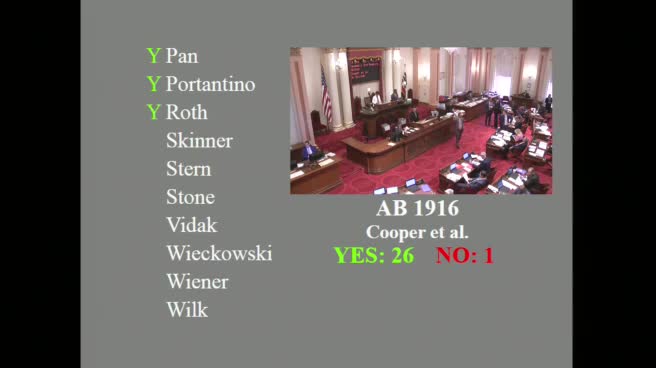 1MIN
Senate Floor
 1H
Senate Standing Committee on Appropriations
 1MIN
Senate Standing Committee on Governmental Organization
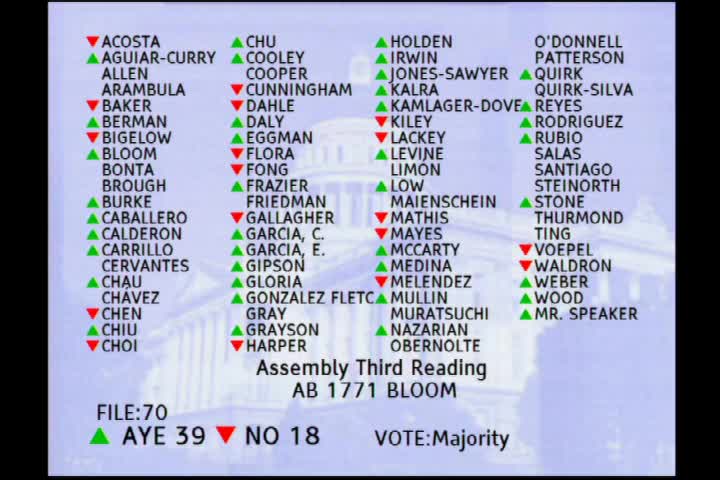 57SEC
Assembly Floor
 8MIN
Assembly Standing Committee on Governmental Organization
Bill Author

Bill Co-Author(s):