AB 2580: Special education: due process hearings: extension of hearings: good cause.
- Session Year: 2017-2018
- House: Assembly
- Latest Version Date: 2018-09-28
Existing law requires local educational agencies to identify, locate, and assess individuals with exceptional needs and to provide those pupils with a free appropriate public education in the least restrictive environment, with special education and related services as reflected in an individualized education program.
Existing law enumerates the requirements for state hearings regarding whether an individual with exceptional needs received a free appropriate public education, including the requirement that upon completion of the hearing, a written, reasoned decision be mailed to all parties to the hearing, as provided. Existing law authorizes either party to the hearing to request that the hearing officer grant an extension and requires the extension to be granted upon a showing of good cause.
This bill would require the hearing officer to apply a certain rule of court in making a determination of what constitutes good cause and would authorize a 2nd or subsequent extension to be granted for good cause or any other purpose at the discretion of the hearing officer.
Existing law requires local educational agencies to identify, locate, and assess individuals with exceptional needs and to provide those pupils with a free appropriate public education in the least restrictive environment, with special education and related services as reflected in an individualized education program.
Existing law enumerates the requirements for state hearings regarding whether an individual with exceptional needs received a free appropriate public education, including the requirement that upon completion of the hearing, a written, reasoned decision be mailed to all parties to the hearing, as provided. Existing law authorizes either party to the hearing to request that the hearing officer grant an extension and requires the extension to be granted upon a showing of good cause.
This bill would require the hearing officer to apply a certain rule of court in making a determination of what constitutes good cause and would provide that good cause includes when all parties submit a stipulation that an extension is necessary to resolve the matter by settlement. The bill would provide that a hearing officer shall only be required to grant an extension once for this settlement purpose and would authorize a 2nd or subsequent extension to be granted for this good cause or any other purpose at the discretion of the hearing officer.
Existing law requires local educational agencies to identify, locate, and assess individuals with exceptional needs and to provide those pupils with a free appropriate public education in the least restrictive environment, with special education and related services as reflected in an individualized education program.
Existing law enumerates the requirements for state hearings regarding whether an individual with exceptional needs received a free appropriate public education, including the requirement that upon completion of the hearing, a written, reasoned decision be mailed to all parties to the hearing, as provided. Existing law authorizes either party to the hearing to request that the hearing officer grant an extension and requires the extension to be granted upon a showing of good cause.
This bill would clarify require the hearing officer to apply a certain rule of court in making a determination of what constitutes good cause and would provide that good cause includes, but is not limited to, includes when all parties submit a stipulation that an extension is necessary to resolve the matter by settlement and when a material witness is absent due to the hearing date being set on a day when the witness is unavailable. settlement. The bill would provide that a hearing officer shall only be required to grant an extension once for each of those purposes this settlement purpose and would authorize a 2nd or subsequent extension to be granted for either of those purposes this or any other purpose at the discretion of the hearing officer.
Existing law requires local educational agencies to identify, locate, and assess individuals with exceptional needs and to provide those pupils with a free appropriate public education in the least restrictive environment, with special education and related services as reflected in an individualized education program.
Existing law enumerates the requirements for state hearings regarding whether an individual with exceptional needs received a free appropriate public education, including the requirement that upon completion of the hearing, a written, reasoned decision be mailed to all parties to the hearing, as provided. Existing law authorizes either party to the hearing to request that the hearing officer grant an extension and requires the extension to be granted upon a showing of good cause.
This bill would clarify that good cause includes, but is not limited to, when all parties submit a stipulation that an extension is necessary to resolve the matter by settlement and when a material witness is absent due to the hearing date being set on a day that the relevant school is not in session. when the witness is unavailable. The bill would provide that a hearing officer shall only be required to grant an extension once for each of those purposes and would authorize a 2nd or subsequent extension to be granted for either of those purposes at the discretion of the hearing officer.
Existing law requires local educational agencies to identify, locate, and assess individuals with exceptional needs and to provide those pupils with a free appropriate public education in the least restrictive environment, with special education and related services as reflected in an individualized education program.
Existing law enumerates the requirements for state hearings regarding whether an individual with exceptional needs received a free appropriate public education, including the requirement that upon completion of the hearing, a written, reasoned decision be mailed to all parties to the hearing, as provided. Existing law authorizes either party to the hearing to request that the hearing officer grant an extension and requires the extension to be granted upon a showing of good cause.
This bill would clarify that good cause includes, but is not limited to, when all parties submit a stipulation that an extension is necessary to resolve the matter by settlement and when a material witness is absent due to the hearing date being set on a day that the relevant school is not in session. The bill would provide that a hearing officer shall only be required to grant an extension once for each of those purposes and would authorize a 2nd or subsequent extension to be granted for either of those purposes at the discretion of the hearing officer.
The Administrative Procedure Act contains provisions governing the conduct of administrative adjudication and rulemaking proceedings of state agencies. The act requires all hearings of state agencies conducted under formal hearing procedures to be conducted by administrative law judges on the staff of the Office of Administrative Hearings.This bill would make nonsubstantive changes to that formal hearing requirement.The Administrative Procedure Act contains provisions governing the conduct of administrative adjudication and rulemaking proceedings of state agencies. The act requires all hearings of state agencies conducted under formal hearing procedures to be conducted by administrative law judges on the staff of the Office of Administrative Hearings.
This bill would make nonsubstantive changes to that formal hearing requirement.
(a)The state hearing shall be conducted in accordance with regulations adopted by the board.
(b)The hearing shall be held at a time and place reasonably convenient to the parent and the pupil.
(c)(1)The hearing shall be conducted by a person who, at a minimum, shall possess knowledge of, and the ability to understand, the provisions of this part and related state statutes and implementing regulations, the federal Individuals with Disabilities Education Act (20 U.S.C. Sec. 1400 et seq.), federal regulations pertaining to the act, and legal interpretations of this part and the federal law by federal and state courts, and who has satisfactorily completed training pursuant to this subdivision. The Superintendent shall establish standards for the training of hearing officers, the degree of specialization of the hearing officers, and the quality control mechanisms to be used to ensure that the hearings are fair and the decisions are accurate.
(2)The hearing officer shall possess the knowledge and ability to conduct hearings in accordance with appropriate standard legal practice.
(3)The hearing officer shall possess the knowledge and ability to render and write decisions in accordance with appropriate standard legal practice.
(4)A due process hearing shall not be conducted by an individual listed in Section 1415(f)(3)(A)(i) of Title 20 of the United States Code. Pursuant to Section 300.511(c)(2) of Title 34 of the Code of Federal Regulations, a person who is qualified to conduct a hearing is not an employee of the agency solely because he or she is paid by the agency to serve as a hearing officer. The hearing officer shall encourage the parties to a hearing to consider the option of mediation as an alternative to a hearing.
(d)Pursuant to Section 300.518(a) of Title 34 of the Code of Federal Regulations, during the pendency of the hearing proceedings, including the actual state-level hearing, or judicial proceeding regarding a due process hearing, the pupil shall remain in his or her present placement, except as provided in Section 300.533 of Title 34 of the Code of Federal Regulations, unless the public agency and the parent agree otherwise. A pupil applying for initial admission to a public school, with the consent of his or her parent, shall be placed in the public school program until all proceedings have been completed. As provided in Section 300.518(d) of Title 34 of the Code of Federal Regulations, if the decision of a hearing officer in a due process hearing or a state review official in an administrative appeal agrees with the parent of the pupil that a change of placement is appropriate, that placement shall be treated as an agreement between the state or local educational agency and the parent. In accordance with Section 300.518(c) of Title 34 of the Code of Federal Regulations, if a due process hearing request involves an application for initial services from a child who is transitioning from an early education program under Chapter 4.4 (commencing with Section 56425) to a special education program serving individuals with exceptional needs between the ages of three to five years, inclusive, under Chapter 4.45 (commencing with Section 56440), and is no longer eligible for early education services because the child has turned three years of age, the local educational agency is not required to provide early education services that the child had been receiving. If the child is found eligible for special education and related services for children age three years of age and older, and the parent consents to the initial provision of special education and related services under Section 300.300(b) of Title 34 of the Code of Federal Regulations, the local educational agency shall provide those special education and related services that are not in dispute between the parent and the local educational agency.
(e)A party to the hearing held pursuant to this section shall be afforded the following rights consistent with state and federal statutes and regulations:
(1)The right to be accompanied and advised by counsel and by individuals with special knowledge or training relating to the problems of individuals with exceptional needs.
(2)The right to present evidence, written arguments, and oral arguments.
(3)The right to confront, cross-examine, and compel the attendance of, witnesses.
(4)The right to a written, or, at the option of the parent, electronic, verbatim record of the hearing.
(5)The right to written, or, at the option of the parent, electronic, findings of fact and decisions. The record of the hearing and the findings of fact and decisions shall be provided at no cost to parents in accordance with Section 300.512(c)(3) of Title 34 of the Code of Federal Regulations. The findings and decisions shall be made available to the public after any personally identifiable information has been deleted consistent with the confidentiality requirements of Section 1417(c) of Title 20 of the United States Code and shall also be transmitted to the Advisory Commission on Special Education pursuant to Section 1415(h)(4) of Title 20 of the United States Code.
(6)The right to be informed by the other parties to the hearing, at least 10 days before the hearing, as to what those parties believe are the issues to be decided at the hearing and their proposed resolution of those issues. Upon the request of a parent who is not represented by an attorney, the agency responsible for conducting hearings shall provide a mediator to assist the parent in identifying the issues and the proposed resolution of the issues.
(7)The right to receive from other parties to the hearing, at least five business days before the hearing, a copy of all documents and a list of all witnesses and their general area of testimony that the parties intend to present at the hearing. Included in the material to be disclosed to all parties at least five business days before a hearing shall be all assessments completed by that date and recommendations based on the assessments that the parties intend to use at the hearing.
(8)The right, pursuant to Section 300.512(a)(3) of Title 34 of the Code of Federal Regulations, to prohibit the introduction of any evidence at the hearing that has not been disclosed to that party at least five business days before the hearing.
(f)(1)In accordance with Section 1415(f)(3)(E) of Title 20 of the United States Code, the decision of a due process hearing officer shall be made on substantive grounds based on a determination of whether the child received a free appropriate public education.
(2)In matters alleging a procedural violation, a due process hearing officer may find that a child did not receive a free appropriate public education only if the procedural violation did any of the following:
(A)Impeded the right of the child to a free appropriate public education.
(B)Significantly impeded the opportunity of the parent to participate in the decisionmaking process regarding the provision of a free appropriate public education to the child of the parent.
(C)Caused a deprivation of educational benefits.
(3)The hearing conducted pursuant to this section shall be completed and a written, reasoned decision, including the reasons for a nonpublic, nonsectarian school placement, the provision of nonpublic, nonsectarian agency services, or the reimbursement for the placement or services, taking into account the requirements of subdivision (a) of Section 56365, shall be mailed to all parties to the hearing not later than 45 days after the expiration of the 30-day period pursuant to subdivision (c) of Section 56501.5. Either party to the hearing may request the hearing officer to grant an extension. The extension shall be granted upon a showing of good cause. The hearing officer shall apply Rule 3.1332 of the California Rules of Court in making a determination of what constitutes good cause. An extension shall extend the time for rendering a final administrative decision only for a period equal to the length of the extension. A second or subsequent extension may be granted for good cause or any other purpose at the discretion of the hearing officer.
(4)This subdivision does not preclude a due process hearing officer from ordering a local educational agency to comply with procedural requirements under this chapter.
(g)Subdivision (f) does not alter the burden of proof required in a due process hearing, or prevent a hearing officer from ordering a compensatory remedy for an individual with exceptional needs.
(h)The hearing conducted pursuant to this section shall be the final administrative determination and binding on all parties.
(i)In decisions relating to the placement of individuals with exceptional needs, the person conducting the state hearing shall consider cost, in addition to all other factors that are considered.
(j)In a hearing conducted pursuant to this section, the hearing officer shall not base a decision solely on nonsubstantive procedural errors, unless the hearing officer finds that the nonsubstantive procedural errors resulted in the loss of an educational opportunity to the pupil or interfered with the opportunity of the parent of the pupil to participate in the formulation process of the individualized education program.
(k)This chapter does not preclude a party aggrieved by the findings and decisions in a hearing under this section from exercising the right to appeal the decision to a state court of competent jurisdiction. An aggrieved party also may exercise the right to bring a civil action in a district court of the United States without regard to the amount in controversy, pursuant to Section 300.516 of Title 34 of the Code of Federal Regulations. An appeal shall be made within 90 days of receipt of the hearing decision. During the pendency of an administrative or judicial proceeding conducted pursuant to Chapter 5 (commencing with Section 56500), the child involved in the hearing shall remain in his or her present educational placement, unless the public agency and the parent of the child agree otherwise. An action brought under this subdivision shall adhere to Section 300.516(c) of Title 34 of the Code of Federal Regulations.
(l)A request for a due process hearing arising under subdivision (a) of Section 56501 shall be filed within two years from the date the party initiating the request knew or had reason to know of the facts underlying the basis for the request. In accordance with Section 1415(f)(3)(D) of Title 20 of the United States Code, the time period specified in this subdivision does not apply to a parent if the parent was prevented from requesting the due process hearing due to either of the following:
(1)Specific misrepresentations by the local educational agency that it had solved the problem forming the basis of the due process hearing request.
(2)The withholding of information by the local educational agency from the parent that was required under this part to be provided to the parent.
(m)Pursuant to Section 300.511(c) of Title 34 of the Code of Federal Regulations, each public agency shall keep a list of the persons who serve as due process hearing officers, in accordance with Section 56504.5, and the list shall include a statement of the qualifications of each of those persons. The list of hearing officers shall be provided to the public agencies by the organization or entity under contract with the department to conduct due process hearings.
(n)A party who filed for a due process hearing before the effective date of this section is not bound by the two-year statute of limitations time period in subdivision (l) if the party filed a request within the three-year statute of limitations provision pursuant to subdivision (l), as that subdivision read before October 9, 2006.
(a)The state hearing shall be conducted in accordance with regulations adopted by the board.
(b)The hearing shall be held at a time and place reasonably convenient to the parent and the pupil.
(c)(1)The hearing shall be conducted by a person who, at a minimum, shall possess knowledge of, and the ability to understand, the provisions of this part and related state statutes and implementing regulations, the federal Individuals with Disabilities Education Act (20 U.S.C. Sec. 1400 et seq.), federal regulations pertaining to the act, and legal interpretations of this part and the federal law by federal and state courts, and who has satisfactorily completed training pursuant to this subdivision. The Superintendent shall establish standards for the training of hearing officers, the degree of specialization of the hearing officers, and the quality control mechanisms to be used to ensure that the hearings are fair and the decisions are accurate.
(2)The hearing officer shall possess the knowledge and ability to conduct hearings in accordance with appropriate standard legal practice.
(3)The hearing officer shall possess the knowledge and ability to render and write decisions in accordance with appropriate standard legal practice.
(4)A due process hearing shall not be conducted by an individual listed in Section 1415(f)(3)(A)(i) of Title 20 of the United States Code. Pursuant to Section 300.511(c)(2) of Title 34 of the Code of Federal Regulations, a person who is qualified to conduct a hearing is not an employee of the agency solely because he or she is paid by the agency to serve as a hearing officer. The hearing officer shall encourage the parties to a hearing to consider the option of mediation as an alternative to a hearing.
(d)Pursuant to Section 300.518(a) of Title 34 of the Code of Federal Regulations, during the pendency of the hearing proceedings, including the actual state-level hearing, or judicial proceeding regarding a due process hearing, the pupil shall remain in his or her present placement, except as provided in Section 300.533 of Title 34 of the Code of Federal Regulations, unless the public agency and the parent agree otherwise. A pupil applying for initial admission to a public school, with the consent of his or her parent, shall be placed in the public school program until all proceedings have been completed. As provided in Section 300.518(d) of Title 34 of the Code of Federal Regulations, if the decision of a hearing officer in a due process hearing or a state review official in an administrative appeal agrees with the parent of the pupil that a change of placement is appropriate, that placement shall be treated as an agreement between the state or local educational agency and the parent. In accordance with Section 300.518(c) of Title 34 of the Code of Federal Regulations, if a due process hearing request involves an application for initial services from a child who is transitioning from an early education program under Chapter 4.4 (commencing with Section 56425) to a special education program serving individuals with exceptional needs between the ages of three to five years, inclusive, under Chapter 4.45 (commencing with Section 56440), and is no longer eligible for early education services because the child has turned three years of age, the local educational agency is not required to provide early education services that the child had been receiving. If the child is found eligible for special education and related services for children age three years of age and older, and the parent consents to the initial provision of special education and related services under Section 300.300(b) of Title 34 of the Code of Federal Regulations, the local educational agency shall provide those special education and related services that are not in dispute between the parent and the local educational agency.
(e)A party to the hearing held pursuant to this section shall be afforded the following rights consistent with state and federal statutes and regulations:
(1)The right to be accompanied and advised by counsel and by individuals with special knowledge or training relating to the problems of individuals with exceptional needs.
(2)The right to present evidence, written arguments, and oral arguments.
(3)The right to confront, cross-examine, and compel the attendance of, witnesses.
(4)The right to a written, or, at the option of the parent, electronic, verbatim record of the hearing.
(5)The right to written, or, at the option of the parent, electronic, findings of fact and decisions. The record of the hearing and the findings of fact and decisions shall be provided at no cost to parents in accordance with Section 300.512(c)(3) of Title 34 of the Code of Federal Regulations. The findings and decisions shall be made available to the public after any personally identifiable information has been deleted consistent with the confidentiality requirements of Section 1417(c) of Title 20 of the United States Code and shall also be transmitted to the Advisory Commission on Special Education pursuant to Section 1415(h)(4) of Title 20 of the United States Code.
(6)The right to be informed by the other parties to the hearing, at least 10 days before the hearing, as to what those parties believe are the issues to be decided at the hearing and their proposed resolution of those issues. Upon the request of a parent who is not represented by an attorney, the agency responsible for conducting hearings shall provide a mediator to assist the parent in identifying the issues and the proposed resolution of the issues.
(7)The right to receive from other parties to the hearing, at least five business days before the hearing, a copy of all documents and a list of all witnesses and their general area of testimony that the parties intend to present at the hearing. Included in the material to be disclosed to all parties at least five business days before a hearing shall be all assessments completed by that date and recommendations based on the assessments that the parties intend to use at the hearing.
(8)The right, pursuant to Section 300.512(a)(3) of Title 34 of the Code of Federal Regulations, to prohibit the introduction of any evidence at the hearing that has not been disclosed to that party at least five business days before the hearing.
(f)(1)In accordance with Section 1415(f)(3)(E) of Title 20 of the United States Code, the decision of a due process hearing officer shall be made on substantive grounds based on a determination of whether the child received a free appropriate public education.
(2)In matters alleging a procedural violation, a due process hearing officer may find that a child did not receive a free appropriate public education only if the procedural violation did any of the following:
(A)Impeded the right of the child to a free appropriate public education.
(B)Significantly impeded the opportunity of the parent to participate in the decisionmaking process regarding the provision of a free appropriate public education to the child of the parent.
(C)Caused a deprivation of educational benefits.
(3)(A)The hearing conducted pursuant to this section shall be completed and a written, reasoned decision, including the reasons for a nonpublic, nonsectarian school placement, the provision of nonpublic, nonsectarian agency services, or the reimbursement for the placement or services, taking into account the requirements of subdivision (a) of Section 56365, shall be mailed to all parties to the hearing not later than 45 days after the expiration of the 30-day period pursuant to subdivision (c) of Section 56501.5. Either party to the hearing may request the hearing officer to grant an extension. The extension shall be granted upon a showing of good cause. The hearing officer shall apply Rule 3.1332 of the California Rules of Court in making a determination of what constitutes good cause. An extension shall extend the time for rendering a final administrative decision only for a period equal to the length of the extension. A second or subsequent extension may be granted for good cause or any other purpose at the discretion of the hearing officer.
(B)For purposes of this paragraph, good cause includes when all parties submit a stipulation to the hearing officer that an extension is necessary to resolve the matter by settlement.(C)A hearing officer shall only be required to grant an extension once for the purpose set forth in subparagraph (B). A second or subsequent extension may be granted for this or any other purpose at the discretion of the hearing officer.(4)This subdivision does not preclude a due process hearing officer from ordering a local educational agency to comply with procedural requirements under this chapter.
(g)Subdivision (f) does not alter the burden of proof required in a due process hearing, or prevent a hearing officer from ordering a compensatory remedy for an individual with exceptional needs.
(h)The hearing conducted pursuant to this section shall be the final administrative determination and binding on all parties.
(i)In decisions relating to the placement of individuals with exceptional needs, the person conducting the state hearing shall consider cost, in addition to all other factors that are considered.
(j)In a hearing conducted pursuant to this section, the hearing officer shall not base a decision solely on nonsubstantive procedural errors, unless the hearing officer finds that the nonsubstantive procedural errors resulted in the loss of an educational opportunity to the pupil or interfered with the opportunity of the parent of the pupil to participate in the formulation process of the individualized education program.
(k)This chapter does not preclude a party aggrieved by the findings and decisions in a hearing under this section from exercising the right to appeal the decision to a state court of competent jurisdiction. An aggrieved party also may exercise the right to bring a civil action in a district court of the United States without regard to the amount in controversy, pursuant to Section 300.516 of Title 34 of the Code of Federal Regulations. An appeal shall be made within 90 days of receipt of the hearing decision. During the pendency of an administrative or judicial proceeding conducted pursuant to Chapter 5 (commencing with Section 56500), the child involved in the hearing shall remain in his or her present educational placement, unless the public agency and the parent of the child agree otherwise. An action brought under this subdivision shall adhere to Section 300.516(c) of Title 34 of the Code of Federal Regulations.
(l)A request for a due process hearing arising under subdivision (a) of Section 56501 shall be filed within two years from the date the party initiating the request knew or had reason to know of the facts underlying the basis for the request. In accordance with Section 1415(f)(3)(D) of Title 20 of the United States Code, the time period specified in this subdivision does not apply to a parent if the parent was prevented from requesting the due process hearing due to either of the following:
(1)Specific misrepresentations by the local educational agency that it had solved the problem forming the basis of the due process hearing request.
(2)The withholding of information by the local educational agency from the parent that was required under this part to be provided to the parent.
(m)Pursuant to Section 300.511(c) of Title 34 of the Code of Federal Regulations, each public agency shall keep a list of the persons who serve as due process hearing officers, in accordance with Section 56504.5, and the list shall include a statement of the qualifications of each of those persons. The list of hearing officers shall be provided to the public agencies by the organization or entity under contract with the department to conduct due process hearings.
(n)A party who filed for a due process hearing before the effective date of this section is not bound by the two-year statute of limitations time period in subdivision (l) if the party filed a request within the three-year statute of limitations provision pursuant to subdivision (l), as that subdivision read before October 9, 2006.
(a)The state hearing shall be conducted in accordance with regulations adopted by the board.
(b)The hearing shall be held at a time and place reasonably convenient to the parent and the pupil.
(c)(1)The hearing shall be conducted by a person who, at a minimum, shall possess knowledge of, and the ability to understand, the provisions of this part and related state statutes and implementing regulations, the federal Individuals with Disabilities Education Act (20 U.S.C. Sec. 1400 et seq.), federal regulations pertaining to the act, and legal interpretations of this part and the federal law by federal and state courts, and who has satisfactorily completed training pursuant to this subdivision. The Superintendent shall establish standards for the training of hearing officers, the degree of specialization of the hearing officers, and the quality control mechanisms to be used to ensure that the hearings are fair and the decisions are accurate.
(2)The hearing officer shall possess the knowledge and ability to conduct hearings in accordance with appropriate standard legal practice.
(3)The hearing officer shall possess the knowledge and ability to render and write decisions in accordance with appropriate standard legal practice.
(4)A due process hearing shall not be conducted by an individual listed in Section 1415(f)(3)(A)(i) of Title 20 of the United States Code. Pursuant to Section 300.511(c)(2) of Title 34 of the Code of Federal Regulations, a person who is qualified to conduct a hearing is not an employee of the agency solely because he or she is paid by the agency to serve as a hearing officer. The hearing officer shall encourage the parties to a hearing to consider the option of mediation as an alternative to a hearing.
(d)Pursuant to Section 300.518(a) of Title 34 of the Code of Federal Regulations, during the pendency of the hearing proceedings, including the actual state-level hearing, or judicial proceeding regarding a due process hearing, the pupil shall remain in his or her present placement, except as provided in Section 300.533 of Title 34 of the Code of Federal Regulations, unless the public agency and the parent agree otherwise. A pupil applying for initial admission to a public school, with the consent of his or her parent, shall be placed in the public school program until all proceedings have been completed. As provided in Section 300.518(d) of Title 34 of the Code of Federal Regulations, if the decision of a hearing officer in a due process hearing or a state review official in an administrative appeal agrees with the parent of the pupil that a change of placement is appropriate, that placement shall be treated as an agreement between the state or local educational agency and the parent. In accordance with Section 300.518(c) of Title 34 of the Code of Federal Regulations, if a due process hearing request involves an application for initial services from a child who is transitioning from an early education program under Chapter 4.4 (commencing with Section 56425) to a special education program serving individuals with exceptional needs between the ages of three to five years, inclusive, under Chapter 4.45 (commencing with Section 56440), and is no longer eligible for early education services because the child has turned three years of age, the local educational agency is not required to provide early education services that the child had been receiving. If the child is found eligible for special education and related services for children age three years of age and older, and the parent consents to the initial provision of special education and related services under Section 300.300(b) of Title 34 of the Code of Federal Regulations, the local educational agency shall provide those special education and related services that are not in dispute between the parent and the local educational agency.
(e)A party to the hearing held pursuant to this section shall be afforded the following rights consistent with state and federal statutes and regulations:
(1)The right to be accompanied and advised by counsel and by individuals with special knowledge or training relating to the problems of individuals with exceptional needs.
(2)The right to present evidence, written arguments, and oral arguments.
(3)The right to confront, cross-examine, and compel the attendance of, witnesses.
(4)The right to a written, or, at the option of the parent, electronic, verbatim record of the hearing.
(5)The right to written, or, at the option of the parent, electronic, findings of fact and decisions. The record of the hearing and the findings of fact and decisions shall be provided at no cost to parents in accordance with Section 300.512(c)(3) of Title 34 of the Code of Federal Regulations. The findings and decisions shall be made available to the public after any personally identifiable information has been deleted consistent with the confidentiality requirements of Section 1417(c) of Title 20 of the United States Code and shall also be transmitted to the Advisory Commission on Special Education pursuant to Section 1415(h)(4) of Title 20 of the United States Code.
(6)The right to be informed by the other parties to the hearing, at least 10 days before the hearing, as to what those parties believe are the issues to be decided at the hearing and their proposed resolution of those issues. Upon the request of a parent who is not represented by an attorney, the agency responsible for conducting hearings shall provide a mediator to assist the parent in identifying the issues and the proposed resolution of the issues.
(7)The right to receive from other parties to the hearing, at least five business days before the hearing, a copy of all documents and a list of all witnesses and their general area of testimony that the parties intend to present at the hearing. Included in the material to be disclosed to all parties at least five business days before a hearing shall be all assessments completed by that date and recommendations based on the assessments that the parties intend to use at the hearing.
(8)The right, pursuant to Section 300.512(a)(3) of Title 34 of the Code of Federal Regulations, to prohibit the introduction of any evidence at the hearing that has not been disclosed to that party at least five business days before the hearing.
(f)(1)In accordance with Section 1415(f)(3)(E) of Title 20 of the United States Code, the decision of a due process hearing officer shall be made on substantive grounds based on a determination of whether the child received a free appropriate public education.
(2)In matters alleging a procedural violation, a due process hearing officer may find that a child did not receive a free appropriate public education only if the procedural violation did any of the following:
(A)Impeded the right of the child to a free appropriate public education.
(B)Significantly impeded the opportunity of the parent to participate in the decisionmaking process regarding the provision of a free appropriate public education to the child of the parent.
(C)Caused a deprivation of educational benefits.
(3)(A)The hearing conducted pursuant to this section shall be completed and a written, reasoned decision, including the reasons for a nonpublic, nonsectarian school placement, the provision of nonpublic, nonsectarian agency services, or the reimbursement for the placement or services, taking into account the requirements of subdivision (a) of Section 56365, shall be mailed to all parties to the hearing not later than 45 days after the expiration of the 30-day period pursuant to subdivision (c) of Section 56501.5. Either party to the hearing may request the hearing officer to grant an extension. The extension shall be granted upon a showing of good cause. The hearing officer shall apply Rule 3.1332 of the California Rules of Court in making a determination of what constitutes good cause. An extension shall extend the time for rendering a final administrative decision only for a period equal to the length of the extension.
(B)For purposes of this paragraph, good cause includes, but is not limited to, either of the following: includes when all parties submit a stipulation to the hearing officer that an extension is necessary to resolve the matter by settlement.
(i)When all parties submit a stipulation to the hearing officer that an extension is necessary to resolve the matter by settlement.(ii)When a material witness is absent due to the hearing date being set on a day when the witness is unavailable.(C)A hearing officer shall only be required to grant an extension once for each of the purposes set forth in clause (i) or (ii) of purpose set forth in subparagraph (B). A second or subsequent extension may be granted for either of those purposes this or any other purpose at the discretion of the hearing officer.
(4)This subdivision does not preclude a due process hearing officer from ordering a local educational agency to comply with procedural requirements under this chapter.
(g)Subdivision (f) does not alter the burden of proof required in a due process hearing, or prevent a hearing officer from ordering a compensatory remedy for an individual with exceptional needs.
(h)The hearing conducted pursuant to this section shall be the final administrative determination and binding on all parties.
(i)In decisions relating to the placement of individuals with exceptional needs, the person conducting the state hearing shall consider cost, in addition to all other factors that are considered.
(j)In a hearing conducted pursuant to this section, the hearing officer shall not base a decision solely on nonsubstantive procedural errors, unless the hearing officer finds that the nonsubstantive procedural errors resulted in the loss of an educational opportunity to the pupil or interfered with the opportunity of the parent of the pupil to participate in the formulation process of the individualized education program.
(k)This chapter does not preclude a party aggrieved by the findings and decisions in a hearing under this section from exercising the right to appeal the decision to a state court of competent jurisdiction. An aggrieved party also may exercise the right to bring a civil action in a district court of the United States without regard to the amount in controversy, pursuant to Section 300.516 of Title 34 of the Code of Federal Regulations. An appeal shall be made within 90 days of receipt of the hearing decision. During the pendency of an administrative or judicial proceeding conducted pursuant to Chapter 5 (commencing with Section 56500), the child involved in the hearing shall remain in his or her present educational placement, unless the public agency and the parent of the child agree otherwise. An action brought under this subdivision shall adhere to Section 300.516(c) of Title 34 of the Code of Federal Regulations.
(l)A request for a due process hearing arising under subdivision (a) of Section 56501 shall be filed within two years from the date the party initiating the request knew or had reason to know of the facts underlying the basis for the request. In accordance with Section 1415(f)(3)(D) of Title 20 of the United States Code, the time period specified in this subdivision does not apply to a parent if the parent was prevented from requesting the due process hearing due to either of the following:
(1)Specific misrepresentations by the local educational agency that it had solved the problem forming the basis of the due process hearing request.
(2)The withholding of information by the local educational agency from the parent that was required under this part to be provided to the parent.
(m)Pursuant to Section 300.511(c) of Title 34 of the Code of Federal Regulations, each public agency shall keep a list of the persons who serve as due process hearing officers, in accordance with Section 56504.5, and the list shall include a statement of the qualifications of each of those persons. The list of hearing officers shall be provided to the public agencies by the organization or entity under contract with the department to conduct due process hearings.
(n)A party who filed for a due process hearing before the effective date of this section is not bound by the two-year statute of limitations time period in subdivision (l) if the party filed a request within the three-year statute of limitations provision pursuant to subdivision (l), as that subdivision read before October 9, 2006.
(a)The state hearing shall be conducted in accordance with regulations adopted by the board.
(b)The hearing shall be held at a time and place reasonably convenient to the parent and the pupil.
(c)(1)The hearing shall be conducted by a person who, at a minimum, shall possess knowledge of, and the ability to understand, the provisions of this part and related state statutes and implementing regulations, the federal Individuals with Disabilities Education Act (20 U.S.C. Sec. 1400 et seq.), federal regulations pertaining to the act, and legal interpretations of this part and the federal law by federal and state courts, and who has satisfactorily completed training pursuant to this subdivision. The Superintendent shall establish standards for the training of hearing officers, the degree of specialization of the hearing officers, and the quality control mechanisms to be used to ensure that the hearings are fair and the decisions are accurate.
(2)The hearing officer shall possess the knowledge and ability to conduct hearings in accordance with appropriate, standard appropriate standard legal practice.
(3)The hearing officer shall possess the knowledge and ability to render and write decisions in accordance with appropriate, standard appropriate standard legal practice.
(4)A due process hearing shall not be conducted by an individual listed in Section 1415(f)(3)(A)(i) of Title 20 of the United States Code. Pursuant to Section 300.511(c)(2) of Title 34 of the Code of Federal Regulations, a person who is qualified to conduct a hearing is not an employee of the agency solely because he or she is paid by the agency to serve as a hearing officer. The hearing officer shall encourage the parties to a hearing to consider the option of mediation as an alternative to a hearing.
(d)Pursuant to Section 300.518(a) of Title 34 of the Code of Federal Regulations, during the pendency of the hearing proceedings, including the actual state-level hearing, or judicial proceeding regarding a due process hearing, the pupil shall remain in his or her present placement, except as provided in Section 300.533 of Title 34 of the Code of Federal Regulations, unless the public agency and the parent agree otherwise. A pupil applying for initial admission to a public school, with the consent of his or her parent, shall be placed in the public school program until all proceedings have been completed. As provided in Section 300.518(d) of Title 34 of the Code of Federal Regulations, if the decision of a hearing officer in a due process hearing or a state review official in an administrative appeal agrees with the parent of the pupil that a change of placement is appropriate, that placement shall be treated as an agreement between the state or local educational agency and the parent. In accordance with Section 300.518(c) of Title 34 of the Code of Federal Regulations, if a due process hearing request involves an application for initial services from a child who is transitioning from an early education program under Chapter 4.4 (commencing with Section 56425) to a special education program serving individuals with exceptional needs between the ages of three to five years, inclusive, under Chapter 4.45 (commencing with Section 56440), and is no longer eligible for early education services because the child has turned three years of age, the local educational agency is not required to provide early education services that the child had been receiving. If the child is found eligible for special education and related services for children age three years of age and older, and the parent consents to the initial provision of special education and related services under Section 300.300(b) of Title 34 of the Code of Federal Regulations, the local educational agency shall provide those special education and related services that are not in dispute between the parent and the local educational agency.
(e)A party to the hearing held pursuant to this section shall be afforded the following rights consistent with state and federal statutes and regulations:
(1)The right to be accompanied and advised by counsel and by individuals with special knowledge or training relating to the problems of individuals with exceptional needs.
(2)The right to present evidence, written arguments, and oral arguments.
(3)The right to confront, cross-examine, and compel the attendance of, witnesses.
(4)The right to a written, or, at the option of the parent, electronic electronic, verbatim record of the hearing.
(5)The right to written, or, at the option of the parent, electronic electronic, findings of fact and decisions. The record of the hearing and the findings of fact and decisions shall be provided at no cost to parents in accordance with Section 300.512(c)(3) of Title 34 of the Code of Federal Regulations. The findings and decisions shall be made available to the public after any personally identifiable information has been deleted consistent with the confidentiality requirements of Section 1417(c) of Title 20 of the United States Code and shall also be transmitted to the Advisory Commission on Special Education pursuant to Section 1415(h)(4) of Title 20 of the United States Code.
(6)The right to be informed by the other parties to the hearing, at least 10 days before the hearing, as to what those parties believe are the issues to be decided at the hearing and their proposed resolution of those issues. Upon the request of a parent who is not represented by an attorney, the agency responsible for conducting hearings shall provide a mediator to assist the parent in identifying the issues and the proposed resolution of the issues.
(7)The right to receive from other parties to the hearing, at least five business days before the hearing, a copy of all documents and a list of all witnesses and their general area of testimony that the parties intend to present at the hearing. Included in the material to be disclosed to all parties at least five business days before a hearing shall be all assessments completed by that date and recommendations based on the assessments that the parties intend to use at the hearing.
(8)The right, pursuant to Section 300.512(a)(3) of Title 34 of the Code of Federal Regulations, to prohibit the introduction of any evidence at the hearing that has not been disclosed to that party at least five business days before the hearing.
(f)(1)In accordance with Section 1415(f)(3)(E) of Title 20 of the United States Code, the decision of a due process hearing officer shall be made on substantive grounds based on a determination of whether the child received a free appropriate public education.
(2)In matters alleging a procedural violation, a due process hearing officer may find that a child did not receive a free appropriate public education only if the procedural violation did any of the following:
(A)Impeded the right of the child to a free appropriate public education.
(B)Significantly impeded the opportunity of the parent to participate in the decisionmaking process regarding the provision of a free appropriate public education to the child of the parent.
(C)Caused a deprivation of educational benefits.
(3)(A)The hearing conducted pursuant to this section shall be completed and a written, reasoned decision, including the reasons for a nonpublic, nonsectarian school placement, the provision of nonpublic, nonsectarian agency services, or the reimbursement for the placement or services, taking into account the requirements of subdivision (a) of Section 56365, shall be mailed to all parties to the hearing not later than 45 days after the expiration of the 30-day period pursuant to subdivision (c) of Section 56501.5. Either party to the hearing may request the hearing officer to grant an extension. The extension shall be granted upon a showing of good cause. An extension shall extend the time for rendering a final administrative decision only for a period equal to the length of the extension.
(B)For purposes of this paragraph, good cause includes, but is not limited to, either of the following:
(i)When all parties submit a stipulation to the hearing officer that an extension is necessary to resolve the matter by settlement.
(ii)When a material witness is absent due to the hearing date being set on a day that the relevant school is not in session. when the witness is unavailable.
(C)A hearing officer shall only be required to grant an extension once for each of the purposes set forth in clause (i) or (ii) of subparagraph (B). A second or subsequent extension may be granted for either of those purposes at the discretion of the hearing officer.
(4)This subdivision does not preclude a due process hearing officer from ordering a local educational agency to comply with procedural requirements under this chapter.
(g)Subdivision (f) does not alter the burden of proof required in a due process hearing, or prevent a hearing officer from ordering a compensatory remedy for an individual with exceptional needs.
(h)The hearing conducted pursuant to this section shall be the final administrative determination and binding on all parties.
(i)In decisions relating to the placement of individuals with exceptional needs, the person conducting the state hearing shall consider cost, in addition to all other factors that are considered.
(j)In a hearing conducted pursuant to this section, the hearing officer shall not base a decision solely on nonsubstantive procedural errors, unless the hearing officer finds that the nonsubstantive procedural errors resulted in the loss of an educational opportunity to the pupil or interfered with the opportunity of the parent of the pupil to participate in the formulation process of the individualized education program.
(k)This chapter does not preclude a party aggrieved by the findings and decisions in a hearing under this section from exercising the right to appeal the decision to a state court of competent jurisdiction. An aggrieved party also may exercise the right to bring a civil action in a district court of the United States without regard to the amount in controversy, pursuant to Section 300.516 of Title 34 of the Code of Federal Regulations. An appeal shall be made within 90 days of receipt of the hearing decision. During the pendency of an administrative or judicial proceeding conducted pursuant to Chapter 5 (commencing with Section 56500), the child involved in the hearing shall remain in his or her present educational placement, unless the public agency and the parent of the child agree otherwise. An action brought under this subdivision shall adhere to Section 300.516(c) of Title 34 of the Code of Federal Regulations.
(l)A request for a due process hearing arising under subdivision (a) of Section 56501 shall be filed within two years from the date the party initiating the request knew or had reason to know of the facts underlying the basis for the request. In accordance with Section 1415(f)(3)(D) of Title 20 of the United States Code, the time period specified in this subdivision does not apply to a parent if the parent was prevented from requesting the due process hearing due to either of the following:
(1)Specific misrepresentations by the local educational agency that it had solved the problem forming the basis of the due process hearing request.
(2)The withholding of information by the local educational agency from the parent that was required under this part to be provided to the parent.
(m)Pursuant to Section 300.511(c) of Title 34 of the Code of Federal Regulations, each public agency shall keep a list of the persons who serve as due process hearing officers, in accordance with Section 56504.5, and the list shall include a statement of the qualifications of each of those persons. The list of hearing officers shall be provided to the public agencies by the organization or entity under contract with the department to conduct due process hearings.
(n)A party who filed for a due process hearing before the effective date of this section is not bound by the two-year statute of limitations time period in subdivision (l) if the party filed a request within the three-year statute of limitations provision pursuant to subdivision (l), as that subdivision read before October 9, 2006.
(a)The state hearing shall be conducted in accordance with regulations adopted by the board.
(b)The hearing shall be held at a time and place reasonably convenient to the parent or guardian and the pupil.
(c)(1)The hearing shall be conducted by a person who, at a minimum, shall possess knowledge of, and the ability to understand, the provisions of this part and related state statutes and implementing regulations, the federal Individuals with Disabilities Education Act (20 U.S.C. Sec. 1400 et seq.), federal regulations pertaining to the act, and legal interpretations of this part and the federal law by federal and state courts, and who has satisfactorily completed training pursuant to this subdivision. The Superintendent shall establish standards for the training of hearing officers, the degree of specialization of the hearing officers, and the quality control mechanisms to be used to ensure that the hearings are fair and the decisions are accurate.
(2)The hearing officer shall possess the knowledge and ability to conduct hearings in accordance with appropriate, standard legal practice.
(3)The hearing officer shall possess the knowledge and ability to render and write decisions in accordance with appropriate, standard legal practice.
(4)A due process hearing shall not be conducted by an individual listed in Section 1415(f)(3)(A)(i) of Title 20 of the United States Code. Pursuant to Section 300.511(c)(2) of Title 34 of the Code of Federal Regulations, a person who is qualified to conduct a hearing is not an employee of the agency solely because he or she is paid by the agency to serve as a hearing officer. The hearing officer shall encourage the parties to a hearing to consider the option of mediation as an alternative to a hearing.
(d)Pursuant to Section 300.518(a) of Title 34 of the Code of Federal Regulations, during the pendency of the hearing proceedings, including the actual state-level hearing, or judicial proceeding regarding a due process hearing, the pupil shall remain in his or her present placement, except as provided in Section 300.533 of Title 34 of the Code of Federal Regulations, unless the public agency and the parent or guardian agree otherwise. A pupil applying for initial admission to a public school, with the consent of his or her parent or guardian, parent, shall be placed in the public school program until all proceedings have been completed. As provided in Section 300.518(d) of Title 34 of the Code of Federal Regulations, if the decision of a hearing officer in a due process hearing or a state review official in an administrative appeal agrees with the parent or guardian of the pupil that a change of placement is appropriate, that placement shall be treated as an agreement between the state or local educational agency and the parent or guardian. parent. In accordance with Section 300.518(c) of Title 34 of the Code of Federal Regulations, if a due process hearing request involves an application for initial services from a child who is transitioning from an early education program under Chapter 4.4 (commencing with Section 56425) to a special education program serving individuals with exceptional needs between the ages of three to five years, inclusive, under Chapter 4.45 (commencing with Section 56440), and is no longer eligible for early education services because the child has turned three years of age, the local educational agency is not required to provide early education services that the child had been receiving. If the child is found eligible for special education and related services for children age three years of age and older, and the parent or guardian consents to the initial provision of special education and related services under Section 300.300(b) of Title 34 of the Code of Federal Regulations, the local educational agency shall provide those special education and related services that are not in dispute between the parent or guardian and the local educational agency.
(e)A party to the hearing held pursuant to this section shall be afforded the following rights consistent with state and federal statutes and regulations:
(1)The right to be accompanied and advised by counsel and by individuals with special knowledge or training relating to the problems of individuals with exceptional needs.
(2)The right to present evidence, written arguments, and oral arguments.
(3)The right to confront, cross-examine, and compel the attendance of, witnesses.
(4)The right to a written, or, at the option of the parents or guardians, parent, electronic verbatim record of the hearing.
(5)The right to written, or, at the option of the parent or guardian, parent, electronic findings of fact and decisions. The record of the hearing and the findings of fact and decisions shall be provided at no cost to parents or guardians in accordance with Section 300.512(c)(3) of Title 34 of the Code of Federal Regulations. The findings and decisions shall be made available to the public after any personally identifiable information has been deleted consistent with the confidentiality requirements of Section 1417(c) of Title 20 of the United States Code and shall also be transmitted to the Advisory Commission on Special Education pursuant to Section 1415(h)(4) of Title 20 of the United States Code.
(6)The right to be informed by the other parties to the hearing, at least 10 days prior to before the hearing, as to what those parties believe are the issues to be decided at the hearing and their proposed resolution of those issues. Upon the request of a parent who is not represented by an attorney, the agency responsible for conducting hearings shall provide a mediator to assist the parent in identifying the issues and the proposed resolution of the issues.
(7)The right to receive from other parties to the hearing, at least five business days prior to before the hearing, a copy of all documents and a list of all witnesses and their general area of testimony that the parties intend to present at the hearing. Included in the material to be disclosed to all parties at least five business days prior to before a hearing shall be all assessments completed by that date and recommendations based on the assessments that the parties intend to use at the hearing.
(8)The right, pursuant to Section 300.512(a)(3) of Title 34 of the Code of Federal Regulations, to prohibit the introduction of any evidence at the hearing that has not been disclosed to that party at least five business days before the hearing.
(f)(1)In accordance with Section 1415(f)(3)(E) of Title 20 of the United States Code, the decision of a due process hearing officer shall be made on substantive grounds based on a determination of whether the child received a free appropriate public education.
(2)In matters alleging a procedural violation, a due process hearing officer may find that a child did not receive a free appropriate public education only if the procedural violation did any of the following:
(A)Impeded the right of the child to a free appropriate public education.
(B)Significantly impeded the opportunity of the parents parent to participate in the decisionmaking process regarding the provision of a free appropriate public education to the child of the parents. parent.
(C)Caused a deprivation of educational benefits.
(3)(A)The hearing conducted pursuant to this section shall be completed and a written, reasoned decision, including the reasons for a nonpublic, nonsectarian school placement, the provision of nonpublic, nonsectarian agency services, or the reimbursement for the placement or services, taking into account the requirements of subdivision (a) of Section 56365, shall be mailed to all parties to the hearing not later than 45 days after the expiration of the 30-day period pursuant to subdivision (c) of Section 56501.5. Either party to the hearing may request the hearing officer to grant an extension. The extension shall be granted upon a showing of good cause. An extension shall extend the time for rendering a final administrative decision only for a period only equal to the length of the extension.
(B)For purposes of this paragraph, good cause includes, but is not limited to, either of the following:
(i)When all parties submit a stipulation to the hearing officer that an extension is necessary to resolve the matter by settlement.
(ii)When a material witness is absent due to the hearing date being set on a day that the relevant school is not in session.
(C)A hearing officer shall only be required to grant an extension once for each of the purposes set forth in clause (i) or (ii) of subparagraph (B). A second or subsequent extension may be granted for either of those purposes at the discretion of the hearing officer.
(4)This subdivision does not preclude a due process hearing officer from ordering a local educational agency to comply with procedural requirements under this chapter.
(g)Subdivision (f) does not alter the burden of proof required in a due process hearing, or prevent a hearing officer from ordering a compensatory remedy for an individual with exceptional needs.
(h)The hearing conducted pursuant to this section shall be the final administrative determination and binding on all parties.
(i)In decisions relating to the placement of individuals with exceptional needs, the person conducting the state hearing shall consider cost, in addition to all other factors that are considered.
(j)In a hearing conducted pursuant to this section, the hearing officer shall not base a decision solely on nonsubstantive procedural errors, unless the hearing officer finds that the nonsubstantive procedural errors resulted in the loss of an educational opportunity to the pupil or interfered with the opportunity of the parent or guardian of the pupil to participate in the formulation process of the individualized education program.
(k)This chapter does not preclude a party aggrieved by the findings and decisions in a hearing under this section from exercising the right to appeal the decision to a state court of competent jurisdiction. An aggrieved party also may exercise the right to bring a civil action in a district court of the United States without regard to the amount in controversy, pursuant to Section 300.516 of Title 34 of the Code of Federal Regulations. An appeal shall be made within 90 days of receipt of the hearing decision. During the pendency of an administrative or judicial proceeding conducted pursuant to Chapter 5 (commencing with Section 56500), the child involved in the hearing shall remain in his or her present educational placement, unless the public agency and the parent or guardian of the child agree otherwise. An action brought under this subdivision shall adhere to Section 300.516(c) of Title 34 of the Code of Federal Regulations.
(l)A request for a due process hearing arising under subdivision (a) of Section 56501 shall be filed within two years from the date the party initiating the request knew or had reason to know of the facts underlying the basis for the request. In accordance with Section 1415(f)(3)(D) of Title 20 of the United States Code, the time period specified in this subdivision does not apply to a parent if the parent was prevented from requesting the due process hearing due to either of the following:
(1)Specific misrepresentations by the local educational agency that it had solved the problem forming the basis of the due process hearing request.
(2)The withholding of information by the local educational agency from the parent that was required under this part to be provided to the parent.
(m)Pursuant to Section 300.511(c) of Title 34 of the Code of Federal Regulations, each public agency shall keep a list of the persons who serve as due process hearing officers, in accordance with Section 56504.5, and the list shall include a statement of the qualifications of each of those persons. The list of hearing officers shall be provided to the public agencies by the organization or entity under contract with the department to conduct due process hearings.
(n)A party who filed for a due process hearing prior to before the effective date of this section is not bound by the two-year statute of limitations time period in subdivision (l) if the party filed a request within the three-year statute of limitations provision pursuant to subdivision (l) as it read prior to (l), as that subdivision read before October 9, 2006.
(o)This section shall become operative October 9, 2006.SECTION 1.Section 11502 of the Government Code is amended to read:11502.(a)All hearings of state agencies required to be conducted under this chapter shall be conducted by an administrative law judge on the staff of the Office of Administrative Hearings. This subdivision applies to a hearing required to be conducted under this chapter that is conducted under the informal hearing procedure or the emergency decision procedure provided in Chapter 4.5 (commencing with Section 11400).(b)The Director of the Office of Administrative Hearings has power to appoint a staff of administrative law judges for the office as provided in Section 11370.3. Each administrative law judge shall have been admitted to practice law in this state for at least five years immediately preceding his or her appointment and shall possess any additional qualifications established by the State Personnel Board for the particular class of position involved.(a)All hearings of state agencies required to be conducted under this chapter shall be conducted by an administrative law judges judge on the staff of the Office of Administrative Hearings. This subdivision applies to a hearing required to be conducted under this chapter that is conducted under the informal hearing procedure or the emergency decision procedure provided in Chapter 4.5 (commencing with Section 11400).
(b)The Director of the Office of Administrative Hearings has power to appoint a staff of administrative law judges for the office as provided in Section 11370.3. Each administrative law judge shall have been admitted to practice law in this state for at least five years immediately preceding his or her appointment and shall possess any additional qualifications established by the State Personnel Board for the particular class of position involved.
|
Date
|
Status
|
|---|---|
| Sep 28, 2018 | Chaptered by Secretary of State - Chapter 874, Statutes of 2018. |
| Sep 28, 2018 | Approved by the Governor. |
| Sep 10, 2018 | Enrolled and presented to the Governor at 3:30 p.m. |
| Aug 30, 2018 | Senate amendments concurred in. To Engrossing and Enrolling. |
| Aug 29, 2018 | Assembly Rule 77 suspended. |
| Aug 28, 2018 | In Assembly. Concurrence in Senate amendments pending. May be considered on or after August 30 pursuant to Assembly Rule 77. |
| Aug 28, 2018 | Read third time. Passed. Ordered to the Assembly. |
| Aug 24, 2018 | Read second time. Ordered to third reading. |
| Aug 23, 2018 | Read third time and amended. Ordered to second reading. |
| Aug 21, 2018 | Ordered to special consent calendar. |
| Aug 17, 2018 | From committee: Do pass. (Ayes 7. Noes 0.) (August 16). |
| Aug 6, 2018 | In committee: Referred to APPR. suspense file. |
| Jul 5, 2018 | Read second time and amended. Re-referred to Com. on APPR. |
| Jul 3, 2018 | From committee: Amend, and do pass as amended and re-refer to Com. on APPR. (Ayes 7. Noes 0.) (June 27). |
| Jun 13, 2018 | In committee: Hearing postponed by committee. |
| Jun 7, 2018 | Referred to Com. on ED. |
| May 31, 2018 | In Senate. Read first time. To Com. on RLS. for assignment. |
| May 30, 2018 | Read third time. Passed. Ordered to the Senate. |
| May 25, 2018 | From committee: Do pass. (Ayes 16. Noes 0.) (May 25). |
| May 16, 2018 | In committee: Set, first hearing. Referred to APPR. suspense file. |
| May 8, 2018 | Re-referred to Com. on APPR. |
| May 7, 2018 | From committee chair, with author's amendments: Amend, and re-refer to Com. on APPR. Read second time and amended. |
| Apr 26, 2018 | From committee: Do pass and re-refer to Com. on APPR. (Ayes 6. Noes 0.) (April 25). Re-referred to Com. on APPR. |
| Mar 19, 2018 | Re-referred to Com. on ED. |
| Mar 15, 2018 | Referred to Com. on ED. |
| Feb 16, 2018 | From printer. May be heard in committee March 18. |
| Feb 15, 2018 | Read first time. To print. |
|
Date
|
Description
|
Location
|
Votes
|
|
|---|---|---|---|---|
| Aug 30, 2018 | AB 2580 CUNNINGHAM Concurrence in Senate Amendments | Assembly Floor |
Passed |
|
| Aug 28, 2018 | Assembly 3rd Reading AB2580 Cunningham By Wieckowski | Senate Floor |
Passed |
|
| Aug 16, 2018 | Do pass | Senate Standing Committee on Appropriations |
Passed |
|
| Aug 6, 2018 | Placed on suspense file | Senate Standing Committee on Appropriations |
Passed |
|
| Jun 27, 2018 | Do pass as amended, but first amend, and re-refer to the Committee on [Appropriations] | Senate Standing Committee on Education |
Passed |
|
| May 30, 2018 | AB 2580 CUNNINGHAM Assembly Third Reading | Assembly Floor |
Passed |
|
| May 25, 2018 | Do pass. | Assembly Standing Committee on Appropriations |
Passed |
|
| Apr 25, 2018 | Do pass and be re-referred to the Committee on [Appropriations] | Assembly Standing Committee on Education |
Passed |
This list shows positions taken on this bill by organizations on the date displayed, which is linked to the original source.
Positions by individuals are not included.
CONCURRENCE IN SENATE AMENDMENTS
CSA1 Bill Id:AB 2580
Author:(Cunningham)
As Amended Ver:August 23, 2018
Majority vote
ASSEMBLY: | 78-0 | (May 30, 2018) | SENATE: | 38-0 | (August 28, 2018) |
Original Committee Reference: ED.
SUMMARY: Requires a hearing officer, in a due process hearing related to special education, to grant an extension of the decision once for good cause (as specified) and authorizes subsequent extensions at the discretion of the hearing officer.
The Senate amendments:
- Requires the hearing officer apply California Rules of Court Rule 3.1332 in making a determination of what constitutes good cause.
- States that, for the purpose of hearing extensions, good cause includes when all parties submit a stipulation to the hearing officer that an extension is necessary to resolve the matter by settlement.
- Strikes the definition of good cause as when a material witness is absent due to the hearing date being set on a day when the witness is unavailable.
- States that a second or subsequent extension may be granted for the purpose delineated in the bill, or any other purpose, at the discretion of the hearing officer.
FISCAL EFFECT: According to the Senate Appropriations Committee, this bill could result in ongoing General Fund costs, likely in the hundreds of thousands of dollars annually, for the CDE to pay increased costs for continuances for special education due process procedures conducted by the OAH. There could also be one-time General Fund costs of $60,000 for CDE to develop regulations around "good cause" and requests for continuances.
COMMENTS:
Need for the bill. The author's office states, "AB 2580 will clarify the standard for 'good cause' under special education hearings to ensure continuances are granted when all parties involved submit a stipulation that an extension is necessary to resolve the matter by settlement.
In the course of a due process hearing, either party may request a continuance which shall be granted upon showing of 'good cause.' The standard for 'good cause' is undefined and left to the discretion of the presiding hearing officer. Unfortunately, there are at least two instances where a failure of a hearing officer to grant a continuance has caused unintended harm and prolonged matters that could be settled:
- In certain cases, both parties come to an agreement that a settlement is appropriate but require more time to prepare the proper documents. By rejecting a continuance for a settlement agreement, the department is unnecessarily prolonging the hearing process and costing parents and school districts more legal fees.
- Teachers, school psychologists, and other school employees cannot be compelled to appear before a due process hearing but often provide critical testimony to the hearing officer. This means if a hearing is scheduled during a spring break, a school employee may not appear to testify. In some cases, requests for a continuance to allow a material witness from the relevant school is available have been deemed insufficient to meet the 'good cause' standard.
The bill will further ensure extensions are granted when a material witness is absent due the hearing date being set on a day school is not in session."
Special education due process. The federal IDEA requires states to make the following dispute resolution options available to consumers of federally-funded special education services: mediation (which does not require a decision by a judge and is also referred to as "alternative dispute resolution"), a written state complaint, and a due process complaint.
When parents and districts disagree on matters relating to special education, including student eligibility for services or the design of a student's Individualized Education Program (IEP), parents have the right to resolve their disagreements with the district using a system called "due process," which is intended to allow both parties to reach resolution without the need for legal representation. This system provides parents with a progressive series of options for resolving their complaints. At the least intensive end of the spectrum, parents and districts settle their disagreements using a resolution session, which typically involves only parents and the district and may result in the production of a settlement that does not become binding until three days post-session.
If parents do not feel that their complaints can be resolved with a resolution session, they may request mediation, mediation and a hearing, or a hearing without mediation. In mediations, a mediator from the Office of Administrative Hearings (OAH), which operates under a contract with the California Department of Education, will try to help both parties reach a binding agreement. If parents and districts cannot reach an agreement via mediation, or if the filing party does not wish to go to mediation, the case will go to hearing. In this scenario, an OAH judge specializing in special education law will decide the outcome of the case. OAH describes due process hearings as "a more formal, trial-like legal proceeding in which all parties are given a chance to present evidence and arguments before an impartial Administrative Law Judge (ALJ). The ALJ then issues a written decision, which is the final administrative decision resolving the matter." According to OAH, parents most commonly request mediation and a hearing, while "hearing only" is the least common type of due process request.
Special education complaints increasing. Data from OAH indicates that the total number of special education cases filed due to disputes between families and schools has increased over the past decade, from 2,748 complaints in the 2006-07 fiscal year to 4,694 complaints in the 2016-17 fiscal year.
In 2017, the Center for Appropriate Dispute Resolution in Special Education reported that between 2004-05 and 2014-15, California was among seven states that accounted for 82% of all special education due process complaints filed in the nation.
Analysis Prepared by: Tanya Lieberman / ED. / (916) 319-2087 FN: 0004356
Office of Senate Floor Analyses (916) 651-1520 Fax: (916) 327-4478 | AB |
THIRD READING
Bill No: AB 2580
:
SENATE EDUCATION COMMITTEE: 7-0, 6/27/18
AYES: Allen, Wilk, Galgiani, Leyva, McGuire, Pan, Vidak
SENATE APPROPRIATIONS COMMITTEE: 7-0, 8/16/18
AYES: Portantino, Bates, Beall, Bradford, Hill, Nielsen, Wiener
ASSEMBLY FLOOR: 78-0, 5/30/18 - See last page for vote
SUBJECT: Special education: due process hearings: extension of hearings: good cause
DIGEST:
This bill requires a hearing officer, in a due process hearing related to special education, to apply Rule 3.1332 of the California Rules of Court in making a determination of what constitutes good cause (relative to granting an extension of the hearing), and authorizes a second or subsequent extension to be granted for good cause or any other purpose at the discretion of the hearing officer.
Senate Floor Amendments of 8/23/18 delete the requirement that a hearing officer, in a due process hearing related to special education, grant an extension of the decision only once for good cause; delete the provision that “good cause” includes when all parties submit a stipulation to the hearing officer that an extension is necessary to resolve the matter by settlement; and, clarify that the authority for a hearing officer to grant a second or subsequent extension for good cause is not limited to situations where an extension is necessary to resolve the matter by settlement.
ANALYSIS: Existing federal law provides for procedural safeguards, pursuant to the federal Individuals with Disabilities Education Act (IDEA), which govern rights, responsibilities, and the complaint process related to the education of individuals with exceptional needs. (United State Code, Title 20, Chapter 33, Subchapter II, § 1415)
Existing state law:
- Requires parents to be provided with written notice of their rights, and a written explanation of all the procedural safeguards under the federal IDEA and the rights and procedures in state law, including information on the procedures for requesting an informal meeting, prehearing mediation conference, mediation conference, or due process hearing. (Education Code § 56321)
- Provides for a process of mediation to resolve disputes related to special education; requires the mediation conference to be scheduled within 15 days of receipt of the request for mediation, and requires the conference to be completed within 30 days after receipt of the request for mediation. (EC § 56500.3)
- Sets forth procedures for a state-level due process hearing, and authorizes a parent or guardian and the public agency to initiate the due process hearing procedures under specified circumstances. (EC § 56501, § 56502, and § 56504)
- Requires local educational agencies (LEAs) to convene a resolution meeting prior to the opportunity for an impartial due process hearing, and requires the meeting to be convened within 15 days of receiving notice of the due process hearing request. (EC § 56501.5)
- Requires the California Department of Education (CDE) to enter into an interagency agreement with another state agency or contract with a non-profit organization or entity to conduct mediation conferences and due process hearings. (EC § 56504.5)
- Provides for a process of due process hearings, including:
- A requirement that the hearing be held at a time and place reasonably convenient to the parent or guardian.
- Qualifications of a hearing officer.
- A requirement that the student remain in his or her current placement pending the outcome of the hearing.
- The provision of specified rights afforded to a party to the hearing.
- A requirement that the decision of a due process hearing officer be made on substantive grounds based on a determination of whether the child received a free appropriate public education.
- A requirement that the hearing be completed and a written, reasoned decision to be mailed to all parties to the hearing not later than 45 days after the expiration of the 30-day period afforded for mediation.
- The authority for either party to request the hearing officer to grant an extension. Existing law requires the extension to be granted upon a showing of good cause, and for an extension to extend the time for rendering a final decision for a period only equal to the length of the extension. (EC § 56505)
This bill:
- Requires a hearing officer, in a due process hearing related to special education, to apply Rule 3.1332 of the California Rules of Court in making a determination of what constitutes good cause (relative to granting an extension of the hearing).
- Authorizes a hearing officer to grant a second or subsequent extension for good cause or any other purpose at the discretion of the hearing officer.
Comments
Special education due process. Parents and LEAs, when they disagree on matters relating to special education (such as eligibility for services or the content of a student’s individualized education program), have the right to resolve their disagreements using a system called “due process,” which is intended to allow both parties to reach resolution without the need for legal representation. This system provides a progressive series of options for resolving complaints.
IDEA requires states to make the following dispute resolution options available: mediation (which does not require a decision by a judge and is also referred to as “alternative dispute resolution”), a written state complaint, and a due process hearing.
In mediations, a mediator from the Office of Administrative Hearings (OAH), which operates under a contract with CDE, will try to help both parties reach a binding agreement. If a parent and LEA cannot reach an agreement via mediation, or if the filing party does not wish to go to mediation, the case will go to hearing. In this scenario, an OAH judge specializing in special education law will decide the outcome of the case. OAH describes due process hearings as “a more formal, trial-like legal proceeding in which all parties are given a chance to present evidence and arguments before an impartial Administrative Law Judge (ALJ). The ALJ then issues a written decision, which is the final administrative decision resolving the matter.”
Rule 3.1332 of the California Rules of Court. This bill requires the hearing officer to apply Rule 3.1332 of the California Rules of Court in making a determination of what constitutes good cause. This rule authorizes the court to grant a continuance only on an affirmative showing of good cause requiring the continuance, specifies circumstances that may indicate good cause, requires the court to consider all the facts and circumstances that are relevant to the determination, and specifies what those facts and circumstances may include. [http://www.courts.ca.gov/cms/rules/index.cfm?title=three&linkid=rule3_1332]
FISCAL EFFECT: Appropriation: Fiscal Com.: Local:
According to the Senate Appropriations Committee (prior to the most recent amendments), this bill could result in ongoing General Fund costs, likely in the hundreds of thousands of dollars annually, for the CDE to pay increased costs for continuances for special education due process procedures conducted by the OAH. There could also be one-time General Fund costs of $60,000 for CDE to develop regulations around "good cause" and requests for continuances.
Empowerment Family California
OPPOSITION: (Verified 8/23/18)
None received
ASSEMBLY FLOOR: 78-0, 5/30/18
AYES: Acosta, Aguiar-Curry, Travis Allen, Arambula, Baker, Berman, Bigelow, Bloom, Bonta, Brough, Burke, Caballero, Calderon, Carrillo, Cervantes, Chau, Chávez, Chen, Chiu, Choi, Chu, Cooley, Cooper, Cunningham, Dahle, Daly, Eggman, Flora, Fong, Frazier, Friedman, Gallagher, Cristina Garcia, Eduardo Garcia, Gipson, Gloria, Gonzalez Fletcher, Gray, Grayson, Harper, Holden, Irwin, Jones-Sawyer, Kalra, Kamlager-Dove, Kiley, Lackey, Levine, Limón, Low, Maienschein, Mathis, Mayes, McCarty, Medina, Melendez, Mullin, Muratsuchi, Nazarian, Obernolte, O'Donnell, Patterson, Quirk, Quirk-Silva, Reyes, Rodriguez, Rubio, Salas, Santiago, Steinorth, Mark Stone, Thurmond, Ting, Voepel, Waldron, Weber, Wood, Rendon
8/24/18 14:45:15
**** END ****
Office of Senate Floor Analyses (916) 651-1520 Fax: (916) 327-4478 | AB |
THIRD READING
Bill No: AB 2580
:
SENATE EDUCATION COMMITTEE: 7-0, 6/27/18
AYES: Allen, Wilk, Galgiani, Leyva, McGuire, Pan, Vidak
SENATE APPROPRIATIONS COMMITTEE: 7-0, 8/16/18
AYES: Portantino, Bates, Beall, Bradford, Hill, Nielsen, Wiener
ASSEMBLY FLOOR: 78-0, 5/30/18 - See last page for vote
SUBJECT: Special education: due process hearings: extension of hearings: good cause
DIGEST:
This bill requires a hearing officer, in a due process hearing related to special education, to grant an extension of the decision once for good cause (as specified) and authorizes subsequent extensions at the discretion of the hearing officer.
ANALYSIS: Existing federal law provides for procedural safeguards, pursuant to the federal Individuals with Disabilities Education Act (IDEA), which govern rights, responsibilities, and the complaint process related to the education of individuals with exceptional needs. (United State Code, Title 20, Chapter 33, Subchapter II, § 1415)
Existing state law:
- Requires parents to be provided with written notice of their rights, and a written explanation of all the procedural safeguards under the federal IDEA and the rights and procedures in state law, including information on the procedures for requesting an informal meeting, prehearing mediation conference, mediation conference, or due process hearing. (Education Code § 56321)
- Provides for a process of mediation to resolve disputes related to special education; requires the mediation conference to be scheduled within 15 days of receipt of the request for mediation, and requires the conference to be completed within 30 days after receipt of the request for mediation. (EC § 56500.3)
- Sets forth procedures for a state-level due process hearing, and authorizes a parent or guardian and the public agency to initiate the due process hearing procedures under specified circumstances. (EC § 56501, § 56502, and § 56504)
- Requires local educational agencies (LEAs) to convene a resolution meeting prior to the opportunity for an impartial due process hearing, and requires the meeting to be convened within 15 days of receiving notice of the due process hearing request. (EC § 56501.5)
- Requires the California Department of Education (CDE) to enter into an interagency agreement with another state agency or contract with a non-profit organization or entity to conduct mediation conferences and due process hearings.
(EC § 56504.5) - Provides for a process of due process hearings, including:
- A requirement that the hearing be held at a time and place reasonably convenient to the parent or guardian.
- Qualifications of a hearing officer.
- A requirement that the student remain in his or her current placement pending the outcome of the hearing.
- The provision of specified rights afforded to a party to the hearing.
- A requirement that the decision of a due process hearing officer be made on substantive grounds based on a determination of whether the child received a free appropriate public education.
- A requirement that the hearing be completed and a written, reasoned decision to be mailed to all parties to the hearing not later than 45 days after the expiration of the 30-day period afforded for mediation.
- The authority for either party to request the hearing officer to grant an extension. Existing law requires the extension to be granted upon a showing of good cause, and for an extension to extend the time for rendering a final decision for a period only equal to the length of the extension. (EC § 56505)
- A requirement that the hearing be held at a time and place reasonably convenient to the parent or guardian.
This bill:
- Requires a hearing officer, in a due process hearing related to special education, to grant an extension of the decision only once for good cause, as described in 3) above.
- Authorizes a hearing officer to grant a second or subsequent extension for good cause (as described in 3) above) or any other purpose, at the discretion of the hearing officer.
- Provides that “good cause” includes when all parties submit a stipulation to the hearing officer that an extension is necessary to resolve the matter by settlement.
- Requires the hearing officer to apply Rule 3.1332 of the California Rules of Court in making a determination of what constitutes good cause.
Comments
Special education due process. Parents and LEAs, when they disagree on matters relating to special education (such as eligibility for services or the content of a student’s individualized education program), have the right to resolve their disagreements using a system called “due process,” which is intended to allow both parties to reach resolution without the need for legal representation. This system provides a progressive series of options for resolving complaints.
IDEA requires states to make the following dispute resolution options available: mediation (which does not require a decision by a judge and is also referred to as “alternative dispute resolution”), a written state complaint, and a due process hearing.
In mediations, a mediator from the Office of Administrative Hearings (OAH), which operates under a contract with CDE, will try to help both parties reach a binding agreement. If a parent and LEA cannot reach an agreement via mediation, or if the filing party does not wish to go to mediation, the case will go to hearing. In this scenario, an OAH judge specializing in special education law will decide the outcome of the case. OAH describes due process hearings as “a more formal, trial-like legal proceeding in which all parties are given a chance to present evidence and arguments before an impartial Administrative Law Judge (ALJ). The ALJ then issues a written decision, which is the final administrative decision resolving the matter.”
Scope of “good cause.” This bill establishes a standard for “good cause” for an extension of a special education due process hearing, but does not limit it to the circumstance specified in this bill (when all parties submit a stipulation to the hearing officer that an extension is necessary to resolve the matter by settlement). This bill prohibits a hearing officer from being able to deny a request for a continuance under this circumstance, but would also not be prohibited from issuing a continuance for other reasons which are not specified in this bill.
Rule 3.1332 of the California Rules of Court. This bill requires the hearing officer to apply Rule 3.1332 of the California Rules of Court in making a determination of what constitutes good cause. This rule authorizes the court to grant a continuance only on an affirmative showing of good cause requiring the continuance, specifies circumstances that may indicate good cause, requires the court to consider all the facts and circumstances that are relevant to the determination, and specifies what those facts and circumstances may include. [http://www.courts.ca.gov/cms/rules/index.cfm?title=three&linkid=rule3_1332]
FISCAL EFFECT: Appropriation: Fiscal Com.: Local:
According to the Senate Appropriations Committee, this bill could result in ongoing General Fund costs, likely in the hundreds of thousands of dollars annually, for the CDE to pay increased costs for continuances for special education due process procedures conducted by the OAH. There could also be one-time General Fund costs of $60,000 for CDE to develop regulations around "good cause" and requests for continuances.
Empowerment Family California
OPPOSITION: (Verified 8/16/18)
None received
ASSEMBLY FLOOR: 78-0, 5/30/18
AYES: Acosta, Aguiar-Curry, Travis Allen, Arambula, Baker, Berman, Bigelow, Bloom, Bonta, Brough, Burke, Caballero, Calderon, Carrillo, Cervantes, Chau, Chávez, Chen, Chiu, Choi, Chu, Cooley, Cooper, Cunningham, Dahle, Daly, Eggman, Flora, Fong, Frazier, Friedman, Gallagher, Cristina Garcia, Eduardo Garcia, Gipson, Gloria, Gonzalez Fletcher, Gray, Grayson, Harper, Holden, Irwin, Jones-Sawyer, Kalra, Kamlager-Dove, Kiley, Lackey, Levine, Limón, Low, Maienschein, Mathis, Mayes, McCarty, Medina, Melendez, Mullin, Muratsuchi, Nazarian, Obernolte, O'Donnell, Patterson, Quirk, Quirk-Silva, Reyes, Rodriguez, Rubio, Salas, Santiago, Steinorth, Mark Stone, Thurmond, Ting, Voepel, Waldron, Weber, Wood, Rendon
8/18/18 13:14:49
**** END ****
SENATE COMMITTEE ON APPROPRIATIONS
Senator Anthony Portantino, Chair
2017 - 2018 Regular Session
AB 2580 (Cunningham) - Special education: due process hearings: extension of hearings: good cause
Version: July 5, 2018 | Policy Vote: ED. 7 - 0 |
Urgency: No | Mandate: No |
Hearing Date: August 6, 2018 | Consultant: Lenin Del Castillo |
This bill meets the criteria for referral to the Suspense File.
Bill Summary:
This bill requires a hearing officer, in a due process hearing related to special education, to grant an extension of the decision once for good cause and authorizes subsequent extensions at the discretion of the hearing officer.
Fiscal Impact:
This bill could result in ongoing General Fund costs, likely in the hundreds of thousands of dollars annually, for the California Department of Education (CDE) to pay increased costs for continuances for special education due process procedures conducted by the Office of Administrative Hearings. There could also be one-time General Fund costs of $60,000 for CDE to develop regulations around "good cause" and requests for continuances.
Background:
Existing federal law provides for procedural safeguards, pursuant to the federal Individuals with Disabilities Education Act (IDEA), which govern rights, responsibilities, and the complaint process related to the education of individuals with exceptional needs.
Existing state law requires parents to be provided with written notice of their rights, and a written explanation of all the procedural safeguards under the federal IDEA and the rights and procedures in state law, including information on the procedures for requesting an informal meeting, prehearing mediation conference, mediation conference, or due process hearing.
Existing state law also provides for a process of mediation to resolve disputes related to special education; requires the mediation conference to be scheduled within 15 days of receipt of the request for mediation, and requires the conference to be completed within 30 days after receipt of the request for mediation. The law sets forth procedures for a state-level due process hearing, and authorizes a parent or guardian and the public agency to initiate the due process hearing procedures under specified circumstances.
Existing state law requires local educational agencies to convene a resolution meeting prior to the opportunity for an impartial due process hearing, and requires the meeting to be convened within 15 days of receiving notice of the due process hearing request.
Existing state law requires the CDE to enter into an interagency agreement with another state agency or contract with a non-profit organization or entity to conduct mediation conferences and due process hearings.
Proposed Law:
This bill requires a hearing officer, in a due process hearing related to special education, to grant an extension of the decision only once for good cause, and authorizes a hearing officer to grant a second or subsequent extension for good cause or another purpose at the discretion of the hearing officer. The bill provides that the hearing officer shall apply Rule 3.1332 of the California Rules of the Court in making a determination of what constitutes good cause.
This bill provides that “good cause” includes when all parties submit a stipulation to the hearing officer that an extension is necessary to resolve the matter by settlement
-- END --
SENATE COMMITTEE ON EDUCATION
Senator Benjamin Allen, Chair
2017 - 2018 Regular
Bill No: Hearing Date: June 27, 2018
Author: | Cunningham | ||
Version: |
| ||
Urgency: | Fiscal: | ||
Consultant: | |||
Subject: .
NOTE: This bill was previously heard by this Committee on June 13, 2018. Testimony was taken but a vote was not taken.
SUMMARY
This bill requires a hearing officer, in a due process hearing related to special education, to grant an extension of the decision once for good cause (as specified) and authorizes subsequent extensions at the discretion of the hearing officer.
BACKGROUND
Existing federal law provides for procedural safeguards, pursuant to the federal Individuals with Disabilities Education Act (IDEA), which govern rights, responsibilities, and the complaint process related to the education of individuals with exceptional needs. (United State Code, Title 20, Chapter 33, Subchapter II, § 1415)
Existing state law:
- Requires parents to be provided with written notice of their rights, and a written explanation of all the procedural safeguards under the federal IDEA and the rights and procedures in state law, including information on the procedures for requesting an informal meeting, prehearing mediation conference, mediation conference, or due process hearing. (Education Code § 56321)
- Provides for a process of mediation to resolve disputes related to special education; requires the mediation conference to be scheduled within 15 days of receipt of the request for mediation, and requires the conference to be completed within 30 days after receipt of the request for mediation. (EC § 56500.3)
- Sets forth procedures for a state-level due process hearing, and authorizes a parent or guardian and the public agency to initiate the due process hearing procedures under specified circumstances. (EC § 56501, § 56502, and § 56504)
- Requires local educational agencies to convene a resolution meeting prior to the opportunity for an impartial due process hearing, and requires the meeting to be convened within 15 days of receiving notice of the due process hearing request. (EC § 56501.5)
- Requires the California Department of Education to enter into an interagency agreement with another state agency or contract with a non-profit organization or entity to conduct mediation conferences and due process hearings.
(EC § 56504.5) - Provides for a process of due process hearings, including:
- A requirement that the hearing be held at a time and place reasonably convenient to the parent or guardian.
- Qualifications of a hearing officer.
- A requirement that the student remain in his or her current placement pending the outcome of the hearing.
- The provision of specified rights afforded to a party to the hearing.
- A requirement that the decision of a due process hearing officer be made on substantive grounds based on a determination of whether the child received a free appropriate public education.
- A requirement that the hearing be completed and a written, reasoned decision to be mailed to all parties to the hearing not later than 45 days after the expiration of the 30-day period afforded for mediation.
- The authority for either party to request the hearing officer to grant an extension. Existing law requires the extension to be granted upon a showing of good cause, and for an extension to extend the time for rendering a final decision for a period only equal to the length of the extension. (EC § 56505)
- A requirement that the hearing be held at a time and place reasonably convenient to the parent or guardian.
ANALYSIS
This bill:
- Requires a hearing officer, in a due process hearing related to special education, to grant an extension of the decision only once for good cause, as described in # 3.
- Authorizes a hearing officer to grant a second or subsequent extension for good cause (as described in # 3), at the discretion of the hearing officer.
- Provides that “good cause” includes but is not limited to either of the following:
- When all parties submit a stipulation to the hearing office that an extension is necessary to resolve the matter by settlement.
- When a material witness is absent due to the hearing date being set on a day when the witness is unavailable.
- When all parties submit a stipulation to the hearing office that an extension is necessary to resolve the matter by settlement.
STAFF COMMENTS
- Need for the bill. According to the author, “This bill will facilitate continuances for good cause for special education due process hearings. This will encourage settlements and resolution on the merits. We should provide every opportunity to ensure resources are going to schools and students, not to billable hours for attorneys.”
- Special education due process. Parents and local educational agencies (LEA), when they disagree on matters relating to special education (such as eligibility for services or the content of a student’s individualized education program), have the right to resolve their disagreements using a system called “due process,” which is intended to allow both parties to reach resolution without the need for legal representation. This system provides a progressive series of options for resolving complaints.
The federal Individual with Disabilities Education Act requires states to make the following dispute resolution options available: mediation (which does not require a decision by a judge and is also referred to as “alternative dispute resolution”), a written state complaint, and a due process hearing.
In mediations, a mediator from the Office of Administrative Hearings (OAH), which operates under a contract with the California Department of Education, will try to help both parties reach a binding agreement. If a parent and LEA cannot reach an agreement via mediation, or if the filing party does not wish to go to mediation, the case will go to hearing. In this scenario, an OAH judge specializing in special education law will decide the outcome of the case. OAH describes due process hearings as “a more formal, trial-like legal proceeding in which all parties are given a chance to present evidence and arguments before an impartial Administrative Law Judge (ALJ). The ALJ then issues a written decision, which is the final administrative decision resolving the matter.” - Scope of “good cause.” This bill establishes a standard for “good cause” for an extension of a special education due process hearing, but does not limit it to the two circumstances specified in this bill. This bill prohibits a hearing officer from being able to deny a request for a continuance under those two circumstances, but would also not be prohibited from issuing a continuance for other reasons which are not specified in this bill.
Should the Legislature require a hearing officer to grant extensions in due process hearing decisions only for a very narrow set of rationale (while still allowing but not requiring granting of extensions for other reasons)? Should the Legislature codify narrow parameters of what constitutes good cause (while allowing for other reasons of good cause)? - Author’s amendments. The author wishes to amend this bill as follows, which addresses concerns raised in the June 13, 2018, hearing. On page 5, lines 16-39:
(3) (A) The hearing conducted pursuant to this section shall be completed and a written, reasoned decision, including the reasons for a nonpublic, nonsectarian school placement, the provision of nonpublic, nonsectarian agency services, or the reimbursement for the placement or services, taking into account the requirements of subdivision (a) of Section 56365, shall be mailed to all parties to the hearing not later than 45 days after the expiration of the 30-day period pursuant to subdivision (c) of Section 56501.5. Either party to the hearing may request the hearing officer to grant an extension. The extension shall be granted upon a showing of good cause. The hearing officer shall apply Rule 3.1332 of the California Rules of Court in making a determination of what constitutes good cause. An extension shall extend the time for rendering a final administrative decision only for a period equal to the length of the extension.
(B) For purposes of this paragraph, good cause includes when all parties submit a stipulation to the hearing officer that an extension is necessary to resolve the matter by settlement., but is not limited to, either of the following:(C) A hearing officer shall only be required to grant an extension once for
(i) When all parties submit a stipulation to the hearing officer that an extension is necessary to resolve the matter by settlement.
(ii) When a material witness is absent due to the hearing date being set on a day when the witness is unavailable.each of the purposesthe purpose set forth inclause (i) or (ii) ofsubparagraph (B). A second or subsequent extension may be granted foreither of those purposesthis or any other purpose, at the discretion of the hearing officer.
5) Fiscal impact. According to the Assembly Appropriations Committee, this bill would impose:
- Ongoing General Fund (GF) costs, likely in the hundreds of thousands of dollars annually, for the California Department of Education (CDE) to pay increased costs for continuances for special education due process procedures conducted by the Office of Administrative Hearings. Estimate assumes continuances increase by 10 percent at a cost of about $900 per continuance.
- One-time GF costs of $60,000 for CDE to develop regulations around "good cause" and requests for continuances.
- Ongoing General Fund (GF) costs, likely in the hundreds of thousands of dollars annually, for the California Department of Education (CDE) to pay increased costs for continuances for special education due process procedures conducted by the Office of Administrative Hearings. Estimate assumes continuances increase by 10 percent at a cost of about $900 per continuance.
SUPPORT
Disability Rights California
Empower Family California
OPPOSITION
None received
-- END --
SENATE COMMITTEE ON EDUCATION
Senator Benjamin Allen, Chair
2017 - 2018 Regular
Bill No: Hearing Date: June 13, 2018
Author: | Cunningham | ||
Version: |
| ||
Urgency: | Fiscal: | ||
Consultant: | |||
Subject:
SUMMARY
This bill requires a hearing officer, in a due process hearing related to special education, to grant an extension of the decision once for good cause (as specified) and authorizes subsequent extensions at the discretion of the hearing officer.
BACKGROUND
Existing federal law provides for procedural safeguards, pursuant to the federal Individuals with Disabilities Education Act (IDEA), which govern rights, responsibilities, and the complaint process related to the education of individuals with exceptional needs. (United State Code, Title 20, Chapter 33, Subchapter II, § 1415)
Existing state law:
- Requires parents to be provided with written notice of their rights, and a written explanation of all the procedural safeguards under the federal IDEA and the rights and procedures in state law, including information on the procedures for requesting an informal meeting, prehearing mediation conference, mediation conference, or due process hearing. (Education Code § 56321)
- Provides for a process of mediation to resolve disputes related to special education; requires the mediation conference to be scheduled within 15 days of receipt of the request for mediation, and requires the conference to be completed within 30 days after receipt of the request for mediation. (EC § 56500.3)
- Sets forth procedures for a state-level due process hearing, and authorizes a parent or guardian and the public agency to initiate the due process hearing procedures under specified circumstances. (EC § 56501, § 56502, and § 56504)
- Requires local educational agencies to convene a resolution meeting prior to the opportunity for an impartial due process hearing, and requires the meeting to be convened within 15 days of receiving notice of the due process hearing request. (EC § 56501.5)
- Requires the California Department of Education to enter into an interagency agreement with another state agency or contract with a non-profit organization or
entity to conduct mediation conferences and due process hearings.
(EC § 56504.5) - Provides for a process of due process hearings, including:
- A requirement that the hearing be held at a time and place reasonably convenient to the parent or guardian.
- Qualifications of a hearing officer.
- A requirement that the student remain in his or her current placement pending the outcome of the hearing.
- The provision of specified rights afforded to a party to the hearing.
- A requirement that the decision of a due process hearing officer be made on substantive grounds based on a determination of whether the child received a free appropriate public education.
- A requirement that the hearing be completed and a written, reasoned decision to be mailed to all parties to the hearing not later than 45 days after the expiration of the 30-day period afforded for mediation.
- The authority for either party to request the hearing officer to grant an extension. Existing law requires the extension to be granted upon a showing of good cause, and for an extension to extend the time for rendering a final decision for a period only equal to the length of the extension. (EC § 56505)
- A requirement that the hearing be held at a time and place reasonably convenient to the parent or guardian.
ANALYSIS
This bill:
- Requires a hearing officer, in a due process hearing related to special education, to grant an extension of the decision only once for good cause, as described in # 3.
- Authorizes a hearing officer to grant a second or subsequent extension for good cause (as described in # 3), at the discretion of the hearing officer.
- Provides that “good cause” includes but is not limited to either of the following:
- When all parties submit a stipulation to the hearing office that an extension is necessary to resolve the matter by settlement.
- When a material witness is absent due to the hearing date being set on a day when the witness is unavailable.
- When all parties submit a stipulation to the hearing office that an extension is necessary to resolve the matter by settlement.
STAFF COMMENTS
- Need for the bill. According to the author, “This bill will facilitate continuances for good cause for special education due process hearings. This will encourage settlements and resolution on the merits. We should provide every opportunity to ensure resources are going to schools and students, not to billable hours for attorneys.”
- Special education due process. Parents and local educational agencies (LEA), when they disagree on matters relating to special education (such as eligibility for services or the content of a student’s individualized education program), have the right to resolve their disagreements using a system called “due process,” which is intended to allow both parties to reach resolution without the need for legal representation. This system provides a progressive series of options for resolving complaints.
The federal Individual with Disabilities Education Act requires states to make the following dispute resolution options available: mediation (which does not require a decision by a judge and is also referred to as “alternative dispute resolution”), a written state complaint, and a due process hearing.
In mediations, a mediator from the Office of Administrative Hearings (OAH), which operates under a contract with the California Department of Education, will try to help both parties reach a binding agreement. If a parent and LEA cannot reach an agreement via mediation, or if the filing party does not wish to go to mediation, the case will go to hearing. In this scenario, an OAH judge specializing in special education law will decide the outcome of the case. OAH describes due process hearings as “a more formal, trial-like legal proceeding in which all parties are given a chance to present evidence and arguments before an impartial Administrative Law Judge (ALJ). The ALJ then issues a written decision, which is the final administrative decision resolving the matter.” - Scope of “good cause.” This bill establishes a standard for “good cause” for an extension of a special education due process hearing, but does not limit it to the two circumstances specified in this bill. This bill prohibits a hearing officer from being able to deny a request for a continuance under those two circumstances, but would also not be prohibited from issuing a continuance for other reasons which are not specified in this bill.
Should the Legislature require a hearing officer to grant extensions in due process hearing decisions only for a very narrow set of rationale (while still allowing but not requiring granting of extensions for other reasons)? Should the Legislature codify narrow parameters of what constitutes good cause (while allowing for other reasons of good cause)? - Technical amendments. Staff suggests the following technical amendments:
(C) A hearing officer shall only be required to grant an extension requested by either party once for each of the purposes set forth in clause (i) or (ii) of subparagraph (B). A second or subsequent extension may be granted for either of those purposes, or any other purpose, at the discretion of the hearing officer.
5) Fiscal impact. According to the Assembly Appropriations Committee, this bill would impose:
- Ongoing General Fund (GF) costs, likely in the hundreds of thousands of dollars annually, for the California Department of Education (CDE) to pay increased costs for continuances for special education due process procedures conducted by the Office of Administrative Hearings. Estimate assumes continuances increase by 10 percent at a cost of about $900 per continuance.
- One-time GF costs of $60,000 for CDE to develop regulations around "good cause" and requests for continuances.
- Ongoing General Fund (GF) costs, likely in the hundreds of thousands of dollars annually, for the California Department of Education (CDE) to pay increased costs for continuances for special education due process procedures conducted by the Office of Administrative Hearings. Estimate assumes continuances increase by 10 percent at a cost of about $900 per continuance.
SUPPORT
Disability Rights California
Empower Family California
OPPOSITION
None received
-- END --
ASSEMBLY THIRD READING
ATR Bill Id:AB 2580
Author:(Cunningham)
As Amended Ver:May 7, 2018
Majority vote
Committee | Votes | Ayes | Noes |
Education | 6-0 | Kiley, Kalra, McCarty, Steinorth, Thurmond, Weber | |
Appropriations | 16-0 | Gonzalez Fletcher, Bigelow, Bloom, Bonta, Calderon, Carrillo, Chau, Eggman, Fong, Friedman, Gallagher, Eduardo Garcia, Nazarian, Obernolte, Quirk, Reyes |
|
SUMMARY: Defines "good cause" for the purposes of determining whether an extension should be granted in a special education due process hearing. Specifically, this bill:
- Defines "good cause" for the purposes of determining whether an extension should be granted in a special education due process, as including, but not limited to:
- When all parties submit a stipulation to the hearing officer that an extension is necessary to resolve the matter by settlement.
- When a material witness is absent due to the hearing date being set on a day when the witness is not available.
- States that a hearing officer shall only be required to grant an extension once for each of the purposes set above. Authorizes a second or subsequent extension may be granted for either of those purposes at the discretion of the hearing officer.
FISCAL EFFECT:
- Ongoing General Fund (GF) costs, likely in the hundreds of thousands of dollars annually, for the California Department of Education (CDE) to pay increased costs for continuances for special education due process procedures conducted by the Office of Administrative Hearings (OAH). Estimate assumes continuances increase by 10% at a cost of about $900 per continuance.
- One-time GF costs of $60,000 for CDE to develop regulations around "good cause" and requests for continuances.
COMMENTS:
Need for the bill. The author's office states, "AB 2580 will clarify the standard for 'good cause' under special education hearings to ensure continuances are granted when all parties involved submit a stipulation that an extension is necessary to resolve the matter by settlement.
In the course of a due process hearing, either party may request a continuance which shall be granted upon showing of 'good cause.' The standard for 'good cause' is undefined and left to the discretion of the presiding hearing officer. Unfortunately, there are at least two instances where a failure of a hearing officer to grant a continuance has caused unintended harm and prolonged matters that could be settled:
- In certain cases, both parties come to an agreement that a settlement is appropriate but require more time to prepare the proper documents. By rejecting a continuance for a settlement agreement, the department is unnecessarily prolonging the hearing process and costing parents and school districts more legal fees.
- Teachers, school psychologists, and other school employees cannot be compelled to appear before a due process hearing but often provide critical testimony to the hearing officer. This means if a hearing is scheduled during a spring break, a school employee may not appear to testify. In some cases, requests for a continuance to allow a material witness from the relevant school is available have been deemed insufficient to meet the 'good cause' standard.
The bill will further ensure extensions are granted when a material witness is absent due the hearing date being set on a day school is not in session."
Special education due process. The federal IDEA requires states to make the following dispute resolution options available to consumers of federally-funded special education services: mediation (which does not require a decision by a judge and is also referred to as "alternative dispute resolution"), a written state complaint, and a due process complaint.
When parents and districts disagree on matters relating to special education, including student eligibility for services or the design of a student's Individualized Education Program (IEP), parents have the right to resolve their disagreements with the district using a system called "due process," which is intended to allow both parties to reach resolution without the need for legal representation. This system provides parents with a progressive series of options for resolving their complaints. At the least intensive end of the spectrum, parents and districts settle their disagreements using a resolution session, which typically involves only parents and the district and may result in the production of a settlement that does not become binding until three days post-session.
If parents do not feel that their complaints can be resolved with a resolution session, they may request mediation, mediation and a hearing, or a hearing without mediation. In mediations, a mediator from the Office of Administrative Hearings (OAH), which operates under a contract with the California Department of Education, will try to help both parties reach a binding agreement. If parents and districts cannot reach an agreement via mediation, or if the filing party does not wish to go to mediation, the case will go to hearing. In this scenario, an OAH judge specializing in special education law will decide the outcome of the case. OAH describes due process hearings as "a more formal, trial-like legal proceeding in which all parties are given a chance to present evidence and arguments before an impartial Administrative Law Judge (ALJ). The ALJ then issues a written decision, which is the final administrative decision resolving the matter." According to OAH, parents most commonly request mediation and a hearing, while "hearing only" is the least common type of due process request.
Special education complaints increasing. Data from OAH indicates that the total number of special education cases filed due to disputes between families and schools has increased over the past decade, from 2,748 complaints in the 2006-07 fiscal year to 4,694 complaints in the 2016-17 fiscal year.
In 2017, the Center for Appropriate Dispute Resolution in Special Education reported that between 2004-05 and 2014-15, California was among seven states that accounted for 82of all special education due process complaints filed in the nation.
Statewide Special Education Task Force report recommendations on due process hearings. In 2015, the Statewide Special Education Task Force, convened by the Superintendent of Public Instruction, the State Board of Education, and the Commission on Teacher Credentialing issued a report titled "One System: Reforming Education to Serve ALL Students."
With respect to special education due process, the report concluded: "The current due process system is in need of revision in order to assist in resolving disputes in a more timely, efficient and cost effective manner. Currently there are inadequate numbers of alternative dispute resolution options like facilitated IEP meetings which promote more positive working relationships for families and LEAs [local education agency]." The Task force recommended the following with respect to due process hearings:
- "Provide funding to all SELPAs [Special Education Local Plan Areas] to support training and implementation of alternative dispute resolution programs, facilitated IEPs and a collaborative IEP process in every LEA. Funding should be at least $15,000 per SELPA consistent with the 20 ADR [alternate dispute resolution] grants that are currently funded." This recommendation was implemented, and all SELPAs now receive ADR grants.
- "Review data from the current ADR pilots in California and research dispute information from states that currently have an ADR process and/or have placed a cap on attorney fees in order to remove the incentive to prolong the dispute process. Where possible, consider replication of those processes in California."
Analysis Prepared by: Tanya Lieberman / ED. / (916) 319-2087 FN: 0003297
Date of Hearing: May 16, 2018
ASSEMBLY COMMITTEE ON APPROPRIATIONS
Lorena Gonzalez Fletcher, Chair
ABPCA Bill Id:AB 2580
Author:(Cunningham) – As Amended Ver:May 7, 2018
Policy Committee: | Education | Vote: | 6 - 0 |
|
| ||
|
|
Urgency: No State Mandated Local Program: No Reimbursable: No
SUMMARY: This bill requires a hearing officer to grant a continuance for special education due process cases in two circumstances, by defining “good cause” to include, 1) when all parties submit a stipulation that a continuance is necessary to resolve the matter via settlement or 2) when a material witness is absent due to a hearing date being set on a day when the witness is unavailable. The hearing officer is required to grant only one continuance for each of these reasons. If a second continuance were requested for the same reason, the request would be decided on its merits by the hearing officer.
FISCAL EFFECT:
- Ongoing GF costs, likely in the hundreds of thousands of dollars annually, for the California Department of Education (CDE) to pay increased costs for continuances for special education due process procedures conducted by the Office of Administrative Hearings (OAH). Estimate assumes continuances increase by 10% at a cost of about $900 per continuance.
- One-time GF costs of $60,000 for CDE to develop regulations around “good cause” and requests for continuances.
COMMENTS:
- Background. The federal Individuals With Disabilities Act (IDEA) requires states to make three dispute resolution options available to consumers of federally-funded special education services: mediation, a written state complaint, and a due process complaint.
When parents and districts disagree on matters relating to special education, including student eligibility for services, parents have the right to resolve their disagreements with the district using a system called “due process,” which to allows both parties to reach resolution without the need for legal representation. This system provides parents with a progressive series of options for resolving their complaints. At the least intensive end of the spectrum, parents and districts settle their disagreements using a resolution session. At the more intensive end, parents may request mediation, mediation and a hearing, or a hearing without mediation.
In mediations, a mediator from the OAH, which operates under a contract with the CDE, will try to help both parties reach a binding agreement. If parents and districts cannot reach an agreement via mediation, or if the filing party does not wish to go to mediation, the case will go to hearing. In this scenario, an OAH hearing officer specializing in special education law will decide the outcome of the case.
Currently, in these cases, the OAH follows the same criteria as trial courts in determining whether “good cause” exists to grant continuance. (A continuance is request for the adjournment or postponement of an action pending in a case.) Hearing officers have discretionary power to determine good cause for a continuance and may grant or deny continuances, subject to restrictions in statute.
This bill would define two circumstances in which a hearing officer must grant a continuance due to good cause. The bill specifies the judge only would be required to grant a continuance once under these circumstances. It also allows a judge to continue to grant good cause for other reasons at their discretion.
- Costs. Presumably, continuances would increase with a definition of good cause included in statute because hearing officers would be required to grant continuances in some cases they would otherwise have not.
According to OAH, the average number of annual due process cases over the past two years is about 4,700 and the average number of continuances granted about 1,600. (OAH indicates 2.6% of requests for continuance were denied during this time.) Each case costs, on average, about $3,300 with no continuance and about $900 more for one continuance, with additional continuances costing more.
Analysis Prepared by: Natasha Collins / APPR. / (916) 319-2081
Date of Hearing: April 25, 2018
ASSEMBLY COMMITTEE ON EDUCATION
Patrick O'Donnell, Chair
ABPCA Bill Id:AB 2580 (
Author:Cunningham) – As Amended Ver:March 15, 2018
SUBJECT: Special education: due process hearings: extension of hearings
SUMMARY: Defines “good cause” for the purposes of determining whether an extension should be granted in a special education due process hearing. Specifically, this bill:
- Defines “good cause” for the purposes of determining whether an extension should be granted in a special education due process, as including, but not limited to:
- When all parties submit a stipulation to the hearing officer that an extension is necessary to resolve the matter by settlement.
- When a material witness is absent due to the hearing date being set on a day that the relevant school is not in session.
- States that a hearing officer shall only be required to grant an extension once for each of the purposes set above. Authorizes a second or subsequent extension may be granted for either of those purposes at the discretion of the hearing officer.
EXISTING LAW:
- Requires that special education due process hearings be held at a time and place reasonably convenient to the parent or guardian and the pupil.
- Requires that a hearing be conducted by a person who, at a minimum, possesses knowledge of, and the ability to understand, the provisions of this part and related state statutes and implementing regulations, the federal Individuals with Disabilities Education Act (IDEA), federal regulations, and legal interpretations of federal law by federal and state courts, and who has satisfactorily completed training.
- Requires the Superintendent to establish standards for the training of hearing officers, the degree of specialization of the hearing officers, and the quality control mechanisms to be used to ensure that the hearings are fair and the decisions are accurate.
- Establishes standards and prohibitions regarding individuals who may conduct hearings.
- Requires that, during the pendency of the hearing proceedings, the pupil remain in his or her present placement, unless the public agency and the parent or guardian agree otherwise.
- Requires that a pupil applying for initial admission to a public school, with the consent of his or her parent or guardian, be placed in the public school program until all proceedings have been completed.
- Requires that, if the decision of a hearing officer in a due process hearing or a state review official in an administrative appeal agrees with the parent or guardian of the pupil that a change of placement is appropriate, that placement shall be treated as an agreement between the state or local educational agency (LEA) and the parent or guardian.
- Requires that a party to the hearing be afforded specified rights, including the right to be accompanied and advised by counsel, the right to present evidence, written arguments, and oral arguments, and the right to receive from other parties to the hearing, at least five business days prior to the hearing, a copy of all documents and a list of all witnesses and their general area of testimony that the parties intend to present at the hearing.
- Requires that the decision of a due process hearing officer be made on substantive grounds based on a determination of whether the child received a free appropriate public education.
- Establishes grounds for a determination that a procedural violation occurred.
- Requires that, prior to the opportunity for a due process hearing, the LEA convene a resolution meeting with the parents and the relevant member or members of the IEP program team who have specific knowledge of the facts identified in the due process hearing request, and requires that the meeting be convened within 15 days of receiving notice of the due process hearing request of the parent.
- Requires that, if the LEA has not resolved the due process hearing issue to the satisfaction of the parents within 30 days of the receipt of the due process hearing request notice, the due process hearing may occur.
- Requires that a hearing be completed and a written, reasoned decision, be mailed to all parties to the hearing not later than 45 days after the expiration of the 30-day resolution period.
- Authorizes either party to the hearing to request the hearing officer to grant an extension, which may be granted upon a showing of good cause.
- States that an extension shall extend the time for rendering a final administrative decision for a period only equal to the length of the extension.
FISCAL EFFECT: Unknown
COMMENTS:
Need for the bill. The author’s office states, “AB 2580 will clarify the standard for ‘good cause’ under special education hearings to ensure continuances are granted when all parties involved submit a stipulation that an extension is necessary to resolve the matter by settlement.
In the course of a due process hearing, either party may request a continuance which shall be granted upon showing of ‘good cause.’ The standard for ‘good cause’ is undefined and left to the discretion of the presiding hearing officer. Unfortunately, there are at least two instances where a failure of a hearing officer to grant a continuance has caused unintended harm and prolonged matters that could be settled:
1) In certain cases, both parties come to an agreement that a settlement is appropriate but require more time to prepare the proper documents. By rejecting a continuance for a settlement agreement, the department is unnecessarily prolonging the hearing process and costing parents and school districts more legal fees.
2) Teachers, school psychologists, and other school employees cannot be compelled to appear before a due process hearing but often provide critical testimony to the hearing officer. This means if a hearing is scheduled during a spring break, a school employee may not appear to testify. In some cases, requests for a continuance to allow a material witness from the relevant school is available have been deemed insufficient to meet the ‘good cause’ standard.
The bill will further ensure extensions are granted when a material witness is absent due the hearing date being set on a day school is not in session.”
Defining, but not limiting, the definition of “good cause.” This bill establishes a standard for “good cause” for a continuance of a special education due process hearing, but does not limit it to the two specified circumstances. A hearing officer would not be able to deny a request for a continuance under those two circumstances, but would also not be prohibited from issuing a continuance for other reasons which are not specified in the bill. The bill also states that a hearing officer shall only be required to grant an extension once for each of the purposes set above, and also authorizes a second or subsequent extension to be granted for either of those purposes at the discretion of the hearing officer.
Special education due process. The federal IDEA requires states to make the following dispute resolution options available to consumers of federally-funded special education services: mediation (which does not require a decision by a judge and is also referred to as “alternative dispute resolution”), a written state complaint, and a due process complaint.
When parents and districts disagree on matters relating to special education, including student eligibility for services or the design of a student’s IEP, parents have the right to resolve their disagreements with the district using a system called “due process,” which is intended to allow both parties to reach resolution without the need for legal representation. This system provides parents with a progressive series of options for resolving their complaints. At the least intensive end of the spectrum, parents and districts settle their disagreements using a resolution session, which typically involves only parents and the district and may result in the production of a settlement that does not become binding until three days post-session.
If parents do not feel that their complaints can be resolved with a resolution session, they may request mediation, mediation and a hearing, or a hearing without mediation. In mediations, a mediator from the Office of Administrative Hearings (OAH), which operates under a contract with the California Department of Education, will try to help both parties reach a binding agreement. If parents and districts cannot reach an agreement via mediation, or if the filing party does not wish to go to mediation, the case will go to hearing. In this scenario, an OAH judge specializing in special education law will decide the outcome of the case. OAH describes due process hearings as “a more formal, trial-like legal proceeding in which all parties are given a chance to present evidence and arguments before an impartial Administrative Law Judge (ALJ). The ALJ then issues a written decision, which is the final administrative decision resolving the matter.”
According to OAH, parents most commonly request mediation and a hearing, while “hearing only” is the least common type of due process request.
Special education complaints increasing. Data from OAH indicates that the total number of special education cases filed due to disputes between families and schools has increased over the past decade, from 2,748 complaints in the 2006-07 fiscal year to 4,694 complaints in the 2016-17 fiscal year.
In 2017, the Center for Appropriate Dispute Resolution in Special Education reported that between 2004-05 and 2014-15, California was among seven states that accounted for 82 percent of all special education due process complaints filed in the nation.
What are due process hearings about? National research on due process hearings in 41 states between 2005 and 2006 found that “specific learning disabilities and autism were the most common disabilities in the examined hearings (46.5%), followed by other health impairments and emotional disturbance (28.3%).” The most common sources of dispute were placement (25%), and IEP and program appropriateness (24%). Parents initiated 85% of the hearings, but school districts prevailed in 59%. The author noted a lack of uniformity and reliability within and across states in terms of IDEA hearing data, and suggested that a way to solve litigation may be to have facilitated IEPs.
Statewide Special Education Task Force report recommendations on due process hearings. In 2015, the Statewide Special Education Task Force, convened by the Superintendent of Public Instruction, the State Board of Education, and the Commission on Teacher Credentialing issued a report titled “One System: Reforming Education to Serve ALL Students.”
With respect to special education due process, the report concluded: “The current due process system is in need of revision in order to assist in resolving disputes in a more timely, efficient and cost effective manner. Currently there are inadequate numbers of alternative dispute resolution options like facilitated IEP meetings which promote more positive working relationships for families and LEAs.” The Task Force also noted:
Formal due process hearing decisions determine who prevails in a dispute, but the process often results in costly attorney fees for both families and school agencies, and may negatively impact educational benefit for the child during the long legal process. Some California school districts experience prolonged litigation, inflated legal fees from prevailing parties, non-meritorious and frivolous claims. These practices cause excessive stress and anxiety for all participants.
According to data from the California Department of Education (CDE), there were 3,194 due process hearings filed in 2012-2013. While the majority of these disputes were resolved prior to the hearing, costs to school agencies for attorneys, staff time to prepare, and stress is exorbitant. In 2013, 96 percent of cases were resolved without the need for a due process hearing.
Unresolved disputes, when decided by a hearing officer, often extend over weeks and result in significant legal costs. Districts are required to reimburse legal fees incurred by families when the family has prevailed in any portion of the hearing officer’s decision that was raised in a due process hearing. Appeals prolong the legal process, cause further stress, expense, and potential for further loss of education benefit for the student. There are no winners in the current due process system as it often results in an impairment of the trust between the parents and school agencies and often incurs many years of contentiousness while the student remains in the K-12 system.
The Task force recommended the following with respect to due process hearings:
- “Provide funding to all SELPAs to support training and implementation of alternative dispute resolution programs, facilitated IEPs and a collaborative IEP process in every LEA. Funding should be at least $15,000 per SELPA consistent with the 20 ADR grants that are currently funded.” This recommendation was implemented, and all SELPAs now receive ADR grants.
- “Review data from the current ADR pilots in California and research dispute information from states that currently have an ADR process and/or have placed a cap on attorney fees in order to remove the incentive to prolong the dispute process. Where possible, consider replication of those processes in California.”
Related and prior legislation. AB 2704 (O’Donnell) of this Session would fully fund the Family Empowerment Centers (FECs) with priority given to high need regions, establish increased funding levels awarded to each center, and establish new requirements for data collection and reporting to improve coordination between the CDE and FECs.
AB 3136 (O’Donnell) of this Session requires that special education funding rates be equalized to the 95th percentile after the Local Control Funding Formula (LCFF) is fully funded, creates a funding mechanism for state support of special education preschool, establishes a high cost service allowance to provide supplemental funding on the basis of the number of students with severe disabilities, and changes the calculation of the declining enrollment adjustment so that it is based on school district, rather than Special Education Local Plan Area (SELPA), enrollment.
AB 1264 (Eduardo Garcia) of this Session would have required that a parent be offered copies of relevant school records and assessment reports at least five business days prior to a meeting regarding an IEP. This bill was vetoed by the Governor.
SB 354 (Portantino) of this Session would require LEAs to communicate in the native language of a parent during the planning process for an IEP, and provide a student’s parent with a copy of the completed IEP and other related documents in the native language of the parent within 30 days of the IEP team meeting.
AB 312 (O’Donnell) of this Session would have required that special education funding rates be equalized to the 90th percentile and created a funding mechanism for state support of special education preschool, after the LCFF is fully funded.
SB 884 (Beall), Chapter 835, Statutes of 2016, requires CDE to include in its sample procedural safeguards, maintained on its website, a link to the CDE webpage that lists Family Empowerment Centers.
AB 2091 (Lopez) of the 2015-16 Session would have required that LEAs provide parents with translated copies of a student’s IEP and related documents within 30 days of an IEP meeting, and required that the documents be translated by a qualified interpreter. This bill was held in the Senate Appropriations Committee.
REGISTERED SUPPORT / OPPOSITION:
Support
None on file
Opposition
None on file
Analysis Prepared by: Tanya Lieberman / ED. / (916) 319-2087
Discussed in Hearing
 1MIN
Assembly Floor
 53SEC
Senate Floor
 1H
Senate Standing Committee on Appropriations
 22MIN
Senate Standing Committee on Education
 50SEC
Assembly Floor
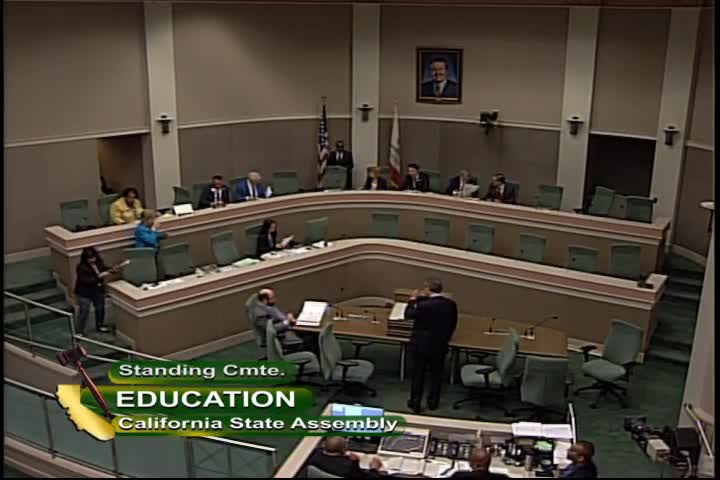 3MIN
Assembly Standing Committee on Education
Bill Author

Bill Co-Author(s):