AB 2592: Secretary of State: census outreach and education.
- Session Year: 2017-2018
- House: Assembly
- Latest Version Date: 2018-09-21
Existing law provides that the Secretary of State is the chief elections officer of the state, and requires the Secretary of State to make reasonable efforts to promote voter registration to eligible voters. Existing law requires the Secretary of State to prepare the state voter information guide.
This bill would require the Secretary of State, beginning in the year before the federal decennial census and continuing through the completion of enumeration activities for that census, to incorporate messages into public election materials produced by the Secretary of State that promote awareness of, and encourage participation in, the census, as specified. The bill would require the Secretary of State to include this information in the state voter information guide for any statewide election that is held less than one year before the census and on the Secretary of States Internet Web site.
Existing law provides that the Secretary of State is the chief elections officer of the state, and requires the Secretary of State to make reasonable efforts to promote voter registration to eligible voters. Existing law requires the Secretary of State to prepare the state voter information guide.
This bill would require the Secretary of State, beginning in the year before the federal decennial census and continuing through the completion of enumeration activities for that census, to make reasonable efforts, as specified, to incorporate messages into public election materials produced by the Secretary of State that promote awareness of, and encourage participation in, the census. census, as specified. The bill would require the Secretary of State to include this information in the state voter information guide for any statewide election that is held less than 1 one year before the census and on the Secretary of States Internet Web site.
Existing law provides that the Secretary of State is the chief elections officer of the state, and requires the Secretary of State to make reasonable efforts to promote voter registration to eligible voters. Existing law requires the Secretary of State to prepare the state voter information guide.
This bill would require the Secretary of State, beginning in the year before the federal decennial census and continuing through the completion of enumeration activities for that census, to make reasonable efforts efforts, as specified, to incorporate messages into public election materials produced by the Secretary of State that promote awareness of, and encourage participation in, the census. The bill would require the Secretary of State to include this information in the state voter information guide for any statewide election that is held less than 1 year before the census and on the Secretary of States Internet Web site.
Existing law provides that the Secretary of State is the chief elections officer of the state, and requires the Secretary of State to make reasonable efforts to promote voter registration to eligible voters. Existing law requires the Secretary of State to prepare the state voter information guide.
This bill would require the Secretary of State, beginning in the year before the federal decennial census and continuing through the completion of enumeration activities for that census, to make reasonable efforts to incorporate messages into public election materials produced by the Secretary of State that promote awareness of, and encourage participation in, the census. The bill would require the Secretary of State to include this information in the state voter information guide for any statewide election that is held less than 1 year before the census and on the Secretary of States Internet Web site.
Existing law requires certain information appearing on an affidavit of voter registration to be confidential and prohibits its use for any personal, private, or commercial purpose, such as the harassment of a voter or voters household. Existing law defines the term voters household for these purposes.This bill would make a technical, nonsubstantive change to these provisions.Existing law requires certain information appearing on an affidavit of voter registration to be confidential and prohibits its use for any personal, private, or commercial purpose, such as the harassment of a voter or voters household. Existing law defines the term voters household for these purposes.
This bill would make a technical, nonsubstantive change to these provisions.
(a)The Legislature finds and declares all of the following:
(1)Section 2 of Article 1 of the United States Constitution requires an enumeration of the population of the United States every 10 years, which is known as the federal decennial census.
(2)The federal decennial census is important because census figures affect congressional representation, state redistricting, federal formula grant allocations, state funding to local governments, local programs, and planning activities for the next 10 years.
(3)A complete and accurate count of all California residents in the 2020 federal decennial census is vital to ensure fair political representation and distribution of funding in California.
(4)Historically, it has been more difficult to reach and enumerate certain groups as part of the federal decennial census, including lower income individuals, homeless persons, children, and immigrants.
(5)California is home to 10 of the nations 50 hardest-to-count counties, including Los Angeles County, the single hardest-to-count county in the nation.
(b)It is the intent of the legislature, in enacting this chapter, to use existing governmental outreach and education efforts to facilitate a complete count of California residents for each federal decennial census.
SEC. 2.Section 10 of the Elections Code is amended to read:10.(a)The Secretary of State is the chief elections officer of the state, and has the powers and duties specified in this code and Section 12172.5 of the Government Code.
(b)(1)The Secretary of State shall make reasonable efforts to do all of the following:
(A)Promote voter registration to eligible voters.
(B)Encourage eligible voters to vote.
(C)Promote preregistration to eligible citizens.
(D)Promote civic learning and engagement to prepare students and new citizens to register to vote and to vote.
(2)In undertaking these efforts, the Secretary of State shall prioritize communities that have been historically underrepresented in voter registration or voting.
(c)Beginning in the year before the federal decennial census and continuing through the completion of the enumeration activities for that census, the Secretary of State shall incorporate messages into public election materials produced by the Secretary of State that promote awareness of, and encourage participation in, the census. In undertaking this effort, the Secretary of State shall prioritize messages that are designed to overcome significant challenges to a complete and accurate enumeration of the state, including messages targeted at overcoming barriers to participation by historically hard-to-count communities based on response rate data from the United States Census Bureau.
SEC. 3.Section 9088.5 is added to the Elections Code, to read:9088.5.For any statewide election that is held less than one year before the federal decennial census, the state voter information guide shall contain information that promotes awareness of, and participation in, the federal decennial census.
SEC. 4.Section 12172.6 is added to the Government Code, to read:12172.6.Beginning in the year before the federal decennial census and continuing through the completion of the enumeration activities for that census, the Secretary of State shall include on the secretarys Internet Web site information designed to educate the public regarding, and encourage participation in, the federal decennial census.
(a)The Legislature finds and declares all of the following:
(1)Section 2 of Article 1 of the United States Constitution requires an enumeration of the population of the United States every 10 years, which is known as the federal decennial census.
(2)The federal decennial census is important because census figures affect congressional representation, state redistricting, federal formula grant allocations, state funding to local governments, local programs, and planning activities for the next 10 years.
(3)A complete and accurate count of all California residents in the 2020 federal decennial census is vital to ensure fair political representation and distribution of funding in California.
(4)Historically, it has been more difficult to reach and enumerate certain groups as part of the federal decennial census, including lower income individuals, homeless persons, children, and immigrants.
(5)California is home to 10 of the nations 50 hardest-to-count counties, including Los Angeles County, the single hardest-to-count county in the nation.
(b)It is the intent of the legislature, in enacting this chapter, to use existing governmental outreach and education efforts to facilitate a complete count of California residents for each federal decennial census.
SEC. 2.Section 10 of the Elections Code is amended to read:10.(a)The Secretary of State is the chief elections officer of the state, and has the powers and duties specified in this code and Section 12172.5 of the Government Code.
(b)(1)The Secretary of State shall make reasonable efforts to do all of the following:
(A)Promote voter registration to eligible voters.
(B)Encourage eligible voters to vote.
(C)Promote pre-registration preregistration to eligible citizens.
(D)Promote civic learning and engagement to prepare students and new citizens to register to vote and to vote.
(2)In undertaking these efforts, the Secretary of State shall prioritize communities that have been historically underrepresented in voter registration or voting.
(c)Beginning in the year before the federal decennial census and continuing through the completion of the enumeration activities for that census, the Secretary of State shall incorporate messages into public election materials produced by the Secretary of State that promote awareness of, and encourage participation in, the census. In undertaking this effort, the Secretary of State shall prioritize messages that are designed to overcome significant challenges to a complete and accurate enumeration of the state, including messages targeted at overcoming barriers to participation by historically hard-to-count communities based on response rate data from the United States Census Bureau.
SEC. 3.Section 9088.5 is added to the Elections Code, to read:9088.5.For any statewide election that is held less than one year before the federal decennial census, the state voter information guide shall contain information that promotes awareness of, and participation in, the federal decennial census.
SEC. 4.Section 12172.6 is added to the Government Code, to read:12172.6.Beginning in the year before the federal decennial census and continuing through the completion of the enumeration activities for that census, the Secretary of State shall include on the secretarys Internet Web site information designed to educate the public regarding, and encourage participation in, the federal decennial census.
(a)The Legislature finds and declares all of the following:
(1)Section 2 of Article 1 of the United States Constitution requires an enumeration of the population of the United States every 10 years, which is known as the federal decennial census.
(2)The federal decennial census is important because census figures affect congressional representation, state redistricting, federal formula grant allocations, state funding to local governments, local programs, and planning activities for the next 10 years.
(3)A complete and accurate count of all California residents in the 2020 federal decennial census is vital to ensure fair political representation and distribution of funding in California.
(4)Historically, it has been more difficult to reach and enumerate certain groups as part of the federal decennial census, including lower income individuals, homeless persons, children, and immigrants.
(5)California is home to 10 of the nations 50 hardest-to-count counties, including Los Angeles County, the single hardest-to-count county in the nation.
(b)It is the intent of the legislature, in enacting this chapter, to use existing governmental outreach and education efforts to facilitate a complete count of California residents for each federal decennial census.
SEC. 2.Section 10 of the Elections Code is amended to read:10.(a)The Secretary of State is the chief elections officer of the state, and has the powers and duties specified in this code and Section 12172.5 of the Government Code.
(b)(1)The Secretary of State shall make reasonable efforts to do all of the following:
(A)Promote voter registration to eligible voters.
(B)Encourage eligible voters to vote.
(C)Promote pre-registration to eligible citizens.
(D)Promote civic learning and engagement to prepare students and new citizens to register to vote and to vote.
(E)Beginning in the year before the federal decennial census and continuing through the completion of the enumeration activities for that census, incorporate messages into public election materials produced by the Secretary of State that promote awareness of, and encourage participation in, the census.(2)In undertaking these efforts, the Secretary of State shall prioritize communities that have been historically underrepresented in voter registration or voting.
(c)Beginning in the year before the federal decennial census and continuing through the completion of the enumeration activities for that census, the Secretary of State shall incorporate messages into public election materials produced by the Secretary of State that promote awareness of, and encourage participation in, the census. In undertaking this effort, the Secretary of State shall prioritize historically hard-to-count communities based on response rate data from the United States Census Bureau.
SEC. 3.Section 9088.5 is added to the Elections Code, to read:9088.5.For any statewide election that is held less than one year before the federal decennial census, the state voter information guide shall contain information that promotes awareness of, and participation in, the federal decennial census.
SEC. 4.Section 12172.6 is added to the Government Code, to read:12172.6.Beginning in the year before the federal decennial census and continuing through the completion of the enumeration activities for that census, the Secretary of State shall include on the secretarys Internet Web site information designed to educate the public regarding, and encourage participation in, the federal decennial census.
(a)The Legislature finds and declares all of the following:
(1)Section 2 of Article 1 of the United States Constitution requires an enumeration of the population of the United States every 10 years, which is known as the federal decennial census.
(2)The federal decennial census is important because census figures affect congressional representation, state redistricting, federal formula grant allocations, state funding to local governments, local programs, and planning activities for the next 10 years.
(3)A complete and accurate count of all California residents in the 2020 federal decennial census is vital to ensure fair political representation and distribution of funding in California.
(4)Historically, it has been more difficult to reach and enumerate certain groups as part of the federal decennial census, including lower income individuals, homeless persons, children, and immigrants.
(5)California is home to 10 of the nations 50 hardest-to-count counties, including Los Angeles County, the single hardest-to-count county in the nation.
(b)It is the intent of the legislature, in enacting this chapter, to use existing governmental outreach and education efforts to facilitate a complete count of California residents for each federal decennial census.
SEC. 2.Section 10 of the Elections Code is amended to read:10.(a)The Secretary of State is the chief elections officer of the state, and has the powers and duties specified in this code and Section 12172.5 of the Government Code.
(b)(1)The Secretary of State shall make reasonable efforts to do all of the following:
(A)Promote voter registration to eligible voters.
(B)Encourage eligible voters to vote.
(C)Promote pre-registration to eligible citizens.
(D)Promote civic learning and engagement to prepare students and new citizens to register to vote and to vote.
(E)Beginning in the year before the federal decennial census and continuing through the completion of the enumeration activities for that census, incorporate messages into public election materials produced by the Secretary of State that promote awareness of, and encourage participation in, the census.
(2)In undertaking these efforts, the Secretary of State shall prioritize communities that have been historically underrepresented in voter registration or voting.
SEC. 3.Section 9088.5 is added to the Elections Code, to read:9088.5.For any statewide election that is held less than one year before the federal decennial census, the state voter information guide shall contain information that promotes awareness of, and participation in, the federal decennial census.
SEC. 4.Section 12172.6 is added to the Government Code, to read:12172.6.Beginning in the year before the federal decennial census and continuing through the completion of the enumeration activities for that census, the Secretary of State shall include on the secretarys Internet Web site information designed to educate the public regarding, and encourage participation in, the federal decennial census.
SECTION 1.Section 2194 of the Elections Code is amended to read:2194.(a)Except as provided in Section 2194.1, the affidavit of voter registration information identified in Section 6254.4 of the Government Code:(1)Shall be confidential and shall not appear on any computer terminal, list, affidavit, duplicate affidavit, or other medium routinely available to the public at the county elections officials office.(2)Shall not be used for any personal, private, or commercial purpose, including, but not limited to:(A)The harassment of any voter or voters household.(B)The advertising, solicitation, sale, or marketing of products or services to any voter or voters household.(C)Reproduction in print, broadcast visual or audio, or display on the Internet or any computer terminal unless pursuant to paragraph (3).(3)Shall be provided with respect to any voter, subject to the provisions of Sections 2166, 2166.5, 2166.7, and 2188, to any candidate for federal, state, or local office, to any committee for or against any initiative or referendum measure for which legal publication is made, and to any person for election, scholarly, journalistic, or political purposes, or for governmental purposes, as determined by the Secretary of State.(4)May be used by the Secretary of State for the purpose of educating voters pursuant to Section 12173 of the Government Code.(b)(1)Notwithstanding any other law, the California drivers license number, the California identification card number, the social security number, and any other unique identifier used by the State of California for purposes of voter identification shown on the affidavit of voter registration of a registered voter, or added to voter registration records to comply with the requirements of the federal Help America Vote Act of 2002 (52 U.S.C. Sec. 20901 et seq.), are confidential and shall not be disclosed to any person.(2)Notwithstanding any other law, the signature of the voter shown on the affidavit of voter registration or an image thereof is confidential and shall not be disclosed to any person, except as provided in subdivision (c).(c)(1)The home address or signature of any voter shall be released whenever the persons vote is challenged pursuant to Sections 15105 to 15108, inclusive, or Article 3 (commencing with Section 14240) of Chapter 3 of Division 14. The address or signature shall be released only to the challenger, to elections officials, and to other persons as necessary to make, defend against, or adjudicate the challenge.(2)An elections official shall permit a person to view the signature of a voter for the purpose of determining whether the signature matches a signature on an affidavit of registration or an image thereof or a petition, but shall not permit a signature to be copied.(d)A governmental entity, or officer or employee thereof, shall not be held civilly liable as a result of disclosure of the information referred to in this section, unless by a showing of gross negligence or willfulness.(e)For the purposes of this section, voters household means the voters place of residence or mailing address or any persons who reside at the place of residence or use the mailing address as supplied on the affidavit of registration pursuant to paragraphs (3) and (4) of subdivision (a) of Section 2150.(a)Except as provided in Section 2194.1, the affidavit of voter registration information identified in Section 6254.4 of the Government Code:
(1)Shall be confidential and shall not appear on any computer terminal, list, affidavit, duplicate affidavit, or other medium routinely available to the public at the county elections officials office.
(2)Shall not be used for any personal, private, or commercial purpose, including, but not limited to:
(A)The harassment of any voter or voters household.
(B)The advertising, solicitation, sale, or marketing of products or services to any voter or voters household.
(C)Reproduction in print, broadcast visual or audio, or display on the Internet or any computer terminal unless pursuant to paragraph (3).
(3)Shall be provided with respect to any voter, subject to the provisions of Sections 2166, 2166.5, 2166.7, and 2188, to any candidate for federal, state, or local office, to any committee for or against any initiative or referendum measure for which legal publication is made, and to any person for election, scholarly, journalistic, or political purposes, or for governmental purposes, as determined by the Secretary of State.
(4)May be used by the Secretary of State for the purpose of educating voters pursuant to Section 12173 of the Government Code.
(b)(1)Notwithstanding any other law, the California drivers license number, the California identification card number, the social security number, and any other unique identifier used by the State of California for purposes of voter identification shown on the affidavit of voter registration of a registered voter, or added to voter registration records to comply with the requirements of the federal Help America Vote Act of 2002 (52 U.S.C. Sec. 20901 et seq.), are confidential and shall not be disclosed to any person.
(2)Notwithstanding any other law, the signature of the voter shown on the affidavit of voter registration or an image thereof is confidential and shall not be disclosed to any person, except as provided in subdivision (c).
(c)(1)The home address or signature of any voter shall be released whenever the persons vote is challenged pursuant to Sections 15105 to 15108, inclusive, or Article 3 (commencing with Section 14240) of Chapter 3 of Division 14. The address or signature shall be released only to the challenger, to elections officials, and to other persons as necessary to make, defend against, or adjudicate the challenge.
(2)An elections official shall permit a person to view the signature of a voter for the purpose of determining whether the signature matches a signature on an affidavit of registration or an image thereof or a petition, but shall not permit a signature to be copied.
(d)A governmental entity, or officer or employee thereof, shall not be held civilly liable as a result of disclosure of the information referred to in this section, unless by a showing of gross negligence or willfulness.
(e)For the purposes of this section, voters household is defined as means the voters place of residence or mailing address or any persons who reside at the place of residence or use the mailing address as supplied on the affidavit of registration pursuant to paragraphs (3) and (4) of subdivision (a) of Section 2150.
|
Date
|
Status
|
|---|---|
| Sep 21, 2018 | Chaptered by Secretary of State - Chapter 652, Statutes of 2018. |
| Sep 21, 2018 | Approved by the Governor. |
| Sep 7, 2018 | Enrolled and presented to the Governor at 2:30 p.m. |
| Aug 29, 2018 | Assembly Rule 77 suspended. |
| Aug 28, 2018 | In Assembly. Concurrence in Senate amendments pending. May be considered on or after August 30 pursuant to Assembly Rule 77. |
| Aug 28, 2018 | Read third time. Passed. Ordered to the Assembly. |
| Aug 27, 2018 | Read second time. Ordered to third reading. |
| Aug 24, 2018 | Read third time and amended. Ordered to second reading. |
| Jun 26, 2018 | Read second time. Ordered to third reading. |
| Jun 25, 2018 | From committee: Be ordered to second reading pursuant to Senate Rule 28.8. |
| Jun 6, 2018 | From committee: Do pass and re-refer to Com. on APPR. (Ayes 4. Noes 1.) (June 6). Re-referred to Com. on APPR. |
| May 24, 2018 | From committee chair, with author's amendments: Amend, and re-refer to committee. Read second time, amended, and re-referred to Com. on E. & C.A. |
| May 17, 2018 | Referred to Com. on E. & C.A. |
| May 3, 2018 | In Senate. Read first time. To Com. on RLS. for assignment. |
| May 3, 2018 | Read third time. Passed. Ordered to the Senate. |
| Apr 26, 2018 | Read second time. Ordered to Consent Calendar. |
| Apr 25, 2018 | From committee: Do pass. To Consent Calendar. (Ayes 17. Noes 0.) (April 25). |
| Apr 11, 2018 | From committee: Do pass and re-refer to Com. on APPR. (Ayes 7. Noes 0.) (April 11). Re-referred to Com. on APPR. |
| Mar 19, 2018 | Re-referred to Com. on E. & R. |
| Mar 15, 2018 | Referred to Com. on E. & R. |
| Feb 16, 2018 | From printer. May be heard in committee March 18. |
| Feb 15, 2018 | Read first time. To print. |
|
Date
|
Description
|
Location
|
Votes
|
|
|---|---|---|---|---|
| Aug 29, 2018 | AB 2592 BERMAN Concurrence in Senate Amendments | Assembly Floor |
Passed |
|
| Aug 28, 2018 | Assembly 3rd Reading AB2592 Berman By Pan | Senate Floor |
Passed |
|
| Jun 6, 2018 | Do pass, but first be re-referred to the Committee on [Appropriations] | Senate Standing Committee on Elections and Constitutional Amendments |
Passed |
|
| May 3, 2018 | AB 2592 BERMAN Consent Calendar Second Day Regular Session | Assembly Floor |
Passed |
|
| Apr 25, 2018 | Do pass. To Consent Calendar. | Assembly Standing Committee on Appropriations |
Passed |
|
| Apr 11, 2018 | Do pass and be re-referred to the Committee on [Appropriations] | Assembly Standing Committee on Elections and Redistricting |
Passed |
This list shows positions taken on this bill by organizations on the date displayed, which is linked to the original source.
Positions by individuals are not included.
CONCURRENCE IN SENATE AMENDMENTS
CSA1 Bill Id:AB 2592
Author:(Berman)
As Amended Ver:August 24, 2018
Majority vote
ASSEMBLY: | 71-0 | (May 3, 2018) | SENATE: | 32-3 | (August 28, 2018) |
Original Committee Reference: E. & R.
SUMMARY: Requires the Secretary of State (SOS) to include messages that promote awareness of, and encourage participation in, the census, as specified. Specifically, this bill:
- Requires the SOS, beginning in the year before the federal decennial census and continuing through the completion of the enumeration activities for that census, to incorporate messages into public election materials produced by the SOS that promote awareness of, and encourage participation in, the census. Requires the SOS, in undertaking this effort, to prioritize messages that are designed to overcome significant challenges to a complete and accurate enumeration of the state, including messages targeted at overcoming barriers to participation by historically hard-to-count communities based on response rate data from the United States Census Bureau.
- Requires the state voter information guide, for any statewide election that is held less than one year before the federal decennial census, to contain information that promotes awareness of, and participation in, the federal decennial census.
- Requires the SOS, beginning in the year before the federal decennial census and continuing through the completion of the enumeration activities for that census, to include on the SOS's Internet Web site information designed to educate the public regarding, and encouraging participation in, the federal decennial census.
- Makes the various findings and declarations, as specified.
The Senate amendments require the SOS, when incorporating messages into public election materials that promote awareness of, and encourage participation in, the census, to prioritize messages that are designed to overcome significant challenges to a complete and accurate enumeration of the state, including messages targeted at overcoming barriers to participation by historically hard-to-count communities based on response rate data from the United States Census Bureau, instead of prioritizing communities that have been historically underrepresented in voter registration or voting.
EXISTING STATE LAW requires the state voter information guide to contain information regarding federal and statewide candidates and statewide ballot measures.
EXISTING FEDERAL LAW requires an enumeration to be made within three years after the first meeting of the Congress of the United States, and within every subsequent term of ten years, in such manner as they shall by law direct.
FISCAL EFFECT: According to the Senate Appropriations Committee, pursuant to Senate Rule 28.8, negligible state costs.
COMMENTS: According to the author, "We face many unprecedented challenges to securing a complete and accurate count in the 2020 Census. The United States Census Bureau has had to cancel key preparations, including testing of a new and unused method of response – the internet – due to a lack of funding from Congress. Additionally, California is home to 10 of the nation's 50 hardest-to-count counties – regions where the self-response rate to the census questionnaire has historically been low. The California Department of Finance estimates that for every Californian not counted in 2020, we will lose $1,950 per resident each year. Congressional representation is also at stake. With much to lose, it is critically important that every resident in California is counted in the 2020 Census. California must ramp up its efforts to raise awareness about the census and to encourage people to participate. AB 2592 will do by that requiring the Secretary of State to include information about the census in public elections materials, including the state voter information guide, and on the Secretary of State's website."
The Senate amendments require the SOS, when incorporating messages into public election materials that promote awareness of, and encourage participation in, the census, to prioritize messages that are designed to overcome significant challenges to a complete and accurate enumeration of the state, including messages targeted at overcoming barriers to participation by historically hard-to-count communities based on response rate data from the United States Census Bureau. This bill, as amended in the Senate, is consistent with Assembly actions.
Please see the policy committee analysis for a full discussion of this bill.
Analysis Prepared by: Nichole Becker / E. & R. / (916) 319-2094 FN: 0004930
Office of Senate Floor Analyses (916) 651-1520 Fax: (916) 327-4478 | AB |
THIRD READING
Bill No: AB 2592
:
SENATE ELECTIONS & C.A. COMMITTEE: 4-1, 6/6/18
AYES: Stern, Allen, Hertzberg, Leyva
NOES: Anderson
SENATE APPROPRIATIONS COMMITTEE: Senate Rule 28.8
ASSEMBLY FLOOR: 71-0, 5/3/18 (Consent) - See last page for vote
SOURCE: Secretary of State Alex Padilla
DIGEST:
This bill requires the Secretary of State (SOS) to include messages into public election materials that promote awareness of, and encourage participation in, the census, as specified.
Senate Floor Amendments of 8/24/18 specify that the SOS shall prioritize messages that are designed to overcome significant challenges to a complete and accurate enumeration of the state, including messages targeted at overcoming barriers to participation by historically hard-to-count communities based on response rate data from the United States Census Bureau.
Existing law:
- Requires the SOS to prepare and send out the state voter information guide, as specified.
- Requires the SOS to make available the complete state voter information guide over the Internet, as specified.
- Requires the state voter information guide to contain information about federal and statewide candidates and statewide ballot measures, as specified.
- Requires the SOS to establish a process that allows a voter to choose to opt out of receiving the state voter information guide and receive it by electronic mail, as specified.
- Requires the SOS, as the chief of elections officer of the state, to make reasonable efforts to do all of the following:
- Promote voter registration to eligible voters;
- Encourage eligible voters to vote;
- Promote pre-registration to eligible citizens; and,
- Promote civic learning and engagement to prepare students and new citizens to register to vote and to vote.
- Requires, pursuant to federal law, an enumeration to be made within three years after the first meeting of the Congress of the United States, and within every subsequent term of 10 years, in such manner as they shall by law direct.
This bill:
- Requires, beginning in the year before the federal decennial census and continuing through the completion of the enumeration activities for that census, the SOS to incorporate messages into public election materials produced by the SOS that promote awareness of, and encourage participation in, the census. In undertaking this effort, the SOS must prioritize messages that are designed to overcome significant challenges to a complete and accurate enumeration of the state, including messages targeted at overcoming barriers to participation by historically hard-to-count communities based on response rate data from the United States Census Bureau.
- Requires the state voter information guide, for any statewide election that is held less than one year before the federal decennial census, to contain information that promotes awareness of, and participation in, the federal decennial census.
- Requires the SOS, beginning in the year before the federal decennial census and continuing through the completion of the enumeration activities for that census, to include on the SOS's Internet Web site information designed to educate the public regarding, and encouraging participation in, the federal decennial census.
- Makes the following findings and declarations:
- Section 2 of Article 1 of the U.S. Constitution requires an enumeration of the population of the U.S. every 10 years, which is known as the federal decennial census.
- The federal decennial census is important because census figures affect congressional representation, state redistricting, federal formula grant allocations, state funding to local governments, local programs, and planning activities for the next 10 years.
- A complete and accurate count of all California residents in the 2020 federal decennial census is vital to ensure fair political representation and distribution of funding in California.
- Historically, it has been more difficult to reach and enumerate certain groups as part of the federal decennial census, including lower income individuals, homeless persons, children, and immigrants.
- California is home to 10 of the nation’s 50 hardest-to-count counties, including Los Angeles County, the single hardest-to-count county in the nation.
- It is the intent of the Legislature to use existing governmental outreach and education efforts to facilitate a complete count of California residents for each federal decennial census.
Background
The Census. Article I, Section 2 of the U.S. Constitution mandates that the U.S. Census Bureau conduct a survey of everyone living in the county every 10 years. The data collected by the decennial census determines the number of seats each state has in the U.S. House of Representatives, guides redistricting, and is used to distribute billions of dollars in federal funding for healthcare, education, and infrastructure. Moreover, the census provides a social, demographic, and economic profile of the country’s residents, informing decisions by policymakers and businesses across the country.
The Complete Count Committee. Complete Count Committees or Commissions are generally formed at the state level to support a successful census. They encourage individuals, communities, civic organizations, faith-based groups, and the media to support the census and complete the census on time. According to a 1999 Legislative Analyst's office's (LAO) report, in 1990 the nation’s population was undercounted by roughly 1.6 percent, however California was undercounted at a much higher rate -- 2.7 percent. According to the report, this higher undercount likely cost California one seat in the U.S. House of Representatives and at least $2 billion in federal funds during the 1990s. After the 1990 undercount, the Complete Count Committee was formed. The Complete Count Committee is generally appointed by the Governor and coordinates the state’s outreach efforts, focusing on the hard-to-count population. The Governor's 2018-19 budget proposal includes $40 million to support the Complete Count Committee (although it appears that the Legislature may increase that amount). The proposed funding would support the activities of the committee through the 2020 Census, such as for a media campaign and working with local community based organizations that would be conducting most of the direct outreach to individuals to encourage them to complete the census.
The Governor’s Office and California Complete Count are coordinating a series of regional meetings across California between April and August, 2018. The first round of meetings will bring together essential local and regional partners to plan and coordinate census outreach efforts focusing on communities that are traditionally hard to count.
On May 22, 2018, the Assembly Select Committee on the Census and the Senate Select Committee on the 2020 United States Census held a joint informational hearing in preparation for the 2020 Census.
Changes to the 2020 Census Operations. According to the National Conference of State Legislatures' 2020 Census Resources and Legislation report, the Census Bureau is utilizing technology, mostly the internet, as its primary response method. This new focus on utilizing technology has resulted in significant changes to the 2020 census. According to the March 2018 budget report by the LAO, historically, individuals have primarily responded to the census via a mailed questionnaire and the Census Bureau has typically relied heavily on field workers to update its national address list. During the 2020 Census, however, only a portion of households will receive a mailed census questionnaire and most individuals will be encouraged to respond online. Additionally, the 2020 Census plans to rely primarily on local government data, satellite imagery, and other administrative records to update its address list.
The LAO states that follow up will be reduced as well because the Census Bureau expects to hire 50 percent fewer fieldworkers for nonresponse follow up for the 2020 census. As a result, field operations will be substantially reduced in 2020. In previous years, census field workers visited households that had not yet responded up to six times to complete their surveys. For 2020, however, the Census Bureau is committing to visiting non-respondents at least once. Given the reduced field presence, the Census Bureau plans to rely heavily on administrative records -- like those from the Internal Revenue Service -- to complete the count.
Additional Changes to the 2020 Census. Beyond the changes listed above, the LAO report also points out a handful of other changes that have been made to the 2020 Census. The report states that funding for the 2020 Census has been below estimated costs for a number of years and these reductions have had a number of impacts to census preparations, including notable impacts to field testing. Last year's field test in which the Census had planned to test a number of features of the online response system was canceled due to budgetary uncertainty. Additionally, the Census Bureau typically does a comprehensive test of census operations – also known as an end-to-end test – in three areas of the country, with different locations chosen to reflect the differing response challenges throughout the country. According to the LAO's report, this test will only occur in Providence, Rhode Island.
Moreover, changes have been made to the Census questionnaire. Last month the U.S. Department of Commerce, which houses the U.S. Census Bureau, announced it will add a question to the 2020 Census questionnaire that asks the citizenship status of every person in every household in the U.S. California Attorney General (AG) Xavier Becerra filed a lawsuit in federal court against the inclusion of the citizenship question. The AG contends that including the citizenship question on the 2020 Census violates the Constitution's "actual Enumeration" mandate and the Administrative Procedure Act's prohibition against "arbitrary and capricious" agency action, and seeks an injunction prohibiting the Census Bureau from including the citizenship question on the 2020 Census.
Lose a Seat in the U.S. House of Representatives? An undercount in California could result in losing a seat in the House of Representatives. These seats are apportioned based on states’ relative populations. California’s population growth has been slower than some other states. By not growing as quickly as other states, the relative proportion of people living in California -- compared to other states -- shrunk. According to a study completed by Election Data Services, Inc., a political consulting firm specializing in redistricting, election administration, and the analysis and presentation of census and political data, California might be in danger of losing a seat in the U.S. House of Representatives. According to the LAO, the latest study estimates that if California were to have a greater-than-average undercount of roughly 76,000 people, it could result in California losing a seat. The LAO believes that part of the reason California’s population growth has been slower is the net loss of some residents to other states.
Comments
According to the author, we face many unprecedented challenges to securing a complete and accurate count in the 2020 Census. The U.S. Census Bureau has had to cancel key preparations, including testing of a new and unused method of response – the Internet – due to a lack of funding from Congress. Additionally, California is home to 10 of the nation’s 50 hardest-to-count counties – regions where the self-response rate to the census questionnaire has historically been low. The California Department of Finance estimates that for every Californian not counted in 2020, the state will lose $1,950 per resident per year. Congressional representation is also at stake. With much to lose, it is critically important that every resident in California is counted in the 2020 Census. California must ramp up its efforts to raise awareness about the census and to encourage people to participate. AB 2592 will do that by requiring the SOS to include information about the census in public elections materials, including the state voter information guide, and on the SOS Web site.
FISCAL EFFECT: Appropriation: Fiscal Com.: Local:
Secretary of State Alex Padilla (source)
Advancement Project
City of Los Angeles
Silicon Valley Community Foundation
OPPOSITION: (Verified 8/24/18)
None received
ASSEMBLY FLOOR: 71-0, 5/3/18
AYES: Acosta, Aguiar-Curry, Arambula, Baker, Berman, Bigelow, Bloom, Bonta, Brough, Burke, Calderon, Carrillo, Cervantes, Chau, Chávez, Chen, Chiu, Chu, Cooley, Cooper, Cunningham, Dahle, Daly, Eggman, Flora, Fong, Frazier, Friedman, Gallagher, Eduardo Garcia, Gipson, Gloria, Gonzalez Fletcher, Gray, Harper, Holden, Irwin, Jones-Sawyer, Kalra, Kamlager-Dove, Kiley, Lackey, Levine, Limón, Low, Maienschein, Mathis, Mayes, McCarty, Medina, Melendez, Mullin, Muratsuchi, Nazarian, Obernolte, O'Donnell, Patterson, Quirk, Reyes, Rodriguez, Rubio, Salas, Santiago, Steinorth, Mark Stone, Thurmond, Ting, Waldron, Weber, Wood, Rendon
NO VOTE RECORDED: Travis Allen, Caballero, Choi, Cristina Garcia, Grayson, Quirk-Silva, Voepel
8/27/18 19:47:19
**** END ****
Office of Senate Floor Analyses (916) 651-1520 Fax: (916) 327-4478 | AB |
THIRD READING
Bill No: AB 2592
:
SENATE ELECTIONS & C.A. COMMITTEE: 4-1, 6/6/18
AYES: Stern, Allen, Hertzberg, Leyva
NOES: Anderson
SENATE APPROPRIATIONS COMMITTEE: Senate Rule 28.8
ASSEMBLY FLOOR: 71-0, 5/3/18 (Consent) - See last page for vote
SOURCE: Secretary of State Alex Padilla
DIGEST:
This bill requires the Secretary of State (SOS) to include messages into public election materials that promote awareness of, and encourage participation in, the census, as specified.
Existing law:
- Requires the SOS to prepare and send out the state voter information guide, as specified.
- Requires the SOS to make available the complete state voter information guide over the Internet, as specified.
- Requires the state voter information guide to contain information about federal and statewide candidates and statewide ballot measures, as specified.
- Requires the SOS to establish a process that allows a voter to choose to opt out of receiving the state voter information guide and receive it by electronic mail, as specified.
- Requires the SOS, as the chief of elections officer of the state, to make reasonable efforts to do all of the following:
- Promote voter registration to eligible voters;
- Encourage eligible voters to vote;
- Promote pre-registration to eligible citizens; and,
- Promote civic learning and engagement to prepare students and new citizens to register to vote and to vote.
- Requires, pursuant to federal law, an enumeration to be made within three years after the first meeting of the Congress of the United States, and within every subsequent term of 10 years, in such manner as they shall by law direct.
This bill:
- Requires, beginning in the year before the federal decennial census and continuing through the completion of the enumeration activities for that census, the SOS to incorporate messages into public election materials produced by the SOS that promote awareness of, and encourage participation in, the census. In undertaking this effort, the SOS must prioritize historically hard-to-count communities based on response rate data from the U.S. Census Bureau.
- Requires the state voter information guide, for any statewide election that is held less than one year before the federal decennial census, to contain information that promotes awareness of, and participation in, the federal decennial census.
- Requires the SOS, beginning in the year before the federal decennial census and continuing through the completion of the enumeration activities for that census, to include on the SOS's Internet Web site information designed to educate the public regarding, and encouraging participation in, the federal decennial census.
- Makes the following findings and declarations:
- Section 2 of Article 1 of the U.S. Constitution requires an enumeration of the population of the U.S. every 10 years, which is known as the federal decennial census.
- The federal decennial census is important because census figures affect congressional representation, state redistricting, federal formula grant allocations, state funding to local governments, local programs, and planning activities for the next 10 years.
- A complete and accurate count of all California residents in the 2020 federal decennial census is vital to ensure fair political representation and distribution of funding in California.
- Historically, it has been more difficult to reach and enumerate certain groups as part of the federal decennial census, including lower income individuals, homeless persons, children, and immigrants.
- California is home to 10 of the nation’s 50 hardest-to-count counties, including Los Angeles County, the single hardest-to-count county in the nation.
- It is the intent of the Legislature to use existing governmental outreach and education efforts to facilitate a complete count of California residents for each federal decennial census.
Background
The Census. Article I, Section 2 of the U.S. Constitution mandates that the U.S. Census Bureau conduct a survey of everyone living in the county every 10 years. The data collected by the decennial census determines the number of seats each state has in the U.S. House of Representatives, guides redistricting, and is used to distribute billions of dollars in federal funding for healthcare, education, and infrastructure. Moreover, the census provides a social, demographic, and economic profile of the country’s residents, informing decisions by policymakers and businesses across the country.
The Complete Count Committee. Complete Count Committees or Commissions are generally formed at the state level to support a successful census. They encourage individuals, communities, civic organizations, faith-based groups, and the media to support the census and complete the census on time. According to a 1999 Legislative Analyst's office's (LAO) report, in 1990 the nation’s population was undercounted by roughly 1.6 percent, however California was undercounted at a much higher rate -- 2.7 percent. According to the report, this higher undercount likely cost California one seat in the U.S. House of Representatives and at least $2 billion in federal funds during the 1990s. After the 1990 undercount, the Complete Count Committee was formed. The Complete Count Committee is generally appointed by the Governor and coordinates the state’s outreach efforts, focusing on the hard-to-count population. The Governor's 2018-19 budget proposal includes $40 million to support the Complete Count Committee (although it appears that the Legislature may increase that amount). The proposed funding would support the activities of the committee through the 2020 Census, such as for a media campaign and working with local community based organizations that would be conducting most of the direct outreach to individuals to encourage them to complete the census.
The Governor’s Office and California Complete Count are coordinating a series of regional meetings across California between April and August, 2018. The first round of meetings will bring together essential local and regional partners to plan and coordinate census outreach efforts focusing on communities that are traditionally hard to count.
On May 22, 2018, the Assembly Select Committee on the Census and the Senate Select Committee on the 2020 United States Census held a joint informational hearing in preparation for the 2020 Census.
Changes to the 2020 Census Operations. According to the National Conference of State Legislatures' 2020 Census Resources and Legislation report, the Census Bureau is utilizing technology, mostly the internet, as its primary response method. This new focus on utilizing technology has resulted in significant changes to the 2020 census. According to the March 2018 budget report by the LAO, historically, individuals have primarily responded to the census via a mailed questionnaire and the Census Bureau has typically relied heavily on field workers to update its national address list. During the 2020 Census, however, only a portion of households will receive a mailed census questionnaire and most individuals will be encouraged to respond online. Additionally, the 2020 Census plans to rely primarily on local government data, satellite imagery, and other administrative records to update its address list.
The LAO states that follow up will be reduced as well because the Census Bureau expects to hire 50 percent fewer fieldworkers for nonresponse follow up for the 2020 census. As a result, field operations will be substantially reduced in 2020. In previous years, census field workers visited households that had not yet responded up to six times to complete their surveys. For 2020, however, the Census Bureau is committing to visiting non-respondents at least once. Given the reduced field presence, the Census Bureau plans to rely heavily on administrative records -- like those from the Internal Revenue Service -- to complete the count.
Additional Changes to the 2020 Census. Beyond the changes listed above, the LAO report also points out a handful of other changes that have been made to the 2020 Census. The report states that funding for the 2020 Census has been below estimated costs for a number of years and these reductions have had a number of impacts to census preparations, including notable impacts to field testing. Last year's field test in which the Census had planned to test a number of features of the online response system was canceled due to budgetary uncertainty. Additionally, the Census Bureau typically does a comprehensive test of census operations – also known as an end-to-end test – in three areas of the country, with different locations chosen to reflect the differing response challenges throughout the country. According to the LAO's report, this test will only occur in Providence, Rhode Island.
Moreover, changes have been made to the Census questionnaire. Last month the U.S. Department of Commerce, which houses the U.S. Census Bureau, announced it will add a question to the 2020 Census questionnaire that asks the citizenship status of every person in every household in the U.S. California Attorney General (AG) Xavier Becerra filed a lawsuit in federal court against the inclusion of the citizenship question. The AG contends that including the citizenship question on the 2020 Census violates the Constitution's "actual Enumeration" mandate and the Administrative Procedure Act's prohibition against "arbitrary and capricious" agency action, and seeks an injunction prohibiting the Census Bureau from including the citizenship question on the 2020 Census.
Lose a Seat in the U.S. House of Representatives? An undercount in California could result in losing a seat in the House of Representatives. These seats are apportioned based on states’ relative populations. California’s population growth has been slower than some other states. By not growing as quickly as other states, the relative proportion of people living in California -- compared to other states -- shrunk. According to a study completed by Election Data Services, Inc., a political consulting firm specializing in redistricting, election administration, and the analysis and presentation of census and political data, California might be in danger of losing a seat in the U.S. House of Representatives. According to the LAO, the latest study estimates that if California were to have a greater-than-average undercount of roughly 76,000 people, it could result in California losing a seat. The LAO believes that part of the reason California’s population growth has been slower is the net loss of some residents to other states.
Comments
According to the author, we face many unprecedented challenges to securing a complete and accurate count in the 2020 Census. The U.S. Census Bureau has had to cancel key preparations, including testing of a new and unused method of response – the Internet – due to a lack of funding from Congress. Additionally, California is home to 10 of the nation’s 50 hardest-to-count counties – regions where the self-response rate to the census questionnaire has historically been low. The California Department of Finance estimates that for every Californian not counted in 2020, the state will lose $1,950 per resident per year. Congressional representation is also at stake. With much to lose, it is critically important that every resident in California is counted in the 2020 Census. California must ramp up its efforts to raise awareness about the census and to encourage people to participate. AB 2592 will do that by requiring the SOS to include information about the census in public elections materials, including the state voter information guide, and on the SOS Web site.
FISCAL EFFECT: Appropriation: Fiscal Com.: Local:
Secretary of State Alex Padilla (source)
Advancement Project
Silicon Valley Community Foundation
OPPOSITION: (Verified 6/27/18)
None received
ASSEMBLY FLOOR: 71-0, 5/3/18
AYES: Acosta, Aguiar-Curry, Arambula, Baker, Berman, Bigelow, Bloom, Bonta, Brough, Burke, Calderon, Carrillo, Cervantes, Chau, Chávez, Chen, Chiu, Chu, Cooley, Cooper, Cunningham, Dahle, Daly, Eggman, Flora, Fong, Frazier, Friedman, Gallagher, Eduardo Garcia, Gipson, Gloria, Gonzalez Fletcher, Gray, Harper, Holden, Irwin, Jones-Sawyer, Kalra, Kamlager-Dove, Kiley, Lackey, Levine, Limón, Low, Maienschein, Mathis, Mayes, McCarty, Medina, Melendez, Mullin, Muratsuchi, Nazarian, Obernolte, O'Donnell, Patterson, Quirk, Reyes, Rodriguez, Rubio, Salas, Santiago, Steinorth, Mark Stone, Thurmond, Ting, Waldron, Weber, Wood, Rendon
NO VOTE RECORDED: Travis Allen, Caballero, Choi, Cristina Garcia, Grayson, Quirk-Silva, Voepel
8/13/18 14:24:38
**** END ****
SENATE COMMITTEE ON
ELECTIONS AND CONSTITUTIONAL AMENDMENTS
Senator Henry Stern, Chair
2017 - 2018 Regular
Bill No: Hearing Date: 6/6/18
Author: | |||
Version: | 5/24/18 | ||
Urgency: | No | Fiscal: | Yes |
Consultant: | Darren Chesin | ||
Subject: Secretary of State: census outreach and education.
DIGEST
This bill requires the Secretary of State (SOS) to include messages into public election materials that promote awareness of, and encourage participation in, the census, as specified.
ANALYSIS
Existing law:
- Requires the SOS to prepare and send out the state voter information guide, as specified.
- Requires the SOS to make available the complete state voter information guide over the Internet, as specified.
- Requires the state voter information guide to contain information about federal and statewide candidates and statewide ballot measures, as specified.
- Requires the SOS to establish a process that allows a voter to choose to opt out of receiving the state voter information guide and receive it by electronic mail, as specified.
- Requires the SOS, as the chief of elections officer of the state, to make reasonable efforts to do all of the following:
- Promote voter registration to eligible voters;
- Encourage eligible voters to vote;
- Promote pre-registration to eligible citizens; and,
- Promote civic learning and engagement to prepare students and new citizens to register to vote and to vote.
- Requires, pursuant to federal law, an enumeration to be made within three years after the first meeting of the Congress of the United States, and within every subsequent term of ten years, in such manner as they shall by law direct.
This bill:
- Requires, beginning in the year before the federal decennial census and continuing through the completion of the enumeration activities for that census, the SOS to incorporate messages into public election materials produced by the SOS that promote awareness of, and encourage participation in, the census. In undertaking this effort, the SOS must prioritize historically hard-to-count communities based on response rate data from the United States Census Bureau.
- Requires the state voter information guide, for any statewide election that is held less than one year before the federal decennial census, to contain information that promotes awareness of, and participation in, the federal decennial census.
- Requires the SOS, beginning in the year before the federal decennial census and continuing through the completion of the enumeration activities for that census, to include on the SOS's Internet Web site information designed to educate the public regarding, and encouraging participation in, the federal decennial census.
- Makes the following findings and declarations:
- Section 2 of Article 1 of the United States Constitution requires an enumeration of the population of the U.S. every 10 years, which is known as the federal decennial census.
- The federal decennial census is important because census figures affect congressional representation, state redistricting, federal formula grant allocations, state funding to local governments, local programs, and planning activities for the next 10 years.
- A complete and accurate count of all California residents in the 2020 federal decennial census is vital to ensure fair political representation and distribution of funding in California.
- Historically, it has been more difficult to reach and enumerate certain groups as part of the federal decennial census, including lower income individuals, homeless persons, children, and immigrants.
- California is home to 10 of the nation’s 50 hardest-to-count counties, including Los Angeles County, the single hardest-to-count county in the nation.
- It is the intent of the Legislature to use existing governmental outreach and education efforts to facilitate a complete count of California residents for each federal decennial census.
BACKGROUND
The Census. Article I, Section 2 of the U.S. Constitution mandates that the U.S. Census Bureau conduct a survey of everyone living in the county every ten years. The data collected by the decennial census determines the number of seats each state has in the U.S. House of Representatives, guides redistricting, and is used to distribute billions of dollars in federal funding for healthcare, education, and infrastructure. Moreover, the census provides a social, demographic, and economic profile of the country’s residents, informing decisions by policymakers and businesses across the country.
The Complete Count Committee. Complete Count Committees or Commissions are generally formed at the state level to support a successful census. They encourage individuals, communities, civic organizations, faith-based groups, and the media to support the census and complete the census on time. According to a 1999 Legislative Analyst's office's (LAO) report, in 1990 the nation’s population was undercounted by roughly 1.6 percent, however California was undercounted at a much higher rate -- 2.7 percent. According to the report, this higher undercount likely cost California one seat in the U.S. House of Representatives and at least $2 billion in federal funds during the 1990s. After the 1990 undercount, the Complete Count Committee was formed. The Complete Count Committee is generally appointed by the Governor and coordinates the state’s outreach efforts, focusing on the hard-to-count population. The Governor's 2018-19 budget proposal includes $40 million to support the Complete Count Committee (although it appears that the Legislature may increase that amount). The proposed funding would support the activities of the committee through the 2020 Census, such as for a media campaign and working with local community based organizations that would be conducting most of the direct outreach to individuals to encourage them to complete the census.
The Governor’s office and California Complete Count are coordinating a series of regional meetings across California between April and August, 2018. The first round of meetings will bring together essential local and regional partners to plan and coordinate census outreach efforts focusing on communities that are traditionally hard to count.
On May 22, 2018, the Assembly Select Committee on the Census and the Senate Select Committee on the 2020 United States Census held a joint informational hearing in preparation for the 2020 Census.
Changes to the 2020 Census Operations. According to the National Conference of State Legislatures' 2020 Census Resources and Legislation report, the Census Bureau is utilizing technology, mostly the internet, as its primary response method. This new focus on utilizing technology has resulted in significant changes to the 2020 census. According to the March 2018 budget report by the LAO, historically, individuals have primarily responded to the census via a mailed questionnaire and the Census Bureau has typically relied heavily on field workers to update its national address list. During the 2020 Census, however, only a portion of households will receive a mailed census questionnaire and most individuals will be encouraged to respond online. Additionally, the 2020 Census plans to rely primarily on local government data, satellite imagery, and other administrative records to update its address list.
The LAO states that follow up will be reduced as well because the Census Bureau expects to hire 50 percent fewer fieldworkers for nonresponse follow up for the 2020 census. As a result, field operations will be substantially reduced in 2020. In previous years, census field workers visited households that had not yet responded up to six times to complete their surveys. For 2020, however, the Census Bureau is committing to visiting non-respondents at least once. Given the reduced field presence, the Census Bureau plans to rely heavily on administrative records -- like those from the Internal Revenue Service -- to complete the count.
Additional Changes to the 2020 Census. Beyond the changes listed above, the LAO report also points out a handful of other changes that have been made to the 2020 Census. The report states that funding for the 2020 Census has been below estimated costs for a number of years and these reductions have had a number of impacts to census preparations, including notable impacts to field testing. Last year's field test in which the Census had planned to test a number of features of the online response system was canceled due to budgetary uncertainty. Additionally, the Census Bureau typically does a comprehensive test of census operations – also known as an end-to-end test – in three areas of the country, with different locations chosen to reflect the differing response challenges throughout the country. According to the LAO's report, this test will only occur in Providence, Rhode Island.
Moreover, changes have been made to the Census questionnaire. Last month the U.S. Department of Commerce, which houses the U.S. Census Bureau, announced it will add a question to the 2020 Census questionnaire that asks the citizenship status of every person in every household in the U.S. California Attorney General (AG) Xavier Becerra filed a lawsuit in federal court against the inclusion of the citizenship question. The AG contends that including the citizenship question on the 2020 Census violates the Constitution's "actual Enumeration" mandate and the Administrative Procedure Act's prohibition against "arbitrary and capricious" agency action, and seeks an injunction prohibiting the Census Bureau from including the citizenship question on the 2020 Census.
Lose a Seat in the U.S. House of Representatives? An undercount in California could result in losing a seat in the House of Representatives. These seats are apportioned based on states’ relative populations. California’s population growth has been slower than some other states. By not growing as quickly as other states, the relative proportion of people living in California -- compared to other states -- shrunk. According to a study completed by Election Data Services, Inc., a political consulting firm specializing in redistricting, election administration, and the analysis and presentation of census and political data, California might be in danger of losing a seat in the U.S. House of Representatives. According to the LAO, the latest study estimates that if California were to have a greater-than-average undercount of roughly 76,000 people, it could result in California losing a seat. The LAO believes that part of the reason California’s population growth has been slower is the net loss of some residents to other states.
COMMENTS
- According to the author: We face many unprecedented challenges to securing a complete and accurate count in the 2020 Census. The United States Census Bureau has had to cancel key preparations, including testing of a new and unused method of response – the internet – due to a lack of funding from Congress. Additionally, California is home to 10 of the nation’s 50 hardest-to-count counties – regions where the self-response rate to the census questionnaire has historically been low. The California Department of Finance estimates that for every Californian not counted in 2020, the state will lose $1,950 per resident per year. Congressional representation is also at stake. With much to lose, it is critically important that every resident in California is counted in the 2020 Census. California must ramp up its efforts to raise awareness about the census and to encourage people to participate. AB 2592 will do by that requiring the SOS to include information about the census in public elections materials, including the state voter information guide, and on the SOS’ website.
PRIOR ACTION
Assembly Floor: | |
Assembly Appropriations Committee: | |
Assembly Elections and Redistricting Committee: |
|
POSITIONS
Sponsor: Secretary of State, Alex Padilla
Support: Silicon Valley Community Foundation
Oppose: None received
-- END –
Date of Hearing: April 25, 2018
ASSEMBLY COMMITTEE ON APPROPRIATIONS
Lorena Gonzalez Fletcher, Chair
ABPCA Bill Id:AB 2592
Author:(Berman) – As Amended Ver:March 15, 2018
Policy Committee: | Elections and Redistricting | Vote: | 7 - 0 |
|
| ||
|
|
Urgency: No State Mandated Local Program: No Reimbursable: No
SUMMARY:
This bill requires the Secretary of State (SOS) to make reasonable efforts to include messages in public education materials to promote awareness and encourage participation in the census. Specifically, this bill:
- Requires the SOS, beginning in the year before the federal decennial census and continuing through the completion of the enumeration activities for that census, to incorporate messages into public election materials produced by the SOS that promote awareness of, and encourage participation in, the census.
- Requires the state voter information guide, for any statewide election that is held less than one year before the federal decennial census, to contain information that promotes awareness of, and participation in, the federal decennial census.
- Requires the SOS, beginning in the year before the federal decennial census and continuing through the completion of the enumeration activities for that census, to include on the SOS's internet website information designed to educate the public regarding, and encouraging participation in, the federal decennial census.
FISCAL EFFECT:
Absorbable state costs.
COMMENTS:
- Background. The U.S. Constitution requires a survey every ten years of every person living in the country. The data collected by the decennial census determines the number of seats each state has in the U.S. House of Representatives, guides redistricting, and is used to distribute billions of dollars in federal funding for healthcare, education, and infrastructure. The census provides a social, demographic, and economic profile of the country’s residents, informing decisions by policymakers and businesses across the country.
According to a 1999 Legislative Analyst's Office's (LAO) report, in 1990, the nation’s population was undercounted by roughly 1.6%, however, California was undercounted at a much higher rate of 2.7%. According to the report, the undercount likely cost California one seat in the U.S. House of Representatives and at least $2 billion in federal funds during the 1990s.
- Purpose. This bill requires the SOS to print information that promotes awareness of and encourages participation in the census in the state’s voter information guide and on its internet website for any statewide election that is held less than one year before the census.
According to the author, “The Department of Finance (DOF) estimates that for every Californian not counted in 2020, we will lose $1,950 per resident each year. With much to lose, it is critically important that every resident in Californian is counted in 2020 census.”
- State Funding for Complete Count. After the 1990 undercount, the U.S. Census Bureau formed the Complete Count Committee was formed. Such committees or commissions are generally formed at the state level to support successful censuses. The California Complete Count Committee is generally appointed by the Governor and coordinates the state’s outreach efforts, focusing on the hard-to-count population.
The proposed 2018-19 budget includes $40 million and 22 limited-term positions to support the Complete Count Committee. The proposed funding would support the activities of the committee through the 2020 census, including a media campaign and working with local community-based organizations that would conduct most of the direct outreach to individuals to encourage them to complete the census.
Analysis Prepared by: Jennifer Galehouse / APPR. / (916) 319-2081
Date of Hearing: April 11, 2018
ASSEMBLY COMMITTEE ON ELECTIONS AND REDISTRICTING
Marc Berman, Chair
ABPCA Bill Id:AB 2592 (
Author:Berman) – As Amended Ver:March 15, 2018
SUBJECT: Secretary of State: census outreach and education.
SUMMARY: Requires the Secretary of State (SOS) to include messages that promote awareness of, and encourage participation in, the census, as specified. Specifically, this bill:
- Requires the SOS, beginning in the year before the federal decennial census and continuing through the completion of the enumeration activities for that census, to incorporate messages into public election materials produced by the SOS that promote awareness of, and encourage participation in, the census.
- Requires the state voter information guide, for any statewide election that is held less than one year before the federal decennial census, to contain information that promotes awareness of, and participation in, the federal decennial census.
- Requires the SOS, beginning in the year before the federal decennial census and continuing through the completion of the enumeration activities for that census, to include on the SOS's Internet Web site information designed to educate the public regarding, and encouraging participation in, the federal decennial census.
- Makes the following findings and declarations:
- Section 2 of Article 1 of the United States (U.S.) Constitution requires an enumeration of the population of the U.S. every 10 years, which is known as the federal decennial census.
- The federal decennial census is important because census figures affect congressional representation, state redistricting, federal formula grant allocations, state funding to local governments, local programs, and planning activities for the next 10 years.
- A complete and accurate count of all California residents in the 2020 federal decennial census is vital to ensure fair political representation and distribution of funding in California.
- Historically, it has been more difficult to reach and enumerate certain groups as part of the federal decennial census, including lower income individuals, homeless persons, children, and immigrants.
- California is home to 10 of the nation’s 50 hardest-to-count counties, including Los Angeles County, the single hardest-to-count county in the nation.
- It is the intent of the Legislature to use existing governmental outreach and education efforts to facilitate a complete count of California residents for each federal decennial census.
EXISTING STATE LAW:
- Requires the SOS to prepare and send out the state voter information guide, as specified.
- Requires the SOS to make available the complete state voter information guide over the Internet, as specified.
- Requires the state voter information guide to contain information about federal and statewide candidates and statewide ballot measures, as specified.
- Requires the SOS to establish a process that allows a voter to choose to opt out of receiving the state voter information guide and receive it by electronic mail, as specified.
- Requires the SOS, as the chief of elections officer of the state, to make reasonable efforts to do all of the following:
- Promote voter registration to eligible voters;
- Encourage eligible voters to vote;
- Promote pre-registration to eligible citizens; and,
- Promote civic learning and engagement to prepare students and new citizens to register to vote and to vote.
EXISTING FEDERAL LAW requires an enumeration to be made within three years after the first meeting of the Congress of the United States, and within every subsequent term of ten years, in such manner as they shall by law direct.
FISCAL EFFECT: Unknown
COMMENTS:
- Purpose of the Bill: According to the author:
We face many unprecedented challenges to securing a complete and accurate count in the 2020 Census. The United States Census Bureau has had to cancel key preparations, including testing of a new and unused method of response – the internet – due to a lack of funding from Congress. Additionally, California is home to 10 of the nation’s 50 hardest-to-count counties – regions where the self-response rate to the census questionnaire has historically been low. The California Department of Finance estimates that for every Californian not counted in 2020, we will lose $1,950 per resident each year. Congressional representation is also at stake. With much to lose, it is critically important that every resident in California is counted in the 2020 Census. California must ramp up its efforts to raise awareness about the census and to encourage people to participate. AB 2592 will do by that requiring the Secretary of State to include information about the census in public elections materials, including the state voter information guide, and on the Secretary of State’s website.
- Census: Article I, Section 2 of the U.S. Constitution mandates that the U.S. Census Bureau conduct a survey of everyone living in the county every ten years. The data collected by the decennial census determines the number of seats each state has in the U.S. House of Representatives, guides redistricting, and is used to distribute billions of dollars in federal funding for healthcare, education, and infrastructure. Moreover, the census provides a social, demographic, and economic profile of the country’s residents, informing decisions by policymakers and businesses across the country.
- Complete Count Committee: Complete Count Committees or Commissions are generally formed to at the state level to support a successful census. They encourage individuals, communities, civic organizations, faith-based groups, and the media to support the census and complete the census on time. According to a 1999 Legislative Analyst's office's (LAO) report, in 1990 the nation’s population was undercounted by roughly 1.6 percent, however California was undercounted at a much higher rate—2.7 percent. According to the report, this higher undercount likely cost California one seat in the U.S. House of Representatives and at least $2 billion in federal funds during the 1990s. After the 1990 undercount, the Complete Count Committee was formed. The Complete Count Committee is generally appointed by the Governor and coordinates the state’s outreach efforts, focusing on the hard-to-count population. According to a March 2018 report from the LAO, the Governor's 2018-19 budget proposals includes $40 million and 22 limited-term positions to support the Complete Count Committee. The proposed funding would support the activities of the committee through the 2020 Census, such as for a media campaign and working with local community based organizations that would be conducting most of the direct outreach to individuals to encourage them to complete the census.
- Local Update of Census Addresses Operation (LUCA): In an effort to ensure an accurate count there is a voluntary decennial census operation, also known as LUCA, through which tribal, state, and local governments (including the District of Columbia and Puerto Rico) can review and update the U.S. Census Bureau’s residential address list for their jurisdiction prior to the 2020 census. The Census Bureau relies on a complete and accurate address list to reach every living quarters and associated population for inclusion in the census.
In recognition of the importance of the 2020 Census LUCA program, California has established an incentive fund to encourage cities and counties to participate in the program and to help mitigate some of the cost of that participation.
- Changes to the 2020 Census Operations: According to the National Conference of State Legislatures' 2020 Census Resources and Legislation report, the Census Bureau is utilizing technology, mostly the internet, as its primary response method. This new focus on utilizing technology has resulted in significant changes to the 2020 census. According to the March 2018 budget report by the LAO, historically, individuals have primarily responded to the census via a mailed questionnaire and the Census Bureau has typically relied heavily on field workers to update its national address list. During the 2020 Census, however, only a portion of households will receive a mailed census questionnaire and most individuals will be encouraged to respond online. Additionally, the 2020 Census plans to rely primarily on local government data, satellite imagery, and other administrative records to update its address list.
The LAO states that follow up will be reduced as well because the Census Bureau expects to hire 50 percent fewer fieldworkers for nonresponse follow up for the 2020 census. As a result, field operations will be substantially reduced in 2020. In previous years, census field workers visited households that had not yet responded up to six times to complete their surveys. For 2020, however, the Census Bureau is committing to visiting nonrespondents at least once. Given the reduced field presence, the Census Bureau plans to rely heavily on administrative records—like those from the Internal Revenue Service—to complete the count. - Additional Changes to the 2020 Census: Beyond the changes listed above, the LAO report, also points out a handful of other changes that have been made to the 2020 Census. The report states that funding for the 2020 Census has been below estimated costs for a number of years and these reductions have had a number of impacts to census preparations, including notable impacts to field testing. Last year's field test in which the Census had planned to test a number of features of the online response system was canceled due to budgetary uncertainty. Additionally, the Census Bureau typically does a comprehensive test of census operations – also known as an end-to-end test – in three areas of the country, with different locations chosen to reflect the differing response challenges throughout the country. According to the LAO's report, this test will only occur in Providence, Rhode Island.
Moreover, changes have been made to the Census questionnaire. Last month the U.S. Department of Commerce, which houses the U.S. Census Bureau, announced it will add a question to the 2020 Census questionnaire that asks the citizenship status of every person in every household in the U.S. California Attorney General (AG) Xavier Becerra filed a lawsuit in federal court against the inclusion of the citizenship question. The AG contends that including the citizenship question on the 2020 Census violates the Constitution's
"actual Enumeration" mandate and the Administrative Procedure Act's prohibition against "arbitrary and capricious" agency action, and seeks an injunction prohibiting the Census Bureau from including the citizenship question on the 2020 Census.
- Lose a Seat in the U.S. House of Representatives? An undercount in California could result in losing a seat in the House of Representatives. These seats are apportioned based on states’ relative populations. California’s population growth has been slower than some other states. By not growing as quickly as other states, the relative proportion of people living in California—compared to other states—shrunk. According to a study completed by Election Data Services, Inc., a political consulting firm specializing in redistricting, election administration, and the analysis and presentation of census and political data, California might be in danger of losing a seat in the U.S. House of Representatives. According to the LAO, the latest study estimates that if California were to have a greater-than-average undercount of roughly 76,000 people, it could result in California losing a seat. The LAO believes that part of the reason California’s population growth has been slower is the net loss of some residents to other states.
- Secretary of State: Existing law requires the state voter information guide to contain information regarding federal and statewide candidates and statewide ballot measures. In practice, if there are extra pages in the state voter information guide, the SOS will add helpful voting information to the guide, such as information about how to vote, serving as a poll worker, voter registration, and state and federal voting requirements. As mentioned above this bill requires the SOS, beginning in the year before the federal decennial census and continuing through the completion of the enumeration activities for that census, to incorporate messages into public election materials produced by the SOS that promote awareness of, and encourage participation in, the census. Specifically, this bill requires the SOS, for any statewide election that is held less than one year before the census, to print information that promotes awareness of and participation in the census in the state voter information guide and on its internet website. This information could be helpful is raising awareness as the 2020 Census will be taking place immediately after the 2020 presidential primary election.
REGISTERED SUPPORT / OPPOSITION:
Support
Secretary of State Alex Padilla (sponsor)
Silicon Valley Community Foundation
Opposition
None on file.
Analysis Prepared by: Nichole Becker / E. & R. / (916) 319-2094
Discussed in Hearing
 1MIN
Assembly Floor
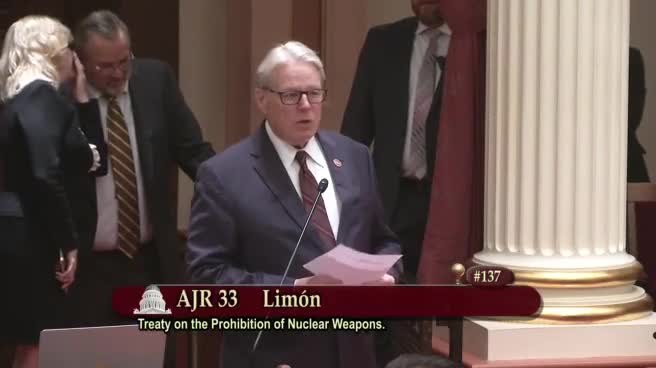 2MIN
Senate Floor
 9MIN
Senate Standing Committee on Elections and Constitutional Amendments
 3MIN
Assembly Standing Committee on Elections and Redistricting
Bill Author

Bill Co-Author(s):