AB 2593: Air ambulance services.
- Session Year: 2017-2018
- House: Assembly
- Latest Version Date: 2018-08-31
(1)Existing law, the Knox-Keene Health Care Service Plan Act of 1975, provides for the licensure and regulation of health care service plans by the Department of Managed Health Care and makes a willful violation of the act a crime. Existing law also provides for the regulation of health insurers by the Department of Insurance. Existing law requires that health care service plans and health insurance policies, as specified, provide coverage for certain services and treatments, including emergency medical transportation services.
This bill would require a health care service plan contract or a health insurance policy issued, amended, or renewed on or after January 1, 2019, to provide that if an enrollee, insured, or subscriber, as applicable, receives covered services from a noncontracting air ambulance provider, the enrollee, insured, or subscriber shall pay no more than the same cost sharing that the enrollee, insured, or subscriber would pay for the same covered services received from a contracting air ambulance provider, referred to as the in-network cost-sharing amount. The bill would specify that an enrollee, subscriber, or insured would not owe the noncontracting provider more than the in-network cost-sharing amount for services subject to the bill, as specified. The bill would allow a noncontracting provider to advance to collections only the in-network cost-sharing amount, as determined by the health care service plan or insurer, that the enrollee, insured, or subscriber has failed to pay. The bill would authorize a health care service plan, health insurer, or provider to seek relief in any court for the purpose of resolving a payment dispute, and would not prohibit a provider from using a health care service plans or health insurers existing dispute resolution processes. Because a willful violation of the bills requirements relative to health care service plans would be a crime, the bill would impose a state-mandated local program.
(2)Existing law establishes the Medi-Cal program, which is administered by the State Department of Health Care Services and under which qualified low-income individuals receive health care services. The Medi-Cal program is, in part, governed and funded by federal Medicaid program provisions. Existing law provides for the federal Medicare Program, which is a public health insurance program for persons 65 years of age and older and specified persons with disabilities who are under 65 years of age.
This bill would require the department to set and maintain the Medi-Cal fee rate for air ambulance services provided by either fixed or rotary wing aircraft that is equal to a percentage of the rural Medicare rates for those services, as described and effective July 1, 2019, and to the extent federal financial participation is available and any necessary federal approvals have been obtained. The bill would specify that, commencing July 1, 2019, the amounts a noncontract emergency medical transport provider could collect if the beneficiary received medical assistance other than through enrollment in a Medi-Cal managed care health plan pursuant to a specified federal law would be the resulting fee-for-service payment schedule amounts after the application of the rate established pursuant to the bill.
(3)Existing law, the Emergency Medical Air Transportation Act, effective until January 1, 2022, imposes a penalty of $4 until January 1, 2020, upon every conviction for a violation of the Vehicle Code or a local ordinance adopted pursuant to the Vehicle Code, other than a parking offense. The act requires the county or the court that imposed the fine to transfer the moneys collected pursuant to that act to the Treasurer for deposit into the Emergency Medical Air Transportation and Childrens Coverage Fund.
Under the act, moneys in the fund are made available, upon appropriation by the Legislature, to the State Department of Health Care Services for childrens health care coverage and administrative costs relating to emergency medical air transportation provider payments, with the appropriated moneys remaining after payment of the administrative costs to be used as follows: (A) 20% of the amount for offsetting the state portion of the Medi-Cal reimbursement rate for emergency medical air transportation services, and (B) 80% of the amount for augmenting emergency medical air transportation reimbursement payments made through the Medi-Cal program.
This bill, if the rate change to the Medi-Cal fee rate for air ambulance services is implemented pursuant to paragraph (2), would delete the authorization to use the moneys appropriated from the fund for augmenting Medi-Cal emergency medical air transportation reimbursement payments, while maintaining the authorization to use the moneys for offsetting the state portion of the Medi-Cal reimbursement rate for those services. The bill would preserve the authorization to use the moneys for augmentation of payments for purposes of emergency medical air transportation that was provided before July 1, 2019, as specified. The bill would make conforming changes by deleting or amending related provisions. The bill would repeal these provisions on January 1, 2022.
(4)The California Constitution requires the state to reimburse local agencies and school districts for certain costs mandated by the state. Statutory provisions establish procedures for making that reimbursement.
This bill would provide that no reimbursement is required by this act for a specified reason.
(1)Existing law, the Knox-Keene Health Care Service Plan Act of 1975, provides for the licensure and regulation of health care service plans by the Department of Managed Health Care and makes a willful violation of the act a crime. Existing law also provides for the regulation of health insurers by the Department of Insurance. Existing law requires that health care service plans and health insurance policies, as specified, provide coverage for certain services and treatments, including emergency medical transportation services.
This bill would require a health care service plan contract or a health insurance policy issued, amended, or renewed on or after January 1, 2019, to provide that if an enrollee, insured, or subscriber, as applicable, receives covered services from a noncontracting air ambulance provider, the insured enrollee, insured, or subscriber shall pay no more than the same cost sharing that the insured enrollee, insured, or subscriber would pay for the same covered services received from a contracting air ambulance provider, referred to as the in-network cost-sharing amount. The bill would specify that an enrollee, subscriber, or insured would not owe the noncontracting provider more than the in-network cost-sharing amount for services subject to the bill, as specified. The bill would allow a noncontracting provider to advance to collections only the in-network cost-sharing amount amount, as determined by the health care service plan or insurer. insurer, that the enrollee, insured, or subscriber has failed to pay. The bill would authorize a health care service plan, health insurer, or provider to seek relief in any court for the purpose of resolving a payment dispute, and would not prohibit a provider from using a health care service plans or health insurers existing dispute resolution processes. Because a willful violation of the bills requirements relative to health care service plans would be a crime, the bill would impose a state-mandated local program.
(2)Existing law establishes the Medi-Cal program, which is administered by the State Department of Health Care Services and under which qualified low-income individuals receive health care services. The Medi-Cal program is, in part, governed and funded by federal Medicaid program provisions. Existing law provides for the federal Medicare Program, which is a public health insurance program for persons 65 years of age and older and specified persons with disabilities who are under 65 years of age.
This bill would require the department to establish set and maintain the Medi-Cal fee rate for air ambulance services provided either by by either fixed or rotary wing aircraft at a level that is equal to a percentage of the rural Medicare rates for those services, as described and effective July 1, 2019, and to the extent federal financial participation is available and any necessary federal approvals have been obtained. The bill would specify that, commencing July 1, 2019, the amounts a noncontract emergency medical transport provider could collect if the beneficiary received medical assistance other than through enrollment in a Medi-Cal managed care health plan pursuant to a specified federal law would be the resulting fee-for-service payment schedule amounts after the application of the rate established pursuant to the bill.
(3)Existing law, the Emergency Medical Air Transportation Act, effective until January 1, 2022, imposes a penalty of $4 until January 1, 2020, upon every conviction for a violation of the Vehicle Code or a local ordinance adopted pursuant to the Vehicle Code, other than a parking offense. The act requires the county or the court that imposed the fine to transfer the moneys collected pursuant to that act to the Treasurer for deposit into the Emergency Medical Air Transportation and Childrens Coverage Fund.
Under the act, moneys in the fund are made available, upon appropriation by the Legislature, to the State Department of Health Care Services for childrens health care coverage and administrative costs relating to emergency medical air transportation provider payments, with the appropriated moneys remaining after payment of the administrative costs to be used as follows: (A) 20% of the amount for offsetting the state portion of the Medi-Cal reimbursement rate for emergency medical air transportation services, and (B) 80% of the amount for augmenting emergency medical air transportation reimbursement payments made through the Medi-Cal program.
This bill, if the rate change to the Medi-Cal fee rate for air ambulance services is implemented pursuant to paragraph (2), would delete the authorization to use the moneys appropriated from the fund for augmenting Medi-Cal emergency medical air transportation reimbursement payments, while maintaining the authorization to use the moneys for offsetting the state portion of the Medi-Cal reimbursement rate for those services. The bill would preserve the authorization to use the moneys for augmentation of payments for purposes of emergency medical air transportation that was provided before July 1, 2019, as specified. The bill would make conforming changes by deleting or amending related provisions. The bill would repeal these provisions on January 1, 2022.
The(4)The California Constitution requires the state to reimburse local agencies and school districts for certain costs mandated by the state. Statutory provisions establish procedures for making that reimbursement.
This bill would provide that no reimbursement is required by this act for a specified reason.
(1)Existing law, the Knox-Keene Health Care Service Plan Act of 1975, provides for the licensure and regulation of health care service plans by the Department of Managed Health Care and makes a willful violation of the act a crime. Existing law also provides for the regulation of health insurers by the Department of Insurance. Existing law requires that health care service plans and health insurance policies, as specified, provide coverage for certain services and treatments, including emergency medical transportation services.
This bill would provide that an enrollee, subscriber, or insured shall not be liable for the cost of emergency transportation by an air ambulance service, except for applicable cost-sharing amounts, including, but not limited to, a copayment, coinsurance, or a deductible. The bill would require a health care service plan contract or health insurer to reimburse providers for air ambulance services either a reasonable and customary value, as defined, or an amount otherwise negotiated, among other things. require a health care service plan contract or a health insurance policy issued, amended, or renewed on or after January 1, 2019, to provide that if an enrollee, insured, or subscriber, as applicable, receives covered services from a noncontracting air ambulance provider, the insured or subscriber shall pay no more than the same cost sharing that the insured or subscriber would pay for the same covered services received from a contracting air ambulance provider, referred to as the in-network cost-sharing amount. The bill would specify that an enrollee, subscriber, or insured would not owe the noncontracting provider more than the in-network cost-sharing amount for services subject to the bill, as specified. The bill would allow a noncontracting provider to advance to collections only the in-network cost-sharing amount as determined by the health care service plan or insurer. The bill would authorize a health care service plan, health insurer, or provider to seek relief in any court for the purpose of resolving a payment dispute. The bill would make these provisions severable. dispute, and would not prohibit a provider from using a health care service plans or health insurers existing dispute resolution processes. Because a willful violation of the bills requirements relative to health care service plans would be a crime, the bill would impose a state-mandated local program.
(2)Existing law establishes the Medi-Cal program, which is administered by the State Department of Health Care Services and under which qualified low-income individuals receive health care services. The Medi-Cal program is, in part, governed and funded by federal Medicaid program provisions. Existing law provides for the federal Medicare Program, which is a public health insurance program for persons 65 years of age and older and specified persons with disabilities who are under 65 years of age.
This bill would require the department to establish the Medi-Cal fee rate for air ambulance services provided either by fixed or rotary wing aircraft at a level equal to a percentage of the rural Medicare rates for those services, as described and effective July 1, 2019, and to the extent federal financial participation is available and any necessary federal approvals have been obtained. The bill would specify that, commencing July 1, 2019, the amounts a noncontract emergency medical transport provider could collect if the beneficiary received medical assistance other than through enrollment in a Medi-Cal managed care health plan pursuant to a specified federal law would be the resulting fee-for-service payment schedule amounts after the application of the rate established pursuant to the bill.
The California Constitution requires the state to reimburse local agencies and school districts for certain costs mandated by the state. Statutory provisions establish procedures for making that reimbursement.
This bill would provide that no reimbursement is required by this act for a specified reason.
(1)Existing law, the Knox-Keene Health Care Service Plan Act of 1975, provides for the licensure and regulation of health care service plans by the Department of Managed Health Care and makes a willful violation of the act a crime. Existing law also provides for the regulation of health insurers by the Department of Insurance. Existing law requires that health care service plans and health insurance policies, as specified, provide coverage for certain services and treatments, including emergency medical transportation services.
This bill would provide that an enrollee, subscriber, or insured shall not be liable for the cost of emergency transportation by an air ambulance service, except for applicable cost-sharing amounts, including, but not limited to, a copayment, coinsurance, or a deductible. The bill would require a health care service plan contract or health insurer to reimburse providers for air ambulance services either a reasonable and customary value, as defined, or an amount otherwise negotiated, among other things. The bill would authorize a health care service plan, health insurer, or provider to seek relief in any court for the purpose of resolving a payment dispute. The bill would make these provisions severable. Because a willful violation of the bills requirements relative to health care service plans would be a crime, the bill would impose a state-mandated local program.
(2)Existing law establishes the Medi-Cal program, which is administered by the State Department of Health Care Services and under which qualified low-income individuals receive health care services. The Medi-Cal program is, in part, governed and funded by federal Medicaid Program program provisions. Existing law provides for the federal Medicare Program, which is a public health insurance program for persons 65 years of age and older and specified persons with disabilities who are under 65 years of age.
This bill would require the department to establish the Medi-Cal fee rate for air ambulance services provided either by fixed or rotary wing aircraft at a level equal to a percentage of the rural Medicare rates for those services, as described and effective July 1, 2019, and to the extent federal financial participation is available and any necessary federal approvals have been obtained.
The California Constitution requires the state to reimburse local agencies and school districts for certain costs mandated by the state. Statutory provisions establish procedures for making that reimbursement.
This bill would provide that no reimbursement is required by this act for a specified reason.
(1)Existing law, the Knox-Keene Health Care Service Plan Act of 1975, provides for the licensure and regulation of health care service plans by the Department of Managed Health Care and makes a willful violation of the act a crime. Existing law also provides for the regulation of health insurers by the Department of Insurance. Existing law requires that health care service plans and health insurance policies, as specified, provide coverage for certain services and treatments, including emergency medical transportation services.
This bill would provide that an enrollee, subscriber, or insured shall not be liable for the cost of emergency transportation by an air ambulance service, except for applicable cost-sharing amounts, including, but not limited to, a copayment, coinsurance, or a deductible. The bill would require a health care service plan contract or health insurer to reimburse providers for air ambulance services either a reasonable and customary value, as defined, or an amount otherwise negotiated, among other things. The bill would authorize a health care service plan, health insurer, or provider to seek relief in any court for the purpose of resolving a payment dispute. Because a willful violation of the bills requirements relative to health care service plans would be a crime, the bill would impose a state-mandated local program.
Existing(2)Existing law establishes the Medi-Cal program, which is administered by the State Department of Health Care Services and under which qualified low-income individuals receive health care services. The Medi-Cal program is, in part, governed and funded by federal Medicaid Program provisions. Existing law provides for the federal Medicare Program, which is a public health insurance program for persons 65 years of age and older and specified persons with disabilities who are under 65 years of age.
This bill would require the department to maintain establish the Medi-Cal fee schedule rate for air ambulance services provided either by fixed or rotary wing aircraft at a level equal to a percentage of the rural Medicare rates for those services, only as described and effective July 1, 2019, and to the extent federal financial participation is available and only if any necessary federal approvals have been obtained.
The California Constitution requires the state to reimburse local agencies and school districts for certain costs mandated by the state. Statutory provisions establish procedures for making that reimbursement.
This bill would provide that no reimbursement is required by this act for a specified reason.
Existing law establishes the Medi-Cal program, which is administered by the State Department of Health Care Services and under which qualified low-income individuals receive health care services. The Medi-Cal program is, in part, governed and funded by federal Medicaid Program provisions. Existing law provides for the federal Medicare Program, which is a public health insurance program for persons 65 years of age and older and specified persons with disabilities who are under 65 years of age.
This bill would require the department to maintain the Medi-Cal fee schedule for air ambulance services at a level equal to the rural Medicare rates for those services, only to the extent federal financial participation is available and only if any necessary federal approvals have been obtained.
(a)This section shall be known, and may be cited, as the Emergency Medical Air Transportation Act.
(b)For purposes of this section:
(1)Department means the State Department of Health Care Services.
(2)Director means the Director of Health Care Services.
(3)Provider means a provider of emergency medical air transportation services.
(4)Rotary wing means a type of aircraft, commonly referred to as a helicopter, that generates lift through the use of wings, known as rotor blades, that revolve around a mast.
(5)Fixed wing means a type of aircraft, commonly referred to as an airplane, that generates lift through the use of the forward motion of the aircraft and wings that do not revolve around a mast but are fixed in relation to the fuselage of the aircraft.
(6)Air mileage rate means the per-mileage reimbursement rate paid for services rendered by rotary-wing and fixed-wing providers.
(c)(1)For purposes of implementing this section, a penalty of four dollars ($4) shall be imposed upon every conviction for a violation of the Vehicle Code or a local ordinance adopted pursuant to the Vehicle Code, except parking offenses subject to Article 3 (commencing with Section 40200) of Chapter 1 of Division 17 of the Vehicle Code.
(2)The penalty described in this subdivision is in addition to the state penalty assessed pursuant to Section 1464 of the Penal Code. However, this penalty shall not be included in the base fine used to calculate the state penalty assessment pursuant to subdivision (a) of Section 1464 of the Penal Code, the state surcharge levied pursuant to Section 1465.7 of the Penal Code, and the state court construction penalty pursuant to Section 70372 of this code, and to calculate the other additional penalties levied pursuant to this chapter.
(d)The county or the court that imposed the fine shall, in accordance with the procedures set out in Section 68101, transfer moneys collected pursuant to this section to the Treasurer for deposit into the Emergency Medical Air Transportation and Childrens Coverage Fund, which is hereby established in the State Treasury. Notwithstanding Section 16305.7, the Emergency Medical Air Transportation and Childrens Coverage Fund shall include interest and dividends earned on money in the fund. Any law that references the Emergency Medical Air Transportation Act Fund, as previously established by this subdivision, shall be construed to reference the Emergency Medical Air Transportation and Childrens Coverage Fund, effective January 1, 2018.
(e)(1)The Emergency Medical Air Transportation and Childrens Coverage Fund shall be administered by the State Department of Health Care Services. Moneys in the Emergency Medical Air Transportation and Childrens Coverage Fund shall be made available, upon appropriation by the Legislature, to the department for any of the following purposes:
(A)For childrens health care coverage.
(B)For emergency medical air transportation provider payments, as follows:
(i)For payment of the administrative costs of the department in administering emergency medical air transportation provider payments.
(ii)Twenty percent of the appropriated money remaining after payment of administrative costs pursuant to clause (i) shall be used to offset the state portion of the Medi-Cal reimbursement rate for emergency medical air transportation services.
(iii)Eighty percent of the appropriated money remaining after payment of administrative costs pursuant to clause (i) shall be used to augment emergency medical air transportation reimbursement payments made through the Medi-Cal program, as set forth in paragraphs (2) and (3).
(2)If money in the Emergency Medical Air Transportation and Childrens Coverage Fund is made available to the department for the purpose described in subparagraph (B) of paragraph (1), both of the following shall occur:
(A)The department shall seek to obtain federal matching funds by using the moneys in the Emergency Medical Air Transportation and Childrens Coverage Fund for the purpose of augmenting Medi-Cal reimbursement paid to emergency medical air transportation providers.
(B)The director shall augment emergency medical air transportation provider payments in accordance with a federally approved reimbursement methodology. The director may seek federal approvals or waivers as may be necessary to implement this section and to obtain federal financial participation to the maximum extent possible for the payments under this section.
(3)(A)Upon appropriation by the Legislature, the department shall use moneys in the Emergency Medical Air Transportation and Childrens Coverage Fund and any federal matching funds to do any of the following:
(i)Fund childrens health care coverage.
(ii)Increase the Medi-Cal reimbursement for emergency medical air transportation services in an amount not to exceed normal and customary charges charged by the providers.
(B)Notwithstanding any other law, and pursuant to this section, if money in the Emergency Medical Air Transportation and Childrens Coverage Fund is made available to the department for the purpose described in subparagraph (B) of paragraph (1), the department shall increase the Medi-Cal reimbursement for emergency medical air transportation services if both of the following conditions are met:
(i)Moneys in the Emergency Medical Air Transportation and Childrens Coverage Fund will cover the cost of increased payments pursuant to clause (iii) of subparagraph (B) of paragraph (1).
(ii)The state does not incur any General Fund expense to pay for the Medi-Cal emergency medical air transportation services increase.
(f)The assessment of penalties pursuant to this section shall terminate on January 1, 2020. Penalties assessed before January 1, 2020, shall continue to be collected, administered, and distributed pursuant to this section until exhausted or until June 30, 2021, whichever occurs first. On June 30, 2021, moneys remaining unexpended and unencumbered in the Emergency Medical Air Transportation and Childrens Coverage Fund shall be transferred to the General Fund, to be available, upon appropriation by the Legislature, for the purposes of augmenting Medi-Cal reimbursement for emergency medical air transportation and related costs, generally, or funding childrens health care coverage.
(g)Notwithstanding the rulemaking provisions of Chapter 3.5 (commencing with Section 11340) of Part 1 of Division 3 of Title 2, the department may implement, interpret, or make specific this section and any applicable federal waivers and state plan amendments by means of all-county letters, plan letters, plan or provider bulletins, or similar instructions without taking regulatory action.
(h)This section shall remain in effect only until the earlier of either of the following:
(1)The date on which the rate change to the Medi-Cal fee rate for air ambulance services is implemented pursuant to Section 14124.15 of the Welfare and Institutions Code, and as of that date is repealed.
(2)January 1, 2022, and as of that date is repealed.
SEC. 2.Section 76000.10 is added to the Government Code, to read:76000.10.(a)This section shall be known, and may be cited, as the Emergency Medical Air Transportation Act.
(b)For purposes of this section:
(1)Department means the State Department of Health Care Services.
(2)Director means the Director of Health Care Services.
(3)Provider means a provider of emergency medical air transportation services.
(4)Rotary wing means a type of aircraft, commonly referred to as a helicopter, that generates lift through the use of wings, known as rotor blades, that revolve around a mast.
(5)Fixed wing means a type of aircraft, commonly referred to as an airplane, that generates lift through the use of the forward motion of the aircraft and wings that do not revolve around a mast but are fixed in relation to the fuselage of the aircraft.
(6)Air mileage rate means the per-mileage reimbursement rate paid for services rendered by rotary-wing and fixed-wing providers.
(c)(1)For purposes of implementing this section, a penalty of four dollars ($4) shall be imposed upon every conviction for a violation of the Vehicle Code or a local ordinance adopted pursuant to the Vehicle Code, except parking offenses subject to Article 3 (commencing with Section 40200) of Chapter 1 of Division 17 of the Vehicle Code.
(2)The penalty described in this subdivision is in addition to the state penalty assessed pursuant to Section 1464 of the Penal Code. However, this penalty shall not be included in the base fine used to calculate the state penalty assessment pursuant to subdivision (a) of Section 1464 of the Penal Code, the state surcharge levied pursuant to Section 1465.7 of the Penal Code, and the state court construction penalty pursuant to Section 70372 of this code, and to calculate the other additional penalties levied pursuant to this chapter.
(d)The county or the court that imposed the fine shall, in accordance with the procedures set out in Section 68101, transfer moneys collected pursuant to this section to the Treasurer for deposit into the Emergency Medical Air Transportation and Childrens Coverage Fund, which is hereby established in the State Treasury. Notwithstanding Section 16305.7, the Emergency Medical Air Transportation and Childrens Coverage Fund shall include interest and dividends earned on money in the fund. Any law that references the Emergency Medical Air Transportation Act Fund, as previously established by this subdivision, shall be construed to reference the Emergency Medical Air Transportation and Childrens Coverage Fund, effective January 1, 2018.
(e)The Emergency Medical Air Transportation and Childrens Coverage Fund shall be administered by the State Department of Health Care Services. Moneys in the Emergency Medical Air Transportation and Childrens Coverage Fund shall be made available, upon appropriation by the Legislature, to the department for any of the following purposes:
(1)For childrens health care coverage.
(2)For emergency medical air transportation provider payments, as follows:
(A)For payment of the administrative costs of the department in administering emergency medical air transportation provider payments.
(B)The appropriated money remaining after payment of administrative costs pursuant to subparagraph (A) shall be used to offset the state portion of the Medi-Cal reimbursement rate for emergency medical air transportation services.
(f)The assessment of penalties pursuant to this section shall terminate on January 1, 2020. Penalties assessed before January 1, 2020, shall continue to be collected, administered, and distributed pursuant to this section until exhausted or until June 30, 2021, whichever occurs first. On June 30, 2021, moneys remaining unexpended and unencumbered in the Emergency Medical Air Transportation and Childrens Coverage Fund shall be transferred to the General Fund, to be available, upon appropriation by the Legislature, for the purposes of offsetting the state portion of the Medi-Cal reimbursement rate for emergency medical air transportation and related costs, generally, or funding childrens health care coverage.
(g)Notwithstanding the rulemaking provisions of Chapter 3.5 (commencing with Section 11340) of Part 1 of Division 3 of Title 2, the department may implement, interpret, or make specific this section and any applicable federal waivers and state plan amendments by means of all-county letters, plan letters, plan or provider bulletins, or similar instructions without taking regulatory action.
(h)(1)This section shall become operative only if, and on the date upon which, the rate change to the Medi-Cal fee rate for air ambulance services is implemented pursuant to Section 14124.15 of the Welfare and Institutions Code.
(2)(A)Except as described in subdivision (f), moneys in the Emergency Medical Air Transportation and Childrens Coverage Fund shall remain available, upon appropriation by the Legislature, to be used to augment emergency medical air transportation reimbursement payments made through the Medi-Cal program for purposes of emergency medical air transportation that was provided before July 1, 2019, and that is therefore not eligible for the Medi-Cal rate change made pursuant to Section 14124.15 of the Welfare and Institutions Code. The emergency medical air transportation reimbursement payments may be augmented pursuant to this subparagraph using moneys deposited in the fund within 90 calendar days following July 1, 2019.
(B)Moneys in the Emergency Medical Air Transportation and Childrens Coverage Fund shall not be available to be used to augment emergency medical air transportation reimbursement payments made through the Medi-Cal program for purposes of emergency medical air transportation that is provided on or after July 1, 2019, and that is therefore eligible for the Medi-Cal rate change made pursuant to Section 14124.15 of the Welfare and Institutions Code.
(i)This section shall remain in effect only until January 1, 2022, and as of that date is repealed.
SEC. 3.Section 1371.6 is added to the Health and Safety Code, to read:1371.6.(a)(1)Notwithstanding Section 1367.11, a health care service plan contract issued, amended, or renewed on or after January 1, 2019, shall provide that if an enrollee receives covered services from a noncontracting air ambulance provider, the enrollee shall pay no more than the same cost sharing that the enrollee would pay for the same covered services received from a contracting air ambulance provider. This amount shall be referred to as the in-network cost-sharing amount.
(2)An enrollee shall not owe the noncontracting provider more than the in-network cost-sharing amount for services subject to this section. At the time of payment by the plan to the noncontracting provider, the plan shall inform the enrollee and the noncontracting provider of the in-network cost-sharing amount owed by the enrollee.
(b)The following shall apply for purposes of this section:
(1)Any cost sharing paid by the enrollee for the services subject to this section shall count toward the limit on annual out-of-pocket expenses established under Section 1367.006.
(2)Cost sharing arising from services subject to this section shall be counted toward any deductible in the same manner as cost sharing would be attributed to a contracting provider.
(3)The cost sharing paid by the enrollee pursuant to this section shall satisfy the enrollees obligation to pay cost sharing for the health service.
(c)A noncontracting provider may advance to collections only the in-network cost-sharing amount, as determined by the plan pursuant to subdivision (a), that the enrollee has failed to pay.
(d)A health care service plan or a provider may seek relief in any court for the purpose of resolving a payment dispute. A provider is not prohibited from using a health care service plans existing dispute resolution processes.
(e)Air ambulance services providers remain subject to the balance billing protections for Medi-Cal beneficiaries under Section 14019.4 of the Welfare and Institutions Code.
SEC. 4.Section 10126.65 is added to the Insurance Code, to read:10126.65.(a)(1)Notwithstanding Section 10352, a health insurance policy issued, amended, or renewed on or after January 1, 2019, shall provide that if an insured or subscriber receives covered services from a noncontracting air ambulance provider, the insured or subscriber shall pay no more than the same cost sharing that the insured or subscriber would pay for the same covered services received from a contracting air ambulance provider. This amount shall be referred to as the in-network cost-sharing amount.
(2)A subscriber or insured shall not owe the noncontracting provider more than the in-network cost-sharing amount for services subject to this section. At the time of payment by the insurer to the noncontracting provider, the insurer shall inform the insured or subscriber and the noncontracting provider of the in-network cost-sharing amount owed by the insured or subscriber.
(b)The following shall apply for purposes of this section:
(1)Any cost sharing paid by the insured or subscriber for the services subject to this section shall count toward the limit on annual out-of-pocket expenses established under Section 10112.28.
(2)Cost sharing arising from services subject to this section shall be counted toward any deductible in the same manner as cost sharing would be attributed to a contracting provider.
(3)The cost sharing paid by the insured or subscriber pursuant to this section shall satisfy the insureds or subscribers obligation to pay cost sharing for the health service.
(c)A noncontracting provider may advance to collections only the in-network cost-sharing amount, as determined by the insurer pursuant to subdivision (a), that the insured or subscriber has failed to pay.
(d)A health insurer or a provider may seek relief in any court for the purpose of resolving a payment dispute. A provider is not prohibited from using a health insurers existing dispute resolution processes.
SEC. 5.Section 14124.15 is added to the Welfare and Institutions Code, to read:14124.15.(a)The department shall set and maintain the Medi-Cal fee rate for air ambulance services provided by either fixed or rotary wing aircraft that is equal to a percentage, as specified in subdivision (b), of the rural Medicare rates for those services.
(b)The final rate shall either meet or exceed the sum of the air ambulance service rate as provided in the Medi-Cal program on December 31, 2017, and the supplemental payment offered in the year 2017 pursuant to Section 76000.10 of the Government Code.
(c)Each applicable Medi-Cal managed care health plan shall satisfy its obligation under Section 438.114(c) of Title 42 of the Code of Federal Regulations for emergency medical transports and shall provide payment to noncontract emergency medical transport providers consistent with Section 1396u-2(b)(2)(D) of Title 42 of the United States Code. Effective July 1, 2019, and for each state fiscal year thereafter for which this chapter is operative, the amounts a noncontract emergency medical transport provider could collect if the beneficiary received medical assistance other than through enrollment in a Medi-Cal managed care health plan pursuant to Section 1396u-2(b)(2)(D) of Title 42 of the United States Code shall be the resulting fee-for-service payment schedule amounts after the application of this section.
(d)This section shall be effective July 1, 2019, and the section shall be implemented only to the extent federal financial participation is available and only if any necessary federal approvals have been obtained.
SEC. 6.No reimbursement is required by this act pursuant to Section 6 of Article XIIIB of the California Constitution because the only costs that may be incurred by a local agency or school district will be incurred because this act creates a new crime or infraction, eliminates a crime or infraction, or changes the penalty for a crime or infraction, within the meaning of Section 17556 of the Government Code, or changes the definition of a crime within the meaning of Section 6 of Article XIIIB of the California Constitution.
(a)This section shall be known, and may be cited, as the Emergency Medical Air Transportation Act.
(b)For purposes of this section:
(1)Department means the State Department of Health Care Services.
(2)Director means the Director of Health Care Services.
(3)Provider means a provider of emergency medical air transportation services.
(4)Rotary wing means a type of aircraft, commonly referred to as a helicopter, that generates lift through the use of wings, known as rotor blades, that revolve around a mast.
(5)Fixed wing means a type of aircraft, commonly referred to as an airplane, that generates lift through the use of the forward motion of the aircraft and wings that do not revolve around a mast but are fixed in relation to the fuselage of the aircraft.
(6)Air mileage rate means the per-mileage reimbursement rate paid for services rendered by rotary-wing and fixed-wing providers.
(c)(1)For purposes of implementing this section, a penalty of four dollars ($4) shall be imposed upon every conviction for a violation of the Vehicle Code or a local ordinance adopted pursuant to the Vehicle Code, except parking offenses subject to Article 3 (commencing with Section 40200) of Chapter 1 of Division 17 of the Vehicle Code.
(2)The penalty described in this subdivision shall be is in addition to the state penalty assessed pursuant to Section 1464 of the Penal Code. However, this penalty shall not be included in the base fine used to calculate the state penalty assessment pursuant to subdivision (a) of Section 1464 of the Penal Code, the state surcharge levied pursuant to Section 1465.7 of the Penal Code, and the state court construction penalty pursuant to Section 70372 of this code, and to calculate the other additional penalties levied pursuant to this chapter.
(d)The county or the court that imposed the fine shall, in accordance with the procedures set out in Section 68101, transfer moneys collected pursuant to this section to the Treasurer for deposit into the Emergency Medical Air Transportation and Childrens Coverage Fund, which is hereby established in the State Treasury. Notwithstanding Section 16305.7, the Emergency Medical Air Transportation and Childrens Coverage Fund shall include interest and dividends earned on money in the fund. Any law that references the Emergency Medical Air Transportation Act Fund, as previously established by this subdivision, shall be construed to reference the Emergency Medical Air Transportation and Childrens Coverage Fund, effective January 1, 2018.
(e)(1)The Emergency Medical Air Transportation and Childrens Coverage Fund shall be administered by the State Department of Health Care Services. Moneys in the Emergency Medical Air Transportation and Childrens Coverage Fund shall be made available, upon appropriation by the Legislature, to the department for any of the following purposes:
(A)For childrens health care coverage.
(B)For emergency medical air transportation provider payments, as follows:
(i)For payment of the administrative costs of the department in administering emergency medical air transportation provider payments.
(ii)Twenty percent of the appropriated money remaining after payment of administrative costs pursuant to clause (i) shall be used to offset the state portion of the Medi-Cal reimbursement rate for emergency medical air transportation services.
(iii)Eighty percent of the appropriated money remaining after payment of administrative costs pursuant to clause (i) shall be used to augment emergency medical air transportation reimbursement payments made through the Medi-Cal program, as set forth in paragraphs (2) and (3).
(2)If money in the Emergency Medical Air Transportation and Childrens Coverage Fund is made available to the department for the purpose described in subparagraph (B) of paragraph (1), both of the following shall occur:
(A)The department shall seek to obtain federal matching funds by using the moneys in the Emergency Medical Air Transportation and Childrens Coverage Fund for the purpose of augmenting Medi-Cal reimbursement paid to emergency medical air transportation providers.
(B)The director shall augment emergency medical air transportation provider payments in accordance with a federally approved reimbursement methodology. The director may seek federal approvals or waivers as may be necessary to implement this section and to obtain federal financial participation to the maximum extent possible for the payments under this section.
(3)(A)Upon appropriation by the Legislature, the department shall use moneys in the Emergency Medical Air Transportation and Childrens Coverage Fund and any federal matching funds to do any of the following:
(i)Fund childrens health care coverage.
(ii)Increase the Medi-Cal reimbursement for emergency medical air transportation services in an amount not to exceed normal and customary charges charged by the providers.
(B)Notwithstanding any other law, and pursuant to this section, if money in the Emergency Medical Air Transportation and Childrens Coverage Fund is made available to the department for the purpose described in subparagraph (B) of paragraph (1), the department shall increase the Medi-Cal reimbursement for emergency medical air transportation services if both of the following conditions are met:
(i)Moneys in the Emergency Medical Air Transportation and Childrens Coverage Fund will cover the cost of increased payments pursuant to clause (iii) of subparagraph (B) of paragraph (1).
(ii)The state does not incur any General Fund expense to pay for the Medi-Cal emergency medical air transportation services increase.
(f)The assessment of penalties pursuant to this section shall terminate on January 1, 2020. Penalties assessed before January 1, 2020, shall continue to be collected, administered, and distributed pursuant to this section until exhausted or until June 30, 2021, whichever occurs first. On June 30, 2021, moneys remaining unexpended and unencumbered in the Emergency Medical Air Transportation and Childrens Coverage Fund shall be transferred to the General Fund, to be available, upon appropriation by the Legislature, for the purposes of augmenting Medi-Cal reimbursement for emergency medical air transportation and related costs, generally, or funding childrens health care coverage.
(g)Notwithstanding the rulemaking provisions of Chapter 3.5 (commencing with Section 11340) of Part 1 of Division 3 of Title 2, the department may implement, interpret, or make specific this section and any applicable federal waivers and state plan amendments by means of all-county letters, plan letters, plan or provider bulletins, or similar instructions without taking regulatory action.
(h)This section shall remain in effect only until January 1, 2022, and as of that date is repealed, unless a later enacted statute, that is enacted before January 1, 2022, deletes or extends that date.(h)This section shall remain in effect only until the earlier of either of the following:
(1)The date on which the rate change to the Medi-Cal fee rate for air ambulance services is implemented pursuant to Section 14124.15 of the Welfare and Institutions Code, and as of that date is repealed.
(2)January 1, 2022, and as of that date is repealed.
SEC. 2.Section 76000.10 is added to the Government Code, to read:76000.10.(a)This section shall be known, and may be cited, as the Emergency Medical Air Transportation Act.
(b)For purposes of this section:
(1)Department means the State Department of Health Care Services.
(2)Director means the Director of Health Care Services.
(3)Provider means a provider of emergency medical air transportation services.
(4)Rotary wing means a type of aircraft, commonly referred to as a helicopter, that generates lift through the use of wings, known as rotor blades, that revolve around a mast.
(5)Fixed wing means a type of aircraft, commonly referred to as an airplane, that generates lift through the use of the forward motion of the aircraft and wings that do not revolve around a mast but are fixed in relation to the fuselage of the aircraft.
(6)Air mileage rate means the per-mileage reimbursement rate paid for services rendered by rotary-wing and fixed-wing providers.
(c)(1)For purposes of implementing this section, a penalty of four dollars ($4) shall be imposed upon every conviction for a violation of the Vehicle Code or a local ordinance adopted pursuant to the Vehicle Code, except parking offenses subject to Article 3 (commencing with Section 40200) of Chapter 1 of Division 17 of the Vehicle Code.
(2)The penalty described in this subdivision is in addition to the state penalty assessed pursuant to Section 1464 of the Penal Code. However, this penalty shall not be included in the base fine used to calculate the state penalty assessment pursuant to subdivision (a) of Section 1464 of the Penal Code, the state surcharge levied pursuant to Section 1465.7 of the Penal Code, and the state court construction penalty pursuant to Section 70372 of this code, and to calculate the other additional penalties levied pursuant to this chapter.
(d)The county or the court that imposed the fine shall, in accordance with the procedures set out in Section 68101, transfer moneys collected pursuant to this section to the Treasurer for deposit into the Emergency Medical Air Transportation and Childrens Coverage Fund, which is hereby established in the State Treasury. Notwithstanding Section 16305.7, the Emergency Medical Air Transportation and Childrens Coverage Fund shall include interest and dividends earned on money in the fund. Any law that references the Emergency Medical Air Transportation Act Fund, as previously established by this subdivision, shall be construed to reference the Emergency Medical Air Transportation and Childrens Coverage Fund, effective January 1, 2018.
(e)The Emergency Medical Air Transportation and Childrens Coverage Fund shall be administered by the State Department of Health Care Services. Moneys in the Emergency Medical Air Transportation and Childrens Coverage Fund shall be made available, upon appropriation by the Legislature, to the department for any of the following purposes:
(1)For childrens health care coverage.
(2)For emergency medical air transportation provider payments, as follows:
(A)For payment of the administrative costs of the department in administering emergency medical air transportation provider payments.
(B)The appropriated money remaining after payment of administrative costs pursuant to subparagraph (A) shall be used to offset the state portion of the Medi-Cal reimbursement rate for emergency medical air transportation services.
(f)The assessment of penalties pursuant to this section shall terminate on January 1, 2020. Penalties assessed before January 1, 2020, shall continue to be collected, administered, and distributed pursuant to this section until exhausted or until June 30, 2021, whichever occurs first. On June 30, 2021, moneys remaining unexpended and unencumbered in the Emergency Medical Air Transportation and Childrens Coverage Fund shall be transferred to the General Fund, to be available, upon appropriation by the Legislature, for the purposes of offsetting the state portion of the Medi-Cal reimbursement rate for emergency medical air transportation and related costs, generally, or funding childrens health care coverage.
(g)Notwithstanding the rulemaking provisions of Chapter 3.5 (commencing with Section 11340) of Part 1 of Division 3 of Title 2, the department may implement, interpret, or make specific this section and any applicable federal waivers and state plan amendments by means of all-county letters, plan letters, plan or provider bulletins, or similar instructions without taking regulatory action.
(h)(1)This section shall become operative only if, and on the date upon which, the rate change to the Medi-Cal fee rate for air ambulance services is implemented pursuant to Section 14124.15 of the Welfare and Institutions Code.
(2)(A)Except as described in subdivision (f), moneys in the Emergency Medical Air Transportation and Childrens Coverage Fund shall remain available, upon appropriation by the Legislature, to be used to augment emergency medical air transportation reimbursement payments made through the Medi-Cal program for purposes of emergency medical air transportation that was provided before July 1, 2019, and that is therefore not eligible for the Medi-Cal rate change made pursuant to Section 14124.15 of the Welfare and Institutions Code. The emergency medical air transportation reimbursement payments may be augmented pursuant to this subparagraph using moneys deposited in the fund within 90 calendar days following July 1, 2019.
(B)Moneys in the Emergency Medical Air Transportation and Childrens Coverage Fund shall not be available to be used to augment emergency medical air transportation reimbursement payments made through the Medi-Cal program for purposes of emergency medical air transportation that is provided on or after July 1, 2019, and that is therefore eligible for the Medi-Cal rate change made pursuant to Section 14124.15 of the Welfare and Institutions Code.
(i)This section shall remain in effect only until January 1, 2022, and as of that date is repealed.
SECTION 1.SEC. 3.Section 1371.6 is added to the Health and Safety Code, to read:1371.6.(a)(1)Notwithstanding Section 1367.11, a health care service plan contract issued, amended, or renewed on or after January 1, 2019, shall provide that if an enrollee receives covered services from a noncontracting air ambulance provider, the enrollee shall pay no more than the same cost sharing that the enrollee would pay for the same covered services received from a contracting air ambulance provider. This amount shall be referred to as the in-network cost-sharing amount.
(2)An enrollee shall not owe the noncontracting provider more than the in-network cost-sharing amount for services subject to this section. At the time of payment by the plan to the noncontracting provider, the plan shall inform the enrollee and the noncontracting provider of the in-network cost-sharing amount owed by the enrollee.
(b)The following shall apply for purposes of this section:
(1)Any cost sharing paid by the enrollee for the services subject to this section shall count toward the limit on annual out-of-pocket expenses established under Section 1367.006.
(2)Cost sharing arising from services subject to this section shall be counted toward any deductible in the same manner as cost sharing would be attributed to a contracting provider.
(3)The cost sharing paid by the enrollee pursuant to this section shall satisfy the enrollees obligation to pay cost sharing for the health service.
(c)A noncontracting provider may advance to collections only the in-network cost-sharing amount, as determined by the plan pursuant to subdivision (a), that the enrollee has failed to pay.
(d)A health care service plan or a provider may seek relief in any court for the purpose of resolving a payment dispute. A provider is not prohibited from using a health care service plans existing dispute resolution processes.
(e)Air ambulance services providers remain subject to the balance billing protections for Medi-Cal beneficiaries under Section 14019.4 of the Welfare and Institutions Code.
SEC. 2.SEC. 4.Section 10126.65 is added to the Insurance Code, to read:10126.65.(a)(1)Notwithstanding Section 10352, a health insurance policy issued, amended, or renewed on or after January 1, 2019, shall provide that if an insured or subscriber receives covered services from a noncontracting air ambulance provider, the insured or subscriber shall pay no more than the same cost sharing that the insured or subscriber would pay for the same covered services received from a contracting air ambulance provider. This amount shall be referred to as the in-network cost-sharing amount.
(2)A subscriber or insured shall not owe the noncontracting provider more than the in-network cost-sharing amount for services subject to this section. At the time of payment by the plan insurer to the noncontracting provider, the insurer shall inform the insured or subscriber and the noncontracting provider of the in-network cost-sharing amount owed by the insured or subscriber.
(b)The following shall apply for purposes of this section:
(1)Any cost sharing paid by the insured or subscriber for the services subject to this section shall count toward the limit on annual out-of-pocket expenses established under Section 10112.28.
(2)Cost sharing arising from services subject to this section shall be counted toward any deductible in the same manner as cost sharing would be attributed to a contracting provider.
(3)The cost sharing paid by the insured or subscriber pursuant to this section shall satisfy the insured insureds or subscribers obligation to pay cost sharing for the health service.
(c)A noncontracting provider may advance to collections only the in-network cost-sharing amount, as determined by the insurer pursuant to subdivision (a), that the insured or subscriber has failed to pay.
(d)A health insurer or a provider may seek relief in any court for the purpose of resolving a payment dispute. A health insurer provider is not prohibited from using a health insurers existing dispute resolution processes.
SEC. 3.SEC. 5.Section 14124.15 is added to the Welfare and Institutions Code, to read:14124.15.(a)The department shall set and maintain the Medi-Cal fee rate for air ambulance services provided either by by either fixed or rotary wing aircraft that is equal to a percentage, as specified in subdivision (b), of the rural Medicare rates for those services.
(b)The final rate shall either meet or exceed the sum of the air ambulance service rate as provided in the Medi-Cal program on December 31, 2017, and the supplemental payment offered in the year 2017 pursuant to Section 76000.10 of the Government Code.
(c)Each applicable Medi-Cal managed care health plan shall satisfy its obligation under Section 438.114(c) of Title 42 of the Code of Federal Regulations for emergency medical transports and shall provide payment to noncontract emergency medical transport providers consistent with Section 1396u-2(b)(2)(D) of Title 42 of the United States Code. Effective July 1, 2019, and for each state fiscal year thereafter for which this chapter is operative, the amounts a noncontract emergency medical transport provider could collect if the beneficiary received medical assistance other than through enrollment in a Medi-Cal managed care health plan pursuant to Section 1396u-2(b)(2)(D) of Title 42 of the United States Code shall be the resulting fee-for-service payment schedule amounts after the application of this section.
(d)This section shall be effective July 1, 2019, and the section shall be implemented only to the extent federal financial participation is available and only if any necessary federal approvals have been obtained.
SEC. 4.SEC. 6.No reimbursement is required by this act pursuant to Section 6 of Article XIIIB of the California Constitution because the only costs that may be incurred by a local agency or school district will be incurred because this act creates a new crime or infraction, eliminates a crime or infraction, or changes the penalty for a crime or infraction, within the meaning of Section 17556 of the Government Code, or changes the definition of a crime within the meaning of Section 6 of Article XIIIB of the California Constitution.
(a)(1)Notwithstanding Section 1367.11, a health care service plan contract issued, amended, or renewed on or after January 1, 2019, shall provide that if an enrollee receives covered services from a noncontracting air ambulance provider, the enrollee shall pay no more than the same cost sharing that the enrollee would pay for the same covered services received from a contracting air ambulance provider. This amount shall be referred to as the in-network cost-sharing amount.
(2)An enrollee shall not owe the noncontracting provider more than the in-network cost-sharing amount for services subject to this section. At the time of payment by the plan to the noncontracting provider, the plan shall inform the enrollee and the noncontracting provider of the in-network cost-sharing amount owed by the enrollee.
(b)The following shall apply for purposes of this section:
(1)Any cost sharing paid by the enrollee for the services subject to this section shall count toward the limit on annual out-of-pocket expenses established under Section 1367.006.
(2)Cost sharing arising from services subject to this section shall be counted toward any deductible in the same manner as cost sharing would be attributed to a contracting provider.
(3)The cost sharing paid by the enrollee pursuant to this section shall satisfy the enrollees obligation to pay cost sharing for the health service.
(c)A noncontracting provider may advance to collections only the in-network cost-sharing amount, as determined by the plan pursuant to subdivision (a), that the enrollee has failed to pay.
(3)(d)A health care service plan or a provider may seek relief in any court for the purpose of resolving a payment dispute. A provider is not prohibited from using a health care service plans existing dispute resolution processes.
(c)The provisions of this section are severable. If any provision of this section or its application is held invalid, that invalidity shall not affect other provisions or applications that can be given effect without the invalid provision or application.(e)Air ambulance services providers remain subject to the balance billing protections for Medi-Cal beneficiaries under Section 14019.4 of the Welfare and Institutions Code.
SEC. 2.Section 10126.65 is added to the Insurance Code, to read:10126.65.(a)An insured receiving emergency transportation by an air ambulance services provider covered consistent with paragraph (6) of subdivision (b) of Section 1345 shall not be held liable for the cost of that service, except for applicable cost-sharing amounts, including, but not limited to, a copayment, coinsurance, or a deductible.(b)Notwithstanding any other law, a health insurer shall provide an explanation of benefits to the insured or an explanation of benefits or remittance advice to the provider concerning air ambulance services.(c)(1)A health insurer shall provide reimbursement, in accordance with this chapter, to a provider for a claim submitted for air ambulance services.(2)Reimbursement to a provider shall be based on either the reasonable and customary value for the service as described in subparagraph (B) of paragraph (3) of subdivision (a) of Section 1300.71 of Title 28 of the California Code of Regulations or an amount otherwise negotiated between the health insurer and the provider.10126.65.(a)(1)Notwithstanding Section 10352, a health insurance policy issued, amended, or renewed on or after January 1, 2019, shall provide that if an insured or subscriber receives covered services from a noncontracting air ambulance provider, the insured or subscriber shall pay no more than the same cost sharing that the insured or subscriber would pay for the same covered services received from a contracting air ambulance provider. This amount shall be referred to as the in-network cost-sharing amount.
(2)A subscriber or insured shall not owe the noncontracting provider more than the in-network cost-sharing amount for services subject to this section. At the time of payment by the plan to the noncontracting provider, the insurer shall inform the insured or subscriber and the noncontracting provider of the in-network cost-sharing amount owed by the insured or subscriber.
(b)The following shall apply for purposes of this section:
(1)Any cost sharing paid by the insured or subscriber for the services subject to this section shall count toward the limit on annual out-of-pocket expenses established under Section 10112.28.
(2)Cost sharing arising from services subject to this section shall be counted toward any deductible in the same manner as cost sharing would be attributed to a contracting provider.
(3)The cost sharing paid by the insured or subscriber pursuant to this section shall satisfy the insured or subscribers obligation to pay cost sharing for the health service.
(c)A noncontracting provider may advance to collections only the in-network cost-sharing amount, as determined by the insurer pursuant to subdivision (a), that the insured or subscriber has failed to pay.
(3)(d)A health insurer or a provider may seek relief in any court for the purpose of resolving a payment dispute. A health insurer is not prohibited from using a health insurers existing dispute resolution processes.
(d)The provisions of this section are severable. If any provision of this section or its application is held invalid, that invalidity shall not affect other provisions or applications that can be given effect without the invalid provision or application.SEC. 3.Section 14124.14 14124.15 is added to the Welfare and Institutions Code, to read:14124.14.14124.15.(a)The department shall set and maintain the Medi-Cal fee rate for air ambulance services provided either by fixed or rotary wing aircraft that is equal to a percentage, as specified in subdivision (b), of the rural Medicare rates for those services.
(b)The final rate shall either meet or exceed the sum of the air ambulance service rate as provided in the Medi-Cal program on December 31, 2017, and the supplemental payment offered in the year 2017 pursuant to Section 76000.10 of the Government Code.
(c)Each applicable Medi-Cal managed care health plan shall satisfy its obligation under Section 438.114(c) of Title 42 of the Code of Federal Regulations for emergency medical transports and shall provide payment to noncontract emergency medical transport providers consistent with Section 1396u-2(b)(2)(D) of Title 42 of the United States Code. Effective July 1, 2019, and for each state fiscal year thereafter for which this chapter is operative, the amounts a noncontract emergency medical transport provider could collect if the beneficiary received medical assistance other than through enrollment in a Medi-Cal managed care health plan pursuant to Section 1396u-2(b)(2)(D) of Title 42 of the United States Code shall be the resulting fee-for-service payment schedule amounts after the application of this section.
(c)(d)This section shall be effective July 1, 2019, and the section shall be implemented only to the extent federal financial participation is available and only if any necessary federal approvals have been obtained.
SEC. 4.No reimbursement is required by this act pursuant to Section 6 of Article XIIIB of the California Constitution because the only costs that may be incurred by a local agency or school district will be incurred because this act creates a new crime or infraction, eliminates a crime or infraction, or changes the penalty for a crime or infraction, within the meaning of Section 17556 of the Government Code, or changes the definition of a crime within the meaning of Section 6 of Article XIIIB of the California Constitution.
(a)A subscriber or enrollee receiving emergency transportation by an air ambulance services provider covered consistent with paragraph (6) of subdivision (b) of Section 1345 shall not be held liable for the cost of that service, except for applicable cost-sharing amounts, including, but not limited to, a copayment, coinsurance, or a deductible.
(b)(1)A health care service plan shall reimburse providers for services subject to this section in accordance with this chapter, including Section 1371 or 1371.35, as applicable, and the health care service plan shall provide an explanation of benefits or similar claim processing information to the enrollee and provider.
(2)Notwithstanding any other law, reimbursement shall be based on either the reasonable and customary value for the service as described in subparagraph (B) of paragraph (2) (3) of subdivision (a) of Section 1300.71 of Title 28 of the California Code of Regulations or an amount otherwise negotiated between the health care service plan and the provider.
(3)A health care service plan or a provider may seek relief in any court for the purpose of resolving a payment dispute.
(c)The provisions of this section are severable. If any provision of this section or its application is held invalid, that invalidity shall not affect other provisions or applications that can be given effect without the invalid provision or application.
SEC. 2.Section 10126.65 is added to the Insurance Code, to read:10126.65.(a)An insured receiving emergency transportation by an air ambulance services provider covered consistent with paragraph (6) of subdivision (b) of Section 1345 shall not be held liable for the cost of that service, except for applicable cost-sharing amounts, including, but not limited to, a copayment, coinsurance, or a deductible.
(b)Notwithstanding any other law, a health insurer shall provide an explanation of benefits to the insured or an explanation of benefits or remittance advice to the provider concerning air ambulance services.
(c)(1)A health insurer shall provide reimbursement, in accordance with this chapter, to a provider for a claim submitted for air ambulance services.
(2)Reimbursement to a provider shall be based on either the reasonable and customary value for the service as described in subparagraph (B) of paragraph (2) (3) of subdivision (a) of Section 1300.71 of Title 28 of the California Code of Regulations or an amount otherwise negotiated between the health insurer and the provider.
(3)A health insurer or a provider may seek relief in any court for the purpose of resolving a payment dispute.
(d)The provisions of this section are severable. If any provision of this section or its application is held invalid, that invalidity shall not affect other provisions or applications that can be given effect without the invalid provision or application.
SEC. 3.Section 14124.14 is added to the Welfare and Institutions Code, to read:14124.14.(a)The department shall set and maintain the Medi-Cal fee rate for air ambulance services provided either by fixed or rotary wing aircraft that is equal to a percentage, as specified in subdivision (b), of the rural Medicare rates for those services.
(b)The final rate shall either meet or exceed the sum of the air ambulance service rate as provided in the Medi-Cal program on December 31, 2017, and the supplemental payment offered in the year 2017 pursuant to Section 76000.10 of the Government Code.
(c)This section shall be effective July 1, 2019, and the section shall be implemented only to the extent federal financial participation is available and only if any necessary federal approvals have been obtained.
SEC. 4.No reimbursement is required by this act pursuant to Section 6 of Article XIIIB of the California Constitution because the only costs that may be incurred by a local agency or school district will be incurred because this act creates a new crime or infraction, eliminates a crime or infraction, or changes the penalty for a crime or infraction, within the meaning of Section 17556 of the Government Code, or changes the definition of a crime within the meaning of Section 6 of Article XIIIB of the California Constitution.
(a)A subscriber or enrollee receiving emergency transportation by an air ambulance services provider covered consistent with paragraph (6) of subdivision (b) of Section 1345 shall not be held liable for the cost of that service, except for applicable cost-sharing amounts, including, but not limited to, a copayment, coinsurance, or a deductible.
(b)(1)A health care service plan shall reimburse providers for services subject to this section in accordance with this chapter, including Section 1371 or 1371.35, as applicable, and the health care service plan shall provide an explanation of benefits or similar claim processing information to the enrollee and provider.
(2)Notwithstanding any other law, reimbursement shall be based on either the reasonable and customary value for the service as described in subparagraph (B) of paragraph (2) of subdivision (a) of Section 1300.71 of Title 28 of the California Code of Regulations or an amount otherwise negotiated between the health care service plan and the provider.
(3)A health care service plan or a provider may seek relief in any court for the purpose of resolving a payment dispute.
SEC. 2.Section 10126.65 is added to the Insurance Code, to read:10126.65.(a)An insured receiving emergency transportation by an air ambulance services provider covered consistent with paragraph (6) of subdivision (b) of Section 1345 shall not be held liable for the cost of that service, except for applicable cost-sharing amounts, including, but not limited to, a copayment, coinsurance, or a deductible.
(b)Notwithstanding any other law, a health insurer shall provide an explanation of benefits to the insured or an explanation of benefits or remittance advice to the provider concerning air ambulance services.
(c)(1)A health insurer shall provide reimbursement, in accordance with this chapter, to a provider for a claim submitted for air ambulance services.
(2)Reimbursement to a provider shall be based on either the reasonable and customary value for the service as described in subparagraph (B) of paragraph (2) of subdivision (a) of Section 1300.71 of Title 28 of the California Code of Regulations or an amount otherwise negotiated between the health insurer and the provider.
(3)A health insurer or a provider may seek relief in any court for the purpose of resolving a payment dispute.
SECTION 1.SEC. 3.Section 14124.14 is added to the Welfare and Institutions Code, to read:14124.14.(a)The department shall set and maintain the Medi-Cal fee schedule rate for air ambulance services at a level provided either by fixed or rotary wing aircraft that is equal to a percentage, as specified in subdivision (b), of the rural Medicare rates for those services.
(b)The final rate shall either meet or exceed the sum of the air ambulance service rate as provided in the Medi-Cal program on December 31, 2017, and the supplemental payment offered in the year 2017 pursuant to Section 76000.10 of the Government Code.
(b)(c)This section shall be effective July 1, 2019, and the section shall be implemented only to the extent federal financial participation is available and only if any necessary federal approvals have been obtained.
SEC. 4.No reimbursement is required by this act pursuant to Section 6 of Article XIIIB of the California Constitution because the only costs that may be incurred by a local agency or school district will be incurred because this act creates a new crime or infraction, eliminates a crime or infraction, or changes the penalty for a crime or infraction, within the meaning of Section 17556 of the Government Code, or changes the definition of a crime within the meaning of Section 6 of Article XIIIB of the California Constitution.
(a)The department shall set and maintain the Medi-Cal fee schedule for air ambulance services at a level equal to the rural Medicare rates for those services.
(b)This section shall be implemented only to the extent federal financial participation is available and only if any necessary federal approvals have been obtained.
|
Date
|
Status
|
|---|---|
| Sep 27, 2018 | Vetoed by Governor. |
| Sep 7, 2018 | Enrolled and presented to the Governor at 2:30 p.m. |
| Aug 29, 2018 | Senate amendments concurred in. To Engrossing and Enrolling. |
| Aug 27, 2018 | From committee: That the Senate amendments be concurred in. (Ayes 12. Noes 0.) (August 27). |
| Aug 23, 2018 | Re-referred to Com. on HEALTH. pursuant to Assembly Rule 77.2. |
| Aug 22, 2018 | In Assembly. Concurrence in Senate amendments pending. May be considered on or after August 24 pursuant to Assembly Rule 77. |
| Aug 21, 2018 | Read third time. Passed. Ordered to the Assembly. |
| Aug 17, 2018 | From committee: Do pass. (Ayes 7. Noes 0.) (August 16). |
| Aug 13, 2018 | In committee: Referred to APPR. suspense file. |
| Aug 6, 2018 | In committee: Hearing postponed by committee. |
| Aug 6, 2018 | From committee chair, with author's amendments: Amend, and re-refer to committee. Read second time, amended, and re-referred to Com. on APPR. |
| Jul 3, 2018 | Read second time and amended. Re-referred to Com. on APPR. |
| Jul 2, 2018 | From committee: Amend, and do pass as amended and re-refer to Com. on APPR. (Ayes 9. Noes 0.) (June 27). |
| Jun 18, 2018 | From committee chair, with author's amendments: Amend, and re-refer to committee. Read second time, amended, and re-referred to Com. on HEALTH. |
| Jun 13, 2018 | Referred to Com. on HEALTH. |
| Jun 4, 2018 | In Senate. Read first time. To Com. on RLS. for assignment. |
| May 31, 2018 | Read third time. Passed. Ordered to the Senate. |
| May 29, 2018 | Read second time. Ordered to third reading. |
| May 25, 2018 | From committee: Amend, and do pass as amended. (Ayes 12. Noes 0.) (May 25). |
| Apr 25, 2018 | In committee: Set, first hearing. Referred to APPR. suspense file. |
| Apr 18, 2018 | From committee: Do pass and re-refer to Com. on APPR. with recommendation: To Consent Calendar. (Ayes 15. Noes 0.) (April 17). Re-referred to Com. on APPR. |
| Mar 5, 2018 | Referred to Com. on HEALTH. |
| Feb 16, 2018 | From printer. May be heard in committee March 18. |
| Feb 15, 2018 | Read first time. To print. |
|
Date
|
Description
|
Location
|
Votes
|
|
|---|---|---|---|---|
| Aug 29, 2018 | AB 2593 GRAYSON Concurrence in Senate Amendments | Assembly Floor |
Passed |
|
| Aug 27, 2018 | With recommendation: That Senate amendments be concurred in. | Assembly Standing Committee on Health |
Passed |
|
| Aug 21, 2018 | Assembly 3rd Reading AB2593 Grayson et al. By Nielsen | Senate Floor |
Passed |
|
| Aug 16, 2018 | Do pass | Senate Standing Committee on Appropriations |
Passed |
|
| Aug 13, 2018 | Placed on suspense file | Senate Standing Committee on Appropriations |
Passed |
|
| Jun 27, 2018 | Do pass as amended, but first amend, and re-refer to the Committee on [Appropriations] | Senate Standing Committee on Health |
Passed |
|
| May 31, 2018 | AB 2593 GRAYSON Assembly Third Reading | Assembly Floor |
Passed |
|
| May 25, 2018 | Do pass as amended. | Assembly Standing Committee on Appropriations |
Passed |
|
| Apr 17, 2018 | Do pass and be re-referred to the Committee on [Appropriations] with recommendation: To Consent Calendar | Assembly Standing Committee on Health |
Passed |
This list shows positions taken on this bill by organizations on the date displayed, which is linked to the original source.
Positions by individuals are not included.
GOVERNOR'S VETO
GV Bill Id:AB 2593
Author:(Grayson)
As Enrolled Ver:September 7, 2018
2/3 vote
ASSEMBLY: | 66-0 | (May 31, 2018) | SENATE: | 39-0 | (August 21, 2018) |
COMMITTEE VOTE: | 12-0 | (August 27, 2018) | RECOMMENDATION: | concur |
ASSEMBLY: | 79-0 | (August 29, 2018) |
|
|
|
Original Committee Reference: HEALTH
SUMMARY: Requires health care service plan (health plan) contracts and health insurance policies to provide that if an enrollee or insured receives covered services from a non-contracting air ambulance provider, the enrollee or insured is prohibited from paying no more than the same cost-sharing that the enrollee or insured would pay for the same covered services received from a contracting air ambulance provider. Requires the Department of Health Care Services (DHCS) to set and maintain the Medi-Cal fee rate for air ambulance services provided either by fixed or rotary wing aircraft that is equal to a percentage of the rural Medicare rates for those services, and requires the final rate to either meet or exceed the sum of the air ambulance service rate as provided in the Medi-Cal program on December 31, 2017, and the supplemental payment offered in 2017 under the existing Emergency Medical Air Transportation Act (EMATA).
The Senate amendments:
- Require health plan contracts and health insurance policies issued, amended, or renewed on or after January 1, 2019, to provide that if an enrollee or insured receives covered services from a non-contracting air ambulance provider, the enrollee or insured is prohibited from paying no more than the same cost-sharing that the enrollee would pay for the same covered services received from a contracting air ambulance provider. Refers to this amount as the in-network cost-sharing amount.
- Prohibit an enrollee or insured from owing the non-contracting provider more than the in-network cost-sharing amount for air ambulance services.
- Require the plan and insurer, at the time of payment to the non-contracting provider, to inform the enrollee or insured and the non-contracting provider of the in-network cost-sharing amount owed by the enrollee or insured.
- Require any cost-sharing paid by the enrollee or insured for air ambulance services to count toward the limit on annual out-of-pocket expenses, and towards any deductible in the same manner as cost-sharing would be attributed to a contracting provider. Specify that the enrollee or insured's cost sharing satisfies the enrollee or insured's obligation to pay cost sharing for the health service.
- Permit a non-contracting provider to advance to collections only the in-network cost-sharing amount, as determined by the plan or insurer that the enrollee or insured has failed to pay.
- Permit a health plan, health insurer or a provider to seek relief in any court for the purpose of resolving a payment dispute. Allow a health care provider to use a health plan or health insurer's existing dispute resolution processes.
- Require air ambulance services providers to remain subject to the balance billing protections for Medi-Cal beneficiaries under existing law.
- Require Medi-Cal managed care health plans to satisfy their obligation under a provision of federal Medicaid regulation referred to as the Rogers amendment to provide payment to non-contract emergency medical transport providers, and require the amounts a non-contract emergency medical transport provider could collect to be the resulting Medi-Cal fee-for-service (FFS) payment schedule amount.
- Require moneys in the Emergency Medical Transportation and Children’s Coverage Fund (Fund) to remain available, upon appropriation by the Legislature, to be used to augment emergency medical air transportation reimbursement payments made through the Medi-Cal program for purposes of emergency medical air transportation that was provided before July 1, 2019, and that is therefore not eligible for the Medi-Cal rate change made pursuant to this bill. Permit emergency medical air transportation reimbursement payments to be augmented using moneys deposited in the Fund within 90 calendar days following July 1, 2019.
- Prohibit money in the Fund from being used to augment emergency medical air transportation reimbursement payments made through the Medi-Cal program for purposes of emergency medical air transportation that is provided on or after July 1, 2019, that eligible for the Medi-Cal rate change made pursuant to this bill.
FISCAL EFFECT: According to the Senate Appropriations Committee, this bill would impact several departments in the following manner, with estimates as provided by the departments:
- DHCS: $25-30 million General Fund with corresponding $25-$35 million in federal funds. This figure is based on matching the rural Medicare rates, acknowledging that the assumption may exceed the rotary wing side. To the extent Medicare rates also increase in the future, Medi-Cal rates would increase commensurately.
- Department of Managed Health Care: Absorbable costs of $85,000 (Managed Care Fund) for 0.5 personnel in the Office of Legal Services to conduct legal research and draft three research memoranda on the applicability of the law in the first year of implementation.
- Department of Insurance: $7,000 (Insurance Fund) in fiscal year 2018-19 and $14,000 (Insurance Fund) in fiscal year 2019-20 to review the updated forms.
COMMENTS: According to the author, air ambulance providers are lifesaving emergency service providers that transport all emergency patients without regard to medical insurance or ability to pay. Air ambulance providers, once owned exclusively by hospitals, have not had a Medi-Cal rate adjustment in more than 20 years as a result of an oversight by DHCS dating back to the mid-1990s. The current rate now only covers less than 25% of their cost of providing this lifesaving service. The author states that it is long past time to rebase their Medi-Cal rates to bring them closer to the cost of providing the service. In 2010, during a cash-strapped time in California, the Legislature passed a temporary solution known as the EMATA (AB 2173 (Beall), Chapter 547, Statutes of 2010) that was funded by placing a $4 additional penalty on moving violations. This program has been extended twice, and is now set to expire for good in 2019. According to the author, as described in the April 26, 2018 California State Auditor Report ("Penalty Assessment Funds - California's Traffic Penalties and Fees Provide Inconsistent Funding for State and County Programs and Have a Significant Financial Impact on Drivers"), the EMATA program never generated sufficient funding, and the funding has been steadily decreasing. Air ambulances provide an essential lifesaving service that must be properly funded to ensure their continued availability.
- Medi-Cal rates and supplemental payments. AB 2173 levied an additional $4 penalty on Vehicle Code violations (excluding parking tickets). After payment of DHCS' administrative costs, 20% of the remaining EMATA funds is used to offset the state's portion of the Medi-Cal reimbursement rate for emergency medical air transportation services in Medi-Cal. The remaining 80% of the funds is matched with federal funds and used to provide augmentation or supplemental payments for eligible Medi-Cal emergency medical air transportation services in FFS Medi-Cal. The augmentation payment amount is per transport and calculated annually. To be eligible for the supplemental payments, air medical transportation providers must be actively enrolled as a Medi-Cal air transportation provider, operate an aircraft that meets the definition of an "air ambulance," and, be certified by the FAA to use the aircraft for the purpose of being an air medical transportation provider. AB 2173 sunset the $4 penalty assessment on July 1, 2016, and AB 1410 (Wood), Chapter 718, Statutes of 2017, extended the sunset date of the fee until January 1, 2020.
The revenue resulting from the $4 assessment is used to fund emergency medical air transportation services claims for procedure codes A0430 and A0431 for fixed and rotary wing claims respectively, and to provide an additional supplemental payment amount in FFS Medi-Cal. Total payments for each claim may not exceed a provider's usual and customary rates as charged to the general public. The maximum augmentation payments made for claims for dates of service from July 1, 2017 to December 31, 2017, are as follows:
- A0430 (fixed wing air transport) $2,947.62
- A0431 (rotary wing air transport) $4,161.34
DHCS indicates there are currently 37 air ambulance providers, of which 21 are in-state providers. DHCS indicates Medi-Cal air ambulance rates were last increased in October 2001. Medi-Cal air ambulance rates were subject to a 10% reduction per AB 97 (Committee on Budget), Chapter 3, Statutes of 2011. DHCS indicates the reduction was implemented prospectively on September 5, 2013 for medical transportation providers but the retroactive reduction (from June 2011 through September 4, 2013) was not required.
- Air ambulance balance billing provisions. This bill was amended in the Assembly Appropriations Committee to include language prohibiting a subscriber, enrollee or insured of a health plan or health insurer receiving emergency transportation by an air ambulance services provider from being held liable for the cost of that service, except for applicable cost-sharing amounts, including, but not limited to, a copayment, coinsurance, or a deductible, and the related provisions regarding payment. As amended, this bill seeks to protect individual with coverage from a health plan or health insurance from being liable for the cost of that service, except for applicable cost-sharing amounts. Balance billing sometimes occurs when a patient receives emergency care from a health care provider that is not contracted with their health plan. After the health plan or insurer reimburses the provider, the provider (in this case, an air ambulance provider) seeks the "balance" of their charge from the patient. Air ambulance providers (and ambulance providers) indicate most ambulance services are non-contracting.
Under a 1986 state law, plans that offer coverage for medical transportation services (including air ambulance) must contain a provision providing for direct reimbursement to any non-contracting provider of covered medical transportation services if the provider has not received payment for those services from any other source. Under that law, the enrollee or insured is required to file a claim for the medical transportation service with the plan/insurer. The plan/insurer is then required to pay the medical transportation provider directly, and the medical transportation provider is prohibiting from demanding payment from the enrollee until it receives payment from the plan/insurer. However, once payment from the plan/insure occurs, the medical transportation provider is authorized to demand payment from the enrollee for any unpaid portion of the provider's fee.
The provisions related to balance billing was not heard in the Assembly Health Committee.
This bill is sponsored by the California Association of Air Medical Services (CAL-AAMS), which writes air ambulance providers will be devastated by the impending elimination of the EMATA supplemental payments. CAL-AAMS writes that an increase in Medi-Cal rates to the rural Medicare rate will sustain services, preventing potential base closures or reductions in services. CAL-AAMS states that emergency air ambulance services are an essential part of the statewide emergency medical services system and provide a critical link between rural areas and urban tertiary care hospitals (trauma centers, heart/stroke centers, burn units, children's hospitals and neonatal centers, etc.) and play a key role in disaster response and homeland security. CAL-AAMs states Medi-Cal payment rates for air ambulance services have not increased in more than twenty years. In 2010, the Legislature passed AB 2173, known as EMATA, but in the face of growing concerns over the magnitude of penalties assessed on moving violations, the Legislature has determined that EMATA program will sunset in 2019.
According to CAL-AAMS , this bill would provide a Medi-Cal rate increase that is tied to rural Medicare rates, which reimburses providers approximately two-thirds of their cost of providing the service. The more than 20 year old Medi-Cal fee schedule pays less than half of the rural Medicare rate. Finally, CAL-AAMS states the balance billing provisions in this bill seem like a reasonable solution that will protect patients from inappropriate balance billing.
The Department of Finance writes in opposition that the air ambulance rate provisions of this bill were considered during the budget process and were ultimately not included in the 2018 Budget Act, and this bill creates significant ongoing General Fund costs and increases the risk to the state budget in future years when revenues decline.
I am returning the following six bills without my signature:
AB 2043
AB 2342
AB 2593
SB 320
SB 1125
SB 1148
Each of these bills require significant, ongoing general fund commitments. As such, I commend these policies to the budget process where they may be prioritized along with other spending proposals and which begins again on January 3rd.
Analysis Prepared by: Kristene Mapile / HEALTH / (916) 319-2097 FN: 0005365
CONCURRENCE IN SENATE AMENDMENTS
CSA2 Bill Id:AB 2593
Author:(Grayson)
As Amended Ver:August 6, 2018
Majority vote
ASSEMBLY: | 66-0 | (May 31, 2018) | SENATE: | 39-0 | (August 21, 2018) |
COMMITTEE VOTE: | 12-0 | (August 27, 2018) | RECOMMENDATION: | concur |
Original Committee Reference: HEALTH
SUMMARY: Requires health care service plan (health plan) contracts and health insurance policies to provide that if an enrollee or insured receives covered services from a non-contracting air ambulance provider, the enrollee or insured is prohibited from paying no more than the same cost-sharing that the enrollee or insured would pay for the same covered services received from a contracting air ambulance provider. Requires the Department of Health Care Services (DHCS) to set and maintain the Medi-Cal fee rate for air ambulance services provided either by fixed or rotary wing aircraft that is equal to a percentage of the rural Medicare rates for those services, and requires the final rate to either meet or exceed the sum of the air ambulance service rate as provided in the Medi-Cal program on December 31, 2017, and the supplemental payment offered in 2017 under the existing Emergency Medical Air Transportation Act (EMATA).
The Senate amendments:
- Require health plan contracts and health insurance policies issued, amended, or renewed on or after January 1, 2019, to provide that if an enrollee or insured receives covered services from a non-contracting air ambulance provider, the enrollee or insured is prohibited from paying no more than the same cost-sharing that the enrollee would pay for the same covered services received from a contracting air ambulance provider. Refers to this amount as the in-network cost-sharing amount.
- Prohibit an enrollee or insured from owing the non-contracting provider more than the in-network cost-sharing amount for air ambulance services.
- Require the plan and insurer, at the time of payment to the non-contracting provider, to inform the enrollee or insured and the non-contracting provider of the in-network cost-sharing amount owed by the enrollee or insured.
- Require any cost-sharing paid by the enrollee or insured for air ambulance services to count toward the limit on annual out-of-pocket expenses, and towards any deductible in the same manner as cost-sharing would be attributed to a contracting provider. Specify that the enrollee or insured's cost sharing satisfies the enrollee or insured's obligation to pay cost sharing for the health service.
- Permit a non-contracting provider to advance to collections only the in-network cost-sharing amount, as determined by the plan or insurer that the enrollee or insured has failed to pay.
- Permit a health plan, health insurer or a provider to seek relief in any court for the purpose of resolving a payment dispute. Allow a health care provider to use a health plan or health insurer's existing dispute resolution processes.
- Require air ambulance services providers to remain subject to the balance billing protections for Medi-Cal beneficiaries under existing law.
- Require Medi-Cal managed care health plans to satisfy their obligation under a provision of federal Medicaid regulation referred to as the Rogers amendment to provide payment to non-contract emergency medical transport providers, and require the amounts a non-contract emergency medical transport provider could collect to be the resulting Medi-Cal fee-for-service (FFS) payment schedule amount.
- Require moneys in the Emergency Medical Transportation and Children’s Coverage Fund (Fund) to remain available, upon appropriation by the Legislature, to be used to augment emergency medical air transportation reimbursement payments made through the Medi-Cal program for purposes of emergency medical air transportation that was provided before July 1, 2019, and that is therefore not eligible for the Medi-Cal rate change made pursuant to this bill. Permit emergency medical air transportation reimbursement payments to be augmented using moneys deposited in the Fund within 90 calendar days following July 1, 2019.
- Prohibit money in the Fund from being used to augment emergency medical air transportation reimbursement payments made through the Medi-Cal program for purposes of emergency medical air transportation that is provided on or after July 1, 2019, that eligible for the Medi-Cal rate change made pursuant to this bill.
FISCAL EFFECT: According to the Senate Appropriations Committee, this bill would impact several departments in the following manner, with estimates as provided by the departments:
- DHCS: $25-30 million General Fund with corresponding $25-$35 million in federal funds. This figure is based on matching the rural Medicare rates, acknowledging that the assumption may exceed the rotary wing side. To the extent Medicare rates also increase in the future, Medi-Cal rates would increase commensurately.
- Department of Managed Health Care: Absorbable costs of $85,000 (Managed Care Fund) for 0.5 personnel in the Office of Legal Services to conduct legal research and draft three research memoranda on the applicability of the law in the first year of implementation.
- Department of Insurance: $7,000 (Insurance Fund) in fiscal year 2018-19 and $14,000 (Insurance Fund) in fiscal year 2019-20 to review the updated forms.
COMMENTS: According to the author, air ambulance providers are lifesaving emergency service providers that transport all emergency patients without regard to medical insurance or ability to pay. Air ambulance providers, once owned exclusively by hospitals, have not had a Medi-Cal rate adjustment in more than 20 years as a result of an oversight by DHCS dating back to the mid-1990s. The current rate now only covers less than 25% of their cost of providing this lifesaving service. The author states that it is long past time to rebase their Medi-Cal rates to bring them closer to the cost of providing the service. In 2010, during a cash-strapped time in California, the Legislature passed a temporary solution known as the EMATA (AB 2173 (Beall), Chapter 547, Statutes of 2010) that was funded by placing a $4 additional penalty on moving violations. This program has been extended twice, and is now set to expire for good in 2019. According to the author, as described in the April 26, 2018 California State Auditor Report ("Penalty Assessment Funds - California's Traffic Penalties and Fees Provide Inconsistent Funding for State and County Programs and Have a Significant Financial Impact on Drivers"), the EMATA program never generated sufficient funding, and the funding has been steadily decreasing. Air ambulances provide an essential lifesaving service that must be properly funded to ensure their continued availability.
- Medi-Cal rates and supplemental payments. AB 2173 levied an additional $4 penalty on Vehicle Code violations (excluding parking tickets). After payment of DHCS' administrative costs, 20% of the remaining EMATA funds is used to offset the state's portion of the Medi-Cal reimbursement rate for emergency medical air transportation services in Medi-Cal. The remaining 80% of the funds is matched with federal funds and used to provide augmentation or supplemental payments for eligible Medi-Cal emergency medical air transportation services in FFS Medi-Cal. The augmentation payment amount is per transport and calculated annually. To be eligible for the supplemental payments, air medical transportation providers must be actively enrolled as a Medi-Cal air transportation provider, operate an aircraft that meets the definition of an "air ambulance," and, be certified by the FAA to use the aircraft for the purpose of being an air medical transportation provider. AB 2173 sunset the $4 penalty assessment on July 1, 2016, and AB 1410 (Wood), Chapter 718, Statutes of 2017, extended the sunset date of the fee until January 1, 2020.
The revenue resulting from the $4 assessment is used to fund emergency medical air transportation services claims for procedure codes A0430 and A0431 for fixed and rotary wing claims respectively, and to provide an additional supplemental payment amount in FFS Medi-Cal. Total payments for each claim may not exceed a provider's usual and customary rates as charged to the general public. The maximum augmentation payments made for claims for dates of service from July 1, 2017 to December 31, 2017, are as follows:
- A0430 (fixed wing air transport) $2,947.62
- A0431 (rotary wing air transport) $4,161.34
DHCS indicates there are currently 37 air ambulance providers, of which 21 are in-state providers. DHCS indicates Medi-Cal air ambulance rates were last increased in October 2001. Medi-Cal air ambulance rates were subject to a 10% reduction per AB 97 (Committee on Budget), Chapter 3, Statutes of 2011. DHCS indicates the reduction was implemented prospectively on September 5, 2013 for medical transportation providers but the retroactive reduction (from June 2011 through September 4, 2013) was not required.
- Air ambulance balance billing provisions. This bill was amended in the Assembly Appropriations Committee to include language prohibiting a subscriber, enrollee or insured of a health plan or health insurer receiving emergency transportation by an air ambulance services provider from being held liable for the cost of that service, except for applicable cost-sharing amounts, including, but not limited to, a copayment, coinsurance, or a deductible, and the related provisions regarding payment. As amended, this bill seeks to protect individual with coverage from a health plan or health insurance from being liable for the cost of that service, except for applicable cost-sharing amounts. Balance billing sometimes occurs when a patient receives emergency care from a health care provider that is not contracted with their health plan. After the health plan or insurer reimburses the provider, the provider (in this case, an air ambulance provider) seeks the "balance" of their charge from the patient. Air ambulance providers (and ambulance providers) indicate most ambulance services are non-contracting.
Under a 1986 state law, plans that offer coverage for medical transportation services (including air ambulance) must contain a provision providing for direct reimbursement to any non-contracting provider of covered medical transportation services if the provider has not received payment for those services from any other source. Under that law, the enrollee or insured is required to file a claim for the medical transportation service with the plan/insurer. The plan/insurer is then required to pay the medical transportation provider directly, and the medical transportation provider is prohibiting from demanding payment from the enrollee until it receives payment from the plan/insurer. However, once payment from the plan/insure occurs, the medical transportation provider is authorized to demand payment from the enrollee for any unpaid portion of the provider's fee.
The provisions related to balance billing was not heard in the Assembly Health Committee.
This bill is sponsored by the California Association of Air Medical Services (CAL-AAMS), which writes air ambulance providers will be devastated by the impending elimination of the EMATA supplemental payments. CAL-AAMS writes that an increase in Medi-Cal rates to the rural Medicare rate will sustain services, preventing potential base closures or reductions in services. CAL-AAMS states that emergency air ambulance services are an essential part of the statewide emergency medical services system and provide a critical link between rural areas and urban tertiary care hospitals (trauma centers, heart/stroke centers, burn units, children's hospitals and neonatal centers, etc.) and play a key role in disaster response and homeland security. CAL-AAMs states Medi-Cal payment rates for air ambulance services have not increased in more than twenty years. In 2010, the Legislature passed AB 2173, known as EMATA, but in the face of growing concerns over the magnitude of penalties assessed on moving violations, the Legislature has determined that EMATA program will sunset in 2019.
According to CAL-AAMS , this bill would provide a Medi-Cal rate increase that is tied to rural Medicare rates, which reimburses providers approximately two-thirds of their cost of providing the service. The more than 20 year old Medi-Cal fee schedule pays less than half of the rural Medicare rate. Finally, CAL-AAMS states the balance billing provisions in this bill seem like a reasonable solution that will protect patients from inappropriate balance billing.
The Department of Finance writes in opposition that the air ambulance rate provisions of this bill were considered during the budget process and were ultimately not included in the 2018 Budget Act, and this bill creates significant ongoing General Fund costs and increases the risk to the state budget in future years when revenues decline.
Analysis Prepared by: Kristene Mapile / HEALTH / (916) 319-2097 FN: 0004891
CONCURRENCE IN SENATE AMENDMENTS
CSA1 Bill Id:AB 2593
Author:(Grayson)
As Amended Ver:August 6, 2018
Majority vote
ASSEMBLY: | 66-0 | (May 31, 2018) | SENATE: | 39-0 | (August 21, 2018) |
Original Committee Reference: HEALTH
SUMMARY: Requires health care service plan (health plan) contracts and health insurance policies to provide that if an enrollee or insured receives covered services from a non-contracting air ambulance provider, the enrollee or insured is prohibited from paying no more than the same cost-sharing that the enrollee or insured would pay for the same covered services received from a contracting air ambulance provider. Requires the Department of Health Care Services (DHCS) to set and maintain the Medi-Cal fee rate for air ambulance services provided either by fixed or rotary wing aircraft that is equal to a percentage of the rural Medicare rates for those services, and requires the final rate to either meet or exceed the sum of the air ambulance service rate as provided in the Medi-Cal program on December 31, 2017, and the supplemental payment offered in 2017 under the existing Emergency Medical Air Transportation Act (EMATA).
The Senate amendments:
- Require health plan contracts and health insurance policies issued, amended, or renewed on or after January 1, 2019, to provide that if an enrollee or insured receives covered services from a non-contracting air ambulance provider, the enrollee or insured is prohibited from paying no more than the same cost-sharing that the enrollee would pay for the same covered services received from a contracting air ambulance provider. Refers to this amount as the in-network cost-sharing amount.
- Prohibit an enrollee or insured from owing the non-contracting provider more than the in-network cost-sharing amount for air ambulance services.
- Require the plan and insurer, at the time of payment to the non-contracting provider, to inform the enrollee or insured and the non-contracting provider of the in-network cost-sharing amount owed by the enrollee or insured.
- Require any cost-sharing paid by the enrollee or insured for air ambulance services to count toward the limit on annual out-of-pocket expenses, and towards any deductible in the same manner as cost-sharing would be attributed to a contracting provider. Specify that the enrollee or insured's cost sharing satisfies the enrollee or insured's obligation to pay cost sharing for the health service.
- Permit a non-contracting provider to advance to collections only the in-network cost-sharing amount, as determined by the plan or insurer that the enrollee or insured has failed to pay.
- Permit a health plan, health insurer or a provider to seek relief in any court for the purpose of resolving a payment dispute. Allow a health care provider to use a health plan or health insurer's existing dispute resolution processes.
- Require air ambulance services providers to remain subject to the balance billing protections for Medi-Cal beneficiaries under existing law.
- Require Medi-Cal managed care health plans to satisfy their obligation under a provision of federal Medicaid regulation referred to as the Rogers amendment to provide payment to non-contract emergency medical transport providers, and require the amounts a non-contract emergency medical transport provider could collect to be the resulting Medi-Cal fee-for-service (FFS) payment schedule amount.
- Require moneys in the Emergency Medical Transportation and Children's Coverage Fund (Fund) to remain available, upon appropriation by the Legislature, to be used to augment emergency medical air transportation reimbursement payments made through the Medi-Cal program for purposes of emergency medical air transportation that was provided before July 1, 2019, and that is therefore not eligible for the Medi-Cal rate change made pursuant to this bill. Permit emergency medical air transportation reimbursement payments to be augmented using moneys deposited in the Fund within 90 calendar days following July 1, 2019.
- Prohibit money in the Fund from being used to augment emergency medical air transportation reimbursement payments made through the Medi-Cal program for purposes of emergency medical air transportation that is provided on or after July 1, 2019, that eligible for the Medi-Cal rate change made pursuant to this bill.
FISCAL EFFECT: According to the Senate Appropriations Committee, this bill would impact several departments in the following manner, with estimates as provided by the departments:
- DHCS: $25-30 million General Fund with corresponding $25-$35 million in federal funds. This figure is based on matching the rural Medicare rates, acknowledging that the assumption may exceed the rotary wing side. To the extent Medicare rates also increase in the future, Medi-Cal rates would increase commensurately.
- Department of Managed Health Care: Absorbable costs of $85,000 (Managed Care Fund) for 0.5 personnel in the Office of Legal Services to conduct legal research and draft three research memoranda on the applicability of the law in the first year of implementation.
- Department of Insurance: $7,000 (Insurance Fund) in fiscal year 2018-19 and $14,000 (Insurance Fund) in fiscal year 2019-20 to review the updated forms.
COMMENTS: According to the author, air ambulance providers are lifesaving emergency service providers that transport all emergency patients without regard to medical insurance or ability to pay. Air ambulance providers, once owned exclusively by hospitals, have not had a Medi-Cal rate adjustment in more than 20 years as a result of an oversight by DHCS dating back to the mid-1990s. The current rate now only covers less than 25% of their cost of providing this lifesaving service. The author states that it is long past time to rebase their Medi-Cal rates to bring them closer to the cost of providing the service. In 2010, during a cash-strapped time in California, the Legislature passed a temporary solution known as the EMATA (AB 2173 (Beall), Chapter 547, Statutes of 2010) that was funded by placing a $4 additional penalty on moving violations. This program has been extended twice, and is now set to expire for good in 2019. According to the author, as described in the April 26, 2018 California State Auditor Report ("Penalty Assessment Funds - California's Traffic Penalties and Fees Provide Inconsistent Funding for State and County Programs and Have a Significant Financial Impact on Drivers"), the EMATA program never generated sufficient funding, and the funding has been steadily decreasing. Air ambulances provide an essential lifesaving service that must be properly funded to ensure their continued availability.
- Medi-Cal rates and supplemental payments. AB 2173 levied an additional $4 penalty on Vehicle Code violations (excluding parking tickets). After payment of DHCS' administrative costs, 20% of the remaining EMATA funds is used to offset the state's portion of the Medi-Cal reimbursement rate for emergency medical air transportation services in Medi-Cal. The remaining 80% of the funds is matched with federal funds and used to provide augmentation or supplemental payments for eligible Medi-Cal emergency medical air transportation services in FFS Medi-Cal. The augmentation payment amount is per transport and calculated annually. To be eligible for the supplemental payments, air medical transportation providers must be actively enrolled as a Medi-Cal air transportation provider, operate an aircraft that meets the definition of an "air ambulance," and, be certified by the FAA to use the aircraft for the purpose of being an air medical transportation provider. AB 2173 sunset the $4 penalty assessment on July 1, 2016, and AB 1410 (Wood), Chapter 718, Statutes of 2017, extended the sunset date of the fee until January 1, 2020.
The revenue resulting from the $4 assessment is used to fund emergency medical air transportation services claims for procedure codes A0430 and A0431 for fixed and rotary wing claims respectively, and to provide an additional supplemental payment amount in FFS Medi-Cal. Total payments for each claim may not exceed a provider's usual and customary rates as charged to the general public. The maximum augmentation payments made for claims for dates of service from July 1, 2017 to December 31, 2017, are as follows:
- A0430 (fixed wing air transport) $2,947.62
- A0431 (rotary wing air transport) $4,161.34
DHCS indicates there are currently 37 air ambulance providers, of which 21 are in-state providers. DHCS indicates Medi-Cal air ambulance rates were last increased in October 2001. Medi-Cal air ambulance rates were subject to a 10% reduction per AB 97 (Budget Committee), Chapter 3, Statutes of 2011. DHCS indicates the reduction was implemented prospectively on September 5, 2013 for medical transportation providers but the retroactive reduction (from June 2011 through September 4, 2013) was not required.
- Air ambulance balance billing provisions. This bill was amended in the Assembly Appropriations Committee to include language prohibiting a subscriber, enrollee or insured of a health plan or health insurer receiving emergency transportation by an air ambulance services provider from being held liable for the cost of that service, except for applicable cost-sharing amounts, including, but not limited to, a copayment, coinsurance, or a deductible, and the related provisions regarding payment. As amended, this bill seeks to protect individual with coverage from a health plan or health insurance from being liable for the cost of that service, except for applicable cost-sharing amounts. Balance billing sometimes occurs when a patient receives emergency care from a health care provider that is not contracted with their health plan. After the health plan or insurer reimburses the provider, the provider (in this case, an air ambulance provider) seeks the "balance" of their charge from the patient. Air ambulance providers (and ambulance providers) indicate most ambulance services are non-contracting.
Under a 1986 state law, plans that offer coverage for medical transportation services (including air ambulance) must contain a provision providing for direct reimbursement to any non-contracting provider of covered medical transportation services if the provider has not received payment for those services from any other source. Under that law, the enrollee or insured is required to file a claim for the medical transportation service with the plan/insurer. The plan/insurer is then required to pay the medical transportation provider directly, and the medical transportation provider is prohibiting from demanding payment from the enrollee until it receives payment from the plan/insurer. However, once payment from the plan/insure occurs, the medical transportation provider is authorized to demand payment from the enrollee for any unpaid portion of the provider's fee.
The provisions related to balance billing was not heard in the Assembly Health Committee.
This bill is sponsored by the California Association of Air Medical Services (CAL-AAMS), which writes air ambulance providers will be devastated by the impending elimination of the EMATA supplemental payments. CAL-AAMS writes that an increase in Medi-Cal rates to the rural Medicare rate will sustain services, preventing potential base closures or reductions in services. CAL-AAMS states that emergency air ambulance services are an essential part of the statewide emergency medical services system and provide a critical link between rural areas and urban tertiary care hospitals (trauma centers, heart/stroke centers, burn units, children's hospitals and neonatal centers, etc.) and play a key role in disaster response and homeland security. CAL-AAMs states Medi-Cal payment rates for air ambulance services have not increased in more than twenty years. In 2010, the Legislature passed AB 2173, known as EMATA, but in the face of growing concerns over the magnitude of penalties assessed on moving violations, the Legislature has determined that EMATA program will sunset in 2019.
According to CAL-AAMS, this bill would provide a Medi-Cal rate increase that is tied to rural Medicare rates, which reimburses providers approximately two-thirds of their cost of providing the service. The more than 20 year old Medi-Cal fee schedule pays less than half of the rural Medicare rate. Finally, CAL-AAMS states the balance billing provisions in this bill seem like a reasonable solution that will protect patients from inappropriate balance billing.
The Department of Finance writes in opposition that the air ambulance rate provisions of this bill were considered during the budget process and were ultimately not included in the 2018 Budget Act, and this bill creates significant ongoing General Fund costs and increases the risk to the state budget in future years when revenues decline.
Analysis Prepared by: Kristene Mapile /HEALTH / (916) 319-2097 FN: 0004890
CONCURRENCE IN SENATE AMENDMENTS
CSA1 Bill Id:AB 2593
Author:(Grayson)
As Amended Ver:August 6, 2018
Majority vote
ASSEMBLY: | 66-0 | (May 31, 2018) | SENATE: | 39-0 | (August 21, 2018) |
Original Committee Reference: HEALTH
SUMMARY: Requires health care service plan (health plan) contracts and health insurance policies to provide that if an enrollee or insured receives covered services from a non-contracting air ambulance provider, the enrollee or insured is prohibited from paying no more than the same cost-sharing that the enrollee or insured would pay for the same covered services received from a contracting air ambulance provider. Requires the Department of Health Care Services (DHCS) to set and maintain the Medi-Cal fee rate for air ambulance services provided either by fixed or rotary wing aircraft that is equal to a percentage of the rural Medicare rates for those services, and requires the final rate to either meet or exceed the sum of the air ambulance service rate as provided in the Medi-Cal program on December 31, 2017, and the supplemental payment offered in 2017 under the existing Emergency Medical Air Transportation Act (EMATA).
The Senate amendments:
- Require health plan contracts and health insurance policies issued, amended, or renewed on or after January 1, 2019, to provide that if an enrollee receives covered services from a non-contracting air ambulance provider, the enrollee is prohibited from paying no more than the same cost-sharing that the enrollee would pay for the same covered services received from a contracting air ambulance provider. Refers to this amount as the in-network cost-sharing amount.
- Prohibit an enrollee or insured from owing the non-contracting provider more than the in-network cost-sharing amount for air ambulance services.
- Require the plan and insurer, at the time of payment to the non-contracting provider, to inform the enrollee or insured and the non-contracting provider of the in-network cost-sharing amount owed by the enrollee or insured.
- Require any cost-sharing paid by the enrollee or insured for air ambulance services to count toward the limit on annual out-of-pocket expenses, and towards any deductible in the same manner as cost-sharing would be attributed to a contracting provider. Specify that the enrollee or insured's cost sharing satisfies the enrollee or insured's obligation to pay cost sharing for the health service.
- Permit a non-contracting provider to advance to collections only the in-network cost-sharing amount, as determined by the plan or insurer that the enrollee or insured has failed to pay.
- Permit a health plan/insurer or a provider to seek relief in any court for the purpose of resolving a payment dispute. State a health care provider is not prohibited from using a health plan's existing dispute resolution processes.
- Require air ambulance services providers to remain subject to the balance billing protections for Medi-Cal beneficiaries under existing law.
- Require Medi-Cal managed care health plans to satisfy their obligation under a provision of federal Medicaid regulation referred to as the Rogers amendment to provide payment to non-contract emergency medical transport providers, and require the amounts a non-contract emergency medical transport provider could collect to be the resulting Medi-Cal fee-for-service (FFS) payment schedule amount.
- Require moneys in the EMATA Fund to remain available, upon appropriation by the Legislature, to be used to augment emergency medical air transportation reimbursement payments made through the Medi-Cal program for purposes of emergency medical air transportation that was provided before July 1, 2019, and that is therefore not eligible for the Medi-Cal rate change made pursuant to this bill. Permit emergency medical air transportation reimbursement payments to be augmented pursuant using moneys deposited in the EMATA Fund within 90 calendar days following July 1, 2019.
- Prohibit money in the EMATA Fund from being to augment emergency medical air transportation reimbursement payments made through the Medi-Cal program for purposes of emergency medical air transportation that is provided on or after July 1, 2019, that eligible for the Medi-Cal rate change made pursuant to this bill.
FISCAL EFFECT: According to the Senate Appropriations Committee, this bill would impact several departments in the following manner, with estimate as provided by the departments:
- DHCS: $25-30 million General Fund with corresponding $25-$35 million in federal funds. This figure is based on matching the rural Medicare rates, acknowledging that the assumption may exceed the rotary wing side. To the extent Medicare rates also increase in the future, Medi-Cal rates would increase commensurately.
- Department of Managed Health Care: Absorbable costs of $85,000 (Managed Care Fund) for 0.5 personnel in the Office of Legal Services to conduct legal research and draft three research memoranda on the applicability of the law in the first year of implementation.
- Department of Insurance: $7,000 (Insurance Fund) in fiscal year 2018-19 and $14,000 (Insurance Fund) in fiscal year 2019-20 to review the updated forms.
COMMENTS: According to the author, air ambulance providers are lifesaving emergency service providers that transport all emergency patients without regard to medical insurance or ability to pay. Air ambulance providers, once owned exclusively by hospitals, have not had a Medi-Cal rate adjustment in more than 20 years as a result of an oversight by DHCS dating back to the mid-1990s. The current rate now only covers less than 25% of their cost of providing this lifesaving service. It is long past time to rebase their Medi-Cal rates to bring them closer to the cost of providing the service. In 2010, during a cash-strapped time in California, the Legislature passed a temporary solution known as the EMATA (AB 2173 (Beall), Chapter 547, Statutes of 2010) that was funded by placing a $4 additional penalty on moving violations. This program has been extended twice, and is now set to expire for good in 2019. As described in the April 26, 2018 California State Auditor Report ("Penalty Assessment Funds - California's Traffic Penalties and Fees Provide Inconsistent Funding for State and County Programs and Have a Significant Financial Impact on Drivers"), the EMATA program never generated sufficient funding, and the funding has been steadily decreasing. Air ambulances provide an essential lifesaving service that must be properly funded to ensure their continued availability.
- Medi-Cal rates and supplemental payments. AB 2173 levied an additional $4 penalty on Vehicle Code violations (excluding parking tickets). After payment of DHCS' administrative costs, 20% of the remaining EMATA funds is used to offset the state's portion of the Medi-Cal reimbursement rate for emergency medical air transportation services in Medi-Cal. The remaining 80% of the funds is matched with federal funds and used to provide augmentation or supplemental payments for eligible Medi-Cal emergency medical air transportation services in FFS Medi-Cal. The augmentation payment amount is per transport and calculated annually. To be eligible for the supplemental payments, air medical transportation providers must be actively enrolled as a Medi-Cal air transportation provider, operate an aircraft that meets the definition of an "air ambulance," and, be certified by the FAA to use the aircraft for the purpose of being an air medical transportation provider. AB 2173 sunset the $4 penalty assessment on July 1, 2016, and AB 1410 (Wood), Chapter 718, Statutes of 2017, extended the sunset date of the fee until January 1, 2020.
The revenue resulting from the $4 assessment is used to fund emergency medical air transportation services claims for procedure codes A0430 and A0431 for fixed and rotary wing claims respectively, and to provide an additional supplemental payment amount in FFS Medi-Cal. Total payments for each claim may not exceed a provider's usual and customary rates as charged to the general public. The maximum augmentation payments made for claims for dates of service from July 1, 2017 to December 31, 2017, are as follows:
- A0430 (fixed wing air transport) $2,947.62
- A0431 (rotary wing air transport) $4,161.34
DHCS indicates there are currently 37 air ambulance providers, of which 21 are in-state providers. DHCS indicates Medi-Cal air ambulance rates were last increased in October 2001. Medi-Cal air ambulance rates were subject to a 10% reduction per AB 97 (Committee on Budget), Chapter 3, Statutes of 2011. DHCS indicates the reduction was implemented prospectively on September 5, 2013 for medical transportation providers but the retroactive reduction (from June 2011 through September 4, 2013) was not required.
- Air ambulance balance billing provisions. This bill was amended in the Assembly Appropriations Committee to include language prohibiting a subscriber, enrollee or insured of a health plan or health insurer receiving emergency transportation by an air ambulance services provider from being held liable for the cost of that service, except for applicable cost-sharing amounts, including, but not limited to, a copayment, coinsurance, or a deductible, and the related provisions regarding payment. As amended, this bill seeks to protect individual with coverage from a health plan or health insurance from being liable for the cost of that service, except for applicable cost-sharing amounts. Balance billing sometimes occurs when a patient receives emergency care from a health care provider that is not contracted with their health plan. After the health plan or insurer reimburses the provider, the provider (in this case, an air ambulance provider) seeks the "balance" of their charge from the patient. Air ambulance providers (and ambulance providers) indicate most ambulance services are non-contracting.
Under a 1986 state law, plans that offer coverage for medical transportation services (including air ambulance) must contain a provision providing for direct reimbursement to any non-contracting provider of covered medical transportation services if the provider has not received payment for those services from any other source. Under that law, the enrollee or insured is required to file a claim for the medical transportation service with the plan/insurer. The plan/insurer is then required to pay the medical transportation provider directly, and the medical transportation provider is prohibiting from demanding payment from the enrollee until it receives payment from the plan/insurer. However, once payment from the plan/insure occurs, the medical transportation provider is authorized to demand payment from the enrollee for any unpaid portion of the provider's fee.
The provisions related to balance billing was not heard in the Assembly Health Committee.
This bill is sponsored by the California Association of Air Medical Services (CAL-AAMS), which writes air ambulance providers will be devastated by the impending elimination of the EMATA supplemental payments. CAL-AAMS writes that an increase in Medi-Cal rates to the rural Medicare rate will sustain services, preventing potential base closures or reductions in services. CAL-AAMS states that emergency air ambulance services are an essential part of the statewide emergency medical services system and provide a critical link between rural areas and urban tertiary care hospitals (trauma centers, heart/stroke centers, burn units, children's hospitals and neonatal centers, etc.) and play a key role in disaster response and homeland security. CAL-AAMs states Medi-Cal payment rates for air ambulance services have not increased in more than twenty years. In 2010, the Legislature passed AB 2173, known as EMATA, but in the face of growing concerns over the magnitude of penalties assessed on moving violations, the Legislature has determined that EMATA program will sunset in 2019.
This bill would provide a Medi-Cal rate increase that is tied to rural Medicare rates, which reimburses providers approximately two-thirds of their cost of providing the service. The more than 20 year old Medi-Cal fee schedule pays less than half of the rural Medicare rate. Finally, CAL-AAMS states the balance billing provisions in this bill seem like a reasonable solution that will protect patients from inappropriate balance billing.
The Department of Finance writes in opposition that the air ambulance rate provisions of this bill were considered during the budget process and were ultimately not included in the 2018 Budget Act, and this bill creates significant ongoing General Fund costs and increases the risk to the state budget in future years when revenues decline.
Analysis Prepared by: Kristene Mapile / HEALTH / (916) 319-2097 FN: 0004374
Office of Senate Floor Analyses (916) 651-1520 Fax: (916) 327-4478 | AB |
THIRD READING
Bill No: AB 2593
Amended: 8/6/18 in Senate
SENATE HEALTH COMMITTEE: 9-0, 6/27/18
AYES: Pan, Nguyen, Beall, Hernandez, Leyva, Mitchell, Monning, Nielsen, Roth
SENATE APPROPRIATIONS COMMITTEE: 7-0, 8/16/18
AYES: Portantino, Bates, Beall, Bradford, Hill, Nielsen, Wiener
ASSEMBLY FLOOR: 66-0, 5/31/18 - See last page for vote
SOURCE: California Association of Air Medical Services
DIGEST: This bill requires health plans and health insurers to provide that if an enrollee receives covered services from a non-contracting air ambulance provider, the enrollee is prohibited from paying no more than the same cost-sharing that the enrollee would pay for the same covered services received from a contracting air ambulance provider. This bill also requires the Department of Health Care Services to set and maintain the Medi-Cal fee rate for air ambulance services provided either by fixed or rotary wing aircraft that is equal to a percentage of the rural Medicare rates for those services, and requires the final rate to either meet or exceed the sum of the air ambulance service rate as provided in the Medi-Cal program on December 31, 2017, and the supplemental payment offered in 2017 under the existing Emergency Medical Air Transportation Act.
ANALYSIS: Existing federal law prohibits, under the federal Airline Deregulation Act of 1978 (ADA), a state, or a political subdivision of a state from enacting or enforcing a law, regulation, or other provision having the force and effect of law related to a price, route, or service of an air carrier that may provide air transportation. Defines an “air carrier” to mean a citizen of the United States undertaking by any means, directly or indirectly, to provide air transportation. [49 U.S.C. §§40102, 41713]
Existing state law:
Medi-Cal requirements
- Establishes the Medi-Cal program, administered by the Department of Health Care Services (DHCS), under which health care services are provided to qualified low-income persons. [WIC §14000, et seq.]
- Establishes a schedule of benefits under the Medi-Cal program, which includes emergency and non-emergency medical transportation. [WIC §14132]
- Imposes, pursuant to the Emergency Medical Air Transportation Act (EMATA), a penalty of $4 upon every conviction for a violation of the Vehicle Code or a local ordinance adopted pursuant to the Vehicle Code, except parking offenses, and requires the county or the court that imposed the fine to transfer moneys collected to the Treasurer for deposit into the Emergency Medical Air Transportation and Children’s Coverage Fund (EMATA Fund) in the State Treasury. [GOV §76000.10]
- Requires the Fund to be administered by DHCS, and moneys in the Fund to be made available, upon appropriation by the Legislature, to DHCS for any of the following purposes:
- For children’s health care coverage;
- For emergency medical air transportation provider payments for payment of the administrative costs of DHCS in administering emergency medical air transportation provider payments, with the remaining funds to be used as follows:
- 20% of the appropriated money remaining to be used to offset the state portion of the Medi-Cal reimbursement rate for emergency medical air transportation services; and,
- 80% of the appropriated money remaining to be used to augment emergency medical air transportation reimbursement payments made through the Medi-Cal program. [GOV §76000.10]
- Sunsets the EMATA penalty assessment on January 1, 2020, and the related payment provisions on January 1, 2022, [GOV §76000.10]
Health plan and health insurance requirements
- Requires every health plan contract and disability insurance policy that offers coverage for medical transportation services, to contain a provision providing for direct reimbursement to any non-contracting provider of covered medical transportation services if the provider has not received payment for those services from any other source. [HSC §1367.11 and INS §10352]
- Defines “direct reimbursement” as an enrollee or insured is required to file a claim for the medical transportation service with the plan/insurer, the plan/insurer is required to pay the medical transportation provider directly, and the medical transportation provider is prohibiting from demanding payment from the enrollee until having received payment from the plan/insurer, at which time the medical transportation provider is authorized to demand payment from the enrollee for any unpaid portion of the provider’s fee. [HSC §1367.11 and INS §10352]
- Requires health plans to reimburse claims, or any portion of any claim, as soon as practicable, but no later than 30 working days after receipt of the claim by the health plan, or if the health plan is a health maintenance organization, 45 working days after receipt of the claim by the plan, unless the claim or portion thereof is contested by the plan. [HSC §1371]
This bill:
- Requires health plans and health insurers to provide that if an enrollee receives covered services from a non-contracting air ambulance provider, the enrollee is prohibited from paying no more than the same cost-sharing that the enrollee would pay for the same covered services received from a contracting air ambulance provider. Refers to this amount as be referred to as the “in-network cost-sharing amount.”
- Prohibits a health plan or health insurer enrollee from owing the non-contracting provider more than the in-network cost-sharing amount for air ambulance services.
- Requires the plan and insurer, at the time of payment to the non-contracting provider, to inform the enrollee and the non-contracting provider of the in-network cost-sharing amount owed by the enrollee.
- Requires any cost-sharing paid by the enrollee for air ambulance services to count toward the limit on annual out-of-pocket expenses established under existing law, and towards any deductible in the same manner as cost-sharing would be attributed to a contracting provider.
- Requires the cost-sharing paid by the enrollee pursuant to satisfy the enrollee’s obligation to pay cost-sharing for the health service.
- Permits a non-contracting provider to advance to collections only the in-network cost-sharing amount, as determined by the plan or insurer, that the enrollee has failed to pay.
- Permits a health plan/insurer or a provider to seek relief in any court for the purpose of resolving a payment dispute. States a health care provider is not prohibited from using a health care service plan’s existing dispute resolution processes.
- Requires air ambulance services providers to remain subject to the balance billing protections for Medi-Cal beneficiaries under existing law.
- Requires DHCS to set and maintain the Medi-Cal fee rate for air ambulance services provided either by fixed or rotary wing aircraft that is equal to a percentage of the rural Medicare rates for those services.
- Requires the final rate to either meet or exceed the sum of the air ambulance service rate as provided in the Medi-Cal program on December 31, 2017, and the supplemental payment offered in the year 2017 under EMATA.
- Makes the Medi-Cal rate increase effective July 1, 2019, and implements the Medi-Cal provisions only to the extent federal financial participation is available and only if any necessary federal approvals have been obtained.
- Requires Medi-Cal managed care health plan to satisfy their obligation under a provision of federal Medicaid regulation referred to as the Rogers amendment to provide payment to non-contract emergency medical transport providers, and requires the amounts a non-contract emergency medical transport provider could collect to be the resulting Medi-Cal fee-for-service payment schedule amount.
- Requires moneys in the EMATA Fund to remain available, upon appropriation by the Legislature, to be used to augment emergency medical air transportation reimbursement payments made through the Medi-Cal program for purposes of emergency medical air transportation that was provided before July 1, 2019, and that is therefore not eligible for the Medi-Cal rate change made pursuant to this bill. Permits emergency medical air transportation reimbursement payments to be augmented pursuant using moneys deposited in the EMATA Fund within 90 calendar days following July 1, 2019.
- Prohibits money in the EMATA Fund from being to augment emergency medical air transportation reimbursement payments made through the Medi-Cal program for purposes of emergency medical air transportation that is provided on or after July 1, 2019, that eligible for the Medi-Cal rate change made pursuant to this bill.
Comments
- Author’s statement. According to the author, air ambulance providers are lifesaving emergency service providers that transport all emergency patients without regard to medical insurance or ability to pay. Air ambulance providers, once owned exclusively by hospitals, have not had a Medi-Cal rate adjustment in more than 20 years as a result of an oversight by DHCS dating back to the mid-1990s. The current rate now only covers less than 25% of their cost of providing this lifesaving service. It is long past time to rebase their Medi-Cal rates to bring them closer to the cost of providing the service. In 2010, during a cash-strapped time in California, the Legislature passed a temporary solution known as the EMATA (AB 2173, Beall, Chapter 547, Statutes of 2010) that was funded by placing a $4 additional penalty on moving violations. This program has been extended twice, and is now set to expire for good in 2019. As described in the April 26, 2018 California State Auditor Report (“Penalty Assessment Funds - California’s Traffic Penalties and Fees Provide Inconsistent Funding for State and County Programs and Have a Significant Financial Impact on Drivers”), the EMATA program never generated sufficient funding, and the funding has been steadily decreasing. Air ambulances provide an essential lifesaving service that must be properly funded to ensure their continued availability.
- Medi-Cal rates and supplemental payments. AB 2173 levied an additional $4 penalty on Vehicle Code violations (excluding parking tickets). After payment of DHCS’ administrative costs, 20% of the remaining EMATA funds is used to offset the state’s portion of the Medi-Cal reimbursement rate for emergency medical air transportation services in Medi-Cal. The remaining 80% of the funds is matched with federal funds and used to provide augmentation or supplemental payments for eligible Medi-Cal emergency medical air transportation services in fee-for-service Medi-Cal. The augmentation payment amount is per transport and calculated annually. AB 2173 sunset the $4 penalty assessment on July 1, 2016, and AB 1410 (Wood, Chapter 718, Statutes of 2017) extended the sunset date of the fee until January 1, 2020.
The revenue resulting from the $4 assessment is used to fund emergency medical air transportation services claims for procedure codes A0430 and A0431 for fixed and rotary wing claims respectively, and to provide an additional supplemental payment amount in fee-for-service Medi-Cal. The maximum augmentation payments made for claims for dates of service from July 1, 2017 to December 31, 2017, are as follows:
A0430 (fixed wing air transport) $2,947.62
A0431 (rotary wing air transport) $4,161.34
DHCS indicates Medi-Cal air ambulance rates were last increased in October 2001. Medi-Cal air ambulance rates were subject to a 10% reduction per AB 97 (Committee on Budget, Chapter 3, Statutes of 2011). DHCS indicates the reduction was implemented prospectively on September 5, 2013 for medical transportation providers but the retroactive reduction (from June 2011 through September 4, 2013) was not required.
FISCAL EFFECT: Appropriation: Fiscal Com.: Local:
According to the Senate Appropriations Committee:
The bill would impact several departments in the following manner, with estimate as provided by the departments:
- DHCS: $25-30 million General Fund with corresponding $25-$35 million in federal funds. This figure is based on matching the rural Medicare rates, acknowledging that the assumption may exceed the rotary wing side. To the extent Medicare rates also increase in the future, Medi-Cal rates would increase commensurately.
- Department of Managed Health Care: Absorbable costs of $85,000 (Managed Care Fund) for 0.5 personnel in the Office of Legal Services to conduct legal research and draft three research memoranda on the applicability of the law in the first year of implementation.
- Department of Insurance: $7,000 (Insurance Fund) in fiscal year 2018-19 and $14,000 (Insurance Fund) in fiscal year 2019-20 to review the updated forms.
California Association of Air Medical Services (source)
California Children’s Hospital Association
Western Center on Law and Poverty
OPPOSITION: (Verified 8/16/18)
Department of Finance
ARGUMENTS IN SUPPORT: This bill is sponsored by the California Association of Air Medical Services (CAL-AAMS), which writes air ambulance providers will be devastated by the impending elimination of the EMATA supplemental payments. CAL-AAMS writes that an increase in Medi-Cal rates to the rural Medicare rate will sustain services, preventing potential base closures or reductions in services. CAL-AAMS states that emergency air ambulance services are an essential part of the statewide EMS system and provide a critical link between rural areas and urban tertiary care hospitals (trauma centers, heart/stroke centers, burn units, children’s hospitals and neonatal centers, etc.) and play a key role in disaster response and homeland security. CAL-AAMs states Medi-Cal payment rates for air ambulance services have not increased in more than twenty years. In 2010, the Legislature passed AB 2173, known as the EMATA, but in the face of growing concerns over the magnitude of penalties assessed on moving violations, the Legislature has determined that EMATA program will sunset in 2019.
This bill would provide a Medi-Cal rate increase that is tied to rural Medicare rates, which reimburses providers approximately two-thirds of their cost of providing the service. The 20+ year old Medi-Cal fee schedule pays less than half of the rural Medicare rate. Finally, CAL-AAMS states the balance billing provisions in this bill seem like a reasonable solution that will protect patients from inappropriate balance billing.
Western Center on Law and Poverty (WCLP) writes in support that this bill would pull the patient out of disputes between air ambulance providers and health plans/insurers by offering important balance billing protections. WCLP writes that, for patients covered by health plans and insurers, this bill relies on existing dispute processes already in place for other out-of-network emergency services. WCLP writes that it supports this change as patients should not be required to pay for covered services and have little leverage in the process. WCLP states its local legal partners help several patients a year with commercial coverage who are billed tens of thousands of dollars by air ambulance providers.
ARGUMENTS IN OPPOSITION: The Department of Finance writes in opposition that the air ambulance rate provisions of this bill were considered during the budget process and were ultimately not included in the 2018 Budget Act, and this bill creates significant ongoing General Fund costs and increases the risk to the state budget in future years when revenues decline.
ASSEMBLY FLOOR: 66-0, 5/31/18
AYES: Aguiar-Curry, Arambula, Baker, Berman, Bloom, Bonta, Burke, Caballero, Calderon, Carrillo, Cervantes, Chau, Chávez, Chiu, Chu, Cooley, Cooper, Cunningham, Dahle, Daly, Eggman, Fong, Frazier, Friedman, Gallagher, Cristina Garcia, Eduardo Garcia, Gipson, Gloria, Gonzalez Fletcher, Gray, Grayson, Holden, Irwin, Jones-Sawyer, Kalra, Kamlager-Dove, Lackey, Levine, Limón, Low, Maienschein, Mathis, Mayes, McCarty, Melendez, Mullin, Muratsuchi, Nazarian, Obernolte, O'Donnell, Patterson, Quirk, Quirk-Silva, Reyes, Rodriguez, Rubio, Salas, Santiago, Mark Stone, Thurmond, Ting, Waldron, Weber, Wood, Rendon
NO VOTE RECORDED: Acosta, Travis Allen, Bigelow, Brough, Chen, Choi, Flora, Harper, Kiley, Medina, Steinorth, Voepel
8/18/18 14:44:44
**** END ****
SENATE COMMITTEE ON APPROPRIATIONS
Senator Anthony Portantino, Chair
2017 - 2018 Regular Session
AB 2593 (Grayson) - Air ambulance services
Version: August 6, 2018 | Policy Vote: HEALTH 9 - 0 |
Urgency: No | Mandate: Yes |
Hearing Date: August 13, 2018 | Consultant: Samantha Lui |
This bill meets the criteria for referral to the Suspense File.
Bill Summary:
Requires the Department of Health Care Services (DHCS) to set and maintain the Medi-Cal fee rate for air ambulance services provided either by fixed or rotary wing aircraft that is equal to a percentage of the rural Medicare rates for those services. Air ambulance services providers remain subject to the balance billing protections for Medi-Cal beneficiaries.
Fiscal Impact:
The bill would impact several departments in the following manner, with estimate as provided by the departments:
- DHCS: $25-30 million General Fund with corresponding $25-$35 million in federal funds. This figure is based on matching the rural Medicare rates, acknowledging that the assumption may exceed the rotary wing side. To the extent Medicare rates also increase in the future, Medi-Cal rates would increase commensurately.
- DMHC: Absorbable costs of $85,000 (Managed Care Fund) for 0.5 personnel in the Office of Legal Services to conduct legal research and draft three research memoranda on the applicability of the law in the first year of implementation.
- Department of Insurance: $7,000 (Insurance Fund) in fiscal year 2018-19 and $14,000 (Insurance Fund) in fiscal year 2019-20 to review the updated forms.
Background:
Air ambulance providers receive supplemental payments for eligible Medi-Cal emergency medical air transportation services from an additional penalty of $4 of every conviction involving a vehicle violation (AB 2173, Beall, Chapter 547, Statutes of 2010). AB 1410 (Wood, Chapter 718, Statutes of 2017) extended the $4 penalty until January 1, 2020, for emergency air providers to June 30, 2021, and textended the sunset date to January 1, 2022. In 2018-19, air ambulance providers will receive $12.1 million in supplemental payments.
Existing law prohibits balance billing for emergency facility and physician services but does not extend those same provisions to air or ground ambulance providers.
After payment of DHCS’ administrative costs, 20% of the remaining EMATA funds is used to offset the state’s portion of the Medi-Cal reimbursement rate for emergency medical air transportation services in Medi-Cal. The remaining 80% of the funds is matched with federal funds and used to provide augmentation or supplemental payments for eligible Medi-Cal emergency medical air transportation services in fee-for-service Medi-Cal. The augmentation payment amount is per transport and calculated annually. To be eligible for the supplemental payments, air medical transportation providers must be actively enrolled as a Medi-Cal air transportation provider, operate an aircraft that meets the definition of an “air ambulance,” and, be certified by the FAA to use the aircraft for the purpose of being an air medical transportation provider. AB 2173 sunset the $4 penalty assessment on July 1, 2016, and AB 1410 (Wood, Chapter 718, Statutes of 2017) extended the sunset date of the fee until January 1, 2020.
The revenue resulting from the $4 assessment is used to fund emergency medical air transportation services claims for procedure codes A0430 and A0431 for fixed and rotary wing claims respectively, and to provide an additional supplemental payment amount in fee-for-service Medi-Cal.
DHCS indicates there are currently 37 air ambulance providers, of which 21 are in-state providers. DHCS indicates Medi-Cal air ambulance rates were last increased in October 2001. Medi-Cal air ambulance rates were subject to a 10% reduction per AB 97 (Committee on Budget, Chapter 3, Statutes of 2011). DHCS indicates the reduction was implemented prospectively on September 5, 2013 for medical transportation providers but the retroactive reduction (from June 2011 through September 4, 2013) was not required. The current Medi-Cal rate (without the fee-for service (FFS) supplemental payments from AB 2174) and the current rural Medicare rate are shown below:
Rural Medi-Cal as a
Rotary wing (helicopter) Medi-Cal Medicare % of Medicare
A0431 Rotary wing air transport $1,620.00 $5,515.37 29%
A0436 Rotary wing air mileage $ 22.10 $34.64 64%
Rural Medi-Cal as a
Fixed wing Medi-Cal Medicare % of Medicare
A0430 Fixed wing air transport $1,147.50 $4,743.80 24%
A0435 Fixed wing air mileage $12.83 $ 12.98 99%
The Airline Deregulation Act of 1978 (ADA), prohibits states from enacting or enforcing a law, regulation, or other provision having the force and effect of law related to a price, route, or service of an air carrier that may provide air transportation. California dealt with federal preemption of air ambulance rates as part of the implementation of SB 228 (Alarcon, Chapter 639, Statutes of 2003) a workers’ compensation reform bill.
Proposed Law: Assembly Bill 2593 includes the following provisions, among others:
- Recasts
- many existing provisions in the Emergency Medical Air Transportation Act and sunsets those provisions on January 1, 2022.
- Requires a penalty of four dollars be imposed upon every conviction for a violation of the Vehicle Code or a local ordinance adopted pursuant to the Vehicle Code, except parking offenses. The county or the court that imposed the fine must transfer moneys collected to deposit into the Emergency Medical Air Transportation and Children’s Coverage Fund.
- Provides any law that references the Emergency Medical Air Transportation Act Fund, as previously established by this subdivision, shall be construed to reference the Emergency Medical Air Transportation and Children’s Coverage Fund, effective January 1, 2018.
- Authorizes moneys in the Emergency Medical Air Transportation and Children’s Coverage Fund to be made available, upon appropriation by the Legislature, to DHCS for any of the following purposes for children’s health care coverage or emergency medical air transportation provider payments.
- The assessment of penalties pursuant to this section shall terminate on January 1, 2020. Penalties assessed before January 1, 2020, shall continue to be collected, administered, and distributed pursuant to this section until exhausted or until June 30, 2021, whichever occurs first. On June 30, 2021, moneys remaining unexpended and unencumbered in the Emergency Medical Air Transportation and Children’s Coverage Fund shall be transferred to the General Fund, to be available, upon appropriation by the Legislature, for the purposes of offsetting the state portion of the Medi-Cal reimbursement rate for emergency medical air transportation and related costs, generally, or funding children’s health care coverage.
In-network Cost-sharing Amount
- Requires a health care service plan contract or health insurance policy issued, amended, or renewed on or after January 1, 2019, to provide that if an enrollee receives covered services from a non-contracting air ambulance provider, the enrollee shall pay no more than the same cost sharing that the enrollee would pay for the same covered services received from a contracting air ambulance provider. This amount shall be referred to as the “in-network cost-sharing amount.”
- Provides an enrollee must not owe the non-contracting provider more than the in-network cost-sharing amount for services subject to this section. At the time of payment by the plan to the non-contracting provider, the plan shall inform the enrollee and the non-contracting provider of the in-network cost-sharing amount owed by the enrollee or insured or subscriber.
- Establishes that cost sharing must count toward the limit on out-of-pocket expenses and counted toward any deductible as cost sharing would be attributed to a contracting provider.
- Provides air ambulance services providers remain subject to the balance billing protections for Medi-Cal beneficiaries.
Medi-Cal Fee Rate for Air Ambulance Services
- Requires DHCS to set and maintain the Medi-Cal fee rate for air ambulance services provided by either fixed or rotary wing aircraft that is equal to a percentage of the rural Medicare rates for those services.
- Requires the final rate shall either meet or exceed the sum of the air ambulance service rate as provided in the Medi-Cal program on December 31, 2017, and the supplemental payment offered in the year 2017.
- Requires each applicable Medi-Cal managed care health plan shall satisfy its obligation under Section 438.114(c) of Title 42 of the Code of Federal Regulations for emergency medical transports and shall provide payment to noncontract emergency medical transport providers consistent with Section 1396u-2(b)(2)(D) of Title 42 of the United States Code. Effective July 1, 2019, and for each state fiscal year thereafter for which this chapter is operative, the amounts a noncontract emergency medical transport provider could collect if the beneficiary received medical assistance other than through enrollment in a Medi-Cal managed care health plan pursuant to Section 1396u-2(b)(2)(D) of Title 42 of the United States Code shall be the resulting fee-for-service payment schedule amounts after the application of this section.
- Makes this provision effective on July 1, 2019, and only to the extent federal financial participation is available and only if any necessary federal approvals have been obtained.
Staff Comments:
The air ambulance rate provisions in the bill were considered during the annual budget process and were not included in the 2018 Budget Act.
-- END --
SENATE COMMITTEE ON HEALTH
Senator Dr. Richard Pan, Chair
BILL NO: AB 2593
AUTHOR: | Grayson | ||
VERSION: | June 18, 2018 | ||
HEARING DATE: | June 27, 2018 | ||
CONSULTANT: | Scott Bain | ||
SUBJECT: Air ambulance services
SUMMARY:
- Prohibits a subscriber, enrollee or insured of a health plan or health insurer receiving emergency transportation by an air ambulance services provider from being held liable for the cost of that service, except for applicable cost-sharing amounts, including, but not limited to, a copayment, coinsurance, or a deductible. Requires reimbursement to the air ambulance provider to be based on either the reasonable and customary value for the service (as described in existing Knox-Keene regulation), or an amount otherwise negotiated between the health care service plan and the provider. Permits a health plan, health insurer or an air ambulance provider to seek relief in any court for the purpose of resolving a payment dispute. Requires the Department of Health Care Services to set and maintain the Medi-Cal fee rate for air ambulance services provided either by fixed or rotary wing aircraft that is equal to a percentage of the rural Medicare rates for those services, and requires the final rate to either meet or exceed the sum of the air ambulance service rate as provided in the Medi-Cal program on December 31, 2017, and the supplemental payment offered in 2017 under Emergency Medical Air Transportation Act.
Existing law:
Medi-Cal requirements
- Establishes the Medi-Cal program, administered by the Department of Health Care Services (DHCS), under which health care services are provided to qualified low-income persons. [WIC §14000, et seq.]
- Establishes a schedule of benefits under the Medi-Cal program, which includes emergency and non-emergency medical transportation. [WIC §14132]
- Imposes, pursuant to the Emergency Medical Air Transportation Act (EMATA), a penalty of $4 upon every conviction for a violation of the Vehicle Code or a local ordinance adopted pursuant to the Vehicle Code, except parking offenses, and requires the county or the court that imposed the fine to transfer moneys collected to the Treasurer for deposit into the Emergency Medical Air Transportation and Children’s Coverage Fund (Fund) in the State Treasury. [GOV §76000.10]
- Requires the Fund to be administered by DHCS, and moneys in the Fund to be made available, upon appropriation by the Legislature, to DHCS for any of the following purposes:
- For children’s health care coverage;
- For emergency medical air transportation provider payments for payment of the administrative costs of DHCS in administering emergency medical air transportation provider payments, with the remaining funds to be used as follows:
- 20% of the appropriated money remaining to be used to offset the state portion of the Medi-Cal reimbursement rate for emergency medical air transportation services; and,
- 80% of the appropriated money remaining to be used to augment emergency medical air transportation reimbursement payments made through the Medi-Cal program. [GOV §76000.10]
- Sunsets the EMATA penalty assessment on January 1, 2020, and the related payment provisions on January 1, 2022, [GOV §76000.10]
Health plan and health insurance requirements
- Requires health plans to provide basic health care services, which includes emergency health care services, including ambulance and ambulance transport services and out-of-area coverage. “Basic health care services” includes ambulance and ambulance transport services provided through the “911” emergency response system. [HSC §1345]
- Requires every policy of disability insurance that provides hospital, medical, or surgical coverage under a health benefit plan that provides coverage for emergency health care services, that is issued, amended, delivered, or renewed in this state on or after January 1, 1999, to include coverage for emergency medical transportation services, as defined, without regard to whether the emergency provider has a contractual arrangement with the insurer or whether there was prior authorization, subject to the terms and conditions of the policy. Defines “emergency medical transportation services” to mean ambulance services provided through the “911” emergency response system. [INS §10126.6]
- Requires every health plan contract and disability insurance policy that offers coverage for medical transportation services, to contain a provision providing for direct reimbursement to any non-contracting provider of covered medical transportation services if the provider has not received payment for those services from any other source. [HSC §1367.11 and INS §10352]
- Defines “direct reimbursement” as an enrollee or insured is required to file a claim for the medical transportation service with the plan/insurer, the plan/insurer is required to pay the medical transportation provider directly, and the medical transportation provider is prohibiting from demanding payment from the enrollee until having received payment from the plan/insurer, at which time the medical transportation provider is authorized to demand payment from the enrollee for any unpaid portion of the provider’s fee. [HSC §1367.11 and INS §10352]
- Requires health plans to reimburse claims, or any portion of any claim, as soon as practicable, but no later than 30 working days after receipt of the claim by the health plan, or if the health plan is a health maintenance organization, 45 working days after receipt of the claim by the plan, unless the claim or portion thereof is contested by the plan. [HSC §1371]
- Defines, pursuant to Department of Managed Health Care (DMHC) regulations for health plans, “reimbursement of a claim” for contracted providers without a written contract and non-contracted providers, to mean the payment of the reasonable and customary value for the health care services rendered based upon statistically credible information that is updated at least annually and takes into consideration:
- The provider's training, qualifications, and length of time in practice;
- The nature of the services provided;
- The fees usually charged by the provider;
- Prevailing provider rates charged in the general geographic area in which the services were rendered;
- Other aspects of the economics of the medical provider's practice that are relevant; and,
- Any unusual circumstances in the case. This criteria is commonly called the “Gould criteria” after a court decision. [28 CCR §1300.71]
- Permits, under the Insurance Code, an insured or health care provider to file a written complaint with the California Department of Insurance (DOI) with respect to the handling of a claim or other obligation under a health insurance policy by a health insurer, or with respect to the alleged misconduct by a health insurer or production agency. Requires the commissioner to make a determination on the complaint within 60 calendar days of the date of its receipt, unless the commissioner, in his or her discretion, determines that additional time is reasonably necessary to fully and fairly evaluate the complaint. [INS §10133.661]
- Prohibits a person from engaging in any trade practice which is defined or determined to be an unfair method of competition or an unfair or deceptive act or practice in the business of insurance. Defines several practices as unfair methods of competition and unfair and deceptive acts or practices in the business of insurance. [INS §790.02, 790.03]
Airline Deregulation Act
- Prohibits, under the federal Airline Deregulation Act of 1978 (ADA), a state, or a political subdivision of a state from enacting or enforcing a law, regulation, or other provision having the force and effect of law related to a price, route, or service of an air carrier that may provide air transportation. Defines an “air carrier” to mean a citizen of the United States undertaking by any means, directly or indirectly, to provide air transportation. [49 U.S.C. §§40102, 41713]
This bill:
- Prohibits a subscriber, enrollee or insured of a health plan or health insurer receiving emergency transportation by an air ambulance services provider from being held liable for the cost of that service, except for applicable cost-sharing amounts, including, but not limited to, a copayment, coinsurance, or a deductible.
- Requires health plans and health insurers to provide an explanation of benefits (EOB) or similar claim processing information to the enrollee and an EOB or remittance advice to the air ambulance provider.
- Requires a health plan to reimburse air ambulance providers for services in accordance with the Knox-Keene Act, and health insurers in accordance with specified provisions of the Insurance Code.
- Requires reimbursement to the air ambulance provider from the plan or insurer to be based on either:
- The reasonable and customary value for the service (as described in the DMHC “Gould criteria” regulation); or,
- An amount otherwise negotiated between the health plan/insurer and the provider.
- Permits a health plan, health insurer, or an air ambulance provider to seek relief in any court for the purpose of resolving a payment dispute.
- Requires DHCS to set and maintain the Medi-Cal fee rate for air ambulance services provided either by fixed or rotary wing aircraft that is equal to a percentage of the rural Medicare rates for those services.
- Requires the final rate to either meet or exceed the sum of the air ambulance service rate as provided in the Medi-Cal program on December 31, 2017, and the supplemental payment offered in the year 2017 under EMATA.
- Makes the Medi-Cal rate increase effective July 1, 2019, and implements the Medi-Cal provisions only to the extent federal financial participation is available and only if any necessary federal approvals have been obtained.
- Makes the provisions of each section of this bill severable, and prohibits, if any provision of each section of this bill or its application is held invalid, that invalidity from affecting other provisions or applications that can be given effect without the invalid provision or application.
FISCAL EFFECT:
According to the Assembly Appropriations Committee, estimated annual Medi-Cal costs of least $8 million General Fund per year. The rate will be set at no less than the 2017 rate plus an adjustment based on the value of a supplemental payment program for which the funding source is expiring January 1, 2020. Since the rate will be set at a percentage of Medicare rates, to the extent Medicare rates increase in the future, Medi-Cal rates and costs would increase proportionately.
PRIOR VOTES:
Assembly Floor: | 66 - 0 |
Assembly Appropriations Committee: | 12 - 0 |
Assembly Health Committee: | 15 - 0 |
COMMENTS:
- Author’s statement. According to the author, air ambulance providers are lifesaving emergency service providers that transport all emergency patients without regard to medical insurance or ability to pay. Air ambulance providers, once owned exclusively by hospitals, have not had a Medi-Cal rate adjustment in more than 20 years as a result of an oversight by DHCS dating back to the mid-1990s. The current rate now only covers less than 25% of their cost of providing this lifesaving service. It is long past time to rebase their Medi-Cal rates to bring them closer to the cost of providing the service. In 2010, during a cash-strapped time in California, the Legislature passed a temporary solution known as the EMATA (AB 2173/Beall) that was funded by placing a $4 additional penalty on moving violations. This program has been extended twice, and is now set to expire for good in 2019. As described in the April 26, 2018 California State Auditor Report (“Penalty Assessment Funds - California’s Traffic Penalties and Fees Provide Inconsistent Funding for State and County Programs and Have a Significant Financial Impact on Drivers”), the EMATA program never generated sufficient funding, and the funding has been steadily decreasing. Air ambulances provide an essential lifesaving service that must be properly funded to ensure their continued availability.
- Medi-Cal rates and supplemental payments. AB 2173 (Beall, Chapter 547, Statutes of 2010) levied an additional $4 penalty on Vehicle Code violations (excluding parking tickets). After payment of DHCS’ administrative costs, 20% of the remaining EMATA funds is used to offset the state’s portion of the Medi-Cal reimbursement rate for emergency medical air transportation services in Medi-Cal. The remaining 80% of the funds is matched with federal funds and used to provide augmentation or supplemental payments for eligible Medi-Cal emergency medical air transportation services in fee-for-service Medi-Cal. The augmentation payment amount is per transport and calculated annually. To be eligible for the supplemental payments, air medical transportation providers must be actively enrolled as a Medi-Cal air transportation provider, operate an aircraft that meets the definition of an “air ambulance,” and, be certified by the FAA to use the aircraft for the purpose of being an air medical transportation provider. AB 2173 sunset the $4 penalty assessment on July 1, 2016, and AB 1410 (Wood, Chapter 718, Statutes of 2017) extended the sunset date of the fee until January 1, 2020.
The revenue resulting from the $4 assessment is used to fund emergency medical air transportation services claims for procedure codes A0430 and A0431 for fixed and rotary wing claims respectively, and to provide an additional supplemental payment amount in fee-for-service Medi-Cal. Total payments for each claim may not exceed a provider's usual and customary rates as charged to the general public. The maximum augmentation payments made for claims for dates of service from July 1, 2017 to December 31, 2017, are as follows:
A0430 (fixed wing air transport) $2,947.62
A0431 (rotary wing air transport) $4,161.34
DHCS indicates there are currently 37 air ambulance providers, of which 21 are in-state providers. DHCS indicates Medi-Cal air ambulance rates were last increased in October 2001. Medi-Cal air ambulance rates were subject to a 10% reduction per AB 97 (Committee on Budget, Chapter 3, Statutes of 2011). DHCS indicates the reduction was implemented prospectively on September 5, 2013 for medical transportation providers but the retroactive reduction (from June 2011 through September 4, 2013) was not required. The current Medi-Cal rate (without the fee-for service (FFS) supplemental payments from AB 2174) and the current rural Medicare rate are shown below:
Rural Medi-Cal as a
Rotary wing (helicopter) Medi-Cal Medicare % of Medicare
A0431 Rotary wing air transport $1,620.00 $5,515.37 29%
A0436 Rotary wing air mileage $ 22.10 $34.64 64%
Rural Medi-Cal as a
Fixed wing Medi-Cal Medicare % of Medicare
A0430 Fixed wing air transport $1,147.50 $4,743.80 24%
A0435 Fixed wing air mileage $12.83 $ 12.98 99%
- Air ambulance balance billing provisions. This bill was amended when the passed off the Assembly Appropriations Committee suspense file to include language prohibiting a subscriber, enrollee or insured of a health plan or health insurer receiving emergency transportation by an air ambulance services provider from being held liable for the cost of that service, except for applicable cost-sharing amounts, including, but not limited to, a copayment, coinsurance, or a deductible, and the related provisions regarding payment.
As amended, this bill seeks to protect individual with coverage from a health plan or health insurance from being liable for the cost of that service, except for applicable cost-sharing amounts. Balance billing sometimes occurs when a patient receives emergency care from a health care provider that is not contracted with their health plan. After the health plan or insurer reimburses the provider, the provider (in this case, an air ambulance provider) seeks the “balance” of their charge from the patient. Air ambulance providers (and ambulance providers) indicate most ambulance services are non-contracting.
Under a 1986 state law, plans that offer coverage for medical transportation services (including air ambulance) must contain a provision providing for direct reimbursement to any non-contracting provider of covered medical transportation services if the provider has not received payment for those services from any other source. Under that law, the enrollee or insured is required to file a claim for the medical transportation service with the plan/insurer. The plan/insurer is then required to pay the medical transportation provider directly, and the medical transportation provider is prohibiting from demanding payment from the enrollee until it receives payment from the plan/insurer. However, once payment from the plan/insure occurs, the medical transportation provider is authorized to demand payment from the enrollee for any unpaid portion of the provider’s fee. - Federal preemption of rate setting for air carriers. The Airline Deregulation Act of 1978 (ADA), prohibits states from enacting or enforcing a law, regulation, or other provision having the force and effect of law related to a price, route, or service of an air carrier that may provide air transportation. California dealt with federal preemption of air ambulance rates as part of the implementation of SB 228 (Alarcon, Chapter 639, Statutes of 2003) a workers’ compensation reform bill. One of the provisions of SB 228 required the Department of Industrial Relations (DIR) to adopt a medical fee schedule for workers' compensation claims which would establish maximum reasonable fees. In 2003, regulation (Title 8, §9789.70) was adopted which provided that the maximum fees for ambulance services was 120% of Medicare, and which provided that for services not covered by the Medicare payment system, the maximum fee was the fee specified in the 2003 official medical fee schedule.
In 2009, several air ambulance providers sued various workers' compensation payers in California, asserting that the air ambulance regulation was preempted by the federal ADA of 1978. The Division of Workers Compensation made a determination that the application of regulation section 9789.70 to air carriers as defined in the ADA may likely be preempted by the Supremacy Clause of the U.S. Constitution. The regulation now exempts air ambulance providers from the 120% of Medicare maximum reasonable fee provision in Section 9789.70.
A Florida case that involved an insured automobile owner who brought a claim against an air ambulance provider, claimed that the balance billing provision of Florida’s personal injury protection statute, which prohibits a medical provider from billing or attempting to bill an insured for any amount in excess provided in a statutory fee schedule, limited the amount the provider could bill him for services it provided. In a 2018 11th Circuit US Court of Appeals decision, the court found the insured’s claim was preempted by the ADA. - Prior legislation. AB 1410 (Wood, Chapter 718, Statutes of 2017) extended the sunset date of the $4 fee until January 1, 2020, changed the name of the Fund, and authorizes DHCS to use money from the fund, upon appropriation by the Legislature, to fund children’s health care coverage, in addition to the purposes in AB 2173.
- Support. This bill is sponsored by the California Association of Air Medical Services (CAL-AAMS), which writes air ambulance providers will be devastated by the impending elimination of the EMATA supplemental payments. CAL-AAMS writes that an increase in Medi-Cal rates to the rural Medicare rate will sustain services, preventing potential base closures or reductions in services. CAL-AAMS states that emergency air ambulance services are an essential part of the statewide EMS system and provide a critical link between rural areas and urban tertiary care hospitals (trauma centers, heart/stroke centers, burn units, children’s hospitals and neonatal centers, etc.) and play a key role in disaster response and homeland security. CAL-AAMs states Medi-Cal payment rates for air ambulance services have not increased in more than twenty years. In 2010, the Legislature passed AB 2173, known as the EMATA, but in the face of growing concerns over the magnitude of penalties assessed on moving violations, the Legislature has determined that EMATA program will sunset in 2019. CAL-AAMS states the loss of these funds will be devastating to these emergency providers.
This bill would provide a Medi-Cal rate increase that is tied to rural Medicare rates, which reimburses providers approximately two-thirds of their cost of providing the service. The 20+ year old Medi-Cal fee schedule pays less than half of the rural Medicare rate. CAL-AAMS states that, unlike hospitals and ground ambulance services, who are able to augment their Medi-Cal payments by use of a Quality Assurance Fee (a provider tax), air ambulances are precluded from doing so by federal law, as they are licensed air carriers. In addition, air ambulance services are also not eligible for additional funding through the Disproportionate Share (DSH) program, even though more than one-third of emergency air transports are for Medi-Cal beneficiaries. Finally, CAL-AAMS states the amendments introduced in the Assembly Appropriations Committee to address concerns raised by the chair, seem like a reasonable solution that will protect patients from inappropriate balance billing.
Western Center on Law and Poverty (WCLP) writes in support that this bill would pull the patient out of disputes between air ambulance providers and health plans/insurers by offering important balance billing protections. WCLP writes that, for patients covered by health plans and insurers, this bill relies on existing dispute processes already in place for other out-of-network emergency services. WCLP writes that it supports this change as patients should not be required to pay for covered services and have little leverage in the process. WCLP states its local legal partners help several patients a year with commercial coverage who are billed tens of thousands of dollars by air ambulance providers. For patients covered by Medi-Cal, WLCP writes it would appreciate a reference to existing Medi-Cal balance billing protections in existing law as it has seen instances where improvements in the private health plan or insurance market have created the mistaken impression that such protections do not apply to Medi-Cal patients simply because the protections already existed under another section of law.
- Support if amended. Health Access California writes it would support this bill if it were further amended to clarify and strengthen consumer protections against surprise bills by air ambulance providers. Health Access writes that, while the use of air ambulance providers is infrequent, when the bill arrives, it is often very large, literally thousands or even tens of thousands of dollars. If the health plan fails to pay the full bill, nothing in state or federal law prevents the air ambulance provider from pursuing the consumer to extract the difference between what the air ambulance provider wanted to be paid and what the health plan paid. This difference can again be thousands of dollars, even for a covered benefit like emergency transportation or transportation between two facilities.
Recent legislation (AB 72 [Bonta]) of 2016), as well as the 2009 California Supreme Court Prospect decision, establish the principle that consumers receiving services over which they have no control, whether it is emergency care (Prospect) or out-of-network care at in-network hospitals, should not face “surprise” bills but should pay only their in-network cost-sharing.
This bill, as amended on May 25, 2018, would apply this principle that consumers owe no more than their in-network cost-sharing to situations involving air ambulance providers. Health Access offers additional amendments to clarify and strengthen this language based on the language in existing law enacted by AB 72 (Bonta, Chapter 492, Statutes of 2016), and prescribe what consumers can be billed for. Health Access states this approach appears to have eliminated complaints about surprise bills in the situations encompassed in AB72.
Health Access proposed language would:
- Limit the amount the enrollee would pay to a non-contracting air ambulance provider to no more than the same cost-sharing that the enrollee would pay for the same covered services received from a contracting air ambulance provider (the “in-network cost-sharing amount”), and to “notwithstand” the existing law plan and insurance provisions allowing ambulance providers to bill patients directly for any unpaid portion of the provider’s fee;
- Prohibit an enrollee from owing the non-contracting provider more than the in-network cost-sharing amount;
- Require the plan to inform the enrollee and the non-contracting provider of the in-network cost-sharing amount owed by the enrollee;
- Require any cost-sharing paid by the enrollee for emergency air ambulance services to count toward the limit on annual out-of-pocket expenses, cost-sharing to be counted toward any deductible in the same manner as cost-sharing would be attributed to a contracting provider, and cost-sharing to satisfy the enrollee’s obligation to pay cost-sharing for the health service;
- Allow a non-contracting provider to advance to collections only the in-network cost-sharing amount that the enrollee has failed to pay; and,
- Allows a health plan to reimburse the non-contracting provider at the contracted rate for the same or similar service in the same or similar geographic region if the non-contracting provider fails to comply with the requirements of the bill.
- Oppose unless amended. The California Association of Health Plans (CAHP) writes that it is opposed to this bill unless it is amended. CAHP states this bill seeks to address the issue of balance billing by air ambulance providers but does so in a way that will discourage these providers from contracting with health plans and avoid balance billing at its very inception. CAHP writes that its health plans have long opposed the practice of balance billing, and it shares the patients' frustration with surprise medical bills particularly in vulnerable emergency situations. When patients receive out-of-network care during an emergency or when an air ambulance service provider does not join a health plan network, there is little limitation on what that provider can charge the patient for emergency transportation services. CAHP writes that, while it supports protecting patients, it object to the provisions in this bill that require health plans to reimburse air ambulance providers according “Gould criteria.” While arguably health plans already use the “Gould criteria” for paying out-of-network emergency services, CAHP states it is very important to note that the courts have ruled that health plans may use other criteria in addition to the “Gould criteria” to pay non-contracting providers, including rates paid and accepted by providers for their services. CAHP states that, as written, this reference could be construed to imply that only the criteria specifically spelled in “Gould criteria” can be used to determine that reimbursement rates for air ambulance emergency services, which would be tantamount to codifying billed charges as the rate for emergency air ambulance services. CAHP also objects to the provision in this bill allowing a health plan or a provider to seek relief in court for the purpose of resolving a payment dispute as unnecessary, as providers already have the right to seek relief in court. However, CAHP indicates its member plans have stated that if this provision remains in the bill, it must be clarified to allow litigation in court only after they have exhausted all existing appeal processes.
- Stakeholder meeting and bill language. During a meeting of stakeholders on this bill, discussion centered around limiting the health plan and health insurer provisions of this bill to:
- Protect the enrollee or insured by prohibiting from being held liable for the cost of air ambulance service, except for applicable cost-sharing amounts, including, but not limited to, a copayment, coinsurance, or a deductible (with modifications suggested by Health Access still being reviewed);
- Delete provisions referencing existing law payment obligations and the reference to the “Gould criteria” in DMHC regulations;
- Retain the ability of the plans/insurers and air ambulance providers to go to court (with health plans seeking to require exhaustion of existing appeal processes);
- To delete the severability language in this bill; and,
- Include language (at the request of Western Center on Law and Poverty) that reaffirms the existing law prohibition against air ambulance services providers remain subject to the balance billing protections for Medi-Cal in existing law.
In addition, the author is proposing language to include a reference to a provision in federal Medicaid regulation that references plans’ obligation under to pay for emergency services and limits the amount plans must pay for out-of-network emergency services. The proposed language would require plans to provide payments to non-contract emergency medical transport providers consistent with a provision of federal regulation that deals with out-of-network emergency services that is known as the “Rogers amendment.” That provision requires any provider of emergency services that does not have in effect a contract with a Medicaid managed care entity that establishes payment amounts for services furnished to a beneficiary enrolled in the entity’s Medicaid managed care plan to accept as payment in full no more than the amounts that it could collect if the beneficiary received fee-for-service Medicaid. The author’s proposed language would require Medi-Cal plans to provide payment consistent with the Rogers amendment, and would state that the amounts a noncontract emergency medical transport provider could collect if the beneficiary received Medi-Cal through FFS, and to require this amount to be the FFS payment amount. This language is modeled on the language in the ground ambulance qualified assurance bill, SB 523 (Hernandez, Chapter 773, Statutes of 2017).
- Policy issues.
- Federal preemption. This bill requires the payment of the reasonable and customary value for the health care services rendered (using what is known as the “Gould criteria” in a DMHC regulation), or an amount agreed to between the two parties. However, it is unclear if this first option (reasonable and customary value) would be permissible under the ADA, which has broad preemptive language on state price regulation. Can the state establish a process that limits charges to a health plan/insurer without running afoul of the ADA?
- Fee does not sunset not until next year. The $4 fee used to fund air ambulance rates does not sunset until January 1, 2020, meaning the Legislature could address Medi-Cal rates for air ambulance providers in legislation next year, or as part of the budget process.
SUPPORT AND OPPOSITION:
Support: California Association of Air Medical Services (sponsor)
California Children’s Hospital Association
Western Center on Law and Poverty
Oppose: California Association of Health Plans
-- END --
ASSEMBLY THIRD READING
ATR Bill Id:AB 2593
Author:(Grayson)
As Amended Ver:May 25, 2018
Majority vote
Committee | Votes | Ayes | Noes |
Health | 15-0 | Wood, Mayes, Aguiar-Curry, Bigelow, Bonta, Burke, Carrillo, Flora, Limón, McCarty, Nazarian, Rodriguez, Santiago, Thurmond, Waldron | |
Appropriations | 12-0 | Gonzalez Fletcher, Bloom, Bonta, Calderon, Carrillo, Chau, Eggman, Friedman, Eduardo Garcia, Nazarian, Quirk, Reyes |
|
SUMMARY: Prohibits a subscriber, enrollee or insured from being held liable for the cost of emergency air ambulance service except for applicable cost-sharing amounts. Requires the Department of Health Care Services (DHCS) to set and maintain the Medi-Cal fee schedule for air ambulance services at a rate that is equal to a percentage of the rural Medicare rates for those services, as specified. Specifically, this bill:
- Prohibits a subscriber, enrollee, or insured receiving emergency transportation by an air ambulance services provider from being held liable for the cost of that service, except for applicable cost-sharing amounts, including, but not limited to, a copayment, coinsurance, or a deductible.
- Requires a health care service plan (health plan) or health insurer to reimburse providers for air ambulance services pursuant to the requirements of this bill. Requires a health plan or health insurer to provide an explanation of benefits or similar claim processing information to the enrollee, provider, or the insured.
- Requires the reimbursement pursuant to 2), above, to be based on either the reasonable and customary value for the service, as specified, or an amount negotiated between the health plan/health insurer and the provider.
- Authorizes a health plan/health insurer to seek relief in any court for the purpose of resolving a payment dispute.
- Requires DHCS to set and maintain the Medi-Cal fee rate for air ambulance services provided either by fixed or rotary wing aircraft that is equal to a percentage, specified in 6) below, of the rural Medicare rates for those services.
- Requires the final rate to either meet or exceed the sum of the air ambulance rate as provided in the Medi-Cal program on December 31, 2017, and the supplemental payment offered in the year 2017, as specified.
- Implements this bill on July 1, 2019 and only to the extent federal financial participation is available and only if necessary federal approvals have been obtained.
FISCAL EFFECT: According to the Assembly Appropriations Committee, estimated annual Medi-Cal costs of least $8 million General Fund per year. The rate will be set at no less than the 2017 rate plus an adjustment based on the value of a supplemental payment program for which the funding source is expiring January 1, 2020. Since the rate will be set at a percentage of Medicare rates, to the extent Medicare rates increase in the future, Medi-Cal rates and costs would increase proportionately.
COMMENTS: According to the author, air ambulance providers are critical emergency service providers. The highly trained, specialized services provided by air ambulances often mean the difference between life and death when patients are in critical need. These providers have no control over the utilization of their services; they come when called and transport all emergency patients without regard to medical insurance or ability to pay. The author points out that the base Medi-Cal rates for these services have not been increased in decades, and the supplemental payments used to augment these rates is set to expire. This bill will raise the Medi-Cal rate to a sustainable level and will help keep services operational.
Air ambulance services provide emergency medical transportation for the most critical patients from automobile scenes directly to trauma centers. Emergency helicopters also transport patients from rural area or acute care hospitals to tertiary care hospitals such as trauma centers, heart/stroke centers, burn units, and children's specialty hospitals. Air ambulances fall into two categories: rotary-wing (RW) and fixed-wing (FW). RW aircraft are those that are powered by rotating blades, such as helicopters. These types of air ambulances are most commonly used during emergencies, when someone needs be transported a shorter distance as quickly as possible. These types of aircraft can land almost anywhere which makes them useful in situations where it would be difficult for a ground ambulance to reach a patient. On the other hand, FW aircraft includes those that are propeller driven or jet engine powered, and have wings that do not move. FW are more commonly used for longer travel distances than RW aircraft because they can go further before needing to refuel. FW air ambulances can also fly in inclement weather, such as fog, that RW aircraft cannot. Additionally, FW air ambulances have a much more spacious interior than helicopters allowing more room for medical equipment and staff on-board. Because they can fly at higher altitudes, they also provide patients with a less turbulent ride, and subsequently a more comfortable experience.
Medicare and Medicaid both cover air ambulance services. Medicare pays for emergency ambulance transportation in an airplane or helicopter if a beneficiary’s health condition requires immediate and rapid ambulance transportation that ground transportation cannot provide. Medicare generally pays for 80% of the Medicare-approved amount.
Analysis Prepared by: Rosielyn Pulmano / HEALTH / (916) 319-2097 FN: 0003367
Date of Hearing: April 25, 2018
ASSEMBLY COMMITTEE ON APPROPRIATIONS
Lorena Gonzalez Fletcher, Chair
ABPCA Bill Id:AB 2593
Author:(Grayson) – As Introduced Ver:February 15, 2018
Policy Committee: | Health | Vote: | 15 - 0 |
Urgency: No State Mandated Local Program: No Reimbursable: No
SUMMARY:
This bill increases reimbursement for air ambulance services by requiring the Department of Health Care Services (DHCS) to set and maintain the Medi-Cal fee schedule for such services at a level equal to federally established rural Medicare rates.
FISCAL EFFECT:
Annual Medi-Cal costs estimated at $61 million ($23 million GF, $38 million federal), based on current Medicare rates, to which this bill establishes a benchmark. About $15 million of this is paid on a fee-for-service basis, and $46 million is paid through managed care plans. To the extent Medicare rates increase in the future, Medi-Cal rates would also increase commensurately.
COMMENTS:
- Purpose. The author indicates Medi-Cal payment rates for air ambulance services are dramatically lower than the cost of the service, and this bill would increase those rates.
- Medi-Cal Air Ambulance Services. Medicaid (Medi-Cal in California) provides a wide array of health care services, including emergency transportation services. According to DHCS, rates for air ambulance services would more than triple under this bill, from $1,275 to $4,920 for fixed-wing flights, and from $1,800 to $5,720 for rotary-wing flights.
- Alternative Supplemental Fund Source Expiring. AB 2173 (Beall), Chapter 547, Statutes of 2010, levied an additional $4 penalty on specified Vehicle Code violations (excluding parking tickets) to create a temporary funding source to make payments to supplement payment rates for air ambulance services. DHCS implemented a federally approved supplemental payment program using these funds, which generated about $10 million, or more, per year in supplemental reimbursement to augment low Medi-Cal rates.
SB 326 (Beall), Chapter 797, Statutes of 2015 later extended this assessment and program for two years. In that bill, the Legislature expressed findings that penalty assessments have been used to fund an increasing number of programs that should properly be funded by broad-based financing mechanisms and that high fines and assessments can perpetuate a cycle of poverty and inequality, given that individuals with lower incomes are more likely to miss payments and suffer the consequences. A final extension, AB 1410 (Wood), Chapter 718, Statutes of 2017, allowed the $4 assessment to continue until January 1, 2020, in order to provide the state and air ambulance providers time to examine alternative approaches to resolve the reimbursement issues. This bill represents an alternative approach.
Analysis Prepared by: Lisa Murawski / APPR. / (916) 319-2081
Date of Hearing: April 17, 2018
ASSEMBLY COMMITTEE ON HEALTH
Jim Wood, Chair
ABPCA Bill Id:AB 2593
Author:(Grayson) – As Introduced Ver:February 15, 2018
SUBJECT: Medi-Cal: air ambulance services.
SUMMARY: Requires the Department of Health Care Services (DHCS) to set and maintain the Medi-Cal fee schedule for air ambulance services at a level equal to the rural Medicare rates for those services. Implements this bill only to the extent federal financial participation is available and only if necessary federal approvals have been obtained.
EXISTING LAW:
- Establishes the Medi-Cal program, administered by DHCS which provides health benefits to low-income individuals who meet specific eligibility criteria.
- Includes emergency medical transport (EMT) and nonemergency medical transport in the Medi-Cal schedule of benefits.
- Establishes the Emergency Medical Air Transportation Act (EMATA) until January 1, 2020, to fund EMT services, as specified.
- Defines under state regulations air ambulance as any aircraft specially constructed, modified or equipped, and used for the primary purposes of responding to emergency calls and transporting critically ill or injured patients whose medical flight crew has at a minimum two attendands certified or licensed in advanced life support.
FISCAL EFFECT: This bill has not yet been analyzed by a fiscal committee.
COMMENTS:
- PURPOSE OF THIS BILL. According to the author, air ambulance providers are critical emergency service providers. The highly trained, specialized services provided by air ambulances often mean the difference between life and death when patients are in critical need. These providers have no control over the utilization of their services; they come when called and transport all emergency patients without regard to medical insurance or ability to pay. The author points out that the base Medi-Cal rates for these services have not been increased in decades, and the supplemental payments used to augment these rates is set to expire. This bill will raise the Medi-Cal rate to a sustainable level and will help keep services operational.
- BACKGROUND. Air ambulance services provide EMT for the most critical patients from automobile scenes directly to trauma centers. Emergency helicopters also transport patients from rural area or acute care hospitals to tertiary care hospitals such as trauma centers, heart/stroke centers, burn units, and children's specialty hospitals. Air ambulances fall into two categories: rotary-wing (RW) and fixed-wing (FW). RW aircraft are those that are powered by rotating blades, such as helicopters. These types of air ambulances are most commonly used during emergencies, when someone needs be transported a shorter distance as quickly as possible. These types of aircraft can land almost anywhere which makes them useful in situations where it would be difficult for a ground ambulance to reach a patient. On the other hand, FW aircraft includes those that are propeller driven or jet engine powered, and have wings that do not move. FW are more commonly used for longer travel distances than RW aircraft because they can go further before needing to refuel. FW air ambulances can also fly in inclement weather, such as fog, that RW aircraft cannot. Additionally, FW air ambulances have a much more spacious interior than helicopters allowing more room for medical equipment and staff on-board. Because they can fly at higher altitudes, they also provide patients with a less turbulent ride, and subsequently a more comfortable experience.
Medicare and Medicaid both cover air ambulance services. Medicare pays for emergency ambulance transportation in an airplane or helicopter if a beneficiary’s health condition requires immediate and rapid ambulance transportation that ground transportation cannot provide. Medicare generally pays for 80% of the Medicare-approved amount.- Air Medical Transportation Services under Medi-Cal. According to the Medi-Cal manual, to render air medical transportation service to Medi-Cal, providers must first be certified by DHCS and have a specific air transportation provider type which requires a certification by the Federal Aviation Agency. Emergency air medical transportation to the nearest hospital is covered under the following conditions: i) such transportation is medically necessary; ii) the medical condition of the recipient precludes the use of other forms of medical transportation; iii) the recipient’s location, or the nearest hospital capable of meeting a recipient’s medical needs, is inaccessible to ground medical transportation; or, iv) other considerations make ground medical transportation not feasible.
The manual also outlines other scenarios that could involve air ambulance services that could be reimbursed such as transportation to a second facility. It should be noted that out-of-state air medical transportation services are not reimbursed unless a treatment authorization request is obtained. Claims for air medical transportation services to or from a foreign country, including Mexico and Canada, are not covered and will not be reimbursed.
In very limited circumstances, non-emergency air medical transportation is covered only when the medical condition of the recipient or practical considerations render ground transportation not possible and one of the following exists: i) the medical condition of the recipient precludes the use of other forms of medical transportation, ii) the patient’s location or the nearest hospital capable of meeting a recipient’s medical needs is not readily accessible to ground transportation or, iii) air transportation is less costly than ground transportation.
Medi-Cal has established a fixed reimbursement rate for helicopters based on the unit of service plus a per mile amount and a fixed fee for FW airplanes. The reimbursement are listed below:
- Air Medical Transportation Services under Medi-Cal. According to the Medi-Cal manual, to render air medical transportation service to Medi-Cal, providers must first be certified by DHCS and have a specific air transportation provider type which requires a certification by the Federal Aviation Agency. Emergency air medical transportation to the nearest hospital is covered under the following conditions: i) such transportation is medically necessary; ii) the medical condition of the recipient precludes the use of other forms of medical transportation; iii) the recipient’s location, or the nearest hospital capable of meeting a recipient’s medical needs, is inaccessible to ground medical transportation; or, iv) other considerations make ground medical transportation not feasible.
Codes & Rates
HCPCS Code | Description | Modifier(s) | Maximum | |
A0422 * | Ambulance (ALS or BLS) oxygen and oxygen supplies, life sustaining situation | $ 9.98 | ||
A0424 * †† | Extra ambulance attendant, air (FW or RW), (per hour) | 16.44 | ||
A0430 * | Ambulance service, conventional air services, transport one way (FW) | 1,275.00 | ||
UJ* | 1,375.00 | |||
A0431 * | Ambulance service, conventional air services, transport, one way (RW) | 1,800.00 | ||
UJ | 1,900.00 | |||
A0435 * | FW air mileage, per statute mile | 14.25 | ||
A0436 * | RW air mileage, per statute mile | 22.10 | ||
A0999 * † | Unlisted ambulance service | By Report | ||
Use A0999 to bill for neonatal intensive care incubator (air transport) | 51.49 | |||
Use A0999 to bill for compressed air for infant respirator (air transport) | 10.23 | |||
T2007 * ⊕ | Transportation waiting time, air ambulance, and non-emergency vehicle, one-half (1/2) hour increments | TU* | 50.00 | |
*UJ (Services provided at night)
*TU (Special payment rate – overtime)
This bill will set the Medi-Cal rate to the Rural Medicare rate which, according to the sponsor, would average at about $7,500 per flight, and still significantly below the raw cost of $11,000. Additionally, the sponsor has requested through the Assembly Budget Committee funding the same increase that this bill is seeking. Below is the projection provided by the sponsor to Assembly Budget Committee for this request:
Current Medi-Cal | 2018 Rural Medicare | |
RW Air Transport Base Rate | $1,800.00 | $5,515.37 |
RW Air Mileage (Loaded) | $22.10 | $34.64 |
FW Air Transport Base Rate | $1,275.00 | $4,743.80 |
FW Air Mileage (Loaded) | $14.25 | $12.98 |
Average Medi-Cal | Average Rural Medicare | |
Typical RW Flight Payment | $3,126.00 | $7,593.47 |
Typical FW Flight Payment | $3,412.50 | $6,690.05 |
- EMATA. AB 2173 (Beall), Chapter 547, Statutes of 2010, levied an additional $4 penalty on Vehicle Code violations (excluding parking tickets). After payment of the DHCS administrative costs, 20% of the remaining EMATA funds will be used to offset the state’s portion of the Medi-Cal reimbursement rate for emergency medical air transportation services. The remaining 80% of the funds will be matched with federal funds and used to provide augmentation or supplemental payments for eligible Medi-Cal emergency medical air transportation services. The augmentation payment amount is per transport and calculated annually. To be eligible for the supplemental payments, air medical transportation providers must:
- Be actively enrolled as a Medi-Cal air transportation provider;
- Operate an aircraft that meets the definition of an “air ambulance,” and,
- Be certified by the FAA to use the aircraft for the purpose of being an air medical transportation provider.
- EMATA. AB 2173 (Beall), Chapter 547, Statutes of 2010, levied an additional $4 penalty on Vehicle Code violations (excluding parking tickets). After payment of the DHCS administrative costs, 20% of the remaining EMATA funds will be used to offset the state’s portion of the Medi-Cal reimbursement rate for emergency medical air transportation services. The remaining 80% of the funds will be matched with federal funds and used to provide augmentation or supplemental payments for eligible Medi-Cal emergency medical air transportation services. The augmentation payment amount is per transport and calculated annually. To be eligible for the supplemental payments, air medical transportation providers must:
AB 1410 (Wood), Chapter 718, Statutes of 2017, extended the sunset date of EMATA to January 1, 2022 and renamed the EMATA Fund as the Emergency Medical Air Transportation and Children's Coverage Fund (EMATCC Fund). AB 1410 also authorized DHCS to use money from the EMATCC Fund, upon appropriation by the Legislature, to fund children's health care coverage in addition to specified purposes related to emergency medical air transportation. AB 1410 extended to January 1, 2020, the $4 assessment of penalties collected from every conviction for a violation of the Vehicle Code or local ordinance adopted pursuant to the Vehicle Code, other than a parking offense, to be used for purposes of the EMATCC Fund. Lastly, AB 1410 extended the supplemental payments to June 30, 2021.
According to the DHCS, the EMATCC estimated fee collections and estimated payments on a cash basis are:
FY 2017-18 (Dollars in Thousands) | Total Funds | GF | EMATCC | FFP* |
GF Offset | $0 | ($2,456) | $2,456 | $0 |
Augment Payment | $10,868 | $0 | $5,434 | $5,5434 |
Total | $10,868 | ($2,456) | $7,890 | $5,434 |
FY 2018-19 (Dollars in Thousands) | TF | GF | EMATCC | FFP* |
GF Offset | $0 | ($2,456) | $2,456 | 0 |
Augment Payment | $12,138 | $0 | $6,069 | $6,069 |
Total | $12,128 | ($2,456) | $8,525 | $6,069 |
(*FFP: Federal Financial Participation)
- AB 97 Provider Rate Reductions. AB 97 (Committee on Budget), Chapter 3, Statutes of 2011, mandated a 10% reduction in Medi-Cal provider fee-for-service rates and payments made to Medi-Cal managed care plans effective June 1, 2011. Additionally, payment rates for skilled nursing facilities that are a distinct part of a general acute care facility were rolled back to 2008-09 payment rates and then further reduced by 10%. Shortly afterwards, a district court blocked these cuts, ruling that they would harm the millions of low-income Californians who depend on Medi-Cal to receive health care. In January 2013, a three judge panel of the federal Ninth Circuit Court of Appeals ruled that the state could proceed with rate cuts. Plaintiffs subsequently requested rehearing of this case by the full Ninth District Court of Appeals but this request was denied. The U.S. Supreme Court was then asked to review the Ninth Circuit Court hearing but this petition was also denied. Subsequently, the Governor announced in his 2014-15 Budget proposal that the state would not proceed with retroactive collection of payment cuts but made clear the state’s intention to proceed with the mandated cuts moving forward.
- SUPPORT. The California Association of Air Medical Services, the sponsor of this bill, state that Medi-Cal rate payments for air ambulance services have not increased in more than 20 years. Unlike hospital and ground ambulance services who are able to augment their Medi-Cal payments by use of a Quality Assurance Fee, air ambulances are precluded from doing so by federal law, as they are licensed air carriers. Air ambulance providers will be devastated by the impending elimination of the EMATA supplemental payments. An increase in the Rural Medicare rate will sustain services, preventing potential base closures or reductions in services.
- RELATED LEGISLATION.
- AB 2118 (Cooley) excludes from the definition of an “EMT provider” a county, city, city and county, school district, municipal corporation, district, or political subdivision, or other local agency. AB 2118 is pending in Assembly Health Committee.
- AB 2436 (Mathis) requires DHCS to establish payment rates for ground ambulance services based on changes in the Consumer Price Index-Urban. AB 2436 is pending in the Assembly Appropriations Committee.
- PREVIOUS LEGISLATION.
- AB 583 (Wood) of 2017 would have extends the sunset date of EMATA to January 1, 2030; and, would have extended to January 1, 2028, the $4 assessment of penalties collected from every conviction for a violation of the Vehicle Code or local ordinance, other than a parking offense, to be used for purposes of EMATA. AB 583 was held in the Assembly Appropriations Committee suspense file.
- SB 326 (Beall), Chapter 792, Statutes of 2015, extends the sunset date of EMATA to January 1, 2020 and the $4 penalty assessment for Vehicle Code violations other than parking offenses, until January 1, 2018. Requires DHCS to develop a funding plan that ensures adequate reimbursement to emergency medical air transportation providers following the termination of penalty assessments under this bill on January 1, 2018.
- AB 2173 establishes the EMATA until January 1, 2018, and the $4 penalty assessment until July 1, 2016.
REGISTERED SUPPORT / OPPOSITION:
Support
California Association of Air Medical Services
Opposition
None on file.
Analysis Prepared by: Rosielyn Pulmano / HEALTH / (916) 319-2097
Discussed in Hearing
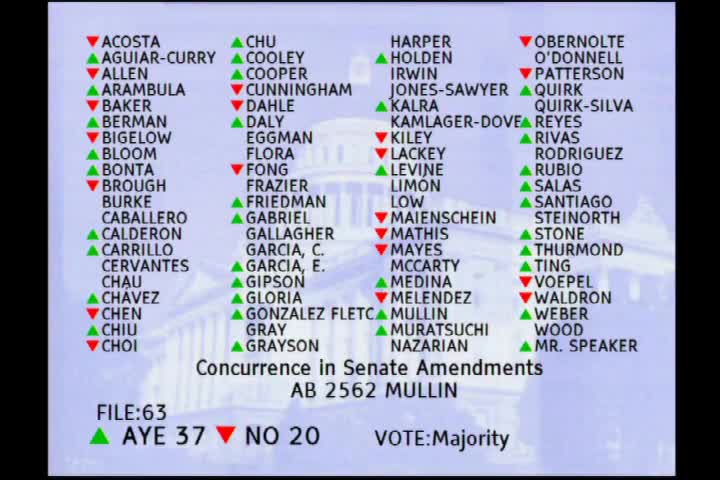 1MIN
Assembly Floor
 4MIN
Assembly Standing Committee on Health
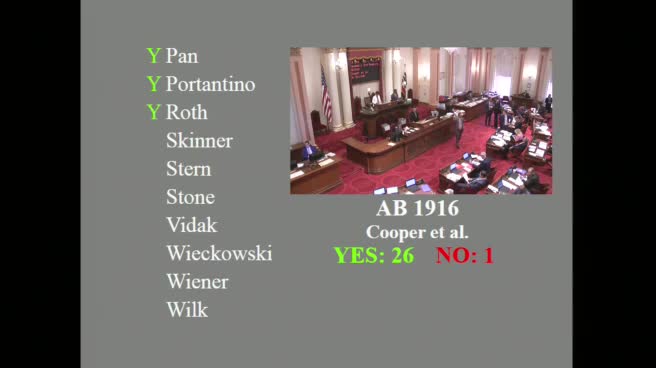 4MIN
Senate Floor
 1H
Senate Standing Committee on Appropriations
 13MIN
Senate Standing Committee on Health
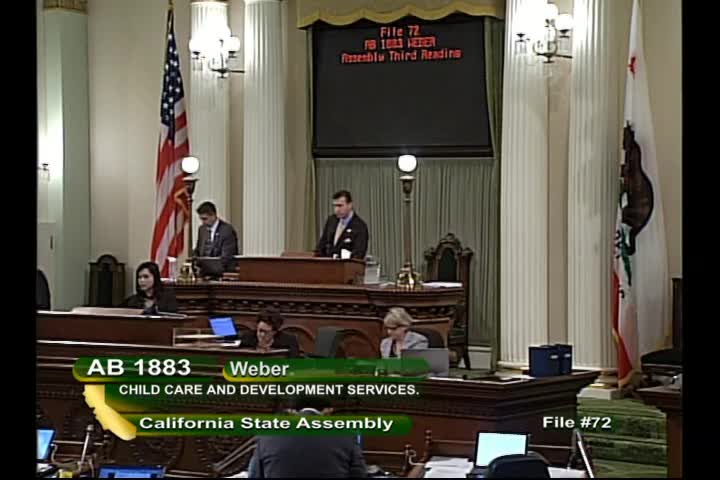 1MIN
Assembly Floor
Bill Author