AB 2611: Residential property insurance.
- Session Year: 2017-2018
- House: Assembly
- Latest Version Date: 2018-03-22
Existing law generally regulates classes of insurance, including residential property insurance, and provides for the powers and duties of the Department of Insurance, headed by the Insurance Commissioner. Existing law limits the basis under which an insurer may cancel or fail to renew policies of insurance relating to loss of, or damage to, real property that is used predominantly for residential purposes.
This bill would establish an appeal process for an insured or applicant for insurance who disagrees with a determination made by an insurer using a wildfire risk model, as defined. The bill would require an insurer to provide notice to the insured or applicant giving the specific reasons for the decision if an appeal results in an adverse underwriting decision, and would require the notice to include the contact information of the unit within the Department of Insurance that performs review of those decisions. The bill would require the Insurance Commissioner to issue a bulletin to insurers with that contact information and issue updated information as necessary.
Existing law generally regulates classes of insurance, including home protection contracts. Existing law prohibits a person from issuing or offering to issue a home protection contract unless the person holds a home protection company license, and prohibits a foreign applicant from receiving a home protection company license unless specified requirements are met.This bill would make technical, nonsubstantive changes to that provision.Existing law generally regulates classes of insurance, including home protection contracts. Existing law prohibits a person from issuing or offering to issue a home protection contract unless the person holds a home protection company license, and prohibits a foreign applicant from receiving a home protection company license unless specified requirements are met.
This bill would make technical, nonsubstantive changes to that provision.
(a)(1)An insured or applicant for a policy of residential property insurance who disagrees with a determination made by an insurer using a wildfire risk model, including, but not limited to, a determination whether to insure residential property or the amount of a premium for a policy of residential property insurance, may appeal the determination directly with the insurer.
(2)The insurer shall respond to an appeal filed pursuant to paragraph (1) within 30 calendar days. An insurer shall not make an adverse underwriting decision, as defined in Section 791.02, against its insured during the pendency of the appeal, including, but not limited to, cancellation, nonrenewal, or charging a premium increase on the policy.
(3)(A)If the appeal results in an adverse underwriting decision, as defined in Section 791.02, the insurer shall provide notice to the insured or applicant giving the specific reasons for the decision, including, but not limited to, each factual and legal basis known at that time by the insurer for the adverse underwriting decision. The notice shall also advise the insured or applicant that he or she may seek review by the department of the adverse underwriting decision and the notice shall include the mailing address, Internet Web site address, and telephone number of the unit within the department that performs this review function.
(B)The commissioner shall issue a bulletin to insurers providing the contact information of the unit within the department that performs the review function, as described in subparagraph (A), and issue updated information, as necessary.
(b)For purposes of this section:
(1)Policy of residential property insurance shall have the same meaning as defined in Section 10087.
(2)Wildfire risk model means a computer-based, map-based, or other measurement or simulation tool used by an insurer to rate, underwrite, or otherwise assess or evaluate the risk of wildfire or consequence of wildfire to residential structures.
SECTION 1.Section 12744 of the Insurance Code is amended to read:12744.(a)A person shall not issue or offer to issue home protection contracts in this state unless the person holds a home protection company license issued by the department, except as provided in subdivision (b) of this section.(b)An insurer admitted for the class of insurance defined in Section 120 is authorized, in addition to the underwriting powers granted by the class, to issue home protection contracts, but the provisions of this part shall not be otherwise applicable to those insurers or their contracts.(c)A license shall not be granted to a foreign applicant that has not fulfilled the requirements of Sections 716 and 717. For purposes of this part, the term class of insurance as used in Section 716 means the business of a home protection company. This section shall not prohibit the admission of a foreign home protection company that has actively transacted home protection business in its state of domicile for three years or more.(d)The commissioner shall, by regulation, prescribe forms for applications for home protection company licenses consistent with the provisions of this part. A reference to certificate of authority in Article 3 (commencing with Section 699) of Chapter 1 of Part 2 of Division 1 means home protection company license.(e)(1)Subject to paragraph (2), and notwithstanding subdivision (c) or a regulation to the contrary, the following requirements shall not apply to a foreign applicant:(A)Filing a financial statement certified by the applicants home state regulatory official as a true and correct copy of the statement filed with that official. This exemption applies only if the official does not require a home protection company or the applicant to file a financial statement.(B)Filing an examination report certified by the applicants home state regulatory official as a true and correct copy. This exemption applies only if the official does not prepare examination reports of home protection companies or has not prepared an examination report of the applicant.(C)Holding a certificate of authority as an insurance company.(2)The exemptions described in paragraph (1) apply only if the applicants chief executive officer stipulates that the company will provide financial reports in the same manner required of domestic home protection companies.(a)No A person shall not issue or offer to issue home protection contracts in this state unless the person holds a home protection company license issued by the department, except as provided in subdivision (b) of this section.
(b)An insurer admitted for the class of insurance defined in Section 120 is authorized, in addition to the underwriting powers granted by the class, to issue home protection contracts, but the provisions of this part shall not be otherwise applicable to those insurers or their contracts.
(c)No A license shall not be granted to a foreign applicant that has not fulfilled the requirements of Sections 716 and 717. For purposes of this part, the term class of insurance as used in said sections shall mean Section 716 means the business of a home protection company. This section shall not prohibit the admission of a foreign home protection company that has actively transacted home protection business in its state of domicile for three years or more.
(d)The commissioner shall shall, by regulation regulation, prescribe forms for applications for home protection company licenses consistent with the provisions of this part. Any A reference to certificate of authority in Article 3 (commencing with Section 699) of Chapter 1 of Part 2 of Division 1, shall mean 1 means home protection company license.
(e)(1)Subject to paragraph (2) and, (2), and notwithstanding subdivision (c) or any a regulation to the contrary, the following requirements shall not apply to any a foreign applicant:
(A)Filing a financial statement certified by the applicants home state regulatory official as a true and correct copy of the statement filed with that official. This exemption applies only if the official does not require a home protection company or the applicant to file a financial statement.
(B)Filing an examination report certified by the applicants home state regulatory official as a true and correct copy. This exemption applies only if the official does not prepare examination reports of home protection companies or has not prepared an examination report of the applicant.
(C)Holding a certificate of authority as an insurance company.
(2)The exemptions described in paragraph (1) apply only if the applicants chief executive officer stipulates that the company will provide financial reports in the same manner required of domestic home protection companies.
|
Date
|
Status
|
|---|---|
| Apr 18, 2018 | In committee: Set, first hearing. Hearing canceled at the request of author. |
| Apr 2, 2018 | Re-referred to Com. on INS. |
| Mar 22, 2018 | Referred to Com. on INS. |
| Feb 16, 2018 | From printer. May be heard in committee March 18. |
| Feb 15, 2018 | Read first time. To print. |
This list shows positions taken on this bill by organizations on the date displayed, which is linked to the original source.
Positions by individuals are not included.
Date of Hearing: April 18, 2018
ASSEMBLY COMMITTEE ON INSURANCE
Tom Daly, Chair
ABPCA Bill Id:AB 2611 (
Author:Obernolte) – As Amended Ver:March 22, 2018
SUBJECT: Residential property insurance
SUMMARY: Establishes appeals procedures for homeowners who allege unfairness in insurers’ application of computer-based risk modelling. Specifically, this bill:
- Provides that both an existing insured and an applicant for a policy of residential property insurance who disagrees with a determination made by an insurer that used a wildfire risk model may appeal that determination directly to the insurer.
- Includes in the definition of determinations subject to the right of appeal both a decision on whether to issue the policy at all (underwriting) and the amount of premium to be charged for the policy (rating).
- Requires the insurer to respond to the appeal within 30 days.
- Prohibits an insurer from making an adverse underwriting decision against its insured during the pendency of this appeal.
- Requires the insurer, in the event of an adverse underwriting decision, to provide a written notice specifying each factual and legal basis known to the insurer for that underwriting determination.
- Requires the written notice to also advise the applicant or insured that the Department of Insurance (DOI) can review the adverse underwriting decision, and contain information on how to contact the unit within the DOI that performs this review function.
- Defines “wildfire risk model” as a computer-based, map-based, or other measurement or simulation tool used by an insurer to rate, underwrite, or otherwise assess or evaluate the risk of wildfire or consequence of wildfire to residential structures.
EXISTING LAW:
- Provides for the comprehensive regulation of insurers by the DOI, including the toughest-in-the-nation prior approval system of rate regulation for property-casualty insurers, including insurers that write residential property insurance, and strong consumer protections from unfair practices.
- Prohibits an insurer from discriminating on the basis of sex, race, color, religion, ancestry, national origin, disability, medical condition, genetic information, marital status, sexual orientation, citizenship, primary language, or immigration status.
- Allows, with minor exceptions, insurers that write residential property insurance the freedom to adopt underwriting guidelines consistent with the insurers’ own risk assessments, provided these guidelines do not violate specific anti-discrimination laws.
- Requires an insurer that makes an adverse underwriting decision with respect to either a policyholder or applicant for insurance to provide that person, either in connection with the adverse decision, or upon request of the person, in writing with the specific reason or reasons for the adverse underwriting decision.
- Defines “adverse underwriting decision” to include decisions that result in:
- A refusal to issue a policy of insurance;
- A termination (either cancellation or nonrenewal) of a policy of insurance;
- A refusal by an agent to apply for insurance from an insurer that the agent represents, if the applicant requests the agent to apply to that insurer; or
- Charging a higher rate for insurance based on information that differs from the information furnished by the applicant.
FISCAL EFFECT: Undetermined.
COMMENTS:
- Purpose. According to the author, wildfire risk models are widely used by insurers to underwrite and rate residential properties. The author acknowledges that these models are an attempt to recognize the likelihood of losses due to wildfires. However, the author states “Unfortunately, while wildfire risk tools that insurers use have a measure of objectivity and a relationship to the risk of loss, they do not take under consideration individual homeowner efforts regarding defensible space, community mitigation efforts, and additional access factors not considered in the models.” In addition, the author believes that there can be inaccurate information associated with a particular risk assessment, and the applicant or policyholder should have a means to request a human evaluation of whether erroneous information contributed to the adverse underwriting decision.
- Wildfire risk models. Over the past few years, California has experienced more frequent, and more intense, wildfires, resulting in greater loss of forest and structures than prior conventional analysis would have predicted. The prospect that this truly is a “new normal” due to global warming is a highly credible concern. As a result, insurers have in recent years begun to seriously reevaluate the nature and extent of their risk exposures in regions of the state where they may have underestimated their exposure.
One of the ways insurers have engaged in this reevaluation is by the use of risk models – sophisticated, data-driven, objective analytical tools that allow the insurer to evaluate both its aggregate or regional risk, as well as evaluate risk profiles on specific properties. It is this latter use that has led to complaints by some policyholders and applicants for insurance that they have not been fairly evaluated.
A few insurers may have developed an internal, proprietary risk model, but for the most part, there are two primary providers that insurers use. However, each insurer may use the results of a risk model differently. For instance, some may rely strictly on the score; others may obtain additional information from the applicant or policyholder and use the score as only one of any number of underwriting considerations.
There is also some difference in perspective about why risk models are used by insurers. Many applicants and policyholders in high-risk wildfire areas view the risk models as a means for insurers to deny coverage. Insurers, on the other hand, argue that the models are tools that allow them to identify properties they are willing to insure that they would otherwise decline. Specifically, with the increased awareness of the extent of wildfire fire risk, many insurers would simply refuse to issue policies at all is risky areas. Using these models, they say that they can identify acceptable properties that would, due to location, fail their underwriting standards without this site-specific evaluation from the risk model.
An additional concern with the bill is the definition of “wildfire risk model.” While the practical complaints have been based on the “black box” computer-driven data analytics used by the two primary service providers, the bill defines wildfire risk model as any “computer-based, map-based, or other measurement or simulation tool used by an insurer to rate, underwrite, or otherwise assess or evaluate the risk of wildfire or consequence of wildfire to residential structures.” This overbroad definition seems to cover virtually any and all underwriting methods that an insurer could use to evaluate wildfire risk, including a subjective on-site physical examination of the property by an underwriter. If the “black box” system without any subjective human involvement is the problem, should the bill more narrowly apply to those programs? - Insurance availability issues. The premise of the bill appears to be that a policyholder is entitled to obtain residential property insurance from the insurer the applicant or policyholder selects. If that insurer uses a wildfire risk model to say “no,” then the policyholder or applicant would have certain rights attach. However, despite anecdotal complaints, there is no rigorous evidence that there is an insurance availability crisis, even in higher risk areas. Realtors are not reporting escrows failing for lack of insurance; there has been a minor increase in surplus line insurers writing residential property policies, but even that is at a statistically insignificant rate, and the California FAIR Plan is always available as the “insurer of last resort.” Insurers would argue that, if an applicant or policyholder is unable to find insurance with the insurer of his or her choice, then the remedy should not be unnecessary, expensive, and market disrupting regulation, but rather a more diligent search for other insurers willing to write policies in their area.
- Existing remedies vs the bill’s remedies. Under current law, an applicant or policyholder who receives an adverse underwriting decision has the right, if the insurer has not already provided in writing the specific reason or reasons for the decision, to request that reason or reasons in writing. If it appears to the applicant that the decision may have been based on mistakes of fact, this existing process appears to allow this exchange of information.
The bill, on the other hand, would require “each factual and legal basis known at that time.” Insurers have objected that this formulation is unreasonably legalistic, an invitation to litigation, and unfairly demands that they express legal conclusions as opposed to facts. Indeed, the underwriter, applying the underwriting rules adopted by the insurer, may not even know the legal basis for why that rule was adopted. The time and resources necessary to comply with the bill’s requirement would be significant. It is unclear, if the purpose of the bill is to ensure that the insurer has the correct, individual facts about the property, why this proposed requirement is necessary. Would some minor changes to the current statute be a better way to enable applicants and policyholders a vehicle to raise factual mistakes or omissions with the insurer? - DOI review authority. The bill proposes to allow the applicant or policyholder to seek a review by DOI of the adverse underwriting decision. While the bill’s language is less than clear, there is an implication that the DOI would be able to overturn that underwriting decision. There does not appear to be any limitation or restriction on the bases upon which that DOI action could be based. If interpreted in this manner, the bill would be granting DOI authority far beyond its current authority to handle consumer complaints, and unprecedented power over property insurers’ underwriting discretion. Is there evidence that insurers’ use of wildfire risk models has been so abusive as to justify these major changes in regulatory authority?
REGISTERED SUPPORT / OPPOSITION:
Support
Department of Insurance
Opposition
American Insurance Association
National Association of Mutual Insurance Companies
Pacific Association of Domestic Insurance Companies
Personal Insurance Federation of California
Property Casualty Insurers
USAA
Analysis Prepared by: Mark Rakich / INS. / (916) 319-2086
Discussed in Hearing
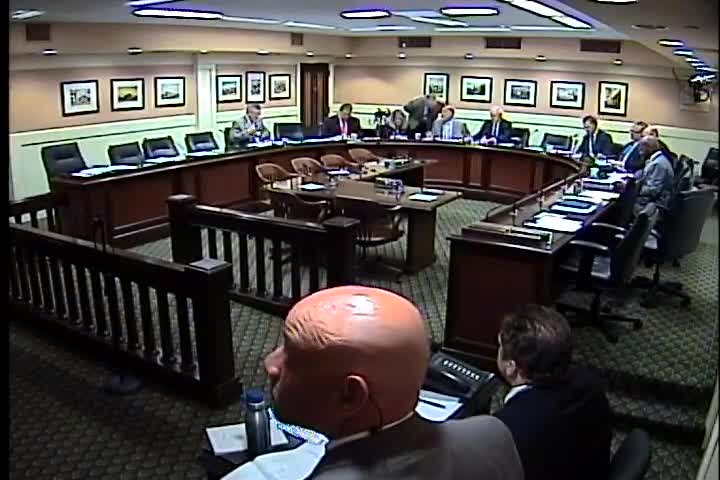 17MIN
Assembly Standing Committee on Insurance
Bill Author

Bill Co-Author(s):